Category: Residential Real Estate

  • Mortgage rates reached 7.28%. If you have to move right now, here are some tips.

    Mortgage rates reached 7.28%. If you have to move right now, here are some tips.

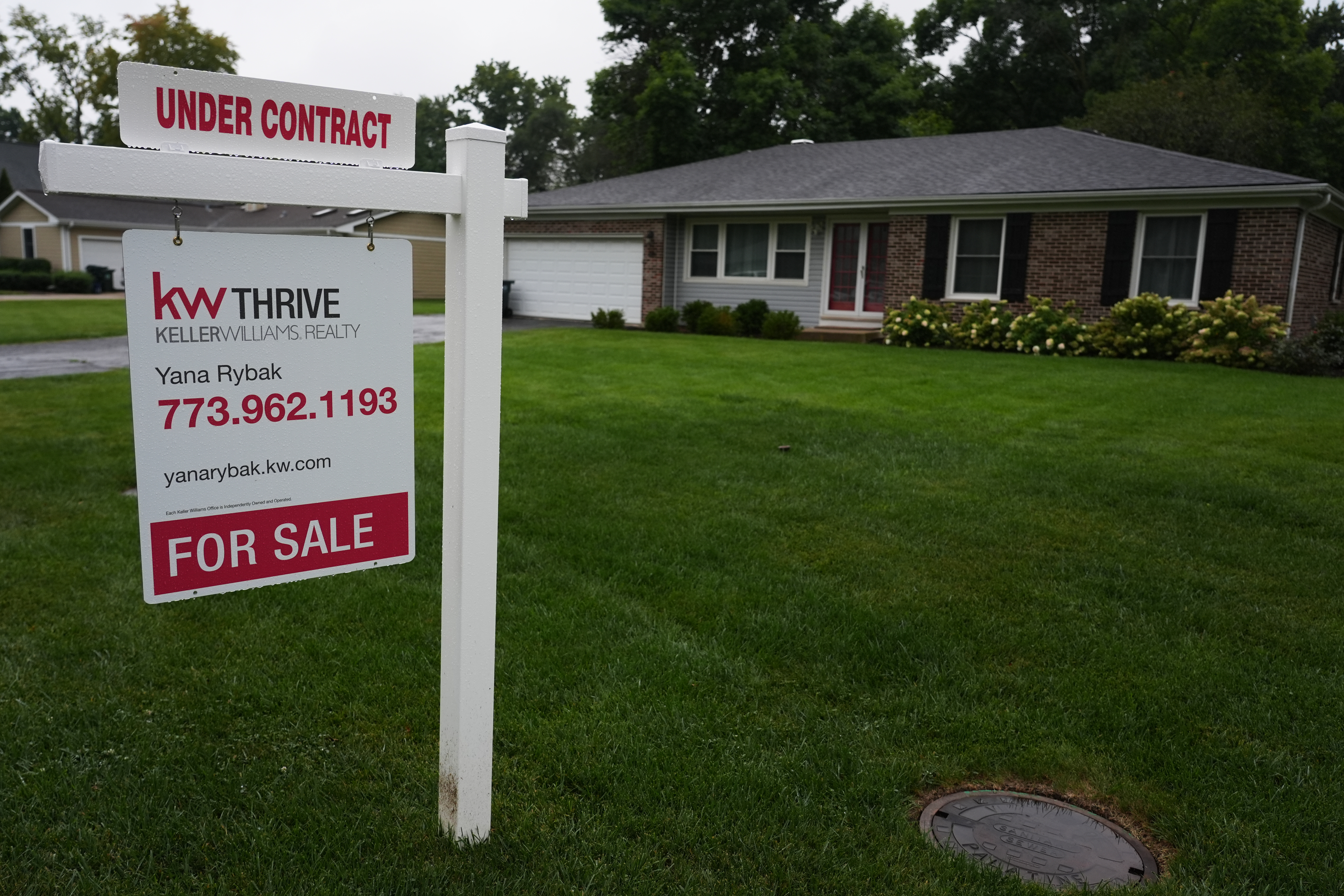
    The average interest rate for the popular, fixed-rate 30-year mortgage shot up to 7.28% this week, the highest it’s been since November 2023.

    Elevated mortgage rates and high home prices are making homebuyers cautious about entering the market in the Philly area and beyond.

    “They’re not jumping in with two feet,” said Patrick Lopez, a Philadelphia-based mortgage banker at Quaint Oak Mortgage.

    At the same time, some people need to move. They’re driven by personal factors such as job relocations, growing households, and plans for the future.

    Mortgage rates are unlikely to slide back down to pandemic-era levels of 3% or lower. And waiting for rates to drop significantly is often a losing game, Lopez said.

    While interest rates fluctuate, home prices overall have historically moved in one direction: up.

    “What I tell people is if you can afford it and you can buy, the least expensive the property is going to be 99% of the time was yesterday or today, because prices keep trending higher,” Lopez said.

    When aspiring homebuyers tell him they are waiting for interest rates to drop into the 5% range, for example, he asks, “Do you also understand how many other people are waiting for that?”

    A significant drop in rates would likely flood the market with buyers, increasing competition for properties.

    Here’s what real estate pros are telling buyers now.

    Don’t assume your rate

    Individual mortgage rates depend on a bunch of factors, including credit scores and participation in homebuyer assistance programs.

    “The good news is that people have more power over interest rates than they think they do,” said Matt Schulz, chief consumer finance analyst at LendingTree, an online loan marketplace.

    Taking steps to get a lower rate, he said, “can make a really unaffordable situation a little less so.”

    One of the first steps a homebuyer should take is to shop around to compare loan offers from several lenders, he said.

    “People would be surprised how much difference there can be,” Schulz said. And even a slight difference in the interest rate can mean tens of thousands of dollars in savings over the life of a mortgage.

    Get your credit score in shape

    Buyers with higher credit scores get lower mortgage rates, so improving those scores can help a lot.

    “There’s very little in life that’s more expensive than having crummy credit, and that’s especially true when you’re buying a home,” Schulz said.

    Jeffrey Ruben, the Bryn Mawr-based president of WSFS Home Lending, said that “first and foremost,” homebuyers should make credit card payments on time. They also need to control their credit card debt, so they’re not carrying over large balances from month to month.

    They should cap how much they spend on a card to maximize how much credit they have available at any given time. Keeping total outstanding charges under 30% of the card limit gives people better credit scores, Ruben said.

    Do your homework

    Before buyers start looking at homes, they should sit down with a professional to determine how much they’re comfortable spending up front and monthly, said Peter Buchsbaum, manager of the mortgage brokerage Good Cents Financial, which is based in Bucks County and does most of its business in Philadelphia.

    “Start the process earlier than you want to,” he said. “And it should begin with the financial piece.”

    Schulz said homebuyers should factor in elevated mortgage rates when they calculate “what they can afford and what sort of homes they should be looking at and whether they should be in the market, period.”

    An increase in mortgage rate from 6.5% to 7% on a $300,000 home in Philadelphia would mean a monthly payment that grows by about $130, Buchsbaum said.

    “If that’s stopping me from buying a house, I probably shouldn’t be shopping for houses,” he said.

    Buyers should also look into assistance programs they may qualify for.

    First-time homebuyer programs, such as those offered through the Pennsylvania Housing Finance Agency, can come with lower rates.

    Make a down payment plan

    Households should go into home buying with a plan for making their down payment, which can include saving more of their own money or getting grants or loans from governments, lenders, and nonprofits.

    “The down payment is a challenge for many buyers,” Ruben said. “There’s no question about that.”

    But buyers who can make bigger down payments get lower mortgage rates.

    Be flexible, if possible

    Rates can vary by location, so buyers with more flexibility in where they live can get lower rates.

    Rates also can vary by loan type. Mortgages backed by the Federal Housing Administration and the U.S. Department of Veterans Affairs come with slightly lower interest rates than conventional loans.

    Rates also vary by property type. Condos and duplexes come with higher interest rates than single-family homes, Lopez said.

    Be prepared to compromise

    With mortgage rates elevated, buyers should also keep in mind that a home they purchase now might not be their forever home, Schulz said. They may need to dial back their expectations and their budget in order to purchase.

    First-time buyers, especially, can get on the first rung of the market ladder and start building home equity with the understanding that they can buy another home later that checks all their boxes.

    “Tough times require compromise sometimes,” Schulz said.

    The rate doesn’t tell the whole story

    Homebuyers shouldn’t jump on a low interest rate without question.

    Recently, a homebuyer asked Buchsbaum whether he could match an interest rate of 6.5% for a mortgage the buyer saw online. But in the fine print, the buyer would have had to pay discount points, or up-front fees to a lender, to buy down the rate to that level.

    The buyer didn’t know about that caveat.

    Buyers can get mortgage rates down fairly low if they pay enough points, Buchsbaum said, but “the juice isn’t worth the squeeze” in many cases. Buyers have to weigh whether they’ll stay in their home long enough that savings will make up for the up-front expense.

    You don’t have to be stuck with one rate

    Buyers who purchase homes now and get an elevated mortgage rate can pay to refinance their mortgage later if rates drop.

    Also, more borrowers now are opting for adjustable-rate mortgages (ARMs) to get into homes, according to the Mortgage Bankers Association. These loans come with lower initial interest rates than fixed-rate loans. After a period of time, rates adjust up or down based on the market.

    Ruben said seven-year ARMs for 30-year periods are currently popular among WSFS’s mortgage borrowers. The interest rate stays the same for seven years and can adjust twice a year after that.

    There’s a reason borrowers get a better initial rate: “They are assuming the risk of potentially higher rates in the future,” Ruben said.

    But Ruben said WSFS is hopeful that rates will drop over the next several years to pre-pandemic norms. Rates in the high-4% to low-5% range for 30-year fixed-rate loans weren’t uncommon, he said.

    Don’t expect mortgage rates to drop

    Mortgage rates aren’t likely to drop significantly anytime soon, thanks to surging energy prices, government debt, and inflation.

    “It’s a really unfortunate situation because home buying was already really unaffordable for an awful lot of people,” Schulz said.

    WSFS tells mortgage borrowers “there are things they can control and there’s things that they can’t,” Ruben said. They can change their financial standing to some extent, but they can’t change broader market forces.

    Buyers have to be realistic about their financial situations and the rates they’re likely to get, he said.
  • Average long-term U.S. mortgage rate churns upward to its highest level in nearly 3 years at 7.28%

    Average long-term U.S. mortgage rate churns upward to its highest level in nearly 3 years at 7.28%

    NEW YORK — The average long-term U.S. mortgage rate jumped this week to its highest level in nearly three years.

    The benchmark 30-year fixed-rate mortgage rose to 7.28% from 7.03% last week, mortgage buyer Freddie Mac said Thursday, the biggest leap in four years. A year ago, the average rate was 6.34%.

    It is the sixth consecutive week that mortgage rates have increased.

    The average rate is now the highest it’s been since Nov. 22, 2023, when it reached 7.29%, and it’s not climbed this fast week-to-week since October 2022.

    Borrowing costs on 15-year fixed-rate mortgages, often sought by borrowers refinancing a home loan, also climbed this week. That average rate increased to 6.60% from 6.42% last week. A year ago, it was at 5.55%.

    Higher mortgage rates can add hundreds of dollars a month to borrowers’ costs, limiting homebuyers’ purchasing power. As rates rise, that can also lead prospective home shoppers to delay buying.

    In late February, the average rate on a 30-year mortgage briefly dipped to 5.98%, its lowest level going back to late 2022. The roughly 1 percentage point increase in the rate since then translates roughly into an additional $276 a month cost for a borrower financing a $400,000 home loan at the current average rate.

    Depending on a borrower’s income, credit, and other factors, they may qualify for a rate on a 30-year mortgage that is below or above the current average.

    The housing market has been stuck in a rut this year in large part because of elevated mortgage rates, which have been climbing in the months since the U.S. and Israel attacked Iran in late February.

    Mortgage rates are influenced by inflation, Federal Reserve policy, and bond-market investors’ expectations for the economy, among other factors. They generally follow the trajectory of the 10-year Treasury yield, which lenders use as a guide to pricing home loans.

    Expectations of higher inflation amid surging oil prices have pushed up the 10-year Treasury yield, which was at 3.97% in late February, before the war began. It surged to 5.34% in midday trading but then pulled back to 5.23% Thursday.

    High yields slow the overall economy by making it more expensive for everyone to borrow money, while undercutting prices for stocks and other investments.

    The U.S. housing market has been in a slump since 2022, when mortgage rates began to climb from pandemic-era lows. Sales of previously occupied U.S. homes were essentially flat last year, stuck at a 30-year low.

    Last month the National Association of Realtors said that existing home sales fell 2% in August from July to a seasonally adjusted annual rate of 3.98 million units. That was their slowest annual pace in more than a year.

    And many potential homeowners are now hitting the brakes.

    Mortgage applications, which include loans to buy a home or refinance an existing mortgage, tumbled 6% last week from the previous week, according to the Mortgage Bankers Association. This marks the fourth straight weekly drop.

    Applications for loans to refinance existing mortgages also declined.

    The elevated mortgage rates are driving more prospective homebuyers to adjustable-rate mortgages, or ARMs. Such loans, which typically offer lower initial interest rates than traditional 30-year, fixed-rate mortgages, accounted for more than 10% of all mortgage applications last week, MBA said.

  • An office-to-apartment conversion is underway in Logan Square. Here’s why it works.

    An office-to-apartment conversion is underway in Logan Square. Here’s why it works.

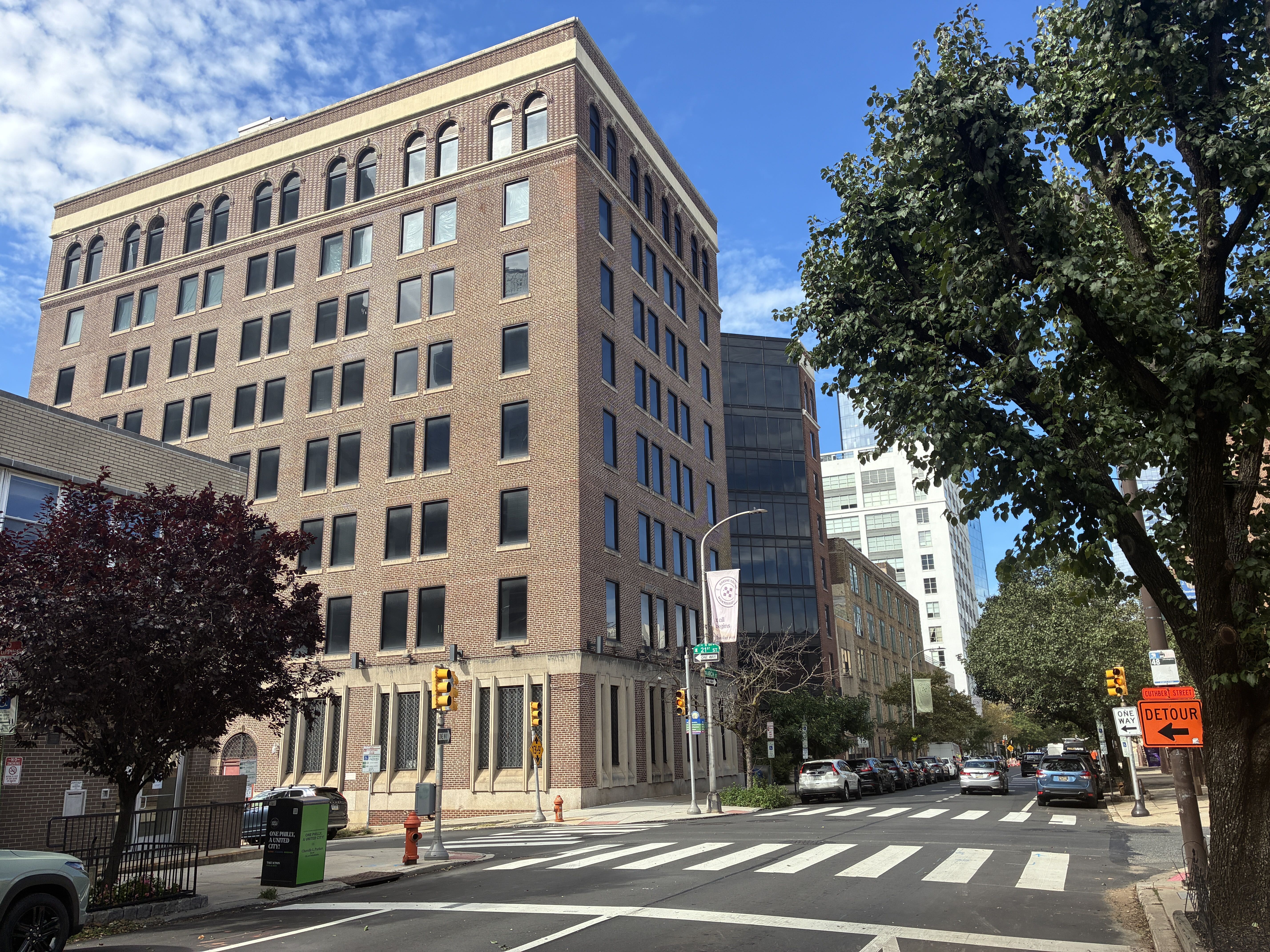
    The residential conversion of the former office building at 2100 Arch St. is underway, with completion expected in late 2027 or early 2028.

    Philadelphia-based MM Partners paid $12 million for the eight-story building in March 2023, with plans for 116 apartments in the Logan Square neighborhood.

    It was formerly the Jewish Community Services Building.

    But the site was quiet for a few years and the project delayed by skittish lenders who were concerned about financing more apartments in a market they saw being flooded with new supply. Construction finally began in July.

    “It wasn’t easy, but we just stuck with it and figured out a way to get it under construction,” said David Waxman, founder and managing partner with MM Partners.

    “The good part of [the delay] is we’ll now be delivering into a market with very little new supply, particularly in this part of the city,” he said.

    The project will be composed of studios, with the smallest in the 500-square-foot range, up to two-bedrooms that will be up to 1,400 square feet. There will be 36 studio apartments, 64 one-bedrooms, and 16 two-bedrooms.

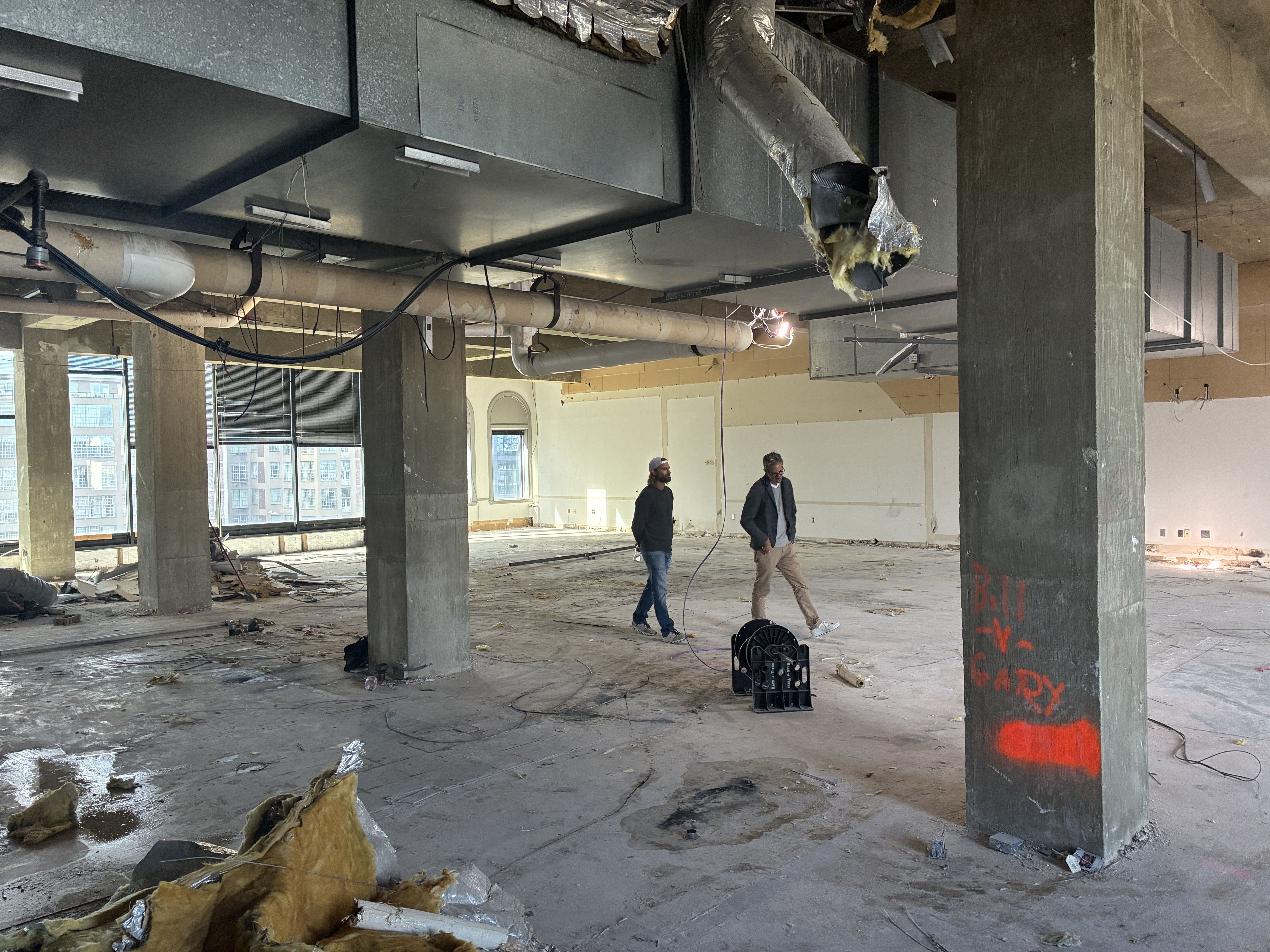
    Aaron Smith and David Waxman in the midst of 2100 Arch’s conversion.Jake Blumgart

    MM Partners is planning 3,000 feet in commercial space on the ground floor of the original 113-year-old building and is considering a roof deck as well.

    In the basement, tenant amenities such as a gym and lounge are planned, and MM Partners is considering providing 1,200 square feet of rehearsal space for Philadelphia theater companies.

    “There’s a lot of local theater companies that are looking for efficient and affordable space,” said Aaron Smith, partner and founding member with MM Partners.

    In many ways, 2100 Arch St. is an ideal office building for residential conversion.

    It is relatively small at 121,500 square feet and has none of the cavernous, sunless interior space that makes more recent skyscraper office buildings so hard to convert.

    That means tenants will have access to windows without carving light wells through the center of 2100 Arch. The number of apartments is more modest than would be the case in the large towers on West Market and, therefore, easier to fill.

    “It’s not too big and not too small,” Waxman said. With a lot of large office buildings, “you have to buy it so cheap to be able to afford to just have dead space in the middle.”

    MM is working with King of Prussia-based Axis Construction Management on the 2100 Arch conversion. It is their eighth adaptive reuse project together.

    For the $26 million project, MM Partners was able to secure $6.1 million in federal historic tax credits and $500,000 from Pennsylvania’s Historic Preservation Tax Credit.

    While the original building is over a century old, half of it dates to the 1980s when it was home to BIOSIS, a life sciences database publisher.

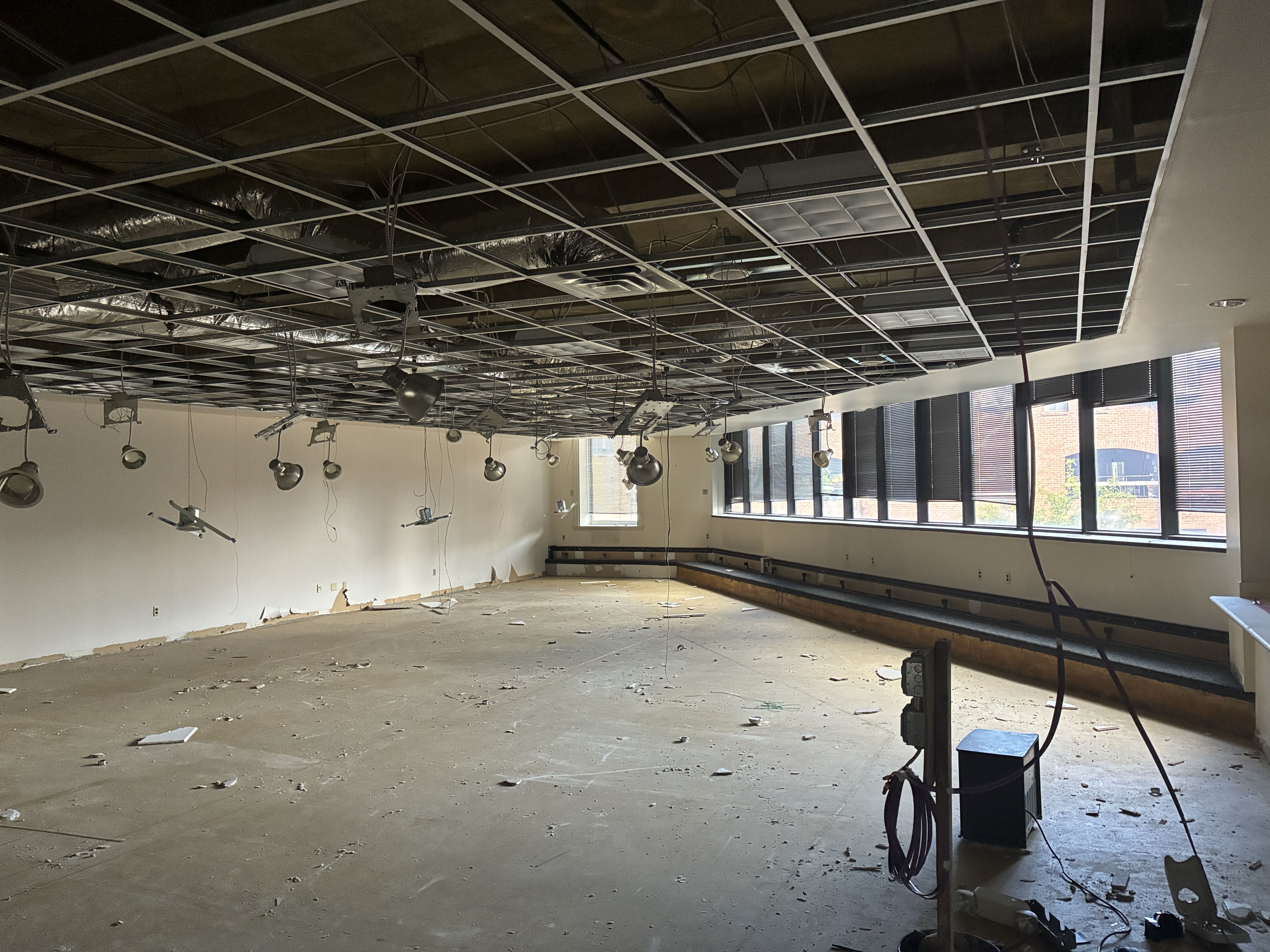
    The room where BIOSIS, a company that catalogued life sciences research, used to keep their mainframe computers.Jake Blumgart

    The eastern section of the building was constructed in 1913, and then acquired by BIOSIS in 1966. The company grew throughout the later half of the 20th century and doubled the size of the structure to the west in 1982.

    Like other conversion projects in Philadelphia, 2100 Arch will get a 10-year property tax abatement.

    The developer acquired the building from the Jewish Federation of Greater Philadelphia, which had purchased it from BIOSIS in 1999, after the building had been vacant a short time due to the COVID-19 pandemic.

    “They had done a really nice job keeping it up,” Waxman said. “If there had been an office market for B- and C-class buildings, this could have been easily leased as office. But there isn’t. Everyone only wants to be in the nicest buildings now.”

    In sharp contrast MM Partners has adapted long-derelict buildings to new uses in other parts of the city, such as the F.A. Poth Brewing Co. in Brewerytown, which MM converted to 133 loft apartments.

    Some of those buildings had severe structural problems as a result of their long abandonment, whereas 2100 Arch was in perfectly good shape.

    “It’s a joy to work in,” Waxman said. “You have working elevators. You have a non-leaky roof. You have electricity coming in. You have sprinklers. You have all the things that these other buildings that we’ve done in the past didn’t have.”

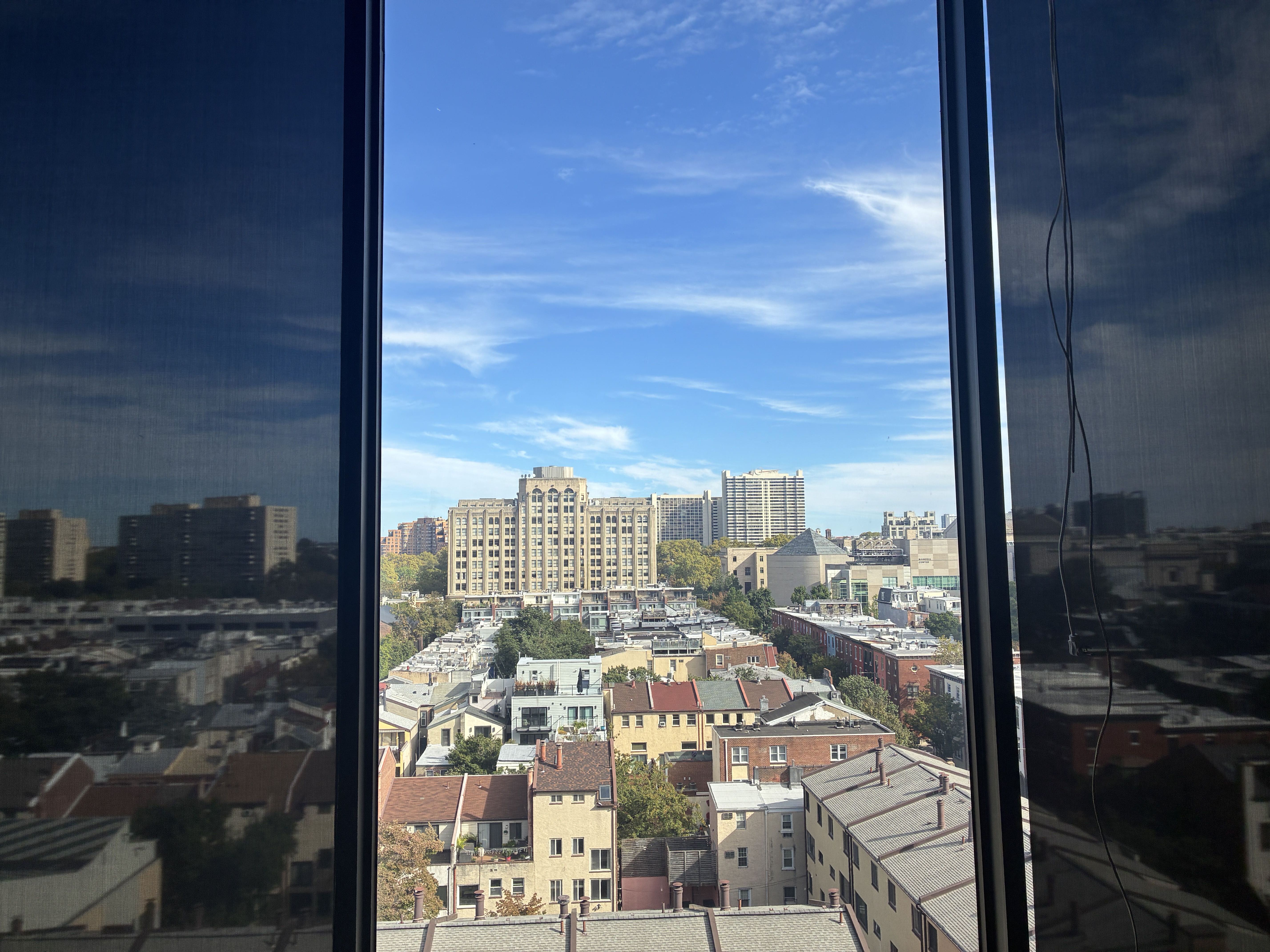
    The view from the eighth floor of 2100 Arch, looking over the Logan Square neighborhood.Jake Blumgart

    Meanwhile, the nearby west side of Center City has become the heart of Philadelphia’s commercial life.

    West Market Street, visible from 2100 Arch’s south-facing windows, is the most successful corner of the city’s office market.

    Insurance giant Chubb’s new office building just opened next door. Burlington recently announced plans to move its headquarters into the Schuylkill Yards development near 30th Street Station.

    At 2100 Arch, “you’re close to everything, but you have a little oasis [in the Logan Square neighborhood] right next to the hustle and bustle of Market Street,” Waxman said.

  • Jenkintown’s first short-term rental request was just denied — but it’s not the only Airbnb in town

    Jenkintown’s first short-term rental request was just denied — but it’s not the only Airbnb in town

    Jenkintown’s zoning board denied its first short-term rental request on Thursday after residents complained about noise and visitors.

    Resident Elvira Lindgren and her husband bought and renovated a twin in hopes of renting out rooms, she said in an interview Friday. The couple began hosting almost a year ago, according to their Airbnb.com listing. But the business has led to tension with some neighbors, who urged the board to deny the request for an official rental license.

    The tiny Montgomery County town’s code did not permit short-term rentals until spring 2025, when the borough created an ordinance that allows property owners to open the small businesses with permission from the zoning hearing board, which typically only meets once per year.

    Jenkintown now requires a rental license under the new ordinance, which lays out policies on location, parking, safety, and fines, among other things.

    Lindgren said she didn’t know about the licensing process when she first started, but when a neighbor reported her, the borough said she could continue operating until Thursday’s hearing.

    First Airbnb request draws neighbor dispute

    Lauren Davis, whose family shares a wall with the Lindgrens, said Friday that the twins aren’t suited to Airbnb rentals — partly because they share attic access — and that she and other parents are upset to see older men walking on the property, rather than medical students as Lindgren had told her to expect.

    “The level of activity they have going on there is better suited to a standalone home,” Davis said.

    The borough was mindful of Jenkintown’s already-dense residential development while working on the new short-term rental rules with the county planning office, borough manager George Locke said Wednesday, before the hearing.

    “We wanted to have it, but we wanted it in certain locations,” Locke said, “and to make sure it was safe for everybody and didn’t become a nuisance.”

    Reached by phone Friday, board solicitor Noah Marlier wouldn’t comment on why the board denied the license.

    Lindgren said she was “shocked” by the pushback at Thursday’s meeting from Davis and two other neighbors, adding that seven neighbors had signed a document before the meeting attesting they had no problems with her business.

    Davis argued at the hearing that problems during renovation, including a gas leak that forced her family to evacuate, showed the short-term rental would not follow rules.

    But accidents can happen during any renovation, Lindgren said Friday, so it’s unfair to count the incident against the business itself.

    Lindgren also defended her guests, who she said have included medical students, World Cup visitors, and an out-of-state dad who stays monthly to visit his daughter. While she understands their concern for their children’s safety, complaints are one-off incidents that the neighbors falsely portray as a pattern, she said, and she doesn’t hesitate to remove the rare guest who causes problems.

    “I’ve met so many people from abroad, so many countries,” Lindgren said. “Quite a few people became friends.”

    She’s disappointed that the board’s decision means visitors coming to Jenkintown to see loved ones or work at Jefferson Abington Hospital will lose a housing option in the area, Lindgren said.

    Some Jenkintown Airbnbs may run without approval

    But Jenkintown does have a few other short-term rentals, according to postings on Airbnb — including two that appear to have operated for several years.

    Locke wouldn’t say whether he’s aware of any unlicensed short-term rentals, but he encouraged any property owners operating one to seek approval.

    The borough’s solicitor is expected to write a written opinion on Lindgren’s case within 45 days, and she could appeal after that.

    But Lindgren plans to consider options for longer-term renters instead, like traveling nurses. The short-term ordinance only applies to properties that offer stays of fewer than 30 days and accept guests for fewer than 120 days total in the year. Properties that book more than 120 days a year are considered hotels in Jenkintown.

    “I just feel bad for those who won’t get to stay with me,” she said.

    This suburban content is produced with support from the Leslie Miller and Richard Worley Foundation and The Lenfest Institute for Journalism. Editorial content is created independently of the project donors. Gifts to support The Inquirer’s high-impact journalism can be made at inquirer.com/donate. A list of Lenfest Institute donors can be found at lenfestinstitute.org/supporters.

  • Mayor Parker wants Council to back a tax break for redeveloping derelict buildings. Council says it’s waiting on her.

    Mayor Parker wants Council to back a tax break for redeveloping derelict buildings. Council says it’s waiting on her.

    Last November, Mayor Cherelle L. Parker announced with great fanfare that Philadelphia could create a property tax break to spur the conversion of derelict buildings, such as empty Center City office towers and vacant school facilities, into apartments.

    She had worked with legislators in Harrisburg to change state law to allow Philadelphia to pursue the legislation, which would create a 20-year property tax abatement for conversions of “deteriorated” properties.

    But 10 months later, no such legislation has been introduced in City Council, and Parker on Wednesday called on city lawmakers to consider her 20-year abatement idea for distressed properties.

    “We have an affordability crisis here in the city of Philadelphia,” Parker told reporters Wednesday. “What if we marry that challenge with these persistently vacant buildings that have gone underutilized, and we put them to their best and their highest use to incentivize affordable housing?”

    Parker’s administration, however, has not yet transmitted a draft of the bill to Council, which is typically the first step for lawmakers to consider legislation championed by the mayor.

    “Tell them, ‘Send the bill over,’” Council President Kenyatta Johnson told reporters Thursday. “We haven’t seen any piece of legislation regarding 20-year tax abatement at this particular point in time.”

    Asked about the delay, Tiffany W. Thurman, Parker’s chief of staff, said Thursday that city agencies “are collaborating to ensure the proposed legislation is legally sound and can withstand constitutional scrutiny.” She added that Parker “remains firmly committed to presenting City Council with a bill that incentivizes the development of affordable and workforce housing on vacant, publicly owned land.”

    On Thursday, several members of Council questioned the lack of specifics from the mayor’s office, and others were less than enthused about the idea of approving a new tax break when the Philadelphia School District is facing a funding crisis.

    “I continue to appreciate an effort to make sure that we have access to affordable housing in the city of Philadelphia,” Councilmember Nicolas O’Rourke said. “At the same time, I am very much so laser-focused and desirous of the city getting the revenue that it needs.”

    A controversial policy

    Property tax abatements have long been controversial in Philadelphia, with opponents contending that they starve the city and school district of needed revenue while favoring real estate developers.

    Philadelphia’s 10-year abatement program, which was established in the 1990s, previously exempted owners from paying real estate tax on all new construction or improvements on any type of property for 10 years.

    That program was long hailed as key to the city’s turnaround in the early 2000s. But concerns about its impact on neighborhood inequality and school funding grew over time, and Council in 2019 roughly halved the value of the tax break for new construction.

    Parker argues that the idea behind her legislation is different: She wants to see a far more narrowly targeted bill that would only help developers who seek to redevelop large, derelict buildings.

    “We’re talking about … persistently vacant school buildings that have been vacant from three up to 30 years,” Parker said Wednesday.

    The mayor also noted that the development environment has worsened dramatically since Council cut the 10-year tax abatement’s power, with soaring interest rates and construction material inflation as factors that weigh heavily on complex and large-scale projects.

    Still, many Council members are skeptical of tackling a potentially controversial measure that is seen to favor developers ahead of next year’s municipal elections, when all 17 city lawmakers will be on the ballot.

    “I’d like to get more information on exactly what the plan is because the tax abatements are, as you know, hugely unpopular,” said Councilmember Cindy Bass, who represents parts of North and Northwest Philadelphia.

    Bass said that while the abatement has spurred needed growth, she would need to see any expansion of it balanced with the needs of lower-income Philadelphians who are struggling with rising costs and property taxes.

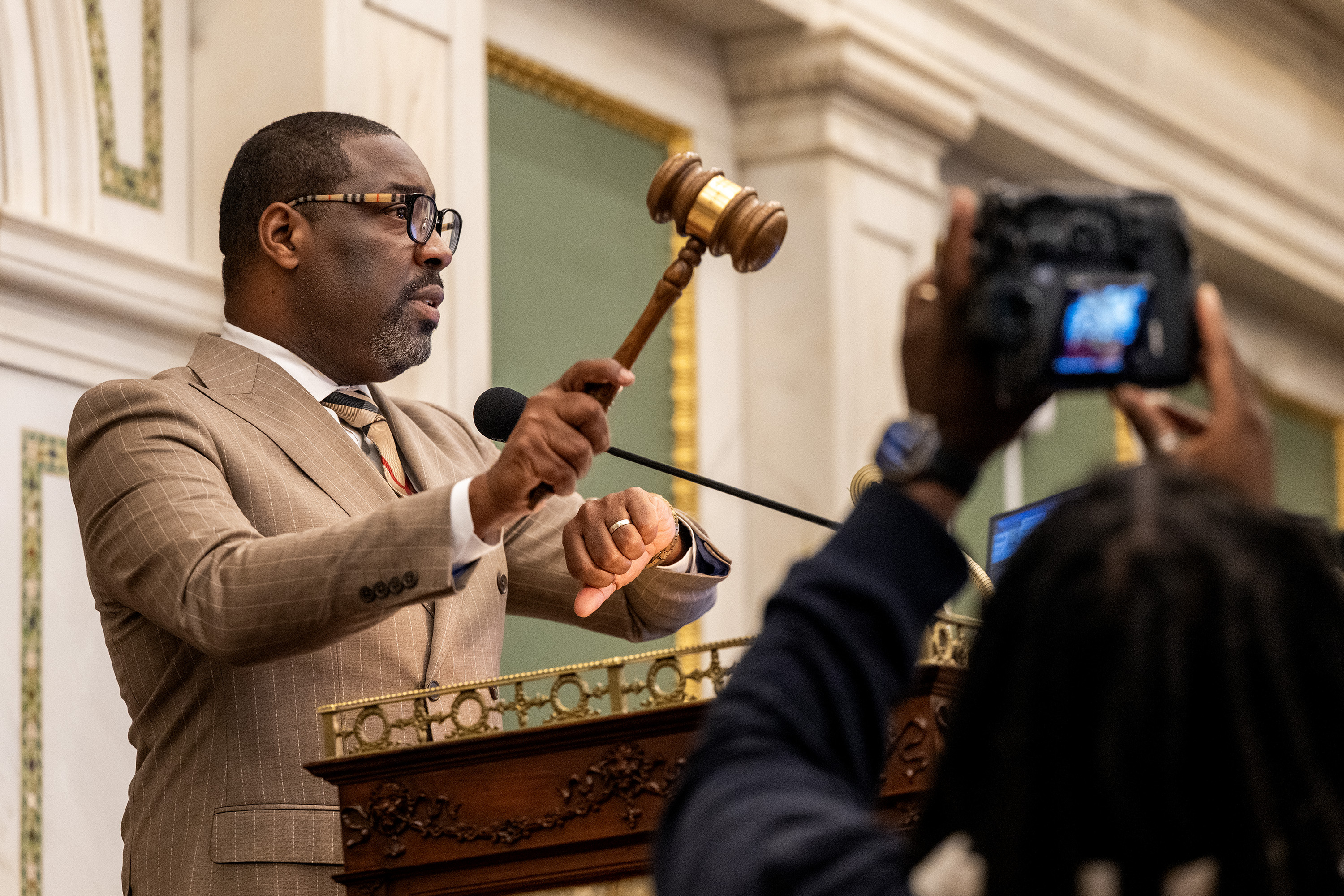
    President Kenyatta Johnson checks his watch and gavels City Council into session on Sept. 17, as the body returns for start of its fall session.Tom Gralish / Staff Photographer

    And Johnson on Thursday reiterated his comments from earlier this year that he would like to see the newly authorized 20-year abatement include a provision that requires an affordable housing component of the projects it enables.

    “Any type of legislation like that should really focus on making sure that we’re providing a level of affordability, also senior housing,” he said. “Obviously, the devil’s always in the details.”

    But it is not clear that state law would allow Philadelphia to mandate affordability in an abatement bill, and Parker cautioned against doing anything that would exceed the city’s authority.

    “We have to make sure that whatever we are proffering, that it is directly connected to what has been enabled,” Parker said. “It has to pass legal muster for no one to question the constitutionality of what it is that we’re doing.”

    Persistently vacant schools

    A 20-year abatement would apply to empty office buildings in Center City and long-vacant industrial buildings. But Parker and administration officials have focused their pitch on revitalizing empty public schools.

    “We need to pass it because it’s going to be extremely beneficial for challenging properties,” John Mondlak, chief of staff of the Philadelphia Department of Planning and Development, said Wednesday. “You think about schools in 10 years, 20 years — they are very difficult to reposition.”

    That pitch, however, runs up against another policy issue festering between Parker and Council.

    Councilmember Isaiah Thomas said some of the hesitation to take up the abatement legislation is due to Council’s dissatisfaction with the Philadelphia School District’s facilities plan, which the school board adopted last spring and calls for the closure of 17 school buildings and the renovation of 169 others.

    Thomas and other Council members vigorously protested the plan and are still pressing for the board to reconsider it.

    “That’s our priority,” Thomas said Thursday. “I don’t want to have a conversation about schools that are vacant until we have a conversation about schools that are occupied.”

  • These 10 Philly blocks will be the first to get $100,000 upgrades through Mayor Parker’s housing initiative

    These 10 Philly blocks will be the first to get $100,000 upgrades through Mayor Parker’s housing initiative

    Mayor Cherelle L. Parker’s administration on Wednesday announced the first 10 residential blocks that will each receive $100,000 in beautification upgrades as part of the city’s Curbside Appeal program.

    The program is part of Parker’s Housing Opportunities Made Easy, or H.O.M.E., initiative, which seeks to build or preserve 30,000 units of housing in the city.

    “Every Philadelphian deserves to live on a block they can be proud of,” Parker said in a statement, adding that the program “gives neighbors the resources to come together, improve their surroundings, and strengthen the sense of community that makes our city special.”

    The first 10 blocks set to receive services under the program, including debris removal, tree trimming, lawn restoration, and sidewalk repairs, are:

    • 1300 block of South Ruby Street
    • 1700 block of St. Paul Street
    • 1800 block of Hart Lane
    • 2200 block of South Sixth Street
    • 2500 block of North Marston Street
    • 3000 block of Titan Street 
    • 3200 block of North Howard Street
    • 5000 block of Newhall Street
    • First block of Hobart Street
    • First block of Wiota Street

    In May and June, residents were encouraged to nominate blocks for the program through their Neighborhood Advisory Committees or Neighborhood Community Action Centers, the so-called mini-City Halls Parker has established throughout the city to make services more accessible.

    The next round of nominations for the program will take place in the spring.

    “By partnering directly with neighbors, we’re helping transform blocks in ways that reflect the priorities of the people who live there while building stronger, more connected communities,” Jessie Lawrence, the city’s director of planning and development, said in a statement.

    Council approved the H.O.M.E. initiative, which is funded primarily through $800 million in city bonds, in June 2025. Lawmakers then clashed with the administration last fall over income thresholds for some of the housing programs it funds, with Council successfully pushing through changes that prioritize poorer residents.

    The city issued the first $400 million in H.O.M.E. bonds earlier this year, and is scheduled to issue the next tranche in 2027.

  • Seniors asked their pastor for help finding affordable homes. So their West Philly church built apartments.

    Seniors asked their pastor for help finding affordable homes. So their West Philly church built apartments.

    Nearly a decade ago, seniors asked the pastor of their West Philadelphia church for help.

    They were getting older and so were their houses, and they needed safe, affordable homes that weren’t such a burden to keep up with. They wanted to stay in their community, too.

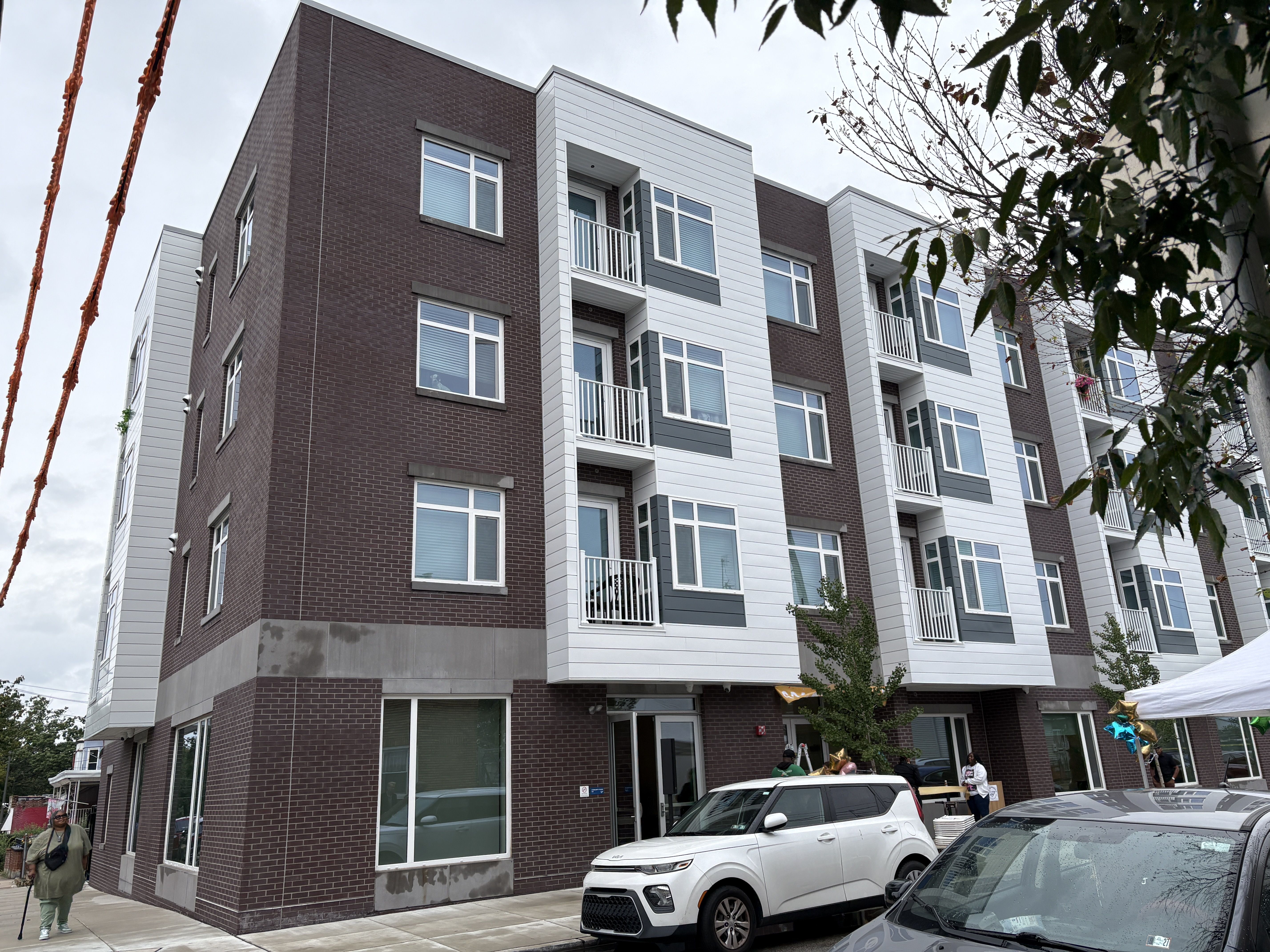
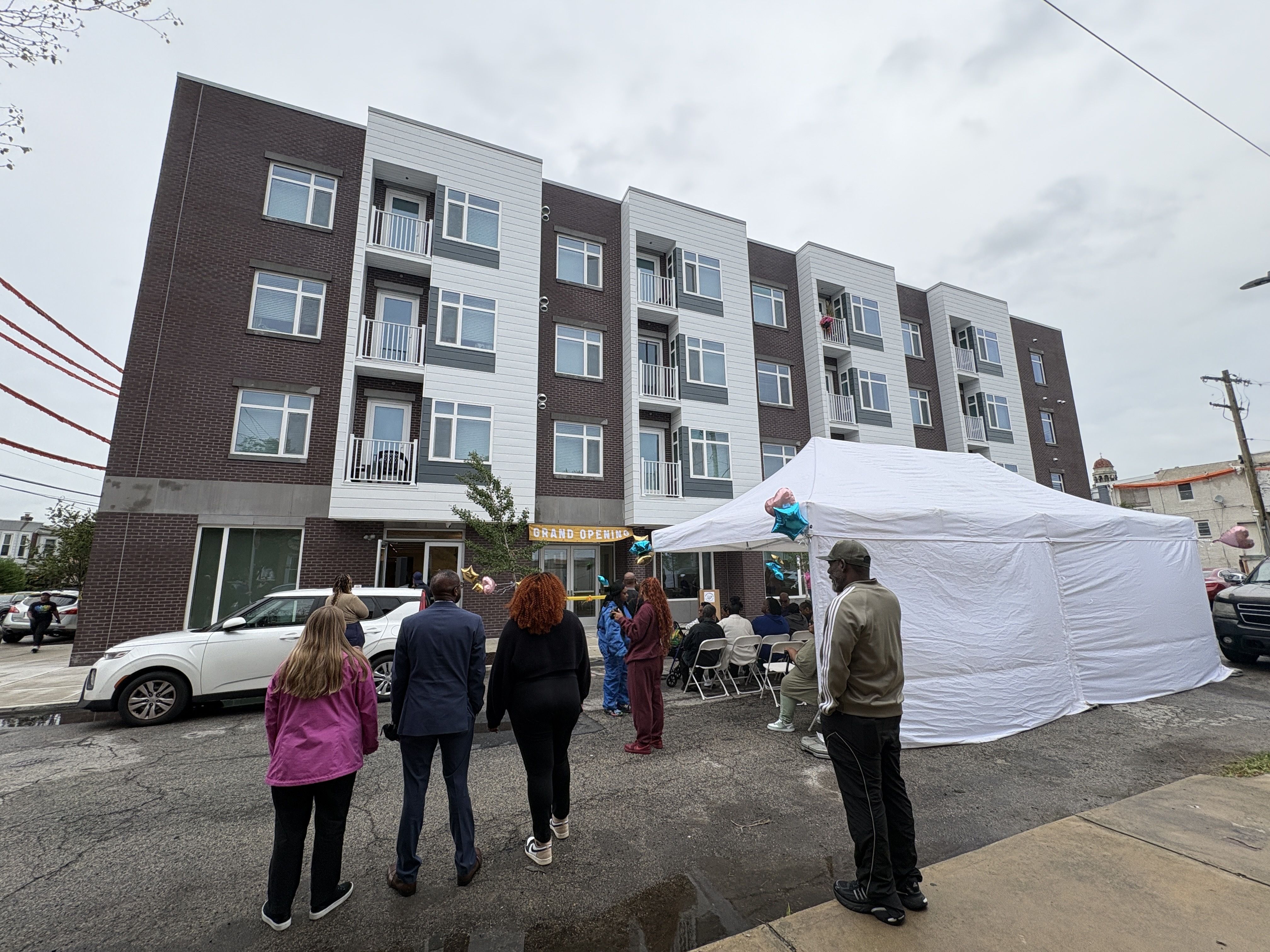
    In the beginning of this year, on the site of what was once a dilapidated house and vacant lots filled with trash and rodents, the Church of Christian Compassion opened Compassion Senior Living, a new 38-unit subsidized apartment building in Cobbs Creek.

    W. Lonnie Herndon, the church’s senior pastor, said the congregation “believe[s] ministry must extend beyond the walls of the church.”

    “We’re called not only to preach about love and compassion but to demonstrate it in practical ways that strengthen people’s lives,” he said Tuesday during an event celebrating the building filling with residents.

    People gather Tuesday for a grand opening ceremony at the Compassion Senior Living apartment building in Cobbs Creek.Michaelle Bond / Staff

    Philadelphia’s 65-and-older population is growing, and more than a third live below or near the poverty line, according to a 2025 Pew Charitable Trusts report. As housing costs rise, finding an affordable apartment as a senior can be difficult.

    Since 2001, the Church of Christian Compassion has owned a 10-unit, market-rate apartment building across from the new development. But the new apartments fill a specific need.

    Compassion Senior Living accepts people 62 and older who make between 20% and 60% of the area median income. That’s roughly $17,200 to $51,540 for a single-person household, which most of the building’s residents are. Four apartments are reserved for people who were formerly homeless.

    Rents for the complex’s one-bedroom apartments are based on tenants’ income and range from $900 to $1,300.

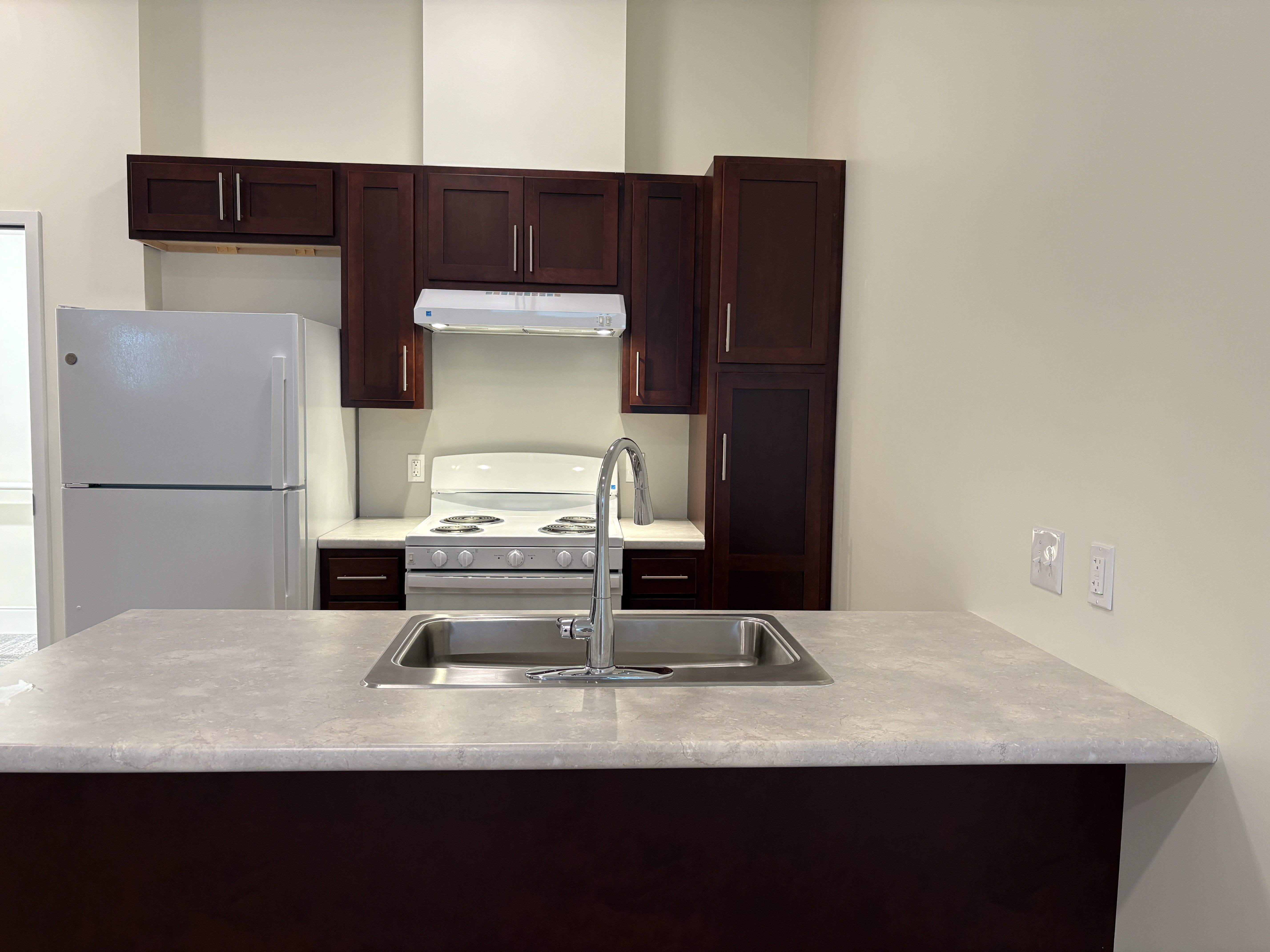
    This is the kitchen in a model unit in the Compassion Senior Living apartment building.Michaelle Bond / Staff

    Evelyn Norris, who declined to give her age but said she is older than she looks, moved into her apartment in early August from another West Philadelphia building. She is a member of the Church of Christian Compassion and called the pastor “a jewel” who “looks out for everybody.”

    Norris is thrilled to live in a newly constructed building where residents have formed a tight-knit community. She said everyone’s friendly and keeps an eye on each other.

    “This place is wonderful,” she said. “God is all in this.”

    More than three in five tenants were already residents of West or Southwest Philadelphia.

    That includes Angela Cook-Boyd, also a member of the Church of Christian Compassion, who turns 70 on Sunday. She was tired of climbing the steps at the West Philadelphia house she had been renting and said her legs told her it was time to move to a building for seniors.

    She had told the church she was interested in living at the property about five years ago when it was still in the works.

    “It was truly worth waiting for,” she said. “It just has been a blessing.”

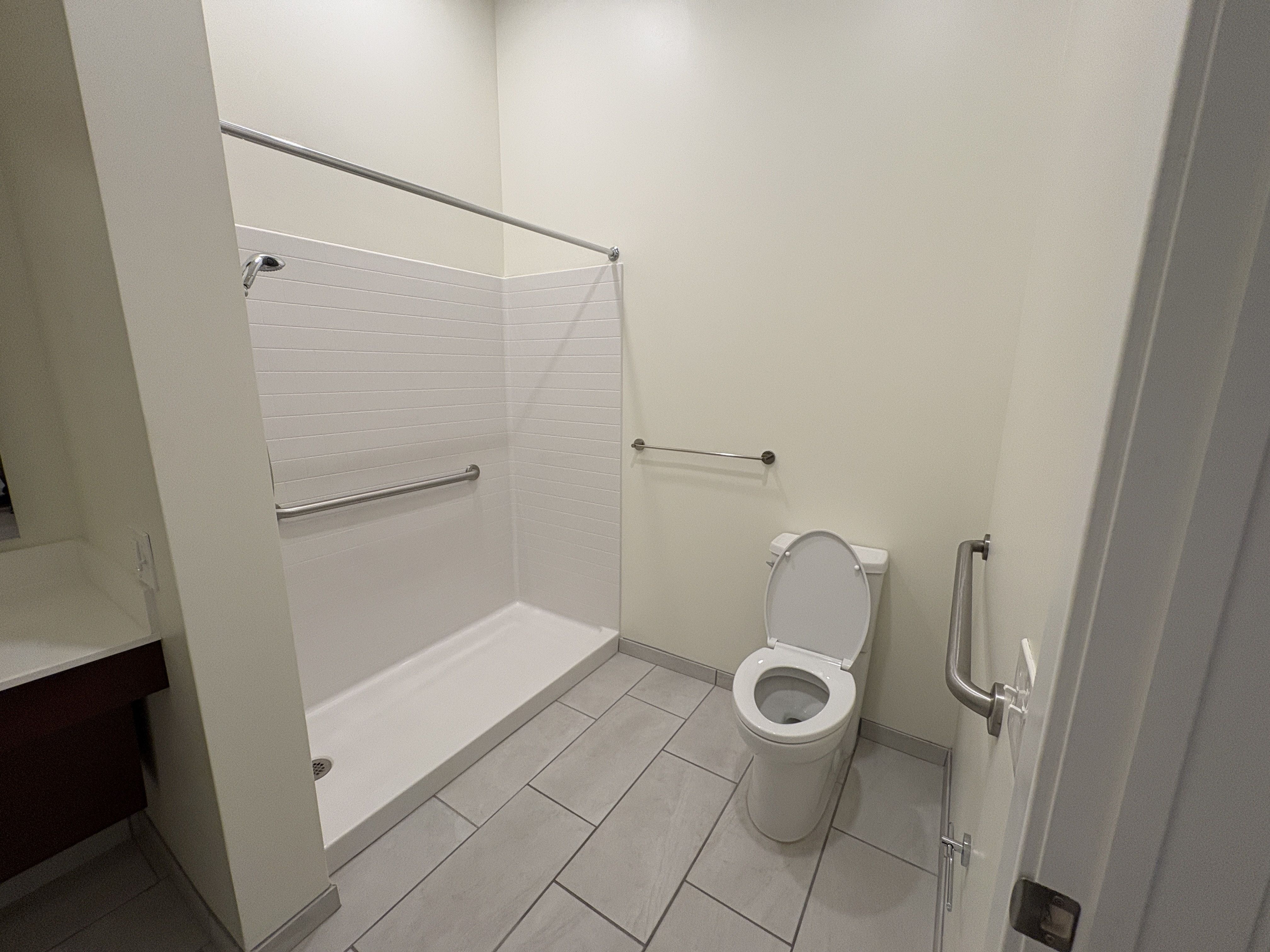
    This is the bathroom in a model unit in the Compassion Senior Living apartment building.Michaelle Bond / Staff

    The independent living community cost about $20 million, with millions coming from city, state, and federal funding.

    City Councilmember Jamie Gauthier, whose 3rd District includes the apartment building, said one of her first meetings after she was elected in 2020 was with the church’s pastors and now-Pennsylvania House Speaker Joanna McClinton (D., Philadelphia). They talked about the importance of finding funding for the project.

    “It is no secret that Cobbs Creek, like many of our neighborhoods, is being gentrified, and our wisest neighbors are the ones being hit the hardest,” Gauthier said. “Our seniors deserve to stay in the communities they’ve called home for decades, the communities that they’ve built into the desirable places that they are today.”

    Compassion Senior Living offers on-site social services and plans to partner with a healthcare provider in the future. The building includes a laundromat, a library, a multipurpose room, and a community center. It has a green roof, low-flow faucets, and energy-efficient heating, cooling, and ventilation systems.

    The building was designed by Philadelphia-based CICADA Architecture & Planning and built by Ardmore-based TN Ward Co. Builders. BFW Group, a construction project management agency, led the charge to raise money for the project.

    Pastor Terrilynn Donnell, who is also the executive director of the church’s community development corporation, the Community of Compassion CDC, called the completion of the senior apartments “a relief” after so many years. She said the church wants to build more homes.

  • A 122-unit duplex development is planned just west of Girard Estates

    A 122-unit duplex development is planned just west of Girard Estates

    A new housing proposal would bring 122 units in 61 duplexes to 2225-27 Shunk St., a vacant lot next to South Philadelphia’s Girard Estates neighborhood.

    The property is one of the few large developable parcels in the area, which has seen little new housing construction even as neighborhoods to the north boomed in recent years due to its scarcity of empty lots.

    “Adding more single-family residences there, with parking and green space, will breathe some life into a little pocket of the area that’s desolate right now,” said Michael Phillips, a zoning attorney with Klehr Harrison Harvey Branzburg, who represents the developer.

    Each duplex in the structure will have parking on the ground floor, with a total of 124 spaces. New street trees, a green buffer, and some interior landscaping space will be included.

    The proposal is just west of Girard Park and east of the South Philly Shopping Center, which contains ShopRite, Burlington, and Five Below.

    The project comes from Philadelphia-based Hightop Development, with architecture from local group Studio HS4.

    “This property is long overdue for redevelopment,” Phillips said. “With one-to-one parking, we think the area can support it, and it will also help the South Philly Shopping Center.”

    The proposal does not require permission from the Zoning Board of Adjustment but will be considered by the advisory-only Civic Design Review Board on Oct. 6.

    A neighborhood meeting about the project will be held Sept. 23.

    Local community leaders are mixed on the proposal based on what they know so far, with some supportive of new development on the long vacant parcel and others concerned about the density and lack of commercial space.

    “We don’t want it to be overcrowded,” said Jody Della Barba, head of Girard Estate Area Residents. “We don’t need that much more density in our area.”

    A rendering of the 2225-27 Shunk St. proposal, which would fill in one of the few vacant lots in this South Philly neighborhood.Studio HS4

    Previously the project was part of a sprawling proposal that would have brought more commercial space and many apartments to the neighborhood.

    That long abandoned development was from the Long Island-based Cedar Realty Trust, which owned a number of Philadelphia-area shopping plazas before the COVID-19 pandemic.

    Cedar controlled not only the 2225 Shunk property but the neighboring shopping center, adjacent retail space on Oregon Avenue, and Quartermaster Plaza to the south.

    Cedar Realty Trust then partnered with Philadelphia-based Alterra Property Group on a vision of transforming the auto-oriented shopping area into a residential and commercial hub.

    In 2019 testimony before the Planning Commission, Della Barba spoke in favor of that ambitious proposal, but Cedar’s plans were dashed during the pandemic, and the company sold off all its assets.

    Della Barba said she was more skeptical of the latest project but also noted that she’s less familiar with it.

    A project on the scale of Cedar’s proposal needed community support, while Hightop’s more modest development fits within the existing zoning rules.

    Della Barba says she would like to see design changes so the new development echoes the early 20th-century twins to its east, which define the neighborhood.

    “Girard Estates is a historic district,” Della Barba said. “We’d like the design to be a little more like what our neighborhood is, and we wish they would have come to us before they made the design up.”

  • A gated community of 140 townhouses is proposed near Packer Park

    A gated community of 140 townhouses is proposed near Packer Park

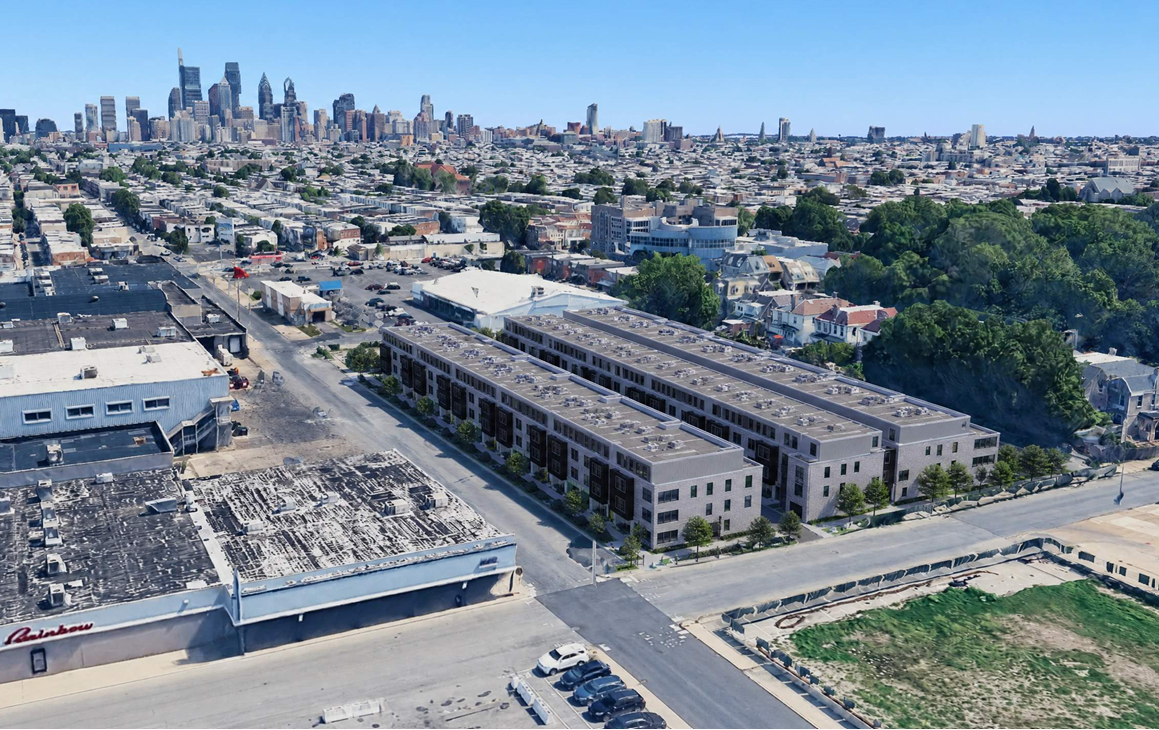
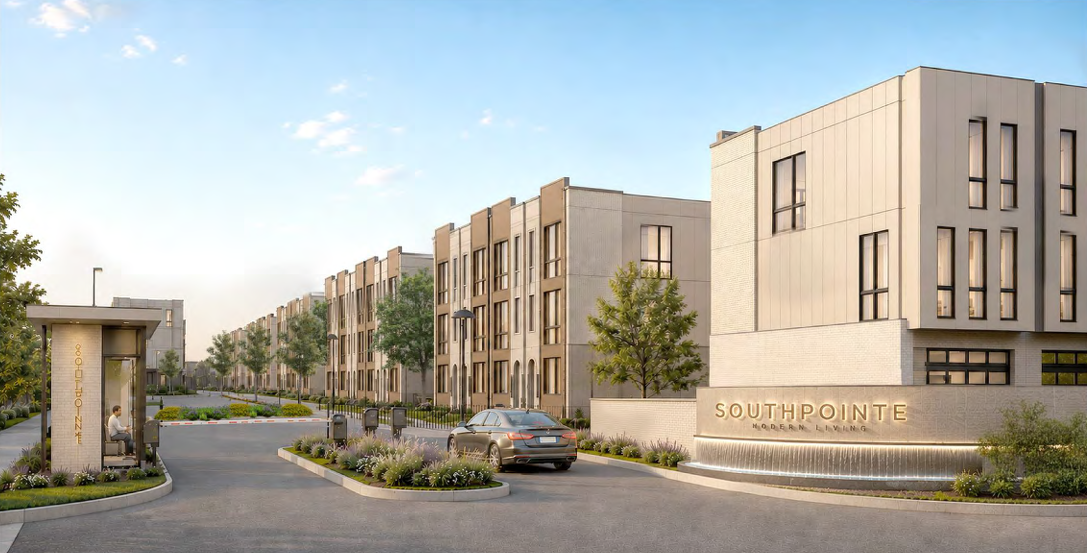
    A former Philadelphia Housing Authority warehouse site at 3100 Penrose Ferry Rd. is set to be transformed into a gated community with 140 townhouses, just to the northwest of FDR Park.

    The proposal comes from Philadelphia-based Trove Capital, which bought the site from the housing authority in June for $8.5 million.

    The townhomes will be built in 28 clusters of three to seven units across the site, with each home coming with two parking spaces. The site will have an additional 141 surface parking spaces.

    The developer, Justin Vesey, calls the development Southpointe. It will also have a playground, dog park, and pickleball and basketball courts.

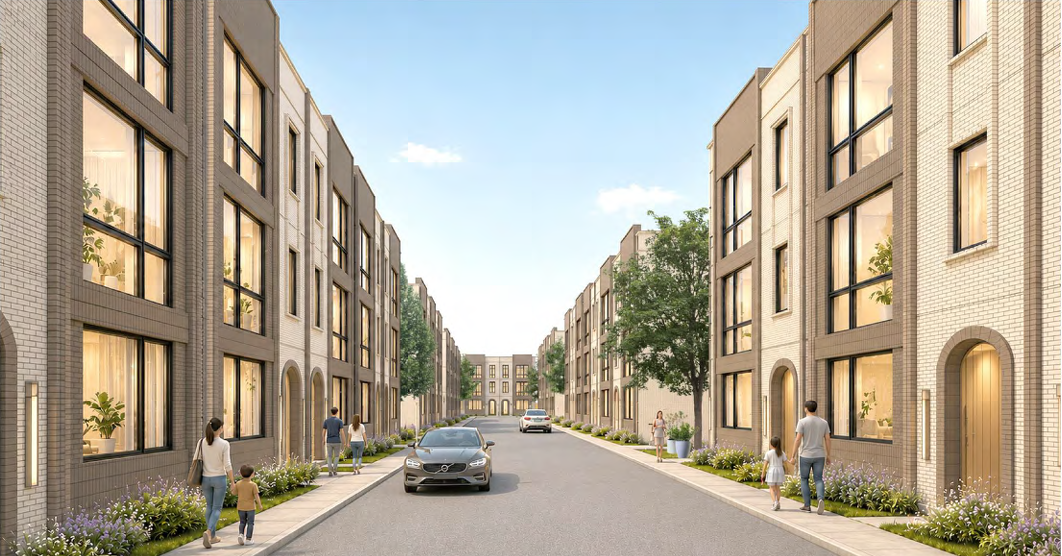
    A development package presented to the city describes the project as “a cohesive contemporary neighborhood with a pedestrian-scaled character.”

    The development is similar to nearby auto-oriented townhouse developments, like Packer Park, the Reserve at Packer Park, and Siena Place.

    “It fits within the character and context” of neighboring developments, said Ron Patterson, a zoning attorney with Klehr Harrison Harvey Branzburg, who represents the developer. “It’s all in keeping with the rhythm.”

    The project does not need permission to move forward from the zoning board, but it will be presented to the advisory-only Civic Design Review board on Oct. 6.

    A rendering from within the heart of the new Packer Park-adjacent development.M ARCHITECTS

    Vesey’s development team, which includes Philadelphia-based M Architects, has the support of the Packer Park Civic Association.

    “It fits in well,” said Barbara Capozzi, head of the Packer Park group. “It’s a very tough crowd down here, but they were satisfied. They signed off on it. Everybody’s fine.”

    An earlier version of the project was slightly larger, at 152 townhouses, but the developer scaled it down to widen the sidewalks and add more open space in response to feedback from the city Planning Commission.

    Patterson says some site environmental cleanup is still required, along with the demolition of the former housing authority warehouses.

    “We would like to demolish the buildings while the weather is still good,” said Patterson, who hopes to begin right after the Civic Design Review meeting.

  • Across the country, homebuyers have the upper hand. But it’s a seller’s market in Montco, Chesco, and Bucks.

    Across the country, homebuyers have the upper hand. But it’s a seller’s market in Montco, Chesco, and Bucks.

    In most of the country’s largest housing markets, more people are selling homes than buying them, giving buyers more chances to get a home.

    But in most of Philadelphia’s collar counties, buyers outnumber sellers, which gives sellers an advantage as more people compete for their properties.

    In August, the combined market that the real estate brokerage Redfin calls Montgomery, Chester, and Bucks Counties was one of only five seller’s markets out of the 49 most-populous U.S. markets that Redfin analyzed. There were about 5,800 sellers and almost 7,300 buyers in the market last month.

    The area’s place in Redfin’s list reflects strong demand for homes and a housing supply that isn’t keeping up.

    “You actually have increasing demand,” said Chen Zhao, head of economics at Redfin. And “your supply is actually decreasing rather than increasing, which is what you see in most parts of the country.”

    But the region is more buyer friendly than it used to be. In the years after the start of the pandemic, the gap between the shares of sellers and buyers was twice what it was this August. Only last year did the gap start narrowing significantly as more sellers entered the market, Zhao said.

    Redfin used a model to estimate the number of homebuyers and home listing data to estimate the number of sellers.

    (function(){function e(){window.addEventListener(`message`,function(e){if(e.data[`datawrapper-height`]!==void 0){var t=document.querySelectorAll(`iframe`);for(var n in e.data[`datawrapper-height`])for(var r=0,i;i=t[r];r++)if(i.contentWindow===e.source){var a=e.data[`datawrapper-height`][n]+`px`;i.style.height=a}}})}e()})();

    A lot of buyer’s markets

    Almost three-quarters of the major metros Redfin looked at — 36 of 49 — were buyer’s markets in August, meaning sellers outnumbered buyers. (One of the country’s 50 biggest metros, Fort Lauderdale, Fla., did not have enough data for the analysis.)

    Homebuyers in buyer’s markets tend to have the upper hand in negotiations, because they have more choices, and sellers compete for them instead of the other way around. Housing supply has increased as homes hit the market that builders started constructing years ago and homeowners who didn’t want to give up their low mortgage rates are forced by life circumstances to sell, Zhao said.

    But the picture isn’t all rosy for the country’s buyers. Home prices and mortgage interest rates continue to climb, pricing some people out of the housing market. Nationally, home-buying demand has dropped slowly and steadily over the last few years, Zhao said.

    But there are opportunities for those who can afford to purchase a home, whether with household wealth or homebuyer assistance programs.

    The combined market that Redfin defines as Philadelphia and Delaware County is a buyer’s market. It had about 5,900 buyers and about 8,900 sellers in August.

    But because of continuing demand, it’s still one of the five markets where sellers were least likely to give concessions to buyers in August, according to a separate Redfin report. These buyer incentives include covering closing costs and paying for repairs.

    Comparing markets

    The Nashville area had the strongest buyer’s market in the country in August, according to Redfin. It had more than double the number of home sellers compared to buyers.

    That was also true in the metros of Miami, Orlando, and Las Vegas, and the Texas metros of Houston, San Antonio, Austin, and Dallas.

    In the Nashville metro, the market turned more strongly in favor of buyers last month, because the number of home listings rose 4% from the previous month, while the number of buyers dropped by only 0.4%.

    Redfin considered eight housing markets to be balanced, with roughly the same number of buyers and sellers in August. Balanced markets include New Brunswick, N.J.; New York; and Baltimore.