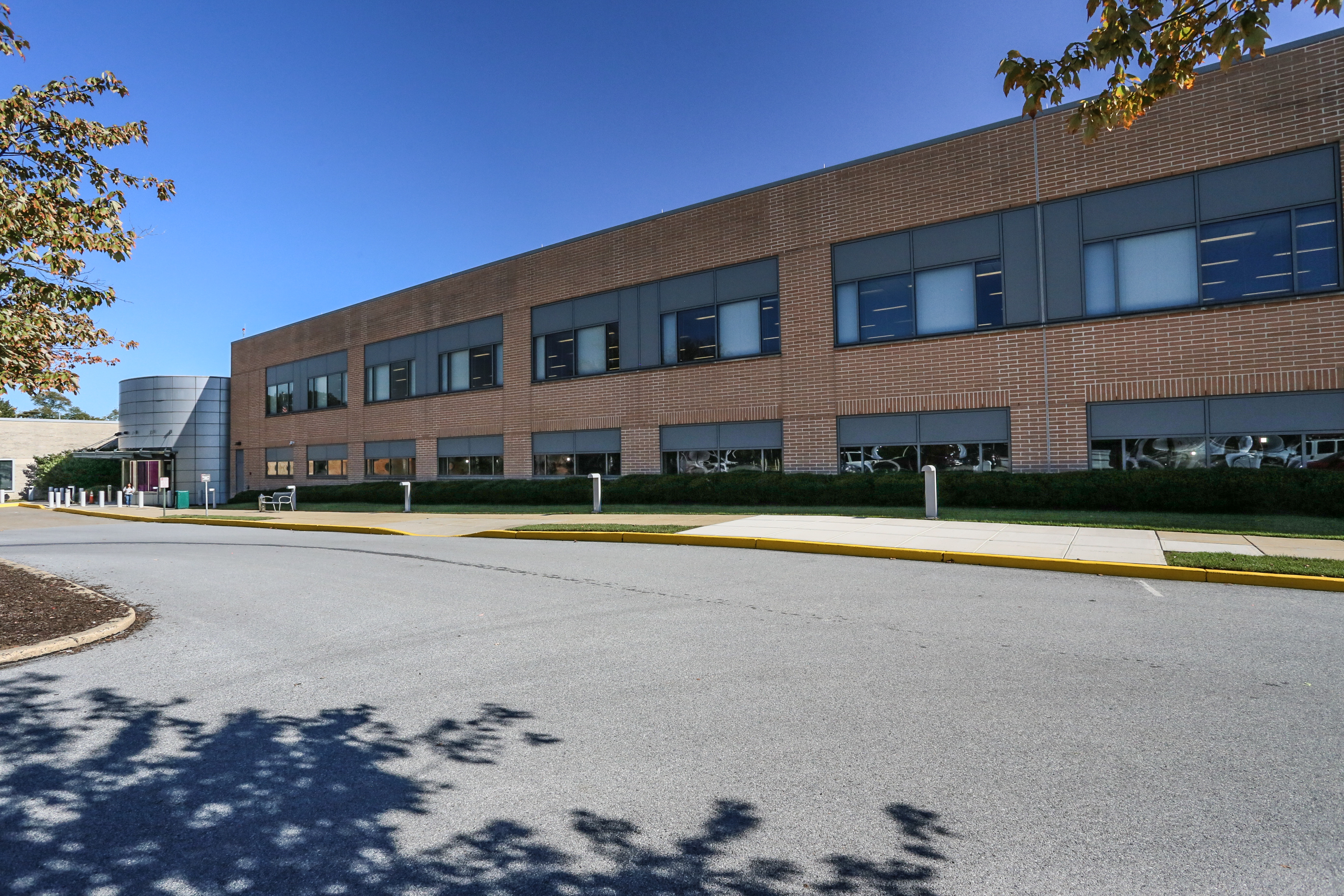
Vanguard has sold a Tredyffrin Township office complex for $17 million — with no plans of moving out.
Last month, the Malvern-based investment firm sold its 22-acre property at 1041 W. Valley Rd. to another Malvern-based company, E Kahn Development, according to Chester County property records.
But Vanguard plans to continue leasing the 323,000-square-foot space, which sits just off U.S. Route 202, about eight miles from its main campus in Malvern. Hundreds of Vanguard IT employees work at the complex, called the Robert A. DiStefano (RAD) Technology Center.
Vanguard’s RAD complex in Tredyffrin Township has been sold for $17 million, but Vanguard will continue to lease the space for its IT operations.Courtesy Vanguard
The sale and lease-back “reflects Vanguard’s focus on providing work environments that support and inspire our crew as they remain focused on our end investors,” a company spokesperson said in a statement. “Vanguard crew will continue to work at the RAD Technology Center through at least 2028, and there are no immediate plans to move crew who work there today.”
Eli Kahn, president and founder of E Kahn Development, said in an email that his company has “no immediate plans for the buildings.”
Vanguard employs about 20,000 employees, 12,000 of whom are based in Malvern. About 600 IT staffers work at RAD, Vanguard’s only complex with a Wayne address.
The company is expanding its IT staff worldwide, including at a new office in India, but has said its U.S. workforce will not be impacted.
Tucked away on an alley in the north end of Ocean City, Steve and Regina Pannepacker’s three-bedroom, one-bathroom cottage is their perfect peaceful haven.
The cozy home is filled with a dozen or so surfboards for Steve’s passion and shelves packed with books for Regina’s passion. Then there are the bowls and bowls of sea glass, which they both love collecting.
Shortly after the pair married in 1986, Steve contacted several Ocean City Realtors, asking them to be on the lookout for a detached garage space they could convert into a small cottage. Finally, in 2015, one of them called.
“He said I found your name in my Rolodex,” recalled Regina, a registered nurse. “I hadn’t heard that word in a really long time.”
They loved the home’s location, the bright light that pours in from windows in all directions and the neighbors who ultimately became friends.
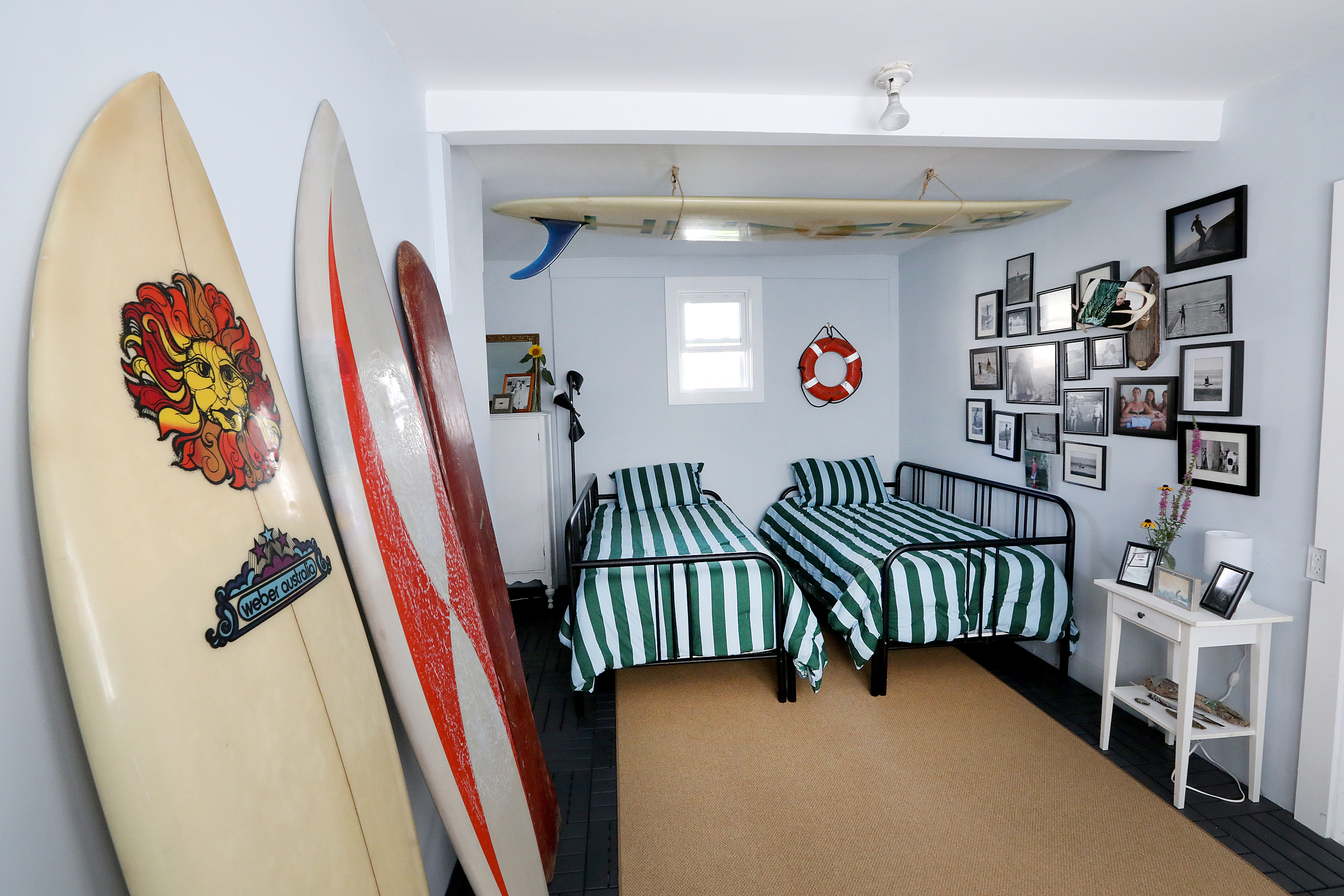
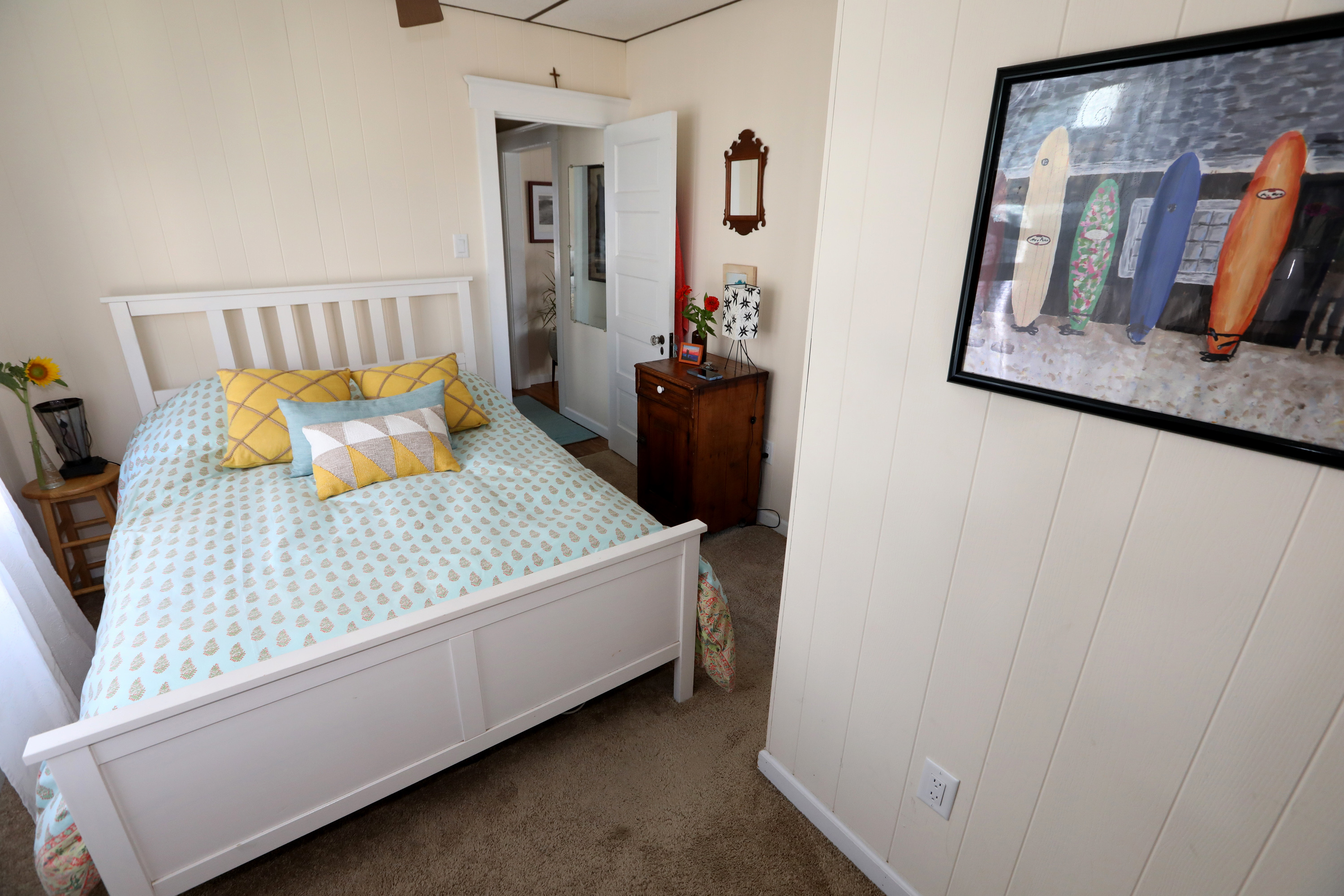
Surfboards abound in the secondary bedroom.Vernon Ogrodnek / For The InquirerThe primary bedroom is small, decorated with light colors.Vernon Ogrodnek / For The Inquirer
Built in the early 1900s, the home was originally a three-car garage for the main house that sits in front of it. It was later converted to include a two-bedroom property above the garage. It is believed the front property was owned and lived in by a seafaring ship’s captain, Steve said.
Around 2013, the main house and garage were divided into separate properties.
The Pannepackers converted the garage space into three distinct rooms — a guest bedroom, a storage area with a washer and dryer, and a space for Steve’s workbench that also houses surfboards and bicycles.
Steve Pannepacker is an avid collector of surfboards, like this Plastic Fantastic board. He keeps them in the garage.Vernon Ogrodnek / For The Inquirer
With their five children, three grandchildren plus two more on the way, and lots of siblings, nieces, and nephews, the home is usually bustling with activity. Regina has eight brothers and sisters, and Steve has one sibling. The couple also invite friends and family to use the cottage when their jobs keep them at home in Havertown.
Steve, who works in television and film as an art director and prop coordinator, did most of the decorating. His deep love for Hawaii, where he and Regina made a pilgrimage in 2008, was a huge influence on the home’s decor.
“It’s a combination of Ralph Lauren and a Hawaiian style,” Steve said. “Ralph Lauren’s look included leather, which inspired the leather chairs, and that is also an older Hawaiian look.”
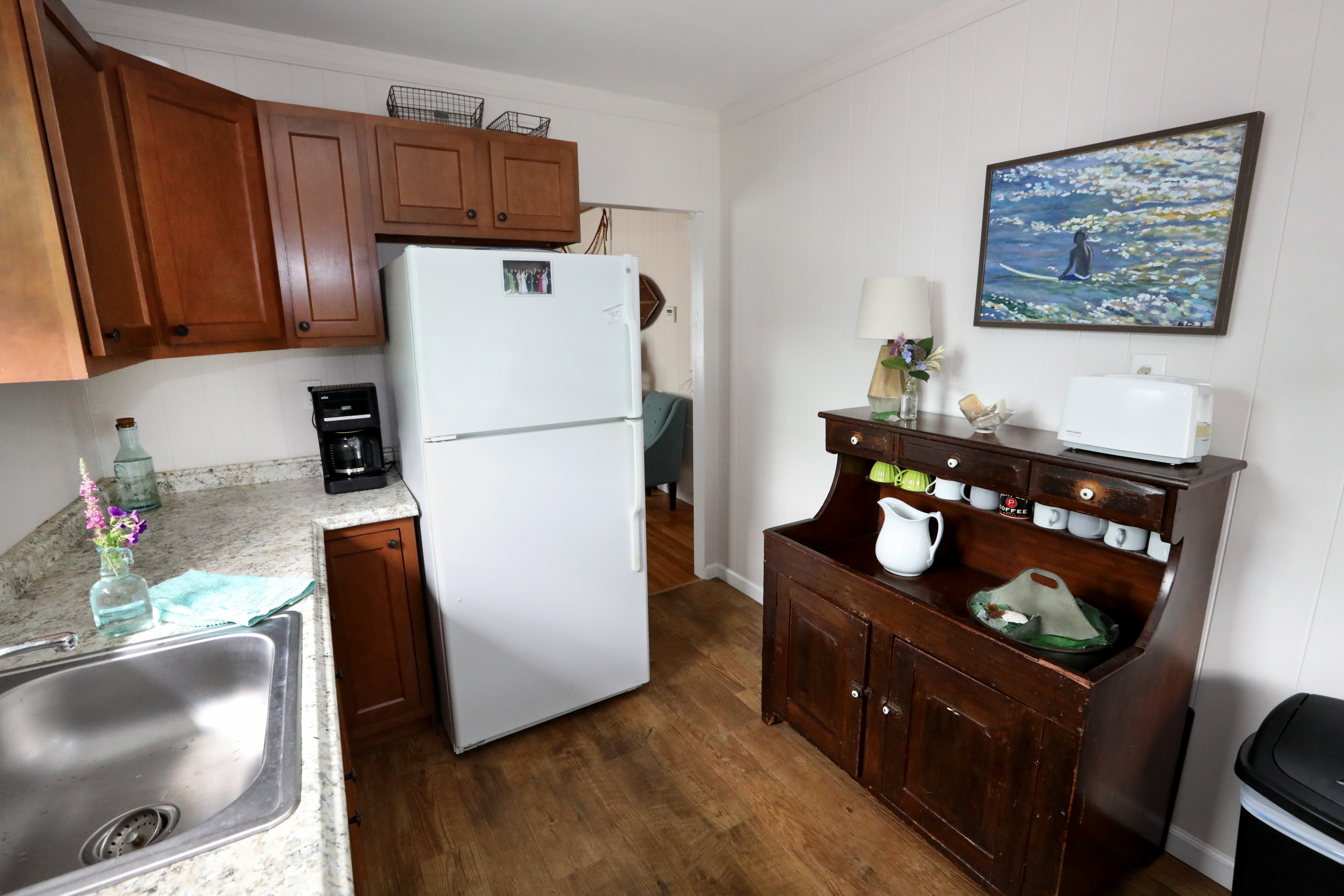
The kitchen is small but workable for the couple, who like to cook. They eat at the drop table in the living room that has an extendable leaf. Closed, it’s large enough for Steve and Regina, but it can accommodate six when open. When a larger crowd is visiting, they set up a table in the front yard or alley.
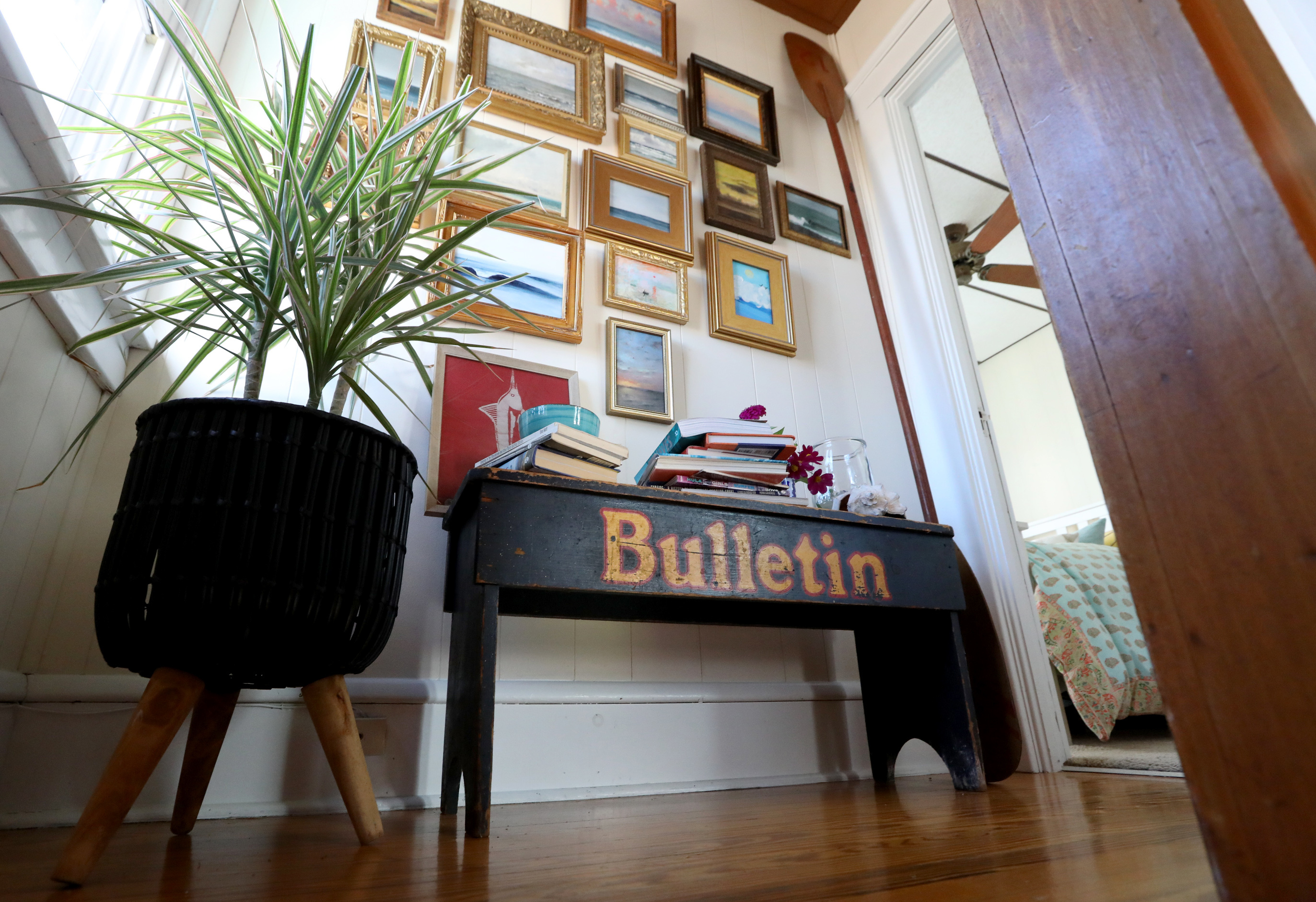
A wall of oceanscapes, some professionally done, some reproductions, and some by family members.Vernon Ogrodnek / For The InquirerBelow the oceanscapes is an old Bulletin newspaper bench, a nod to Regina’s family association delivering the now defunct Philadelphia paper.Vernon Ogrodnek / For The Inquirer
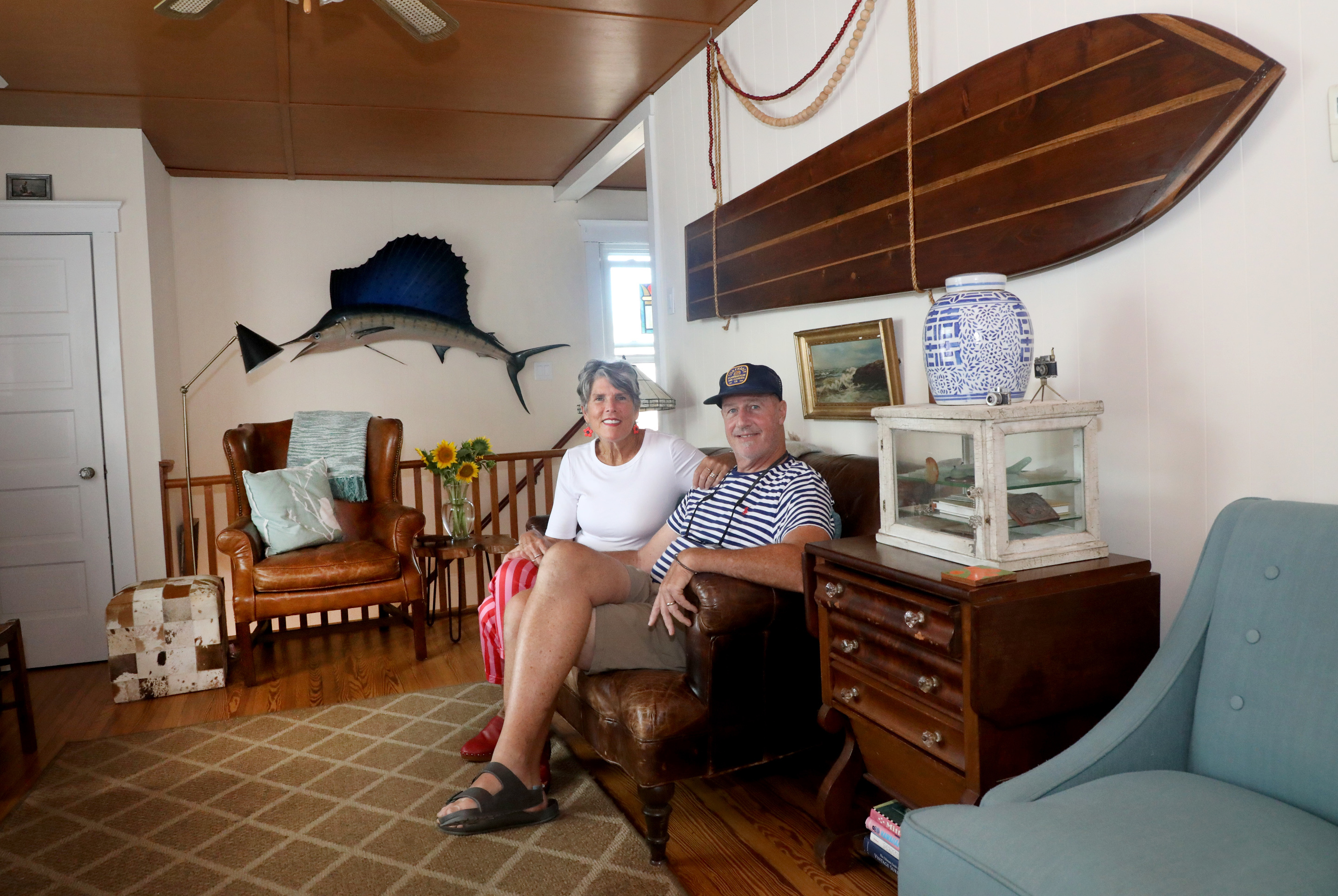
The living room is also where they relax and entertain. When it’s just the two of them, they are often reading — Steve in his comfortable brown leather chair and Regina curled up on the nearby couch. When guests visit, the room is where they talk and laugh and share each other’s company.
“This is our everything room,” Regina said. “We don’t have a TV or Wi-Fi so there’s lots of conversation.”
Surfboards are a part of the decor in almost every room. The wooden board that hangs over the living room sofa was made by local surf historian Bill Simon about 30 years ago and is a reproduction of a 1930s surfboard by Pacific System Homes.
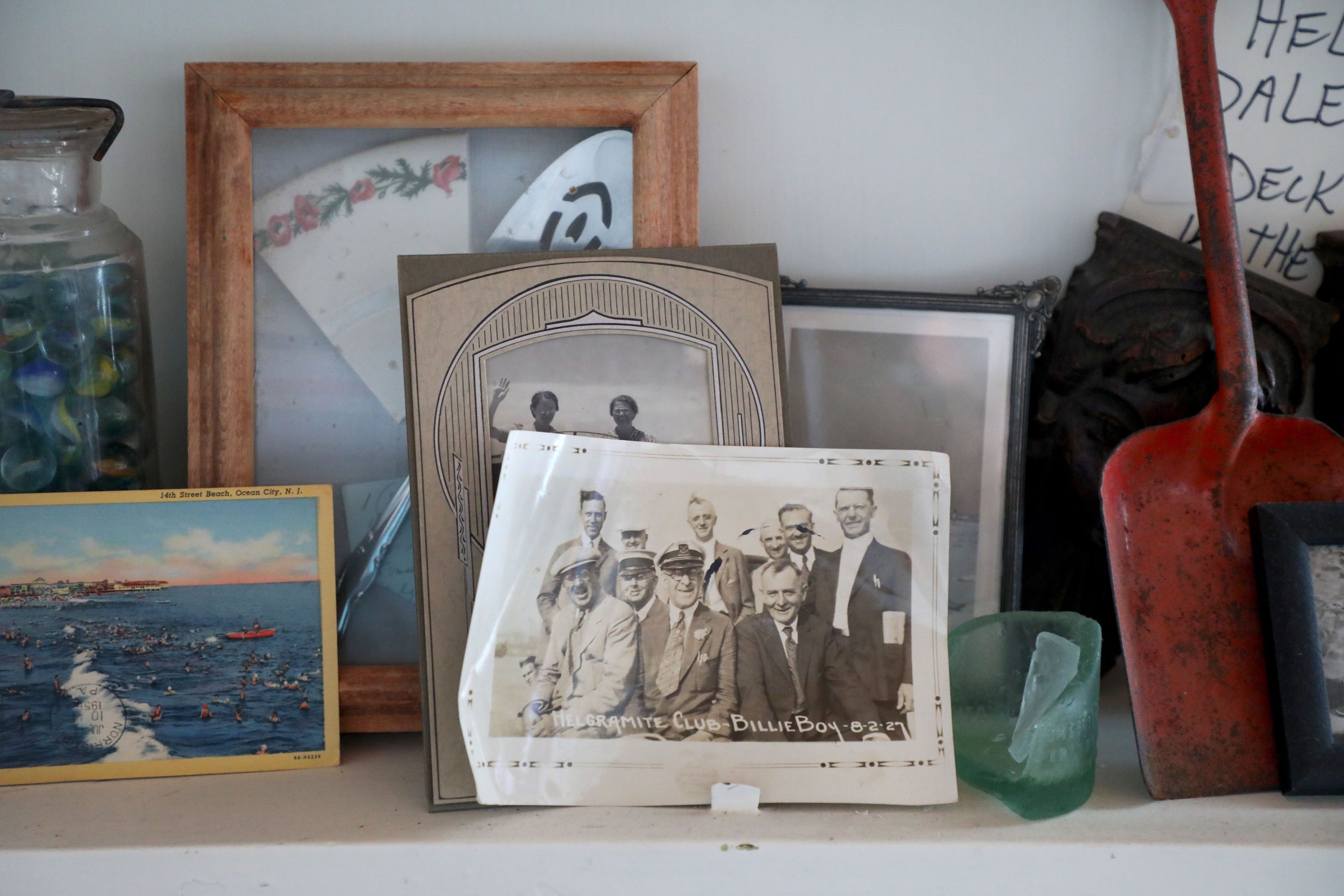
A collection of old photos, postcards, and memorabilia in the living room.Vernon Ogrodnek / For The InquirerA collection of Hawaiian memorabilia in the living room.Vernon Ogrodnek / For The Inquirer
Hidden behind other houses off a main road, the home’s orange front and garage doors help friends and pizza delivery drivers find them.
An avid surfer since high school, Steve spent summers working and surfing in Ocean City while Regina grew up day-tripping to the beach town with her family. It was an important part of both their childhoods.
A painting by the couple’s daughter is hung in the home’s compact kitchen.Vernon Ogrodnek / For The Inquirer
“My parents spent two summers as the house parents for the waitresses at the Flanders,” recalled Regina. “Having had nine kids of their own, they got the job pretty easily. Our family’s love for the beach is deep-rooted.”
Regina’s parents’ love of sea glass trickled down to Regina and Steve. Most days, the couple take walks and usually find a sea glass treasure.
The beach town is woven into the fabric of their lives. They spend time at both the beach and the bay, and often head to the Second Street pier to take in the sunset.
“This home is a retreat where we decompress,” Regina said. “You come over that bridge and smell the air, and something comes over you.”
Is your house a Haven? Nominate your home by email (and send some digital photographs) at properties@inquirer.com.
Philadelphia Sheriff Rochelle Bilal made an unsuccessful, last-ditch attempt to avoid facing a city judge about major problems in her office, arguing through an attorney that she has “limited personal knowledge” of the real estate transactions she oversees.
Jonathan Rardin, a lawyer the city retained to represent Bilal, wrote in a motion filed Friday afternoon that the embattled sheriff should not have to testify before Common Pleas Court Judge Paula Patrick at Wednesday’s hearing on sheriff sales because it would involve “matters outside her unique personal knowledge.”
On Tuesday morning, Patrick rejected Bilal’s request for a protective order to shield her from testifying, writing that “Bilal and any other relevant parties shall appear” on Wednesday morning and “be expected to testify if necessary.”
Patrick, supervisor of the court’s commerce division, scheduled the hearing in May, as winning bidders at sheriff sales continued to flood the courts with petitions seeking their deeds. As The Inquirer first reported in July 2024, Bilal’s office had not been issuing the deeds for a year or more after the auctions, leaving neglected homes unable to be renovated, rented, or resold.
An attorney who represents real estate investors recently filed a lawsuit arguing that Bilal had breached the terms of a 2003 consent order requiring the office to issue deeds within 40 days of settlement. Patrick responded by ordering Bilal’s office to demonstrate at a public hearing that it was not in violation of the decree.
Wednesday’s hearing will help decide whether Patrick will appoint a “special master,” a title agent, or some other third-party expert in real estate to administer sheriff sales in Philadelphia — arguably the most important function of Bilal’s office.
Bilal’s lawyer had already successfully pushed back the hearing, which originally had been set for July 27, by arguing the sheriff had an unavoidable scheduling conflict due to “a previously scheduled vacation.” That request to delay the hearing did not mention that Bilal hoped to completely avoid testifying, and at the time, Rardin wrote that her “presence in this matter is necessary.”
Yet last week’s motion argued instead that the sheriff’s knowledge is “limited to the information provided to her by her staff” and that she should not have to personally testify at all.
“Requiring Sheriff Bilal to appear and testify regarding events and administrative practices that are not within her unique personal knowledge would impose an unreasonable burden and oppression” under the state’s rules of civil procedure “and would divert a high public official from the discharge of her official duties …,” Rardin wrote.
Daniel Bernheim, the lawyer for a property group whose March lawsuit triggered Patrick’s court order, said Monday evening that Bilal’s attempt to avoid testimony was a “disappointing response by an elected official.” On Tuesday, Bernheim — himself an elected commissioner in Lower Merion Township — filed a response to her motion that sought to force Bilal to testify in court.
“[T]he sheriff seeks to avoid answering questions based upon a series of cases which have no relevance whatsoever with the present proceedings and a claim of immunity from testifying which does not exist,” Bernheim wrote.
In April, Bilal claimed at a City Council budget hearing that most post-auction delays had been resolved. She blamed any ongoing delays in issuing deeds on buyers who did not submit required forms or fees.
But after Patrick filed her court order in May, Bilal’s office within 48 hours processed 277 deeds, some attached to auctions that had taken place more than a year ago. The office filed more paperwork in two days than it had in the prior three months.
The company recently announced plans to open stores in King of Prussia and Moorestown in late 2027.
The King of Prussia market, the chain’s first Pennsylvania location, is set to open at 320 W. DeKalb Pike, the site of the closed Hobby Lobby in the DeKalb Plaza shopping center.
The Moorestown store, the first in South Jersey, will be located at 1311 Nixon Dr., replacing the Barnes & Noble and PetSmart in the East Gate Square complex.
Each of the new locations will be about 58,000 square feet.
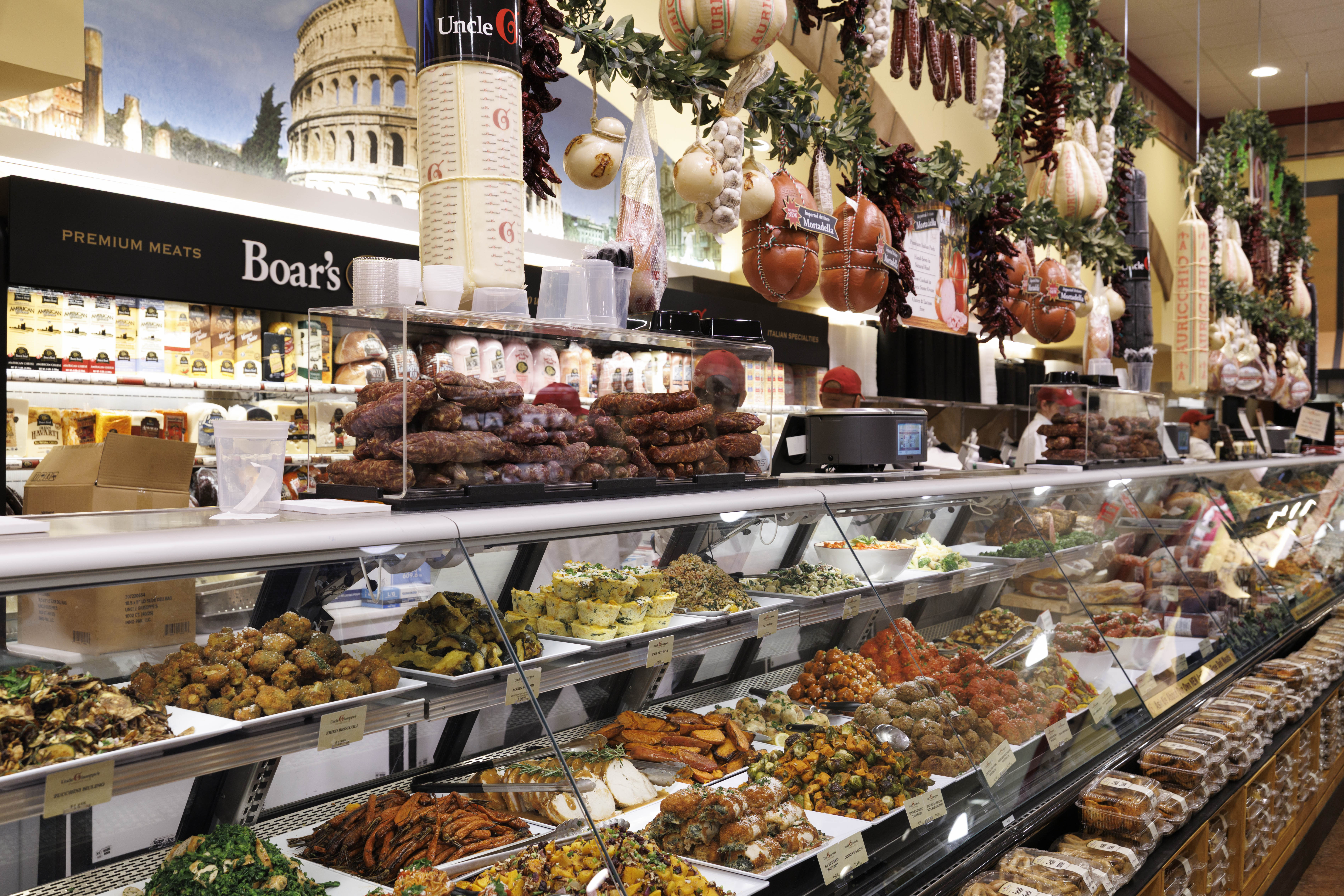
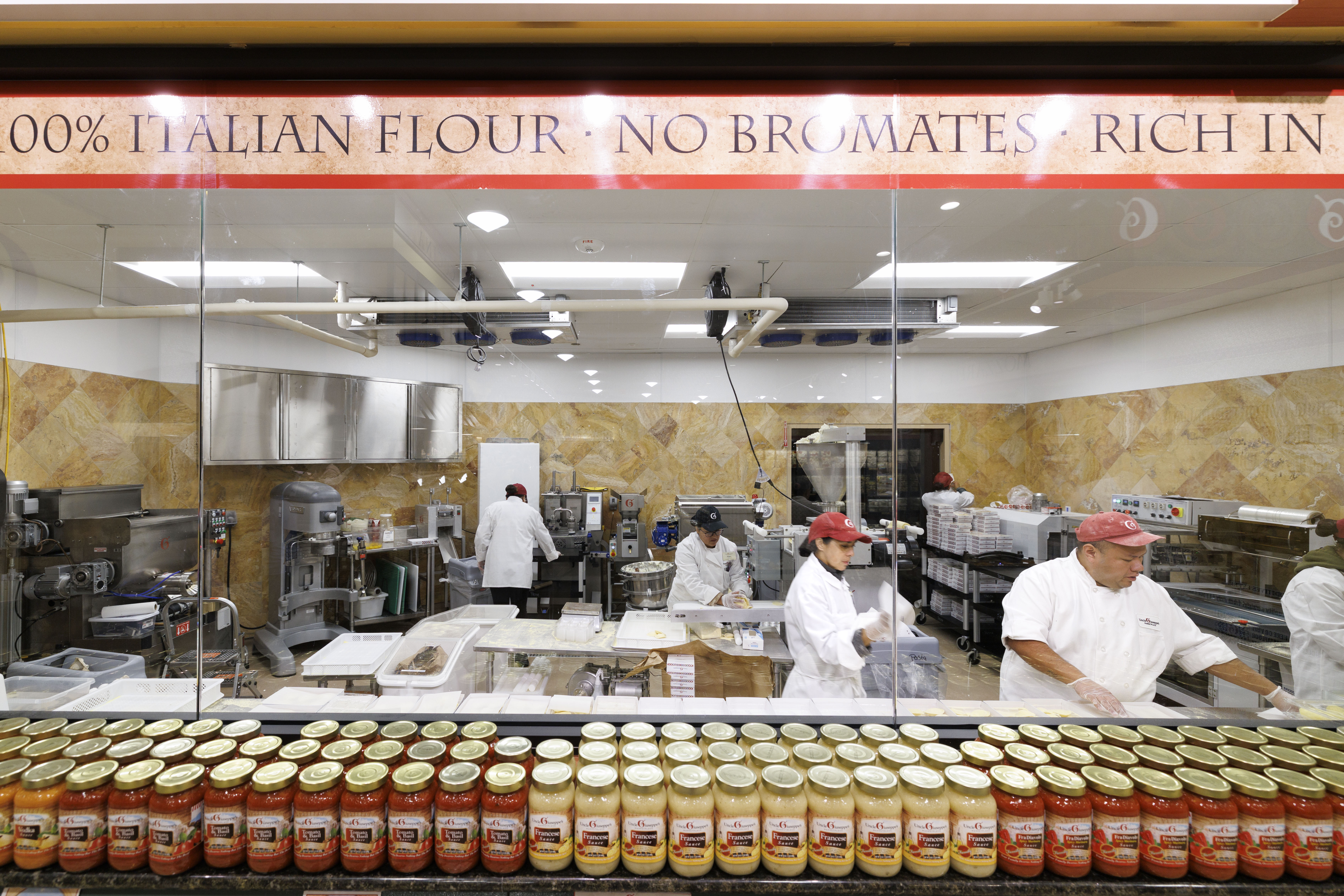
The inside of a recently opened Uncle Giuseppe’s Marketplace in New York.Courtesy Uncle Giuseppe's Marketplace
“King of Prussia and Moorestown are two markets we’ve been looking at for some time,” Carl DelPrete, CEO and cofounder of Uncle Giuseppe’s Marketplace, said in a statement. “We look for communities where we believe our stores will be a good fit and where customers are looking for fresh, quality food and good service.”
Founded on Long Island in 2001, Uncle Giuseppe’s now operates 13 locations in New York and North Jersey.
Every store sells made-in-house mozzarella, homemade pasta, prepared foods, fresh produce, specialty cheeses, imported Italian products, natural and organic items, and more traditional groceries. Each market also has full-service meat and seafood departments, an Italian deli, a scratch bakery, and a catering department.
Customers can watch workers make pasta at a recently opened Uncle Giuseppe’s Marketplace in New York.Courtesy Uncle Giuseppe's Marketplace
Company executives call shopping at Uncle Giuseppe’s an experience, one in which customers can watch pasta, mozzarella, and bread being made and see meats being cut to order.
Gourmet grocers have not been spared. Di Bruno Bros., the Philly-based Italian-food retailer, closed three of its five locations this winter, two years after being acquired by Wakefern Food Corp., the North Jersey-based supermarket cooperative that operates ShopRite.
Despite industry uncertainty, Uncle Giuseppe’s is not the only grocer expanding. Sprouts, the organic supermarket chain, is adding stores, too, including in Havertown, Limerick, and Washington Township.
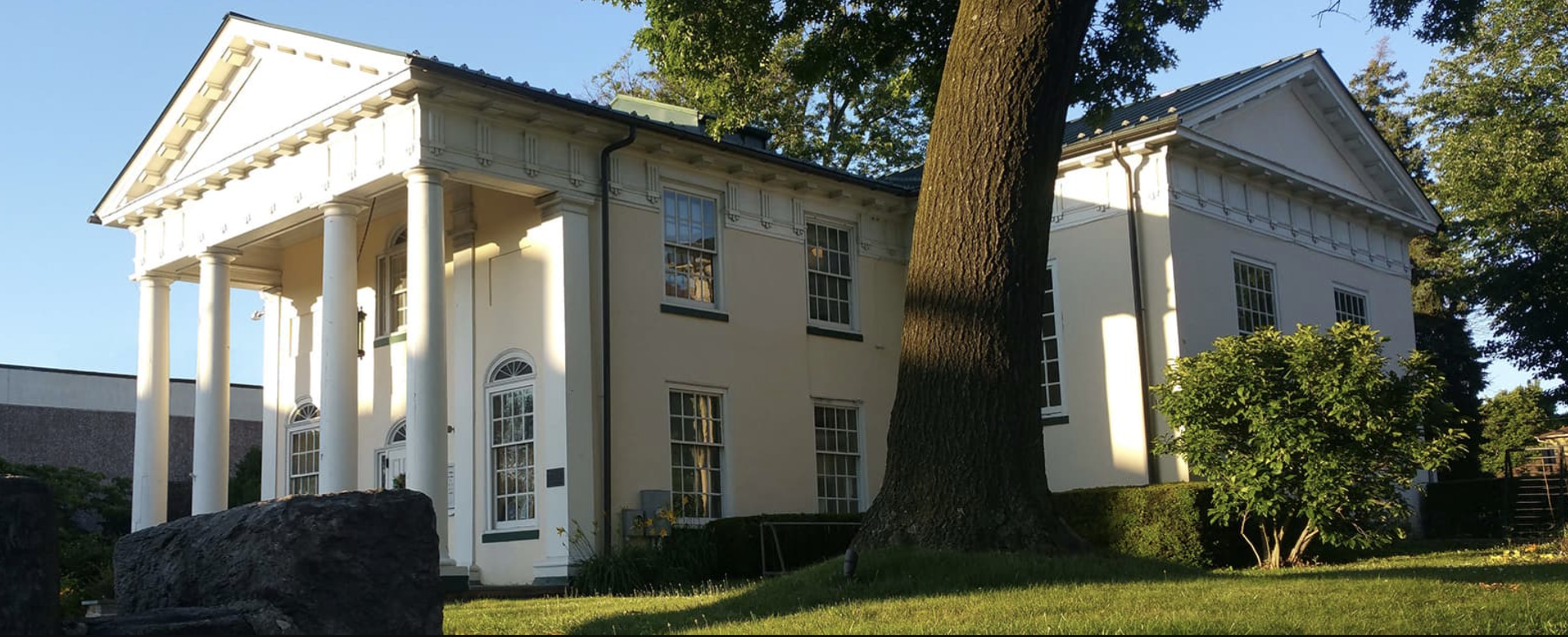
Jenkintown Borough is seeking a design and engineering consultant to help decide whether to expand or reorganize its historic library.
Library use is booming, according to Jenkintown’s request for consultant proposals: Almost a third of the borough’s residents are active patrons, owing in part to new apartments within walking distance, borough officials wrote. Visits from Philadelphia residents are also up 28% from last year.
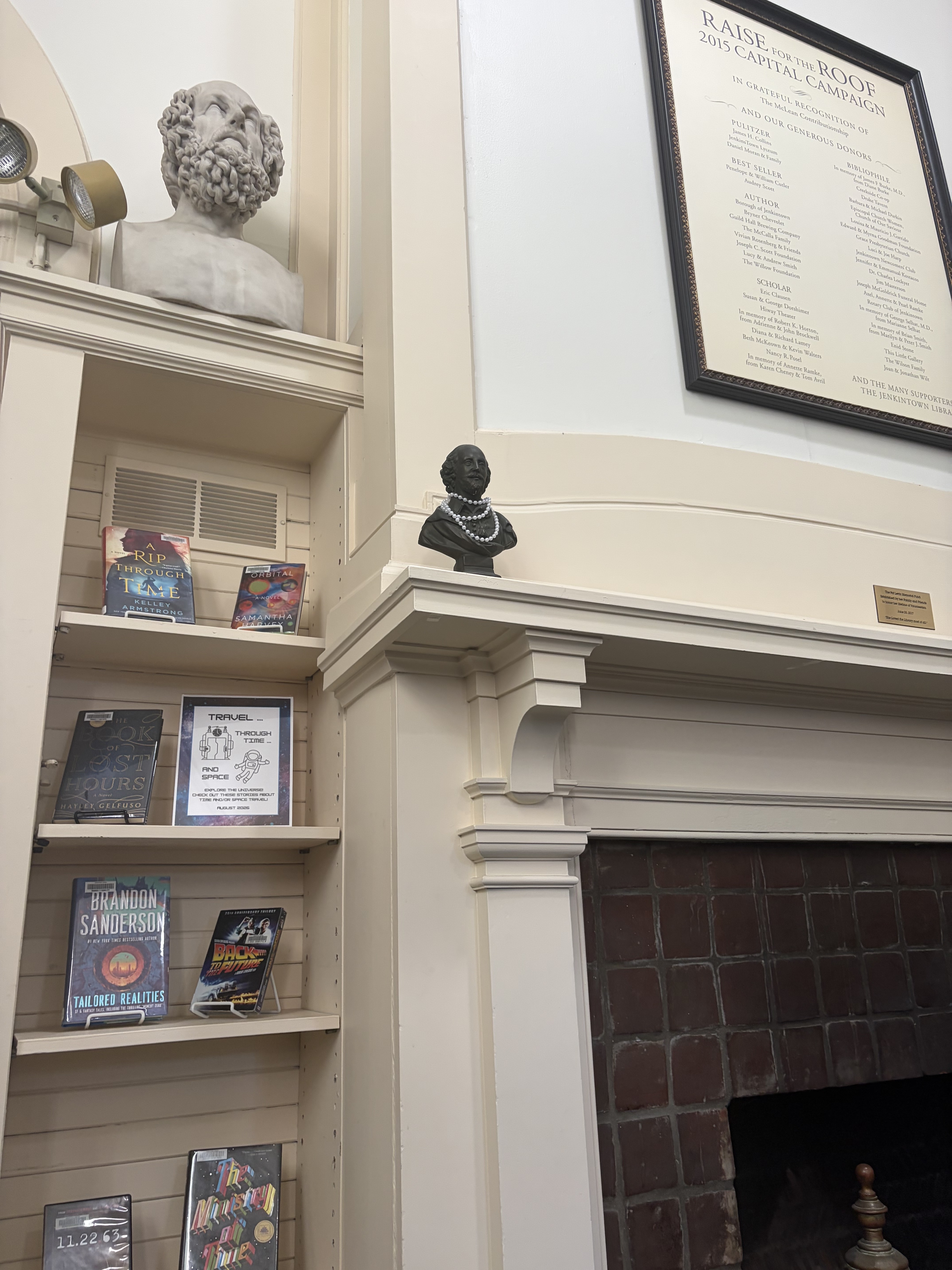
Busts by the fireplace at Jenkintown Library, a pre-Civil War building listed on the National Register of Historic Places.Jess Rohan
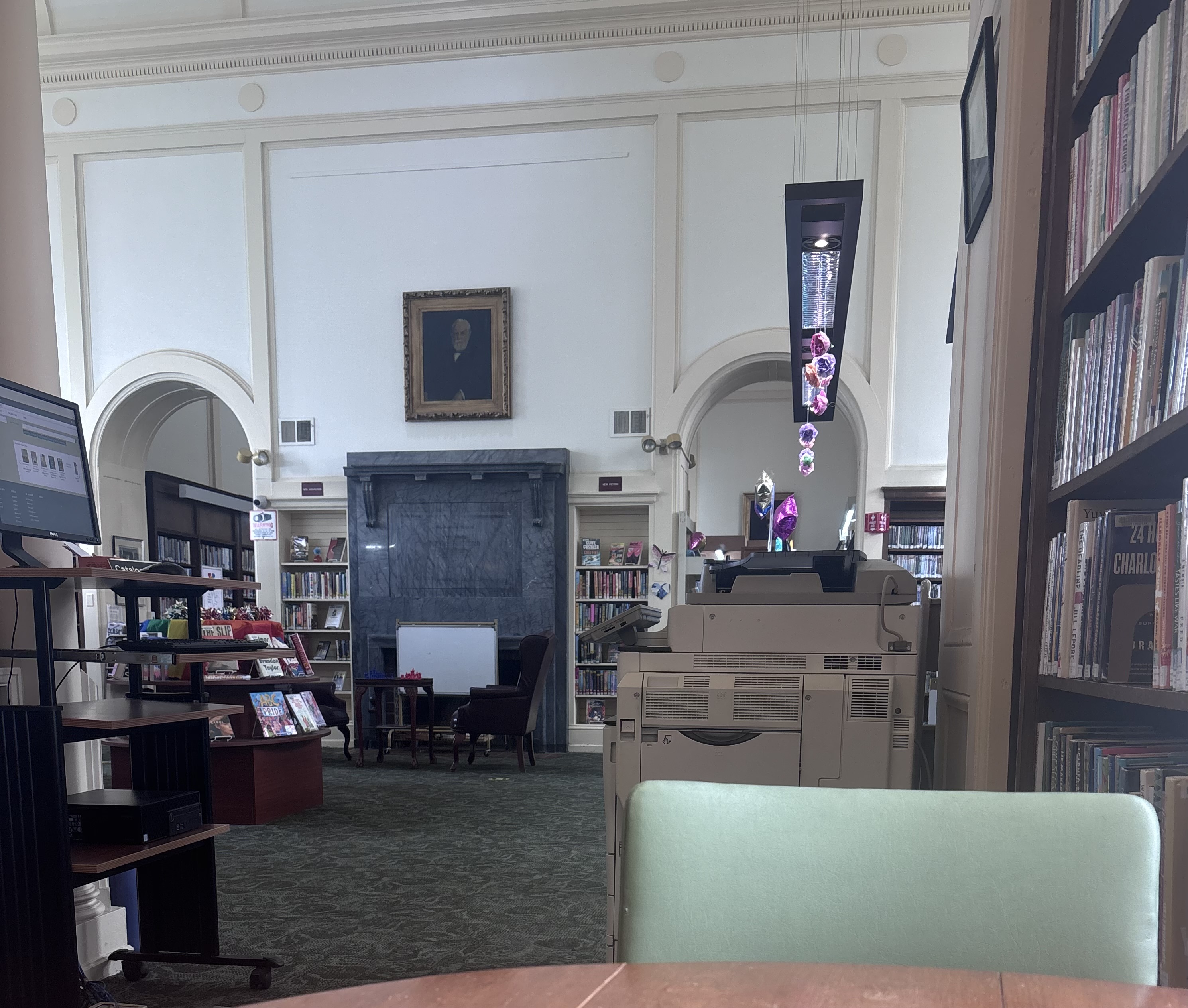
But the 187-year-old building, which is on the National Register of Historic Places, is not suited to the needs of modern library users. The building, which includes additions from 1909 and the 1970s, has just six computer stations and no quiet study areas. Originally designed as a lecture hall, the library also lacks energy efficiency and accessibility.
“These spaces were designed for a very different era,” borough officials wrote.
Jenkintown won a state grant for $81,900 to fund the master plan process, which the borough will match with its own money under the grant requirements.
Jenkintown Borough plans to either reorganize or expand its historic library, which has only six computer stations and no quiet study room.Jess Rohan
The consultant will assess all of the library’s facilities, including fire code compliance, the electrical system, and architectural elements, and identify short- and long-term facilities needs.
The community would then be presented with the consultant’s recommendations for two options: either expanding the library or reconfiguring the existing space. The consultant would use the community feedback to create the final master plan.
This suburban content is produced with support from the Leslie Miller and Richard Worley Foundation and The Lenfest Institute for Journalism. Editorial content is created independently of the project donors. Gifts to support The Inquirer’s high-impact journalism can be made at inquirer.com/donate. A list of Lenfest Institute donors can be found at lenfestinstitute.org/supporters.
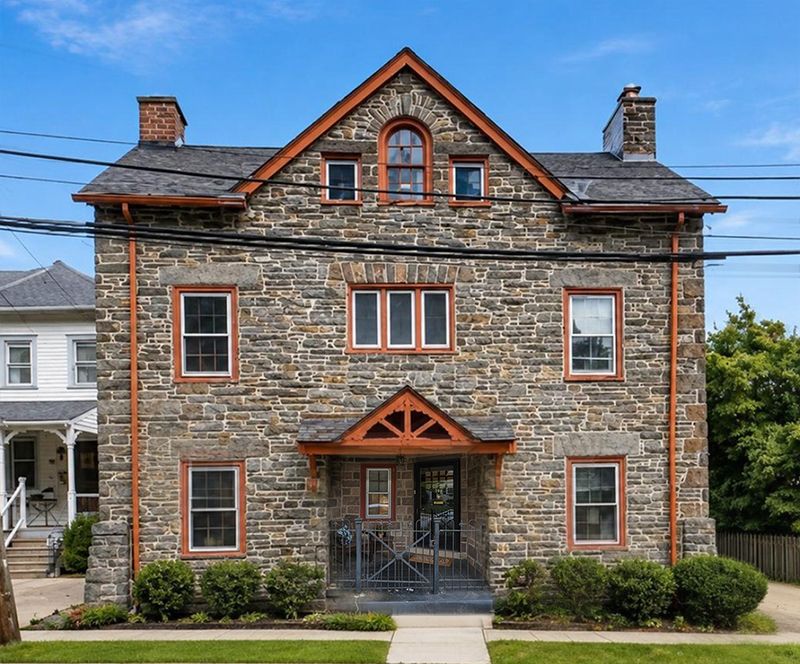
Elizabeth Monroe was living in New Jersey with her son in 2006 when she saw a listing in Bryn Mawr, and thought it might be time to go back to the town where she’d grown up.
“I hadn’t even gone inside it,” she said. “but I loved the Tudor look and the stone.
“It’s a soulful kind of house. A friend once called it my ‘sanctuary,’” she recalled.
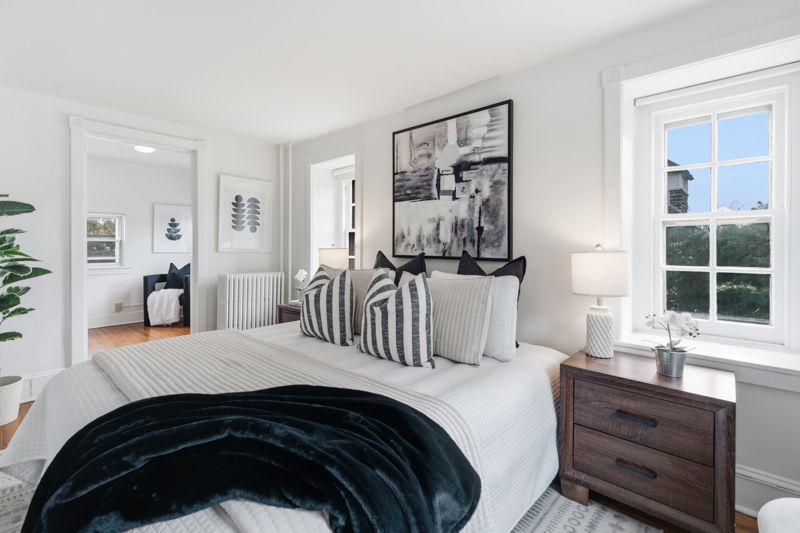
One of the bedrooms in the Bryn Mawr home features large windows to let in the light. Brendan Farrell
The four-bedroom, two-bathroom house spans 1,762 square feet.
Monroe, an ordained Presbyterian minister who mostly worked as a hospice chaplain, said she had considerable renovations done, mostly on the first and second floors.
The house, has a gated front porch, original hardwood floors, and deep-set windows.
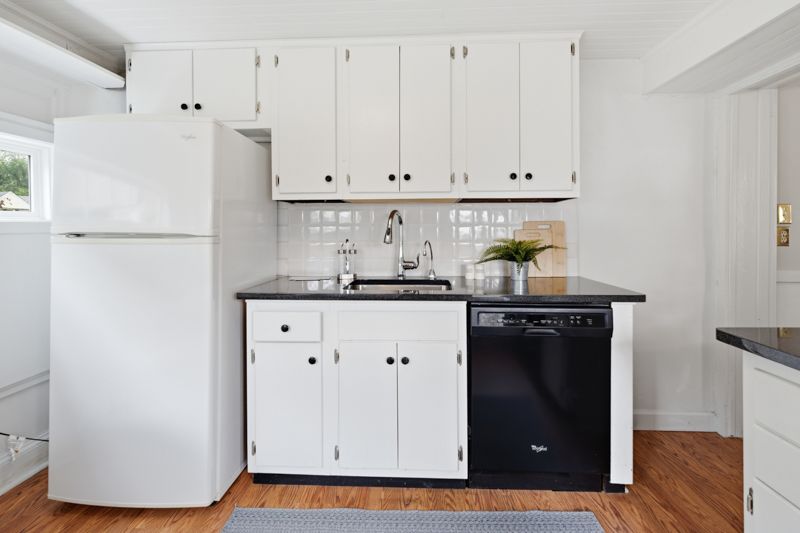
The kitchen has updated appliances. Brendan Farrell
The kitchen has white cabinetry, black granite countertops, and updated appliances.
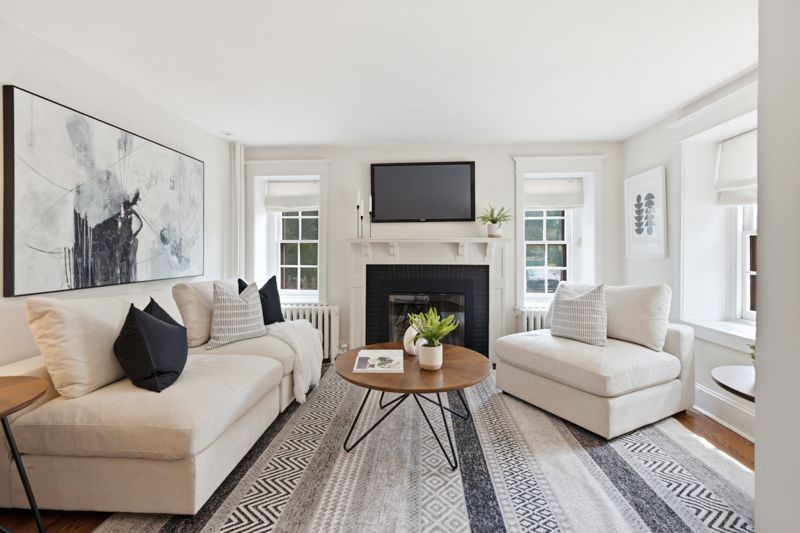
The living room has a working gas fireplace.
Each of the two second-floor bedrooms has its own sitting room, which could be used as a home office, reading room, art studio, or playroom.
A working gas fireplace is a highlight of the living room.Brendan Farrell
The third floor has two additional bedrooms and a hall bathroom.
There is high velocity central air and 200-amp electrical service.
There is a private brick patio, a fenced outdoor space, and a detached one-car garage. It is walkable to the Bryn Mawr Regional Rail station.
The dining room can fit a table for six.Brendan Farrell
And “it’s walkable to the Wawa,” Monroe joked. And since the parking lot there is often congested, “I thought that this might be a selling point.”
The house is in the Radnor School District.
It is listed by Colleen Whitlock and Brianna Golden of Keller Williams Main Line for $699,000.
Since being sworn-in as Philadelphia’s sheriff in January 2020, Rochelle Bilal has brought new levels of dysfunction to an office with a history of corruption and scandal going back to the mid-19th century.
Tax revenue plummeted, court security incidents soared, and millions of dollars in public money have been diverted into an office slush fund.
City Hall has ignored the mounting problems for the last six years. But this week Bilal must face a judge who could limit her ability to auction off foreclosed properties — arguably the office’s most important function.
Bilal, a former police officer and self-described reformer, is due to appear Wednesday before Common Pleas Court Judge Paula Patrick to explain why the judge should not appoint a “special master” or some other expert to fix major delays in processing deeds after sheriff sales.
Buyers have been waiting a year or longer after auction to receive their deeds, leaving the properties in a state of limbo that can invite squatters and contribute to blight. Without a deed, the foreclosed homes cannot be renovated, rented, or resold.
The Inquirer first reported on that problem in July 2024. An analysis of more recent financial records shows that the office has also earned millions of dollars in interest from property auctions. That is because the proceeds of the sales are sitting for long periods in TD Bank accounts the Philadelphia Sheriff’s Office controls, rather than being used to quickly settle old tax and utility liens.
Bilal’s office initially claimed the deed process was working as intended, saying through a spokesperson in 2024 that there was no “widespread delay” in recording deeds. With complaints continuing, she told City Council at an April budget hearing that it was the buyers who were responsible for the delays.
Neither statement was true.
In May, with buyers still petitioning the courts for their deeds, Judge Patrick, who is supervisor of the court’s commerce division, filed an order demanding that Bilal address the “ongoing harm” caused by the chronic backlog and submit extensive documentation pertaining to the handling of sheriff sales and related funds since she took office.
The court order said Bilal’s office appears not to be “timely performing its essential, nondiscretionary, ministerial duties, which are mandated by law.”
The sheriff snapped into action.
Within 48 hours of Patrick’s court order, Bilal’s office processed 277 deeds — filing more paperwork in two days than it had in the prior three months.
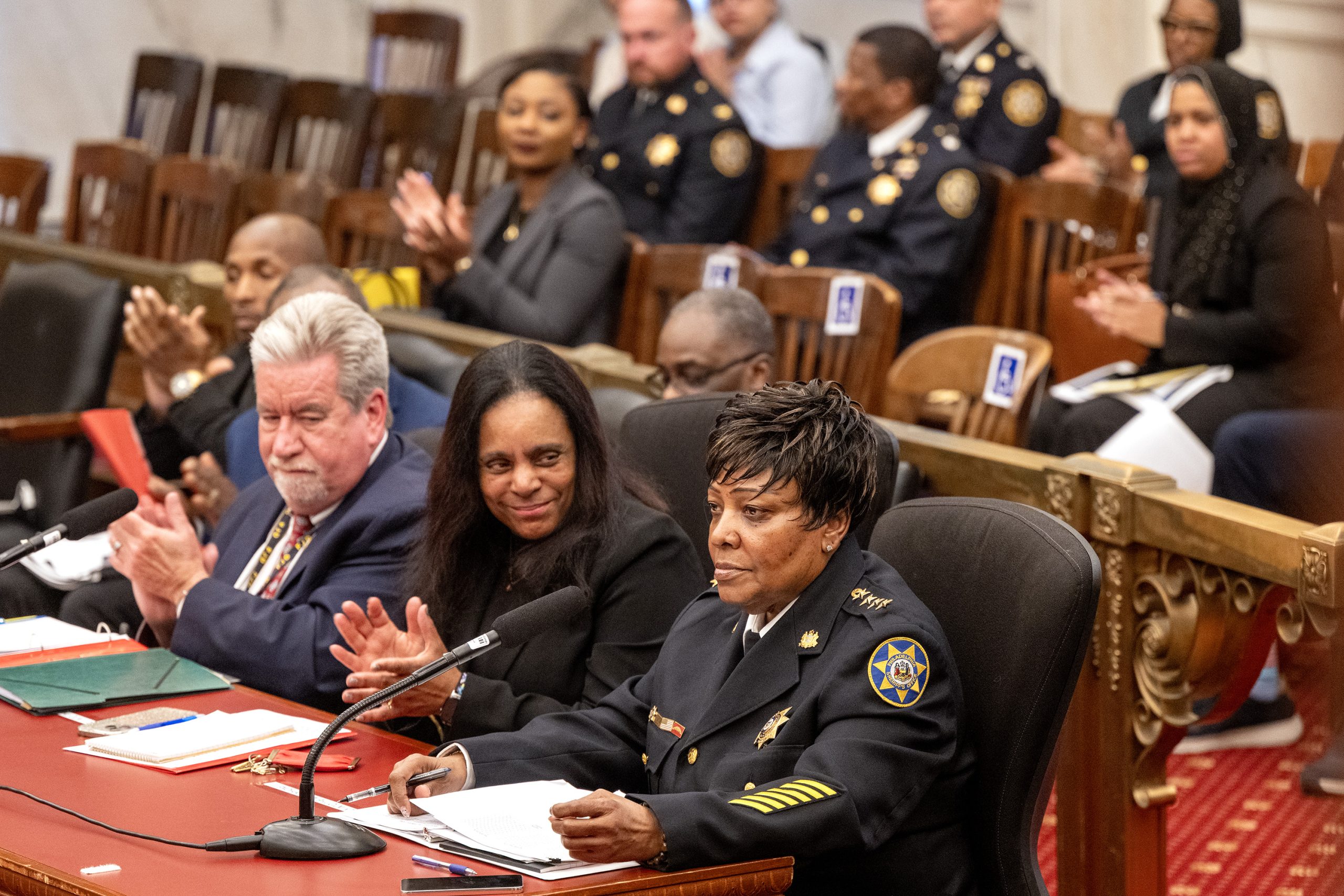
Sheriff Rochelle Bilal (right) is applauded as she testifies in City Council during a budget hearing in April. She claimed the deed-delay problem had been resolved.Tom Gralish / Staff Photographer
Last month, the office filed a response to the court order providing a new explanation for the delays: Bilal didn’t know about them.
Steven Wakefield, a newly hired attorney who serves as Bilal’s deputy undersheriff, blamed the problem on a former director of deeds who was “doing the work of multiple people” after the office switched software vendors in 2023, requiring some functions to be performed manually.
“The former director did not inform the sheriff of the backlog,” Wakefield wrote in a certification filed with the court on July 13.
The certification does not say when Bilal first became aware of the delays or why she remained in the dark while her then-undersheriff, Tariq El-Shabazz, was signing the deeds.
In a recent op-ed in City & State Pennsylvania, Bilal wrote that she was making “practical, measurable improvements designed to increase transparency, accountability and customer service.”
“I have never shied away from constructive scrutiny from the media, watchdog organizations and the public,” she wrote.
She declined to answer questions for this article.
An expensive problem
Cleaning up the deed mess has not been cheap.
Among thousand of pages of records Bilal’s staff submitted to the court last month is a check log showing that the office, beginning in March, paid more than $4.5 million from the proceeds of mortgage foreclosure sales to the Corporation Service Co., or CSC, a Utah-based financial services corporation.
Check memos describe the payments, equivalent to more than 10% of the office’s annual budget, as “deed processing fees.”
Wakefield’s certification to the court claimed that all deeds have been issued through June. He attributed the turnaround partially to new hires and the integration of the office’s Tyler Technologies software — a system that went live two years ago — but made no mention of the money paid to CSC.
“There is no further backlog of deeds to be issued,” he wrote.
Real estate agents, investors, and attorneys interviewed by The Inquirer in recent weeks said deeds are, in fact, being processed more quickly after the court order.
But the backlog has not been fully cleared.
“That is 100% incorrect,” Edward Levin, a real estate agent, said of Wakefield’s statement to the court.
Levin, whose firm resells homes following mortgage foreclosures, is still waiting on a handful of deeds from sheriff sales that took place in late 2024 and early 2025. They are supposed to be transferred within 40 days of settlement under state law.
Homes have fallen into disrepair in recent years because Bilal’s staff has taken so long to transfer the deeds. Levin does not know what to tell new buyers who are under contract to purchase the properties.
“I go to the properties once a week and I have to hear complaints from neighbors,” said Levin, who has dealt with squatters, overgrown lawns, and broken windows. “The people living next door to these properties get screwed the most.”
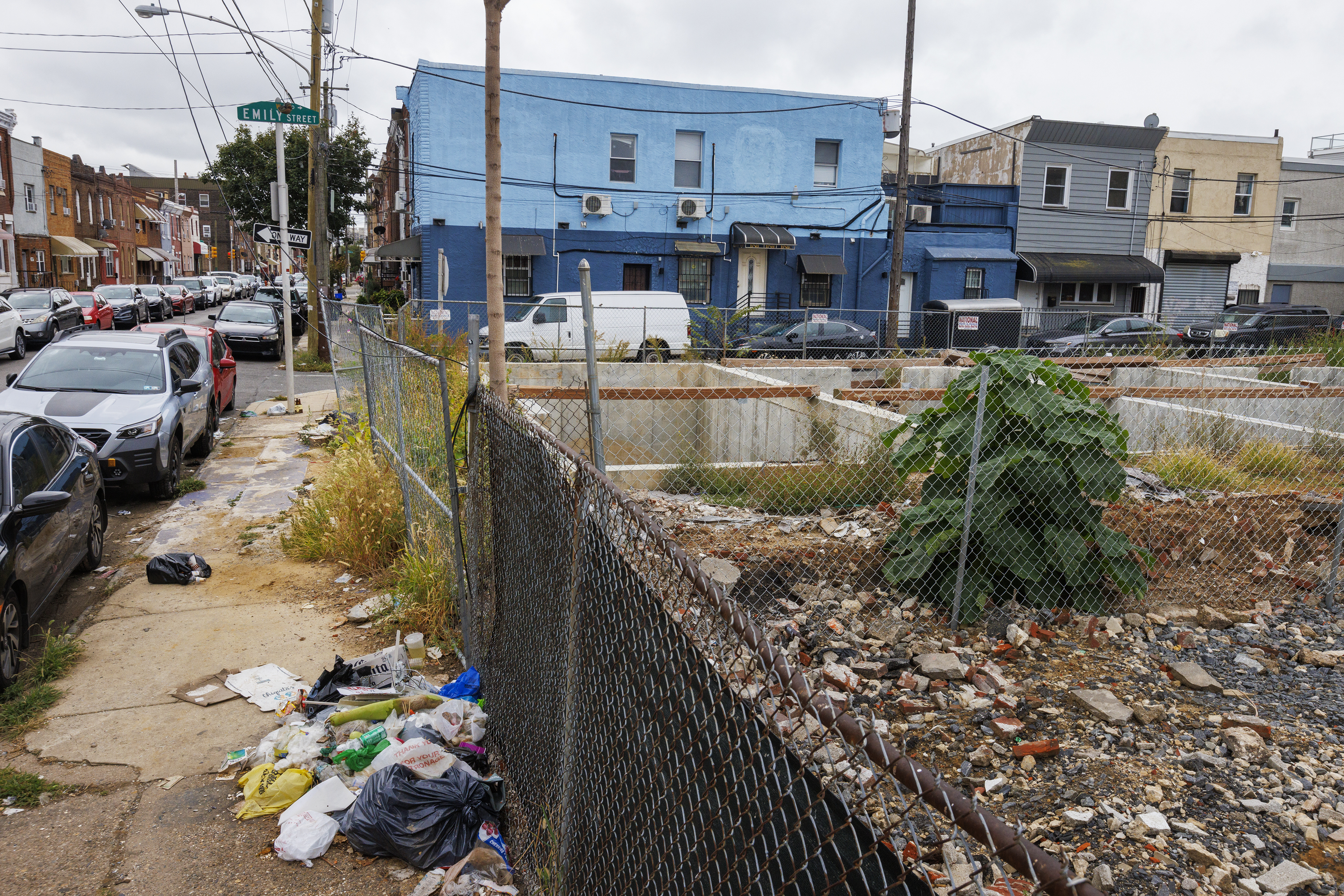
An unfinished construction site along 900 block of Emily Street in September 2024 shows what can happen when foreclosed properties remain between owners for long periods. New owners can’t take possession of properties after auction until the sheriff’s office processes the deeds.Alejandro A. Alvarez / Staff Photographer
Mary Jo Potts, a foreclosure specialist at Elfant Wissahickon Realtors who resells those properties, said last week that she has seen a recent influx of deeds from the sheriff’s office.
But Potts and other real estate agents are still dealing with another problem: The sheriff’s office is taking even longer to distribute the proceeds from auctions to settle tax and utility liens on the properties.
Even with a deed in hand, the homes still cannot be resold without a clear title.
“To me, that’s not getting any better,” Potts said.
Financial records obtained by The Inquirer through a Right-to-Know request show that tens of millions of dollars began flowing into the sheriff’s coffers after auctions resumed for tax-delinquent properties in July 2024.
But the money trickled out much more slowly.
Twenty-two TD Bank checking accounts managed by the sheriff’s office contained a combined $39 million at the end of May 2024. By last August, that sum had swollen to $130 million.
The majority flowed into a business account earmarked for money from mortgage foreclosure sales. The combined sums are so large, statements show the office generated more than $3 million in interest between 2024 and 2025.
After all liens have been settled, any excess funds are owed to the former homeowner.
David Denenberg, an attorney who seeks to collect those funds, said Bilal’s system for distributing the proceeds of sales is worse than ever. He questioned the propriety of the office generating millions of dollars in interest by holding onto the funds.
“They’re making money on other people’s money,” Denenberg said. “They should be helping you, if you’re the purchaser or the one who lost their home. You shouldn’t have to flood the courts with this litigation.”
David Bogdan, a probate attorney in Delaware County, said he spent nearly two years trying to obtain about $26,000 in excess funds from a 2022 mortgage-foreclosure sale. The money was owed to the estate of the former homeowner, who had died.
“They just refused to pay,” Bogdan said. “There is no defense whatsoever. You have to return that money. It’s not yours.”
Bogdan, who filed his claim in July 2024, said he contacted the office at least a half dozen times over more than a year, getting either no response or new excuses for the delay. He ended up having to hire a second attorney, Denenberg, to take the sheriff’s office to court.
“They’re failing to do their basic duties,” said Bogdan, who in May finally received the funds owed to his clients. “It’s just torture dealing with them.”
Among the other records Bilal submitted to the court in July is a list of about 16,000 unique properties that had been ordered to sheriff sale since Bilal took office, worth a combined $1.2 billion, based on city tax assessments.
Only about 6,500 of those properties were ever successfully sold, according to the records, and many were repeatedly held back from the auction block, sometimes due to repayment or court orders, and sometimes for more opaque reasons.
While the new filings shed some light on the scale of the sheriff’s real estate operations, they do not appear to be the full disclosure requested by the court, which included “a detailed accounting of all sales proceeds received and disbursed” by the sheriff from 2020 to now.
None of the submitted records list any money distributed for sales later than 2023, and the sheets include numerous payments or credits that are missing dates or descriptions.
Daniel Bernheim, the lawyer for a property group whose March lawsuit triggered the court order, said he has been unable to follow the money based on the records the office has provided so far.
“It shouldn’t be like Where’s Waldo? It should be set forward clearly,” said Bernheim, who is also a township commissioner in Lower Merion. “I don’t know how you could function internally in the sheriff’s office if that information is not readily available.”
Lauren Cristella, president and CEO of the good-government group Committee of 70, said the court should require new oversight.
“The court should appoint a special master who will not just execute deeds but also process lien and utility payments so Philadelphians get what they’re owed without having to sue for it,” Cristella said.
Bilal named ‘Hometown Hero’
Both the Committee of 70 and the Pennsylvania Intergovernmental Cooperation Authority, Philadelphia’s fiscal watchdog, have called for the sheriff’s office to be abolished.
In addition to the operational issues, Bilal has been mired in one mini-scandal after another since she took office: the cover-up of an inspector’s “stolen” city-leased vehicle; a bungled arrest of a suspect that led to a fatal accident; fake AI-generated headlines touting her performance; a top aide violating city ethics rules; an employee in the office who shot himself in the leg before a budget hearing.
But despite that — and years of complaints from the public — both City Council and the mayor’s office have offered nearly universal praise for Bilal.
“Give our sheriff a huge round of applause,” Mayor Cherelle L. Parker said during her first budget address in March 2024, as Bilal’s botched sheriff-sale contract with an online auction firm was costing the city and the school district an estimated $35 million in uncollected tax revenue.
“I just want to thank you for your hard work and your dedication and working in partnership with members of Council and the city of Philadelphia,” Council President Kenyatta Johnson told Bilal at a budget hearing for her office the following month.
By then, Bilal had been diverting millions of dollars in service-fee revenue — public money Philly’s Home Rule Charter says should be remitted to the city’s general fund — into an internal office account that is used for “discretionary” purchases, including $40,000 in branded merchandise, a $9,000 office mascot, and a $6,600 party at Chickie’s and Pete’s.
“The city of Philadelphia works because you all work,” Councilmember Cindy Bass told Bilal at a budget hearing this April. It was at that hearing that Bilal falsely told Council that the problems with deeds had been fixed.
Last week, the Phillies ushered Bilal onto the field at Citizens Bank Park and honored her as a “Hometown Hero.” She swung an honorary bat.
But for thousands of residents, many of whom live in North Philadelphia, next year’s tax bills are expected to soar.
Nearly 6,000 homeowners in Philadelphia saw their property assessments this year climb by more than 50% compared with two years ago, the last time the city conducted a mass revaluation, according to an Inquirer analysis of city property assessment data released in June.
Of those homeowners, more than 2,200 saw their assessments more than double.
That is likely to result in sticker shock come tax time next year, because property tax bills in the city are calculated based on home values. The revenue is split between the city and the Philadelphia School District.
Homeowners across the city saw a median 3% increase in their property assessments this year compared with the 2025 tax year. Jumps were higher in neighborhoods that border gentrifying areas, such as in parts of Kensington and West Philadelphia.
But this year, two other areas of the city had the densest concentrations of homes where property assessments increased by 50% or more, according to The Inquirer’s analysis.
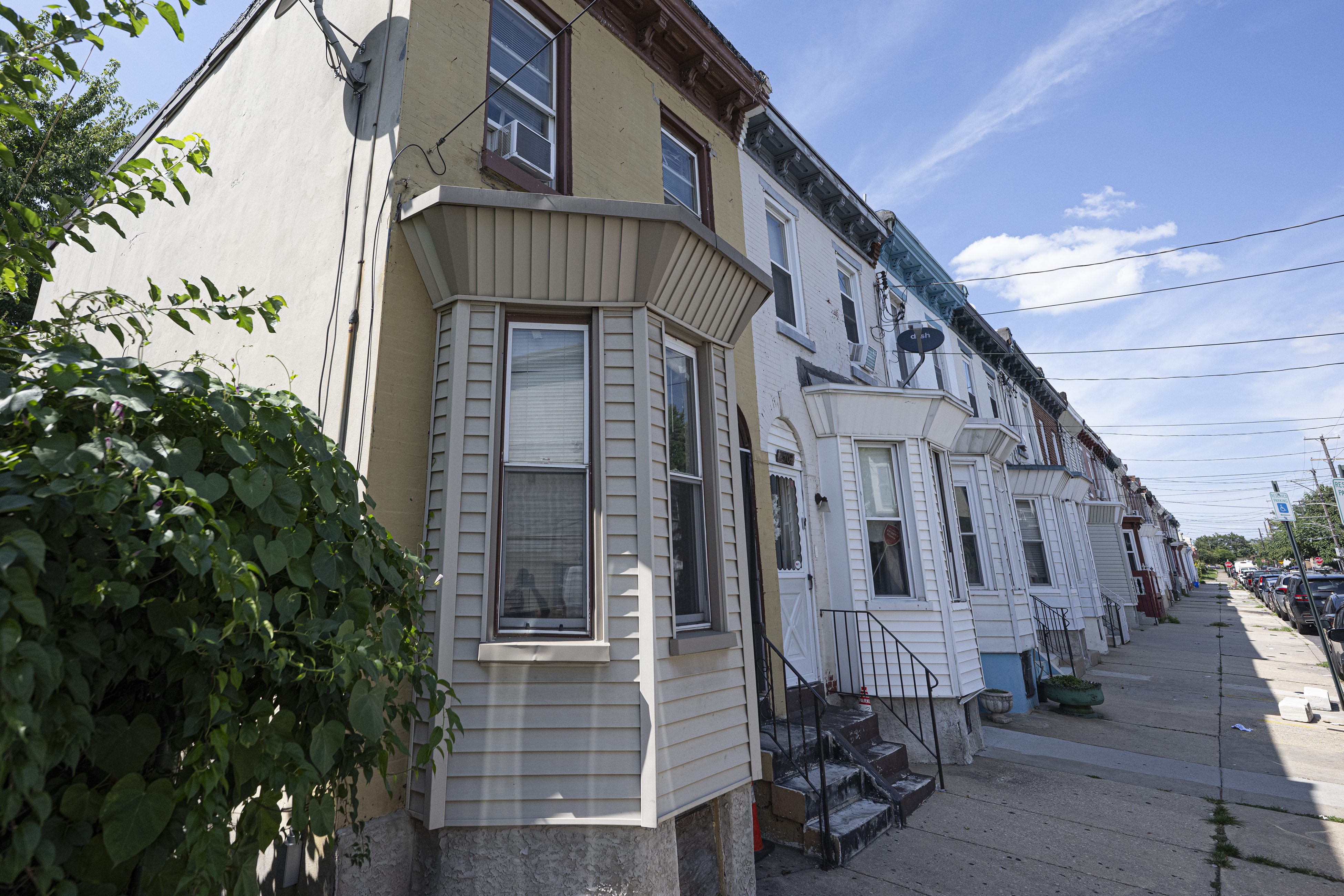
The steep rises are clustered in the southern end of Strawberry Mansion, the historically Black neighborhood along the Schuylkill, and in the tiny Hartranft neighborhood north of Temple University and east of Broad Street, where residents are predominately Latino.
(function() {
var l2 = function() {
new pym.Parent(‘html_sandwich_2026_property4’,
‘https://media.inquirer.com/storage/inquirer/projects/innovation/arcgis_iframe/html_sandwich_2026_property4.html’);
};
if (typeof(pym) === ‘undefined’) {
var h = document.getElementsByTagName(‘head’)[0],
s = document.createElement(‘script’);
s.type = ‘text/javascript’;
s.src = ‘https://pym.nprapps.org/pym.v1.min.js’;
s.onload = l2;
h.appendChild(s);
} else {
l2();
}
})();
Housing experts and advocates for low-income homeowners have long criticized the city’s assessment system as systemically biased, leaving Black and brown homeowners to pay disproportionately high property taxes. Mayor Cherelle L. Parker convened a task force in 2024 to study the city’s revaluation system, and that group’s recommendations are expected to be released later this year.
Monty Wilson, a senior attorney at Community Legal Services who sits on the task force, said the Philadelphia Office of Property Assessment is the best in the state and has “worked really hard to become more and more accurate.”
But he said bias persists in part because of the unique challenges that assessors face in low-income neighborhoods that can cause volatility in home values, such as higher rates of vacant lots, foreclosures, and other factors.
A 2024 CLS report found that errors were clustered in lower-value neighborhoods where a majority of residents are people of color.
“That means when a property is overassessed,” Wilson said, ”it tends to occur in a Black and brown neighborhood.”
(function(){function e(){window.addEventListener(`message`,function(e){if(e.data[`datawrapper-height`]!==void 0){var t=document.querySelectorAll(`iframe`);for(var n in e.data[`datawrapper-height`])for(var r=0,i;i=t[r];r++)if(i.contentWindow===e.source){var a=e.data[`datawrapper-height`][n]+`px`;i.style.height=a}}})}e()})();
The Parker administration did not respond to requests for comment.
In response to a previous article about this year’s property reassessments, city officials emphasized that some lower-income homeowners pay relatively low tax bills because of the popular homestead exemption tax break. The program, which any homeowners can apply for and obtain if they live in their house as their primary residence, exempts the first $100,000 from a home’s taxable value.
That means that some homeowners in working-class neighborhoods previously paid little to no property taxes. A sudden increase in valuation, like the ones seen this year in pockets of North Philadelphia, could require they pay bills next year that are several hundred dollars more than in the past.
Take the 2500 block of North Marshall Street. The residential North Philly street sits between West Kensington and Broad Street, and nearly every home saw its assessment increase by 60% or more, according to The Inquirer’s analysis.
Most of the homes there had previously been valued at less than $100,000, meaning owners with the homestead exemption owed no property taxes. Now, many of the homes on the block are valued at about $140,000, an amount that would next year yield more than $500 in yearly tax bills for owners with the homestead exemption.
More than 40% of the Hartranft neighborhood’s residents are below the federal poverty level, which is $33,000 a year for a family of four, according to U.S. Census data.
At Left a property on 2500 N. Marshall St., Philadelphia, PA 19133 is shown Wednesday, Aug. 19, 2026, in Philadelphia.Jose F. Moreno / Staff Photographer
City Councilmember Quetcy Lozada, whose district includes parts of Kensington and North Philadelphia, said the Hartranft area is not like sections of Kensington that have seen an influx of development in recent years and where increases in property assessments may be expected.
It is possible, she said, that lower-income residents who have been displaced from parts of Kensington looked to move west of the neighborhood, increasing demand in the Fairhill and Hartranft areas.
Lozada — who has held workshops in the neighborhood to connect residents with property tax relief programs — said she fears her constituents are being asked to pay disproportionately high taxes and not seeing better city services and stronger public schools.
“How is it possible that someone in Fairhill is paying a higher tax for a property that has not had any investment, in a neighborhood that is not as safe, whose school system is not as great, as somebody that lives in Chestnut Hill, for instance?” she said, referring to the upscale Northwest Philadelphia neighborhood with a $109,000 median household income. “There has to be a better way of doing a more accurate evaluation in every neighborhood.”
In Strawberry Mansion, community leaders said that increased assessments are likely a result of market pressure from Brewerytown to its south, a comparatively whiter and higher-income neighborhood.
“The city has to be super transparent about this assessment system so people can better understand it and not feel that sticker stock,” said Tonnetta Graham, president of the Strawberry Mansion Community Development Corp. “If we know how they came to their number, it’s easier to chew.”
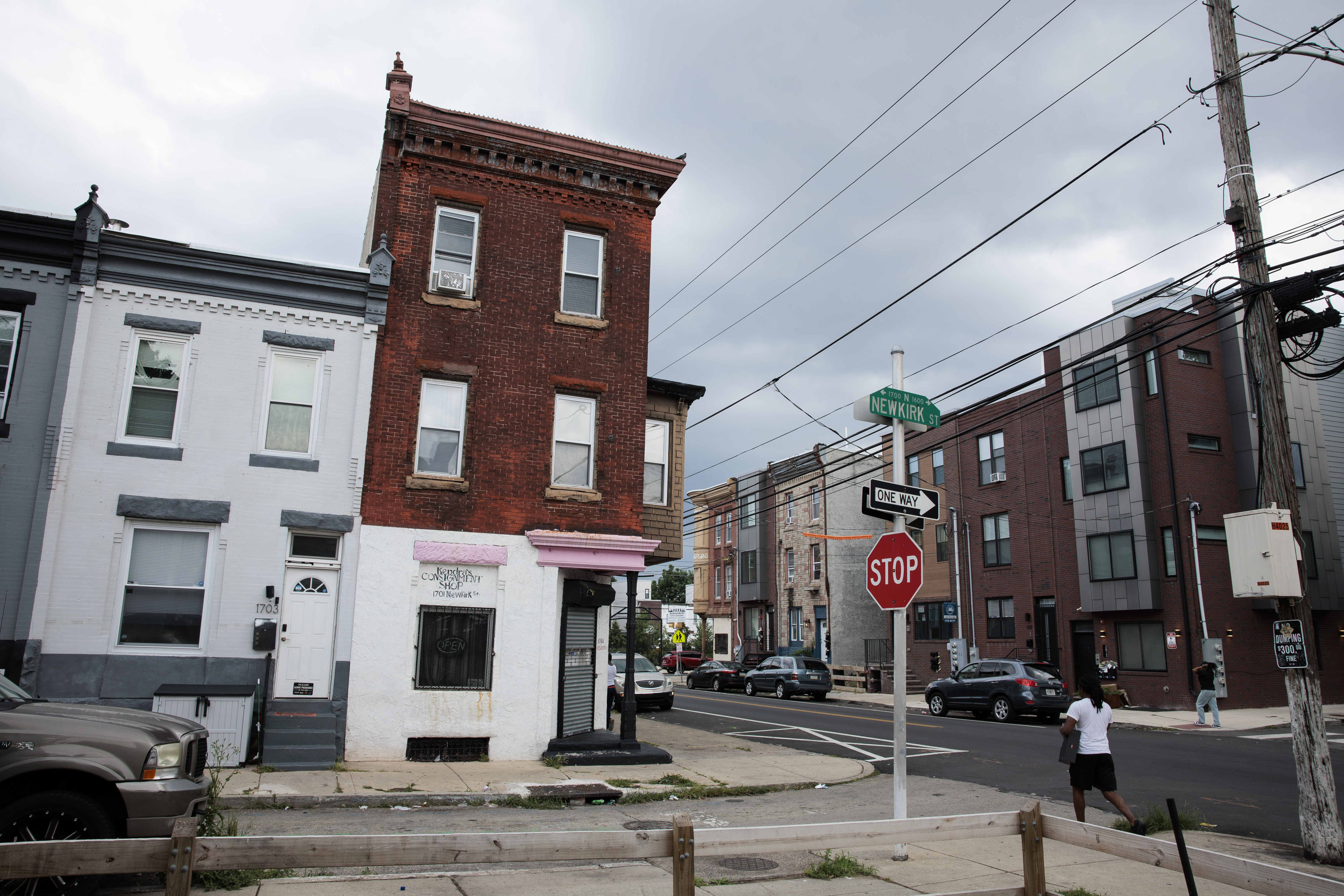
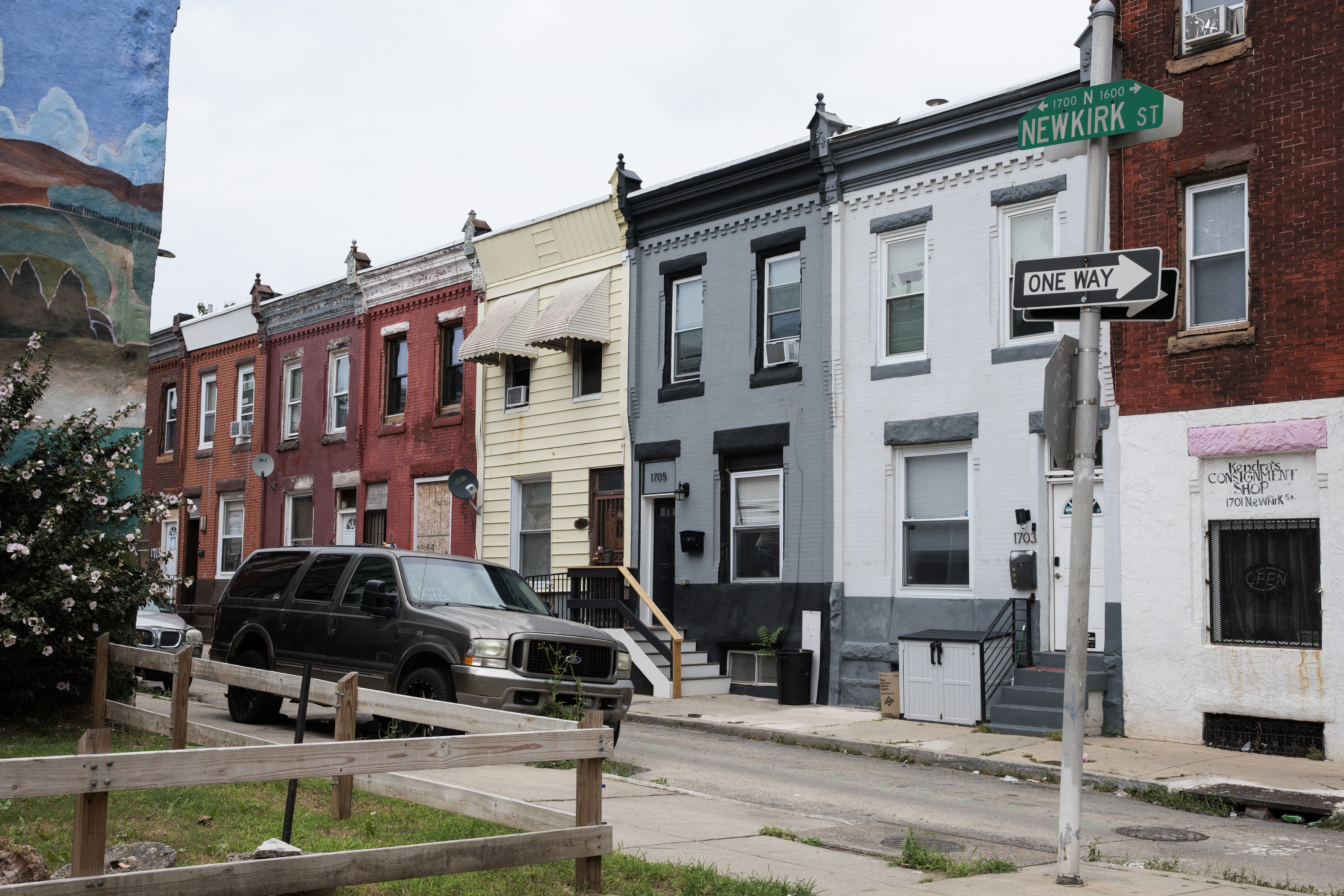
The 1700 block of North Newkirk Street on Thursday, Aug. 20, 2026 in Philadelphia.Monica Herndon / Staff Photographer
Councilmember Jeffery Young Jr., whose district includes both Strawberry Mansion and parts of Hartranft, did not respond to requests for comment.
Jalon Alexander, a Strawberry Mansion native who this month launched a campaign to challenge Young for his Council seat next year, said he was recently at a block party in the neighborhood where he heard repeatedly from older homeowners who were concerned about their increased assessments.
“They feel taken advantage of, and they feel like it’s coming out of nowhere,” Alexander said. “This is an area where there’s high levels of poverty, and there is not a lot of political or government attention in this area. I’ve spoken with many people whose rates have almost doubled. It’s the biggest issue in the neighborhood.”
Staff writer Michaelle Bond contributed to this article.
A county review of a revised plan for the former Melrose Country Club shows more than two dozen more houses than in earlier versions.
The mixed-use development proposal, set on about 115 acres on the southern end of Cheltenham Township, includes townhouses, a medical office, traumatic brain injury care living units, and commercial space. The project would also feature walking trails and a controversial public pool complex.
The pools have drawn a lawsuit and criticism from some residents, who argue that the plan, which could cost up to $4.5 million and would also replace the existing Conklin Pool, moved too quickly, lacked transparency, and evaded public bidding rules.
The president of the township’s board of commissioners has acknowledged that the contract with the private developer gives Cheltenham less input on the pool design, and officials have said they cannot answer some questions about the deal due to the lawsuit.
But the agenda for the township planning committee’s forthcoming meeting includes extensive attachments about the Melrose project, including a February fiscal analysis estimating that the project would net about $1.8 million per year for the township and about $5.9 million annually for the Cheltenham School District.
The Montgomery County Planning Commission reviewed the latest version of the plan in a letter Thursday to the township that notes about 443 homes and recommends several changes to the developer’s proposal.
What’s in new Melrose redevelopment plan
The plan that county officials received Aug. 6 has more townhomes and eliminates apartments, according to the planning commission’s letter, adding about 33 homes.
There are 351 townhomes and 12 twins in the new plan. Some of the townhouses will be age-restricted. A 2024 version of the plan had included only 306 townhouses, 24 age-restricted apartments, and no twins, Thursday’s letter notes.
The Melrose plan also includes 80 assisted living apartments, 30 traumatic brain injury care living units, two retail spaces, and three public pools. It’s unclear whether the TBI units would be long-term residences.
The single-family homes along with the assisted living apartments total about 443 residences.
Montco recommends changes to Melrose plan
County planners recommended changes to the Melrose plan and criticized the removal of apartments and some commercial space.
The township and the developer did not immediately respond to requests for comment on the county’s recommendations or the plan changes.
“We are sorry to see the loss of the previously proposed small apartment building on this site. Housing variety benefits communities by providing more options for price points, size, and configuration of dwelling units,” the planners wrote, and the reduction in retail space “conflicts” with Cheltenham’s goal of boosting its commercial tax base.
“A stronger commercial area would make the proposal an even better fit with the future land use vision from Cheltenham’s new comprehensive plan,” planners wrote.
Carl Freedman, who sits on Cheltenham’s planning commission, has previously criticized the loss of commercial space in newer Melrose plans for similar reasons.
The county review also addresses pool parking in more detail than in its fall 2025 review, noting that a public pool might require more spaces for cars and recommending an analysis of parking at Conklin Pool to inform needs at Melrose.
The county also recommended adding more trees around the public pools to cool and shade the area, which will be mostly paved, and revising the stormwater plan behind a set of townhouses to prevent flooding.
Planners praised the developer’s inclusion of a path along Ashbourne Road and a circuit trail along Tookany Creek, which could connect to a longer trail network underway in the Philadelphia area.
The chair of Cheltenham’s transportation committee said Wednesday he believes the project’s walkability aligns with the town’s goal to build a more connected community.
This suburban content is produced with support from the Leslie Miller and Richard Worley Foundation and The Lenfest Institute for Journalism. Editorial content is created independently of the project donors. Gifts to support The Inquirer’s high-impact journalism can be made at inquirer.com/donate. A list of Lenfest Institute donors can be found at lenfestinstitute.org/supporters.
A shuttered bridal shop in downtown Conshohocken will soon become the home of another family-run business with local roots.
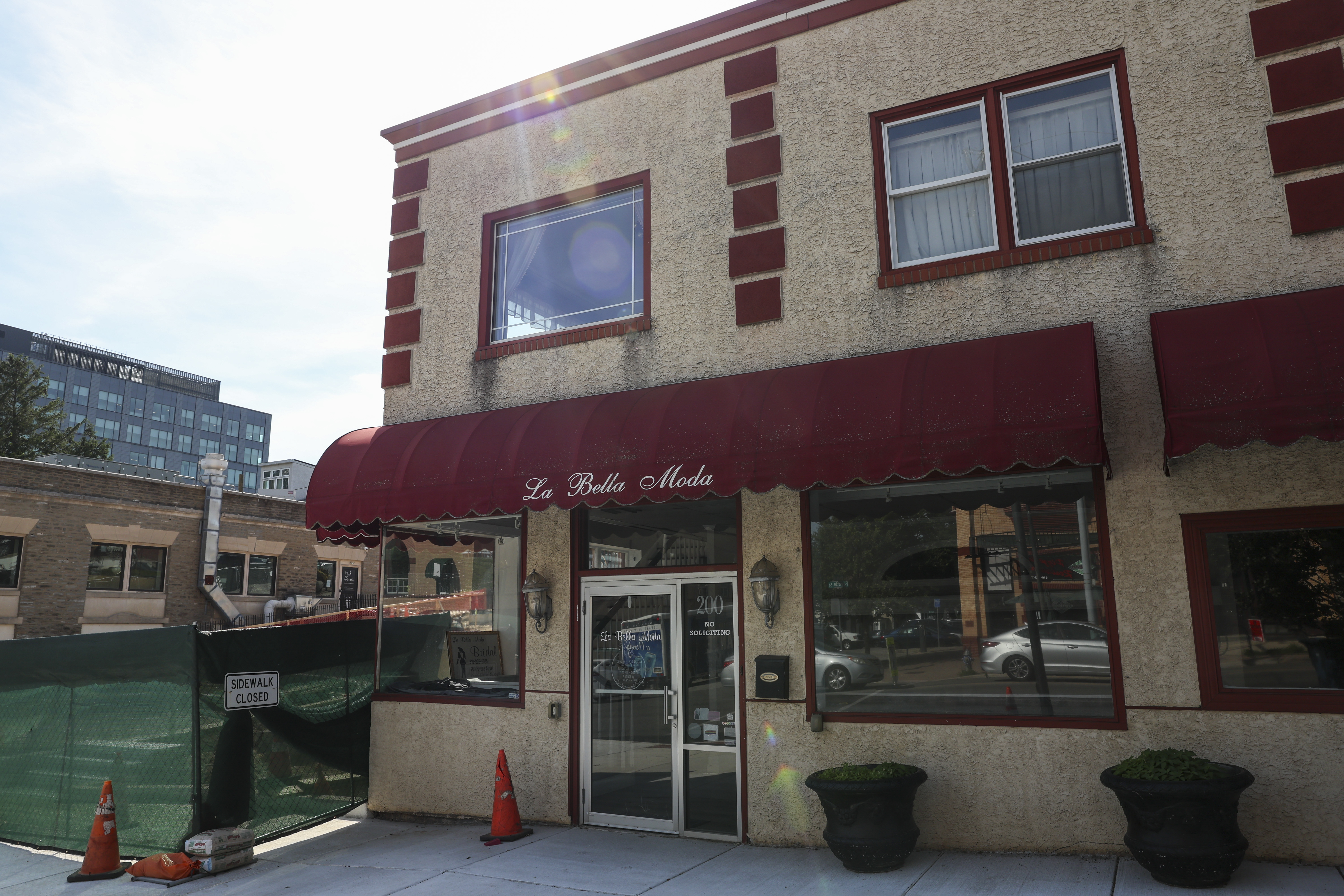
Goodness Bowls, a “healthy-eats cafe” chain run by Montgomery County residents, has signed a lease for the former La Bella Moda bridal shop at 200 Fayette St., with the goal of opening a corporate headquarters there by early 2027. La Bella Moda closed in May after 45 years in business.
“I always looked at La Bella Moda, and I thought, ‘God, that would be the perfect corner,’” said Susan Persichetti, Goodness Bowls’ cofounder and CEO. “ But I never thought they would close their doors.”
In the coming months, the Goodness Bowl team plans to open a 1,500-square-foot restaurant on the first floor, according to company executives, and use 2,000 square feet upstairs for additional seating and its corporate offices. They declined to share the terms of the lease.
The Conshohocken restaurant will be Goodness Bowls’ 10th location and its third corporate outpost. The rest of its cafes are franchised.
The closed La Bella Moda, as seen in June.Monica Herndon / Staff Photographer
The chain’s expansion comes as acai bowls — smoothie bowls loaded with toppings like fruit, granola, and peanut butter — and other more nutritious fast food have surged in popularity.
Shops selling these bowls seem to be popping up everywhere. Over the past decade, Belmar, N.J.-based Playa Bowls has grown to more than 100 locations in 20 states, including more than a dozen spots in the Philly area. And the Juice Pod, founded in Avalon and now headquartered in Bryn Mawr, has expanded to more than two dozen cafes, most of which are in the region.
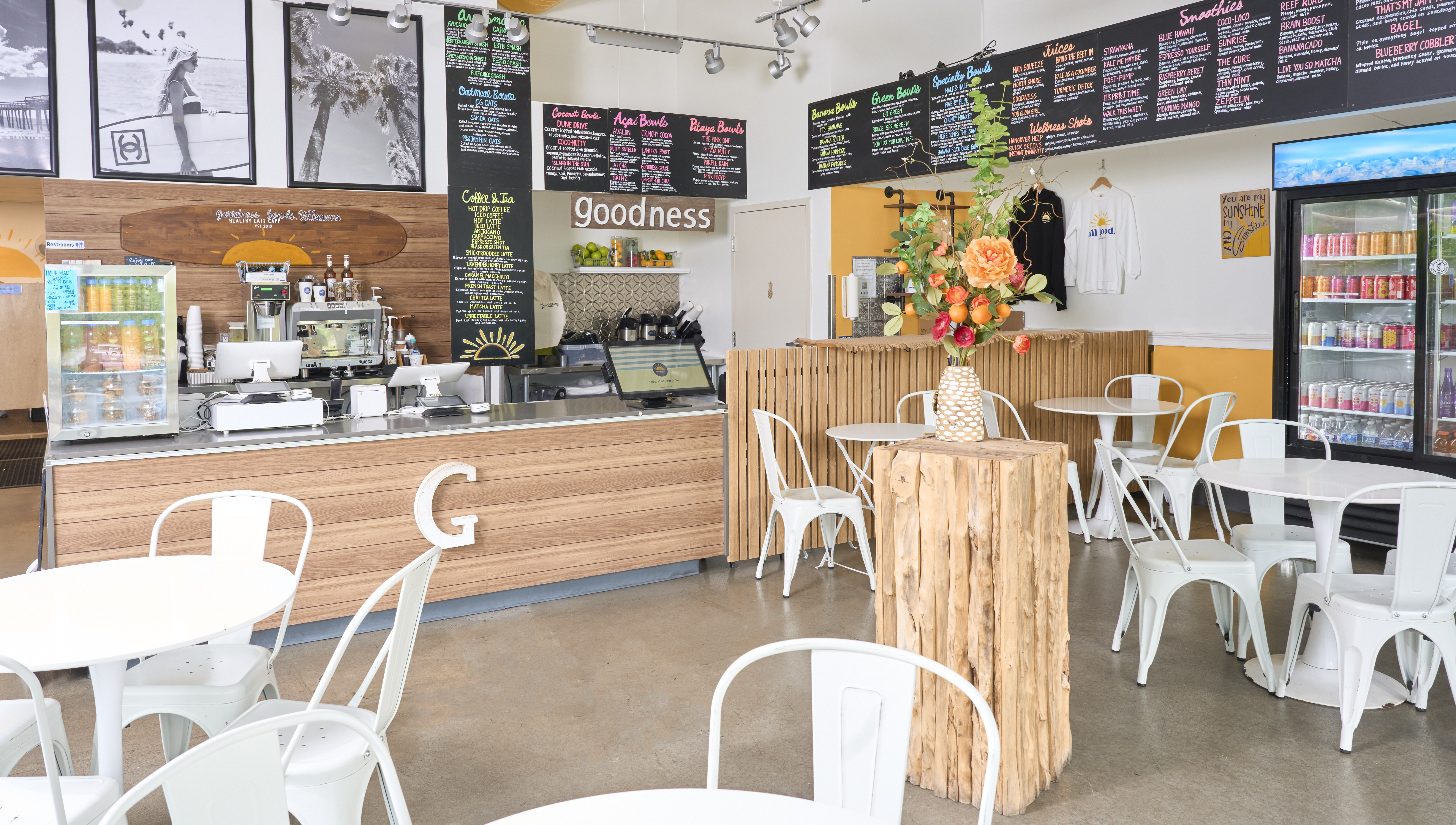
A mother-daughter duo, Susan and Corinne Persichetti, opened the first Goodness Bowls in Avalon in 2019. Susan said her daughter Corinne — a former Division I field hockey player at Fairfield University and a health enthusiast — was the driving force behind the business.
Susan Persichetti, cofounder and CEO of Goodness Bowls, with her daughter Corinne Persichetti, cofounder and chief operating officer.Courtesy Goodness Bowl
Corinne created the cafe’s menu, which includes acai bowls, salads, wraps, and smoothies, and came up with its slogan, “Eat Good. Feel Good. Do Good.” Susan, meanwhile, crafted the shop’s coastal aesthetic and branding.
For a couple years, Susan and Corinne ran the Avalon location in the summertime while working corporate jobs. In 2022, they opened a second location in Villanova, where they quickly found success. They realized there was demand for the Shore-inspired business in the Philadelphia suburbs, Susan said, and started franchising.
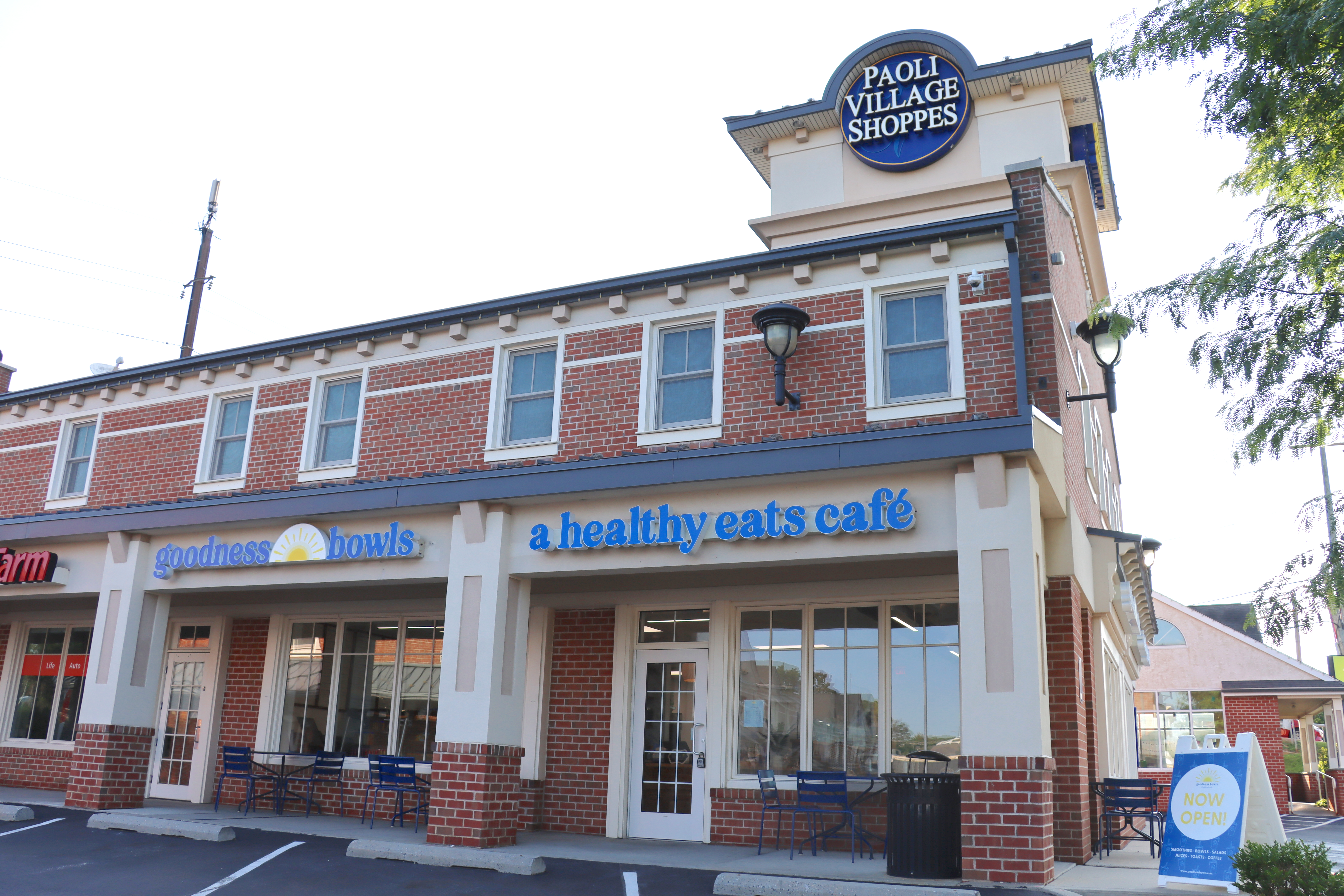
Goodness Bowls currently has franchise locations in Narberth, Paoli, Collegeville, Spring House, Haddon Township, Sea Isle, and Scranton.
The new Paoli location of Goodness Bowls.Courtesy Goodness Bowls
In recent years, Goodness Bowls has also expanded their team, including by hiring a company president, Finn Loftus, who also lives in Montgomery County.
“People really are craving healthy options,” she said. “And they really want food that they’re able to get quickly.”
Customers also say they are drawn to the bright cafes and friendly service, according to Susan.
Goodness Bowls executives look at their move to Conshohocken as a homecoming, and are excited to be back in the borough where Susan raised Corinne and her other children.
“We want to add to the community,” Susan said, by “keeping a small, family-owned business there on a really great corner that’s built such great traditions.”