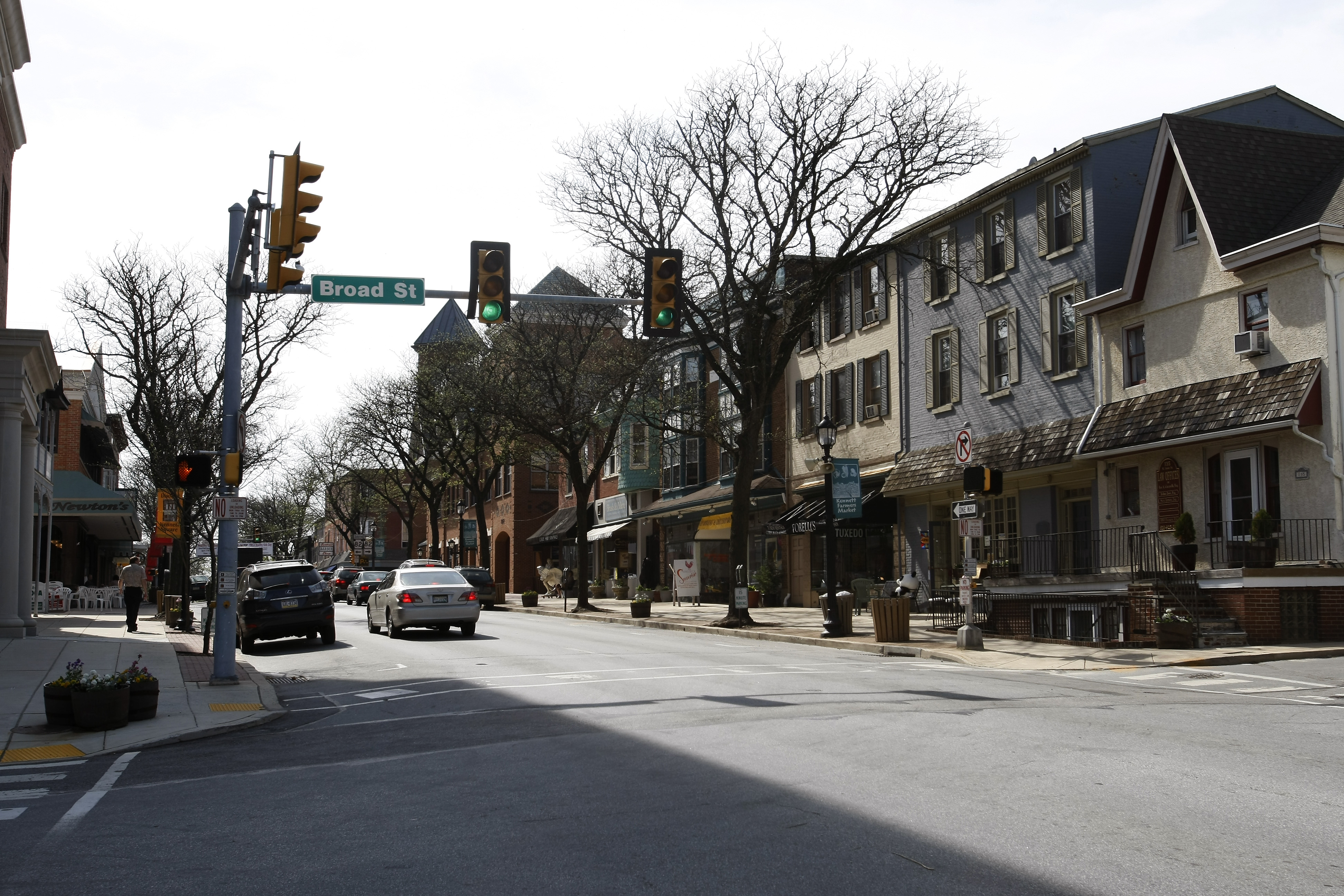
In an effort to “drastically” cut down on short-term rentals like Airbnbs, Kennett Square council passed an ordinance Monday capping the number of active units and restricting where they’re able to pop up.
Council voted unanimously to update its ordinance, allowing for a maximum of 20 short-term rentals, and prohibiting single-family homes from turning into short-term rentals as their primary use.
The decision comes after the borough has seen soaring population growth in recent years — an increase of 16% since 2020 — but as housing has become increasingly limited.
Residents had decried several homes getting snapped up, only to be turned into full-time short-term rentals. The borough’s planning commission took up the issue again this year, after a first foray in 2025 didn’t go far enough, officials said previously.
Under the new short-term rental ordinance, the existing units — roughly 22 — will be grandfathered in. But if people sell, move, or don’t maintain rental registration, that status is gone. Future rentals will only be allowed in accessory units — like garages, or guest houses — and the number of available units won’t be able to exceed 20. The property must be owner-occupied during the rental period. Pre-existing short-term rentals will lose their grandfathering status if they don’t maintain rental registration.
“The net effect of this is to actually drastically reduce the potential number of short-term rentals,” council president Bob Norris said. “But it actually reduces the possibility and the probability of having more and more, especially in single-family homes, which we heard loud and clear was a major issue.”
Meanwhile, cost is going up. In 2024, the median sales price hit $525,000 — the highest in the county’s history. That year, 331 homes sold for under $250,000, a decrease from 462 units in 2023, according to the commission. In 2025, 315 homes were sold in that range, making up just 5.3% of all sales.
Kennett Square officials have viewed cutting down on the short-term rentals as one way to address housing availability.
Kennett Square isn’t the only one to grapple with balancing meeting the needs of tourism with the desires of residents. West Chester similarly capped its short-term rentals at 20, and contained them to its town center. It sent cease-and-desist letters to those that weren’t in that radius, officials said previously. But in Phoenixville, short-term rentals have been meeting a need not otherwise addressed by the borough’s singular boutique hotel.
This suburban content is produced with support from the Leslie Miller and Richard Worley Foundation and The Lenfest Institute for Journalism. Editorial content is created independently of the project donors. Gifts to support The Inquirer’s high-impact journalism can be made at inquirer.com/donate. A list of Lenfest Institute donors can be found at lenfestinstitute.org/supporters.
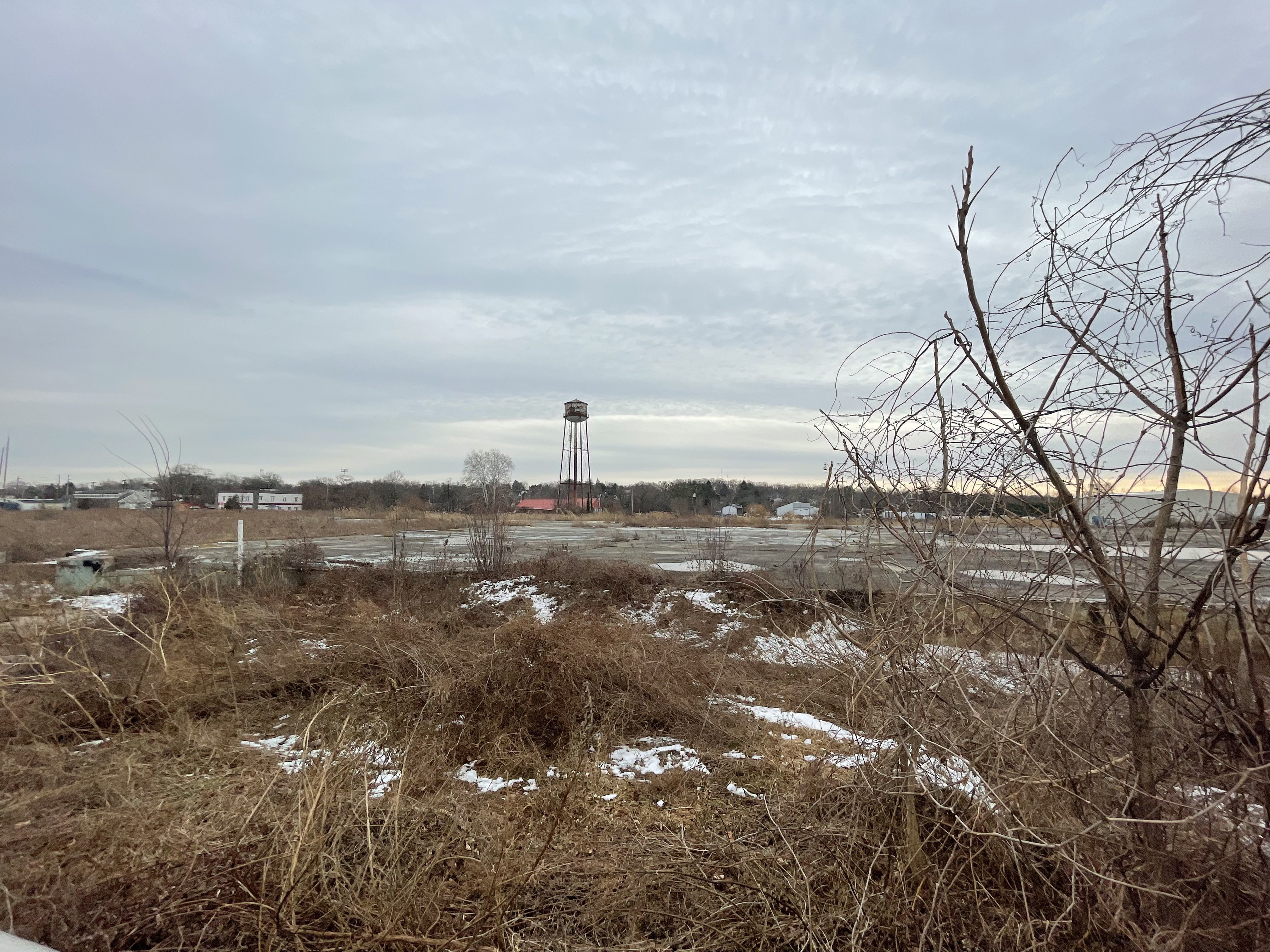
Ambitions to turn a former industrial site in Kennett Square into a residential development inched closer to reality Monday — but residents still have concerns about the land’s safety after decades of contamination.
Council voted 5-2 to advertise a change that would allow for housing and business development at the former National Vulcanized Fiber site, a long-vacant 22-acre industrial plant that ultimately contaminated the land with polychlorinated biphenyls (PCBs).
But a revised ordinance received enough positive votes this week to be posted publicly ahead of a hearing on changing the zoning. It is an early step to possibly develop one of the last untouched pieces of Kennett Square into a mix of townhomes, apartments, and single-family attached dwellings. Under the ordinance, 15% of the units must qualify as affordable housing — with compliance restrictions, financial guarantees, and penalties if the developer does not comply — coming at a time when growth has soared in the borough but housing has become harder to come by.
That vision, however, has been staunchly opposed by some residents, who argue that the site is unsafe for housing and have raised concerns repeatedly about contamination cleanup and whether construction could harm the health of the surrounding neighborhoods. Federal and state agencies still need to OK the cleanup before construction could begin.
“It’s pretty clear repeatedly that the community … doesn’t want this big development to come in there,” resident Holly Peters said. “I guess what I don’t understand, and I would like an answer to, is why this continues to move forward. Like, what is the urgency to push this ordinance through? I mean, why don’t we just wait?”
How did we get here?
The site has been the subject of ongoing cleanup for roughly 40 years. NVF folded in 2007, and the property was acquired by developer Rockhopper LLC two years later, with the ambitions of turning it into housing. Officials have said that there had not been a great deal of other interest in redevelopment.
In April, the borough planning commission had recommended an ordinance amendment that would have allowed for a mixture of affordable and market-rate residential development on the site. The ordinance set parameters around multifamily use, density standards, and affordable housing stock.
In recent months, NVF has once more become a topic at council meetings, with the planning commission seeking guidance on how to move forward after the stalled recommendation.
A straw poll in June showed that a majority of the board — which consists mostly of new members — favored redevelopment of the site as residential or mixed commercial use.
In July, council members asked the planning commission to consider adding mixed-use development in the amended ordinance, which would allow retail, restaurants without drive-throughs, business offices, medical clinics, day spas and salons, and personal services.
That got a tepid reception from Austin Coleman, a representative from the developer, in July, who told the council “we do feel strongly that it’s a residential site, and it’s a great opportunity to provide affordable housing, as well as attainable housing.”
Ultimately, the planning commission included the commercial element in the revised ordinance. Allowing for such development does not mandate that it happen, however.
Borough officials have seen this as an opportunity to add affordable housing stock for residents, in an increasingly expensive county and municipality. Kennett Square has seen an explosion of growth recently, with its population rising 16% in the last five years. But with it has come a squeeze, as people are getting increasingly priced out of what limited housing is available.
What comes next?
These are still early days. The borough will now advertise adding housing and business use alongside the industrial designation. It will then go to county leadership; after that review, it returns to the council for a public hearing. If the proposed ordinance is later approved, with the additional uses for the site, it would eventually open the door for the developer to submit an application to redevelop the parcel into housing. The process could take 18 to 36 months, officials have said.
But before the developer could think of breaking ground, the cleanup efforts on the site must pass muster from the U.S. Environmental Protection Agency and the Pennsylvania Department of Environmental Protection.
Residents have long held concerns that the land is unsuitable for housing, and have worried that the cleanup has not gone far enough.
“I think you’re signing a death certificate for people. Unless you get the EPA to come in and strongly suggest that the property’s OK to build on, nothing should be touched,” resident Mark Thompson said.
Council member Michael Bertrando, who has said he would like to keep the site industrial, cast one of the dissenting votes, alongside council member Juan Tafolla.
“Not one resident who got up at that microphone has said that they are for this project,” Bertrando said. “I mean, yes, this is an advertisement, but why are we doing this before we have any proof that the site is cleaned, it’s remediated, and the EPA hasn’t given us their report yet?”
But for other council members, allowing for development of the long-languishing site would ensure it was actually cleaned up.
“I’m not looking to build something that’s going to create more problems or have issues or people getting sick,” council member Amy Reigel said. “I do want that property to be developed because it’s dirty. Like if we don’t clean it up, if we don’t keep moving forward, it’s going to stay there because we don’t own the property.”
This suburban content is produced with support from the Leslie Miller and Richard Worley Foundation and The Lenfest Institute for Journalism. Editorial content is created independently of the project donors. Gifts to support The Inquirer’s high-impact journalism can be made at inquirer.com/donate. A list of Lenfest Institute donors can be found at lenfestinstitute.org/supporters.
“Confidence is shaky in the construction industry,” said Ed DeAngelis, founder and head of Bensalem-based EDA Contractors Inc., whose 450 union workers do outdoor construction— roofs, walls, sides, masonry, glass, waterproofing.
“First, we saw the architects starting to slow down,” he said. “Then we started to see developers financing, not from banks, but private credit, names we don’t know.” A few stopped payment as they waited for financing.
The Philadelphia region needs more towering cranes building homes and big office projects, he said. “But our margins are not high enough to afford your default. Even if you can still pay 50 cents on the dollar, it takes years for us to make up for that loss.”
In past years, a commercial slowdown meant falling back on “eds and meds” — college, hospital, and drug-company jobs.
The majority of the action this summer is industrial with Pennsylvania lenders and investors backing strategic metals, minerals, and manufacturing projects, of all sizes, including military contractors, said Dan Fitzpatrick, head of the Mid-Atlantic and Midwest regions for Citizens Bank, which operates the Philadelphia area’s largest branch network.
Dan Fitzpatrick, head of Mid-Atlantic and Midwest regions for Citizens Bank, shown at Citizen’s Bank Park in 2013.Photographer: CHARLES FOX
In residential development, “we are going through an adjustment period,” he said. Higher interest rates and higher fuel, materials, and labor prices have pushed up new home costs.
While “there’s now a bit of a glut of luxury homes, we have a shortage of more modest, $200,000 to $500,000 homes,” Fitzpatrick said. “But it’s tough for developers to build those right now with a reasonable return.”
Citizens has been funding more apartment construction since 2020, but there, too, “developers are hitting a pause.”
Turning to D.C.
Mike Lloyd, CEO and owner of IMC Construction, at his Malvern headquarters.Steven M. Falk / For The Inquirer
One of the Philadelphia area’s largest builders, Malvern-based IMC Construction, is adding a Washington-area office because data and military contractors, anticipating next year’s record military budget, are hiring and growing there.
“Northern Virginia has been the data-center capital,” said Mike Lloyd, IMC’s CEO and owner. So much is going up — not just data centers, but commercial development that follows big capital investments — that some of the largest, multibillion-dollar national general contractors are overstretched.
A $100 million project used to be very attractive to big national firms, but “now it’s not large enough to put their best teams on,“ he said. ”And some of the traditional defense contractors are now busy with data center work. That has created a niche for firms like ours in the D.C. market.”
“With respect to the Philadelphia market more broadly, I’d say the only projects that can get financed right now are data centers, multifamily, and senior living,” Lloyd said.
He pointed to a Philadelphia-area life-sciences projecthe said has collected tenant commitments but still can’t attract financing. “You are seeing a crowding-out of other commercial sectors by the data-center hyperscalers.”
Philadelphia Mayor Cherelle L. Parker’s “Lower South Philly” program of speeding permits for defense, port, and industrial contractors acknowledges that capital is flowing into industrial development and jobs, he added.
“She’s understanding our competitive strengths and leaning into them,” Lloyd said. ”There are entire supply chains centered around defense projects, and contractors here are ramping up investment.” There’s still demand for Class A office space, but firms are still moving to smaller quarters.
To Lloyd, “the big question is, why does Pennsylvania still lag in data centers?” He was among the builders who went to Harrisburg in 2019 to testify in favor of a data-center sales-tax exemption, which passed.
Pennsylvania ranks with Texas as a source of natural gas for cheap power. Lloyd said that in his native Louisiana, communities are prospering from data center-funded job training and road improvements, but in much of Pennsylvania, residents have mobilized against the projects.
“There are ways to facilitate that growth in an equitable fashion that benefits all parties,” he said.
On the roads
Unlike colleges or healthcare, spending for federal transportation didn’t change with the Trump administration, said James Bilella, new CEO of Philadelphia-based Urban Engineers, which designs and advises cities and states on large public projects.
“We have not seen a drop off in federal transportationspending, especially in the rail and transit industry,” he said. “This administration is trying to be sharper, with quicker turnaround, more efficiency.”
Bilella said the Parker administration has pledged ongoing support for heavy industry, biotech, and military industries, while continuing to back popular infrastructure safety upgrades like the “Great Streets” project, which Urban helped design.
Bilella said he is excited by the prospects for Lower South. “It’s rare in a well-established city to have an opportunity to rededicate such a large area [two square miles] to industry and create jobs that can improve lives and attract new people.”
He added,“We still need to decide about the infrastructure that get people to work there easily. Can people walk in safety? Can they drive, bike, use the river? It’s the kind of project we hope to get involved with.”
Long-term investments
“Industrial, logistics, data center, and defense-related projects” are attracting capital because lenders and investors believe they’ll be in demand a long time, said Abe Ibrahim, regional president for the Philadelphia area at Dauphin County-based Mid Penn Bank, whose largest investor is the family of Cooper University Health Care board chairman George Norcross.
“It’s not that lenders are walking away from office or multifamily, as much as we’re seeing a return to disciplined underwriting,” Ibrahim said. “There are still plenty of opportunities for well-conceived projects to move forward.”
This story has been updated to correct the location of IMC Construction’s headquarters.
Mayor Cherelle L. Parker’s administration met formally for the first timeFriday with the owner of hundreds ofrental homes in West and Southwest Philadelphia whose federal affordability requirements are expiring and committed to working to preserve the homes.
Jim Levin of Neighborhood Restorations plans to sell 925 homes where tenants pay below-market-rate rents, and he wants to keep them affordable. But he needed assurance that the city plans to work with him, said Angela D. Brooks, Parker’s chief housing and urban development officer.
Brooks gave him that on Friday, she said, telling Levin “we’re in this, we’re going to be a good partner, and we’re going to move this forward.”
“We are committed to being part of the solution,” Brooks said in an interview Friday.
About 3,000 people live in the 925 rental units in West and Southwest Philadelphia. The homes were developed through the federal Low Income Housing Tax Credit program, which requires reduced rents at the properties for three decades.
The city’s initial focus will be on 225 of the homes: the 63 that are no longer required to be leased for below-market-rate rents or will lose the requirement by the end of the year, and the 162 homes where affordability requirements are set to expire within the next three years.
Agreements for reduced rents at the other 700 homes are set to expire between 2030 and 2040.
Across the city, Philadelphia is at risk of losing more than 7,500 subsidized rental homes during the next decade as federal affordability agreements expire, according to an analysis published last fall by the Housing Initiative at Penn.
When agreements end, property owners can choose to continue charging below-market rents, charge higher rents, or sell their properties in potentially lucrative deals to take advantage of the city’s rising property values.
Levin told tenants and city officials a year ago that he planned to sell the properties.
The city will not buy the homes, Brooks said, and it has not made a spending commitment toward its goal of keeping the properties affordable once they’re sold.
But a steering committee that began meeting at the end of last year and includes members of the administration, elected officials, and housing policyexperts recommended that the city provide $36 million over five years to help preserve Neighborhood Restorations properties.
Over the next few months, the committee plans to start evaluating the conditions of the properties and identifying funding sources, Brooks said.
Three days before Brooks’ meeting with the property owner, tenants who fear losing their reduced rents and their homes rallied at City Hall to push the administration to help save the properties.
Brooks said preserving all 925 homes could cost more than $260 million.
In a statement, Parker said, “There is no simple or immediate solution at this scale.”
“The city remains committed to doing our part and continuing the work,” she said. “But preserving these homes will require all of us, including strong intergovernmental support that includes resources from local, state, and federal government.”
Tenants have partnered with the grassroots social justice nonprofit OnePA to push the city to keep the homes affordable permanently and to give renters the opportunity to buy their homes for below-market prices.
In a statement, tenants thanked Parker and her administration “for making an initial commitment to saving our homes.”
“We know there is still a long way to go before our homes are safe, and we urge the city to act quickly before it is too late,” they said. “We look forward to working with Mayor Parker and others, and we will continue organizing until all 925 units are protected and no one is displaced.”
Americans often think of homeownership as both a goal and a norm — after all, the U.S. homeownership rate is 65%, and as high as 75% in some states.
But one Federal Reserve economist says that we’ve been measuring homeownership the wrong way and that U.S. adults are about as likely to rent or live in someone else’s home as they are to own their own.
Erik Hembre says his work “should reframe the basic number we have in our head. I went from a baseline of about two-thirds of people own their homes and that’s just the way it’s always been, to: Well, it’s closer to half.”
The difference in the standard numbers vs. Hembre’s numbers basically comes down to whether to count houses or people.
The homeownership rate is generally given as the percentage of homes that are occupied by their owners. If there are 10 homes on a street and seven of them are owner-occupied while three are rented, that’s a 70% homeownership rate.
Hembre, instead, came up with what he calls HPOP: the homeowners-to-population ratio. He counted up all Americans over 18 years of age, then looked at how many of them live in a home they own. The number is 53%.
The reason Hembre’s homeownership rate is so much lower than the standard 65% national owner-occupancy rate is that many adults live in a home where the owner lives, but they aren’t the owners of the unit. If you’re living with a relative in the relative’s house or renting a room from a friend who owns the house, you don’t count as a homeowner in Hembre’s metric.
Hembre attributed the difference to several causes. A small amount comes from roommates and from elderly parents who reside in their adult children’s homes; a bit more comes from other relatives such as siblings. The largest share by far is due to the high rate of adult children who live in their parents’ homes.
“Younger households are becoming less likely to be homeowners. HPOP really makes that point more clear,” Hembre said.
Overall, both HPOP and the owner-occupancy rate have fallen about 2% nationwide since 2006, but the patterns of who owns homes have changed. While adults in their 20s and 30s struggle to buy homes, the HPOP for people over 70 has risen five points since 2006, as elderly people remain in their own homes longer. “Those are kind of balancing each other out,” Hembre said.
He also analyzed the HPOP of different groups, such as ethnic groups and married-vs.-single people. The differences indicate who is most likely to live in owner-occupied homes without being owners themselves. Married people have a 76.9% HPOP, not much lower than their 80.8% owner-occupancy rate. People who have never been married have a 17% HPOP, far below their 36.4% rate of living in owner-occupied homes. (Widowed, divorced, and separated people all fall somewhere in between.)
For calculation purposes, Hembre treated both partners as the owners of a home if one partner owns it, for both married and unmarried couples.
Michael Neal, a housing analyst at the Urban Institute, said Hembre’s measure avoids one of the pitfalls of standard metrics, which tend to lump everyone under the demographics of the person considered the head of household.
“There are interracial couples where the head of household is not Black; we might be missing some families where there’s homeownership by a Black person. … Maybe there are two people who are two different age groups who are married,” Neal said. “In some cases, this can really matter for being accurate and providing accurate measures for policymaking.”
States with expensive housing, such as Hawaii and California, tended to have the biggest differences between their owner-occupancy rates and their HPOPs.
Dennis Shea, who leads the Bipartisan Policy Center’s housing program, found Hembre’s metric interesting but cautioned against discounting the standard measure of U.S. homeownership too much. Many of the non-homeowners tallied in HPOP, he noted, are people such as college students and nursing home patients who wouldn’t be expected to be homeowners.
“I think it’s a useful new analytical approach that might provide insights about where people truly are in their economic journey,” Shea said. “I wouldn’t draw some drastic conclusion that somehow the true picture of homeownership in the United States has been radically changed by this new approach.”
Hembre noted that the idea that only half of adults are homeowners doesn’t mean half will always be renters or guests in someone else’s home. “Between the ages of 18 and 70 or 80, most people do become homeowners at some point. This is about if they are at any given time.”
On the last Thursday of July, during Manayunk’s summertime Stroll After Hours event, throngs of young families pushing strollers and couples walking dogs roamed the business corridor.
Some stopped at art vendors with frames sprawled across the sidewalk, while others meandered down Grape Street to grab a bite from a food truck or claim a seat at the outdoor screening of Toy Story.
On such an evening, Main Street Manayunk’s evolution is on full display.
The riverside neighborhood in Northwest Philadelphia has seen many eras, from textile mills in the 19th century to chain retailers in the 1990s, to today’s collection of local upstarts.
“It’s the best it’s ever been,” said Jen Wankoff, 51, of Roxborough, who turned out to Stroll After Hours with her friend, Jen Filip, 50.
“It used to be a lot more commercial. There was a Banana Republic, a Pottery Barn, but then once one left, they all left,” said Filip, who has lived in Roxborough since the early 2000s. “Now it’s all small businesses.”
More changes are coming to Manayunk. Even as apartment development has slowed in much of Philadelphia, over 1,800 new residential units are proposed along or adjacent to Main Street. All that additional population stokes neighborhood anxiety about traffic and parking, but retailers expect it will be good for business.
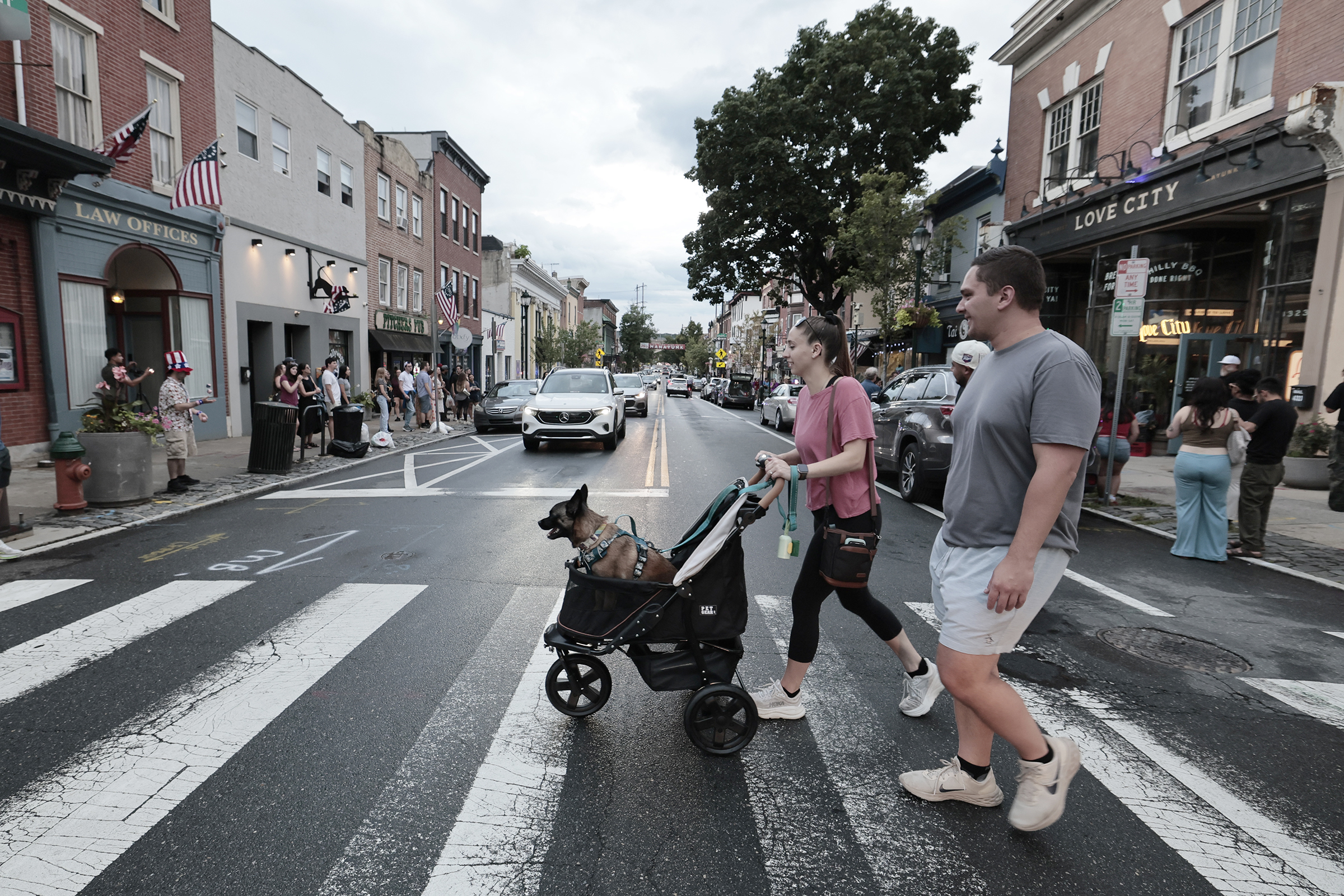
Kim Albanowski of Philadelphia pushes her dog, Koda, across Main Street in “his chariot” as Jason Pepin looks on.Elizabeth Robertson / Staff Photographer
“There’s probably going to be 1,600 new people living in those units, and they’re all going to come to Main Street to shop and eat,” said Dan Neducsin, 83, who has long been the largest property owner on Main Street and helped shape the identity of the corridor.
“The restaurant scene has been strong [since the 1990s], and now I think it’s even going to get stronger,” said Neducsin, who has sold 12 of his properties in recent years to long-term tenants and small-business owners like Tim Spinner, owner of Taqueria Amor.
“I just want to see the people who I have in there now do well, and my tenants have welcomed the opportunity,” said Neducsin, who emphasized that his company is not closing or selling all its holdings. But “it does make sense now for some new people to come in and take advantage of what’s here.”
Manayunk’s Main Street appeal
In the past two years, 12 new businesses opened along Main Street.
One of them is Riptide Tavern, opened in June by Spinner, who also owns Taqueria Amor next door.
Spinner said he wanted to open a neighborhood bar with creative cocktails and a cheap beer menu — much like a dream restaurant he conceived for a culinary school project years ago.
“I wanted to be in the Caribbean or down the Shore, but along the Schuylkill River with the canal back there is close enough,” Spinner said.
The Riptide Tavern in Manayunk is packed on a Thursday during Stroll After Hours.Elizabeth Robertson / Staff Photographer
Eleanor’s Consignment is set to open on Main Street in October. Owner Emily Mannix, aformer paralegal who has lived in Manayunk for two years, named the consignment store after her late mother, who died in 2023. They shared a love of secondhand-shopping.
“This has been something that has been on my mind for the past four years,” Mannix said. “Life is short, and I might as well jump in and try.”
It’s not a bad place to do that. Realtor Christine Ertz notes that while rent is not low, it’s more affordable than in areas like South Street and Queen Village.
“Manayunk has the demographic businesses want,” said Ertz. “It has the younger folks, but also the more mature folks that have expendable income, and we’ve got the 27-to-35-year-olds that really enjoy the niche, smaller stores.”
The apartment boom in Manayunk promises to add even more. Many of the new developments have smaller units, which are likely to attract single people or younger couples. The price points of the new rentals, while lower than Center City or Northern Liberties, also suggest that tenants will have disposable income.
Those changes haven’t been without controversy. The Manayunk Neighborhood Council has pushed back against development it deems as out of scale with the community, and that’s often lacking new commercial space, affordable housing, and parking while being weighted to small apartments.
John Hunter, an architect and zoning chair of the Manayunk Neighborhood Council, says few of the new buildings have commercial space to add to the neighborhood’s daytime vitality. He disagrees with the idea that the apartment boom will boost local businesses.
“We have heard that misrepresentation for years now — that new apartments will generate pedestrian traffic along Main Street,” Hunter said. “Fifteen years of those promises has proved that is not the case.”
But some neighborhood observers see the development interest along Main Street as a concrete example of the area’s ability to attract people and investors.
“We’re seeing a diverse group of experienced, well-regarded developers all making independent decisions to put their capital and time into Manayunk,” said Veronica Blum, a retail broker with MPN Realty who has been working with Neduscin on leasing and sales.
“When that many smart people come to the same conclusion about a neighborhood, it says a lot,” said Blum. “It’s a real vote of confidence in Manayunk’s future, and I think we’re just beginning to see what’s possible.”
Nervous Nikki and the Chill Pills perform during the Stroll After Hours event on July 30.Elizabeth Robertson / Staff Photographer
The cost of staying open
Still, the commercial corridor has seen turnover and closures.
Pizza Jawn closed andKismet Bagels came in its place — Pizza Jawn’s owner bought the former Manayunk Tavern down the street, which became Bar Jawn. Smiley’s closed and Blu Zone Cafe moved in; and Iron Works Fitness opened up in the former Kismet Cowork.
A large restaurant space sat empty for months after Winnie’s closed last November. But, two Roxborough natives recently leased the space for a new “punk French” restaurant, planned to open in late fall.
Joan Boroff Denenberg, who does marketing and retail strategy for the Manayunk Development Corp. (MDC), said a few storefronts remain empty because the property owners aren’t local and are backed up with other projects throughout the country.
Neduscin says he isn’t struck by an unusual number of vacancies along Main Street. But maybe that’s because when he began buying properties there in the late 1980s, much of the commercial strip was vacant to the southeast of Cotton Street.
“Anytime I saw a property that was available in Manayunk I ended up buying it because I thought if I owned enough properties, I could kind of set the direction of the street,” Neduscin said. “I got to handpick who my potential tenants would be. I tried to bring tenants that I thought would bring additional people here.”
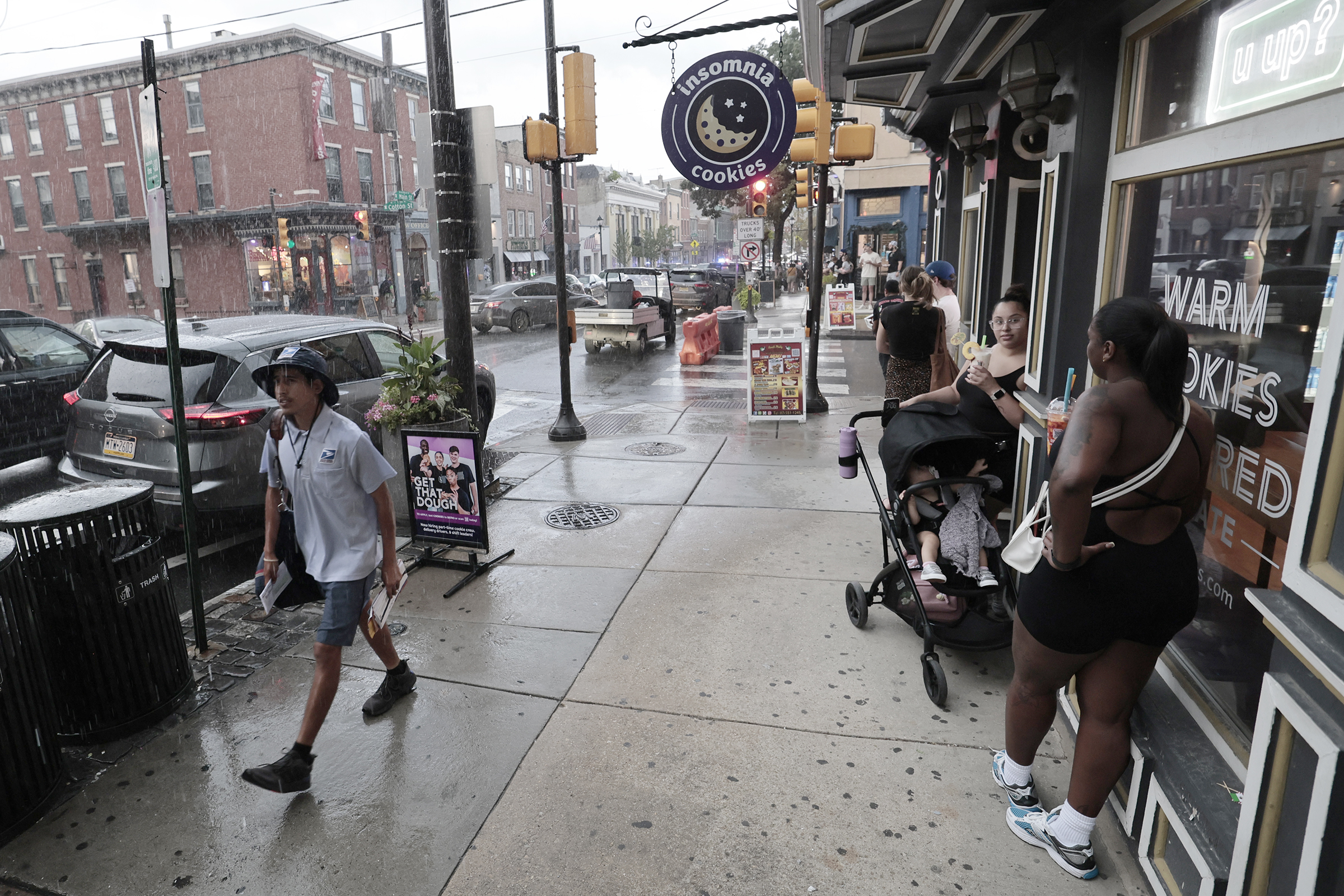
Insomnia Cookies is one of the few remaining chains with a presence on Main Street in Manayunk.Elizabeth Robertson / Staff Photographer
The bustle of Main Street now extends all the way down to Shurs Lane, roughly double its occupied length when he started.
Neduscin also says he really tried to find independent entrepreneurs to lease to — “I didn’t want a McDonald’s on Main Street” — and those restaurateurs and small-business owners gave Main Street a unique identity.
More than 30 years later, that’s why he wanted to sell some properties to one-time tenants like Spinner.
Still, business owners say myriad challenges remain. The permitting process is notoriously slow, especially if a trip to the Zoning Board of Adjustment is necessitated. That can leave business owners paying rent without being able to open their doors as they wait for permission.
“When it takes longer, you have to have deeper pockets, and I think that does scare some prospective businesses,” Neduscin said.
Further, owners on Main Street face the macro challenges affecting small businesses throughout the region. Brandy Deieso, who opened the gift boutique the Little Apple in 2010, said the cost of goods has increased due to tariffs, shipping costs, and rising gas prices.
“Being a street full of locally owned small businesses is great,” said Melissa Walter, co-owner of Love City Brewing, which just opened a second location in Manayunk. “But as we all know, running a small business is really hard.”
Building a business community
The bubblegum pink Cupid’s Bookshop storefront has built a following and even attracted customers from Baltimore and New York since opening last year. Now, it’s upgrading to a bigger location on Main Street.
“The growth we’ve had, it’s been amazing,” said owner Tina Long.
Cupid’s capitalized on the insatiable demand for bodice rippers and love stories, and Long says the bookshop benefited immensely from the MDC’s incubator program. Cupid’s was the first participant.
The program allowed Long to lease a storefront at 106 Grape St., owned by the business association, for a below-market monthly rent of $1,000 for up to three years, and the MDC provided guidance and support. With her new storefront opening in August and a five-year lease, she’s graduating from the incubator space early.
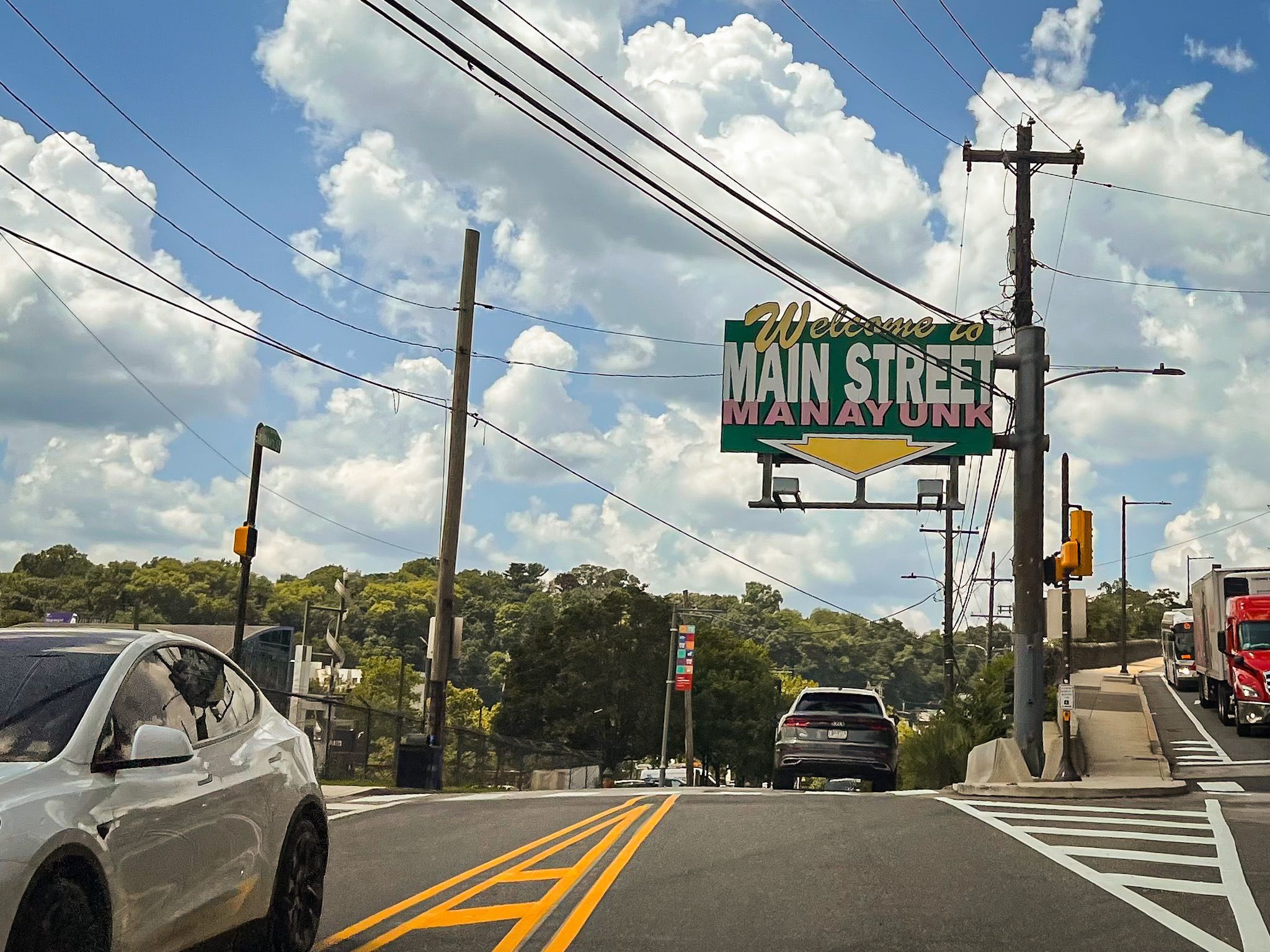
The “Welcome to Main Street” sign hangs over Main Street at Ridge Avenue in Manayunk.Michael Klein / Staff
“We loved the idea, but it turned out beyond our wildest dreams,” MDC executive director Gwen Mccauley said. “She’s now becoming part of the fabric of our district.”
Baby Face Studio also ended up on Main Street in part because of the MDC.
Artist and owner Kim Canefield in 2022 applied for the MDC’s emerging artist tent at the Manayunk Arts Festival, where she could set up shop for $100 instead of operating a $500 tent on Main Street. The festival draws over 300 artists and 150,000 visitors each June, McCauley said.
She set up a full-time vendor tent at the next three Arts Festivals. Each time, she was stationed in front of an art gallery, not knowing that the same space would eventually become Baby Face Studio.
“I just kept looking at it, and peeking through the window,” Canefield said. “The whole time I was staring at the future of what the studio was going to be.”
Love City Brewing already has a foothold in Callowhill, but saw Manayunk as a place to grow. Its second spot opened in the former Fat Lady Brewing. When searching for a new location, co-owner Walter was attracted to Main Street’s critical mass of small, independent businesses.
“Seeing them succeed, we thought: ‘Oh, we’re a small, local Philly business too,’” Walter said. “We can make it work there.”
The buyers: Mia Spolansky, 23, U.S. Air Force active duty military personnel, and Annabel Harp, 23, daycare worker and early childcare assistant
The house: A 784-square-foot home in Germantown with two bedrooms and one bathroom built in 1950.
The price: Listed for $250,000, sold for $265,000.
The agent: Christine Mantwill with REMAX
The ask: Mia Spolansky, originally from Willow Grove, and her partner, Annabel Harp, originally from Hagerstown, Md., were ready to move out of their one-bedroom rental apartment in Mount Airy and buy their first home. They both liked the area’s access to nature for running and biking in Wissahickon Valley Park, plus a location that allowed for easy commuting to their jobs. They didn’t want to stray too far.
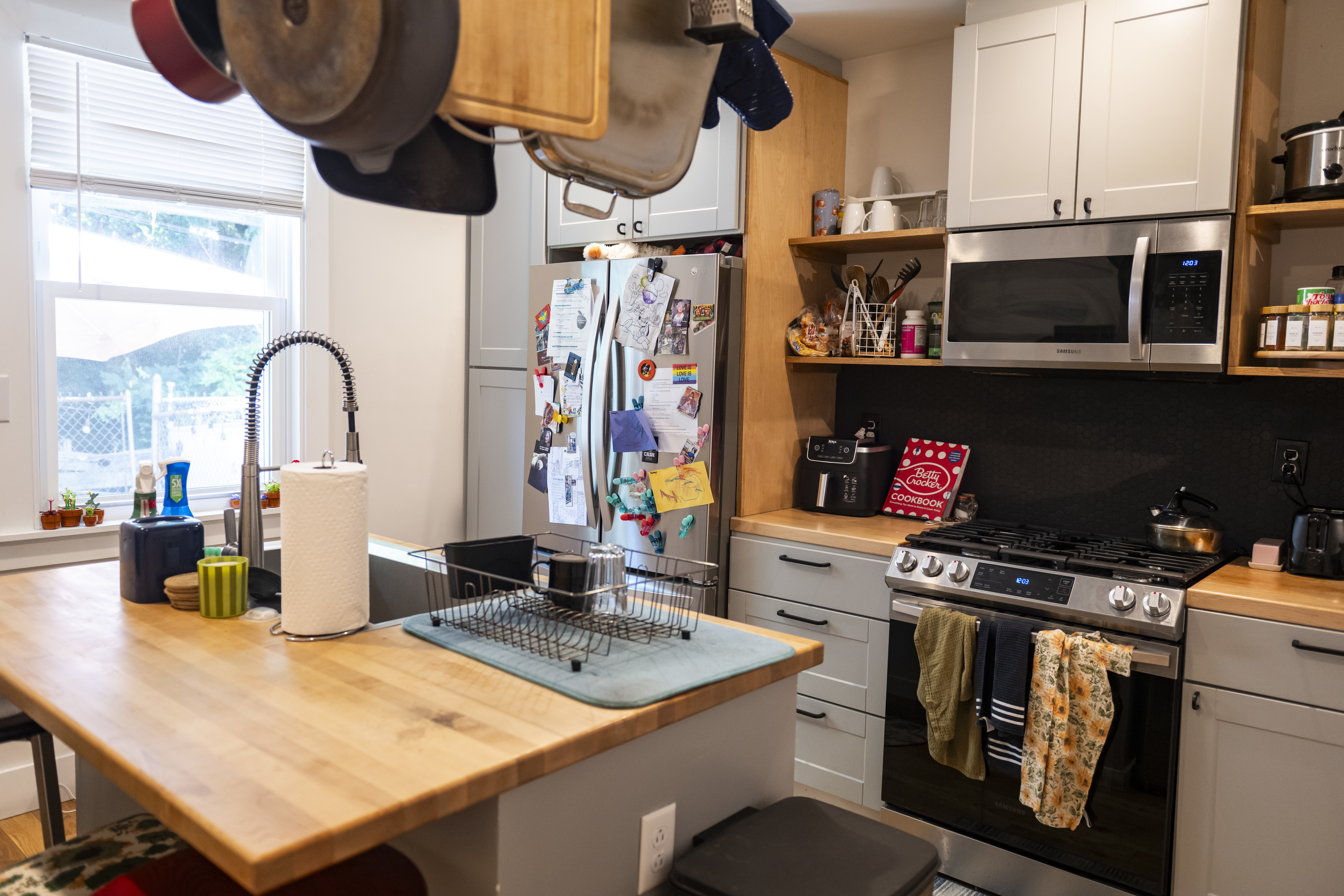
The kitchen in Mia Spolansky and Annabel Harp’s home in Germantown.Allie Ippolito / For The Inquirer
“We were looking to buy in Mount Airy,” Spolansky said. “Those prices were out of our range, so we decided on Germantown.” They started their search in November.
The search:Harp and Spolansky began touring homes in East Germantown with their real estate agent. They wanted to be efficient with their space, so they narrowed the search to smaller homes. They were seeking a rowhouse for both the neighborly feel and value.
“A lot of detached homes were out of our price range,” Spolansky said.
They also wanted an older home “with some character” but with modern amenities. They toured six houses and all of them felt too large or had issues. Their agent helped Spolansky access the multiple listings sites used by real estate professionals so she could browse, and one house caught her eye.
The appeal: With their agent’s help, Harp and Spolansky went to see the house that day. It was a two-bedroom with a front patio and backyard, which was not yet on the market.
When they visited, they were delighted that “the neighbors actually came up and introduced themselves,” Spolansky said, “We were like, whoa, this is an actual community.”
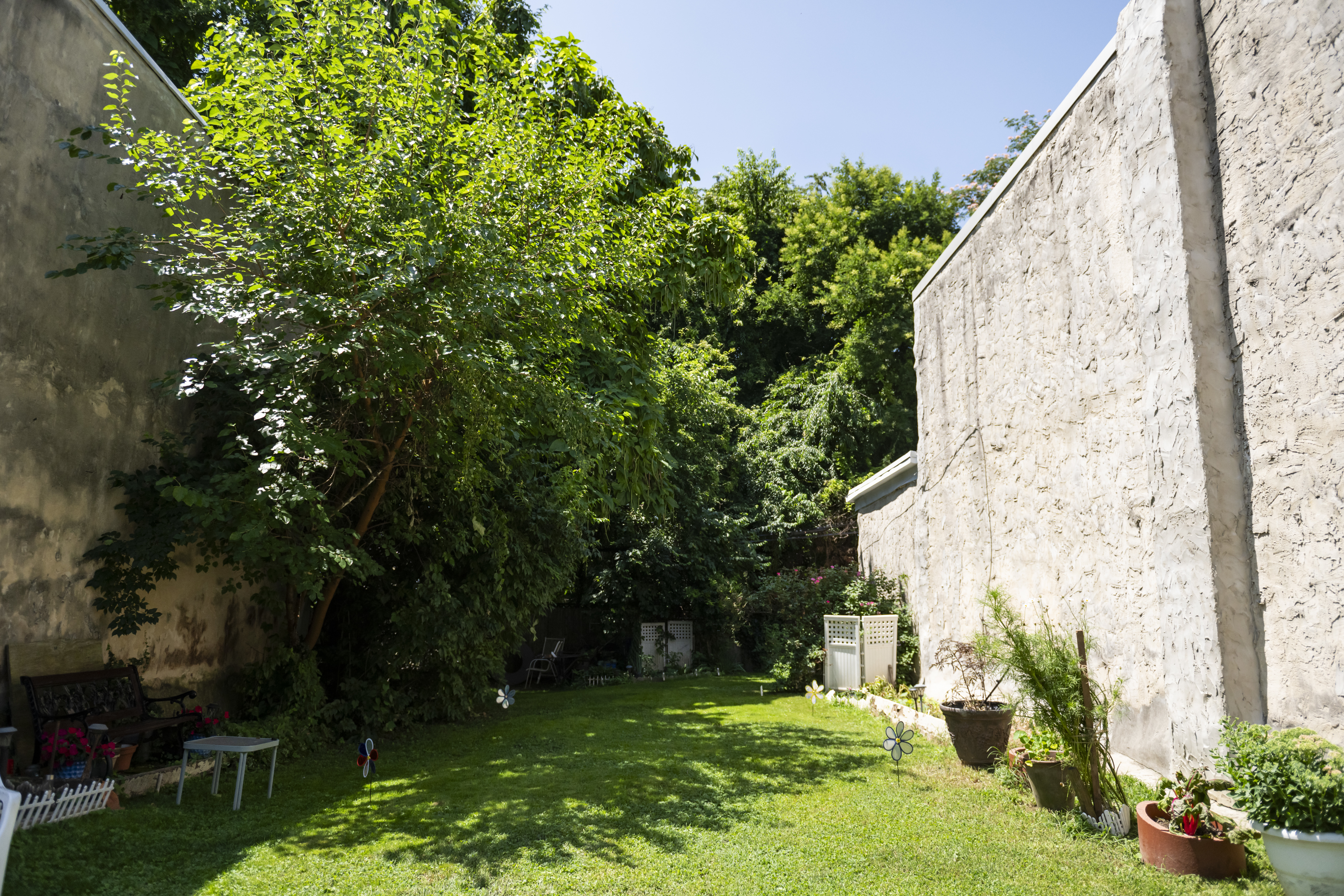
The empty lot next to their home, which the pair uses to garden, growing peppers and cucumbers.Allie Ippolito / For The Inquirer
The house was an older style with new appliances — exactly what they were looking for — and the owners had renovated both the bathroom and kitchen and installed central air and heat in 2021. “It was nicer than I grew up with,” Spolansky said. The couple put an offer in right away.
The deal: Harp and Spolansky made an offer on a Thursday. The sellers had an open house scheduled for the following Saturday. The sellers said they would accept the offer and cancel the open house if the couple agreed to go $15,000 over asking to beat the potential offers they might get from the open house.
Harp and Spolansky agreed and closed in mid-April.
The money: They purchased the home for $265,000 after negotiation. They used a VA Home Loan of $270,000 and put 0% down. The mortgage interest rate is 5.625%. They received a $5,500 seller credit for some repairs needed. The closing costs were $1,780. The monthly payment is $1,834 with escrow, interest, and principal.
The move: They moved in late May, with a two-month buffer period until the lease on the apartment ended.
They used a moving company to ease the process, which helped, because the home had small doors and tight corners.
The inspector had found some rotten floor joists in the basement, but after move-in, the couple realized there was water getting in as well. They brought in a masonry company to waterproof the wall and added a chimney liner when their carbon monoxide detector started going off. They also had some electrical and AC issues.
The dining room in Mia Spolansky and Annabel Harp’s home.Allie Ippolito / For The Inquirer
“I’ve only ever lived in rentals,” Spolansky said. “My family doesn’t have experience with upkeeping a house. I think having a buddy or known contractor come on the inspection would’ve been helpful, especially for negotiations because I didn’t know how much it costs to put in a chimney liner.”
However, the pair remain satisfied with their choice and their ability to manage repairs themselves, rather than rely on a landlord.
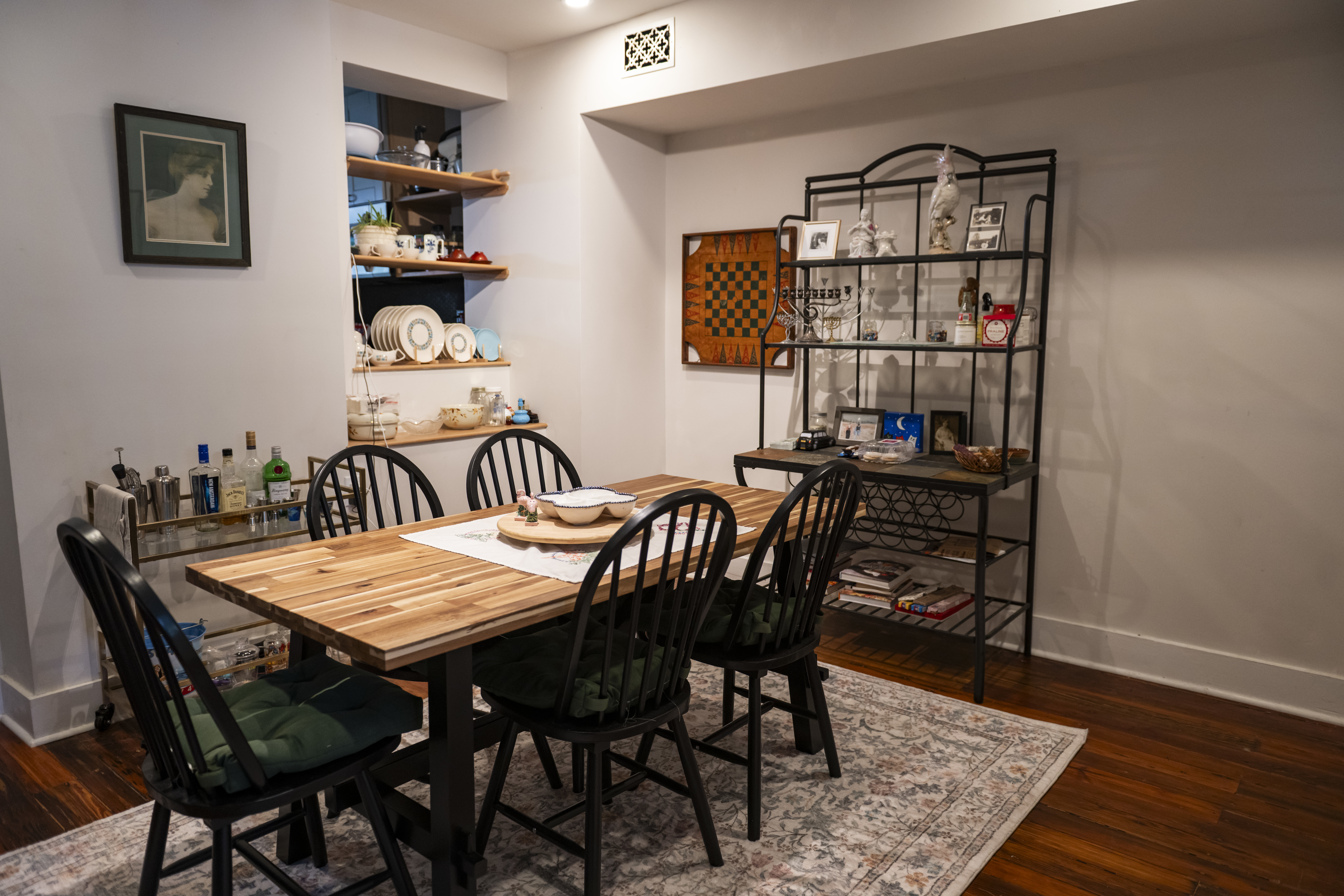
Life after close: The couple and their cat, Morty, have adjusted well. After living in a one-bedroom, they love the space, including their backyard and front porch, especially in the summer for barbecuing and being outside. The Wissahickon is a five-minute bike ride away. The rowhouse is exposed on one side to an empty lot, which the pair uses to garden, growing peppers and cucumbers they got from their neighbors. They especially love the community.
“We go to parties, clean up the block, do community events,” Spolansky said. “I never had that before. Knowing our neighbors has been the biggest plus. Having good neighbors, you can’t replace that.”
Did you recently buy a home in the Philadelphia area or South Jersey? Share the story of how you did it. Email Inquirer real estate reporters at properties@inquirer.com.
Cheltenham Township is buying a pool complex from a private developer for up to $4.5 million, which a resident’s lawsuit alleges violates public bidding rules.
The township commissioners approved a contract last month to lease 2.7 acres by Ashmead Road and Front Street to Melrose Pool LLC for $10 per year. Cheltenham agreed to pay up to $4.5 million for three public pools and a 5,000-square-foot building that Melrose Pool will build under the lease agreement.
Matthew Areman, president of the seven-member Cheltenham commissioner board, vowed this week that the township would share additional details in the “coming weeks and months,” but a lawsuit filed July 22 in Montgomery County Court by Cheltenham resident Sam Thacker alleges the agreement is illegal. Heclaimsit bypasses competitive public bidding laws that would normally apply to a town’s public pool, and wants a county judge to void the contract and issue an injunction to halt the project.
A Montgomery County judge has given Cheltenham and Thacker until Aug. 21 to file their legal arguments,but time is short: Under the lease, the township has to decide on a final pool plan by the end of August.
What the suit alleges
Areman said last year the pool parcel is worth several million dollars, according to the commissioner board’s meeting minutes.
If the township is leasing that land to the developer for just $10 per year, Thacker said, he believes the lease agreement also violates Cheltenham’s township code, which requires the use of “a system for obtaining independent appraisals … to assure that the township is obtaining adequate compensation” when skipping bidding on real estate leases. Thacker told The Inquirer he was unable to find a fiscal assessment for the pool project through Right-to-Know requests or a town spokesperson.
Township officials declined to explain the legal reasoning behind the leaseback agreement with Melrose Pool.
But in an FAQ posted this week, officials wrote Cheltenham had “received estimates from multiple pool consultants indicating that constructing a comparable standalone replacement pool would cost approximately $6-8 million.”
Holly Fishel, the policy and research director for the Pennsylvania State Association of Township Supervisors, who did not comment on Cheltenham specifically, said she had heard of leaseback agreements with townships before but was not sure of the legal mechanisms. In situations where a township is doing construction work on land it owns, “you would need to be doing the bid,” Fishel said.
But in this case, a private company is doing the work on land it has leased.
“That can’t be right that you can just evade public bidding requirements by saying something is a lease when it’s clearly a public construction project,” Thacker said.
Cheltenham is paying up to $4.5 million for three pools
A preliminary plan for the Melrose plot includes three pools of different sizes, but the July 15 lease notes that the developer is to provide a final plan by this week.
The township will then have two weeks to approve or deny the final pool plan.
Upon completion of the work, Cheltenham would pay up to $4.5 million for the new pools, or pay an additional rent up to $382,500 per year until the township comes up with the $4.5 million.
The two-week timeline for the township to approval a final pool plan is what led Thacker to file his lawsuit.
“The contract is structured essentially to rush this forward as quickly as possible,” Thacker said. “We have no idea if $4.5 million is a good price.”
The figure is cheaper than the $6.1 million estimated in 2023 to redo the Conklin Pool, which the Melrose pools would replace in 2027. The township has one other public pool, in Glenside.
But other residents have questioned whether it is even possible to build three public pools for $4.5 million, given the Conklin pool estimate.
Private development planned beside pool
The pool is part of a larger redevelopment of the former Melrose Country Club — at 116 acres, one of the largest properties in Cheltenham — that includes new townhouses and commercial space.
The lower price tag for the new Melrose pool comes in part from construction efficiencies, Cheltenham wrote this week, since the property will already require site preparation, grading, and utilities for the new buildings.
The property’s developer, an LLC associated with BG Capital, gave the township the 2.7 acres for free last December to advance public welfare and for an unspecified “advantage” to the developer.
BG Capital and the LLC’s attorney did not respond to a request for comment, but court filings Tuesday for Melrose Pool LLC argued that the bidding process Thacker cited under the state’s procurement code does not apply “to the landlord/tenant relationship” between Cheltenham and the LLC because the code applies only to state agencies.
Melrose Country Club project changed
Some residents, including Carl Freedman, have raised concerns at public meetings about the larger project. An earlier plan included both a pool and a community center, Freedman said, and would have allowed more much-needed commercial space.
Cheltenham’s recently approved long-term township plan calls for bringing in more business to bolster the struggling tax base.
Freedman, an architect who sits on the Cheltenham Planning Commission, said the panel no longer supports the project and is sending the township a letter to that effect.
“The loss of the community center is what is making the retail unmanageable,” Freedman said, because the center would have drawn potential shoppers to the site. “This project has taken a left turn.”
Chloe Mohr of the Montgomery County Planning Commission, which reviews local development projects and offers recommendations, said the county commission plans to release a new review of the revised plans late next week.
This suburban content is produced with support from the Leslie Miller and Richard Worley Foundation and The Lenfest Institute for Journalism. Editorial content is created independently of the project donors. Gifts to support The Inquirer’s high-impact journalism can be made at inquirer.com/donate. A list of Lenfest Institute donors can be found at lenfestinstitute.org/supporters.
The Upper Merion Township Board of Supervisors unanimously rejected a proposed 5-million-square-foot AI data-center campus that had sparked pushback from residents, a lawsuit from the developer, and accusations of mistreatment and intimidation.
After the decision was made at a Thursday night meeting, some in the crowd applauded, danced, and high-fived one another. The rejection came after three hours of fiery exchanges between the developer, Brian O’Neill, and township officials.
O’Neill and his team said they were prepared to go over each of the township’s comments about his five proposed sites in the King of Prussia area. But officials said it was too little, too late, and asked if O’Neill’s team was “filibustering.”
“Are you asking us to not present those facts in defense of those plans when it’s clear all you want to do is deny our plan and go home tonight?” said O’Neill. He later said township officials were violating state and local planning codes, an allegation they denied.
“Your attempt here to lecture us is considered an intimidation. And I don’t want to see our professional staff bullied or coerced,” said William Jenaway, vice chair of the Upper Merion Township Board of Supervisors. “Intimidation, coercion and bullying are not good qualities in a professional leader.”
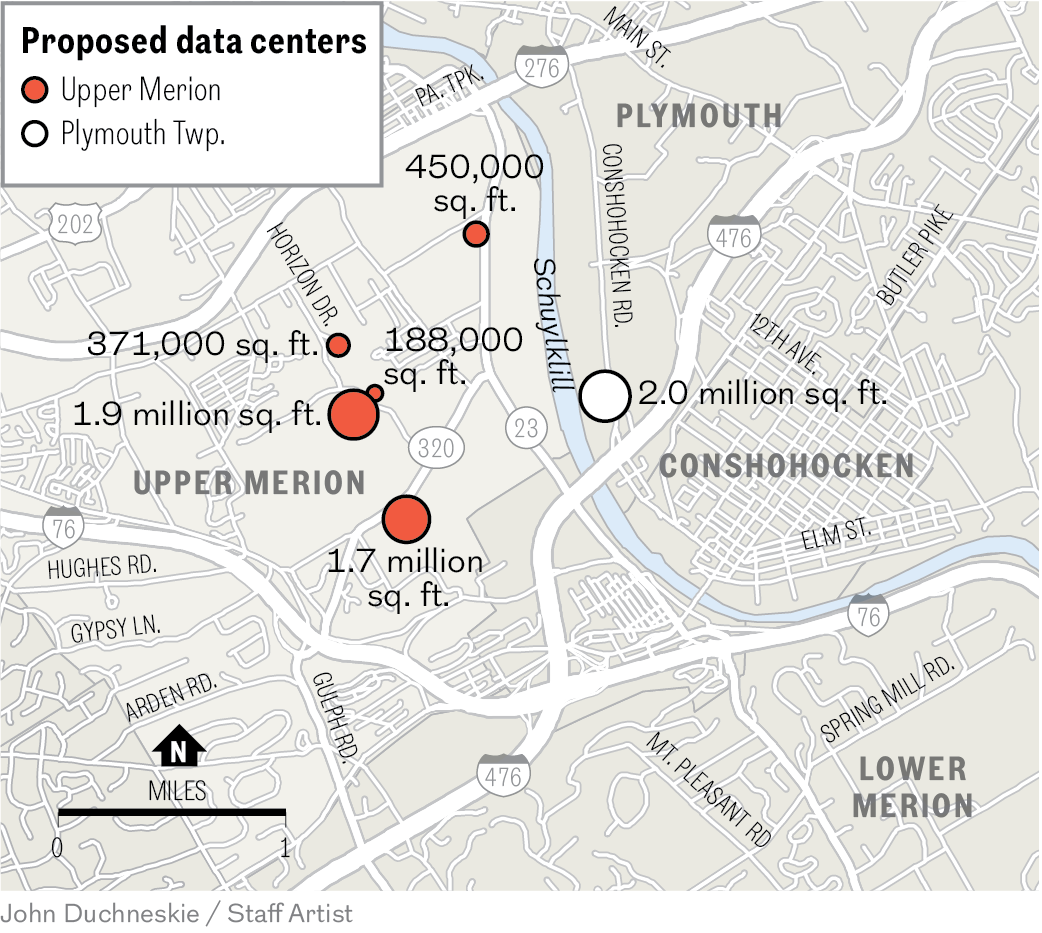
A map of the proposed data centers in Upper Merion and Plymouth TownshipsJohn Duchneskie
Those projects aren’t dead: O’Neill can appeal the board’s denial, as chair Tina Garzillo told him Thursday.
“Don’t you worry about that,” said O’Neill, before walking out of the Upper Merion Area Middle School auditorium to a chorus of boos.
The board’s decision came after months of contention and a whirlwind two days of legal back-and-forth.
O’Neill on Wednesday sued the township, its planning commission, and its board of supervisors, saying they violated his legal right to an extension and treated him unfairly during the development review process. Soon after, Montgomery County Court Judge Garrett D. Page ordered the township to halt proceedings and decisions related to the data centers until a hearing next week.
Citing the ruling, Edmund J. Campbell, an attorney for O’Neill, declined to make a presentation on two of the five proposed data-center sites at an Upper Merion Township Planning Commission meeting on Wednesday night.
Late Thursday afternoon, however, Page vacated his previous order, allowing the township board of supervisors to proceed with its meeting as planned. On the agenda: A vote on O’Neill’s request for an extension until Sept. 30, and votes on the five proposed data centers.
After an hour of public comment, all but one of which was from residents opposing the data centers, the township’s board of supervisors voted to deny O’Neill’s extension requests. The board then moved on to vote on the land development plans for each of the five sites.
One by one, the plans were denied unanimously by the five-person board.
Each vote was met with loud cheers from attendees.
For months, residents have rallied against O’Neill’s plans, packing township meetings and putting up bright orange lawn signs opposing the projects. About 18,000 people had signed a Change.org petition against the Upper Merion data centers as of Thursday. Some neighbors have expressed concerns about pollution, light, noise, electricity prices, property values, and quality of life.
Upper Merion residents opposed to the data centers have put up these lawn signs.Alejandro A. Alvarez / Staff Photographer
“I’m really proud to stand here tonight with each and every other concerned resident,” Courtney Smith said Thursday. “We all have something important here to fight for.”
“The people here are here because they care deeply about the long-term interest of our communities,” Montgomery County Commissioner Neil K. Makhija said during his comments in opposition of the plan. The commissioner said the supervisors’ decision would have ramifications beyond the county, as communities across the region and the country weigh data-center development.
O’Neil has said his data centers would benefit Upper Merion and “change the world for the better.” While the developer has declined to specify who exactly would operate the centers, he has indicated the facilities would use AI-powered biotech in conjunction with his existing life-sciences complex, Discovery Labs.
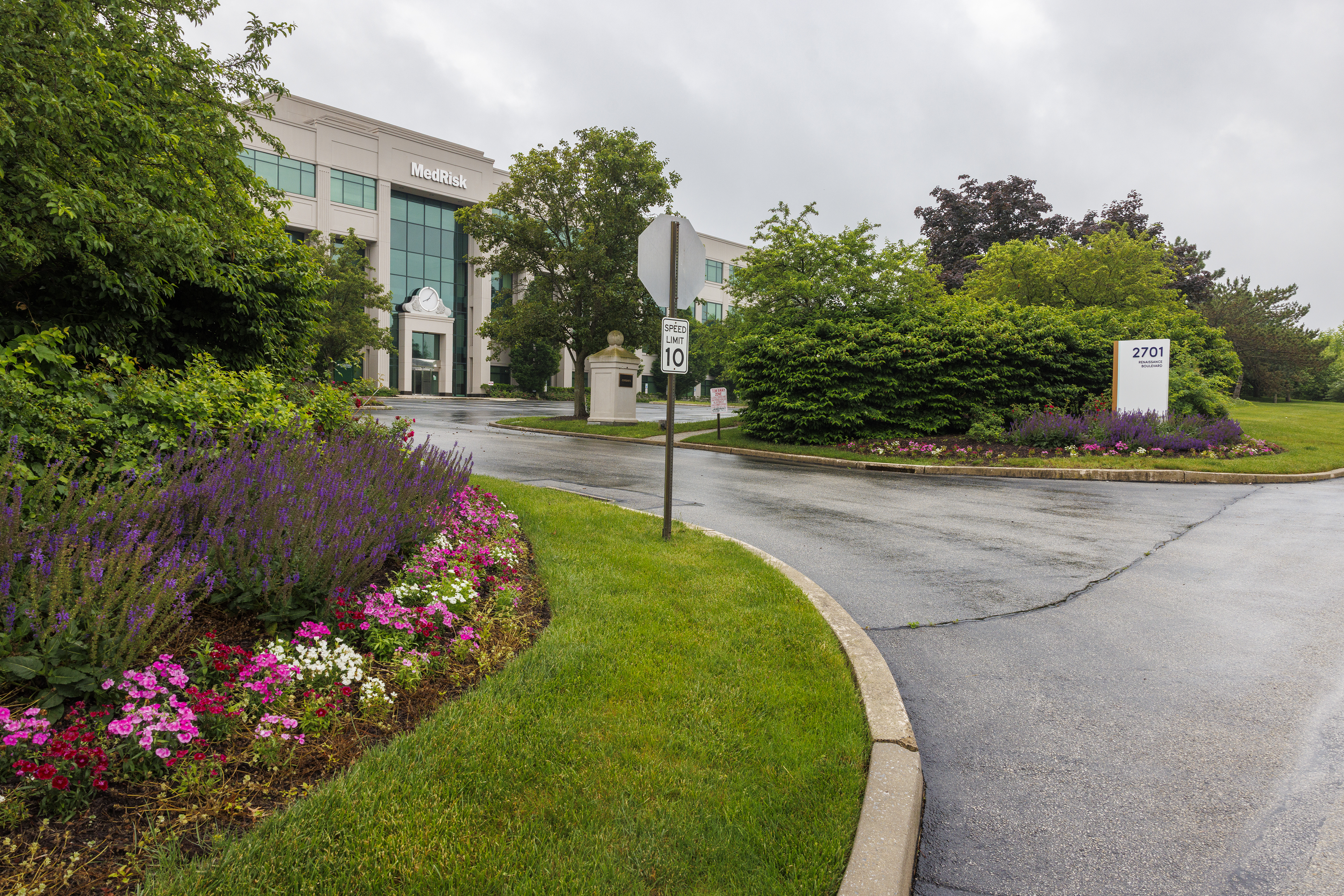
One of the sites where Brian O’Neill wanted to build a data center in Upper Merion.Alejandro A. Alvarez / Staff Photographer
O’Neill has said his data centers would comply with the highest environmental standards, emitting little light and noise. They would operate on a closed-loop system, requiring no outside water, he said, and provide their own power.
The developer has also said they’d be an economic boon to the area. Last week, he released an economic impact study that said the Upper Merion centers would result in more than 10,000 jobs during its construction and then generate more than $55 million a year in local tax revenue.
At Thursday’s board of supervisors meeting, however, Upper Merion Township Tax Collector Evelyn Ankers disputed those figures, and said O’Neill has failed to pay taxes on his properties in the past.
Across the Schuylkill, a data-center fight rages on between O’Neill and some residents of Plymouth Township, where the developer wants to build a 2-million-square-foot facility on a shuttered steel mill outside Conshohocken.
A Main Line developer looking to build multiple data centers in Montgomery County possibly could have more time to make his case for a five-property campus near King of Prussia.
And residents who oppose the projects — who had been preparing for a potential vote on the plans this week — now may wait to learn whether the complex will be built in their neighborhood.
A Montgomery County Court of Common Pleas Judge on Wednesday temporarily prohibited Upper Merion Township from making decisions about any data centers proposed by Brian O’Neill. The township board of supervisors had been set to vote Thursday on the five proposed data centers totaling 4.6 million square feet.
The developer had asked for an extension from Upper Merion until Sept. 30, saying his team needed more time to respond to dozens of township review letters related to the projects. In emails, O’Neill said township officials made clear they would not allow more time.
“It is clear … that the township’s board of supervisors intends to decline the offer of extension and instead proceed to deny the applications,” O’Neill wrote in the lawsuit.
On Wednesday, the developer had sued Upper Merion Township, its board of supervisors, and its planning commission, saying they violated his legal right to an extension and treated him unfairly during the review process.
The judge’s ruling ordered that township officials halt certain proceedings and not make any decisions about the data center plans until after a court hearing scheduled for next week.
Before the lawsuit, the Upper Merion Township Planning Commission had been scheduled to discuss and make recommendations to the Upper Merion Township Board of Supervisors on two of O’Neill’s five data center plans on Wednesday. The planning commission had previously voted not to recommend approval of O’Neill’s three other proposals.
In a separate meeting on Thursday, the township supervisors had been set to vote on whether to approve the five data center plans.
The proposed data centers in Upper Merion are across the river from another data center O’Neill has proposed near Conshohocken.John Duchneskie
But late Thursday afternoon, Judge Garrett D. Page vacated his Aug. 12 order, paving the way for a potential vote Thursday night on O’Neill’s extension request and his data center plans.
O’Neill’s team had declined to discuss the projects with the planning commission on Wednesday, citing the lawsuit.
“We are not making a presentation tonight consistent with the court’s order,” said Edmund J. Campbell, an attorney for the developer. “I will ask to be excused as I don’t believe my presence is needed, pursuant to the court’s order.”
With Campbell’s exit, the township planning commission had opened the floor to dozens of local residents, all but one of whom was opposed to the projects.
They expressed concerns about light, noise, and sound pollution; water use; the impact on the power grid and electricity prices; mental and physical health impacts; and overall quality of life in the suburb. Some said they were angry with O’Neill and his team, with a few citing a recent 6ABC interview in which O’Neill said opponents wanted to “fight for the sake of the fight” and were against development that was “right for the community.”
Some residents disagreed with those statements.
“Judging by the past five months or so [of] our community standing together in solidarity against these horrific proposals, this is clearly not right for our community,” Upper Merion resident Zachary Davis said Wednesday.
Some King of Prussia residents have put up lawn signs opposing the data centers.Alejandro A. Alvarez / Staff Photographer
The developer has said the data centers would operate on a closed-loop system, requiring no outside water, and provide their own power. They’d emit little light and noise, according to O’Neill, and include billions of dollars worth of emissions controls.
O’Neill’s team last week released an economic impact study that says the Upper Merion centers would result in more than 10,000 jobs during its construction and then generate more than $55 million a year in local tax revenue.
O’Neill’s efforts come as data-center opponents’ ire toward him has intensified.
The animosity was on display last week at a zoning hearing board meeting in nearby Plymouth Township, where O’Neill is trying to build a 2-million-square-foot data center on the outskirts of Conshohocken.
A date has not been set for the next Plymouth Township meeting, though officials indicated it would occur sometime in September.
In Upper Merion, officials said late Wednesday that the monthly board of supervisors business meeting scheduled for 6:30 p.m. Thursday was still on. Other issues, not related to data centers, were on the agenda.
Editor’s Note: This story has been updated after Montgomery County Common Pleas Judge Garrett D. Page late Thursday afternoon vacated his Aug. 12 order.