Category: Real Estate

  • Thousands of Philly homeowners are facing property tax increases of 50% or more after this year’s reassessment

    Thousands of Philly homeowners are facing property tax increases of 50% or more after this year’s reassessment

    Most Philadelphia homeowners will see slightly higher property tax bills next year after the city conducted a mass reassessment process that resulted in a modest uptick in home values.

    But for thousands of residents, many of whom live in North Philadelphia, next year’s tax bills are expected to soar.

    Nearly 6,000 homeowners in Philadelphia saw their property assessments this year climb by more than 50% compared with two years ago, the last time the city conducted a mass revaluation, according to an Inquirer analysis of city property assessment data released in June.

    Of those homeowners, more than 2,200 saw their assessments more than double.

    That is likely to result in sticker shock come tax time next year, because property tax bills in the city are calculated based on home values. The revenue is split between the city and the Philadelphia School District.

    Homeowners across the city saw a median 3% increase in their property assessments this year compared with the 2025 tax year. Jumps were higher in neighborhoods that border gentrifying areas, such as in parts of Kensington and West Philadelphia.

    But this year, two other areas of the city had the densest concentrations of homes where property assessments increased by 50% or more, according to The Inquirer’s analysis.

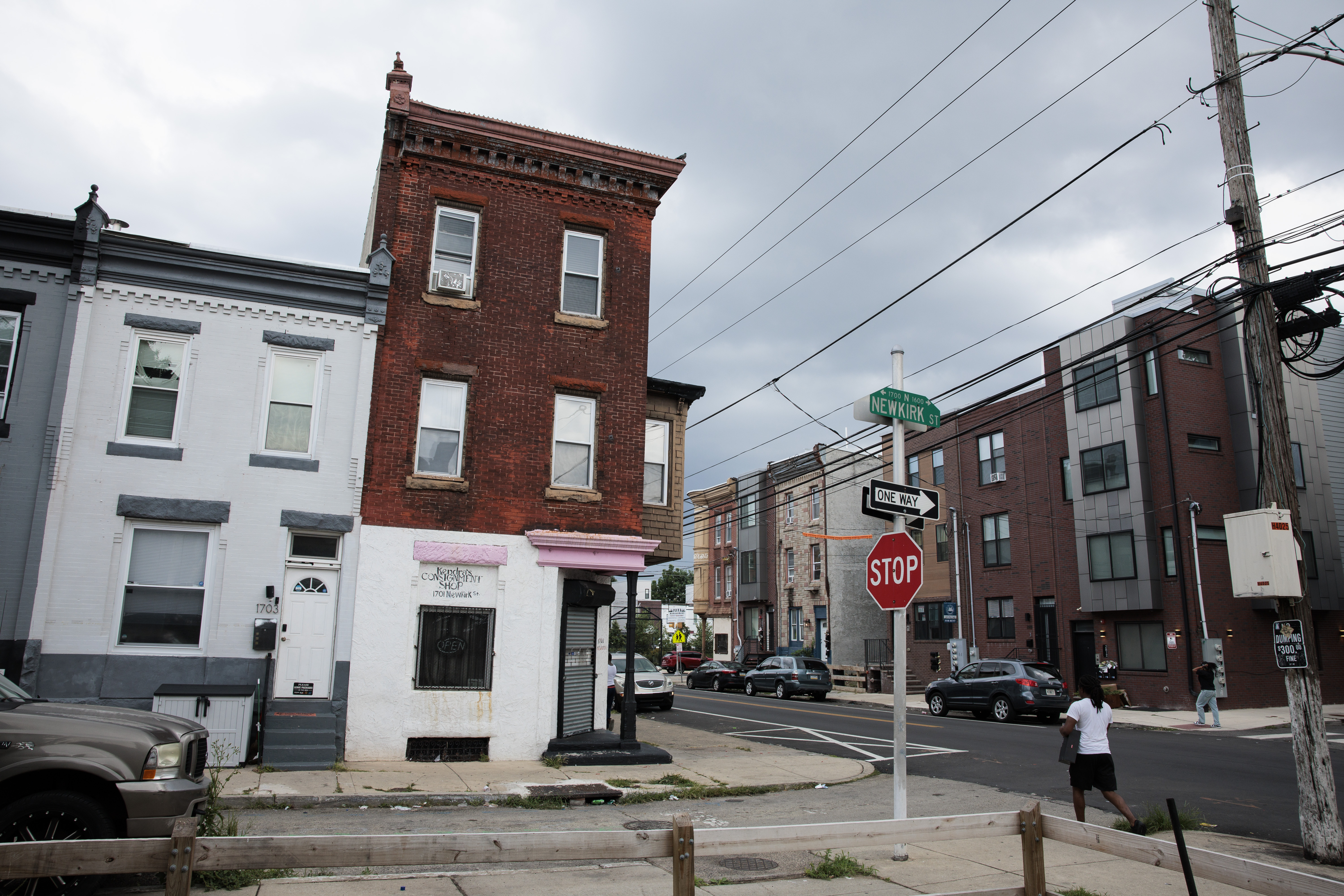
    The steep rises are clustered in the southern end of Strawberry Mansion, the historically Black neighborhood along the Schuylkill, and in the tiny Hartranft neighborhood north of Temple University and east of Broad Street, where residents are predominately Latino.

    (function() {
    var l2 = function() {
    new pym.Parent(‘html_sandwich_2026_property4’,
    ‘https://media.inquirer.com/storage/inquirer/projects/innovation/arcgis_iframe/html_sandwich_2026_property4.html’);
    };
    if (typeof(pym) === ‘undefined’) {
    var h = document.getElementsByTagName(‘head’)[0],
    s = document.createElement(‘script’);
    s.type = ‘text/javascript’;
    s.src = ‘https://pym.nprapps.org/pym.v1.min.js’;
    s.onload = l2;
    h.appendChild(s);
    } else {
    l2();
    }
    })();

    Housing experts and advocates for low-income homeowners have long criticized the city’s assessment system as systemically biased, leaving Black and brown homeowners to pay disproportionately high property taxes. Mayor Cherelle L. Parker convened a task force in 2024 to study the city’s revaluation system, and that group’s recommendations are expected to be released later this year.

    Monty Wilson, a senior attorney at Community Legal Services who sits on the task force, said the Philadelphia Office of Property Assessment is the best in the state and has “worked really hard to become more and more accurate.”

    But he said bias persists in part because of the unique challenges that assessors face in low-income neighborhoods that can cause volatility in home values, such as higher rates of vacant lots, foreclosures, and other factors.

    A 2024 CLS report found that errors were clustered in lower-value neighborhoods where a majority of residents are people of color.

    “That means when a property is overassessed,” Wilson said, ”it tends to occur in a Black and brown neighborhood.”

    (function(){function e(){window.addEventListener(`message`,function(e){if(e.data[`datawrapper-height`]!==void 0){var t=document.querySelectorAll(`iframe`);for(var n in e.data[`datawrapper-height`])for(var r=0,i;i=t[r];r++)if(i.contentWindow===e.source){var a=e.data[`datawrapper-height`][n]+`px`;i.style.height=a}}})}e()})();

    The Parker administration did not respond to requests for comment.

    In response to a previous article about this year’s property reassessments, city officials emphasized that some lower-income homeowners pay relatively low tax bills because of the popular homestead exemption tax break. The program, which any homeowners can apply for and obtain if they live in their house as their primary residence, exempts the first $100,000 from a home’s taxable value.

    That means that some homeowners in working-class neighborhoods previously paid little to no property taxes. A sudden increase in valuation, like the ones seen this year in pockets of North Philadelphia, could require they pay bills next year that are several hundred dollars more than in the past.

    Take the 2500 block of North Marshall Street. The residential North Philly street sits between West Kensington and Broad Street, and nearly every home saw its assessment increase by 60% or more, according to The Inquirer’s analysis.

    Most of the homes there had previously been valued at less than $100,000, meaning owners with the homestead exemption owed no property taxes. Now, many of the homes on the block are valued at about $140,000, an amount that would next year yield more than $500 in yearly tax bills for owners with the homestead exemption.

    More than 40% of the Hartranft neighborhood’s residents are below the federal poverty level, which is $33,000 a year for a family of four, according to U.S. Census data.
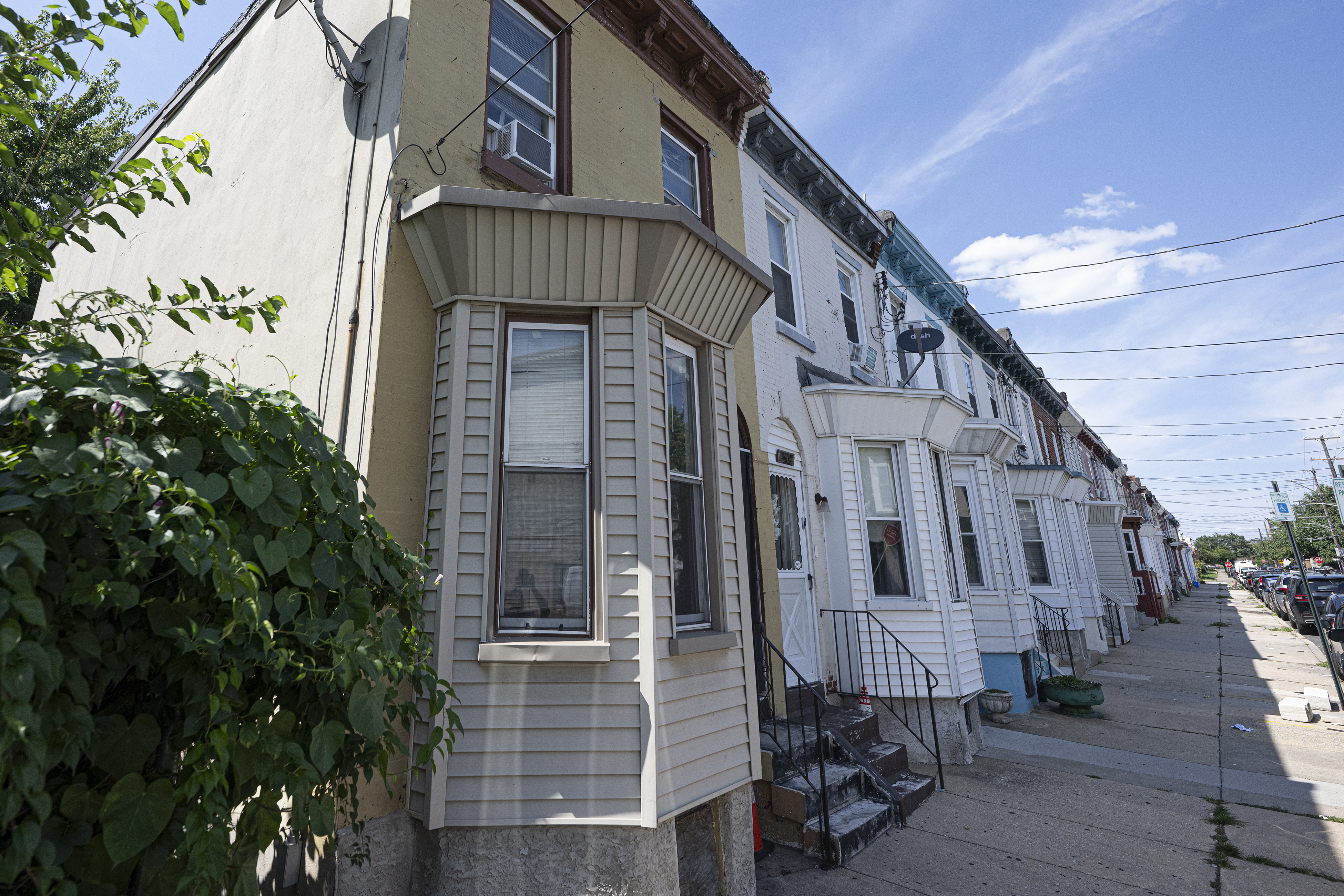
    At Left a property on 2500 N. Marshall St., Philadelphia, PA 19133 is shown Wednesday, Aug. 19, 2026, in Philadelphia.Jose F. Moreno / Staff Photographer

    City Councilmember Quetcy Lozada, whose district includes parts of Kensington and North Philadelphia, said the Hartranft area is not like sections of Kensington that have seen an influx of development in recent years and where increases in property assessments may be expected.

    It is possible, she said, that lower-income residents who have been displaced from parts of Kensington looked to move west of the neighborhood, increasing demand in the Fairhill and Hartranft areas.

    Lozada — who has held workshops in the neighborhood to connect residents with property tax relief programs — said she fears her constituents are being asked to pay disproportionately high taxes and not seeing better city services and stronger public schools.

    “How is it possible that someone in Fairhill is paying a higher tax for a property that has not had any investment, in a neighborhood that is not as safe, whose school system is not as great, as somebody that lives in Chestnut Hill, for instance?” she said, referring to the upscale Northwest Philadelphia neighborhood with a $109,000 median household income. “There has to be a better way of doing a more accurate evaluation in every neighborhood.”

    City Council is expected to hold a hearing this fall to probe the assessment process.

    In Strawberry Mansion, community leaders said that increased assessments are likely a result of market pressure from Brewerytown to its south, a comparatively whiter and higher-income neighborhood.

    “The city has to be super transparent about this assessment system so people can better understand it and not feel that sticker stock,” said Tonnetta Graham, president of the Strawberry Mansion Community Development Corp. “If we know how they came to their number, it’s easier to chew.”
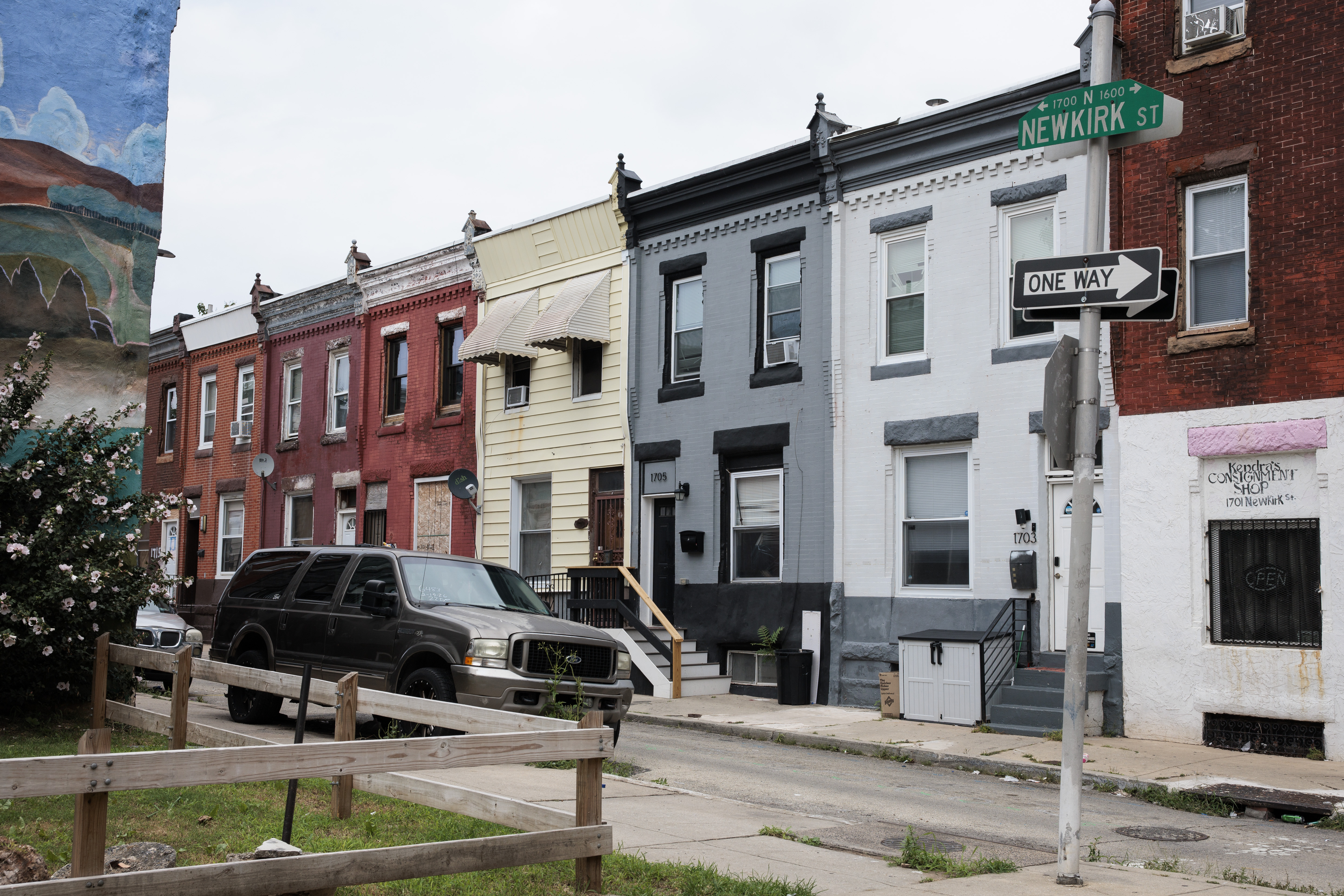
    The 1700 block of North Newkirk Street on Thursday, Aug. 20, 2026 in Philadelphia.Monica Herndon / Staff Photographer

    Councilmember Jeffery Young Jr., whose district includes both Strawberry Mansion and parts of Hartranft, did not respond to requests for comment.

    Jalon Alexander, a Strawberry Mansion native who this month launched a campaign to challenge Young for his Council seat next year, said he was recently at a block party in the neighborhood where he heard repeatedly from older homeowners who were concerned about their increased assessments.

    “They feel taken advantage of, and they feel like it’s coming out of nowhere,” Alexander said. “This is an area where there’s high levels of poverty, and there is not a lot of political or government attention in this area. I’ve spoken with many people whose rates have almost doubled. It’s the biggest issue in the neighborhood.”

    Staff writer Michaelle Bond contributed to this article.
  • New plans for Cheltenham redevelopment with controversial $4.5M pool project show more houses than first proposed

    New plans for Cheltenham redevelopment with controversial $4.5M pool project show more houses than first proposed

    A county review of a revised plan for the former Melrose Country Club shows more than two dozen more houses than in earlier versions.

    The mixed-use development proposal, set on about 115 acres on the southern end of Cheltenham Township, includes townhouses, a medical office, traumatic brain injury care living units, and commercial space. The project would also feature walking trails and a controversial public pool complex.

    The pools have drawn a lawsuit and criticism from some residents, who argue that the plan, which could cost up to $4.5 million and would also replace the existing Conklin Pool, moved too quickly, lacked transparency, and evaded public bidding rules.

    The president of the township’s board of commissioners has acknowledged that the contract with the private developer gives Cheltenham less input on the pool design, and officials have said they cannot answer some questions about the deal due to the lawsuit.

    But the agenda for the township planning committee’s forthcoming meeting includes extensive attachments about the Melrose project, including a February fiscal analysis estimating that the project would net about $1.8 million per year for the township and about $5.9 million annually for the Cheltenham School District.

    The Montgomery County Planning Commission reviewed the latest version of the plan in a letter Thursday to the township that notes about 443 homes and recommends several changes to the developer’s proposal.

    What’s in new Melrose redevelopment plan

    The plan that county officials received Aug. 6 has more townhomes and eliminates apartments, according to the planning commission’s letter, adding about 33 homes.

    There are 351 townhomes and 12 twins in the new plan. Some of the townhouses will be age-restricted. A 2024 version of the plan had included only 306 townhouses, 24 age-restricted apartments, and no twins, Thursday’s letter notes.

    The Melrose plan also includes 80 assisted living apartments, 30 traumatic brain injury care living units, two retail spaces, and three public pools. It’s unclear whether the TBI units would be long-term residences.

    The single-family homes along with the assisted living apartments total about 443 residences.

    Montco recommends changes to Melrose plan

    County planners recommended changes to the Melrose plan and criticized the removal of apartments and some commercial space.

    The township and the developer did not immediately respond to requests for comment on the county’s recommendations or the plan changes.

    “We are sorry to see the loss of the previously proposed small apartment building on this site. Housing variety benefits communities by providing more options for price points, size, and configuration of dwelling units,” the planners wrote, and the reduction in retail space “conflicts” with Cheltenham’s goal of boosting its commercial tax base.

    “A stronger commercial area would make the proposal an even better fit with the future land use vision from Cheltenham’s new comprehensive plan,” planners wrote.

    Carl Freedman, who sits on Cheltenham’s planning commission, has previously criticized the loss of commercial space in newer Melrose plans for similar reasons.

    The county review also addresses pool parking in more detail than in its fall 2025 review, noting that a public pool might require more spaces for cars and recommending an analysis of parking at Conklin Pool to inform needs at Melrose.

    The county also recommended adding more trees around the public pools to cool and shade the area, which will be mostly paved, and revising the stormwater plan behind a set of townhouses to prevent flooding.

    Planners praised the developer’s inclusion of a path along Ashbourne Road and a circuit trail along Tookany Creek, which could connect to a longer trail network underway in the Philadelphia area.

    The chair of Cheltenham’s transportation committee said Wednesday he believes the project’s walkability aligns with the town’s goal to build a more connected community.

    This suburban content is produced with support from the Leslie Miller and Richard Worley Foundation and The Lenfest Institute for Journalism. Editorial content is created independently of the project donors. Gifts to support The Inquirer’s high-impact journalism can be made at inquirer.com/donate. A list of Lenfest Institute donors can be found at lenfestinstitute.org/supporters.

  • Goodness Bowls is opening a headquarters and restaurant in a closed Conshohocken bridal shop

    Goodness Bowls is opening a headquarters and restaurant in a closed Conshohocken bridal shop

    A shuttered bridal shop in downtown Conshohocken will soon become the home of another family-run business with local roots.

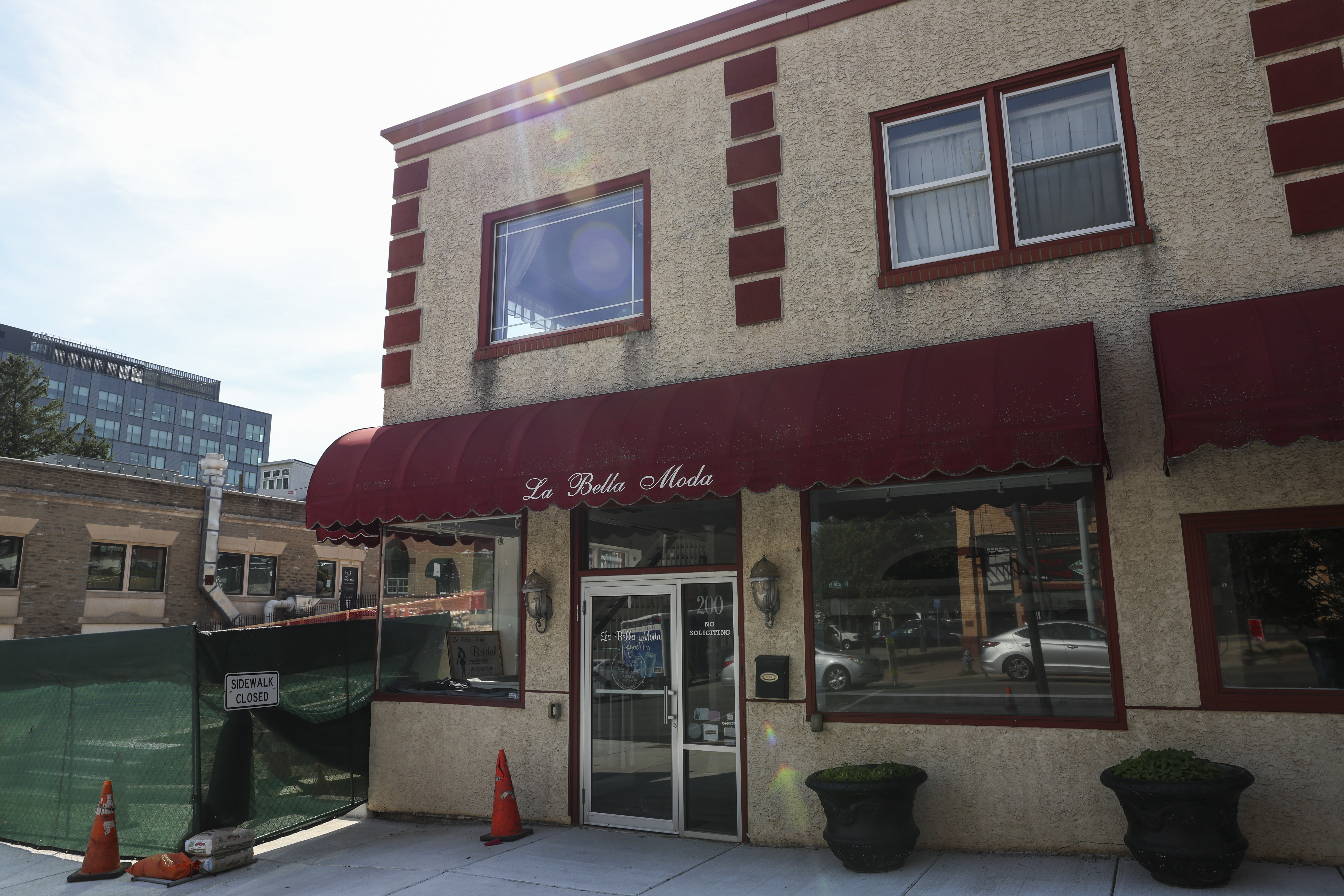
    Goodness Bowls, a “healthy-eats cafe” chain run by Montgomery County residents, has signed a lease for the former La Bella Moda bridal shop at 200 Fayette St., with the goal of opening a corporate headquarters there by early 2027. La Bella Moda closed in May after 45 years in business.

    “I always looked at La Bella Moda, and I thought, ‘God, that would be the perfect corner,’” said Susan Persichetti, Goodness Bowls’ cofounder and CEO. “ But I never thought they would close their doors.”

    In the coming months, the Goodness Bowl team plans to open a 1,500-square-foot restaurant on the first floor, according to company executives, and use 2,000 square feet upstairs for additional seating and its corporate offices. They declined to share the terms of the lease.

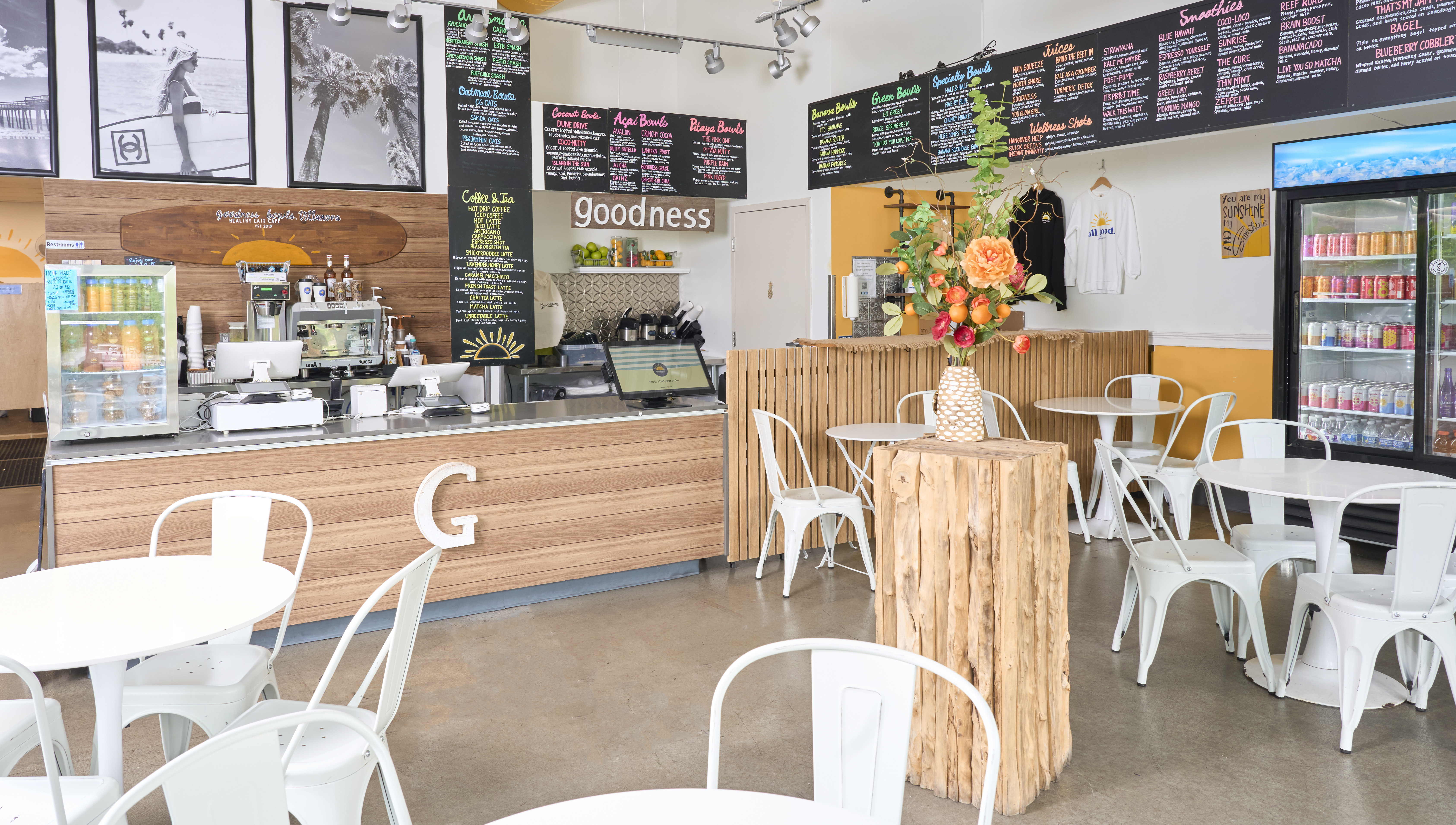
    The Conshohocken restaurant will be Goodness Bowls’ 10th location and its third corporate outpost. The rest of its cafes are franchised.

    The closed La Bella Moda, as seen in June.Monica Herndon / Staff Photographer

    The chain’s expansion comes as acai bowls — smoothie bowls loaded with toppings like fruit, granola, and peanut butter — and other more nutritious fast food have surged in popularity.

    Shops selling these bowls seem to be popping up everywhere. Over the past decade, Belmar, N.J.-based Playa Bowls has grown to more than 100 locations in 20 states, including more than a dozen spots in the Philly area. And the Juice Pod, founded in Avalon and now headquartered in Bryn Mawr, has expanded to more than two dozen cafes, most of which are in the region.

    A mother-daughter duo, Susan and Corinne Persichetti, opened the first Goodness Bowls in Avalon in 2019. Susan said her daughter Corinne — a former Division I field hockey player at Fairfield University and a health enthusiast — was the driving force behind the business.

    Susan Persichetti, cofounder and CEO of Goodness Bowls, with her daughter Corinne Persichetti, cofounder and chief operating officer.Courtesy Goodness Bowl

    Corinne created the cafe’s menu, which includes acai bowls, salads, wraps, and smoothies, and came up with its slogan, “Eat Good. Feel Good. Do Good.” Susan, meanwhile, crafted the shop’s coastal aesthetic and branding.

    For a couple years, Susan and Corinne ran the Avalon location in the summertime while working corporate jobs. In 2022, they opened a second location in Villanova, where they quickly found success. They realized there was demand for the Shore-inspired business in the Philadelphia suburbs, Susan said, and started franchising.

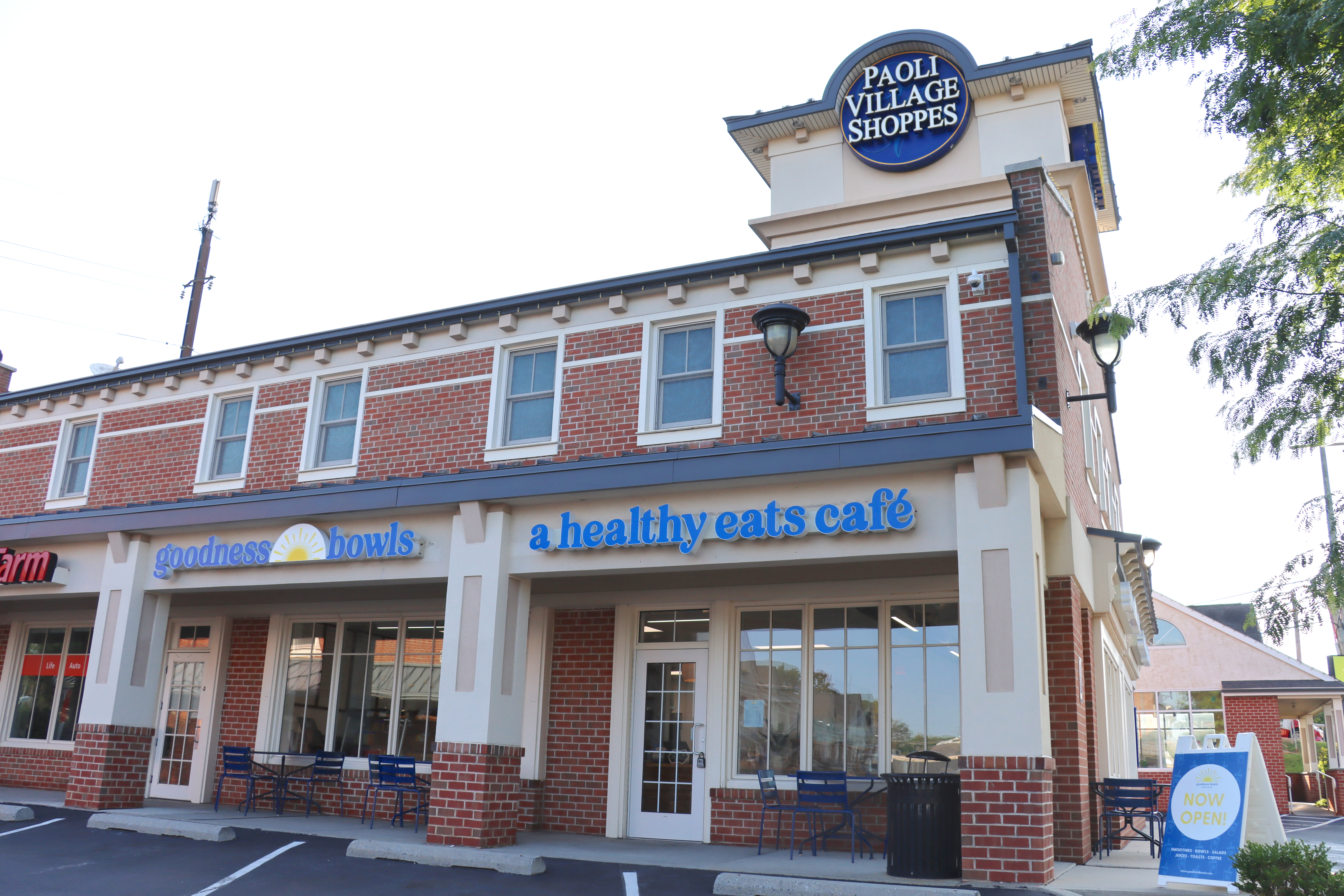
    Goodness Bowls currently has franchise locations in Narberth, Paoli, Collegeville, Spring House, Haddon Township, Sea Isle, and Scranton.

    The new Paoli location of Goodness Bowls.Courtesy Goodness Bowls

    In recent years, Goodness Bowls has also expanded their team, including by hiring a company president, Finn Loftus, who also lives in Montgomery County.

    Susan said she thinks the business has taken off because more consumers, especially women, are seeking out nutritious fast food.

    “People really are craving healthy options,” she said. “And they really want food that they’re able to get quickly.”

    Customers also say they are drawn to the bright cafes and friendly service, according to Susan.

    Goodness Bowls executives look at their move to Conshohocken as a homecoming, and are excited to be back in the borough where Susan raised Corinne and her other children.

    “We want to add to the community,” Susan said, by “keeping a small, family-owned business there on a really great corner that’s built such great traditions.”

  • A settlement could preserve more of Chester County’s sprawling Rock Hill Farm — but still allow for development

    A proposed settlement with the developer who is seeking to turn the rolling, open Rock Hill Farm into housing could significantly preserve more of the land than initially planned, if township officials decide to accept it.

    During a public meeting Thursday, Willistown Township officials laid out for residents a potential settlement between the township and Rock Hill Farm Acquisition LLC, the developer who purchased the sprawling 222-acre parcel, and an adjacent 24-acre property, in 2021. Supervisors did not vote on the plans Thursday night; a vote will be held at a future, undetermined meeting.

    A Chester County judge last month sided with the developer, overturning the township’s September 2024 denial of plans to build more than a dozen homes on the property. The township appealed the ruling earlier this month.

    But under a proposed settlement, the developer would radically scale down the plan that was before the court, preserving roughly 166 acres of the larger tract, or 75% of the land, under a conservation easement. The land would be subdivided into 18 lots, down from roughly 24, with all but one lot proposed for residential development. The one non-residential lot would be conserved as open space. The lots vary from about four acres to up to 26 acres.

    “This is a good ‘best-case scenario’ for us,” said Molly Perrin, chairperson of Willistown’s board of supervisors. “It could get a lot worse than this. Ongoing litigation would almost ensure that.”

    A view of part of Rock Hill Farm, in Paoli, Tuesday, August 2, 2022. JESSICA GRIFFIN / Staff Photographer

    A conservation easement for the preserved land would be held by the Willistown Conservation Trust. The trust would maintain the protected woodland as private property, not public land.

    Separately, the developer has offered Willistown Conservation Trust the exclusive option to buy the adjacent 24-acre property, if the settlement agreement is approved by the township and court. The township would plan to buy it from the trust using designated open space funds, and preserve the property as open land. The board voted to approve the purchase in February, officials said.

    “We understand there are members of the community who feel very strongly that the entirety of the 222-acre parcel should be coJ. Brian O’Neillmpletely conserved with no future development,” Perrin said. “Municipalities cannot simply ban a property from being developed. It would be nice if we could, except that when that’s turned against us, we would all hate it.”

    The property, purchased by developer for $25.4 million, boasts rolling hills, meadows, woodlands and historically significant properties across its hundreds of acres.

    For years, it had been owned by a conservation-minded local family. When it sold to O’Neill, who originally planned to build up to 24 residential lots on the grounds with only roughly 52 acres of land preserved, it sparked a community battle.
    Rock Hill Farm in August 2022. JESSICA GRIFFIN / Staff Photographer

    Community members launched a “Save Rock Hill Farm” campaign in an effort to fend off the development, as other Chester County municipalities have successfully done when homebuilders have come knocking.

    At Thursday’s meeting, residents were relatively open to the proposed settlement.

    David Rawson, who lives in the township, thought it was a “far better plan than I thought anybody would be able to negotiate.”

    It’s the “best deal you’re going to get short of continuing to fight,” resident Joe Heenan told the board.

    “I’m not opposed to the fight,” he said, “but I think it’d be nice to have odds in the favor.”

    Others hoped more could still be done.
    Invoking President Franklin D. Roosevelt, Les Haggett, a leader of Save Rock Hill, noted, “Sometimes fear is the only thing we have to fear.”
    “I don’t think it’s the right time to settle,” he said. “My thought is, don’t be afraid. Don’t settle.”

    Supervisor Bill Shoemaker said the township was working to achieve the best possible plan. Though they feel their appeal is “based on good and solid reasons,” they thought that of their initial filing, too, he said.

    “The court is always a bit of a gamble,” he said. “So we have to consider very, very carefully what the best possible plan would be.”

    This suburban content is produced with support from the Leslie Miller and Richard Worley Foundation and The Lenfest Institute for Journalism. Editorial content is created independently of the project donors. Gifts to support The Inquirer’s high-impact journalism can be made at inquirer.com/donate. A list of Lenfest Institute donors can be found at lenfestinstitute.org/supporters.

  • A new high-rise built by PMC Property Group would overlook the Schuylkill from Walnut Street

    A new high-rise built by PMC Property Group would overlook the Schuylkill from Walnut Street

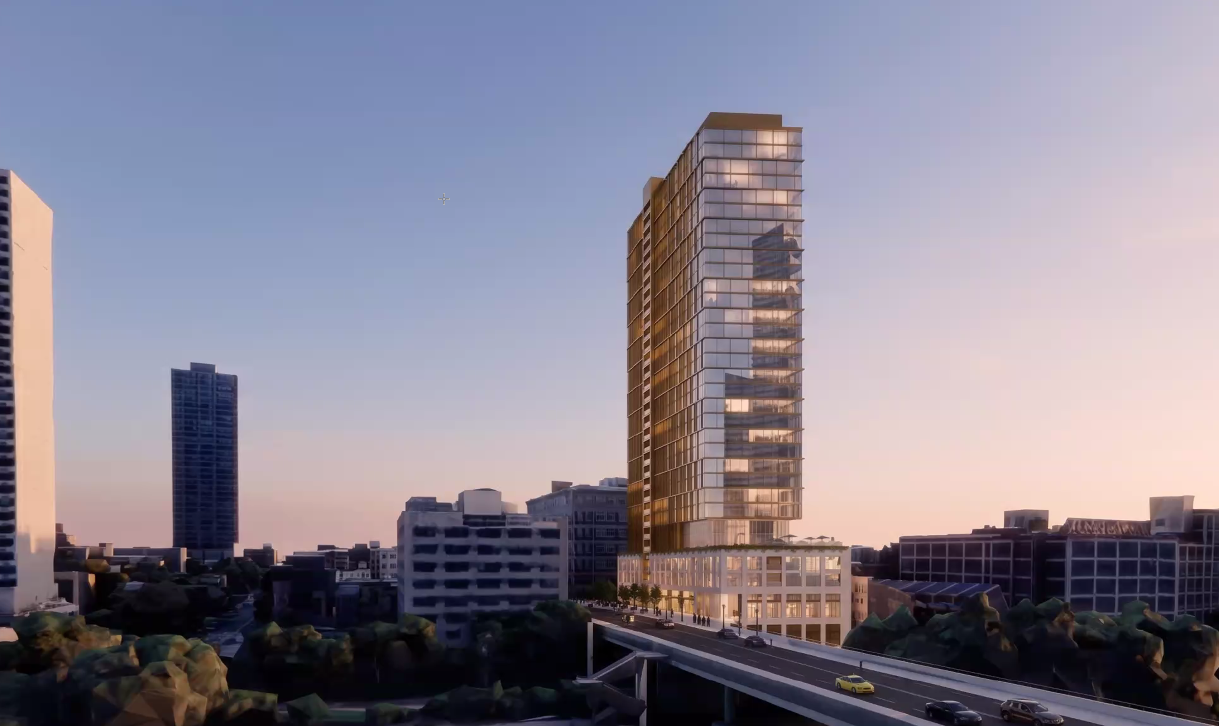
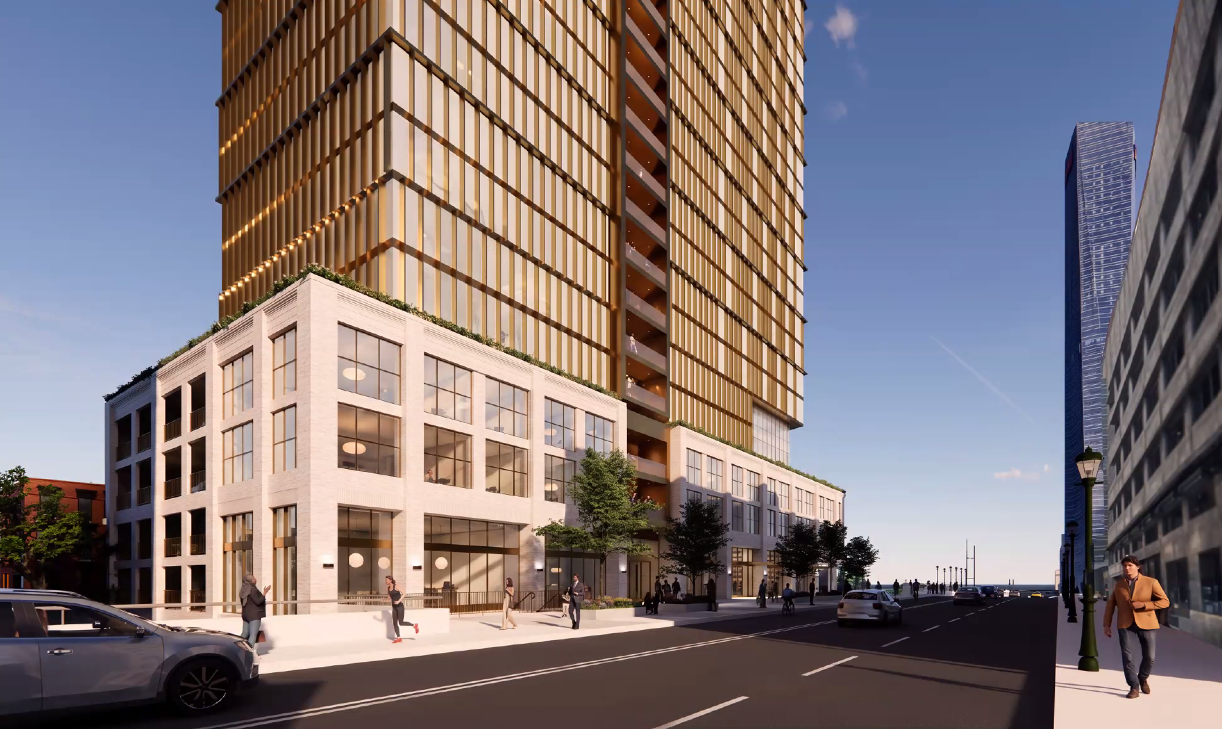
    Philadelphia’s largest apartment owner, PMC Property Group, wants to build a 31-story high-rise at 24th and Walnut Streets.

    The 372-unit apartment building at 200-10 S. 24th St. would also include 118 parking spaces and a swimming pool.

    The proposed 358-foot-tall tower would be the real estate company’s latest apartment development on the Schuylkill. PMC built the two Riverwalk Towers a half mile to the north, in Center City’s Logan Square neighborhood, and the 287-unit building at 2301 John F. Kennedy Blvd.

    “Through these [earlier] efforts, PMC has taken dead space pretty much and activated it, creating the vibrancy of Center City living,” said Adam Laver, a land-use attorney with Blank Rome who represents the developer, in a meeting with the Center City Residents Association (CCRA) on Thursday night.

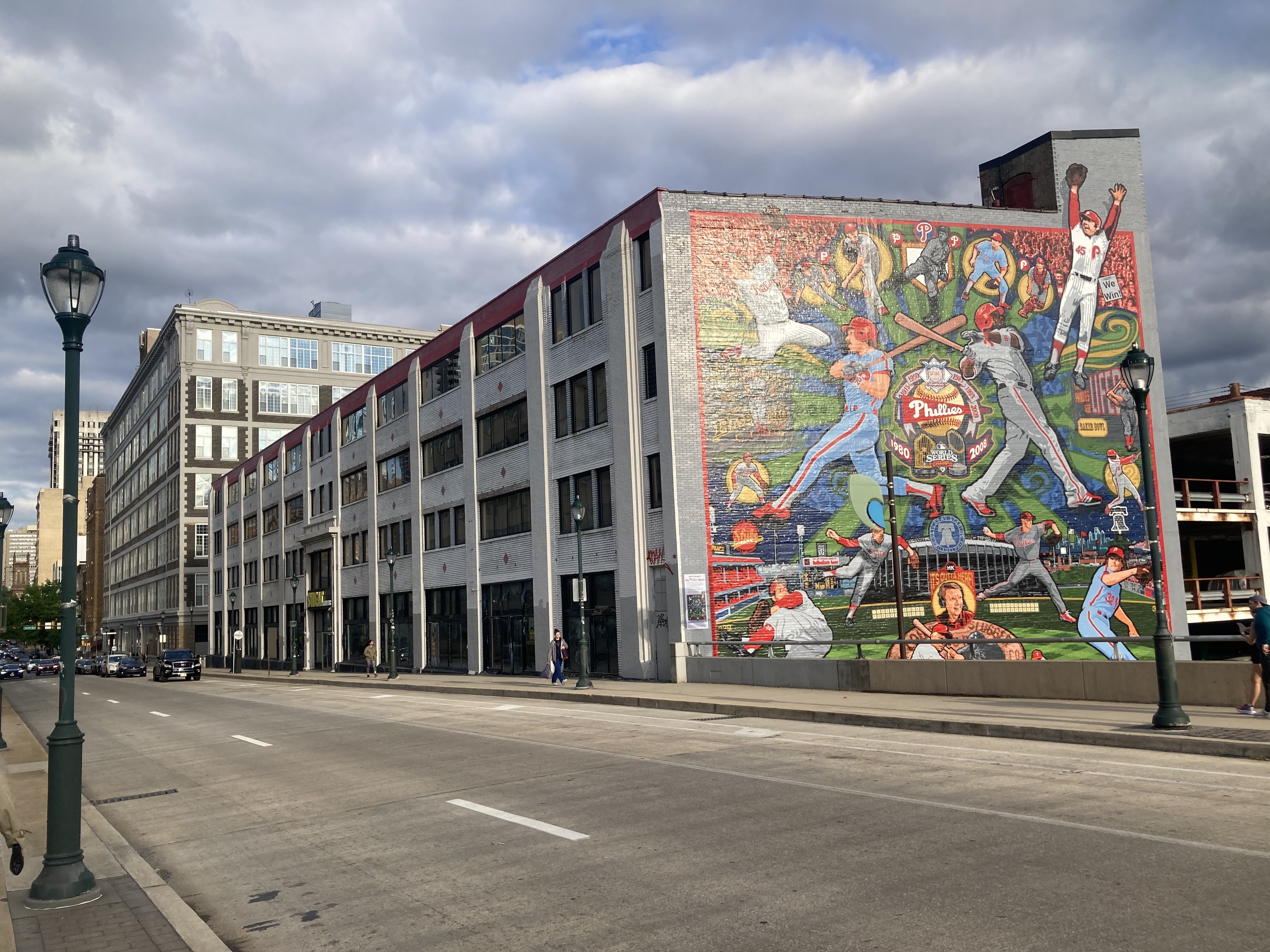
    The 110-year-old building that currently sits at 200-10 S. 24th St. is best known for its mural celebrating the Phillies, by David McShane, which dates to 2015. It would need to be demolished to make way for the project.

    The building currently houses Walnut Bridge Parking & Storage and is owned by Michael Karp, a major local real estate owner, student-housing landlord, and charter school operator. He did not respond to requests for comment.

    “PMC does not currently own the property, and it could potentially be a joint venture,” said Laver.

    PMC Property Group wants to change the zoning on this 110-year-old former industrial building at 200-10 S. 24th St. so they can build a large, new apartment tower.Jake Blumgart

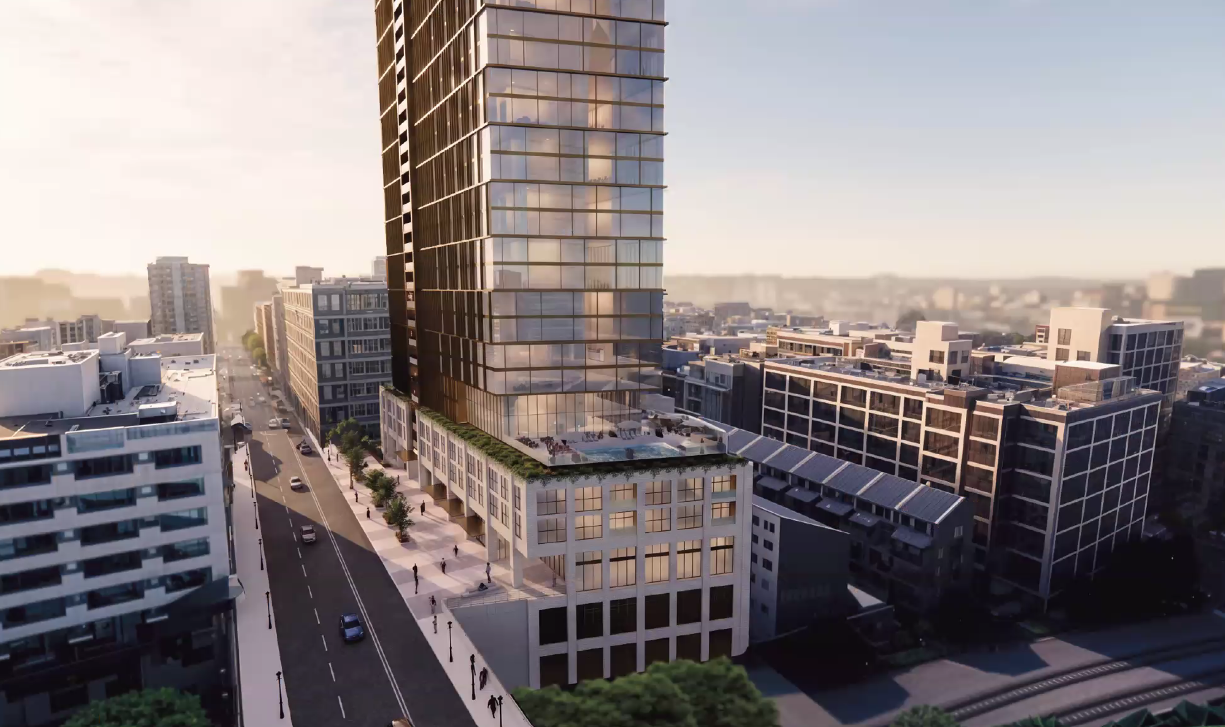
    Parking for the proposed project would be on the bottom two levels, on a podium built to reflect the current industrial building. (The parking garage on those lower floors would exit onto 24th Street.) The tower itself would be set back from the podium and property line.

    Philadelphia-based Tantillo Architecture is designing the building. They have previously worked on projects like the office-to-residential conversion of 400 Market and the redevelopment of the landmark Bellevue Hotel on South Broad Street.

    Like many historical buildings along the Schuylkill, 200-10 S. 24th St. has an industrial past, but unlike some of its counterparts it is still zoned exclusively for that kind of use.

    PMC is seeking to change the property’s zoning legislatively, which would require the support of City Council President Kenyatta Johnson, who represents the area.

    That means support from CCRA — the local registered community organization (RCO) — would be invaluable to the project. RCOs grapple with zoning issues and their feedback often holds significant sway with elected officials.

    The presentation on Thursday night was part of PMC’s ongoing negotiations with CCRA.

    “The industrial [zoning] does not allow residential household living,” said Laver. “That’s really why we’re having this open process with all of you this evening.”

    A rendering of the proposed tower, looking east, along Walnut Street.Tantillo Architecture

    Neighbors were concerned about whether parking could be available to the public, whether demolition could affect the direct neighbors in the condos and townhouses of Fitler’s Walk, and whether the Phillies mural could be saved.

    “That is something that we would be pleased to work with CCRA and others to try to figure that piece out,” Laver said, in regards to the mural.

    He said that PMC would also consider providing some public parking, as the garage’s demolition will mean some current public spaces are lost.

    Laver said that he anticipates that the project could take two and a half years to develop, assuming that PMC gets the support of CCRA and Council President Johnson.

    Following Thursday’s public meeting, CCRA will consider public feedback, and the organization’s board will vote on whether to support the zoning change.

    A rendering of the tower, from street level, looking west.Tantillo Architecture

    A bill changing the property’s zoning could not be introduced until Sept. 17, at the earliest, when City Council returns to session.

    Johnson said earlier this year that he hadn’t yet begun seriously considering the project as negotiations between the developer and CCRA unfold.

    “I’m aware of the project, but they’re still going through the RCO process,” said Council President Johnson, in a May interview.

    “Once they get through that process, if the RCO says, ‘Yes, this is something we want to see in our neighborhood,’ then they’ll get a hearing where we’ll evaluate if this is something we want to support as a body,” said Johnson.

    PMC could also secure relief from the property’s industrial land use regulations from the Zoning Board of Adjustment, but that is often a lengthy and unpredictable endeavor.

    PMC’s president, Ron Caplan, has a long history in Philadelphia. During the recent development slowdown in Philadelphia, the company is one of the few that has continued developing new projects at a steady clip.

  • Willow Grove Park Mall is in the process of being sold

    Willow Grove Park Mall is in the process of being sold

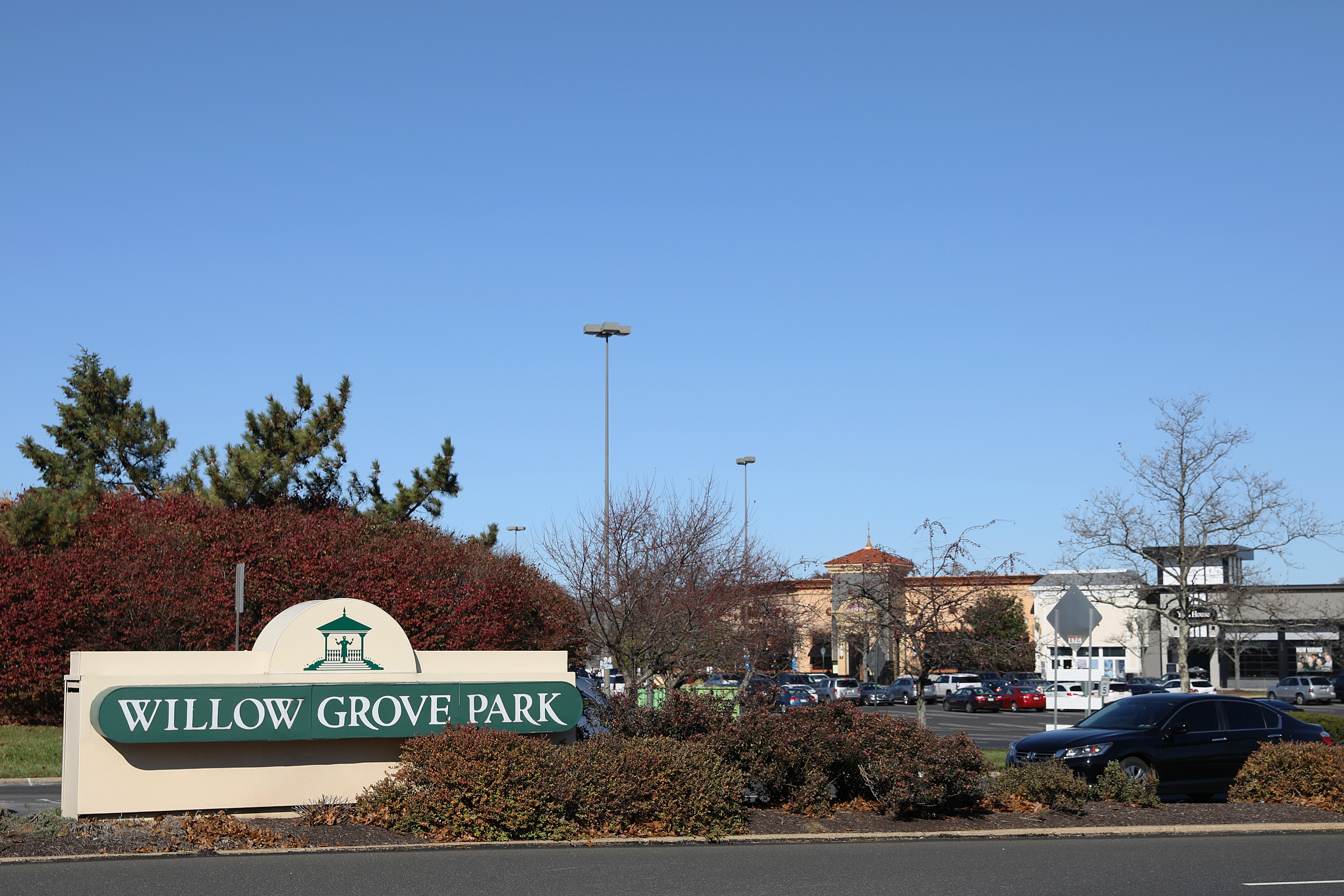
    Willow Grove Park Mall is on track to be sold soon.

    A representative for Pennsylvania Real Estate Investment Trust (PREIT), which owns the Montgomery County mall, said in a statement Thursday that “a lender-directed sale process is underway and expected to be completed in the near term.”

    The Philadelphia Business Journal first reported the news, saying that a partnership of New York firms — Namdar Realty Group, Mason Asset Management, and CH Capital Group — were set to buy PREIT’s 725,000-square-foot section of the 1.2 million-square-foot mall, as well as its debt on the property, for an undisclosed price.

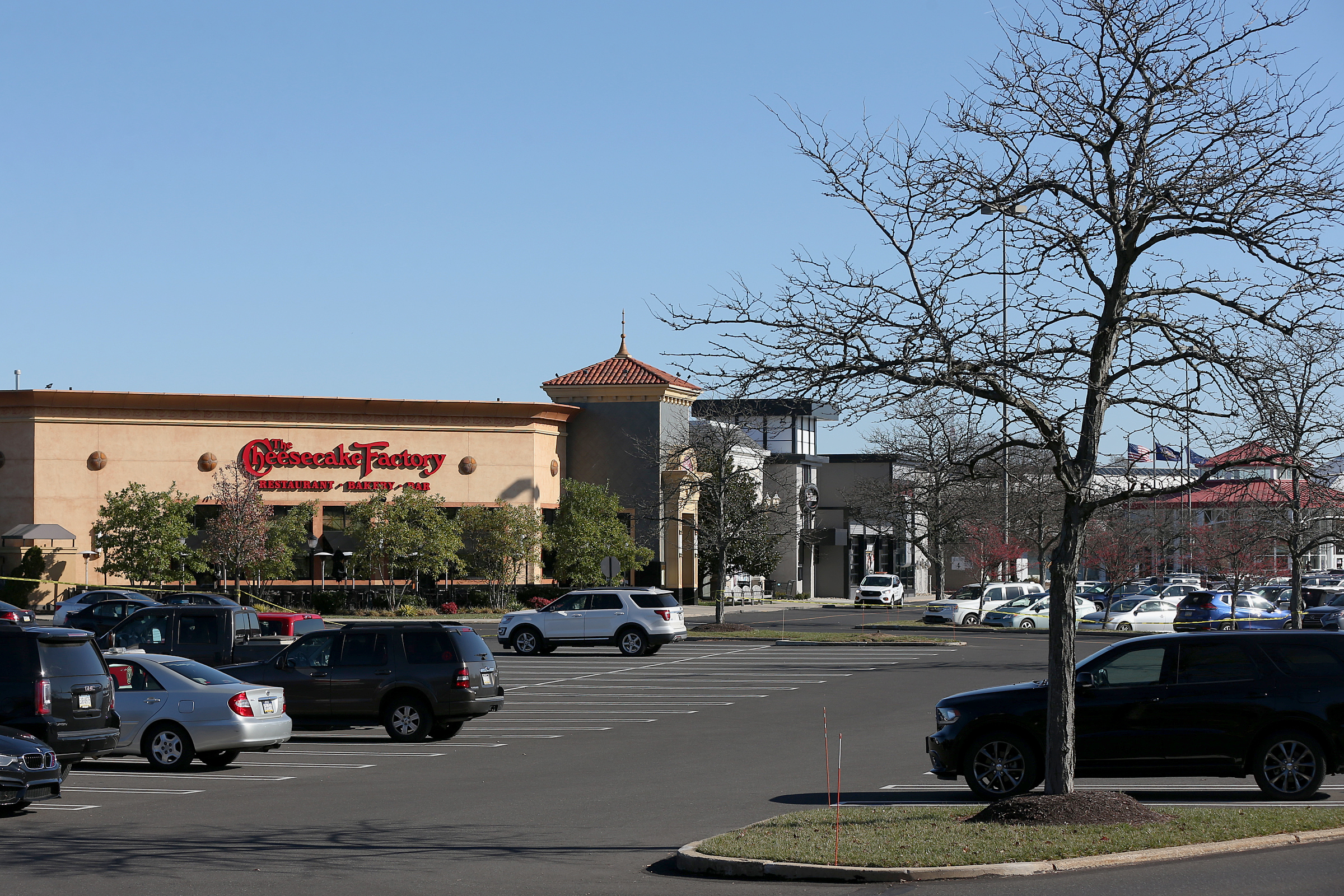
    The sale would include most of the mall, including Macy’s, Cheesecake Factory, and Nordstrom Rack, but not parcels that house Primark and Bloomingdale’s, according to the Journal, citing marketing materials that have since been removed from real estate firm JLL’s website. JLL did not return a request for comment.

    The Willow Grove Park Mall is shown in 2019.TIM TAI / Staff Photographer

    The potential new buyers, all based in New York, did not return calls or emails from The Inquirer.

    Willow Grove Park Mall would not be their first acquisition in the region.

    In 2015, Namdar, a company known to scoop up distressed malls, and Mason Asset Management bought the struggling Voorhees Town Center from PREIT for $13.4 million. Since then, retailers have continued to flee the Camden County mall, which has been closed since a 2024 fire. A North Jersey developer has plans to buy and revive the property, pending a state tax credit.

    Namdar also owns the Hamilton Mall in Mays Landing, which New Jerseyans have called one of the state’s deadest malls.

    The situation in Montgomery County, however, is different.

    Willow Grove Park Mall has appeared healthy in recent years, despite the financial struggles of its owner, PREIT. As of 2023, the center was about 96% occupied, and PREIT executives were calling the complex “one of our leading suburban Philadelphia assets.”

    The Willow Grove Park Mall opened in 1982 at a time when the Philadelphia suburbs were flush with shopping malls. The complex got off to a bumpy start, failing to meet its first-year sales expectations and leading some mall developers to say, as an Inquirer headline read at the time: “No more malls.”

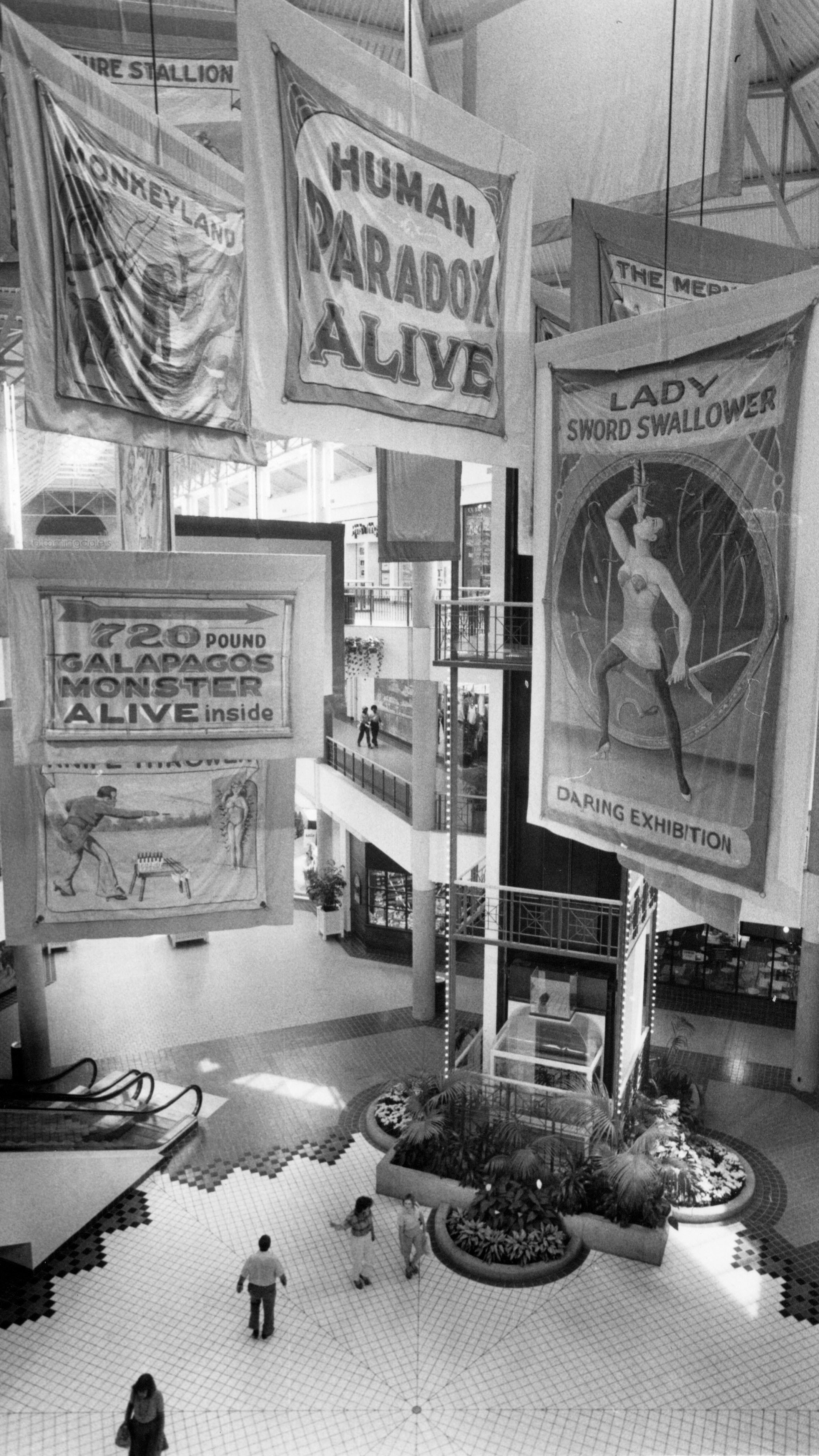
    Banners hung over the elevator court in the Willow Grove Park Mall in this 1984 photo.Michael Plunkett / Staff Photographer

    PREIT has had a stake in Willow Grove Park Mall since 2000, when it and the Pennsylvania State Employees’ Retirement System signed on to buy the center for $140 million.

    PREIT has filed for bankruptcy twice since the pandemic, emerging most recently in April 2024 with $800 million less in debt and a goal to redevelop some of its underperforming properties.

    PREIT’s local mall holdings run from the gamut from the bustling Cherry Hill Mall to Willow Grove Park to Moorestown Mall, which has been undergoing a mixed-use makeover.

    The company also owns the Plymouth Meeting Mall, one of many properties that longtime real estate investor Dean Adler has plans to redevelop.

    PREIT sold the troubled Exton Square Mall to Abrams Realty & Development for $34 million in 2025. The new owners have been mired in a legal dispute with local officials over the redevelopment of the mall, which closed its doors in June.

  • A 27-acre compound with two homes and pools is for sale for $9 million in Chester County

    A 27-acre compound with two homes and pools is for sale for $9 million in Chester County

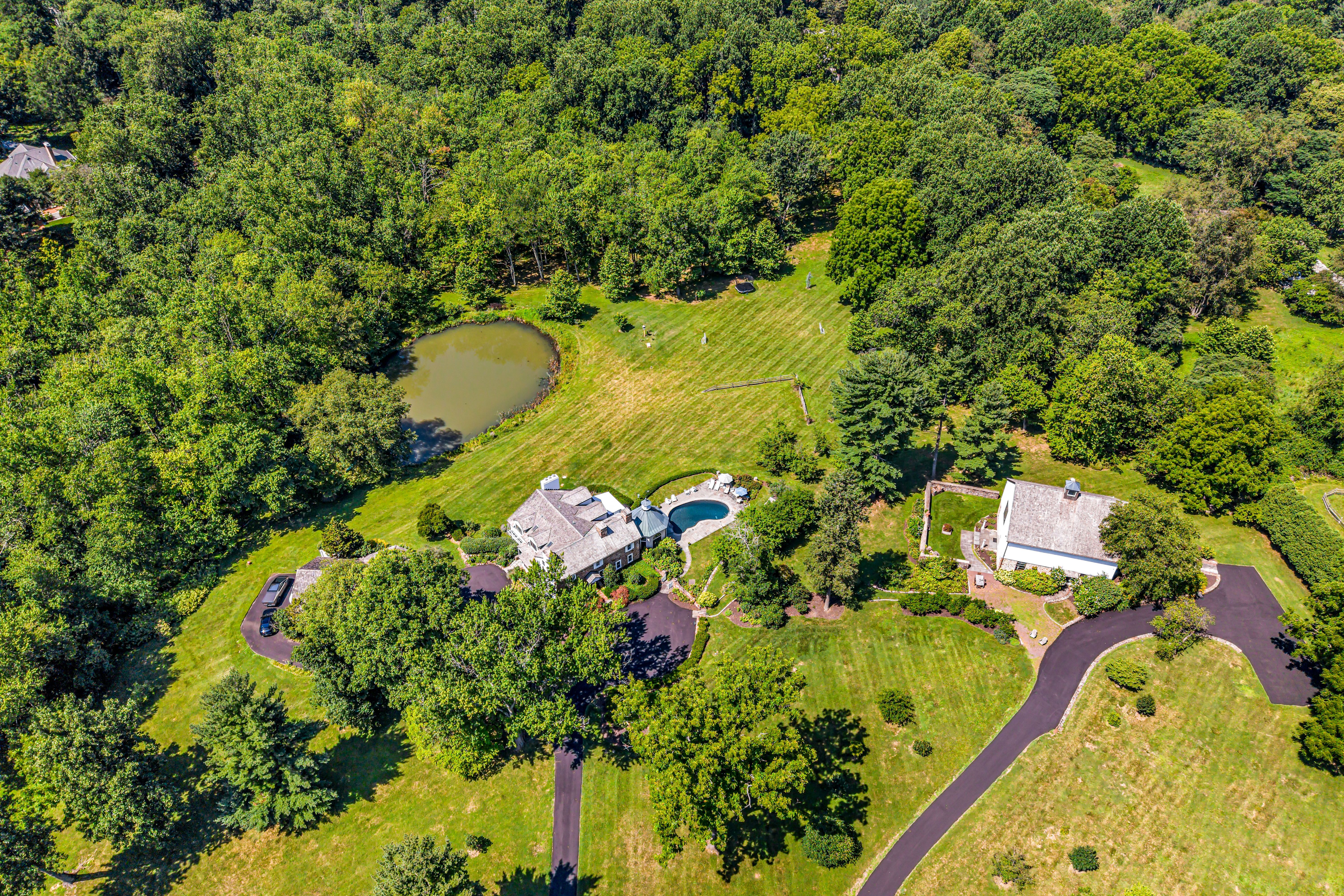
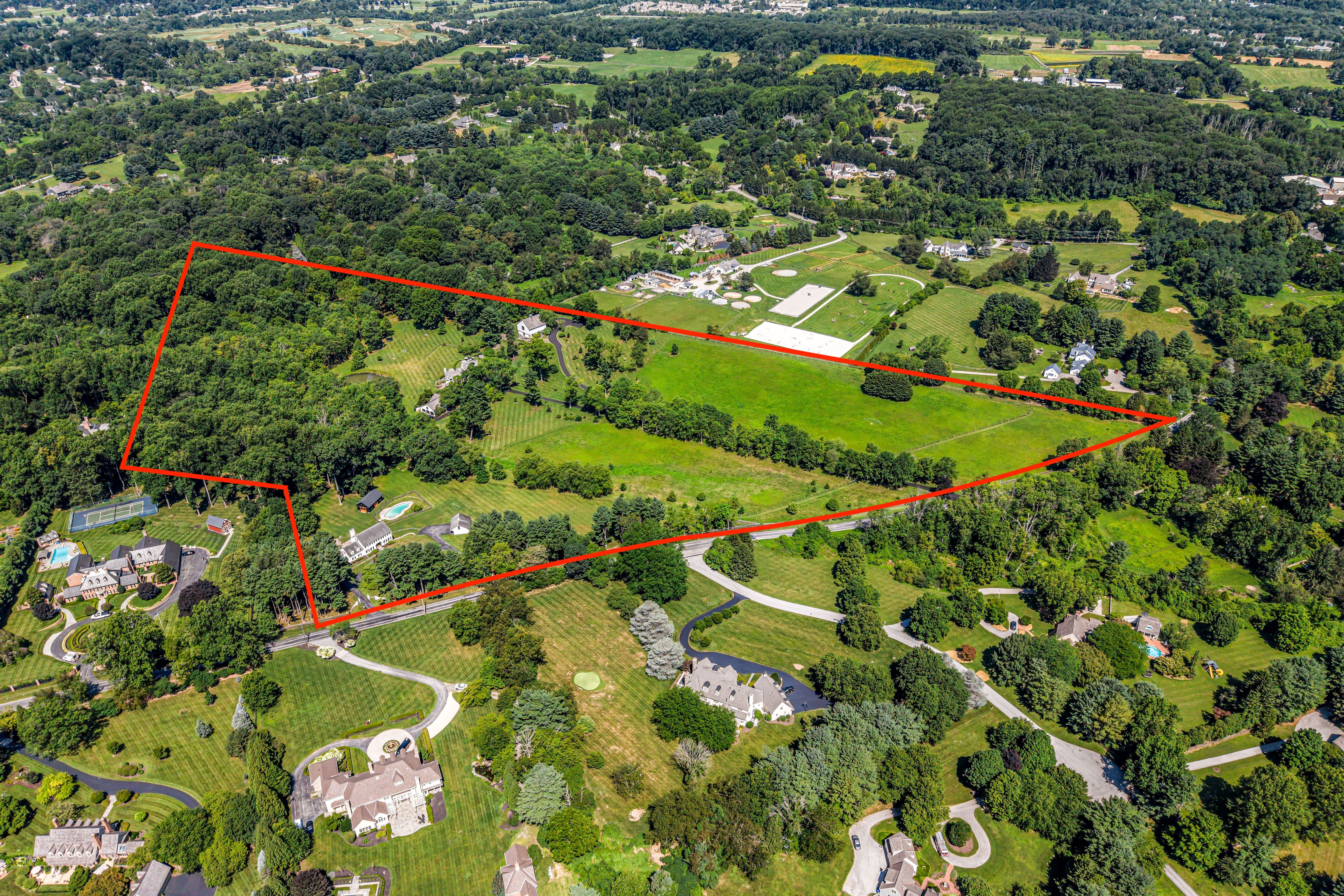
    Three properties that span 27 acres and include two homes, two pools, and a two-story barn are for sale for $8.95 million in Willistown Township, Chester County.

    The three parcels, situated among the area’s pastures and horse farms, together form the largest package of land currently for sale along the Main Line whose use is not restricted by a conservancy, according to listing agent Karen Strid of Compass Real Estate.

    “Each parcel is worth something, but together they’re worth so much more,” Strid said.

    That a buyer can do whatever they want on the land, including building more homes, “is what makes [the listing] so rare,” she said.

    “It’s such a special purchase for someone who really understands the area,” Strid said.

    The three combined parcels for sale at 416, 418, and 420 Dutton Mill Rd., spanning 27 acres in Willistown Township, are outlined in red.Billy Kyle

    Willistown Township, which neighbors Malvern Borough and includes the 19th-century village of Sugartown, is a desirable location for people who want land and a more rural feel and also access to mountains, beaches, and major cities, Strid said.

    These parcels are “appealing to the people who want privacy and can have whatever they want and don’t want to be in the middle of nowhere,” she said. “You’re really close to everything, but you feel like you’re in your own world.”

    The seller owns all three parcels, which together are called Sugartown Springs Farm. Strid said it would make a good family compound. Across the parcels, buildings and property features are “spread out in a really nice way,” she said.

    The parcels were privately listed for sale on the Compass and Redfin platforms the second week of August.

    Two homes and a two-story barn

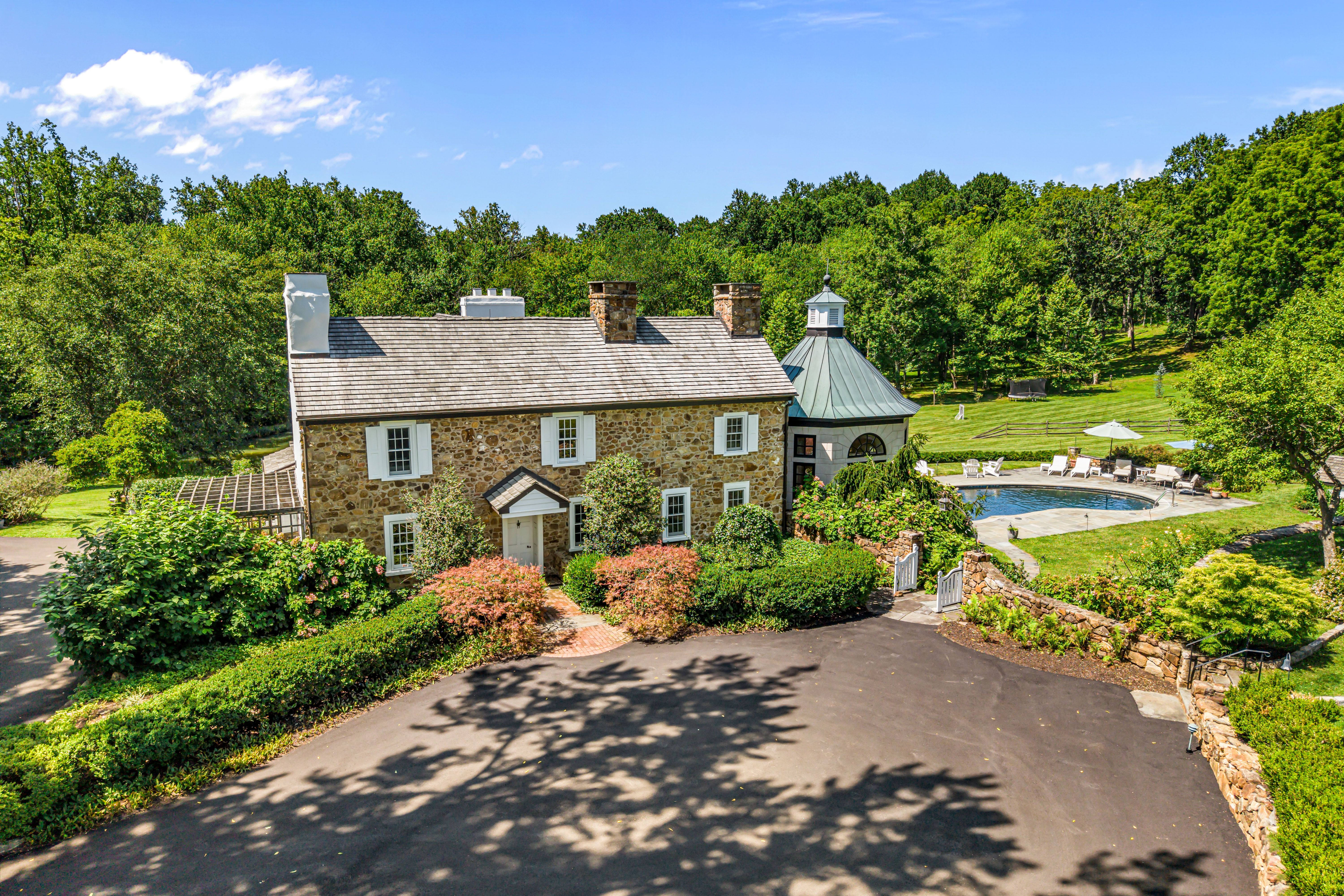
    At 418 Dutton Mill Rd., a stone main house dating to the mid-1700s offers four bedrooms, four full bathrooms, and one half bathroom. The primary en suite bedroom includes a fireplace, soaking tub, shower, and double vanities.

    The stone main house at 418 Dutton Mill Rd. has four bedrooms and a two-story solarium that serves as the dining room.Billy Kyle

    The 7,559-square-foot house features interior stone walls, exposed timber beams, hardwood floors, and more fireplaces throughout. The two-story solarium serves as the dining room and highlights views of the grounds. The home also has an elevator.

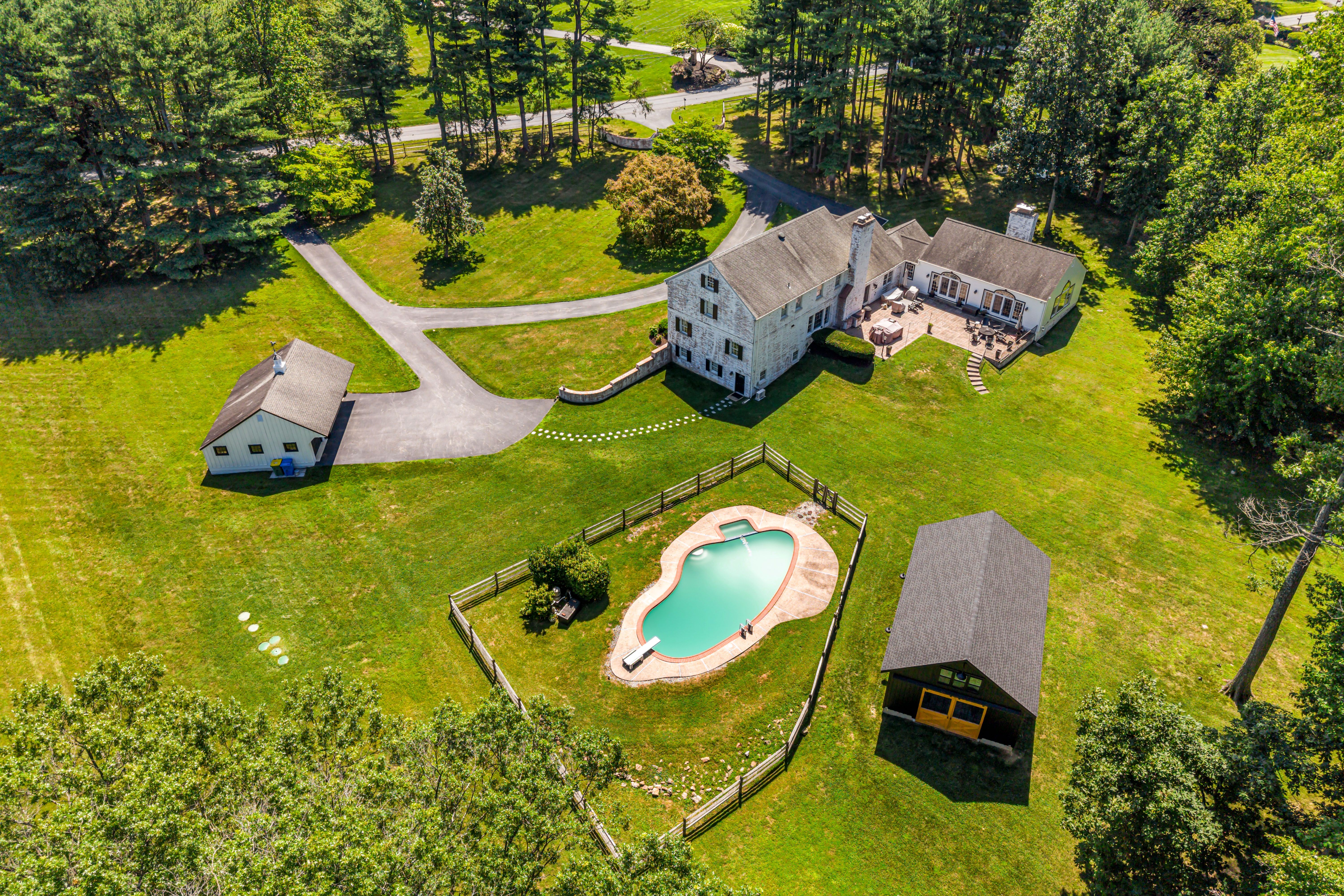
    The 10-acre property includes an in-ground pool and a spring-fed pond. A detached garage off the circular driveway can fit six vehicles and also includes a full bathroom and a second laundry room.

    The 10-acre property at 418 Dutton Mill Rd. includes an in-ground pool and a detached garage that can fit six vehicles.Billy Kyle

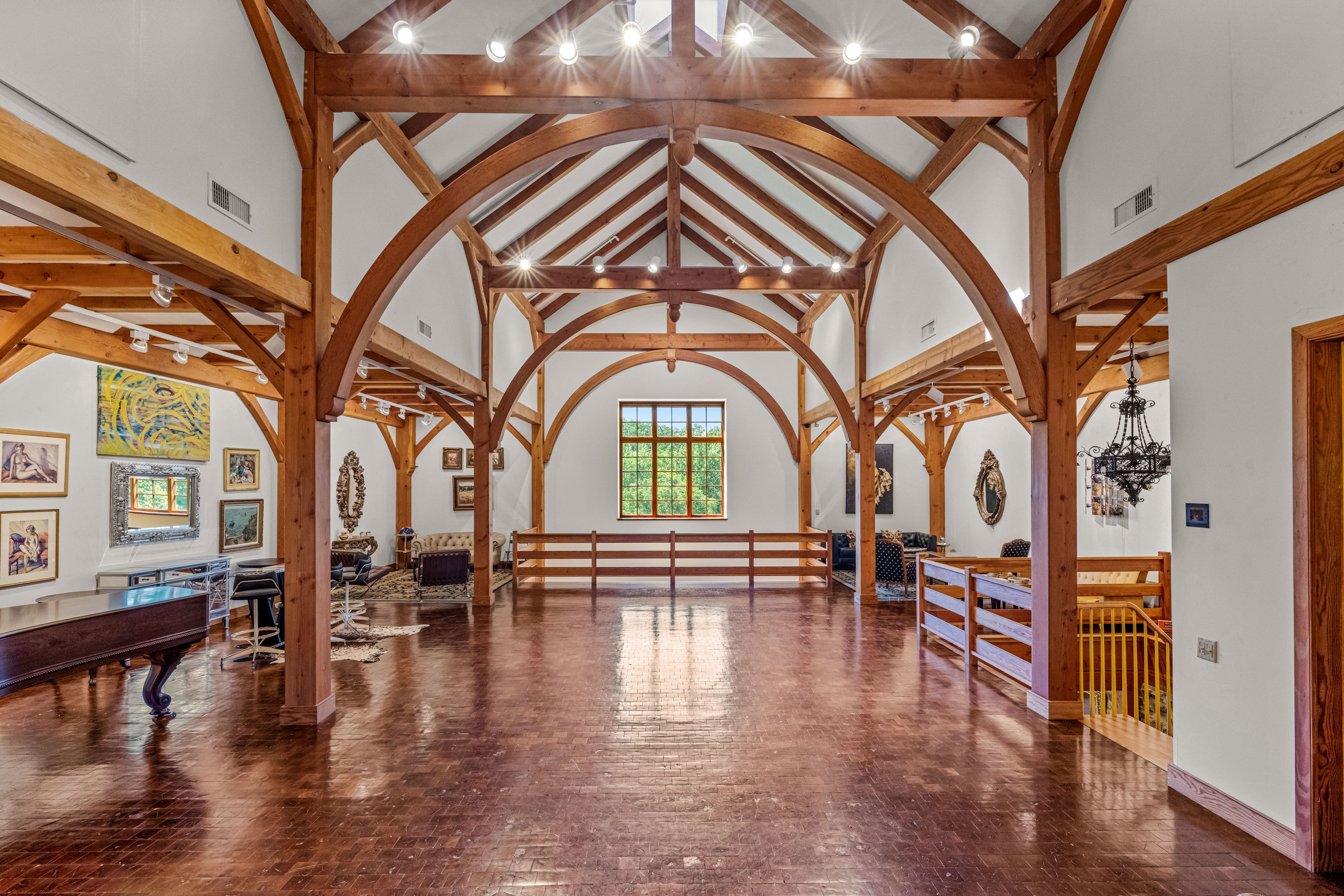
    To the right of the main house is a two-story timber-frame barn at 420 Dutton Mill Rd. The barn was once used as an art gallery for Andrew Wyeth’s paintings.

    The structure features a glass atrium, a room that could be a bedroom or office, 1½ bathrooms, a kitchenette, and multifunctional space. The upper level has beamed ceilings and gathering spaces.

    The upper level of the barn at 420 Dutton Mill Rd. can be used as a gathering space.Billy Kyle

    The property includes a stone-walled courtyard and spans 12.8 acres.

    These two parcels are listed for sale for a combined $5.975 million.

    A second home at 416 Dutton Mill Rd. is listed for sale for $2.975 million. The Colonial spans 6,032 square feet and was built in 1963.

    The home has six bedrooms, three full bathrooms, two half bathrooms, formal living and dining rooms, and a walkout finished basement. It features fireplaces and brick wall accents and has a finished attic.

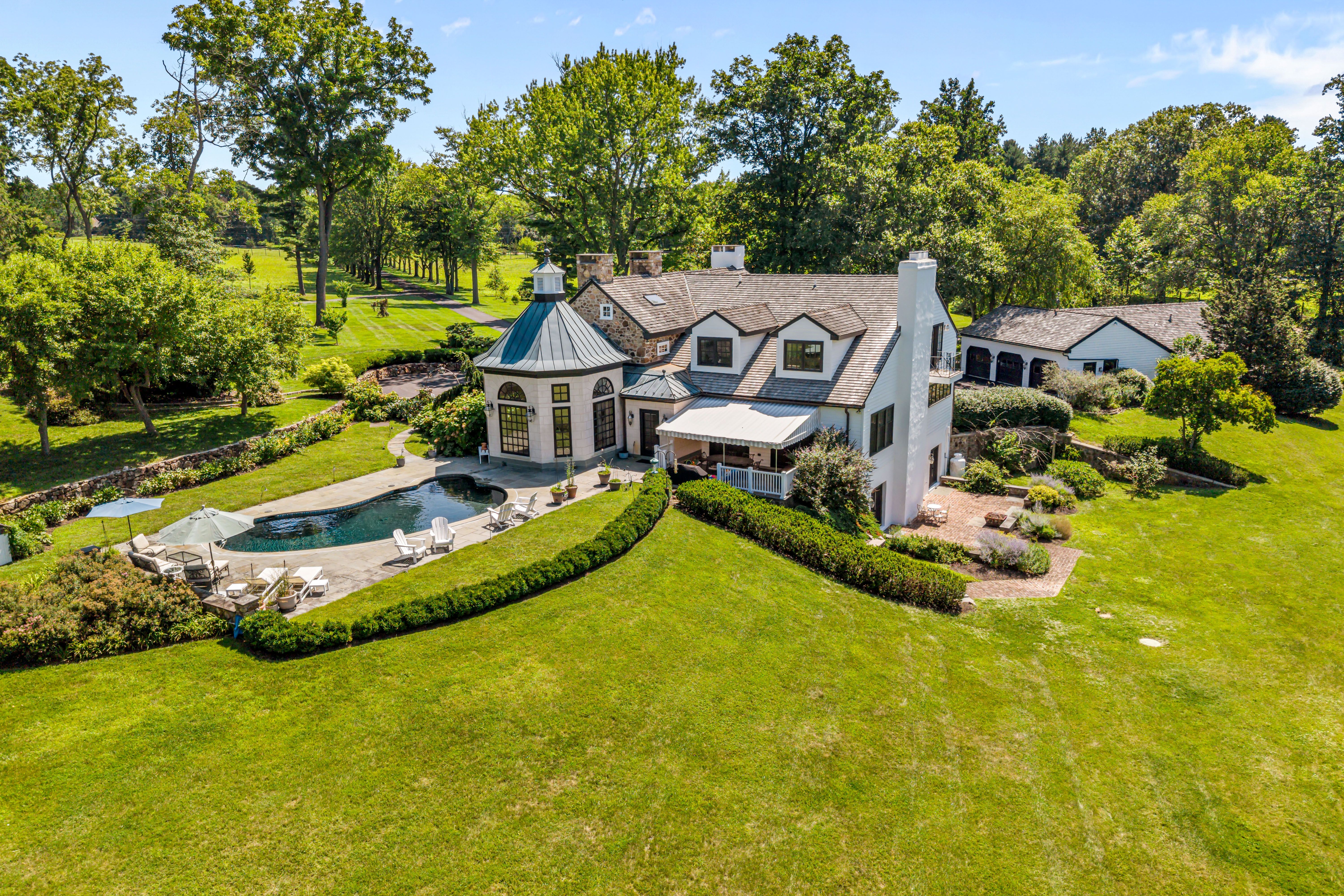
    The 4.2-acre property includes a rear stone patio, a detached three-car garage, an in-ground pool, and a timber-frame barn built in 2024.

    The home for sale at 416 Dutton Mill Rd. in Willistown Township features an in-ground pool, a timber-frame barn, and a detached three-car garage.Billy Kyle

    This home is currently being rented for $9,000 per month under a lease that ends in early 2028.

    Strid said standing on Sugartown Springs Farm highlights why people value the lifestyle it represents.

    “It’s so serene and calm and beautiful,” she said.

  • Backyards become watch party venues | Real Estate Newsletter

    Backyards become watch party venues | Real Estate Newsletter

    Watching movies outside is one of my favorite summer activities. It’s happening everywhere, from community viewings hosted by neighborhood groups to private backyard setups.

    Homeowners in the Philly area are part of a larger trend of folks adapting their properties for outdoor TV watching. For some people, that’s as simple as setting up a projector and a tarp. Others are spending a lot of money to turn their backyard into the ultimate watch party venue.

    This week, we have your guide to watching movies and TV in your backyard, just in time for Eagles season.

    Keep scrolling for that story and more in this week’s newsletter:

    — Michaelle Bond

    If someone forwarded you this email, sign up for free here.

    How to watch TV in your yard

    During the pandemic, I thought it would be fun to get a projector, hang a sheet on the side of the Center City rowhouse I was renting, and watch movies outside.

    I never did it, but if you’re more committed to the idea of hosting outdoor viewing parties, we’ve got tips from folks with experience.

    Kate Evans and her wife built a pergola behind their Roxborough rowhouse where they watch games and movies.

    Anthony Farina hauled a TV from his living room to his front porch almost every day for four years before his family gifted him a new TV and mounting system.

    Zach Kades in Bryn Mawr uses a projector and the back wall of his garage to create a “camplike feel.”

    Read on for their advice for watching TV and movies in your yard.

    Creating a home’s mural

    A couple months ago, I wrote about homeowners who put murals on the sides of their properties.

    I learned that these days, most murals are pieced together on special cloth and assembled later on a wall.

    I wanted to see the process in action and figured you all would too. So I asked the talented folks on our video team to show us.

    Gabe Coffey created a beautiful video that shows what goes into installing the art we see all over Philadelphia — including on more than 1,000 private homes.

    The mural he featured is called A Legacy of Dance Excellence and celebrates Black dancers and dance educators. Watch how the piece came together.

    And learn more about the mural’s inception here.

    The latest news to pay attention to

    Home tour: A Cherry Hill retreat

    We’ve written a lot about Plaza Grande, the 55+ housing complex in Cherry Hill that took almost two decades to complete.

    This week, we’re going inside one of the apartments there.

    Barbara Zucker was shopping at Nordstrom Rack when she saw a sign for an open house at the property. She and her husband, Fred, were looking to downsize from the Delran house where they raised their kids.

    They found that the Plaza Grande was the perfect new home.

    Their apartment is on the top floor, which means no noisy upstairs neighbors, and there’s enough closet space for Barbara’s shoe collection. One of the Zuckers’ favorite features is their balcony, where they drink coffee and people watch.

    They’ve become close friends with their neighbors and take advantage of the property’s amenities, which include:

    📽️ a moving theater

    🏋🏾‍♀️ a gym

    🎾 tennis and pickleball courts

    🏊🏾 indoor and outdoor pools

    Barbara said their home has become a retreat that feels “sort of like summer camp.”

    📷 Photo quiz

    Do you know where this photo was captured?

    📮 If you think you do, email me back.

    Last week’s quiz featured a mural by artist Paul Carpenter at 20th Street and Oregon Avenue.

    Shout-out to Bruce R. for knowing that.

    And enjoy the rest of your week.

    By submitting your written, visual, and/or audio contributions, you agree to The Inquirer’s Terms of Use, including the grant of rights in Section 10.

  • How to watch TV in your yard, just in time for a Phillies playoff fight and Eagles season

    How to watch TV in your yard, just in time for a Phillies playoff fight and Eagles season

    It shouldn’t make sense.

    Watching TV outside comes with a host of challenges: Humidity. Mosquitoes. Glare so fierce you risk losing sight of Jalen Hurts at the goal line.

    And yet, people are increasingly heading to the backyard for movies, sitcoms, and sports. One industry report values the global outdoor TV market at more than $400 million in 2026 and projects annual growth of nearly 12% through 2035.

    The Philadelphia region? Right on trend. According to Kim Bucholsky, office manager with All Systems Audio & Visual, the Hatboro-based company has seen a 50% uptick in outdoor installations since 2019 — “with no slowdown in sight.”

    Some people are sinking hundreds of thousands of dollars into these entertainment setups; others are dragging lawn chairs and an iPad to the front stoop every time Love Island releases a new episode. The common denominator isn’t age or gender or socioeconomic status. Kids and adults, armchair quarterbacks and prestige-TV junkies, agree: There’s something special about a backyard binge.

    “When the sun’s going down, the breeze is blowing, you can hear the ocean in the distance and maybe the occasional coyote, and you’re watching your favorite Philly sports team, there’s absolutely nothing better,” said Anthony Farina, a communications executive based in Cape May. “To me, this is utopia.”

    So how, exactly, did the lawn usurp the living room?

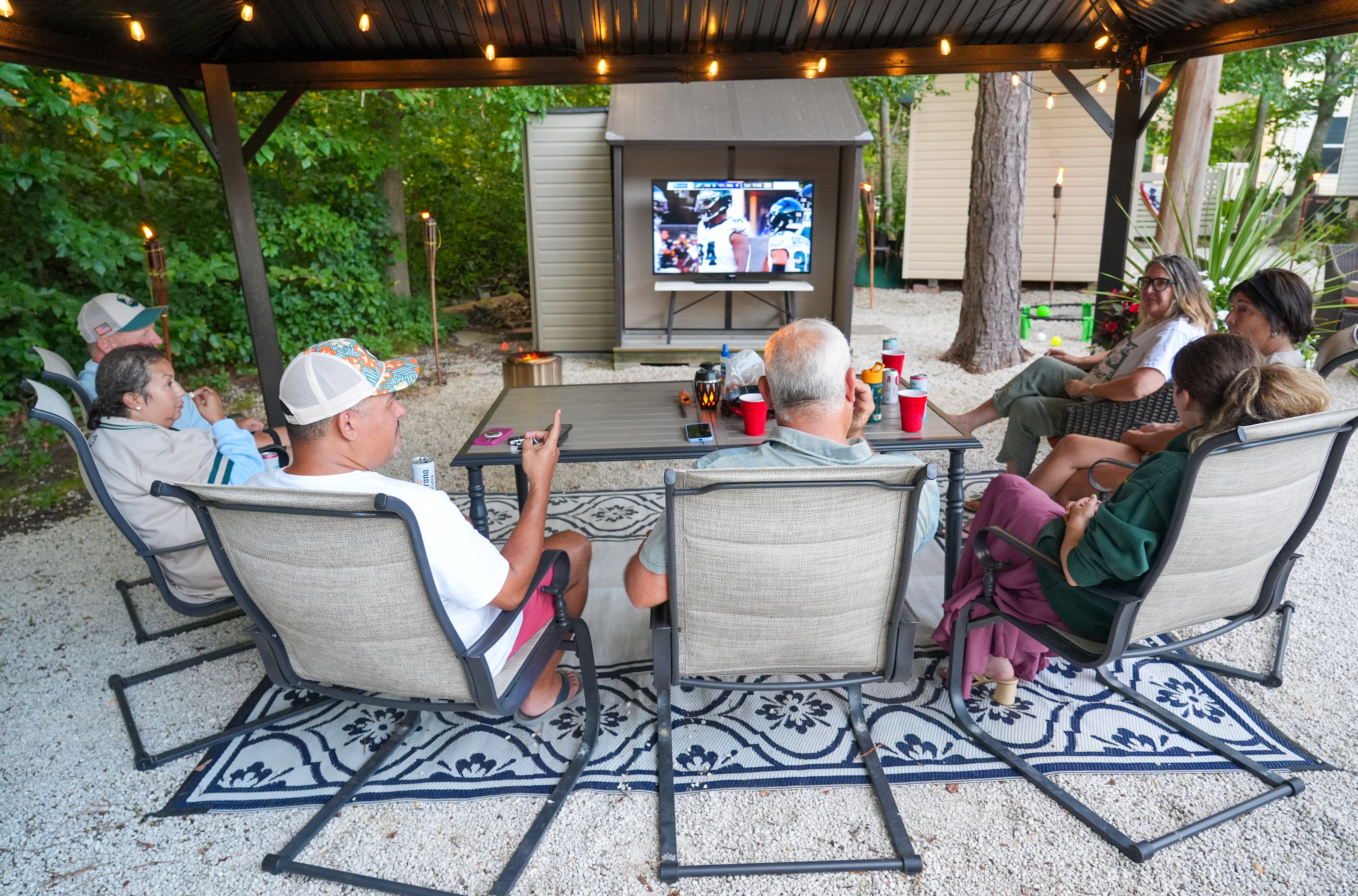
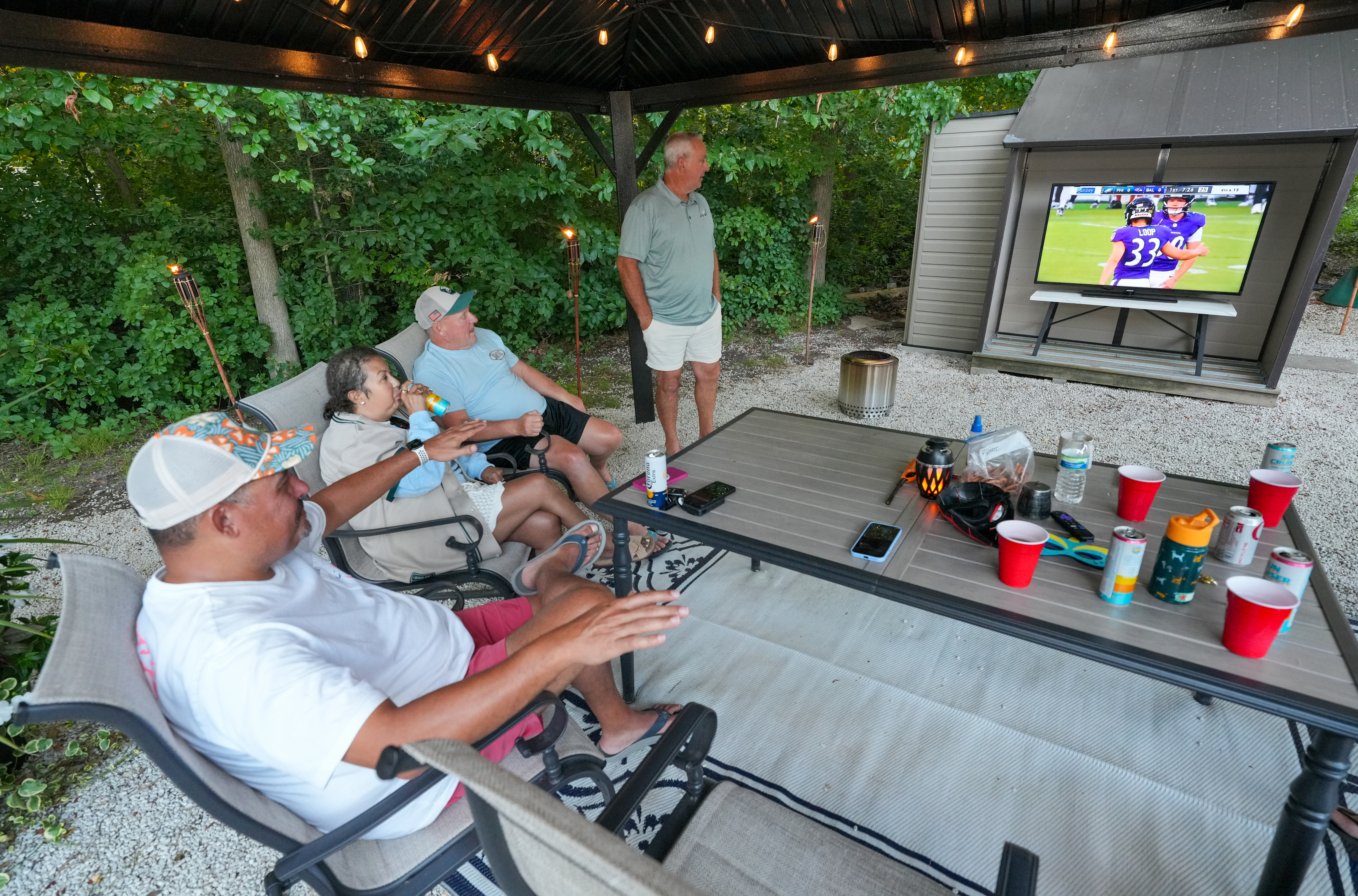
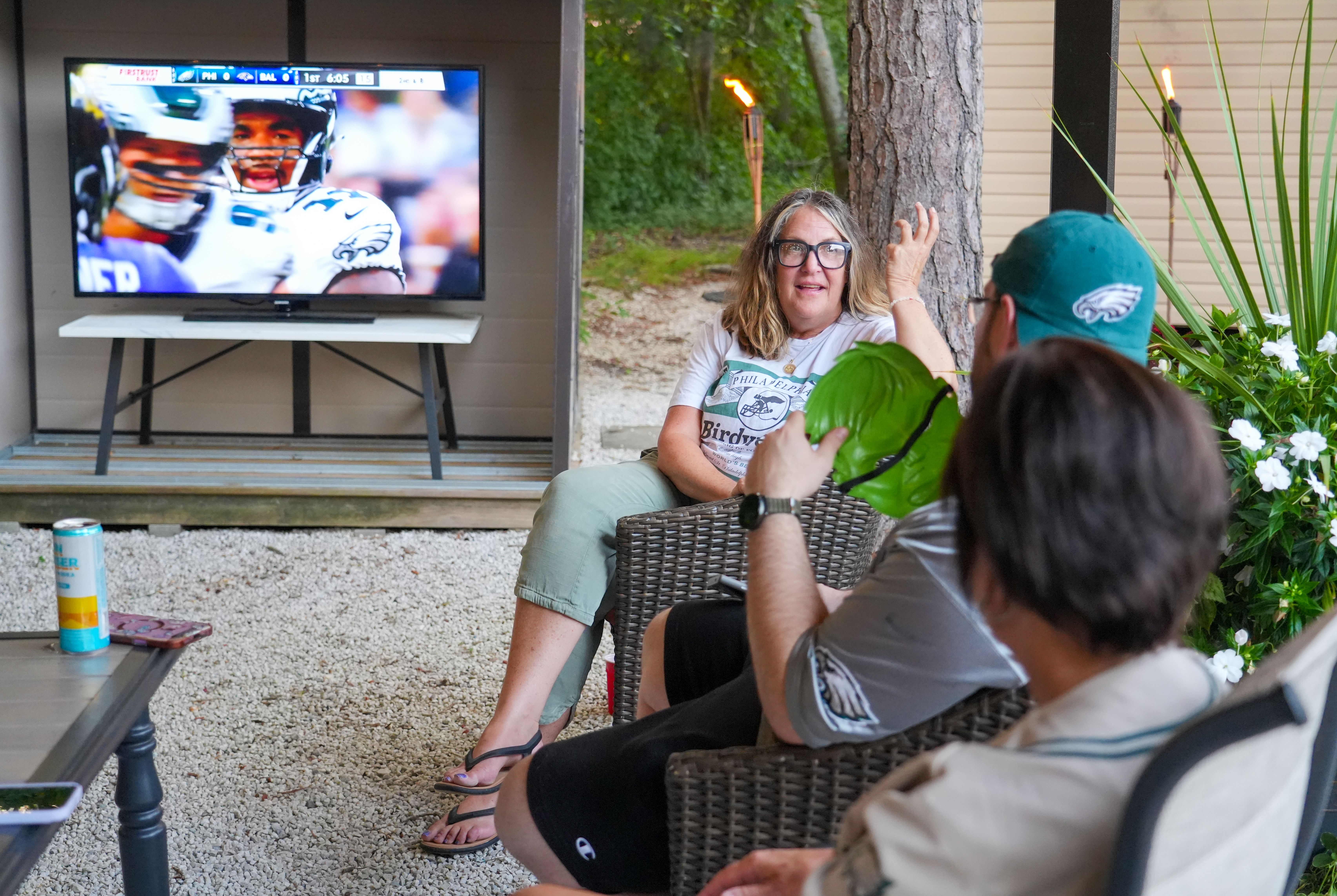
    Cori Laphan talks to Randy Bock of Turnersville, as they watch the Eagles in the first preseason game of the year at her summer home in Cape May Court House. Tim Hawk / For The Inquirer

    Experts say the hobby gained momentum during the COVID pandemic, when families had no choice but to hunker down at home. People invested in their spaces: pools, fitness rooms, and — yes — expanded entertainment options. Even after restrictions were lifted, the stay-put mentality stuck.

    “Once you sink that money in, you have less to spend outside the home,” said Kevin Gillen, an economist with the Henderson Real Estate Institute at Drexel University. “Movie theaters, which are incredibly expensive and ruined by one loud family in the room, have not rebounded since COVID.”

    But backyard viewing goes beyond financial sense. It’s also the sneakiest way to sidestep a 21st-century affliction: screen-time guilt.

    “There’s a lingering bias around TV,” said Emil Steiner, associate professor at Rowan University, who lives in University City and studies audience viewing habits. “The stereotype is that you’re being a lazy couch potato staring at the idiot box while cooped up inside a dark room. But watching outside in the fresh air among friends? It feels like a free pass.”

    That social piece matters. Open-air viewing has a way of turning into an event — firepit glowing, grill smoking, cooler cooling. What’s really streaming is camaraderie. Recent World Cup watch parties, from Lemon Hill to suburbia, are a proof point: Alfresco airtime is a happiness booster.

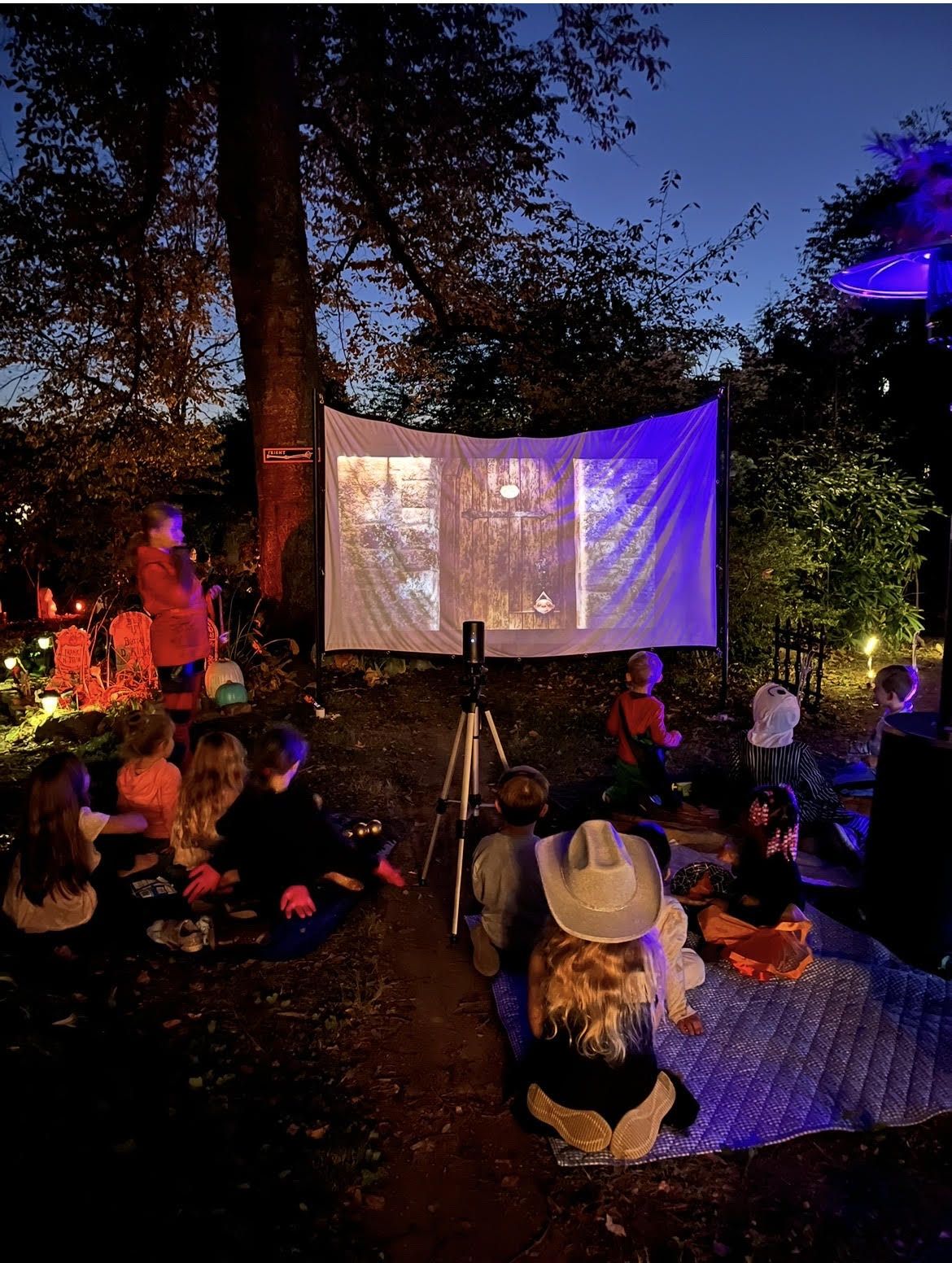
    In Glenside, Emily Kelly and her family built a mount for their backyard projector screen out of a PVC pipe and some carabiners.Courtesy of Emily Kelly

    “People feed off one another’s energy,” said Michael Marciante, executive director of the Partnership for Haddonfield, the town’s business improvement group. He spearheaded three viewing parties, drawing a total of 2,500 residents and visitors to a temporary screen on Kings Highway. “Outdoor viewing brings communities and neighbors together, and you can just feel the electricity.”

    But before you haul your sectional onto the deck, you’ve got homework. To make the most of an outdoor viewing experience, channel surf through the following tips.

    Know your why: Are you looking for romantic date nights? Neighborhood gatherings? Family bonding? Will this be a one-off thing or a permanent setup? Is your preference ultra-luxe or a bit more rustic? Zach Kades, who’s been hosting watch parties as an event manager at Soccer Post Cherry Hill, said his own home setup in Bryn Mawr involves little more than a projector and the back wall of his garage, because he likes the nostalgic, “camplike feel” it brings to a night with friends. Knowing your goal will make choosing your gear easier.

    Try it out: Before his family gifted him a new TV for the front porch and a permanent mounting system, Farina spent four years carting his flat-screen and a trusty coffee table back and forth from the living room on a near-daily basis, a ritual he calls a “labor of love.” While your trial period doesn’t need to last that long, Farina does recommend a test run with your existing screen. “Notice whether people rally around it,” he said. “See if you feel the joy.”

    Set your limit: Technically, you can make this work for the cost of a thrifted projector and a bedsheet flung over a fence. Or you can take the Jim Malamut route and spend more than $500,000 creating an oasis: “I call it my midlife crisis,” he said.

    The mortgage lender purchased an overgrown lot behind his Linwood home and spent about three years converting it into a pool-and-bar retreat complete with three TVs (two at 98 inches and one at 75) for watching multiple games at once. No matter where on the spectrum you fall, the important thing is to know your financial cap “and stick to it,” Malamut said, “or things can get crazy fast.”

    Research your tech: Purists will die on this hill: Your screen needs to be outdoor rated to fight glare with premium LED technology even in direct sunlight and withstand the elements longer than a few seasons. Others swear by less expensive, indoor screens that are shaded during viewing and protected with a water-resistant cover when not in use. Whatever you choose for your specific space, you’ll want to run a simple internet test: Stream a program from your phone or laptop in the designated spot, and see if Wi-Fi can handle the job or if hard-wired Ethernet is the better, no-buffer option. Ensure any required cables are made for outside use.

    Bug off: Mantua resident Cori Laphan loves her “outdoor living room” at the Driftwood Too Camping Resort in Cape May Court House, complete with fire pit, grilling station and 55-inch TV. Only problem: things that bite. To keep the gnats, mosquitoes and greenheads at bay, she staged an offensive campaign: tiki torches, citronella candles, fans, even coffee grounds — TikTok wisdom holds that lighting them on fire inside a metal canister is a natural deterrent. Laphan, a senior-living salesperson, also took an empty planter to a local garden center with one instruction: Fill it with bug-repelling plants. “We’ve done everything imaginable,” she said. “Insects love me, and I’m still able to be outside much of the time.”

    Get resourceful: If you don’t call in a team of home-theater professionals, creativity is key. Laphan’s brother-in-law, Jon Morad, reimagined a cutout in the side of a Home Depot shed intended for firewood — it now serves as an entertainment console that shades the family’s TV and offers some protection from the elements. “You have to think outside the box,” said Morad, a hospital maintenance supervisor.

    In Glenside, another family built a mount for their backyard projector screen out of a PVC pipe and some carabiners — neighborhood kids sit on one side while adults watch on the other, reverse-image and all. “Our setup is definitely makeshift,” said physical therapist Emily Kelly. “But I think it feels more genuine that way.”

    Learn the rules: Municipalities, HOAs, campgrounds … they all play by their own noise rules. According to Philadelphia code, your true-crime documentary or Hallmark movie marathon cannot exceed “three decibels above background level measured beyond the property boundary.” Translation: If your block’s typical soundtrack is the hum of traffic, your TV can raise that only slightly.

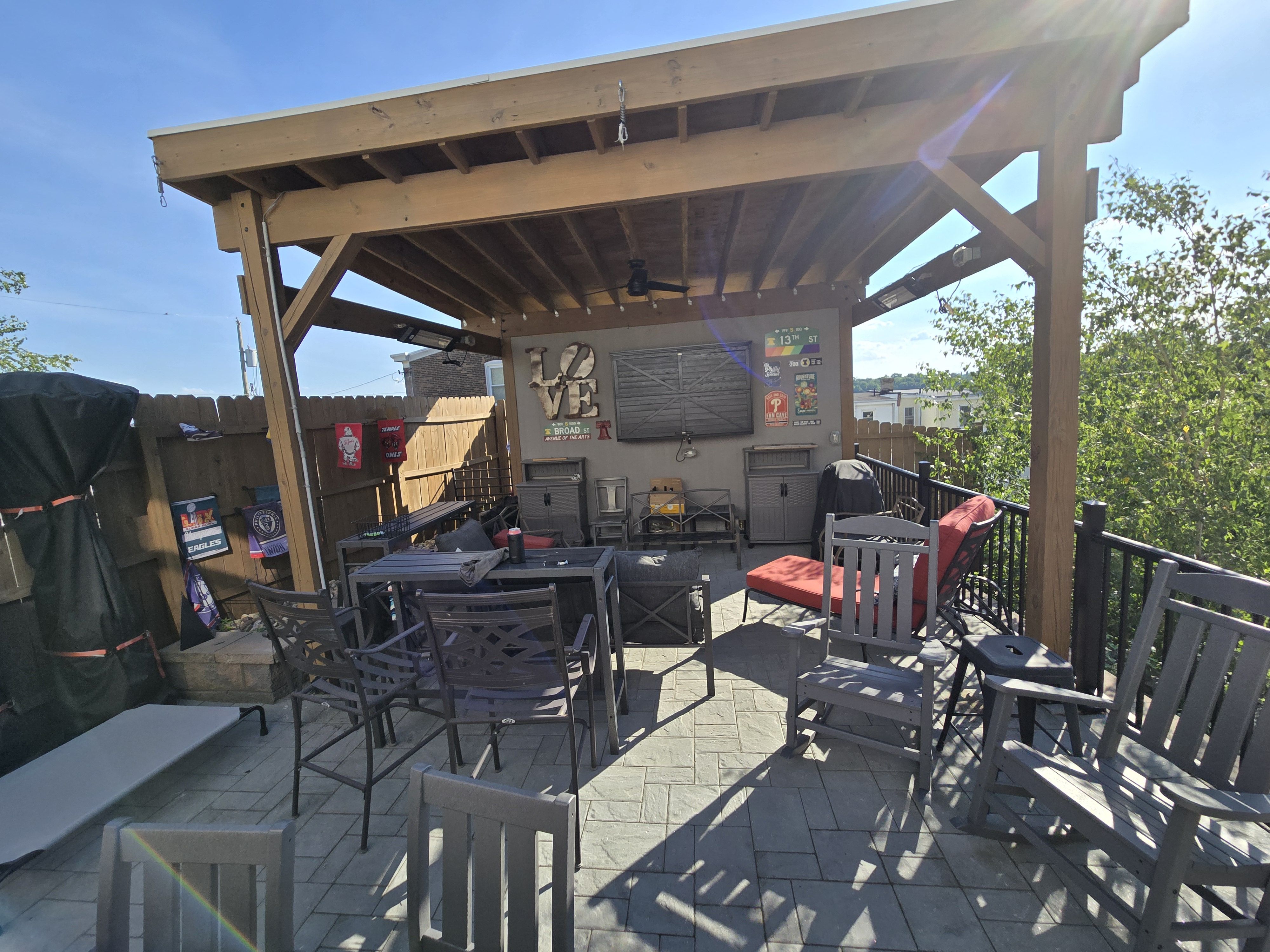
    Kate Evans and her wife, a Philadelphia police officer, built a roofed pergola for watching games and movies behind their Roxborough rowhouse. They recommend investing in a soundbar, which aims audio directly at viewers so that sound doesn’t wander. “We don’t need to blare our TV,” Evans said. Be sure to check the relevant code books and, if in doubt, purchase a basic sound-level meter to ensure you’re in compliance.

    Kate Evans and her wife built a roofed pergola for watching games and movies behind their Roxborough rowhouse. They recommend investing in a soundbar, which aims audio directly at viewers so that sound doesn’t wander.Courtesy of Kate Evans

    Be a good neighbor: Even if you’re operating within the law, outdoor TV enthusiasts risk alienating neighbors who won’t appreciate the glow of a flat-screen after dark. Head off any tension early by inviting them over for a viewing. Or, at the very least, Farina advises: “Keep your emotions in check while watching Philly sports,” he said. “I know that’s tough to do.”

  • After 50 years in Delran, this couple downsized to a Cherry Hill apartment

    After 50 years in Delran, this couple downsized to a Cherry Hill apartment

    After raising their kids in Delran, Fred and Barbara Zucker were ready to downsize from the home they had lived in for 50 years. The retired couple spent several months searching for an over-55 community, but nothing seemed quite right. In March 2020, that changed.

    “I was shopping at Nordstrom Rack in Cherry Hill and saw a sign for an open house at the Plaza Grande,” Barbara recalled.

    They toured a 1,150-square-foot apartment with two bedrooms, two bathrooms, and a den featuring a balcony with a western exposure. The apartment was on the top floor, which meant no neighbors walking overhead, and the kitchen had a gas range. There was also plenty of closet space for Barbara’s treasured shoe collection.

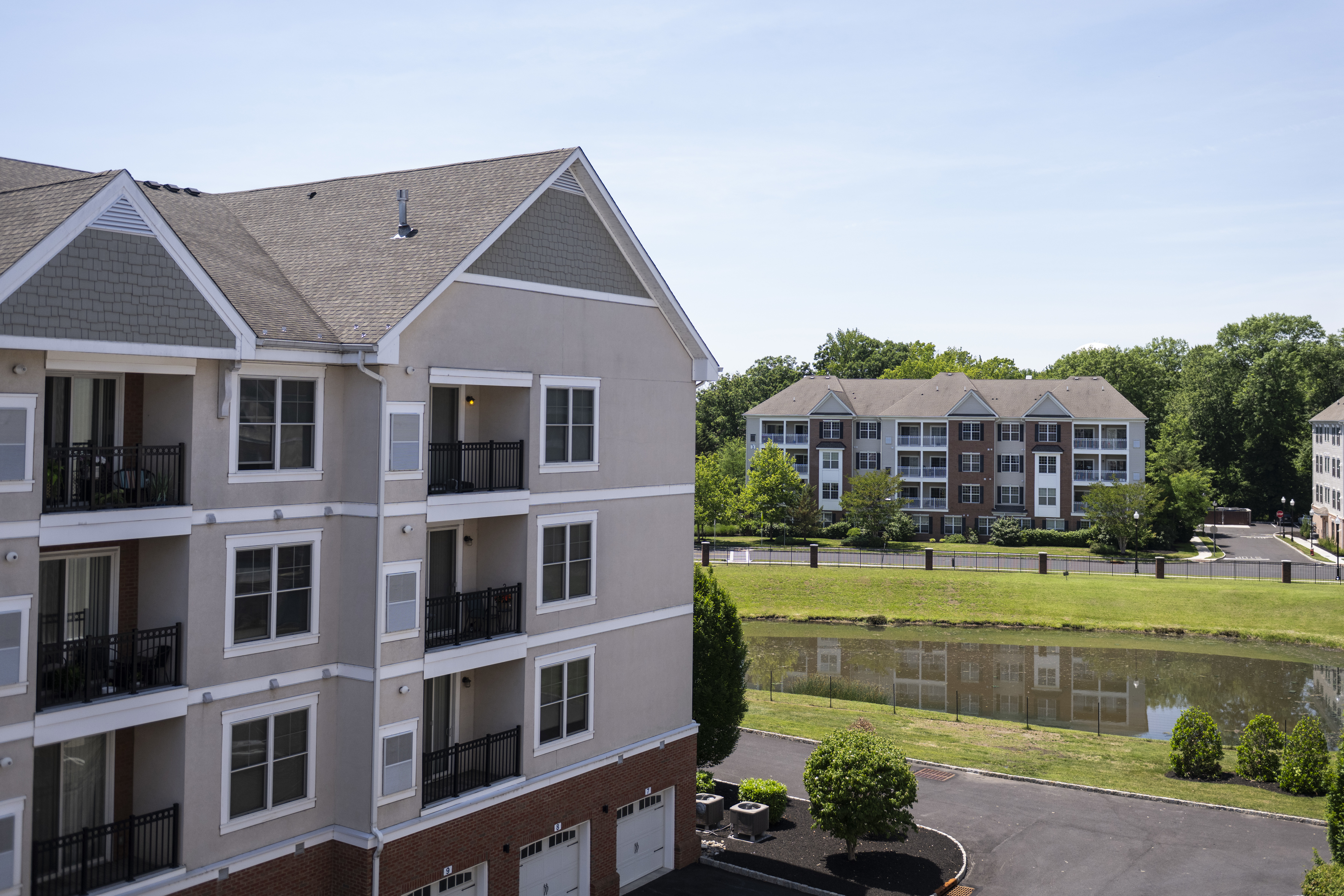
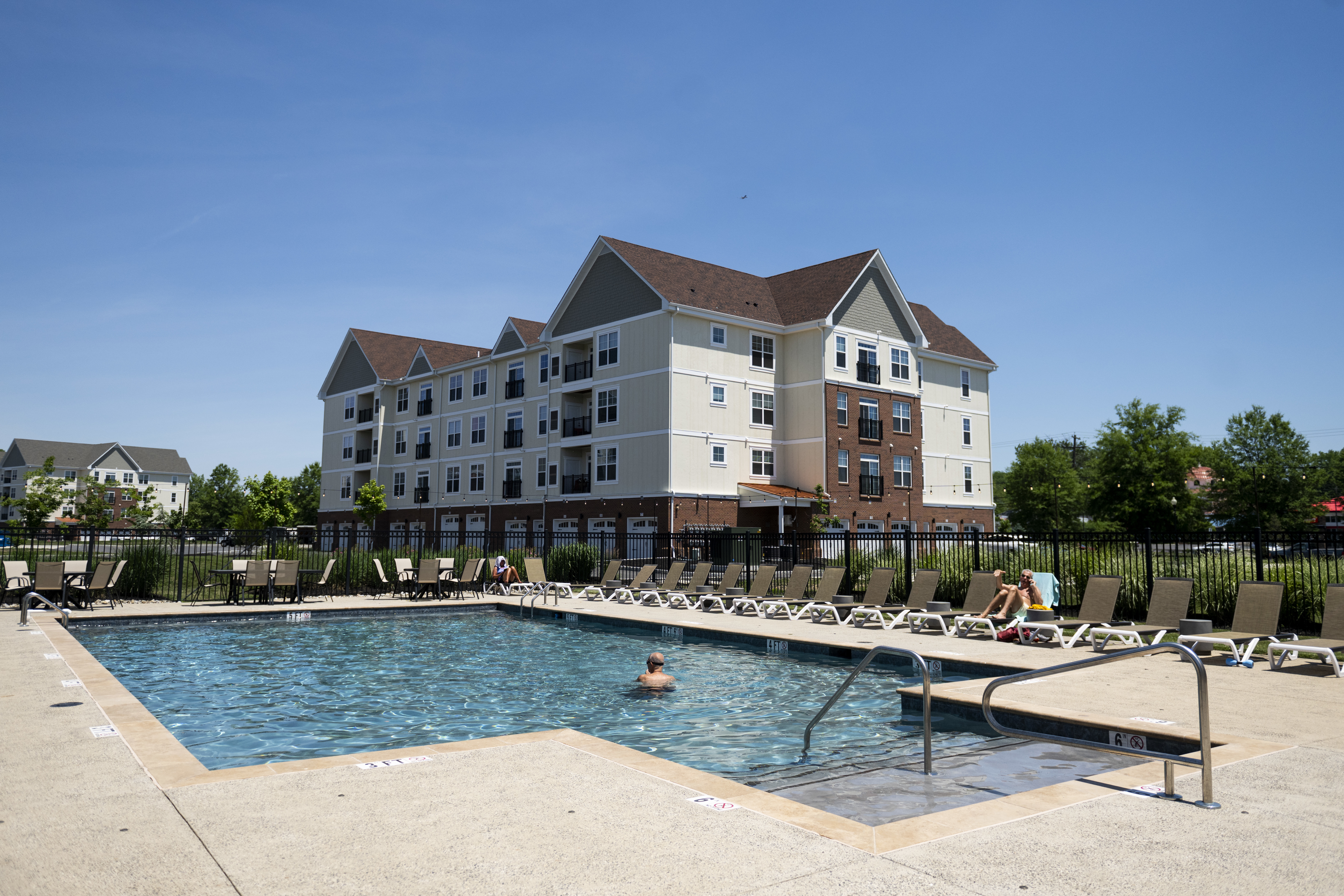
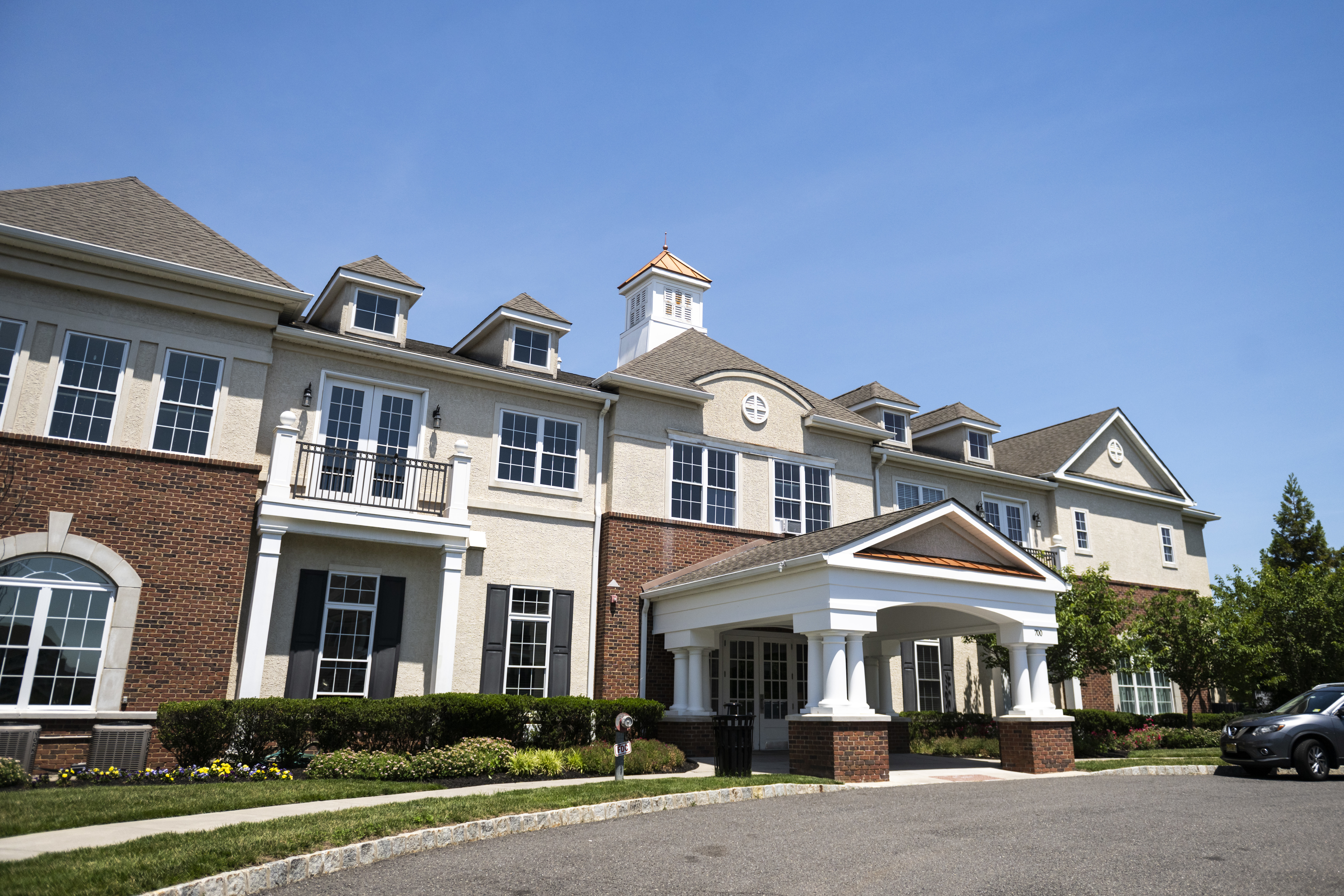
    Plaza Grande, which opened in 2008, is a sprawling community with 507 units within 16 buildings. Featuring lots of amenities and surrounded by shops and restaurants in walking distance, it seemed like a perfect home to the Zuckers.

    A view from the balcony at Fred and Barbara Zucker’s apartment.Allie Ippolito / For The Inquirer
    The outdoor pool at the Clubhouse at the Plaza Grande.Allie Ippolito / For The Inquirer

    While Fred and Barbara were excited to downsize, emptying the house, where they had lived for 50 years while raising their family, was no easy task.

    They had to offload most of their belongings, and with the help of a neighbor, they sold their furniture on Facebook Marketplace. Beyond Barbara’s favorite pots and pans, their televisions, family photos, and a few other keepsakes, they made a completely fresh start.

    “My stuff was 50 years old, and it was time to go,” said Barbara.

    The couple shopped at Raymour & Flanigan to outfit their new apartment, starting with a comfortable, dark gray velour couch, and matching chair and ottoman for the living room. With light pouring in from the balcony, it’s their favorite spot to relax, reading the newspaper and watching TV.

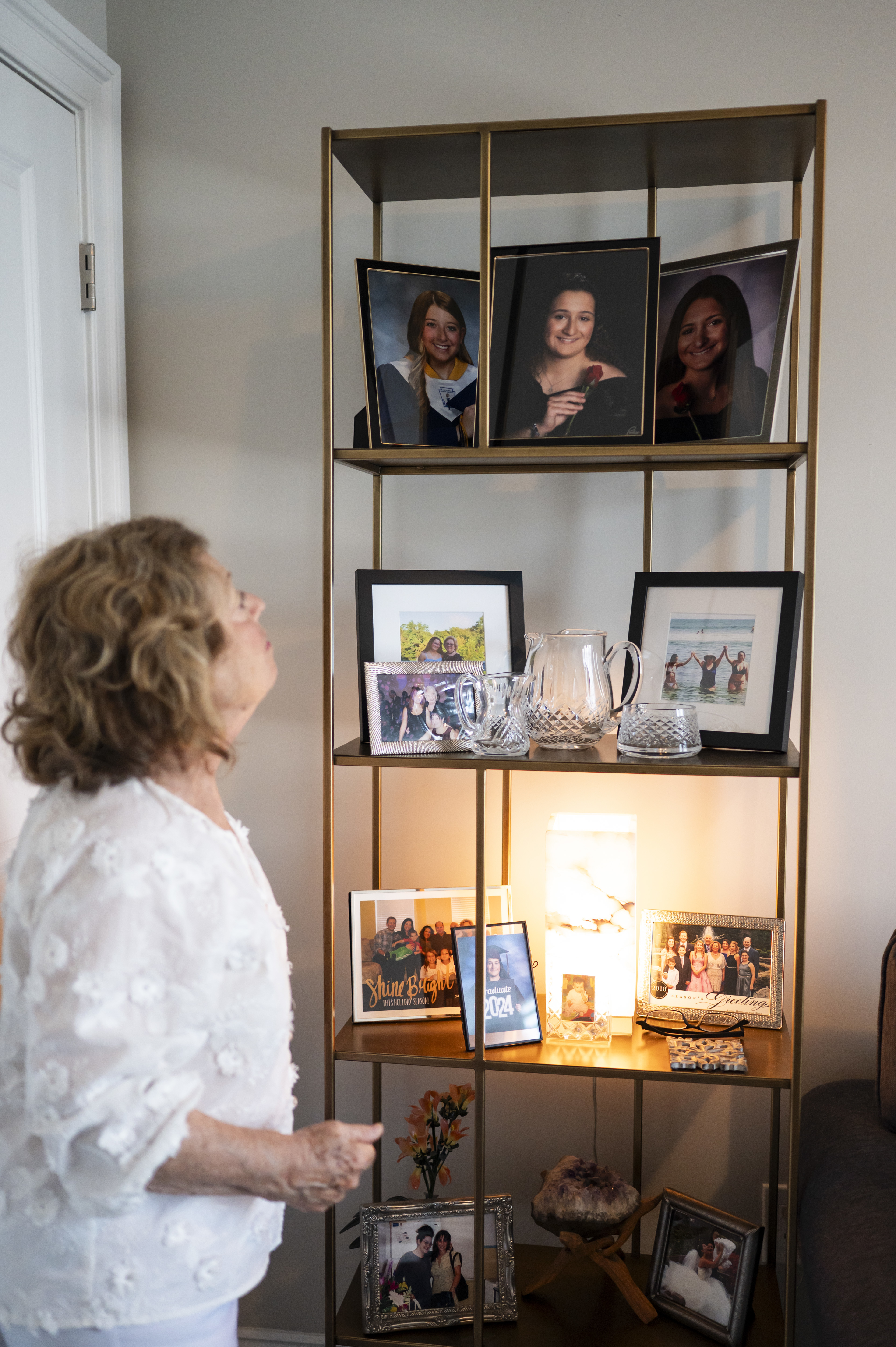
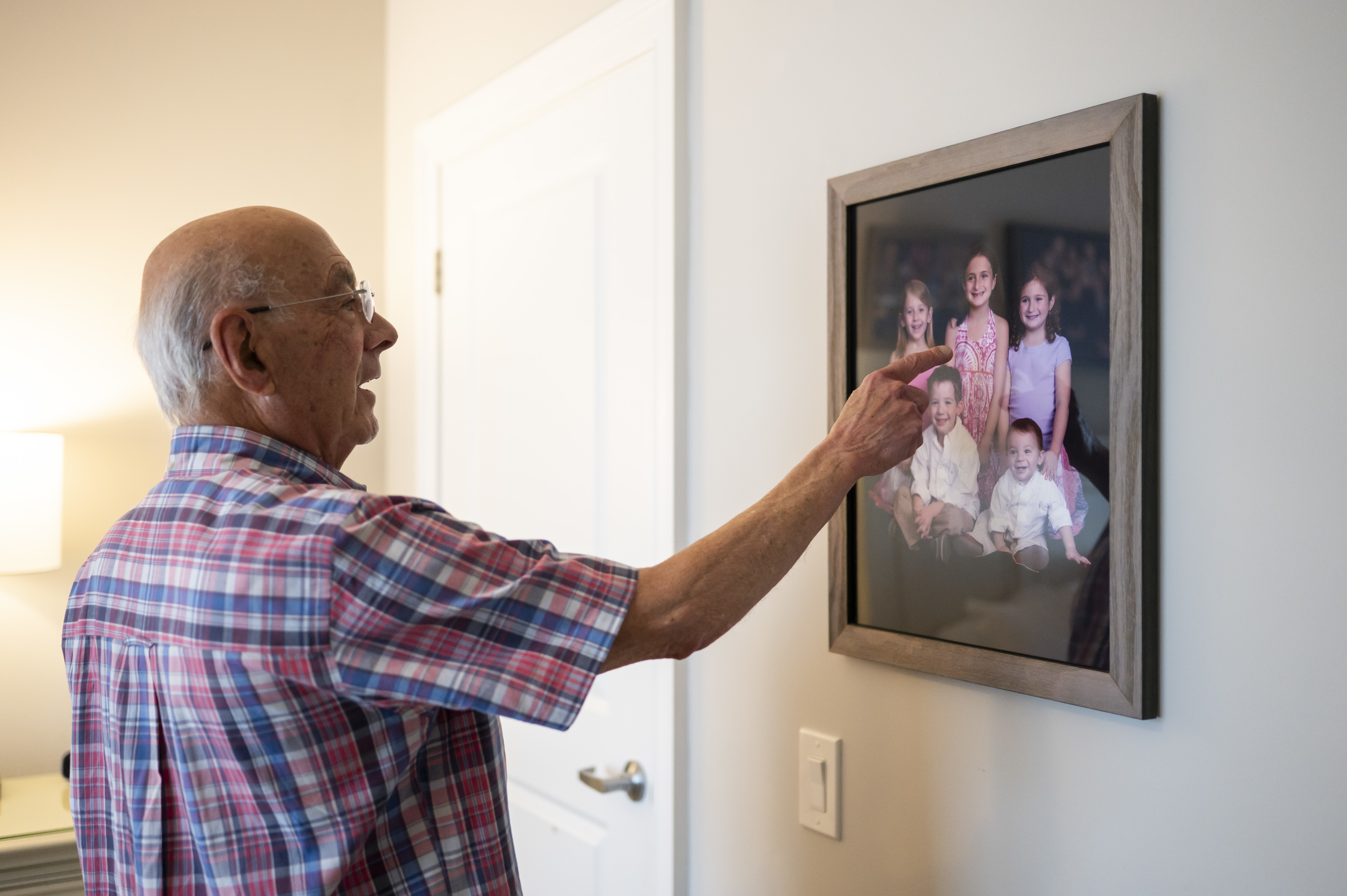
    Barbara admires family photos on display in her apartment.Allie Ippolito / For The Inquirer
    The balcony is one of Fred and Barbara Zucker’s favorite features in their apartment.Allie Ippolito / For The Inquirer

    Sliding glass doors lead to the balcony where they enjoy morning coffee, read for pleasure, or gaze at the pond below. The large, bustling community provides ample people-watching opportunity.

    The primary bedroom features creamy white furniture with bright white bedding. Family photos from special gatherings decorate the walls.

    “Family is everything,” Barbara said.

    The Zuckers prefer an uncluttered look, only keeping artwork and knickknacks that have personal meaning. Souvenirs from their travels are also on display.

    An avid cook, Barbara appreciates her new kitchen, with dark brown wood cabinets, speckled granite countertops, and a faux wood floor. The layout is roomy and the GE appliances are easy to use. She especially values the ice maker, a new-to-her luxury.

    Barbara is an avid cook, often found making soup for friends. Allie Ippolito / For The Inquirer
    The large door to the balcony lets plenty of light into the apartment’s living area.Allie Ippolito / For The Inquirer
    Fred points to a photo of his grandchildren.Allie Ippolito / For The Inquirer
    The primary bedroom features more family photos and a large window.Allie Ippolito / For The Inquirer

    “I don’t know what I was thinking for 50 years. Why I didn’t have an automatic ice maker?” she said.

    Barbara can often be found baking cakes or stirring up a pot of hearty chicken soup to share with her neighbors. Her role has become caregiver when her friends and neighbors need some TLC.

    “If somebody’s sick, I make a pot of soup,” Barbara said matter-of-factly.

    It is the development’s family-like feeling that the couple appreciates the most. Along with their neighbors, they take full advantage of the abundance of amenities the community has to offer.

    “Plaza Grande offers a resort-style experience for active adults 55+, anchored by an 18,500-square-foot clubhouse, the largest in South Jersey,” said Billy Procida, CEO of Procida Funding & Advisors, which developed the community.

    The complex features indoor and outdoor swimming pools, tennis and pickleball courts, a golf simulator, a sauna, massage rooms, and lifestyle programming.

    The golf simulator in the clubhouse at the Plaza Grande.Allie Ippolito / For The Inquirer
    The clubhouse, as seen from the outside.Allie Ippolito / For The Inquirer
    A movie room inside the clubhouse.Allie Ippolito / For The Inquirer
    The clubhouse lounge area includes elegant seating and a fireplace.Allie Ippolito / For The Inquirer

    “We’ve made good friends in the clubhouse, where we go every day,” noted Barbara. “We play cards and they have exercise classes and movies.”

    The couple has become close friends with their neighbors, taking advantage of nearby restaurants to meet for dinner. They recently traveled to Jamaica as a group.

    “Our home is a peaceful retreat for us,” said Barbara. “It is sort of like summer camp.”

    Added Fred: “We are a giant family. Every day is another day in paradise.”

    Is your house a Haven? Nominate your home by email (and send some digital photographs) at properties@inquirer.com.