Category: Real Estate

  • Cheltenham made a deal with a developer to build a $4.5M pool complex. A lawsuit alleges they’re breaking bidding rules.

    Cheltenham made a deal with a developer to build a $4.5M pool complex. A lawsuit alleges they’re breaking bidding rules.

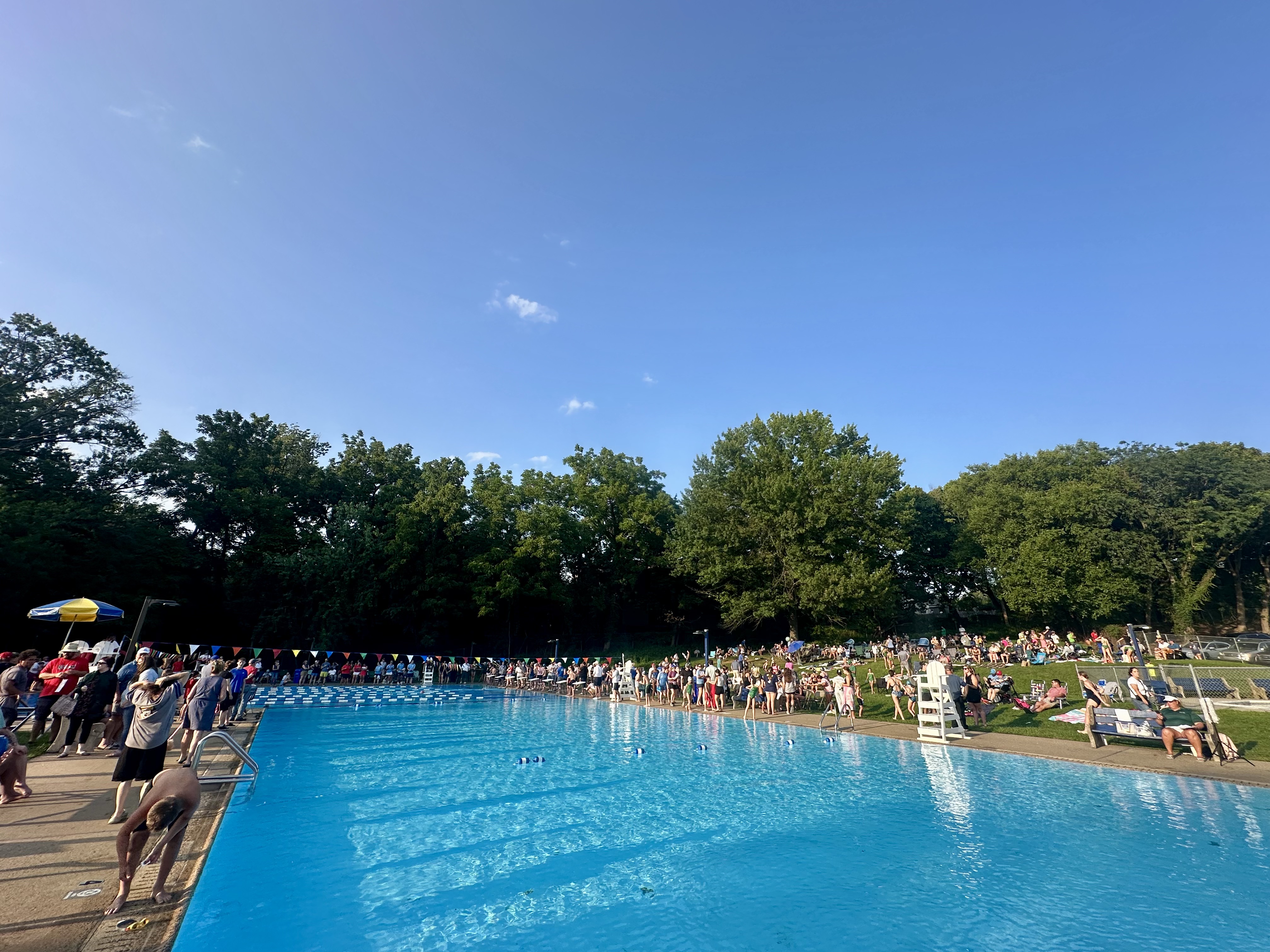
    Cheltenham Township is buying a pool complex from a private developer for up to $4.5 million, which a resident’s lawsuit alleges violates public bidding rules.

    The township commissioners approved a contract last month to lease 2.7 acres by Ashmead Road and Front Street to Melrose Pool LLC for $10 per year. Cheltenham agreed to pay up to $4.5 million for three public pools and a 5,000-square-foot building that Melrose Pool will build under the lease agreement.

    Matthew Areman, president of the seven-member Cheltenham commissioner board, vowed this week that the township would share additional details in the “coming weeks and months,” but a lawsuit filed July 22 in Montgomery County Court by Cheltenham resident Sam Thacker alleges the agreement is illegal. He claims it bypasses competitive public bidding laws that would normally apply to a town’s public pool, and wants a county judge to void the contract and issue an injunction to halt the project.

    A Montgomery County judge has given Cheltenham and Thacker until Aug. 21 to file their legal arguments, but time is short: Under the lease, the township has to decide on a final pool plan by the end of August.

    What the suit alleges

    Areman said last year the pool parcel is worth several million dollars, according to the commissioner board’s meeting minutes.

    If the township is leasing that land to the developer for just $10 per year, Thacker said, he believes the lease agreement also violates Cheltenham’s township code, which requires the use of “a system for obtaining independent appraisals … to assure that the township is obtaining adequate compensation” when skipping bidding on real estate leases. Thacker told The Inquirer he was unable to find a fiscal assessment for the pool project through Right-to-Know requests or a town spokesperson.

    Township officials declined to explain the legal reasoning behind the leaseback agreement with Melrose Pool.

    But in an FAQ posted this week, officials wrote Cheltenham had “received estimates from multiple pool consultants indicating that constructing a comparable standalone replacement pool would cost approximately $6-8 million.”

    Holly Fishel, the policy and research director for the Pennsylvania State Association of Township Supervisors, who did not comment on Cheltenham specifically, said she had heard of leaseback agreements with townships before but was not sure of the legal mechanisms. In situations where a township is doing construction work on land it owns, “you would need to be doing the bid,” Fishel said.

    But in this case, a private company is doing the work on land it has leased.

    “That can’t be right that you can just evade public bidding requirements by saying something is a lease when it’s clearly a public construction project,” Thacker said.

    Cheltenham is paying up to $4.5 million for three pools

    A preliminary plan for the Melrose plot includes three pools of different sizes, but the July 15 lease notes that the developer is to provide a final plan by this week.

    The township will then have two weeks to approve or deny the final pool plan.

    Upon completion of the work, Cheltenham would pay up to $4.5 million for the new pools, or pay an additional rent up to $382,500 per year until the township comes up with the $4.5 million.

    The two-week timeline for the township to approval a final pool plan is what led Thacker to file his lawsuit.

    “The contract is structured essentially to rush this forward as quickly as possible,” Thacker said. “We have no idea if $4.5 million is a good price.”

    The figure is cheaper than the $6.1 million estimated in 2023 to redo the Conklin Pool, which the Melrose pools would replace in 2027. The township has one other public pool, in Glenside.

    But other residents have questioned whether it is even possible to build three public pools for $4.5 million, given the Conklin pool estimate.

    Private development planned beside pool

    The pool is part of a larger redevelopment of the former Melrose Country Club — at 116 acres, one of the largest properties in Cheltenham — that includes new townhouses and commercial space.

    The lower price tag for the new Melrose pool comes in part from construction efficiencies, Cheltenham wrote this week, since the property will already require site preparation, grading, and utilities for the new buildings.

    The property’s developer, an LLC associated with BG Capital, gave the township the 2.7 acres for free last December to advance public welfare and for an unspecified “advantage” to the developer.

    BG Capital and the LLC’s attorney did not respond to a request for comment, but court filings Tuesday for Melrose Pool LLC argued that the bidding process Thacker cited under the state’s procurement code does not apply “to the landlord/tenant relationship” between Cheltenham and the LLC because the code applies only to state agencies.

    Melrose Country Club project changed

    Some residents, including Carl Freedman, have raised concerns at public meetings about the larger project. An earlier plan included both a pool and a community center, Freedman said, and would have allowed more much-needed commercial space.

    Cheltenham’s recently approved long-term township plan calls for bringing in more business to bolster the struggling tax base.

    Freedman, an architect who sits on the Cheltenham Planning Commission, said the panel no longer supports the project and is sending the township a letter to that effect.

    “The loss of the community center is what is making the retail unmanageable,” Freedman said, because the center would have drawn potential shoppers to the site. “This project has taken a left turn.”

    Chloe Mohr of the Montgomery County Planning Commission, which reviews local development projects and offers recommendations, said the county commission plans to release a new review of the revised plans late next week.

    This suburban content is produced with support from the Leslie Miller and Richard Worley Foundation and The Lenfest Institute for Journalism. Editorial content is created independently of the project donors. Gifts to support The Inquirer’s high-impact journalism can be made at inquirer.com/donate. A list of Lenfest Institute donors can be found at lenfestinstitute.org/supporters.
  • King of Prussia data center complex is rejected by Upper Merion Township officials

    The Upper Merion Township Board of Supervisors unanimously rejected a proposed 5-million-square-foot AI data-center campus that had sparked pushback from residents, a lawsuit from the developer, and accusations of mistreatment and intimidation.

    After the decision was made at a Thursday night meeting, some in the crowd applauded, danced, and high-fived one another. The rejection came after three hours of fiery exchanges between the developer, Brian O’Neill, and township officials.

    O’Neill and his team said they were prepared to go over each of the township’s comments about his five proposed sites in the King of Prussia area. But officials said it was too little, too late, and asked if O’Neill’s team was “filibustering.”

    “Are you asking us to not present those facts in defense of those plans when it’s clear all you want to do is deny our plan and go home tonight?” said O’Neill. He later said township officials were violating state and local planning codes, an allegation they denied.

    “Your attempt here to lecture us is considered an intimidation. And I don’t want to see our professional staff bullied or coerced,” said William Jenaway, vice chair of the Upper Merion Township Board of Supervisors. “Intimidation, coercion and bullying are not good qualities in a professional leader.”

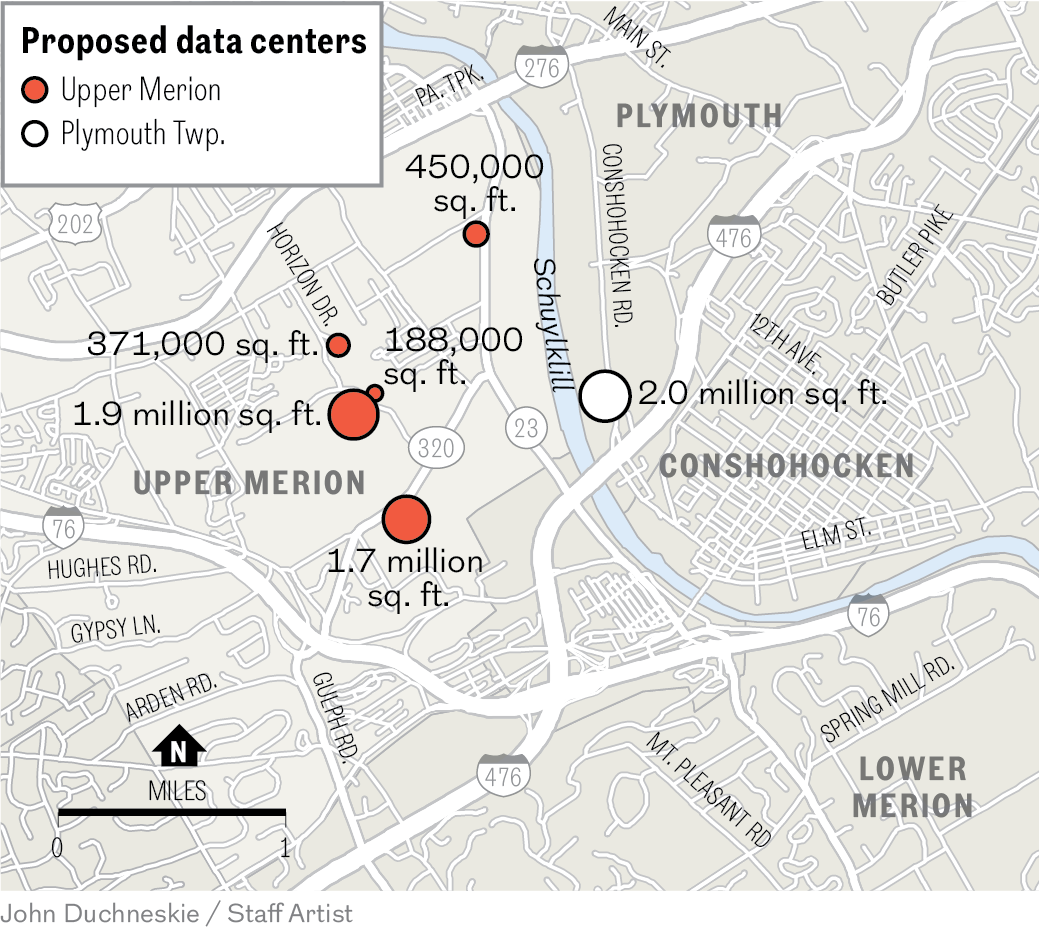
    O’Neill, a longtime real-estate developer, has recently turned his sights to data centers. He first proposed building one of the controversial cloud-storage facilities in nearby Plymouth Township. In Upper Merion, he wants to build a data center complex on five properties in the township’s Swedeland section, a small residential and industrial area between West Conshohocken and Bridgeport.

    A map of the proposed data centers in Upper Merion and Plymouth TownshipsJohn Duchneskie

    Those projects aren’t dead: O’Neill can appeal the board’s denial, as chair Tina Garzillo told him Thursday.

    “Don’t you worry about that,” said O’Neill, before walking out of the Upper Merion Area Middle School auditorium to a chorus of boos.

    The board’s decision came after months of contention and a whirlwind two days of legal back-and-forth.

    O’Neill on Wednesday sued the township, its planning commission, and its board of supervisors, saying they violated his legal right to an extension and treated him unfairly during the development review process. Soon after, Montgomery County Court Judge Garrett D. Page ordered the township to halt proceedings and decisions related to the data centers until a hearing next week.

    Citing the ruling, Edmund J. Campbell, an attorney for O’Neill, declined to make a presentation on two of the five proposed data-center sites at an Upper Merion Township Planning Commission meeting on Wednesday night.

    Late Thursday afternoon, however, Page vacated his previous order, allowing the township board of supervisors to proceed with its meeting as planned. On the agenda: A vote on O’Neill’s request for an extension until Sept. 30, and votes on the five proposed data centers.

    After an hour of public comment, all but one of which was from residents opposing the data centers, the township’s board of supervisors voted to deny O’Neill’s extension requests. The board then moved on to vote on the land development plans for each of the five sites.

    One by one, the plans were denied unanimously by the five-person board.

    Each vote was met with loud cheers from attendees.

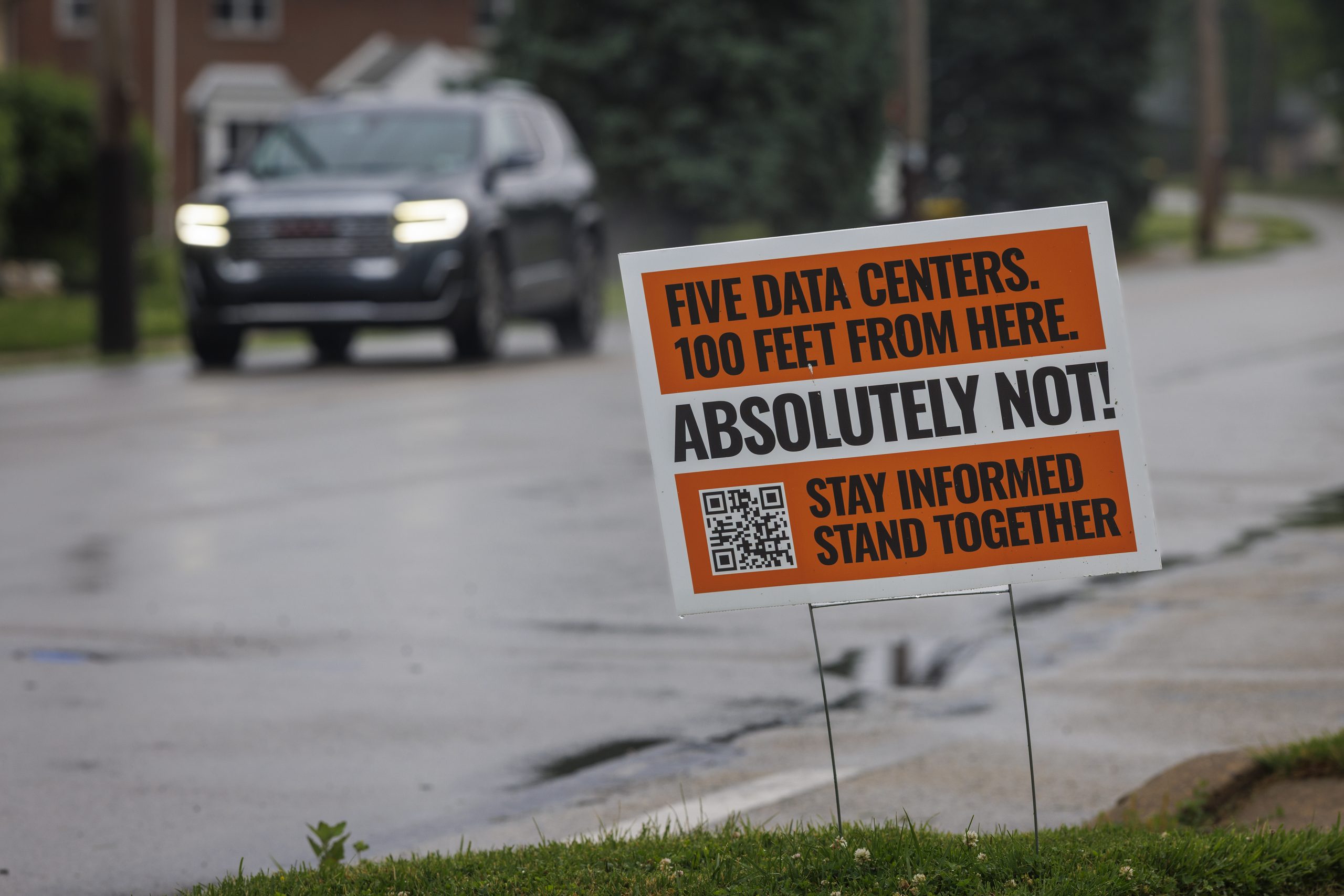
    For months, residents have rallied against O’Neill’s plans, packing township meetings and putting up bright orange lawn signs opposing the projects. About 18,000 people had signed a Change.org petition against the Upper Merion data centers as of Thursday. Some neighbors have expressed concerns about pollution, light, noise, electricity prices, property values, and quality of life.

    Upper Merion residents opposed to the data centers have put up these lawn signs.

    “I’m really proud to stand here tonight with each and every other concerned resident,” Courtney Smith said Thursday. “We all have something important here to fight for.”

    “The people here are here because they care deeply about the long-term interest of our communities,” Montgomery County Commissioner Neil K. Makhija said during his comments in opposition of the plan. The commissioner said the supervisors’ decision would have ramifications beyond the county, as communities across the region and the country weigh data-center development.

    O’Neil has said his data centers would benefit Upper Merion and “change the world for the better.” While the developer has declined to specify who exactly would operate the centers, he has indicated the facilities would use AI-powered biotech in conjunction with his existing life-sciences complex, Discovery Labs.

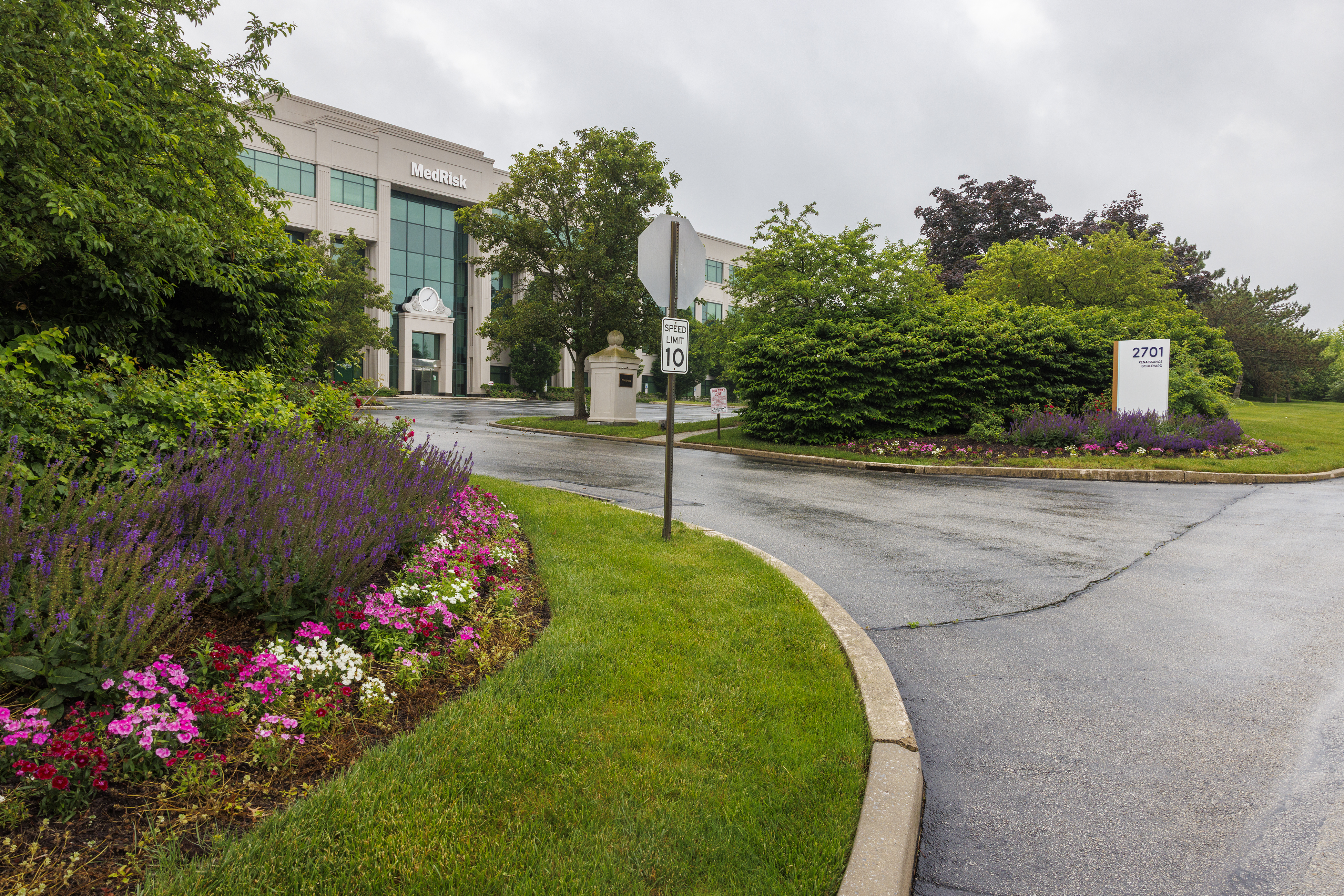
    One of the sites where Brian O’Neill wanted to build a data center in Upper Merion.Alejandro A. Alvarez / Staff Photographer

    O’Neill has said his data centers would comply with the highest environmental standards, emitting little light and noise. They would operate on a closed-loop system, requiring no outside water, he said, and provide their own power.

    The developer has also said they’d be an economic boon to the area. Last week, he released an economic impact study that said the Upper Merion centers would result in more than 10,000 jobs during its construction and then generate more than $55 million a year in local tax revenue.

    At Thursday’s board of supervisors meeting, however, Upper Merion Township Tax Collector Evelyn Ankers disputed those figures, and said O’Neill has failed to pay taxes on his properties in the past.

    Across the Schuylkill, a data-center fight rages on between O’Neill and some residents of Plymouth Township, where the developer wants to build a 2-million-square-foot facility on a shuttered steel mill outside Conshohocken.

    The developer recently filed a legal challenge to the Plymouth Township zoning ordinance, and has exchanged accusations of mistreatment with township leaders. News of O’Neill’s actions in Plymouth Township prompted a rebuke from Gov. Josh Shapiro, who had previously encouraged data center development in the commonwealth.

    A date has not been set for the next Plymouth Township meeting, though officials indicated it would be sometime in September.

  • King of Prussia data center fight could be paused by developer’s lawsuit

    King of Prussia data center fight could be paused by developer’s lawsuit

    A Main Line developer looking to build multiple data centers in Montgomery County possibly could have more time to make his case for a five-property campus near King of Prussia.

    And residents who oppose the projects — who had been preparing for a potential vote on the plans this week — now may wait to learn whether the complex will be built in their neighborhood.

    A Montgomery County Court of Common Pleas Judge on Wednesday temporarily prohibited Upper Merion Township from making decisions about any data centers proposed by Brian O’Neill. The township board of supervisors had been set to vote Thursday on the five proposed data centers totaling 4.6 million square feet.

    The developer had asked for an extension from Upper Merion until Sept. 30, saying his team needed more time to respond to dozens of township review letters related to the projects. In emails, O’Neill said township officials made clear they would not allow more time.

    “It is clear … that the township’s board of supervisors intends to decline the offer of extension and instead proceed to deny the applications,” O’Neill wrote in the lawsuit.

    On Wednesday, the developer had sued Upper Merion Township, its board of supervisors, and its planning commission, saying they violated his legal right to an extension and treated him unfairly during the review process.

    The judge’s ruling ordered that township officials halt certain proceedings and not make any decisions about the data center plans until after a court hearing scheduled for next week.

    Before the lawsuit, the Upper Merion Township Planning Commission had been scheduled to discuss and make recommendations to the Upper Merion Township Board of Supervisors on two of O’Neill’s five data center plans on Wednesday. The planning commission had previously voted not to recommend approval of O’Neill’s three other proposals.

    In a separate meeting on Thursday, the township supervisors had been set to vote on whether to approve the five data center plans.

    The proposed data centers in Upper Merion are across the river from another data center O’Neill has proposed near Conshohocken.John Duchneskie

    But late Thursday afternoon, Judge Garrett D. Page vacated his Aug. 12 order, paving the way for a potential vote Thursday night on O’Neill’s extension request and his data center plans.

    O’Neill’s team had declined to discuss the projects with the planning commission on Wednesday, citing the lawsuit.

    “We are not making a presentation tonight consistent with the court’s order,” said Edmund J. Campbell, an attorney for the developer. “I will ask to be excused as I don’t believe my presence is needed, pursuant to the court’s order.”

    With Campbell’s exit, the township planning commission had opened the floor to dozens of local residents, all but one of whom was opposed to the projects.

    They expressed concerns about light, noise, and sound pollution; water use; the impact on the power grid and electricity prices; mental and physical health impacts; and overall quality of life in the suburb. Some said they were angry with O’Neill and his team, with a few citing a recent 6ABC interview in which O’Neill said opponents wanted to “fight for the sake of the fight” and were against development that was “right for the community.”

    Some residents disagreed with those statements.

    “Judging by the past five months or so [of] our community standing together in solidarity against these horrific proposals, this is clearly not right for our community,” Upper Merion resident Zachary Davis said Wednesday.

    Some King of Prussia residents have put up lawn signs opposing the data centers.

    O’Neill has said his Upper Merion data centers would “change the world for the better” through AI-powered biotech that would complement his existing life-sciences complex, Discovery Labs.

    The developer has said the data centers would operate on a closed-loop system, requiring no outside water, and provide their own power. They’d emit little light and noise, according to O’Neill, and include billions of dollars worth of emissions controls.

    O’Neill’s team last week released an economic impact study that says the Upper Merion centers would result in more than 10,000 jobs during its construction and then generate more than $55 million a year in local tax revenue.

    O’Neill’s efforts come as data-center opponents’ ire toward him has intensified.

    The animosity was on display last week at a zoning hearing board meeting in nearby Plymouth Township, where O’Neill is trying to build a 2-million-square-foot data center on the outskirts of Conshohocken.

    In recent weeks, the developer has sparred with Plymouth Township officials, and filed a legal challenge to the zoning ordinance there. News of the moves prompted a “hell no” from Gov. Josh Shapiro, who had previously encouraged data center development in the commonwealth.

    A date has not been set for the next Plymouth Township meeting, though officials indicated it would occur sometime in September.

    In Upper Merion, officials said late Wednesday that the monthly board of supervisors business meeting scheduled for 6:30 p.m. Thursday was still on. Other issues, not related to data centers, were on the agenda.

    Editor’s Note: This story has been updated after Montgomery County Common Pleas Judge Garrett D. Page late Thursday afternoon vacated his Aug. 12 order.

  • Going native at the Shore | Real Estate Newsletter

    Going native at the Shore | Real Estate Newsletter

    Large groups of butterflies freak me out. I learned that the hard way as a kid during a nectar feeding incident on a field trip to the Philadelphia Zoo.

    So I personally wouldn’t want to attract the insects en masse to my home. But I know how important pollinators are and applaud homeowners who do their part to help them thrive.

    Planting native species can go a long way. At the Jersey Shore, gardeners are ditching manicured lawns and joining the growing trend that benefits the environment and wildlife.

    Read on to find out more.

    Keep scrolling for that story and more in this week’s edition:

    — Michaelle Bond

    If someone forwarded you this email, sign up for free here.

    Ditching manicured lawns

    Virginia Rettig has about 200 varieties of native plants on her Cape May property. And she runs a business that helps other Shore residents go native, too.

    She said she’s found plenty of clients who are down for the cause.

    Why plant native species? These types of plants provide habitats and food for birds and other wildlife.

    Notable quote: “There has been a lot of focus for too many years on instant gratification — pretty things that are forced to be in bloom well before nature intends,” said Pat Sutton, a working naturalist. “The focus on native plants is a focus on making sure wildlife can persist.”

    Sutton says her tiny yard feels like a wilderness. She’s recorded hundreds of species of birds, butterflies, and other pollinators.

    In some places, areas that used to be covered in native vegetation have been cleared for development. In one Shore community, residents have come together to make native plantings a priority.

    Keep reading to learn about the Jersey Shore’s native plant varieties and the gardeners who love them.

    📮Do you have a native garden? I want to see it.

    Philly region = millennial homebuying hot spot

    Making the leap from renting to owning a home hasn’t been easy for millennials.

    In prime homebuying years, folks born between 1981 and 1996 have been challenged by low housing supply, skyrocketing home prices, high inflation, expensive financing, and student loans.

    But millennials are buying properties. And the Philadelphia area has been a homebuying hot spot for the country’s largest generation.

    Millennial homeownership in the Philly region almost doubled over five years. That growth outpaced increases in every other major Northeastern metro and the country as a whole.

    Our area has a lot going for it, and a combination of features make us stand out.

    Keep reading to learn why millennial homeownership has grown so much in the Philadelphia area and how we compare to other regions.

    The latest news to pay attention to

    Home tour: North Wildwood family retreat

    Dolly Kelly initially lost out on buying her favorite house in North Wildwood. But the owner’s deal with the buyer who outbid her fell through. A few months later, Kelly moved in to the cottage.

    But it actually wasn’t her dream home. Kelly has a big, close-knit family, and she wanted her house to be a gathering place for everybody.

    She wasn’t able to add on to the century-old, 675-square-foot house. So she knocked it down and spent a year and a half building her 2,400-square-foot home. Her nephew helped her design it.

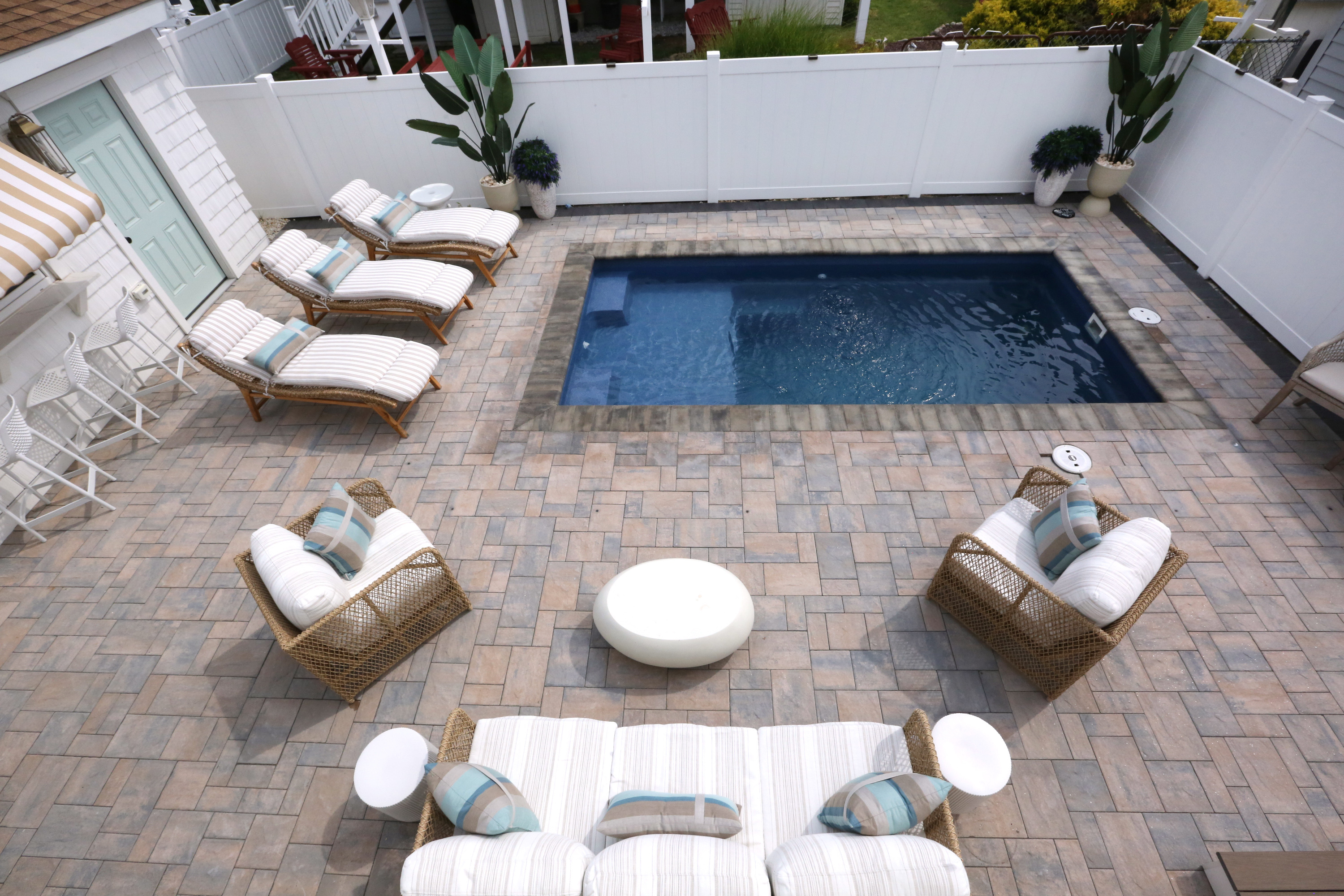
    The new house includes a covered carport, open-concept living area, and primary bathroom that feels like a spa. There’s a heated pool in the backyard.

    Peek inside Kelly’s home and her family’s retreat.

    📊 The market

    Across the region, we’re seeing a trend play out that makes sense. As home prices and mortgage rates continue to rise, the folks who can most afford to buy homes are the ones driving sales.

    In the Philadelphia metro area, the high end of the market is outperforming the market overall.

    In July, the number of homes for sale was up from last year, but the number of showings was down, according to the multiple listing service Bright MLS. First-time and moderate-income buyers were less active.

    Across the Philadelphia metro area in July, according to Bright MLS:

    🔺The median sale price was $430,000 — $10,000 more than in July of last year.

    🔻 The number of showings dropped by about 4%. But home tours in Chester County increased.

    🔺The numbers of active and new home listings were up from last year, meaning buyers had more homes to choose from. Roughly 14,200 homes were on the market at the end of July.

    🔻The number of new pending sales dropped by 4%.

    📷 Photo quiz

    Where is this Philly mural?

    📮 If you think you know, email me back.

    Last week’s quiz featured a photo of Lemon Hill in East Fairmount Park.

    Shout-out to Susan T. and Bruce R. for knowing that. As Susan mentioned, the site is currently looking rough in the aftermath of this summer’s FIFA Fan Festival.

    Enjoy the rest of your week.

    By submitting your written, visual, and/or audio contributions, you agree to The Inquirer’s Terms of Use, including the grant of rights in Section 10.

  • She turned a tiny cottage in North Wildwood into a retreat for the whole family

    She turned a tiny cottage in North Wildwood into a retreat for the whole family

    Dolly Kelly was leaving the beach with her nephew Sean Kelly on a sunny day in 2020, when she passed the Angelsea Cottage, her favorite house in North Wildwood.

    When she spied the For Sale sign on the front lawn, she got excited.

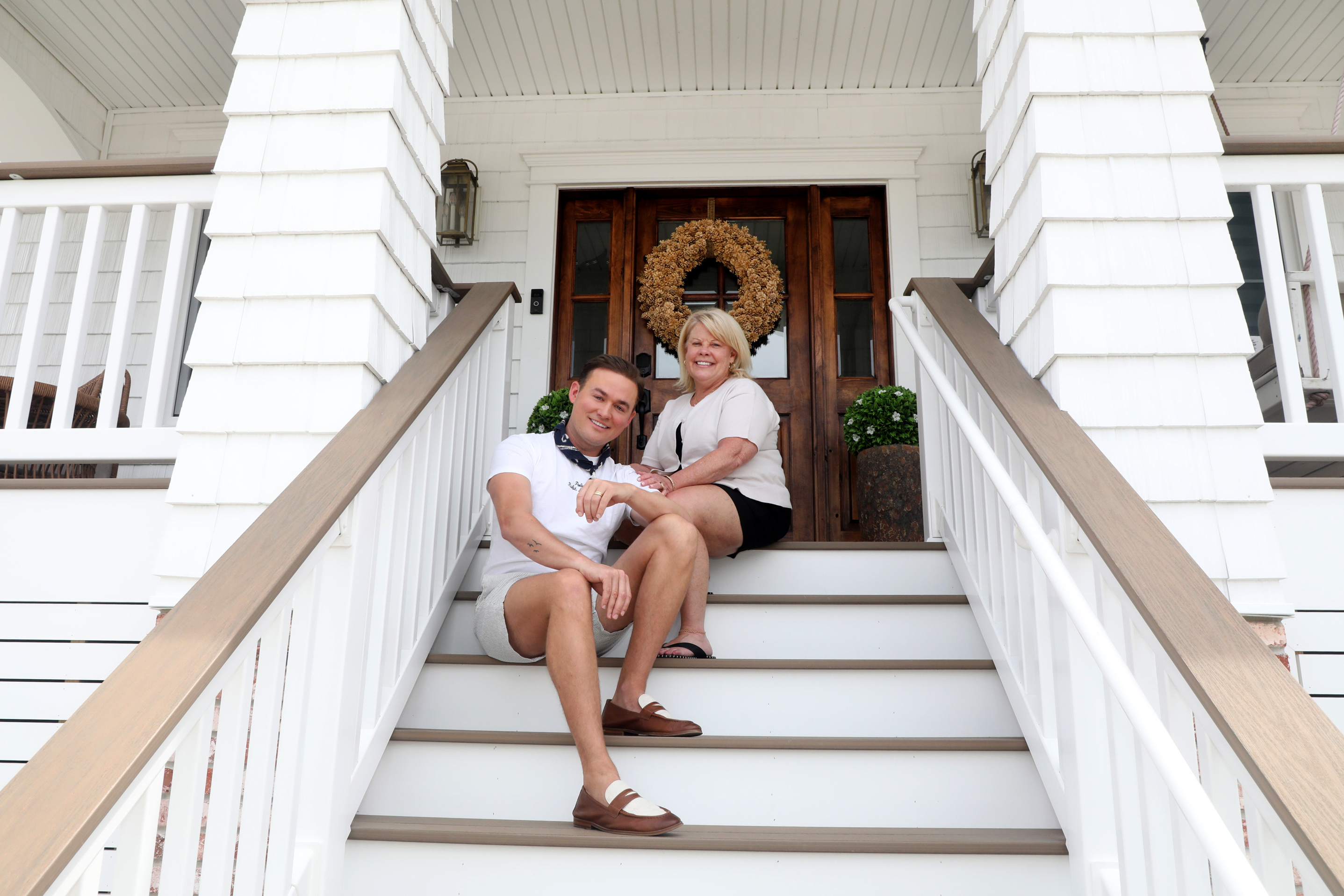
    “I just loved that porch,” Dolly recalled. “We actually walked up the steps, sat down, and took a picture.”

    The next day, Dolly walked through the house and made an offer, but she was outbid. She was devastated.

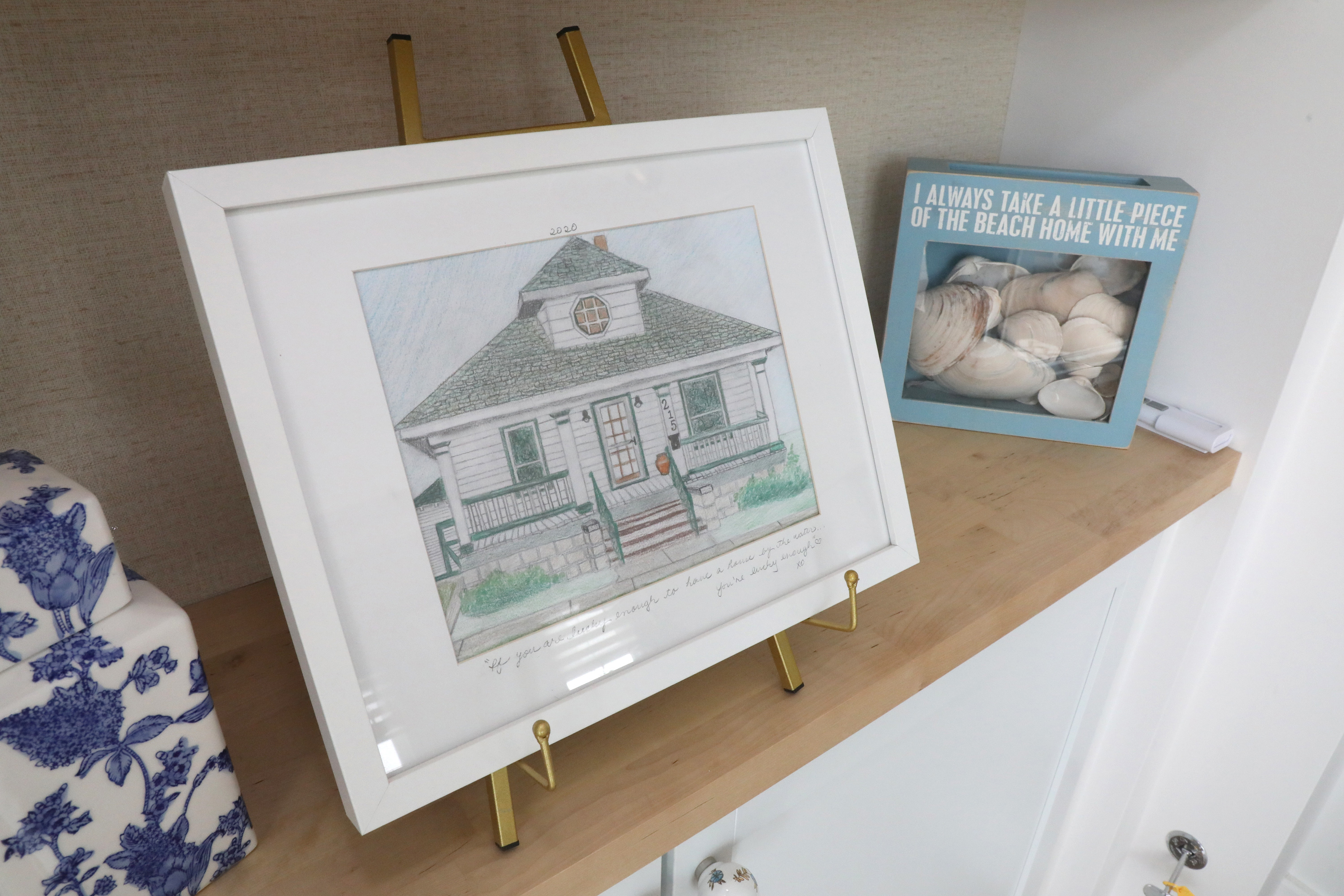
    A framed drawing of the original cottage is on display in the home. Vernon Ogrodnek / For The Inquirer

    But two months later, she got a call that the deal had fallen through — the house could be hers. She made a successful offer that day and moved in three months later.

    While Dolly loved the 675-square-foot cottage built in 1913, it had only two bedrooms and one bathroom. With a large, close-knit family, she wanted a gathering place with lots of space to entertain. She was sad to knock down the original house but given its age and condition, adding on wasn’t a viable option.

    “I have 13 nieces and nephews and 13 great-nieces and -nephews who come over all the time,” Dolly said.

    She spent a year-and-a-half building a 2,400-square-foot home with an open concept and a porch similar to the original one she adored. She was helped by Shore Pro Builders in Wildwood. And her nephew, owner of DUNE by Sean Kelly, handled most of the home’s design with “modern coastal living” in mind.

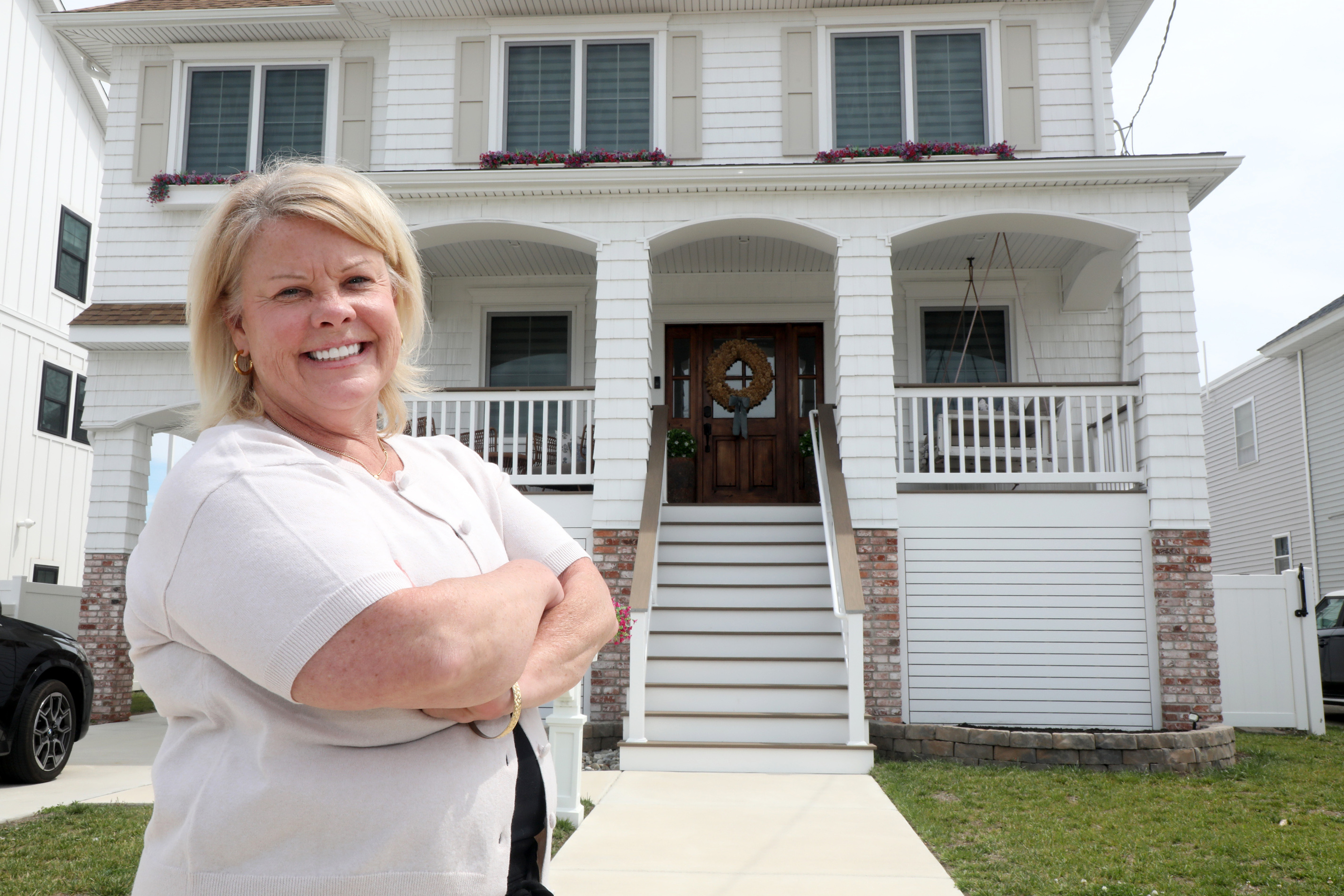
    Dolly Kelly stands outside her rebuilt home.Vernon Ogrodnek / For The Inquirer
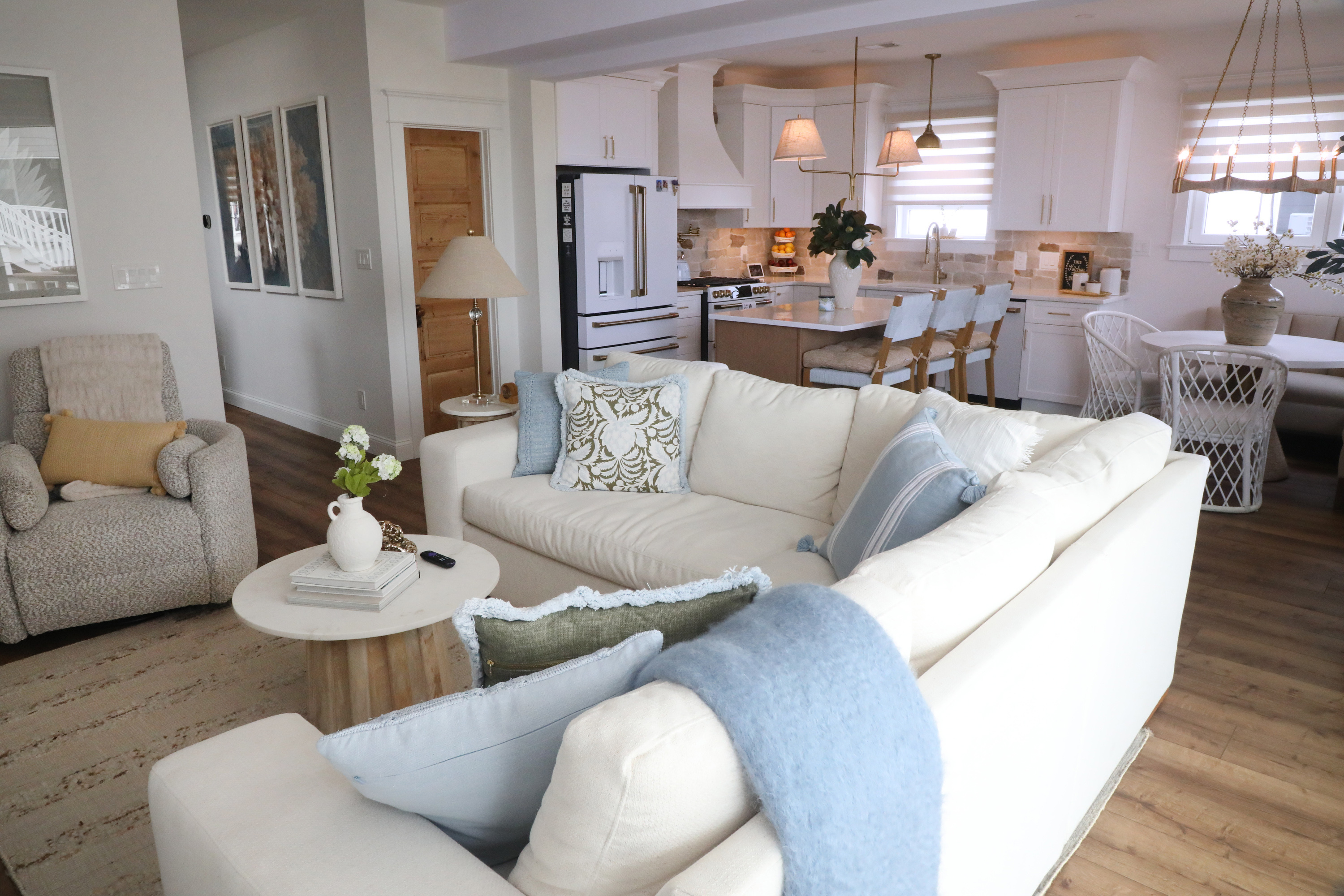
    The new house has an open concept, with the living room flowing into the kitchen.Vernon Ogrodnek / For The Inquirer

    “The finished home blends the timeless architecture of Nantucket and the Hamptons with a distinctly North Wildwood personality,” Sean said. It “honors the history and character of the original Anglesea Cottage while creating something entirely new.”

    Dolly’s must-haves included a covered carport, large covered porch, open-concept living area, and three bedrooms. She calls her design style elevated and intentional.

    To honor the history of the original house and the town itself, their goal was building a home in a traditional style with a lot of character. The home’s interior is mostly white with blue accents — for summer. She changes the pillows and accessories for each season.

    The living room blends style with comfort. The furniture is white, which might seem like a risky move in a house where lots of kids are encouraged to play. But Dolly isn’t concerned because the performance fabric is easy to clean.

    The backyard has comfortable seating and a heated pool.Vernon Ogrodnek / For The Inquirer

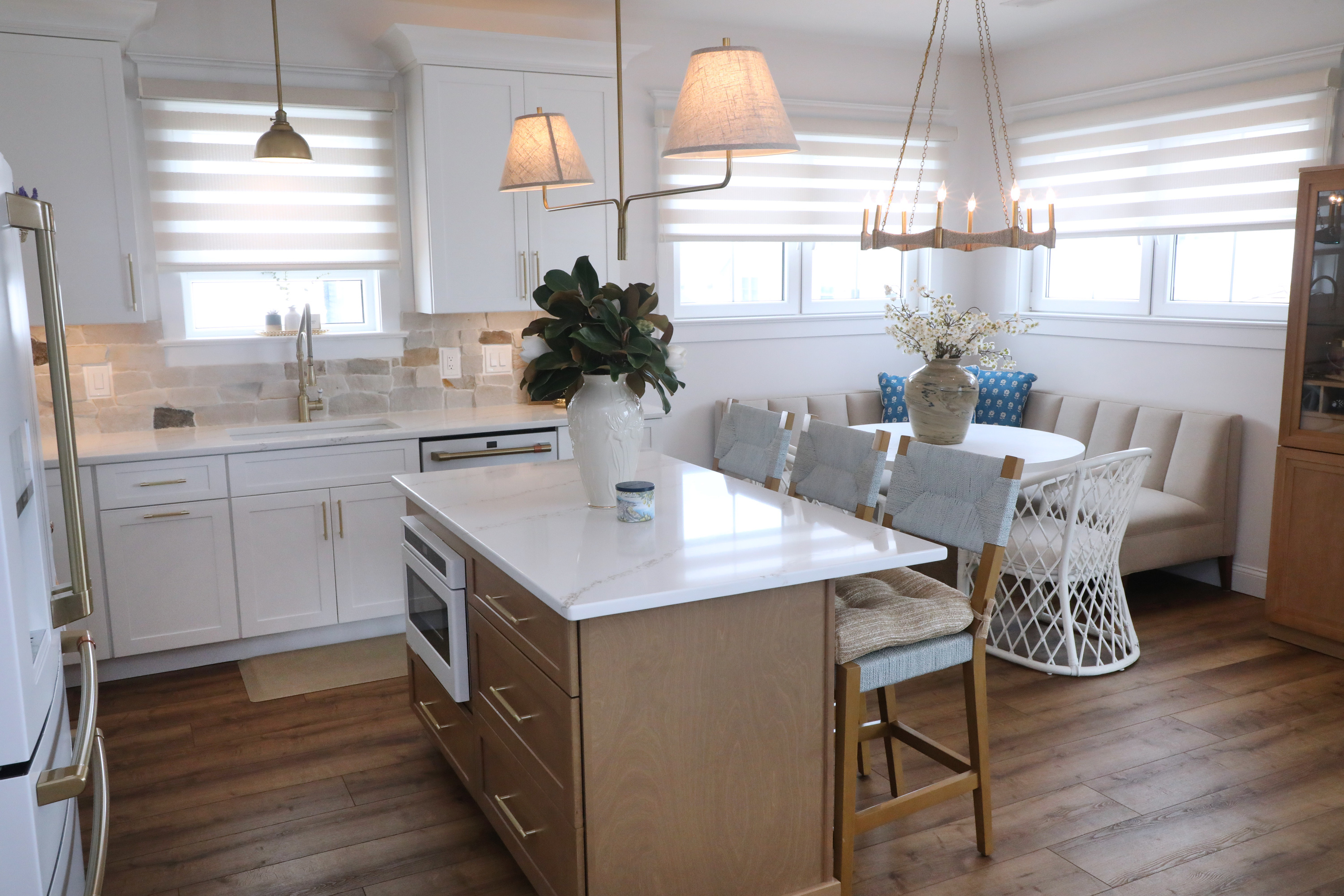
    The kitchen is the hub, where everyone congregates as Dolly cooks. It’s not unusual for a dance party to break out. The island is quartz; the appliances are all GE Café, and the pot-filler is a prized possession. The backsplash is made from three types of stone.

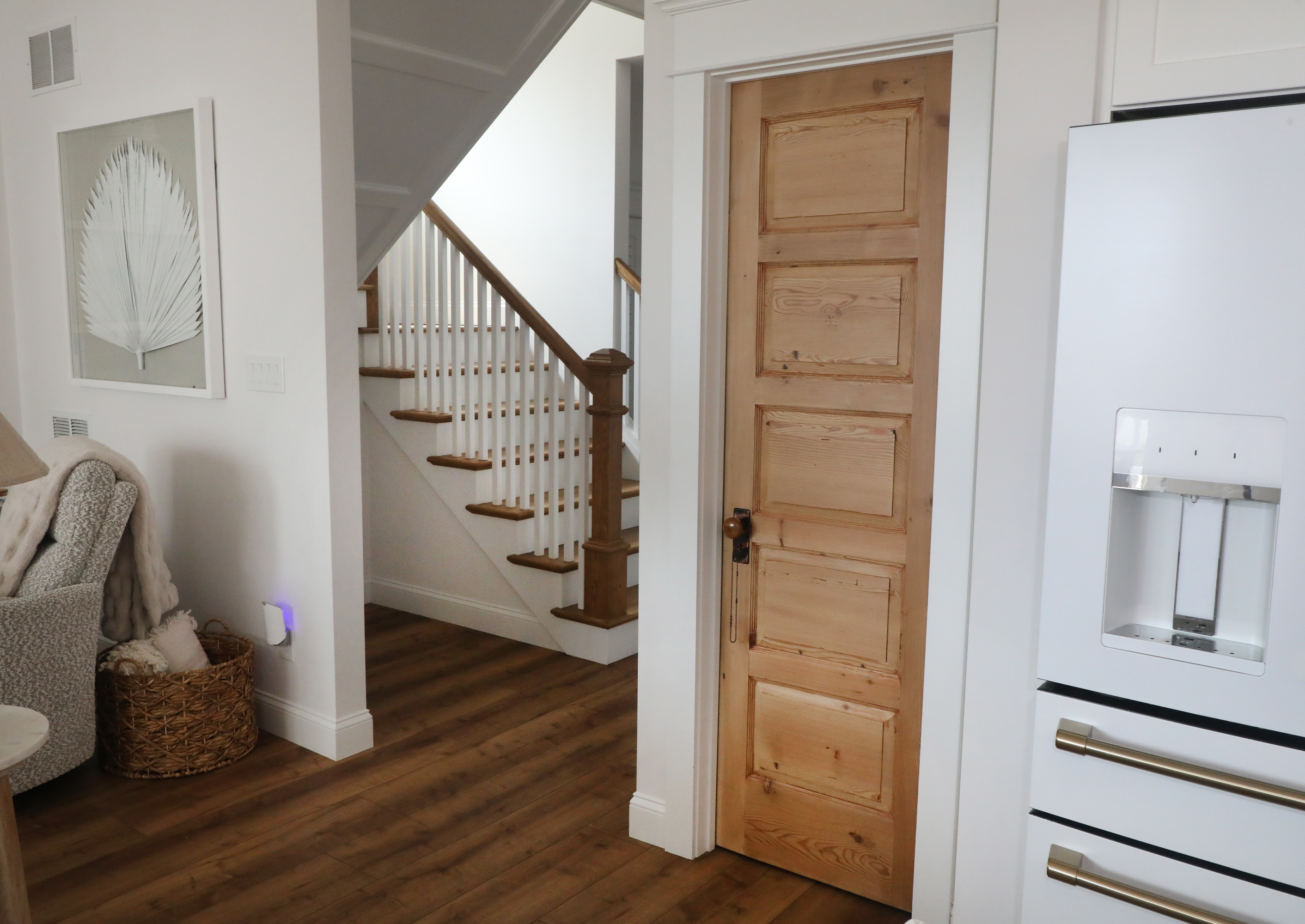
    Dolly eats most of her meals in the breakfast nook, bathed in natural light. One door from the original house was salvaged and repurposed as the pantry door.

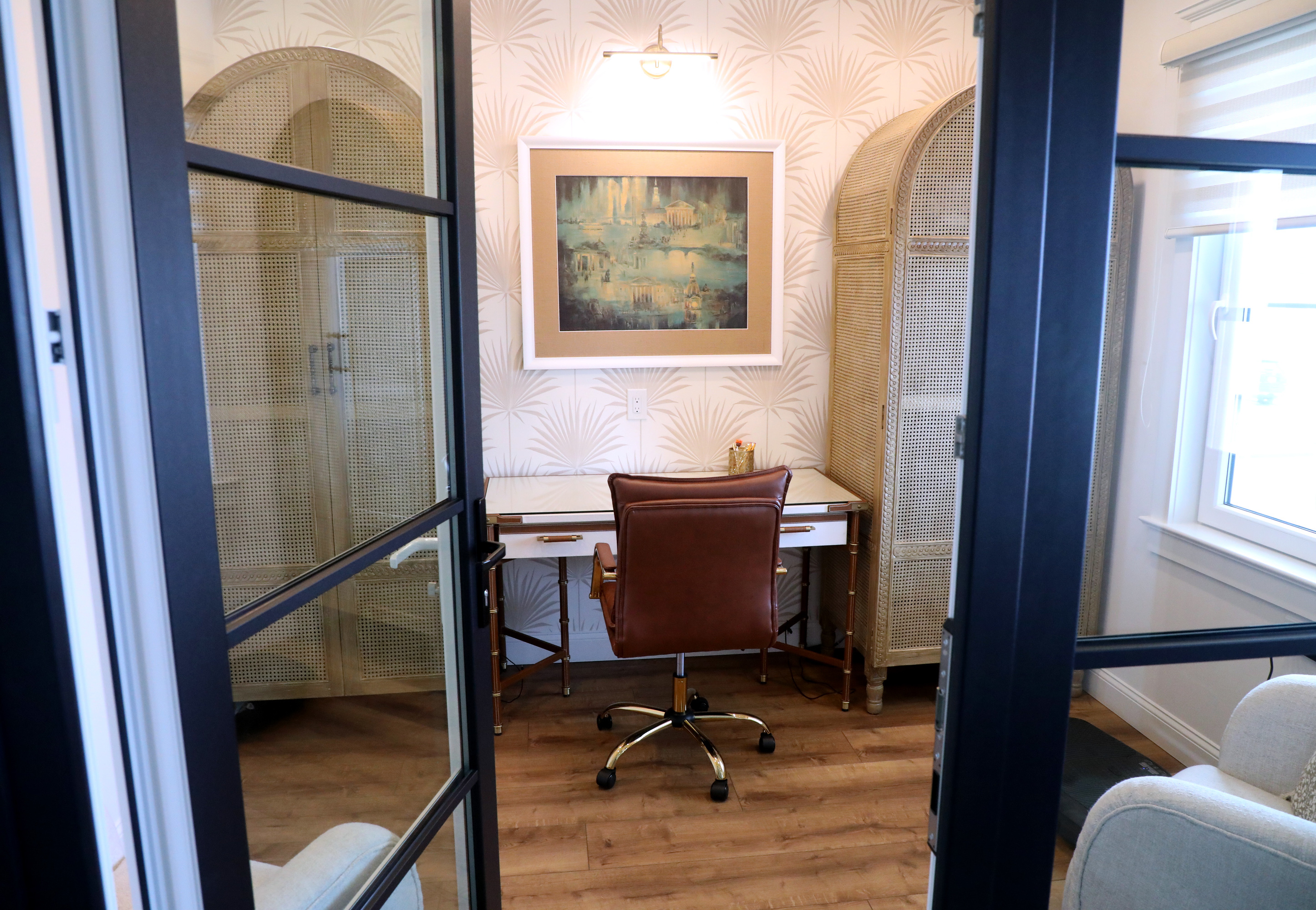
    Her office is tucked behind large glass doors with black windowpanes, custom designed by North Wildwood-based Window Hub. She appreciates being able to see out, while also having privacy.

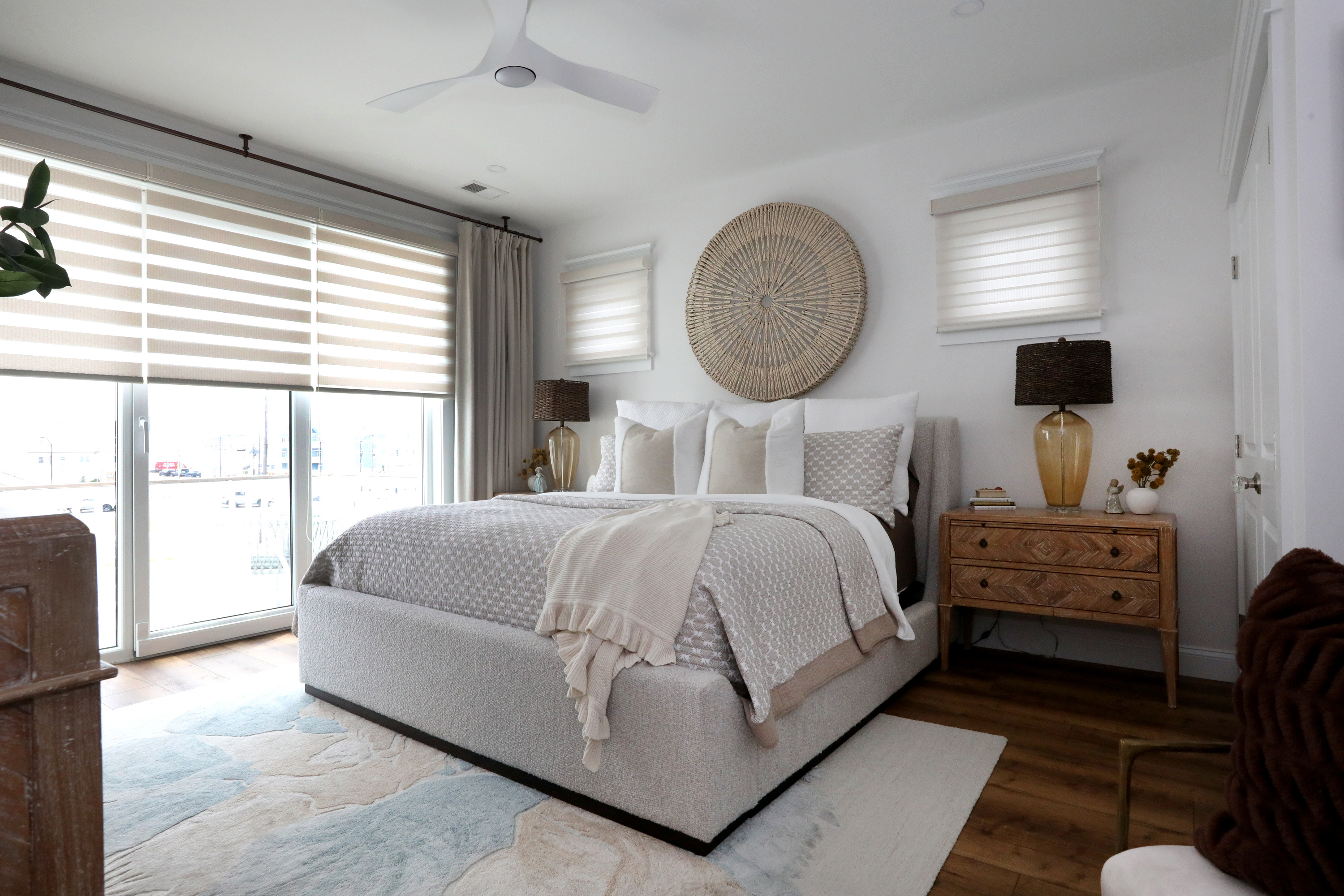
    The main bedroom.Vernon Ogrodnek / For The Inquirer
    A print in Kelly’s office is one of her favorite items in the house. The space has custom doors.Vernon Ogrodnek / For The Inquirer
    Kelly enjoys cooking for the family in her kitchen and dines in the breakfast nook daily.Vernon Ogrodnek / For The Inquirer
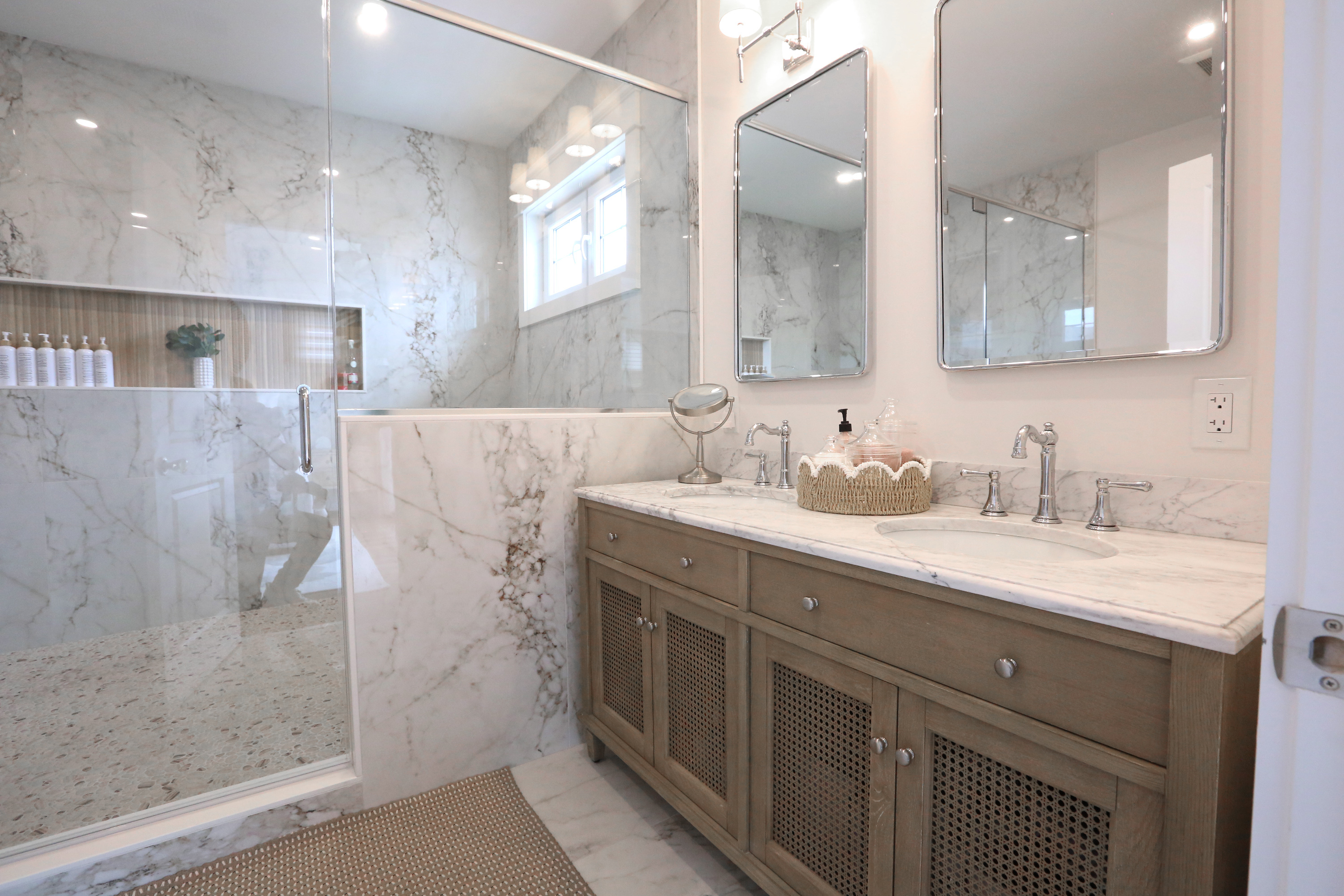
    The primary bathroom includes a spa-like bathing area.Vernon Ogrodnek / For The Inquirer

    The primary bedroom features a water room — a large enclosed shower with a soaking tub, offering the feel of a luxurious spa.

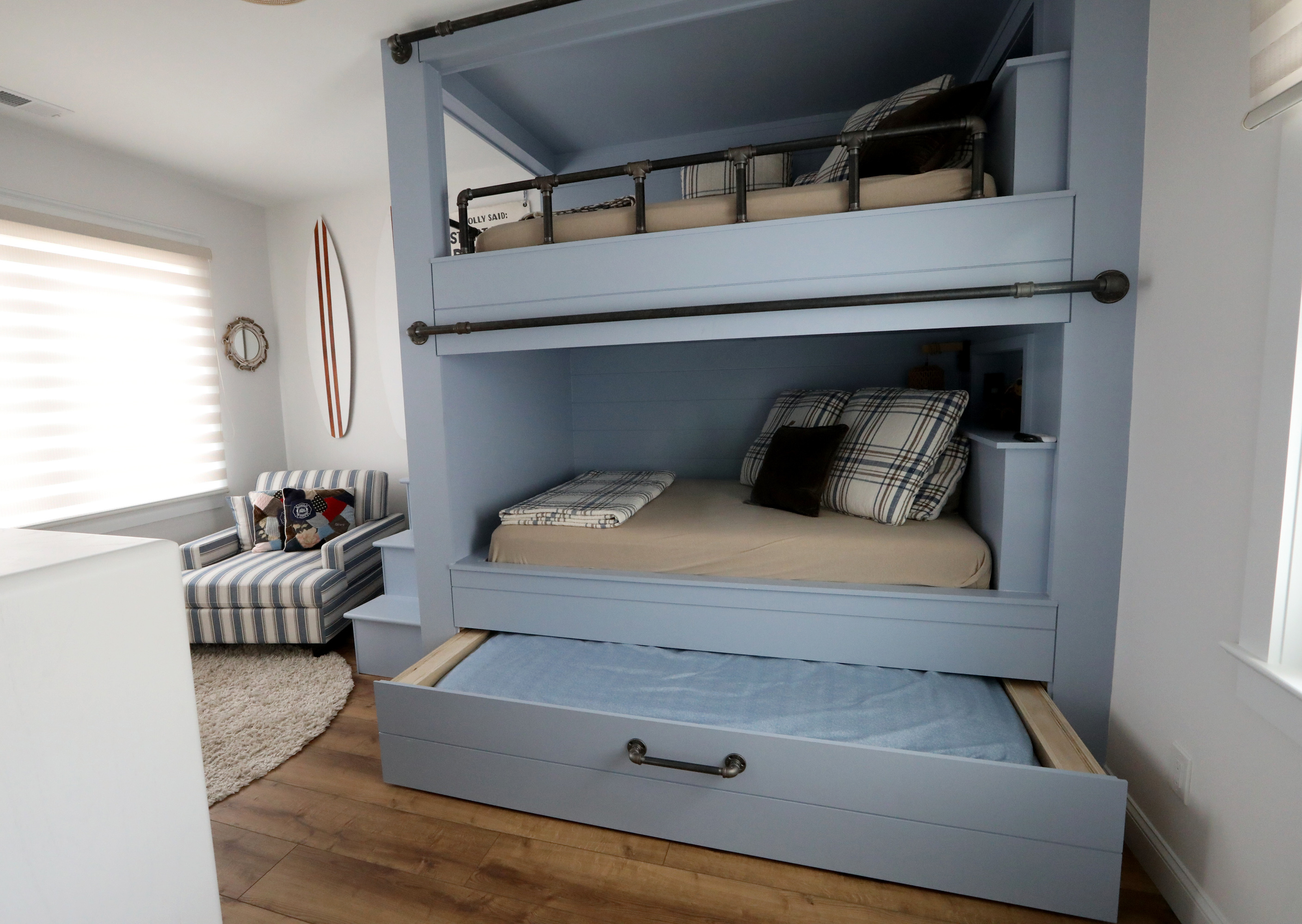
    To maximize sleeping space, one bedroom contains queen-sized bunk beds with a queen-sized trundle. The home can comfortably sleep 12, but when there are more guests, the kids find other creative spaces to spend the night.

    Dolly loves shopping, finding beautiful accessories to match the decor. The spherical crystal floor lamp she found at Restoration Hardware blends traditional crystal with contemporary metal geometry.

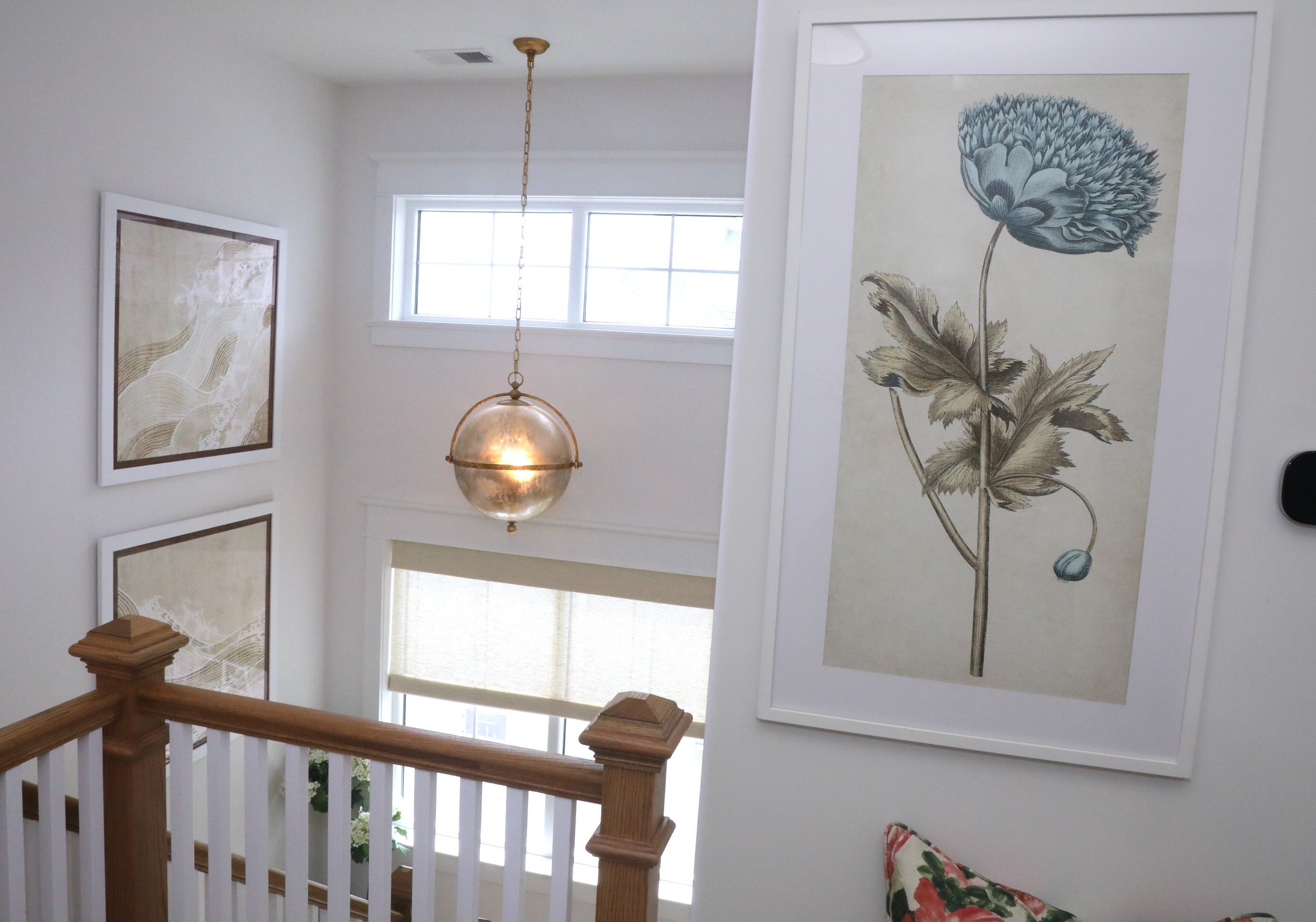
    The chandelier that hangs in the stairwell — a globe pendant featuring a hand-hammered mercury glass shade — came from Visual Comfort & Co. in High Point, N.C.

    A bedroom for the younger members of her family has queen-sized bunk beds and a trundle.Vernon Ogrodnek / For The Inquirer
    A door from the original home leads into a pantry.Vernon Ogrodnek / For The Inquirer
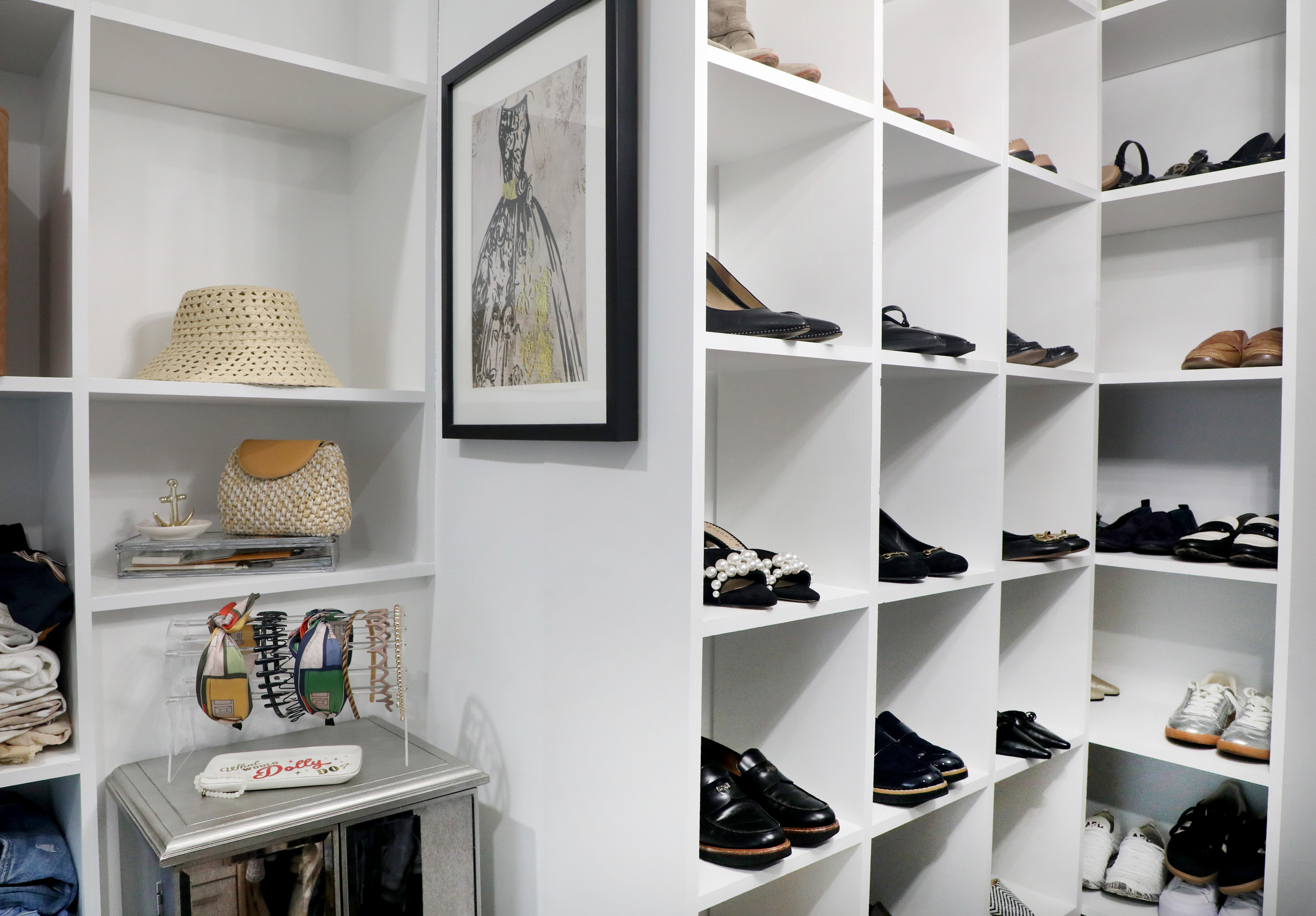
    Kelly’s shoe collection is displayed in her custom closet.Vernon Ogrodnek / For The Inquirer
    A chandelier featuring a hand-hammered mercury glass shade hangs in the stairwell.Vernon Ogrodnek / For The Inquirer

    The home has become the family retreat Dolly envisioned. This past Memorial Day weekend, 19 family members descended to hang out with their beloved aunt.

    “I couldn’t be the aunt I am today if I didn’t have them all around,” she said.

    The group spends time at the beach but also in the built-in heated swimming pool in the backyard. She keeps it open from April through October.

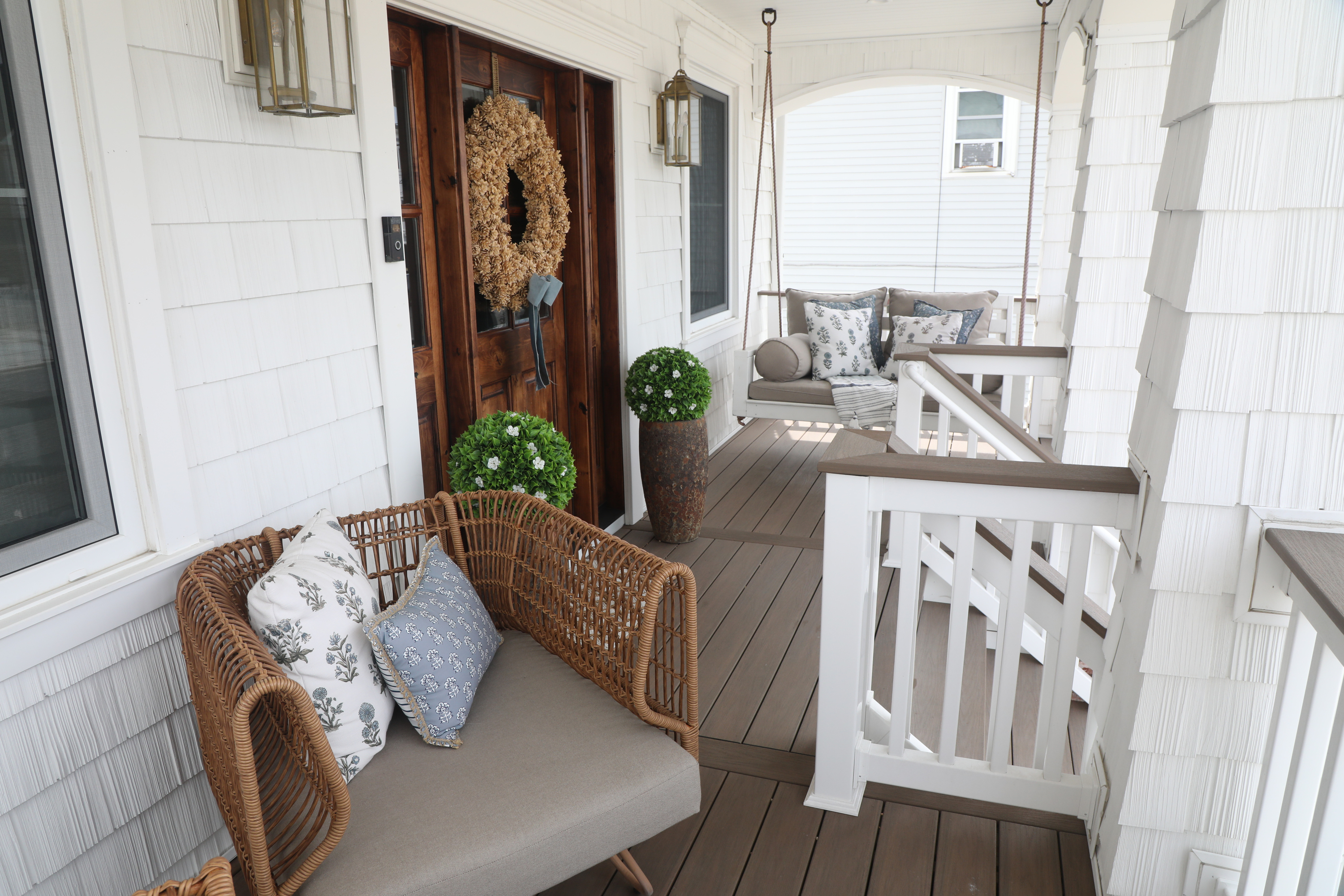
    The porch.Vernon Ogrodnek / For The Inquirer

    The front porch features comfortable furniture including a two-person swing and is one of Dolly’s favorite spots to entertain or chat with neighbors.

    “This is the gathering place whether it’s just a casual Sunday-Funday sitting by the pool barbecuing, or if it’s a big bash,” she said.

    Is your house a Haven? Nominate your home by email (and send some digital photographs) at properties@inquirer.com.

  • Millennial homeownership in the Philly area almost doubled in 5 years, outpacing every other major Northeastern metro

    Millennial homeownership in the Philly area almost doubled in 5 years, outpacing every other major Northeastern metro

    The Philadelphia region became a homebuying hot spot for millennials in recent years.

    The number of millennial households that own their homes in the Philadelphia area almost doubled between 2018 and 2023, outpacing the generation’s homeownership growth in every other major metropolitan area in the Northeast, according to an analysis by RentCafe.

    In that five-year period, homeownership among Philadelphia-area millennial households jumped roughly 92%, from about 201,000 to about 386,000, according to the nationwide apartment search website.

    That’s higher growth than the 74% increase nationally. In RentCafe’s analysis of 107 metro areas with the biggest populations of millennial households, the Philadelphia region ranked 17th for its jump in millennial homeownership. And among metros with at least 100,000 millennial households in 2023, it ranked seventh.

    “Philadelphia stands out because it’s unique in the Northeast,” said Doug Ressler, manager of business intelligence at Yardi Matrix, RentCafe’s sister company.

    He points to the Philadelphia area’s combination of positive characteristics. Compared to many other markets, the region has lower home prices, stronger job opportunities, and good wage growth, Ressler said.

    It also has a good supply of starter homes, which he called “key.” Rowhouses in particular “provide an entry point for homeowners at a price you can’t find anywhere else,” he said.

    Coastal areas are popular among millennials — people born from 1981 to 1996. But “millennials in many coastal markets remain locked out of homeownership,” Ressler said. The Philadelphia region’s relative affordability gives renters a chance to become homeowners.

    RentCafe’s report specifically points to the area’s older housing stock and availability of homebuyer assistance programs to further explain why millennials can buy homes in the Philadelphia region.

    Also, the generation’s income growth has outpaced the growth of home prices. Between 2018 and 2023, area millennials’ incomes increased by roughly 38%, while home prices increased by 18.5%, according to the RentCafe analysis.

    Roughly 56% of Philadelphia-area millennial households were homeowners in 2023. More millennials owned homes than rented them in 83 of the 107 metro areas RentCafe analyzed.

    While millennial homeownership in the area increased by about 92% between 2018 and 2023, the number of millennial renter households increased by just 2.4% — below the roughly 5% increase nationwide.

    (function(){function e(){window.addEventListener(`message`,function(e){if(e.data[`datawrapper-height`]!==void 0){var t=document.querySelectorAll(`iframe`);for(var n in e.data[`datawrapper-height`])for(var r=0,i;i=t[r];r++)if(i.contentWindow===e.source){var a=e.data[`datawrapper-height`][n]+`px`;i.style.height=a}}})}e()})();

    Where millennials are buying homes nationwide

    Small and mid-sized metro areas have seen the highest concentrations of millennial homeowners, thanks to more affordable home prices. In the Lancaster area, roughly 63% of millennials owned homes in 2023.

    In the Grand Rapids, Mich., area and two metros in Utah — Ogden and Provo — more than two-thirds of millennial households owned their homes.

    From 2018 to 2023, small and mid-sized metros in Florida and California had the highest increases in millennial homeowners. They’re all places with more affordable home prices and strong income growth. And they attracted millennials during the pandemic who moved away from denser and more expensive major cities.

    The number of homeowner millennial households more than doubled in 12 of the 107 metro areas RentCafe analyzed.

    The nearest of these to the Philadelphia area is Youngstown in northeastern Ohio, near the Pennsylvania border. The number of millennial households that own homes increased from about 15,900 in 2018 to about 32,400 in 2023.

    Three Florida metro areas topped RentCafe’s list for highest rates of millennial homeownership growth: North Port, Lakeland, and Jacksonville. The North Port area has ranked among the country’s fastest-growing metros overall.

  • 45 affordable apartments for artists on Broad Street will be partly funded by Knight Foundation

    45 affordable apartments for artists on Broad Street will be partly funded by Knight Foundation

    Affordable artist apartments will be coming to South Broad Street next year after the John S. and James L. Knight Foundation awarded a $2.5 million grant to the development company that promises to turn former University of the Arts dorms into low-priced housing.

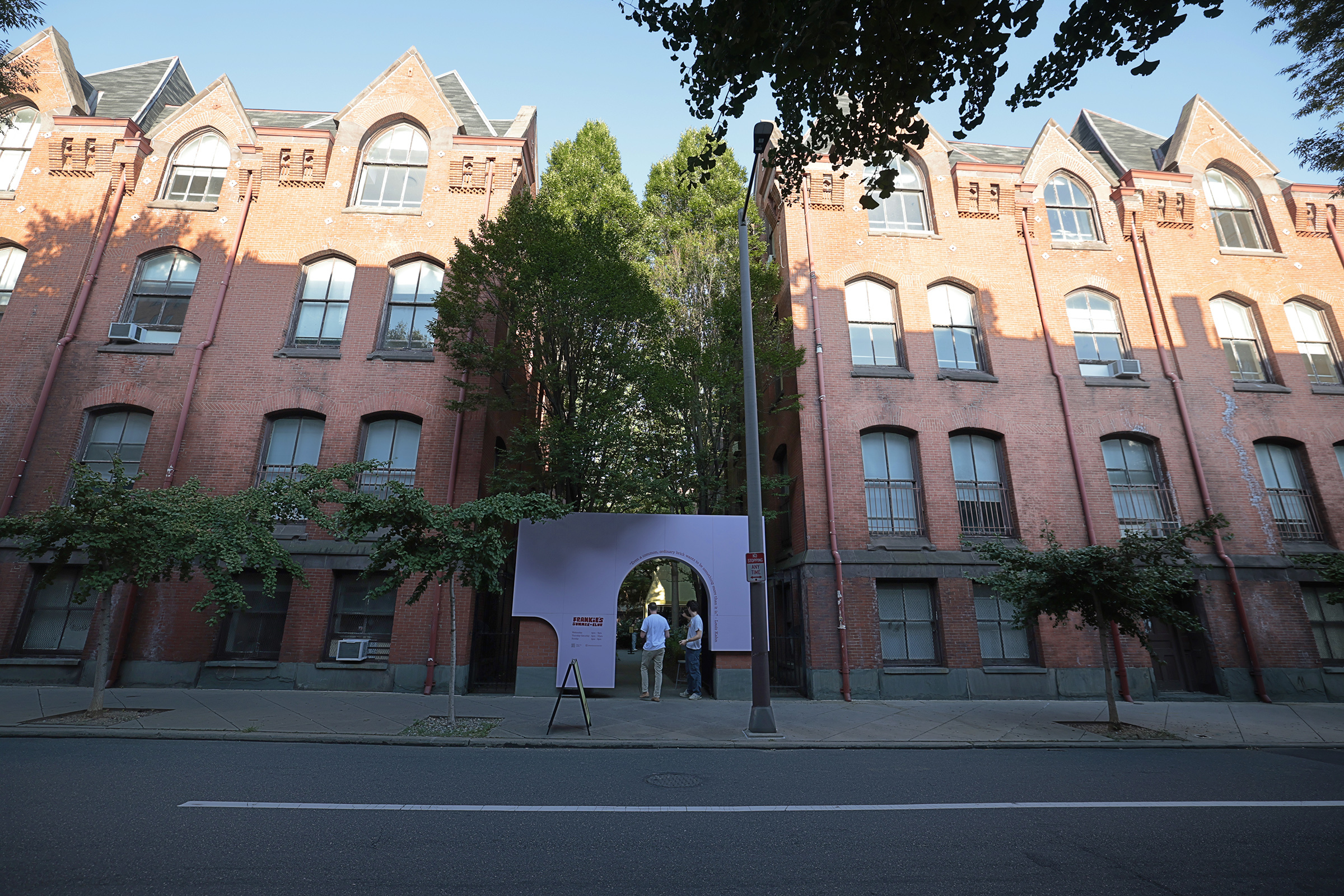
    Lindsey Scannapieco’s company Scout acquired Hamilton Hall, facing Broad Street, and the accompanying Frank Furness-designed former dormitory that front on 15th Street in early 2025 after the surprise bankruptcy and closure of the University of the Arts.

    Scout has renamed the combined complex as the Village of Industry & Art. The company is most known for its redevelopment of a former South Philly public school into a warren of artist studios, small businesses, and eateries, now known as the Bok Building.

    Scannapieco has long promised 45 affordable artist apartments for the former dormitory space, and the Knight Foundation grant provided the final funding to move forward.

    “We have the rest of the funding in place, so this was really about bridging the gap that was required to make this happen,” Scannapieco said.

    She also noted that the project’s affordability would be deed-restricted, locking it in place for the long term.

    “We have a deep commitment now that regardless of what happens to me or my team, this will be affordable housing for artists and cultural workers,” Scannapieco said.

    Scout plans for 35 of the units to be long-term rentals for artists who make between 60% and 80% of area median income, or between $50,000 and almost $67,000 for a one-person household.

    Ten of the units will be furnished and are slated for visiting artists conducting short-term residencies in Philadelphia.

    The apartments range in size from the smallest at a little over 500 square feet to the largest at 726 square feet, with the majority around the 600 square-foot range.

    Those sizes are comparable with the Philadelphia apartment market. In 2023, a study showed that the average size of a new one-bedroom apartment built in Philadelphia over the previous decade had been 764 square feet, while the average studio was 445 square feet. A more recent study found that $1,500 a month would get a renter 591 square feet in the city.

    Scannapieco says Scout has been studying complexes that include artist housing and workspace in cities like New York, Baltimore, and Pittsburgh. The 15th Street project will include specialized amenities like dark rooms, slop sinks, and material storage libraries.

    “Artists are essential to Philadelphia’s identity, economy and future,” said Kristina Newman-Scott, Knight Foundation’s vice president of arts. “This project demonstrates what becomes possible when we design cities with artists in mind, creating affordable places for artists to live and work is an investment in Philadelphia’s long-term vitality.”

    Scannapieco says she expects the affordable artist apartments will be open by mid-2027.

    “A lot of people talk about the need for permanent commitments and allocation of housing for artists and cultural workers, and we’ve never been able to frankly do it at this scale in Philadelphia,” she said. “So that’s very much what this project will provide.”

    The Village of Industry & Art, which covers over 110,00 square feet, currently hosts the popular outdoor restaurant and bar Frankie’s Summer Club in its courtyard facing 15th Street.

    A news release from Knight and Scout noted that it already includes tenants such as BlackStar Projects, Monument Lab, DesignPhiladelphia, and the Stained Glass Project.

  • A 224-unit senior living facility is proposed for Radnor to help address ‘a woeful lack of senior housing’

    A 224-unit senior living facility is proposed for Radnor to help address ‘a woeful lack of senior housing’

    A Gladwyne-based senior services organization is planning to build an independent living community on an estate in Radnor Township, a move the group says is necessary as demand for senior living services rises in the region.

    Waverly Senior Services presented an early proposal to Radnor Township’s planning commission on Aug. 3 for a large senior living facility at 452 S. Roberts Rd., a historic estate owned by the Haverford School.

    The proposal includes 208 multifamily housing units across 15 buildings, 16 twin homes, and a handful of administrative buildings, including a maintenance building and a welcome house.

    Waverly Senior Services, a nonprofit organization, is in the process of purchasing the 43-acre property, which the Haverford School acquired in 2022.

    Waverly operates Waverly Heights, a life care residence in Gladwyne, as well as in-home healthcare and personalized care management services.

    Tom Garvin, Waverly’s president and CEO, told the Radnor planning commission that the organization is seeing “unprecedented demand” for life care facilities as baby boomers age and their housing and care needs change.

    “There’s a woeful lack of senior housing across the country to serve that sort of bubble that’s coming in the population,” Garvin said.

    The number of U.S. residents 65 and older grew nearly five times faster than the total population between 1920 and 2020, according to the U.S. Census Bureau.

    More than 560,000 senior housing units will be needed to meet the demand for older adult housing, according to market research firm NIC MAP. Under current development rates, only 191,000 will be built.

    Waverly currently serves around 365 residents, the vast majority of whom are local, Garvin said.

    The Radnor site would primarily be home to independent living, with some additional care for residents who need it as they age in place. It will not be a skilled nursing facility.

    Waverly representatives said that they are early in the process — they will still need to finalize the land sale and secure township approval — and that it could be three to five years before shovels hit the ground. However, Garvin said, the organization felt it had to jump on the opportunity in a region where it is difficult to find open space to develop.

    “This opportunity for a piece of property that’s 43 acres, zoned institutional, in our primary market area is one we just couldn’t pass up,” he said.

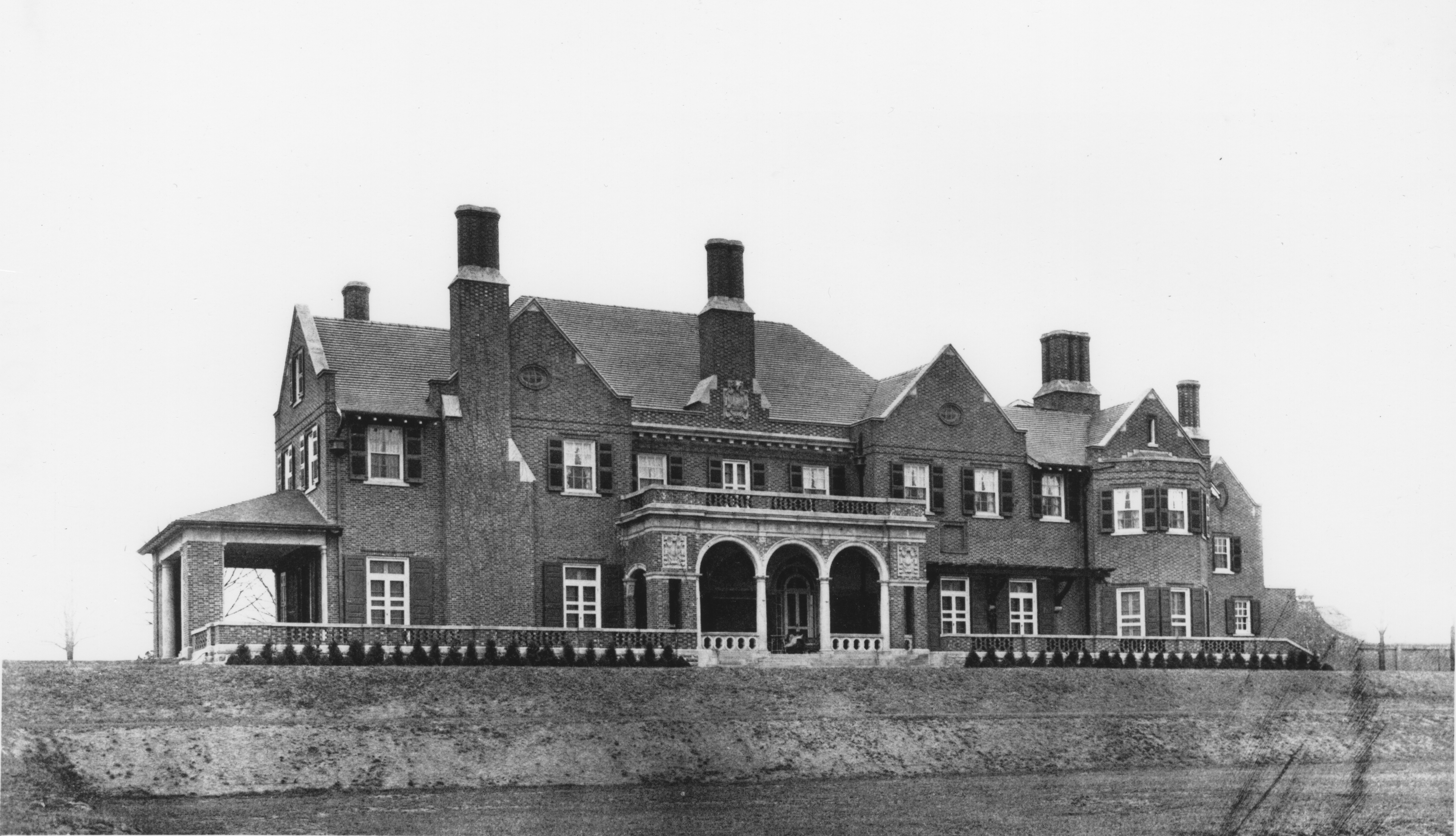
    The property is home to the Glencoe estate, built in 1907 for Thomas McKean Jr., and purchased by Samuel Robinson, founder of Acme Markets, in 1925, according to the Radnor Historical Society. In 1960, Robinson left the estate to Presbyterian Children’s Village, an orphanage run by a local Presbyterian group. The orphanage transitioned over time to become a residential treatment program for children with emotional and behavioral challenges, and in 2019 became Gemma Services after a merger with Silver Springs-Martin Luther School. Gemma Services is building a new campus in Plymouth Meeting.

    The Haverford School purchased the property in 2022 from Gemma Services for $19.88 million and said at the time that it did not have a specific plan for the site.

    Waverly’s early proposal involved retaining the historic mansion and knocking down its dormitory buildings, which are in “poor shape,” said Marc Heil, Waverly’s vice president of campus development.

    Heil said any new construction would “have that Main Line flair to it” and would not be “commercial looking.”

    Planning commission members expressed an openness to having the site developed, but raised concerns about the early plans.

    Commission member Stephen Varenhorst called the plan “chaotic” and “random” and encouraged the organization to reconsider its approach. Lane Vines, the commission’s chair, said he hoped more of the historic property could be retained.

    Residents expressed concern about increased traffic in the quiet neighborhood, stormwater management, and a potential increase in ambulance traffic, especially if an EMS station is placed on the site, a possibility.

    Waverly officials said they will submit plans to the planning commission, which will issue a recommendation to the Radnor Township commissioners, who will ultimately vote on whether to approve the project. Representatives from Waverly said the organization may also seek additional zoning relief if they pursue renovations outside of the property’s institutional zoning classification, which would require a separate approval process through the zoning hearing board.

    This suburban content is produced with support from the Leslie Miller and Richard Worley Foundation and The Lenfest Institute for Journalism. Editorial content is created independently of the project donors. Gifts to support The Inquirer’s high-impact journalism can be made at inquirer.com/donate. A list of Lenfest Institute donors can be found at lenfestinstitute.org/supporters.
  • House of the week: A Queen Village trinity for $349,000

    House of the week: A Queen Village trinity for $349,000

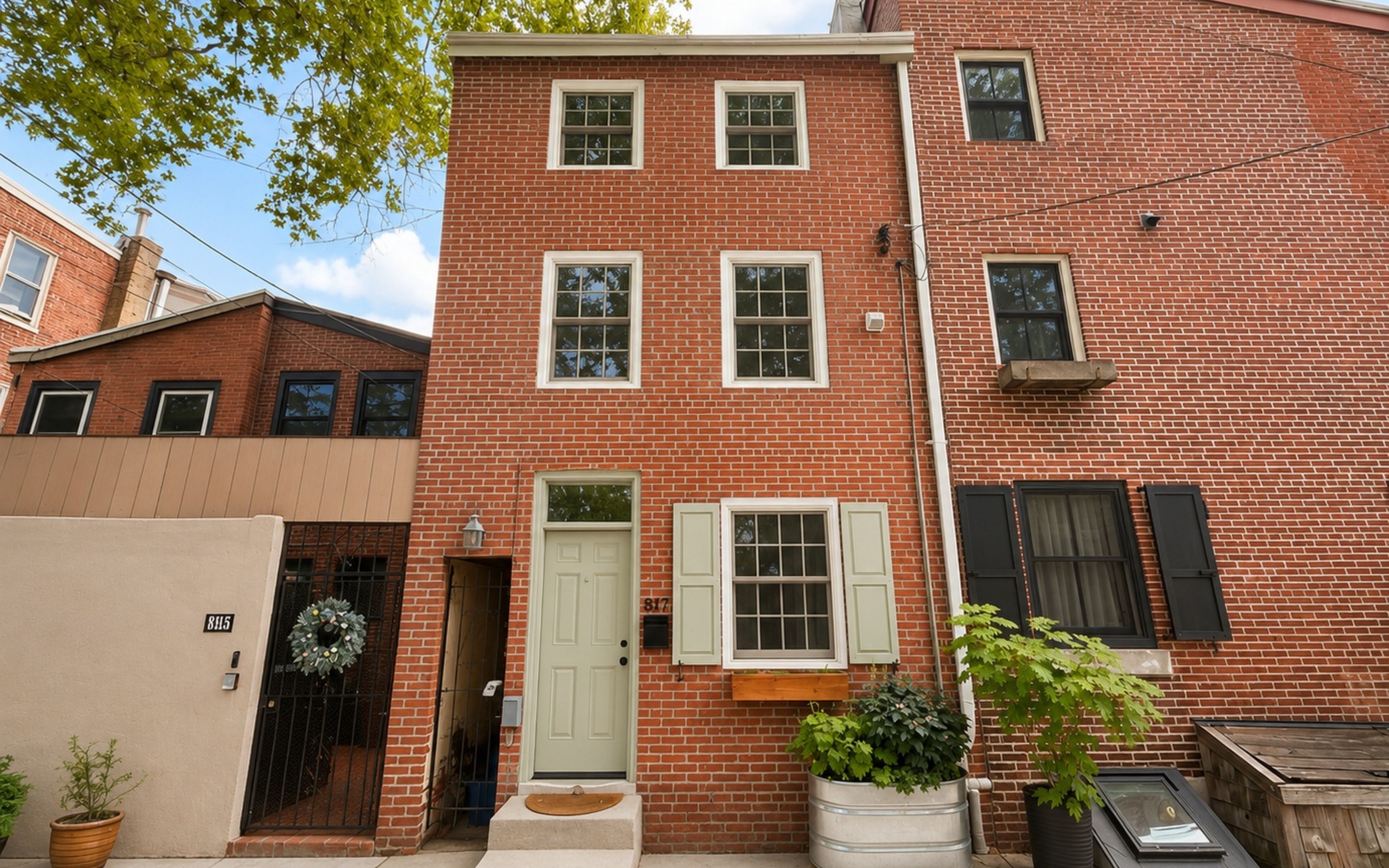
    When Hunter Wages and his wife, Lauren Nalley, bought their Queen Village trinity in 2023 after renting nearby for two years, they especially liked having the Weccacoe Playground across the street.

    They liked the constant activity there, such as park cleanup days, and, “It’s hard to beat having a tennis court in your front yard,” said Wages.

    For Nalley, an environmental engineer in water resources, and Wages, who does software testing for a veterinarian agency, the two-bedroom, 1½-bathroom house was the first they had owned together.

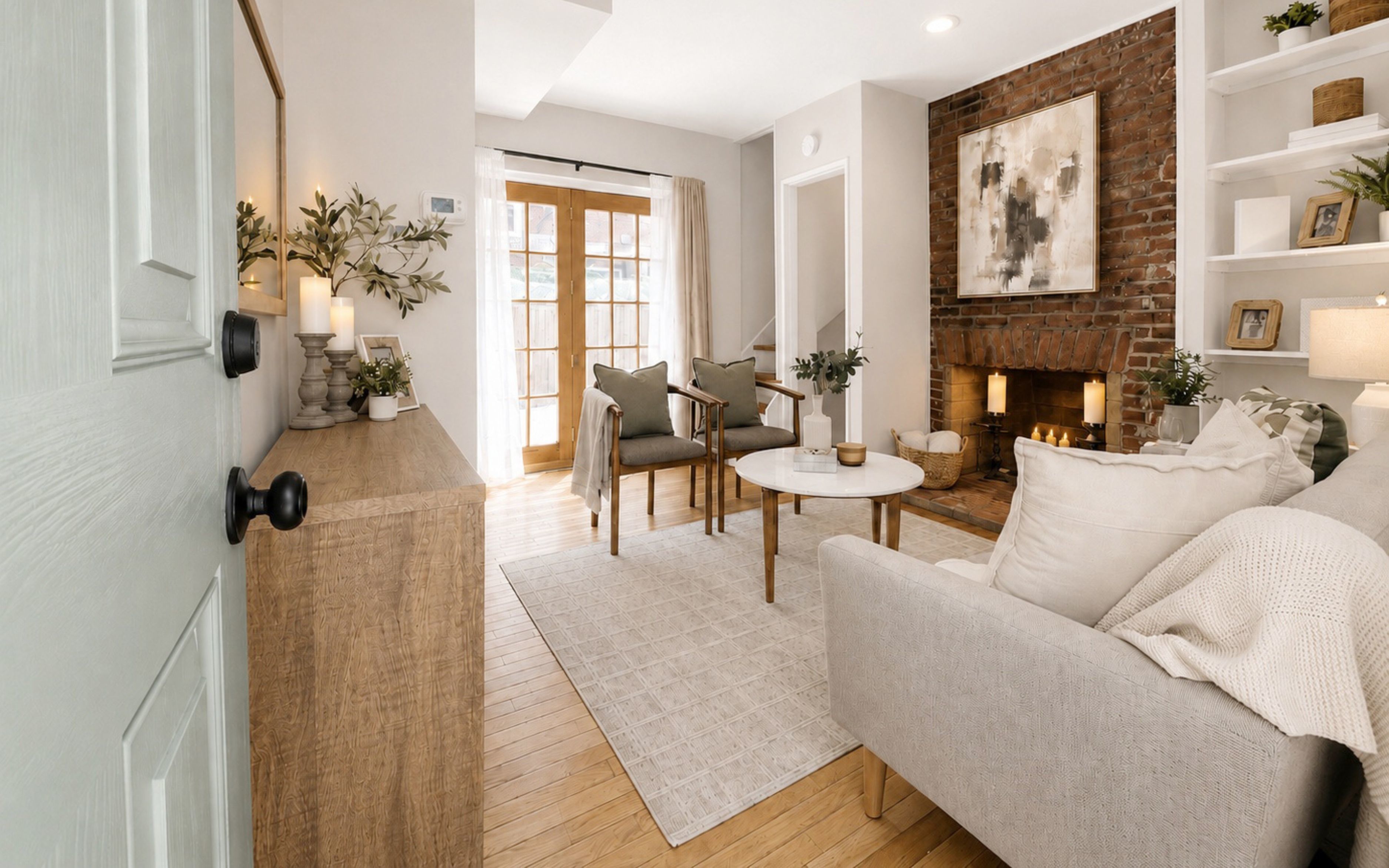
    Living roomJim Armstrong

    Noting the home’s “historic charm,” Wages said, “trinities are unique.” And he found the exposed brick sections of the interior attractive. But they are moving to Colorado to be with friends and family.

    The 710-square-foot house on a tree-lined street has replacement windows and central air-conditioning.

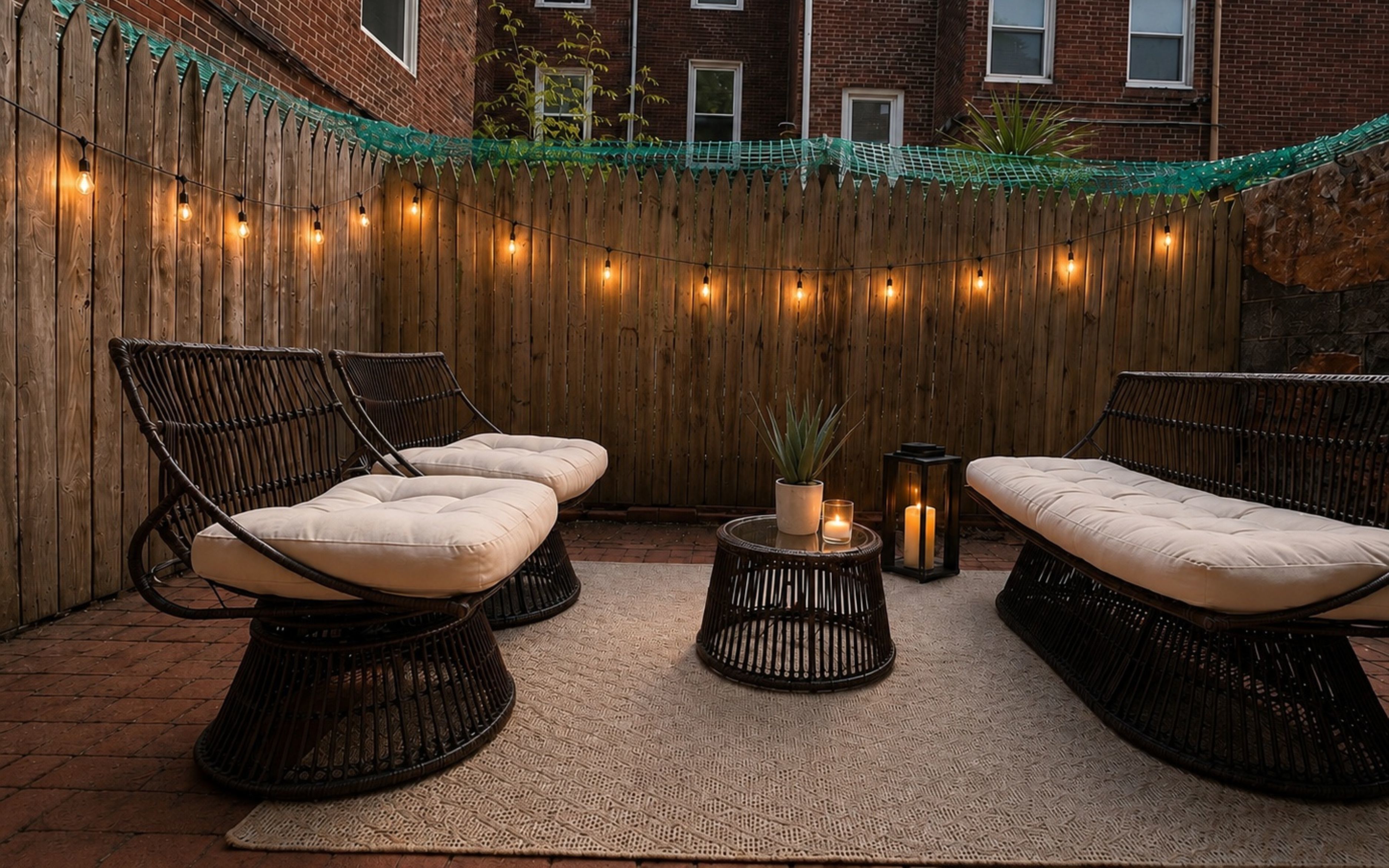
    The private fenced patioJim Armstrong

    The living room has hardwood floors, built-in custom cabinetry, and French doors opening to a private fenced patio.

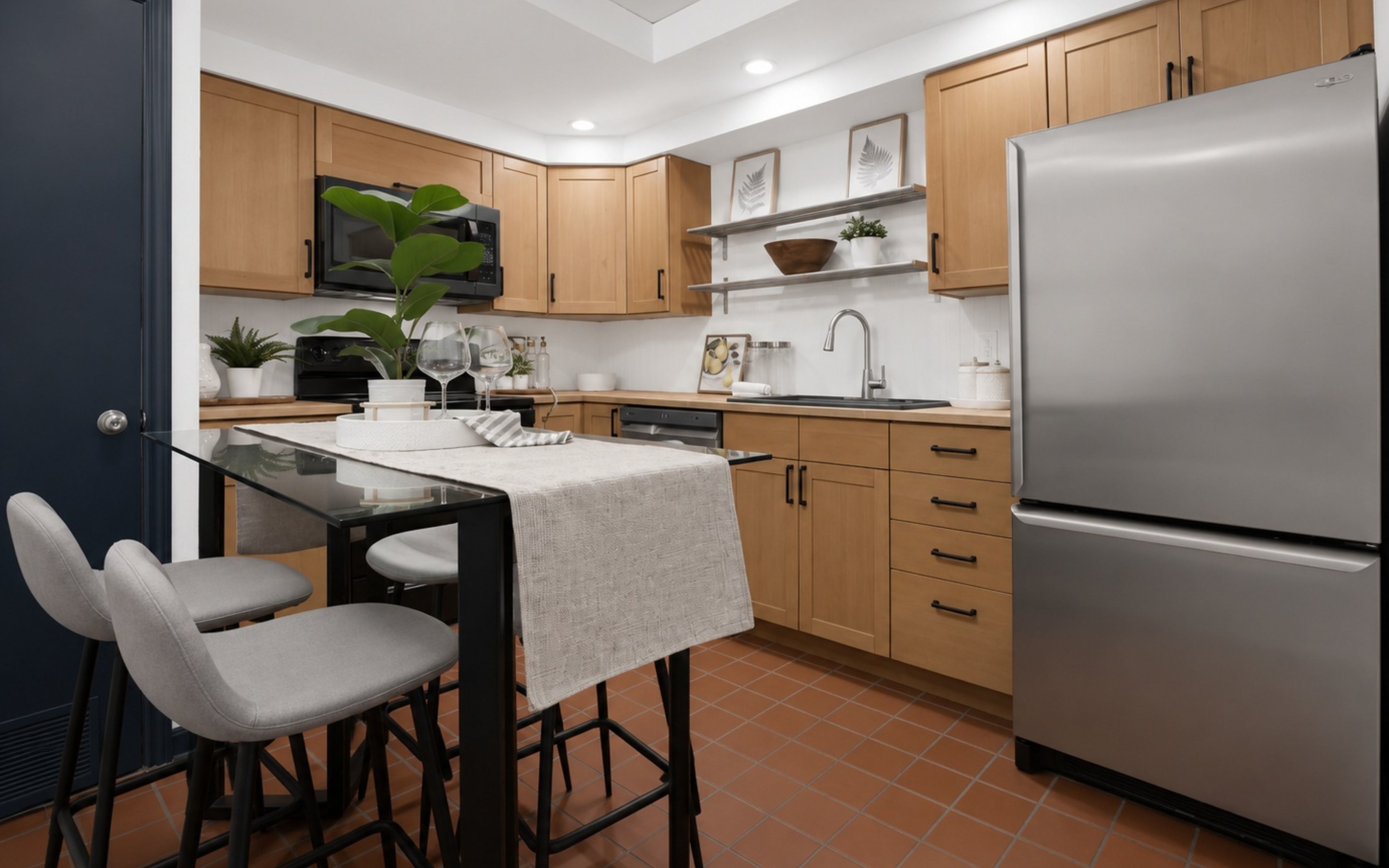
    The lower level also has a modern kitchen.

    KitchenJim Armstrong

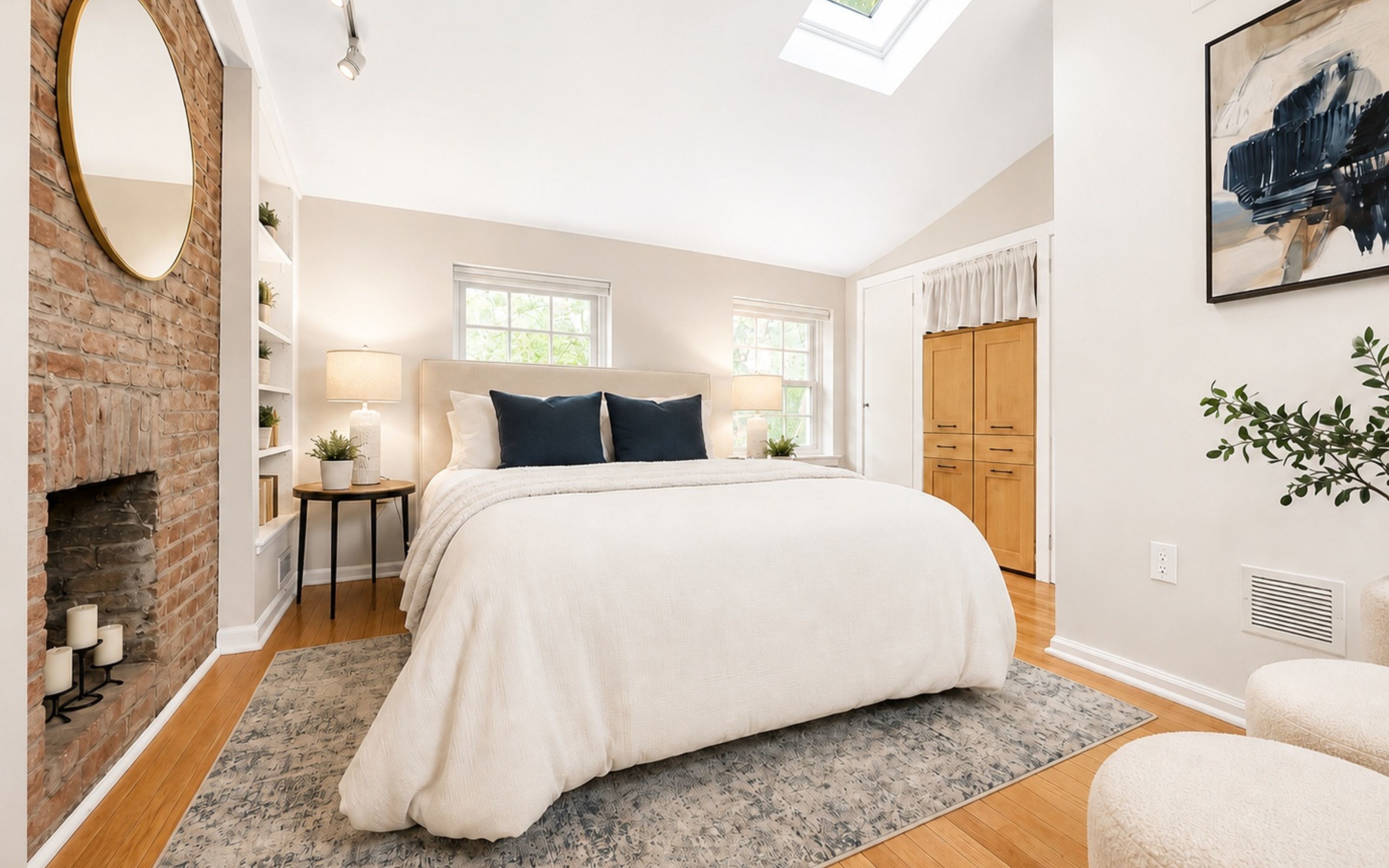
    The second floor has a bedroom, the full bathroom, and multiple closets. The primary bedroom is on the third floor, with built-in shelves, vaulted ceilings, and an updated half-bathroom.

    There are also decorative fireplaces on the first and third floors.

    The primary bedroom has built-in shelves and a decorative fireplace.Jim Armstrong

    The house is steps away from neighborhood restaurants such as Southwark and Ambra, as well as the Famous 4th Street Delicatessen and the Delaware River Trail.

    It has easy access to I-95 and several bus routes.

    It is in the William M. Meredith School catchment area.

    It is listed by Jim Armstrong of JG Real Estate for $349,000.

  • PennDot to repair deteriorating steel beams on University Avenue Bridge

    PennDot to repair deteriorating steel beams on University Avenue Bridge

    The University Avenue Bridge will soon receive structural repairs, and some of its architectural details will be secured from further vandalism, but a full-scale restoration of the historic span isn’t happening anytime soon.

    PennDot is slated to begin work on the drawbridge Aug. 17, the agency announced Monday. Pedestrian and vehicular traffic will be partially impeded for the duration of the job.

    A routine inspection in March of the Paul Philippe Cret-designed structure turned up deterioration in some of the steel members, said PennDot assistant district executive for assets Kerri Cutright, “and we were a little concerned, and so that’s why we’ve initiated these repairs.”

    The goal is to move the drawbridge from “poor” to “fair” condition, said Cutright.

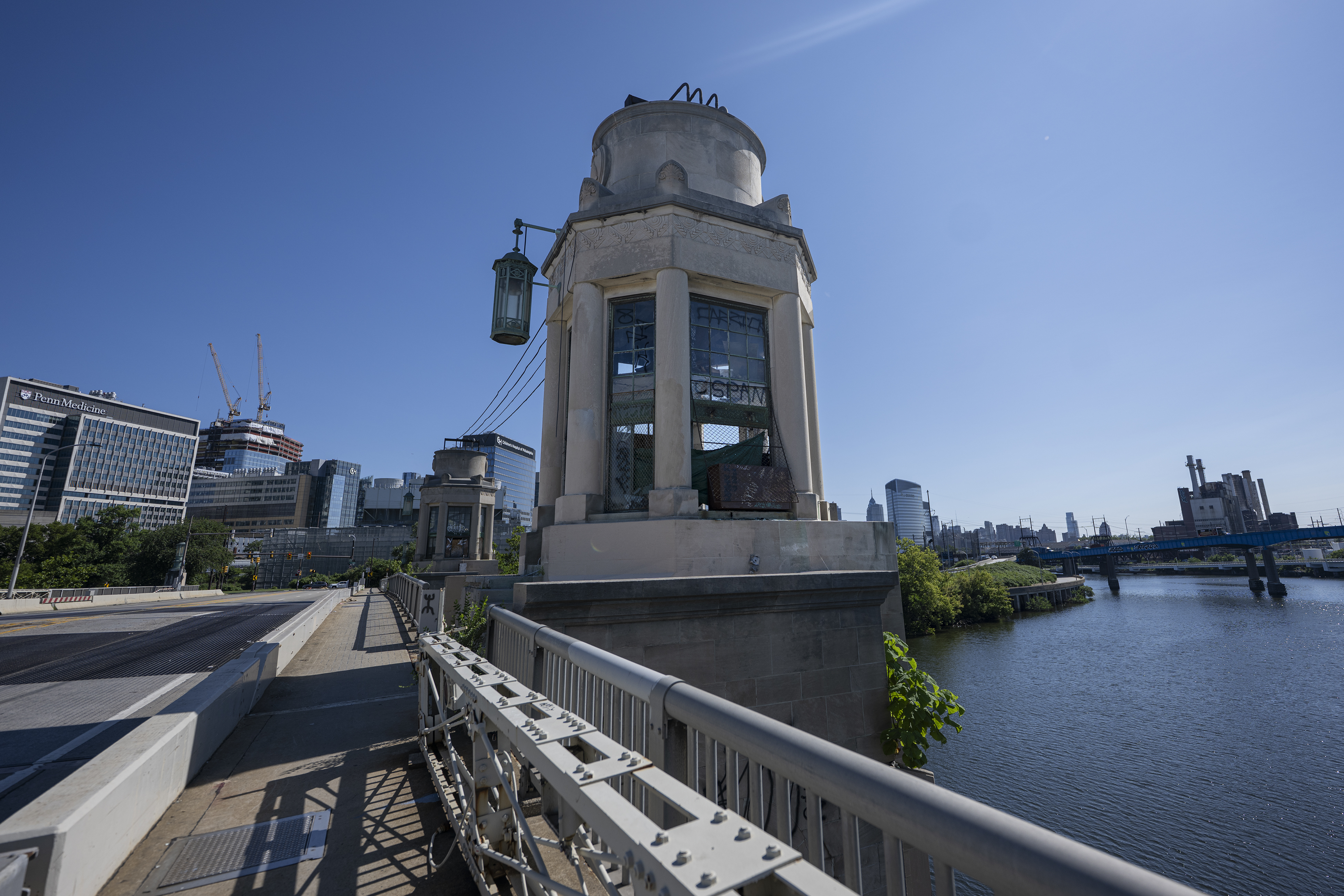
    In addition, plans call for the installation of 8-foot-tall chain-link fencing in front of the two operator’s houses on the east side of the bridge to deter vandals.

    Work is expected to continue through Dec. 15.

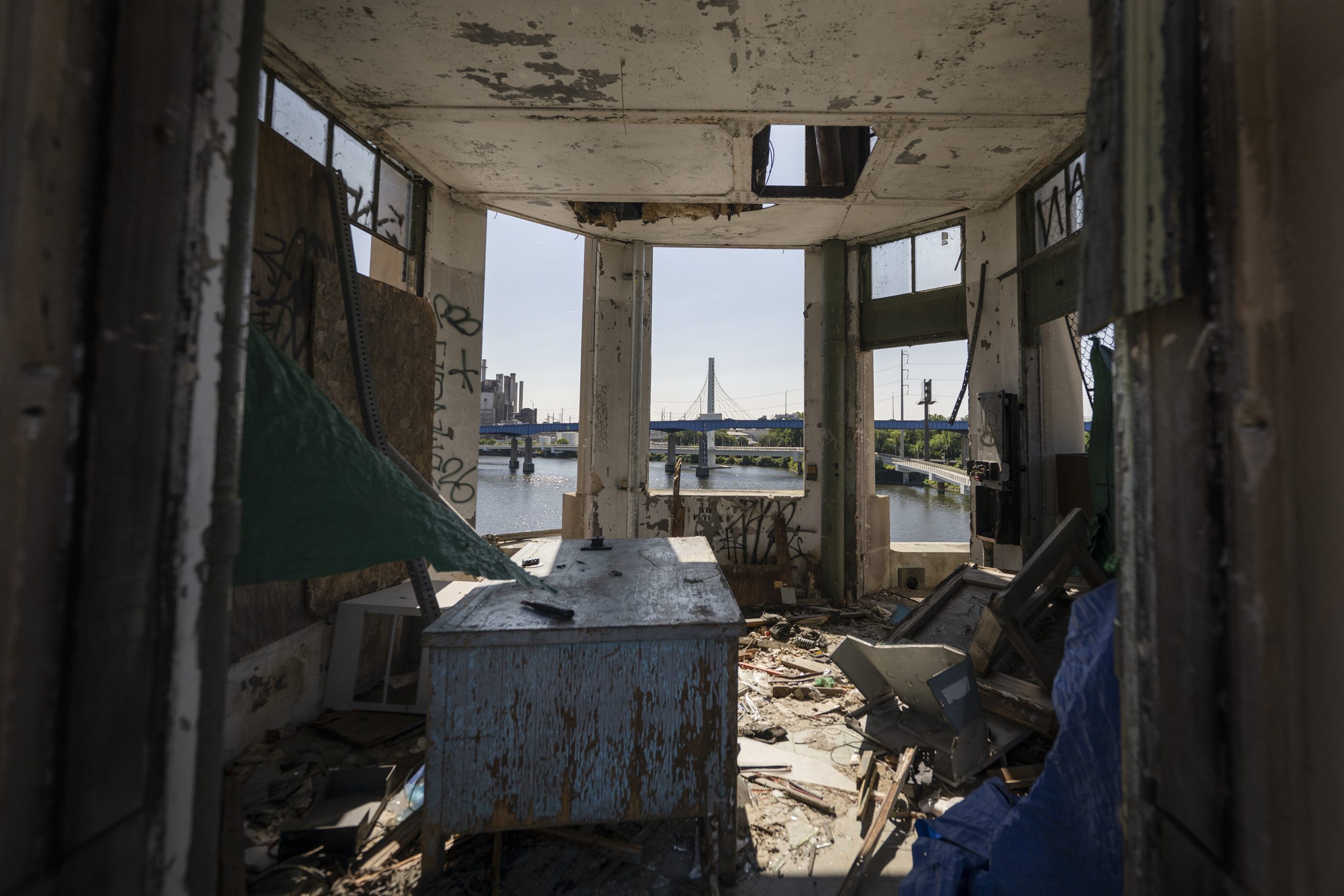
    Broken windows and vandalism are visible inside one of the operator’s houses on the University Avenue Bridge on July 23.

    The project, estimated to cost about $2 million, leaves unaddressed the needs of some major features of the bridge, which was built around 1930. It will not bring back the bridge’s ability to raise its leaves, though the work won’t prevent restoration of that function in the future. The 10 elaborately detailed lighting fixtures will not be returned to working order as part of the job.

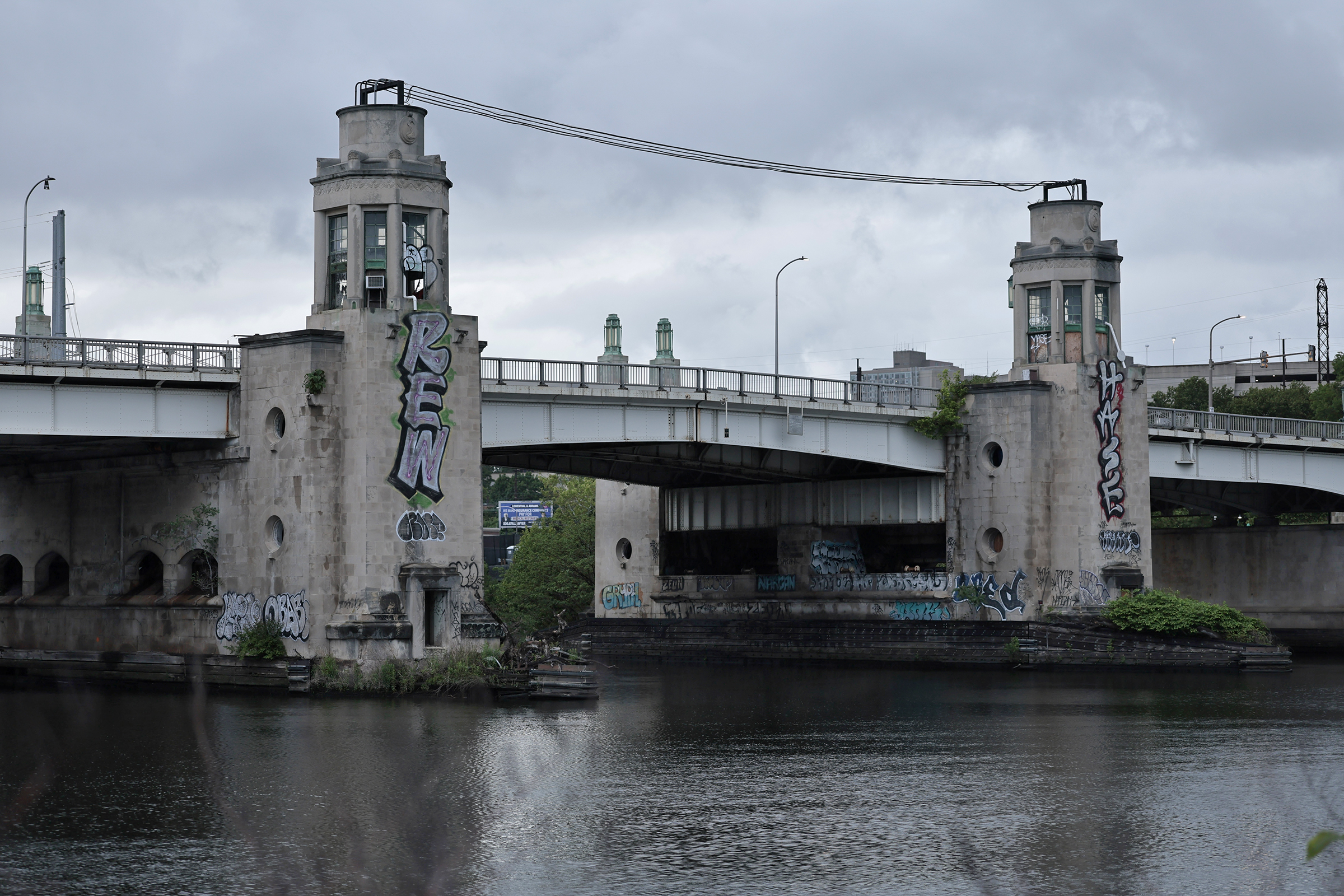
    Graffiti has marred the bridge in several places, most noticeably on the Center City-facing sides of the operator’s houses, but there is no immediate plan to clean up the scrawls.

    “At this time, graffiti removal is not in the scope, but it is being explored in the near future,” said PennDot spokesperson Brad Rudolph.

    Graffiti on the University Avenue Bridge, seen from the Schuylkill River Trail, on May 21.Elizabeth Robertson / Staff Photographer

    Vandalism and deterioration on the bridge linking West Philadelphia and Grays Ferry have attracted sporadic public attention for decades. The Inquirer highlighted the conditions last September, with another article in June, and other news outlets have called for the bridge’s stabilization and restoration. A recent change.org petition advocating that it be protected from further damage collected hundreds of signatures.

    “Without intervention, these unique design elements risk permanent loss,” the Preservation Alliance for Greater Philadelphia wrote in its magazine, which lists the bridge as one of the city’s places to save.

    “We welcome PennDot’s attention to the University Avenue Bridge and the planned work to address some of its most urgent deficiencies. This is a positive first step, especially after years of visible deterioration, but it should not be the end of the effort,” said Paul Steinke, executive director of the Preservation Alliance for Greater Philadelphia. “The bridge is one of Philadelphia’s most distinctive historic spans, and it deserves a broader rehabilitation plan that addresses its historic features, long-term condition and role as a public gateway between neighborhoods.”

    The repairs at hand will address the structural elements beneath the bridge’s deck. The bridge uses a girder floor beam stringer system to carry the load, said Cutright, and the deterioration will be addressed with plating, cleaning, and repainting, and some steel members may be replaced.

    Vandalism and the elements have damaged the two operator’s houses on the Center City-facing side of the bridge. They will be cleaned out and sealed, and a chain-link fence will be installed in front of the two structures to deter trespassers.

    Lane closures will reduce vehicular access to one lane in each direction during construction. Two of the bridge’s four lanes will be closed all day every day, with two lanes left open (one in each direction) through mid-December. The work will begin with closing the two lanes closest to the operator’s houses, and moving all traffic to the other side. Then, in a couple of months, the closure pattern will flip.

    The bridge carries more than 36,000 vehicles per day, according to PennDot, and the agency expects significant backups during construction. Pedestrian access will be permitted on the side of the bridge opposite from where work is being conducted.

    A fish and other details adorn the operator’s houses on the University Avenue Bridge.Elizabeth Robertson / Staff Photographer

    Cutright said that while PennDot would like to restore the bridge, the cost is estimated around $50 million, and no funding is currently lined up for an effort on that scale.

    Even if funding were in place now, a major rehabilitation would be a long way off. Planning and construction would take five years or more, she said.

    “It’s a beautiful bridge, and I would imagine that if we were to do a major project that we would want to restore it to its former glory.”