Category: Home & Design

  • How to watch TV in your yard, just in time for a Phillies playoff fight and Eagles season

    How to watch TV in your yard, just in time for a Phillies playoff fight and Eagles season

    It shouldn’t make sense.

    Watching TV outside comes with a host of challenges: Humidity. Mosquitoes. Glare so fierce you risk losing sight of Jalen Hurts at the goal line.

    And yet, people are increasingly heading to the backyard for movies, sitcoms, and sports. One industry report values the global outdoor TV market at more than $400 million in 2026 and projects annual growth of nearly 12% through 2035.

    The Philadelphia region? Right on trend. According to Kim Bucholsky, office manager with All Systems Audio & Visual, the Hatboro-based company has seen a 50% uptick in outdoor installations since 2019 — “with no slowdown in sight.”

    Some people are sinking hundreds of thousands of dollars into these entertainment setups; others are dragging lawn chairs and an iPad to the front stoop every time Love Island releases a new episode. The common denominator isn’t age or gender or socioeconomic status. Kids and adults, armchair quarterbacks and prestige-TV junkies, agree: There’s something special about a backyard binge.

    “When the sun’s going down, the breeze is blowing, you can hear the ocean in the distance and maybe the occasional coyote, and you’re watching your favorite Philly sports team, there’s absolutely nothing better,” said Anthony Farina, a communications executive based in Cape May. “To me, this is utopia.”

    So how, exactly, did the lawn usurp the living room?
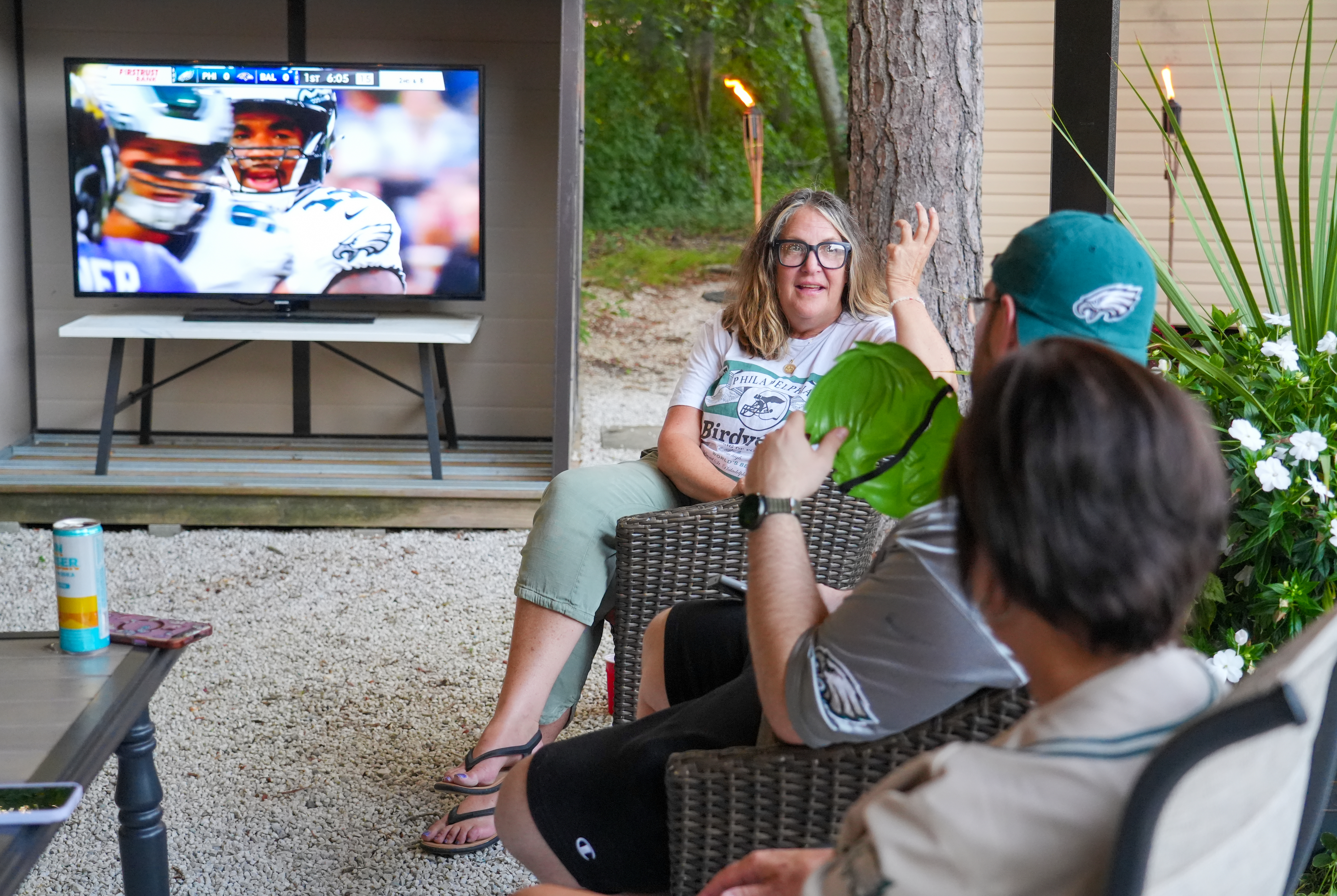
    Cori Laphan talks to Randy Bock of Turnersville, as they watch the Eagles in the first preseason game of the year at her summer home in Cape May Court House. Tim Hawk / For The Inquirer

    Experts say the hobby gained momentum during the COVID pandemic, when families had no choice but to hunker down at home. People invested in their spaces: pools, fitness rooms, and — yes — expanded entertainment options. Even after restrictions were lifted, the stay-put mentality stuck.

    “Once you sink that money in, you have less to spend outside the home,” said Kevin Gillen, an economist with the Henderson Real Estate Institute at Drexel University. “Movie theaters, which are incredibly expensive and ruined by one loud family in the room, have not rebounded since COVID.”

    But backyard viewing goes beyond financial sense. It’s also the sneakiest way to sidestep a 21st-century affliction: screen-time guilt.

    “There’s a lingering bias around TV,” said Emil Steiner, associate professor at Rowan University, who lives in University City and studies audience viewing habits. “The stereotype is that you’re being a lazy couch potato staring at the idiot box while cooped up inside a dark room. But watching outside in the fresh air among friends? It feels like a free pass.”

    That social piece matters. Open-air viewing has a way of turning into an event — firepit glowing, grill smoking, cooler cooling. What’s really streaming is camaraderie. Recent World Cup watch parties, from Lemon Hill to suburbia, are a proof point: Alfresco airtime is a happiness booster.
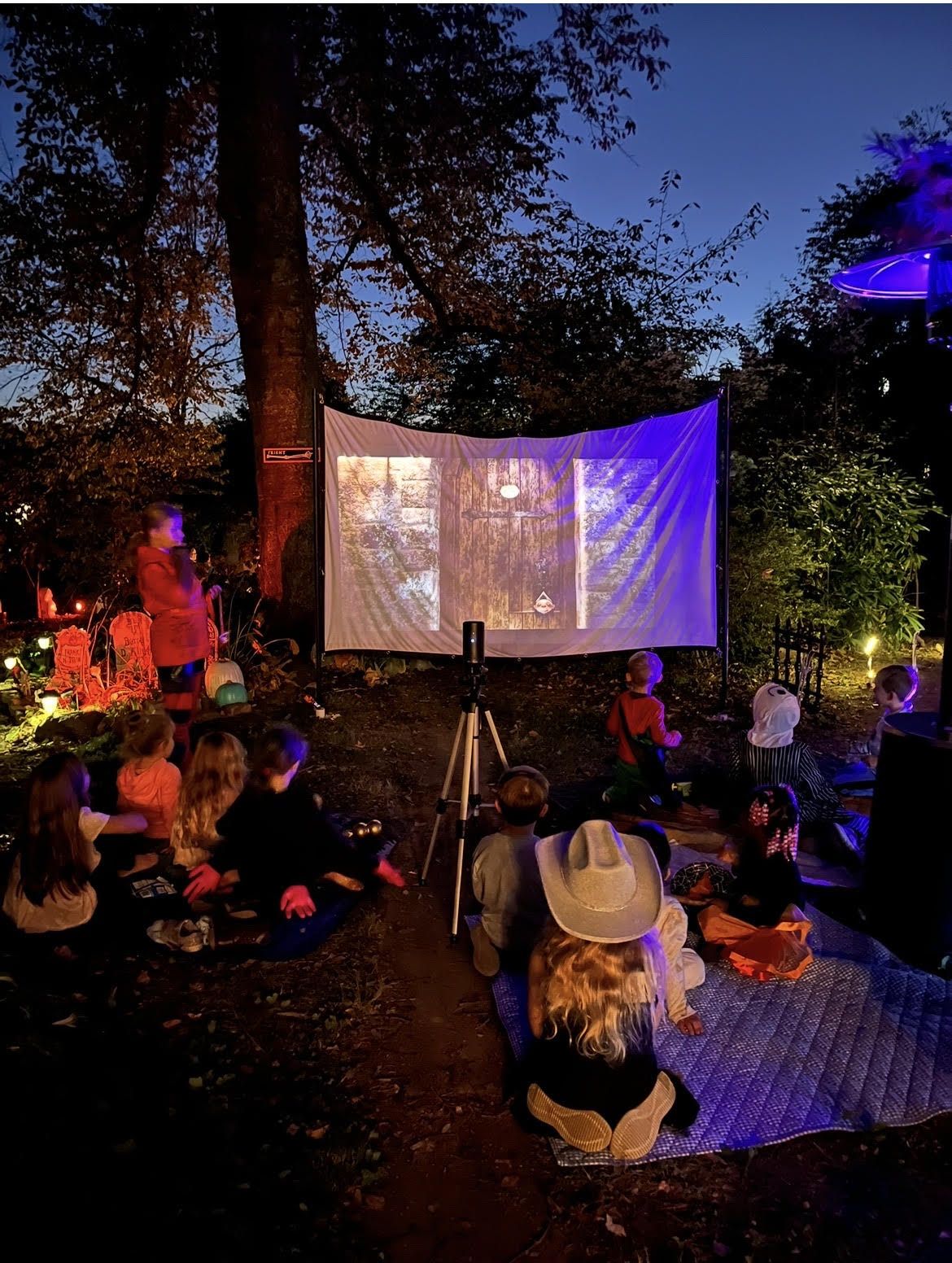
    In Glenside, Emily Kelly and her family built a mount for their backyard projector screen out of a PVC pipe and some carabiners.Courtesy of Emily Kelly

    “People feed off one another’s energy,” said Michael Marciante, executive director of the Partnership for Haddonfield, the town’s business improvement group. He spearheaded three viewing parties, drawing a total of 2,500 residents and visitors to a temporary screen on Kings Highway. “Outdoor viewing brings communities and neighbors together, and you can just feel the electricity.”

    But before you haul your sectional onto the deck, you’ve got homework. To make the most of an outdoor viewing experience, channel surf through the following tips.

    Know your why: Are you looking for romantic date nights? Neighborhood gatherings? Family bonding? Will this be a one-off thing or a permanent setup? Is your preference ultra-luxe or a bit more rustic? Zach Kades, who’s been hosting watch parties as an event manager at Soccer Post Cherry Hill, said his own home setup in Bryn Mawr involves little more than a projector and the back wall of his garage, because he likes the nostalgic, “camplike feel” it brings to a night with friends. Knowing your goal will make choosing your gear easier.

    Try it out: Before his family gifted him a new TV for the front porch and a permanent mounting system, Farina spent four years carting his flat-screen and a trusty coffee table back and forth from the living room on a near-daily basis, a ritual he calls a “labor of love.” While your trial period doesn’t need to last that long, Farina does recommend a test run with your existing screen. “Notice whether people rally around it,” he said. “See if you feel the joy.”

    Set your limit: Technically, you can make this work for the cost of a thrifted projector and a bedsheet flung over a fence. Or you can take the Jim Malamut route and spend more than $500,000 creating an oasis: “I call it my midlife crisis,” he said.

    The mortgage lender purchased an overgrown lot behind his Linwood home and spent about three years converting it into a pool-and-bar retreat complete with three TVs (two at 98 inches and one at 75) for watching multiple games at once. No matter where on the spectrum you fall, the important thing is to know your financial cap “and stick to it,” Malamut said, “or things can get crazy fast.”

    Research your tech: Purists will die on this hill: Your screen needs to be outdoor rated to fight glare with premium LED technology even in direct sunlight and withstand the elements longer than a few seasons. Others swear by less expensive, indoor screens that are shaded during viewing and protected with a water-resistant cover when not in use. Whatever you choose for your specific space, you’ll want to run a simple internet test: Stream a program from your phone or laptop in the designated spot, and see if Wi-Fi can handle the job or if hard-wired Ethernet is the better, no-buffer option. Ensure any required cables are made for outside use.

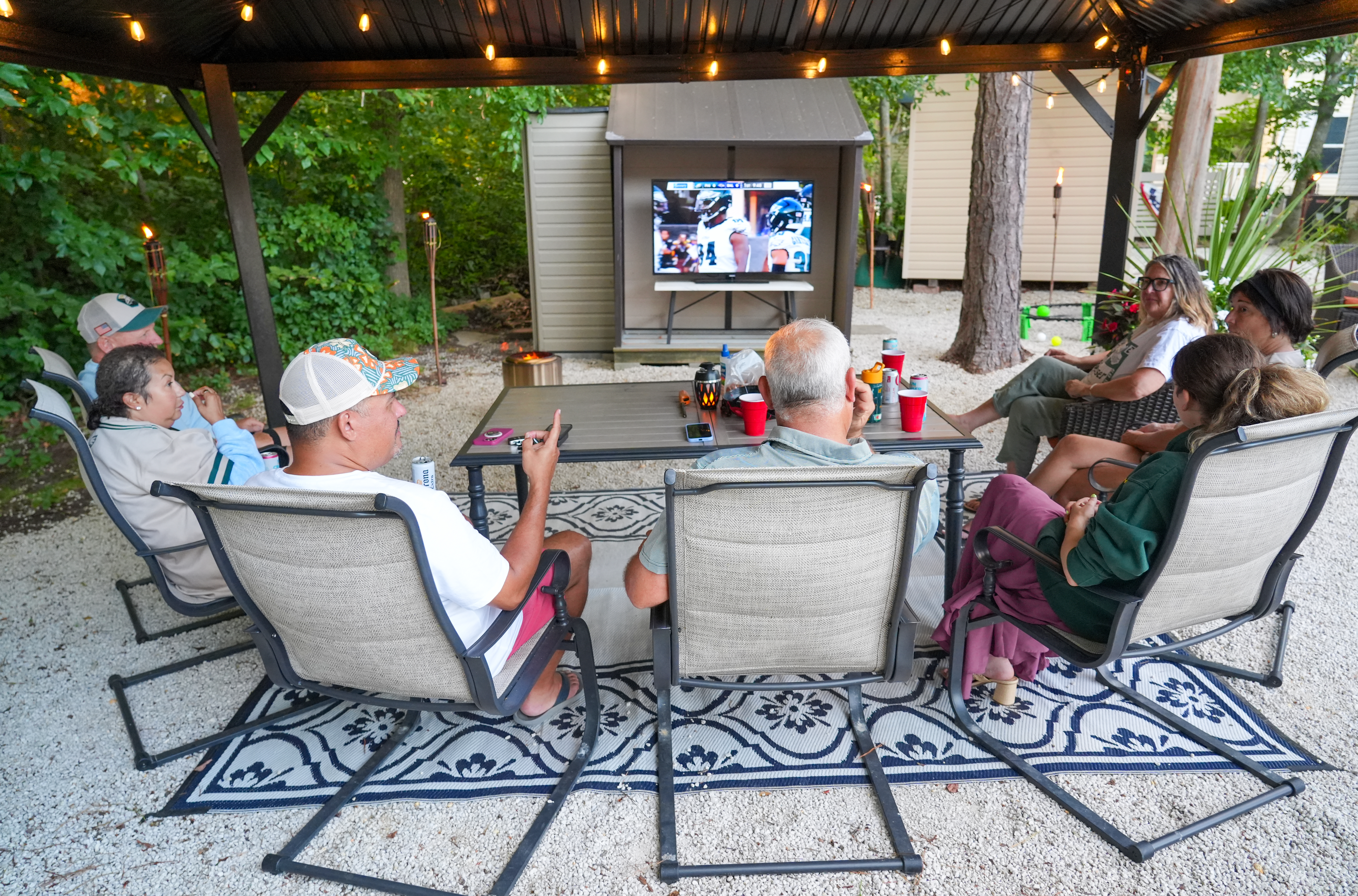
    Bug off: Mantua resident Cori Laphan loves her “outdoor living room” at the Driftwood Too Camping Resort in Cape May Court House, complete with fire pit, grilling station and 55-inch TV. Only problem: things that bite. To keep the gnats, mosquitoes and greenheads at bay, she staged an offensive campaign: tiki torches, citronella candles, fans, even coffee grounds — TikTok wisdom holds that lighting them on fire inside a metal canister is a natural deterrent. Laphan, a senior-living salesperson, also took an empty planter to a local garden center with one instruction: Fill it with bug-repelling plants. “We’ve done everything imaginable,” she said. “Insects love me, and I’m still able to be outside much of the time.”

    Get resourceful: If you don’t call in a team of home-theater professionals, creativity is key. Laphan’s brother-in-law, Jon Morad, reimagined a cutout in the side of a Home Depot shed intended for firewood — it now serves as an entertainment console that shades the family’s TV and offers some protection from the elements. “You have to think outside the box,” said Morad, a hospital maintenance supervisor.

    In Glenside, another family built a mount for their backyard projector screen out of a PVC pipe and some carabiners — neighborhood kids sit on one side while adults watch on the other, reverse-image and all. “Our setup is definitely makeshift,” said physical therapist Emily Kelly. “But I think it feels more genuine that way.”

    Learn the rules: Municipalities, HOAs, campgrounds … they all play by their own noise rules. According to Philadelphia code, your true-crime documentary or Hallmark movie marathon cannot exceed “three decibels above background level measured beyond the property boundary.” Translation: If your block’s typical soundtrack is the hum of traffic, your TV can raise that only slightly.

    Kate Evans and her wife, a Philadelphia police officer, built a roofed pergola for watching games and movies behind their Roxborough rowhouse. They recommend investing in a soundbar, which aims audio directly at viewers so that sound doesn’t wander. “We don’t need to blare our TV,” Evans said. Be sure to check the relevant code books and, if in doubt, purchase a basic sound-level meter to ensure you’re in compliance.
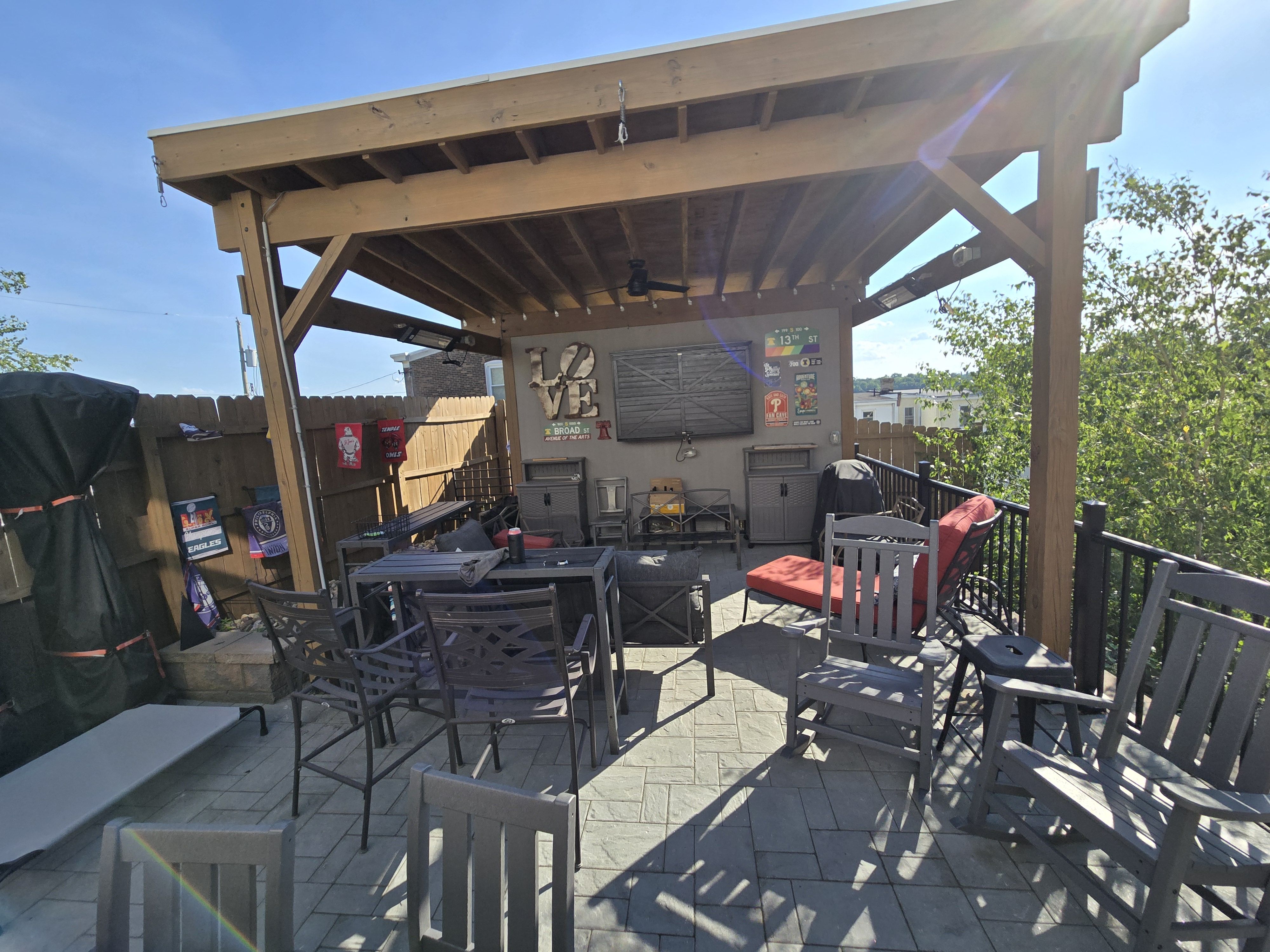
    Kate Evans and her wife built a roofed pergola for watching games and movies behind their Roxborough rowhouse. They recommend investing in a soundbar, which aims audio directly at viewers so that sound doesn’t wander.Courtesy of Kate Evans

    Be a good neighbor: Even if you’re operating within the law, outdoor TV enthusiasts risk alienating neighbors who won’t appreciate the glow of a flat-screen after dark. Head off any tension early by inviting them over for a viewing. Or, at the very least, Farina advises: “Keep your emotions in check while watching Philly sports,” he said. “I know that’s tough to do.”

  • After 50 years in Delran, this couple downsized to a Cherry Hill apartment

    After 50 years in Delran, this couple downsized to a Cherry Hill apartment

    After raising their kids in Delran, Fred and Barbara Zucker were ready to downsize from the home they had lived in for 50 years. The retired couple spent several months searching for an over-55 community, but nothing seemed quite right. In March 2020, that changed.

    “I was shopping at Nordstrom Rack in Cherry Hill and saw a sign for an open house at the Plaza Grande,” Barbara recalled.

    They toured a 1,150-square-foot apartment with two bedrooms, two bathrooms, and a den featuring a balcony with a western exposure. The apartment was on the top floor, which meant no neighbors walking overhead, and the kitchen had a gas range. There was also plenty of closet space for Barbara’s treasured shoe collection.

    Plaza Grande, which opened in 2008, is a sprawling community with 507 units within 16 buildings. Featuring lots of amenities and surrounded by shops and restaurants in walking distance, it seemed like a perfect home to the Zuckers.

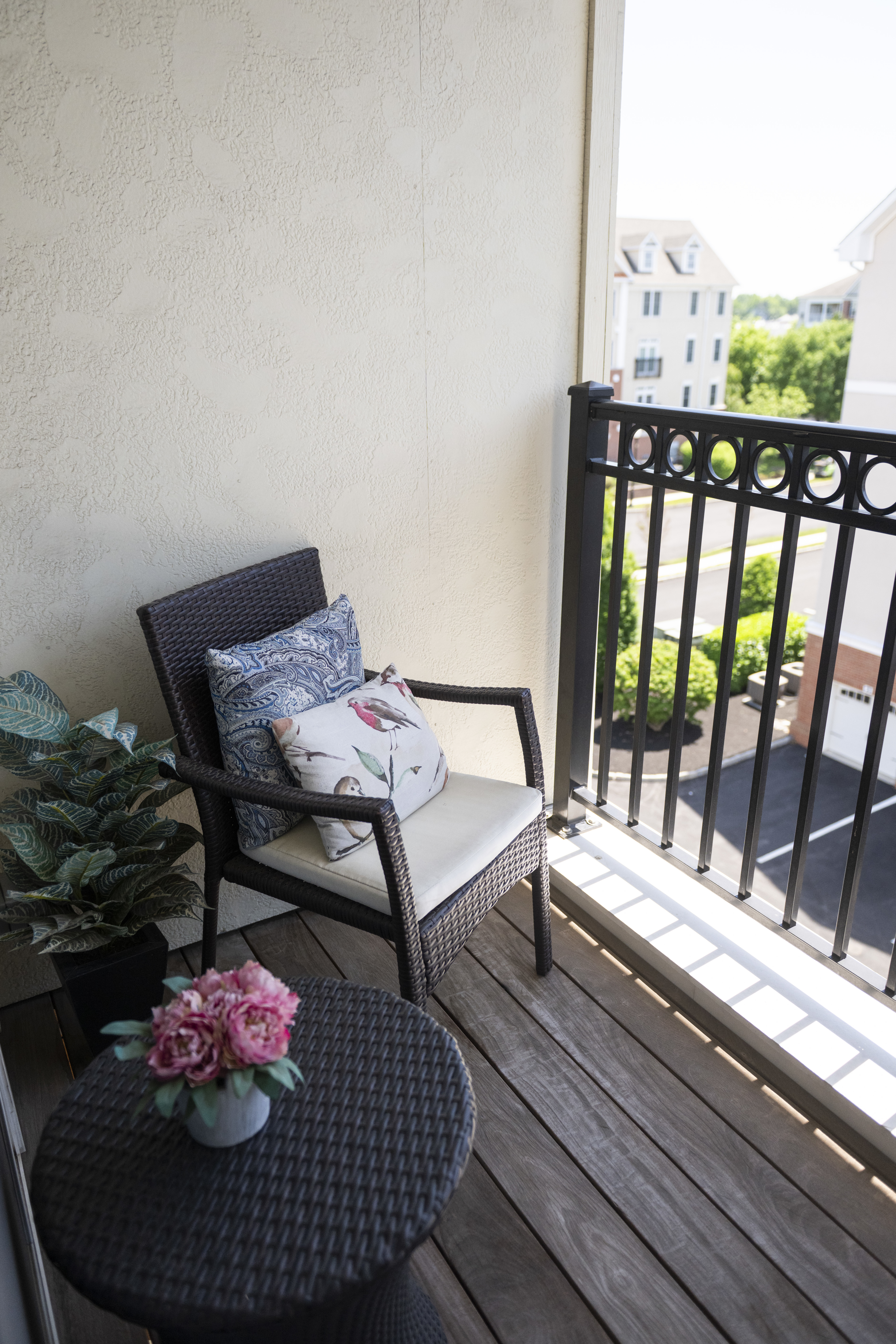
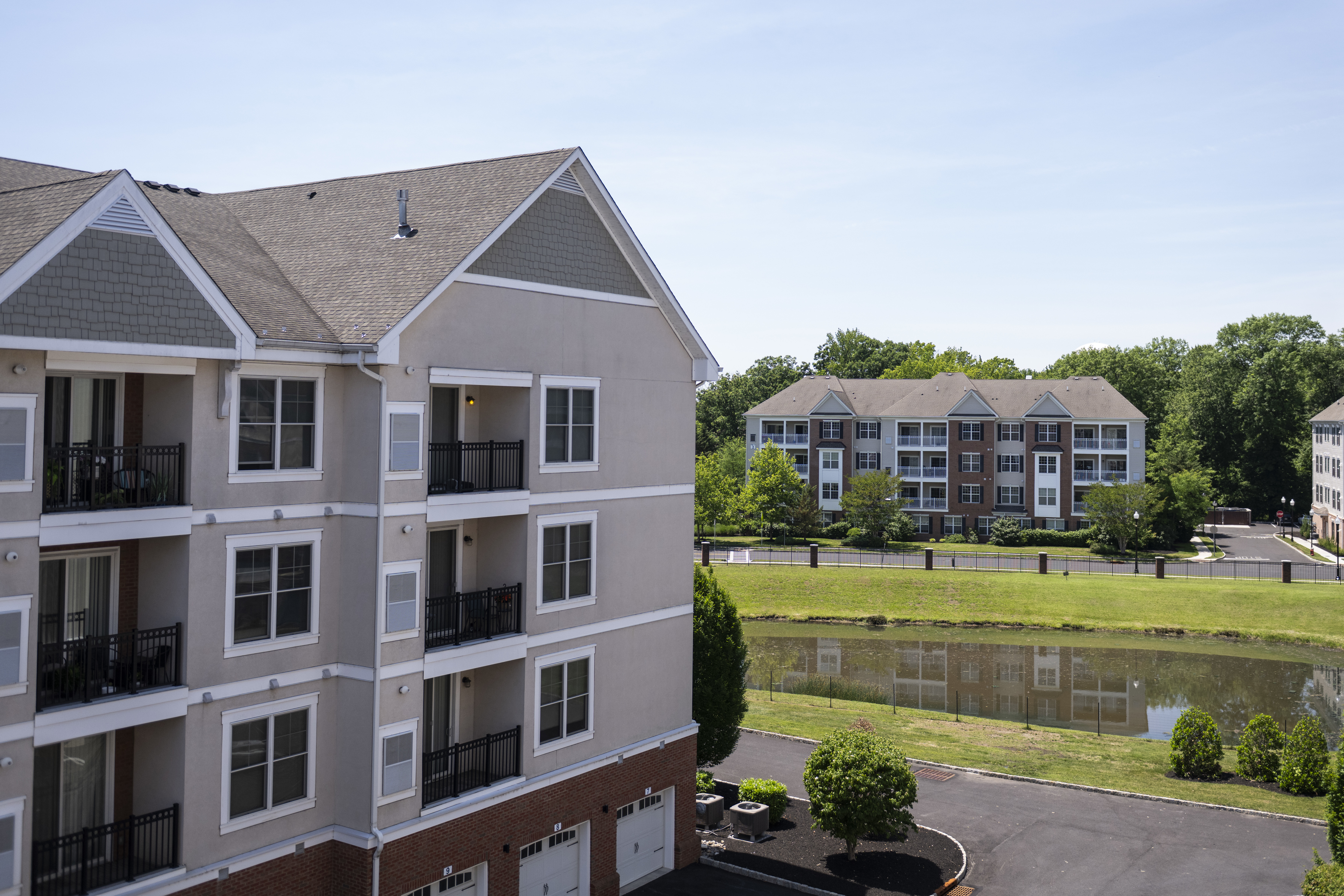
    A view from the balcony at Fred and Barbara Zucker’s apartment.Allie Ippolito / For The Inquirer
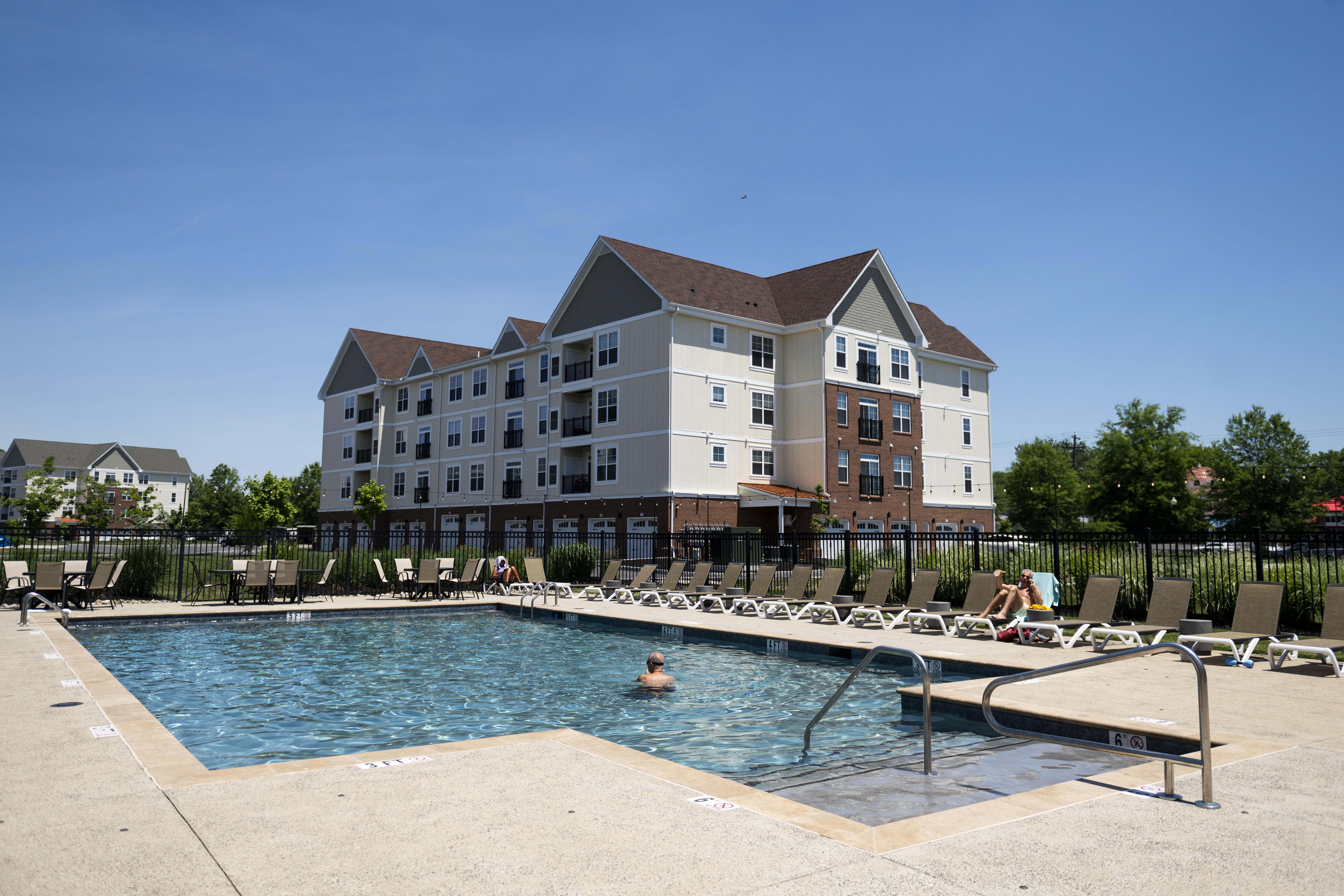
    The outdoor pool at the Clubhouse at the Plaza Grande.Allie Ippolito / For The Inquirer

    While Fred and Barbara were excited to downsize, emptying the house, where they had lived for 50 years while raising their family, was no easy task.

    They had to offload most of their belongings, and with the help of a neighbor, they sold their furniture on Facebook Marketplace. Beyond Barbara’s favorite pots and pans, their televisions, family photos, and a few other keepsakes, they made a completely fresh start.

    “My stuff was 50 years old, and it was time to go,” said Barbara.

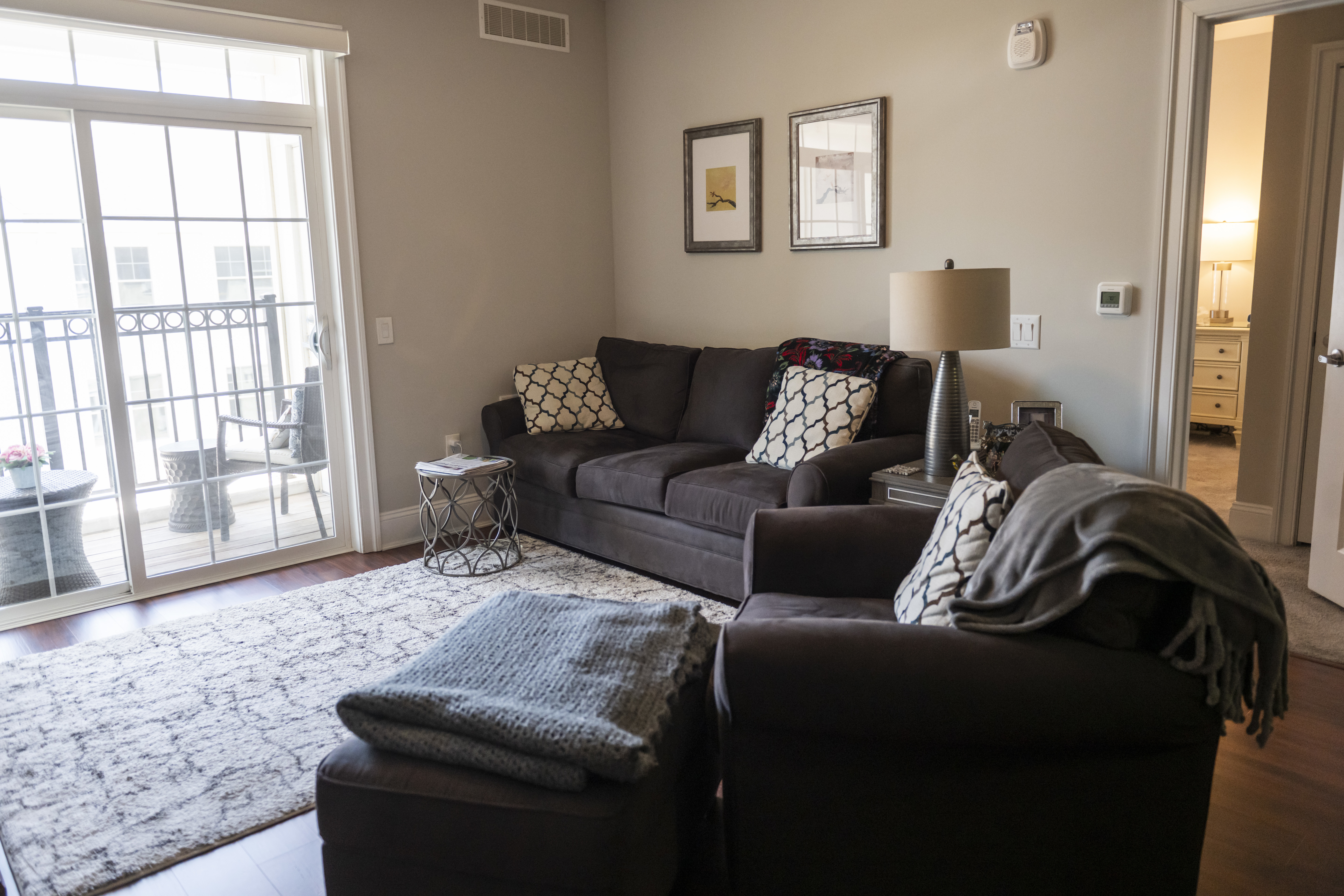
    The couple shopped at Raymour & Flanigan to outfit their new apartment, starting with a comfortable, dark gray velour couch, and matching chair and ottoman for the living room. With light pouring in from the balcony, it’s their favorite spot to relax, reading the newspaper and watching TV.

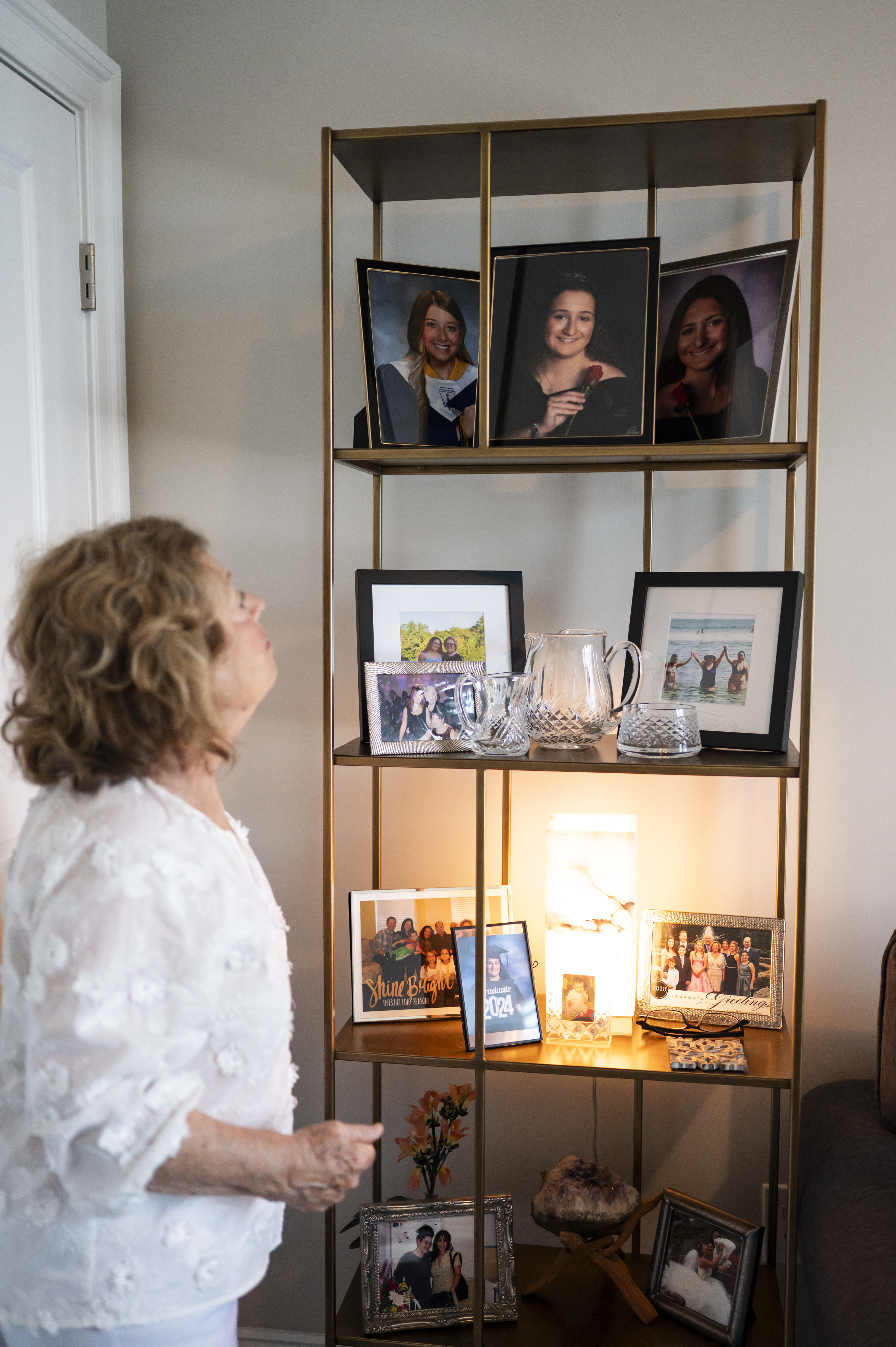
    Barbara admires family photos on display in her apartment.Allie Ippolito / For The Inquirer
    The balcony is one of Fred and Barbara Zucker’s favorite features in their apartment.Allie Ippolito / For The Inquirer

    Sliding glass doors lead to the balcony where they enjoy morning coffee, read for pleasure, or gaze at the pond below. The large, bustling community provides ample people-watching opportunity.

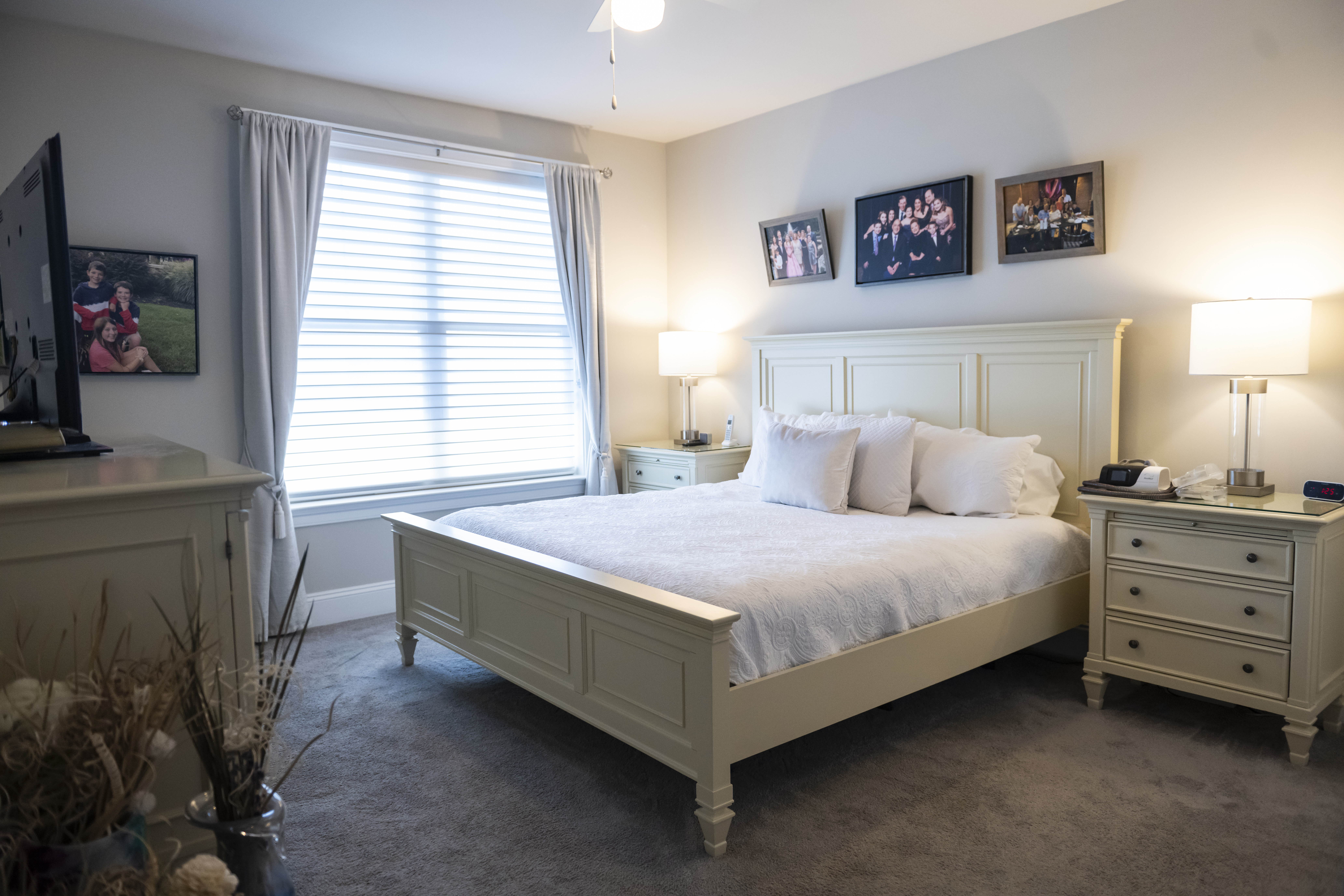
    The primary bedroom features creamy white furniture with bright white bedding. Family photos from special gatherings decorate the walls.

    “Family is everything,” Barbara said.

    The Zuckers prefer an uncluttered look, only keeping artwork and knickknacks that have personal meaning. Souvenirs from their travels are also on display.

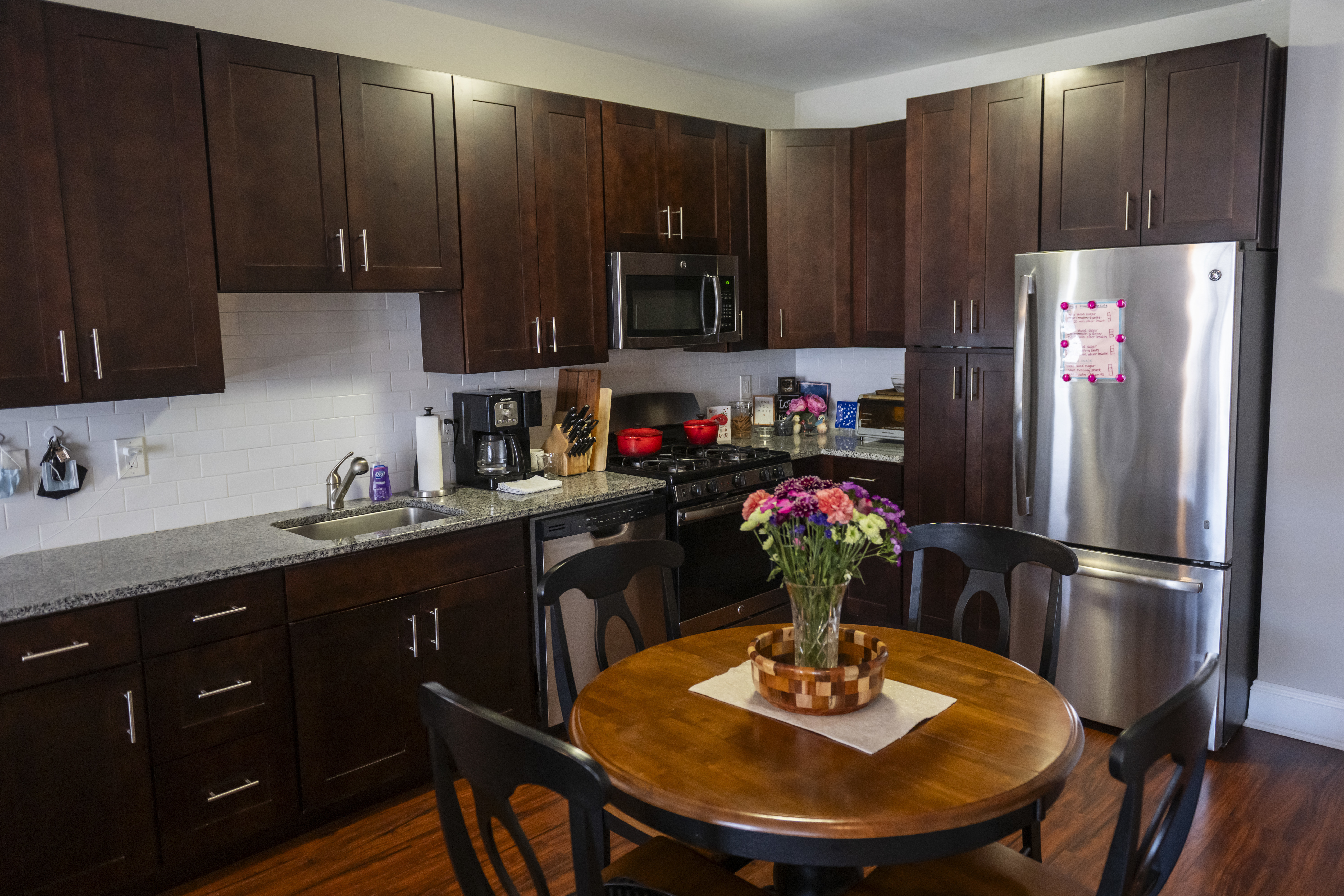
    An avid cook, Barbara appreciates her new kitchen, with dark brown wood cabinets, speckled granite countertops, and a faux wood floor. The layout is roomy and the GE appliances are easy to use. She especially values the ice maker, a new-to-her luxury.

    Barbara is an avid cook, often found making soup for friends. Allie Ippolito / For The Inquirer
    The large door to the balcony lets plenty of light into the apartment’s living area.Allie Ippolito / For The Inquirer
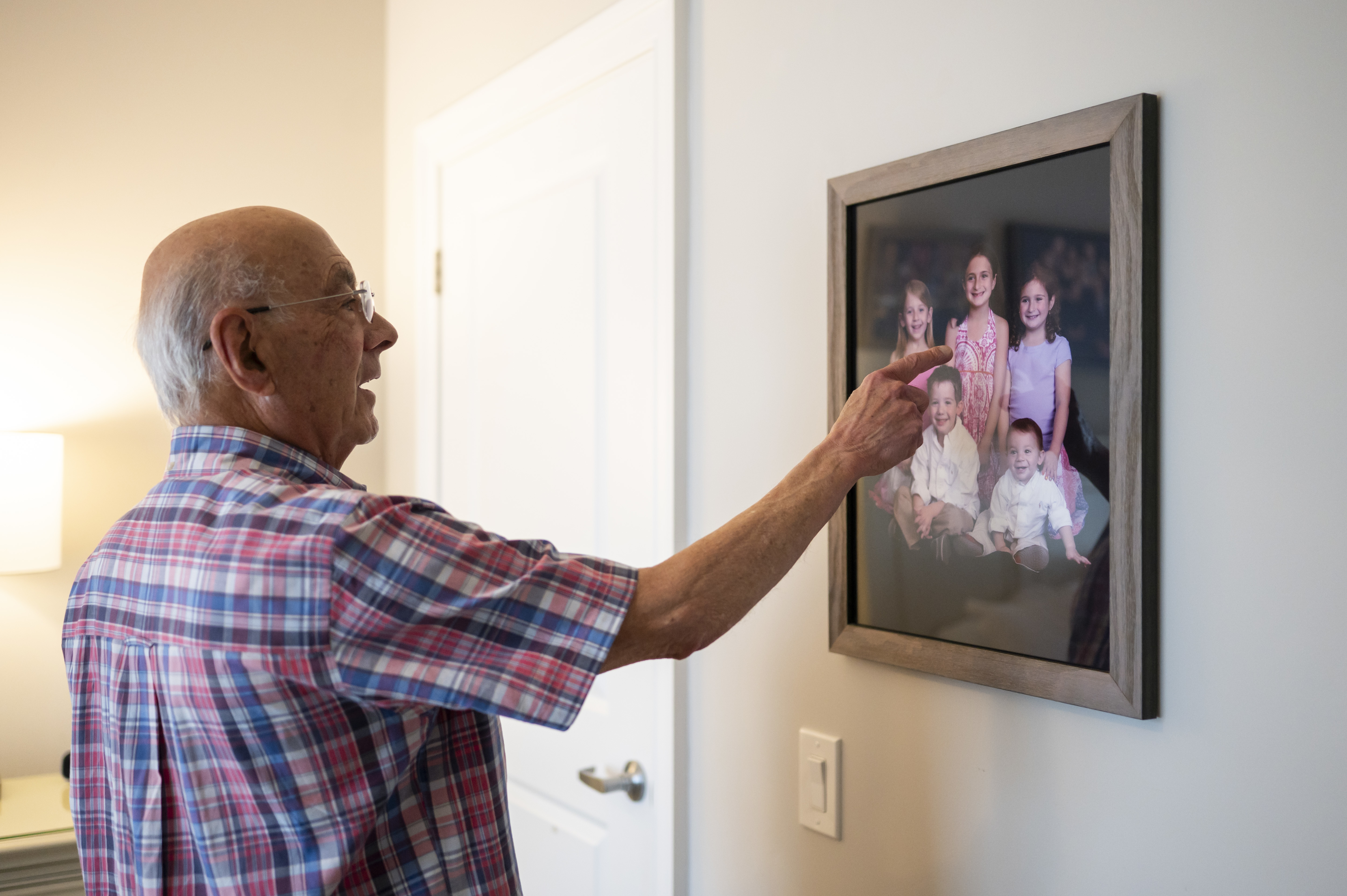
    Fred points to a photo of his grandchildren.Allie Ippolito / For The Inquirer
    The primary bedroom features more family photos and a large window.Allie Ippolito / For The Inquirer

    “I don’t know what I was thinking for 50 years. Why I didn’t have an automatic ice maker?” she said.

    Barbara can often be found baking cakes or stirring up a pot of hearty chicken soup to share with her neighbors. Her role has become caregiver when her friends and neighbors need some TLC.

    “If somebody’s sick, I make a pot of soup,” Barbara said matter-of-factly.

    It is the development’s family-like feeling that the couple appreciates the most. Along with their neighbors, they take full advantage of the abundance of amenities the community has to offer.

    “Plaza Grande offers a resort-style experience for active adults 55+, anchored by an 18,500-square-foot clubhouse, the largest in South Jersey,” said Billy Procida, CEO of Procida Funding & Advisors, which developed the community.

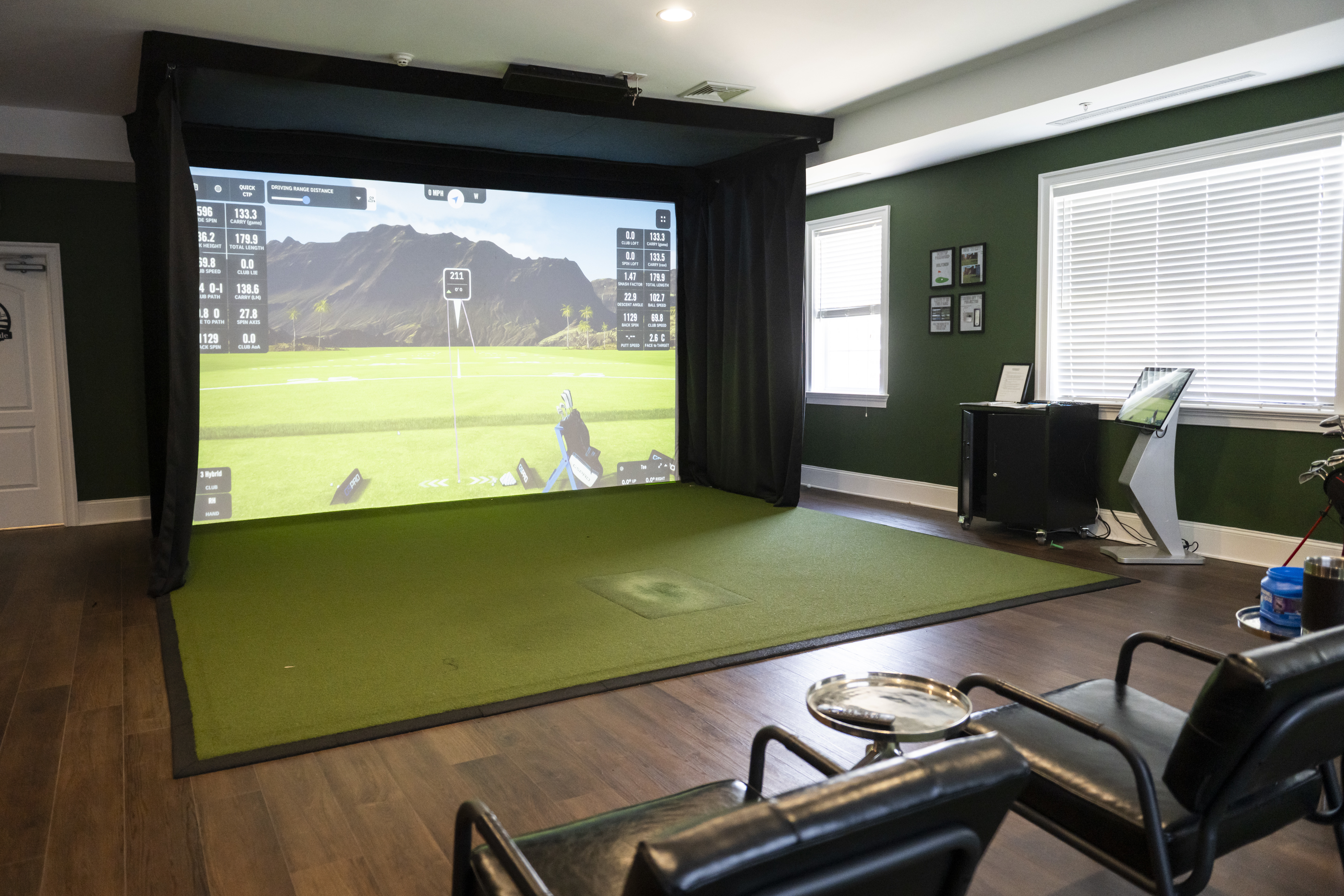
    The complex features indoor and outdoor swimming pools, tennis and pickleball courts, a golf simulator, a sauna, massage rooms, and lifestyle programming.

    The golf simulator in the clubhouse at the Plaza Grande.Allie Ippolito / For The Inquirer
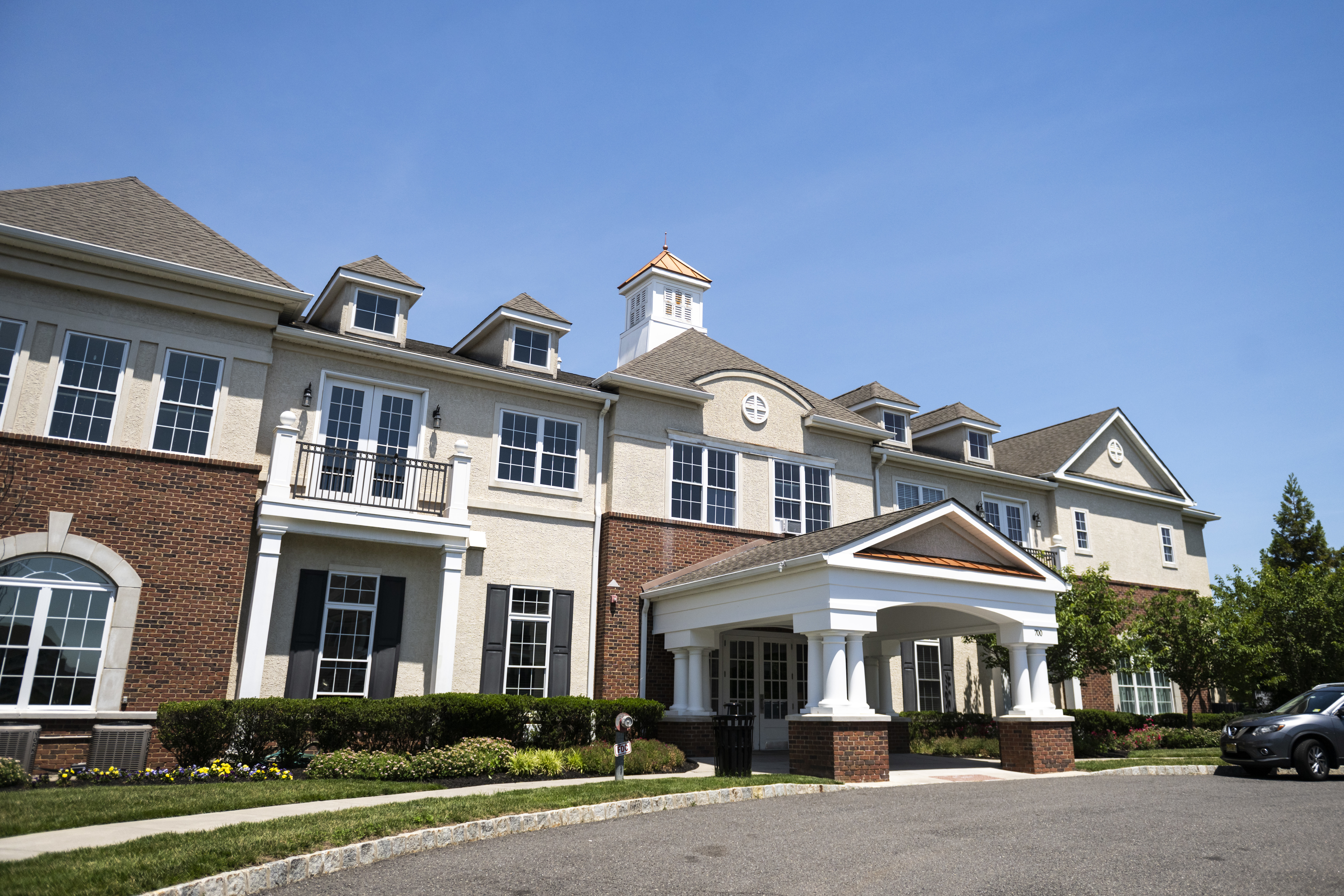
    The clubhouse, as seen from the outside.Allie Ippolito / For The Inquirer
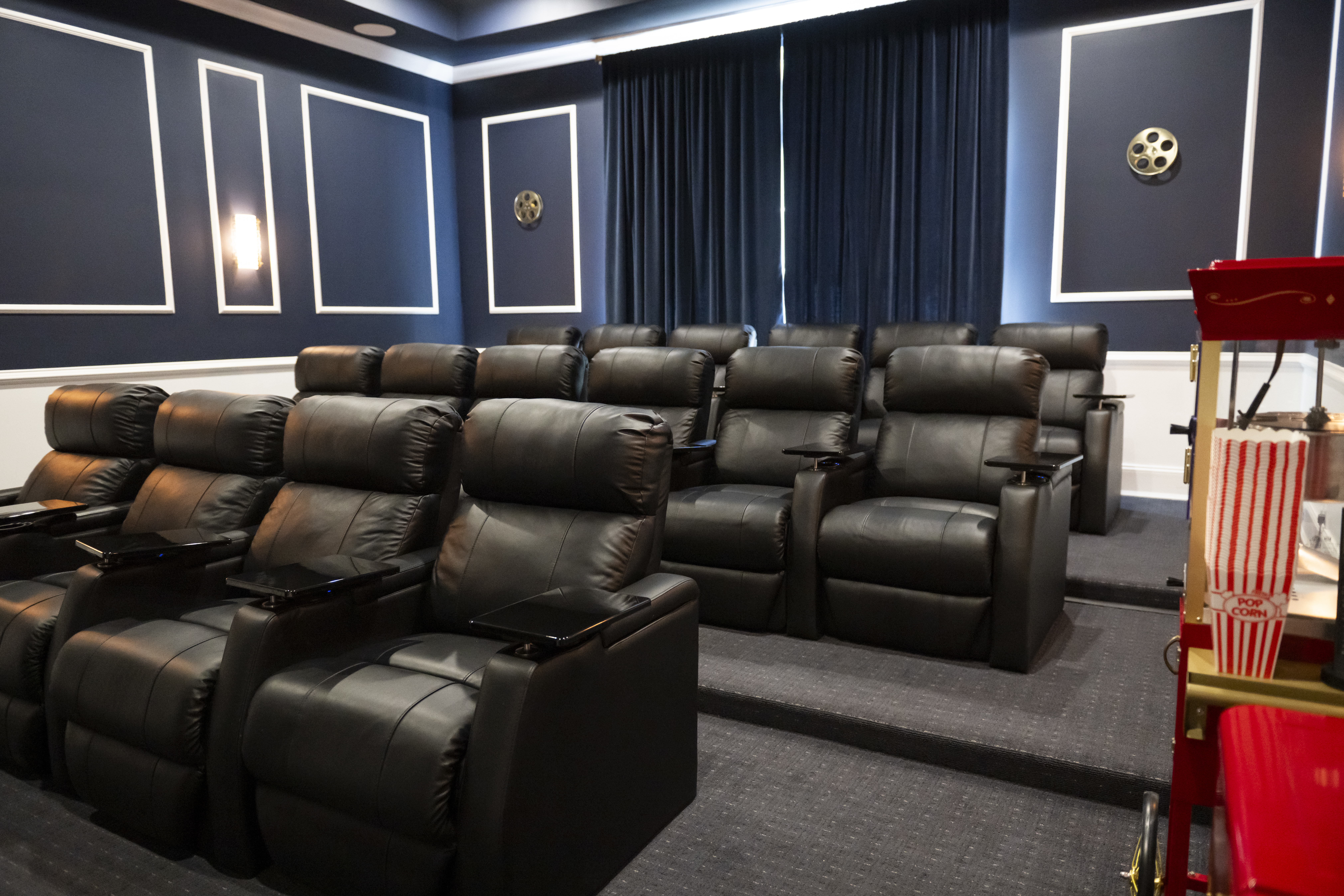
    A movie room inside the clubhouse.Allie Ippolito / For The Inquirer
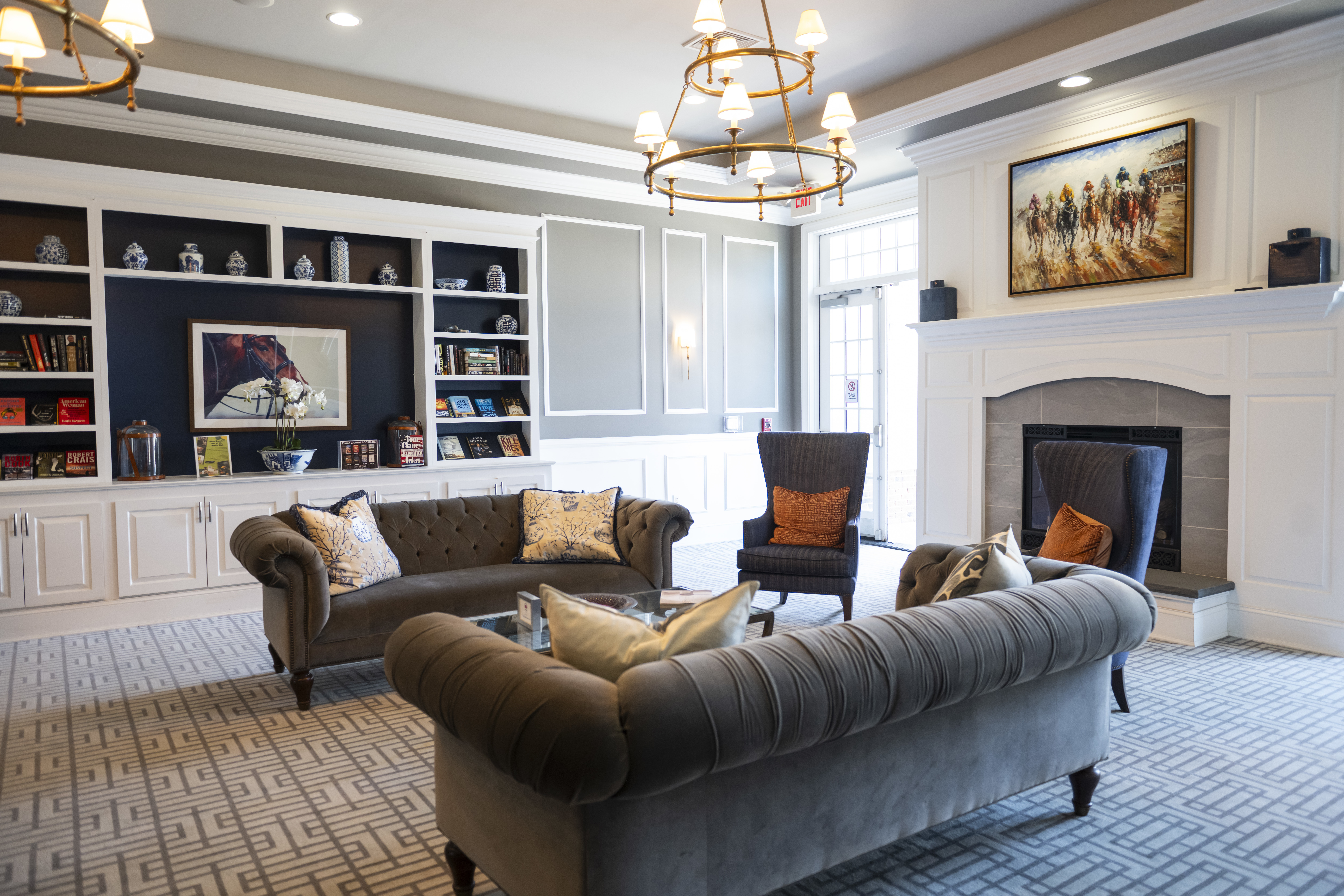
    The clubhouse lounge area includes elegant seating and a fireplace.Allie Ippolito / For The Inquirer

    “We’ve made good friends in the clubhouse, where we go every day,” noted Barbara. “We play cards and they have exercise classes and movies.”

    The couple has become close friends with their neighbors, taking advantage of nearby restaurants to meet for dinner. They recently traveled to Jamaica as a group.

    “Our home is a peaceful retreat for us,” said Barbara. “It is sort of like summer camp.”

    Added Fred: “We are a giant family. Every day is another day in paradise.”

    Is your house a Haven? Nominate your home by email (and send some digital photographs) at properties@inquirer.com.

  • She turned a tiny cottage in North Wildwood into a retreat for the whole family

    She turned a tiny cottage in North Wildwood into a retreat for the whole family

    Dolly Kelly was leaving the beach with her nephew Sean Kelly on a sunny day in 2020, when she passed the Angelsea Cottage, her favorite house in North Wildwood.

    When she spied the For Sale sign on the front lawn, she got excited.

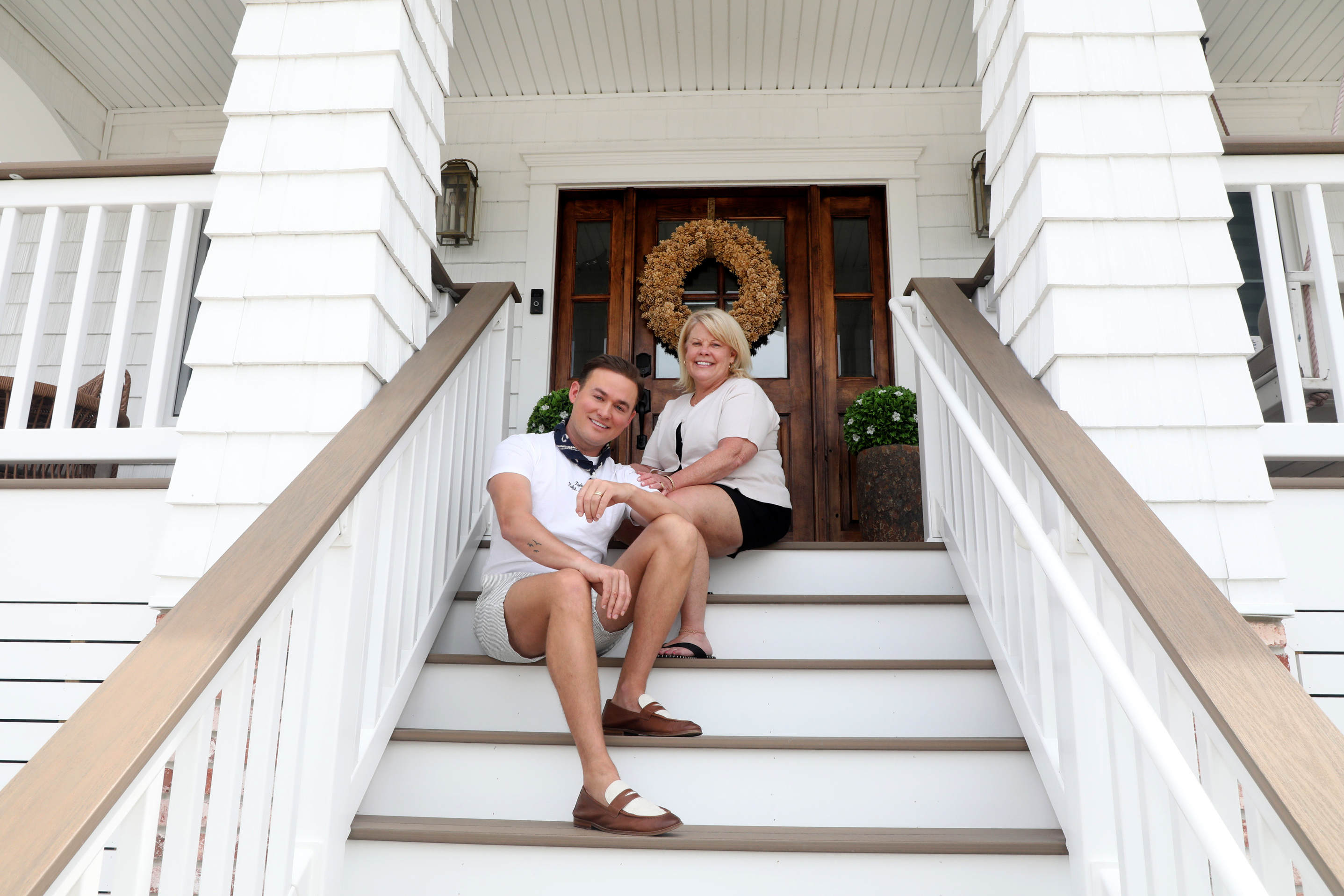
    “I just loved that porch,” Dolly recalled. “We actually walked up the steps, sat down, and took a picture.”

    The next day, Dolly walked through the house and made an offer, but she was outbid. She was devastated.

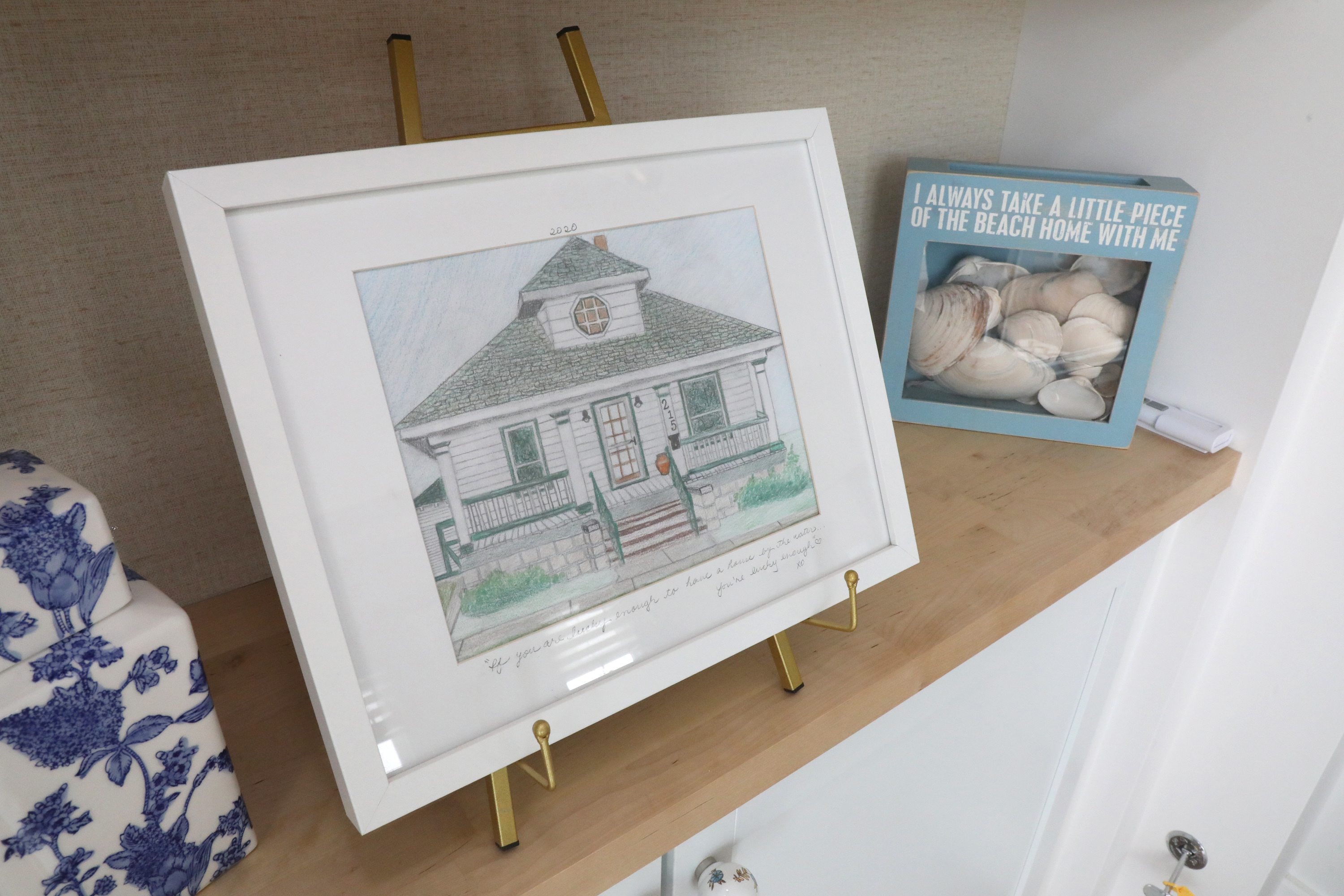
    A framed drawing of the original cottage is on display in the home. Vernon Ogrodnek / For The Inquirer

    But two months later, she got a call that the deal had fallen through — the house could be hers. She made a successful offer that day and moved in three months later.

    While Dolly loved the 675-square-foot cottage built in 1913, it had only two bedrooms and one bathroom. With a large, close-knit family, she wanted a gathering place with lots of space to entertain. She was sad to knock down the original house but given its age and condition, adding on wasn’t a viable option.

    “I have 13 nieces and nephews and 13 great-nieces and -nephews who come over all the time,” Dolly said.

    She spent a year-and-a-half building a 2,400-square-foot home with an open concept and a porch similar to the original one she adored. She was helped by Shore Pro Builders in Wildwood. And her nephew, owner of DUNE by Sean Kelly, handled most of the home’s design with “modern coastal living” in mind.

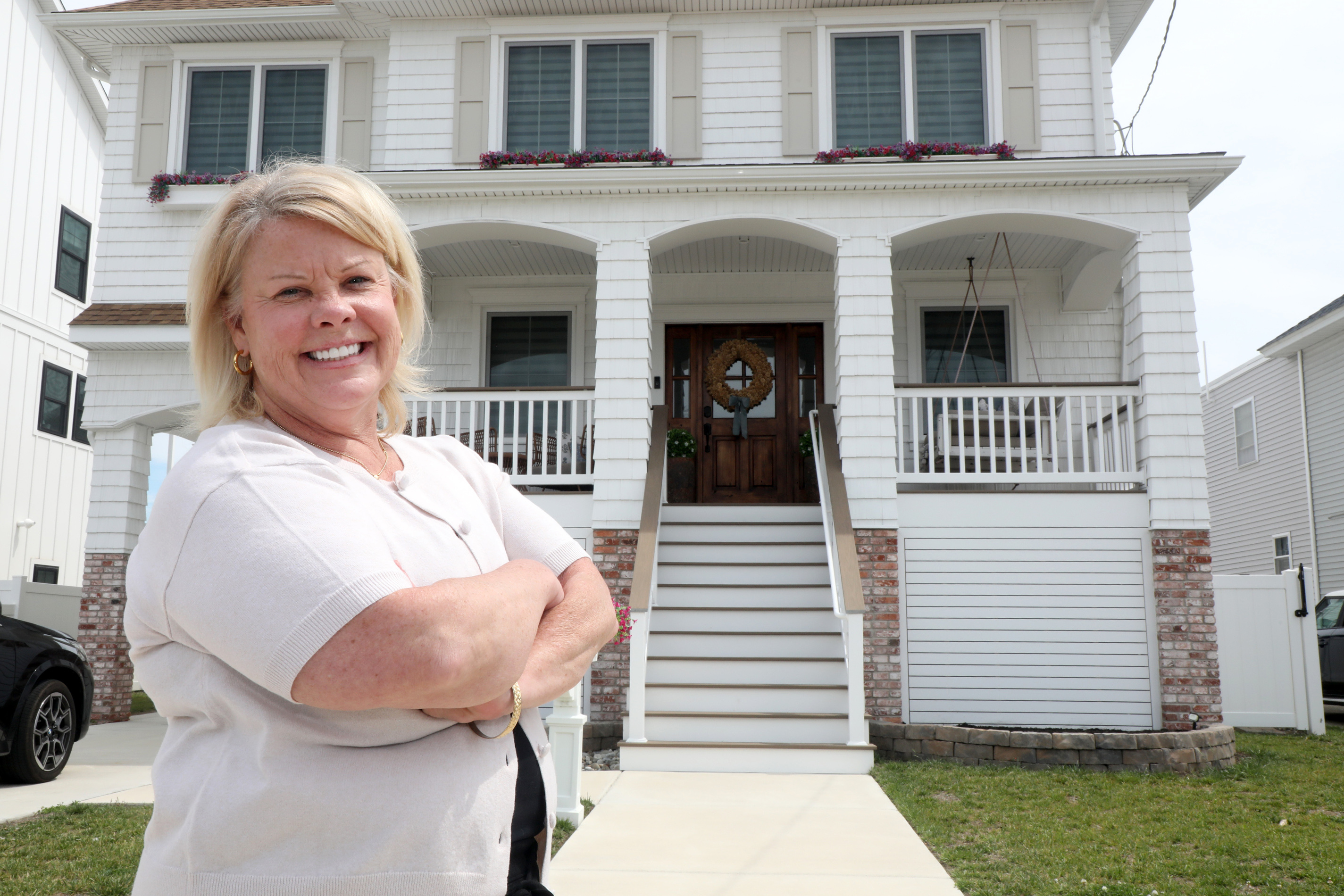
    Dolly Kelly stands outside her rebuilt home.Vernon Ogrodnek / For The Inquirer
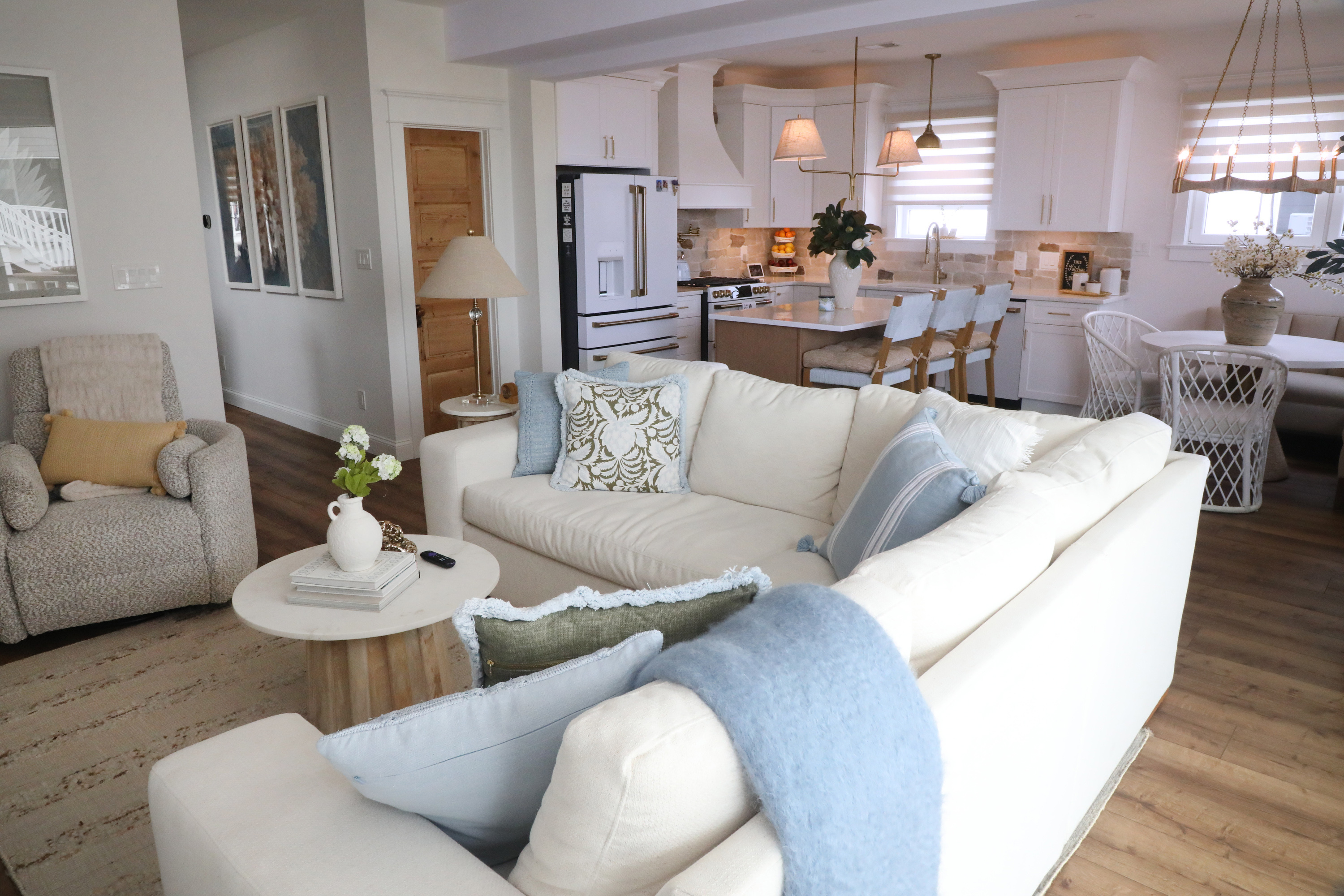
    The new house has an open concept, with the living room flowing into the kitchen.Vernon Ogrodnek / For The Inquirer

    “The finished home blends the timeless architecture of Nantucket and the Hamptons with a distinctly North Wildwood personality,” Sean said. It “honors the history and character of the original Anglesea Cottage while creating something entirely new.”

    Dolly’s must-haves included a covered carport, large covered porch, open-concept living area, and three bedrooms. She calls her design style elevated and intentional.

    To honor the history of the original house and the town itself, their goal was building a home in a traditional style with a lot of character. The home’s interior is mostly white with blue accents — for summer. She changes the pillows and accessories for each season.

    The living room blends style with comfort. The furniture is white, which might seem like a risky move in a house where lots of kids are encouraged to play. But Dolly isn’t concerned because the performance fabric is easy to clean.

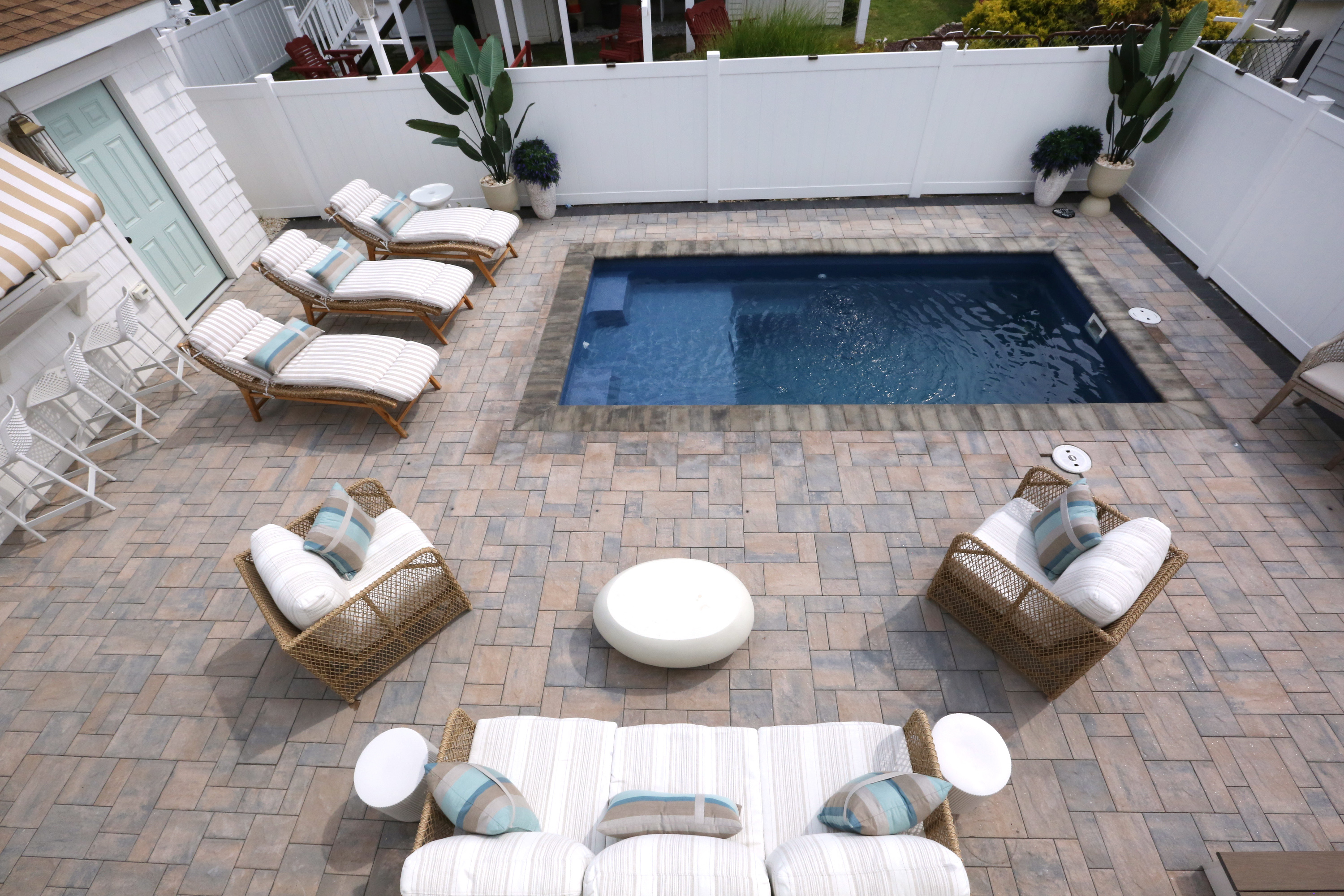
    The backyard has comfortable seating and a heated pool.Vernon Ogrodnek / For The Inquirer

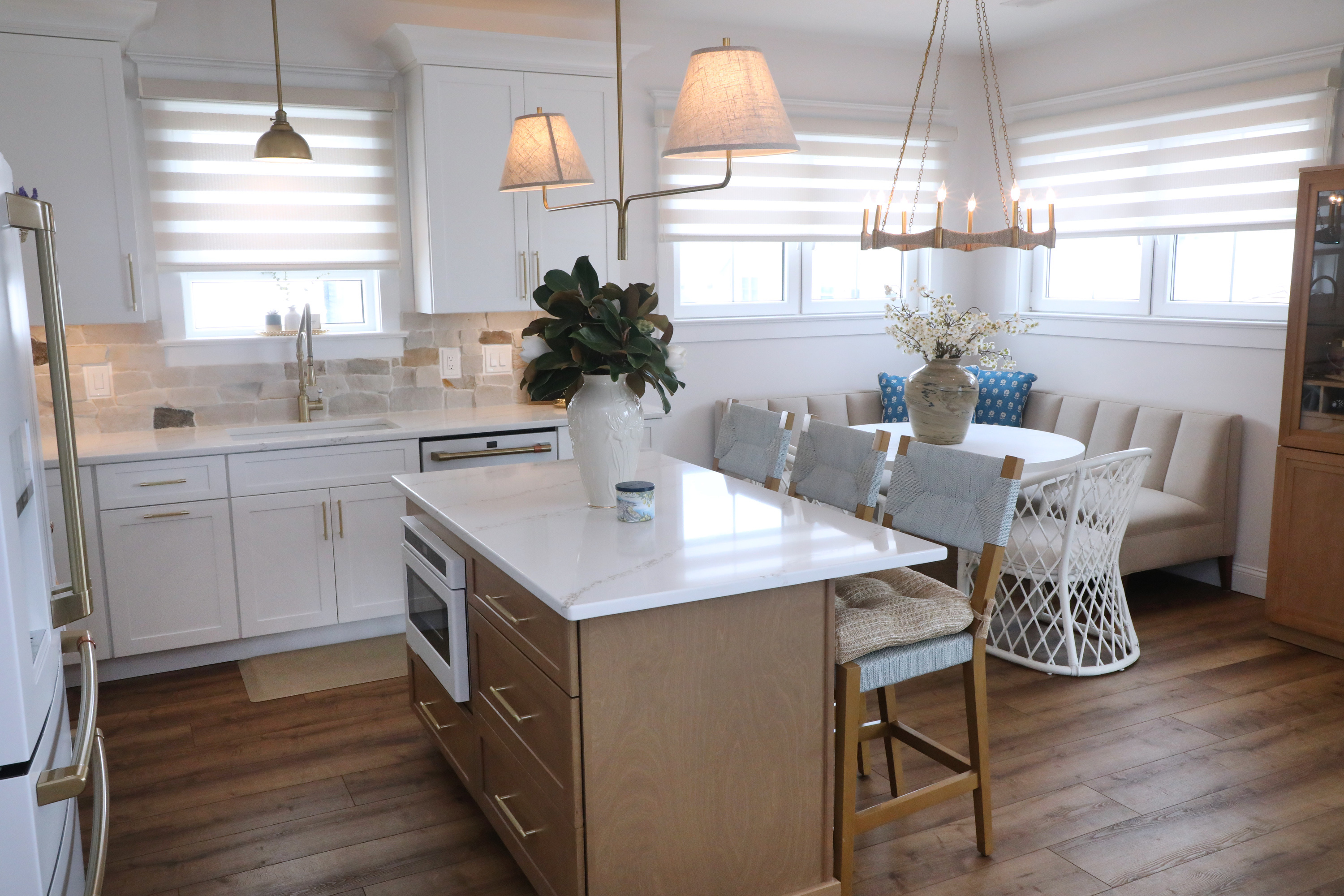
    The kitchen is the hub, where everyone congregates as Dolly cooks. It’s not unusual for a dance party to break out. The island is quartz; the appliances are all GE Café, and the pot-filler is a prized possession. The backsplash is made from three types of stone.

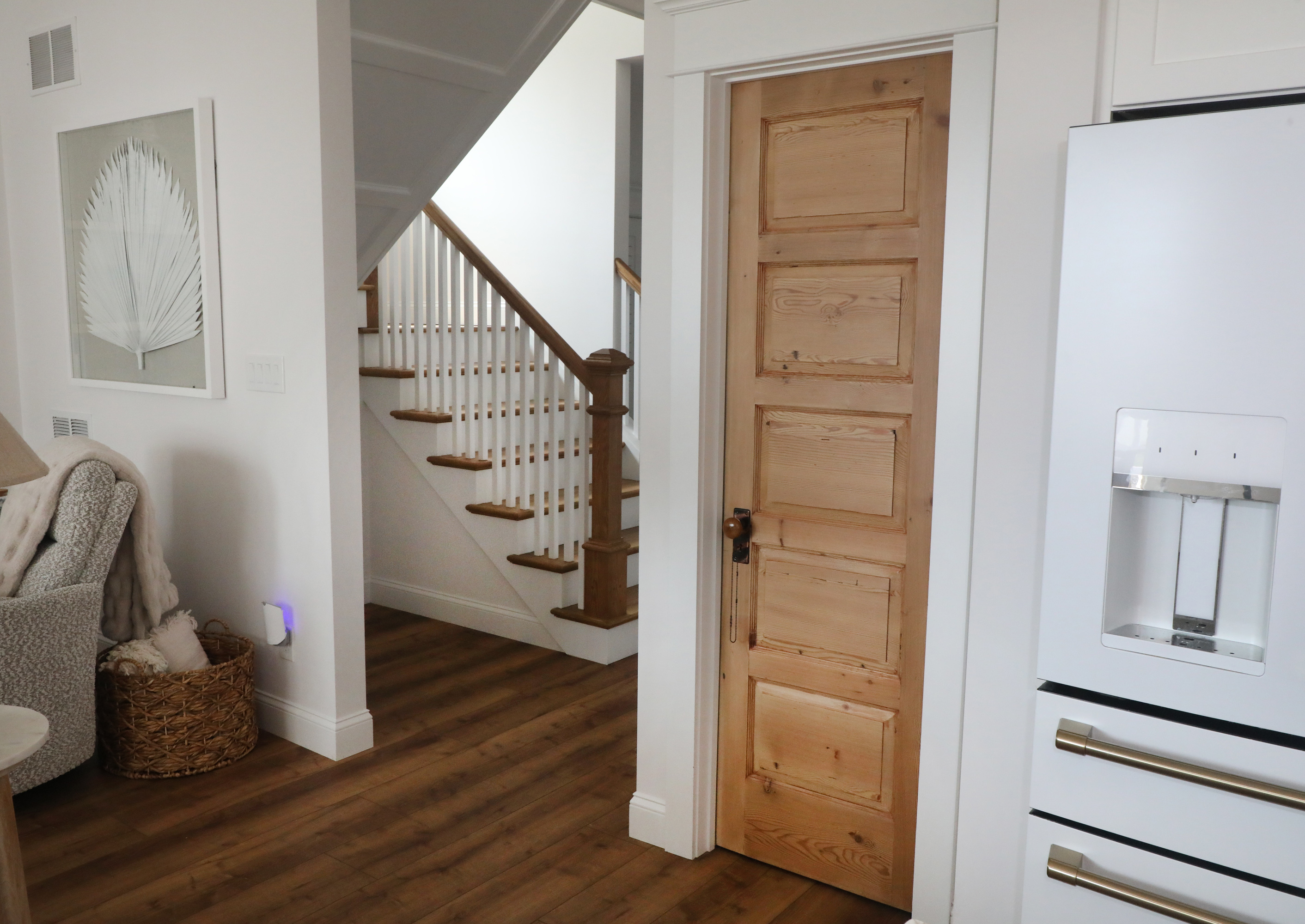
    Dolly eats most of her meals in the breakfast nook, bathed in natural light. One door from the original house was salvaged and repurposed as the pantry door.

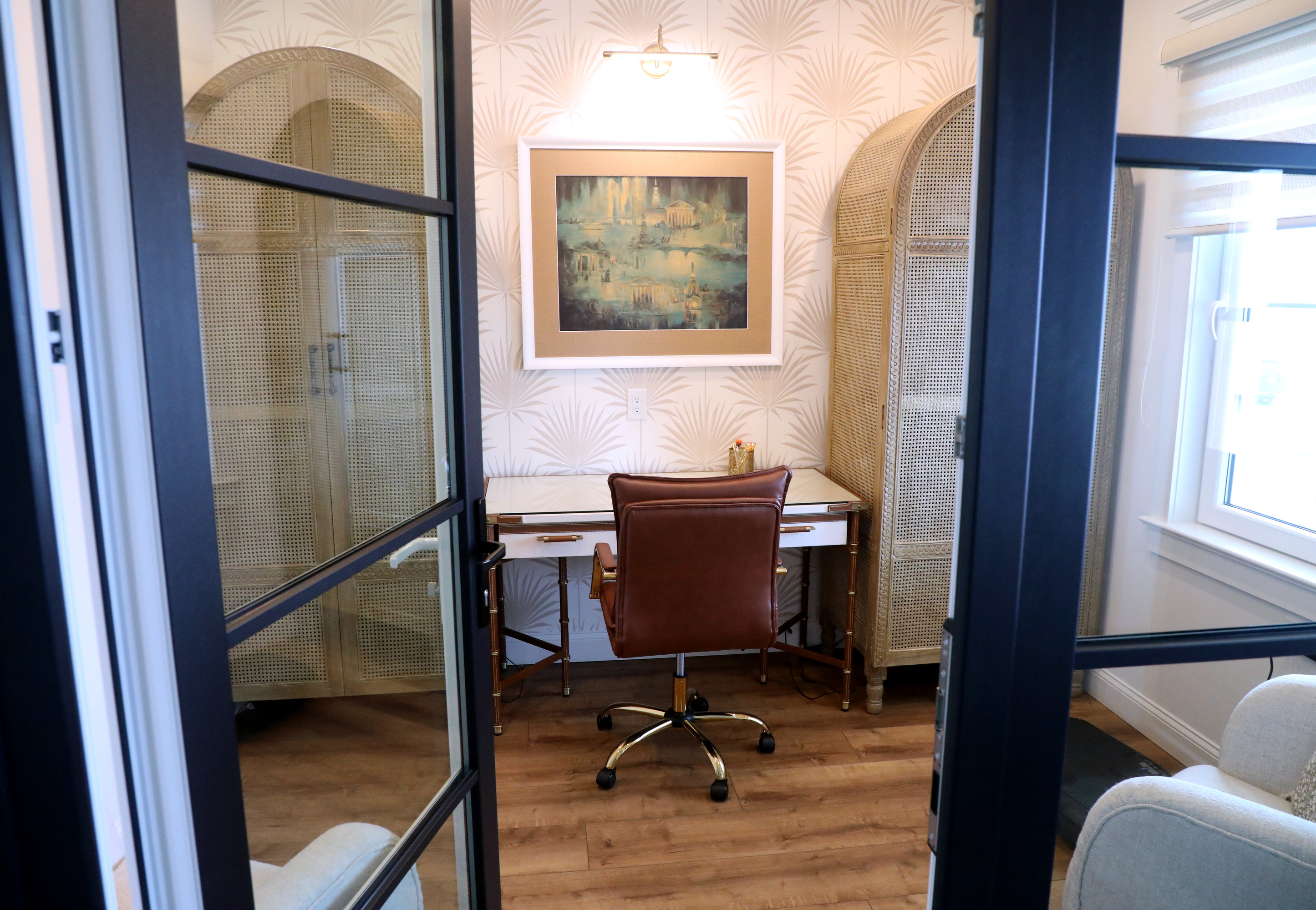
    Her office is tucked behind large glass doors with black windowpanes, custom designed by North Wildwood-based Window Hub. She appreciates being able to see out, while also having privacy.

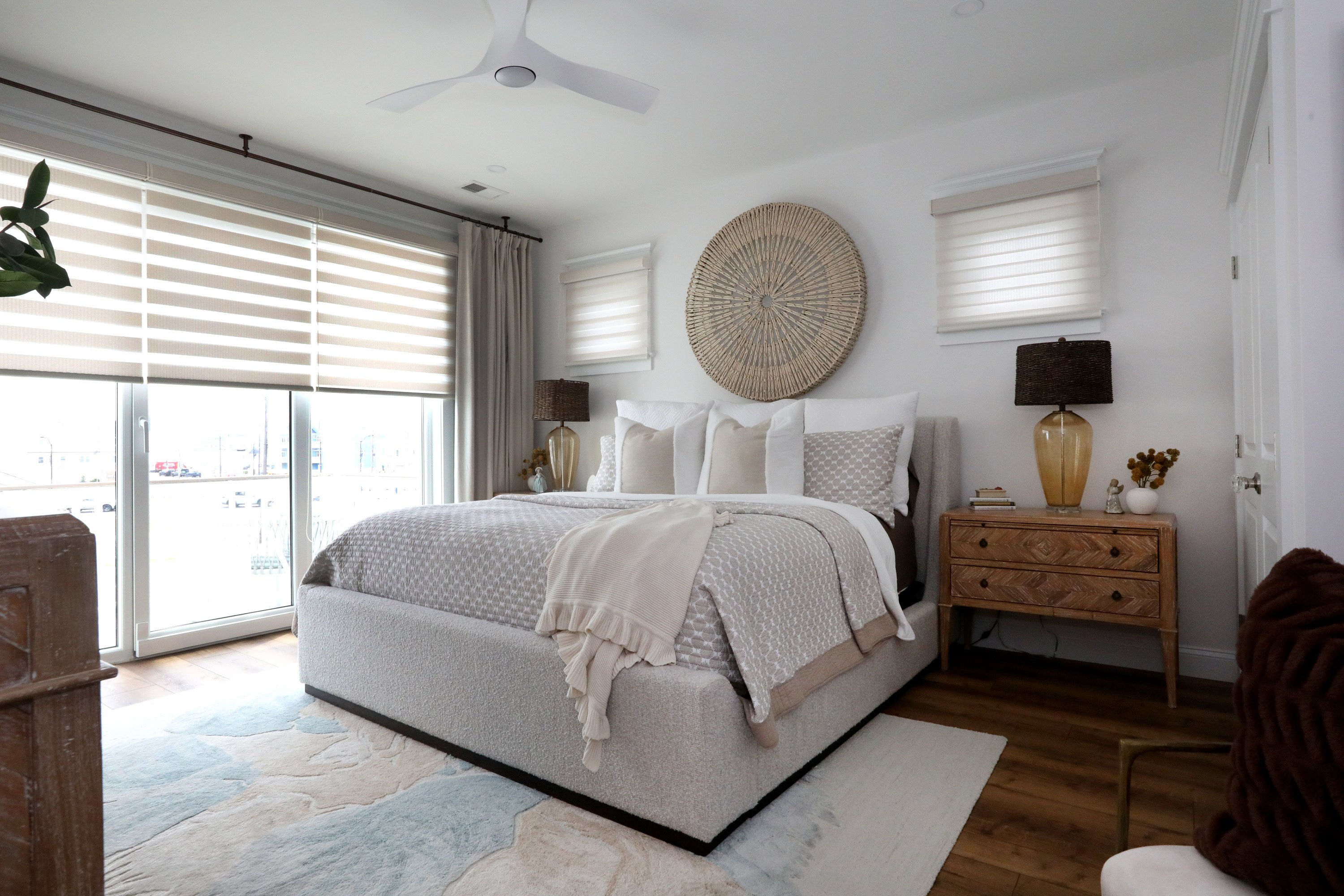
    The main bedroom.Vernon Ogrodnek / For The Inquirer
    A print in Kelly’s office is one of her favorite items in the house. The space has custom doors.Vernon Ogrodnek / For The Inquirer
    Kelly enjoys cooking for the family in her kitchen and dines in the breakfast nook daily.Vernon Ogrodnek / For The Inquirer
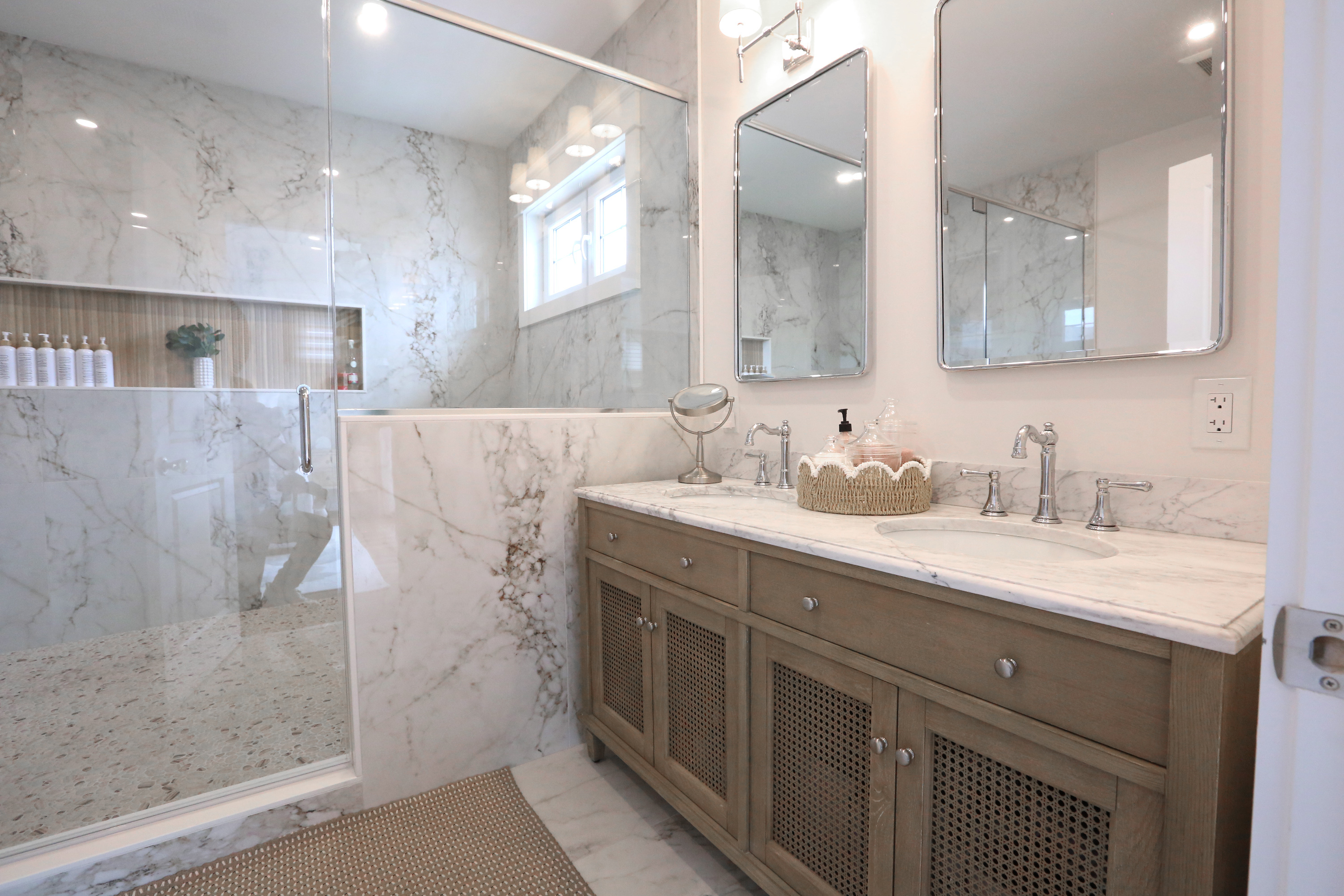
    The primary bathroom includes a spa-like bathing area.Vernon Ogrodnek / For The Inquirer

    The primary bedroom features a water room — a large enclosed shower with a soaking tub, offering the feel of a luxurious spa.

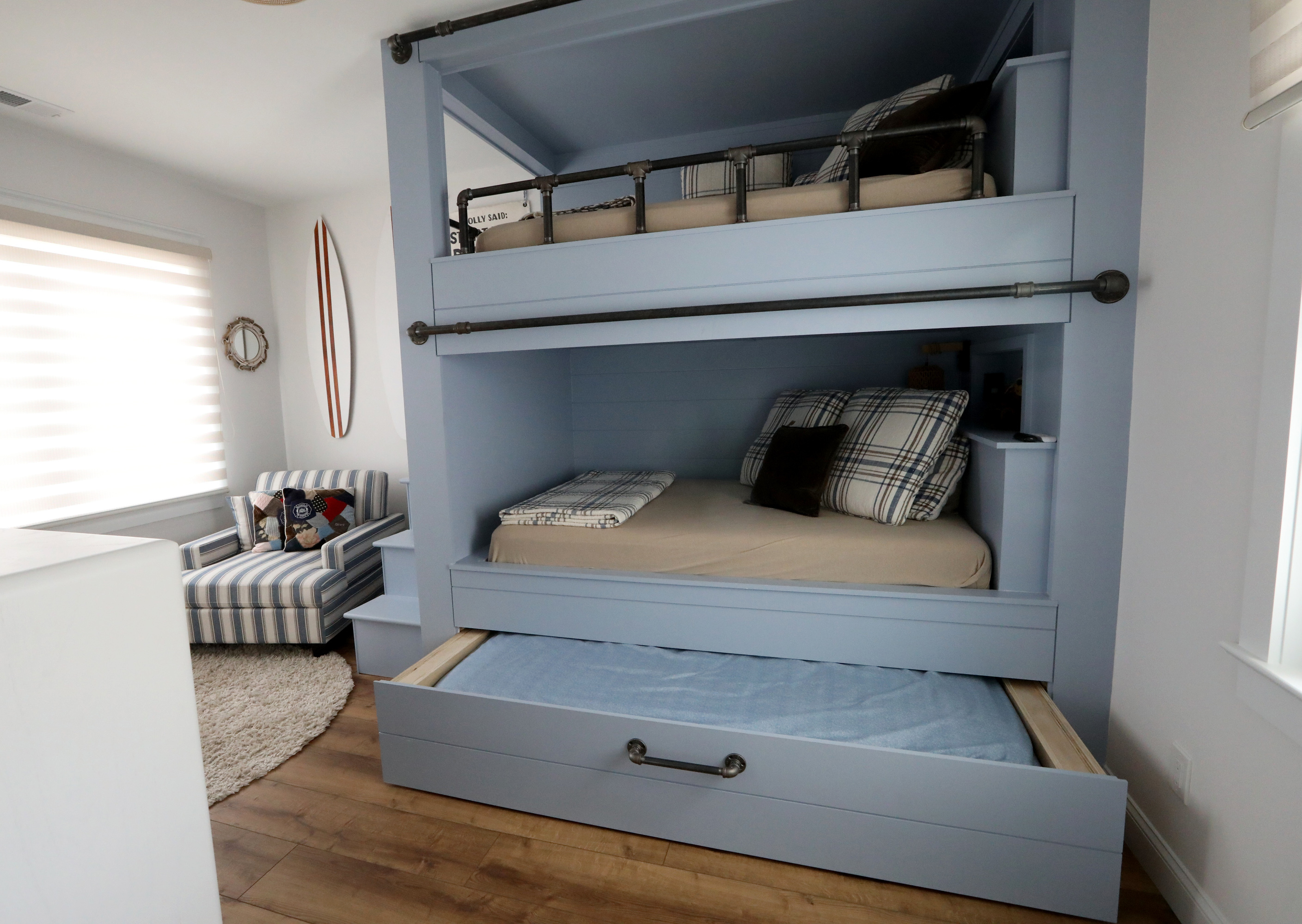
    To maximize sleeping space, one bedroom contains queen-sized bunk beds with a queen-sized trundle. The home can comfortably sleep 12, but when there are more guests, the kids find other creative spaces to spend the night.

    Dolly loves shopping, finding beautiful accessories to match the decor. The spherical crystal floor lamp she found at Restoration Hardware blends traditional crystal with contemporary metal geometry.

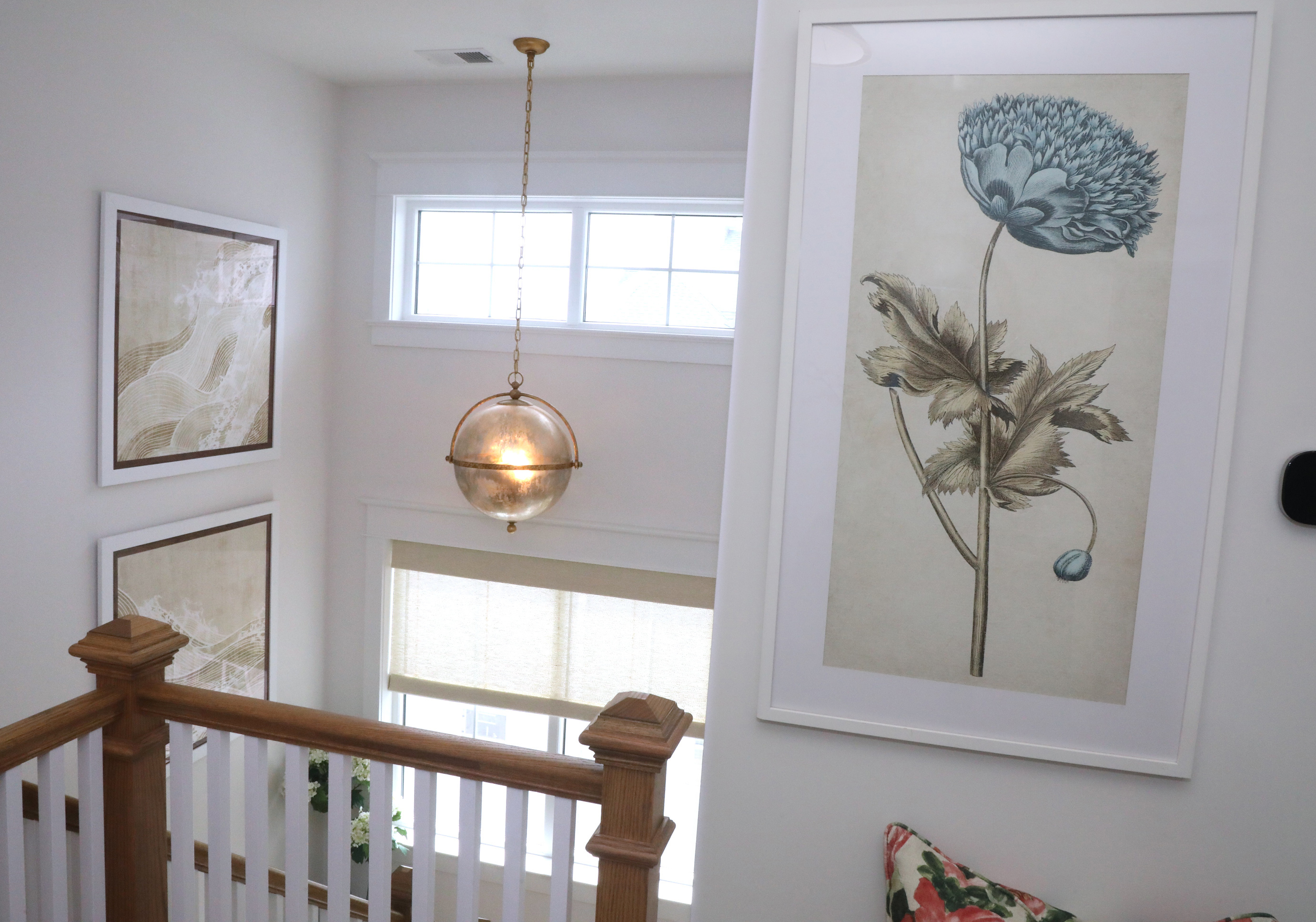
    The chandelier that hangs in the stairwell — a globe pendant featuring a hand-hammered mercury glass shade — came from Visual Comfort & Co. in High Point, N.C.

    A bedroom for the younger members of her family has queen-sized bunk beds and a trundle.Vernon Ogrodnek / For The Inquirer
    A door from the original home leads into a pantry.Vernon Ogrodnek / For The Inquirer
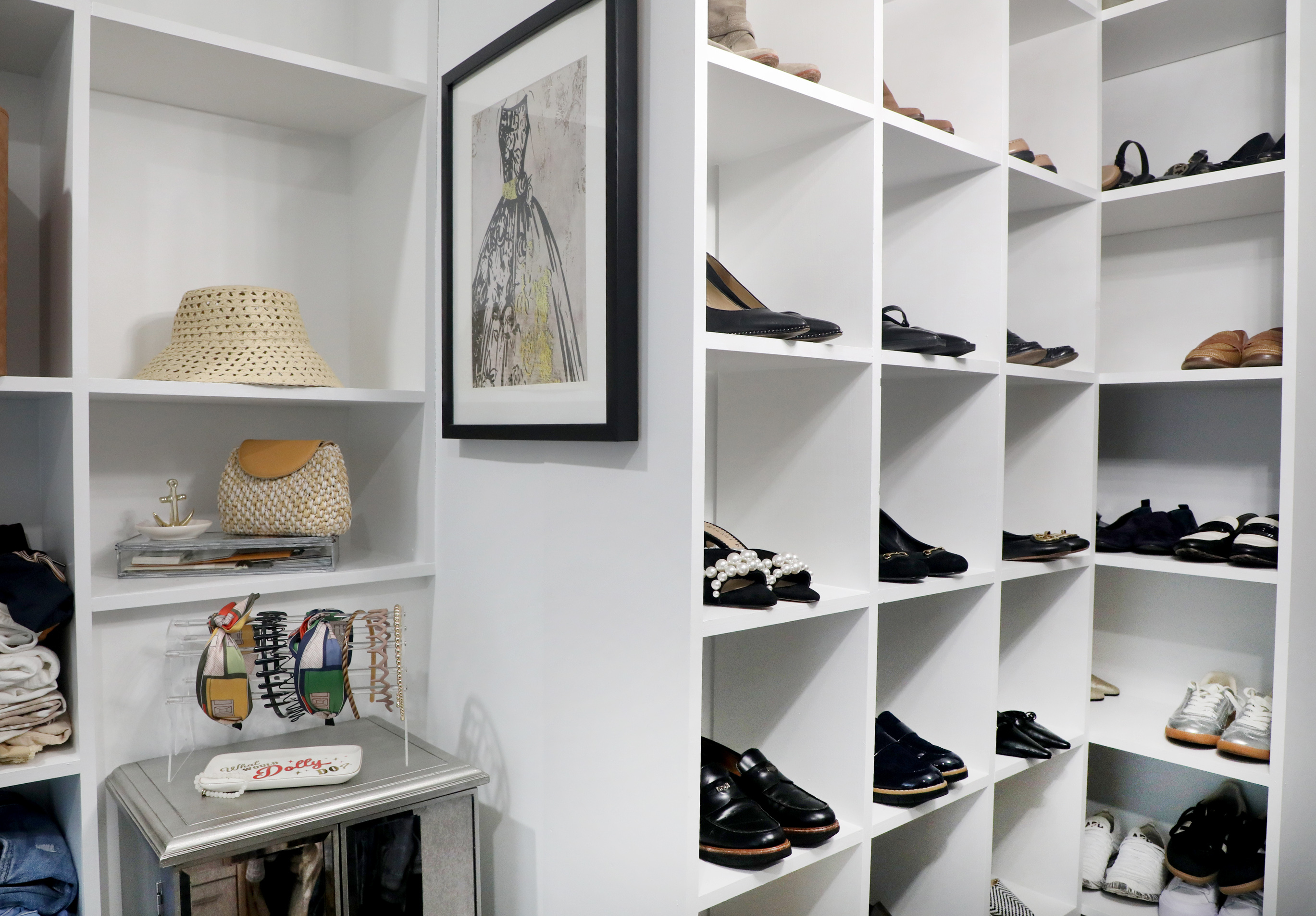
    Kelly’s shoe collection is displayed in her custom closet.Vernon Ogrodnek / For The Inquirer
    A chandelier featuring a hand-hammered mercury glass shade hangs in the stairwell.Vernon Ogrodnek / For The Inquirer

    The home has become the family retreat Dolly envisioned. This past Memorial Day weekend, 19 family members descended to hang out with their beloved aunt.

    “I couldn’t be the aunt I am today if I didn’t have them all around,” she said.

    The group spends time at the beach but also in the built-in heated swimming pool in the backyard. She keeps it open from April through October.

    The porch.Vernon Ogrodnek / For The Inquirer

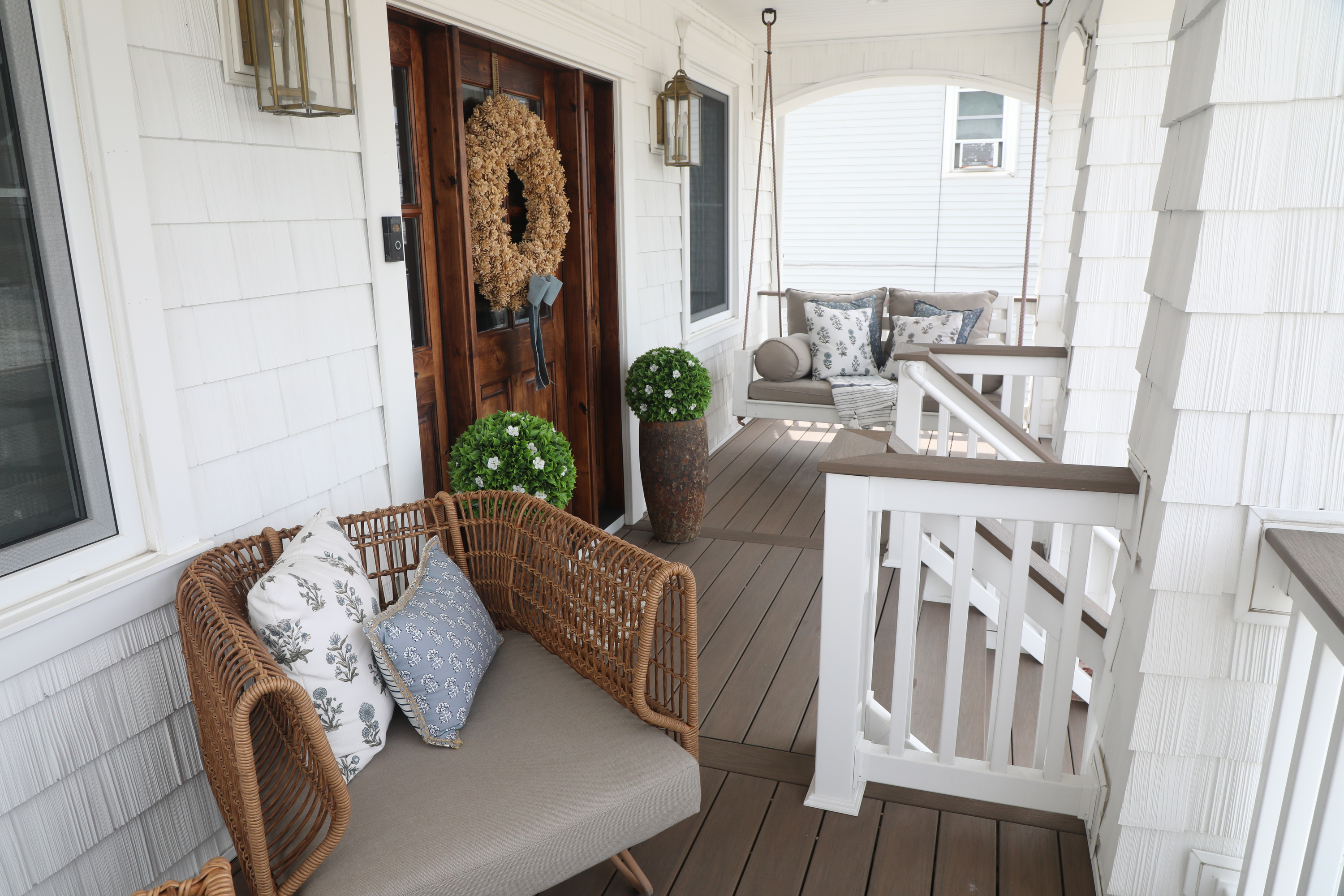
    The front porch features comfortable furniture including a two-person swing and is one of Dolly’s favorite spots to entertain or chat with neighbors.

    “This is the gathering place whether it’s just a casual Sunday-Funday sitting by the pool barbecuing, or if it’s a big bash,” she said.

    Is your house a Haven? Nominate your home by email (and send some digital photographs) at properties@inquirer.com.

  • House of the week: A Queen Village trinity for $349,000

    House of the week: A Queen Village trinity for $349,000

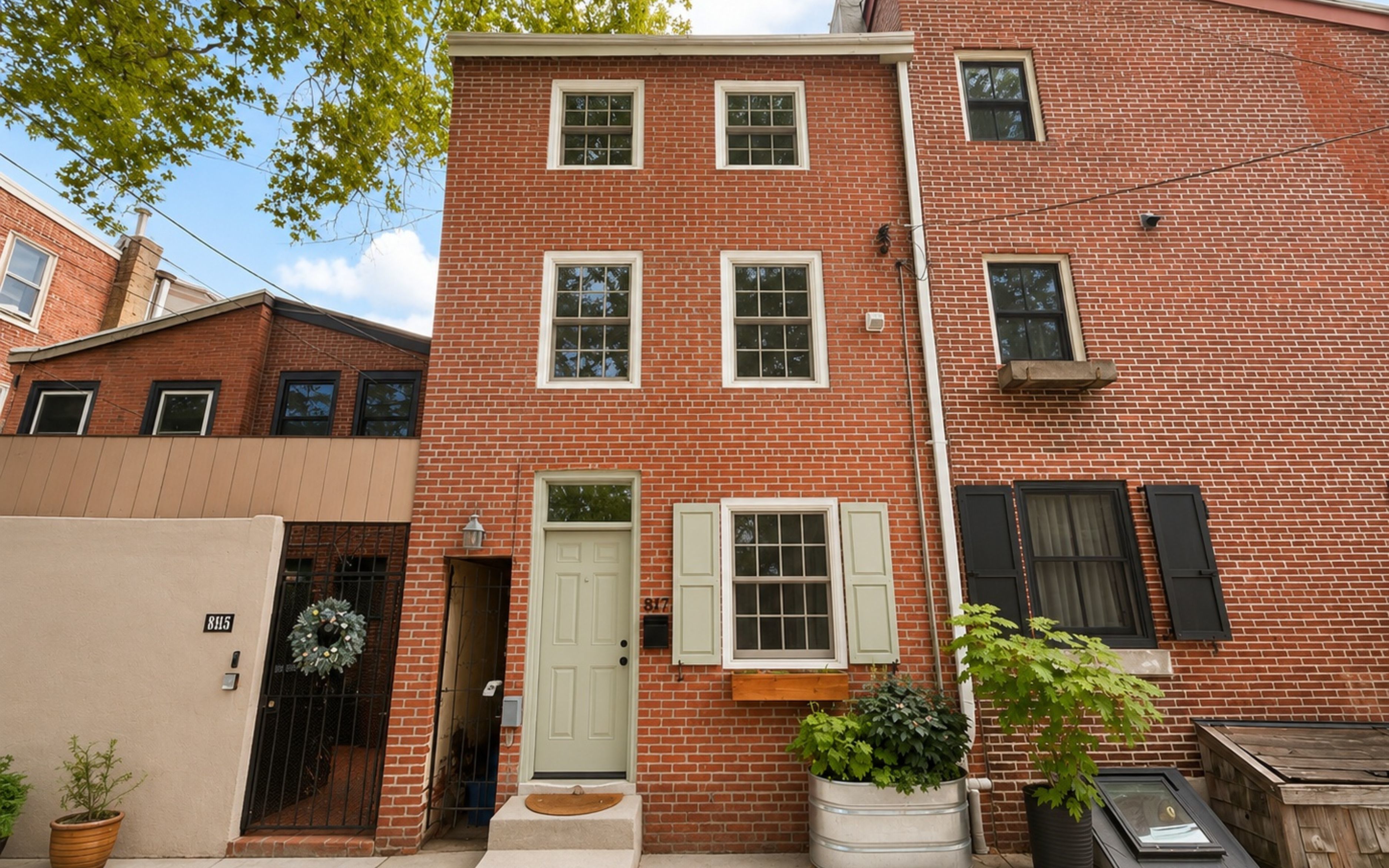
    When Hunter Wages and his wife, Lauren Nalley, bought their Queen Village trinity in 2023 after renting nearby for two years, they especially liked having the Weccacoe Playground across the street.

    They liked the constant activity there, such as park cleanup days, and, “It’s hard to beat having a tennis court in your front yard,” said Wages.

    For Nalley, an environmental engineer in water resources, and Wages, who does software testing for a veterinarian agency, the two-bedroom, 1½-bathroom house was the first they had owned together.

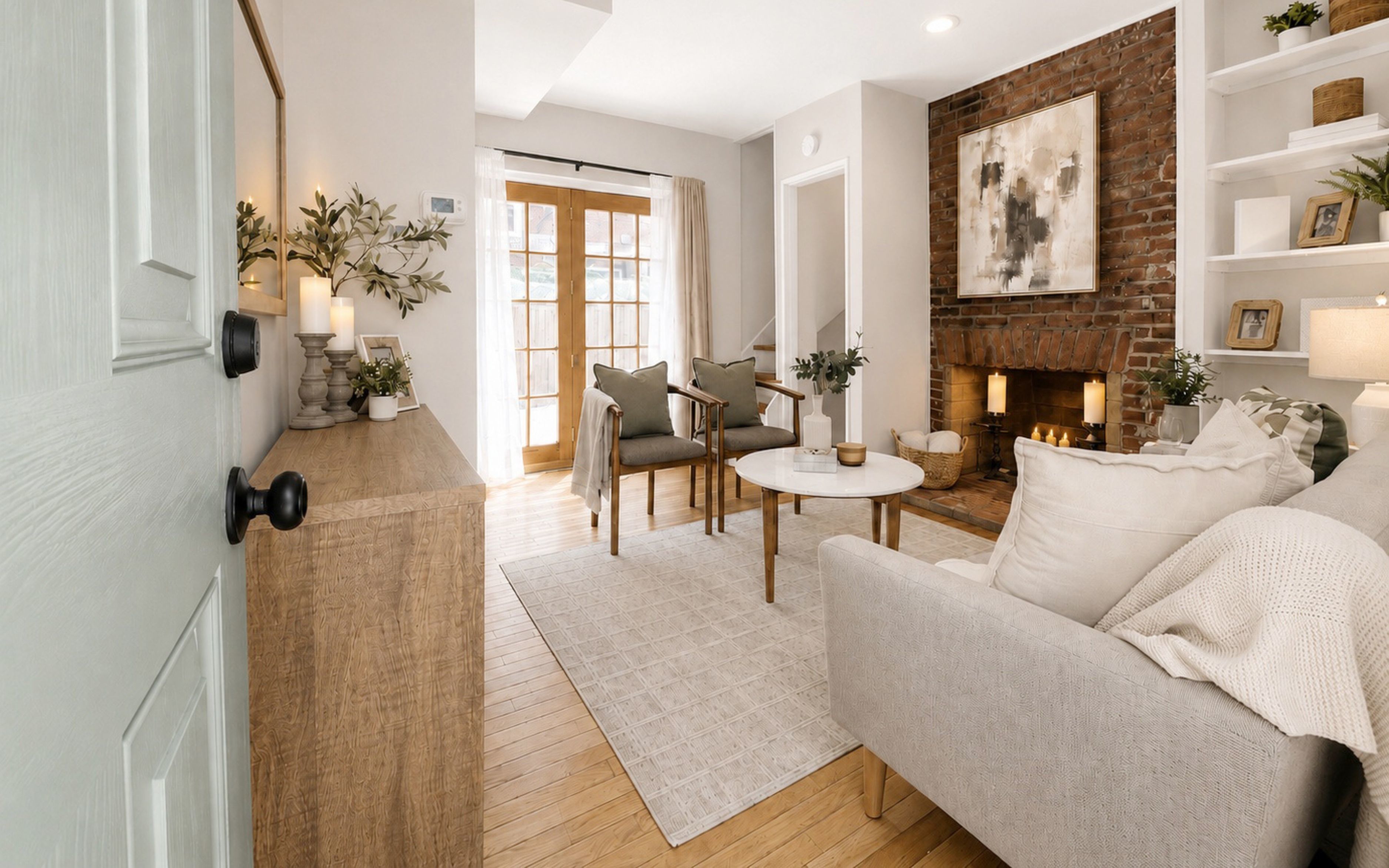
    Living roomJim Armstrong

    Noting the home’s “historic charm,” Wages said, “trinities are unique.” And he found the exposed brick sections of the interior attractive. But they are moving to Colorado to be with friends and family.

    The 710-square-foot house on a tree-lined street has replacement windows and central air-conditioning.

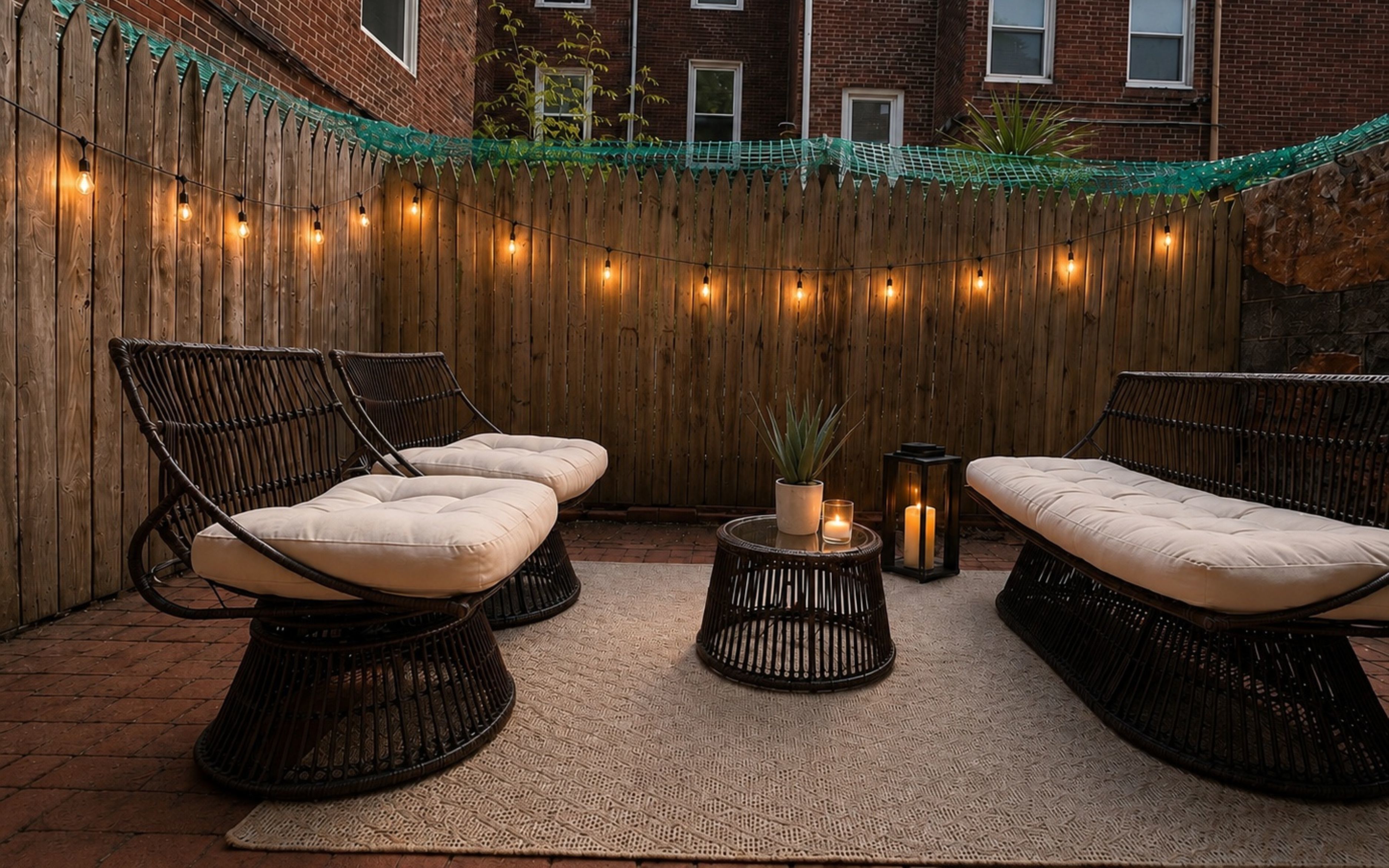
    The private fenced patioJim Armstrong

    The living room has hardwood floors, built-in custom cabinetry, and French doors opening to a private fenced patio.

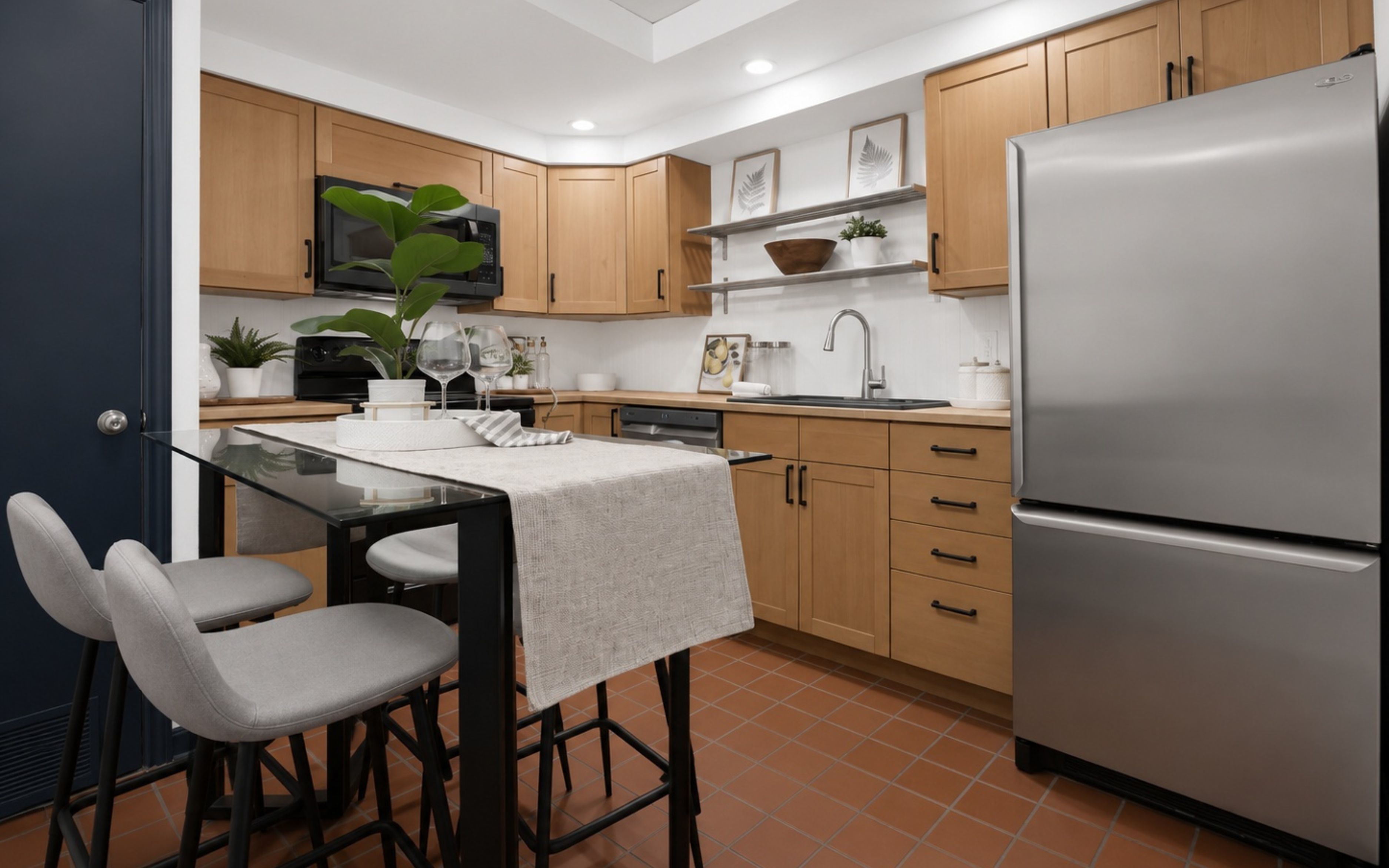
    The lower level also has a modern kitchen.

    KitchenJim Armstrong

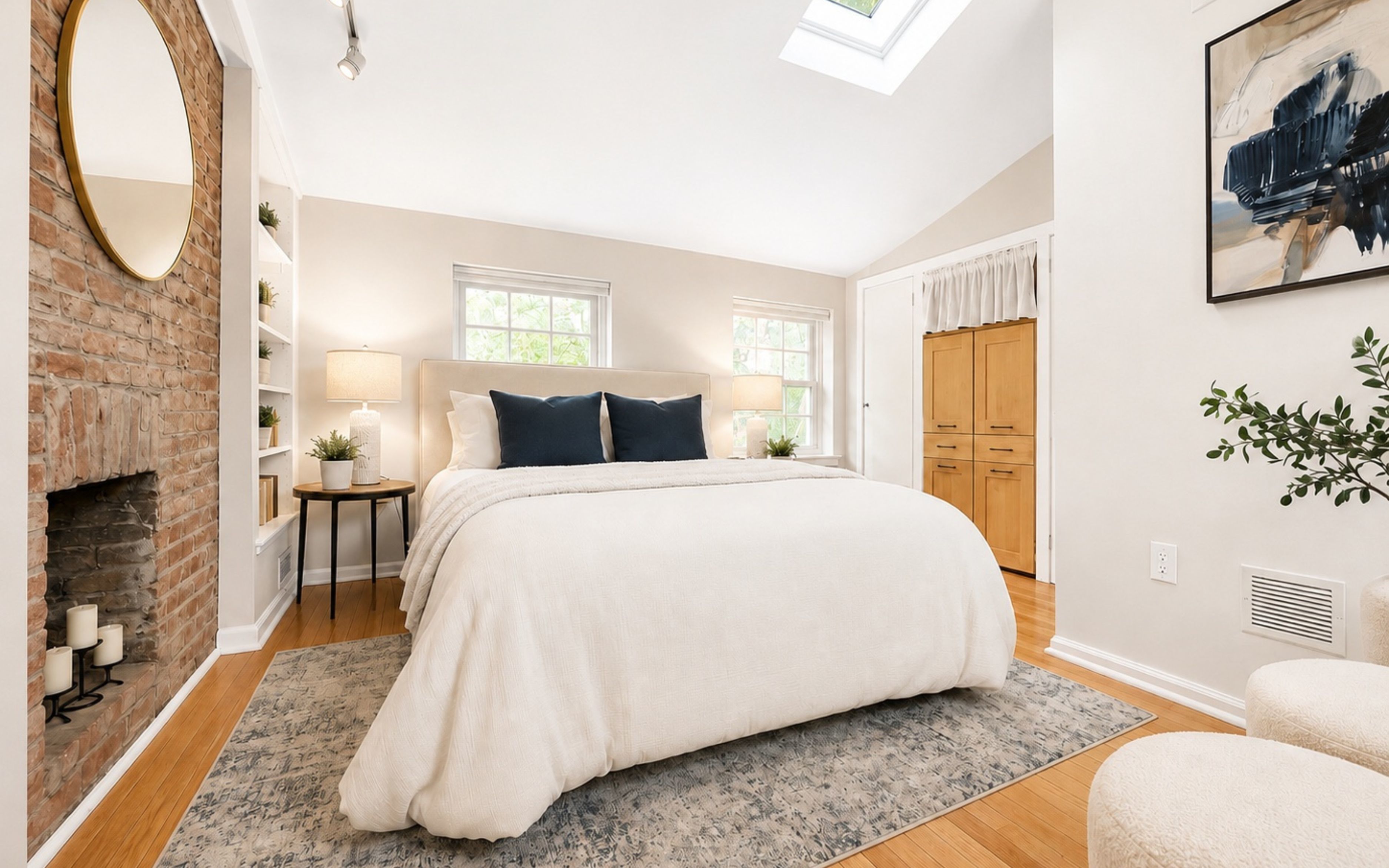
    The second floor has a bedroom, the full bathroom, and multiple closets. The primary bedroom is on the third floor, with built-in shelves, vaulted ceilings, and an updated half-bathroom.

    There are also decorative fireplaces on the first and third floors.

    The primary bedroom has built-in shelves and a decorative fireplace.Jim Armstrong

    The house is steps away from neighborhood restaurants such as Southwark and Ambra, as well as the Famous 4th Street Delicatessen and the Delaware River Trail.

    It has easy access to I-95 and several bus routes.

    It is in the William M. Meredith School catchment area.

    It is listed by Jim Armstrong of JG Real Estate for $349,000.

  • The advice about rooftop solar panels is changing. Do this instead.

    The advice about rooftop solar panels is changing. Do this instead.

    For a decade, it was a better deal to own, not lease, rooftop solar panels. The end of solar tax credits for homeowners may flip that on its head.

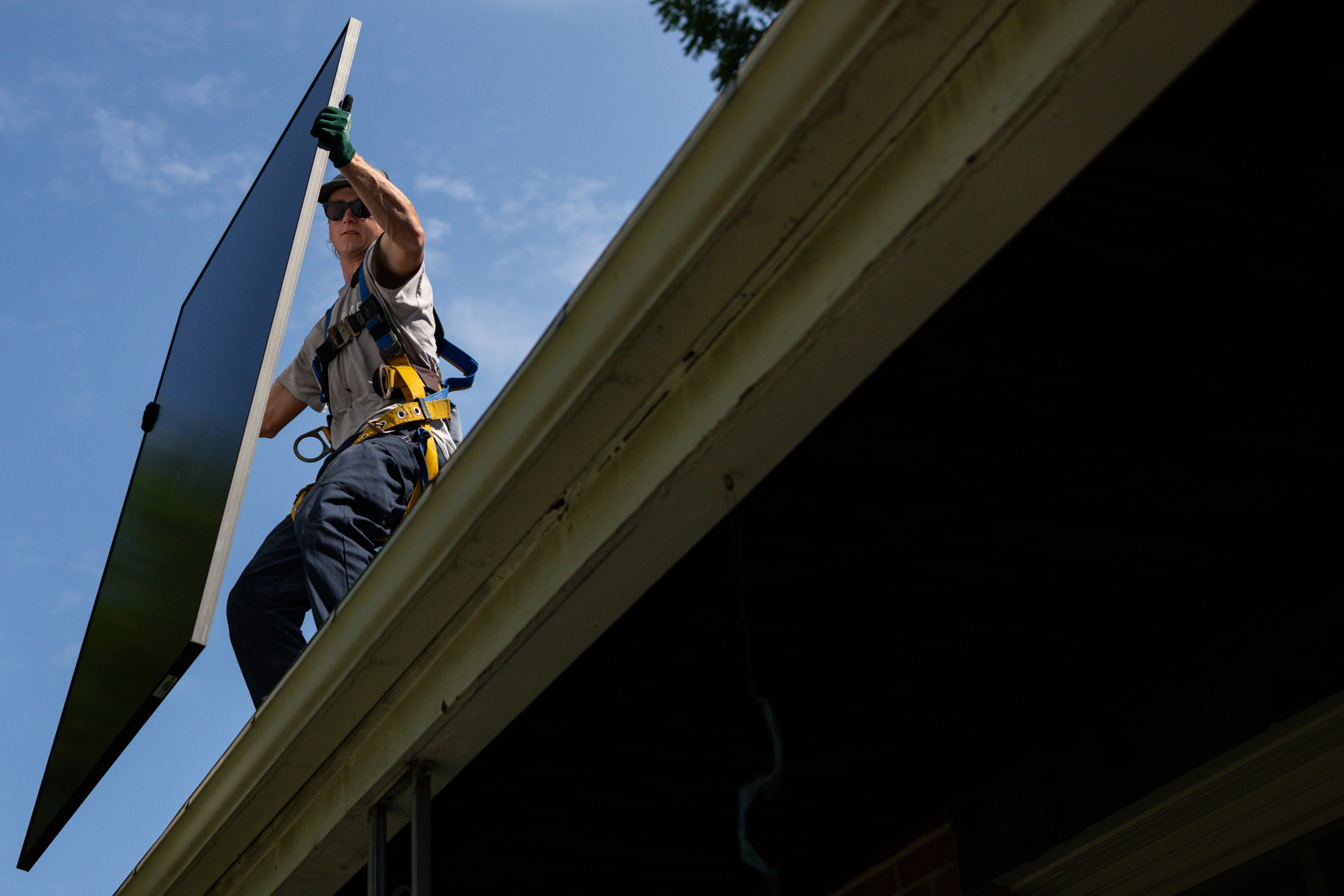
    New subscription offerings are making solar more like subscribing to a cellular or streaming service: Pay monthly to reap the benefits, and cancel when it no longer suits you. If you don’t like the deal you’re getting, the company will remove the panels free of charge.

    The solar industry has long used the word subscription to describe something rather different: long-term, often 25-year leases or power purchase agreements, known as PPAs, that could be canceled only by paying fees or penalties.

    But a new model from an upstart company called Terra Energy is shaking things up in Florida, Texas, and soon California. After subscribing for three years, customers can cancel and have the panels removed from their roof free of charge. If they keep them, they lock in a low, predictable electricity rate relative to their local utility, like any other leasing model.

    Bankrupt companies litter the solar industry. An estimated 50% of residential solar systems in the U.S. are “orphaned,” installed by companies that no longer exist, said Sam Thompson of the solar and home electrification marketplace EnergySage. Although most solar systems deliver on their promises to homeowners, shady sales practices and bankruptcies have plagued the market.

    But industry analysts and some of Terra Energy’s customers say this subscription model might just be the future.

    Here’s why the loss of federal tax credits means that leasing now dominates new home solar sales, and why subscribing to the sun can now be a better bet than owning those rooftop panels.

    When renting beats owning

    Bob Scheeler, 65, had been interested in going solar for years. But as a retired real estate agent in Cape Coral, Fla., he had seen homeowners run into trouble with leased solar panels when securing insurance coverage, qualifying for financing, or reselling their property.

    Then he ran across Terra Energy’s subscription offer and signed up. Earlier this year, the company installed about two dozen panels on his roof, with the option to add more. His typical $250 utility bill has since fallen by about 40%: He pays $120 to Terra and $30 to his utility.

    Scheeler said the subscription offered the most appealing package. “This actually came out the least expensive and the best bet,” he said. “I think it’s great.” He has no plans to remove the panels once he reaches the three-year mark, when Terra would do it for free.

    Solar deals typically come in three flavors: leases, purchase power agreements (PPA), or ownership.

    Leases get panels onto your roof for a fixed monthly payment, often 25 years, but the company you’re leasing from owns the solar array (some let you purchase them after a fixed period).

    PPAs are similar, but a homeowner pays only for the electricity that the panels on their roof produce, generally for less than what the utility charges.

    Finally, homeowners can finance or purchase their own solar systems. Self-financed ownership is still likely to deliver the best return on investment in the long term: a cash purchase of a home solar system averages $30,500 before any incentives, with average savings of $61,093 over 25 years, EnergySage estimates, a roughly 10-year payback period.

    But the elimination of a 30% tax credit for homeowners in the One Big Beautiful Bill last year effectively raised the cost of the average home solar system by $8,000.

    While homeowners lose out, businesses enjoy the solar investment tax credit through 2027, making leases and PPAs more attractive. That’s scrambling two decades of “own, don’t lease” advice because only businesses like Terra and others can pass on the tax credit to homeowners.

    Third-party ownership now makes up the majority of new residential solar sales, according to Wood Mackenzie, an energy research firm, up from a minority share last year.

    “Our view has historically been that ownership is the best path,” said Thompson of EnergySage. “But not everyone can pony up $30,000 or get a loan. New leasing models are a vehicle that gives people the opportunity.”

    Free of commitment

    Terra Energy, which was founded in Mexico in 2016 and started operating in the United States in 2023, placed a bold bet as its home country began deregulating its electricity market. It offered to remove its solar panels at company expense if customers weren’t happy after the first few years.

    Terra faced huge bills if many customers canceled. But founder and CEO Jaime Martinez said the promise eliminated one of new customers’ biggest fears: commitment. “We’re going to be your best energy provider,” Martinez argued when I asked about the strategy. “We’re proving that by allowing customers to cancel. They almost never do.”

    Terra says that its retention rates beyond the three-year mark are 98% in Mexico and 100% in Florida, where it launched in 2023 and is now one of the largest residential solar providers. When people do cancel, Martinez said, it tends to be because the home is no longer occupied. The company runs sales, financing, and installation under one roof, so it can deliver good customer service with electricity prices 20% to 60% below utility rates where it operates.

    In Texas, where Terra launched in June, it offers a package of rooftop solar panels, a 40-kWh whole-home battery backup system, and retail electricity in a single monthly bill.

    The company is now adding about 1,000 new customers per month, said Martinez, with plans to expand to California later this year and then across the South.

    Can you trust a subscription?

    I asked EnergySage to review a sample Terra Energy contract. “The customer opt-out options are more consumer-friendly than typical. Otherwise, most contents are fairly standard,” wrote EnergySage energy adviser Matt Schuler. “[But] every homeowner should evaluate the contract to see if the subscription costs pencil out with their electric rates and usage.”
    The major difference was the option to cancel free anytime after three years. Terra will remove the panels and then repair the roof so it remains “watertight” at no cost.
    Otherwise, the 10-year lease continues and then renews annually at the customer’s discretion once the decade is up. Terra repairs and maintains the system, and will remove and reinstall the panels for free if roof repairs are needed. (Doing that triggers a 36-month extension of the contract.)

    Buyers of a home that already has a Terra system may assume the contract, if they pass a credit check, or choose to end it free of charge. Martinez said the company ensures that annual cost increases, or escalators, are under 2%. Escalators above 3% risk negating the energy bill savings from solar.

    The primary restriction is that you can’t buy the system even if you want to. While that could cut into long-term returns, Terra says it has historically upgraded customers’ solar panels over the course of their 10-year contract as technology improves.

    The home solar market, researchers said, is maturing. Residential solar remains more expensive in the United States than almost anywhere else in the developed world. It’s one of the reasons that utility and community solar is a more cost-effective way for society to deploy panels and electrify.

    But for most individual homeowners, subscribing pencils out as a positive and should only get more attractive as utility rates surge. After a wild-west period, the solar industry will keep consolidating into something more professional and profitable, even after the remaining tax credits expire.

    For homeowners on the sidelines, subscriptions prioritize flexibility and convenience over maximizing long-run savings, a deal many are willing to make.

    “It has the potential to be the national model,” says EnergySage’s Thompson.

  • Northwest Tool Library in Mount Airy aims to make home maintenance more accessible

    Northwest Tool Library in Mount Airy aims to make home maintenance more accessible

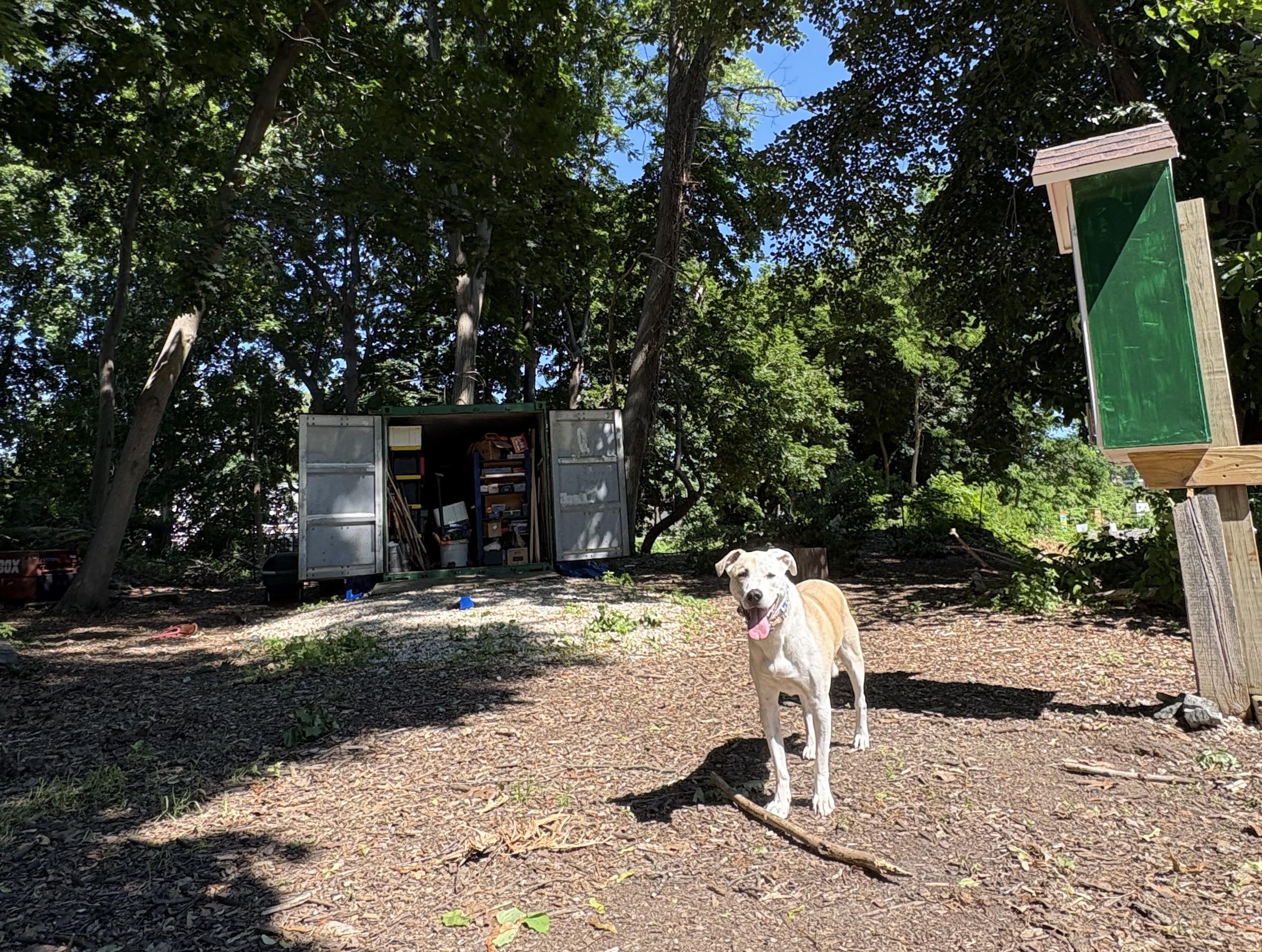
    Inside a shipping container on a lot beside SEPTA’s Carpenter train station in Mount Airy, thousands of old tools sit waiting, ready for a new life as part of the new Northwest Tool Library.

    Set to open on Sunday, the tool library will lend hand tools, power tools, ladders, and various other gadgets to members in an effort to make home maintenance more accessible.

    “We don’t all need to have leaf blowers,” said Jo Winter, executive director of West Mount Airy Neighbors (WMAN), the nonprofit civic group sponsoring the initiative. “If some of us have them in our shared space, it can be another effort to speak to the ethos of our community.”

    The idea for the project sparked a few years ago when a Mount Airy resident died and his wife donated his tools to WMAN, Winter said. The neighborhood organization runs EcoLab, a community project revitalizing green space in a once-neglected lot behind a nearby Regional Rail station, and stored the tools in a shipping container on the lot for tree tending.

    Mount Airy residents have long traded tools through the Facebook group Mount Airy Tool Exchange, especially as downsizing neighbors wanted to get rid of equipment they no longer had room for. But interest grew in having a designated tool library, as locals looked to the West Philly Tool Library as an example.

    Ash Fritzsche was one of those interested residents. As an electrician, she has taught classes at the West Philly Tool Library, but when she moved to Mount Airy, it became too far to frequent. So she got involved in bringing one northwest.

    Ultimately, WMAN realized the shipping container, which already housed landscaping tools, could also be used for “this other project everybody’s been talking about,” Fritzsche said.

    As a sponsor, WMAN provides organizational support for the library, while volunteers run the day-to-day operations.

    “It ticks all the boxes of something that would work in our community,” Winter said. “It’s mutual aid; it’s green; it’s this idea of sharing what you have, not throwing it into the trash.”

    Organizers ran tool drives to collect donations, and now the library has thousands of tools in its still-growing inventory. Once the tool library opens, volunteers will run two shifts a week on Wednesdays and Sundays when members can stop by and borrow tools.

    To join, members must pay an annual fee based on a sliding scale, so individuals contribute what they can afford. Fritzsche recommends removing three zeros from one’s annual income: If you make $50,000, pay $50 a year to support the library.

    The organizers dream bigger than a shipping container — which they have already maxed out with the size of their stock. They hope to move into a brick-and-mortar location and offer programming, such as home improvement and life skills classes.

    For example, Fritzsche believes everyone should know how to change a tire, change the oil, and know the basics of their plumbing and electrical systems, so they are empowered to be self-sufficient when something goes wrong.

    “Life is so cyber right now,” Fritzsche said. “I’m interested in any sort of simple crafts that can be taught so that people can engage with the real world.”

  • Downsizing in Bella Vista, they kept travel treasures and love of film in the home

    Downsizing in Bella Vista, they kept travel treasures and love of film in the home

    “When I turned 80,” Andrea Preis said, “our sons told me, ‘It’s time for you and Dad to downsize and move into a place that is more manageable.’ So we did.”

    So in 2024, Andrea and husband Eran Preis moved from a four-bedroom home in Queen Village, where they lived for 26 years, to a two-bedroom condo in Bella Vista.

    Andrea had no room for her collection of framed embroidery, her cookbooks, art books, albums of photos taken on trips all over the world, dishes, a painted cupboard, and other treasures.

    “I had to force myself,” she said, to part with beloved objects. “It made me sick. It was so hard.”

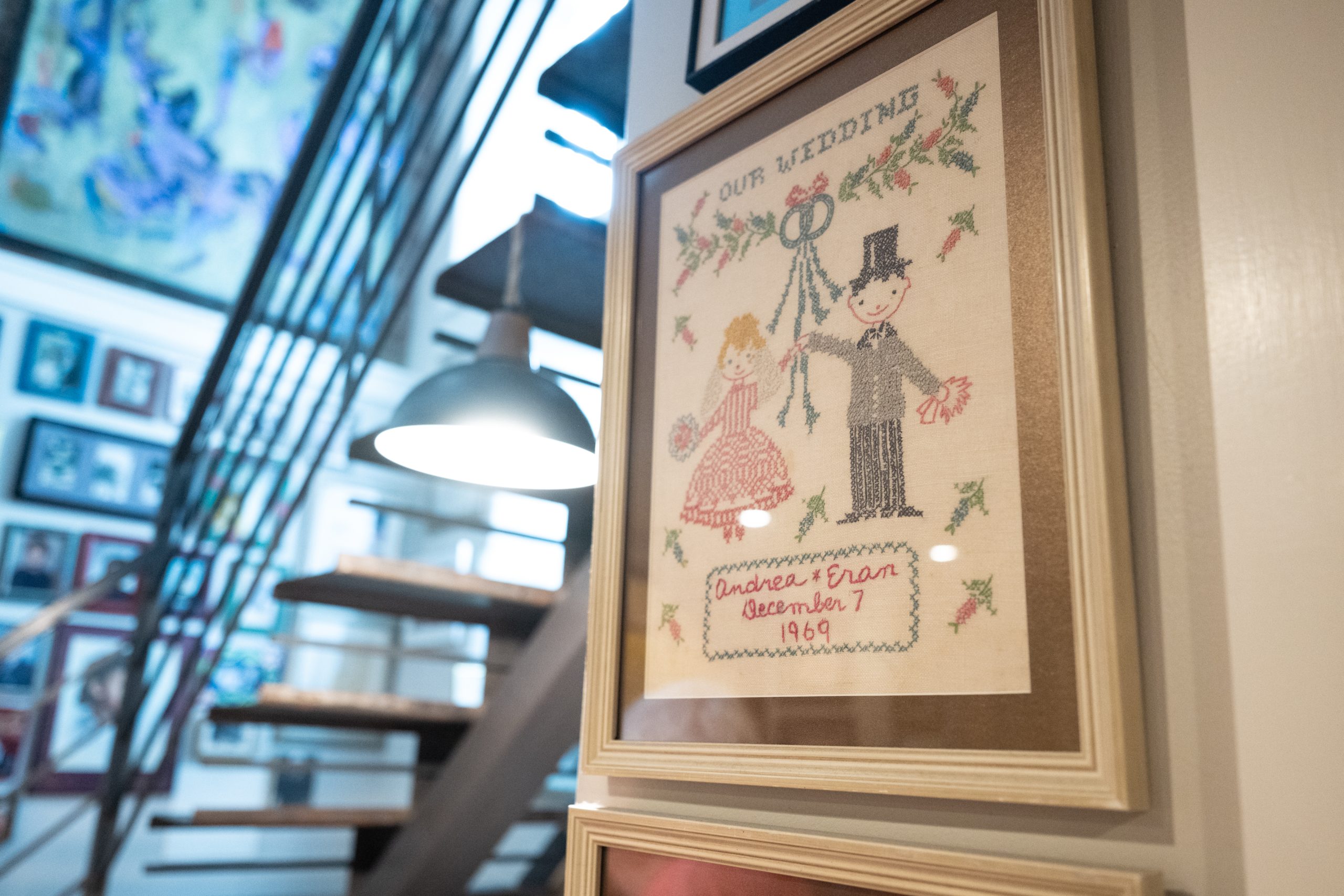
    A wedding memento embroidered by Andrea Preis’ grandmother hangs in the basement of the home.Erin Blewett / For The Inquirer
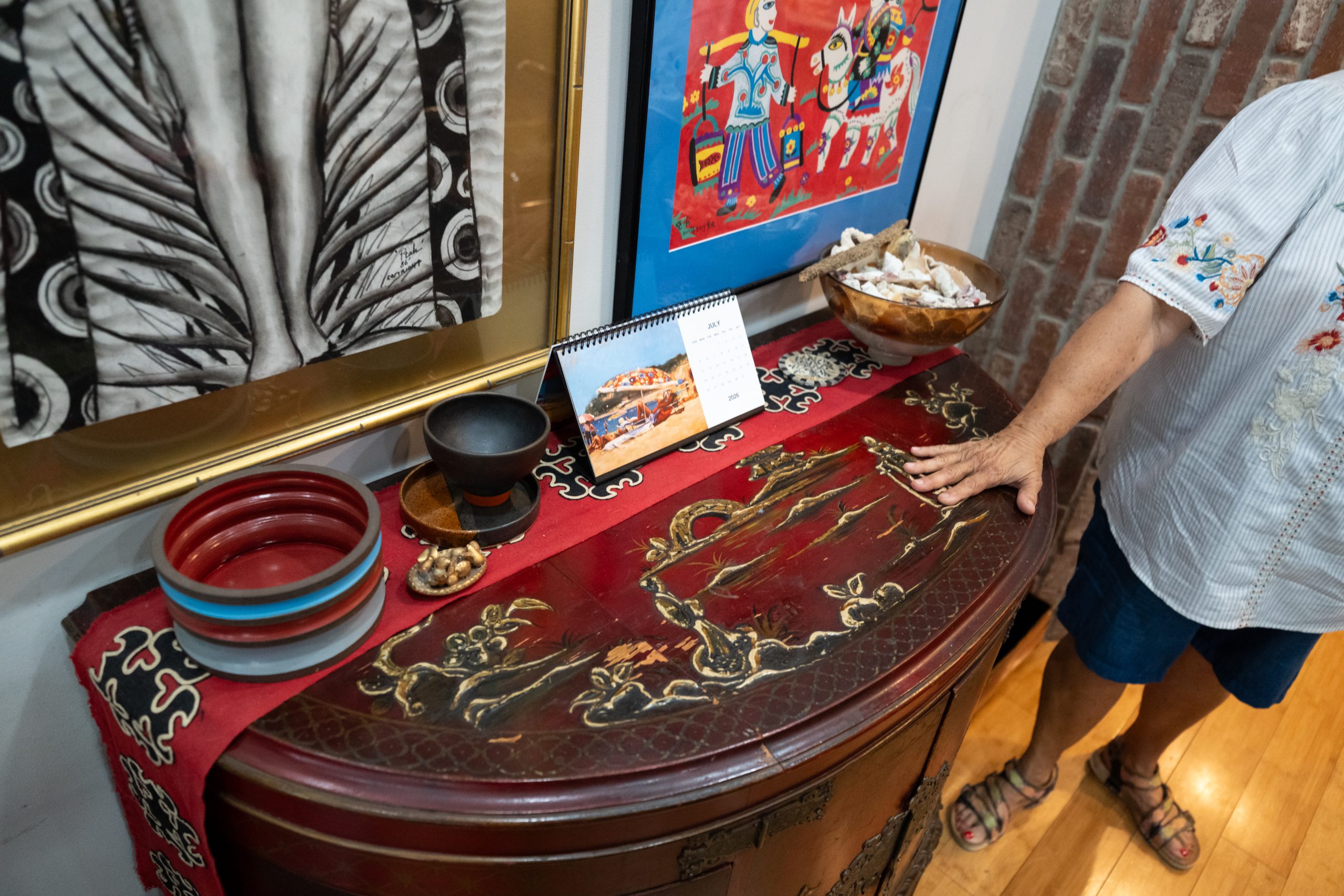
    Andrea Preis touches a cabinet at the front of the home, adorned with some of the items she has collected.Erin Blewett / For The Inquirer

    Eran, who gave away stacks of books, was less nostalgic. “We needed to be on one level and our house was starting to fall apart,” he said.

    Andrea had a house sale and later set out a table in front of her old home with items people took for free. “When I finally put away the table a woman knocked on the door wondering where everything was,” she recalled.

    The couple’s condo comprises the first floor and basement of the three-story rowhouse and was renovated 20 years ago. The ground floor features a sitting area, kitchen, bedroom, and bathroom, and a tiny garden. In the basement there is another bedroom, bathroom, and sitting room.

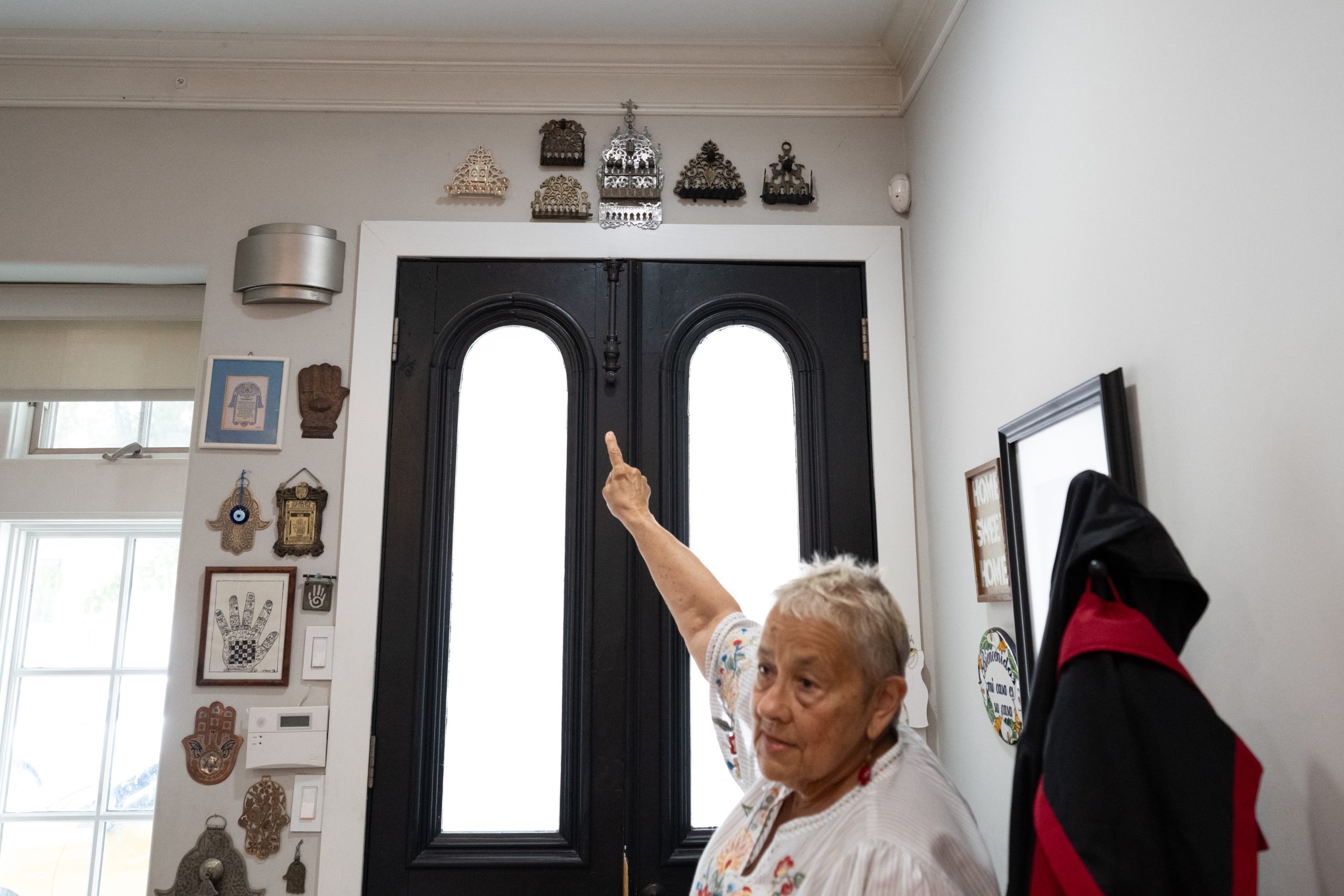
    Though she purged half of her furnishings, Andrea kept favorites such as an elaborately carved antique buffet with brass fittings. Over the front door hang vintage Hanukkah oil lamps from Spain and Italy. White painted and exposed brick walls are hung with abstract art.

    Andrea Preis points to vintage Hanukkah oil lamps from Spain and Italy hanging above the front door.Erin Blewett / For The Inquirer
    A painting created by the couple’s son hangs in the stairwell.Erin Blewett / For The Inquirer

    Several paintings are by Andrea and her son Abner. Her cousin Harriet Quick painted the swirls of green, gold, and orange on a white background.

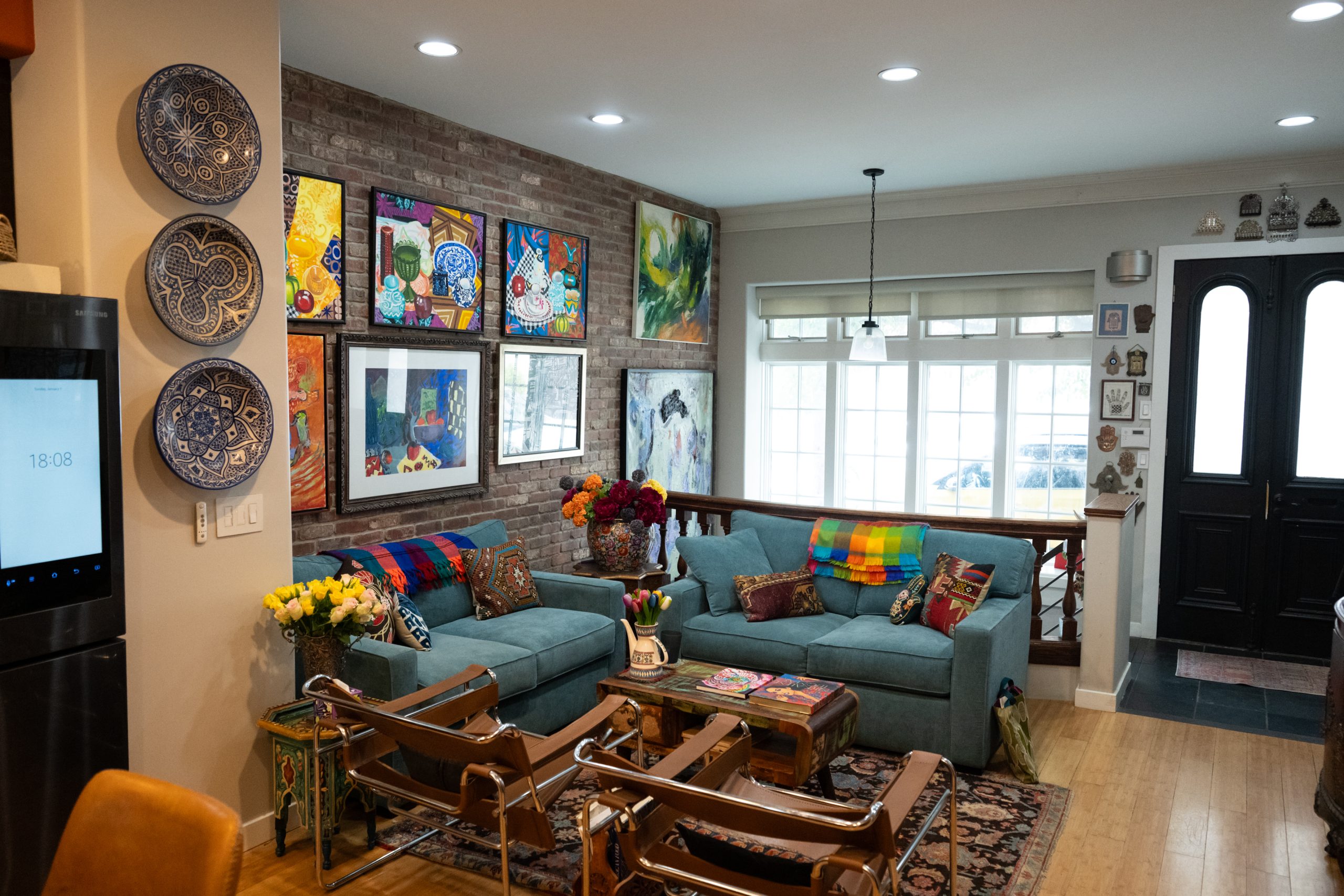
    The sitting area has two blue couches from Macy’s, two leather slingback chairs from a nearby furniture store, and a Persian rug from Material Cultures.

    The living room walls are covered in art, echoed by brightly colored throw blankets and pillows.Erin Blewett / For The Inquirer

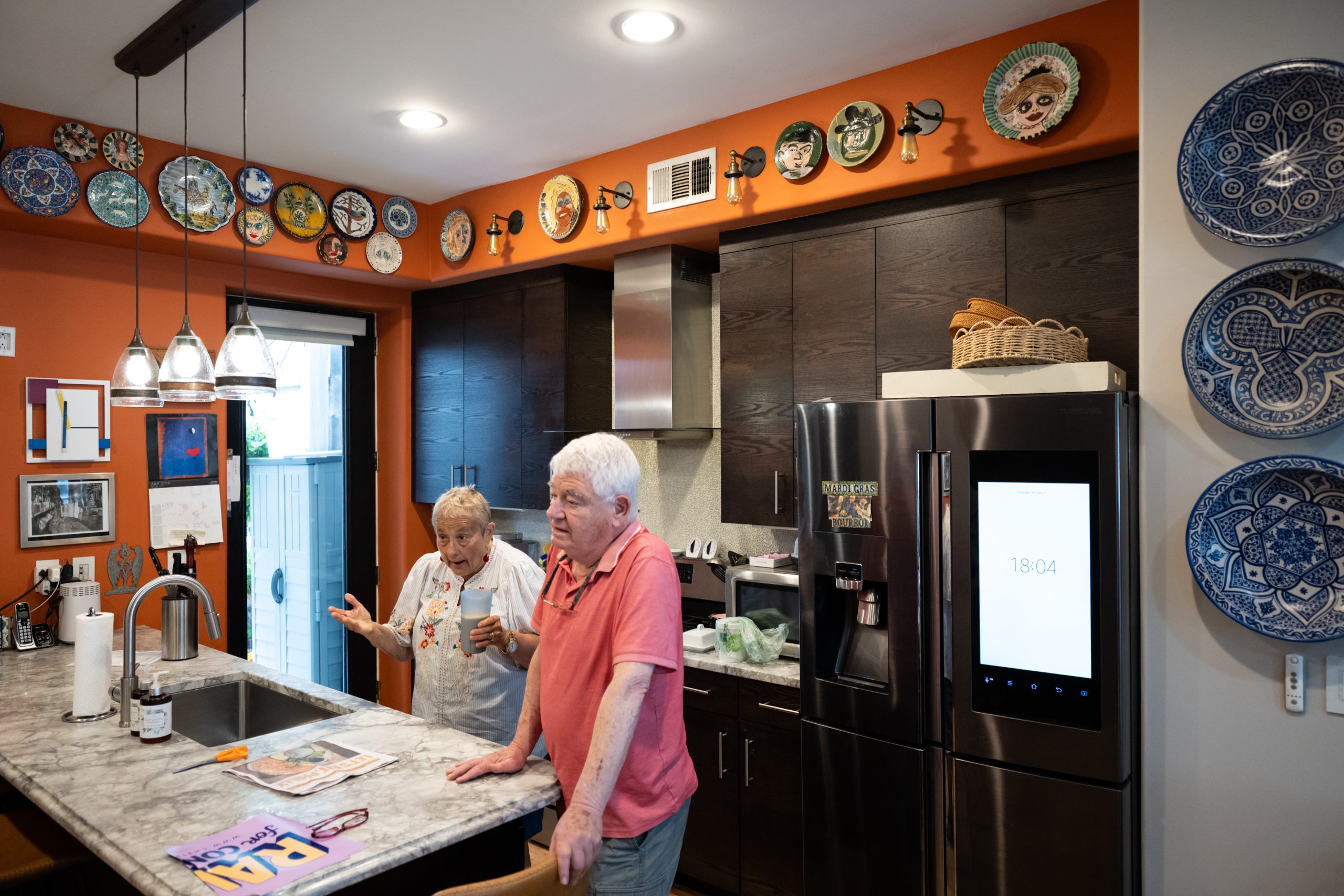
    The kitchen’s pumpkin accent wall is decorated with over a dozen artfully arranged plates. Several of them, depicting whimsical women’s faces, were crafted by Andrea, a talented ceramicist and painter. Walnut double doors conceal a commodious pantry.

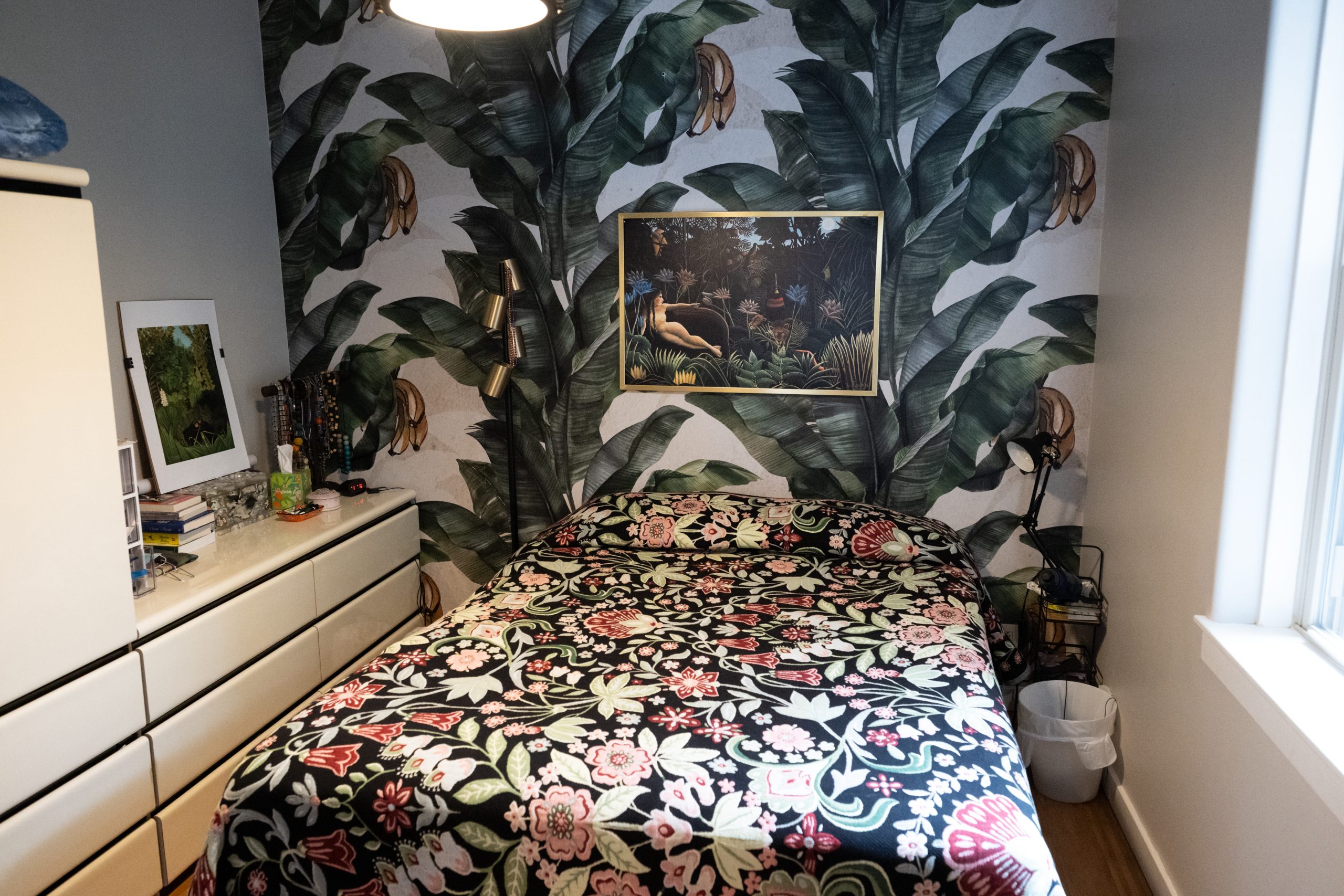
    The queen-sized bed just fits in the bedroom, papered in an oversize leaf pattern. A poster of Henri Rousseau’s Eve in the Garden of Eden continues the leaf motif.

    Andrea gave her dining table, which seated 14, to a family of 10. She now uses three folding tables, which seat 12, when she entertains.

    The couple stand in their kitchen. Erin Blewett / For The Inquirer
    The bedroom design includes a bold wallpaper and a print of a Henri Rousseau painting.Erin Blewett / For The Inquirer
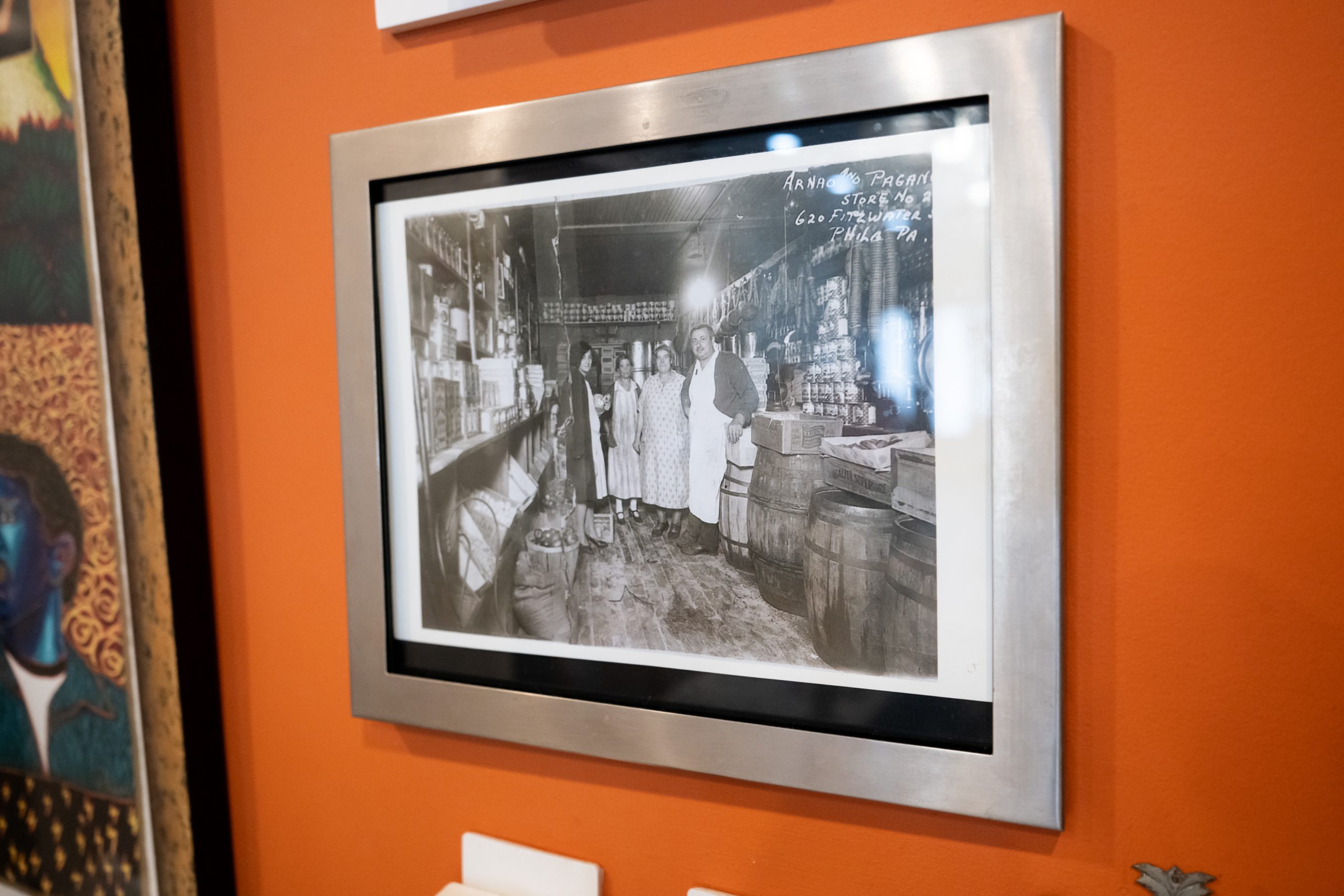
    A photograph showing the building when it was used as a store in the early 20th century. The image has been passed down from one homeowner to the next, Preis said.Erin Blewett / For The Inquirer
    Ceramic plates hanging on the wall above the kitchen include some Andrea Preis made herself.Erin Blewett / For The Inquirer

    One new treasure from previous owners is a photo of the rowhouse when it was Arno & Pagano’s grocery store in the early 1900s.

    During the building’s renovation, the exterior cellar door was replaced with a window to add light. Andrea did not want to tend fish in the former owner’s aquarium in the stairwell under the window. She replaced it with an array of fabric dolls in colorful costumes from around the world.

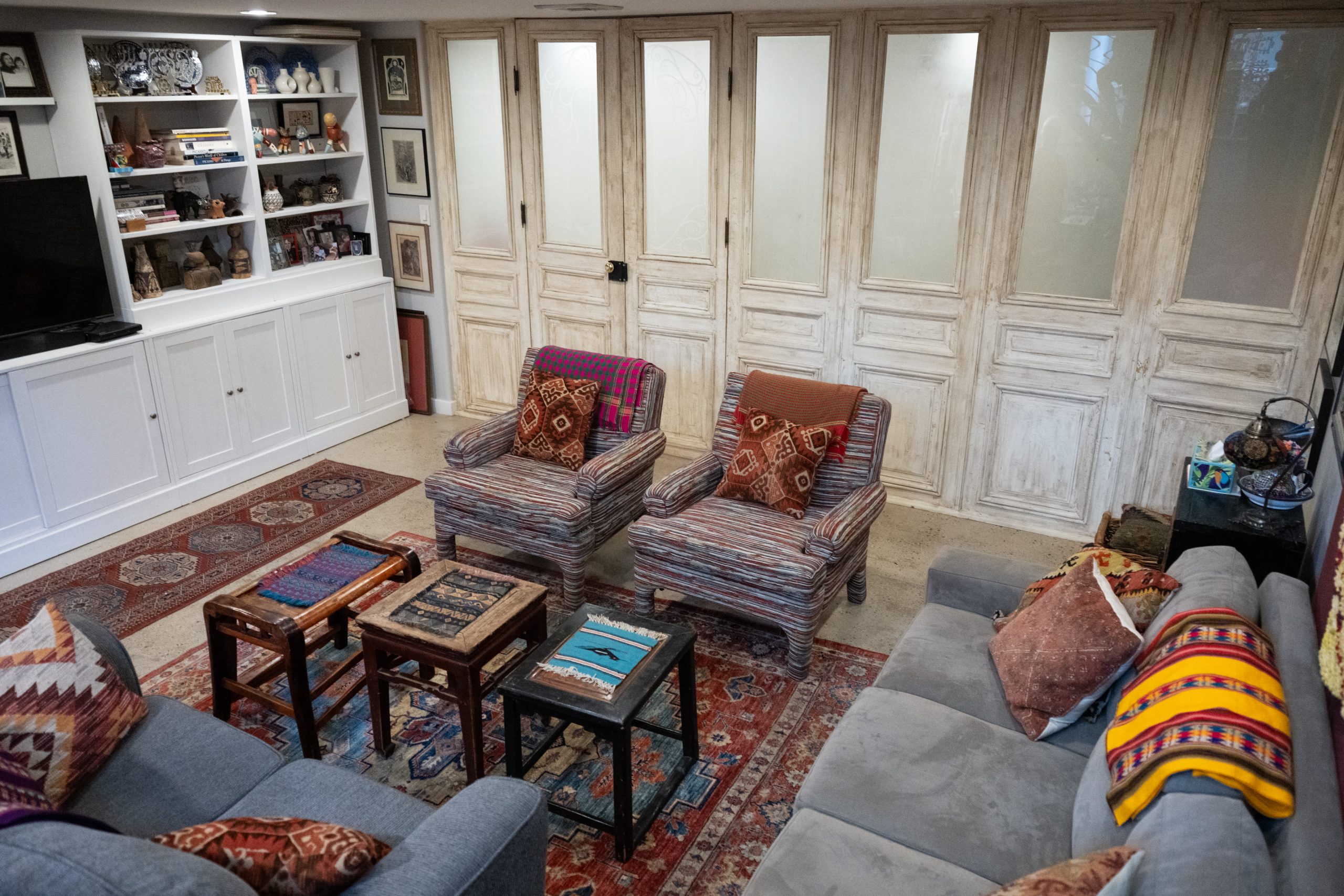
    The basement sitting room is furnished with a love seat, two striped chairs, and a pullout couch for visiting family. Andrea and Eran have three sons and four grandchildren.

    Bookshelves are filled with travel souvenirs and there is a large television.

    Next to Eran’s basement desk hangs a poster for Beyond the Walls, an Israeli movie he cowrote. The prison drama was nominated for an Academy Award for Best Foreign Film in 1984.

    Andrea, who grew up in Akron, Ohio, met Eran in his native Israel when she was living on a kibbutz. They married in 1969 and lived in Israel for 17 years, where Eran was a playwright and screenwriter for Israeli television, theater, and films.

    The basement is where the couple enjoy watching movies with friends.Erin Blewett / For The Inquirer
    Decor in the basement, including several books, though Eran gave away much of his collection when the couple moved.Erin Blewett / For The Inquirer

    After earning a Master’s in Fine Arts from Ohio University, he taught at Midwestern universities before joining Temple University’s faculty in the late 1990s. He retired as a professor of film and media arts at Temple two years ago.

    The couple have a film club with friends. Movie showings in the basement sitting room are followed by refreshments and discussions led by Eran.

    “If and when we are no longer able to navigate the stairs,” Andrea said, “we will move the television upstairs and live in our cozy one-floor apartment.”

    Is your house a Haven? Nominate your home by email (and send some digital photographs) at properties@inquirer.com.

  • Moving in the city is a stressful puzzle. These Philly pros make it look easy.

    Moving in the city is a stressful puzzle. These Philly pros make it look easy.

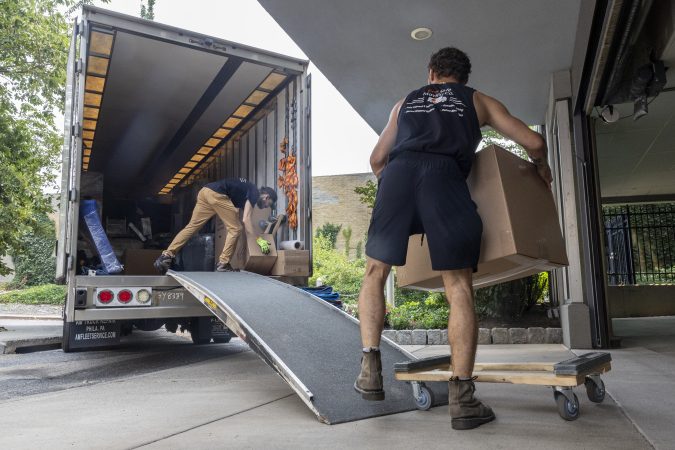
    On a humid Wednesday morning in Manayunk, movers in sweat-soaked T-shirts hauled three movie chairs, each at least 100 pounds, up two flights of a spiral staircase in a three-story home about to welcome its new owner.

    Kevin Boras, a recent Temple University graduate working at Gentle Giant Moving Co. for the summer, has learned some tricks of the trade. As he tilted the widest chair on its side to squeeze through the entrance and over the railing, he explained, “Sometimes you gotta puzzle-piece it up the stairs.”

    After the unwieldy seats were handled, the movers looked to the next item — a thin floor lamp.

    Boras grabbed and huffed his way up the stairs, joking, “I don’t know if I’m gonna make it!”

    For most homeowners and renters, moves are stressful — once ranked more stressful than getting a divorce — but for the city’s professional movers, it’s just another day at work. Between parking troubles on tight South Philly streets and narrow doorways in historical trinity homes, these crews encounter and overcome Philly-specific challenges daily.

    But, as Sultans of Schlep owner Tom Brouillette said, most of the city’s biggest moving obstacles can be overcome.

    “Not everything is possible, but most things are,” Brouillette said.

    Old homes, big furniture

    Half of Philadelphia’s housing units were built before 1950, and movers say older homes tend to have smaller doorways, hallways, and staircases.

    So, larger, modern furniture is often a mismatch in these older homes, according to Jay Leone, a managing partner at EverSafe Moving Co. Sometimes, it’s unrealistic for a Samsung refrigerator to fit inside the entrance of a trinity.

    “There’s only so much you can do in terms of disassembling something to buy yourself an extra inch of space,” Leone said.

    An aged setting isn’t helped by the sizable items many Philadelphians own. James Dawkins, a regional manager at Two Men and a Truck, said his movers have faced retro pinball machines, pianos, and gun safes weighing more than 600 pounds. “People have a lot of fun toys in their house,” he said.

    One time a customer had Two Men and a Truck movers transport a casket inside a residential home. Once they confirmed it was empty, no further questions were asked.

    Fred Meder (right) holds the elevator door while John Wulffen loads in furniture during a July move in the city.Aidan T. Gallo / Staff Photographer

    Often, the solution to small entrances can be hoisting larger items through a balcony or window. Sometimes, it’s more complicated.

    Fred Meder of EverSafe recalls an especially tricky move into a four-story South Philly home. Since its tiny staircases couldn’t accommodate the customer’s bulky furniture, Meder hoisted it in pieces up to the third and fourth stories through literal holes in the floor — the home had been designed with 5-by-5-foot trap door-esque openings in the floorboards of each level.

    “That was an interesting and tough scenario that I’m glad we don’t run into very often,” Meder said.

    Devin Latimore, owner of No Stress Movers, said older, mid-rise apartment buildings present additional challenges. While these buildings have elevators, the elevator shafts were typically built first, Latimore said, and the building was constructed around it “with no mind for modern, bigger furniture.” The elevators also tend to be manually operated, slowing down the moving process.

    “If the operator has to go to the bathroom, we’re stuck,” he said. “We have to wait for him to come back in order to do anything.”

    Still, stairs are not always the preferred option. Latimore once carried a 350-pound office printer up 184 stairs and said it was one of the hardest jobs he’s ever accomplished.

    “It feels like gravity gets stronger the higher you go,” he said. “We were trying not to drop it, and not die at the same time.”

    Parking troubles

    Parking in Philadelphia can be difficult for any driver on a regular day. It’s a nightmare for professional movers.

    South Philly’s narrow streets were not designed for big trucks — “You could lay across the street and touch both curbs,” Lattimore said — and one must be an experienced truck driver to navigate the area.

    For a recent South Philly move, Dawkins’ team had to park at the end of the block because they couldn’t get their truck to the house. The farther the truck is parked from the house, the longer and more strenuous the move.

    Manayunk is another challenging neighborhood for parking: “The worst of both worlds,” according to Latimore. Not only does it have tight streets, but traffic comes from both directions.

    For the Gentle Giants recent move in Manayunk, the moving truck was parked across the street, but the home was at a busy three-way intersection. The movers rolled furniture on top of dollies on the crosswalks, avoiding oncoming traffic like a game of Crossy Road.

    To reserve a parking zone, movers can obtain temporary permits from the city’s Department of Streets that bar other vehicles from parking in a specific area. But these permits aren’t foolproof.

    “It’s almost a 50-50 shot in Philly as far as whether the locals will abide by those parking permits, or even notice them,” Leone said. “We’re hoping nobody takes our spot before we get there.”

    Tom Martin of EverSafe Moving Co. moves furniture into his company truck for a Philly customer in July.Aidan T. Gallo / Staff Photographer

    Moving tips

    For a seamless move, Latimore emphasized the importance of hiring movers early. He said a majority of customers reach out only two weeks before a move and are quickly surprised and stressed by pricing and availability.

    “Start earlier than you think,” Latimore said. He recommended collecting estimates up to six months before a move, as costs increase closer to the moving date.

    Nearby parades, road closures, and block parties also are a factor to consider when choosing a moving date, as they can make a movers’ job near impossible.

    “You have so much happening in the city, and everyone is always celebrating something,” Dawkins said. “Sometimes it can throw a wrench in your plans.”

    When creating an estimate, movers will want to discuss a home’s challenges so the company can allot the correct amount of time and muscle. It’s important to be straightforward about all potential roadblocks.

    “Moving is one of the most challenging things; no one’s excited for it,” Dawkins said. “We try to make it as easy as possible.”

  • Wonderland developer is tearing down a $10M mansion in Avalon

    Wonderland developer is tearing down a $10M mansion in Avalon

    Wonderland developer Eustace Mita, whose proposal for a luxury seven-story hotel in Ocean City has drawn critics, is building an enormous spec house in the Avalon dunes that will be the borough’s largest home.

    Mita says the 17,694-square-foot home at 5475 Dune Drive is not for his personal use, but rather a house built by his Achristavest construction company that will be offered for sale. There is no designated buyer yet, he said.

    “This is a spec home,” he said by telephone. “Is it the biggest home in Avalon? Yes, absolutely. It’s not just one big home. It’s a home with a carriage house.”

    Construction will require additional sand trucked in to fortify the dune for the property, which will include a 14,000-square-foot main house connected to a 3,000-square-foot carriage house.

    It replaces a 7,800-square-foot home that will be torn down, said Mita, the owner of the Icona brand of Shore hotels. His company bought the property for $10.3 million in 2024.

    Mita said he will continue to personally use a home on the beach in Ocean City, at 28th and Wesley.

    Two stories in the new house will be subterranean and three will be above ground, he said. The below-ground floors will include a bowling alley, golf simulator, indoor pool, home theater, recording studio, and cold plunge.

    He said has secured state environmental proposals and emphasized that the house, because it will occupy the same footprint as the existing house, did not need a zoning variance from Avalon borough.

    Avalon’s impressively high and vast dune system has 11 homes. The largest existing house in the dunes is at 5299 Dune Drive and owned by the heirs to the Utz potato chip family business. It is 12,631 square feet.

    The Utz family had to go to court for final approval for their 40-room house, over the objections of environmental groups seeking to preserve one of the last remaining high dune systems on the East Coast.

    In Mita’s case, the Avalon planning and zoning board approved the plans June 9, with the only notes being that the sand brought in should be “clean, uncontaminated, and free of hazardous substances.”

    At the July borough council meeting, several residents expressed concern about the size of the project and its impact on the dunes.

    Mita said the additional sand was requested by state environmental officials to fortify the dunes and will be placed on the street side near the retaining wall, not “onto the dunes” as some residents feared.

    “I didn’t even need variances,” he said. “The renderings make it look overpowering.”

    The additional sand, he said, was mandated by CAFRA (Coastal Area Facility Review Act) regulations.

    “I can’t build one inch into the existing toe of the dunes,” he said. “I have to build a retaining wall as to not to encroach on the dune. It preserves the integrity.”

    Eustace Mita, arriving at the Ocean City Music Pier for a city planning board meeting on Jan. 7, 2026, about the old Wonderland Pier site he owns.Amy S. Rosenberg / staff

    Residents expressed concerns at a recent Avalon council meeting.

    “It’s just a ruin, a ruin of the dunes,” said Elaine Scattergood, who said borough officials were being misled by claims that the property would stay within the footprint and elevation of the existing house. “If the dunes were a child, I think the protective agency would have taken it away from us.”

    In Ocean City, those engaged in the back and forth over the Wonderland site also had a lot to say about Mita’s plan for Avalon’s high dunes.

    “His home looks bigger than the hotel he wants to build in O.C.,” said one Facebook commenter.

    “Barge the old home up to the Wonderland site,” said another. “Problem solved.”

    Mita said his company is currently building three beachfront spec homes at 77th in Avalon, and three beachfront homes at 116th Street in Stone Harbor.

    He said building a spec home of this size and expected sale price in the many tens of millions was “so risky.”

    Who would be a potential buyer?

    “LeBron James,” he mused. “Or Taylor Swift. She spent summers in Stone Harbor. There’s a recording studio. You can’t even buy a beach block lot in Avalon or Stone Harbor for $5 million.”


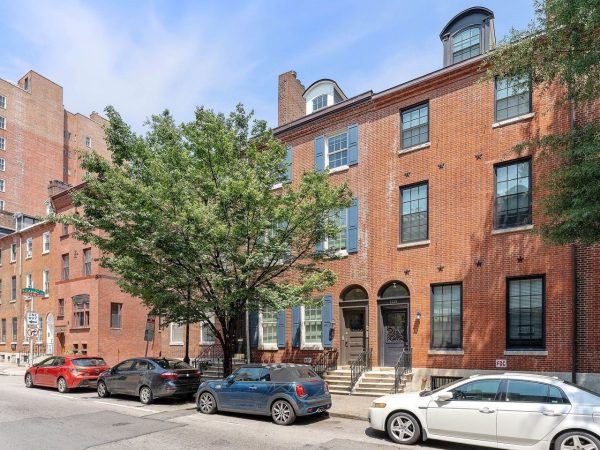
  • House of the week: A condo in Washington Square West for $339,900

    House of the week: A condo in Washington Square West for $339,900

    Zachery McKinnon grew up in Michigan but moved to various places, always fostering a passion for art and home renovation.

    Now, after over a decade in the East, he is selling the Washington Square West condo he bought last year. He is drawn back home for a long stay to help his parents.

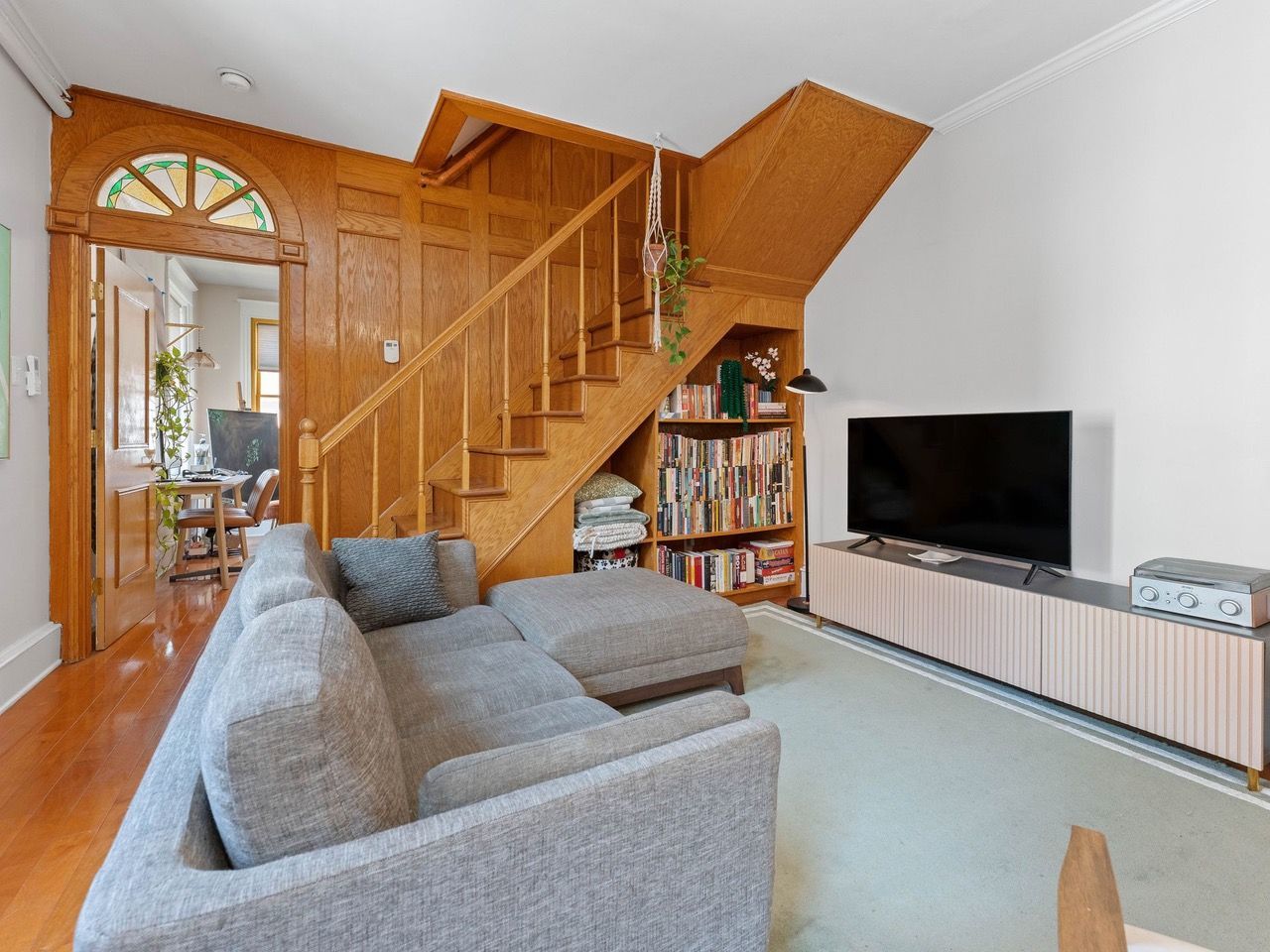
    Living room with stairway to rooftopCal Media

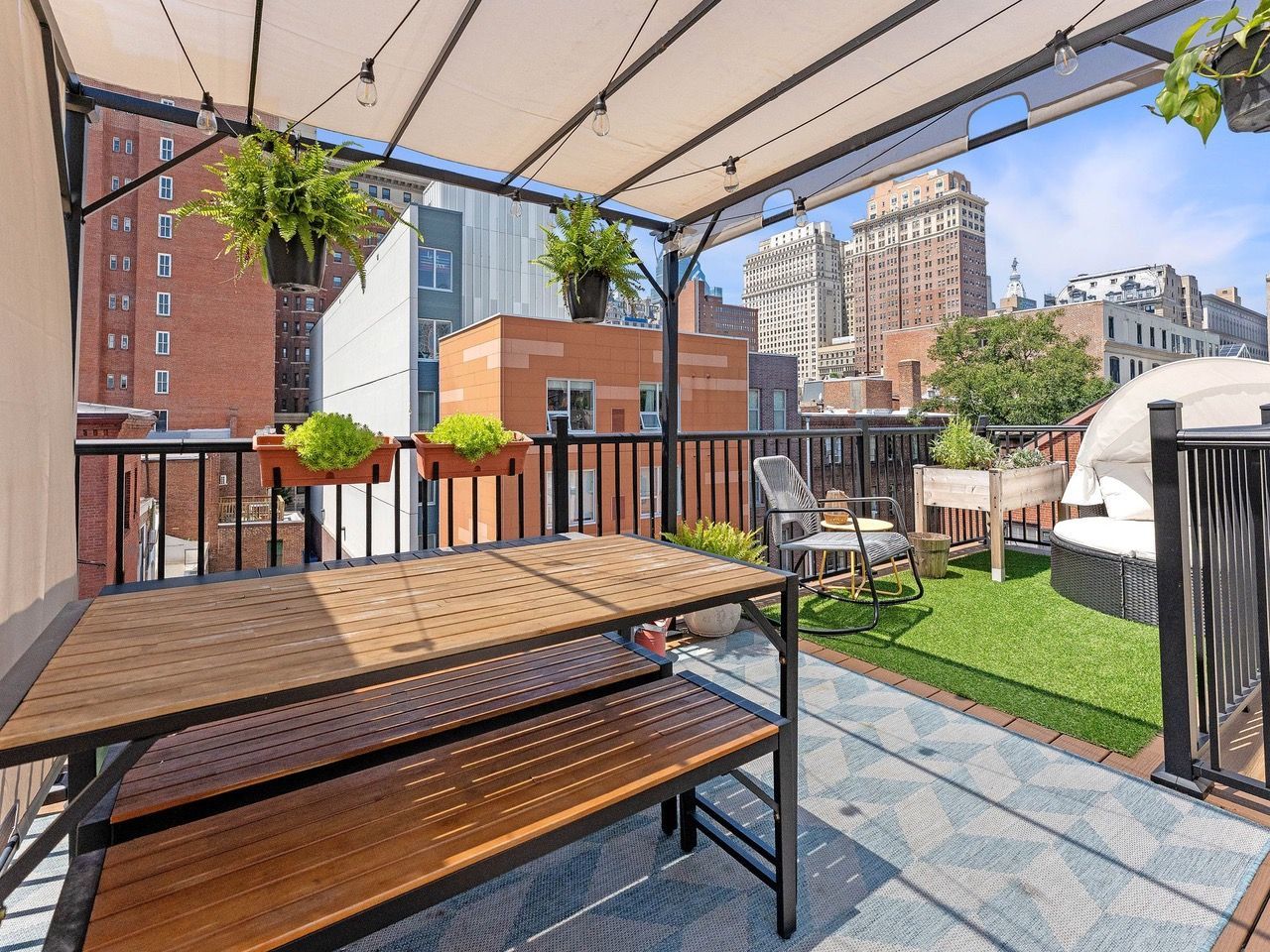
    His one-bedroom, one-bathroom condo spans 603 square feet. “The rooftop was really why I bought the place,” said McKinnon, who works in data analytics for an education nonprofit.

    The condo’s proximity to City Hall, Thomas Jefferson University Hospital, the Kimmel Center for the Performing Arts, Old City, South Street, Chinatown, and SEPTA Regional Rail were convenient for McKinnon, who doesn’t own a car.

    RooftopCal Media

    The six-unit building, the Aldrich, was built in the 1820s and is on the Philadelphia Register of Historic Places. It underwent a major renovation in 2021, including new floors.

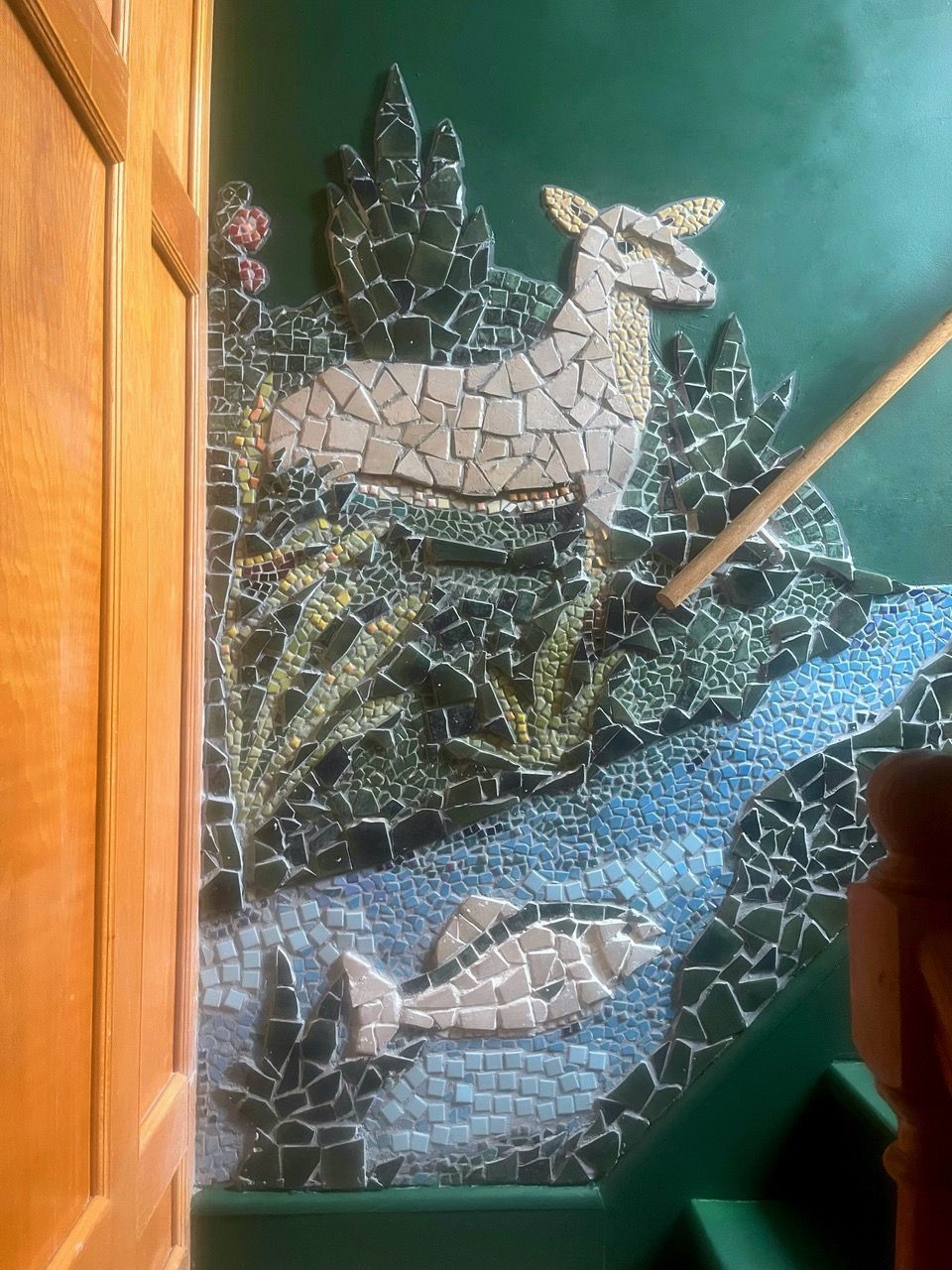
    McKinnon did some work on the condo’s kitchen and added mosaics throughout the unit. He is an admirer of mosaic artist Isaiah Zagar.

    Mosaic by Zachery McKinnonCal Media/Aaron Cantu

    The unit has tall windows, high ceilings, an in-unit washer and dryer, and dedicated basement storage.

    There is year-round mini-split AC and gas heat.

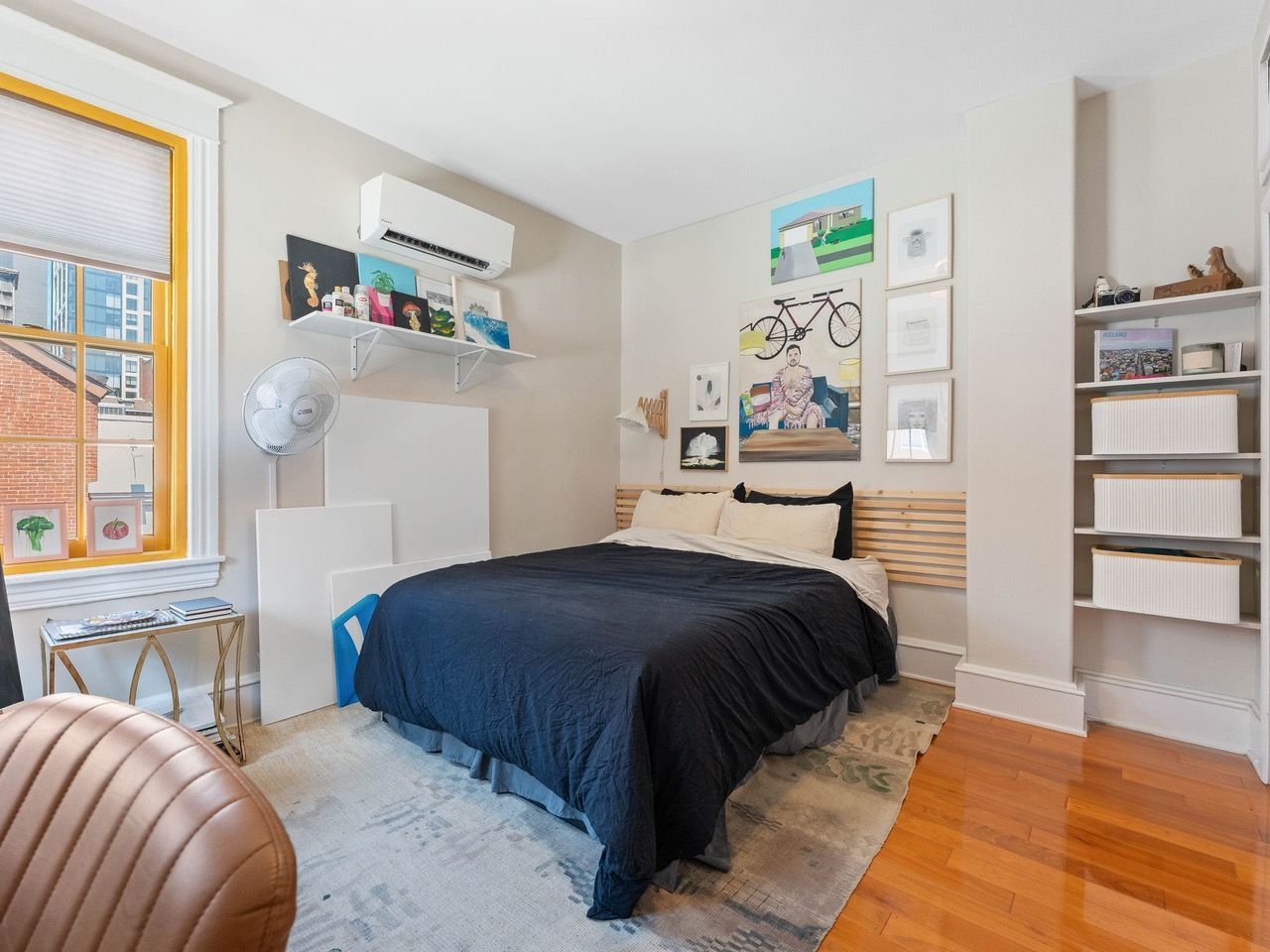
    BedroomCal Media

    The condo building is pet-friendly.

    The unit is listed by James A. Olivieri of Penn Jersey Realty for $339,900.

    Editor’s note: This story has been updated to reflect a change in the listing price.