Category: Home & Design

  • Contractor charged with fraud in Delco, Montco, and Bucks is a former South Philly cop with a history of citizen complaints and lawsuits

    Contractor charged with fraud in Delco, Montco, and Bucks is a former South Philly cop with a history of citizen complaints and lawsuits

    As a young cop patrolling the streets of South Philadelphia, Shawn Hagan kept the Internal Affairs Division busy.

    Between 2008 and 2010, Hagan, then in his late 20s, racked up a half dozen citizen complaints with allegations of physical abuse, harassment, and making racial slurs.

    The city’s Law Department handled the fallout, as Hagan was named as a defendant in six excessive-force and civil-rights lawsuits between 2009 and 2015 that would later cost taxpayers more than $400,000 in settlements.

    In 2024, records show, Hagan retired from the police force and decided to try his hand as a home-improvement contractor.

    Now, complaints and lawsuits are rolling in again — this time accompanied by criminal charges involving the former officer’s company, Hagan Home Concepts.

    Hagan, 46, is at the center of a sprawling, multijurisdictional fraud investigation that started in Bucks County and quickly spread to Delaware and Montgomery Counties.

    Police in Bensalem, Upper Moreland, and Aston Townships have accused him over the last month of defrauding at least five families out of a combined $255,291 for doing a fraction of the work he had promised.

    In some cases, according to court filings, he allegedly failed to use money given to him to pay for inspections, permits, and building materials.

    Hagan, who lives in Northeast Philadelphia, is facing felony counts of theft, deceptive business practices, receiving stolen property, and related offenses in those cases. Police believe there may be more victims who have not yet been identified.

    Neither Hagan nor his criminal defense attorney, Jeremy-Evan Alva, responded to requests for comment last week.

    In January, Christopher Bilbao, who hired Hagan last year, moved out of the Levittown home he shares with his wife and three children as Hagan allegedly botched a major renovation for which they’d paid him $107,566.

    Rainwater began pouring into the house. The electrical system was destroyed. Floor joists were left unsupported. The framing didn’t follow the architect’s specs. A township inspector found that Hagan used incorrect materials, didn’t follow measurements in the plans, and left the home uninhabitable.

    “We’re still renting an apartment,” Bilbao said last week. “The whole house has been gutted. The way he left it, there was no roof on half the house. We’re hoping to get back home by Thanksgiving.”

    Separate from the criminal cases, a Port Richmond man is suing Hagan in Philadelphia Common Pleas Court to recover $94,800 he said he’d paid him for a home renovation and addition that was never completed.

    A similar pattern is alleged in the lawsuit: rotting wood studs, crooked foundation, tilted third floor.

    Nadia Silk, the lawyer for that homeowner, said Hagan had initially told her client he’d refund his money.

    “Then he just went radio silent,” Silk said. “He’s getting all this money, then not doing the work. Where’s it going?”

    Silk said Hagan did not respond to the lawsuit.

    Trail of destruction

    The criminal investigation into Hagan Home Concepts began in May, when the Bilbaos reported to police that Hagan had essentially abandoned their project, which was estimated to cost $172,700 when completed.

    Bensalem police began investigating a similar complaint, in which Hagan allegedly received $46,725 from a family for an addition to their house. He poured the foundation and never returned to complete more work, according to a police report.

    In an interview with a Bensalem detective in May, Hagan said “he got in over his head and never intended to defraud” that family, the criminal complaint states.

    A few days later, Hagan told an Upper Moreland Township detective nearly the same thing, according to the police report. The department was investigating a complaint from Kevin and Angela Duffy, who said he had abandoned a project at their home.

    They had hired him in May 2025 to build an addition to their first floor and renovate their second floor and basement, according to the affidavit for his arrest. In five and half weeks of work, police say, Hagan and his employees were at the Duffys’ home only 29 hours, and concrete footers they had installed for the addition failed inspection.

    Hagan told police he tried to return the $55,200 he collected from the family, but that it had been “absorbed into the business,” according to the affidavit.

    The Duffys declined to comment for this article. They are trying to recoup their losses, plus damages, through a default judgment awarded to them in May by a Montgomery County judge.

    A person familiar with the case said Hagan had been hired to build wheelchair-accessible bedrooms for the Duffys’ two children, who have an inherited neurodegenerative disorder. The family had to hire another contractor to complete the project.

    Hagan was also charged with fraud last month in Delaware County. An Aston Police detective wrote in the criminal complaint that Hagan accepted $21,800 from Kate Mckenna-Delagol’s family “while knowing his business was failing.” Hagan was also aware that a criminal investigation was underway because he had been interviewed by detectives in Bucks County, according to Aston Police.

    “He tells everybody he’s a Philly cop. That’s how he earns your trust,” Mckenna-Delagol said on Friday. She’d hired Hagan to build a deck, but “he never did anything.”

    Hagan filed for bankruptcy in federal court in June, identifying three of the victims mentioned in the criminal filings as creditors, including the Duffy and Bilbao families.

    All told, Hagan wrote that he owes $865,059, and that Hagan Home Concepts is no longer operating. His bankruptcy attorney, Michael Cibik, did not return a request for comment.
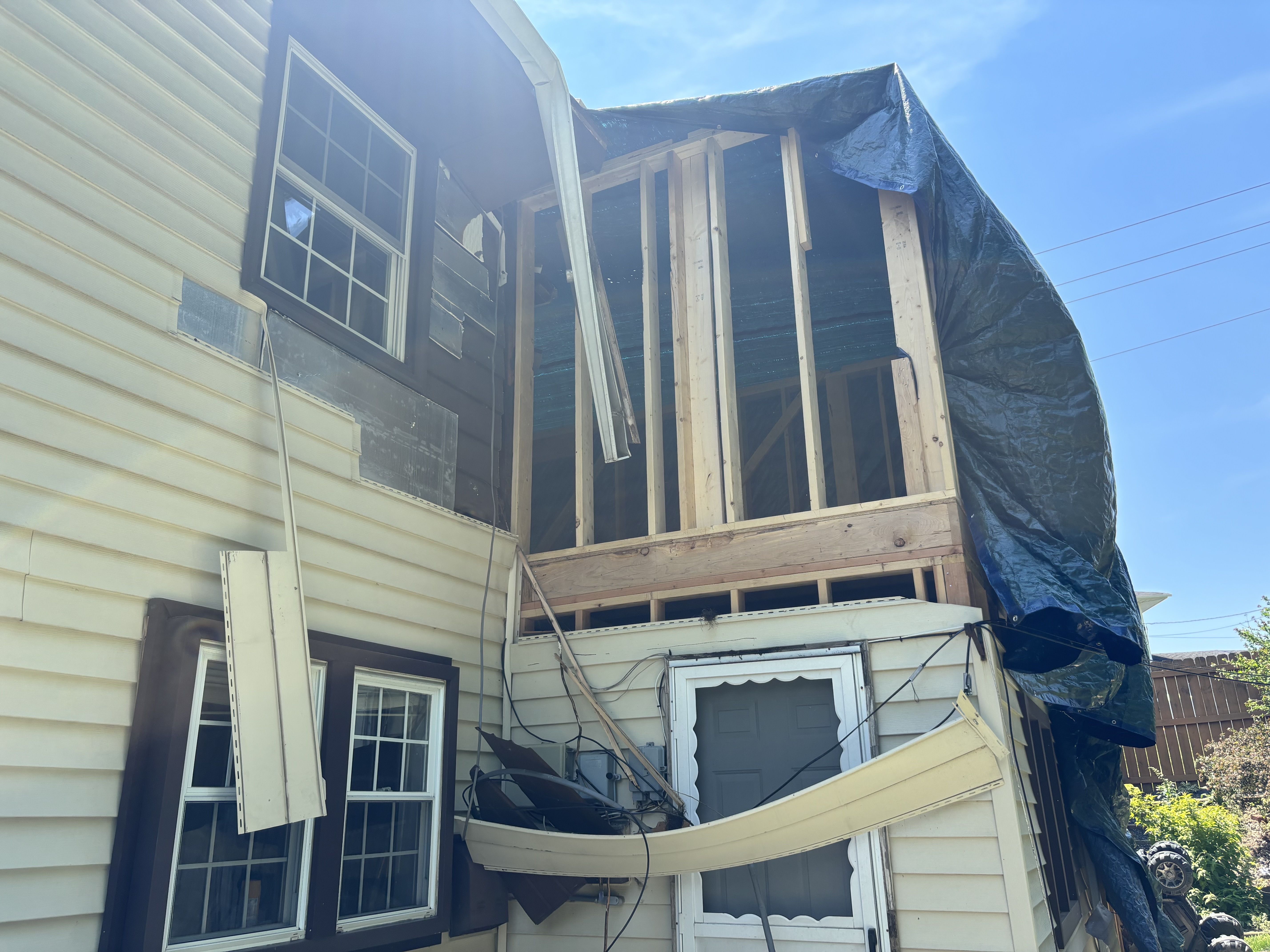
    The Bilbaos’ Levittown home was left uninhabitable after they hired Hagan Home Concepts for a major renovation. They’ve been renting an apartment since January 2026.Christopher Bilbao

    Bilbao said he had hired Hagan to work on his Levittown home after another family in the neighborhood was satisfied with a recent addition he’d built for their house.

    But even that job, Bilbao said, was later determined to be faulty.

    “Since then, the people that recommended him realized he did all this work incorrectly,” he said. “They’re having to redo it.”

    History of police complaints

    Sgt. Eric Gripp, a Philadelphia police spokesman, declined to provide details about Hagan’s disciplinary history as an officer, other than to say he was hired in November 2003 and retired in February 2024.

    Citizen complaints show that Hagan was repeatedly accused of assaulting and harassing people while on patrol in South Philadelphia’s 17th District.

    In an April 2008 incident, for example, a man said Hagan grabbed him by the throat and dragged him to his police cruiser. Two months later, another man said Hagan used racial slurs while stopping him.

    In January 2009, a complaint was filed against Hagan and his then-partner Kevin Corcoran for harassment and verbal abuse, then another that October for physical abuse. In 2010, a complainant said Hagan allegedly pushed him to the ground and called him a racial slur.

    Hagan and Corcoran “received training and counseling” from two police captains in February 2009 “regarding their Internal Affairs record and professional responsibilities,” according to a note on one complaint.

    Nonetheless, Internal Affairs investigators said the allegations in those cases were unfounded or not sustained, or they exonerated the officers altogether.

    (Corcoran was fired in 2014 after he detained an Iraq War veteran, drove him to a dark side street near North Broad Street, then brought him back to Center City and released him. Corcoran was later acquitted of false imprisonment and official oppression, but convicted of a misdemeanor charge of obstruction of justice).

    Between 2010 and 2015, Hagan was named as a defendant in three lawsuits filed in Philadelphia Common Pleas Court and three filed in federal court, including for using excessive force that caused serious injuries, illegal searches, and false imprisonment.

    In one case, Raheem Holman alleged that Hagan repeatedly punched him in the face during an unlawful stop and frisk in March 2010 before Capt. Anthony Washington beat him with an expandable baton. Holman, who was later found not guilty of disarming a police officer, resisting arrest and all other related charges, required 11 staples at Methodist Hospital to close a head wound.

    The city settled Holman’s case for $95,000 and the five other cases in which Hagan was a defendant for a combined $335,000.

    Inquirer staff writers Ellie Rushing and Ryan W. Briggs contributed to this article.
  • On a tree-lined Fairmount row, a newer resident became an instant gardening prizewinner

    On a tree-lined Fairmount row, a newer resident became an instant gardening prizewinner

    Toward the end of April, Noah Johnson’s street in Fairmount fills with pink cherry blossoms. The cherry trees may have been planted, he believes, when rowhouses were built in 1876.

    Longtime Fairmounters call the block Centennial Boulevard. The homes were designed to showcase the latest trend in residential architecture as part of the celebration of the 100th anniversary of the signing of the Declaration of Independence.

    The three-story homes were faced with stucco modeled to resemble stone and had tiled mansard roofs and enviable front gardens. Most houses in Fairmount, then and now, have small backyards but no front yards. Owners compensate with window boxes and planters.

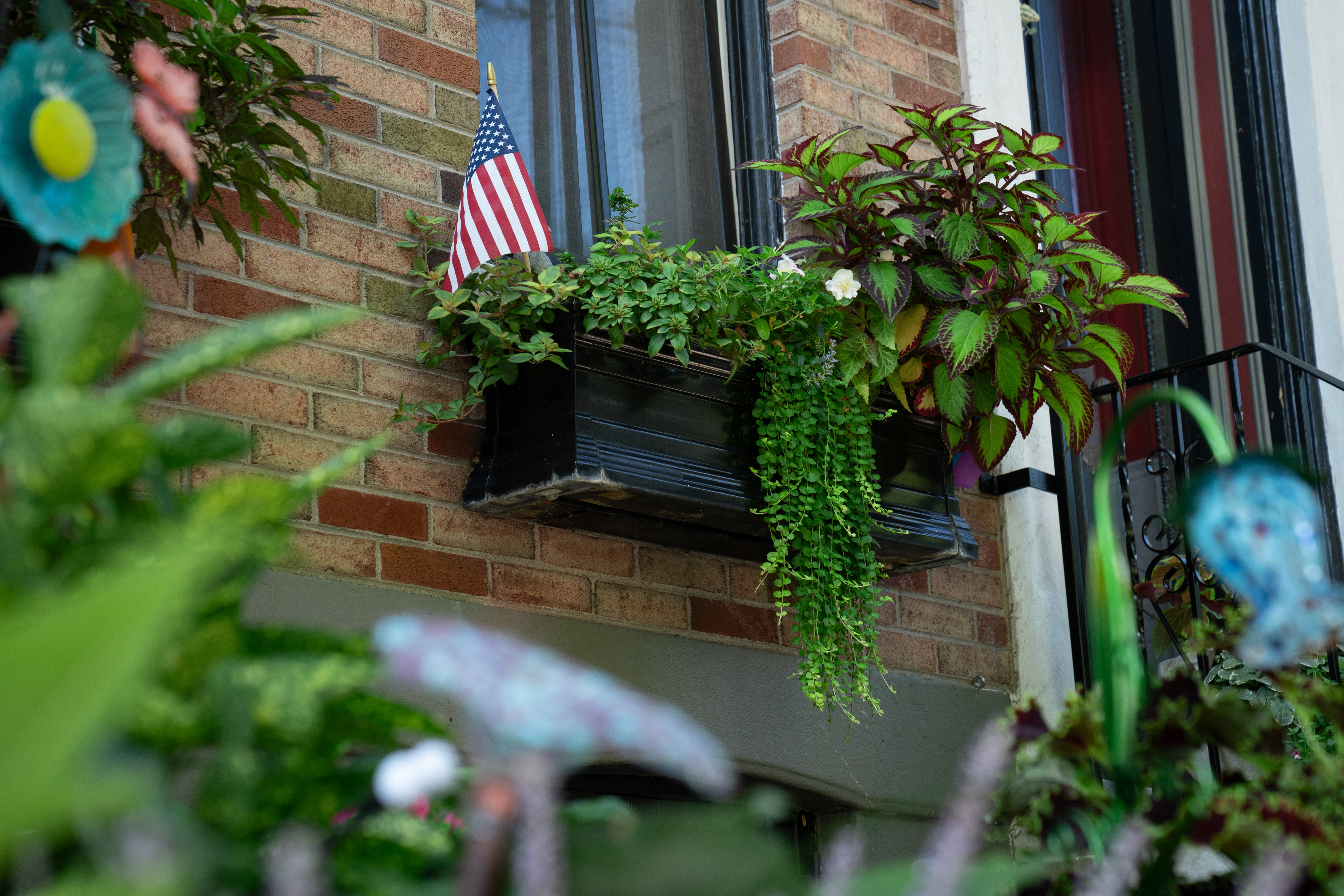
    A window box at Burns and Johnson’s Fairmount home.Sarah Silbiger / For The Inquirer
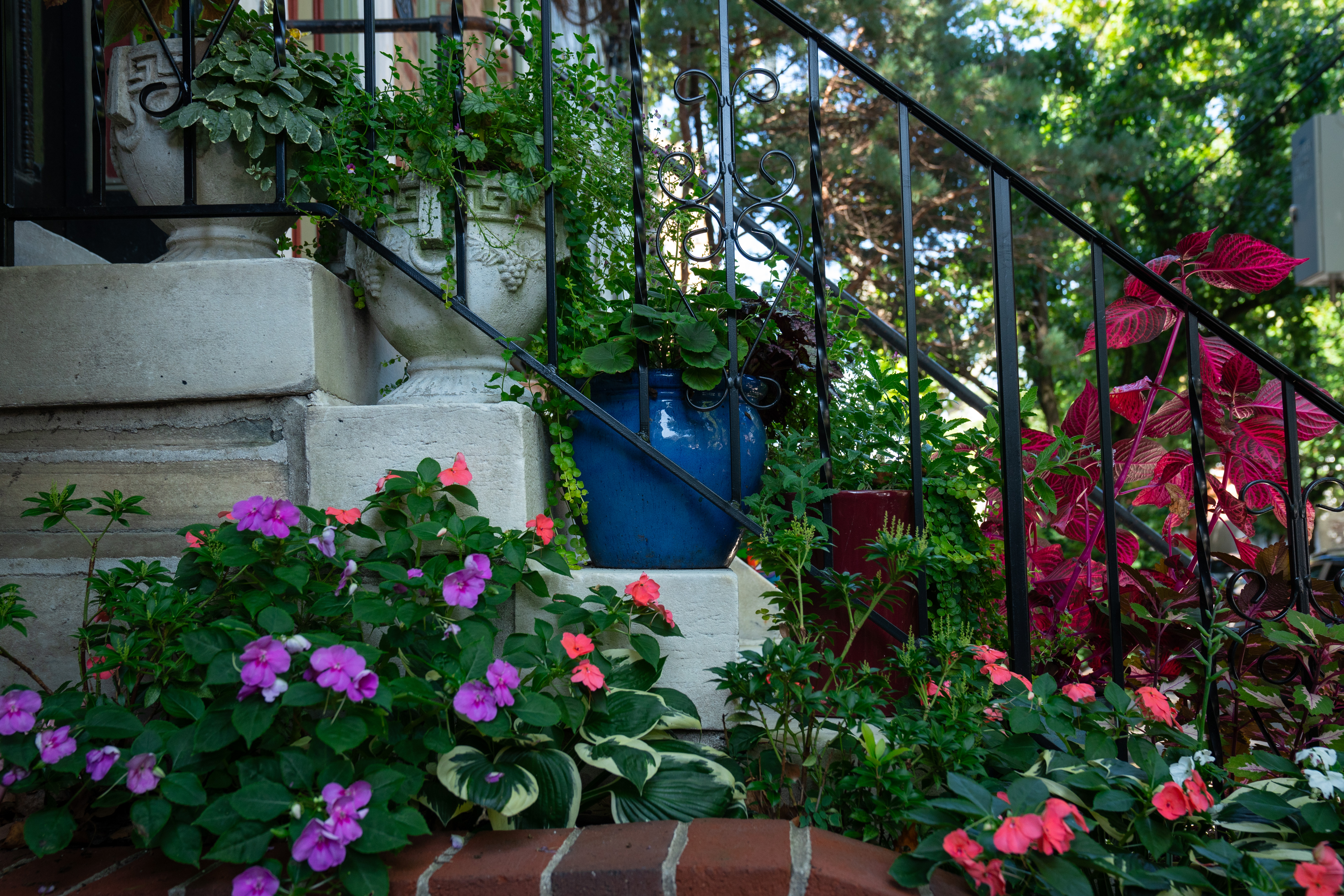
    Impatiens and verdant potted plants line the front steps of the home.Sarah Silbiger / For The Inquirer

    Over the last 150 years, the “Centennial” homes have been altered. Some have been re-stuccoed or faced with brick. But they all still have their front gardens.

    Johnson and his wife, Charlotte Burns, like their neighbors, have planted their precious plot with flowers and greenery.

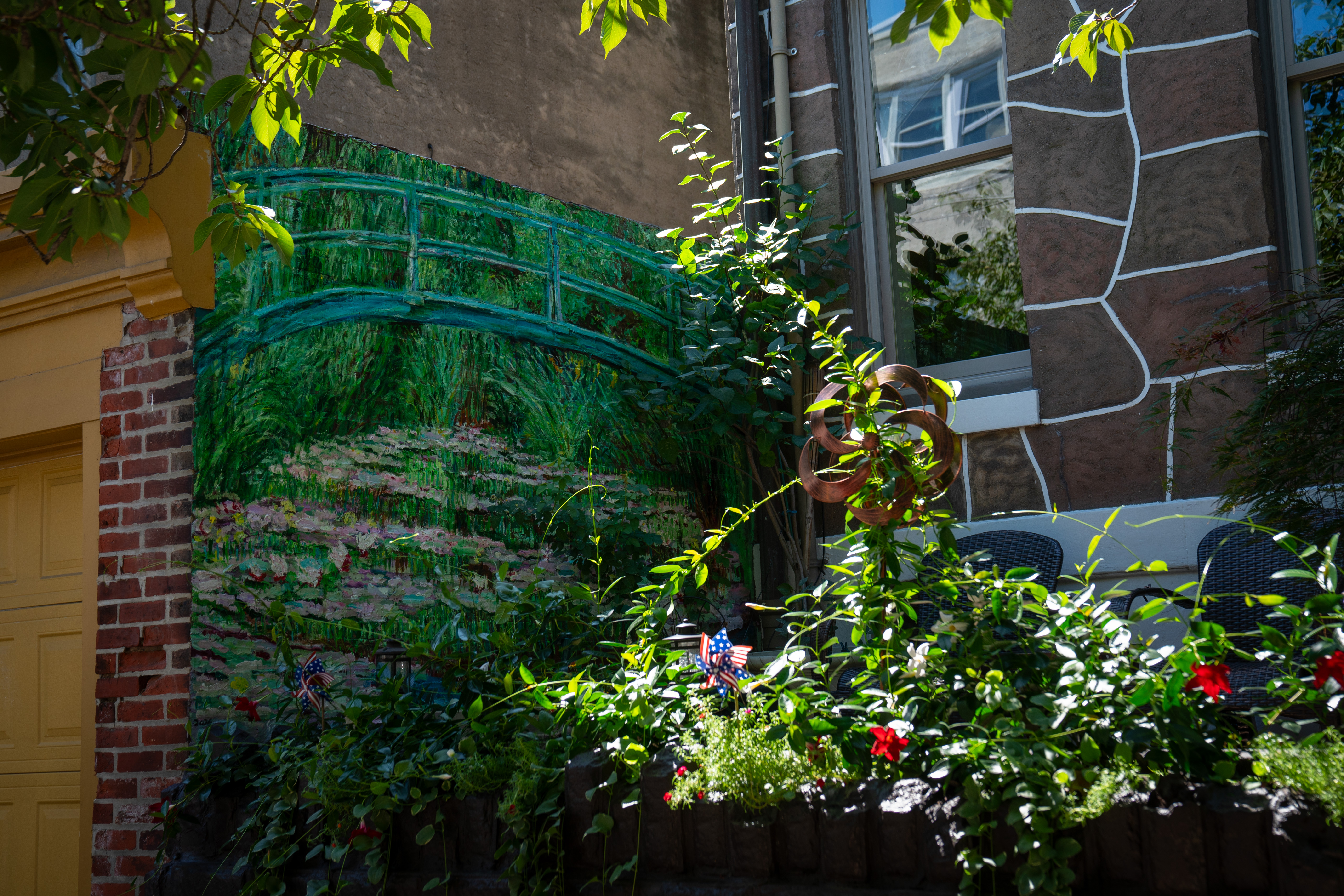
    The floral motif begins at the east end of the block, where Brian Augustine has painted a mural on the garage wall adjacent to his house. Augustine, a contractor and amateur artist, copied a Claude Monet painting of the garden at Giverny, the famous impressionist’s home in France. Augustine planted white rocktrumpet vines in his garden to complement the white water lilies in the mural.

    A mural by Brian Augustine, imitating a Monet painting, is seen in the neighborhood, known as Centennial Boulevard.Sarah Silbiger / For The Inquirer

    Farther down the block Sam Cifelli has wound Christmas lights around the handrail going up his front steps next to shrubbery. He adds more lights during the holidays to the delight of Johnson and Burns, who live next door.

    The couple purchased their four-bedroom, 2½-bath home in February 2025. Johnson said he let Charlotte do all the gardening.

    By summer, Burns’ plantings were so lush a neighbor gave her a flier about the Flowering Fronts of Fairmount Competition sponsored by the Fairmount Civic Association. Burns entered the contest and won a prize. This summer she was a finalist in the Pennsylvania Horticultural Society’s Citywide Gardening Challenge.

    A plaque from the Pennsylvania Horticultural Society 2026 Gardening Challenge sits in front of some purple liriope.Sarah Silbiger / For The Inquirer
    Coleus and Silver King Euonymus, with flowers behind.Sarah Silbiger / For The Inquirer

    Burns’ success wasn’t just beginner’s luck. She grew up watching her landscape designer father, Brian Burns, at work. Before moving to Philadelphia she gardened at a house she and her husband rented in Georgia.

    Burns kept the English ivy and the heavenly bamboo she found in the garden and purchased annuals including begonias, impatiens, vincas, and multihued coleus at the local Ace Hardware store.

    Her father helped Burns choose and plant perennials such as spikes of purple liriope, Silver King Euonymus — which has green, leathery leaves edged in white and speckled with gold dust — red-tinged pieris japonica and glossy abelia.

    Gardening is challenging. While Burns’ creeping Jenny, an annual, “grew back this year,” she said, the hydrangea did not bloom, and she had to use a pesticide “for the first time” to remedy a lace bug infestation on the Japanese hosta.

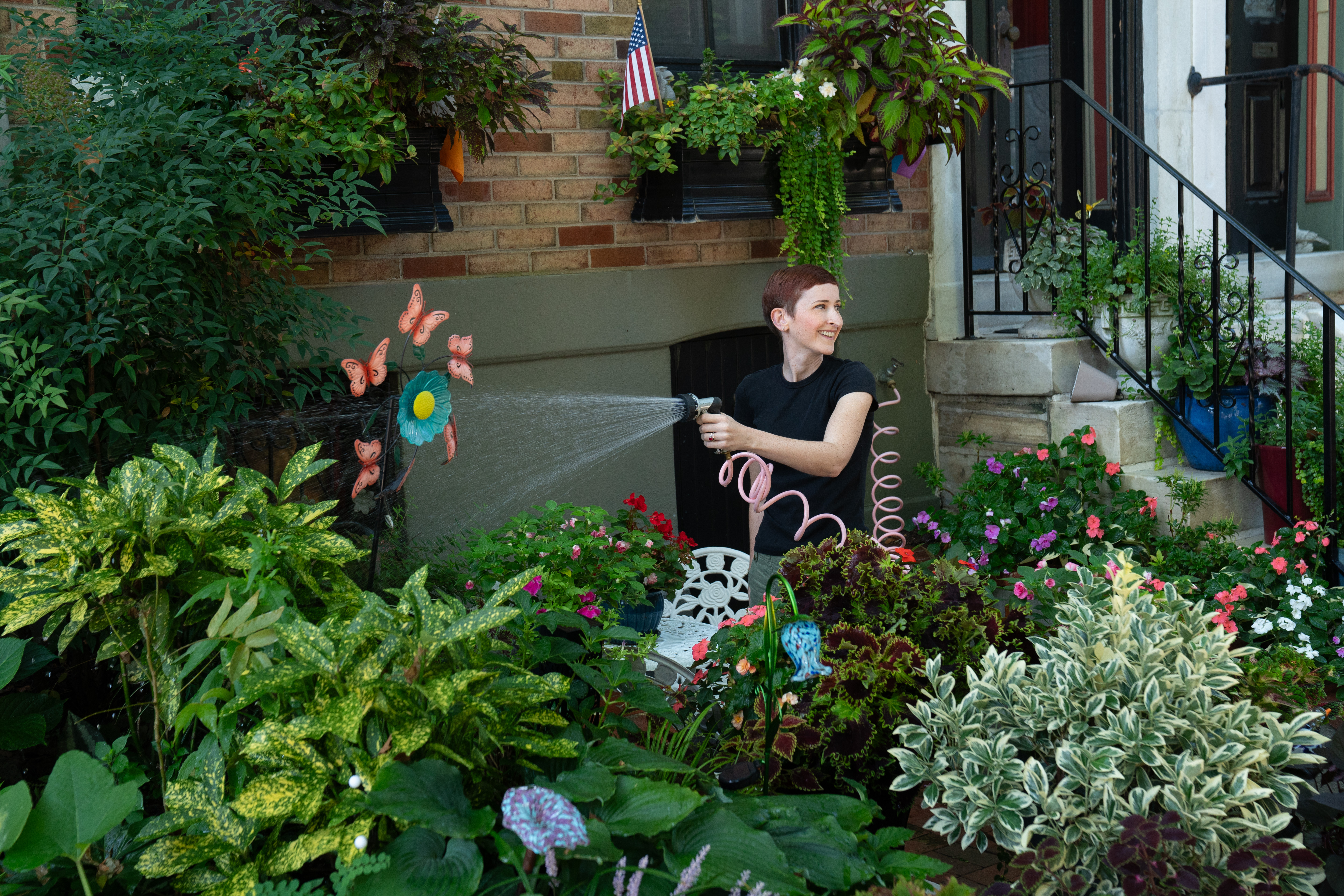
    Charlotte Burns waters her prize-winning garden.Sarah Silbiger / For The Inquirer

    Besides planting in the ground, Burns has filled window boxes and ceramic pots with colorful plants that line her front steps.

    On the brick patio in the middle of the garden red begonias in a blue pot are centered on the white wrought iron table. She found the table and matching chairs at a Bucks County estate sale.


    Burns embellished the garden with glass birds from the Pennsylvania Renaissance Faire and glass flowers from the Philadelphia Flower Show. A ceramic frog was purchased at the annual Fairmount Flea Market. The cat banner and front door wreath were gifts from her mother, Cheryl Cunningham.
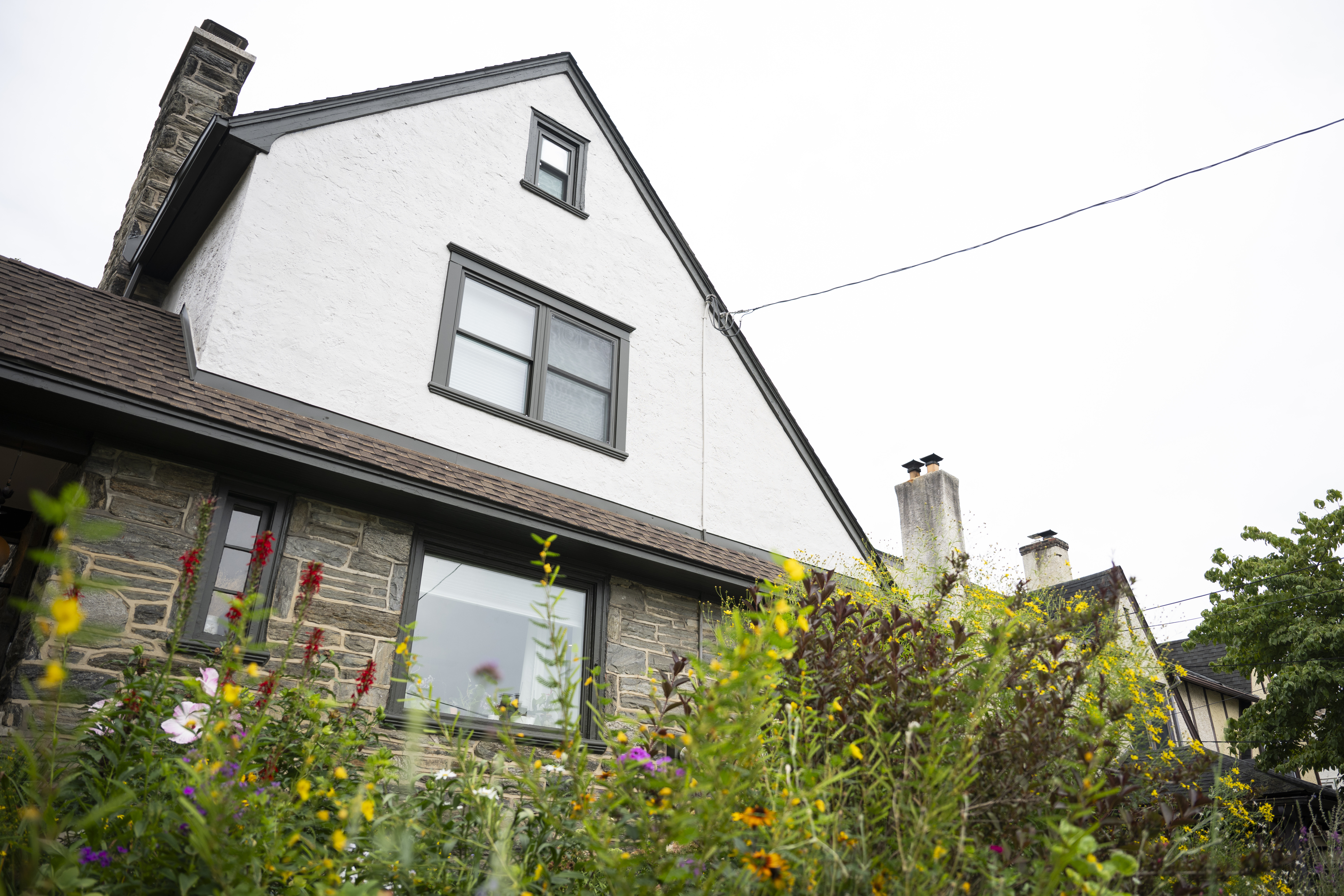
    Johnson helps his wife with the heavy lifting, spreading bags of mulch, and moving the pots to the basement for storage in the winter.

    Burns, a veterinary anesthesiologist, and Johnson, a battery scientist, met as students at Drexel University and married in 2021.

    A frog figurine peeks out from behind caladiums and other greenery.Sarah Silbiger / For The Inquirer
    A rose in bloom among the coleus.Sarah Silbiger / For The Inquirer

    The couple had permission to string lights around Mario and Anna Crociata’s oak tree next door.

    Burns planted periwinkle and hosta in the tree well and created a miniature village with gnomes and tiny houses. If an enchanted child takes one of the gnomes, Burns will purchase more at the nearby dollar store.

    They hope Fairmounters will enjoy the flowering fronts on Centennial Boulevard for another 150 years.

    Is your house a Haven? Nominate your home by email (and send some digital photographs) at properties@inquirer.com.

  • House of the week: A house in the Wissahickon neighborhood for $750,000

    House of the week: A house in the Wissahickon neighborhood for $750,000

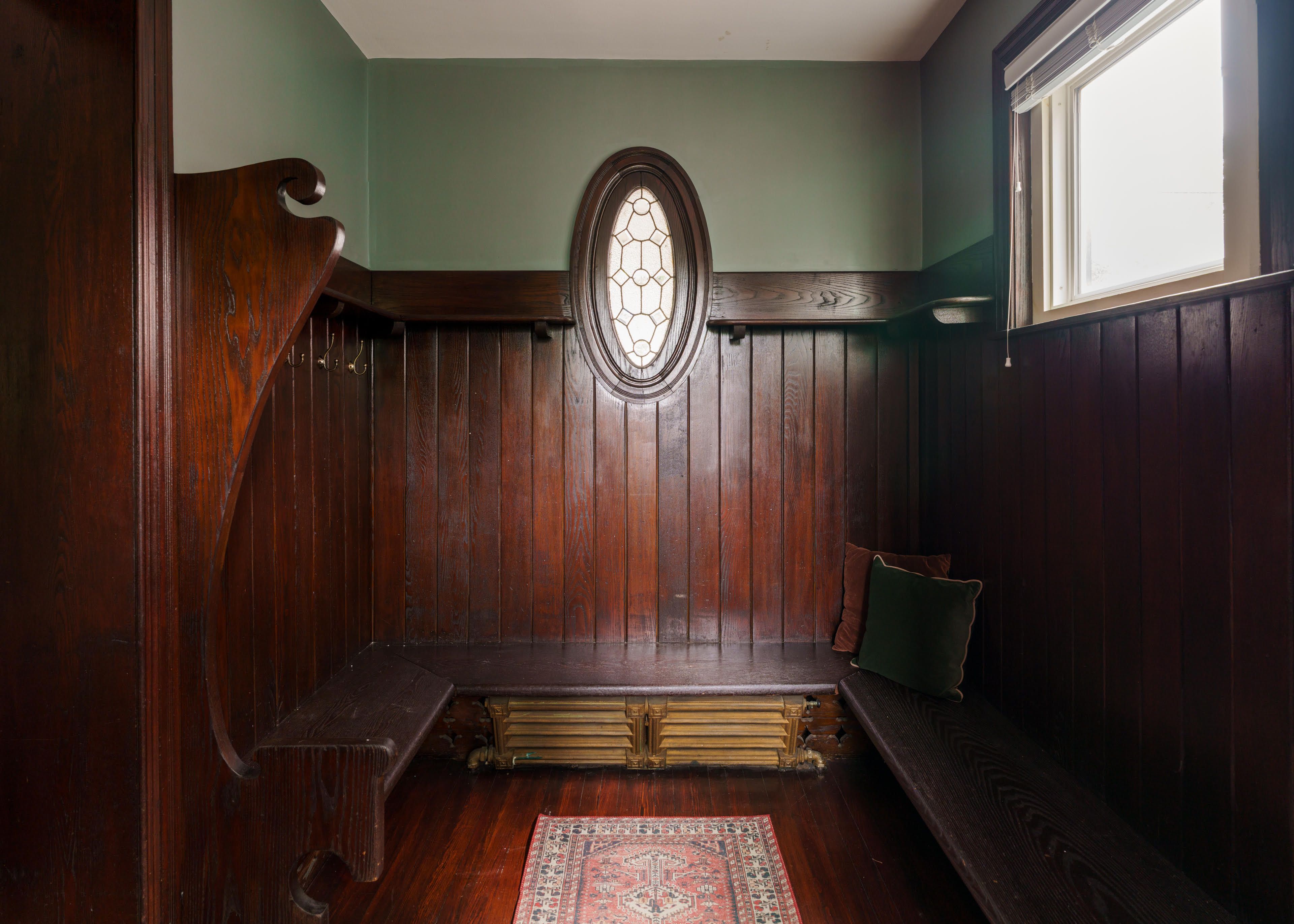
    It isn’t often that a mudroom is the main attraction that sells a house.

    But Adnan Zulfiqar says that is what drew him and his wife, Hajira, in 2017 when they were looking for a house for themselves and their three young children. It was the last stop at the end of an exhausting day of searching.

    The mudroom in Adnan Zulfiqar’s house as shown in the for-sale listing in September 2026 in Philadelphia.Donkin Media/Thomas Donkin

    “There was just a serene feeling,” he said. That the wood-paneled mudroom had been built by previous owners as a prayer room.

    Careers took the family away from the home in 2022, but Hajira’s family is from Philadelphia, and Adnan said they always thought they might return, so they rented the house when they moved, instead of selling.

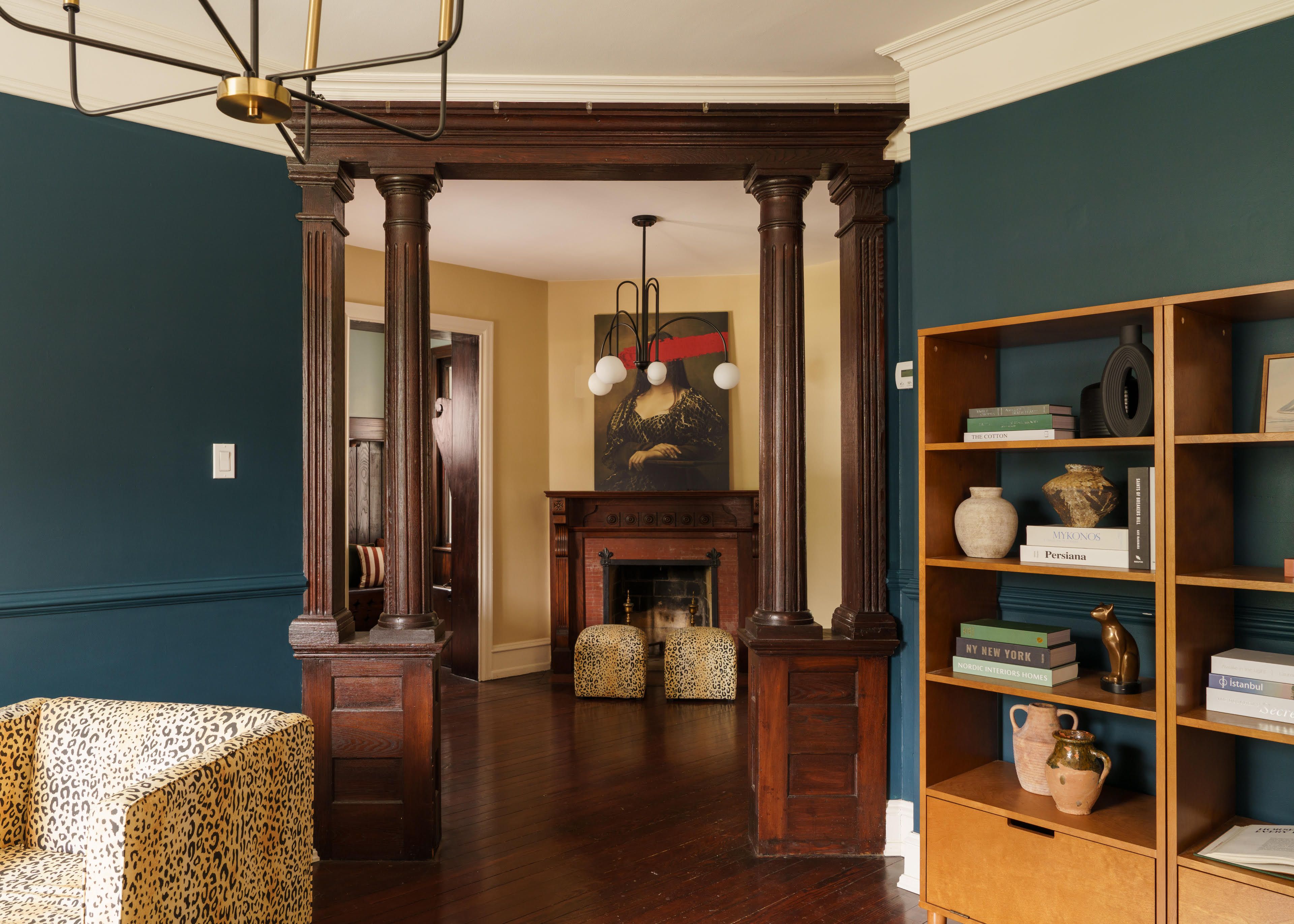
    The house has original wood floors, crown and chair moldings, decorative fireplace mantels, and two usable fireplaces.Donkin Media/Thomas Donkin

    It was perhaps “wishful thinking,” Adnan said. “We loved the house, and we loved the neighborhood.”

    But the family has now settled in Northern Virginia. Adnan commutes to his job as a law professor at Boston College, and Hajira is a dentist.

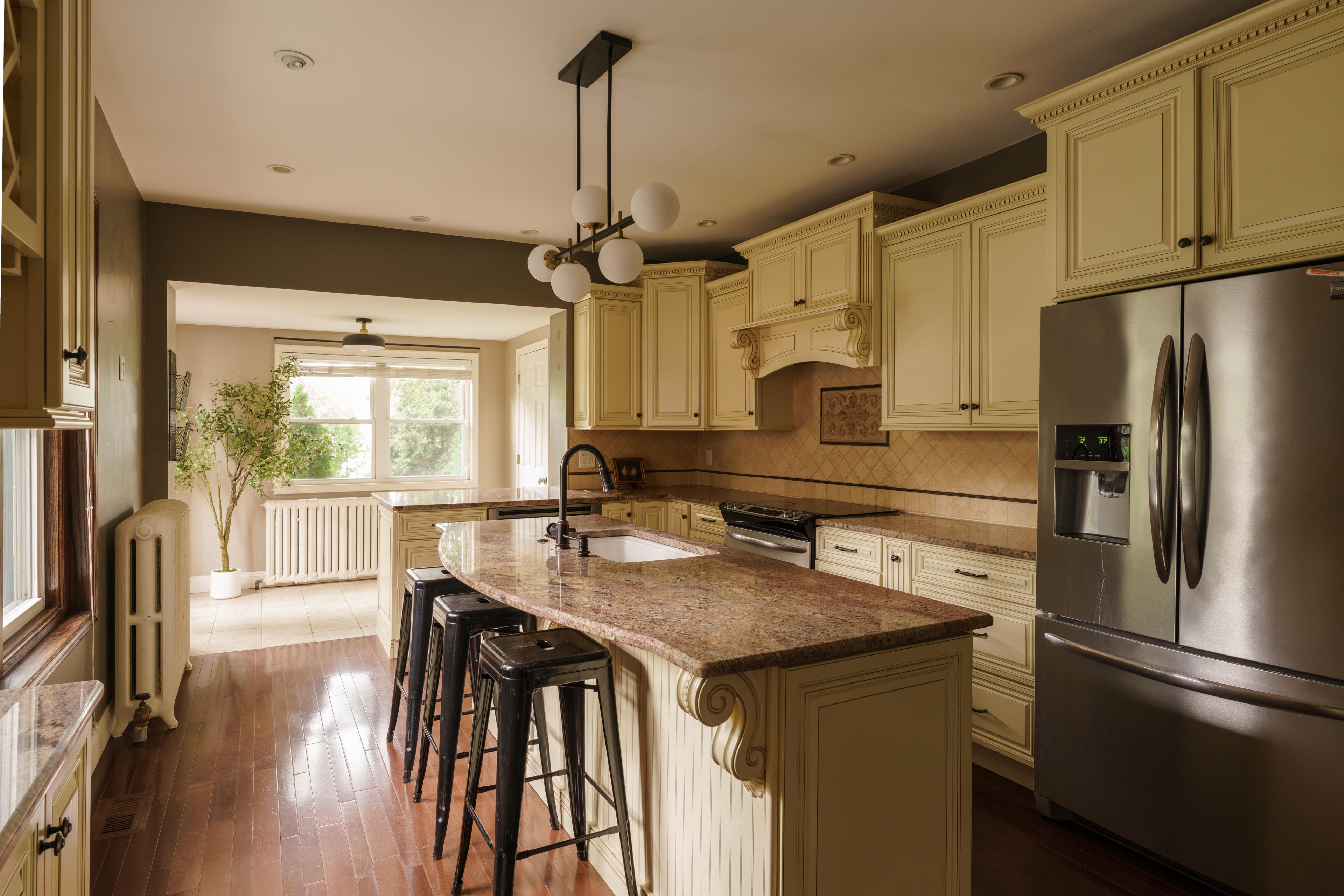
    he kitchen has granite countertops, stainless steel appliances, and a large island.Donkin Media/Thomas Donkin

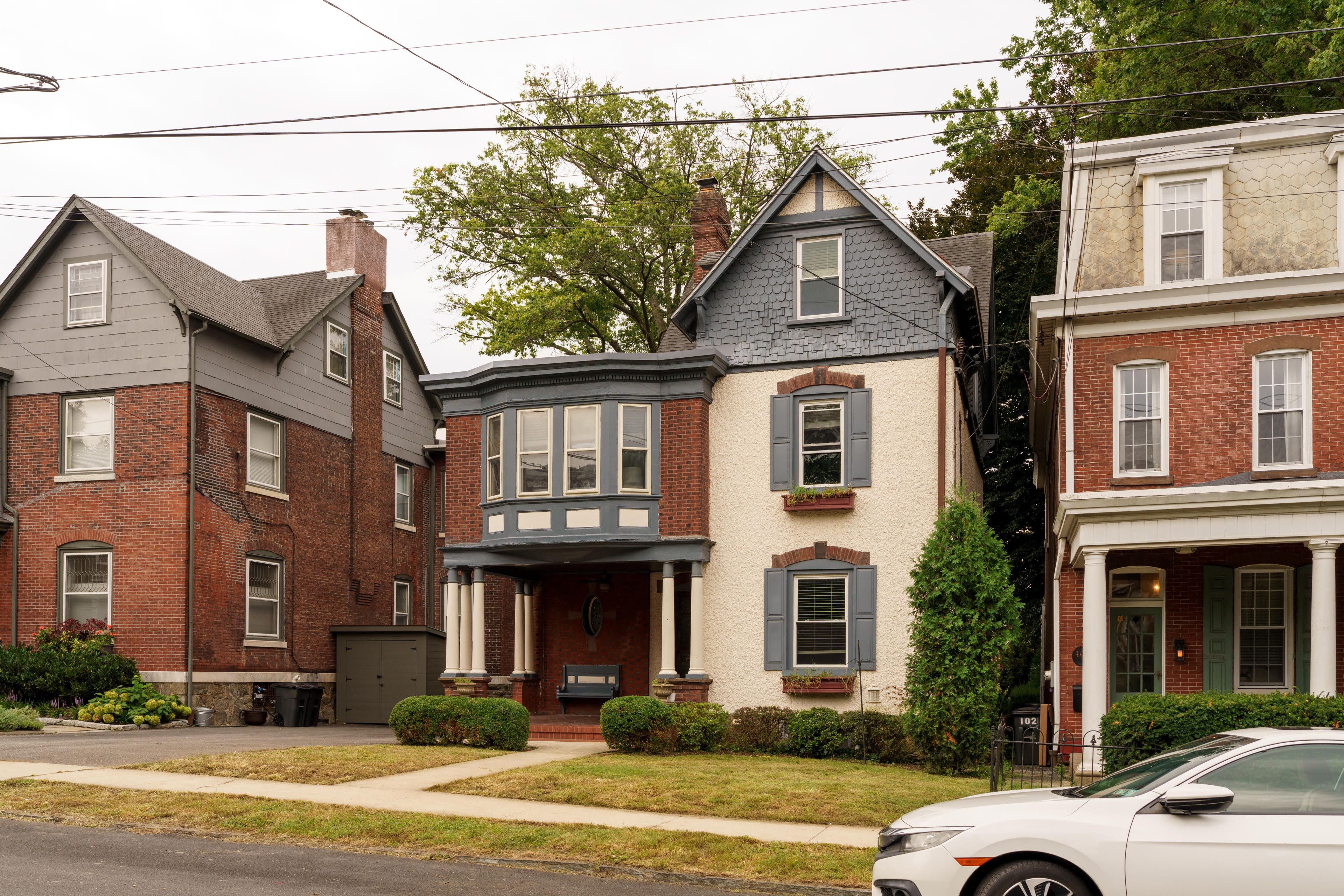
    The four-bedroom, 3½-bath Victorian is 3,101 square feet.

    It has original wood floors, crown and chair moldings, decorative fireplace mantels, and two usable fireplaces.

    The kitchen has granite countertops, stainless steel appliances, and a large island, and there is also a half bathroom.

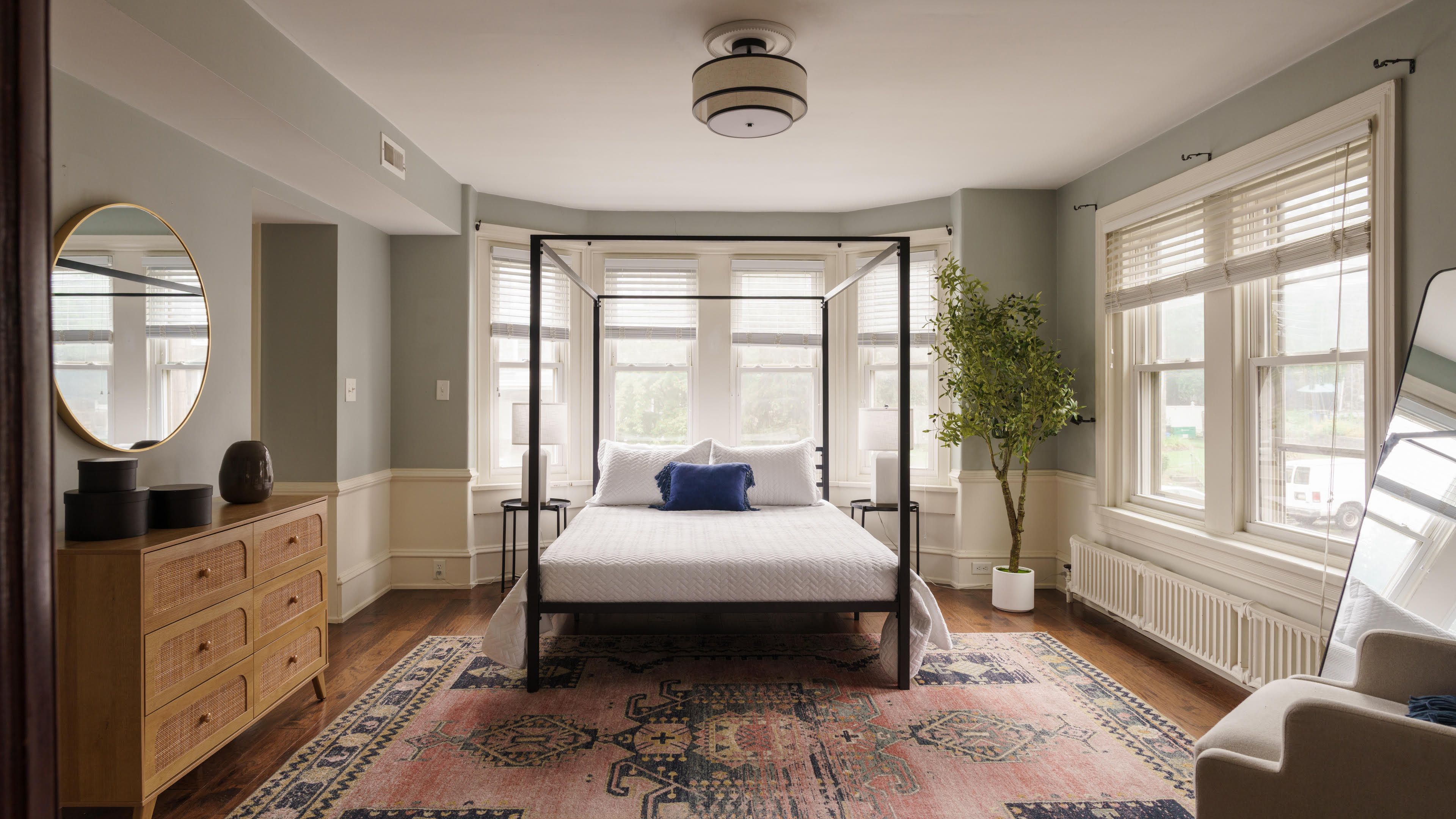
    A bedroom in Adnan Zulfiqar’s house as shown in the listing.Donkin Media/Thomas Donkin

    The primary bedroom is on the second floor with an en suite bathroom. There is a second bedroom with full bath, laundry, and a bonus space, which Adnan used as an office.

    The third floor has the other two bedrooms, a full bathroom, and additional bonus space that can be used as a reading nook.

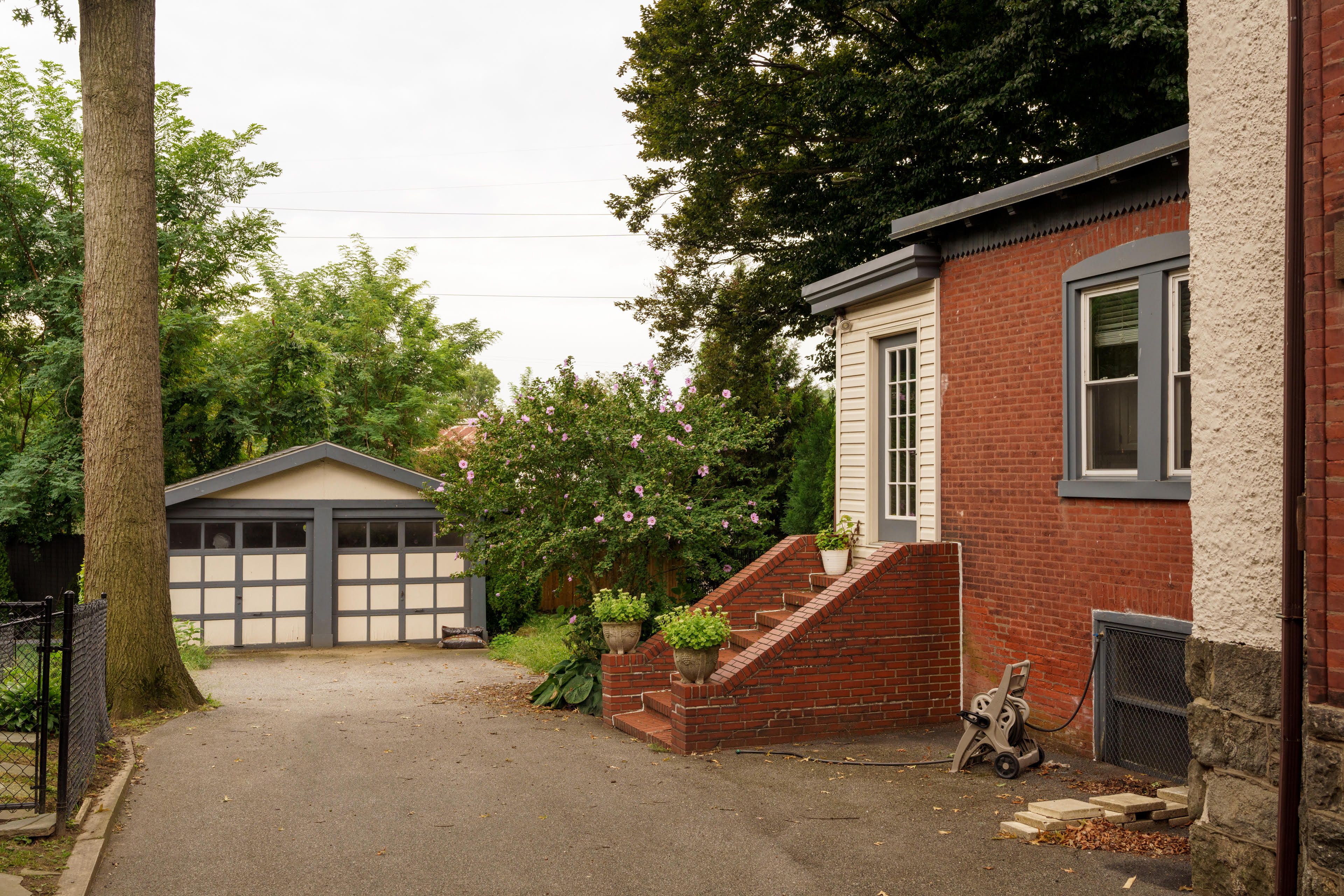
    The driveway and detached garage.Donkin Media/Thomas Donkin

    There is room to park four cars in the driveway and two more in the detached garage.

    The home is close to the Wissahickon Regional Rail station, Kelly Drive, and I-76.

    The house is listed by Kristin McFeely of Compass Realty for $750,000.

  • 19th-century Chester County home with a two-story wine cellar hits the market for $3.3M

    19th-century Chester County home with a two-story wine cellar hits the market for $3.3M

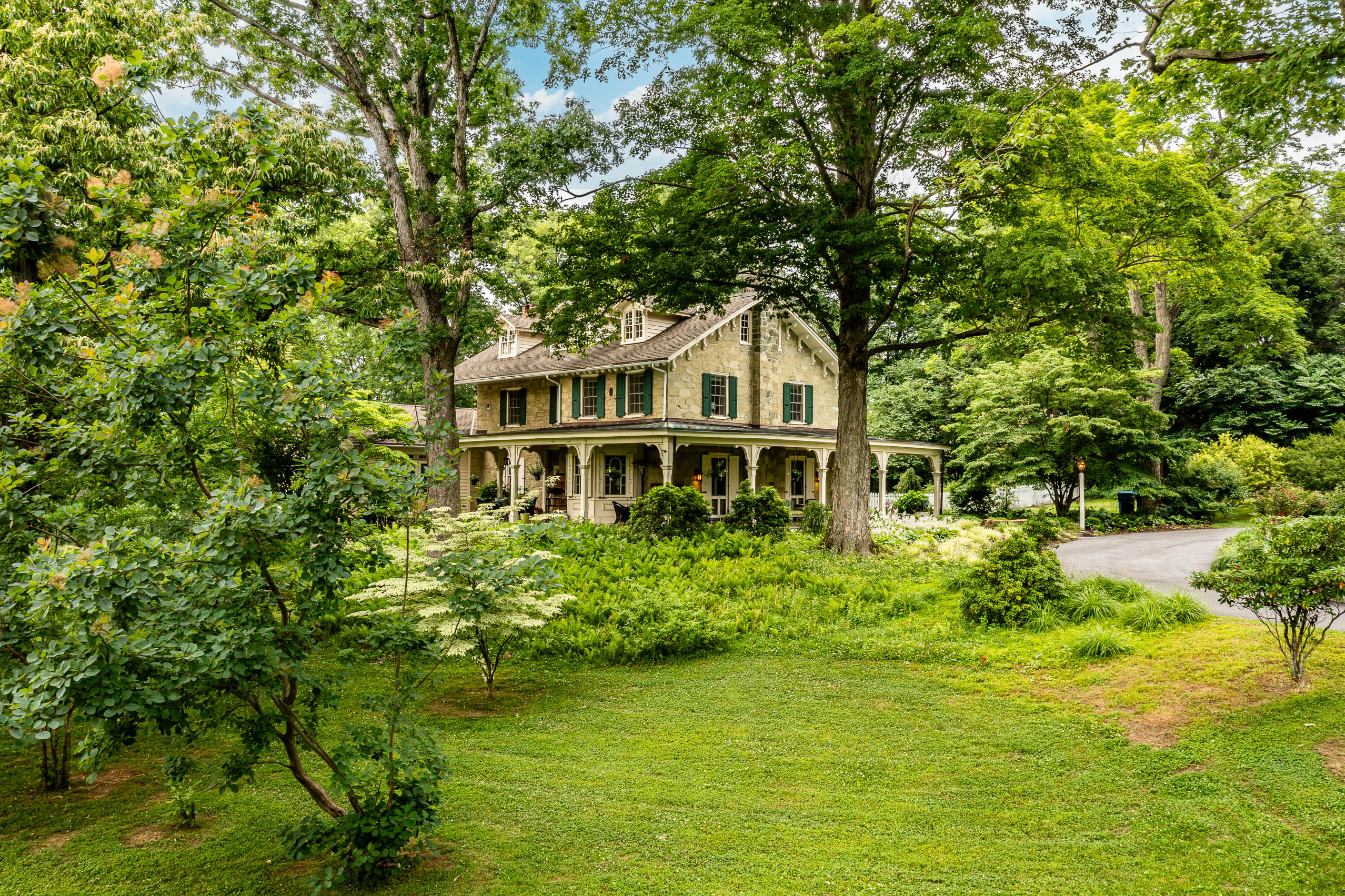
    A six-bedroom West Chester home with a two-story wine cellar and tasting room in a converted ice house has hit the market for $3.3 million.

    Known as Fernbank Farm, the nearly 5,400-square-foot home at 1001 Country Club Rd. was built of green serpentine stone from the nearby defunct Brinton’s Quarry, said Stephen Gross, who shares the listing with Stewart Gross and Holly Gross, all of the Holly Gross Group.

    “It’s a beautiful stone that’s just unique to the area,” he said.

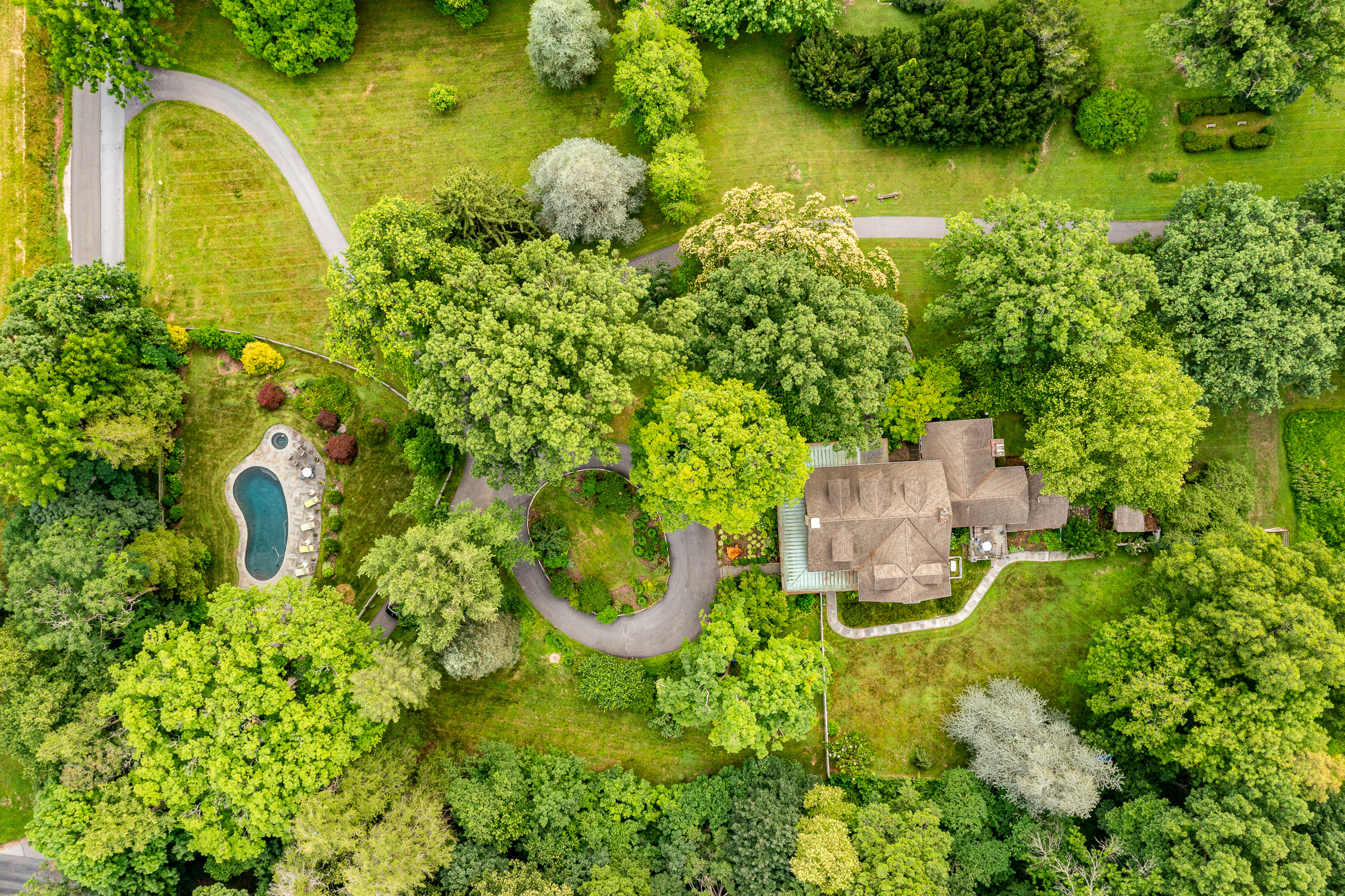
    An aerial view of the property, which sits on six acres.Virtual Vista | Courtesy of Holly Gross Group

    A small portion of the home is believed to date back to the 1790s, said Stephen Gross. It was then expanded around 1846 by James Cheston Morris, a University of Pennsylvania alum and surgeon who invented “a number of surgical appliances,” according to a 1923 Inquirer obituary.

    Morris used the property as a summer country estate retreat and also to reportedly experiment with architectural insulation techniques, including in an attached ice house, the Gross brothers said.


    A former ice house has been converted into a two-story wine cellar and tasting room.Jeffrey Totaro

    That space was converted about five years ago by its current owners into a two-story wine cellar and tasting room.

    Situated off the breakfast room, the roughly 1,500-bottle wine cellar is accessed via a staircase that opens onto a room with vaulted ceilings and stone walls. The upper level has seating, a bar, and wine refrigeration, while the lower level is predominantly for wine storage.

    “There’s no other space like that I’ve been to in Chester County,” said Stephen Gross, adding that it “would be a really neat space to entertain.” He estimates it can hold eight to 10 people seated or 10 to 15 for a standing cocktail party.


    The space has a bar and incorporated millstones.Jeffrey Totaro

    Old millstones have been incorporated into the space, which also has a dumbwaiter and an exterior door where blocks of ice would have once been delivered.

    Elsewhere, the home has a number of original architectural details, including hardwood floors with distinctive patterns like a two-tone herringbone in the foyer and an octagonal shape in the library.

    Other original details include woodwork and fireplace mantels, including the living room’s Campan rubané breccia mantel from 19th-century France.

    The home’s six bedrooms are spread across two upper floors, with the primary suite on the second level. It has a fireplace, built-in storage, a sitting area, and an en suite with a soaking tub.

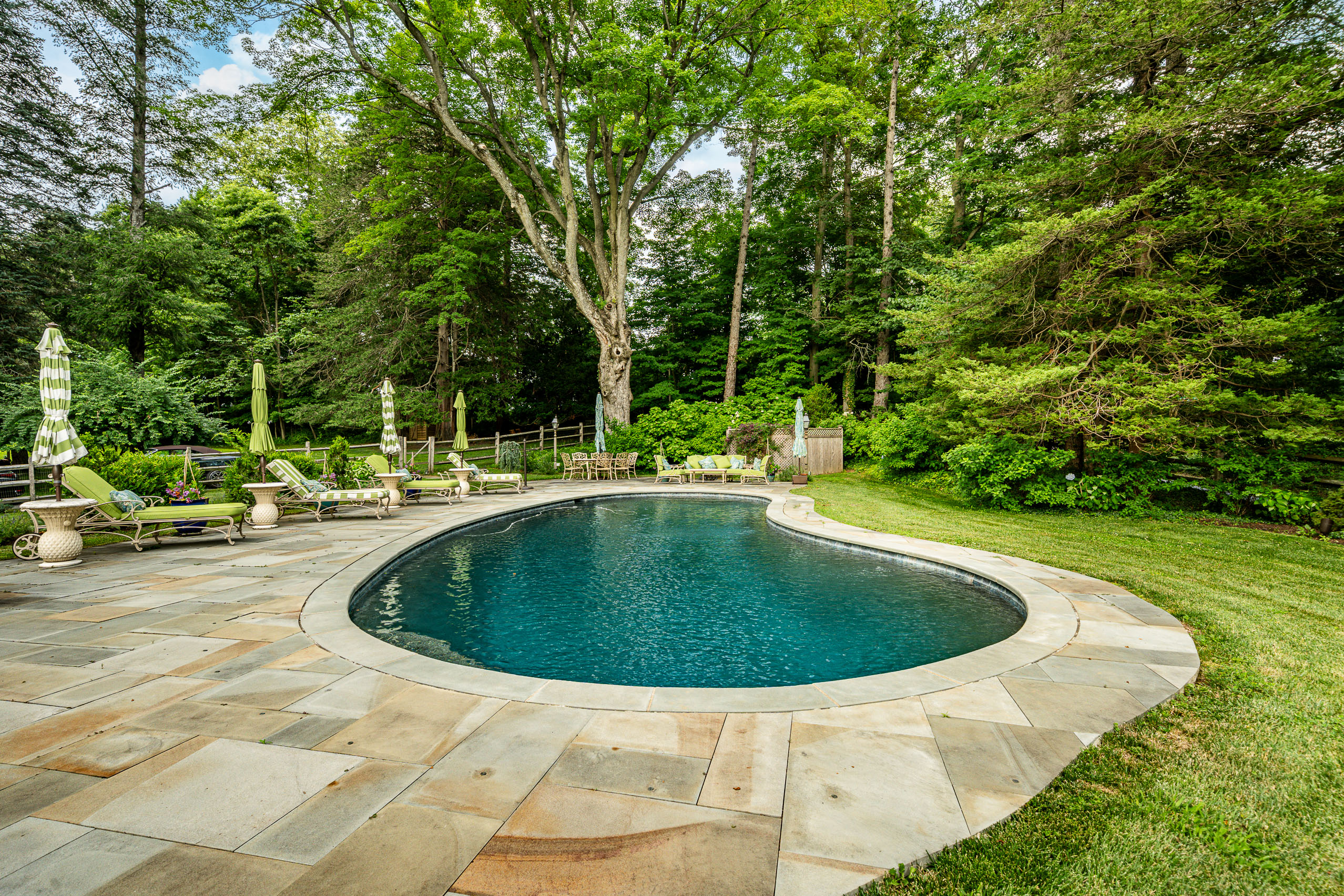
    The home has a kidney-shaped heated saltwater pool and a nearby spa.Virtual Vista | Courtesy of Holly Gross Group

    Situated on six acres and partly surrounded by conserved land, Fernbank Farm has several seating areas outdoors, including a wraparound veranda that overlooks old and specimen trees. It also has a spa and an in-ground heated saltwater pool, which was restored in 2018.

    Elsewhere on the property is a detached three-car garage in a converted 1910 carriage house.

    This suburban content is produced with support from the Leslie Miller and Richard Worley Foundation and The Lenfest Institute for Journalism. Editorial content is created independently of the project donors. Gifts to support The Inquirer’s high-impact journalism can be made at inquirer.com/donate. A list of Lenfest Institute donors can be found at lenfestinstitute.org/supporters.

  • How Icona Resorts founder Eustace Mita has changed the Shore with faith, hustle, and hundreds of millions of dollars

    How Icona Resorts founder Eustace Mita has changed the Shore with faith, hustle, and hundreds of millions of dollars

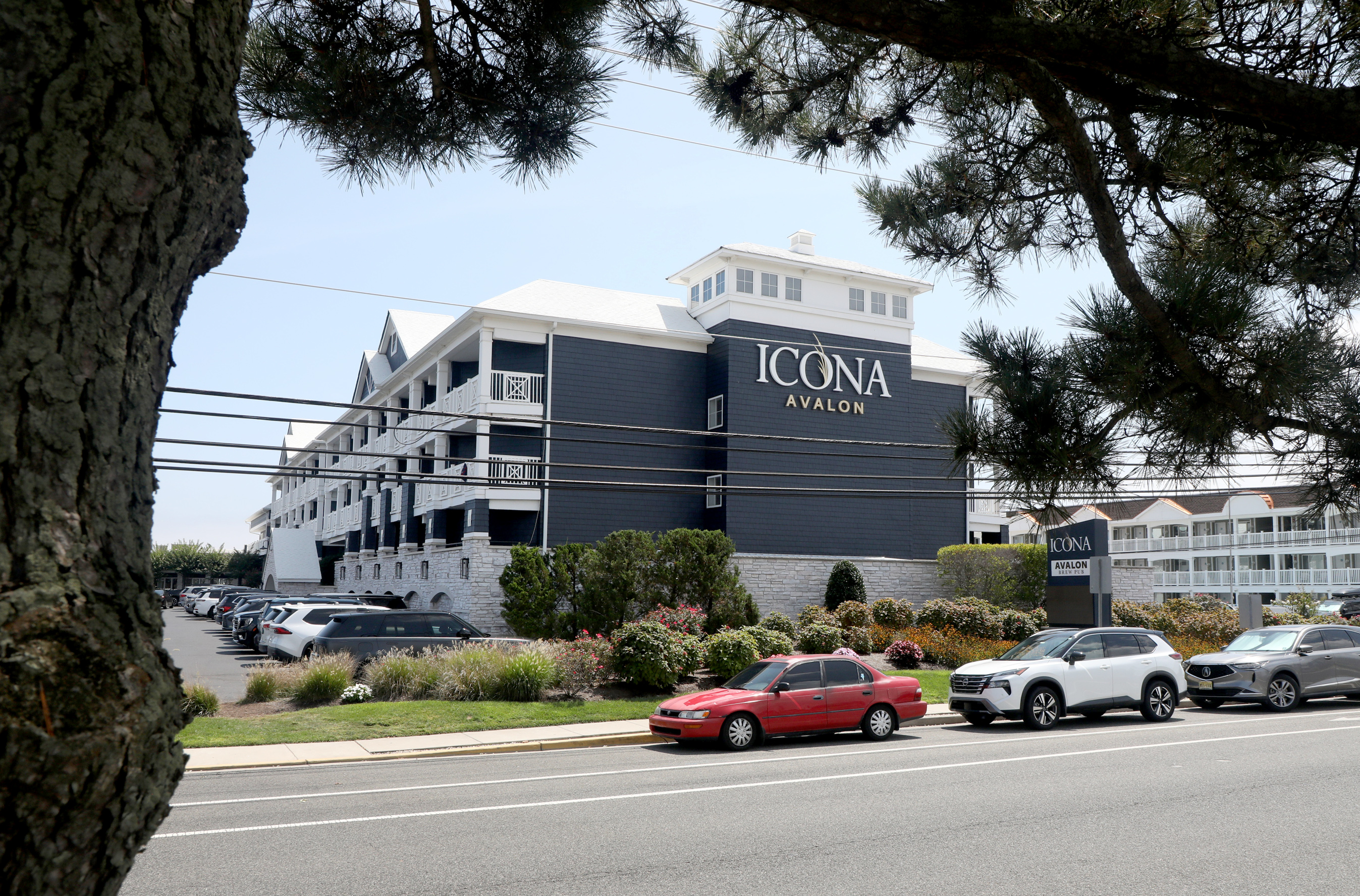
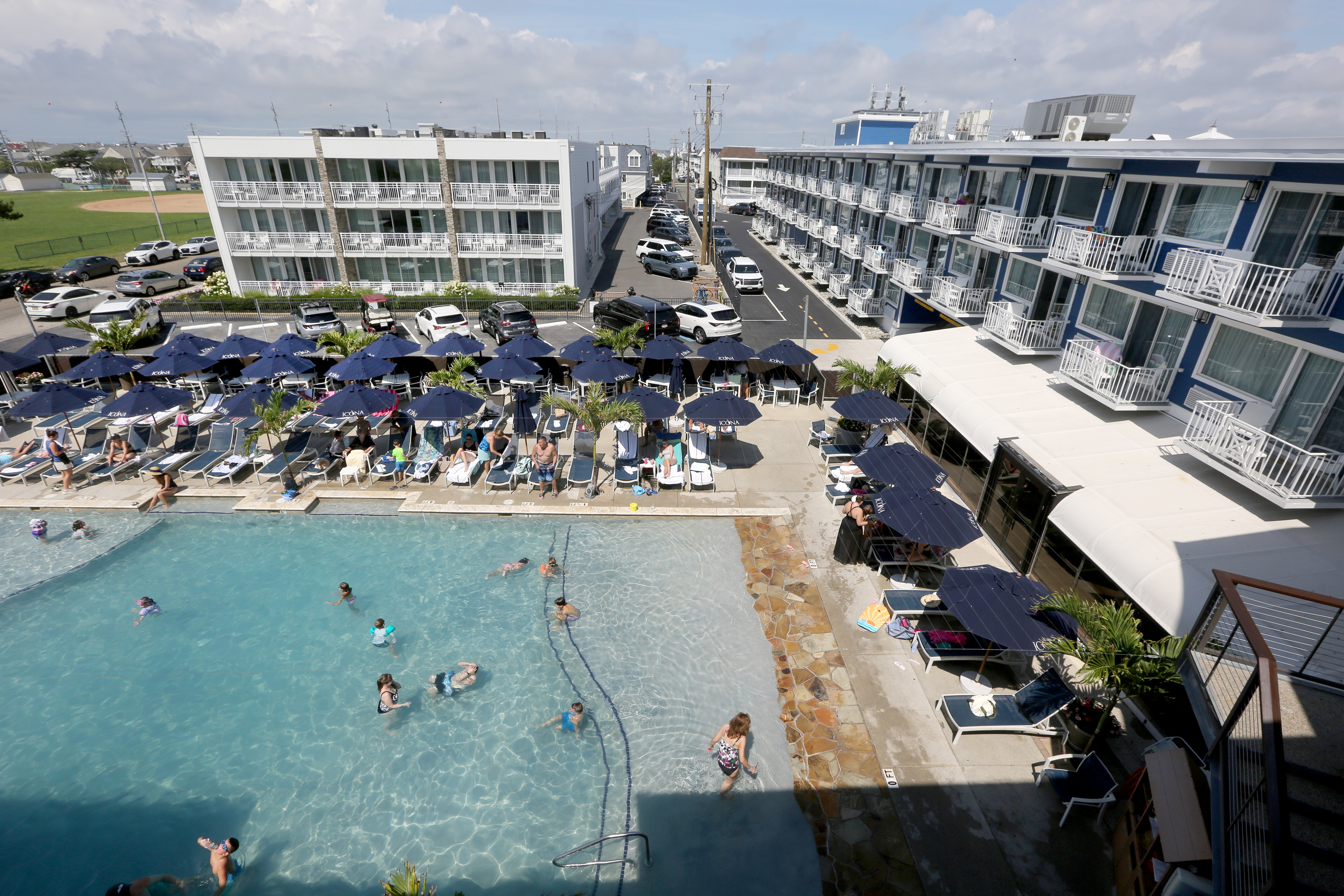
    Icona Resorts founder Eustace Mita says he didn’t set out to change the Jersey Shore.

    Sitting in a corner room at the Icona Avalon, the largest of Mita’s seven luxury hotels, the 72-year-old said it was the Shore, his lifelong “happy place,” that transformed him.

    As Mita looked out onto the dunes, he recalled his baptism at St. Paul Catholic Church in Stone Harbor and his summer job as a teenage busboy and server at the Princeton Bar & Grill in Avalon.

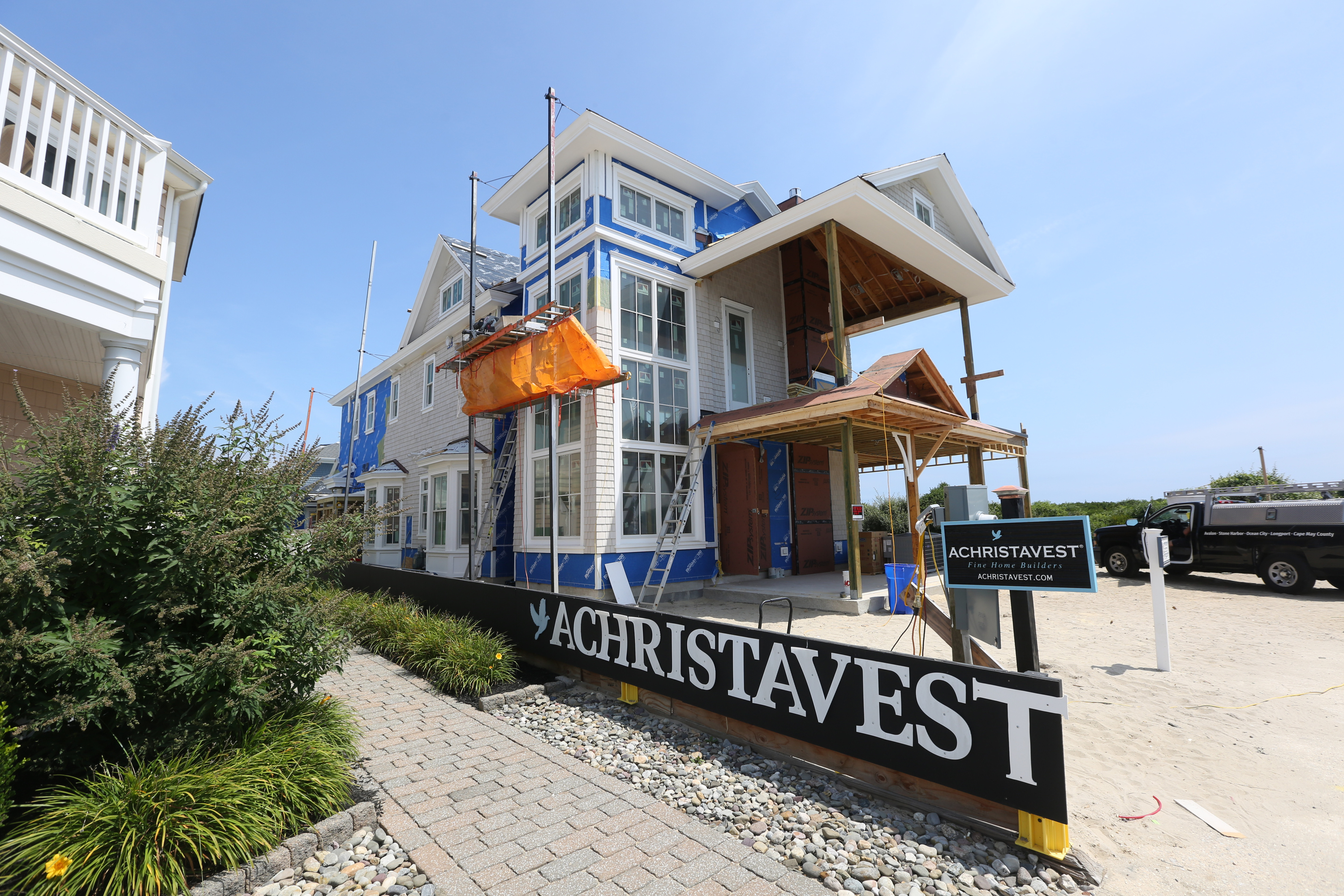
    Decades later, Mita leads both Icona Resorts and Achristavest homebuilders, which constructs multimillion-dollar waterfront homes — including a controversial 18,000-square-foot mansion that would be the largest in Avalon. Built on spec, it will likely sell for several tens of millions.

    His for-profit companies are all about luxury. At the same time, they are imbued with Mita’s faith: The names, Icona and Achristavest, were inspired by spiritual experiences and words, and he displays 18-inch statues of the Blessed Mother in the hotel lobbies.

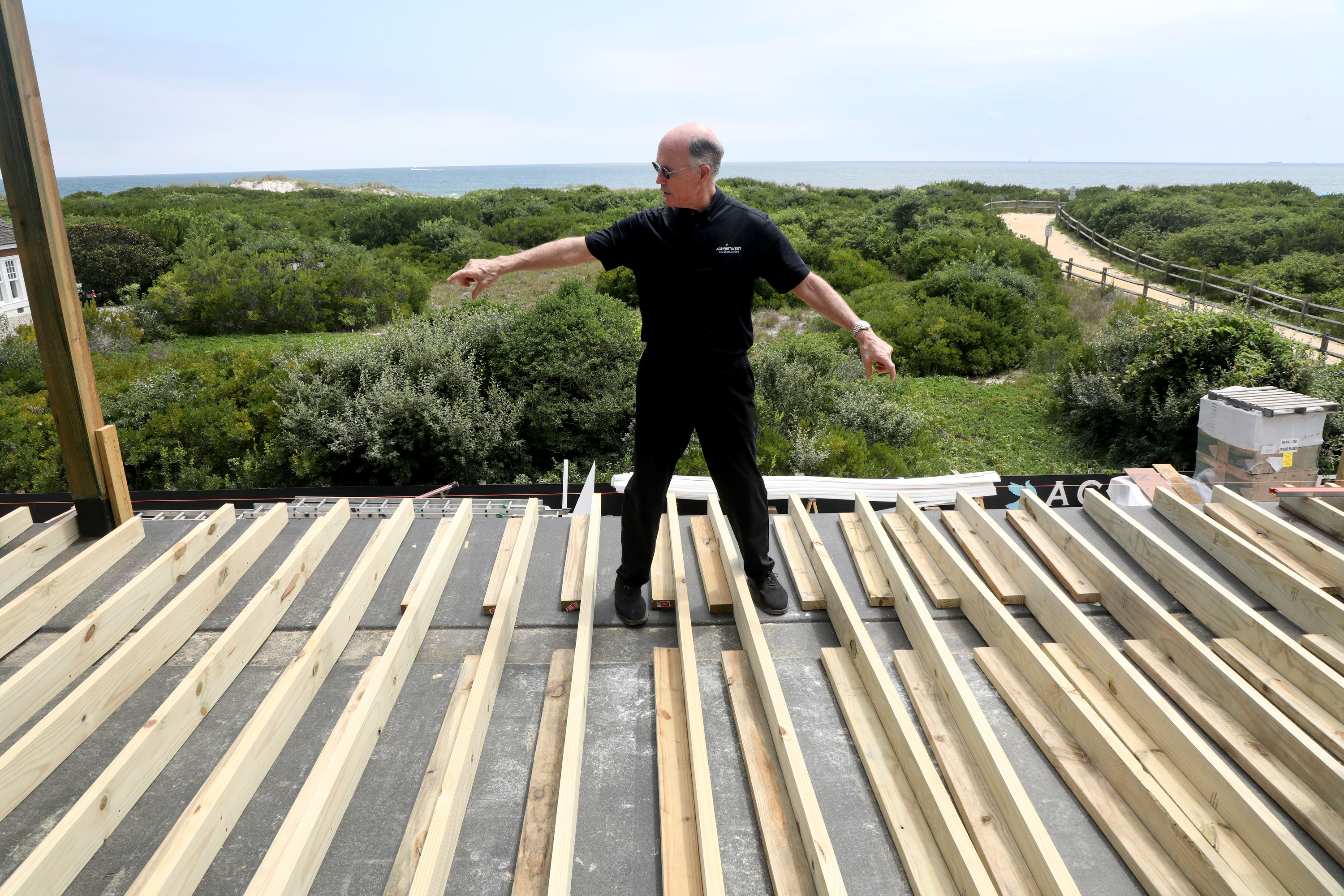
    On a recent August day, he greeted employees by name and chatted with guests as he walked through Icona Avalon and neighboring Icona Windrift. Later, he visited under-construction homes, rattling off details about each project and staring in awe at the ocean views, as if seeing them for the first time.

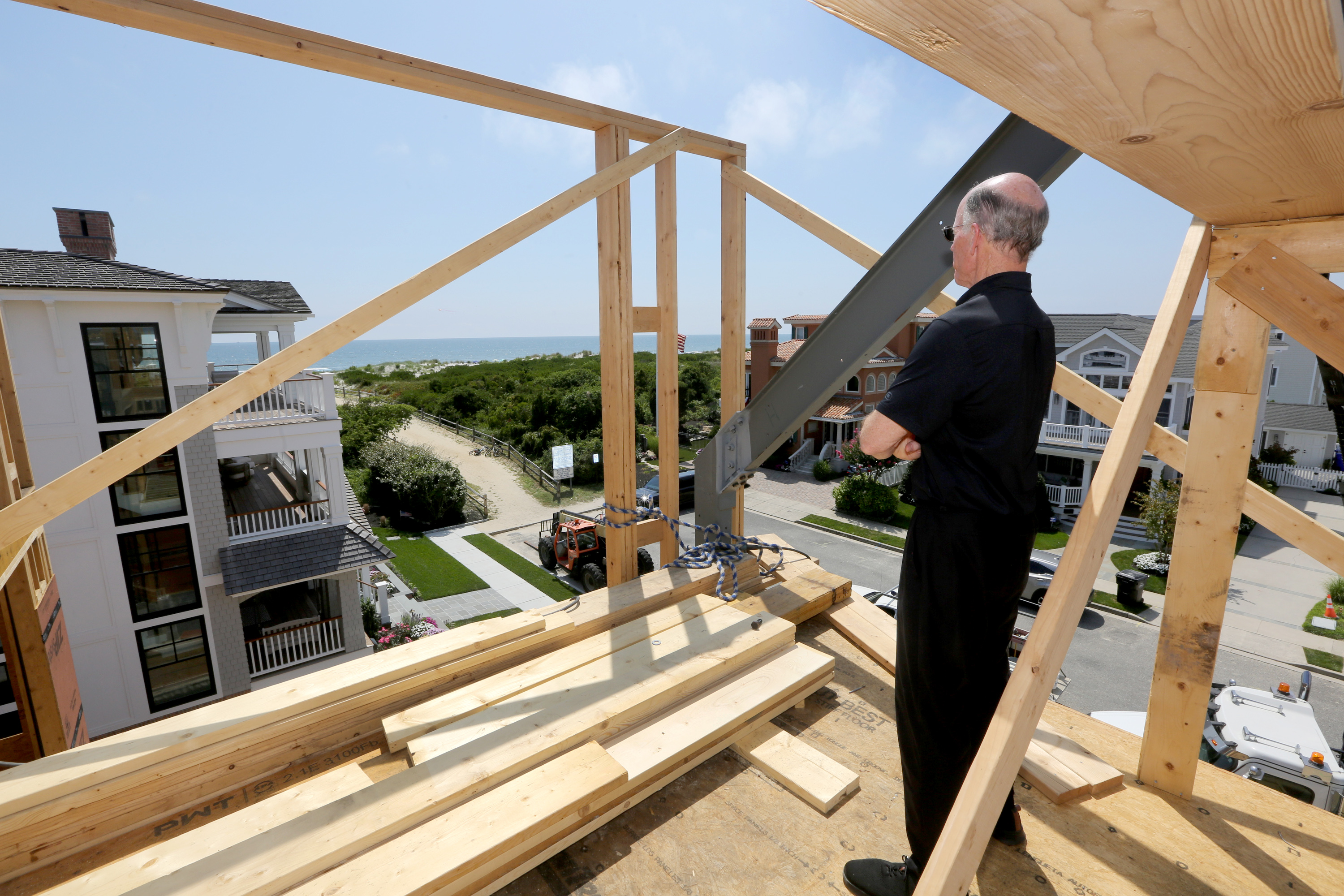
    Eustace Mita takes in the view from an under-construction Achristavest home on 77th Street in Avalon.Vernon Ogrodnek / For The Inquirer

    “Do what you love and the money will come,” Mita said, referencing a lesson he learned from his grandfather, Eustace Wolfington, who owned Avalon’s first beachfront hotel, the Puritan, later renamed the Whitebrier. “That has been so true in my life.”

    Mita declined to share how much his companies, which are privately held, are worth, or how much he’s invested in the Shore, saying only that it’s “hundreds and hundreds of millions of dollars” — and counting.

    He’s ready to invest another $200 million in a seven-story resort on the Ocean City boardwalk, pending negotiations with city council.

    The now-closed Gillian’s Wonderland Pier rose above the dunes at Sixth Street and the Boardwalk in Ocean City during its final weekend in September 2024.Tom Gralish / Staff Photographer

    For five years since he bought the now-shuttered Gillian’s Wonderland Pier, Mita says he has faced roadblocks and pushback, most recently from community groups who sued Ocean City and its council asking to void the site’s “in need of rehabilitation” designation. The designation allowed council to start talks with Mita about his plans to redevelop the former amusement park.

    In a statement announcing the lawsuit, Jack Gutenkunst of Plaza Place Civic Association, one of the neighborhood-group plaintiffs, called the designation “deeply flawed” and said it “seeks to improperly strip away important planning protections that residents have long relied upon.”

    Ocean City Council leaders, who were set to hold private negotiations this week about the redevelopment, did not return requests for comment.

    Some residents near the old Wonderland Pier have said they are worried about traffic and loss of sunlight, as well as losing the area’s small-town, family-friendly charm.

    “We have [millions] worth of real estate right here that would be degraded by this hotel, and our way of life would be degraded,” said Marie Crawford, who lives behind the pier.

    Mita said the project, which has been downsized from the original proposal, would be an asset to Ocean City. The town calls itself “America’s Greatest Family Resort,” he added, but has not opened a new hotel in more than 50 years. He noted that several business owners on the boardwalk and elsewhere have spoken in favor of the project.

    “We’re on the pathway now to being able to build Icona Ocean City, but we’ll see,” Mita said. “I don’t take anything for granted.”

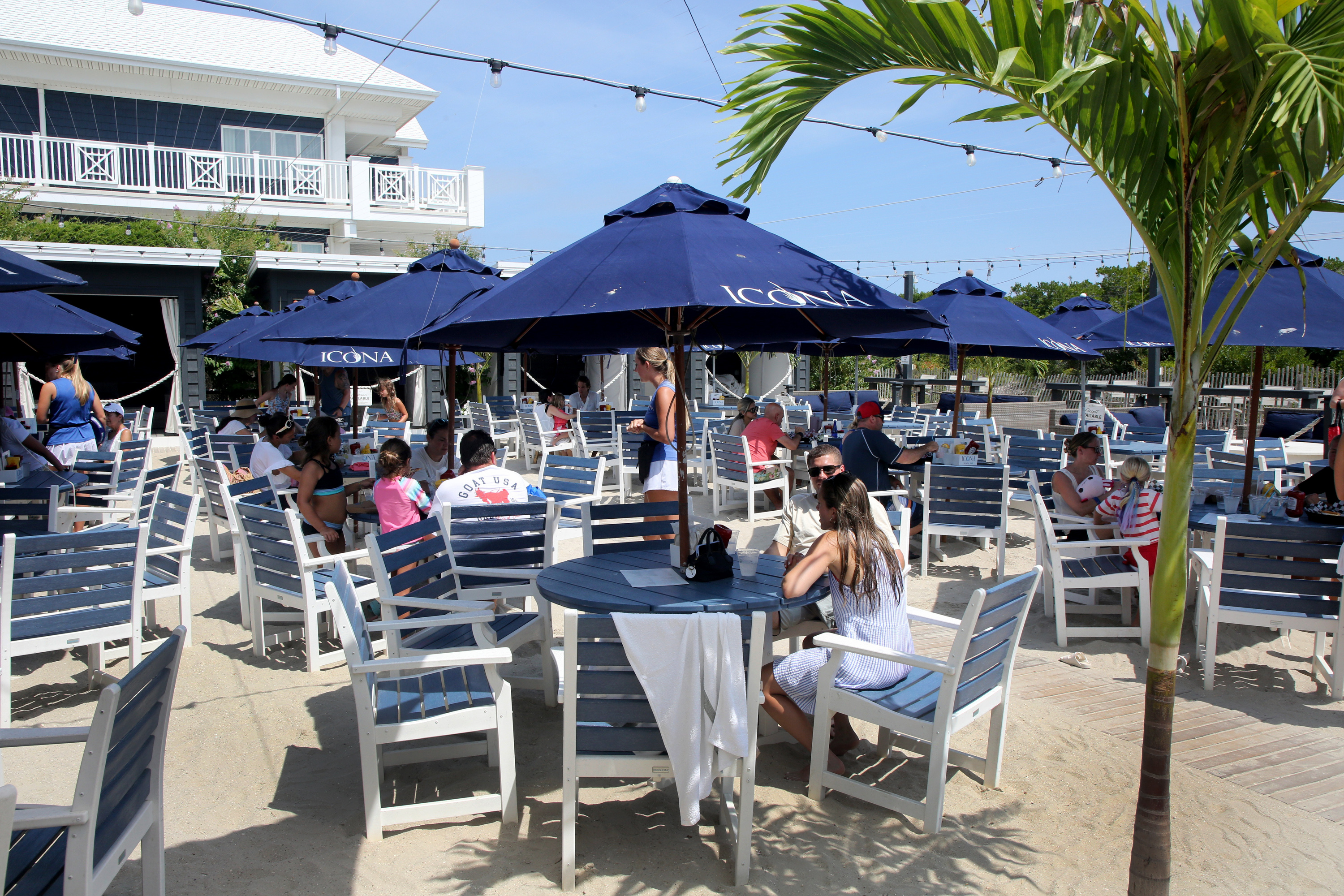
    Guests eat lunch at Icona Avalon’s Beach Bar on a weekday in August.Vernon Ogrodnek / For The Inquirer

    He has his sights on two other potential hotel properties, one in Cape May County, though he wasn’t ready to share details.

    Despite many offers, Mita has no interest in selling Icona Resorts. He has told his five grown children that they could do so someday — as long as they don’t sell the prime beachfront real estate where his hotels sit.

    For now, his answer to the near-constant acquisition proposals is polite but firm: “Thank you, we’re not interested.”

    But, he added with a laugh, “we’ll sell you a house.”

    An Achristavest home is under construction on 116th Street in Stone Harbor.Vernon Ogrodnek / For The Inquirer

    Mixing faith and luxury down the Shore

    In a conference room off the Icona Avalon ballroom, dozens of hotel employees — many of them international workers on J-1 visas — sit facing a projection screen and white board where the company’s guiding principles are about to be reinforced.

    Wearing a black Icona polo, black pants, and an unwavering smile, Mita slips into the morning meeting with little fanfare.

    A manager kicks off a regular exercise: Stand, introduce yourself, and greet coworkers on either side of you by name. Seated in the back, Mita is among the last to participate, standing ramrod straight and speaking with a joyful lilt.

    Randel Davis, general manager of Icona Avalon, leads an employee meeting.Vernon Ogrodnek / For The Inquirer

    Whenever possible, managers remind the employees, they should call guests by their names, too.

    “The sweetest sound to a person’s ears is the sound of their own name,” Mita said, referencing How to Win Friends and Influence People by Dale Carnegie, one of many books that influenced Mita’s leadership style. The most instrumental, he said, was Greatest Salesman in the World by Christian writer Og Mandino.

    Mita also draws inspiration from Scripture and his involvement with the Camden Diocese and the Philadelphia Archdiocese. He founded an annual men’s spirituality conference, the nonprofit Man Up Philly. He has met Pope Leo twice and is building a nonprofit Catholic “soul-sanctuary” in Ireland, set to be finished in January.

    He has built an orphanage in Kenya and a food center in Ethiopia and raised millions for international aid as the first lay president of the Papal Foundation.

    Eustace Mita talks about his business and life philosophy in a guest room at Icona Avalon.Vernon Ogrodnek / For The Inquirer

    When Mita first placed Blessed Mother statues in his hotels, he said, some suggested it could be “a little too religious.” But he stood by it, saying the Blessed Mother is the matriarch of all people, not just Catholics.

    “If you don’t like Mom,” he said, “you don’t have to stay with us.”

    More often, Mita said guests compliment the statues. He sees some passersby bless themselves and say a silent prayer.

    “We don’t apologize for that,” he said of the iconography. “But we honor all faiths.”

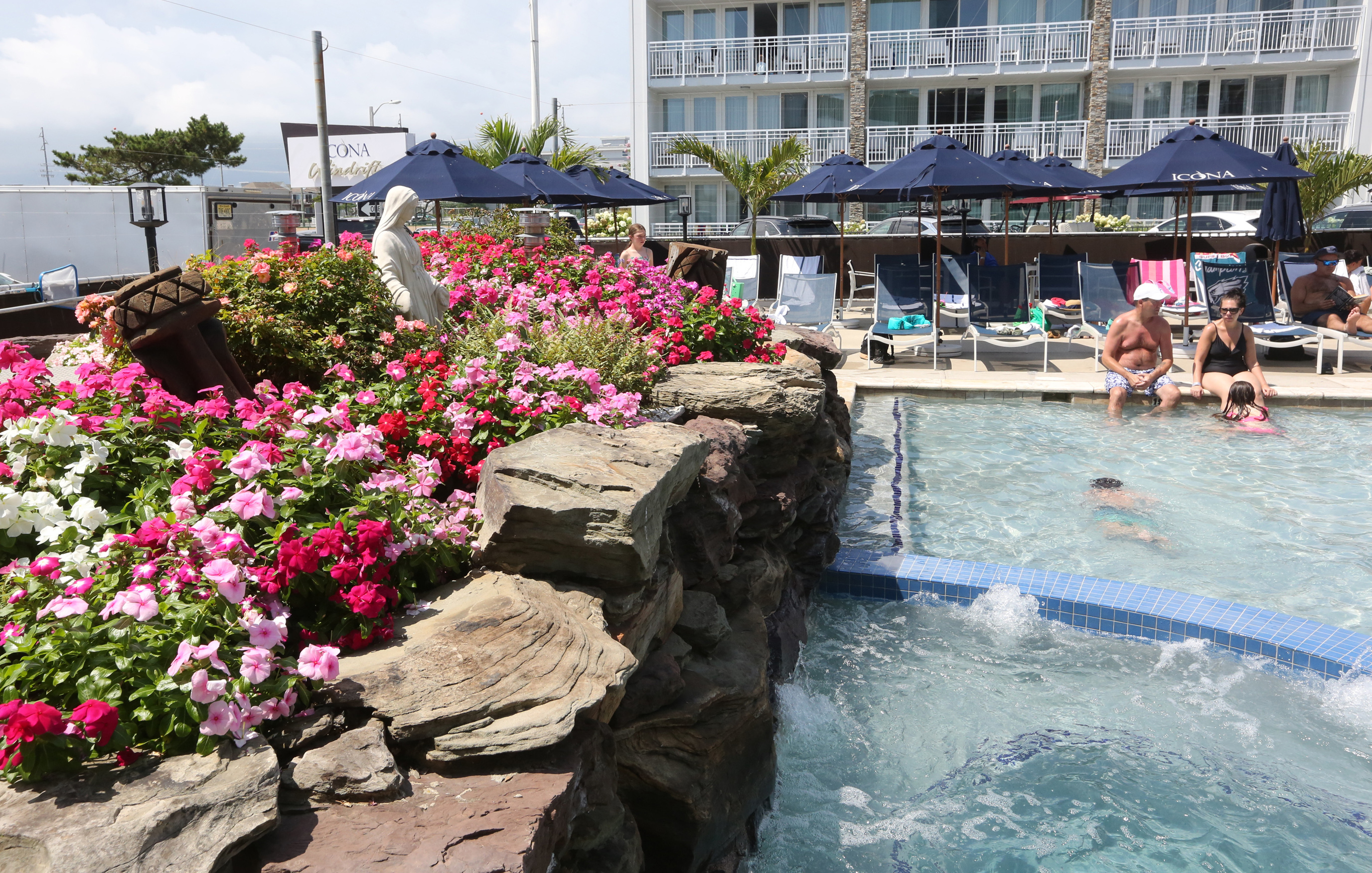
    A statue of the Blessed Mother overlooks the pool at Icona Windrift.Vernon Ogrodnek / For The Inquirer

    How Icona Resorts were built

    In his pursuit of hotels, Mita was particularly motivated by scroll three of Mandino’s work: “I will persist until I succeed.”

    After graduating from Archbishop John Carroll High School in 1973 and studying for three years at Drexel University, Mita worked in the auto industry. In the 1980s, he founded Mita Leasing, then ran Half-a-Car, a lease-training company, with his uncle, Eustace Wolfington II.

    Mita said he “backed into” the hotel industry around the time of the 2008 financial crisis, during which he lost about three-quarters of his net worth.

    Back then, Mita’s Achristavest real estate company was knocking down small Shore hotels and building condo complexes, including the Grand at Diamond Beach, which sits between Wildwood Crest and Cape May.

    Achristavest acquired the Grand’s neighbor, the Pier 6600 hotel, for $12 million in 2006, Mita said. Then, “Armageddon hit” with the recession.

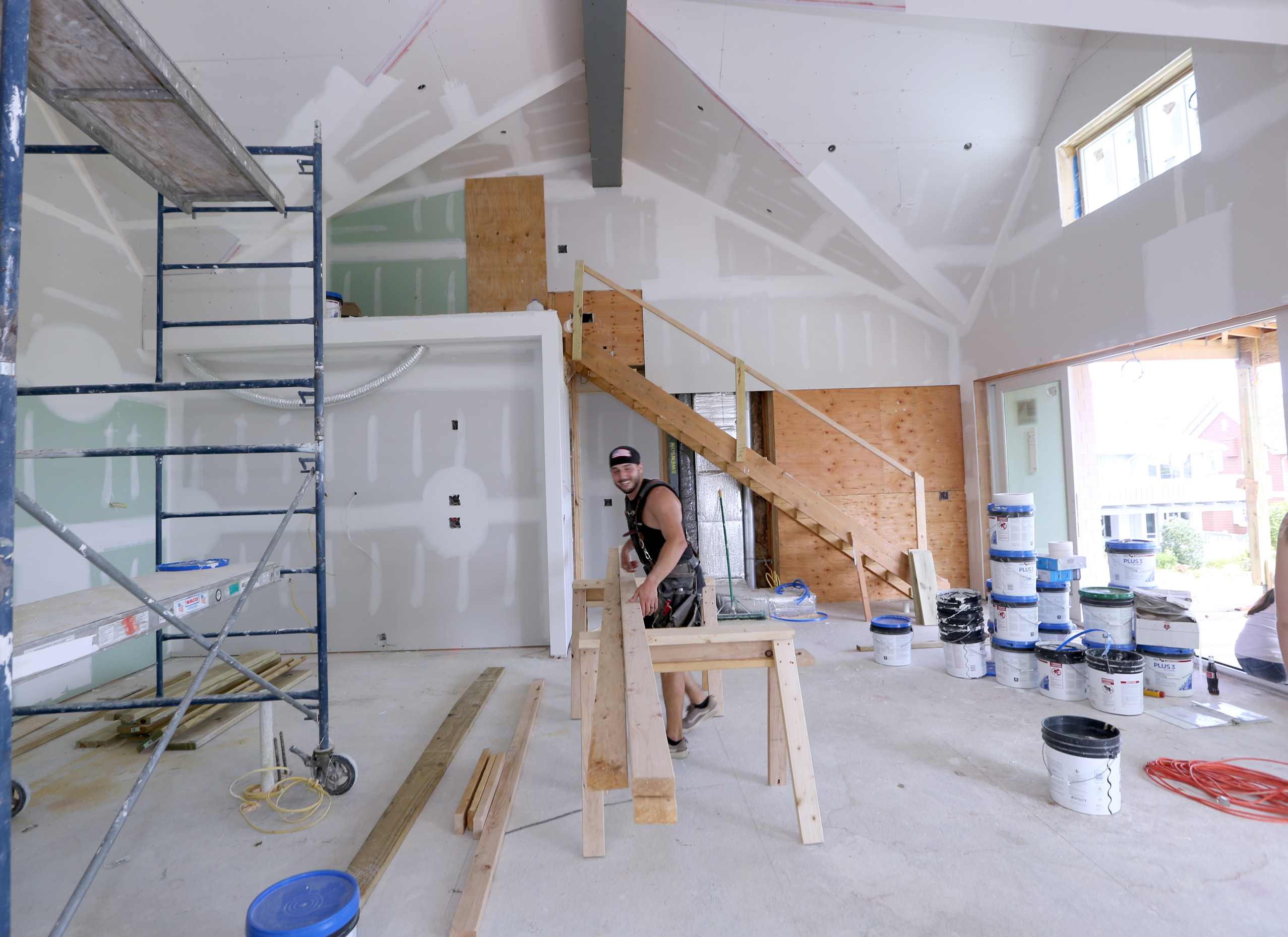
    Home construction at an Archistavest home in Stone Harbor in AugustVernon Ogrodnek / For The Inquirer

    “Our homebuilding business didn’t slow down; it literally stopped,” Mita said. When you’re building second homes, “everybody wants one, but they don’t need one.”

    While demand for Shore homes remained low, Mita said he found that families were flocking to the hotel for short beach vacations at lower prices. So he went all in on resorts.

    The Pier 6600 became Icona Diamond Beach in 2012. Mita has spent $30 million renovating it, he said, including the addition of a third-floor ballroom for its thriving wedding business.

    Eustace Mita bought Icona Avalon from the former owners of the Golden Inn in 2015. Vernon Ogrodnek / For The Inquirer

    Then, after 16 years of knocking on the door at the Golden Inn in Avalon, Mita acquired the iconic beachfront property for $25 million, which in 2015 was the largest hotel transaction in Cape May County history, he said.

    Mita renamed it Icona Avalon. He said he has spent $35 million to remodel it.

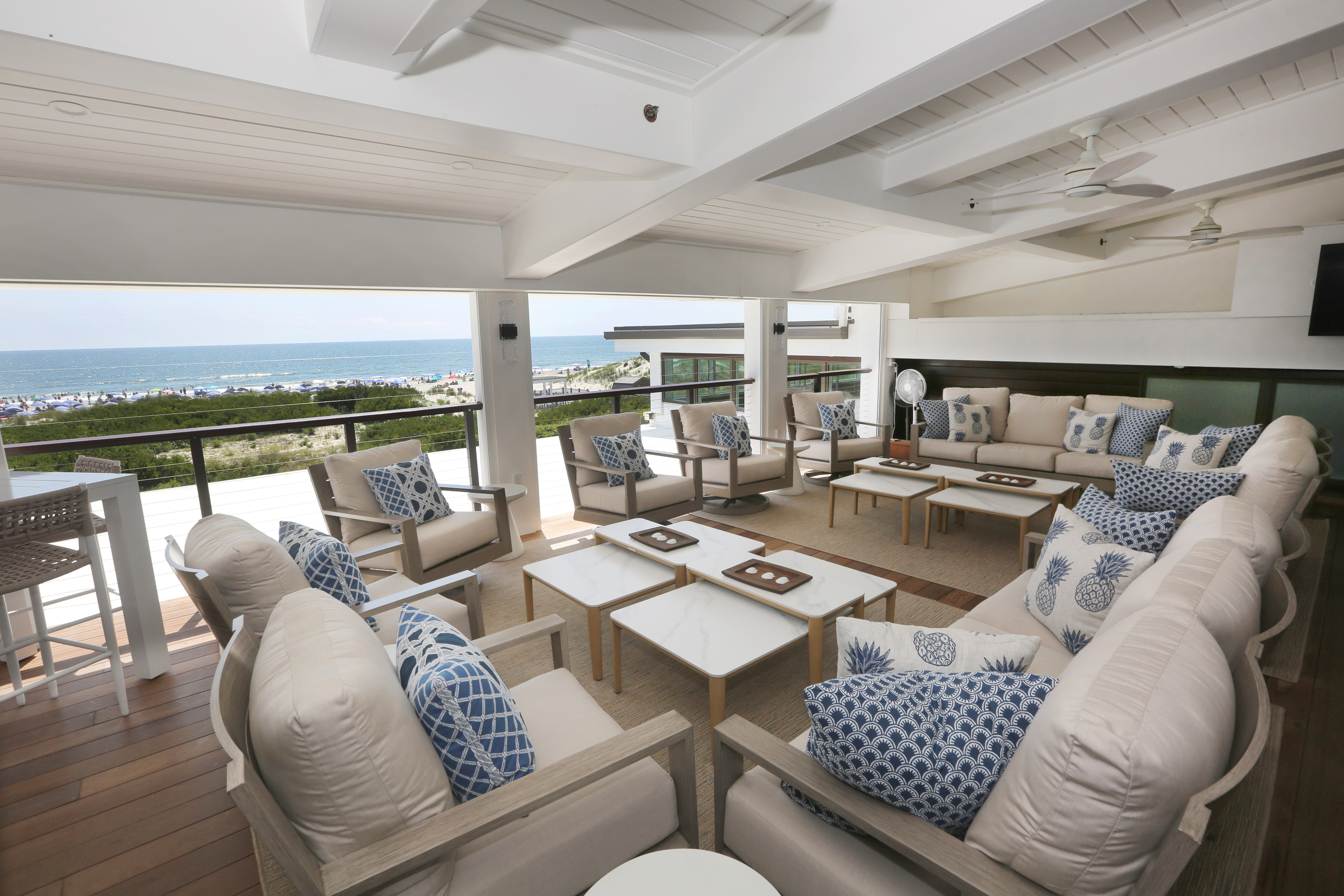
    A few years later, he purchased the Windrift hotel next door for more than $30 million and spent $27 million on renovations there, which include the new Avalon Prime steakhouse and a private third-floor “sky lounge.”

    The Icona Windrift in Avalon, which Eustace Mita has spent $27 million renovating since he purchased it five years agoVernon Ogrodnek / For The Inquirer

    Icona Yacht & Beach Club members, who pay a $7,000 initiation fee plus $5,000 a year, can access the sky lounge, the Icona yacht, private beach service, and shuttle service.

    They number about 25 now, Mita said, and he plans to cap membership at around 200 people.

    It’s a similar setup as the Union League. The historic club, headquartered on South Broad Street, recently bought Avalon’s iconic Whitebrier for $23 million and last summer made it members-only. The move sparked debate over whether the Shore town was becoming too exclusive for even its wealthy homeowners.

    The members-only Sky Bar at Icona Windrift in Avalon sits on the highest point on Seven Mile Beach, according to Eustace Mita.Vernon Ogrodnek / For The Inquirer

    The Jersey Shore experience, elevated

    While middle-class families have increasingly been priced out of the Shore, Mita said he doesn’t believe his hotels are contributing to the trend.

    “We don’t cater to the wealthy,” Mita said, adding that Icona has opened two “select-service” hotels — Mahalo Diamond Beach and Mahalo Cape May — which have fewer amenities and sometimes lower prices.

    Rooms there are about $200 a night on shoulder-season weekdays but can cost $500 to $700 on a summer weekend.

    At Icona’s full-service resorts in Avalon and Diamond Beach, and its boutique hotel in Cape May, rooms start around $700 a night on peak summer weekends.

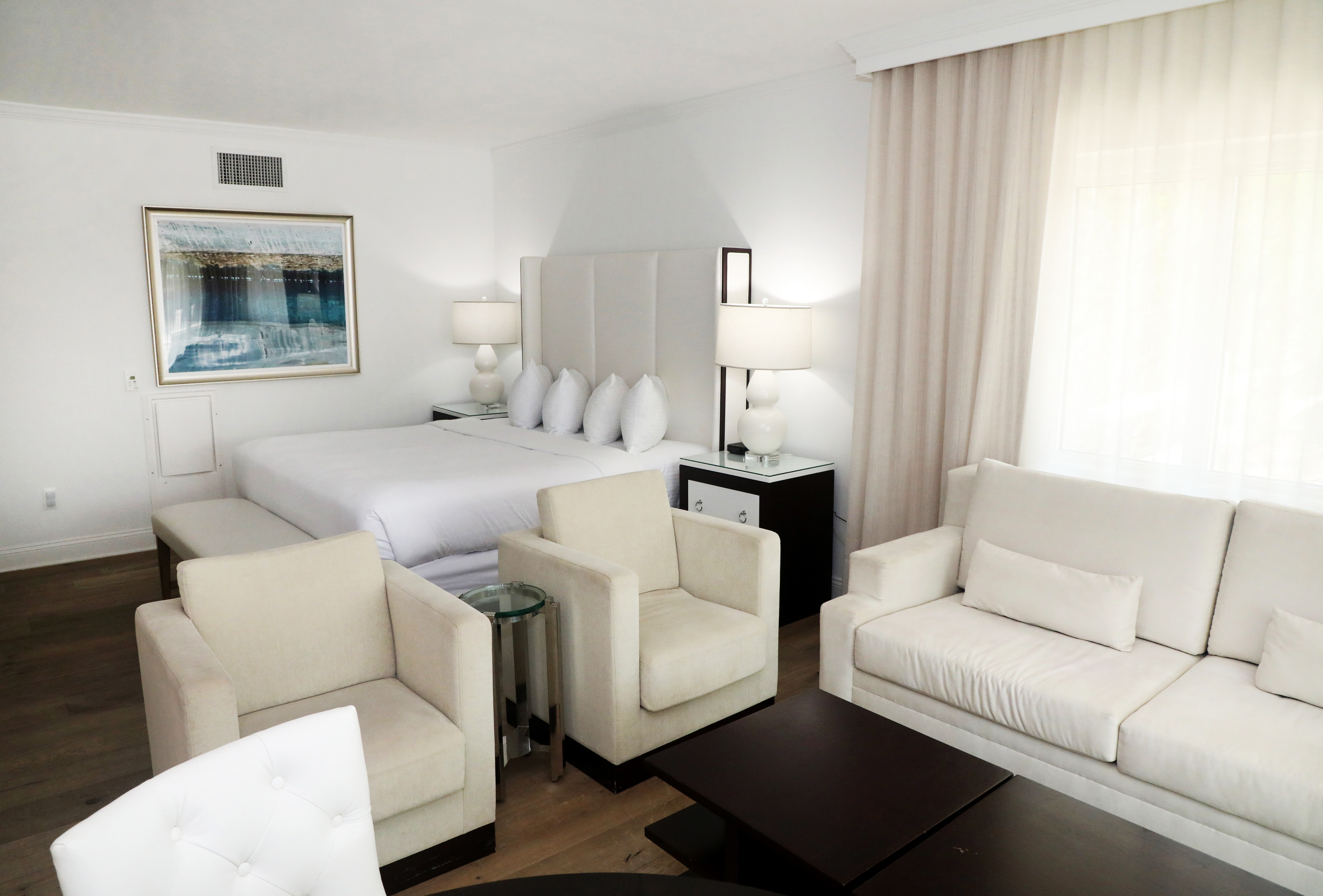
    A corner guest room at the Icona Avalon.Vernon Ogrodnek / For The Inquirer

    Outside South Jersey, Icona’s Grand Victorian boutique hotel in Spring Lake, Monmouth County, has slightly lower rates.

    Icona is not the first brand to bring luxe hotel accommodations to Seven Mile Island, which contains Avalon and Stone Harbor.

    The Reeds at Shelter Haven, a year-round resort in downtown Stone Harbor, opened a couple years before Icona Avalon. Rooms there start around $600 a night on midsummer weekends.

    “It’s great to have healthy competition, right?” the Reeds’ general manager Carmen Russo said. “We always look at them and see what they’re doing, just as they look at us and see what we’re doing.”

    Eustace Mita rattles off details about the construction of this Achristavest home on 116th Street in Stone Harbor.Vernon Ogrodnek / For The Inquirer

    As for Mita’s home-building business, Achristavest builds on the beach and bay from Cape May to Longport, with properties starting at $5 million. By comparison, the median listing price for all homes — not only waterfront ones — in Stone Harbor is just under $4.7 million.

    Achristavest homes being built on spec in Avalon and Stone Harbor will likely sell for $15 million to $25 million.

    “I tell my children rent in Delaware County and buy in Cape May County,” said Mita, who grew up in Bala Cynwyd and now has homes in Malvern and Ocean City.

    What’s ahead for Icona and Achristavest

    Eustace Mita, Icona’s chairman, poses by the pool at Icona Avalon.Vernon Ogrodnek / For The Inquirer

    Mita speaks often of his legacy.

    “I’ll be dead and gone, but imagine the next generation and then the next generation,” Mita said. “Everything we’ve built is built to last.”

    And he said he hopes the lessons he instilled in employees are just as permanent.

    One employee, Rob LaScala, worked at Mita Leasing and then went on to found LaScala Restaurant Group, which has dozens of locations across the region. In just a couple years working together, LaScala said, Mita left a mark.

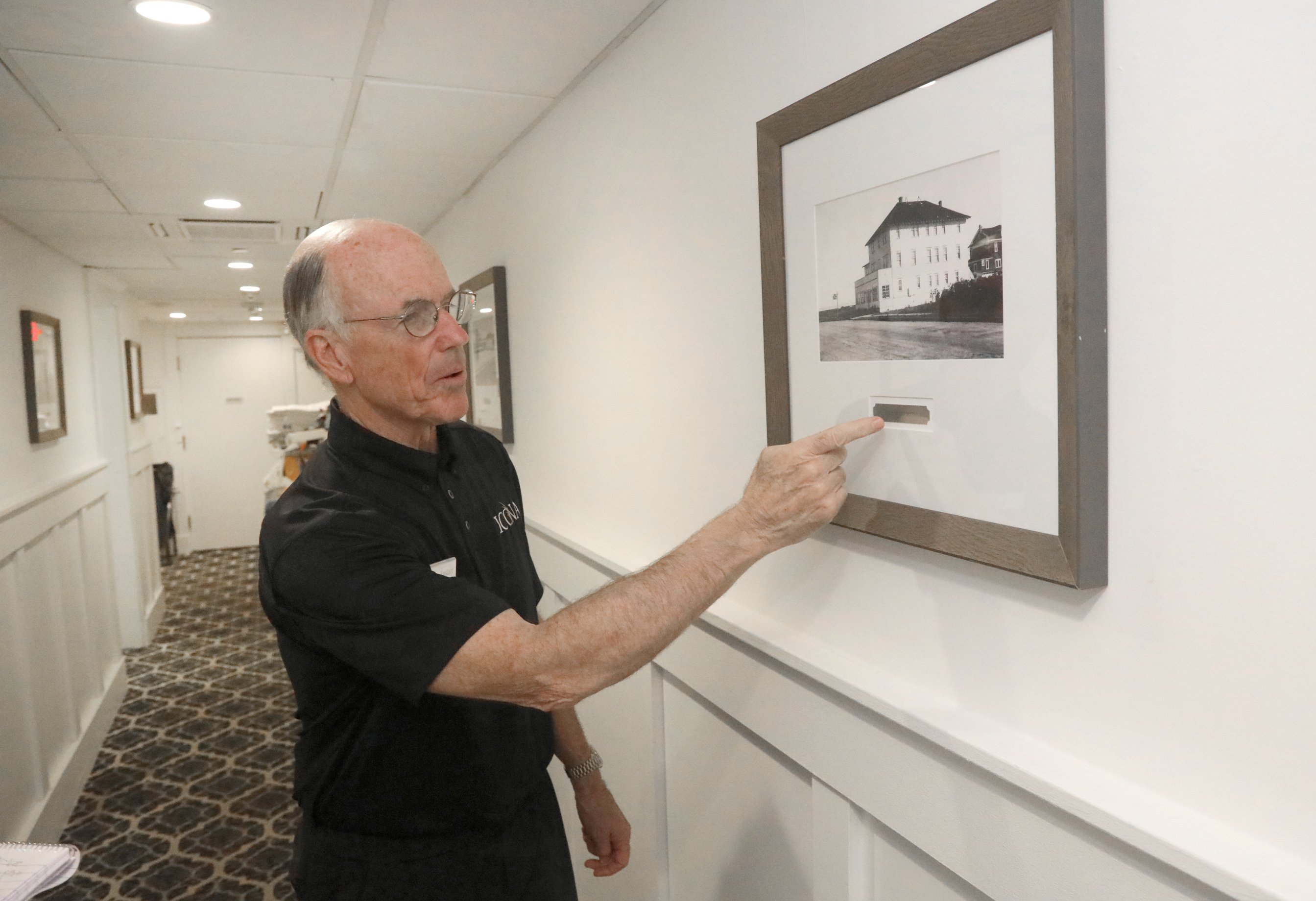
    At his Icona Avalon hotel, Eustace Mita points to a black-and-white photo of the Puritan, Avalon’s first beachfront hotel that was founded by his grandfather, Eustace Wolfington.Vernon Ogrodnek / For The Inquirer

    Mita is “just a make-you-feel-good type of person,” LaScala said. “I over the years have tried to emulate him” and create a company culture that transcends business.

    Mita refers to his 1,100 employees as family but said he works to prioritize time with his actual family. He spends summer weekends with his wife, Susie, and some combination of their five children and 18 grandchildren. His oldest son, Euse, was recently named Icona’s president and CEO.

    Eustace Mita (right), founder and chairman of Icona, with his son Euse, who was recently named president and CEO.Vernon Ogrodnek / For The Inquirer

    But, of course, he said, work sometimes calls. On a recent weekend, with many summer staffers back at college, Mita helped clear tables at Icona Avalon while Euse was a fill-in valet.

    Said Mita: “There’s no reason just because I’m a leader that I can’t bus tables, that I can’t sweep floors.”

  • Their Merion Station yard didn’t have much life. Now it’s filled with flowers.

    Their Merion Station yard didn’t have much life. Now it’s filled with flowers.

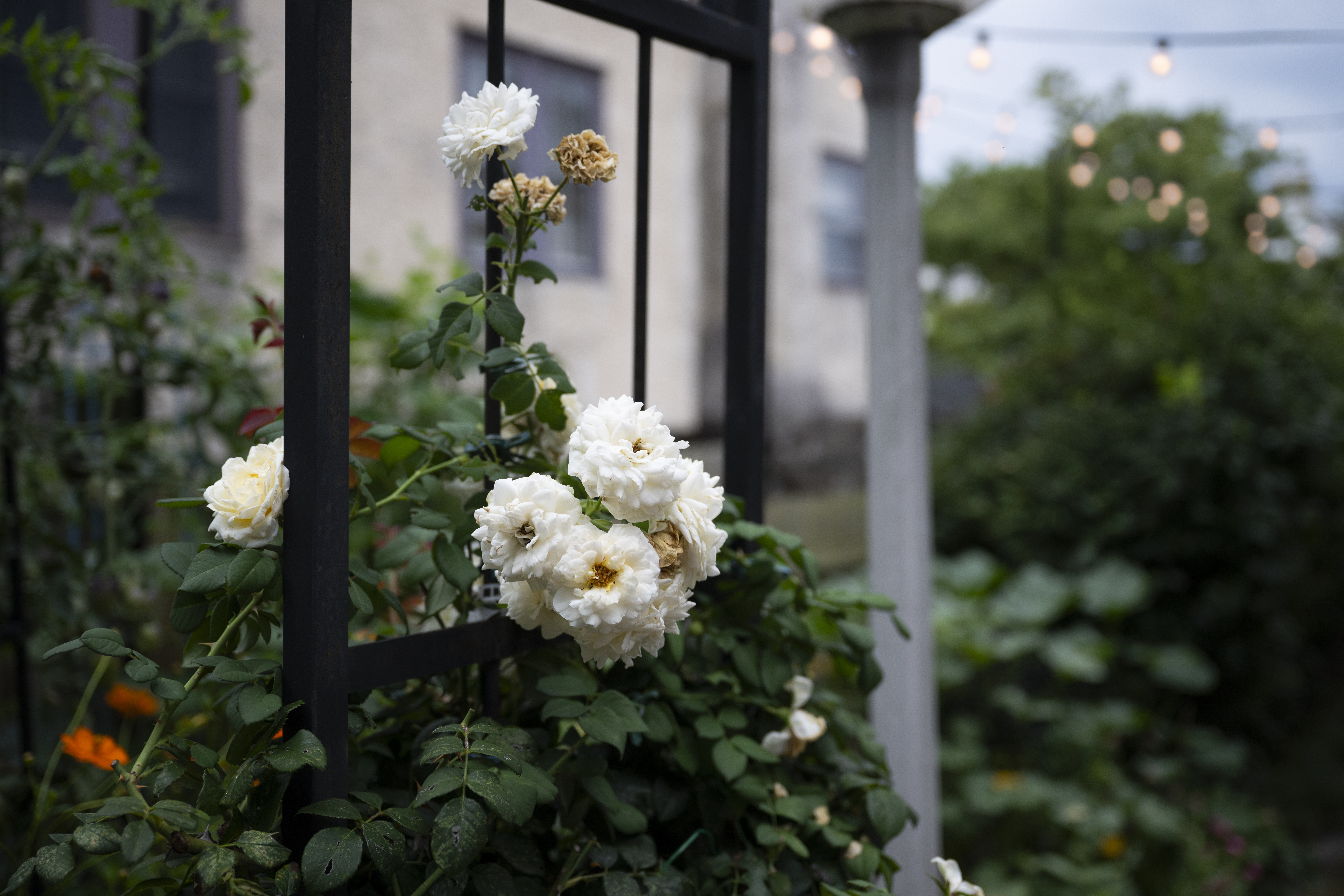
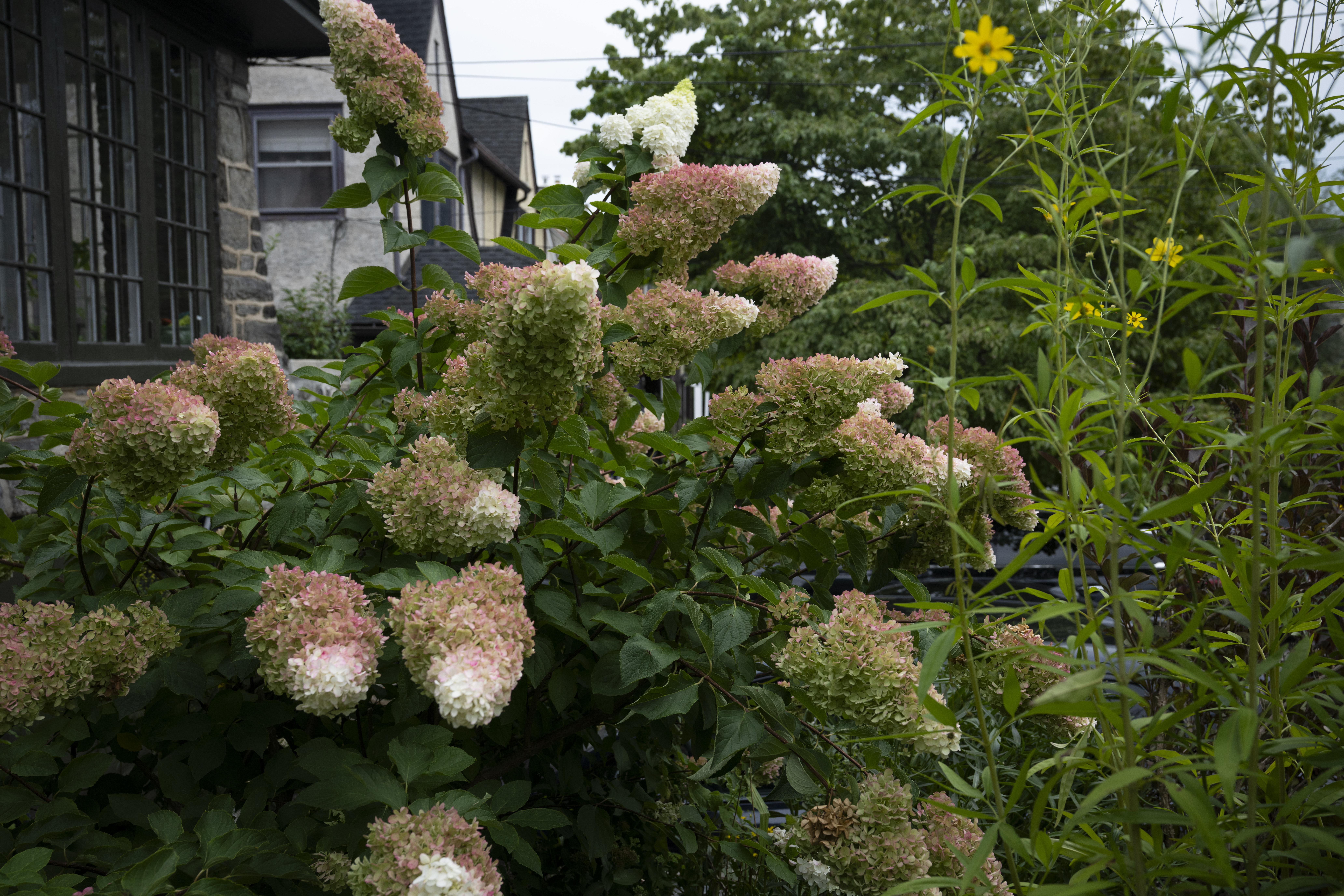
    Platter-sized hibiscus, hydrangea, cardinal flowers, small yellow blooms called partridge peas, chartreuse creeping Jenny, daisies, and lavender fill the front yard of the Merion Station home.

    The plantings extend from the porch to the curb, where parked cars push against tall stems of deep pink celosia. “It’s a hostile environment. You hope for the best,” said Boots Levinson.

    Levinson and his wife, Laura White, own the three-story Tudor surrounded by colorful vegetation.

    “Laura’s the gardener,” Levinson said. “I’m the waterer and manual laborer.”

    White and Levinson’s home is surrounded by flowering gardens.Joe Lamberti / For The Inquirer
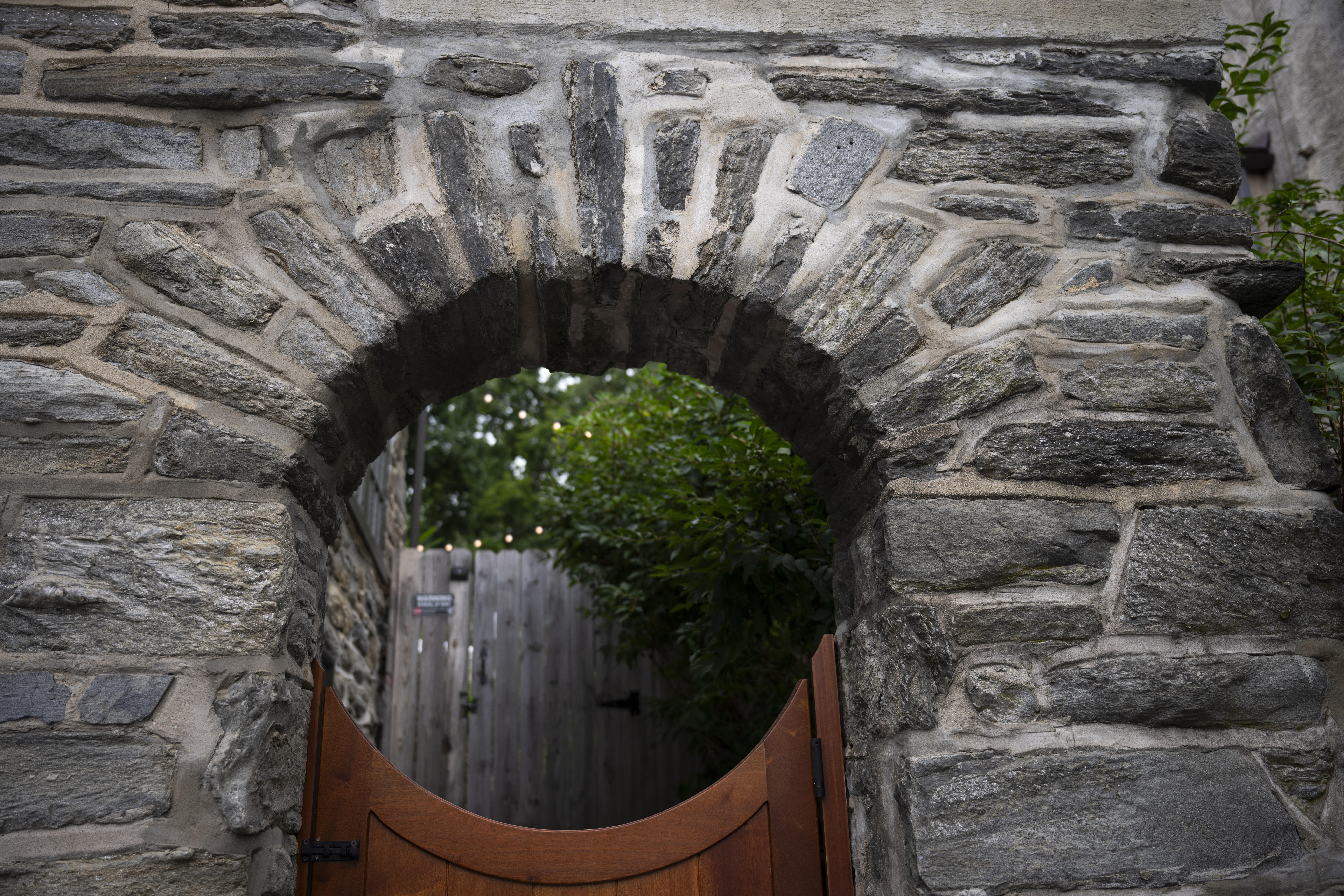
    The Tudor-style home has an arch that required repairs.Joe Lamberti / For The Inquirer

    The couple moved to the 3,000-square-foot property in 2021 from a one-bedroom condo in Center City. “We bought the first house we looked at,” White said, then conceded, “We had no idea what we were getting into.”

    The stucco-and-brick, four-bedroom, 2½-bath house had a new kitchen and bathroom. There was space to entertain and for corgis Archie and Ozzie to romp.

    Levinson and White met on Jdate, an online dating service for Jewish singles. They had in common a Midwest background. She grew up in Missouri, while he lived in Minnesota until moving to the Philadelphia area in the sixth grade. White came to Philadelphia for her medical training. The couple married in 2013.

    The house needed new air-conditioning and heating systems, and a basement leak exposed a drainage problem.

    Hibiscus flowers bloom in the front yard.Joe Lamberti / For The Inquirer
    White roses in the garden.Joe Lamberti / For The Inquirer

    Landscaping amounted to little more than a crab apple tree in the backyard, rocks and dirt, and a flower bed covering a parking space in front of the garage.

    White and Levinson hired mason Deen Vinci of Surrounded by Stone in Merion Station to repoint and repair the stone arch that leads to the backyard. Vinci also built the arch’s wood door and paved the front driveway. In the backyard he reset and repaired patio bricks.

    White furnished the patio with a wood table and chairs from Arhaus. The large umbrella from Wayfair is set in concrete so it won’t tumble over in a storm. Plants in the backyard include hydrangeas, zinnias, jasmine, dahlias, gardenia, a juniper and a pine tree.

    White, a psychiatrist, had no horticultural training. But she learned a bit from watching her father, Bruce, garden and is grateful to neighbors who share knowledge and plantings with her. Watching hummingbirds and bees flit about her flowers, she and her neighbors “have created a pollinator pathway.”

    A hummingbird enjoys cardinal flowers in White and Levinson’s garden.Joe Lamberti / For The Inquirer

    Neighbor Suzanne Kane, who tends a lush garden across the street, is a particularly helpful mentor, White said.

    Levinson, a Realtor, said his wife’s cultivating talents have been aided by her medical training. “She’s a scientist and is observant and nurturing.”

    White planted a kitchen garden on one side of the house with honeynut squash, Swiss chard, Thai and Shishito peppers, and varieties of plum tomatoes she will can. Cucumbers grow on a trellis. In late summer, Ozark strawberries are ripening. Alpine strawberries, which ripen in the front yard in late spring, are so sweet neighborhood children pilfer them.

    White stores garlic harvested from her garden in the basement.Joe Lamberti / For The Inquirer
    A squash growing in the garden.Joe Lamberti / For The Inquirer

    White has harvested garlic stored in trays in the basement where she starts seeds in the winter with hydroponic lamps. She likes to garden year-round. Soon she will move the Amaryllis plants from outside to the basement for eight weeks or so before placing them in a sunny spot indoors in time for them to bloom at Christmas.

    White grows straw flowers because they are easy to dry for year-round flower arrangements. And she chooses perennial plants that span the seasons, such as Muhly grass, which turns from green in the summer to fluffy pink in the fall. Amsonia grass has blue blossoms in the spring and turns from green to gold in the fall.

    White shops for plants at several locations, including Primex Garden Center in Glenside, Wynnewood Garden Center, and Lancaster Farmers Market.

    A hydrangea in the front yard.Joe Lamberti / For The Inquirer
    A dahlia in bloom in the garden.Joe Lamberti / For The Inquirer

    Caring for the property is work.

    “Sometimes,” Levinson admitted, “I miss just paying a monthly condo fee.”

    Still, he said having gardens on all sides of his home is “like having four extra rooms.”

    Is your house a Haven? Nominate your home by email (and send some digital photographs) at properties@inquirer.com.

  • From a simple awning to a six-figure outdoor room, how Philly homeowners add shade to their yards

    From a simple awning to a six-figure outdoor room, how Philly homeowners add shade to their yards

    Carla and Steve Red had a pair of covetable outdoor living spaces on their Fitler Square rowhouse, with a first-floor patio and a rooftop deck. But they weren’t so pleasant in the summer.

    “During Philly summers, you want to spend a lot of time outside on your patio, but the roof is basically baking in the sun,” Carla said. “There aren’t trees to cover you, and you really get crushed.”

    So last year they added some shade, and it was a game changer.

    With the help of a landscape designer and Paul Construction & Awning, the couple installed motorized retractable awnings over each deck. They now escape the summer heat and extend the outdoor season through the fall and early winter.

    The roughly 600-square-foot roof deck is the prime spot for entertaining guests and enjoying an evening glass of wine while watching the sunset. During rain showers, they’re no longer forced to retreat inside and instead enjoy the pitter-pattering of precipitation on the gray-and-white striped awning.

    The patio awning on their first level covers about half the 300-square-foot space, allowing for a mix of shade and sun. The couple also upgraded the furniture and added colorful flowers, a koi pond, and gas firepit.

    “We created extensions of the house where people really want to hang out,” said Carla, who spent about $27,000 on the two awnings. “It’s a Zen experience.”

    Outdoor structures, including pergolas, arbors, and gazebos, were added or upgraded by 35% of homeowners in 2026, according to the 2026 Houzz Outdoor Trend Study. That’s up from 20% in 2024. It’s a sign that homeowners are thinking about outdoor spaces less as occasional-use areas and more as functional living spaces, said Marine Sargsyan, head of economic research at Houzz.

    The most budget-friendly shade options, like a simple pergola kit ordered online, have price tags of a few hundred dollars at the low end. Customized structures offering year-round comfort can come with six-figure costs.

    “Shade structures are a key part of how homeowners turn outdoor areas into true extensions of the home,” Sargsyan said. “By adding comfort, definition, and protection from the elements, these structures help transform a yard, patio, or deck into an outdoor room.”

    Choosing an outdoor structure

    No matter the size of the property — from a city rowhouse’s garden to a sprawling yard in the suburbs — outdoor living can be enhanced with a thoughtfully designed shade structure. Options range from a DIY shade sail, constructed from UV-resistant fabric hung onto poles, to an elaborate gazebo outfitted with a retractable louvered roof and walls, rain and wind sensors, and radiant heat or air-conditioning.

    People just want to spend more time outside, said Gregg DiSantis, president of Distinctive Outdoor Structures in North Wales. Finding a new appreciation for the outdoors during the pandemic, homeowners sought out ways to turn their decks and patios into structures they could enjoy year-round.

    “They got used to being outside and really enjoyed it,” he said. “Now it’s a way of life.”

    Popular options include a pergola, cabana, awning, or screen. The yard’s layout and the homeowner’s budget shape the options.

    Rooftop decks, prevalent in the city and at the Shore, are a popular spot for a louvered pergola system with adjustable horizontal slats that open and close by the push of a button. The closed roof offers relief from the hot daytime sun and then opens to enjoy the evening breeze under the stars.

    Structures come in a multitude of colors, wood grains, designs, and styles. Homeowners can choose decorative features and trim to match the home’s architecture. A custom-built pergola from Distinctive Outdoor Structures costs $35,000 to $45,000 on average.

    Building an outdoor room at a historic city home

    Construction projects in the city, even for an outdoor feature, come with additional challenges. Permitting, installing electricity, and using a crane to get materials up to the roof are more likely to be part of the project. These steps take time and are costly.

    Bob and Amy Kothari’s outdoor space at their home in Washington Square West.Allie Ippolito / For The Inquirer

    Amy and Bob Kothari took the time to see these challenges through. After many years living in the suburbs, the couple were anxious for city living when they bought a Washington Square West rowhouse in 2019. But they didn’t want to give up the outdoor space they enjoyed and depended upon when they lived in Ardmore.

    Their new home offered the best of both worlds: the benefits of urban living and an 800-square-foot yard. The house is a designated historic home, requiring special permits before starting construction.

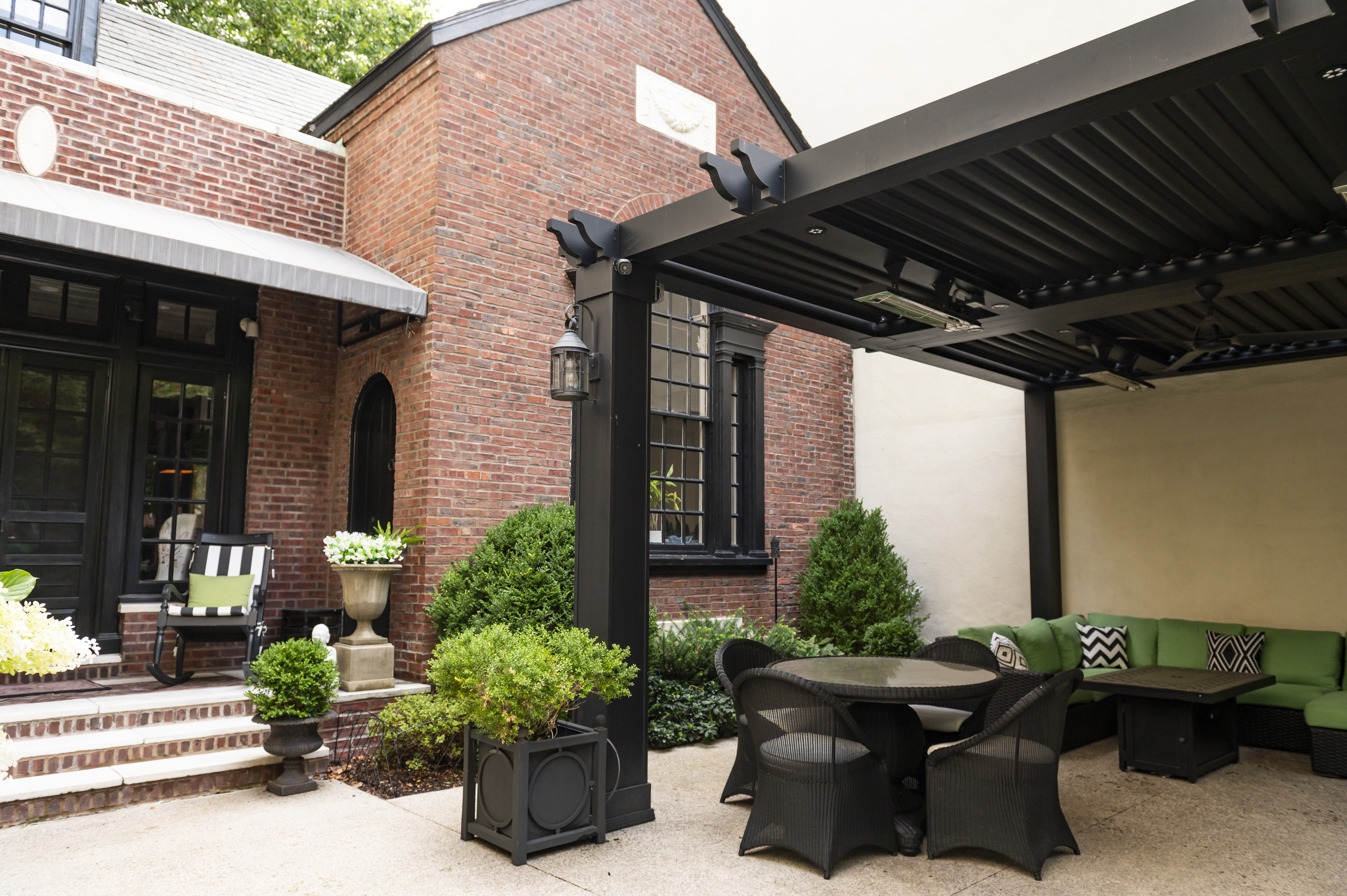
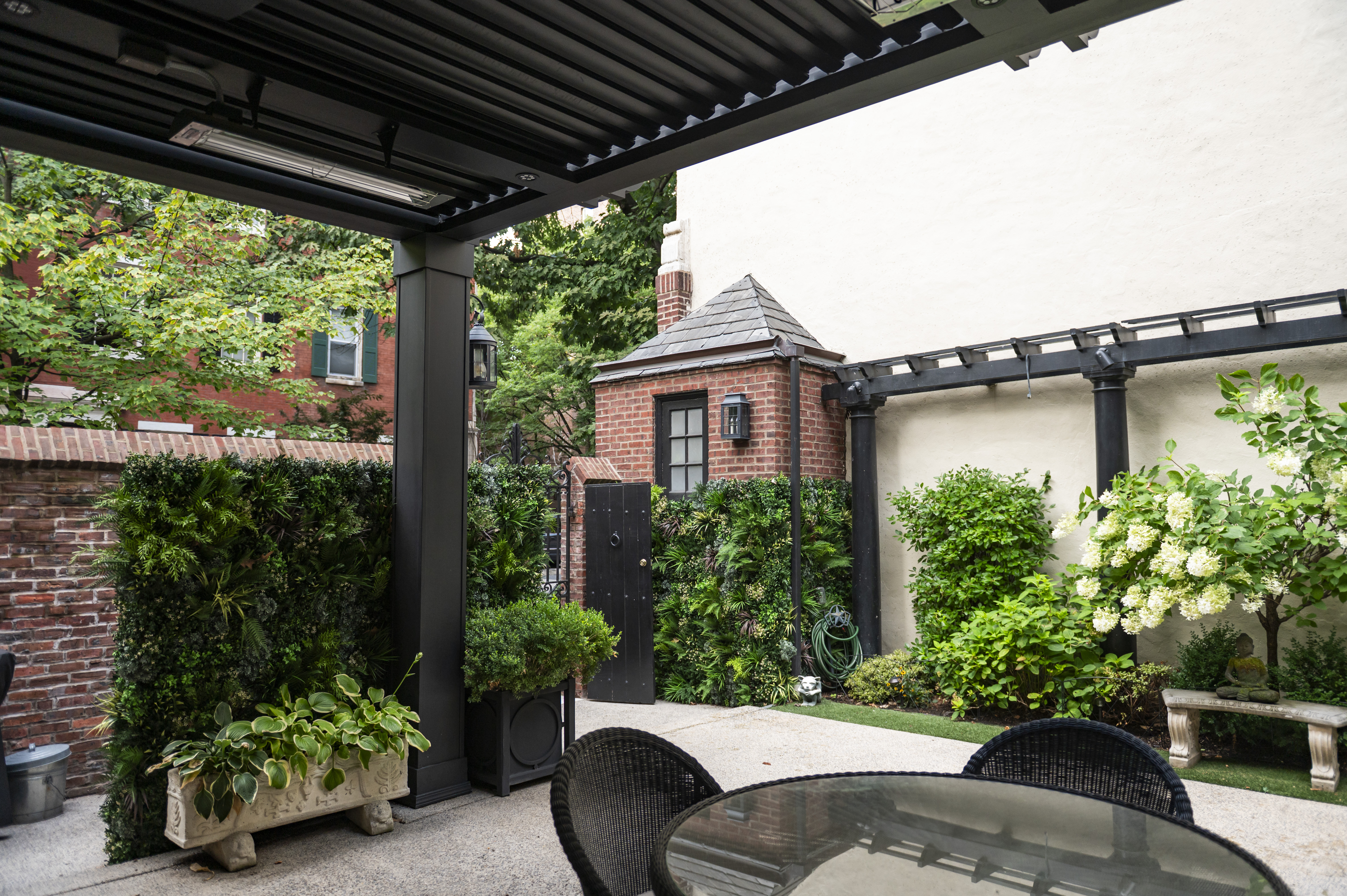
    Distinctive Outdoor Structures built a 10-foot square pergola in their yard, complete with a louvered roof operated by a remote. In inclement weather, the roof closes automatically. The space includes lights, a ceiling fan to keep it cool in the summer, and heaters that kick on when it’s cold outside.

    They use the space to entertain, enjoy evening cocktails and morning coffee, and for private work-from-home space. The project cost about $140,000 for the pergola, brickwork, lighting, landscaping, and flagstone.

    “It’s a very functional but comfortable area,” Amy said. “It extends the inside of the house outside.”

    Budget-friendly shade

    Awnings and motorized retractable shades and screens are popular ways to create a cooler, more comfortable outdoor space.

    “An awning is ideal when the homeowner wants protection from direct sun overhead, shelter from light rain, a lower-cost alternative to building a permanent roof, and the flexibility of a retractable system — sun when desired, shade when needed,” said AnnMarie Salassa, executive assistant at Paul Construction & Awning in Skippack.

    Awnings are especially common over patios, decks, outdoor dining areas, and windows to reduce indoor heat gain.

    Bob Kothari stands in his yard, under an awning that also provides protection from the elements just off the back of the house.Allie Ippolito / For The Inquirer

    Screens are selected when homeowners want to enjoy fresh air without being bothered by mosquitoes and other insects, Salassa said. Screens also keep space clean from debris, pollen, or leaves, and reduce glare while maintaining views, she said.

    Motorized screens are often paired with covered patios or decks because they can disappear when not needed.

    “The shades we install can withstand 100-mile-per-hour winds,” DiSantis said. “They block out the sun and rain, and keep the heat in. They are a game changer in how people enjoy their spaces.”

    Motorized awnings range in price from about $6,000 to $10,000 for a 12-foot installed product, depending on the materials used, DiSantis said. A 10-foot-wide retractable screen costs $4,500 to $6,000 on average. On the lower end, the screens offer shade or keep out insects but aren’t able to withstand strong winds, he said.

    Budget-friendly shade options aren’t limited to awnings and shades. A prefabricated pergola, for instance, can be more affordable than a custom-built one. Hanso, for instance, a Scandinavian-based company with a large U.S. market, sells prefabricated aluminum gazebos and pergolas starting at $6,000. Ordered online, these are shipped to the consumer, who can then DIY the installation or hire a local contractor to help.

    Home improvement stores and other manufacturers also offer pergola kits, the simplest of which are less than $1,000.

    These structures are made with a powder coating that “last more than 30 years and does not require repainting,” Hanso CEO Darius Kunca said. And, he noted, “Aluminum kits can move with you when you move houses — simple to pack and rebuild again.”

  • House of the week: A split level in Lafayette Hill for $715,000

    House of the week: A split level in Lafayette Hill for $715,000

    Hailey Price grew up in Ambler and her husband, Grant, grew up in Illinois, but both had always thought about moving to a coastal area.

    So when job opportunities made a move feasible this year, Grant, managing director for a financial firm and Hailey, a pediatric physician assistant, decided to head for Tampa, Fla.

    “If we don’t do it now we’ll never do it,” Grant recalled saying.

    The living room of the home, which has hardwood flooring on the main floor. Handout

    The couple’s 2,244-foot house is in Lafayette Hill, Montgomery County, which Grant called “a good middle ground without Main Line prices.” They moved there last year from the Roxborough area.

    “There was a ton of yard space, and our dogs loved it,” he said. “And we loved how safe the neighborhood felt.”

    The new kitchen has a large island with breakfast seating, soft-close cabinetry, and a tile backsplash.Handout

    The three-bedroom, 3½-bathroom house has hardwood flooring on the main floor and a brand new kitchen with a large island with breakfast seating, soft-close cabinetry, and a tile backsplash.

    The main level also has a bedroom and laundry and the upper level has the primary bedroom and another bedroom, both with full bathrooms.

    The backyard has a new slate patio, a new white vinyl fence, and a gazebo.Handout

    The finished basement has a large entertainment area, an office area, and a powder room.

    The backyard has a new slate patio, a new white vinyl fence, and a gazebo.

    The home has an attached garage, a new roof, 200-amp electrical service, recessed lighting, and ceiling fans.

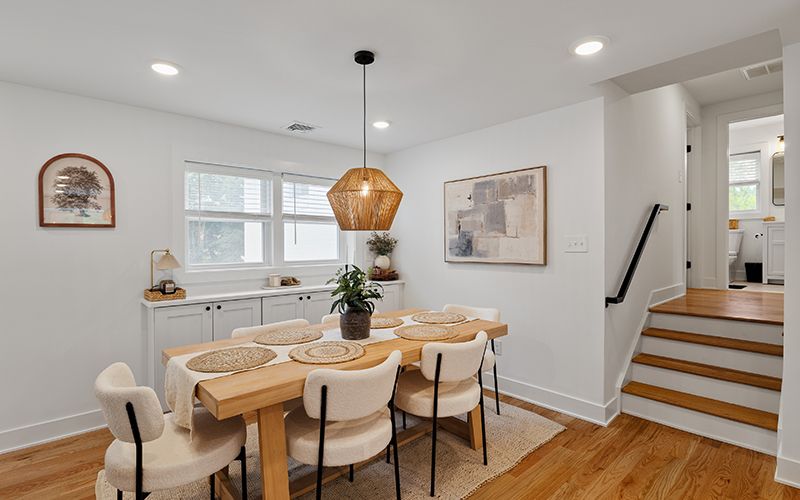
    The dining area.Handout

    The property is walkable to Miles Park and several neighborhood restaurants. It is close to I-476 and multiple SEPTA Regional Rail lines.

    The house is in the Colonial School District.

    It is listed by Jen Toadvine of Space & Co. for $715,000.

  • A Havertown couple’s Ocean City beach cottage was decades in the making

    A Havertown couple’s Ocean City beach cottage was decades in the making

    Tucked away on an alley in the north end of Ocean City, Steve and Regina Pannepacker’s three-bedroom, one-bathroom cottage is their perfect peaceful haven.

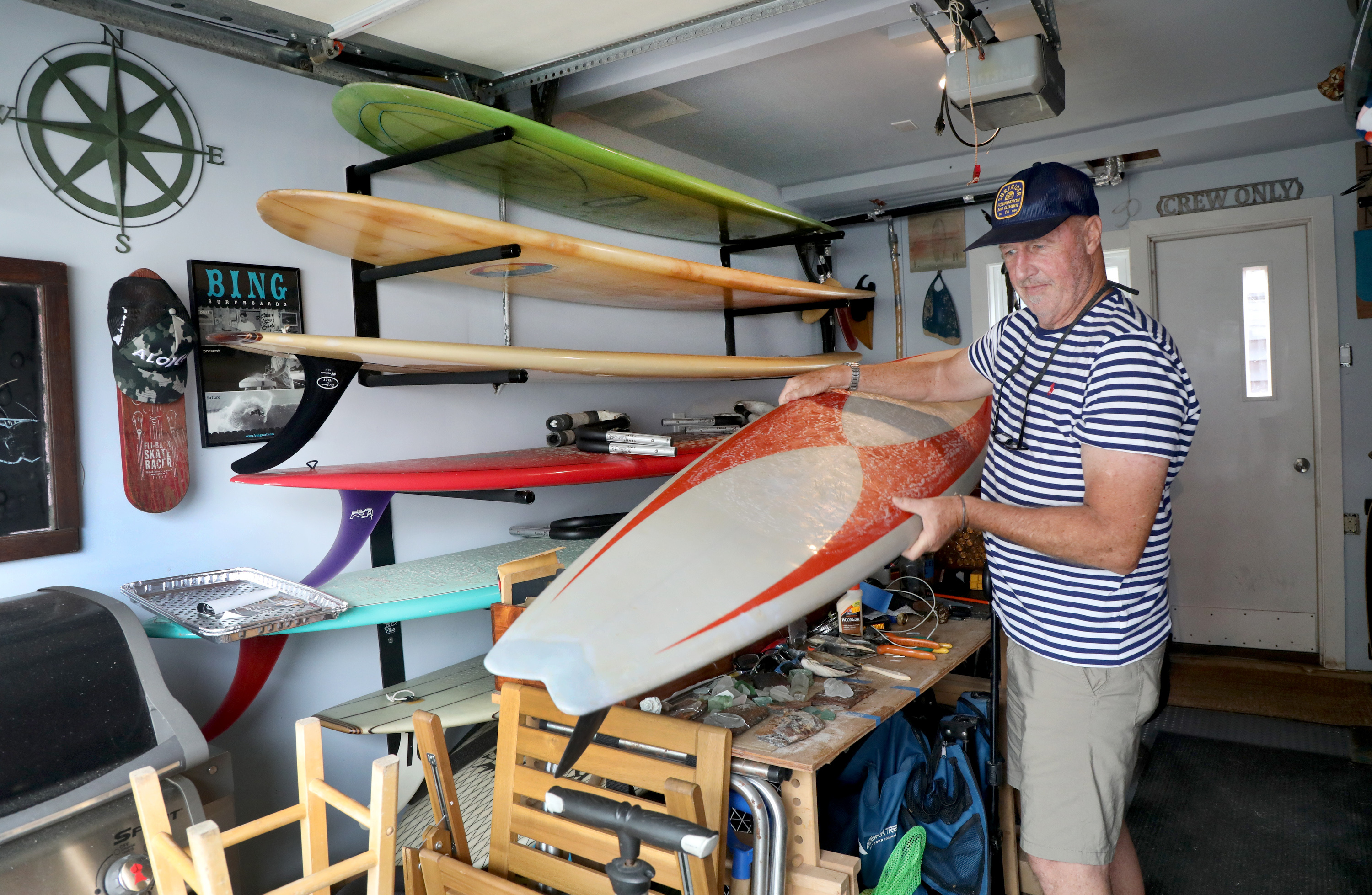
    The cozy home is filled with a dozen or so surfboards for Steve’s passion and shelves packed with books for Regina’s passion. Then there are the bowls and bowls of sea glass, which they both love collecting.

    Shortly after the pair married in 1986, Steve contacted several Ocean City Realtors, asking them to be on the lookout for a detached garage space they could convert into a small cottage. Finally, in 2015, one of them called.

    “He said I found your name in my Rolodex,” recalled Regina, a registered nurse. “I hadn’t heard that word in a really long time.”

    They loved the home’s location, the bright light that pours in from windows in all directions and the neighbors who ultimately became friends.

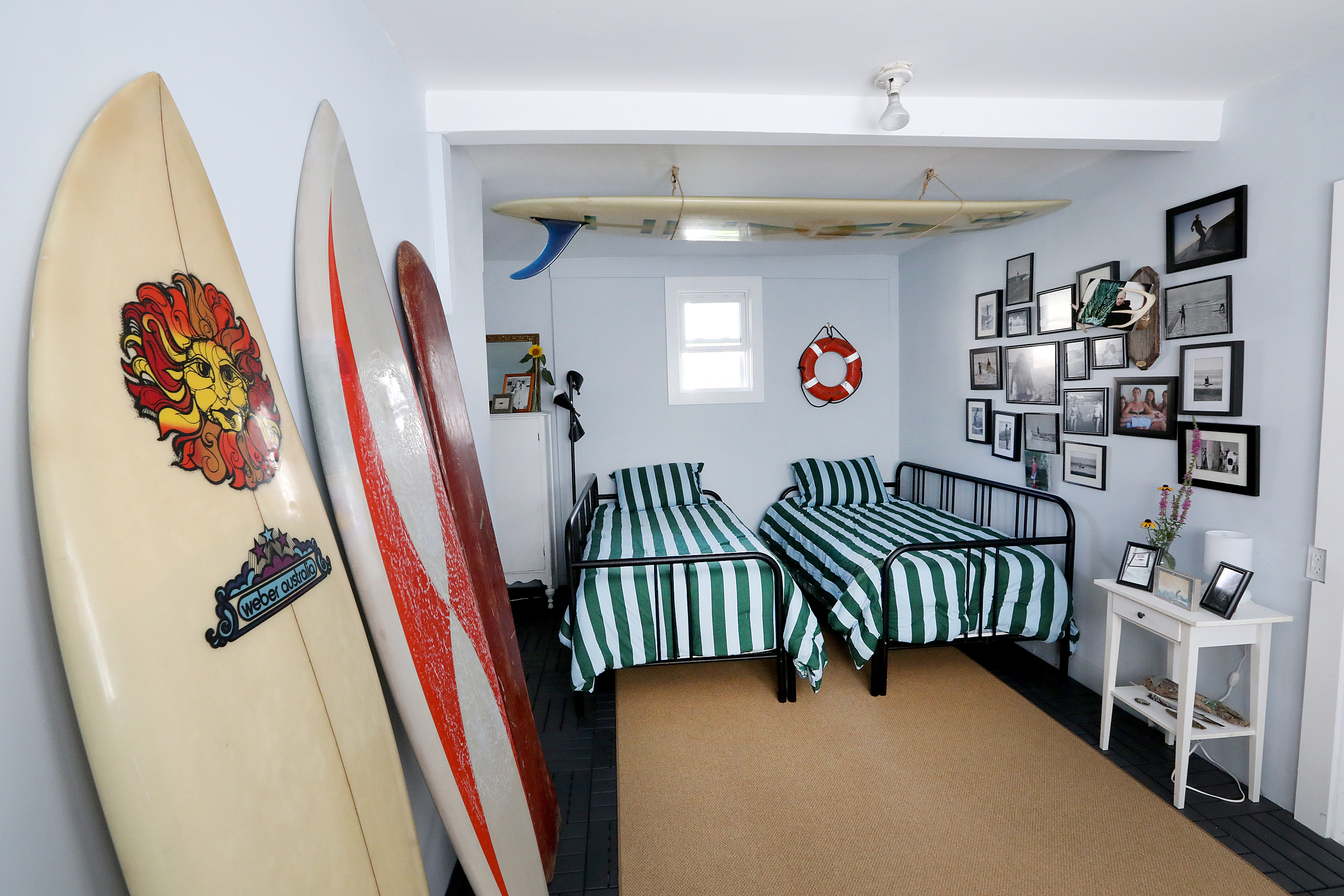
    Surfboards abound in the secondary bedroom.Vernon Ogrodnek / For The Inquirer
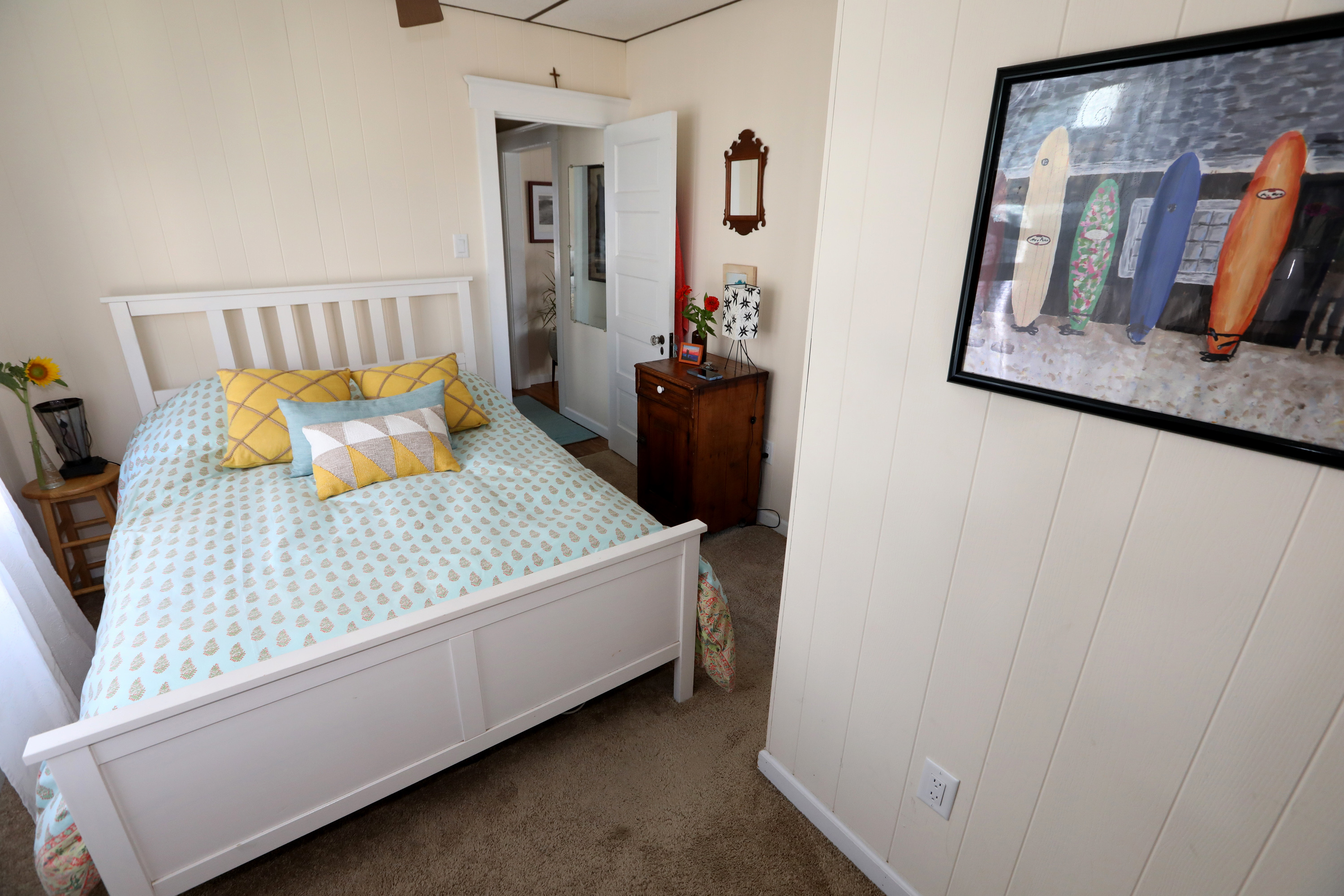
    The primary bedroom is small, decorated with light colors.Vernon Ogrodnek / For The Inquirer

    Built in the early 1900s, the home was originally a three-car garage for the main house that sits in front of it. It was later converted to include a two-bedroom property above the garage. It is believed the front property was owned and lived in by a seafaring ship’s captain, Steve said.

    Around 2013, the main house and garage were divided into separate properties.

    The Pannepackers converted the garage space into three distinct rooms — a guest bedroom, a storage area with a washer and dryer, and a space for Steve’s workbench that also houses surfboards and bicycles.

    Steve Pannepacker is an avid collector of surfboards, like this Plastic Fantastic board. He keeps them in the garage.Vernon Ogrodnek / For The Inquirer

    With their five children, three grandchildren plus two more on the way, and lots of siblings, nieces, and nephews, the home is usually bustling with activity. Regina has eight brothers and sisters, and Steve has one sibling. The couple also invite friends and family to use the cottage when their jobs keep them at home in Havertown.

    Steve, who works in television and film as an art director and prop coordinator, did most of the decorating. His deep love for Hawaii, where he and Regina made a pilgrimage in 2008, was a huge influence on the home’s decor.

    “It’s a combination of Ralph Lauren and a Hawaiian style,” Steve said. “Ralph Lauren’s look included leather, which inspired the leather chairs, and that is also an older Hawaiian look.”

    The kitchen is small but workable for the couple, who like to cook. They eat at the drop table in the living room that has an extendable leaf. Closed, it’s large enough for Steve and Regina, but it can accommodate six when open. When a larger crowd is visiting, they set up a table in the front yard or alley.

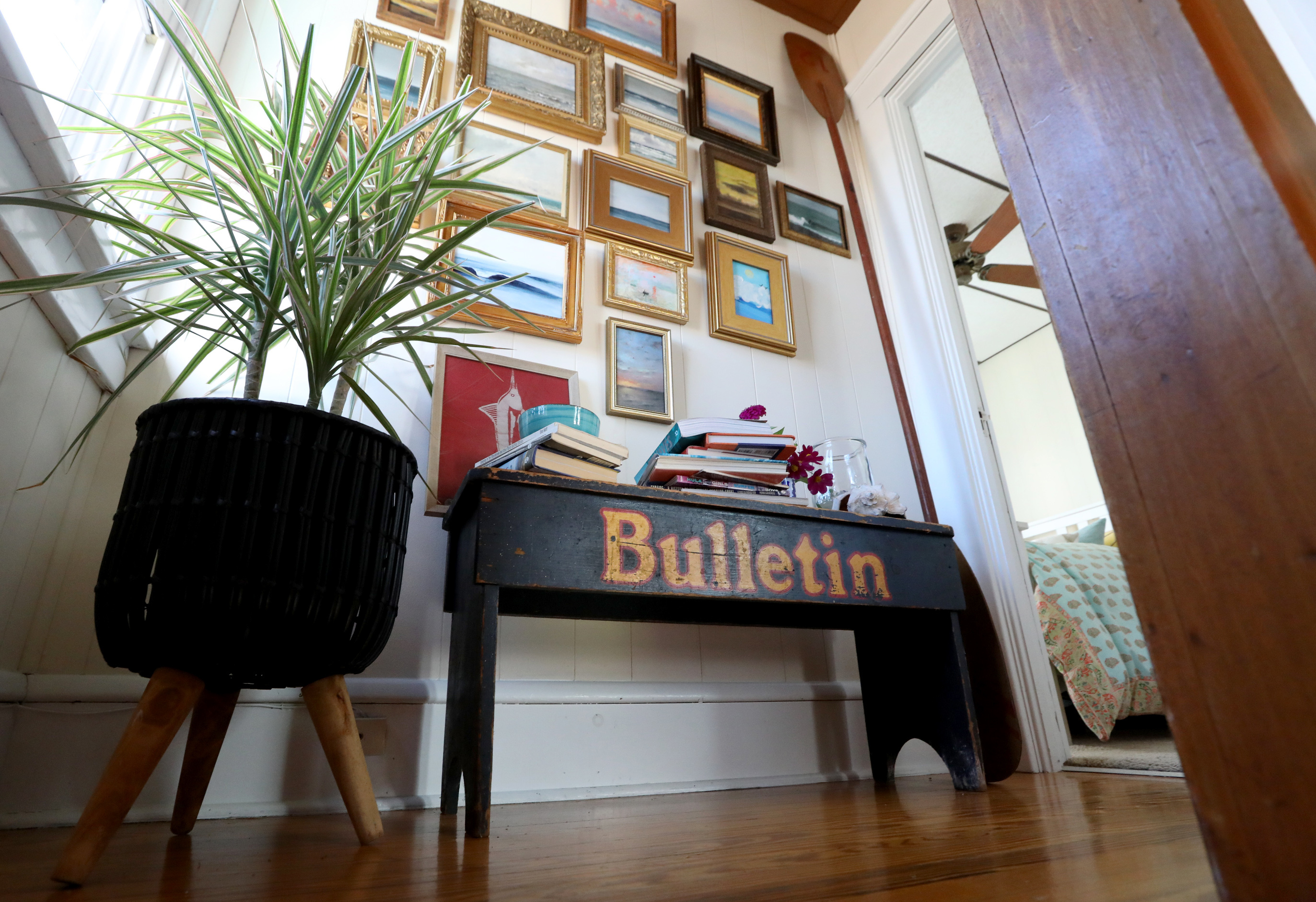
    A wall of oceanscapes, some professionally done, some reproductions, and some by family members.Vernon Ogrodnek / For The Inquirer
    Below the oceanscapes is an old Bulletin newspaper bench, a nod to Regina’s family association delivering the now defunct Philadelphia paper.Vernon Ogrodnek / For The Inquirer

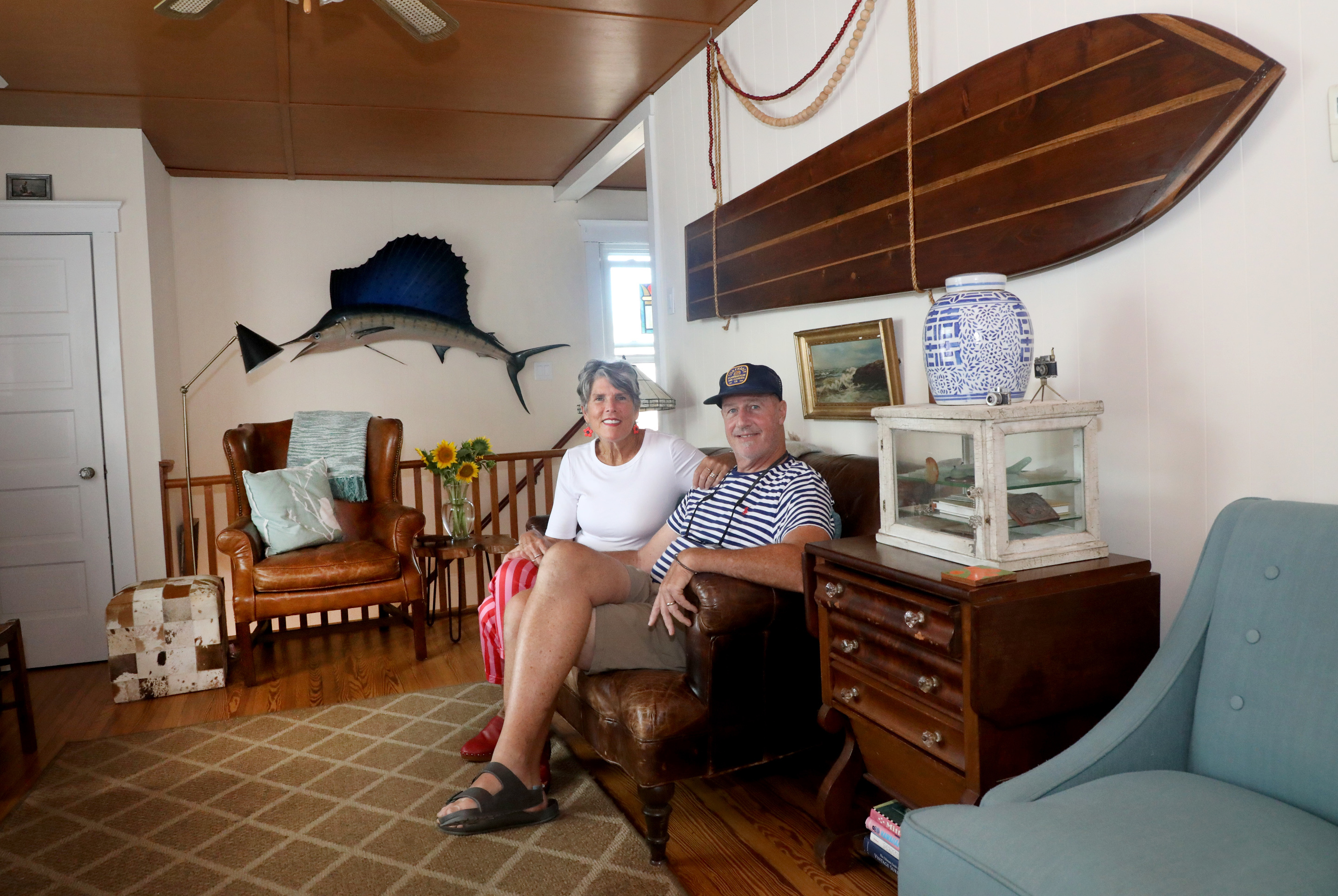
    The living room is also where they relax and entertain. When it’s just the two of them, they are often reading — Steve in his comfortable brown leather chair and Regina curled up on the nearby couch. When guests visit, the room is where they talk and laugh and share each other’s company.

    “This is our everything room,” Regina said. “We don’t have a TV or Wi-Fi so there’s lots of conversation.”

    Surfboards are a part of the decor in almost every room. The wooden board that hangs over the living room sofa was made by local surf historian Bill Simon about 30 years ago and is a reproduction of a 1930s surfboard by Pacific System Homes.

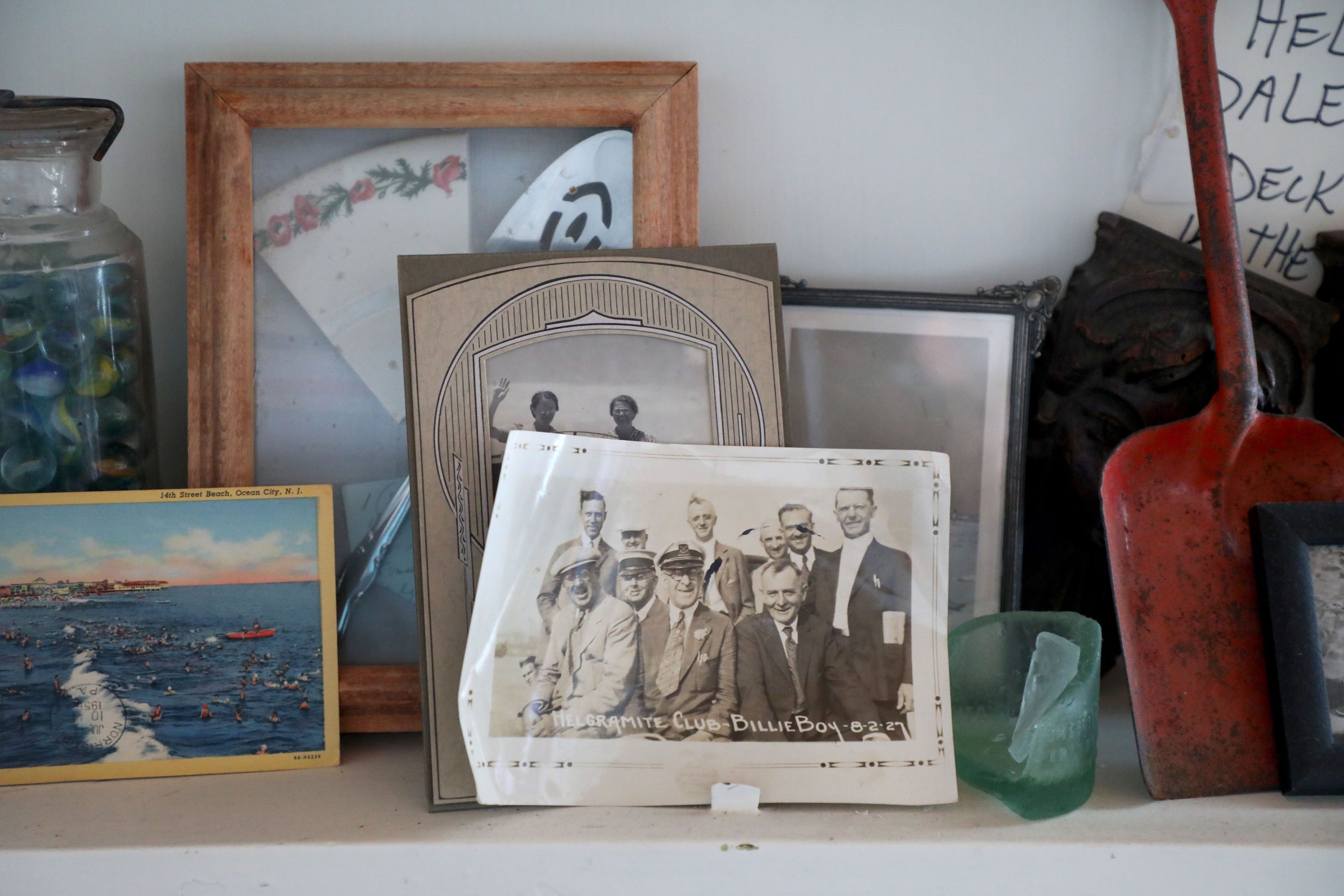
    A collection of old photos, postcards, and memorabilia in the living room.Vernon Ogrodnek / For The Inquirer
    A collection of Hawaiian memorabilia in the living room.Vernon Ogrodnek / For The Inquirer

    Hidden behind other houses off a main road, the home’s orange front and garage doors help friends and pizza delivery drivers find them.

    An avid surfer since high school, Steve spent summers working and surfing in Ocean City while Regina grew up day-tripping to the beach town with her family. It was an important part of both their childhoods.

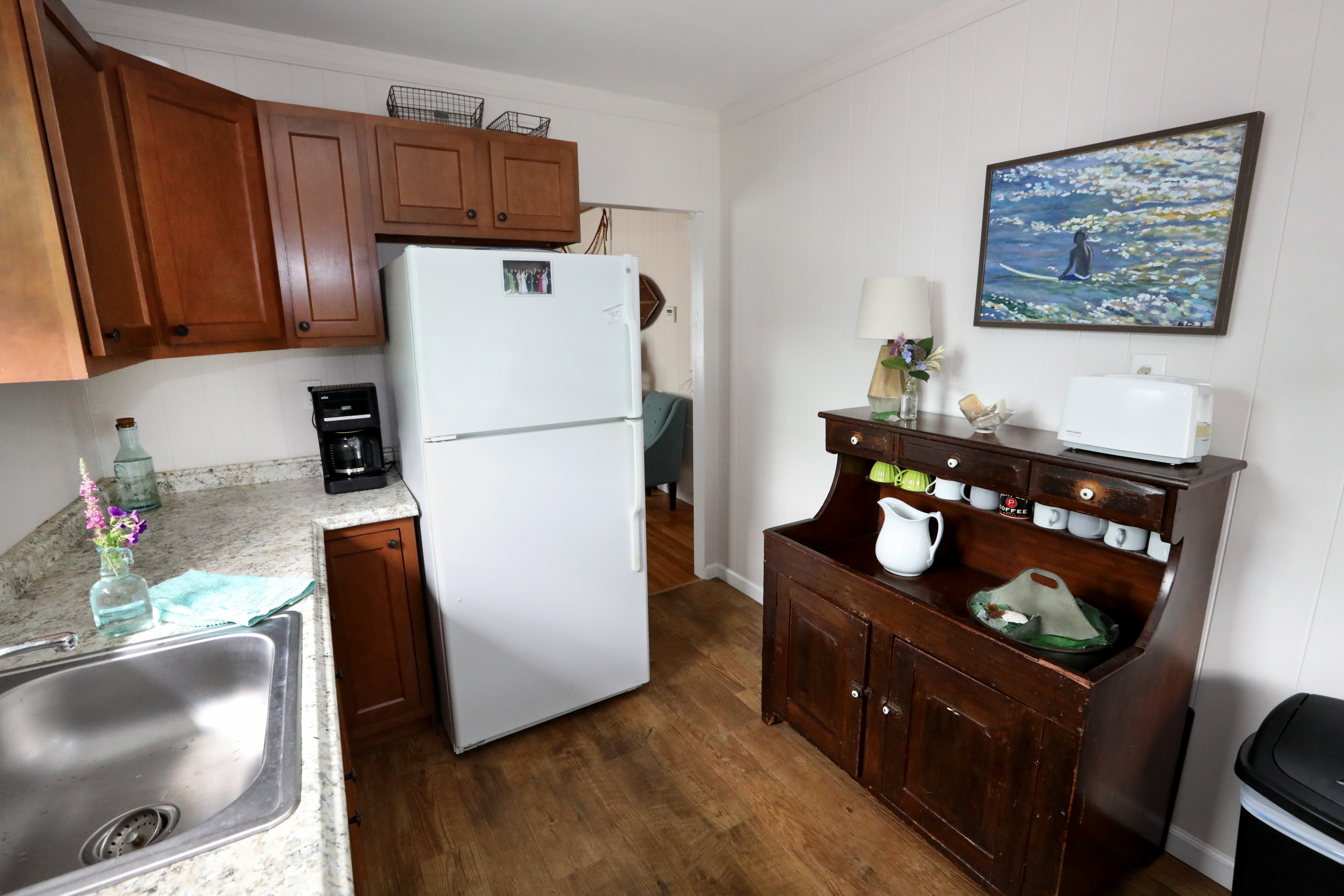
    A painting by the couple’s daughter is hung in the home’s compact kitchen.Vernon Ogrodnek / For The Inquirer

    “My parents spent two summers as the house parents for the waitresses at the Flanders,” recalled Regina. “Having had nine kids of their own, they got the job pretty easily. Our family’s love for the beach is deep-rooted.”

    Regina’s parents’ love of sea glass trickled down to Regina and Steve. Most days, the couple take walks and usually find a sea glass treasure.

    The beach town is woven into the fabric of their lives. They spend time at both the beach and the bay, and often head to the Second Street pier to take in the sunset.

    “This home is a retreat where we decompress,” Regina said. “You come over that bridge and smell the air, and something comes over you.”

    Is your house a Haven? Nominate your home by email (and send some digital photographs) at properties@inquirer.com.

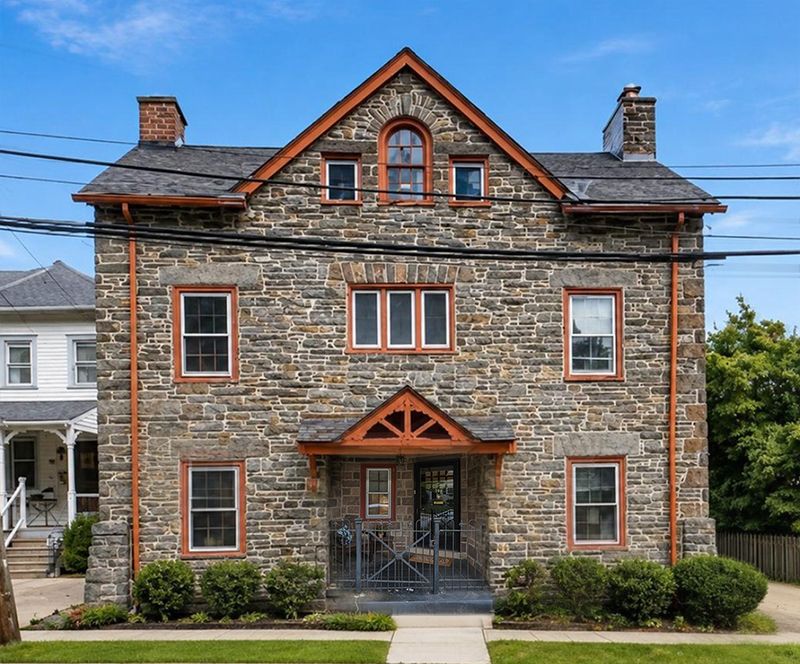
  • House of the week: A four-bedroom century-old stone house in Bryn Mawr for $699,000

    House of the week: A four-bedroom century-old stone house in Bryn Mawr for $699,000

    Elizabeth Monroe was living in New Jersey with her son in 2006 when she saw a listing in Bryn Mawr, and thought it might be time to go back to the town where she’d grown up.

    “I hadn’t even gone inside it,” she said. “but I loved the Tudor look and the stone.

    “It’s a soulful kind of house. A friend once called it my ‘sanctuary,’” she recalled.

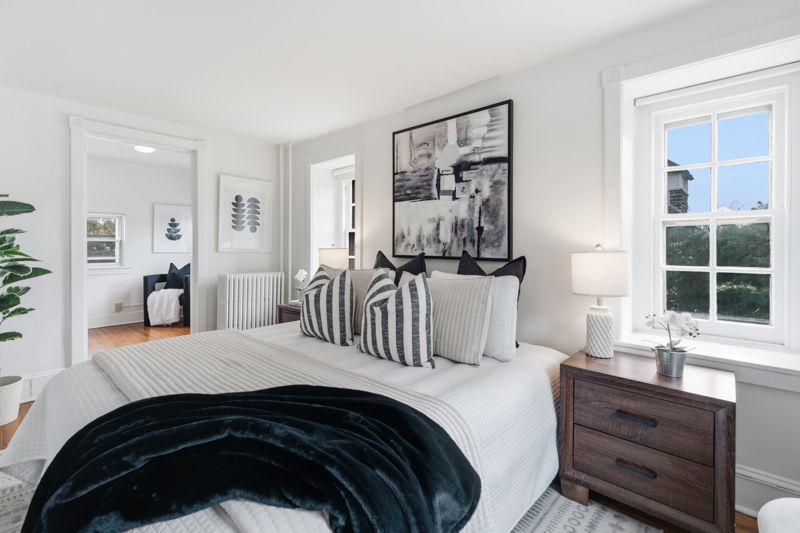
    One of the bedrooms in the Bryn Mawr home features large windows to let in the light. Brendan Farrell

    The four-bedroom, two-bathroom house spans 1,762 square feet.

    Monroe, an ordained Presbyterian minister who mostly worked as a hospice chaplain, said she had considerable renovations done, mostly on the first and second floors.

    The house, has a gated front porch, original hardwood floors, and deep-set windows.

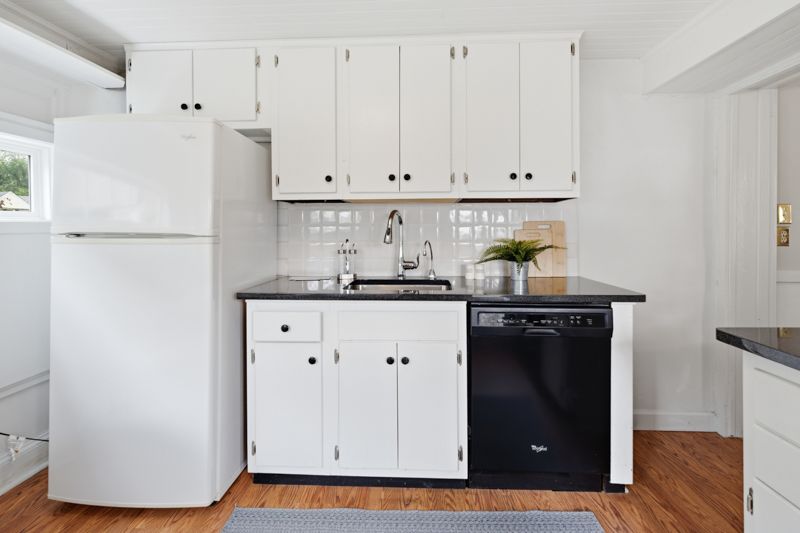
    The kitchen has updated appliances. Brendan Farrell

    The kitchen has white cabinetry, black granite countertops, and updated appliances.

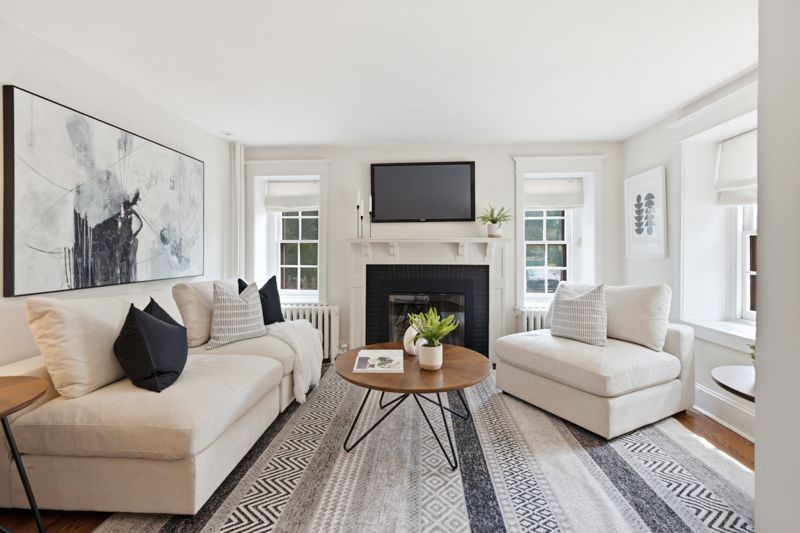
    The living room has a working gas fireplace.

    Each of the two second-floor bedrooms has its own sitting room, which could be used as a home office, reading room, art studio, or playroom.

    A working gas fireplace is a highlight of the living room.Brendan Farrell

    The third floor has two additional bedrooms and a hall bathroom.

    There is high velocity central air and 200-amp electrical service.

    There is a private brick patio, a fenced outdoor space, and a detached one-car garage. It is walkable to the Bryn Mawr Regional Rail station.

    The dining room can fit a table for six.Brendan Farrell

    And “it’s walkable to the Wawa,” Monroe joked. And since the parking lot there is often congested, “I thought that this might be a selling point.”

    The house is in the Radnor School District.

    It is listed by Colleen Whitlock and Brianna Golden of Keller Williams Main Line for $699,000.