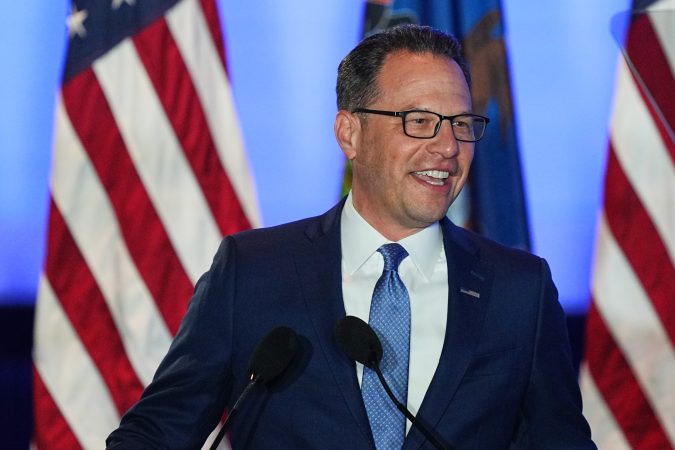
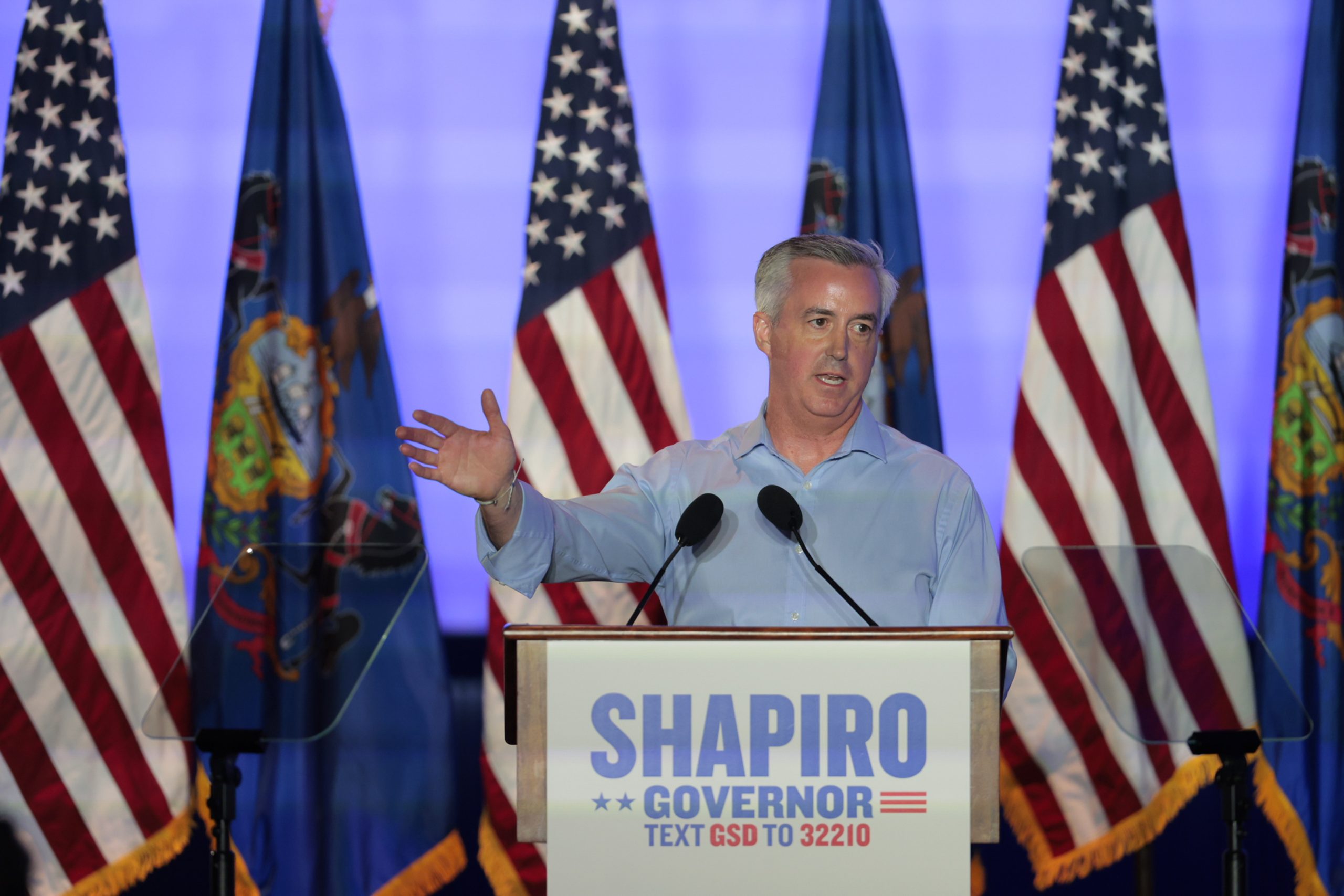
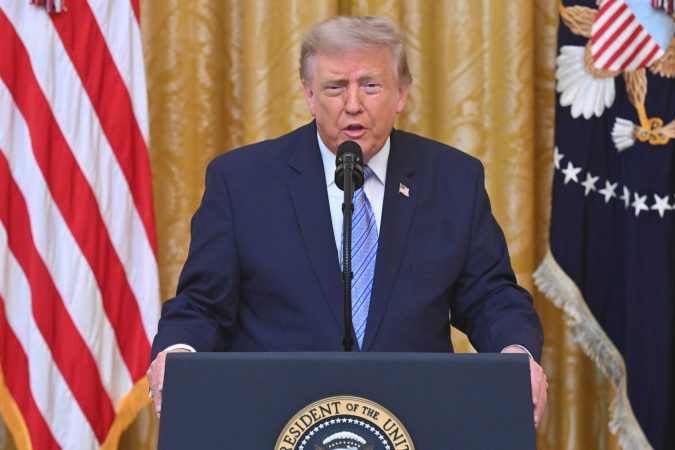
Pennsylvania Gov. Josh Shapiro was one of 26 Democratic officials from across the nation to join alawsuit challenging President Donald Trump’s administration over its efforts to compel states into sharing raw voter data by threatening federal funding for natural disasters.
“Withholding this funding will make our communities less safe and would be dangerous under any circumstance, but doing this in an attempt to undermine states’ authority over elections is reckless and unconstitutional,” Shapiro in a statement Thursday.
New Jersey and Delaware are among the other states on the Illinois-led lawsuit. The complaint, filed in U.S. District Court in Rhode Island, comes amid escalating tensions between Democratic-run states and the federal government over how best to ensure noncitizens are not voting in any elections — a situation these states say happens extremely rarely.
The Department of Homeland Securityannounced earlier this month that the Federal Emergency Management Agencywould require states to hand over theirunredacted voter rolls and adhere to significant changes in their election administration in order to receive funding for preparation and recovery from catastrophic disasters, such as major storms.
The policy puts nearly $6 million in federal aid at jeopardy for Pennsylvania, according to Shapiro.
Shapiro has routinely signed on to lawsuits against the Trump’s administration, particularly when federal funding to the state has come under threat.
Pennsylvania election officials have repeatedly declined to hand over unredacted voter rolls to the Trump administration, citing privacy concerns.
New Jersey has also refused to provide voter roll data to the Trump administration, though the federal government is using the state’s registration mishap to justify its request.
“We are not in the practice of turning this kind of personally identifying data over to the federal government because we have seen them weaponize it … and they don’t have a reputation for keeping it private, either,” New Jersey Gov. Mikie Sherrill said after a news conference Thursday.
As for the FEMA funding, New Jersey Attorney General Jennifer Davenport said in a social media post Thursday that the Trump administration “threatens our safety when it plays politics with these funds.”
While most of the plaintiffs are attorneys general, Shapiro was one of two governors to join the complaint, along with Kentucky Gov. Andy Beshear, another potential 2028 presidential contender who also leads a state with a Republican attorney general.
In a prime-time address last week, Trump called for an overhaul of U.S. election administration and ticked through olddebunked claimsabout his 2020 election loss.
Pennsylvania and New Jersey are among four states — along with California and Nevada,which also joined the suit — that the Trump administration is targeting for additional scrutiny over their voter rolls, according to a document posted to the White House website last week. The one-pager claimed widespread instances of noncitizen voting, much broader than what New Jersey said it uncovered, though election experts have suggested caution when examining these numbers.
“The Trump Administration is holding critical funding for homeland security and disaster response hostage in their latest attempt to take over our elections and perpetuate baseless conspiracy theories,” Shapiro said in his statement Thursday.
For the first time, Pennsylvania will inventory the thousands of public school facilities throughoutthe state to better assess the extent of aging and unsafe buildings.
Educators have long raised concerns that deteriorating school conditions threaten student safety and impede learning — but understanding the scope of the problem has been difficult.
Included in this year’s $50.8 billion budget deal, and effective in 2027, the Pennsylvania Department of Education will be required to collect information about school facilities, including the age and renovation history of buildings as well as their capacity and square footage.
Democratic State Rep. Elizabeth Fiedler, who represents South Philadelphia and was the initial sponsor of the bill, said the legislation will allow state funding for facilities repairs to be used more efficiently.
Some school districts already track this information, Fiedler said, but not all do. Having that information in a centralized location, she said, will allow for a “better understanding big picture of what we’re facing and figure out where we should be allotting our very limited school facilities dollars.”
The state has allocated $200 million in funding for public school facilities improvements in recent budget cycles.
While her initial bill also called for the creation of a public school facility advisory committee, Fiedler said the inventory requirement represents an important first step.
“The people who spend Monday through Friday all day long in those same schools, they know what the problems are,” Fiedler said. “They’re tired of having to find work-arounds and deal with them. We need to invest more money. I think that part is plain and simple.”
Students attending school in Philadelphia have faced leaking roofs, mold, asbestos, and inadequate cooling systems.
The Philadelphia school board voted in April to approve a controversial $3 billion facilities plan that would close 17 schools and renovate nearly 200 others over the next decade. The average age of a school building in the Philadelphia district is 75.
That problem is not unique to Philadelphia.
In Pittsburgh — where the average building is nearly 90 years old — the school board similarly approved a facilities plan this spring that would close 12 schools in a move district leaders hope will help address the older school buildings.
Statewide, the first round of school facility information will be collected by the education department through an online form by the end of 2027, and then every five years after that. Public school districts as well as cyber charter, charter, and career and technical schools will be required to submit information.
“This information will enable lawmakers and the administration to evaluate the condition of public school facilities, identify collective needs of our public schools, and further support the investments needed to ensure healthy and safe learning environments,” a spokesperson for the state education department said.
Aaron Chapin, president of the Pennsylvania State Education Association, said the state’s largest teachers union was proud to work alongside lawmakers in creating the inventory system.
“We encourage school districts to partner with the Department of Education to provide the information needed so that the commonwealth can address school facility equity in a fair and timely way,” he said in a statement.
Ethan Young is an intern with the Pennsylvania Legislative Correspondents’ Association. He can be reached at ethanmyoung@gmail.com.
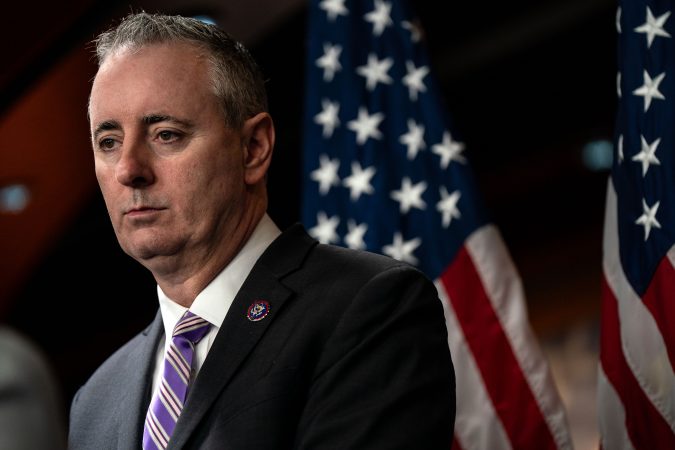
Early on in his tenure, U.S. Rep. Brian Fitzpatrick proved himself to the largest federal employees union in the United States.
In 2017, President Donald Trump signed a law to improve whistleblower protections and set guidelines for employee misconduct at the Department of Veterans Affairs. But the American Federation of Government Employees began noticing some adverse effects.
As Phil Glover, a national vice president for AFGE, tells it, veterans, including those with disabilities, and lower-level employees were being targeted instead.
AFGE officials went to Fitzpatrick with their concerns, and the Bucks County Republican introduced his own bill repealing and adjusting certain provisions.
That move, Glover said, was an inflection point in solidifying a long-lasting partnership with Fitzpatrick — one that gives the union a rare ally in the Republican caucus and Fitzpatrick a consistent endorsement from a powerful organization as he has repeatedly won reelection in a narrowly divided district.
“He’s carried a lot of water for us within the Republican Party, within the caucus, whether they were in the minority or majority,” said Glover, whose jurisdiction includes Pennsylvania.
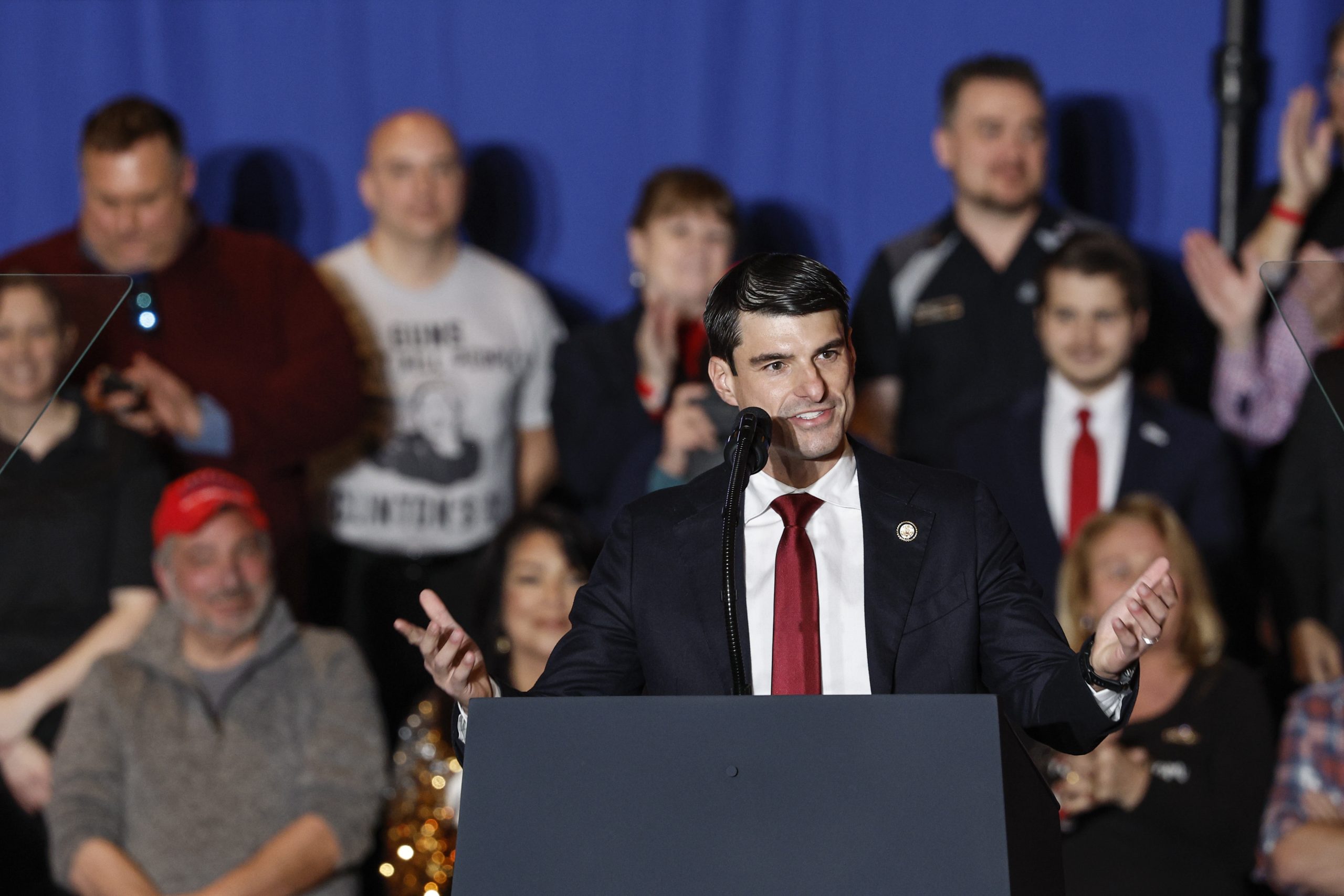
In the high-stakes midterm elections this year, union endorsements behind Fitzpatrick and U.S. Rep. Rob Bresnahan, a freshman Republican trying to hold onto his seat in Northeastern Pennsylvania, are shaping up to be a potentially critical factor inthesetwoswing districts that could help determine which party controls the U.S. House.
“They all reached out. I didn’t even have to call them. They reached out to me right away and said we are 10,000% with you,” Fitzpatrick said, describing his relationship with the unions as “beyond advocacy” and “like family.”
Organized labor has traditionally backed Democratic candidates in the state —and that remains mostly true this year.
Fitzpatrick was the only Republican congressional candidate to get an endorsement Wednesday from the Pennsylvania AFL-CIO, which is also backing popular Pennsylvania Democratic Gov. Josh Shapiro.
In two other swing-seat districts centered on Harrisburg and the Lehigh Valley, unions have coalesced behind the Democratic nominees, including by spending big to help union leader Bob Brooks win his primary in May.
But the splintering of their endorsements in both Fitzpatrick’s Bucks County-based 1st Congressional District and Bresnahan’s Scranton-based 8th Congressional District seat has been a striking departure — underscoring some unions’ willingness to reward incumbents’ loyalty to give labor a voice in a Republican caucus that may not always work in their interests.
Last week, the Pennsylvania State Education Association — the largest union for teachers or any other labor organization in the state — backed Fitzpatrick even though Harvie, a former social studies teacher at Bucks County Technical High School, was previously a member.
How those endorsements move the needle in the election is still an open question.
But in a district with independent-minded voters who have shown a willingness to cross party lines, some observers say, the labor endorsements could make a difference — both in the get-out-the-vote and fundraising support that unions sometimes provide, and in appealing to swing voters.
“It suggests to an independent voter or even a moderate Democratic voter that this candidate isn’t a far-right candidate, that this candidate is somebody who will work with workers and work with unions,” said Paul Frymer, a politics professor at Princeton University who studiesorganized labor.
U.S. Rep. Rob Bresnahan introduced before remarks from President Donald Trump in Mt. Pocono, Pa., in December. Steven M. Falk / For The Inquirer
‘We consider them our friends’
With Trump in office and Republicans in control of Congress, Fitzpatrick and Bresnahan have won some union support by backing policies their own party leadership opposes.
In December, they were among 20 Republicans to join 211 Democrats to force a successful vote on the Protect America’s Workforce Act, which aimed to reverse a Trump executive order to strip collective bargaining rights from federal workers. In June, they were again among 20 Republicans — and the only ones from Pennsylvania — to vote for the Faster Labor Contracts Act, an effort to speed up bargaining negotiations.
And Bresnahan’s decision-making, as a freshman going against the White House, “had some guts to it,” Glover said. He said his group “didn’t entertain” endorsing Democrat Paige Cognetti, the Scranton mayor running against Bresnahan, or Harvie in the Bucks County race.
Angela Ferrito, president of the 700,000-member Pennsylvania AFL-CIO, which endorsed Fitzpatrick on Wednesday, said that while he has not always sided with labor, he has become the kind of Republican who will “sometimes almost put their neck out.”
Still, the union’s own public scorecard shows Fitzpatrick has aligned with its priorities far less often than Democrats — about 46% of the time in the current session of Congress. Bresnahan, who did not secure the union’s endorsement Wednesday, voted with the AFL-CIO just once — on the Protect America’s Workforce Act — to give him an 8% score.
Ferrito said the organization supports candidates who “support us and stand up when it matters.”
“Pennsylvania has always been unique in that way, where we do have moderate Republicans who will support unions and the rights of union workers. And so in those circumstances that we consider them, we consider them our friends,” she said.
State of play
As both of their districts draw national attention, Fitzpatrick has touted more than 40 labor-centered recommendations or formal shows of support and Bresnahan has highlighted about a dozen.
Fitzpatrick’s labor endorsements have ranged from local building trade affiliates — such as the Boilermakers Local 13 and the deep-pocketed International Brotherhood of Electrical Workers Local 98 — to national labor organizations, like the Transport Workers Union of America and the National Air Traffic Controllers Association.
The SEIU Pennsylvania State Council, which represents employees in public services, healthcare, and property services, backed him for the first time after a decade of either endorsing against him or staying neutral. But the council’s perspective changed after Fitzpatrick publicly supported reforms for U.S. Immigration and Customs Enforcement and was only one of two Republicans to vote against his party’s cuts to Medicaid in the One Big Beautiful Bill Act.
“For us, that means something,” said Matt Yarnell, president of SEIU Healthcare Pennsylvania and the state council, “if someone’s down to both organize and fight and stand up and speak out against your own party.”
Fitzpatrick said his “unique” role as a labor-friendly Republican has made him a “pivotal voice” in Congress — largely because of the hyperpartisan nature of politics that he has railed against, he said.
“That’s unfortunate,” Fitzpatrick said. “If we did away with the political parties and we just had people form coalitions around ideas, you would see so much support, so much more support for commonsense measures, like supporting labor.”
Bresnahan said he made it a personal mission to cultivate strong relationships with organized labor when he entered Congress last year after having had collective bargaining agreements as the CEO of his family’s electrical contracting business.
As a freshman Republican, he said, he had to prove himself. He got up to speed on the roughly 10,000 federal jobs in his district and made visits to a high-security federal prison with “serious staffing shortages”at the same time as Trump was laying off thousands of federal workers.
“I absolutely encourage my Republican colleagues to take another look at this and find a way to support the people that support us each and every day,” said Bresnahan, who narrowly defeated six-term Democratic U.S. Rep. Matt Cartwright in 2024.
Bucks County Commissioner Bob Harvie addresses supporters after winning the May 19 Democratic primary. Steven M. Falk / For The Inquirer
Harvie, the Democrat challenging Fitzpatrick, grew up in a union household and hasreceived the backing of two unions: the American Federation of Teachers Pennsylvania and Transport Workers Union Local 234, which represents SEPTA employees. His campaign said conversations are ongoing with labor and believes more support is in the works.
Harvie said Fitzpatrick’s endorsements have in some ways been a “reward for doing the bare minimum” while his own track record as a former Falls Township supervisor and as a twice-elected county commissioner proves he would be a steadfast supporter of labor in Congress.
He said he was “anxious to get the support of the rank-and-file workers,” who are bearing the brunt of cost-of-living issues.
“They’re the ones who are really going through all the pain right now with higher gas prices, higher grocery prices, higher energy prices, concerns about their healthcare,” Harvie said.
Cognetti, meanwhile, has credited her endorsements from nearly a dozen local labor unions to her record in Scranton, including increasing the number of jobs and wages for public workers. Endorsements from AFSCME, which represents municipal employees, and others that she announced this month underscore that support, she said.
She also said she would support more labor priorities than Bresnahan, including the PRO Act — a major effort to expand workers rights that Bresnahan has not endorsed — and repealing parts of the One Big Beautiful Bill Act, which Bresnahan voted for.
“It’s very important that you look at the whole picture of someone’s votes. It’s very easy to sign on to a letter and try to make yourself a hero,” Cognetti said.
In one unusual instance, Cognetti appeared to receive the endorsement of the Pennsylvania Conference of Teamsters with a voice vote during an April meeting, but the organization released a statement endorsing Bresnahan in June. But conference president Bill Hamilton, who had called for the vote at the April meeting, said in the June statement that Bresnahan “has always had our backs,” including through his vote for the Faster Labor Relations Act.
Bresnahan, in an interview, also referenced that bill and stressed his relationship with Sean O’Brien, the national Teamsters leader whose podcast Bresnahan appeared on in January.
The state and national Teamsters organizations did not respond to multiple requests for comment about the situation.
“Democrats just can’t take unions for granted anymore,” Bresnahan said.
Scranton Mayor Paige Gebhardt Cognetti hosts the national summer meeting of the Mayors Innovation Project in Scranton in 2023. Tom Gralish / Staff Photographer
‘Stick with them no matter what’
The union endorsements in the 1st and 8th Congressional Districts have been a sharp contrast to other swing-seat districts that have arguably already shown the power of labor as a political force.
In the Lehigh Valley district where Brooks, a statewide union leader and retired firefighter, is running against freshman Republican U.S. Rep. Ryan Mackenzie, high-profile Democrats recruited and rallied around the Democrat largely because of his union bona fides. And when opponents unleashed a last-minute ad campaign against him in the May primary, another political action committee padded with organized labor donations spent nearly $1.8 million to push back and help give Brooks the win.
It is not yet clear whether unions will similarly spend heavily to elect Fitzpatrick or Bresnahan — especially as they mostly look to elect Democrats elsewhere in Pennsylvania and across the country.
TJ Lepera, political director of IBEW Local 98, said he believed a Democratic blue wave would be highly favorable to labor interests. But his union has also backed Fitzpatrick,who“knows our issues, and that could be helpful in trying to calm down a lot of the crazy rhetoric that comes out of the Republican side, sometimes, on the attacks of labor,” Lepera said.
“If somebody has a great voting record with us and has been loyal to Local 98 and the way that we see legislation, we typically stick with them no matter what,” Lepera said.
That emphasis on loyalty was echoed by other unions, even if their political calculus led them to go the other direction.
“We were not going to support anything that would possibly turn the House or the Senate red,” said Joe Coccio, secretary-treasurer and political coordinator from TWU Local 234, which has endorsed Harvie. “If they were a good candidate by us … once we endorse a candidate, unless they break the law or do wrong by us, we continue to endorse them until they move up or move on.”
Coccio said Harvie had proved his appreciation for SEPTA employees when he served on the transit agency’s board.He is also accessible and pro-union, and has valuable experience as a teacher and county commissioner during the COVID-19 pandemic, Coccio said.
AFT Pennsylvania, which is backing Harvie, did not respond to multiple interview requests.
As November inches closer, unions backing both Fitzpatrick and Harvie are planning out their financial and ground-game support.
“For us, is it strategic? Yeah, it’s very strategic,” said Lepera, whose Local 98 has a long history as a political power broker in Philadelphia and statewide. “We want to have a voice on the other side of the aisle.”
The U.S. Department of Homeland Security has formally reversed its plans to establish two ICE detention centers in Pennsylvania that were intended to hold up to 9,000 immigrants, Gov. Josh Shapiro said Wednesday.
The decision, which comes amid opposition from the state and from local communities, marks the end of efforts to convert warehouses in Berks and Schuylkill Counties, as the Trump administration works to offload some sites that were intended to support its mass-deportation agenda.
Shapiro, a first-term Democrat seeking reelection this year, told DHS officials in February he would “aggressively pursue every option to prevent these facilities from opening,” and his administration later denied permits to update local water and sewage systems to handle thousands of additional people.
On Wednesday, Shapiro praised the federal decision and credited his administration’s work to block the facilities.
“From the beginning, I’ve been clear that these warehouses should not be used as ICE detention centers because they are not suitable for people and converting them to detention centers would have posed serious risks to the health, safety, and infrastructure of the surrounding communities,” he said.
Gov. Josh Shapiro on July 21.Tom Gralish / Staff Photographer
ICE confirmed its plans to withdraw its permit requests in a filing Wednesday to the Pennsylvania Environmental Hearing Board, as well as in a July 13 letter from DHS Assistant Director James Ingalsbe.
News emerged earlier this year that U.S. Immigration and Customs Enforcement planned to spend more than $38 billion to buy warehouses and retrofit them as detention centers that would hold tens of thousands of immigrants. Those two dozen properties, including the two in Pennsylvania, would be located across the country, with some holding as many as 10,000 detainees.
In Pennsylvania, the Berks County project would have held 1,500 detainees, while the Schuylkill County one would have held 7,500.
An expanded ability to confine immigrants was central to Trump’s plan to deport as many as 1 million people a year. The additional space was necessary to help ICE respond to White House demands for greater numbers of arrests.
As of July 11, ICE held 65,765 people in detention, up from 60,311 in April, but below the record high of 70,766 set in January, according to Syracuse University professor Austin Kocher, who studies immigration data.
During Trump’s first year in office, the government fell short of his million-deportation goal, removing 622,000 people through mid-December, fewer than the 778,000 deportations carried out in President Joe Biden’s final fiscal year, according to the American Immigration Council in Washington.
While some around the country saw the conversion of empty warehouses as a chance for new jobs, others were opposed over humanitarian concerns, the impact on water and sewerage use, and the potential loss of tax revenue.
Earlier this summer, it appeared likely that the plans in Pennsylvania were being discarded.
The New York Times reported in June that ICE planned to offload its two properties in Pennsylvania and a third in New Jersey, which were purchased for more than $336 million. Those were among seven warehouses across the nation that would be sold or handed off to other federal agencies, according to the Times.
The same month, U.S. Sen. John Fetterman (D., Pa.) said that detention-warehouse plans would not go forward in Tremont and Upper Bern Townships andthat Homeland Security Secretary Markwayne Mullin had “recognized the negative impacts these facilities would have in Pennsylvania.”
HARRISBURG — Democratic and Republican lawmakers in Pennsylvania’s divided state government rarely agree.
But this month, there was one issue upon which nearly all of them found common ground: ending tax breaks for data centers.
Despite the rare consensus as Harrisburg looks to add guardrails to the state’s data center boom, no legislation was passed to end the favorable tax treatment for the projects. After approving the $50.8 billion state budget last week, Pennsylvania’s lawmakers went home for the summer, each blaming the other party for the inaction.
But new regulations could be coming soon, Gov. Josh Shapiro said.
The governor — who has adamantly stood by his proposal to condition tax breaks for data center projects based on their compliance with environmental and transparency standards — said he plans to take executive action on regulating Pennsylvania data centers in the coming weeks.
“I am now exploring everything I can through executive authority since the Senate Republicans refused to act,” Shapiro said Tuesday at an unrelated event in Philadelphia, declining to share details or a timeline for his plans.
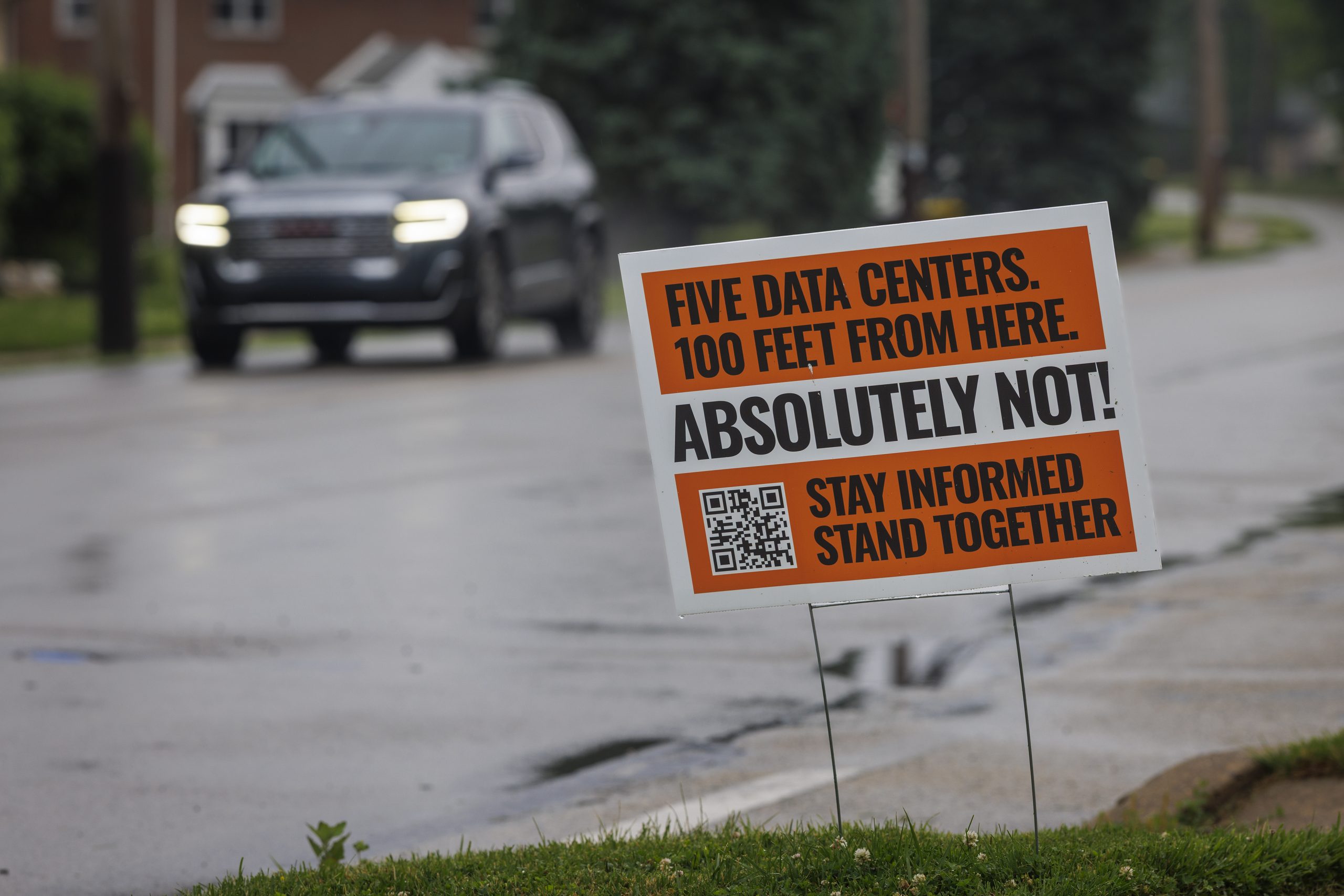
Lawn sign along Crooked Lane in King of Prussia, Wednesday, May 27, 2026. Some residents are standing in opposition to building a data center in their community.Alejandro A. Alvarez / Staff Photographer
The state’s current tax incentive for data center development is projected to cost Pennsylvania nearly $2 billion in lost revenue over the next five years.
The current benefit was approved by the legislature in 2021. Developers who generate a certain dollar value of investment are exempt from the state sales tax rate of 6% for equipment, including materials used to construct the data center building.
According to a February report from the state, 12 projects currently receive the exemption.
Proponents of the tax break have said it helps keep Pennsylvania economically competitive. Opponents say such a benefit is no longer necessary for an industry that is expanding rapidly.
“I am not going to get into hypotheticals,” Shapiro said Tuesday when asked whether he would sign a bill that would eliminate the tax benefit, something industry groups have loudly opposed.
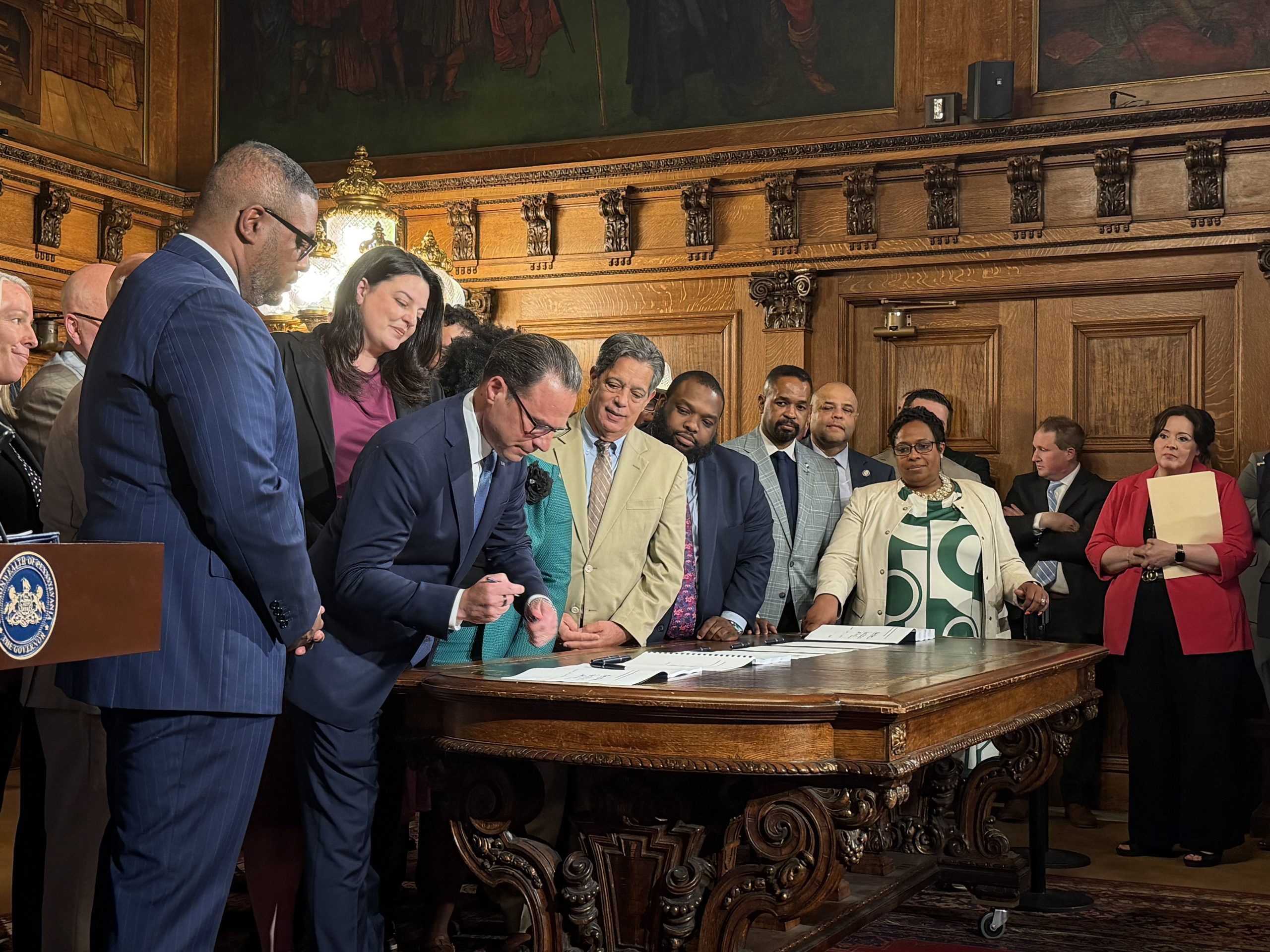
Gov. Josh Shapiro, flanked by fellow state Democrats, signs the 2026-2027 Pennsylvania state budget in Harrisburg, Pa. on Sunday, July 12, 2026.Gillian McGoldrick / Staff
Shapiro has championed his proposal for data centers, which incentivizes tax breaks for projects that adhere to a series of requirements. He has not publicly endorsed other data center regulation bills passed by the Democratic-controlled House. The governor’s plan passed the House in June with a vote of 134-68, but was not put up for a vote in the Republican-controlled Senate.
And as public opinion has soured on data center development, lawmakers in Harrisburg have become more skeptical. This year, all but five Pennsylvania state legislators expressed support for bills that would remove tax breaks for data centers.
According to an Inquirer review, 197 out of 202 House members voted for a bill that would have repealed the tax benefit. In the Senate, 44 out of 50 members voted in favor of a bill that included a provision to eliminate the tax exemption. The remaining six senators expressed support in interviews for getting rid of the tax break, though they said they voted against the bill because of unrelated provisions included within the legislation, including an expansion of the Educational Improvement Tax Credit Program.
Though the state’s final budget took no action on the tax exemption, it included a provision requiring data centers with electric outputs larger than 10 megawatts to submit information about their energy and water usage to the state.
Several other data center regulations that received bipartisan support in recent weeks were also absent from the final spending package, including attempts to enact a local or statewide moratorium on new development.
State Senate Majority Leader Joe Pittman (R., Indiana) during a press conference at the Capitol in Harrisburg Feb. 3, 2026.Tom Gralish / Staff Photographer
House Democrats and Senate Republicans were quick to blame each other for failing to reach a deal on removing the tax exemption.
During separate news conferences after the budget passed, Senate Majority Leader Joe Pittman (R., Indiana) and House Majority Leader Matt Bradford (D., Montgomery) each said it was the other party’s fault that a tax benefit repeal was left out.
Pittman said that Democrats “shredded” a Republican-backed bill into “something that nobody could recognize,” adding in an email that Senate Republicans would also “continue to examine” the proposal backed by Shapiro.
Bradford, placing the blame on Pittman, said he is “obviously unbelievably disappointed by the Republican leader in the Senate stating that he has no interest in doing anything on data centers,” adding that he was proud of the state House for advancing a number of data center regulation proposals.
Beth Rementer, a spokesperson for the House Democrats, said in a statement that “Senate Republicans still have an opportunity outside the budget negotiation process to vote on all the bills we passed to hold big tech accountable.”
State Rep. Matt Bradford (D., Montgomery County) during a press conference at the Capitol in Harrisburg Feb. 3, 2026.Tom Gralish / Staff Photographer
The Pennsylvania Chamber of Business and Industry and the Pittsburgh Building Trades Council lobbied legislators to keep the tax break. In a June memo to state House members, the Pennsylvania chamber wrote that a repeal of the tax benefit “threatens to place Pennsylvania at a competitive disadvantage and sends a troubling signal to current and prospective investors that the Commonwealth is willing to change the rules after the fact.”
The legislature quietly deferred action on other topics, like funding mass transit and regulating skill games, as part of this year’s budget negotiations. But the data center debate spilled into the public arena.
In an interview, State Sen. Katie Muth (D., Montgomery) — one of four senators who voted against approving the original tax exemption in 2021 — said she suspected the legislative back-and-forth about the tax break gave lawmakers a chance to record their vote on a hot-button issue among their constituents.
She said that many legislators who voted to repeal the tax break did so for “show, so everybody can send out mailers.” In addition to Shapiro, half the state Senate and all members of the state House are up for election in November.
Lawmakers could revisit the topic come fall when they reconvene. And Shapiro said it is on his agenda, too.
“I think the legislature should have acted,” Shapiro said. “Given the fact that the legislature refuses to act, we’re going to look at our executive authority and determine what the best steps are.”
Ethan Young is an intern with the Pennsylvania Legislative Correspondents’ Association. He can be reached at ethanmyoung@gmail.com.
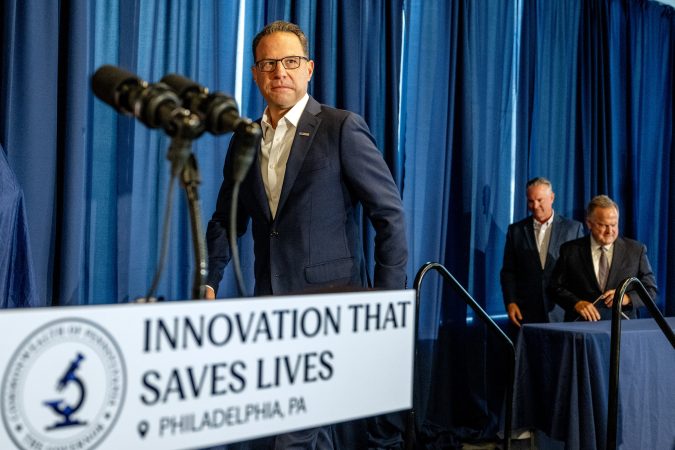
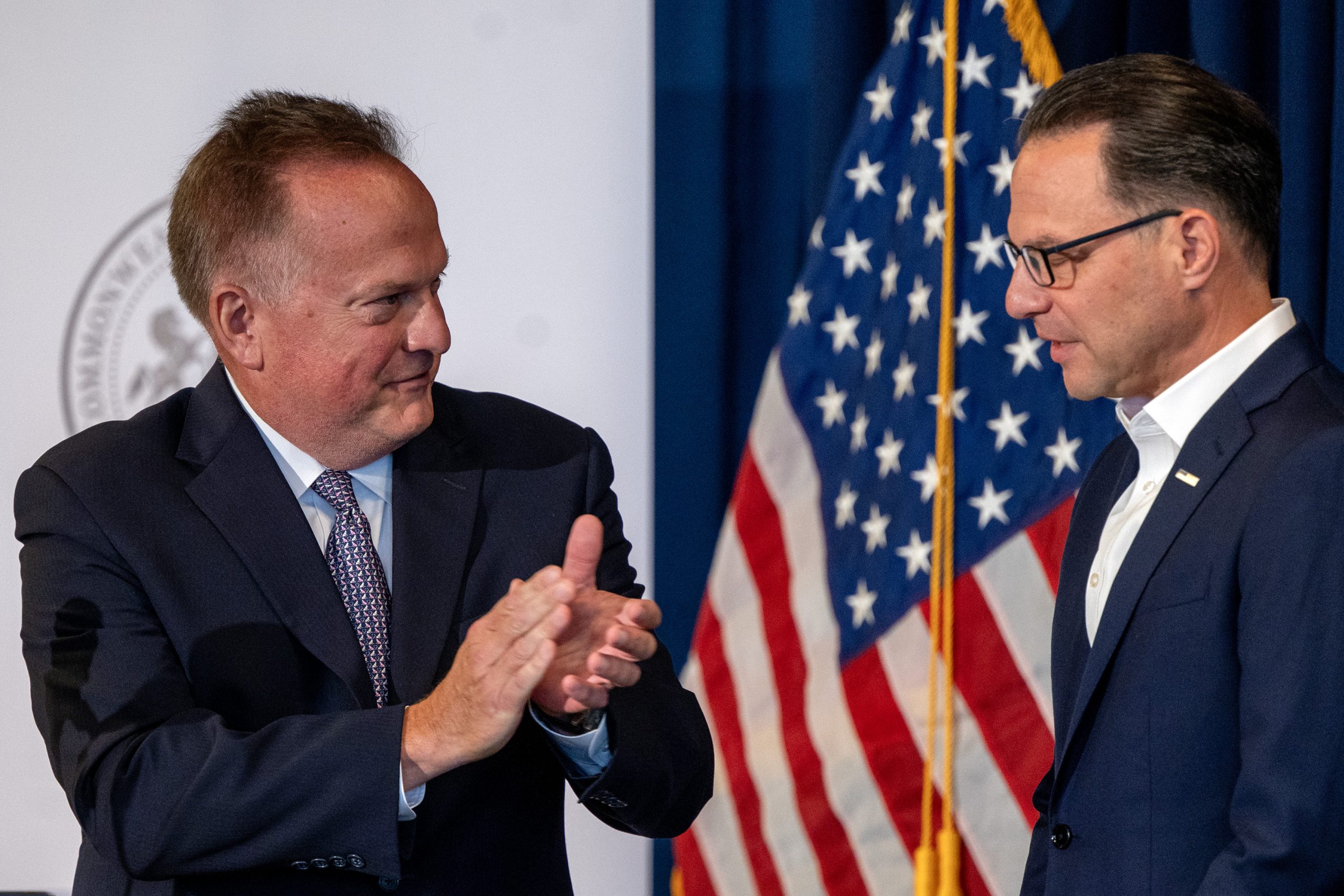
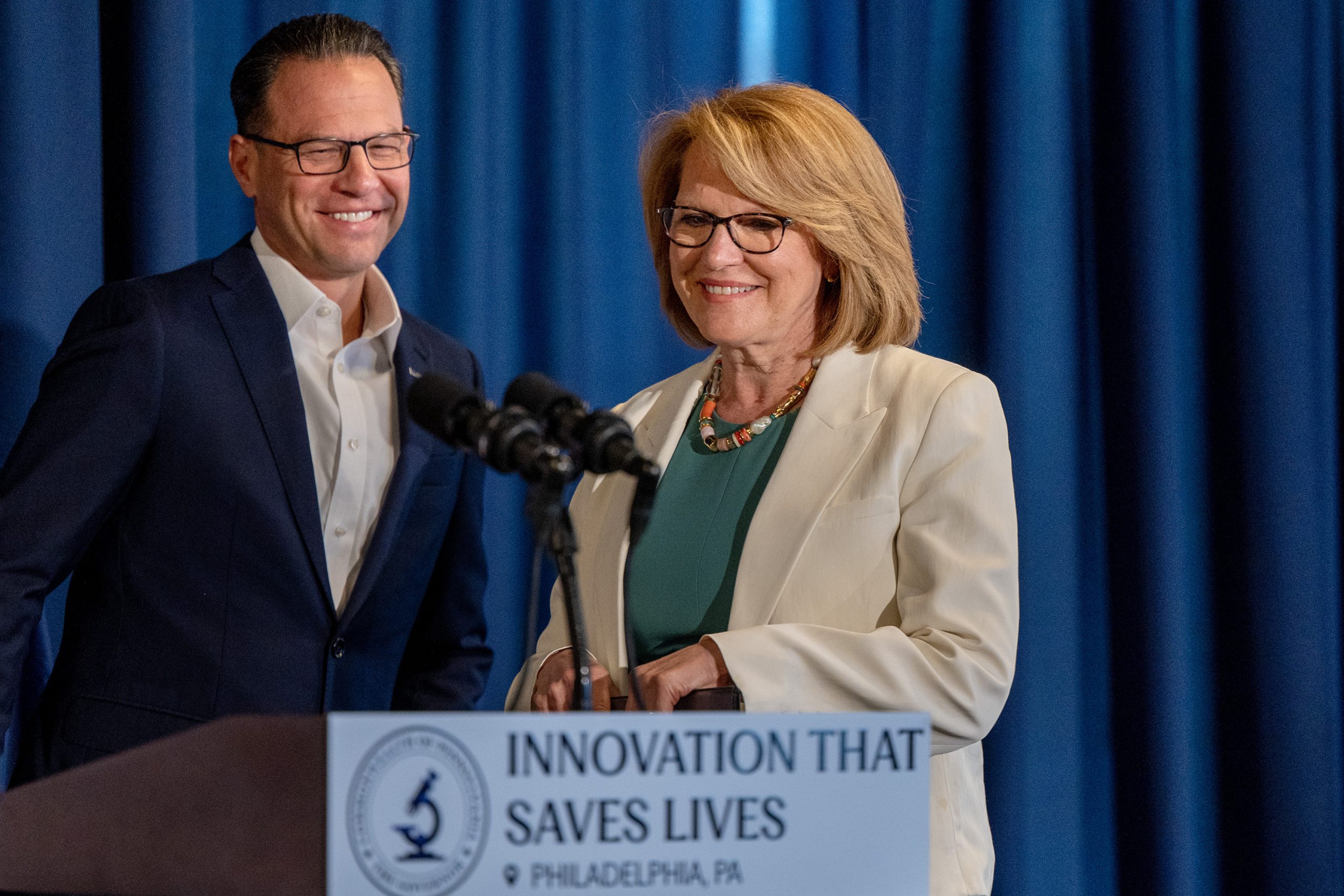
Gov. Josh Shapiro visited a University City life sciences incubator on Tuesday to celebrate a new $125 million fund aimed at boosting Pennsylvania’s life sciences industry.
The funding — approved in the $50.8 billion state budget deal reached earlier this month — will go toward developing new talent pipelines, help offset the cost of clinical trials, and expand access to venture-capital funding.
While Philadelphia has historically trailed other metropolitan areas, like Boston and San Francisco, in attracting life sciences investments — including in the biotechnology and pharmaceutical fields — lawmakers and industry leaders said they hope the new funding will help close the gap. The money will be available for projects across the state.
“I think you can feel the momentum building all across our commonwealth in the life sciences space,” said Shapiro, who was joined at the B+labs facility by industry leaders and Democratic state lawmakers. “After really not being on the field of competition in the life sciences space for years and years and years, Pennsylvania is not just competing again. Pennsylvania is winning.”
The new funding comes as some of the nation’s largest life sciences companies have announced their plans to invest billions in Pennsylvania, an accomplishment touted by Shapiro’s administration.
Johnson & Johnson announced this spring its plans to build a $1 billion cell therapy plant in Montgomery County. And pharmaceutical giant Lilly is expected to break ground on a $3.5 billion manufacturing facility in the Lehigh Valley, set to be fully operational in 2031.
Chris Molineaux (left) president & CEO of Life Sciences Pennsylvania introduces Gov. Josh Shapiro as he visits B+labs Tuesday, July 21, 2026 to tout a new $125 million program “to expand venture capital access” for Pennsylvania companies investing in life science innovations.Tom Gralish / Staff Photographer
Shapiro on Tuesday noted Pennsylvania’s potential to be a national hub for the life sciences industry, given the state’s robust research universities, adding that more than 100,000 Pennsylvanians work in the sector.
The $125 million investment is the state’s most significant in almost three decades and is a “true differentiator,” said Chris Molineaux, the CEO of Life Sciences Pennsylvania, a trade group. Last year, Shapiro called for Harrisburg to invest $30 million in life sciences funding, but the money was not allocated in the final state budget.
Of the nearly 1,000 businesses in his organization, Molineaux said, more than 400 are small start-ups with fewer than 10 employees, and will benefit from the additional dollars. A vibrant start-up landscape in Pennsylvania, he added, means there is plenty of innovation, but also competition for limited funding.
“Entrepreneurialism is alive and well in Pennsylvania,” Molineaux said. “But it’s also an extremely fragile community that needs the kind of public policy support, the nurturing, and the financial support.”
Madeline Bell (right), CEO of Children’s Hospital of Philadelphia joins Gov. Josh Shapiro as he visits B+labs Tuesday, July 21, 2026 to tout a new $125 million program “to expand venture capital access” for Pennsylvania companies investing in life science innovations.Tom Gralish / Staff Photographer
Children’s Hospital of Philadelphia CEO Madeline Bell told the crowd the story of a baby whose rare metabolic disorder was treated by the hospital’s doctors with a first-of-its-kind custom gene-editing therapy. That type of innovative treatment is made possible through outside funding and support from lawmakers, Bell said, stressing the importance of the state’s new investment.
“It’s going to make our breakthroughs possible. It is going to get them from the bench to the bedside more quickly,” Bell said.
The state will finance the program through the sale of insurance premium tax credits to insurance companies.
Shapiro said the funding is expected to become available in a few weeks and will be disbursed through an application managed by the Pennsylvania Department of Community and Economic Development.
The program is structured to prioritize projects that address needs specific to Pennsylvania, according to literature provided by the state, and will support projects developed by companies founded by people in historically underrepresented groups that have not always had access to funding.
“Part of this funding will go to make sure that folks who historically did not get invested, get invested,” said Democratic State Sen. Vincent Hughes, who represents West Philadelphia. “That communities not too far away from here, blocks away from here, get the opportunity to allow their young people and their genius to be realized.”
Tiny cupcakes offered at B+labs Tuesday, July 21, 2026 as Gov. Josh Shapiro visits to tout a new $125 million program “to expand venture capital access” for Pennsylvania companies investing in life science innovations.Tom Gralish / Staff Photographer
The program — named Innovate in PA 2.0 — builds on the 2013 Innovate in PA initiative signed into law by then-Gov. Tom Corbett, which offered $100 million in seed funding to technology startups.
“Innovators, we believe in you. This state believes in you,” Hughes said. “There is a group of people in this commonwealth of Pennsylvania who believe in you, will continue to invest in you, and want to make sure that your dreams of saving lives turn into reality.”
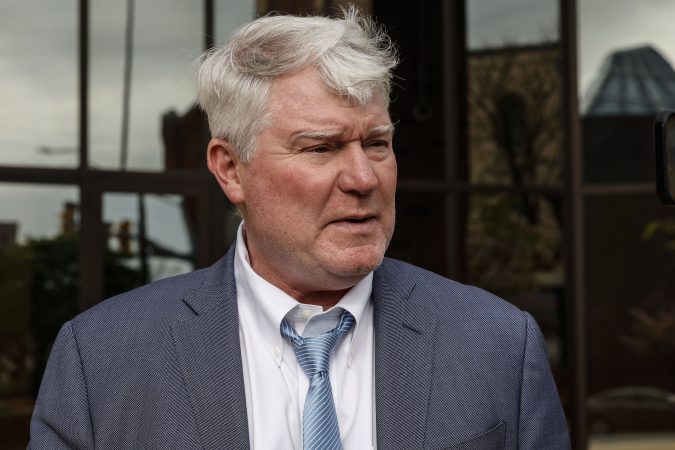
Convicted former Philadelphia labor leader John J. Dougherty has taken a variety of steps to try to cut his six-year prison term short, including by taking the witness stand this spring to tell a federal judge about the unique health challenges faced by his wife.
But one other avenue he pursued last year — an appeal to the White House for mercy — apparently hit a dead end.
President Donald Trump earlier this month denied Dougherty’s request for a commutation, according to the Office of the Pardon Attorney’s website, meaning Trump — at least for now — will not use his broad powers of clemency to clear the way for Dougherty’s early release.
Dougherty — who, nicknamed Johnny Doc, was once a singular power broker in the city’s Democratic Party — was one of about 5,600 people whose commutation applications were denied on July 10, according to the pardon attorney’s site. A commutation keeps a defendant’s conviction intact but ends or reduces their sentence.
Trump, a Republican, also denied about 300 applications for a pardon, a broader form of relief that is added to the record of the case and reverses any restrictions stemming from a conviction, such as limitations on voting or seeking public office. The New York Times first reported on the wave of denials this week.
Presidents have broad authority to issue pardons and commutations in federal cases, and Trump has shown a willingness to grant them to political allies during his second term in office.
One of his first actions after being sworn in again last year was to issue pardons to nearly every person charged with participating in the riot at the U.S. Capitol on Jan. 6, 2021. Trump has also bestowed clemency on political figures convicted of corruption and those he maintains were “persecuted” by the Justice Department under former President Joe Biden.
Dougherty’s attorney, George Bochetto, said Tuesday that he was not involved in the effort to petition for a commutation and did not know about it. It was not immediately clear if Dougherty submitted an application himself or if he had another associate help with its preparation.
The pardon attorney’s website made basic information about Dougherty’s application available through its case search system, showing Dougherty’s name and his Bureau of Prisons register number and saying his application was filed last year.
Bochetto has been overseeing a different relief effort: Dougherty’s attempt to have a judge grant him compassionate release.
In court documents and in testimony before U.S. District Judge Jeffrey L. Schmehl, Dougherty has been saying for months that his wife, Cecilia — who has long suffered from a debilitating brain injury — has seen her condition worsen while he has been imprisoned. Dougherty has asked to serve the rest of his sentence on house arrest in order to oversee her care, saying if he is not allowed to do so, his wife will likely die.
Schmehl denied that request earlier this year, but has been reconsidering after Bochetto appealed.
Ahead of the 2026 midterm elections, Gov. Josh Shapiro is using his broad popularity and giant cash stockpile to boost Democratic candidates downballot in competitive elections across Pennsylvania while he campaigns for his own reelection bid.
At a union hall in Harrisburg, Shapiro joined Pennsylvania Democratic Party members Saturday to launch a new effort that will pool donations to fund field offices, signage, and volunteers to support Democrats in key state Senate seats and congressional districts.
“We have an opportunity here in the Commonwealth of Pennsylvania, the birthplace of our democracy, the swingiest swing state in the country, to decide what the future of the Congress of the United States looks like, and to be a model for good governance right here in Harrisburg,” he said.
He referred to the effort, called Rise Up Pennsylvania, as “the most coordinated, well-funded, well-organized campaign in the history of the Democratic Party here in the commonwealth.”
Shapiro, a first-term Democrat, is in a strong position as he faces a challenge from his Republican opponent, State Treasurer Stacy Garrity, for the governor’s mansion. He’s leading Garrity 53% to 40%, according to a poll of registered Pennsylvania voters released this week from Quinnipiac University. Both Shapiro and Garrity faced no opposition in their party’s primary.
And he remains popular in the state, with 51% of respondents in the poll reporting a favorable opinion, and 56% approving of the way he is handling his job as governor.
He also boasts a massive war chest that continues to grow. Between April and June, Shapiro brought in $12 million toward his reelection bid, bringing his total fundraising to $50 million since January 2025, his campaign told The Inquirer this week. Garrity’s campaign did not share its fundraising numbers, which are not due to the state until Sept. 22. During the last cycle, he outraised her 10-1.
But the larger test this November for Shapiro, widely expected to be considering a run for president in 2028, will be whether he can translate his political influence to other candidates. If Democrats flip the state Senate, four Democratic congressional candidates Shapiro backs beat Republican incumbents, and he wins, the governor could become somewhat of a Democratic kingmaker in one of the nation’s biggest battlegrounds.
And his efforts in these races are not just a simple show of support.
Earlier this week, Shapiro’s campaign announced he has given more than $3.3 million to the state party and its election effort since the fall of 2025, with $1.5 million of that since April.
The party, which is operating Rise Up Pennsylvania, can use the money toward door-knocking and phone-banking efforts.
Shapiro has endorsed union leader and firefighter Bob Brooks in the Lehigh Valley-based 7th Congressional District. Brooks is running against Republican U.S. Rep. Ryan Mackenzie. He has also endorsed Scranton Mayor Paige Cognetti, who is running to unseat Republican U.S. Rep. Rob Bresnahan in the 8th District. And he has backed Bucks County Commissioner Bob Harvie in his quest to defeat Republican U.S. Rep. Brian Fitzpatrick in the Bucks County-based 1st District.
On Saturday, Shapiro appeared alongside former local TV anchor Janelle Stelson, who is challenging Republican U.S. Rep. Scott Perry for the second time in the Harrisburg-based 10th District.
“I know we’re frustrated right now. I know we’re angry right now,” Shapiro said. By “making sure Janelle is our next congressman, we can stop this chaos, this cruelty, and this corruption in D.C.”
Stelson blasted Perry for his votes on supporting U.S. military action in Iran and for his involvement in the Jan. 6, 2021, riots at the U.S. Capitol. She said voters have been concerned about corruption and wants to institute age limits for members of Congress.
Shapiro has also sought to strengthen Democrats’ chances by installing his allies to lead the state party.
“From now through Election Day, we are going to keep our foot on the gas to make sure that we are not only taking advantage of the moment that the delusional president has given us with this political opportunity, but also expanding on our state House, flipping the state Senate, reelecting our governor, and making Donald Trump a lame duck president,” said Eugene DePasquale, chair of the Pennsylvania Democratic Party.
Democrats have already opened 27 field offices across Pennsylvania, hired 100 full-time organizers, and knocked on 63,000 doors, DePasquale said.
A moderate Democrat who boasts about his success cutting taxes, Shapiro has struggled to get top Democratic priorities through the Pennsylvania legislature, where the GOP controls the Senate.
Also on stage Saturday were State Sen. James Malone, who is running for reelection, and Sarah Agerton, a former Mechanicsburg Borough Council member who is running for the state House.
If Democrats flip the Senate, Shapiro said his priorities would be raising the state minimum wage, codifying access to abortion, and funding more affordable housing.
“All of this is possible, and this, in many ways, is the center of what is going to decide whether we have a trifecta in Harrisburg and a Democratic majority in Washington,” Shapiro said.
The special prosecutor for crimes on or near SEPTA property will be funded through the end of the year as part of the newly approved state budget, Pennsylvania lawmakers said this week.
After that, the office’s fate is uncertain.
The controversial position is set to expire in December. It was championed by GOP lawmakers in Harrisburg, who for years have tried to limit Philadelphia District Attorney Larry Krasner’s powers and contended that the position was necessary because Krasner failed to prosecute crimes on the state’s largest transit system.
Senate Majority Leader Joe Pittman (R., Indiana), thetop Republican leader in Pennsylvania’s split legislature, where Democrats narrowly control the state House and Republicans lead the state Senate, said Democratic leaders repeatedly rejected GOP efforts to extend the position as part of the closed-door budget talks.
Krasner’s office has strongly opposed the law that created the special prosecutor position, calling it a “shocking usurpation of power” that unconstitutionally singled out Philadelphia and stripped an elected officials’ authority.
He could not be reached for comment Thursday.
The post has also faced opposition from Philadelphia-area lawmakers who say the effort is an affront to city voters who have reelected Krasner, a progressive prosecutor, three times.
“This is nothing more than voter suppression and an attempt to circumvent some of the extremely popular criminal justice reforms under this DA,” said Sen. Nikil Saval (D., Philadelphia), who chairs the city’s Senate delegation to Harrisburg.
Pittman, by contrast, said extending the special prosecutor is a critical component for Senate Republicans to agree to a new long-term funding source for SEPTA, which is approaching another fiscal cliff that could cause service disruptions when the state’s current short-term fix runs outnext year.
Asked about the future of the special prosecutor’s office, House Majority Leader Matt Bradford (D., Montgomery) said at Shapiro’s budget signing earlier this week that he hadn’t “given it much thought.”
Pennsylvania Attorney General Dave Sunday, a Republican who is tasked with overseeing the office, has lauded the special prosecutor’s work so far.
He said his office supports extending the position, calling it a “force multiplier” that has been effective in combating violent crimes against both SEPTA employees and riders.
“Our caseload reflects a range of very serious conduct — including murder and aggravated assaults — and we have secured results through convictions,” he said.
In one example of that effort, the special prosecutor will oversee the case of a 22-year-old woman charged with simple assault after authorities said she pepper-sprayed and punched a conservative social media influencer during a viral confrontation on a SEPTA bus.
Some House Democrats supported creating the role in 2023, as part of a state budget deal with the Senate GOP and Democratic Gov. Josh Shapiro, who was critical of Krasner when he served as attorney general.
Saval said Democrats shouldn’t use the position as a bargaining chip again.
“House Democrats who voted to suppress the will of Philadelphians should be ashamed of themselves, and should not support other attempts to do so,” Saval added. “This has nothing to do with the essential task at hand, which is to secure funding for mass transit.”
A spokesperson for Bradford said the House needs to “take a critical look” at whether the SEPTA special prosecutor is necessary. She noted SEPTA’s success in reducing crime and the size of its police force, but said the money used to fund the position may be better spent to reduce fare evasion by replacing gates to full-length ones that cost $40,000 each.
The funding was approved in the 2026-27 fiscal year budget “in the case of reauthorization,” and would be used to wind down the office, said Beth Rementer, Bradford’s spokesperson. Any unused funds would be returned to the general fund, she said.
A spokesperson for Shapiro declined to comment on the prosecutor role, but said Senate Republicans “need to do their jobs” to find a long-term funding solution for mass transit.
The office
The office is overseen by Special Prosecutor Michael Untermeyer, a former deputy attorney general and real estate investor who ran against Krasner in the 2017 primary.
Untermeyer did not respond to a request for comment.
The single lawyer employed by his office is investigating about 15 cases, including charges of homicide, aggravated assault, and robbery, according to a spokesperson for the attorney general’s office. That figure does not include cases the special prosecutor is considering taking on or are still under investigation, the spokesperson said.
Lawmakers could still choose to extend the position as part of their fall legislative session. It is among the several time-sensitive issues before the General Assembly ahead of the November election, in which Democrats hope to flip control of the state Senate for the first time in decades.
Krasner’s office has challenged the special prosecutor role from the beginning. His office filed a lawsuit in 2024 in an attempt to nullify the law, but was rebuffed by a 4-3 Commonwealth Court ruling that said legislators had not violated the state constitution in creating the post.
The office then appealed to the state Supreme Court, which has yet to decide the matter. As the high court heard oral arguments in the case last year, justices cited the Pennsylvania Constitution when suggesting that the legislature had been free to pass such a law, even if it interfered with the duties of an elected county official.
And lawyers for the attorney general’s office argued that the special prosecutor role did not strip Krasner’s power, but rather offered additional powers to a prosecutor appointed by the attorney general to handle cases involving crimes in and around SEPTA property.
Gov. Josh Shapiro blasted President Donald Trump Friday morning, a day after the president used a prime-time speech to reignite a series of conspiracy theories about his 2020 election loss that intelligence and voting experts have both warned are based on misrepresentations and falsehoods.
“It was an unfortunate day for America to have really an unhinged president in the White House spewing a whole bunch of conspiracy theories that are just simply not connected to reality,” Shapiro said on MS NOW’s Morning Joe Friday morning.
The speech comes less than four months ahead of the November election, which will determine control of Congress and the Pennsylvania governor’s office. As Trump administration looks to usher in sweeping national changes to election administration, Shapiro and other Democrats have promised to continue resisting those efforts.
Shapiro, a potential Democratic contender for the presidency in 2028, noted his role in battling Trump’s team in court as Pennsylvania attorney general in the aftermath of the 2020 election — which Trump continues to insist he won, without evidence, six years later.
“I went 43-0,” Shapiro said, calling Trump’s assertions baseless.
DHS targets Pennsylvania and New Jersey
While the president did not directly reference Pennsylvania in the speech, the White House did target the state — along with New Jersey, California, and Nevada — in a document it posted online Thursday evening in support of the president’s claims.
The document claims that the Department of Homeland Security has identified more than 250,000 noncitizens registered to vote spread across the four Democratic-led states, but it provides little explanation of the methodology used.
Pennsylvania Secretary of State Al Schmidt, a Republican appointed by Shapiro, rejected the allegation in a statement.
“Pennsylvania follows all state and federal laws when it comes to our elections, and our voter rolls are properly maintained and updated,” Schmidt said in a statement Thursday. “All evidence has shown that noncitizen voting is extremely rare across the country, including in Pennsylvania.”
The assertions, which Trump said were made in concert with the nation’s top intelligence agency chiefs, are included in memos on the White House homepage that together weave broad allegations of fraud surrounding the 2020 presidential election that remain unproven despite multiple audits and investigations six years later.
“These disclosures reveal an election system so broken and so vulnerable that no one can possibly defend it. It is not defensible,” Trump said Thursday.
But none of memos show evidence that would change the outcome of the election and a broad range experts have pointed that some contain information that undercut Trump’s claims.
The document targeting Pennsylvania and New Jersey is a one-page summary of a Department of Homeland Security investigation, which the White House says identified, a total of 278,000noncitizens across the country who are registered to vote in federal elections.
The White House document suggests the number was derived from putting voter files through the federal government’s Systematic Alien Verification for Entitlements (SAVE) tool, which has previously been used to further false claims of widespread voter fraud.
“While the Department has made clear that we cannot share Pennsylvanians’ private, personal information, we welcome DHS sharing their methodology and list of potential ineligible voters so we can carefully review the validity of their claims,” Schmidt said in the statement.
The announcement also comes as Pennsylvania and other states have pushed back against requests from the Department of Justice to hand over unredacted voter rolls. Schmidt has argued that sharing the rolls would put voters’ personal information at risk.
The Trump administration has insisted doing so is the best way to avoid criminal prosecution for “aiding and abetting the violation” of federal voting laws.
DHS Secretary Markwayne Mullin said 23 states already work with the department to screen for noncitizen voters, in a news conference Friday, and those who continue to resist could face legal consequences.
States that want to be reimbursed for the cost of running federal elections must implement the department’s requests, he said.
“We will make sure that we make those states a priority to look at who voted in their states, and hold the election officials accountable,” Mullin said. “If the election officials — once we gave them the information they need to secure their elections — chose not to, then those individuals can also be held accountable by fines, by penalties, and even depending on how far it goes, prison time.”
There have been only 77 instances of noncitizens voting in the entire United States between 1999 and 2023, according to an analysis from the Bipartisan Policy Center, and authorities investigated in each instance.
To vote in Pennsylvania, you must be a U.S. citizen, a resident of the state for 30 days, and 18 years old by Election Day. Registration must be done 15 days prior to an election.
There are three main ways to register: online, via a paper form handed into a county board of elections, or at PennDot or another state agency. Some people register when obtaining a driver’s license, if eligible, or after a naturalization ceremony.
But the SAVE system doesn’t always catch up with those changes, said Ben Geffen, a senior attorney at the Public Interest Law Center in Philadelphia who reviews elections. That means, results might show “false positives” that evaporate upon “even a little bit of investigation” into individual circumstances.
Pennsylvania will be crucial in determining control of the House with four swing districts being targeted by both parties, meaning that the state’s election is likely to fall under the microscope as they repeatedly have since the 2020 election when Trump sought to overturn Joe Biden’s victory.
“We are prepared here in the Commonwealth of Pennsylvania to once again have a free and fair, safe and secure election,” Shapiro said.
State audit found only one noncitizen on Pa. voter rolls
Shapiro said he trusts Schmidt, a Republican, “because we believe here in Pennsylvania the administration of elections is nonpartisan.”
In 2017, Schmidt, then a Philadelphia city commissioner, identified a glitch in PennDot’s system that had allowed 168 noncitizens to register to vote in the city, and likely a couple hundred statewide.
The voter rolls were updated in 2018, Geffen said, so none of the glitches would have impacted the 2020 election or any beyond.
A 2026 audit from Pennsylvania Auditor General Timothy DeFoor, a Republican, found that just one noncitizen was improperly registered to vote at PennDot due to human error. The individual never cast a ballot.
New Jersey has also fought against the full release of its voter rolls.
Gov. Mikie Sherrill joined other Democratic governors in calling Trump’s speech “alarming” in a statement issued Thursday.
“Democratic governors stand ready to fight back against the Trump administration and stop any and all unlawful attacks on every American’s constitutional right to vote,” said the statement from the Democratic Governors Association.
Sen. Andy Kim, (D., N.J.) referred to Trump’s address as “25 minutes of conspiracy theories from a man who still can’t get over 2020” in a post on X.
Trump also used the speech, which was not carried live on ABC, NBC, or CNN, to advocate for the SAVE Act, the elections bill that would require people to prove that they are U.S. citizens when registering to vote.
“Addressing this crisis of election security demands that Congress must pass the SAVE America Act,” Trump said. “How easy is that to do unless you want to cheat?”
The legislation, which has stalled in Congress, is unpopular among Democrats and even some Republicans. Among the concerns that have been raised from opponents is that it could block married people who take their spouse’s surname from registering to vote because of the mismatch with their birth certificates.
Sen. Dave McCormick (R., Pa.) urged passage of the bill on social media Thursday, but he did not respond to a question Friday about the Trump administration’s claims about noncitizen voting in Pennsylvania.
But as November approaches, another Pennsylvania Republican, Philadelphia City Commissioner Seth Bluestein, said voters can be sure their votes will be counted accurately.
“Prior to every election, we conduct logic and accuracy testing on every piece of equipment that is used for the election,” said Bluestein, the sole Republican on the three-member board that oversees Philadelphia elections.
“Voters, when they cast their ballots, have a verifiable paper ballot for every single vote that gets cast, and then after the election, we conduct two audits of a random sampling of ballots to verify that they were tabulated accurately,” he said.