Category: Pennsylvania Politics

  • Democrats are outraising Republican incumbents in competitive Pa. House districts — except for one

    Democrats are outraising Republican incumbents in competitive Pa. House districts — except for one

    With control of the U.S. House on the line in November, Pennsylvania’s swing-district candidates are stocking up their war chests for a critical election — but one Democrat is lagging behind his counterparts.

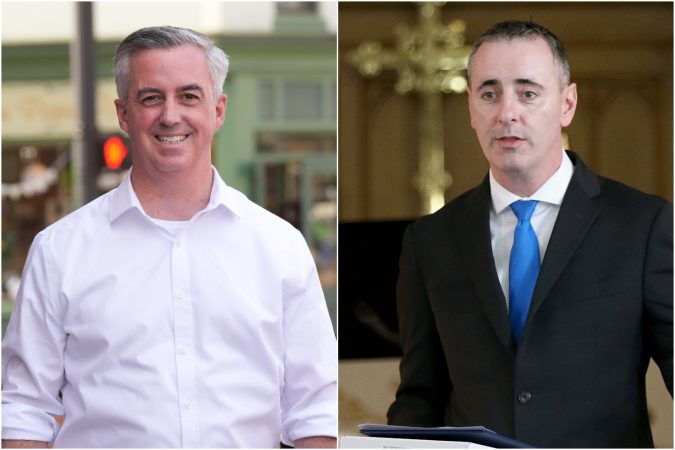
    Bucks County Commissioner Bob Harvie, who is challenging longtime incumbent Republican U.S. Rep. Brian Fitzpatrick in the 1st Congressional District, raised almost $552,300 between April 30 and June 30, according to new campaign finance reports filed Wednesday, putting him at a little over $2 million raised since he launched his campaign in April 2025.

    But Harvie’s sum for this two-month period is almost half a million less than Fitzpatrick, and roughly $915,000 on average less than the other Democratic candidates.

    Fellow swing–district Democrats Bob Brooks, Paige Cognetti, and Janelle Stelson all outraised the Republican incumbents in the 7th, 8th, and 10th Districts respectively, each gathering more than $1 million during this two-month period, a sign national Democrats say is proof of their strength in these competitive Pennsylvania seats.

    The reporting period covers the final weeks before the May 19 primary and the six weeks that followed.
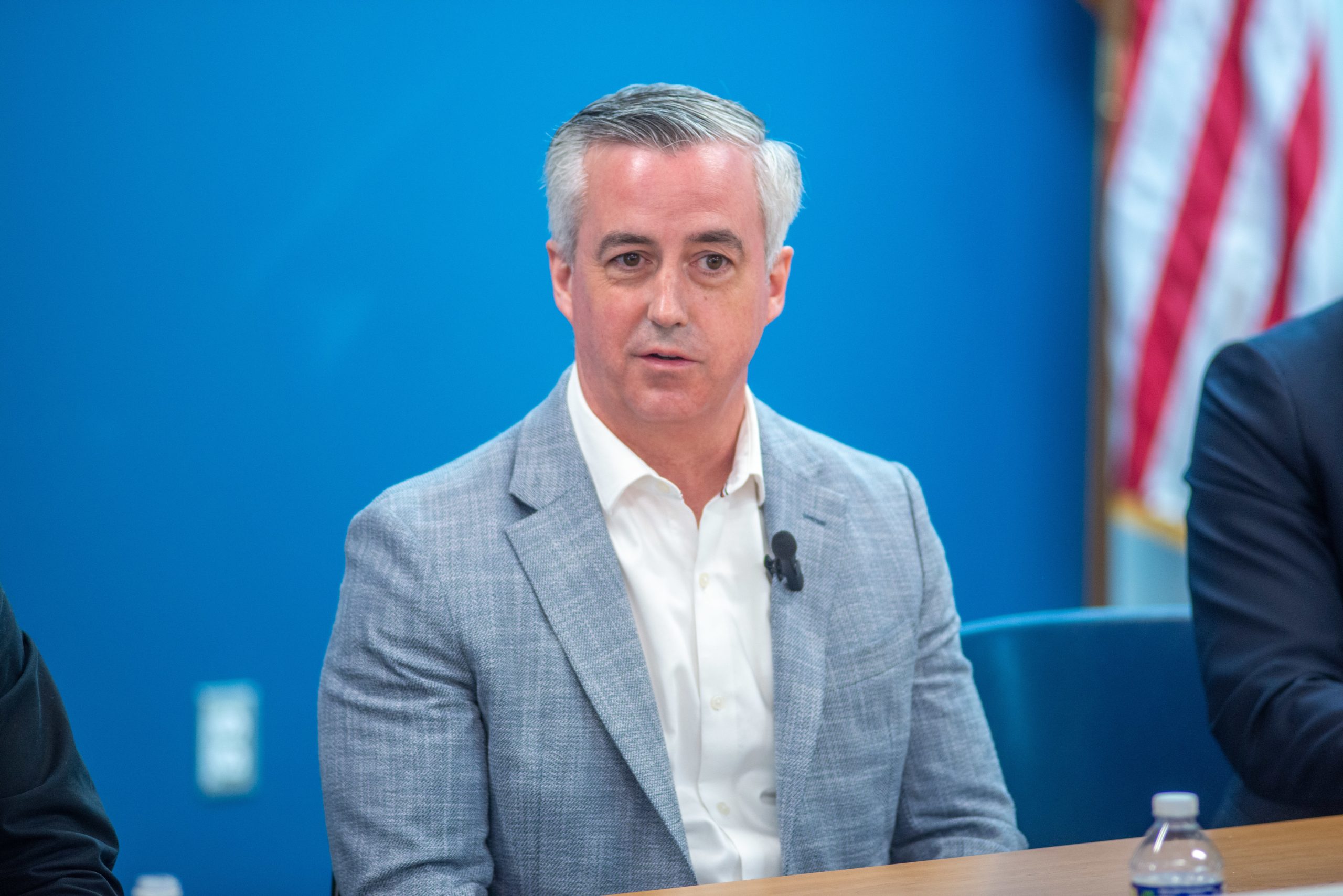
    Bucks County Commissioner Bob Harvie hosts a veterans roundtable on May 4 at Middletown Township Building in Langhorne.William Thomas Cain / For The Inquirer

    Harvie is seen by Democrats as the party’s best chance in a decade to beat Fitzpatrick, a five-term moderate with a massive fundraising operation, who has raised $6.7 million so far this campaign, bringing in over $1 million this period.

    The Bucks County Republican has been tough to beat, thanks to his name recognition and ability to garner support from voters across the political spectrum, but Democrats believe Harvie’s roots in the county, and his electoral record as county commissioner, make him their strongest candidate to date.

    (function(){function e(){window.addEventListener(`message`,function(e){if(e.data[`datawrapper-height`]!==void 0){var t=document.querySelectorAll(`iframe`);for(var n in e.data[`datawrapper-height`])for(var r=0,i;i=t[r];r++)if(i.contentWindow===e.source){var a=e.data[`datawrapper-height`][n]+`px`;i.style.height=a}}})}e()})();

    And their outlook on the race hasn’t budged. Democrats believe all four swing district Democrats will be successful in November but understand it will take continued investments, including more money, to get all of them across the finish line.

    Bucks County’s 1st Congressional District “is a winnable race, and Democrats should be all in on investing in Harvie so that he can help take back control of Congress,” said Dan McCormick, Harvie’s campaign manager, in a statement.

    He also added that Harvie doesn’t “take a dime” of corporate PAC money. McCormick did not comment on the contrast between Harvie’s fundraising and that of his counterparts in the other targeted districts.

    “Fitzpatrick sees the same polling we do, that’s why he’s busy lighting his money on fire lying about Bob,” McCormick said.

    Fitzpatrick began funding ads against Harvie before the May 19 primary, underscoring the significance of Harvie’s challenge in a year Republicans are expected to lose seats nationally. Fitzpatrick’s campaign spent nearly $2 million between May and June, compared with about $360,000 in spending by Harvie’s campaign.

    Both parties are targeting the seat, which includes all of Bucks and a sliver of Montgomery County, as they battle to secure control over the U.S. House.

    In a pre-primary report that covered April 1 through 29, Harvie had raised about $107,000, in addition to his stockpile reported Wednesday. Fitzpatrick raised $246,000 during that same period.
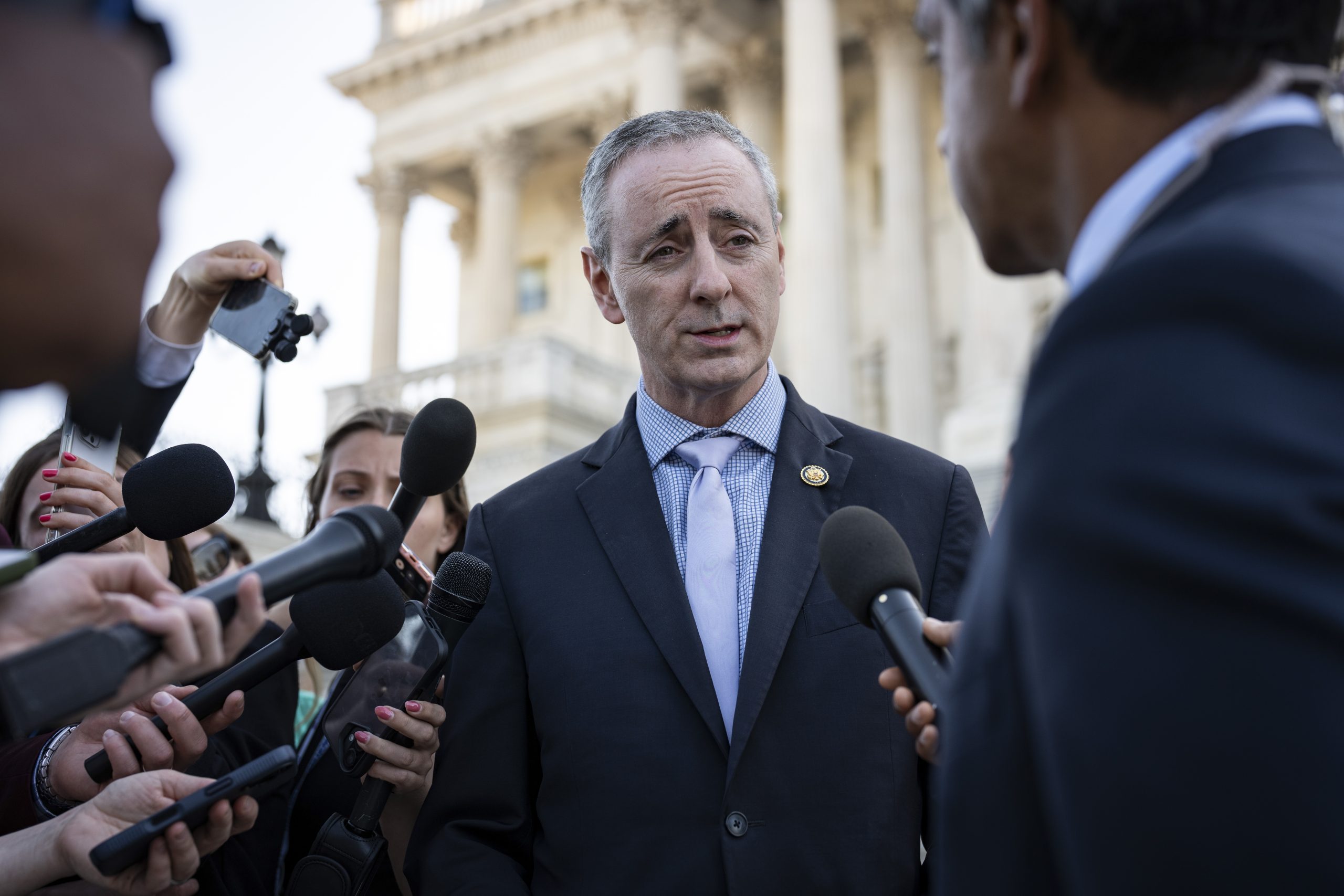
    Rep. Brian Fitzpatrick (R., Pa.) speaks to reporters June 3 after the House passed an Iran war powers resolution.Haiyun Jiang

    The nonpartisan Cook Political report has rated the 1st Congressional District as “likely” Republican, and the three other swing districts are considered toss-ups.

    In a high stakes election year — and with popular Pennsylvania Gov. Josh Shapiro at the top of the ticket and a sinking approval rating for President Donald Trump — Harvie’s fundraising numbers at this point are mostly on par with the last Democrat to take on Fitzpatrick.

    Former challenger Ashley Ehasz, who ran against Fitzpatrick in 2022 and 2024, raised more than $767,000 during this period two years ago, bringing her campaign total to $2.1 million as of June 30, 2024.

    Brittany Crampsie, a Democratic strategist in Pennsylvania, said donors may be doing “a little bit of hedging” their spending for Harvie at the moment, waiting to see more information on Shapiro’s poll numbers, Trump’s approval rating, and the national mood before investing more in the 1st District.

    “Democratic donors absolutely want to beat Fitzpatrick,” Crampsie said. “We want to control Congress by large margins. But PA-1 is an expensive race. I mean, you might want to be looking at a little bit more information.”

    The 1st and 7th Congressional Districts are part of the expensive Philadelphia television market, meaning both Harvie and Brooks will be competing for airtime.

    Brooks, who is taking on freshman Republican U.S. Rep. Ryan Mackenzie in the Lehigh Valley, has raised $2.3 million over the entire span of his campaign — getting a boost this period after winning a competitive primary — but it’s not too far off from Harvie’s $2 million total haul.

    Christopher Nicholas, a GOP consultant who grew up in Bucks County, said that Harvie is not just in a competition against Fitzpatrick, but also with the three other Democratic contenders in Pennsylvania.

    “If you’re some official at the DCCC, and you say ‘Let’s see, get me the report on Pennsylvania,’ and you see this, where is Harvie going to be in the rankings? Is he going to be moving up or moving down? I think that’s a pretty easy question to answer,” Nicholas said.

    Eli Cousin, a spokesperson for the Democratic Congressional Campaign Committee, emphasized that Pennsylvanians are wholeheartedly behind all four candidates who he says are “on the front lines of our path back to the House majority and will shake up a broken Washington in order to put Pennsylvania families first.”

    Donors still have a lot of time to realize that Harvie is “the right candidate” and to contribute to TV and other ad spends that will come later this summer into the fall, Crampsie said. Some may already be writing checks to the Democratic Congressional Campaign Committee and other Democratic aligned-issues to support their cause of flipping the House blue.

    “Fitzpatrick has won several times after being called the number one target, and stakeholders may be less likely to oppose him publicly and want to put their money into spending for Harvie that’s not necessarily into PAC spending … but I don’t think that it’s a sign that people are not supporting Harvie,” Crampsie said.

    But even in the races where Democrats are outraising incumbents victory isn’t guaranteed in districts where Republicans have previously managed to prevail despite a cash disadvantage.
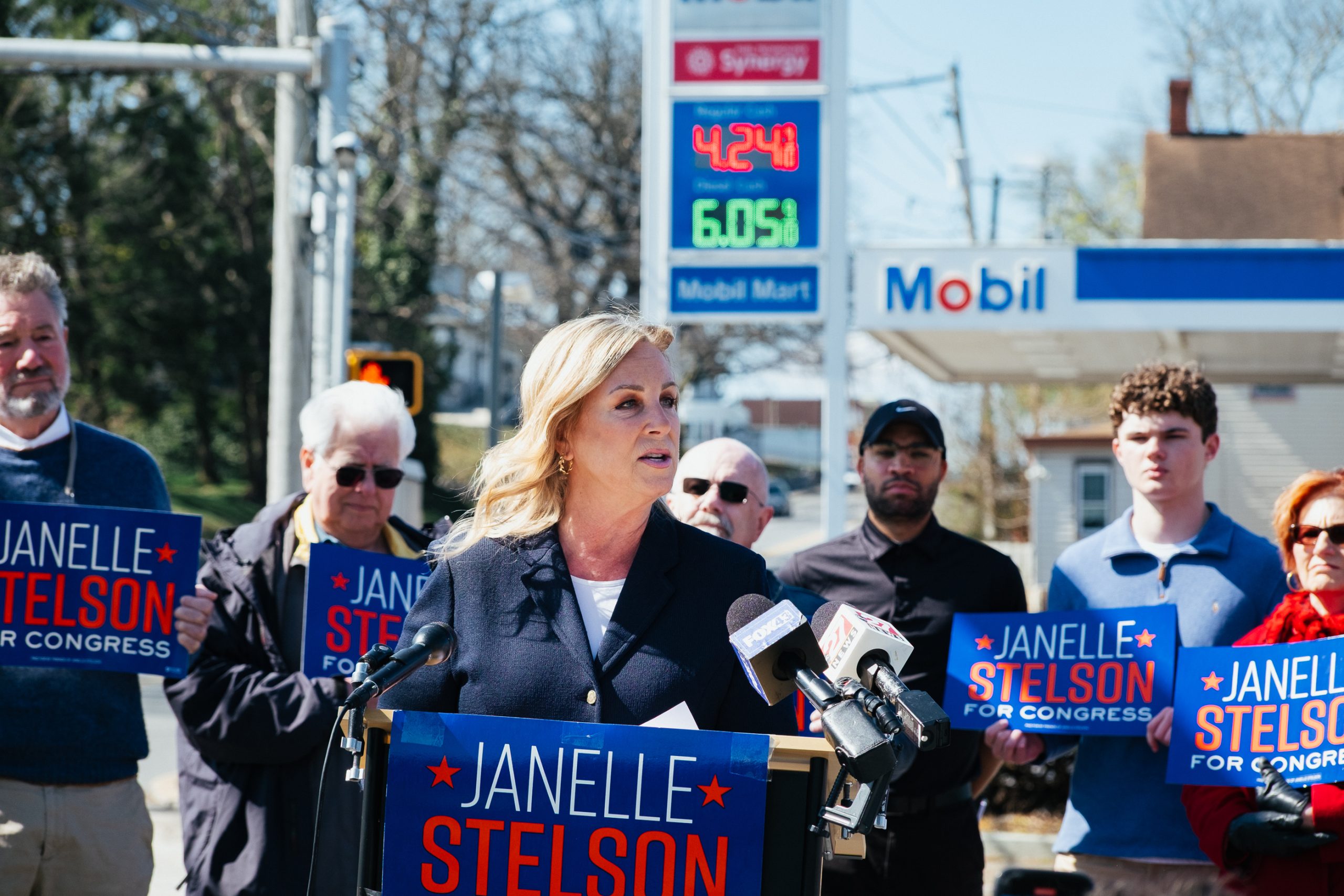
    Janelle Stelson, running to represent Pennsylvania in Congress, campaigns at a gas station. Michelle Gustafson

    In 2024, Stelson raised about $6.5 million during the entire cycle, roughly $2.1 million more than Republican U.S. Rep. Scott Perry, and still lost. Republicans are hoping Perry can prevail again when they have a rematch in November.

    And Republicans see other signs of hope in these races despite Democrats’ momentum. For example, Mackenzie has more than $2.9 million cash on hand, roughly $1.9 million more than Brooks.

    “Republicans remain in a strong position to defend our House majority after excellent quarters by our incumbent Members across Pennsylvania,” Reilly Richardson, a spokesperson for the National Republican Congressional Committee, said in a statement.
  • Doug Mastriano wouldn’t say if he believes all American leaders should be Christian as he’s vetted for an ambassadorship

    Doug Mastriano wouldn’t say if he believes all American leaders should be Christian as he’s vetted for an ambassadorship

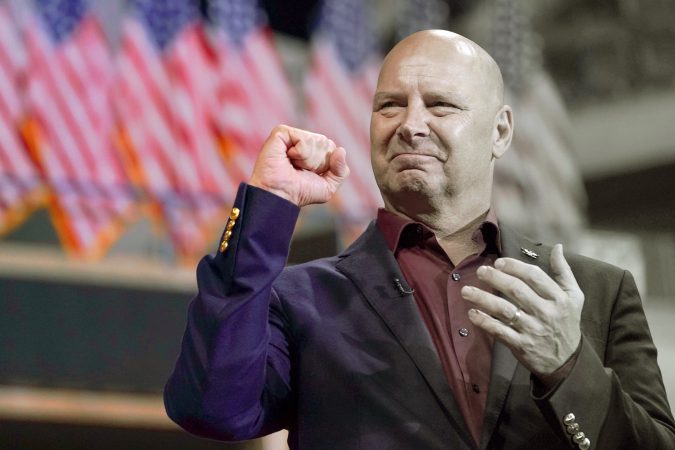
    WASHINGTON — Doug Mastriano, the far-right Pennsylvania lawmaker whom President Donald Trump nominated to become the U.S. ambassador to Slovakia, refused to tell senators during his confirmation hearing on Thursday whether he believes all American political leaders should be Christian.

    A key Trump ally during the president’s attempt to overturn the 2020 election, Mastriano also rejected claims that he is a conspiracy theorist who assisted in the Jan. 6, 2021, attack on the U.S. Capitol.

    And while he said he regretted some of his past statements about the Holocaust and his associations with individuals considered antisemitic, he repeatedly pushed back on Democratic senators’ concerns about his fitness for the role.

    “I’ve never been involved in conspiracies,” he said during a heated exchange with U.S. Sen. Tim Kaine (D., Va.), who at different points referred to Mastriano as “gullible” and someone who needs to “look in the mirror a little bit.”

    Trump nominated Mastriano for the ambassadorship in May.

    The Republican state senator from Franklin County is a retired U.S. Army colonel who deployed three times to Afghanistan after 9/11 and previously served in Eastern Europe.

    He was the Republican nominee for Pennsylvania governor in 2022 with Trump’s backing, but he lost to Democrat Josh Shapiro by nearly 15 percentage points. Mastriano’s nomination for the ambassadorship came as his supporters were promoting him as a write-in candidate for governor ahead of the May Republican primary, in which Treasurer Stacy Garrity was unopposed.

    U.S. Sen. Dave McCormick (R., Pa.), who pushed for Mastriano’s nomination and chaired his confirmation hearing during the Senate Foreign Relations Committee hearing Thursday, said Mastriano’s military career made him “highly qualified” for the role.

    “This position needs a leader with strategic judgment, intimate knowledge of NATO’s inner workings, and firsthand experience working alongside our allies with an unwavering commitment to advancing America’s interest,” McCormick said during the hearing. “Doug brings that experience, and I’m confident that he’ll represent the United States with great professionalism and integrity.”

    Mastriano also leaned on his experience, which he said involved planning operations in the Baltic states and fending off Russian aggression. He said he hoped to strengthen America’s relationship with Slovakia and encourage the country to contribute to Ukraine’s defense.

    But Democrats on the committee said they had serious concerns about both Mastriano’s past comments on foreign policy and a range of other issues — including an ideology that has been described as Christian nationalist.

    U.S. Sen. Jacky Rosen (D., Nev.) said Mastriano had spoken often about his Christian identity and his belief that the separation of church and state is a “myth.” Rosen, who is Jewish, asked Mastriano to look her in the eye and say whether all U.S. political leaders should be Christian.

    Mastriano said that he believed “religious liberty applies to every American” and that it was “why our country was founded.” After Rosen said it was “deeply problematic” that he would not say America is a pluralistic nation where leaders do not need to be Christian, Mastriano responded, “I will look you in the eye and repeat even simpler language” — though he did not answer the original question.

    “We are absolutely a pluralistic society and I have worked for non-Christians in the military and the government, and I’ve had them working for me,” Mastriano added.

    Rosen also questioned him about previous comments comparing abortion and his loss to Shapiro in the 2022 Pennsylvania governor’s race to the Holocaust.

    “There was a social media post that I would not post today,” Mastriano said, calling any comparisons to the Holocaust “unwise.”

    Asked about his associations with Andrew Torba, founder of the online platform Gab, which has been used to share extremist and antisemitic views, Mastriano said he “immediately” returned a campaign donation from Torba and cut off advertising on the platform when he learned about the Gab founder’s views.

    “You can denounce your past associations with antisemites. You can point to your support of Israel,” Rosen said. “But for me, I’m not sure that either excuses you or erases your record.”

    U.S. Sen. Jeanne Shaheen (D., N.H.) questioned Mastriano while displaying a giant poster with his picture and a 2018 quote in which he said European Union leaders were “political, diplomatic enemies of the United States of America.”

    She said staff who had interviewed him recently had also quoted him as saying he believed the European Union was a “rising rival comparable to China and that it would eventually create a standing army to challenge the United States.” Visibly frustrated during her questioning, Shaheen said that the EU should be treated as allies, not rivals, and that Mastriano “should absolutely know better.”

    The most contentious exchange came between Mastriano and Kaine, who started by saying that he respected the nominee’s military service and that the nomination brought him “a real sense of sadness.”

    “You’ve associated with antisemites and Holocaust deniers. You’ve associated with 9/11 conspiracy theorists. You’ve made comments about foreign leaders that are not diplomatic in quality. And you and I share a very special day in American history,” Kaine said. “We were both here on Jan. 6, 2021.”

    Mastriano was Trump’s top ally in Pennsylvania as the president contested his 2020 election loss to Democrat Joe Biden. He worked both publicly and privately to contest the vote, and he was near the Capitol on the day that a mob broke in to stop the certification of the results. The Republican lawmaker was not charged with a crime related to any of those activities, which he reminded Kaine about on Thursday.

    “That is incorrect,” he said as Kaine pressed and said he had been at the Capitol to overturn the results. “I was here to hear the president. I was here with my wife to hear the president of the United States speak. We didn’t do anything illegal. We came, we saw, we left.”

    Asked if he would say, now, that Biden had won the election, Mastriano said only that Biden had been certified as the winner — a phrase that other Trump nominees have used in nomination hearings and that Democrats have described as a pre-negotiated script to appease a president who still stands by the fraudulent claims.

    “Conspiracy theorists generally are gullible people. They might have master’s degrees and Ph.D.s, and you’ve got them,” Kaine said to Mastriano, referring to his degree in history.

    “I don’t know what you’re talking about, senator,” Mastriano said, denying that he subscribes to conspiracy theories as the two talked over each other.

    Kaine said Mastriano could claim, if he wanted, that he only held a public hearing on the 2020 election — an event in Gettysburg that helped spread false claims that there was widespread fraud in the election — but he could not erase his record.

    “No, sir, there’s no erasing,” Mastriano said. “Facts are stubborn things.”

  • Democratic Sen. John Fetterman has more support among Pa. Republicans than GOP Sen. Dave McCormick, new poll shows

    Democratic Sen. John Fetterman has more support among Pa. Republicans than GOP Sen. Dave McCormick, new poll shows

    U.S. Sen. John Fetterman has insisted he has no plans to leave the Democratic Party, despite continued attempts to sway him.

    “I remain strongly pro-choice, pro-weed, pro-LGBT, pro-SNAP, pro-labor and even pro-rib-eye over bio slop,” the Pennsylvania lawmaker wrote in an opinion piece published in the Washington Post in May.

    But if he were to change his mind, a new poll shows he might have a home in Pennsylvania’s GOP.

    Just under half of registered voters in the state approve of how Fetterman is handling his job as a U.S. senator, according to a Quinnipiac University poll released Wednesday.

    But the vast majority of the first-term Democrat’s support comes from voters in the opposing party: 77% of surveyed Republicans said they approve of Fetterman, while just 19% of Democrats do.

    That is a higher share of voter support than even U.S. Sen. Dave McCormick, Fetterman’s Republican colleague from Pennsylvania, received from his own party, with 68% of surveyed Republicans approving of his job performance.

    Fetterman also faced more ire from Democrats than his GOP counterpart — with 69% of Pennsylvania Democrats disapproving of their party’s senator, compared with 52% who disapprove of McCormick.

    The Quinnipiac survey, conducted June 9-13, polled 895 registered Pennsylvania voters and has a 4.3-percentage-point margin of error.

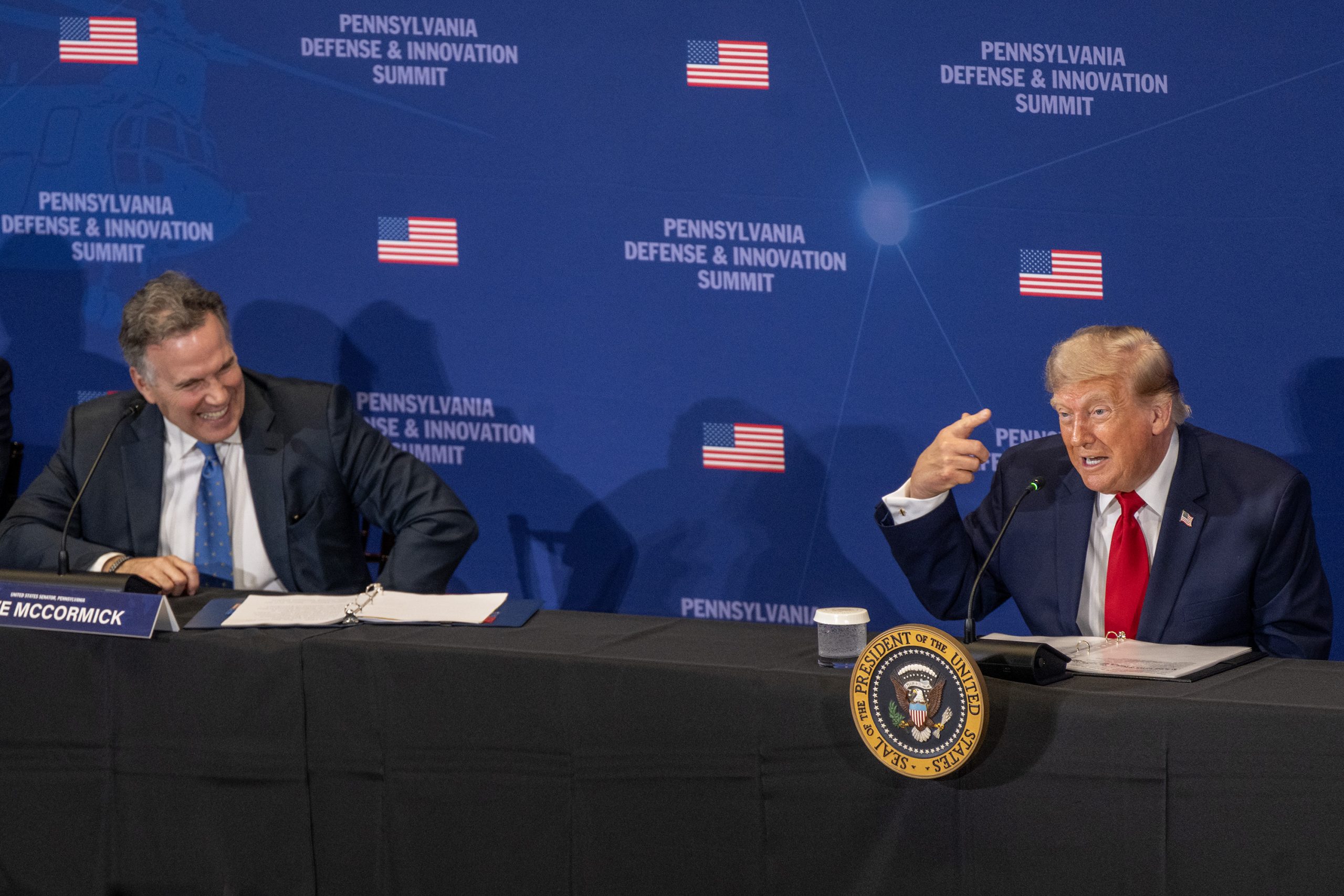
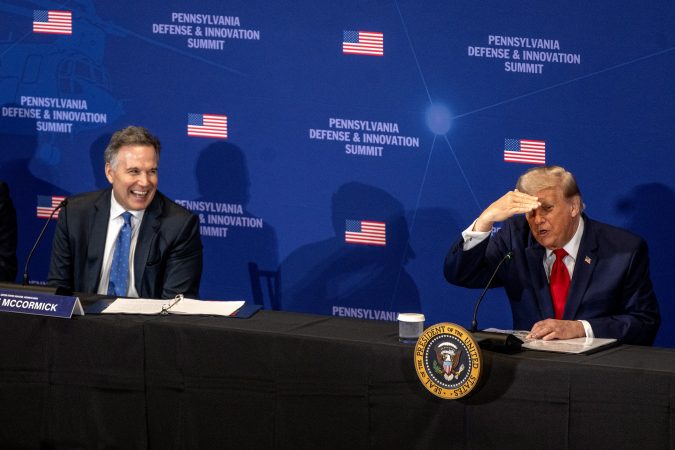
    President Donald Trump appears at a Defense and Innovation Summit hosted by U.S. Sen. Dave McCormick (left) at the US Army War College in Carlisle Wednesday, July 15, 2026.Tom Gralish / Staff Photographer

    Since Fetterman began casting key votes in support of President Donald Trump and publicly criticizing progressives in his party, conservatives have been leaving the door open and, at times, rolling out a welcome mat.

    (function(){function e(){window.addEventListener(`message`,function(e){if(e.data[`datawrapper-height`]!==void 0){var t=document.querySelectorAll(`iframe`);for(var n in e.data[`datawrapper-height`])for(var r=0,i;i=t[r];r++)if(i.contentWindow===e.source){var a=e.data[`datawrapper-height`][n]+`px`;i.style.height=a}}})}e()})();

    State Sen. Greg Rothman, chair of the Pennsylvania GOP, said he could consider supporting Fetterman’s reelection if he switched parties, and Fox News’ Sean Hannity said Trump himself urged Hannity to coax Fetterman into becoming a Republican in exchange for the president’s support.

    During an interview Wednesday at the Hill Nation Summit in Washington, Fetterman said the Democratic Party’s stance on Israel could push him out.

    “If our party ever becomes — and just makes it official — the anti-Israel party, that’s when I would leave because that’s been a moral clarity for me,” he said.

    Democrats, meanwhile, have mostly taken a hands-off approach. The Pennsylvania Democratic Party has previously declined to comment on Fetterman’s positions and actions, including his new joint fundraising committee with McCormick. The venture, announced earlier this month, allows them to split money from donors who want to give to both of their campaigns, a boost for Fetterman, who has reported raising significantly fewer campaign dollars on his own.

    Democratic Gov. Josh Shapiro has also avoided directly criticizing Fetterman, but admits their relationship is estranged.

    In an interview with Politico in May, Shapiro said it had been “probably years” since he had seen Fetterman at an event in Pennsylvania.

    “I’m not saying he hasn’t been at one, but I haven’t seen him and I’m at most things,” he said.

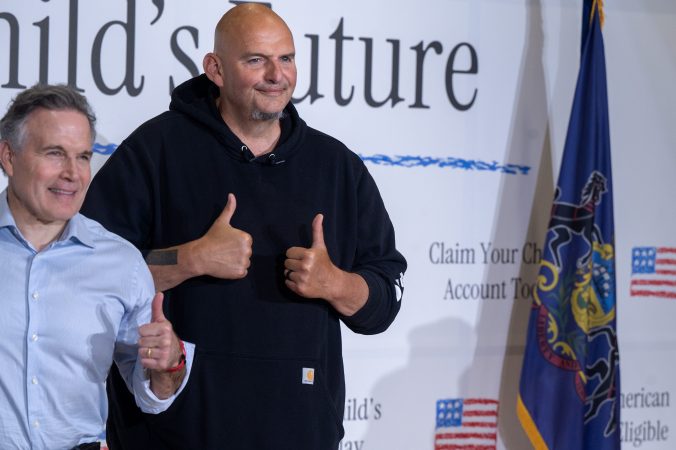
    Fetterman was most recently in Philadelphia at an event with McCormick to promote Trump Accounts, the new federally backed savings accounts for kids that became law with Trump’s signature One Big Beautiful Bill Act.

    More than half of registered Pennsylvania voters want Fetterman to leave the Democratic Party altogether, according to the Quinnipiac poll.

    It is a figure that represents both push and pull: 57% of Democrats surveyed said they want him to leave, and 55% of Republicans do, too. The poll did not ask whether he would be welcomed into the GOP.

    “The Democrats would like to show him the door. The Republicans seem to be welcoming him in. Thus is the political irony of Sen. John Fetterman,” Tim Malloy, a polling analyst at Quinnipiac, said.

    (function(){function e(){window.addEventListener(`message`,function(e){if(e.data[`datawrapper-height`]!==void 0){var t=document.querySelectorAll(`iframe`);for(var n in e.data[`datawrapper-height`])for(var r=0,i;i=t[r];r++)if(i.contentWindow===e.source){var a=e.data[`datawrapper-height`][n]+`px`;i.style.height=a}}})}e()})();

    Fetterman, who is likely to face a primary opponent, has not yet disclosed whether he plans to seek a second six-year term in 2028. U.S. Reps. Brendan Boyle (D., Philadelphia) and Chris Deluzio (D., Allegheny) and former U.S. Rep. Conor Lamb, a Western Pennsylvania Democrat who lost the Senate primary to Fetterman in 2022, are all considered to be potential contenders.

    Malloy called Fetterman’s approval among Republicans “stunningly high.”

    “He’s a maverick,” he said. “He is certainly one of the most unique politicians in the country.”

    “Being an independent voice that works with the other side to deliver for Pennsylvanians might put me at odds with the party that I have stayed committed to and have no plans to leave — but I will continue to put the commonwealth and the country first,” Fetterman wrote in the Post.

  • Donald Trump hits Josh Shapiro, promotes defense investments in Pa. during industry summit hosted by Dave McCormick

    Donald Trump hits Josh Shapiro, promotes defense investments in Pa. during industry summit hosted by Dave McCormick

    CARLISLE, Pa. — President Donald Trump — as fighting resumes in Iran and his administration’s request for $1.5 trillion in defense funding stalls in Washington — used a Wednesday appearance at a defense industry summit in central Pennsylvania mostly to boast about his perceived foreign and domestic achievements, from the oil business in Venezuela to the National Guard’s security work during Mardi Gras.

    In a 53-minute speech that was set up as a roundtable conversation, Trump occasionally applauded the latest investments in Pennsylvania’s defense manufacturing and research, which was the focus of the two-day Pennsylvania Defense and Innovation Summit organized by U.S. Sen. Dave McCormick (R., Pa.).

    He also acknowledged the setbacks in Iran and the widely recognized need for the country to more quickly build items like submarines and munitions.

    But in his second stop in three weeks in Pennsylvania — and specifically in a Republican-held U.S. House district that is critical to his party keeping control in the midterm elections — Trump also weaved through a wide range of topics.

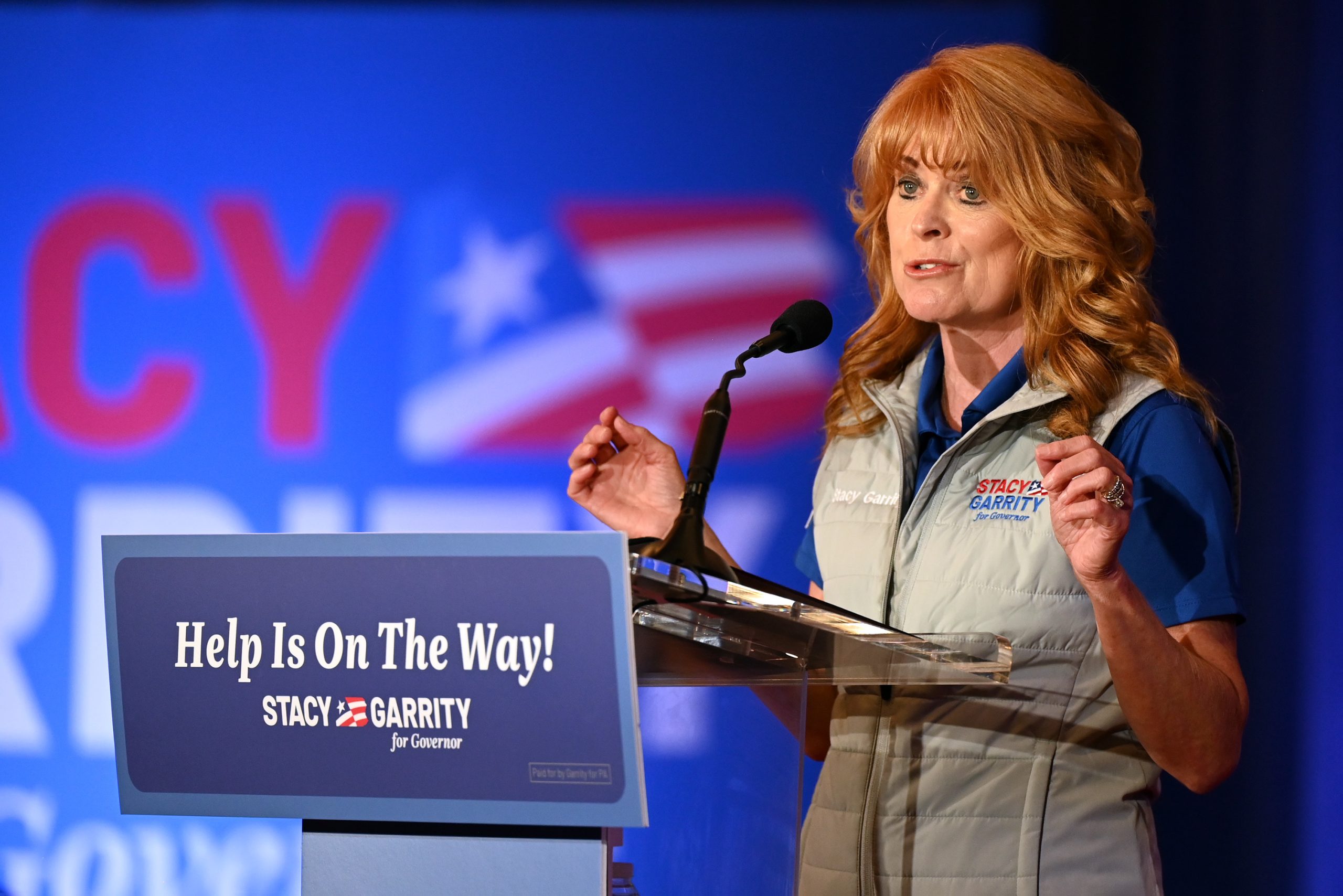
    That included the prospect that Democratic Gov. Josh Shapiro would defeat his preferred candidate in this year’s Pennsylvania governor’s race, Republican Treasurer Stacy Garrity.

    “This guy Shapiro is totally overrated. I watched him the other night doing a speech, and he does not have what it takes,” Trump said in Carlisle. “Maybe he’ll win, and he’s expected to win, but I hear things about Stacy, and I’m hearing some poll numbers that are very good. But Shapiro is — he doesn’t have what it takes.”

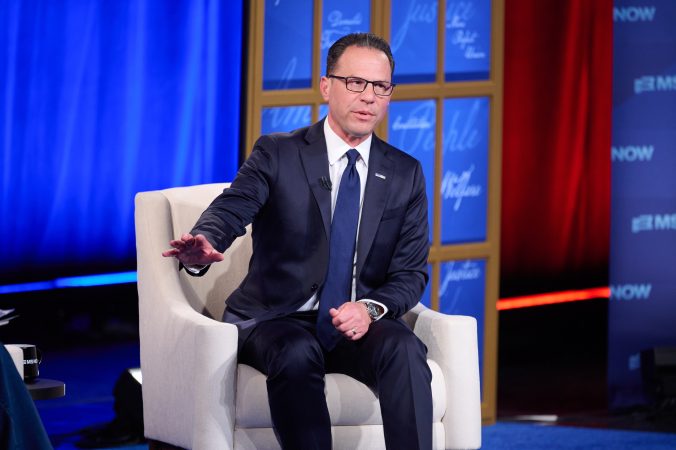
    Shapiro, who also attended the summit, held back from pointedly criticizing Trump’s foreign aggression during his panel, and he left the summit before the president’s appearance.

    While most panelists and convention-goers praised the federal government’s focus on military investment, there was little discussion about specific developments abroad or controversies around Trump’s use of the armed forces.

    Just this week, fighting in Iran resumed after a tentative ceasefire was reached and then fell apart. The U.S. Senate, which had previously voted — in a mostly symbolic gesture — to restrict Trump’s actions in Iran, has meanwhile stalled the president’s defense budget as Democrats attempt to exert more leverage to wind down the conflict.

    “This war continues to be a costly blunder that has only made us worse off than before,” U.S. Sen. Andy Kim, a New Jersey Democrat who served as a diplomat before entering Congress, said on social media this week as Trump continued the war effort.

    The bombing campaign that began in late February has been both unpopular — a Fox News poll in June found 58% think the U.S. made the wrong decision by starting it — and costly, as gas prices have remained elevated and the nation’s arsenal of Tomahawk cruise missiles has depleted. It will take years to replenish the stockpile, according to an analysis by the Center for Strategic and International Studies.

    McCormick, who has supported Trump’s efforts in Iran, said in opening the summit on Tuesday that the gathering came “in a moment as consequential as any moment in American history, and maybe in human history.”

    “President Trump’s vision of peace through strength demands new players and new ways of doing business,” McCormick said. “Such radical new thinking has never been more needed in America’s history, in the history of our military. China, Iran, Russia, North Korea: They all share one objective — a weakened United States. And they’re actively working together toward that end.”

    But Shapiro said he believed the administration’s antagonistic relationship with longtime allies is a risk to national security, though he did not specifically frame his comments around the wars in Iran or Ukraine.

    “Candidly, I get a little bit concerned when our administration pokes their finger in the eye of our allies,” Shapiro said. “That undermines our ability to innovate, and it undermines our ability to be stronger with our national defense and to have a deterrence that is going to protect the American people and protect our interests abroad.”

    McCormick, a U.S. Army veteran and former hedge fund CEO, organized the 1,300-person gathering to bring defense contractors and other companies together with government officials, military leaders, and research institutions.

    As at a similar energy- and technology-focused event last year, McCormick used the event to highlight what he described as about $10 billion worth of investments in the state.

    The list featured several ongoing Philadelphia efforts — including new ship orders at the Hanwha Philly Shipyard that McCormick valued at $1.5 billion, and a 10-year, $2.5 billion agreement to support submarine construction by Rhoads Industries and General Dynamics.

    Day & Zimmermann, a Philadelphia-based and family-owned conglomerate that is one of the Army’s largest ammunition suppliers, also won a $2.3 billion contract to update, operate, and run the Hawthorne Army Depot in Nevada, according to McCormick.

    JPMorgan Chase & Co. chief executive Jamie Dimon, who visited the Navy Yard on Wednesday ahead of the conference, also appeared in Carlisle to discuss $13 million in financing his company is providing to Rhoads’ ongoing project.

    Not all of the announcements are new or immediate — such as a recent $84 million order of heavy dump trucks from Mack Defense, which is part of a five-year, $221.8 million contract signed last year and that Trump touted in Macungie last month.

    Trump called the announcements “a colossal victory for this commonwealth and for the entire nation.”

    “Pennsylvania workers will build the ships, submarines, trucks, weapons and industries that will ensure America remains the strongest and the most powerful nation in the history of the world,” Trump said.

    In between diversions about the 2024 election, COVID-19, and claiming — as he has before during rallies in Pennsylvania — that affordability concerns are “fake,” Trump also addressed the focus of the gathering by stressing the need for a faster buildup of military equipment.

    “We used to make a ship a day, and now we’re a laggard in that department,” he said while asking the submarine construction workers in Philadelphia to pick up the pace. “We do lots of great things, but we’re a laggard there.”

    Like his rally in Lehigh County in June, Trump’s speech on Wednesday was located in a congressional district with one of the most competitive races — both in Pennsylvania and nationally — this year.

    U.S. Rep. Scott Perry, a York County Republican, is seeking an eighth term in the 10th Congressional District, which covers all of Dauphin County and parts of York and Cumberland Counties. Perry narrowly fended off a challenge from former local television anchor Janelle Stelson in 2024 and is facing her again as Democrats invest more into the race.

    As polls show Democrats have some broad momentum in the midterms, a new Pennsylvania poll released Wednesday found 39% of voters in the state approve and 58% disapprove of the president’s job performance.

    The same poll from Quinnipiac University found 40% approve of McCormick’s job performance, 33% disapprove, and 28% had no opinion.

    The event Wednesday and the energy-focused summit in Pittsburgh last July have spotlighted McCormick in rare, high-profile ways for a freshman senator. The former CEO of Bridgewater Associates, one of the world’s largest hedge funds, has also developed a close alliance with Trump in ways that have elevated his political stature.

    “Hopefully we’ll fix some of these societal problems,” Dimon, one of the country’s most powerful executives, said when McCormick asked him onstage what the next decade would look like. “And Secretary of Treasury Dimon will be happy to report to you, will be happy to report to President McCormick.”

    McCormick has not publicly expressed an interest in running for president — though at least one widely expected 2028 contender was in attendance Wednesday at his invitation.

    “Defense is critical to the future growth of this commonwealth,” Shapiro said, while praising McCormick in a bipartisan showing.

    Shapiro spoke emphatically about bolstering the state’s role in the defense industrial base and said he is doing what he can to have the state benefit from defense-related jobs and a federal focus on national security.

    Shapiro also appeared at the conference at the U.S. Army War College in Carlisle earlier in the day. In a panel conversation there, he did not criticize Trump by name as he fully endorsed the summit’s goal of supercharging the defense industry and placing Pennsylvania at the center of the expansion.

    President Donald Trump and Secretary of Defense Pete Hegseth (right) are on stage at a Defense and Innovation Summit hosted by U.S. Sen. Dave McCormick at the US Army War College in Carlisle Wednesday, July 15, 2026.Tom Gralish / Staff Photographer

    Those jobs include about 2,200 at General Dynamics, a global corporation whose Pennsylvania employees work on everything from sonar and artificial intelligence to submarine defensive systems and electronic warfare, the company’s president, Danny Deep, said while sitting alongside Shapiro.

    Deep referenced the governor’s 2024 visit to the General Dynamics munitions manufacturing plant in Scranton, when Shapiro and Ukrainian President Volodymyr Zelensky signed both empty artillery shells and agreements to work together. Because of the demand during Ukraine’s war with Russia, the company has ramped up its monthly munitions production from 14,000 to 50,000 — a move that Deep said was possible only with help from the state.

    “That’s because of this public-private partnership, and that’s what makes Pennsylvania so special,” he said.

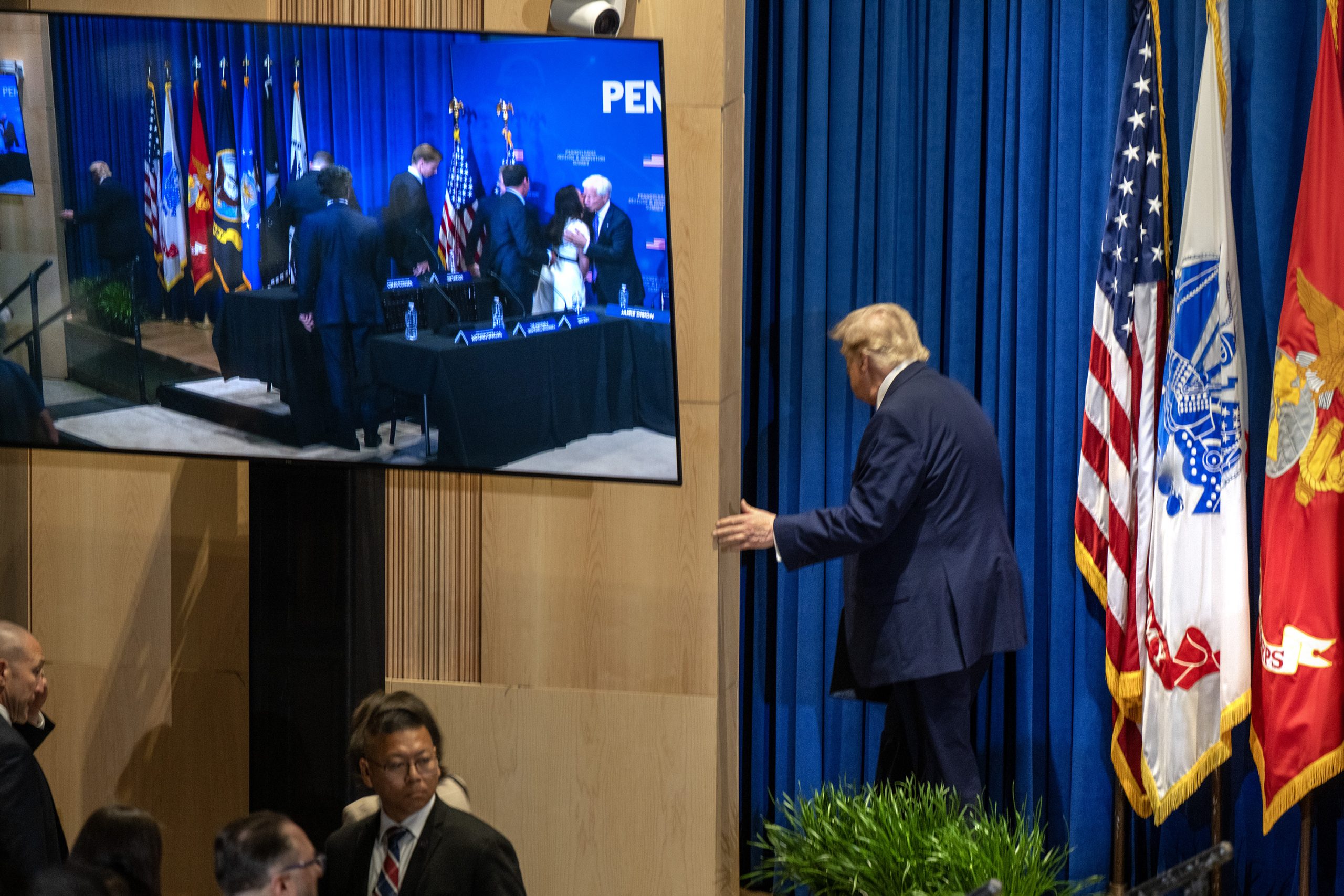
    President Donald Trump leaves the stage at the end of a Defense and Innovation Summit hosted by U.S. Sen. Dave McCormick at the US Army War College in Carlisle Wednesday, July 15, 2026.Tom Gralish / Staff Photographer

    Michael Coulter, president and CEO of Hanwha Defense USA, likewise said on the panel that the cross-party and cross-government support is essential in the company’s continued expansion at the Navy Yard in Philadelphia. The investments announced by McCormick on Wednesday included a federal government order of new ships that was valued at $1.5 billion and supporting more than 2,000 jobs in Philadelphia.

    “We are foot-on-the-throttle to make shipbuilding great again,” Coulter said. “And Pennsylvania’s the heart of that.”

    Staff writer Joseph N. DiStefano contributed to this article.

  • Josh Shapiro has fundraised $50 million since the beginning of last year, his campaign says

    Josh Shapiro has fundraised $50 million since the beginning of last year, his campaign says

    Gov. Josh Shapiro’s teeming campaign war chest continues to grow.

    The first-term Democrat raised a whopping $12 million toward his reelection bid for Pennsylvania governor between April and June, his campaign said Wednesday — bringing his total fundraising to $50 million since January 2025.

    The announcement from Shapiro’s campaign came months ahead of the next financial filing deadline for Pennsylvania candidates, on Sept. 22.

    But the news of the governor’s eye-popping fundraising figures — topping the $10 million he raised between January and March — came the same week that federal elected officials and candidates are required to submit their financial reports.

    Shapiro is widely speculated to be considering a 2028 presidential run, though he has demurred when asked about any presidential ambitions. Several members of Congress, including U.S. Sens. Cory Booker of New Jersey, Mark Kelly of Arizona, and Chris Murphy of Connecticut, and U.S. Reps. Ro Khanna of California and Alexandria Ocasio-Cortez of New York — all of whom were due to file their latest fundraising totals by Wednesday night — are also seen as prospective candidates for the Democratic presidential primary.

    However, federal officials face different limits on the amounts of money they can receive. Individuals can give only $3,500 per candidate per election. In Pennsylvania, state law allows unlimited spending for candidates, and multiple donors have contributed five- and six-figure dollar amounts to Shapiro’s campaign.

    A spokesperson for Shapiro declined to comment on the timing of his fundraising announcement.

    If Shapiro decides to run for higher office, the money he has raised would not follow him. State campaigns are not permitted to transfer money to a presidential run. But his connections could provide a vast network of donors if he pursues the White House.

    Shapiro, who has boasted high popularity ratings in Pennsylvania throughout his term, has also consistently polled well ahead of his Republican gubernatorial opponent, State Treasurer Stacy Garrity.

    Garrity’s campaign did not provide its latest fundraising numbers. Full reports for both Garrity and Shapiro, including who gave the money and how much was spent, will be available in September. In the 2022 Pennsylvania governor’s race, Shapiro spent a historic $73 million to beat Republican State Sen. Doug Mastriano.

    During the last reporting cycle, Shapiro outraised Garrity 10-1 as she struggled to compete with Shapiro’s large donations from across the country. Her campaign has previously emphasized that most of her contributions came from individual Pennsylvanians.

    State Treasurer and Republican candidate for governor Stacy Garrity holds a rally in Bucks County Sept. 25, 2025 at the Newtown Sports & Events Center.Tom Gralish / Staff Photographer

    On Tuesday, Garrity stopped in Philadelphia for an event with Florida Gov. Ron DeSantis at the Union League about issues related to affordability, according to an event flyer. Media were denied entry into the private event.

    Shapiro was also in the city on Tuesday, touting the boost to education funding in the new state budget.

    The governor has repeatedly said his focus is on the November election in Pennsylvania, where he is vying not only for reelection but also to rally enthusiasm down-ballot in efforts to flip control of the state Senate and elect Democrats to four nationally watched congressional seats in attempts to flip the U.S. House.

    Shapiro has taken on a more prominent role in the state’s Democratic Party over the last year. A longtime ally, Larry Hailsham Jr., became the party’s executive director in October 2025, and since then, the governor has continued to invest in the party.

  • Here’s what’s in — and not in — Pennsylvania’s $50.8 billion state budget

    Here’s what’s in — and not in — Pennsylvania’s $50.8 billion state budget

    HARRISBURG — Pennsylvania’s new $50.8 billion state budget was sprawled across more than 600 pages of legislation and signed into law on Sunday. New data center regulations, education funding, and more were approved in the wide-ranging spending package.

    But some of the most pressing issues facing the General Assembly were noticeably absent from the final deal, as Gov. Josh Shapiro and lawmakers in the split legislature were unable to reach a compromise — or did not want to touch the contentious issues until after they are up for election in November, sidelining some of Shapiro’s top budget priorities.

    Here’s a look at what is in — and what was left out of — the 2026-27 Pennsylvania state budget.

    In: Education funding increases

    Pennsylvania took another jump toward filling a multibillion-dollar funding gap between wealthy and poor school districts, after a court found that the state’s old system of funding education was unconstitutional. Since 2024, when the state first implemented new adequacy and tax equity formulas in efforts to fill the $4.5 billion “adequacy gap,” lawmakers have put nearly $1.9 billion toward funding lower-income districts, with plans to fill it by 2032.

    “It keeps our promise to our school districts,” said State Rep. Jordan Harris (D., Philadelphia), who serves on the powerful appropriations committee responsible for allocating state dollars, in remarks on the House floor Sunday.

    The latest installment of adequacy and tax equity payments — $565 million — will largely go to low-income districts that already have high property taxes. The Philadelphia School District, Pennsylvania’s largest district and the only one in the state that is unable to raise its own revenue, will get $136 million of that funding increase.

    Out: Revenue generators

    Shapiro proposed generating new revenue streams to help the state fix its multibillion-dollar structural deficit in his last four budget addresses. But the ways he wants to raise that cash have drawn resistance from Senate Republicans, who argue they are not policies that will improve the state’s economic standing — or cannot reach agreement within their caucus on how to address the issues.

    Shapiro this year did not get the hefty minimum wage increase he asked for, seeking to raise the hourly rate from $7.25 to $15 — and counting on the higher wage for $80 million in higher income tax revenues. Nor was he able to get the General Assembly, where Democrats control the House and Republicans lead the Senate, to approve adult-use cannabis, which his office estimated would bring in $729.4 million in its first year, largely through licensing. (House Democrats have approved plans for a minimum wage increase and recreational marijuana legalization, but the Senate has not voted on the bills.)

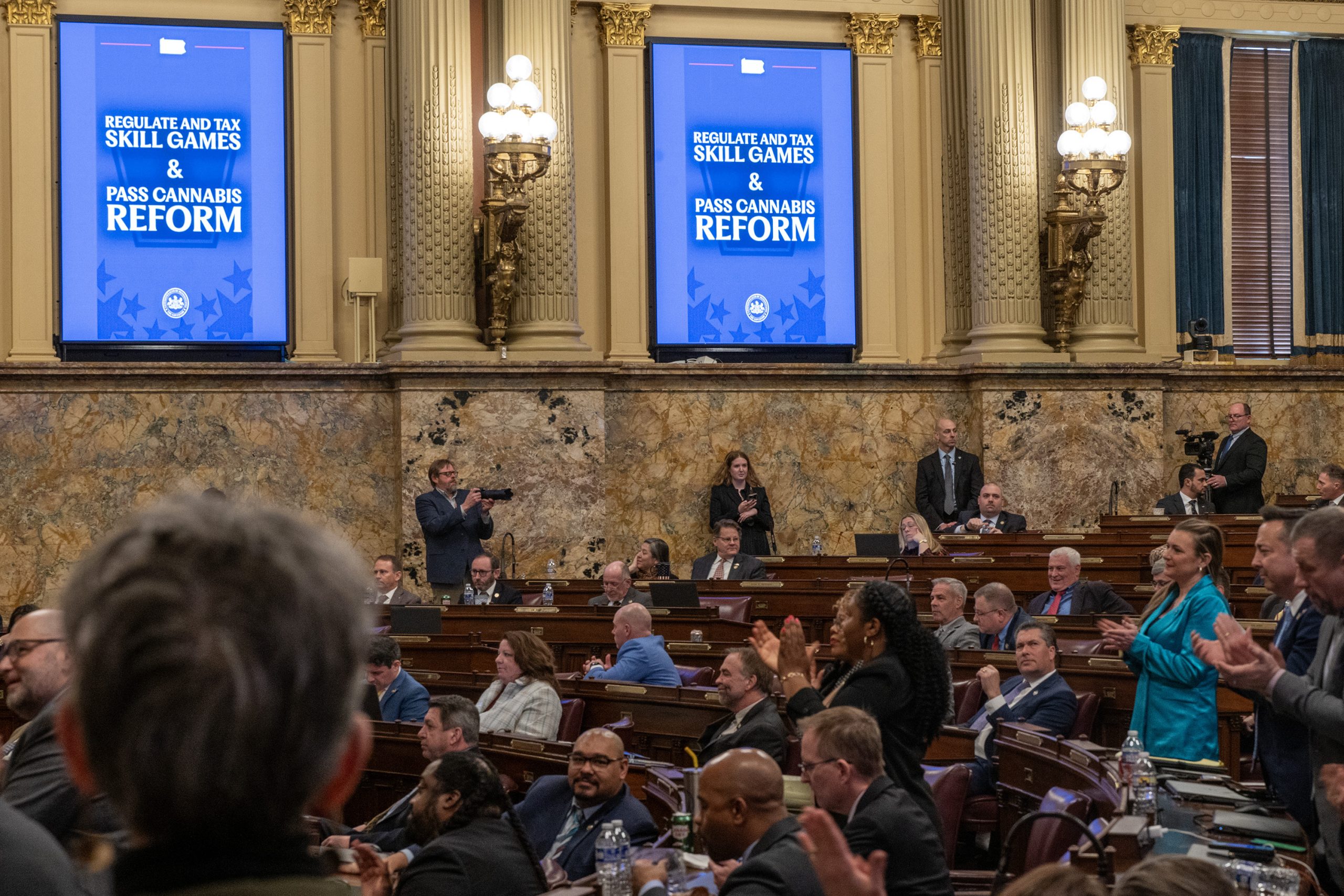
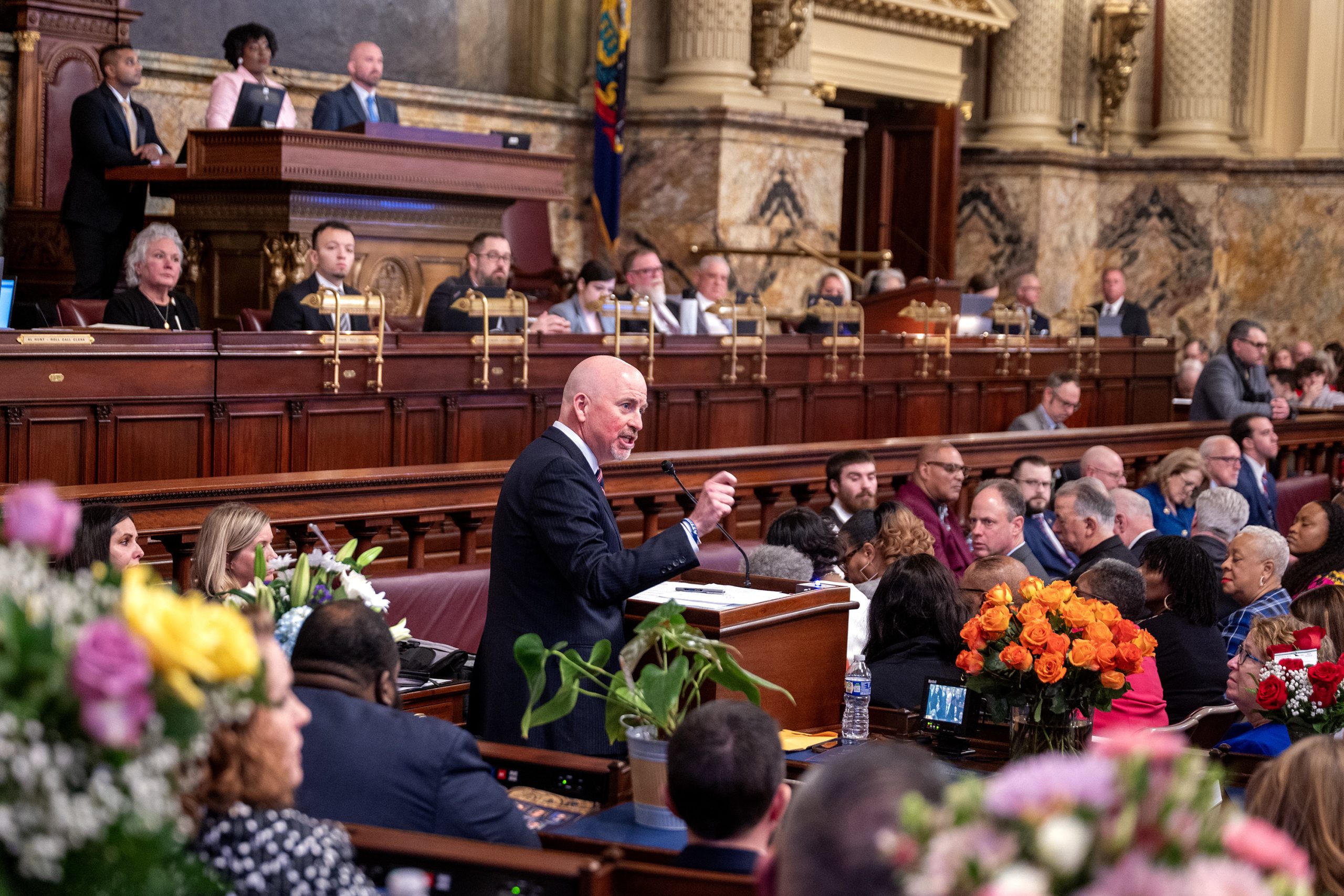
    Screen shows skill games and cannabis regulation and reform as Gov. Josh Shapiro makes his annual budget proposal in the state House chamber in Harrisburg Tuesday, Feb. 3, 2026.Tom Gralish / Staff Photographer

    Shapiro, in his February budget proposal, also called on the General Assembly to regulate and tax skill games at the same rate as casinos, a move that he has estimated could generate nearly $800 million in revenue in its first year. But any regulation of skill games — slot machine look-alikes that the state Supreme Court ruled last month are a form of gambling — was left out of the budget.

    Lawmakers have until October to decide whether skill games will be taxed and regulated, under a grace period in the high court’s ruling. Otherwise, the devices found in many corner stores, gas stations, and bars will become illegal gambling machines. The issue has been the target of more than $8 million in lobbying and $9 million in campaign spending in Harrisburg, mostly funded by one company.

    State Senate Majority Leader Joe Pittman (R., Indiana) during a press conference at the Capitol in Harrisburg Feb. 3, 2026.Tom Gralish / Staff Photographer

    “We can act within the 120 days; we can act after the 120 days,” Senate Majority Leader Joe Pittman (R., Indiana) said Sunday. “But the choice is now quite simple. These machines are illegal, and in less than 120 days, they will be leaving the marketplace.”

    In: Data center reporting requirements

    Data centers — which are seeing a boom in Pennsylvania as artificial intelligence usage increases and communities push back on where the centers are being built — will be required to submit information about their energy and water usage.

    Beginning next summer, data centers in the state with a peak energy demand greater than 10 megawatts will be required to submit information annually to the Pennsylvania Department of Environmental Protection.

    Outlined as part of this year’s fiscal code, those reports will be publicly accessible. Data centers that do not submit information about their resource usage will be fined $10,000 a day.

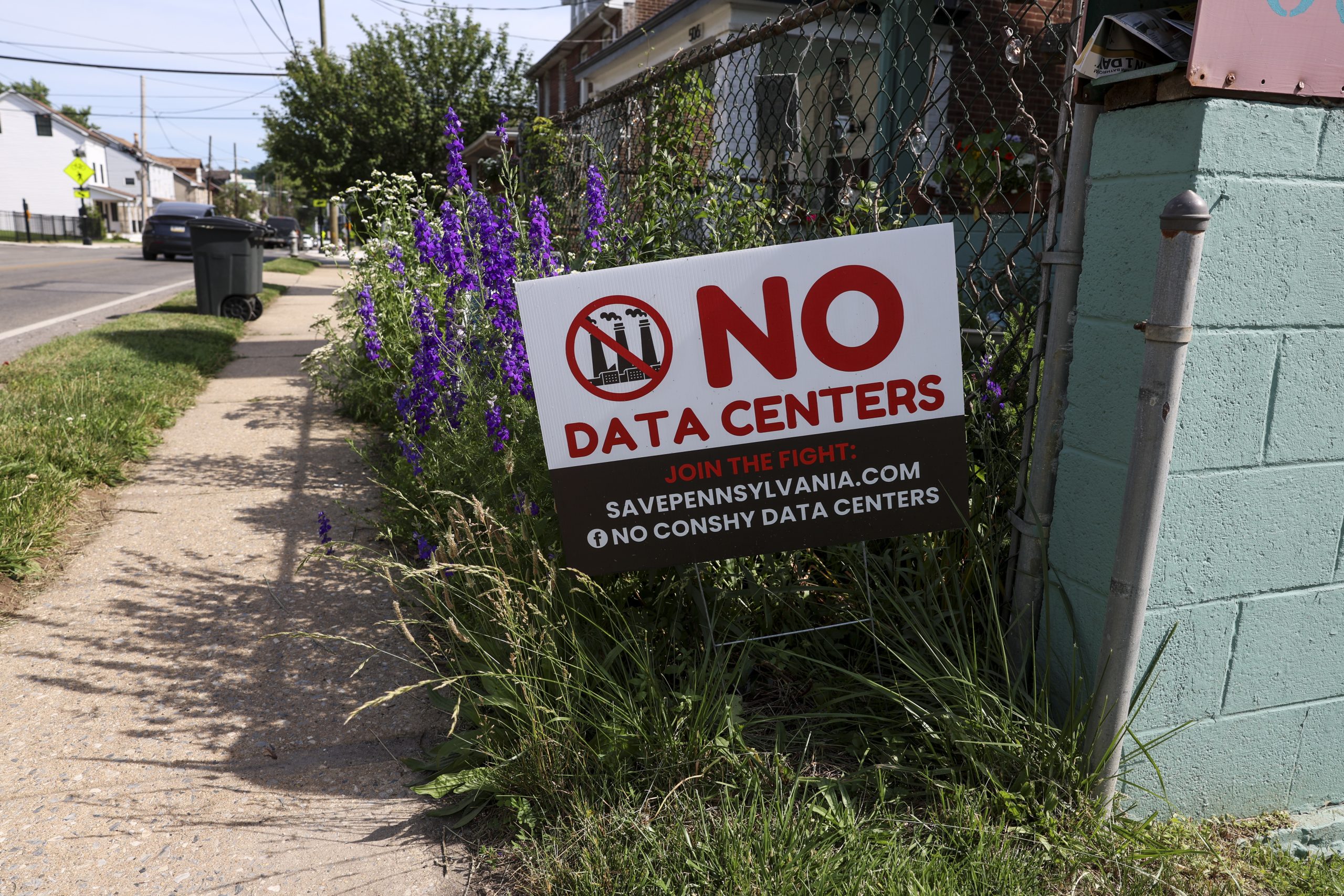
    A yard sign protests the proposed data center on New Elm Street near the Closed Cleveland-Cliffs steel mill photographed on Thursday, June 4, 2026 in Conshohocken, Pa.Monica Herndon / Staff Photographer

    Out: Data center regulations

    A data center regulation bill, which would have limited state benefits for data center developers and was championed by Shapiro, was not included in the final budget deal. The governor called for limiting a sales and use tax exemption and expediting permitting to projects that comply with a set of transparency and environmental standards.

    And several other data center regulation efforts that have received bipartisan support in recent weeks were also absent from the final spending package.

    Those included efforts to repeal the sales tax exemption afforded to data center developers and attempts to enact a local or statewide moratorium on new data center development.

    Both chambers passed language repealing the tax exemption and advanced differing bills to freeze development. One Democratic-sponsored bill would have given municipalities the option to implement a 180-day moratorium on new centers. The other, a Republican-sponsored measure, would allow for local moratoriums of up to 18 months.

    In: Compromise

    Compromise was the word of the day around the Capitol on Sunday, when the legislature swiftly passed the more than 600-page budget deal hashed out behind closed doors by Shapiro, Pittman, and House Majority Leader Matt Bradford (D., Montgomery) and passed with bipartisan support in both chambers.

    The legislative leaders and Shapiro emphasized that they did not get exactly what they wanted in the budget, as a symptom of dealing with divided government. And leaders were proud to have reached the deal less than two weeks after their July 1 deadline, rather than the nearly five months it took to hash out an agreement last year.

    House Majority Leader Matt Bradford (D., Montgomery) speaks on Tuesday, Jan. 7, 2025.Tom Gralish / Staff Photographer

    Lawmakers had agreed to work over the weekend to hurriedly approve the budget deal, with members of the Senate coming in on Saturday night to begin advancing parts of the budget deal and the House joining them Sunday afternoon. By 6:15 p.m. Sunday, Shapiro had signed it.

    Among the inspirations for the weekend of productivity, Bradford said: making it to the MLB All-Star Game in Philadelphia, for which he had tickets.

    Out: Typical budget math

    Leaders returned to some old accounting maneuvers to address the state’s multibillion-dollar structural deficit and avoid pulling from the state’s emergency savings account.

    They spent down unused and underused dedicated funds, and rolled some of the state’s Medicaid payments totaling $1.3 billion to the next fiscal year, a move lawmakers typically resorted to before the state saw an influx of federal dollars during the COVID-19 pandemic.

    Without those delayed payments, the state budget would total closer to $52.1 billion, and several GOP members criticized the total as being disingenuous.

    In: Cost-of-living bumps for pensioned workers

    More than 80,000 retired public-sector employees will receive a cost-of-living adjustment to their pensions, something advocates have sought for years.

    Public school teachers and other state employees who retired before July 1, 2002, will receive a tiered monthly payment based on the date of their retirement. Similarly, police officers and firefighters who retired more than five years ago will receive monthly payments ranging from $50 to $300, depending on how long they have been retired.

    Lawmakers from both parties had called for the cost-of-living increase.

    In: Closing Philly’s sales tax loophole

    Legislators also agreed to close a loophole that allowed online sellers to avoid paying Philadelphia’s local 2% sales tax on purchases made in the city.

    Mayor Cherelle L. Parker had asked the General Assembly to close it as part of her own city budget pitch in a move estimated to bring an additional $1.5 million to Philadelphia.

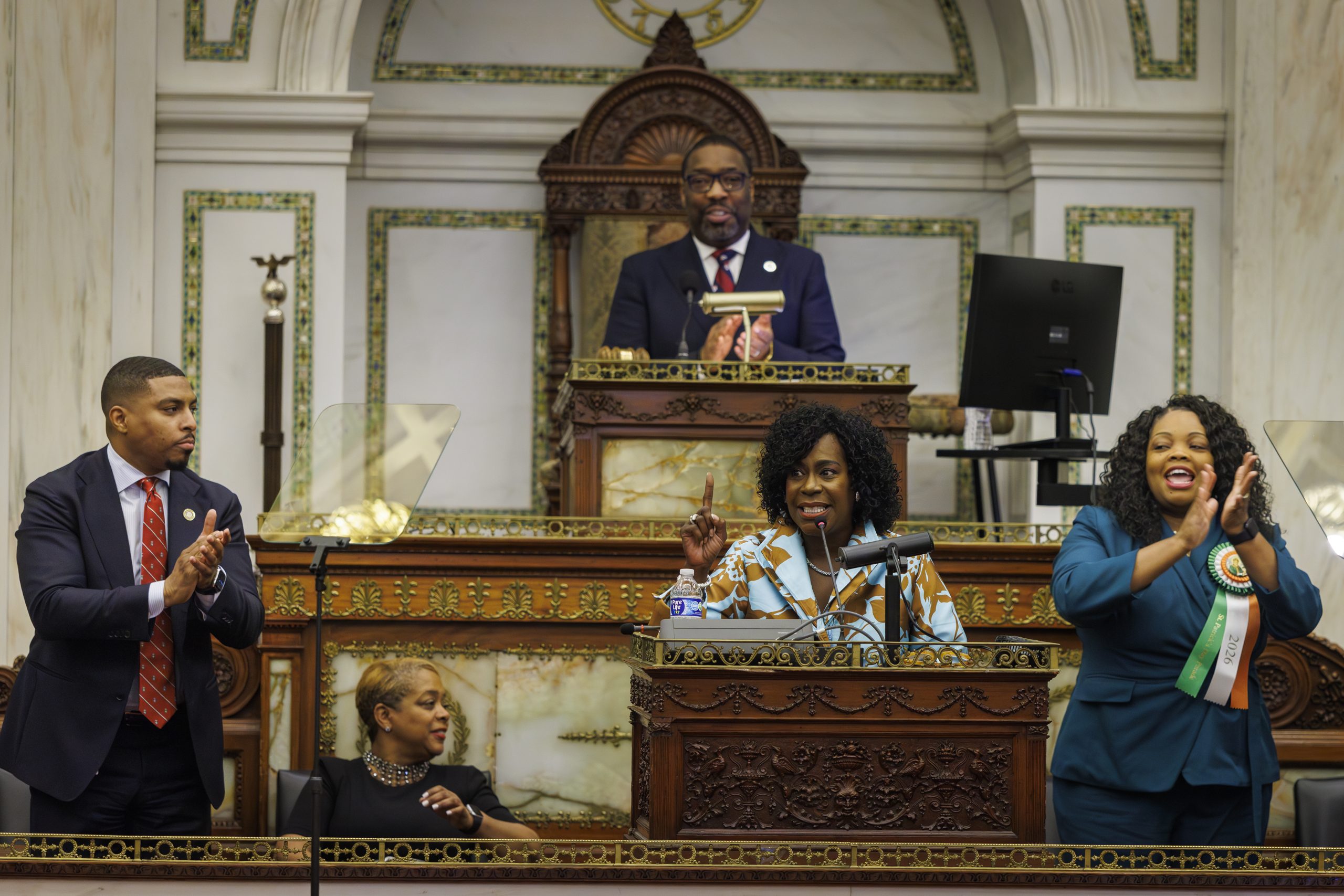
    Philadelphia Mayor Cherelle L. Parker is cheered by members of Philadelphia City Council at conclusion of her budget address, Thursday, March 12, 2026.Alejandro A. Alvarez / Staff Photographer

    Out: Banning cell phones in schools

    Twenty-nine states have bell-to-bell cell phone bans. This year, Pennsylvania will not join them, despite the passage of two separate phone ban bills — one in each chamber of the legislature.

    In: Mandatory recess for students K-5

    Recess is now law in Pennsylvania.

    Another education policy change championed by Shapiro, a mandatory, 30-minute recess for students in kindergarten through fifth grade was established in this year’s budget as a way to improve learning outcomes.

    Out: Addressing looming problems — with looming deadlines

    Several Pennsylvania funding issues that have gone years without being addressed were left out of the latest budget, some with more pressing deadlines than others.

    Lawmakers did not address a need for mass transit funding — which led to last year’s bitter budget stalemate among legislators — but are expected to identify a long-term funding stream for the transit agencies next year when a two-year fail-safe runs out.

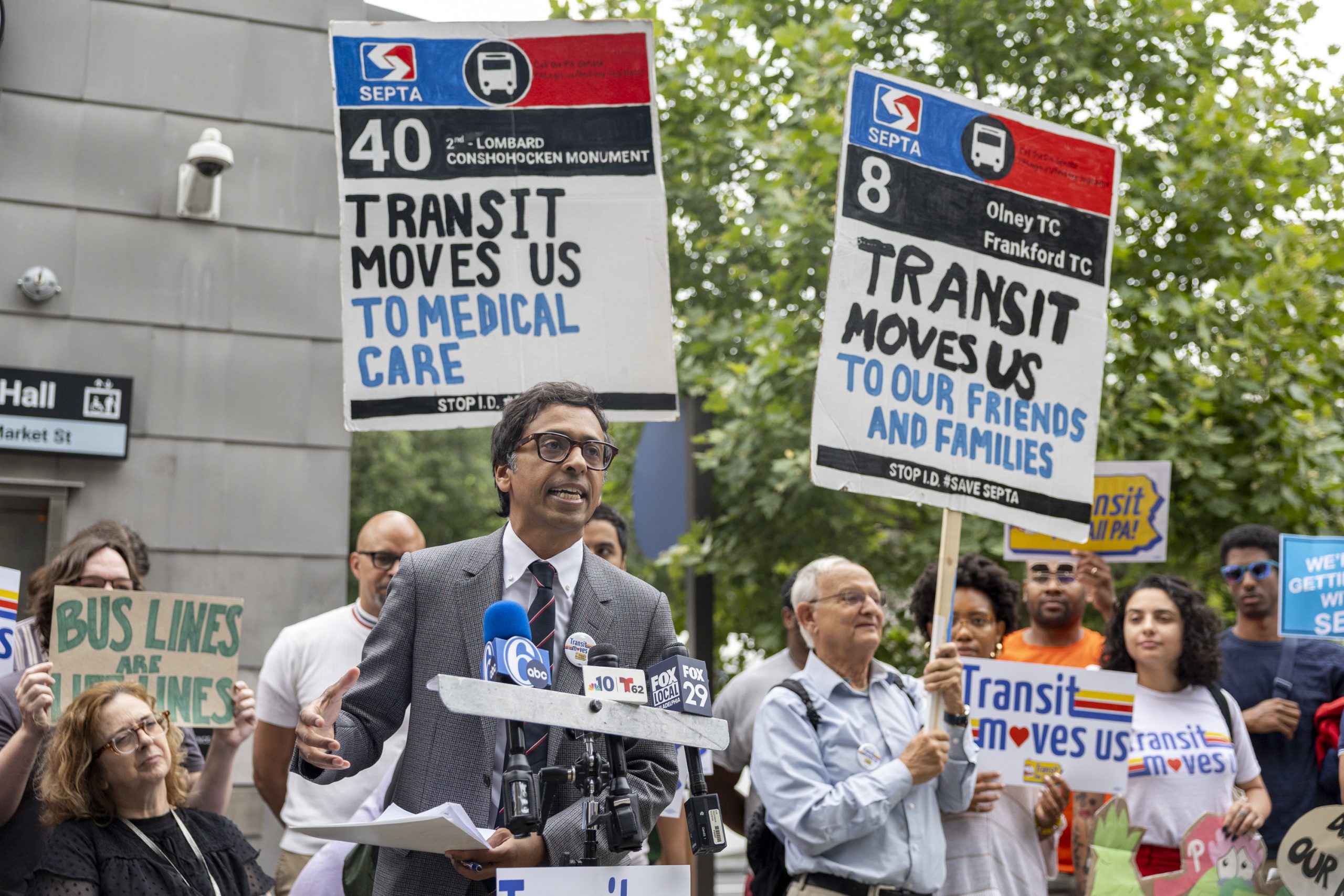
    Senator Nikil Saval, speaks at a press conference calling for more SEPTA funding from the state at Independence Hall in Philadelphia, Pa., on Friday, June 26, 2026.Tyger Williams / Staff Photographer

    Other local governments and service providers said their needs are more pressing.

    The County Commissioners Association of Pennsylvania released an urgent plea after the state budget was signed, noting that counties still have not received the critical mental health funding they need, or a surcharge increase used to fund 911 call systems. Home-health service providers also continued their calls for increased state funding they say is needed, as the industry faces serious staffing issues due to low state reimbursement rates.

    In: More funding for rape crisis centers

    Rape crisis centers got a much-needed funding increase, from $12 million to just over $24 million.

    Philadelphia’s only rape crisis center had to lay off its employees and rely on volunteer work during last year’s monthslong state budget impasse.

    Republican and Democratic lawmakers championed the organizations in this budget, making it the largest single-year increase for the critical services in state history, according to the Pennsylvania Coalition to Advance Respect.

    “Today marks a turning point for survivors and rape crisis centers across Pennsylvania,” said Joyce Lukima, the organization’s coalition director, in a news release.

    Ethan Young is an intern with the Pennsylvania Legislative Correspondents’ Association.

  • Narberth, Lower Merion residents and officials grapple with afternoon of vicious microburst storms

    Narberth, Lower Merion residents and officials grapple with afternoon of vicious microburst storms

    When a violent microburst storm slammed into Narberth on Saturday, it brought down a 120-year-old Sycamore tree onto a home in the historic Narbrook Park neighborhood.

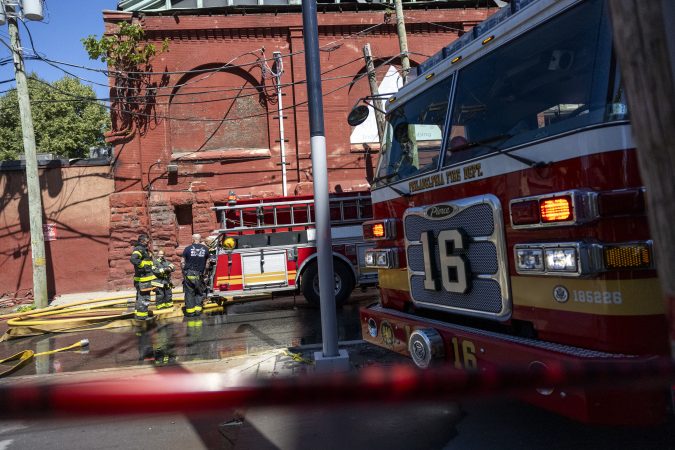
    The fire department in the surrounding Lower Merion Township responded to 98 incidents over the weekend, making numerous water rescues.

    And residents are still grappling with the aftermath of a violent storm shaking their communities.

    Communities in Montgomery County, along with other spots in the Philadelphia region, suffered vast amounts of damage Saturday afternoon as microburst storms ripped through the area.

    A microburst is a highly-localized column of sinking air during a thunderstorm that can produce strong winds and extensive damage and, in some instances, can be life-threatening, according to the National Weather Service.

    Peco has continued to restore power to affected households, as of roughly 5:30 p.m. Monday, with 119 outages affecting a little more than 1,500 customers.

    Narberth Council Vice President Cyndi Rickards said the skies went from clear to stormy in just a matter of minutes Saturday before a microburst ripped through the Montgomery County community.

    Then, just as quickly as it arrived, came the downed trees, power lines, flooding, and power outages.

    It was something Rickards, a more than 20-year resident of the community, had never seen before.

    “It became apparent that nearly every street in Narberth had a tree down, a substantial tree on a car,” Rickards said. “I believe we had two that fell on or near houses. Many that narrowly missed houses.”

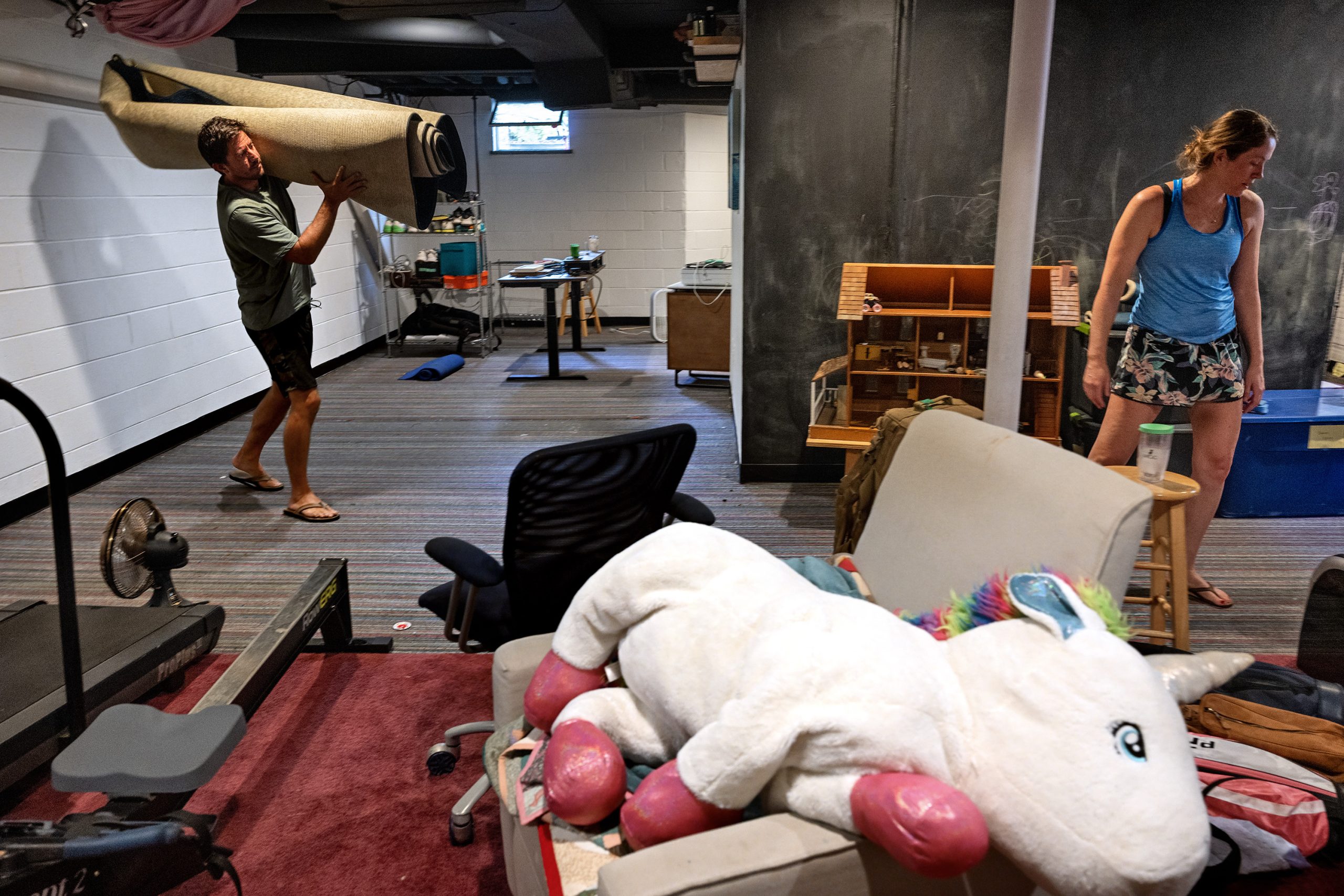
    One of those near misses happened at Hugh Parker’s residence while he was spending time with relatives down the Shore. Once he and his family heard about the 40-foot tree knocked down in their front yard — covering their driveway and the car of his wife, Grace, they rushed home.

    Their basement had also been flooded and the family’s newly reconnected power lines started a fire, which eventually went out on its own.

    Hugh and Grace Parker continue the cleanup in the basement of their Narberth home Monday, July 13, 2026, following the weekend’s storm. They weren’t home so don’t know why it flooded, as the house had not had any water enter since it was built in the 1990s. They also had a tree fall in front, crushing one of their cars.Tom Gralish / Staff Photographer

    Rickards described the local government’s response to the storm as “such a comprehensive disaster response for a small little borough,” adding that Jeff Eldon, the public works director, closed down any streets where he suspected downed wires or trees.

    Narberth Mayor Dana Edwards also declared a state of emergency, which has since been lifted, and has facilitated a spot at the borough hall where residents can cool off and charge their devices. He also indicated that the borough had “great support” from Peco.

    “It was really everything we could do just to keep everybody as comfortable as possible,” Edwards said.

    In the surrounding Lower Merion Township, commissioner Ray Courtney reported similar issues as Narberth’s, especially when it came to old trees that were toppled by the storm.

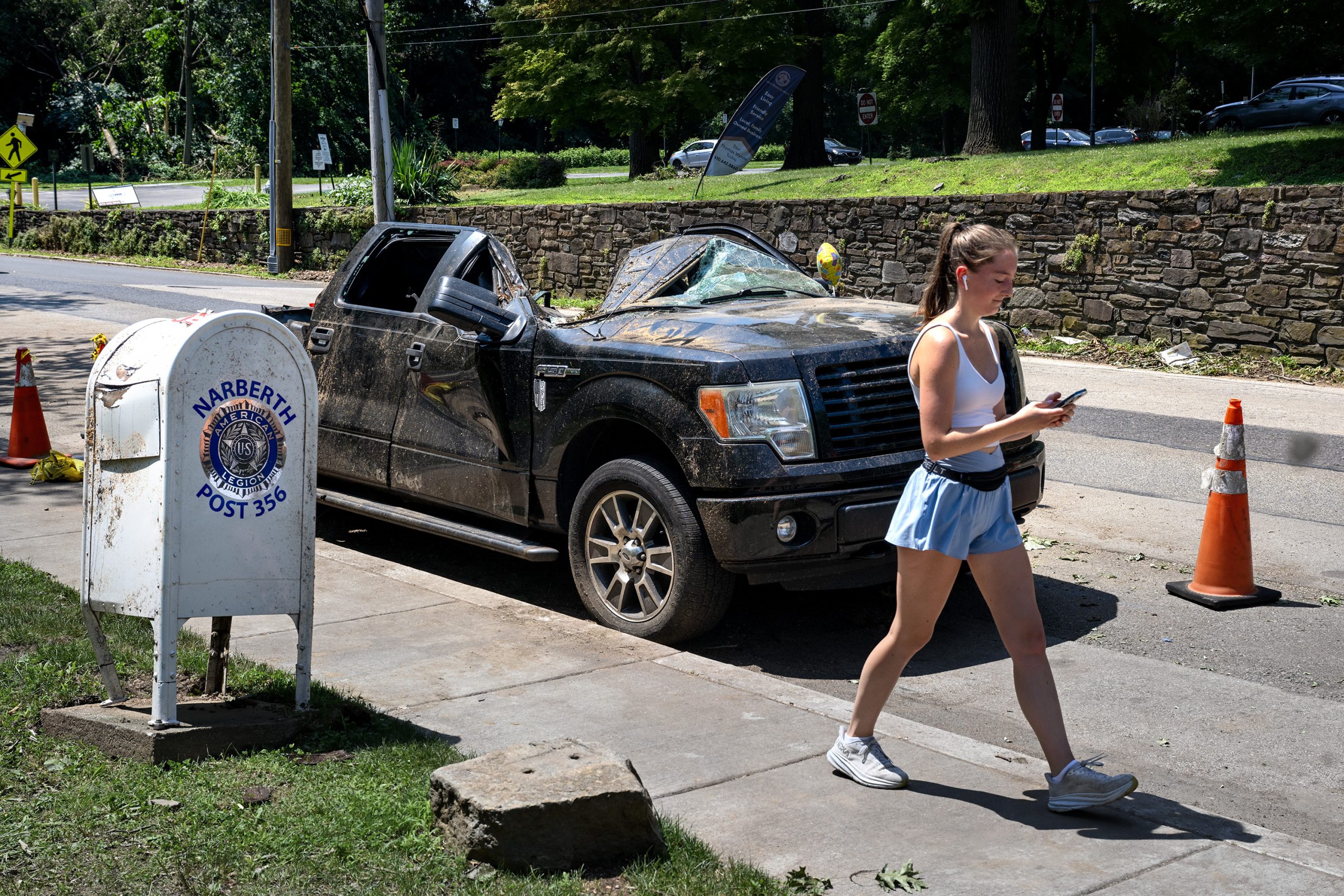
    A pickup truck is left crushed Monday, July 13, 2026, after the tree that fell on it had been cleared as the cleanup continued following the weekend’s microbursts that ripped through parts of the city and Montgomery County, downing trees and power lines and causing outages and road closures. This was along Wynnewood Avenue by the baseball fields in Narberth.Tom Gralish / Staff Photographer

    When the storm was over, the public works department closed the roads, some of which continued into Sunday morning, said Courtney, who represents parts of Ardmore and Wynnewood. As of Sunday night, crews had cleared 59 downed trees and there were 38 remaining.

    For local officials, the episode also underscored a need for further discussions regarding improving local infrastructure and resources for extreme weather events.

    Many communities, like Narberth and Ardmore, for instance, have historic infrastructure that cannot always handle aggressive storms.

    “I think this is the reality of storms now,” Courtney said. “They are hard, they are intense, and they dump a lot of precipitation in a short period of time, and all local governments, and our state and federal government, need to be thinking about improvements to our infrastructure, and the resiliency against this kind of weather event.”

    In the immediate aftermath of Saturday’s storm, residents — especially those whose property has been damaged — are hoping for incremental improvements.

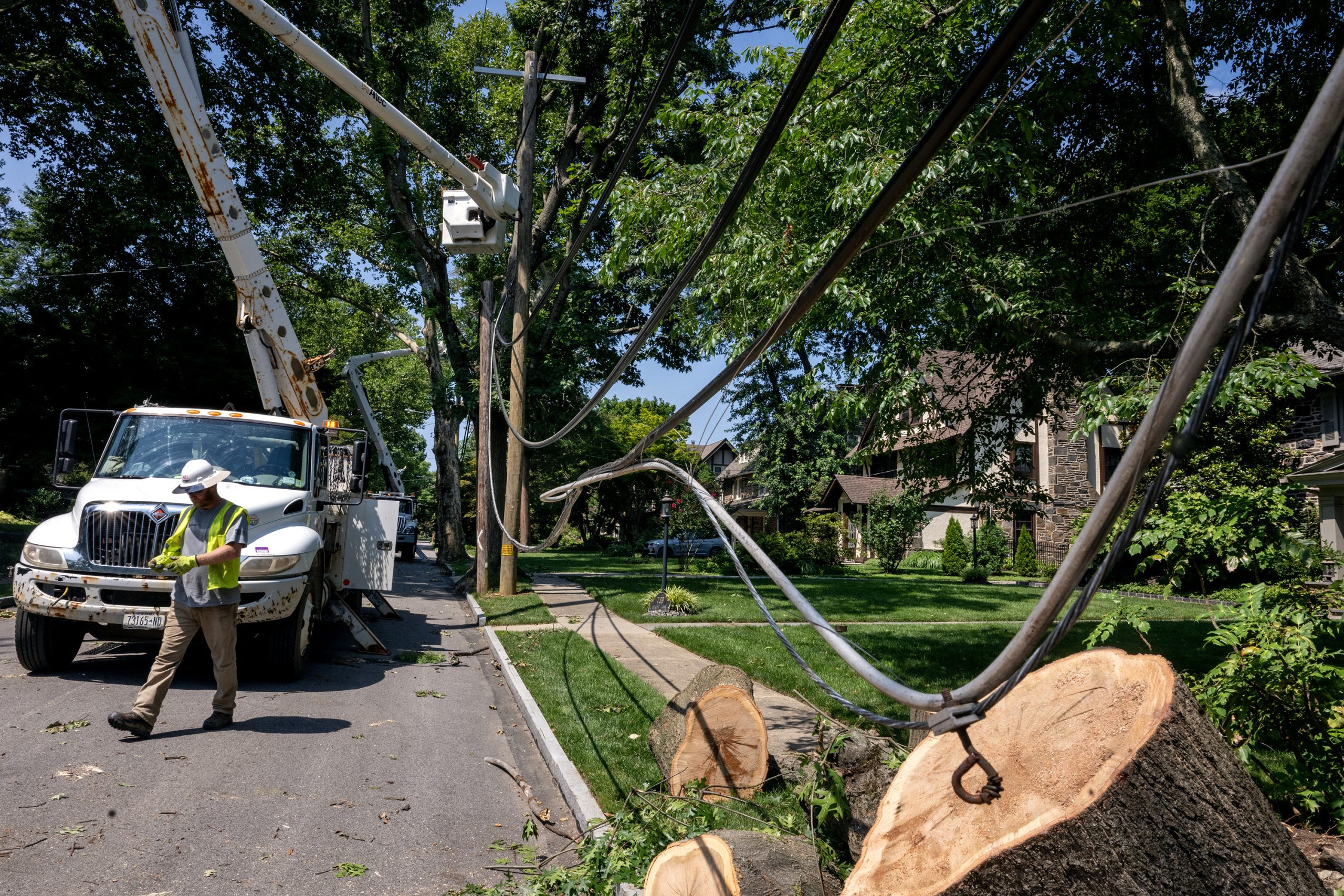
    Utility workers restore power on Beacom Lane in Merion Station, Monday, July 13, 2026, as cleanup continues following the weekend’s microbursts that ripped through parts of the city and Montgomery County, downing trees and power lines and causing outages and road closures.Tom Gralish / Staff Photographer

    A neighbor’s tree fell on the roof of Robert Hilton’s home on Merion Avenue. Water started dripping into his second-floor bedroom and the carpet remained soaked.

    “I’ve lived here for 41 years, and I’ve never seen anything like this,” said Hilton.

    The fallen tree, Hilton says, had been a concern for more than 20 years. It was old, unhealthy, and situated at the top of a bank, making it prone to structural instability. The microburst was the final piece of the puzzle, and the uprooted trunk now lays tangled with power lines in the middle of the street.

    Hilton lost power during Saturday’s storm, but it was reconnected on Monday at 2:30 p.m. “It’s baby steps,” he said. “That’s all we can hope for.”

  • More than 80,000 Pa. retired teachers, police officers, and firefighters will get a pension bump — some for the first time in decades

    More than 80,000 Pa. retired teachers, police officers, and firefighters will get a pension bump — some for the first time in decades

    HARRISBURG — For the first time in two decades, more money will soon be flowing into the pockets of Pennsylvania’s retired public school teachers, firefighters, police officers and other state employees.

    Negotiated as part of this year’s state budget, more than 80,000 retired public sector employees will receive monthly increases to their pension plans as part of a cost-of-living adjustment that advocates have sought for years.

    Passing a pension bump has long been an objective of state lawmakers in both parties. And after legislators and Gov. Josh Shapiro approved the spending plan on Sunday, both Democratic and Republican leaders claimed credit for the pension boost, saying it was a product of their advocacy during negotiations.

    Public school teachers and other state employees who retired before July 2, 2001, will receive a tiered monthly payment based on their date of retirement. Similarly, police officers and firefighters who retired more than five years ago will receive additional monthly payments ranging from $50 to $300 dollars depending on how long they have been retired.

    In 2001, the state legislature passed Act 9, which gave a pension boost to public sector workers who retired after 2002, but it was not retroactive and does not increase with inflation.

    “Nobody gets into public education to become rich, they do it because they have a great love for the educating of our public school students,” said Aaron Chapin, president of the Pennsylvania State Education Association. “We know that when we get into education that we’re not going to retire very wealthy and be millionaires. We understand that. But we also need to make sure that these pensions are keeping up with the cost of living.”

    Retired teachers and other former public workers will begin seeing the cost-of-living increase to their pensions this month, while retired police officers and firefighters will see the bump starting next month.

    The state’s largest teachers union has advocated for the adjustment for many years. Those efforts included a union-coordinated campaign for teachers who retired before 2001 and did not receive a pension bump to share their stories with lawmakers, through meetings, letters, and media appearances.

    Chapin said the former teachers told their representatives “the stories of how challenging this has been for them and their colleagues, whether it was paying the mortgage or the rent, paying the electricity bills, maybe not taking medication that month.”

    At a news conference on Sunday evening before signing the $50.8 billion state budget, Shapiro called the pension increase “real money back in people’s pockets.”

    Democratic lawmakers in the state House, he said, “made crystal clear that they wanted to stand up and put more money back in the pockets of workers who had given our commonwealth so much.”

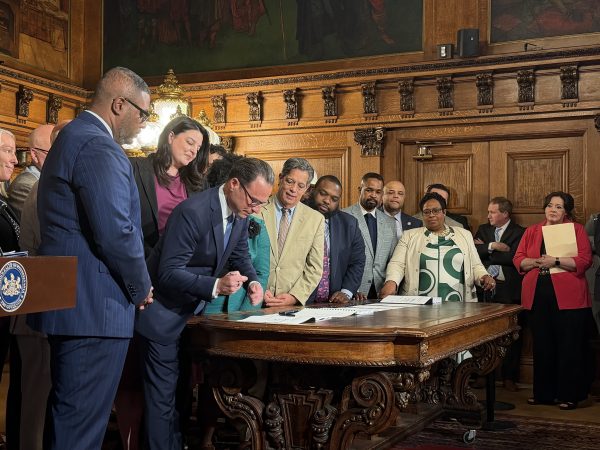
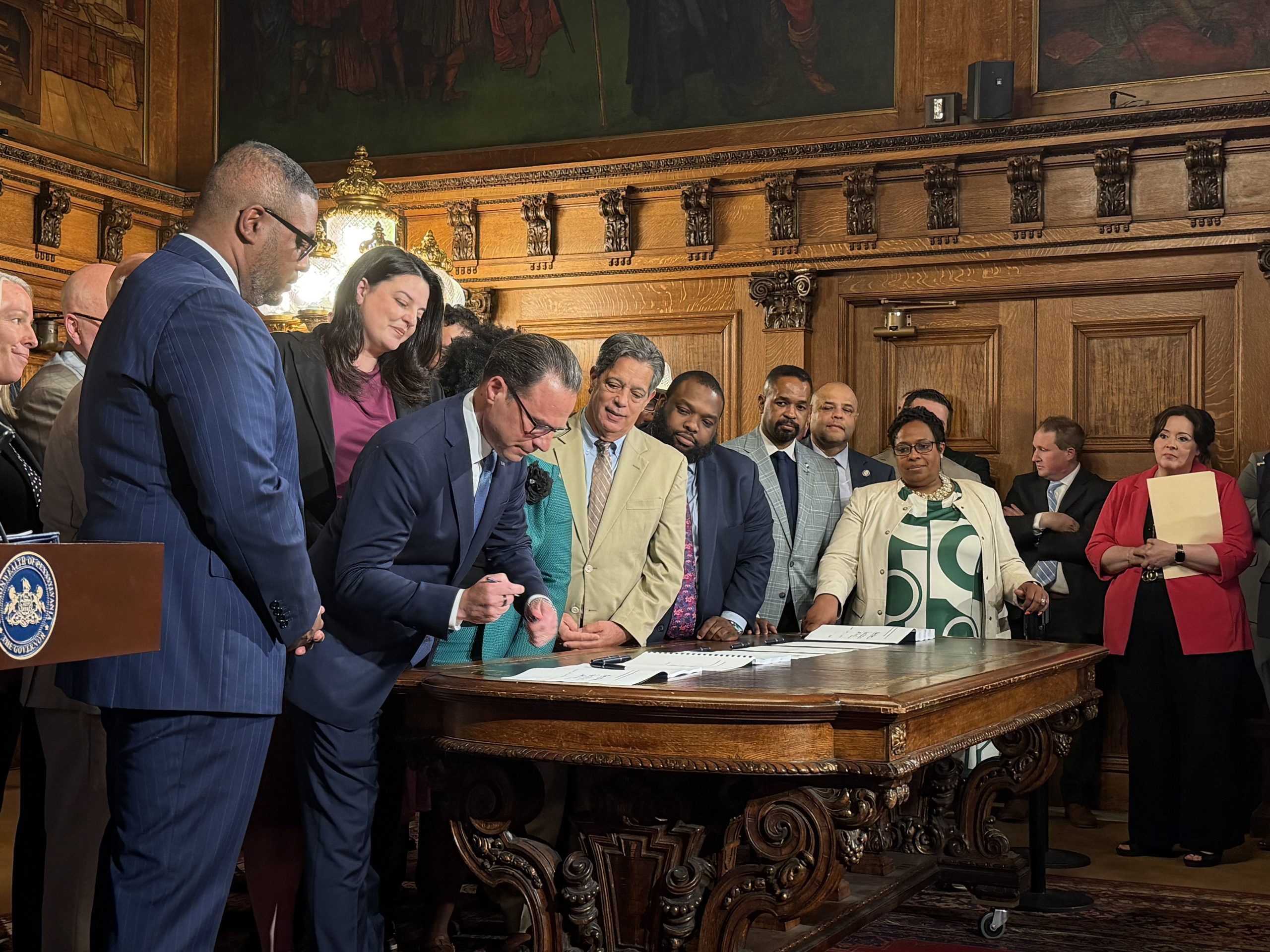
    Gov. Josh Shapiro, flanked by fellow state Democrats, signs the 2026-27 Pennsylvania state budget in Harrisburg on Sunday.Gillian McGoldrick / Staff

    “It’s definitely something our retirees have said to us for years,” said Kevin Ressler, the secretary of the Pennsylvania Professional Fire Fighters Association. “When you think about what things cost just 10 years ago until now, everything has gone up.”

    State legislators last approved a cost-of-living adjustment for police and firefighters in 2002. Since then, inflation has resulted in a 86% price increase, according to the U.S. Bureau of Labor Statistics.

    State Sen. Frank Farry (R., Bucks), a volunteer fire chief in Lower Bucks County, said members of both parties felt that it was time to pass the pension increase.

    First responders “dedicated decades of work to the community, just like our educators who dedicated decades of work to helping our young people grow and learn,” he added.

    While municipalities pay a portion of the pensions for first responders and public school teachers, the state will pay for all costs associated with the pension increase, Farry said. The increase, estimated to cost around $168 million annually, will come from revenue generated from an existing tax on internet gaming, he said.

    The state’s Fraternal Order of Police said in a statement that while no adjustment “can fully repay the commitment these men and women made throughout their careers,” the increase “restores a measure of fairness by helping ensure their retirement benefits better reflect today’s economic realities.”

    State Sen. Katie Muth (D., Montgomery) said the pension increases are the “high point” of this year’s policy changes negotiated as part of the overall budget deal.

    “These are our oldest retirees, many of them living in poverty,” she said. “This is a good moment, but a late moment. This should have been done quite some time ago.”

    The average age of retirees eligible for the cost-of-living increase in the state’s main two pension funds is just over 81 and 84 years old, respectively.

    The new pension bump, meted out monthly, is not set to automatically increase next year. Lawmakers from both parties have pushed for pensions to increase annually, indexed to inflation.

    State Sen. Tracy Pennycuick (R., Montgomery) — who sponsored a bipartisan bill to provide the pension increase to first responders — said that she hopes Harrisburg can now work to pass legislation to provide a yearly cost-of-living adjustment.

    “This is sending a very powerful message to young professional firefighters and police officers that we will continue to take care of you with cost-of-living adjustments in retirement,” she added.

    Ethan Young is an intern with the Pennsylvania Legislative Correspondents’ Association.

  • In the national debate around affordability, the politics are personal for Chester County’s U.S. Rep. Chrissy Houlahan

    In the national debate around affordability, the politics are personal for Chester County’s U.S. Rep. Chrissy Houlahan

    In the back of a classroom where she had just read to 20 attentive preschool kids, U.S. Rep. Chrissy Houlahan was concerned about what the staff of the West Chester YMCA was telling her.

    Nearly a third of the families who rely on the facility’s childcare programs — in the richest county in Pennsylvania, and one of the wealthiest in the country — receive financial assistance to cover the $1,900 monthly cost, the staffers said.

    Houlahan, a Democrat who is soft-spoken when she is not grilling President Donald Trump’s cabinet secretaries or House Speaker Mike Johnson (R., La.) on Capitol Hill, asked about the income qualifications for financial aid. At a certain point, the YMCA staff told her, some parents have a disincentive to earn more, lest they become disqualified and then stuck with a higher bill.

    “It’s terrible, no matter how you do the math,” Houlahan said a few hours later at a Malvern restaurant, relaying the story to her daughter, Molly Rosa Houlahan, and daughter-in-law, Kristen Rosa Houlahan.

    The YMCA’s fee was about the same amount the couple were paying for their 18-month-old, Lucy. With another child due in September, it is also an amount they still are unsure how to afford twice over.

    “We’re very fortunate in our jobs, and we’re both trying to get promotions in order to be able to afford a second daycare,” said Molly Rosa Houlahan, 33, a local theater director and producer. “But we are not in that position yet. I don’t totally know what will happen when this second child arrives.”

    From childcare to healthcare, groceries to gas prices, affordability concerns have remained top of mind for Americans this year — dominating discussions on Capitol Hill ahead of the high-stakes midterm elections.

    Republicans, who control Congress and the White House, say they have made real progress in raising wages and lowering costs. They marked the first anniversary of Trump’s One Big Beautiful Bill Act — since rebranded by Republicans as the Working Families Tax Cut Act — this month by celebrating the law’s more generous tax refunds and other benefits, like new investment savings accounts for children under 18.

    Democrats have pointed to the bill’s simultaneous cuts to Medicaid spending and food assistance for low-income families. They say Trump signaled he has no interest in lowering costs when he refused to sign a bipartisan housing bill and said he doesn’t “think about Americans’ financial situation” when handling the war in Iran.

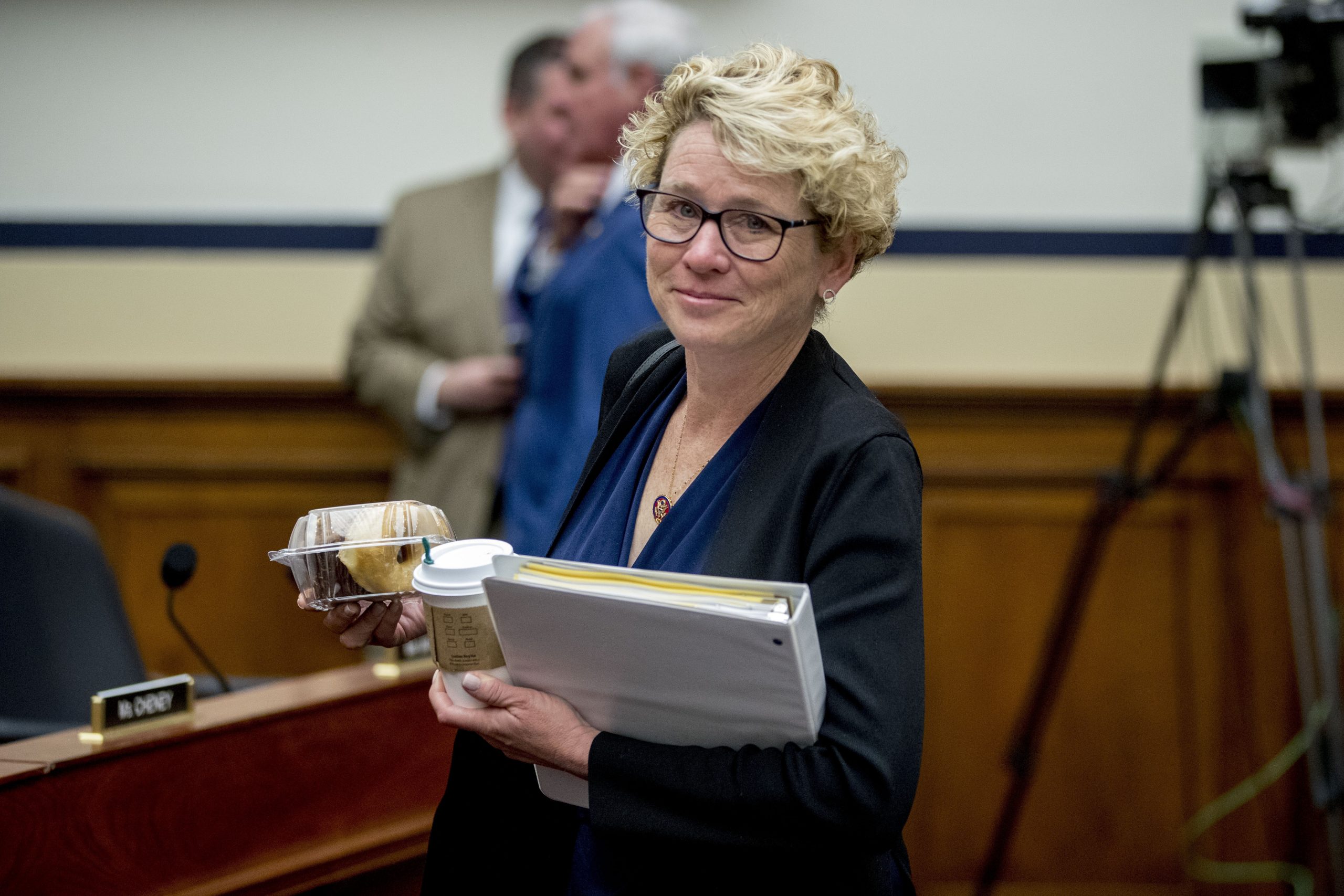
    In this 2019 file photo, U.S. Rep. Chrissy Houlahan (D., Pa.) arrives for a House Armed Services Committee budget hearing for the Departments of the Army and Air Force on Capitol Hill in Washington.Andrew Harnik

    Houlahan, who has represented most of Chester and Berks Counties since 2019, routinely highlights the broader scope of cost-of-living issues alongside her colleagues. She has taken a leading role among centrist House Democrats to help craft a detailed “affordability agenda.”

    Whether her party can advance any of those policies in Washington, even if it wins control of one or both chambers of Congress in November, remains an open question as Trump remains in office and the International Monetary Fund warns of a worsening global economy.

    But as the fight drags out, it has also become increasingly personal for Houlahan and her family.

    In addition to occasionally helping fill the gaps in their granddaughter’s care, Houlahan and her husband’s own home in Devon, Chester County, has transformed into a version of a so-called sandwich generation household within the last year. The couple’s other adult daughter, her husband, and both of Houlahan’s parents, who are 80 and 84, have all moved in.

    The underlying circumstances for the multigenerational home, as they would be for any family, are various and personal. And Houlahan emphasized across multiple interviews that she is fortunate to have the means to welcome her family under her roof. (Houlahan is an Air Force veteran and a former executive at the athletic apparel company AND1. Her husband, Bart, is a partner at an investment research firm.)

    But the larger realities — like skyrocketing costs for childcare and senior living — have also now played a role in her own life. Her mother has a Parkinson’s diagnosis, and her parents were unable to find a one-floor living space that was affordable and fit their other needs as they looked to move closer to their family.

    “We’re having these conversations, and you know people all over our community are having these conversations,” she said. “It’s an acute issue for families in our area: How do you balance all of this?”

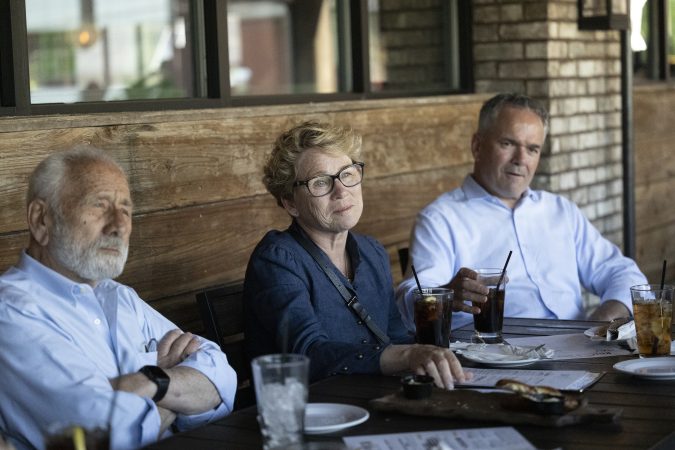
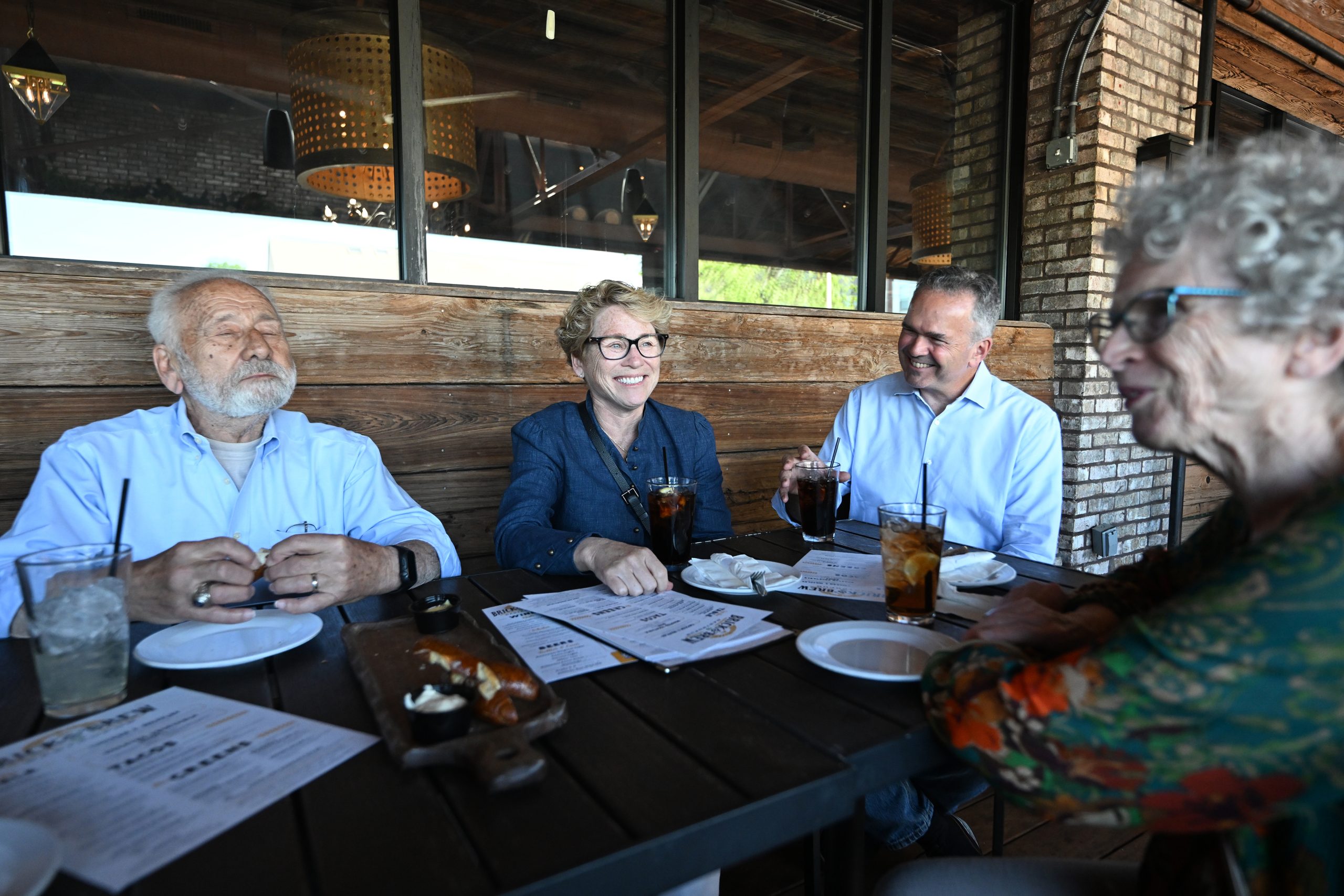
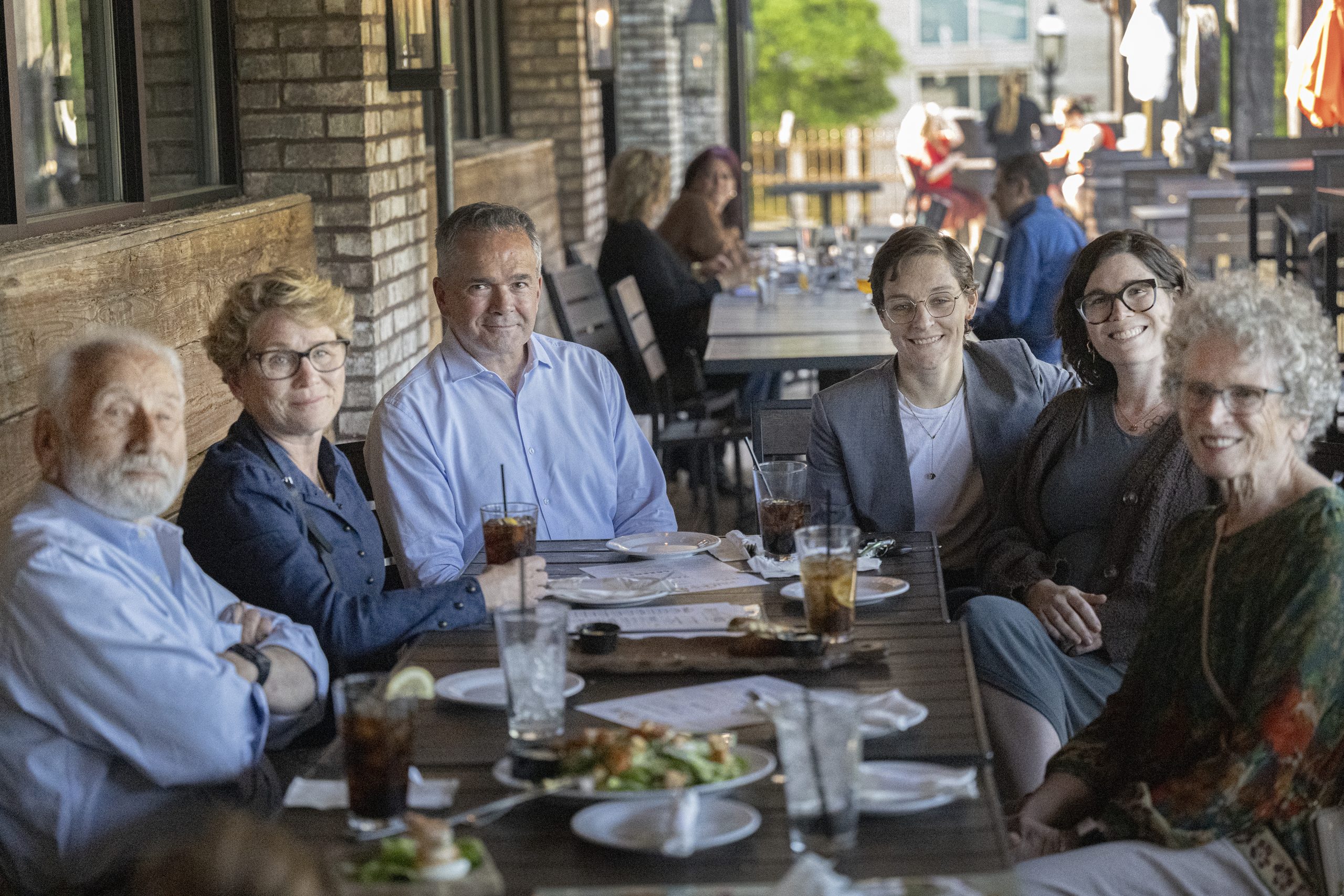
    U.S. Rep. Chrissy Houlahan (center) has dinner with her family at Brick & Brew in Malvern, including her father, Andy Jampoler (left), her husband, Bart Houlahan, and her mother, Suzy Jampoler.Jose F. Moreno / Staff Photographer

    ‘A big balancing act’

    Houlahan has shared parts of her family’s story as she has traveled her district this year — prioritizing events and meetings that aim for a deeper understanding of an affordability crisis that has not spared her home county, where the median household income is about $131,000, or 40% more than the statewide average.

    On back-to-back days this spring, that meant a focus on the kinds of childcare and senior-care issues she has become familiar with.

    “We call it ‘from zero to Edna,’” Laura Schoefield-Pierson, executive director of the YMCA of Greater Brandywine, said of the facility’s programs aimed at all ages, from infants to seniors.

    Walking Houlahan through the pre-K classes and a gym with a dozen seniors playing table tennis, Schoefield-Pierson spoke about the organization’s exercise programs aimed at offsetting symptoms of Alzheimer’s or Parkinson’s, and about the complexities of providing assistance for families with young children.

    In addition to the “many children” whose care is subsidized through the state’s Child Care Works program — set for families earning 200% or less of the federal poverty level, or $66,000 for a family of four — others receive aid through the YMCA, Schoefield-Pierson said. The facility’s fundraising goal this year is $237,000, she said. On the day of Houlahan’s visit, Schoefield-Pierson said “the kiddos” were writing thank-you notes to donors.

    U.S. Rep. Chrissy Houlahan (D., Pa.) interacts with teachers and children at a childcare center at the YMCA in West Chester.Jose F. Moreno / Staff Photographer

    Though the U.S. Department of Health and Human Services recommends childcare should not exceed 7% of household income, Houlahan said she was surprised to learn a family would have to earn $327,000 to meet that benchmark at the YMCA for one child.

    Nationally, the average annual cost of childcare in 2024 was $13,128, an increase of 29% over the previous five years and far exceeding the national recommendation for the average household’s budget.

    “It’s crazy how much healthcare and childcare plays into your family planning,” said Helena Cordoba, a 35-year-old mother of two who said at a roundtable hosted by Houlahan that she had been hoping to grow her family.

    A Colombian immigrant who owns Café Com Leite in Phoenixville, Cordoba said she thought she had been living the American dream. But a recent miscarriage and the rising costs of both childcare and healthcare, which she does not currently have, have made her rethink her family’s plans.

    “I never thought I was going to say, ‘Maybe the miscarriage is a blessing.’ That thought on its own is very saddening,” Cordoba said. “I don’t know if we were going to be able to afford another baby. Our life would have been completely turned upside down.”

    Others voiced similar struggles while Houlahan sympathized and shared her daughter’s own experience with a $2,000 monthly daycare bill.

    Karessa, Amelia, and Zack Hathaway, pictured here in 2023, at Sweet Amelia’s in Kennett Square.Monica Herndon / Staff Photographer

    Zack Hathaway, who owns the restaurant Sweet Amelia’s in Kennett Square with his wife, Karessa, said their business “makes just enough” to cover the $700 to $800 weekly cost for their babysitter amid a demanding restaurant schedule. Thomas Smith, who works at the Cleveland-Cliffs steel plate production facility in Coatesville, said he makes too much to qualify for subsidies for his grandchildren but still struggles to cover the cost.

    “It’s like a big balancing act to be able to put your kids in a place that you want to feel comfortable with them being and with being able to afford it,” said Amarte Grove, another Cleveland-Cliffs employee and a father of five daughters.

    In another tour focused on the other end of the age spectrum, Houlahan peppered staffers at Brandywine Valley Active Aging in Downingtown about their work to offer free meals, housing services, and activities to about 120 seniors daily.

    According to the organization, Chester County’s homeless population has decreased in recent years — from 916 in 2023 to 747 in 2025. But the percentage of that population that is over 60 has increased from 9% in 2023 to 14% in 2026. About 45 older adults in the county were homeless as of early May, according to the organization, which works alongside other independent and government groups to connect seniors with stable housing.

    “It is really difficult to live in Chester County,” said Jen Manthey, BVAA’s director of information and assistance. “It takes a long time for them to get out of homelessness, partly because it takes a long time for us to build the trust with them and get that rapport — that they trust what we’re saying, and there aren’t $400 room rentals out there that we’re just hiding from you.”

    U.S. Rep. Chrissy Houlahan (D. Pa.) visits with senior citizens at the YMCA in West Chester. She shares the burden of the “sandwich generation” caring for her elderly parents, opening her home to her adult daughter and son-in-law, and helping to care for her other daughter’s toddler.Jose F. Moreno / Staff Photographer

    Nick Popov, BVAA’s chief operating officer, said demand remains high for the 5,000 free lunches the organization provides every month to individuals age 60 and older. The cost for those meals is reimbursed through the Pennsylvania Department of Aging, though the organization raises most of its funding in total, he said.

    “The services are out there. We’re doing everything we can to provide them,” Popov said. “But it’s always a struggle to kind of balance the bottom line between our goals and what we can actually affordably accomplish.”

    Houlahan’s parents said they had never expected to move in with their daughter. Even as they looked to move closer to their family and could not find a spot that fit their financial and physical needs, it took some convincing, mostly from their son-in-law, Bart Houlahan.

    “It was an inspiration that permits us to enter old age — serious old age, not just the kid stuff right now — with greater confidence that our health will be sustained,” said Andy Jampoler, Houlahan’s father, a Holocaust survivor born in German-occupied Poland in 1942.

    U.S. Rep. Chrissy Houlahan poses at a family during dinner at Brick & Brew in Malvern, including her father, Andy Jampoler (left), her husband, Bart Houlahan, daughter Molly Rosa Houlahan, daughter-in-law Kristen Rosa Houlahan, and Houlahan’s mother, Suzy Jampoler.Jose F. Moreno / Staff Photographer

    Turning experience into policy

    In May, Houlahan introduced legislation that would require the federal government to collect data on the sandwich generation, a step she said is critical to creating better policies for an “undervalued role in the nation’s economy.”

    It would require at least one federal survey to ask whether individuals provide unpaid care to both children and older adults. U.S. Sen. Andy Kim (D., N.J.), who has two young sons and cares for his father with Alzheimer’s, sponsored a companion bill in the Senate.

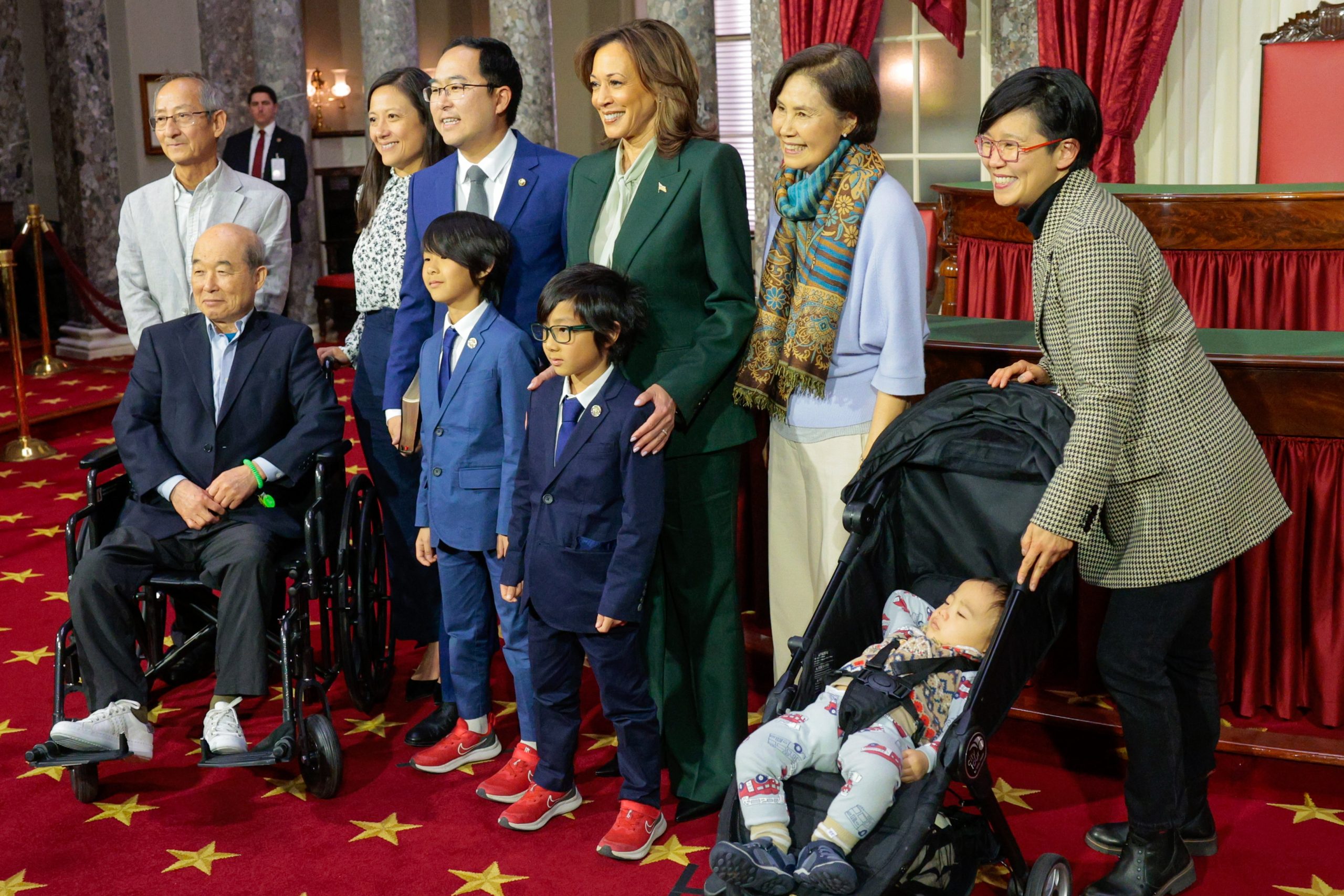
    Sen. Andy Kim (D., N.J.) poses with his family and Vice President Kamala Harris after taking the ceremonial oath of office in the old Senate chamber on Jan. 3, 2025, in Washington.Steven M. Falk / Staff Photographer

    Houlahan is also the chair of an “economic growth and cost of living” working group within the New Democrat Coalition, a group of self-described centrist Democrats that includes about half of the entire caucus. The group rolled out an “affordability agenda” earlier this year that is considered a framework for how Democrats would tackle housing, healthcare, energy, paid family leave, and much more if they win control of the House.

    U.S. Rep. Brad Schneider (D., Ill.), chair of the New Democrat Coalition, credited Houlahan for her leadership with the agenda, describing her as having a “quiet wisdom that focuses on the core of a problem” while bringing her own life experience to the work.

    “Everyone’s experience is unique, but her experience shares many of the aspects of what people across the country are facing,” Schneider said. “The sandwich generation, taking care of kids and parents, for whatever circumstance, while at the same time seeing the cost of just everyday living … is putting a burden on families.”

    Houlahan said she has been aggravated by the pace of progress in Washington, including Trump’s decision to not sign the bipartisan 21st Century ROAD to Housing Act in an attempt to force a vote on stricter voter-ID laws.

    The legislation aims to incentivize housing construction, restrict large investors from buying single-family homes, help families with home repairs, and more. The president reiterated Friday that he would not sign it, allowing the bill to become law without his signature.

    In her Capitol Hill office about an hour after Trump canceled that bill signing late last month, Houlahan described the president as “so obtuse that he can’t see in front of him that this is something that the people want.” After spending much of the last year calling out Johnson, the House speaker, for not standing up to Trump, she said there should be “counterinsurgents” and an “uprising” in the Republican Party.

    At the same time, she expressed some hope. The housing bill may have been a rare moment of bipartisanship, but it was also a sign that Congress can still act on affordability even before the end of the year, she said.

    “We don’t have time, for all of this stuff, to wait until somebody else is in charge,” Houlahan said. “We can do this ourselves.”

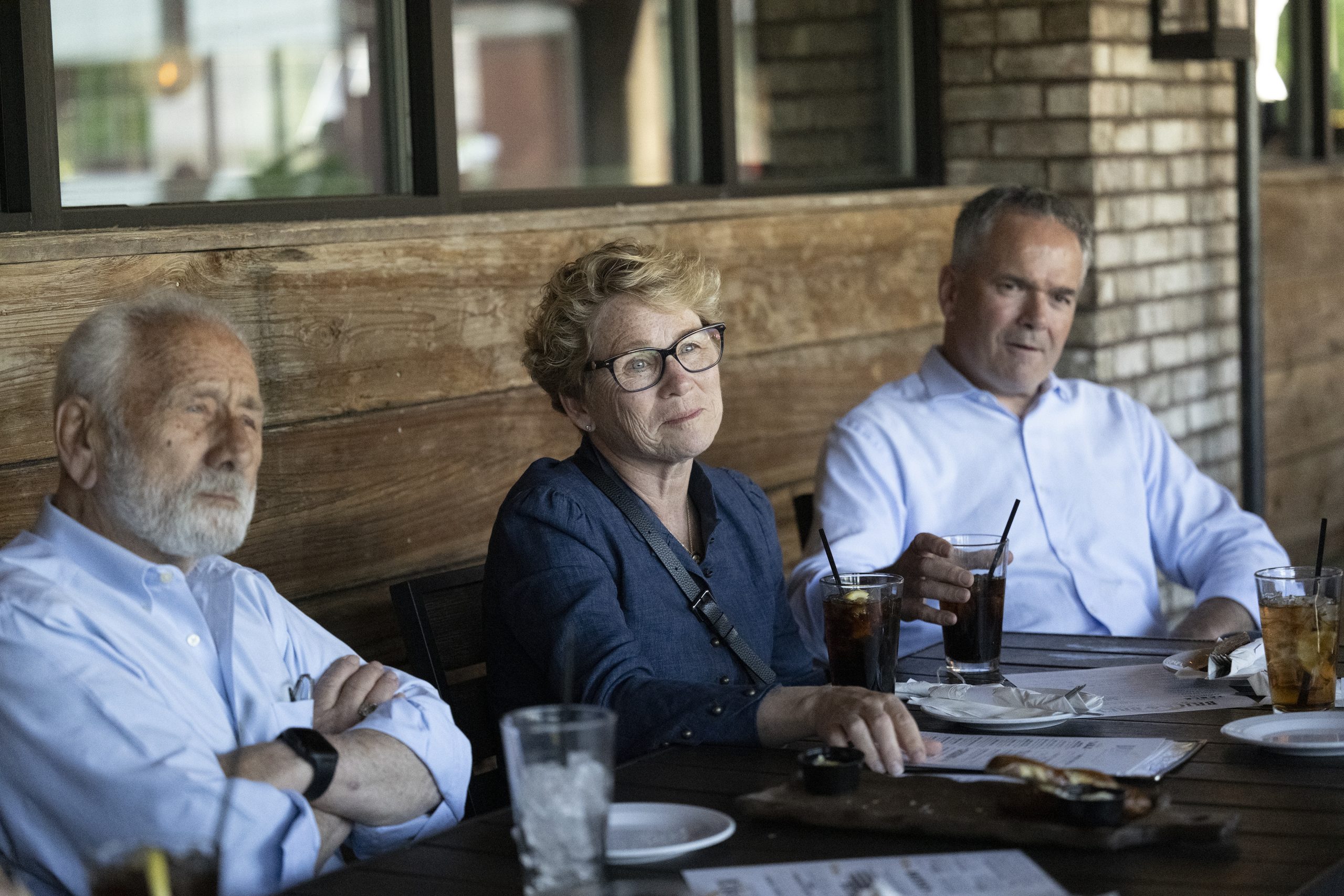
    U.S. Rep. Chrissy Houlahan (D., Pa.) sits between her father, Andy Jampoler, and her husband, Bart Houlahan, at Brick & Brew in Malvern. Houlahan’s parents recently moved in with her. Jose F. Moreno / Staff Photographer
  • Pa. lawmakers and Gov. Josh Shapiro have approved a $50.8 billion state budget, delaying action on key issues

    Pa. lawmakers and Gov. Josh Shapiro have approved a $50.8 billion state budget, delaying action on key issues

    HARRISBURG — Gov. Josh Shapiro signed a $50.8 billion state budget on Sunday following the rushed passage of the overall deal by the General Assembly that lawmakers said helps address the state’s affordability crisis but delays action on some of the most significant issues before the legislature.

    The agreement, which was due at the beginning of the month, marks an improvement from last year’s nearly five-month budget impasse in the split legislature that required school districts, counties, and social service providers to take out expensive loans or close altogether.

    “We managed, as the [vote count] indicates, to find compromise without compromising our core values,” Shapiro said during a news conference Sunday evening, before signing his fourth budget as Pennsylvania’s governor.

    The deal was hashed out over weeks in closed-door meetings among top leaders and includes new transparency requirements for data centers, publicly funded housing projects, and public transit agencies. Lawmakers also agreed to a long-sought cost-of-living adjustment totaling approximately $168 million per year for some Pennsylvania retired teachers, police officers, and firefighters — some of whom have not seen an increase to their monthly pension payments in more than 20 years.

    Gov. Josh Shapiro, flanked by fellow state Democrats, signs the 2026-27 Pennsylvania state budget in Harrisburg, Pa. on Sunday, July 12, 2026.Gillian McGoldrick / Staff

    More education funding, data center requirements

    Pennsylvania will have invested nearly $2 billion in new school funding through its adequacy and tax equity formulas since 2024. That’s when lawmakers first employed the new calculations to close a $4 billion “adequacy gap” after a landmark court ruling that found the state was illegally underfunding students in low-income districts. This year’s installment of adequacy funding topped $565 million, as part of an effort to prevent districts from having to raise property taxes on already low-income residents. The additional investment sends $136 million more this year to the School District of Philadelphia.

    Legislative leaders failed to agree in the final budget on other issues that have seen broad support in both chambers, such as repealing a sales tax exemption for data center projects, allowing local moratoriums on data center projects, or banning cell phones in K-12 schools. They may revisit the issues during the fall legislative session.

    Instead, they approved a new reporting requirement that will force data centers to submit annual reports detailing their water and energy usage. The companies will face a $10,000-a-day fine for failing to submit their reports.

    The General Assembly also voted to close a sales-tax loophole that allowed online sellers to avoid paying Philadelphia’s local 2% sales tax on items sold in the city. Mayor Cherelle L. Parker had requested that the loophole be closed as part of her own budget pitch in a move estimated to bring an additional $1.5 million to the city.

    No decision on skill games

    But the budget does not address some of the most pressing issues before the General Assembly, including whether to tax and regulate skill games or allow the more than 70,000 gambling machines in Pennsylvania bars, corner stores and fraternal organizations to become illegal come October. The state has until then to decide how to approach the machines after the state’s Supreme Court last month determined that skill games, which have for years operated in a legal gray area, are slot machines and should be regulated as such. They also punted on finding a long-term funding solution to fund mass transit until next year, when a two-year fail-safe runs out.

    The state House chamber as Gov. Josh Shapiro makes his annual budget proposal in Harrisburg Tuesday, Feb. 3, 2026.Tom Gralish / Staff Photographer

    Shapiro, a first-term Democrat facing reelection this year, proposed a $53.3 budget in February that for a fourth time emphasized top Democratic initiatives such as raising the state minimum wage to $15 per hour or legalizing recreational marijuana. He also proposed other initiatives, such as a $1 billion critical infrastructure fund to help the state drive out public dollars to build more housing and energy generation, which did not see funding in the final budget deal.

    State Sen. Nikil Saval (D., Philadelphia) was among the two Democrats who opposed the state budget, in part because it did not make the ambitious investments needed to address the state’s limited affordable housing stock.

    “We cannot defer at this moment,” added Saval, the chair of the Philadelphia delegation in the Senate, in his floor remarks before the vote.

    Lawmakers also declined to create any new generators of revenue for Pennsylvania, and deferred addressing the state’s multibillion dollar structural deficit until future years.

    ‘Met in the middle’

    The overall deal passed with bipartisan support in the GOP-controlled Senate, 44-6, and in the House, where Democrats hold a narrow majority, 167-35.

    “We have met in the middle,” said Senate Majority Leader Joe Pittman (R., Indiana). “I am proud of this product, despite what some naysayers may say.”

    The 2026-27 budget, which is a 1.4% increase in spending over the prior fiscal year, has no widespread tax increases. It also largely relies on accounting maneuvers like spending down unused or underused dedicated funds to address the structural deficit instead of pulling from the state’s emergency savings account.

    One of the accounting moves to balance Pennsylvania’s budget includes delaying two months of payments totaling $1.3 billion to insurance companies that fulfill the state’s ballooning Medicaid programs until the next fiscal year. Without those delayed payments, the budget would total closer to $52.1 billion.

    Several GOP House members opposed the budget, arguing it is unbalanced and only postpones tax increases to future years if spending isn’t cut.

    State Rep. Brad Roae (R., Crawford), called the final budget a “fake number.” State Rep. Charity Grimm Krupa (R., Fayette) called it “voodoo math.” And State Rep. Marc Anderson (R., York) said the state was “cooking the books.”

    But broadly, both Democratic and Republican members called the budget a reasonable compromise, acknowledging that they will have additional work to do in the fall legislative session and during next year’s budget negotiations to balance the state’s finances. During speeches on the Senate floor, several Republican senators quoted The Rolling Stones’ song “You Can’t Always Get What You Want,” emphasizing the second half of the refrain: “You might find you get what you need.”

    State Rep. Jordan Harris (D., Philadelphia) also turned to music to represent his position on the budget deal, paraphrasing Anthony Hamilton’s “Do You Feel Me” as a response to his constituents’ concerns about affordability by sending more state dollars to school districts to help them avoid property tax increases and raising monthly pension payments for retirees.

    “I am glad to stand today to support it, to let the people of Pennsylvania know, baby, the message is getting through,” Harris added.

    Pennsylvania Legislative Correspondents’ Association Intern Ethan Young contributed to this article.