HARRISBURG — Pennsylvania’s top legislative leaders and Gov. Josh Shapiro have reached a $50.8 billion budget deal, more than a week after a new state budget was due at the start of the fiscal year, according to two sources briefed on the closed-door conversations.
Details of the contents of the overall budget deal were not immediately available on Saturday, as lawmakers are expected to begin reviewing the bills in the coming days and a final budget is expected to reach Shapiro’s desk by early next week. The state Senate was scheduled to advance parts of the budget on Saturday evening, and the House was scheduled to do the same on Sunday afternoon.
Though the deal comes more thana week past due, the agreement on the state budget framework among Pennsylvania’s Democratic-controlled House, Republican-led Senate, and Democratic governor marks an improvement from last year’s nearly five-month budget impasse that required school districts, counties, and social service providers to take out expensive loans or close altogether.
Half of the state Senate and all 203 state representatives are up for reelection this year, and many are eager to approve a state budget and return to their districts to campaign. Many of the more contentious issues before the legislators appear to have been kicked to the General Assembly’s fall legislative session or will resurface in budget talks next year, when lawmakers are not scheduled to face voters. Shapiro, too, is up for reelection this year; his Republican challenger is State Treasurer Stacy Garrity.
Pennsylvania’s budget deal was crafted largely in secret over weeks of closed-door meetings involving top legislative staff and leaders including Shapiro, House Majority Leader Matt Bradford (D., Montgomery), and Senate Majority Leader Joe Pittman (R., Indiana).
The overall budget deal presented to the General Assembly will feature a state spending plan, in addition to some policy changes as part of horse-trading of legislative priorities by top leaders.
One major policy change that appeared to be advancing as part of the overall deal on Saturday evening is a bill to allow local municipalities to pass ordinances placing a moratorium on data center development for no longer than 18 months. That bill, Senate Bill 1345, sponsored by Sen. Jarret Coleman (R., Bucks/Lehigh), was scheduled for a committee vote Saturday evening, when amendments to the bill were possible.
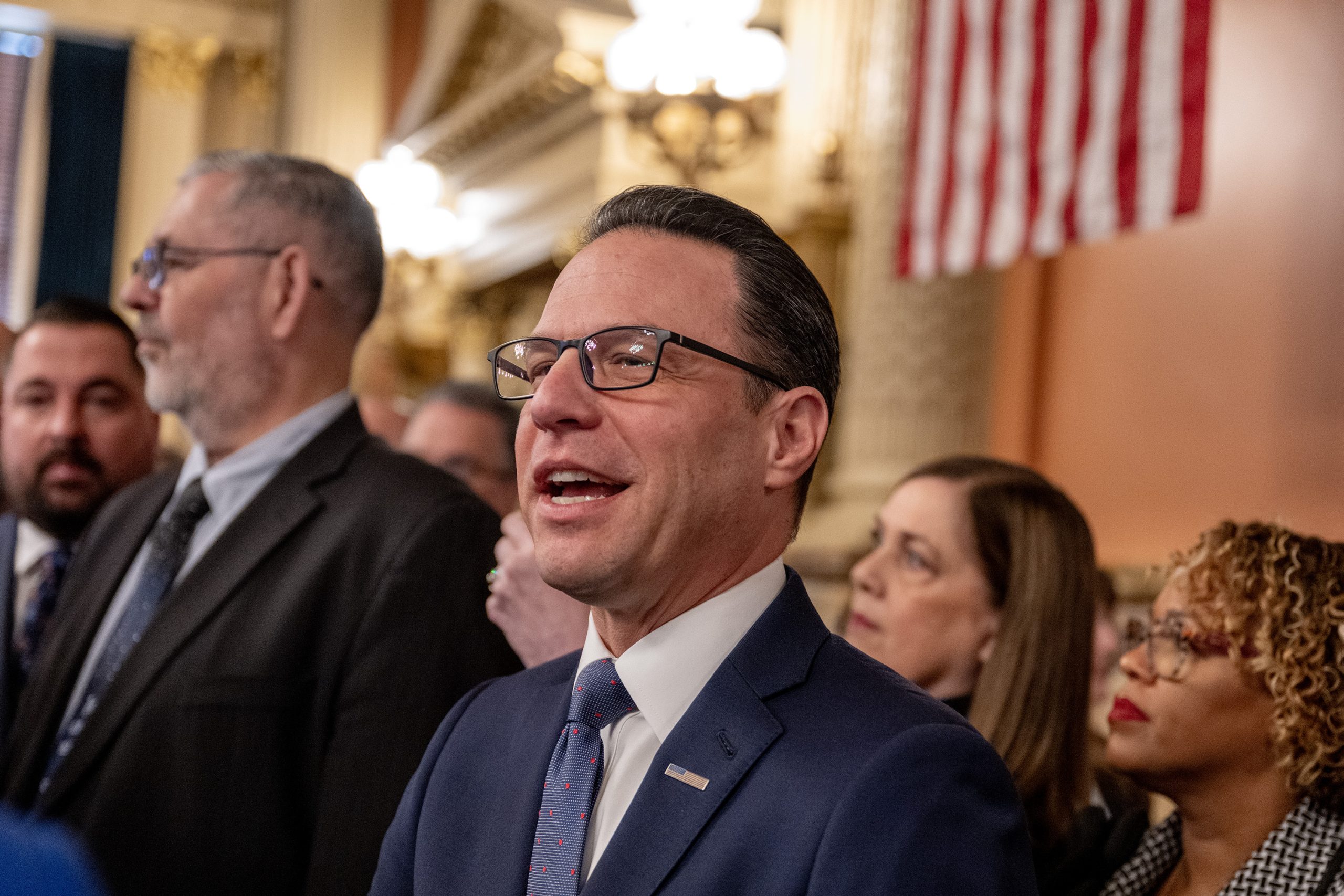
Gov. Josh Shapiro arrives on the state House chamber to make his annual budget proposal in Harrisburg Tuesday, Feb. 3, 2026.Tom Gralish / Staff Photographer
Shapiro hinted that a deal was near on Thursday at a news conference in Altoona, saying, “You’re going to see a lot of activity in the Capitol this weekend.”
“We’ve been working hard, really hard, to bring both sides together, to bring togetherDemocrats and Republicans, and I think you’re going to see a result that benefits the good people of Pennsylvania really soon,” Shapiro added.
It was not immediately clear how legislative leaders and Shapiro agreed to fill the state’sbillion-dollar structural deficit without creating any new revenue streams as part of the 2026-27 fiscal year budget. Even if lawmakers did not increase spending this year — which they are expected to do — the state would need to make up $1.2 billion to balance the budget.
The deal’s 1.4% increase over last year’s $50.1 billion budget does not allow much room for new spending, unless other existing programs have been cut.
In new spending, the deal appeared to include an increase to the state’s funding for public education through its adequacy and tax equity formulas, which were designed by lawmakers in 2024 to close a $4 billion “adequacy gap” following a landmark court ruling that found Pennsylvania was illegally underfunding students in low-income districts.
“If the adequacy number was not agreed to, we wouldn’t be having this conversation,” said State Sen. Vincent Hughes (D., Philadelphia), who is the minority chair of the powerful Senate Appropriations Committee, on Friday evening. “I think the adequacy number will be consistent with what the governor proposed.”
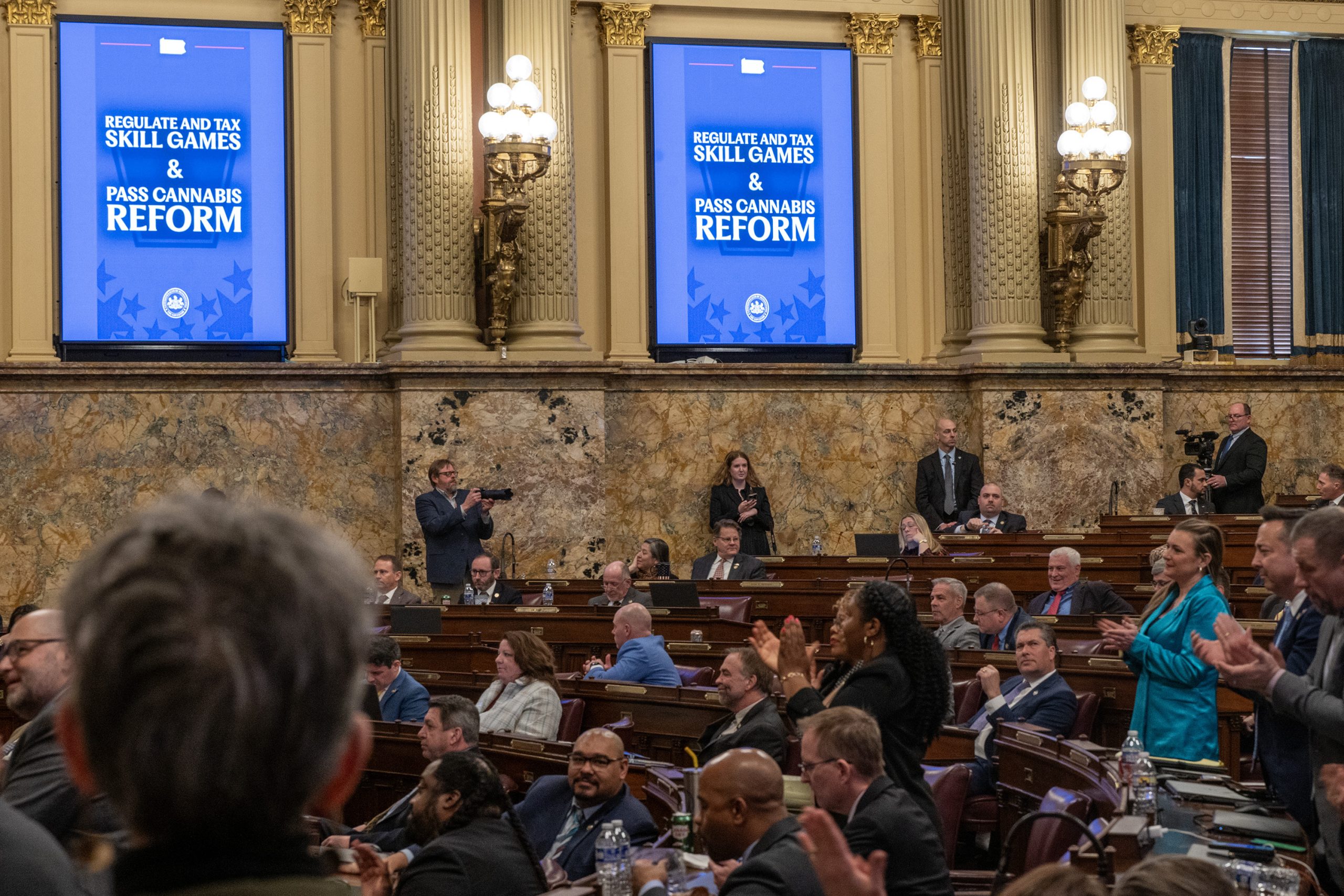
Shapiro proposed a $53.2 billion budget in February, which included a $565 million increase to adequacy funding for public schools. He also included new potential revenue generators from taxing and regulating skill games, legalizing recreational marijuana, and increasing the state’s minimum wage to $15 per hour. None of these potential revenue generators appeared to make it into the final deal.
Screens shows skill games and cannabis regulation and reform as Gov. Josh Shapiro makes his annual budget proposal in the state House chamber in Harrisburg Tuesday, Feb. 3, 2026.Tom Gralish / Staff Photographer
The state is on track to bring in $48.9 billion this year in revenue, according to the Pennsylvania Independent Fiscal Office’s latest projections. Pennsylvania also maintains a $7.7 billion Rainy Day Fund that Senate Republicans have tried to prevent the state from tapping into. It is unclear whether lawmakers will agree to access some of the reserve dollars as many Pennsylvanians face an affordability crisis. Tapping into the Rainy Day Fund requires a two-thirds majority vote by both chambers.
The state budget topped $50 billion for the first time last year and has increased by 25% — approximately $10 billion — over a five-year period.
Pennsylvania Legislative Correspondents’ Association intern Ethan Young contributed to this article.
A Democratic campaign manager for Mark Pinsley’s 2024 campaign for auditor general agreed to a guilty-plea deal in Chester County over fraudulent petitions in that race last week.
Mariel Kornblith-Martin, 41, of Philadelphia, was charged earlier this year by the Chester County District Attorney’s Office with filing fraudulent nomination petitions while working for Pinsley, the Lehigh County controller, during his unsuccessful 2024 primary campaign against State Rep. Malcolm Kenyatta (D., Philadelphia). Kenyatta went on to lose in the general election to the Republican incumbent, Timothy DeFoor.
Kornblith-Martin was accused of paying college students to sign off on campaign petitions with forged signatures on them. Those signatures included the names of multiple elected officials, including a Chester County judge.
She pleaded guilty to one charge of criminal solicitation, specifically unsworn falsification to authorities. She had been charged with 50 crimes: 40 counts of criminal solicitation and 10 counts of breaking election law.
The political operativewas sentenced Tuesday to two years’ probation and ordered to pay a $1,000 fine plus costs associated with the case.
Pinsley is now the Democratic nominee for akeystate Senate seat that includes parts of Bucks and Lehigh Counties.
The Inquirer reported in 2024 that his petitions for the auditor general race contained the names of multiple elected officials who said they had never signed them, including Coatesville City Council members Carmen Green and Khadija Al-Amin, and West Goshen Township Supervisor Nate Wolman.
Perhaps most striking was a fraudulent signature for Chester County Court Judge Alita Rovito. Rovito, a Democrat, told The Inquirer in 2024 that she had reported the forgeryto the district attorney’s office. She said at the time that “the use of my name and signature is concerning to me due [to] the potential implications on my role as a member of the independent judiciary.”
Ironically, Rovito initially had been assigned to Kornblith-Martin’s case in May. She recused herself and Judge Sarah Black took over the case.
Kornblith-Martin had given three college students “stacks of pages containing signatures of supporters” and asked them to sign the required sworn declaration at the bottom of each page in exchange for money, according to the district attorney’s complaint. The Inquirer previously identified these young people as Temple University students.
Al-Amin, one of the local elected officials and a member of the county’s Democratic committee, said in an interview Friday she was satisfied that the campaign manager was “held accountable for her actions.”
“I’ve sat on many campaigns in different positions: consultant, chair, manager,” she said. “I would never even think about doing something like that. If you can’t win an election honestly, then the position is not for you.”
But she questioned what she sees as a failure in oversight on Pinsley’s part. In his current role, he is responsible for overseeing audits in Lehigh County.
“As her boss, I think he should have known what she was doing. … She ran his campaign,” she said. “He should have had regular contact with her.”
Gary Masino, Pinsley’s current campaign manager, said in a statement Friday that “Mark believes the justice system worked effectively and fairly in this case.”
“He was disheartened to learn about Mariel’s crime, but respects that she took responsibility by pleading guilty and that the matter is resolved,” he said.
Pinsley previously told The Inquirer that his campaign had reviewed the signature issue after concerns were raised but lacked “enough verified information” to reach a conclusion.
The petitions had glaring red flags, Al-Amin noted, such as the town of Downingtown being written as “Downtown.” She pointed out at the time that the geographic routes on the petitions did not make sense. And petitions had dates on them prior to the petitioning period, names written oddly, and signatures in strikingly similar handwriting.
“You could look at the pages and you could tell that there was really something wrong,” she said Friday.
Back in 2024, Martin had told The Inquirer that the campaign was doing an internal investigation and declined to comment further. She has not responded to requests for comment since a text message in February of that year in which she said: “We are still doing an investigation internally. I have no further statement until our investigation is over.”
The intrusion into Delaware County’s network systems in late June — disrupting services for county residents — was part of “sophisticated cybercriminal attack.”
Several attempts for unauthorized access were blocked by county infrastructure, but hackers were able to gain “limited access to the County’s network and to access data maintained within the network,” the county government said in a news release Friday.
The county says it shut down its networks after the June 26 attack to safeguard county data, systems, and other sensitive information, but officials are still investigating the extent of the breach in tandem with cybersecurity experts.
The county’s internal networks are now up and running, and Delco said it is working to reinstate external-facing county services in the coming days.
“It is unfortunate that this attack has impacted services to residents, and we appreciate their patience and understanding,” the county said Friday. “We must ensure the safety of our network and data before full restoration of services.”
The incident marks the second time in roughly six years where the county’s systems have been breached. In November 2020, Delaware County was hit by a ransomware attack via a phishing email. Hackers stole sensitive information and the county ended up having to pay $25,000 to resolve the issue.
Delaware County says since that 2020 incident that “substantial protections” have been put in place.
“Those protections proved valuable in this instance, as numerous attempts to establish a larger intrusion into County systems were repeatedly blocked, greatly limiting the extent of the interference,” the county said.
When she’s not serving in the Pennsylvania House, State Rep. Marla Brown is teaching 13 fitness classes a week at the local YMCA.
From cycling to core strength to high intensity hit lessons, the pressure of the state legislature transformed the Lawrence County Republican’s former fitness hobby into another job, squeezed in the morning, in the evening and on weekends between political commitments.
“It keeps my mind healthy and active and engaged,” said Brown (R., Lawrence). “I think that’s vitally important in any career, and especially in politics where there’s so much negativity.”
More than half of the General Assembly reports an outside business interest or alternative forms of income, according to an analysis of all 251 state lawmakers’ statements of financial interest by The Inquirer. They moonlight as attorneys, company executives, property managers, farmers, and other roles when they’re not in session.
Local government reform advocates say public officials are inevitably influenced by the money they make on the side. Advocates from Rock the Capital and MarchOnHarrisburg have pushed for changes to moonlighting law, calling for bans on what they consider to be conflicts of interest.
While there are few restrictions to private employment for legislators across the country, the majority of states don’t allow their legislators to work secondary jobs in the public sector, like government or public school positions. New York imposes a cap on earnings from legislators’ outside earned income. Pennsylvania hasn’t pursued any sanctions or caps on outside employment, public or private. Not all state legislators earning outside income are making working wages — more than 40 lawmakers earn passive income as landlords.
Because the Pennsylvania Ethics Commission requires elected officials to report their businesses regardless of their earnings, it is difficult to say how many legislators are truly making significant profits on the side.
State Sen. Jarrett Coleman (R., Lehigh) is an airline captain for JetBlue Airways. State Rep. Kathleen Tomlinson (R., Bucks) is a funeral director. State Sen. Jimmy Dillon (D., Philadelphia) runs a children’s basketball academy. State Rep. Dan Williams (D., Chester) is the senior pastor of New Life in Christ Fellowship in Coatesville.
(function() {
var l2 = function() {
new pym.Parent(‘moonlighting_house’,
‘https://media.inquirer.com/storage/inquirer/projects/innovation/arcgis_iframe/moonlighting_house.html’);
};
if (typeof(pym) === ‘undefined’) {
var h = document.getElementsByTagName(‘head’)[0],
s = document.createElement(‘script’);
s.type = ‘text/javascript’;
s.src = ‘https://pym.nprapps.org/pym.v1.min.js’;
s.onload = l2;
h.appendChild(s);
} else {
l2();
}
})();
Pennsylvania is the third highest-paid legislature in the country with a $106,000 annual salary for lawmakers. California and New York legislators make more, but reform advocates say Pennsylvania’s $181 per diem and other benefits likely push the state’s lawmakers to the top in terms of overall compensation.
With six-figure compensation, Pennsylvania lawmakers are much better off than the average state legislator in the country making $43,494 annually (New Hampshire lawmakers are the lowest-paid at just $100 a year).
Even so, the Pennsylvania General Assembly gathers fewer than 50 days a year, giving some members time to partake in personal endeavors, which has raised ethical concerns among advocates.
“You either work for the people or you work for yourself,” said Michael Pollack, executive director of MarchOnHarrisburg, one of the groups pushing for reforms.
Here’s what state legislators do in their free time, according to their 2023 Statements of Financial Interest.
Pennsylvania legislator side hustles
State legislators play a big part in making housing and rent law, but Pennsylvania has no rules limiting or banning legislators from acting as landlords, or in any career appealing to them.
At least 40 state legislators earn income from rental properties or property management businesses across the Commonwealth. Another nine legislators work as executives for property insurance and realty companies.
Of those serving in the state House and Senate’s housing committees, at least 11 legislators report income from rental properties or realty companies last year. These committees vote on legislation directly affecting renters, including amendments to Pennsylvania’s Landlord and Tenant Act.
!function(){“use strict”;window.addEventListener(“message”,(function(a){if(void 0!==a.data[“datawrapper-height”]){var e=document.querySelectorAll(“iframe”);for(var t in a.data[“datawrapper-height”])for(var r=0;r<e.length;r++)if(e[r].contentWindow===a.source){var i=a.data["datawrapper-height"][t]+"px";e[r].style.height=i}}}))}();
Not all landlord legislators rent out properties to their constituents, though.
Sen. Frank Farry (R., Bucks), the majority chair of the Senate Urban Affairs & Housing committee, quadruples as a senator, attorney, fire chief, and rental property owner. Rather than traveling to and from the Capitol, he owns a Harrisburg rowhouse that he shares with other legislators during session. He also leases his former home to his in-laws in Langhorne.
When his daughter moved to Pittsburgh, rather than moving into the newly flipped house he made for her, Rep. Jim Rigby (who DJs for friends and family) decided to rent the property out to local medical students. He says he has yet to break even on the cost.
Attorneys make up another large chunk of the bucket, with more than 15% of the General Assembly working for law firms. Lawyers have a long-held tradition of dominating American politics, and the story is no different in Pennsylvania.
Farry, an attorney with Begley, Carlin & Mandio, said he hasn’t set foot in a courtroom in years, but he still gives legal advice over the phone and never from his state Senate office.
“There needs to be boundaries between my legal job and my Senate job,” Farry said, uncertain that others in the state legislature adhere to the same separations.
(function() {
var l2 = function() {
new pym.Parent(‘moonlighting_senate’,
‘https://media.inquirer.com/storage/inquirer/projects/innovation/arcgis_iframe/moonlighting_senate.html’);
};
if (typeof(pym) === ‘undefined’) {
var h = document.getElementsByTagName(‘head’)[0],
s = document.createElement(‘script’);
s.type = ‘text/javascript’;
s.src = ‘https://pym.nprapps.org/pym.v1.min.js’;
s.onload = l2;
h.appendChild(s);
} else {
l2();
}
})();
The ethics of attorneys-turned-lawmakers working for outside legal clients has been scrutinized for years. Legislators actively practicing could, in theory, meddle in laws affecting their clients, a worry of good government advocates.
Sen. Gene Yaw (R., Lycoming) moonlights as an attorney for Williamsport-based McCormick Law Firm, which represents gas companies and practices environmental law. Yaw is the majority chair of the state Senate Environmental Resources & Energy committee.
His firm also has represented Pace-O-Matic, the Georgia-based company dominating the skill games industry. In May, Yaw introduced the Skill Video Gaming Act, which would regulate and tax skill games in the commonwealth. Miele Manufacturing, which produces the systems for Pace-O-Matic in Pennsylvania, occupies Yaw’s district. Yaw did not return requests for comment.
Pollack, MarchOnHarrisburg’s executive director, said Yaw’s legal side job is “absolutely ridiculous and corrupt as can be” and called for legislators to choose a side of the fence.
Reform advocates say jobs in law, property management, and big business can create conflicts of interest for legislators.
But lawmakers’ business interests aren’t confined to those industries. Eight lawmakers work in agriculture. Several others work in health, education, and the Pennsylvania National Guard. Personal businesses range from lake resorts to custom gunsmiths to farm animal pregnancy testing.
“If you have two skis, and both skis are going in different directions, it’s hard to stay focused,” said Rock the Capital founder Eric Epstein, an advocate for reform.
Questions remain about Pennsylvania lawmakers’ business interests
Even if they’re not active in the company, Mary J. Fox, the executive director of the state Ethics Commission, said filers must report their businesses “whether they make money or not.”
This means that legislators who own businesses that haven’t operated in years still must claim the job, making it unclear at times whether lawmakers are active employees.
Rep. Michael Schlossberg (D., Lehigh) still must claim his iPhone trivia game company and author website, despite not earning income from either in years. Rep. Perry Warren (D., Bucks), a former ice cream truck driver in Long Beach Island, still claims his business Ice Cream and Dreams despite his last truck being sold in 2017.
While some lawmakers continue operations as usual, others leave their co-owners, usually spouses, to continue the business while they serve or shut down their work altogether.
“When I ran for office and got elected, my wife told everybody she fired me because I stopped showing up for work,” said Sen. Timothy Kearney (D., Delaware), the co-owner of architectural firm Cueto-Kearney Architects.
Lawmakers do not have to report how much they make from their businesses or rental properties, even if they are actively employed. It is unclear how much any legislator is making outside of the General Assembly.
“Is it a million dollars? Is it a thousand dollars? We’d like to know,” Pollack said.
Lawmakers who take up other fields say the quality of their legislative work depends on their time spent in public service elsewhere.
“It’s really a way to stay grounded in reality. One of the problems with being an elected official is you don’t stay connected with what’s going on in the real world,” said Rep. Arvind Venkat (D., Allegheny), an emergency physician working weekend night shifts from 11 p.m. to 7 a.m.
Farry says firefighting helped him understand his role as the chair of the Fire and Emergency Caucus when he served in the House, even as his staff called him crazy for working 70 hours a week.
“It was more important to be there and help out, in my mind,” Farry said. “I’ll make up the sleep at some point.”
Sarah Nicell is an intern with the Pennsylvania Legislative Correspondents Association. They can be reached at snicell@inquirer.com.
Shortly after the Pennsylvania Supreme Court dealt a legal blow to so-called skill games in June, the CEO of Parx Casino celebrated the decision and blamed the unregulated slot machine-like devices for attracting “rampant crime, money laundering, compulsive gambling and underage gambling.”
Days later, hundreds of small-business owners, veterans, and other supporters of skill games had a very different message at a state Capitol rally. They had signs reading “SUPPORT SKILL GAMES, SUPPORT SMALL BUSINESSES” and others declaring that the machines help generate revenue for American Legion and Veterans of Foreign Wars posts.
Some supporters arrived on buses paid for by Pace-O-Matic, the out-of-state game developer that in recent years has become a political heavyweight in Pennsylvania, spending millions on lobbying and electoral campaigns, and growing an unregulated market that swept across corner stores, bars, gas stations, and other locations.
The dueling messages marked the latest clash between Parx and Pace-O-Matic in a yearslong political, legal, and public relations fight over the games, which has featured accusations of conflicts of interest and attempts to influence legislators, law enforcement authorities, and other government officials.
An Inquirer review of hundreds of pages of court records and interviews with key players offer an inside look at the behind-the-scenes battle to shape public policy in Harrisburg between Georgia-based Pace-O-Matic — a leading developer of software for the video game machines — and Bensalem’s Parx Casino, which reported the most gross slot machine revenue, $375 million, of any Pennsylvania casino operator last year.
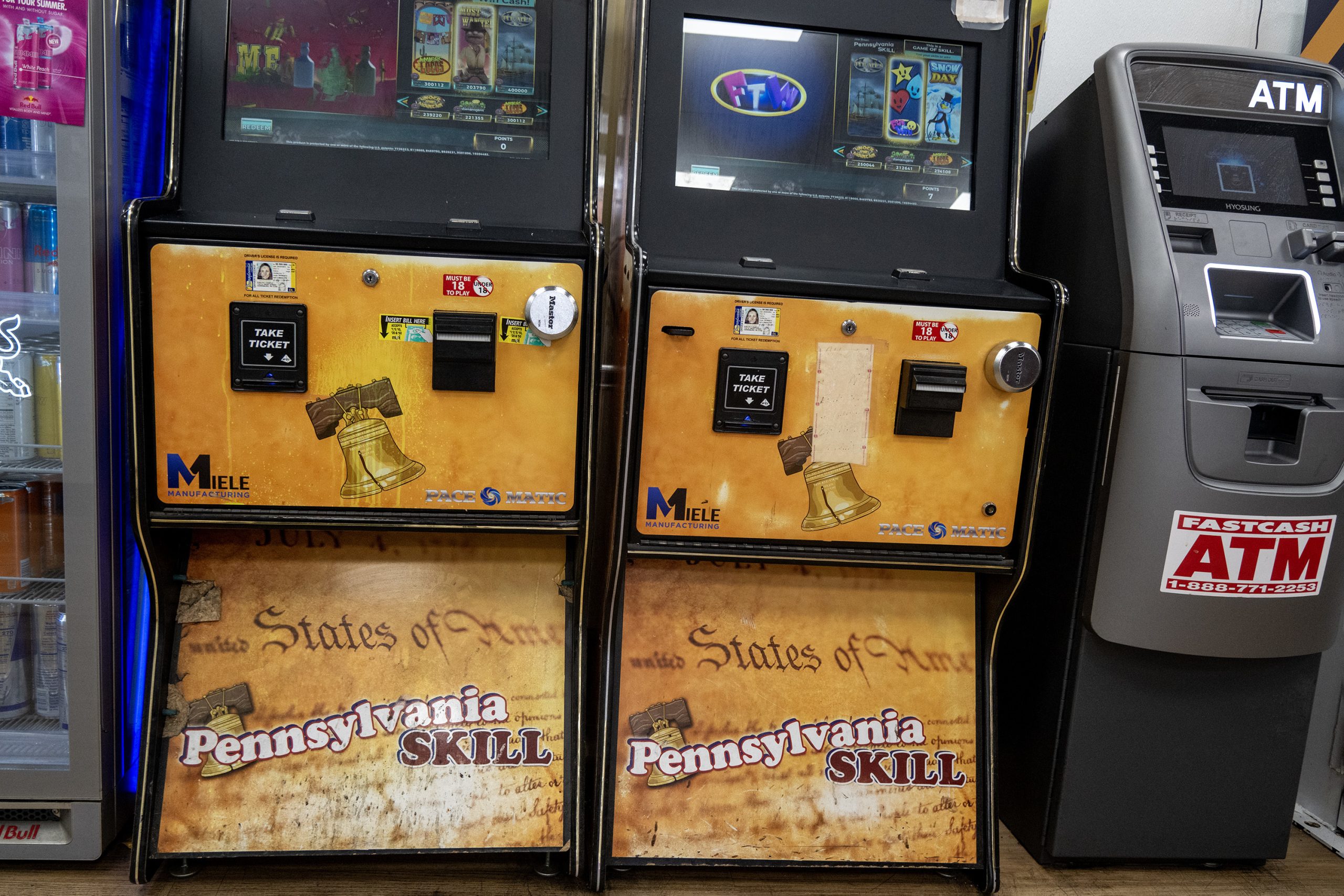
Pace-O-Matic’s “Pennsylvania Skill” game seen in a gas station convenience store in Philadelphia.Tom Gralish / Staff Photographer
In the last decade, skill game developers and manufacturers seized on a huge business opportunity, which casinos and other gambling interests say cost them market share. And some politicians were salivating over a new potential source of tax revenue, while others saw an unacceptable expansion of the vice economy.
That debate has reached a turning point, as the high court found that unregulated skill games are unlawful. But the court paused its order, giving lawmakers a window until October to legalize, tax, and regulate the games — or leave owners and operators vulnerable to prosecution.
Pennsylvania made a bet on gambling two decades ago, legalizing slot machines in casinos in 2004 as lawmakers sought a new stream of tax revenue. The legislature has since authorized more games such as poker and blackjack, sports betting, and video game terminals at truck stops.
Gambling outside casinos and other licensed establishments remains illegal. But corner store skill games managed to take off — in part because of a 2014 court decision that found Pace-O-Matic’s game was not a “gambling device” under the state crimes code.
There are now an estimated 70,000 machines across the state, according to the Pennsylvania Attorney General’s Office, not subject to the taxes or regulations on casino slot machines.
In his February budget address, Democratic Gov. Josh Shapiro proposed a 52% tax on gross skill game revenues — roughly in line with the rate that applies to casino slot machines — which the administration projects could generate almost $800 million in the first year of implementation.
Under his proposal, Shapiro would authorize 40,000 skill game machines and video game terminals — which are already legal — statewide. That means tens of thousands of skill machines currently operating would be considered unlawful.
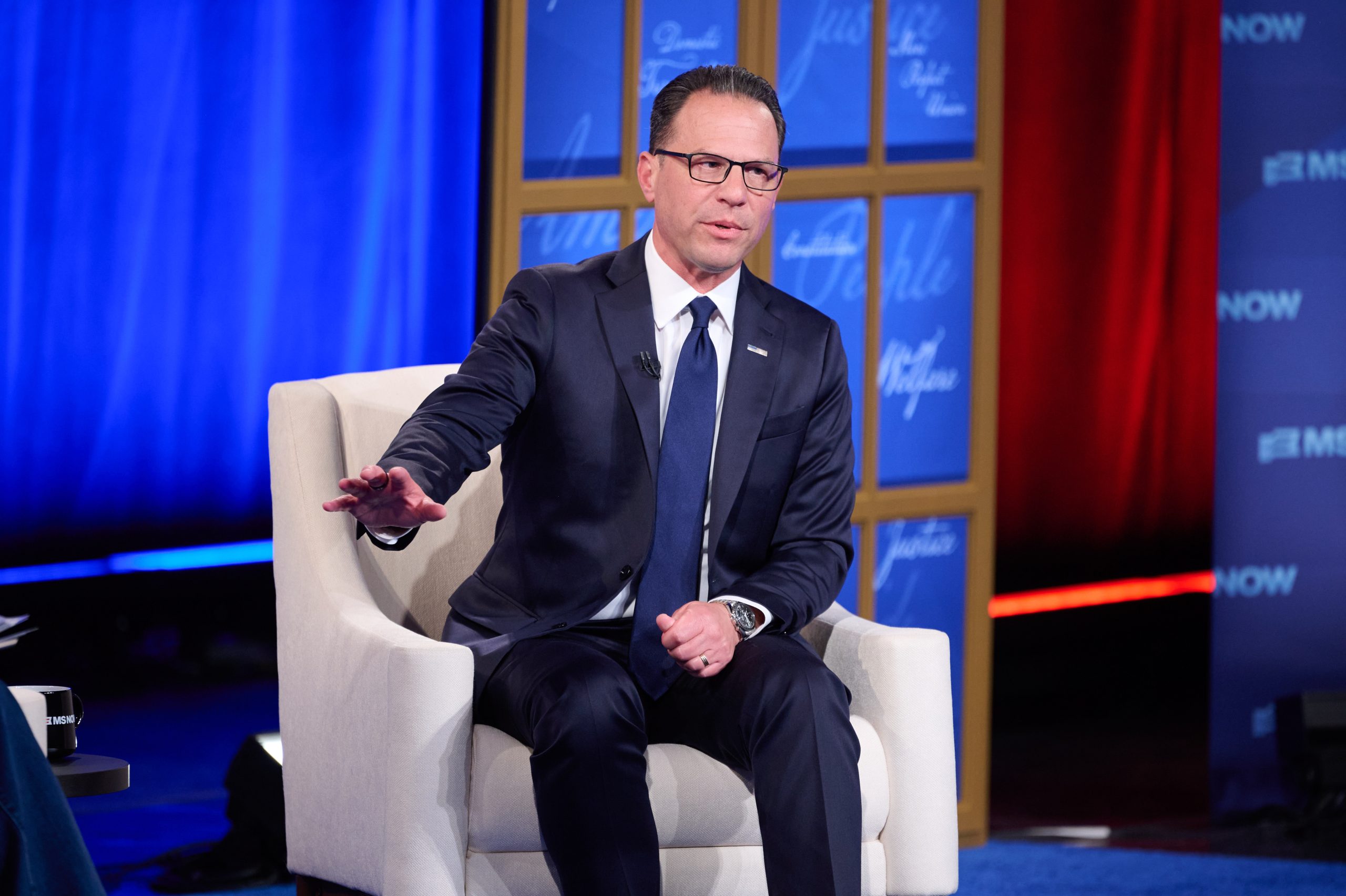
Pennsylvania Gov. Josh Shapiro in June.Courtesy of MS NOW / Scott Gries
Separately, a bill supported by the skill game industry would impose a $500 monthly fee on each machine, cap the number of total machines at 50,000, and raise an estimated $300 million in tax dollars in the first year. The games are “a small, lifeline raft to help mom-and-pop business owners,” said State Rep. Danilo Burgos (D., Philadelphia), a sponsor of the bill.
Casinos and other gaming interests are trying to protect a $6.8 billion market in Pennsylvania. Pace-O-Matic’s machines across the state generated about $525 million in gross revenue in 2024, with the company receiving 20% of that, minus certain discounts, and the rest going to operators that scout locations and stores that house the machines, according to court documents.
But, come October, if its skill game machines ultimately are not legalized by the state legislature, Pace-O-Matic will pull out of Pennsylvania, said Mike Barley, the company’s chief public affairs officer. “We’ll always abide by the law.”
Millions in lobbying
Pace-O-Matic has spent $8.4 million on lobbying in Harrisburg over the last five years, records show, the most by any single gaming company. In contrast, the operators of more than a dozen Pennsylvania casinos spent $7.6 million combined on lobbying during that time period, according to an Inquirer review of disclosures.
Lobbyists help draft legislation, communicate their clients’ interests to policymakers, and wine and dine government officials.
And Pace-O-Matic has recruited Harrisburg insiders with close ties to state lawmakers for the job: a former member of the Republican National Committee, a former state senator, a onetime top aide to House and Senate Republicans, and a former chief of staff to then-Gov. Tom Wolf, a Democrat.
(function(){function e(){window.addEventListener(`message`,function(e){if(e.data[`datawrapper-height`]!==void 0){var t=document.querySelectorAll(`iframe`);for(var n in e.data[`datawrapper-height`])for(var r=0,i;i=t[r];r++)if(i.contentWindow===e.source){var a=e.data[`datawrapper-height`][n]+`px`;i.style.height=a}}})}e()})();
Since 2021, a political action committee affiliated with the company has reported spending more than $9 million in Pennsylvania, with about two-thirds of that coming this year.
Part of that war chest was aimed at unseating three incumbent Republican state senators in primary elections this spring, as Pace-O-Matic took exception to a proposed skill games tax backed by Senate GOP leaders last year. More than $3 million went toward loan repayments to donors.
Pace-O-Matic has also devoted resources to fighting with its competitor, Parx Casino, in court.
Pace-O-Matic has filed numerous lawsuits, including several that accuse Parx’s lobbyists of going beyond lawful advocacy and wrongfully interfering with its business relationships.
Parx has fought Pace-O-Matic’s growth by privately drafting legislation to ban skill games, filing briefs opposing skill games to the state Supreme Court, and accusing Pace-O-Matic in a lawsuit of leading a criminal enterprise.
Parx spent almost $1.3 million on lobbying during the last five years, the most of any casino. Among its lobbyists is a former state senator who sponsored Parx-backed legislation to ban skill games. Parx’s affiliated PAC, 2999 Group, has reported almost $1 million in expenditures since 2021.
A row of slot machines on the gaming floor of Parx Casino in Bensalem in 2018.James Blocker / Staff Photographer
“It’s a scorched-earth campaign that nobody in town who I know has ever seen anything quite like it,” said Pete Shelly, one of the Harrisburg lobbyists for Parx who was personally sued by Pace-O-Matic. “The amount of money they were able to spend, and the resources they threw at protecting their franchise, was astounding. And their tactics speak for themselves.”
In response, Pace-O-Matic’s Barley responded simply: “Ditto.”
Drafting a bill
Founded in 2000 by Michael Pace — a pioneer of countertop video games — Pace-O-Matic expanded to Pennsylvania in 2014. The company took its game straight to the cops.
Pace-O-Matic says it asked the Pennsylvania State Police whether its coin-operated tabletop machine qualified as a legal game of skill — or as an illegal gambling device. In an effort to test this legal question, the company and the Pennsylvania Bureau of Liquor Control Enforcement in November 2013 arranged for a “friendly” seizure of its game at the American Italian Club in Aliquippa, Beaver County, according to court records.
Whereas in a game of chance like a slot machine, the outcome is decided predominantly “on the basis of probability,” the Pace-O-Matic game featured a level of interactivity that required skill, the judge wrote. That meant the state had failed to prove it was a gambling device.
Skill games in a barber shop in Hazelton.Tom Gralish / Staff Photographer
The opinion gave the skill industry a boost, leading to a boom in machines across the state. Within a few years, Parx went on the offensive.
In 2019, representatives for Parx privately drafted legislation, at the request of then-State Sen. Tommy Tomlinson (R., Bucks), to ban skill games, Spotlight PA reported.
In a March 2019 memo to colleagues about his legislation, Tomlinson cited a lack of consumer protections to prevent minors from playing skill games and pointed to testimony from Pennsylvania Lottery officials that the machines divert funds from programs for seniors.
‘Coordinated litigation strike’
Later that year, in July 2019, Parx outside attorney Mark Stewart e-mailed lawyers representing other casinos, proposing they join together to “launch a coordinated litigation strike on the same day against a large number” of stores that hosted Pace-O-Matic games, according to court papers.
The strike would put “PA Skill” — a reference to Pace-O-Matic’s Pennsylvania Skill games — “on the defensive, having to run around, spend money, and dedicate time and personnel resources to defending the numerous suits,” Stewart wrote.
He added that this would also “draw public and political attention to the illegality of the machines,” according to a lawsuit Pace-O-Matic later filed against Stewart and his firm, Eckert Seamans Cherin & Mellott.
A few months later, Eckert filed dozens of lawsuits on behalf of Parx against retail locations that had skill games, including many that hosted Pace-O-Matic machines, the lawsuit said.
The law firm’s involvement caught Pace-O-Matic’s attention, the company says, because Eckert had represented the company in Virginia even as Stewart advocated against its interests in Pennsylvania.
Pace-O-Matic in 2020 filed a lawsuit accusing Eckert of violating the firm’s fiduciary duties. In court filings, Eckert has denied the allegations, saying that the company knew about the firm’s representation of gaming clients in Pennsylvania. A judge in 2022 signed an order prohibiting Eckert from advocating against the legality of Pace-O-Matic’s skill games. The litigation is ongoing.
Stewart — now an executive vice president at the Cordish Cos., a Baltimore real estate and entertainment company whose properties include two Pennsylvania casinos — did not respond to a request for comment. A spokesperson for Eckert did not return a message.
That litigation unearthed emails showing coordination between Parx representatives and Tomlinson’s office on the proposed legislative ban.
In the two years after he proposed that legislation, Tomlinson’s campaigns received $20,000 in contributions from 2999 Group, the PAC led by Parx founder and chairman Robert W. Green. The PAC formed in 2020 after federal courts struck down a Pennsylvania law banning political contributions from people involved in the gaming industry.
Tomlinson retired in 2022. He registered a lobbying firm, RMT Legislative Consulting, in October 2024. He started lobbying for Parx the following month, records show.
Tomlinson did not respond to requests for comment.
‘STOP THESE MACHINES’
While Tomlinson’s legislation to ban skill games failed to advance, casinos pursued other avenues to protect their interests as the unregulated and untaxed games continued to proliferate throughout the state.
Ahead of a planned meeting with the office of then-Pennsylvania Attorney General Josh Shapiro in July 2021, Parx representatives drafted a PowerPoint presentation depicting a child playing a skill game under the heading “STOP THESE MACHINES,” according to emails reviewed by The Inquirer.
The presentation argued that skill games were illegal, undercut revenue for the Pennsylvania Lottery and the programs it funds for seniors, and failed to comply with anti-money laundering rules that “guard against organized crime and terrorist groups.”
Parx lobbyists wanted to meet with the attorney general’s office, emails show, because they believed prosecutors were preventing the state police from seizing skill games. The attorney general’s office had said in a statement that while the office maintained that skill games were illegal, it would not “actively seize machines” until the state Commonwealth Court provided guidance on whether they were legal.
Reached by The Inquirer, the Pennsylvania Attorney General’s Office — now led by Republican Dave Sunday — said it was unable to confirm if that meeting took place. A spokesperson said the office maintained the posture reflected in its public statement and “successfully advocated for that position leading to the Supreme Court’s decisive ruling.”
Pennsylvania Attorney General Dave Sunday in 2025.Kalim A. Bhatti / For The Inquirer
Pace-O-Matic’s Barley said that around this time, there was a “notable shift in the way the OAG’s office treated our games.” Prosecutors started working with counties to coordinate seizures of games, he said, but Pace-O-Matic successfully challenged those actions and its property was returned.
Casino interests reached out to local law enforcement authorities as well.
When an executive at Mohegan Pennsylvania casino in Wilkes-Barre spotted a new coffee shop in nearby Kingston that advertised Pace-O-Matic games, he contacted his lobbying team, including Stewart and Shelly, the lobbyist who was later sued by Pace-O-Matic, emails show.
“Maybe instead of [Pennsylvania State Police] or local police, we send letter to Luzerne County DA,” Shelly wrote in a March 2021 email to colleagues.
“Seems good idea,” Stewart responded, noting that they had previously sent a letter to the district attorney in Monroe County about skill games.
An alleged conflict of interest
Soon after, the fight over skill games became personal.
Pace-O-Matic in 2022 filed lawsuits against three Parx lobbyists — Shelly, Richard Gmerek, and Sean Schafer — accusing them of attempting to sabotage Pace-O-Matic’s business. In court papers, attorneys for the lobbyists have denied the allegations. The case is ongoing.
In an interview, Parx CEO Eric Hausler said Pace-O-Matic’s lawsuits aimed to “shut our people up, and shut us up, by trying to intimidate our people into being silent about what we believed and continue to believe was a form of illegal gambling.”
He said the firm’s lobbying was appropriate. “We reached out to anybody that would listen to us, whether it was regulators or the attorney general’s office or the legislature, to say, ‘These are slot machines,’” Hausler said.
The Parx CEO noted that the law firm representing Pace-O-Matic in those cases, the McCormick Law Firm, employs State Sen. Gene Yaw (R., Lycoming), a proponent of legislation favored by the skill games industry. Yaw’s wife, Ann S. Pepperman, is a partner at Williamsport-based McCormick. The CEO described Yaw’s association with the firm as a “clear conflict of interest.”
Pa. State Sen. Gene Yaw in August 2023.Frank Kummer / Pa. House of Representatives
Yaw has benefited from Pace-O-Matic’s political giving. Operators for Skill, a PAC led and funded in part by Pace-O-Matic executives, has contributed $47,500 to Yaw’s campaigns since 2021, records show.
His district is home to Miele Manufacturing, a company that makes and distributes Pace-O-Matic’s Pennsylvania Skill machines.
In response to written questions about whether Yaw or his wife has benefited financially from McCormick’s representation of Pace-O-Matic, a spokesperson said the senator had no comment.
Pace-O-Matic representatives have said the company’s leaders and PAC donate to many candidates in both parties.
Targeting incumbent senators
Beyond Yaw, Pace-O-Matic has cultivated plenty of allies in Harrisburg, contributing millions to politicians’ campaigns and inviting lawmakers to an outdoor rodeo festival in Wyoming — and helping pay for some members’ travel. The company has said the purpose of the 2022 trip was to help lawmakers learn from Wyoming legislators about that state’s regulated skill game industry.
But Pace-O-Matic has also alienated some lawmakers, who have described its tactics as overly aggressive.
Last year, the company contributed hundreds of thousands of dollars to a federal super PAC called Citizens Alliance Political Action Committee Inc., which in turn donated to an Ohio-based PAC called Defeating Communism.
Defeating Communism distributed flyers attacking Pennsylvania Republican state senators who had taken positions at odds with the skill game industry. “Tell Senator Farry to stop targeting PA Firefighters + Veterans!” read one flyer targeting State Sen. Frank Farry, a Bucks County Republican and longtime volunteer firefighter who had introduced legislation to tax skill games at the same rate as casinos.
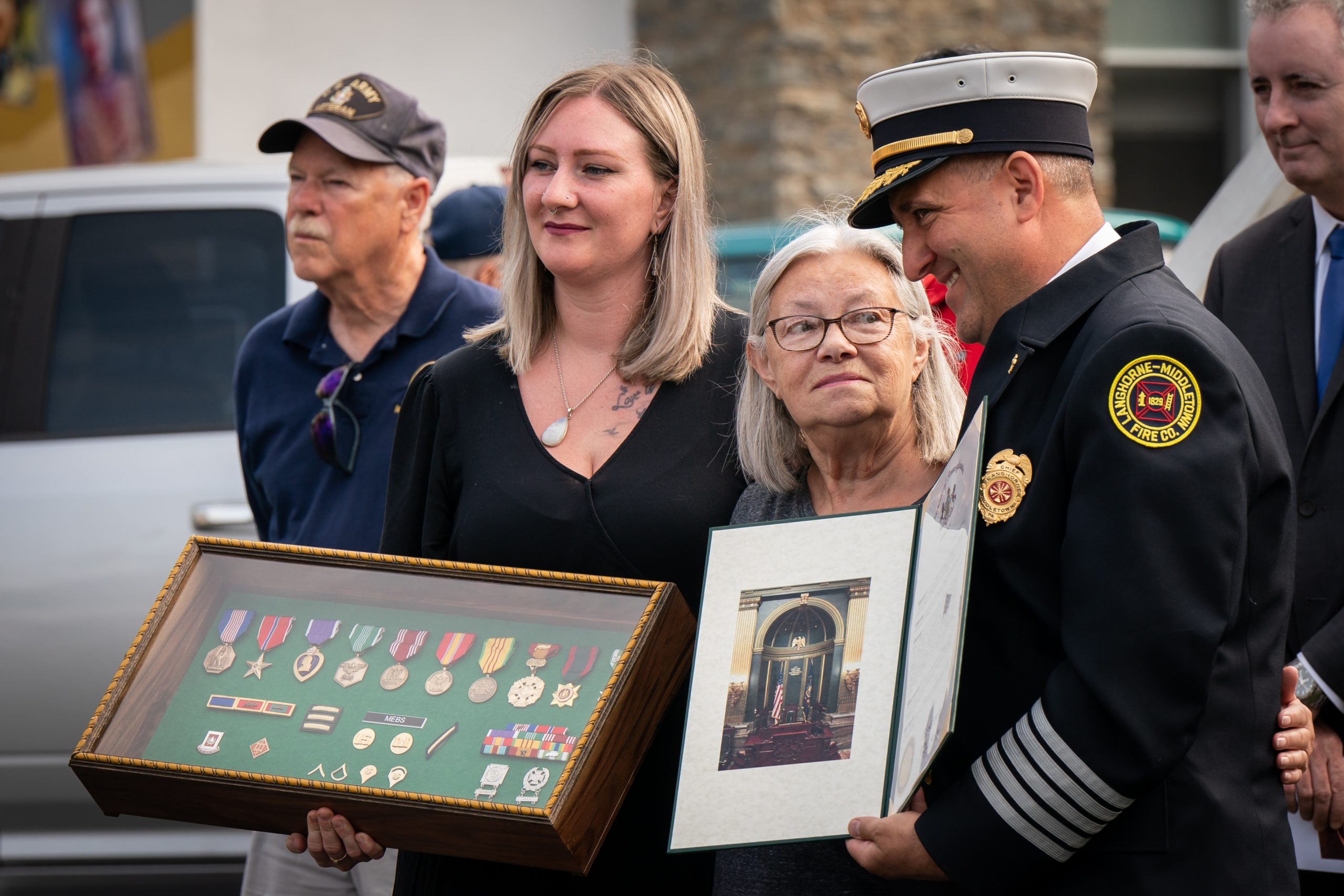
Sen. Frank Farry (R., Bucks), right, has been the Langhorne-Middletown Fire Company fire chief for more than two decades.Jessica Griffin / Staff Photographer
The skill games industry says many volunteer fire departments and Veterans of Foreign Wars posts generate income from their machines.
Pace-O-Matic upped the ante this year, targeting three sitting Republican senators who were facing primary campaigns this spring. A company affiliate contributed $1 million this year to the Citizens Alliance super PAC, which contributed $2.8 million to a state PAC of the same name.
The state PAC spent that money in part on TV ads and mail literature against incumbent Sens. Lisa Baker (R., Luzerne), Camera Bartolotta (R., Washington) — both of whom are members of GOP leadership — and Chris Gebhard (R., Lebanon). Gebhard wrote a bill last year that proposed taxing skill games at a rate the industry argued was too high.
Operators for Skill, the Pace-O-Matic-affiliated PAC, gave $950,000 this year to Citizens Alliance of Pennsylvania PAC, a separate state group that also invested in campaigns against the three senators.
Citizens Alliance is a national organization with chapters in several states, including Pennsylvania. Citizens Alliance CEO Cliff Maloney said his group opposes net increases in taxes and fees, and it works “with partners who agree and want to advance our principles.”
In Bartolotta’s race, voters were getting upward of six mailers each day about her that she described as filled with “every ridiculous lie and smear.”
She remains confused why she was targeted by Pace-O-Matic, arguing that she has always supported fraternal organizations and other small businesses using the machines as an additional revenue source.
“Clearly Pace-O-Matic was making money hand over fist and they didn’t want to be regulated and they didn’t want to be taxed,” Bartolotta said. “They wanted it to be the wild, wild west.”
The outside money prompted Senate Republicans’ campaign arm to spend hundreds of thousands of dollars protecting the incumbents, who ultimately prevailed. The senators also got a boost from sports betting interests, which spent millions backing their campaigns, Spotlight PA reported. That intervention came after a coalition of online sports betting sites helped stave off a last-minute effort to tax sports bets last year.
Asked about Pace-O-Matic’s decision to invest in those races, Barley said, “There’s a part of us that doesn’t feel like our positions were being heard fairly.”
Political skill
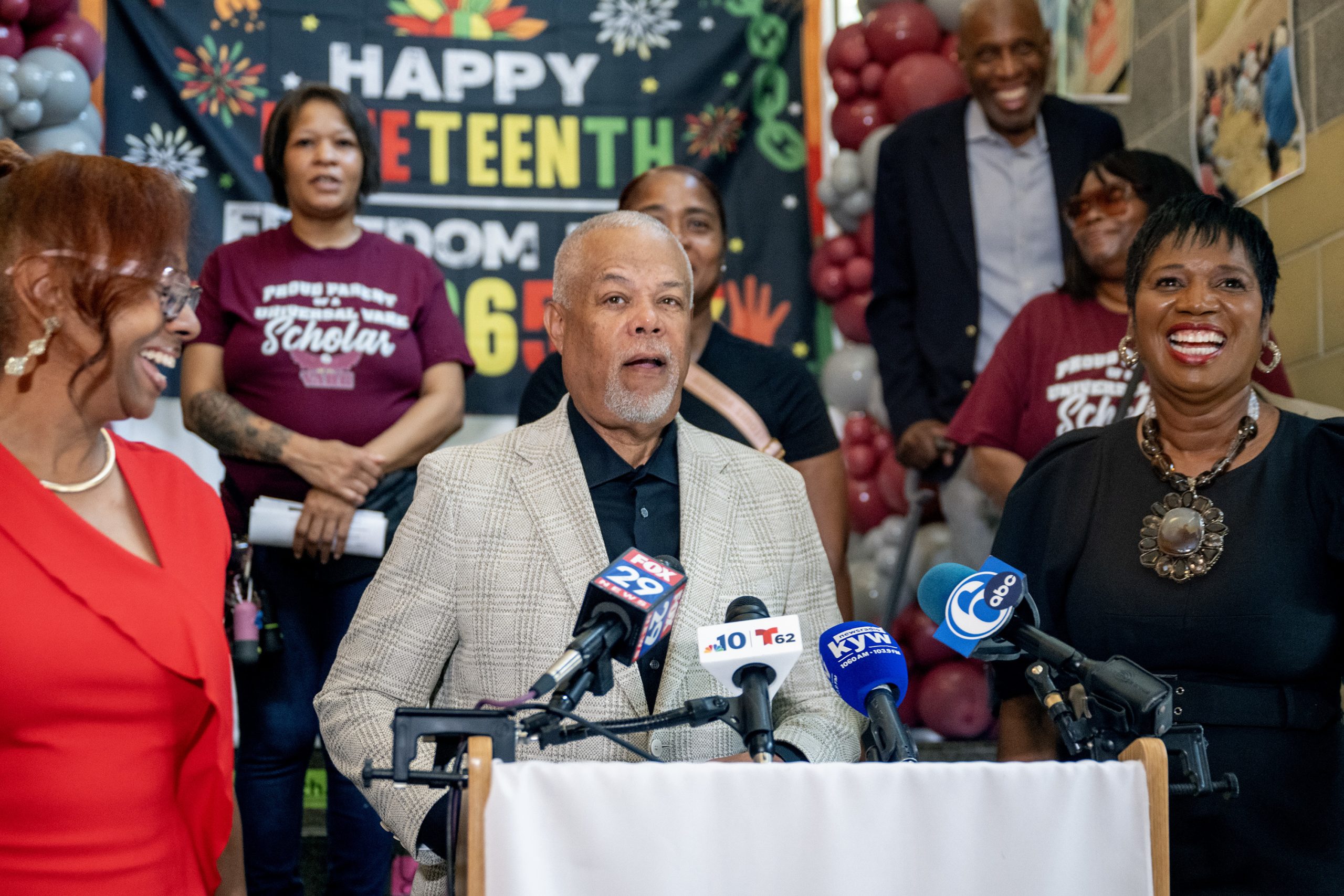
Despite the electoral setbacks, Pace-O-Matic has maintained support among a broad cross-section of lawmakers — from State Sen. Anthony H. Williams, a Philadelphia Democrat, to Yaw, the Lycoming County Republican — who point to the revenue skill games generate for small businesses.
“We signed up to protect the small-business owner, and in this time when everybody talks about affordability, I can’t afford a 52% tax,” Williams said at the recent rally, referring to the governor’s proposal.
He and Yaw have sponsored legislation backed by the industry that would impose the $500 monthly fees on game terminals. In an interview, Williams said the bill would reduce the number of skill games operators in his community “significantly” and ensure proper regulation, adding that he was concerned about locations that offer games in addition to selling liquor by the drink and loose cigarettes.
State. Sen. Anthony H. Williams in 2025.Tom Gralish / Staff Photographer
The political committee aligned with Pace-O-Matic, Operators for Skill, has contributed $70,000 to Williams’ campaign account since last year, records show. Williams, the top Democrat on a Senate panel that oversees gambling, said he developed his policy position before receiving that campaign money. He noted he has also received contributions from casino interests.
“I don’t get a contribution and then decide to support something,” he said. “I’ve never done that.”
Parx CEO Hausler said he is sympathetic to small businesses that host the machines but argued regulation will improve the quality of the games and reduce the number of locations competing with them.
But he argued that skill games should face the same tax rate as casino slot machines, and called the Yaw-Williams bill a “sweetheart deal.”
“I think of it like, ‘I was making $20 an hour in cash off the books. And now I gotta pay taxes,’” he said.
Hausler said Pennsylvania’s casino industry employs 15,000 people and pays more than $2 billion annually in gaming taxes that fund property tax relief, horse racing, and local government grants.
How legislators will balance those interests — and address a perennial budget deficit — is still taking shape. Under Shapiro’s proposed $53 billion budget, the state would spend $4.8 billion more than it is projected to take in over the next fiscal year.
“It’s important that lawmakers act. We don’t want something that’s rushed. We want something that grows the foundation for our future,” Doug Sprankle, a Western Pennsylvania grocery store owner who runs a skill games advocacy group, said during the Capitol rally.
There are signs that at least some lawmakers are not ready to cut ties with Pace-O-Matic or the skill game industry.
Pennsylvania House Republican leaders have invited prospective donors to a July 27 outing at the Aronimink Golf Club in Newtown Square, with a reception and dinner to follow the tournament, according to a fundraising solicitation obtained by The Inquirer.
Listed alongside the event’s sponsors was Operators for Skill, the Pace-O-Matic PAC.
Staff writer Gillian McGoldrick contributed to this article.
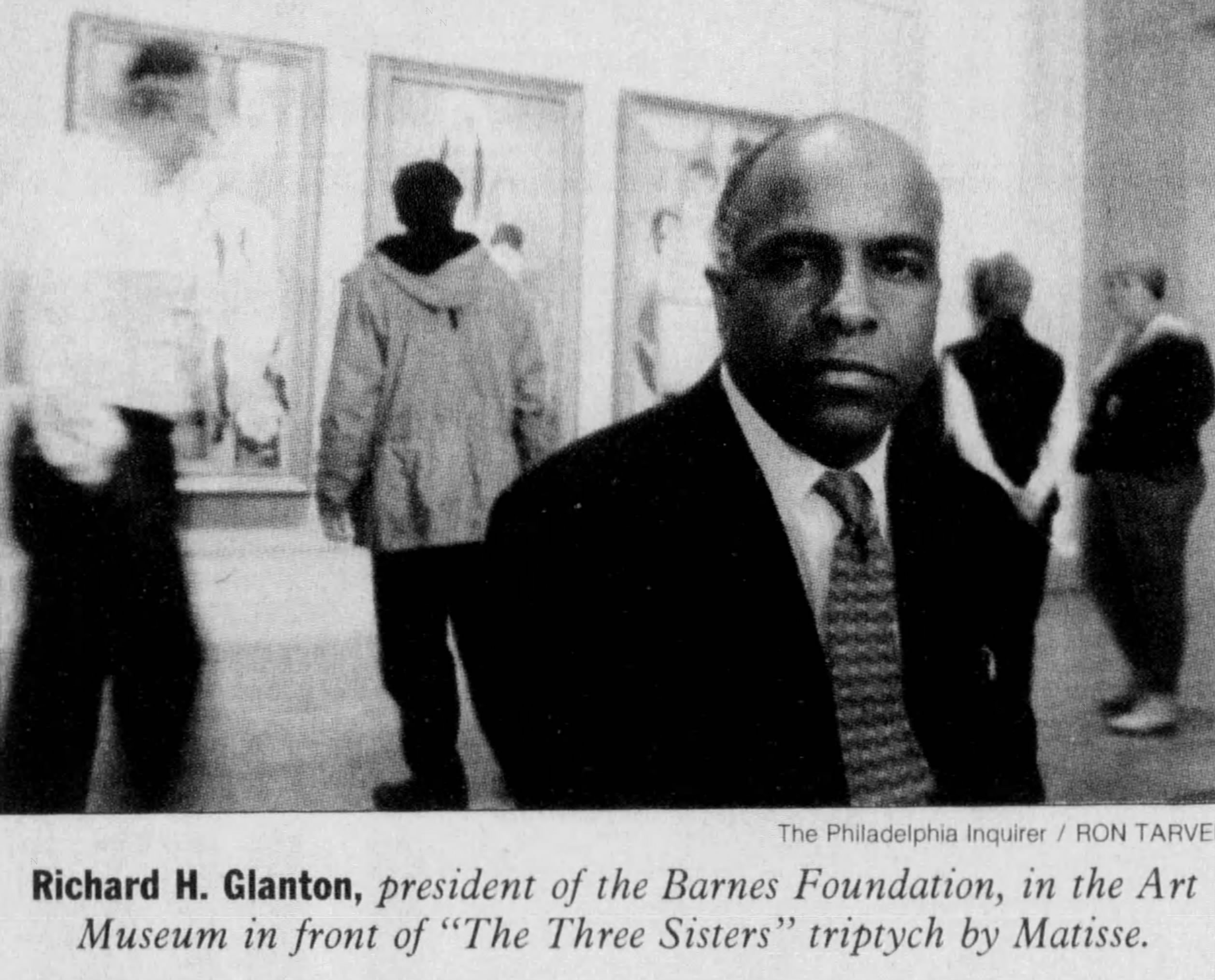
Richard H. Glanton, 79, formerly of Philadelphia, longtime lawyer, onetime executive deputy counsel to former Gov. Dick Thornburgh, business entrepreneur, former Lincoln University trustee, and innovative former president of the Barnes Foundation, died Sunday, June 21, of a heart attack at his home in Princeton.
Born and reared in rural Georgia and one of the first Black graduates of what is now the University of West Georgia, Mr. Glanton went on to become a prominent Philadelphia lawyer, state government policy and administration expert, corporate vice president, and indefatigable president of the Barnes Foundation’s collection of Impressionist, post-Impressionist, and modern art.
He was elected president of the Barnes Foundation in 1990, served until 1998, and championed a series of controversial initiatives to finance extensive gallery renovations and the operation of its art collection and related educational programs. To raise the money, he suggested, among other things, selling 15 of the collection’s hundreds of paintings, charging million-dollar fees for a worldwide lending tour of 83 paintings, extending visiting hours, increasing admission, building a new parking lot, selling a coffee-table catalog, and renting out its art studios.
All of his ideas, several of which did not materialize, drew supporters and critics, and Mr. Glanton, also a Barnes trustee, spoke often of his policy discussions with other Barnes officials, art experts around the world, politicians, and neighbors of the foundation building in Lower Merion Township. In 1990, he told The Inquirer: “I never purported to know anything about art. But I can lead.”
His most successful project turned out to be a two-year world lending tour of 83 foundation paintings that raised about $20 million and drew raves from museum leaders in Washington, Paris, Tokyo, Fort Worth, Toronto, and Philadelphia. The exhibition in Paris drew a then-record 1.5 million visitors, and Mr. Glanton was feted at every stop.
“Richard is somebody who started out by wanting to do something good and important and substantial, and persevered to do it despite a great deal of criticism,” Glenn D. Lowry, then director of the Art Gallery of Ontario, told The Inquirer in 1995.
Some critics said Mr. Glanton and others valued the foundation’s commercial success over its original educational role and what The Inquirer’s Edward J. Sozanski called “the Barnes mystique.” When the lending tour ended at the Philadelphia Museum of Art in 1995, Mr. Glanton told The Inquirer: “I never realized or understood that it could be controversial to make available to the public a collection that is a public trust.
“But I think if you think something’s right, you should do it, whether or not people disagree, and whether it is popular or not. … You have to think not only in terms of your lifetime, but in 100 years, 1,000 years. And when you do, these little slings and arrows don’t really matter that much.”
A story and this photo of Mr. Glanton appeared in The Inquirer in 1995.Newspapers.com
Mr. Glanton was executive deputy counsel to Gov. Thornburgh from 1979 to 1983, and he met often with constituents and helped fill judicial vacancies. “Richard is a political animal,” Ted Pillsbury, then director of the Kimbell Art Museum in Fort Worth, told The Inquirer in 1995. “He understands politics. He understands what makes politics work, and he understands people. And he does not take certain things personally.”
Mr. Glanton earned his law degree at the University of Virginia School of Law in 1972 and spent several years with the Equal Employment Opportunity Commission, United Airlines, and other companies. In Philadelphia, he represented politicians and other notable clients, and specialized in energy, insurance, and real estate cases for firms known now as WolfBlock and Reed Smith.
He was also senior vice president of corporate development at Exelon Corp., founder of a local TV station, social media company, and consulting firm, and board member at Aqua America, the Morris Arboretum, Children’s Hospital of Philadelphia, and other groups. He ended a workplace sexual harassment suit with a private settlement in the early 1990s and had public policy spats with local government officials and former Lincoln president Niara Sudarkasa.
He considered running for mayor in 1995. Former Gov. Ed Rendell said: “He was exceptionally bright, courageous, and never afraid to challenge the status quo in pursuit of what he believed was right.”
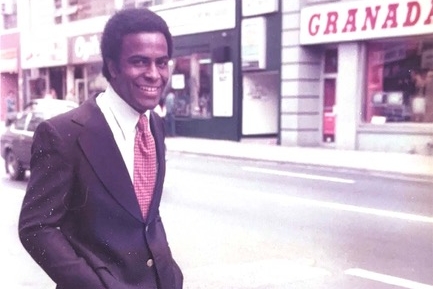
Mr. Glanton was at home in a suit jacket and tie.Courtesy of the family
One of 11 children, Richard Howard Glanton was born Nov. 21, 1946. He was reared in rural Villa Rica, Ga., did not start school until the fourth grade, and worked with his siblings for years on the family farm.
He earned a bachelor’s degree in English and, in 2005, was awarded an honorary doctorate from West Georgia. He married Scheryl Williams, and they had a daughter, Morgan, and a son, David.
After a divorce, he married Eileen Candia, and they had a daughter, Georgia. They lived in Philadelphia and Chicago, and moved to Princeton in 2009.
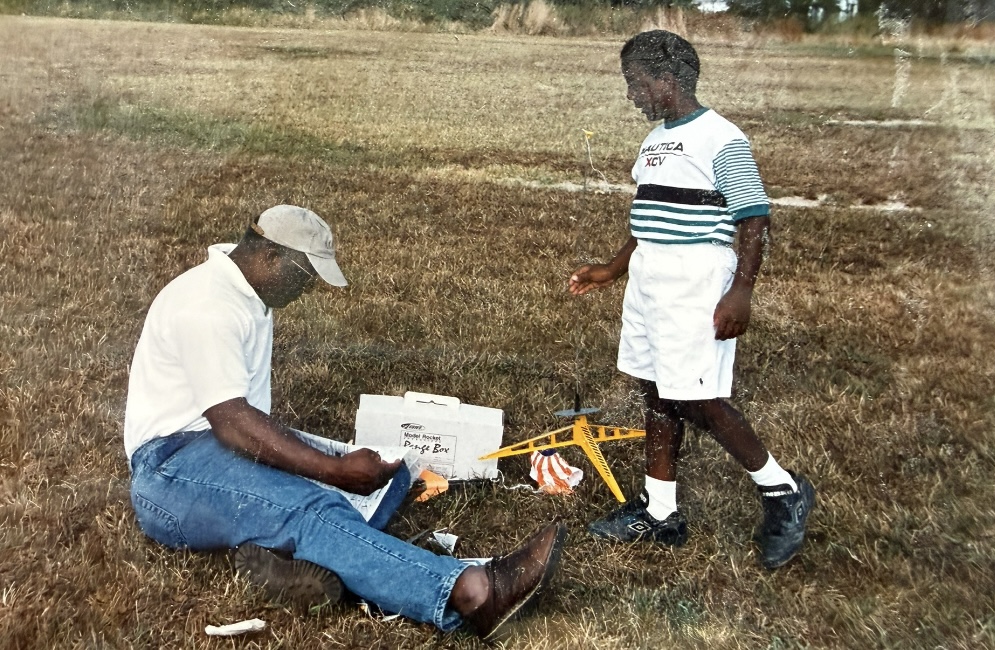
Mr. Glanton was a doting father, his family said. He taught his children to ride bikes and read Shakespeare. “He taught me that there was no room in which I didn’t belong or couldn’t strive to enter,” his daughter Morgan said. “I love him for that.”
Mr. Glanton was an avid reader and golfer.Courtesy of the family
Nearly everyone he met remembered his laugh and perpetual suit jacket and tie. He played golf, was an avid reader, and would talk politics for hours.
“He was fearless in his conviction to do what he believed was necessary and proper to achieve his goals and provide for his family,” his son said. His wife said: “He was kind and generous. He made everyone he spoke to feel special. He was always bringing you in.”
In addition to his wife, children, and former wife, Mr. Glanton is survived by two sisters, four brothers, and other relatives. One sister and four brothers died earlier.
Memorial services are to be held at noon Saturday, July 18, at Pleasant Hill United Methodist Church, 119 Thomas Dorsey Dr., Villa Rica, Ga. 30180, and at 11 a.m. Friday, Sept. 18, at the Union League, 140 S. Broad St., Philadelphia, Pa. 19102.
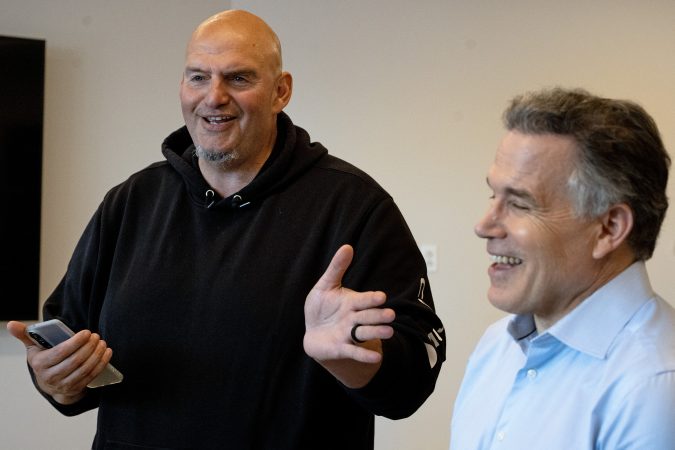
In a rare move, Pennsylvania’s two senators have created a joint fundraising committeethat would allow them to split money from donors who want to give to both of their campaigns, despite being members of different parties.
As polls have shown him losing support among Democratic voters, he has also reported raising significantly fewer campaign funds on his own and has not said if he will run for a second term in 2028.
Common Ground PA, which filedpaperwork with the Federal Election CommissionMonday, lists four beneficiaries for the joint fund: Fetterman for PA; Friends of Dave McCormick; Every Vote PAC, which lists Fetterman as the PAC sponsor; and Pennsylvania Honor, which lists McCormick as the leadership PAC sponsor.
A joint fundraising committee, first enabled by the FEC in 1977, allows two or more candidates, PACs, or party committees to coordinate fundraising efforts to share donations and expenses.
A donor can abide by federal contribution limits while still giving one check that can be allocated to multiple campaigns. But since these groups typically involve party committees, it is rare for these joint ventures to be bipartisan.
Mike DeVanney, a spokesperson for McCormick’s campaign, called the PAC a donor-driven effort.
“This group of donors value the collaboration exhibited by Senators McCormick and Fetterman for Pennsylvania and want to support both of them,” he said in a statement.
The joint fundraising committee was first reported by Politico.
The two senators have spoken often about their cross-aisle friendship since McCormick took office in 2025, and they have repeatedly teamed up in recent months.
They appeared alongside each other last week in Philadelphia to promote Trump Accounts, the new federally backed savings accounts for kids that became law with President Donald Trump’s signature One Big Beautiful Bill Act.
Fetterman has routinely criticized his own party, feuding with progressives on a range of issues, including Israel and immigration enforcement.
In a fundraising email sent in May, McCormick referred to Fetterman as one of his “closest working partners,” a realization that he said surprised even him.
In that drive, which asked donors to support his efforts to “work across the aisle to get results for the people of Pennsylvania,” McCormick praised his Democratic colleague.
“Senator John Fetterman and I couldn’t look more different. We don’t agree on everything. But we both grew up in Pennsylvania. We both know what it means to fight for working families who feel like Washington forgot them. And we both refuse to let politics get in the way of getting things done,” he wrote.
McCormick told reporters in May his friendship with Fetterman is the most frequent topic of conversation he hears, and he gets positive feedback from it.
“We look for ways to work together. I think people want that,” he said.
Individuals could donate to Fetterman or McCormick separately. But joint fundraising committees, which are used widely by both parties, pull in large checks from donors and split the money across multiple committees using a formula that adheres to federal contribution limits, according to an analysis from the watchdog group OpenSecrets.
Typically, though, campaigns jointly fundraise with their party.
Common Ground PA is among the few coordinated efforts across the aisle. A former PAC, the Problem Solvers Patriots, raised funds for members of both parties in previous election cycles.
Former U.S. Rep. Conor Lamb, who lost the Senate primary to Fetterman in 2022 and has not ruled out a run in 2028, blasted the move online as “Another betrayal from Fetterman.”
U.S. Rep. Chris Deluzio, a Western Pennsylvania Democrat who says he has received “a lot of encouragement” to run for Fetterman’s seat, also questioned the creation of the PAC.
“Helping the Republicans raise money to spend against Democrats is bad, right?” Deluzio said on X.
However, Fetterman has been notching strong approval from Republicans, and Pennsylvania Republicans along with Trump himself said he could receive GOP support if he switched parties.
Fetterman’s Republican support has also been growing at the bank with contributions from prominent GOP donors, particularly through his other joint fundraising committee and leadership PAC. At the same time, his fundraising has plummeted overall, raising less than half his previous annual totals in 2025.
Staff writers Gillian McGoldrick and Sam Janesch contributed to this article.
A federal judge had some good news this week for Josh Shapiro, governor of Pennsylvania, but not so much for Josh Shapiro, resident of Montgomery County.
Shapiro, as governor, cannot be sued in his official capacity in a dispute over a strip of yard between his and his Abington Township neighbors’ adjoining properties, U.S. District Judge Harvey Bartle III ruled Tuesday.
But Shapiro and his wife, Lori, will still have to face their neighbors in federal court as homeowners, Bartle also determined.
The conflict came into public view in February, when Jeremy and Simone Mock, whose backyard abuts the Shapiros’ lawn in a tree-lined neighborhood near Pennsylvania State University’s Abington campus, sued Shapiro — both as governor and in his individual capacity — and George Bivens, acting Pennsylvania State Police commissioner. The lawsuit alleged the officials were illegally occupying part of the Mocks’ yard to build an eight-foot security fence last summer in what they claimed was an “outrageous abuse of power” that violated their constitutional rights. Bartle dismissed those claims in his ruling Tuesday, in what Shapiro’s administration called a major win.
But while Shapiro and Bivens are immune from the federal lawsuit as state officials, Shapiro as an individual and his wife are not, Bartle’s opinion said.
“We are pleased that the court has dismissed the claims against the office of the governor and the Pennsylvania State Police, and recognize that the allegations against these officials are without merit,” said Rosie Lapowsky, a spokesperson for Shapiro. “The Shapiros are confident that the facts will ultimately show that the Mocks’ remaining claims are meritless and politically motivated and will fail.”
Shapiro’s safety remains a priority for state police, as one of the nation’s most prominent Jewish elected officials. A Delaware County man was arrested Wednesday for threatening to burn down the governor’s residence, state police said.
But the Mocks’ attorney, Wally Zimolong, said the lawsuit at hand is about property rights and due process, and called Bartle’s ruling a “strong decision.”
“Make no mistake about it,” Zimolong said, “a federal court has said that the sitting governor of Pennsylvania can be held liable for damages over constitutional violations.”
The Delaware County lawyer who has represented high-profile Republican officials and candidates, including President Donald Trump, said it is “nonsense” to call the litigation political. Zimolong added that he hopes the Shapiros reconsider and attempt to resolve the case amicably.
The conflict’s origins
The dispute between the Shapiros and Mocks began last summer when, as part of a plan to build a security fence at the Abington house, a surveyor learned that a sliver of yard that the Shapiros had used for over two decades was actually on property belonging to the Mocks.
After the Mocks rejected the Shapiros’ offer to buy the land, court fillings said, Pennsylvania’s first couple invoked a state law that allows a person to gain ownership of a property they have actively used for at least 21 years. The Shapiros have lived in their Montgomery County home for 23 years.
“What followed was an outrageous abuse of power by the sitting Governor of Pennsylvania and its former Attorney General,” the Mocks’February lawsuit said.
(function() { var l = function() { new pym.Parent( ‘shapiroyard__graphic’, ‘https://media.inquirer.com/storage/inquirer/ai2html/shapiroyard/index.html’); }; if(typeof(pym) === ‘undefined’) { var h = document.getElementsByTagName(‘head’)[0], s = document.createElement(‘script’); s.type = ‘text/javascript’; s.src = ‘https://pym.nprapps.org/pym.v1.min.js’; s.onload = l; h.appendChild(s); } else { l(); } })();
A security fence was purchased but never installed, SpotlightPA reported. Instead, contractors hired by the state began planting arborvitae-type trees and other plants on the Mocks’ property. State police also flew drones over the Mocks’ property, threatened to remove healthy trees, and chased away contractors, the Mocks alleged in the suit.
The complaint also accused Shapiro of directing state police to patrol the property, and instructing the Mocks to leave the “security zone.”
The Shapiros’ countersuit in Montgomery County asks a judge to find that they are the “legal and equitable owners” of the area in dispute, having tended to the land that borders their front yard for 23 years. That suit is pending and a judge is expected to rule on preliminary objections filed by Zimolong.
Separately, the Shapiros and state attorneys filed motions asking Bartle to dismiss the federal complaint against them.
This week, the judge partially obliged, finding the stateofficials to be immune from the lawsuit while allowing the case against the Shapiros to proceed.
The judge also refused to freeze the federal case while the lawsuit in Montgomery County plays out, determining that the two cases are different enough to proceed.
“The claims here extend far beyond a disagreement between neighbors over the metes and boundaries of their properties,” Bartle wrote.
A Delaware County man was charged Wednesday after allegedly making threats againstGov. Josh Shapiro during a visit to a state representative’s office, including a threat to “burn down … [Shapiro’s] mansion with him in it,” Pennsylvania State Police said.
Police said the threats occurred when Richard John Franklin, 65, of Brookhaven, visited State Rep. Leanne Krueger’s legislative office in Brookhaven alongside his brotheron Tuesday to dispute and request help with an unanticipated and unpaid tax bill totaling $19, according to the criminal complaint. When a staffer tried to assist Franklin in completing a form to waive the taxes, Franklin “became irate and crumbled up the paper,” police said.
Franklin then began making threats the staffer believed were “threatening, harassing, and antisemitic in nature,” according to the complaint, including: “I guess I’ll pay that Jew. That Jew needs the money more than me” and “I’d like to burn down his [expletive] mansion with him in it.” Police said Franklin repeatedly referred to Shapiro as a “‘Jew’ multiple times in a negative manner.”
State law enforcement officers charged Franklin with felony levels of terroristic threats and ethnic intimidation, in addition to lower-level charges of harassment and disorderly conduct.
Shapiro, a Democrat who is among the most prominent Jewish officials in the country, has faced multiple threats of violence since becoming Pennsylvania’s top executive. In April 2025, a man broke into the state-owned governor’s mansion on the first night of Passover with a hammer and set several firebombs inside while Shapiro and his family were sleeping in a different part of the residence. The man, Cody Balmer, later pleaded guilty to attempted murder and was sentenced to 25 to 50 years in prison.
Pennsylvania Gov. Josh Shapiro pauses during a news conference at the governor’s official residence discussing the alleged arson that forced him, his family and guests to flee in the middle of the night on the Jewish holiday of Passover, Sunday, Apr. 13, 2025, in Harrisburg, Pa.AP Photo/Marc Levy
Early Wednesday, investigators from the state police political violencethreat unit visited Franklin at his Brookhaven home, where he provided conflicting accounts of what occurred at Krueger’s office before ultimately admitting to “calling the Governor a ‘Jew’ in a negative manner” and added that his “brother told him he should not have made the statement,” according to the criminal complaint. Franklin denied making any threats toward Shapiro, but admitted to referring to the previous arson attempt at the governor’s residence during the outburst, police said.
State police said they arrested Franklin without incident.
Franklin’s brother, who witnessed the events at Krueger’s office, disputed the state police account and said his brother never threatened the governor.
Leroy Franklin, 72, of Chester, said his brother visited the state representative’s office seeking information about a tax bill he had received, despite paying his state taxes through an accountant this year.
After the brothers spoke to a staffer who did not have answers for them, Richard Franklin became upset and raised his voice, Leroy Franklin said.
In a phone interview Wednesday, Leroy Franklin recalled his younger brother saying something to the effect of: “I’ve been on disability for 15 years, but I guess the state needs my money more than I do.”
The two were together at Krueger’s office the entire time, Leroy Franklin said, adding that he did not hear his brother use an antisemitic slur. He also disputed that his brother threatened arson.
“Anybody who said he did is lying,” Leroy Franklin said.
Around 2 a.m. Wednesday, Leroy Franklin said, he received a call from his younger brother. Richard Franklin told him that police were at his apartment and he was not sure where they were going to take him, Leroy Franklin recounted.
When the two spoke on the phone again later that morning, Leroy Franklin said, he learned police were taking his brother to jail.
“I don’t know what the heck anyone is talking about,” Leroy Franklin said Wednesday. “This is a bit extreme, to put it mildly.”
Richard Franklin was being held at the Delaware County prison with bail set at $100,000, according to court records. A preliminary hearing is scheduled for July 16, according to court documents. A lawyer for Franklin was not listed on court records.
Franklin is a registered Democrat, Pennsylvania voting records show. He has no prior convictions in Pennsylvania.
Shapiro’s office referred requests for comment about the incident to state police.
In a statement Wednesday, State Police Sgt. Logan Brouse said the agency “takes threats against the lives of public officials seriously,” noting the state police political violence threat unit was created “to address the growing amount of ideologically motivated violence against elected officials.”
The unit was created in May, after a Lebanon County man allegedly posted a “hit list” to social media targeting 20 state Democratic lawmakers. Adam Berryhill, 42, was arrested on May 6, after he was connected to an X account that posted a potential plan to attack the legislators. Some of the lawmakers named on the list said they had not been alerted to the threats against them, prompting state police leaders to update their communication protocols and create the investigations unit.
Krueger (D., Delaware) referred a request for comment to a spokesperson for House Democrats.
Nicole Reigelman, a spokesperson for House Speaker Joanna McClinton (D., Philadelphia), said in a statement that threats of political violence are becoming commonplace, “and every incident must be treated with the seriousness it deserves.”
“Healthy democracies depend on robust debate and respectful disagreement — not threats, intimidation, or violence,“ Reigelman added. ”Political violence has no place in our communities, and Pennsylvanians must unite in condemning it whenever and wherever it occurs.”
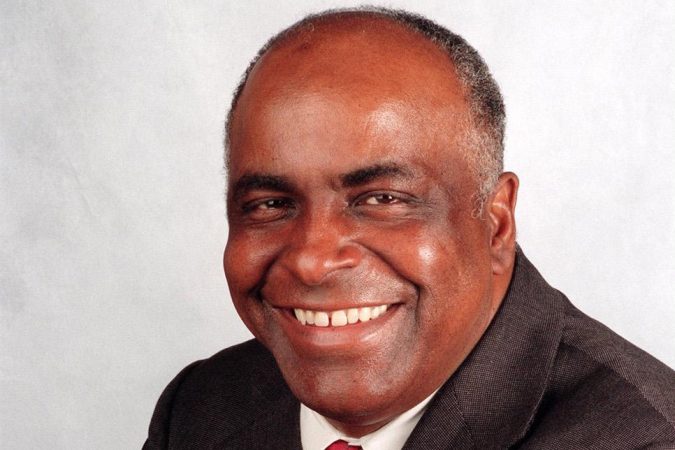
Pennsylvania elected officials are mourning the death of former State Sen. Shirley Kitchen, the second Black woman to serve in the state Senate and a champion for progressive issues who represented parts of North Philadelphia for more than two decades. She died Saturdayat 79. A cause of death was not immediately clear.
Kitchen represented the 3rd Senatorial District, composed of parts of North Philadelphia, for 20 years. She is remembered by her former colleagues as a pillar and matriarch of her community who worked tirelessly to improve the lives of low-income people, even after she retired.
“She did so many things for so many people. Now that I’m old enough to appreciate it, I’m not quite sure how she did it — and she did it with such force,” said State Sen. Anthony H. Williams (D., Philadelphia), who served alongside Kitchen in the Senate and had known her for decades. Kitchen was elected to the state Senate in 1996 and served five terms before retiring in 2016.
Her former colleagues, some through tears, credited many of Pennsylvania’s recent criminal justice reforms as being born under Kitchen’s leadership, with her early legislative proposals paving the way for their passage years later. For example, Kitchen authored early drafts of what is now known as the Clean Slate Act, which automatically seals some nonviolent convictions after 10 years, hiding them from most employer and landlord background checks. She first introduced similar legislationin Harrisburg years earlier and it failed. In 2018, two years after Kitchen retired, the Clean Slate Act became law in Pennsylvania and was heralded as a first-in-the-nation model for criminal justice reform.
Elected officials across the city shared their condolences, remembering Kitchen as an advocate who cared deeply for her community.
Mayor Cherelle L. Parker in a social media post on Sunday recalled Kitchen as “fighting for people who often had no one else to fight for them,” and as a trailblazer for Black women in politics.
“Shirley Kitchen cared about working people, and she cared about Philadelphia,” said Parker, the city’s first Black female mayor and a former state representative.
City Council President Kenyatta Johnson said in a statement that Kitchen “never forgot who she was fighting for,” dedicating her life to making people’s lives better.
State Rep. Joanna McClinton (D., Philadelphia), Pennsylvania’s first Black female speaker of the House, wrote in a social media post that Kitchen was “a mentor and her service in the state House and Senate inspired me greatly.”
Williams added that Kitchen also sought to elevate other Black politicians, like himself, to elected office — and laid the groundwork for much of the city’s current political progressivism.
“The reality is that a lot of the infrastructure that helps them, Shirley had everything to do with it, and more,” Williams said, noting her advocacy and experience during the Civil Rights Movement. “I would hope the progressives in this generation would tip their hat to a generation that really created the progressive movement.”
State Sen. Sharif Street (D., Philadelphia) had known Kitchen since he was a child, and said she helped him see the power a Senate seat has in improving the lives of his neighbors. When she decided to retire, Kitchen encouraged Street, who was on her staff at the time, to run to fill the vacancy in the 3rd District following her fifth and final term in the state Senate.
Williams and Street recalled Kitchen as a fair but demanding mentor.
“If she told you to do something, you better do it,” Williams said, with a laugh.
For Street, Kitchen “didn’t limit her advice. She had opinions about everything in my life, including when my wife was right and I needed to listen to her.”
Street said he spoke with Kitchen weekly, and Williams said he remained in touch with her as recently as last month. She often had ideas or issues she wanted the senators to take up. Street spoke with her last week about a forthcoming Registered Community Organization meeting that she was leading about a new proposed development nearby, emblematic of her continued involvement in her community.
Prior to her election to the state Senate, Kitchen was involved in the National Welfare Rights Movement, which was a progressive advocacy group for the dignified treatment of women and children, largely led by Black women, during the 1960s and 1970s, Williams said.
Kitchen served as the minority chair of the Senate Public Health and Welfare committee, in which she often leaned on her social work experience to inform her legislative proposals.
A Democrat in a time where Republicans controlled the state legislature, she served her entire tenure in the minority party, but was still able to garner bipartisan support for some of her legislative proposals.
“This image of her being an urban Black woman from Philadelphia would limit her ability to get stuff done in the Senate just wasn’t true,” Williams added. “She could analyze people and figure out what way to approach them with exceptional skill.”
Born in 1946 in Augusta, Ga., Kitchen attended the Philadelphia School District and graduated from Antioch University in 1979 with a bachelor’s degree in human services, according to her Senate Library biography. She went on to work for former Philadelphia Mayor John Street, Sharif Street’s father, before she was elected to the state House in a special election in 1987. After she lost reelection to the seat in 1989, Kitchen returned to Harrisburg a decade later after her election to represent the 3rd Senatorial District.
“She was a transformational figure that loved her community and understood that the purpose of those of us holding elected power is to be able to make a difference in the lives of the people we serve, in a way that they can feel and see,” Sharif Street added.
Funeral services will be announced in the coming days, he said.
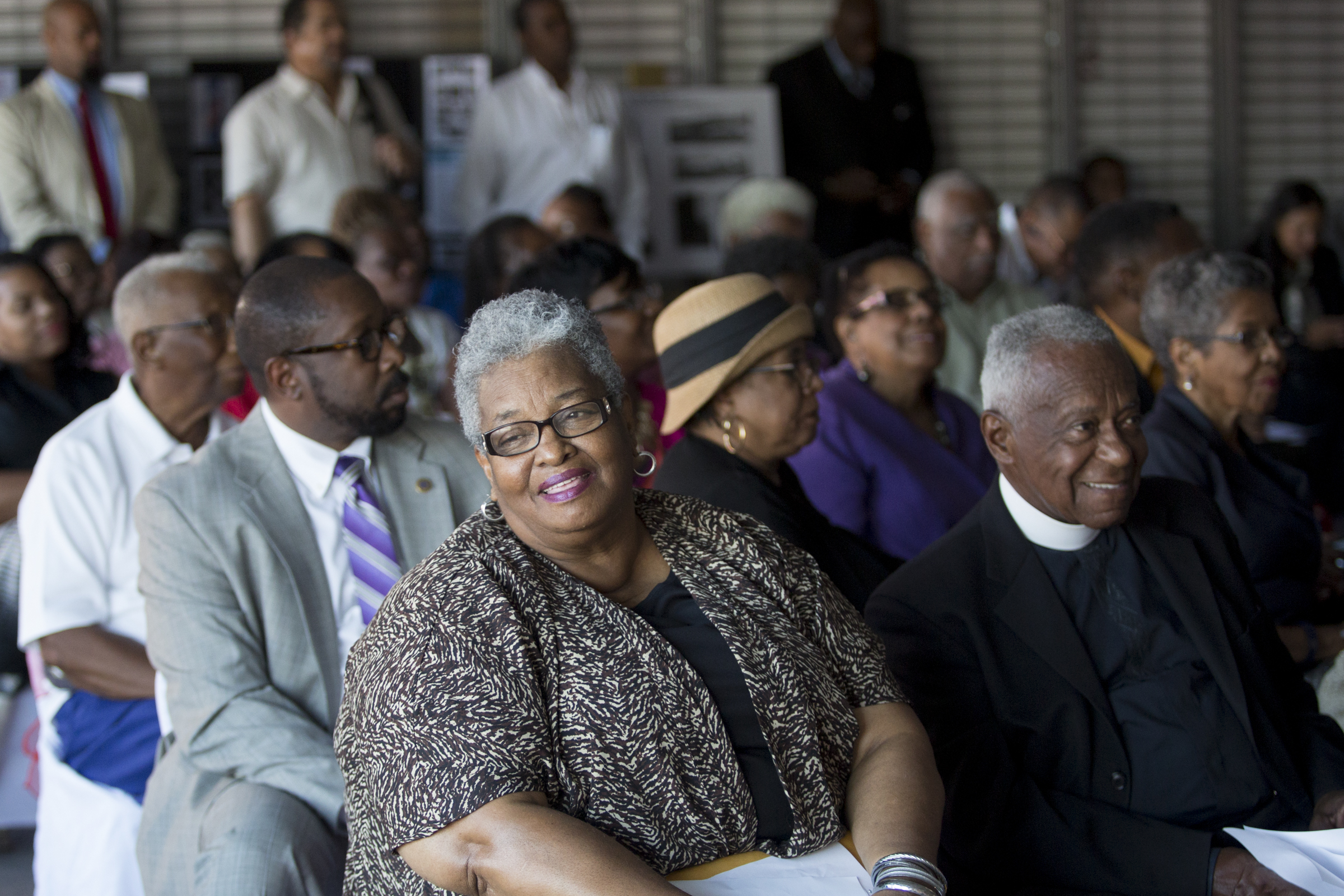
Senator Shirley Kitchen in the audience during speeches in honor of the historical marker that was unveiled at Sullivan Progress Plaza September 14, 2016. The plaza was the first black-owned and operating shopping center in America. Wednesday, Sept. 14, 2016.Margo Reed/ Staff Photographer