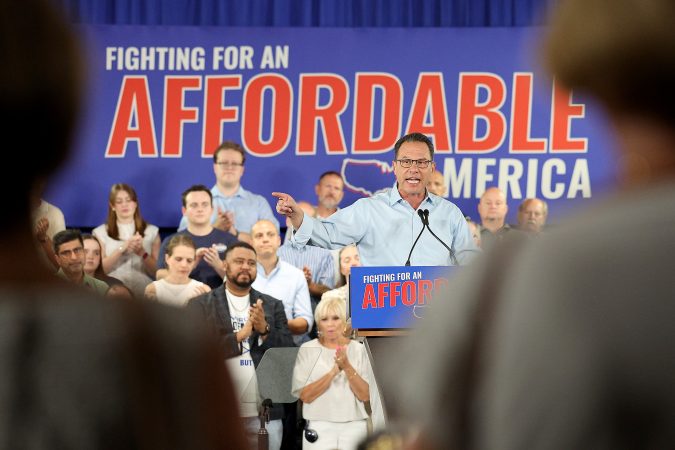
BETHLEHEM — It was not by happenstance that House Minority Leader Hakeem Jeffries (D-New York) chose a union hall here in the Lehigh Valley to launch the final 100-day sprint toward the midterm election. “This is ground zero for the battle to control Congress,” the speaker-in-waiting declared.
The same could be said for the centrality of this state — and this election — to the presidential aspirations of a Democrat who shared the stage Sunday with Jeffries: Pennsylvania Gov. Josh Shapiro.
Were the popular governor to run nationally in 2028, and the current assumption is he will, what happens in his crucial state in November could be a compelling argument not only for his electability but for his ability to carry others over the finish line.
This year, Pennsylvania holds four of the House races that Democrats consider to be among their top opportunities for flipping Republican-held seats. That’s more competitive races than in any other state, according to the House Democrats’ campaign operation.
President Donald Trump carried three of those districts in 2024. But in the 2022 gubernatorial election, Shapiro, then the state’s attorney general, won all four by double digits against a far-right opponent.
“Pennsylvania is always the ultimate swing state, the state that kind of decides it all,” Shapiro, who is running for a second term, said in an interview. “And so it is not a stretch to imagine if we win these races here, that’ll create a Democratic majority in the U.S. House.”
Shapiro is a heavy favorite against the Republican gubernatorial nominee, State Treasurer Stacy Garrity. He has raised more than $50 million to run up the score, and create an updraft that could help candidates lower on the ballot.
He has also had a hand in who those candidates are. Shapiro endorsed the Democratic candidates in all four of Pennsylvania’s most hotly contested congressional districts in their primaries. One of them, Bob Brooks, spent 20 years as a firefighter in Bethlehem and was Shapiro’s pick in a hard-fought primary to take on Republican incumbent Ryan Mackenzie. In 2024, Mackenzie beat Democratic Rep. Susan Wild by one percentage point.
As he prepared to introduce Shapiro here on Sunday, Brooks emphasized his background as an outsider who can relate to the pressures that ordinary people are under: “I have to be honest. Running for Congress was not on my Bingo card. I’m not a politician. Far from it, actually. I’m a regular working person, like so many of the faces that I see in this room.”
Meanwhile, Keystone State Democrats are also hoping to flip the state senate, where Republicans have a 27-23 majority, while also maintaining their narrow hold on the House. If they can do it, they would be looking at their first unified hold on state government in more than three decades.
Shapiro has pledged he would use that power to raise the minimum wage to $15 an hour, from its current $7.25; fund mass transit; build more housing and codify abortion rights into state law.
All of which could be rolled into a national message, the outlines of which became apparent as the governor talked about his agenda. “We all need to do our part to stop the chaos and cruelty and corruption of Donald Trump,” he said, “and that’s going to require us here at the state level having a trifecta so that we can pass policies that help the people of Pennsylvania while Trump is hurting them.”
Having seen his state vote twice for Trump, in 2016 and 2024, Shapiro is working to build up the Democratic infrastructure. He recently unveiled a multimillion-dollar effort that party officials say is the largest coordinated midterm operation in the state’s history. It boasts having opened 27 offices across the state and hiring nearly 100 full-time organizers.
The governor has also addressed one of the more worrisome trends for Pennsylvania Democrats: Their voter registration advantage over Republicans had dropped precipitously over recent election cycles.
Between 2020 and 2024, the registration gap between the two parties had fallen by more than half, to 325,000 Democrats from 686,000 Republicans. It was a warning sign that Trump was going to win the state and its 19 electoral votes.
This year, with the midterms approaching, the numbers are starting to turn around; Democrats have added nearly 25,500 to the registration rolls, while Republican numbers have dropped by more than 4,500, according to voter registration data analyzed by PennLive.com.
Retooling and professionalizing the party is a project that Shapiro began almost a year ago, he said, and now, “I’m investing millions of dollars in helping elevate other Democrats on the ballot, spending my time campaigning for people like Bob Brooks and others.”
If all of this works as he hopes, it might be the foundation for a presidential campaign. Unknowable at this point, however, is whether the Democratic base in 2028 will be looking for a Mr. Fix-It whose appeal stretches across party lines, or will move further leftward in its fury at the establishment.
Shapiro insists — as presidential candidates nearly always do at this stage of the game — that none of this is his concern at the moment.
“What I’m focused on are these midterms,” which in Pennsylvania “will be decided on a razor’s edge,“ Shapiro said. “Folks are fed up and angry and frustrated. The best way to demonstrate that, the best way to show that we’re against what Trump is doing, is to show up and vote in record numbers.”
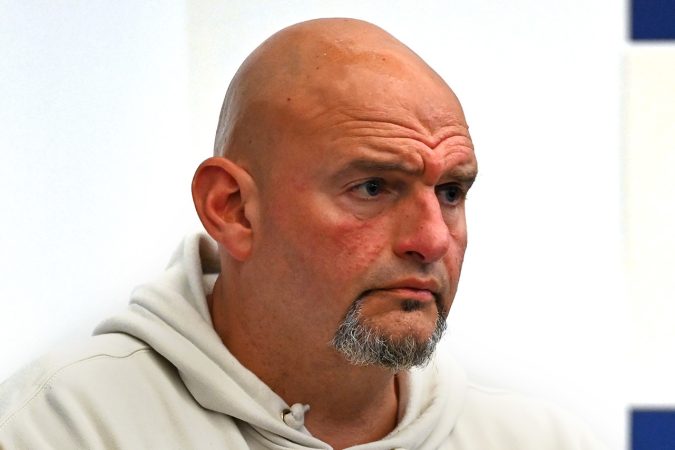
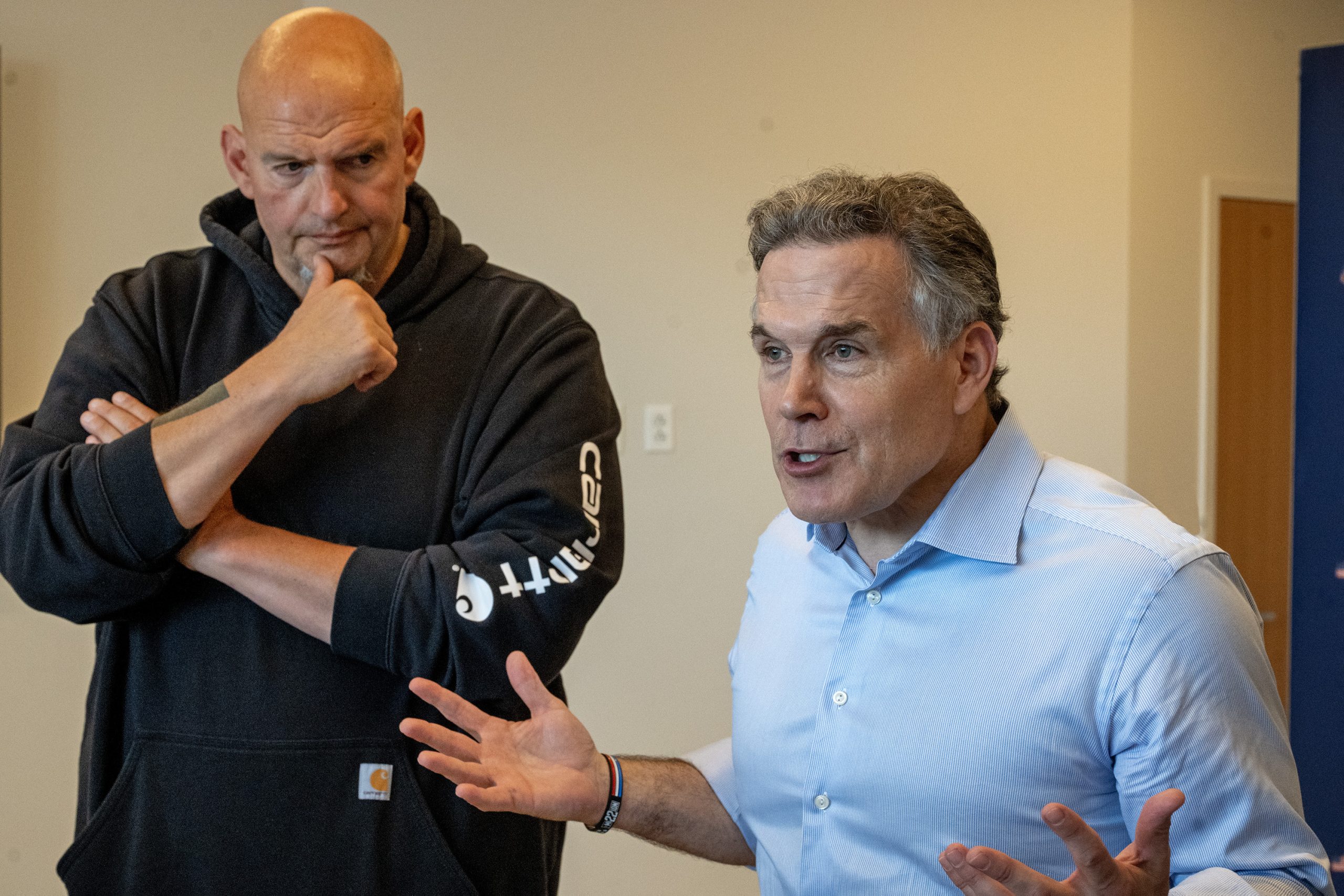
WASHINGTON — U.S. Sen. John Fetterman, doubling down on a position that has already added to Democrats’ frustrations with him in recent months, offered a more detailed explanation this week for his change of heart about eliminating the Senate filibuster.
The Pennsylvania Democrat wrote in an op-ed for the Washington Post that he had been “horribly wrong” to support ending the practice that requires bills to win 60 votes rather than a 51-vote majority.
The rule frequently allows members of the minority party to block policies that fail to win bipartisan support, including some of each party’s top priorities — like abortion protections when Democrats have been in control, or the voting restrictions that Republicans are now attempting to pass at President Donald Trump’s urging.
Fetterman was among many Democrats in recent years to campaign on eliminating the filibuster in order to secure those bigger wins. During his 2022 campaign, he specifically referred to passing abortion protections established under Roe v. Wade as a reason for that position after the Supreme Court overturned its landmark 1973 decision that year.
“I became one of the first candidates in the country to call for abolishing the filibuster for a reason: it stands in the way of getting things done for [Pennsylvanians],” his active campaign website still read on Tuesday, nearly four years after he won.
But as he has more frequently sided with Republicans and criticized his fellow Democrats, Fetterman has said repeatedly this year that he had been “wrong.”
“We were very wrong about that to nuke the filibuster, and we should really humble ourselves,” he said on Fox News in February. In that interview and others, he needled Democrats who opposed the filibuster but now, he said, express a “love” for it as they find themselves in the minority and try to reject Republican policies.
In the Washington Post this week, Fetterman wrote that Americans who are “horrified” at the policies coming out of the Republican-led Congress and Trump’s administration would be alarmed if the filibuster had been eliminated and every proposal could become law with a simple majority.
“We’d have the Save America Act by now, which I do not support,” Fetterman wrote. “We could have extreme policies such as nationwide abortion restrictions, backpedaling on LGBT rights, repeal of birthright citizenship and limited voting rights across the country. With a government trifecta firmly in place, many provisions of Project 2025 would have easily been enacted. Republicans could fundamentally change the entire government and country with a simple majority vote.”
Fetterman’s reference to the SAVE America Act comes as Trump has pressured Senate Republican leaders to eliminate the filibuster in order to pass the bill, which would enact sweeping election changes. It would require individuals to provide proof of citizenship when registering to vote and to show photo ID at the polls, and it would scale back mail voting.
Opponents of the bill say it would make registering and voting more difficult for millions of people. And Fetterman has opposed the bill because of the changes to mail voting, though he has changed his position to support requiring a photo ID at the polls.
The bill has failed to receive support from 60 senators, and Trump has demanded that Republicans bypass the filibuster to force it through with only GOP support. U.S. Sen. Dave McCormick (R., Pa.), a Trump ally, has said such a scenario is “very tempting” even though he campaigned against ending the filibuster in 2024.
“It’s a path to get more things done,” McCormick said during a telephone town hall with constituents last week.
Fetterman, in his op-ed, called the filibuster “a critical line of defense that prevents President Donald Trump from having a fill-in-the-blank government with new laws, deregulation or procedures of its choosing.”
He wrote that “history has vindicated” former U.S. Sens. Kyrsten Sinema (D., Arizona) and Joe Manchin (D., W.Va.) for voting with Republicans to block reforming the filibuster when Democrats were in control in 2022.
Fetterman could potentially play a similar role after the midterm elections this fall if Democrats win control of the Senate with a slim, potentially one-vote majority. Some observers have said Fetterman could also leave his party, becoming a Republican or — as Sinema and Manchin did after serving as Democrats — become an independent.
“Some of my colleagues, including myself, have been frustrated when engaging with the minority,” Fetterman wrote. “But that process isn’t a bug — it’s one of the best features of the Senate. We have a great democracy that is imperfect, but it requires working together.”
As Fetterman works more often with Republicans, though, Democrats have become more frustrated with him and vowed to mount a challenge if he seeks a second term in 2028.
Former U.S. Rep. Conor Lamb — one of the Democrats who has not ruled out another campaign after losing to Fetterman in the 2022 primary — has said the senator’s switch on the filibuster “is probably the worst Fetterman story yet” that most people don’t realize.
In a social media video in early June, Lamb said eliminating the filibuster was essential for Democrats to “put Roe v. Wade back into law” and to pass legislation on voting rights, gun control, and raising the minimum wage if they regain control of the Senate.
“When we ran against each other, he promised he would fight for women on this issue and get rid of the filibuster,” Lamb said. “And of course, like so many things, he’s changed his mind.”
HARRISBURG — Democrat Paige Cognetti is taking a shot at artificial intelligence data centers in her challenge to freshman Republican Rep. Rob Bresnahan, saying “we’re not for sale” in a new TV ad in a swing Pennsylvania congressional district where communities are fighting data center projects.
The race between Cognetti, the mayor of Scranton, and Bresnahan is considered one of the Democratic Party’s best opportunities to pick up a seat in the November election in its bid to take control of the U.S. House and block President Donald Trump’s agenda.
Cognetti is airing the ad in a district that’s been buffeted by AI data center projects and as the opposition to data centers that has upended races for local offices across the country is spreading to top-of-the-ticket contests.
Speaking to the camera, Cognetti invokes the region’s industrial heritage as a coal and shale gas powerhouse, saying, “Big companies have come before, taken what they wanted and left us with their mess to clean up. Now it’s data centers.”
She then criticizes the secrecy that developers often use to veil details of projects from the public, the tax breaks developers often get from states and the rising electric bills that have hit the mid-Atlantic region to satisfy the growing energy demand of data centers, which house rows of computers for storing, processing and transmitting data.
“Big Tech needs to pay their own way. Not hide behind NDAs. No tax breaks. Don’t raise our electric bills, don’t poison our water. And hire local, union labor,” Cognetti says.
If not, “then get out,” she says. “This is our home. We are not for sale.”
However, communities across the U.S. have fought many of the projects, including in northeastern Pennsylvania, where complexes of data centers and new high-voltage transmission lines are planned. Fights between communities and developers have landed in court.
The 30-second ad will run on broadcast TV channels, cable and digital platforms, Cognetti’s campaign said. It is costing about $200,000 for the initial run of two weeks.
Bresnahan has introduced legislation called the Local Control Protection Act, which he says would put limits on a corporation’s right to sue over local zoning decisions denying an application to build a data center.
“We should never let billion-dollar corporations supersede the voices of those who live in the community,” Bresnahan said in a statement accompanying the bill’s introduction in June.
The bill has yet to move out of committee or gain a cosponsor.
Republicans have made protecting Bresnahan a high priority. Both Trump and Vice President JD Vance visited the district last year.
The day after President Donald Trump delivered a prime-time speech contending, among other claims, that 250,000 noncitizens were registered to vote in just four states, Pennsylvania Gov. Josh Shapiro derided it as“a whole bunch of conspiracy theories that are just simply not connected to reality.”
A week later,when New Jersey revealed that 6,600 noncitizens were improperly registered to vote in the state and nearly 400 cast a ballot due to a glitch, Shapiro’s message was nearly identical — that Trump ispushing “baseless conspiracy theories” as he seeks more power over state-run elections.
Pennsylvania and New Jersey were both on the list of Democratic-led states that Trump claimed had thousands of noncitizens on their voter rolls. The methodology of how the Trump administration arrived at that figure remained unclear, but his administration has sought to leverage the New Jersey disclosure as evidence of a larger problem.
But Shapiro and other national Democrats have not shifted their messaging on the issue ahead of the high-stakes midterm elections.They are refusing to cede to the GOP any suggestion that New Jersey’s voter rolls are evidence of widespread voter fraud and arewarning that the changes Republicans seek would make it tougher for many Americans to vote.
“Withholding this funding will make our communities less safe and would be dangerous under any circumstance, but doing this in an attempt to undermine states’ authority over elections is reckless and unconstitutional,” Shapiro said.
Kentucky Gov. Andy Beshear, another potential 2028 candidate, also joined the suit. (Both Shapiro and Beshear lead states with Republican attorneys general.)
The day after Trump’s speech, Shapiro challenged the administration to present “real evidence” of noncitizen voting, which Pennsylvania election officials say is extremely rare.
In addition to Pennsylvania and New Jersey, the White House also targeted Nevada and California for additional scrutiny over their voter rolls, according to a document posted to the White House website last week shortly after Trump’s speech.
California Gov. Gavin Newsom, one of Trump’s most vocal critics in the Democrats’ potential 2028 field, said the president’s speech was fueled by debunked lies.
“It was unhinged. Unfounded allegations of election fraud — it’s madness. But he’s setting it up. He’s setting you all up. You know what he’s doing. He’s doing it in plain sight. He’s socializing all of this to normalize all of this,” Newsom said last week, during a newsconference that took place the same day as New Jersey’s announcement.
Trump has repeatedly promoted conspiracy theories about California elections in recent weeks — including in two Pennsylvania speeches — despite no evidence that fraud occurred.
For U.S. Sen. Cory Booker (D., N.J.), pushing back against Trump presents a tougher challenge.
Booker, also a likely 2028 aspirant, must balance the governing changes he sees as needed in New Jersey with the larger politics of the moment. He said the failure of the software was “not acceptable” but rejected Trump’s efforts to portray the entire election system as faulty.
“There are those who will choose to weaponize this issue to undermine confidence in our elections,” Booker said in a statement. “We cannot allow that.”
ButRepublicans have pointed toNew Jersey as proof that a sweeping overhaul is neededfor November’s results to be trusted.
Trump’s allies are pushing the SAVE America Act, which would require voters to provide proof of citizenship when registering to vote and to show photo ID at the polls. The effort has stalled in Congress amid concern, even among Republicans, that the bill’s restrictions on mail voting could make it harder to cast a ballot and that many citizens could wrongly be blocked from voting if they do not have access to required paperwork.
Vice President JD Vance, widely viewed as a 2028 Republican candidate and a potential political heir to Trump, seized on New Jersey’s revelations as a renewed opportunity for the legislation’s relevance.
“If only there was a way to stop this type of ‘software error’ that allowed non citizens to vote in our elections,” he wrote in a post on X that targeted Booker and Sen. Andy Kim (D., N.J.), both of whom are unlikely to support the Republican-led bill.
But theregistration glitch happened despite these individuals answering “no” when asked on a keypad whether they were U.S. citizens. They were added to the system “through no fault of their own,” New Jersey Gov. Mikie Sherrill said last week, so it is not clear that showing additional documentation would have prevented the error.
Sherrill ordered her chief counsel to investigate the issue, which occurred under her predecessor, former Democratic Gov.PhilMurphy, and promised to hold those responsible for the error accountable.
Talking about this issue can pose an obstacle for both parties now that New Jersey’s glitch has been identified, said Sam Chen, a Pennsylvania strategist who has worked for former Gov. Tom Corbett and other Republicans.
Republicans have overplayed their hand and are not seen as an authoritative voice on voter fraud, but Democrats have spent the same amount of time dismissing all of Republicans’ concerns, including some that are legitimate, Chen said.
“When you’ve got an entire party saying, ‘No, this is never happening,’ and now you see what you see in New Jersey, it is going to leave a serious credibility issue for them,” Chen said.
Democrats, like Shapiro, could build more credibility if they acknowledged the positive parts of the SAVE Act, he contended.
“Grab what’s good, vehemently oppose what’s bad, and states can blaze their own path,” he said.
But J.J. Balaban, a Philly-based Democratic ad maker, said it does not make sense for Democrats to go along with the SAVE Act because the charges are being made in bad faith.
While many Democrats would support efforts to make election systems more secure, Balaban said, that is not what the Trump administration is trying to do — and New Jersey does not change that.
“Voter fraud was shockingly rare a month ago. It remains shockingly rare today,” he said.
Spotlight PA is an independent, nonpartisan, and nonprofit newsroom producing investigative and public-service journalism that holds power to account and drives positive change in Pennsylvania. Sign up for our free newsletters.
HARRISBURG — After years of asking for more funding, Pennsylvania’s rape crisis centers saw their funding nearly doubled in this year’s state budget, a lifeline that the resource-starved organizations say will allow them to restore staff and services.
The $12 million increase brings total annual funding for the state’s 47 rape crisis centers to just over $24 million, and comes after they were left flat-funded for six of the past 10 budget cycles.
Administrators at and advocates for these centers say they had to convince Gov. Josh Shapiro and his administration that the situation was dire.
“I listened,” Shapiro said at a Monday news conference. “These people are true public servants, the work they do every day,” he said. “They deserve more, and they got it.”
The lack of new state funding, along with federal cuts, the budget impasse of 2025, and ongoing inflation, has troubled crisis centers in recent years, leaving the majority financially strained to the point of cutting staff and services, administrators and advocates told Spotlight PA.
They said the influx of dollars will help reinstate cut programs and workers, but cautioned there’s still a long way to go to mend years of underfunding.
“Sexual assault centers have been ringing this bell with our legislators for the past two to three years, trying to explain that we are really coming into the precipice of a real risk for crisis services declining or crumbling in many different parts of our state and of our counties,” said Ali Perrotto, chief executive of the Sexual Assault Resource and Counseling Center serving Lebanon and Schuylkill Counties.
The commonwealth’s 47 rape crisis centers provide services to around 26,000 survivors of sexual violence annually, according to the state Department of Human Services. These services include 24/7 hotlines and crisis counseling; prevention education; housing; and training on sexual assault-related issues.
State funding for these centers is distributed through a formula that takes into account population density, number of victims served, and hours of direct service provided. Centers also receive federal dollars, as well as grants and donations. Funding streams vary drastically by center: While some larger ones have relatively diverse finances, others are highly dependent on the state to operate.
In 2025, lawmakers approved a 2% funding bump amounting to around $250,000 more for all crisis centers. Advocates said this was not enough to meet the needs of organizations already in deep financial straits due to the four-month impasse that preceded the budget deal.
Rape crisis centers are among the nonprofits and other entities whose state payments get frozen when there is no budget. Perrotto said the situation forced SARCC to cut its prevention services and put off a capital purchase that would have provided housing for survivors in Lebanon County. The decision came after the center had to decide between investing in property or paying its staff, she said.
Other centers, she added, had to dip into reserve funds or use lines of credit to keep paying wages. When the budget finally passed last year, the number of workers had dwindled to the point where centers were unable to restore everything. And organizations that did take out loans or use lines of credit still have to pay interest, which can only be financed through fundraised dollars, not grants.
The impasse wasn’t the only difficulty. Rape crisis centers receive funding from the federal Victims of Crime Act fund. Money in the fund comes from fines paid by people who are federally convicted and goes to a range of services for crime victims. However, administrative changes at the federal level have lowered the fund’s balance.A state guide published this spring said money is now “critically low,” a dip that has caused a 45% decrease in victim services funding since 2022.
At the same time, the number of survivors seeking services at rape crisis centers increased, Perrotto said.
That uptick stems from lawmakers expanding the responsibility of local law enforcement, who now must directly refer victims to service agencies. This has increased the number of people coming through the doors of crisis centers.
“We had more influx into the systems, even though we had fewer staff to meet the need and less funding to provide the services locally,” Perrotto said.
There was often little rape crisis centers could do to tighten their belts further.
Perrotto said that over the past five years, SARCC has cut 50% of its staff. Those who remained working provided constant access to services, including a 24-hour support line along with counseling, legal, and medical support.
“The longer an impasse goes, the more of a tax there is on survivors and on the centers who are providing services to them,” Perrotto said.
The fight for more funding
When Shapiro first made his budget pitch in February, it didn’t address these issues; he proposed keeping funding flat once again.
This caused an uproar from rape crisis centers. Advocates and administrators at centers across the commonwealth signed on to a letter asking for a $12.5 million bump.
“Every year, flat funding has been equal to a budget cut, forcing centers to stretch already-thin resources even further as inflation and demand rise,” the letter said.
It wasn’t until Shapiro listened to advocates and heard their testimonies that he realized the magnitude of the issue, he said during a Monday news conference at the YWCA in Carlisle.
Joyce Lukima, director of the Pennsylvania Coalition to Advance Respect, which distributes state funding and advocates for rape crisis centers, said center leaders from across the state also met with lawmakers in May to discuss the need for funding.
She said this year is the first time she believes advocates’ concerns were actually listened to.
“After so many years of talking about this, I feel that we were heard and heard in a way that caused someone who was in a position to be able to take action to help move our cause forward,” she said.
Perrotto was part of that effort. She compiled data about crisis centers’ needs across the commonwealth and presented it to Val Arkoosh, head of the state Department of Human Services.
Detailed information on centers’ services and various funding streams was necessary to clearly illustrate to legislators the magnitude of the problem, said Arkoosh at the Monday event. Perrotto said the data she gathered showed the “buying power cut” of rape crisis centers — a loss in ability to pay for bills, staff, and services while still helping the same number of people.
While the money alone is a step in the right direction, Lukima said there’s going to be a lot of necessary rebuilding to right the wrongs of previous years’ funding difficulties.
She added there’s also a need to ensure that funding keeps pace with inflation to prevent centers from reaching their limits before getting more state resources.
Perrotto echoed that point. “There’s going to be a build-up period, so we have to build back and restore what was lost or what was kind of crumbling in the current system, and we’re doing that with less staff,” Perrotto said.
Along with rehiring furloughed workers, she said the new money will also go toward properly paying people who worked through underfunding. In 2022, her most recent analysis, Perrotto said the average wage for prevention educators and advocates working at sexual assault programs was $16 to $18 an hour.
Increasing wages will ensure survivors are taken care of by workers who aren’t stretched too thin, or who need to work multiple jobs to make ends meet. Centers will also put funding toward restoring programs to ensure the caseload is not as heavy, she said.
Lukima said she also predicts centers’ money will be allocated toward reinstating sexual abuse prevention programs that were cut in favor of maintaining services seen as more critical.
At the end of the day, she said, rape crisis centers are essential for survivors of sexual violence, and lawmakers should treat them that way.
“There isn’t a necessity for people to get to a breaking point before they get that increased allocation,” Lukima said, “recognizing how critical and important services are to the community, to the state, and making sure that that increase comes — just like it does for many other professions, just like it does for our legislatures — without having to have a multiyear struggle.”
BEFORE YOU GO… If you learned something from this article, pay it forward and contribute to Spotlight PA at spotlightpa.org/donate. Spotlight PA is funded by foundations and readers like you who are committed to accountability journalism that gets results.
With 100 days until Election Day in Pennsylvania and across the country, top Democratic leaders rallied in the Lehigh Valley Sunday to support a Democrat they hope will defeat the Republican incumbent and help take control of Congress during the midterm elections this November.
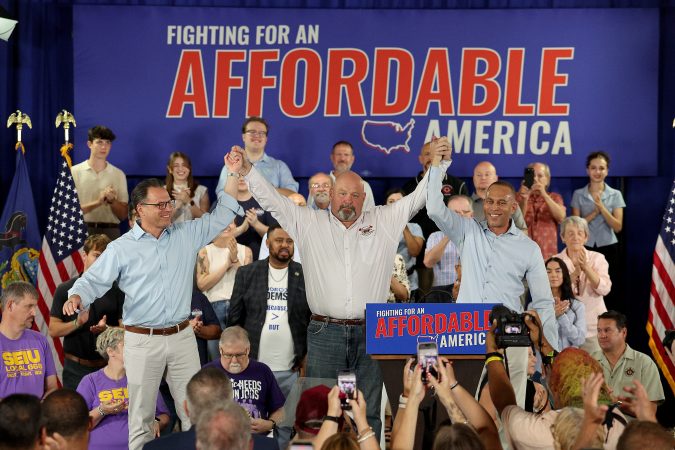
Pennsylvania Gov. Josh Shapiro and U.S. House Minority Leader Hakeem Jeffries stood on a union hall stage with Democrat Bob Brooks, a firefighter and union leader who is running for a House seat in a key Pennsylvania swing district, in front of a crowd of about 150 people.
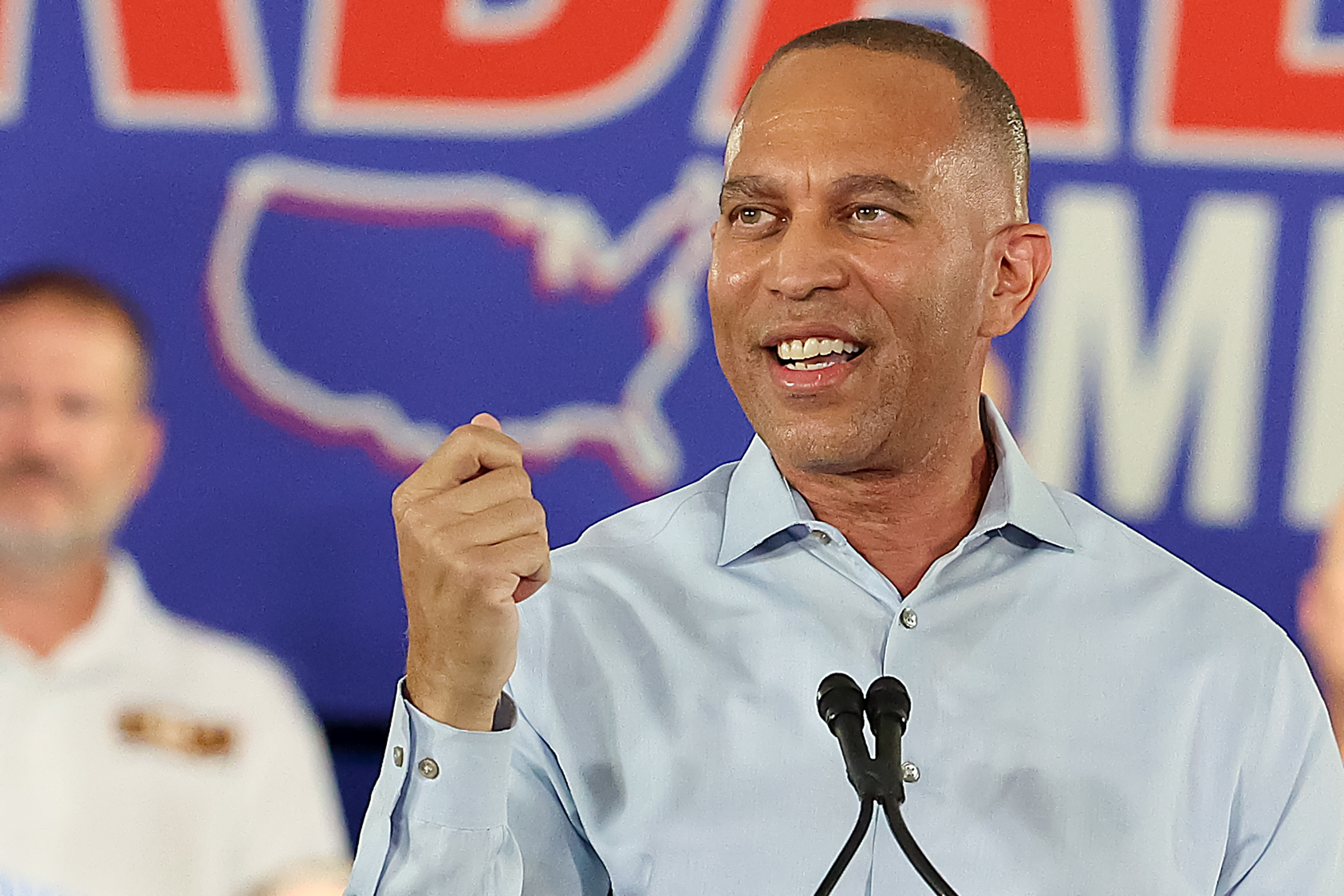
“We have just 100 days until the midterm election, 100 days to change direction in this country. This is no longer a marathon; it’s a sprint,” Jeffries said. “And there’s no better place to begin that sprint than right here in the steelworkers union hall in Bethlehem.”
Jeffries is poised to become the speaker of the House — and the first Black speaker — if his party wins control in the midterms. Democrats see winning Pennsylvania’s 7th Congressional District as a critical step in making Jeffries’ ascension happen, and taking action on a range of issues, from lowering gas prices to banning stock trading among members of Congress.
House Minority Leader Hakeem Jeffries addresses the audience during a rally for congressional candidate Bob Brooks at the United Steelworkers Union Hall in Bethlehem, Pa., on Sunday, July 26, 2026.David Maialetti / Staff Photographer
The visit comes as Republicans seek to bolster GOP Rep. Ryan Mackenzie, the district’s vulnerable freshman, who won his seat by just 1 percentage point in 2024, when President Donald Trump defeated Democrat Kamala Harris statewide. Trump visited the district in June, giving a speech about manufacturing, and a rambling range of other subjects, at the Macungie-based Mack Trucks facility — though he took nearly an hour to even mention Mackenzie by name.
Mackenzie has a financial edge over Brooks. He has raised a total of nearly $4.5 million, compared to Brooks’ $2.3 million. But Brooks outdid Mackenzie handily between April 30 and June 30, after Brooks’ first-place finish in the robust and competitive Democratic primary. He added roughly $1.2 million to his stockpile during that time period, while Mackenzie only took in about $631,000.
During the primary, Brooks was able to attract support from many ideological corners, including Shapiro, former Transportation Secretary Pete Buttigieg, and U.S. Sens. Bernie Sanders (Ind., Vt.) and Elizabeth Warren (D., Mass.), who saw him as an unpolished outsider committed to the party’s values.
Brooks, who dropped out of college after a baseball injury, worked as a bartender and beer truck driver in the Lehigh Valley before later becoming a firefighter in Bethlehem. He also mowed lawns and plowed snow on the side.
After his retirement from the fire department after more than 20 years of service, Brooks continues to serve as the president of the Pennsylvania Professional Fire Fighters Association, where he’s represented about 8,000 firefighters across the state since 2021.
“I’ve lived in public housing. I’ve relied on food stamps when times were hard. I’ve had to choose between paying the medical bills and paying the mortgage. I’ve worked hard, and I made it out of a fire. I’m proud to be standing here today,” Brooks said.
“Now I want to take that experience with me to the halls of Congress, so we can actually pass laws that work for working people,” he said.
His first foray into politics began with a lobbying effort to lower the standards for first responders to have post-traumatic stress injuries covered by workers’ compensation, legislation that Shapiro signed in 2024.
Shapiro, the first-term Democrat, has also been using his broad popularity to support Democratic candidates downballot in competitive elections across Pennsylvania while he campaigns for his own gubernatorial reelection bid.
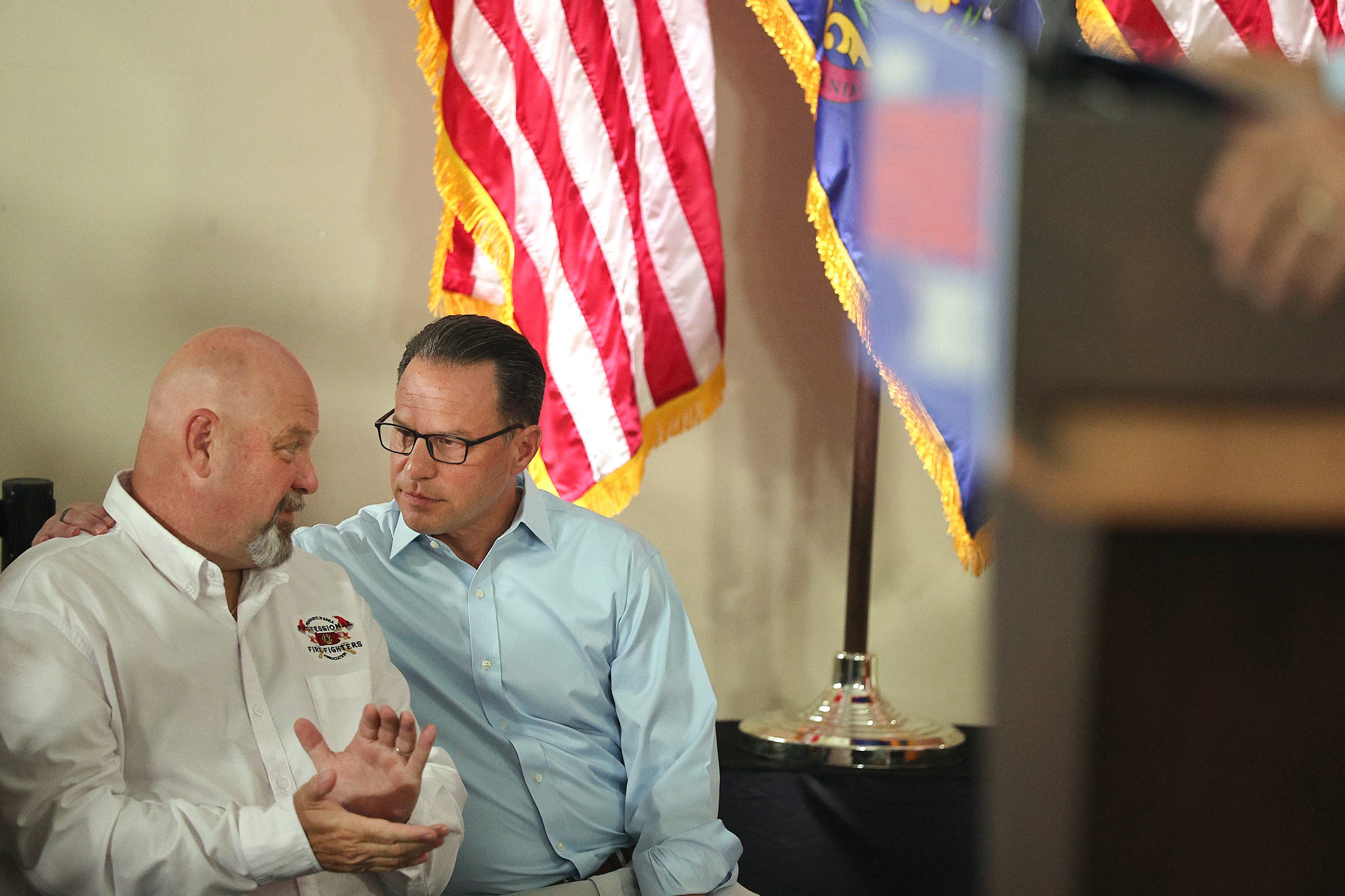
Congressional candidate Bob Brooks (left) and Gov. Josh Shapiro talk during a rally at the United Steelworkers Union Hall in Bethlehem Sunday.David Maialetti / Staff Photographer
Last weekend near Harrisburg, Shapiro joined Pennsylvania Democrats to launch a campaign for candidates in key state Senate seats and congressional districts, both of which he hopes to flip to Democrats as a show of his political influence ahead of a widely expected run for the presidency in 2028. He also boosted former local TV anchor Janelle Stelson, who is challenging Republican U.S. Rep. Scott Perry for the second time in the Harrisburg-based 10th District.
“One reason why we need Bob Brooks in the Congress of the United States is he’s a firefighter, and firefighters are always there for you,” Shapiro said, who referenced his gratitude to firefighters after an arsonist attacked his residence last year.
“When you spend a lifetime being there for people when they’re young, being there for people when they are hurting, being there for people when they need help …. You have compassion in your heart. You’ve got a servant’s heart, and that’s the kind of people we need in the Congress of the United States,” he said.
Shapiro’s campaign said it has given more than $3.3 million to the state party and its election effort since the fall of 2025, as part of his signature effort to “put a check on Donald Trump’s chaos, cruelty, and corruption.”
Brooks’ and Stelson’s races are two of the four most competitive congressional contests in Pennsylvania this year. Republican U.S. Rep. Bob Bresnahan is facing a challenge from Scranton Mayor Paige Cognetti in the 8th District, and Republican U.S. Rep. Brian Fitzpatrick is running against Bucks County Commissioner Bob Harvie in the 1st District.
Republicans are fighting to keep the competitive seats in GOP control. Mackenzie’s campaign manager blasted Brooks’ “dumpster fire candidacy” ahead of Sunday’s event.
“At every step of his career, Bob Brooks has put himself first, his politician buddies next, and his own workers last,” Andres Weller said, in a statement.
Among other news, Weller mentioned a leaked audio recording of Brooks that alleged Shapiro pushed his union to support the GOP candidate for Pennsylvania treasurer in the 2024 election.
Shapiro has denounced claims that he dissuaded the state firefighter’s union from backing the then-Democratic nominee Erin McClelland because of a personal grudge, and Brooks later said he misspoke in the recording.
All three men blasted Mackenzie for supporting cuts to Medicaid, as part of Trump’s 2025 One Big Beautiful Bill Act.
Jeffries, who had last appeared in Pennsylvania on July 2 to commemorate the 250th anniversary of the vote for the Declaration of Independence, said if Democrats take the majority, they will also tackle “rampant corruption” and make life more affordable.
“As House Democrats, we will build an economy that works for everyday Americans and drive down the high cost of living in every possible area because life is too expensive,” he said. “That means the grocery store, the gas pump, and your housing costs. It also means that you should be able to go see a doctor and get the care that you need.”
In the opening pages of the book he published between losing and then winning a Pennsylvania seat in the U.S. Senate, Dave McCormick painted the picture of an uncomfortable scene at Mar-a-Lago.
It was early 2022. McCormick, a former hedge fund CEO running in a tough Republican primary against celebrity doctor Mehmet Oz, had made the pilgrimage to meet with then-former President Donald Trump and ask him not to endorse Oz. Trump had maintained a firm grip on the party after leaving office and avoiding conviction for “incitement of insurrection” at his second impeachment trial.
According to McCormick’s retelling, Trump pulled up a television interview McCormick gave after the Jan. 6, 2021, attack on the U.S. Capitol in which he said the president was partially responsible for political divisiveness.
“Then the former president looked me in the eyes and warned, ‘You know you can’t win unless you say the election was stolen,’” McCormick wrote. “I made it clear to him that I couldn’t do that. Three days later, Trump endorsed Mehmet Oz.”
McCormick lost the race but ran again and won with Trump’s support two years later — when they shared a ballot. Now, three years after McCormick penned the book, he has become a prominent cheerleader in the Senate for an election reform proposal — the SAVE America Act — that Trump has advocated for while continuing to falsely say the 2020 election was rigged against him.
The Pennsylvania Republican has still not echoed the president’s debunkedclaims of widespread fraud in 2020. He also has not disputed them as he lobbies for the bill, which he and other Trump allies argue will build confidence in elections and which critics say will do the opposite while potentially disenfranchising millions of voters.
Other Pennsylvania Republicans in Congress — some of whom tried to block the state’s electoral votes hours after the Capitol attack— have similarly stayed quiet as Trump has both resurfaced old allegations and introduced new ones.
In a prime-time speech earlier this month, Trump claimed that China had secretly obtained U.S. voter information and that a “large-scale voter registration operation” led to fraud in Michigan six years ago. His administration also released a document alleging Pennsylvania was among four states where the Department of Homeland Security had identified more than 250,000 noncitizens registered to vote.
Pennsylvania Secretary of State Al Schmidt, a Republican appointed by Democratic Gov. Josh Shapiro, has forcefully rejected those claims.
But adding more fuel to the rhetoric about election integrity, New Jersey officials said last week that about 6,600 people who were not citizens were registered to vote before the 2024 election, and fewer than 400 cast a ballot.
Still, many of the claims Trump made in his speech have been refuted by election experts and, in many cases, were not new.Meanwhile, none of the 11 Republicans representing Pennsylvania in Congress have commented directly on them, including some who responded to certain questions for this story but did not answer others specifically about the new claims.
President Donald Trump, left, and Sen. Dave McCormick, R-Pa., attend the finals at the NCAA wrestling championship, Saturday, March 22, 2025, in Philadelphia. (AP Photo/Matt Rourke)Matt Rourke
McCormick’s spokesperson said only that the senator’s position on 2020 “remains unchanged.”
A spokesperson for U.S. Rep. Brian Fitzpatrick, a moderate Bucks County Republican who voted to certify President Joe Biden’s 2020 win, said the lawmaker “completely disagrees with the president’s allegations of interference in the 2020 election.” She did not answer a question about the new and specific claims, such as the 250,000 noncitizens registered, but said Fitzpatrick “has full faith and confidence [in] our election officials.”
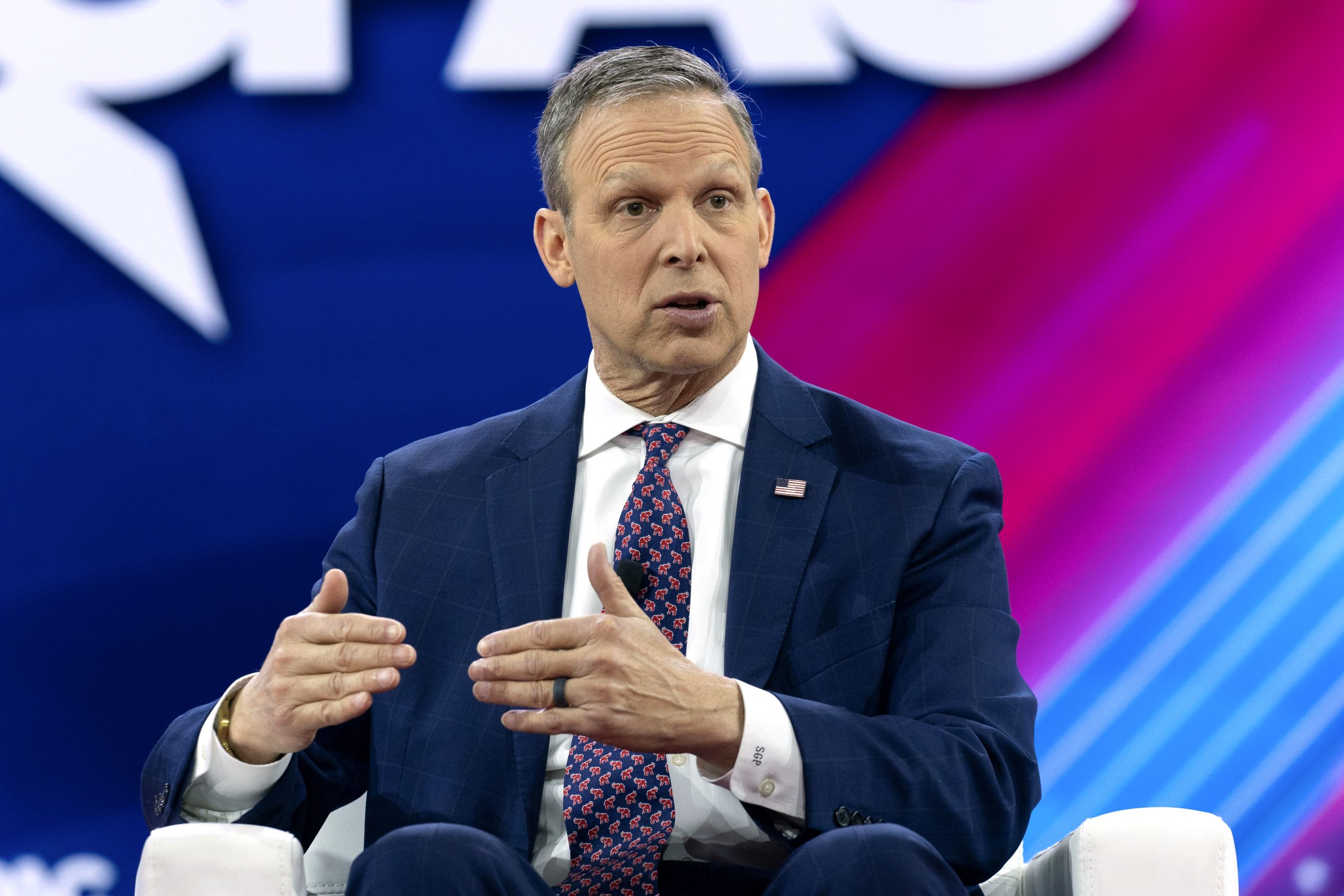
Rep. Scott Perry, R-Pa., speaks during the Conservative Political Action Conference, CPAC 2024, in Oxon Hill, Md., Feb. 22, 2024. (AP Photo/Jose Luis Magana, File)Jose Luis Magana
U.S. Rep. Scott Perry, a York County Republican who tried to overturn election results and became a subject of investigations into Jan. 6, reposted comments online that raised alarm about the White House’s claims of noncitizen voters.
Perry’s office did not respond to a request for comment. He is one of four Republicans in the state facing a competitive reelection this fall — putting Pennsylvania in the national spotlight as Democrats push to gain control of the narrowly divided U.S. House, and potentially at the center of concerns about Trump’s attempts to control the election process.
Republicans point to N.J. as they call for new voting law
Every Pennsylvania Republican in Congress, meanwhile, has supported the SAVE America Act. The bill would require voters to provide proof of citizenship when registering to vote and to show photo ID at the polls. It would also scale back mail voting, which has become increasingly popular since the COVID-19 pandemic but has remained a focus of Trump’s false claims of fraud.
Supporters of the legislation say that voter ID is widely popular and that eliminating even a few noncitizens from the voter rolls is worth ensuring elections are legal and secure. Opponents say that the issues the bill is trying to solve are either nonexistent or statistically irrelevant, and that it would effectively make registering more difficult for about 21 million people who do not have easy access to the paperwork that would be required, like a passport or birth certificate.
“It would upend voter registration and our democracy and, on its own terms, is an extraordinarily harmful policy that would hurt millions of American citizens,” said Eliza Sweren-Becker, a voting rights expert at the Brennan Center for Justice. “It is being advanced on the backs of lies about our election system that are themselves harmful to our democracy and trust in election administration.”
Though he has not addressed Trump’s latest claims, McCormick renewed his public push for the SAVE America Act after Trump’s prime-time address — writing, “Let’s act now,” on social media following the speech.
Last week, he and others also grasped on to both a nearly decade-old voter registration issue in Pennsylvania and the fresh problem in New Jersey to underscore the need for the law.
“This isn’t a harmless ‘software error,’” McCormick wrote on social media after Gov. Mikie Sherrill said a technical mistake led to noncitizens registering to vote. “This is why we must confirm citizenship before anyone registers. Only U.S. citizens should vote in our elections.”
McCormick also elevated a statement from the Department of Homeland Security that referred to an issue that Schmidt, then a Philadelphia city commissioner, discovered in 2017. Schmidt found 168 noncitizens were registered in Philadelphia, and likely hundreds more were registered statewide, due to an error by the Pennsylvania Department of Transportation. State Auditor General Tim DeFoor, a Republican, has said fixes to the system were largely successful.
U.S. Rep. Ryan Mackenzie, a Lehigh County Republican who is running in one of the most competitive districts in the country, also pointed to the Pennsylvania example and the New Jersey developments while justifying his support for the SAVE America Act during a telephone town hall with constituents Wednesday.
But while trying to remember the details on the call, Mackenzie potentially overstated the problem.
“I believe it was about 8,000 people here in Pennsylvania made their way onto the voter rolls, who were not supposed to be there and weren’t asked those proper questions. So these things do happen,” Mackenzie said before stressing the need for the SAVE America Act.
Asked about that number, a spokesperson for Mackenzie pointed to the Pennsylvania Department of State’s additional review in 2018 that found 8,698 voters whose eligibility needed to be determined. Those voters, however, were not necessarily noncitizens or otherwise ineligible to vote, and the state never released a more detailed analysis.
The spokesperson did not answer questions about whether Mackenzie agrees with Trump’s old or new claims about election fraud in 2020, or whether Pennsylvanians should have confidence in the state’s current system.
“This case from Pa., and from N.J. more recently, highlight the lack of appropriate checks taking place when people initially register to vote. We should have appropriate checks to verify the citizenship status when someone initially registers, which is what the SAVE Act provides. The absence of these safeguards, as well as the egregious errors that have been seen in states like New Jersey, are key reasons for the bipartisan frustration with our elections.”
Sweren-Becker said overstated claims of noncitizen voters have contributed to spreading distrust. The Pennsylvania situation, she said, was also not an example of a scheme to defraud the system, and “not the basis for a policy that would block millions of Americans from being able to cast their ballots.” Both that case and the one in New Jersey are instead examples of administrative errors that occasionally happen in a complex election system and represent “an extraordinarily small fraction” of voters, she said.
The Cato Institute, a libertarian Washington-based think tank, has also thrown cold water on the idea that the SAVE America Act would have prevented the New Jersey error. Legal fellow and former Arizona Republican official Stephen Richer, in a post that referred to McCormick’s advocacy, wrote that the current structure of the bill “likely wouldn’t have prevented” the software error.
“Be wary of politicians who say, ‘All of these problems will be fixed with my simple legislation,’” Richer wrote. “That’s often not the case.”
‘Deeply unhelpful’
McCormick, in response to questions for this story, did not directly say if the law would have prevented the issue in New Jersey. But he stressed that the paperwork requirement “helps stop noncitizens from getting registered.” It would also require states to set up a program to “continuously check voter rolls to find noncitizens” using different datasets — which he noted some states already have.
In a telephone town hall with constituents on Wednesday, the senator also acknowledged concerns about the bill when asked about it by voters on both sides of the issue.
Pennsylvania’s U.S. Senators John Fetterman (left) and Dave McCormick appear together Monday, June 29, 2026 to promote the savings accounts for kids that were a signature piece of President Trump’s Big Beautiful Bill.Tom Gralish / Staff Photographer
He said he believed the law would “make it as easy as possible” for people to obtain valid forms of ID if they do not have them. And as someone who lost his first race against Oz by 950 votes and won his second race against Democratic U.S. Sen. Bob Casey by about 15,000 votes, he said even rare cases of noncitizen voting could make a difference in close elections. Eligibility for mail ballots also needs “to tighten up dramatically,” he said, though he did not fully explain his thoughts on the issue or if he believes there has been fraud associated with them.
As Democrats block the bill in the Senate, he called on them to “defend the indefensible” and said “there should be a political cost in objecting to something that most Americans agree with.”
One of the Democrats opposing the bill is McCormick’s close friend and ally — U.S. Sen. John Fetterman.
Though he has frequently broken with his party — and now supports voter ID after previously calling it “insidious and unnecessary” — Fetterman has said the bill’s changes to mail voting are “a nonstarter” for him.” In a CNN interview last week, he also said that the 2020 election in Pennsylvania was fair, that there is “no evidence” of 250,000 noncitizens registered, and that Trump was unnecessarily fixated on the 2020 election.
“In Pennsylvania, out of 67 counties, the vast, vast, vast majority of them are deep red counties, and they’ve never encountered any kinds of fraud,” Fetterman said. “I don’t know why the president is dragging up all of this stuff. You’re the president. Do something positive. And you are talking about 2020. That’s been settled over six years ago. It’s deeply unhelpful.”
Other Pennsylvania Democrats have lambasted Trump for dredging up the old claims, and they have blamed GOP “enablers” for supporting him and pushing the bill.
“The only thing it would ‘save’ is Trump and his Republican enablers from voters holding them accountable,” U.S. Rep. Dwight Evans (D., Philadelphia) said.
U.S. Rep. Chris Deluzio, an Allegheny County Democrat who worked on election security issues before running for Congress in 2022, said the bill “will do nothing to improve election security” and would instead harm married women — whose birth certificates might not have their current name — and people without passports. He said those who lie about the 2020 election are “cowards” who should not have a place in elected office.
“The fact that some Republican politicians are so scared of Donald Trump that they lie for him just to keep their jobs is spineless and pathetic,” Deluzio said.
McCormick, for his part, said during the telephone town hall that the bill is unlikely to pass as Democrats continue to block it from getting the required 60 votes in the Senate, and as Republicans decline to eliminate the filibuster rule to let it move forward with just 50 votes.
“Where does that leave us? That leaves us in a position where I think we should be constantly talking about this, and I try to do this every single week, multiple times, [saying] why the SAVE America Act is important,” said McCormick, whose staff said he was unavailable for an interview.
A high-ranking officialresignedfrom the Bucks County Sheriff’s Office earlier this month after having a few sips of beer at a reception then driving home in a county car, which violated department policy, county sources said.
Lieutenant Deputy George McClay stepped down from his role after the incident, which occurred during a department reception held at Chambers 19, a Doylestown restaurant, after a July 9 promotionand new hire ceremony at the nearby county courthouse, according to county sources familiar with the incident but not authorized to comment on personnel matters.
Operating a county vehicle after drinking is a policy violation. McClay, 63, was not accused of driving under the influence, nor wearing his uniform during the incident.
Sheriff Danny Ceisler, a Democrat who took office in January, confirmed that McClay had stepped down, but would not provide details on an “HR situation.” McClay handled standards enforcement and discipline in the office and there was a conversation among command staff around July 11 as to whether he could properly do that job given the policy infraction, Ceisler said.
“The collective group felt that he would not be able to do it,” Ceisler said. “He offered his resignation.”
“It’s pretty difficult once someone has publicly committed a policy violation to have credibility to do that job,” he added.
Ceisler said he expects to eventually fill McClay’s position.
McClay denied being asked to step down in an interview Friday, saying the decision to leave was his own.
“I’m retired,” he said in a call from his home in Ocean County. “I’m 63, and it was time to go.”
When asked about the policy violation, McClay said he had “no idea” what a reporter was referring to. He chose to retire now, he said, because it’s summertime and he wanted to enjoy the season.
McClay’s seven-month stint with the sheriff’s office capped off a 40-year career in law enforcement, more than half of which he spent as a Philadelphia Police officer.
“Lt. McClay has spent over four decades in public service and deserves the opportunity to relax with his family and enjoy life,” Ceisler said.
Most recently, McClay served as the chief of police in Morrisville, a Bucks County municipality across the Delaware River from Trenton.
His nine-year tenure in Morrisville ended in a contentious dispute with the borough council, who terminated him in November 2023 amid allegations he had mistreated other borough officials and influenced matters that were beyond his authority as police chief, according to a report from The Bucks County Courier-Times.
Residents spoke out in favor of McClay at the time, criticizing the council for voting to fire him while he was on vacation and defending his record as a public servant.
McClay appealed his termination, calling it illegal, and was eventually awarded a $200,000 settlement by the borough council.
Gov. Josh Shapiro spent months preparing a set of standards he promised would “hold data center developers accountable.”
But behind the scenes, top Shapiro administration aides were drafting the framework with the input of Amazon and thepowerful data center lobby and sharing early drafts with company officials before making them public, records show.
The emails, first reported by climate change media outlet HeatMap earlier this year and obtained by an anti-data center activist in Montour County through the state’s open records law, show a cozy relationship between Shapiro’s administration and data center developers. But they also show the role the technology giants played in influencing the final version of Shapiro’s guardrails — though that influence only went so far.
Shapiro in May introduced the initiative as the Governor’s Responsible Infrastructure Development, or GRID, which are a set of transparency and environmental standards data center developers would need to meet to access state tax breaks and other incentives Shapiro asked the General Assembly to write into law. The Democratic-controlled state House approved these standards, but it’s stalled in the GOP-controlled Senate, as legislators struggle to find common ground on one of the most hot-button issues facing them today.
A spokesperson for Shapiro said the administration consulted numerous stakeholders as part of the drafting of the policies, including the Pennsylvania Building & Construction Trades Council, the Pennsylvania Environmental Council, the Natural Resources Defense Council, and more. Data center development is supported by many building trade unions across the state, which are likely to benefit from the major projects.
Environmental groups broadly support Shapiro’s proposal and want stronger regulations on data center projects. Some groups want to ensure the provisions are mandatory, instead of voluntary, as Shapiro proposed.
“As finalized, the Governor’s GRID standards set firm guardrails to protect Pennsylvania communities and hold data center developers accountable to strict standards requiring them to take additional action to ensure Pennsylvania communities benefit — and are not harmed — by these projects,” said Rosie Lapowsky, Shapiro’s press secretary, in a statement.
Shapiro, a Democrat seeking reelection this year and a possible 2028 presidential contender, has remained data-center friendly and emphasized that Pennsylvania should play a core role in the “battle for AI supremacy.”
But he has sharpened his rhetoric in recent months, citing his own personal evolution on the issue, as public opinion has also shifted with roughly 76% of Pennsylvanians across party lines opposing the projects.
“Too many of these projects have been shrouded in secrecy, with local communities left in the dark about who is coming in and what they’re building,” Shapiro said in his budget address in February.
Yet as other states like New York have put moratoriums on data center development, Shapiro has chosen to fast-track permits and support tax breaks to incentivize the massive projects, though he now believes they should meet certain voluntary standards.
Amazon has already committed to a $20 billion investment in Pennsylvania — the biggest investment in state history — to build two data center campuses in Luzerne and Bucks counties and will access the state’s sales tax exemption for data centers as approved by the General Assembly in 2021.
The Data Center Coalition — the powerful industry group made up of data center developers like Amazon, Google, Anthropic, OpenAI, and Microsoft — shared feedback on several drafts of Shapiro’s GRID principles and approved of most of its measures. But the industry still has “some significant concerns” with the voluntary program, including its clean energy provisions requiring certain percentages of its power to be from low- or zero-carbon sources.
Dan Diorio, the Data Center Coalition’s executive vice president of state policy and government affairs, described the proposed GRID program’s requirements to access tax breaks as “extensive” compared to the 37 other states that offer sales tax exemptions.
“We look forward to continuing to work with the legislature and the governor’s office on outlining what would ensure Pennsylvania remains a strong and competitive data center market,” Diorio said.
Fengqi You, an energy systems engineering professor at Cornell University and data center expert, said it’s best practice for governments to consult all stakeholders, including industry leaders. But data center developers and local communities have opposing viewpoints that must be balanced, he said.
“The right model, in my view, is to consult widely all the stakeholders, decide independently, and disclose transparently,” You said. “The standards are only as strong as the conditions and the consequences.”
But some of the conditions should not be voluntary incentives, like Shapiro proposed, You said. This has been echoed by some environmental and anti-data center groups, which argue that the provisions don’t go far enough if compliance is ultimately voluntary for the tech giants.
“It’s a useful starting point, but the incentive conditions should not substitute a minimum public protection for all,” You said. “If a company is receiving a tax exemption, then the state should have every reason to attach some very strong public interest conditions.”
‘Not ban or discourage data centers’
Ahead of Shapiro announcing his plans for GRID as part of the state budget address, Shapiro administration officials went further in their efforts to reassure companies like Amazon, which they’ve courted for years, records show.
In a Feb. 3 email, Department of Community and Economic Development Secretary Rick Siger wrote to Amazon Web Services staff that Shapiro would not “ban or even discourage data centers” and that “this new approach will not look back at projects or agreements already in place.”
Other emails, sent in March by Sam Robinson, a deputy chief of staff to Shapiro, request that Amazon and the Data Center Coalition submit their feedback and mark up drafts. Shapiro’s administration declined to share those earlier feedback drafts.
Legislators in Pennsylvania’s split General Assembly did not write Shapiro’s GRID proposal into law as part of this year’s $50.8 billion budget deal, and only enacted one new data center requirement despite near-unanimous support to repeal tax breaks for the projects. Shapiro now says he’s “considering all executive actions” he can do without the legislature.
Colby Wesner, a pediatrician in Montour County, received troves of emails from top Shapiro administration officials, top Amazon staff, and more as part of several Right-to-Know Law requests he submitted to find out more about a now-blocked project near his home.
“It’s a really insincere attempt,” Wesner said of the GRID principles. “It’s a public relations stunt.”
Now that Shapiro is considering acting on his own, Wesner said he wants to know whether Shapiro will add restrictions or continue to welcome the projects into Pennsylvania.
“Maybe he is listening to constituents and an executive action will demonstrate that he is listening to citizens,” Wesner added. “If it is, then great for him. But to date, everything he has done has been pro-data center industry.”
Amazon , for its part, declined to comment on its role in the drafting of the GRID principles, which, if approved, would not apply to their ongoing projects. Becky Ford, a principal for global infrastructure expansion at Amazon Web Services, replied to Robinson on March 18 that they “look forward to providing feedback.”
“We’re committed to being good neighbors in the communities where we build and operate, and will continue working with state and local leaders to invest responsibly and to keep creating good jobs across the Commonwealth,” an Amazon spokesperson said in a statement.
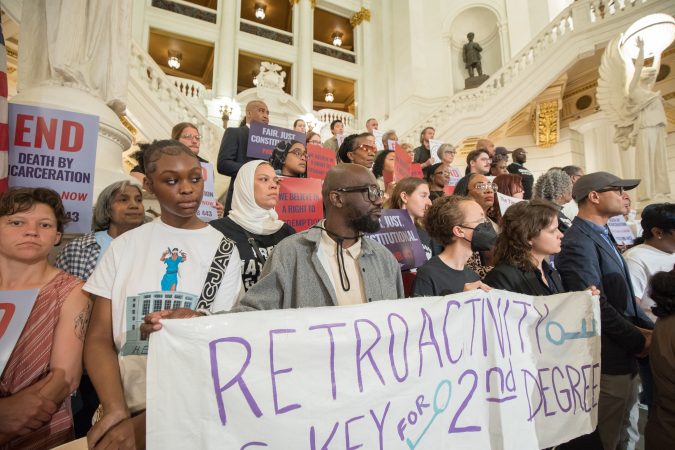
HARRISBURG — As state legislators failed to reach an agreement on a new sentencing structure for second-degree murder convictions on the eve of a deadline imposed by Pennsylvania’s highest court, the Allegheny County district attorney has asked the Pennsylvania Supreme Court to extend its deadline 120 days.
Unless the court agrees, the state’s divided legislature is all but guaranteed to not reach a deal by the Friday evening deadline set by the court, which ruled in March that mandatory life sentences for crimes of that category were ruled unconstitutional.
That means that judges would begin to sentence individuals across the state without legislative guidance — and likely tees up about 1,100 individuals already serving life sentences for lengthy litigation over what comes next.
In a filing with the court Thursday afternoon, Stephen Zappala, the Allegheny County district attorney, requested that the judges give the General Assembly the ability to continue debating new sentencing guidelines when they return in September from summer recess.
Lawmakers were not due back to Harrisburg until the fall, but Senate and House Republicans lambasted House Democrats for failing to pass any legislation on second-degree murder. The House returned to the Capitol for a special session Thursday to vote on a Democrat-backed plan for second-degree murder sentencing.
The passage of that bill, however, did not bring lawmakers closer to a deal.
“We still want to have a legislative solution, we believe it is going to be the most equitable way statewide to address the issue of people who are currently serving unconstitutional sentences,” said Roxanne Horrell, the legislative director for Straight Ahead, a decarceration advocacy organization. “We are ready and willing to come to the negotiating table.”
The House-advanced plan, which passed 102-100, would allow individuals who have already been convicted of second-degree murder to seek parole after serving 30 years. A decision on new sentencing guidelines would be left to the state’s Sentencing Commission.
In a brief statement to reporters, House Majority Leader Matt Bradford (D., Montgomery) said that bill “is a real attempt in the House to meet the Senate more than halfway.”
In floor arguments that at times grew heated, House Republicans took issue with the outlining no minimum sentence for future cases and instead placing that decision in the hands of the Sentencing Commission.
Republicans also criticized Democratic leadership for not taking a vote on the Senate-passed plan.
That bill — which several Senate Democrats voted for — creates a sentencing minimum of 35 years to life for future cases. Individuals would be eligible for parole after serving 35 years, or after serving 20 years for those older than 70.
“This is one of those issues that requires a great deal of thought, and it requires bringing in some of the stakeholders that we are hearing from that was opposed to this legislation today,” House Minority Leader Jesse Topper (R., Bedford) said. “Those are people who need to be in a room to come up with a solution, and unfortunately, that’s not what happened.”
He called for party leaders, the state’s Fraternal Order of Police, Gov. Josh Shapiro, and Attorney General Dave Sunday to come together and reach an agreement instead of shuttling bills back and forth between both chambers.
“When you don’t have that kind of collaboration to deal with an issue such as this,” Topper said, “nothing will be done.”
Horrell said the decarceration organization would support discussions that include their input.
In a letter on Thursday, the attorney general urged state representatives to vote against the plan backed by House Democrats.
“This approach does not foster appropriate and thoughtful re-entry initiatives or put individuals on a path to success,” wrote Sunday, a Republican. “Thoughtful re-entry initiatives are necessary and important, and I support those initiatives. But not this approach, which ultimately fails to hold dangerous offenders accountable.”
The plan advanced Thursday is the latest development in months of back and forth between Republicans and Democrats who have advanced differing visions for what the new sentencing parameters should be.
Lawmakers were unable to reach a deal as part of budget negotiations that concluded earlier this month.
“Today, the House took important action prior to the court-imposed deadline by passing a package to address this issue and it’s time for Senate Republicans to return to Harrisburg and bring this matter to conclusion rather than grandstand,” Shapiro said in a statement.
The House-passed bill also expands the state’s compassionate release program. Under existing law, incarcerated individuals can only be candidates for release if doctors determine that they have less than a year to live.
The bill would allow for an individual to be released if they have been diagnosed by a doctor with a terminal or life-threatening illness, or if a physician diagnoses them with an illness that could be treated better outside of a correctional facility.
Democratic Rep. Rick Krajewski, who represents West Philadelphia, said that the program is designed for incarcerated individuals who are facing serious illnesses “that require real, complex medical care” that can’t be provided while an individual is serving out their sentence.
“I am glad that the House was able to put a vision forward about how to fulfill our constitutional mandate and reform our carceral system generally,” he added.
Several Republicans had supported Krajewski’s initial bill, which passed the house 111-92. The program is estimated to save $15 million a year in healthcare costs for incarcerated individuals, he said.
Now that both the House and Senate have passed a bill, either could be amended and voted on by both chambers in a single day.
“Instead of allowing a vote on either of the bipartisan bills passed by the Senate, [House Democrats] chose to engage in political theater and failed to produce any feasible product to protect our communities and victims’ families,” Senate Republican leaders wrote in a statement.
A spokesperson for Senate Republican leadership did not respond to a request for comment on whether the chamber planned to return for a vote Friday.
On Thursday morning, Topper morning said that he hoped the legislature could come to an agreement in the coming weeks if an agreement could not be reached by the deadline.
However, speaking to reporters after the House adjourned, Topper said the decision to advance the House bill without a vote on the Senate bill on Thursday “sets things back considerably.”
Ethan Young is an intern with the Pennsylvania Legislative Correspondents’ Association. He can be reached at ethanmyoung@gmail.com.