Category: Politics

  • Pope Leo XIV is popular with Pa. Democrats after feud with Trump. But Republicans are split.

    Pope Leo XIV is popular with Pa. Democrats after feud with Trump. But Republicans are split.

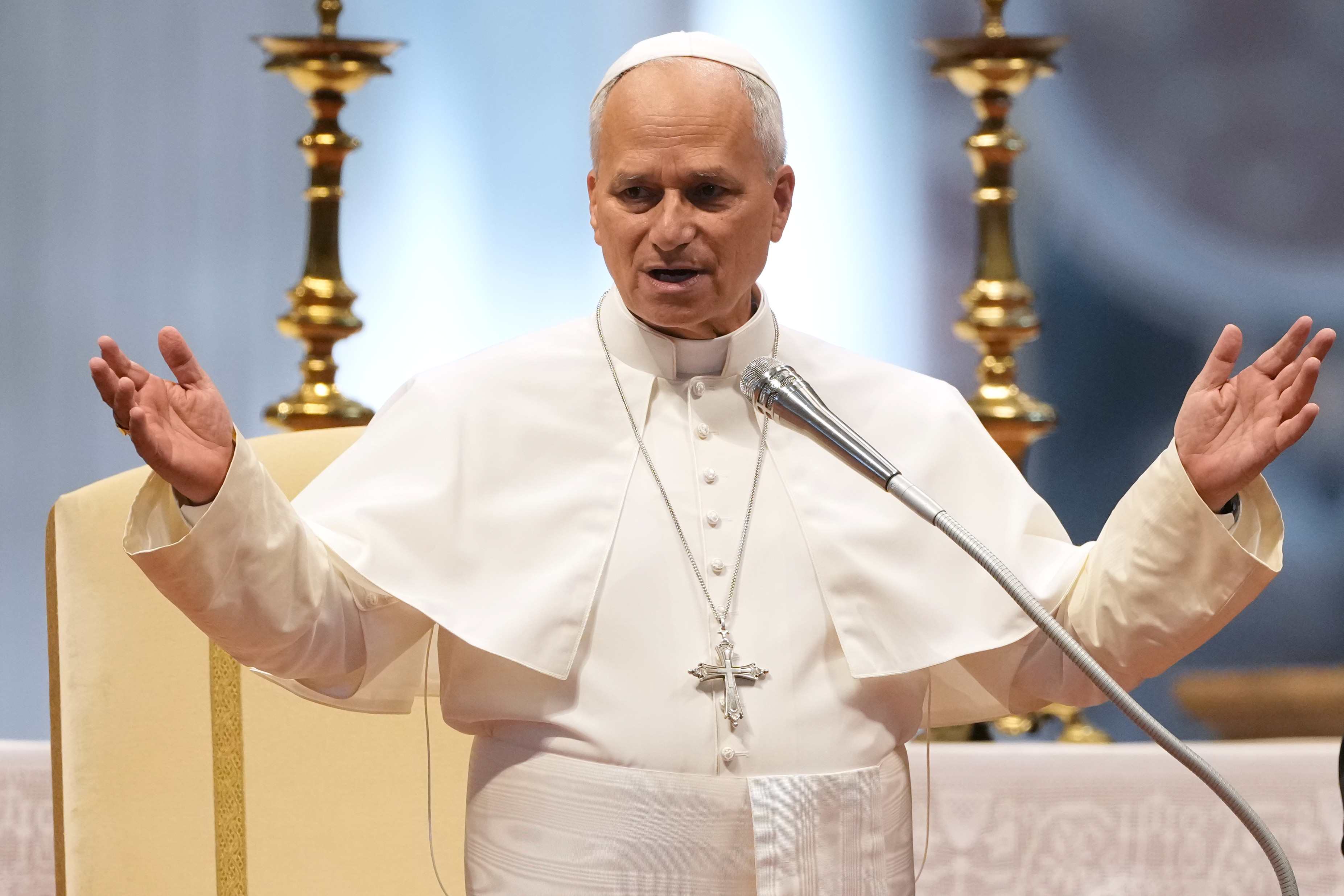
    Pope Leo XIV is significantly more popular among Pennsylvania Democrats than Republicans in the state, according to an Inquirer/New York Times/Siena University poll released this week.

    While 75% of Democrats expressed a favorable opinion of Leo, only 40% of Republicans did. Meanwhile, 37% of Republicans viewed the pope unfavorably, compared with just 7% of Democrats, according to the poll.

    The pope’s disfavor with GOP voters likely links back to his widely publicized dispute with President Donald Trump in the spring over the Iran war, when the two engaged in contentious exchanges, said Don Levy, who supervises the Siena Research Institute’s political polls.

    (function() { var l = function() { new pym.Parent( ‘nyt-pope__graphic’, ‘https://media.inquirer.com/storage/inquirer/ai2html/nyt-pope/index.html’); }; if(typeof(pym) === ‘undefined’) { var h = document.getElementsByTagName(‘head’)[0], s = document.createElement(‘script’); s.type = ‘text/javascript’; s.src = ‘https://pym.nprapps.org/pym.v1.min.js’; s.onload = l; h.appendChild(s); } else { l(); } })();

    Among independent voters, 64% viewed the pope favorably and only 16% viewed him unfavorably.

    Similarly, voters who cast their ballots for Vice President Kamala Harris in 2024 were more likely to hold a favorable view of the pope than were Trump voters: 79% of Harris voters held favorable views of Leo, compared with just 38% for Trump voters.

    Among all likely Pennsylvania voters, nearly 60% have a favorable opinion of the first U.S.-born pope — making him about as popular as Democratic Gov. Josh Shapiro, according to the poll of 760 likely Pennsylvania voters conducted between Aug. 17 and 21.

    Leo has ties to Pennsylvania, having attended Villanova University as an undergraduate student and earning a bachelor of science in mathematics in 1977.

    The pontiff made a virtual appearance in Philadelphia on the eve of the United States’ 250th birthday to accept the National Constitution Center’s prestigious Liberty Medal. In a speech live streamed to an interfaith crowd inside the Center City museum, the pope extolled the virtues of immigration, drawing a clear contrast with the president.

    One day later, he spent his home country’s anniversary visiting migrants in the Mediterranean.

    “Pope Leo has embodied a different way of being an American on the world stage. He believes in collaboration with other nations, and has concerns about immigration,” said Massimo Faggioli, a professor of theology and religious studies at Villanova University and an expert on the papacy.

    “He’s relatable, and many Americans like that,” Faggioli added about Leo’s appeal.

    Vince Stango, interim president and CEO of the National Constitution Center, presents Pope Leo XIV with the Liberty Medal.The Vatican and National Constitution Center

    In the spring, the war with Iran brought tensions between the Vatican and the White House to the forefront of the national political conversation as the U.S.-born pope emerged as a leading international voice against Trump’s policies.

    “Pope Leo never wanted to get into a fight with Trump about the war,” Faggioli said. “But certain things Trump said were not acceptable to the pope.”

    The Leo-vs.-Trump fracas caught fire in April, when Trump threatened Iran by saying a “whole civilization will die tonight, never to be brought back again,” if the country’s leaders did not open up the Strait of Hormuz.

    Within hours, the pope labeled Trump’s words “truly unacceptable.”

    Days later, Trump posted on Truth Social that “Pope Leo is WEAK on Crime, and terrible for Foreign Policy.”

    Trump also claimed that Leo had been selected as pope only because of his election as president and referred to the fact that one of the pope’s brothers is a Trump supporter.

    Trump went further in a lengthy post: “I don’t want a Pope who thinks it’s OK for Iran to have a Nuclear Weapon. … And I don’t want a Pope who criticizes the President of the United States because I’m doing exactly what I was elected, IN A LANDSLIDE, to do.”

    During that same period, Vice President JD Vance said the pope should “be careful” when talking about religion.

    Pope Leo responded: “I have no fear of the Trump administration.”

    Around the same time, Trump posted an image of himself dressed as Jesus healing the sick as an American solider and others reverently gaze upon him. Trump claimed that the now-deleted post was meant to show him as a doctor.

    A majority of likely Pennsylvania voters — 58% — disapprove of Trump’s performance as president and an even greater number — 66% — disapprove of his handling of the war, including 30% of Trump voters, according to the poll.

    (function(){function e(){window.addEventListener(`message`,function(e){if(e.data[`datawrapper-height`]!==void 0){var t=document.querySelectorAll(`iframe`);for(var n in e.data[`datawrapper-height`])for(var r=0,i;i=t[r];r++)if(i.contentWindow===e.source){var a=e.data[`datawrapper-height`][n]+`px`;i.style.height=a}}})}e()})();

    For the poll, 592 likely Pennsylvania voters completed the full survey and responded to the question about the pope.

    Among that group Catholic voters, in particular, had a more favorable view of the pope than the overall electorate, with 81% viewing him favorably, while 15% viewed the head of the church unfavorably.

    Trump won a majority of Catholic voters in 2024, according to national exit polls. But Catholic voters were split on the president’s performance in the new Pennsylvania poll — 50% disapproved of Trump, while 44% approved.

    Explaining how people feel about the pope, the Rev. Paul Galetto, the pastor of St. Paul’s Church in South Philadelphia and a friend of Pope Leo’s for 51 years, said Tuesday that “everyone knows this pontiff is focused on peace in the world.”
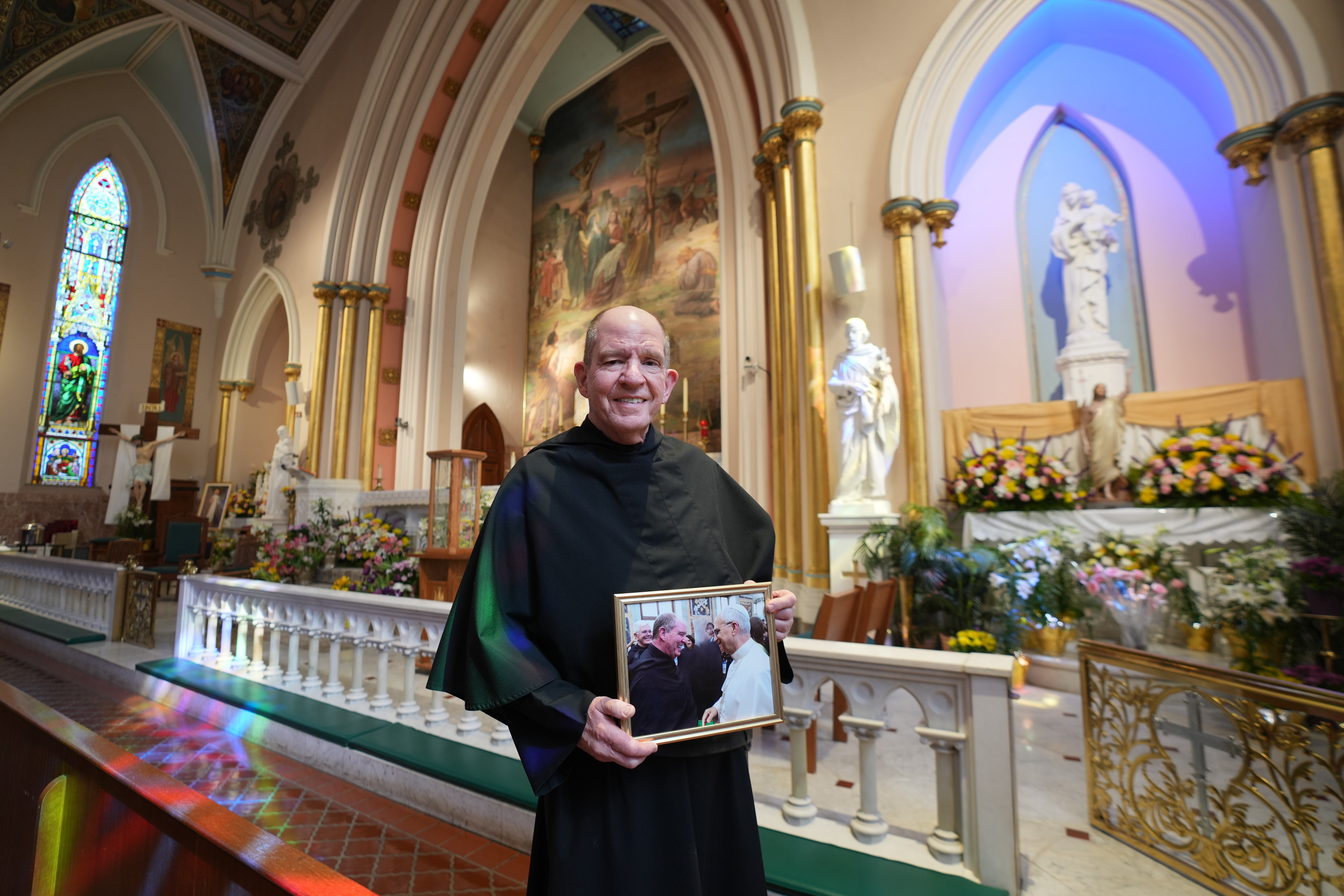
    Father Paul Galetto shown here at St. Paul’s Roman Catholic parish, in Philadelphia, Friday, April 10, 2026. Galetto studied with the pope in Rome in the 1980s. Jessica Griffin / Staff Photographer

    More basically, people are drawn to his “intellect and his humbleness,” Galetto said.

    “I think Pope Leo’s favorability comes about because he is seeking solutions to problems that affect all of humanity,” he added. “People will always be attracted to someone with a larger vision to help the common good.”

    Staff writer Joe Yerardi contributed to this article.
  • Watchdog files bar complaint against Jeanine Pirro over bid to indict 6 Democratic lawmakers

    Watchdog files bar complaint against Jeanine Pirro over bid to indict 6 Democratic lawmakers

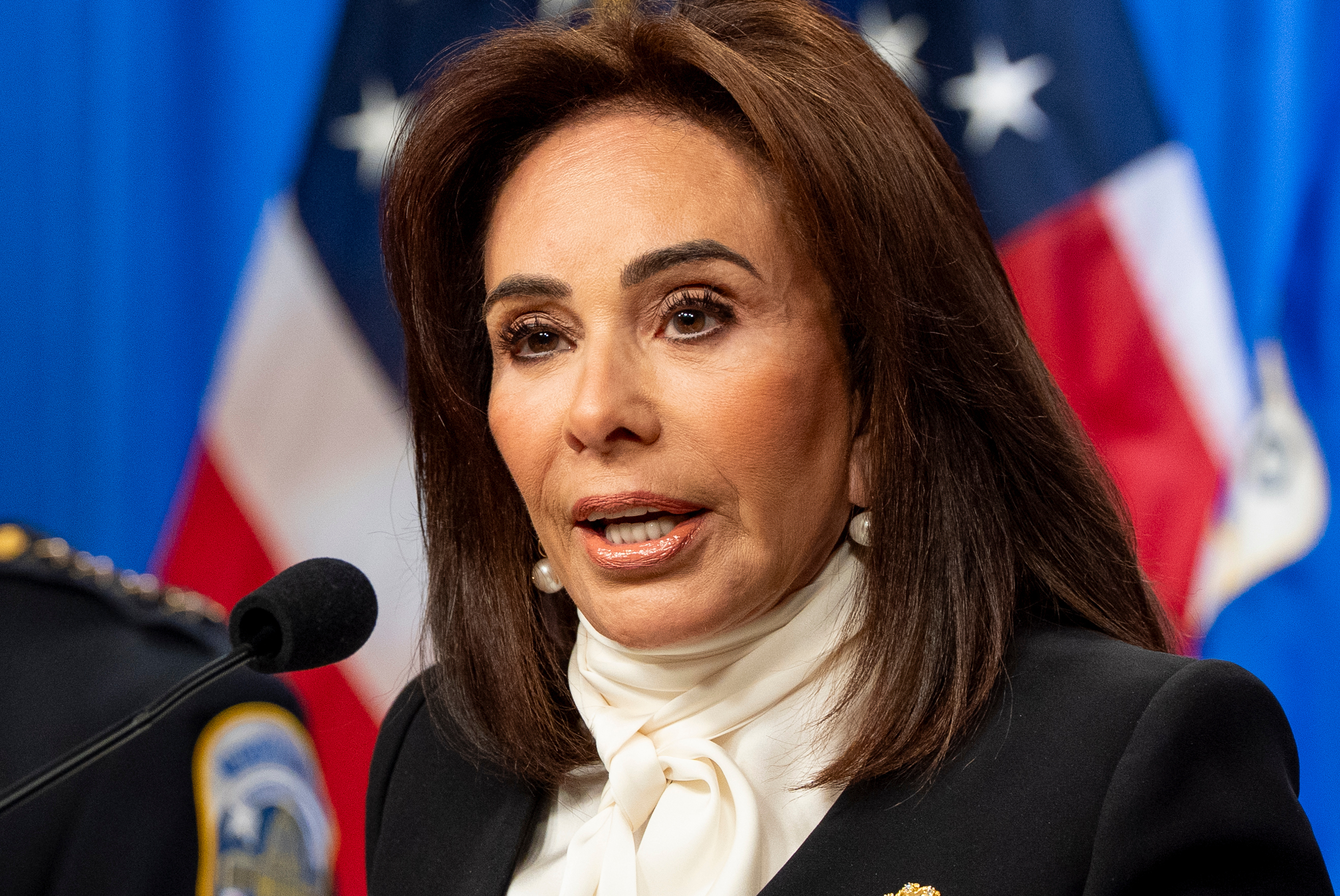
    WASHINGTON — A legal watchdog says it filed bar complaints on Tuesday accusing U.S. Attorney Jeanine Pirro and two lieutenants of violating their ethical duties in seeking to charge six Democratic lawmakers with federal crimes for appearing in a video that called on troops to resist unlawful orders.

    The Legal Accountability Center’s bar complaints, filed in New York and Virginia, claim Pirro and her subordinates, Carlton Davis and Steven Vandervelden, abused their prosecutorial powers to seek “meritless” indictments against President Donald Trump’s “perceived political enemies.”

    Tim Lauer, a spokesperson for Pirro’s Washington-based office, noted that it’s a grand jury’s job — not prosecutors’ — to decide whether to hand up an indictment.

    “Attempting to weaponize the disciplinary process against prosecutors for doing their jobs amounts to nothing more than a frivolous complaint,” Lauer said in a statement.

    In February, a grand jury in Washington refused to indict Sens. Mark Kelly and Elissa Slotkin and four House Democrats for urging U.S. service members to follow established military protocols and reject orders they believe to be unlawful. All six lawmakers previously served in the military or at intelligence agencies. Trump accused them of sedition “punishable by DEATH” in a social media post.

    A grand jury’s refusal to return an indictment is extraordinarily rare, but it has become increasingly common in Washington during Trump’s second term. Pirro’s critics have accused her of pursuing other legally dubious and politically motivated cases at the Republican president’s behest, such as the recently abandoned felony charge against a former Olympian who was accused of defacing the Lincoln Memorial Reflecting Pool.

    The center has filed complaints against other Trump administration officials, including Ed Martin Jr., Pirro’s predecessor as U.S. Attorney for the District of Columbia. Martin has been a leading figure in Trump’s campaign to use the Justice Department to prosecute his political opponents.

    In its complaint against Pirro, the center asks bar officials to investigate whether she and her colleagues violated rules of professional conduct for attorneys — and to “pursue appropriate discipline” against them. Its complaint against Pirro says her office had no legal basis for its “patently improper effort” to secure an indictment against the six lawmakers.

    “The only purpose could have been political animus and a desire to intimidate perceived enemies of the federal government and the President, who personally criticized the lawmakers’ video as seditious and punishable by death,” the complaint says.

    Defense Secretary Pete Hegseth has tried to punish Kelly, a former Navy pilot representing Arizona, for participating in the video. Kelly sued in federal court to block the censure from Hegseth. A district court judge ruled in his favor. Hegseth has asked an appeals court to review the decision.

    The center filed its complaint against Pirro and Vandervelden with a grievance committee based in White Plains, N.Y. In New York, the state Supreme Court’s appellate division governs ethical complaints against attorneys. The center filed its complaint against Davis with the Virginia State Bar.

    “Prosecutors have enormous power, and with that power comes an obligation to exercise independent legal judgment rather than use the criminal justice system to carry out a president’s political demands,” the center’s co-founder, Michael Teter, said in a statement.

    Pirro, who served as a county prosecutor and judge in New York, left her Fox News hosting job to become the top federal prosecutor for Washington last year.

  • Pennsylvania attorney general sues Snapchat over addictive features

    Pennsylvania attorney general sues Snapchat over addictive features

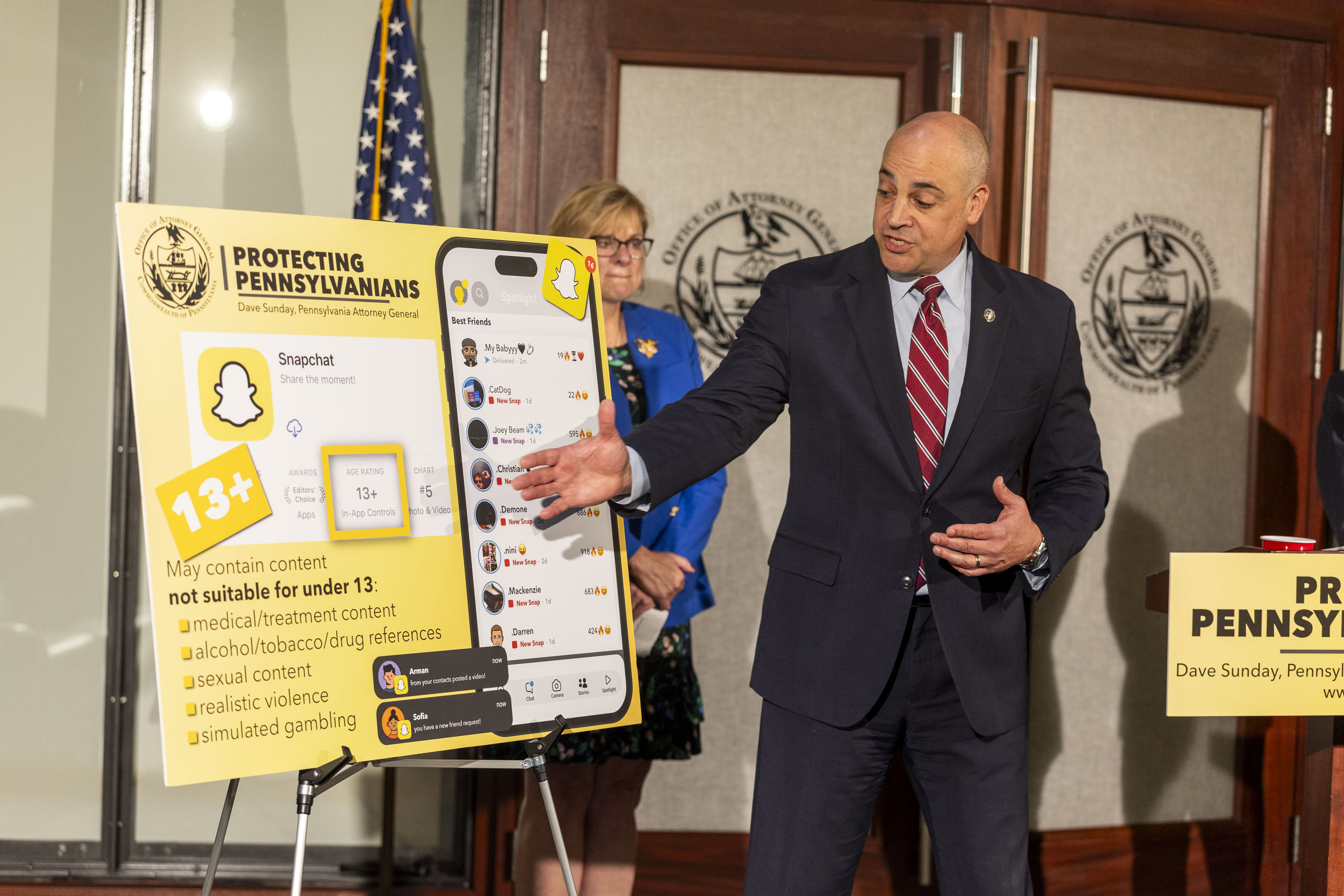
    Pennsylvania Attorney General David Sunday is suing Snapchat’s parent company for allegedly failing to protect children from addiction.

    This comes after he announced a lawsuit against TikTok over the same issue earlier this month.

    “Both of these actions reflect my priority as attorney general to protect our young people from tech giants who are choosing growth at all costs over the mental wellness of its users,” Sunday said Tuesday at a news conference in Philadelphia.

    The suit alleges that Snap Inc., owner-operator of Snapchat, does not properly warn users of the addictiveness of its features and does not protect children properly from compulsive use.

    “The allegations against Snap fundamentally misrepresent our platform and our approach to teen safety,” a Snap spokesperson said in a statement. “We share the Attorney General’s commitment to protecting young people online and are disappointed they have chosen litigation rather than working with us toward that shared goal.”

    The complaint, which Sunday’s office filed this week in Common Pleas Court in Philadelphia, asks the company to take steps to protect children from becoming addicted. It cites the SnapStreak feature and the ephemeral nature of the content as examples of ways the app hooks teens specifically.

    “To a 13-, 14-, 15-year-old, social acceptance is everything,” Sunday said. “The streak feature puts a tangible value on friendships and influences a child’s feelings of self-worth.”

    The app sends an implicit message that the more a child is on the app, the more friends they will have and the more socially accepted they will be, Sunday said.

    “That exploits the fear-of-missing-out culture to the absolute extreme,” he said.

    It also alleges that Snapchat improperly promotes how frequently adult-themed material — including sexual content and nudity, suicidal ideation, and drug use — appears on the platform to achieve an age-13-plus app rating in app stores.

    Through this litigation, Sunday said, he hopes to see Snapchat required to provide a more honest depiction of its content to app stores so it can be marked with a more mature rating, and to change its algorithm to be less addictive.

    Montgomery County similarly sued some of the nation’s largest social media companies, including Snapchat’s and TikTok’s parent companies, in a federal court in Northern California earlier this month.

  • Judge rejects Philly Sheriff Rochelle Bilal’s last-minute attempt to avoid court testimony

    Judge rejects Philly Sheriff Rochelle Bilal’s last-minute attempt to avoid court testimony

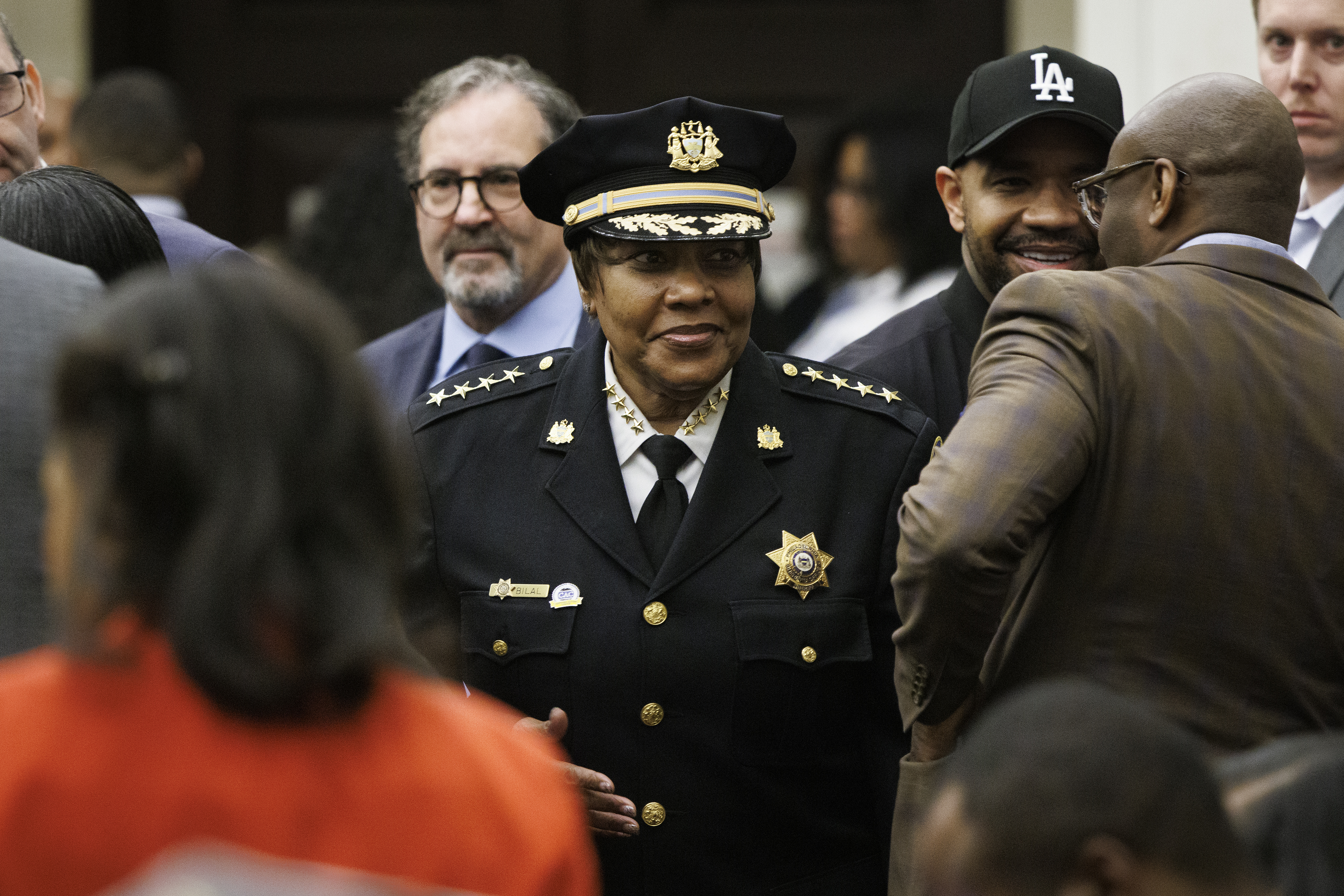
    Philadelphia Sheriff Rochelle Bilal made an unsuccessful, last-ditch attempt to avoid facing a city judge about major problems in her office, arguing through an attorney that she has “limited personal knowledge” of the real estate transactions she oversees.

    Jonathan Rardin, a lawyer the city retained to represent Bilal, wrote in a motion filed Friday afternoon that the embattled sheriff should not have to testify before Common Pleas Court Judge Paula Patrick at Wednesday’s hearing on sheriff sales because it would involve “matters outside her unique personal knowledge.”

    On Tuesday morning, Patrick rejected Bilal’s request for a protective order to shield her from testifying, writing that “Bilal and any other relevant parties shall appear” on Wednesday morning and “be expected to testify if necessary.”

    Patrick, supervisor of the court’s commerce division, scheduled the hearing in May, as winning bidders at sheriff sales continued to flood the courts with petitions seeking their deeds. As The Inquirer first reported in July 2024, Bilal’s office had not been issuing the deeds for a year or more after the auctions, leaving neglected homes unable to be renovated, rented, or resold.

    An attorney who represents real estate investors recently filed a lawsuit arguing that Bilal had breached the terms of a 2003 consent order requiring the office to issue deeds within 40 days of settlement. Patrick responded by ordering Bilal’s office to demonstrate at a public hearing that it was not in violation of the decree.

    Wednesday’s hearing will help decide whether Patrick will appoint a “special master,” a title agent, or some other third-party expert in real estate to administer sheriff sales in Philadelphia — arguably the most important function of Bilal’s office.

    Bilal’s lawyer had already successfully pushed back the hearing, which originally had been set for July 27, by arguing the sheriff had an unavoidable scheduling conflict due to “a previously scheduled vacation.” That request to delay the hearing did not mention that Bilal hoped to completely avoid testifying, and at the time, Rardin wrote that her “presence in this matter is necessary.”

    Yet last week’s motion argued instead that the sheriff’s knowledge is “limited to the information provided to her by her staff” and that she should not have to personally testify at all.

    “Requiring Sheriff Bilal to appear and testify regarding events and administrative practices that are not within her unique personal knowledge would impose an unreasonable burden and oppression” under the state’s rules of civil procedure “and would divert a high public official from the discharge of her official duties …,” Rardin wrote.

    Daniel Bernheim, the lawyer for a property group whose March lawsuit triggered Patrick’s court order, said Monday evening that Bilal’s attempt to avoid testimony was a “disappointing response by an elected official.” On Tuesday, Bernheim — himself an elected commissioner in Lower Merion Township — filed a response to her motion that sought to force Bilal to testify in court.

    “[T]he sheriff seeks to avoid answering questions based upon a series of cases which have no relevance whatsoever with the present proceedings and a claim of immunity from testifying which does not exist,” Bernheim wrote.

    In April, Bilal claimed at a City Council budget hearing that most post-auction delays had been resolved. She blamed any ongoing delays in issuing deeds on buyers who did not submit required forms or fees.

    But after Patrick filed her court order in May, Bilal’s office within 48 hours processed 277 deeds, some attached to auctions that had taken place more than a year ago. The office filed more paperwork in two days than it had in the prior three months.

  • Pa. Democrats vow to keep fighting for mail voting after Supreme Court ruling creates uncertainty as November approaches

    Pa. Democrats vow to keep fighting for mail voting after Supreme Court ruling creates uncertainty as November approaches

    A Supreme Court decision on mail voting has created uncertainty with 70 days until critical midterm elections, but Pennsylvania Democrats are trying to reassure voters that they will have the option to cast a ballot by mail.

    More litigation over this highly watched issue is expected and further rulings could still come even after November, affecting the next presidential election.

    “We will continue to fight at every stage — including in the Supreme Court the moment they attempt to implement this — to make sure every eligible Pennsylvanian can cast their ballot by mail, free from federal interference,” said Montgomery County Commissioner Neil Makhija, a Democrat and an attorney who sits on the county’s election board.

    The procedural update, issued Monday, does not rule on the underlying legality of President Donald Trump’s March executive order that directed the U.S. Postal Service to help decide which voters should receive mail ballots but rather whether lower courts had the authority, at this stage, to block it.

    Pennsylvania was among the states suing to block the order.

    “Absolutely nothing has changed here in Pennsylvania. You can vote in person on Election Day or you can vote by mail before Nov. 3,” Democratic Gov. Josh Shapiro said Tuesday evening during a visit to the Eagles’ training camp.

    “Your vote will be counted. Your vote is safe and secure,” Shapiro said. “No matter how many times the president wants to try and undermine people’s right to vote in this commonwealth, he needs to know that he will be met with a swift rebuke from me.”

    Shapiro noted that the election is administered by the state and its counties under the Constitution.

    Revival of the debate about the availability and security of mail voting, and the temporary clearance, however, may instill doubt among voters that their ballot will be received and tabulated, Makhija said.

    “With just weeks until ballots go out, last-minute federal interference sows chaos for the voters we serve,” he said.

    Trump’s efforts to restrict mail voting, part of his long-standing grievance against the system despite repeatedly utilizing the method himself, are still working through the courts, and several experts doubt the proceedings will move fast enough to affect the November elections, when four swing districts in Pennsylvania could help determine control of the U.S. House.

    “Whatever may ultimately happen in this litigation, I’m pretty skeptical that anything is going to change for this November’s election,” said Ben Geffen, staff attorney at the Public Interest Law Center in Philadelphia, a nonprofit group that monitors election issues.

    States across the country will soon begin preparing applications and mailing ballots to voters.

    Pennsylvania voters, who can cast a ballot by mail for any reason, must complete an application by Oct. 27, and all ballots must be returned by Nov. 3 at 8 p.m., according to the Pennsylvania Department of State’s website.

    “Turning that battleship around in a matter of days is extremely unlikely,” Geffen said.

    A spokesperson for the Pennsylvania Department of State said the ruling does not change state law, and voters should be confident that counties will continue to ensure eligible voters can cast their ballot by mail.

    “The USPS action is not lawful, and we will continue to challenge that rule to ensure that Pennsylvania voters can have their voice heard — whether they vote in person, on demand, or by mail,” Geoff Morrow, the department spokesperson, said.

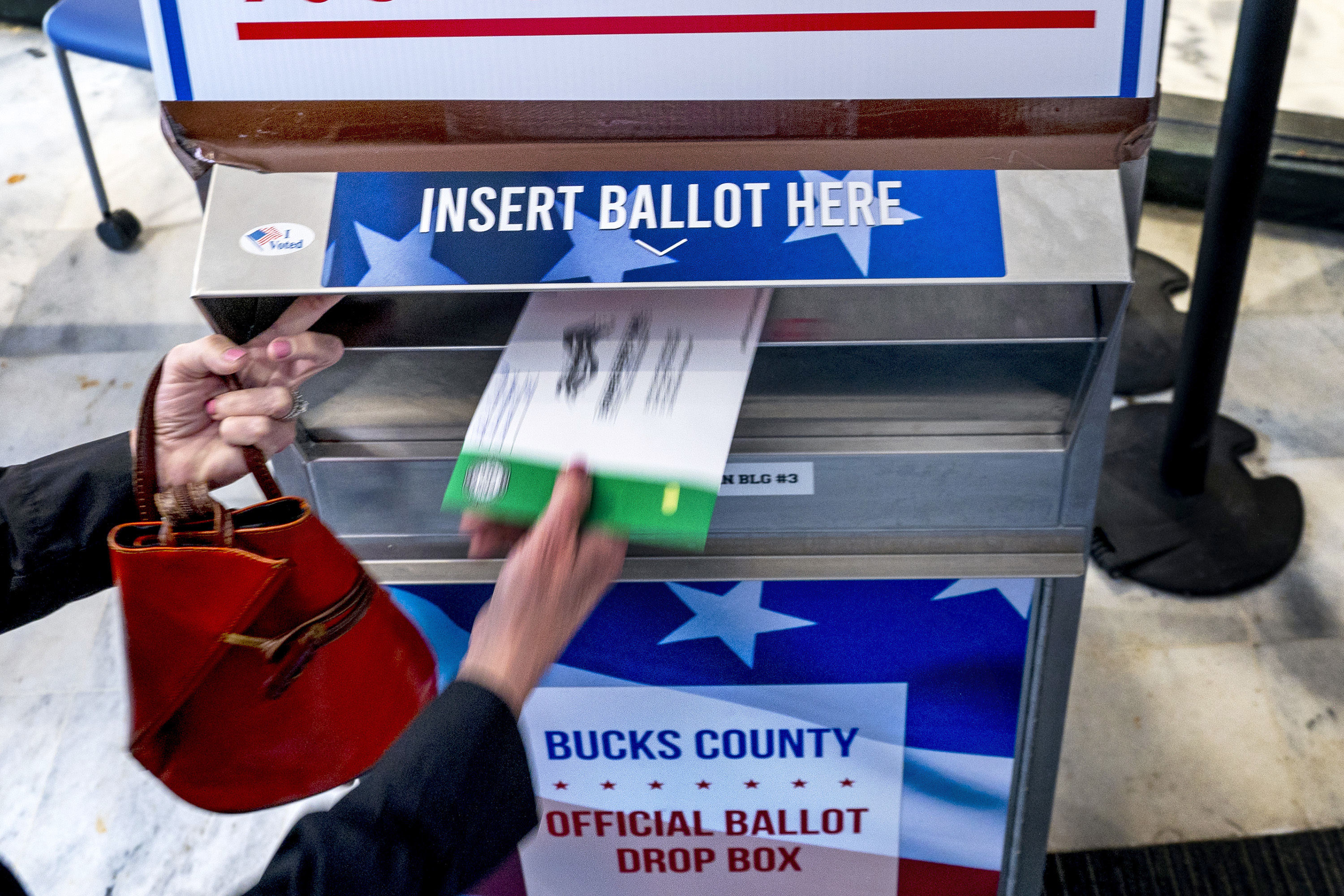
    Geffen’s advice for those concerned is to start early. Get your mail ballot application in right away, and as soon as you receive your ballot, fill it out and return it. For now, you can still send your ballot through the U.S. mail. But you can also drop it off at your county election board, and many counties offer satellite locations and drop boxes.

    If you prefer to vote in person on Election Day, go in the morning, he said.

    “You have options for how to vote, and you will get to vote. Nobody’s taking away the election, and just jump on it early,” he said.

    After Trump, through his directive, ordered the Postal Service to withhold mail ballots to individuals who are not on an approved list, which he instructed states to develop in order to prevent noncitizens from voting, Shapiro promised to protect Pennsylvanians’ right to vote by mail. In April, he used his power as governor to join other Democratic states in a lawsuit that argued the order violated states’ constitutional power to carry out elections.

    The unions representing postal employees also criticized Trump’s push to restrict mail voting as November approaches.

    A statement from the National Association of Letter Carriers, the union that represents about 200,000 postal workers throughout the country, underscored their dedication to delivering ballots reliably and securely.

    “Any insinuation that voting by mail is not safe and secure is severely misguided. Letter carriers have securely delivered ballots for decades, and there is no evidence that the existing system requires substantial changes,” NALC president Brian L. Renfroe said in the statement.

    Gwen Ivey, president of the American Postal Workers Union, Local 89, which represents between 1,300 and 1,400 U.S. clerks in Philadelphia who process mail, maintenance employees, and drivers who transport mail, also warned against inserting the Postal Service into decisions over voting.

    “The Postal Service is a public institution that serves the American people,” Ivey said Tuesday. “It should not be placed in a position of determining who is entitled to participate in elections or becoming an instrument for restricting access to the ballot boxes.”

    Trump has long railed against mail voting, referring to the ballots as “crooked” in his State of the Union address and suggesting they amount to cheating. But his 2024 victory in Pennsylvania was thanks, in part, to a higher rate of mail voting by Republicans.

    The practice is particularly useful for seniors and voters in rural areas — often with strong Republican bases — where voters may live far from their nearest polling location.

    “If you want to win, mail it in, that’s our message to our Republican voters,” then-Pennsylvania GOP chairman Lawrence Tabas said two years ago. The Pennsylvania GOP did not respond to a request for comment for this article.

    Pennsylvania Republicans have been more supportive of Trump’s SAVE America Act, an election reform proposal stalling in Congress that he insists will make voting more secure, though most election experts say new guidelines in the legislation would make it harder to vote.

    A spokesperson for Sen. Dave McCormick (R., Pa.), who has repeatedly championed the SAVE Act, did not respond to a request for comment on the court ruling.

    A separate but similarly Trump-aligned bill supported by House Republicans, including U.S. Reps. Rob Bresnahan and Ryan Mackenzie — two of the four incumbents in Pennsylvania’s competitive congressional districts — would ban universal mail voting and require mail ballots to be received, not just postmarked, by Election Day to be counted.

    Neither lawmaker immediately commented Tuesday on the Supreme Court ruling.

    This story was updated to include Gov. Josh Shapiro’s Tuesday evening comments.

  • El-Sayed joins Fox News for some light verbal combat and a pitch to Republicans

    El-Sayed joins Fox News for some light verbal combat and a pitch to Republicans

    “You’re filibustering.”

    “Pipe down one second.”

    “That’s a dodge, Abdul.”

    Through tense smiles and laughter, Fox News host Jesse Watters frequently reminded his guest — the Democratic nominee for Senate in Michigan, Dr. Abdul El-Sayed — that Watters was the one conducting their prime-time interview as the candidate swerved through a minefield of hostile questions about issues ranging from transition surgeries to reparations to Islam to immigration.

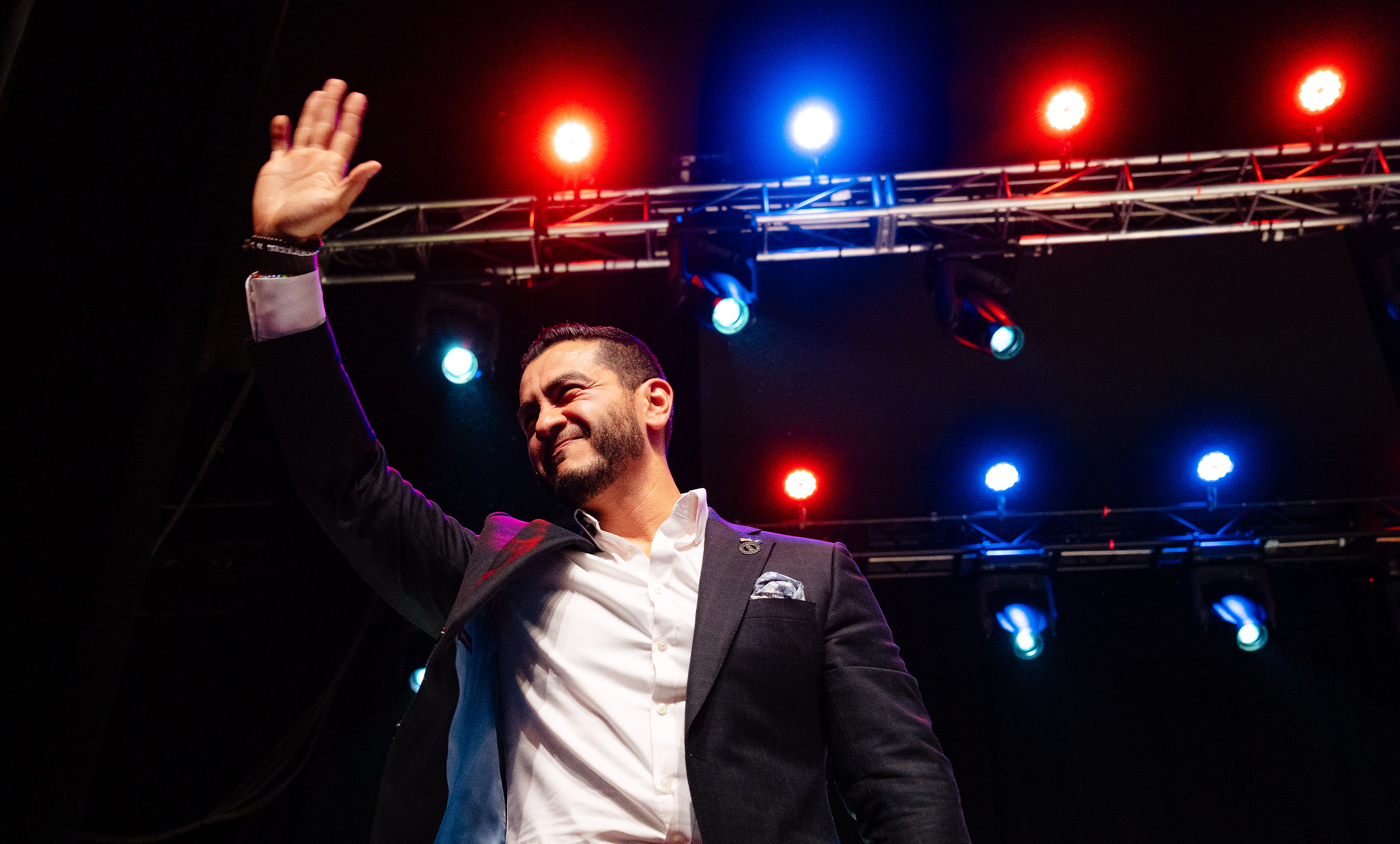
    The appearance Monday night by El-Sayed, a progressive who has sought to dispel worries from moderate Democrats that he is too left-wing to win battleground Michigan, signaled his growing efforts to reach Republican voters and previewed his messaging strategy for the general election. His hard-fought primary victory this month has set up a race against former Rep. Mike Rogers, a Republican, in a contest considered crucial to Senate control.

    When Watters sought to pin down El-Sayed, the candidate would often redirect the question to more favorable political terrain. He pivoted from a question on immigration enforcement to high gas and grocery costs, and turned an inquiry on whether he drives an electric car (he drives a plug-in hybrid, he said) into a jab at President Donald Trump’s new trade war with Canada.

    In the most eye-popping moment of the exchange, Watters asked if El-Sayed believed it was OK “for a parent to slash his kid’s ding-a-ling off,” referring to transition surgeries for minors.

    El-Sayed responded by asking if Watters was circumcised.

    “Uh, yeah, but that’s a personal question, doctor,” Watters responded, laughing, before contending that “circumcision’s different than castration.”

    El-Sayed said that he believed the government should not tell Americans what healthcare procedures they could undergo, but he did not directly say whether he approved of transition surgeries.

    The interview showed the strategy El-Sayed is adopting as Rogers seeks to paint him as a radical leftist who is out of touch with Michigan voters. The Democratic nominee’s approach is to cast “culture-war” issues as a distraction from the everyday problems Americans face, like rising costs and worries about health care.

    The interview also previewed the kinds of arguments that could animate El-Sayed’s planned debate against Rogers, which is set for Oct. 8 on WOOD-TV, both campaigns announced Monday. The two men may face off sooner if they agree to additional debates.

    After Watters brought up Shariah — the system of Islamic religious rules often invoked by opponents to portray Islam as dangerous and anti-American — El-Sayed countered by asking the host if he knew about canon law, the code of religious rules that guides the Roman Catholic Church.

    “Nobody is trying to push Shariah law on anyone else, just like I hope nobody is trying to push canon law on anybody else,” El-Sayed said. “Because we live in an America where you should have the freedom of your religion.”

    Watters responded by saying: “Maybe. Shariah law in Michigan is kind of scary.”

    El-Sayed argued that voters were far more concerned about affording gas, seeing doctors and keeping their jobs than they were about Shariah.

    Asked about his position on trans athletes in sports, El-Sayed said he believed that matter should be “decided by the people who govern sports,” not him.

    “I’m out here trying to take on the healthcare crisis and Big Pharma, and you’re asking me about who gets to play what sports,” El-Sayed said. “It’s silly.”

    El-Sayed’s appearance Monday was his third televised interview with Fox News of the campaign, and his first of the general election.

    Whether or not he is able to attract a slice of Republican voters, he has already sought to capitalize on Watters’ comments about him. He started airing an ad Thursday that features the Fox News host saying after the primary, “You’ve got to respect Abdul because he beat the machine.”

    At the end of the interview Monday, Watters gave his guest “credit for facing the music” by going on his show, but called him “a little naive” and said some of his policies were “straight-up wacky.”

    El-Sayed contended that Trump’s ballroom renovations amid the war with Iran were “wacky,” and then said he would “love to come back on” to talk about money in politics, affordability and Medicare for All.

    “We’ll do it again, Abdul,” Watters said, smiling amusedly and adding, “Good luck in Michigan.”

    This article originally appeared in The New York Times.

  • Black voters have long been politically pragmatic

    Black voters have long been politically pragmatic

    Fierce primary fights throughout the spring and summer have exposed deep ideological fractures within the Democratic Party. They’ve also reopened an internal party debate about whether African Americans — one of the pillars of the Democratic Party — will support “progressive” or left-wing candidates in primaries against moderate opposition.

    In Michigan’s contentious Senate primary, upstart candidate Abdul El-Sayed narrowly beat establishment candidate Haley Stevens, despite the latter performing better overall with African American voters. In Wisconsin, however, African American voters proved decisive, as David Crowley eked out a narrow victory over Democratic Socialist Francesca Hong. In both campaigns, perceptions of electability in November became a key issue and a key indicator of whether a candidate could win Black support.

    This fight isn’t new. The Democratic Party has long featured debates over electability, and whether it ought to prioritize finding candidates who can excite base voters or identifying candidates who have crossover appeal in November.

    This question has unique importance for African American voters. They take a deeply pragmatic approach, one that has been shaped by the fraught racial environment that is, sadly, a key part of American electoral history. For close to a century, that has translated into a reluctance to back political causes or campaigns that make broad promises, but will have difficulty delivering results. While African Americans have been a stalwart Democratic constituency for more than 60 years, they have not automatically gravitated toward left-wing causes.

    The 1948 presidential campaign took place at the height of the Cold War abroad and the Second Red Scare at home. It also had a critical civil rights dimension.

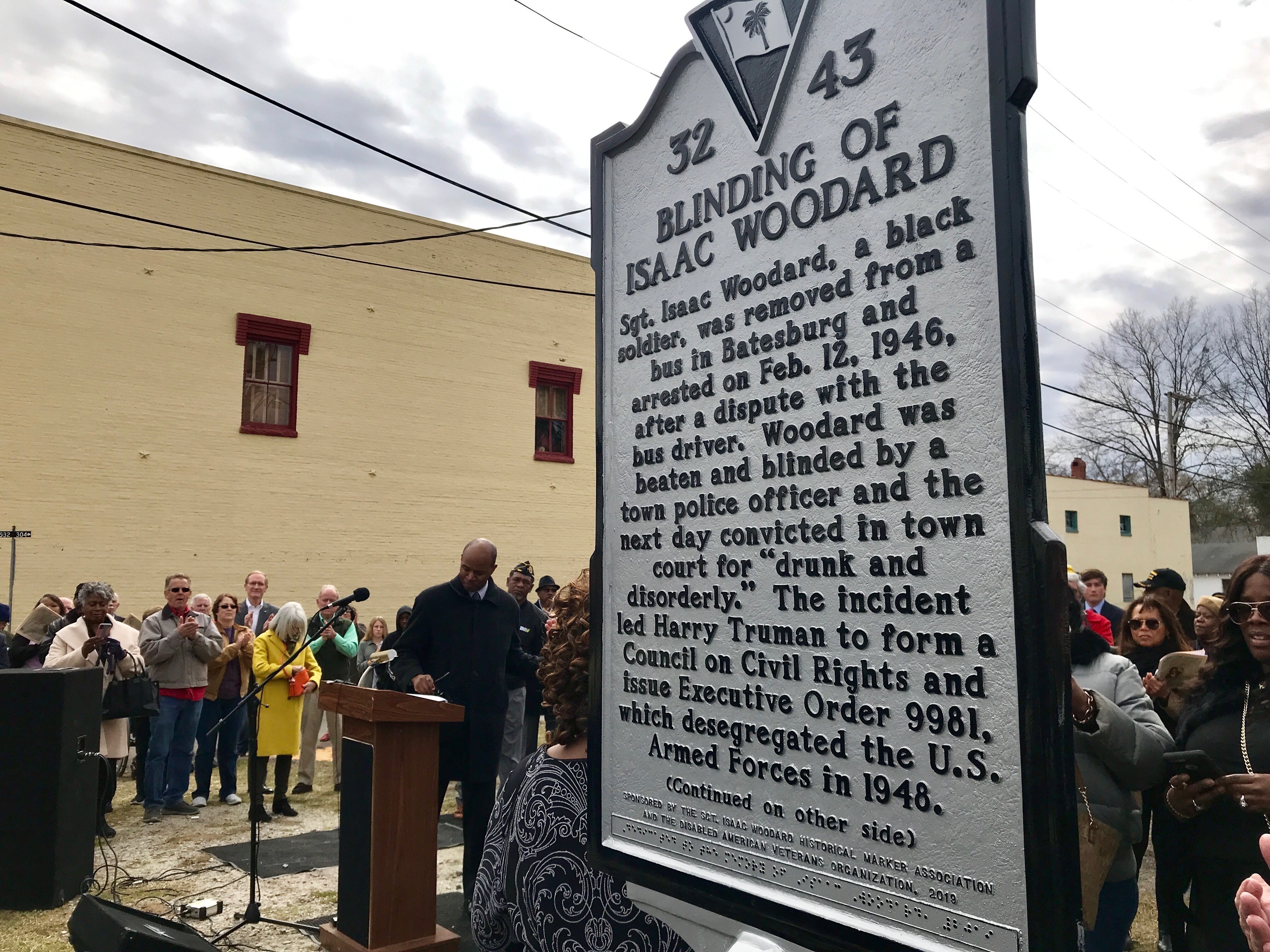
    Many Black soldiers had fought in World War II for a “Double V” — victory against fascism abroad and victory over racism at home. Yet, returning after the war, they discovered that many of their white counterparts did not want to eliminate Jim Crow segregation in the South, or other forms of white supremacy and discrimination elsewhere in the country. Lynchings and racial violence dramatically increased after the war, most memorably, the beating and blinding of Pacific War veteran Sergeant Isaac Woodard in South Carolina in 1946.

    In this Feb. 9, 2019, file photo, the Blinding of Isaac Woodard historical marker was dedicated in Batesburg-Leesville, S.C. Woodard, a uniformed World War II veteran was headed home on a bus in 1946, when he was removed and beaten by a white South Carolina police chief, leaving Woodard permanently blind.Christina Myers

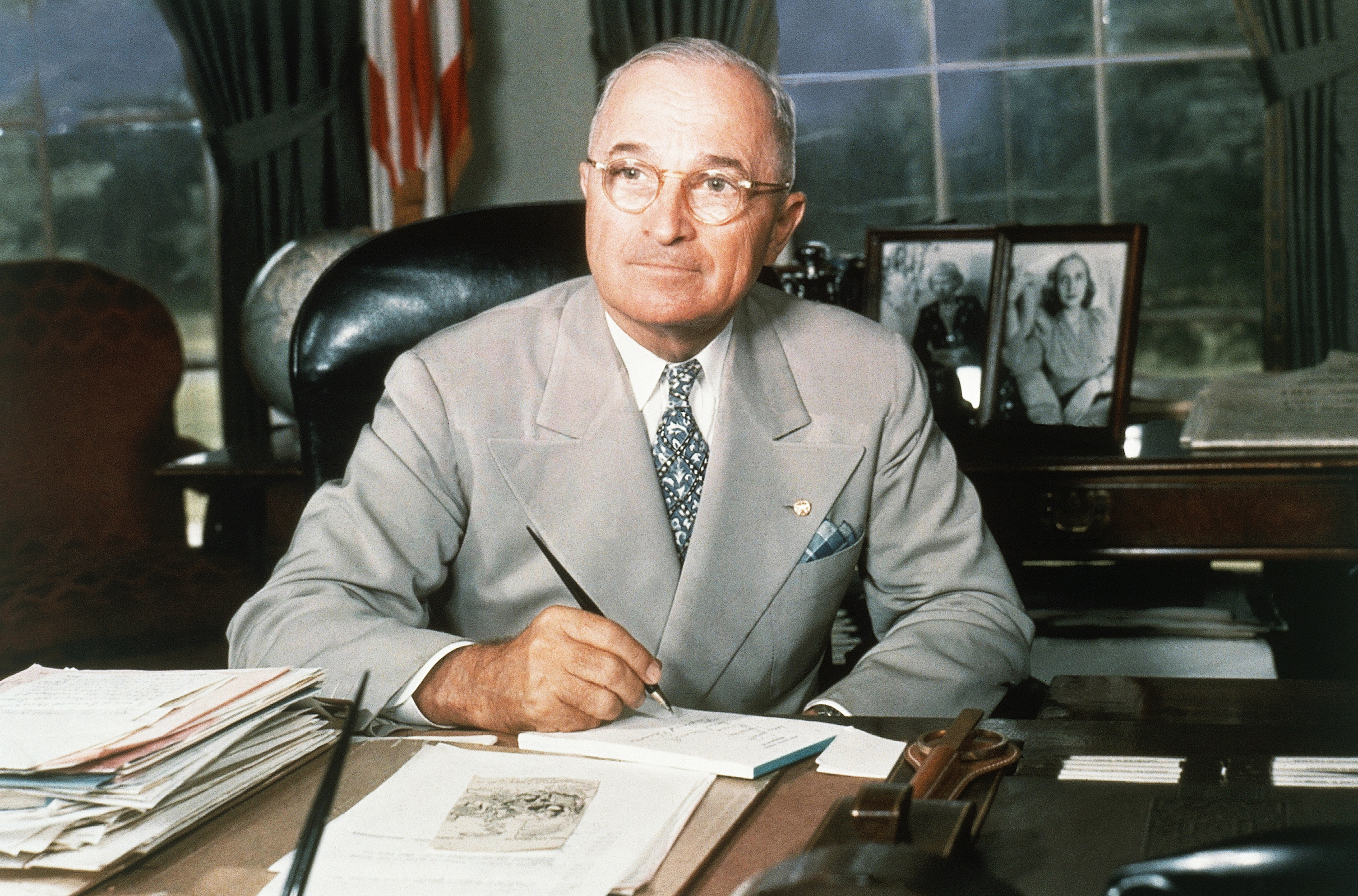
    Black Americans demanded that embattled President Harry Truman embrace new civil rights protections. Truman was aghast at the treatment of returning veterans and believed in fairness. He also realized that he’d need the votes of African Americans to have any chance of winning reelection.

    In 1947, Truman began making a concerted effort to advance the civil rights cause. He became the first president to speak at the National Association for the Advancement of Colored People’s annual convention. The White House also released To Secure These Rights, a book detailing how the Truman administration both acknowledged the problems facing African Americans and the steps it would take to ameliorate them. Additionally, Truman desegregated the armed forces, a critical step in showing he was serious about embracing civil rights.

    Truman made these moves to showcase American freedom and democracy and juxtapose it with Soviet communism, while also trying to shore up the African American vote. That was especially critical because of a political insurgency that threatened Truman’s hope for reelection: the rise of Henry Wallace and the Progressive Party.

    Wallace had served as agriculture secretary during Franklin Roosevelt’s first two terms as president and as vice president during Roosevelt’s third term. He had also served as Truman’s secretary of commerce. Many on the left saw Wallace as the only hope for achieving their main goals: preventing a full-blown war with the Soviets, and securing greater labor, civil and human rights at home.

    Wallace’s backers included prominent African Americans like Paul Robeson and W.E.B. Du Bois, who distrusted Truman. Both men supported Wallace due to the former’s strong stance in favor of civil rights at home and deep-seated opposition to the brewing Cold War abroad. Their support helped catalyze a debate in the Black community over which candidate to back.

    Forums like The Crisis, the official magazine of the NAACP, became spaces for African American voters to debate Wallace vs. Truman. In early 1948, The Crisis editors declared “Wallace is straight on our question,” referring to his unabashed support for civil rights. They refrained, however, from outright endorsing him, noting his mixed record as secretary of agriculture.

    Made By History sponsors. FOR USE ON MADE BY HISTORY STORIES ONLY.Inquirer Staff

    Readers remained divided over this support for Wallace. Some felt the editorial was too harsh about his policies as secretary, while others believed he had not done enough for Black Americans in the federal government. “I challenge you to name another American of equal stature,” Robert and Selma Singer from Chicago wrote to The Crisis offices after its April 1948 issue, “who has mass support, who has given such impetus toward solving the ‘Negro Problem.’”

    Yet, others, such as Max Womack of Iowa City, argued that Wallace had no chance as a third-party candidate, and would merely split the votes of people who’d otherwise back Truman. He also wondered why the editors hadn’t given “President Truman any credit at all?”

    This last question hinted at the prevailing sentiment in the Black community: most African American voters backed Truman that November. They preferred trusting the incumbent — a proven commodity — rather than taking a chance on what turned out to be a quixotic campaign.

    Their overwhelming support delivered key margins in battleground states in the North and Midwest, like Michigan, a testament to the maturing power of the African American vote. “Negro leaders pointed out,” proclaimed the front page of the Black-owned and operated Detroit Tribune, “that the Michigan Republican party seemed to go out of its way to avoid the Detroit population and its political desires.”

    Black voters siding with mainstream, liberal Democrats over more radical ideas proved to be no anomaly. Twenty-four years later, in 1972, Black voters again engaged in an ideological skirmish. Activists debated the best way forward after the heyday of the Civil Rights Movement and the election of Republican Richard Nixon in 1968 against a deeply divided Democratic Party.

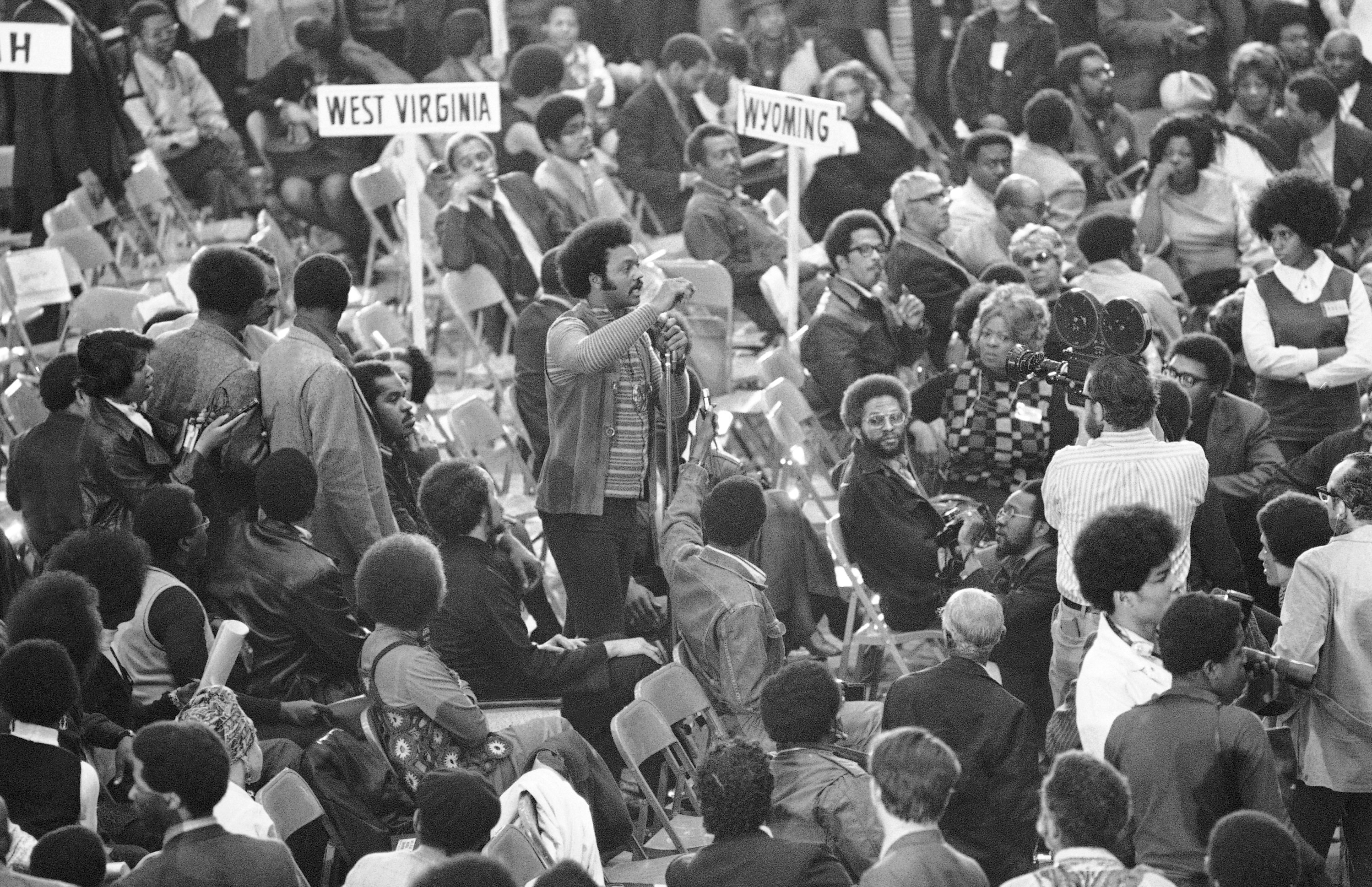
    At the National Black Political Convention, held in Gary, Indiana, African American liberals, moderates, socialists, nationalists, and even conservatives gathered to map out a strategy for adjusting the politics of Black America to a new normal. Nixon’s administration had largely practiced “benign neglect” on racial issues, while suppressing the Black Power Movement. Attendees grappled with an overall backlash to the Great Society programs spearheaded by the liberal wing of the Democratic Party.

    In this March 13, 1972, file photo, the Rev. Jesse Jackson, executive director of Operation: PUSH, speaks from the floor of the National Black Political Convention in Gary, Ind.Jim Wells

    The Convention’s “Gary Declaration” gave voice to the frustration of many Black Americans, arguing, “Both parties have betrayed us whenever their interests conflicted with ours (which was most of the time), and whenever our forces were unorganized and dependent, quiescent and compliant.”

    Still, despite the critique of both Nixonian conservatism and Great Society liberalism, the members of the Gary Convention disagreed over a radical proposal to create an all-Black political party that could, in theory, broker deals with both major parties on behalf of Black America. Later that year, most Black Americans stuck with the Democrats — one of the few constituencies to back the doomed campaign of George McGovern.

    The primary that year had illustrated Black political pragmatism at work. Ebony magazine journalist Alex Poinsett acknowledged that McGovern was far from perfect and that Black voters lacked a truly satisfactory option. Yet, he argued that the candidate’s support for elements of the Gary Declaration — and a competing “Black Bill of Rights” proposed by the Congressional Black Caucus — made him a sensible option over several longer shots, including African American congresswoman Shirley Chisholm.

    The choice of McGovern over Chisholm reflected how Black voters’ wariness about progressivism that did not seem to be electorally viable even applied to Black candidates. The same was true three decades later: Barack Obama struggled with Black voters in polling until his victory in Iowa in January 2008 made it clear he was a candidate who could win.

    These cases epitomize how, over time, Black voters have stuck with liberals in the Democratic Party who demonstrate a genuine chance of victory over more radical options that might promise better policy. They aren’t always happy with their choices, but they know what to expect from mainstream Democrats.

    This choice reflects how, ultimately, for African American voters, a pragmatic view of politics overrules almost everything else. The old saying that “politics is the art of the possible” is, often, the rueful outlook on politics by African Americans.

    Robert Greene II is associate professor of history at Claflin University. He is also managing editor of “Global Black Thought” and co-host of the award-winning podcast, “Our New South.”

    Made by History takes readers beyond the headlines with articles written and edited by professional historians. Opinions expressed do not necessarily reflect the views of The Inquirer.

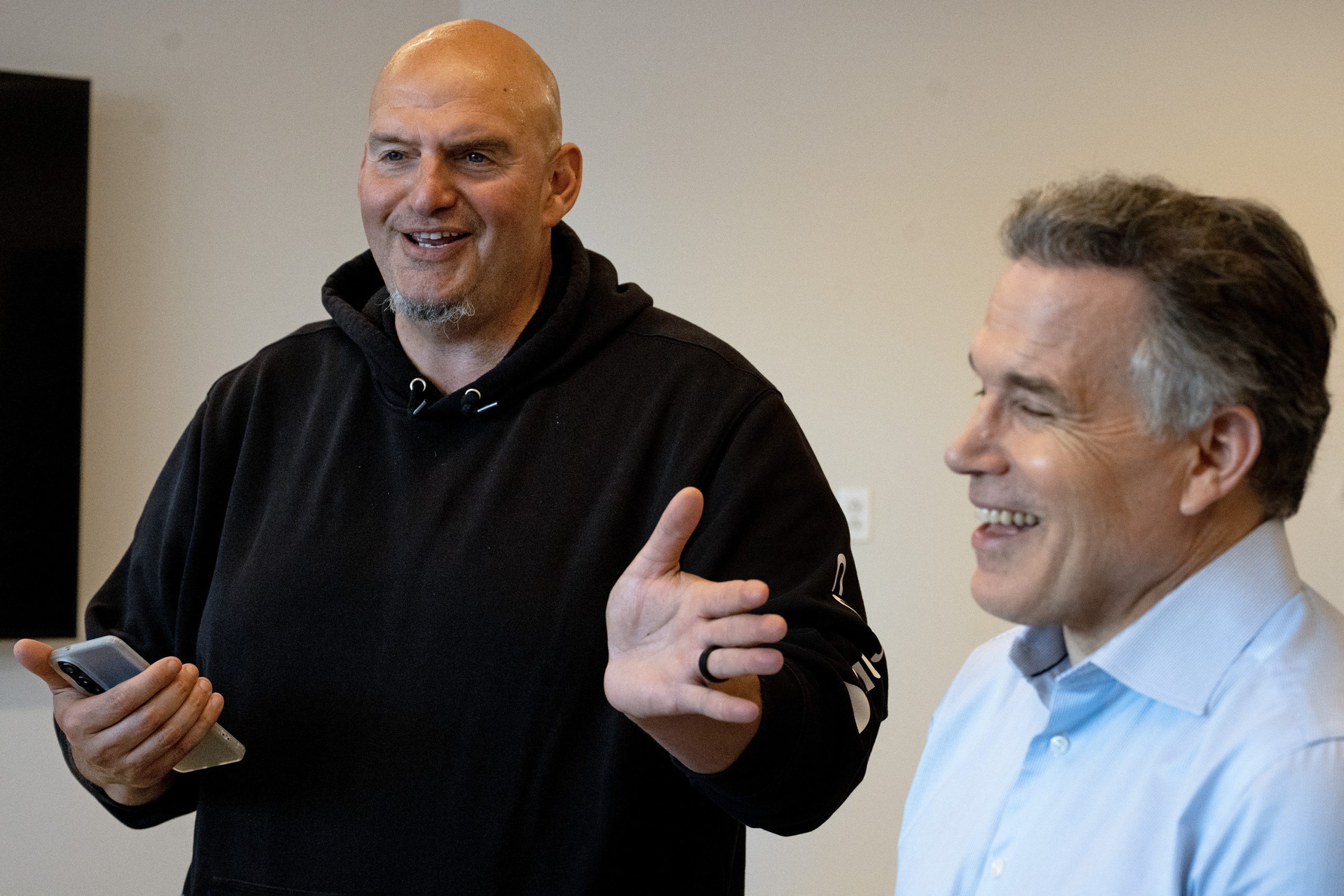
  • Jeffries defends Kushner meeting, vowing tough oversight of Trump

    Jeffries defends Kushner meeting, vowing tough oversight of Trump

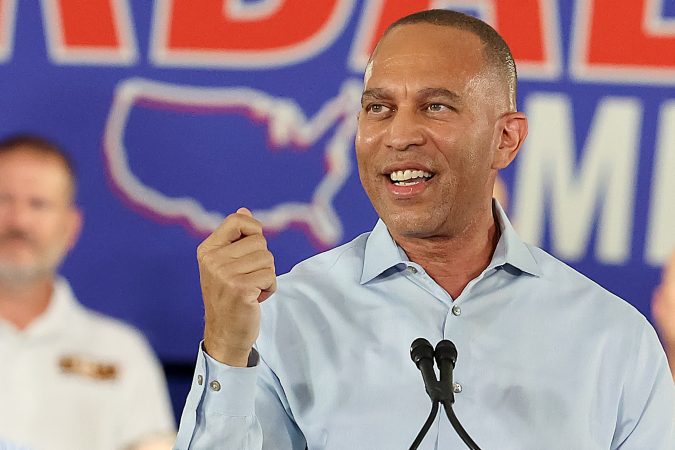
    WASHINGTON — Rep. Hakeem Jeffries, the minority leader, was forced to defend himself on Monday for taking a recent meeting with Jared Kushner, President Donald Trump’s son-in-law and top outside adviser, amid a backlash about the encounter from some progressives.

    “I wanted to give you a little real talk on this Jared Kushner situation,” Jeffries, D-N.Y., said in a video he posted on social media, in which he appeared in Brooklyn dressed in a bright green New York Yankees cap and matching polo shirt.

    Jeffries, who had initially declined to acknowledge the meeting or comment on it, said in the video that Kushner had asked for the meeting, and he had taken it, in order “to discuss the affordability crisis that exists, that is not a hoax.” (Trump has accused Democrats of inventing the concept of “affordability” to attack him over the high cost of living.)

    The discussion came as Trump and Democrats are attacking one another relentlessly on the campaign trail as they battle for control of Congress, and as the president’s inner circle is facing the increasingly likely possibility of a Democratic takeover, one that would put the Brooklyn lawmaker in line to be the House speaker.

    It drew bitter criticism from some Democrats, who are eager to see accountability for the Trump administration on a range of topics after a pliant two years of House Republican control. They said his decision to privately huddle with Kushner raised questions about how tough Jeffries would be in investigating the administration.

    “You do not meet with them — don’t have anything to do with them,” James Carville, the veteran Democratic strategist, vented online in a four-minute rant about Jeffries. “Any business we have is going to be conducted with you under oath.”

    Jeffries insisted in the video that he would be aggressive.

    “I shouldn’t have to say it, but I am,” he said. “No one is going to get a pass. We’re going to hold every single member of the Trump cartel accountable.”

    A spokesperson for Kushner did not respond to an email seeking comment on Jeffries’ video.

    The confab, which was first reported by The New York Times on Sunday, was described by people familiar with it as a general get-together in New York City to discuss areas where the Trump administration and Democrats could find common ground, discussing housing, cost-of-living and immigration. Kushner used the discussion to suggest that Jeffries meet with Susie Wiles, the White House chief of staff, with whom the Democratic leader has no relationship, according to one of the people with knowledge of the meeting.

    Kushner worked with Jeffries on criminal justice legislation during Trump’s first term, when he was an official senior adviser in the White House. Kushner now runs an investment firm backed heavily by Middle Eastern sovereign wealth funds and is not formally a part of the administration.

    But he has been an increasingly key outside adviser to his father-in-law, playing a central role in aspects of Trump’s foreign policy since last summer, a fact that Democrats on the House Judiciary Committee have begun to investigate.

    One of the most prominent faces of the Democratic left, Mayor Zohran Mamdani of New York, said he would still support Jeffries to lead the party. But elsewhere, there was outrage.

    Mehdi Hasan, the founder of the news site Zeteo, called the meeting “pathetic stuff from the House Dem leader” in a social media post. Adam Kinzinger, a former Republican member of Congress who has been among Trump’s harshest critics, referred to the meeting by posting: “Make this make sense.”

    Jeffries was already facing a potential rift within his caucus next year, with an incoming faction of antiestablishment members on the left who have repudiated him and broken with mainstream Democrats on a number of issues.

    A person with knowledge of the meeting, who spoke on the condition of anonymity to discuss a sensitive topic, said it was a mutual friend, not the president’s son-in-law, who suggested that Jeffries and Kushner meet.

    The meeting also created an awkward situation for House Speaker Mike Johnson, R-La., who has been confidently predicting that his party will retain its majority and found himself pushing back on the idea that the Trump administration was instead preparing for a Democratic victory.

    Asked on Sunday about the meeting, Johnson played down Kushner’s influence, saying he was “not really directly involved” in the administration, “at least in the day-to-day in the White House,” and again expressed confidence that Republicans could keep control of the House.

    This article originally appeared in The New York Times.

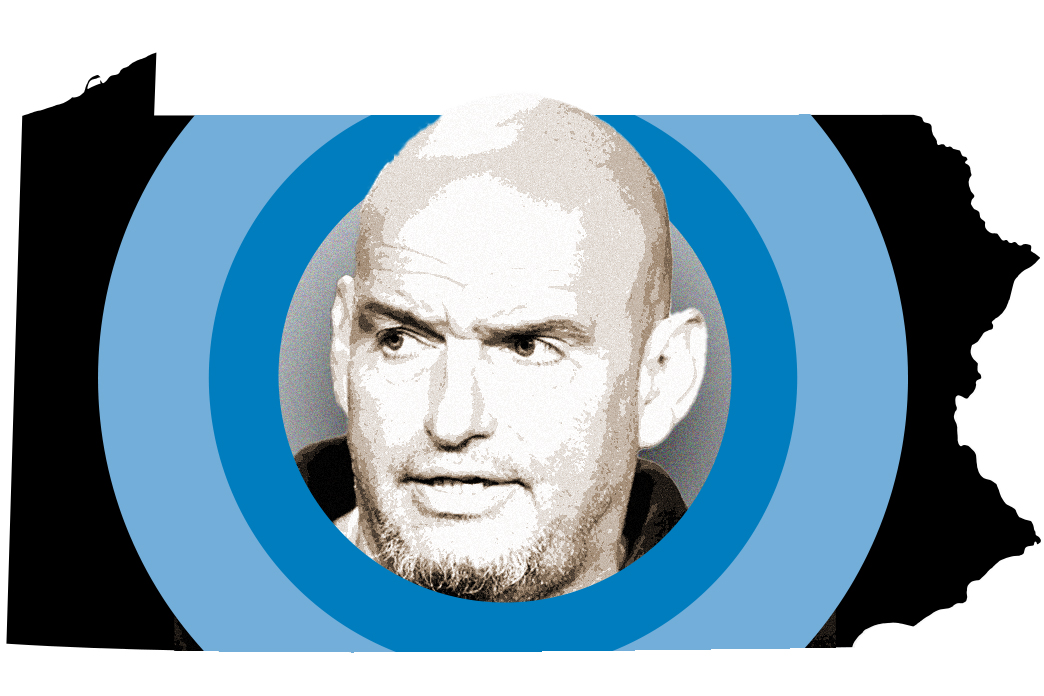
  • Fetterman gains GOP favor as Pa. Democrats regret electing him, new poll finds

    Fetterman gains GOP favor as Pa. Democrats regret electing him, new poll finds

    Two-thirds of Pennsylvania Democrats who are likely to vote this year believe U.S. Sen. John Fetterman supports President Donald Trump too frequently, while about half say the Democratic senator has been too supportive of Israel, according to an Inquirer/New York Times/Siena University poll published Tuesday.

    Democratic voters’ sharply divided views on Fetterman — with 69% having an unfavorable opinion of him in general — are the latest signs he could face an uphill battle if he seeks reelection as a Democrat in 2028.

    Fetterman has not said whether he will run for a second term.

    But as he weighs his options — which include leaving the Democratic Party because of what he considers its anti-Israel sentiment — the senator’s occasional support of Trump’s agenda has contributed to his declining favorability among voters who helped elect him in the first place, the new survey indicates.

    “I’m so disappointed in him, I can’t even see straight,” said Joseph Jaskula, a retired salesman from Lewisburg, Union County, who participated in the poll of 760 likely voters conducted by Siena University on behalf of The Inquirer and the New York Times from Aug. 17 to 21.

    (function() { var l = function() { new pym.Parent( ‘nyt-fetterman__graphic’, ‘https://media.inquirer.com/storage/inquirer/ai2html/nyt-fetterman/index.html’); }; if(typeof(pym) === ‘undefined’) { var h = document.getElementsByTagName(‘head’)[0], s = document.createElement(‘script’); s.type = ‘text/javascript’; s.src = ‘https://pym.nprapps.org/pym.v1.min.js’; s.onload = l; h.appendChild(s); } else { l(); } })();

    Jaskula, a Democrat who said he voted for Fetterman in 2022, said he is particularly upset about the senator’s votes for several of Trump’s nominees and for the war in Iran.

    Fetterman has been the only Senate Democrat to vote against restricting the president’s use of military force in Iran.

    “He voted with the Republicans on that,” Jaskula, 72, said of the war powers resolutions that aimed to rein in Trump. “And he’s had some other ones where we wonder if he’s a Republican or a Democrat.”

    Fetterman’s standing among Pennsylvania voters overall remains split, according to the poll.

    He is viewed favorably by 49% and unfavorably by 43% of all likely voters in the state. That was nearly the same result as the last time the Inquirer/New York Times/Siena poll asked about Fetterman’s favorability, in May 2024.

    But the difference between now and then — when Fetterman was campaigning against Trump’s election and only two years removed from his own sweeping victory in the Pennsylvania Democratic primary — is who is supporting him.

    Pennsylvania’s U.S. Senators John Fetterman (left) and Dave McCormick appear together at June event in Philly to promote the savings accounts for kids that were part of President Donald Trump’s One Big Beautiful Bill Act.Tom Gralish / Staff Photographer

    Fetterman outperforms McCormick with GOP voters

    In almost the exact opposite breakdown compared with about two years ago, just one in five likely Democratic voters reported having a favorable view of Fetterman, while four out of five likely Republican voters said they have a favorable view.

    Even Fetterman’s Republican counterpart in Pennsylvania — U.S. Sen. Dave McCormick, who was elected in 2024 — is viewed favorably by a smaller share of GOP voters, about 66% compared with Fetterman’s 79%.

    (function(){function e(){window.addEventListener(`message`,function(e){if(e.data[`datawrapper-height`]!==void 0){var t=document.querySelectorAll(`iframe`);for(var n in e.data[`datawrapper-height`])for(var r=0,i;i=t[r];r++)if(i.contentWindow===e.source){var a=e.data[`datawrapper-height`][n]+`px`;i.style.height=a}}})}e()})();

    Don Levy, director of the Siena Research Institute, called the Democratic senator’s numbers “shocking.”

    “If you didn’t know any difference, you would immediately assume that Fetterman and McCormick are both Republicans, and that Fetterman is an extremely popular Republican senator amongst Republicans,” Levy said. “I can’t think of another case exactly like this.”

    Fetterman, citing his voting record in the Senate, which still mostly aligns with Democrats, has said repeatedly that he will not switch his registration to Republican.

    GOP leaders, who are fighting to retain control of the Senate this fall, have said they would welcome the Pennsylvania Democrat into their fold.

    And Fetterman has raised the prospect of leaving the party, possibly becoming an independent, if Democrats oppose Israel as an “official” part of their platform. He has staunchly supported the country in the wake of the Oct. 7, 2023, attack by Hamas, and as Democrats have become increasingly critical of Israel’s counterattack.

    (function(){function e(){window.addEventListener(`message`,function(e){if(e.data[`datawrapper-height`]!==void 0){var t=document.querySelectorAll(`iframe`);for(var n in e.data[`datawrapper-height`])for(var r=0,i;i=t[r];r++)if(i.contentWindow===e.source){var a=e.data[`datawrapper-height`][n]+`px`;i.style.height=a}}})}e()})();

    Fetterman has opposed fellow Democrats’ efforts to end the United States’ assistance to Israel’s offensive measures. He has also become the most vocal Democratic supporter of both countries’ attacks against Iran, an issue that also remains deeply unpopular among Pennsylvania voters.

    At the same time, Fetterman has backed other Trump initiatives, like immigration enforcement and the investment accounts for children known as Trump Accounts.

    “He’s a voice in the party, standing up for what’s right,” said Nicholas Morabito, a 32-year-old warehouse worker in Butler who participated in the poll.

    A registered Republican, Morabito said he would consider voting for Fetterman in 2028, regardless of which party label accompanies his name on the ballot.

    “I don’t think there’s very much difference between the two of us. Just the difference in party,” Morabito said.

    Fetterman has acknowledged the shift in support. He wrote in his 2025 memoir that he was “completely at peace” with the idea that his support of Israel might cost him his Senate seat. And in interviews, he has repeatedly said that, as a swing-state senator, he should work with and not demonize the other party.

    A plurality of likely voters — 47% — say Fetterman is “about right” when it comes to supporting or opposing Trump, according to the poll. About 38% said he supports Trump too much, 6% said he opposes Trump too much, and 9% did not answer.

    (function(){function e(){window.addEventListener(`message`,function(e){if(e.data[`datawrapper-height`]!==void 0){var t=document.querySelectorAll(`iframe`);for(var n in e.data[`datawrapper-height`])for(var r=0,i;i=t[r];r++)if(i.contentWindow===e.source){var a=e.data[`datawrapper-height`][n]+`px`;i.style.height=a}}})}e()})();

    But Democratic voters have indicated a strong desire for their elected officials to push back against Trump, and Fetterman’s declining support among them appears to be due in part to that shift during Trump’s second term. About 67% of likely Democratic voters said Fetterman supports the president too much, while 20% said he gets it “about right.”

    “Fetterman has been such an interesting, unique personality now since he broke onto the scene,” Levy said. “Given the state of play right now, Democrats are just angry that he was elected. Democrats are supposed to act like Democrats, and this shows that their perception of him is that he is not.”

  • Most of Pa.’s likely voters disapprove of Donald Trump and his policies, new poll shows

    Most of Pa.’s likely voters disapprove of Donald Trump and his policies, new poll shows

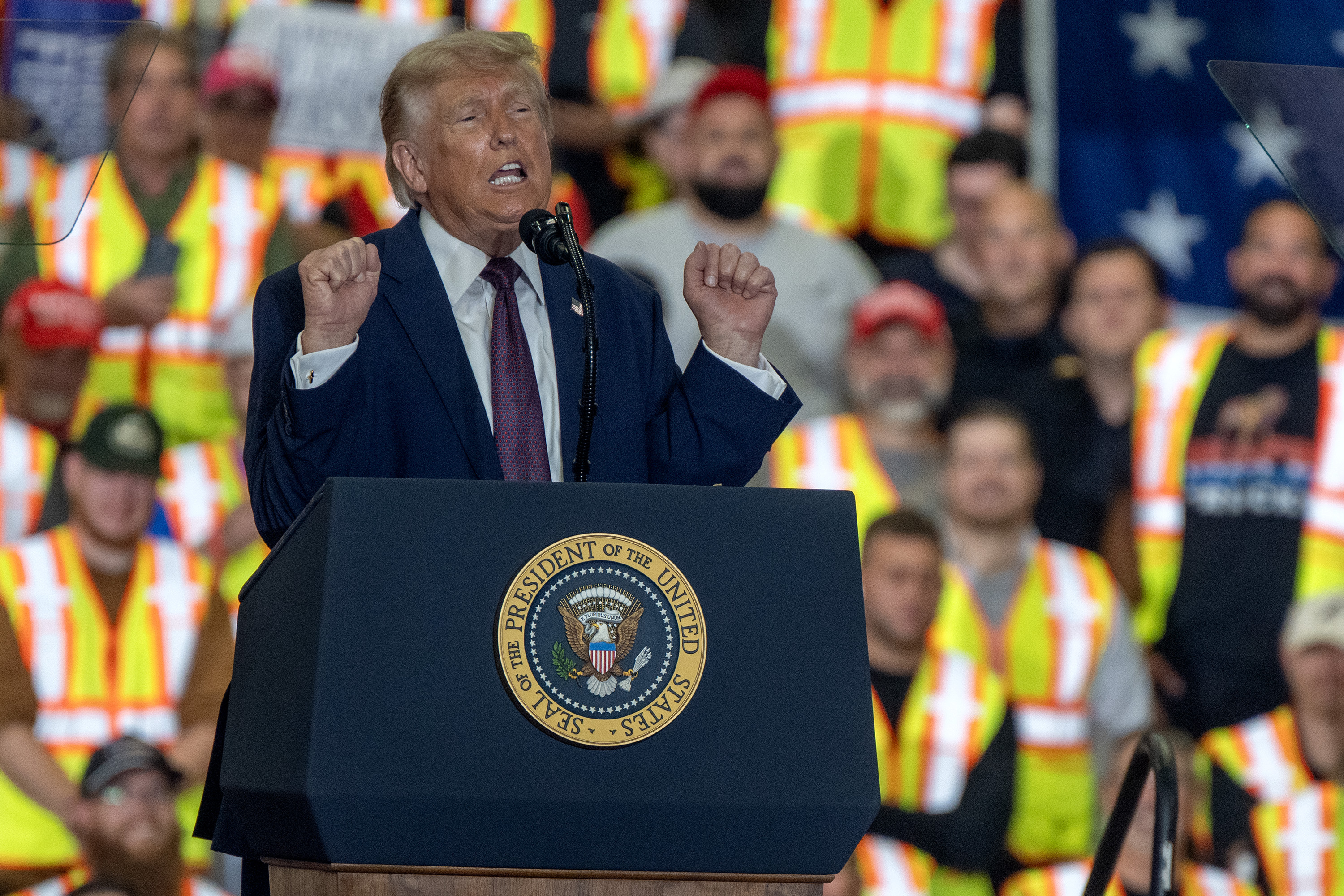
    More than half of likely voters in Pennsylvania’s forthcoming midterm elections disapprove of President Donald Trump’s job performance, and he is drastically underwater among the state’s electorate on key issues — some of which helped him win a second term in 2024.

    Trump, who won the crucial swing state by nearly two percentage points in November 2024, now has an approval rating of 39% and a disapproval rating of 58% among Pennsylvania’s likely voters, according to an Inquirer/New York Times/Siena University poll published Tuesday.

    The poll, which was conducted from Aug. 17 to 21 among 760 likely Pennsylvania voters, raises questions about how voters’ perception of the president will affect November’s midterms, when many Pennsylvanians will cast their ballots in four critical swing district races that could determine which party controls the U.S. House.

    (function() { var l = function() { new pym.Parent( ‘nyt-trump2__graphic’, ‘https://media.inquirer.com/storage/inquirer/ai2html/nyt-trump2/index.html’); }; if(typeof(pym) === ‘undefined’) { var h = document.getElementsByTagName(‘head’)[0], s = document.createElement(‘script’); s.type = ‘text/javascript’; s.src = ‘https://pym.nprapps.org/pym.v1.min.js’; s.onload = l; h.appendChild(s); } else { l(); } })();

    Even among his Pennsylvania supporters who were surveyed, Trump faces some of his lowest approval ratings regarding his handling of the war in Iran and cost-of-living issues, according to the poll, counteracting campaign promises that proved successful in 2024: ending foreign wars and helping people pay their bills.

    Once again, the economy will likely be at the front of voters’ minds heading into November — 22% of Pennsylvanians polled said it is their top issue in the governor’s race — and it could also serve as an indicator for the outcome of House races where Republicans will be on the defensive.

    “Certainly it’s got to be a drag on their fortunes,” said Don Levy, director of the Siena Research Institute.

    (function(){function e(){window.addEventListener(`message`,function(e){if(e.data[`datawrapper-height`]!==void 0){var t=document.querySelectorAll(`iframe`);for(var n in e.data[`datawrapper-height`])for(var r=0,i;i=t[r];r++)if(i.contentWindow===e.source){var a=e.data[`datawrapper-height`][n]+`px`;i.style.height=a}}})}e()})();</script

    Trump losing ground on issues that propelled him to White House

    The new polling on Trump’s management of top concerns facing the United States — particularly the economy and the cost of living — shows how the issues that helped propel him to the White House in 2024 are now souring his approval among Pennsylvanians, including some who previously voted for him.

    Among likely voters in the Keystone State, 39% approve and 61% disapprove of Trump’s handling of the economy. On his handling of the cost of living, 33% said they approve and 66% disapprove.

    The data come as voters continue to grapple with rising costs, including unusually high gas prices, and grocery prices that have been increasing for nearly six years. Trump’s tariffs, one of the defining policies of his first year back in office, also raised prices for consumers and businesses.

    Now, a quarter of Pennsylvanians who voted for the president in 2024 say they disapprove of how he is handling of the cost of living.

    Michael Patterson, 60, of Bucks County, is one of them.

    Though Patterson said Trump’s term has been “great” overall, he was expecting more from the president on the economy and costs.

    “The prices are still too high, interest rates are still too high,” Patterson said. “We still haven’t seen anything from that promise yet.”

    (function(){function e(){window.addEventListener(`message`,function(e){if(e.data[`datawrapper-height`]!==void 0){var t=document.querySelectorAll(`iframe`);for(var n in e.data[`datawrapper-height`])for(var r=0,i;i=t[r];r++)if(i.contentWindow===e.source){var a=e.data[`datawrapper-height`][n]+`px`;i.style.height=a}}})}e()})();

    Trump’s messaging on the economy in 2024 was part of why he won Pennsylvania with more votes than any other statewide GOP candidate in history. Pennsylvania voters cited Trump’s promises to bring costs down as a top reason that they voted for him and overlooked Democrats’ warnings about what his election could mean for democracy.

    Trump is also hurting on other issues that helped boost him to the presidency, including his promise to end wars. Thirty-two percent of likely voters in Pennsylvania approve of Trump’s handling of the war in Iran and 66% disapprove — including 30% of Trump voters.

    The war has now gone on for almost six months, after Trump promised it would last just a few weeks, and has contributed to rising oil and gas prices.

    Kay Skripac, who voted for Trump in 2024, said that though she supports the president on almost every other issue, “I just don’t think that we should have invaded or bombed Iran. I was very surprised, because I didn’t vote for that.”

    The 72-year-old independent voter said, despite thinking Trump has done strong work on the economy (she says her retirement portfolio doubled from 2016 to 2026), she is feeling the war’s impact at the gas pump.

    “I want everything to just be normal and stay the same, because everything was fine,” said Skripac, who lives in Crawford County. “We weren’t involved in any wars. You didn’t have to worry about any friends or loved ones potentially getting killed. I don’t like that at all.”

    Trump’s handling of the Israeli-Palestinian conflict also received low marks from voters, with 62% disapproval, compared with 36% approval.

    Republican Sandra Faust, 40, approves of Trump’s handling of that conflict. But her support does not extend to the war in Iran, which Trump launched in coordination with Israel.

    Faust, who voted for Trump two years ago, said she strongly disapproves of the war due to rising gas prices and believes it conflicts with the president’s promise to end wars. The Pittsburgh resident, who has a family member in military training to become a jet refueler, said she wishes the conflict in Iran would end.

    “Them dragging it on is not only harming us, locally with gas and, you know, pricing and stuff like that, but it’s putting our military in harm’s way, and I’m not happy about that,” she said.

    Faust added that she opposes the war because of her belief in the “America First” ideology. That perspective also makes her supportive of Trump’s immigration agenda, she said.

    The president is lagging in Pennsylvanians’ support of his immigration policies — which have included mass deportations and enhanced border security — but the disapproval is not as stark. Among likely voters, 44% approve of his handling of immigration and 55% disapprove.

    “We are not responsible for taking care of the world’s problems,” Faust said.

    What does Trump’s approval rating mean for November in Pa.?

    So what does this mean for the midterms?

    Time will tell.

    But 51% of Pennsylvania’s likely voters who were polled indicated they would be more likely to vote for a Democrat in their congressional district, and 44% said they would support a Republican. More than half, 53%, say they would want to see a flip of control in the House, putting Democrats in charge, while 44% say they would want to see the GOP maintain control.

    The polling for the GOP in November is not as bleak as Trump’s numbers, but it shows where voters’ heads are a little more than two months away from the midterms, when Pennsylvanians will weigh in on four competitive swing district congressional races.

    (function(){function e(){window.addEventListener(`message`,function(e){if(e.data[`datawrapper-height`]!==void 0){var t=document.querySelectorAll(`iframe`);for(var n in e.data[`datawrapper-height`])for(var r=0,i;i=t[r];r++)if(i.contentWindow===e.source){var a=e.data[`datawrapper-height`][n]+`px`;i.style.height=a}}})}e()})();

    Both parties are targeting GOP-held seats in Bucks County’s 1st Congressional District, the Lehigh Valley’s 7th Congressional District, the Scranton area’s 8th Congressional District, and the Harrisburg area’s 10th Congressional District.

    Democrats are hoping that a message focused on affordability and tying opponents to Trump will usher in wins this fall. For instance, Democrat Bob Harvie in the heated 1st Congressional District race published a new campaign platform recently that focuses mainly on addressing economic issues.

    “The task of Republicans running in various congressional districts, or for the governor of the state, is going to be to somehow separate themselves from the perception that Pennsylvanians have about the job that the head of their party is doing on the economy,” said Levy, the Siena polling director.

    But for Democrats, connecting Harvie’s opponent, longtime Republican U.S. Rep. Brian Fitzpatrick, to Trump could be a harder sell. The Bucks County lawmaker consistently outperforms his party and has survived one blue wave after another.

    The poll’s findings signal that both parties may also have to think about their branding to the public — 50% of respondents said the Democratic Party is too far to the left and 47% said Republican Party is too far to the right.

    Republicans will also have to consider Trump’s unpopularity, especially with women. Sixty-two percent of female likely voters in Pennsylvania disapprove of Trump’s policies, while 34% approve. The president is also struggling with men — a key base for him in 2024: 51% of men disapprove of Trump’s policies, compared with 46% who approve.

    (function(){function e(){window.addEventListener(`message`,function(e){if(e.data[`datawrapper-height`]!==void 0){var t=document.querySelectorAll(`iframe`);for(var n in e.data[`datawrapper-height`])for(var r=0,i;i=t[r];r++)if(i.contentWindow===e.source){var a=e.data[`datawrapper-height`][n]+`px`;i.style.height=a}}})}e()})();

    Democrat Vincent Russo, 78, of Lackawanna County, where Republican U.S. Rep. Rob Bresnahan faces a challenge from Democrat Paige Cognetti in the 8th District, said he will be voting straight blue on his ballot in November and thinks opposition to Trump’s policies will motivate his party to get out to the polls.

    “I think the people are starting to see he does nothing but lie,” Russo said.

    Staff writers Michelle Baruchman and Gillian McGoldrick contributed to this article.