Category: Politics

  • More mail ballots are arriving late this cycle, and they’re getting tossed

    More mail ballots are arriving late this cycle, and they’re getting tossed

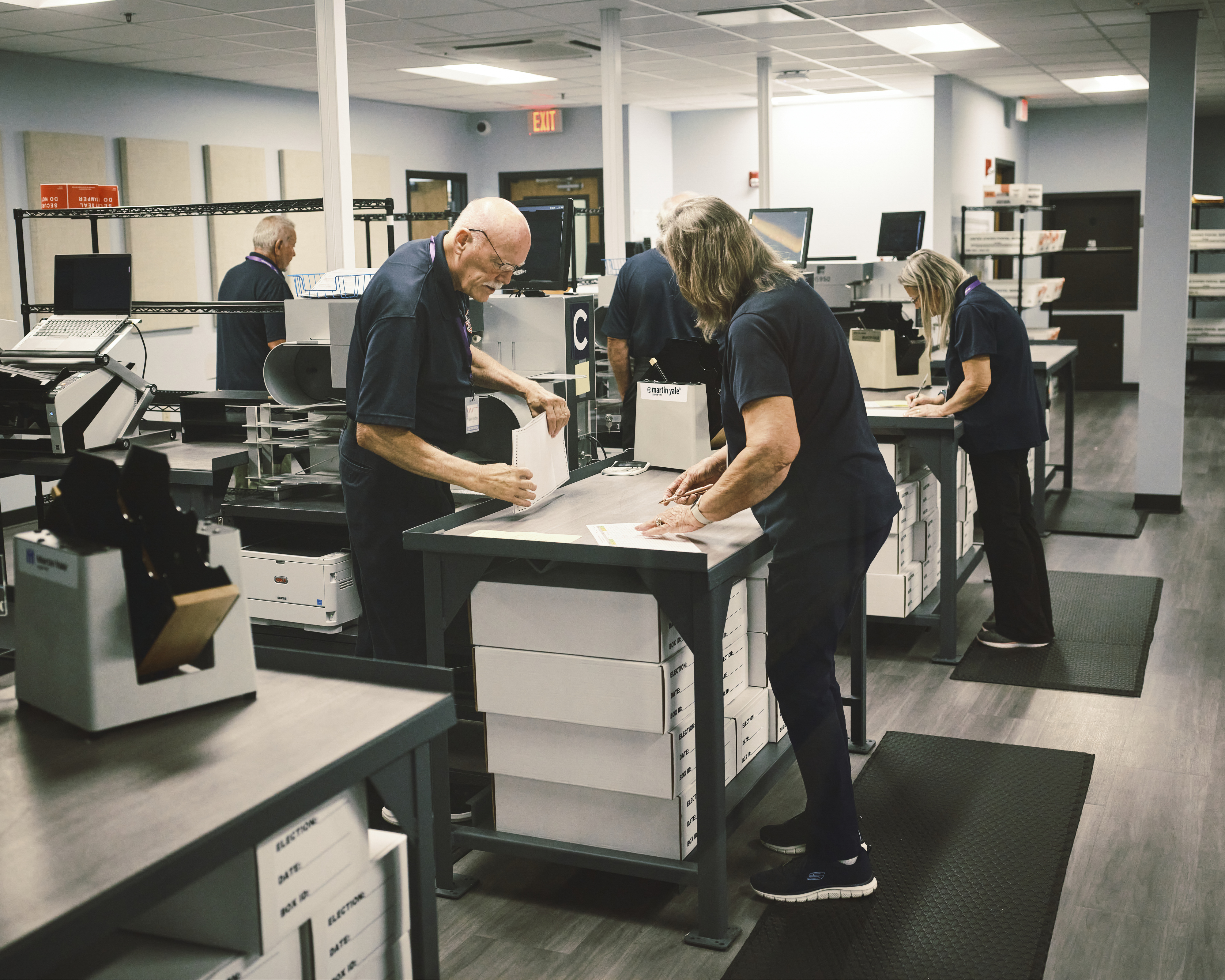
    The rate at which mail votes have been rejected for arriving late has ticked up in primaries this year and general elections last year in roughly a dozen states, prompting election officials to worry that the U.S. Postal Service is ill-equipped to deliver ballots in the fall midterms.

    The states studied by the New York Times include some of the most critical battleground House and Senate seats where control of Congress will be determined, as well as key races for governor and secretary of state. The Times obtained data from California, Colorado, Maine, Maryland, Michigan, Nebraska, New Jersey, Pennsylvania, Utah, Virginia, Wisconsin, and Washington.

    In Wisconsin, which hosts an open race for governor, a competitive House election plus contests for both chambers of the state legislature, lateness accounted for about 5,000 rejected mail ballots in the spring primary this year, or 78% of all tossed ballots. During the last spring election, in 2023, the figure was roughly 2,300, or 47% of all tossed votes.

    The increase is particularly striking when comparing primaries in 2024 and this year. In Michigan’s primary earlier this month, more than 10,000 mail ballots were rejected for arriving after the state’s deadline of 8 p.m. on Election Day. That is nearly double the number of ballots rejected in 2024. In Washington, the number of late-arriving mail ballots increased from about 16,000 to more than 20,000 in the same period.

    The rise in rejected ballots comes at a time of immense upheaval at the Postal Service, where a budget crisis has prompted widespread complaints about delivery delays. The increase also comes as President Donald Trump and his allies are trying to transform the 251-year-old agency into a central player in their quest to restrict mail voting and otherwise overhaul the nation’s elections.

    Roughly two dozen states sued the government over the president’s executive order governing mail voting, which would require states to hand over voter information and would empower the Postal Service to block mail ballots from being sent or delivered in states that do not comply. The moves have especially alarmed Democrats, who fear the president could use the Postal Service to tip the scales of a midterm election that polls show currently favors their party. Trump has stated publicly that curtailing mail voting is good for Republicans.

    A federal judge issued a ruling Thursday blocking the Postal Service from proceeding after concluding that the agency’s plan appeared to overstep its legal mandate and could spark chaos by changing rules fewer than 70 days before an election. The administration is appealing.

    Meanwhile, the uptick in rejection rates for mail ballots this year could fuel the partisan battle. The ballots that were tossed because they arrived too late represent a fraction of the overall mail ballot total — the Postal Service typically delivers more than 95% of mail ballots on time. But the agency has curtailed its services in the face of budget shortfalls in recent years, leading to slower mail delivery across the country.

    Election officials say the rise in rejections, along with the general sentiment out of Washington, have prompted them to scramble to put safeguards in place to ensure that voters’ ballots are counted.

    In Colorado, Jena Griswold, the Democratic secretary of state, has rapidly increased the number of drop boxes across the state — by 78% since 2018 — so voters can return their ballots without concerns of postal delays or interference.

    “We did change the law last legislative session,” Griswold said in an interview. “Mail ballots are going out sooner, and drop boxes are going out sooner. That is in direct response to the uncertainty coming from D.C. and Trump’s attacks on our democracy.”

    In a statement, the Postal Service countered claims that the agency has become unreliable by noting that more than 95% of mail ballots have arrived on time in recent elections.

    “There are any number of factors that may impact the timeliness of a returned ballot,” the statement said. “As such, our consistent message to voters who choose to vote by mail is to mail early.”

    Following the 2020 election, when a deluge of voters opted to vote by mail during the coronavirus pandemic, the agency developed new procedures to prioritize on-time delivery for mail ballots. After a court case in 2021, the Postal Service agreed to maintain the new measures for all even-year federal elections through 2028.

    William Hensley, a former election mail specialist at the Postal Service who helped establish the new procedures, said the fact that mail ballot delays were more prevalent in odd-year and primary elections suggested that the measures were effective. But he conceded that structural changes within the agency slowing service across the board were also affecting ballots.

    As part of a 10-year plan established in 2021 to shore up the Postal Service’s finances through structural changes, the agency set up regional distribution centers to process mail and increased the delivery-time standards for first-class mail, from three days to five.

    The Postal Service further slowed down mail in 2024 when it implemented a centralized system that postmarks mail when it reaches regional centers, not when it first enters the mail stream. The delay has particularly affected mail voting, especially in states that rely on postmarks to determine if a ballot is valid.

    These cost-cutting changes have so far not made a substantial dent in the agency’s multibillion dollar deficit, but they have slowed the delivery of mail votes. Election officials are starting to notice.

    In Wisconsin’s state Supreme Court election in April, several hundred ballots arrived a day late in Dane County, home to Madison, the state capital, according to Scott McDonell, the county clerk.

    “That was highly unusual,” he said. “In the past, we would only see a handful.”

    In a survey by the Wisconsin Elections Commission, two-thirds of clerks reported observing problems with mail delivery times in that election.

    “The worst mail delivery day of the week is Tuesday (unfortunately for elections!) and our office jokingly but sadly refers to it as ‘no mail Tuesday,’” read one submission from a clerk in Waukesha County.

    McDonell, who is a Democrat, says he now tells voters to use drop boxes, vote early in person, or mail their ballots at least two weeks before Election Day.

    In Washington, a universal mail-voting state, more voters are using drop boxes than trusting the Postal Service with their ballots, said Stuart Holmes, the state’s elections director.

    “The Postal Service, these are great people, hardworking people,” Holmes said about the state’s local postal employees. “But their operation has become unreliable.”

    In Washington’s primary earlier this year, 75% of rejected mail ballots were tossed because they arrived too late.

    Ricky Hatch, a Republican election official in Utah, a state that relies almost exclusively on mail voting, said he had noticed a nationwide increase of election officials encouraging voters to mail their ballots early because of Postal Service slowdowns.

    “We’ve definitely morphed over time from going from ‘Hey, get your ballot in before the deadline’ to ‘Mail your ballot at least a week early, if you want to have it counted,’” Hatch said.

    Now, he added, the advice is even more cautious: “Better yet, use a drop box.”

    This article originally appeared in the New York Times.

  • U.S. military has no plans to send troops to the polls in November, top general says

    U.S. military has no plans to send troops to the polls in November, top general says

    WASHINGTON — The highest-ranking officer in the U.S. military says there are no plans to send troops to polling places during November’s midterm congressional elections, addressing concerns among Democrats that the Trump administration could use the military to interfere with the vote.

    Gen. Dan Caine, chairman of the Joint Chiefs of Staff, made the statement in a letter to Michigan Democratic Sen. Elissa Slotkin, who recently asked Caine and Defense Secretary Pete Hegseth to confirm they won’t send troops to the polls.

    “The Joint Force has no plans to send Federal military personnel or Federalized members of the National Guard to polling places during the 2026 elections,” Caine said in the letter to Slotkin, which was obtained Monday by the Associated Press. “Likewise, the Joint Force has no plans to use such personnel to seize ballots, voting machines, or other election-related material.”

    Caine, who advises Hegseth and President Donald Trump on military matters, also wrote: “I have neither received nor anticipate receiving any unlawful order concerning the role of the Joint Force in the upcoming November 2026 midterm elections.”

    Anxiety among Democrats that the Trump administration could try to meddle in the midterm elections has grown, particularly after the president deployed federal agents in Democratic-led states over the objections of local leaders.

    Slotkin told the AP in August that Trump has been laying the groundwork to claim the elections were stolen. She noted that Trump contemplated using the military to seize voting machines after his loss in 2020 and has deployed the National Guard to cities against the wishes of Democratic leaders. He also deployed active duty Marines to Los Angeles during his immigration crackdown in 2025.

    Federal law prohibits the deployment of armed federal forces to election locations unless “necessary to repel armed enemies of the United States.” If any element of the military were to get involved, it would likely be the National Guard under state control.

    White House chief of staff Susie Wiles denied in a Vanity Fair interview last year that Trump would use the military to suppress voting in the midterms.

    Sonja Thrasher, Slotkin’s press secretary, said Hegseth has not replied to the letter asking him to confirm troops won’t be deployed to the polls in November. Slotkin had asked for a response by last Thursday.

    The Pentagon did not immediately respond to an email from the AP asking for the status of Hegseth’s response to Slotkin. The Pentagon previously said it would respond directly to the senator.

    Slotkin asked Hegseth during an April congressional hearing if he would follow orders to seize ballots. Hegseth called the question a “gotcha hypothetical,” but said, “I’ve never been ordered to do anything illegal, and I won’t.”

    In 2020, Gen. Mark Milley, then-chairman of the Joint Chiefs of Staff, responded to a similar letter from Slotkin, then a congresswoman.

    “I believe deeply in the principle of an apolitical U.S. military,” Milley wrote. “In the event of a dispute over some aspect of the elections, by law U.S. courts and the U.S. Congress are required to resolve any disputes, not the U.S. military.”

  • The U.S. Supreme Court removed limits on political parties coordinating with candidates. What does that mean for Philly’s elections?

    The U.S. Supreme Court removed limits on political parties coordinating with candidates. What does that mean for Philly’s elections?

    The U.S. Supreme Court this summer overturned limits on how much money political parties can spend in coordination with their chosen candidates — the latest in a series of decisions by the conservative majority that have unleashed a flood of money into national politics.

    How that will play out in Philadelphia remains to be seen. But local elections lawyers said last week it could boost the power of the city’s political parties to influence the outcome of elections.

    “It will be disruptive to city elections,” Adam Bonin, a Philadelphia-based Democratic elections attorney, said of the case, National Republican Senatorial Committee v. Federal Election Commission. “It will give parties more power, and it will give incumbents more power.”

    The Philadelphia Board of Ethics, which enforces the city’s campaign finance rules, plans to consider the potential impacts of the Supreme Court’s 6-3 ruling this fall, said board chair Ellen Mattleman Kaplan. That would ensure any changes would take effect before next year’s municipal elections, when Mayor Cherelle L. Parker and all 17 Council members are up for reelection.

    In deep-blue Philadelphia, where most local elections are effectively decided by Democratic primaries, two key questions will determine the case’s impact: Does the ruling apply to local elections, and does it apply to primaries?

    Both are legally thorny issues that could require lengthy court battles to sort out. But if the answer to both questions ends up being yes, the NRSC ruling has the potential to give significant advantages to candidates who are endorsed by the Democratic City Committee.

    For instance, in crowded Democratic primaries for mayor or City Council, the party-endorsed candidates would be the only ones who could effectively circumvent the city’s limits on the size of political donations — currently $3,700 per year for individual donors — by directing deep-pocketed supporters to give additional money to the party, which is not subject to those limits.

    The party could then work directly with its endorsed candidates on how to spend that money, including decisions on the messaging and timing of TV ads or door-knocking efforts.

    To be clear, experts said, there are many uncertainties about how, and even if, the ruling would apply to Philadelphia municipal elections, where political money is more tightly regulated than in state and federal races. In the immediate future, the ethics board could take the position that the ruling applies only to federal races, not the city races it regulates.

    “We haven’t come to any conclusions yet,” said J. Shane Creamer Jr., the ethics board’s executive director. “We’ve got to keep in mind that the federal law in that case is a little different than Philadelphia’s laws, including different rules designed to prevent circumvention of contribution limits.”

    Additionally, the Supreme Court opinion did not specify whether its ruling applies to local elections, a question that could be addressed by subsequent federal court cases. The NRSC case before the justices centered on limits on coordination between parties and candidates in federal law that apply only to general elections.

    But Philadelphia elections lawyer Kevin Greenberg said the underlying philosophy in the decision — that limiting political parties’ coordination with their candidates constituted a violation of the constitutional right to free speech — would likely extend to primary elections.

    “There is nothing about the Supreme Court’s logic that inherently applies only to general elections,” said Greenberg, who has done legal work for the Pennsylvania Democratic Party. “What any judge and any lawyer thinking about how to implement this … would and should do is apply the Supreme Court’s opinion to what the next set of facts are, and under the Philadelphia law, this will be problematic for the existing [campaign finance] statue.”

    The ruling directly applies to general elections for U.S. House and Senate races, meaning that federal party committees can now coordinate with — and spend freely on behalf of — candidates running for Philly congressional seats and Pennsylvania’s U.S. Senate seats.

    But the two outstanding questions, about local elections and primaries, would likely have to be sorted out in court because the city is unlikely to voluntarily change its system, said Matthew Haverstick, a Philadelphia elections lawyer who often works with Republican clients. Such a case would require a candidate or, more likely, a political party suing the city, he said.

    “Given the way the Philly ethics board and the city regulates elections, they’re not going to do anything unless they’re told to do it by a court,” Haverstick said. “Whether this decision has a direct impact on the Philadelphia rule is unclear. … You could argue that political parties can coordinate in primaries — there are good arguments that it could — but it would have to be considered in court.”

    Haverstick is representing 2023 mayoral candidate Jeff Brown in a lawsuit against the ethics board. During that campaign, the ethics board alleged that a super PAC backing Brown coordinated with him in violation of campaign finance rules. A judge later threw out the case.

    With Haverstick as their attorney, Brown and the PAC have since sued the ethics board, alleging in part that it unfairly targeted him during the campaign. The Commonwealth Court in March ruled against Brown and the PAC. They have appealed the decision to the Pennsylvania Supreme Court, where it is pending.

    A potential opportunity for Philly’s Democratic establishment

    The local Democratic establishment’s influence in recent years has been waning as insurgent candidates backed by progressive groups have notched key victories, oftentimes with the backing of deep-pocketed outside spending groups supported by organized labor.

    Depending on how it is applied, the court’s decision could create an opportunity for the Democratic City Committee to reassert itself by giving its preferred candidates, who are typically more centrist or conservative Democrats, access to a major financial advantage over their rivals.

    The Democratic City Committee did not respond to a request for comment.

    Currently, candidates for city offices are subject to strict limits on the size of donations they can collect: $3,700 per year for individual donors, and $14,800 for organizations. Outside groups known as super PACs can raise money in unlimited amounts — but they are prohibited from coordinating with campaigns over fundraising, strategy, and spending.

    If applied to city elections, the ruling could create an exception to those rules for one type of outside group — political parties — allowing them to raise money in unlimited amounts and spend as much as they want while working hand in glove with their endorsed candidates. And in a primary election, where there is only one party involved, that could give the establishment-backed candidate a major advantage.

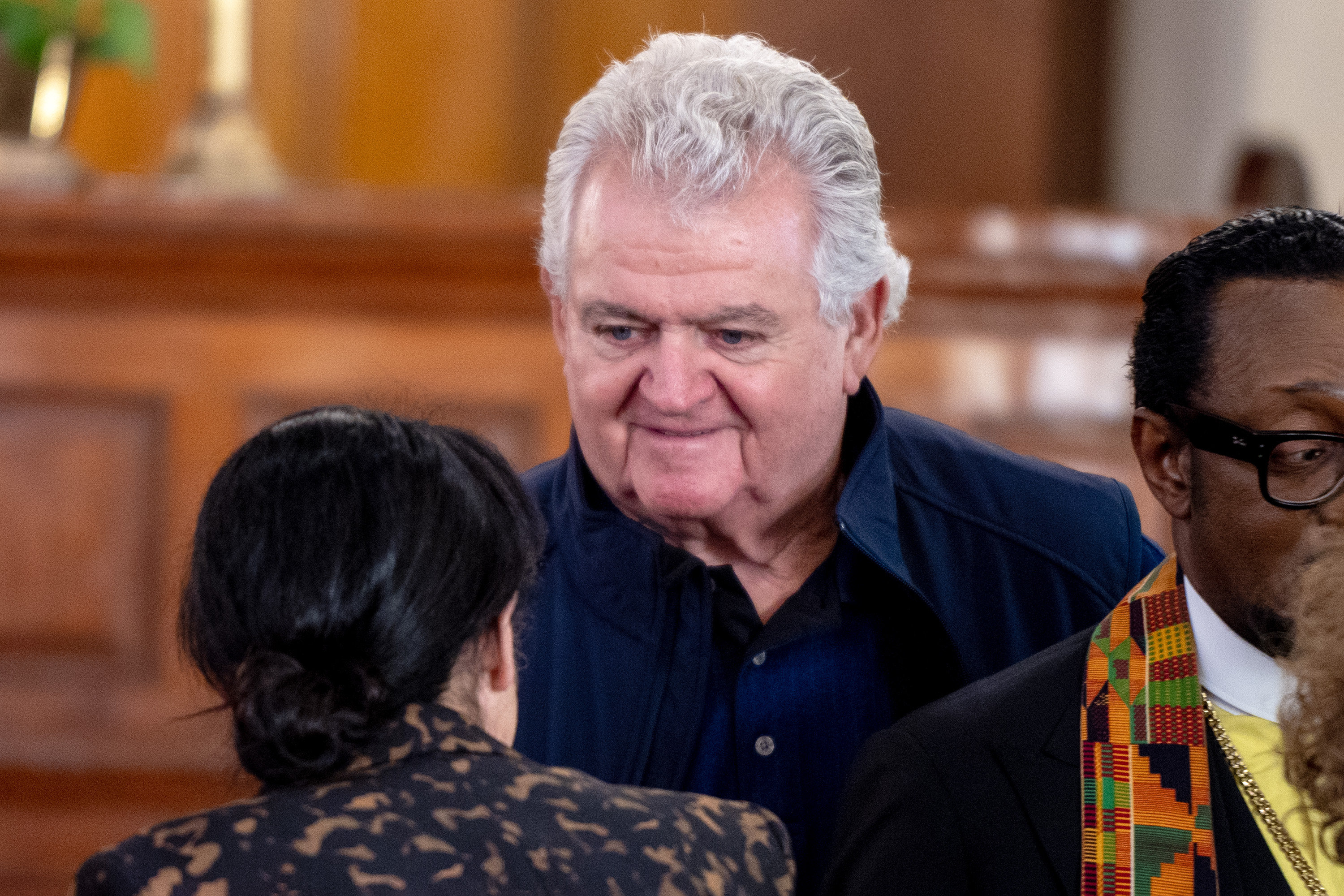
    Chairman of the Democratic City Committee, former U.S. Rep. Bob Brady, at Mother Bethel AME Church Nov. 2, 2025.Tom Gralish / Staff Photographer

    But there is reason to doubt that scenario will become the norm in high-profile Philadelphia elections. In addition to legal questions about the NRSC case’s applicability, there are political obstacles that could prevent candidates from taking advantage of the court’s ruling.

    To be endorsed by the city committee, candidates must receive the support of a majority of the 69 Democratic ward leaders, who often fail to reach that level of consensus in crowded races. And even if a candidate wins the endorsement, there is no guarantee they would have the donor network to be able to take full advantage of coordinating fundraising with the party.

    Lastly, the party may differ with a candidate’s campaign on strategy decisions, or it could decline to raise money beyond the limits applicable to other candidates to avoid the appearance of tipping the scales.

    Bonin said he opposes the current Supreme Court’s campaign finance rulings, such as the 2010 Citizens United decision that helped usher in the dominance of super PACs. But in light of those rulings, he said, the NRSC decision may be a positive development.

    “If we’re going to live in a world where super PACs exist, we are better off strengthening political parties, which are more accountable,” he said.

    A new twist in Council election races for the GOP and Working Families Party?

    There is another arena in which the decision could have a major impact in Philadelphia: the general election races for the two seats on City Council that are reserved for independent or minority-party candidates.

    Republicans held those seats for about 70 years until Councilmembers Kendra Brooks and Nicolas O’Rourke of the progressive Working Families Party won them in the two most recent city election cycles, a major factor in Council’s recent shift to the left.

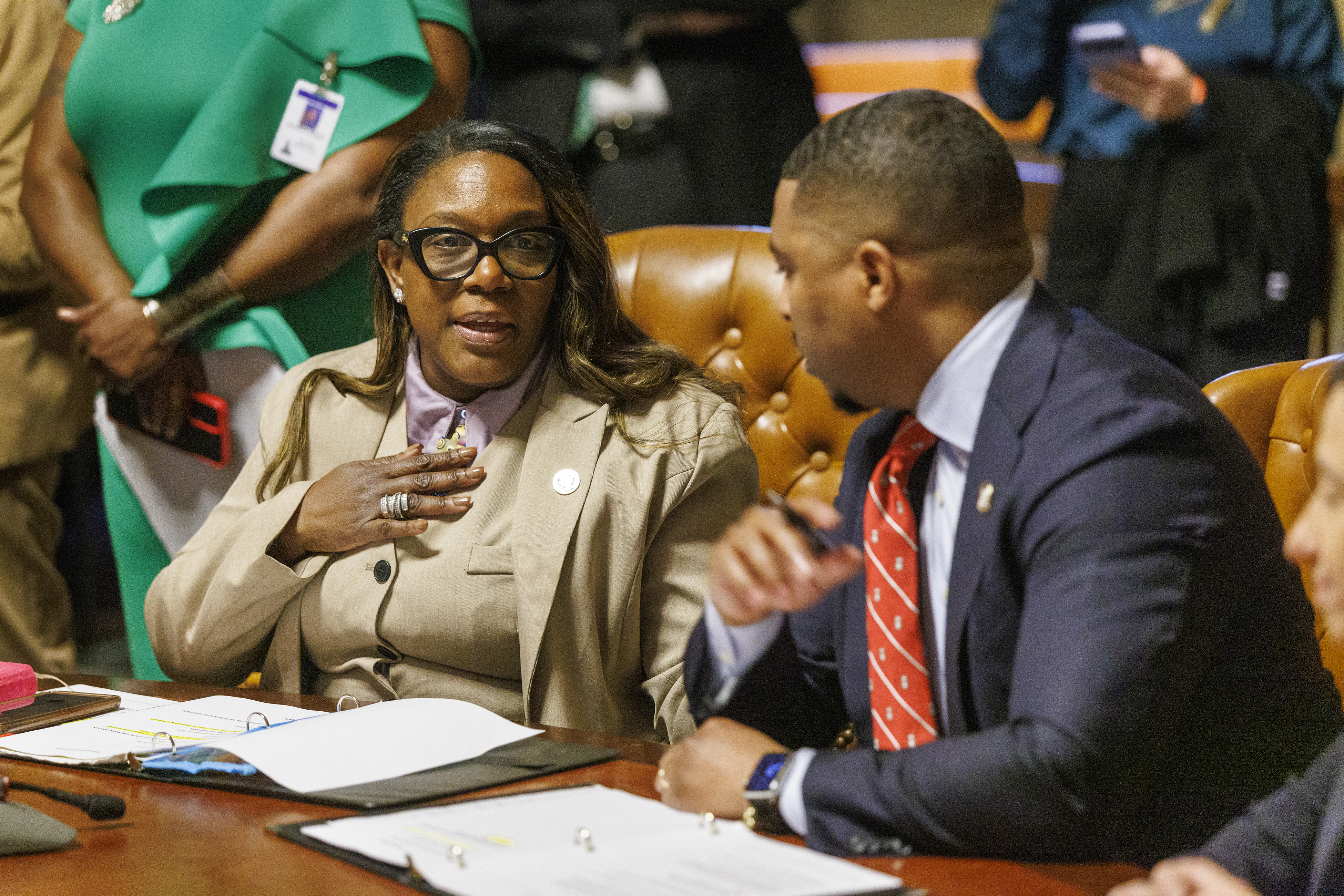
    At left is Kendra Brooks speaking with colleague Nicholas O’Rourke during caucus session. Philadelphia City Council gathered today for the budget address from Mayor Cherelle L. Parker in chambers, Thursday, March 12, 2026. .Alejandro A. Alvarez / Staff Photographer

    The Philly GOP has seen anemic fundraising levels and dismal results in recent years. If applied to local primaries, the NRSC ruling could potentially help the party gain traction with the help of just a handful of major donors — especially given that it is less clear the Working Families Party, without a primary election, would be able to take advantage of the change.

    If the NRSC ruling is applied to city elections, the Philly GOP would undoubtedly be able to coordinate with its nominees in those Council races. Vince Fenerty, who chairs the Republican City Committee, said he is seeking legal advice on that question.

    “We’re hopeful that there could be a chance for us to help our City Council candidates next year and everyone else who runs [as a Republican],” he said.

    It is unclear whether the ruling would benefit the smaller Working Families Party, which under Pennsylvania law is not a major political party. (Pennsylvania’s Commonwealth Court is currently deciding an unrelated case on the Green Party that could affect the legal standing of groups like the Working Families Party.)

    At left is attorney Matt Wolfe and Vince Fenerty, chair of the Philadelphia Republican Party attended the hearing for Working Families Party candidates. Hearing in courtroom 443 Philadelphia City Hall for Working Families Party candidates on Friday, August 11, 2023.Alejandro A. Alvarez / Staff Photographer

    In a statement, Working Families Party spokesperson Nick Gavio lamented the direction of the U.S. Supreme Court’s recent rulings on campaign finance law.

    “Anyone who has knocked a door in Philadelphia knows that regular voters are not pushing to give billionaires and the ultra-rich more power to influence our elections,” he said. “WFP has no interest in overturning existing campaign finance regulations that act as guardrails against political and corporate insiders buying elections. We will of course continue to follow all campaign finance rules that are on the books.”

    A new quandary for the ethics board

    In stark contract to the increasingly unregulated world of federal elections, Philadelphia has some of the tightest campaign finance restrictions in the country, and the ethics board has aggressively enforced the city’s rules.

    Critics, including Greenberg, believe the board has already overextended itself by sticking to Philly’s rules as the Supreme Court increasingly takes a wrecking ball to federal campaign finance law. And for Greenberg, the NRSC case is the latest decision that shows Philly is overdue for a full redo that “addresses these issues in light of the [Supreme Court’s] clear direction.”

    “City Council needs to write appropriate rules, and the board of ethics needs to rescind almost all of its existing regulations and readopt them in law,” he said.

    It is unlikely the ethics board would lead the charge in demolishing the campaign finance system it helped to create — one that has been widely credited with limiting the influence of corporate interests and super-wealthy individuals since it was implemented in 2005.

    In an interview, Creamer, the ethics board executive director, referenced differences between the federal law in question in the NRSC case and Philly’s system — an indication the board could determine the decision has no bearing on local elections.

    “We don’t have a similar structure to our law. So it may impact our law somehow; it may not,” Creamer said. “We’re still analyzing it.”

    There are several important differences the board could point to. In federal law, for instance, there are limits on how much individuals can give to political parties, but in Philadelphia there are none.

    In addition, the majority opinion in the NRSC decision, which was authored by Justice Brett M. Kavanaugh, discusses at length how rules around “earmarked” donations — in which donors give money to political parties and direct them to spend it on specific candidates — provide a “prophylaxis” against corruption that could result from eliminating limits on coordination with political parties. Philly does not have an earmarking process.

    If the ethics board stands pat, candidates or political parties seeking to take advantage of the NRSC ruling could challenge the board’s regulations in court. Politicians in heavily Democratic cities like Philadelphia, however, face strong disincentives from taking that step, which would allow them to be painted as supportive of moneyed interests playing a greater role in local politics.

    Bonin, who has been less critical of the ethics board’s approach to campaign finance than Greenberg, said resistance to the NRSC case would be difficult.

    “Whether they like it or not, they have to allow it,” Bonin said, referring to coordination between candidates and parties.

  • With shutdown looming, House leaders aim to quickly pass funding bill

    With shutdown looming, House leaders aim to quickly pass funding bill

    House lawmakers, fresh from their August break, are expected to vote this week on a Senate-passed measure that would fund federal agencies through Dec. 11, avoiding a government shutdown before the Nov. 3 midterm elections.

    Republican leaders aim to pass the stopgap funding bill Tuesday under a “suspension of the rules” — a fast-track process that requires support from a two-thirds majority of the chamber, according to two House GOP aides who spoke on the condition of anonymity to candidly discuss party strategy.

    Bills on the House suspension calendar get limited time for debate and are not subject to amendment or other procedural hurdles, allowing Republican leaders to move quickly to avert a shutdown. With control of Congress on the line, both parties are eager to return to the campaign trail.

    “That’ll be a priority over in the House because we get things done,” Majority Whip Tom Emmer (R-Minnesota) said Sunday in an interview on Fox News.

    The House passed its own stopgap funding measure in July, but it lacked support in the Senate. Senate appropriators Susan Collins (R-Maine) and Patty Murray (D-Washington) instead drafted their own stopgap bill, which passed the Senate on a bipartisan 90-6 vote.

    In addition to funding the government past the Sept. 30 deadline, the measure includes additional funding for housing and nutrition programs requested by the White House. It also would temporarily block the White House budget office from adopting a rule to give political appointees more power over discretionary grants.

    Despite that constraint on its authority, the White House has issued a statement of administration policy in support of the legislation.

    “President [Donald] Trump strongly opposes another futile Government shutdown,” the White House said in the statement. “Every Member of Congress should support passage of this [bill] to keep the Government open as discussions on fullyear appropriations continue.”

    If the House approves the measure, lawmakers will be free to head back out of town by the end of the week.

    Avoiding a shutdown is just the most urgent of several items on lawmakers’ to-do list before November elections. Republicans also hope to approve fresh funding for the war in Iran and implement new restrictions on voting — top Trump priorities. And they want to provide emergency assistance to American farmers battered by Trump administration policies, including tariffs and high fuel costs caused by the Iran war.

    GOP lawmakers are looking to use the reconciliation process to advance all three priorities, which would allow them to pass with a simple majority in both chambers, forgoing Democratic support. But last month, Senate Republicans delayed a vote on a budget framework — the first step in the reconciliation process — amid opposition from multiple members of the conference.

    Senate Budget Committee Chairman Ron Johnson (R-Wisconsin) told reporters that senators would bring forward a “better” budget framework in September.

    Work on the federal farm bill — which is due to expire Sept. 30 — is also stalled just as lawmakers are eager to find another way to demonstrate support for a critical constituency. The House passed its version in April, but the Senate has struggled to advance its own version amid opposition from Democrats who do not support reductions in federal funding for food stamps proposed by Republicans.

    With the Senate not due back in Washington until Sept. 14, House lawmakers are in a holding pattern on these measures. Emmer, speaking to Fox News on Sunday, expressed frustration with the Senate logjam.

    “We sent our priorities over to the Senate,” he said. “We sent the Clarity Act. … We sent the Save America Act several times, and it sits over there, languishing in the Senate. … It really is going to be on the Senate’s shoulders to start getting something done when we get back.”

    Besides voting on the stopgap budget bill this week, the House is expected to vote on a censure motion against Rep. Chuck Edwards (R-North Carolina) following a recommendation from the Ethics Committee.

    Earlier this month, the committee found that Edwards engaged in “persistent unprofessional and inappropriate conduct” toward two female staffers, behavior Edwards denies.

  • These Democrats used to be Republicans — and hope that will help them win midterms

    These Democrats used to be Republicans — and hope that will help them win midterms

    Democrats have struggled to win over Republican voters in recent elections. This year, some Democratic candidates argue they can change that — because they were once Republicans.

    These party switchers say that they have unique insight into the concerns of voters distrustful of party politics, as well as those who feel they have no real home in either party, and that this knowledge will give them an edge in the upcoming midterm elections.

    “It is a big tent, right?” said Nancy Lacore, who is looking to flip Rep. Nancy Mace’s (R) seat in South Carolina and who left the GOP for the Democrats a decade ago. “There is room … in there for everybody.”

    There are at least three Democratic House candidates running in this year’s general election who are former registered Republicans. While the phenomenon isn’t new, in a midterm year where President Donald Trump’s popularity is slipping among some Republican and independent voters, it is indicative of what polling suggests is broader dissatisfaction with partisan politics.

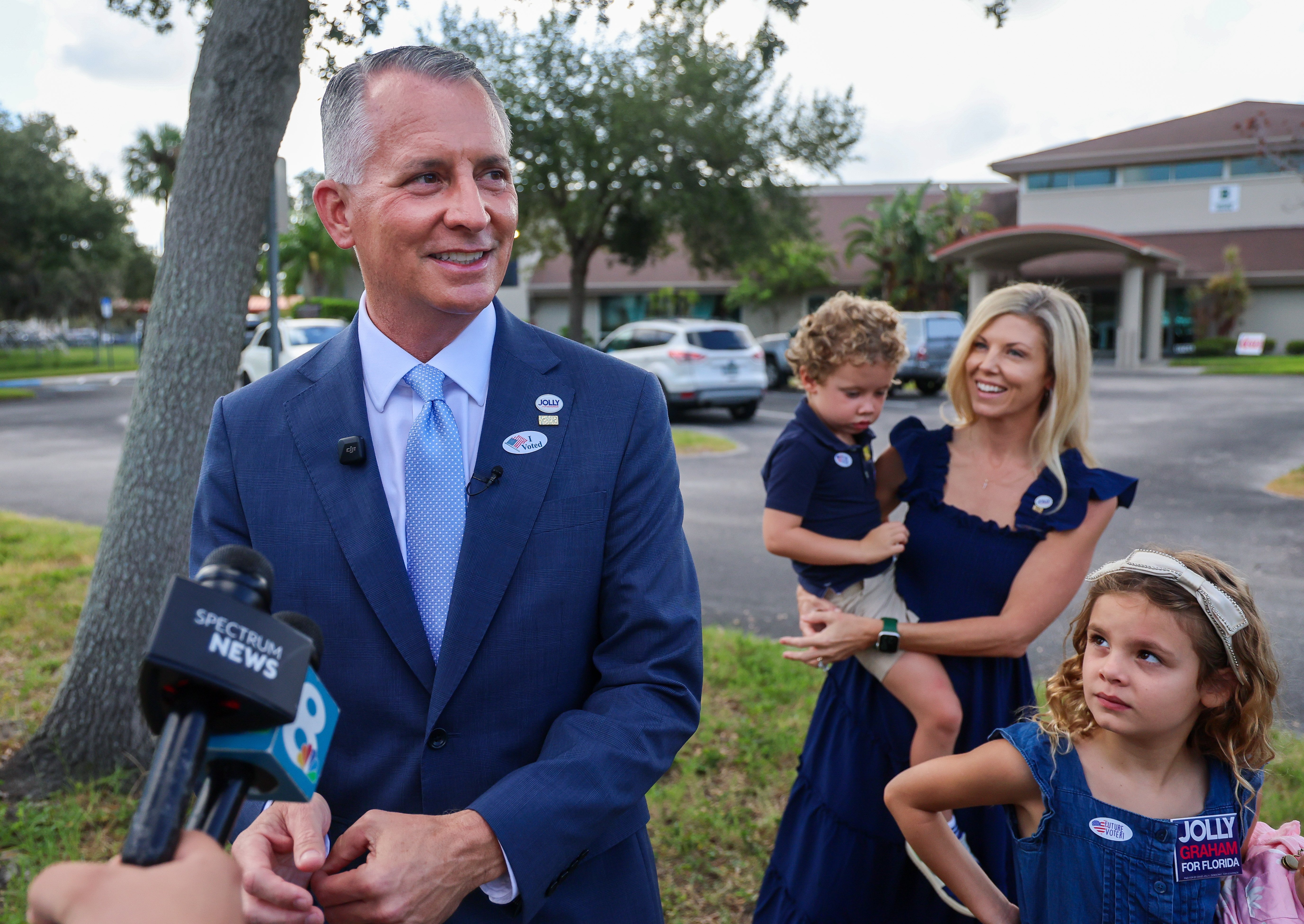
    In past cycles, party switchers sometimes have struggled in general elections. But Democrats hope that Lacore and other ex-Republicans such as former TV anchor Janelle Stelson in Pennsylvania and Navy helicopter pilot Rebecca Bennett in New Jersey can help their party win in districts where the odds are against them — and perhaps, in the case of Florida gubernatorial candidate David Jolly, manage to find a way to take a statewide seat that has eluded them for decades.

    Part of the hope is that these party-switching candidates can reach Republicans who, like they did, have soured on Trump.

    Lacore, who left the GOP in 2016, said she constantly runs into voters at Democratic events who go up to her and say, “I [am] a former Republican, too.”

    “I’m really glad that I’ve got those folks on my side because that’s who we need going forward,” she said, noting that she wants to show fatigued Republicans that they have a place in the Democratic Party.

    Though Trump’s support has slipped during his second term, 81% of Republicans still support him, and his GOP support has fallen by only seven percentage points since the beginning of his second term, according to polls taken by the Washington Post. The party-switching candidates acknowledge that they probably will not be able to swing any elections by attracting only disaffected Republicans.

    Jolly, for instance, said there is a large pool of Republican voters who are not available to him — about 31% of the state, by his estimate, that makes up the hardened MAGA crowd. Because of that, part of his strategy, he said, is to focus on independents who are “just fatigued with Trump.”

    A growing number of Americans identify as independents; a January Gallup poll found that a record-high 45% of U.S. voters called themselves independents in 2025. Most of them said they lean more toward the Democratic Party than the GOP — 20% Democratic leaders to 15% Republican leaders. According to Gallup, independents’ approval of Trump collapsed, causing them to align with Democrats. And that’s something the party-switching candidates hope to capitalize on.

    “They say, ‘OK, let me look at Jolly,’ and they kick the tires of this former Republican who says: ‘Look, I think the private sector should lead. Economic growth is good. I think we should stay out of your bedroom,’” he said. “And they start to say, ‘Maybe I could work with this guy.’”

    In Florida, voters who aren’t registered with either party split 39% for Rep. Byron Donalds, the Republican gubernatorial candidate, and 38% for Jolly, according to a July poll from the University of North Florida, conducted before this month’s primary.

    Democrats also aren’t completely in love with their party right now. And that has some candidates emphasizing their fidelity to the United States rather than their politics.

    Bennett, the Navy helicopter pilot running in New Jersey against Republican Rep. Tom Kean Jr., expressed frustration with the hyperpartisan environment in Congress, arguing that partisanship has led only to a higher cost of living for Americans, including in her district.

    “I led missions in some of the most challenging environments on earth,” Bennett said of her 15 years in the military. “We served not as Democrats or Republicans, but as Americans who were there to serve our nation and get the mission done.”

    Similarly, Lacore, who served 35 years in the Navy and is running in a district with a lot of military personnel, is convinced that voters will look beyond party labels and see her as “somebody who understands what our military should be and where we need to get it back to.”

    Many of the party switchers face tough races in traditionally GOP-held areas. And while all won their primaries, several other former Republicans (including prominent ones such as Republican lieutenant governor Geoff Duncan in Georgia and longtime conservative lawyer George Conway in New York) lost theirs.

    Some strategists point to those losses as evidence that former Republicans running as Democrats may struggle to win both longtime Democratic voters and disaffected Republicans in a general election.

    Jason Roe, a Republican strategist who has never supported Trump but remains in the GOP, said party-switching candidates generally face an uphill battle because partisan voters have a hard time accepting that someone “can just switch parties and embody the DNA of that party.”

    Historically, party switchers have seen mixed results, with their success largely depending on whether their home states or districts underwent partisan realignment ahead of their change in affiliation. In the postwar era, for example, Southern Democrats such as Strom Thurmond (S.C.) and Richard C. Shelby (Ala.) found success after joining the Republican Party because their states shifted to the right.

    In more contemporary history, however, party switchers have encountered skepticism from their new party’s base over their conversion, as in the cases of Reps. Michael Forbes in 2000 and Parker Griffith in 2010, who lost their new parties’ primaries.

    Republican-turned-Democrat Charlie Crist, of Florida, was able to win House races under his new party banner but lost statewide races, unable to convince enough Democrats that he was one of them or enough Republicans to see themselves in him.

    Asked about Crist, Jolly brushed aside any parallels between them, arguing that Crist’s 2022 gubernatorial loss happened during a hyperpartisan moment in which Gov. Ron DeSantis’s (R) hold on the state was impenetrable.

    “This is not an ideological, partisan cycle,” Jolly said about this year’s gubernatorial race. “This is a change cycle.”

    Political strategists, however, have argued that only very specific types of party flippers succeed: those who are able to convince voters that they’ve fully embraced their new party’s outlook.

    “I think it takes a special kind of former Republican to be able to pull it off in a Democratic primary,” said Eric Stern, a Democratic strategist. “That’s true on the other side of the aisle, too.”

    Stern worked on the campaign of Bob Brooks, a firefighter who ran against former federal prosecutor Ryan Crosswell in the Democratic primary in Pennsylvania’s 7th District. Crosswell left the Republican Party in 2024, shortly before leaving the Justice Department. While Brooks ultimately beat Crosswell, Stern said he hopes “there are more Republicans out there who see the light.”

    “I would be skeptical of them, and I think it is incumbent on Democratic primary voters to view them with skepticism,” he said. “But I also would absolutely encourage them to come on over — the water’s warm.”

    Roe, the GOP strategist, predicted that the party switchers will not find a “warm embrace” from Democratic general elections voters because, in his view, “ever embracing Republicans is a character flaw” in the eyes of many Democrats.

    “[The] difference between the two parties today versus 20 years ago is just so stark,” Roe said. “Just not liking Trump is not enough.”

  • Political campaigns are quietly paying influencers to support candidates

    Political campaigns are quietly paying influencers to support candidates

    Josh Greene is a rising left-wing social media star with his own podcast, nearly 800,000 followers, and access to politicians like Sen. Bernie Sanders of Vermont and Mayor Zohran Mamdani of New York.

    He has used that platform to support dozens of progressive candidates in the midterm elections, ranging from low-profile, down-ballot contests to some of the nation’s marquee Democratic primaries. In camera-facing videos, Greene informs his followers of his preferences, calling some candidates “the most viable” and, in other cases, declaring that “this is the candidate for you.”

    He does not always tell his viewers that he is being compensated for his support.

    But records show that Greene, 26, has received money from at least seven politicians, or outside groups supporting them, in the current campaign cycle, including several congressional candidates in New York and a super political action committee linked to Abdul El-Sayed, the Senate nominee in Michigan. Tom Steyer, a former candidate for governor in California, paid him $21,500.

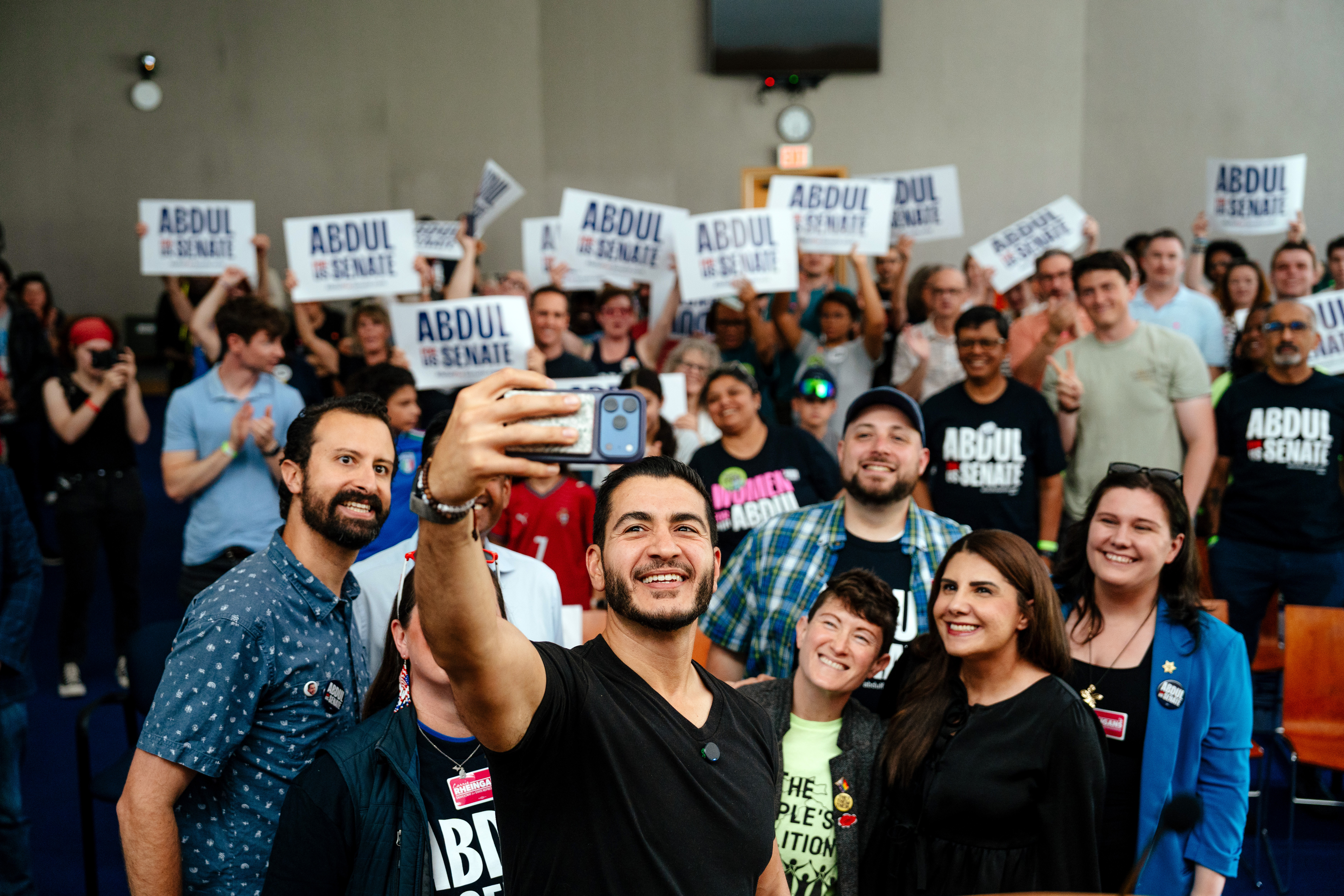
    Abdul El-Sayed, the Democratic candidate for U.S. Senate in Michigan, who is trying to bring his party together after a divisive primary, at a June 28 campaign event in Ann Arbor, Mich.NICK HAGEN

    Greene, who lives in Southern California and is best known by his handle @joshtheprogressive, is among a growing number of influencers who, at a moment when campaigns are increasingly willing to pay for online attention, appear willing to put their mouth where the money is.

    As more people spend time scrolling on their phones, campaigns view these shows of support from influencers as a vital way to reach voters. They are also significantly less expensive than traditional advertising.

    But unlike campaign mailers, billboards, and television spots, these messages fall into a legal gray area.

    There are no federal regulations requiring disclosure of payments for political support on social media, and only a few states have such rules. That allows influencers, in most instances, to endorse candidates for a fee without ever disclosing those payments in their posts. Creators say some campaigns have even asked them to actively conceal the fact that they’re being compensated, making it impossible to know what’s genuine support — and what is pay-for-play.

    In most cases, the only way a viewer would know an influencer is being paid would be to search a candidate’s campaign finance reports, as the New York Times did to discover the payments. Even then, such compensation is regularly obscured by funneling the payments through middlemen.

    “It’s completely out of control,” said Suzanne Lambert, a progressive influencer and comedian with more than 1.3 million followers between TikTok and Instagram. She said that while she happily promotes candidates she likes, she has “never taken a cent” in exchange for an endorsement and worries that the practice distorts the democratic process. “People don’t know what’s real anymore,” she said.

    Greene defended the idea of influencers getting paid for their work and noted that he accepts money only from candidates and campaigns that he would support anyway. “I turn down offers every single day because I’m not going to take money from anyplace if I don’t agree with it,” he said. (In the case of the Steyer campaign, Greene said he was initially critical but came to see him as the most viable candidate.)

    Still, he suggested there was a need for straightforward and consistent rules on disclosure. “If anything, we do need more clear transparency laws so that creators like myself aren’t confused,” he said.

    Coordinated networks

    The phenomenon is bipartisan.

    In June, Rep. Barry Moore of Alabama filed a complaint with the Federal Election Commission, alleging that at least eight social media accounts were being paid to attack his military record during the Republican primary. In April, a newspaper in Kentucky revealed what appeared to be a coordinated network of influencers boosting Nate Morris — at the time running in a Republican Senate primary — even though none acknowledged being paid for their efforts. Ken Paxton, the attorney general of Texas and the Republican nominee for Senate, benefited from a paid campaign on the social platform X when he was facing impeachment in the state several years ago.

    But the question of paid influence has gained particular attention in recent months thanks to aggressive efforts by a handful of Democratic candidates to secure support from well-known influencers.

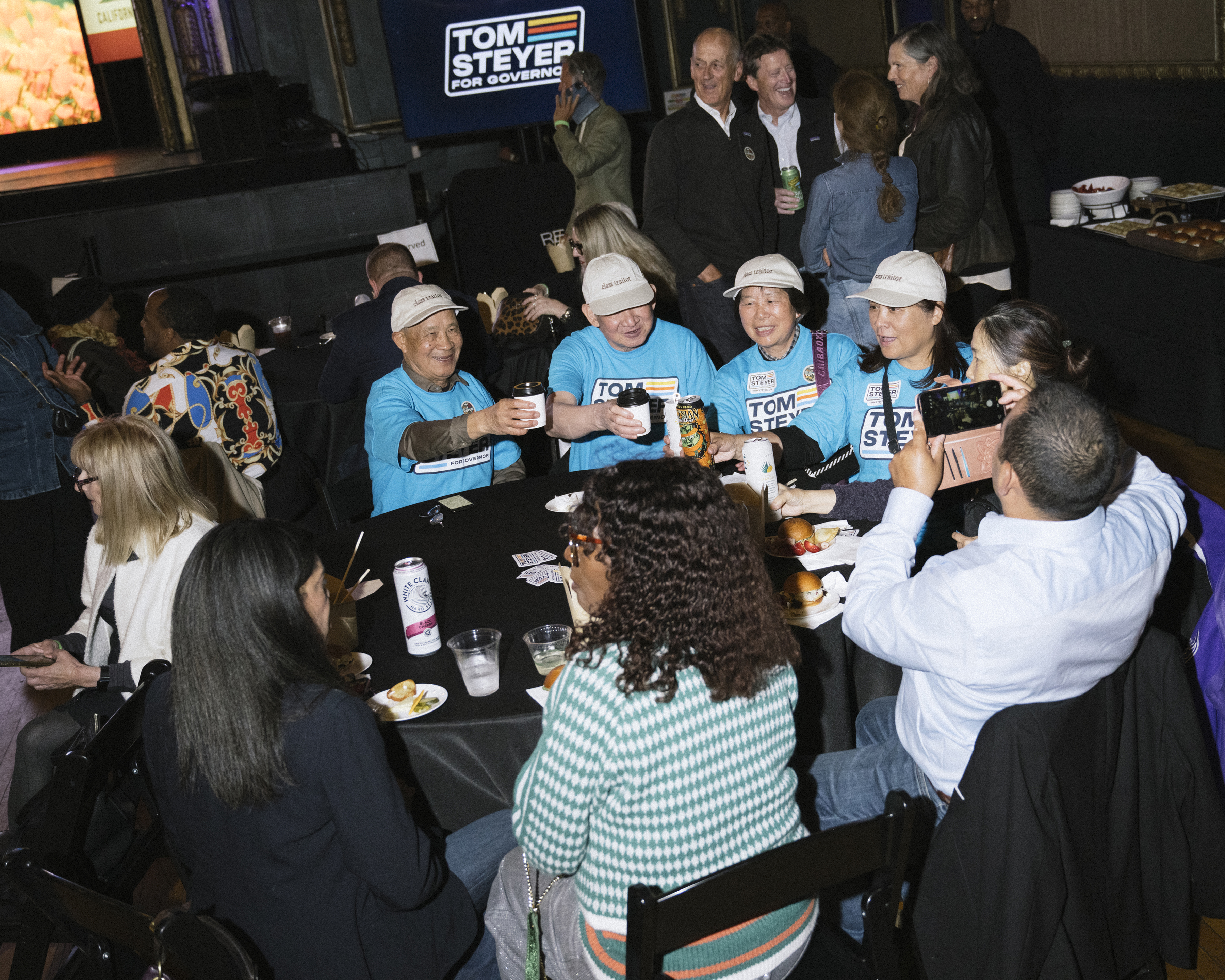
    During California’s hard-fought primary this spring, Steyer’s campaign paid 17 influencers at least $5,000 apiece, including one, Carlos Eduardo Espina, who has over 14 million followers on TikTok and received a total of $400,000, campaign finance filings show.

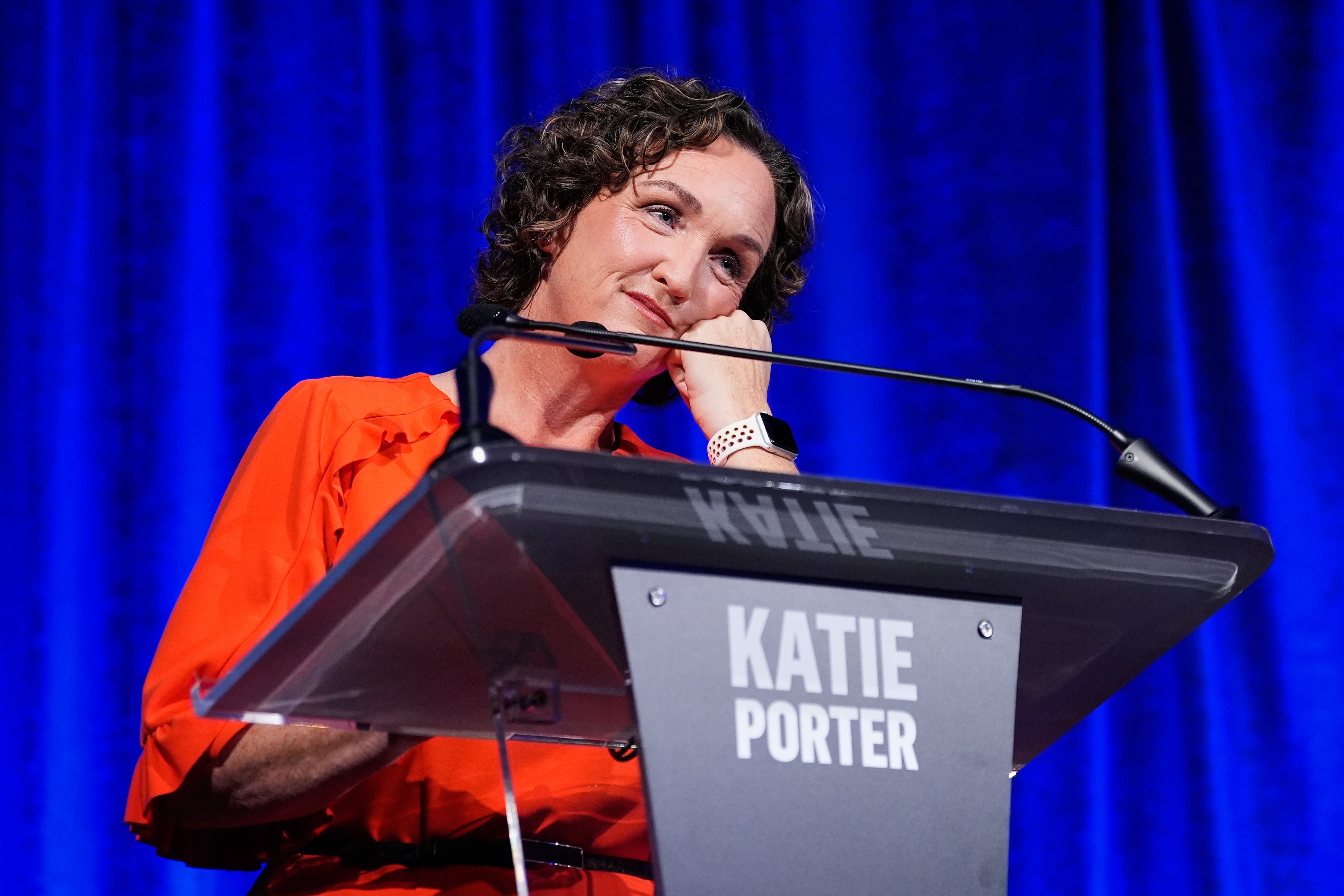
    Katie Porter was one of several candidates to deploy paid influencers during the California gubernatorial primary in 2026.Godofredo A. Vásquez

    Former Rep. Katie Porter, who also ran unsuccessfully for California governor, paid 12 influencers a total of $139,500. One of them, a lifestyle creator named Avery Cyrus with 9.5 million followers on TikTok, received $25,000 for what appeared to be a single post claiming “Katie Porter’s thing works.”

    Cyrus’ post was deleted after the Times inquired about it. She did not respond to a request for comment made through the social media agency that represents her, UnderCurrent Media, but the firm’s CEO, Eric Bogard, said in an email that it “was not asked to oversee disclosure compliance, nor were we provided instructions concerning any required disclosures.”

    Under California law, paid political posts on social media must be disclosed. A Times review found three posts supporting Porter on TikTok from influencers who were paid by her campaign that did not include any disclosures. In seven other instances, the disclosures could be found only after clicking through to a hidden section of TikTok for comments flagged “as potentially offensive or disturbing.”

    Sander Jennings, an influencer based in Florida who was paid $22,000, said “the Porter campaign and I agreed to disclose the payment” in TikTok’s comments section in order to get around the site’s practice of removing paid political posts. He said he did not know why the disclosures ended up in the hidden section of the comments.

    TikTok’s terms of service bar all paid political advertising, including “creators being compensated for making branded political content.” In an email, Porter said that “nothing was paid for and posted without review and coordination and compliance with all law.”

    Other political efforts have employed a different strategy, contracting private firms that pay little-known content creators smaller sums to put out a large volume of posts. Those companies, known as user-generated content platforms, or UGCs, operate on the principle that carpet-bombing the internet with hundreds of nearly identical posts is more likely to generate viral content than paying one large influencer the same amount of money to make a single post.

    This spring, a woman posted dozens of videos promoting Steyer in the California primary. Weeks later, she appeared in videos from a different account complaining about the cost of living “here in Michigan” and encouraging people to vote for Rep. Haley Stevens, El-Sayed’s primary opponent in the Senate race. Then she pivoted to a third account talking about affordability in Wisconsin.

    Corporate records show that the woman, Paige Dunmeyer, actually lives in Kansas City, Mo., and is registered to work with a UGC company called SideShift. It’s not clear how much she was paid for her Michigan and Wisconsin videos, but she has earned more than $30,000 on SideShift for a variety of political and commercial campaigns, according to company records reviewed by the Times. Filings from Steyer’s campaign showed she received $1,320 for her efforts in that race. Dunmeyer did not respond to requests for comment.

    A Times analysis found that at least 87 people registered to work with SideShift had made posts backing Steyer or Stevens, or participated in a third campaign to post video clips on TikTok supporting Rep. James Talarico, the Democratic Senate nominee from Texas. Most of the posts by those creators included no acknowledgment that money changed hands.

    In a statement, SideShift said that it advised creators to follow applicable disclosure requirements, and called for more explicit laws governing how paid content is disclosed on social media.

    “SideShift believes anyone can be a creator and that creators should get paid fairly for work they choose to do,” the company said.

    In June, Kendall Boyle, a TikToker in Michigan with over 21,000 followers, was contacted by a social media marketing agency called Activate HQ offering her a paid opportunity to post videos about “how rising costs are affecting Michigan residents in real life.”

    When she asked who was footing the bill, she was told it was Majority Forward, a dark money group linked to the Senate Majority PAC, a Democratic super PAC, email correspondence reviewed by the Times shows. Boyle said she was turned off by warnings in those emails from Activate HQ that “disclosure is not required and the paid partnership label will not be included in any posts” and also that Majority Forward “will not be mentioned” in her content.

    “It was one of those things where something isn’t fitting right,” Boyle said.

    In a statement, Majority Forward said the language in the email “explains disclosure requirements necessary under FEC rules, which were fully followed.”

    Little regulation

    Just four states have laws or regulations requiring influencers to disclose paid political messaging, but they apply only to state and local races, not federal contests. Although regulations for social media have been proposed multiple times to the FEC, it has never taken action. The Federal Trade Commission, which requires disclosure of paid commercial content on social media, makes an exception for political messaging.

    Rep. Mark Takano (D., Calif.) introduced a bill in June that would require anyone paid by a candidate or political committee to clearly disclose that fact in the same way that traditional campaign materials are required to note such payments.

    In an interview, Takano said he was inspired to draft the legislation after online sleuths revealed that numerous influencers had been making paid endorsements in the California governor’s race without proper disclosure, as required in that state.

    “It’s unfair when an influencer is allowed to be silent or not transparent about money they’re taking from a candidate, making it seem like what they’re saying is authentic and not influenced by money,” he said.

    Takano acknowledges that there are some potential loopholes in the bill. For instance: Campaigns often obscure payments to influencers by hiding them under layers of vendors and subvendors.

    Porter, for example, hired Activate HQ for “influencer marketing services,” and it in turn paid 13 creators to bolster her campaign for governor. One of them, a political influencer in Los Angeles named Dash Dobrofsky, who also posted in support of Stevens in Michigan, received $15,500 from Porter’s campaign. Dobrofsky did not respond to a request for comment.

    Steyer’s campaign, for its part, hired multiple digital strategy firms to manage social media, including one called Group Project, which hired a Los Angeles company, Gutsy Media, which paid Greene through UnderCurrent, which represents him.

    Those payment chains are visible because California is one of a handful of states that require campaigns to report payments to subvendors. There is no such obligation for campaigns for federal office. “Every dollar spent by this campaign is publicly disclosed and available for anyone to see,” the Steyer campaign said in a statement.

    ‘Social media consulting’

    State Rep. Chris Rabb at a July 28 event with U.S. Rep. Ro Khanna.Tom Gralish / Staff Photographer

    Occasionally, campaigns or independent expenditure groups will reveal direct payments to influencers, such as the super PAC Freedom PA, which supported socialist candidate Chris Rabb’s successful bid to win a Pennsylvania House primary in May. It has disclosed payments to nearly 50 influencers for “social media consulting,” among them Greene, who received $750 and posted a video celebrating the candidate’s victory.

    Other committees listing payments to Greene in federal filings employed less illuminating descriptions. Chuck Park, who unsuccessfully ran for Congress in New York’s Queens borough this year, listed a $300 disbursement to Greene as “staff salary.” Greene posted at least five videos promoting Park, none of which state that he had received payment.

    Park, in an interview, said that Greene was in fact not employed by the campaign, but said that “our campaign absolutely leaned into new media” and that he spent time with Greene in Queens filming a series of videos.

    Greene disclosed being paid on three of his posts about Steyer and told the Times that those videos were the only ones that he was specifically contracted by the Steyer campaign to produce. He said he didn’t receive compensation for prior posts about the candidate.

    Greene has also supported Sen. Ed Markey (D., Mass.) in a competitive primary against Rep. Seth Moulton, and last month, he posted a video accusing Moulton of “posturing to be someone they really aren’t.” He posted a second video this month critiquing Moulton, this time for taking corporate political money.

    Neither video includes disclosures, and FEC filings don’t show any payments to Greene related to Markey’s reelection bid. But a spokesperson for Commonwealth Together, a super PAC that is supporting Markey, said it had paid Greene $3,500 for “digital communications consulting” through his agency, UnderCurrent.

    Greene, in a text message, acknowledged the payment to support Markey, saying he took it “because I believe he is by far the more progressive candidate in the race.”

    The murkiness has left some in the political world uneasy. Last month Rynn Reed, the founder of Creator Congress, an organizing hub for influencers interested in politics, introduced a code of conduct for the group that would require creators to make clear when they’re paid, whether required by law or not.

    “With no standards,” Reed said, “there’s going to be a race to the bottom.”

    This article originally appeared in The New York Times.

  • This Appalachian memoir author is running as a Democratic contrast to JD Vance

    This Appalachian memoir author is running as a Democratic contrast to JD Vance

    CLIFTON FORGE, Va. — Veterans flock to a law office in this old railroad town for help wrestling with the feds over healthcare. Across the mountains in Waynesboro, families who can’t afford groceries spend hours waiting outside the food pantry. Up in Monterey, the town economic development director works for free because budgets are thin.

    Beth Macy writes it all down, still chasing stories across Appalachia after 40 years as a newspaper reporter and author of books including Dopesick, an exposé about Big Pharma’s contributions to the opioid crisis that became an Emmy-winning Hulu miniseries.

    After the memoir Hillbilly Elegy catapulted JD Vance to prominence as an authentic child of the Rust Belt and Appalachia, Macy is leaning on her own roots and her writing about the region to jump into politics. But her long-shot bid for a House seat as a Democrat in a bright red Virginia district positions her as a kind of anti-Vance.

    In an essay in the New York Times shortly before Vance was elected vice president, Macy faulted him for fearmongering about immigrants and turning his back on the public institutions that helped him escape poverty.

    “I’m coming at it from the perspective of an old-school mountain Democrat,” Macy said in a recent interview. “Let’s make it safe, let’s protect working people.”

    The two writers hail from Ohio hometowns only 60 miles apart: Middletown for Vance and Urbana for Macy. Both are the product of dysfunctional families and economic hardship. But Vance went on to the Ivy League and venture capital, urging the downtrodden to take personal responsibility for their prospects in life.

    Macy, 62, published her own life story last year in Paper Girl, which examines the same terrain as Hillbilly Elegy but comes to very different conclusions.

    Macy, who put down roots in Appalachia and spent decades writing about the region’s struggles for Virginia’s Roanoke Times newspaper, believes Vance blames poor people for their own plight. She sees outside forces working against the region going back generations, including the opioid makers who falsely claimed that their drugs were not addictive, and government policies driving the offshoring of manufacturing jobs.

    Campaigning with pad and pen in hand, Macy says she aims to “connect pain to policy,” and she criticizes both major parties for a system that fails those in need. The message was warmly received on a recent campaign swing, and many voters were thrilled to meet Macy, who made sure the Dopesick show was filmed partly in the district.

    But after years of division stoked by culture wars, folks who came out to see Macy the celebrity are not sold on casting a ballot for someone with a D after her name.

    “Exactly the issue she has to overcome here — and I’m not sure how — is that an awful lot of people vote by just the R or the D, as simple as that,” said Robin Sullenberger, who spent two decades as a supervisor in Highland County and stopped by a recent Macy campaign appearance in Monterey. The supervisor jobs are nonpartisan, but Highland County — Virginia’s least populous county — has picked a Republican for president in every election since Alf Landon in 1936.

    Macy is running against Republican incumbent Ben Cline in Virginia’s bright-red 6th District, a New Jersey-sized stretch of mountains and valleys that stretches from Winchester in the north to Roanoke in the south.

    The nonpartisan election handicapper Cook Political Report rates the district as “Solid Republican.” Cline, seeking his fifth term, beat his 2024 Democratic challenger by 28 percentage points and outperformed Donald Trump, who won by 24 points.

    “I know that her liberal positions on the issues appeal to some sections of the Democrat base, but to compare her to JD is to suggest that her message may sell here,” Cline said in an interview. “It’s not selling here in the Shenandoah Valley, in the Roanoke Valley. There are common-sense conservative values here.”

    Macy is navigating a tricky path within her party. She repudiates the recent rise of democratic socialists and also blames establishment lions such as President Bill Clinton for the NAFTA trade deal that she says wrecked the region’s economy.

    She depicts her campaign as focused on practical solutions: addressing the “immigration disaster” through humane treatment and clear paths to citizenship; providing affordable healthcare through Medicare-for-all; aiding farmers by ending tariffs; taxing billionaires.

    Macy has raised more money than Cline as of July 15, at $1.7 million compared with his $1.4 million, according to analysis by the nonpartisan campaign finance site Virginia Public Access Project. Almost all of her donations have come from individuals, while Cline has received more than $400,000 from GOP political action committees, according to VPAP.

    Macy didn’t get involved in politics until last year, when friends in Roanoke — the blue-leaning city in Southwest Virginia where she lives with her husband — convinced her she had the name recognition to challenge Cline.

    At the time, Macy was fine-tuning the manuscript of Paper Girl, which is part memoir and part hard-eyed examination of what’s become of her hometown. Macy grew up poor with an alcoholic father and a mother who took any job to provide for the family. Community support helped them get by, and federal Pell grants enabled Macy to go to college and pursue a career in journalism.

    Returning to Urbana, Macy wrote about finding a town hollowed out by poverty and drug addiction. The sense of community, she says, has been replaced by a divisive strain of Christian nationalism and MAGA-fueled anger toward anyone seen as an outsider. A place once proud of its heritage helping enslaved African Americans seek freedom on the Underground Railroad is now peppered with Confederate flags.

    A central figure in the book is a transgender young man struggling to get by in the community. Macy is deeply sympathetic to LGBTQ+ people because one of her two grown children is in a same-sex marriage and the other is nonbinary.

    An editor pushed her to end the book with a strong statement about political solutions. “Basically, elect better people to office, people who will do the most good for the most people,” Macy said. “I didn’t think it would be me.”

    Campaigning still feels odd to a journalist who spent years striving to be nonpartisan. She habitually takes notes, asking everyone she meets for their phone number and the spelling of their name. If she fills up a notebook, she’ll bum another from anyone nearby.

    Macy says stories are the heart of her campaign: her own family member who died young after refusing two organ transplants because the donors had received the coronavirus vaccine. The farmer who can’t afford diesel fuel for his tractor because of the war in Iran. The sheriff who can’t get emergency calls because his mountainous county has only one cell tower.

    And, everywhere, the families who have lost loved ones to painkillers that were promoted as safe.

    “I don’t care if you’re Republican or Democrat or moderate. We’re people. We’re Americans,” Macy told a group of Democrats at a fundraiser outside Harrisonburg — like other college towns, a blue island in the district. Her message was simultaneously that President Donald Trump’s policies are making problems worse and that people can fix them by overcoming political divisions.

    “We’re not going to win this thing,” she said, “without meeting people in the middle.” She claimed incremental success, but for offbeat reasons. One business owner told Macy he’d vote for her because he didn’t like the way Trump disrespected Rob Reiner after his tragic death, she said; another Republican was going to switch after seeing Trump post an image of himself as Jesus that appeared to be AI-generated.

    “I’ll take it,” Macy said.

    In Clifton Forge, where the exteriors were shot for Dopesick several years ago and where actor Michael Keaton was seen in local restaurants, the economy has struggled for decades since the Chesapeake & Ohio Railroad shifted jobs elsewhere.

    Kristen McConnell sees desperation every day in her law practice focusing on veteran healthcare and disability issues. Solving problems is harder, she said, because of politics.

    “Everybody wants healthcare, everybody wants childcare, everybody wants a livable wage,” McConnell said, but if a Democrat talks about those subjects, it is viewed as socialism.

    “People don’t understand that these things they use every day are the things that they’re railing against,” she said.

    On a sizzling Friday at the end of July, Macy greeted people at a monthly downtown festival, as booths along the closed-off streets sold baked goods, homemade jewelry, hot dogs, and barbecue.

    John and Charlotte Waugh from nearby Covington set up folding chairs with a good view of the Bart Chucker Band, a local favorite alt-country group. John Waugh, 65, retired from a manufacturing job, is a big fan of Trump. Charlotte, 64, a retired educator, is not.

    John has read some of Macy’s work, he said, and thinks she’s right on the money in diagnosing the region’s problems. But while his wife plans to vote for her, he will not.

    “It’s more not just her — it’s the whole Democratic Party,” he said, saying that Democrats want boys to play girls’ sports. “I got granddaughters.”

    Up the street at her consignment shop, Jennifer Oeltjen, 75, stayed open late to take advantage of the happy festival crowd. She was thrilled when Dopesick was filming there. The crew bought clothes from her for costumes, she said, and she remembers watching a night shoot when black-clad production assistants scurried around like ninjas.

    A longtime Republican, Oeltjen worries that people nowadays expect too much help from the government. While she does not approve of the way Trump talks, she said the Democrats she sees on Fox News spend too much time battling him. She also cannot square pro-transgender policies with her religion.

    Oeltjen has read Macy’s work and watched her speak to local groups. “She’s a good person,” Oeltjen said. “If I were going to vote for a Democrat, it would be Beth.”

    But that’s not likely, she said, even though she knows very little about Cline. She intends to vote Republican this fall.

  • Ex-Philly fire department officials accused of overtime fraud are likely at center of federal probe, records show

    Ex-Philly fire department officials accused of overtime fraud are likely at center of federal probe, records show

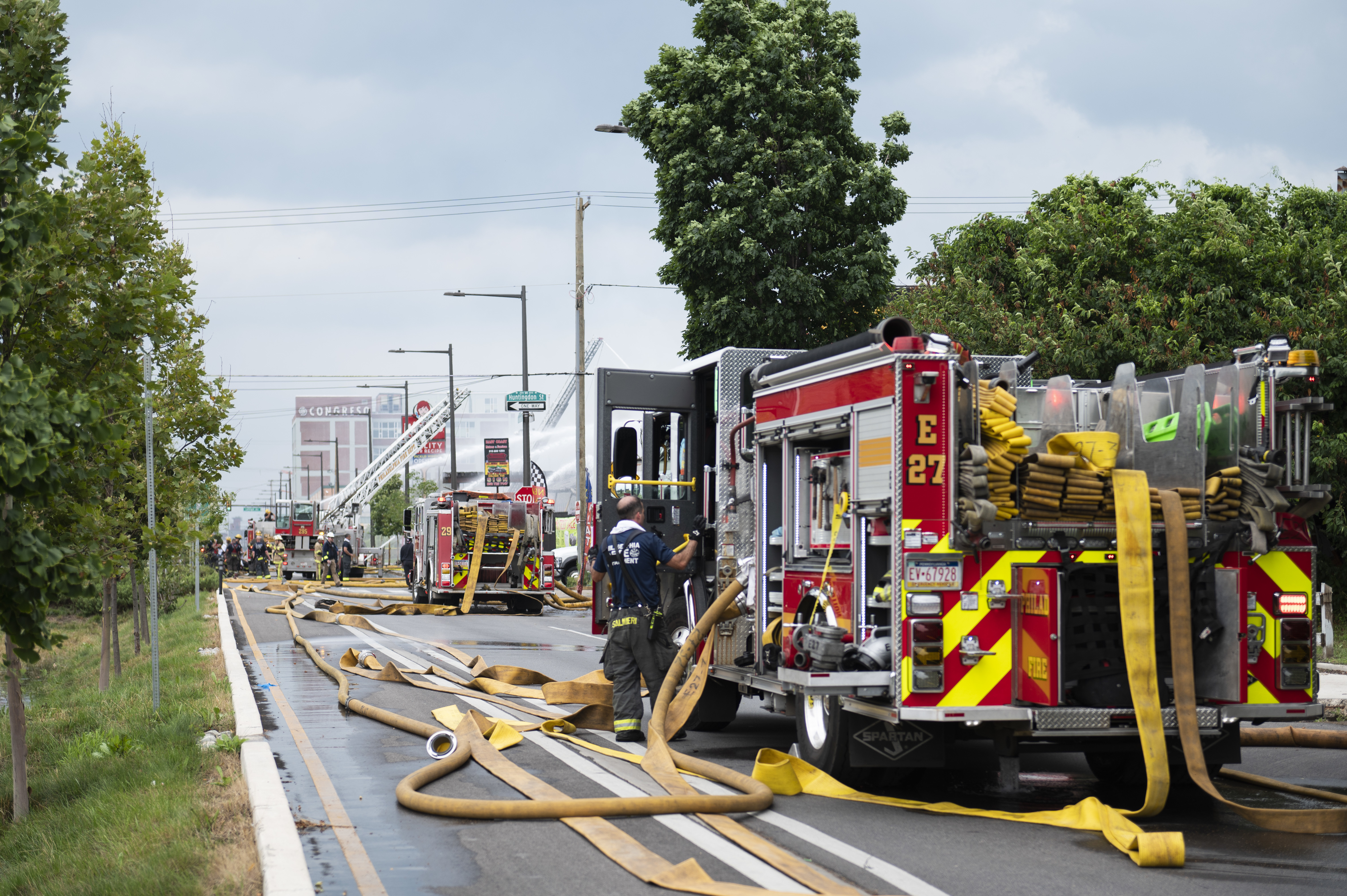
    Federal prosecutors have convened a grand jury to investigate at least one former Philadelphia Fire Department official who city investigators say facilitated a brazen overtime abuse scheme, according to court records.

    Evidence of the probe became public in recent weeks as part of a lawsuit filed against the city by Anthony Hudgins, a former high-ranking fire official who was demoted after two women at the center of the overtime probe accused him of sexual harassment. He maintains that they did so only in retaliation after he exposed their wrongdoing.

    Court documents made public this month include a report drafted by the Philadelphia Office of the Inspector General (OIG), which conducted a yearslong investigation into Hudgins’ claims that lower-level employees were abusing overtime. Attorneys for a woman at the center of that probe revealed that she is now the target of a U.S. Department of Justice grand jury, while the woman she is accused of conspiring with suspects she, too, is under federal criminal investigation, according to court records.

    Inspector General Alexander DeSantis previously declined to release the findings of the office’s overtime probe into the fire department, saying the investigation was ongoing.

    The report, dated September 2025, details claims of rampant overtime abuse by former paramedic Jacqulyn Murphy that amounted to more than $180,000 in “unjust” compensation through 2023 and 2024, well over her $94,549 annual base salary.

    Murphy made some of that pay during “impossible shifts,” investigators wrote. In May 2024, for instance, Murphy clocked 22 hours of overtime while she was vacationing in Cancún. And four months later, she was paid to work 12-hour shifts every day while traveling to Las Vegas to get married, including on her wedding day and the day of her return trip home.

    Investigators said that she did not act alone. Supervisor Marian Farris, they wrote, rubber-stamped the overtime approvals and manipulated tax withholding statuses for Murphy and herself. The report cited emails from Murphy’s city account showing she made biweekly $500 payments to someone named “Marian F.” for six months in 2024.

    “Murphy and Farris worked together to defraud the City of Philadelphia of thousands of dollars in unearned compensation and other benefits,” the OIG report said. It calls for “heavy administrative and criminal consequences.”

    Farris and Murphy did not respond to requests for comment.

    In a June 4 letter included in the court filing, federal prosecutors based in Philadelphia informed Farris that she is the target of a grand jury investigation concerning bribery and wire fraud. The letter did not elaborate on the nature of the investigation.

    Attorneys for Farris filed the target letter in the Hudgins case as part of a request to the court to delay discovery proceedings, citing conflicts with the federal investigation.

    Murphy has not yet received a target letter, but she expects she will “given the findings of the OIG that Ms. Farris and Ms. Murphy worked together to commit fraud,” her attorneys wrote in a filing on Friday.

    Farris resigned in March 2025. Her attorney did not respond to a request for comment. In an interview earlier this year after Hudgins initially filed his lawsuit and detailed some of the inspector general’s findings, Farris denied receiving cash payments from Murphy in exchange for manipulating time sheets and said any payments were innocent transactions between friends.

    The U.S. Attorney’s Office for the Eastern District of Pennsylvania declined to comment.

    A spokesperson for the fire department did not comment.

    City Solicitor Renee Garcia said in a statement that the city “takes any allegations of fraud, including overtime fraud, very seriously, including allegations of misconduct that predated this administration.” Some of the allegations involving Murphy date back to 2023. Mayor Cherelle L. Parker took office in January 2024.

    Garcia declined to comment on “personnel matters,” saying only that “if misconduct is found, we take appropriate action to implement any warranted discipline.”

    The publication of the inspector general’s long-guarded report is the latest twist in a saga that has long roiled the fire department. It began with what appeared to be dueling probes, as multiple women contended that Hudgins — who was formerly the fire department’s No. 2 in charge — engaged in sexually inappropriate behavior in the workplace that included unwanted touching and intimidation tactics, The Inquirer reported in 2025.

    But Hudgins has maintained those complaints were lodged by Murphy, Farris, and other associates only after he uncovered and reported their overtime inconsistencies.

    His timeline was confirmed in the OIG report. Investigators wrote that Hudgins conducted an overtime review that predated a discrimination complaint filed in November 2024 by the union that represents firefighters and paramedics. That complaint listed Murphy as an alleged victim and Hudgins as a respondent.

    The OIG report does not offer a conclusion related to the sexual harassment complaints.

    Hudgins declined to comment through an attorney on Friday.

    The city hired the law firm Campbell Durrant to conduct an investigation into the sexual harassment allegations, but that report has not been made public. Hudgins claims in his lawsuit against the city that the firm cleared him of “verbal misconduct” and found that he had “hugged co-workers.”

    Hudgins was reassigned to work remotely, and then was forced to take a leave of absence.

    The inspector general recommended that the city implement several reforms to prevent future overtime abuses, including retraining and rehiring the fire department’s payroll and human resources staff. The office also said the fire department should implement new overtime controls.

    Garcia did not respond to specific questions about whether those changes had been instituted in the fire department, saying only that “the administration has implemented significant actions across all city agencies to strengthen its overtime procedures and protocols.”

  • Civil rights groups make urgent plea for voting rights in D.C., ahead of midterm elections

    Civil rights groups make urgent plea for voting rights in D.C., ahead of midterm elections

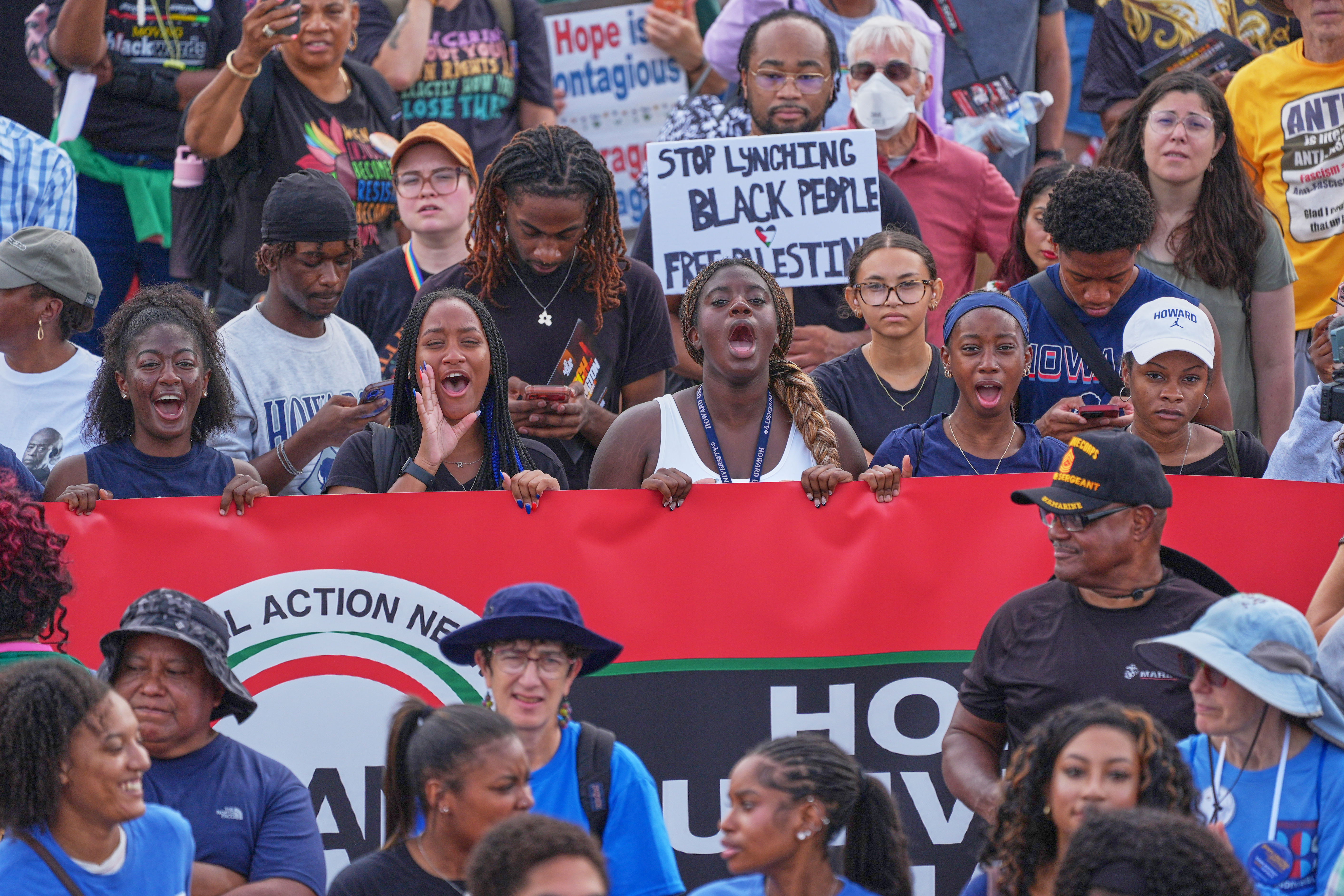
    WASHINGTON — Voting rights, the work of the civil rights movement, and racial justice took center stage on the National Mall Friday, with protesters gathering ahead of midterm elections and following a wave of changes to voting laws and redistricting that some have condemned as detrimental to Black Americans.

    Hundreds of people gathered near the steps of the Lincoln Memorial for the 2026 “Defend the Vote” March on Washington, organized by the Rev. Al Sharpton and Martin Luther King III, echoing the Rev. Martin Luther King Jr.’s 1963 march. The event follows the U.S. Supreme Court’s landmark April decision in Louisiana v. Callais that reinterpreted key provisions of the Voting Rights Act of 1965, allowing Southern states to redraw their congressional maps in a way that erodes equal representation in Black communities.

    “We’ve been doing these marches for years, but this is probably the most important because this is the first year we are marching that the voting rights bill has been nullified by the Supreme Court,” Sharpton, founder of the National Action Network, said in an interview with the Associated Press.

    Some call it a ‘very dangerous moment in American history’

    Friday’s event harkened back to King Jr.’s historic March on Washington for Jobs and Freedom in 1963, when more than 200,000 people gathered at the foot of the Lincoln Memorial. That march, an inflection point in the Civil Rights Movement, came at a fraught moment, when economic headwinds, civil unrest, political division, and the Vietnam War bitterly divided Americans.

    Sen. Bernie Sanders (I., Vt.), one of dozens of speakers at the event, said that now is a “very dangerous moment in American history” and that the “dream of a more just and equitable society has never been under greater threat than it is right now.”

    He placed blame on Republican President Donald Trump and the Supreme Court’s conservative majority, listing attempts to purge voter rolls, obtain sensitive voter data, restrict mail-in and early voting, and redraw Congressional districts as part of threats to voting rights.

    “Today, we have a president along with the Supreme Court members he appointed carrying out the most significant assault on voting rights since segregation, targeting virtually every aspect of the electoral system,” Sanders said.

    Martin Luther King III told the AP the Civil Rights Movement’s work “is further eroding” in the wake of the April ruling.

    He said his father would be disappointed with the state of the country, but current civil rights advocates should be undaunted.

    “Had he lived, we’d be on a totally different trajectory,” the younger King said. “These would not be issues; they would have been resolved. I don’t think he would be surprised because he understands our history and understands those who are trying to retain power. But the challenge is challenging our communities to engage even more.”

    King’s Drum Major Institute, a progressive think tank and community action group, co-hosted the march with Sharpton’s group.

    Ray Turner, a 65-year-old Maryland retiree, sat Friday on the steps in front of the Lincoln Memorial. He came independently, carrying a sign that read “(Puny) Hands off our elections.”

    “The lies about the 2020 election being stolen continue to be sounded, even though they’ve been disproved,” Turner said, adding, “Now they’re trying to use this to prevent people who are legal citizens, legal voters, from voting.”

    Sharpton said the Trump administration’s immigration policies for Haitians and white South Africans, as well as cuts to social programs, are unifying concerns for this year’s march attendees. But redistricting efforts by Republican-led states set to reduce the number of Black lawmakers in Congress loom large.

    “This march is about people who refuse to be counted out. When the courts and the legislature broke apart District 6, they did not just redraw lines,” Rep. Cleo Fields (D., La.) said in a texted statement. “They told hundreds of thousands of Black families from Baton Rouge up through the Delta that their voice could be taken away at any moment.”

    Fields’ district was central in the Supreme Court decision that hollowed out the Voting Rights Act of 1965. The court ruled that his district, created just one term ago to permit a second majority-Black district in a state where Blacks make up 33% of the population, was unconstitutional because it relied too heavily on race.

    The court has held that maps can be redrawn for partisan reasons.

    Louisiana’s legislature rushed to redraw the district after the decision, reshaping it to cluster around predominantly white communities in the Baton Rouge area and southern Louisiana.

    Fields has opted not to seek reelection to Congress and instead is pursuing a seat in the state Senate.

    Embattled Black lawmakers see need for continued push

    Rep. Shomari Figures, an Alabama Democrat whose majority-Black district was targeted by the state’s Republican-led redistricting effort, said the original voting rights fight required local movements, national figures, lots of coordination, and strategy. He sees this year’s march as a continuation of that legacy.

    “My district includes Montgomery, which was the birthplace of it all. It started with a bus boycott in 1955 and that, ultimately, morphed into a broader struggle for civil rights and led to a more broad Civil Rights Movement,” Figures told the AP.

    Ahead of Friday, organizations participating in the march filed new claims in their federal lawsuit against President Donald Trump’s executive order restricting mail-in voting. The Supreme Court cleared a path Monday for possible implementation of the order, though it remains unclear how much can be put in place before the midterms.

    Late Thursday, a federal judge in Boston who is hearing some of the lawsuits against that executive order put a temporary halt on the administration from moving forward with it. Time is running short to make any significant changes to voting in the midterms, with the first mail ballots scheduled to be sent out next week.

  • Wyoming governor requests investigation into activity of Justice Department monitors during primary

    Wyoming governor requests investigation into activity of Justice Department monitors during primary

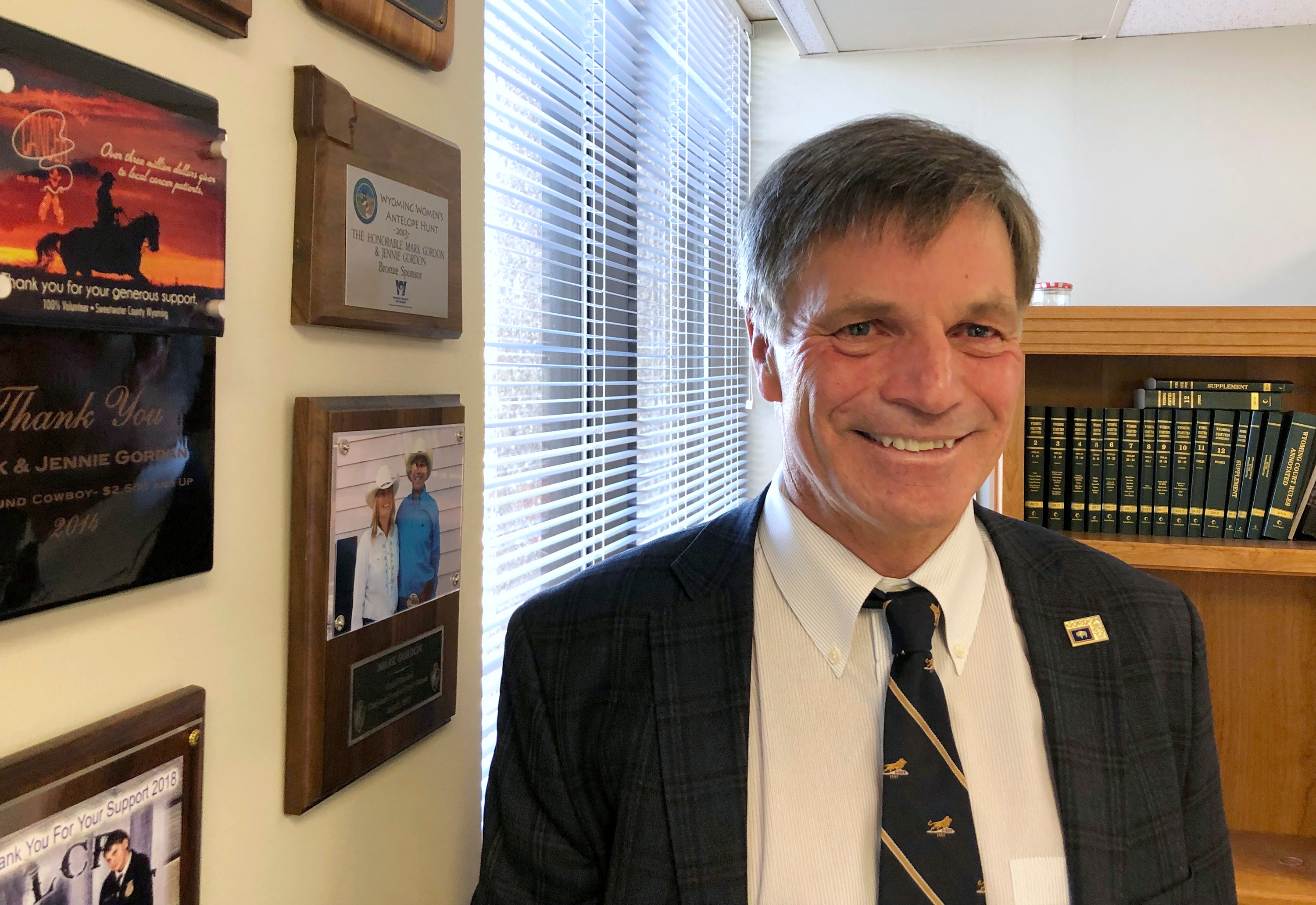
    FORT COLLINS, Colo. — Wyoming’s attorney general is investigating how two U.S. Department of Justice officials monitored poll workers and observed voters in the state’s most populous county during the Aug. 18 primary, a spokesperson for Republican Gov. Mark Gordon said Friday.

    Gordon called the monitors’ behavior “a bit aggressive” and “irregular” in an otherwise routine meeting to confirm the election results in the mostly rural and Republican state.

    “I feel very strongly about the federal government coming in and taking our guns. I don’t like that. I don’t like the federal government coming in and taking our votes, either,” Gordon said at the meeting Wednesday.

    Gordon spokesperson Amy Edmonds on Friday confirmed the investigation by Attorney General Keith Kautz, who was appointed by the governor.

    Voting rights groups have raised concern about President Donald Trump’s Justice Department shifting priorities away from enforcing civil rights laws with respect to voting. Trump instead has directed federal prosecutors to search for fraud in the 2020 election, which he lost to Democrat Joe Biden.

    Trump has meanwhile been more assertive about influencing the department, including encouraging investigations of political opponents, in his second term.

    Approaching the end of his second and final term in office, Gordon has publicly expressed little if any previous criticism of federal polices under Trump.

    The monitoring happened in southeastern Wyoming’s Laramie County, home to the state capital, Cheyenne.

    The monitors arrived soon after polls opened at 7 a.m. on primary day and said they intended to interview voters while assessing compliance with federal civil rights and voting rights laws, Laramie County Clerk Debra Lee said in a statement.

    Lee said her office didn’t allow interviews to be conducted in polling places and denied the monitors permission to do so. The monitors questioned local officials about “the nature, length, and timing of poll worker training,” Lee said.

    “Monitors requested training guides, asked how our new election equipment was acquired, and wanted to examine our tabulators,” Lee said.

    Wyoming law allows only election observation by certified poll watchers who monitor registration and turnout, Lee said.

    “This was a poorly managed exercise and one that showed complete disregard for our state laws and administration of our elections,” Lee said in the statement.

    She said she hadn’t been notified the monitors would be in Laramie County. A Justice Department official in Washington told her the decision to send them was made on short notice and an email was sent to her but “may have gone to the wrong address,” Lee said.

    The Justice Department routinely sends monitors to observe polling places or election offices, but they are not supposed to interfere with voting or election administration.

    The DOJ did not answer questions about the monitors Friday but referred to a primary day statement by Darin Smith, the U.S. attorney for Wyoming. He said monitors would be in the state “to ensure transparency, ballot security, and strict compliance with federal voting rights statutes.”

    “Voters deserve absolute confidence that their ballots are secure and their voices are heard without interference,” Smith said in the statement. “We are working alongside local officials to ensure every lawful vote is protected.”

    Appointed by the governor, Wyoming’s attorney general works mainly in the service of the executive branch and is not politically independent as in other states.

    No one, including Gordon, is asserting the monitoring influenced the election outcome, Edmonds said.

    “It’s really a fact-finding mission just to sort of figure out exactly what did happen,” Edmonds said.

    Trump’s fraud claims about the 2020 election have been amplified by Wyoming’s Republican secretary of state, Chuck Gray, who successfully ran in 2022 in part by showing a discredited documentary about those claims at campaign rallies across the state.

    Gray told Gordon at the elections meeting that his office “got an email,” but that was all the communication it had with the Justice Department about the federal officials. Wyoming law allows election observers, Gray said.

    “Certainly happy to visit with the attorney general,” Gray told the governor during the meeting. “Transparency is so important, and accountability.”

    Gray is not seeking reelection as secretary of state and won the Republican nomination for Wyoming’s seat in the U.S. House during the primary.