Category: National Politics

  • Frederick Douglass’ critical lesson for the 250th: ‘Contend, contend’

    Frederick Douglass’ critical lesson for the 250th: ‘Contend, contend’

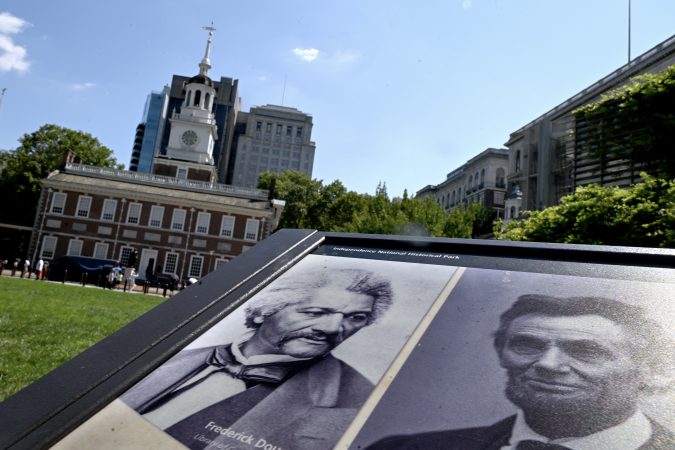
    As the country moves toward the 250th celebration, the official directive from the Trump administration is clear: be proud, be grateful, and rejoice in our great nation. This rosy narrative overlooks the global political conflicts, fractured economy, and longstanding racial and gendered inequalities that have shaped our country from its founding. These difficult realities are not footnotes to American history but a reminder of all of the ways that our nation continues to fail to live up to its espoused values. This is why one of the greatest speeches in American history resonates this time of year and especially on the eve of our nation’s 250th birthday: Frederick Douglass’s “What to the Slave is the Fourth of July?”

    Born into slavery, Frederick Douglass escaped from bondage to become the foremost African American abolitionist, orator, and intellectual of the nineteenth century. His famous “Fourth of July” speech is a profound declaration of faith in the promise of America and its “saving principles.” In this speech, delivered pointedly on July 5, 1852, not July 4, in Rochester, New York, Douglass argues that the foundations of American democracy are not fundamentally rotten, just mistaken in their implementation, and that the values enshrined in the founding mythology and documents might yet redeem America from its sins. It is a galvanizing and patriotic text, and it anticipates what W.E.B. Du Bois would say in 1935 in Black Reconstruction in America: that “democracy died save in the hearts of Black folk.”

    But this year, a different piece by Douglass resonates: “The Reason Why the Colored American is Not in the World’s Columbian Exposition,” written in 1893, just two years before he died. In that pamphlet, Douglass criticizes another national commemoration that asked Americans to set aside painful realities in favor of a more flattering narrative. His argument—that the struggle against racial injustice must continue not because success is guaranteed, or even likely, but because it is the right thing to do when confronted with injustice—continues to matter today.
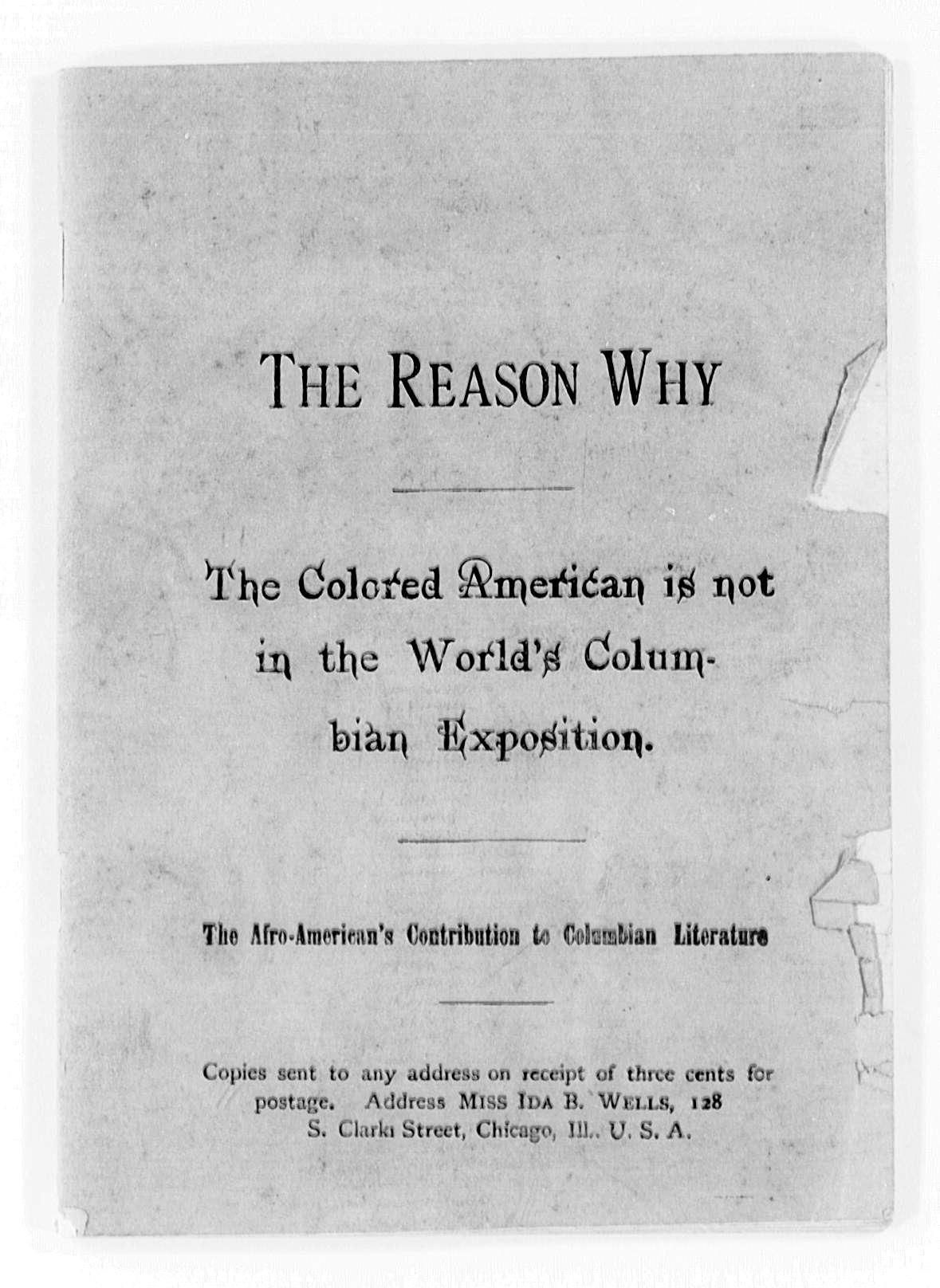
    The pamphlet, “The Reason Why: The Colored American is not in the World’s Columbia Exhibition,” had to be distributed and discussed from the Haitian exhibition space at 1893 World Fair in Chicago because African Americans were denied any real role in the Fair.Courtesy of NKCDC

    In this pamphlet, Douglass protested the World’s Fair in Chicago, a grand celebration of the 400th anniversary of Christopher Columbus’s 1492 arrival in the “New World.” The fair, Douglass argued, distorted American history by erasing the contributions of Black Americans whose labor and suffering had made that very “progress” possible. By this time, Douglass had witnessed the Emancipation Proclamation and Reconstruction and the violent undoing of Reconstruction. He had seen the Supreme Court strike down the Civil Rights Act of 1875. As white Americans imposed the brutal logic of Jim Crow across the nation, Douglass came to believe that the consciences he had spent his life appealing to had been so corrupted by white supremacy that they could no longer be relied on to redeem America.

    And yet, in the closing passages of the pamphlet, Douglass did not embrace despair or advocate for retreat. Instead, he offered the metaphor of a ship that must embrace the dangers of the open sea. The ship might remain safely anchored in harbor but this safety, he argued, is deceptive. The ship must weather the storm. And he followed it up with something even more profound: “Next to victory is the glory and happiness of…contending for it. Therefore, contend, contend! That we should have to contend and strive for what is freely conceded to other citizens without effort or demand may indeed be a hardship, but there is compensation here as elsewhere. Contest is itself ennobling. A life devoid of purpose and earnest effort is a worthless life. Conflict is better than stagnation.” For Douglass, the act of contending itself is meaningful. The struggle testifies to the injustice it intends to repair.

    Made By History sponsors. FOR USE ON MADE BY HISTORY STORIES ONLY.Inquirer Staff

    The origins and reception of the pamphlet reveal the fault lines in American society at the end of the 19th century. Douglass had appealed to Black communities across the nation for funds to print the pamphlet and had received almost nothing. Discouraged, he told his collaborator, Ida B. Wells, that he wanted to abandon the effort. It was Wells who insisted otherwise, organizing with many Black women’s organizations to raise the necessary resources. Ironically, the man who would close his pamphlet urging Black Americans to “contend, contend” had to be persuaded to continue contending himself.

    The reception of the pamphlet was divided and harsh. Many prominent white journalists called Douglass a complainer. Even within the Black press, there was hardly consensus. Some Black journalists endorsed his indictment of the fair while others argued that Black economic and educational enfranchisement were more important than another lament of prejudice. This was a broader debate within the Black community that Douglass did not settle in the pamphlet. What he offered instead was something harder and arguably more important today: the argument that we must continue to fight even when we are not winning the war.

    This is an extraordinary argument coming from Douglass at the end of his life. He had every reason to give up the fight. He had spent decades working to change America, and America had proven far more resistant to that change than he had originally hoped. And yet he insisted: contend, contend.

    At this moment of democratic fracture and racial retrenchment in America, Douglass’s argument deserves a second hearing. The Supreme Court has dismantled affirmative action, executive orders have unraveled federal civil rights commitments, and disparities in housing, education, healthcare, and criminal justice persist and deepen. The fight against racial injustice must continue not because we can be assured of our triumph but because our commitment to America’s “saving principles” should not falter even when those principles seem out of reach. Douglass’s refusal to abandon the fight—his willingness to steer into the storm—is not merely a biographical detail about an American at the end of his life. It is an argument about what it means to celebrate America and her saving principles.

    Happy 250th birthday, America. Contend, contend.

    Dr. Amy Gais is a Lecturer in the Department of Political Science and Comparative Literature and Thought at Washington University in St. Louis. She is the author of The Coerced Conscience (Cambridge University Press, 2024) and is currently working on a book project on dissimulation, resistance, and freedom in African American political thought.

    Made by History takes readers beyond the headlines with articles written and edited by professional historians. Opinions expressed do not necessarily reflect the views of The Inquirer.
  • Philly can’t force ICE agents to unmask, federal judge rules

    Philly can’t force ICE agents to unmask, federal judge rules

    Philadelphia can’t prevent U.S. Immigration and Customs Enforcement agents and other federal officers from concealing their identities, a federal judge ruled Thursday.

    U.S. District Judge Chad F. Kenney issued an order preventing Mayor Cherelle L. Parker’s administration and District Attorney Larry Krasner’s office from barring federal law enforcement officers from wearing masks, intentionally covering their badges, or using unmarked vehicles.

    The U.S. Constitution’s Supremacy Clause prevents states — or a city in this case — from imposing requirements on how federal agencies carry out their duties, the judge appointed by President Donald Trump said.

    When City Council passed the bill in April as part of the ICE Out legislative package, the lawmakers “attempted to sidestep the Constitution’s clear mandate and disregarded this fundamental principle of law that has informed American jurisprudence for over 200 years,” Kenney’s opinion said.

    Parker allowed the bill to become law without her signature, following City Solicitor Renee Garcia’s advice that signing the bill “would send an inaccurate signal to the public that the Administration can legally and practically enforce” its provisions.

    “Mayor Cherelle Parker acted with civic wisdom and courage to stand up for the Constitution and follow the rule of law to where it led, despite what may have been strong personal inclinations to the contrary,” the judge said.

    While the ordinance’s requirements apply to all law enforcement, its inclusion in an “ICE Out” package suggested the city planned to be selective in its enforcement, Kenney said.

    And even though the ordinance hadn’t taken effect yet, the judge said, the city never said it wouldn’t attempt to enforce its provision. Krasner’s past statements vowing to “arrest” and “put handcuffs” on ICE officers who break state law, as well as his involvement in a progressive prosecutors’ group committed to such prosecutions, suggest the threat of enforcement is real, Kenney said.

    “The Department of Justice will keep fighting jurisdictions that try to obstruct President Trump’s immigration enforcement with policies that endanger agents and public safety,” a department spokesperson said.

    The city is reviewing the ruling and potential next steps, a law department spokesperson said.

    Kenney showed an “unnecessary urgency” from the beginning of the case, Krasner said.

    “The red-hot rush of this federal district court judge, a Delaware County Republican appointed by Donald Trump, was predictable,” the district attorney said.

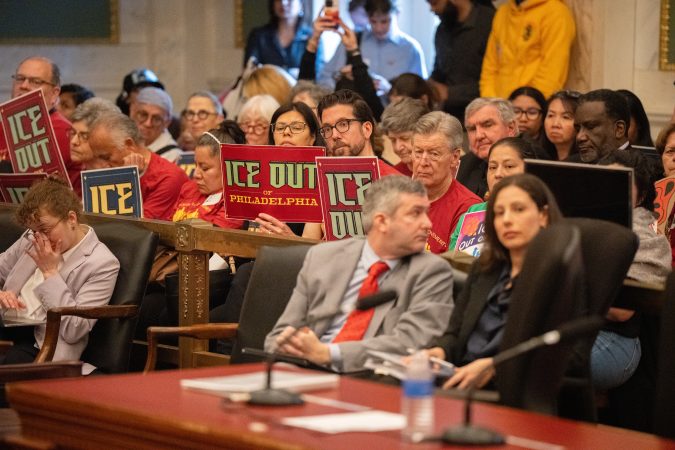
    Defending the ordinance put Parker and her administration in an awkward position. City Council passed the legislation with a veto-proof supermajority as part of a seven-bill package.

    The ordinance at the heart of the litigation made it a crime for law enforcement officers, including Immigration and Customs Enforcement agents, to wear face coverings or conceal personal identifiers like badges and nameplates while carrying out their official duties in Philadelphia, and required officers to identify themselves. It also prohibited the use of unmarked vehicles.

    The bill included exceptions allowing officers to wear masks in certain circumstances, such as medical emergencies or SWAT operations.

    An officer could face up to 90 days in jail plus a fine for violating the ordinance.

    The other bills prohibit federal immigration agencies from staging raids on city-owned property, ban discrimination on the basis of citizenship status, and prohibit the city from engaging in most forms of information-sharing with ICE.

    The legislation also codified some of Philadelphia’s long-standing sanctuary city status, which a recent poll found most city residents support.

    Parker signed the six other bills, which will take effect Tuesday.

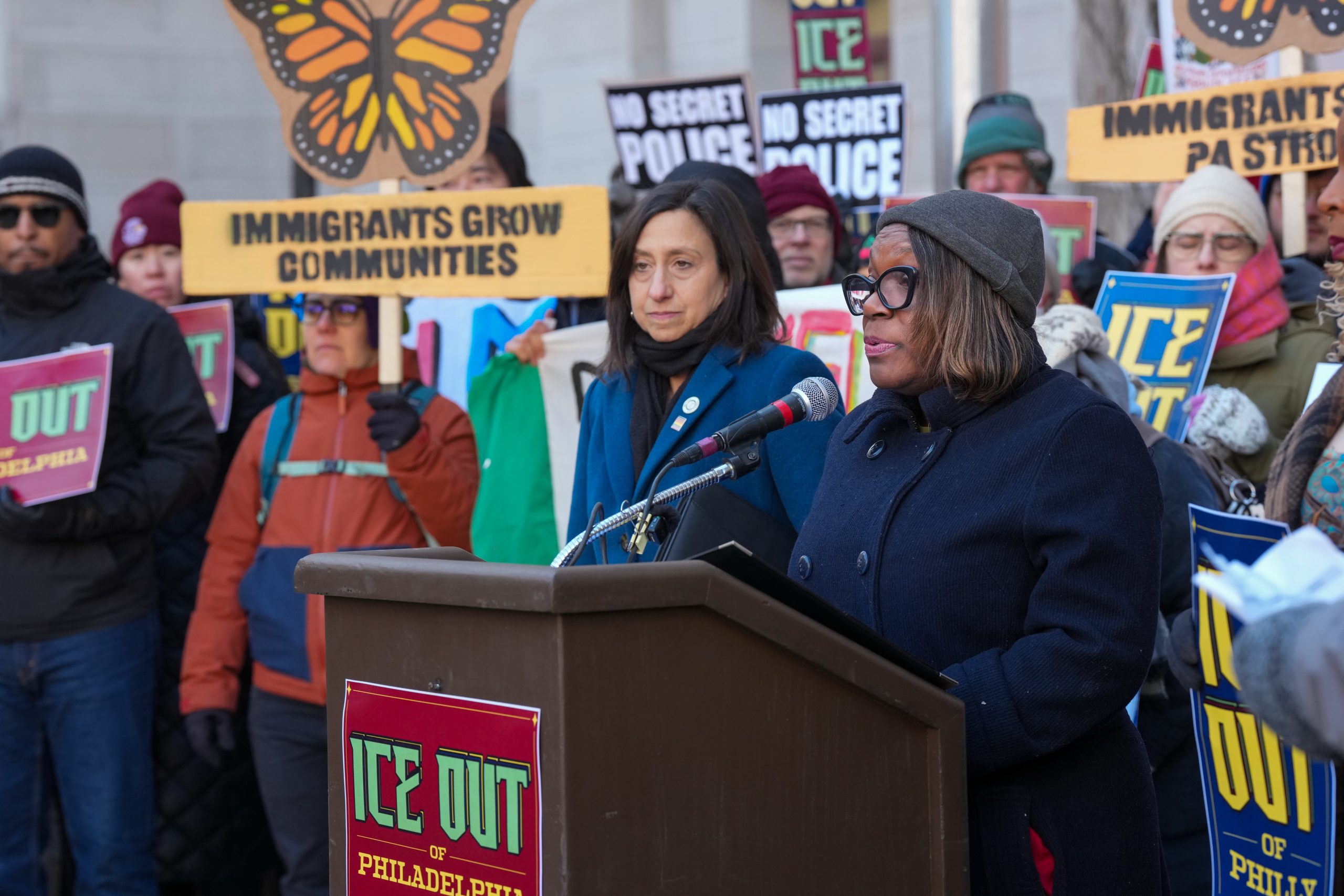
    Kendra Brooks shown here during a press conference at City Hall to announce a package of bills aimed at pushing back against ICE enforcement in Philadelphia, January 27, 2026.Jessica Griffin / Staff Photographer

    The Justice Department sued the city, Parker, Krasner, and Garcia in federal court in Philadelphia last month and requested an injunction on the enforcement of the masking bill.

    Officials from various federal agencies told the court the bill would harm their operations and officers.

    Members of the public routinely dox ICE agents, who are later subject to threats, John Rife, acting director of ICE’s Philadelphia field office, said in a filing.

    “Facial coverings reduce the risk of officers’ personal identities being shared publicly, which helps ensure that officers’ privacy and safety, and that of their family members, remains intact,” Rife said.

    The city argued the litigation was premature as the ordinance hasn’t gone into effect and there was no attempt to enforce it.

    The city also said federal agents had applied “aggressive enforcement tactics behind the mask of anonymity, undermining public safety and trust.”

    But Kenney’s opinion said, “there can be no public interest” in enforcing a provision that violates the Constitution.

    It doesn’t make sense that the city can’t hold federal officers to the same standard it holds its own police department to, Councilmember Rue Landau, who authored the bills with fellow progressive Kendra Brooks, said in a statement.

    The Trump administration has sued other jurisdictions, including New Jersey, over similar requirements. In April, the U.S. Court of Appeals for the Ninth Circuit found that a California bill requiring agents to “visibly display identification” was unconstitutional.

    On Tuesday, a federal judge in Richmond enjoined Virginia from enforcing a law barring ICE agents from covering their faces.

    “It’s unfortunate the Parker administration’s own doubts were used against the bill in this injunction,” Brooks said in a statement. “No one else is dealing with that dynamic in their lawsuits.”

  • Top Trump official Sean Duffy promotes the President’s House in video with Mayor Parker

    Top Trump official Sean Duffy promotes the President’s House in video with Mayor Parker

    President Donald Trump’s administration has spent almost a year scrutinizing, and then dismantling, and then trying to rewrite history at one of Independence Mall’s most informative exhibits on slavery.

    All for one of Trump’s cabinet secretaries to promote the President’s House in a new video ahead of July Fourth.

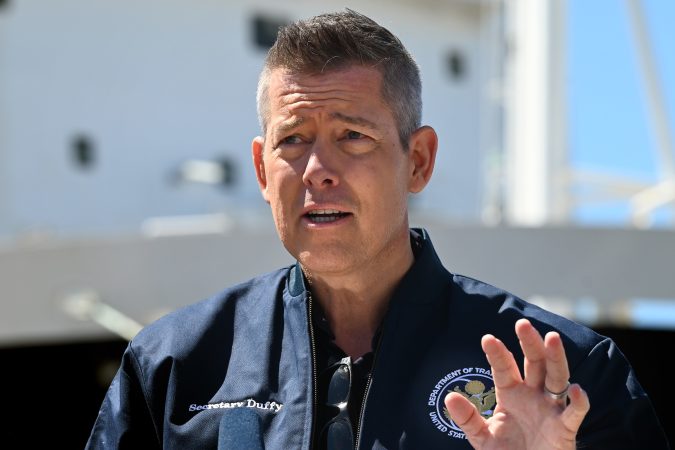
    Transportation Secretary Sean Duffy, who has been one of the Trump administration’s biggest cheerleaders for this week’s 250th anniversary celebrations, produced a video asking Mayor Cherelle L. Parker which Philadelphia historical sites visitors should see.

    Parker listed the highlights — the National Constitution Center, Independence Mall, the Liberty Bell, and ended her list of recommendations with the President’s House, which memorializes the nine people enslaved by George Washington in Philadelphia.

    “Reconnect with our history, recommit to the democratic values that we stand on, and have an amazing time,” Parker said.

    Cue Duffy showcasing pictures of the very panels at the President’s House that his boss wants to take down.

    The video, which was posted Wednesday to Duffy’s social media, appears to have been filmed in May, when Duffy visited Philadelphia while the city and the Trump administration were in the midst of a legal battle over the President’s House after the federal government removed the site’s exhibits earlier this year.

    A February court order allowed some of the panels to be reinstalled. Then, a ruling from the Third Circuit Court of Appeals in June said the Trump administration could replace the exhibits with its own materials, which are posted online.

    After the Third Circuit’s ruling, Parker said in a statement that: “I will pursue every legal action possible to reverse this decision. We cannot and WILL not rest until the full story of American history — including the existence of slavery at the President’s House here in Philadelphia — is told, for our Nation and the World to see.”

    On Thursday, a Boston-based federal appeals court removed the final legal obstacle that prevented the Trump administration from installing its own exhibits at the President’s House.

    This was not Duffy’s only visit to Philadelphia that coincided with a key event in the President’s House saga. Duffy joined Interior Secretary Doug Burgum in a visit to Independence National Historical Park in September 2025, just days after reports that the Interior Department planned to make changes to the President’s House.

    The secretaries were preparing for the Semiquincentennial celebrations. The Transportation Department, led by Duffy, has promoted road trips to a number of sites targeted by the Interior for changes, including Harpers Ferry National Historical Park in Virginia, in addition to the sites in Philadelphia.

    Duffy, a former MTV reality television star, has faced backlash for shooting a reality TV-style travel series with his family over the span of several months called The Great American Road Trip, meant to encourage celebrating the United States ahead of the 250th.

    A trailer for the series shows that he stopped in Philadelphia and visited LOVE Park and the Liberty Bell.

    In Wednesday’s video, which does not appear to be related to the series, Duffy says, “There’s no better place to go than where it all began in Philadelphia.”

    “This city is truly amazing, and the history that exists here,” Duffy said, “No one has it.”

  • Pope Leo XIV is speaking to the National Constitution Center live from the Vatican. Here’s what to know.

    Pope Leo XIV will accept the National Constitution Center’s Liberty Medal on Friday, delivering remarks live from the Vatican that will be broadcast inside the Sixth and Arch building.

    The U.S.-born pontiff’s speech is a major addition to Philadelphia’s already extensive lineup of activities and events on the eve of the United States’ 250th birthday on July Fourth.

    His speech will be particularly anticipated in Philadelphia given the Semiquincentennial and Leo’s deep ties to the Philly area.

    The Catholic leader has garnered attention for clashing with President Donald Trump’s administration, which will be further exemplified by his visit with migrants on Independence Day.

    His award acceptance speech also comes just two days after traditionalist Catholics in Switzerland defied him by consecrating bishops without his consent, which Leo called “a sin of extreme gravity,” the Associated Press reported.

    His Friday remarks were initially going to be broadcast on Independence Mall but it was moved inside due to extreme heat.

    Here’s what to know ahead of his Liberty Medal speech.

    What are Pope Leo’s connections to the Philly area?

    Not only is he the first U.S.-born pope, but he has connections to the Philly area — despite being from Chicago.

    Leo graduated from Villanova University in 1977 with a bachelor’s degree in mathematics. He received an honorary doctorate of humanities in 2014 from the Augustinian university.

    Those who knew him at the time described him as a Midwesterner with a sense of humor who was tuned in to global issues like immigration and poverty — and like anyone who goes to Villanova, a big basketball fan. He worked part-time at St. Denis Catholic Church in Havertown as part of the cemetery maintenance crew during his studies.

    In May, he passed along a surprise commencement message to this year’s graduates. In that message, he fittingly referenced America’s 250th anniversary.

    “May the graduates of 2026 always be faithful to the guiding light that has been so important for these 250 years,” Leo said.

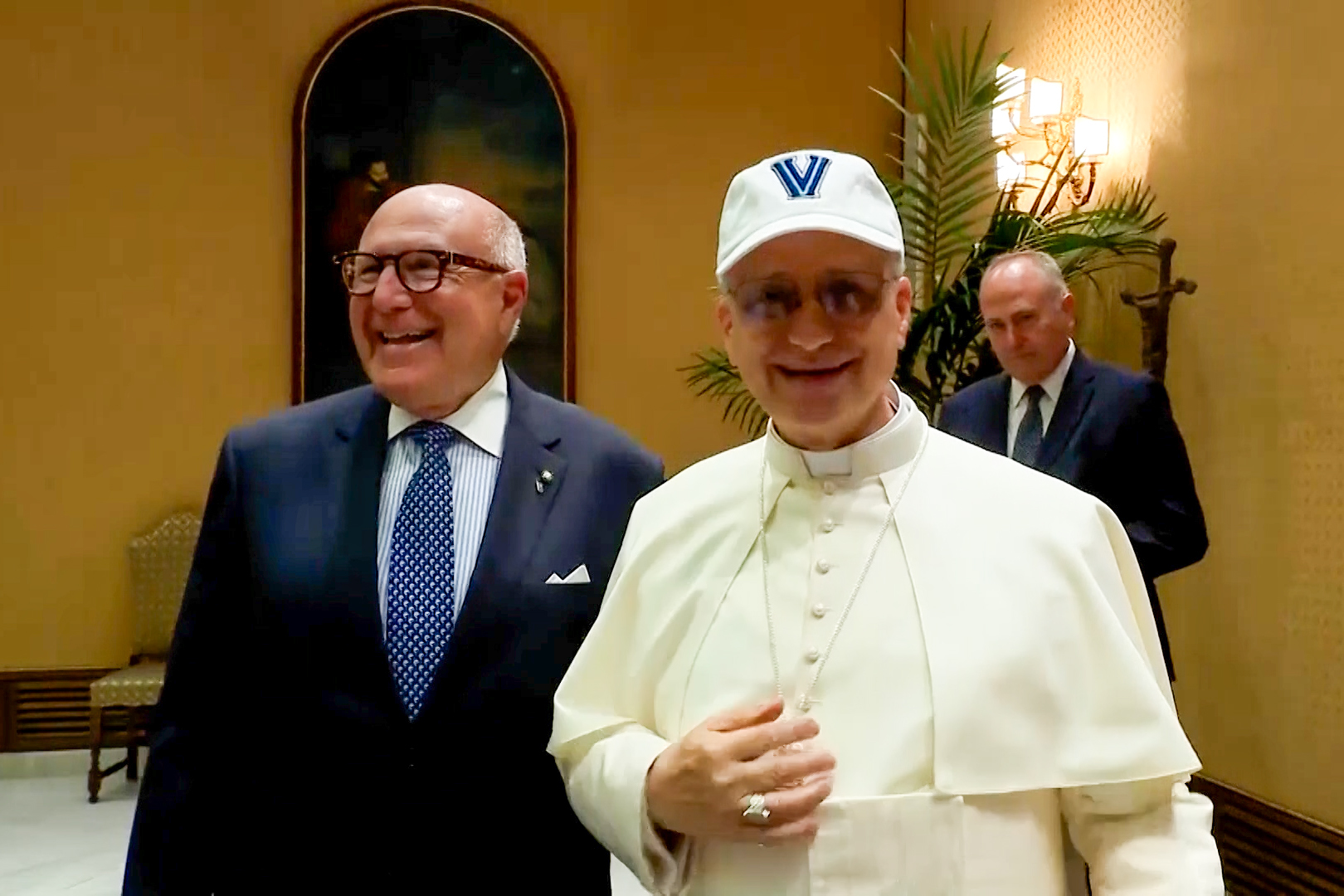
    This video screen grab shows Pope Leo XIV wearing a Villanova hat given to him during a meeting with an Italian heritage group.Associated Press

    Last month, a delegation from Philadelphia’s National Constitution Center met with Leo at the Vatican to present him with the medal. They would have been remiss to forget to celebrate his Philly connections.

    So they brought him a few local goodies: a bundle of Villanova swag, a replica of George Washington’s Acts of Congress, and, best of all, a Wawa tote bag filled with Tastykakes.

    Vince Stango, interim president and CEO of the Constitution Center, said the visit had “a real Philadelphia vibe that was unmistakable.”

    What’s the Liberty Medal?

    The Liberty Medal has been presented by the nonpartisan National Constitution Center since 2006, offering the esteemed prize to individuals and organizations who “strive to secure the blessings of liberty to people around the globe.”

    In Leo’s case, he’s receiving the award because of his work in promoting religious liberty.

    Previous recipients of the award include Ukrainian President Volodymyr Zelensky, the late U.S. Supreme Court Justice Ruth Bader Ginsburg, the late U.S. Sen. John McCain (R., Ariz.), and the late civil rights leader and U.S. Rep. John Lewis (D., Ga.).

    How do I watch?

    The National Constitution Center is streaming the ceremony live on its YouTube channel at 10:45 a.m. NBC10 will also broadcast the awards.

    Tickets to the event were previously made available to the public and other invited guests.

    What’s going on with the pope and Trump?

    Trump invited the pontiff to visit the United States on July Fourth to celebrate the 250th anniversary of the country. He declined.

    Instead, the pope will spend Independence Day visiting Lampedusa, an Italian island in the Mediterranean Sea located between Tunisia, Malta, and Sicily. It‘s a major entry point for migrants seeking refuge in Europe from North Africa. It’s one of the deadliest migration paths in the world, Reuters reported.

    Leo’s predecessor, Pope Francis, visited the island in 2013.

    Francis, who was close with Leo, also clashed with President Donald Trump and Vice President JD Vance on issues like immigration, and that tension has continued under the new pontiff.

    The pope said in November that the United States has been treating migrants “in a way that is extremely disrespectful” under the Trump administration. A month prior, he suggested that the United States’ treatment of immigrants is “inhumane.”

    Vance, who converted to Catholicism in 2019, said this week on Fox News that he finds the Vatican’s immigration views “troubling,” saying that “mass migration has victims.”

    Leo was also outspoken in his opposition to Trump’s war in Iran, and the Vatican declined to participate in Trump’s “Board of Peace” for Gaza.

    Trump has not held back on his criticism of the pope, calling him “WEAK on Crime, and terrible for Foreign Policy” in an April social media rant. He faced condemnation from Catholics — who have found themselves taking a side between the pope and the president — after sharing a now-deleted image of himself presented as Jesus.

    It will be telling whether Leo leans into his disagreements with the Trump administration, whether directly or indirectly, during his speech on Friday.

  • The biggest U.S. commemorations happen when we need them the most

    Though much has changed since America’s last notable birthday in 1976, there are many echoes of the Bicentennial’s circumstances and its opportunities in 2026. In yet another time of uncertainty and pessimism, this 250th birthday, like the Bicentennial 50 years ago, offers Americans an opportunity to reconsider their connection to the past and their vision for the future.

    Following one of the most fractious decades in American history, the years approaching the Bicentennial were marked by upheaval. In 1973, the OAPEC oil embargo created a gas crisis that contributed to a global recession and inflation as high as 12%. American lost confidence in their leaders, especially after Richard Nixon resigned from the presidency in August 1974, following two years of fallout over the Watergate scandal. The rights revolution of the previous decade brought issues such as race, gender, and sexuality into mainstream media. Countless laws and social norms changed, sparking backlash among conservatives.

    These circumstances caused many Americans to wonder what was worth celebrating in 1976. Many marginalized groups questioned whether they should celebrate the Bicentennial at all. A broad array of social and civil rights movements seized on the Bicentennial as an opportunity to challenge the triumphal narrative familiar to so many Americans. Their efforts brought into stark relief the paradoxical relationship between the rhetoric surrounding the nation’s founding and its history of oppression. And the conversations that emerged around confronting this more complicated history shaped the Bicentennial’s commemoration and its longer-term impact.

    The circumstances surrounding America’s 250th anniversary are strikingly similar. Political scandals have threatened to engulf the current administration, as the nation has again found itself mired in an unpopular foreign war and a gas crisis, with prices nearly doubling in the last year. Years of inflation have led to a cost-of-living crisis for many Americans. And the last twenty-five years have produced an even greater distrust of institutions such as the government, the media, and the church. A recent Pew Research Center poll shows that nearly 60% of Americans think the nation’s best years are behind us. As during the Bicentennial in 1976, many Americans are again wondering what about the nation’s past and present is worth celebrating.

    Challenging circumstances, however, are not unique to the last two anniversaries. In 1876, Americans commemorated the Centennial in the wake of an economic panic in 1873, increased immigration, the end of Reconstruction and the rise of Jim Crow, and a constitutional crisis brought about that year by one of the most fiercely contested presidential elections in the nation’s history. In such circumstances, the 1876 commemorations looked toward the future. They were marked by a growing sense of the United States being poised as an industrial power to take its place on the world stage, and by the efforts of African Americans and suffragists to realize a future of equal citizenship and rights.

    In contrast, there was much less enthusiasm during America’s 150th in 1926. With the economy booming, many Americans of the roaring 20s did not need the anniversary. In other words, anniversaries of the Revolution have mattered most during the nation’s most trying times. When the American experiment seems closest to failure, we have used our anniversaries to engage in conversations about the meaning of the past and the future we want to create.

    Federal funding also impacts how these anniversaries are celebrated, and in that regard, the Bicentennial and the 250th could not be more different. In the 1970s, the American Revolution Bicentennial Administration gave countless grants to small groups, institutions, and projects across the country. Those grants helped fund local programs, the preservation of local historical sites, and the creation of new sites and museums. In the years leading up to 250, however, there has been a rapid change in the federal funding landscape for historical sites and projects.

    Made By History sponsors. FOR USE ON MADE BY HISTORY STORIES ONLY.Inquirer Staff

    Significant cuts to the National Endowment for the Humanities and other agencies have meant fewer grants and resources to support similar local and historical projects like in the years leading up to 1976. As a result, institutions, historical sites, and museums—large and small—have had to take it upon themselves to both produce and fund meaningful programming for the public. From larger institutions like the Museum of the American Revolution to countless institutions in small towns and counties across the country, Americans have been forced to take responsibility for commemorating 250 for themselves and their fellow citizens. But following the model of 1976, they are working to foster conversations about the complexity of the past alongside visions of the future. And as with the Bicentennial, the greatest opportunities for reconnecting with the nation will come from the work done at the local level.

    Ultimately, the 250th is not just a historical anniversary; it is a civic opportunity. And that opportunity is not limited to July 4, 2026. Revolutionary anniversaries will continue on the national and local levels for more than a decade, eventually culminating with the bicentennials of the Constitution in 2037 and the Bill of Rights in 2039. And like the bicentennials for those events, these 250th commemorations will provide a platform for Americans to reconsider what the revolution and its ideals mean to them in the present moment. The work done by independent and local institutions and organizations across the country will again give Americans the tools and the impetus to engage with the past in meaningful ways. When we seize those opportunities, we become part of the nation’s long tradition of using our anniversaries of the Revolution to imagine a new and better future.

    Michael D. Hattem is the author of The Memory of ’76: The Revolution in American History and is an America250 Media Fellow of the Jack Miller Center.

    The “Road to 250” series is an initiative of Historians for 2026, a group of early American academics, public historians, archivists, and educators devoted to shaping an accurate, inclusive, and just public memory of the American Founding for the 250th anniversary.

    Made by History takes readers beyond the headlines with articles written and edited by professional historians. Opinions expressed do not necessarily reflect the views of The Inquirer.
  • Immigrant arrests surge to 10,000 in 5 days as ICE clamps down

    Immigrant arrests surge to 10,000 in 5 days as ICE clamps down

    WASHINGTON — Federal immigration officials have detained more than 10,000 people in the last five days, a major surge that has stemmed from a push within Immigration and Customs Enforcement to increase arrest rates.

    Agency leaders in recent days ordered top ICE officials to focus more of their officers’ efforts on picking up immigrants they want to deport, according to documents obtained by The New York Times and interviews with federal officials. ICE officers have arrested people at check-ins, with immigration authorities, during traffic stops and on the street. The push has apparently yielded results, with recent arrest numbers roughly doubling from the 1,000 picked up each day earlier this year.

    ICE officials were told that the White House wanted an increase in arrests, according to three officials with knowledge of the conversations. One of the officials said that it was unclear how long the pace could continue, but that ICE officials had been told that 2,000 arrests a day was the new standard for enforcement.

    The surge has occurred without the fanfare of highly visible operations last year, in which officials announced their intentions ahead of time to target cities, including Chicago and Los Angeles, and send officers pouring into the streets. Markwayne Mullin, the homeland security secretary, pledged to mount a quieter enforcement campaign following the chaos of a monthlong operation in Minnesota, where federal officers killed two U.S. citizens.

    The rise in arrests suggests that President Donald Trump is determined to meet his pledge of mass deportations, a goal that is popular among his conservative supporters but that has fueled a political backlash amid the administration’s heavy-handed tactics. The Trump administration has promised more aggressive actions, particularly after the Supreme Court in recent days expanded the president’s power to set federal immigration policy, but undercut his effort to eliminate birthright citizenship for the children of immigrants in the country illegally and visitors.

    “Our message is clear: If you come to our country illegally, we will find you, we will arrest you and we will deport you,” Lauren Bis, a Department of Homeland Security spokesperson, said in a statement.

    Word of an uptick in arrests has started to trickle out, sowing fear in immigrant communities and among advocates already on edge after the Supreme Court ruled that Trump could end deportation protections for people from disaster- and war-torn countries under the Temporary Protected Status program.

    In recent days, ICE officers have launched an intense push to ramp up arrests. Arrests topped out Saturday when authorities detained more than 2,400 people, according to documents obtained by the Times. The detention population inside ICE facilities has jumped nearly 4,000, to more than 63,000 in the agency’s custody as of Tuesday, according to internal documents.

    In emails to ICE personnel, agency leaders applauded the latest numbers.

    “I want to personally thank each of you for your extraordinary efforts this past weekend,” Marcos Charles, the head of ICE’s deportation wing, wrote this week. “Through your dedication, professionalism, and unwavering commitment to our mission, enforcement and removal operations achieved remarkable operational results.”

    Top ICE officials were told to make sure that as many officers as possible were working seven days a week, and to put 80% of their officers on arrest operations, according to two U.S. officials who spoke on the condition of anonymity to discuss internal conversations. Top supervisors were expected to be working closely on the operations as well.

    Last year, Stephen Miller, Trump’s deputy chief of staff, set a goal of 3,000 arrests a day for the agency, a figure it was not able to hit. Since then, the agency has hired thousands of new officers and has had its budget increased by billions of dollars for the enforcement surge.

    Across the country, immigration lawyers and advocates have reported an uptick in enforcement.

    In South Texas, Sister Letty Ugboaja, a Nigerian nun, was arrested on her way to church on Sunday morning, according to Sister Norma Pimentel, her colleague. Ugboaja is a local nurse who also helps at a parish in the region. Pimentel called local leaders after learning of the arrest, and congressional officials soon got involved and pushed for her release.

    On Sunday, she was let go from ICE custody, and Pimentel was there to greet her.

    Pimentel said that Ugboaja was distraught upon her release.

    “It took her awhile to be able to talk — she was crying,” she said.

    In southern Florida, attorneys have been on alert. Cindy Blandon, an immigration attorney in Miami, said that one of her clients, a Nicaraguan father of two children, had an immigration court hearing set for 2027, but was arrested by ICE on Monday during a routine check-in.

    And in Utah, Ysabel Lonazco, an immigration attorney, has noticed an uptick as well. She has spoken to several clients, including a man who was driving when he was picked up by the agency for overstaying his visa this weekend.

    “It sets further fear in the community,” she said. “People don’t want to leave their houses. They are afraid to drive to do their grocery shopping. They are just terrified with these detentions.”

    One of her clients, Arturo, a 48-year-old Mexican man, was arrested in Salt Lake City on his way to a soccer game Sunday, according to his wife, Veronica. She said the arrest had shattered their family.

    “They’re getting people — be very careful,” her husband told her from ICE detention, she recalled through an interpreter. She said her 13-year-old son was traumatized by the arrest of his father, who had worked most days of the week building furniture before his arrest, she added.

    A Department of Homeland Security spokesperson said that Arturo had illegally reentered the United States and would be held in ICE custody as the agency sought to deport him.

    Veronica said the family had not expected to be caught up in Trump’s deportation sweep.

    “We were worried, but it wasn’t like we were extremely worried. We figured — we don’t have any criminal record, we pay taxes every year,” she said.

    This article originally appeared in The New York Times.

  • Judge blocks Postal Service from imposing restrictions on mail-in ballots

    Judge blocks Postal Service from imposing restrictions on mail-in ballots

    WASHINGTON — A federal judge in Washington on Wednesday blocked the United States Postal Service from carrying out changes to its delivery of mail-in ballots, writing that recent policies directed by President Donald Trump ran afoul of legal terms the agency accepted more than four years ago to ensure timely delivery of mail ballots.

    In a brief opinion, Judge Emmet G. Sullivan pointed to a settlement agreement reached between the NAACP and the Postal Service in December 2021, after the group sued the government arguing that postal delays threatened to disenfranchise voters. At that time, the agency agreed to “prioritize monitoring and timely delivery of election mail.”

    Sullivan, an appointee of President Bill Clinton, wrote that the Postal Service’s proposal, which includes not delivering mail-in ballots in states that decline to hand over voter data to the federal government, violated the settlement agreement, which the parties had agreed would run through the 2028 election cycle.

    Sullivan wrote that Trump’s order appeared “designed to exert federal control over who in the United States may be sent a mail-in or absentee ballot in federal elections by the Postal Service.” He wrote that the agency had previously agreed to outline plans before each national election and meet with the NAACP to explain how it would ensure efficient delivery of election-related mail.

    While another judge in Washington had declined for now to halt the enforcement of the executive order because new rules for the Postal Service had not been finalized at the time, Sullivan concluded that the agency’s recent proposal could be blocked preemptively because it would violate the prior agreement.

    Last week, a judge in Massachusetts struck down the main components of Trump’s order, including the creation of lists of eligible voters and changes to mail-in voting. The ruling from Judge Indira Talwani stated that the Constitution granted authority over elections firmly to the states.

    The NAACP, which brought the lawsuit in 2020 amid a spike in voting by mail during the COVID-19 pandemic, had raised concerns about delays in mail delivery. The group argued that the new proposed changes raised fresh worries for coming elections. Among the changes it contested were the addition of new individualized bar codes on mail-in ballots and a plan to reject ballots from states that do not submit a list of eligible mail-in voters to the Postal Service ahead of time.

    “The proposed USPS changes would have created unnecessary and unlawful barriers, in direct violation of the USPS’s mandate to prioritize election mail,” Anthony P. Ashton, the NAACP’s senior associate general counsel, said in a statement. “Those barriers could have disproportionately harmed Black voters, who are more likely to rely on mail voting due to long-standing inequities in access.”

    “Put simply, the use of mail-in voting helps reduce voter intimidation at the polls and Election Day dirty tricks,” he added.

    Postmaster General David Steiner has said on multiple occasions, including to The New York Times this year, that he would follow court orders governing voting by mail.

    The agency had argued in filings before the decision that the court could not block the changes until it had finalized its rules and that the changes fell outside the scope of the legal settlement.

    The Postal Service has not responded to multiple requests for comment after recent court decisions that partially blocked Trump’s mail voting executive order and the Postal Service’s proposal to impose it.

    Under the 2021 settlement, the Postal Service agreed to take extra steps to expedite mail ballots for all even-year federal elections through 2028.

    William Hensley, a former election mail specialist at the Postal Service who helped establish those “extraordinary measures” while at the agency, said in an interview that they can include dispatching delivery trucks on extra trips, authorizing local postmasters to pay out employee overtime, and in some cases postmarking and turning around mail ballots locally rather than at regional processing centers.

    For this year’s midterm elections, the Postal Service said it will begin enforcing those measures Oct. 27, roughly a week before the midterms.

    This article originally appeared in The New York Times.

  • Philadelphia’s historic sites draw tourists from around the world. They’re getting an incomplete version of the President’s House.

    Philadelphia’s historic sites draw tourists from around the world. They’re getting an incomplete version of the President’s House.

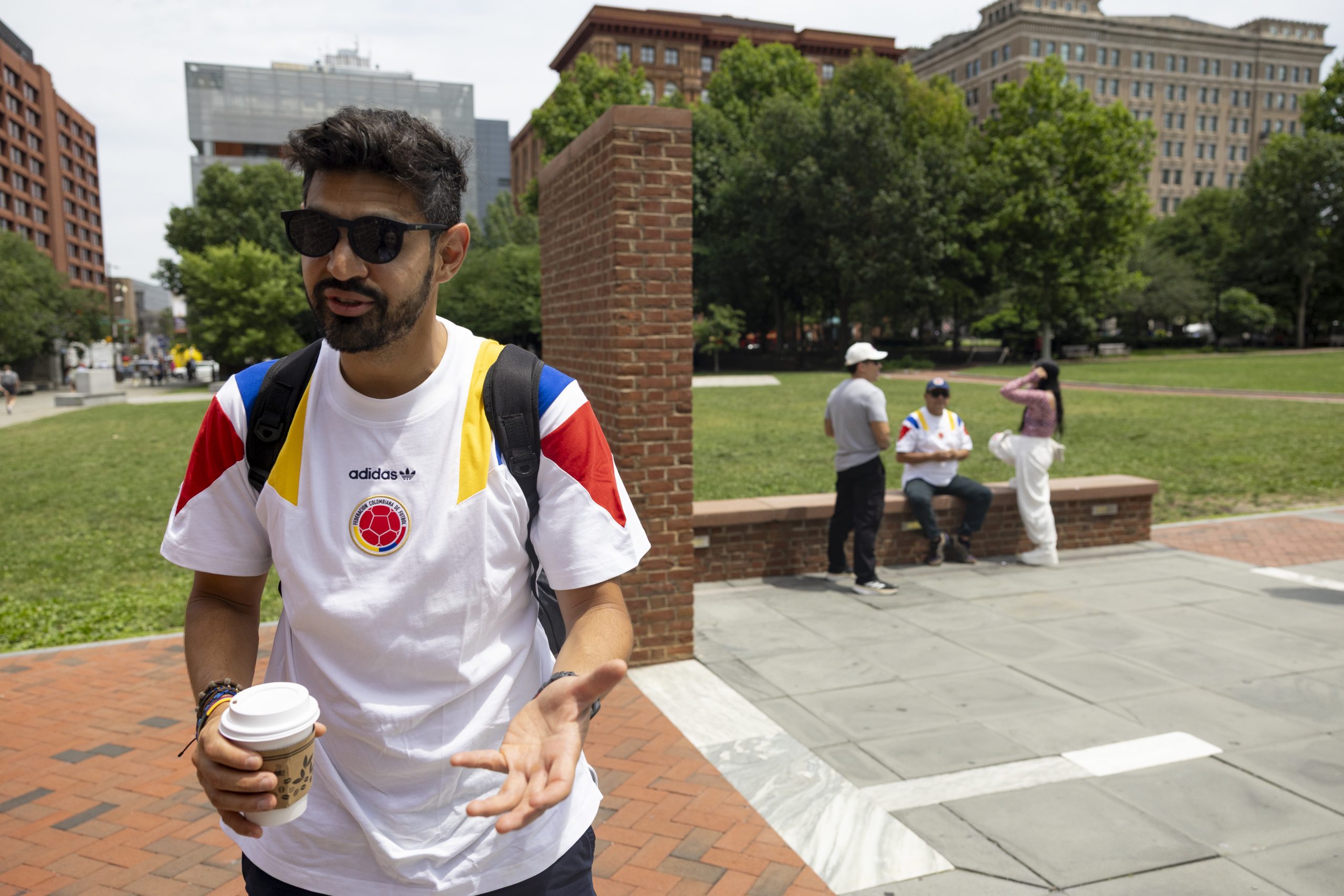
    On a sweltering and humid summer afternoon — as tourists and historical reenactors milled about Old City ahead of 250th anniversary celebrations — Cristian Marín guided his family through the President’s House.

    Loyal soccer fans, Marín’s family had traveled from Colombia to visit their son in Philadelphia, attend the World Cup matches, and see the Revolutionary Era sites.

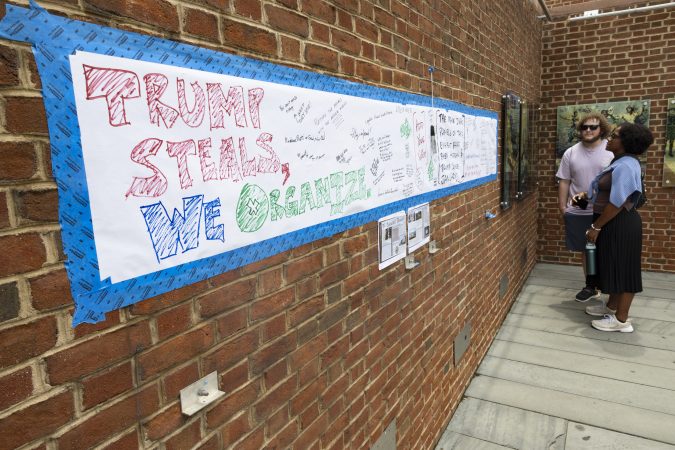
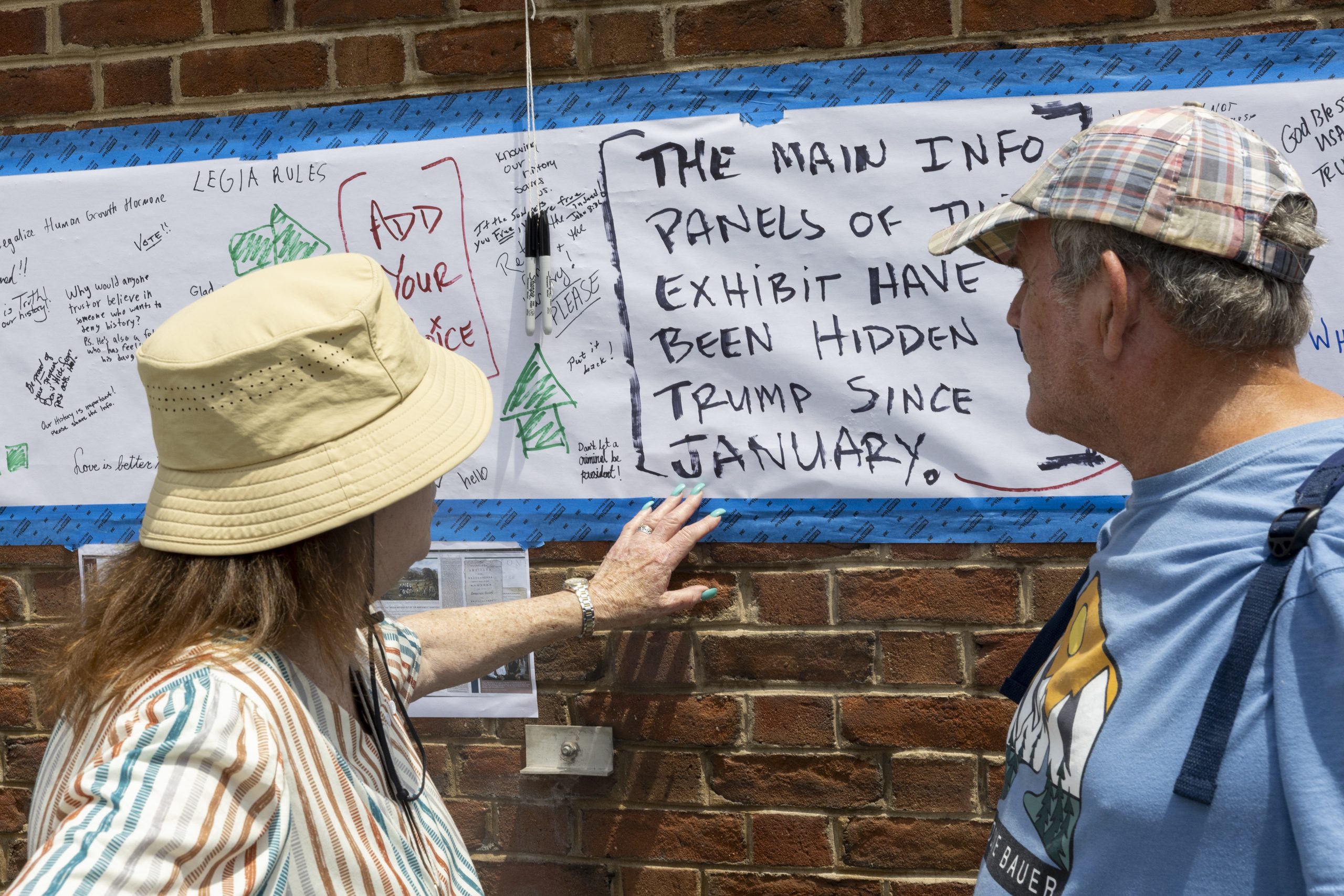
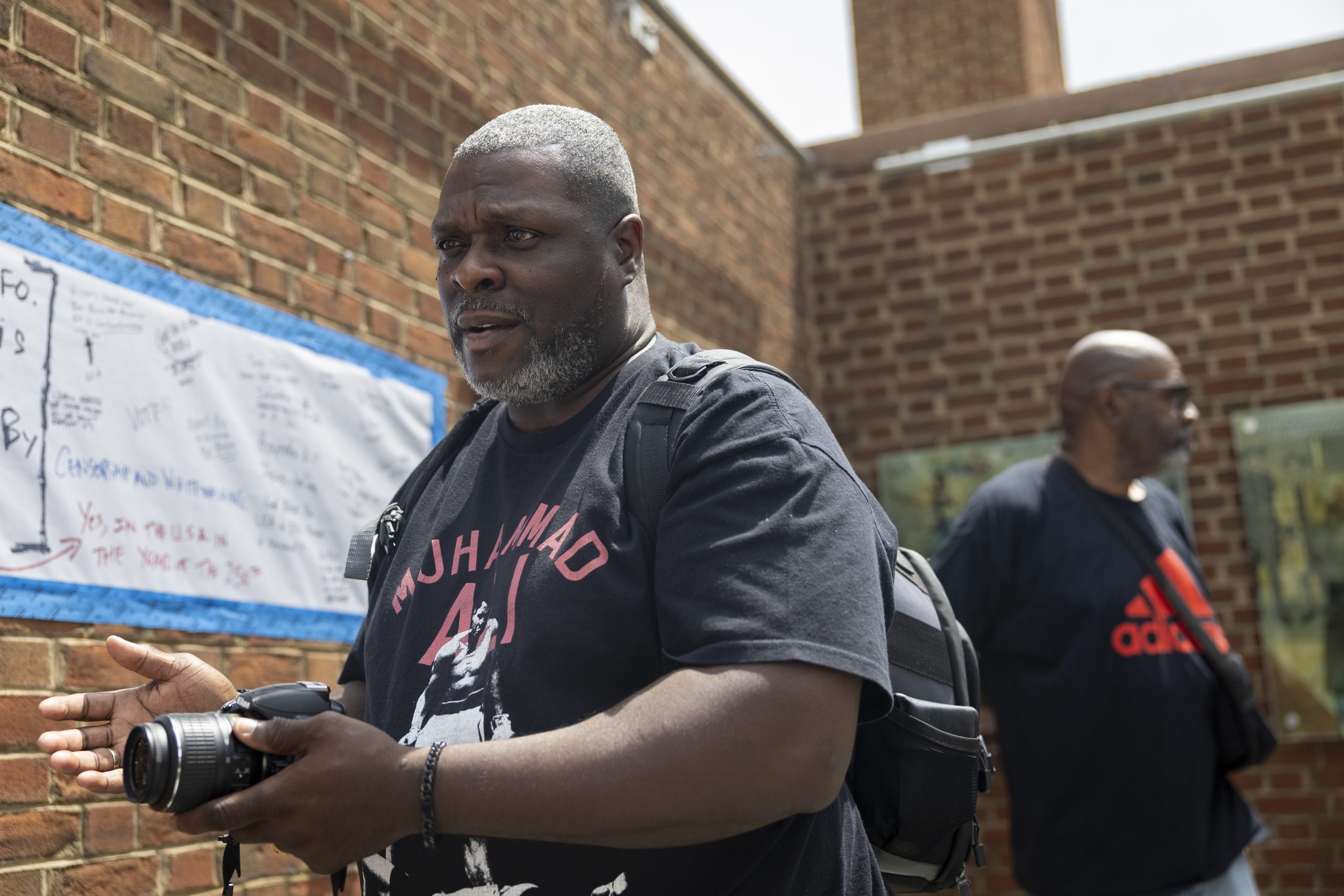
    But it was up to Marín, 37, to play tour guide last Friday and explain to his family why large gaps of brick wall were covered by paper adorned with handwritten messages expressing their indignation with President Donald Trump after his administration removed exhibits about slavery at George Washington’s former home in Independence National Historical Park.

    Marín’s family started laughing from pure disbelief about the “craziness of the situation,” he said.

    Marín’s relatives are among an influx of tourists visiting Philadelphia in the lead up to the city’s Semiquincentennial festivities only to find themselves confronted with evidence of the largely partisan battle playing out over how to tell the complicated story of America’s founding.

    “For me, it’s shocking to see a country trying to erase that history,” said Marín, a freelance journalist. “I think it’s important to remember our past in order to just not repeat those kinds of things.”

    Cristian Marín, 37, tours the President’s House in Independence National Historical Park last week. Aidan T. Gallo / Staff Photographer

    Ahead of the 250th, both Philadelphians who have been engaged in the fight to protect historical exhibits and tourists who have wandered through the President’s House for the first time, have lamented the Trump administration’s changes to the exhibit, which was largely dismantled by the administration earlier this year.

    They told The Inquirer that the missing panels, such as those that discuss the brutality of slavery, do a significant disservice to understanding the full picture — even the ugly parts — of U.S. history.

    “History is going to be out there, and the more we share history, the better for everybody,” said Hector Vargas, 40, from New York. “For the new generation, and even ourselves, because this is something from the past and we need to understand better — what happened and how this great country basically became the great country it is.”

    The Philadelphia Convention and Visitors Bureau estimates that from 250th-related events alone the city will welcome over 1.5 million overnight visitors in 2026.

    But the turmoil facing the President’s House is hanging over the celebrations, as the site’s stakeholders and the Trump administration battle over which version of history residents and visitors will see as they celebrate on Independence Mall.

    Judges presiding over lawsuits related to the President’s House or other threats by the Trump administration to change historical content at national parks have viewed the Fourth of July as a deadline to set the record straight as to whether the federal government has the authority to rewrite history.

    Some advocates believe the Trump administration saw it that way, too.

    Visitors read unofficial signage put up to protest the Trump administration’s changes to the President’s House site, which memorializes the nine people enslaved by George Washington in Philadelphia. Aidan T. Gallo / Staff Photographer

    The Inquirer reported that the federal government also quietly removed mentions of slavery from Independence Hall and a panel under Thomas Jefferson’s portrait at the Second Bank — sending a new wave of outrage among historians and advocates ahead of this weekend.

    “In the 250th anniversary of the founding of the Declaration of Independence, there’s probably increased impetus and motivation to get these changes installed before the dawn of the Fourth,” said Paul Steinke, executive director of the Preservation Alliance for Greater Philadelphia.

    ‘They want to make us believe that slavery did not happen’

    Perched on folding chairs bordered by patriotic banners that flapped in the wind, dozens of Philadelphians spent their Friday night at the People’s Plaza, a concrete gathering space just steps away from the President’s House eight days before the 250th anniversary.

    A truck displaying a digital screen with the name of the event, “Trump Fascism: Historical Erasure and the Battle Over the Truth,” parked across the street.

    With Independence Hall towering behind them, state Rep. Chris Rabb, attorney and advocate Michael Coard, civil rights organizer Masaru Edmund Nakawatase, and visual artist Dread Scott railed against the federal government’s changes to history at an event hosted by Refuse Fascism, an anti-Trump organization.

    The gathering is one of many events opponents to the Trump administration’s actions are holding in the days surrounding the 250th. Coard’s group, Avenging the Ancestors Coalition, is hosting its annual Black Independence Day on July Fourth at the President’s House.

    “We have so much power and it scares these people. If it didn’t scare them, why would they be worried about this exhibit right here?” Rabb (D., Philadelphia) declared, pointing at the President’s House.

    Rabb, who will represent parts of Philadelphia in Congress after winning the Democratic primary for the Third District in May, has often spoken of how he is a descendant of both a signer of the Declaration of Independence who enslaved people and of Black abolitionists.

    The Trump administration had spent a year eyeing the President’s House and other exhibits before they abruptly dismantled the site in January, just weeks into the nation’s 250th year. Last year, the president had issued an executive order directing parks to conduct a content review of materials that could “inappropriately disparage Americans past or living.”

    Subsequent legal battles have allowed some — but not all — of original panels to be reinstalled, though the administration can now install its own spin on history at the President’s House, the Third Circuit Court of Appeals in Philadelphia has ruled.

    But the struggle to confront the full scope of U.S. history is baffling to some visitors, like Camila Ordenana, 24, from Ecuador. Ordenana, who ventured from Guayaquil to Philadelphia to attend a World Cup game, said she has never seen this kind of censorship in her other travels.

    “It is weird, because we have been to several places, several historical cities, like, I can remember going to the U.K. or going to Germany, and you can learn about the experience in a very neutral and respectful way,” Ordenana said.

    Katrie White, 53, from Illinois, traveled to Philadelphia specifically for sightseeing to learn more about African American history. She said she was disturbed by the removal of the signs.

    “They want to make us believe that slavery did not happen,” White said. “And that’s how it affected African Americans, that it wasn’t a big deal, that it made us better. But of course, we all know that it didn’t, and it really did affect us. It was a trauma that is still carried on to this day.”

    Many Philadelphians appear to agree.

    A recent Suffolk University / Inquirer poll found that a quarter of city residents see preserving historic sites as Philadelphia’s top responsibility to the nation ahead of the 250th.

    Richard Porter (left), 52, of Michigan, at the President’s House last week.Aidan T. Gallo / Staff Photographer

    Gathered by the Market Street entrance of the President’s House last Friday, looking at the colorful illustration panels that remained, Richard Porter grappled with the impact of the removals, saying that without the educational information, “We’ll repeat it over and over again.”

    The Michigan resident said that the country is at a point where it needs to move forward but that the changes to the President’s House are sowing further divisions.

    “This is an everyday battle. It’s not just today or for the 250; this is all the time,” Porter said.

  • House GOP deadlocks over Trump’s demands, sending lawmakers home early

    WASHINGTON — Whither the U.S. House?

    As the nation celebrates its 250th birthday this weekend, the legislative branch has momentarily called it quits.

    The House leadership on Tuesday abruptly canceled votes and sent lawmakers home early for the holiday recess, Speaker Mike Johnson ‘s majority once again ground to a standstill by a Republican revolt over their own party’s agenda.

    In this case, it’s a standoff blocking the annual defense bill — with pay raises for the troops and other matters at a time of war — as the renegade Republicans push to include President Donald Trump’s own priority, the SAVE America Act, a strict voter ID bill. Last week, the Senate similarly shuttered after Trump’s demands.

    The emptying Capitol provides another snapshot of the imbalance of power in Washington as a headstrong executive confronts a weakened Congress.

    For the second time in as many weeks, the House has simply given up.

    “It’s a relatively bad time in Congress,” Republican Rep. Dusty Johnson of South Dakota said recently. “A lot of my colleagues have forgotten how to govern.”

    The scene is far different than last year’s Fourth of July

    A year ago this weekend brought a wholly different scene in Washington, as Trump gathered Republican lawmakers outside the White House for an ebullient July Fourth ceremony to sign what they called the “One, Big, Beautiful Bill” of tax breaks and spending cuts.

    It was a celebratory moment for Trump and the slim Republican majority — and for Johnson, who many doubted could pass the bill over the objections of Democrats who viewed it as tax giveaway at the expense of billions of dollars in cuts to health care and food stamps for Americans in need.

    Johnson was so reliant on Trump’s power to help push the bill to approval that he gifted the president a speaker’s gavel, which Democrats and others saw as a worrisome symbol of the transference of power from one branch of government to the other.

    “We’re not dealing with Speaker Mike Johnson,” Democratic Rep. Pete Aguilar of California, the caucus chairman, said in a recent interview. “Unfortunately, Speaker Donald Trump does not want us in this week.”

    Trump makes conflicting demands on his party in Congress

    As Johnson works to keep Trump close, the president’s demands seem to grow in ways the Republican speaker can’t always deliver.

    The president’s insistence on the SAVE America Act, which doesn’t have enough support in the Senate to pass, has interrupted almost all other business in Congress. Trump has refused to sign a popular bipartisan housing bill that cleared both chambers until the voting bill is also approved. He calls the housing bill a “yawn.”

    Johnson spent four hours last week at the White House and said he spent another two hours with the president this week on a path forward.

    “I told him, ‘Mr. President, I don’t have any tattoos, but if I did, it’d say SAVE America on my shoulder,’ OK?” Johnson said over the weekend on Fox News.

    “We passed it three times in the House already. We’re going to pass it again.”

    But by Tuesday, a House vote to advance the legislation collapsed. Republicans led by Rep. Anna Paulina Luna of Florida argued that Johnson’s plan to attach the voting bill to the defense bill was essentially a doomed strategy that would be rejected in the Senate.

    “That’s disappointing,” acknowledged Republican Majority Leader Steve Scalise of Louisiana, who insisted the GOP would try again.

    “We’re going to keep trying because we have to,” he said. “We’re not done doing big things.”

    As America celebrates its 250th birthday, Congress is adrift

    The founders of the new democracy clearly had aspirations for the Congress, putting it first in the Constitution as the Article One branch of government, ahead of the executive and judicial branches.

    But as lawmakers face voters this fall, they will have to answer for these dwindling days on their calendar.

    House Democratic Leader Hakeem Jeffries said the problem is not the Congress, it’s the GOP.

    “Donald Trump is fighting with Senate Republicans, Senate Republicans are fighting with House Republicans, and House Republicans are fighting with each other,” said Jeffries, who is in line to become House speaker if Democrats win control in fall.

    “It’s not the Congress that’s struggling. It’s House Republicans who are struggling,” he said.

    Jeffries said Democrats are fighting “to make life more affordable for the American people.”

    As they left the Capitol for an extended recess, lawmakers voiced frustration with the House’s dysfunction.

    Rep. Kevin Kiley, who left the Republican Party to become an independent earlier this year, said the situation in the House is “frustrating.”

    “It’s just like déjà vu where many times now we run into some sort of obstacle,” he said, “then the solution is just to go home.”

  • Judges strike down Trump administration’s overhaul of student loan forgiveness program

    WASHINGTON — A pair of federal judges struck down a Trump administration overhaul to a public service forgiveness program for student loans, ruling Tuesday in separate cases in favor of advocates who said the program risked becoming a tool for political retribution.

    U.S. District Judge Myong Joun in Massachusetts vacated the U.S. Education Department’s changes, saying they overstepped the agency’s power and threatened to violate First Amendment protections for free speech. The ruling came in response to a pair of lawsuits filed by more than 20 states along with a coalition of nonprofit groups and cities.

    In Washington, D.C., District Judge Amir Ali in Washington issued a similar ruling in a case brought by nonprofit organizations. The rulings came a day before the new rules were set to take effect.

    Under Secretary of Education Nicholas Kent said the department was evaluating next steps.

    “The Department stands behind this commonsense policy to ensure that taxpayer dollars are never used to subsidize illegal activities,” Kent said in a written statement.

    Congress created Public Service Loan Forgiveness in 2007 to encourage college graduates to work in government and nonprofit jobs. It promised to forgive their federal student loans after they worked in public service jobs for 10 years.

    Last year, the Trump administration moved to add new eligibility rules that would strip the benefit from workers whose employers are deemed to have a “substantial illegal purpose.”

    The overhaul targeted nonprofits and government organizations that support causes at odds with the Trump administration’s priorities.

    It gave the education secretary power to exclude groups from the program if they engage in the trafficking or “chemical castration” of children, illegal immigration or supporting terrorist organizations. Its definition of “chemical castration” included using hormone therapy or drugs that delay puberty.

    The overhaul amounted to a major reworking of a program that has canceled loans for more than 1 million Americans. Nonprofits and government groups said it undercut an important benefit that helped attract college graduates to jobs that traditionally pay less than the private sector.

    “This decision is a win for the communities that depend on local nonprofits and for the workers who serve them,” said Diane Yentel, president and CEO of the National Council of Nonprofits, one of the plaintiffs in the Massachusetts case.

    One of the plaintiffs in the Washington case, Student Defense, said the judge’s ruling is a victory for student loan borrowers.

    “Public servants should not have to worry that the federal government will punish them because of their employer’s mission or perceived political views,” said Aaron Ament, Student Defense’s president.

    Joun said the new rules threatened to impose the administration’s policy views on employers. The judge also faulted the department for failing to connect its definitions of illegal activity to criminal statutes.

    “The Department cannot create new criminal prohibitions through rulemaking,” he wrote.

    The judge also questioned the department’s stated rationale for proposing the new rules, drawing on its own estimates that fewer than 10 employers would be barred from the program per year.

    “The Department offers no explanation for why a Final Rule with such sweeping consequences is necessary to address the possibility that, at most, ten employers each year may be engaging in illegal activity,” Joun wrote.

    In his ruling, Joun noted that more than 100 supporting briefs were filed on behalf of the groups challenging the rules, while none were filed in support of the Trump administration’s change.