Category: National Politics

  • A new media ecosystem is taking root on the left, reshaping Democratic politics

    A new media ecosystem is taking root on the left, reshaping Democratic politics

    NEW YORK — Farah Berent, a physician assistant in Holland, Michigan, used to learn about politics from channels like ABC, CBS and CNN. But that changed as she decided that coverage of the war in Gaza was irreparably biased.

    “I couldn’t stand all the lies on the stations,″ said Berent, arguing that there wasn’t enough attention being paid to Palestinian suffering. “I started going to Instagram to get my news.”

    Berent is among many progressive-minded Americans who have sworn off legacy media institutions. They’re turning to a widening mix of independent podcasts, social media accounts and digital news sites, part of an increasingly influential ecosystem that has boosted this year’s wave of anti-establishment, left-leaning candidates who may not have gotten as much attention otherwise.

    Liberals remain more likely than conservatives to trust mainstream outlets, but the splintering echoes how conservatives skeptical of their party created a collection of insurgent news sites years ago. The shift has elevated individual commentators with opinions on the news, some of whom have proven influential in driving people’s votes.

    Ryan Grim, a co-founder of Drop Site News and a veteran of online political debates, said progressive politicians have sought out his platform to reach voters. In a change from previous election cycles, “they have ways to get covered even if the mainstream just basically ignores them,” he said.

    One of those candidates is Abdul El-Sayed, who is running for U.S. Senate in Michigan and faces the more moderate U.S. Rep. Haley Stevens in the Aug 4. primary.

    “I think in a lot of ways, where traditional media has been gatekeepers, we’re watching that gatekeeping function fall away,” El-Sayed said.

    Anti-establishment media has exploded lately

    These changes have been on display this year in places like New York City, where a slate of progressive congressional candidates endorsed by Mayor Zohran Mamdani defeated establishment-backed candidates.

    Sara Hyler, a policy analyst in East Harlem, originally planned to support incumbent Rep. Adriano Espaillat in last month’s Democratic primary. But then Hyler started learning about progressive outsider Darializa Avila Chevalier through YouTube videos and podcasts, including from the liberal media company MeidasTouch.

    “My actual beliefs are to the left of Democrats. I don’t want a moderate,” said Hyler, who ultimately voted for Avila Chevalier in hopes she could help nudge Congress toward progressive policies.

    The rise of independent media has been part of a digital transformation that transcends politics, as chronically online Americans are turning toward news from social media and content creators. But it’s not just the popularity of smartphones driving that change.

    “There’s a complete lack of trust in any and all institutions now,” said Mike Nellis, a Democratic consultant who hosts a podcast, writes a Substack and posts political analysis on social media. “That has led people to turn to individuals, and so now you’re picking your flavor of person to listen to.”

    Among conservatives, faith in mainstream media and in the more moderate wing of the Republican Party faltered years ago, with the rise of the Tea Party movement paving the way for an alternative right-wing media ecosystem, including sites like the Daily Caller, Breitbart and The Blaze. Trump also tapped into a loose constellation of podcasts, including “The Joe Rogan Experience,” for his successful comeback campaign.

    Reece Peck, a media culture professor at the College of Staten Island, said the left-wing version of that has happened slowly, beginning with the momentum of Sen. Bernie Sanders’ first presidential run in 2016. At the time, left-wing, anti-establishment YouTube accounts and podcasts like “The Young Turks” and “Chapo Trap House” were gaining attention but didn’t reach the majority of Democratic voters.

    Now Democrats have realized their faith in institutions didn’t prevent Trump’s return.

    “The ground has been made fertile for an anti-establishment media politics, where it just wasn’t quite there with the voter base in those previous cycles,” Peck said. Even older, moderate liberals, he said, have started to ″throw their hands in the air and look for alternatives.”

    YouTube accounts like ”Secular Talk” and “Breaking Points,” streamers like Hasan Piker and new digital journalism organizations like More Perfect Union and The Lever are among those that have seen their audiences multiply.

    Grim said Drop Site has amassed 800,000 free and 60,000 paid subscribers since launching two years ago — more than he’d anticipated.

    Saul Levin, a Michigan progressive organizer who recently started his own podcast about artificial intelligence data centers, said Trump’s attacks on the existing media landscape are part of the reason for that growth.

    “The investigations and raids on numerous different journalists, the appointment of specifically aligned billionaires to lead various major news agencies, is very troubling,” he said. “Creators and new media outlets are stepping in and trying to fill gaps.”

    Alternative media is prominent in the Michigan primary

    The Michigan primary will be the latest test of the evolving media ecosystem, which El-Sayed, a longtime podcaster himself, has tried to harness. Various progressive outlets, creators and organizers have aggressively promoted his campaign.

    El-Sayed said the rise of independent media has let voters compare news across different channels and notice biases, but he doesn’t turn down opportunities on legacy media, either.

    “I go on Fox News, I go on podcasts, I Twitch stream, we have a YouTube channel,” he said.

    Stevens, who received endorsements from outgoing incumbent Sen. Gary Peters, Michigan Gov. Gretchen Whitmer and Senate Democratic Leader Chuck Schumer, has a more traditional approach. She’s also backed by the American Israel Public Affairs Committee, or AIPAC, and its affiliated groups, which have spent close to $30 million on the race.

    Stevens’ campaign declined to comment for this story.

    Reporting from progressive outlets has influenced how the race has unfolded. For example, Stevens parted ways with a campaign consultant when Drop Site revealed that she had also worked for tech company Palantir, which is controversial in liberal circles because of its government contracts involving immigration enforcement.

    Democratic officials said Trump’s return to the White House has also revived interest in the party’s official channels. The Democratic National Committee’s relatively new digital media offering, a rapid-response clipping and messaging account with the handle @FactPostNews, has amassed more than 2 billion impressions on Threads, X, Facebook, Instagram and Bluesky in 2026 alone.

    “I remember thinking to myself, there’s a chance that this flops and doesn’t get any traction,” said DNC Deputy Chief Mobilization Officer Paulina Mangubat. “It’s been really, really successful.”

    At times, the mix of new voices on the left has erupted in public tensions.

    Grim recently faced criticism for boosting failed Democratic candidate Graham Platner in Maine, and he was accused of trying to undermine the credibility of the sexual assault allegation that torpedoed Platner’s campaign. Grim said while he recognized people were angry, his reporting on the allegation was meant to share additional context.

    “If we’re going to litigate allegations in the court of public opinion, we can’t pick and choose what details we want to share with the public out of a fear of how they’ll be received,” he said.

    More recently, when Drop Site interviewed progressive U.S. Rep. Ro Khanna of California, one of its journalists pressed Khanna on whether Hamas was justified to attack Israeli soldiers on Oct. 7, 2023. Khanna refused to agree.

    But Grim said those are the kinds of tough questions independent media are there to ask — and that American voters increasingly want to see their representatives in Congress answer.

    “People want to see you being accountable to questions, and if they don’t agree with you, sometimes that’s fine,” he said. “I think the smarter politicians are starting to recognize that.”

  • Many of Trump’s predecessors also trafficked in rumor mongering and demonized their opponents

    Many of Trump’s predecessors also trafficked in rumor mongering and demonized their opponents

    President Donald Trump recently accused Democrats of being “godless Communists,” building on his previous denunciation of his opponents as the “enemy from within.” These “Communists” were allegedly plotting to destroy Mount Rushmore once they seized control of the government. Such assertions reflect Trump’s willingness to peddle disinformation and rumors designed to paint the opposition as politically unacceptable.

    But while Trump spreads disinformation to an unprecedented degree, he is far from the first president to do so. Ambitious politicians’ intent on proving their populist bona fides have circulated unfounded conspiracy theories since the birth of the American republic — including many of Trump’s presidential predecessors. Their experiences reveal that while Trump’s rumor mongering has unique elements, especially his focus on eroding practices essential to a functioning republic, similar tactics have long been highly effective.

    Five of Trump’s predecessors stand out as serial conspiracy mongers: Thomas Jefferson, Andrew Jackson, Andrew Johnson, Woodrow Wilson and Franklin Roosevelt. These presidents represented many points on the ideological spectrum but shared one thing in common: their conspiracy mongering was rooted in their perception that the opposition was disloyal. All five men were also willing to peddle such claims because they believed they were saving America from a major threat.

    Thanks to his prominent role in the founding, Jefferson felt a certain ownership of the American experiment. That shaped the ruthless way in which he dealt with those who stood in his way. He claimed, for example, that Federalist leader Alexander Hamilton, “bewitched and perverted by the British example,” had betrayed the “Spirit of 1776.” Hamilton, Jefferson held, was not only a “monarchist” but an advocate for a monarchy “bottomed on corruption.”

    At the time, tradition prohibited public figures from directly attacking one another. Instead, Jefferson employed newspaper surrogates to circulate damaging and often unfounded information. These surrogates claimed that Hamilton’s goal was to destroy the republic and replace it with “an unlimited hereditary” government. Jefferson’s willingness to do anything to ruin his opponents became clear when one of his surrogates exposed Hamilton’s involvement in an extramarital affair.

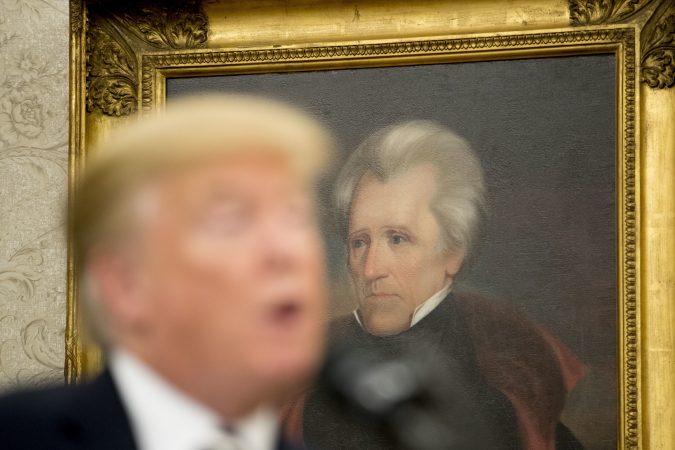
    Unlike Jefferson, Andrew “Old Hickory” Jackson’s dark view of his opponents and his willingness to engage in conspiratorial thinking stemmed from his defeat in the 1824 presidential election. Jackson charged that a “deep state” had stolen the presidency because he believed he received the most popular votes and, then, after no candidate received a majority in the Electoral College, the House of Representatives had handed the election to John Quincy Adams. Jackson claimed that the selection stemmed from a “corrupt bargain” between Adams and Speaker of the House Henry Clay, in which Adams promised Clay the position of Secretary of State.

    Losing in this fashion to Adams, the Harvard educated son of a former president, convinced “Old Hickory” that the system was stacked against self-made frontiersman like himself who were looked down upon by East Coast elitists. Jackson’s contest with, as the Jacksonian press called him, “John the Second” was “a struggle between the honest yeomanry of the country, and an aristocracy” intent on “perpetuat[ing] in certain families” all government positions. One Jacksonian paper told its readers that Adams and his supporters were creating a system that was “fast tending to monarchy.”

    Taking a page from Jefferson, Jackson’s surrogates claimed that Adams was somehow un-American. They based this charge on the amount of time the president had spent working as a young man at his father’s side in Europe and serving overseas as an American diplomat. Much was also made of Adams’ private purchase of a billiard table —— a purported sign of decadence and creeping European sensibilities. One Jacksonian editorial claimed that Adams admired “monarchy and aristocracy” and had learned his “contempt of republics and democracy” from his father and from his elitist education at home and abroad.

    By 1828, having been falsely accused of election theft and doing the bidding of East Cost elites, Adams lost decisively to Jackson.

    Forty years later, Jackson’s fellow Tennessean Andrew Johnson blamed “traitorous” Radical Republicans for undermining the Constitution and conspiring to oppress the white South by establishing “Negro supremacy.” In Johnson’s mind, they were traitors on par with, if not worse than, Confederate President Jefferson Davis.

    Made By History sponsors. FOR USE ON MADE BY HISTORY STORIES ONLY.Inquirer Staff

    In Cleveland, Ohio, on Sept. 4, 1866, Johnson asserted that Republican leaders Thaddeus Stevens and Wendell Phillips should be executed. Johnson’s overtly racist rhetoric emboldened various white supremacist organizations, including the Ku Klux Klan, leading to a reign of terror throughout the South.

    As with Jackson and Johnson, racial considerations were central to President Woodrow Wilson’s conspiratorially inclined approach to interpreting the nation’s past and present. In that sense, the nation’s first and only PhD president shared some surprising similarities with earlier presidents who lacked his extensive formal education and could rightly be accused of being provincial nativists. The president who vowed to “make the world safe for democracy” presided over an administration that was openly contemptuous of the civil rights and civil liberties of his fellow citizens.

    Wilson saw plots by “hyphenated” Americans designed to undermine the government and claimed that opponents of American entry into World War I — especially immigrants — were on the German kaiser’s payroll. In his 1915 State of the Union message, Wilson claimed that “there are citizens of the United States, I blush to admit, born under other flags but welcomed under our generous naturalization laws to the full freedom and opportunity of America, who have poured the poison of disloyalty into the very arteries of our national life.”

    Echoing Wilson, two decades later, Franklin Roosevelt accused American isolationists of disloyalty and argued they were placing themselves at the disposal of the German government in the lead-up to the Second World War. Roosevelt’s public and private statements about American businessmen, journalists and the Supreme Court, often involved circulating rumors and innuendo. His critics were “selfish men, jealous men, fearful men,” “big chiselers,” who were also “rumor-mongers” and “poison peddlers.” These “privileged princes … thirsting for power” were in some cases potential” would be dictators,” intent on creating a “new despotism.”

    Roosevelt believed that groups opposed to his initiatives lacked virtue and patriotism and were undermining self-government. This was particularly true of his Republican opponents, who by the time of his 3rd reelection campaign in 1944, the president saw as emulating Hitler and Mussolini.

    Each of these presidents used the “bully pulpit” to persistently question the patriotism of their opponents or to ascribe criminal motives to them. These presidents aimed to persuade the public that their opponents were un-American, if not outright traitors. That was possible, in part, because the five presidents saw no distinction between themselves and the state. What was good for them was good for America.

    These tactics proved to be highly successful for each of these presidents, except for Johnson: Jefferson, Jackson and Wilson all won reelection to a second term, while Roosevelt went on to be elected a record four times.

    Trump has much in common tactically with this group of presidents, as he too indulges in fear mongering, trafficking in rumor and innuendo and smearing the opposition. However, he lacks the accomplishments of many of them: Jefferson, for example, was the poet laureate of the American founding, while Roosevelt arguably saved American capitalism during the Great Depression and deftly guided the U.S. crusade against fascism during World War II. Some also have doubts about Trump’s commitment to the public good as he seems to profit from his office, adds his name to public places and focuses on things like a new White House ballroom.

    Yet, it would be a mistake to latch onto these differences and to miss the lesson from these conspiracy mongering presidents from the past. Their success in using many of the same tactics Trump is deploying in 2026 serves as a stark warning for his opponents. History shows that rumor mongering works and one should never underestimate the threat presented by a president whose unbridled rhetoric is used to destroy those who dare to dissent.

    Stephen F. Knott is author of Conspirator in Chief: The Long Tradition of Conspiracy Theories in the American Presidency (2026)

    Made by History takes readers beyond the headlines with articles written and edited by professional historians. Opinions expressed do not necessarily reflect the views of The Inquirer.

  • Trump denied New Jersey’s request for FEMA aid after a blizzard. Andy Kim is worried it’s about politics.

    Trump denied New Jersey’s request for FEMA aid after a blizzard. Andy Kim is worried it’s about politics.

    Sen. Andy Kim wants to get to the bottom of why President Donald Trump rejected New Jersey’s request for FEMA aid over a record-breaking snowstorm earlier this year.

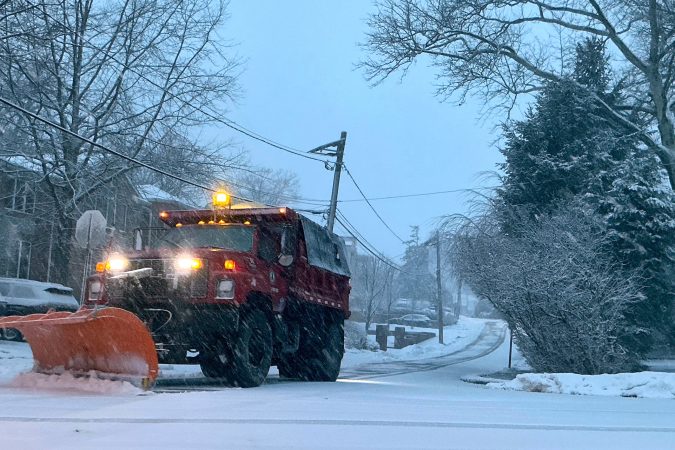
    Winter Storm Hernando, a massive blizzard, hit New Jersey and other Northeastern states hard in February. New Jersey submitted an $84 million disaster request after tallying the damage in the weeks that followed.

    The Federal Emergency Management Agency (FEMA) this month rejected New Jersey’s request as part of $227 million in disaster aid requests from four Democratic-led states that were denied, Politico reported Wednesday.

    The decision came from Trump after regional FEMA offices and the National Oceanic and Atmospheric Administration (NOAA) determined that the states met the required thresholds to receive aid, according to the report, which cited a former FEMA official calling the move to override the agencies unconventional.

    Kim said in an interview Thursday that Americans need “absolute assurance” that FEMA decisions won’t be based on “the whims of the president.”

    ”I think we should all just declaratively be able to say that partisan politics does not belong in disaster response … I would hope that every single public servant, from the White House to FEMA to the Capitol, believes that,” he said.

    Sen. Andy Kim speaks with Naimah Rutling, executive chef at Cathedral Kitchen in Camden, N.J., during a visit this month. Tyger Williams / Staff Photographer

    The South Jersey Democrat is the ranking member on the subcommittee that oversees FEMA, the federal agency responsible for doling out aid to communities hit by disaster.

    The president must declare a disaster in order for states to access FEMA aid — and the same goes for individual assistance. Democrats have in recent weeks raised concerns that Trump has penalized blue states in these decisions.

    A 16-page NOAA report indicated snowfall records in seven counties in the state, and a 12-page spreadsheet developed by FEMA and New Jersey documented the $84.4 million in costs, which were primarily for snow removal, Politico reported.

    The National Weather Service reported blizzards in several counties, including in Southeast Burlington County and other parts of South Jersey. The blizzard caused disruptions to the region such as thousands going without power, school closures, and transit disruptions.

    Sean Higgins, a spokesperson for New Jersey Gov. Mikie Sherrill, said the state’s request included costs incurred by the state’s municipalities and counties. He said Sherrill’s administration will appeal the denial.

    “Without that aid, our local governments will be stuck with the costs of an unprecedented snowstorm that didn’t care about political boundaries … Governor Sherrill will continue to fight for every dime that New Jerseyans are owed, regardless of political party,” Higgins said in a statement.

    FEMA’s cost threshold for public assistance for New Jersey is about $18 million, according to the New Jersey Office of Emergency Management, far below the assessed damage from the storm.

    FEMA did not respond to an inquiry about the rejection on Thursday, but Kim said the agency said it disagreed that New Jersey met the threshold.

    White House spokesperson Abigail Jackson has told news outlets that Trump is ensuring FEMA aid is used “to supplement — not substitute” states’ “obligation to respond to and recover from disasters.”

    The South Jersey senator said he has “concerns” that the rejection was political but he can’t say for sure.

    “I understand that you know, the federal government’s not supposed to cover everything for everything, but … this was a situation of record snowfall in wide swaths of New Jersey and, frankly, across the country,” Kim said.

    If the state’s appeal isn’t successful, Kim said he has “more tools in my toolbox to try to get my state the funding they deserve” but declined to share what those would be, saying it’s part of a “broader negotiation.”

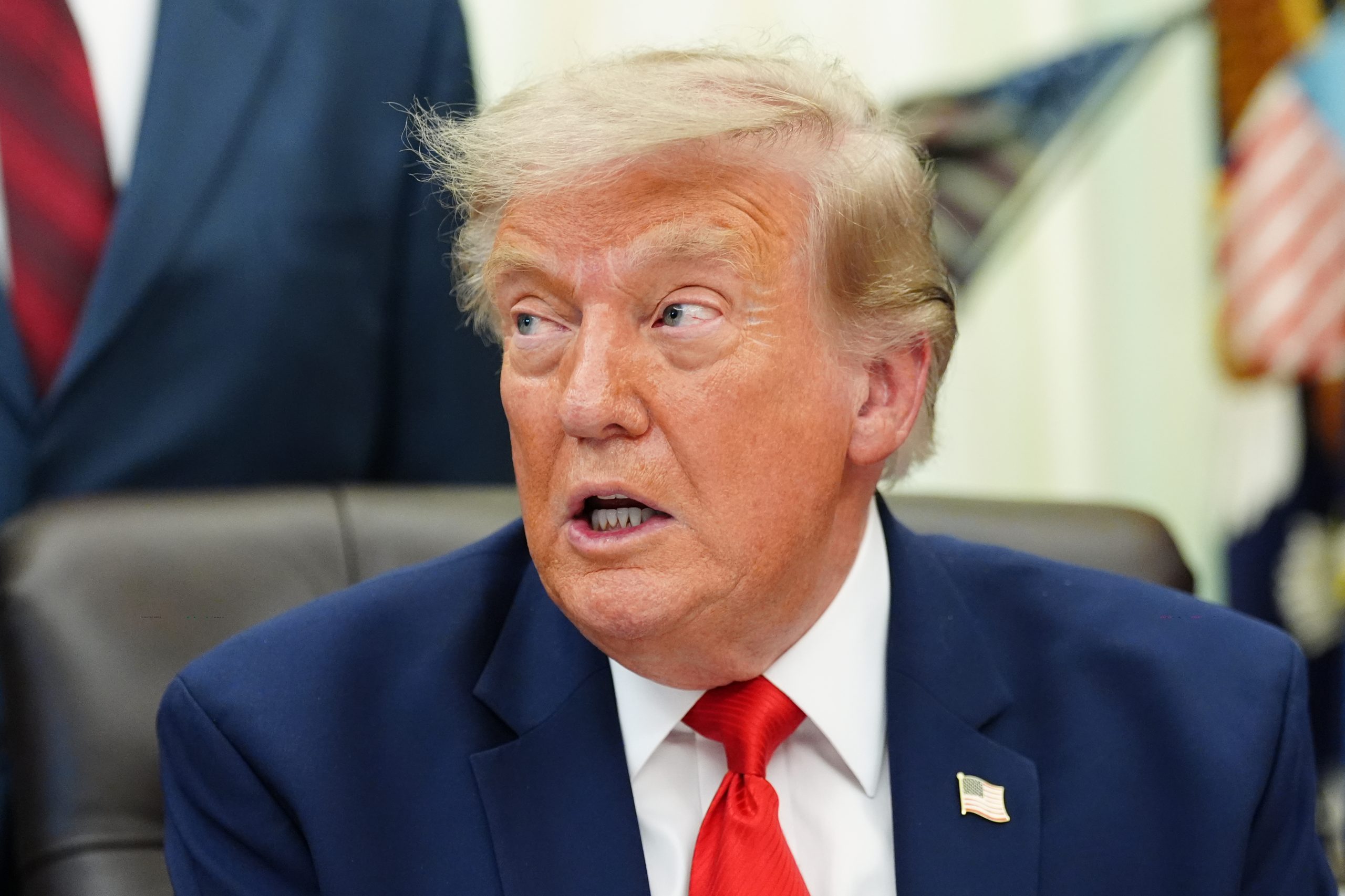
    President Donald Trump speaks in the Oval Office of the White House Wednesday, July 29, 2026, in Washington. (AP Photo/Julia Demaree Nikhinson)Julia Demaree Nikhinson

    The White House has maintained that Trump’s rejections have not been political. But Kim and other Democrats have cited a March Politico report that found Trump’s second administration rejected disaster aid for Democratic-run states at the highest rate in the 47 years that FEMA has existed.

    The rejections underscore bigger questions of the future of FEMA. Trump previously called for the dismantling of FEMA before changing course, but his advisers have recommended an overhaul of the agency that would put more responsibility on states, NPR reported.

    Trump has also caused concern among Democrats for withholding FEMA’s Homeland Security grants from states that do not comply with his administration’s requests for unredacted voter data, including New Jersey and Pennsylvania.

    New Jersey was also hit hard by flooding earlier this month and Sherrill said she believes the state would likely qualify for FEMA aid.

    Joseph Walsh, a spokesperson for the New Jersey Office of Emergency Management, said New Jersey is still in the process of “collecting and validating” the assessed flood damage. Once that’s complete, the state will decide on whether to submit a request.

    Kim said he is trying to clarify and codify FEMA’s role and work with a bipartisan group of legislators on the issue.

    “Every single state is prone to some type of disaster, and so I just don’t want a situation where we’re pitting the states against each other … I hope we can all agree that we want to be there for each other in their time of need,” he said.

  • Disney hits back as Trump administration targets 6abc’s TV license

    Disney hits back as Trump administration targets 6abc’s TV license

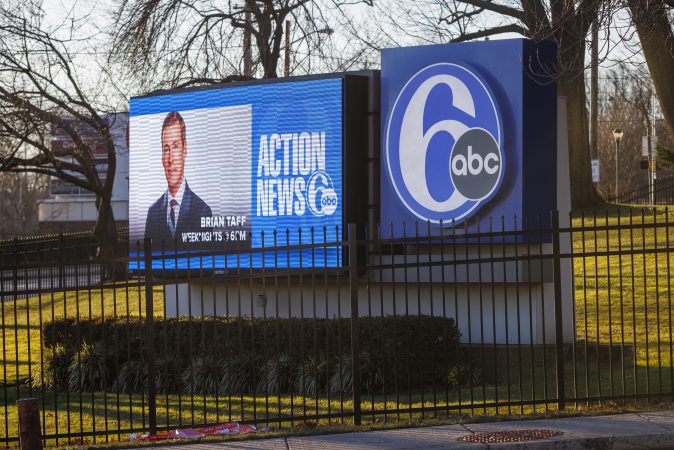
    Disney has come out swinging in its defense of 6abc and seven other owned-and-operated ABC TV stations the Trump administration is threatening to take off the air.

    In a new filing Thursday, Disney claims President Donald Trump is using the Federal Communications Commission to go after the local stations’ broadcast licenses in “retaliation” for comments made by ABC late-night host Jimmy Kimmel.

    “There is no question why the commission is singling out these eight stations: Each is owned by ABC, and the administration has openly and repeatedly called for the revocation of ABC’s licenses, because it dislikes the content and viewpoints expressed on ABC network programs,” Disney wrote.

    The FCC did not address Disney’s criticism, but in a statement a spokesperson said the agency “is going to hold broadcasters accountable to the full extent of the law.”

    In April, the FCC ordered an unprecedented early review of the broadcast license for 6abc and the seven other stations shortly after Trump called for Kimmel to be fired over a joke he made involving first lady Melania Trump. Disney called the early review “extraordinary” and an attempt at censorship.

    “The retaliation against ABC is a signal to every media company in the country: accommodate the administration’s view of what news coverage should look like or pay the price,” Disney wrote.

    The FCC has said the review stems from an earlier investigation into diversity, equity, and inclusion initiatives at Disney, citing “the agency’s prohibition on unlawful discrimination.” The agency is conducting a similar investigation of Comcast, which owns NBC.

    FCC chairman Brendan Carr also said the agency would include in its review the network’s decision not to air Trump’s prime-time address on election security earlier this month, in which the president repeated the baseless claim he won the 2020 election, despite losing to former President Joe Biden.

    “I think that’s something that broadcasters should be carrying,” Carr said.

    NBC also passed on carrying the speech live, while some local Fox affiliates picked up cable coverage from Fox News. CBS aired Trump’s address, but broadcast networks are not required to preempt their programming when the president addresses the nation.

    Could the Trump administration really take 6abc off the air?

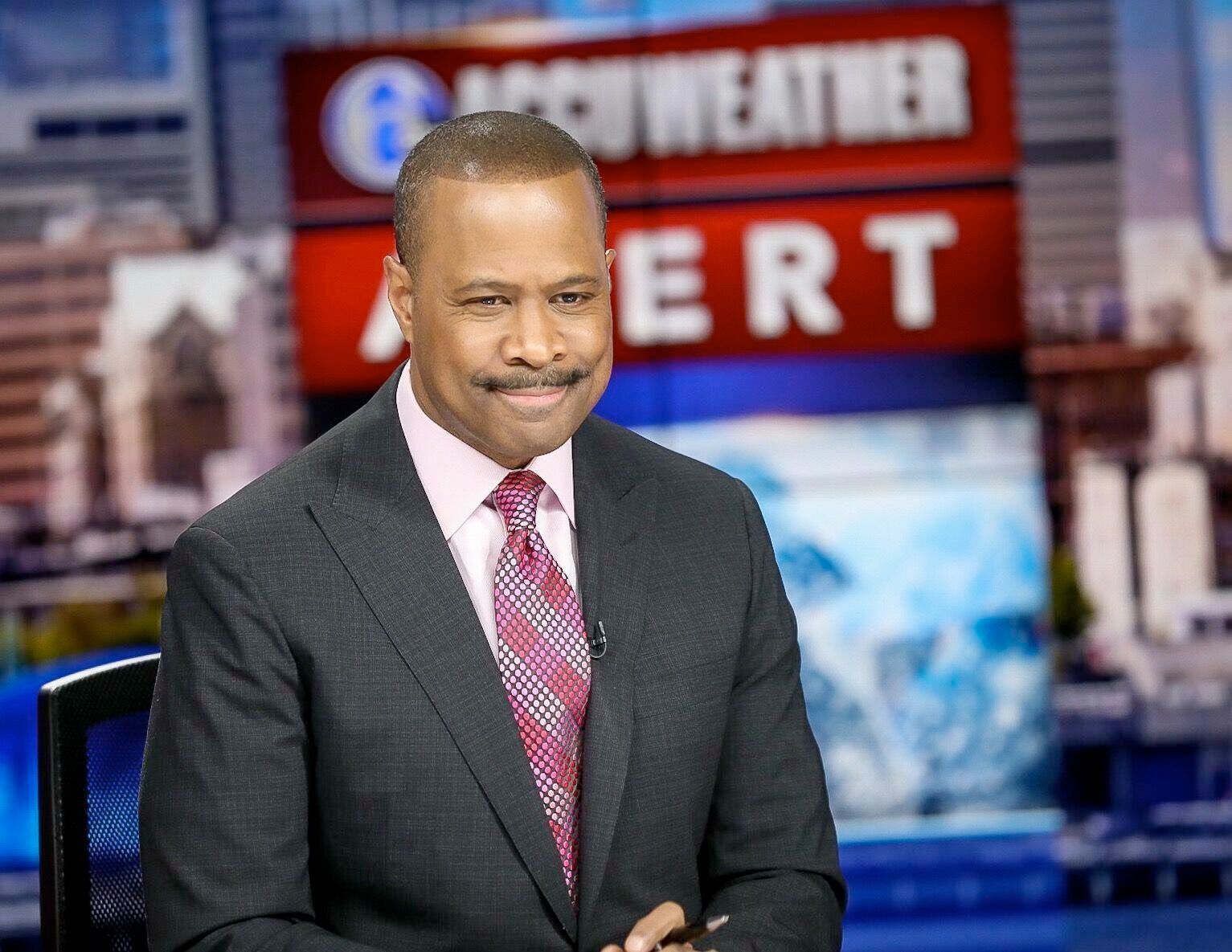
    Rick Williams anchors 6abc’s 11 p.m. edition of “Action News.” 6ABC

    The short answer is yes, but experts say it would be a messy, complicated battle that could take years, a process likely extending beyond the end of Trump’s second term in office.

    6abc’s current broadcast license, renewed in 2023, runs through 2030. The FCC’s next step would be a referral for an official hearing, which could take place as early as next month.

    So far, the FCC has not presented evidence 6abc or the other seven ABC stations owned by Disney have violated any public interest requirements.

    “The FCC has spent the last 18 months searching for some pretext for revoking the Stations’ licenses,” Disney wrote. “The commission has found none, because the Stations easily meet the standard for license renewal — which under the law means that the Commission cannot revoke their licenses or order a hearing on their renewal applications.”

    The last time the FCC revoked a TV station’s broadcast license was in 1987, when RKO General Inc. lost its licenses in Boston, New York, and Los Angeles because of business misconduct.

    If the FCC does move to revoke all eight of ABC’s local broadcast licenses, the case would be decided by an administrative law judge, according to the FCC’s website. Even then, the decision would be subject to appeals to the full commission and federal courts.

    6abc going dark would be ‘a significant loss to the Philadelphia region’

    6abc’s “Action News” has been the city’s most-watched local news program for decades. Tom Gralish / Staff Photographer

    Last month, 6abc called on viewers to weigh in on the early review of its broadcast license and support the station. That public comment period ended Wednesday, with over 152,000 people sounding off on the FCC’s move.

    Responders overwhelmingly supported the station, according to an analysis of public comments posted to the FCC’s website, with 6abc widely praised for its local news coverage.

    U.S. Rep. Brian Fitzpatrick (R., Pa.), who represents Bucks County, called on the FCC to give 6abc “full and fair consideration” on its early license renewal, calling the station “an important part of our region’s public safety, cohesion, and civic life.”

    Among the organizations weighing in was the Philadelphia Zoo, which called 6abc a “steady, trusted presence in this community for decades.”

    “The loss of 6ABC would be a significant loss to the Philadelphia region and to organizations like ours that rely on the station’s local news, weather, and community coverage to reach the public,” Jo-Elle Mogerman, the Philadelphia Zoo’s president and CEO, wrote in a letter to the FCC.

    The Philadelphia Police Foundation called 6abc an “indispensable partner” and “vital contributor” to the quality of life across the city, praising the station’s support of police officers, first responders, and Philly children.

    “The loss of 6ABC broadcasting would deeply impact the Philadelphia region, removing a trusted journalistic voice and a critical pillar of support that local nonprofits and public safety organizations rely upon,” the organization wrote.

    Local residents were also overwhelmingly against removing 6abc from the air. Faith Paffett-Lugassy cited 6abc’s coverage of weather events and emergency information, pointing to Action News’ live coverage during severe thunderstorms that swept through the Philadelphia region earlier this month.

    “ABC stayed on the news channel the entire time until a tornado watch was finally canceled,” Paffett-Lugassy wrote. “ABC is my favorite channel to watch, please don’t take it off the air.”

    Bucks County resident Donald O’Keefe is not a cable TV subscriber, and said he relies on 6abc’s broadcast signal for local news and weather updates. According to O’Keefe, taking the station off the air “would directly compromise the public safety and awareness of Lower Makefield Township” and deprive residents of “critical safety warnings.”

    Others, like David DeGrace, looked beyond Action News to all the other programming on ABC that would be unavailable if the FCC followed through on its threat.

    “Don’t take away my Jeopardy!” DeGrace wrote. “This is ridiculous.”

  • 5 takeaways from the Senate hearing where Fauci refused to answer questions

    5 takeaways from the Senate hearing where Fauci refused to answer questions

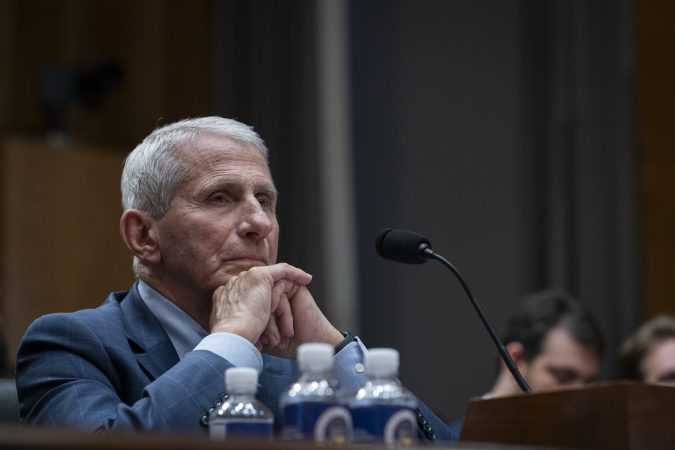
    For almost three hours Wednesday, Republican senators grilled Anthony S. Fauci with dozens of questions at a hearing focused on the origins of the covid-19 pandemic and whether Fauci previously lied under oath to Congress. Again and again, the 85-year-old former government scientist gave the same response.

    “On the advice of counsel, I respectfully decline to answer based upon my rights under the Fifth Amendment to the Constitution,” Fauci said. He delivered variations of that answer more than 100 times.

    Fauci was subpoenaed to appear before the Senate’s government oversight committee by its chairman, Sen. Rand Paul (R-Kentucky), who has spent years alleging that Fauci participated in a cover-up of the possible origins of the covid-19 pandemic. Paul has also blamed Fauci for inadvertently sparking the pandemic – noting that Fauci’s agency previously funded coronavirus research in Wuhan, China, where the outbreak was first detected in late 2019 – and has called for him to be put in prison.

    Fauci has denied the allegations in repeated appearances before Congress, most recently in a combative 2024 hearing. Infectious-disease experts have also insisted to Paul and other Republicans that while Fauci’s former agency, the National Institutes of Health, funded virus research in Wuhan, the work could not have caused the pandemic.

    Fauci said Wednesday that he refused to testify because he believed Paul was seeking to wrongly trap him.

    “The only conclusion I can reach is that the sole reason he is calling me before this committee is to get me to say something – anything – that could vindicate his repeated public pledges that I end up, in his words, ‘behind bars,’” Fauci said, before announcing his plan to invoke the Fifth Amendment.

    Here are five takeaways from the hearing.

    Republicans tore into Fauci

    Senate Republicans did not miss their chance to lace into Fauci. They inquired. They mocked. They goaded. At times, they flat-out insulted. Beyond asking about covid-19’s origins, senators accused Fauci of mishandling pandemic guidance and accused him of using his growing profile during the pandemic for personal benefit.

    Paul, a longtime adversary of Fauci, was visibly frustrated with Fauci’s nonanswers. Paul warned the former official that it was against the law to obstruct an investigation and threatened “repercussions” for Fauci’s unresponsiveness. When Fauci’s attorney, David Schertler, asked to make a comment, a back-and-forth led to Paul removing the lawyer from the room.

    It was the first of many tense moments.

    “Nothing says honesty like taking the Fifth, huh, Doc,” Sen. Josh Hawley (R-Missouri) said, leaning forward in his seat. The senator grew heated in his questioning, raising his voice and pointing with both hands as he accused Fauci of enriching himself.

    A Hawley staffer propped up an image of a magazine cover for which Fauci posed in September 2020. “You became a narcissist and a megalomaniac and a liar,” Hawley said.

    Fauci leaned forward, looking down at the table in front of him, hands fidgeting in his lap, glancing up occasionally at the senators accosting him.

    At one point, Sen. Bernie Moreno (R-Ohio) asked audience members to stand up if they had disagreed with or been harmed by policies such as mask requirements and school closures. More than a dozen stood. Moreno asked Fauci to turn around and look at them. Fauci turned to confer with his lawyers, then faced forward again.

    Sen. James Lankford (R-Oklahoma) adopted a warmer tone toward Fauci than his colleagues did. “I know you’re invoking your Fifth Amendment right, which you have the right to be able to do constitutionally,” he said. “Thanks for coming to be a part of this.”

    Democrats defended Fauci – mostly

    Democrats portrayed Fauci as a hero and said the GOP attacks were baseless. They also criticized Republicans for attacking public health officials like Fauci while supporting the Trump administration’s cuts to public health research and funding.

    Sen. Gary Peters (Michigan), the committee’s top Democrat, called Paul’s efforts biased. “One-sided investigations designed to validate predetermined conclusions do not serve the American people,” Peters said.

    Fauci and other public health officials have saved lives, said Sen. Richard Blumenthal (D-Connecticut). “Today, we are demeaning and degrading their lifesaving service,” he added.

    One Democrat struck a different note.

    Sen. John Fetterman (D-Pennsylvania) was not going to attack Fauci, he said, but he wouldn’t defend him, either. Instead, Fetterman shared a regret: that the lab-leak theory came to be seen by some as a right-wing conspiracy theory, preventing people like himself from taking it seriously.

    “I hope … the next time our nation’s facing something like this, we are not … as I might have been, blinded by the partisan idea that maybe the truth might come from a side that’s different than you are,” Fetterman said.

    The hearing shows how divisions have calcified

    Wednesday was the latest example in a years-long trend: Congressional lawmakers have been unable to work together on a probe of the pandemic’s origins.

    A House investigation of the government’s pandemic response began in early 2023 with the top Republican and Democrat pledging to work together. It descended into partisan bickering and dueling reports about what the investigation found, and whether Fauci was personally culpable.

    In the Senate, a bipartisan plan to set up a commission investigating the nation’s covid response repeatedly stalled out. Democrats have accused Republicans of promoting conspiracy theories about Fauci’s role and other aspects of the response, while GOP officials say liberals and the media have not been sufficiently transparent about mistakes that government officials made.

    Paul, particularly, has long vowed to hold Fauci accountable for his “crimes” – a claim that Fauci and his allies say made it impossible to cooperate with him Wednesday.

    Paul’s threat to hold Fauci in contempt raises new legal questions

    The chairman said his committee plans to hold a vote next week on whether Fauci was in contempt of Congress. But he and his colleagues acknowledged legal uncertainty about how to proceed, complicated by President Joe Biden’s preemptive pardon for Fauci before Biden left office.

    Lankford asked Paul if there is guidance on whether Fauci could be held in contempt for refusing to answer questions after making an opening statement. Lankford noted a 2013 episode in the House in which an IRS official made an opening statement and then invoked her Fifth Amendment right to not answer questions about whether her agency had wrongly targeted conservative groups. The GOP-led House concluded that the official had waived her Fifth Amendment rights by making an opening statement, and she was ultimately found in contempt.

    “Are we dealing with the same issue here?” Lankford asked.

    Paul said that was among the legal questions lawmakers would consider. He added that the courts may need to settle whether, with “a presidential pardon that offers you complete immunity, you can still claim that you need protection” in a congressional hearing.

    “Dr. Fauci isn’t liable for anything as long as he tells the truth,” Paul added.

    Some past congressional witnesses have also repeatedly pleaded the Fifth. Martin Shkreli, a controversial pharmaceutical investor, refused to answer questions in front of a House Oversight Committee hearing in 2016, annoying lawmakers with his smirking. While lawmakers discussed holding Shkreli in contempt of Congress, they ultimately did not.

    Regina Wallace-Jones, the head of the Democratic fundraising engine ActBlue, also repeatedly invoked the Fifth Amendment during a congressional hearing last month in which Republicans pressed her on the platform’s process for vetting foreign donations.

    “It is the only reasonable response to a proceeding that from the beginning has been about harassing a political opponent’s fundraising platform, not genuine oversight,” she wrote in The Washington Post.

    House Republicans have threatened to hold ActBlue in contempt.

    Evolving perceptions of Fauci

    Fauci was initially seen as a unifying figure, particularly in the early days of the pandemic as Americans looked for answers – and the highly visible doctor provided them in TV interviews, podcast appearances and other forums.

    About 8 in 10 Americans in April 2020 said they trusted Fauci to provide reliable information on the pandemic, including similar shares of Republicans and Democrats, according to polling by KFF, a nonpartisan health care research and polling organization. But within two years, only about 5 in 10 Americans had trust in Fauci, a decline driven by plunging GOP support: Just one-quarter of Republicans said they trusted the doctor, according to KFF.

    Some of that was fueled by relentless criticism of Fauci in conservative media, which blamed him for pandemic policies that were increasingly viewed as too harsh. It was also driven by President Donald Trump, who empowered Fauci in early 2020 and followed his advice on imposing shutdowns and other measures, before distancing himself from the doctor later that year and repeatedly criticizing his guidance.

    “I didn’t mind him, I didn’t find him to be bad personally, as a person,” Trump told “Fox & Friends” on Tuesday. “But I didn’t agree with what he was saying or what he was doing.”

    Fauci has previously said that Trump soured on him as the pandemic stretched on and the 2020 presidential election drew closer, with Trump telling the scientist to be more optimistic about the virus’s risks in his media appearances.

    Fauci still retains more trust than some current leaders.

    Fifty-four percent of Americans in February said they were confident that Fauci had provided the public with trustworthy medical information, according to a February poll by the Annenberg Public Policy Center of the University of Pennsylvania. That exceeded the level of trust in current Health Secretary Robert F. Kennedy Jr., who was at 38 percent.

  • Lawmakers will investigate Iranian attack that killed 6 U.S. troops

    Lawmakers will investigate Iranian attack that killed 6 U.S. troops

    Democratic lawmakers announced Thursday that they are opening an investigation into the Iranian drone strike that killed six U.S. service members in Kuwait earlier this year, citing doubts over the objectivity of the military’s internal review of the attack.

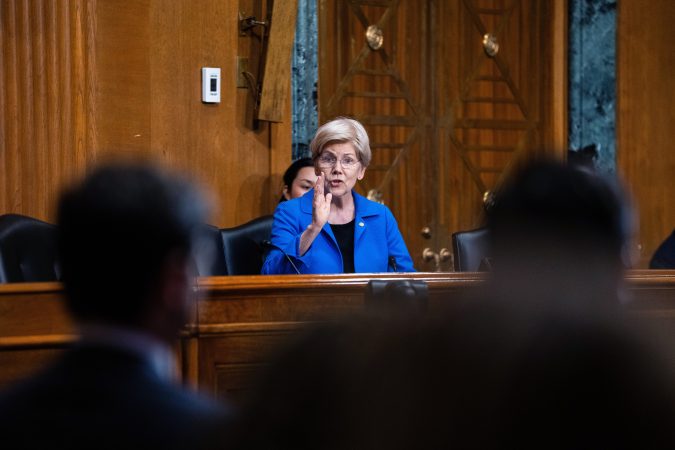
    In a letter to Defense Secretary Pete Hegseth, Sen. Elizabeth Warren (D., Mass.) and Rep. Pat Ryan (D., N.Y.) — along with almost a dozen other House and Senate Democrats — cited recent reporting by the Washington Post and other media outlets scrutinizing the March 1 strike, saying they want answers to whether the military had adequate protections in place before the attack and whether the troops received proper medical care afterward.

    “The need for this investigation goes beyond the Shuaiba attack — it’s about taking accountability and protecting our service members,” Ryan, an Army and Iraq War veteran, said in a statement to the Post. He was referring to Port Shuaiba, the facility along the Persian Gulf where the deadly strike occurred. “It’s our job as members of Congress to force [Hegseth] to give us real answers and make sure something like this never happens again.”

    Reached for comment, the Pentagon did not address whether it would cooperate with lawmakers’ investigation, saying in a brief statement that “as with all Congressional correspondence, we will respond directly to the sender.”

    It was just the second day of Operation Epic Fury, the name the Trump administration has given the conflict, when an Iranian Shahed drone crashed into the center of an Army operations center at Port Shuaiba. Dozens of service members were injured in the attack along with the six who died.

    In the months since, survivors have alleged that military leaders failed to take appropriate action after being warned the facility lacked adequate defenses. Some have said, too, that troops wounded in the strike faced considerable difficulty obtaining treatment.

    Military officials have contested both assertions.

    As the Post reported this month, several soldiers who were at Port Shuaiba have said they doubt the Army’s internal review will hold anyone accountable. Citing a U.S. official familiar with the review, the Post also reported that the initial findings did not assign fault for the attack or address any punitive action.

    The Army has shared its findings with the families of some of the fallen service members but has not released that information publicly.

    In their letter to Hegseth, lawmakers questioned the seriousness and independence of the Army’s internal review, citing other reporting by the Post that revealed the task was assigned initially to a midgrade officer within the affected unit instead of an outside investigator.

    The matter was later elevated to a more senior officer at U.S. Army Central, the affected unit’s parent command. Outside observers have said they were skeptical of the move, noting that it still left the review to be overseen by personnel in the same chain of command.

    The lack of an independent investigator, coupled with new concerns about the Pentagon’s transparency and recordkeeping, raise questions about “whether investigations into service member casualty incidents will be conducted objectively,” Warren wrote in the letter.

    Citing Democrats’ concerns about the Defense Department’s “failures to provide service members that sustained injuries in this war with adequate care and its inability to honestly and openly inform the American people about the consequences of this war,” the lawmakers have chosen to pursue answers on their own, the letter says.

    They requested a response from the Pentagon by Aug. 12.

  • Blanche nomination at risk of delay as senator seeks assurances on Trump settlement

    Blanche nomination at risk of delay as senator seeks assurances on Trump settlement

    WASHINGTON — A planned vote to move forward with Todd Blanche’s nomination for attorney general appeared in doubt Wednesday as a key Republican senator demanded more assurances from the Justice Department about the settlement of President Donald Trump’s lawsuit against the Internal Revenue Service.

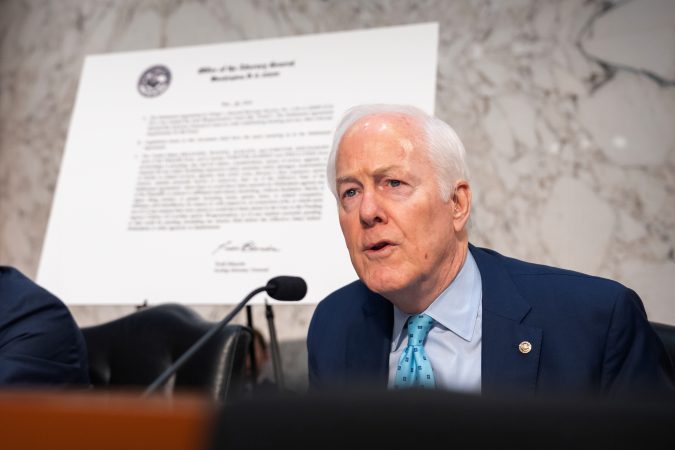
    GOP Sen. John Cornyn, a crucial swing vote, called off a scheduled Wednesday meeting with Blanche, who has been serving as acting attorney general since Pam Bondi’s firing in April. Cornyn told reporters that the Justice Department has not adequately addressed in writing his concerns about the settlement that afforded Trump and members of his family protection from tax audits.

    The dispute threatened to upend plans for the Senate Judiciary Committee to vote Thursday on whether to advance Blanche’s nomination to the full Senate. Another Republican on the committee, Thom Tillis of North Carolina, has backed Cornyn’s position, and just one Republican holdout could sink Blanche’s prospects.

    “They know what they need to do but they simply refuse to do it,” Cornyn, who lost the Texas Republican primary in May, said of the Justice Department.

    At the center of the fight is the settlement of Trump’s $10 billion lawsuit against the IRS that included a deal to drop tax claims against the president and a now-scrapped plan to create a $1.776 billion “Anti-Weaponization Fund” to compensate people who believe they were wronged by the Justice Department. The Justice Department said in June that it was no longer moving forward with the “Anti-Weaponization Fund” amid bipartisan outrage but officials have said the audit immunity agreement remains in place.

    Trump on Wednesday downplayed any concerns about Blanche’s path to confirmation, calling his attorney general pick and former personal attorney “outstanding.”

    “Maybe John Cornyn’s upset with me because I didn’t endorse him,” Trump told reporters in response to questions about the senator’s demands.

    Texas Attorney General Ken Paxton won the state’s Republican nomination for the U.S. Senate, easily defeating Cornyn. Trump had endorsed Paxton.

    Some lawmakers have raised concerns that the fund could be resurrected absent a commitment in writing from the Trump administration that it is dead, especially since Trump has expressed continued support for the idea. Blanche had previously resisted requests for a formal written retraction, though he told senators at his confirmation hearing earlier this month that the administration would be willing to help craft legislation to bar the creation of the fund.

    Cornyn has also demanded clarification from the Justice Department on the scope of the tax immunity deal. He has pressed the administration to modify that piece of the settlement to make clear that it covers only existing audits and does not protect the president from examination of future tax filings.

    “We’re been trying to help them get to a conclusion here and they won’t let us. It’s befuddling to me,” Cornyn said.

    A person familiar with the matter said the Justice Department provided Cornyn’s office with a written proposal seeking to address his concerns around the audit immunity agreement and the fund. The person spoke on the condition of anonymity to talk about sensitive discussions surrounding Blanche’s confirmation.

    The settlement resulting from Trump’s lawsuit over his leaked tax returns has drawn intense scrutiny both in Congress and in court. The judge handling the case said in a scathing ruling earlier this month that Trump had effectively engaged in self-dealing through the lawsuit and that she was troubled Blanche had signed the settlement, given his prior representation of Trump.

    Blanche has said he disagrees “with the judge’s insinuations” about him.

  • The EPA halted a study on gas stoves and asthma. But even partial results were striking.

    The EPA halted a study on gas stoves and asthma. But even partial results were striking.

    Paul Moore’s house is old. It was built around 1900 as a hunting lodge near where Cleveland would develop, and his grandparents bought the home around 50 years later, converting it over the years into a three-bedroom ranch that included what Moore called an “old school” gas stove.

    When he moved into the house in 2020 with his wife and six children, Moore already had debilitating asthma. He got winded walking up hills and couldn’t play basketball with his children. He slept poorly and couldn’t hold steady employment, instead doing odd jobs like fixing neighbors’ cars and houses. He was hospitalized multiple times with severe asthma attacks and almost died from being unable to breathe.

    “My asthma was a real hindrance at the time. And I couldn’t figure out why, you know?” Moore said. “Just couldn’t pinpoint one thing or another. Was it me? Is it something going on with my body? Is it something else?”

    It turned out that researchers at Case Western Reserve University in Cleveland and a local hospital network were studying asthma sufferers like Moore. He signed up to have his gas stove swapped out for an electric one in June 2025. That research would end up providing vital evidence on gas stoves’ health impacts, amid fierce debate between fossil fuel advocates and climate change activists.

    Moore said without the study, he has no clue how long it would have taken him to save the money to change it himself. The researchers spent an average of about $10,000 per household, as many old homes needed to be completely rewired to handle the larger electrical load of an induction stove.

    What Moore didn’t know is that he would be one of the last people to get a new stove as part of that work.

    Ash Sehgal, a Case Western medical professor who led the study, had received an $18 million grant from the Environmental Protection Agency in December 2024 to replace the stoves in 1,200 homes of asthma sufferers in the Cleveland and Akron, Ohio, areas. A month before Moore’s stove was replaced, Sehgal received a letter stating that the grant had been terminated.

    It was one of thousands cut short after President Donald Trump took office and launched aggressive efforts to reduce government spending.

    But unlike many others forced to halt their research, Sehgal and his co-authors released their study anyway, publishing it in the Journal of Allergy and Clinical Immunology in Practice this month with a fraction of the intended sample size. Still, removing the gas stoves relieved the participants’ asthma so much that the results were clear even with only 85 of them, according to two scientists who reviewed the methodology but were not involved in the study.

    “What really surprised me is that the improvement in the asthma symptoms was similar to or even larger than the improvement in asthma symptoms that’s reported in clinical trials of commonly used asthma medications,” Sehgal said.

    Participants recorded far fewer asthma attacks, emergency room visits and missed days of work after the stove was removed, and levels of nitrogen dioxide in their kitchens plummeted by 70 percent.

    “They were able to see some important results, even with the grant getting canceled, even with the sample size being less than a tenth of what they’d intended,” said Julian Marshall, an environmental engineering professor at the University of Washington.

    “It’s also an actionable finding. People who have asthma would want to know, ‘What can I do about this?’” he added. “This is a major problem facing thousands and thousands of people across the U.S.”

    Sehgal said that while it can help to replace gas stoves that exacerbate symptoms, it is not a cure for asthma. Asthma sufferers still need to work with a doctor, take their medications and avoid triggers like pollen and cigarette smoke.

    Rob Jackson, an environmental scientist at Stanford University who was not involved in the research, said many studies on indoor air pollution from gas stoves rely on models to estimate the impact on people’s health, whereas this study makes real-life observations.

    “It’s important because the extent to which indoor air pollution from stoves harms people’s health is still debated in state houses, federally, in courtrooms, and so every piece of the puzzle, even if it’s only 85 individuals, strengthens that story,” he said.

    In recent years, conservatives have championed gas stoves and fought Biden-era policies that sought to reduce the use of fossil fuels driving climate change. Trump has championed fossil fuel development, seeking to boost the oil and gas industry by rolling back environmental protections and opening new areas to exploration.

    Politicizing science

    Scientists have lamented the loss of federal funding following the Trump administration’s dramatic cuts last year to grants across the government, including those awarded by the National Institutes for Health and Centers for Disease Control and Prevention.

    The EPA has terminated $28.5 billion in grants, according to Grant Witness, a tracking project, with much of that money intended to focus on helping communities respond to climate change or reduce pollution. That included funding projects that installed rooftop solar or sealed up houses against wildfire smoke, as well as scientific studies that had real-life applications, like evaluating the replacement of gas stoves.

    The agency closed the Office of Environmental Justice and External Civil Rights, which awarded Sehgal’s grant, amid its broader purge of programs related to climate change, environmental justice and diversity, equity and inclusion.

    Despite court challenges, including a district judge ruling earlier this month that the cancellations were illegal, many researchers were forced to end their studies early.

    EPA spokesperson Brigit Hirsch said in an email that the agency’s internal scientists continue to conduct vital research.

    “EPA’s core mission is protecting human health and the environment, and at the Trump EPA, gold-standard science supported by our excellent career scientists is happening like never before to ensure clean air, land, and water for all Americans,” she said.

    The cancellation of the gas stoves research grant “seems to be a political decision, not necessarily based on science-based or public health priorities,” said Darya Minovi, a public health researcher at the Union of Concerned Scientists, an advocacy group.

    The administration is looking to expand its ability to shape scientific funding, she said. The White House’s Office of Management and Budget proposed a new regulation in late May that would demand grants across the federal government align with the president’s policy priorities or face cancellation.

    While presidents often set the general direction of agencies by appointing their leadership, Minovi said this new policy would give the president more control over decisions typically made by staffers at institutions such as the NIH.

    “This is really making it government-wide policy to politicize grant-making that should not be subject to the whims of a president, but really should be decided on scientific merit,” she said.

    What was lost

    Based on the results that were published, Sehgal can estimate how much damage halting the study caused. If 1,100 more households had participated as originally planned, it would have resulted in 900 people with better-controlled asthma and 84 fewer people who would go to the emergency room or be hospitalized.

    Many of those people probably don’t even realize the connection between their asthma and their gas stove, said Angela Bland, a 38-year-old stay-at-home mom in Akron who also participated in the study. She said the impact of replacing her stove was almost immediate, and she didn’t feel her throat closing up as much while cooking.

    “It was kind of heartbreaking because I was like here’s something that can really help people and get information out there to help people, and they cut it so quick,” she said.

    Similar to Bland, Moore said he quickly felt the impact of removing his gas stove.

    “It was just like, ‘Huh, I feel a little bit better. It’s not like how it used to be.’ It was a slow realization over the first week,” he said.

    He remembers waking up to his daughter cooking, smelling the food and feeling good for once, so much so that his family noticed.

    “They felt the difference. It was a magical moment,” Moore said.

    After his health improved, Moore found a new job locating gas lines so that major construction projects don’t rupture them.

    “There’s a whole lot of people out there probably feeling just like how I felt,” he said. “A lot more people deserve to feel good when they cook or when they eat or when they are able to sit down with their families.”

  • Trump’s attacks on mail balloting and concerns over delays turn midterms spotlight on Postal Service

    Trump’s attacks on mail balloting and concerns over delays turn midterms spotlight on Postal Service

    Roughly six weeks before the first midterm ballots are mailed out, the U.S. Postal Service is emerging as a pivotal player in an election season that will determine control of Congress.

    President Donald Trump is seeking greater control over mail balloting through an executive order while a change to how the agency processes mail is leading to criticism that it’s failing to deliver ballots on time.

    Democratic officials have raised concerns over the past week about how quickly the Postal Service will process ballots after tens of thousands of them in California and hundreds in Wisconsin arrived at local election offices too late to be counted in elections earlier this year. The top election offices in Kansas and Michigan are urging voters who want to cast their ballots early to avoid the mail and instead drop them off in person.

    The Postal Service replied to those concerns by saying it remains “committed to fulfilling our role in the electoral process.”

    “We provide a secure, efficient, and effective way for citizens to participate when policymakers decide to use mail as part of their elections,” it said in a statement Tuesday.

    Trump’s order puts more focus on mail ballots

    The Postal Service faced similar questions about mail delivery in 2024, but the scrutiny this year is heightened because of an executive order Trump issued in March that seeks to create a national voter list to guide the Postal Service in deciding who gets a mail ballot.

    The order has sparked multiple lawsuits and federal court orders, leading to a case now before the U.S. Supreme Court in which the administration is asking the justices to allow it to impose its restrictions on mail balloting.

    Trump has lied for years about voter fraud to try to explain away his loss to Democrat Joe Biden in 2020, and mail balloting is a favorite target, even though he has used the method himself. During a recent stop in Michigan, he falsely characterized mail balloting as “inherently corrupt” and added, “Hopefully there will be no mail-in ballots.”

    A 2025 report from the research group Brookings identified about four cases of fraud for every 10 million mail ballots cast.

    Despite Trump’s attacks, the method remains popular with voters of both major parties. In 2024, nearly 30% of U.S. voters cast their ballots by mail, according to federal data. In Michigan, where competitive U.S. House and Senate races could help determine the balance of power in Congress, the state said it has sent out more than 2 million absentee ballots for the state’s Aug. 4 primary.

    “We want to keep vote by mail. We want to protect it. We want to expand it,” said Jonathan Smith, president of the 200,000-member American Postal Workers Union, which launched a campaign in April promoting it and is opposed to turning the Postal Service into an election administrator. “Why? Because it works.”

    Legal battles intensify over Trump’s order

    The Postal Service proposed a rule in June in line with Trump’s executive order that would create a national list of eligible voters, based on databases kept by other federal agencies. Only those on the list would be eligible to receive mail ballots.

    Democratic officials in nearly two dozen states filed a federal lawsuit in Massachusetts. A federal judge there blocked Trump’s order last month, and an appeals court upheld that ruling, prompting Trump’s appeal to the Supreme Court. But the appeals court for the District of Columbia refused Tuesday to block the order in a separate case, calling a legal challenge premature.

    Democratic senators and governors have written to the Postal Service urging it to abandon efforts to implement Trump’s order.

    “Donald Trump has shown he’ll stop at nothing to meddle in our upcoming elections,” Wisconsin Sen. Tammy Baldwin said in a statement to The Associated Press. ”At best, this new push will exacerbate already severe delays for mail-in voters and at worst, it will stop eligible Americans from casting their ballots.”

    In a letter to Democratic senators earlier this month, the heads of the Postal Service said they were abiding by the court rulings that had halted the executive order. But Smith, of the postal workers union, told the AP on Tuesday that USPS information technology staffers who are union members are working on a planned portal for the list of eligible voters “behind the scenes.”

    The Postal Service declined to respond to Smith’s statements and said it could not comment about whether it’s moving forward with work related to Trump’s order because of the litigation.

    The postal workers’ union opposes the plan for a portal, a national list of eligible voters and using that list to determine who can receive a mail ballot. Smith said it shouldn’t be postal workers’ responsibility “to decide who can vote and who can’t vote.”

    A plan to consolidate mail processing centers upsets officials

    The Postal Service has been under financial stress for years and has been consolidating mail processing into fewer regional centers. Mail travels an average of 139 miles to reach one and sometimes 500 miles, according to a recent Brookings report.

    In January, a group of mostly Democratic senators said it was concerned about a decision to end twice-daily mail dispatches from local post offices to regional processing centers. The result is that mail arriving after the only daily dispatch would go out the next day.

    California officials said the change was a factor in the state rejecting more than 148,000 ballots from its June primary, with 63% of them arriving too late despite a seven-day grace period. Officials worried that some ballots were postmarked at processing facilities the day after they were dropped off at a post office, possibly invalidating them. Wisconsin officials also said hundreds of ballots from an election in April arrived late.

    The Postal Service said postmarks generally are being applied with automated equipment at processing centers, “in the same manner and to the same extent as before.” It said someone who wants to make sure their ballot envelope gets a timely postmark can get a free one applied by a postal worker.

    A report on the 2024 election by the USPS Office of Inspector General said the Postal Service handled more than 59 million pieces of ballot mail from Sept. 1 to Nov. 15 that year and that 97.3% arrived on time.

    Some state election officials advise voters to avoid the mail

    The Michigan secretary of state’s office is advising voters to hand-deliver ballots to their local clerk’s office or a drop box.

    “We’ve seen these issues over a number of election cycles now — they’re always concerning, and that’s why we’ve put out that guidance,” said Deputy Secretary of State Aghogho Edevbie.

    The Postal Service said its Michigan centers are not seeing processing delays.

    In Kansas, concerns about late ballot deliveries in the state’s 2024 primary election prompted a quip on the social platform X from Secretary of State Scott Schwab, a Republican: “The Pony Express is more efficient at this point.” Asked his view now, spokesperson Whitney Tempel said Schwab still believes “keeping your ballot out of the hands of the federal government is best.”

    Jamie Shew, a Democrat elected to oversee elections in Douglas County, home to the main University of Kansas campus, said his office is trying to change voters’ perceptions.

    “I think voters are used to, you can drop it off on Friday and we’re going to receive it by Election Day,” Shew said Tuesday. “That’s just not the reality.”

    California’s state budget includes $10 million for social media campaigns and other efforts to discourage last-minute ballot mailings.

    And the Postal Service said it hasn’t changed its own longstanding advice for voters: They should get their ballots in the mail at least a week before their state’s deadline for receiving them.

  • Federal judge dismisses Trump administration’s lawsuit seeking New Jersey voter records

    Federal judge dismisses Trump administration’s lawsuit seeking New Jersey voter records

    A federal judge on Wednesday dismissed a lawsuit from President Donald Trump’s administration that sought New Jersey’s unredacted voter files.

    The case — one of more than two dozen lawsuits filed by the Trump administration against states ahead of the midterm election — predates New Jersey’s recent disclosure that thousands of noncitizens had been registered to vote in 2023 and 2024 due to a glitch in the motor vehicle system.

    The Justice Department attempted to use that news as leverage in the case, but it was unsuccessful.

    U.S. District Judge Zahid N. Quraishi ruled the department did not have the authority to compel New Jersey to hand over its unredacted records.

    “The Constitution’s architects chose to delegate election administration to the states, recognizing local governments have the deepest understanding of their constituents’ circumstances,” Quraishi wrote in the ruling, which granted New Jersey’s motion to dismiss the lawsuit.

    Quraishi has become the 18th U.S. District Court judge to rule against the Trump administration on the issue, according to data from the Brennan Center for Justice.

    The Trump administration will likely appeal the case, as the president and his allies have made election security a focal point ahead of the November midterms. It is mounting an appeal in a similar case in Pennsylvania.

    The ruling in the state’s favor came a day after New Jersey Gov. Mikie Sherrill formally told the Justice Department she would not release personal information about noncitizen voters who had been mistakenly added to the state’s voter rolls ahead of the 2024 election.

    Sherrill announced last week that about 6,600 noncitizens had been registered to vote due to a glitch in the automatic voter registration system at the New Jersey Motor Vehicle Commission. She said fewer than 400 had cast ballots and there was no evidence they had affected election results.

    On Tuesday, she said the New Jersey Department of State had begun removing 4,500 voters from the rolls. But there is a chance the rest could actually be citizens, so counties will review those about 2,000 individuals to ensure no eligible voters are disenfranchised, she said.

    Following Sherrill’s disclosure last week, Assistant U.S. Attorney General Harmeet Dhillon requested the full names, dates of birth, nationalities, and home addresses of the individuals who were erroneously registered, as well as additional information about the noncitizens who voted, within a week.

    Sherrill had publicly indicated she would not hand over the data, but her letter Tuesday put it on the books.

    The Justice Department’s request has no legal basis, Sherrill said in a Tuesday letter to Dhillon, and sharing “extensive personal information about thousands of New Jersey residents” is limited by state and federal privacy laws.

    “Here and always, I remain committed to protecting New Jerseyans’ personally identifying information,” Sherrill wrote, reiterating her stance from the previous week, when she cited concerns about federal data breaches under Trump.

    In response to Sherrill’s rebuffing, Dhillon said the Justice Department’s request was rooted in the legal authority to “keep ineligible voters off its rolls” and vowed to obtain the information “through all legal means!”

    Sherrill’s “refusal to cooperate with federal law enforcement does nothing to protect law-abiding NJ voters,” Dhillon said on X.

    Sherrill on Tuesday criticized the Trump administration for “weaponizing the government against individuals that disagree with them.”

    She pointed to an issue during her campaign last year in which the federal government provided personal information about her that should have been redacted, like her Social Security number, to an ally of her Republican opponent. The National Personnel Records Center director apologized at the time and called it a rare error, but Sherrill claims her data were “weaponized” against her.

    Sherrill has not shied away from the issue of voter access in New Jersey as it becomes a national talking point in the debate over election security after last week’s revelation that thousands of people had been improperly added to the voter rolls when applying for driver’s licenses and identification cards.

    On Tuesday, she championed a new law, the John R. Lewis Voter Empowerment Act, that offers a slew of policies meant to increase voter participation.

    The erroneous registrations took place between June 2023 and June 2024 under former Gov. Phil Murphy’s administration due to a software glitch in New Jersey’s motor vehicle system, which processes the automatic registration when citizens obtain an ID or a license unless they decline.

    Even though they checked “no” when asked if they were a U.S. citizen, the noncitizens were registered anyway.

    Sherrill pointed a finger at her predecessor but a spokesperson for Murphy said the former governor had “no knowledge” of the glitch.

    U.S. Rep. Jeff Van Drew, a South Jersey Republican, said he planned to hold hearings over the issue and called on Sherrill to answer a slate of questions.

    Sherrill said Tuesday that her administration had hired a law firm to conduct an independent bipartisan investigation. One of the firm’s main partners worked under former Republican Gov. Chris Christie as attorney general and was later appointed by Christie to the Senate, she noted, saying “we have nothing to hide.”

    Christie said in a post on X that Sherrill “made the right choice tapping my former AG Jeff Chiesa to lead the independent investigation into New Jersey’s voter rolls.”

    “Jeff won’t hide anything from the public,” he said. “You can count on it.”

    But the New Jersey GOP questioned Wednesday why Sherrill would not comply with the Justice Department if she “has nothing to hide.”

    “She ran on transparency and accountability,” the party said in a post online. “Apparently, those were campaign promises that expired the moment she was sworn in.”

    Republicans have seized on the noncitizen voter registrations to make the case for the SAVE America Act, which would require proof of citizenship like a passport or birth certificate to register to vote.