Category: National Politics

  • Dave McCormick, Pa. Republicans aren’t pushing back against Trump’s new election fraud claims as they lobby for the SAVE America Act

    Dave McCormick, Pa. Republicans aren’t pushing back against Trump’s new election fraud claims as they lobby for the SAVE America Act

    In the opening pages of the book he published between losing and then winning a Pennsylvania seat in the U.S. Senate, Dave McCormick painted the picture of an uncomfortable scene at Mar-a-Lago.

    It was early 2022. McCormick, a former hedge fund CEO running in a tough Republican primary against celebrity doctor Mehmet Oz, had made the pilgrimage to meet with then-former President Donald Trump and ask him not to endorse Oz. Trump had maintained a firm grip on the party after leaving office and avoiding conviction for “incitement of insurrection” at his second impeachment trial.

    According to McCormick’s retelling, Trump pulled up a television interview McCormick gave after the Jan. 6, 2021, attack on the U.S. Capitol in which he said the president was partially responsible for political divisiveness.

    “Then the former president looked me in the eyes and warned, ‘You know you can’t win unless you say the election was stolen,’” McCormick wrote. “I made it clear to him that I couldn’t do that. Three days later, Trump endorsed Mehmet Oz.”

    McCormick lost the race but ran again and won with Trump’s support two years later — when they shared a ballot. Now, three years after McCormick penned the book, he has become a prominent cheerleader in the Senate for an election reform proposal — the SAVE America Act — that Trump has advocated for while continuing to falsely say the 2020 election was rigged against him.

    The Pennsylvania Republican has still not echoed the president’s debunked claims of widespread fraud in 2020. He also has not disputed them as he lobbies for the bill, which he and other Trump allies argue will build confidence in elections and which critics say will do the opposite while potentially disenfranchising millions of voters.

    Other Pennsylvania Republicans in Congress — some of whom tried to block the state’s electoral votes hours after the Capitol attack — have similarly stayed quiet as Trump has both resurfaced old allegations and introduced new ones.

    In a prime-time speech earlier this month, Trump claimed that China had secretly obtained U.S. voter information and that a “large-scale voter registration operation” led to fraud in Michigan six years ago. His administration also released a document alleging Pennsylvania was among four states where the Department of Homeland Security had identified more than 250,000 noncitizens registered to vote.

    Pennsylvania Secretary of State Al Schmidt, a Republican appointed by Democratic Gov. Josh Shapiro, has forcefully rejected those claims.

    But adding more fuel to the rhetoric about election integrity, New Jersey officials said last week that about 6,600 people who were not citizens were registered to vote before the 2024 election, and fewer than 400 cast a ballot.

    Still, many of the claims Trump made in his speech have been refuted by election experts and, in many cases, were not new. Meanwhile, none of the 11 Republicans representing Pennsylvania in Congress have commented directly on them, including some who responded to certain questions for this story but did not answer others specifically about the new claims.
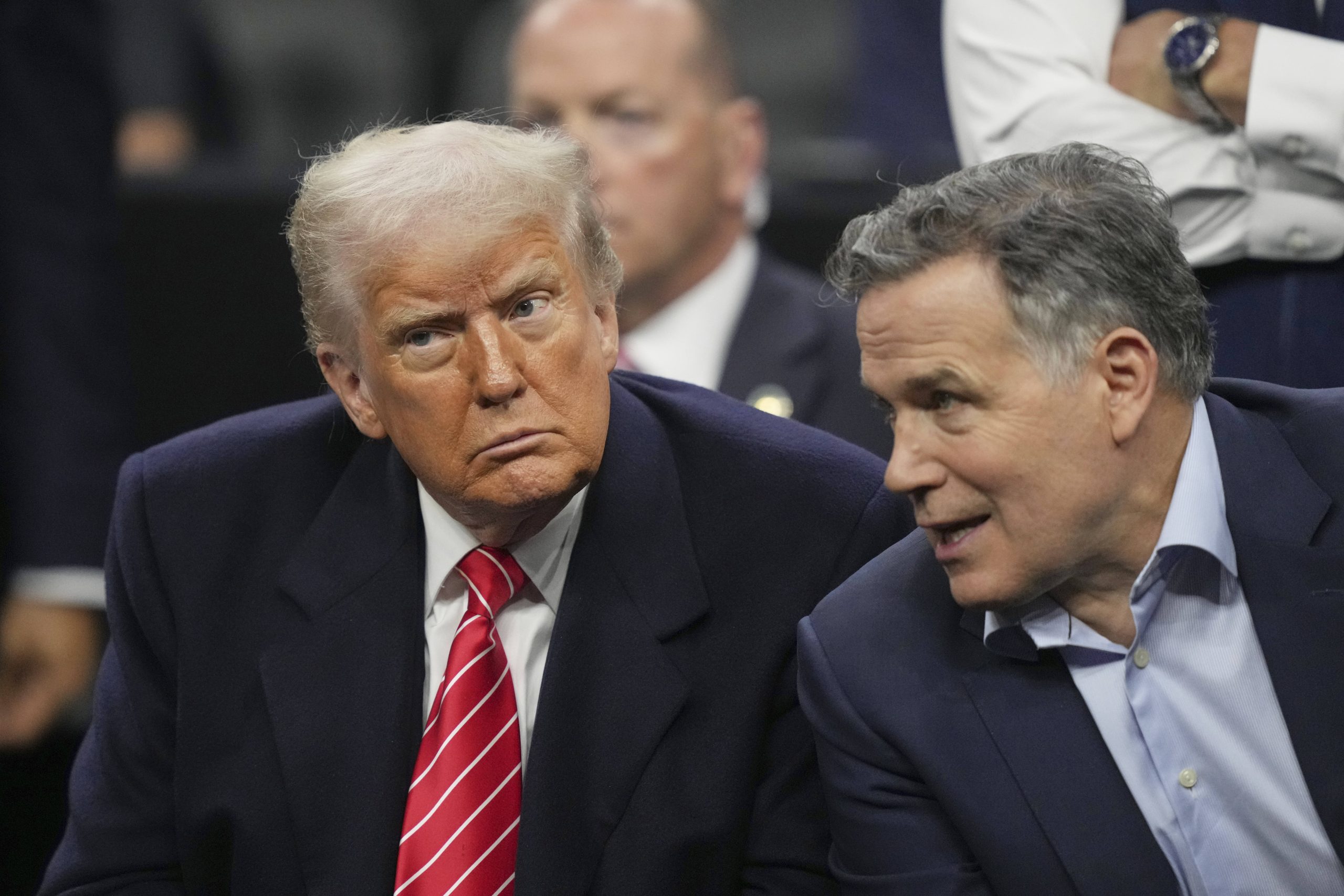
    President Donald Trump, left, and Sen. Dave McCormick, R-Pa., attend the finals at the NCAA wrestling championship, Saturday, March 22, 2025, in Philadelphia. (AP Photo/Matt Rourke)Matt Rourke

    McCormick’s spokesperson said only that the senator’s position on 2020 “remains unchanged.”

    A spokesperson for U.S. Rep. Brian Fitzpatrick, a moderate Bucks County Republican who voted to certify President Joe Biden’s 2020 win, said the lawmaker “completely disagrees with the president’s allegations of interference in the 2020 election.” She did not answer a question about the new and specific claims, such as the 250,000 noncitizens registered, but said Fitzpatrick “has full faith and confidence [in] our election officials.”
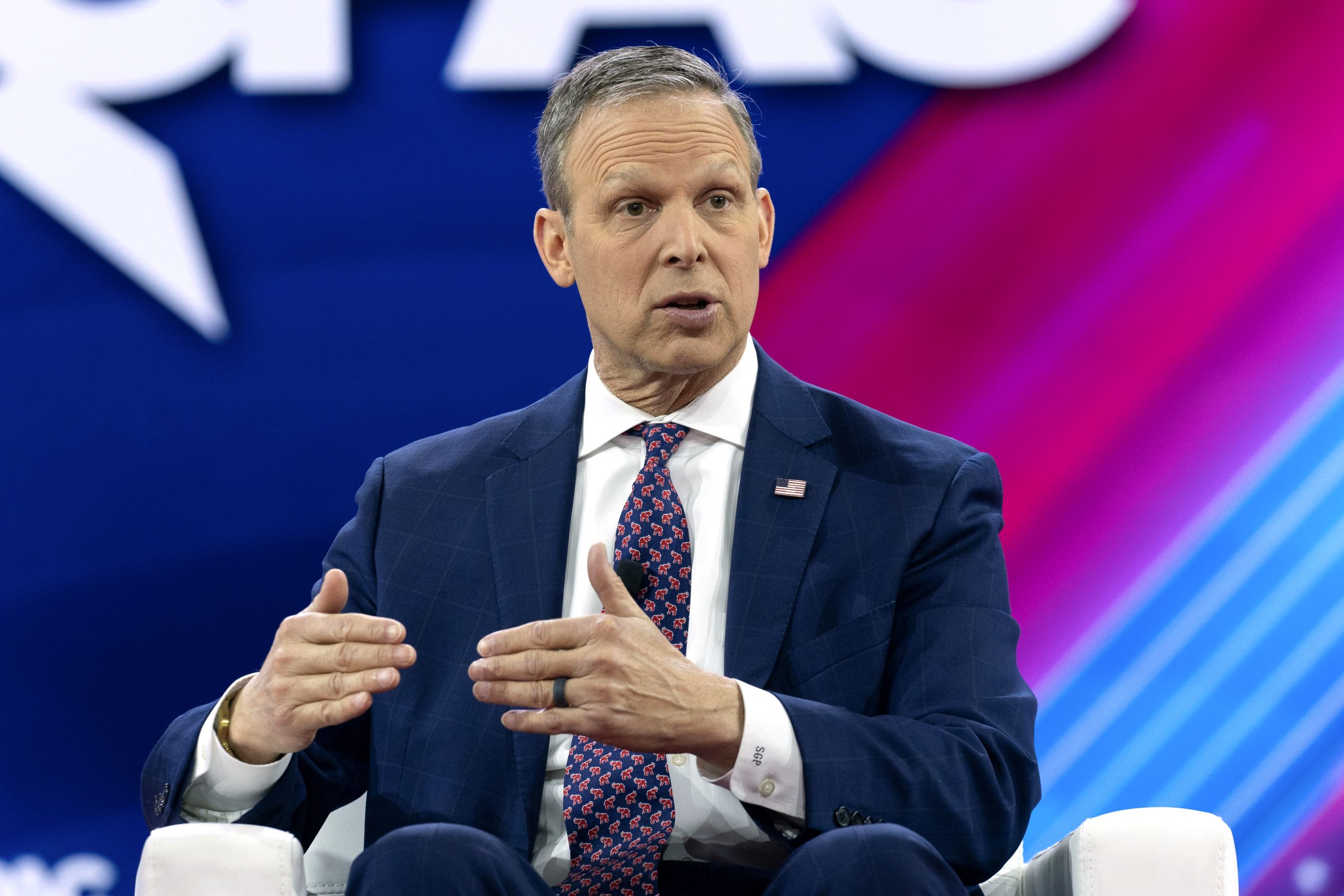
    Rep. Scott Perry, R-Pa., speaks during the Conservative Political Action Conference, CPAC 2024, in Oxon Hill, Md., Feb. 22, 2024. (AP Photo/Jose Luis Magana, File)Jose Luis Magana

    U.S. Rep. Scott Perry, a York County Republican who tried to overturn election results and became a subject of investigations into Jan. 6, reposted comments online that raised alarm about the White House’s claims of noncitizen voters.

    Perry’s office did not respond to a request for comment. He is one of four Republicans in the state facing a competitive reelection this fall — putting Pennsylvania in the national spotlight as Democrats push to gain control of the narrowly divided U.S. House, and potentially at the center of concerns about Trump’s attempts to control the election process.

    Republicans point to N.J. as they call for new voting law

    Every Pennsylvania Republican in Congress, meanwhile, has supported the SAVE America Act. The bill would require voters to provide proof of citizenship when registering to vote and to show photo ID at the polls. It would also scale back mail voting, which has become increasingly popular since the COVID-19 pandemic but has remained a focus of Trump’s false claims of fraud.

    Supporters of the legislation say that voter ID is widely popular and that eliminating even a few noncitizens from the voter rolls is worth ensuring elections are legal and secure. Opponents say that the issues the bill is trying to solve are either nonexistent or statistically irrelevant, and that it would effectively make registering more difficult for about 21 million people who do not have easy access to the paperwork that would be required, like a passport or birth certificate.

    “It would upend voter registration and our democracy and, on its own terms, is an extraordinarily harmful policy that would hurt millions of American citizens,” said Eliza Sweren-Becker, a voting rights expert at the Brennan Center for Justice. “It is being advanced on the backs of lies about our election system that are themselves harmful to our democracy and trust in election administration.”

    Though he has not addressed Trump’s latest claims, McCormick renewed his public push for the SAVE America Act after Trump’s prime-time address — writing, “Let’s act now,” on social media following the speech.

    Last week, he and others also grasped on to both a nearly decade-old voter registration issue in Pennsylvania and the fresh problem in New Jersey to underscore the need for the law.

    “This isn’t a harmless ‘software error,’” McCormick wrote on social media after Gov. Mikie Sherrill said a technical mistake led to noncitizens registering to vote. “This is why we must confirm citizenship before anyone registers. Only U.S. citizens should vote in our elections.”

    McCormick also elevated a statement from the Department of Homeland Security that referred to an issue that Schmidt, then a Philadelphia city commissioner, discovered in 2017. Schmidt found 168 noncitizens were registered in Philadelphia, and likely hundreds more were registered statewide, due to an error by the Pennsylvania Department of Transportation. State Auditor General Tim DeFoor, a Republican, has said fixes to the system were largely successful.

    U.S. Rep. Ryan Mackenzie, a Lehigh County Republican who is running in one of the most competitive districts in the country, also pointed to the Pennsylvania example and the New Jersey developments while justifying his support for the SAVE America Act during a telephone town hall with constituents Wednesday.

    But while trying to remember the details on the call, Mackenzie potentially overstated the problem.

    “I believe it was about 8,000 people here in Pennsylvania made their way onto the voter rolls, who were not supposed to be there and weren’t asked those proper questions. So these things do happen,” Mackenzie said before stressing the need for the SAVE America Act.

    Asked about that number, a spokesperson for Mackenzie pointed to the Pennsylvania Department of State’s additional review in 2018 that found 8,698 voters whose eligibility needed to be determined. Those voters, however, were not necessarily noncitizens or otherwise ineligible to vote, and the state never released a more detailed analysis.

    The spokesperson did not answer questions about whether Mackenzie agrees with Trump’s old or new claims about election fraud in 2020, or whether Pennsylvanians should have confidence in the state’s current system.

    “This case from Pa., and from N.J. more recently, highlight the lack of appropriate checks taking place when people initially register to vote. We should have appropriate checks to verify the citizenship status when someone initially registers, which is what the SAVE Act provides. The absence of these safeguards, as well as the egregious errors that have been seen in states like New Jersey, are key reasons for the bipartisan frustration with our elections.”

    Sweren-Becker said overstated claims of noncitizen voters have contributed to spreading distrust. The Pennsylvania situation, she said, was also not an example of a scheme to defraud the system, and “not the basis for a policy that would block millions of Americans from being able to cast their ballots.” Both that case and the one in New Jersey are instead examples of administrative errors that occasionally happen in a complex election system and represent “an extraordinarily small fraction” of voters, she said.

    The Cato Institute, a libertarian Washington-based think tank, has also thrown cold water on the idea that the SAVE America Act would have prevented the New Jersey error. Legal fellow and former Arizona Republican official Stephen Richer, in a post that referred to McCormick’s advocacy, wrote that the current structure of the bill “likely wouldn’t have prevented” the software error.

    “Be wary of politicians who say, ‘All of these problems will be fixed with my simple legislation,’” Richer wrote. “That’s often not the case.”

    ‘Deeply unhelpful’

    McCormick, in response to questions for this story, did not directly say if the law would have prevented the issue in New Jersey. But he stressed that the paperwork requirement “helps stop noncitizens from getting registered.” It would also require states to set up a program to “continuously check voter rolls to find noncitizens” using different datasets — which he noted some states already have.

    In a telephone town hall with constituents on Wednesday, the senator also acknowledged concerns about the bill when asked about it by voters on both sides of the issue.
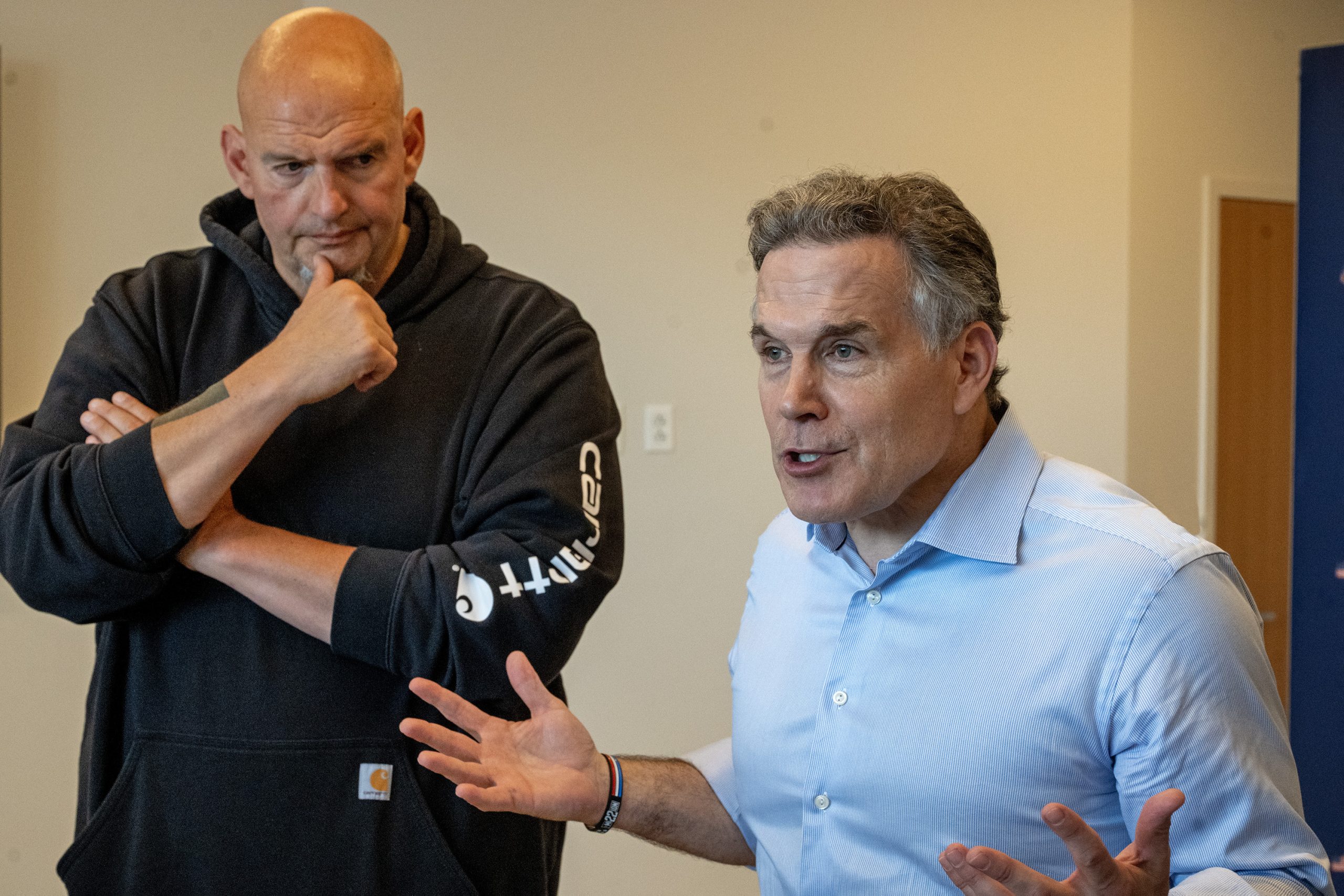
    Pennsylvania’s U.S. Senators John Fetterman (left) and Dave McCormick appear together Monday, June 29, 2026 to promote the savings accounts for kids that were a signature piece of President Trump’s Big Beautiful Bill.Tom Gralish / Staff Photographer

    He said he believed the law would “make it as easy as possible” for people to obtain valid forms of ID if they do not have them. And as someone who lost his first race against Oz by 950 votes and won his second race against Democratic U.S. Sen. Bob Casey by about 15,000 votes, he said even rare cases of noncitizen voting could make a difference in close elections. Eligibility for mail ballots also needs “to tighten up dramatically,” he said, though he did not fully explain his thoughts on the issue or if he believes there has been fraud associated with them.

    As Democrats block the bill in the Senate, he called on them to “defend the indefensible” and said “there should be a political cost in objecting to something that most Americans agree with.”

    One of the Democrats opposing the bill is McCormick’s close friend and ally — U.S. Sen. John Fetterman.

    Though he has frequently broken with his party — and now supports voter ID after previously calling it “insidious and unnecessary” — Fetterman has said the bill’s changes to mail voting are “a nonstarter” for him.” In a CNN interview last week, he also said that the 2020 election in Pennsylvania was fair, that there is “no evidence” of 250,000 noncitizens registered, and that Trump was unnecessarily fixated on the 2020 election.

    “In Pennsylvania, out of 67 counties, the vast, vast, vast majority of them are deep red counties, and they’ve never encountered any kinds of fraud,” Fetterman said. “I don’t know why the president is dragging up all of this stuff. You’re the president. Do something positive. And you are talking about 2020. That’s been settled over six years ago. It’s deeply unhelpful.”

    Other Pennsylvania Democrats have lambasted Trump for dredging up the old claims, and they have blamed GOP “enablers” for supporting him and pushing the bill.

    “The only thing it would ‘save’ is Trump and his Republican enablers from voters holding them accountable,” U.S. Rep. Dwight Evans (D., Philadelphia) said.

    U.S. Rep. Chris Deluzio, an Allegheny County Democrat who worked on election security issues before running for Congress in 2022, said the bill “will do nothing to improve election security” and would instead harm married women — whose birth certificates might not have their current name — and people without passports. He said those who lie about the 2020 election are “cowards” who should not have a place in elected office.

    “The fact that some Republican politicians are so scared of Donald Trump that they lie for him just to keep their jobs is spineless and pathetic,” Deluzio said.

    McCormick, for his part, said during the telephone town hall that the bill is unlikely to pass as Democrats continue to block it from getting the required 60 votes in the Senate, and as Republicans decline to eliminate the filibuster rule to let it move forward with just 50 votes.

    “Where does that leave us? That leaves us in a position where I think we should be constantly talking about this, and I try to do this every single week, multiple times, [saying] why the SAVE America Act is important,” said McCormick, whose staff said he was unavailable for an interview.
  • Nearly 150,000 mail ballots rejected in California’s primary despite efforts to count every vote

    Nearly 150,000 mail ballots rejected in California’s primary despite efforts to count every vote

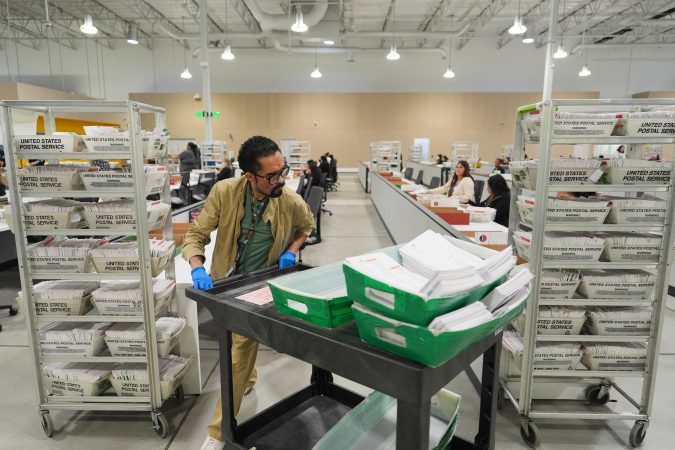
    LOS ANGELES — Nearly 150,000 California voters had their mail-in ballots rejected for the state’s June primary, a spike from recent elections even as the state attempts to make voting easier with the goal of boosting participation and counting every ballot.

    California has become notorious for its ponderously slow vote counts that can drag on for weeks and sometimes longer, largely the result of multiple changes over the years that were intended to increase turnout but have done little to achieve that. Among the changes: Every voter receives a mail-in ballot that can arrive at an election office seven days late and still be counted, provided the envelope is postmarked by Election Day.

    Yet even with that generous weeklong window, the primary driver of the higher rejection numbers is late-arriving ballots, according to data compiled by the secretary of state’s office. Voting experts suspect the main problem is postmarks on ballots that came after Election Day, making them ineligible to be counted. The culprit could be U.S. Postal Service changes that might affect the timing of when postmarks are applied.

    Late-arriving ballots drove the rejections

    According to state data, 148,241 mail ballots were rejected in the June election, or a rate of 1.73% of all mail ballots.

    In raw numbers, that’s up from the 2024 primary, when 108,982 mail ballots were rejected, or a 1.56% rate. In 2022, 105,818 mail ballots were voided during the primary, or a rate similar to 2024.

    Lateness accounted for 93,479 rejected ballots in June, by far the largest category for disqualifying a ballot. That was up from about 70,000 in the 2022 primary and about 76,000 in the 2024 primary, though turnout in those elections was smaller compared to last June.

    Kim Alexander, president of the nonpartisan California Voter Foundation, said the jump in rejected ballots because of lateness is a major concern that — along with postal procedures — might also be connected to a late surge in ballots in June. Many voters waited until the final days to make a decision in a wide-open and chaotic race for governor.

    “Ballots rejected due to lateness are caused primarily to being postmarked too late to count, not because they arrived too late to count,” Alexander wrote in an email.

    Rejection rates have fluctuated over time, but the growing number of those set aside for lateness compared to recent elections “does really demand the question why this is happening,” said Mindy Romero, director of the Center for Inclusive Democracy, a nonpartisan research group.

    Lawmakers concerned about USPS postmark changes

    In January, a group of mostly Democratic U.S. senators sent a letter to the U.S. Postal Service, alarmed that mail-processing changes might affect postmark dates for mail-in ballots during an election year that will determine control of Congress.

    Updated agency policy says postmarks might not indicate the first day the Postal Service received the mail, but rather the day it was handled in one of its processing centers. Those centers are increasingly likely to be further away from certain communities because of recent consolidations within the Postal Service, which could further delay postmarks.

    On Thursday, two Wisconsin Democrats, U.S. Sen. Tammy Baldwin and Gov. Tony Evers, called on the Postal Service to address delays that caused hundreds of ballots to arrive after Election Day in the state in April. In June, a federal judge halted President Donald Trump’s executive order that sought to create a federal voter list and limit who can receive a mail ballot.

    Earlier this year, California election officials urged voters to send their mail ballots early, warning that Postal Service changes could lead to slower mail service.

    In California, the highest mail ballot rejection rate in June — 3.52% — was in Tulare County, in the agriculture-heavy Central Valley. It was followed by Alpine County, south of Lake Tahoe, and Merced County, also in the Central Valley, which both notched a 3.36% rejection rate.

    Mismatched signatures and multiple ballots in an envelope

    Nearly 44,000 ballots were set aside because the voter’s signature didn’t match the one on record with county officials. Over 8,300 ballots were rejected because there was no signature on the returned ballot envelope.

    In 743 cases, the voter had already cast a ballot, so the mail ballot was voided. Other reasons for rejection included a ballot being missing from the return envelope, or multiple ballots were sent back in a single envelope.

    The data didn’t break down the uncounted ballots by party registration.

    Florida, Texas and other large population states quickly wrap up vote counting, while California is a national laggard.

    After the June primary, President Donald Trump seized on California’s reputation as the national slowpoke in vote counting to renew his long-standing criticism of the state’s elections, while the Republican’s Department of Justice launched an investigation into Los Angeles County’s elections.

    There is no indication of any widespread problems with mail voting, which has gained in popularity among Democrats and Republicans alike. A report by the Brookings Institution published in 2025 found that the number of cases of mail voting fraud was minuscule — about four cases per 10 million mail ballots.

  • Government withdraws subpoenas of 3 reporters for the New York Times after admitting legal errors

    Government withdraws subpoenas of 3 reporters for the New York Times after admitting legal errors

    NEW YORK — Criticized by a federal judge for sloppy legal work, the government on Thursday grudgingly withdrew subpoenas that would have compelled three New York Times reporters to testify about their sources for articles about President Donald Trump’s Qatari-gifted Air Force One jet.

    The withdrawals in U.S. District Court followed a remarkable back and forth between a visibly irritated Judge Arun Subramanian and government lawyers. They come at a time when the Trump administration is vigorously going after news organizations whose reporting and coverage it doesn’t like — and also trying to crack down on leaks inside the government.

    The government’s retreat in the face of vigorous legal opposition and a stern reprimand from a judge marked the latest instance of the Justice Department pulling back on its aggressive efforts to compel journalists to identify their sources before a grand jury. The administration recently withdrew similar subpoenas that sought to compel testimony in Virginia from journalists for the Washington Post and the Wall Street Journal related to separate national security coverage.

    Subramanian said he otherwise would have granted the newspaper’s request to reject the subpoenas because laws and regulations pertaining to subpoenas served on journalists maintain that they should be issued as a last resort in an investigation.

    “Subpoenas are the last step, not the first step, but the last step,” the judge said, citing rules set to protect against violations of the First Amendment. He said the government’s actions had turned the law and the regulations “on its head.”

    “When you see something like this, if this were a civil proceeding, what I would normally do is ask the parties to show causes why sanctions should not be issued,” the judge said, referencing punishment for lawyers for egregious actions.

    After the hearing, the Justice Department lashed out at the judge in a statement, saying he “threatened our attorneys with sanctions unless subpoenas were withdrawn, and blocked us from presenting the meticulous process of this investigation.”

    “The grand jury has a right to hear testimony from all material witnesses in a federal criminal investigation. This judge’s conduct overrides clear longstanding principles and common sense — blocking the grand jury from receiving core evidence in a national security investigation,” the statement said.

    “Make no mistake,” it added, “this investigation remains ongoing, and we will pursue justice against those threatening national security by leaking classified information, a serious federal crime.”

    Government attorneys upbraided by judge

    Subramanian noted that with protections for journalists at stake, the government was required to ensure it could not obtain what it needed from any other sources before issuing subpoenas to journalists.

    A Justice Department lawyer, Sean Buckley, cast the government’s missteps as inadvertent errors and said “no one was trying to pull a fast one.” Buckley apologized for other subpoenas that sought records for phone numbers belonging to one reporter’s mother and two of the journalists’ spouses.

    “That was an error, judge, which we own,” Buckley said. “It was a consequence of trying to move quickly.”

    “These things are starting to pile up,” Subramanian said, becoming increasingly testy.

    The hearing was held publicly despite efforts by the Trump administration to keep secret the litigation spawned by subpoenas it served on the Times’ journalists to try to get them to divulge their sources.

    The newspaper’s lawyers had challenged the validity of the grand jury subpoenas, along with subpoenas issued for phone records of several Times journalists and some of their relatives. Senior Times officials, including the paper’s managing editor and general counsel, sat in the gallery watching during Thursday’s proceedings.

    The request for phone records raised questions about the extent of the investigation being carried out by the Justice Department.

    David McCraw, the Times’ chief newsroom lawyer, said after the hearing in a statement that it “was an important affirmation of our country’s commitment to a free press.”

    “We are pleased that the government finally conceded that the subpoenas violated the law, but they should never have been issued in the first place,” he said. “We will not be deterred in the face of tactics like these.”

    Court action comes after reporting on new Air Force One jet

    The new jet in question, a present from Qatar that Trump’s administration spent $400 million to retrofit and upgrade, recently entered service. But Trump used an older model Air Force One jet to leave a NATO summit in Turkey earlier this month.

    The Times, citing anonymous sources, reported that the switch had come at the urging of the Secret Service and that the newer plane lacked some of the advanced security features of the older Air Force One aircraft, including antimissile capabilities. On social media, Trump rejected claims of security concerns.

    The Times wrote in a letter to the judge several days ago that two subpoenas seek records beginning on Jan. 1, long before the newspaper published articles on July 8 and July 9 that became the basis for the grand jury subpoenas.

    It said that lengthy stretch of records sought would indicate that the purpose of the subpoenas might have been “to forage for information about the Journalists’ source relationships more broadly.”

    The Times argued for the phone records subpoenas to be disallowed on the grounds that the government had acted in “bad faith” and ignored its own protocols by not giving the journalists advance notice that records were being sought and by demanding the information “without first conducting any serious investigation.”

    The Justice Department has justified the grand jury subpoenas by saying that “reporters are not the targets, those leaking classified information are.”

    The Justice Department also said it had complied with its own regulations in issuing the subpoenas and had taken investigative steps before seeking them. It said it was authorized to delay disclosing the subpoenas but decided to alert the journalists’ lawyers so they could challenge them.

    In fighting the subpoenas, the Times’ lawyers highlighted how the government’s carelessness could have exposed sensitive information that had nothing to do with the journalists. The mother whose phone records were mistakenly sought is a mental health professional with confidential client relationships and one of the two spouses is the general counsel of a law firm, the lawyers said.

    At Thursday’s hearing, a final rebuke from the judge to the government came when he asked its lawyers to assure him that it won’t repeat a scenario that left one journalist being served a subpoena by an FBI agent while he was home watching the family-friendly movie The Sheep Detectives, about sheep on a quest to solve the murder of their shepherd.

    Said the judge, to loud courtroom laughter: “I can’t think of anything more inconsistent with ‘Sheep Detective’ than an FBI agent showing up at your door.”

  • Trump imposes double-digit tariffs on dozens of countries as his 10% levies are set to expire Friday

    Trump imposes double-digit tariffs on dozens of countries as his 10% levies are set to expire Friday

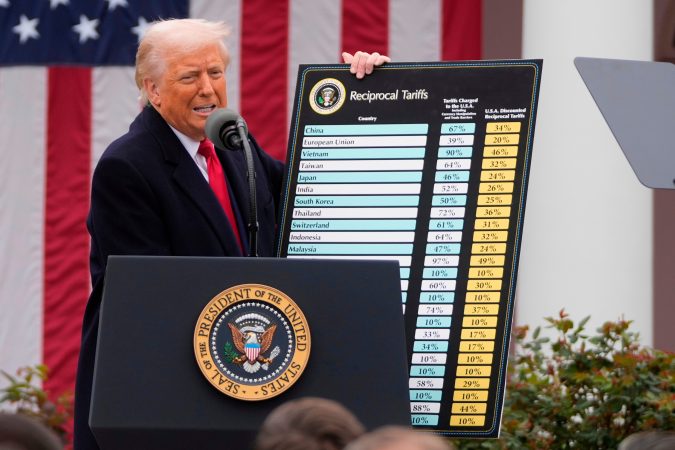
    WASHINGTON — President Donald Trump is going ahead with new double-digit tariffs on dozens of U.S. trading partners just as the clock runs out Friday on stopgap levies he imposed after a stinging defeat at the Supreme Court.

    The United States will slap taxes of 10% to 12.5% on imports from 60 countries accounting for 99% of U.S. imports, charging that they have inadequately enforced bans on goods produced by forced labor.

    “The United States has had a forced labor import ban for nearly a century, and rigorously enforces it; it’s well past time for our trading partners to do the same,” said U.S. Trade Representative Jamieson Greer. “Today’s action will begin to correct what is both a human rights abuse and distortive trade practice to improve the welfare of workers everywhere.

    The new tariffs will take effect just as temporary 10% worldwide tariffs expire at 12:01 a.m. Friday. Trump had turned to those temporary levies after the Supreme Court struck down his biggest and boldest tariffs in February.

    Now he’s tapping more durable tariffs under Section 301 of the Trade Act of 1974, which permits the president to impose import taxes and other sanctions against countries found to engage in “unjustifiable,” “unreasonable,” or “discriminatory” trade practices. Trump used Section 301 to impose big tariffs on China in his first term, and they survived court challenges.

    More Section 301 tariffs are likely coming: The U.S. Trade Representative’s office has launched a probe into whether 16 countries — accounting for 70% of U.S. imports — have overproduced goods, pushing down prices and putting U.S. companies at a disadvantage in global markets. The administration has yet to complete that investigation.

    Trump, who argues that high tariffs will revive American manufacturing, last year overturned decades of U.S. policy that favored lower tariffs and ever-freer trade. Invoking the 1977 International Emergency Economic Powers Act (IEEPA), he imposed double-digit tariffs on imports from almost every country on Earth, saying America’s longstanding trade deficit amounted to a national emergency.

    But the Supreme Court ruled that IEEPA did not authorize tariffs. The decision forced the administration to pay refunds to importers that had paid the tariffs.

    In response, Trump announced 10% worldwide tariffs under Section 122 of the Trade Act of 1974. But he can only use Section 122 levies for 150 days; time runs out on them Friday.

    The administration initially proposed the forced labor tariffs last month. Since then, some countries have tightened forced labor enforcement and qualified for lower tariffs, said a senior administration official who spoke under condition of anonymity. For example, the official said, the tariff on imports from India initially was set at 12.5% but now will be 10%.

    Some products — including oil and gas and fertilizer — are exempted from the new tariffs announced Thursday. Also being spared are products that qualify for duty-free status under the US-Mexico-Canada Agreement, the North American trade pact Trump negotiated in his first term.

    Tariffs are paid by companies in the United States that import foreign products. The importers usually try to pass along the cost by charging consumers higher prices. Americans are already frustrated by the high cost of living. So the administration is taking a risk in rolling out new tariffs ahead of the Nov. 3 midterm elections.

    Human rights watchers say that it’s reasonable to be skeptical of the motivation behind the tariffs. But they say the levies could make an impact on the problem of forced labor.

    Forced labor is defined by the International Labor Organization Forced Labor Convention of 1930 as “all work or service which is exacted from any person under the menace of any penalty and for which the said person has not offered himself (or herself) voluntarily.”

    According to the latest statistics from the ILO, which is a U.N. agency focused on human and labor rights, about 27.6 million people were in forced labor worldwide on any given day in 2021.

    “We’ve gone on record for years now advocating for import bans, not as a magic bullet, it’s not a silver bullet, but as a potentially effective tool in combating forced labor across the globe,” said Martina Vandenberg, founder and president of The Human Trafficking Legal Center.

    “It’s possible to be extremely critical of tariffs, as we are, and to be very concerned about blanket tariffs used as bludgeons against countries,” she said. “And yet I think it’s undeniable that there is a significant response in terms of the adoption of import bans.”

    However Vandenberg and her organization urged in testimony that the tariffs be implemented in a phased approach to give countries time to implement a ban or a plan for enforcement.

    “Our concern is that the import bans will be thin slips of paper with no enforcement,” she said. “Countries need time to build import ban mechanisms that are meaningful and enforceable.”

    Kenya Davis, partner at Boies Schiller Flexner, said the Uyghur Forced Labor Prevention Act, a U.S. federal law passed in 2021 that prohibits the importation of goods made wholly or in part in China’s Xinjiang region or by designated entities, is the most significant legislation related to forced labor that the U.S. has passed before the tariffs.

    “The level of effectiveness is certainly up for debate, but it certainly has drawn attention to the issue of labor trafficking and forced labor,” she said. “And so, if nothing else, these import bans will serve that function of bringing greater awareness to forced labor.”

    But without a “comprehensive approach,” that provides transparency about what the investigations consisted of, and programs that provide countries aid in enforcing bans, “I’m very cautious in my enthusiasm about the [tariffs],” she said.

    Isabelle Glimcher, senior research scientist for global labor at the NYU Stern Center for Human Rights, said one flaw in the tariffs is that they focus on levying the tax on countries based on goods they import — not goods they make domestically.

    But she said the impending tariffs threat has spurred several countries — such as India — to amend their foreign trade policies to include a forced labor import ban. European Union forced labor regulations due to go into effect later next year are also contributing, she said.

    “Not all of these things are necessarily or wholly attributable to the Section 301 investigations, but does seem like countries are responding and starting to take all of this seriously,” she said.

  • Gov. Mikie Sherrill says motor vehicle vendor is responsible for issues beyond N.J. voter registration error

    Gov. Mikie Sherrill says motor vehicle vendor is responsible for issues beyond N.J. voter registration error

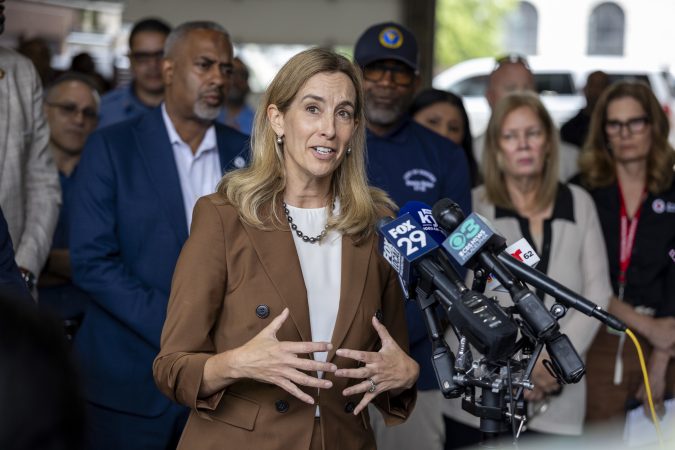
    New Jersey Gov. Mikie Sherrill revealed Thursday that her administration had already been trying to get rid of the vendor that she blames for thousands of illegal voter registrations in the state before she discovered the misstep.

    Sherrill, a first-term Democrat, announced Tuesday that she had learned almost a week earlier that about 6,600 noncitizens had been registered to vote between June 2023 and June 2024 under her predecessor, former Democratic Gov. Phil Murphy. She said fewer than 400 of those people had voted.

    The news coincided with President Donald Trump’s effort to revive conspiracy theories about the 2020 election. In an attempt to bolster his proposal for a national overhaul of elections, his administration has alleged large numbers of noncitizens are registered in a handful of states.

    Sherrill said a glitch in software at the New Jersey Motor Vehicle Commission (MVC) operated by a vendor called IDEMIA registered people to vote through the state’s automatic motor vehicle voter registration program even after they identified themselves as noncitizens.

    The term noncitizen can refer to people who are in the United States legally on green cards or visas as well as undocumented people, who have been able to get driver’s licenses in New Jersey since 2021. The state has allowed citizens to register to vote automatically at the MVC since 2018 unless they opt out.

    “I think it’s well known that the motor vehicle commission has been a mess, and IDEMIA is at the heart of that,” Sherrill said after a news conference Thursday.

    Sherrill said in remarks on Tuesday that her administration would replace the vendor but did not discuss the depth of her issues with the company before the recent scandal. She focused her criticism on the administration of her predecessor, Murphy, who has remained publicly silent on the issue.

    But on Thursday, the governor took more aim at IDEMIA.

    She blamed the company for long waits, bureaucracy, and red tape, and said she had already viewed the MVC as a “failure” prior to this incident. She said New Jerseyans have been told to get a passport because it would be faster than the process of getting a REAL ID in New Jersey, one of which is required for travel to avoid extra fees.

    “That’s the disarray that was going on there,” she said.

    Sherrill said Rosalie Johnson, whom she said she recruited from Colorado to appoint as the new MVC administrator this year, “was already in the process of removing them for their incompetence.”

    Johnson said Tuesday that her team has already made improvements at the MVC, is implementing additional safeguards, and is “actively working with a new vendor to ensure this type of technical malfunction does not happen in the future.” She said she expects the new vendor to begin next year.

    Additionally, Sherrill said her administration hired an independent firm to investigate what happened.

    In a separate news conference Thursday, New Jersey Republicans said an independent, bipartisan committee with subpoena power should also investigate the circumstances that led to the faulty registrations.

    New Jersey GOP chair Christine Hanlon said she believes there may be more instances of noncitizens improperly registered than what Sherrill disclosed.

    According to a sampling of data collected by the state party, she said, there were “hundreds” of noncitizens who had proactively requested to be removed from the voter rolls outside the time frame between 2023 and 2024. Not every county provided data, so the results show an incomplete picture, she said.

    “It just shows us we need a lot more information about what happened and when,” she said.

    Federally, Assistant Attorney General Harmeet Dhillon said in a post on X that the Civil Rights Division of the Department of Justice “is investigating this unlawful dilution of American votes.” U.S. Rep. Josh Gottheimer, a North Jersey Democrat who unsuccessfully ran for governor last year, called for a national audit of IDEMIA.

    IDEMIA released a statement Tuesday blaming the improper voter registrations on the New Jersey Department of State’s Division of Elections, saying the department is “ultimately responsible for verifying eligibility to vote.”

    The company’s responsibility was to transmit information from the motor vehicle system to the New Jersey Department of State, but the information “must still be validated and adjudicated by the Division of Elections,” the statement said. IDEMIA did not respond to a request for further comment on Thursday.

    Sherrill blasted the company’s justification on Thursday.

    “To suggest somehow that the fact that they had a huge software error like this for a year that they did not catch is somehow not something they were responsible for, I mean, this is why we’re getting rid of them,” she said.

  • U.S. intelligence agency quietly cut about 200 jobs since June 1

    U.S. intelligence agency quietly cut about 200 jobs since June 1

    The Office of the Director of National Intelligence has shrunk more than is publicly known in recent weeks, losing about 200 personnel to firings and reassignments since June 1, according to data the Trump administration shared with Congress this week.

    The cuts are the latest to hit ODNI, which was created to oversee and coordinate all U.S. spy agencies but has been targeted by President Donald Trump and many Republicans in Congress. They, and some former U.S. intelligence officials, say it has expanded far beyond what lawmakers intended when it was created two decades ago. The ODNI had about 2,000 employees at the start of Trump’s second term. It is now little more than half that size, according to congressional aides.

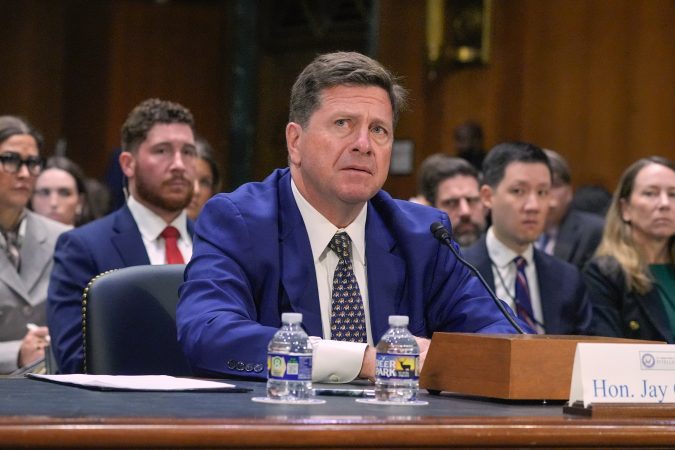
    The staffing reductions mean that Trump’s nominee for intelligence czar, Jay Clayton, if confirmed by the Senate as expected, while inherit a shrunken organization that has experienced steady upheaval over the last 18 months.

    The president in early June tapped federal mortgage regulator Bill Pulte, a political ally with no prior national security experience, to be acting director of national intelligence. Trump said at the time that he wanted Pulte to “start the process” of eliminating some workers.

    Trump has often maintained a hostile posture toward professional intelligence personnel and their agencies, claiming they tried to undermine him in his first term, particularly with the compiling of reports on Russia’s interference in the 2016 presidential election to aid his campaign. The president has dismissed intelligence analysis on a range of issues, from North Korea’s nuclear policy to Iran’s likely reaction to the attacks the U.S. and Israel launched in February.

    Neither Pulte nor the White House has publicly detailed what cuts they have made recently at ODNI, which houses the National Counterterrorism Center and was established to fix U.S. intelligence agencies’ failure to share threat information prior to the September 2001 terrorist attacks.

    The latest personnel cuts were confirmed by a congressional staff member and another person familiar with the matter. They spoke on the condition of anonymity to discuss nonpublic information.

    ODNI did not respond to requests for comment.

    The cuts include some firings, as well as a larger number of intelligence officers who were ordered back to their home agencies, the person familiar with the matter said. Much of ODNI’s workforce consists of personnel detailed from the CIA and other intelligence organizations.

    The counterterrorism center has not been affected significantly, officials have said. But there has been a whole-scale hollowing out of the National Intelligence Council, a prestigious analytic body that conducts intelligence community-wide assessments on key topics such as COVID-19’s origins and foreign interference in U.S. elections.

    The Washington Post previously reported that about 20 intelligence council personnel have been removed or have chosen to leave, including senior officers who oversaw the production of analysis on Russia, China, and Europe. The top official who oversaw the council was placed on administrative leave.

    Neither Clayton nor the Trump administration has articulated a vision of what ODNI should look like or focus on “other than it should be smaller,” said Julia Curlee, who served as a director for intelligence programs in Trump’s White House until last year and recently resigned from the CIA after 20 years as an analyst. “It seems like DNI was just a fat target to punish the ‘deep state.’”

    “Morale is pretty terrible, as you would imagine,” Curlee said.

    It is unclear how many of the 200 personnel were let go under Pulte, who became acting director of national intelligence on June 19, and how many were let go under his predecessor, Tulsi Gabbard, who left the administration after her husband became ill.

    The Trump administration and its allies in Congress have not publicly acknowledged the extent to which ODNI has been shrunk.

    “U.S. National Intelligence is operating more efficiently and effectively than ever before, and today, we started a third round of reducing redundant, or noncritical, personnel,” Pulte posted on X on July 10, without revealing details.

    Senate Intelligence Committee Chairman Tom Cotton (R., Ark.) said shortly after Pulte took over that the acting DNI had told him that “a small handful of front-office personnel” were leaving. “Around 45 or 50 career officers” were returning to their home agencies, Cotton said. Cotton’s office did not respond to requests for comment.

    The precise size of the workforce at ODNI and other U.S. intelligence agencies is classified. By the time Gabbard departed in mid-June, the workforce had shrunk from about 2,000 in January 2025 to about 1,300.

    Clayton was mauled in his Senate Intelligence Committee confirmation hearing by Democrats who decried what they said was his failure to unequivocally state that Joe Biden won the 2020 presidential election, which Trump denies. The Republican-led committee approved his nomination Tuesday on a 9-8 vote, and a full Senate vote is expected next week.

  • House votes to limit Trump on Iran; Senate fails to advance similar measure

    House votes to limit Trump on Iran; Senate fails to advance similar measure

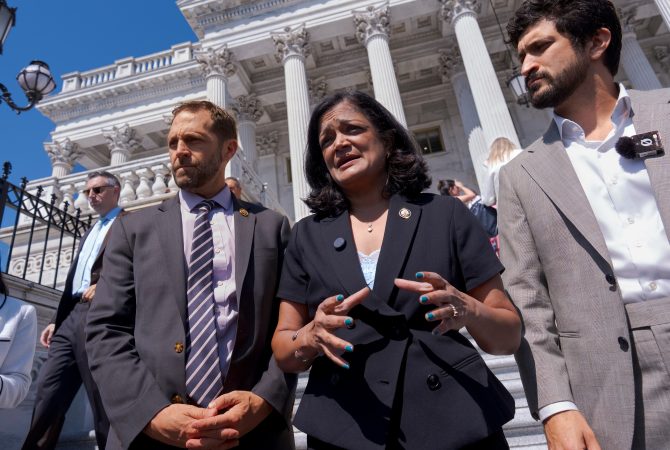
    The House passed a measure to halt the war in Iran on Thursday, as Democrats mounted a last-minute bid to constrain the escalating conflict before lawmakers left Washington for a monthlong recess.

    The effort led by Rep. Pramila Jayapal (D., Wash.) passed by a vote of 214-208. Four Republicans — Reps. Brian Fitzpatrick of Pennsylvania, Thomas Massie of Kentucky, Warren Davidson of Ohio, and Tom Barrett of Michigan — joined Democrats in supporting the measure.

    The Senate blocked consideration of a similar resolution hours later on a 49-47 procedural vote.

    Sen. Susan Collins of Maine was the lone Republican to join Democrats in supporting the measure. Sen. John Fetterman (D., Pa.) voted against it.

    The votes marked the first test of Republican support for the conflict since President Donald Trump resumed strikes against Iran this month. U.S. Central Command, which oversees military operations in the Middle East, announced it had conducted its 12th consecutive day of airstrikes as Trump pledges to retaliate for the deaths of several American service members killed by Iranian attacks in the last week.

    By returning to the war, Trump has forced some vulnerable Republicans into a tenuous political position ahead of the November midterm elections. Iran has closed the Strait of Hormuz — spiking global food and energy markets — and the Houthis, its proxy force in Yemen, have threatened to halt Saudi Arabian oil transiting the Red Sea.

    A Washington Post-Ipsos poll earlier this month found that nearly 70% of respondents thought that the war was not “worth fighting.” Eighteen U.S. service members have died during the conflict, with nearly 430 injured.

    Earlier this week, Defense Secretary Pete Hegseth told lawmakers the war will cost about $37.5 billion by the end of September. Congress is debating how to proceed with a $73 billion package to restock the Pentagon’s inventory of precision weapons and cover other costs incurred by the conflict.

    “When you’re digging yourself a hole, the first thing you should do is stop digging — and that’s what this resolution seeks to do,” Sen. Chris Van Hollen (D., Md.), who introduced the resolution, said on the Senate floor before the vote. “Let us stop pretending that Congress has no role to play while American service members remain in harm’s way.”

    Sen. Tim Sheehy (R., Mont.), a Navy SEAL veteran who served in Afghanistan and Iraq, countered that passing the resolution would send the wrong message to the U.S. troops fighting the war.

    “Think about the people who are deployed right now standing on that wall with a loaded weapon who have volunteered to defend our country and our way of life,” Sheehy said on the Senate floor. “Because they are there defending us in a just war.”

    The Trump administration’s return to military strikes in Iran has also divided some Democrats over how best to respond.

    The successful vote in the House and the failed one in the Senate came after both chambers approved a separate resolution last month meant to halt the war. Trump has argued the measure lacks the power of law, infuriating Democrats who say the war is being conducted unlawfully without lawmakers’ consent.

    The White House has pressured Republicans to oppose such resolutions. Trump complained when he met with Republicans senators last month that the passage of one of the resolutions was undermining his negotiations with the Iranian government.

    Sen. Bill Cassidy (R., La.) supported the resolution that passed last month but opposed a subsequent one after being briefed by the White House. He voted against Thursday’s resolution.

    Two other Republicans who have voted for similar resolutions in the past, Sens. Lisa Murkowski of Alaska) and Rand Paul of Kentucky), did not vote. Sens. Mitch McConnell (R., Ky.) and Katie Boyd Britt (R., Ala.) also missed the vote.

    Rep. Gregory Meeks (D., N.Y.), the top Democrat on the House Foreign Affairs Committee, said Thursday that he will introduce a resolution to sue the Trump administration over its refusal to abide by their efforts to rein in the war.

    Trump “should be coming directly to Congress” to explain why he has continued his war effort in Iran, Meeks said. “Since he’s not, then we should be suing the administration to say ‘You must come to Congress at this point.’”

    Sen. Tim Kaine (D., Va.), the architect of Democrats’ strategy to force war powers votes, said he did not think the failed procedural vote in the Senate undercut the successful passage of the war powers resolution last month.

    “The substantive vote has been taken,” Kaine said after Thursday’s vote. “Both houses have said, Mr. President, you either have to withdraw troops or” seek authorization from Congress to continue the war.

    Still, Kaine said he was turning his attention to pushing back against the war through the appropriations process, through which Congress could exert leverage over the war by refusing to fund it. The House passed a resolution Wednesday taking the first step toward sending $73 billion to the Pentagon and U.S. intelligence agencies, largely to cover the cost of the conflict, but the measure faces an uncertain future in the Senate.

    Senate Majority Leader John Thune (R., S.D.) said the Senate would not take it up immediately as bipartisan negotiations over government funding play out — an approach that some Senate Republicans say is a mistake. The Senate could use the measure to fund the government later if those negotiations collapse.

    After the House vote, Rep. Jason Crow (D., Colo.), a co-sponsor of Jayapal’s resolution, said Democrats would continue to force votes on similar resolutions and predicted that more House Republicans would support them after hearing from frustrated constituents while the chamber is on recess over the next four weeks.

    “They’re going to get crushed,” Crow told reporters after the vote. “When we come back in September, I bet we have more people joining with us saying, ‘All right, let’s wrap this up.’”

    Senate Minority Leader Chuck Schumer (D., N.Y.) signaled that Senate Democrats would also continue to force votes on similar resolutions.

    “We will keep forcing votes until Senate Republicans stop playing dumb and summon up the courage to do what is right,” Schumer said on the Senate floor.

  • House again passes resolution seeking to halt military action in Iran as some Republicans defect

    House again passes resolution seeking to halt military action in Iran as some Republicans defect

    WASHINGTON — The House on Thursday narrowly passed a resolution to halt U.S. military action in Iran, sending a warning to President Donald Trump for the second time as the war has escalated and the future of the conflict is increasingly uncertain.

    The 214-208 vote requiring congressional approval for the war comes as the Senate is expected to consider a similar resolution later Thursday morning. Though the votes forced by Democrats are largely symbolic, they are meant as a strong signal to the Republican president that his support on Capitol Hill is chipping away as the war drags on and lawmakers in both parties have questioned his administration’s endgame.

    The war has had “no clear mission, no strategy, no end goal,” said Washington Rep. Pramila Jayapal, a Democrat who led the resolution on the House floor.

    The resolution narrowly passed after four Republicans — Reps. Brian Fitzpatrick of Pennsylvania, Tom Barrett of Michigan, Warren Davidson of Ohio, and Thomas Massie of Kentucky — voted with Democrats to end the war. But the vast majority of Republicans voted to back the war and cede congressional war powers to Trump.

    Trump has insisted that continued U.S. attacks against Iran do not mean a return to war or long-term action. After the first House vote to halt the war in early June, he posted on social media that it was “unpatriotic” and “meaningless.”

    Continued American airstrikes are occurring even as diplomatic efforts show little public sign of progress and officials on both sides have dug in on the dispute over the Strait of Hormuz, a crucial waterway for global energy that remains largely closed. The unpopular war threatens further worldwide economic disruption and is sending fuel prices up ahead of midterm U.S. elections this fall.

    Most Republicans vote to cede congressional powers

    As the House debated the resolution Wednesday evening, Foreign Affairs Committee Chairman Brian Mast (R., Fla.) read out names of 18 service members killed since the war began.

    “To belittle this mission is to belittle and demean the very service these members gave their life for,” Mast said. “Their sacrifice was not meaningless. This operation is bringing reckoning for the hundreds of times Iran has attacked and killed people of the United States of America.”

    The top Democrat on the panel, New York Rep. Gregory Meeks, said that presidents are supposed to make the case to Congress.

    The service members who died made the ultimate sacrifice for “an illegal unauthorized war that the American people don’t want,” Meeks said.

    As both chambers vote on whether to weigh in, the U.S. has carried out waves of airstrikes in recent days as the two countries clash over control of the Strait of Hormuz. Gas prices have spiked again, and Defense Secretary Pete Hegseth told senators at a hearing Tuesday that the U.S. had spent $37.5 billion on the war so far. On Wednesday, Trump traveled to Dover Air Force Base for the arrival and dignified transfer of the remains of four U.S. service members.

    “I do think the combination of the hearings, plus the fact that we are in this new escalatory phase where Americans have been killed, and Americans are experiencing the rising costs — I think it’s important that people be held accountable,” said Maryland Sen. Chris Van Hollen, a Democrat who is leading the Senate effort on Thursday. “And this is a very unpopular war.”

    Trump is watching Iran votes closely

    Republicans on both sides of the Capitol know that voting against the war can have a political cost, even as many of them have privately questioned the Trump administration’s handling of the conflict.

    In his post after the June House vote, Trump called the four Republicans who voted with Democrats “GRANDSTANDERS!” and said they should be “ashamed of themselves.”

    “They would rather have our Country fail than give me another, of many, victories,” he said.

    When the Senate passed a war powers resolution on Iran for the first time in June, the president attended a GOP Senate luncheon the next day and called the Republicans who voted for it “losers.”

    Louisiana Sen. Bill Cassidy, a Republican who lost his Senate seat in a primary after Trump endorsed one of his opponents, told Trump directly that he needed to give more details to the public about the conflict. “This was supposed to last four weeks. It’s lasted four months,” Cassidy said. “Our original objectives have not been achieved.”

    Trump argued back, Cassidy later told reporters, and he told the president that he wouldn’t change his vote until he got a briefing. The White House later relented, giving Cassidy a one-on-one meeting, and the Louisiana Republican changed his vote in a late-night do-over vote before the Senate left for a two-week recess.

    Cassidy wouldn’t say Wednesday whether recent developments would change his vote.

    Polling find Americans disapprove of the war

    Most Americans disapprove of the way Trump is handling the situation with Iran, according to recent polling. A Washington Post/Ipsos poll conducted in July found that few Americans think the war in Iran has been worth fighting, and most aren’t confident that the U.S. military action in Iran and negotiations to end the war will prevent Iran from developing nuclear weapons.

    Only about two-thirds of Republicans approve of Trump’s handling of the situation in Iran, according to the poll. Most Republicans, about 6 in 10, think the war has been worth fighting and are confident that the military action and ensuing negotiations will prevent Iran from development nuclear weapons, but a sizable share — about one-third — are unconvinced.

  • Why labor unions are sticking with two Pa. Republicans, even as control of the U.S. House hangs in the balance

    Why labor unions are sticking with two Pa. Republicans, even as control of the U.S. House hangs in the balance

    Early on in his tenure, U.S. Rep. Brian Fitzpatrick proved himself to the largest federal employees union in the United States.

    In 2017, President Donald Trump signed a law to improve whistleblower protections and set guidelines for employee misconduct at the Department of Veterans Affairs. But the American Federation of Government Employees began noticing some adverse effects.

    As Phil Glover, a national vice president for AFGE, tells it, veterans, including those with disabilities, and lower-level employees were being targeted instead.

    AFGE officials went to Fitzpatrick with their concerns, and the Bucks County Republican introduced his own bill repealing and adjusting certain provisions.

    That move, Glover said, was an inflection point in solidifying a long-lasting partnership with Fitzpatrick — one that gives the union a rare ally in the Republican caucus and Fitzpatrick a consistent endorsement from a powerful organization as he has repeatedly won reelection in a narrowly divided district.

    “He’s carried a lot of water for us within the Republican Party, within the caucus, whether they were in the minority or majority,” said Glover, whose jurisdiction includes Pennsylvania.

    In the high-stakes midterm elections this year, union endorsements behind Fitzpatrick and U.S. Rep. Rob Bresnahan, a freshman Republican trying to hold onto his seat in Northeastern Pennsylvania, are shaping up to be a potentially critical factor in these two swing districts that could help determine which party controls the U.S. House.

    “They all reached out. I didn’t even have to call them. They reached out to me right away and said we are 10,000% with you,” Fitzpatrick said, describing his relationship with the unions as “beyond advocacy” and “like family.”

    Organized labor has traditionally backed Democratic candidates in the state — and that remains mostly true this year.

    Fitzpatrick was the only Republican congressional candidate to get an endorsement Wednesday from the Pennsylvania AFL-CIO, which is also backing popular Pennsylvania Democratic Gov. Josh Shapiro.

    In two other swing-seat districts centered on Harrisburg and the Lehigh Valley, unions have coalesced behind the Democratic nominees, including by spending big to help union leader Bob Brooks win his primary in May.

    But the splintering of their endorsements in both Fitzpatrick’s Bucks County-based 1st Congressional District and Bresnahan’s Scranton-based 8th Congressional District seat has been a striking departure — underscoring some unions’ willingness to reward incumbents’ loyalty to give labor a voice in a Republican caucus that may not always work in their interests.

    The disparity has become particularly pronounced in Fitzpatrick’s race against Democratic Bucks County Commissioner Bob Harvie. Though he is widely considered to be his party’s best shot at defeating the Republican in years, Harvie has lagged in fundraising and watched as Fitzpatrick received more than three dozen labor endorsements.

    Last week, the Pennsylvania State Education Association — the largest union for teachers or any other labor organization in the state — backed Fitzpatrick even though Harvie, a former social studies teacher at Bucks County Technical High School, was previously a member.

    How those endorsements move the needle in the election is still an open question.

    But in a district with independent-minded voters who have shown a willingness to cross party lines, some observers say, the labor endorsements could make a difference — both in the get-out-the-vote and fundraising support that unions sometimes provide, and in appealing to swing voters.

    “It suggests to an independent voter or even a moderate Democratic voter that this candidate isn’t a far-right candidate, that this candidate is somebody who will work with workers and work with unions,” said Paul Frymer, a politics professor at Princeton University who studies organized labor.

    U.S. Rep. Rob Bresnahan introduced before remarks from President Donald Trump in Mt. Pocono, Pa., in December. Steven M. Falk / For The Inquirer

    ‘We consider them our friends’

    With Trump in office and Republicans in control of Congress, Fitzpatrick and Bresnahan have won some union support by backing policies their own party leadership opposes.

    In December, they were among 20 Republicans to join 211 Democrats to force a successful vote on the Protect America’s Workforce Act, which aimed to reverse a Trump executive order to strip collective bargaining rights from federal workers. In June, they were again among 20 Republicans — and the only ones from Pennsylvania — to vote for the Faster Labor Contracts Act, an effort to speed up bargaining negotiations.

    Glover, of AFGE, has commended Fitzpatrick’s various legislative priorities on labor, even as Trump unleashed multipronged attacks against the federal workforce.

    And Bresnahan’s decision-making, as a freshman going against the White House, “had some guts to it,” Glover said. He said his group “didn’t entertain” endorsing Democrat Paige Cognetti, the Scranton mayor running against Bresnahan, or Harvie in the Bucks County race.

    Angela Ferrito, president of the 700,000-member Pennsylvania AFL-CIO, which endorsed Fitzpatrick on Wednesday, said that while he has not always sided with labor, he has become the kind of Republican who will “sometimes almost put their neck out.”

    Still, the union’s own public scorecard shows Fitzpatrick has aligned with its priorities far less often than Democrats — about 46% of the time in the current session of Congress. Bresnahan, who did not secure the union’s endorsement Wednesday, voted with the AFL-CIO just once — on the Protect America’s Workforce Act — to give him an 8% score.

    Ferrito said the organization supports candidates who “support us and stand up when it matters.”

    “Pennsylvania has always been unique in that way, where we do have moderate Republicans who will support unions and the rights of union workers. And so in those circumstances that we consider them, we consider them our friends,” she said.

    State of play

    As both of their districts draw national attention, Fitzpatrick has touted more than 40 labor-centered recommendations or formal shows of support and Bresnahan has highlighted about a dozen.

    Fitzpatrick’s labor endorsements have ranged from local building trade affiliates — such as the Boilermakers Local 13 and the deep-pocketed International Brotherhood of Electrical Workers Local 98 — to national labor organizations, like the Transport Workers Union of America and the National Air Traffic Controllers Association.

    The SEIU Pennsylvania State Council, which represents employees in public services, healthcare, and property services, backed him for the first time after a decade of either endorsing against him or staying neutral. But the council’s perspective changed after Fitzpatrick publicly supported reforms for U.S. Immigration and Customs Enforcement and was only one of two Republicans to vote against his party’s cuts to Medicaid in the One Big Beautiful Bill Act.

    “For us, that means something,” said Matt Yarnell, president of SEIU Healthcare Pennsylvania and the state council, “if someone’s down to both organize and fight and stand up and speak out against your own party.”

    Fitzpatrick said his “unique” role as a labor-friendly Republican has made him a “pivotal voice” in Congress — largely because of the hyperpartisan nature of politics that he has railed against, he said.

    “That’s unfortunate,” Fitzpatrick said. “If we did away with the political parties and we just had people form coalitions around ideas, you would see so much support, so much more support for commonsense measures, like supporting labor.”

    Bresnahan said he made it a personal mission to cultivate strong relationships with organized labor when he entered Congress last year after having had collective bargaining agreements as the CEO of his family’s electrical contracting business.

    As a freshman Republican, he said, he had to prove himself. He got up to speed on the roughly 10,000 federal jobs in his district and made visits to a high-security federal prison with “serious staffing shortages” at the same time as Trump was laying off thousands of federal workers.

    “I absolutely encourage my Republican colleagues to take another look at this and find a way to support the people that support us each and every day,” said Bresnahan, who narrowly defeated six-term Democratic U.S. Rep. Matt Cartwright in 2024.

    Bucks County Commissioner Bob Harvie addresses supporters after winning the May 19 Democratic primary. Steven M. Falk / For The Inquirer

    Harvie, the Democrat challenging Fitzpatrick, grew up in a union household and has received the backing of two unions: the American Federation of Teachers Pennsylvania and Transport Workers Union Local 234, which represents SEPTA employees. His campaign said conversations are ongoing with labor and believes more support is in the works.

    Harvie said Fitzpatrick’s endorsements have in some ways been a “reward for doing the bare minimum” while his own track record as a former Falls Township supervisor and as a twice-elected county commissioner proves he would be a steadfast supporter of labor in Congress.

    He said he was “anxious to get the support of the rank-and-file workers,” who are bearing the brunt of cost-of-living issues.

    “They’re the ones who are really going through all the pain right now with higher gas prices, higher grocery prices, higher energy prices, concerns about their healthcare,” Harvie said.

    Cognetti, meanwhile, has credited her endorsements from nearly a dozen local labor unions to her record in Scranton, including increasing the number of jobs and wages for public workers. Endorsements from AFSCME, which represents municipal employees, and others that she announced this month underscore that support, she said.

    She also said she would support more labor priorities than Bresnahan, including the PRO Act — a major effort to expand workers rights that Bresnahan has not endorsed — and repealing parts of the One Big Beautiful Bill Act, which Bresnahan voted for.

    “It’s very important that you look at the whole picture of someone’s votes. It’s very easy to sign on to a letter and try to make yourself a hero,” Cognetti said.

    In one unusual instance, Cognetti appeared to receive the endorsement of the Pennsylvania Conference of Teamsters with a voice vote during an April meeting, but the organization released a statement endorsing Bresnahan in June. But conference president Bill Hamilton, who had called for the vote at the April meeting, said in the June statement that Bresnahan “has always had our backs,” including through his vote for the Faster Labor Relations Act.

    Bresnahan, in an interview, also referenced that bill and stressed his relationship with Sean O’Brien, the national Teamsters leader whose podcast Bresnahan appeared on in January.

    The state and national Teamsters organizations did not respond to multiple requests for comment about the situation.

    “Democrats just can’t take unions for granted anymore,” Bresnahan said.

    Scranton Mayor Paige Gebhardt Cognetti hosts the national summer meeting of the Mayors Innovation Project in Scranton in 2023. Tom Gralish / Staff Photographer

    ‘Stick with them no matter what’

    The union endorsements in the 1st and 8th Congressional Districts have been a sharp contrast to other swing-seat districts that have arguably already shown the power of labor as a political force.

    In the Lehigh Valley district where Brooks, a statewide union leader and retired firefighter, is running against freshman Republican U.S. Rep. Ryan Mackenzie, high-profile Democrats recruited and rallied around the Democrat largely because of his union bona fides. And when opponents unleashed a last-minute ad campaign against him in the May primary, another political action committee padded with organized labor donations spent nearly $1.8 million to push back and help give Brooks the win.

    It is not yet clear whether unions will similarly spend heavily to elect Fitzpatrick or Bresnahan — especially as they mostly look to elect Democrats elsewhere in Pennsylvania and across the country.

    TJ Lepera, political director of IBEW Local 98, said he believed a Democratic blue wave would be highly favorable to labor interests. But his union has also backed Fitzpatrick, who “knows our issues, and that could be helpful in trying to calm down a lot of the crazy rhetoric that comes out of the Republican side, sometimes, on the attacks of labor,” Lepera said.

    “If somebody has a great voting record with us and has been loyal to Local 98 and the way that we see legislation, we typically stick with them no matter what,” Lepera said.

    That emphasis on loyalty was echoed by other unions, even if their political calculus led them to go the other direction.

    “We were not going to support anything that would possibly turn the House or the Senate red,” said Joe Coccio, secretary-treasurer and political coordinator from TWU Local 234, which has endorsed Harvie. “If they were a good candidate by us … once we endorse a candidate, unless they break the law or do wrong by us, we continue to endorse them until they move up or move on.”

    Coccio said Harvie had proved his appreciation for SEPTA employees when he served on the transit agency’s board. He is also accessible and pro-union, and has valuable experience as a teacher and county commissioner during the COVID-19 pandemic, Coccio said.

    AFT Pennsylvania, which is backing Harvie, did not respond to multiple interview requests.

    As November inches closer, unions backing both Fitzpatrick and Harvie are planning out their financial and ground-game support.

    “For us, is it strategic? Yeah, it’s very strategic,” said Lepera, whose Local 98 has a long history as a political power broker in Philadelphia and statewide. “We want to have a voice on the other side of the aisle.”

  • Trump poised to restart tariff campaign, using provision on forced labor

    Trump poised to restart tariff campaign, using provision on forced labor

    The Trump administration is expected as soon as this week to introduce permanent new tariffs to replace the temporary import penalties it imposed after the Supreme Court earlier this year abruptly upended President Donald Trump’s trade strategy.

    The first batch of new tariffs is expected to affect 60 nations that the administration said in June were importing goods produced using forced labor, putting higher-paid American workers at a disadvantage.

    Nations that do not prohibit such goods would face tariffs of 12.5%, while those that have such laws but fail to enforce them would be hit with 10% levies, under a proposal that Jamieson Greer, the president’s chief trade negotiator, made public last month. The president could adjust those numbers before taking final action on what are called “Section 301” tariffs.

    Those tariffs would fill the gap left by the scheduled expiration at 12:01 a.m. Friday of a stopgap measure that Trump introduced in February after the nation’s high court invalidated levies he imposed last year under the 1977 International Emergency Economic Powers Act.

    In response, Trump used a different legal authority to levy a 10% tariff, limited to just 150 days. Now those tariffs are lapsing.

    Forced to start his tariff campaign anew, Trump appears eager to pull every lever of trade power he can identify, using laws considered less vulnerable to challenge than the rushed approach he employed last year. Some are well-established weapons in major laws dating to 1962 and 1974. Others, like his use this week of an untested 1930 law to challenge Canada, reflect his unquenchable desire to test legal limits.

    “The specific authorities this administration is using have changed but the trade strategy has not,” Greer told the Senate Finance Committee on Wednesday.

    Indeed, the president’s goal of greater domestic manufacturing has remained constant since he entered the political arena more than a decade ago. Through tariffs, he aims to encourage manufacturers to invest in new American factories rather than import foreign products.

    In his Senate testimony, Greer said the administration is making progress. The trade deficit through the first five months of the year is down by almost 4%, according to Commerce Department data. The United States is exporting more merchandise and — rather than buying foreign consumer goods — is importing machinery needed to equip new factories that will employ American workers, he said.

    The administration has used tariff pressure to secure 10 so-called reciprocal trade arrangements, which pried open some foreign markets while cementing in place higher U.S. tariffs. Broader trade and investment accords have been reached with the United Kingdom, Japan, and the European Union.

    “They’ve gotten a number of trade agreements that they otherwise would not have,” said Blake Harden, managing director of Washington Council EY, a consultancy. “The way that they used [the International Emergency Economic Powers Act] really resulted in commitments by trading partners that the U.S. has been seeking for quite some time, both on tariffs and nontariff barriers.”

    Yet U.S. factories employ 75,000 fewer workers than when Trump returned to the White House. And despite administration denials, tariffs are aggravating inflation, according to a recent study by the Federal Reserve Bank of Dallas. Without tariffs, the Fed’s preferred inflation measure would have risen at an annual rate of 2.3% in March, instead of its actual 3.2% figure, the Dallas bank said.

    Meanwhile, Trump’s insistence on using the International Economic Emergency Powers Act (IEEPA) to impose his initial round of tariffs in April 2025 — which permitted him to take immediate action — has had far-reaching consequences. After the Supreme Court disallowed his use of the law in February, the administration was required to refund tariffs it had illegally charged importers, an amount the Cato Institute estimated at more than $170 billion. Through the end of June, the government had paid out more than $71 billion, U.S. Customs and Border Protection told a federal judge this month.

    As Trump has sought to rebuild his tariff wall, he has turned instead to Section 301 of the Trade Act of 1974. In addition to pursuing the forced-labor tariffs, the administration is probing 16 nations it says deliberately maintain excess production capacity, leading to a global glut of low-cost products. Some of the largest U.S. trading partners — including China, the European Union, Japan, Mexico, South Korea, and India — subsidize manufacturing at the expense of U.S. producers, the administration says. New levies could result from that probe within weeks.

    The latest flurry of tariff activity began with the imposition earlier this month of 25% tariffs on Brazilian goods, which the administration said was a response to Brazil’s “unfair” trade practices.

    On Tuesday, the president took to social media to announce a 100% tariff on imported generic drugs, effective Aug. 1, 2028, and rising to 200% one year later.

    And on Monday, he cited an untested 1930 trade law to threaten 50% tariffs on Canadian products, which would take effect in 30 days.

    In addition, the Commerce Department has a number of open investigations under Section 232 of the Trade Expansion Act of 1962, which authorizes the president to impose 25% tariffs on national security grounds.

    And Trump could get new tariff powers under a Russian sanctions bill in the Senate that would empower him to levy 100% tariffs on major importers of Russian oil. Business groups such as the National Foreign Trade Council oppose the provision, fearing that Trump would stretch those powers in unforeseeable ways. China, India, and the EU could be at risk of punishing trade taxes if the legislation is approved.

    The administration’s renewed legal maneuvering will arm the president for future trade negotiations, including ongoing talks over revisions to the U.S.-Mexico-Canada Agreement, and equip him to respond when domestic industries seek protection, said John Veroneau, a U.S. trade negotiator under President George W. Bush.

    “The steps they’re taking to get their legal house in order does not necessarily mean that they’re gearing up for massive levels of new tariffs. I think it does suggest they need to get their legal house in order and want to have flexibility to act in targeted ways as they see fit,” Veroneau said.

    Still, this month’s spate of tariff news has left importers and foreign governments scrambling to keep pace.

    “There’s a little bit of whiplash in terms of keeping track of the various duties on Brazil, France, Russia, Canada, you know, the hits just keep on coming,” said Jake Colvin, president of the NFTC, which represents companies such as Coca-Cola, Google and IBM. “It feels like the administration is trying out every tool in its toolbox to come up with new tariffs.”