Category: Elections

  • Black voters have long been politically pragmatic

    Black voters have long been politically pragmatic

    Fierce primary fights throughout the spring and summer have exposed deep ideological fractures within the Democratic Party. They’ve also reopened an internal party debate about whether African Americans — one of the pillars of the Democratic Party — will support “progressive” or left-wing candidates in primaries against moderate opposition.

    In Michigan’s contentious Senate primary, upstart candidate Abdul El-Sayed narrowly beat establishment candidate Haley Stevens, despite the latter performing better overall with African American voters. In Wisconsin, however, African American voters proved decisive, as David Crowley eked out a narrow victory over Democratic Socialist Francesca Hong. In both campaigns, perceptions of electability in November became a key issue and a key indicator of whether a candidate could win Black support.

    This fight isn’t new. The Democratic Party has long featured debates over electability, and whether it ought to prioritize finding candidates who can excite base voters or identifying candidates who have crossover appeal in November.

    This question has unique importance for African American voters. They take a deeply pragmatic approach, one that has been shaped by the fraught racial environment that is, sadly, a key part of American electoral history. For close to a century, that has translated into a reluctance to back political causes or campaigns that make broad promises, but will have difficulty delivering results. While African Americans have been a stalwart Democratic constituency for more than 60 years, they have not automatically gravitated toward left-wing causes.

    The 1948 presidential campaign took place at the height of the Cold War abroad and the Second Red Scare at home. It also had a critical civil rights dimension.

    Many Black soldiers had fought in World War II for a “Double V” — victory against fascism abroad and victory over racism at home. Yet, returning after the war, they discovered that many of their white counterparts did not want to eliminate Jim Crow segregation in the South, or other forms of white supremacy and discrimination elsewhere in the country. Lynchings and racial violence dramatically increased after the war, most memorably, the beating and blinding of Pacific War veteran Sergeant Isaac Woodard in South Carolina in 1946.
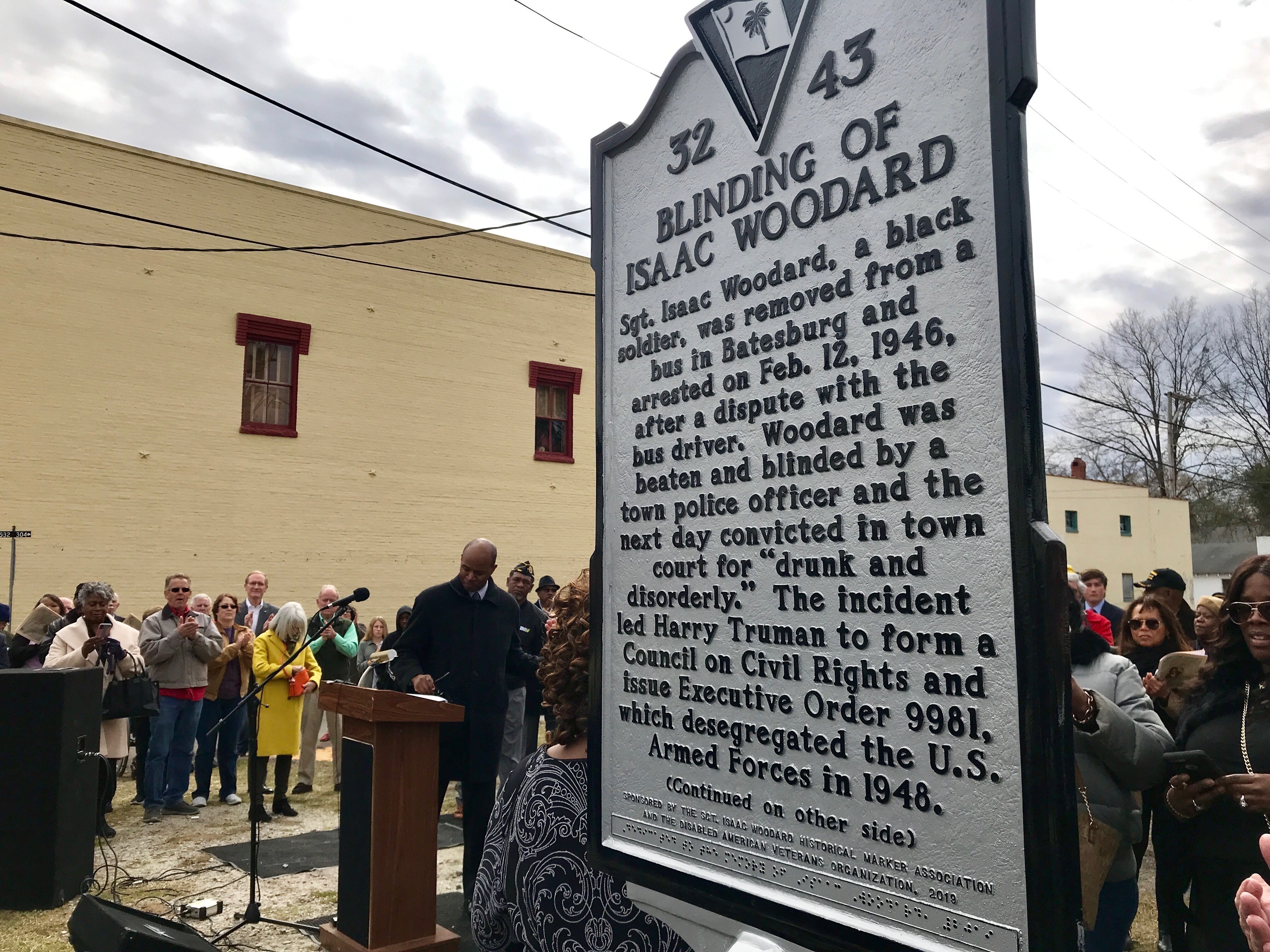
    In this Feb. 9, 2019, file photo, the Blinding of Isaac Woodard historical marker was dedicated in Batesburg-Leesville, S.C. Woodard, a uniformed World War II veteran was headed home on a bus in 1946, when he was removed and beaten by a white South Carolina police chief, leaving Woodard permanently blind.Christina Myers

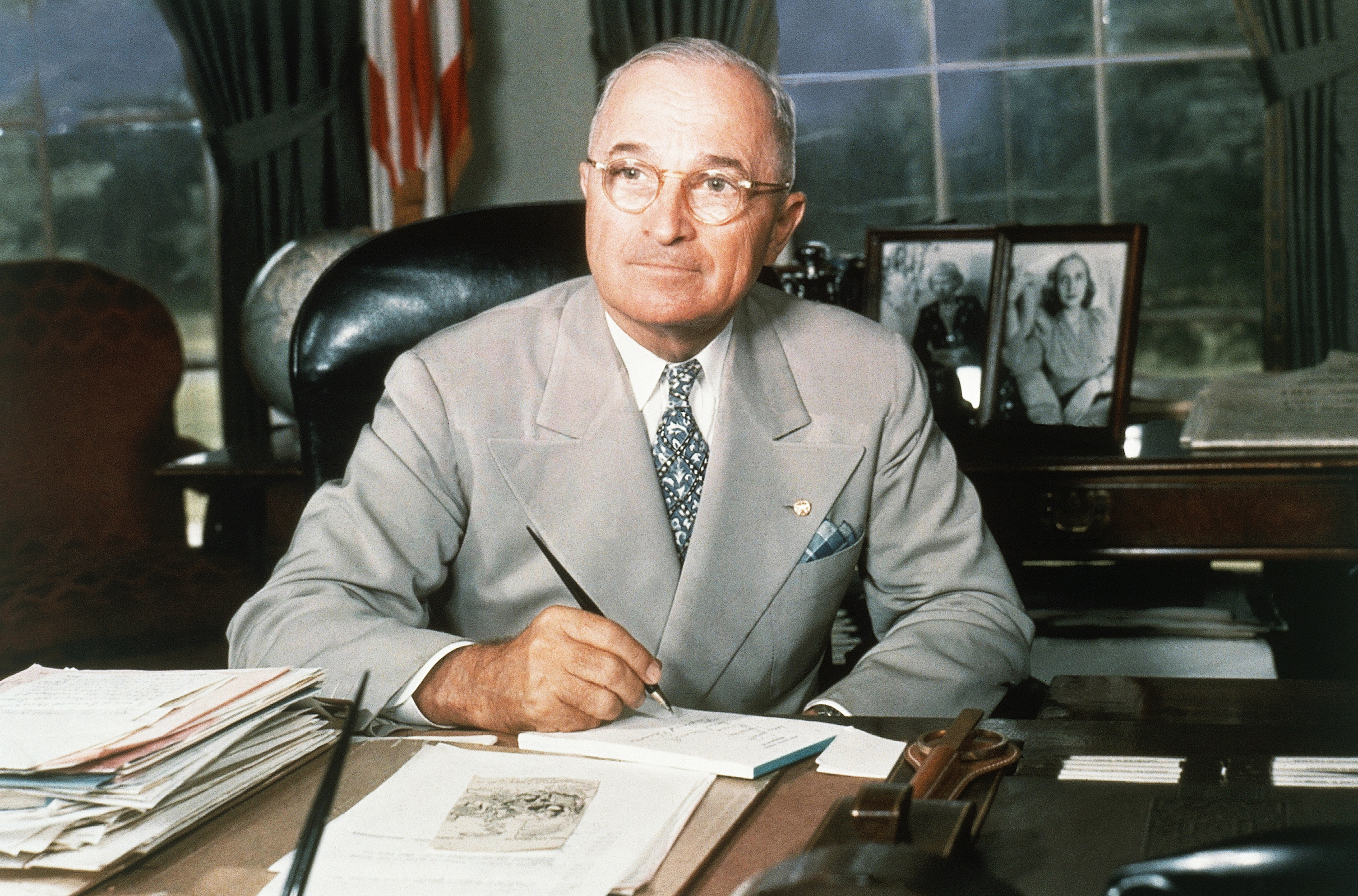
    Black Americans demanded that embattled President Harry Truman embrace new civil rights protections. Truman was aghast at the treatment of returning veterans and believed in fairness. He also realized that he’d need the votes of African Americans to have any chance of winning reelection.

    In 1947, Truman began making a concerted effort to advance the civil rights cause. He became the first president to speak at the National Association for the Advancement of Colored People’s annual convention. The White House also released To Secure These Rights, a book detailing how the Truman administration both acknowledged the problems facing African Americans and the steps it would take to ameliorate them. Additionally, Truman desegregated the armed forces, a critical step in showing he was serious about embracing civil rights.

    Truman made these moves to showcase American freedom and democracy and juxtapose it with Soviet communism, while also trying to shore up the African American vote. That was especially critical because of a political insurgency that threatened Truman’s hope for reelection: the rise of Henry Wallace and the Progressive Party.

    Wallace had served as agriculture secretary during Franklin Roosevelt’s first two terms as president and as vice president during Roosevelt’s third term. He had also served as Truman’s secretary of commerce. Many on the left saw Wallace as the only hope for achieving their main goals: preventing a full-blown war with the Soviets, and securing greater labor, civil and human rights at home.

    Wallace’s backers included prominent African Americans like Paul Robeson and W.E.B. Du Bois, who distrusted Truman. Both men supported Wallace due to the former’s strong stance in favor of civil rights at home and deep-seated opposition to the brewing Cold War abroad. Their support helped catalyze a debate in the Black community over which candidate to back.

    Forums like The Crisis, the official magazine of the NAACP, became spaces for African American voters to debate Wallace vs. Truman. In early 1948, The Crisis editors declared “Wallace is straight on our question,” referring to his unabashed support for civil rights. They refrained, however, from outright endorsing him, noting his mixed record as secretary of agriculture.

    Made By History sponsors. FOR USE ON MADE BY HISTORY STORIES ONLY.Inquirer Staff

    Readers remained divided over this support for Wallace. Some felt the editorial was too harsh about his policies as secretary, while others believed he had not done enough for Black Americans in the federal government. “I challenge you to name another American of equal stature,” Robert and Selma Singer from Chicago wrote to The Crisis offices after its April 1948 issue, “who has mass support, who has given such impetus toward solving the ‘Negro Problem.’”

    Yet, others, such as Max Womack of Iowa City, argued that Wallace had no chance as a third-party candidate, and would merely split the votes of people who’d otherwise back Truman. He also wondered why the editors hadn’t given “President Truman any credit at all?”

    This last question hinted at the prevailing sentiment in the Black community: most African American voters backed Truman that November. They preferred trusting the incumbent — a proven commodity — rather than taking a chance on what turned out to be a quixotic campaign.

    Their overwhelming support delivered key margins in battleground states in the North and Midwest, like Michigan, a testament to the maturing power of the African American vote. “Negro leaders pointed out,” proclaimed the front page of the Black-owned and operated Detroit Tribune, “that the Michigan Republican party seemed to go out of its way to avoid the Detroit population and its political desires.”

    Black voters siding with mainstream, liberal Democrats over more radical ideas proved to be no anomaly. Twenty-four years later, in 1972, Black voters again engaged in an ideological skirmish. Activists debated the best way forward after the heyday of the Civil Rights Movement and the election of Republican Richard Nixon in 1968 against a deeply divided Democratic Party.

    At the National Black Political Convention, held in Gary, Indiana, African American liberals, moderates, socialists, nationalists, and even conservatives gathered to map out a strategy for adjusting the politics of Black America to a new normal. Nixon’s administration had largely practiced “benign neglect” on racial issues, while suppressing the Black Power Movement. Attendees grappled with an overall backlash to the Great Society programs spearheaded by the liberal wing of the Democratic Party.
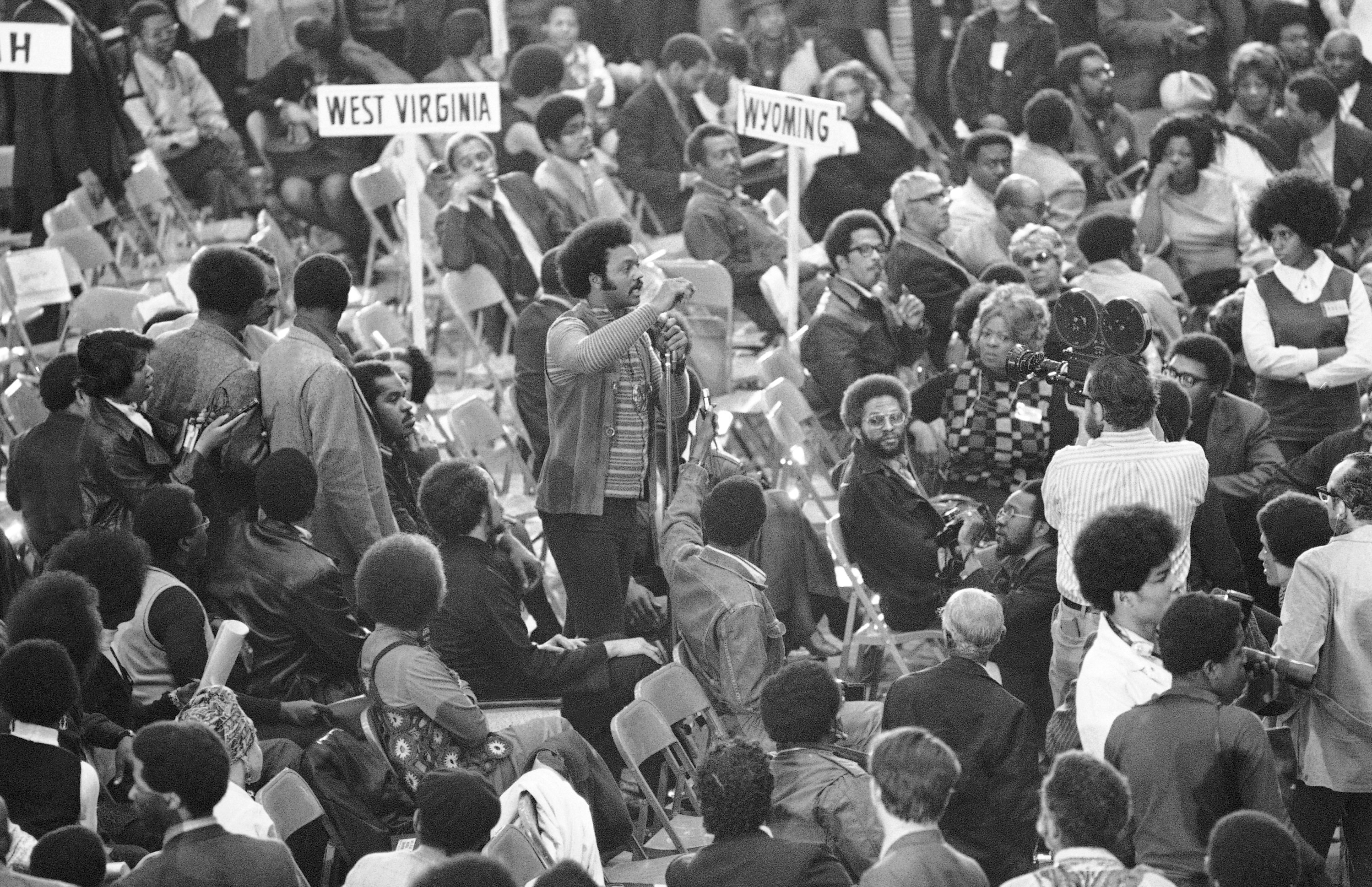
    In this March 13, 1972, file photo, the Rev. Jesse Jackson, executive director of Operation: PUSH, speaks from the floor of the National Black Political Convention in Gary, Ind.Jim Wells

    The Convention’s “Gary Declaration” gave voice to the frustration of many Black Americans, arguing, “Both parties have betrayed us whenever their interests conflicted with ours (which was most of the time), and whenever our forces were unorganized and dependent, quiescent and compliant.”

    Still, despite the critique of both Nixonian conservatism and Great Society liberalism, the members of the Gary Convention disagreed over a radical proposal to create an all-Black political party that could, in theory, broker deals with both major parties on behalf of Black America. Later that year, most Black Americans stuck with the Democrats — one of the few constituencies to back the doomed campaign of George McGovern.

    The primary that year had illustrated Black political pragmatism at work. Ebony magazine journalist Alex Poinsett acknowledged that McGovern was far from perfect and that Black voters lacked a truly satisfactory option. Yet, he argued that the candidate’s support for elements of the Gary Declaration — and a competing “Black Bill of Rights” proposed by the Congressional Black Caucus — made him a sensible option over several longer shots, including African American congresswoman Shirley Chisholm.

    The choice of McGovern over Chisholm reflected how Black voters’ wariness about progressivism that did not seem to be electorally viable even applied to Black candidates. The same was true three decades later: Barack Obama struggled with Black voters in polling until his victory in Iowa in January 2008 made it clear he was a candidate who could win.

    These cases epitomize how, over time, Black voters have stuck with liberals in the Democratic Party who demonstrate a genuine chance of victory over more radical options that might promise better policy. They aren’t always happy with their choices, but they know what to expect from mainstream Democrats.

    This choice reflects how, ultimately, for African American voters, a pragmatic view of politics overrules almost everything else. The old saying that “politics is the art of the possible” is, often, the rueful outlook on politics by African Americans.

    Robert Greene II is associate professor of history at Claflin University. He is also managing editor of “Global Black Thought” and co-host of the award-winning podcast, “Our New South.”

    Made by History takes readers beyond the headlines with articles written and edited by professional historians. Opinions expressed do not necessarily reflect the views of The Inquirer.

  • Josh Shapiro has a 16-point lead in the governor’s race — and most Pa. Democrats would support him for president

    Josh Shapiro has a 16-point lead in the governor’s race — and most Pa. Democrats would support him for president

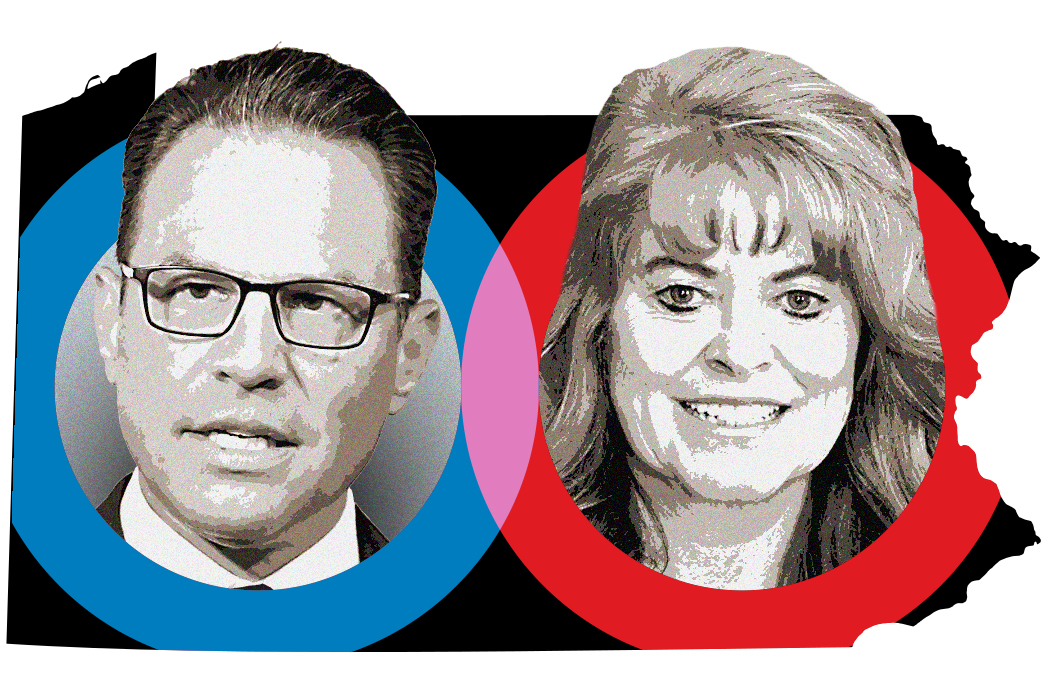
    With a little more than two months until Election Day, Democratic Gov. Josh Shapiro has a double-digit lead over his Republican challenger, Stacy Garrity, among likely Pennsylvania voters in the race to lead the critical swing state — an election that could also serve as an audition for the 2028 presidential primary.

    Shapiro holds a 16-percentage-point lead over Garrity, the state treasurer, according to a new poll of 760 likely voters conducted from Aug. 17 through 21 by The Inquirer, the New York Times, and Siena University.

    The numbers could foreshadow another commanding victory for Shapiro, as he hopes his popularity trickles into other down-ballot races, including four congressional districts that national Democrats think they can flip. Shapiro is also trying to flip the state Senate for the first time in 30 years and deliver a Democratic trifecta in the statehouse.

    (function() { var l = function() { new pym.Parent( ‘nyt-shapiro2__graphic’, ‘https://media.inquirer.com/storage/inquirer/ai2html/nyt-shapiro2/index.html’); }; if(typeof(pym) === ‘undefined’) { var h = document.getElementsByTagName(‘head’)[0], s = document.createElement(‘script’); s.type = ‘text/javascript’; s.src = ‘https://pym.nprapps.org/pym.v1.min.js’; s.onload = l; h.appendChild(s); } else { l(); } })();

    A majority of Pennsylvania voters — 60% — have a favorable opinion of the governor, compared with Garrity, who is viewed favorably by just 37% in the state.

    Shapiro’s popularity also eclipses that of President Donald Trump, according to the poll. Sixty percent of likely Pennsylvania voters approve of the job Shapiro is doing as governor, while 39% approve of Trump, who won the state two years ago.

    Lora Peluso, 63, a Democrat and retired catering director from Pittsburgh, said Shapiro has been a shield in Pennsylvania against some of Trump’s most harmful policies affecting low-income and older people.

    “I think [Shapiro] is trustworthy,” said Peluso, who participated in the poll. “His policies are things that actually benefit people, the average working person, seniors.”

    Garrity still unknown by some Republicans

    Pennsylvania Republicans this year had hoped to avoid another walloping by Shapiro, who has won three times statewide, with fears that a weak gubernatorial candidate could negatively affect the rest of the Republican ticket. So the state GOP took the unprecedented move of endorsing Garrity in September 2025 — approximately 14 months before the election — to try to raise her profile.

    Despite securing Trump’s endorsement, Garrity has struggled to raise money, attract support from national Republicans, or compete with Shapiro’s $13 million in ad buys so far this cycle. Her campaign has spent $679,000 on ad buys thus far, according to media-tracking firm AdImpact, as it seeks to introduce the candidate to voters.

    Now, with 70 days until the election, a quarter of likely Republican voters still did not know Garrity or know enough about her to form an opinion of her, according to the poll.

    Meanwhile, Shapiro maintains favorable opinions among 27% of Trump’s 2024 supporters, and 35% of registered Republicans approve of the job he is doing as governor, the poll found.

    (function(){function e(){window.addEventListener(`message`,function(e){if(e.data[`datawrapper-height`]!==void 0){var t=document.querySelectorAll(`iframe`);for(var n in e.data[`datawrapper-height`])for(var r=0,i;i=t[r];r++)if(i.contentWindow===e.source){var a=e.data[`datawrapper-height`][n]+`px`;i.style.height=a}}})}e()})();

    Michael Patterson, a Republican from Trumbauersville, Bucks County, who supported Trump in 2024, said he plans to support Shapiro in November because he likes the job the governor is doing and because he does not know much about Garrity besides what he has seen on social media.

    “Honestly, I don’t know much about her,” Patterson, 60, said. “I guess I don’t see advertisements on the TV. Other than Facebook, I really don’t see her. The stuff I see on Facebook is just typical partisan stuff.”

    Shapiro, on the other hand, appears more moderate and independent from his party in Patterson’s eyes.

    “He’s kinda doing his own thing. I have a lot of respect for that. He’s not playing partisan games,” Patterson said, contrasting Shapiro with Democrats in California and New York.

    Michael Patterson, a Bucks County Republican voter pictured in his Trumbauersville home, plans to vote for Democratic Gov. Josh Shapiro over Republican nominee Stacy Garrity. William Thomas Cain / For The Inquirer

    This attitude shows up among other Republicans, too, said Don Levy, the director of the Siena Research Institute.

    “Shapiro is seen as sufficiently middle of the road,” Levy said. “He’s got 35% of Republicans approving of the job that he’s doing as governor. That’s a really impressive number in today’s world.”

    Other Republicans like Steven Keenan, 70, of Ridley Township, are all in for Garrity, citing her military experience and support for Trump.

    “[Shapiro’s] a big phony. He’s a politician,” Keenan said. “She is, too, but she’s been through the wars. I think she’s earned her place. I think we should give a woman a chance.”

    A majority of Pennsylvania voters trust Shapiro over Garrity to handle top issues facing the state, including the economy, cost-of-living increases, the Trump administration, immigration, and doing what is best for ordinary Pennsylvanians.

    Tina Hoffert, 68, of Lenhartsville, Berks County, said she has not heard much about Garrity, but plans to vote for her in November because she is unsatisfied with Shapiro’s leadership.

    “He’s forever bashing Trump,” Hoffert, a Republican, said. “I’m sorry, I don’t care whether you like him or not, he’s our president. You work with him. You don’t fight him. And if there’s things you don’t like that he’s doing, then you go in there and you have discussions.”

    Shapiro’s presidential prospects

    If Shapiro is reelected in a landslide victory this November, it becomes even more likely that he jumps into the 2028 presidential race as the governor of a key swing state with 19 electoral votes.

    Among those surveyed who said they plan to vote in the Democratic primary in two years, 86% said they would be likely to support him — though the poll did not compare him with other potential primary candidates.

    Other prospective candidates include former Vice President Kamala Harris, Govs. Gavin Newsom of California and JB Pritzker of Illinois, U.S. Sens. Mark Kelly of Arizona and Jon Ossoff of Georgia, and U.S. Rep. Alexandria Ocasio-Cortez of New York.

    (function(){function e(){window.addEventListener(`message`,function(e){if(e.data[`datawrapper-height`]!==void 0){var t=document.querySelectorAll(`iframe`);for(var n in e.data[`datawrapper-height`])for(var r=0,i;i=t[r];r++)if(i.contentWindow===e.source){var a=e.data[`datawrapper-height`][n]+`px`;i.style.height=a}}})}e()})();

    Shapiro has brushed off questions about his ambitions and told a reporter Saturday, in response to whether he would commit to serving a four-year term in office, that “the only thing that I’m focused on — and the only thing anybody should be focused on — is winning in November and being a check on this president’s chaos, cruelty, and corruption.”

    Most voters in the poll — 58% — said that if Shapiro decides to run for president, doing so either would not distract from his role as governor or would not keep him from being effective at governing.

    “I mean, it would be a distraction, of course, but I think he’s a professional and a hard worker, and he would figure it out. It seems like he hires good people, too,” said Peter Hewitt, 62, of Devon, a Democrat who supports Shapiro’s reelection bid.

    (function() { var l = function() { new pym.Parent( ‘nyt-trump2__graphic’, ‘https://media.inquirer.com/storage/inquirer/ai2html/nyt-trump2/index.html’); }; if(typeof(pym) === ‘undefined’) { var h = document.getElementsByTagName(‘head’)[0], s = document.createElement(‘script’); s.type = ‘text/javascript’; s.src = ‘https://pym.nprapps.org/pym.v1.min.js’; s.onload = l; h.appendChild(s); } else { l(); } })();

    Shapiro’s potential candidacy has largely centered on his electability, especially his ability to win the top office in the nation’s premier swing state. He has pitched himself as a Democratic governor more interested in working with Republicans to make meaningful improvements to the state than in picking partisan fights, and voters agree: 58% of respondents said he is neither too far to the left nor to the right.

    “He’s done a good job of just being more of a moderate, middle-of-the-road Democrat,” said Andrew Perez, a 58-year-old self-described independent voter in Pittsburgh. He said he appreciated Shapiro’s focus on improving roads and highways and not “just blindly disagreeing” with Trump.

    “I think we need a strong presidential candidate who will try to unite the country instead of just keeping it being divisive, so I think that I’d be pretty likely to vote for him [for president],” said Perez, a physician.

    Montiese McKenzie, 46, of West Philadelphia, said she is supporting Shapiro for a second term, but is not quite yet sold on a presidential run. She said she has not seen him rise to the level of “fighter” she thinks the Democratic Party needs, and believes as of now, she would be more likely to support someone else in the Democratic primary.

    “You see people like Jon Ossoff and JB Pritzker, and they’re not putting up with it. They don’t make it pretty anymore,” McKenzie said. “If I saw some of that in Shapiro, I might be more likely to support him as a presidential candidate. Until then, I’m not sure he has the gumption.”

    Shapiro has signed on to dozens of lawsuits against Trump’s administration on a host of issues, from tariffs to gender-affirming care.

    But to win the party’s nomination, Shapiro would have to defeat more progressive candidates and make the case for his more centrist approach.

    Montiese McKenzie, 48, poses for a portrait near her home in West Philadelphia on Monday, Aug. 24, 2026. McKenzie is a supporter of Gov. Josh Shapiro’s reelection, but is hesitant to back his potential presidential run in 2028.Allie Ippolito / For The Inquirer

    He has already faced criticism from some progressive voters over his previous support for school vouchers, and his early embrace of data centers, which he reversed last week by implementing what he called some of the nation’s “strictest guardrails.” Shapiro, Pennsylvania’s third Jewish governor, has also faced a perception from some progressives that he has been too supportive of Israel during its war with Hamas, despite his vocal opposition to the country’s leader, Prime Minister Benjamin Netanyahu.

    Nearly half, 47%, of respondents said he has been just “about right on support of Israel,” with 14% saying he has been too supportive and 19% saying he has been not supportive enough.

    Should Shapiro launch a presidential campaign, Hewitt wants to see him “come out on the right side.”

    Hewitt, who emphasized his support for Jewish people in his community, said he considers the Israeli government’s actions toward Palestinian people in Gaza to be genocidal. More than 73,000 Palestinian people have been killed in Gaza since the war began nearly three years ago, and multiple international institutions have said Israel’s actions violate human rights.

    “I don’t think it’s really that big of a deal for governors per se. He’s not going to vote on national policy as the governor of Pennsylvania,” Hewitt said. But he added: “He does have a voice, and if he’s thinking about a next step beyond Pennsylvania, then he will have to come out in regard to that issue.”

  • Most of Pa.’s likely voters disapprove of Donald Trump and his policies, new poll shows

    Most of Pa.’s likely voters disapprove of Donald Trump and his policies, new poll shows

    More than half of likely voters in Pennsylvania’s forthcoming midterm elections disapprove of President Donald Trump’s job performance, and he is drastically underwater among the state’s electorate on key issues — some of which helped him win a second term in 2024.

    Trump, who won the crucial swing state by nearly two percentage points in November 2024, now has an approval rating of 39% and a disapproval rating of 58% among Pennsylvania’s likely voters, according to an Inquirer/New York Times/Siena University poll published Tuesday.

    The poll, which was conducted from Aug. 17 to 21 among 760 likely Pennsylvania voters, raises questions about how voters’ perception of the president will affect November’s midterms, when many Pennsylvanians will cast their ballots in four critical swing district races that could determine which party controls the U.S. House.

    (function() { var l = function() { new pym.Parent( ‘nyt-trump2__graphic’, ‘https://media.inquirer.com/storage/inquirer/ai2html/nyt-trump2/index.html’); }; if(typeof(pym) === ‘undefined’) { var h = document.getElementsByTagName(‘head’)[0], s = document.createElement(‘script’); s.type = ‘text/javascript’; s.src = ‘https://pym.nprapps.org/pym.v1.min.js’; s.onload = l; h.appendChild(s); } else { l(); } })();

    Even among his Pennsylvania supporters who were surveyed, Trump faces some of his lowest approval ratings regarding his handling of the war in Iran and cost-of-living issues, according to the poll, counteracting campaign promises that proved successful in 2024: ending foreign wars and helping people pay their bills.

    Once again, the economy will likely be at the front of voters’ minds heading into November — 22% of Pennsylvanians polled said it is their top issue in the governor’s race — and it could also serve as an indicator for the outcome of House races where Republicans will be on the defensive.

    “Certainly it’s got to be a drag on their fortunes,” said Don Levy, director of the Siena Research Institute.

    (function(){function e(){window.addEventListener(`message`,function(e){if(e.data[`datawrapper-height`]!==void 0){var t=document.querySelectorAll(`iframe`);for(var n in e.data[`datawrapper-height`])for(var r=0,i;i=t[r];r++)if(i.contentWindow===e.source){var a=e.data[`datawrapper-height`][n]+`px`;i.style.height=a}}})}e()})();</script

    Trump losing ground on issues that propelled him to White House

    The new polling on Trump’s management of top concerns facing the United States — particularly the economy and the cost of living — shows how the issues that helped propel him to the White House in 2024 are now souring his approval among Pennsylvanians, including some who previously voted for him.

    Among likely voters in the Keystone State, 39% approve and 61% disapprove of Trump’s handling of the economy. On his handling of the cost of living, 33% said they approve and 66% disapprove.

    The data come as voters continue to grapple with rising costs, including unusually high gas prices, and grocery prices that have been increasing for nearly six years. Trump’s tariffs, one of the defining policies of his first year back in office, also raised prices for consumers and businesses.

    Now, a quarter of Pennsylvanians who voted for the president in 2024 say they disapprove of how he is handling of the cost of living.

    Michael Patterson, 60, of Bucks County, is one of them.

    Though Patterson said Trump’s term has been “great” overall, he was expecting more from the president on the economy and costs.

    “The prices are still too high, interest rates are still too high,” Patterson said. “We still haven’t seen anything from that promise yet.”

    (function(){function e(){window.addEventListener(`message`,function(e){if(e.data[`datawrapper-height`]!==void 0){var t=document.querySelectorAll(`iframe`);for(var n in e.data[`datawrapper-height`])for(var r=0,i;i=t[r];r++)if(i.contentWindow===e.source){var a=e.data[`datawrapper-height`][n]+`px`;i.style.height=a}}})}e()})();

    Trump’s messaging on the economy in 2024 was part of why he won Pennsylvania with more votes than any other statewide GOP candidate in history. Pennsylvania voters cited Trump’s promises to bring costs down as a top reason that they voted for him and overlooked Democrats’ warnings about what his election could mean for democracy.

    Trump is also hurting on other issues that helped boost him to the presidency, including his promise to end wars. Thirty-two percent of likely voters in Pennsylvania approve of Trump’s handling of the war in Iran and 66% disapprove — including 30% of Trump voters.

    The war has now gone on for almost six months, after Trump promised it would last just a few weeks, and has contributed to rising oil and gas prices.

    Kay Skripac, who voted for Trump in 2024, said that though she supports the president on almost every other issue, “I just don’t think that we should have invaded or bombed Iran. I was very surprised, because I didn’t vote for that.”

    The 72-year-old independent voter said, despite thinking Trump has done strong work on the economy (she says her retirement portfolio doubled from 2016 to 2026), she is feeling the war’s impact at the gas pump.

    “I want everything to just be normal and stay the same, because everything was fine,” said Skripac, who lives in Crawford County. “We weren’t involved in any wars. You didn’t have to worry about any friends or loved ones potentially getting killed. I don’t like that at all.”

    Trump’s handling of the Israeli-Palestinian conflict also received low marks from voters, with 62% disapproval, compared with 36% approval.

    Republican Sandra Faust, 40, approves of Trump’s handling of that conflict. But her support does not extend to the war in Iran, which Trump launched in coordination with Israel.

    Faust, who voted for Trump two years ago, said she strongly disapproves of the war due to rising gas prices and believes it conflicts with the president’s promise to end wars. The Pittsburgh resident, who has a family member in military training to become a jet refueler, said she wishes the conflict in Iran would end.

    “Them dragging it on is not only harming us, locally with gas and, you know, pricing and stuff like that, but it’s putting our military in harm’s way, and I’m not happy about that,” she said.

    Faust added that she opposes the war because of her belief in the “America First” ideology. That perspective also makes her supportive of Trump’s immigration agenda, she said.

    The president is lagging in Pennsylvanians’ support of his immigration policies — which have included mass deportations and enhanced border security — but the disapproval is not as stark. Among likely voters, 44% approve of his handling of immigration and 55% disapprove.

    “We are not responsible for taking care of the world’s problems,” Faust said.

    What does Trump’s approval rating mean for November in Pa.?

    So what does this mean for the midterms?

    Time will tell.

    But 51% of Pennsylvania’s likely voters who were polled indicated they would be more likely to vote for a Democrat in their congressional district, and 44% said they would support a Republican. More than half, 53%, say they would want to see a flip of control in the House, putting Democrats in charge, while 44% say they would want to see the GOP maintain control.

    The polling for the GOP in November is not as bleak as Trump’s numbers, but it shows where voters’ heads are a little more than two months away from the midterms, when Pennsylvanians will weigh in on four competitive swing district congressional races.

    (function(){function e(){window.addEventListener(`message`,function(e){if(e.data[`datawrapper-height`]!==void 0){var t=document.querySelectorAll(`iframe`);for(var n in e.data[`datawrapper-height`])for(var r=0,i;i=t[r];r++)if(i.contentWindow===e.source){var a=e.data[`datawrapper-height`][n]+`px`;i.style.height=a}}})}e()})();

    Both parties are targeting GOP-held seats in Bucks County’s 1st Congressional District, the Lehigh Valley’s 7th Congressional District, the Scranton area’s 8th Congressional District, and the Harrisburg area’s 10th Congressional District.

    Democrats are hoping that a message focused on affordability and tying opponents to Trump will usher in wins this fall. For instance, Democrat Bob Harvie in the heated 1st Congressional District race published a new campaign platform recently that focuses mainly on addressing economic issues.

    “The task of Republicans running in various congressional districts, or for the governor of the state, is going to be to somehow separate themselves from the perception that Pennsylvanians have about the job that the head of their party is doing on the economy,” said Levy, the Siena polling director.

    But for Democrats, connecting Harvie’s opponent, longtime Republican U.S. Rep. Brian Fitzpatrick, to Trump could be a harder sell. The Bucks County lawmaker consistently outperforms his party and has survived one blue wave after another.

    The poll’s findings signal that both parties may also have to think about their branding to the public — 50% of respondents said the Democratic Party is too far to the left and 47% said Republican Party is too far to the right.

    Republicans will also have to consider Trump’s unpopularity, especially with women. Sixty-two percent of female likely voters in Pennsylvania disapprove of Trump’s policies, while 34% approve. The president is also struggling with men — a key base for him in 2024: 51% of men disapprove of Trump’s policies, compared with 46% who approve.

    (function(){function e(){window.addEventListener(`message`,function(e){if(e.data[`datawrapper-height`]!==void 0){var t=document.querySelectorAll(`iframe`);for(var n in e.data[`datawrapper-height`])for(var r=0,i;i=t[r];r++)if(i.contentWindow===e.source){var a=e.data[`datawrapper-height`][n]+`px`;i.style.height=a}}})}e()})();

    Democrat Vincent Russo, 78, of Lackawanna County, where Republican U.S. Rep. Rob Bresnahan faces a challenge from Democrat Paige Cognetti in the 8th District, said he will be voting straight blue on his ballot in November and thinks opposition to Trump’s policies will motivate his party to get out to the polls.

    “I think the people are starting to see he does nothing but lie,” Russo said.

    Staff writers Michelle Baruchman and Gillian McGoldrick contributed to this article.

  • Fetterman gains GOP favor as Pa. Democrats regret electing him, new poll finds

    Fetterman gains GOP favor as Pa. Democrats regret electing him, new poll finds

    Two-thirds of Pennsylvania Democrats who are likely to vote this year believe U.S. Sen. John Fetterman supports President Donald Trump too frequently, while about half say the Democratic senator has been too supportive of Israel, according to an Inquirer/New York Times/Siena University poll published Tuesday.

    Democratic voters’ sharply divided views on Fetterman — with 69% having an unfavorable opinion of him in general — are the latest signs he could face an uphill battle if he seeks reelection as a Democrat in 2028.

    Fetterman has not said whether he will run for a second term.

    But as he weighs his options — which include leaving the Democratic Party because of what he considers its anti-Israel sentiment — the senator’s occasional support of Trump’s agenda has contributed to his declining favorability among voters who helped elect him in the first place, the new survey indicates.

    “I’m so disappointed in him, I can’t even see straight,” said Joseph Jaskula, a retired salesman from Lewisburg, Union County, who participated in the poll of 760 likely voters conducted by Siena University on behalf of The Inquirer and the New York Times from Aug. 17 to 21.

    (function() { var l = function() { new pym.Parent( ‘nyt-fetterman__graphic’, ‘https://media.inquirer.com/storage/inquirer/ai2html/nyt-fetterman/index.html’); }; if(typeof(pym) === ‘undefined’) { var h = document.getElementsByTagName(‘head’)[0], s = document.createElement(‘script’); s.type = ‘text/javascript’; s.src = ‘https://pym.nprapps.org/pym.v1.min.js’; s.onload = l; h.appendChild(s); } else { l(); } })();

    Jaskula, a Democrat who said he voted for Fetterman in 2022, said he is particularly upset about the senator’s votes for several of Trump’s nominees and for the war in Iran.

    Fetterman has been the only Senate Democrat to vote against restricting the president’s use of military force in Iran.

    “He voted with the Republicans on that,” Jaskula, 72, said of the war powers resolutions that aimed to rein in Trump. “And he’s had some other ones where we wonder if he’s a Republican or a Democrat.”

    Fetterman’s standing among Pennsylvania voters overall remains split, according to the poll.

    He is viewed favorably by 49% and unfavorably by 43% of all likely voters in the state. That was nearly the same result as the last time the Inquirer/New York Times/Siena poll asked about Fetterman’s favorability, in May 2024.

    But the difference between now and then — when Fetterman was campaigning against Trump’s election and only two years removed from his own sweeping victory in the Pennsylvania Democratic primary — is who is supporting him.

    Pennsylvania’s U.S. Senators John Fetterman (left) and Dave McCormick appear together at June event in Philly to promote the savings accounts for kids that were part of President Donald Trump’s One Big Beautiful Bill Act.Tom Gralish / Staff Photographer

    Fetterman outperforms McCormick with GOP voters

    In almost the exact opposite breakdown compared with about two years ago, just one in five likely Democratic voters reported having a favorable view of Fetterman, while four out of five likely Republican voters said they have a favorable view.

    Even Fetterman’s Republican counterpart in Pennsylvania — U.S. Sen. Dave McCormick, who was elected in 2024 — is viewed favorably by a smaller share of GOP voters, about 66% compared with Fetterman’s 79%.

    (function(){function e(){window.addEventListener(`message`,function(e){if(e.data[`datawrapper-height`]!==void 0){var t=document.querySelectorAll(`iframe`);for(var n in e.data[`datawrapper-height`])for(var r=0,i;i=t[r];r++)if(i.contentWindow===e.source){var a=e.data[`datawrapper-height`][n]+`px`;i.style.height=a}}})}e()})();

    Don Levy, director of the Siena Research Institute, called the Democratic senator’s numbers “shocking.”

    “If you didn’t know any difference, you would immediately assume that Fetterman and McCormick are both Republicans, and that Fetterman is an extremely popular Republican senator amongst Republicans,” Levy said. “I can’t think of another case exactly like this.”

    Fetterman, citing his voting record in the Senate, which still mostly aligns with Democrats, has said repeatedly that he will not switch his registration to Republican.

    GOP leaders, who are fighting to retain control of the Senate this fall, have said they would welcome the Pennsylvania Democrat into their fold.

    And Fetterman has raised the prospect of leaving the party, possibly becoming an independent, if Democrats oppose Israel as an “official” part of their platform. He has staunchly supported the country in the wake of the Oct. 7, 2023, attack by Hamas, and as Democrats have become increasingly critical of Israel’s counterattack.

    (function(){function e(){window.addEventListener(`message`,function(e){if(e.data[`datawrapper-height`]!==void 0){var t=document.querySelectorAll(`iframe`);for(var n in e.data[`datawrapper-height`])for(var r=0,i;i=t[r];r++)if(i.contentWindow===e.source){var a=e.data[`datawrapper-height`][n]+`px`;i.style.height=a}}})}e()})();

    Fetterman has opposed fellow Democrats’ efforts to end the United States’ assistance to Israel’s offensive measures. He has also become the most vocal Democratic supporter of both countries’ attacks against Iran, an issue that also remains deeply unpopular among Pennsylvania voters.

    At the same time, Fetterman has backed other Trump initiatives, like immigration enforcement and the investment accounts for children known as Trump Accounts.

    “He’s a voice in the party, standing up for what’s right,” said Nicholas Morabito, a 32-year-old warehouse worker in Butler who participated in the poll.

    A registered Republican, Morabito said he would consider voting for Fetterman in 2028, regardless of which party label accompanies his name on the ballot.

    “I don’t think there’s very much difference between the two of us. Just the difference in party,” Morabito said.

    Fetterman has acknowledged the shift in support. He wrote in his 2025 memoir that he was “completely at peace” with the idea that his support of Israel might cost him his Senate seat. And in interviews, he has repeatedly said that, as a swing-state senator, he should work with and not demonize the other party.

    A plurality of likely voters — 47% — say Fetterman is “about right” when it comes to supporting or opposing Trump, according to the poll. About 38% said he supports Trump too much, 6% said he opposes Trump too much, and 9% did not answer.

    (function(){function e(){window.addEventListener(`message`,function(e){if(e.data[`datawrapper-height`]!==void 0){var t=document.querySelectorAll(`iframe`);for(var n in e.data[`datawrapper-height`])for(var r=0,i;i=t[r];r++)if(i.contentWindow===e.source){var a=e.data[`datawrapper-height`][n]+`px`;i.style.height=a}}})}e()})();

    But Democratic voters have indicated a strong desire for their elected officials to push back against Trump, and Fetterman’s declining support among them appears to be due in part to that shift during Trump’s second term. About 67% of likely Democratic voters said Fetterman supports the president too much, while 20% said he gets it “about right.”

    “Fetterman has been such an interesting, unique personality now since he broke onto the scene,” Levy said. “Given the state of play right now, Democrats are just angry that he was elected. Democrats are supposed to act like Democrats, and this shows that their perception of him is that he is not.”

  • ‘Political earthquake’ in Western Pennsylvania as Democrats flip deep-red district in special election

    ‘Political earthquake’ in Western Pennsylvania as Democrats flip deep-red district in special election

    Pennsylvania Democrats, including Gov. Josh Shapiro, are pointing to a stunning upset in a special election for a deep-red state House district as proof that the party has momentum while campaigning this fall for a trifecta in Harrisburg.

    Butler County Democrat Brandon Dukes said his apparent victory over Republican Scott Timko, by fewer than 100 votes as of Wednesday afternoon, was thanks to his focus on local issues, such as a major corridor perennially under construction to the frustration of residents.

    “We kept it local, we kept it practical, and we kept it common sense,” Dukes said in an interview.

    The 12th Pennsylvania House District, just north of Pittsburgh, went for President Donald Trump by more than 18 percentage points just two years ago and had been held by Republicans since 1999.

    Dukes’ apparent win attracted national attention Wednesday as both a sign of the backlash to the president’s party heading into November and as a north star for centrist Democrats as they seek a path forward.

    “We won that district last night with a middle-of-the-road community leader, who I backed, who won this improbable race,” Shapiro told CBS Mornings, contrasting Dukes with the party’s more left-leaning candidates this cycle.

    “What we’re seeing are commonsense folk from the community who, I think, reflect a lot more my values and my approach to governing who are winning and are upsetting Republicans in these deeply Republican districts,” said Shapiro, a moderate Democrat widely expected to run for president in 2028.

    Shapiro recorded a robocall urging voters to cast ballots in the race, his campaign confirmed.

    Recipe for November

    Democrats are aiming to flip four congressional districts in Pennsylvania this fall and win control of the state Senate for the first time in 30 years with Shapiro, a popular governor, at the top of the ticket.

    Dukes, who will compete to win the seat again in November in a rematch with Timko, shattered previous Democratic runs in the Butler County district.

    “The fact we just flipped this seat tonight is a political earthquake,” U.S. Rep. Brendan Boyle, a Philadelphia Democrat, said on X.

    The district had been represented for more than two decades by one of the Pennsylvania House’s most conservative members, former State Rep. Daryl Metcalfe, who retired in 2023 and was known for his anti-LGBTQ+ rhetoric and actions.

    State Rep. Malcolm Kenyatta, a Philadelphia Democrat, said that the seat is one the party “should not have had a chance to come within sneezing distance of,” but that Dukes’ performance provides a blueprint that can be replicated throughout the state.

    “Winning here means there is not a single safe seat for the GOP,” Kenyatta, a vice chair of the Democratic National Committee, said on X.

    The Associated Press had not called the race as of Wednesday evening, but both parties made statements indicating that they expected Dukes’ lead to hold.

    Chantell McCurdy, the director of Butler’s election bureau, said the initial count has been completed and there is a five-day period to challenge the results.

    James Markley, a spokesperson the Pennsylvania Republican Party, said in a statement that the race needs to be a “wake up call for Republican voters,” and warned against policies from the Democratic Party’s more leftward flank.

    While expressing confidence that the party would win the seat back in November, he also lamented the party’s inability to turn out voters this election.

    “The General Election will come down to which party does a better job getting their voters to participate in the election using any legal means of casting a ballot. Democrats did a better job of this,” he said.

    Voters in Pennsylvania have two methods of casting a ballot: voting in person or voting by mail. Trump has long railed against mail voting and promoted conspiracy theories around it. But Pennsylvania Republican officials have urged more use of the voting method in recent years, most notably in 2024, when Trump took the White House thanks in part to a higher rate of GOP mail voting.

    Pennsylvania Republican House Leader Jesse Topper of Bedford County downplayed the significance of the special election, calling the results “disappointing but unsurprising” because of demographic change in the district, the timing of the vote during the summer, and the unpredictable electorate for such contests.

    “There is much more yet to unfold in the final months of the 2026 election cycle and we will continue carrying out vision for positive growth in Pennsylvania through November,” he said.

    But Democrats noted that Dukes’ victory in the district would not have been possible if he did not work to win over Republican voters.

    “You cannot win a deep-red district like this without getting at least a big chunk of independents and at least some Republicans” who are “rejecting the chaos and high prices of Donald Trump,” said Pennsylvania Democratic chair Eugene DePasquale.

    “I think this is a recipe for a big November for the Democratic Party,” he said.

    Dukes, a loan administrator, said he listed affordability, infrastructure, and education as the key issues for his campaign.

    DePasquale said Dukes’ campaign worked because he “focused on issues that mattered in the district,” such as high prices and cuts to Medicaid and food assistance under Trump.

    But DePasquale dismissed the idea that Democrats should run only certain kinds of candidates to win.

    “We need to be a big-tent party, and we need to have candidates that reflect their districts,” he said. “We are embracing candidates that spread the ideological spectrum of the Democratic coalition, and you’re going to see that lead to success this November.”

    Statehouse campaigns often do not receive as much money or attention as congressional and statewide races, but Dukes received a boost from several major figures in the party.

    In addition to Shapiro’s robocall, Dukes campaigned with Lt. Gov. Austin Davis and U.S. Rep. Chris Deluzio of Western Pennsylvania.

    He also boasted an endorsement from former Transportation Secretary Pete Buttigieg, another possible Democratic presidential contender, who said Wednesday that Dukes’ win “reflects voters’ readiness for change.”

    Rematch ahead

    After he is sworn in, Dukes will serve a roughly 2½-month term, following the resignation of former State Rep. Stephenie Scialabba, a Republican.

    As an incumbent, he will then face a rematch with Timko in November for a full two-year term.

    Dukes said he plans to “stick with what worked best” for his November campaign, which will include maintaining face-to-face contact with voters.

    A graduate of the University of Pittsburgh, Dukes lives with his wife and daughter in Cranberry Township and describes himself as an “avid Star Wars fan” on his campaign website.

    House Speaker Joanna McClinton, a Philadelphia Democrat, said Dukes’ win builds momentum for the party to make the case to voters about how electing Democrats achieves their goals on issues like codifying abortion protections and raising the minimum wage.

    When state lawmakers return to Harrisburg in September, several issues await, including whether to tax and regulate skill games, finding a long-term funding solution to fund mass transit, and the use of cell phones in K-12 schools.

    “When he gets started in Harrisburg in September, he’s going to be a part of the larger House Democratic agenda that’s been focused on affordability and on opportunities for all Pennsylvanians,” she said. “Voters were very motivated to make their values and their frustrations known at the ballot box.”

    Dukes will provide votes that he can take back to constituents to further his reelection argument.

    “It’s important to tell voters what you’re going to do to make their lives easier because that’s what we did, and we spoke about how we were going to do that,” he said. “It resonated pretty well last night.”

  • A wave election could open the door to sorely needed reforms in Congress

    A wave election could open the door to sorely needed reforms in Congress

    The 2026 midterm election cycle has hinged on a demand for reform, amid an unpopular war and an administration mired in ethics scandals. It’s not the first time midterms have generated such substantive demands for change.

    Against the backdrop of the increasingly costly and unpopular Vietnam War and the Watergate scandal, the 1974 election produced one of the largest freshman classes in congressional history and stirred significant institutional change. Their road map for change provides us with important lessons on how to translate campaign promises into substantive reform in a dysfunctional institution resistant to change.

    The first lesson: harnessing momentum. In a body where influence is currency, the incoming freshman class recognized that steps toward meaningful reform would require decentralizing Congress’ power structure. Between November 1974 and January 1975, new members of Congress provided key votes for opening up avenues for junior members. They weakened the “seniority” system guiding committee assignments by shifting that responsibility from the Ways and Means Committee to the Party Steering Committee. That led to a legislative process in which junior members could more easily rise through the ranks.

    Lawmakers also increased the size of the powerful Ways and Means Committee. That committee has long been responsible for drafting bills that raised money, including taxes and tariffs, and programs such as Social Security and Medicare. Providing greater opportunities for new members to join gave them a powerful seat at the table. Serving on the committee also gave these new members an opportunity to address their economic campaign promises and to have a legislative impact for their constituents.

    “We realized we were a large enough group to make a difference,” former New York Rep. Tom Downey told the Atlantic, adding that support from more senior members of Congress helped to “mold” the class “into the effective tool they wanted to modify the seniority system.”

    Former Connecticut Rep. Toby Moffett, a member of the 1974 class, agreed, recalling that some senior members vocalized how central the freshman class was to getting critical reforms across the finish line. “I remember once … in some hearing on government operations … [former New York Rep.] Bella Abzug pushed the button on her mic and she said, ‘Reinforcements have arrived,’” he said.

    As a result of these structural changes and strategic networking, former members like Moffett, Steve Neal of North Carolina, and Henry Waxman of California rose from freshmen in 1974 to be committee chairs relatively quickly, as others gained seats on powerful committees and subcommittees.

    Building alliances with more experienced members also mattered. Waxman leveraged his relationship with senior member Phil Burton, a representative from California, to get onto the Energy and Commerce Committee, which he believed proved crucial to his impact on health policy, one of his major priorities. Relationships were also important for freshman members of the Republican minority. Former Ohio Rep. Willis “Bill” Gradison built relationships on the Banking Committee and was dedicated to working with the majority in order to craft monetary policy.

    Made By History sponsors. FOR USE ON MADE BY HISTORY STORIES ONLY.Inquirer Staff

    Yet, 1974’s freshmen were also careful to thread the needle between cooperating with senior leaders and standing up for their own positions. “This system still works on knowledge … You can’t be totally intransigent, but you don’t want leadership to think they can count on you automatically either,” Moffett said.

    Another equally important factor in the class’s success was coalition building. “Patience and a knack for finding allies (especially unlikely ones) are two of the most important qualities of being a legislator,” Waxman told the Atlantic.

    For example, when former California Rep. Leo Ryan was killed in the Jonestown massacre, it left the chairmanship of the Government Operations subcommittee vacant. Moffett described how he and other junior members like Massachusetts Rep. Barney Frank, Waxman, and Michigan Rep. John Conyers joined forces to back his campaign for the chairmanship against more senior members.

    It worked. Under Moffett’s leadership, the committee took on oversight. In 1975, the newly minted subcommittee chairman helped to defeat President Gerald Ford’s request for additional military aid to Cambodia and South Vietnam. Later, Moffett pressed President Ronald Reagan’s Environmental Protection Agency to publicly disclose contaminated water sites when EPA chief Anne Gorsuch and Interior Secretary James Watt refused to hand over subpoenaed documents.

    There are clear lessons here for current and future members. Today’s Congress is hypercentralized, with rank-and-file members becoming increasingly dependent on their relationships with senior members to see legislative priorities through. If 2026 is another wave election, that could create openings for new ideas and opportunities and incentives for new members to build coalitions and get Congress working again. It might even open the door to addressing major structural changes: expanding the size of the U.S. House, restoring much of the lost staff expertise in Congress, ethics reforms, and establishing an upper age limit for Congress, among other key reforms.

    It is not enough to just be elected to Congress. Members of the Class of 2026 will have to apply lessons from their predecessors to achieve the change they are campaigning on.

    Editor’s note: This article has been updated to reflect the fact that Tom Downey’s and Henry Waxman’s remarks were made to the Atlantic.

    Maya Kornberg is a senior research fellow in the elections and government program at the Brennan Center for Justice at New York University Law and author most recently of “Stuck: How Money, Media, and Violence Prevent Change in Congress” (Johns Hopkins University Press, March 10).

    Made By History takes readers beyond the headlines with articles written and edited by professional historians. Opinions expressed do not necessarily reflect the views of The Inquirer.
  • Bob Harvie’s debate challenge to Brian Fitzpatrick sets off new war of words in Bucks County race

    Bob Harvie’s debate challenge to Brian Fitzpatrick sets off new war of words in Bucks County race

    Candidates are trading debate challenges in a contentious congressional race in a key swing district in the Philadelphia suburbs.

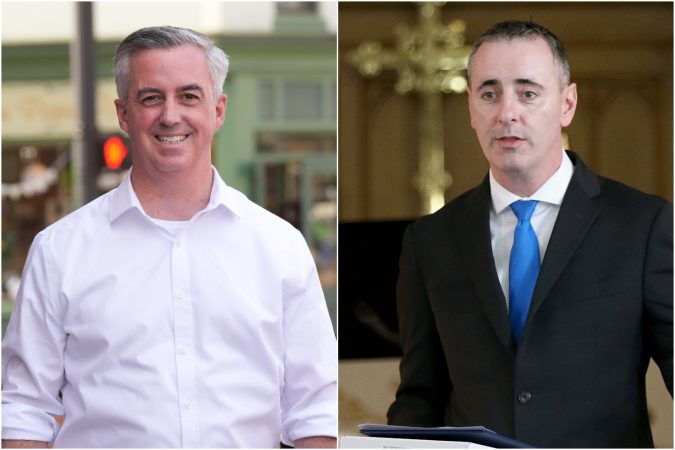
    Democrat Bob Harvie is challenging Republican U.S. Rep. Brian Fitzpatrick to four debates, his campaign told The Inquirer. Fitzpatrick, after learning of Harvie’s challenge from The Inquirer, countered with 10 debates — but only if Harvie releases files related to an FBI investigation that Fitzpatrick and allies have routinely alleged focuses on the Democrat.

    Harvie does not have files to release, said Dan McCormick, the candidate’s campaign manager. Harvie also has never been under investigation, lawyers for his campaign said. And he has already filed a defamation lawsuit against a pro-Fitzpatrick super PAC for making the same claim.

    “Bob would be happy to participate in 10 debates,” McCormick said. “Bob has no files to release and Brian Fitzpatrick knows it. If Fitzpatrick has proof as he says he does, he should put up or shut up.”

    The back-and-forth emerged Monday when the Harvie campaign told The Inquirer that the two-term Bucks County commissioner would be challenging the five-term GOP lawmaker to three debates in Bucks — one each in the lower, central, and upper parts of the county — and a fourth in the Montgomery County portion of the 1st Congressional District.

    Harvie said that Fitzpatrick “refuses to answer questions here at home” and “has nothing to show for his nearly 10 years in Washington.”

    The increasingly heated race is one of four marquee congressional contests in Pennsylvania that could decide which party controls the U.S. House in November.

    “It’s time for Fitzpatrick to show up in Bucks and Montgomery County — not Manhattan or the Lavender Fields in France,” Harvie said in a statement, referring to the venues for Fitzpatrick’s wedding and engagement to Fox News senior White House correspondent Jacqui Heinrich. “I’ll be there whether or not he shows, because I will never forget who I am fighting for.”

    Heather Roberts, a spokesperson for Fitzpatrick, said as soon as Harvie releases “his full FBI files,” the campaign will move forward with date and venue selections for 10 debates.

    “If the Subject of an FBI Corruption investigation is asking to be provided a platform by the only FBI Agent in Congress, he sure as hell will be required to come clean with the public and release these documents in their entirety,” Roberts said in a statement. “If he has nothing to hide, this should be an easy decision for him.”

    Roberts also proposed a joint sit-down interview with Harvie and Fitzpatrick, conducted by The Inquirer, to discuss the allegations.

    The Harvie campaign questioned how Fitzpatrick would know the content of the files.

    Roberts said that Fitzpatrick, who served 15 years as an FBI agent and a federal prosecutor, “is extremely familiar with this specific grand jury protocol and the documents that are generated.”

    The debate drama is the most recent development in what has become an increasingly combative race, filled with personal jabs and legal filings related to controversial ads making allegations that Harvie is the subject of an FBI investigation.

    Harvie, a former Falls Township supervisor, and other officials testified as witnesses to a grand jury in an FBI probe in 2022 into political donations and union contracts related to the Pennsbury School District. In 2020, the FBI interviewed several people connected to Falls Township and Pennsbury.

    It has been four years since voters have been able to see a general election debate in the 1st Congressional District. In 2024, Fitzpatrick did not debate Democratic challenger Ashley Ehasz, after doing so in 2022.

    The Harvie campaign said that it would be willing to work with the Fitzpatrick campaign on logistics and other event details, but that the commissioner’s preference is a town hall-style debate so voters can hear from him directly.

    The last time Fitzpatrick announced an in-person town hall was August 2017, according to Fitzpatrick’s government website.

    Fitzpatrick has held tele-town halls, including one in June, for constituents, and frequently posts on social media recapping the meetings and events he attends in the community.

  • How Josh Shapiro’s early embrace of data centers is testing his high popularity in Pennsylvania

    How Josh Shapiro’s early embrace of data centers is testing his high popularity in Pennsylvania

    Gov. Josh Shapiro made a declaration in the early days of his administration: Pennsylvania is open for business.

    The move would ultimately include promises to slash bureaucratic red tape, cut permit wait times, and offer a new direct line to Shapiro’s office for major corporations hoping to set up shop in Pennsylvania.

    Pennsylvania would “move at the speed of business” and “get stuff done,” the new mottos used by his administration, he said. He’s campaigning for reelection in November on the same catchphrases, and boasting major successes like the 12-day repair of I-95 in 2023 that traditionally would have taken months to reopen as an example of how he can think outside the box to solve problems.

    What’s more: He sees delivering for residents — showing them government can actually solve problems — as the future of the national Democratic Party, while it searches for an effective message and messenger heading into the 2028 presidential primary, which he is widely expected to enter.

    It was with this same spirit last summer that Shapiro announced the largest single private sector investment in Pennsylvania history: Amazon committed $20 billion in Pennsylvania that included two data center campuses in Luzerne and Bucks Counties. Pennsylvania scored the project because of its promise to fast-track permitting and use tax breaks for the massive developments.

    “Pennsylvania’s gonna be better off. I think America’s gonna be better off, because we’re going to win the battle of AI supremacy and it’s going to be done right here in the commonwealth of Pennsylvania,” Shapiro said in an interview on CNBC’s Squawk Box on the day he announced the deal.

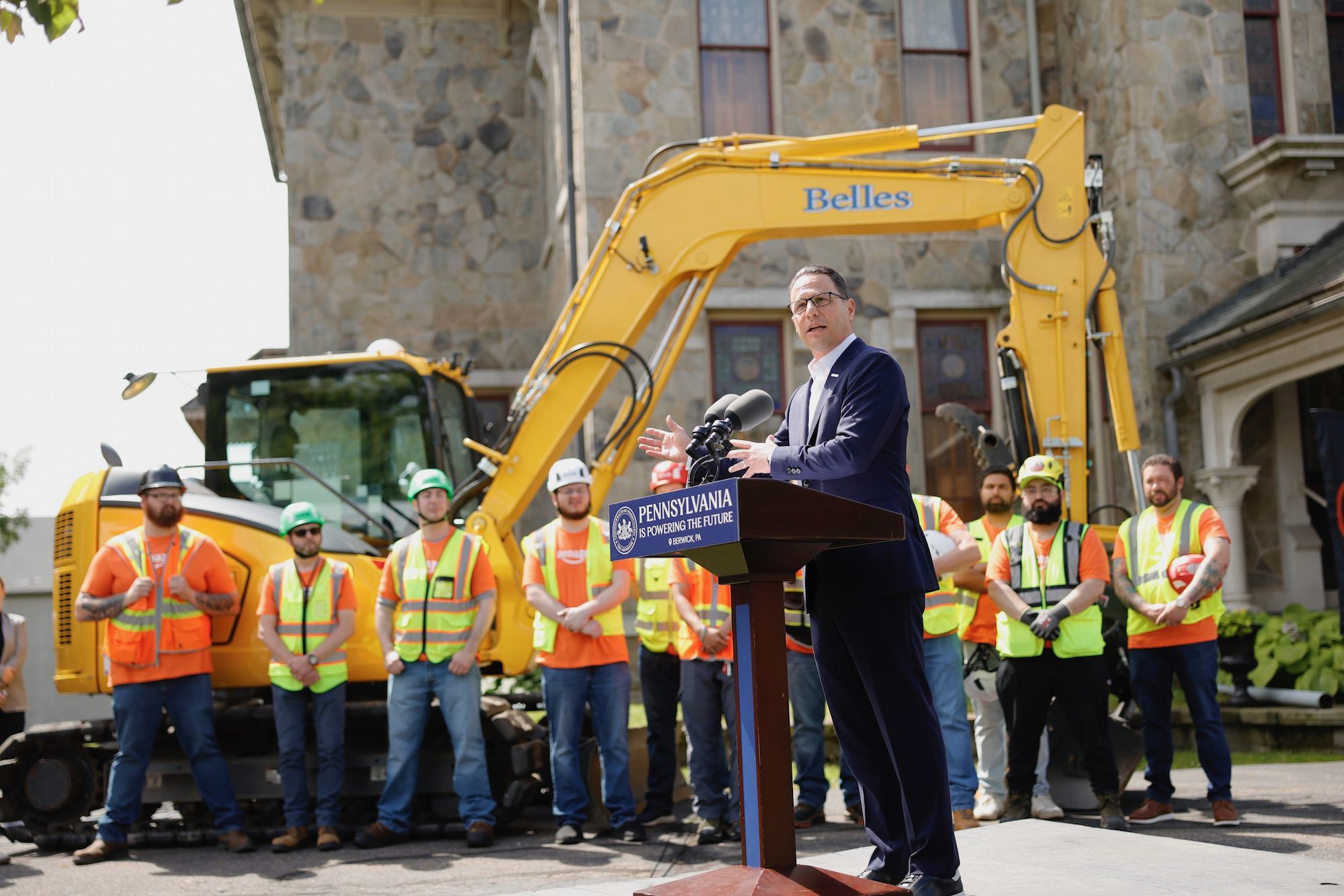
    Gov. Josh Shapiro announces a $20 billion investment by Amazon in Pennsylvania data centers in Salem Township and Falls Township on June 9, 2025.Commonwealth Media Services

    But in a year’s time, the politics — and public opinion on both sides of the aisle — have dramatically shifted on data center development. Shapiro’s early welcome of data centers has created an opening for criticism from his gubernatorial opponent and members of his own party.

    Yet efforts to cut red tape have proven to be slow and overblown: Only six data centers are actually under construction in Pennsylvania since the announcement, and 10 have received at least one state-level permit approval, according to Shapiro’s office. Still, Shapiro’s popularity is being evaluated by some voters and anti-data center activists on a perception that he moved too quickly and sacrificed the state’s safety in favor of Big Tech.

    “I am all about legislators and decision makers getting s— done. This version of it is reckless and it’s irresponsible and it’s not actually serving our people,” said Carrie Santoro, the executive director of progressive advocacy group Pennsylvania Stands Up who has been holding town hall meetings in communities around the state on data centers.

    As public opposition to data center development has grown over the last year, Shapiro has begun to soften his position, citing his personal evolution on the projects. He’s gone from consulting Amazon and the data center industry earlier this year to draft data center incentives, to vowing his own executive actions to curb the projects in communities that oppose them.

    “Governor Shapiro intends to use all the tools available to him to stop the dozens of speculative data center projects that do not meet community needs and Pennsylvania should expect to hear more from him on that in the coming weeks,” said Shapiro’s press secretary, Rosie Lapowsky.

    Now Shapiro, who otherwise maintains vast popularity ratings in the state, faces a vulnerability on one of voters’ top priorities as he heads into November, and a particularly sensitive concern among Democrats as he potentially vies for the party’s nomination in two years.

    A liability among some voters

    Data centers were not broadly known or understood by many until this year, as public outcry continues to grow.

    Many states, including Pennsylvania, had already begun welcoming the major projects, and some hyperscale developers plan to spend billions of dollars to build them. Pennsylvania’s General Assembly first approved a sales tax exemption for data center developments in 2021, when Shapiro’s predecessor, Democratic Gov. Tom Wolf, was still in office.

    Shapiro, for his part, initially embraced data centers as an economic opportunity for Pennsylvania, bringing union jobs for construction workers to build out the physical infrastructure for the computers running AI software. He also wanted to position Pennsylvania to inherit the most benefit from providing space for AI to operate, leading not only other states but also other countries in the race to advance new technology. He and U.S. Sen. Dave McCormick (R., Pa.) appeared together as early embracers of the technology and the massive buildings needed to power it, speaking together during McCormick’s first AI summit in Pittsburgh last summer.

    Sen. Dave McCormick shakes hands with Gov. Josh Shapiro at a panel discussing state investment and infrastructure at the Pennsylvania Energy and Innovation Summit at Carnegie Mellon University in Pittsburgh on July 15, 2025.Kaiden J. Yu / Staff Photographer

    But as communities began to push back against the rapid proliferation of data center proposals, in part to protect their water and energy resources, Shapiro adjusted.

    Shapiro, like many elected officials, has changed his positions and rhetoric on the unpopular developments. He announced his Governor’s Responsible Infrastructure Standards (GRID) as a way to incentivize developers to follow transparency and environmental requirements in order to receive tax breaks. And when the General Assembly failed to approve his GRID standards or any substantial data center restrictions, Shapiro said he’d act on his own, though it’s still unclear what that will entail.

    “You want to build a data center there? You’ve got to bring your own power; you’ve got to pay for your own power. You’ve got to be transparent with the local community — tell them who the hyperscaler is, tell them what’s going to go on there. You’ve got to have a local benefits agreement to help that community. You’ve got to protect the water sources that are used to cool off those facilities,” he said in a June interview with GZERO.

    The Democratic governor has been lauded nationally for challenging PJM Interconnection, which is the electric grid operator for Pennsylvania and 12 other states over its efforts to raise prices on ratepayers. He capped the price Pennsylvania consumers could pay through 2029, as residents fear rate hikes due to the data center boom.

    But Shapiro’s plan on data centers is too little, too late, Santoro said.

    “I saw the GRID proposal as him moving on this issue, and the thing that I am concerned about is he didn’t move enough to keep up with how much voters have moved on this issue,” she said.

    Some of those voters would agree. A Quinnipiac University poll of Pennsylvania voters, conducted in early June, found just 24% of those surveyed — and 40% of Democrats — approved of “the way Gov. Josh Shapiro is handling data centers in Pennsylvania.” It’s a stark contrast to Shapiro’s overall approval numbers, in which he’s maintained above 50% approvals — record-high favorability ratings for a first-term Pennsylvania governor.

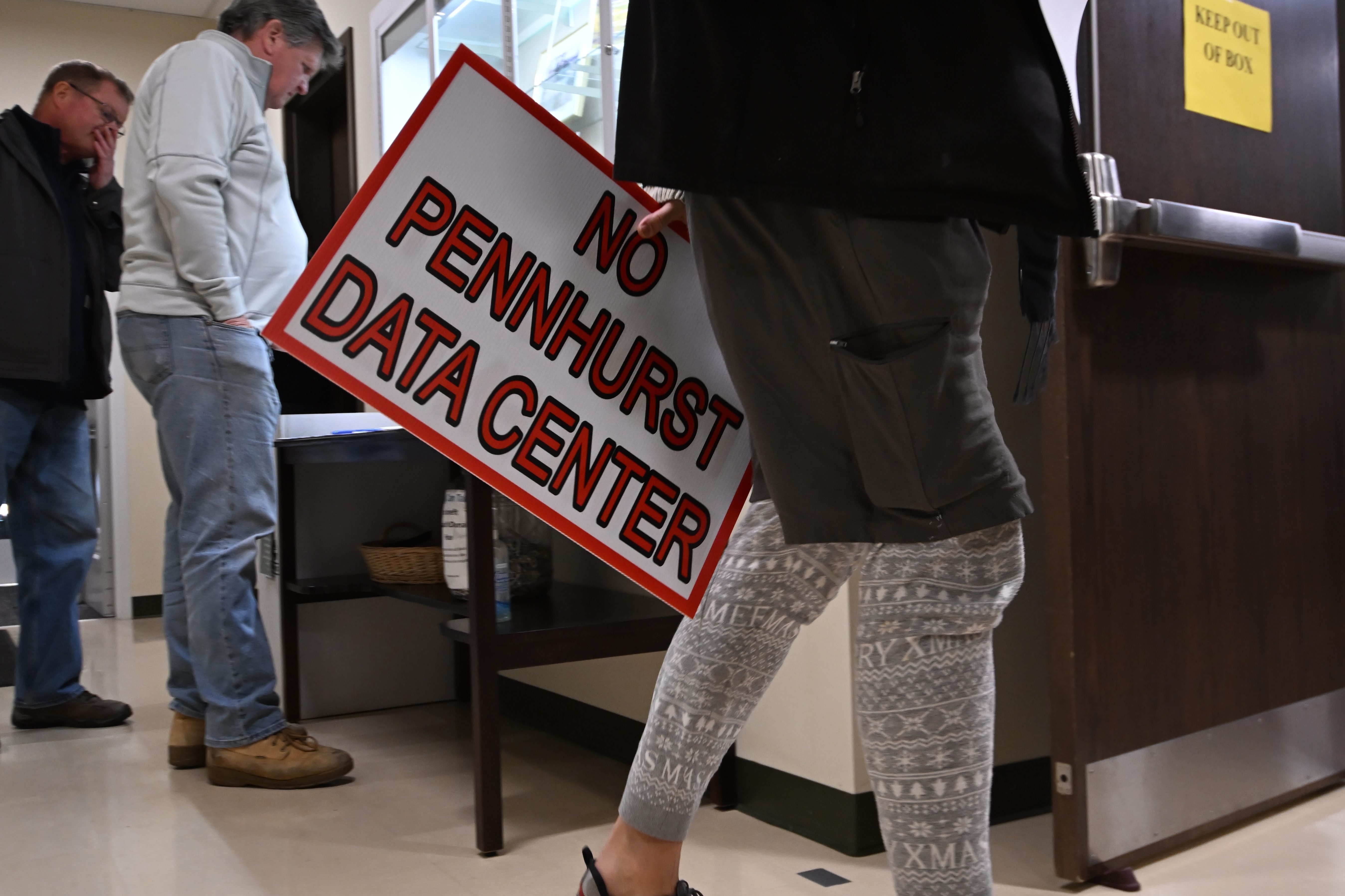
    People sign in and head into an East Vincent Township supervisors meeting where an agenda item involved a data center proposal at the former Pennhurst state hospital grounds on Dec. 17, 2025, in Spring City, Pa. Marc Levy

    Joanna Tenney, 36, of East Vincent in Chester County, held a sign at a June rally in the state Capitol that read: “Shapiro: Amazon’s bootlicker.” A registered Democrat, she voted for him in 2022, and believes he should be held accountable for supporting data center development in Pennsylvania that led to the fast-tracking of a now-stalled 125-acre data center project near where she lives.

    She’s so fed up with Shapiro’s approach to data centers that she said will be writing in the name of her state senator, Sen. Katie Muth (D., Chester), who has been on the front lines of advocating for many state environmental issues, for governor on her November ballot. Tenney said she and a few other anti-data center advocates plan to run a write-in campaign for Muth.

    “We’ve elected somebody that we thought was going to make the right choices by us, and we don’t really see that happening,” Tenney said.

    Muth, who took office in 2018, said she would not be supporting Shapiro or “any elected official who puts the interests of Big Tech ahead of the health, safety, and future of Pennsylvania communities.”

    If Shapiro changes his stance on data centers, she would support him, Muth said. She is the prime sponsor of a bipartisan bill to place a three-year moratorium on hyperscale data center development.

    “Get right on the issue, Right your wrongs. If you can’t be on the side of science and people, my support is MIA,” she added.

    Emily VanFleet, 26, lives in Archbald in Northeastern Pennsylvania, where six data center projects are underway comprising more than 50 buildings that, when completed, will cover 14% of the town. VanFleet, who is an unaffiliated voter, said she also supported Shapiro in 2022. But because of his public support for speeding up data center development in Pennsylvania, she is “certainly not going to vote for him this upcoming election,” she said. She isn’t sure she’s going to vote at all.

    “I want Shapiro to stop being a coward,” VanFleet said in June. “I have emailed him, I have called him, I have reached out to him so many times. I have not heard back, not once. I see his videos all over social media that he has an open-door policy, but I have yet to see it.”

    (In May, Shapiro’s administration announced that one of the unpopular Archbald developments, Project Gravity, was removed from a fast-track permitting program for failing to properly engage with the community.)

    But negative attitudes toward Shapiro’s position on data centers may be limited statewide and his position is unlikely to dramatically knock down his high popularity or reelection odds: The June Quinnipiac poll found 56% of those surveyed approve of the way he is handling his job as governor overall, and recent polling shows Shapiro ahead 53% to 40% against his Republican challenger, state Treasurer Stacy Garrity.

    The data center pitfall

    Shapiro’s political opponents — both immediate and prospective — are also seizing on the issue.

    Garrity, the GOP nominee endorsed by President Donald Trump, made her first TV ad an attack on Shapiro’s support for the Amazon project and other data center developments — even as Trump himself has remained open and excited about AI and data centers.

    Garrity, of Athens in Northeastern Pennsylvania, has also led a statewide listening tour on the topic. In June, she convened one of those sessions in Hatfield with a group of commissioners, zoning planners and emergency responders to talk about how they have been impacted by data centers. She blasted Shapiro for his role in attracting Amazon and said his proposed new requirements amount to a “flip flop.”

    “Josh Shapiro has failed on this topic. He was the biggest cheerleader for data center development in Pennsylvania, until he wasn’t,” Garrity said at the June 24 meeting.

    Pennsylvania Treasurer Stacy Garrity participates in the podcast “Ruthless” during an event hosted by Americans for Prosperity, Concerned Veterans for America, and the Libre Initiative at the National Constitution Center in Philadelphia on Jan. 29. Elizabeth Robertson / Staff Photographer

    Garrity has her own mixed record on data centers.

    At the time of the Amazon announcement, Garrity called the investment “great news” that would bring “historic investment” and “create thousands of jobs.” And her current position remains unclear. She has said she opposes a statewide moratorium but wants “a pause” on development instead.

    Like Republicans running in districts that supported Trump in 2024 but oppose data centers, she appears to be attempting to find a pro-business and pro-regulation path.

    “We want to make sure data centers are an addition to the grid, not a contraction. If there’s infrastructure that needs to be added to the grid, rate payers shouldn’t be paying for it,” she said. “I’m not opposed to data centers, but we have to do them the right way, and we haven’t done it. It’s because of a lack of leadership from the government.”

    Garrity’s “long record of supporting completely unregulated data center development makes it clear that she just can’t be trusted,” said Manuel Bonder, a spokesperson for Shapiro’s campaign.

    More recently, Garrity has said she would prevent data centers construction on prime agricultural fields.

    Local government leaders said at Garrity’s campaign roundtable in June that there has been lack of guidance around issues, especially around power demand, water use, infrastructure, environmental impacts, and community compatibility.

    Kathie Doyle, a Republican on the Richland Township Board of Supervisors, said confusion around data centers have “set off a firestorm” in her community. Earlier this year, warnings of a supposed proposal for a data center in the Bucks County township circulated on social media, but turned out to be a “business park” with two buildings.

    “Our residents don’t understand that we just cannot say no,” she said. Municipalities in Pennsylvania cannot outright ban data center development.

    Santoro said Shapiro’s inconsistency is a liability that could sway some voters away from casting their ballot for him.

    “Certainly he is giving her an ‘in’ by staying on the wrong side of this,” she said.

    And it’s not just Republicans seizing on Shapiro’s position. The early reputation Shapiro earned as a champion of data centers may become a point of attack among other Democratic contenders for the presidency in 2028, too. In a veiled jab at Shapiro in June, Illinois Gov. JB Pritzker, knocked Pennsylvania on a business podcast for allowing Constellation Energy to restart Three Mile Island nuclear plant just to power Microsoft’s data centers.

    “My guess is that’s going to be a reasonably unpopular thing to have done,” Pritzker said, without noting Shapiro by name on the Prof G Markets podcast.

    Vulnerability for down-ballot Democrats

    With a $50 million campaign war chest and high approval ratings, Shapiro is widely favored to win reelection this year. But his record on data centers could prove a liability for those he’s hoping to pull along, some advocates, like Santoro, say.

    Shapiro has been staking much of his national political clout on his ability to flip four House districts in Pennsylvania for Democratic control of the U.S. House, drawing voters to the polls with his name at the top of the ticket. He’s also aiming to flip Pennsylvania’s Senate into Democratic control for the first time since 1993, giving him a Democratic trifecta in Harrisburg, as the state’s split legislature has blocked many of Democrats’ priorities from becoming law.

    Santoro predicted that could be in jeopardy “if he does not change course.”

    “Shapiro’s leadership on data centers will be the thing that costs us the first Democratic trifecta in 31 years, and I think that while he will likely win reelection with this wildly unpopular position on data centers, other elected officials and candidates will not,” she said.

    Other Democratic candidates aware of data centers’ deep unpopularity are differentiating themselves on the issue, despite remaining otherwise aligned with Shapiro. Scranton Mayor Paige Cognetti, who is running in Pennsylvania’s 8th Congressional District, released a new ad last month putting data center developers on notice.

    “Big Tech needs to pay their own way, not hide behind [nondisclosure agreements]. No tax breaks. Don’t raise our electric bills. Don’t poison our water. And hire local union labor,” she said, in the ad spot. “You can’t meet that? Then get out.”

    Cognetti’s stance isn’t vastly different from Shapiro’s — both want to end blanket tax breaks — but her rhetoric is much stronger, and she’s putting the issue at the forefront of her campaign.

    Democrats insist Republicans, including those running at the state level, don’t have the moral high ground on data centers after failing to pass through several measures that would have enacted stricter controls for their approval.

    Sam Silverman, a former congressional aide and founder of Silverman Strategy Group, a strategic communications firm focused on technology and politics, said Shapiro’s approach to data centers — proposing a plan rather than enacting a moratorium — presents a risk that could either pay off and become the model for other states, or fail to fully address all future concerns and is unpopular.

    “Shapiro is going out in front by proposing a bargain now. If the standards protect ratepayers, produce visible benefits, and hold bad actors accountable, Pennsylvania could have a model others can follow,” he said. “But because he is putting forward the deal now, he will be judged on whether it delivers.”

    Taking a risk involves trust, though. Shapiro can afford to make a big swing at one of the hottest issues in politics because voters put so much faith in him, Silverman said.

    “Most politicians do not have the amount of trust and political capital to take a risk, either,” Silverman said.

    Whether the governor is triumphant will come down to what standards go into effect and whether bad actors are held accountable, he said, “and whether Pennsylvanians believe those standards are working.”

  • A routine voter roll update in Pa. prompted misinformation from conservative activists

    A routine voter roll update in Pa. prompted misinformation from conservative activists

    It is routine for election officials throughout the country to inspect their voter rolls to ensure people who have moved, died, or not cast a ballot in a while do not linger for years in the data.

    But that has not stopped right-wing activists, Republican U.S. senators, and the richest man in the world from suggesting Pennsylvania’s latest update to its voter rolls Monday was a mass expulsion of potentially fraudulent voters as the high-stakes midterm elections approach.

    “The Pennsylvania Department of State just conducted one of its biggest purges ever,” MAGA influencer and grassroots Republican voter registration activist Scott Presler wrote on X, and “Democrats lost TENS of thousands of voters.”

    Presler, who six years ago led a two-day demonstration in Harrisburg over the 2020 election results, claimed the numbers showed his effort to “clean the voter rolls is actually working.”

    Elon Musk, the billionaire who was the biggest donor in the 2024 presidential election, elevated Presler’s post, adding on Musk’s own X platform, “Nice work.”

    And U.S. Sen. Dave McCormick, Pennsylvania’s highest-ranking Republican, praised Presler for “leading the charge.”

    The reality of Monday’s update is that both parties saw voters moved from active to inactive status (meaning they have not voted in a while).

    Among Democrats, 55,241 were moved to inactive status on Monday, while 23,832 Republicans also became inactive.

    Those voters have not actually been removed from the rolls and can still vote in November, despite Presler’s claims of a purge. Being inactive is not the same as being ineligible.

    “Updating these voter records is not a ‘purge’ of voters and does not mean that they were on the rolls improperly,” said Geoff Morrow, a spokesperson for the Pennsylvania Department of State.

    Morrow called the update a reflection of county election offices’ diligence in their duty to regularly perform maintenance to their lists.

    “There are many reasons people come off the voter list, most likely they moved, and this is all part of the normal process,” said Montgomery County Commissioner Neil Makhija, a Democrat who serves on the county’s election board. “There’s nothing particularly special or unusual about this.”

    What is happening?

    Counties across Pennsylvania have been updating their voter lists, as required under the National Voter Registration Act of 1993. This update must occur no later than 90 days before a federal election. The midterm elections, which will feature the Pennsylvania governor’s race and several competitive congressional contests, are Nov. 3.

    As part of the maintenance process, voters who have not participated in five years are moved from active to inactive status. Inactive voters are still registered and can still vote, just like an active voter.

    A voter who cast a ballot in 2020 but sat out the following elections, for example, would be considered inactive.

    This practice is standard, said Philadelphia City Commissioner Seth Bluestein, the Republican member of the three-person board that oversees the city’s elections.

    “Philadelphia conducts regular list maintenance activities in compliance with federal and state laws to determine whether a voter should be marked as ‘inactive’ or removed from the registration rolls,” he said on X.

    Voters may also be categorized as inactive if they have submitted a USPS mail-forwarding request or registered to vote in another state, or when a mailing to their registered address is returned as undeliverable.

    Montgomery County Commissioner Neil Makhija speaks during a March board meeting. Alejandro A. Alvarez / Staff Photographer

    Becoming an inactive voter is the first step on the path to being removed, which is done if the inactive voter does not participate in the next two federal elections.

    “What we’re seeing here is an example of our current process for voter roll maintenance playing out, and it works,” Makhija said. “It’s designed to actually protect people’s registration because it gives them a chance to respond if we mark them as inactive, and it also keeps them on the rolls if they do respond.”

    In addition to tracking whether voters are active, Morrow said, election officials in the state regularly review death records, U.S. Postal Service address changes, and other reliable sources “to identify records that may require updating” when a voter dies or moves.

    Can inactive voters cast a ballot in November?

    Yes. Voters who are inactive can change their status simply by voting. Those who have been removed can reregister, too. Registration must be done 15 days prior to an election, which is Oct. 19 this year.

    “Voters with an ‘inactive’ status are still eligible to vote and can be moved back to ‘active’ status if they take an action to update their record or vote before the passage of two federal general elections,” Bluestein said.

    To vote in Pennsylvania, you must be a U.S. citizen, a resident of the state for 30 days, and 18 years old by Election Day. It is possible that someone who is eligible to vote has become inactive after years of sitting out elections.

    Does this have anything to do with noncitizen voters, like those found in New Jersey?

    Presler, who said he “won’t stop until all 67 counties comply,” posted a cartoon image of himself pressing a light switch as cockroaches — labeled with phrases like “illegal voter” and “dead voter” — scurry away.

    Presler did not respond to requests from The Inquirer to answer questions about his posts, which appear to conflate inactive voters with ineligible voters.

    The posts come after President Donald Trump’s administration claimed Pennsylvania was one of four Democratic-led states with thousands of noncitizens on its voter rolls, a claim state officials say the federal government has not provided evidence for.

    MAGA influencer Scott Presler energizes people attending a Republican event at the Newtown Athletic Club ahead of the 2024 election. Elizabeth Robertson / Staff Photographer

    But a change in a voter’s status from active to inactive is not related to citizenship or other issues of eligibility.

    Noncitizens would actually be removed from rolls under Pennsylvania law and face potential prosecution and deportation if they had cast a ballot — as the Pennsylvania Department of State noted in a Friday report from WHP on an apparent case of a noncitizen voting in Lancaster County.

    Pennsylvania Secretary of State Al Schmidt, a Republican appointed by Democratic Gov. Josh Shapiro, has said noncitizen voting “is extremely rare across the country, including in Pennsylvania.”

    New Jersey last month revealed 6,600 people — a number later reduced to roughly 4,600 — who were not citizens were improperly registered to vote over a yearlong span ahead of the 2024 election because of a software error in New Jersey’s motor vehicle system.

    Schmidt had identified a similar glitch in Pennsylvania in 2017 as Philadelphia’s Republican city commissioner, identifying 168 noncitizens on the city’s voter rolls at the time. They were removed from the rolls and the glitch was fixed.

    Why are Elon Musk and senators from other states posting about routine maintenance?

    Prominent Republicans who elevated Presler’s post tied it to their efforts to pass the SAVE America Act, a sweeping national voting overhaul that has been championed by Trump ahead of the midterms.

    “In light of what Scott Presler has uncovered, who could still think we don’t need the SAVE America Act?” Sen. Mike Lee, a Utah Republican and Trump ally, posted Monday.

    The act would require proof of citizenship to register to vote and mandate all voters show photo identification at the polls, something some conservatives say would prevent noncitizens from voting.

    But the legislation has faced significant pushback, including from some elected Republicans, over concerns that it would make it tougher for many Americans, especially married people whose last names may no longer match their birth certificate, to vote.

    How do party registrations compare?

    According to state data as of Monday, Democrats have more than 3.4 million active voters and Republicans are not far behind, trailing by only 25,811 active voters.

    But each party also has hundreds of thousands of inactive voters — 437,330 in the case of Democrats and 256,711 for Republicans — who could potentially vote in November.

    Can we say anything about party odds in the midterms?

    The Pennsylvania Republican Party celebrated the news of the narrowing gap in active voters as a milestone its “ultimate mission of turning Pennsylvania into a permanent red state.”

    Both parties want to win the registration war, but party registrations alone will not predict victory in November.

    Just because someone is registered as a Democrat or Republican does not mean he or she will necessarily vote for every candidate in that party on the ballot.

    And there are also nearly 1.5 million unaffiliated voters — including inactive registrants — who could sway the state’s elections.

    Staff writer Joe Yerardi contributed to this article.

  • After a high-profile snub in Pa., President Donald Trump meets with Stacy Garrity at the White House

    After a high-profile snub in Pa., President Donald Trump meets with Stacy Garrity at the White House

    Clad in a royal blue, two-piece suit, Pennsylvania Treasurer Stacy Garrity stood next to a seated President Donald Trump in the Oval Office on Tuesday, in a video message posted to his social media platform, Truth Social.

    “Pennsylvania is very lucky because you have somebody running for governor who’s going to do a fantastic job,” Trump said to the camera, while shaking Garrity’s hand. “She really is a spectacular person. And I just want to wish you luck. I think you’re going to win.”

    The White House appearance signaled a closer public alliance between Trump and Garrity, and the latest chapter in her campaign challenging Gov. Josh Shapiro as she seeks to draw Trump’s loyal fan base to the polls in November.

    Trump, who endorsed Garrity in January, followed the video message by posting a photo with Garrity, writing: “Stacy is running to be the next Governor of the GREAT Commonwealth of Pennsylvania. She has my Complete and Total Endorsement. She will do a fantastic job!”

    Garrity’s campaign said in a statement that she was visiting the White House alongside the Penn State wrestling team, which was being honored for its 2026 national championship.

    The Oval Office meeting represented a repair of sorts between Garrity and Trump after he has displayed little enthusiasm toward her campaign in recent months.

    Garrity entered the race against Shapiro, the Democratic incumbent, last summer as Republicans — disappointed with their 2022 performance — sought to consolidate support early around one strong candidate. When Trump endorsed Garrity, he called a “true America First Patriot” who “WILL NOT LET YOU DOWN!”

    In March, Garrity hosted a fundraising dinner at Trump’s Mar-a-Lago Club in Florida, where, beneath a wrought-iron doorway at his private golf club, the president said “she should win.”

    But when Trump visited Pennsylvania in June and Garrity introduced him onstage, he seemed to forget her altogether.

    During a speech meant to focus on manufacturing in Macungie, Trump spent over an hour talking about weight-loss drugs, immigration, firearms, the role of transgender athletes in women’s sports, and the UFC fight recently held on the White House lawn. But Garrity never received a mention, and Trump instead celebrated U.S. Rep. Dan Meuser, a Pennsylvania Republican who considered a run for governor before ultimately opting against it. Trump even name-checked Shapiro.

    Three months out from Election Day, Garrity has struggled to gain traction among voters. A Quinnipiac University survey of 895 registered Pennsylvania voters in July found 53% would vote for Shapiro, while 40% said they would vote for Garrity.

    At right is Pennsylvania Governor Josh Shapiro listening to Stacy Garrity, 78th State Treasurer, Forum Auditorium in Harrisburg, Pa., Tuesday, Jan. 21, 2025.Alejandro A. Alvarez / Staff Photographer

    Garrity has stuck with Trump, supporting his political decisions like efforts to nationalize elections and his signature tax cut law, under which 300,000 Pennsylvanians are expected to lose Medicaid, according to state estimates.

    Trump’s latest show of support for Garrity comes as Shapiro — who is rumored to be eyeing a run for the White House in 2028 — has set his sights beyond the governor’s office, lending his time and spending his money to support Democrats up and down the ballot, in an attempt to flip the Pennsylvania state Senate and four swing districts in Congress.

    Last month, in another stop in Pennsylvania, Trump attempted to lend more support to Garrity during Republican U.S. Sen. Dave McCormick’s Defense and Innovation Summit.

    “I hear things about Stacy, and I’m hearing some poll numbers that are very good,” he said.

    Regarding her opponent, however, Trump had stronger words.

    “This guy Shapiro is totally overrated. … He doesn’t have what it takes,” Trump said.

    President Donald Trump visits Mack Trucks in Macungie in the Lehigh Valley Tuesday, June 23, 2026.Tom Gralish / Staff Photographer

    In Pennsylvania, Trump remains deeply underwater in popularity. The Quinnipiac survey found only 39% of Pennsylvania voters would give him a positive job approval. Elsewhere in the country, Trump has remained Republicans’ most effective energizer to the polls — though some are concerned about GOP success without his name on the ballot in November.

    Pennsylvania Democrats on Tuesday seized on Garrity’s appearance with the president.

    “Stacy Garrity always sprints to any chance she gets to pledge her 100% loyalty to Donald Trump and his disastrous agenda,” Ava Pitruzzello, a spokesperson for the Pennsylvania Democratic Party, said in a statement.

    Last week, Shapiro’s campaign launched a new ad calling Garrity “100% MAGA.” Garrity’s campaign, in a statement, called the ad “a dishonest, lying attack.”