Category: Elections

  • Ro Khanna is the left’s busiest midterm surrogate. Can he raise his own profile, too?

    Ro Khanna is the left’s busiest midterm surrogate. Can he raise his own profile, too?

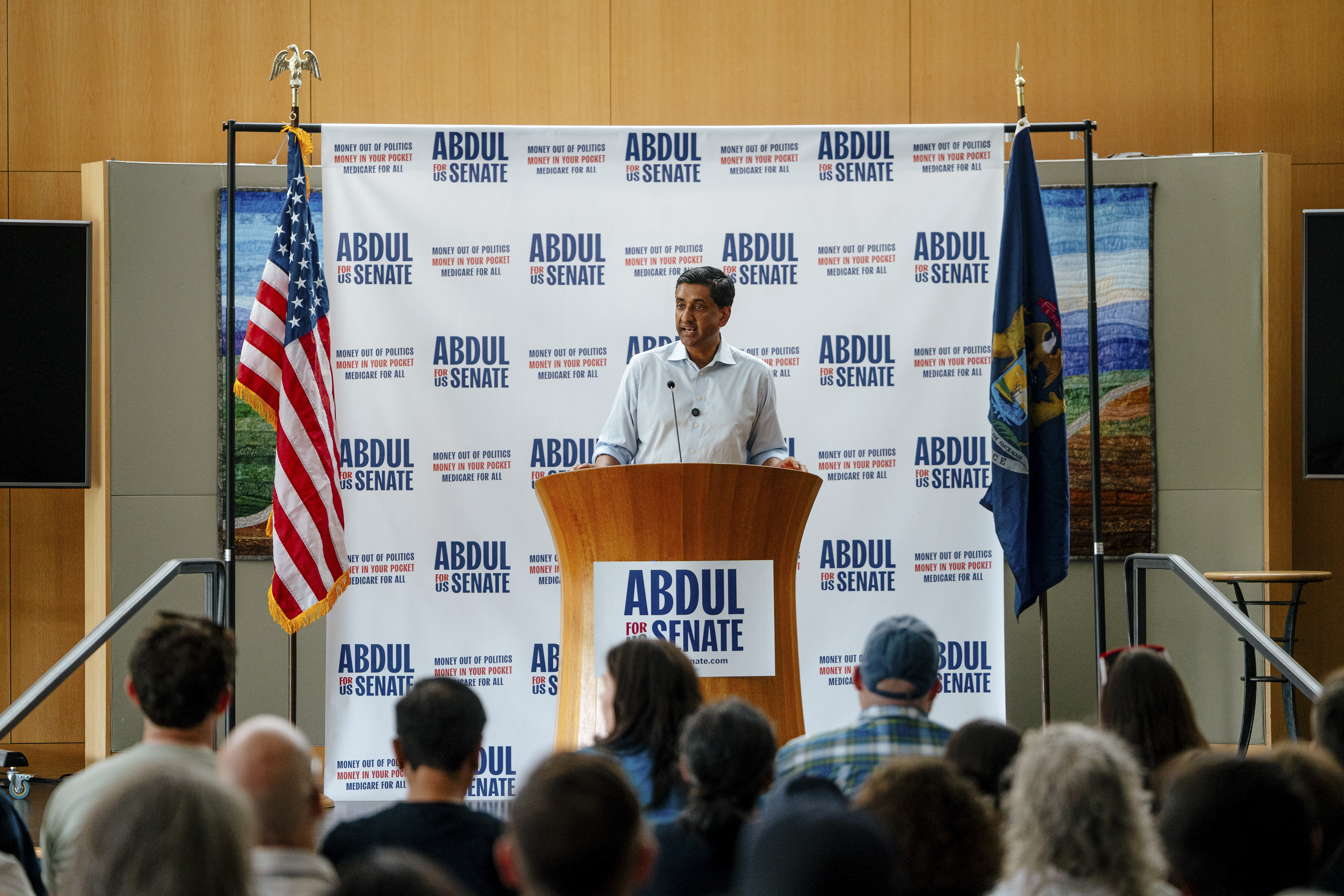
    Rep. Ro Khanna of California leaned forward in a patterned armchair as a rooster crowed outside, listening as a group of farmers in rural Sharpsville, Pa., told him that Democrats came across as inauthentic and insincere.

    “Don’t promise the farm and not come up with it,” said Joe McCann, who grows hay and raises pigs. “And don’t lie to people. I can take anything, but if someone’s standing there physically lying to me and blowing smoke up my butt, that’s not going to cut it.”

    Khanna agreed, fretting that his party had for too long “looked down” on blue-collar voters. Then he quipped: “How do you think I’m doing? Lying?” McCann, 78, said he didn’t think so.

    Khanna (D., Calif.) has emerged as one of the most prolific surrogates of the 2026 cycle. He has endorsed more than 70 candidates for seats in the House, Senate, and state legislatures, positioning himself on the front lines of a burgeoning progressive movement as discontent with the status quo has propelled a series of left-wing candidates to primary victories.

    But there was another reason for his vigorous political itinerary this campaign season: a possible presidential run in 2028. He wants to see the left’s power grow within the Democratic Party. He wants its policy prescriptions, such as universal healthcare and taxing the rich, to shape the conversation about who the party’s nominee for president should be.

    And he knows that none of that is likely to happen if the left bombs in November.

    A little 2026, and a little 2028

    Despite their major wins in primaries this season, progressives’ ability to sway the general electorate in competitive races remains untested. A new poll released by the New York Times and Siena University on Sept. 15 found that a slight majority of voters disliked socialism.

    In Khanna’s view, the only way the movement can change that perception is if it figures out how to talk to the working class.

    Khanna, born outside Philadelphia to immigrants from India, has been preparing for his political future out in the open. In the past two months, he has taken many of the steps of an early presidential candidate.

    He held a town hall with Latino voters in Nevada. He told the Democratic National Committee in a searing speech that the party needed to turn its back on corporate interests and military aid to Israel. He also ventured abroad, leading a congressional trip to the Vatican to discuss safeguards against artificial intelligence with Pope Leo XIV and visiting the West Bank, where he was detained by armed Israeli settlers.

    Icons of the progressive movement, such as Sen. Bernie Sanders of Vermont and Rep. Alexandria Ocasio-Cortez of New York, have been choosier with their high-profile endorsements this year. Khanna is lesser known, and has work to do to change that. The eagerness can occasionally backfire; he has expressed regret for his endorsement of Graham Platner, the Maine Democrat who withdrew his Senate bid in July after a woman accused him of rape.

    “He’s hustling,” said Bill Hyers, a progressive strategist who worked with two House candidates — Kat Abughazaleh in Illinois and Chris Rabb in Pennsylvania — whom Khanna endorsed in primaries this spring. Rabb won. Abughazaleh lost.

    Added Hyers: “He’s just been out there really working hard and he’s the only person on the left I have seen where there’s no doubt he’s running.”

    Over five days in Pennsylvania in July, Khanna, who grew up outside Philadelphia in suburban Bucks County, rallied for two House candidates whose primary victories in May stood out as early triumphs for the progressive movement. Their very different districts illustrated both the advantages and challenges facing the progressive left this fall.

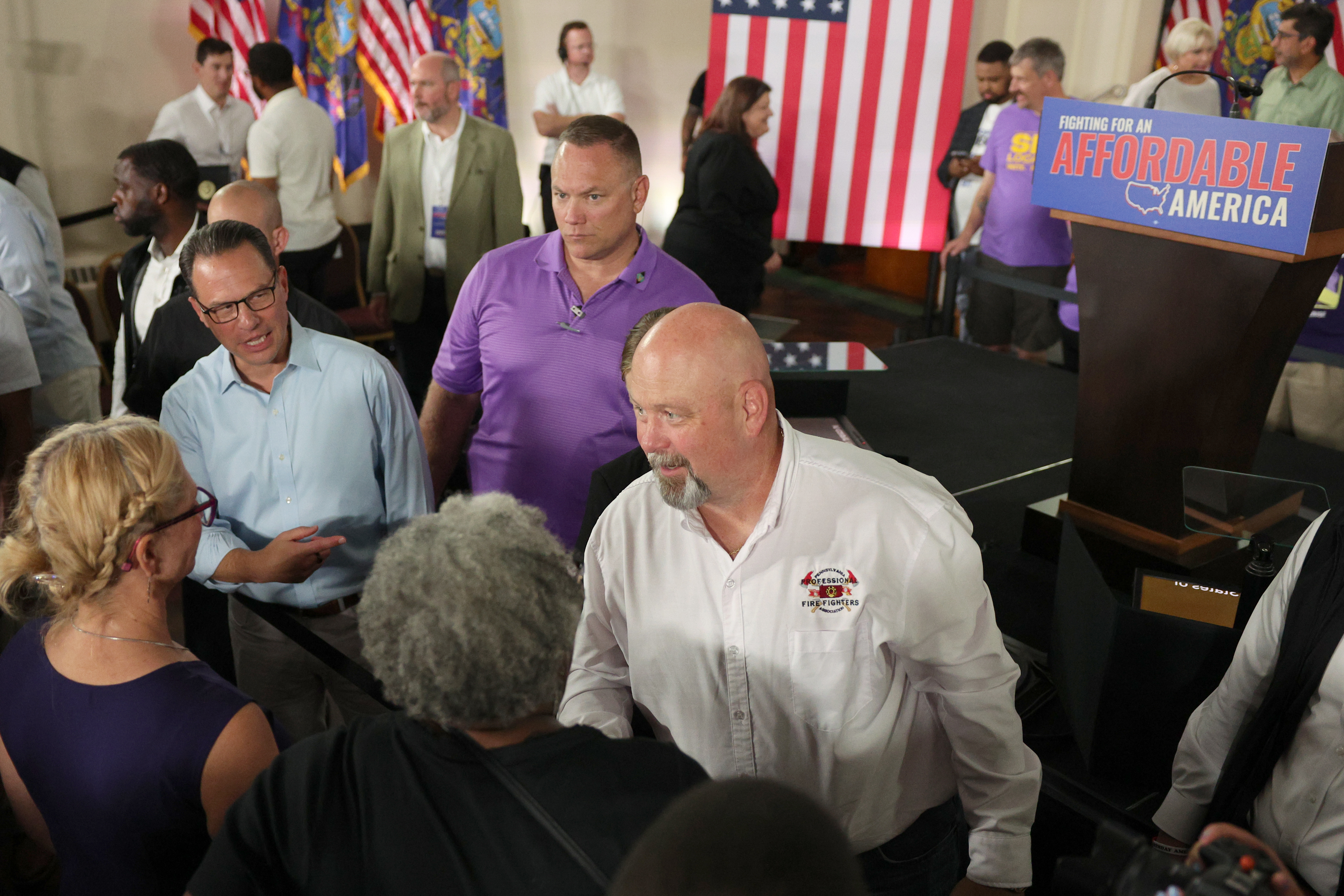
    In Philadelphia, Khanna talked about liberal priorities like “Medicare for All” with Rabb, a democratic socialist who is virtually assured of victory in November in his deep-blue district. In a battleground district in Allentown, Khanna discussed tariffs and job losses with union factory workers to help the candidacy of Bob Brooks, a firefighter and labor leader who faces a more difficult path to victory in November against Rep. Ryan Mackenzie, a Republican.

    On behalf of both candidates, Khanna offered a similar pitch: The wealth and technological innovation of his high-income Silicon Valley district should be shared more widely. His agenda of “new economic patriotism,” he said, would spread technology jobs among Midwestern states and redistribute profits through a wealth tax.

    “If we just are running on centrist mush that is put out by ChatGPT, bland and inoffensive, we’re not going to win,” Khanna told a reporter in the SUV he was riding in for the Pennsylvania swing. “It has to be a transformative vision.”

    Khanna was generally well-received by an electorate in Pennsylvania that has soured on Republicans and seems increasingly willing to give Democrats another chance. But he also encountered the enduring skepticism of voters who see their leaders as having failed them.

    “He comes across very progressive with his plans, but I don’t know that he’ll be able to carry them through,” said McCann, after Khanna’s conversation in Sharpsville. “This area that I live in right now is a depressed area — and anybody that gives anybody around here a vision of hope is the person they’re leaning toward. They just have that vision of hope that this might happen, and it never does.”

    In an interview, Khanna said he planned to decide about 2028 between Thanksgiving and Christmas, after talking to his family and determining how viable he could be in battleground states.

    His trip across Pennsylvania was intended in part to assess that. A progressive contender for president, Khanna said, would have to “do well in the Black South” and “do well in states like Pennsylvania.”

    He said he was also forging bonds in southern states, including in South Carolina, where his partnership with Rep. Jim Clyburn and his daughter Jennifer Clyburn connects students at historically Black colleges and universities with scholarships from tech companies.

    Khanna has recruited alumni of both progressive and establishment campaigns. He is being advised by Ron Klain, the chief of staff to former President Joe Biden, and has enlisted longtime advisers to Sanders such as Julian Mulvey and Jeff Weaver, according to a person familiar with the partnerships who requested anonymity to describe internal staffing issues.

    The road ahead, plus AOC

    A dismal progressive showing in November could instantly set back Khanna’s fortunes. So could something else: Ocasio-Cortez. If Ocasio-Cortez, the breakout star of the left, runs for president, she would appeal to the same liberal constituency as Khanna but with an enormous head start in popularity.

    Khanna called Ocasio-Cortez an “extraordinary talent,” and dismissed the idea that she is a rival.

    “I have a tremendous amount of respect and admiration for her,” he said, adding, “I have genuinely never discussed what she wants to do in the future.”

    Khanna said he talked with Ocasio-Cortez occasionally in the halls of the Capitol. He communicates more frequently with Sanders, speaking with him on the phone about AI and answering the senator’s queries about the chances of California voters passing a tax on billionaires this fall.

    Khanna readily acknowledged that he lacked the political “star power” of his left-wing compatriots. “I’m not delusional,” he said.

    His speeches are also a little heavy on policy and light on the kind of soaring rhetoric that voters often look for in a president.

    That was the case in Pennsylvania, but he also tested catchphrases such as “economic patriotism,” and retail politicking seemed to come easily enough for him. One particular line, when he argued that President Donald Trump had not followed through on a simple promise — to replenish sand that had washed away along Lake Erie — got a good response from voters.

    “I’ve seen a lot of clips of him online — I thought he was much more charismatic in person,” said Gideon Tsoutsouris, a college student in Pittsburgh.

    Khanna portrayed his low profile as an asset, noting that other successful candidates — including former Presidents Jimmy Carter and Bill Clinton — began their bids as long shots. It’s an advantage, he said, “to go meet people and interact without the entourage.”

    Khanna, a multimillionaire, likewise dismissed potential criticism of his wealth, which largely stems from his wife’s father, the founder of an automotive company.

    “I tell people my own story of growing up middle-class in Bucks County, taking out loans for law school in my 20s, having forbearance and massive credit card debt,” Khanna said. “I think people will see that I had a middle-class life and even economic challenges.”

    Hyers, the progressive strategist, said Khanna would likely face criticism for his long-standing relationships with the tech industry.

    “The perception in a lot of the circles that I run in is, ‘How much money has he taken from the bad guys?’” Hyers said. (Khanna has since broken ties with many wealthy tech executives and called for taxing them more heavily.)

    When Khanna’s tour rolled into Pittsburgh, he hopped around town, chatting wi,th union leaders who are faculty members at a local university, nurses fighting for a labor contract and a group of college students.

    Before addressing the students, he spoke with two groups protesting his visit on nearby street corners: the pro-Israel Beacon Coalition and the pro-business Americans for Prosperity, a creation of the conservative Koch family. One of the AFP protesters urged him to reject socialism.

    The moment illustrated another challenge that Khanna would face in a presidential primary. He may be too progressive for moderates, and not progressive enough for some on the fractious left.

    “I don’t believe the government should take over the means of production,” Khanna told the protesters. But, he added, many young people were turning to socialism “because they can’t afford rent, they don’t have a good job. They lost the American dream.”

    This article originally appeared in the New York Times.
  • Gov. Josh Shapiro has raised $60 million for his reelection campaign. What will he do with it?

    Gov. Josh Shapiro has raised $60 million for his reelection campaign. What will he do with it?

    Gov. Josh Shapiro has raised more than $60 million toward his reelection effort since he took office, his campaign said Tuesday.

    According to the campaign, those preliminary figures mean that the first-term Democratic governor has added $13.3 million to his war chest since June, as he maintains a significant fundraising edge over his Republican opponent Stacy Garrity.

    Filings on Tuesday showed Garrity had raised around $1.8 million this cycle, with her campaign coffers nearing $3 million. After spending $1.5 million, she will enter October with roughly $1.4 million cash on hand.

    So with a massive cash advantage, where will Shapiro’s campaign money go? And could anyone else benefit from his spending?

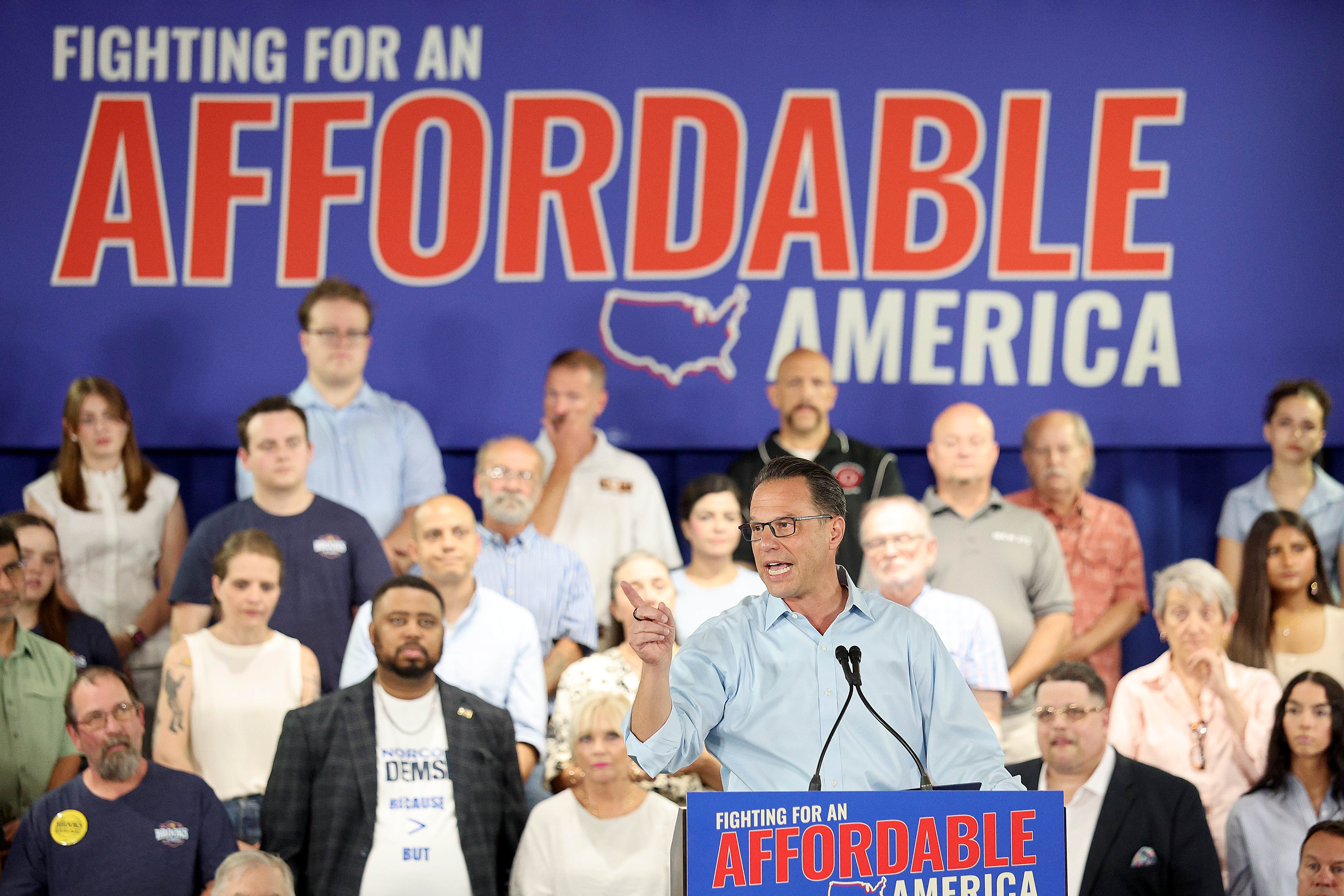
    Even as he pulls ahead in polls, Shapiro has spent heavily on advertising. His campaign has promised he’s keeping his foot on the gas through Election Day in efforts to secure his own victory and elect Pennsylvania Democrats up and down the ballot in hopes of flipping the state Senate and electing Democrats in four battleground congressional districts. He’s donated roughly $5.7 million in total to the state party to fuel the effort, an additional $2.5 million since June, according to his campaign.

    Beyond the November election, he’s widely expected to launch another campaign as a 2028 presidential prospect. Although the law prevents him from transferring his gubernatorial campaign money into a political action committee that funds a run for president, that doesn’t mean he’ll spend all his fundraised money before this year’s election, experts said.

    In the governor’s race, the first checks he owes are paying for campaign staff salaries, spending money on advertising, and renting leases for field offices, among other costs, according to campaign experts. As a careful politician, he’d likely also want to reserve a fair amount of cash for surprise developments in the race, they said.

    But after all of Shapiro’s receipts are accounted for, experts said, a potentially large stock could remain available, presenting him with options for how to spend it — if at all.

    Daniel Weiner, the director of elections and government at the Brennan Center for Justice, said Shapiro has several options available.

    “It is incredibly common for candidates who are not facing an especially competitive race to still try to raise money hand over fist and amass a war chest,” Weiner said. “It can be used to fund a future run for office of one sort or another. It can also be used, increasingly in this era of very deregulated money in politics to just build a general political machine.”

    Keeping it in the party

    Shapiro, who has maintained high favorability among both Democrats and Republicans, has established himself as a formidable fundraiser, bringing in dollars from across the commonwealth and the nation. Donors can give him as much as they’d like, since there is no limit on political contributions in Pennsylvania, said Matthew Foster, a professor of political science at American University.

    “There’s a lot of ways for politicians to use political cash to help their allies and to help their team,” said Michael Beckel, an expert on money in politics at Issue One, a Washington, D.C.-based bipartisan nonprofit. “They can spread that money around to help people who need it. And there’s certainly a lot of people who might potentially want help from a big name like Governor Shapiro.”

    Pennsylvania law allows Shapiro to transfer endless amounts of money from his campaign account to other state candidates. His campaign said he had not given any money directly to state candidates, but that he has supported them in other ways.

    He is also not allowed to transfer money from his gubernatorial campaign to any congressional candidates.

    Instead, he has poured money into the state party.

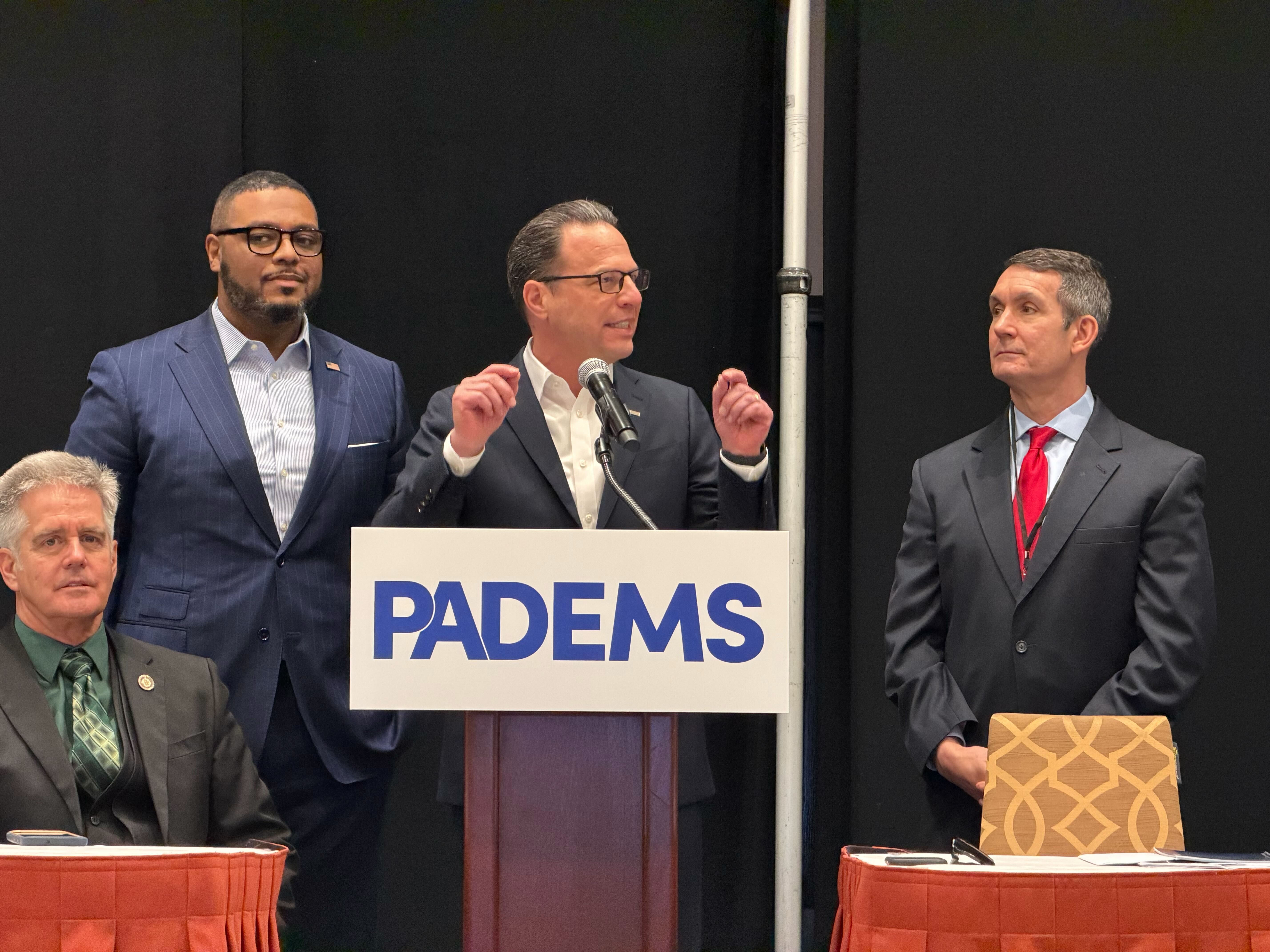
    Pennsylvania Gov. Josh Shapiro accepts the endorsement for a second term as governor at the state Democratic Party’s winter meeting in Harrisburg on Feb. 7, 2026.Gillian McGoldrick

    Since last fall, Shapiro has given $5.7 million to the state Democratic Party and its election effort. That money is used to benefit Shapiro as well as state Senate and congressional candidates by pooling funds for their field offices, signage and volunteers.

    “A donation to the state party historically has helped get the vote out statewide,” said Philadelphia-based Democratic strategist Adam Erickson.

    Plus, donating to the state party versus national groups helps to ensure the money is spent on Pennsylvania races, Weiner added.

    Pennsylvania Republicans have held on to the state Senate for more than 30 years, even as the House chamber and governor’s mansion have swapped partisan control and are currently both occupied by Democrats.

    This year, Democrats have “a strong opportunity to flip the state Senate,” Erickson said, but that the effort will take “an unprecedented amount of spending” from Shapiro and the state party.

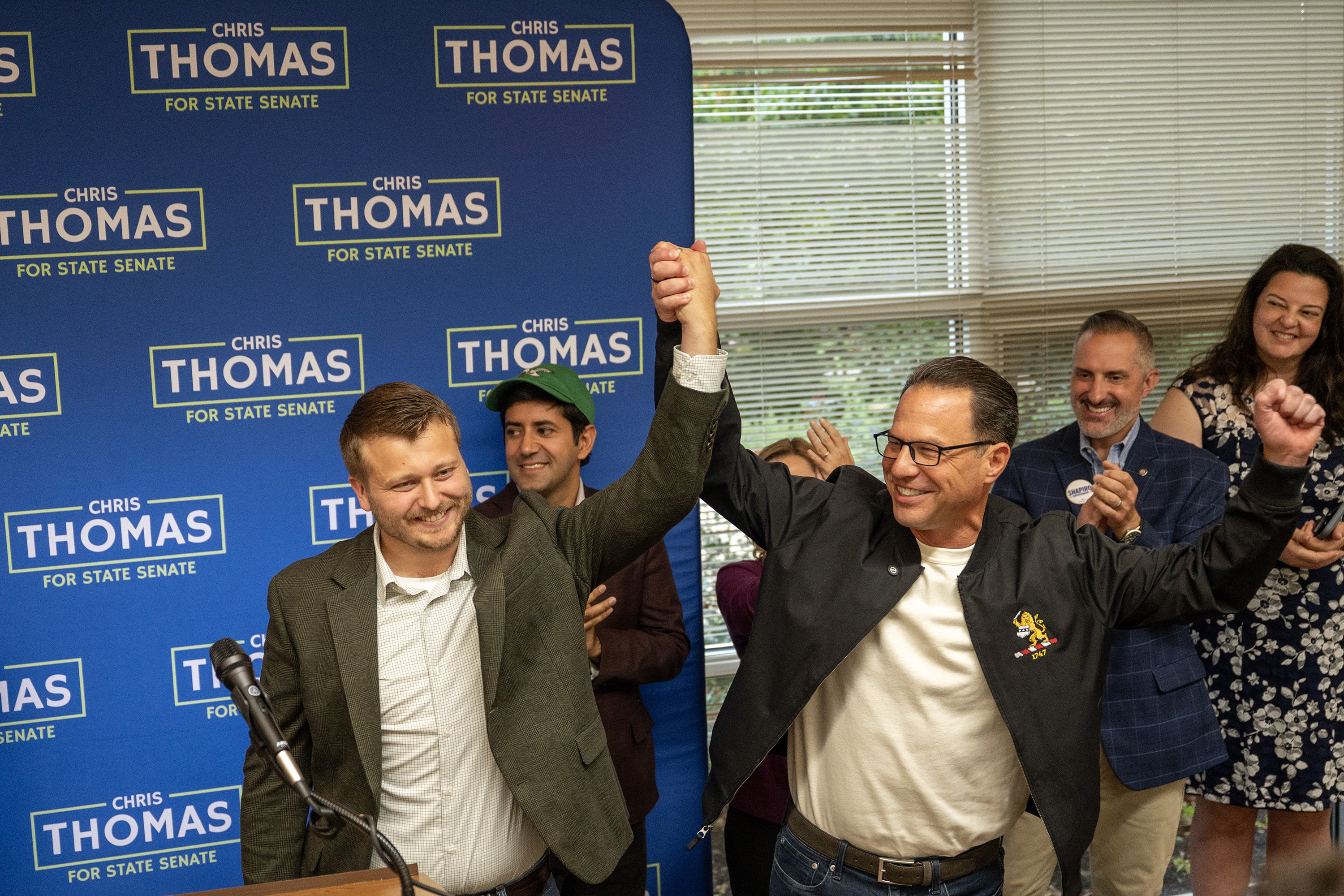
    Often, Shapiro has appeared alongside candidates at campaign events, rather than donating to them. On Sunday, Shapiro joined Democrats in Chester and Montgomery Counties to kick off door-knocking and phone-banking efforts benefitting several legislative candidates, such as state House candidate Elizabeth Moro in Chadds Ford and state Senate candidate Chris Thomas in Harleysville.

    “Under Governor Shapiro’s leadership, the Party is rallying support all across the Commonwealth and putting Democrats in a strong position to win everywhere this November,” said Manuel Bonder, a spokesperson for Shapiro’s campaign.

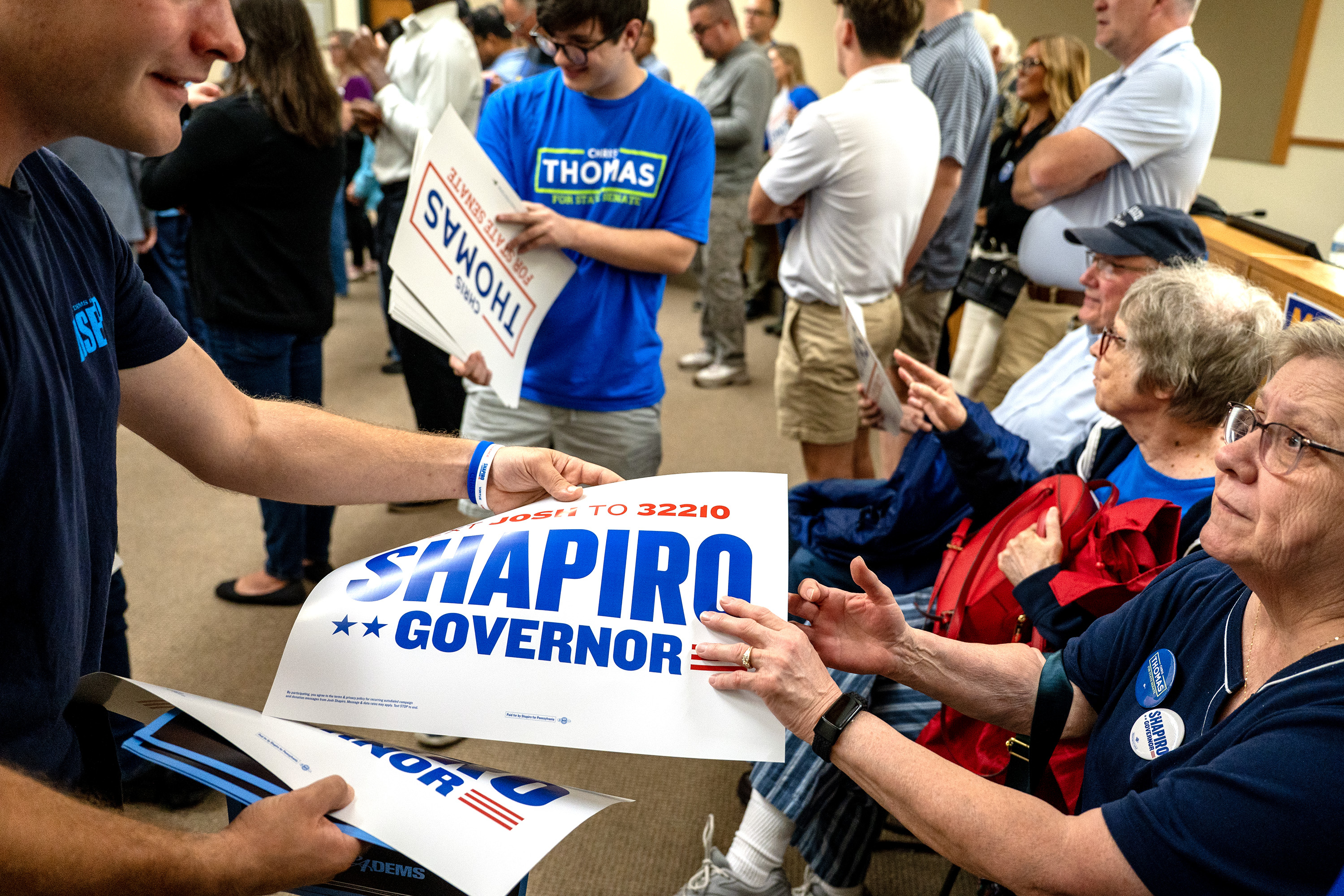
    Campaign volunteers hand out sign to supporters of Gov. Josh Shapiro and Democratic Pa. Senate candidate Chris Thomas at a rally in Towamencin, Montgomery County before heading out to canvass Sunday, Sept. 29, 2026. Tom Gralish / Staff Photographer

    From Pennsylvania to Pennsylvania Avenue

    Shapiro has batted away questions about his presidential ambitions, saying he’s focused solely on his gubernatorial reelection, but he has many of the signs of a future candidate: a book tour, frequent hits on cable television, and a voice on key issues likely to emerge in the next Democratic presidential primary.

    Tim Ford, an attorney who handles legal concerns for Democratic campaigns in Pennsylvania, said Shapiro’s sizable bank account is “also a flex to show he’s capable of raising this kind of money,” and another clue that he may be eyeing a higher office.

    If Shapiro does choose to run for president, he’s not allowed to legally transfer his state-level campaign fundraising to a federal political action committee associated with his campaign.

    “One thing that I think people get wrong is they believe that he’s raising money for his next office,” Erickson said.

    Governor Shapiro (left) and Democratic congressional candidate Bob Brooks (right) greet supporters during a campaign event at the United Steelworkers Union Hall in Bethlehem on July 26, 2026.David Maialetti / Staff Photographer

    That would put him at a slight disadvantage compared to any sitting federal elected officials who can spend their campaign funds on a presidential run and who are also speculated 2028 presidential contenders, including U.S. Rep. Alexandria Ocasio-Cortez and U.S. Sens. Mark Kelly and Jon Ossoff, who has been the top fundraiser this midterm cycle.

    Still, Shapiro’s cash stockpile “sends a message that he’s been a successful fundraiser,” Beckel said. “While past performance doesn’t guarantee future results, he certainly would try to [leverage] that to his advantage to say, ‘I’ve been a successful fundraiser in the past, I will be a successful fundraiser in the future’.”

    Former staff or associates could create a federal super PAC, a type of political action committee that can take in and spend unlimited contributions but must do so independently of a candidate and without directly coordinating with the campaign. Shapiro could repurpose his state campaign account into that super PAC, Weiner said, but he would have no say on the messaging in ads or how money is spent.

    While this practice of loose coordination skirts the spirit of the law, Weiner said it often goes unenforced.

    “In theory, super PACs are supposed to be independent from candidates, but in practice, they work hand-in-glove with them,” he said.

    Former staffers of Maryland Democratic Gov. Wes Moore, another potential 2028 contender, have established the Unity First PAC. Moore has headlined fundraisers for the group, but is not technically in control of the PAC.

    California Democratic Gov. Gavin Newsom, who may also run for president, launched a super PAC called Campaign for Democracy. The PAC has poured $1.7 million into state party and legislative committee races, mostly in South Carolina, where Democrats will hold the first contest of the presidential primary race in 2028.

    There are no official records that Shapiro, or those associated with him, have created a super PAC, according to FEC filings.

    Super PACs have earned a negative reputation in some circles, particularly among Democrats who view them as a means to give wealthy donors outsized influence on elections. But in 2028, Shapiro and other Democrats will be under pressure to use all the tools available to them, Weiner said.

    It’s a difficult bind, said Faith Williams, who works on anti-corruption and accountability efforts at Common Cause, a democracy-focused nonprofit.

    “Our system is not good,” she said. “But at the moment everyone is playing in it, and that I think that makes it even harder to reform it because it’s hard to have the genuine desire to reform a system that currently benefits you.”

    Shapiro could also develop a nonprofit organization with his campaign funds. The 501(c)(4) groups, which can spend on political ads but cannot make electoral activity their primary focus, are under no legal obligation to disclose their donors. In some cases, this opens the door to donations from so-called “dark money” groups, or those that obscure the role of their funders.

    Experts pointed out that he could also use his leftover money for his second gubernatorial inauguration or donate it to charity. And, in an unlikely maneuver, Williams said Shapiro could refund his donors and ask everyone to donate again to a federal campaign.

    But the best way to get from Pennsylvania to Pennsylvania Avenue, Erickson said, would be to ensure success in the statewide elections this year.

    “Playing a large role in flipping the state Senate will put him in the best position going into 2027 and beyond for any larger aspirations,” he said.

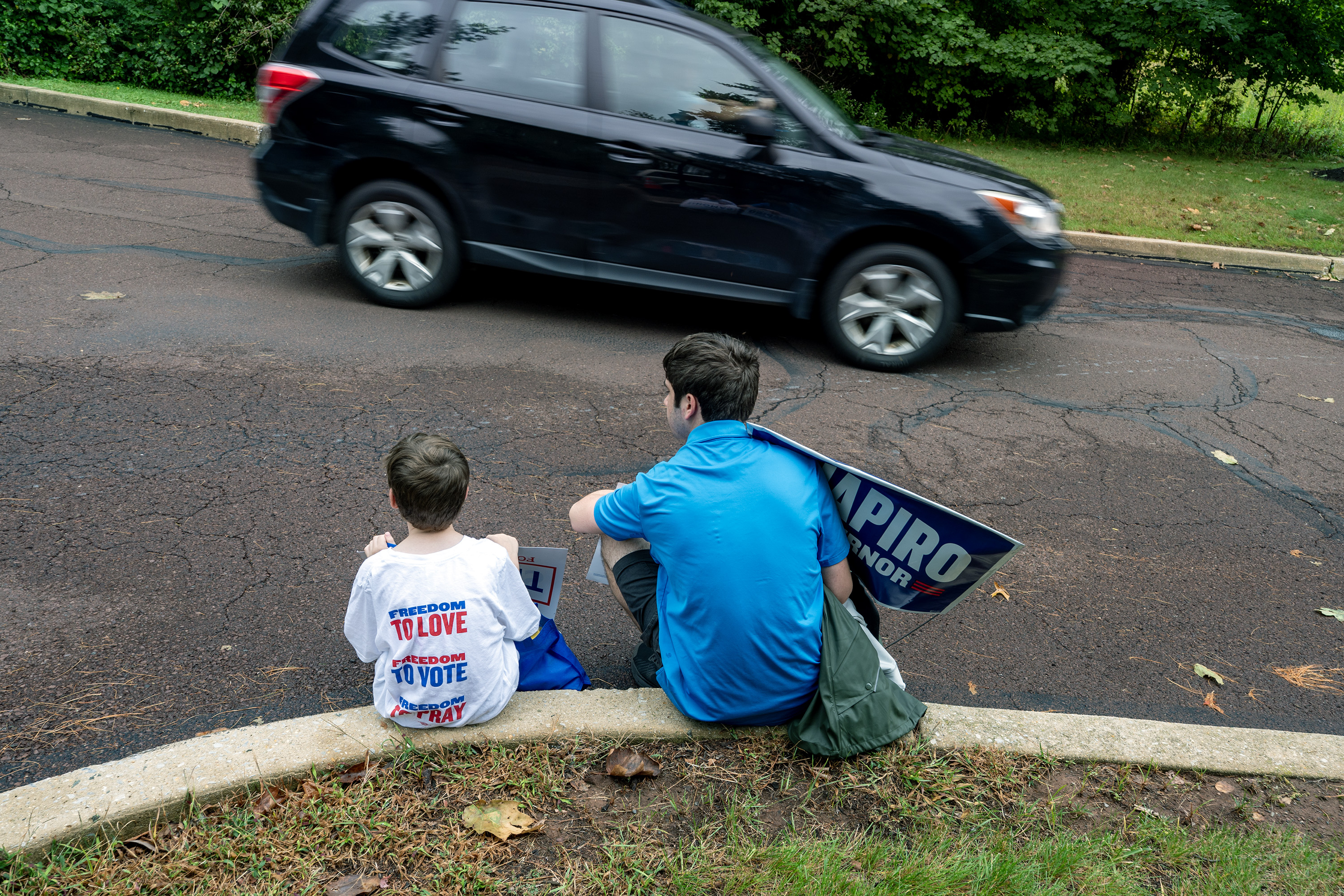
    Brothers Desmond DeBaun, 5, and David Hayman, 16, after a rally with Gov. Shapiro and Democratic Pa. Senate candidate Chris Thomas in Montgomery County Sunday, Sept. 29, 2026. Tom Gralish / Staff Photographer
  • Bush and Cornyn leave out Paxton as they raise cash for Senate candidates

    Bush and Cornyn leave out Paxton as they raise cash for Senate candidates

    Former President George W. Bush and Sen. John Cornyn, two top Texas Republicans, are rallying conservative donors behind the party’s Senate candidates — except for the one running in their own state, Ken Paxton.

    Cornyn hosted a fundraiser Monday evening in Dallas for six Republican nominees in battleground states, according to an invitation to the event that was obtained by the New York Times. Bush, listed on the invitation as a “special guest,” was attending the event, his spokesperson confirmed.

    The event benefits Maintain the Majority, a new joint fundraising committee supporting the Senate candidates, who are defending Republican-held seats in Maine, Ohio, Alaska, and Iowa and looking to flip seats in Michigan and New Hampshire.

    But Paxton, the Republican nominee in Texas, who defeated Cornyn in a costly and bitter primary, was not included. His campaign declined to comment on the fundraiser.

    The fundraising omission of Paxton is another escalation in the standoff between old-guard Bush Republicans and the fiery insurgent wing represented by the party’s Senate nominee, Paxton, President Donald Trump, and their allies.

    And it comes as the parties battle for cash and advertising time in the Texas Senate race, one of this year’s top contests. Paxton has badly trailed his Democratic opponent, James Talarico, in campaign fundraising, but super political action committees tied to Trump and Senate Republicans have come to Paxton’s aid, reserving more than $80 million in outside advertising in Texas.

    Paxton, the state attorney general, has long been a polarizing figure among Texas Republicans. He was impeached by the Republican-dominated Texas House on corruption charges in 2023, though he was acquitted in the state Senate, and he pushed to oust Republican lawmakers and judges who disagreed with him in his party’s primaries in 2024.

    This year, Cornyn and establishment Republican donors spent more than $130 million on advertising backing the senator and bashing Paxton in their contentious primary. (Bush chipped in $5,000 for Cornyn.) In the months since, Cornyn has continually criticized Paxton’s character and campaign.

    “Paxton’s a poor campaigner,” Cornyn told the Texas Tribune in August. “He’s lazy and doesn’t raise money. And he basically is not offering a very compelling case for his election. He’s making this harder than it needs to be.” (Paxton countered the attacks, saying on Fox News’ The Sunday Briefing that “John Cornyn doesn’t know my schedule. He doesn’t know how many hours I’m putting in every day, 18 hours a day.” )

    The fundraiser comes as long-simmering tensions between Bush- and Trump-era Texas factions burst to the surface.

    Last week, Karl Rove, Bush’s former senior adviser, announced that he would not vote for Bo French, the Republican nominee for the Texas state agency that regulates oil and gas, because of a racist social media post by French. Paxton declined to condemn French’s post, and Trump posted on Truth Social that Rove was a “stone-cold loser.”

    Paxton has attacked Rove in the past, including in an interview with conservative pundit Tucker Carlson in 2023.

    Paxton has also gone head-to-head with a scion of the Bush dynasty, soundly defeating Bush’s nephew, George P. Bush, in the 2022 Republican primary for Texas attorney general. And Paxton has long criticized Cornyn for his willingness to work with Democrats on bipartisan legislation.

    The host committee of the Monday fundraiser included paragons of the Bush-era Republican Party like Harriet Miers, Bush’s onetime nominee for the U.S. Supreme Court; former Sen. Kay Bailey Hutchison; and Republican megadonor Harlan Crow.

    One of the candidates the event seeks to support is John E. Sununu, the Republican nominee for Senate in New Hampshire. His father, also named John Sununu, served as the White House chief of staff for Bush’s father, George H.W. Bush. Contributions ranging between $1,000 and $61,500 were required for entry, according to the invitation.

    Some of the donors invited to the event on Monday have also contributed to Paxton’s campaign.

    The gathering and the new fundraising committee will benefit Sens. Susan Collins of Maine, Jon Husted of Ohio, and Dan Sullivan of Alaska, who are defending their seats in competitive general-election races, as well as three other Senate candidates: Sununu, Rep. Ashley Hinson of Iowa, and former Rep. Mike Rogers of Michigan.

    Two Republican Senate nominees in states that Trump won in 2024, Michael Whatley of North Carolina and Mike Collins of Georgia, are also not part of the fundraising effort. Democrats have shown strength in polls in those states.

    Collins “appreciates the support of Sen. Cornyn and President Bush,” said Blake Kernen, a spokesperson for Collins’ campaign. Representatives for the other candidates did not immediately respond to requests for comment.

    This article originally appeared in the New York Times.
  • Kamala Harris launches into the 2026 midterms as her 2028 decision looms

    Kamala Harris launches into the 2026 midterms as her 2028 decision looms

    As Kamala Harris mulls whether to run for president again, she’s throwing herself into the midterms by campaigning with fellow Democrats, starting with a Tuesday trip to Michigan on behalf of Senate nominee Abdul El-Sayed.

    It’s an especially notable destination for the former vice president. Michigan was one of seven battlegrounds she lost to Donald Trump two years ago, and it’s now one of six states that will start Democrats’ next presidential nominating process. Harris has additional rallies scheduled in Nevada and Georgia, two other key places on the political map.

    Her campaigning could serve to solidify or undermine her status as a potential Democratic front-runner. Although she’s one of the nation’s best-known politicians and a barrier-breaking figure, there are others eager to turn the page after she failed to defeat Trump when she replaced President Joe Biden on the top of the ticket.

    “I think she’s run her course,” said Barry Goodman, a Democratic National Committee member from Michigan who raised money for Biden and then Harris. “I just don’t think her running again would be the right thing for America moving forward.”

    Some Democratic candidates, especially in places Trump won handily, have curtly dismissed any possibility of campaigning with Harris. “No thanks,” Iowa gubernatorial nominee Rob Sand told Politico. “Let’s move on. We need some new leadership.”

    But plenty of Democrats, including some influential Black women who helped convince Biden to select Harris as his running mate in 2020, said she has more than earned the space to consider her options without being rushed or pilloried. Underscoring her unique position, California Gov. Gavin Newsom recently told CNN that he would not seek the nomination if Harris does.

    “Kamala isn’t under any deadline to run for anything,” said Donna Brazile, a former Democratic National Committee chair who managed Al Gore’s presidential campaign in 2000. She called it a “waste of time” to relitigate Harris’s truncated 2024 campaign and said any White House hopefuls “should follow Kamala’s lead and get out there” by trying to help midterm candidates.

    Harris has not announced any upcoming trips to South Carolina, where Democrats will hold their first primary. Antjuan Seawright, a political consultant in the state, said she could make a strong case for herself but another campaign would need to look and sound different.

    “She’s going to have to admit that she was wrong about some things,” he said.

    Michigan presents risk and opportunity

    Harris has painful political history in Michigan. During the 2024 campaign, the state’s prominent Arab American communities were outraged over Biden’s support for Israel’s military operations in Gaza, and they were disappointed when Harris did not break with him after she became the party’s nominee.

    El-Sayed, on the other hand, is an outspoken critic of Israel who has described the war as a genocide against Palestinians, an accusation rejected by Israel. He’s been viewed warily by some Jewish voters, which he’s tried to address by apologizing for some past controversial comments.

    El-Sayed told MS NOW that “there were some hurt feelings” in Michigan over the 2024 election, with some Black voters feeling like Arab Americans didn’t do enough to help Harris.

    With the former vice president coming to visit, he said it’s a chance “to bring communities together that have often been torn apart by recent events.”

    Their joint appearance will be closely scrutinized for other reasons too. Harris has a strained relationship with the party’s progressive wing, which includes El-Sayed, and El-Sayed is eager to solidify establishment support during his campaign against Republican nominee Mike Rogers, a former congressman.

    “We can build together on the areas of agreement, and we can come to understand each other far better on the areas where we might have seen eye to eye, and I think her coming into town will help us to do that,” El-Sayed said.

    Harris’ political travel has been light compared to potential presidential candidates like Pete Buttigieg, who ran in 2020 before serving as Biden’s transportation secretary. He recently visited South Carolina and he’s been stumping for other Democrats in the midterms.

    Harris went to South Carolina in the spring, but for smaller, local party events. She recently spoke on an organizing call aimed at registering and turning out 1 million more Black voters.

    “There’s value in doing a lot of stuff behind the scenes instead of being front and center, especially for her,” said Bre Maxwell, a Democratic National Committee member from South Carolina. She said there’s little benefit for Harris to insert herself into news cycles knowing “she’s still a target of Donald Trump right now.”

    Jaime Harrison, a South Carolinian who served as national party chair when Biden and Harris were in the White House, said the former vice president’s stature affords her the advantage of time that other potential candidates will not have.

    “Many of these folks who do get in quickly would love to have that type of name ID, would love to have that type of network, to have that type of email list,” Harrison said.

    Harris herself has said multiple times, including in an Associated Press interview last year, that she feels no rush to decide her next move. “Right now – midterms, midterms, midterms,” she told Megan Rapinoe on a recent podcast. Harris spokesperson Eduardo Negrón declined to comment when asked about her timeline.

    Harris’ other campaign events this fall include stops for Nevada’s Democratic candidate for governor, Aaron Ford, and Georgia Sen. Jon Ossoff, who has generated 2028 chatter of his own as he seeks reelection.

    “She is certainly being strategic,” said Seawright, the South Carolina political consultant.

    He noted that Harris’ tour for her campaign memoir, 107 Days, hit virtually every major Southern city in states where Black voters hold strong sway in presidential primaries that come early in the nominating process.

    Meanwhile, Goodman said he’s heard no evidence that Harris is working the party’s top donor network. Harrison said he hasn’t heard from her since last December.

    Past campaigns offer Harris lessons

    Harris first ran for president in the 2020 cycle, when she was a U.S. senator from California. But she dropped out late in 2019, before any primary votes were cast.

    Some progressives saw the former prosecutor as part of a criminal justice establishment that disproportionately imprisons Black men. Some moderates saw her as another San Francisco liberal.

    Biden chose Harris as his running mate, and she became the first woman and Black person to serve as vice president.

    When Biden dropped his reelection bid after a disastrous debate performance, Harris generated visible enthusiasm, drawing crowds that rivaled or exceeded Trump’s. She delivered a convention address and debate performance that most analysts lauded.

    But she could not distance herself from Biden on inflation or immigration. Harris infamously told friendly interviewers on The View that she couldn’t think of anything she’d have done differently than Biden. Trump hammered her with advertisements exploiting her support for transgender rights, saying “Kamala is for they/them. President Trump is for you.”

    If she runs again, Seawright said, Harris would need to emphasize moderate positions and “be willing to say, you know, ‘I’ve rethought some things.’” Voters, he said, “reward that kind of authenticity and humility.”

    Harrison argued it would be easier for Harris to articulate her own agenda than when “she was a sitting vice president, somebody else’s No. 2.” But, he warned, she would also have to shed the pomp and circumstance of the vice presidency, not just its political burdens.

    “You can’t act like a sitting vice president, standing up on that stage,” he said. “I’d tell her she has to run hard, just as hard as everybody else, working every rope line, taking every selfie.”

    Unlike Biden’s handoff to her in 2024, Harrison said, “This is going to be the wild, wild west.”

  • President Donald Trump praises Stacy Garrity for Pa. governor, says Josh Shapiro ‘does not have what it takes’

    President Donald Trump praises Stacy Garrity for Pa. governor, says Josh Shapiro ‘does not have what it takes’

    In a video shared to his social media platform on Friday, President Donald Trump reinforced his endorsement for Republican Stacy Garrity in her bid for Pennsylvania governor, while panning Democratic Gov. Josh Shapiro as an incumbent “who does not have what it takes.”

    “Stacy has been really special [and] has my complete and total endorsement,” Trump said in the video, posted Friday afternoon to Truth Social, praising her tenure as the state’s treasurer and applauding her military service and career in business. “She’s somebody that is going to do a fantastic job.”

    The video was posted in a string of more than a dozen similar endorsements on Friday afternoon for Republican congressional candidates in Alaska, Florida, Georgia, Michigan, North Carolina, and Texas.

    Garrity, who did not attend the president’s midterm convention in Dallas last week, appeared to be the only gubernatorial candidate, as well as the only candidate from Pennsylvania, to receive a video acknowledgment from Trump.

    President Donald Trump visits Mack Trucks in Macungie in the Lehigh Valley Tuesday, June 23, 2026.Tom Gralish / Staff Photographer

    Trump followed the endorsement videos on Truth Social with a post about his approval ratings, and another post featuring a video touting his own accomplishments in office. The endorsement blitz came less than seven weeks before the Nov. 3 midterm elections, in which Democrats are vying to retake control of Congress.

    In Pennsylvania, Shapiro — who has maintained a double-digit lead over Garrity in multiple public polls and has a commanding fundraising advantage — is seeking to use his advantage to secure Democratic wins in four nationally watched congressional seats, and to flip the state Senate to Democratic control for the first time in more than 30 years.

    Trump’s boost for Garrity comes as she has struggled to compete with Shapiro. She has not attracted outside ad-spending support from top GOP groups, such as the Republican Governors Association or the Commonwealth Leaders Fund, backed by Pennsylvania billionaire Jeffrey Yass. This week, Shapiro spent $2.4 million on advertising buys, while Garrity spent just $672, according to the media tracking firm AdImpact.

    Garrity and Shapiro have agreed to a live, televised debate on Oct. 7 in Harrisburg.

    In the video Friday, Trump swiped at Shapiro, who is viewed as a likely contender for the 2028 presidency and who has been critical of the president’s administration.

    “Your current governor does not have what it takes,” Trump said. “His reputation is far better than he is — that I can tell you and everyone knows it.”

    Shapiro’s campaign responded on X to Trump’s video by calling Garrity “100% MAGA.”

    Gov. Josh Shapiro addresses the audience during a rally for congressional candidate Bob Brooks at the United Steelworkers Union Hall in Bethlehem, Pa. on Sunday, July 26, 2026.David Maialetti / Staff Photographer

    It remains to be seen whether Garrity will receive additional national support or financial backing in the weeks before the election.

    Trump first endorsed Garrity, who ran unopposed in the Republican gubernatorial primary, in January. In March, he said “she should win” during a fundraising dinner at his Mar-a-Lago Club in Florida.

    In June, he seemed to forget her altogether during a speech in Macungie, Pa., where he celebrated Republican U.S. Rep. Dan Meuser and even name-checked Shapiro but did not mention Garrity.

    Last month, in a video posted to his Truth Social account, Trump called Garrity a “spectacular person” who he believes will win the race.

    On Friday, Trump said Garrity “will work tirelessly to grow Pennsylvania’s economy, cut your taxes, slash regulation and bring jobs, opportunity, and wealth to the Commonwealth of Pennsylvania.”

    A spokesperson for Garrity did not immediately respond to a request for comment about Trump’s video, but she reposted his endorsement video on her X account.

  • Civil rights groups sue to keep armed agents away from voting sites

    Civil rights groups sue to keep armed agents away from voting sites

    WASHINGTON — Civil rights groups and labor unions sued the Trump administration Friday, asserting that its aggressive immigration enforcement and suggestions that it could send armed agents to polling sites amounted to voter intimidation and violated the Voting Rights Act.

    Brought by a coalition of Black, Asian, and Latino civil rights groups and unions, including the NAACP and the Service Employees International Union, the lawsuit seeks to block any effort by the Trump administration to deploy federal agents at voting locations, which the groups contend can deter citizens trying to legally vote.

    The lawsuit, filed in the U.S. District Court for the District of Columbia, argues that President Donald Trump, Secretary of Homeland Security Markwayne Mullin, and other members of the administration had created a climate in which “voters, especially voters of color, are intimidated and fearful of engaging in the democratic process.”

    They had done so, the suit says, by simultaneously pushing false narratives of rampant voting by noncitizens, conducting sweeping immigration enforcement in communities of color, and repeatedly suggesting that they could send armed agents to polls.

    The White House and the Department of Homeland Security did not immediately respond to requests for comment sent Friday morning. But in the past, Mullin has said that opponents were fearmongering and that U.S. Immigration and Customs Enforcement was not patrolling polling places. “The only reason why we would be at polling places is if there is a threat to that polling place,” he said, “or we’re serving a warrant.”

    The lawsuit points specifically to the Trump administration’s recently expanded efforts to identify noncitizens registered to vote, despite no evidence of rampant voter fraud by noncitizens.

    Taken together, the lawsuit argues, the actions and statements constituted a violation of Section 11(b) of the Voting Rights Act, which broadly prohibits actual or attempted intimidation, threats, and coercion directed at voters and anyone helping to facilitate voting. This section of the Voting Rights Act was not affected by a recent Supreme Court decision weakening the landmark civil rights legislation.

    The act, the lawsuit says, broadly protects against voter intimidation, and requires only that voters reasonably fear being subject to harassment or violence for casting a ballot. “The breadth of Congress’s words was by design,” the lawsuit says.

    This is at least the second lawsuit seeking to block the Trump administration from deploying armed federal agents near polling stations. Last week, the city of Denver, Latino civil rights organizations, and government watchdog groups argued in a lawsuit that allowing immigration agents at voting locations violates a separate federal law protecting free and fair elections.

    For months, Democrats have voiced concerns that Trump is seeking to assert greater control over the coming elections and sow doubt about the outcome. While Trump administration officials have said there is currently no plan to deploy armed agents to polling sites, they have also not ruled out the possibility of doing so.

    This article originally appeared in the New York Times.
  • Early voting begins in US midterm elections that could flip control of Congress

    Early voting begins in US midterm elections that could flip control of Congress

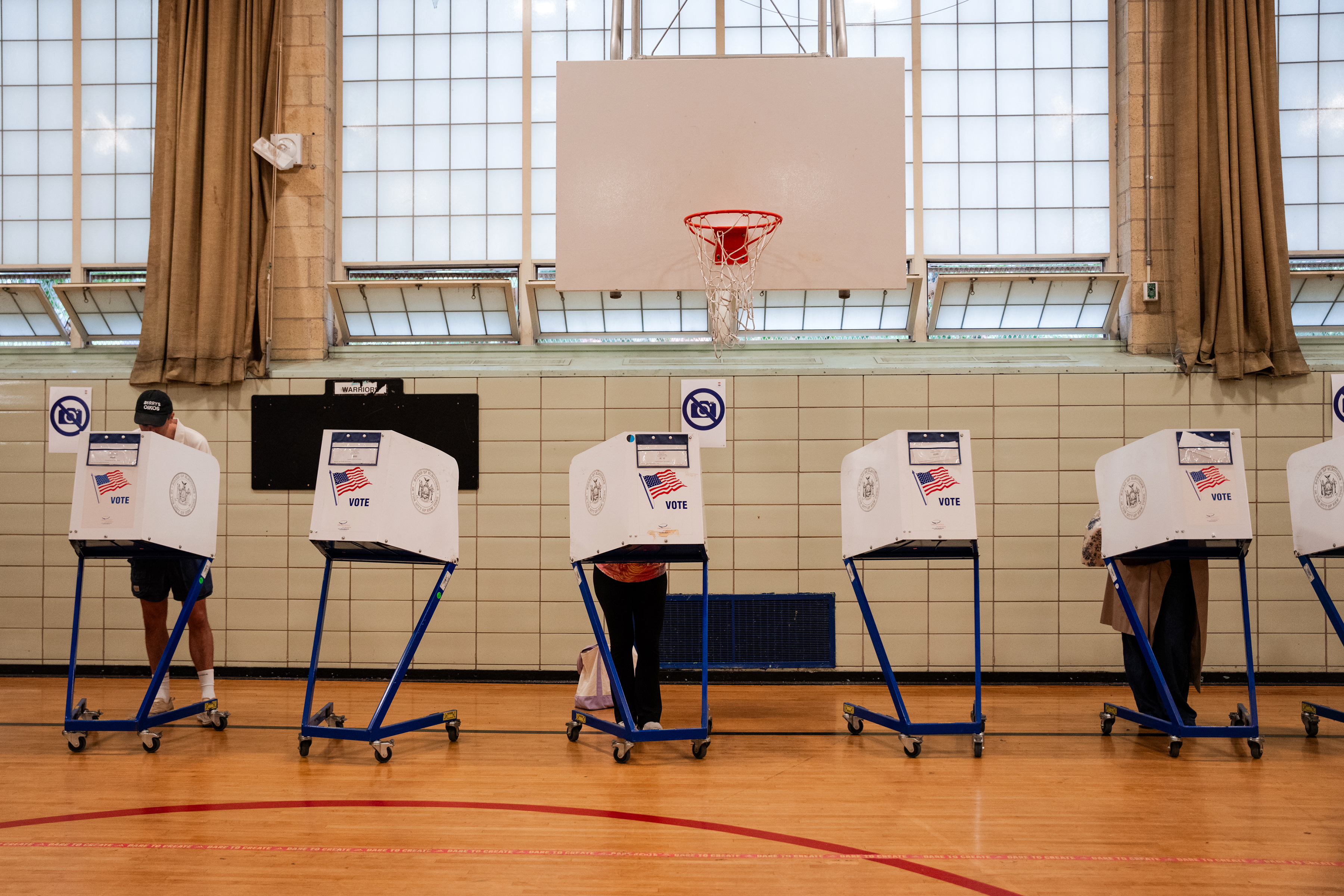
    HENRICO, Va. — In-person voting for this year’s midterm elections began Friday, ushering in the final six weeks for Americans to decide which party they trust to lead Congress through a cost-of-living crisis, a prolonged war in Iran, and other pressing issues.

    Election administrators say they are prepared and confident the vote will be accurate and secure. Nevertheless, President Donald Trump has continued efforts to denigrate certain voting methods and reshape how elections are run, through court challenges, a federal hunt for noncitizen voters, and a pressure campaign to force election officials to share sensitive voter data.

    Friday was the start of early voting in Virginia. Voters in a few other states, including Minnesota and South Dakota, can cast absentee ballots in person, typically at a local election office or voting center. More expansive early voting is scheduled to begin in those and other states in the coming weeks.

    At a voting location in Fairfax, Va,. 18-year-old college student Sanya Singhal was among the first to vote early in person Friday morning, arriving well before the site opened to get in line.

    “Why not just have a little fun in life, you know, try to be the first early voter?” she asked. “I really want to participate in my democracy.”

    At a voting location in suburban Richmond, a poll worker rang a bell as the building opened and about a dozen voters in line began to file in. Stephen Gura was excited to be the first.

    “This election is critical. We need to stop the Trump agenda,” said Gura, who added that he voted for U.S. Sen. Mark Warner, a Democrat, and Shannon Taylor, the Democratic nominee against Republican incumbent Rob Wittman in the 1st Congressional District.

    The Nov. 3 election includes votes for governor and state legislature in most states and will determine whether Republicans maintain control of the U.S. House and Senate. If Democrats retake Congress, it will alter the trajectory of the final two years of Trump’s term, most likely leading to investigations and other oversight efforts.

    Votes underway after redistricting, Trump’s bid to control elections

    At the suburban Richmond voting center, a steady stream of voters flowed in and out. William Curry, a 74-year-old retiree who described himself as a libertarian-leaning independent conservative, voted for Warner’s Republican challenger, Bert Mizusawa, and Wittman. Curry said he generally approves of the job Trump has done, apart from the war with Iran.

    “He’s in a mess he can’t get rid of,” Curry said of the conflict.

    On a rainy day in Sioux Falls, S.D., Bill Goehring, 67, said he voted early at the county office because he will be traveling later. He voted for a mix of Democrats and independents, and said Trump’s “dictatorial tendencies are bad for America.”

    John Thomas, a conservative retired police officer at the Sioux Falls office, said his biggest concerns were public safety and election integrity. He said he doesn’t want to see votes in federal elections from immigrants living in the country illegally. Such fraudulent voting has been found to be extremely rare.

    Trump’s immigration agenda is “spot on,” the 77-year-old said.

    “We wouldn’t be a country that much longer if it had stayed the same for another four years,” he said.

    The start of early voting comes at a time of deep angst and division among many Americans about issues including rising gas and grocery prices, the war in Iran, the looming risks of artificial intelligence, and Trump’s aggressive immigration enforcement campaign.

    It also follows an unprecedented spate of mid-decade redistricting for the House that began when Trump urged the Republican-controlled legislature in Texas to redraw its congressional map to help the party. California and other states followed.

    The changes affect millions of people: Research shows 1 in 10 Americans this fall is a resident of a different congressional district than in 2024.

    Those partisan efforts are expected to continue before the 2028 elections after a landmark ruling this year from the U.S. Supreme Court weakened the federal Voting Rights Act’s protections against racially discriminatory redistricting.

    As the start of early voting approached, Trump was focused on efforts to assert federal control over election administration, even as the Constitution bestows the power to run elections on the states and, in some cases, Congress. The nation’s highest court this week rejected Trump’s bid to restrict mail ballots, but several of his administration’s other efforts to influence the voting process and investigate state voter lists continue.

    Virginia’s Democratic attorney general warned Thursday that Trump’s administration may have violated the state’s laws after a whistleblower accused federal employees of misrepresenting themselves on voter lookup tools to hunt for noncitizen voters.

    Trump for years has raised the specter of widespread noncitizen voting in U.S. elections, and this year is no exception. But research continues to show noncitizen voting is exceptionally rare.

    David Becker, executive director and founder of the Center for Election Innovation and Research, said he wouldn’t be surprised if the Republican president continues “his disinformation campaign and his attack on election officials.” But he said he thinks “the process will hold as it has in past years.”

    At least a few Friday voters were motivated to vote early in part because of Trump’s actions.

    In Minneapolis, 47-year-old business processing engineer Dragan Colakovic said he didn’t want to wait until Election Day for fear of being stopped by immigration agents. He said Trump’s surge of agents to Minnesota in an immigration crackdown earlier this year terrified him. He is a naturalized U.S. citizen who moved from Bosnia in 1997 and saw the horrors of war in the former Yugoslavia.

    “This echoed what I saw in Bosnia,” he said of the heavily armed immigration agents who repeatedly swept through his neighborhood, which has many immigrants.

    “These were my neighbors, my friends,” being arrested, he said.

    Democratic voter Laura Bland, 63, in Virginia’s Henrico County said she cast a ballot early to send “a signal that we’re still here” despite Trump’s efforts to curtail mail voting.

    “Regardless of whether you vote for a Democrat, Republican, people are not going to be stopped or intimidated from participating in our elections,” Bland said, nearly moved to tears.

    Advocates suggest voters cast their ballots early

    Voting rights advocates have encouraged voters this year to cast mail ballots early, in part because of concerns about recent changes in U.S. Postal Service operations that could delay the application of postmarks to ballots.

    Voting early “gives voters options, eases lines on Election Day, and can even mean faster results,” said Hannah Fried, co-founder and CEO of the voting rights group All Voting Is Local.

    The top official at the U.S. Postal Service also encouraged voters who cast ballots by mail to get them in a week before they’re due.

    “Everything is solved if people vote early,” Postmaster General David Steiner said in an interview.

    In a news briefing Thursday, Minnesota Secretary of State Steve Simon urged people not to be swayed by stories they might have seen or read that cast doubt on election operations. They would be able to vote “just like they always have,” he said.

    “I just want to reaffirm that Minnesota’s elections are fundamentally free, fair, accurate, honest, and secure,” he said.

  • Blanche’s partisan activity before midterms dismantles another principle

    Blanche’s partisan activity before midterms dismantles another principle

    WASHINGTON — Attorney General Todd Blanche has repeatedly participated in campaign events and spoken in partisan terms about the coming midterm elections since his confirmation last month, despite criticism that he violated a long-standing Justice Department principle of steering clear of electoral politics.

    This week, he waded again into those waters — twice.

    Since August, Blanche has come under fire for making campaign-tinged public appearances and comments. Last month, at a rally-style event on Long Island, N.Y., he praised Bruce Blakeman, the Republican candidate for governor of New York. Last week, Blanche delivered remarks at the Republican Party’s midterm convention.

    On Tuesday, he stood at the White House podium and disparaged Democratic lawmakers while invoking the coming election, dismissing their concerns about artificial intelligence as “nothing but an effort to influence the midterms.”

    And Wednesday, Blanche spoke at a campaign rally for Michael Whatley, the Republican Senate candidate in North Carolina. Echoing his convention speech, he portrayed crime rates, which continued a long-term downward trend to reach new lows in 2025, as “President Trump and Vice President Vance delivering on a promise.”

    Worries about the Justice Department abandoning its long-held commitment to appear apolitical in order to maintain institutional credibility may seem beside the point. Since January 2025, dozens of judges have viewed its representations with suspicion, eroding the traditional bonds of trust, known as the “presumption of regularity,” that the courts typically grant the department.

    The second Trump administration has also unabashedly destroyed the post-Watergate norm of Justice Department independence from the White House in investigative decisions. Early on, Blanche’s predecessor, Pam Bondi, declared, “We are so proud to work at the directive of Donald Trump.” Last September, after Trump publicly demanded that she charge several perceived adversaries, the department pushed through short-lived indictments of two of them.

    Still, Blanche is dismantling another post-Watergate principle: that Justice Department leaders stay away from partisan politicking.

    Joseph Tirrell, the Justice Department’s senior ethics official until the Trump administration dismissed him in July 2025, this week criticized Blanche’s participation in the Republican convention. He called the attorney general’s comments at the White House briefing “borderline” unethical, and his participation in the North Carolina rally “terrible.”

    “In my former role, I would have advised the attorney general not to go to the White House and not to make comments about members of Congress within 45 days of an election,” Tirrell said. Referring to a law restricting partisan political activity by government employees, he added, “I’d say, ‘That rally sounds like a Hatch Act violation to me, and I’d advise you not to do it.’ I would want to scare that person straight.”

    Stephen Gillers, a New York University law professor who specializes in legal ethics, said Blanche’s political statements and activities were protected by the First Amendment and did not violate professional conduct rule, even if they were ill-advised.

    “Any attempt to discipline him will fail,” Gillers said. “That’s unfortunate. He has the ability to do what he’s doing, and he’s chosen to do it.”

    The Justice Department did not respond to a request for comment.

    When the group Public Citizen filed a Hatch Act complaint about Blanche’s comments praising Blakeman, the Justice Department told Government Executive in a statement that it was “baseless” and “a politically motivated complaint designed to weaponize the Hatch Act against the attorney general for his support of law enforcement.”

    And in response to criticism last week by Democrats on the House Judiciary Committee over Blanche’s convention appearance, the department shot back on social media, “Todd Blanche’s appearance this evening in his personal capacity is legal (and has been approved by ethics).”

    Legal questions center on the Hatch Act, which is ambiguous and difficult to enforce when an administration does not want to strictly adhere to it. The law and related regulations allow some political appointees, while off duty, to attend partisan events, like fundraisers and campaign rallies. Some law enforcement officials are restricted from any partisan activity, but the attorney general is not listed among them, and it is disputed whether that part of the legal limits applies to them.

    Even for those who can engage in political activity in a personal capacity, the traditional test is not just whether such officials say they are doing so, but whether people would reasonably perceive them as acting in their government roles.

    Cynthia Shaw, who ran the Justice Department’s ethics office throughout Trump’s first term, said the notion that high-ranking officials could simply say they are acting in a personal capacity to get around that threshold was a misunderstanding.

    “The bigger the job you get, the less personal capacity you have, because when you speak, people are going to see you in your official capacity and representing the agency that you are head of,” she said.

    Federal law enforcement needs to not just be fair, she added, but to be seen as fair for the long-term good of the department and society.

    For that reason, the Justice Department had long held itself to a higher standard than the Hatch Act and its ambiguities. For decades, its ethics policies went beyond the statute in pushing officials to avoid events like political fundraisers and campaign rallies.

    In 2022, Attorney General Merrick Garland flatly banned political appointees from participating in partisan activities — even in their personal capacities, and even if their family members were the candidates.

    But in March of this year, Bondi rescinded that policy, freeing political appointees to attend such events in their personal capacities subject only to the lower standards of the Hatch Act.

    That weakening of ethics rules is one reason the department’s claim that Blanche’s appearance at the Republican Party convention was “approved by ethics” merits scrutiny. Another is that the administration has changed who makes ethics recommendations.

    After firing Tirrell, the administration left his position vacant for nearly a year before appointing Kristina Spencer, a former aide to Vice President JD Vance who had no prior department experience.

    The office of the deputy attorney general can also overrule the ethics office’s recommendations. For decades, the decision-maker was a career official, but the Trump administration moved that authority to political appointees.

    The principle that the Justice Department should strive to appear apolitical took root after Watergate. President Richard Nixon’s first attorney general, John Mitchell — who later went to prison for his role in the scandal — was so deeply partisan that he resigned to run Nixon’s 1972 reelection campaign.

    The attorney general immediately after established the modern norm of not acting as a political operative while in office: Edward Levi, a University of Chicago legal scholar.

    Maintaining a nonpartisan image has proved difficult, partly because of the department’s power and an increasingly polarized political atmosphere. Under both parties, one attorney general after another has been accused by political opponents of politicizing the Justice Department.

    In 2013, Attorney General Eric H. Holder Jr. called himself President Barack Obama’s “wingman,” clashing with the principle of Justice Department independence. Asked last week about Blanche’s speech at the Republican convention, Holder said, “It’s unprecedented, and it’s disgraceful. Attorneys general don’t talk about political things. He shouldn’t be there.”

    Holder, while serving as attorney general, never spoke at the Democratic convention or at campaign rallies. Nor did Republican attorneys general frequently accused by Democrats of politicizing the department, including Attorney General William Barr during Trump’s first term.

    Gillers said that shifting standards for the conduct of attorneys general would harm the rule of law, especially if Blanche’s successors followed his example.

    “This is new,” he said. “The changing image of what an attorney general should be seen to do, and how officials high in the Justice Department should behave, will not be good. We just don’t know yet how bad it will be.”

    This article originally appeared in the New York Times.
  • Trump refers to Black man from racially offensive 1988 campaign ad while stumping in North Carolina

    Trump refers to Black man from racially offensive 1988 campaign ad while stumping in North Carolina

    As President Donald Trump tries to convince voters that Democrats have let crime run amok, he’s digging into the country’s political past to cite one of the most controversial campaign advertisements — one that relied heavily on racist tropes.

    During a campaign stop Wednesday in Gastonia, N.C., to stump for Republican U.S. Senate candidate Michael Whatley, Trump resurrected a 1988 George H.W. Bush presidential campaign ad featuring Willie Horton, a Black man convicted of rape and assault after his release through a Massachusetts prison furlough program.

    A grainy black-and-white prison photo of Horton was used in the ad targeting then-Massachusetts Gov. Michael Dukakis, who was ahead of Bush in the polls. On Wednesday, Trump evoked the Horton ad in an effort to convince voters Democratic former Gov. Roy Cooper, Whatley’s opponent in the Senate race, is soft on crime.

    “Willie Horton was a bad guy, really bad guy,” Trump said, before comparing Dukakis’ release of Horton to the pretrial release of a Black man who faces a murder charge for last year’s killing of a white Ukrainian refugee in Charlotte, N.C.

    But Cooper was not the governor when the man was released or when he was later charged with killing the refugee.

    “Same thing as this, same as, same exact thing,” the president told the crowd in Gastonia.

    It’s the second time Trump has invoked Willie Horton while campaigning for his party. Last month during a speech in Las Vegas, Trump called the Charlotte killing a “Willie Horton — modern day” tragedy.

    “After the Willie Horton ad dropped, Bush established a lead in the polls and never looked back,” said Andra Gillespie, a political scientist at Emory University outside Atlanta. “They showed the picture, and you ascribed race onto it. It wasn’t sufficiently condemned as racism.”

    A spokesperson for the Republican National Committee, which organized the Gastonia campaign rally, defended Trump’s reference to Horton.

    “Roy Cooper emptied prisons and released thousands of violent monsters onto North Carolina streets,” RNC National Press Secretary Natalie Baldassarre said in a statement to the Associated Press. “The results had deadly consequences, and every Democrat who supports abolishing or defunding the police, paroling criminals, and implementing lax bail policies will have to answer for their dangerous records in November.”

    Trump paints North Carolina as a ‘dangerous state’

    Wednesday’s rally cited the Aug. 22, 2025, killing of white 23-year-old Iryna Zarutska on a commuter train in Charlotte.

    Decarlos Brown Jr., who is Black, faces murder and other charges in Zarutska’s stabbing, which was captured on video. Court records showed that at the time of the attack, Brown had 14 prior cases in Mecklenburg County, including serving five years for robbery with a dangerous weapon. Doctors had diagnosed him with schizophrenia.

    Republicans and other influential voices in Trump’s Make America Great Again movement claimed the attack showed how Democratic elected leaders in large cities across the U.S. failed to protect residents, while some conservative commentators suggested Democrats were ignoring an unfounded “black-on-white” crime problem.

    “He should have been locked up for many, many years,” Trump said Wednesday of Brown.

    “Nobody used to think of North Carolina as a dangerous state, criminally dangerous,” Trump added while blaming Cooper. “It was apple pie, right? Now, it’s one of the most violent, one of the worst in the whole nation.”

    According to 2024 FBI crime data, North Carolina ranked 19th for statewide violent-crime rates in a 50-state comparison.

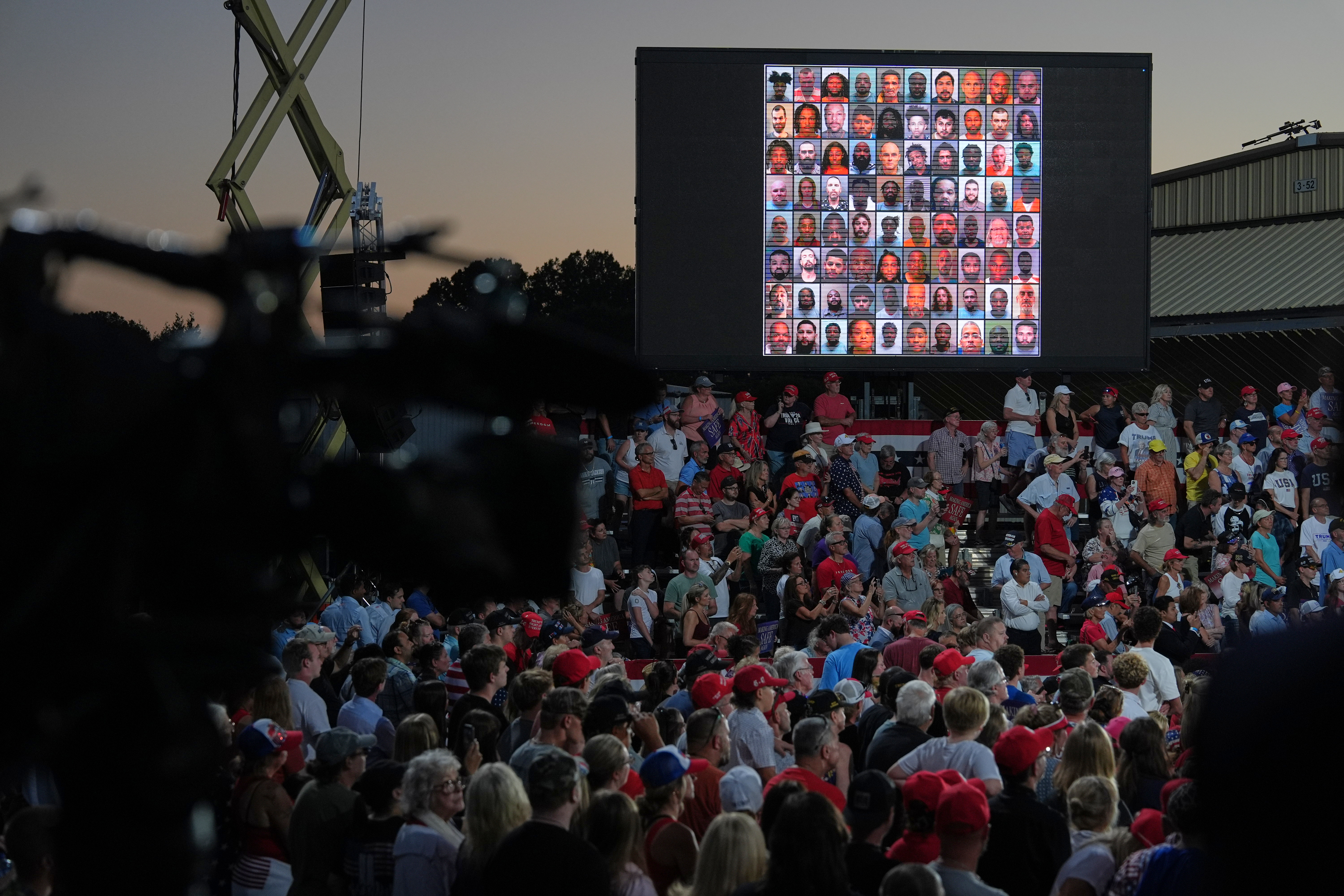
    During the Gastonia rally, a mosaic of mug shots was displayed on a large screen for the crowd. Trump claimed Cooper had cut a deal with “radical activists” to release “some of the worst criminals in the nation into North Carolina.”

    “He released these people. This is just a small group of them,” the president said, pointing to the mug shots that overwhelmingly featured Black people.

    Although it is unclear under what circumstances the people in the mug shots were released, state corrections officials have said Brown was not released early from prison or under Cooper’s COVID-era prisoner-release settlement that Trump referenced.

    Before fatally stabbing Zarutska, according to court records, Brown had been on a pretrial release over a misdemeanor offense that was ordered by a magistrate after Cooper left office.

    ‘Tapping into anger’

    Republicans are under pressure to win over swayable voters as the November midterms approach with Democrats pushing to gain control of the House, the Senate, or both. Some political strategists say part of the ploy of adding Horton to the North Carolina Senate campaign is to rile up Trump’s base.

    “He’s tapping into the anger to remind Republican voters of what he thinks their first principles are in hopes that will be successful for Republican candidates,” Gillespie said.

    “He’s doing this to try and divert attention away from criticism of how he’s governing at the moment,” she added. “Democrats want to make the story of this election Trump’s low approval numbers, the war in Iran, inflation, being preoccupied with things that don’t make a whole lot of sense when there are really serious things going on in the country.”

    Dewey Clayton, professor emeritus of political science at the University of Louisville, said Trump and other Republicans may be thinking that what worked before in the 2016 and 2024 elections presumably will work again in this year’s midterms.

    “It was very effective,” Clayton said. “You do not necessarily have to look at it as racial, in and of itself, although (race) clearly becomes a component. In 2026, talking about ads going back in the 1980s? I’m sure he had consultants that were basically saying this is tried and true.”

    The GOP may need the push in November, Gillespie warns. “I think the motivation by going back to these old strategies is there is real concern about Republican enthusiasm and you might see lower Republican turnout,” she said.

    Rhetoric attempts to divert voters’ attention from rising costs

    The tactic speaks to desperation by Trump and the Whatley campaign, according to Morgan Jackson, a partner with Nexus Strategies in Raleigh.

    “Trump brings up Willie Horton to stoke racial division, something he’s used for the last 10 years,” said Jackson, who is chief strategist for Cooper’s campaign. “It is very clear from the president’s speech last night their only goal is to sow division and hate and lies. Michael Whatley doubles down in support of that effort.”

    Jackson also said Trump and Whatley are trying to change the election’s message of “rising inflation and the cost of everything.”

    “They want to use inflammatory rhetoric, hate speech and lies to sow division in a chance to win an election,” he said. “By referencing Willie Horton, they are showing their hand very clearly.”

    The AP sent an email Thursday seeking comment from Whatley’s Senate campaign.

  • Republican House candidate removed from panel after repeatedly misgendering Rep. Sarah McBride

    Republican House candidate removed from panel after repeatedly misgendering Rep. Sarah McBride

    Republican U.S. House contender Joseph “Dr. Joe” Arminio was removed from a panel Thursday featuring candidates in Delaware races after he repeatedly misgendered Democratic U.S. Rep. Sarah McBride.

    McBride is the first openly transgender member of the U.S. House and was sworn in last year.

    Things unraveled at the Siegel Jewish Community Center in Wilmington, where the Jewish Federation of Delaware’s Jewish Community Relations Committee coordinates a candidates forum every two years. The event featured candidates for U.S. Senate, U.S. House of Representatives, attorney general, state treasurer, and auditor of accounts.

    McBride will face Republican Arminio in November for the state’s only U.S. House seat.

    Arminio, a Wilmington native, political scientist, author, and educator, campaigned largely on inflation. His responses to a 2026 voter questionnaire indicate several anti-LGBTQ+ policy positions. In 2008, he ran unsuccessfully for Congress in Maryland. He did not receive the Delaware GOP’s endorsement, which went to Earl Cooper.

    At the public event, Arminio repeatedly referred to McBride using he/him pronouns and later called her a “gentleman.”

    In the first incident, Arminio’s remarks were met with boos from the crowd. After he spoke, moderator Ken Grant warned him to follow the forum’s rules for proper decorum.

    “If you fail to show respect to anyone else on this stage, you’ll be asked to leave,” Grant said.

    Arminio acknowledged the incident during one of his forum responses.

    “I committed an error before,” he said. “I do acknowledge it. It’s not the first error I’ve made in this campaign, or at any point in my future life.”

    But minutes later, Arminio misgendered McBride again, pointing at her and Democratic Sen. Chris Coons and calling the two of them “gentlemen.” The crowd started booing again, and Arminio’s microphone was cut off.

    McBride said on stage she wanted Arminio to stay and be able to talk about his platform, but organizers held firm.

    Arminio told 6abc he planned to address the incident. He did not immediately respond to The Inquirer’s request for comment.

    The Human Rights Campaign describes the political climate for transgender people and the LGBTQ+ community as an ongoing crisis amid legislative hostility, federal rollbacks, and discrimination. The organization estimates there are more than 2 million transgender people across the country.

    Experts say misgendering a trans person can range in severity from a microaggression or macroaggression to explicit harassment depending on the intent, frequency, and context. Studies show the LGBTQ+ community is more likely to experience harassment, discrimination, and violence than cisgender and heterosexual people.

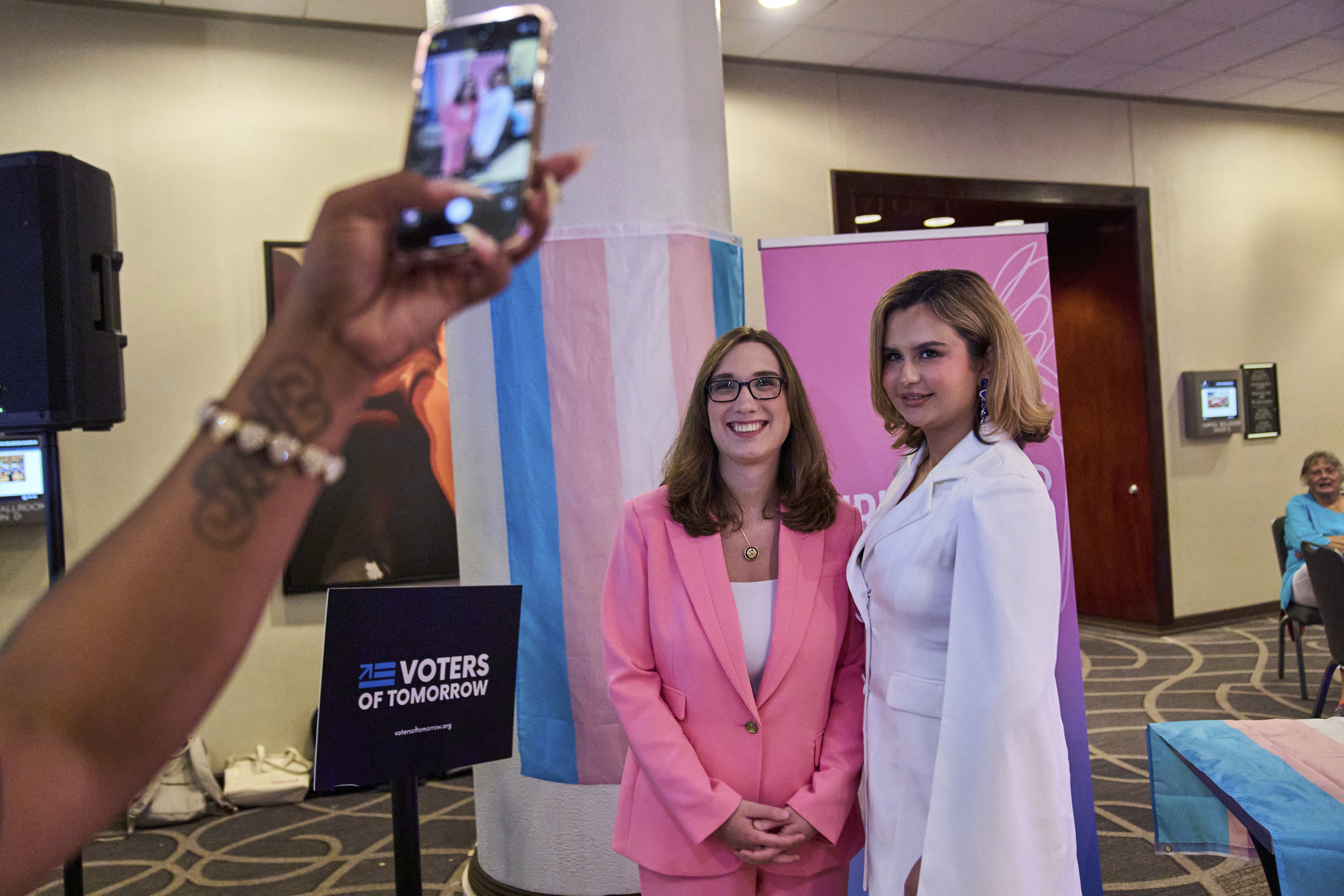
    Bella Bautista, 22, right, a trans woman, has a photo taken with Rep. Sarah McBride, D-Del., the first trans woman to be a member of Congress, during a reception held by the Christopher Project in June 2025.Jacquelyn Martin

    McBride, who was previously a state senator, has been targeted by transphobic attacks across her career.

    After being elected to Congress, Rep. Nancy Mace (R., S.C.) introduced a resolution banning transgender women from using women’s facilities in the U.S. Capitol. Speaker Mike Johnson also implemented a policy restricting restroom access in the Capitol and House offices to a person’s “biological sex,” which experts say is a politicized term to describe someone’s assigned sex at birth.

    The policies were viewed as a way to directly target McBride, the only openly trans person serving in either chamber. McBride has also been repeatedly misgendered.

    Last year, Rep. Keith Self (R., Texas) called McBride “Mr. McBride.” She quipped back, calling him “Madame Chair.” Others stepped in on McBride’s behalf, but the exchange got heated, and the session ended early with Self refusing to honor McBride’s identity.

    Other House Republicans have continued to use male pronouns and honorifics while referring to McBride during interviews, debates, and on social media.

    The representative has worked across the aisle with politicians whose views on the LGBTQ+ community don’t align with hers. She says her job in public office is to represent her state’s priorities and, in turn, normalize trans visibility.

    At the forum, Mike Katz, a former Democratic state senator and now the GOP’s endorsed candidate for U.S. Senate, said Arminio’s actions were uncalled for and apologized to the crowd. Following the event, in a lengthy Facebook post, he called for Arminio to withdraw from the race, calling it a matter of “respect.”

    Grant, the event’s moderator, said ground rules were shared with candidates in advance and were clear: “treat everyone on stage with respect.”

    “When a candidate declined to do so after a clear and public warning, the rules were applied — as they would have been for any candidate, of any party, on any subject,” he said. “I want the focus to remain where it belongs: on the nine candidates who spent the evening answering voters’ questions thoughtfully and civilly, and on the hundreds of Delawareans who came, in person and online, to listen.”

    McBride appears to be taking the incident in stride.

    “I am always so proud to represent Delaware and Delawareans,” she wrote in a statement Friday. “Nothing — and certainly not politicians seeking to go viral — will ever distract me from my laser focus on lowering the cost of gas, groceries, housing, childcare, and healthcare.”