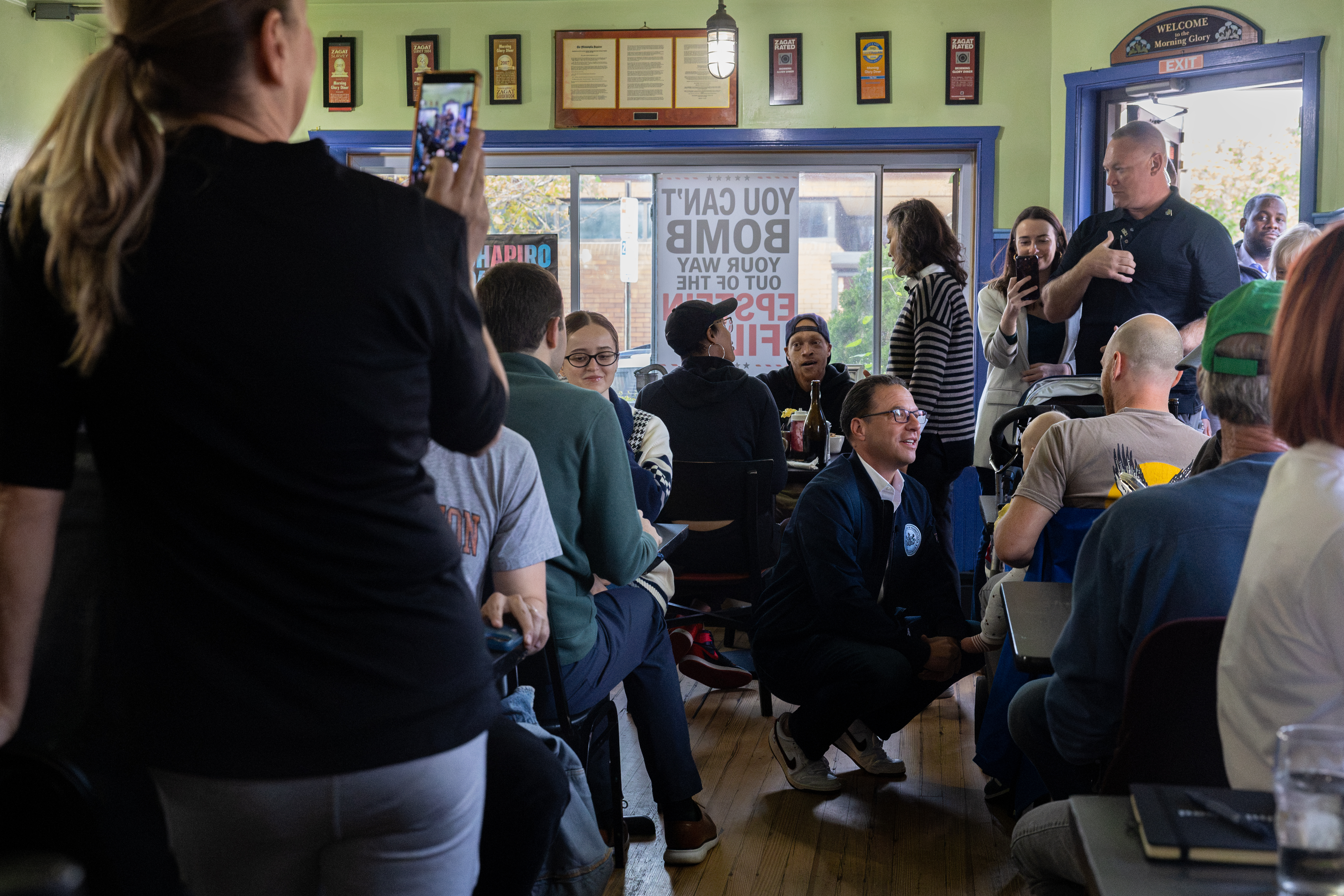
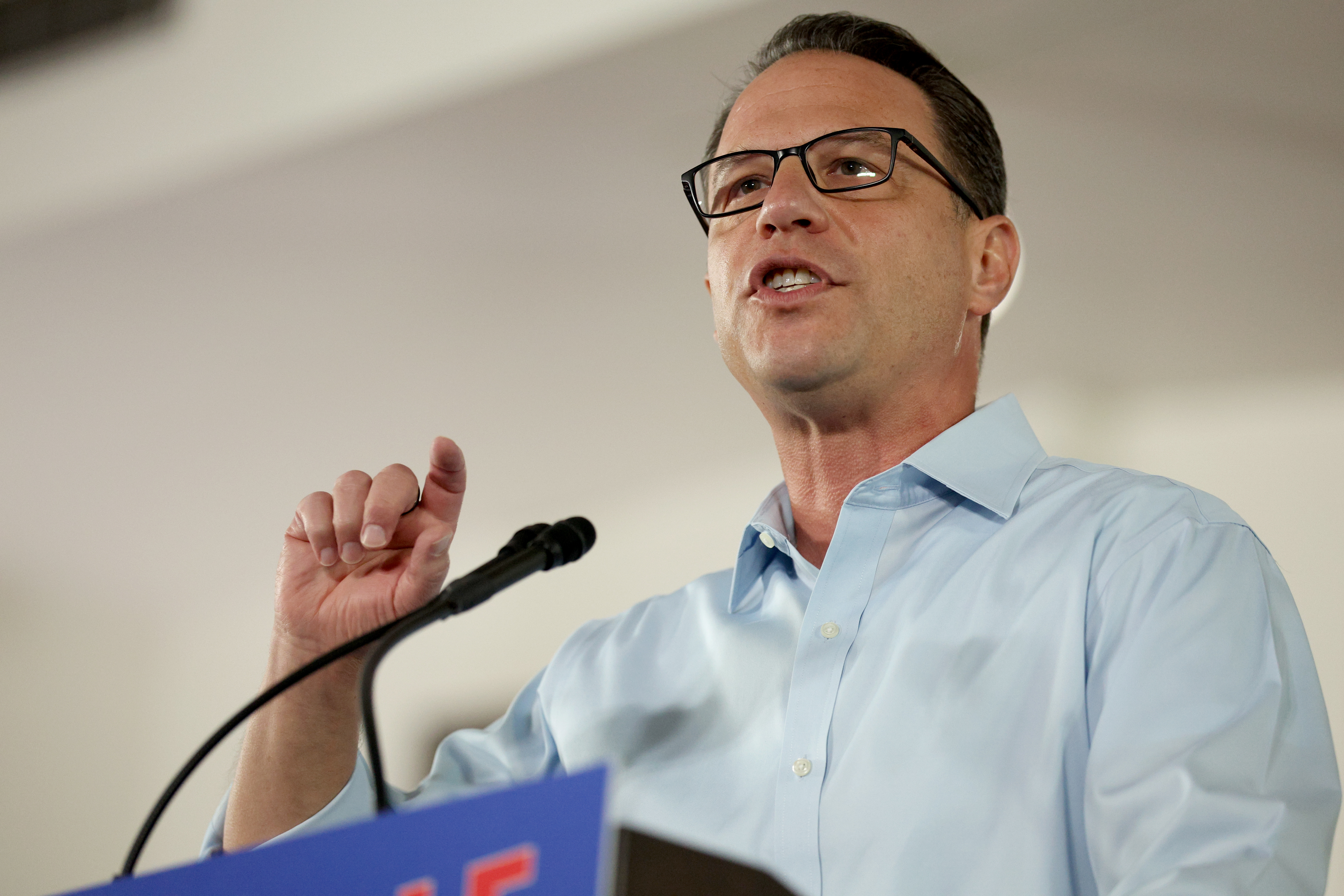
Pennsylvania Gov. Josh Shapiro and Michigan Gov. Gretchen Whitmer, stopped by a Bella Vista diner on Friday morning to pump up Democratic volunteers to turn out voters, with less than six weeks until the high-stakes midterm elections in both of their swing states.
On the menu: Electing Democratic candidates to Pennsylvania’s four nationally-watched U.S. House seats that could determine control of Congress, and flipping the state Senate to Democratic control for the first time in more than 30 years.
Shapiro is also seeking a second term as Pennsylvania’s Democratic governor this November, and maintains a sizable polling and fundraising advantage over his Republican opponent, state Treasurer Stacy Garrity.
“I know we’re in a moment of tumult right now, where chaos and cruelty and corruption is just enveloping our lives. The good news is in 39 days, you’ve got the power to change that,” Shapiro told the group of a couple dozen volunteers from voter protection groups. Servers at Sam’s Morning Glory Diner, wearing T-shirts with messages condemning President Donald Trump and supporting former Vice President Kamala Harris, whisked by with plates of omelettes and pancake stacks.
Gov. Josh Shapiro talks to patrons alongside Michigan Gov. Gretchen Whitmer out in the back patio of Sam’s Morning Glory Diner in South Philadelphia on Friday, Sept. 25, 2026. Shapiro is canvassing to get Pennsylvania Democrats elected up and down the ballot as the midterms are upcoming in November. He wants to flip the state Senate for Democrats to take back control. Whitmer is present to support Shapiro’s re-election campaign.Aidan T. Gallo / Staff Photographer
Shapiro also assured voters that elections in Pennsylvania will be conducted fairly and accurately, following a CNN report that Trump’s Department of Justice is sending a surge of election monitors to oversee polling locations.
“We’re prepared again in court, and we’re also prepared should they try and bring personnel into certain communities, particularly minority communities, to try and intimidate people, make it harder for people to vote, or make them worried about showing up to vote,” he said.
State election officials are coordinating with the Pennsylvania National Guard, the Pennsylvania State Police and local law enforcement to protect voting access, he said.
“We will do everything in our power to stop Donald Trump from interfering with this election and ensure, whether you vote by mail or you vote in person, you will have access to the ballot box, and it will be protected,” he said.
Gov. Josh Shapiro meets with patrons alongside Michigan Gov. Gretchen Whitmer inside Sam’s Morning Glory Diner in South Philadelphia on Friday, Sept. 25, 2026. Shapiro is canvassing to get Pennsylvania Democrats elected up and down the ballot as the midterms are upcoming in November. He wants to flip the state Senate for Democrats to take back control. Whitmer is present to support Shapiro’s re-election campaign.Aidan T. Gallo / Staff Photographer
Whitmer is nearing the end of her second term as Michigan’s governor, and like Shapiro, has been floated as a contender in the 2028 Democratic presidential primary.
The two have been coy about any future pursuits. Shapiro has demurred on his ambitions for higher office, saying he’s focused on his reelection, though he’s also said he will “be a part of that conversation” about who Democrats should nominate for president. Whitmer previously said she had no plans to run in the Democratic presidential primary in 2028 but later walked it back, saying “never say never.”
But on Friday in South Philadelphia, there were no signs of rivalry. Whitmer said she was in town to help support Shapiro’s reelection effort. Shapiro praised Whitmer, saying she has been a guiding light for the kind of governor he wanted to emulate.
Whitmer, Shapiro said, is ”someone I have looked up to, someone who knows how to get stuff done in her state, and someone who I think leads with integrity, with purpose, with drive and determination.”
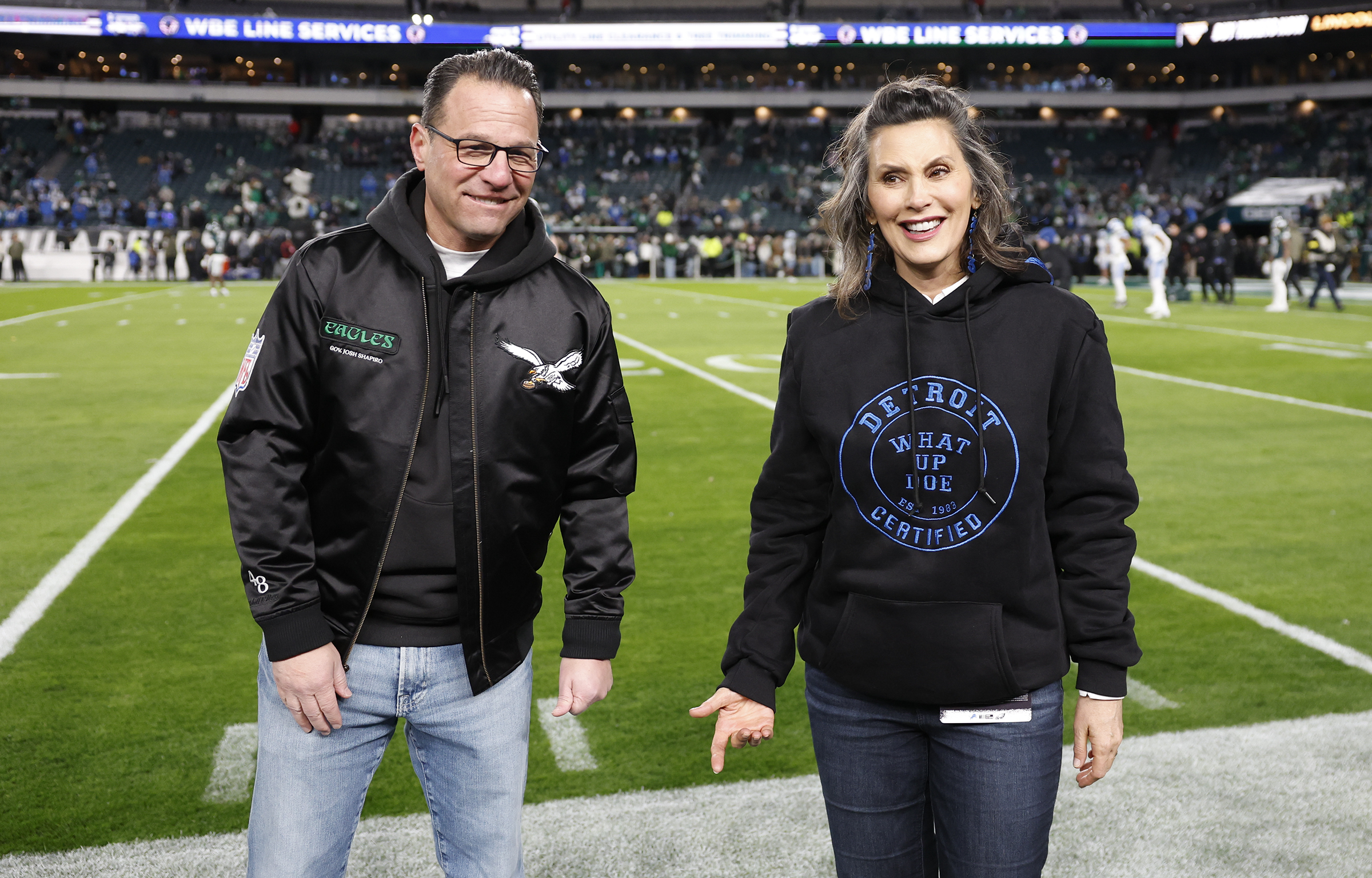
The two appeared together publicly last year at an Eagles-Lions football game at Lincoln Financial Field, as part of what Whitmer called a friendly rivalry between the NFC championship contenders.
Pennsylvania Governor Josh Shapiro (right) and Michigan Governor Gretchen Whitmer before the Eagles played the Detroit Lions at Lincoln Financial Field on Sunday, Nov. 16, 2025, in Philadelphia, PA.Yong Kim / Staff Photographer
During the 2024 presidential election, Shapiro also visited Michigan to stump alongside Whitmer for Harris’ campaign.
On Friday, Whitmer called Shapiro a “good friend and colleague.”
“When Washington, D.C. is making life harder — whether it’s through tariffs or a war in Iran that’s jacking up the price of everything — it’s the governors that are protecting our rights, that are making sure we keep more money in our pockets. It’s the governors who are solving problems,” she said. “You got one of the best in the country.”
After talking with patrons, Shapiro said he planned to sit down with Whitmer to eat something at the restaurant. Featured on Sam’s Morning Glory Diner menu on Friday: “Shapiro 2026″ and “2028 sausage, eggs and gravy.”
The court’s three liberal-leaning justices publicly dissented from the decision.
The emergency order allows states, for now, to use the Department of Homeland Security program, called Systematic Alien Verification for Entitlements, or SAVE, in their efforts to verify the eligibility of voters on their rolls.
States’ use of the SAVE program is voluntary. The immediate impact on the upcoming midterms is likely limited because existing law blocks most states from systematically purging voters from their rolls within 90 days of an election, said David Becker, an election law expert who leads the Center for Election Innovation and Research.
He said since the program is voluntary and DHS itself has admitted the data is not perfect, “states may find this to be a useful tool used along with other tools to keep their lists up-to-date.”
The court’s order puts on hold a federal judge’s June ruling that had deemed the Republican administration’s recently revamped version of SAVE illegal. U.S. District Court Judge Sparkle L. Sooknanan had blocked the use of the tool, saying it violated Americans’ privacy rights and could result in voters being wrongly removed from the rolls.
A federal appeals court let her order stand.
But the Supreme Court majority found that a 1996 law explicitly allows DHS to get information about citizenship and immigration from other federal agencies. The federal government also has “an obligation to respond” to states seeking to verify citizenship.
“The order below prevents the Federal Government from using the program it believes is best suited to the task,” the majority wrote in the unsigned order.
Justice Ketanji Brown Jackson dissented, joined by Justices Elena Kagan and Sonia Sotomayor. The database has long been seen to fall under federal privacy laws, she wrote, and there are real risks that legitimate voter registrations could be mistakenly revoked.
“The harm caused by burdening or disenfranchising even a few lawful voters outweighs the nonexistent harm that the Government experiences when it is prevented from taking an action that it likely lacks the authority to take,” Jackson wrote.
The plaintiffs and counsel team in the case called the ruling “profoundly disappointing” and said it puts “millions of Americans at risk of being unlawfully targeted by the administration’s unreliable voter purge database” before the midterms.
“However, this case is not over,” their statement read. “The D.C. district court ruled that the expanded SAVE program violated multiple laws. We will be doing everything in our power to protect Americans’ voting and privacy rights by ensuring that the district court decision stands.”
The White House did not immediately respond to a message seeking comment.
The SAVE program was created under an immigration law mandating that DHS help federal, state, and local agencies prevent government benefits from going to noncitizens. The Trump administration last year moved to significantly expand its search abilities. Since then, at least 67 million registrations have been scanned through the program, but critics worry it could end up purging valid voters from the rolls.
Some registrants have already been wrongly flagged. In Travis County, Texas, for example, officials said they investigated 97 voters flagged by SAVE as apparent noncitizens and found that at least 10% of them — and likely up to 21% — were U.S. citizens. The county urged the Supreme Court to reject the administration’s appeal, while the state of Texas submitted its own brief defending the database.
Even though the use of the SAVE program has been blocked for months, the administration said in court filings that DHS officials have continued using Social Security Administration data “in certain cases to verify information and help determine whether illegal voting may have occurred.”
DHS in August launched its own investigation to find noncitizen voters on state rolls, according to a federal whistleblower statement that said the effort is rushed, filled with errors and potentially violates state laws. DHS has defended that investigation as being conducted “diligently and professionally.”
The effort to create a national voter list is among numerous steps Trump has taken during his second term to try to overhaul the way elections are run. Most of those steps have been blocked by various courts, in part because the Constitution gives states and Congress the authority to set election rules, but provides no such power to the president. In mid-September, the Supreme Court rejected a bid from Trump to restrict mail ballot procedures before the midterms.
Research shows that noncitizen voting, which is already illegal and punishable as a potential felony that could lead to deportation, is exceptionally rare. But Trump has remained fixated on the idea that massive numbers of noncitizens are voting in U.S. races.
Pennsylvania is — once again — at the center of the political universe, and our team is set to bring you the latest as we cover the final stretch of the campaigns from Philadelphia to Washington, D.C. and across Pennsylvania. We’re focusing on the competitive U.S. House races, the battle for the governor’s mansion, and legislative districts across the Keystone State as Democrats fight for control in Harrisburg and in Congress.
🎤 I’m Sam Janesch, The Inquirer’s national political reporter. I’ll be your host this week as we dig into how Pennsylvania’s always-newsworthy Democratic senator is inserting himself into a campaign season where he’s not even on the ballot. We also have a first look at an unusual new spending effort on behalf of U.S. Rep. Brian Fitzpatrick, who is fighting to keep his seat as the last Republican representing the region in Congress, and new insight into Gov. Josh Shapiro’s polling and money advantages.
🗳️ Close to home: Fitzpatrick is the least loyal House Republican to President Donald Trump, but he’s still overwhelmingly aligned with the president and his party.
— Sam Janesch, Michelle Baruchman, Fallon Roth, Gillian McGoldrick (pa2026@inquirer.com)
The latest
Pennsylvania voters are giving President Donald Trumpworse grades on economic issues as the midterms near. And as gas prices hit $4.55 in Philadelphia, even his 2024 supporters are unhappy.
Shapiro has raised $60 million for his reelection, but any leftover money can’t be directly transferred to a 2028 presidential campaign — not that he has declared his candidacy for one, anyway.
Only one Pennsylvania Republican received a video shoutout from Trump in his Truth Social endorsement dump last week — and it’s the candidate with perhaps the longest shot of winning. Trump called Garrity “really special,” while slamming Shapiro as a governor who “does not have what it takes.” Meanwhile, U.S. Rep. Ryan Mackenzie is still counting on Trump’s support to help him win in the Lehigh Valley.
Outside the midterm elections, another type of political campaign was underway to free convicted former Philadelphia labor leader John Dougherty, widely known as Johnny Doc, from prison. But it was a group of Republicans, including Trump, who ultimately aided the longtime Democratic power broker’s release.
📊 U.S. Sen. John Fetterman has come a long way from the Bernie Sanders-loving, progressive populist that made him a political sensation starting about a decade ago — at least according to the Pennsylvania voters who elevated him to national prominence.
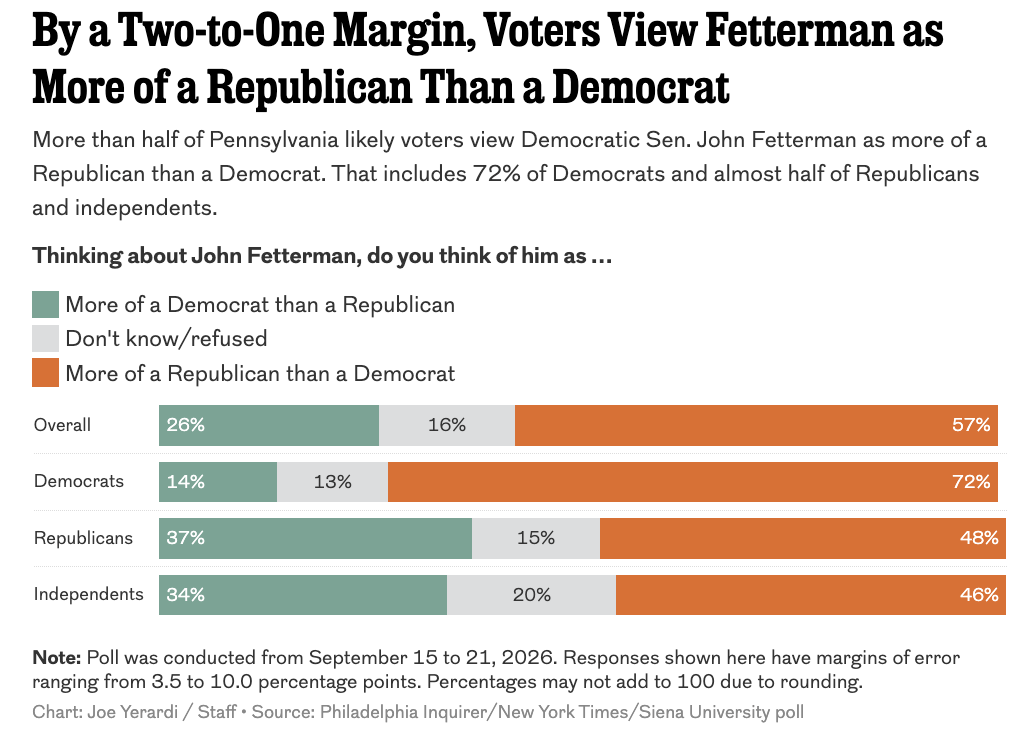
Four years after his election to the U.S. Senate, a majority of the state’s likely voters think of him as a Republican, according to a new poll conducted by Siena University on behalf of The Inquirer and the New York Times.
Our polling data shows nearly three-quarters of Democrats think of Fetterman as a Republican. About half of Republicans feel the same way.
Even though Fetterman has said he will not change parties, that perception could have major implications. Democrats need to net at least four seats to capture the Senate majority starting in January. If they win a slim majority, Fetterman’s wildcard nature could be a roadblock as the party looks to act as a check on Trump in the final two years of his term.
Democrats in Washington aren’t sweating it. Well, at least not publicly.
“No,” U.S. Sen. Kirsten Gillibrand, a New York Democrat and chair of the Democratic Senatorial Campaign Committee, said quickly when The Inquirer asked her this week if she or her colleagues are concerned about Fetterman’s role in a narrow majority.
“I’m very grateful that Sen. Fetterman is serving in the U.S. Senate as a Democrat, and I think he will continue to do so,” Gillibrand said.
Campaign scrapple
📺 Exclusive: A top environmental organization is throwing $250,000 toward new digital ads and a mail program supporting Fitzpatrick as he fends off a challenge from Democrat Bob Harvie in the swingy Bucks County-based congressional district that could prove key to flipping party control of the House this fall.
Fitzpatrick is the only House GOP candidate currently receiving ad support from EDF Action Votes, a super PAC that supports the goals of the Environmental Defense Action Fund.
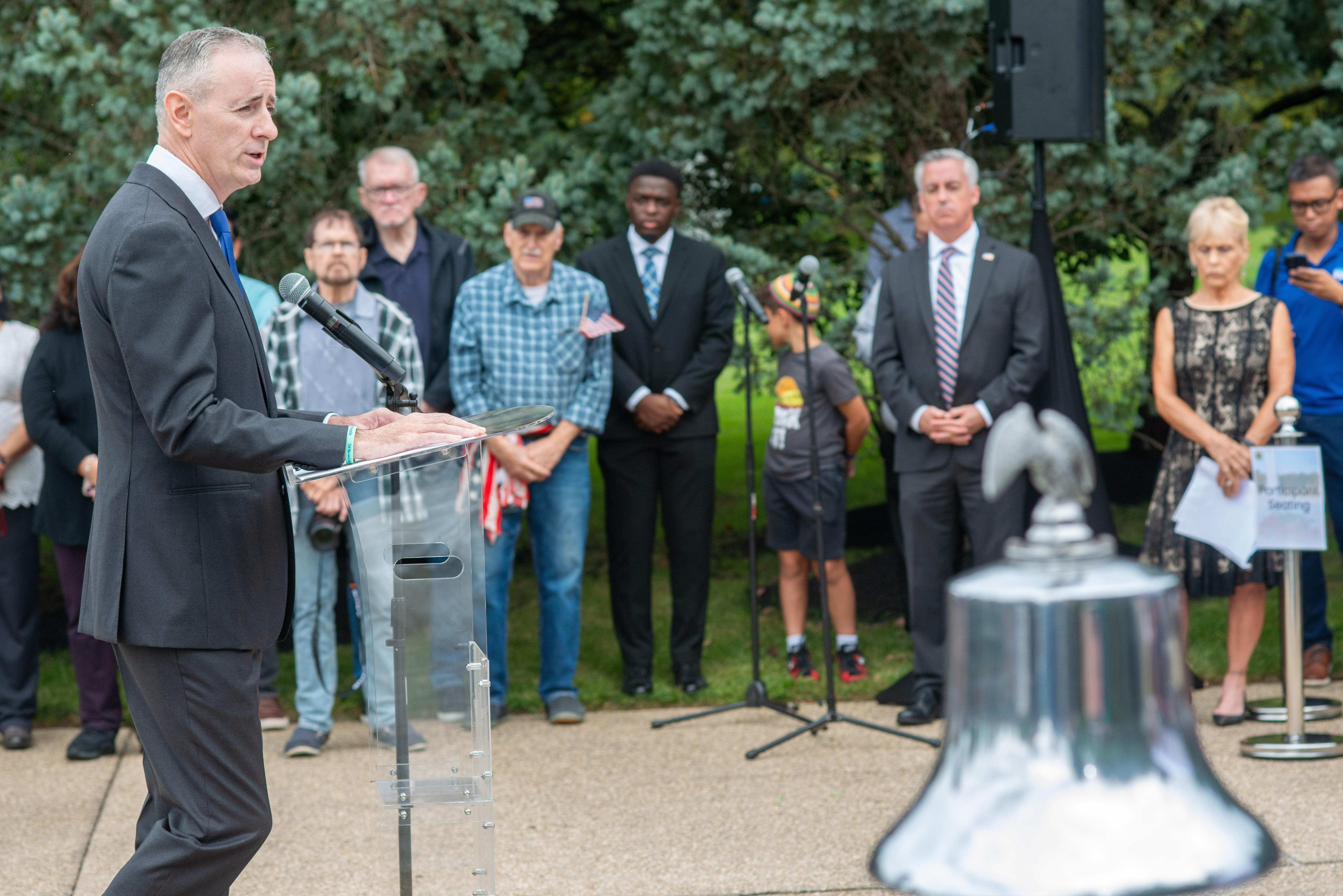
US Rep Brian Fitzpatrick speaks during the Garden of Reflection remembrance ceremonies as his opponent, Bob Harvie (3rd from right) listens Friday, September 11, 2026 at Garden of Reflection in Yardley, Pennsylvania.William Thomas Cain / For The Inquirer
Historically Democratic-aligned groups, like environmental orgs and labor unions, have felt comfortable continuing — or offering new — support for Fitzpatrick despite a national political landscape that has become increasingly unfavorable for Republicans. The Bucks County lawmaker has been known to separate himself from his conference and is the least loyal House Republican to Trump and his party.
🔴 The Pennsylvania Republican Party’s state committee will meet in Pittsburgh this weekend. The committee cleared the field for Garrity as the party’s nominee by endorsing her last September. But since then, she’s struggled across the board — with fundraising, in polls, and more. Politics reporter Michelle Baruchman will be there, hoping to hear from attendees about the party’s outlook heading into November.
📩 Mail ballots have already begun hitting mailboxes across Pennsylvania, with nearly 14,000 already returned.
📬 A total of 999,280 mail or absentee ballots have been requested as of Thursday, Sept. 24, according to Pennsylvania Department of State data.
Shapiro, Pennsylvania’s incumbent Democratic governor, is up 21 points over Garrity, according to a new poll conducted by The Inquirer, the New York Times, and Siena University. He also announced a $13.3 million haul this summer and $31 million spent — far outpacing Garrity’s $1.8 million total raised and $1.5 million spent since June.
👋 All this election news, and can you believe we still have more than a month to go? You can follow The Inquirer politics team’s coverage here, and we’ll see you in your inbox next Friday.
By submitting your written, visual, and/or audio contributions, you agree to The Inquirer’s Terms of Use, including the grant of rights in Section 10.
Bucks County Republican State Sen. Frank Farry’s campaign this week demanded his Democratic challenger take down an advertisement attacking Farry for his position on data centers and air an apology instead, calling the commercial “defamatory” and “demonstrably false.”
Shohin H. Vance, an attorney representing Farry’s campaign, called for Democrat Eileen Hartnett Albillar to remove the ad and issue a 30-second retraction advertisement, according to an eight-page letter sent Wednesday and reviewed by The Inquirer.
Harnett Albillar’s ad calls Farry a “data senator” and says he is “the data center industry’s number one fan.” The ad also accuses the Republican lawmaker of voting for data center tax breaks in Harrisburg and notes that Farry’s law firm represents NorthPoint, a real estate company which redeveloped the Keystone Trade Center in Falls Township — the soon to be home of an Amazon data center.
“The Advertisement, which accuses my client of abusing his public office for his own pecuniary interest, is not only misleading — it is demonstrably false,” Vance wrote in the letter.
The dispute signifies how AI data centers have become a politically toxic issue as candidates from both parties distance themselves from supporting their development.
Farry’s 6th State Senate District is one of a handful of competitive seats being targeted by Pennsylvania Democrats in hopes of flipping the state Senate and delivering a Democratic trifecta in Harrisburg.
Hartnett Albillar’s campaign said Fridayit has no plans to stop running the ad.
“His temper tantrum won’t silence this campaign or stop Eileen from fighting to make Bucks County more affordable,” campaign manager Leigh Stafford said in a statement.
The Farry campaign, in the letter, rejected the notion that Farry or any clients at his law firm — including NorthPoint — benefitted or profited from Farry’s vote in 2021 to support Act 25. The legislation allows computer data center equipment to be exempt from Pennsylvania’s sales and use tax if it’s being used or sold to a certified data center by a valid owner, operator, or tenant.
“The vote did not, and could not, benefit the client, and none of it put a dollar in Senator Farry’s pocket,” Vance wrote.
Farry was serving in the state House at the time and did not raise a conflict of interest on the floor. When asked about this, he said in a statement: “I didn’t raise a conflict on the House floor in 2021 BECAUSE I DO NOT REPRESENT DATA CENTERS.”
The campaign emphasized in its letter that Farry’s law firm, Begley, Carlin & Mandio, has not represented a data center operator in at least 20 years.
“To be sure, the Keystone Trade Center is now also the site of a data center, and its developer, NorthPoint, is a client of Begley Carlin. But NorthPoint is not a data center, and the fact that it leases a portion of its 1,800-acre site to a data center operator does not make it one,” Vance wrote.Begley Carlin has represented NorthPoint since July 2020.
Farry has been with Begley Carlin since 2011, but he said in a statement that he has “not done much work at all” for the firm “as my time is filled with being a State Senator, our local volunteer fire chief, a dad to two young kids, and a husband who among other things recently supported my wife through a two year battle with breast cancer.”
Adam C. Bonin, an attorney representing Hartnett Albillar’s campaign, wrote in a response to Vance Friday that: “We will neither cease nor desist from engaging in this truthful, accurate speech.”
Bonin highlighted NorthPoint’s close proximity to the Bucks County data center project, including mentions of the company in Falls Township press releases and in news articles. Bonin also argued that the 2021 state House bill, which Farry supported “made this an attractive deal for NorthPoint and Amazon to make. Without them, perhaps Amazon would have stayed out of Bucks County altogether.”
“While Senator Farry might not like seeing the truth displayed in such an unflattering way, the advertisement’s statements are amply supported by Farry’s legislative record, his law firm’s own website, official Falls Township records and copious news reporting,” Bonin wrote.
This is not the first legal dustup to happen in a Bucks County race this election cycle. Last month, Democrat Bob Harvie, a county commissioner challenging GOP U.S. Rep. Brian Fitzpatrick in the 1st Congressional District, filed a defamation lawsuit against a super PAC supporting the Republican. The suit argued that the PAC falsely claimed Harvie was under FBI investigation.
Private equity investor Gregory L. Segall, a Philadelphia Republican who was a key backer of Mayor Cherelle L. Parker’s 2023 campaign, has resigned from three city boards as he weighs other “civic engagement” opportunities, according to a copy of one of his resignation letters obtained by The Inquirer.
Parker, a Democrat, appointed Segall to the Philadelphia Gas Works board, the Philadelphia Tax Reform Commission, and the Mayor’s Business Roundtables. Segall resigned from all three effective Aug. 31. He also served as a vice chair of Parker’s transition committee when she was taking office.
“While I am stepping away from this role, I remain committed to civic engagement and intend to explore other ways to continue the journey I have been privileged to pursue over the last several years,” Segall, the chairman and CEO of Versa Capital, wrote in his letter resigning from the Mayor’s Business Roundtables, an advisory group convened by Parker.
Segall’s moves come as candidates are gearing up to run in next year’s municipal elections, when Parker and all 17 City Council members are up for reelection.
Candidates in the primary election have until early spring to decide whether they are running.
Claudia Vargas, a journalist who formerly worked for NBC10 and The Inquirer, reported this week that Segall was considering running for Council.
When contacted by The Inquirer, Segall, who lives in Chestnut Hill, said Wednesday he is “not running” for Council.
“People have suggested multiple forms of public service, including Council, and I have no plans or commitments at this time,” Segall, 63, said in an interview.
Segall said he continues to “strongly support Mayor Parker, and my highest and best hope is that my public service will be in aid of her continued success.”
Parker on Wednesday declined to comment on the report of Segall exploring a run for office.
From 2022 through 2025, Segall and his wife donated $37,300 to Parker’s campaign, according to campaign finance records. He also gave $150,000 to a super PAC backing her 2023 run, and $6,200 to her transition committee, the records show.
“The 2023 election took place at a time of crisis in the city, and getting the right leader was never more critical,” Segall said. “So the reason for my commitment to her was quite simple: Before I’m a Republican, I’m a Philadelphian.”
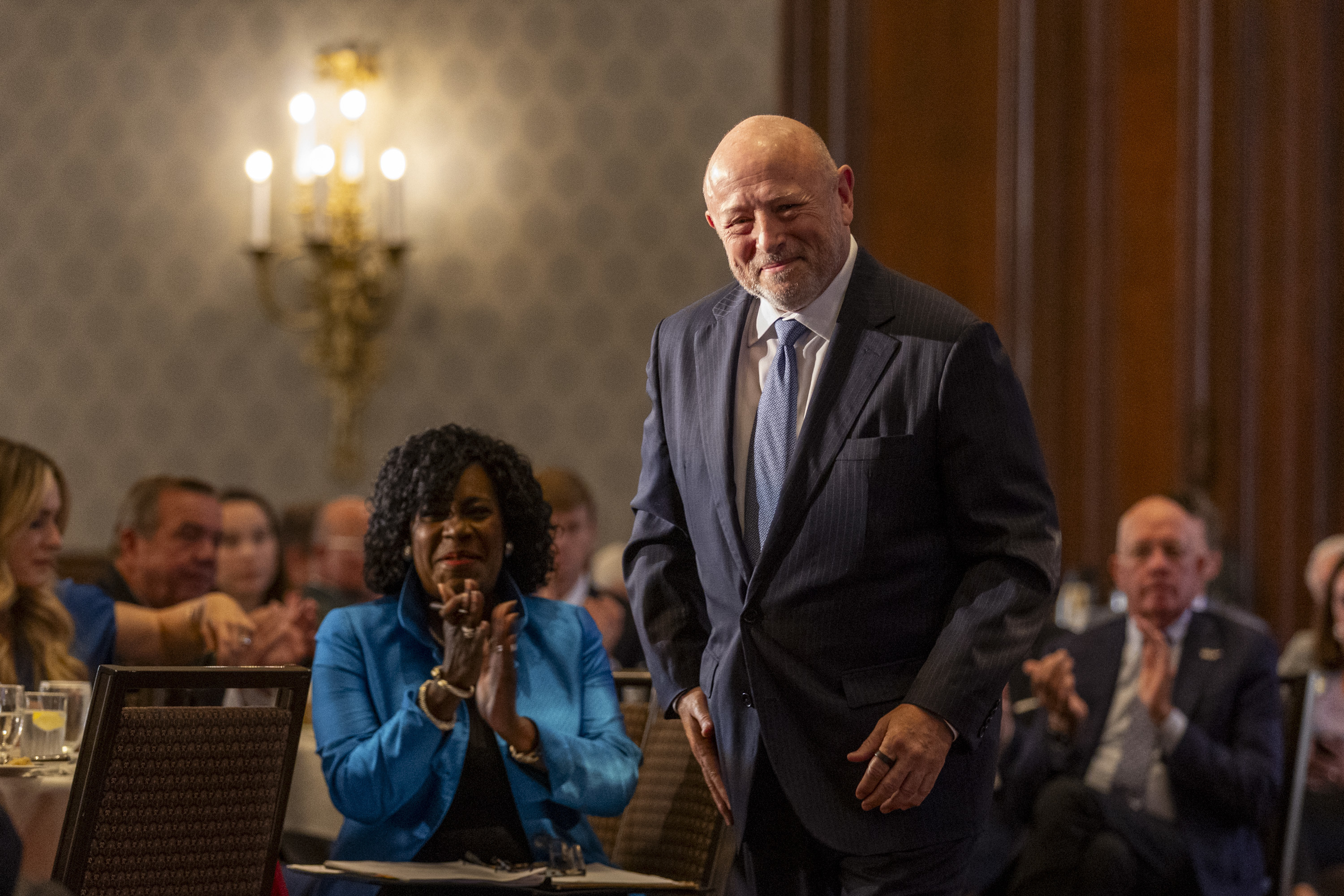
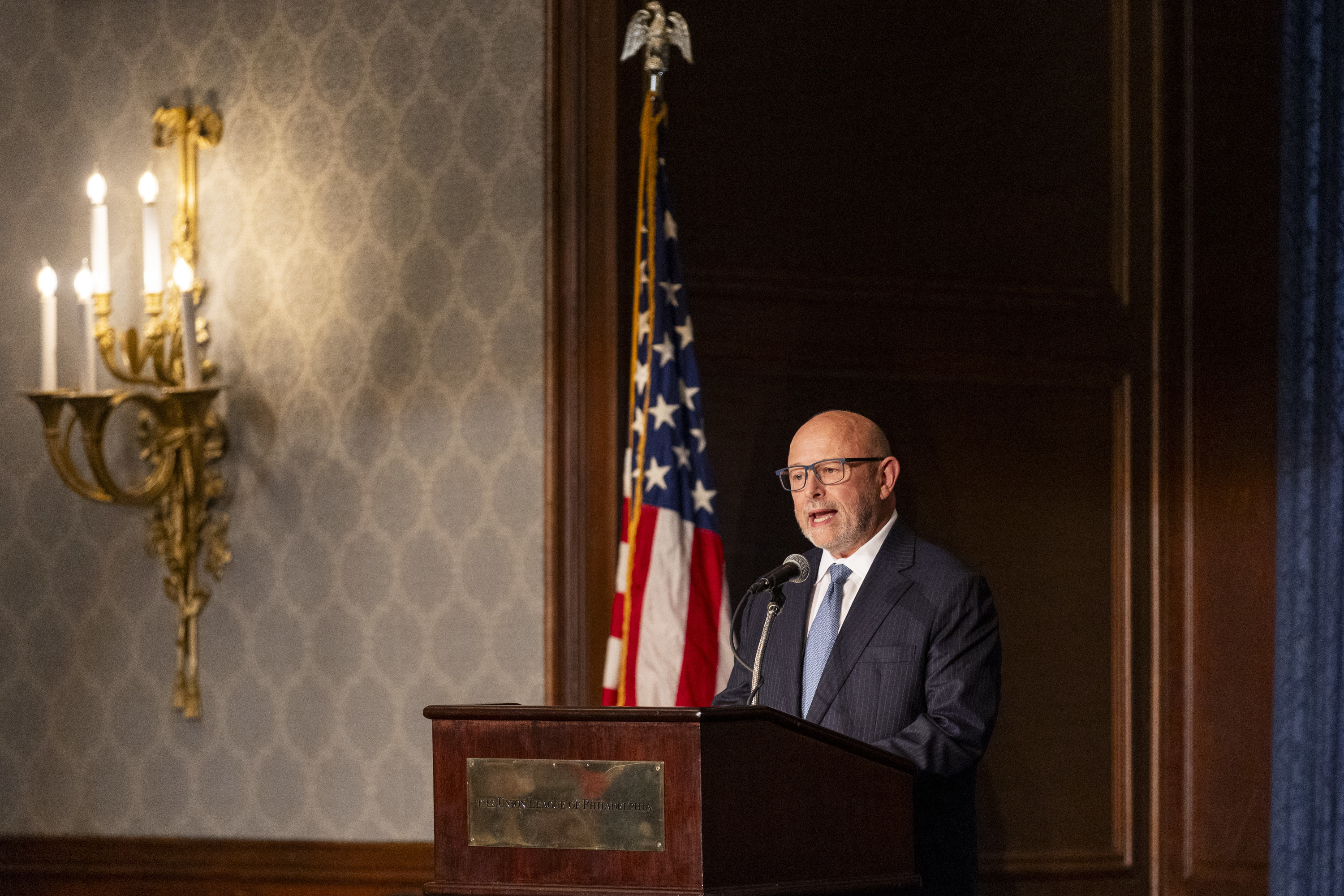
Gregory Segall, Chairman and CEO of Versa and Supporter of Mayor Parker, speaks at the Union League of Philadelphia Presidential Luncheon in Philadelphia, Pa., on Thursday, September 18, 2025.Tyger Williams / Staff Photographer
Citing Republican Party sources, Vargas reported that Segall was considering running for one of the two at-large seats on Council that are elected citywide and are set aside by the Home Rule Charter for minority-party or independent candidates.
Republicans held those seats for about seven decades until Councilmembers Kendra Brooks and Nicolas O’Rourke won them over the last two election cycles as members of the progressive Working Families Party.
Brooks is considering challenging Parker in next year’s mayoral election, sources previously told The Inquirer, which would require her to resign from her Council seat.
The Philly GOP has been strategizing ways to recapture the seats, and a run by Segall, a wealthy businessman who could potentially help fund his own campaign, could be a major opportunity for the party.
Segall donated $2,500 to the Republican City Committee last October.
GOP chair Vince Fenerty said he has met Segall and thinks he is a “nice and honorable man.”
“We’re a party that welcomes any potential candidate, and the decision to endorse would be up to our ward leaders,” Fenerty said in an interview Thursday.
Brian O’Neill, who represents the 10th District in Northeast Philadelphia, is currently the only Republican on Council. Democrats hold the remaining 14 seats.
One in four likely Pennsylvania GOP voters has not heard of the state’s Republican candidate for governor, as Gov. Josh Shapiro continues to pull ahead with less than six weeks remaining until Election Day, according to a new poll.
According to the poll, Shapiro’s lead has now expanded beyond the advantage he held the month before the 2022 election against State Sen. Doug Mastriano (R., Franklin). Shapiro went on to beat Mastriano in that election by nearly 15 percentage points, or 800,000 votes — a drubbing that the GOP vowed not to repeat.
(function(){function e(){window.addEventListener(`message`,function(e){if(e.data[`datawrapper-height`]!==void 0){var t=document.querySelectorAll(`iframe`);for(var n in e.data[`datawrapper-height`])for(var r=0,i;i=t[r];r++)if(i.contentWindow===e.source){var a=e.data[`datawrapper-height`][n]+`px`;i.style.height=a}}})}e()})();
Pennsylvania Republicans endorsed Garrity in September 2025 — an unprecedented early nod to unify behind her in an effort to put up a stronger fight against Shapiro after the party largely withheld its support for far-right Mastriano. Garrity has won statewide twice and received the most votes in Pennsylvania history for a statewide office, a record previously held by Shapiro. In January, President Donald Trump endorsed Garrity, calling her “an America First Patriot.”
But building on that early enthusiasm has proven to be a challenge for Garrity, who for months has struggled to raise money, compete with Shapiro’s $60 million war chest, and gain name recognition in the critical battleground state where registered Democratic voters narrowly outnumber Republicans.
Garrity, 63, who entered politics in 2020 after a long career in the U.S. Army Reserve, raised only $1.8 million this summer and spent $1.5 million, according to her latest campaign finance filing, posted Tuesday. Shapiro raised $13.3 million during that time and spent $31 million.
Gov. Josh Shapiro addresses the audience during a rally for congressional candidate Bob Brooks at the United Steelworkers Union Hall in Bethlehem, Pa. on Sunday, July 26, 2026.David Maialetti / Staff Photographer
And while Shapiro has dramatically increased his advertising spending on TV and streaming services to top $27 million this year, Garrity has spent a total of $744,000 on ads so far, according to media tracking firm AdImpact.
Both Shapiro and Garrity have released ads attacking each other for their past support for data center development, an increasingly unpopular issue among both Republicans and Democrats. Garrity’s ad criticizing Shapiro has been viewed about 802,000 times in the Philadelphia media market, according to AdImpact. Shapiro’s commercial labeling Garrity as “Pennsylvania’s number one fan of data centers” has been viewed 416 million times.
(function(){function e(){window.addEventListener(`message`,function(e){if(e.data[`datawrapper-height`]!==void 0){var t=document.querySelectorAll(`iframe`);for(var n in e.data[`datawrapper-height`])for(var r=0,i;i=t[r];r++)if(i.contentWindow===e.source){var a=e.data[`datawrapper-height`][n]+`px`;i.style.height=a}}})}e()})();
“Within the data right now, Josh Shapiro is a favorite son in the state of Pennsylvania, and they see him as doing a fantastic job,” said Don Levy, the director of the Siena Research Institute, which conducted the poll of 615 likely Pennsylvania voters from Sept. 15 to 21. “Barring double lightning bolts or a triple rainbow, he’s going to win.”
Garrity’s lack of campaign spending has allowed Shapiro to define her in the race, experts have said.
George Stanton, 77, a registered Republican from Lebanon County who participated in the poll, said he will support Garrity in November. He said Shapiro’s attack ad about Garrity’s past support for data centers, which he said he agrees with, helped him learn more about her positions.
Voters trust Shapiro more than Garrity on all of the top issues facing them, the poll found, including the state’s economy, the cost of living, data centers and artificial intelligence companies, and vaccine policy. In recent weeks, Shapiro has been embroiled in a battle with U.S. Health and Human Services Secretary Robert F. Kennedy Jr., whom he has blamed for spreading misinformation as Pennsylvania experienced a deadly measles outbreak. And at a summit in Pittsburgh last week, Shapiro called for more regulation of AI companies but said innovation of the technology should still be harnessed.
(function(){function e(){window.addEventListener(`message`,function(e){if(e.data[`datawrapper-height`]!==void 0){var t=document.querySelectorAll(`iframe`);for(var n in e.data[`datawrapper-height`])for(var r=0,i;i=t[r];r++)if(i.contentWindow===e.source){var a=e.data[`datawrapper-height`][n]+`px`;i.style.height=a}}})}e()})();
Scott Byers, 79, a Republican from Westmoreland County who supported Trump in 2024, is planning to vote for Shapiro this fall because “he just seems to be more in line with the public, with the feelings of his constituents.”
That includes Shapiro’s position on AI and data centers, which Byers believes should be more difficult to build. All he knows about Garrity’s views is what he catches on commercials — but it does not feel comprehensive, said Byers, who participated in the poll.
“I think technology in itself is going a bit beyond what is necessary. I feel that it’s hard to pinpoint, but I just feel that there’s too much emphasis on technology,” Byers said.
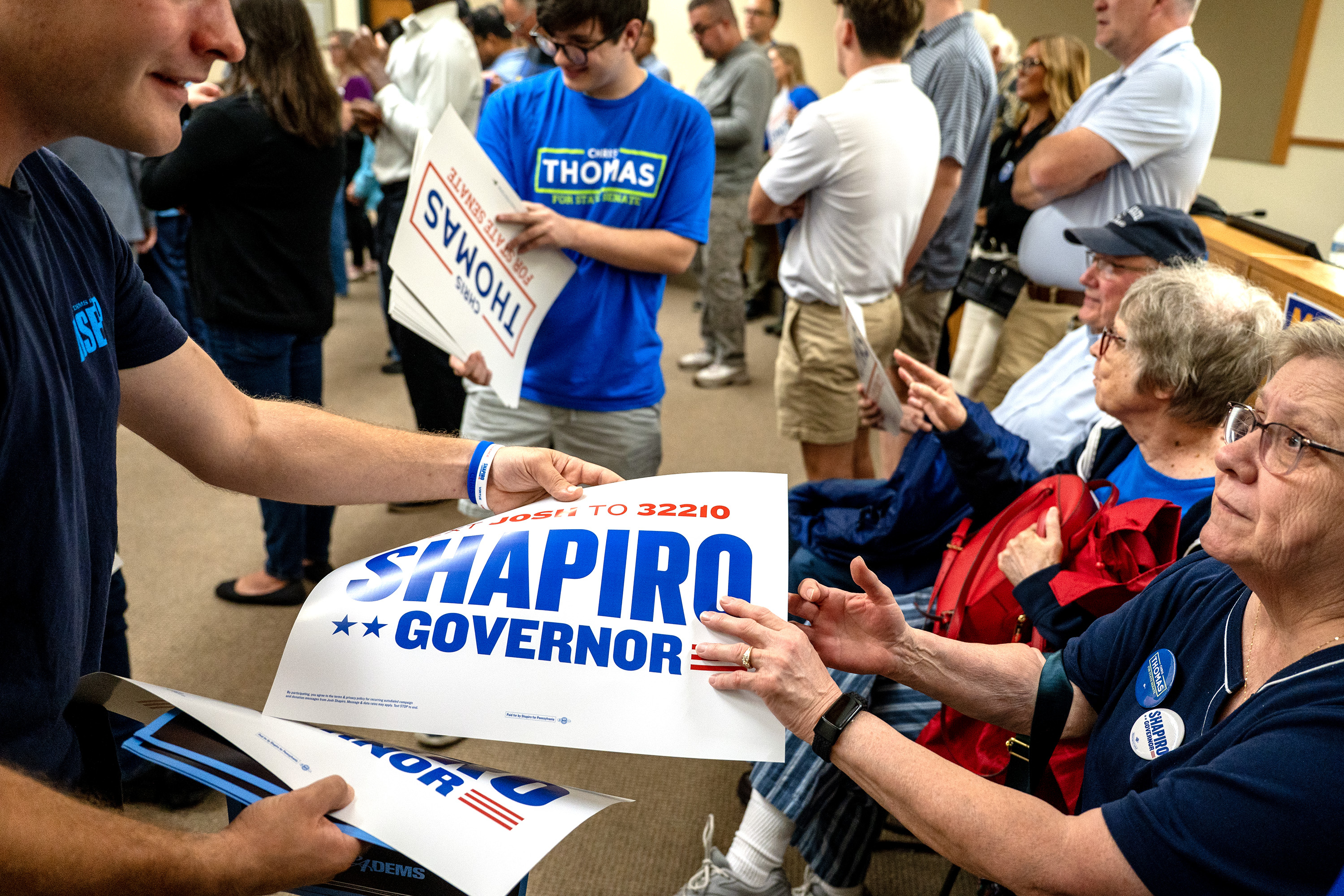
Campaign volunteers hand out signs to supporters of Gov. Josh Shapiro and Democratic Pa. Senate candidate Chris Thomas at a rally in Towamencin, Montgomery County before heading out to canvass on Sunday, Sept. 29, 2026.Tom Gralish / Staff Photographer
Approximately 60% of likely voters strongly approve or somewhat approve of the job Shapiro is doing as governor, according to the poll. That includes 30% of Republican voters, 89% of Democratic voters, and 59% of independents in the critical swing state where Shapiro maintains high popularity.
As a moderate politician, Shapiro has been able to capture most independent voters and even win over some Republicans, according to the poll.
Lesa Yeager, 63, considers herself an independent voter with centrist views who voted for a third-party candidate in the 2024 presidential election. She is an ardent union supporter and also thinks the nation should have a strong border. She said she trusts Garrity, as the state’s treasurer, to do a better job handling Pennsylvania’s economy.
But she is supporting Shapiro this November, in large part, because of his work on schools.
“I like that he’s very pro-education,” she said. “I am a fan of charter schools because I sent my kids to charter schools.”
Two of her children, now 35 and 37, benefited from smaller classroom sizes and adjustable curriculums, she said.
Yeager said she has also reached her limits with Trump’s behavior during his second term and believes Shapiro would continue to represent the state positively.
“I just think Trump is such a bully and so mean and just does whatever he wants, and I just want someone who isn’t that,” Yeager said.
She appreciates the Republicans who distance themselves from Trump. “But it’s tough to tell who is and who isn’t, a lot of times, and I would rather vote for someone I know isn’t going to support Trump on a lot of the things that he does,” she added.
Still, Garrity has found some backing among Pennsylvania’s electorate, though even some of those supporters say they don’t know much about her.
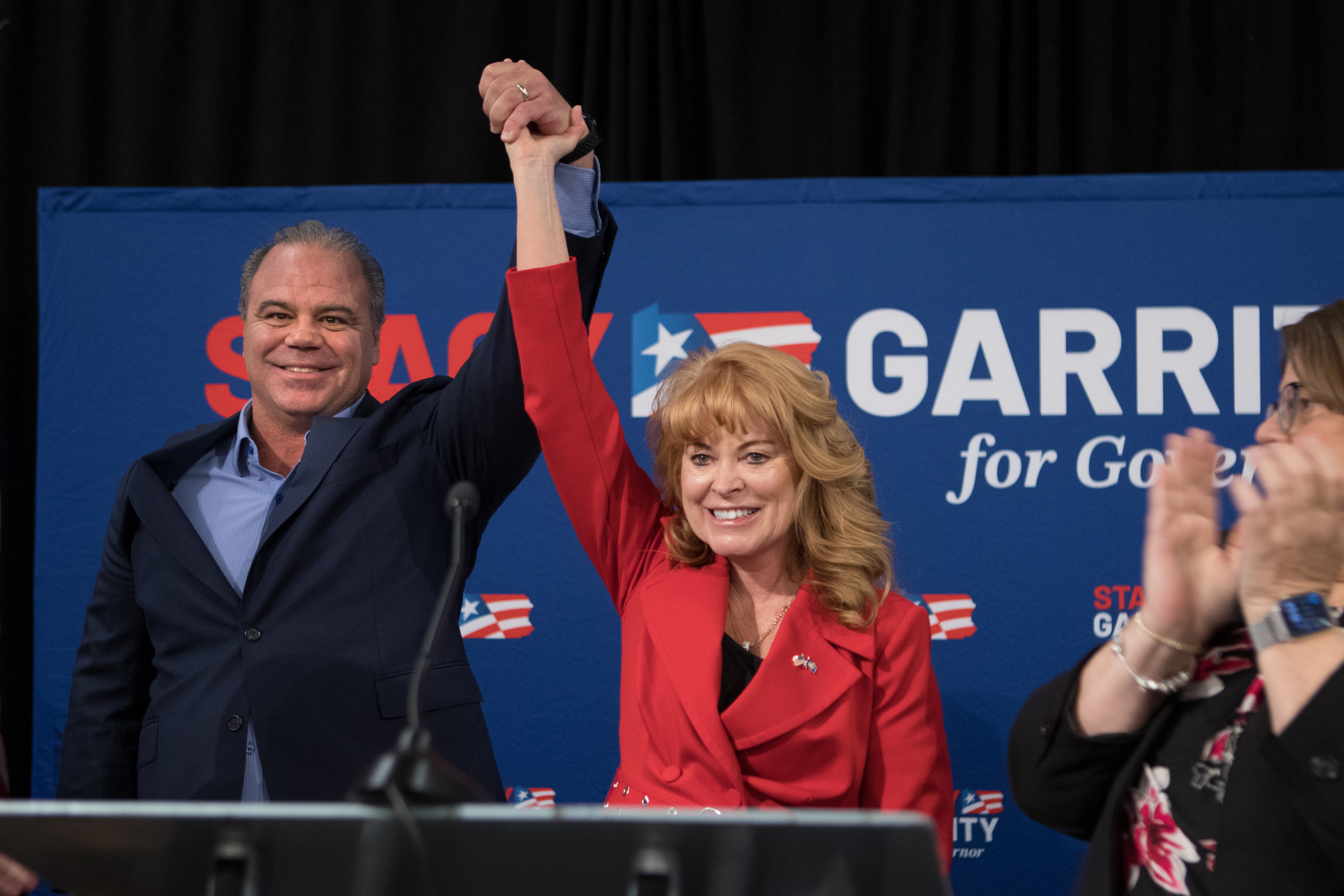
GOP gubernatorial nominee Stacy Garrity and her running mate Jason Richey hold up their arms in Harrisburg, Pa., Saturday, February 7, 2026. Kalim A. Bhatti / For The Inquirer
Susan Roller of Lancaster said she plans to vote for Garrity this fall because “she’s more responsible and will protect our freedoms.” Roller, who is retired, said she is particularly distressed about Shapiro’s positions supporting access to abortion and encouraging vaccines.
But as far as getting to know more about Garrity, Roller, 72, said she has not “seen a lot” of messaging on television about her.
In 2022, Shapiro did not participate in any debates while he maintained a double-digit lead over Mastriano, declining the Republican’s requests as an “unserious stunt.” Shapiro held a 13-percentage-point lead over Mastriano in a New York Times/Siena poll conducted that October — a closer margin than Shapiro’s lead over Garrity this year.
(function(){function e(){window.addEventListener(`message`,function(e){if(e.data[`datawrapper-height`]!==void 0){var t=document.querySelectorAll(`iframe`);for(var n in e.data[`datawrapper-height`])for(var r=0,i;i=t[r];r++)if(i.contentWindow===e.source){var a=e.data[`datawrapper-height`][n]+`px`;i.style.height=a}}})}e()})();
The 2022 midterm election was a much different political moment for Democrats, said Levy of the Siena Research Institute.
“That was a point in time when the Democratic star was on the decline,” he added. “Everything was a bit of a referendum on Democrats, on the job that [former President Joe] Biden was doing, how we were coming out of the pandemic.
“The overall political climate in which the ’26 election is taking place vs. ’22 is really kind of night and day,” Levy said.
Staff writers Joe Yerardi and Fallon Roth contributed to this article.
Pennsylvania voters are giving President Donald Trump worse grades on key economic issues than they did a month ago — a sign of a potentially dimming outlook for Republicans as the president asks voters to act as if he is on the ballot this fall.
Trump’s overall job-approval rating among likely voters in the state has dropped 5percentage points since Augustand now sits at 34%, with 63% disapproval, according to a new Inquirer/New York Times/Siena University poll published Thursday.
His handling of the economy and the cost of living, which consistently rank as voters’ top concerns this year, is viewed negatively by a larger share of his own Republican supporters and of voters in general than it was last month, according to the poll of 615 likely voters conducted from Sept. 15 to 21.
Gas prices are Trump’s worst-performing issue amongall Pennsylvania voters and among those who voted for the president in 2024, when he won the swing state by nearly 2 percentage points.
That includes Robert Jenkins, 47, of East Stroudsburg, who said Trump is now running the country like a “cowboy” and has not lived up to the promises he made to bring down prices.
(function(){function e(){window.addEventListener(`message`,function(e){if(e.data[`datawrapper-height`]!==void 0){var t=document.querySelectorAll(`iframe`);for(var n in e.data[`datawrapper-height`])for(var r=0,i;i=t[r];r++)if(i.contentWindow===e.source){var a=e.data[`datawrapper-height`][n]+`px`;i.style.height=a}}})}e()})();
And with rising gas prices, the Republican is just thankful that his truck does not run on diesel.
“Now we’re at like $4.35, $4.40, and I just don’t understand it. I know we’re having the thing with Iran, but I didn’t ever feel in my life that we were that dependent on Iranian oil,” said Jenkins, who works in the registrar’s office at East Stroudsburg University.
As both parties go all-out to motivate their bases — especially in Pennsylvania, where four key races could determine control of the U.S. House — Democrats clearly have an enthusiasm advantage fueled by a backlash to Trump’s agenda.
Just under six weeks out from Election Day, about two-thirds of likely Democratic voters are “very enthusiastic” to cast their ballots, while just half of Republican voters say they feel the same way.
Alex Hansen, 35, a pharmacist and Democrat from Bucks County, said the midterms have become a “referendum” on the Trump administration.
“The things he’s said and done are just so beyond the pale and unacceptable. … I don’t think it should have to be a public referendum on the federal administration, but that’s what it’s become,” said Hansen, who participated in the survey.
(function(){function e(){window.addEventListener(`message`,function(e){if(e.data[`datawrapper-height`]!==void 0){var t=document.querySelectorAll(`iframe`);for(var n in e.data[`datawrapper-height`])for(var r=0,i;i=t[r];r++)if(i.contentWindow===e.source){var a=e.data[`datawrapper-height`][n]+`px`;i.style.height=a}}})}e()})();
Will voters punish Republicans for Trump’s agenda?
As Democrats look to win control of the U.S. House, they are targeting Trump’s handling of affordability issues specifically — mostly highlighting rising inflation and spiking gas prices due to the war in Iran.
Just 24% of voters approve and 73% disapprove of his handling of prices at the pump, the poll found. Half of Pennsylvania voters who cast their ballots for Trump in 2024 also disapprove.
Don Levy, the director of the Siena Research Institute, said as Trump’s approval rating continues to decline, he expects more GOP politicians running in competitive swing districts to distance themselves from the president.
“There’s tremendous frustration with the president,” Levy added.
Republican candidates have largely avoided talking about gas prices, highlighting instead the tax cuts and other economic policies the GOP-controlled Congress and White House haveenacted in the last two years.
A bipartisan Ratepayer Protection Act ushered through the House by Republican leaders last week, for instance, aims to prevent data centers from passing on energy costs to consumers. The National Republican Campaign Committee called it a “huge step” in statements praising Pennsylvania Republican lawmakers’ votes for the bill,which has yet to pass the Senate and might not do so before the election.
On the economy overall, Trump gets positive ratings from just 34% of all voters and 75% of self-identified Republicans — which is less than the 39% and 81% he got, respectively, in August.
Onthecost of living,25% of all voters and 62% of Republicans give him positive marks, an 8-percentage-point drop for all voters and an 11-point drop for Republicans from a month ago. At the same time, his positive approvals around immigration and the war in Iran, at 42% and 31%, respectively, have remained about the same.
(function(){function e(){window.addEventListener(`message`,function(e){if(e.data[`datawrapper-height`]!==void 0){var t=document.querySelectorAll(`iframe`);for(var n in e.data[`datawrapper-height`])for(var r=0,i;i=t[r];r++)if(i.contentWindow===e.source){var a=e.data[`datawrapper-height`][n]+`px`;i.style.height=a}}})}e()})();
Pennsylvania Republicans may now have to grapple with that reality at the ballot box.
They are defending four competitive districts out of Pennsylvania’s 17 U.S. House seats. And three are running for reelection in what independent election experts consider some of the few “toss-up” races nationwide — U.S. Rep. Ryan Mackenzie, in the Lehigh Valley and Poconos; U.S. Rep. Rob Bresnahan, in a Scranton-based Northeast Pennsylvania region; and U.S. Rep. Scott Perry, in a Harrisburg-based district.
U.S. Rep. Brian Fitzpatrick, a Republican facing a challenge from Democratic Bucks County Commissioner Bob Harvie, is also in a competitive race drawing national attention.
The vulnerable Republicans have taken different approaches. Mackenzie and Bresnahan spoke at the first-ever GOP convention in Dallas earlier this month, when Trump pleaded with his supporters to turn out as if he was also on the ballot. Perry, a staunch Trump ally, also attended.
U.S. Rep Brian Fitzpatrick (R., Bucks) and his Democratic challenger Bob Harvie (third from right) attend the Garden of Reflection remembrance ceremonies Friday, September 11, 2026 at Garden of Reflection in Yardley, Pennsylvania.William Thomas Cain / For The Inquirer
But how Trump’s approval ratings — and the fact that 56% of likely voters want to see Democrats control the House — factor into those races remains to be seen.
Jenkins, the East Stroudsburg Republican, said Trump’s handling of the economy will not affect his vote for Bresnahan because the lawmaker has regularly shown up to the events he leads at a veterans’ association in Monroe County.
Hansen, the Democratic voter from Bucks County, said he is leaning toward voting for Fitzpatrick in the 1st Congressional District race, but he said he could be open to picking Harvie once he learns more about the candidate’s priorities and “what he plans to do to oppose his Republican colleagues and Trump’s agenda.”
The pharmacist said he and his wife, who was laid off three months ago, are tightening their purse strings to deal with rising costs as they care for their young child and another on the way.
But he said he does not view Fitzpatrick as being totally roped into Trump’s negative perception.
The Bucks County lawmaker is the least loyal House Republican to the president and the GOP, but he has still voted with Trump and his party nearly 70% and 77% of the time, respectively, this term, a recent Inquirer analysis found.
“Fitzpatrick has put up at least a little bit of resistance, which is better than, you know, a lot of the sock puppets that Republicans have right now in Congress,” Hansen said.
Alex Hansen at his Bucks County home Tuesday, Sept. 22, 2026. He is one of the voters who participated in an Inquirer/New York Times/Siena University poll that showed dissatisfaction with President Donald Trump. Tom Gralish / Staff Photographer
How affordability became No. 1 for Democrats this fall
In the final weeks before the midterm elections, Harvie’s campaign plans to keep tying Fitzpatrick to the affordability crisis. That includes highlighting the Republican lawmaker’s vote to advance the One Big Beautiful Bill Act in the House(before voting against its final passage weeks later) — but also not necessarily aligning him with Trump.
“It is really about pointing out what Brian Fitzpatrick has done, the votes he’s taken, and how those votes have affected people in this district,” Harvie said in an interview with The Inquirer Editorial Board on Tuesday.
“Now, are they Trump priorities, too? They are, sure, but it’s not necessarily just hanging Trump around his neck. He’s kind of done that to himself.”
Harvie and his counterparts in the other swing districts are zeroing in on cost-of-living issues amid voters’ plummeting dissatisfaction with Trump’s handling of the economy.
Janelle Stelson, a former local TV reporter running against Perry, highlighted the cost of a cheeseburger in a recent ad that referred to Perry’s support of Trump’s tariffs and a separate proposal that would eliminate income and other taxes in favor of a national sales tax. The average cost of a pound of ground beef, which she pegged at $7.29, is more than the $7.25 federal minimum wage.
Stelson’s campaign said in a statement that Perry “has made life more expensive for Central Pennsylvanians, voting to raise the price of utilities, gas, and housing while gutting benefits for working people.”
In a statement, Perry said his platform on affordability includes eliminating taxes on tips, overtime, and Social Security. Perry also said he supports reducing electricity costs and raising child tax credits.
“We draw a strong contrast with our opponent on the kitchen table economic issues that are front and center with Voters,” Perry wrote in the statement,which also disputed Stelson’s ties in the district.
Spokespersons for Fitzpatrick and Bresnahan did not respond to a request for comment.
Paige Cognetti, the Democratic mayor of Scranton, who is running against Bresnahan, has contrasted Northeastern Pennsylvania voters’ struggles with rising costs against Bresnahan’s personal wealth and stock-trading while in office.
“While Rob’s cashing in, NEPA families are paying the price. His corruption is costing us and that’s why he will lose in November,” a Cognetti spokesperson said while noting “record diesel prices, cost-raising tariffs, and sky-high healthcare premiums.”
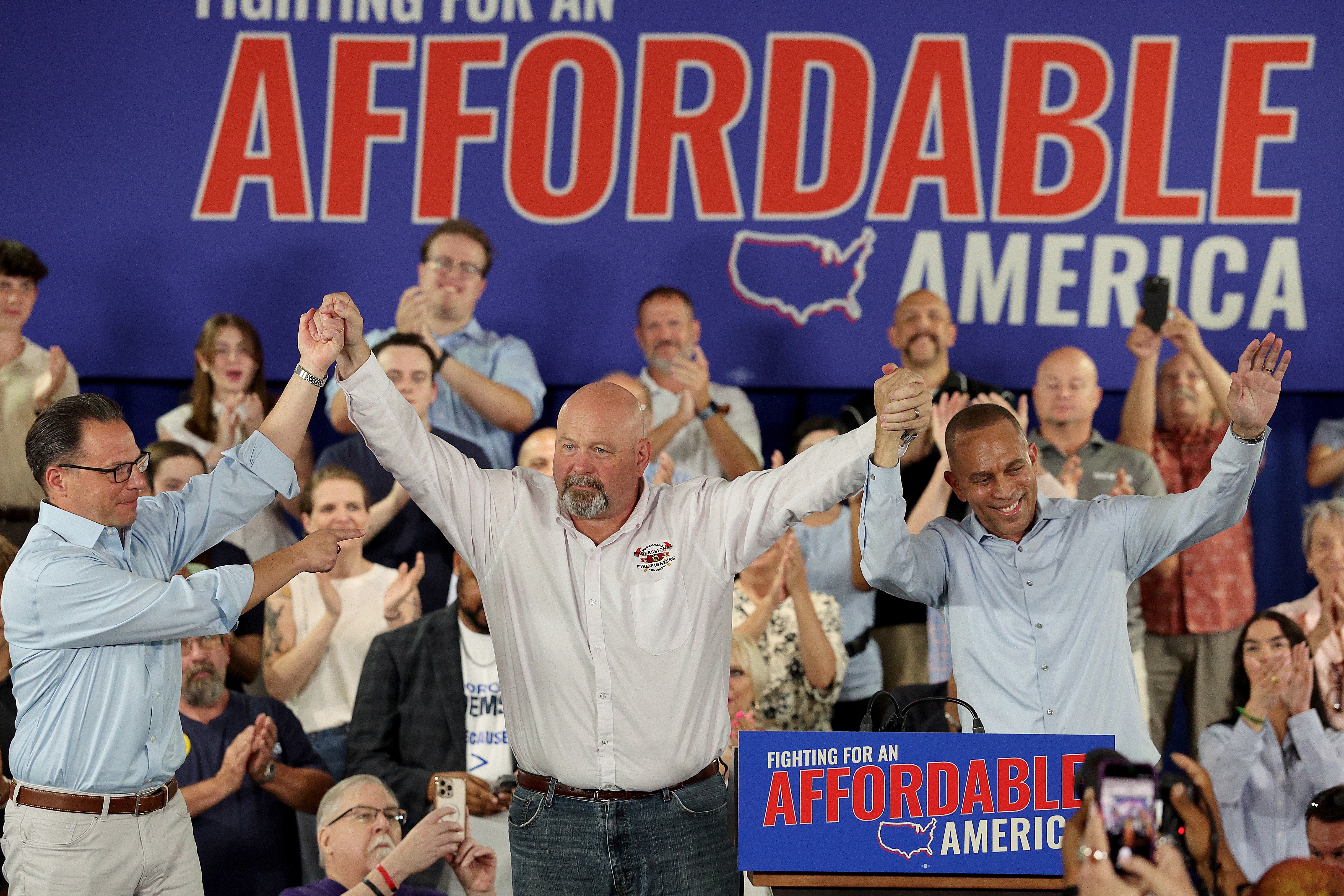
Governor Josh Shapiro (left) and Minority Leader Hakeem Jeffries (right) pose after rally for Congressional candidate Bob Brooks (center) at the United Steelworkers Union Hall in Bethlehem, Pa. on Sunday, July 26, 2026.David Maialetti / Staff Photographer
In Mackenzie’s district — where the freshman Republican squeaked through one of the narrowest races in the country two years ago — Ronalyn Birnbaum of Carbon County said she has been working since she was 13 years old. Now, at 69, she said, she has come to terms with not having the money to retire and afford groceries, Medicare, and her inhaler.
“I’m going to give [Brooks] a shot only because I know that Ryan Mackenzie sticks up for a lot of the Trump policies and procedures,” said Birnbaum, a Democrat.
Andres Weller, Mackenzie’s campaign manager, criticized Brooks’ platform in a statement and said Mackenzie favors “commonsense reforms” and is “running on his bipartisan record of delivering for our community.”
Benny Stanislawski, a Brooks campaign spokesperson, said in a statement that the Democrat is “running to bring costs down for working families Mackenzie has left behind,” including through the Republicans’ vote for the One Big Beautiful Bill.
As Democrats’ messaging appears to gain traction, 53%of respondents in The Inquirer/New York Times/Siena poll said they would be more likely to vote for the Democratic candidate in their congressional district, while 44% said they would choose the Republican. The poll did not ask about specific races.
Both parties still have work to do on their brands. A majority of likely voters see each party as focused on the wrong things — 51% for Democrats and 59% for Republicans.
Birnbaum said the problems she hopes voters can address at the ballot box — like the cost of living — have been a long time coming.
“This country should have been fixed a long time ago, but nobody seemed to care, and we’re finding that with the infrastructure here in this country, too,” Birnbaum said. “Nobody thought about these things. They thought about themselves, I guess.”
Staff writers Gillian McGoldrick and Joe Yerardi contributed to this article.
Clarification: This story has been updated to clarify the reference to a proposed national sales tax in Janelle Stelson’s ad attacking U.S. Rep. Scott Perry.
A majority of Pennsylvania voters view U.S. Sen. John Fetterman (D., Pa.) more as a Republican than a Democrat as he continues to heavily criticize his party and side with President Donald Trump in some major policy areas, according to an Inquirer/New York Times/Siena University poll published Thursday.
For the first time in polling conducted by Siena University on behalf of The Inquirer and the New York Times, a plurality of likely voters in the state have a negative view of Fetterman.
The senator is viewed “somewhat” or “very” unfavorably by 47% of voters and favorably by 42%, according to the poll of 615 likely voters from Sept. 15 to 21. That’s an 11-percentage-point swing since the organizations’ poll in August found Fetterman maintained an overall positive favorability rating.
Four years after he flipped a Republican-held seat with a promise to be Democrats’ 51st vote in the Senate, just 26% of likely voters consider Fetterman as more of a Democrat than a Republican, the poll found.
A majority — 57% — view him as more of a Republican.
(function(){function e(){window.addEventListener(`message`,function(e){if(e.data[`datawrapper-height`]!==void 0){var t=document.querySelectorAll(`iframe`);for(var n in e.data[`datawrapper-height`])for(var r=0,i;i=t[r];r++)if(i.contentWindow===e.source){var a=e.data[`datawrapper-height`][n]+`px`;i.style.height=a}}})}e()})();
“He insists that he’s not going to be changing parties. However, a lot of people are afraid of that because of the way he has voted,” said Sandra Boyles, a retired teacher and Democrat in Fayette City who believes “a lot of people feel betrayed” by the senator.
Nearly three-quarters of Democrats see Fetterman as a Republican. And roughly half of Republicans feel the same way, as do a similar proportion of independents.
Fetterman’s party loyalty has become a pressing question — not just for his own political future, but also for which party controls the U.S. Senate during the final two years of Trump’s presidency.
Democrats need to win at least four competitive Senate races in Trump-friendly states to win the majority, an uphill battle that has seemed like more of a possibility in recent weeks as the president’s popularity lags.
Independent election experts consider Democrats to have a real chance of winning states like Texas, Iowa, and Alaska. Ohio, North Carolina and Maine are also official Democratic targets. Even Kansas, which Trump won by 16 percentage points in 2024, appeared to raise some level of concern for Republicans when Vice President JD Vance tried to boost the GOP incumbent this month.
Neither of Pennsylvania’s U.S. Senate seats is on the ballot this fall. But if Democrats retake the majority by one or two votes, Fetterman’s role as a wild card — even one who votes with Democrats the vast majority of the time — could have an impact as his party tries to rein in or reverse the president’s agenda.
“That would definitely be a concern of mine,” said Boyles, 74.
(function(){function e(){window.addEventListener(`message`,function(e){if(e.data[`datawrapper-height`]!==void 0){var t=document.querySelectorAll(`iframe`);for(var n in e.data[`datawrapper-height`])for(var r=0,i;i=t[r];r++)if(i.contentWindow===e.source){var a=e.data[`datawrapper-height`][n]+`px`;i.style.height=a}}})}e()})();
Fetterman has not said whether he will seek a second term in 2028, and he has repeatedly rejected the idea that he would switch parties.
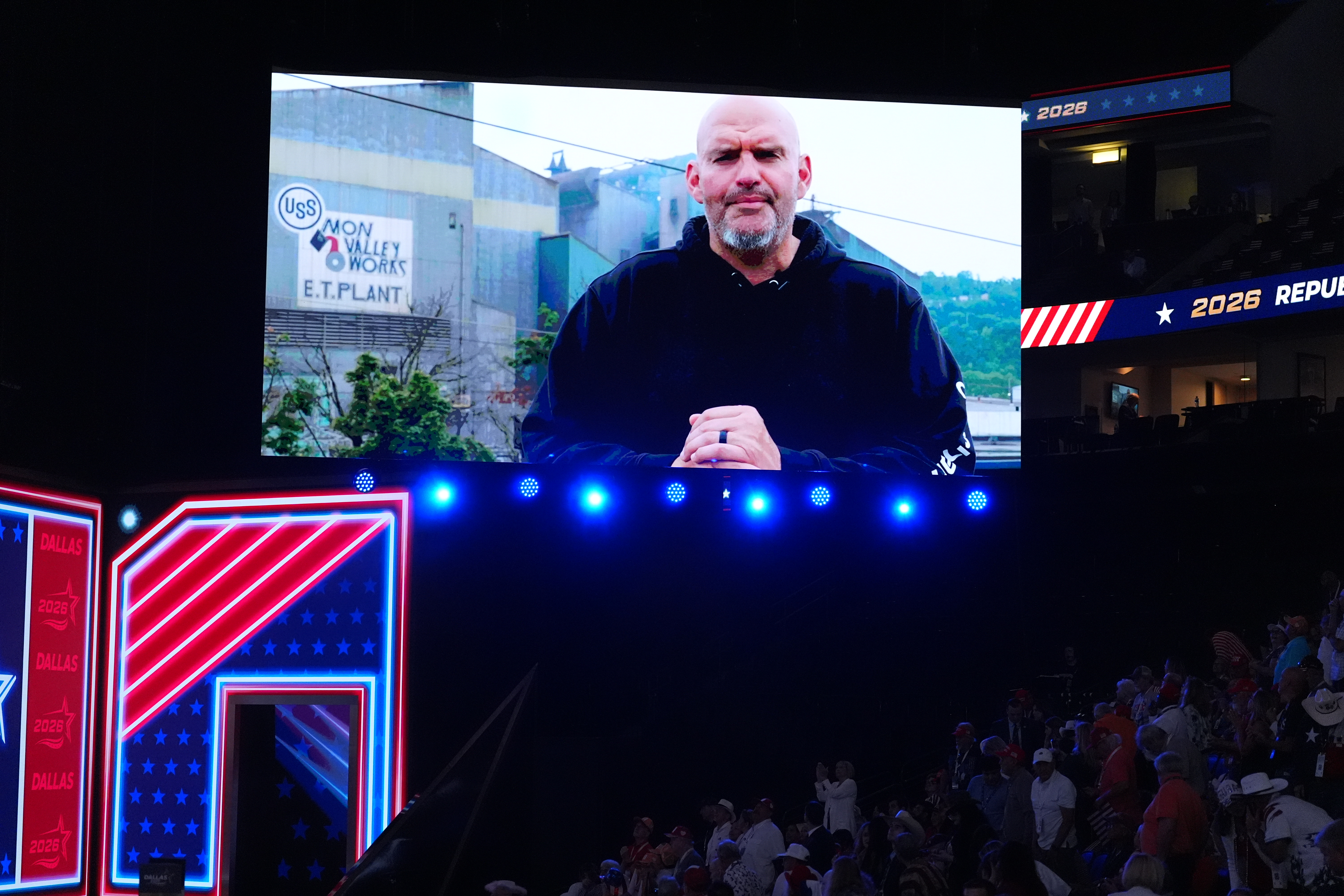
“I’m a lifelong Democrat who votes overwhelmingly with my party — and should the Senate flip in November, I will still be the 51st vote that I ran on,” he said in a statement while facing a new round of criticism for appearing by video at the GOP convention in Dallas this month.
Pennsylvania’s U.S. Senators John Fetterman (left) and Dave McCormick appear together on June 29 to promote the savings accounts for kids that were a signature piece of President Trump’s One Big Beautiful Bill Act.
Fetterman’s Democratic colleagues have tried to keep him in the fold.
U.S. Sen. Kirsten Gillibrand, a New York Democrat and chair of the Democratic Senatorial Campaign Committee, said this week that Fetterman is a “very reliable Democratic vote.” As she leads her party’s effort to win the Senate races,Gillibrand said, she does not have, nor has heard others having, concerns about Fetterman’s role in a slim Democratic majority.
“I’m very grateful that Sen. Fetterman is serving in the U.S. Senate as a Democrat, and I think he will continue to do so,” Gillibrand said.
Still, Fetterman has supported parts of Trump’s immigration enforcement agenda, the war in Iran, and some of the president’s nominees. Senate Democratic leaders would likely try to act as a check on Trump in each of those areas if they win the majority for the next two years.
Fetterman has also left the door open to leaving the Democratic Party if it makes opposition to Israel an official party stance. The senator has not explained exactly what that situation would look like, though he has been highly critical of Democrats when they push back against the Israeli government’s war against Hamas.
With the three-year anniversary of the conflict approaching on Oct. 7, more than 70,000 Palestinians have been killed and nearly all Gazans have been displaced, according to the Council on Foreign Relations. Critics say Israel’s military response has been excessive, while Fetterman has said he supports the war in order to root out Hamas fighters who initiated the war by killing more than 1,200 people in Israel in a terrorist attack.
The latest poll of Pennsylvania voters shows Fetterman’s position is out of step with a majority of voters.
Among Pennsylvania likely voters, 60% are against the U.S. providing additional economic and military support to Israel, compared with 34% who support it.
Four in five Democrats, and about a third of Republicans, oppose the aid to Israel. In a sign that Fetterman would face a challenging reelection campaign, 63% of Democrats said they would support a candidate who opposed aid to Israel.
(function(){function e(){window.addEventListener(`message`,function(e){if(e.data[`datawrapper-height`]!==void 0){var t=document.querySelectorAll(`iframe`);for(var n in e.data[`datawrapper-height`])for(var r=0,i;i=t[r];r++)if(i.contentWindow===e.source){var a=e.data[`datawrapper-height`][n]+`px`;i.style.height=a}}})}e()})();
Victor Oyola, 47, of Philadelphia, said he considers himself a conservative Democrat and has no issues with politicians supporting Israel’s right to exist. But Fetterman has been more of a voice for the foreign nation than for his home state, he said, while also showing limited interest in other aspects of his position.
“You don’t want to do the job, but you’re strongly supporting Israel over Pennsylvania?” said Oyola, who works in retirement management. “Everything is Israel, Israel, Israel. But what about Pennsylvania, Pennsylvania, Pennsylvania?”
Reports of Fetterman’s lack of interest in doing routine aspects of his job as a senator also appear to have played a role in how Pennsylvanians view him.
In a widely circulated story earlier this month, the Wall Street Journal reported that Fetterman tried to evade meetings with leaders at Children’s Hospital of Philadelphia and with wounded veterans, as well as a funeral for three York County police officers who were killed while on duty.
Donald Harer, a Democrat from Northumberland who voted for Fetterman in 2022, said that he saw the story and that it seemed like the senator has “really not held his end of the bargain and done his job the way he’s supposed to.”
As an Army veteran who served in Iraq, Harer said, he was particularly disappointed in Fetterman’s reported refusal to meet with wounded veterans.
“When he campaigned, when he first started to run, he seemed like a go-getter,” said Harer, an operations manager for a grocerystore. “But he let a lot of people down. I kind of call him a traitor.”
Don Levy, the director of the Siena Research Institute, which conducted the poll, said he did not know if changes in Fetterman’s favorability ratings since last month could be attributed to the recent national attention on him.
But with recent polls continuing to show Fetterman’s widespread cross-party support, his position as a Democratic darling for the GOP and antagonist for Democrats “looks pretty baked in,” Levy said.
“The Republicans have now grown in their favorability for him, which may be a reflection of them starting to feel like ‘he’s one of us,’” Levy added. “And Democrats are even more upset with him for moving away from what they believe they elected him to do.”
Staff writers Joe Yerardi and Gillian McGoldrick contributed to this article.
Philadelphia State Rep. Chris Rabb’s former campaign treasurer, whom he accused of draining his campaign account and disappearing in the middle of his run for Congress, pleaded guilty Wednesday to a federal fraud charge.
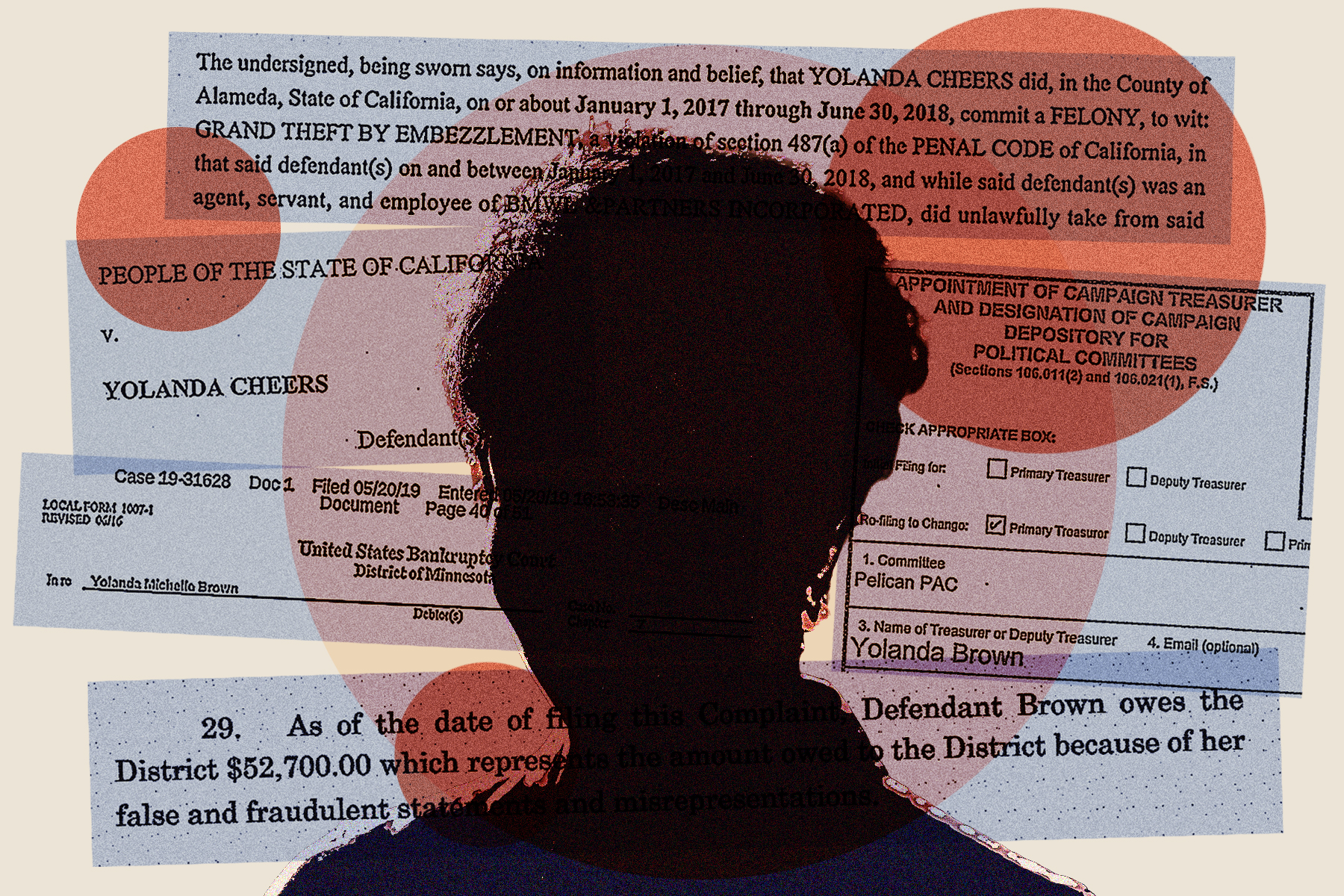
Yolanda Brown, a campaign operative formerly based in Florida who worked for Democratic political candidates and social justice causes across the country, appeared in U.S. District Court in Philadelphia on Wednesday and pleaded guilty to one count of wire fraud. She admitted to embezzling a total of about $1 million from 20 clients, including Rabb, between 2022 and 2026.
Brown, who now lives in Virginia, faces a maximum of 20 years in prison and will be required to pay restitution. A sentencing hearing is scheduled for Jan. 26.
Rabb, a progressive, went on to win the Democratic nomination in May. He is expected to prevail in the November general election to represent Pennsylvania’s 3rd Congressional District. There is no Republican candidate, though he faces a long-shot independent opponent.
Rabb did not immediately respond to a request for comment.
For years, fraud claims from several political campaigns piled up against Brown, who operated Brown Financial & Consulting Services Group and at times worked under her married name, Yolanda Rumph. She was accused of financial impropriety in several states, The Inquirer reported, including shaving money from accounts she controlled and embezzling from a nonprofit client.
But she continued working in politics and, in August 2025, signed on to work for Rabb, who was in the midst of a highly competitive Democratic primary run for an open seat in Congress representing about half of Philadelphia.
State Rep. Chris Rabb at an event with U.S. Rep. Ro Khanna July 28, 2026.Tom Gralish / Staff Photographer
The following month, Rabb said that Brown had made a series of unauthorized withdrawals from his campaign. The amount of money embezzled totaled more than $160,000, which constituted most of what was in his campaign’s account at the time, according to paperwork Rabb’s campaign filed with the Federal Election Commission.
Khambrel Davis, Brown’s attorney, said in an interview with The Inquirer in March that Brown was innocent and merely the victim of a rogue employee who had stolen from her clients.
But on Wednesday in court, Brown acknowledged that she executed a scheme to defraud her clients of hundreds of thousands of dollars.
Assistant U.S. Attorney Robert Livermore told U.S. District Judge Chad F. Kenney that Brown “embezzled client funds in her control to pay for her own personal expenses without authorization from her clients.”
He added that she “often used client funds to repay other clients from whom she had previously stolen funds.”
In charging documents, prosecutors wrote that in one instance, Brown steered about $19,000 from the account belonging to Rabb’s campaign — identified in court filings as “Political Campaign #1″ — into a separate account that she controlled. She then transferred $6,000 of that money into her personal bank account.
That transfer was one of multiple unauthorized transfers that Rabb’s campaign detected. Prosecutors often formally charge a limited scope of wrongdoing if a defendant has agreed to plead guilty.
Prosecutors described the fraud perpetrated against Rabb’s campaign as part of an “overall scheme” in which Brown defrauded about 20 clients of a total of more than $1.4 million. They wrote that she had repaid clients more than $400,000, for a net loss of about $1 million.
Kendra Brooks, a progressive who made history as the first third-party candidate to win a seat on Philadelphia City Council in 100 years, is considering challenging Mayor Cherelle L. Parker in the spring Democratic primary election, according to two sources familiar with her thinking.
The sources, who were not authorized to speak about the matter publicly and did so on the condition of anonymity, said Brooks is mulling a campaign but has not yet made a decision. She declined to comment Friday.
To run in the Democratic mayoral primary, Brooks would have to resign from her seat on Council. Under state law, she could remain a member of the Working Families Party or switch her party registration to Democrat..
A bid for the mayor’s office would pit Brooks, the de facto leader of the city’s Working Families Party and democratic socialist faction, against Parker, a centrist who has long been aligned with the city’s Democratic Party establishment.
“People want to see leaders fighting for something,” Brooks said at the time, “and right now we don’t see our city fighting for anything.”
Aren Platt, the executive director of the mayor’s political campaign arm, declined to comment.
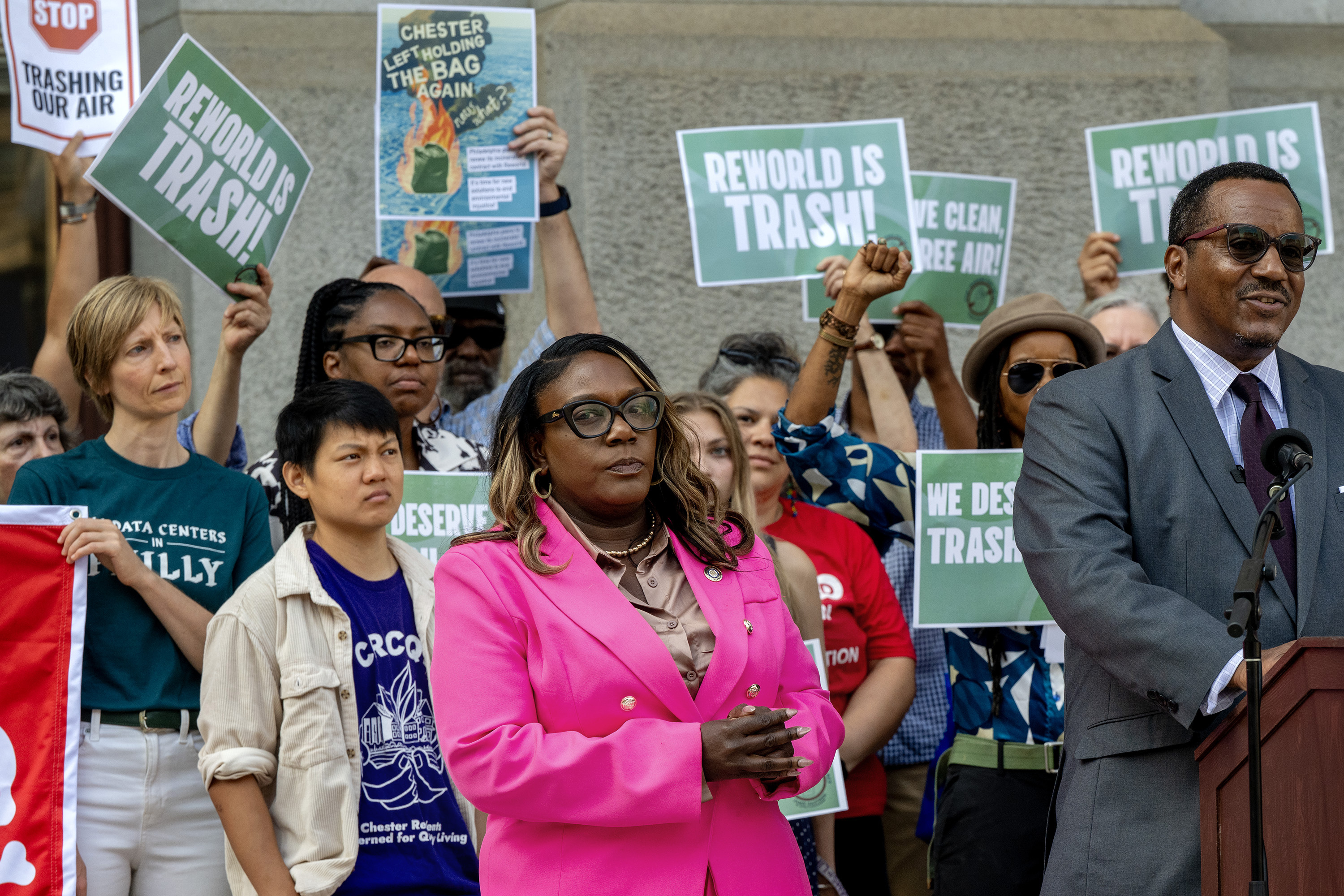
City Councilmember Kendra Brooks joins Chester Mayor Stefan Roots (right) and protesters at a rally outside City Hall Sept. 17, 2026.Tom Gralish / Staff Photographer
Brooks’ supporters see the mayor as potentially vulnerable as progressives have ascended nationally and notched wins over more traditional Democrats. That includes Mayor Zohran Mamdani’s victory last year in New York City and Abdul El-Sayed’s win in the Michigan Democratic primary for U.S. Senate.
Closer to home, the left is emboldened by State Rep. Chris Rabb, who was backed by Brooks’ coalition and in May won the Democratic primary for a seat in Congress representing about half of Philadelphia. He toppled two centrist Democrats who were each supported by party leaders, big donors, and politically powerful labor unions.
Despite the energy on the left, no progressive has officially launched a run for mayor ahead of the May primary election. Shania Bennett, the mayor’s former director of youth engagement, who has never run for office before, said this month that she will challenge Parker. Bennett said recently that she had not yet hired a campaign team or developed a policy platform.
Any challenger to Parker faces significant hurdles. No Philadelphia mayor has lost reelection in modern history, and Parker would be backed by the city’s Democratic Party, which can now spend unlimited amounts of money in coordination with its chosen candidates under a new board of ethics policy.
Parker will also be supported by the deep-pocketed building trades unions that boosted her in the crowded open mayoral primary in 2023.
“We’re going to put all the resources, both financial resources and people resources, to bear to make sure that Mayor Parker has a second term,” said Ryan Boyer, the head of the Philadelphia Building and Construction Trades Council. “I want to be clear and vociferous that the Philadelphia Building Trades … are fully and completely behind Cherelle Parker.”
In this March 2025 file photo, City Councilmember Kendra Brooks, left, listens to Mayor Cherelle L. Parker deliver her annual budget address.Alejandro A. Alvarez / Staff Photographer
Parker is likely to see support from a super PAC bankrolled by city developers, and she also has her own massive war chest. Her campaign had $1.4 million in the bank as of May, according to the most recent campaign finance paperwork available. Brooks had $17,000 on hand as of her last report in January.
But Brooks, who has won citywide election twice to represent the city as an at-large member of Council, could be a formidable opponent. She is one of the most prominent left-wing politicians in the city, and she is well-known in national progressive circles.
The Working Families Party’s chapter in Pennsylvania recently commissioned a poll that showed Brooks as broadly popular with the city’s Democratic primary electorate but with much lower name recognition than Parker, according to polling documents obtained by The Inquirer.
According to the survey of 900 respondents, 35% said they had a favorable view of Brooks, with just 4% saying they had an unfavorable view. Nearly 40% of respondents said they did not know who Brooks was.
Nearly all of the respondents knew of Parker. Forty-eight percent said they had a favorable view of the mayor, and 40% said they had an unfavorable view. Those findings are similar to a June Suffolk University/Philadelphia Inquirer poll.
Nick Gavio, a spokesperson for the Working Families Party, said in a statement that the organization often conducts polling on public opinion in the city and that the survey was “one test among a battery of others that we conducted in Philadelphia ahead of the 2027 elections.”
“We are pleased that the Working Families Party and Minority Leader Brooks are so popular,” he said, “which we believe reflects our focus on the issues that matter to the working people of this city.”
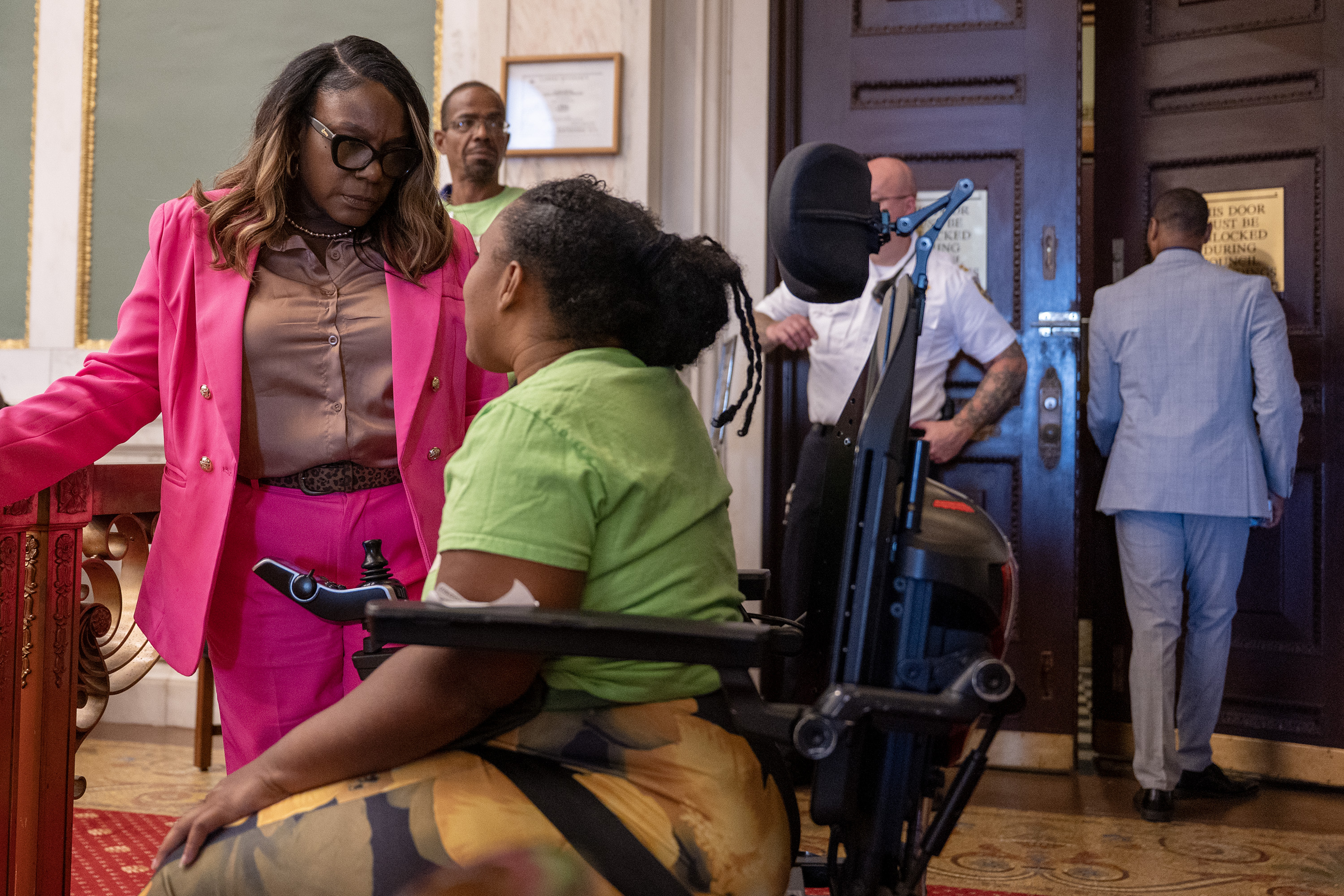
City Councilmember Kendra Brooks talks with Dominique Howell (right) in chambers as City Council returns for its fall session Thursday, Sept. 17, 2026. Howell is a long-time constituent and was there with the non-profit Liberty Resources, part of the Philadelphia Coalition for Affordable Communities.Tom Gralish / Staff Photographer
Several other leftist politicians in the city have been rumored to be considering running for mayor against Parker, but none have said publicly that they intend to launch a campaign.
One is District Attorney Larry Krasner, the third-term prosecutor who is one of the most prominent progressive district attorneys in the country. Krasner has been increasingly critical of Parker, and in June said that he would not rule out the possibility of running against her.
Correction: A previous version of this article incorrectly stated the steps Brooks would have to take to run in the Democratic mayoral primary. She could remain a registered member of the Working Families Party or switch her party registration.