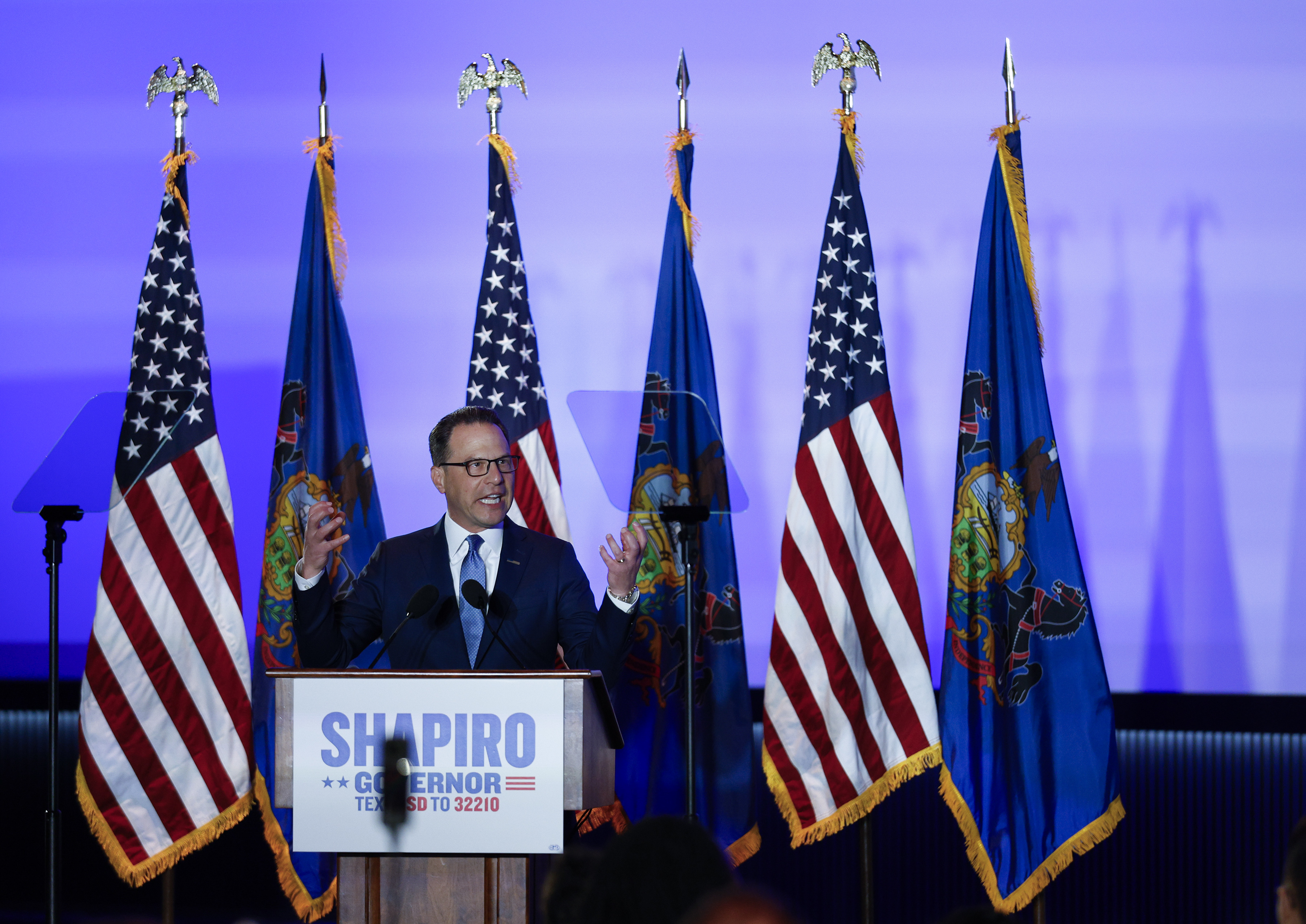
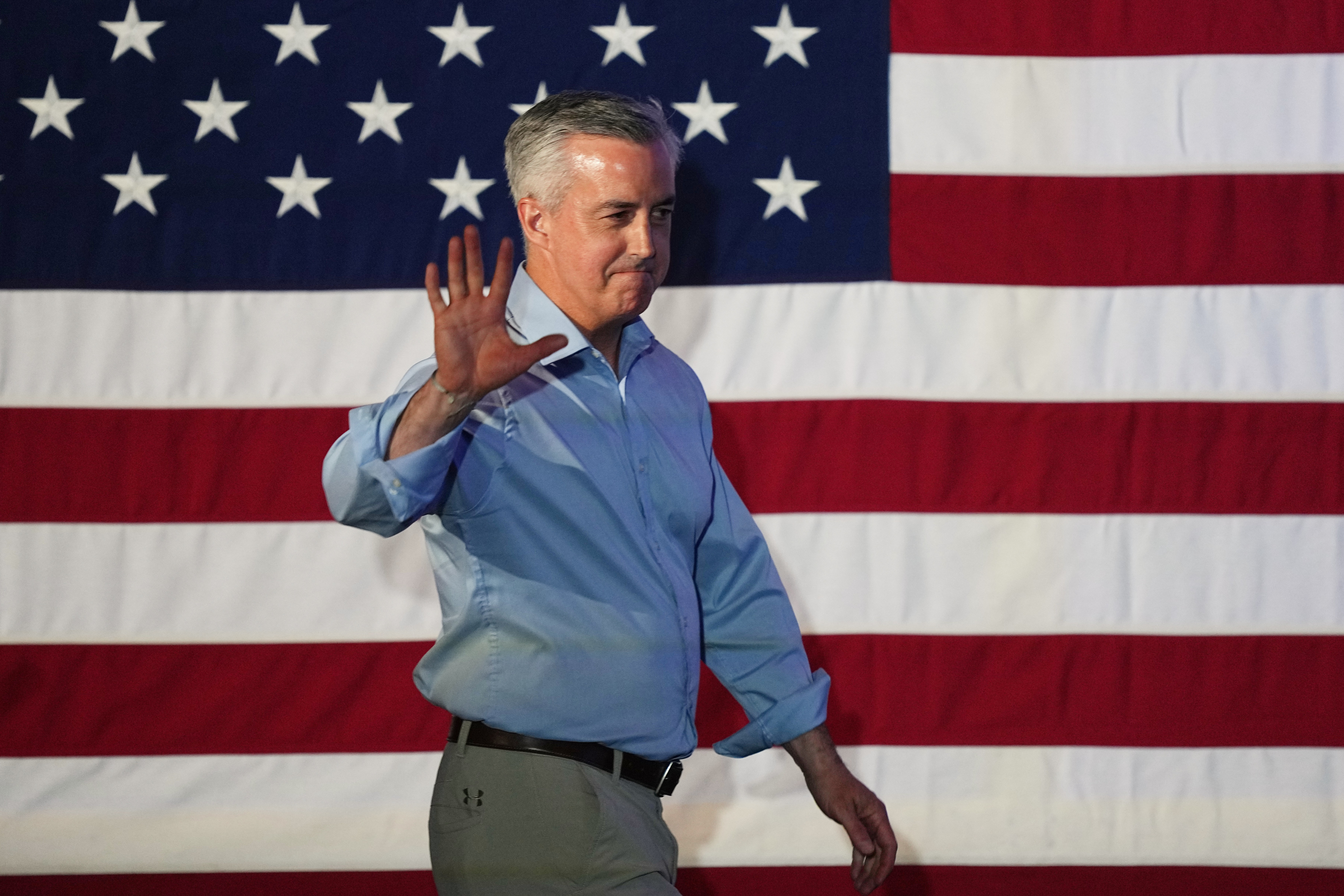
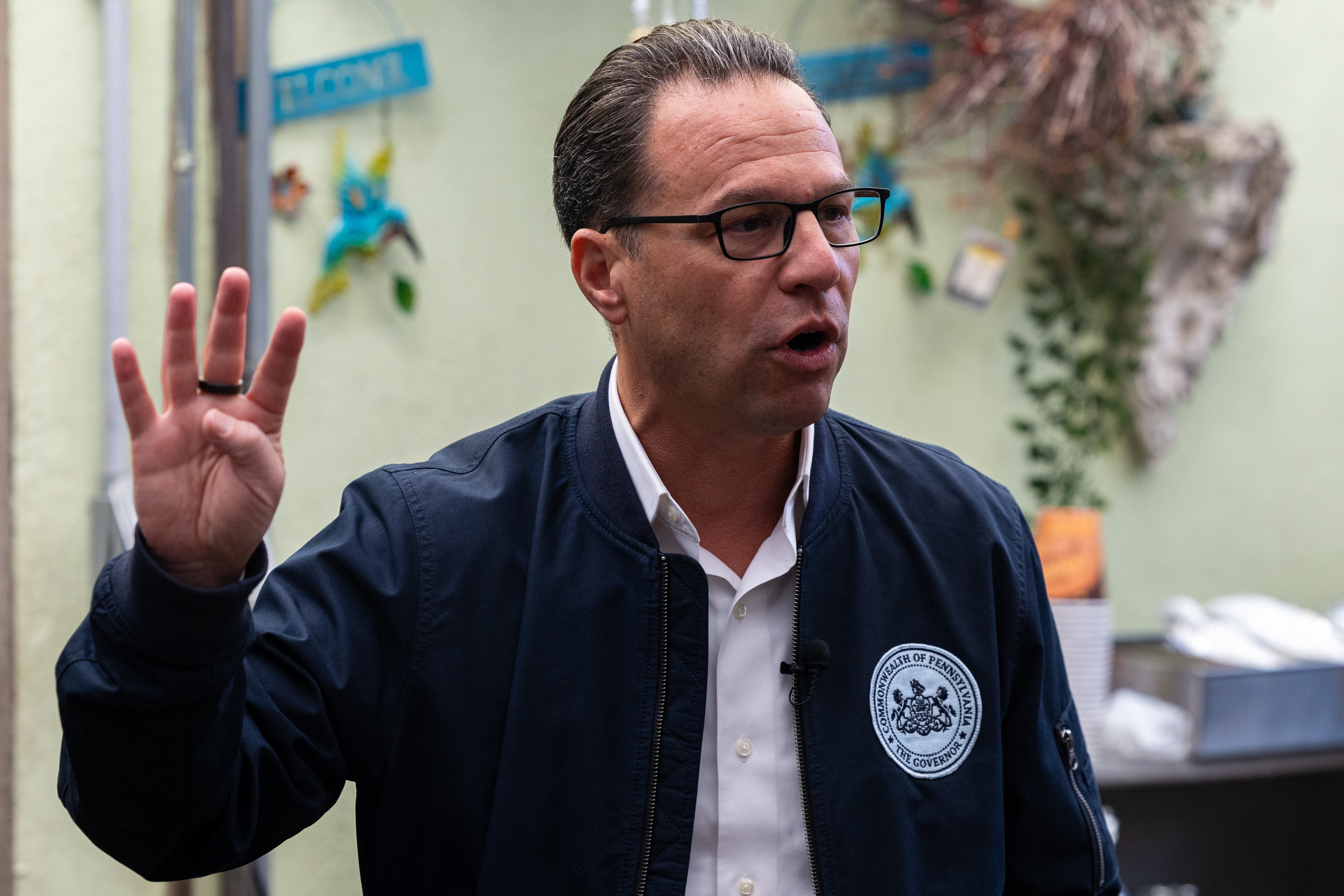
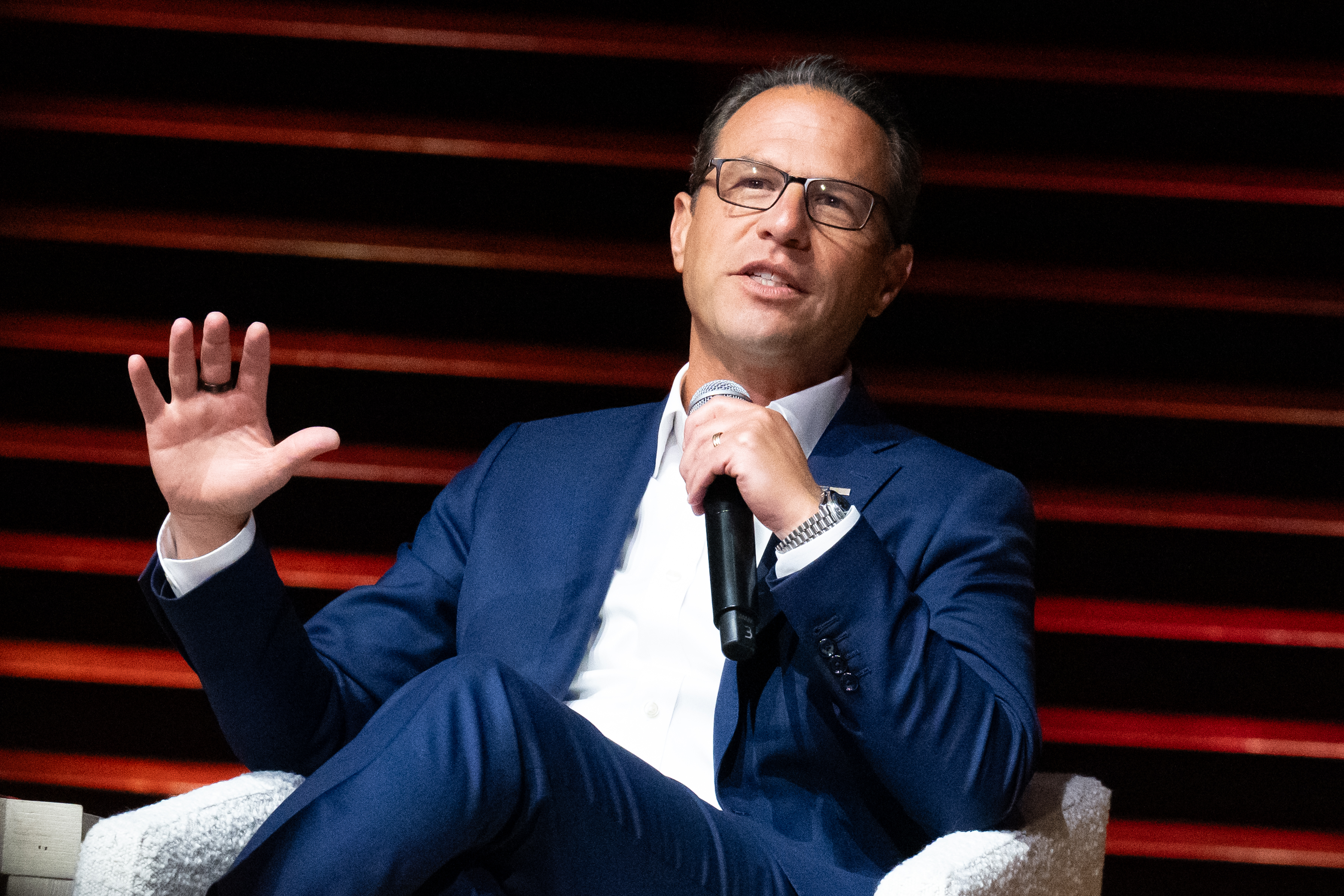
Gov. Josh Shapiro will be in Bucks County on Saturday to campaign for Democrats up and down the ballot in the key swing county.
Shapiro, who kicked off Democrats’ general election campaigns at a space centrifuge in Warminster this past spring, is returning to Bucks, emphasizing the important role that the perennially purple county will play in November’s midterms with competitive contests for Congress and state Senate on the ballot.
The governor will appear at a canvass launch in Langhorne organized by Planned Parenthood PA PAC, the organization’s state-level political action committee. The PAC has endorsed Bucks County Democrat Eileen Hartnett Albillar, who is running for state Senate in the 6th District, a crucial seat for the party, and state House candidates Bryan Allen, Kristin Egan, and Monica Weninger.
Shapiro will also appear alongside Democratic County Commissioner Bob Harvie, who is challenging GOP U.S. Rep. Brian Fitzpatrick in the Bucks-based 1st Congressional District — one of four seats in the state being targeted by both parties. Harvie is endorsed byShapiro and Planned Parenthood’s federal PAC.
Democratic U.S. Reps. Madeleine Dean, of Montgomery County, and Mary Gay Scanlon, of Delaware County, will also be in attendance.
Democrats are hoping to win control of the state Senate — which they haven’t had for 33 years. The GOP currently holds 27 seats in the 50-member state Senate.
To take control of the chamber with the lieutenant governor’s tie-breaking vote, Democrats would need to flip at least two seats and maintain control of the governor’s office. With a trifecta in Harrisburg, Democrats hope to advance legislation on issues that haven’t gained support in the Republican-controlled Senate, like codifying abortion protections.
The Shapiro-endorsed candidates have an opportunity, if successful in November, to give Democrats more governing power, whether that’s winning party control in the U.S. House, the state Senate, or giving Democrats an expanded majority in the state’s lower chamber.
Shapiro is running for a second term as governor, but he’s spending much of his time using his political prowess to bolster other Democrats ahead of the midterms. Recently, he was in Philadelphia with Democratic Michigan Gov. Gretchen Whitmer to energize volunteers. Earlier this month, he was in Montgomery and Chester Counties campaigning for down-ballot candidates.
Shapiro has invested more than $5.7 million in the state party since fall 2025, his campaign said last month.
Gov. Josh Shapiro poses with Democratic Pa. Senate candidate Chris Thomas (left) and his supporters after a rally in Towamencin, Montgomery County before heading out to canvass Sunday, Sept. 29, 2026.Tom Gralish / Staff Photographer
In July, he launched an effort — “Rise Up Pennsylvania” — that is aimed at pooling donations to fund campaign resources for key state Senate and U.S. congressional races.
Abortion protections remain a key piece of the party’s platform, even as Democrats have refocused their messaging on affordability ahead of November.
“Bucks County will be critical to building a pro–sexual and reproductive health care trifecta in Pennsylvania,” Signe Espinoza, executive director of Planned Parenthood PA PAC, said in a statement Friday.
“We endorsed these candidates because we know they will stand up to fight to protect every Pennsylvanian’s freedom to make their own decisions about their body, health and future.”
SCRANTON — Four of Mike Parry’s tenants can no longer afford to pay their rent. Suddenly, their financial pain is his.
“It’s the affordability of everything that’s the problem,” said Parry, 60, of Clarks Summit, Lackawanna County. “We’re all feeling it now.”
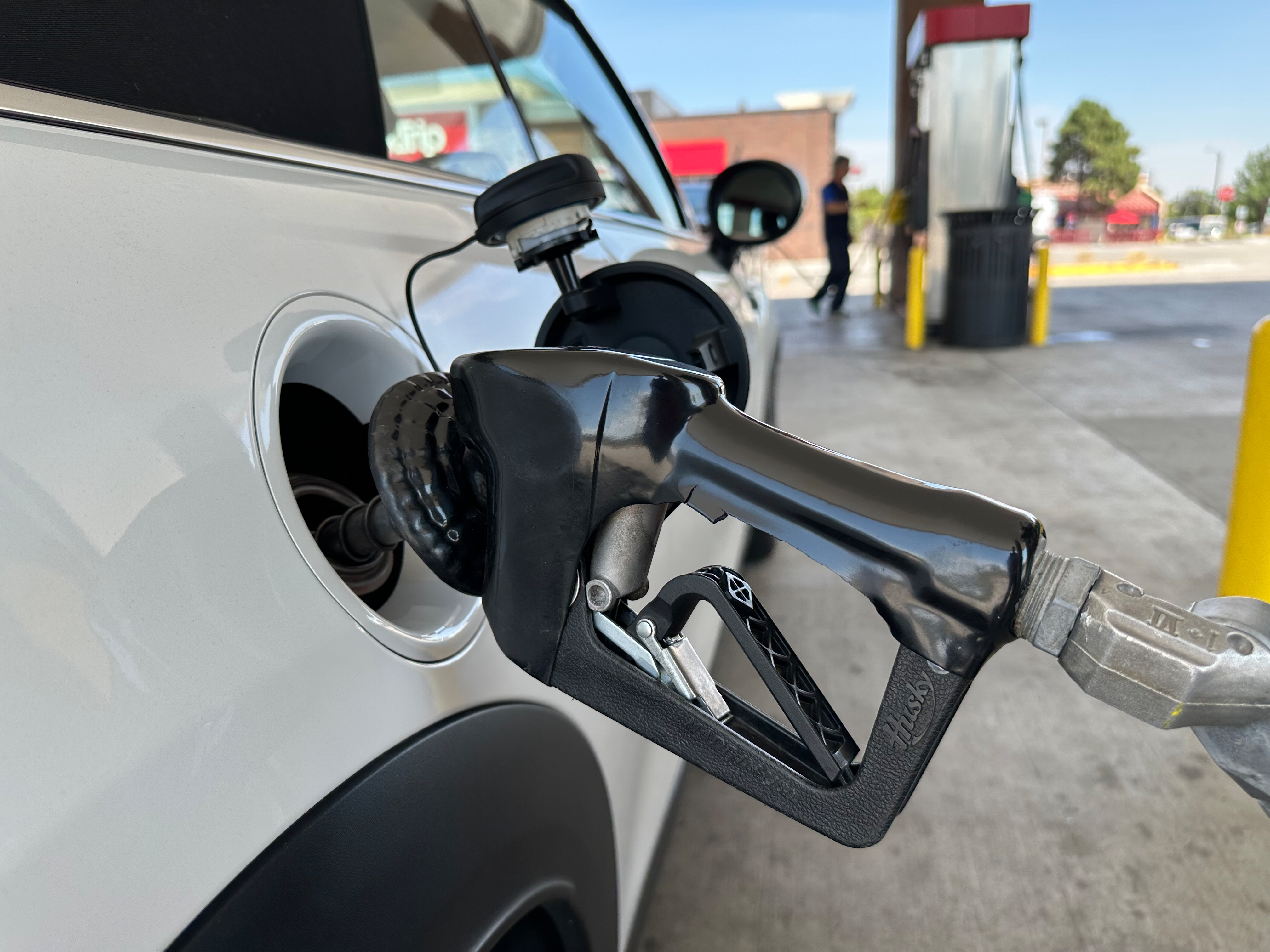
With the war in Iran rocketing gas to almost $5 a gallon, inflation surging to 3.4% from 2.6% in 2025, and food prices up nearly 3% over last year, the high cost of living is weighing on the minds of many voters — and candidates — as the midterm elections draw near.
Nowhere is that more critical than in four tightly contested Pennsylvania congressional districts that could decide the control of the U.S. House — in Bucks County, the Lehigh Valley, the Harrisburg area, and Northeast Pennsylvania.
Mike Parry of Clark Summit, Lackawanna County.Courtesy of Mike Parry
Parry, a Republican and supporter of President Donald Trump, said he is aware that many Americans hold the president and his party accountable for the affordability crisis, including in the 8th Congressional District, where Parry plans to back GOP U.S. Rep. Rob Bresnahan over Scranton Mayor Paige Cognetti, the Democratic nominee.
But other voters might not be so kind to Trump-aligned incumbents this fall.
Among likely voters in Pennsylvania, 75% disapprove of how Trump is handling the cost of living, compared with just 25% who approve, according to a recent poll fromThe Inquirer, the New York Times, and Siena University. And 73% disapprove of how he has handled gas prices, vs. 24% who approve. About 65% disapprove of his handling of the economy, vs. 34% who approve.
“It doesn’t matter what party you’re in,” Parry said. “We’re all getting hammered the same.”
‘Spend less’
At his local Wawa gas station in Allentown, P.J. Santos, 32, removed his finger from the pump trigger before his tank filled.
“So I buy less than I need,” he added, tightening his gas cap. “Same goes for date nights with my wife: Spend less.”
That is harder when you’re buying food, said Tammy McCoy, 52, of Easton,in the same district.“Walk into any grocery store,” said McCoy, a Democrat and professional cook. “It’s like you have to hand them $50 at the door.”
(function(){function e(){window.addEventListener(`message`,function(e){if(e.data[`datawrapper-height`]!==void 0){var t=document.querySelectorAll(`iframe`);for(var n in e.data[`datawrapper-height`])for(var r=0,i;i=t[r];r++)if(i.contentWindow===e.source){var a=e.data[`datawrapper-height`][n]+`px`;i.style.height=a}}})}e()})();
Trump, she remembered, promised to lower priceson Day 1 of his presidency. Not only did that not happen, she added, he raised tariffs, making imported staples like coffee, nuts, and olive oil more expensive. “Because of that,” McCoy added, “I’m against him and Republicans.”
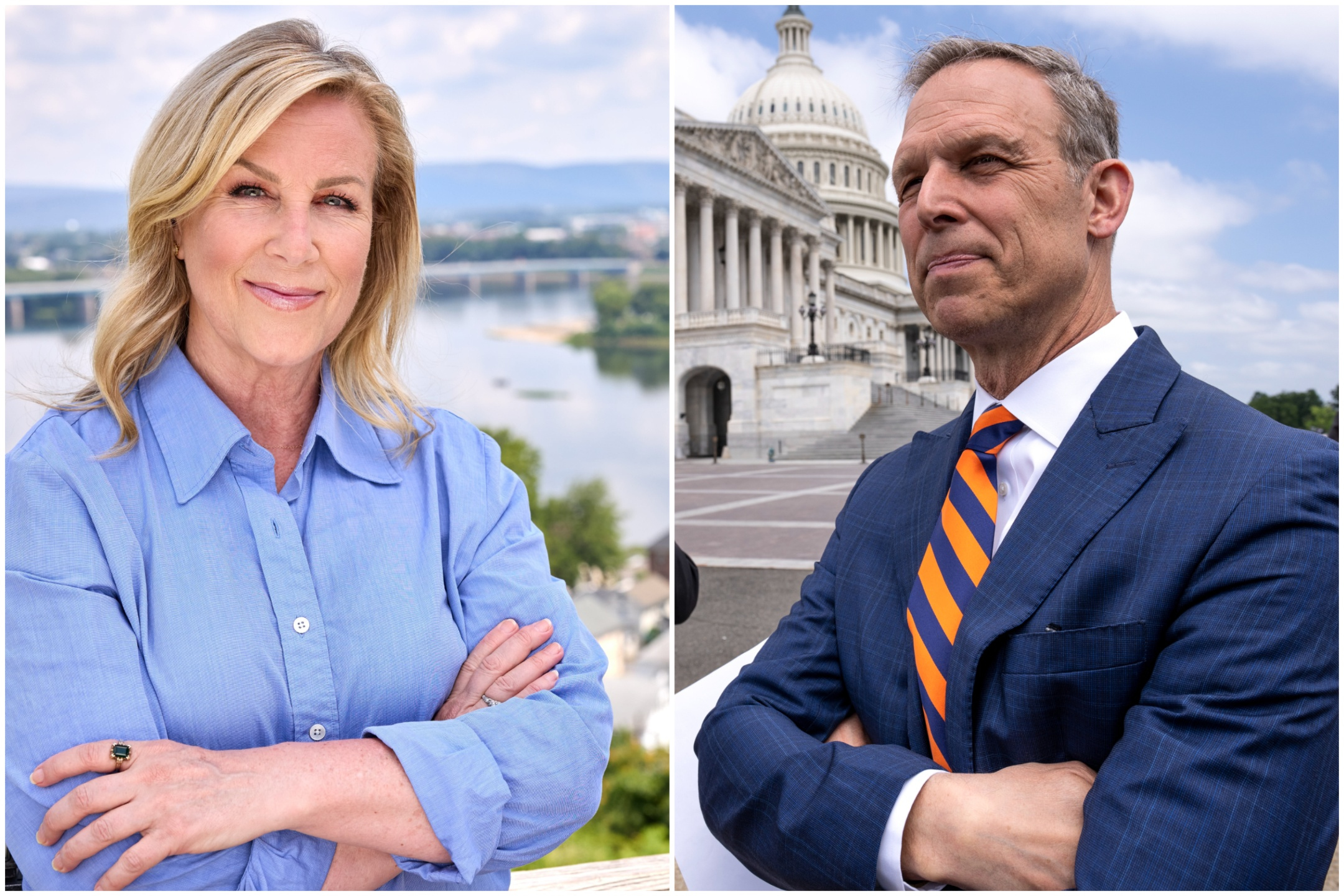
Tapping into the frustration over food prices, Democrat Janelle Stelson’s campaign is pointing to the cost of hamburgers as she seeks to oust Republican U.S. Rep. Scott Perry in the 10th Congressional District.
Janelle Stelson (left) and Rep. Scott Perry, R-Pa.(right) from a Stelson campaign photo in 2024, the last time the two squared off against each other in a bid to represent the 10th Congressional District. Stelson Campaign, AP
Stelson eats a burger in a TV ad that says Americans now pay $7.29 for a pound of ground beef —a result of tariffs Trump imposed and Perry supported.
But criticism of Trump’s tariffs will not sway Tammy Green, 60, a Republican voter in the 8th Congressional District who supports Bresnahan over Democrat Cognetti.
“Because he’s a businessman, President Trump understands the economy. … He’s negotiating fair prices with tariffs,” said Green, a former travel agent who lives in West Wyoming, Luzerne County.
More households need help
On a hot September day in Levittown, people gathered to celebrate the grand opening of the new headquarters of the United Way of Bucks County. Focused on helping anyone experiencing financial hardship, the building features an expanded HELP Center, where diapers, fresh produce, and clothing are available at no charge.
As need skyrockets, the nonprofit expects a 40% to 50% increase in demand this year, Marissa Christie, president and CEO, said in an interview.
“Folks are telling us that in the grocery store, their budget is not going as far as it used to,” Christie said. “When they go to fill up their gas tank, their money is not going as far as they expected.”
Attending the event alongside other local lawmakers was U.S. Rep. Brian Fitzpatrick (R., Bucks), who secured $4.15 million in federal funds for the building and said the agency will “always be in that top-10 list” of key nonprofits helping those in need.
U.S. Rep. Brian Fitzpatrick (R., Bucks) speaks outside the U.S. Capitol about legislation to put national restrictions on gerrymandering on Sep. 16, 2026.Sam Janesch / Staff
The cost of living has become a focal point in the 1st Congressional District race as Fitzpatrick fends off a challenge from Democratic County Commissioner Bob Harvie in the Bucks County-based swing district.
Pennsylvania Democrats, including Harvie, have centered their campaign messaging on affordability in hopes of appealing to voters across the political spectrum.
“Costs are what affect people every single day … whether it’s at the pump, whether it’s in the grocery store,” Harvie said in an interview with The Inquirer’s Editorial Board. “Housing costs obviously are huge. It’s a major issue here in this district, especially in the county.”
(The Editorial Board, which runs The Inquirer’s opinion pages and decides endorsements, operates independently from the newsroom. Newsroom editors and reporters have no role in endorsements, and opinion staffers have no role in news coverage.)
Fitzpatrick, too, acknowledged in an interview at the U.S. Capitol last month that affordability is the top issue not just in this election, but in every election.
“The No. 1priority, the No. 1 focus, has to be on affordability — has to be,” he said. “That’s the issue that got Trump elected in ’24. It’s what got [New York Mayor Zohran] Mamdani elected in ’25. It’s what people care about.”
‘Affordability front and center’
Demonstrating their awareness of voter focus on the high cost of living, Trump administration officials and local Republicans repeatedly emphasized “affordability” as they touted their work to combat rising electricity prices at a PPL Electric Utilities facility in Allentown last week.
“This is a quick way to lower electricity prices and increase reliability,” U.S. Energy Secretary Chris Wright said as he announced up to $71.5 million in federal funding for PPL, which was among $2 billion in new spending aimed at improving the electric grid.
Upgrades to existing transmission lines will include new technology like sensors to detect weather conditions, improving efficiency and ultimately lowering electricity costs, according to the Energy Department.
Asked how quickly consumers might see those improvements, Wright did not specify a timeline but noted that new, large-scale energy users — like data centers — are negotiating with utilities about how much of the increased demand they will cover.
Mackenzie, a freshman lawmaker whose district includes the Lehigh Valley and Poconos, also emphasized a bill he supports that would set federal standards for data centers to pay for their electricity use, and another to promote transparency around retail electric costs.
President Donald Trump invites 7th District U.S. Rep. Ryan Mackenzie (right) to the stage to visit Mack Trucks in Macungie, outside Allentown in the Lehigh Valley, in June.Tom Gralish / Staff Photographer
Mackenzie said energy policy needs tokeep“affordability front and center.”
The war’s economic consequences
Some Trump voters say they are willing to pay more for gas and other essentials as the president pursues his policy goals at home and in Iran.
“We incur a cost that stinks now to avoid another Sept. 11 later,” said T.J. Fitzgerald, 60, a Republican bail bondsman from Nanticoke, Luzerne County, in the 8th Congressional District. “Fighting Iran, a terrorist organization, is worth inflation at the pump.”
Ryan Kavulich, a 37-year-old project manager from Dunmore in nearby Lackawanna County, disagreed with that logic.
“The war’s a nightmare with what it’s costing for diesel,” said Kavulich, a Democrat who plans to back Cognetti in November.
(function(){function e(){window.addEventListener(`message`,function(e){if(e.data[`datawrapper-height`]!==void 0){var t=document.querySelectorAll(`iframe`);for(var n in e.data[`datawrapper-height`])for(var r=0,i;i=t[r];r++)if(i.contentWindow===e.source){var a=e.data[`datawrapper-height`][n]+`px`;i.style.height=a}}})}e()})();
People in the 8th District know that Bresnahan voted against ending the war with Iran in September, Kavulich said.
“And that makes voting for Paige [Cognetti] in November the easiest choice ever,” he said. “So many people around Scranton have a blue-collar, kitchen-table, commonsense vibe. They know going into Iran isn’t what you do. They know it’s time to be over Bresnahan and Trump.”
As the cost of fuel continues to climb, even some longtime Republicans in the district are expressing their doubts about the economic consequences of Trump’s war.
“I voted for Trump three times,” said Greg Kerrick, 58, a Republican voter from Scranton.
“But I don’t like him pushing up gas prices,” added Kerrick, who is unemployed. “And I feel for anyone paying over $4 a gallon.”
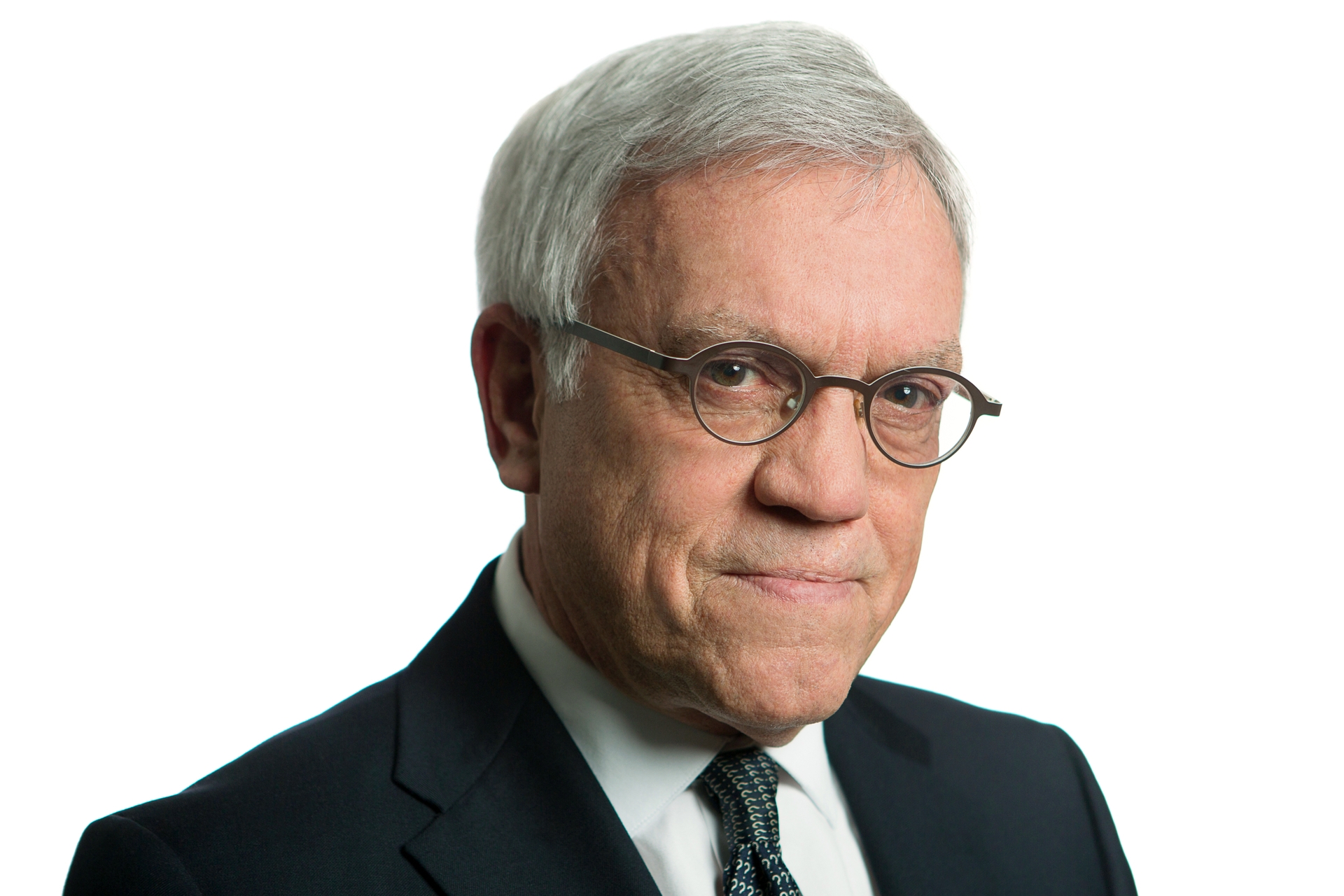
John Baer was the son of a Harrisburg newspaperman. He literally grew up in the Pennsylvania state Capitol. And he never left.
His father, John H. Baer, was a political reporter for what is now the Patriot-News in Harrisburg, and Mr. Baer spent many Sunday afternoons hanging around the old Capitol press room while his father worked on stories. Decades later, in 1972, Mr. Baer joined the Evening News in Harrisburg as a reporter and went on to work for nearly 50 years in that same press room.
“I’m probably unique in Pennsylvania politics and journalism,” Mr. Baer said in a 2020 oral history interview for Pennsylvania State University. “I dare say there probably aren’t any who can say they worked in the same state capitol newsroom that their father did.”
In 1987, the Daily News hired Mr. Baer to cover state politics in Harrisburg. He became a political columnist for the newspaper in 2000, and his plainspoken, no-holds-barred stories later appeared in The Inquirer as well. Before he left the papers in 2019, he covered hundreds of political campaigns, conventions, and elections, and wrote about thousands of local, state, and national politicians.
Mr. Baer’s column on politics appeared in The Inquirer and Daily News from 2000 to 2019. Newspapers.com
“He was the most feared reporter in my eight years in Harrisburg,” former Gov. Ed Rendell said. “He did his work. He did his digging. He really cared about the issues.”
On Thursday, Sept. 24, Mr. Baer died of cancer at his home in New Cumberland, Pa. He was 79.
For 32 years, Mr. Baer was a hard-hitting, award-winning political reporter and columnist for The Inquirer and Daily News. He was also a columnist for PennLive and the Patriot-News, onetime public TV producer and show host, former press secretary, author, teacher, and mentor.
Many of those Mr. Baer covered in Harrisburg, Philadelphia, and Washington praised his “deep integrity” and “fierce independence,” and called him a “keen observer of Pennsylvania politics” and “a heavyweight in Pennsylvania political reporting” in online tributes. State Rep. Ben Waxman called Mr. Baer a “legendary Capitol journalist.” U.S. Rep. Dwight Evans said he was “authentic and a one-of-a-kind journalist.”
Mr. Baer told Penn State he wanted to “let people see the inside of the game in Harrisburg.” His Inquirer.com online profile reads: “John Baer has written about politics and government since 1987. Neither subject ever fails to provide him with stories of policies and politicians walking on or skirting by paths to perdition.”
In addition to covering nine Pennsylvania governors, the impeachment trial of President Bill Clinton, and the ascensions of Presidents Barack Obama and Donald Trump, Mr. Baer wrote about the execution of serial killer Gary Heidnik, the pleas for more research funding by a cancer victim, and the battle of a state policeman’s widow to receive her husband’s pension benefits.
He said some of his favorite columns were the mea culpa pieces he wrote at the end of each year that highlighted things he got wrong. “I truly just had a ball at the Daily News,” he told Penn State. “I just loved it. … I’ve always said I had no adult supervision, and it was wonderful.”
Mr. Baer joined PennLive in 2019, and his last column was published in July. “The depth and breadth of his knowledge was beyond compare,” said Amy Worden, his editor at PennLive.
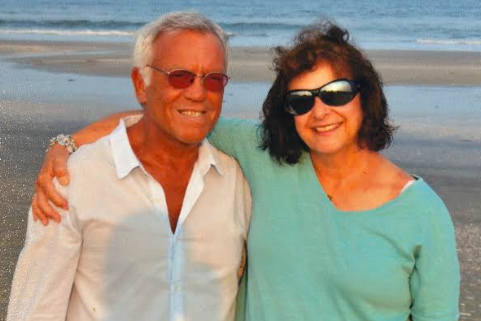
Mr. Baer and his wife, Rosemary, married in 1969.Courtesy of the family
Before the Daily News, Mr. Baer spent 14 years in total as a reporter for the Patriot-News, an award-winning public TV producer and show host for WITF in Harrisburg, and a press secretary during Lt. Gov. Bill Scranton’s unsuccessful run for governor in 1986.
He wrote freelance stories for Philadelphia Magazine and national publications. He was a frequent guest on political TV and radio shows and moderated several statewide candidate debates.
A lifelong foodie, he also reviewed Harrisburg-area restaurants for a magazine under the pseudonym “the Phantom Diner.” His book, On the Front Lines of Pennsylvania Politics,was published in 2012.
“He was so good at writing strong opinions with depth,” Paul Vigna, a retired Daily News editor, said.
Mr. Baer earned awards for his journalism and was inducted into the Pennsylvania News Media Hall of Fame in 2024. He was cofounder of the Pennsylvania Press Club and onetime president of the Pennsylvania Legislative Correspondents Association.
In tributes, colleagues praised his “sharp wit” and called him a “journalism giant,” “terrific writer,” and “mentor to many of us.” The internship program at the Pennsylvania Legislative Correspondents Association is named in his honor.
“He was an All-Star, a Hall of Famer,” Vigna said. Rendell said: “He didn’t take any BS.”
John Baer was born June 25, 1947, in Harrisburg. He graduated from Bishop McDevitt High School in 1965 and earned a bachelor’s degree in English at Mount St. Mary’s University in Maryland and a master’s degree in education later from Temple University.
He coached basketball and football teams while teaching English for three years at Trinity High School in Harrisburg after college. He married Rosemary Ruggieri in 1969, and they had sons Johnny and James.
Mr. Baer and his wife hosted many memorable Christmas parties and enjoyed road trips to Georgetown University basketball games, New York Mets baseball games, and their sons’ many sporting events. He played racquetball and tennis, and ran a marathon at 50.
He was a longtime member of St. Theresa Catholic Church in New Cumberland. “He liked interesting people and had lifelong friendships,” his family said in a tribute. “He loved his friends.”
On Facebook, colleague Diana Robinson said: “Here’s to you, John Baer. You’ll always be The Most Interesting Man in Harrisburg.”
In addition to his wife and sons, Mr. Baer is survived by three grandchildren and other relatives.
Services were held earlier.
Donations in his name may be made to Vickie’s Angel Foundation, 511 Bridge St., Box 174, New Cumberland, Pa. 17070.
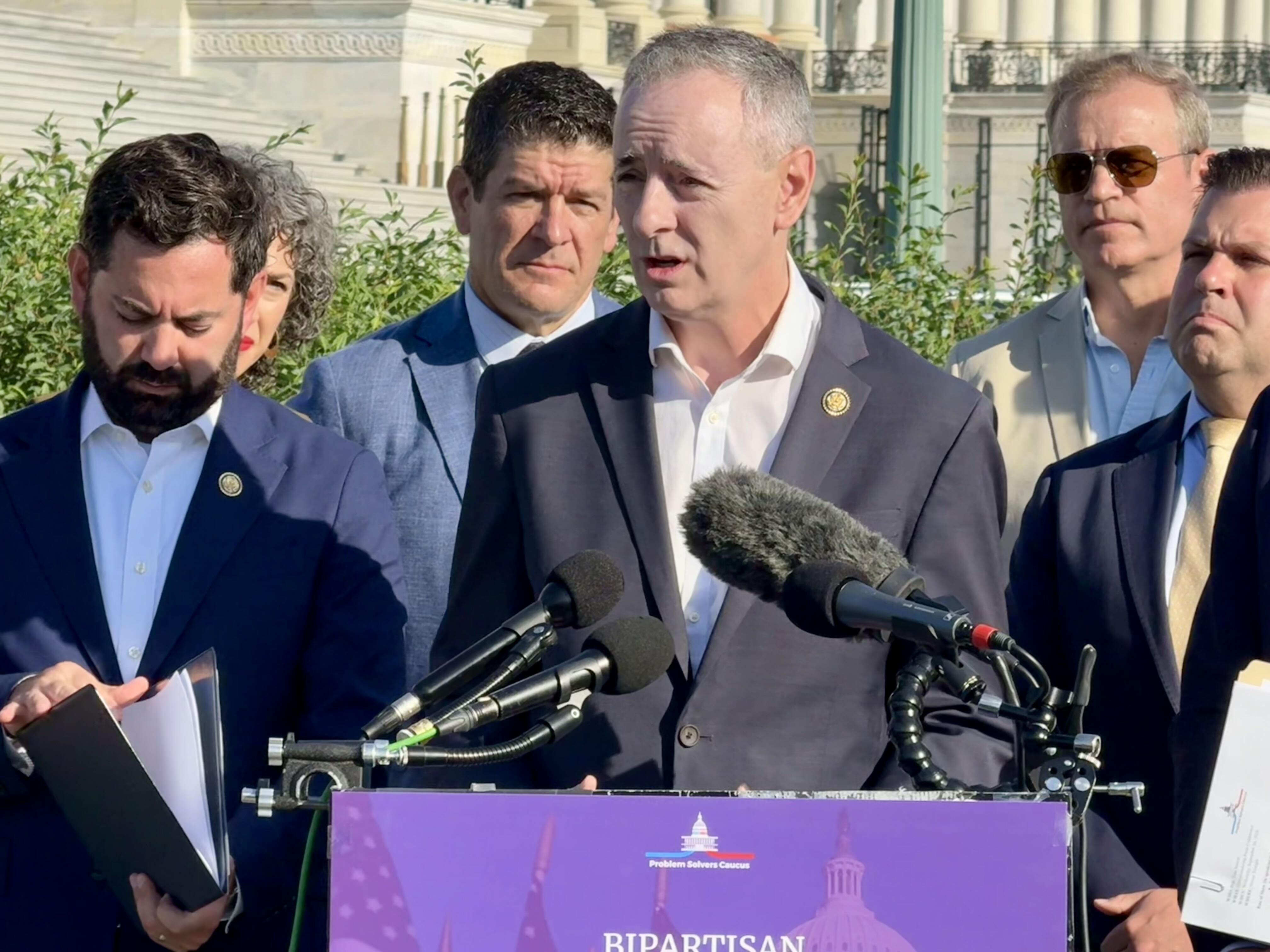
Bucks County Democrat Bob Harvie is asking TV stationsin the Philadelphia area to stop airing advertisements from U.S. Rep. Brian Fitzpatrick, calling them misleading to viewers.
In letters sent Thursday, an attorney for theDemocrat’s campaign highlighted two attack ads from Fitzpatrick’s campaign related to Harvie’s time as a county commissioner.
He said the ads relied on dubious reporting from a source who has personal connections to Fitzpatrick, the incumbent Republican who has represented the 1st Congressional District for five terms. Harvie is challenging Fitzpatrick for the Bucks County-based seat, one of four in the state that both parties are targeting ahead of November.
In one of the ads, for example, Fitzpatrick’s campaign cited a headline from Patch.com, the hyperlocal news organization, that said “Bob Harvie was the lone vote to abolish local police funding on the Board of Commissioners.”
Harvie opposed a roughly $43,000 purchase of “civil unrest protective equipment” for the Bucks County Sheriff’s Office in a 2024 vote, attorney Timothy Ford said in the letter, but voted to approve every other law enforcement spending request, including about $31,000 for a sheriff’s deputy vehicle and about $44,000 for a police interceptor utility vehicle.
The legal action comes after revelations from Politico that the author of multiple Patch articles Fitzpatrick is using in his campaign ads is Dave Sommers, who received occasional payments from Fitzpatrick’s campaign over the years, though not in the most recent financial reporting cycle.
“Sommers’ claim that Mr. Harvie voted to ‘abolish local police funding’ is a deliberately false characterization of the official and public record of the Bucks County Commissioners’ Meeting,” Ford wrote.
Harvie’s campaign asked the TV stations to scrutinize any future advertisements that refer to Sommers’ work.
“These advertisements rely on reporting from a highly uncredible and biased source with a penchant for publishing out-of-context, false statements that mislead voters and damage Mr. Harvie’s reputation in the community,” Ford wrote.
Sommers had previously been charged with stealing an election sign for a previous Fitzpatrick primary challenger and attended the lawmaker’s June wedding, Politico reported.
Representatives for the Fitzpatrick campaign did not respond to The Inquirer.
Several public polls put Harvie and Fitzpatrick in a tight race, but the Cook Political Report, a nonpartisan group that provides election analysis, indicates the seat will likely remain in Republican control.
This summer, Harvie’s campaign sent a cease-and-desist letter to Fitzpatrick and his campaign for what it said were defamatory allegations that falsely suggest Harvie was the subject of an FBI investigation. A PAC supporting Fitzpatrick that used similar language in its social media posts, news releases, and video content also received a cease-and-desist order and was slapped with a lawsuit.
The practice of sending these kinds of letters is common for campaigns, and some go ignored.
In another ad Harvie’s campaign complained about in the letter, Fitzpatrick referenced a Patch headline that said “Bob Harvie Voted to Give Himself a Significant Taxpayer-Funded Pay Raise.”
As chair of the Bucks County Board of Commissioners, Harvie approved an annual 1% increase in salaries beginning in 2024 for commissioners and several other local offices. State law requires commissioners to set salaries prior to a forthcoming election year for most county-level roles, including their own.
“There was nothing ‘significant’ or unusual about the pay raise that Mr. Harvie and his fellow Commissioners approved,” Ford wrote. He added that the raises were approved across party lines, including support from the Republican commissioner.
The Trump administration cannot withhold emergency preparedness grants from states that do not change how they conduct elections, a federal judge ruled Monday.
The Federal Emergency Management Agency warned state and local governments in June it would withhold up to 20% of some terrorism-preparedness grants unless officials demonstrated that they were exploring a transition to paper ballots or verifying voters’ citizenship. The grants, totaling $1 billion each year, help harden urban areas against terrorist attacks, develop anti-terrorism plans, and conduct terrorism drills.
The changes to elections that FEMA sought were in line with President Donald Trump’s false and largely debunked claims of widespread voter fraud.
A group of local governments in Tennessee, Texas, and Ohio sued FEMA and the Department of Homeland Security, its parent agency, over the move last month, arguing the federal government did not have the power to force changes to how they conduct elections. They also said the rules would disenfranchise eligible voters.
Judge Amir H. Ali of the U.S. District Court for the District of Columbia, an appointee of President Joe Biden, agreed that the conditions exceeded the administration’s power over elections and ordered them stricken from the grant programs’ application process.
FEMA and Homeland Security officials did not immediately respond to a request for comment on the ruling.
The ruling follows several actions by the Supreme Court addressing Trump’s push to exert more control over elections before the midterms. This month, the court blocked changes to mail-in voting but approved increased screenings for ineligible voters.
With recent victories by democratic socialists nationwide prompting a fierce debate about the future of the Democratic Party, most Democrats in Pennsylvania have a positive view of socialism — and nearly 40% consider themselves to be a democratic socialist, a new poll found.
About one-third of likely voters in the midterm elections this fall have a favorable view of socialism and 56% have an unfavorable view. That result closely mirrors a recent national poll from the New York Times and Siena University, raising questions about the appeal of socialism to a wider swath of voters.
“We’re more popular than ever,” said Dan Parker, cochair of Philadelphia’s chapter of the Democratic Socialists of America (DSA). “But we still have a long way to go.”
(function(){function e(){window.addEventListener(`message`,function(e){if(e.data[`datawrapper-height`]!==void 0){var t=document.querySelectorAll(`iframe`);for(var n in e.data[`datawrapper-height`])for(var r=0,i;i=t[r];r++)if(i.contentWindow===e.source){var a=e.data[`datawrapper-height`][n]+`px`;i.style.height=a}}})}e()})();
The survey of 615 likely Pennsylvania voters conducted from Sept. 15 through 21 comes amid a surge of leftist victories both locally and across the country.
State Rep. Chris Rabb defeated a pair of more moderate candidates in Philadelphia’s highly competitive congressional primary in May. A democratic socialist, Rabb is highly favored to win in the general election and has spent the months since his primary campaigning for other like-minded candidates.
Nearly all of those candidates — from Abdul El-Sayed in the high-stakes Michigan U.S. Senate race to a pair of New York candidates boosted by Mayor Zohran Mamdani — have also won their primaries as Rabb and his allies look to grow the ranks of progressives starting on Capitol Hill in January.
“The mainstream Democratic establishment candidates are telling us time and time again to settle for less, to expect nothing other than the status quo,” Parker said. “People are looking for a different set of politics that speaks to their material needs and to the values of freedom that many are striving for.”
Parker said Philadelphia DSA has been “exploding” since Rabb’s victory. The group mobilized hundreds of volunteers to knock between 75,000 and 100,000 doors during his campaign, and more than 750 new members have joined since May to put the chapter’s total ranks at about 3,000, he said.
Councilmember Kendra Brooks speaks with colleague Nicolas O’Rourke during a March 12 caucus session. Alejandro A. Alvarez / Staff Photographer
Rabb’s success follow that of Pittsburgh’s U.S. Rep. Summer Lee, who was first elected to Congress with DSA support in 2022. Other DSA-backed elected officials include Philadelphia City Councilmembers Kendra Brooks and Nicolas O’Rourke, as well as State Sen. Nikil Saval, while new primary victories this year include Mark Pinsley and Ce-Ce Gerlach in Lehigh Valley-based legislative races.
Further growth, Parker said, will come with DSA-backed candidates working in office to “prove that government can exist to serve ordinary people.”
On that agenda: Advocating for universal healthcare, affordable housing, progressive tax policies, defunding and ultimately abolishing ICE, and ending the wars in Iran and Gaza.
“What makes DSA distinct — and democratic socialism as a political movement distinct — is that it’s not really just about who has the right ideas,” Parker said. “It’s about a theory of change that puts the vast majority of society in the driver’s seat.”
(function(){function e(){window.addEventListener(`message`,function(e){if(e.data[`datawrapper-height`]!==void 0){var t=document.querySelectorAll(`iframe`);for(var n in e.data[`datawrapper-height`])for(var r=0,i;i=t[r];r++)if(i.contentWindow===e.source){var a=e.data[`datawrapper-height`][n]+`px`;i.style.height=a}}})}e()})();
As Democrats look to retake control of Congress and the White House, how much influence that movement will yield remains an open question.
Moderates like Gov. Josh Shapiro, a potential 2028 Democratic presidential candidate, have acknowledged the energy on the left while advocating for a more centrist approach. Shapiro said this summer that the progressive candidates were practicing “performative politics” and would need to deliver if elected. He has also said he expects the party to have the most significant “battle over what we believe in” in more than three decades as the next presidential race gets underway.
The latest poll shows the party’s base remains divided in Pennsylvania.
While Democrats in the state remain split in their views of socialism, 38% consider themselves to be a democratic socialist while 57% do not, the poll found. Just over half of Democrats see their party as divided and 45% believe it’s united.
‘A tiny, tiny fraction’
Some observers also cautioned that the number of self-identifying democratic socialists across all of Pennsylvania — a swing state that has largely elected moderates to statewide office — may appear larger than reality. The poll did not define democratic socialism, for one. And progressives have been overrepresented in other polling this year, including in Wisconsin and Michigan, said Lew Irwin, a political science professor at Duquesne University in Pittsburgh.
“A lot of people will claim an affiliation when they actually have an affinity,” Irwin said, adding that it’s still become “increasingly mainstream and acceptable inside the Democratic Party” to identify as socialist.
J.J. Balaban, a Philadelphia-based ad maker for more moderate Democrats like U.S. Rep. Brendan Boyle, pointed to the fact that even with the additional energy on the left, the vast majority of Democrats in Washington next year will not be socialist.
“We’re talking about a tiny, tiny fraction of the Democratic caucus,” he said.
Balaban said that is one of the reasons why Republicans’ campaign messaging may also not be effective as they try to defend their majorities in the November midterm elections. Republicans have branded all kinds of Democrats as socialists — repeatedly denouncing the entire party as far left and “communist” in its agenda.
One of the main characters featured in those attacks has been Hasan Piker, the controversial leftist streamer who campaigned with Rabb and other candidates this year. His visit to Philadelphia in April drew hundreds of young progressives but was condemned by Rabb’s opponents and Jewish groups who consider his views antisemitic.
Online influencer Hasan Piker speaks to attendees at an April 30 fundraiser for State Rep. Chris Rabb’s 2026 congressional campaign at Renata’s Kitchen in West Philadelphia.Erin Blewett / For The Inquirer
Piker’s support of El-Sayed has become a dominant issue in the Michigan race, but the poll of Pennsylvania voters shows he is mostly unknown in the Keystone State.
Among Pennsylvania likely voters, 23% had an unfavorable view of Piker and 6% had a favorable view. Two-thirds said they had not heard of him — and a higher share of Republicans knew him compared to Democrats.
“He is a much greater part of the discourse in the Fox cinematic universe than he is in actual Democratic discourse,” Balaban said.
With polls increasingly showing Democratic momentum this fall, even some conservatives appear to be pushing for Republicans to shift their messaging away from socialism.
Former U.S. Rep. George Santos, a Republican who has reportedly lived at least partially in the Poconos since President Donald Trump commuted his sentence last year, posted a video Thursday in which he criticized a mailer for U.S. Rep. Rob Bresnahan, a freshman Republican in a tight reelection campaign. The mailer claims Bresnahan will “stop the socialists” and lists his Democratic challenger, Paige Cognetti, alongside the “socialist dream team” of progressives Mamdani, U.S. Sen. Bernie Sanders (Ind., Vt.), and U.S. Rep. Alexandria Ocasio-Cortez (D., N.Y.).
“Please stop sending me this. It’s silly,” Santos said in the video, adding colorful language to say Pennsylvania Republicans should be focusing on the cost of living.
“No more rhetoric!” he added.
Staff writer Joe Yerardi contributed to this article.
City Councilmember Curtis Jones Jr. held a campaign fundraiser featuring Mayor Cherelle L. Parker at the Cobbs Creek Golf Course on Thursday night, a show of strength as he gears up to seek a sixth term in next year’s municipal election.
But that hasn’t stopped a whisper campaign among Philly’s political class about whether he’ll actually appear on the Democratic primary ballot next spring, with as many as four potential candidates said to be eyeing his seat representing parts of West and Northwest Philadelphia.
People close to Jones have recently encouraged him to reconsider seeking a new term and to clear the way for State Rep. Morgan Cephas to run to represent Council’s 4th District, according to a person with knowledge of the discussions who spoke on the condition of anonymity to discuss private conversations.
Other possible candidates include criminal justice reform advocate Celeste Trusty, ex-Service Employees International Union staffer Leigh Owens, and developer Ryan Spak.
The intrigue over Jones’ political future follows an Inquirer report in June that Jones and his wife, City Representative Jazelle Jones, who is a top official in the Parker administration, stand to reap up to $752,000 in payouts from the controversial Deferred Retirement Option Plan, or DROP.
Jones, who makes $165,000 per year, told The Inquirer in June that he may need the extra money from DROP to pay for medical bills in retirement because he is suffering from glaucoma, an incurable disease that Jones said has already caused him to lose 40% of his vision.
Councilmember Curtis Jones Jr. stands in for former Council President Darrell Clarke after he stepped away briefly during a Council meeting on Sept. 14, 2023.Tom Gralish / Staff Photographer
State Sen. Vincent Hughes, a West Philadelphia Democrat who said he has been friends with Jones for 44 years, said he will support Jones no matter what he decides, adding that “no election is automatic.” But Hughes also said he has encouraged Jones to consider his health when deciding how to proceed.
“I think the councilman has earned the opportunity to try to make an accurate determination as to what he wants to do for his future,” Hughes said in an interview Monday. “I have encouraged him to think about the personal side of this, the physical challenges.”
Hughes said he would like to see Cephas eventually succeed Jones in the 4th District. But if Jones decides that he can serve another term, Hughes said he will back his reelection.
“He’s been serving with this challenge, and he’s been serving well,” Hughes said.
Jones said Thursday that he intends to run for reelection and serve a full term.
ScreenshotSean Walsh
DROP allows city workers to “double-dip” by accumulating four years of pension payments, which is usually paid out in a lump sum upon their retirement, while they are still working and receiving their regular paychecks.
The Joneses’ enrollment in DROP is legal, but his use of the program resurrects a scandal from the early 2010s that ended the political careers of several prominent figures in City Hall.
Elected officials, who were not initially envisioned as being eligible for the program, took advantage of it by briefly retiring at the end of their terms, collecting lucrative DROP payouts, and then getting rehired at the beginning of their new terms.
As a junior Council member, Jones in 2010 voted for a bill banning future elected officials from enrolling in DROP. But the bill “grandfathered” in current elected officials at the time, he said, and Jones is now poised to become the first lawmaker to use the program in years.
Jones enrolled in DROP in August 2024, meaning his mandatory retirement date would be in August 2028, during the first year of the next Council term. He would be eligible to collect a $432,000 payout then, and upon retirement he will begin collecting his regular city pension payments.
But Jones in June said he plans to retire just before the start of the next Council term in January 2028, take a slightly reduced DROP payout, and then serve his entire next four-year term, if he is reelected. He has held the seat since 2008.
The person familiar with the discussions about Jones’ future said 4th District voters are unhappy about his enrollment in DROP and that speculation about his potential successor is becoming a “self-fulfilling prophecy.”
“This is a district that reads the newspaper and works to stay informed,” the person said. “And they don’t like what they’ve been reading and hearing.”
In June, Jones said he has had four eye surgeries and that he enrolled in DROP to ensure he can afford the healthcare he needs in retirement, “so that if I was blind, I wouldn’t have been without resources.”
He added that, due to his health challenges, he is grateful he was not elected Council president. He ran for the leadership post in 2023, losing to Kenyatta Johnson, a South Philadelphia Democrat.
“I am functional. My staff kind of helps to keep that good,” Jones said. ”I am thankful to God that I did not get elected [Council] president. Do you know how much reading they do? I could have not kept up with all of the numbers and stuff like that, so I know my limitations.”
Jazelle Jones, who has served in multiple mayoral administrations, enrolled in DROP in 2020 and was originally set to retire in 2024. Parker, however, has pushed through a series of exceptions to personnel rules allowing her to continue serving and collect a more lucrative DROP benefit of about $320,000. Those approvals were processed months after the fact, city records show, and the administration has not yet explained the gaps in paperwork.
Curtis Jones, 69, has also said he hopes that Cephas, 42, a West Philadelphia Democrat, will succeed him when he retires after his next four-year term, meaning she would run in the 2031 municipal election cycle.
State Rep. Morgan Cephas attends a get-out-the-vote rally for State Sen. Sharif Street at the Church of Christian Compassion in West Philadelphia on May 18, 2026, on the day before the Democratic primary election for the 3rd Congressional District. Cephas was a candidate for the same seat, but withdrew early in the race.
Philadelphia politicians sometimes retire in the middle of their terms, triggering a special election in which Democratic ward leaders, and not primary voters, choose the party’s nominee, who usually ends up winning the seat thanks to Philly’s deep-blue electorate. That can sometimes allow outgoing politicians to handpick their successors.
But Jones has said he would not retire in the middle of his next term, and he instead plans to endorse Cephas to run in a Democratic primary in 2031.
Amid the heightened scrutiny over his retirement plans, some allies of Jones and Cephas, who both got their start in the West Philadelphia-based political organization previously led by former U.S. Rep. Chaka Fattah, are encouraging him to speed up the transition. That could prevent a worst-case scenario for Cephas: if Jones lost to another challenger in next year’s Democratic primary while Cephas sat out the race in deference to Jones.
Several other potential candidates are considering running for Jones’ seat, setting up what could grow into a crowded primary.
Spak — an affordable housing developer based in West Philadelphia who has in recent years been critical of some Council members’ more restrictive housing policies — is rumored to be considering a campaign. He declined to comment.
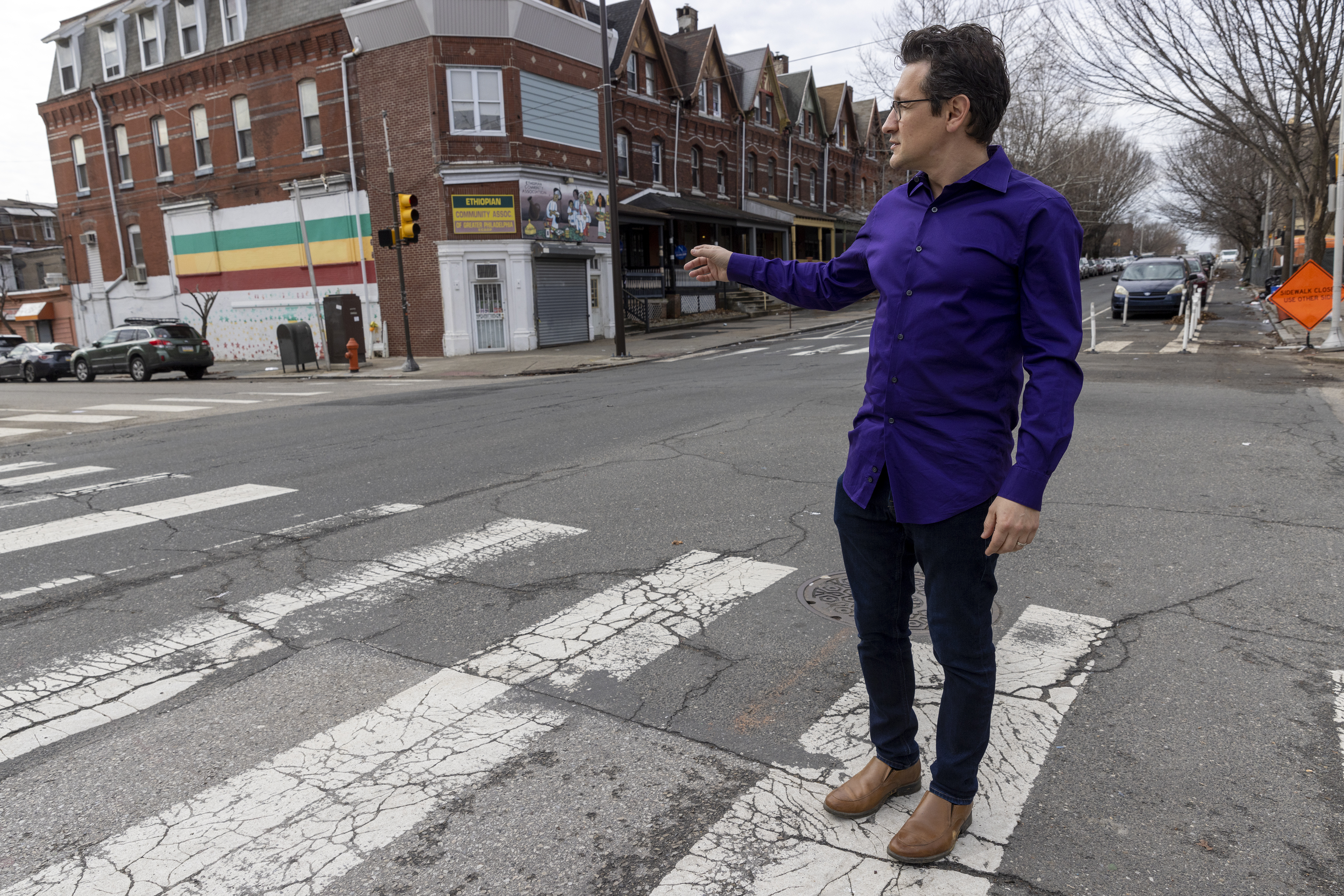
In this 2022 file photo, Ryan Spak is photographed at 44th and Chestnut Street near the Ethiopian Community Association. Spak’s work has included collaborating with West Philly residential and commercial property owners on rehab projects.ALEJANDRO A. ALVAREZ / Staff Photographer
In addition, the city’s progressive organizations are eyeing the district as a potential opportunity to grow their influence on Council. Candidates aligned with the left are already lining up to run against incumbents in at least two other districts.
Three sources close to that effort, who requested anonymity because they were not authorized to discuss the plans publicly, said Trusty and Owens, both criminal justice reform advocates, are considering getting in the 4th District race.
Trusty is the ex-secretary of the Pennsylvania Board of Pardons and has also worked with the national organization FAMM, formerly known as Families Against Mandatory Minimums. She declined to comment.
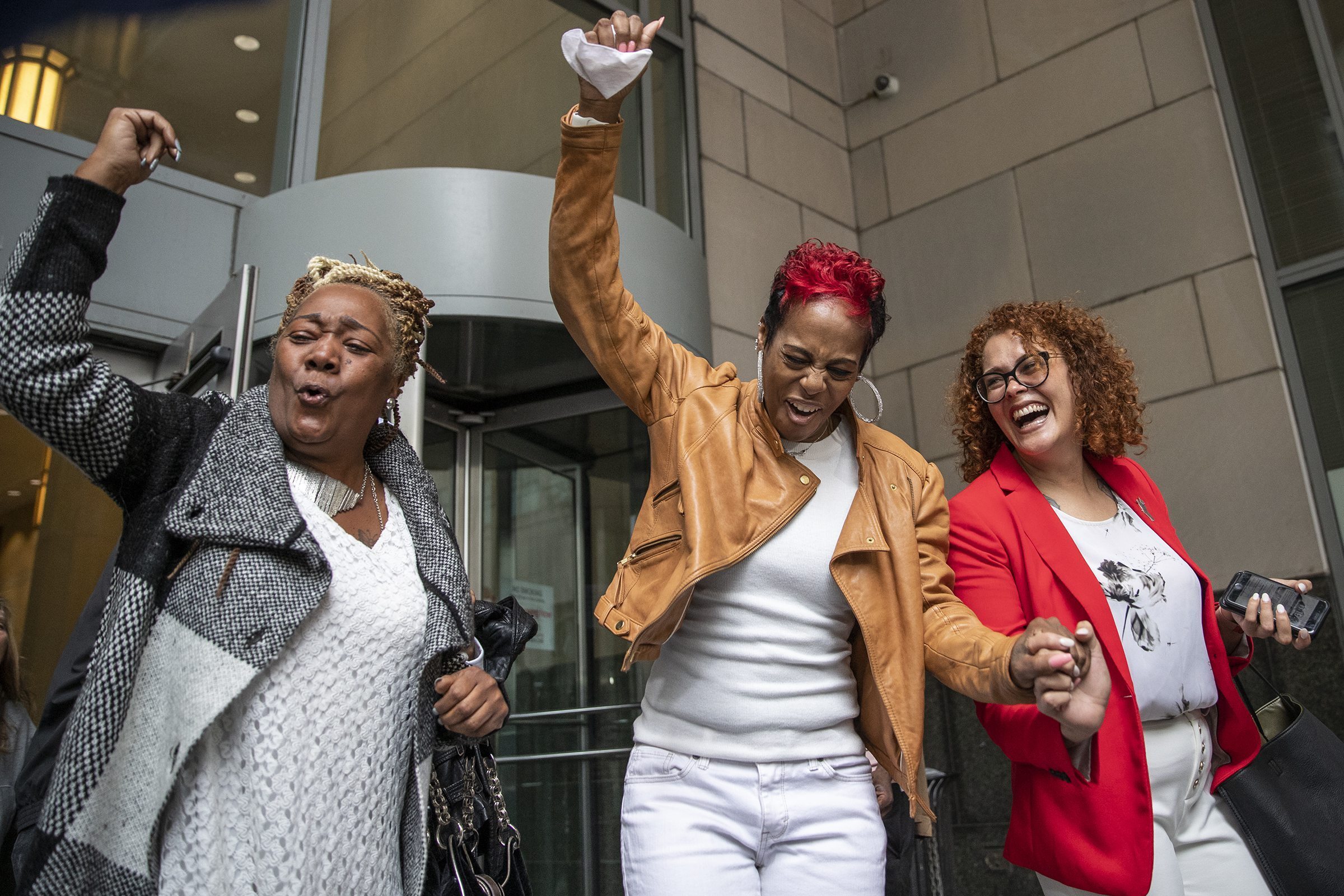
Celeste Trusty, of FAMM, is at right in this 2019 file photo. She is celebrating with Ketra Veasy (center), sister of Willie Veasy, who had been imprisoned for 27 years for murder and was exonerated.HEATHER KHALIFA / Staff Photographer
Owens, a former staffer at SEIU who was also a political aide to progressive ex-Councilmember Helen Gym, is now the education and advocacy director at the Pennsylvania Prison Society. He said in an interview that he has been considering running for Jones’ seat for about two years.
He said he is a native of the district, and sees an opportunity for new voices on Council to advocate for stronger public education and more affordable housing.
Owens, 46, said the revelations around Jones’ use of DROP made clear that it’s “time for the old guard to step down.”
“When I see what he’s doing with this DROP money and people using politics as a tool to line their pockets and stifle progress, it’s upsetting,” Owens said. “It’s time for people that really have the lived experience and who are doing this for the right reasons to get these seats. That’s the only way the city is going to be better: if our leaders care about the people and not their own interest.”
Staff researcher Ryan W. Briggs contributed to this article.
Correction: A previous version of this article incorrectly listed a candidate considering running for the 4th District seat. The potential candidates are Curtis Jones Jr., Morgan Cephas, Ryan Spak, Celeste Trusty, and Leigh Owens.
Barely five weeks before November’s midterm elections, Senate Republicans are rushing to pass more legislation that they can run on as polling shows Democrats within striking distance of retaking the chamber.
The Senate is expected to vote on legislation this week meant to protect consumers from high electricity costs caused in part by the data center building boom. And some Republicans are pushing to take up other bills to address voters’ frustrations with the cost of living.
Senate Majority Leader John Thune (R., S.D.) decided against sending senators home early last week to campaign, opting instead to keep the Senate in session to try to bolster Republicans’ legislative record. This week is the last that the Senate is scheduled to be in session before Election Day.
Republicans are confronting the once-unthinkable prospect that they could lose the Senate. Democrats are running competitively even in some states that President Donald Trump won by double digits in 2024, giving the party a shot at picking up the four seats they need to recapture the chamber.
Almost no Republican is in more danger of losing his seat than Sen. Jon Husted (Ohio), who introduced the data center bill that Republicans are set to take up.
Former Democratic senator Sherrod Brown, who is challenging Husted, has spent millions of dollars on ads attacking Husted over his support for data centers, which the ads blame for “causing electric bills to spike by thousands of dollars.” The National Republican Senatorial Committee warned in a memo last month that the ads are effective, describing data centers as an “anchor hanging around Husted’s neck.”
Sixty-nine percent of likely voters in Ohio say data centers — enormous warehouses filled with servers that power the artificial intelligence boom and the rest of the internet — are mostly bad for home energy costs, according to a Bowling Green State University/YouGov poll conducted this month.
Husted has defended his record on data centers and criticized Brown for supporting them in the past. He described his bill as a way to “show the American people that we’re serious about driving down electric prices and making life more affordable for them” — and he almost dared Democrats to block it.
“If Senate Democrats want to be the lone obstacle to passage, then shame on them,” he told reporters. “That shows that they don’t really care about affordability.”
It is not clear whether Husted’s bill will pass.
The House approved it overwhelmingly, but Sen. Martin Heinrich (D, N.M.) blocked Husted from fast-tracking its passage this month, arguing that it did not go far enough. Heinrich sought to pass his own bill to force data centers to shoulder the costs of upgrading the electric grid, which Republicans blocked.
Husted’s bill does not take full effect for two years and would not bring down electricity prices before the midterms. Some Democrats have argued that it would do little to address affordability at all.
“Senator Husted’s bill is a fraud,” Senate Minority Leader Chuck Schumer (D., N.Y.) told reporters last week. “It’s voluntary. No company has to do it.”
Republicans say Democrats are just trying to deny them victories. Sen. Bernie Moreno (R., Ohio) accused Democrats of blocking Husted’s bill “so they can just put up another TV ad to say that electricity prices are high so that they can win an election.”
Senate Republicans have spent much of the past two weeks working to pass legislation from Sens. Ted Cruz (R., Texas) and Maria Cantwell (D., Wash.) to overhaul regulation of college sports. Cruz has argued the bill is crucial to “protect an American institution that millions of people love,” but some Republicans have groused that it is hardly the most pressing issue for the party to tackle right before the midterms.
“With gas at over $4 a gallon, a persistent war with Iran, $40 trillion in debt, the Senate has decided that the most urgent thing now is to dictate how college sports are run from Washington,” Sen. Rand Paul (R., Ky.) said on the Senate floor.
Sen. John Kennedy (R., La.) said he was prepared to support the bill if he secures an amendment vote but argued it is not a priority for voters, describing it as a way “to make the football coaches happy.”
“I haven’t met a single person on the campaign trail, when they lie down to sleep and can’t, who are worried about the football coaches,” Kennedy told reporters.
Husted is not the only Republican senator facing a tough race who has pushed to pass legislation that can be campaigned on before heading home.
Sen. Susan Collins (R., Maine), who is seeking a sixth term in a Democratic-leaning state, has pressed Senate Republican leadership to take up a bipartisan bill to force insurers to cap the cost of insulin at $35.
Another vulnerable Republican, Sen. Dan Sullivan (Alaska), tried to pass legislation last week meant to protect salmon in his state. He was blocked by Sen. Ed Markey (D., Mass.), who said he needed more time to seek feedback from fishermen in his state.
Husted and other Republicans are campaigning on the tax and domestic policy bill that Trump signed into law last year, which cut taxes on tips and overtime. But some Senate Republicans have pushed for months to do more to address voters’ affordability concerns.
Sen. Josh Hawley (R., Mo.) said he had urged Senate leadership to take up the insulin bill, along with legislation to suspend the federal gas tax and other bills to make life easier for working families.
“My view is that ought to be our sole focus,” Hawley said. “If we’re not going to do that, it’s not clear to me what we’re doing here.”
Rep. Ashley Hinson (R), who is facing a tight race for an open Senate seat in Iowa, last week called on the House to return to Washington to vote on suspending the federal gas tax as well as other steps to reduce fuel prices. The House adjourned earlier this month and has no plans to return before Election Day.
Thune has faulted Democrats for obstructing his party’s agenda. Republicans and Democrats have spent months negotiating over legislation to overhaul the federal permitting process, which could bring down energy costs by making it easier to build power lines and other infrastructure. Thune said the Senate could take up such a bill before the midterms if the two sides were to reach a deal, but he acknowledged Thursday that it would not happen, which he blamed on Democrats.
“While they may acknowledge the need for permitting reform, what they really care about is denying Republicans another legislative win” ahead of the midterms, Thune said on the Senate floor.
Sen. Sheldon Whitehouse (R.I.) and Heinrich, the Democrats leading permitting negotiations, said Friday that they wanted to give senators more time to review the legislation and warned that trying to pass it before the midterms could kill the bill.
“We are talking about major changes to how America builds energy and infrastructure,” they said in a statement. “Getting that right has to matter more than election-year deadlines.”
First came a proposal to permit tariff-free beef imports, but that immediately angered America’s farmers and ranchers.
Then came a plan to ban exports of domestic diesel fuel, but that met with pushback from major oil companies.
In between, President Donald Trump pitched the idea of simply cutting $5,000 checks to adult Americans frustrated, polls show, by high food and gas prices — if the GOP maintains control of Congress. But that idea, too, has come under fire, even from some Republican lawmakers concerned about the potential hit to the budget deficit.
With just five weeks until Election Day, the White House has thrown out multiple ideas for combating persistent inflation, which has outpaced wage growth. But experts say it is unclear whether Trump can execute any policy that would placate inflation-weary voters and help the GOP maintain control of Congress.
“These are symptoms of panic in the administration about problems that they have in part created,” said David Wessel, director of the Hutchins Center on Fiscal and Monetary Policy at the Brookings Institution.
Inflation has been running over the Federal Reserve’s target rate since 2021, but an array of Trump policies have fed the problem, economists say. Trump’s decision to join Israel in going to war with Iran has disrupted the global oil supply, leading to elevated energy rates. His tariffs have produced higher prices for some imported goods. And his administration’s immigration crackdown has made low-cost labor harder to find, keeping price pressures on domestic companies high.
Consumer frustration is reflected in polling. The gap has steadily widened between voters who approve of and disapprove of Trump’s performance as president, and 73% of Americans said they disapprove of Trump’s handling of the economy in a recent poll conducted by SSRS for CNN. Only 27% approved — his lowest approval rating on the issue ever recorded by the survey.
Against that backdrop, Trump has floated a parade of ideas for cutting prices.
“President Trump pledged to lower costs and raise real wages for everyday Americans, and the Administration continues to rigorously evaluate every option on the table to deliver,” White House spokesperson Kush Desai said in a statement.
On top of the political hurdles, however, these policies have been “small in the grand scheme of things … if they’re helpful at all,” said Mark Zandi, chief economist at Moody’s Analytics. “So it’s not like it’s moving the dial on the affordability crisis.”
Douglas Holtz-Eakin, president of the American Action Forum, a conservative-leaning think tank, said it’s not uncommon for politicians to try to bring down prices in the run-up to elections, especially when their party’s control of Washington is at risk.
President Joe Biden did the same ahead of the 2022 midterms, notably by calling for a federal gas tax holiday and releasing millions of barrels of oil from the nation’s Strategic Petroleum Reserve in an effort to bring down sky-high gas prices.
“This whack-a-mole with particular prices is something the Biden guys tried,” said Holtz-Eakin, who was a senior economic adviser to President George W. Bush and the 2008 presidential campaign of then-Sen. John McCain (R., Ariz.). “It doesn’t solve the economic problem, and it doesn’t seem particularly politically successful.”
For Trump, time is running out, said Rebecca Patterson, a senior fellow at the Council on Foreign Relations.
The U.S. economy is so big and so complex that improving affordability “is simply not something anyone can do in a month,” Patterson said. “Actions taken today might help in the medium and longer term. But between now and the election, the best you can hope for is that voters appreciate that you’re trying.”
One idea the administration has executed is buying back Treasury bonds. But so far, the payoff has been minimal.
In part because of the competition for cash from massive private-sector spending on artificial intelligence, investors are demanding higher interest rates for Treasury bonds. Higher bond yields, in turn, raise interest rates for consumer loans such as mortgages. The average 30-year fixed mortgage rate hit 7% last week for the first time since January 2025.
In August, Treasury Secretary Scott Bessent announced he would intervene in the bond market by buying back longer-term Treasury bonds to try to slow the rise in yields. That has not yet worked in bringing down yields, though Bessent contended in a recent congressional hearing that it is nonetheless a success because “we then proceeded to have the two most successful Treasury auctions that we’ve had in 20 years.”
While Bessent was wrestling with the bond market, Trump decided to tackle meat prices.
In late August, the president signed a proclamation that rolled back tariffs on foreign beef trimmings for 90 days in an effort to boost imports and lower ground beef prices, which have risen almost 25% since the beginning of Trump’s second term.
But that drew rare pushback from farm-state Republicans, including Sen. Chuck Grassley (Iowa), Sen. Pete Ricketts (Neb.), Sen. Roger Marshall (Kan.) and Rep. Ashley Hinson (Iowa), who is running in a competitive Senate election in her state.
The lawmakers argued that a flood of cheap foreign beef would undermine American farmers and ranchers, who are already struggling with high fuel, grain, and fertilizer prices due to the Iran war and other factors.
Trump issued a follow-up executive order aimed at helping ranchers, and the Agriculture Department announced new policies aimed at supporting American beef producers. The administration is now reportedly considering reversing course on beef imports — though the White House has denied that.
Then came the Republican midterm convention in Dallas, where Trump made his biggest pitch yet: If Republicans keep both the House and Senate on Nov. 3, Trump said, he would give every adult American a $5,000 dividend to spend within the United States.
Some Republican lawmakers applauded the idea, but others were skeptical, saying the checks not only could exacerbate inflation but also could increase historically large budget deficits. The proposal could cost more than $1 trillion at a time when concern is growing about the nation’s outsize debt, which recently surpassed $40 trillion.
Public interest groups blasted the idea; Lisa Gilbert, co-president of the left-leaning consumer watchdog Public Citizen, called it an “explicit and desperate attempt to buy votes.”
And voters largely have not been swayed: A YouGov poll released earlier this month found that 64% of U.S. adults felt they would probably or definitely not receive the dividend if Republicans were to win the election.
So far, there have been few signs of interest on Capitol Hill, where lawmakers would have to draft legislation to authorize the checks and vote to approve it.
Last week, after diesel prices hit a record high, Trump and Bessent announced a new idea for tackling soaring fuel prices: a ban on diesel exports. Their theory was that a ban would boost the diesel supply for American consumers, lowering the price at the pump.
Several Republican candidates in competitive congressional races supported the idea. But major oil companies and Energy Secretary Chris Wright objected, arguing that such a policy would incentivize companies to lower diesel production, which would further raise fuel prices.
By midweek, the fate of the diesel export ban, too, seemed uncertain: Wright said any new limits on diesel exports were likely to be voluntary.
Almost two-thirds, 64%, of self-identified Democrats backShapiro seeking higher office, a strong consolidation of support within the party’s base that still leaves room for other prospective candidates. But more than one in five Republicans also support a potential White House run by the governor, a sign of Shapiro’s moderate appeal in a key battleground state.
Those who want him to run ranked his character and competence as their highest factors, with 41% of respondents giving those as reasons they would want him to run. Nearly 20% said they were satisfied with Shapiro’s performance as governor.
“I like him. No scandals. He’s an honest man, and he has a nice, wonderful family, and he doesn’t lie,” said Michael Koller, a 77-year-old Democrat in Pittsburgh. “I think he’s helped the people of Pennsylvania just by being a good governor.”
The survey, conducted Sept. 15 to 21, comes just six weeks before his matchup against Republican State Treasurer Stacy Garrity, whom he has far outpaced in both polling and fundraising. It also arrives before any prominent Democrats have formally declared candidacy for the nation’s highest office, with nearly all vowing to wait until after the midterm elections to make a decision.
Shapiro has said he is laser-focused on winning in November as well as helping fellowDemocrats flip four hotly contested U.S. House seats and take over the state Senate for the first time in more than 30 years. But his fundraising prowess and recent book publication suggest he is well positioned for a run. In interviews with reporters, Shapiro has never outright denied his interest to become commander in chief.
(function(){function e(){window.addEventListener(`message`,function(e){if(e.data[`datawrapper-height`]!==void 0){var t=document.querySelectorAll(`iframe`);for(var n in e.data[`datawrapper-height`])for(var r=0,i;i=t[r];r++)if(i.contentWindow===e.source){var a=e.data[`datawrapper-height`][n]+`px`;i.style.height=a}}})}e()})();
And yet despite Shapiro’s 60% job approval rating in a politically divided state, poll respondents highlighted the disconnect between his relatively high popularity as governor, where he is focused on the needs of Pennsylvanians, and their interest in him as a possible president, who would oversee the entire country and control foreign policy.
A balancing act on Israel
Kathrine Sidiqi, 77, a Democrat who lives in Delaware County, regards Shapiro as a “competent governor” who impressed her with a quick reopening of I-95 in 2023 after a fiery gasoline tanker crash threatened to close the transportation corridor for months. He expedited government procedures and got it reopened in just 12 days. “Stuff works,” she said.
However, when asked if she would support Shapiro for president, Sidiqi said no.
“I am Muslim, and he is too much of a supporter of Israel for me to do that,” she said. “I have nothing against him being Jewish … but he seems to have an outdated opinion of what’s going on.”
Sidiqi said she does not want the U.S. to provide any taxpayer money for weapons to Israel, a view shared with 60% of Pennsylvania likely voters who are against providing additional American economic and military support to Israel, according to the poll.
Among Democrats, whom Shapiro would first need to win over in a presidential run, 63% of poll respondents said they would support a candidate who opposed aid to Israel.
More than 70,000 Palestinians have been killed and nearly all Gazans have been displaced in the three years since Israel launched its war against Hamas, the militant group that carried out the Oct. 7, 2023, terror attack that killed more than 1,200 people, according to the Council on Foreign Relations.
Gov. Josh Shapiro talks to patrons alongside Michigan Gov. Gretchen Whitmer out in the back patio of Sam’s Morning Glory Diner in South Philadelphia on Friday, Sept. 25, 2026. Aidan T. Gallo / Staff Photographer
The war in Gaza has bitterly divided Shapiro’s party, and his positions on Israel may have a played a role in preventing his nomination as vice president in 2024. Shapiro in his book called questions about his relationship with Israel from Vice President Kamala Harris’ team “offensive.”
Shapiro, Pennsylvania’s third Jewish governor, has said his views on the topic have evolved from when he was in college and wrote that peace with Palestinians was “not possible.” The governor now favors a two-state solution, with Israelis and Palestinians “living peacefully side by side, being able to determine their own futures and their own destiny.”
The governor has also repeatedly spoken out against antisemitism at campus protests against Israel and called for an encampment at the University of Pennsylvania to be disbanded in 2024.
(function(){function e(){window.addEventListener(`message`,function(e){if(e.data[`datawrapper-height`]!==void 0){var t=document.querySelectorAll(`iframe`);for(var n in e.data[`datawrapper-height`])for(var r=0,i;i=t[r];r++)if(i.contentWindow===e.source){var a=e.data[`datawrapper-height`][n]+`px`;i.style.height=a}}})}e()})();
Multiple respondents brought up Shapiro’s Jewish faith unprompted— sometimes in connection with Israel — and questionedwhether the country is ready for a Jewish president.
“I think a Jewish candidate is going to have a hard time winning the election,” said Michael Biello, a 68-year-old Democrat in Philadelphia. “I like his views. I like his policies. I like everything. I just think his religious affiliation will stop him from winning because I think the rest of the country, especially the middle of the country, will rally against him.”
Shapiro is one of several potential contenders who could make history as the first Jewish president, along with former Chicago Mayor Rahm Emanuel, Illinois Gov. JB Pritzker, Georgia Sen. Jon Ossoff, and Michigan Sen. Elissa Slotkin.
An arsonist — who said in a 911 call he would “not take part in [Shapiro’s] plans for what he wants to do to the Palestinian people — attacked the governor’s mansion last year during Passover while Shapiro and his family were inside. (The arsonist’s family said he had spiraled into a mental health crisis.)Since then, Shapiro said, there have been a half dozen more terroristic threats against him and his wife “because of how I worship.”
In his memoir, Where We Keep The Light, published earlier this year, Shapiro wrote that since the Oct. 7 attack in Israel, he and his family “feel both a responsibility and pride demonstrating our faith and living it out loud.”
Hailey Brinnel, who is Jewish, said she does not believe Shapiro’s faith alone would hinder a potential campaign.
“People didn’t think New York was ready for a Muslim mayor,” she said, referring to the 2025 election of Mayor Zohran Mamdani. “New York right now has really been changing what I come to think of as someone who’s electable. So I do not think it’s out of the question now.”
Brinnel, a 31-year-old Democrat, said she will “always love” Shapiro and said she believes he has strong appeal to older, more centrist Democrats. But she is more interested in whether ideologically progressive candidates are electable.
“After seeing the success of Zohran Mamdani and different democratic socialists, it makes me at least curious if we should be moving in a more progressive direction.”
How does Shapiro compare with Trump and Vance?
Several respondents highlighted Shapiro’s support for education, healthcare, and business development work during his first term as governor as reasons he would make a good president. His recent orders on data centers, which face majority opposition in Pennsylvania, have also been a point in his favor among voters.
“I appreciate that he went and he asked what other people wanted, and then he advocated against the data centers,” said Mac Alasad-Murphy, a 27-year-old attorney in Haverford.
Pennsylvania Gov. Josh Shapiro speaks during a discussion on free expression and civil dialogue at the Kimmel Center in Philadelphia on Wednesday, Sept. 9, 2026nErin Blewett / For The Inquirer
Alasad-Murphy, a Democrat, said she believes Shapiro is capable of approaching complicated situations by listening with a careful and cautious ear.
“He does a really good job of meeting with the people and trying to get an understanding of what the community he’s serving actually wants,” she said.
(function(){function e(){window.addEventListener(`message`,function(e){if(e.data[`datawrapper-height`]!==void 0){var t=document.querySelectorAll(`iframe`);for(var n in e.data[`datawrapper-height`])for(var r=0,i;i=t[r];r++)if(i.contentWindow===e.source){var a=e.data[`datawrapper-height`][n]+`px`;i.style.height=a}}})}e()})();
Shapiro’s 63% favorability rating trounces that of President Donald Trump, who has pushed for more data center construction even amid opposition from Republican voters. As gas prices climb to $4.55 in Philadelphia, just 38% of likely Pennsylvania voters have a favorable view of the president while they see him taking little action on the economy and cost-of-living concerns, their top issues.
Vice President JD Vance has a slightly higher favorability rating than Trump, 44%, as he is increasingly seen as the Republican front-runner in a 2028 primary. Almost half of respondents view Vance very or somewhat unfavorably.
Among voters in the poll who opposeda potential Shapiro run, 21% said they dislike him personally and 19% they dislike his policies and views.
Susan Roller, 72, of Lancaster, disagrees with Shapiro’s support for abortion access and vaccine policy.
“Our current governor doesn’t respect life at all stages, especially pre-born children, and is trying to push through a lot of health initiatives that would take away our freedom of choice,” said Roller, who is a Republican.
Before making her decision, with the 2028 primaries more than a year away, Alasad-Murphy, the Haverford voter, said she wants to understand Shapiro’s plan to tackle the country’s biggest problems.
“I couldn’t say just because I like him and I like what he’s done for Pennsylvania that I would like what he might do for the country. Those are two completely different things,” she said.
But his temperament and willingness to work across partisan lines to pass legislation go a long way, she said.
“He’s very level-headed. He’s very respectful toward others, even when they don’t see eye to eye. And in the current political climate, I think that having stability and respect is really important,” she said.