Category: Elections

  • Meet the humanitarian aid worker and independent candidate running against Chris Rabb in November

    Meet the humanitarian aid worker and independent candidate running against Chris Rabb in November

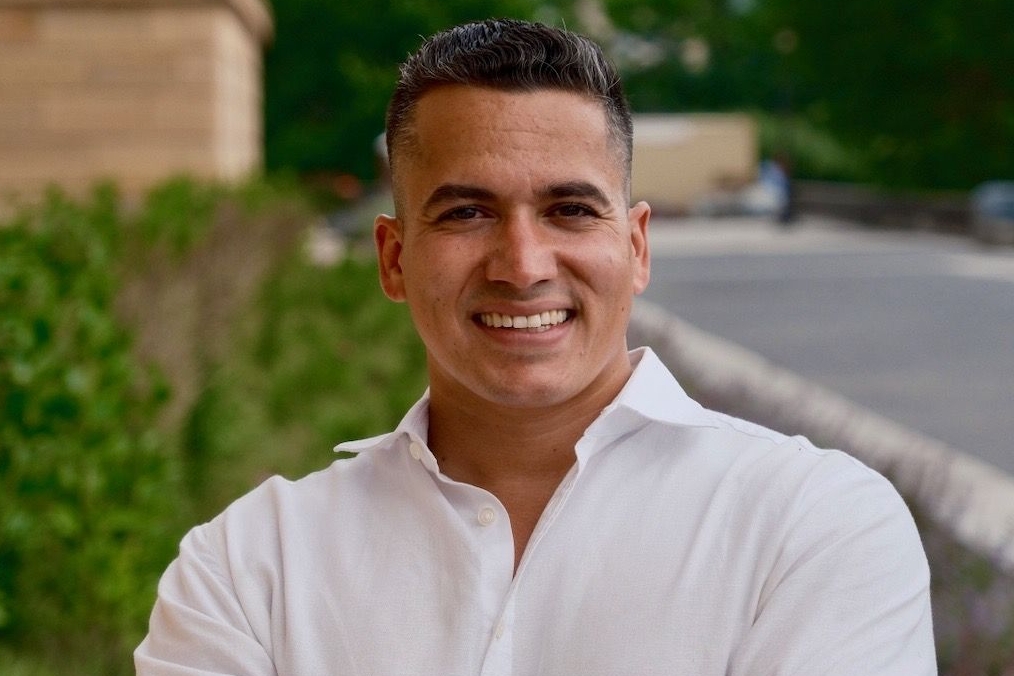
    Dennis Mahoney has spent a decade in disaster relief, dispatching humanitarian aid in the wake of devastating hurricanes in the United States and Puerto Rico and poverty crises in 18 countries in Asia, Africa, and Latin America.

    Now the 34-year-old independent candidate is using that same determination to engage in an uphill battle as he seeks to represent Philadelphia’s 3rd Congressional District this November.

    Mahoney, from South Philadelphia, is the lone opponent running against State Rep. Chris Rabb, a democratic socialist from Northwest Philly who won the crowded Democratic primary in May to succeed retiring U.S. Rep. Dwight Evans.

    “I think it’s going to be a hard fight and a hard run, but I feel so strongly that people in Philadelphia want something different,” Mahoney said of his independent campaign.

    Mahoney will have his work cut out for him to persuade voters to back his grassroots candidacy.

    The 3rd Congressional District is one of the most Democratic-leaning districts in the country, where Rabb won with almost 45% of the vote. Rabb saw national support from big-name progressives, including U.S. Rep. Alexandria Ocasio-Cortez (D., N.Y.), and used his victory to support other like-minded candidates throughout the United States.

    And the last time Pennsylvania elected an independent to Congress was in 1920, when Milton W. Shreve of Erie won as an Independent Republican.

    But Mahoney and his allies view his candidacy as an opportunity to present an alternative option after more than half of 3rd District voters in the May primary cast their ballots for Rabb’s opponents. Mahoney’s platform focuses on addressing poverty, expanding access to affordable housing, and investing in education.

    Rabb’s campaign did not comment on Mahoney’s candidacy Wednesday.

    The race comes amid shifting political dynamics in the United States in response to growing frustration with the two-party system.

    On one hand, progressive candidates — many of whom, like Rabb, are part of the Democratic Socialists of America — have been gaining momentum in elections nationwide.

    Earlier this year, meanwhile, a Gallup poll showed a record high of 45% of U.S. adults identified as independents in 2025.
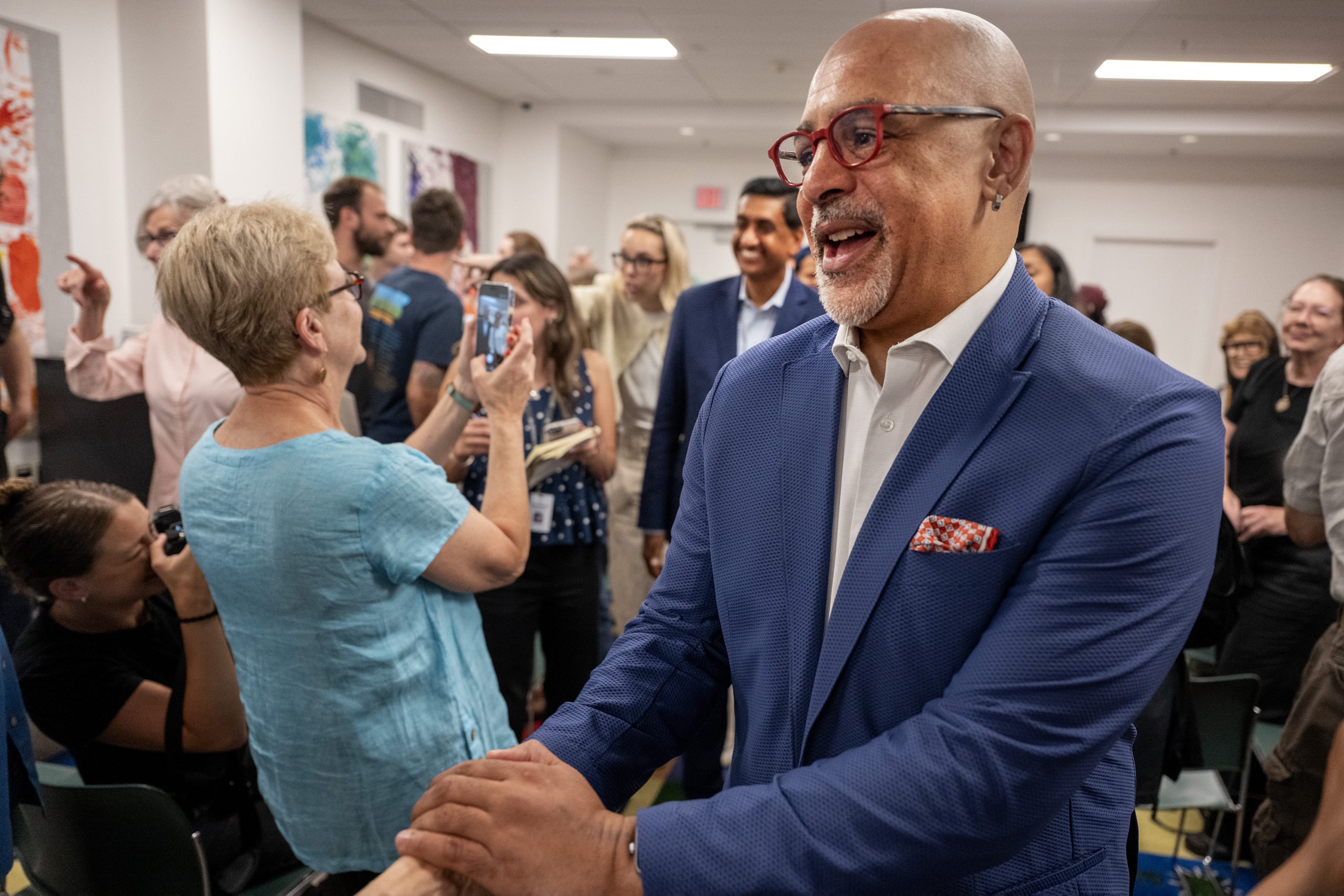
    State Rep. Chris Rabb greets supporters after appearing with U.S. Rep. Ro Khanna (rear) Tuesday, July 28, 2026, on his “Made in PA: New Economic Patriotism Tour” at the City Institute Library on Rittenhouse Square.Tom Gralish / Staff Photographer

    Mahoney said he has belonged to both political parties in the past, but did not find a home in either.

    The first-time political candidate worked in humanitarian aid through his former Washington, D.C., church, the Christian nonprofit Food for the Hungry, and now his own firm, AOI Solutions. He said the experience provides lessons for overcoming partisan division in Congress.

    “Let’s build bridges and partnerships and bring results. And that’s the same work that I did in the disaster relief field, where we would land in a spot where a disaster happened, and we’d work with anyone we could to really make the place come back to whole,” Mahoney said.

    ‘Anti-MAGA’ and ‘anti-DSA’

    It’s those middle-of-the-road qualities that made Mahoney an appealing candidate to Craig Snyder, a registered Republican who led an effort to support Vice President Kamala Harris’ presidential bid two years ago and is now leading the Philly-based Forward Party Victory Fund.

    The super PAC plans to support Mahoney and other independent candidates across the country — including a pair of independent Senate candidates running in GOP-leaning states, Todd Achilles of Idaho and Brian Bengs of South Dakota — this fall via spending on digital ads and text messages. The PAC is also supporting U.S. Rep. Kevin Kiley, who switched from the GOP to run for reelection in California as an independent, and Kevin Block, an independent running for Rhode Island governor.

    Snyder said the group is an independent offshoot of the Forward Party, founded in 2022 by former presidential candidate Andrew Yang and former New Jersey Gov. Christine Todd Whitman. He described the centrist candidates the PAC is backing as both “anti-MAGA” and “anti-DSA.”

    He said a win in one of the group’s targeted races would be “an earthquake in American politics.” But even if Mahoney is unsuccessful, Snyder said, it will be the start of elevating the independent movement in Philly politics.

    “I think people don’t want to be told that they have to vote for somebody just because of the party label,” Snyder said. “I think that they want there to be alternatives, and so it’s our job to make that case.”
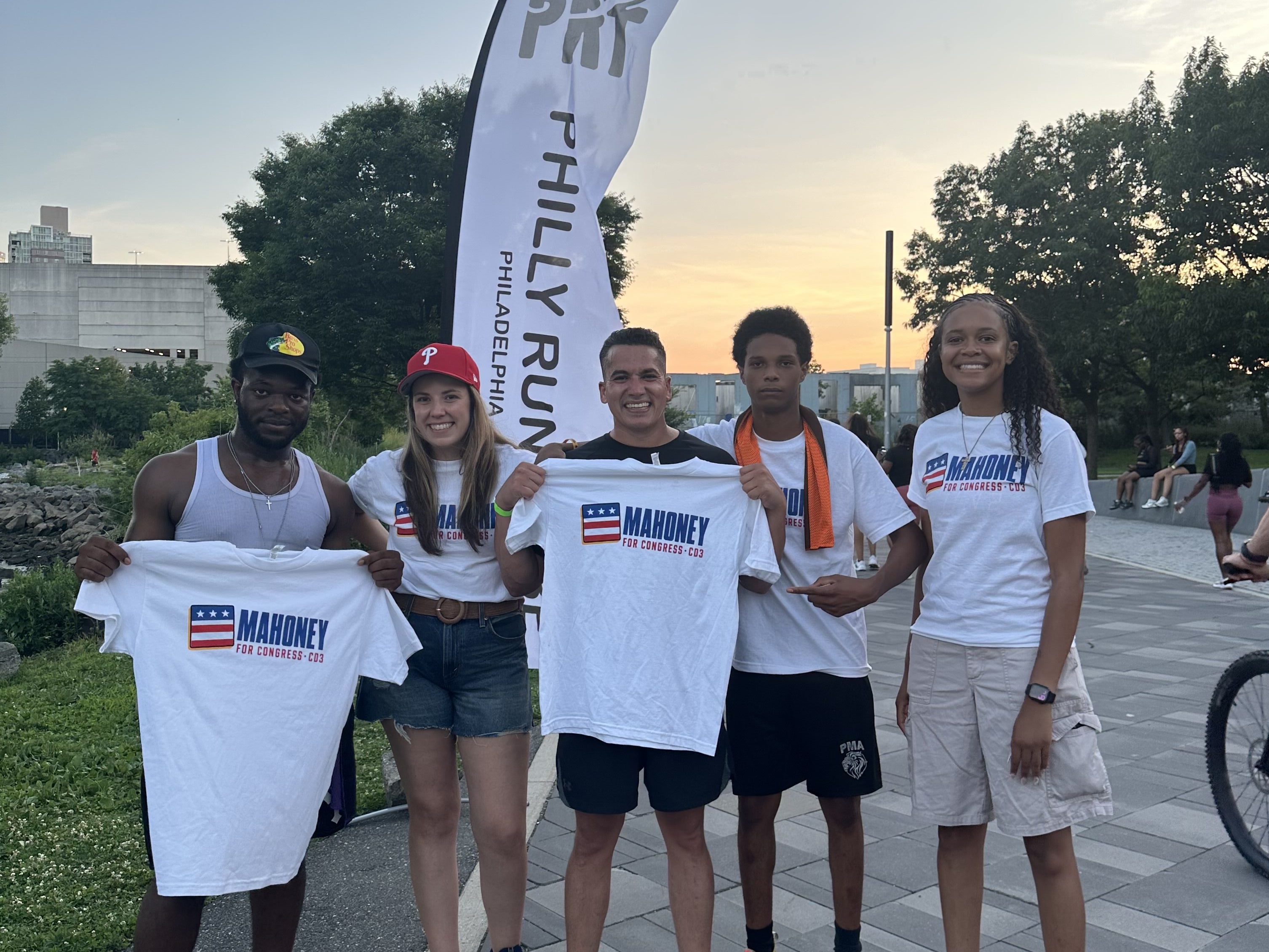
    Dennis Mahoney (center) on the campaign trail as he prepares to run against State Rep. Chris Rabb in the general election in the 3rd Congressional District this November.Dennis Mahoney

    Mahoney said, if elected, he would help form the first independent caucus in the U.S. House, contending he would become a coveted vote for both parties that would enable him to influence legislation and score committee assignments.

    But under current House rules — which Kiley has proposed changing — Mahoney would not be able to hold a committee seat if he does not caucus with either party. Kiley, for instance, has continued caucusing with the GOP even after becoming an independent.

    Mahoney pointed to the 19,000 signatures he received for his petition to join the ballot as a sign some voters are open to a choice in the deep-blue district.

    He said he would like to debate Rabb.

    “He talks a lot and engages a lot, and I think that that’s wonderful,” Mahoney said. “But I think at the end of the day, there’s people who are hurting in the district who need somebody who isn’t worried about being on, you know, MSNBC or TV, but who really is like, let’s just get into the community and drive results.”

    Mahoney said he has been connecting with religious leaders, educational organizations, community groups, and youth organizers to hear feedback on what they want public service to look like in the 3rd District.

    The independent will have scant resources to spread his name in just two months but said he is not concerned with raising big money for advertising. He had roughly $8,200 cash on hand in his most recent campaign finance report.

    Rabb had a little more $21,000, but that was after the Democrat raised and spent more than $1.3 million for the primary campaign in which he out-raised his opponents.

    Mahoney, meanwhile, has been trying to meet voters where they are — at running clubs and other fitness groups, for example.

    “I think people find it refreshing to have somebody who wants to represent them out there running alongside them,” he said.
  • Vulnerable Pa. Republican Rob Bresnahan delivers ‘Trump-a-palooza’ speech in Dallas amid tough race back home

    Vulnerable Pa. Republican Rob Bresnahan delivers ‘Trump-a-palooza’ speech in Dallas amid tough race back home

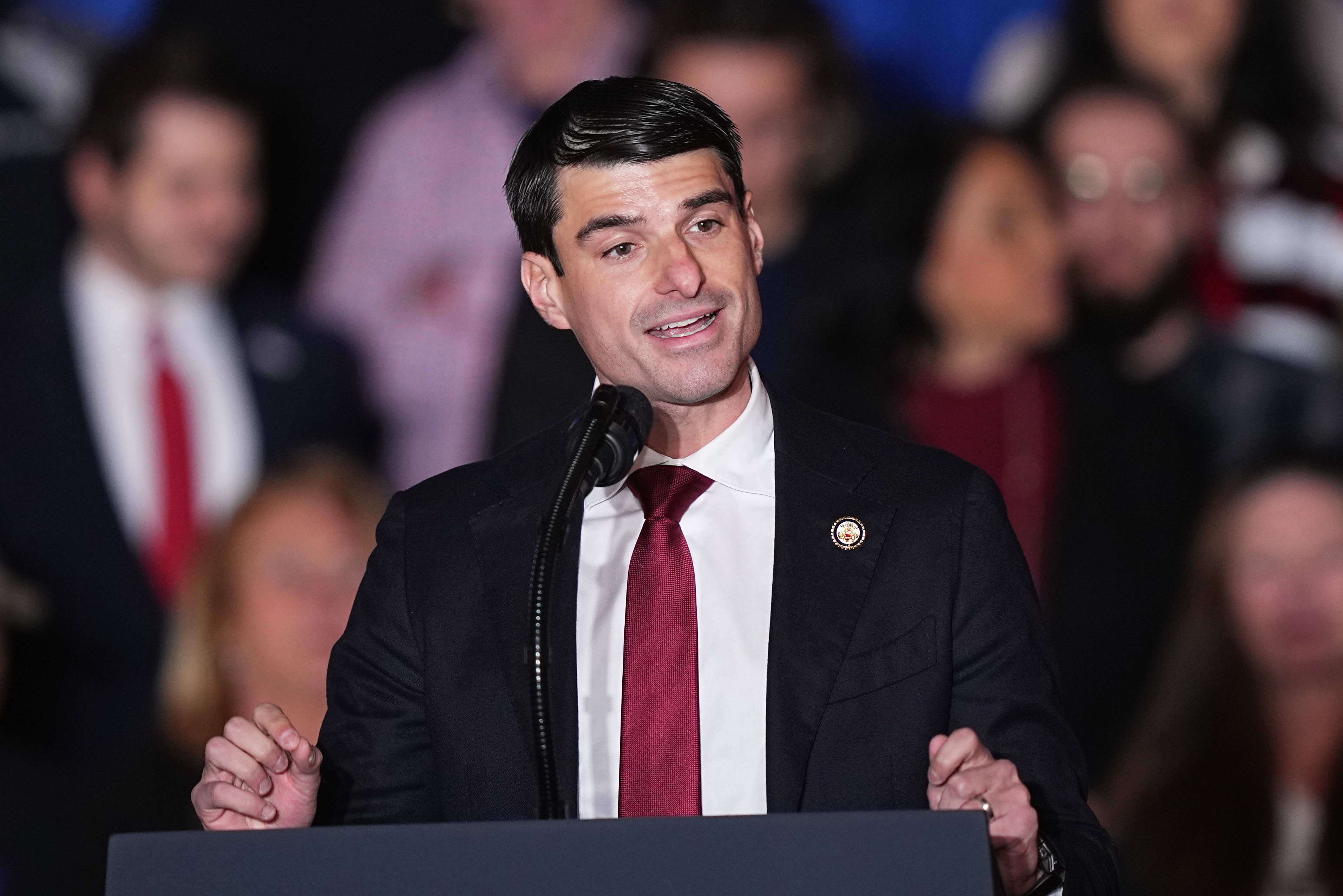
    DALLAS — In an arena littered with President Donald Trump’s image — from the photos that lined the concourse to the gift shops selling merch depicting the president as a cowboy — one of Pennsylvania’s most vulnerable Republican lawmakers this fall went all-in.

    U.S. Rep. Rob Bresnahan, running for reelection in a Scranton-based district that is one of the most competitive in the nation, addressed the Republican Party’s first-ever midterm convention during its opening night on Wednesday.

    His decision to attend “Trump-a-palooza” (as the RNC has described it) at all was notable. Some Republicans in tight races decided to stay away out of concerns of associating themselves with a president with low approval ratings. U.S. Rep. Brian Fitzpatrick (R., Bucks), for example, is not attending and has distanced himself from parts of Trump’s agenda.

    Bresnahan promoted Trump’s signature tax policy in a brief speech focused on supporting workers and their families.

    “Tax relief matters,” Bresnahan told hundreds of party loyalists at the American Airlines Arena in a speech that followed Ken Paxton, the controversial Trump-backed U.S. Senate candidate in Texas. “In Northeastern Pennsylvania, we work until the job is done. And those extra hours should mean more money in your pocket.”

    Democrats have used Bresnahan’s vote for the One Big Beautiful Bill Act, which included cuts to Medicaid and food assistance, as a wedge against Bresnahan and other vulnerable Republicans. But Bresnahan contended the income tax cuts and other policies in the legislation, like no tax on tips, are paying dividends for families.

    Two other Pennsylvania GOP lawmakers in similar situations, U.S. Reps. Ryan Mackenzie (R., Lehigh) and Scott Perry (R., York), are also attending the two-day convention, with Mackenzie slated to speak Thursday.

    Bresnahan spoke to a somewhat sparse crowd compared with Republican National Conventions during presidential election years, which served as a model for the novel midterm convention this year as the party looks to energize its base of voters while seeking to defend narrow majorities in the House and Senate.

    Delegates, clustered by state on the convention floor, cheered and waved signs reading “Keep the majority” and “Republicans are fixing Democrats’ mess.” The stands in the roughly 19,000-person arena remained largely empty, at least for the first few hours before Trump’s speech.

    Merchandise shops were packed with Trump’s typical MAGA merchandise, copies of his son Eric Trump’s book, Under Siege, and new mugs and shirts showing Trump on a horse in cowboy gear. Red, white, blue, and — in an unmistakable nod toward the president — gold balloons waited in the rafters for the grand finale on Thursday.

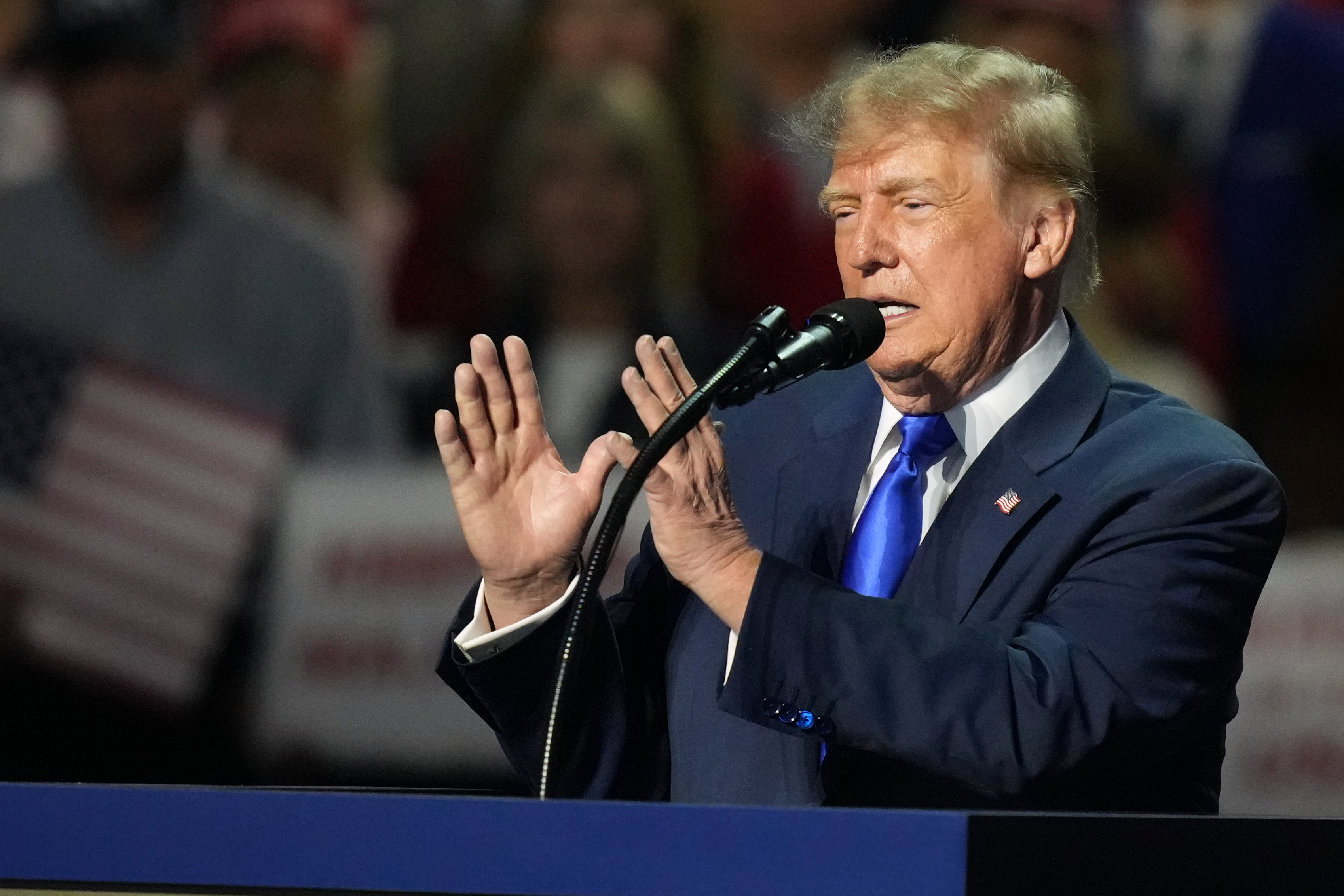
    “I’m asking you to pretend that I’m on the ballot. I’m on the ballot, just one more time,” Trump told the cheering crowd in prime time, noting there were about 35 “swing” races the party was prioritizing.

    President Donald Trump speaks at the Republican convention Wednesday, Sept. 9, 2026, in Dallas. (AP Photo/Alex Brandon)Alex Brandon

    About 1,500 miles away, in another town called Dallas, one of Bresnahan’s constituents hatched a plan to tune in.

    On the opening night of the annual Luzerne County Fair — in a booth yards from deep-fried Oreos, flying elephant kiddie rides, and life-size cardboard cutouts of Abraham Lincoln, Donald Trump, and Jesus — Dwayne McDavitt fiddled with his tablet to see if he could stream the convention.

    The symmetry of Dallas, Texas, and Dallas, Pa., was “too good to pass up,” said McDavitt, the head of a conservative group called Thunder and Liberty PAC and also the Pennsylvania chapter of Bikers For Trump.

    He said he supports Bresnahan, who lives in Luzerne County, over Scranton Mayor Paige Cognetti, the Democratic nominee.

    “He shares our values of faith, family, and freedom — meaning free and fair elections,” McDavitt said.

    Interviews with other voters in the district on Wednesday underscored the potentially risky nature of Bresnahan’s leaning into the Trump administration.

    Malcolm Mabry, 28, of Wilkes-Barre, said he had been victimized by a “Trump bait and switch” as a Republican who voted for the president two years ago. He picked Trump, believing that better policing of the Southern border was paramount.

    And while Trump has been using ICE to “grab up people,” as he said, Mabry said much of what else the president promised, like lowering prices and avoiding war, has not occurred.

    “Trump just said what he had to, to get into office,” said Mabry, who was unaware of the convention happening at the same time.

    A campaign about workers and affordability

    Bresnahan won his seat by less than 2 percentage points in 2024 to take down a six-term Democrat in the northeast corner of the state. Trump won the district by more than 8 percentage points.

    His Democratic challenger, Cognetti, has garnered high-profile supporters like Gov. Josh Shapiro, who is also up for election, and she has repeatedly targeted Bresnahan for trading stocks while in office despite his previous statements that he would not do so.

    Bresnahan, the former head of a family-run electrical contracting business, has made jobs and the workforce a top focus in his campaign and in his brief congressional career.

    On a few occasions, he has broken with House Republican leaders to support bills that would strengthen union protections for federal workers. He has said that he hopes his party changes tactics to support those kinds of bills.

    “We need the unions that have trained generations of some of the most skilled workers in American history,” Bresnahan said onstage Wednesday. “We have those workers in Northeastern Pennsylvania, and communities across this country are ready for the same opportunity.”

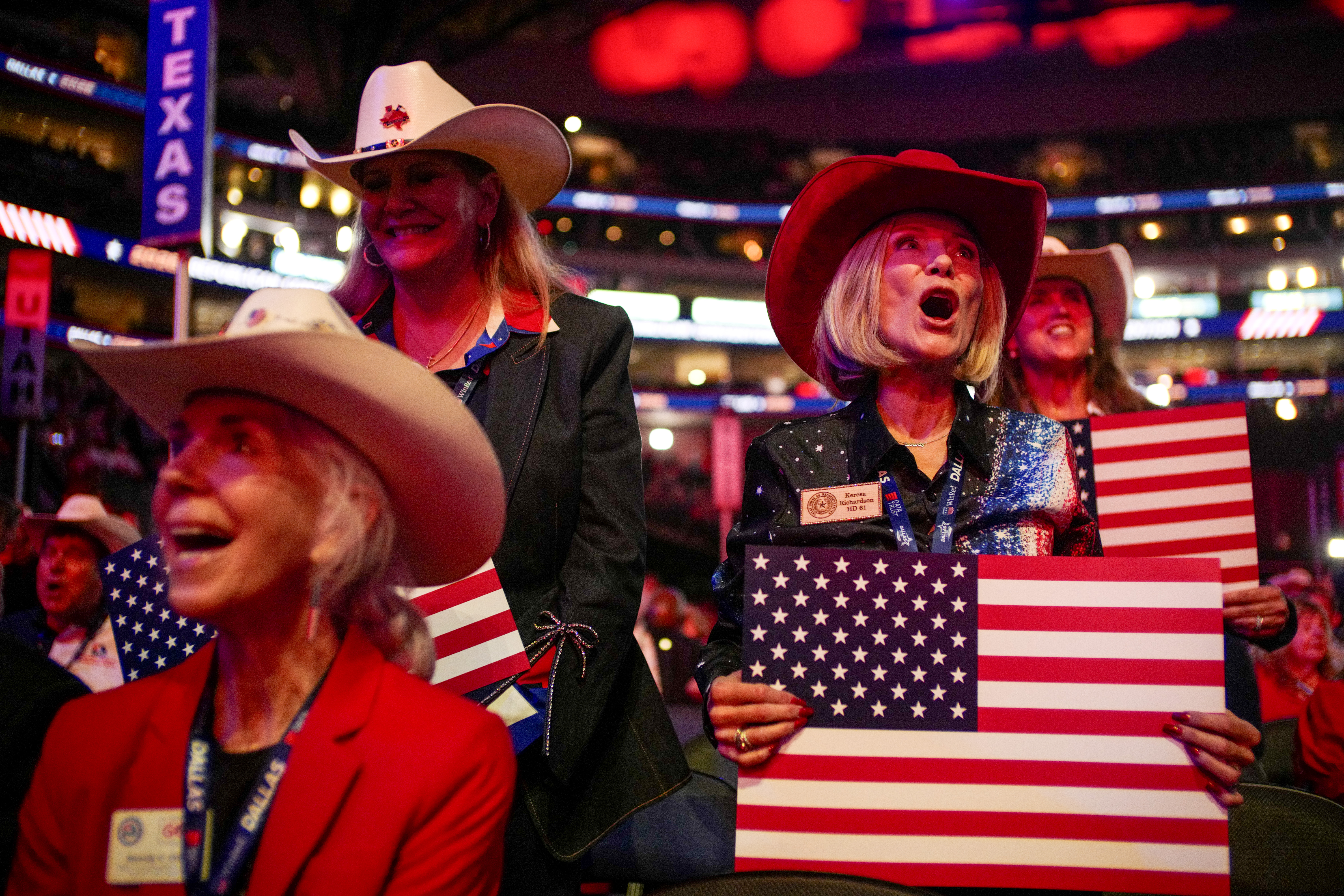
    Texas state Rep. Keresa Richardson (R), right, attends the GOP midterm convention. (Joel Angel Juárez/For The Washington Post)Joel Angel Juárez

    Bresnahan has racked up a series of union endorsements that are otherwise rare for Republicans. While major unions like the AFL-CIO and the Pennsylvania State Education Association have backed Cognetti, he has won support from organizations like the American Federation of Government Employees and the Teamsters — groups that, in a region with a long history of union issues, could make a difference in a close race.

    In his speech, Bresnahan talked generally about supporting workers and manufacturing in the U.S. He spoke about tax policies that put “more money in your pocket” and help “build communities where people can stay, raise a family, and build a life.”

    U.S. Sen. Dave McCormick (R., Pa.), in a speech that was introduced with an unusual video featuring U.S. Sen. John Fetterman (D., Pa.), also spoke about Trump’s push to improve economic indicators.

    They and other speakers did not address other affordability issues that Democrats have seized on and that polls show voters have top-of-mind heading into early voting.

    Trump has mocked the Democratic attacks on the issue as a hoax, including in a speech in Bresnahan’s district last year. But it is a message, and a reality, that has resonated with voters in Pennsylvania, according to polls and interviews.

    “I’m on a fixed income,” Bill Dudeck, 83, of Nanticoke in Luzerne County, said Wednesday. “But under Trump, gas, groceries, and utilities are skyrocketing.”

    Trump promised a lower cost of living, “but now all our money is out the window,” said Dudeck, a Democrat and former construction worker in Bresnahan’s district.

    Bresnahan, whose campaign said earlier this week that he was looking forward to bringing “NEPA to the national stage,” appeared onstage instead with a sheet metal worker and mother of seven from Baltimore.

    Cognetti’s campaign noted the pairing in a comment Wednesday that criticized Bresnahan, in part, for trading stocks in office.

    “That’s probably why he didn’t have a Pennsylvanian on stage with him tonight,” a Cognetti campaign spokesperson said in a statement. “His speech is just more empty words to try and distract from his broken promises.”

    Nora Pruitt, who joined Bresnahan, had previously been recognized by the White House as a beneficiary of Trump’s second term. Listed on the agenda as an “everyday American, factory worker, working mother and manufacturing success story,” Pruitt said “things have really improved for our family since President Trump returned to office.”

    “We are so grateful President Trump and Republicans in Congress like Congressman Bresnahan vote for families like ours,” she said.

  • Philly developers are planning a $1.5M campaign to protect City Council from progressive challengers

    Philly developers are planning a $1.5M campaign to protect City Council from progressive challengers

    Philadelphia real estate developers see the writing on the wall.

    As progressives have toppled centrist Democrats in nationally watched races, some local development interests are wary that the same trend could reshape Philadelphia City Council this spring, when every member is up for reelection. They see a growing progressive faction as a threat to business.

    Enter the incumbent protection plan.

    Nearly a dozen local developers are already pouring hundreds of thousands of dollars into Philly For Growth, a group that in the past two Council election cycles spent millions on advertising campaigns to back business-friendly Democrats, according to a source familiar with the planning.

    Philly For Growth is an independent expenditure group, also known as a super PAC. It can raise and spend unlimited amounts of money to influence an election, but there are rules barring super PACs from most forms of coordination with the candidates they support.

    In 2023, the group was the biggest special interest group involved in that year’s Council races, and it provided a substantial boost to its chosen candidates by outspending individual campaigns.

    Ahead of the May primary election, Philly For Growth plans to spend $1.5 million to support pro-business Democrats, most of whom are sitting Council members, according to the source, who spoke on the condition of anonymity because they were not authorized to discuss the plans. The group will not fund negative advertising about Council’s four incumbent progressives, the source added.

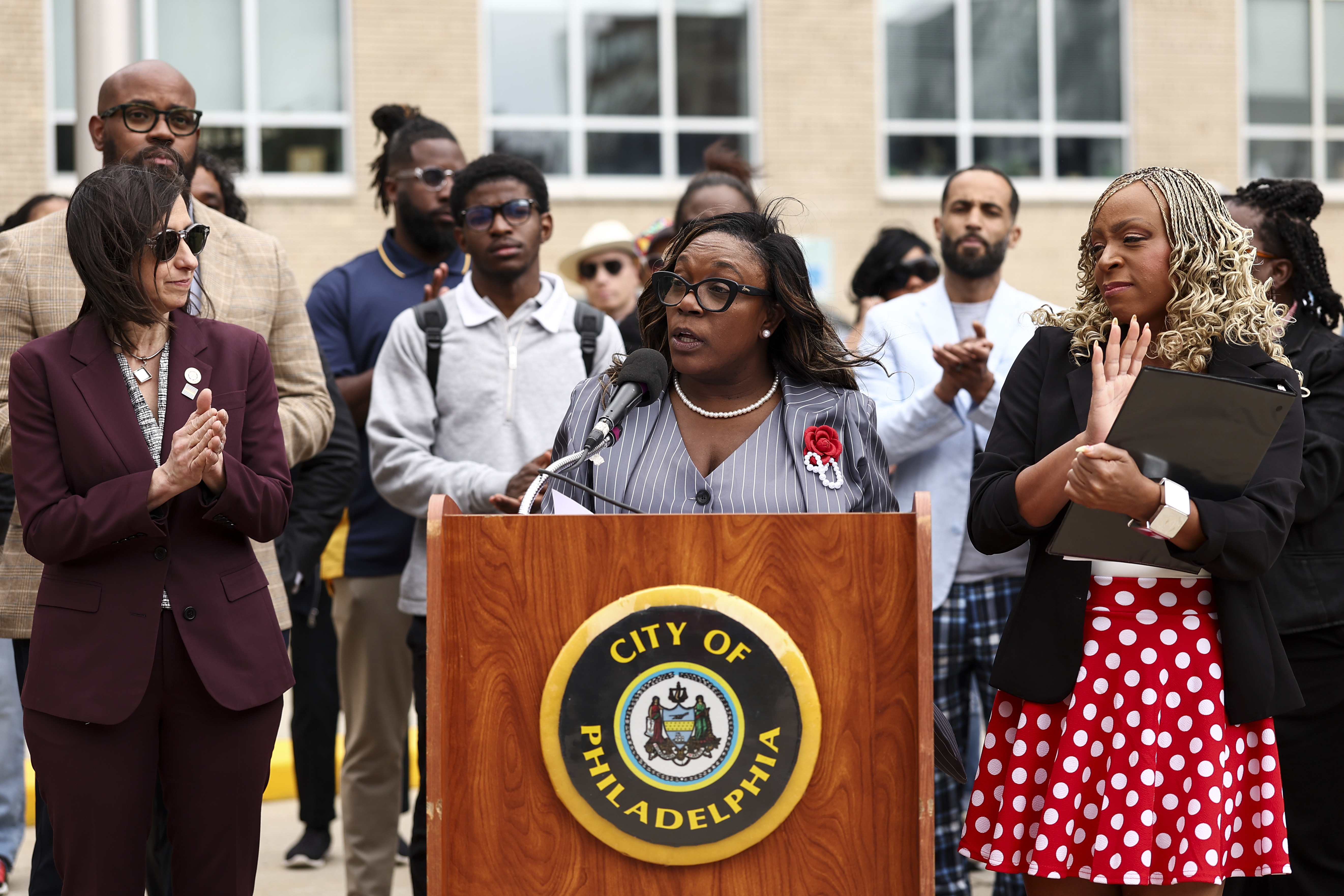
    Councilmember Kendra Brooks, of the progressive Working Families Party, speaks during a rally outside of the School District of Philadelphia headquarters in May. At left is Councilmember Rue Landau and at right is Councilmember Jamie Gauthier. All three are members of Council’s progressive faction.Monica Herndon / Staff Photographer

    The idea is to keep progressives from growing their power on Council instead of spending money to knock off the leftists who are already there. There are currently four reliably progressive votes out of the total 17 on Council, but some members may be more likely to vote with that faction as Democratic voters nationally revolt against incumbents.

    That’s a different strategy than in 2023, when Philly For Growth backed a slate of five candidates — two incumbents and three challengers. Both incumbents won, but all three challengers lost.

    Philly For Growth has previously been affiliated with the Building Industry Association of Philadelphia, an advocacy group for development interests. Mo Rushdy, the BIA’s former president who leads the organization’s political activity, declined to comment.

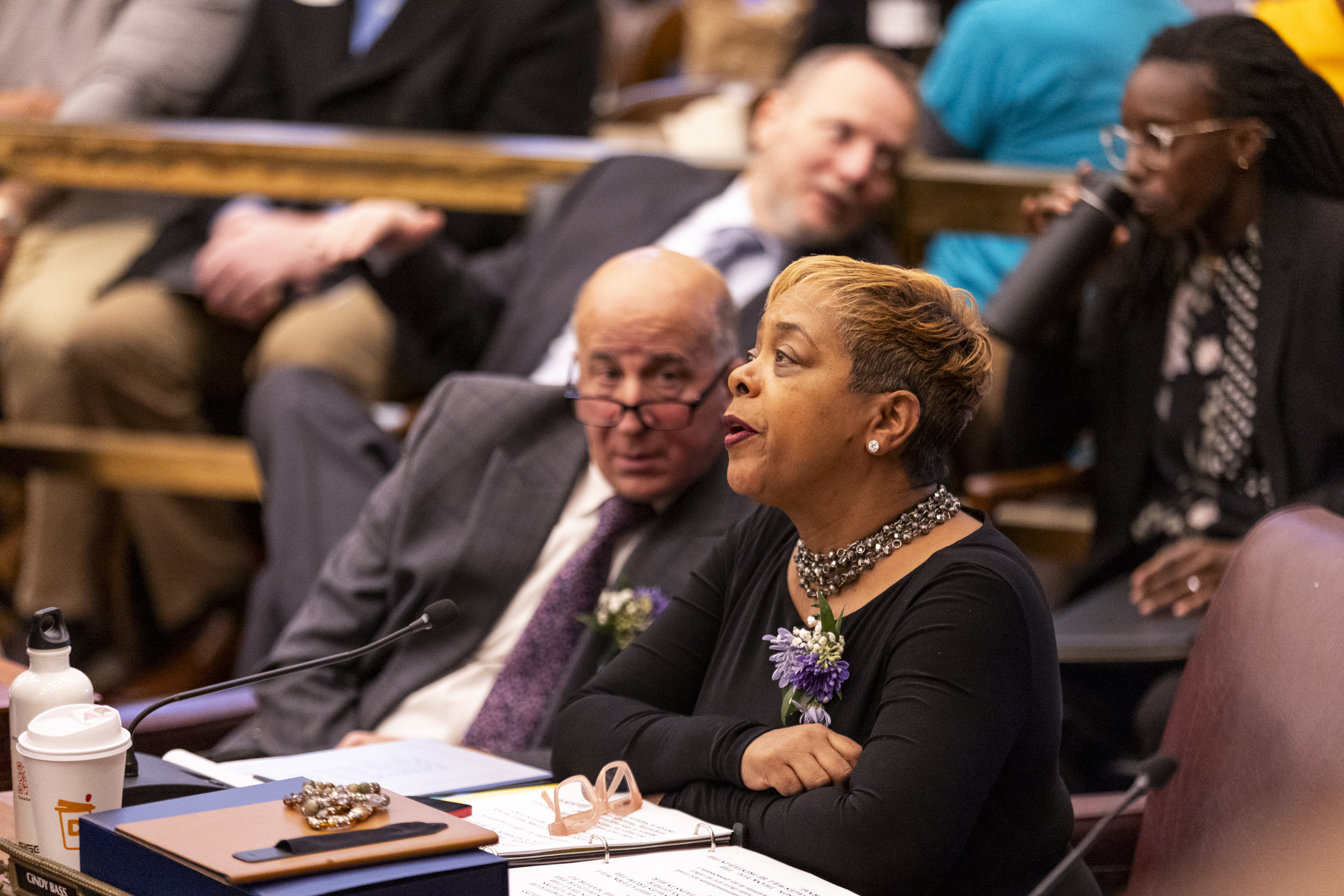
    The source said that Philly For Growth will fund advertising to support Council members Mark Squilla, whose 1st District includes parts of South Philly, Center City, and Fishtown; Cindy Bass, whose 8th District is based in North and Northwest Philadelphia; and Quetcy Lozada, whose 7th District includes much of North Philadelphia and Kensington.

    All three are seen as more centrist members and have said they intend to run for reelection. No challenger has officially launched a campaign against any of them, but candidates who are aligned with the city’s left-leaning political organizations are expected to emerge as the primary — still eight months away — draws nearer.

    The super PAC is making one exception when it comes to supporting incumbent district Council members, the source said. In the 5th District, currently represented by Councilmember Jeffrey Young Jr., the group will support a to-be-decided challenger.

    Councilmember Jeffery Young Jr. speaks to other members of Council during a 2025 session.Tom Gralish / Staff Photographer

    At least five people have said they are interested in running for the North Philly-based 5th District seat, and Young has drawn opposition from development interests for pushing proposals that would slow or halt some projects in his district.

    Young said in a statement that building “sensible, affordable housing” is one of his top priorities and that he has supported city programs like Turn the Key, which provides mortgage support to first-time homebuyers.

    “People are free to back those who share their values. These are my values,” Young said. “I am leaving it to the residents of the 5th to determine whose values best reflect them.”

    The super PAC will also fund advertising backing four incumbent members who represent the city at-large: Isaiah Thomas, Katherine Gilmore Richardson, Jim Harrity, and Nina Ahmad. That group doesn’t include progressive at-large Councilmember Rue Landau, but Philly For Growth doesn’t plan to oppose her, the source said.

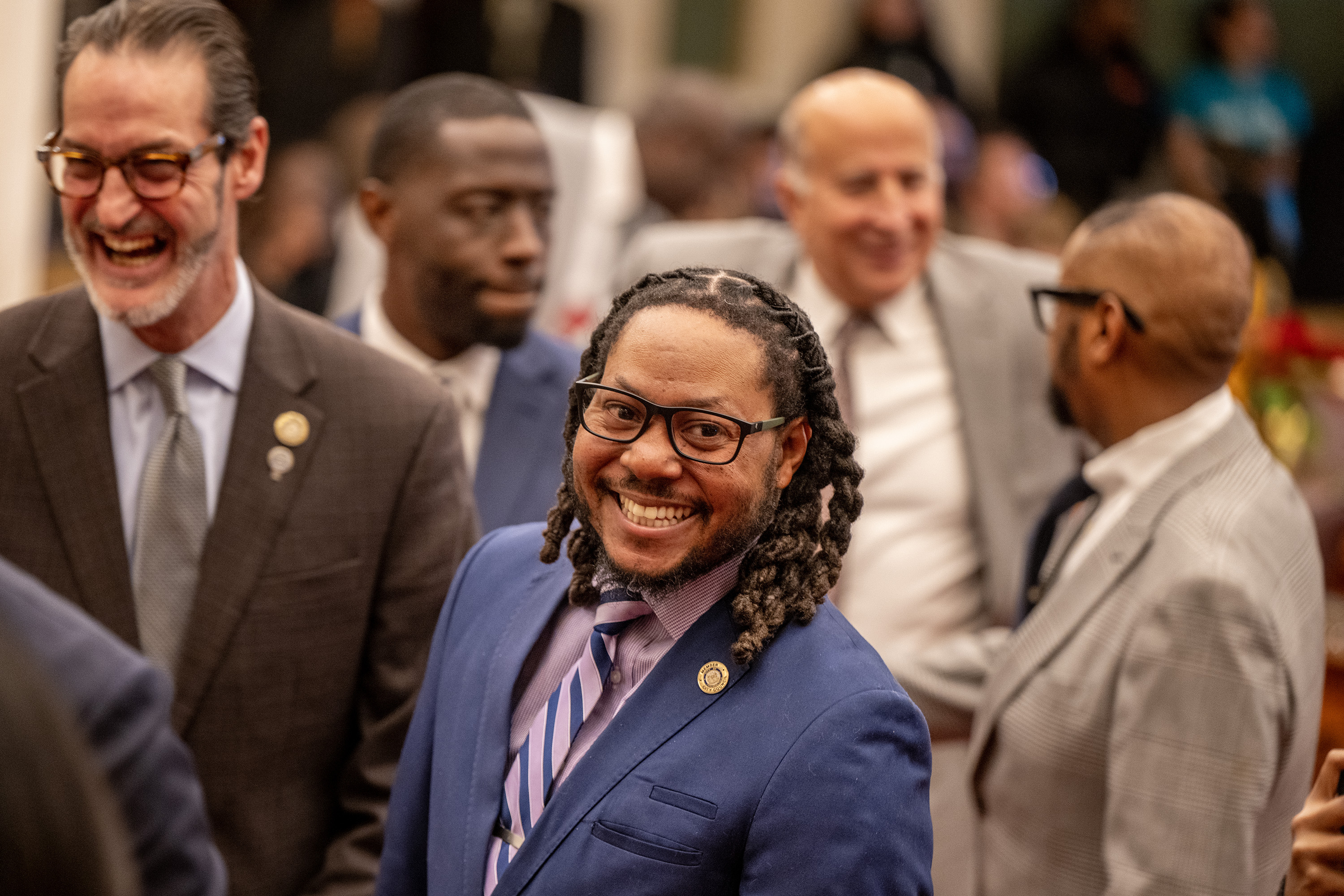
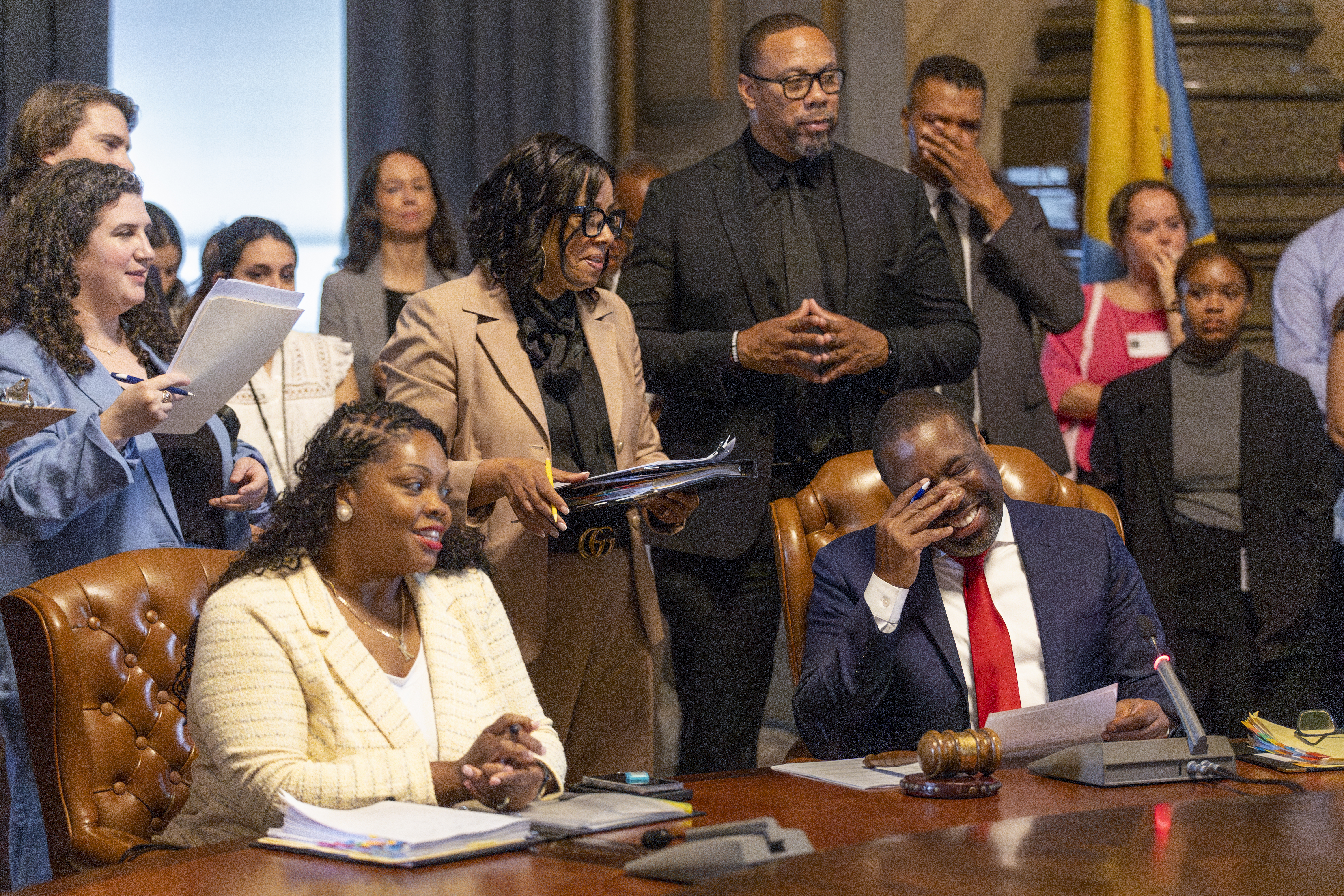
    Council President Kenyatta Johnson laughs inside the caucus inside City Hall on June 11.Aidan T. Gallo / Staff Photographer

    A spokesperson for Landau’s campaign arm said in a statement that the Council member “stands by her accomplishments for working people, small businesses and vulnerable communities in Philadelphia and looks forward to voters having the opportunity to make up their own minds next year.”

    It’s unclear just how competitive the at-large race will be, and candidates have until the spring to decide — nomination paperwork is typically due in March. Seven of Council’s members represent the entire city at-large, and two of those seats are effectively reserved for members of minority parties under the city’s Home Rule Charter.

    That has traditionally meant that five seats are held by Democrats, given the party’s massive voter registration advantage in the city. In recent years, Republicans and the progressive Working Families Party have battled for the remaining two seats during the fall general election, and the WFP currently holds both.

    Mayor Cherelle L. Parker, who is also up for reelection, and Council President Kenyatta Johnson, who insiders do not expect will see a serious challenger, will likely be on Philly For Growth’s slate, too, the source said.

  • Bob Brooks releases first TV ad of the general campaign

    Bob Brooks releases first TV ad of the general campaign

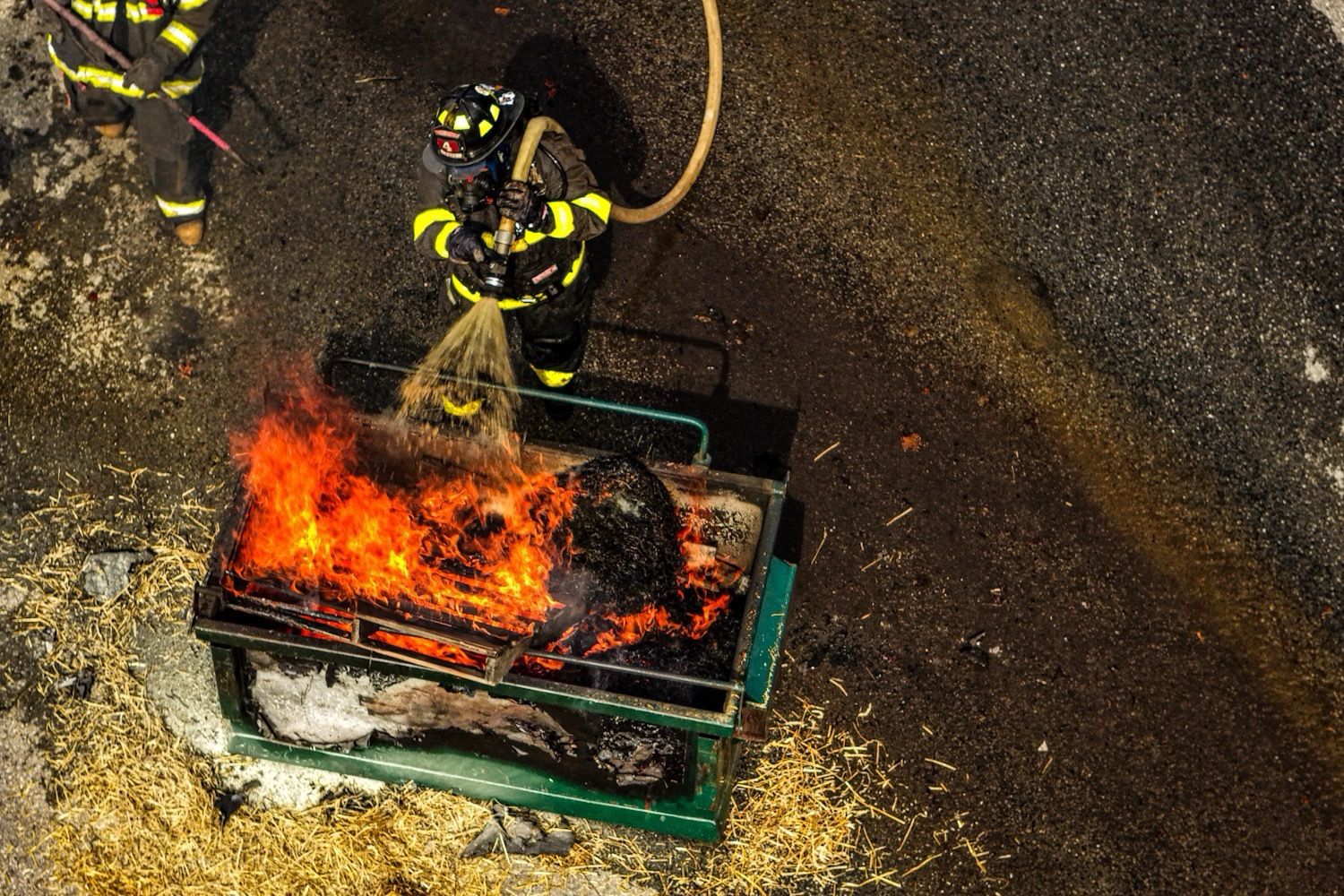
    Clad in fire safety gear, Lehigh Valley Democrat and retired firefighter Bob Brooks promised to “smoke out the billionaires and their lobbyists” in his first ad of the general election, released Tuesday.

    Brooks, a union leader who spent 20 years as a Bethlehem firefighter, blasted the “dumpster fire” in Washington that has led “working people get burned.”

    Brooks, a retired firefighter and union leader, is challenging Republican U.S. Rep. Ryan Mackenzie in the 7th Congressional District, one of the most competitive House seats in the nation. The race’s victor will help determine control of the narrowly-divided chamber.

    With a focus on economically populist ideas, such as raising the federal minimum wage, while avoiding culture war issues, Brooks has managed to attract support from across the party’s ideological spectrum including Gov. Josh Shapiro and U.S. Sen. Bernie Sanders.

    A screenshot from a new campaign ad for Bob Brooks, a Democrat running for a House seat in the 7th Congressional District, in which he is depicted extinguishing a dumpster fire.Courtesy of Bob Brooks campaign

    In July, Brooks also welcomed U.S. House Minority Leader Hakeem Jeffries to the district to support his campaign. Meanwhile, Brooks has campaigned on progressive ideas, promising to ban corporations from giving to political action committees that help finance candidates, as well as supporting Congressional term limits and bans on lawmakers trading stocks while in office.

    Mackenzie, the vulnerable freshman who won his seat by just one percentage point in 2024, has also received support from his party including U.S. House Speaker Mike Johnson in August and President Donald Trump in June. But during Trump’s visit to the district, he took nearly an hour during a rambling speech to even mention Mackenzie by name.

    Brooks’ ad borrowed a phrase from his GOP opponent, whose campaign in July referred to Brooks’ “dumpster fire candidacy.”

    “At every step of his career, Bob Brooks has put himself first, his politician buddies next, and his own workers last,” Mackenzie’s campaign manager Andres Weller said in a statement.

    Brooks’ campaign said it is planning to spend at least $1 million in September on the ad, running on broadcast television in the Philadelphia media market and on streaming platforms.

    That’s a significant expenditure for Brooks’ campaign, which raised a total of $2.3 million, according to financial disclosure reports from July.

    He’s behind Mackenzie, who has $4.5 million, in overall fundraising. But Brooks added roughly $1.2 million to his stockpile between April 30 and June 30 — after his first-place finish in the competitive Democratic primary, while Mackenzie only took in about $631,000.

    The next campaign finance deadline is in October.

  • Why Democrats’ priorities shifted from abortion to affordability in Bucks County’s key midterm races

    Why Democrats’ priorities shifted from abortion to affordability in Bucks County’s key midterm races

    In what might have been unheard of just two years ago, the Democrat in Bucks County’s key congressional race does not mention abortion or reproductive rights by name on his campaign website.

    Instead, Bob Harvie, the county commissioner challenging U.S. Rep. Brian Fitzpatrick (R., Bucks) in the crucial 1st Congressional District race, largely highlights affordability issues, like tax cuts for the middle class and raising the minimum wage, on his list of 12 priorities.

    It’s not that Harvie is suddenly against abortion — he has been vocal about his support for reproductive rights — but it exemplifies a broader shift in how Democrats are fine-tuning their message for must-win races in the county this fall.

    Once a top-line issue for Democratic candidates in Bucks — one of the swingiest counties in Pennsylvania — discussion of abortion and reproductive rights has faded into the background in local political campaigns in favor of issues related to the economy and the cost of living.

    “People [are] feeling that right now they’re living in an America that’s not fair for them,” Harvie said.

    The issue has also been so far been absent from Fitzpatrick’s campaign and his website. The Republican currently holds a moderate view on abortion, though he has previously voted for restrictions.

    For Harvie, discussions surrounding access to affordable healthcare — which is his No. 1 listed campaign priority — includes abortion. All of these issues reflect a broader struggle, he argued.

    “They’re losing their rights, they’re losing their power over their own futures, they’re losing the American dream, all of that is combined,” Harvie said.

    It’s a noticeable shift from Fitzpatrick’s last challenger Ashley Ehasz’s strategy in 2022 and 2024 when abortion and reproductive rights served as the focal point in both of her campaigns, which followed the backlash to the U.S. Supreme Court’s decision to strike down Roe v. Wade in 2022.

    She lost to Fitzpatrick in both elections, the second time by a wider margin than the first.

    “Folks are pretty pragmatic when it comes to the politics here, and if something isn’t working, we’re not going to just keep doing it over and over again,” said Kierstyn Zolfo, co-leader of the progressive group Indivisible Bucks County, which supported Ehasz and is now backing Harvie.

    Pennsylvania voters’ overwhelming disapproval of President Donald Trump and his handling of economic-related issues, as highlighted in a recent Inquirer/New York Times/Siena University poll, offers Democrats an opportunity as they target key state Senate seats in addition to the congressional contest.

    “The point is to move the needle with the voters,” Zolfo said.

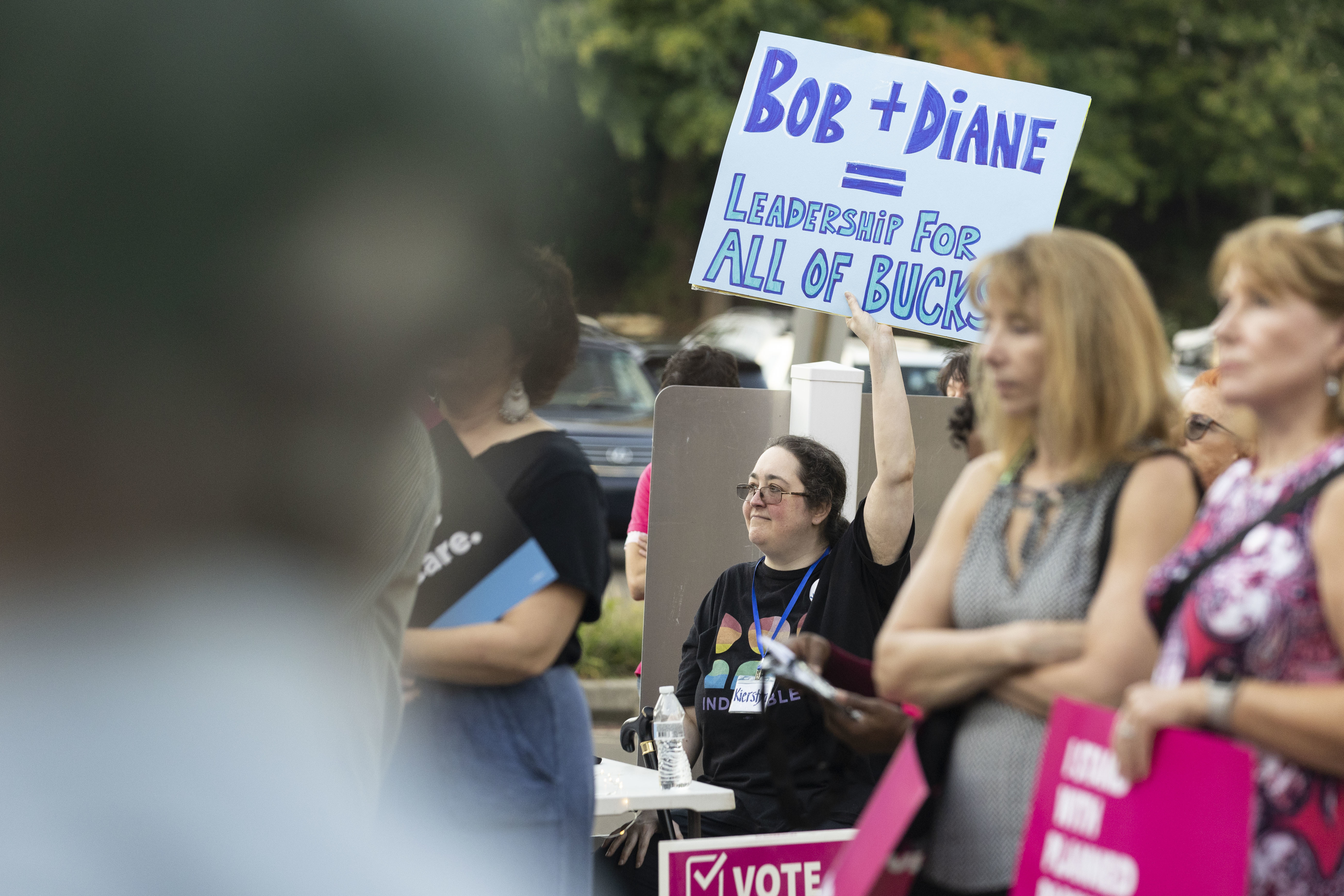
    Kierstyn Zolfo, from Indivisible Bucks County, holds a sign that reads “Bob + Diane = Leadership for All of Bucks,” during a rally outside of the Middletown Township Police Department and Administrative Offices in Langhorne on Oct. 5, 2023. Harvie was running for county commissioner.Monica Herndon / Staff Photographer

    How abortion became a ‘dormant’ issue in the midterms

    The League of Women Voters of Pennsylvania has thousands of volunteers and members talking to voters across the state ahead of the midterm elections.

    And leaders of the nonpartisan organization are hearing very little about reproductive rights. Instead, they’re getting feedback on crucial cost-of-living issues and concerns about democracy.

    Abortion has become a “dormant” issue, said Amy Widestrom, executive director of the League of Women Voters of Pennsylvania.

    “Nobody’s coming to us saying I need talking points on reproductive health in Pennsylvania,” Widestrom said.

    The shift reflects a national trend, with ads related to abortion drastically receding amid Democrats’ focus on bread-and-butter issues, NOTUS reported.

    The midterms are mainly about serving as a “referendum” on Trump’s economic agenda and foreign policy, said State Sen. Steve Santarsiero, chair of the Bucks County Democrats, though reproductive rights “must always be a central plank” of the party and its candidates, noting that majority of the country support a woman’s right to choose.

    “Affordability is really the key issue, so you would expect candidates to talk about that, and then you know they’re obviously going to talk about other issues as well, and abortion rights would be one of those,” said Santarsiero, who is also up for reelection this year.

    In The Inquirer/New York Times/Siena poll, Pennsylvania’s likely voters in November’s gubernatorial election between Shapiro and Republican challenger Stacy Garrity indicated that the economy and the cost of living were the two most important issues.

    Abortion was ranked fourth.

    Democrat Eileen Hartnett Albillar, a social worker and the county’s clerk of courts who is running to unseat state Sen. Frank Farry in the 6th state Senate district, said she doesn’t see abortion and the economy as “competing issues,” though conversations with voters have primarily focused on making ends meet. People, she said, will engage in discussion over protecting abortion rights and related topics if she raises the issue.

    “They want to protect reproductive freedom,” Hartnett Albillar said. “But you know, the cost of living is just so incredibly crushing for so many people. Just because they’re quiet about it, doesn’t mean it’s not important.”

    Reproductive rights took center stage in the 2022 election after several GOP-led states enacted restrictions on abortion following the Supreme Court’s decision to overturn Roe v. Wade.

    In Pennsylvania, the issue helped motivate voters to turn out for Democrats Josh Shapiro and John Fetterman in the contests for governor and Senate. But as the procedure remains protected in the state under Shapiro, the topic has faded from focus.

    Lehigh County Controller Mark Pinsley, a Democrat who is challenging GOP State Sen. Jarrett Coleman in the 16th district straddling Bucks and Lehigh Counties, still believes reproductive rights can motivate voters. But while he thinks his party doesn’t talk about abortion enough, he acknowledged the dynamic is different now than it was then.

    “I think you could win on that issue by itself,” Pinsley said. “I don’t think that’s true in the moment.”

    Brianna Twofoot, vice president of organizing, elections and campaigns at Planned Parenthood Votes, said abortion and reproductive rights still matter to voters even if it’s not taking center stage this year.

    “We’re not asking for anyone to make abortion or reproductive healthcare the number one issue, but we do think that voters want to hear about it,” Twofoot said. “And we do think that elected officials should be standing publicly on the issue.”

    But any discussion of abortion will come amid what’s shaping up to be an apparent rebrand of the topic, folded into conversations about access to basic needs.

    Signe Espinoza, executive director at Planned Parenthood Pennsylvania Advocates, said it’s key to look at reproductive rights through the lens of affordability, especially if health centers are defunded or closed.

    “If Planned Parenthood doors close, where are you going to get your healthcare?” said Espinoza, whose organization is planning some days-of-action in Bucks. “It’s going to become more expensive. Everything’s going up.”

    Bucks County Commissioner Bob Harvie hosts a veterans roundtable in May at Middletown Township Building in Langhorne.

    How is the issue playing out in Harvie vs. Fitzpatrick?

    Past elections in the Bucks County swing district have shown the abortion argument does not work against Fitzpatrick, who has been known to survive blue wave after blue wave.

    Harvie, a twice-elected county commissioner backed by groups like Reproductive Freedom For All and Planned Parenthood Action Fund, said voters in the district already know where he and Fitzpatrick stand on abortion. The Democrat criticized Fitzpatrick and the Republican Party for supporting “pretty extreme restrictions on abortion.”

    “I think that’s the reason why you’re not hearing it very much because everybody knows the positions and knows who’s on what side,” Harvie said.

    Heather Roberts, a spokesperson for Fitzpatrick, said the Bucks County Republican has long supported “full reproductive freedom” for the first five to six months of pregnancy, as is outlined by Pennsylvania law.

    “We also note that the Congressman’s position is the position held by the overwhelming majority of PA-1 residents,” Roberts said.

    His campaign also noted Fitzpatrick’s backing of legislation in recent years that aimed to protect the right to cross state lines for an abortion as well as bills that protect access to contraception and in vitro fertilization and support of pregnant workers and women’s rights.

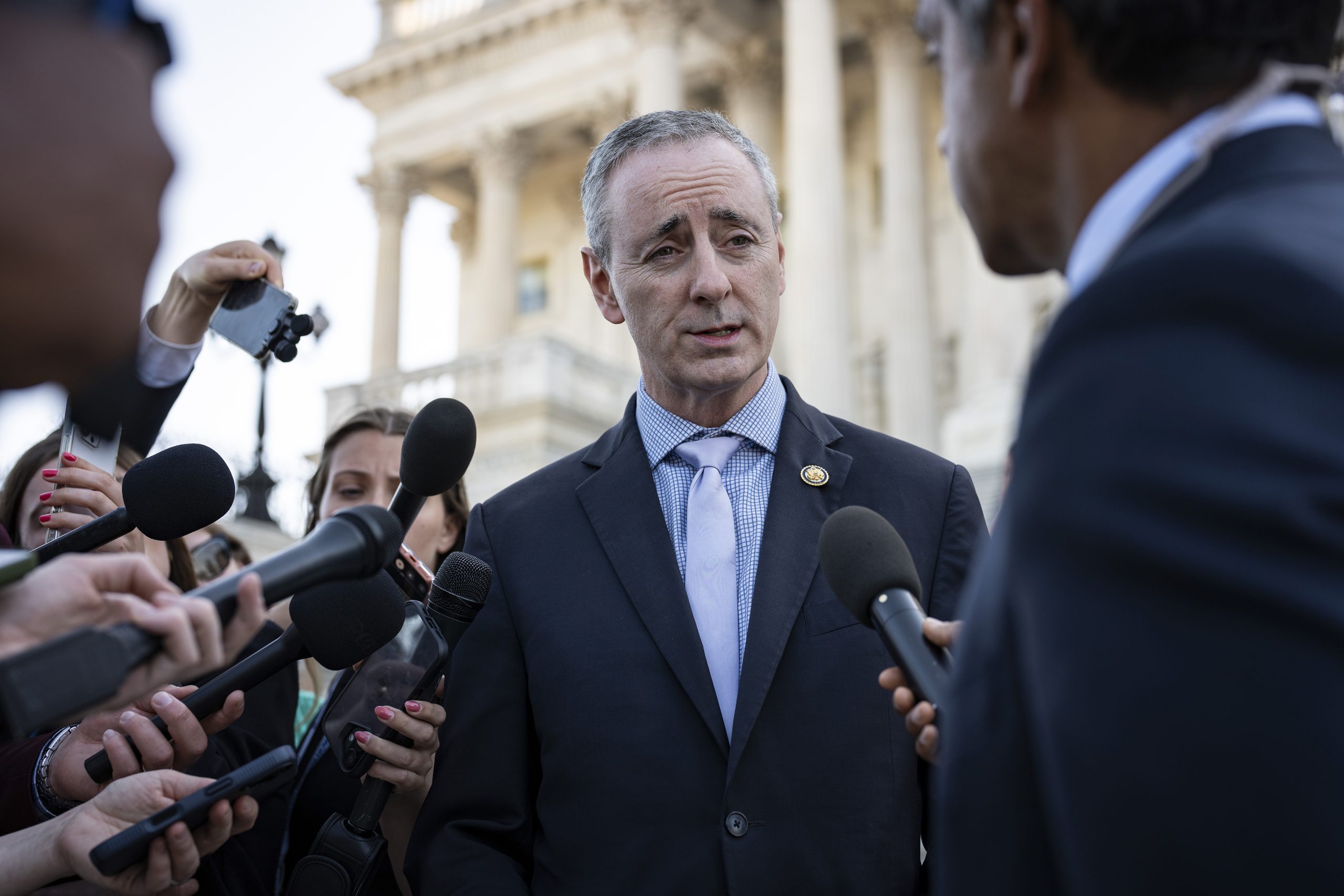
    Rep. Brian Fitzpatrick (R., Pa.) speaks to reporters on June 3 on Capitol Hill after the House passed an Iran war powers resolution.

    But he has also voted for abortion restrictions, including a 20-week abortion ban in 2017 and twice against the Women’s Health Protection Act, which would have codified protections to access abortion into law.

    The issue is absent from Fitzpatrick’s campaign website, which does not reference abortion in sections about healthcare or empowering women.

    Widestrom, the executive director of Pennsylvania’s League of Women Voters, said Fitzpatrick has found a way to “neutralize” issues related to his position on abortion by continuing to win races where his opponents wage such arguments and refraining from touting a “hardcore pro-life” agenda.

    “By not staking a claim, by not talking about it, it loses saliency in voters’ minds,” Widestrom said.

  • Trump appeals to Supreme Court as time runs out on push to restrict mail voting

    Trump appeals to Supreme Court as time runs out on push to restrict mail voting

    MADISON, Wis. — President Donald Trump is running out of time in his quest to limit voting by mail, even as he filed another last-ditch appeal to the Supreme Court on Sunday.

    A judge has consistently held up the administration’s plans, and election officials have begun sending ballots to voters in two swing states and are gearing up to send them across the country.

    Nearly a third of voters used mail ballots in 2024, and last-minute changes to how they are handled could lead to undelivered ballots and uncounted votes.

    Trump has long argued that mail ballots are prone to fraud, though evidence over many elections and independent investigations suggests that mail-in balloting is secure and that any fraud is exceedingly rare. Trump regularly votes by mail, including in last month’s primaries in Florida.

    A lower-court judge has blocked Trump’s plans for now in a legal fight that has made its way to the Supreme Court once and could soon be before the justices again. On Sunday, the Trump administration asked the Supreme Court to pause the injunction, saying its reasoning is “baseless” and erroneously blocks the president’s goals.

    The Supreme Court could still upend mail ballot rules, but the president and the U.S. Postal Service are running out of options that don’t involve significant upheaval because tens of thousands of voters will be getting ballots in their mailboxes in the coming days.

    New rules are ‘effectively impossible’

    Wisconsin’s bipartisan elections board told local officials on Aug. 31 they could start putting ballots in the mail, and by Tuesday at least a few already had. And officials in North Carolina mailed ballots to voters on Friday. Election clerks in other states plan to do the same soon.

    Those ballots are getting placed in the mail under long-standing policies, not the new ones Trump has spent months trying to impose. Some officials said they wanted to mail ballots as soon as possible because they considered the new rules — which require new approvals and the use of technology that has not yet been deployed — impossible to follow.

    “There’s no practical way for Wisconsin clerks to comply,” said Don Millis, chairperson of Wisconsin’s elections board.

    Millis, a Republican who has helped oversee Wisconsin elections for years, said the president’s proposal would “hurt the Republican turnout more than the Democratic turnout.”

    Cities that are home to large numbers of Democratic voters can easily expand early in-person voting opportunities if mail voting is curtailed. Republican-leaning rural communities in Wisconsin don’t have the staffing or budgets to do the same, he said.

    Even if the president can win in court, he will have tremendous difficulty changing how ballots are mailed because of timing constraints and logistical obstacles, according to election officials and those who work closely with them.

    In a court filing, Tammy Patrick, chief programs officer at the National Association of Election Officials, called making required changes in time for this year’s election “effectively impossible.”

    Under Trump’s plans, the Postal Service is seeking to have state and local officials submit lists of voters — possibly multiple times a day — through an online portal that has not yet been made public. An anonymous whistleblower has submitted a report to Congress describing the portal as riddled with errors and at risk of a catastrophic failure.

    The plans would also require thousands of jurisdictions to get approval for the design of their ballot envelopes. It’s unclear how long the approvals would take, and election officials say there’s not enough time to redesign them and print new ones if they’re rejected.

    Election officials would have difficulty updating the Postal Service on their voter lists because they change so frequently, said Gerry Cohen, a Democrat on the elections board in Wake County, N.C. His county receives about 1,500 voter registrations a week, he said.

    “Tell me you don’t know anything about elections without telling me you don’t know anything about elections,” he said after reviewing the Postal Service’s plans.

    The online portal will probably be made available to states this week, according to the Postal Service, which has said its plans will ensure that mail ballots “will be handled securely and delivered reliably.” White House spokesperson Lauren Bis said the technology the Postal Service plans to deploy “is neither complex nor unique” and would help make elections “safe, transparent, and honest.”

    Ballots are in the mail

    Officials across North Carolina mailed ballots to tens of thousands of voters on Friday under a state law that requires them to be promptly sent to those who request them starting 60 days before an election. The swing state is home to one of the most closely watched Senate races this year.

    In Wisconsin — a battleground state with a marquee race for governor — ballots don’t need to be mailed under state law until mid-September. But local officials can send them before then, and state officials are recommending they do so.

    “It’s more important that we get the ballots out because there are other ways at least to return them” in ballot drop boxes or at government offices, said Ann Jacobs, a Democrat on Wisconsin’s elections commission. “But if you can’t even get the ballots out, people can’t vote.”

    By Tuesday, the tiny Wisconsin towns of Alban and Lanark had mailed out ballots, said Portage County Clerk Maria Davis. Others, including larger cities such as Madison, plan to follow soon, local officials said.

    Richard Hasen, a UCLA law professor and director of the school’s Safeguarding Democracy Project, said “it is already too late” to implement the president’s executive order.

    “I cannot see how any court in good conscience could allow them to be implemented for the midterm elections,” Hasen said.

    That may be true of some courts, but the Supreme Court has shown a willingness to disregard local timelines, even after warnings of chaos. In April, the conservative majority on the court hollowed out a major section of the Voting Rights Act, eliminating the need to preserve Black-majority districts. The ruling prompted several red states to redraw their congressional districts to benefit Republicans, in one case after thousands of primary election ballots had been cast.

    The Supreme Court revived the fight over mail ballots last month, issuing a ruling that gave the administration a temporary lifeline in imposing the new rules. The administration’s plans have since been blocked again, and it is trying to get the Supreme Court to allow them to go into effect.

    The most recent setback to Trump’s plans came Friday, when U.S. District Judge Indira Talwani in Massachusetts issued an injunction barring the new postal rules for the midterm elections. She wrote that the postal policy “threatens disenfranchisement of millions of United States citizens who seek to vote by mail.”

    In appealing to the Supreme Court on Sunday, Solicitor General D. John Sauer disputed that characterization, saying the Postal Service was well within its authority. The new rule, he wrote, “simply imposes reasonable preparation requirements for certain election-related mail.”

    Officials in some states want to follow the new postal policies even if they are not required to do so. Missouri Secretary of State Denny Hoskins (R) said in a court filing that he was “figuring out some details of implementation” but believed it would be “straightforward” to adhere to the rules for the midterm elections.

    Hoskins did not respond to questions about what he had done to voluntarily comply. It’s unclear how voters in that state would be affected if Hoskins carries out such plans — or whether local officials would go along with them.

    Talking to FedEx and UPS

    Even if Trump’s executive order remains blocked, election officials fear more mail ballots will be discounted because of delays in postmarking them. In 19 counties in Washington state, more than twice as many primary ballots were rejected this year compared with two years ago, according to state officials. For instance, in Mason County, 258 ballots were rejected this year for having a late postmark, compared with 60 in the primary two years ago.

    Election officials have said they don’t expect Trump’s executive order to go into effect but are developing contingency plans in case they do. Some are considering establishing pickup locations where voters can get their ballots. Others are planning to deploy more ballot drop boxes so voters have more options to return them.

    New Mexico officials are talking to FedEx and UPS about using their companies to deliver mail ballots instead of the Postal Service, said Secretary of State Maggie Toulouse Oliver (D). The cost would be manageable because the state sends out a relatively small number of mail-in ballots, she said.

    “We are still planning for plan B in a worst-case scenario,” she said. “There are other ways to deliver ballots.”

  • Affordability takes center stage as Shapiro and Garrity craft their economic pitch for Pennsylvania voters

    Affordability takes center stage as Shapiro and Garrity craft their economic pitch for Pennsylvania voters

    Ben Hummer would like to own a house one day in Pittsburgh. He dreams of a two-bedroom, one-bathroom town house where he can live near his job.

    But for now, Hummer, 29, rents his 500-square-foot, one-bedroom apartment, and his monthly rate since he moved in has continued to increase by $50 each year, making the goal seem further out of reach.

    “Anything that could increase the supply and affordability of housing in the Pittsburgh area would be massive,” said Hummer, who works in human resources.

    Like most voters in Pennsylvania, according to a recent poll from The Philadelphia Inquirer, the New York Times, and Siena University, the economy and cost-of-living concerns are the most important issues deciding Hummer’s vote in the 2026 governor’s race between incumbent Democratic Gov. Josh Shapiro and his Republican challenger, state Treasurer Stacy Garrity.

    And as Election Day draws nearer, both campaigns are focusing their messaging on these kitchen table issues.

    (function() { var l = function() { new pym.Parent( ‘nyt-afford__graphic’, ‘https://media.inquirer.com/storage/inquirer/ai2html/nyt-afford/index.html’); }; if(typeof(pym) === ‘undefined’) { var h = document.getElementsByTagName(‘head’)[0], s = document.createElement(‘script’); s.type = ‘text/javascript’; s.src = ‘https://pym.nprapps.org/pym.v1.min.js’; s.onload = l; h.appendChild(s); } else { l(); } })();

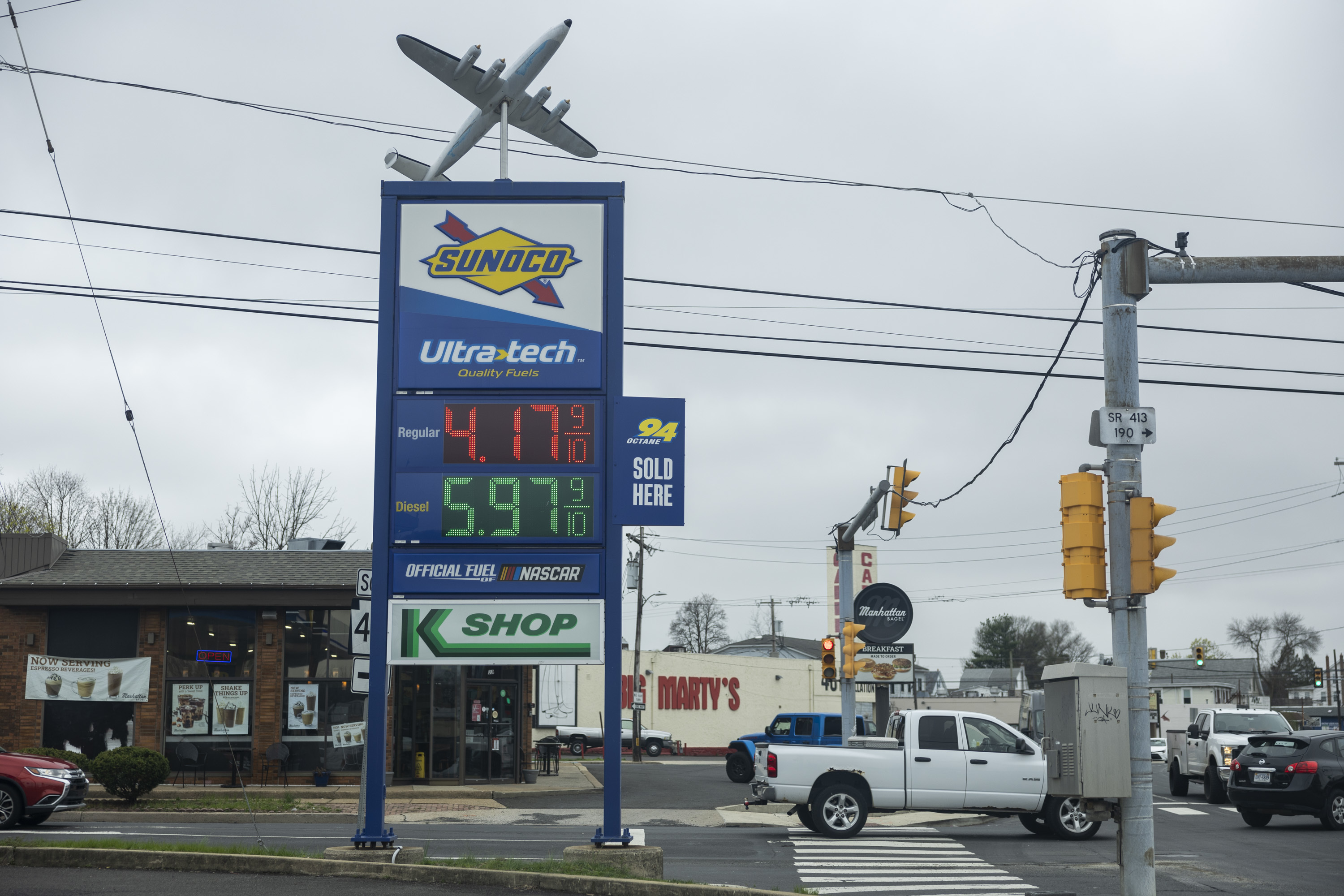
    Two years ago, it was the cost of eggs, gas, and groceries that were top priorities among the electorate in Pennsylvania and elsewhere. Voters’ trust in President Donald Trump’s ability to bring down high prices propelled him back to the White House, sending Democrats scrambling to hone an affordability pitch that could land in time for the high-stakes 2026 midterm elections. But in that same time, prices have continued to climb; gas prices have topped $4 per gallon; and tariffs instituted by Trump — who called affordability “a hoax” at a Pennsylvania rally last year — have driven up the cost of every day life. Now both parties are latching on to a focus on affordability.

    As he mounts a reelection campaign, Shapiro — who holds a commanding lead in polls — is highlighting his accomplishments during his first term that his campaign says has given Pennsylvanians more money back through tax cuts and wage increases for childcare workers.

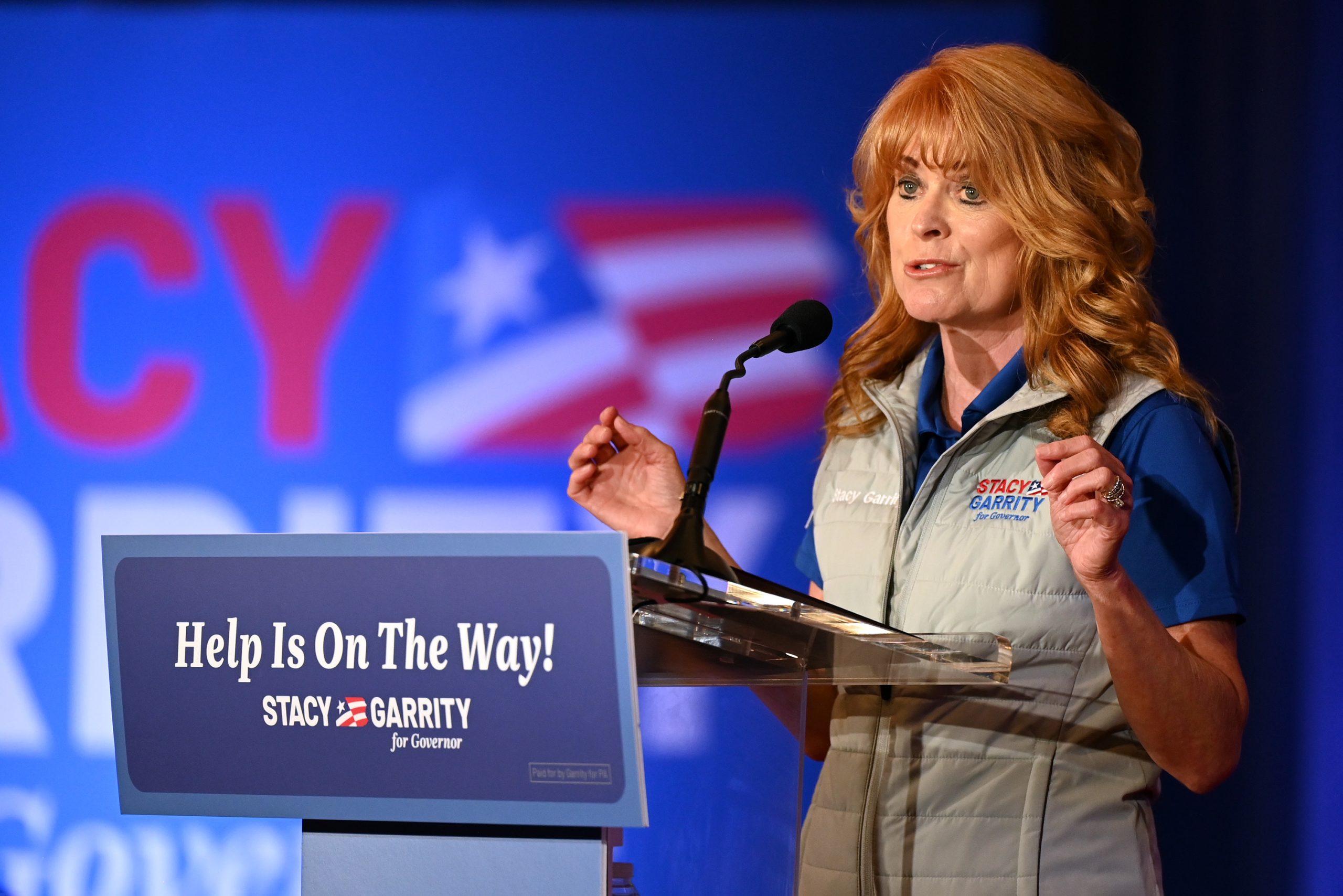
    Meanwhile, Garrity has recently shared her own plan, called “Turnaround PA,” to make living more affordable with an outline of how she’d lower prescription drug costs, reduce property taxes, and aim to cut energy bills to get there. But she’s also closely aligned with Trump, who has endorsed her in the race and has dismal markings from voters on two of their top priorities: the economy and cost of living.

    (function(){function e(){window.addEventListener(`message`,function(e){if(e.data[`datawrapper-height`]!==void 0){var t=document.querySelectorAll(`iframe`);for(var n in e.data[`datawrapper-height`])for(var r=0,i;i=t[r];r++)if(i.contentWindow===e.source){var a=e.data[`datawrapper-height`][n]+`px`;i.style.height=a}}})}e()})();

    That puts her in a difficult spot to challenge Shapiro, said Mark Zandi, the chief economist at Moody’s Analytics.

    There’s no easy answer for Republicans to win on economic issues in the midterms, but Zandi said his best advice is to focus on what is in the governor’s control and draft ideas that mitigate the fallout from Trump’s policies.

    Hummer, a Democrat who plans to vote for Shapiro this fall, said he trusts the governor to handle the economy and cost of living issues better. More than half of likely Pennsylvania voters in the Inquirer/New York Times/Siena poll agree.

    Fifty-five percent said Shapiro would do a better job of handling the state’s economy, and 56% said they think Josh Shapiro would do a better job of handling cost-of-living issues.

    “I’m well aware he’s limited in his options to do things, but I would say he’s kept a steady hand on the wheel of the Pennsylvania economy — to the extent that he can,” he said.

    Garrity pitches affordability as Republicans seek to overcome Trump’s ratings

    Among other proposals, Garrity has pitched a “first-time homebuyer assistance initiative,” which could help house seekers like Hummer and would provide qualified buyers 3% mortgage interest rate support from the state.

    She also has proposed cutting taxes by seeking a constitutional amendment that exempts Pennsylvania seniors from paying school property taxes and gives voters the final say over whether to increase property taxes. Her plan would also “reprioritize state spending for property tax relief.”

    State Treasurer and Republican candidate for governor Stacy Garrity holds a rally in Bucks County on Sept. 25, 2025, at the Newtown Sports & Events Center.

    But there’s no free money, Zandi said. “If you’re giving tax cuts over here,” he said, “you’ve got to figure out how to pay for it … and that means you’re cutting spending.”

    Garrity’s plan also would address rural healthcare, and she would “aggressively pursue available federal funding to strengthen rural healthcare.”

    But there’s little money left in the pot after Trump cut government spending in last year’s federal budget. His One Big, Beautiful Bill Act directed a reduction in Medicaid spending by $1 trillion over 10 years, starting after the midterm elections, and rural hospitals and nursing homes are more dependent on federal funds. Additional dollars would likely need to come from Harrisburg.

    For Pennsylvanians like Caitlyn Needham, 28, the consequences of an unexpected medical bill on top of a limited income meant she went without substantial meals for weeks.

    “I have a rabbit, and she had a medical emergency [in November],” she said. “So for two months, the only thing I could afford to eat while paying off those bills was peanut butter and jelly sandwiches for breakfast, lunch, and dinner.”

    Needham, a cake decorator in Pittsburgh, said she’s always been frugal and saved a little bit of money from each paycheck, but increasing expenses are pushing her budget to the limit. She said she plans to vote for Shapiro this November.

    “Pennsylvanians need a relief valve before things get worse,” she said. “So many people are one bad week away from not being able to keep their housing, or losing their medical coverage, or losing their job because their car broke down and they can’t afford to get service. It’s like everyone is just one accident away from not being able to live.”

    (function(){function e(){window.addEventListener(`message`,function(e){if(e.data[`datawrapper-height`]!==void 0){var t=document.querySelectorAll(`iframe`);for(var n in e.data[`datawrapper-height`])for(var r=0,i;i=t[r];r++)if(i.contentWindow===e.source){var a=e.data[`datawrapper-height`][n]+`px`;i.style.height=a}}})}e()})();

    Garrity has remained politically loyal to Trump, even as his popularity has sunk among Pennsylvania voters. She has endorsed Trump’s tariffs and supported the war in Iran. That support has remained even as gas prices in July spiked to more than $4 per gallon, up more than $1 since the beginning of the year — and a point Shapiro has repeatedly emphasized.

    “If you’re trying to infer I’m out of line with the president, I don’t think I am,” she said last month during a news conference she held on data centers.

    In a statement, she blasted Shapiro’s handling of the economy, saying he has put a tax burden on families and tied businesses up with unnecessary regulations.

    “Josh Shapiro’s Pennsylvania is simply unaffordable for the commonwealth’s hardworking families,” Garrity said. “He allowed utility and energy costs to skyrocket due to his unwillingness to expand generation capacity and instituting policies that benefit our neighboring states instead of us.”

    Shapiro emphasizes his record is separate from national picture

    Shapiro, the incumbent, is leaning on his record on economic policy.

    According to his campaign, his administration created more than 25,000 jobs during his first term and brought in $41 billion in private-sector investment.

    “Governor Shapiro is fighting for all Pennsylvanians — and he has a track record of creating jobs and economic opportunity, putting money back in Pennsylvanians’ pockets, and standing up to Washington’s reckless, cost-raising policies,” said Samantha Reposa, a spokesperson for the campaign. Garrity, she said, “fully supports the failed economic policies that are raising costs and hurting working families across the commonwealth.”

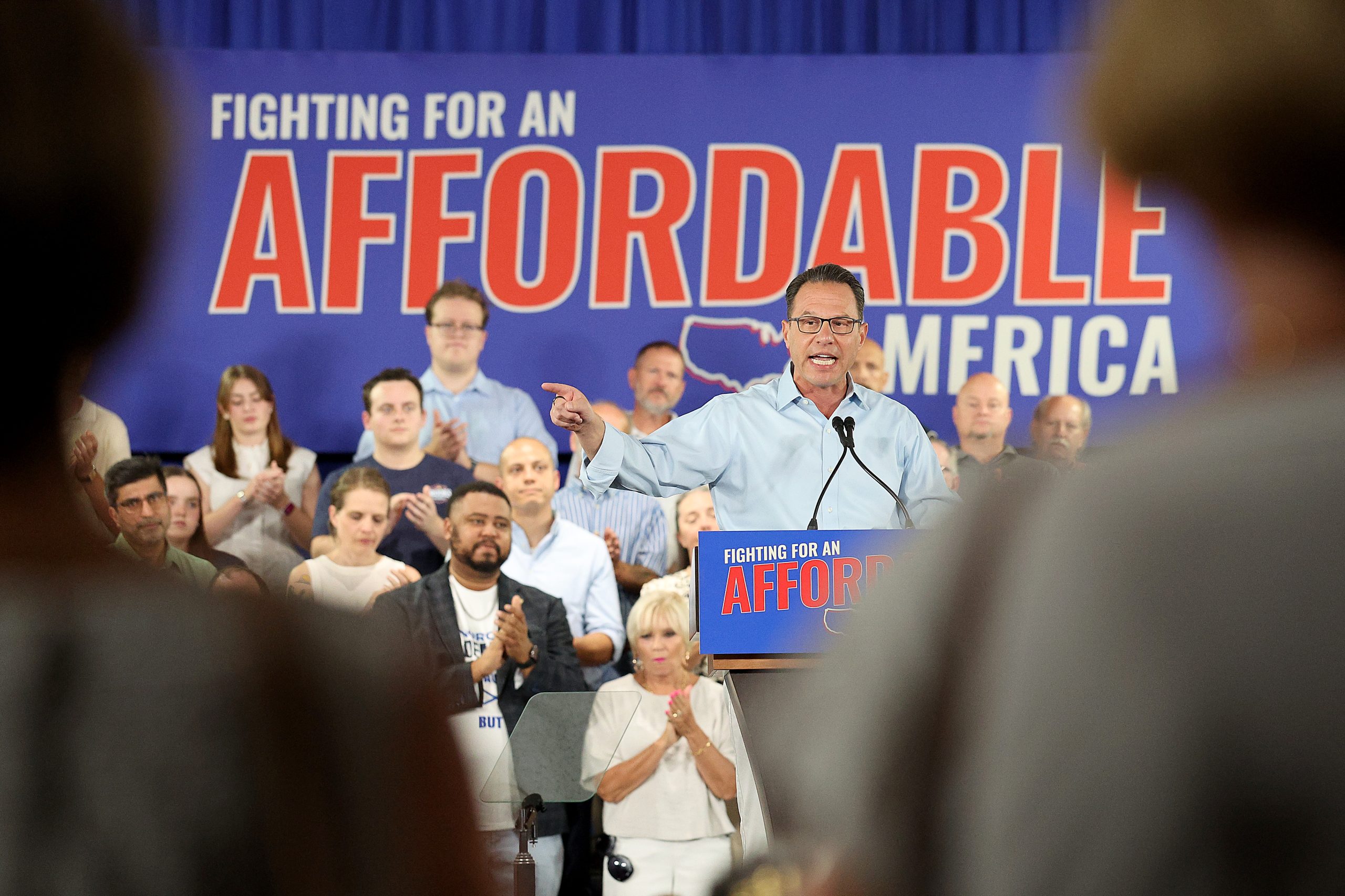
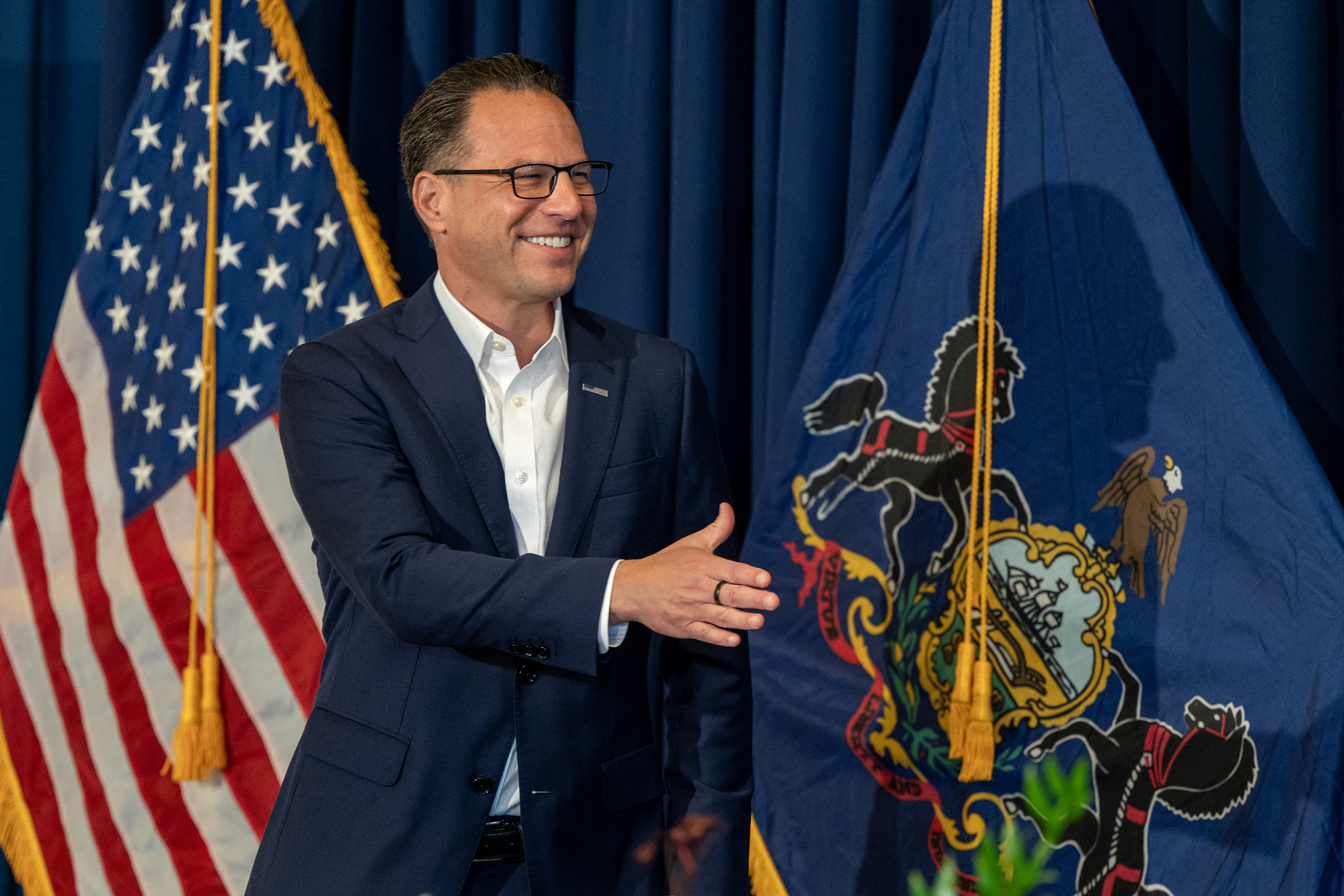
    Gov. Josh Shapiro addresses the audience during a July 26 rally for congressional candidate Bob Brooks at the United Steelworkers Union Hall in Bethlehem.David Maialetti / Staff Photographer

    His campaign released a Spanish-language digital ad focused on benefits of the Working Pennsylvanians Tax Credit and the Property Tax/Rent Rebate Program, which is targeted toward seniors and people with disabilities.

    “If you’re working, you get to keep more of your money. Up to $800 more, more money in your pocket. And right now, every little bit helps,” a woman in the commercial said in Spanish.

    Ultimately, Zandi said, “it’s very difficult for lawmakers at any level of government to change the picture on affordability, at least any time quickly,” because those issues are due to broader national and international forces.

    There’s also no one-size-fits-all approach for a governor to tackle the costs of education, housing, energy, childcare, elder care, healthcare, and groceries.

    “Each issue that makes up the affordability crisis requires its own set of solutions and efforts, so it feels like a laundry list of policy steps, and it is,” he said. “But that actually is probably the only way to make a difference.”

    For many Pennsylvanians, paychecks feel like simply treading water: By the time all expenses are covered, there’s little money left to save and build toward the future.

    “It just seems that money doesn’t go as far as it used to,” said Thomas Schank, 49, of Scranton. “I’ve gotten raises at work over the last two years, but everything else went up also, so really, no net gain.”

  • Elon Musk is throwing his cash around in Pa. again. This time, in support of three GOP lawmakers in swing districts.

    Elon Musk is throwing his cash around in Pa. again. This time, in support of three GOP lawmakers in swing districts.

    Elon Musk is back.

    The richest man in the world, who was laser-focused on delivering Pennsylvania for President Donald Trump in 2024, is wielding his wallet in the Keystone State once again to support Republicans in three swing congressional districts ahead of the midterms.

    America PAC, Musk’s super PAC, has contributed roughly $12,000 apiece in support of U.S. Reps. Ryan Mackenzie, of Lehigh; Rob Bresnahan, of Lackawanna; and Scott Perry, of York — all GOP incumbents facing tough reelection challenges, according to an independent expenditure report filed Wednesday.

    Though small potatoes in comparison, America PAC’s contributions in Pa. come roughly two years after Musk launched his intense and unprecedented efforts to mobilize voters in Pennsylvania for Trump when he spent millions of dollars, hosted a disinformation-filled town hall in Delaware County, and offered $1 million to random voters who signed a petition from his super PAC.

    Republicans lauded Musk for the energy and clout he brought to the campaign trail and it earned him a place in Trump’s inner circle at the time, leading to his turbulent tenure overseeing the Department of Government Efficiency.

    The PAC’s contributions for the congressional races went toward printing at Storytellers Group LLC, a Tennessee-based company, according to the report. He also contributed to several other competitive races across the country.

    Even though Musk is not yet deeply involved in Pennsylvania, the PAC’s spending signifies that the billionaire likely views these three congressional seats as important as both parties vie for control of the U.S. House.

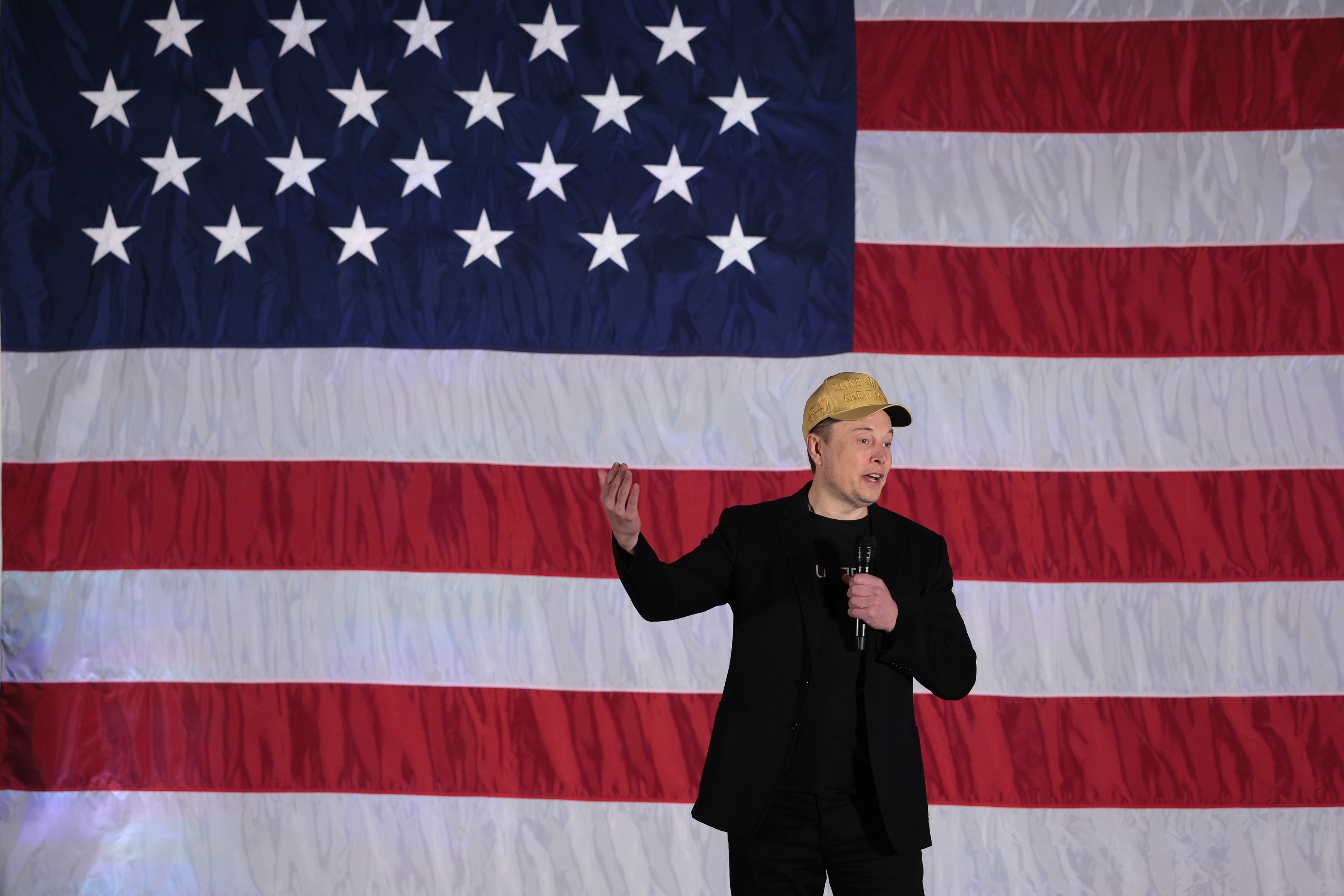
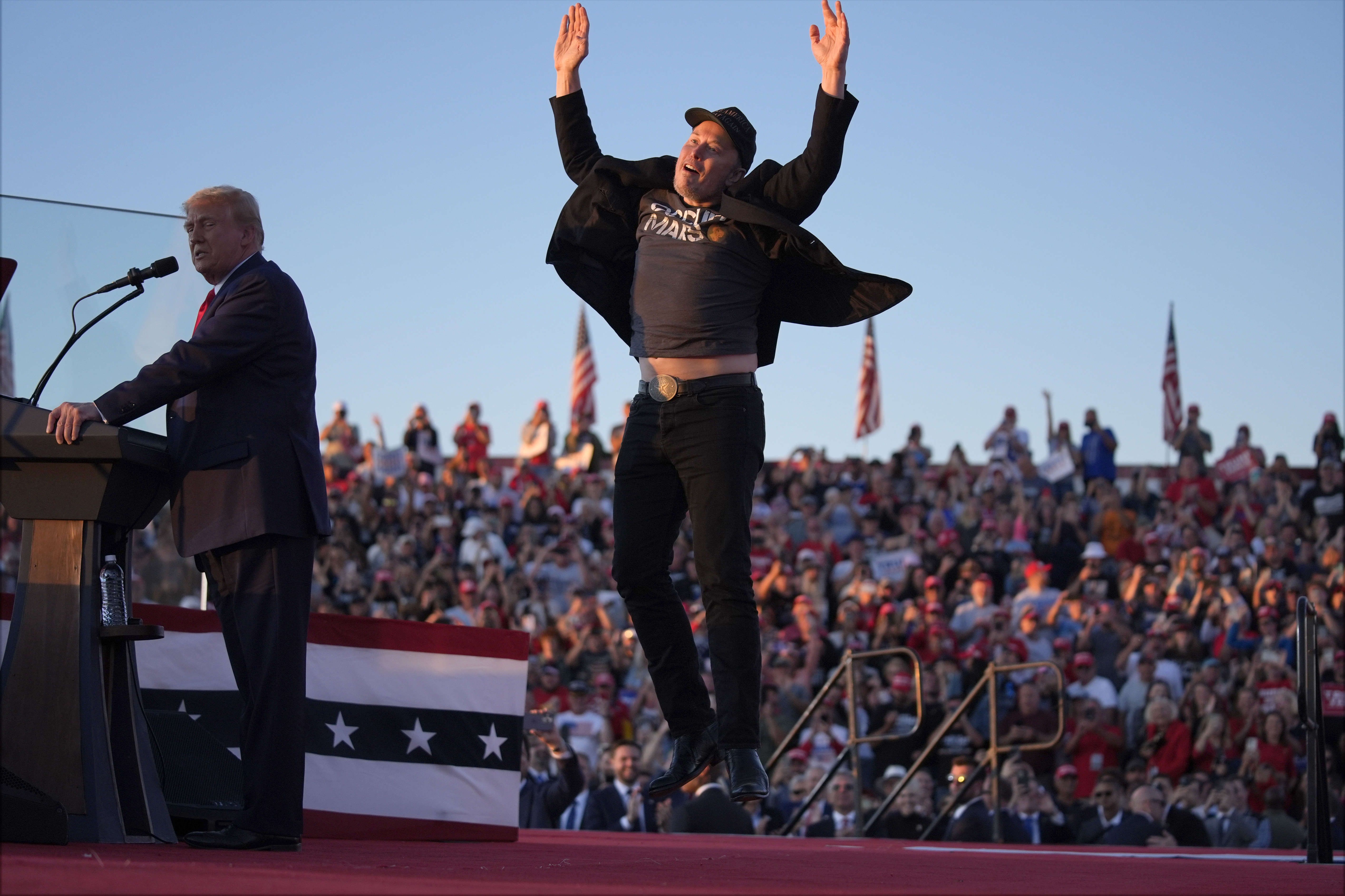
    Elon Musk jumps on the stage as President Donald Trump speaks at a campaign rally at the Butler Farm Show, Oct. 5, 2024, in Butler, Pa.Evan Vucci

    America PAC and spokespersons for Mackenzie, Bresnahan, and Perry did not immediately return a request for comment.

    The PAC also has yet to make a contribution in support of U.S. Rep. Brian Fitzpatrick (R., Bucks) will also be defending his seat against Democratic challenger Bob Harvie in a swing district this November.

    The Bucks County Republican already has a massive war chest of his own, far surpassing his GOP counterparts in total fundraising.

    “I think Fitzpatrick is fairly well positioned regardless of what Mr. Musk does or does not do,” said Christopher Nicholas, a GOP consultant.

    But the three GOP incumbents benefiting from Musk’s latest spending all lagged their Democratic challengers in fundraising during the most recent quarter. And Tesla and SpaceX’s CEO’s support could help close the gap.

    Musk has become a figure of scorn for Pennsylvania Democrats, and the challengers of Mackenzie, Bresnahan, and Perry all criticized his involvement in their respective races.

    Bob Brooks, a retired firefighter and union leader who is challenging Mackenzie, seen as one of the most vulnerable incumbents in the nation, said in a statement that Musk is “spending a fortune to buy this congressional seat” in the Lehigh Valley.

    “I have a message for Elon and Ryan: Pennsylvania’s Seventh district is not for sale,” he said.

    A spokesperson for former TV news anchor Janelle Stelson, who is running in a rematch against Perry in the 10th District, said that: “Scott Perry lacks the courage to highlight Musk’s efforts to increase corruption in our government, so now Musk is rewarding Perry for his subservience.”

    And in the 8th Congressional District, Scranton Mayor Paige Cognetti said: “Unlike Rob, I don’t take a dime of corporate PAC money.”

    “In Congress, I’ll answer to the people of NEPA, and no one else,” she said.

    Staff Writer Sam Janesch contributed reporting.

  • Josh Shapiro and Stacy Garrity will debate for Pennsylvania governor next month

    Democratic Gov. Josh Shapiro and Republican Treasurer Stacy Garrity, both candidates running to be Pennsylvania’s next governor, have agreed to face off next month in the first and only scheduled televised debate between them.

    The debate — scheduled for 8 p.m. on Oct. 7 and hosted by ABC 27 — will be held in Harrisburg and will air live on several stations owned by Nexstar across Pennsylvania, including WPHL-TV in Philadelphia.

    Both campaigns said they look forward to meeting face to face to discuss issues important to voters.

    “Game on,” said Matthew Beynon, a spokesperson for Garrity.

    Manuel Bonder, communications director for Shapiro’s campaign, said “we look forward to continuing to make the choice in this election clear.”

    Shapiro, who was elected governor in 2022 after serving as the state’s attorney general, holds a sizable lead against Garrity, according to a Philadelphia Inquirer/New York Times/Siena University poll conducted last month.

    As the November election approaches, Shapiro — who is a rumored contender for president in 2028 — has focused on translating his popularity to downballot Democratic candidates in four, nationally watched congressional districts and those running for seats in the Pennsylvania state Senate, which has been under Republican control for more than 30 years.

    Garrity, meanwhile, has struggled to gain traction among voters and to compete with Shapiro’s massive campaign funds. A quarter of likely Republican voters did not know who she was or know enough about her to form an opinion of her, The Inquirer/New York Times/Siena poll found.

    Next month’s debate could present Garrity with a fresh chance to introduce herself to voters statewide and make her case on why Shapiro should not be reelected.

    October’s debate is the only one scheduled between the candidates, though Garrity’s campaign have proposed several more. In 2022, Shapiro and his Republican challenger, State Sen. Doug Mastriano, did not debate after the two could not agree to terms.

    Topics likely to surface during the debate include data centers, the measles outbreak, and President Donald Trump.

    Both candidates have released television ads criticizing the other’s past support for data center development, which has grown increasingly unpopular in Pennsylvania and beyond. Garrity has denounced Shapiro for his shifting positions on data centers, though she has a mixed record herself. Last month he signed an executive order dramatically restricting their development, touting them as the strictest guardrails in the nation. Garrity has called for a pause in data center development.

    Garrity has also blasted Shapiro for his handling of the rollout of public health information in announcing two measles-associated deaths in Pennsylvania, saying he has stepped in front of verified facts. Shapiro has been critical of the Trump administration, saying the nation’s health secretary was responsible for the influx of measles cases by stoking misinformation.

    Trump has endorsed Garrity in the governor’s race, and Shapiro has repeatedly sought to tie her to some of his unpopular policies, highlighting her support for his tariffs on imported goods and unpopular war in Iran.

    ABC 27 anchor and reporter Dennis Owens will moderate the debate, which will also be available to view on streaming platforms.

  • Philadelphia’s police union endorses Gov. Josh Shapiro for his reelection bid

    Philadelphia’s police union endorses Gov. Josh Shapiro for his reelection bid

    Philadelphia’s police union on Tuesday endorsed Gov. Josh Shapiro’s reelection bid, announcing its continued support for the first-term Democratic governor while touting his commitment to law enforcement.

    “Every day, he has shown a commendable ability to work with local law enforcement and deliver the resources and support we need to protect and serve our friends, families, and neighbors,” said Roosevelt L. Poplar, president of the Fraternal Order of the Police Lodge 5, which represents over 14,000 active and retired Philadelphia police officers and sheriff’s deputies.

    In a statement, Shapiro said he was “honored” by the endorsement.

    “I’m going to keep fighting for the brave law enforcement officers who work to keep Philadelphia safe every single day,” he said. “I believe all Pennsylvanians deserve to be safe and feel safe in their communities — and we have focused every day on funding law enforcement and supporting the men and women that protect and serve our Commonwealth.”

    It marks the second time the police union has embraced Shapiro for governor after endorsing him in 2022 over Republican candidate Doug Mastriano, who the then-president of the union said couldn’t be trusted to protect their collective bargaining rights. Shapiro, a former state attorney general, was a reliable government official who the union said was “there to help us with whatever we need to do.”

    This election cycle, Shapiro holds a commanding lead over his Republican opponent, Treasurer Stacy Garrity, according to a recent poll from The Philadelphia Inquirer, the New York Times, and Siena University. The union has previously supported President Donald Trump, but Shapiro attracted its backing over Garrity, who Trump has endorsed in the Pennsylvania governor’s race.

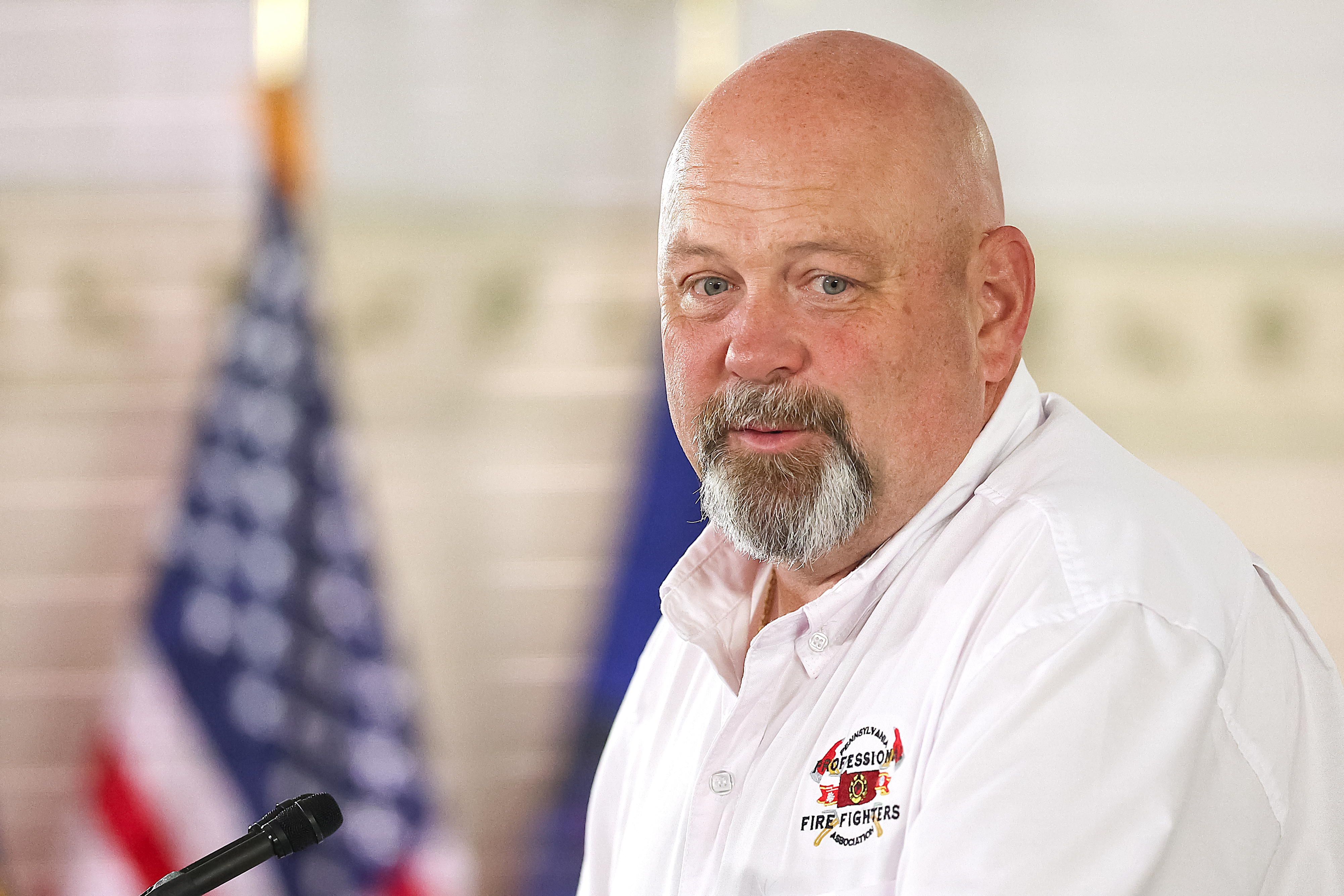
    Shapiro has also received support from other organized labor unions, including the Pennsylvania AFL-CIO and the Pennsylvania Professional Fire Fighters Association. On Monday, he received the backing of the Pennsylvania State Troopers Association.

    Shapiro has maintained a comfortable relationship with law enforcement, and his campaign noted that he has signed multiple state budgets funding 2,000 additional officers across Pennsylvania and allocated more than $1 billion in community-based violence prevention grants.

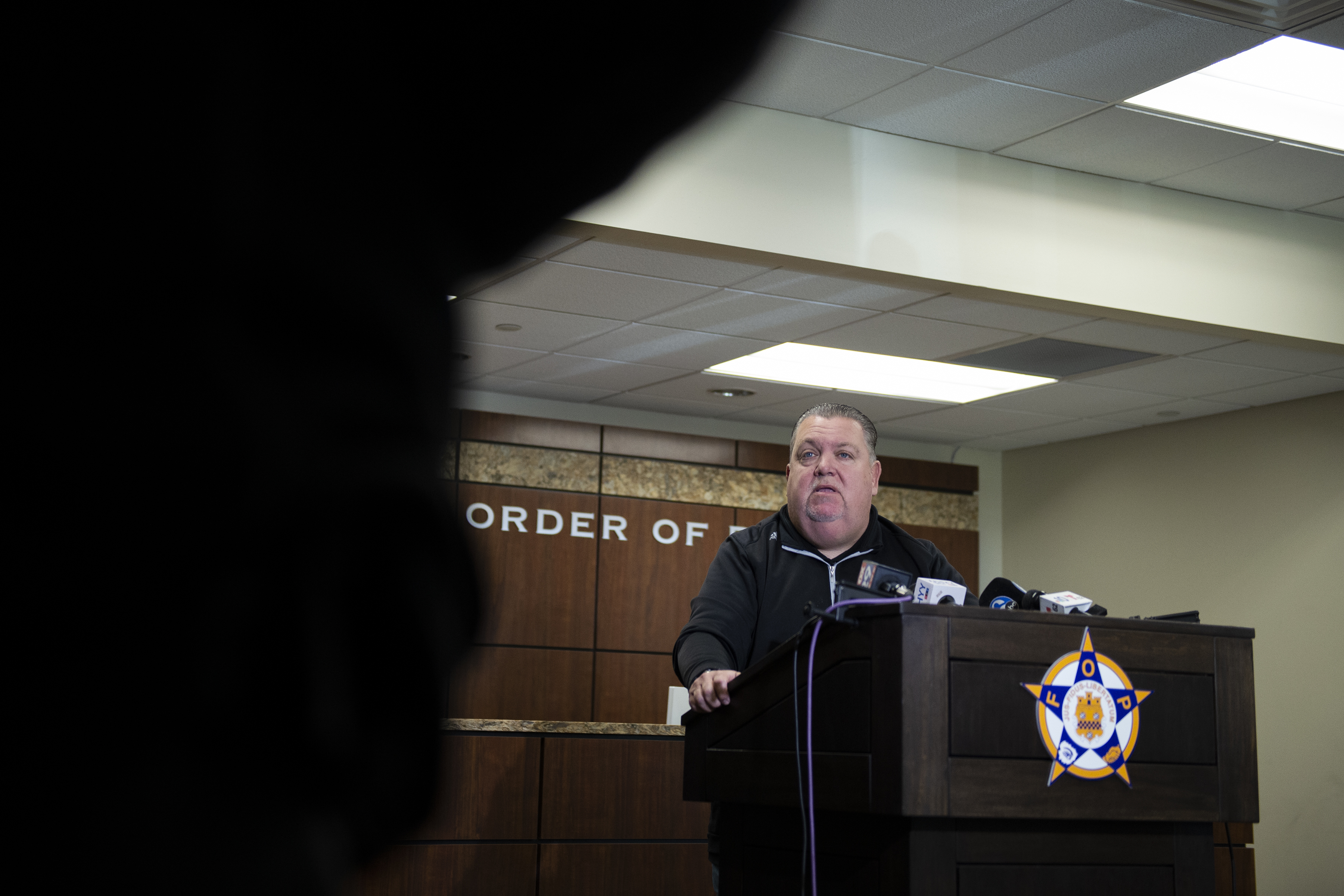
    Roosevelt Poplar, president of Fraternal Order of Police Lodge 5, on Jan. 26, 2024.Elizabeth Robertson / Staff Photographer

    In his statement, Poplar also commended Shapiro for providing funding for police department needs.

    “The Governor has delivered on his promise to invest in public safety, he has shown up with us in times of tragedy, and he has proven his commitment to keeping our officers and the communities we serve safe,” he said.

    The police union’s endorsement of Shapiro is notable for an organization that just a few years ago was seen by some Philadelphia Democrats as politically toxic.

    In the aftermath of the 2020 Minneapolis police killing of George Floyd, protests by racial justice activists swelled in Philadelphia and across the country with many of the movement’s participants calling to “defund” or abolish the police. They pressed local lawmakers to redirect police funding to social services, and Philadelphia City Council in June 2020 canceled a planned increase to the Philadelphia police budget.

    Amid the calls for reform, the FOP was a major point of contention, as was its bombastic former leader, John McNesby. Activists — and many of their allies in elected office — said the union was too resistant to change and protected bad cops.

    Former FOP president John McNesby holds a news conference on Oct. 19, 2022.Joe Lamberti

    At the time, Shapiro was running for reelection as the state attorney general, and his campaign presented him as a “progressive reformer” who had established a unit in his office to review criminal convictions that may have been unfairly applied and a council to support people leaving prison with housing and employment opportunities. The FOP endorsed Shapiro’s 2016 and backed his 2020 campaign for attorney general.

    Unlike some Philadelphia Democrats, Shapiro — who has rumored ambitions for a presidential run in 2028 — did not embrace the “defund” movement. He argued during a 2020 trip to Philadelphia that addressing structural inequities in the department and having strong law enforcement, especially in communities with high levels of poverty, were not mutually exclusive endeavors.

    “We reject that poverty or institutionalized indifference and marginalization should mean that some people don’t get to have a safe community to live in,” he said. “We won’t give up on the belief [of] law enforcement showing up in a community to make people feel safer.”

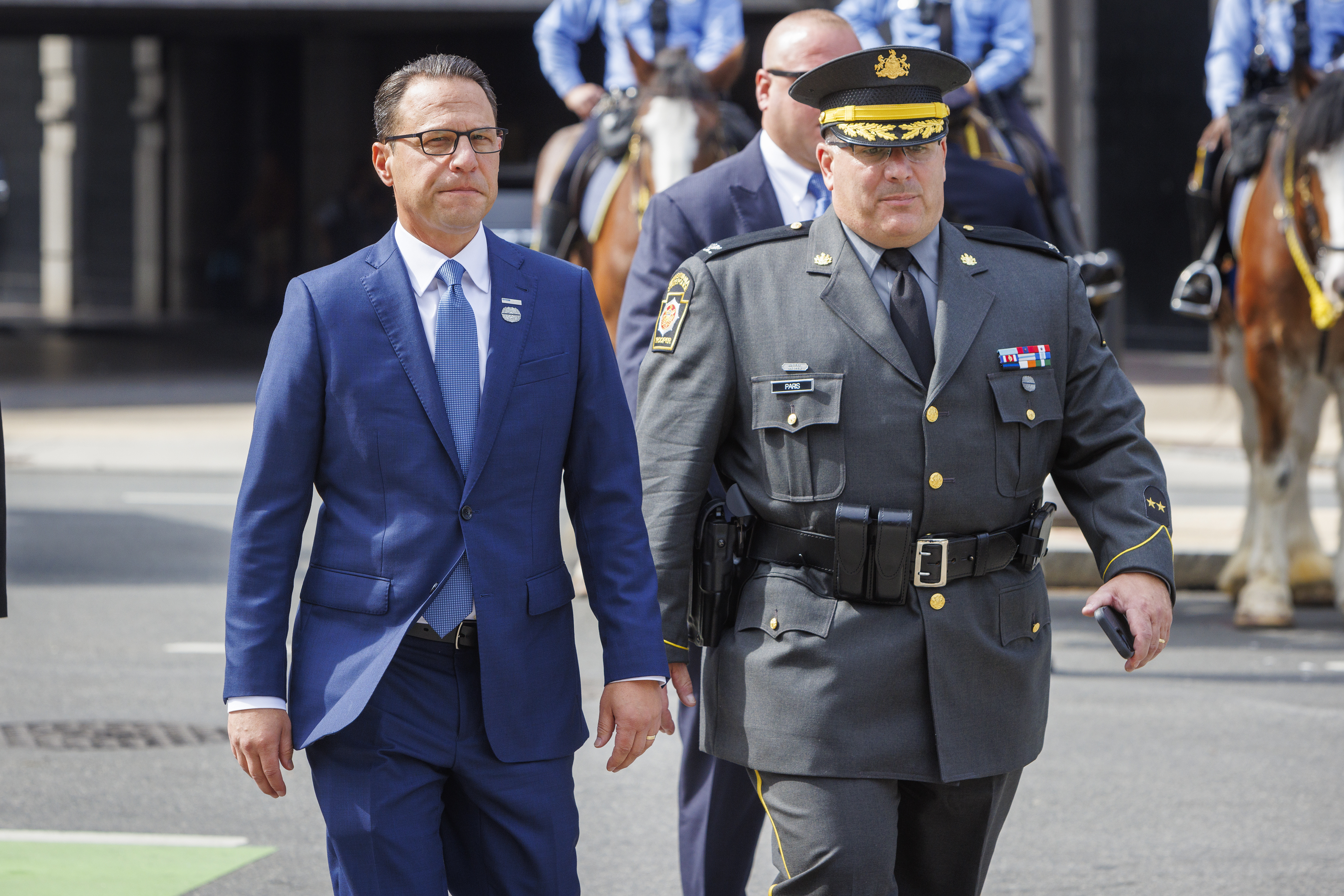
    Gov. Josh Shapiro with Pennsylvania State Police Col. Christopher L. Paris. They were attending the funeral for Philadelphia police officer Jaime Roman at the Cathedral Basilica of SS. Peter and Paul on Sept. 19, 2024.Alejandro A. Alvarez / Staff Photographer

    In the years following 2020, public support for police in Philadelphia appeared to grow. The city saw a historic spike in gun violence, and Republicans nationally portrayed Democrats as soft-on-crime. When a half-dozen Democrats were fighting for the mayoral nomination in 2023, polling showed that most voters saw public safety as the No. 1 issue driving the race. None of the candidates embraced “defund,” and most of them supported proposals to provide additional resources to the police department as it sought to solve shootings.

    In the end, the tough-on-crime mayoral candidate — then-City Councilmember Cherelle L. Parker — won decisively.