Category: Elections

  • Trump, stadiums, and a presidential run: Takeaways from the Pa. governor’s debate

    Trump, stadiums, and a presidential run: Takeaways from the Pa. governor’s debate

    HARRISBURG — Gov. Josh Shapiro and State Treasurer Stacy Garrity on Wednesday sparred over President Donald Trump’s leadership, soaring gas prices, the state budget deficit, and other top issues facing Pennsylvania in their only scheduled debate before Election Day.

    And at one point, the gloves came off.

    In the wide-ranging and mostly even-tempered debate, Garrity, a Republican who is in her second term as the state’s top fiscal officer, turned to Shapiro after he swiped at her, accusing her of taking direction from Trump by denying the results of the 2020 election. (Garrity in 2022 told a crowd at a Trump rally that “we know that he won” but has since walked back those comments.)

    “I don’t even know why you’d say that, and how you can look yourself in the mirror at night,” Garrity said, turning to look at Shapiro across the abc27 studio in Harrisburg, in one of the most heated moments of the night.

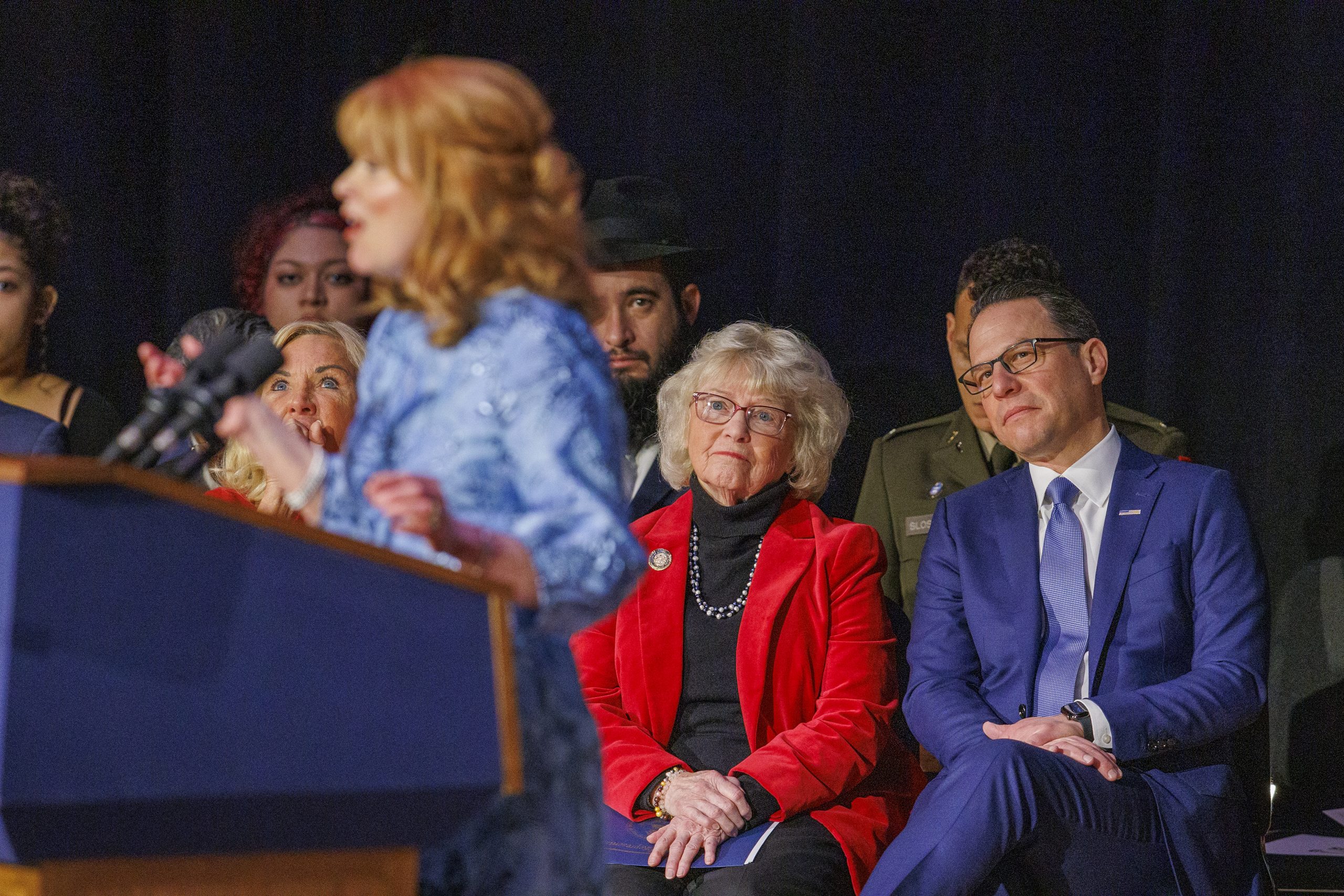
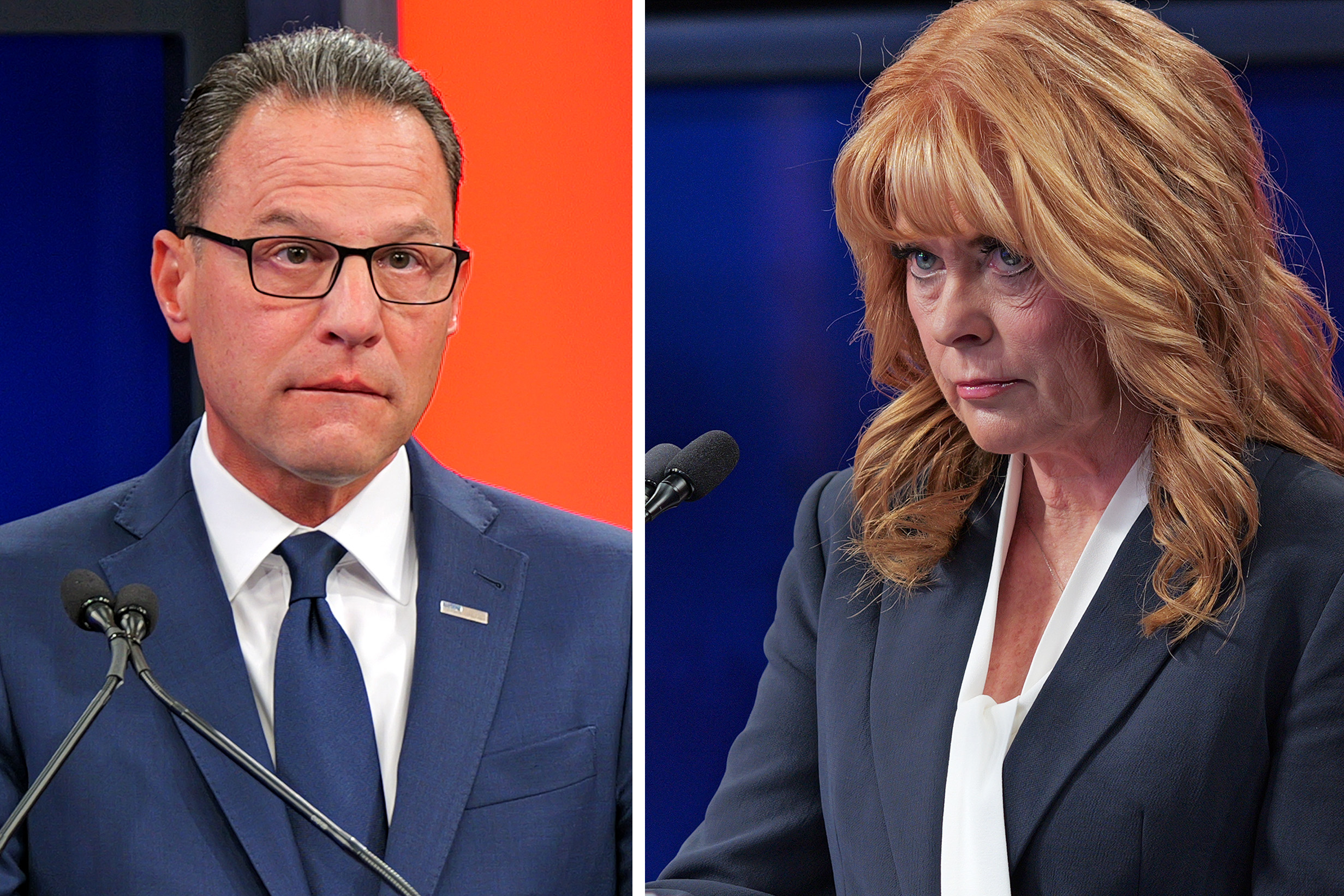
    Gov. Josh Shapiro and Republican challenger Stacy Garrity at the WHTM-TV studios in Harrisburg Wednesday, Oct. 7, 2026, during their lone debate ahead of next month’s gubernatorial election.Kaylee Lindenmuth / WHTM

    The debate, moderated by abc27’s Dennis Owens and WPXI’s Lisa Sylvester, came as Shapiro maintains a double-digit lead in statewide public opinion polls of likely Pennsylvania voters ahead of the Nov. 3 midterm election, including a 25-point advantage over Garrity in a Quinnipiac University poll released Wednesday.

    The televised debate, broadcast and streamed for free statewide, marked a consequential night for both candidates. Garrity needed to give an attention-grabbing performance to bring more eyes — and resources — to her struggling campaign. And the night presented Shapiro, who has long been rumored to have his eyes on a White House bid, the chance to show political observers whether he could compete on a crowded Democratic presidential primary stage.

    Here are four takeaways from the debate.

    With a potential 2028 run, Shapiro doesn’t promise to fulfill another four-year term

    Shapiro, 53, from Abington Township, again declined to say whether he would fulfill another full, four-year term as governor if reelected. A well-rehearsed orator with two decades of political experience, Shapiro gave the debate’s moderators the same answer he has repeated to reporters for months:

    “The only thing I am focused on is running for reelection as governor,” he said, before restating his frequent refrain about Trump’s chaos, cruelty, and corruption.

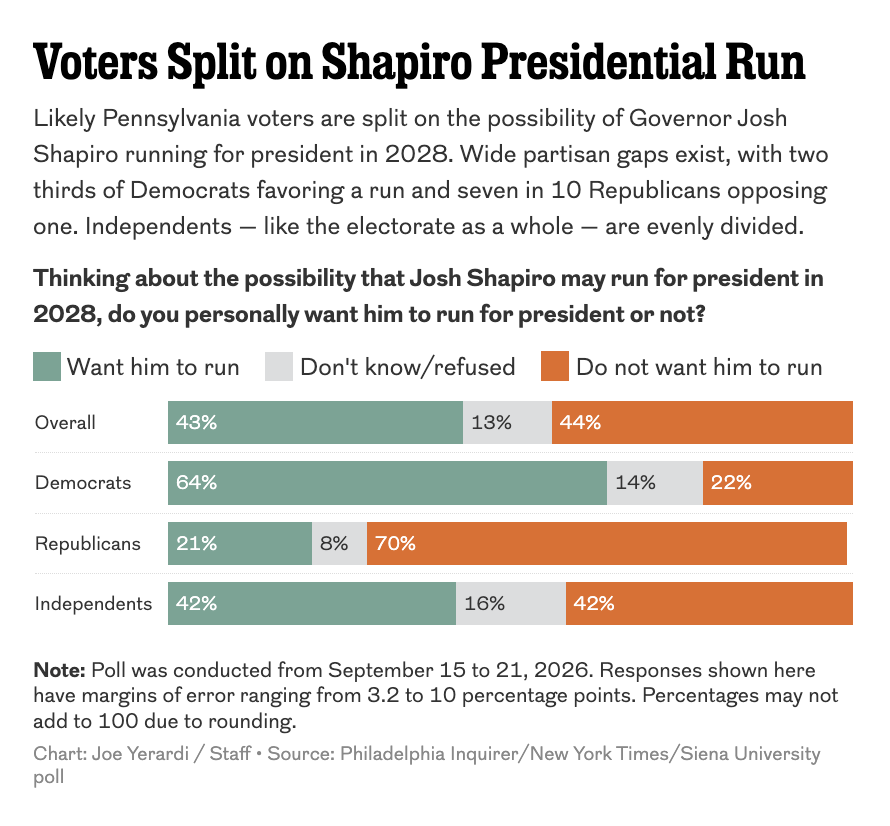
    (Although he maintains high popularity ratings in the state, Pennsylvania’s likely voters are split on whether they would like to see him run for president, according to a poll conducted by The Inquirer, the New York Times, and Siena University last month.)
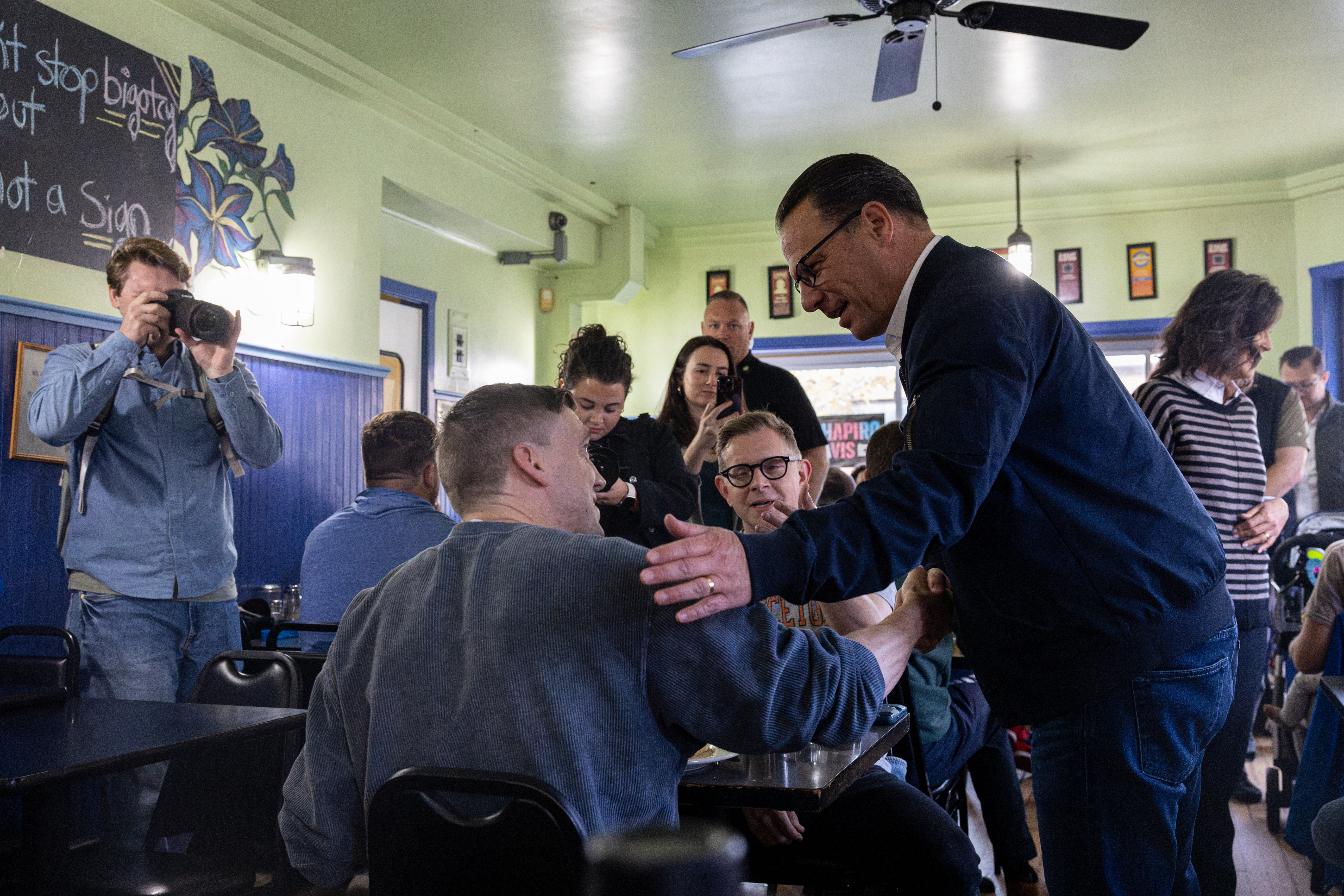
    Gov. Josh Shapiro meets with patrons alongside Michigan Gov. Gretchen Whitmer inside Sam’s Morning Glory Diner in South Philadelphia on Friday, Sept. 25, 2026.Aidan T. Gallo / Staff Photographer

    Wednesday’s debate took place on the third anniversary of the Oct. 7, 2023, attacks by Hamas on Israeli civilians that marked the start of the war in Gaza — a conflict that has divided Democrats nationally and is certain to remain a top issue in the years ahead.

    Shapiro, who is Jewish, was asked by the moderators about a recent Inquirer-New York Times-Siena poll that found 60% of likely Democratic voters in Pennsylvania do not want the U.S. to provide economic and military support to Israel.

    After first lamenting the attacks, Shapiro dodged the question. When he was asked for clarity, Shapiro said he wants “America to have a strong relationship with Israel and with the Israeli government,” which he does not see as possible under Prime Minister Benjamin Netanyahu, whom he has criticized for years.

    “I’ve been very, very, consistent in my position, in my love of Israel, and also in my disagreements with the Netanyahu government,” Shapiro said, adding that he hopes Israel chooses a new leader in its forthcoming election.

    Garrity, for her part, opened her first response of the night — to a question about data centers — by recognizing “the lives that were stolen” in the Oct. 7, 2023, Hamas attacks.

    Garrity distances herself from Trump

    Garrity, 62, a retired U.S. Army colonel from Bradford County in Northeastern Pennsylvania, was endorsed by Trump in January and has remained largely loyal to him.

    Shapiro’s campaign has seized on this support, running millions of dollars’ worth of negative ads calling her “100% MAGA.” Garrity, meanwhile, has no ads on TV with less than a month before the election, as she struggles to fundraise during an especially challenging midterm year for Republicans.

    But as the president’s job approval ratings continue to dip — just 34% of likely Pennsylvania voters gave him positive ratings in a poll conducted last month — Garrity said on the debate stage Wednesday that her alignment has its limits.

    “Nobody, I think, agrees with the president 100% of the time,” she said. “Who agrees with anybody 100% of the time?”
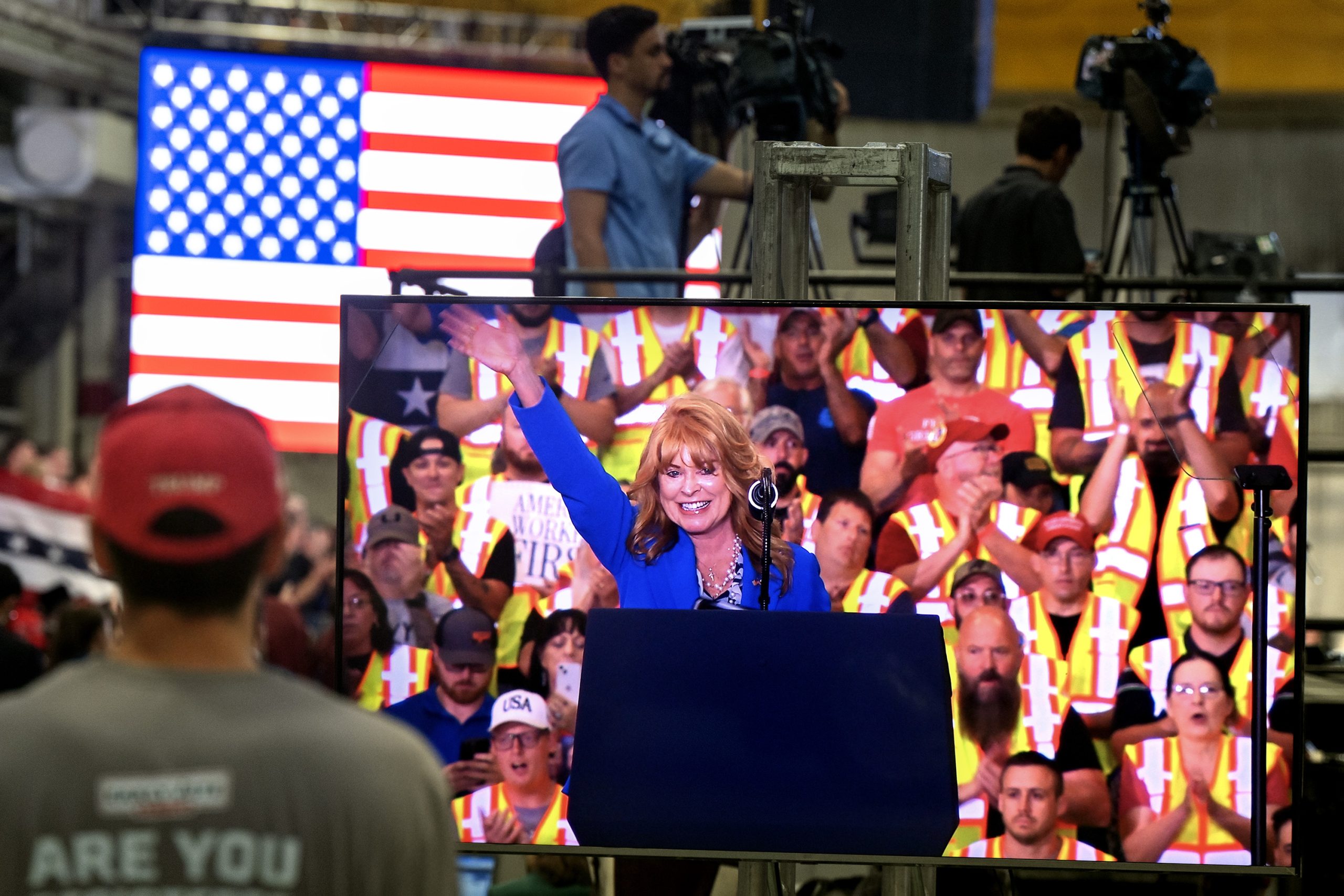
    State Treasurer and Republican candidate for governor Stacy Garrity is seen on a big screen as she speaks to supporters before the arrival of President Donald Trump at Mack Trucks in Macungie on Tuesday, June 23, 2026.Tom Gralish / Staff Photographer

    In an interview last month, Garrity said that she would have taken a different, “more targeted” approach to instituting tariffs on other countries, and she has called for a pause on development of data centers, in contrast to Trump’s embrace of them.

    During the debate, she also put an arm’s length between herself and members of Trump’s cabinet, including Health and Human Services Secretary Robert F. Kennedy Jr., with whom she stood with at a “Make America Healthy Again” rally in Harrisburg earlier this year.

    Kennedy, an anti-vaccine advocate who rose to lead the nation’s health agency, has publicly sparred with Shapiro in recent weeks over a number of measles-associated deaths as the state grapples with its largest outbreak of the disease in decades.

    Garrity on Wednesday said she is vaccinated against measles, mumps, and rubella, and added that she does not share all of Kennedy’s views and that she attended the event to promote healthier food choices for children.

    Blame game

    Shapiro during his first term has frequently highlighted his ability to bring Democrats and Republicans together, as one of few governors leading a state with a politically split legislature, where Democrats control the House and Republicans control the Senate.

    But he has struggled to forge consensus when it comes to solving some of the top issues facing Pennsylvania, including funding mass transit and taxing and regulating skill games. Garrity jabbed at that point multiple times during the debate.

    “The governor has consistently … used the excuse that he can’t do anything because he has a divided legislature,” Garrity said. “Well, that’s not what real leadership is. Real leadership, they call the leaders to the table and you negotiate.”

    During the debate, Shapiro blamed the legislature for its inaction on: voter ID, establishing new penalties for second-degree murder, temporarily halting the state’s gas tax, and regulating skill games.
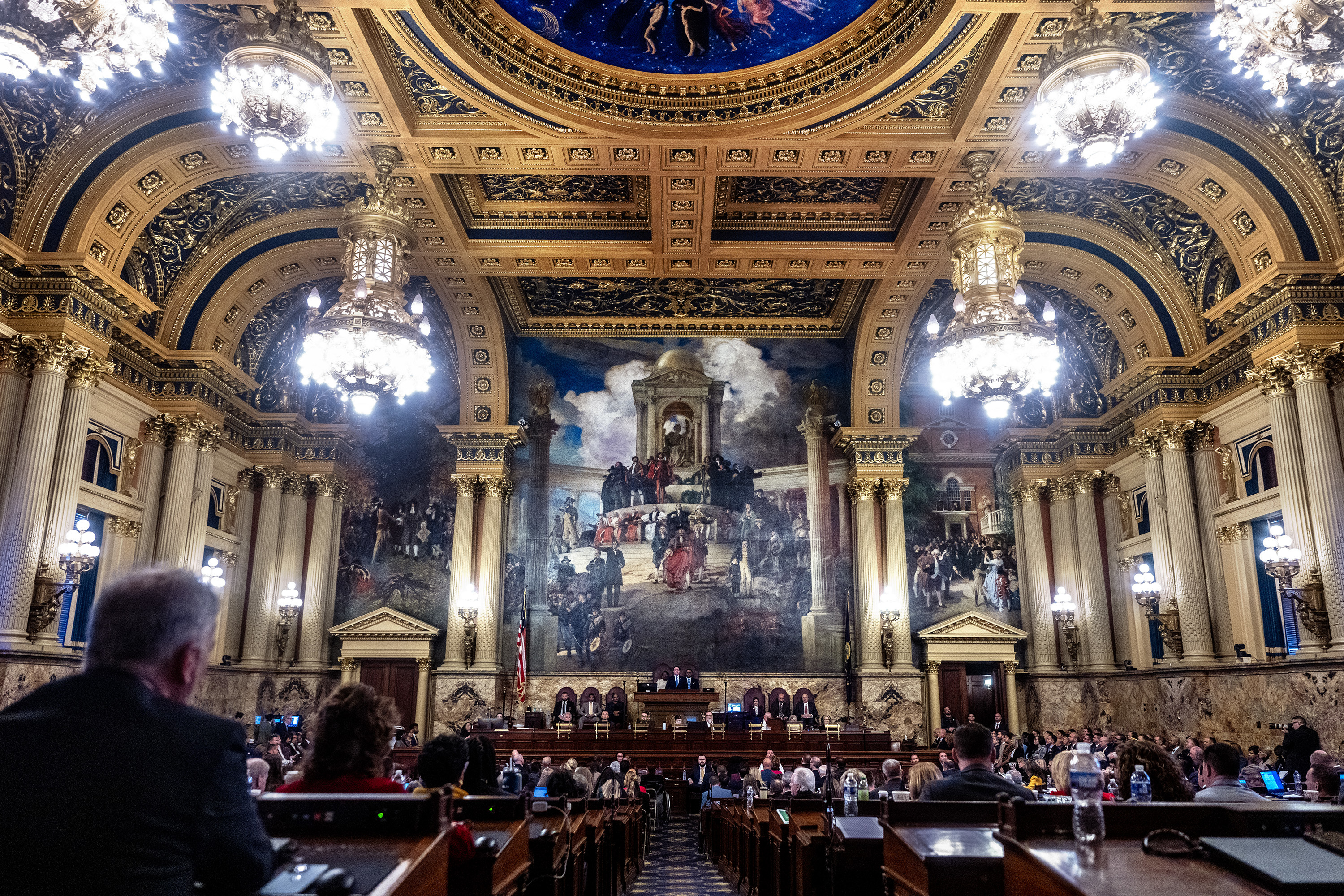
    Gov. Josh Shapiro delivers his third budget address to a joint session of the state House and Senate in the House chambers at the State Capitol Tuesday, Feb. 4, 2025.Tom Gralish / Staff Photographer

    As the candidate at the top of the ticket, Shapiro is campaigning for Democrats up and down the ballot in hopes of flipping the state Senate to Democratic control for the first time in more than 30 years. If Democrats are successful, Shapiro would get the chance to lead a Democratic trifecta in Harrisburg, with the ability to more easily address the party’s top priorities, such as increasing the minimum wage and codifying abortion rights in the state constitution.

    Shapiro has negotiated four budgets with the divided General Assembly through the state’s tough fiscal conditions, including one budget impasse over mass transit funding that lasted nearly five months and led to closures and pauses of state services. He noted that he brought lawmakers together to cut taxes for seniors, working residents, and start-up businesses.

    “I’ve got a strong track record of bringing Democrats and Republicans together to cut costs for the good people of Pennsylvania, and in a second term, we’ll continue our work to cut taxes, not raise them,” he added.

    As for why some Pennsylvanians are struggling, he pointed to Trump’s leadership, his tariffs, and his war in Iran — all of which Garrity supports, he said. (Garrity has recently begun criticizing some of Trump’s tariffs and has said she hopes the war ends soon.)

    When asked how he would help make up the state’s budget deficit, Shapiro said: “There’s some priorities that the Republican Senate put in that I would likely cut. We’ll see what the makeup of the legislature looks like next year.”

    He also rejected questions about why he had not called the legislature into a special session to handle time-sensitive issues, such as the forthcoming deadline to enforce a court decision that found skill games are illegal slot machines, or to pass a gas tax holiday. While governors can call a special session, they cannot compel lawmakers to consider specific legislation.

    “It’s still up to the lawmakers to show up and do their jobs and vote on these matters,” Shapiro added, noting that the GOP-controlled Senate has been in session voting on legislation only 34 days so far this year, with five more days scheduled for the rest of the calendar year.

    Should taxpayers pay for stadiums?

    Should taxpayer money help fund construction for professional sports stadiums?

    In Pennsylvania, where many Philadelphia or Pittsburgh fans are fervently devoted to their teams, state taxpayer money has helped build stadiums and arenas in the past.

    But as both the Philadelphia Eagles and the Pittsburgh Steelers eye new stadiums, the moderators asked both Garrity and Shapiro whether Pennsylvanians should help pay for them directly through state contributions or tax incentives.

    Jeffrey Lurie, the owner of the Philadelphia Eagles and a contributor to Shapiro’s campaign, has said he is exploring the idea of renovating Lincoln Financial Field or building a new stadium.

    He has emphasized that he would make a decision that is “best for the fans” but kept open a range of possibilities that could mean moving out of the city. The Steelers are similarly looking to upgrade their stadium or find a new home.
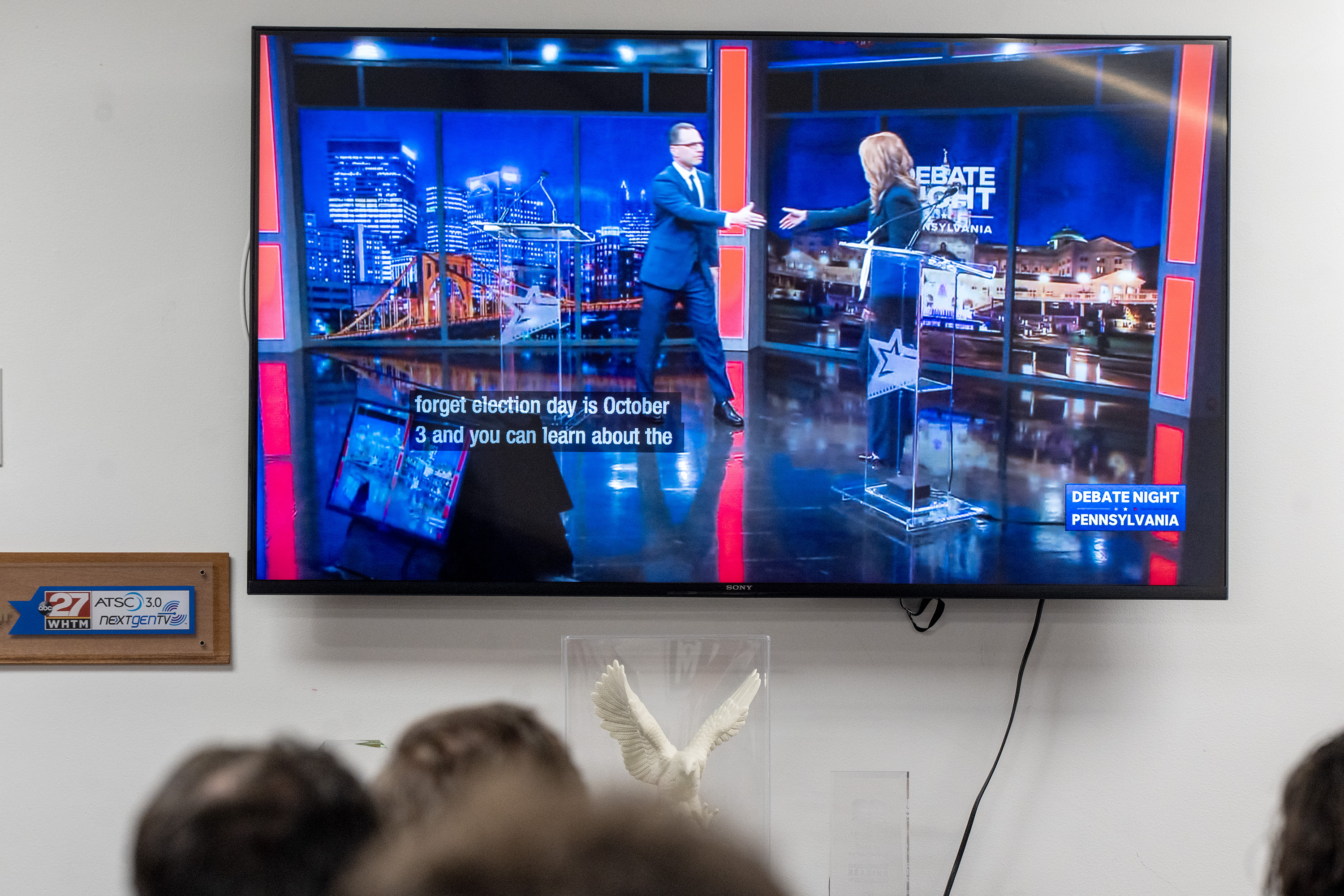
    Monitor at the WHTM-TV studios in Harrisburg Wednesday evening Oct. 7, 2026, at the conclusion of the lone debate between Gov. Josh Shapiro and Republican challenger Stacy Garrity ahead of next month’s gubernatorial election. There is no live audience but the one-hour debate was televised on several local stations statewide and streamed on their websites and YouTube channels. Tom Gralish / Staff Photographer

    Shapiro said he has already spoken with Lurie and the owners of the Steelers about their new potential stadiums. And he noted that he opposed using public dollars toward the Sixers’ new arena and said he would “be a strong protector of our Pennsylvania taxpayers.”

    “On my watch, the Steelers will remain in Pittsburgh, the Eagles will remain in Philadelphia. Period,” Shapiro said. “And as I’ve shown with the Sixers and Flyers scenario, you can do that without providing tax dollars in order to make that happen.”

    Garrity, who has said she supports all Pennsylvania sports teams but admitted she is also a Buffalo Bills fan, pledged to make any new stadium costs the responsibility of the owners, not taxpayers.

    “I don’t think that we need to be giving taxpayer dollars to billionaire owners,” she said.
  • Pennsylvania governor’s debate 2026: How to watch and what we’re looking for

    Gov. Josh Shapiro and his Republican challenger, state Treasurer Stacy Garrity, will meet face-to-face on Wednesday night for the first and only scheduled live, televised debate in the Pennsylvania governor’s race.

    The hourlong debate — and the opportunity to reach voters across the Keystone State — comes as Shapiro maintains a significant fundraising and polling edge in the weeks before the Nov. 3 election, while Garrity seeks to gain traction.

    For Shapiro, a popular Democratic incumbent and potential presidential contender, the night serves as an opportunity to tout his administration’s first-term successes — and could also provide a warmup for the 2028 Democratic primary debate stage.

    For Garrity — who last month was unknown to one-third of likely Pennsylvania voters and a quarter of Republicans — the primetime debate is a chance to introduce herself and make the case for her vision for the state and why Shapiro does not deserve reelection.

    A third gubernatorial candidate who will appear on the November ballot — Libertarian Ken Krawchuk — was not invited to participate.

    Here’s what you should know about the Pennsylvania governor’s debate, hosted by abc27.

    What time does the Pennsylvania governor’s debate start?

    The hourlong debate is scheduled to begin at 8 p.m.

    It will take place at WHTM Studios in Harrisburg and will be moderated by abc27 news anchor Dennis Owens. There will be no live audience for the debate.

    How can I watch the debate?

    The debate will air live on several stations owned by Nexstar Media Inc., including PHL17 In Philadelphia. It will also air on WTAJ-TV serving Altoona, WBRE/WYOU serving Scranton, WFXP/WJET serving Erie, and WPXI in Pittsburgh.

    The debate will also stream live on each station’s website and smart TV apps and will be available on YouTube.

    Who are the candidates?

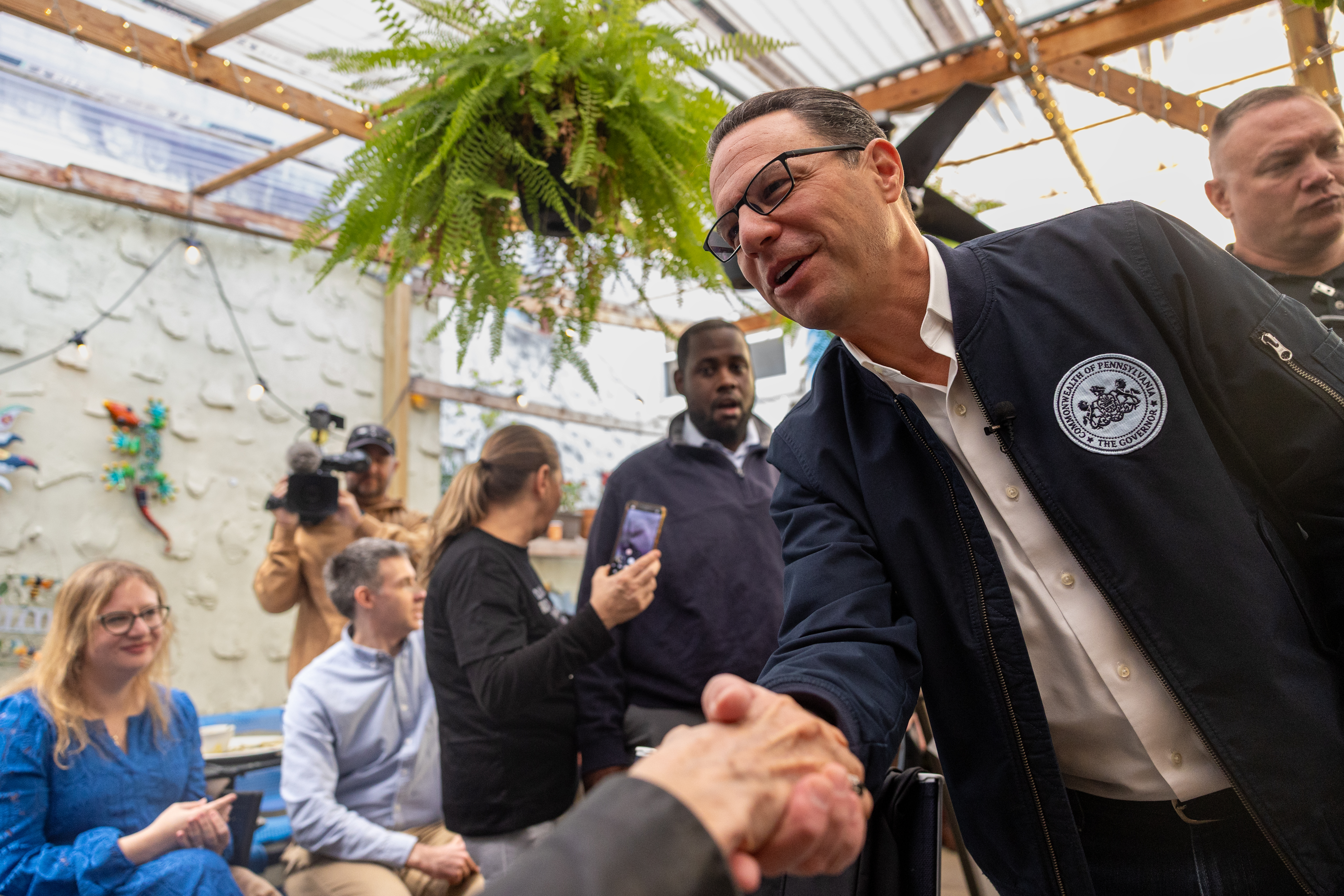
    Gov. Josh Shapiro meets with patrons out in the back patio of Sam’s Morning Glory Diner in South Philadelphia on Sept. 25.Aidan T. Gallo / Staff Photographer

    Gov. Josh Shapiro, 53, was elected governor in 2022 after serving two terms as the state’s attorney general. A Montgomery County native, he previously represented Meadowbrook, Fort Washington, and parts of Glenside in the state House, and chaired the Montgomery County Board of Commissioners. In 2024, Shapiro was on the short list to become then-Democratic presidential nominee Kamala Harris’ running mate, a position he ultimately turned down. During his first term, he’s navigated a divided legislature in Harrisburg, and has touted his efforts to “Get Stuff Done,” including efforts to hasten slow permitting practices, attracting businesses to the state, and expediting the repair of a collapsed section of I-95 in 2023.

    State treasurer and Republican candidate for governor Stacy Garrity in Philadelphia on Sept. 28.Tom Gralish / Staff Photographer

    State Treasurer Stacy Garrity, 62, was first elected to the office in 2020, winning reelection in 2024 with record numbers. If successful in November, she would become Pennsylvania’s first female governor. She is endorsed by President Donald Trump and received a strong early showing of support from the state Republican Party, but has struggled to maintain momentum. A native of Northeastern Pennsylvania, Garrity spent more than 30 years in the U.S. Army Reserves, and retired as a colonel. She then became a business executive, at one of the world’s largest tungsten companies.

    What to watch for

    How will Shapiro and Garrity come across on the debate stage?

    Neither candidate has recent debate experience to fall back on.

    Shapiro hasn’t appeared in a debate since 2016, when he first ran for statewide office to be Pennsylvania’s attorney general. During his first bid for governor in 2022, Shapiro and his Republican challenger, State Sen. Doug Mastriano, could not agree on terms to debate as the far-right senator rarely spoke to the Pennsylvania’s traditional press corps.

    And Garrity has not appeared in a debate against either of her Democratic opponents for treasurer, including incumbent Joe Torsella in 2020 and Erin McClelland in 2024. After Republicans cleared the field for her in an unprecedentedly early endorsement for governor, she ran unopposed in the April GOP primary.

    How will they appeal to voters’ wallets?

    Pennsylvania voters have repeatedly emphasized the economy and cost-of-living concerns as their top issues heading into the midterm elections. Shapiro has said one of his first priorities if he wins with a Democratic takeover of the state Senate is to enact a $15 minimum wage; Garrity has said the state’s $7.25 minimum wage does not need to be raised but wants to reduce costs for Pennsylvanians elsewhere by eliminating property taxes for seniors on fixed incomes, first responders, and veterans. Shapiro, for his part, boasts his efforts to cap utility costs.

    Will data centers take center stage?

    Another issue on many Pennsylvanians’ minds: data center development, which is opposed by a majority of voters from both parties.

    Both candidates also have a mixed record on data center development. Although Shapiro celebrated an announcement last year that Amazon would be building two data centers in Pennsylvania, in August he enacted an executive order that requires data centers to be transparent, get local approval, and bring their own electricity generation.

    Garrity also initially embraced Amazon’s announcement, but has since called for the legislature to allow municipalities to implement a six-month moratorium on data center development and a ban on their construction on farmland.

    What will Garrity say about Shapiro?

    The debate stage will offer both candidates the opportunity to lob attacks at one another.

    Garrity has challenged Shapiro’s handling of Pennsylvania’s economy and his past backpedaling on his support for school choice, and is likely to do so again on Wednesday night.

    She has also accused Shapiro of being opaque about his office’s handling of a sexual harassment allegation against of one of his closest aides, Mike Vereb, who later stepped down. Shapiro’s administration paid the woman $295,000 in an out-of-court settlement, largely covered by the state’s employee liability insurance and some taxpayer dollars. Garrity, in her digital video series “Twilight Justice,” has also criticized Shapiro’s role as attorney general in investigating the 2011 death of Philadelphia teacher Ellen Greenberg, which was ruled a suicide by the city’s medical examiner, leading to legal challenges, investigations, and public scrutiny.

    What will Shapiro say about Garrity?

    In a post on social media ahead of the debate, Shapiro’s team slammed Garrity as an “election denying conspiracy theorist.” She questioned President Joe Biden’s 2020 victory during a 2022 Trump rally in Western Pennsylvania, but reaffirmed in an interview last week that Biden was elected. Shapiro’s campaign has also Garrity can’t be trusted to protect abortion access. Garrity, who said she is against abortion, said she wouldn’t overturn the state’s law that permits abortion up to 24 weeks of gestation.

    Shapiro’s campaign has also closely linked Garrity to Trump, who is unpopular among a majority of Pennsylvania’s likely voters. Garrity remains supportive of Trump, and Shapiro ads running across the state label Garrity as “100% MAGA.”

    Who will tune in to watch?

    Viewership is often low for state-level political debates, said Berwood Yost, a political-science professor who leads Franklin and Marshall College’s polling. And barring any major gaffes from either candidate, they “usually don’t change” an election’s outcome.

    With Shapiro so far ahead in public opinion polls, it’s even more unlikely that the debate will play a role in helping voters decide who they will support.

    “This race is pretty far down on peoples’ minds, in part because the Garrity campaign hasn’t been able to make a game of it,” Yost said.

  • Stacy Garrity hopes ‘the cavalry will be coming’ with less than a month until Pennsylvania’s governor election

    Stacy Garrity hopes ‘the cavalry will be coming’ with less than a month until Pennsylvania’s governor election

    Stacy Garrity really didn’t want to be running for governor right now.

    If it were up to her, she’d still be in the U.S. Army Reserves, from which she was forced to end her tenure in 2016 as a colonel after serving a maximum 30 years and three tours in the Middle East. There, she earned the nickname “Angel of the Desert” for overseeing a prison with zero abuse allegations or escape attempts.

    “Serving truly was and is the honor of my lifetime,” Garrity said in an interview in Philadelphia last week.

    After the Army, Garrity pivoted, working as a business executive in government relations who did lobbying work. Soon after, she rose through the ranks in Pennsylvania’s Republican Party, twice winning statewide election to treasurer in record numbers, and being nominated in April as the party’s choice for governor. She’s now entrenched in a different kind of consequential battle, where her performance at the top of the ticket could help decide control of the U.S. House and the state legislature.

    But the governor’s race is a steep hill to climb: Garrity is challenging one of the most influential figures in modern Pennsylvania politics, Gov. Josh Shapiro, in a midterm year when Republicans already face strong national headwinds. A poll conducted last month by The Inquirer, Siena University, and New York Times found that a quarter of Pennsylvania’s likely Republican voters didn’t know who she is, while Shapiro has maintained a double-digit lead. And though Garrity was endorsed by President Donald Trump and embraced by the state party unprecedentedly early in the election cycle, she’s been largely financially abandoned by state and national Republicans as they spend their resources elsewhere.

    Garrity said she still has hope they’ll come through.

    “We still have some time,” Garrity said last week during an interview in The Inquirer’s newsroom. “We fully expect that the cavalry will be coming.”

    At right is Pennsylvania Gov. Josh Shapiro listening to Stacy Garrity, 78th state treasurer, in Harrisburg on Jan. 21, 2025.Alejandro A. Alvarez / Staff Photographer

    Garrity, who would be Pennsylvania’s first female governor if elected, is running to lead one of the nation’s most coveted swing states, where registered Democrats narrowly outnumber Republicans and unaffiliated voters are the fastest growing classification.

    And she’s bringing with her some creative solutions to address perennial problems facing Pennsylvanians like property and gas taxes — as well as a desire to allow natural gas producers to drill on public lands and a personal opposition to abortion that she says she wouldn’t enforce if elected. She is loyal to Trump and proud to defend his war with Iran, but said she “hopes that it wraps up quickly.” She has also distanced herself from a handful of his stances, including that she would have taken “a more targeted approach” to his tariffs, and called for a pause on data center development and a ban on farmland construction.

    That hasn’t stopped Shapiro’s campaign from calling her “100% MAGA” in television ads, appearing on TV or digital screens nearly 74 million times in the Philadelphia area since Sept. 29.

    “The governor is helping me increase [name recognition] by running over $2 million a week in negative ads,” she said wryly.

    The two are scheduled to face off in a televised debate on Wednesday evening.

    The Northeastern Pennsylvania native said she’s running for governor because she sees Shapiro, widely expected to be a 2028 Democratic presidential contender, as focused on a White House run rather than what’s good for Pennsylvanians. She believes he lacked transparency around multiple controversies during his administration, discouraged economic development by backing green energy, and recklessly spent more money than the state brings in — criticisms Shapiro disputes. She also frequently points to Pennsylvania’s sorry rankings by the U.S. News and World Report, including its overall ranking as No. 47 out of 50 states for its economy and No. 35 for education.

    “We have world-class industries, great universities. Where we’re situated geographically, we should be the hub of global commerce. Our natural resources are the envy of the world,” Garrity said. “So there is no reason we should be trailing in all these metrics. We should be leading. But the thing is, leadership matters.”

    What's driving Stacy Garrity to run for Pennsylvania governor against Josh Shapiro?
    Video: What’s driving Stacy Garrity to run for Pennsylvania governor against Josh Shapiro?

    ‘Help is on the way’

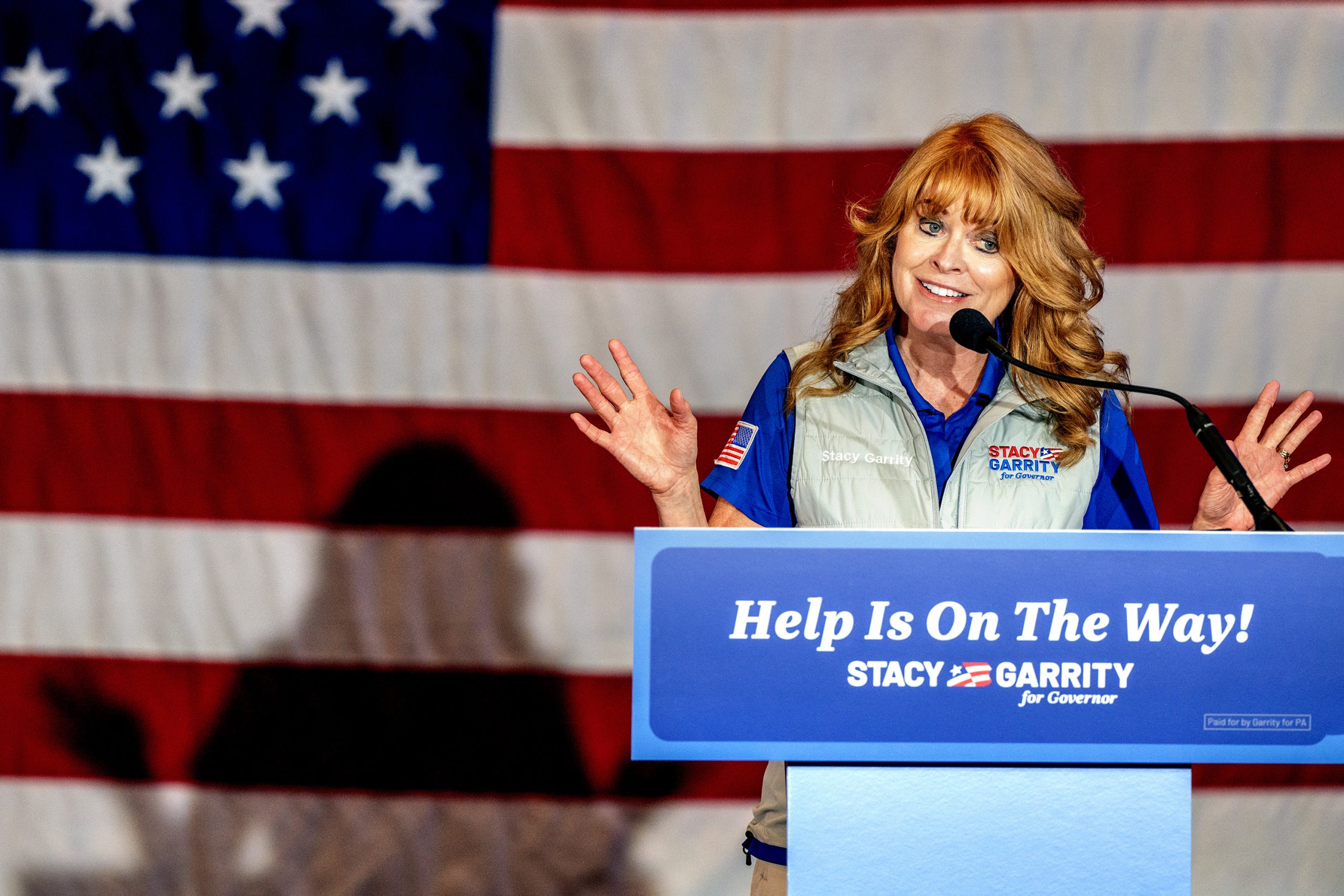
    At her campaign launch in Bucks County in August 2025, Garrity stood behind a podium, unveiling her new campaign motto: “Help is on the way.”

    But with just weeks left until Election Day on Nov. 3, it appears she’s still waiting.

    Republicans endorsed Garrity last fall, an unprecedented move to clear the field and build enthusiasm for the top of the midterm election ticket. But with a lot on the line for her party and facing a popular incumbent, she has struggled to gain name recognition and fundraise. This month, the nonpartisan Cook Political Report rated the swing-state race “Solid Democrat.” According to the most recent campaign finance filings, Garrity has raised nearly $3 million while Shapiro brought in $60 million.

    State Treasurer and Republican candidate for governor Stacy Garrity holds a rally in Bucks County Sept. 25, 2025, at the Newtown Sports & Events Center.Tom Gralish / Staff Photographer

    Garrity, in part, blames her meager cash balance on Shapiro’s reputation as a calculated and sometimes spiteful politician. She said she’s been told by industry leaders — whom she declined to name — who usually support GOP candidates that they can’t support her financially because they fear retribution from Shapiro.

    While Shapiro has campaigned alongside each of the Democratic challengers in four battleground congressional districts, the GOP incumbents have not appeared with Garrity in advertisements. And in several state legislative races, GOP candidates in swing districts are boasting their work with Shapiro in Harrisburg.

    In a statement, a spokesperson for Shapiro’s campaign emphasized Garrity’s support for Trump’s agenda.

    “Stacy Garrity has made clear that she would be nothing more than a rubber stamp for Donald Trump’s agenda of cruelty, chaos, and corruption,” said spokesperson Sam Reposa. “Garrity is completely wrong for Pennsylvania — and she cannot be trusted to stand up for our commonwealth.”

    Garrity said she doesn’t expect help from the Republican Governors Association or political action committees backed by Pennsylvania’s richest person Jeffrey Yass — a few examples of the big-dollar donors Republicans usually rely on to help them bankroll their advertising, like the $30 million Shapiro has already spent on TV and digital ads in the race so far. While Shapiro spent nearly $3 million on ads last week, Garrity spent only $2,146, according to media tracker AdImpact.

    The RGA and the Commonwealth Leaders Fund, the GOP PAC historically backed by Yass, did not respond to requests for comment.

    But Garrity said she’s still hopeful Trump, who endorsed her in January, will visit the state to campaign on her behalf, although she added “we don’t know what his schedule is” and “we don’t have any dates.” When the president visited Pennsylvania in June to tout manufacturing jobs, he didn’t mention Garrity by name, instead musing about who else in the GOP could have run for the state’s top job. He later praised her in a video posted on social media, saying she would do a “fantastic job” as governor.

    Pennsylvania Republicans are motivated to vote for Garrity come November, insisted Senate President Pro Tempore Kim Ward (R., Westmoreland), the top Republican in the state Senate.

    “Republicans are definitely happy to have a candidate that they can trust if she becomes governor. They’re going to go out and they’re going to vote for her,” Ward added. “She’s a down-to-earth person and she will do what she says.”

    The Pennsylvania Republican Party declined to comment.

    The underdog

    Garrity is familiar with being the underdog.

    The 62-year-old veteran made her first foray into statewide Pennsylvania politics in 2020, when she campaigned for treasurer. She was challenging a well-funded Democratic incumbent Joe Torsella. She was outraised 13-to-1, and entirely underestimated.

    But as Garrity tells it, she just put her head down and outworked him.

    And she shocked many when she won, as some Pennsylvania voters split their tickets between former President Joe Biden and GOP state row offices. (Shapiro, then running for reelection as attorney general and the only Democratic incumbent to win statewide that year, held on by 300,000 votes, or 5 percentage points.)

    Shapiro has often attacked Garrity for questioning Biden’s 2020 victory, referring to her comments at a 2022 Trump rally in Western Pennsylvania, where she told the crowd that “we know that he won.” Earlier this year, she walked back those comments, saying she had gotten caught up in the moment and was “painfully aware” Biden was the president. She reaffirmed that in an interview last week, formally recognizing that Biden was elected.

    Buttons for State Treasurer Stacy Garrity’s gubernatorial campaign and President Donald Trump are left on a table following a VIP reception before a Garrity rally in Bucks County on Sept. 25, 2025.Tom Gralish / Staff Photographer

    Garrity’s time as treasurer has been largely apolitical, aside from her decision to invest more than $56 million in Israel Bonds in the months after Hamas attacked Israeli civilians on Oct. 7, 2023, or her decision to withhold payments to contractors who did security work on Shapiro’s personal home following an arson on the state-owned mansion — a move which Shapiro viewed as politically motivated. She’s focused on making the office more transparent, promising to post online every hidden fee in utility bills as line items. She’s responsible for paying the state’s bills, investing its more than $180 billion portfolio, and more in the little-known row office job critical to the state’s daily function.

    Unlike her opponent Shapiro — who has been in elected office for nearly two decades — Garrity isn’t a natural politician.

    “She is a good person that you can trust, and who is almost your girl next door,” said Ward, a frequent critic of Shapiro on political and policy issues in Harrisburg. “She doesn’t come from a big town, she is that community-focused, small-town person that cares about people.”

    Garrity “might not have the money to have her face on TV every day” like Shapiro, noting that his taxpayer-funded communications machine totaled at least 21 full-time staffers as of July 2025, and alluding to Garrity’s fundraising woes.

    “She’s not one who is carrying a banner of ‘Look at me, I’m so great,’” Ward added.

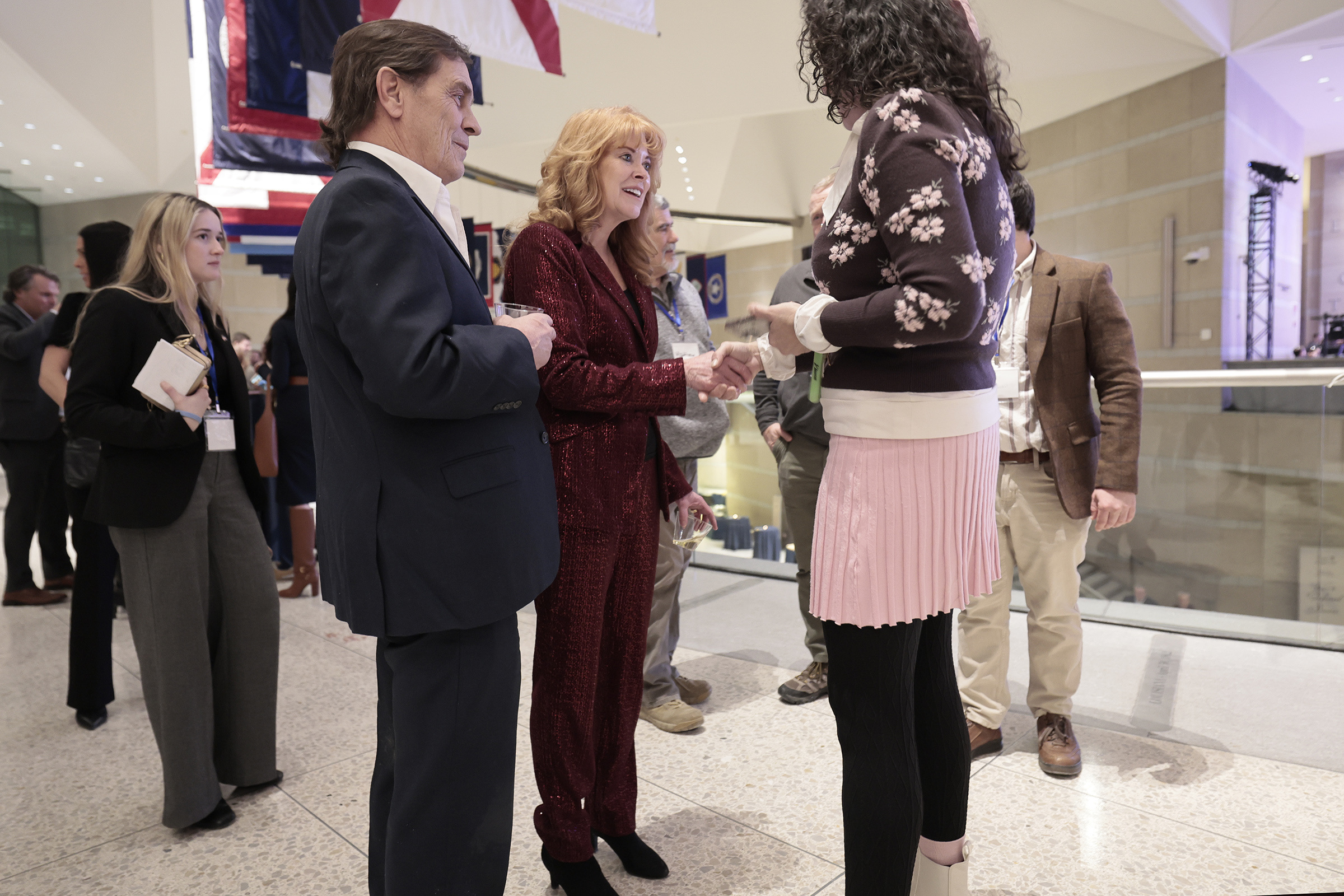
    Treasurer Stacy Garrity (center) meets people during an event hosted by Americans for Prosperity, Concerned Veterans for America, and the Libre Initiative at the National Constitution Center in Philadelphia on Jan. 29.Elizabeth Robertson / Staff Photographer

    In the Army Reserve, Garrity was a whistleblower during the Iraq War, and her testimony was included in a sweeping abuse investigation that unearthed human rights violations at the infamous Abu Ghraib prison, SpotlightPA reported. She spoke out against alleged abuse of war prisoners at a different internment facility, Camp Bucca. She faced a personal cost for it, too, she told SpotlightPA, including alienation from her peers and even death threats. But she stuck it out, and during her next deployment, she was appointed acting commander of the camp.

    Her pivot to politics, she said, came years later, during her time working at one of the largest tungsten smelter facilities in the world — a career she held throughout her time in the Army Reserve. As she tells the story, she had a meeting in Pittsburgh about the National Defense Authorization Act when a lobbyist approached her, mentioning the rare earth elements that the Department of Defense was prohibited from buying from American adversaries, like China, Russia, North Korea, and Iran.

    Tungsten wasn’t on the list. She helped to change that and shortly after, lobbied a “don’t buy from the bad guys” tungsten campaign in Washington. And it worked. To date, the Department of Defense is still prohibited from buying tungsten for its munitions from American adversaries.

    New ideas for old problems in Pennsylvania

    Like many around the state, Garrity said her family in rural Bradford County is feeling the pinch of Pennsylvania’s economy.

    She has a soft spot for seniors on fixed incomes like her aunt, for whom she pays her utility bills and helps her apply for property tax rebates each year.

    If elected, Garrity wants to eliminate property taxes for seniors on fixed incomes, first responders, and veterans to be supported by savings found in wasteful spending in Pennsylvania’s Medicaid programs. She also wants lawmakers to amend the state constitution to cap how much school property taxes can be raised without voter approval.

    She said she’d follow through on a promise Shapiro made on the campaign trail in 2022 to give all Pennsylvania drivers a $250 gas rebate during the summer. She wants to triple the program to $750 — for each month of the summer — to give every Pennsylvania driver over the age of 18 a check to cut their monthly gas bills by a third during the pricey summer months.

    Day One in a Garrity administration would begin with support for a school voucher program targeted toward children in Pennsylvania’s lowest-performing schools — a plan Shapiro helped design with Senate Republicans during his first budget negotiations that he later line-item vetoed, a move that remains a sore spot among Republicans in Pennsylvania’s split legislature.

    On housing, Garrity wants to support first-time homeowners by buying down the interest rates, as they hit record highs in the Philadelphia area.

    She opposes legalization of recreational marijuana — a move Shapiro has suggested to generate revenue for the state — with concerns for its impact on mental health, domestic violence, and young adult development.

    She doesn’t believe the minimum wage should be raised, either — a top priority for Harrisburg Democrats if they win control of the governor’s mansion and both legislative chambers. Pennsylvanians at most low-skill jobs are already earning hourly wages much higher than $7.25, Garrity contended. In 2025, there were 511,000 Pennsylvanians who earned between $7.25 and $15 an hour, and an additional 43,000 who earned $7.25 or less — all of whom would benefit under the Democrats’ minimum wage increase proposal, according to the state Department of Labor and Industry.

    “When you have a humming economy, you know the wages are going up, up up up. It’s largely been taken care of,” she said. “If you can make $15 at McDonald’s, you’re not doing so bad.”

    Garrity is married to Daniel Gizzi, a ceramics project analyst, and the two do not have any children. She completed several unsuccessful rounds of in vitro fertilization, she said, making reproductive health issues very personal to her.

    “I would do anything that I could to support women and moms and make it easier to have children, if that’s what they want,” she said.

    However, she maintains she is anti-abortion with exceptions for rape, incest, and life of the mother — but that her personal position doesn’t matter, because abortion in Pennsylvania has for decades been permitted up to 24 weeks of gestation.

    She also wants to work with the Trump administration, rather than filing frequent lawsuits, like Shapiro has done. That would include sharing the state’s voter rolls with the Trump administration — a move Shapiro’s Republican secretary of state has rejected on multiple occasions.

    Examining the state’s voter rolls harks back to Garrity’s pledge to be the “most transparent governor” in the state’s history, she said. If there’s nothing to hide, there should be no problem with sharing.

    A fan of Pennsylvania — and Buffalo

    The former soldier looks much more like a state treasurer these days, in a matching beige skirt suit, a bright smile, and signature large-barrel curls of strawberry blond draping past her bangs onto her shoulders. She uses phrases like “Oh gosh!” and “My goodness!” when she gets excited about some of her policy ideas.

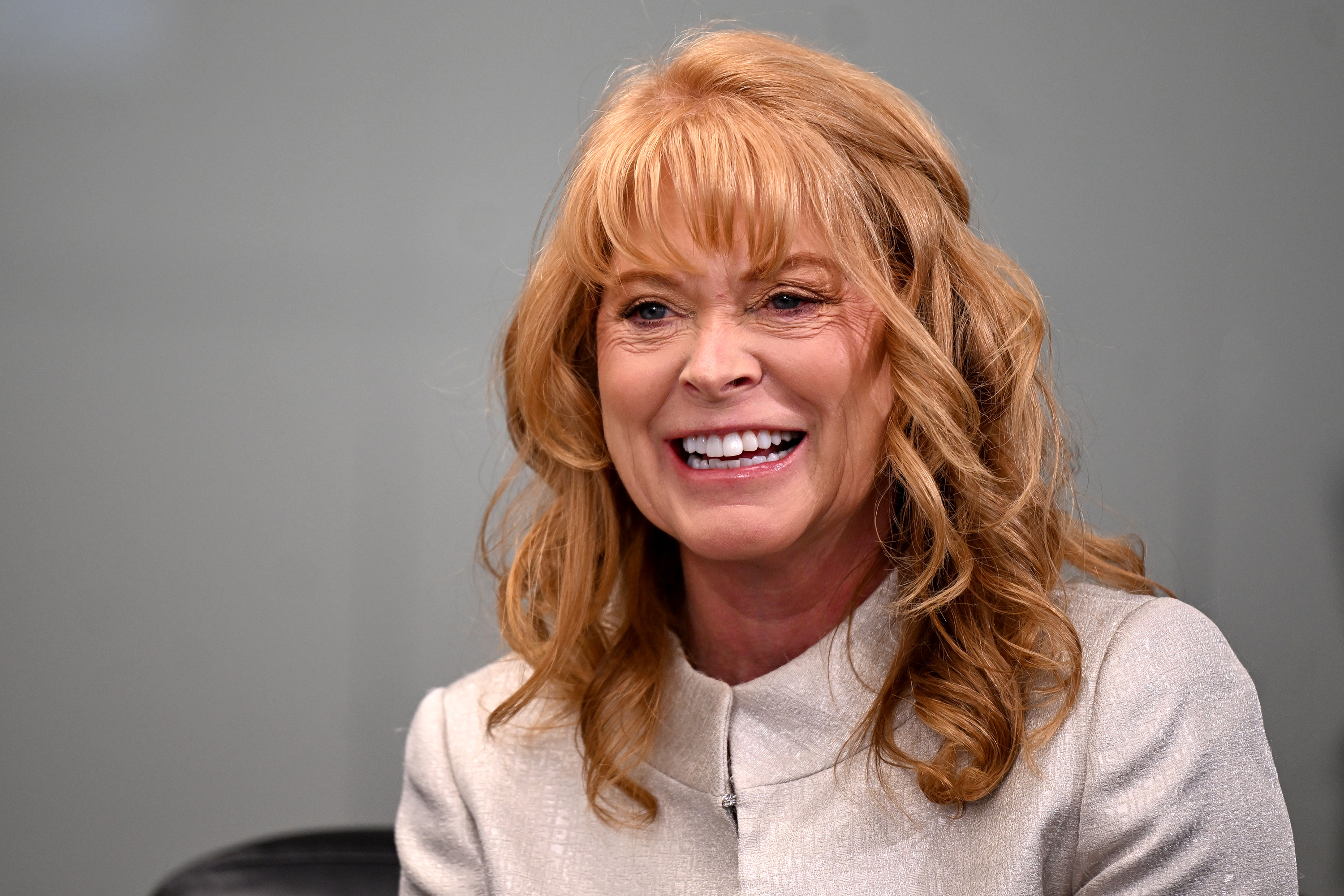
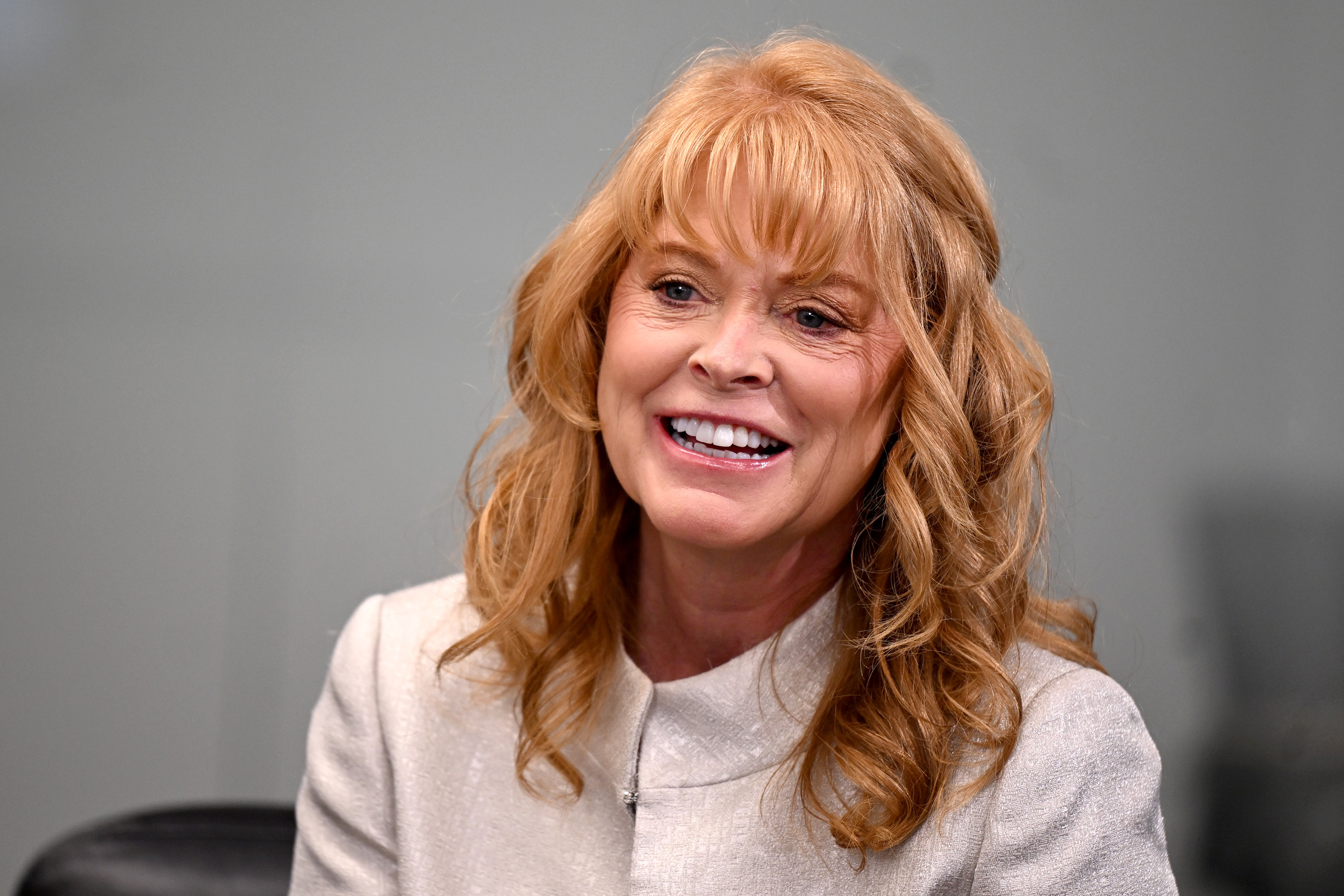
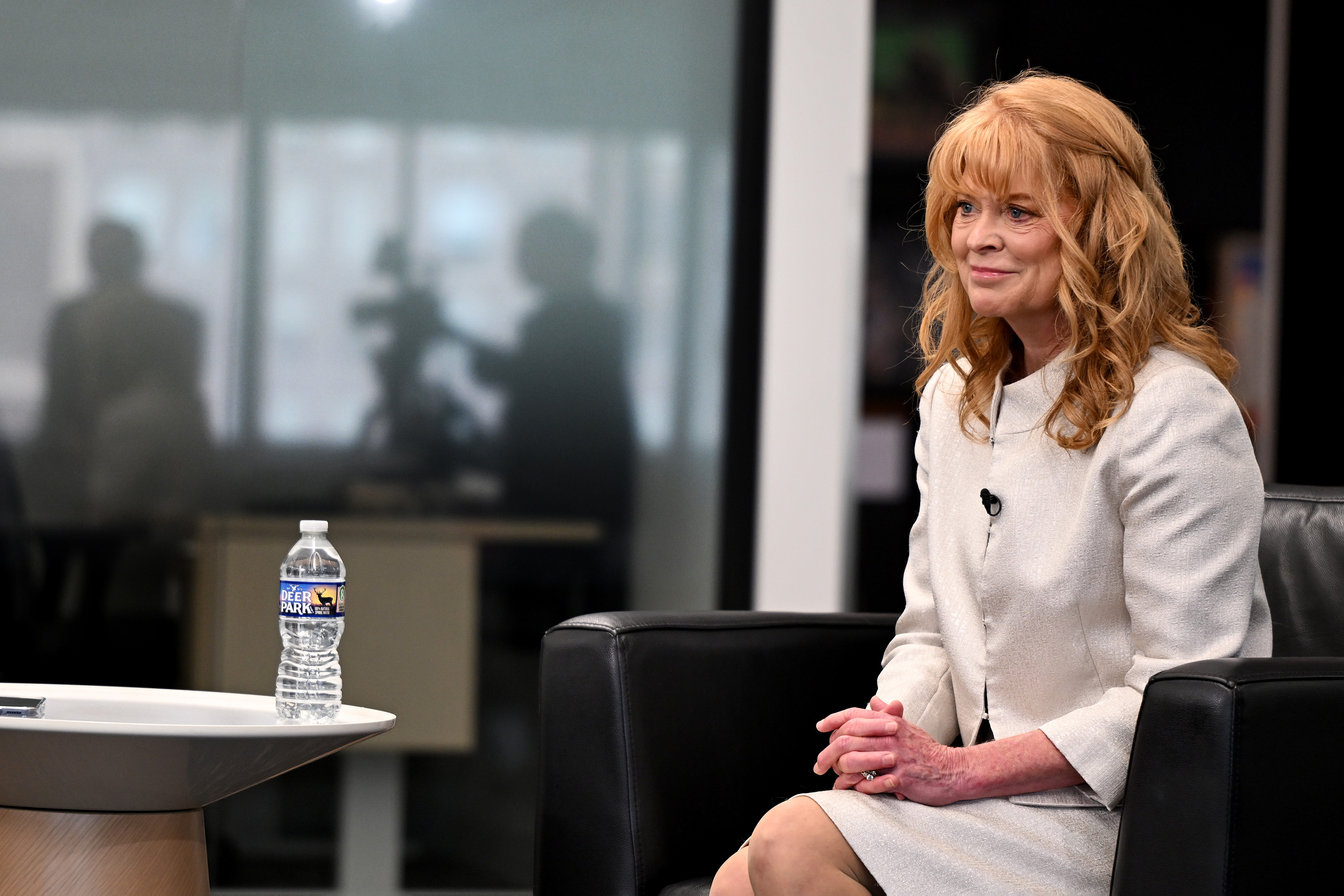
    State Treasurer and Republican candidate for governor Stacy Garrity sits down for an interview at The Inquirer offices on Sept. 28.Tom Gralish / Staff Photographer

    She doesn’t have any time for leisure these days between campaigning for governor and managing public funds, she said. “Oh I have no time for personal entertainment,” she added with a laugh.

    She spends most days in the car on Microsoft Teams meetings, driving around the state for campaign or treasury events. She’s gotten back into running in the early mornings as a moment of solace for herself.

    Unlike Shapiro, a son of Montgomery County and diehard Philadelphia sports fan, Garrity says she holds no strong sports team allegiances. She roots for all Pennsylvania’s teams: the Eagles and the Steelers, the Flyers and the Penguins, the Phillies and the Pirates.

    “I probably shouldn’t admit this, but I also like the Buffalo Bills,” she said.

    The New York team, whose games are often broadcast in the media markets near Garrity’s hometown, has fallen short in the playoffs in recent years, struggling to carry regular season success to a championship.

    Garrity added that she still had fun celebrating the Eagles’ recent Super Bowl win — a feat the Bills have never achieved.

    Clarification: This story has been updated to describe Garrity’s work as a business executive.
  • Trump does not plan to reimburse taxpayers for controversial promotional ads

    Trump does not plan to reimburse taxpayers for controversial promotional ads

    A day after President Donald Trump said his super political action committee would pay for television ads promoting him that had been funded by taxpayers, White House officials said the group did not plan to reimburse the government for the more than $10 million it had already spent on the ads.

    Trump announced on Monday evening that he was planning to have his super PAC, MAGA Inc., pay for the ads, which had drawn backlash from members of both parties. The White House officials later said that his promise would only apply “moving forward.”

    Then, on Tuesday, a new taxpayer-funded ad — bragging about the U.S. success in taking out Venezuela’s former leader Nicolás Maduro — began airing on television. The new ad features Trump, Secretary of State Marco Rubio, and Defense Secretary Pete Hegseth.

    Officials in both parties have criticized the ads, which are being aired amid a heated midterm campaign. And some have said they could violate federal laws for using taxpayer funds for “publicity or propaganda purposes.” One of the ads included footage that had originally appeared in a 2024 Trump campaign video.

    Facing backlash for the use of public funds for the promotional ads, Trump appeared to retreat Monday, posting a message on Truth Social while en route to a rally in Nebraska. He wrote, “I have decided to do the Patriotic Ads, among others, and pay for them myself, and with money I raised for MAGA, Inc.”

    A White House spokesperson said Tuesday that “the president’s Truth was not referring to reimbursement.”

    When Trump posted the message, more than $10 million of such ads had run, according to AdImpact, the ad-tracking service.

    When Trump was asked Tuesday if he would reimburse the government for the ads, he demurred and defended them as “promotion for the country” and said “we’ll decide.”

    As of midday Tuesday, nearly $11.5 million has run, including a small sum for the new 60-second ad about the Venezuela operation. So far about $17,000 had been spent on the new ad, which began airing in the early hours of the day.

    Most of the funds so far — $7.2 million — have paid for an ad that reused material from his 2024 campaign that casts Trump’s detractors as “villains.”

    The ads are running nationally on cable and network television and are paid for through a $20 million contract that uses funds from the Department of Homeland Security. Trump personally instructed his budget director to use taxpayer money for TV ads.

    Senate Minority Leader Chuck Schumer called for an investigation into the payments for the ads. “It’s not enough to simply have his super PAC slush fund foot the bill — an illegal action itself,” he said in a statement. “Trump must return this money to the American people and there must be a full investigation into this gross waste and abuse of taxpayer dollars.”

    The White House did not respond to questions about whether the administration was canceling any or all of the remaining money planned on the ads. The White House also did not answer questions about whether Trump planned to have his super PAC pay for ads that have run after his post Monday.

    But the declaration from the president is a rare reversal in a second administration in which Trump has governed by gut instinct and a refusal to accept norms or most limits on executive power. The ads drew criticism from Democrats and some Republicans as an inappropriate use of taxpayer dollars; the spots tend to glorify the president rather than focus on any specific policy item.

    As of now, the majority of ads that MAGA Inc. appears to be funding has been run through two newly created super PACs linked to it, with different names.

  • Top crypto group to pour millions into bipartisan slate of House races after key legislation stalls

    Top crypto group to pour millions into bipartisan slate of House races after key legislation stalls

    WASHINGTON — A top cryptocurrency campaign organization is unveiling a bipartisan list of House members that it will support in the November midterms, as one of the biggest-spending interest groups looks to flex its muscles after a mixed legislative year in Congress.

    The list, provided first to the Associated Press on Monday, includes 19 Republicans and 13 Democrats, with six members getting $1 million in spending each. All 32 supported legislation that was a top priority for the industry.

    The bipartisan slate pales in contrast, however, to Fairshake’s biggest general election investment so far. The group announced plans in September to spend nearly $30 million against Democratic Senate candidate Sherrod Brown in Ohio, who is facing Republican Sen. Jon Husted in one of the most competitive races of the cycle.

    Brown previously faced nearly $40 million in cryptocurrency spending in 2024, when he lost to Republican Bernie Moreno. He had avoided becoming a major target this year until last month, when the industry moved against him after Senate Democrats helped block the CLARITY Act, which would have achieved the industry’s goal of establishing a federal regulatory framework for digital assets.

    Fairshake would not say whether it plans to spend more in House or Senate races before November. The group and its affiliated PACs reported about $120 million in cash on hand at the end of August.

    Big spending could shape battleground House races

    Three Republicans and three Democrats will get the most help from Fairshake, including several members facing competitive reelection races where the outside spending could provide a significant boost.

    On the Democratic side, Fairshake plans to support Reps. Janelle Bynum of Oregon, Steven Horsford of Nevada, and Derek Tran of California with $1 million each.

    On the Republican side, Reps. French Hill of Arkansas, Bryan Steil of Wisconsin, and Bill Huizenga of Michigan will receive the same level of support.

    Fairshake did not disclose how much it is spending on the other 26 House candidates it is supporting.

    The organization is emphasizing the bipartisan nature of its spending as the cryptocurrency industry looks to the next Congress to revive legislation that stalled this year.

    Geoff Vetter, a spokesperson for Fairshake, pointed to the group’s investments in primaries and special elections this year, when it and its affiliated groups spent $40 million supporting 29 Democrats and $31 million supporting 28 Republicans.

    “Fairshake has always been and always will be an issue-focused organization. We back pro-crypto candidates who support American innovation in both parties,” Vetter said. “We’ve won 53 of the 57 races we engaged in this cycle and look forward to continuing to build on the largest pro-crypto caucus in American history.”

    More Senate spending remains an open question

    Senate Democrats in September blocked legislation long in the works that aimed to give the industry more regulatory certainty and divide oversight between federal regulators. Opponents raised concerns that it did not adequately address President Donald Trump’s crypto investments. Trump took in more than $1.4 billion in crypto-related income last year.

    Soon after the vote, Fairshake pledged nearly $30 million against Brown.

    While the group also targeted Brown in 2024, its Senate spending that year crossed party lines. Fairshake’s network also spent about $10 million each supporting Democratic Senate candidates Ruben Gallego in Arizona and Elissa Slotkin in Michigan.

    Gallego called the decision to target Brown “dumb politics.”

    “You still need 60 votes after this election if you want to pass market structure,” Gallego said, referring to the Senate’s threshold for advancing most legislation. “Now the negotiations will just get harder and the deal is going to be not as good as they had right before they decided to kill it.”

  • Democrats project a party milestone in Congress: 100 women in the House

    Democrats project a party milestone in Congress: 100 women in the House

    WASHINGTON — Democrats pressing to win control of Congress in the midterm elections are also reaching for a major milestone in their ranks: electing at least 100 women to the House, the most ever in a legislative body that is still heavily dominated by older white men.

    With female candidates competing in many key districts that will determine the House majority, and polls showing the party gaining ground in those contests, Democrats are projecting they could have as many as 113 women in their ranks next year.

    “I’m incredibly confident that we will pass that 100 mark,” Rep. Teresa Leger Fernández of New Mexico, chairperson of the Democratic Women’s Caucus, said in an interview. “The real issue is how far above it do we go.”

    The peak projection of 113 could only be reached if Democrats won every competitive race, including a few that more strongly favor Republicans, a highly unlikely scenario even in the best of years. But even reaching 100 would be a high-water mark that was unthinkable just a generation ago. When EMILY’s List, the largest funder of female Democratic candidates who support abortion rights, was founded in 1985, less than 5% of the House Democratic Caucus were women. Now, it is approaching 50%.

    “We have all along in this election cycle put women front and center to deliver the House majority,” said Jessica Mackler, president of EMILY’s List, who noted that women backed by the organization make up a majority of toss-up House races.

    That didn’t happen by accident. This year, 18 out of the 40 Democrats in the party’s “Red to Blue” program that funds top contenders in battleground districts are women.

    “Women are going to give Democrats the majority in two ways,” Leger Fernández said. “We’re going to elect women candidates who will flip the House, and it’s also women voters who will come out and overwhelmingly vote for Democratic candidates, because the two hardest-hit groups by the Republicans’ policies have been Latinos and women.”

    There are 97 women in the House Democratic Caucus (including two nonvoting delegates who represent Washington, D.C., and the Virgin Islands), a record for female representation accounting for around 45% of Democratic members.

    While some are retiring, Democrats expect those who remain to be joined by a large crop of women running in safe Democratic districts and others who are strongly favored to win competitive races in an environment that polls show is favorable to their party, resulting in even higher numbers next year.

    The first tier of candidates Democratic leaders are counting on includes a dozen women who are running in open or safely Democratic seats, including Melat Kiros in Colorado, Darializa Avila Chevalier and Claire Valdez in New York, and Stefany Shaheen in New Hampshire.

    Three others pressing to flip Republican districts are seen as very likely to win: Marni von Wilpert, who is running in a newly drawn California district; Denise Powell, who is seeking a Democratic-trending Nebraska seat occupied by Republican Rep. Don Bacon; and Rebecca Bennett, who is polling ahead of Rep. Tom Kean Jr., the lawmaker who was absent from Congress for more than 100 days for what he later revealed was a struggle with depression.

    A dozen more women are running in races that the nonpartisan Cook Political Report ranks as “tossups.” Leger said she was confident that three or more of them would win in November. They include challengers to some of the most vulnerable Republican incumbents, including Reps. Rob Bresnahan Jr. of Pennsylvania, Jen Kiggans of Virginia, Derrick Van Orden of Wisconsin, Juan Ciscomani of Arizona, Mike Lawler of New York, and Mariannette Miller-Meeks of Iowa.

    If a handful of Democratic women running to flip more Republican-leaning districts in Colorado, Florida, Iowa, and South Carolina prevail, the ranks could swell even more.

    Should Democrats win the majority, Leger said she expected women to be the driving force next year on an agenda focused on childcare and eldercare.

    In her state of New Mexico, she said, “We have a majority-women legislature with a woman governor and we have universal childcare; I want to see that kind of progress.”

    Kelly Dittmar, a professor of political science at Rutgers University, said that representation mattered also “for perceptions of legitimacy.” A growing number of women serving in legislatures not only changes policy but “changes the institutions themselves,” she said.

    As an example, Dittmar pointed to the reaction in 2020 to an episode in which Rep. Alexandria Ocasio-Cortez (D., N.Y.) was called a “f—ing b—” by a male Republican colleague. Instead of letting it go, Ocasio-Cortez delivered a floor speech in which she read the vulgarity into the congressional record, and other female lawmakers rose to recount their own stories of experiencing sexism in the halls of power.

    Leger said having more women in Congress would also be more effective than any policy change in addressing the culture of sexual harassment on Capitol Hill.

    “When you have close to 50% of the Democratic caucus understanding what is it like to be on the other end of sexual assault, sexual mistreatment, sexual harassment, the conversation changes,” she said.

    Republicans have far less gender diversity in their ranks in the House, where there are currently 32 GOP women (including two nonvoting delegates) — around 15% of their members — and are at risk of those levels dropping further. To maintain the party’s number of female House members, it’s likely that six vulnerable GOP women would have to succeed in fending off their challengers next month.

    The GOP is also losing much of its racial diversity in the House: All four Black Republicans serving there are leaving Congress next year.

    Rep. Emilia Sykes (D., Ohio) said there were still small daily reminders that she served in an institution that was not designed with her in mind, even as the number of women climbed.

    “The size of the chairs is a problem,” Sykes said. “I’m not a big person; sitting in the chairs that are very large, my feet dangle.”

    She said she sometimes receives letters addressed to “the congressman,” which boggles her mind.

    “I think, ‘OK, you’re coming to advocate for millions of dollars and significant policy changes, and you have the lack of research to know the member isn’t a man,’” she said.

    Sykes said her journey to Congress as a young Black woman has been challenging: Fundraising has been more difficult for her, she said. Consultants were quick to overlook her when she first wanted to run. But she said she was a firm believer in the mantra “if you see it, you can be it.”

    “For the women who have found their way,” she added, “the fights that they’re fighting are incredible.”

    This article originally appeared in the New York Times.

  • Obama to appear with El-Sayed in Detroit as the ex-president gets more involved in the midterms

    Obama to appear with El-Sayed in Detroit as the ex-president gets more involved in the midterms

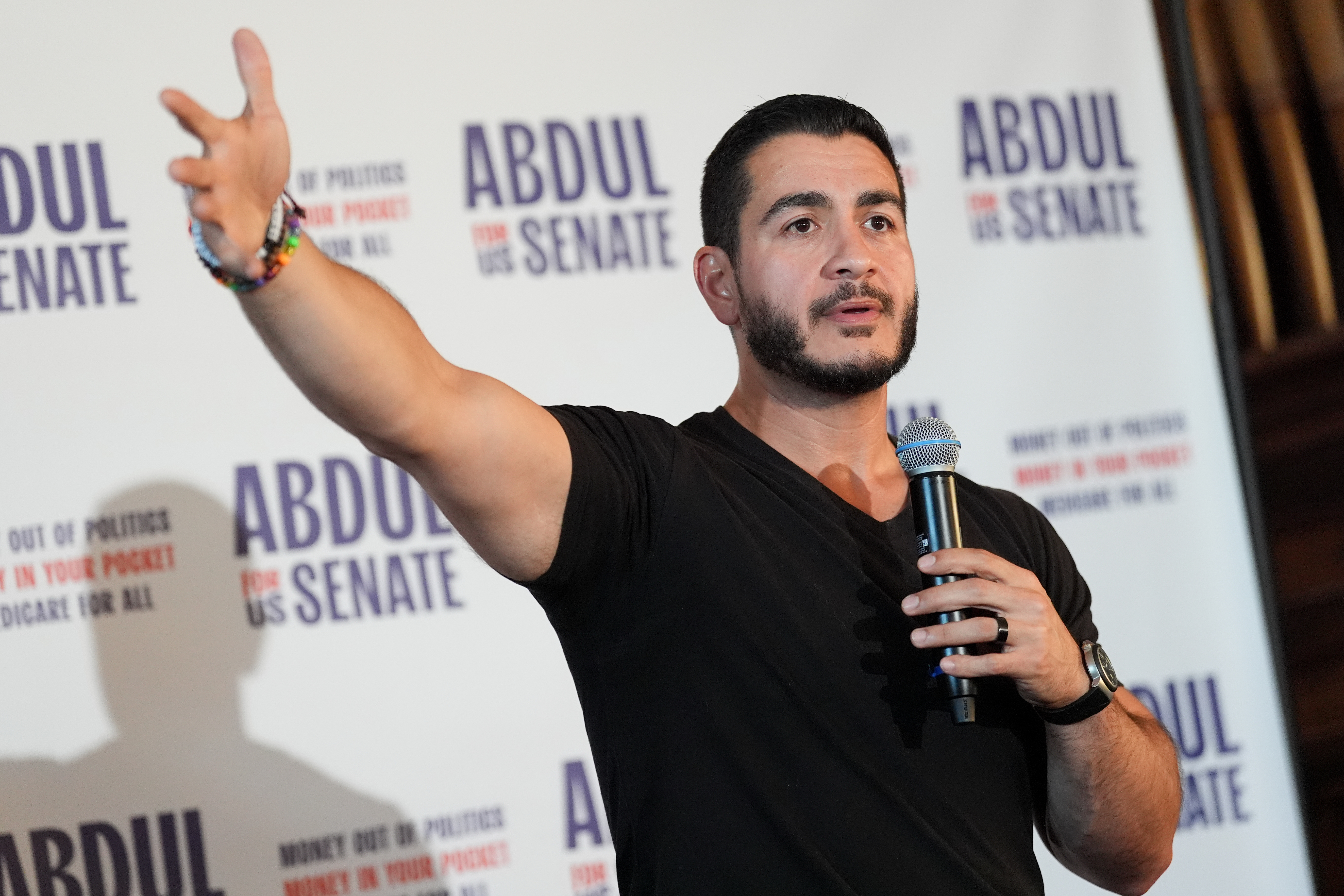
    DETROIT — Former President Barack Obama will campaign alongside Michigan Senate candidate Abdul El-Sayed in Detroit later this month, lending his support to the progressive nominee after a bruising Democratic primary exposed divisions within the party.

    Obama will appear with El-Sayed at an Oct. 24 rally that will also feature other top Democratic candidates in Michigan, including Jocelyn Benson, the party’s nominee for governor. Obama is getting significantly more involved in the midterm elections, with additional campaign stops and advertisements expected to come in the closing weeks, according to plans shared first with the Associated Press.

    The Detroit event is a notable show of support for El-Sayed, who defeated moderate Rep. Haley Stevens in an August primary and has since worked to consolidate Democratic support in his race against Republican Mike Rogers. The open seat is expected to be among a handful that will decide which party controls the majority next year.

    Obama taped two dozen ads last week for Democratic candidates for governor and Senate that will be released in the coming days and weeks, in addition to more campaign stops soon to be announced.

    He appeared earlier this year in a campaign ad with Iowa Senate candidate Josh Turek and campaigned in Texas with Senate candidate James Talarico and the candidate for governor, Gina Hinojosa. This week, he will headline a Washington fundraiser supporting Democratic Senate candidates.

    Obama aims to help El-Sayed shore up support in a key area

    El-Sayed defeated Stevens by less than a percentage point in a primary that became a national test of the Democratic Party’s ideological direction. El-Sayed drew support from leading progressives, including Vermont independent Sen. Bernie Sanders and Democratic Rep. Alexandria Ocasio-Cortez of New York. Stevens was backed by Senate Democratic Leader Chuck Schumer.

    Some ads that supported Stevens showed Obama praising her, and she outperformed El-Sayed in Wayne County, winning about 51% of the Democratic primary vote compared with 45% for El-Sayed. The county includes Detroit, where more than three-quarters of residents are Black.

    Kamala Harris, the first Black and South Asian person to serve as vice president, campaigned with El-Sayed last month.

    Now the Oct. 24 rally with Obama, the first Black president, could give El-Sayed a boost on the first day of Michigan’s required early in-person voting period. Obama spoke with El-Sayed by phone following his primary victory.

    It will also be a boost for the other candidates in what is one of the most consequential elections in recent Michigan history. There are open races for governor, secretary of state, and attorney general, in addition to control of the state legislature being at play.

    Benson, who will also appear with Obama, is facing Republican Rep. John James in the race for governor.

    Benson and James are set to debate for the first time on Tuesday, and El-Sayed and Rogers are scheduled to debate for the first time on Oct. 8.

    Obama returns to the campaign trail for the closing stretch

    Obama has been selective in his involvement in the midterms so far, but his planned ramp-up in the final weeks follows a pattern from recent elections. He campaigned in Detroit on Oct. 22 during the 2024 presidential election and was in the city Oct. 29 during the 2022 midterms.

    His campaign appearances can draw large crowds and prominent guests. Rapper Eminem introduced Obama at his Detroit rally in 2024.

    This week, he will headline an event with the Democratic Senatorial Campaign Committee that will include a conversation with Delaware Sen. Lisa Blunt Rochester. That follows a September event with the Democratic Congressional Campaign Committee.

  • Josh Shapiro campaigned in Bucks County for Democrats in key races: ‘You’ve got a lot of power’

    Josh Shapiro campaigned in Bucks County for Democrats in key races: ‘You’ve got a lot of power’

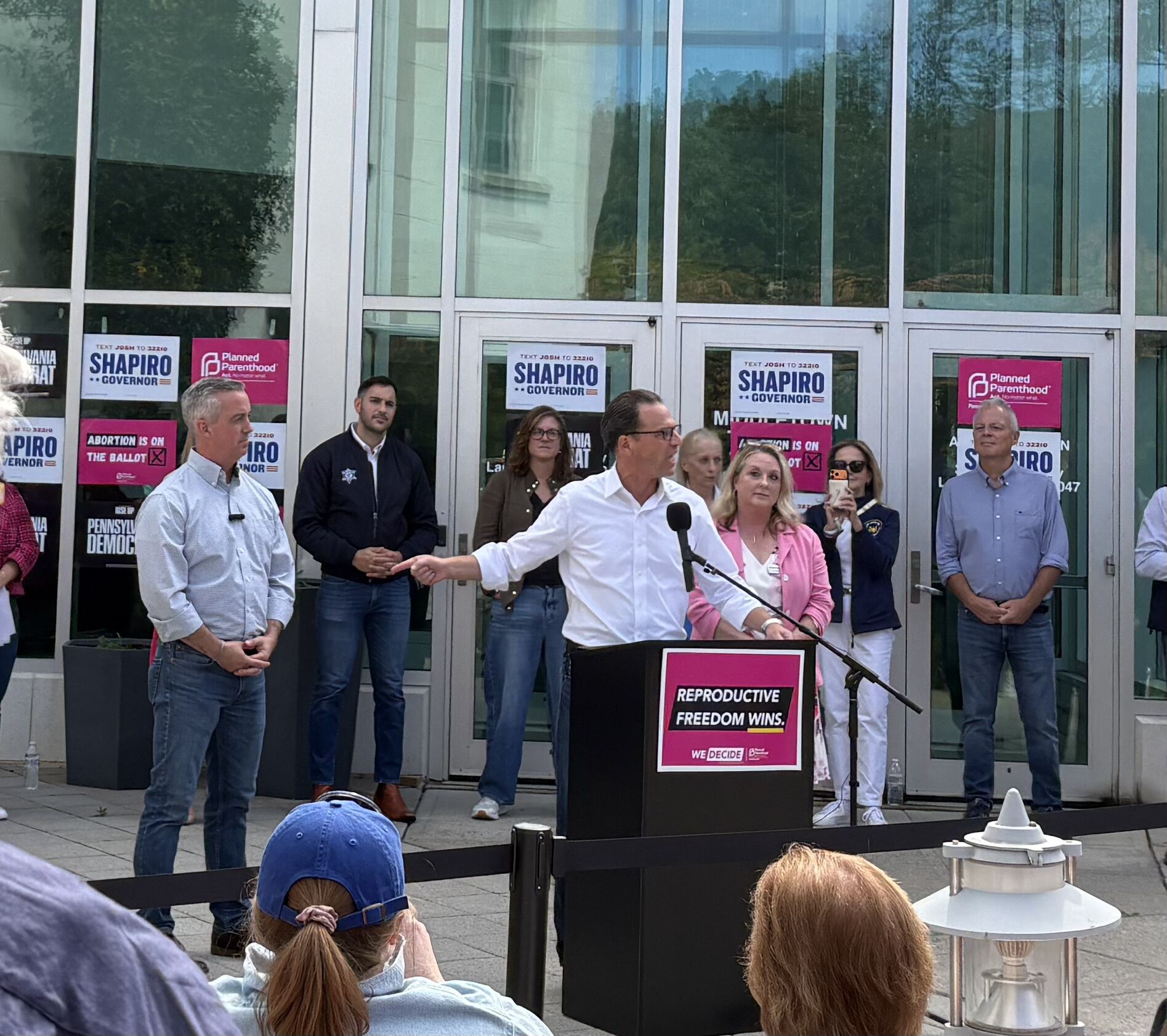
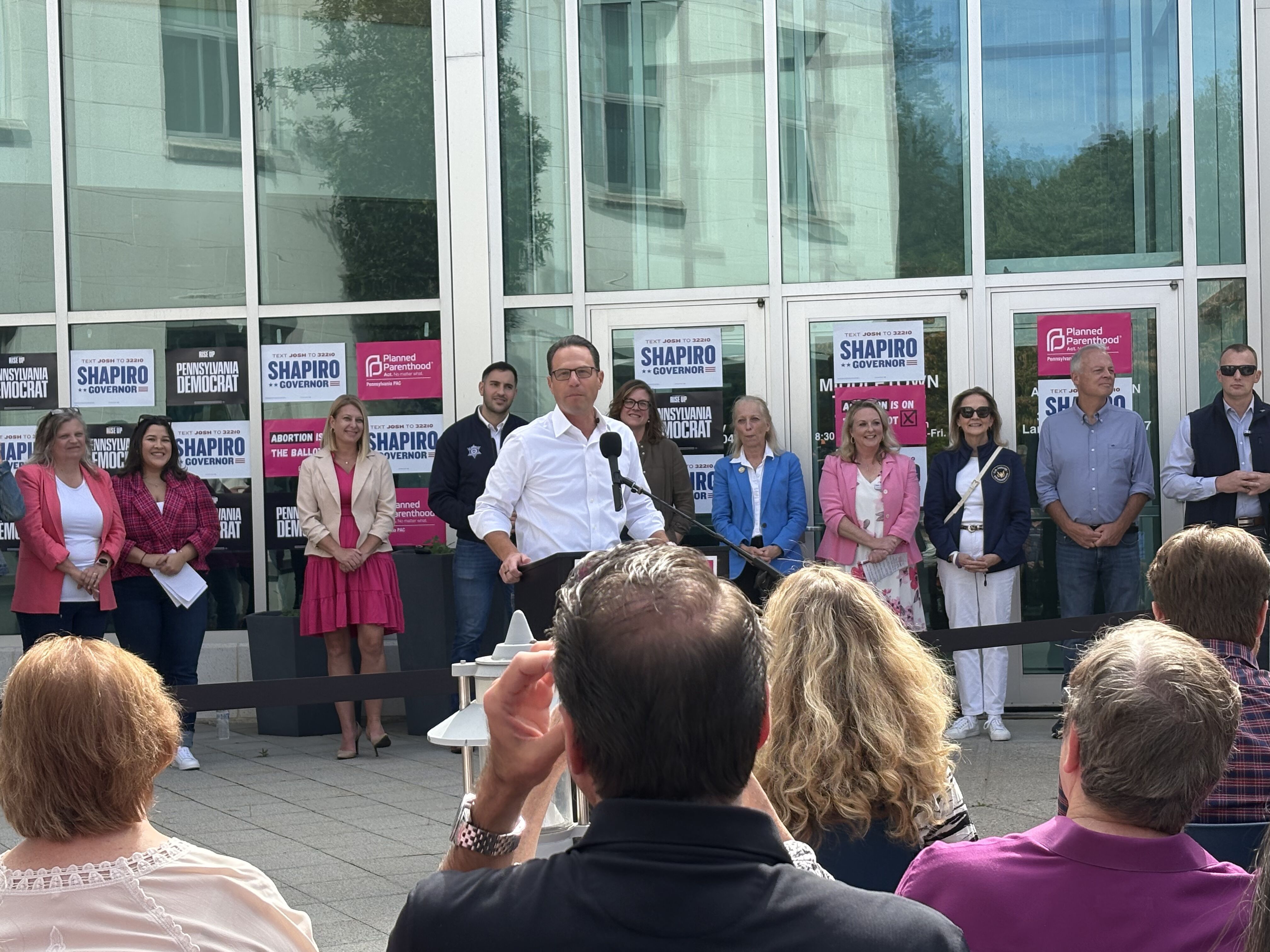
    Exactly one month to the day ahead of the highly consequential midterm elections, Gov. Josh Shapiro stood in front of the Middletown Township Municipal Center and said something pretty much everyone in Bucks County is well aware of:

    “Bucks County, you’ve got a lot of power,” he told the large crowd that gathered on the lawn and under trees with fall-tinged leaves.

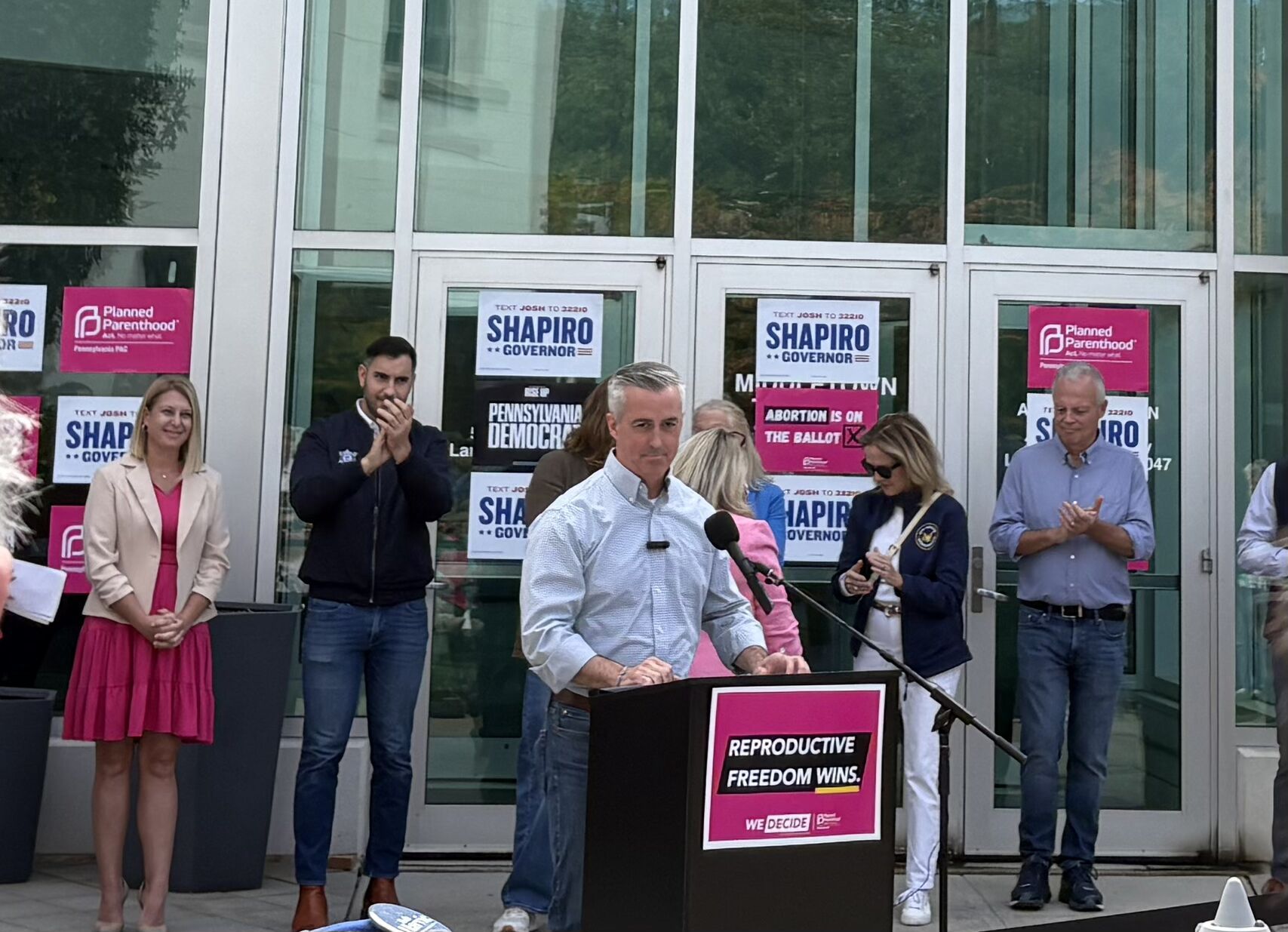
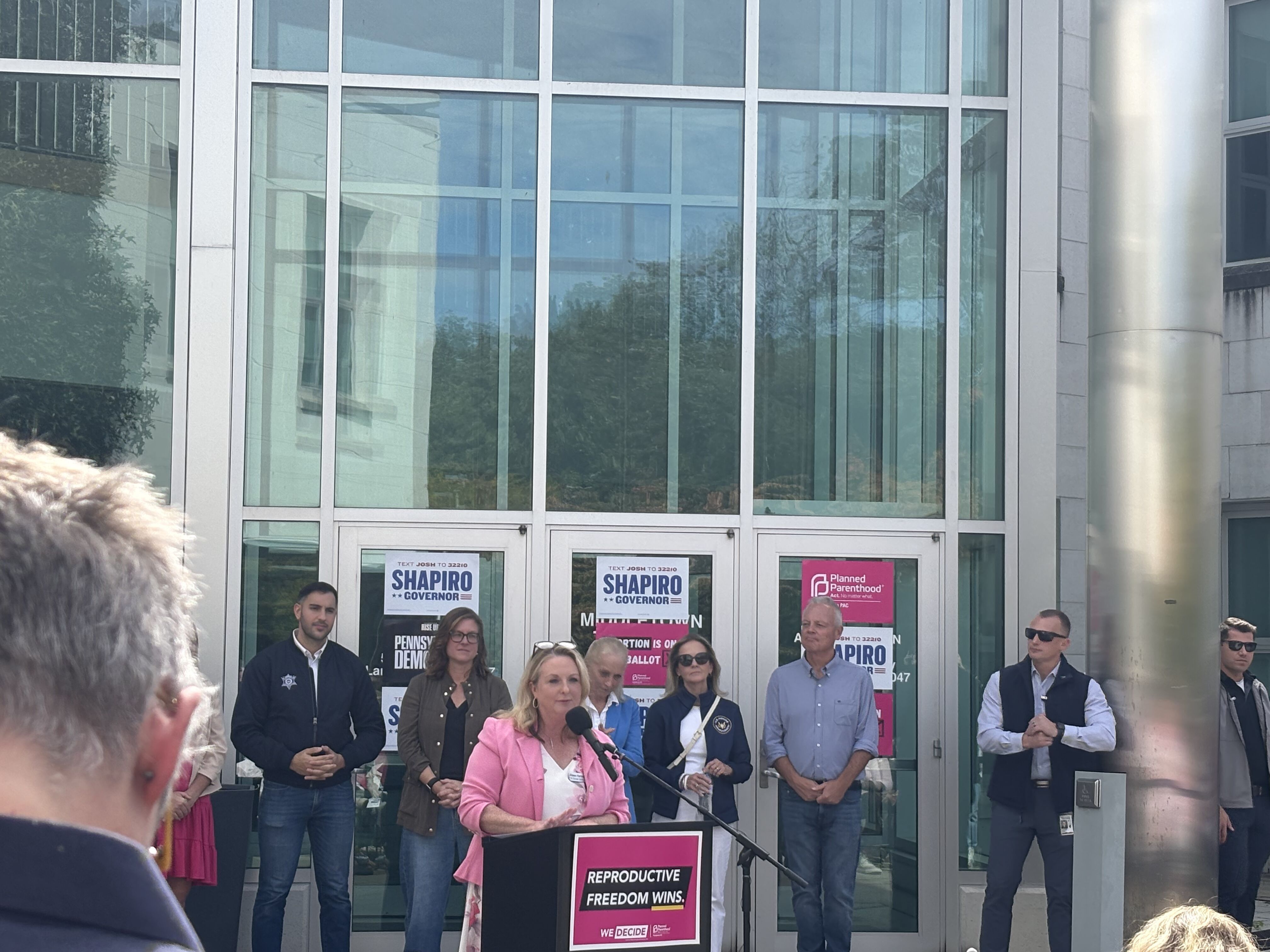
    Shapiro kicked off a day of action for Democrats organized by Planned Parenthood’s state-level political action committee Saturday afternoon in Bucks County. The purple county will be the center of crucial races for state Senate and U.S. Congress, and could determine the balance of power.

    Gov. Josh Shapiro speaks to the crowd gathered at the Middletown Township Municipal Center in Bucks County on Saturday.Fallon Roth

    Shapiro, who is also running for reelection, promoted the Democrats at the forefront of those races Saturday, including 1st U.S. Congressional District candidate Bob Harvie and Eileen Hartnett Albillar, who is running in the 6th state Senate district. He framed their election as a chance to put a check on President Donald Trump in Washington, D.C., and an opportunity to flip the state Senate and obtain the first Democratic trifecta in Harrisburg in decades.

    Bryan Allen, Kristin Egan, and Monica Weninger are also running in Bucks County to expand Democrats’ majority in the state House.

    Shapiro called the 1st Congressional District race — between Harvie and U.S. Rep. Brian Fitzpatrick (R., Bucks) — “the most competitive in the entire commonwealth.”

    Three other U.S. House seats in Pennsylvania are also being targeted by both parties: the 7th, 8th, and 10th Districts. Shapiro has also described the 9th as competitive.

    Harvie, in his speech, highlighted the affordability crisis and an “economy that is broken.” He also argued that the U.S. has “lost our stature around the world.”

    Democrat Bob Harvie (center), challenging GOP U.S. Rep. Brian Fitzpatrick in the 1st Congressional District, speaks to the crowd at the Middletown Township Municipal Center in Bucks County on Saturday.Fallon Roth

    “We’re going to put this country back in the path it was meant to be on. A country we can be proud of. A country we can be proud to hand our children and grandchildren, and a country that is strong around the world, strong at home, and we’re going to do that here in this county,” Harvie said.

    With Planned Parenthood PA PAC organizing Saturday’s day of campaigning, the slew of Democratic officials and candidates in attendance also highlighted reproductive rights in their rallying calls.

    Hartnett Albillar said in her speech that such rights go in tandem with cost-of-living issues, like making a livable wage and accessing childcare and paid family leave.

    Democrats in Bucks County, including Harvie and Hartnett Albillar, have been branding their messaging on abortion and reproductive rights as affordability issues.

    “People are scared about the unsustainable economic path that we are on, and reproductive healthcare is part of that affordability conversation,” she said. “Reproductive healthcare is something we need to ensure we have in order for economic futures for families.”

    She pledged that with a Democratic state Senate, abortion rights would be codified.

    “The folks that live here are going to determine whether or not we are going to be able to get that trifecta,” she said.

    Democrat Eileen Hartnett Albillar (center) speaks to a crowd gathered at the Middletown Township Municipal Center on Saturday.Fallon Roth

    Shapiro’s appearance in Bucks County on Saturday afternoon came after his morning campaign stop in Philadelphia’s Ninth Ward and reflects how the popular governor has spent most of his reelection campaign trying to boost other Democrats across the state.

    For instance, in July, he launched “Rise Up Pennsylvania” — an effort that is aimed at pooling donations to fund campaign resources for key state Senate and U.S. congressional races.

    Before the door knocking and canvassing around town ensued, Shapiro framed November as an inflection point for Bucks County residents and pondered future conversations between crowd members and their kids or grandkids.

    “You’re going to be able to look at them and tell them, ‘in the swingiest town, in the swingiest state, in the entire country, you dedicated yourself to meeting your neighbors … telling them what’s at stake.’”

  • Epstein abuse survivor tours Bucks County and other Pa. swing districts as Democrats highlight Trump’s ties

    Epstein abuse survivor tours Bucks County and other Pa. swing districts as Democrats highlight Trump’s ties

    Democrat Bob Harvie thumbed through hundreds of pages bound together in a book labeled “The Partially Redacted Epstein Files” and said he was disgusted with what he read — or at least what he was able to read.

    Entire blocks of text regarding the investigation into Jeffrey Epstein, the financier and convicted sex offender who died in prison in 2019, were marked black.

    But survivors of Epstein’s predatory behavior, including Sharlene Rochard, who appeared with Harvie Friday in Bristol, are heroes for illuminating what has been blocked from the public, the congressional candidate said.

    Harvie pledged to push “very, very hard” to release the full, unredacted files related to Epstein’s crimes if elected.

    The Bucks County commissioner is running against Republican U.S. Rep. Brian Fitzpatrick to represent the 1st Congressional District, one of two swing districts in the state that Rochard visited Friday to campaign for Democrats. She’ll be hitting another the following day.

    “These are files, but I’m in these files, and that is my life in these files,” Rochard told Harvie. “And I need justice. We need accountability, and we need some transparency, and we need people like you.”

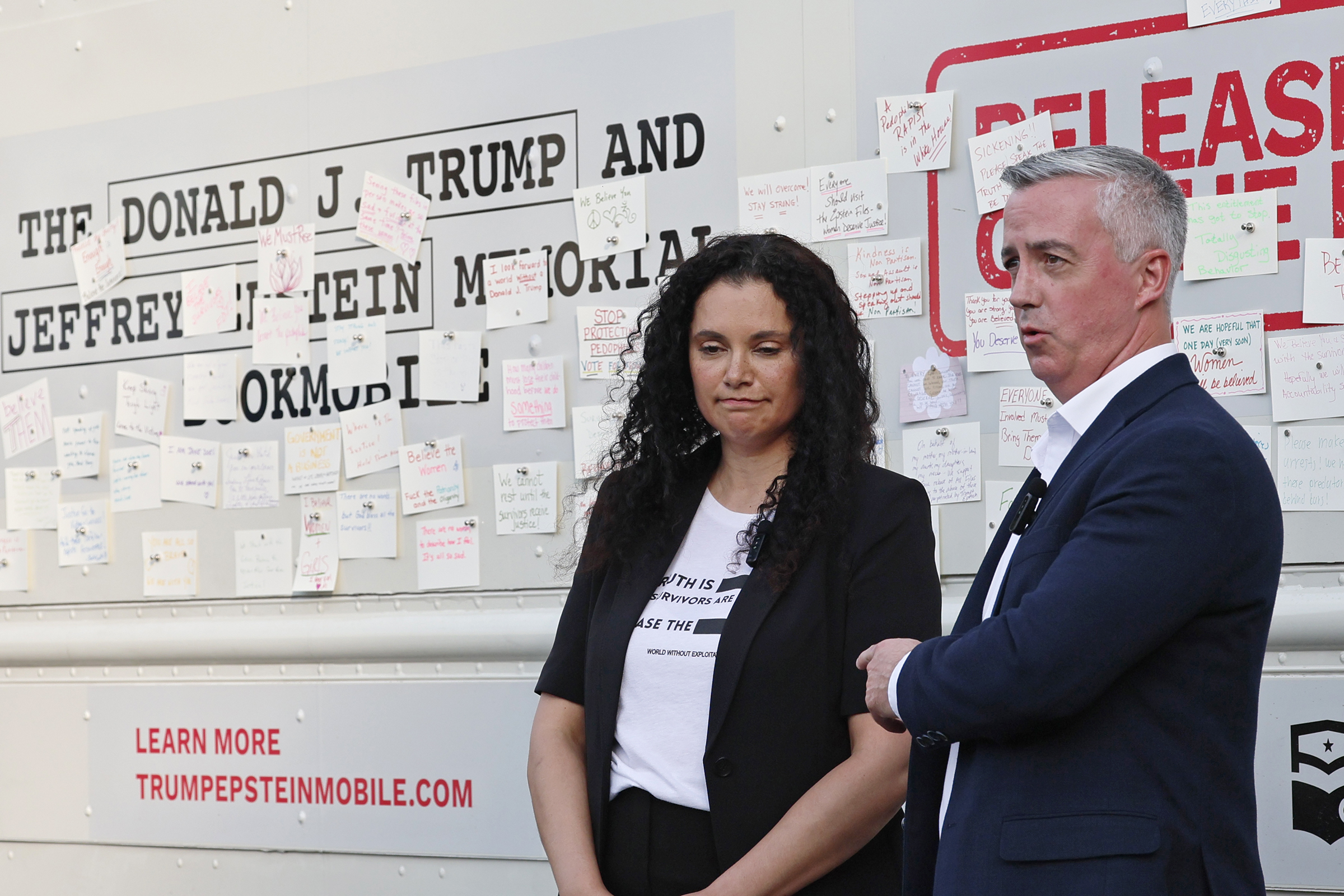
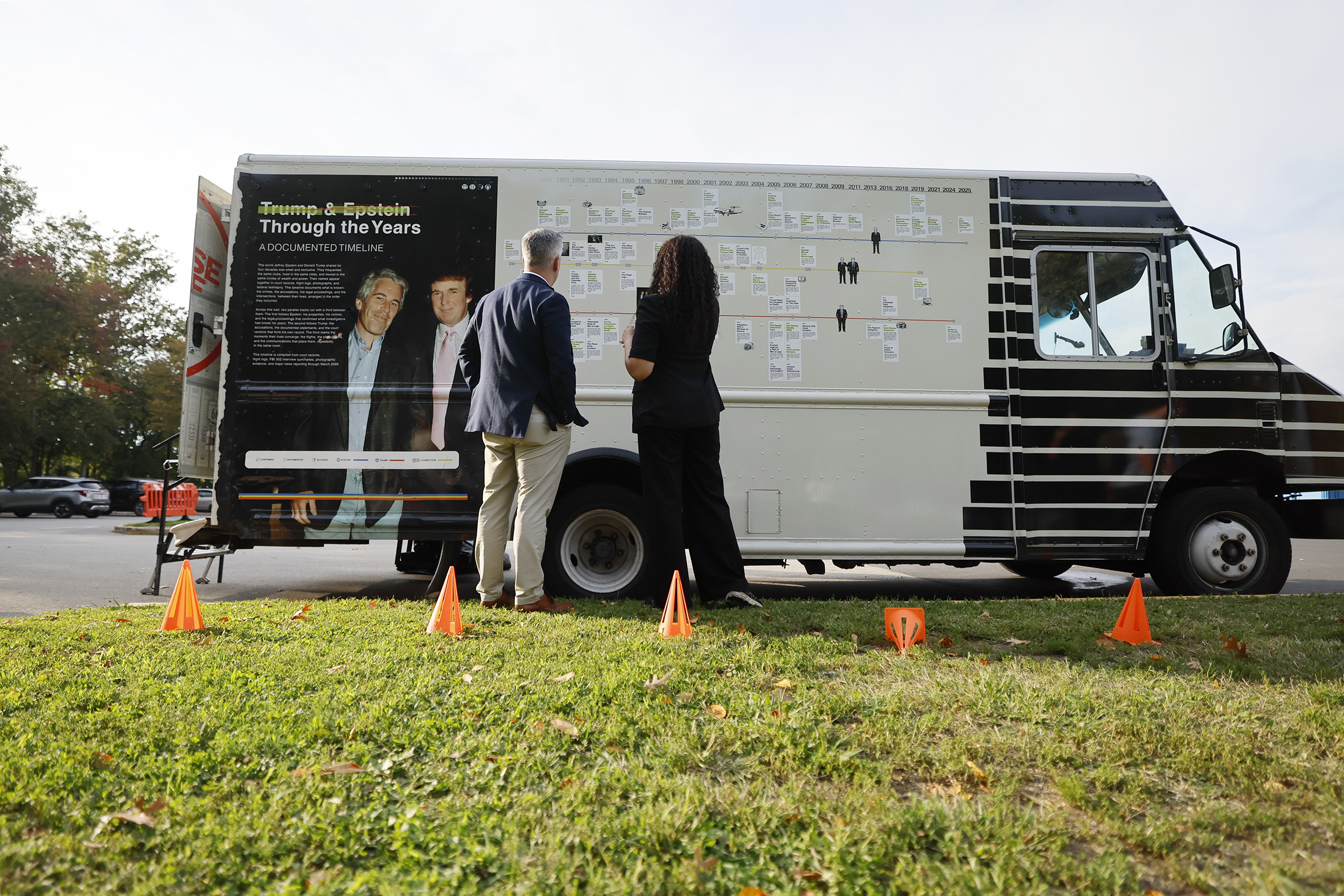
    Rows of files were contained inside a traveling bookmobile parked in front of the Bristol waterfront. Plastered on the outside of the truck was a decades-old image of President Donald Trump with his arm around Epstein.

    Reminding voters of Trump’s history with Epstein has been a campaign tactic used by Democrats in competitive contests across the country, but Harvie said the issue of justice for survivors should go beyond partisan politics.

    “I don’t care what party they’re from,” Harvie said. “I don’t care what office they hold or held. I don’t care how much money they have. I don’t care. We need to do everything we can to protect the victims and honor them and shine a light on this part of our society.”

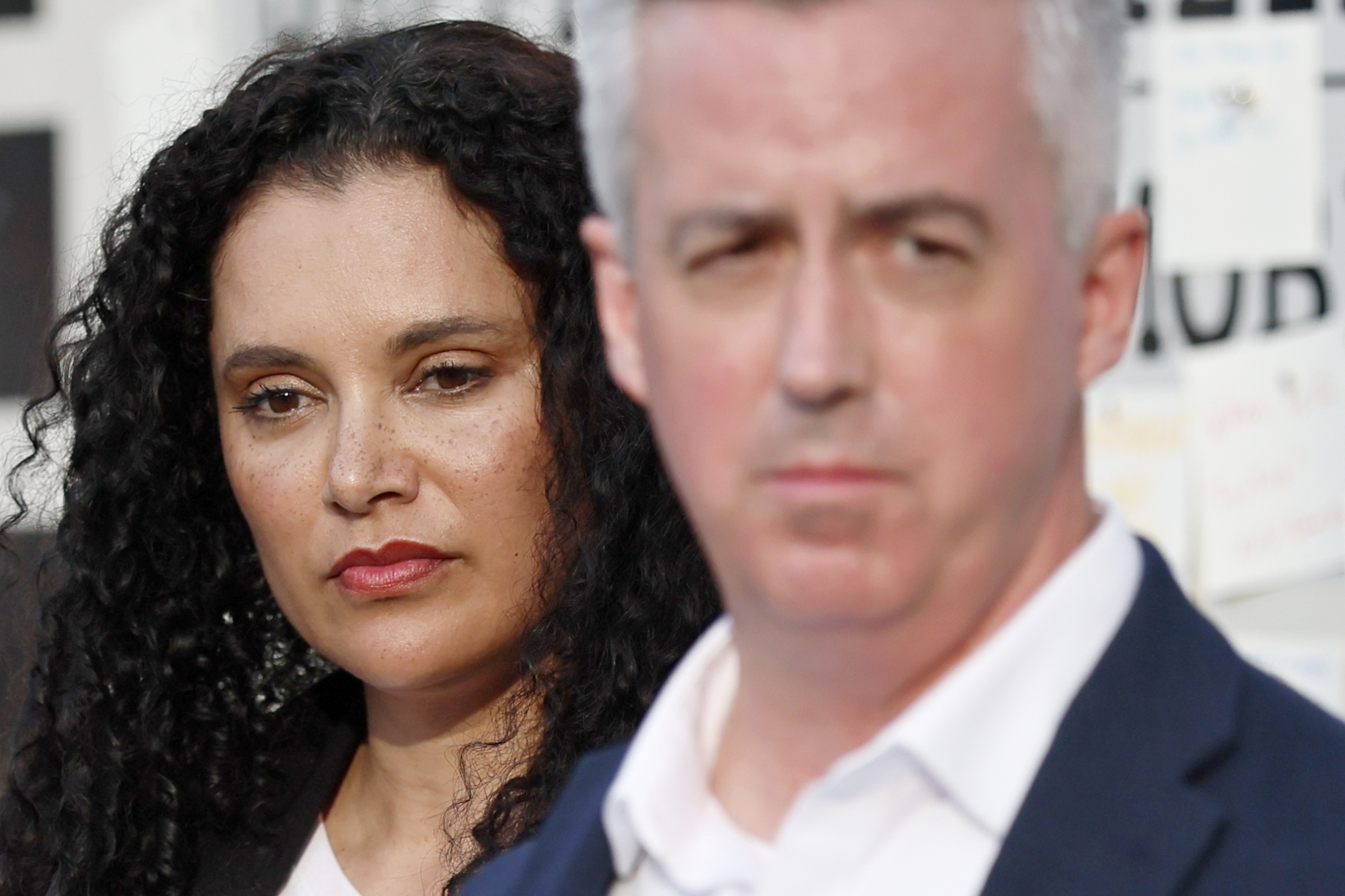
    Sharlene Rochard, a survivor of Jeffrey Epstein’s sexual trafficking and abuse, and Bob Harvie during a news conference at the Donald J. Trump and Jeffrey Epstein Memorial Bookmobile in Bristol.Elizabeth Robertson / Staff Photographer

    Earlier in the day, Rochard visited Harrisburg, where she was welcomed by Democrat Janelle Stelson, a former news anchor who promised to “take on the culture of corruption across the government” if elected over incumbent Republican U.S. Rep. Scott Perry in the 10th District.

    Rochard was slated to appear Saturday in Bethlehem with Democrat Bob Brooks, who is running against U.S. Rep. Ryan Mackenzie in the 7th District, one of the most competitive contests in the nation.

    The truck arrived in Pennsylvania one month before Election Day as Trump continues to plummet in popularity among likely voters in the state. It’s an officially nonpartisan project of Institute for Primary Facts, a nonprofit that builds public art installations, and DEFIANCE.org, a group dedicated to ending sexual exploitation of children and adults.

    Rochard, who was born in Canada, began traveling to the U.S. as a teen to model when she met Epstein and was with him in New York, Florida, and on his private island in the U.S. Virgin Islands, she said. Though she’s unable to go into details about her trafficking experience because she is involved in ongoing legal action, she now works alongside fellow survivors to advocate for the files to be exposed.

    Every Pennsylvania lawmaker voted to release the Epstein files last year, including Fitzpatrick and the other vulnerable Republican incumbents whose districts Rochard was touring this week.

    In a statement last year, Fitzpatrick said he is “unequivocally behind the victims and their family members who suffered immensely” from Epstein’s crimes.

    “He 100% stands with the victims, and will support disclosure and transparency every single time,” Heather Roberts, a spokesperson for Fitzpatrick’s campaign, said Friday.

    A couple dozen people trickled through the bookmobile during its Bristol stop, though multiple people interviewed entered with familiarity about the files and were already convinced of a strong connection between Trump and Epstein.

    “I’m dumbfounded that there are people who don’t believe the victims,” said Deb Crasnick, 69, of Langhorne.

    Sharlene Rochard, a survivor of Jeffrey Epstein’s sexual trafficking and abuse, and Bob Harvie at the Donald J. Trump and Jeffrey Epstein Memorial Bookmobile in Bristol on Friday. Elizabeth Robertson / Staff Photographer

    Crasnick found out about the event from her friend Diane Grant, 71, of Bensalem, who has been following the tour on social media. But Grant, who called the revelations disturbing, worried the tour’s effectiveness may have limits.

    “People have their mindset. Nothing said or shown in there will change it,” she said.

    And most guests — all of whom said they plan to vote for Harvie, who is polling just behind Fitzpatrick — said cost-of-living concerns rather than Epstein are their top priorities to address in this year’s election.

    “The economy keeps me up at night,” said Tracey Marshall, 57, who lives in Falls Township. “We need a change.”

    Rochard said the purpose of the tour goes beyond Election Day.

    Trump has called the Epstein case “a hoax” and said that the files that have been publicly shared are “enough,” a notion the survivor is hoping to dispel with the tour.

    “This is something that has happened to me,” Rochard said. “I’m not a Democratic hoax. I am a real person, and we need some justice.”

  • 🗳️ It’s Bucks season | PA 2026 Newsletter

    🗳️ It’s Bucks season | PA 2026 Newsletter

    📅 There are 32 days until Election Day.

    It wouldn’t be a Pennsylvania election without Bucks County becoming the star of the show.

    And that’s exactly what’s happening this weekend, when Gov. Josh Shapiro travels to the swingiest of the swing counties to stump for Democrats up and down the ballot in key races.

    🎤 I’m Fallon Roth, the suburban politics reporter at The Inquirer, coming to you live from Bucks (my home county) as we dig into how the suburb will be the make-or-break place for Democrats’ wishlist next month, including a win for Bob Harvie in the 1st Congressional District and shift in party control in the state Senate, which could only happen with help from the Philly suburbs.

    We’ll also explore whether Pennsylvania voters would support Shapiro turning his attention to a bid for the White House in 2028.

    In this edition:

    🗳️All hands on deck: Shapiro will be in Bucks County Saturday to launch a day-of-action for Democrats, organized by Planned Parenthood’s state-level PAC.

    🗳️ The Bucks stops here: Two Bucks County swing districts and another in Montco could determine which party controls the state Senate.

    🗳️Homefield (dis)advantage?: Pennsylvania voters are split on whether Shapiro should run for president in 2028.

    -Fallon Roth, Michelle Baruchman, Sam Janesch, Gillian McGoldrick (pa2026@inquirer.com)

    The latest

    • The price of gas, groceries and, well, living is on the rise and Pennsylvania’s swing district voters will have affordability on their minds as they head to the ballot box next month.
    • As democratic socialist candidates become more mainstream — including in Philly — most Pennsylvania Democrats said in a recent Inquirer/New York Times/Siena University poll that they have a positive view of socialism.
    • Shapiro and Michigan Democratic Gov. Gretchen Whitmer (possible 2028 rivals) went to Sam’s Morning Glory Diner in Philly to energize voters ahead of the midterms.
    • Robert F. Kennedy Jr., President Donald Trump’s health and human services secretary, is even less popular than the president with Pennsylvania voters.

    Data dive

    📊 Without a doubt, Shapiro is a popular governor. He’s viewed favorably by Democrats, independents and even some Republicans — no small feat in a swing state that voted for President Donald Trump in 2024. But whether these likely Pennsylvania voters want Shapiro to run for president in 2028 is an entirely different question.

    Voters, in a poll conducted by Siena University on behalf of The Inquirer and the New York Times, were split on whether Shapiro, who is expected to pursue a White House bid, should run: 43% of respondents want him to run, and 44% don’t.

    Of those supporting a potential presidential campaign, 41% ranked his character and competence as their reasons, and nearly one in five said they were satisfied with Shapiro’s performance as governor. But for those who oppose a run, it’s not necessarily because they don’t like him (although that is the case for 21% of respondents).

    About one in 10 said they would prefer Shapiro, who is up for reelection this November with a commanding lead against his competitor, to remain in Pennsylvania. Campaigning and presidential debates would likely begin soon into his second term.

    Others, however, said they are worried that the U.S. is not ready for a Jewish president. Shapiro has spoken openly about his faith and experiences with antisemitism.

    “I like his views. I like his policies. I like everything. I just think his religious affiliation will stop him from winning because I think the rest of the country, especially the middle of the country, will rally against him,” said Michael Biello, a 68-year-old Democrat in Philadelphia.

    Campaign scrapple

    🏥 Is the U.S. ready for Medicare for All?

    Democrat Bob Harvie thinks there needs to be more trust in the federal government first before it starts running the healthcare system, he told The Inquirer on Tuesday evening.

    Harvie, a Bucks County commissioner challenging GOP U.S. Rep. Brian Fitzpatrick in the swingy 1st Congressional District, has focused his campaign on addressing rising costs and increasing access to healthcare, such as advocating for 55-year-olds to be able to buy into Medicare.

    Congressional candidate Bob Harvie (D, Pa.) speaks on Friday, September 11, 2026 at the Garden of Reflection in Yardley, Pennsylvania.William Thomas Cain / For The Inquirer

    “My worry is you start talking to people about well, ‘We’re going to take away the healthcare system you have, and we’re going to give you another one, and the government’s going to run it,’” Harvie said of Medicare for All. “We’ve got a lot of work to do to rebuild trust in the government, just like we have a lot of work to do to rebuild how this healthcare system works.”

    Harvie was joined Tuesday by Democrats Eileen Hartnett Albillar, running in the key 6th state Senate district, and U.S. Rep. Lauren Underwood, of Illinois.

    📸 Behind the scenes snapshot

    Michigan Gov. Gretchen Whitmer (second from the left) and Pennsylvania Gov. Josh Shapiro chat with diners at the Morning Glory. The two Democrats have grown close in recent years, but they could become rivals in 2028 if they both pursue the presidency. Aidan T. Gallo / Staff Photographer

    👀 What we’re watching

    Shapiro and Garrity will face off in a live, televised debate this coming Wednesday, Oct. 7. The Harrisburg-based TV station ABC27 is hosting the debate, which will air on several stations owned by Nexstar across Pennsylvania, including WPHL-TV in Philadelphia. Politics reporters Gillian McGoldrick and Michelle Baruchman will break the major moments down at inquirer.com/politics.

    Quote of the week

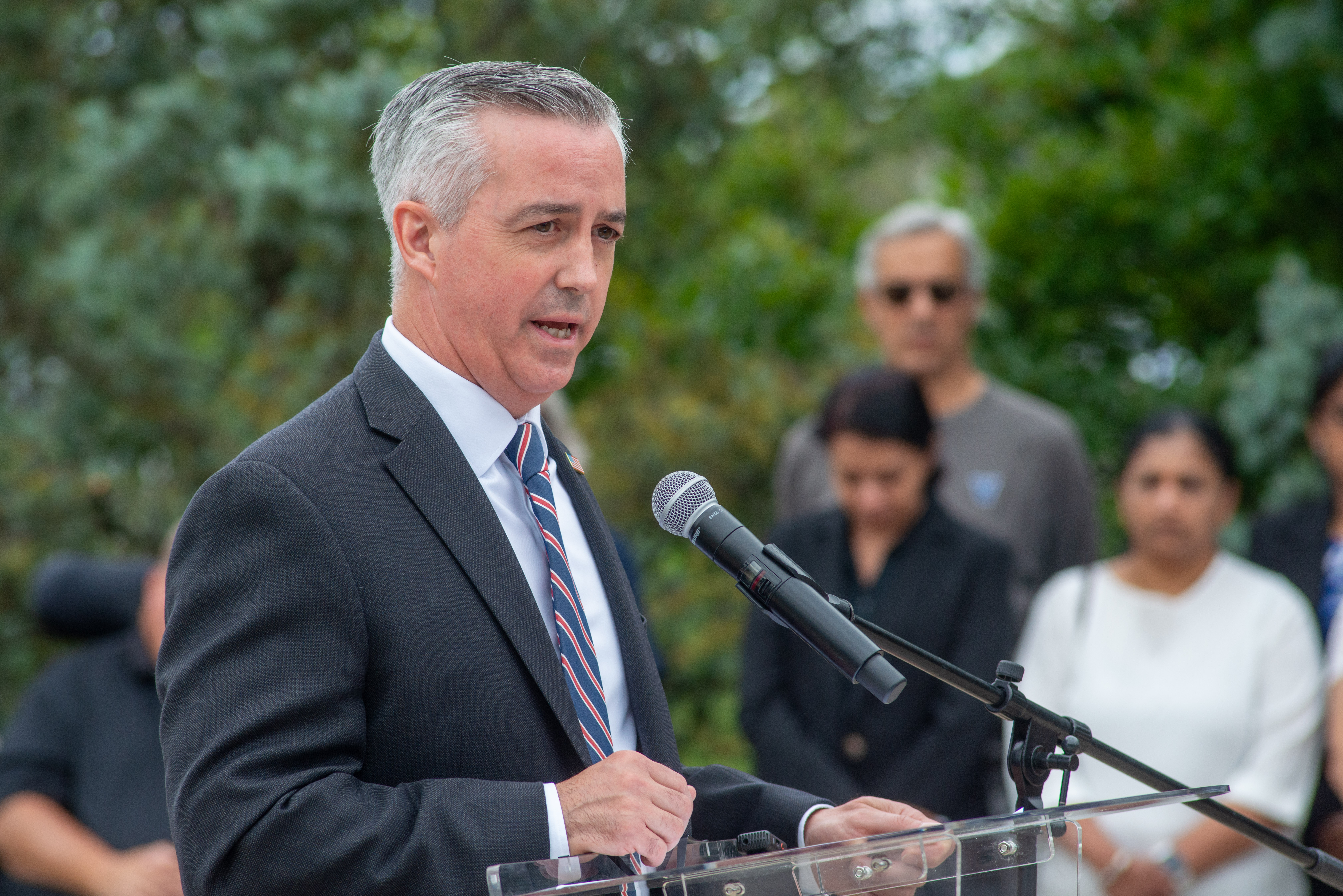
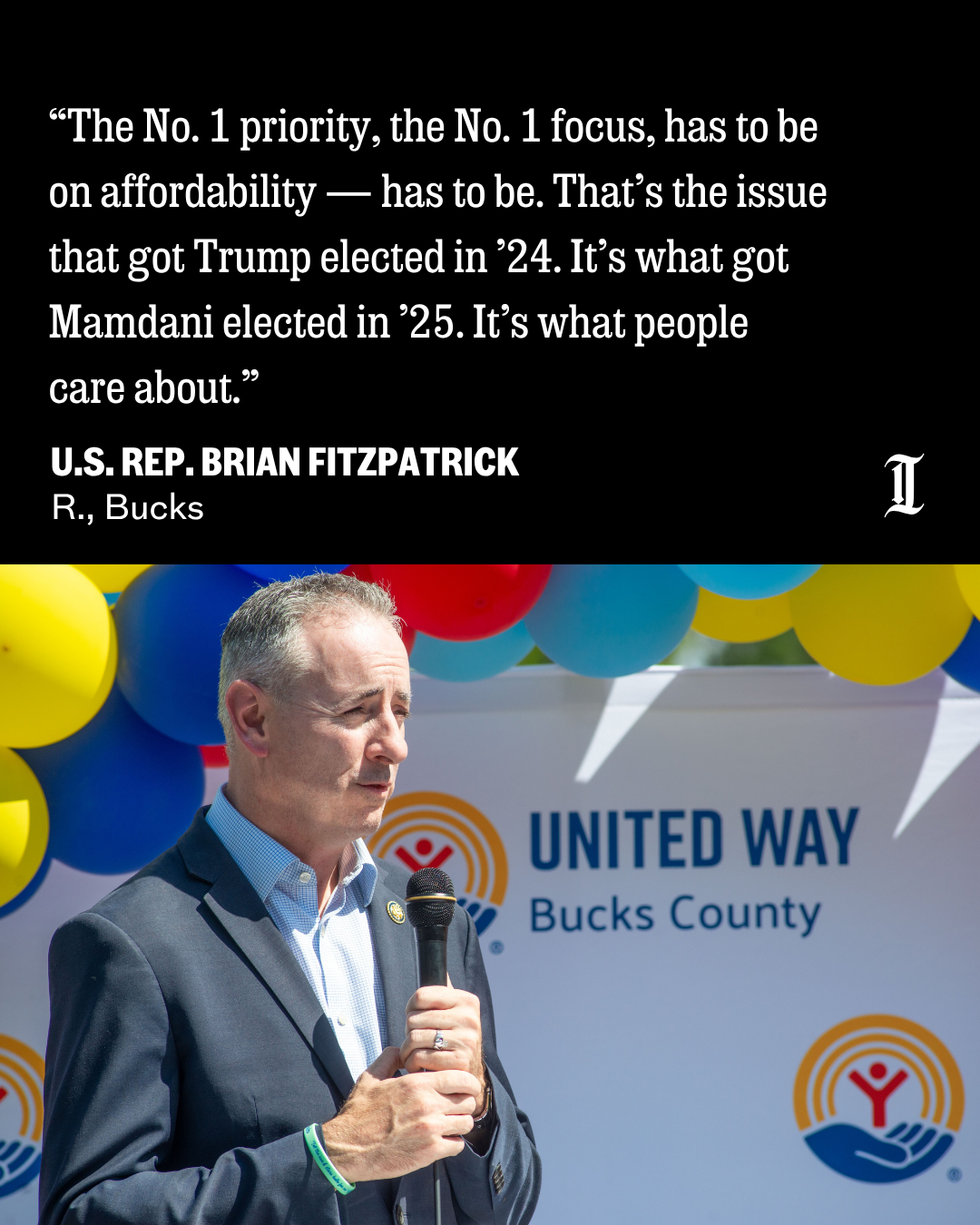
    U.S. Rep. Brian Fitzpatrick weighs in on the No. 1 issue this election. William Thomas Cain / For The Inquirer

    Fitzpatrick agrees with his opponent, Harvie, on one thing: this election will hinge on which party voters think will do a better job lowering the cost of living.

    Voters in the four key congressional swing districts have repeatedly expressed frustration that their dollar doesn’t go as far as it used to and that could be trouble for incumbents this fall.

    👋 Thanks for reading, and don’t forget to check back as we enter a final campaign month packed with debates, candidate events and maybe even a few October surprises. You can follow The Inquirer politics team’s coverage here, and we’ll see you in your inbox next Friday.