Category: Opinion

  • The Supreme Court freed college athletes to earn. Collective bargaining is the next step.

    The Supreme Court freed college athletes to earn. Collective bargaining is the next step.

    It is past time for Division I colleges and universities to recognize that their student-athletes deserve both the right to bargain collectively and recognition that they are employees because of the compensation their institutions provide to them and the control those institutions have over them.

    A deluge of media coverage has been aimed at other issues in big-time college sports, particularly football and basketball, but too little attention has been given to what should be center-stage — how student-athletes should be fairly treated by the institutions that benefit from their athletic prowess.

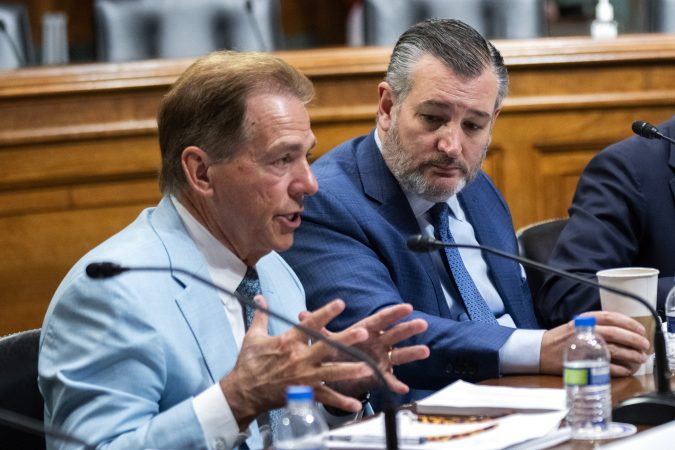
    The Senate Commerce Committee recently held a hearing on the Protect College Sports Act of 2026, sponsored by Sens. Ted Cruz (R., Texas) and Maria Cantwell (D., Wash.), to “restore order” to college sports. This 111-page legislative effort is the latest in a series of approximately 40 bills aimed at reversing judicial rulings that oblige universities to share financial gains with their players.

    Like their legislative predecessors, the 2026 bill limits or ignores existing player rights and immunizes universities from antitrust liability resulting from player-initiated litigation and substitutes Congress’ judgment for the courts, players, and universities.

    Thus, the 2026 bill restricts the ability of players to transfer through a “portal” from one college to another and limits player eligibility to five years beyond the day of high school graduation. The bill would preclude awarding antitrust damages to players who seek to increase their mobility and earnings. It would also preempt state laws guaranteeing players compensation for their names, images, and likenesses used, for instance, on video games and athletic clothing (this has come to be called NIL money).

    Until the last decade, the unchallenged position of the National Collegiate Athletic Association was that all college players are amateurs entitled to no more than athletic scholarships and frequently inadequate reimbursement for college expenses. Post-World War II football and basketball were dominated by the Southeastern Conference and the Big Ten, and both were big businesses.

    Notwithstanding this reality, the NCAA maintained that the players were amateurs who could not be paid until the U.S. Supreme Court in 2021 ruled that the NCAA and its member campuses were liable for treble damages when they conspired to deny the players “educational” compensation beyond athletic scholarships and reimbursements.

    Universities became involved in class-actions brought by their players about player transfers, eligibility, and related issues following that Supreme Court ruling. The ruling recognized that the universities have always treated athletes differently from other students, sometimes providing them with preferred admissions as well as under-the-table monies and other benefits, frequently in conjunction with wealthy alumni and “boosters.”

    With California leading the way, many states enacted so-called NIL laws that allow players to be compensated for use of their names, images, and likenesses.

    But the NCAA continued to insist the players were amateurs. As a result, outside “booster” groups or “collectives” were created to provide business deals to attract or retain college athletes from a source other than the universities.

    Meanwhile, institutions of higher learning went to war to attract coaches with multimillion-dollar salaries, often exceeding those of any other employee, and — among state universities — any other state employee, including governors.

    In the wake of these developments, an immediate response was the negotiation of financially lucrative media deals by the universities and a realignment of college conferences.

    Stanford University, for example, left the Pac-12 Conference to join the Atlantic Coast Conference, requiring all its varsity athletes to travel regularly across the country, increasing the separation from their classrooms.

    Further, NIL procedures have become a kind of Wild West, sometimes composed of shadowy characters and “agents” who operate without any regulation as is provided in the professional leagues.

    Earlier this year, President Donald Trump convened a meeting of business and university officials in connection with a new executive order to preempt state regulation. The 2026 Cruz-Cantwell bill is the most recent response. It consigns players to minority representation on an athletic “governing board” or “rulemaking committee.”

    Deeply troubling, it avoids even a mention of collective bargaining or employee status for the players. The current National Labor Relations Board is unlikely to address these issues effectively. And this Congress is unlikely to act on the Cruz-Cantwell bill.

    Some, we realize, claim we should go back to an earlier era when money was not center stage in every aspect of Division I college sports. But it is too late to return that genie to its bottle.

    Rather than wait for voluntary recognition of the organizing power of college players, or for state legislatures to take action, Congress should amend the National Labor Relations Act to allow student-athletes to exercise their collective bargaining rights.

    This step by a new Congress in 2027 could provide much-needed protections for college athletes in terms of adequate compensation, health and safety protections, as well as a reasonable measure of player mobility fashioned by both students and universities seeking a balance between freedom and a disruptive revolving door.

    After all, the most appropriate forum for resolving the complex matters around modern-day college athletics isn’t through one-off legislation or the occasional court ruling, but rather at the collective bargaining table.

    Thomas Ehrlich is the president emeritus of Indiana University, former provost of the University of Pennsylvania, and former dean of Stanford Law School. Currently, he is an adjunct professor at the Stanford University Graduate School of Education. William B. Gould IV is the Charles A. Beardsley Professor of Law, emeritus, at Stanford Law School. He is a member of the National Academy of Arbitrators and former chairman of both the National Labor Relations Board and the California Agricultural Labor Relations Board.

  • Holiday lessons about ‘patriotic values’ from Folarin Balogun, Pope Leo XIV, and JD Vance

    I never thought I’d be writing a column that led off with an analysis of soccer.

    I’d planned to write about the lessons our nation’s 250th birthday party provided for Americans about the real meaning of “patriotic values.” But as it turns out, an examination of the scandal that ensued after President Donald Trump’s shameful World Cup intervention provides the perfect example of what those values are and what they are not.

    Before getting to the game, it’s important to revisit what Thomas Jefferson meant in 1776 when he wrote in the Declaration of Independence that the Creator had endowed all men equally with “the right to life, liberty and the pursuit of happiness.” Although honored in the breach when it came to slavery and women’s rights, these ideals have been the goal toward which America has gradually, but consistently, aspired — until now.

    Many probably assume that “pursuit of happiness” means material success or personal pleasure. But for the Founding Fathers, educated in the philosophy of ancient Greece and Rome, the phrase reflected the classical emphasis on civic duty and character development. In other words, the concept of patriotism was tied to the pursuit of an honorable and civic-minded life.

    Now back to soccer.

    Until the July Fourth weekend, the World Cup matches had provided a brilliant exhibition of the best of America, with cities across the land and fans in every stadium effusively welcoming teams of every race and color. In an incredible burst of U.S. soft power, the global image of Trump’s America as overtly racist, corrupt, and violent gave way before the warmth of ordinary Americans.

    But Trump could not refrain from popping that wonderful bubble. After America’s star striker, Folarin Balogun, received a red penalty card during the team’s 2-0 win over Bosnia and Herzegovina — which would force him to sit out a critical match against Belgium — POTUS phoned FIFA’s president, Gianni Infantino.

    A Trump sycophant who had previously awarded him FIFA’s first medal of peace, Infantino gave the president what he wanted: a reversal of a red card ban during a World Cup game (for the first time since 1962).

    In one move — based on his philosophy that only winners count — Trump cast a pall over the World Cup. He reversed all the goodwill the matches had generated for America at a time when his erratic behavior had sunk global attitudes toward the U.S. to astonishing new lows.

    Yes, Balogun’s violation was accidental, and the red card undeserved, but how many times have we all witnessed wrong calls by referees or umpires that drove us insane? However, under FIFA rules, there is no appeal after a game is over. Imagine if every world leader copied Trump’s utter disdain for rules in sports as well as domestic and international laws, a disdain which is already causing global chaos.

    On Monday, the U.S. team lost 4-1 to Belgium. But Trump’s interference made that defeat more painful by precipitating a wave of global scorn that poured down on an undeserving team. Nor has Trump had one word of praise for this terrific team after their loss.

    However, the lesson from Trump’s soccer debacle is not all negative. Americans should take pride in the achievements of the U.S. team and be inspired by the overall atmosphere of the games before Trump’s ugly intervention.

    And the country should unite in praise for the patriotic virtue displayed by Balogun.

    A day after receiving his red card, the star striker told an interviewer: “It’s been surreal, to be honest. But for me, I think it was just important to stay calm. I never want to react out of anger and out of emotion.

    “There’s still lots of people we’re inspiring, little kids, boys and girls who are watching, and we have to show them the correct way to handle things, even when you think it’s unjust.”

    What a hero! And what an example of patriotic virtue by someone who, under Trump’s attack on birthright citizenship, wouldn’t even qualify to play for Team USA, being born in Brooklyn to Nigerian parents visiting from London.

    Furthermore, the president’s negative example over the holiday — turning the Semiquincentennial into a celebration of himself, even as news broke of the incredible billions POTUS and his family have raked in off his presidency, and even as he upped his efforts to rig the midterm elections — should goad us all to revisit the meaning of “pursuit of happiness” in civic terms.

    Two critiques of Trump over the weekend — one indirect, one powerfully direct — can serve as further inspiration.

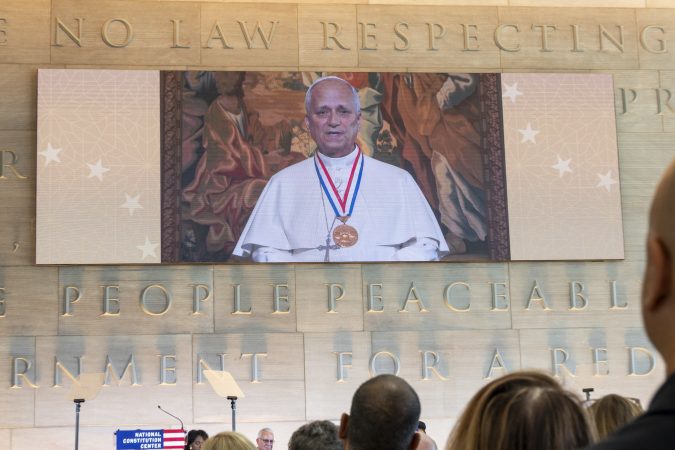
    The first comes from Pope Leo XIV, in his powerful livestreamed speech on July 3 at Philadelphia’s National Constitution Center while accepting the prestigious Liberty Medal. “The principles that inspired America’s founders,” he said, “brought them together in … a common dream. Unity lent strength to that dream … E pluribus unum — out of many, one. In order for a nation to flourish, it must be truly united, not by goals bound to momentary endeavors, but by ideals that do not fade with the passing of time.”

    These words need to be taken to heart, to my thinking, especially by progressive Democrats. Their anger is understandable, but in the final instance, they must work together with all those who appreciate the need to curb Trump’s desecration of the founders’ values. That includes all Democrats as well as independents and moderate Republicans who appreciate the need for checks and balances on presidential power.

    As Benjamin Franklin famously said at the signing of the declaration, “We must all hang together, or assuredly we will all hang separately.”

    And finally, some inspiring words from Vice President JD Vance, written in 2016 for the Atlantic before he turned against the values of the founders, and republished by the site on July 4.

    The title of the essay: “Opioid of the Masses.”

    “What Trump offers is an easy escape from the pain,” he wrote. “To every complex problem, he promises a simple solution. He never offers details for how these plans will work, because he can’t. Trump’s promises are the needle in America’s collective vein.

    “The great tragedy is that many of the problems Trump identifies are real … Yet so long as people rely on that quick high … the nation delays a necessary reckoning. There is no self-reflection in the midst of a false euphoria.

    “Trump is cultural heroin. He makes some feel better for a bit. But he cannot fix what ails them, and one day they’ll realize it. And then, perhaps the nation will trade the quick high of ‘Make America Great Again’ for real medicine.”

    In memory of the Founding Fathers, who pursued their principles when the struggle seemed impossible, let us hope such a realization starts this fall.

  • I was taught to explain away suffering. Pope Leo showed me another way.

    I was taught to explain away suffering. Pope Leo showed me another way.

    Growing up as a student in Catholic school, I remember occasionally asking adults why God permits human pain and suffering, even among innocent children. Years later, my nephew once approached me about a conversation that took place in his classroom. He asked a nun at his school why his friend was born with a disability that left the child unable to walk. She told my nephew God knew this boy would grow up to be a thief — or worse — and that God crippled him to avoid that fate.

    I was aghast and told my nephew she was wrong. God would never do something like that. Yet, the difficulties in reconciling an all-good deity with the terrible ills inflicted upon humanity remain. Does God will these horrors, as the nun at my nephew’s school implied, or just permit them? Why are the innocent as susceptible to great suffering as are the guilty?

    It is one of those truly profound theological conundrums that even a youngster can grasp. A childhood friend of mine carried the heavy leg braces and profound limp of a polio patient, and I often wondered why him and not me. He was one of the nicest kids I knew; it wasn’t right. What am I supposed to think of a God who could desire that?

    Then I heard Pope Leo XIV as he presented me with a different picture of God. He was speaking to a gathering of young people in Spain last month, and what he said — which was much different from anything I had heard as a student in Catholic school — has stayed with me.

    “We must not spiritualize pain, superficially attributing it to ‘God’s will’ or to some mysterious plan of his, because this risks minimizing that suffering, silencing it and hurting people,” he said. “God does not want suffering. He carries it with us and invites us to trust in him with perseverance.”

    The pope went on, “With God, life is always reborn.”

    On the other hand, he said, moments of darkness and suffering must never be silenced just “because certain cultural norms demand that we always be victorious and perfect.”

    I am, shall I say, over 50, and like just about everyone my age, I have witnessed awful pain and suffering, sometimes among the youngest and most innocent. I have been told to “spiritualize” that pain, attribute it to “God’s will,” and just deal with it.

    That never sat right with me, from playing with my classmate who had polio to this very day. Leo provided me with a new way to process human suffering.

    First, God does not want suffering. When we say, “Oh, it’s God’s will,” we are actually making light of the suffering, shoving it away, minimizing it.

    I had never thought of it that way. Saying “It’s God’s will” seemed to make it grander, divine, special.

    In fact, the “God’s will” gambit only serves to distance me from what the other person is going through. I get to shake my head with immense pity, sigh deeply, and then go about my business.

    What the pope made clear to me is that we are not called to label the suffering of another, wrap it up in brown paper, and send it off to heaven. No, we are called to accompany the sufferer, fully acknowledge their pain, and help in any way we can to ease their hardship.

    The pope seemed to refer to this duty again — in a broader way — when he accepted the Liberty Medal on Friday. “We are guardians and stewards of those entrusted to our care,” he said. “In this regard, the moral greatness of a nation is manifested, above all, in its capacity to support, protect and cherish the lives of all, especially the most vulnerable and those whose worth is questioned.”

    We are born with fragile, mortal, material bodies. They will bruise, break, hurt, and die. That is a given: for my childhood friend, for my nephew’s disabled buddy, and for me.

    We are likewise born with the enormous power to empathize, to touch the pain of another with patience and caring. That is not a given; that is a choice.

    Jesus confronted hundreds of sufferers. He never said, “That’s God’s will; suck it up.” He reached out and, when possible, healed. His healing power is what is most often mentioned in the Gospels, but it may be the least understood.

    I used to think Jesus’ healing gift was what separated him from us, what made him God and us just human beings. Pope Leo hinted that I have been all wrong about that.

    We, too, are called to be healers. Our touch may not bring about a cure, only a connection. Suffering is not God’s will, but that connection definitely is. That connection is love.

    Lonnie Barone is an author and executive leadership coach who teaches at the Wharton School of the University of Pennsylvania and the Fox School of Business at Temple University.

  • Letters to the Editor | July 8, 2026

    Letters to the Editor | July 8, 2026

    Bull’s-eye

    The Inquirer’s recent editorial detailing the deficiencies of America’s current leadership was right on the mark. Donald Trump and the Republicans, including those on the U.S. Supreme Court, claim to be the avatars of American patriotism, but they continually undermine this country’s foundational principles.

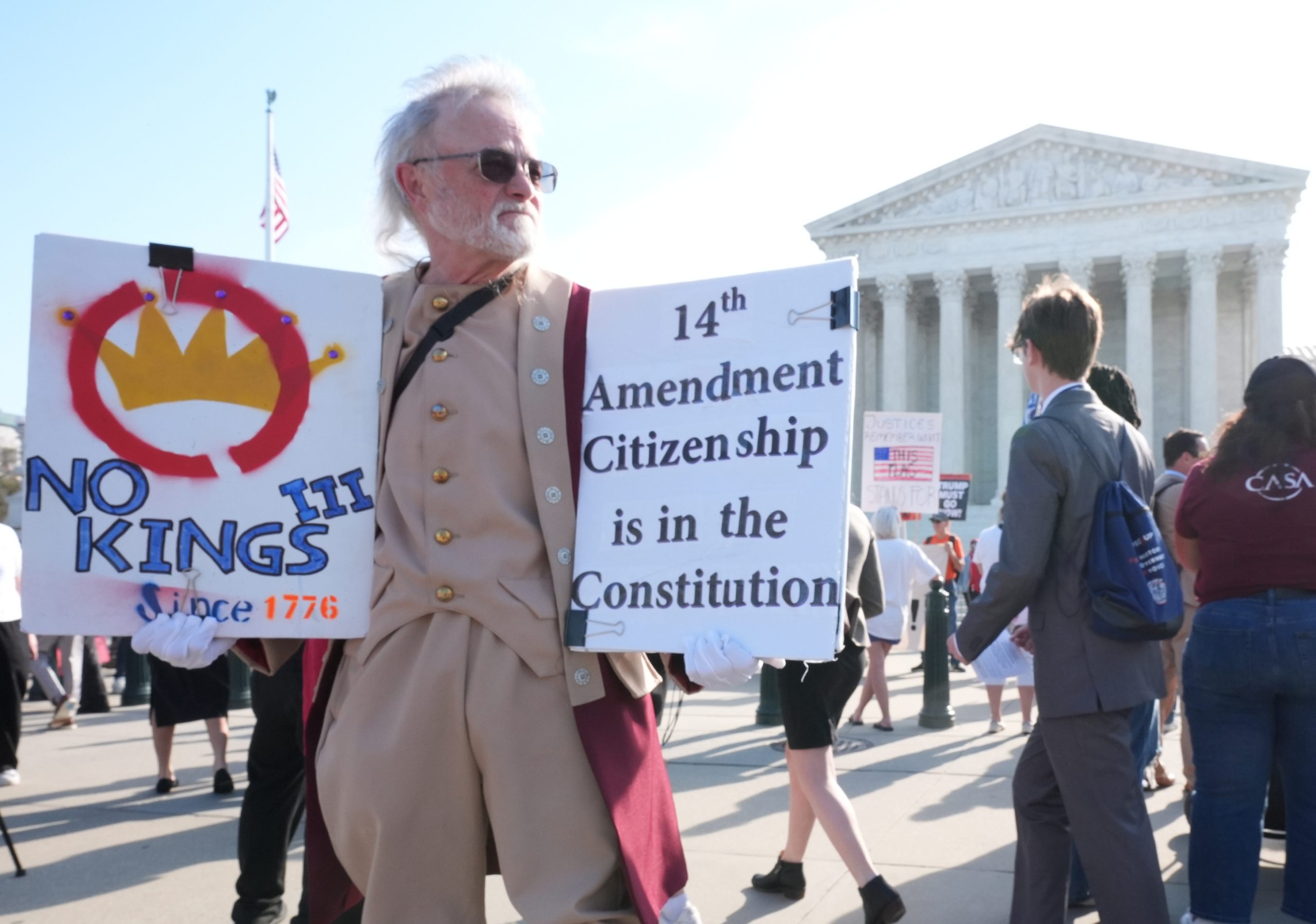
    The Declaration of Independence affirms that all men are created equal, while the Trump administration and its allies on the Supreme Court take actions that remove the cherished rights of select groups. The separation of church and state is something that makes America great and is spelled out in our founding documents, yet many Republicans want the United States to be declared a Christian nation. The Constitution makes the rule of law paramount, yet somehow this Supreme Court found a way to give the president immunity for official acts. Robust immigration also has been part of our heritage. But in spite of the fact that birthright citizenship is written clearly into the 14th Amendment, the Supreme Court last week came within one vote of overturning it.

    The editorial asks whether we should fly the flag at half-staff to protest the current state of the country. No, the flag should be flown high, as it doesn’t belong to the current regime. Though it is under threat, we still have the right to vote for change in November.

    Bill Fanshel, Bryn Mawr

    Soft power works

    Jonathan Zimmerman’s recent column gives a poignant view of his experience in the Peace Corps. He points out the real impact of the personal connections forming the grassroots of our government’s soft power.

    Unfortunately, too few of our elected officials understand the reach and potential of soft power. This power cannot be overstated. Like the U.S. Agency for International Development, it is the positive face of America, working with communities on the ground to foster resilience and self-reliance. Communities are able to thrive, not simply survive. This enables people to stay on their own land, eliminating the need to emigrate. It thwarts the attempts of terrorists who infiltrate communities where people are food-insecure.

    Pope Leo XIV has urged countries to take responsibility and address the root causes of migration. The Peace Corps and USAID-sponsored programs are on the front line of the battlefield of immigration crises. Soft power works.

    We are spending $1 billion per day on wars of choice. Soft power delivers a means of eliminating reasons to emigrate while fostering our national security, at less than 1% of the federal budget.

    I encourage all readers to urge their elected officials to support sustained funding levels for lifesaving humanitarian aid and development programs.

    Catherine Poynton, Philadelphia-area chapter, Catholic Relief Services

    Join the conversation: Send letters to letters@inquirer.com. Limit length to 150 words and include home address and day and evening phone number. Letters run in The Inquirer six days a week on the editorial pages and online.

  • Climate denial is what history will remember about July 4, 2026 | Will Bunch Newsletter

    Over the last decade, I’ve grown used to waking up before dawn and writing about a soul-crushing defeat from the night before. Usually it’s on a Wednesday, but somehow Donald Trump is always involved. Monday’s 4-1 demolition of the U.S. men’s national soccer team by Belgium pretty much confirmed that I won’t live to see Americans win the World Cup in my lifetime, so it’s time for acceptance. But these last three weeks have been a blast, and the party isn’t over. Sometimes the tritest words are also the truest: Maybe the real World Cup was the friends we made along the way.

    If someone forwarded you this email, sign up for free here.

    Future generations will remember America’s 250th for its state of denial

    The long-awaited arrival of the 250th birthday of the United States inspired a lot of talk about everything that’s changed since July 4, 1776, especially as “the man on a hobby horse” sinks to the founders’ worst fears about democracy and demagoguery.

    But historians of the future may dwell on another huge difference between the day the ink started drying on the American Declaration of Independence and July 4, 2026.

    The thermometer.

    Thomas Jefferson — his work as chief author of the nation’s founding document wrapped up — bought a new thermometer that morning and recorded the temperature in Philadelphia three times in his diaries that day, including a temperate 1 p.m. reading of 76 degrees.

    Jefferson’s thermometer might not have been up to the task of keeping up with Philadelphia’s climate 250 years later. On Saturday’s Semiquincentennial, temperatures maxed out at 101 degrees — the third straight day that the mercury reached that mark, which had never happened since records began in 1870. But with the fetid, humid air, it felt more like 110 degrees for anyone brave enough to celebrate America’s birthday outside.

    Philly should have seen this train coming. I mean, literally. Two days earlier, officials just outside of Reading, nearly two hours northwest of America’s founding city, plowed ahead with a welcoming party for Union Pacific’s Big Boy No. 4014, the world’s largest operating steam locomotive — even as the railway relic ran an hour late, with some thermometers posting 106 degrees.

    The result was what local officials called “a mass casualty event” — no one died, but rescue teams were summoned from neighboring counties to help revive more than 100 people suffering from heat exhaustion, in desperate need of water or an IV. Some 35 of the would-be train spotters were rushed to the hospital.

    “It was a little bit chaotic,” an EMS director told the local TV station in Reading. “I don’t think anyone anticipated the weather or the volume of crowds.”

    But they should have seen it coming. The Big Boy heat fiasco was almost too spot on as a metaphor for the slow train wreck of climate change, as the locomotive would spur on the Industrial Revolution that then triggered the rise of greenhouse gas pollution. To the extent that anyone out there still listens to scientists, they were quick to say this weekend: We warned you.

    The scientific group World Weather Attribution, which tracks the impact of human-made global warming, said last week’s heat dome over the Eastern Seaboard was indeed a rare event, yet — without the contribution of burning fossil fuels to a warming planet — it “would have been so extreme as to be virtually impossible.”

    Heat waves aren’t new. I was just 7 but still remember the July Fourth week of 1966 — exactly six decades ago — when it also topped 100 degrees. It’s one of the few things I remember from that grade-school time because it was so incredibly rare. Today, “once-in-a-century” heat waves are routine all over the planet. In June and looming again this week, Western Europe — where few homes are air-conditioned — has sweltered under temperatures that climate scientists weren’t expecting until around 2050.

    This suffocating July Fourth could have been — to steal a phrase from the multiplex marquee — America’s “disclosure day,” exposing the truth of a threat to humankind that’s been hiding in plain sight. Instead, it was our “denial day,” led by our planet’s denier-in-chief, Donald Trump, whose 250th birthday card to America only read: “Don’t look up.”

    The denial was immediate, as the president insisted — ignoring the experts who warned that the triple-digit temperatures and intense, gathering thunderstorms might spark a much bigger “mass casualty event” in Washington, D.C. — on going ahead with his bombastic and self-serving speech and a fireworks show that lasted well into the early morning hours of July 5.

    Our modern-day seersucker-wearing mayor of Jaws might as well have told the broiled holiday weekend throng, “But, as you see, it’s a beautiful day, the beaches are open, and people are having a wonderful time” — as ominous John Williams music swelled in the background.

    The denial was also metaphorical to the max — and not just when those predicted storms arrived and panicked MAGA Trump supporters were forced to take refuge at the National Museum of African American History and Culture, the history and culture their movement is so eager to erase.

    In New York Harbor, U.S. Coast Guard vessels forced the storied environmental sloop Clearwater — which took part in the historic Bicentennial tall ships parade back in 1976 — to leave the July 4 Parade of Ships because of two anodyne political banners taped to its sails: “Save the Clean Water Act” and “Indigenous Rights, Racial Justice, Climate Solutions.” Don’t look up, not even at a tall ship.

    Hours later, during the fireworks show, the Brooklyn Bridge caught fire, which had nothing to do with climate change, yet felt like a coded message from the overheated planet nonetheless.

    But maybe we shouldn’t wade too deeply into the metaphors when the worst denial is the all-too-real policy stuff. Every day, some nightmare headline about killer floods or disappearing glaciers is met with some nonsensical action from the U.S. government based on Earth 2, where none of this is happening.

    As the climate-change-intensified heat dome settled in over the Eastern United States, Trump issued pardons for nine people — and you really can’t make this stuff up — who’d been convicted of felony violations of the Clean Air Act by selling or installing devices for diesel trucks that defeated their emissions controls, because polluting our spacious skies is no longer a crime in Trump’s America.

    It cuts much deeper than this. Trump actually chose the July 4 peak of the heat wave to announce a massive cut in federal subsidies for wind and solar projects, a move that was expected under legislation passed last year. This was just one more layer to a sweeping agenda that has massively relaxed pollution regulations and even wasted taxpayer dollars to make sure clean energy projects aren’t built.

    America continues to get a whopping 82% of its energy from polluting fossil fuels, and that’s unlikely to drop over the next 30 months, regardless of how many Trump voters can cheat death on looming “mass casualty events.” But POTUS 47 warned voters he planned to set the world on fire if he returned to the White House.

    What’s harder to understand, frankly, is why the people who should be fighting Trump on climate change are running away from the front lines. Yes, I’m talking about Democratic Party leaders who’ve tossed climate action down the memory hole in the 2026 campaign — either terrified that any mention of climate will undercut their single-minded focus on affordability, or distract from fighting Trump’s brand of autocracy.

    And ditto for newsroom leaders who seem to have decided that environmental journalists are the first people to lay off, not to mention the other world chieftains who ought to be challenging Trump’s destructive policies, but are meeting the moment with a shrug. Even Canada’s center-left prime minister, Mark Carney, is now backing away from the aggressive climate action he once supported, claiming, “It’s too expensive.”

    That’s a lot of malarkey, as the president who just four years ago passed the largest climate action bill in U.S. history might say. Clean energy continues to rise elsewhere in the world because the alternatives, like wind and solar, are ultimately cheaper and also a source of desperately needed job creation. The fossil-fuel-boosted heat wave of July 4, 2026, proved that inaction is a threat not only to our lives and our liberty but also to the pursuit of happiness. It’s hard to celebrate 250 years of American democracy when climate denial is exposing that system as so badly broken.

    Yo, do this!

    • Did I mention the World Cup isn’t over? If you are a true fan of the Beautiful Game, you’ll brush off the quadrennial disappointment of the U.S. men’s team and get excited to watch one of the greatest generations of international soccer superstars we’ve ever seen. One of the more intriguing of the four quarterfinal matchups this weekend will occur when Harry Kane and his English squad face Erling Haaland and his Norwegian upstarts in the Miami heat. The match kicks off at 5 p.m. Saturday on Fox.
    • The new movie scene for the July Fourth holiday was a disappointment, so the heat wave was a perfect opportunity for revisiting the classics of the 1970s and ’80s with the generation that had not been born yet. We went back to the late Rob Reiner’s first great serious film, the coming-of-age saga Stand By Me. It’s hard not to feel nostalgia today for a time when 12-year-olds had to entertain themselves without iPhones and could disappear into the woods overnight, which felt less strange in 1986 when the movie was first released. It felt truly like a faint signal from a lost planet.

    Ask me anything

    Question: Talk about Mitch McConnell’s demise. — Wendy (@wensilver.bsky.social) via Bluesky

    Answer: Well, Wendy, that’s not exactly a question, and while the New York Times is reporting that the Kentucky senator and former majority leader was unconscious and in cardiac arrest when paramedics found him on June 14, his staff insists McConnell is still alive. That hasn’t stopped conspiracy theories that McConnell is on life support until August, when his replacement, named by GOP lawmakers, could avoid a messy November election. I don’t know about that, and I agree that it’s very poor form to speak ill of the dead. So the fact that he’s still alive is an ideal moment to remind everyone that his hijacking of the U.S. Supreme Court and his cowardice during Donald Trump’s second impeachment both started America on the path toward tyranny. So get well soon, senator. You still have a lot to answer for.

    What you’re saying about …

    Last week’s question about whether you are happy or concerned about progressive Democrats doing well in the 2026 primaries brought a mix of interesting responses that aren’t easy to categorize. Most of you want Dems who will fight harder than the current crew. “I have been voting since 1968, always for Democrats, but seldom with enthusiasm,” wrote Stephen Boone. “Finally, in my old age, there are a few decent politicians. I want more AOCs! More Zohran Mamdanis! …” Others felt more cautious. Wrote Thomas Desmond: “I think the progressive candidates are fine in deep blue seats, but may not be a great idea in purple or light-red seats that could prove winnable this year.”

    📮 This week’s question: It may be water under the bridge next week, but Donald Trump’s personal role in overturning the arguably wrongly given red card to U.S. star Folarin Balogun has sparked a heated debate. Was the red card an injustice to be reversed by any means necessary? Or did Trump’s involvement ruin the World Cup? Please email me your answer and put the exact phrase “Trump Balogun” in the subject line.

    Backstory on Trump ruining the World Cup like everything else

    If the big-screen tragedy of the U.S. men’s soccer team’s same-as-it-ever-was Round of 16 exit from the 2026 World Cup on Monday night had a theme song, it should have been John Lennon’s “Instant Karma.” For its first four (mostly) exhilarating matches, the USMNT gave a nation that was desperate for both an escape from relentless bad news — but also a connection to a wider world — the good vibes it desired. It truly felt like the Americans could go further than ever before (in modern times) in the planet’s greatest sporting event. TV ratings soared. Watch parties were packed. A broken land was coming together.

    Then Donald Trump showed up.

    To longtime soccer fans, the red card handed out last Wednesday to the U.S.’s top goal scorer, Folarin Balogun, for stepping (seemingly unintentionally) on the ankle of a Bosnian player during a 2-0 victory — a harsh punishment that meant not only his ejection from the pitch but a suspension for the upcoming Belgium match — was the essence of our love/hate relationship with soccer. It may be a beautiful game, but it’s the ugly calls that we debate for decades. For a non-soccer fan and malignant narcissist like Trump, for whom anything that goes against his desired outcome is proof of the world’s unfairness toward him, the looming loss of America’s star striker was an opportunity to act like the strutting strongman of a personalist dictatorship.

    The Trump White House called in the lawyers, treating soccer like it was a bad story about the president in the New York Times, or like trying to reverse the 2020 election. And POTUS got on the phone and called up a fellow dictator, Gianni Infantino, the president of the notoriously corrupt FIFA — a man who even invented a FIFA Peace Prize and gave it to Trump as protection so that his $13 billion soccer tournament wouldn’t get hurt. By Sunday, FIFA announced — without any effort at justification — that Balogun’s suspension was lifted and he was cleared to play. This had not happened during a World Cup since 1962. The raw power play cemented the world’s bitter opinion about today’s United States: a nation that refuses to play by the rules, whether it’s blowing up fishing boats or fixing a soccer tournament.

    There were too many ironies to bear — especially the fact that Trump had just gone all the way to the U.S. Supreme Court to fight to strip U.S. citizenship from people like Balogun, who was born to British-Nigerian parents in 2001 during an American visit, and millions of other immigrants who aren’t as talented with their feet. But the other irony was that — like so many corrupt schemes, whether from the mafia or the Trump White House — the president’s soccer coup failed. It felt like Trump had attacked the positive zeitgeist around U.S. men’s soccer with a neutron bomb. Balogun rarely even touched the ball. We’ll never know how much of Belgium’s 4-1 rout of the mistake-prone U.S. was simply a European powerhouse outclassing the Americans, as has happened so many times before, and how much was Trump destroying the juju.

    It did seem fitting that this sordid affair played out over the weekend of America’s 250th birthday, as it was more confirmation that Trump, in spite of what the hat says, actually has no clue what makes America great. If any one principle stood out from the founders’ 1776 and 1787 experiments, it is that the United States was to be based on fairness and following the rules, with no king imposing his will. The single greatest thing about America’s presidential elections was not who won, but the fact that the loser accepted the results, and there was a peaceful transfer of power — until Jan. 6, 2021. Likewise, nothing could ruin the often unbridled joy of the World Cup faster than a rigged competition.

    I’m still looking forward to the next 12 days, to watching the pinpoint passing of Argentina’s Lionel Messi or the raw power of Norway’s Erling Haaland, and to seeing who can actually win the World Cup on the pitch, and not in a back room. We already know the tournament’s biggest loser: Donald Trump.

    What I wrote on this date in 2014

    Looking back on this Attytood blog post from 12 years ago today is a reminder of how debates can evolve over time. My short piece on July 7, 2014, was a riff on an op-ed that called newspapers’ online comment sections in those early internet years “a hate crime” that should be cordoned off because of the vitriol spewed at immigrants or others outside the traditional American hierarchies. Back then, I disagreed, taking the side of free speech absolutism. “These are people who shouldn’t be censored … just set straight,” I argued. “The one true powerful weapon against offensive free speech … is your free speech, and mine.” Time proved me wrong: The Inquirer now avoids comments on most articles, including my columns. It turned out that “the wisdom of the crowd” that newsroom reformers once hailed was fatally infected with racism, sexism, and other forms of hate.

    Read the rest: “‘Newspaper Comment Sections Become Cordoned-Off Hate Crime Scenes.’”

    Recommended Inquirer reading

    • Only one column last week, as I enjoyed the July Fourth holiday by spending time with family and watching countless hours of soccer. In that piece, I wrote about an American 250th birthday that should have been a meditation on what makes our nation great, and where we so desperately need to improve — but which Donald Trump used as an excuse to rob the cash register when no one was looking. The president’s staggering $2.2 billion-plus payday during his first full year back in office — accomplished with a mix of crypto flimflammery, informed stock trading, and dealings with foreign dictators — is a five-alarm fire for the rule of law.
    • One final thought about the 250th birthday of the United States as the moment recedes into the rearview mirror. It’s true that 2026 has been a lousy year, economically, for newsrooms, but you would never know that from reading The Inquirer’s remarkable coverage of such an eventful time. I’ve already praised our world-class World Cup coverage, but our overworked staff also went out and covered a July Fourth party that happened despite killer heat, biblical storms, and a plague of locusts (not really, but it felt that way). This included some real accountability journalism, such as the Trump regime’s efforts to twist the truth around George Washington and slavery, as well as questioning the cost of the big day for city taxpayers. It was also a reminder that Philadelphia has been a hotbed for journalism and the rugged practice of bringing the First Amendment to life since the early days of the republic. Help keep it going another 250 years by subscribing to The Inquirer.

    By submitting your written, visual, and/or audio contributions, you agree to The Inquirer’s Terms of Use, including the grant of rights in Section 10.
  • The Supreme Court’s conservative majority keeps choosing ideology over impartiality — and the rulings show it | Editorial

    The U.S. Supreme Court concluded another tumultuous term in which many rulings seemed driven more by politics than by the rule of law.

    While the high court rejected some of Donald Trump’s blatantly unconstitutional initiatives, the justices delivered lasting and transformative wins for the president and the Republican Party.

    In doing so, the court’s conservative majority continued to mar its reputation as independent arbiters of the rule of law, charged with upholding the Constitution and protecting individual rights and liberties.

    The court — which includes three Trump appointees — continued to overturn precedents, curtail voting rights, and expand presidential power.

    In one major case, the justices ruled the president can fire the leaders of independent government regulators for any reason or no reason at all. The decision overturned a 91-year precedent that had long protected the agency heads from political pressure.

    But then the conservative majority contradicted itself by blocking Trump’s effort to remove Fed governor Lisa D. Cook from the central bank.

    The takeaway here is: Don’t look for the conservative majority to provide legal logic or follow longstanding precedents. The justices move from originalism to textualism to intentionalism and pragmatism depending on the argument.

    In another step backward, the conservative majority continued its more than a decade-long assault on voting rights, clearing the way for more gerrymandering and the elimination of majority-Black congressional districts.

    The court also expanded gun rights and paved the way for even more money to shape elections. On both scores, the public good is further compromised.

    Many of the conservative majority’s landmark rulings continue to contradict both public opinion and legal precedents, dating back to the 2022 decision to overturn Roe v. Wade, ending a woman’s federal right to legal abortion.

    Thankfully, the court drew some red lines on Trump’s abuse of power.

    The court rejected his illegal effort to impose tariffs, which was causing economic chaos around the globe.

    The court also rejected Trump’s effort to toss out mail-in ballots that arrive late. The court said the votes should be counted if the ballots were postmarked by Election Day.

    Pro and anti-Trump demonstrators rally outside the U.S. Supreme Court, before justices hear oral arguments on whether President Donald Trump can deny citizenship to children born to parents who are in the United States illegally or temporarily, on Capitol Hill in April.J. Scott Applewhite

    As expected, the court rejected Trump’s illegal effort to end birthright citizenship. But legal experts were surprised that the vote was not 9-0.

    Three of the more extreme justices — Clarence Thomas, Samuel Alito, and Neil Gorsuch — argued that citizenship is not constitutionally guaranteed, even though the 14th Amendment clearly states that “all persons born in the United States … are citizens.” Conservative Justice Brett Kavanaugh offered an even more convoluted opinion that agreed with the majority, but not its reasoning.

    The closeness of the vote is sure to set the stage for future political battles, as the GOP will use the issue to animate its base by using anecdotal stories to argue that birth tourism is a national security threat when children born to tourists account for less than 1% of all U.S. births annually.

    The slapdash legal gymnastics by dissenting justices underscore how personal politics — and not impartiality — drives the decision-making by the conservatives on the court.

    The number of cases involving Trump highlighted just how much time the court has to spend on his attacks on long-standing norms, policies, and procedures that have guided the country.

    While the conservative majority on the court sometimes rules against Trump, they have largely cleared the way for him to do what he wants and placed him above the law.

    The greater danger of the misguided rulings, of course, is that they will live long after Trump. He will eventually be gone, and the next president will be free to abuse the power of the office as well.

    How will the conservative majority respond then?

    Playing politics at the Supreme Court is a losing proposition for the entire country.

    Supreme Court justices swear two oaths.

    One requires the justices to support and defend the Constitution against all enemies, foreign and domestic. The other stipulates they “administer justice impartially, without respect to persons, and to do equal right to the poor and the rich.”

    On both scores, the conservative majority remains blinded by its ideology.

  • N.J.’s Tom Kean Jr. is back. Can he save a political dynasty?

    N.J.’s Tom Kean Jr. is back. Can he save a political dynasty?

    Rep. Tom Kean Jr. has always felt the mighty weight of his family’s history at the apex of political power in New Jersey, stretching back to the nation’s founding, when his ancestor William Livingston served as a brigadier general with the colonial militia under George Washington and then as the state’s first governor. Since then, the family has churned out two U.S. senators, two governors, and three members of the House — including the embattled scion, who now carries the torch.

    “There is certainly a sense of obligation based on the distinguished service of his ancestors,” says Leonard Lance, a longtime friend, who represented the district in Congress for a decade until 2019.

    But the dynasty is at grave risk today after Kean disappeared for four months, missing 140 votes, with no explanation until Tuesday, when he said in a short speech on the House floor that he had been hospitalized with severe depression.

    The race was tough to begin with for Kean, given the poisonous dislike of President Donald Trump in New Jersey and Kean’s unwavering fidelity to him. Now, Kean’s absence has handed Democrats a potent new weapon.

    How, they ask, can he justify his vote for deep cuts in Medicaid and the Affordable Care Act through the Big Beautiful Bill, which deprived more than 300,000 Jersey residents of health coverage they might have relied on to address the same problem? What would he have done without his own cushy congressional coverage or his vast personal wealth, which he’s valued at a minimum of $12.4 million?

    So far, Kean has declined to address that question.

    What about the stock trades he made while absent from Congress? How is it possible, Democrats ask, that he was able to tend to his own finances but not the public’s business?

    “This is the self-serving culture in Washington that New Jerseyans are rejecting, and the kind of behavior they are sick and tired of,” says his opponent, Rebecca Bennett, a former Navy helicopter pilot.

    That one has nuance. Kean has said he knew nothing about the individual trades made by his stockbroker, even before his illness.

    Still, the trades could prove costly for Kean. In his 2022 campaign, he promised to establish a blind trust, and four years later, he still has not done so. Plus, in that campaign, he scorched his Democratic opponent, Tom Malinowski, for his undisclosed stock trades and accused him of insider trading — even though Malinowski offered precisely the same explanation, saying his broker made trades without his input. Why should we trust Kean’s word, but not Malinowski’s?

    Rebecca Bennett hugs supporters in Bridgewater, N.J., on June 2 after winning the Democratic nomination for New Jersey’s 7th Congressional District.Ryan Murphy

    And finally, what about Kean’s pledge of “full transparency” about his illness? What hospital did he use, and what kind of treatment did he receive? Were there complications, like substance abuse? And what’s the risk that this might happen again? A 2022 study published by the National Library of Medicine found that 30% to 85% of those who suffered severe depression have a relapse or recurrence.

    Kean declined to answer questions on his condition. Full transparency, this is not.

    Will any of this cost Kean at the polls in November?

    Dave Wasserman of the Cook Political Report still rates the contest as a toss-up. The district was redrawn after the 2020 Census to strengthen the Republican vote, and while Gov. Mikie Sherrill carried the state by 14 points last year, she squeaked by in District 7 by just 2 points. Kean won by 5 points in 2024.

    “This is definitely not helpful to Kean,” Wasserman says. “The question is to what extent it’s harmful.”

    The damage may be limited, he says, because voters have set opinions about Kean after his four years in Congress and 21 years in the state legislature. And Trump’s standing among college-educated Republicans, like those in Kean’s wealthy suburban district, has not suffered the same drop as it has among working-class Republicans, Wasserman says, perhaps because it was weaker to begin with.

    My bet is on Bennett, whose profile closely tracks that of the popular governor, Sherrill. Both broke barriers as helicopter pilots who served in the Mideast. Both are telegenic moms who call themselves centrist Democrats. And both have the gift of gab.

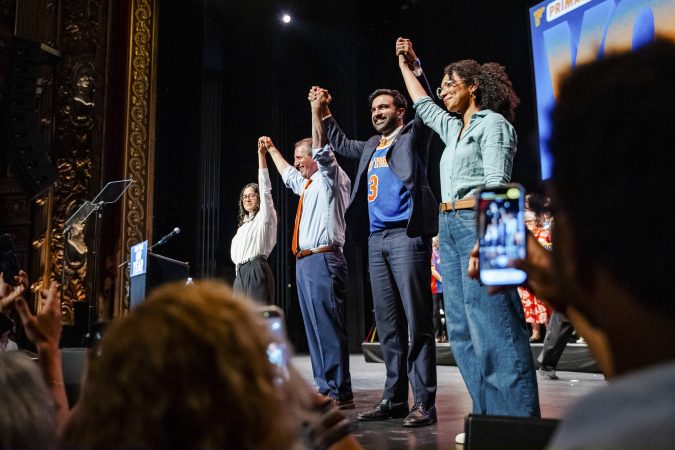
    But who knows? Wasserman estimates that Republicans will spend about $2 million, and since Bennett is a newcomer, she may be vulnerable to personal attacks. Plus, Democratic primary voters just selected hard-left nominees in two neighboring districts — Adam Hamawy in the 12th and Analilia Mejia in the 11th — and Republicans may see that as an opportunity.

    “She may need to be explicit about where she’s different from nearby Democrats,” Wasserman says.

    And that could prove awkward, says Mike DuHaime, who ran Chris Christie’s campaigns for governor. “It puts her in a weird spot because a bunch of her most ardent supporters probably love those folks,” he says.

    The Kean dynasty, of course, might survive a loss in November. Kean could run again, or a new generation could pick up the torch. But America seems to have grown weary of political families like the Clintons and Bushes. In November, we’ll find out if New Jersey has had enough of the Keans.

    Tom Moran is the author of the Substack Jersey Lowdown and former editorial page editor of the Star-Ledger in Newark, N.J.

  • Democratic leaders threaten self-destruction after wins by popular left-wing candidates

    Democratic leaders threaten self-destruction after wins by popular left-wing candidates

    For years, I have summed up American politics in one sentence: Republicans have no principles, Democrats have no spine. Now, Democrats seem intent on proving they have no brains to go with that wobbly backbone. Following James Carville’s lead, some frightened Democrats appear determined to snatch defeat from the jaws of victory.

    Carville worked magic nearly 35 years ago, helping mastermind Bill Clinton’s 1992 win. He has since become the epitome of the conventional-wisdom consulting class. Only a split within the party could darken the Democrats’ bright electoral prospects this year and beyond. Yet, Carville seems determined to promote precisely that division.

    Appointing himself the party’s membership czar, Carville openly advocates for an intraparty “schism,” pushing out the democratic socialists whom voters just elected in Democratic primaries. Sparing no expletives, he said, “I actually do think it’s time for Democrats to talk the S-word: schism.”

    Even the word reeks of futility. Schism is most closely associated with the Great Church Schism, which culminated in 1054. The schism irreparably split the Christian Church into Eastern Orthodox and Western Roman Catholic, and weakened Christianity for centuries. It led to Western Crusaders sacking Constantinople in 1204, and left the Eastern Orthodox exposed to the rising Ottoman empire, which took the city in 1453.

    The Democratic Party has always thrived on diversity. In the 1930s, Sen. “Cotton Ed” Smith and fellow conservatives held the party’s right flank while Sen. Robert Wagner and the liberals held its left. That coalition built the majorities that enabled Franklin Delano Roosevelt to enact the New Deal and to lead the nation through World War II.

    One of FDR’s few political missteps was his attempt to purge conservatives in the 1938 primaries. The failed purge, which party chair James Farley called a “bust,” drove Southern Democrats into a conservative coalition with Republicans and shattered FDR’s aura of invincibility. Though not the primary cause, it contributed to staggering Democratic losses that November: 72 House seats and eight Senate seats.

    Carville’s schism has no upside. A handful of democratic socialists will not turn America into Cuba. They sit much closer to the Democratic mainstream than Cotton Ed’s bloc sat to FDR’s. A September Gallup poll found that 66% of Democrats hold a positive view of socialism. And these are not hard-line socialists; they more closely resemble the social democrats of Scandinavia, who would regulate capitalist enterprise, rather than have the state seize it.

    The downside, though, is immense. A divided party wins fewer elections. The most likely outcome of a Democratic schism is MAGA rule for the foreseeable future, posing grave danger to American democracy itself.

    Carville’s promotional flair has won his idea wide coverage, and some Democrats have signed on. The Nation blared that “Establishment Democrats Are Embracing Loserdom.” The author warned that “Some centrists would rather have Trump triumph than forge an alliance with the left.”

    Former Democratic Party chair Jaime Harrison told left-wing Democrats: “If you hate the Democratic Party, then please don’t run for our nomination. Don’t use our resources. Don’t rely on our volunteers. Don’t use our infrastructure.”

    Democratic Rep. Josh Gottheimer of New Jersey agreed. “Are we going to let them take over the party? Or are we going to stand up and fight back?” he said. “Many of us believe, as I do, that if you’re a socialist, you’re not a Democrat.”

    Democratic Sen. John Fetterman of Pennsylvania, although not explicitly endorsing Carville’s call for schism, blasted left-wing Democrats. He said that the victory of democratic socialists has “just been the dancing days of the dirtbag left. You know, some of these candidates are outrageous.”

    Carville and his backers should remember the words made famous by football coach Vince Lombardi: “Winning isn’t everything; it’s the only thing.” Stopping Donald Trump and his cronies from subverting our democracy is not the most important thing; it is the only thing.

    A united Democratic Party, not a top-down purged one, holds the only hope of achieving that end.

    Instead of panicking over left-wing candidates’ victories, mainstream Democrats should learn why those wins sparked such voter enthusiasm. Democrats should also reject Carville’s siren song and heed Sen. Cory Booker’s response to Fetterman’s slamming of the “dirtbag left.”

    “If you want to heal a country, you can’t be picking fights,” he said. “Our party is not homogeneous. One of the things that makes the Democratic Party great is that it’s a big-tent party. We need to stay that way. The focus has got to be the November elections.”

    Allan J. Lichtman is a distinguished professor of history at American University. He is also the author of “Great American Presidents: The Twelve Who Transformed the Nation,” out from Bancroft Press in September.

  • Letters to the Editor | July 7, 2026

    Letters to the Editor | July 7, 2026

    Self-evident

    Thank you to the editors of The Inquirer for placing the opening lines of the preamble to the Declaration of Independence on the front page as we celebrate the 250th anniversary of our nation.

    May we continue to ensure these fundamental human rights given by our Creator are not taken away.

    Mary Beth Rodger, Warwick

    . . .

    I was stunned and delighted by July 4’s front page. I wish I could buy a poster-sized version. It expresses everything I want our government to strive for.

    Anne Slater, Ardmore

    . . .

    Bravo, Inquirer! Unfolding my morning paper and seeing your outstanding choice for front page text took my breath away. How powerful. How beautiful. How full of hope. Thank you.

    Elizabeth Gavula, Philadelphia

    Arts funding cut

    During the past five weeks, I have attended seven or eight performances presented as part of the ArtsPhilly: What Now 2026 Festival, celebrating the 250th anniversary of our nation’s founding through the work of Philadelphia artists and arts organizations.

    What made these events so memorable was their focus on lesser-known community arts groups. The festival showcased theater, storytelling, poetry, dance, music, visual arts, and performance art, and every event I attended drew enthusiastic audiences. They demonstrated both the vitality of Philadelphia’s arts community and the public’s appetite for diverse, neighborhood-based cultural experiences.

    That is why I was dismayed to read both your editorial and Peter Dobrin’s article about the city’s decision to reduce funding for the Mural Arts program and the Philadelphia Cultural Fund. The cultural fund provides essential grants to smaller, underresourced organizations — the very groups ArtsPhilly helped bring to wider public attention.

    These cuts are a shortsighted response to the city’s budget challenges. The strong attendance at ArtsPhilly events shows Philadelphians value these organizations and the opportunities they create for connection, creativity, and community. Rather than weakening them, the city should invest in them. If these cuts stand, Philadelphia’s cultural life — and all who benefit from it — will be poorer.

    Naomi Lokoff, Glenside

    Lasting legacy

    Jonathan Zimmerman’s thoughtful defense of the Peace Corps deserves attention. One of its greatest achievements, however, is often overlooked. When President John F. Kennedy and Sargent Shriver created the Peace Corps, they established three goals. The third — and perhaps the most enduring — was to bring home the knowledge and understanding volunteers gained by living and working alongside people in other countries.

    As Returned Peace Corps Volunteers who served in Morocco from 1968 to 1970, we have seen that goal fulfilled. More than 250,000 Returned Peace Corps Volunteers have become teachers, professors, physicians, scientists, diplomats, public servants, business leaders, and community volunteers. The perspective gained during two years of service has shaped careers, classrooms, communities, and public institutions across the United States.

    Measured over a lifetime, the return on America’s investment in the Peace Corps is extraordinary. The benefits did not end when volunteers came home; in many ways, they were just beginning.

    Zimmerman reminds us that the Peace Corps is one of the smallest items in the federal budget. It is also one of the wisest investments our nation has ever made.

    James F. Lawrence, senior executive, U.S. Department of State (retired), and Daniel A. Wagner, professor and UNESCO chair, University of Pennsylvania

    Join the conversation: Send letters to letters@inquirer.com. Limit length to 150 words and include home address and day and evening phone number. Letters run in The Inquirer six days a week on the editorial pages and online.

  • The next 250 years of American science depend on ordinary persistence, and the funding to sustain it

    The next 250 years of American science depend on ordinary persistence, and the funding to sustain it

    In the sweltering Philadelphia summer of 1776, cobblers, printers, dockworkers, and farmers continued their daily labor amid political upheaval and outbreaks of disease, sustained by the belief that steady work undertaken together could shape a different future. That ordinary persistence would eventually give birth to a revolution.

    In laboratories across the country today, that same ethic continues to stir. Researchers return each day to careful, steady work that rarely produces immediate answers but over time builds a foundation that changes what medicine can do.

    In the 250 years since independence was declared in Philadelphia, the United States has also built global leadership in scientific discovery. That leadership, however, is not guaranteed, and today, we are at risk of losing it.

    What’s at stake is best understood through the breakthroughs that sustained investment has already made possible.

    The mRNA vaccines that helped end the COVID-19 crisis emerged from decades of federally supported research that, for years, appeared uncertain and commercially impractical.

    Cancer immunotherapy, including CAR-T approaches, has demonstrated that the immune system can be redirected to attack disease in ways once thought impossible. CAR-T therapies were not the product of a single breakthrough moment, but of years spent understanding how immune cells recognize and respond to disease.

    Checkpoint blockade for cancer, which has saved more than one million lives, was the result of years of work in basic preclinical models of disease. Moreover, today we sit on the precipice of revolutionary new treatments for pancreatic cancer and other cancers driven by the gene KRAS, due to investments in fundamental science around this gene and related pathways.

    And, just recently, a child diagnosed with a rare genetic disorder was successfully treated with a customized CRISPR gene editing therapy by a team at Children’s Hospital of Philadelphia and the University of Pennsylvania.

    From humble beginnings in studies of bacterial defense systems to correcting genetic disorders in children, these approaches have their origins in federally funded basic science research.

    However, even that investment is beginning to erode. Adjusted for inflation, National Institutes of Health funding today remains below its 2003 peak, and recent budgets have struggled to keep pace with the rising cost of doing science. As resources tighten, fewer promising ideas move forward, and the pipeline of discovery narrows.

    For example, the remarkable GLP-1 class of drugs, such as Ozempic, expected to slash diabetes and obesity rates across the country, was derived, in part, from NIH-sponsored basic research on the venom of the Gila monster, a lizard native to the U.S.

    Researchers, including those at the Colton Center for Autoimmunity, are now applying ideas similar to these breakthroughs to autoimmune conditions, opening the door to treatments that are more precise, more durable, and less reliant on broad immune suppression. These include CAR-T cells for autoimmunity, advances in treatment for multiple sclerosis, and new promising research on treatments for rare but devastating diseases like retinal vasculopathy with cerebral leukoencephalopathy.

    This is the promise of precision medicine: not one-size-fits-all care, but interventions shaped by each patient’s biology.

    None of this happened by accident.

    Many of the breakthroughs now transforming medicine were built on years — often decades — of federally supported basic research, long before their practical application was clear. Nearly all of the drugs and therapies later brought forward by industry trace their origins back to federally supported basic research, undertaken long before their eventual medical or commercial value could be known.

    This is how discovery works. The most important advances often begin as hard questions in laboratories, without a clear timeline or commercial payoff.

    Scientific leadership may not always be seen as a measure of national strength, but it should be. The immune system sits at the center of many of the most pressing challenges in medicine, from cancer and infectious disease to chronic inflammation, autoimmunity, and even aging and neurodegenerative diseases. Advances in immunology are changing what medicine can do, moving us from managing disease to predicting it earlier, targeting it more precisely, and, in some cases, reprogramming the body to fight back on its own.

    Federal support for research is also an economic engine: In fiscal year 2025, NIH funding generated $2.57 in economic activity for every $1 invested and supported more than 390,000 jobs nationwide.

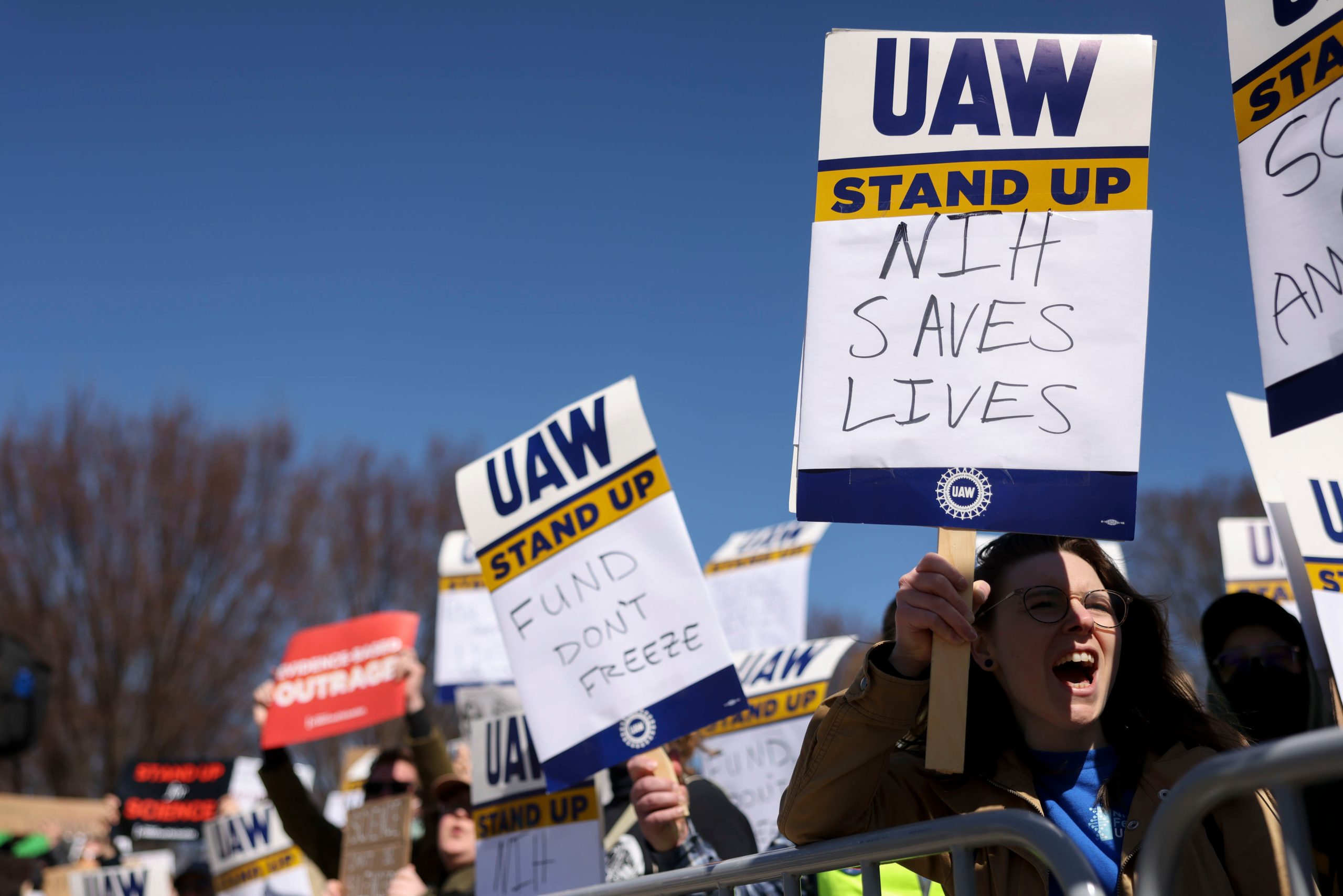
    Demonstrators hold signs in support of the NIH during a “Stand Up For Science” rally in Washington, D.C., on March 7.Tierney L. Cross

    That progress is neither automatic nor inevitable.

    If the United States pulls back from long-term investment in research, talent, and scientific institutions, innovation will slow, discovery and drug development will move overseas, and America risks losing its preeminent place as a scientific leader. Federal research support reflects a national decision that knowledge serving the public good is worth sustaining even when the payoff is distant.

    Ordinary persistence means carrying on in the face of uncertainty and hardship, continuing the work even when progress is slow, and success is not assured. It is a tradition woven deeply into the country’s history: The belief that steady effort, sustained over time, can lead to lasting change.

    As we mark the nation’s founding in the city where it began, we should also make a shared pledge for the next 250 years: to recommit to that fundamental ideal of sustaining the patient, collective work of discovery.

    In Philadelphia, that tradition helped shape the nation’s founding. The next 250 years of American science will require the same ordinary persistence still practiced every day in laboratories, clinics, and classrooms across the country.

    E. John Wherry is director of the Colton Center for Autoimmunity and the Institute for Immunology and Immune Health at the University of Pennsylvania’s Perelman School of Medicine, where his research focuses on harnessing the immune system to better understand, treat, and prevent disease.