Category: Editorials

  • Todd Blanche is a Trump enforcer. He has no business being attorney general. | Editorial

    Todd Blanche is a Trump enforcer. He has no business being attorney general. | Editorial

    It appears acting U.S. Attorney General Todd Blanche may have done his squirrelly best to secure enough Senate votes to make his position permanent.

    But any way you slice it, Blanche remains wholly unfit to serve as the People’s Lawyer.

    It is particularly alarming that only two Republican senators on their way out of the door even questioned Blanche’s nomination. That says more about the sorry state of the GOP that continues to place Donald Trump above the rule of law, and the need for voters to stop the madness.

    Outgoing Sens. John Cornyn of Texas and Thom Tillis of North Carolina had threatened to block Blanche’s confirmation, but both now appear ready to fall in line after he confirmed in writing that the U.S. Department of Justice would abandon “parts” of a sweetheart deal it gave to Trump to avoid IRS audits and create a $1.8 billion slush fund to reward lawbreakers.

    The rest of the Republican senators apparently are poised to just ignore the corrupt actions of the Justice Department during Blanche’s tenure in exchange for avoiding any unhinged social media posts from the president.

    After initially refusing to do so, Blanche finally put in writing two documents that appeased the slush fund and tax deal concerns raised by Cornyn and Tillis.

    Blanche signed one memo that said the $1.8 billion fund “is rescinded and shall have no force or effect.”

    However, he didn’t have the nerve to sign the second memo that made clear that — unlike every other American — Trump, two of his sons, and the Trump Organization are immune from past tax audits. (The only concession here is that future tax returns could still be audited.)

    Even still, as the acting attorney general, Blanche negotiated the deal that frees Trump and his family from past audits — an unprecedented and potentially illegal perk that may be worth $100 million in unpaid back taxes and penalties.

    Apparently, Cornyn, Tillis, and every other Republican senator, including Pennsylvania’s Dave McCormick, are fine with that Trump tax dodge.

    Voters should remember these embarrassing words from McCormick: “I think Todd Blanche would be a fine attorney general.” Particularly because the record says otherwise.

    There is no trusting that Blanche’s Justice Department won’t find ways to reward Trump supporters. The president promised over the weekend to restore the slush fund.

    Indeed, a man who was convicted and later pardoned by Trump after conspiring to block access to an abortion clinic already received a $1 million taxpayer-funded payout from the Justice Department.

    As for the tax deal Blanche secured for his boss, seeing how Trump has avoided paying taxes for years, there is little reason to believe he will do so going forward.
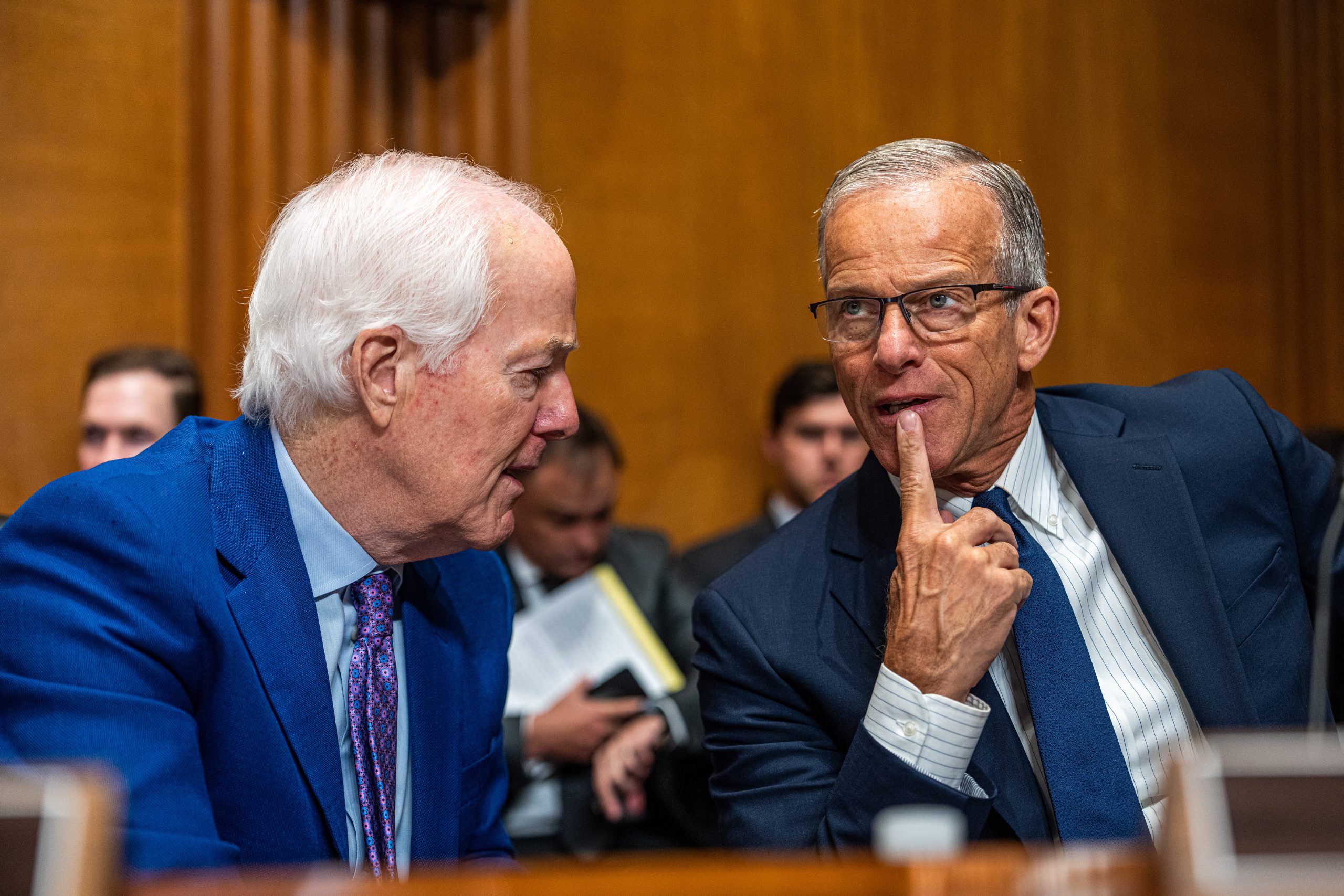
    Sen. John Cornyn (R., Texas) (left) and Senate Majority Leader John Thune (R., S.D.) have dropped their objections to Todd Blanche becoming attorney general.ALEX KENT

    Even beyond the outrageous tax scheme and the slush fund, Blanche has never truly stopped serving as Trump’s personal attorney — a role that has enriched and empowered the once obscure federal prosecutor.

    Blanche’s supreme loyalty to Trump and willingness to abuse the rule of law to please his boss has tarnished the independence and trust in the Justice Department.

    Federal judges have repeatedly rebuked Justice Department lawyers for lying, ignoring orders, and skipping deadlines — actions that were extremely rare before Trump.

    As the Justice Department’s No. 2 official, Blanche played the lead role in protecting Trump from the fallout from the release of the Jeffrey Epstein files. Nearly half the files involving the accused sex offender and close friend of Trump’s still have not been released, and many that have been made public are redacted.

    As the political fallout for Trump grew, Blanche, in a highly unusual move, personally interviewed Ghislaine Maxwell, who was sentenced to 20 years in prison for her role in helping Epstein recruit, groom, and abuse underage girls.

    Shortly after the meeting, Maxwell was transferred to a minimum-security prison camp, despite the Bureau of Prisons policy that prohibits housing sex offenders in lenient lockups. Will her silence about Trump’s dealings with Epstein lead to an eventual pardon?

    Blanche has also abused his power at the Justice Department by presiding over efforts to indict, investigate, and harass Trump’s perceived political enemies, including bogus legal attacks aimed at former FBI Director James Comey, New York Attorney General Letitia James, former Federal Reserve Chairman Jerome Powell, and others.

    Federal prosecutors just dropped charges against a former Olympian who was accused of damaging the Lincoln Memorial Reflecting Pool, a ridiculous case that was ginned up to protect Trump after a crony contractor botched the repairs.

    Grand juries have rejected other pathetic cases brought by the Justice Department to punish critics of Trump, including one attempt to indict a man for throwing a sandwich at an immigration enforcement agent.

    The cases echo what occurs under authoritarian regimes, and underscore that private citizens are not safe from the legal abuses by the Trump-Blanche Justice Department.

    Blanche has demonstrated he has no business pursuing justice. Voters should hold to account any elected officials who green-light such legal abuses.
  • Trump isn’t done interfering with elections | Editorial

    Trump isn’t done interfering with elections | Editorial

    A casual observer might believe Donald Trump when he says he doesn’t care about the coming midterm elections. Based on the historical record, the president’s basement-dwelling approval rating alone should dismay Republicans on Capitol Hill, and yet he is taking none of the usual steps to shore up his party’s prospects.

    On the contrary, he has persisted in an unpopular and unsuccessful war, reinstituted inflationary tariffs, obsessed over a $600 million ballroom, and refused to sign one of the few substantive bills passed by the GOP-controlled Congress.

    But Trump’s midterm strategy, like his broader political philosophy, is one of subtraction, not addition. Rather than persuade Americans to vote for his fellow Republicans, he prefers to stop people from voting against them. In terms of the effort to suppress rather than win votes, his campaign looks downright frenetic.

    A key chokepoint of this block-the-vote strategy is the mail, controlled as it is by the federal government. Despite taking advantage of the convenience himself as recently as last spring, Trump has been menacing mailed ballots since his botched COVID-19 response helped dramatically boost remote voting. He continued to do so Monday, when his administration petitioned the Supreme Court to let the U.S. Postal Service assume the novel duty of not delivering mail, namely ballots that tend to favor Democrats.

    At issue is his executive order directing the U.S. Department of Homeland Security to compile lists of citizens eligible to vote in each state, to be used by postal officials to interfere with the election. The Justice Department has demanded voter data from all the states under the order, leading to continuing legal disputes with many of them. Ruling on a lawsuit by Pennsylvania, New Jersey, and 20 other states in June, a federal court in Massachusetts blocked the order; recently, an appellate court agreed. As U.S. District Judge Indira Talwani noted persuasively, “the Constitution does not grant the president any specific powers over elections.”

    Administration lawyers nevertheless filed an emergency appeal with the Supreme Court, and who can blame them for trying? The high court’s conservative majority has rescued Trump from accountability for the plot against the 2020 election, taken a jackhammer to the political independence of agencies such as the Postal Service, and enabled states to eliminate districts that are mostly made up of people of color, which tend to lean Democratic.

    Last month, however, the court surprised many observers by narrowly upholding laws in Mississippi and many other states allowing ballots postmarked by Election Day to be counted even if they are delivered subsequently. Should a majority of the justices make another relatively rare decision to side with the Constitution over the president in the latest mail-in ballot case, the administration has other antidemocratic endeavors in the works.

    Even if the Postal Service is prevented from actively targeting ballots, underfunding and consolidation of services could slow their postmarking and delivery to the point of ineligibility. Officials in California believe the agency’s glacial processing may have contributed to the disenfranchisement of nearly 150,000 voters in last spring’s primary election.

    Trump has also been browbeating Republican senators for months over legislation known as the SAVE America Act, which would require a passport or birth certificate to vote — documents that tens of millions of Americans don’t have at hand. Trump has held up reauthorization of intelligence authorities, refused to sign bipartisan housing legislation, and demanded that the Senate kill the filibuster and cancel its August recess to pass the bill. Majority Leader John Thune’s consistent answer has been that Senate Republicans don’t — ironically enough — have the votes.

    The administration can likely be counted on to resort to more jackbooted tactics as the election approaches. Trump has suggested he would be willing to send federal troops and agents to the polls to intimidate voters in violation of federal law. His record of using federal forces against Democratic-leaning states and cities is already extensive.

    Even the successful completion of a free and fair election won’t necessarily be the end of Trump’s efforts to undermine it, as we learned when he tried to reverse a result at the expense of millions of voters in Pennsylvania and other battleground states six years ago. In his recent primetime address, the president was still harping on his 2020 loss — which his new national intelligence director just refused to acknowledge — while laying the groundwork for future interference.

    These tactics failed then, however, and robust public participation and vigilance can ensure that they do so again. The administration’s conspiracy against the election shows Trump still fears the will of the people. He should.

  • The way out of Trump’s failed Iran war | Editorial

    The way out of Trump’s failed Iran war | Editorial

    Much like the rest of President Donald Trump’s war with Iran, the latest outbreak of hostilities has produced nothing but death, destruction, and disorder. The current flow of traffic through the Strait of Hormuz makes the Schuylkill Expressway look fast, Tehran retains its capacity to terrorize its neighbors with cheap drones, and more American service members and civilians in the region have been killed or wounded.

    Last week, the Trump administration brain trust devised a horribly creative means of adjusting this abysmal cost-benefit ratio: blaming the latest U.S. losses on some other war. The Pentagon now categorizes four of the service members killed in the region and more than 200 of those injured as casualties not of the Iran conflict, but of unspecified “overseas operations.” This is based on the notion that the U.S.-Iranian ceasefire and memorandum of understanding ended the war, which it obviously didn’t.

    This accounting trick is an insult to the troops and their families. But the impulse behind it is correct in one sense: It’s time to actually cut American losses and end this misbegotten war for good.

    Five months after the United States joined Israel in waging war on Iran for the second time in as many years, the effort has achieved none of the administration’s various stated aims. Iran continues to be ruled by an oppressive theocratic regime with nuclear ambitions and proxy forces that menace its neighbors.

    The Islamic Republic is, in some respects, stronger than before, having shown it can fight the most powerful militaries in the region and the world to a standoff. At the same time, it now wields a weapon that may be more effective than a nuke: its ability to rattle the global economy by strangling oil and gas shipments through the strait.

    Trump, meanwhile, is under pressure from his vulnerable allies (and business partners) in the Gulf, congressional Republicans staring down a midterm shellacking, and dwindling supplies of munitions. Sure, he can keep threatening to resume the American onslaught to the extent of committing war crimes. But the president has already done more than his share to prove the ultimate inefficacy of both the rhetoric and the bombs.

    Rather than risk the lives of more Americans and others, and spend more billions to no avail, the administration must accept the necessity of a tactic it has largely avoided: multilateral diplomacy.

    Trump himself has shown intermittent glimmers of understanding this, having periodically groused about the refusal of NATO and other allies to come to America’s aid in the war. Such complaints also revealed the president’s fundamental misunderstanding of the transatlantic alliance, which exists to deter rather than further military aggression, and the nature of international relationships, which rely on the sort of mutual respect to which Trump has laid waste.

    It was the hard work of diplomacy that forged the Obama-era agreement among the world’s major powers to prevent an Iranian nuclear bomb, subject to verification by United Nations inspectors, until Trump unilaterally withdrew from the pact during his first administration. The peaceful transit through the Strait of Hormuz that prevailed before Trump’s war likewise rested on broad compliance with international maritime law.

    A lasting peace and resolution of the U.S.-Iranian standoff over the strait and the nuclear question may not be possible even with the benefit of broader international cooperation. But they will be impossible without it.

  • Trump’s war on the media is really a war on the truth | Editorial

    Trump’s war on the media is really a war on the truth | Editorial

    Donald Trump’s attacks on the media are really a war on the public’s right to know.

    His goal is to delegitimize critical reporting that exposes the chaos, corruption, and incompetence within his administration, distract from reality, energize his base, and establish himself as the sole arbiter of the truth.

    The problem is the president is a habitual liar. He has told tens of thousands of mistruths during his time in public office, and bends the facts to fit his skewed version of events.

    In his second term, this warped version of reality is virtually guaranteed. Trump has surrounded himself with pathetic yes-men who do whatever he demands and tell him what he wants to hear. The absurd theater of fawning bureaucrats praising the president during cabinet meetings resembles a spoof of a George Orwell novel.

    Trump declared the U.S. won the war in Iran in March, and again in April, May, and June, but the fighting continues. He claims the economy is great, but nearly half of all Americans said they are worse off financially. He continues to falsely claim the 2020 election was stolen, and spread repeated lies about the upcoming midterm election.

    But facts are stubborn. So rather than confront the truth, Trump tries to discredit the media. He labels stories that portray him in a negative light as “fake news.”

    The president has long called the media the “enemy of the people” — a phrase used by dictators, including Josef Stalin and Adolf Hitler.

    Trump’s response to stories that expose his misdeeds — like dodging taxes — is to file a lawsuit. He has sued the New York Times, the Wall Street Journal, the Washington Post, and other media companies.

    Most of Trump’s suits get thrown out. But some media companies have capitulated. Paramount paid Trump $16 million to settle a lawsuit against 60 Minutes that legal observers said was frivolous. ABC paid $15 million to settle a defamation suit that was also considered weak.

    After constant complaints by Trump, Paramount-owned CBS canceled Stephen Colbert’s comedy show, which frequently poked fun at the president.

    More recently, Trump threatened to revoke the broadcast licenses of ABC and NBC over petty issues, such as not showing his embarrassing speech claiming election fraud.

    At the president’s urging, the Federal Communications Commission is reviewing the license held by the Philadelphia ABC affiliate known as WPVI, or 6abc. The public has until Wednesday to express comments about the effort, which appears to be a clear attack on the First Amendment.

    The Times has been a frequent target of Trump’s. After the paper reported on security problems involving the $400 million airplane the Qatari government gifted to Trump, the U.S. Department of Justice subpoenaed the journalists who broke the story to intimidate the free press and chill leaks within the administration.

    The subpoenas were withdrawn just before Trump was set to speak at the White House Correspondents’ Association dinner — where he continued his attacks on the news media.

    Of course, the media is as imperfect as the men and women who work in it. But the founders understood that the free press plays a vital role in democracy by informing the public, holding leaders accountable, and providing a forum for debate.

    That is why the First Amendment — which guarantees freedom of speech, freedom to protest, and freedom of religion — remains a cornerstone of our democracy and civil society.

    But Trump’s attacks on the media have helped erode public trust in journalism, accelerated partisan divides, and reduced faith in democratic institutions.

    Amid all the confusion, Trump has enriched himself while the country has become divided and weakened.

    The independent press will do its best to report the truth, but it is up to voters to hold those in power accountable.

  • What John Fetterman forgot about his U.S. Senate seat | Editorial

    What John Fetterman forgot about his U.S. Senate seat | Editorial

    Pennsylvanians were well acquainted with John Fetterman’s idiosyncrasies by the time he was elected to the U.S. Senate four years ago. No one had a right, for example, to expect him to report for Capitol Hill duty with a clean shave and a pressed suit.

    His supporters do deserve to be dismayed, however, at their increasingly right-leaning senior senator’s self-indulgent recent threats to leave the Democratic Party entirely. Fetterman won a competitive race as a Democrat thanks to voters who believed in him and his politics even after a stroke forced him off the campaign trail for months. If they wanted a Republican senator, they could have voted for the crudité-shopping TV doctor Fetterman was running against, Mehmet Oz.

    For a man who styles himself as such a Washington outsider that he can barely be bothered to put on a pair of long pants, Fetterman is making a very inside-the-Beltway mistake. Judging by his willingness to change his positions and party at a whim, he seems to think the Senate seat belongs to him rather than the people he represents.

    After nearly half the Democrats in the House voted against aid to Israel recently, Fetterman said he would leave the party should it incorporate such opposition into its platform and “officially become the anti-Israel party.” That makes his inconstancy sound more high-minded than it really is.

    While the vote represented a high-water mark of Democratic opposition to Benjamin Netanyahu’s government and its wars in Gaza and Lebanon, there is no sign Fetterman suddenly finds himself in a party that believes Israel “doesn’t deserve to exist,” as the senator put it. Nearly 100 Democratic representatives took the pro-Israel side of the same vote, after all.

    Nor is this some inexplicable or unforeseeable about-face on the part of Fetterman’s fellow Democrats in Congress. The party’s lawmakers are only beginning to catch up with public dismay at the conduct of Israel’s hard-right regime. One recent poll found that about a third of American adults, including a similar share of Jewish Americans and half of Democrats, believe Israeli forces committed genocide in Gaza.

    That suggestion has been vociferously deflected by the Netanyahu government, which launched its campaign against Hamas in Gaza after the horrific terror attacks of Oct. 7, 2023. In a statement last week, the prime minister’s office said that “Israel has taken unprecedented wartime measures to minimize harm to civilians while confronting Hamas, a genocidal terrorist organization that uses Palestinians as human shields and deliberately targets innocent Israeli civilians.”

    Even if Fetterman’s stated pro-Israel principles are accepted at face value, moreover, they don’t account for the extent of his ideological migration. Perhaps his defense of Israel can be stretched to explain his avid and anomalous support for Donald Trump’s unpopular and unsuccessful war in Iran.

    But the senator has also voted for Republican measures to fund Trump’s immigration crackdown, supported his billion-dollar ballroom, objected to fewer cabinet nominees than any other Democrat, and signed off on one of Trump’s judicial nominations, the first in his caucus to do so this term. (Despite backing those initiatives, Fetterman says that his internal metrics show he votes with his party 93% of the time.)

    He has also become a Fox News fixture who has accused the Democratic base — the people who, you know, gave him his job — of being “anti-American.” No wonder he is polling better among the state’s Republicans than the GOP’s own senator from Pennsylvania, Dave McCormick.

    Despite Fetterman’s proclaimed “moral clarity” on Israel, he often speaks of his grievances with his fellow partisans — and his appreciation for Trump — in political rather than policy terms. He has groused about the repercussions of left-leaning Democrats’ positions for swing-state politicians like him, enthused about Trump’s sheer political talent, and lamented the electoral fate of Democrat Bob Casey, his former Senate colleague.

    Maybe the senator’s red shift is motivated less by foreign policy than by an impulse to keep his job — even if it means betraying his voters. In that case, he should at least do his former supporters the courtesy of refraining from dressing up his careerism as morality.

  • Krasner’s office is accused of lying and cutting corners to win exonerations — and the wrongly convicted could pay the steepest price | Editorial

    Krasner’s office is accused of lying and cutting corners to win exonerations — and the wrongly convicted could pay the steepest price | Editorial

    District Attorney Larry Krasner has a growing credibility problem and needs to take steps soon to repair the damage to his office.

    During an extraordinary hearing in federal court last week, one of Krasner’s former prosecutors testified that his office colluded with defense attorneys to try to overturn a murder conviction, and encouraged her to lie to the judge to conceal the shoddy handling of the man’s appeal.

    In sworn testimony before U.S. District Judge Paul S. Diamond, former Assistant District Attorney Jaclyn Mason said she refused to move forward with a plan to take the blame and instead resigned last month.

    The federal court hearing came on the heels of other damaging rulings that determined prosecutors in Krasner’s office have been lying to the courts.

    The Pennsylvania Supreme Court ruled last month that Krasner’s office misled judges in several previous cases alleging wrongful convictions.

    Justice Kevin Dougherty wrote that Krasner’s office repeatedly “made unreliable concessions unsupported by the facts and law” and “violated its duty of candor.”

    In December, a panel of federal judges disbarred a prosecutor in Krasner’s office from practicing in the region’s federal court after concluding he “lied repeatedly” while trying to overturn the death sentence of a man convicted of killing a couple in East Mount Airy and leaving their infant daughter inside to die.

    Mason’s testimony last week amounted to strike three.

    She testified that supervisors in the district attorney’s office failed to independently investigate the trial transcripts, witness interviews, or homicide files before determining whether Dennis Johnson’s conviction should be set aside.

    Mason had recommended Johnson’s conviction be overturned, but said she did so at the direction of her boss, Matthew Stiegler, the head of the Conviction Integrity Unit. She added that Stiegler met with Johnson’s defense lawyers, including from the Pennsylvania Innocence Project, to discuss the best path to secure Johnson’s release.

    “Matt told me, ‘If it’s good enough for the Innocence Project, it’s good enough for me,’” Mason said in court.

    This week, two prosecutors in the district attorney’s office filed a court document claiming Krasner instructed them to push forward with Johnson’s appeal in a manner that would “protect the office.”

    Assistant District Attorneys Katherine Ernst and Steven J. Wildberger wanted the state attorney general’s office to take over the appeal because of conflicts. But when they pressed Krasner to refer the case to state prosecutors, he “stated that there would be ‘consequences’ for anyone who notified the court of the conflict issues.”

    For those keeping score, that would be strike four.

    But there are two sides to every story. The hearing in Judge Diamond’s court has not concluded. Additional prosecutors from Krasner’s office, including Ernst and Wildberger, are expected to testify and shed more light on the handling of Johnson’s case.

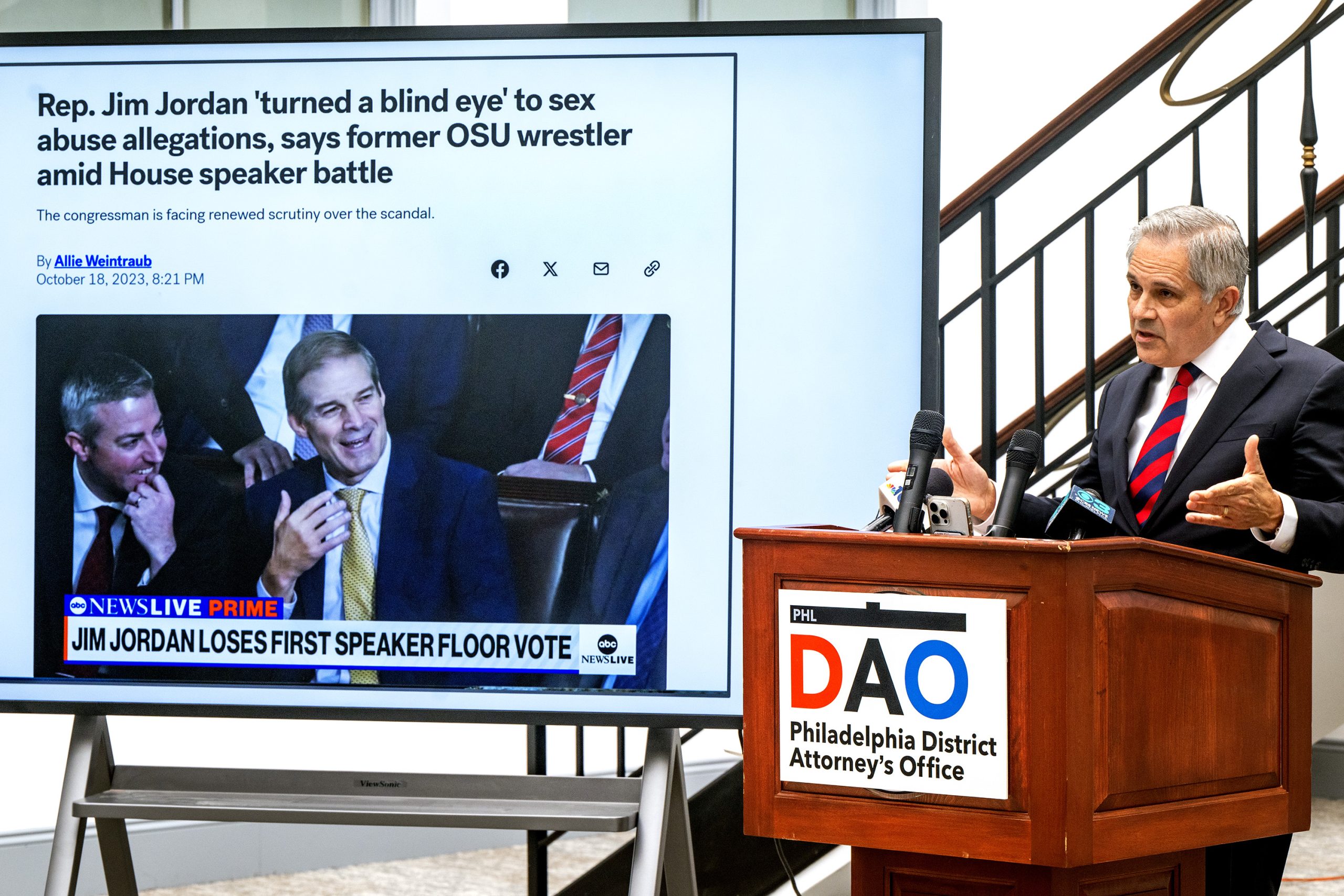
    District Attorney Larry Krasner at a May news conference denouncing criticism of his office leveled by Republican members of the House Judiciary Committee, and specifically its chairman, Rep. Jim Jordan (on screen).Tom Gralish / Staff Photographer

    In an interview with members of the Editorial Board, Krasner said he could speak more freely after the hearing ended. He added that more information would come out, and he hoped that until then the public would keep an open mind.

    This board has long supported Krasner’s efforts to examine claims of wrongful convictions. But the board does not support cutting corners or lying to the court.

    City, state, and federal prosecutors come into court with a level of credibility and trust earned over generations. Just as we have seen Donald Trump’s Justice Department fritter away its trust and credibility with repeated lies and sloppy lawyering, Krasner’s office risks doing the same.

    That could result in a major setback for others who have been wrongfully convicted. It is extremely difficult to get convictions reversed, and often takes years. If the courts don’t believe the prosecutors in Krasner’s office, anyone seeking an exoneration may face an even steeper hurdle.

    Studies indicate thousands of people nationwide are behind bars for crimes they did not commit, including some 4% of inmates on death row.

    Many wrongful convictions nationwide are the result of misconduct by police or prosecutors as well as misidentification by eyewitnesses. Philadelphia has a history of police corruption and abuse that has largely gone unchecked.

    Krasner’s decision to hold police accountable and investigate claims of wrongful convictions has been a long-needed correction. It has also animated Krasner’s law enforcement critics — of which there are many.

    That is all the more reason why his office must ensure its work involving exoneration cases is beyond reproach.

    Since taking office in 2018, Krasner’s office has freed 59 people, most of whom are Black men. That’s an impressive number in a short period of time.

    By comparison, over the past 34 years, the Innocence Project has helped to exonerate 257 people nationwide, largely through the use of DNA technology.

    But the state Supreme Court recently ordered the state attorney general to review any case in which the Philadelphia District Attorney’s Office wants to alter or overturn a past conviction.

    This board wrote earlier this month that the state Supreme Court went too far in ordering the added layer of oversight by the state attorney — which will live on long after Krasner leaves office — for fear it could slow down appeals and politicize the process.

    The court’s unprecedented overreach aside, the recent sworn testimony by a former prosecutor and two current prosecutors with firsthand knowledge of the office’s inner workings has raised doubts about the integrity of Krasner’s Conviction Integrity Unit.

    Public confidence in the district attorney’s office is paramount. Nothing should be off the table to ensure justice is delivered to victims and the accused in a safe, fair, and legal manner.

  • Philadelphia’s World Cup and All-Star summer proved something. Let’s not waste it. | Editorial

    Philadelphia’s World Cup and All-Star summer proved something. Let’s not waste it. | Editorial

    It’s been a big year for Philadelphia. The cradle of American democracy has been in the public eye during the nation’s Semiquincentennial and a series of sporting events that have brought visitors from across the world — all to rave reviews.

    In a sign of how far we’ve come from the bad old days of apathy and deterioration, the City of Brotherly Love and Sisterly Affection rose to the challenge and then some.

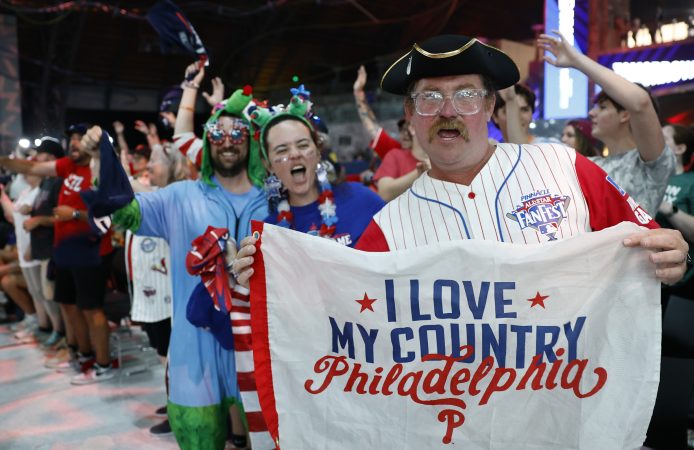
    Those in town for the PGA Tour in nearby Aronimink, the FIFA World Cup and Fan Festival at Lemon Hill, Major League Baseball’s All-Star Game, and the country’s 250th birthday mostly raved. A visiting Brazilian fan called Philadelphia “the most beautiful city” he’d ever seen. A level of effusive praise that stunned many residents who are accustomed to scorn, not admiration.

    Officials must now take the planning, determination, and can-do attitude they brought to making the city succeed on the world stage and prove they can make Philadelphians proud even after the spotlight has dimmed.

    Fifty years ago, during America’s Bicentennial, many in the city rightly felt its best days were long gone.

    Then-Mayor Frank Rizzo, known for his brutal tactics as police commissioner, scared visitors away after he requested federal troops out of fear of protests. No soldiers came to the city, and the planned demonstrations went off without any bloodshed. Still, Rizzo’s warning did little to change the city’s blossoming reputation as a dead-end town.

    Under Rizzo, the city’s economy had stagnated. Roughly a quarter of a million people left Philadelphia during the 1970s. Mismanagement of city government led to a ballooning budget deficit, which officials filled with the biggest tax increase in city history.

    Philadelphia could never lose its place in U.S. history, but its status as the workshop of the world would never return. Instead, it became known as a symbol of America’s urban decline. Blight spread, violence proliferated, employers left, and quality of life deteriorated. This, in turn, fostered the rise of the “negadelphian,” residents and former residents who expected the worst of the city, its teams, and its people at every turn.

    Over time, this sentiment came to dominate conversations about our city. People who had never set foot in the Delaware Valley could all tell the story of how Eagles fans threw snowballs at Santa, while the terms “Filthadelphia” and “Killadelphia” became common.

    That negativity was rarely in sight this summer, as Philadelphia put its best face forward to wow the crowds who focused on the city’s history, architecture, walkability, and friendliness. Even much-maligned and chronically underfunded SEPTA reopened long-closed concourses and seamlessly ferried fans to their destinations.

    The challenge for city officials now is to keep the momentum going. After all, while the city’s faults may have been sanded down for guests, residents know them all too well.

    Mayor Cherelle L. Parker has received positive feedback from residents on cleanliness, and homicide has declined to rates not seen since the 1960s, but many of the city’s day-to-day challenges remain. Taxes on workers and businesses are high enough to impede commercial activity and push residents out of the city and into the suburbs. A lack of job opportunities continues to be the top reason people leave our region.

    Our city’s underfunded educational system is scheduled to close 17 schools soon. The city’s parks and libraries make do with fewer resources than their peers. Brutal transit service cuts could occur next year unless Harrisburg acts.

    Fortunately, the summer of sports may also point to a way out of these long-standing issues.

    Throughout the year, ordinary Philadelphians mobilized to help show off their city. Around 3,000 people signed up to serve as volunteers during the World Cup. Others chose to become Phambassadors through the Visitor Center, working to showcase the city.

    This grassroots energy should be harnessed and turned into political power that can keep Philadelphia moving forward.

    Ultimately, it isn’t enough to simply change the way outsiders talk about our city. For Philadelphia to truly move beyond its decades-long reputation, Philadelphians must truly believe the hype.

  • Four people killed by ICE agents. A lawless administration. It won’t stop unless voters act. | Editorial

    Four people killed by ICE agents. A lawless administration. It won’t stop unless voters act. | Editorial

    A poet, a nurse, a construction worker, and a food delivery driver. The four people killed in 2026 by federal immigration agents were regular folks trying to live their lives in peace before they were crushed by the unchecked power of President Donald Trump’s mass deportation campaign.

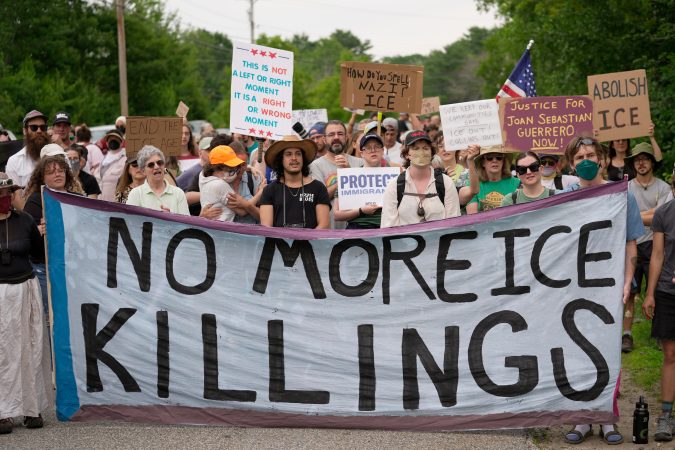
    The brief respite between the killings of Renee Good and Alex Pretti in January and the deaths of Lorenzo Salgado Araujo and Johan Sebastián Durán Guerrero over the last two weeks shows the government learned nothing from what happened in Minneapolis earlier this year.

    There, U.S. Immigration and Customs Enforcement agents, alongside members of U.S. Customs and Border Protection, spread terror and chaos in plain view. Masked and heavily armed, agents trampled people’s constitutional rights as they used excessive force to intimidate and arrest with impunity, ultimately killing Good and Pretti, both U.S. citizens.

    Sadly, the national outrage that followed did not dissuade Trump from his misbegotten mission — it merely amounted to a public relations problem addressed with a few firings and a temporary suspension of the siege.

    That it was Homeland Security Secretary Kristi Noem and Border Patrol commander Greg Bovino who lost their jobs instead of Stephen Miller, the white nationalist architect of the president’s immigration crackdown, signaled where the White House stood.

    Starting in June, the Trump administration once again unleashed ICE on America’s streets, with a reported target of 2,000 arrests a day. With little oversight, zero accountability, no transparency, and goaded by officials to escalate, it is a miracle more people haven’t been killed already. It is also likely that more deaths will follow.

    The latest killings share striking similarities. Both Salgado Araujo in Texas and Durán Guerrero in Maine were on their way to work, both were not ICE investigation targets, and both were shot by agents during traffic stops.

    Eyewitness video has repeatedly captured agents in unmarked cars aggressively pursuing and cutting off drivers, as well as firing on moving vehicles — tactics long abandoned by most law enforcement agencies, whose use-of-force policies prioritize protecting human life.

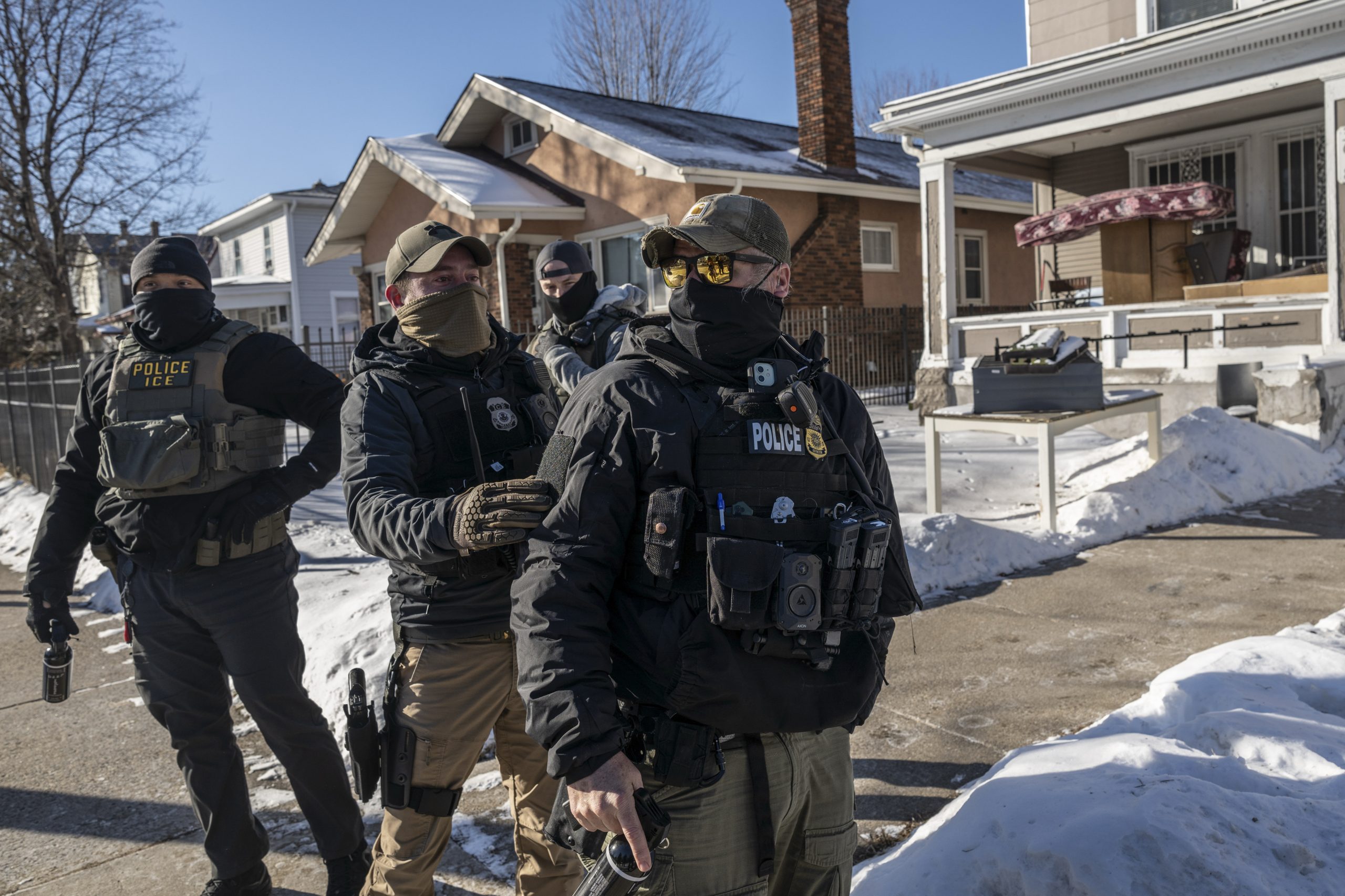
    Federal immigration agents prepare to raid a house in Minneapolis in January. The Trump administration’s immigration crackdown in Minnesota over the winter led to agents rounding up thousands of migrants and killing two American citizens.VICTOR J. BLUE

    Immigration agents have also used banned choke holds and utilized tear gas and pepper spray indiscriminately, even harming children, ProPublica reported. A recent analysis of 1,200 immigration enforcement incidents by the American Civil Liberties Union found that immigration agents are using force and the threat of force as default tactics to coerce, not to respond to any threat.

    ACLU researchers concluded there was a systemic breakdown in professional norms and standards with “encouragement of abuse by senior administration officials.”

    After Durán Guerrero’s death, cooler heads inside the U.S. Department of Homeland Security called for a moratorium on vehicle stops, but were almost immediately overruled by the president, who was reportedly furious.

    In fact, Trump has consistently shown no empathy nor taken any responsibility for what is being done in his name. If anything, he has doubled down on his inflammatory racist rhetoric against immigrants and anyone who would stand against him.

    This should chill every American to the core as much as it should spur us all into action.

    What is happening with ICE is not about enforcing immigration law; it is about a lawless administration willing to systematically ignore the Constitution, including every person’s right to walk down the street without fear of being assaulted, detained, or arrested by the government without cause. It is about a president using the vast power of the United States against those he deems a target with little concern about who gets caught in the crossfire.

    Once this kind of violence becomes accepted and normalized, its use will not stop. No place and no one will be safe.

    Voters must act quickly to hold federal lawmakers accountable.

    Republicans in Congress have blindly enabled Trump, acquiescing to his demands, including $70 billion in June for immigration enforcement. That’s on top of the $75 billion ICE received last year. This would be excessive at any other time. Coming when many Americans are struggling to make ends meet as life becomes more unaffordable, it is indefensible.

    Trump’s obsession with immigration enforcement is costly, shortsighted, and un-American. And until lawmakers rein in the president, it will be increasingly and indiscriminately deadly.

  • Pennsylvania lawmakers passed a budget — and ducked every hard question | Editorial

    Pennsylvania lawmakers passed a budget — and ducked every hard question | Editorial

    Unlike last year, when lawmakers missed the deadline for a new state budget by five months, Pennsylvania’s $50.8 billion spending plan has been approved by the General Assembly, signed by Gov. Josh Shapiro, and is now in place.

    But faced with the prospect of another embarrassing budget impasse at the expense of state-funded services like schools and libraries, Harrisburg chose another shameful option: They punted.

    The Keystone State has a divided legislature. In the Senate, Republicans hold 27 seats, while Democrats hold 23. In the House, the margin is even closer. Democrats hold 102 out of 201 seats. With the commonwealth this closely divided — and the state facing evident funding challenges — bipartisanship should be the order of the day, not political gridlock.

    Voters have every right to ask their representatives why they still have not been able to find common ground on addressing such annually recurring budget topics as whether to tax skill games, whether there is a sustainable means to increase public transportation funding, or how to go about raising the state’s minimum wage.

    By putting off decisions on those fiscal questions and others, Pennsylvania’s ability to invest in its infrastructure is limited to a narrow range of options that include raising taxes or raiding the Rainy Day Fund. This year’s budget also papers over a potential deficit by “rolling over” more than $1 billion in Medicaid spending until next year.

    One of the biggest ways to generate more revenue for the state would be by taxing and regulating the slot machine-like devices known as games of skill. While many Harrisburg observers felt that a recent state Supreme Court ruling classifying these devices as a form of gambling would spur action, legislators chose to do nothing.

    Of course, if state leaders were more driven by doing the right thing than by thinking mostly of political convenience, they’d ban the devices altogether. But lawmakers can’t even find a way to agree on such basic questions as what rate to tax the machines at, which agency should regulate them, and what priorities should be funded by the money they generate.

    Another untapped revenue source is recreational marijuana. While that money comes with legitimate concerns about public health and regulatory conflicts, the reality is that residents of the commonwealth already have access to cannabis products for recreational purposes. The money is just flowing to the black market and across Pennsylvania’s borders into nearby states instead.

    State Senate Majority Leader Joe Pittman (R., Indiana) during a news conference at the Capitol in Harrisburg in February.Tom Gralish / Staff Photographer

    Of the six states that share a border with Pennsylvania, only West Virginia continues to ban recreational use, even as the federal government moves forward with easing marijuana restrictions. While the bulk of the revenue from recreational marijuana sales should go to the general fund, some should also be reserved for research and prevention. Programs like Alaska’s Marijuana Education and Treatment Fund provide a good model. Some of the revenue could also be used to support more youth development programs.

    The collective “Philly Shrug” by the General Assembly also means another year of uncertainty for SEPTA, which has made significant progress in reducing its deficit, increasing paid ridership, and keeping vehicles and stations clean.

    The transit agency’s customer satisfaction surveys show record-high results, serious crime is down, and the agency has saved around $30 million per year in operating costs despite investments in additional police and hundreds of new cleaners. If next year’s budget process fails to adequately fund transit, these efforts will not be enough to forestall the devastating service cuts the region narrowly avoided last fall.

    That’s not to say there’s nothing to celebrate in this budget.

    While Pennsylvania is still far from achieving the education funding parity laid out in the landmark Commonwealth Court ruling on education funding, state leaders did vote to send an additional $670 million to schools across the state, including $157 million more for Philadelphia. The bulk of that money will go through the state’s new “adequacy formula,” which was created to fix gaps in equitable funding.

    It is good that the commonwealth avoided the months of delays that accompanied last year’s budget process. But unless there’s a change of heart — or in Harrisburg’s partisan makeup — it seems state leaders will continue to delay key decisions on critical issues at the expense of all Pennsylvanians.

  • Todd Blanche hasn’t stopped putting Trump ahead of the law. That’s why he can’t be attorney general. | Editorial

    Todd Blanche hasn’t stopped putting Trump ahead of the law. That’s why he can’t be attorney general. | Editorial

    The U.S. attorney general is often called the people’s lawyer because he or she serves the public interest by guarding the legal rights of taxpayers, residents, victims of crimes, and the environment.

    But the attorney general is not supposed to be the White House consigliere, abusing the rule of law, carrying out political vendettas, and protecting the powerful.

    Todd Blanche has shown he works solely for the president and not the people.

    That is why he should not be confirmed after the Senate Judiciary Committee meets on Wednesday regarding his nomination to be the permanent attorney general.

    Blanche, who has been serving as the acting attorney general, is willing to do whatever Donald Trump wants. He will even go to extremes to protect the president from political or legal trouble.

    In fact, Blanche has not been able to separate himself from his prior role as Trump’s personal defense attorney, in which he was paid nearly $10 million by a political action committee.

    In that capacity, Blanche represented Trump in the losing criminal case involving a scheme to illegally influence the 2016 election and a six-figure hush-money payment to an adult film star who said she and the president had sex.

    He also led Trump’s criminal defense team in the federal classified documents and election obstruction cases brought by the Department of Justice, which he currently oversees.

    Since joining the Justice Department, first as the deputy attorney general, Blanche has failed to carry out his sworn oath to support and defend the Constitution against all enemies, foreign and domestic.

    Instead, he has continued to do Trump’s bidding. Let us count the ways.

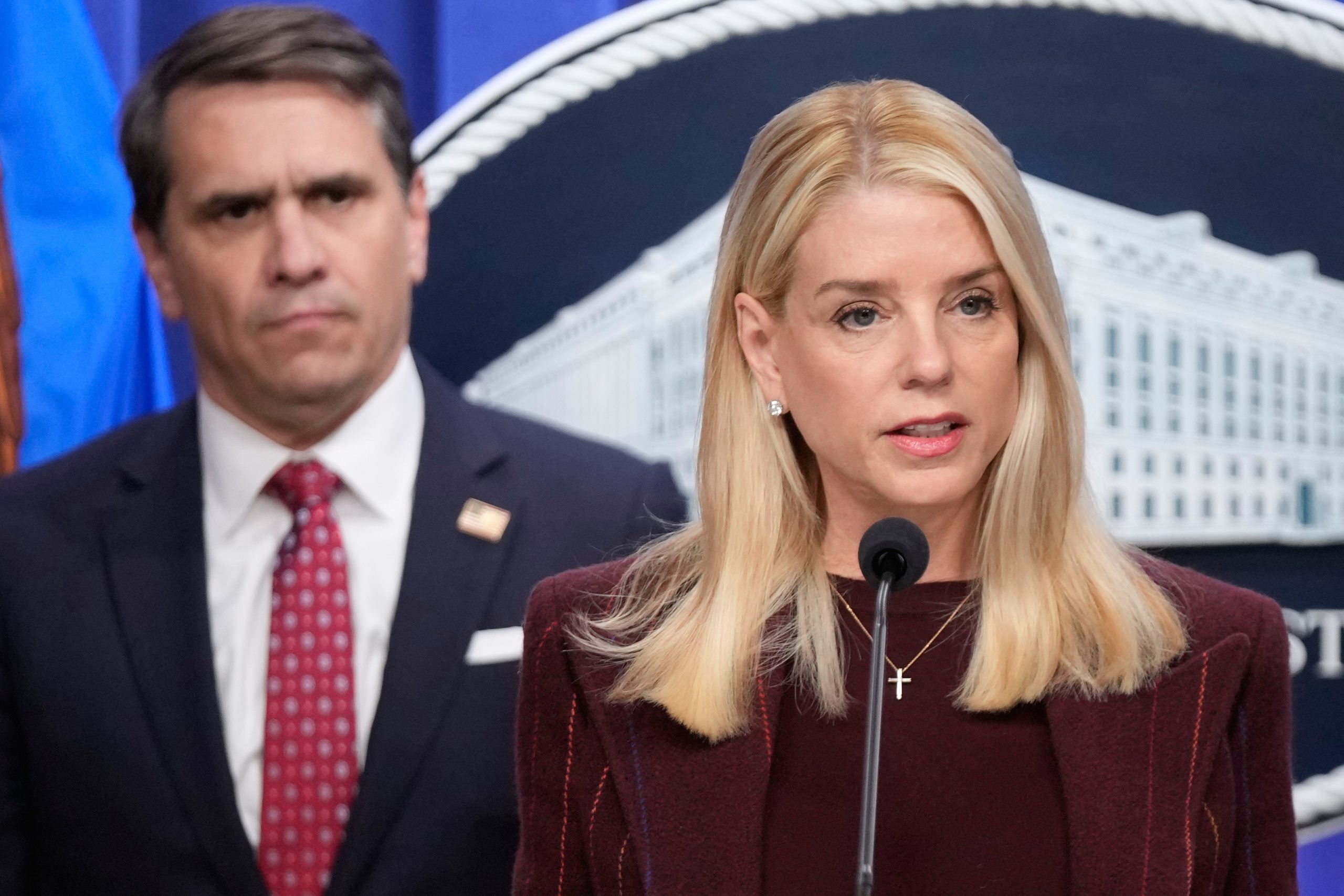
    Attorney General Pam Bondi speaks with reporters during a news conference at the Department of Justice in November, as Deputy Attorney General Todd Blanche, listens.Mark Schiefelbein

    Blanche played a central role in the proposed $1.8 billion slush fund designed to compensate individuals claiming to be victims of political targeting, including insurrectionists who stormed the U.S. Capitol on Jan. 6, 2021.

    Blanche defended the initiative before Congress. He later abandoned the proposal following bipartisan backlash, but refused to put the commitment in writing.

    At the same time, Blanche handed Trump and his family broad immunity from audits by the IRS. The unheard-of perk — which a judge ruled Monday was self-dealing — could further embolden them to avoid paying taxes and as much as $100 million in penalties.

    The Justice Department under Blanche, an election denier, is also taking steps to weaken election security instead of protecting voting rights.

    Blanche was also deeply involved in plotting how to defend against the growing furor in the MAGA base demanding the release of the Jeffrey Epstein files.

    Two New York Times reporters detailed how Blanche participated in White House meetings last summer to discuss how to manage the fallout. One meeting was held in the Situation Room — a secure bunker reserved mainly for classified and high-stakes national security, not political scandals involving a pedophile who abused scores of young women and was a close friend of Trump.

    Shortly after the strategy session, in a highly unusual move, Blanche met personally with Ghislaine Maxwell, the Epstein associate convicted of sex trafficking. None of the prosecutors involved in her case were included.

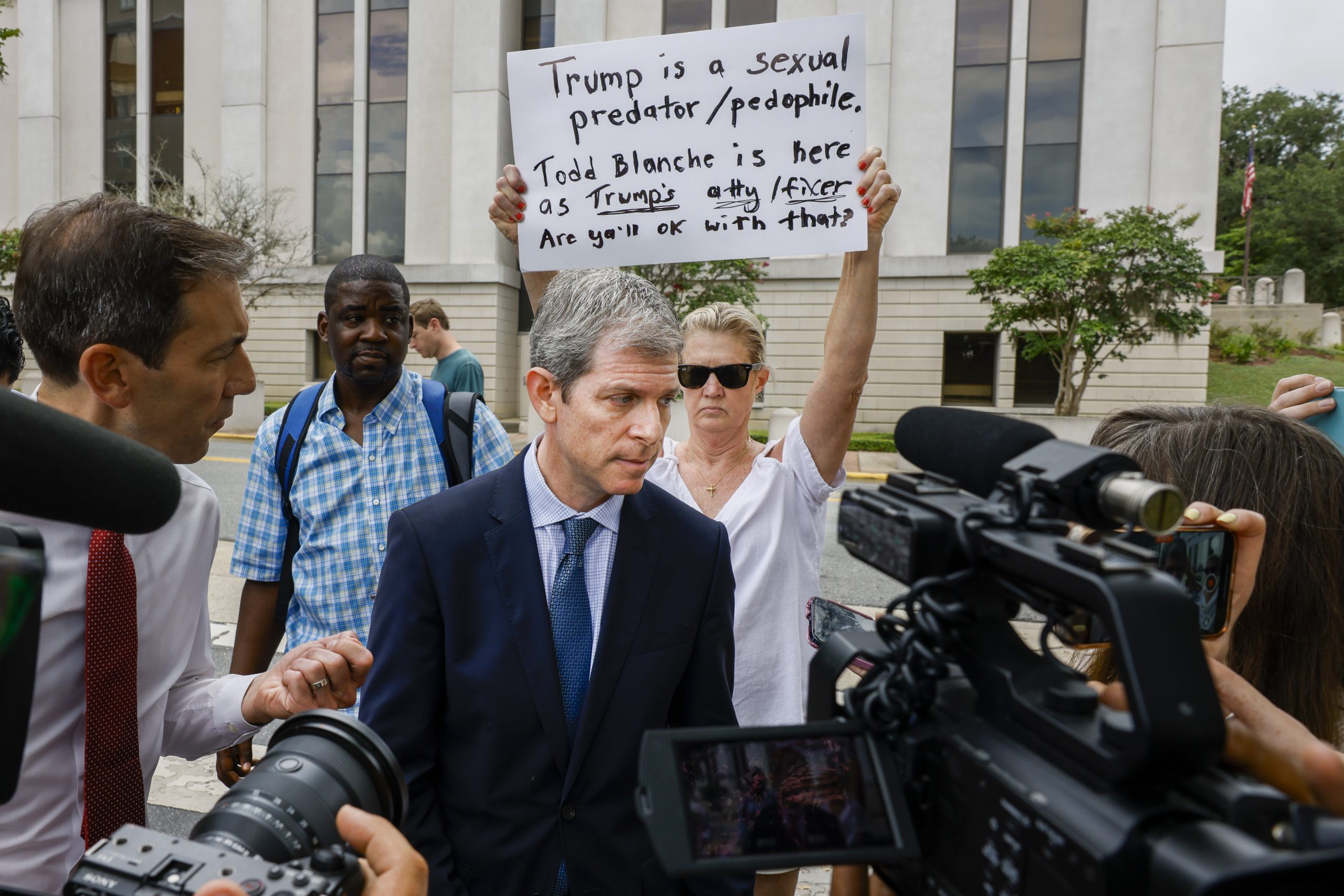
    David Oscar Markus, an attorney for Ghislaine Maxwell, talks with the media outside the federal courthouse in Tallahassee, Fla., in July 2025 after Deputy Attorney General Todd Blanche met with Maxwell, the imprisoned former girlfriend of financier and convicted sex offender Jeffrey Epstein.Colin Hackley

    After the meeting, Maxwell was transferred to a more relaxed minimum-security federal prison camp that critics said reeked of a quid pro quo of an easier time and a possible pardon in exchange for favorable testimony regarding Trump’s ties to Epstein.

    Blanche has also slow-walked the release of the Epstein files. So far, only about half of the more than six million documents have been made public, despite Congress passing a law requiring everything to be made public by Dec. 19, 2025.

    Many of the files released have extensive redactions. Even still, Trump’s name appears thousands of times in the files that have been made public. What else is being hidden?

    Trump fired Pam Bondi as attorney general in April in large part because she did not move fast enough to indict his political enemies.

    He installed Blanche as the acting AG, who quickly showed he got the message.

    Blanche secured federal indictments against former FBI Director James Comey and the Southern Poverty Law Center, while opening sham investigations involving the writer E. Jean Carroll, former CIA Director John Brennan, and Cassidy Hutchinson, a former Trump aide.

    The indictments and investigations of Trump’s perceived enemies reek of vindictive prosecution and abuse of power. Trump supporters who cheer the investigations should be wary of the dangerous precedent being set, the breakdown in the rule of law, and the demise of the Justice Department’s independence.

    Everyone — including 100 former judges — knows Blanche is unfit to be attorney general.

    We need just a few honorable senators to stop the madness before it is too late.