Category: Editorials

  • Trump’s all-out assault on free and fair elections undermines trust in democracy | Editorial

    Trump’s all-out assault on free and fair elections undermines trust in democracy | Editorial

    Let’s begin with the obvious: Donald Trump is out to rig the midterm elections.

    We know this because the president commits many of his illegal acts in broad daylight.

    For the past year, Trump has revved up his election-tampering efforts by throwing everything at the proverbial wall.

    He called for nationalizing elections, pushed to redraw election maps, slashed funding for election security, moved to restrict voting, targeted election workers, rewarded election deniers, and continued to repeat baseless claims that the 2020 presidential election was fixed.

    Trump even mused about canceling the November midterms. The White House said it was a joke, but his track record indicates anything is possible.

    Trump has ignored court orders, trampled presidential norms, and even refused to uphold the Constitution. He has cheated at everything, including the draft, golf, taxes, and marriage, so why not elections?

    If the Great Experiment in self-government that the founders began 250 years ago is to continue, we need free and fair elections. But Trump is working feverishly to tilt the playing field to ensure Republicans win.

    Last summer, he pushed GOP lawmakers in Texas to take the rare step of redrawing congressional maps in the middle of the decade to add more Republican seats.

    Lawmakers in other red states, including Florida, Ohio, and Missouri, followed Trump’s blatant call for gerrymandering. Some blue states, like California, moved to do the same to offset the Republican scheme, sparking an undemocratic arms race.

    The U.S. Supreme Court joined in by further obliterating the Voting Rights Act that previously provided for majority-minority districts. With that safeguard dismantled, Tennessee, Louisiana, and Alabama carved up Black majority districts to eliminate Democratic seats.
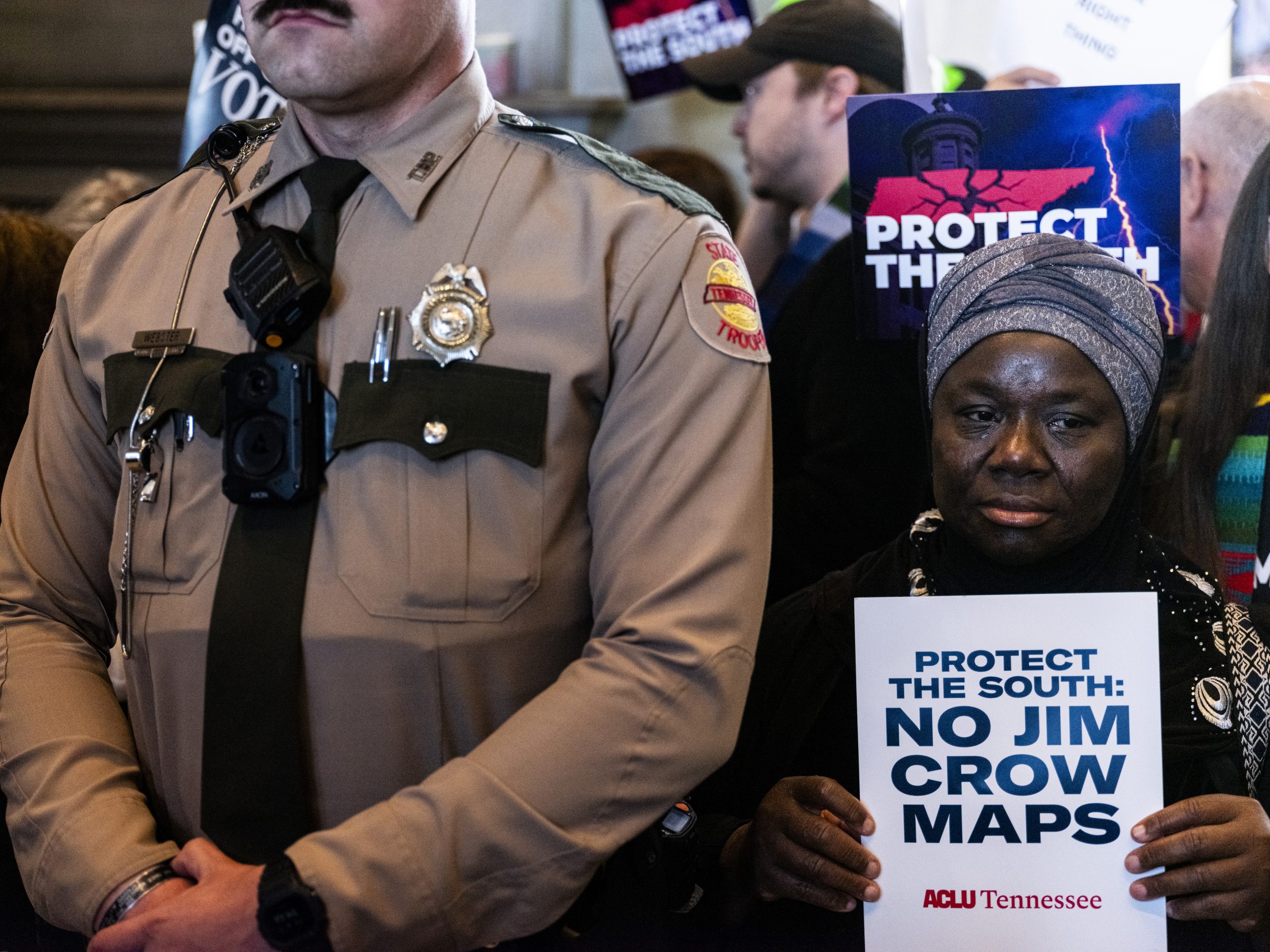
    Zulfat Suara (right) protests a new congressional map next to a Tennessee state trooper at the state Capitol in Nashville in May.BRAD J. VEST

    Polls indicate deep dissatisfaction with Trump and Republicans, who control the House and Senate. He fears hearings and investigations into his corruption, incompetence, and self-dealing if Democrats take control of either chamber.

    “If we don’t win the midterms … I’ll get impeached,” Trump said earlier this year.

    Hence, the all-out attack on the election system.

    Trump called for the federal government to seize control of elections — even though the Constitution put the states in charge.

    He demanded the end of mail-in voting — even though presidents do not have the power to change voting laws.

    Trump signed an executive order that would require voters to show proof of citizenship and that all mail-in ballots be received by the time polls closed — moves that were blocked last month by a federal judge, but the president remains relentless.

    This week, Trump’s Justice Department threatened criminal charges against Pennsylvania’s top election officials if they let noncitizens vote. Other states received a similar warning, even though the issue is exceedingly rare and already illegal.

    But Trump’s baseless rhetoric helps to sow distrust in elections — something he has done throughout his tumultuous decade in politics.

    Trump has demonstrated he will cross any line. As president, he incited an insurrection as part of a broad conspiracy to overturn the 2020 presidential results — an act of treachery that has earned its place in infamy.

    Trump was criminally indicted for his monthslong effort to interfere with the peaceful transfer of power, but the charges were dropped after he returned to the White House and assumed control of the U.S. Department of Justice.

    To this day, Trump refuses to admit he lost the 2020 presidential race, despite producing no credible evidence of widespread voter fraud and abusing the legal system by mounting 60 failed election cases before state and federal judges.

    In fact, Trump is still seeking to overturn the 2020 results.
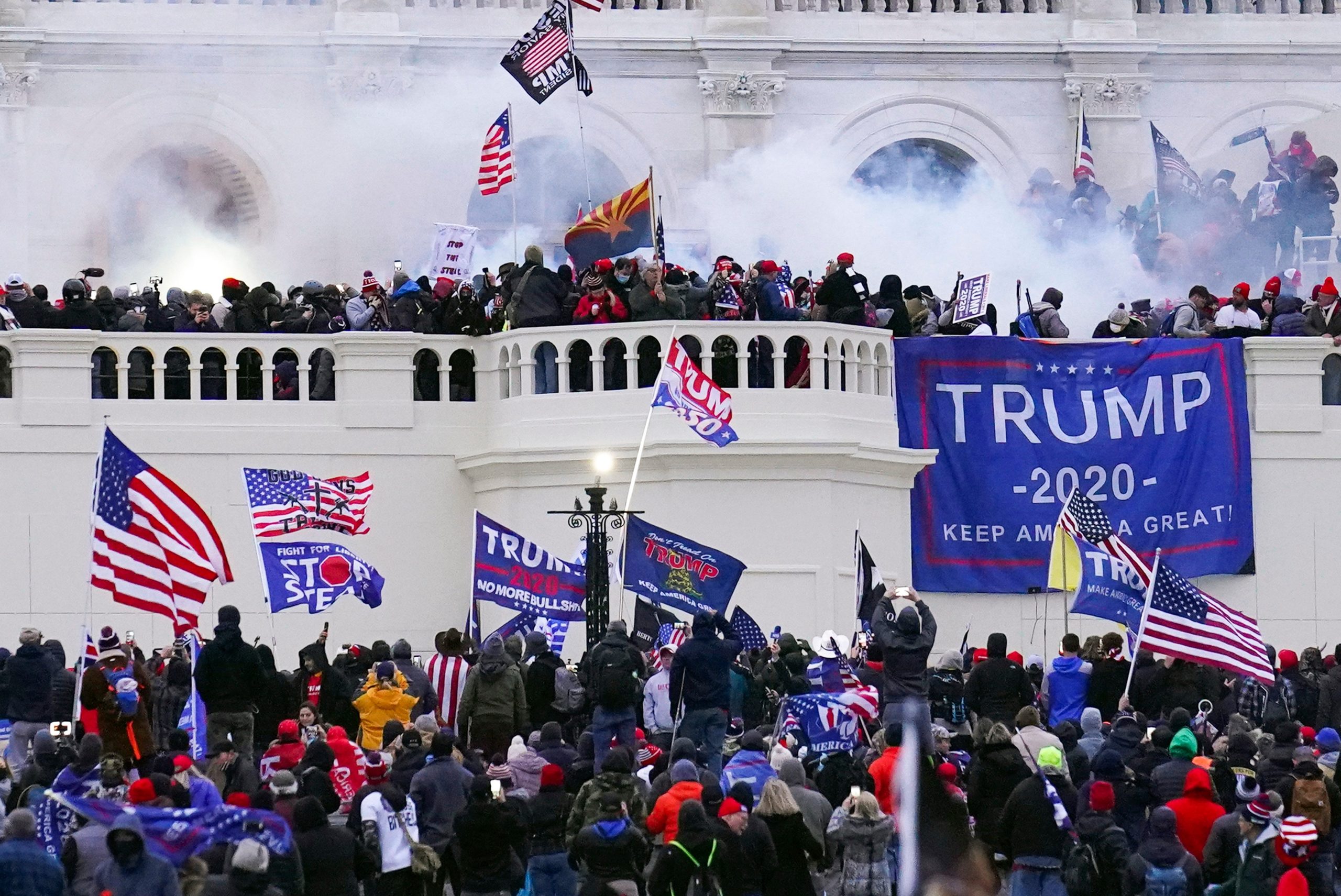
    Rioters storm the West Front of the U.S. Capitol Jan. 6, 2021, in Washington.John Minchillo

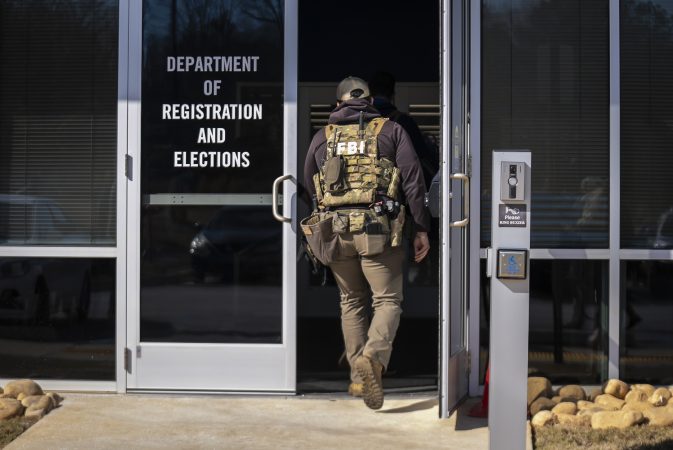
    In February, he ordered Tulsi Gabbard, the then-director of national intelligence, to attend an FBI search of election facilities in Georgia, where Trump lost in 2020.

    The FBI recently assigned more than 200 agents to search for election fraud in Georgia, six years after exhaustive state and federal investigations found none.

    During a ballyhooed visit to Arizona to discuss election security, former Homeland Security Secretary Kristi Noem couldn’t cite a single case of election fraud.

    But a Republican-led Senate Intelligence Committee investigation did find top Trump campaign officials had extensive contacts with Russian operatives during the 2016 election.

    For all of Trump’s bluster about rigged elections, he remains the poster child for election interference. Now, he is willing to undermine national security to get the election results he wants. He demanded states change election rules, such as requiring voter identification, or risk losing federal terrorism prevention funds.

    Trump also put his political gain above the public’s pain. He refused to sign a landmark bipartisan bill designed to lower housing costs until Congress passed legislation that would require proof of citizenship for all voters.

    Trump has taken other steps recently to weaken election security.

    One directive disbanded an FBI task force created to combat foreign influence in U.S. elections, and another crippled the Cybersecurity and Infrastructure Security Agency that Trump created.

    The moves come as Russia, China, and Iran ramp up efforts to meddle in U.S. elections, just as they did during Trump’s victories in 2016 and 2024.

    Before Jan. 6, 2021, it was hard to imagine a sitting president inciting a mob to storm the U.S. Capitol, attack police, defecate in offices, and look to hang the vice president.

    So, how much further will Trump go to get his desired election results?

    With Trump, there is no bottom.
  • Tom Kean Jr. did the right thing by stepping away to be treated for depression. Now he owes voters some answers. | Editorial

    Tom Kean Jr. did the right thing by stepping away to be treated for depression. Now he owes voters some answers. | Editorial

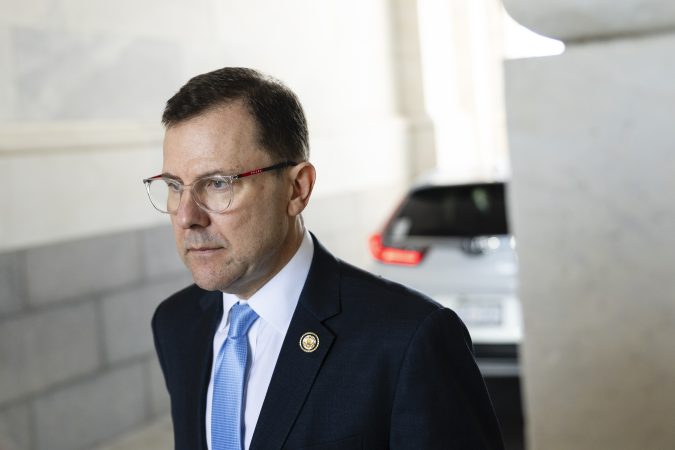
    One of the most perplexing sagas in recent political history has ended: U.S. Rep. Tom Kean Jr. has returned to work after being away for almost four months without notice or clear explanation.

    In a June 30 speech on the House floor, the North Jersey Republican revealed he had been in treatment for depression.

    “When people hear the word depression, many think it simply means feeling sad,” Kean said. “But depression is so much more than that. It is physical. It is emotional. Until you experience it yourself, it is difficult to fully understand how powerful this illness can be.”

    There is no denying that depression is a serious mental health issue, one that retains a public stigma even as almost 48 million Americans struggle with the disorder. Kean, a self-described “private person by nature,” deserves praise for revealing his diagnosis.

    But private or not, Keane is a public servant who owes voters a fuller explanation. So far, he has declined to answer any further questions.

    At the very least, the congressman’s return put an end to weeks of rampant speculation as to his whereabouts. None of which was helped by a lack of transparency by Kean’s team, which, after stating in April that he was dealing with a “personal health matter,” deflected all questions — sometimes to bizarrely cryptic effect. At one point, a staffer told reporters that “there are no cameras where Tom is.”

    There may have been no cameras, but during his time away, Kean managed to maintain his reelection campaign and appears to have traded stock. He was also getting paid.

    Unlike most Americans, elected officials are not required to show up to get a paycheck. The Constitution does not detail expectations for attendance or penalties for absenteeism. This means that deciding how much time off is appropriate, and why, is left mainly up to the voters.

    Perhaps Kean’s constituents in the 7th Congressional District are satisfied with the explanation for his long absence. While his inability to vote may have hampered his fellow Republicans’ ability to pass legislation, the constituent service functions performed by his office seem to have gone unaffected.

    Still, Kean has yet to make a full public accounting for what happened, which should include answering direct questions. Given his public responsibilities — and that he is up for reelection in November — constituents have a right to understand what happened and what they can expect going forward.

    A few questions Kean should be prepared to address include:

    • What symptoms led him to head to the hospital in the first place?
    • Roughly 25% of Americans with mental illness are not currently receiving care due to costs. Was his treatment covered by his congressional health insurance policy?
    • What guardrails have he and his staff established to ensure he seeks help more quickly in the future?
    • Given the widespread curiosity and speculation around this incident, are there things he would do differently when viewed in hindsight?
    • His diagnosis seems to have changed him. What changes can his constituents now expect to see? In the past, Kean was notorious for dodging interactions with constituents, holding town halls only very infrequently, for example. Will this change?
    • He has voted against federal policies that would expand healthcare coverage. Has his experience changed his perspective?
    • Will he hold a town hall?

    This board sent these queries to the congressman earlier this week. As of Wednesday afternoon, he has yet to answer.

  • The Supreme Court’s conservative majority keeps choosing ideology over impartiality — and the rulings show it | Editorial

    The U.S. Supreme Court concluded another tumultuous term in which many rulings seemed driven more by politics than by the rule of law.

    While the high court rejected some of Donald Trump’s blatantly unconstitutional initiatives, the justices delivered lasting and transformative wins for the president and the Republican Party.

    In doing so, the court’s conservative majority continued to mar its reputation as independent arbiters of the rule of law, charged with upholding the Constitution and protecting individual rights and liberties.

    The court — which includes three Trump appointees — continued to overturn precedents, curtail voting rights, and expand presidential power.

    In one major case, the justices ruled the president can fire the leaders of independent government regulators for any reason or no reason at all. The decision overturned a 91-year precedent that had long protected the agency heads from political pressure.

    But then the conservative majority contradicted itself by blocking Trump’s effort to remove Fed governor Lisa D. Cook from the central bank.

    The takeaway here is: Don’t look for the conservative majority to provide legal logic or follow longstanding precedents. The justices move from originalism to textualism to intentionalism and pragmatism depending on the argument.

    In another step backward, the conservative majority continued its more than a decade-long assault on voting rights, clearing the way for more gerrymandering and the elimination of majority-Black congressional districts.

    The court also expanded gun rights and paved the way for even more money to shape elections. On both scores, the public good is further compromised.

    Many of the conservative majority’s landmark rulings continue to contradict both public opinion and legal precedents, dating back to the 2022 decision to overturn Roe v. Wade, ending a woman’s federal right to legal abortion.

    Thankfully, the court drew some red lines on Trump’s abuse of power.

    The court rejected his illegal effort to impose tariffs, which was causing economic chaos around the globe.

    The court also rejected Trump’s effort to toss out mail-in ballots that arrive late. The court said the votes should be counted if the ballots were postmarked by Election Day.

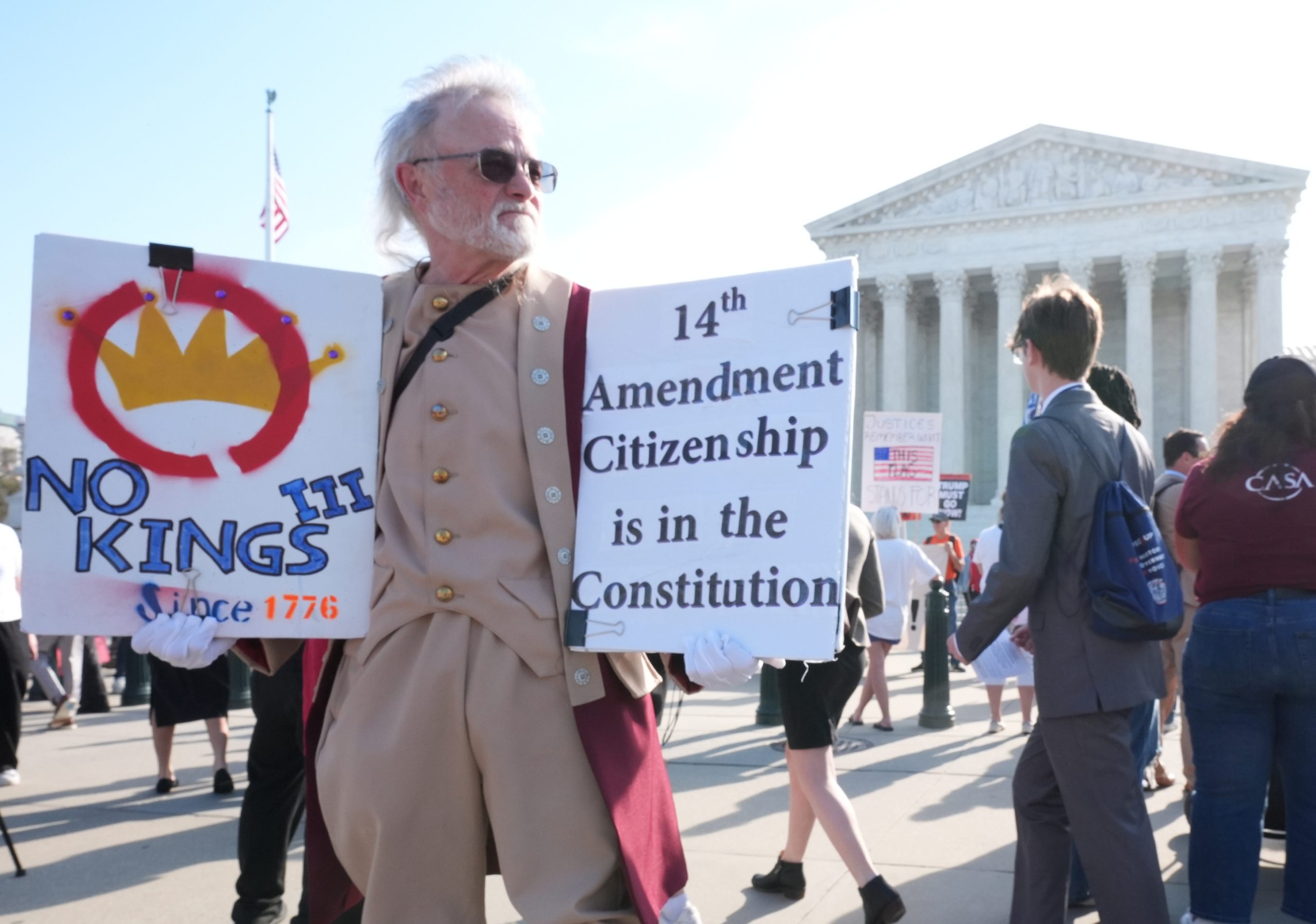
    Pro and anti-Trump demonstrators rally outside the U.S. Supreme Court, before justices hear oral arguments on whether President Donald Trump can deny citizenship to children born to parents who are in the United States illegally or temporarily, on Capitol Hill in April.J. Scott Applewhite

    As expected, the court rejected Trump’s illegal effort to end birthright citizenship. But legal experts were surprised that the vote was not 9-0.

    Three of the more extreme justices — Clarence Thomas, Samuel Alito, and Neil Gorsuch — argued that citizenship is not constitutionally guaranteed, even though the 14th Amendment clearly states that “all persons born in the United States … are citizens.” Conservative Justice Brett Kavanaugh offered an even more convoluted opinion that agreed with the majority, but not its reasoning.

    The closeness of the vote is sure to set the stage for future political battles, as the GOP will use the issue to animate its base by using anecdotal stories to argue that birth tourism is a national security threat when children born to tourists account for less than 1% of all U.S. births annually.

    The slapdash legal gymnastics by dissenting justices underscore how personal politics — and not impartiality — drives the decision-making by the conservatives on the court.

    The number of cases involving Trump highlighted just how much time the court has to spend on his attacks on long-standing norms, policies, and procedures that have guided the country.

    While the conservative majority on the court sometimes rules against Trump, they have largely cleared the way for him to do what he wants and placed him above the law.

    The greater danger of the misguided rulings, of course, is that they will live long after Trump. He will eventually be gone, and the next president will be free to abuse the power of the office as well.

    How will the conservative majority respond then?

    Playing politics at the Supreme Court is a losing proposition for the entire country.

    Supreme Court justices swear two oaths.

    One requires the justices to support and defend the Constitution against all enemies, foreign and domestic. The other stipulates they “administer justice impartially, without respect to persons, and to do equal right to the poor and the rich.”

    On both scores, the conservative majority remains blinded by its ideology.

  • America turns 250 with its soul in the balance | Editorial

    America turns 250 with its soul in the balance | Editorial

    The Founding Fathers gathered in Philadelphia 250 years ago and formally adopted the Declaration of Independence, which proudly proclaimed that “all men are created equal” and endowed with certain inalienable rights, including “life, liberty and the pursuit of happiness.”

    The Great Experiment’s Semiquincentennial should be cause for celebration. Instead, a great malaise hangs over the United States.

    While America has an abundance of exceptional qualities, for many, the dream has never matched the declaration. Even worse, the nonstop chaos, corruption, and incompetence coming out of Washington make it feel like the founders’ belief in the fundamental rights of humanity is under attack.

    The country is deeply divided, and the outcome of the battle against illiberalism has never been more uncertain. That has tempered the excitement for this July Fourth.

    While many Americans, including members of this Editorial Board, celebrate the freedoms, strengths, and highest ideals of the United States, we, like the author James Baldwin, love this country more than any other but reserve the right to criticize its current leadership and what’s been done in our name.

    In fact, it is not only our First Amendment right but our duty to the founders, who raised their voices against the injustices of their era, stood up to a king, and crafted an imperfect declaration of the importance of individual freedoms that has inspired generations of democracies around the world.

    Their ghosts walk the streets of Philadelphia, which might explain the intensity of the ambivalence many of us feel about how best to honor America as it celebrates what was started here 250 years ago.

    A recent poll found only 33% of U.S. adults are “extremely proud” to be American — the lowest rating since Gallup began asking a quarter century ago.

    Those feelings are understandable. It is not unpatriotic to express concerns about the direction of the country.

    Masked federal agents stand outside the Delaney Hall detention center in Newark, N.J., during a protest in May.Seth Wenig/AP

    After all, it is difficult to be proud when masked federal agents kill U.S. citizens in broad daylight.

    It is difficult to be proud when U.S. Immigration and Customs Enforcement agents round up migrants while they work on farms in California, repair a roof in Louisiana, or wash cars in North Philadelphia.

    It is difficult to be proud when a hapless defense secretary celebrates the killing — in violation of international law — of more than 200 civilians in tiny boats, who may be transporting drugs or just fishing.

    It is difficult to be proud when a nation founded by immigrants sends migrants with no criminal record to maximum-security prisons in foreign lands without any due process.

    Pride does not come easily when you live in a country whose leader dismantles higher education, shakes down law firms, slashes scientific research, tramples the rule of law, and cuts off health insurance for the most vulnerable citizens.

    Where is the pride in watching the world’s richest man parade across a stage with a chain saw to celebrate the firing of hundreds of thousands of federal workers? Or when he ends foreign aid for the poorest lands, leading to mass deaths?

    Who was proud to lose another senseless and illegal war that cost billions and sent gas prices above $5 a gallon?

    Who is proud to have a convicted criminal in the White House, pocketing $2 billion on side hustles that blur the line between policy and personal business?

    How did lies, anger, and cruelty replace life, liberty, and the pursuit of happiness?

    The per-gallon prices for the various grades of gasoline available at a gas station are displayed on a sign above pumps in southeast Denver in May.David Zalubowski/AP

    Life expectancy in the U.S. declined to its lowest level since 1996, in part from the pandemic, but also from the growing inequality in education and healthcare.

    Child poverty has tripled in recent years while the rich keep getting richer.

    The top 1% of American households own more stock than the bottom 90%, according to the Federal Reserve.

    A booming stock market has helped to fuel a surge in wealth inequality. The number of U.S. billionaires reportedly jumped by 50% from 2017 to 2025.

    Elon Musk, who recently became the first trillionaire, makes $3.6 million an hour, while more than 42,000 Pennsylvanians make the minimum wage of $7.25 an hour.

    Billionaire tech oligarchs are reshaping American politics, civic discourse, media, and the economy for the worse. We have seen the enemy, and it is not trans athletes or day laborers outside Home Depot.

    Much of the anger, division, and disillusionment stems from the fact that for most of the country, the American dream is out of reach.

    Stagnant wages, rising healthcare costs, and attacks on unions explain, in part, why fewer than 40% of U.S. households can afford to buy a starter home priced at $200,000.

    Forget pursuit of happiness; most Americans can’t afford basic necessities like groceries, utilities, and gasoline, let alone go on vacation, a recent poll found.

    Goldie Getter, the wife of a civil service employee who was furloughed due to the government shutdown, unpacks groceries her husband received from a food bank, in Gulfport, Miss., in November.Gerald Herbert

    Turns out you can’t build a strong middle class on a gig economy, dollar stores, and legalized gambling.

    Many Americans are so fed up that they are voting with their feet. For the first time since the Great Depression, more people moved out of the country than moved in, with many citizens packing up and looking for a better life elsewhere.

    Then there is the long-ignored elephant in the room.

    While there has been great progress over two-and-a-half centuries, the United States has failed to live up to the promise Thomas Jefferson penned while living on the corner of Seventh and Market Streets: After 250 years, all still are not equal.

    The country continues to live in the shadow of slavery.

    There have been efforts to right the wrong. The 13th Amendment abolished slavery in 1864. The landmark U.S. Supreme Court ruling in Brown v. Board of Education prohibited segregation in public schools in 1954.

    Passage of the Civil Rights Act in 1964 dismantled institutional segregation, and the Voting Rights Act in 1965 barred racial discrimination in voting, eventually paving the way for the election of the first Black president in 2008.

    But one truth remains self-evident: Systemic racism continues to create disparities in the quality of housing, education, employment, wealth accumulation, law enforcement, and health outcomes for many Black and brown citizens.

    For a lot of Americans, the reality has never matched our nation’s founding principles. Yet, every day, millions of people do their part to help the United States become a better version of itself, a more perfect union.

    Two hundred and fifty years ago, a small group of citizens met in Philadelphia and changed the world. Keeping the republic requires all of us to preserve, protect, and defend the Constitution from the current attacks coming from within.

    Still, the question remains: Should we raise the American flag? Or fly it upside down in a sign of distress? Or lower it to half-staff in mourning or remembrance of things past?

    Like any assessment of the state of the American Experiment, there is no easy answer. Perhaps, on the Semiquincentennial Fourth of July, the most appropriate response might be to simply sit briefly with the discomfort of the nation’s dichotomies — the contradictory truths that coexist.

    And after taking a moment to acknowledge the grand vision that birthed a nation where all men are created equal — a vision yet to be fulfilled — let’s continue the work to see it realized.

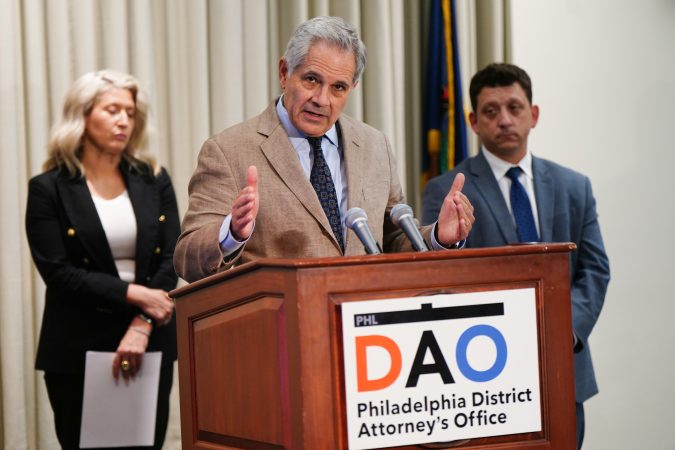
  • Krasner isn’t perfect. The Pa. Supreme Court’s ruling on his exoneration push is worse. | Editorial

    Krasner isn’t perfect. The Pa. Supreme Court’s ruling on his exoneration push is worse. | Editorial

    When the Pennsylvania Supreme Court authorized the state’s top prosecutor to review Philadelphia’s efforts to reverse tainted convictions, the message was clear.

    The move was a stinging rebuke of District Attorney Larry Krasner and attempts by his office’s Conviction Integrity Unit to overturn verdicts it believed were marred by official misconduct.

    It was also an unprecedented and dubious decision in which the cure may be worse than the disease.

    Writing for the majority, Justice Kevin Dougherty found that the district attorney’s office repeatedly “made unreliable concessions unsupported by the facts and law” and “violated its duty of candor.”

    The justices — Dougherty was joined by Daniel McCaffery, P. Kevin Brobson, and Sallie Updyke Mundy — ruled that any attempts by Krasner’s office to win exonerations must now be overseen by the attorney general.

    Justices Debra Todd, Christine Donohue, and David Wecht disagreed, finding little to warrant such sweeping action by the court.

    At the heart of the matter was the case of Lavar Brown, who was convicted in the robbery and fatal shooting of the manager of a North Philadelphia Rite Aid.

    Krasner’s office believed Brown deserved a new trial because of past prosecutorial misconduct. The victim’s family accused Krasner of a conflict of interest over payments made to the district attorney by former law partners who had been involved in Brown’s case.

    As Justice Wecht writes in his dissent, the court’s majority used the Brown case as a springboard to “scrutinize decisions made by the Philadelphia District Attorney’s Office in other, wholly unrelated cases.”

    This board has long supported Krasner’s efforts to examine past convictions. No one should be imprisoned because of misconduct by the police or prosecutors, and the district attorney’s office has supported 59 exonerations so far.

    It has been well established that some police and prosecutors have been willing to bend the rules — if not break them — in order to facilitate convictions and arrests. Unlike too many of his predecessors, Krasner has held police officers accountable for unjustified use of force, charging dozens and convicting three.

    In some instances, however, victims, law enforcement, and some judges have called foul, accusing Krasner of being overzealous.

    The district attorney’s office itself recently withdrew a recommendation to overturn a murder conviction, saying prosecutors had filed court documents that were “not supported by the record.” This looks less like the systemic misconduct the court described than an office catching and correcting its own mistakes.

    It is also important to note that Krasner’s integrity unit has not sought to undo the vast majority of convictions. According to the district attorney, just 1.2% of the cases have resulted in his office seeking exoneration. While Krasner and his team believe in the innocence of many of these defendants, it is also important that everyone gets a fair trial — even those who are ultimately found guilty.

    Adding another wrinkle to the high court’s decision is the fact that people who had policy disagreements with Krasner at the district attorney’s office are now part of the state attorney general’s office, including some of the veteran prosecutors Krasner fired upon assuming office in 2018.

    At the time, Krasner thoughtlessly compared the state office to Paraguay, a reference to the flight of high-ranking Nazi officials to Latin American countries after World War II. Some of those same prosecutors will now be overseeing some of the same convictions they obtained.

    Wecht’s fellow justices should consider his words carefully and rethink this oversight measure, which he called “unprecedented and unconstitutional.” A more targeted remedy — one focused specifically on the issues identified in the ruling — would have been far less troubling.

    Krasner is far from perfect. In an interview with this board, he acknowledged that some errors have been made by attorneys under his supervision. But for the court’s majority to take the drastic step of removing authority from Philadelphia’s top prosecutor, more substantive charges are required.

    A simple difference of opinion does not suffice.

  • The retirement loophole that just won’t die | Editorial

    The retirement loophole that just won’t die | Editorial

    City Hall just can’t quit abusing a retirement perk known as the Deferred Retirement Option Plan, or DROP, that was supposed to be self-sustaining but costs Philadelphians millions of dollars a year.

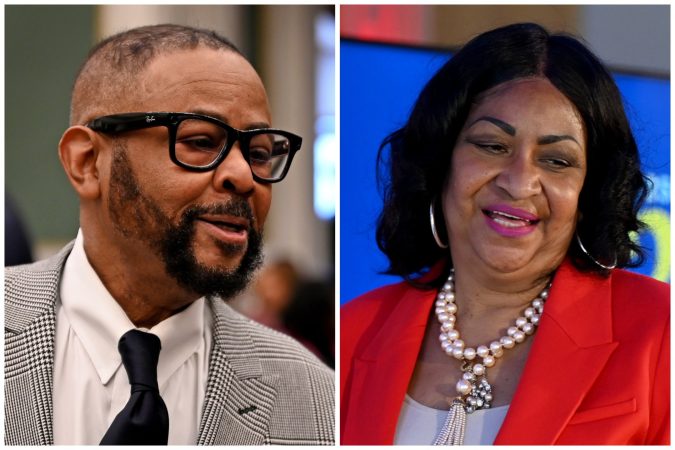
    Now, along comes City Councilmember Curtis Jones Jr. and his wife, City Representative Jazelle Jones, to take it up a notch.

    The power couple plans to collect up to $752,000 in combined retirement payouts. But rather than ride off into the sunset, they both plan to keep their respective six-figure jobs.

    The scheme raises a question that has long plagued DROP: What is the point of a retirement incentive if the person doesn’t retire?

    The problem goes back to 1999, when former Mayor Ed Rendell pitched it as a good government idea when it was really nothing more than a sweetheart enrichment program for city workers at taxpayer expense.

    At the time, Rendell said DROP would not cost the city any additional revenue. But one study found that in its first 11 years, DROP cost the city $258 million, which is almost enough to cover the school district’s $300 million budget deficit this year.

    For those unfamiliar with DROP, it is a program that allows eligible municipal employees to select a mandatory retirement date up to four years in advance. While they continue to get paid to do their job, the city makes pension payments into a special interest-bearing account that results in a lump-sum payout upon retirement.

    After retiring, they receive their standard monthly pension. City workers contribute to the pension fund, but that does not cover all the pension fund liabilities, let alone the added costs of DROP, which are ultimately borne by taxpayers.

    The added costs prompted several cities to eliminate or heavily restrict their DROP programs, including San Diego, San Francisco, Houston, and Baltimore.

    In Philadelphia, more than 12,000 municipal employees collected DROP payments totaling $1.5 billion from 1999 to 2018. The payments have since topped $2 billion, according to one recent report by former Inquirer reporter Ralph Cipriano, who has long followed the program as an independent journalist.

    Bottom line: DROP is not revenue-neutral.

    Rendell’s other claim was that by entering DROP, the city would have four years to find or train a replacement for the retiring worker.

    It was always ludicrous that it would take years to find or train a replacement when most places of employment manage to survive when a person gives two weeks’ notice. But that was the story, and the city stuck with it.

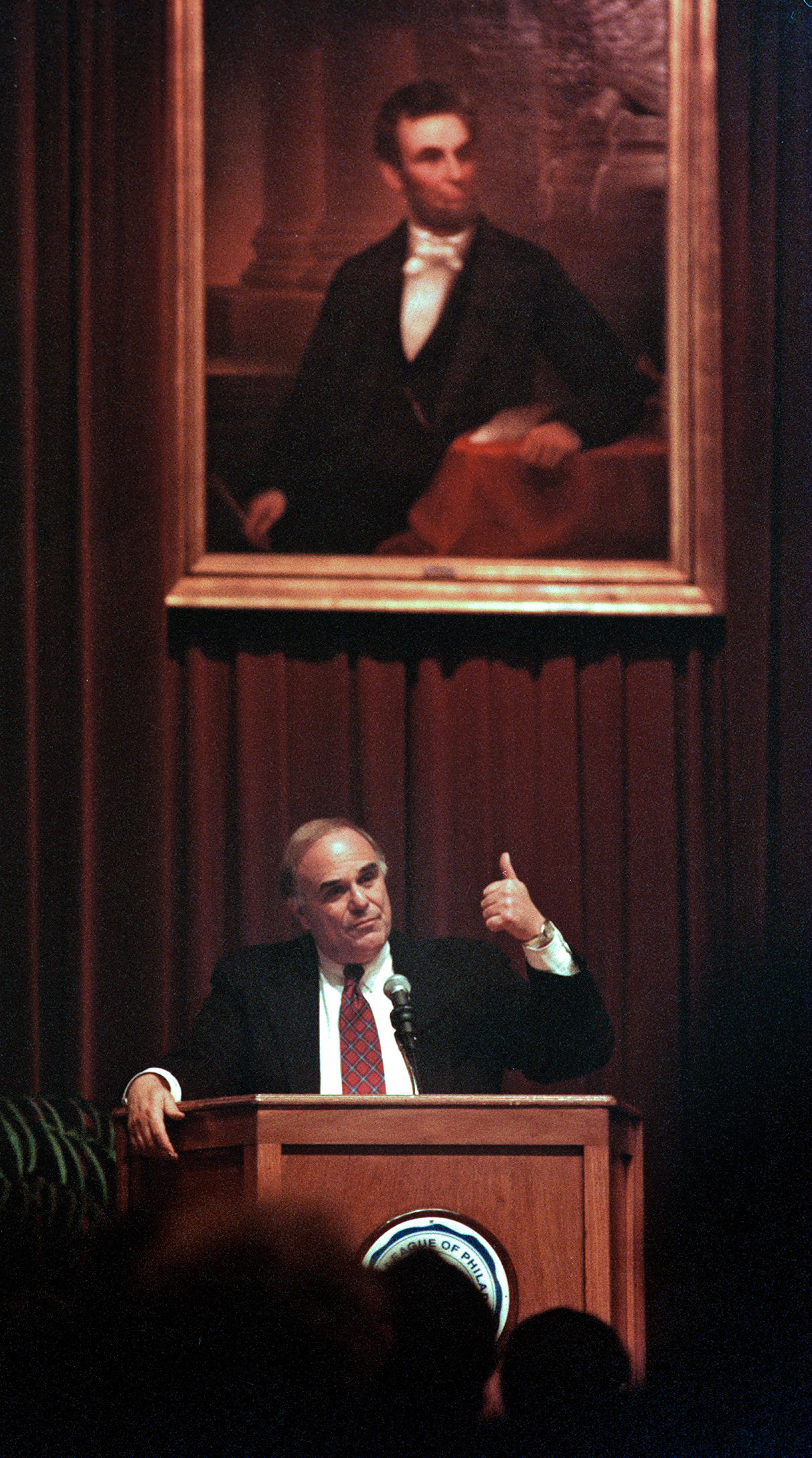
    Mayor Ed Rendell delivers his State of the City address in Lincoln Hall at the Union League in February 1999. Rendell claimed the Deferred Retirement Option Plan would not cost the city any additional revenue. Instead, around $2 billion has been spent since 1999.Tom Gralish / Staff Photographer

    In the case of Jazelle Jones, four years’ notice was apparently not enough.

    She was set to retire in September 2024, but Mayor Cherelle L. Parker asked her to stay on the job and issued a special exception so she could be rehired.

    Following a one-day retirement, Jones, 70, received a $97,000 payout for unused sick and vacation time, in addition to a DROP payment of nearly $320,000. She was then rehired with a $4,000 pay bump.

    Jones, whose annual salary is $199,000, serves as the city’s chief ambassador and director of special events, such as parades, concerts, festivals, and athletic events.

    Parker defended the move because of Jones’ experience overseeing major events like the current World Cup games.

    But there is no defending her Council member husband’s plan to collect his DROP payment and continue serving in office.

    DROP was never intended for elected officials, since voters determine whether they get to keep their seats.

    Controversy erupted in the early 2000s after several elected officials collected large DROP payments, retired for a day, and returned to office. City Councilmember Frank Rizzo Jr. lost his election bid in 2011 after he accepted a DROP payment.

    In 2010, Council barred future elected officials from participating in the program — but grandfathered anyone already in office. That included Curtis Jones Jr., 68, who was first elected in November 2007.

    He enrolled in DROP in August 2024 but plans to run for a sixth term next year. If Jones is reelected, he could then retire for a day in 2028, collect his $432,221 DROP payment, and then serve another four-year term. The Council member told The Inquirer he instead plans to retire in December 2027, collecting a reduced DROP payment closer to $350,000.

    What a mensch.

    Jones has publicly discussed delaying bridge repairs in his district to avoid traffic jams that may rankle voters during his reelection campaign.

    Perhaps voters should beat a path to finding candidates who put the public’s interest before their personal gain.

    Even better, the city should put an end to DROP.

  • What lurks beneath Trump’s botched Reflecting Pool renovation | Editorial

    The immediate problem with Washington’s algae-choked Lincoln Memorial Reflecting Pool is that, contrary to President Donald Trump’s typically inflated promises, it’s not reflecting much other than its hospitality to primitive aquatic life. And yet in a figurative sense, this relatively inconsequential public works project reflects the president’s excesses as faithfully as a mirror. Among them:

    A visitor at the Lincoln Memorial takes a selfie Wednesday as workers repair the Reflecting Pool in Washington.Alex Kent

    Narcissism: The Narcissus of myth fell in love with his own reflection in a pool of water, so it’s fitting that the same tendency lured Trump into this National Mall quagmire. Not content to quietly assess and address the feature’s deficiencies as if it’s his, well, job, the president made an ocean of a pond, insisting that repairing it would somehow simultaneously glorify America and himself, between which he makes little distinction.

    Trump has bizarrely exaggerated the pool’s dimensions, falsely calling it “longer than the tallest building in the world” and suggesting its persistent murk was not just an age-old design flaw but a national calamity. Echoing a mantra dating to his original campaign, he claimed that he alone could fix it where his predecessors had failed, transforming its condition from “filthy,” “disgusting,” and “garbage-ridden” into “the most beautiful” “American-flag blue” for up to a century hence. And he said he could do it quickly and cheaply, vowing to complete the renovation in as little as a week for no more than $2 million.

    Incompetence: But unlike the last attempt to remedy the pool’s persistent issues, during the Obama administration, Trump’s project did not grapple with the underlying plumbing problems that conspire with the Mid-Atlantic climate to create an ideal habitat for algae. His contractors simply resurfaced the pool’s concrete bottom with foam and a blue-tinted sealant.

    Predictably, the algae persisted. Worse, the new surface did not, detaching and floating free in forlorn pieces. Workers dumped hydrogen peroxide into the water in a desperate attempt to beat back the pond scum, while the untimely demise of a few unlucky ducks in and around the pool raised further concerns. The project, meanwhile, took about six times as long as the president promised and cost eight times as much, with further work expected to prolong the effort beyond the Fourth of July.

    Corruption: The nation’s approaching 250th birthday was cited as the dubious reason for awarding the work on an emergency basis without competitive bidding, allowing the administration to handpick companies with little or no experience as federal contractors. Some of the business went to an Ohio company called Greenwater Services — a bit of honest advertising given the water’s current hue — owned by James J. Cafaro, a Trump neighbor who has given hundreds of thousands of dollars to committees linked to the president.

    This isn’t Cafaro’s first inauspicious encounter with the federal government. In 2001, he pleaded guilty to a conspiracy to bribe Democratic Rep. James Traficant of Ohio. He went on to testify that he gave the congressman, who was pushing Federal Aviation Administration officials to adopt a laser system sold by Cafaro’s company, an envelope stuffed with cash. In 2002, Traficant was convicted of corruption charges and expelled from Congress.

    Deception: Lest anyone leap to the conclusion that these unsavory facts suggest the administration didn’t hire the best people for the job, Trump advanced the theory that the real culprit is a conspiracy.

    Having begun the project with a fictive account of the pool’s history and false promises of a glorious future, he recently alleged without evidence that the project came up short because unidentified enemies had sabotaged the feature with “a very sharp knife or razors” and algae-promoting “chemicals” in the “dark of night.”

    A demonstrator at the Lincoln Memorial speaks with a National Guard member as workers repair the Reflecting Pool in Washington, Wednesday.ALEX KENT

    Authoritarianism: The farce took a fascist turn when Trump declared on social media that half a dozen people had been arrested for alleged vandalism of the pool.

    One of the targets said he was arrested on an obscenity charge for taunting National Guard troops deployed around the pool. Another said he was taken into custody and detained for hours for touching a piece of federal flotsam. His lawyer, Norm Eisen, argued persuasively that the arrest was an attempt to distract from the mismanagement and corruption surrounding the project, calling it “textbook authoritarian behavior.”

    In short, the president’s promise to embody national greatness has been exposed as a shoddy racket wrapped in lies and oppression. The pool reflects after all.

  • Philadelphia budget’s ugly attack on the arts | Editorial

    Philadelphia budget’s ugly attack on the arts | Editorial

    At $5 million, Philadelphia’s primary arts and cultural fund is not one of its many substantial burdens for taxpayers, amounting to well under a thousandth of the multibillion-dollar municipal budget. And yet, the city’s politicians can’t seem to resist the allure of the minuscule expense as a canvas for their financial creativity.

    Having narrowly survived fiscal extinction during the pandemic, the Philadelphia Cultural Fund took another disproportionate cut in the city’s recently enacted budget for fiscal 2027, which begins next week. The spending plan recently passed by City Council and signed by Mayor Cherelle L. Parker appropriates $3.5 million for the fund, nearly a third less than this year, according to the fund’s executive director, Gabriela Sanchez. It’s hardly a rounding error in Philadelphia’s $7.1 billion budget, but it’s likely to devastate many of the tiny arts and cultural groups the line item supports citywide.

    Nearly 100 of the almost 300 arts organizations that depend on the fund are expected to lose the aid as a result, Sanchez said in a statement. She said the fund would halve its eligibility threshold, limiting grants to groups with budgets of no more than $1.5 million, among other “untenable decisions,” hobbling neighborhood theaters, festivals, music programs, and more. “In practice,” Sanchez added, “this means that community-based arts and culture groups … will lose essential operating funding that sustains their day-to-day work.”

    Created three decades ago to supplant more traditionally Philadelphian methods for distributing tax money — according to the whims and still less defensible motives of local politicians — the cultural fund brought a measure of evenhandedness and transparency to bear, offering clear rules and a fair process. Today, it funds groups ranging from A Book a Day, which has donated thousands of books to institutions serving young readers in West Philadelphia, to the Wyck Association, dedicated to preserving and interpreting the historic house of that name in Germantown.

    The impact of these groups, economic and otherwise, is far greater than their cost: A 2024 report by the Greater Philadelphia Cultural Alliance found that nonprofit arts groups generate more than $2 billion in yearly economic activity, providing $1 billion in household incomes and $265 million in tax revenues. The alliance also found that the sector suffers from inadequate, unreliable, and uneven public funding.

    The cut is cruelly contrary to what city arts groups and some Council members argued for amid the Trump administration’s retreat from federal arts funding, which was to increase the cultural fund’s allocation by 20%. It’s also at odds with a city budget that raises overall spending by about 3% over this fiscal year. At that rate, given the fund’s benefits, the city should at least be able to hold it harmless and maintain this year’s relatively meager contribution.

    Philadelphia’s arts groups shouldn’t be perpetually on the budgetary brink just because most of them are small and lack powerful political patrons, making them easy to pick on. The mayor and Council should find a way to restore this funding and stop creating trouble for the city’s invaluable creators.

  • The U.S. healthcare system is an embarrassment. Americans need a public option. | Editorial

    The U.S. healthcare system is an embarrassment. Americans need a public option. | Editorial

    Long ago, when most Americans left the house for mass entertainment, they flocked to carnivals that crisscrossed the country to delight small towns and big cities. Shows typically included a barker whose steady stream of superfluous oratory enticed folks to spend their hard-earned cash on sometimes dubious performances.

    Too often today, our nation’s capital resembles that midway where a slick barker spouts enticements to assure people who want to believe what they want to believe that he will always give them what they want. That may be fine when the tickets sold are for harmless attractions, but what mostly seems for sale in 21st-century Washington is this country’s very soul.

    One glaring example of our current predicament is an embarrassingly disappointing healthcare system that fails to meet the needs of millions of Americans who can neither afford adequate medical treatment nor a health insurance plan to help them pay for a doctor or the cost of a hospital stay.

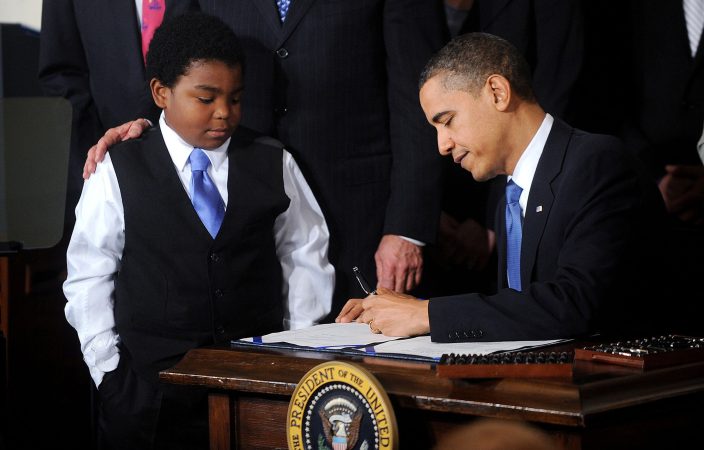
    Even as the Affordable Care Act (ACA) was being signed into law by President Barack Obama in 2010, it was clear it would need future adjustments. Unfortunately, that necessity has been ignored by President Donald Trump, who in both his first and current administrations has found it more beneficial politically to criticize rather than improve Obamacare.

    The ACA has helped cut the percentage of Americans without health insurance from nearly 16% in 2016 to 8% last year. That means more work needs to be done. But while Trump keeps promising a better alternative to Obamacare, he’s barely delivered on even the “concept of a plan” to improve healthcare access for all.

    Trump proposed an ACA alternative in January that he calls “The Great Healthcare Plan,” but it’s too weak to get the health insurance industry to become a better partner in extending coverage to more Americans. Trump’s plan would instead end the ACA subsidies that have helped millions of people pay for health insurance while cutting prescription drug prices and requiring insurance companies to do a better job reporting their costs and profits.

    A National Institutes of Health study concluded the Obama administration “bowed to the demands of the medical industrial complex comprised of hospitals, insurance companies, and drug companies” to help it make the ACA law because “it was not politically feasible” to get the bill passed any other way. Unfortunately, the feasibility of improving Obamacare has become even more remote under Trump.

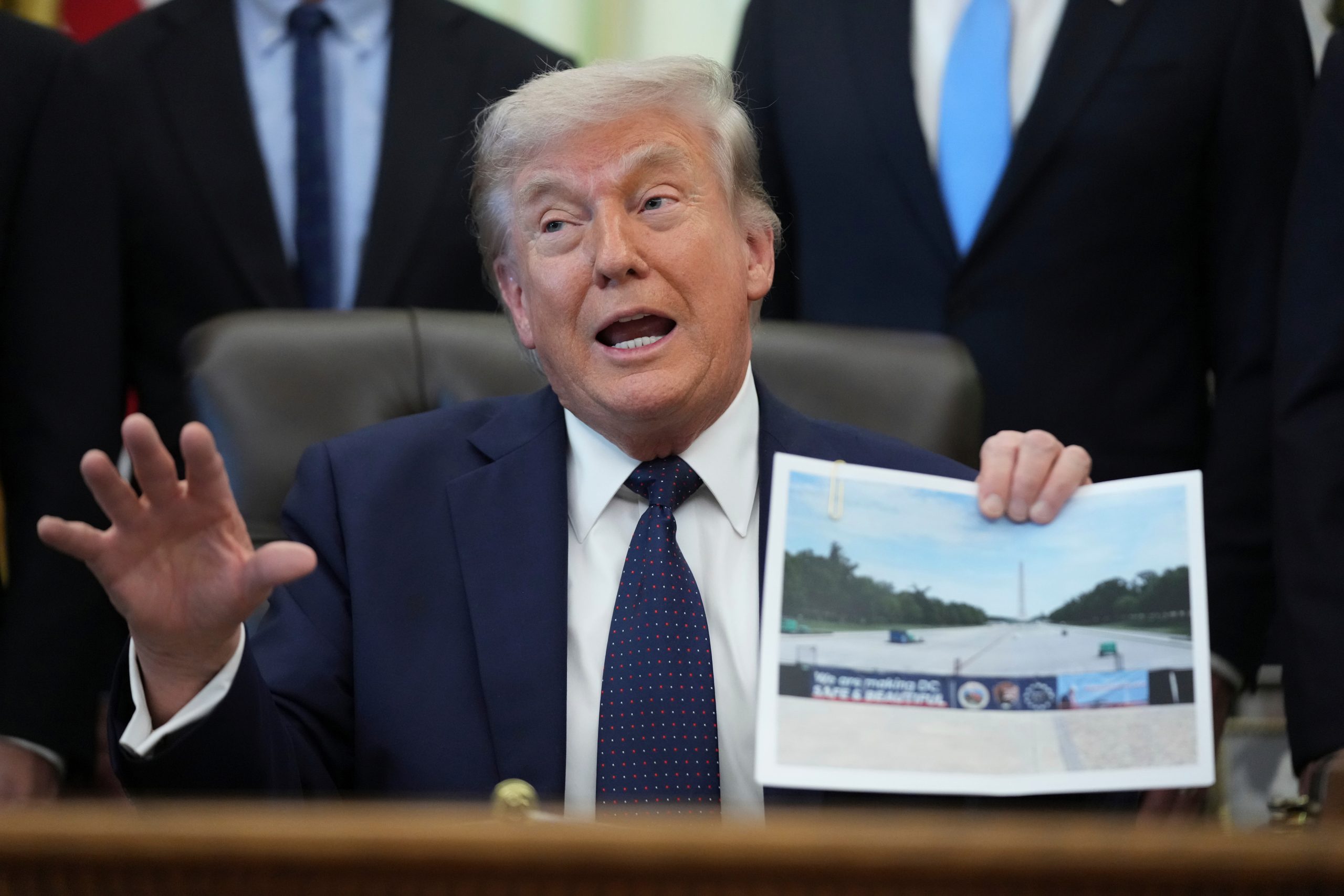
    President Donald Trump holds a picture of the Lincoln Memorial Reflecting Pool during an event on health care affordability in the Oval Office in April.Mark Schiefelbein

    That’s a sign of the political strength of major health insurance companies, including UnitedHealth Group, Cigna, Kaiser Permanente, Elevance Health (the parent company of Anthem Blue Cross Blue Shield), and CVS Health, which acquired Aetna in 2018. Those firms have earned more than $9 trillion since the ACA was passed in 2010, and show no sign of wanting to ever voluntarily reduce any income derived from federally subsidized premiums paid by Obamacare customers.

    It’s time to stop the giveaway to health insurance companies and reconsider an idea that has failed past attempts to survive Washington politics. Americans need a public option similar to Medicare that would allow eligible participants of all ages to pay adjusted health insurance premiums based on their incomes. Switzerland, Germany, and the Netherlands have similar programs, and President Harry S. Truman proposed a public option for the United States more than 70 years ago, but Congress wouldn’t approve it.

    “Millions of our citizens do not now have a full measure of opportunity to achieve and enjoy good health,” Truman said in 1945. “Millions do not now have protection or security against the economic effects of sickness. The time has arrived for action to help them attain that opportunity and that protection.” That same speech could be made today, but this Congress and president seem even more in thrall to the powerful insurance companies that today employ more than three-fourths of all U.S. doctors.

    The American Medical Association, in a recent report, cited Washington’s kowtowing to corporate healthcare interests trying to maximize profits as a contributing factor to a current statistic that one in five physicians in the United States say they plan to retire within the next two years. “Many physicians find themselves practicing in direct conflict with their own values, the values that led them to a career in healthcare in the first place,” said the AMA report.

    With thousands of doctors abandoning their practices and millions of Americans still unable to afford health insurance, it’s time for a bolder, better healthcare system. This country is too prosperous to have so many Americans worrying themselves to death while trying to figure out how to afford decent medical care.

    This nation cannot afford our president’s weak ideas to fill huge gaps in America’s healthcare delivery system. Franklin Delano Roosevelt showed how it’s done in steering the passage of the Social Security Act in 1935. Lyndon B. Johnson got both Medicare and Medicaid through Congress 30 years later. And Obama opened the door for a successor to craft the next phase of the Affordable Care Act. It’s time for Trump to stop promising something even better and produce it.

  • No more gambling with public health: Pa. must ban skill games | Editorial

    No more gambling with public health: Pa. must ban skill games | Editorial

    The Pennsylvania Supreme Court finally made clear what has been obvious to every other commonsense observer: Skill games are slot machines.

    The question now is what will the General Assembly do about the estimated 70,000 skill games that it irresponsibly allowed to proliferate across the commonwealth?

    If Gov. Josh Shapiro and state lawmakers place public health and safety above raking in more tax revenue, they will follow Kentucky’s lead and ban skill games.

    But don’t expect Harrisburg to do the right thing when it comes to gambling. Governors and state legislators here have been hooked on gambling for two decades.

    They view the billions in tax revenue that comes from gambling as easy money that helps avoid raising taxes or operating the government more efficiently. But they ignore the hard truth that much of that tax revenue comes from billions of dollars in losses from repeat and problem gamblers.

    Research has found that slot machines are designed to addict users. Indeed, some Pennsylvania casino operators boasted early on that many customers came as often as six times a week.

    The explosion of online gambling apps — especially on sports — via smartphones, is even more addictive. One Pennsylvania man said he sometimes placed 500 bets a day.

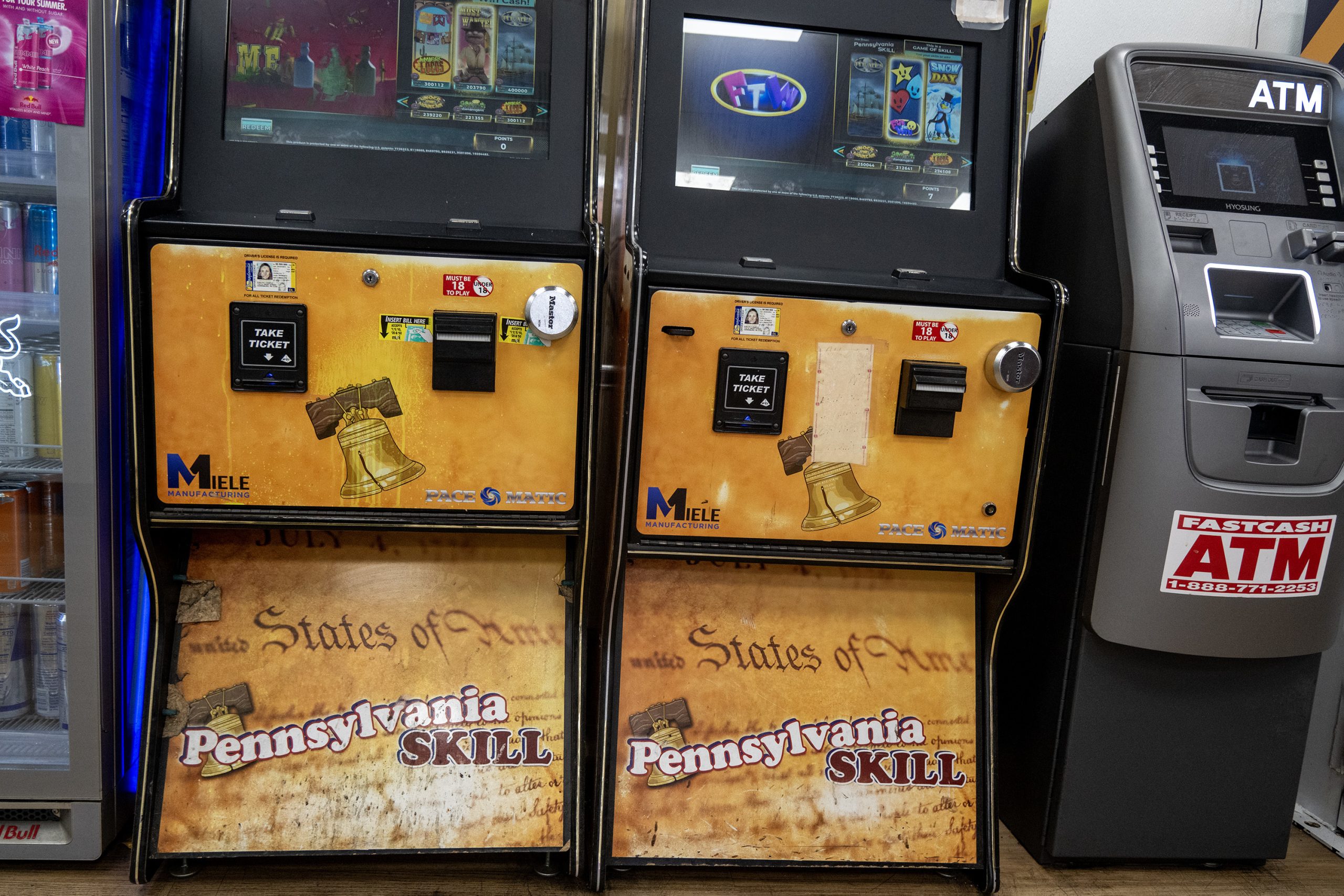
    Unregulated gaming devices known as “skill games” inside a convenience store in Philadelphia. The State Supreme Court recently ruled the devices are slot machines.Tom Gralish / Staff Photographer

    Studies have linked problem gambling to job loss, depression, suicide, domestic violence, and divorce. But lawmakers continue to ignore the growing public health crisis that impacts broader society. That’s because the same lawmakers are also in the vise grip of the influential gambling lobby that pours millions into their campaign coffers.

    Recall that the gambling lobby helped write the law that legalized slot machines in Pennsylvania back in 2004. Then-Gov. Ed Rendell and former State Sen. Vince Fumo (D., Philadelphia) pushed through the measure with little debate. They morphed a 33-line document about background checks at horse racetracks into a 145-page bill known as Act 71, which cleared the way for up to 61,000 slot machines in 14 locations.

    In the ensuing years, Harrisburg lawmakers have legalized more and more gambling, adding table games, online betting, and sports betting.

    Pennsylvania now leads the country in gambling revenues it takes in, thanks to a surge in online betting that is reaching teens and kids as young as 11.

    The commonwealth also has one of the highest addiction rates.

    Casino backers argue that problem gambling only affects around 3% of the population. But that includes most people who do not gamble.

    Advertisements for sports betting apps are seen in downtown Kansas City, Mo., in November.Charlie Riedel

    Studies found 60% to 90% of casino revenues come from problem or at-risk gamblers. When it comes to sports betting, 86% of the revenues come from just 5% of the gamblers. So, the business model essentially depends on problem gamblers.

    But as Harrisburg lawmakers rushed to legalize additional gambling options, they looked the other way as thousands of skill games popped up in local taverns, gas stations, laundromats, convenience stores, and social clubs, like VFW halls.

    In the gambling industry food chain that preys on the most vulnerable, skill games are among the bottom-feeders.

    But skill games have been allowed to operate for years with no regulation or taxation. Many machines are in poor neighborhoods in Philadelphia and small towns.

    Some small business owners — such as the corner taverns and social clubs — argue that skill games help attract customers. But if a business is dependent on repeat gamblers mindlessly pumping money into a machine, it is time to innovate.

    In addition, skill games have been linked to increased crime, including armed robbery and murder.

    Last year, a Philadelphia jury ordered Pace-O-Matic, the leading skill game maker, to pay $15.3 million to the estate of a Hazleton store clerk killed during a 2020 robbery.

    A convenience store clerk in Frankford who was shot during an armed robbery recently sued Banilla Gaming, a North Carolina-based skill games manufacturer, alleging it enticed the robbery because of the large amounts of cash the store maintained to pay gamblers.

    Skill game devices inside Philly Market in the city’s Frankford section.Court records

    In 2024, the Philadelphia City Council voted to ban skill games because they attracted crime, but the Commonwealth Court quickly lifted the ban.

    Now, it is up to the General Assembly’s lawmakers to fix what they have long ignored.

    Shapiro has proposed regulating and taxing skill games at 52% — the same rate as slot machines in casinos. Before becoming governor, he expressed disdain for gambling, but now he is all in. Shapiro estimated skill games could bring in $2 billion in revenue for the state — glossing over that the money comes from individual gambling losses. (The state doesn’t even use the word gambling; they call it “gaming” as if it is all good, clean fun.)

    Pace-O-Matic, the most influential skill game player, wants a much lower tax rate of around 16%. Its army of lobbyists — and lawmakers willing to do their bidding — will surely have a lot to say about what comes next. So will the lawmakers on the side of the casino lobby, which wants an even playing field.

    Average citizens don’t have a voice in this fight.

    The state Supreme Court gave the General Assembly 120 days to figure out what to do next. If the legislature fails to act within that period, the skill games will be deemed illegal and could be subject to seizure.

    During the 2023-2024 session, three state Senate Democrats introduced a bill that called for banning skill games. That remains the best path forward.

    But expecting Harrisburg to protect citizens from gambling ills is a long shot.