Category: Editorials

  • Trump’s history of sexual assault allegations cannot be forgotten | Editorial

    Trump’s history of sexual assault allegations cannot be forgotten | Editorial

    Former Nvidia boss Jensen Huang’s affair with a woman who intelligence officials believe is a Chinese spy rightly refocused attention on Donald Trump’s lax attitude toward national security and his disregard for efforts to safeguard against the dangers of artificial intelligence.

    But another sex scandal involving Trump received little attention amid the Election Day earthquake and Huang’s ouster from one of the world’s most valuable public companies.

    A Democratic House Judiciary Committee report released last month included sexual abuse allegations from 11 women connected to convicted sex trafficker Jeffrey Epstein, including five women who accused Trump of rape or sexual assault that occurred decades ago.

    One horrific claim came from a former Miss Switzerland who alleged she was raped by Trump at the Plaza Hotel while attending a beauty pageant there in 1993.

    Beatrice Keul told the Judiciary Committee staff she was attending the American Dream Pageant where she met Trump at the press luncheon at the iconic New York hotel, which he owned at the time.

    The White House denied Keul’s allegations. “This ‘report’ is nothing more than a desperate attempt by crazed Democrats to distract Americans from the surging Republican momentum driven by President Trump’s historic achievements,” said Lauren Bis, an administration spokesperson.

    Keul, then 24, said Trump invited her to a hotel suite where he grabbed her from behind and “forcibly raped her,” the 53-page report said. She said the incident left her bruised and bleeding. Keul added that Trump urged her not to tell anyone about the incident and promised to help with her college admission and visa issues.

    The report said four other women accused Trump of rape or sexual assault in connection with the Epstein investigation. The allegations date to the mid-1980s and 1990s. Many of the details were made public earlier through media reports or FBI testimony released as part of the Epstein files.

    The allegations add to the long list of women who have claimed Trump sexually assaulted them. In 2023, a jury found Trump liable for sexually abusing advice columnist E. Jean Carroll in 1996. In 2024, he was found guilty of a scheme that included paying hush money to an adult film star in advance of the 2016 presidential election.

    For his part, Trump was captured on the infamous Access Hollywood tape bragging about how he grabbed women by their genitals. “I just start kissing them. It’s like a magnet. Just kiss. I don’t even wait,” he said, before adding, “When you’re a star, they let you do it. You can do anything.”
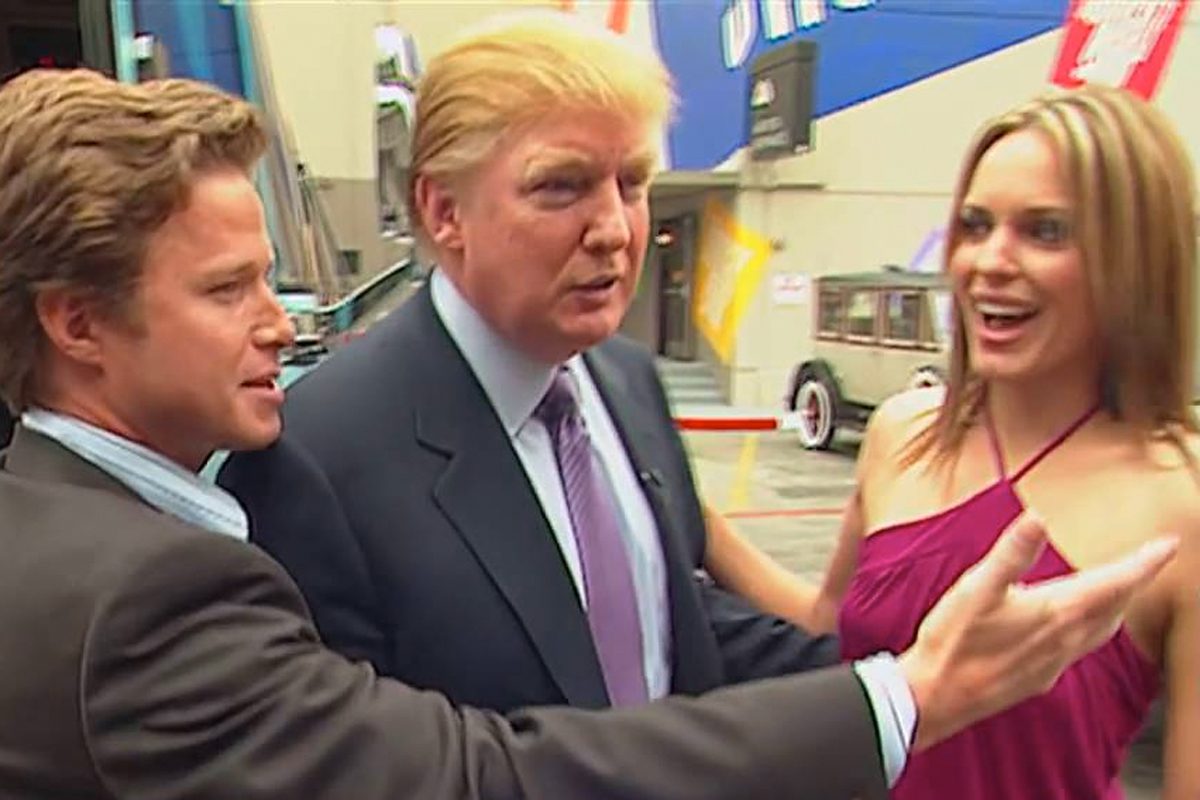
    “Access Hollywood” host Billy Bush and Donald Trump greet Arianne Zucker in an infamous 2005 video that almost derailed Trump’s presidential campaign.Access Hollywood

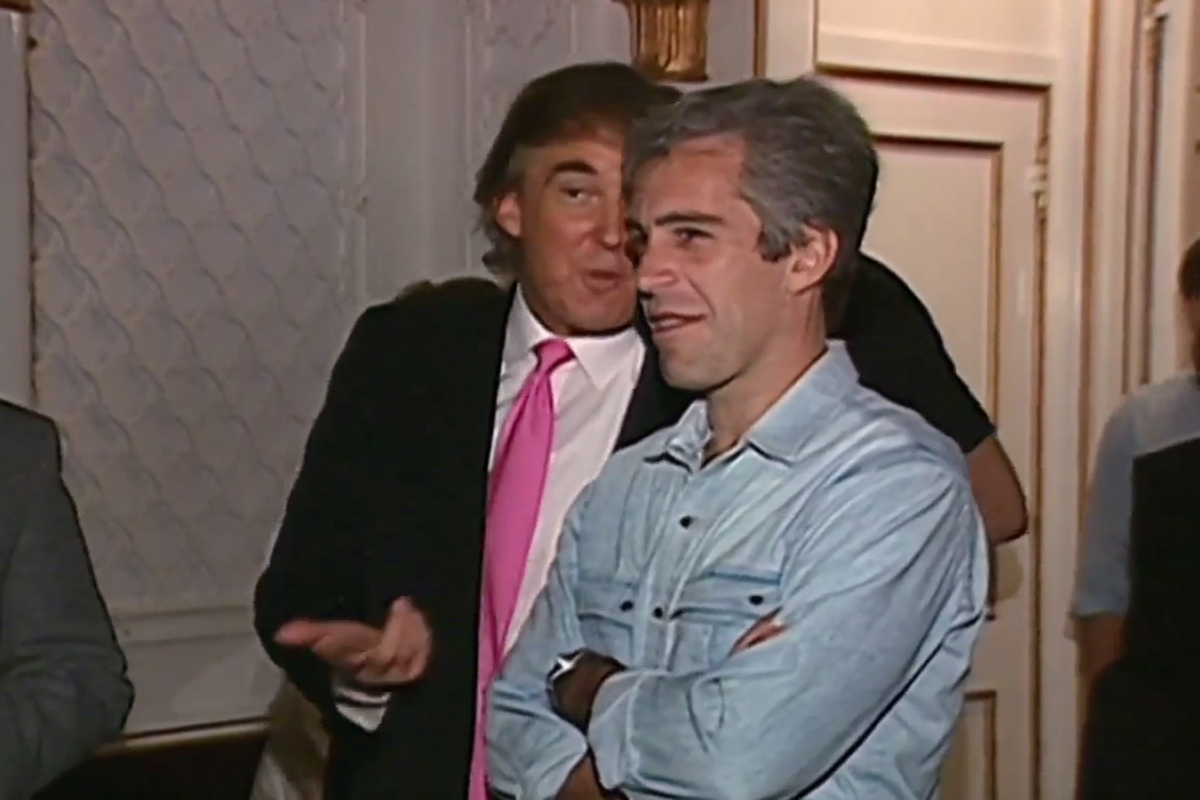
    Trump and Epstein shared a close friendship for roughly 15 years before they had a falling out. A former swimsuit model said Epstein brought her to Trump Tower in 1993, where the future president groped her.

    Trump has long denied any wrongdoing. After the recent congressional report was released, the White House said Trump has been “fully exonerated of anything related to Epstein.”

    That is not entirely accurate, since the U.S. Department of Justice has only released about half of the roughly seven million pages in the Epstein files. And many of the documents that were released were redacted.

    Attorney General Todd Blanche, who was Trump’s criminal defense attorney and now oversees the Justice Department, continues to block the full release of the files despite a federal judge’s order.

    The House Oversight Committee released a report that found prosecutors failed to hold Epstein and coconspirator Ghislaine Maxwell accountable for years, enabling him to get away with sexually abusing scores of young girls and women. The report called on investigators to do more to ensure justice for the survivors.

    “The DOJ should interview or, in some cases, reinterview key individuals who were part of the inner circle of Epstein and Maxwell,” the report said.

    Thomas Massie, the departing GOP congressman from Kentucky, is pushing a measure that would allow Epstein survivors, state prosecutors, and lawmakers to sue the Justice Department to get more records released.

    The Nvidia case and the latest allegations against Trump have reignited a broader national conversation about powerful men who have been accused of abusing their power. The stakes are further raised now that national security is at risk, along with the growing danger of artificial intelligence.

    The problem is only made worse with a convicted felon and alleged sexual predator in the Oval Office.

    When Democrats take control of the House and Senate in January, among their priorities should be the full release of the Epstein files, much-needed justice for the victims, and accountability for any wrongdoers.

  • Philadelphia has the will to reopen the Academy of Natural Sciences. Let’s find a way. | Editorial

    Philadelphia has the will to reopen the Academy of Natural Sciences. Let’s find a way. | Editorial

    Fifteen years ago, a partnership between the Academy of Natural Sciences and Drexel University boosted the school’s reputation and academics while allowing the research institute and museum — with its iconic wildlife dioramas and dinosaur skeletons — to keep its historic doors open on the Benjamin Franklin Parkway.

    In the wake of the museum’s abrupt closure in September, however, Philadelphians have discovered that the leaders of the two institutions are getting along about as well as a Tyrannosaurus and a Triceratops might have, with the inauspicious future to match.

    In a city renowned for its history and science, on an avenue more accustomed to gaining rather than losing attractions in recent years, it was distressing to see the Academy’s museum go dark. But the crisis has shown that its brick-and-limestone building and collections of thousands of volumes and millions of specimens aren’t its only irreplaceable assets. It also enjoys a priceless store of public and political will to keep it going — and keep it in Philadelphia.

    The public outpouring of love, support, and sorrow for the two-century-old Academy has been impressive. It’s no doubt partly in response to that popular outcry that public officials, from City Council to Gov. Josh Shapiro, have rightly become engaged in the matter, as have many of Philadelphia’s civic and philanthropic institutions. All of that can and should help find a way forward for the Academy in the city where it belongs.

    It’s also clear, however, that the museum didn’t reach this point as suddenly as it seemed to from the outside. Like many aging museums, the Academy has struggled to bring in enough paying customers to support its expenses, which are compounded by the age and condition of its building.

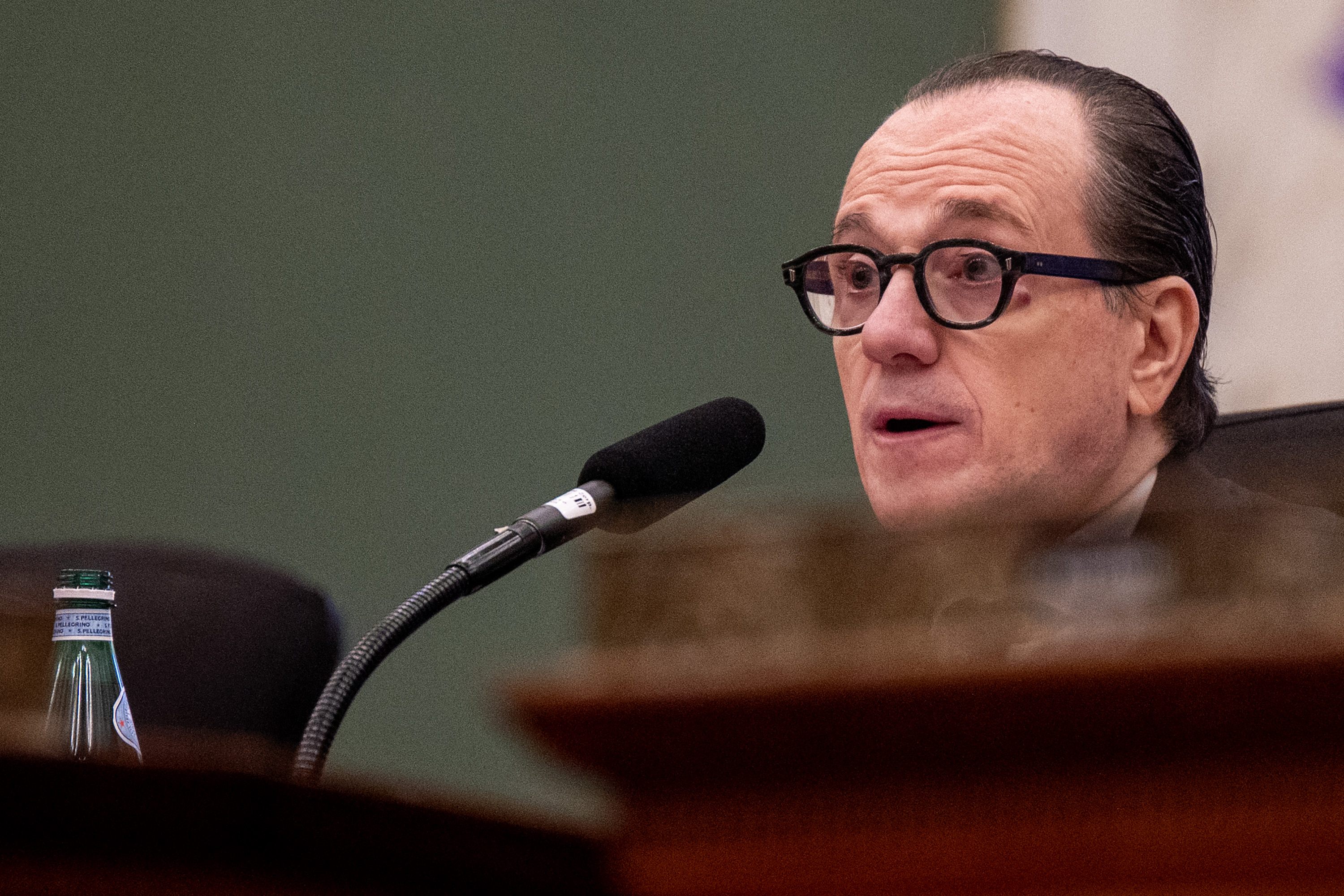
    Drexel President Antonio Merlo answers questions from a hearing by City Council’s Committee on Legislative Oversight Monday into the closing of the museum at the Academy of Natural Sciences of Drexel University.Tom Gralish / Staff Photographer

    According to Drexel officials, the Academy has been unable to consistently sustain itself, requiring millions of dollars a year in subsidies from a university that is no longer willing or able to provide. At the same time, financial documents and Academy leaders’ accounts raise questions about the extent and nature of the deficits.

    This week’s City Council hearings, meanwhile, only affirmed the impression that the paired institutions have reached a point of mutual distrust and fundamental differences that has left them unable to productively cooperate or amicably separate. The closure has had a series of regrettable consequences, including layoffs and relocation of the museum’s live animals and other parts of its collection.

    Some Council members are clearly eager to get the museum open and willing to dedicate public money to the effort. Reopening the Academy is the right goal, but Council should pursue it deliberately. While the Academy is worthy of public support, it also deserves the sort of thought and attention that will make it sustainable over the long term. That requires addressing its troubled relationship with Drexel, its long-term financial and capital stresses, and its need to appeal to a sufficient share of potential visitors. Then public officials can gauge the need for and feasibility of taxpayer subsidies.

    Fortunately, the William Penn Foundation and other charitable groups offered to conduct a comprehensive review of the Academy’s condition and make recommendations for its future. And unlike William Penn’s earlier offer to temporarily cover the museum’s operating costs, this one was accepted. Given the complicated challenges facing the institution and the rancor between Drexel and the Academy — which disagree on basic facts of the closure and more — independent information and expert analysis are sorely needed steps that should have the full cooperation of both institutions.

    Preserving history and fostering science and culture are Philadelphia strengths. Given that, the Academy of Natural Sciences doesn’t have to go the way of the fossils within.

  • FAA ground stop exposes a Trump cabinet unfit to lead in a crisis | Editorial

    FAA ground stop exposes a Trump cabinet unfit to lead in a crisis | Editorial

    At this point, after the pandemic mismanagement, the deadly insurrection, the brazen pocket lining, the failed Iran war, and much more, Donald Trump has conditioned many Americans to expect nothing but the worst from him and his administration.

    So, the Federal Aviation Administration’s (FAA) snap decision to ground all flights across the country seemed like just another manic Friday when it comes to Trump making America less great. But as the hours passed and no one from the White House could explain what the heck was going on, the Trump team’s incompetence played out in real time for all to see.

    And what a dismal display it was for the more than 1.5 million passengers booked on the roughly 11,000 flights that were grounded after a routine telecommunications upgrade at an air traffic facility triggered a network failure.

    The disruption dragged into Monday as stranded passengers scrambled to get to their destinations. Roughly 1,100 flights were reportedly canceled or delayed just in Philadelphia.

    The ground stop cost the top four airlines an estimated $345 million, while Transportation Secretary Sean Duffy said the overall economic cost would be “billions of dollars.” Not to mention the personal cost to the traveling public who missed weddings, funerals, sports games, and other family or business events.

    Did Trump apologize to the millions of Americans who were impacted?

    Of course not.

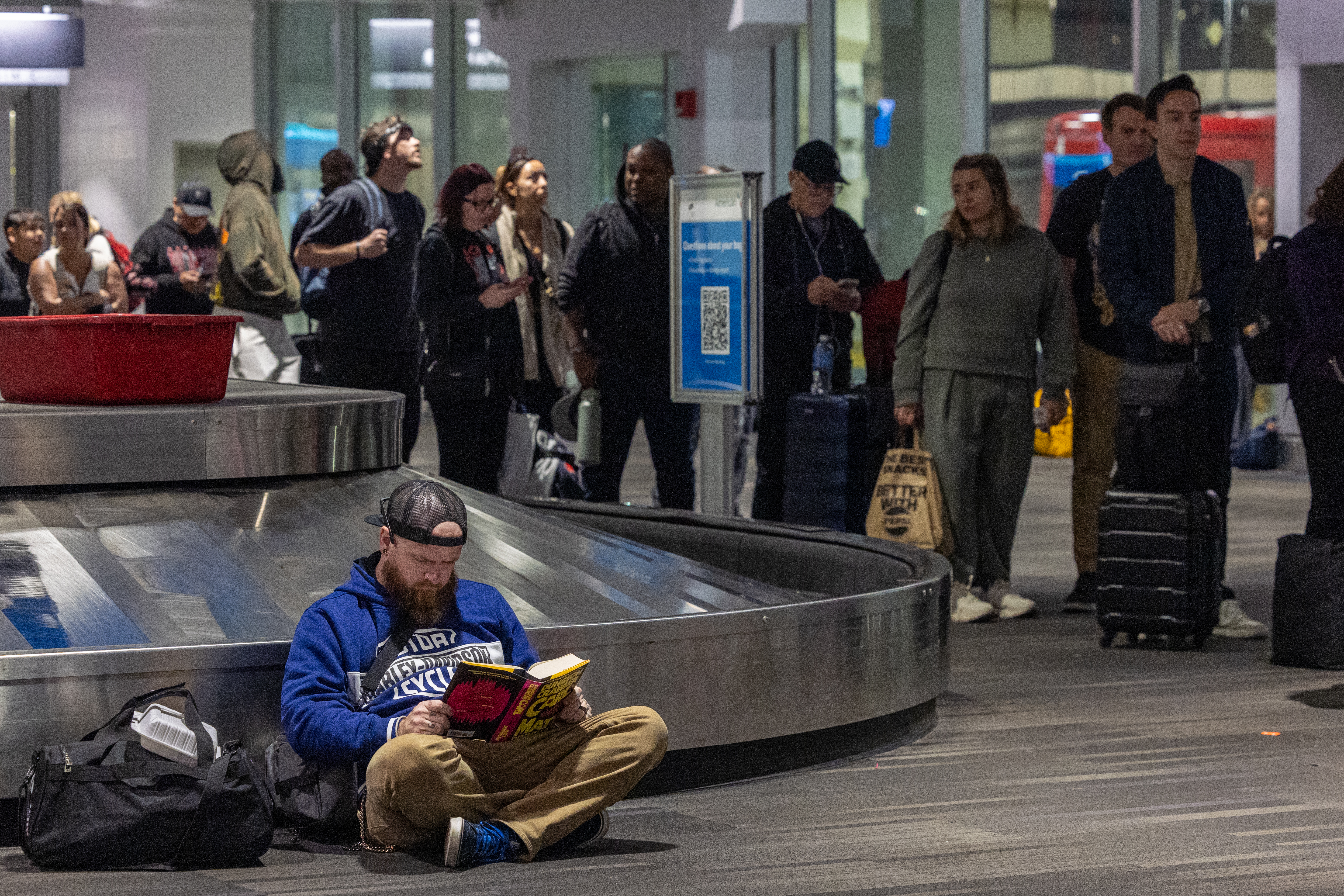
    Mike Alcorn, of New Jersey, reads a book while others wait in line to receive their luggage inside Philadelphia International Airport after nationwide flights were canceled by the FAA on Friday.Aidan T. Gallo / Staff Photographer

    Instead, Trump went missing in action and issued no social media posts about the airline crisis through much of the weekend.

    Apparently, he was at a loss for lies.

    Or maybe he was focused on something he really cared about.

    Two hours into the nationwide ground stop — while some passengers remained stranded on tarmacs and no one knew when planes would be allowed to fly again — the president took to social media to call for tax incentives to lure movie production back to the United States.

    “MAKE OUR ENTERTAINMENT INDUSTRY GREAT AGAIN!” he wrote on Truth Social.

    Meanwhile, the Trump administration’s painful reality show played on.

    Two of the B-team actors from Trump’s cadre of incompetent cabinet members took center stage to manage the crisis.

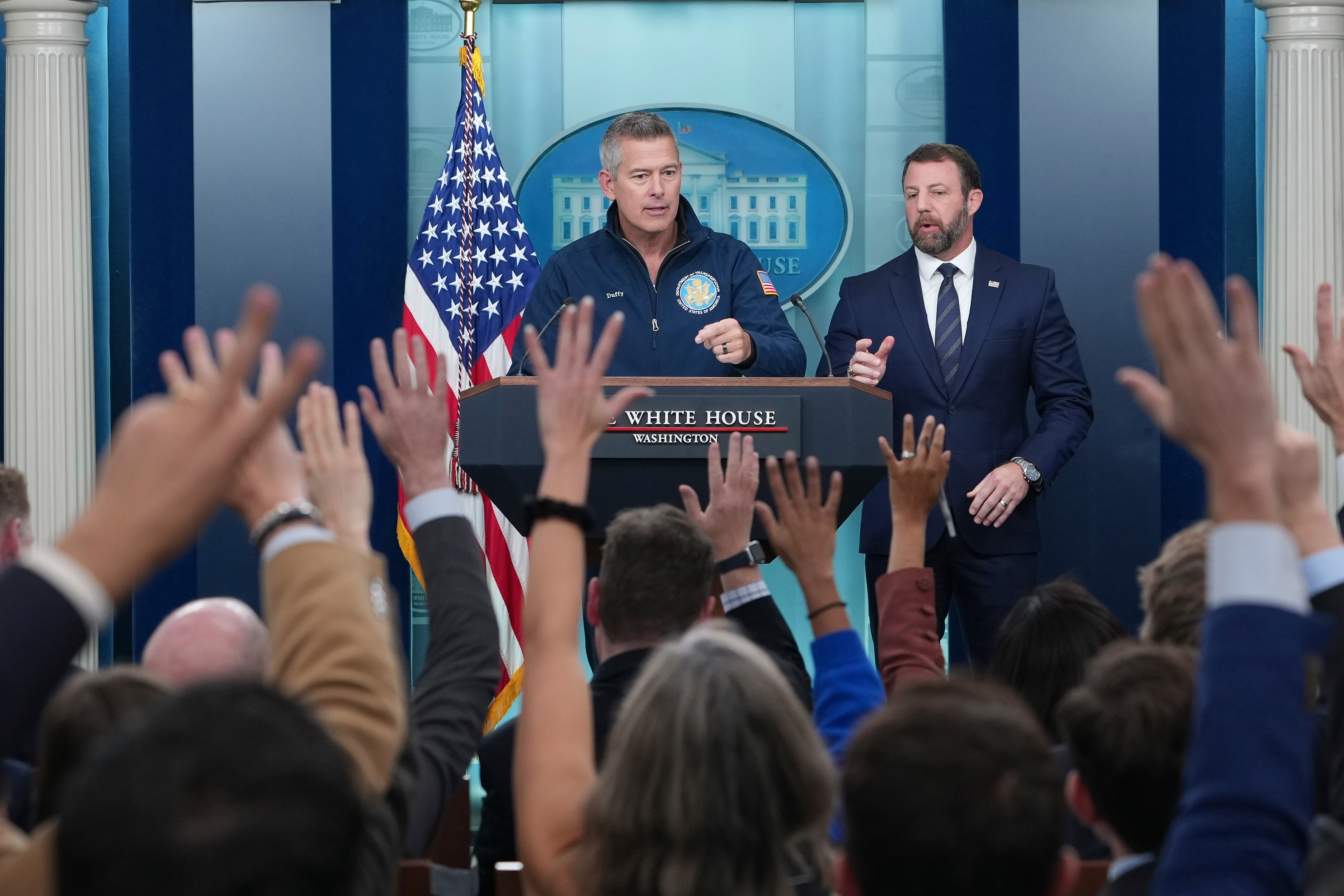
    Homeland Security Secretary Markwayne Mullin and Transportation chief Duffy stumbled through a briefing that provided little substantive information, shifted the blame to Congress, and repeatedly praised Trump. It was enough to make the folks at Pravda blush.

    Mullin, a former plumber and mixed martial arts fighter with no experience in law enforcement, military service, or counterterrorism prior to being put in charge of protecting the homeland less than eight months ago, tried to assure the public the ground stop was not a terror attack.

    “There was no indication as of yet that this was a nefarious attack against us,” Mullin said. There was also no indication as of yet that Mullin knew what he was doing.

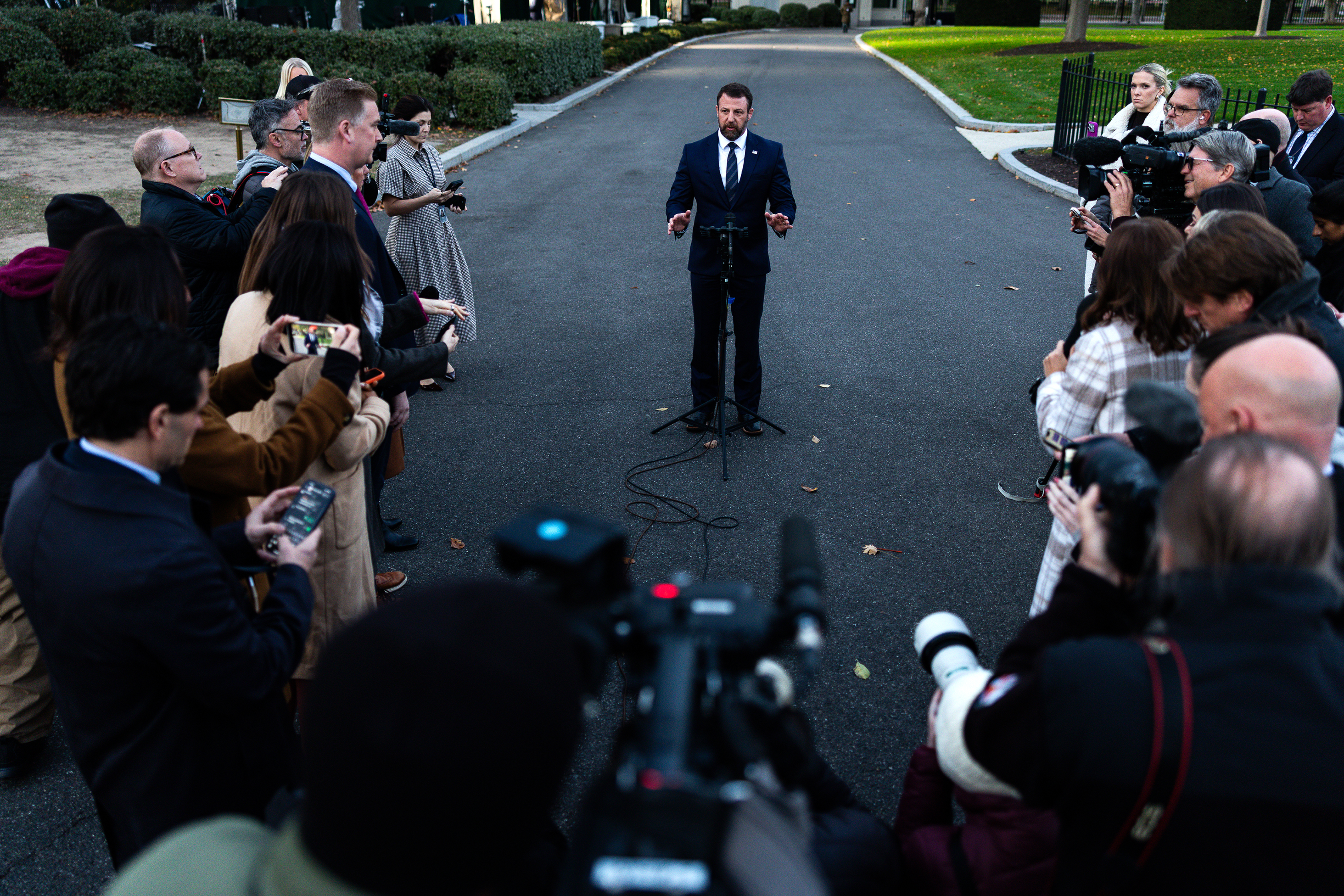
    Markwayne Mullin, the secretary of Homeland Security, speaks to reporters outside the White House in Washington during a ground stop on Friday.TIERNEY L. CROSS

    Duffy used his time before the cameras to mainly call on Congress to provide $50 billion in emergency funding to upgrade the FAA’s air traffic control system.

    No one is arguing against doing what it takes to modernize and ensure the system is safe. But Duffy glossed over some key points, namely, Congress gave the FAA an additional $12.5 billion last year. And $9 billion remains unspent.

    Of course, nearly every action by the Trump team includes graft.

    Early reporting indicates a company that received an $875 million contract to develop the FAA’s new AI-powered air traffic management system gave a $2,500 campaign contribution to Duffy’s son-in-law, Michael Alfonso, who was just elected to Congress in Wisconsin.

    The record indicates there will likely be more to come on that front.

    During Elon Musk’s brief and disastrous tenure last year at the made-up DOGE office, he wanted to cancel a $2.4 billion air traffic communications contract with Verizon and give it to his Starlink company, but relented after pushback about conflict of interest.

    The Department of Government Efficiency did eliminate more than 400 FAA jobs, including some that supported air safety.

    The bottom line is no one in the Trump cabinet has shown the temperament or the experience to manage things when they’re running relatively smoothly, let alone in a crisis. Everyone is too busy performing for Trump while working side hustles.

    Duffy recently spent seven months filming a reality TV show with his wife and nine children, in which they drove around the country. The show was sponsored by a host of major companies directly regulated by Duffy’s Department of Transportation.

    Duffy’s call for more FAA funding comes while Trump fritters away billions on vanity projects like the White House ballroom, a triumphal arch, and the Lincoln Memorial Reflecting Pool.

    After low-keying it all weekend, Trump looked in the mirror and finally figured out who to blame for the airline nightmare: Joe Biden. In a social media post on Sunday, Trump faulted his predecessor, the Democrats, and old technology for all the upheaval that brought the airline system to its knees.

    “I don’t take any responsibility,” Trump said on Monday before heading to a summit in Asia aboard the $400 million jet Qatar gave him.

    Mullin said it best during his briefing with Duffy, “This is what the leadership of President Trump looks like.”

  • Malayshia Allford’s life was treated recklessly. Her death must not be. | Editorial

    Malayshia Allford’s life was treated recklessly. Her death must not be. | Editorial

    The culpability for the death of 10-year-old Malayshia Allford, whose battered body was found in the trunk of a car at a South Jersey apartment complex this month, allegedly begins with her foster mother, Carprice Williams, who has been charged with her murder.

    But it extends to the City of Philadelphia, which had legal custody of the child; the nonprofits contracted to provide for her care; the state officials responsible for overseeing the child welfare system; the city schools that employed Williams and educated her foster daughter; and a society that has horrifically failed children like Malayshia before.

    In short, it took a daunting conspiracy of adults to kill this child.

    The most damning fact in a story full of them is that another child nearly died under deeply troubling circumstances in the same foster home a few years earlier. In 2021, according to court documents, Williams brought a 4-year-old in her custody to Children’s Hospital of Philadelphia, claiming the girl had fallen. But a doctor found that she had suffered not only a traumatic brain injury but also repeated physical abuse and severe malnourishment. Reported as a near fatality, the case triggered a review by city and state officials, which found that Williams had abused the girl and her sister and should “never be used as a foster parent for other children in the future.”

    Just three years after that report was finalized, however, Malayshia was placed in the same West Philadelphia home to allegedly face all too similar cruelties. Much as court records charge in the earlier case, police found the girl was subjected to cruel punishments, repeated beatings, and food deprivation. Unlike Williams’ previous foster children, however, Malayshia did not survive her ordeal.

    A series of institutional inadequacies and breakdowns appears to have contributed to this disaster. Prominent among them was state officials’ overturning and expungement of the 2021 abuse findings on appeal. The same year, state Auditor General Eugene DePasquale reported that a Pennsylvania Department of Human Services bureau granted about 90% of such appeals by accused abusers, citing flaws in the process that disadvantage the abused.

    At the local level, meanwhile, no criminal charges were brought in the earlier case despite a police investigation. The contracting agency that was handling the children placed with Williams, Tabor Children’s Services, settled a lawsuit in the case.

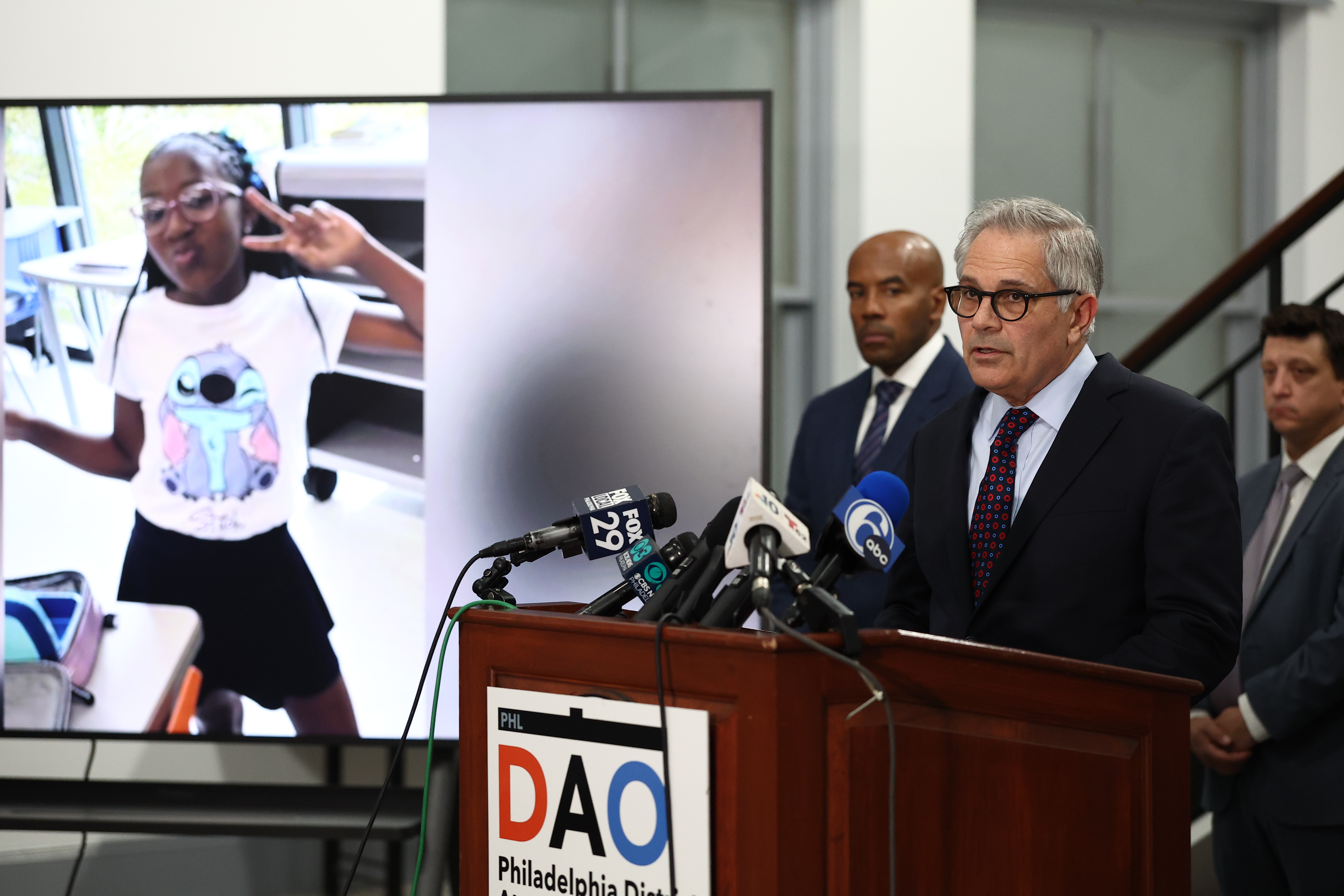
    District Attorney Larry Krasner addresses the media and family at his office on Nov. 5. Malayshia Allford, 10, went missing in late October, and her remains were recovered inside the trunk of a car in South Jersey.Monica Herndon / Staff Photographer

    A different case management contractor, Catholic Community Services, was responsible for Malayshia, who was also receiving foster care services from another nonprofit, Pennsylvania MENTOR. Horrifyingly, according to an attorney representing Malayshia’s estate, she was placed with Williams because she had been physically and sexually abused in her previous foster home.

    It’s that much more disturbing that Williams has been professionally responsible for children around Malayshia’s age as a teacher for the Philadelphia School District for more than a decade. It didn’t take journalists long to find parents with disturbing accounts of Williams’ handling of that role, as well. One mother called it “a gut punch … to know that that type of person was actually allowed into one of the schools to teach our child.”

    There are more than enough gut punches to go around here.

    Ironically, the city began relying on nonprofits such as Tabor and Catholic Community Services, known as Community Umbrella Agencies, or CUA, as part of the reforms that followed another child’s horrific death on its watch, that of 14-year-old Danieal Kelly in 2006. But the city and its contractors have obviously failed to prevent more such atrocities.

    It’s been clear for years, moreover, that Philadelphia is too quick to remove children from their families instead of helping their relatives care for them whenever possible. Despite recent progress on that score, the reliance on such an obviously unacceptable foster home and apparent obliviousness to extreme and consistent abuse show the city still has a mountain of work to do. So do reports that members of Malayshia’s extended family had tried and failed to get custody of the child, suggesting foster care wasn’t the only option. As Nadeem Bezar, the lawyer for Malayshia’s estate, told WHYY, “There is a paper trail of indications that Carprice Williams or her foster home should not have been used, not because it wasn’t suitable but because it was dangerous.”

    The case also indicates that the auditor general was right to criticize the state Department of Human Services’ Bureau of Hearings and Appeals for its plainly permissive track record on abuse cases. And the sequence of events leading up to Malayshia’s death raises further difficult questions for the school district and the police.

    In addition to the review of Malayshia’s death required by state law, Mayor Cherelle L. Parker has ordered a comprehensive examination of the case and its systemic implications, while City Council is expected to hold hearings on the subject.

    That’s a solid start for every institution implicated in the case. But the reviews must lead to substantial reforms rather than serving as a substitute for them. For guidance, the city and state should look across the Delaware to New Jersey, where child welfare reforms have dramatically reduced unnecessary family separations.

    Parker has insisted in the wake of the killing that “every child matters in Philadelphia.” Sadly, the record suggests otherwise. Malayshia Allford suffered a death — and, in too many respects, a life — that are nearly unbearable to contemplate and impossible to tolerate.

  • The Nvidia mess should end the era of unregulated AI | Editorial

    The Nvidia mess should end the era of unregulated AI | Editorial

    Even among a legion of Big Tech sycophants, Jensen Huang had stood out for his capacity to flatter Donald Trump into giving him what he wanted. It turned out that Huang, the perpetually leather-swathed chief executive of Nvidia, was not impervious to such motivated means of persuasion himself — and he has paid a devastating price for it.

    Huang resigned Thursday as the head of the microchip giant, days after acknowledging an extramarital affair with a Singapore-based tech executive known as Alice Huang, who is believed to be a Chinese spy. The revelations about their relationship would have been awkward for anyone, but it was particularly so for the man who successfully lobbied the president to ease restrictions on exporting his company’s AI-enabling chips to the agent’s alleged handlers.

    Further complicating matters for Huang was a report by the New York Times late Wednesday that he had engaged in a second affair with a subordinate at the company.

    The scandal seems to have done what all the artificial intelligence industry’s warnings about its own destructive potential somehow did not. It triggered a sell-off of Nvidia stock, federal investigations and renewed questioning of the headlong, government-assisted rush to develop a dangerous, ill-understood technology regardless of the consequences.

    “I hope there’s no problem,” Trump said of Jensen Huang on Monday, but it seemed a little late for that. The problem is that the cofounder of the world’s most powerful and valuable AI company — and the closest adviser to the president on the technology — appears to have been hopelessly compromised by our chief adversary, China. As Stephen Witt, who wrote a book about Nvidia, told the New Yorker, “If the CEO is sleeping with spies, that’s generally regarded as bad.”

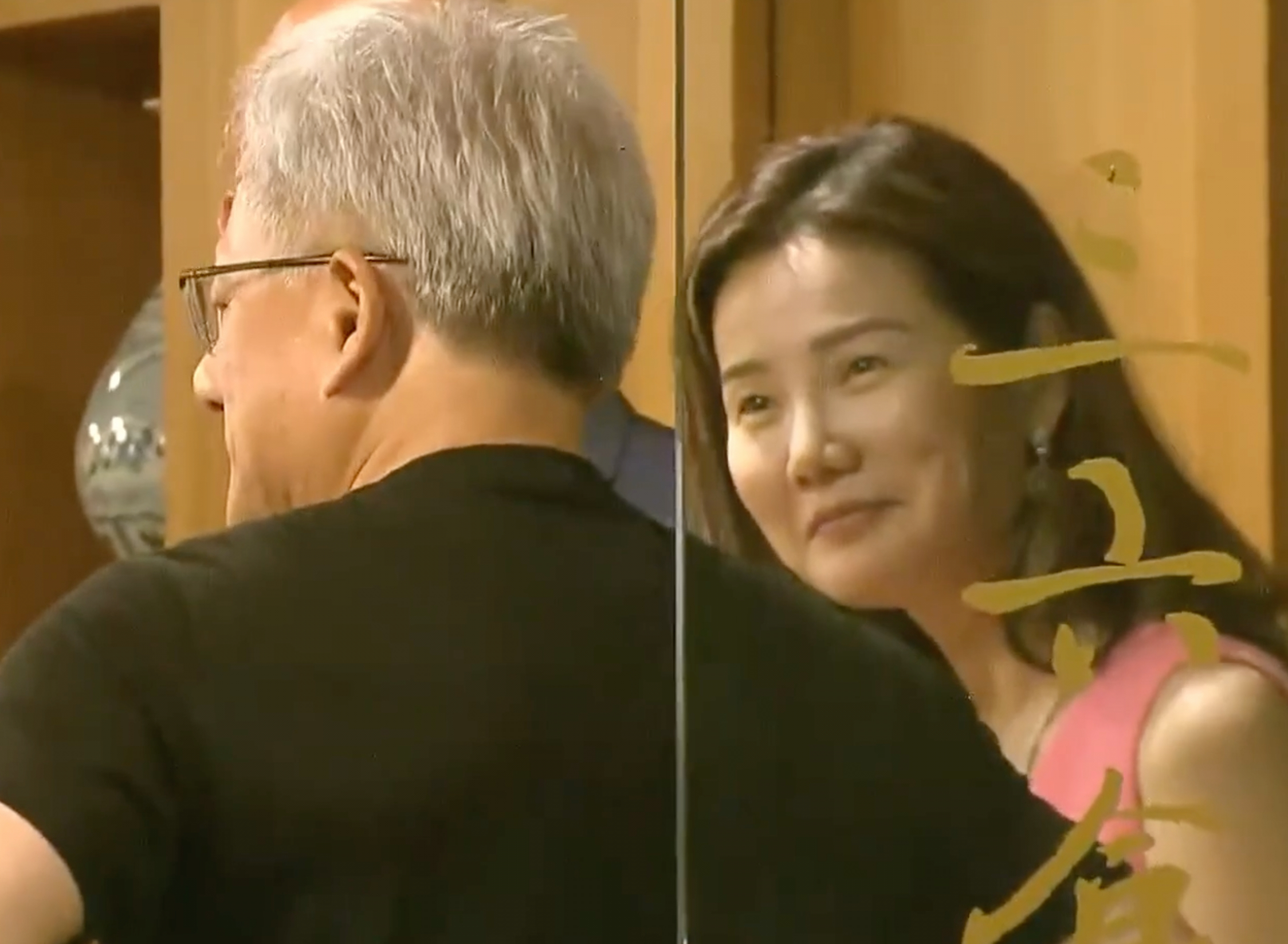
    In this image taken from video provided by TVBS, Alice Huang attends a dinner hosted by Jensen Huang, Nvidia’s CEO, at a restaurant in Taipei, Taiwan, in 2025.Uncredited

    Worse, the president appears to have known that for some time, even though he persists in assurances that Huang is “a very high-quality,” “amazing,” and “honorable guy” who will end up “in good shape.” Trump was warned of Huang’s relationship with a suspected Chinese intelligence asset last year and again in May, the Times reported, just before the executive joined the president on a trip to Beijing.

    And yet, Trump appears to have done nothing about it apart from enthusiastically facilitating the goals of a man who may have been in thrall to the Chinese Communist Party. Huang has somewhat paradoxically argued that the United States must maintain its chipmaking advantage over China by selling more chips to the country, which Trump helped him do by easing export controls established under President Joe Biden. The Commerce Department also reportedly abandoned an investigation into whether Alice Huang’s company smuggled chips into China after an Nvidia lawyer contacted the administration.

    Nvidia is among the major investors in an estimated $1.4 trillion initial public offering being prepared by the AI company Anthropic, which has warned potential investors that the technology poses “catastrophic or existential risks to humanity.” And yet, Trump has hewed to the laissez-faire approach to AI that Jensen Huang has pushed, concluding after meeting with him and other tech executives that the companies should “self-police.”

    Nvidia itself illustrates the folly of this notion. The company’s generally deferential board is populated by early investors and longtime associates of the cofounder, and — prior to Huang’s resignation — there was no succession plan or clear replacement. Nvidia’s chief financial officer, Colette Kress, will lead the company while the search for a permanent replacement commences.

    Perhaps the only good that can come of all this recklessness is the thorough debunking of the irresponsible idea that such a powerful technology should go unregulated. Changing the current policy, or lack thereof, will certainly be challenging as long as Trump remains in power. But the new Congress is full of members elected on promises to rein in data centers and other aspects of AI, and, in some cases, with a history of doing so.

    This mess shows they won’t arrive a moment too soon.

  • Bike protest of Jewish businesses was indefensible, and it must be condemned | Editorial

    Bike protest of Jewish businesses was indefensible, and it must be condemned | Editorial

    There is an old saying about how it is better to remain silent and thought a fool than to speak and remove all doubt.

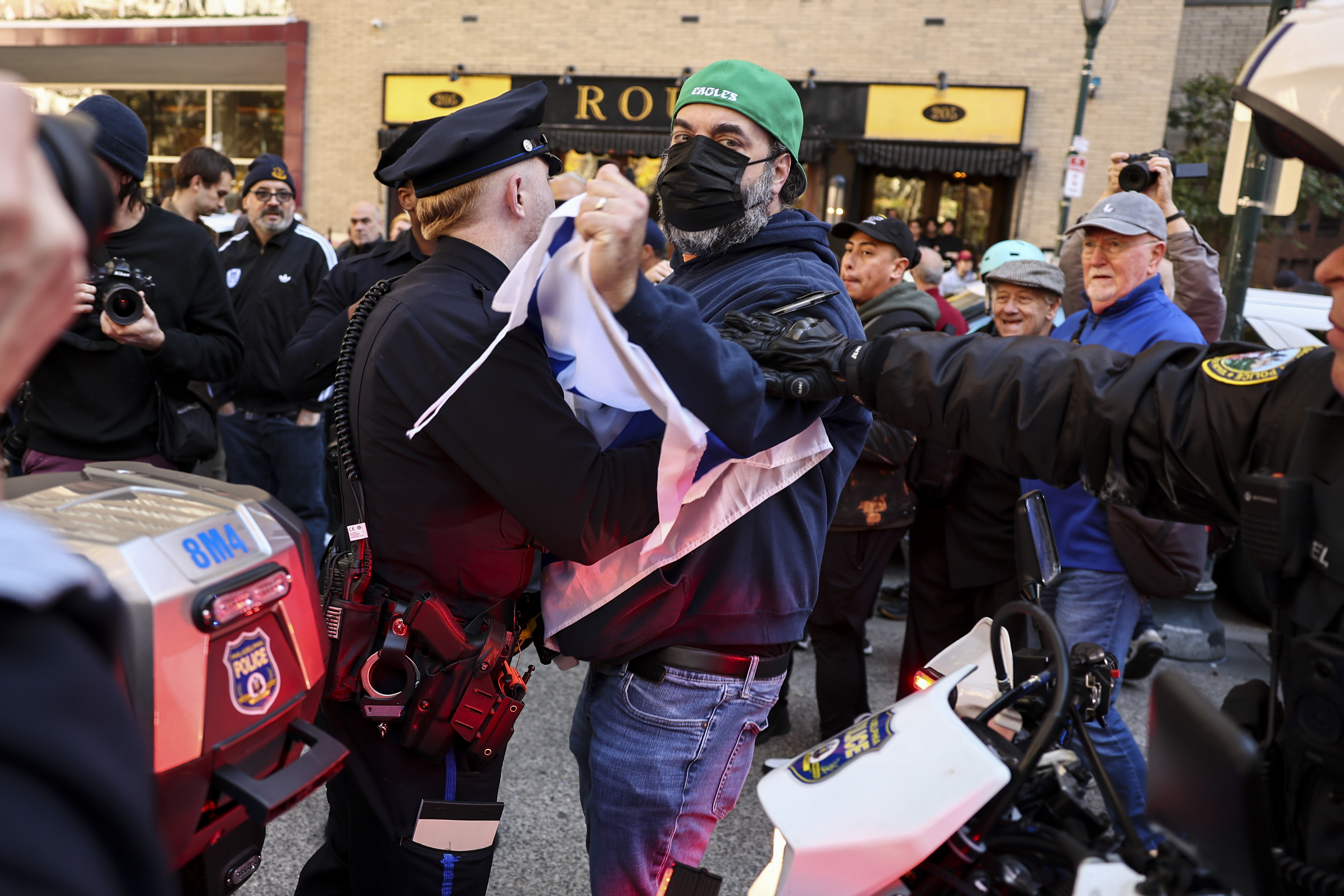
    The same applies to Philly Bike on Your Left, a little-known activist group that organized a “boycott ride” that targeted six Jewish-owned restaurants near Rittenhouse Square to protest the businesses’ alleged support of Israel.

    The misguided rally may go down as one of the most counterproductive protests ever.

    Along with initially using inflammatory language to promote the event, the activists scheduled it on the eve of the anniversary of Kristallnacht, also known as the Night of Broken Glass, when Nazi leaders unleashed state-sponsored attacks on Jews across Germany and Austria in 1938 that were designed to look like an unplanned uprising. Businesses and synagogues were trashed and burned, and thousands of Jewish men were put in concentration camps.

    No wonder the people behind Philly Bike on Your Left refused to identify themselves.

    To be sure, Benjamin Netanyahu, Israel’s prime minister, deserves to be criticized and held responsible for the ghastly war he has waged in Gaza, killing more than 74,000 Palestinians — including many women and children — in response to the heinous attack by Hamas militants on Oct. 7, 2023, in which 1,200 Jews were killed, and 251 were taken hostage.

    But protesting nearly 6,000 miles away outside Jewish eateries in Philadelphia is no way to go about raising awareness or accountability for all that Netanyahu has wrought.

    The good news is Philly wasn’t buying what the bike protesters were peddling.

    The 300 pro-Palestinian demonstrators were met by 200 counterprotesters and hundreds more who showed up to support the businesses. Many waited for an hour or more in long lines stretching down the block to patronize the targeted eateries.

    Most city, state, and federal elected officials denounced the bike protesters.

    “Everyone has the right to peacefully protest and express their political views,” Philadelphia Mayor Cherelle L. Parker said in a statement. “But singling out businesses because their owners are Jewish is unacceptable and has no place in our city.”

    Gov. Josh Shapiro said, “In the midst of blatant antisemitic targeting of Jewish-owned restaurants on the anniversary of Kristallnacht, the City of Brotherly Love showed up to support our neighborhood businesses and prove once again that hate has no place in our Commonwealth.”

    U.S. Rep. Brendan Boyle said targeting Jewish-owned eateries was wrong and that “this kind of hatred and discrimination has no place in our city.”

    But the Philadelphia Democratic Socialists of America called the trove of statements of politicians “bad-faith condemnations” — a sad response by the DSA that undermines its efforts to be taken seriously.

    The Editorial Board reached out to incoming Philadelphia Rep. Chris Rabb and State Sen. Nikil Saval, who are both members of the DSA, for a comment on the protest, but neither official responded.

    The bike group said in a social media post that the portrayal of the protest was “grossly misrepresented” and that it opposed any form of racism, including antisemitism. The group said it was boycotting the businesses because of their owners’ support for Israel. This is a stretch.

    After the Oct. 7 attack, one of the businesses raised money for United Hatzalah, a nonprofit, fully volunteer organization that provides emergency medical services.

    The bike group provided no evidence to show the businesses support Israel’s war effort. The activists’ inference that there is something nefarious going on is unfounded and irresponsible — especially given the disturbing rise in antisemitism across the country.

    But something good came out of the bike group’s misplaced actions.

    Seeing business booming at the six food establishments — Mac Mart, K’Far Cafe, Huda, Goldie, Dizengoff, and Schlesinger’s Deli — made for a just dessert.

  • Gov. Shapiro’s victory positions him as a formidable national force | Editorial

    Gov. Shapiro’s victory positions him as a formidable national force | Editorial

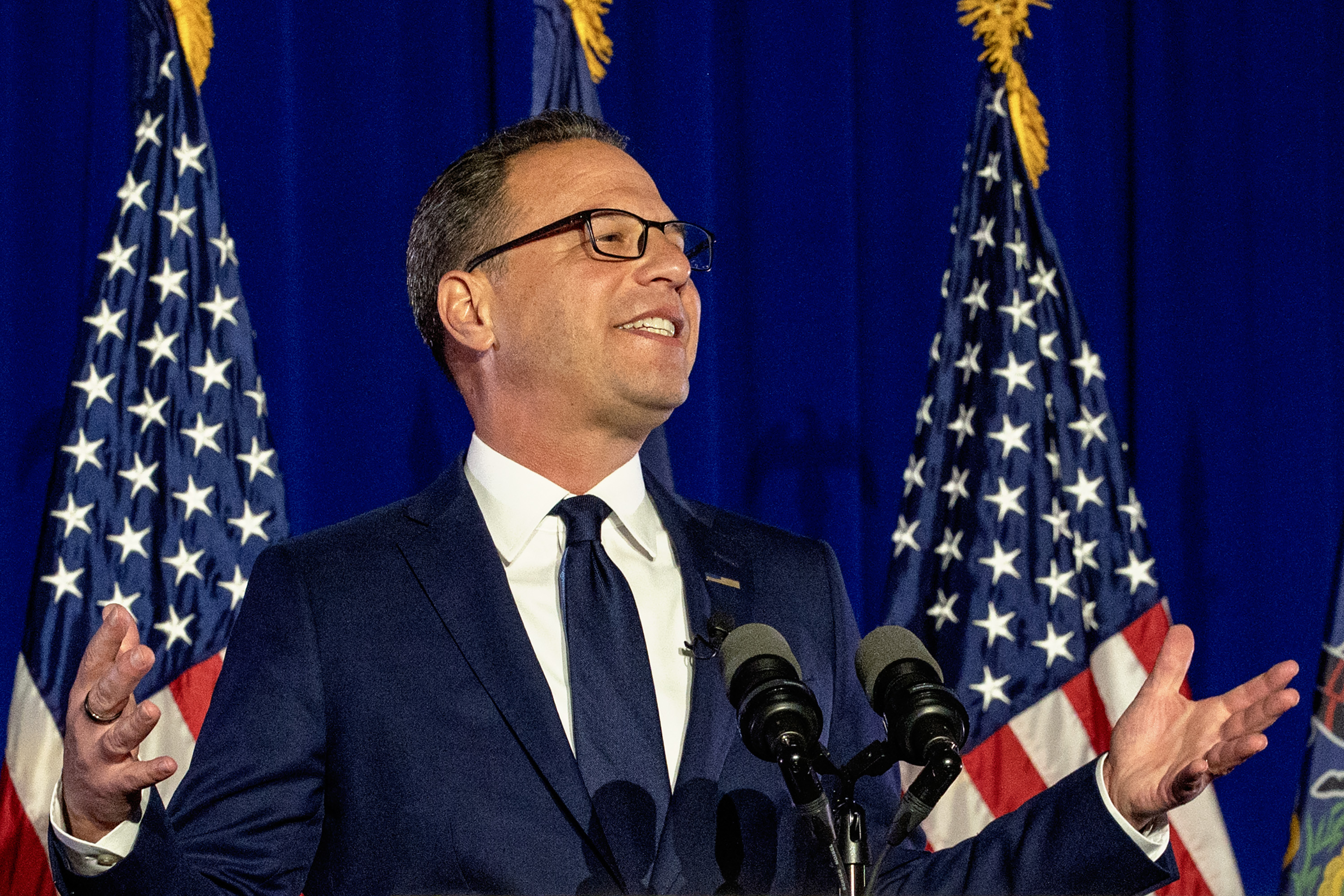
    Thanks to deep discontent with Donald Trump’s presidency, the midterm campaign was fought on strange new political battlegrounds such as Texas, Kansas, and Alaska, until recently reliable Republican strongholds. At the same time, the top contest in the perennial political battleground of Pennsylvania was uncharacteristically predictable. And that is in no small part owing to broad public support for Gov. Josh Shapiro.

    The can-do Democratic governor won a second term Tuesday, defeating Republican state Treasurer Stacy Garrity by more than 20 percentage points. He also helped lead the state’s Democrats to an impressive string of victories in more closely contested congressional and legislative races, assisting the party’s decisive takeover of the U.S. House of Representatives and securing its first majority in the Pennsylvania Senate in this century.

    With the benefit of Shapiro’s political and financial backing, Democrats ousted incumbent Republicans in four congressional districts, including political survivor Brian Fitzpatrick in Bucks County and Trump stalwart Scott Perry in Central Pennsylvania, and gained enough legislative seats to control both chambers of the General Assembly.

    Shapiro’s coattails thereby contributed to a crucial check on Trump’s power while putting the Democrat in an unusually strong position to work his will as governor and launch a widely expected campaign for president. The result looked a lot like the resounding gubernatorial reelection with which Chris Christie hoped to catapult himself into the White House from neighboring New Jersey a decade ago — minus the retaliatory political interference with interstate travel.

    Tuesday’s result inherently affirms Shapiro’s pan-partisan appeal in a purple state. What he does with a rare legislative majority in Harrisburg could boost his reputation for commonsense competence and concrete accomplishments in an era of poisonous politics and bad government.

    Shapiro did have the advantage (not for the first time) of a less-than-formidable Republican opponent, one who aligned herself all too closely with Trump and gambling interests. And he and other Pennsylvania Democrats clearly caught a national wave of frustration and disillusionment with Trump. But the governor also reaped the benefits of a broadly orderly and ethical administration focused on making the state more livable and “getting stuff done,” epitomized by the rapid rebuilding of I-95 in Northeast Philadelphia after a tanker fire triggered its collapse.

    The governor, moreover, is a skilled communicator who isn’t afraid to answer difficult questions or frequent corners of the state that are politically and geographically distant from his Democratic base and suburban Philadelphia roots. The dividends are evident not just in his approval rating and vote tally, but also in the number of voters who appreciate him despite differences of opinion. He offers a compelling alternative to a president who has made himself an avatar of destruction, corruption, and polarization.

    The anti-Trump mood of the country, however, will only encourage Democrats to crowd into the presidential primary campaign in a 2028 cycle that will look like it’s theirs to win or lose. A moderate by ideology and temperament, Shapiro would have to compete with fellow Democrats whose positions and personae are more suited to channeling the id of the party’s progressive, power-starved base. He would also be blazing a trail as a Jewish American at a time of deep division over U.S. support for Israel’s hard-line government.

    That said, the last successful Democratic nominee for president was also a centrist from Pennsylvania, one who didn’t enjoy Shapiro’s relative youth and energy. Now the governor has an opportunity to “get even more stuff done” in the state capital, as he put it, with plans to increase the minimum wage, encourage more housing construction, fund mass transit and education, regulate data centers, and codify abortion and LGBTQ+ rights.

    It’s an ambitious, public-spirited agenda and a potentially heartening counterpoint to the administration and party Americans just resoundingly rejected.

  • For Trump, the midterms delivered what Congress wouldn’t: accountability | Editorial

    For Trump, the midterms delivered what Congress wouldn’t: accountability | Editorial

    The better angels won — again.

    Just when it seemed all hope was lost, the American people on Election Day 2026 rejected the hatred, fear, and division sown by Donald Trump over the past decade. Empathy, compassion, and shared national identity triumphed over chaos, corruption, cruelty, and incompetence.

    Somewhere, Abraham Lincoln is smiling.

    Trump pleaded with Americans to pretend he was on the ballot. And they did, bigly.

    Across the country — in red states and blue — voters backed Democrats, who took control of the House, Senate, and multiple governors’ mansions, including Pennsylvania. Gov. Josh Shapiro and Democrats now apparently command Harrisburg.

    The midterm election was a massive and complete rebuke of Trump and all his anger, hate, greed, and costly policies.

    Despite relentless efforts by the president and his enablers to alter the election outcome — through mid-decade gerrymandering, legal threats, voter suppression, money-for-vote offers, and baseless and exhausting claims of voter fraud — Americans peacefully waited in line, quietly mailed in their ballots, and carried out their civic duty.

    The result was a resounding denunciation of everything Trump has said and done over the past two years. Americans are tired and fed up with his war, pocket lining, tariffs, cruel and senseless immigration enforcement, wasteful and often illegal Washington construction projects, selling out of allies, attacks on science and research, and trampling of the rule of law.

    The proof was in the ballot box.

    Turnout was huge, underscoring the power of one person, one vote to make a difference.

    Democrats won Senate races in deep-red states like Texas, South Carolina, Iowa, and Kansas, where they have not been competitive for decades. The romp is not over, as Senate races in Mississippi and Alaska remain up for grabs.

    The results were historic, signaling Americans still appreciate the benefits of diversity over racism, misogyny, and hate. Abdul El-Sayed (D., Mich.) withstood vile attacks by Trump, JD Vance, and others to become the first Muslim elected to the U.S. Senate, while Chris Pappas of New Hampshire became the first openly gay man elected to the Senate.

    Meanwhile, Gina Hinojosa will be the first Latina governor in Texas and first Democrat to win that office since 1990. In Georgia, Keisha Lance Bottoms beat billionaire Rick Jackson to become the first Black female governor in U.S. history. And Deb Haaland in New Mexico became the first Native American elected governor in the U.S.

    Gina Hinojosa, the Democratic nominee for governor of Texas, and James Talarico, the Democratic candidate for U.S. Senate in Texas, at a campaign rally in San Antonio, Texas, Nov. 1.Tamir Kalifa

    The Democratic candidates were outspent in nearly every race, yet they overcame relentless attack ads filled with lies, fear, racism, xenophobia, Islamophobia, and hate.

    Trump tried to energize his base with rallies in red states filled with profanity, antisemitic tropes, baseless threats of jihadists and communists, and a strange obsession with men’s physiques. But the MAGA magic dust was not enough to distract from $6-a-gallon diesel.

    In the end, a parade of Trump-backed sycophants, phonies, hacks, and incompetents were thrown out of office or rejected, including Ken Paxton in Texas, Vivek Ramaswamy in Ohio, Darline Graham in South Carolina, Susan Collins in Maine, and Scott Perry in Pennsylvania.

    Many of the Republican losers backed Trump’s war, tariffs, and tax cuts for the rich that have resulted in higher prices, interest rates, and inflation. The GOP enablers shrugged as Trump enriched himself, his family, friends, and corporations while the president’s policies hurt farmers, senior citizens, minimum wage workers, and recent college graduates.

    Democrats won by such wide margins in nearly every competitive race that Trump meekly said he would accept the results. Even for the man who cried election fraud almost daily and sicced the U.S. Department of Justice on election officials, the mandate from voters was too big to rig.

    For one night at least, millions of voters beat billions of dollars. Billionaires, big corporations, and law firms that shamelessly cozied up to Trump endured a well-deserved shellacking. But the threat of oligarchs remains and must be confronted.

    President Donald Trump, right, presents the National Medal of Science to Elon Musk at the U.S. Institute of Peace, in October.Julia Demaree Nikhinson

    We the people trounced trillionaire Elon Musk, who poured nearly half a billion dollars of his highly government-aided fortune into backing losers in Texas and beyond. Musk remains a foreign and domestic policy danger, with the power to meddle in wars and elections while spreading his toxic hate and racist ideology on social media. Not to mention his destruction of government operations during his brief and failed tenure running the dubiously legal Department of Government Efficiency.

    Democrats would be wise to use their newfound power to put a stop to the flood of money corrupting politics. Democrats must also focus on the needs of average voters and not special interests.

    Voters have given Democrats a golden opportunity to remake the party, rebuild the country, and stop Trump’s madness and corruption.

    Democrats must use their newfound power to work to lower prices, restore healthcare cuts, end the Iran war, regulate artificial intelligence, rein in data centers, release all of the Epstein files, tame the deficit, tax the ultra-rich, pass real immigration reform, invest in research, undo gerrymandering, back Ukraine, confront climate change, stop the deportation cruelty, and investigate Trump’s self-dealing.

    The list is long, and the damage is great.

    But the voters have spoken. They rejected the wannabe king and demanded the American Experiment continue.

    Hopefully, this marks the beginning of the end for MAGA.

    Trump, increasingly incoherent, remains a danger. But after a decade of dragging the country and the world through hell, he is officially a lame duck.

    It took some longer to realize that Trump ain’t making America great.

    Now it’s time for the better angels to get to work.

  • Our recommendations on two Philadelphia City Charter amendments | Endorsement

    Our recommendations on two Philadelphia City Charter amendments | Endorsement

    Voters in Philadelphia will be asked two questions on Tuesday’s primary ballot. Here are the Editorial Board’s recommendations.

    Question No. 1

    Should the Philadelphia Home Rule Charter be amended to revise the City’s contracting procedures to allow for bid preferences and set-asides for small businesses; modify the threshold and standards for contracts that can be set aside for small and local businesses; and grant the Procurement Department and the City Solicitor discretion on bond requirements for certain construction projects?

    The first question would change the City Charter so officials can provide preferences to small businesses that bid on contracts for city-funded projects. The measure would also expand the preferences that are given to local businesses.

    The proposal reflects Mayor Cherelle L. Parker’s decision to eliminate racial diversity goals in contracting decisions and instead emphasize assisting small businesses — a step she took in response to a series of recent court rulings. Parker’s shift has been decried by some Black business owners in the city.

    A study conducted last year by the Pew Charitable Trusts found that Philadelphia’s business density — a key driver of municipal economies based on the number of firms per 1,000 residents 16 and older — has increased in recent years, but is still well below the national average (111 here; 129 across the country). Philadelphia also trails such cities as Indianapolis (122), St. Louis (119), and Baltimore (113). Anecdotally, local business owners also report significant pressures from inflation, high interest rates, and general uncertainty about the economy.

    While preferences could provide some relief for many local entrepreneurs, they can hardly be counted on as a singular cure for what ails Philadelphia’s business ecosystem. It is crucial that city officials continue to address the systemic challenges facing local businesses — including a burdensome and uncompetitive tax system, and what has historically been an often-cumbersome permitting process (even as expedited review initiatives like PHL Prime show promise).

    While it is an imperfect solution with an unfinished surrounding infrastructure, voters should vote YES to allow officials to offer the preferences, which can serve as a much-needed tool to help promote economic growth locally. At the same time, this board also calls on City Hall to continue working to overhaul the structural hurdles to business development in Philadelphia.

    Question No. 2

    Shall the Philadelphia Home Rule Charter be amended to establish and define the functions of Creative Philadelphia, an office headed by the Chief Cultural Officer to promote the City’s arts, culture, and creative economy sector?

    The second question would make Creative Philadelphia — which now exists via executive order and which promotes and supports the city’s arts community — a formal and permanent part of municipal government. Aside from the often intangible civic value of increasing public engagement with the arts, a recent study found that the cultural sector in Philadelphia has an annual economic impact of $2.2 billion.

    Given those stakes and the broader public benefits, voters should vote YES to formally establish Creative Philadelphia as a permanent office in city government.

    ENDORSEMENTS

    Election Day is today — Tuesday, Nov. 3. That means it is time to vote.

    The polls are open from 7 a.m. to 8 p.m. Mail ballots must also be returned by 8 p.m.

    Voters in Pennsylvania can find their polling place online at pavoterservices.pa.gov.

    New Jersey voters can find polling places at voter.svrs.nj.gov/polling-place-search.

    The Inquirer has an interactive voter guide available at inquirer.com/politics/election.

    To help voters make their decisions, The Inquirer Editorial Board — which operates independently from the newsroom — interviewed candidates in several competitive primary races in the city and statewide. The board conducted independent research, reviewed the candidates’ position statements, and discussed the strengths and weaknesses of the candidates before making its endorsements.

    Here are the board’s choices:

  • Vote like your vote depends on it | Editorial

    Vote like your vote depends on it | Editorial

    As President Donald Trump’s approval ratings have sunk, his corruption and policy disasters have proliferated, and his party has deployed a particularly subpar crop of candidates, the midterm campaign has been accompanied by increasingly confident predictions of a Democratic takeover of Congress. At the same time, Trump and his allies have been more inventive than ever in their schemes to skew, suppress, and subvert a well-earned rebuke from the electorate.

    But neither the polling nor the plotting should affect the calculus for voters who prize their right to vote. We’ve seen more than enough flawed public opinion assessments over the past decade to know we shouldn’t count on them. And we’ve seen more than enough of Trump’s failed efforts to undermine and ignore elections to know we can defeat them.

    Casting your ballot is the most important answer to those who would deny your power to do so.

    Polling has only seemed to grow in prominence even as the decline of the landline and rise of institutional distrust have made it more difficult. Polling aggregators and betting markets have made political prognostication an even bigger business, as have the high stakes of elections that put the rule of law and democracy itself on the line.

    This year’s polls certainly are auspicious for the opposition. Midterm elections tend to function as referendums on the incumbent party and president, and voters remain nearly as disgruntled as ever with Trump. Democrats are heavily favored to win a majority in the House despite extraordinary gerrymandering, and they’re narrowly ahead in the Senate despite a map forcing them to compete in red states such as Texas, Kansas, and Alaska.

    That said, polls over the past decade have famously underestimated support for Trump as well as, somewhat less famously, his opponents. The public opinion trade has also been shaken by isolated but troubling recent revelations of fake polling. And, of course, even the best polls have margins of error that indicate high uncertainty about races that will be decided by a few percentage points or less. This year’s closely contested House races in Bucks County and Central and Northeastern Pennsylvania all fit that description, and fundamentally unpredictable margins in several states could make the difference in the Senate.

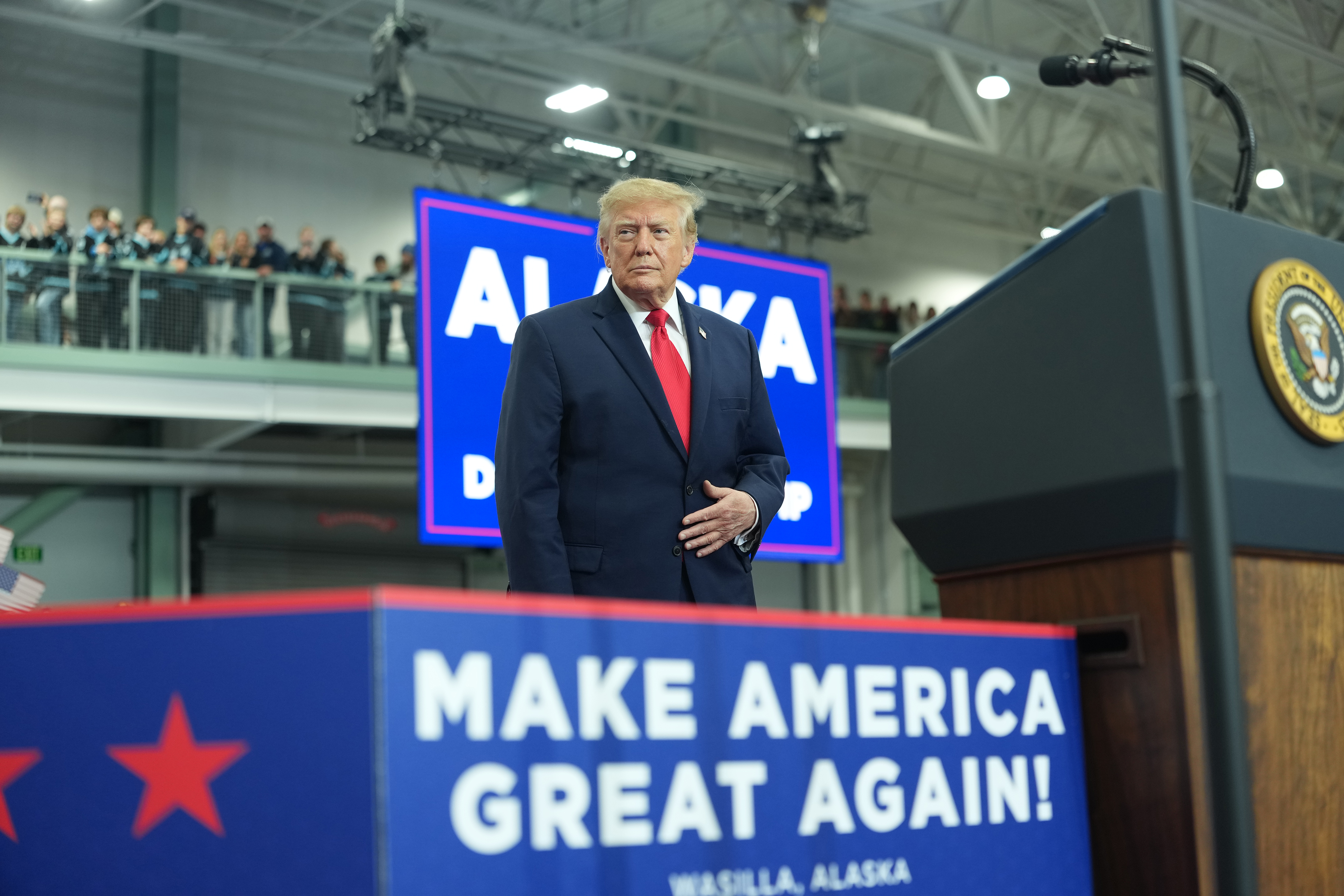
    President Donald Trump arrives at a campaign rally ahead of the midterm elections in Wasilla, Alaska, on Oct. 13.DOUG MILLS

    Meanwhile, rather than address the policies that put his congressional majorities in jeopardy, chief among them his inflationary trade and actual warfare, the president has looked to cheat his way out of the widely expected midterm shellacking.

    His allies’ unprecedented gerrymandering of Texas and other states, partly offset by Democratic retaliation, didn’t appear to yield enough gains to withstand a blue wave. So Trump tried to use his power over the U.S. Postal Service to interfere with voting by mail, only to be (narrowly and provisionally) blocked by the U.S. Supreme Court. His latest gambit is to use trumped-up charges of noncitizen voting to arrest and intimidate those who might cast ballots for Democrats.

    The frustration of these desperate measures isn’t likely to prevent Trump and Co. from further attacks on the voting process and results. Administration officials have alluded to the possibility of misusing federal personnel to intimidate voters on Election Day and retain power afterward. They have already threatened to prosecute Alaska’s Democratic Senate candidate, Mary Peltola, and opened a dubious investigation of Rep. Ilhan Omar (D., Minn.), pointing toward a reprise of the postelection assaults on democracy that Trump undertook after his 2020 loss.

    Fortunately, voters here and abroad have successfully resisted authoritarian tactics and elected pro-democracy leaders. As recent elections in Brazil and Serbia demonstrated, the more decisively the will of the people is expressed, the more difficult it is to thwart.

    On Tuesday, let’s vote as if it’s the last time to ensure it won’t be.