Category: Editorials

  • President Trump tried to stop the press and ended up muzzling himself | Editorial

    President Trump tried to stop the press and ended up muzzling himself | Editorial

    Pressed recently on President Donald Trump’s expulsion of three news organizations from the White House, U.S. Sen. John Barrasso (R., Wyo.) shrugged it off as indistinguishable from Trump’s own past suspension from social media platforms, saying, “So it goes both ways.”

    Huh? The senator is either remarkably ignorant of the Constitution from which he derives his power, or shameless enough to pretend to be.

    What Barrasso didn’t appear to understand is that the First Amendment, like the rest of the Bill of Rights, doesn’t go both ways: It protects us from the government, not vice versa. Specifically, it guards the expression of citizens and publishers against state censorship and interference. Government officials can neither dictate what Facebook posts nor punish CNN for what it airs. If the First Amendment doesn’t mean news organizations can report on the government freely without being barred from public buildings and events as a result, it doesn’t mean anything.

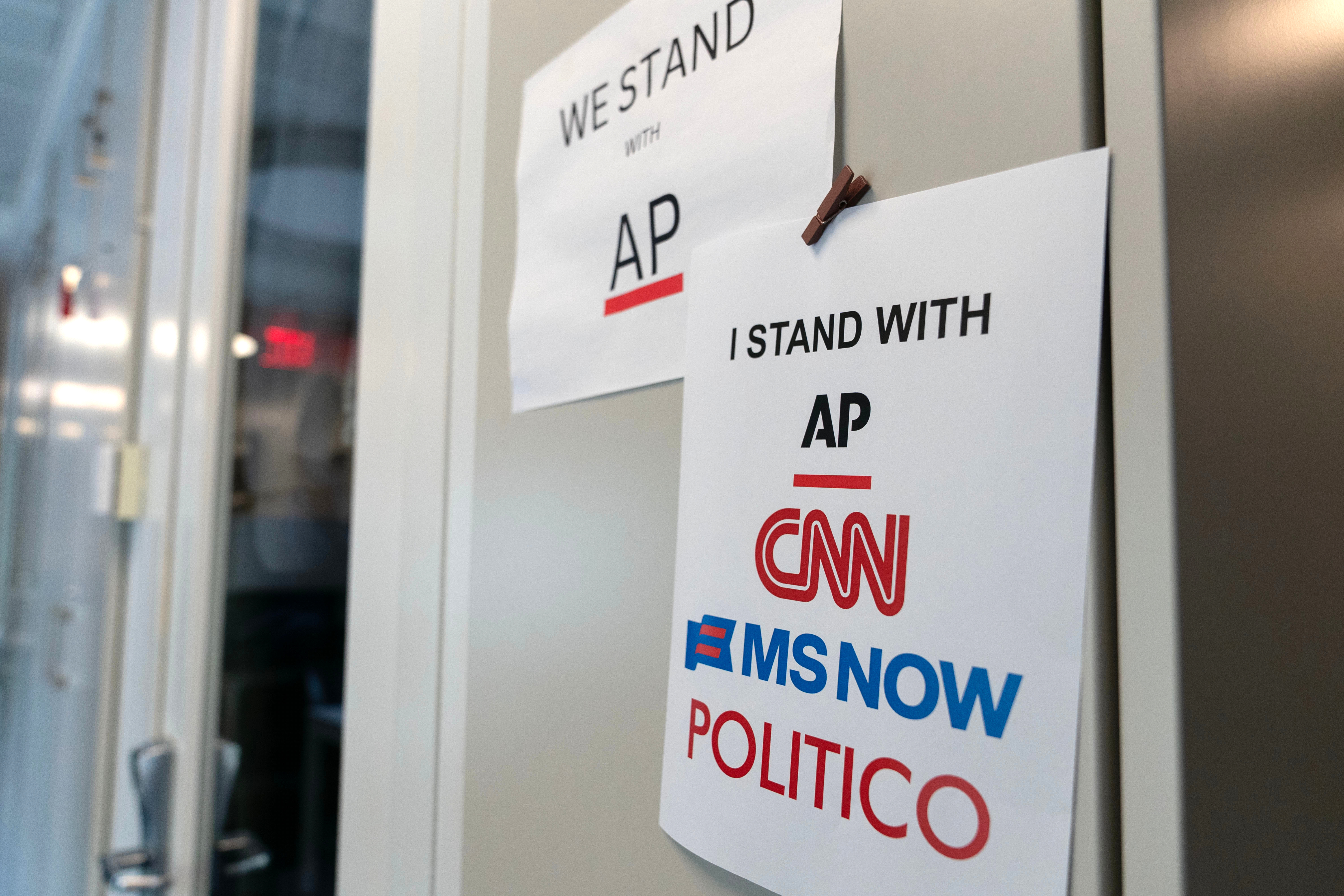
    Trump’s latest trampling of the Constitution is in that sense too clear to be muddied by senatorial sophistry. He expressly denied CNN, Politico, and MS NOW entry to the White House based on the content of their reports, in particular their failure to sufficiently glorify him. This is the essence of what the First Amendment prohibits.

    It’s far from Trump’s first or most consequential authoritarian challenge to the country’s long-protected freedoms of expression and the press. Since his first term, he has derided legitimate journalism as “fake news,” encouraged violence against reporters, and called the press the “enemy of the people,” echoing Josef Stalin and other despots. In his second administration, he has graduated to leveraging the power of the federal government against the media, using the Federal Communications Commission (FCC) to try to force late-night host Jimmy Kimmel off the air; wielding government power over mergers and more to reward corporations that rein in independent journalism; and menacing journalists and their employers with lawsuits, investigations, and arrests.

    But the ban may be Trump’s most glaring violation of constitutional press protections to date. As the affected organizations noted in a lawsuit filed in federal court this week, the policy “could not be a more direct assault on the First Amendment.” The president himself called it a “ban on the free press” and attributed it to the organizations’ “negative” coverage.

    The courts have blocked his earlier attempts to exclude individual reporters as well as a parallel Pentagon policy instituted by his defense secretary. Even the Trump-friendly U.S. Supreme Court could be hard-pressed to justify this one.

    In addition to laying the groundwork for his next legal defeat, the president’s lockout gave the fractious press corps rare cause for collective action. With other networks declining to provide pooled camera coverage in solidarity with the banned organizations, the lack of competent recording at a ribbon-cutting for a new White House helipad this week ensured an idling chopper drowned out Trump’s remarks — not that very many people missed them.

    It was the sort of pseudo-news event that only raised more questions about the value of broadcasting much of what the president says. Journalists who direct their attention elsewhere are bound to transcribe that much less fake news.

  • Should Larry Krasner still lead the Philadelphia District Attorney’s Office? | Editorial

    Should Larry Krasner still lead the Philadelphia District Attorney’s Office? | Editorial

    District Attorney Larry Krasner came into office promising to end mass incarceration, decriminalize minor offenses, eliminate cash bail, and free anyone who was wrongly convicted.

    On its face, those reforms seemed laudable given Philadelphia’s — and the nation’s — decades-long, tough-on-crime politics, policies, and policing that resulted in high incarceration rates and a justice system rooted in racial and economic disparities.

    But in Krasner’s zeal to right past wrongs, he has caused grave damage to himself and his office. A series of legal setbacks has cast doubt on Krasner’s ability to administer fair and impartial justice, let alone manage his office.

    As a result, crime victims and the accused are left to wonder if the city’s top law enforcement official can properly do his job.

    Krasner’s latest and most perilous legal trouble stems from a recent court case involving a man’s attempts to overturn his 2009 murder conviction.

    Following an evidentiary hearing that stretched for three days over the summer, U.S. District Judge Paul S. Diamond referred the matter to federal prosecutors to investigate Krasner and Matthew Stiegler — the former head of the district attorney’s office’s Conviction Integrity Unit — for potential crimes, including conspiracy, obstruction of justice, and perjury.

    Krasner and Stiegler have not been charged. It is unclear if the U.S. Attorney’s Office in Philadelphia will launch an investigation, though it appears very likely considering that amid the hearing that spurred the criminal referral, Diamond said that “potential wrongdoing abounds.”

    Even before Krasner’s latest legal morass, a disturbing pattern of lies and chicanery emerged involving the office’s handling of other post-conviction cases, mainly for murder.

    One supervisor was disbarred last year and another suspended in June for repeatedly lying in federal court while seeking to overturn the death sentence of a man convicted of killing a couple in their East Mount Airy home. The federal judge in that case found the DA’s office provided a “false account” of the events, and ordered Krasner to write a letter of apology to the victims’ family.

    In the very first exoneration of Krasner’s first term, a Common Pleas Court judge ruled his team unfairly accused two former prosecutors of misconduct and had “misplaced and/or destroyed” records and relevant evidence. The judge fined the district attorney’s office $120,000.

    In June, the state Supreme Court found the office had violated its duty of candor to the court and ordered the state attorney general’s office to review future attempts by the DA’s office to reduce a sentence or overturn a past conviction.

    The latest case before Judge Diamond featured stunning sworn testimony by four supervisors hired during Krasner’s tenure who remain on the job.

    Their accounts from the witness stand painted a disturbing picture of Krasner and Stiegler scrambling to contain any legal fallout involving the lazy and disingenuous handling of their decision to initially go along with defense attorneys seeking to overturn the 2009 second-degree murder conviction of Dennis Johnson.

    For years, Johnson’s post-conviction appeal efforts were repeatedly rejected. In 2022, then-Assistant District Attorney Jaclyn Mason filed a brief that agreed with Johnson’s lawyers that his trial counsel had been ineffective, and his conviction should be overturned.

    In May, Diamond ordered an evidentiary hearing to examine what new evidence emerged to prompt the DA’s change in position.

    That spurred a group of supervisors in the district attorney’s office to scrutinize Mason’s initial brief in which they found numerous “material misstatements.” The four supervisors — Katherine Ernst, Steven Wildberger, David Napiorski, and Peter Andrews — determined the office needed to withdraw the motion and apologize to the court.

    They asked Mason to sign the filing with them, but she said Stiegler should take responsibility since he drove the effort to concede after several meetings with Johnson’s defense attorneys at the Pennsylvania Innocence Project.

    Fearing she would get all the blame, Mason quit in June and testified the following month that Stiegler had “colluded” with Johnson’s defense team and told her, “If it is good enough for the Innocence Project, it was good enough for him.”

    After Mason quit, the supervisors said Stiegler lobbied his fellow supervisors to go through Mason’s other cases, find errors, and tell Diamond she was a rogue actor. Krasner endorsed the plan, calling it a “good idea,” according to the supervisors.

    The supervisors rejected that scheme and instead argued for the case to be turned over to the state attorney general. Krasner repeatedly opposed that plan, citing the need to “protect the office.” The four supervisors concluded the efforts by Stiegler and Krasner created a conflict of interest for them and the office.

    The supervisors testified that Krasner threatened “consequences” if they told Diamond about the internal discussions. But rather than go along with the ruse, the four supervisors withdrew from the case.

    Diamond found Krasner’s threat “could amount to obstruction of justice,” and the scheme with Stiegler to present a false narrative “might amount to criminal conspiracy.”

    Diamond credited Ernst, Wildberger, Napiorski, and Andrews for coming forward “at the risk of their jobs.” He wrote their testimony was “compelling and corroborated by contemporaneous documents.”

    The judge rejected Stiegler’s version of events, writing that he found his testimony “contradictory, evasive, or outright dishonest.” He said Stiegler was “responsible” for the errors in the concession brief and that Mason followed his orders. Diamond added that Stiegler’s testimony “may well amount to perjury.”

    Confirming Mason’s fears, Diamond found Krasner directed the four supervisors to implement Stiegler’s plan to blame her for errors in the brief.

    Sources told The Inquirer that Stiegler abruptly resigned from his position as head of the exonerations unit Thursday, but he will remain in the district attorney’s office.

    Krasner issued a statement that said he “respectfully and vigorously” disagreed with Diamond’s findings and planned to appeal. He said he couldn’t comment further because the case is pending.

    But even that is not entirely truthful. Diamond said Krasner could have defended himself at the hearing. The judge wrote that Krasner “chose not to testify” or even to submit an affidavit after the hearing.

    “[Krasner] apparently does not dispute — or does not address — much of the testimony presented,” Diamond wrote.

    Krasner’s handling of the Johnson matter is beyond troubling. Perhaps just as telling, before the judge’s ruling was released, Krasner’s take on events, detailed in a filing made by his office, underscored that he remains unbowed. Indeed, as the legal setbacks have mounted, Krasner has demonstrated a glaring blind spot regarding his failings as a leader.

    As a result, Krasner faces a legal peril of his own making.

    Krasner came into office with a long list of real and perceived detractors. But he has frittered away his credibility, and his actions have undermined the hard work and dedication of many of his rank-and-file attorneys.

    This Editorial Board has endorsed Krasner in previous elections, but now believes he has created an untenable situation that could impact the treatment of crime victims and wrongdoers.

    One significant challenge: Will judges and juries trust prosecutors from the DA’s office?

    There is no denying that innocent people who were wrongly convicted sit in prisons. Krasner was right to review past convictions. But the questionable handling of these cases that was described in court has sabotaged his own authority to right those wrongs.

    The DA’s office is now rife with turmoil, fear, and distrust. Krasner sent a chill through the office after he allegedly threatened jobs and called prosecutors in the state attorney general’s office “Nazis.” One assistant supervisor recently stepped down from his leadership post after losing faith in the office.

    Krasner, who spent decades as a defense attorney, entered public office with a list of grievances and a deep mistrust of law enforcement, which he called “systematically racist.”

    Before first getting elected district attorney in 2017, Krasner sued the Philadelphia Police Department 75 times. Days after taking office, he ousted more than two dozen staffers, including many experienced prosecutors.

    Krasner has expressed disdain for the state attorney general’s office. He often views judges who oppose him as hostile, according to people familiar with his thinking.

    His jaded and often huffish views inform how he administers justice, whom he indicts or doesn’t indict. Not to mention his fraught relationship with police. Lives hang in the balance, including the accused, victims, and the wrongly convicted.

    Krasner now faces a major challenge: Can he regain the trust of the public and the prosecutors in his office? He should start by installing experienced and respected leaders.

    Then Krasner needs to look in the mirror and determine if he can continue to run the district attorney’s office under the giant cloud he has created.
  • President Trump’s assault on the midterm election is down but not out | Editorial

    President Trump’s assault on the midterm election is down but not out | Editorial

    At a dark moment for American democracy, it qualifies as a relief that the U.S. Supreme Court has finally acknowledged that the U.S. Postal Service has no legitimate role in running elections. The court’s ruling this week put a well-deserved end to Donald Trump’s plot to interfere with the midterms by steering absentee votes to the dead-letter office. That should give voters welcome assurance that ballots mailed early enough to arrive by Election Day will be counted.

    That said, the court’s all too halting response to this constitutional absurdity is an example of the institutional frailty that has enabled Trump’s assault on our laws and elections. The justices’ willingness to seriously consider such an obviously illegal attempt to suppress votes is one reason Trump can be counted on to continue his efforts to meddle with the midterms.

    The president revealed his plan back in March, when he ordered the U.S. Department of Homeland Security to assemble a list of certified citizens permitted to vote by mail. By June, responding to a lawsuit by Gov. Josh Shapiro and 22 other state officials, a federal judge in Boston blocked the order for the purposes of the midterm elections. U.S. District Judge Indira Talwani noted that the Constitution gives the president no authority to administer elections, which fall squarely under the purview of Congress and the states. An appellate court and a district court in Washington reached similar conclusions.

    The Supreme Court’s six Republican-appointed justices nonetheless allowed the Postal Service to continue developing the plan as late as last month, finding that it was too soon to rule on the matter. It wasn’t until Monday that a majority ruled the notion too dubious and the election too imminent to allow it to proceed. Even then, three of the justices — Samuel Alito, Clarence Thomas, and Brett Kavanaugh — held in separate opinions that the president and postal officials could well possess the authority to deliberately lose our votes in the mail.

    By then the court had allowed this supposed legal riddle to linger unanswered for half a year, long enough that a few states had already issued mail ballots and several Republican-controlled states had joined the objectors. Despite the administration’s ultimate loss in court, some election officials fear the months of uncertainty about absentee voting — a centuries-old practice the president himself engaged in as recently as this summer — served Trump’s purposes by undermining confidence in the electoral process.

    Trump is clearly determined to continue doing that by every available means.

    His Justice Department has demanded access to election data, leading to largely losing litigation in more than half the states, including Pennsylvania and New Jersey. Homeland Security Secretary Markwayne Mullin has pushed for federal investigations of voting machines and data based on groundless conspiracy theories. Administration officials have deployed federal agents to trawl the voting rolls for noncitizens and could send more to the polls to intimidate voters. And they have threatened to prosecute state election officials over illegal voting even though no such thing appears to be taking place at any scale.

    These are the paroxysms of an unpopular and unscrupulous regime desperate to dodge the will of voters. The most effective response will be the sort of robust “too big to rig” turnout that overwhelms any petty trickery and begins to limit the president’s power to further undermine democracy.

  • America needs responsible leadership on AI development. It has Trump instead. | Editorial

    America needs responsible leadership on AI development. It has Trump instead. | Editorial

    Another cry for help came from the billionaires building the artificial intelligence machinery that threatens to upend — if not end — the world: Save us from ourselves before it is too late!

    Dario Amodei, the head of Anthropic, the company behind the Claude chatbot, posted a 3,800-word essay over the weekend that called for a global slowdown in the development of AI because the risk to humanity outpaced the benefits.

    Other leading Big Tech masters of the universe offered half-hearted endorsements for a slowdown, including SpaceX’s Elon Musk, OpenAI’s Sam Altman, and Google DeepMind’s Demis Hassabis.

    Amodei’s plea came just days after an Anthropic researcher quit over safety concerns and issued a grave warning that the technology has more than a 10% chance of killing all humans.

    “Do not underestimate the power of this technology,” Jacob Coxon wrote in a lengthy social media post. “These will soon be superhuman systems that can hack anything, revolutionize any field overnight, and acquire real power and resources … The people building AI earnestly believe that it could kill us all by the end of the decade.”

    Coxon’s warning echoes previous alerts in recent years, including from Geoffrey Hinton, the Nobel Prize-winning computer scientist known as the godfather of AI. Hinton quit Google last year and warned the technology could lead to human extinction.

    Some argue the AI apocalypse is overblown. But the AI threats also include the spread of misinformation and cyberattacks on power grids, the internet, financial systems, research labs, and a host of other industries that could disrupt everyday life.

    Even if used appropriately, AI is already impacting huge swaths of the job market and leading to increased inequality — an issue Pope Leo XIV warned about in May.

    Some critics speculated that the call for a slowdown is a ploy by the big AI developers to block smaller competitors from entering the development race. Indeed, if the AI concerns are as real as advertised, there is nothing to stop the developers from hitting the brakes and implementing their own safeguards.

    That would be the obvious and responsible thing to do.

    But don’t look for profit-driven tech moguls to act responsibly. Just look at how social media giants like Facebook, Instagram, and X have allowed hate and misinformation to spread, fueling mental health issues and destabilizing democracies.

    One of the big challenges is trying to get competing AI companies to all agree on safeguards. And then getting other countries, especially China, to get on board.

    King Charles III of Britain showed how to lead when he announced plans to bring together leading AI executives and other government officials to discuss how the fast-growing technology can be used as a force for good.

    Some of the reforms Amodei of Anthropic called for include independent auditors to check the companies for safety standards and urged global cooperation in creating rules around AI development.

    This is not a new call for regulation. Three years ago, executives at OpenAI, Google, and Microsoft endorsed the idea of a voluntary “AI pact,” or a digital regulatory agency that could ensure safety standards.

    Amid the gathering storm, Washington remains asleep. So far, it seems the only thing Congress has demanded of Big Tech is big money. Expecting legislators to develop meaningful AI regulations in a timely fashion is a herculean challenge.

    But, if anything, the biggest obstacle to the much-needed AI leadership, common sense, and doing what is best for humanity remains Donald Trump.

    On his first day back in office last year, Trump rescinded former President Joe Biden’s executive order aimed at safeguarding AI technology. Despite bipartisan public opposition, Trump remains a big cheerleader for data centers needed to power AI development.

    (At the same time, Trump has been working hard to undo efforts to combat climate change — the other existential threat to humanity. Trump’s Environmental Protection Agency just repealed limits on greenhouse gas emissions.)

    Trump just as quickly dismissed calls from AI executives to rein in their own industry. In a manic social media post, Trump claimed without evidence that there was a “SICK conspiracy” against AI and data centers.

    Trump said the only AI guardrail the country needs is “a STRONG AND SMART (High IQ!) PRESIDENT.”

    If only we had one.

  • President Trump’s new strategy on the Iran war: Pretending there isn’t one | Editorial

    President Trump’s new strategy on the Iran war: Pretending there isn’t one | Editorial

    During a recent cable news appearance, Commerce Secretary Howard Lutnick claimed no American lives had been lost in the Iran war, an error he blamed on confusion with President Donald Trump’s earlier invasion of Venezuela. And perhaps it is difficult to keep one’s wars straight in an administration that has attacked seven countries in less than two years.

    But while Lutnick’s claim was horribly wrong in fact, it was an accurate reflection of the administration’s consistently reprehensible diminishment of the costly war it started more than six months ago without congressional authorization or public support. The day after the secretary’s gaffe, Vice President JD Vance denied the very existence of the conflict, telling reporters, “I wouldn’t call it a war,” just days after an American bomb killed five civilians attending a wedding in southern Iran. The day after that, Trump himself dismissed the war as “small potatoes,” adding, “There’s no fighting,” even as the conflict continued to escalate, drive up energy prices, and threaten to draw in other countries.

    In reality, the war has had tremendous repercussions for U.S. service members and civilians in the Middle East, American security and credibility, and global trade and stability. The only aspect of the conflict that is not serious is Trump’s handling of it.

    Despite the administration’s best efforts to obfuscate the human cost of the conflict, the war has killed 18 American service members and wounded nearly 800, taken thousands of lives in Iran and the Middle East, injured tens of thousands across the region, and displaced hundreds of thousands. And the fighting has likely cost American taxpayers more than $100 billion in direct spending, with energy and other economic repercussions that could approach $1 trillion in the United States alone.

    The intangible costs aren’t small potatoes, either. Iran remains under the control of an emboldened regime able to fire on U.S. bases in the region, impede traffic through the crucial Strait of Hormuz, and resume its pursuit of a nuclear weapon without the international limits and monitoring Trump dismantled during his first administration.

    The war has also depleted the military’s supplies of critical munitions, leaving us more vulnerable to adversaries, and strained our forces with marathon deployments and logistical disruptions. Rather than responding to these problems with the urgency they deserve, Defense Secretary Pete Hegseth appears preoccupied with hunting for those who disclosed them to the press, purging ranking personnel who might disagree with him, and blocking promotions of Black and female officers. The Army has lost half its four-star generals, its chief of staff, and its top civilian leader — Army Secretary Dan Driscoll — who reportedly warned the president of the force’s flagging experience, readiness, and morale on his way out.

    Nor does the administration appear better prepared to end the war than it is to win it. Trump told the Republicans’ midterm convention Wednesday that the conflict was necessary to prevent an Iranian bomb and nearing its final stages. But peace negotiations have fizzled, the countries are exchanging strikes on warships and tankers, and Energy Secretary Chris Wright recently acknowledged that another deal on Tehran’s nuclear program may never be reached.

    The trouble is that Trump and his lieutenants don’t appear to have a strategy for waging war on — or making peace with — Iran. What they have instead is a plan to manage the public relations fallout of the conflict by lying about its casualties, costs, and extent in the hope voters won’t punish their party for it in the midterm elections. It’s not even good PR, let alone defense or diplomacy.

    In that sense, it’s not surprising Trump and Co. can’t figure out how to get out of the war they began. They would have to start by acknowledging they’re in it.

  • Fetterman’s shiftlessness is an insult to his office and all Pennsylvanians | Editorial

    Fetterman’s shiftlessness is an insult to his office and all Pennsylvanians | Editorial

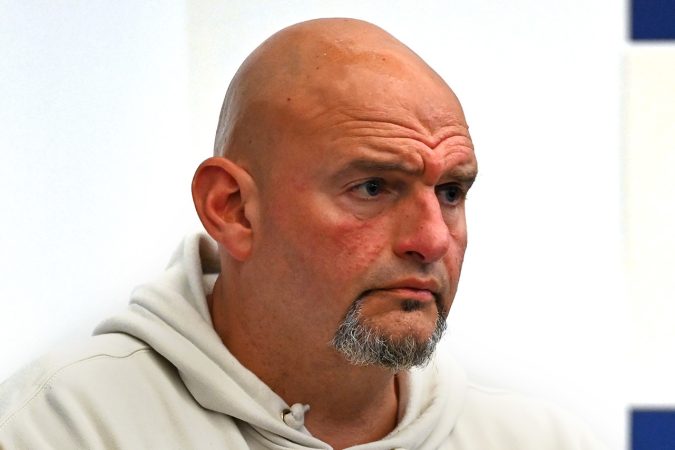
    News flash: U.S. Sen. John Fetterman is still an embarrassment.

    The Pennsylvania Democrat enjoys one of the cushiest jobs in America, but he can’t perform basic duties like voting, attending committee hearings, or meeting with constituents.

    Fetterman’s disdain for the job — which comes with a $174,000 annual salary, free healthcare, and months off at taxpayer expense — has been well documented. He whined about missing a family beach trip during a lengthy debate last year over Donald Trump’s costly and harmful One Big Beautiful Bill.

    Several major media outlets have chronicled the senator’s dysfunction. In May 2025, New York Magazine detailed Fetterman’s erratic behavior as staffers expressed concerns about his mental health since suffering a stroke. The New York Times quoted staffers who feared his mood swings and were warned not to get in the car if he is driving.

    The Washington Post reported on Fetterman’s clashes with Democratic colleagues and increased isolation, while Politico detailed efforts by Republicans to get Fetterman to switch parties.

    The Inquirer disclosed last year how Fetterman lashed out at representatives from the teachers’ union, and cited a half dozen former staffers who said he skipped meetings and spent hours alone in his office scrolling on his phone.

    “It’s pretty impossible to overstate how disengaged he is,” a departed staffer said.

    Last week, a devastating story in the Wall Street Journal underscored the senator’s disregard for voters and his job in a story headlined: “Behind Closed Doors, John Fetterman Shows Little Interest in the Work of a Senator.”

    The story included text messages between Fetterman and staffers that showed him dismissing executives from Children’s Hospital of Philadelphia (CHOP) who wanted to discuss Medicaid cuts and changes to vaccine policy.

    “Why do I have to keep having to meet with chop,” Fetterman texted an aide.

    “Because they’re worried about Medicaid cuts,” the aide wrote.

    Fetterman responded, “Well, I’m not,” before adding, “I’m convinced they just want free trips to DC.”

    Fetterman later told CNN that comment was a “dumb joke, and for that, I sincerely apologize.”

    In another exchange, Fetterman nixed a plan to attend a funeral for three police officers killed in the line of duty in York County, where he grew up. Apparently, Fetterman was put off by the time commitment.

    “3 hours??” he wrote, before adding that attending the services “may be a nonstarter.” The senator did not go, but said he sent flowers and met with the families later.

    The Journal reported that Fetterman also stiffed three disabled veterans who traveled to Washington to meet with him, alleging he was ill, only to appear later that day on Fox News to talk about Israel and the war in Iran.

    Apparently, teachers, healthcare officials, police, and veterans take a backseat while Fox News and the Israel-Hamas war command Fetterman’s full attention. The senator has appeared on the conservative news outlet roughly 60 times this year and has gone on two junkets to Israel since 2024. (He even made a cameo at the GOP convention in Dallas Wednesday night to praise Trump and boost Republicans before the midterms.)

    The Journal reported that Fetterman told aides he wanted to introduce a resolution to force lawmakers to vote on whether the war in Gaza constituted a genocide. But instead, Israel’s ambassador to the U.S., Yechiel Leiter, suggested he write an op-ed explaining his support for Israel, while many Democrats have turned against the country because of killings and destruction in Gaza.

    Leiter even supplied the talking points. But Fetterman’s aides did not tell him about the talking points out of fear that the op-ed would violate the Foreign Agents Registration Act.

    Fetterman did not publish the op-ed, but the incident reinforces the perspective of critics who argue that his tenure has been marked by complacency and carelessness: He was either unaware of the potential ramifications of penning the essay, or he chose to ignore them — both explanations should concern Pennsylvanians.

    Like the previous reports, Fetterman called the Journal story a “hit piece.” The sad truth is the reports from his own staffers paint a picture of a lazy, unengaged, and unstable senator who is not up to the job.

    Last year, this Editorial Board said Fetterman should either do his job effectively or step away.

    In the private sector, most workers who fail to perform their basic job duties get fired. Unless Fetterman resigns, voters will get their chance to oust him in 2028.

  • In Pennsylvania and across the nation, election deniers must be voted out | Editorial

    In Pennsylvania and across the nation, election deniers must be voted out | Editorial

    With Labor Day passed, the sprint is on to Election Day.

    But unlike in prior years, when voters looked to candidates for answers on the economy, taxes, healthcare, and foreign policy, the biggest question is whether the United States will hold a free and fair election and certify the winners.

    That’s because President Donald Trump is doing everything he can to cast doubt on the electoral outcome or possibly reject the results — if the Democrats win control of either or both chambers of Congress.

    Of course, if the Republicans retain control of the House and Senate, well, then never mind. Under that scenario, the Trump-led effort to gerrymander congressional districts, seize ballots, suppress mail voting, curtail voter access through executive orders, gut election security agencies, send federal agents to the polls, and other efforts will have resulted in a “perfect” election.

    But if the Republicans lose either the House or Senate, brace yourself for chaos.

    This should not surprise anyone who endured Trump’s relentless efforts to overturn the 2020 presidential election that culminated in the Jan. 6, 2021, insurrection. Recall that he was criminally indicted for that ugly plot against the will of the people.

    Hundreds of insurrectionists — inspired by Trump’s repeated election lies — were charged with or convicted of crimes related to that violent day that will forever be a stain on American history.

    Trump freed them all on his first day back in office, including those who attacked police officers. He also pardoned several key election deniers who worked on his behalf, including disgraced former New York Mayor Rudy Giuliani, election dirty trickster Roger Stone, and many others.

    Sadly, 2020 may just be a warm-up compared with 2026.

    This time around, dozens of county officials in charge of elections in key states like Virginia, Ohio, and Nevada are election deniers.

    Pennsylvania is home to more election deniers in office than any other state in the country, according to a recent report by the States United Democracy Center, a nonpartisan organization dedicated to free, fair, and secure elections.

    The report found 86 election deniers in the Pennsylvania General Assembly, including nearly half of the state Senate and a third of the House. Many played a role in efforts to subvert the 2020 contest.

    Voters have an opportunity to remove the election-denying tumor from the body politic on Nov. 3, when all the state House members and half the state Senate in Harrisburg are on the ballot.

    The same goes for Congress. Several Pennsylvania representatives who are election deniers are also on the ballot, including Dan Meuser, Scott Perry, Lloyd Smucker, John Joyce, Guy Reschenthaler, Glenn “GT” Thompson, and Mike Kelly.

    The entire Republican congressional delegation — including U.S. Rep. Brian Fitzpatrick — voted for the so-called Safeguard American Voter Eligibility (SAVE) Act.

    The SAVE Act is billed as an election integrity measure, but it is nothing more than an attempt to suppress votes, and would especially impact married women and Black and brown voters.

    U.S. Sen. Dave McCormick (R., Pa.) has been one of the biggest champions of the legislation, along with Trump. Yet, despite Trump’s relentless pressure campaign, there was not enough support in the Republican-controlled Senate to pass it.

    The measure is dead for now. But the best way to secure future elections is to vote out the election deniers.

    Until then, the next few months before and after the election will be a major stress test for election integrity across the country.

    With no real accountability for his past un-American actions, Trump is more emboldened to do whatever it takes to keep Republicans in control. (He has a strong partner in the conservative majority on the U.S. Supreme Court that has actively dismantled voting rights and handed Trump broad immunity from his crimes.)

    Trump is not acting out of allegiance to GOP members running for office. He cares only about retaining his own power. Like Humphrey Bogart in Casablanca, Trump sticks his neck out for nobody — least of all his loyal MAGA voters.

    The president fears that if Democrats take control of the House or Senate, there will be investigations into his rampant corruption, which includes self-dealing schemes that enabled him to make more than $2 billion during his first year back in office.

    GOP lawmakers have also done little to nothing about affordability issues, the failed war in Iran, deportation abuses, and the U.S. Department of Justice’s upending of the rule of law.

    For those fed up with the direction of the country under Trump, there is only one answer: Vote the bums out.

  • In a deeply divided nation, remembering a time of unity | Editorial

    In a deeply divided nation, remembering a time of unity | Editorial

    It is as important to remember what happened after the Sept. 11, 2001, terrorist attacks as it is to recall the nearly 3,000 lives lost, dozens of buildings mangled or destroyed, and the millions of prayers said in response to what many believed could never happen to the most powerful nation in the world.

    In the immediate aftermath 25 years ago, this country became unified across income, religious, and racial lines in a manner it had not shown since imperial Japan’s despicable aerial attack on Pearl Harbor in 1941. But in both instances, there was shameful xenophobic backlash. The Japanese suffered internment. The anti-Muslim rhetoric and actions continue to this day.

    Just as undeniable was that unity after the attacks — including President George W. Bush’s words that “Islam is peace” — helped blunt prejudice.

    Black people, white people, Christians, Jews, Muslims, Republicans, Democrats, the rich, the poor, citizens and new arrivals — they all saw themselves as Americans on 9/11. We found common ground in using the nightmare that had just occurred as the impetus toward a greater sense of community.

    That spirit of togetherness was a reminder of just how important the word united is in calling our country the United States of America. The 9/11 attacks made it easier to see why we as a nation must not let our differences be exploited by calculating entities looking for ways to weaken our resolve.

    A quarter century later, the U.S. is much different in that respect.

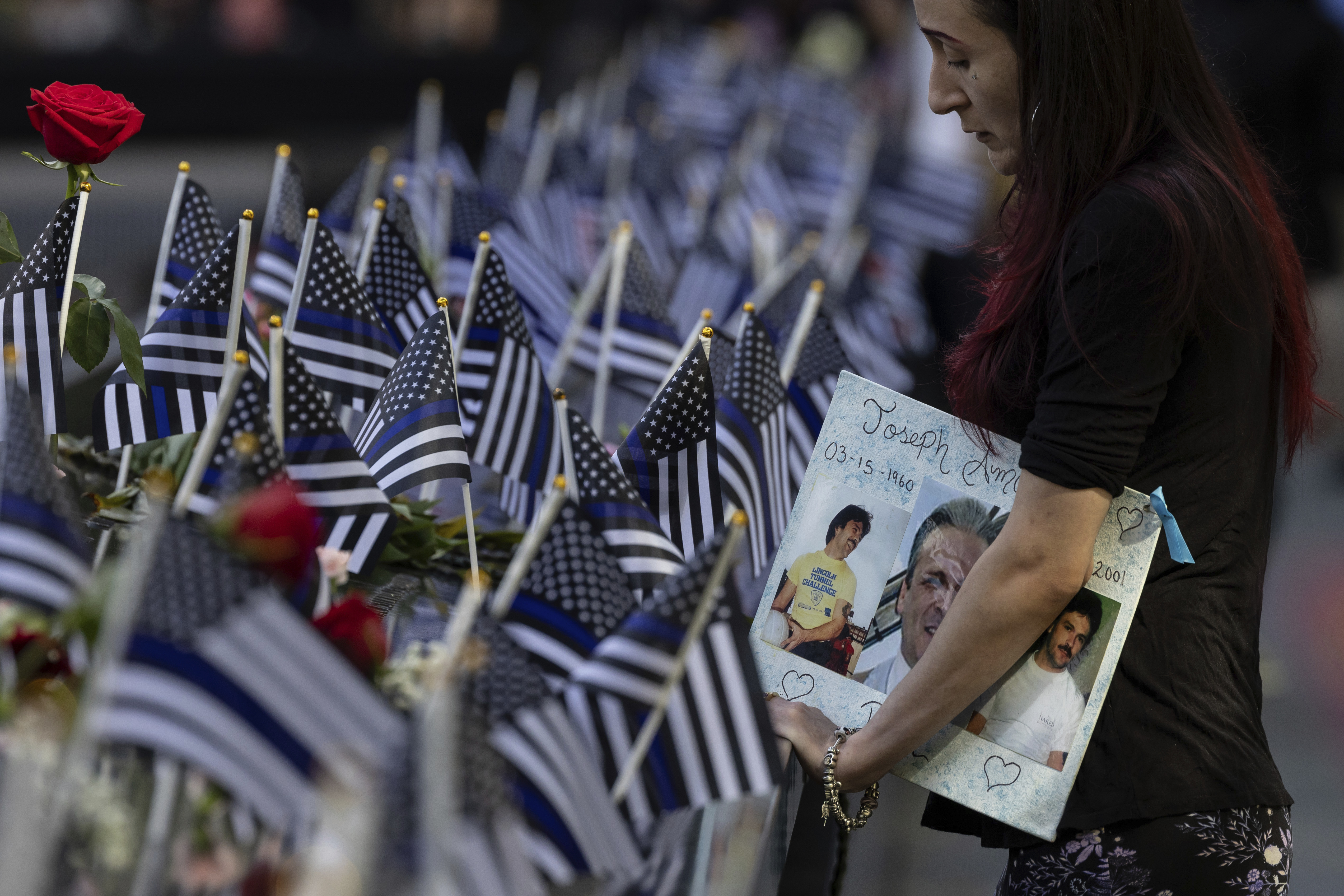
    Mercedes Arias stands by the name of her father, Joseph Amatuccio, on the south pool during the 9/11 memorial ceremony on Sept. 11, 2024.Yuki Iwamura

    Our current leadership prefers sowing seeds of division instead of reaching past political, economic, religious, social, and ethnic distinctions to help Americans of every station and persuasion work together for our common good.

    Instead of trying to unify, this nation’s current leaders decided it was more important to wage war with Iran and argue with our allies. Iran may one day develop a nuclear weapon, they said. Dismissing that Russia and China already have that capability and, unlike militarily feeble Iran, have delivery systems to reach our shores.

    Washington also decided to overthrow Venezuela’s despotic president to seemingly gain control of its oil reserves, and has made threats against Cuba and Greenland. It’s hard to believe the same Donald Trump who is now so eager to use military force once promised that if reelected, “we will have no more wars, no more disruptions, and we will have prosperity and peace for all.”

    Are we supposed to forget the president said that? Is he playing games with the American public? Is he distracting our attention by waging wars that lack clear goals, abruptly destroying historic settings like the White House Rose Garden, and putting unqualified people in charge of public health, public safety, and national security?

    So much is going on that too little attention has been paid to all the money changing hands amid the clamor.

    President Donald Trump attends a cabinet meeting at the White House in May.Jacquelyn Martin

    Trump’s personal wealth has increased by a staggering $2 billion since he took office, much of it in cryptocurrency holdings. Investors in these schemes have lost about $3 billion as the currencies’ value continues to decrease, but many see their losses as the price to get the president’s ear.

    As Trump continues to be Trump — more engaged with building monuments to himself and posting aggrandizing AI slop on social media — everyday Americans struggle to make ends meet because of his policies. Although the cost of his mindless tariffs and needless war goes beyond the high prices people are paying at the pump and the checkout line, it is emblematic of the president’s complete abandonment of the American people.

    While Trump counts bitcoins, our healthcare system continues to undergo dramatic changes that have allowed insurance companies to acquire hospitals, doctors’ offices, pharmacies, and otherwise take control of this nation’s medical institutions.

    The president’s draconian immigration policies haven’t really solved the problem. There will always be people seeking a better life who will do anything, legal or illegal, to cross the border or stay past their visas’ expiration. That’s because despite its faults — and Trump’s best efforts — the United States remains the land of opportunity, even if dwindling.

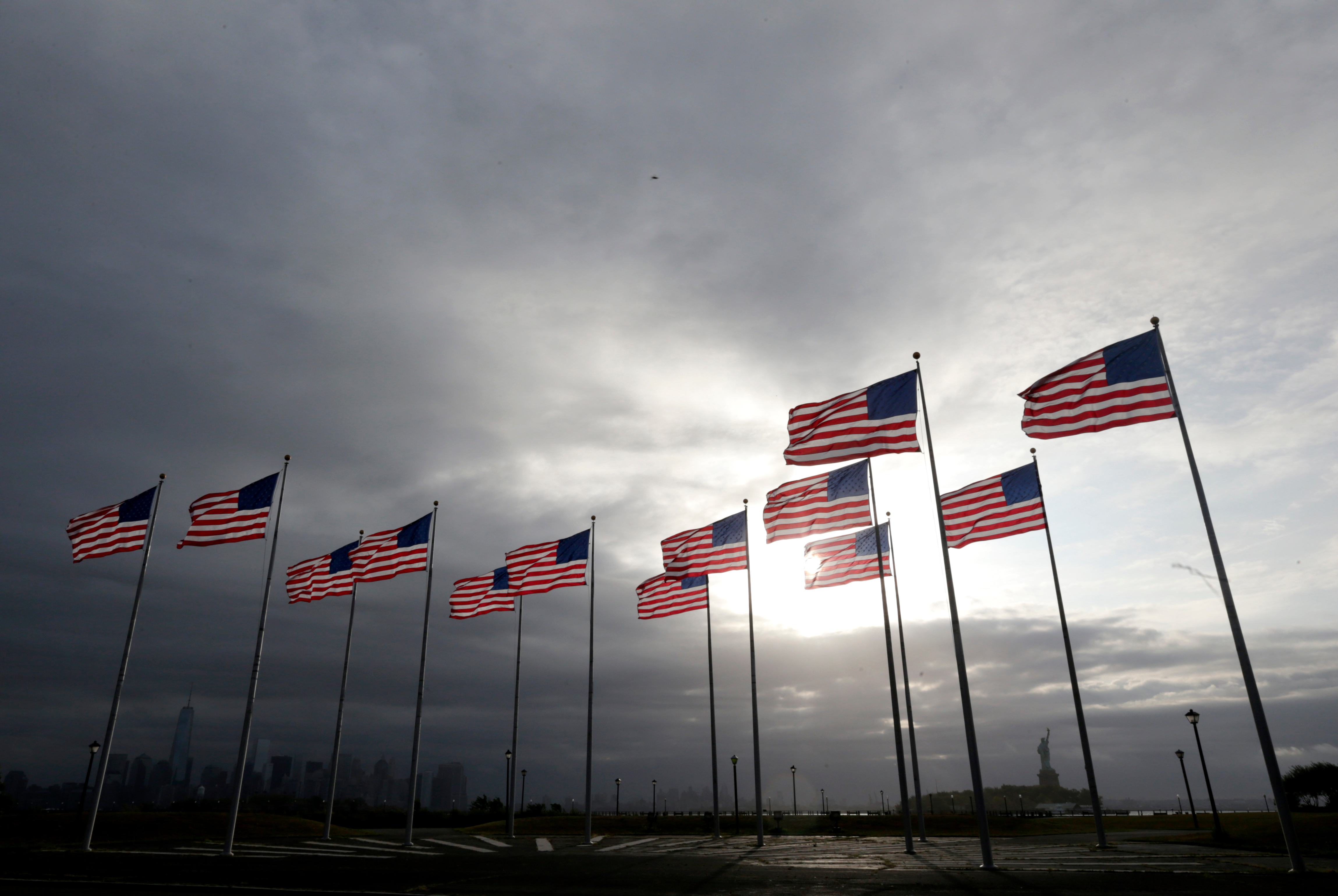
    Thirteen United States flags representing the 13 original colonies are seen at Liberty State Park with 1 World Trade Center (bottom left) and the Statue of Liberty (bottom right) in the background, in Jersey City, N.J.Julio Cortez

    America’s problem isn’t immigrants, most of whom have no criminal intent; it’s the lack of an effective system to better manage border crossings and adjudicate the cases of people who may have lived here illegally for years but otherwise committed no crimes.

    Effective immigration reform almost occurred 20 years ago, when the so-called Gang of Eight senators, including now-Secretary of State Marco Rubio, supported a bipartisan bill written primarily by Republican John McCain and Democrat Edward Kennedy that would create a 10-year registered provisional immigrant status for eligible illegal residents who paid fines and back taxes to eventually obtain permanent legal residency.

    This country also needs innovative equal opportunity ideas to replace the diversity, equity, and inclusion programs now considered reverse discrimination by federal judges. But instead of addressing that issue, the president and his enablers choose to demonize trans people, crack down on speech they disagree with, and abandon civil rights enforcement — all while embracing economic and tax policies that favor the rich.

    None of these issues will be resolved with leaders who seem to thrive with our nation as divided as it is now.

    It shouldn’t take another 9/11 to bring us closer as Americans. But as we seek a greater sense of community, let’s remember that day and what Todd Beamer was heard saying after he and fellow passengers aboard the hijacked United Airlines Flight 93 realized they had no alternative but to forget their differences and act: “Are you ready? OK, let’s roll.”

    It’s time for us to fight together for each other, too.

  • Pennsylvania measles deaths are the cost of poor public health leadership | Editorial

    Pennsylvania measles deaths are the cost of poor public health leadership | Editorial

    The two recent measles-related deaths in Lancaster County, including that of a newborn, were the first in Pennsylvania in 35 years. Sadly, as vaccination rates decline across the commonwealth and the country, they will likely not be the last.

    The deaths occurred amid a major measles outbreak in Lancaster that has sickened nearly 400 people. Nationwide, the number of cases grew to a 35-year high.

    In normal times (a.k.a. before Donald Trump), federal and state government officials would work together to contain the outbreak, protect the public, and use the incident to urge residents to get vaccinated.

    But under Trump, all issues are political. Someone must lose so he can win. Rather than lead and unite, the president and his minions divide and misinform.

    Gov. Josh Shapiro did what any responsible public official would do. He traveled to Lancaster General Health’s Women and Babies Hospital to express empathy, support the local community, and urge the public to get vaccinated.

    “We hope, and we pray, that those deaths will be the last,” Shapiro said. He underscored, “This illness and death from measles is completely preventable.”

    Initially, state officials did not provide details about the two people who died in order to protect their privacy.

    Lancaster County Coroner Stephen Diamantoni, a Republican elected official who is also a physician, said the newborn tested positive for measles, but died from a ruptured spleen. State health officials clarified that they define a “measles-associated death” as one in which measles was present, even if it is not the immediate cause of death.

    That provided an opening for others to stir the misinformation sphere.

    Robert F. Kennedy Jr., the dangerously unqualified head of the U.S. Department of Health and Human Services, rushed right in, claiming on social media that Shapiro’s administration may have “fabricated” the deaths, and wrongly commenting in an interview on C-SPAN that “they cannot find any measles deaths in Lancaster County.”

    To be sure, Pennsylvania health officials should have been more forthcoming in sharing information about the patients’ ages, causes of deaths, and reasons for being unvaccinated.

    The lack of details “created fertile ground for conspiracy theories to thrive,” said Paul Offit, a physician at Children’s Hospital of Philadelphia who heads the hospital’s Vaccine Education Center.

    Offit explained that measles can cause an enlarged spleen to become fragile, which can lead to rupture. He added that he learned from state health officials that the patients who died in Pennsylvania would have lived if they were not infected with measles.

    Bottom line: Measles played a role in the deaths.

    It is frustrating and sad that so much energy is needed to convince the public that vaccines work. Vaccines are tested, proven, and settled science. The most effective way to stop the spread of measles is to get vaccinated.

    Indeed, measles was declared eradicated from the United States in 2000. Thanks to vaccines, other viruses such as mumps, rubella, and chickenpox were either eliminated or reduced by as much as 99%.

    But measles has made a comeback in recent years as vaccination rates have declined. Pennsylvania is among the states with the most cases, and public health officials fear more outbreaks.

    The drop in vaccination rates is due in large part to the spread of misinformation across social media in recent years. That misinformation has been amplified by Trump, the king of conspiracy theories, witch hunts, and any other form of quackery that gets attention and plays to a crowd’s worst fears.

    In a cynical political deal to win over so-called Make America Healthy Again voters, Trump appointed Kennedy, who is not a doctor, to oversee HHS.

    Beyond his famous family name, Kennedy is best known for spreading misinformation about vaccines and promoting debunked claims about autism. He was a leading vaccine skeptic — and attention seeker — during the pandemic.

    From his powerful perch, Kennedy has upended vaccine policy. As a result of his anti-science agenda, the country is getting sicker.

    The sooner America’s leaders return to promoting evidence-based science and public health, the safer and healthier we will be.

  • Trump’s oil deal with Venezuela is an imperialistic pipe dream | Editorial

    Trump’s oil deal with Venezuela is an imperialistic pipe dream | Editorial

    As a businessman, Donald Trump often cut corners, broke promises, and made bad deals. Now that he has the power of the U.S. government at his disposal, the submission of Republicans in Congress, and a pliant U.S. Supreme Court, the only difference is the scale of the abuse, corruption, and foolishness he brings to his ventures.

    Late Friday, the president announced on Truth Social that he had reached an agreement with Venezuela to secure more than 65 billion barrels of oil. “This Historic Transaction MORE THAN DOUBLES American Oil Reserves, greatly increases our Oil Supply, and will substantially lower Gas Prices for all Americans, long into the future,” he wrote.

    The deal, such as it is, is, in fact, very significant, as total proven U.S. reserves are about 81 billion barrels. But the rest of Trump’s claims, and the agreement itself, should be buried under caveats.

    Trump noted that this comes “at no expense to the American taxpayer.” This is true unless you count the roughly $5 billion the U.S. has spent on military operations around Venezuela since August of 2025, including extrajudicial killings at sea and the illegal invasion that ended with the kidnapping of President Nicolás Maduro and his wife on Jan. 3.

    There is also the incalculable reputational cost as the United States’ revived imperialistic push into Latin America mirrors the president’s transactional nature and authoritarian bent.

    The deal was reached with the unelected Venezuelan President Delcy Rodríguez, who took office after Maduro was taken. Never mind that she was part of the same repressive socialist regime that is accused of rampant corruption and human rights abuses; she has proved a lot more willing to work with the Trump administration than her predecessor.

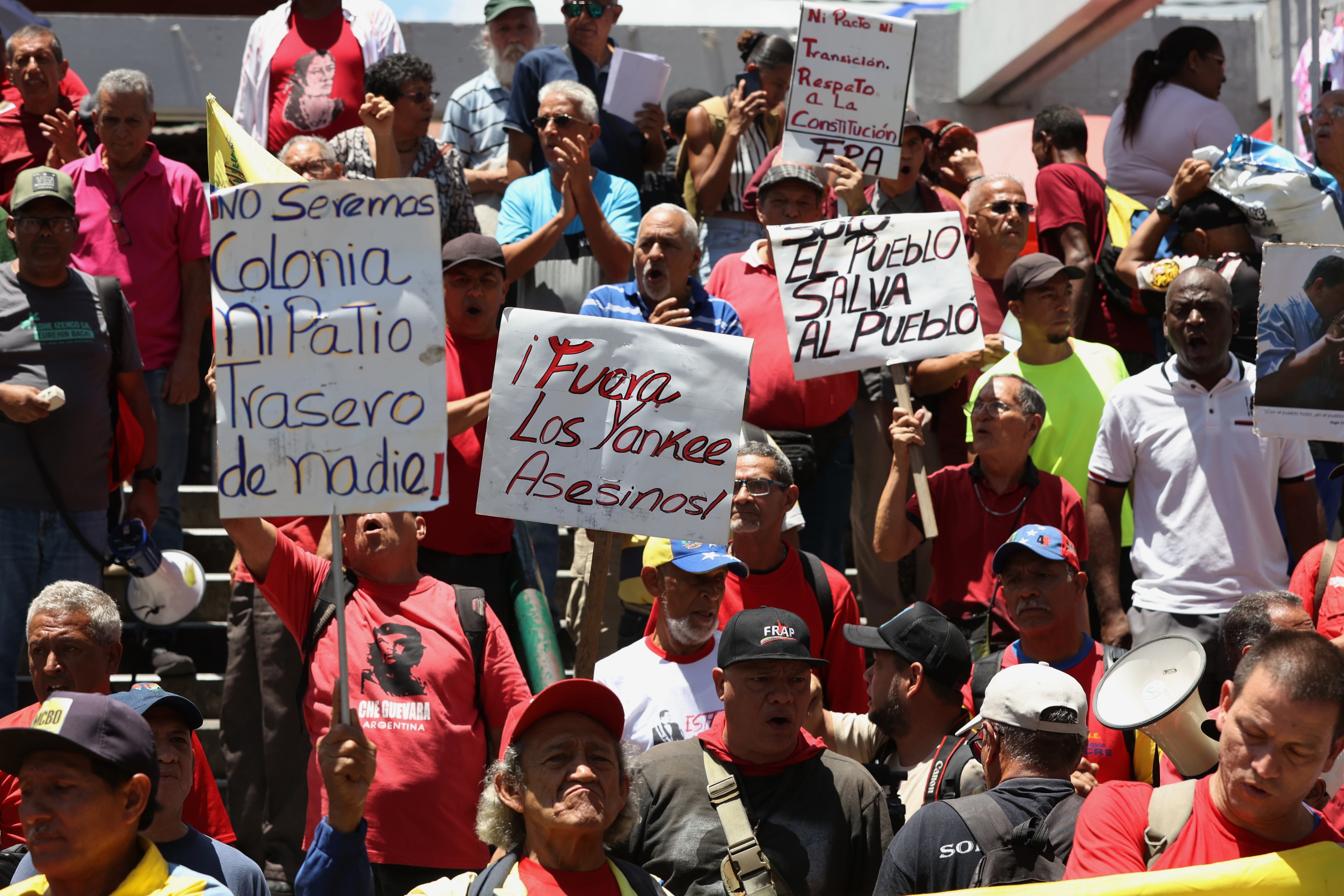
    Venezuelans protest against President Donald Trump’s deal giving the United States a stake in Venezuela’s oil reserves in Caracas, Saturday.Pedro Mattey

    Reports out of Venezuela find some people are hopeful U.S. investment will benefit the nation, yet under a government rife with cronyism, only a select few will likely reap any reward. Although details are still scarce, the agreement already sees the U.S. partner with a private company run by Alejandro Betancourt, an ally of Rodríguez, who has been under investigation by prosecutors in Zurich.

    Trump’s assertion that gas prices will drop thanks to this deal is delusional, at least any time soon, as it would take years for this Venezuelan oil to have any impact on costs at the pump.

    And that’s if the deal comes to fruition at all. The risks, at home and abroad, are significant.

    The agreement would reportedly give Betancourt’s company access to 17 oil fields that are said to contain 65 billion barrels of oil. Development would cost billions of dollars and could take more than a decade. The Pentagon would finance the plan, but the legality of its participation is in question — as well as how the deal was crafted in the first place — meaning court challenges may be inevitable.

    There are also political realities to contend with.

    With Maduro gone and Trump threatening use of force, the Venezuelan government changed its position on working with the U.S. overnight. That could change just as quickly once Trump leaves office and if the new occupant of the White House has different priorities or if the current government of Venezuela is replaced and decides to honor the country’s 1999 constitution, which states that oil reserves belong to the nation and cannot be sold.

    The high investment cost and political volatility are why U.S. oil companies have been reticent to enter Venezuela, even under pressure from Trump. According to the Wall Street Journal, Exxon and other energy interests are in talks to expand operations there, which is the prerogative of any private company that is willing to roll the dice on long-term investment, but should be far from the purview of the U.S. government and its taxpayers.

    Trump’s half-baked oil agreement in Venezuela tramples that country’s sovereignty, benefits corrupt interests, and will likely fail to deliver for the American people. The art of the deal strikes again.