Sydney Towle, a social media content creator who projected enduring optimism as she chronicled her life with a rare form of cancer, has died, according to her family. She was 26.
Ms. Towle was diagnosed with cholangiocarcinoma, an aggressive form of cancer in the bile ducts, in August 2023. Her mother, Elizabeth Morrow, and brother, Austin Towle, posted a video to her TikTok account confirming she died Wednesday.
“Syd went peacefully last night after an almost three-year long battle with cholangiocarcinoma,” her brother said. “She fought really hard, and we’re so proud of her, and we thank all of you for your support over the years.” Ms. Towle’s mother said they appreciated the messages of support and that “she will not be forgotten.”
Her family described her as “an endless ray of sunshine” and a friend to many. Sydney Elizabeth Towle was born in Newburyport, Mass., on Nov. 15, 1999, and grew up in Hobe Sound, Fla., according to the New York Times. The newspaper reported that she died at the National Institutes of Health in Bethesda, Md.
At the time of her diagnosis, Ms. Towle already had a presence on social media where she shared videos from her everyday life. She often posted from the beach and loved the outdoors. She was an avid surfer and runner.
Once she received the diagnosis at age 23, she began posting her unvarnished reality of the disease and treatment while holding fast to her hobbies, style, and positive attitude. She had over 1 million followers on TikTok alone.
In a video posted days after she was diagnosed, Ms. Towle said, “I’m in good spirits, I’m smiling. If anything, it just makes me appreciate life more.” That essentially became the ethos that guided her online presence, where she shared videos of herself running, going out with friends, and traveling alongside videos from a hospital bed or at chemotherapy appointments.
In a column this year advocating for increased funding for research of the rare disease, Ms. Towle’s mother wrote that she had seen her daughter become “a beacon of hope for so many” through her candid online presence. “Thousands of people send her messages, stop her on the street, and leave comments on her videos, describing how her vulnerability has helped them through their own struggles,” Morrow wrote in February.
Ms. Towle graduated from Dartmouth College in 2022, where she studied government and environmental studies. She worked as a social media manager at Epic Games.
She had posted on her LinkedIn account about plans to run the 2026 New York City Marathon in November to raise money for the Cholangiocarcinoma Foundation. She had raised more than $10,000 for the nonprofit that advocates for research and provides patients and caregivers with resources.
“I know it might seem crazy to try to run a marathon with everything going on,” she wrote on the platform months ago. But she noted the importance of hope in her experience with the disease. “Hope keeps us alive, it keeps us going, it makes the impossible seem possible.”
Ms. Towle is survived by her mother and brother. Her father, Philip Towle, died in 2016.
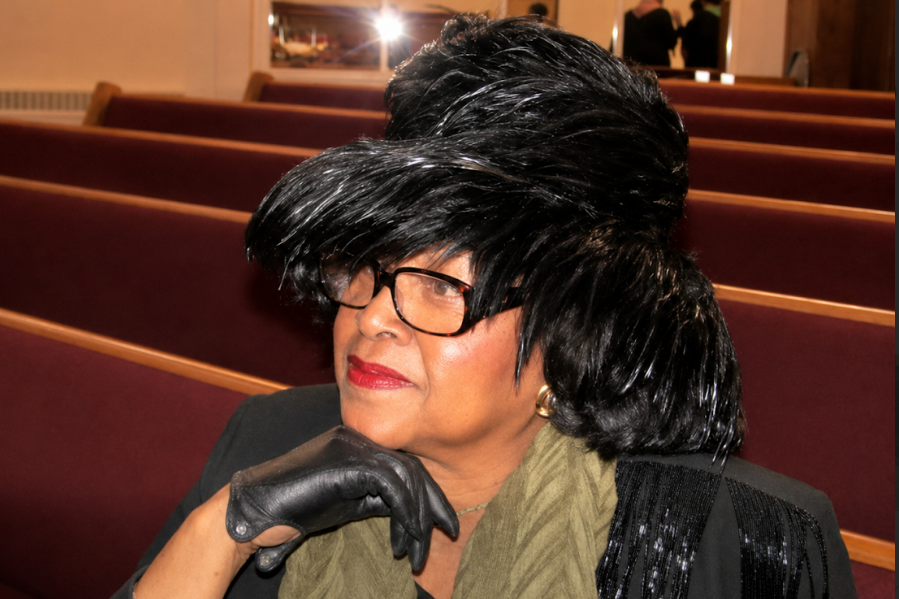
Betty J. Wilson, 92, of Cherry Hill, celebrated longtime South Jersey teacher, singer, poet, mentor, community advocate, volunteer, and two-time chapter president of Alpha Kappa Alpha Sorority Inc., died Thursday, July 16, of cancer at her home.
Mrs. Wilson taught elementary school students in Bordentown, Bridgeton, and Mount Laurel from the early 1960s to the late 1990s, and served as two-time president of the Mount Laurel Teachers Association. She was named one of the country’s top teachers in 1972 by the old Outstanding Teachers of America Association and told the Courier-Post: “Children are our most valuable asset. If we don’t give them the proper training early, there’s not much chance for the future.”
Her family called her “dynamic and outgoing” in a tribute, and her daughter, Saundra Umstead-Capers, said: “She was a born leader and had a commanding presence.”
Mrs. Wilson championed discipline and parental participation in school and at home, and told the Courier-Post: “Most of our children are allowed to talk first and ask too many questions before complete directions are given. … If the child is used to directives, he won’t resent authority. And in life, we all have to take directions from someone else no matter who we are.”
She represented Mount Laurel teachers during sometimes contentious contract negotiations with Board of Education officials and helped improve teacher benefits and job protection through the New Jersey Education Association.
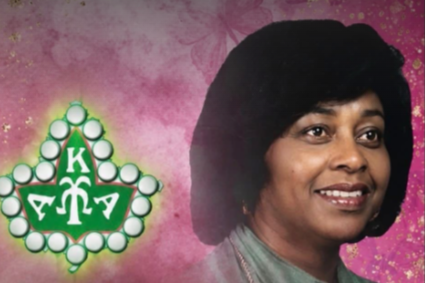
She joined Alpha Kappa Alpha in 1953 at what is now Virginia State University. Later, she cofounded local AKA chapters in Cherry Hill and Voorhees, served as two-time president of the Theta Pi Omega chapter in Cherry Hill, and was recognized by national AKA officials for her contributions.
Friends called Mrs. Wilson “a phenomenal woman” and “a beautiful, smart, professional woman” in online tributes.Courtesy of the family
The theme of her sorority presidency was service, scholarship, and Black American heritage, and she helped establish social service, public speaking, and scholarship programs. “Her presence,” sorority colleagues said in an online tribute, “will be profoundly missed.”
As a singer, Mrs. Wilson had a soaring soprano voice, and she took lessons in high school and college. She performed on a local TV station in Western Pennsylvania when she was young and sang with a traveling choir in college and for the school president.
She also wrote poetry for years and acknowledged the one-year anniversary of the 1999 death of her husband, Wilbur Wilson, by writing in 2000: “Your legacy stays with us and shall always light the way/We thank God for your presence and your sharing every day.”
She lobbied locally for the Civil Rights Act and the Voting Rights Act in the 1960s, and volunteered with the Rancocas Valley chapter of the Links and the South Jersey chapter of the Continental Societies. She served on the education committee at Evergreen Baptist Church in Palmyra and tutored the children of many church members.
In online tributes, friends called her “a phenomenal woman” and “a beautiful, smart, professional woman.” One friend said: “She impacted so many lives, especially the students she taught.”
Betty Jane Atkins was born April 6, 1934, in Library, Pa., about 12 miles south of Pittsburgh. The oldest of nine children, she was an honor student and the lead singer in every musical during her years at the old Snowden Township High School.
She attended Mt. Zion Baptist Church in Library, earned scholarships to attend college, and graduated with a bachelor’s degree in education at Virginia State.
Stylish and sophisticated, Mrs. Wilson was a popular figure on the college campus. She was selected by the football team to represent it on their homecoming float in 1953, and she served as the school’s Miss Valentine in February, Miss Apple Blossom in the spring, and Miss ROTC.
She was an engaging storyteller and, her daughter said, “a lot of fun.”
“Sister Wilson embodied the ideals of an Alpha Kappa Alpha woman,” sorority colleagues said, “elegant, poised, and gracious.”
In addition to her daughter, Mrs. Wilson is survived by a granddaughter, three sisters, a brother, and other relatives. Two sisters and two brothers died earlier.
Visitation with the family is to be from 6 to 8 p.m. Friday, Aug. 7, at Boyd Funeral Home, 1458 Mt. Ephraim Ave., Camden, N.J. 08104. Services are to be at 11 a.m. Saturday, Aug. 8, at Evergreen Baptist Church, 602 W. 3rd St., Palmyra, N.J. 08065.
Donations in her name may be made to Evergreen Baptist Church, 602 W. 3rd St., Palmyra, N.J. 08065.
Even as a boy in New York, he loved language, literature, and poetry. He earned a bachelor’s degree in English, took graduate classes at the University of Missouri School of Journalism, and could recite lines from Shakespeare, Wordsworth, and Frost on demand.
He was generally calm and reasonable, too, his sons said. “He didn’t get upset easily,” his son Mark said.
His vocabulary was extensive, and he could spell practically any word. So it is no surprise that he spent 50 years, from the early 1950s to his retirement in 2002, as an editor, page designer, and reporter for The Inquirer, the Bulletin, the Morning Call of Allentown, the Pottstown Mercury, the Honolulu Star-Bulletin, and the Evening Tribune in Hornell, N.Y.
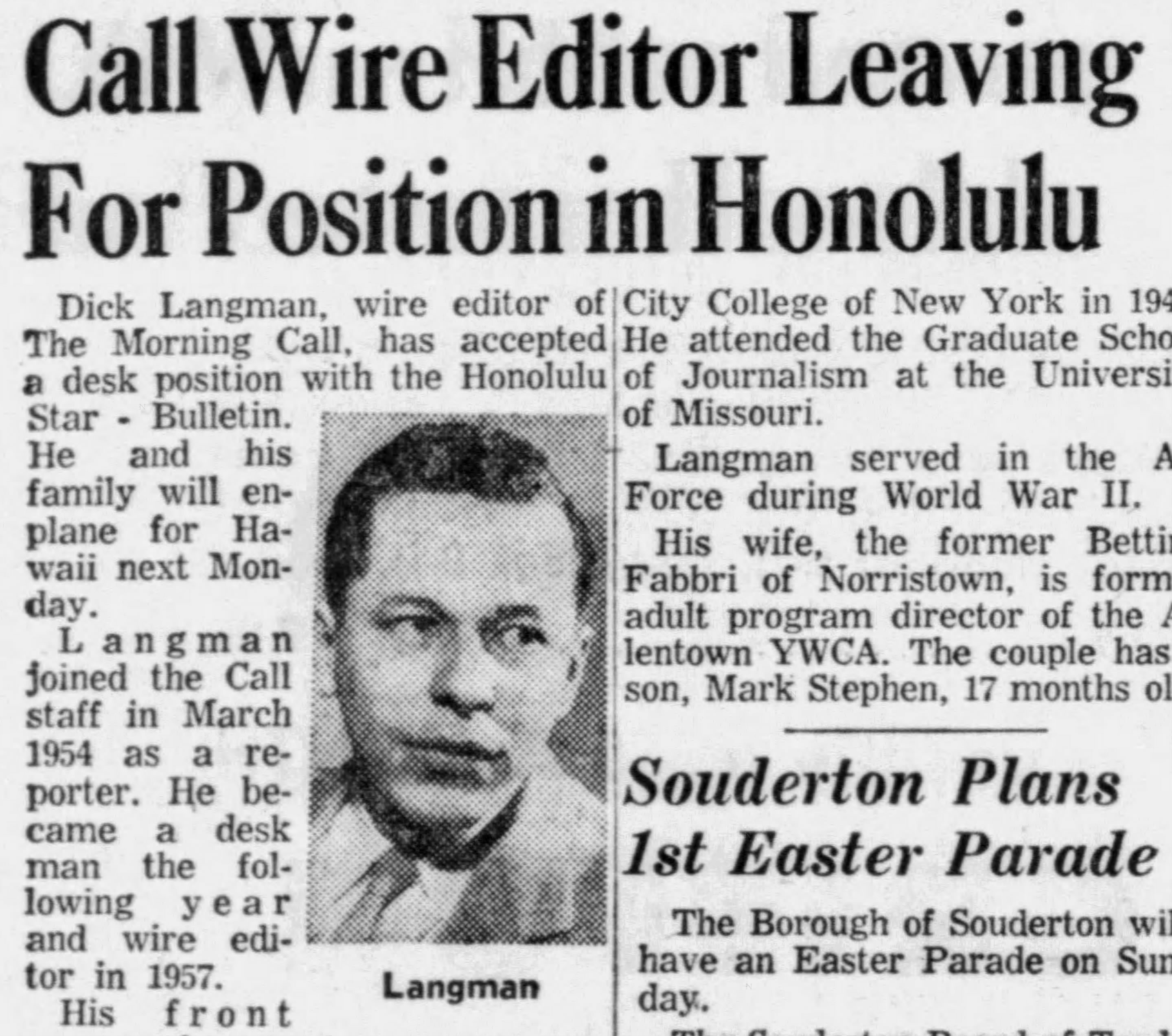
The Morning Call published this story in 1959 when Mr. Langman left to work in Hawaii.Newspapers.com
He joined The Inquirer in 1981 and worked mostly nights for 21 years as a copy editor, assistant news editor, and suburban assigning editor. Former colleagues at The Inquirer called him a “meticulous” editor, “enormously patient,” and “a man of great integrity” in online tributes.
He won an award from the old Pennsylvania Newspaper Publishers Association in 1957 for a front page he designed for the Morning Call and spent 20 years as assistant city editor and news editor at the Bulletin. “I’m glad that I had a chance to work with him,” a former Inquirer copy desk colleague said. “What a pro.” Another said: “I could not have had a better teacher.”
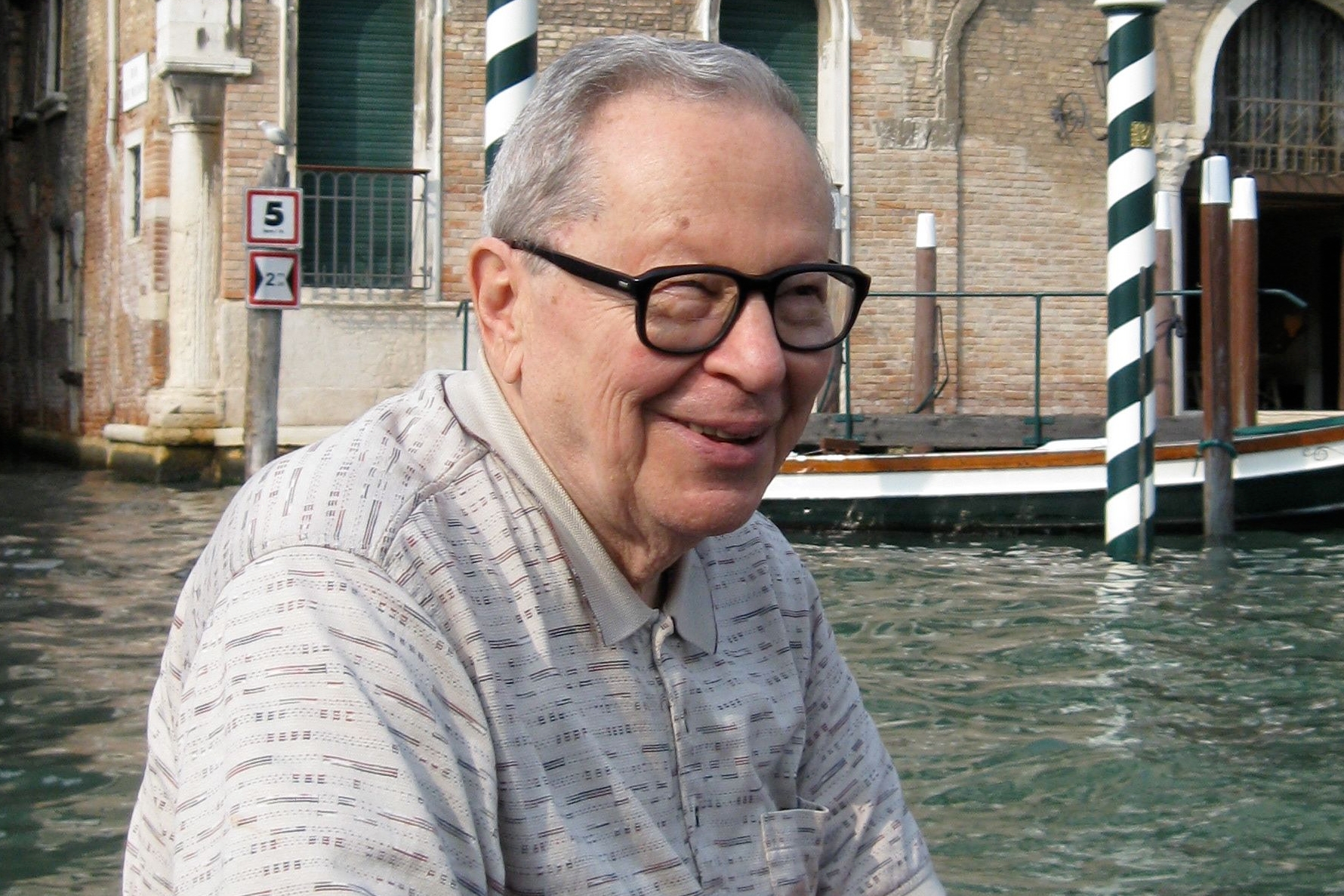
On Saturday, June 13, Dick Langman died of complications from pneumonia at Bryn Mawr Hospital. He was 99.
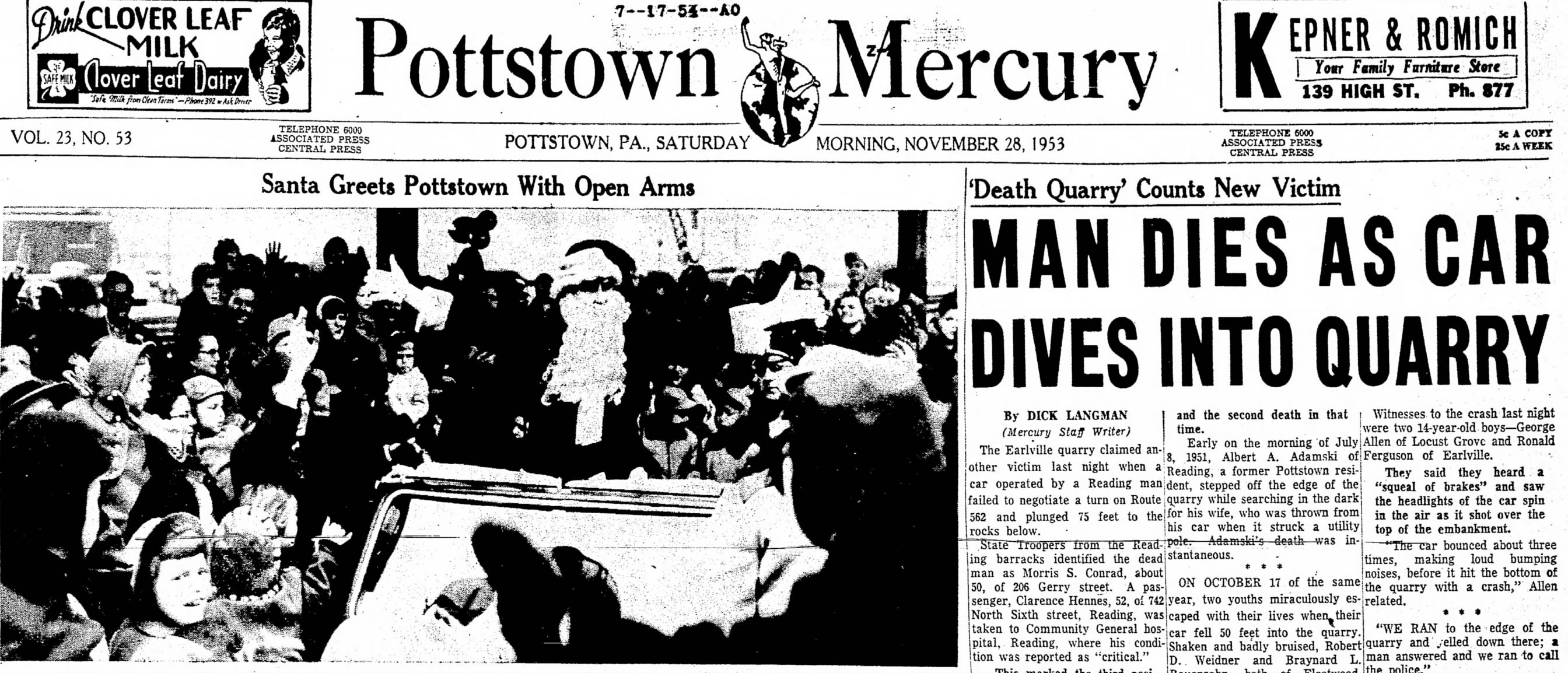
Long before he came to Philadelphia in 1961, Mr. Langman was a seasoned newspaperman. He honed his reporting skills as a writer at the Evening Tribune in New York and the Mercury in Pottstown.
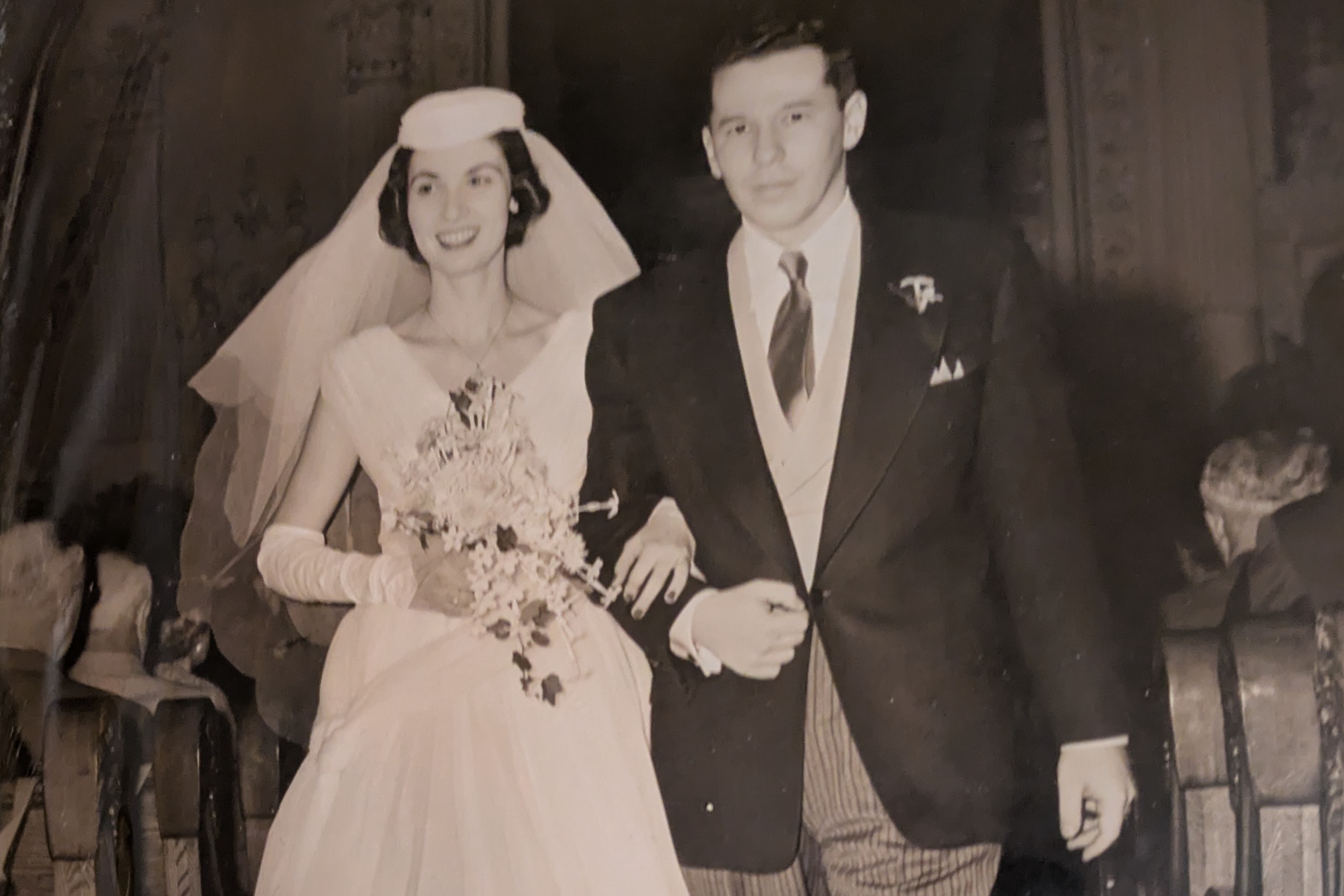
Mr. Langman and his wife, Betty, married in 1954.Courtesy of the family
In January 1954, he opened a Page 1 story for the Mercury with: “From clomping around in wooden shoes in Holland to wearing modern footwear in Bechtelsville is a long way, and Mrs. LaVerne Fronheiser is glad to be home. She’s not too glad, however, because her husband had to stay in Germany, where he’s stationed with the infantry.”
On Page 1 in March 1954, he wrote: “They had need of a chaplain yesterday at borough hall. He could have served well the 50 moaners and groaners whose cars were tagged for parking violations.”
He moved on to the Morning Call and covered high school sports and other news. He left for Honolulu in 1959 and became sports editor at the Star-Bulletin. But he missed the East Coast and returned to work at the Bulletin in Philadelphia in 1961.
“Hawaii is one of the loveliest places in the world,” he told the Morning Call. But his wife, Betty, had roots in Norristown, he said, and they both got homesick.
Mr. Langman wrote this Page 1 story for the Pottstown Mercury in 1953.Newspapers.com
Earlier, after college, Mr. Langman worked briefly for the Associated Press in New York and as a statistician for what is now the Elias Sports Bureau. He enlisted in the Army after high school in 1944, went to active duty in 1945, and served until the end of World War II.
At The Inquirer, a former colleague recalled, Mr. Langman edited a story about a horse that had injured a leg. Naturally, he tried to find out which leg was hurt.
“Dick was a painstaking editor,” his former colleague said on Facebook, “and a master in getting the details right.”
Richard Langman was born Sept. 5, 1926, in New York. He graduated from Stuyvesant High School and earned a bachelor’s degree at City College of New York in 1948.
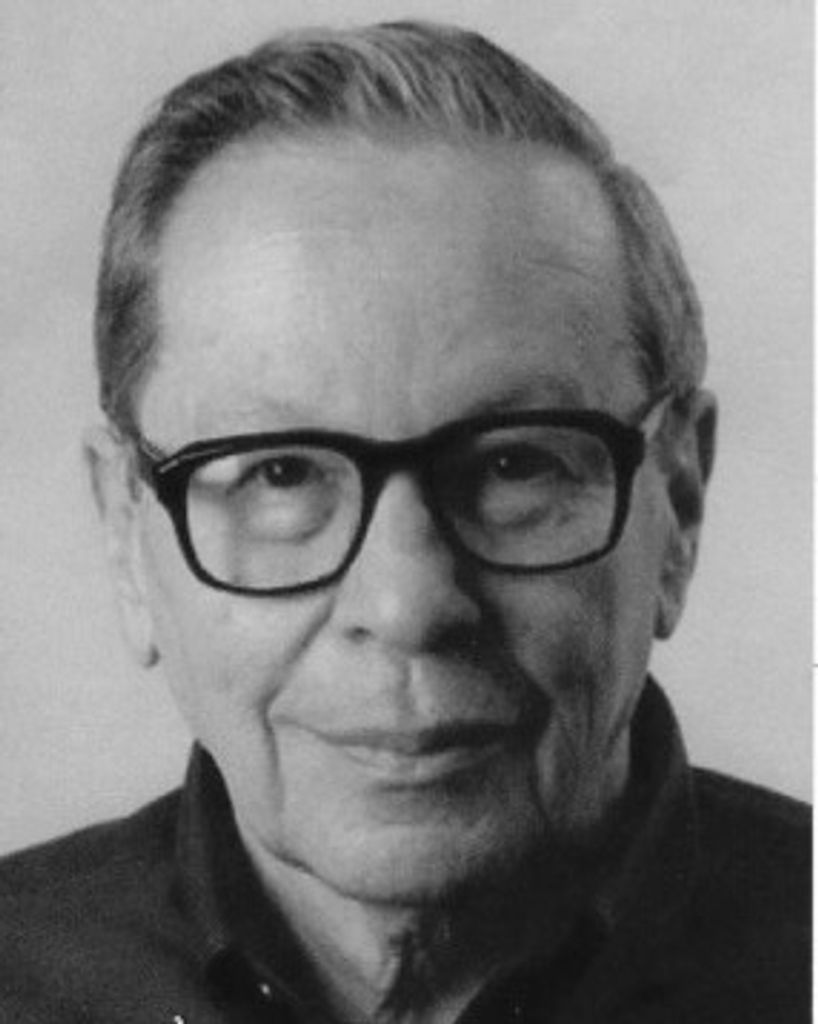
Mr. Langman enjoyed cooking and shared his favorite recipes with colleagues at The Inquirer.Dick Langman
He met Betty Fabbri, the society editor at the Mercury, and they married in 1954. The Morning Call announced their union in its Breakfast Chatter column by saying: “Best wishes to reporter Dick Langman, who walks the long mile in Norristown Sunday with Bettina.”
He and his wife had sons Mark, Peter, and Andrew, and lived in Allentown, Ardmore, and the Quadrangle retirement community in Haverford. His wife died in 2017.
Mr. Langman and his wife shared wanderlust, and they went to Russia, Austria, Hungary, Europe, and elsewhere. They visited Italy 10 times, France three times, and Cape May as often as possible.
They liked to cook together, too, and he shared his favorite recipes with colleagues at The Inquirer. At the Bulletin, he became part of the “old bulls” lunch group.
He submitted his own prewritten obituary to his funeral director long before it was needed and said: “He enjoyed classical music, poetry, mystery novels, and British mystery and comedy.” He also liked crossword puzzles, fishing, table tennis, classic movies, and duplicate bridge.
He cheered for the New York Yankees baseball team and the Green Bay Packers and Penn State football teams.
“He delighted in jokes and was a real fan of the Marx Brothers,” his son Peter said. “When we were children and a local movie theater would feature a Marx Brothers film for one night, my parents made sure that we went. Fond memories indeed.”
In addition to his sons, Mr. Langman is survived by two grandchildren and other relatives.
Services were held earlier.
Donations in his name may be made to the Lenfest Institute for Journalism, 100 S. Independence Mall West, Suite 600, Philadelphia, Pa. 19106.
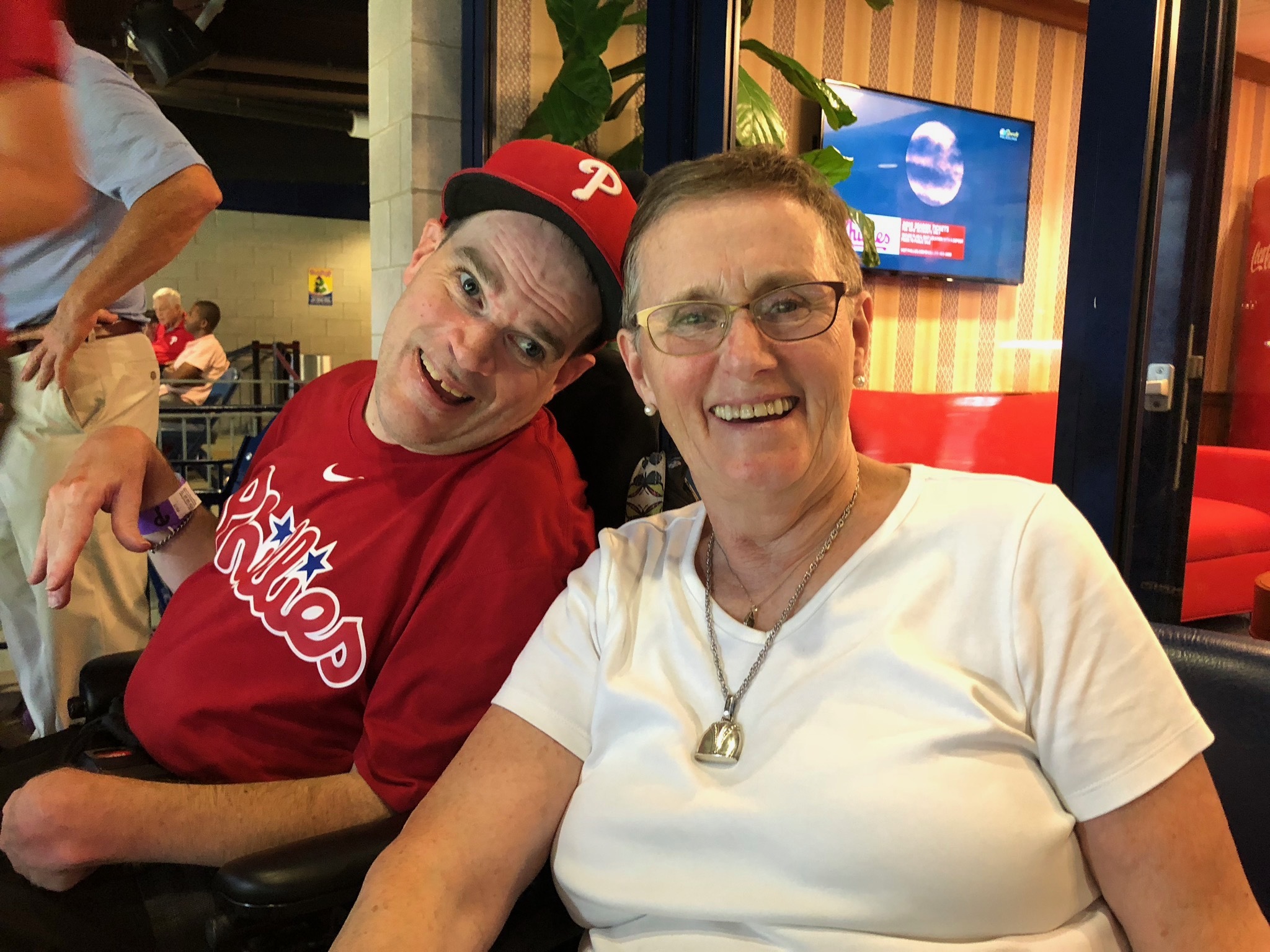
Chris DiJulia spent 56 years living as if he didn’t have cerebral palsy. He’d take “walks” in his wheelchair, down the block from his Havertown home. He was a regular passenger on SEPTA long before paratransit came to the suburbs in 1994.
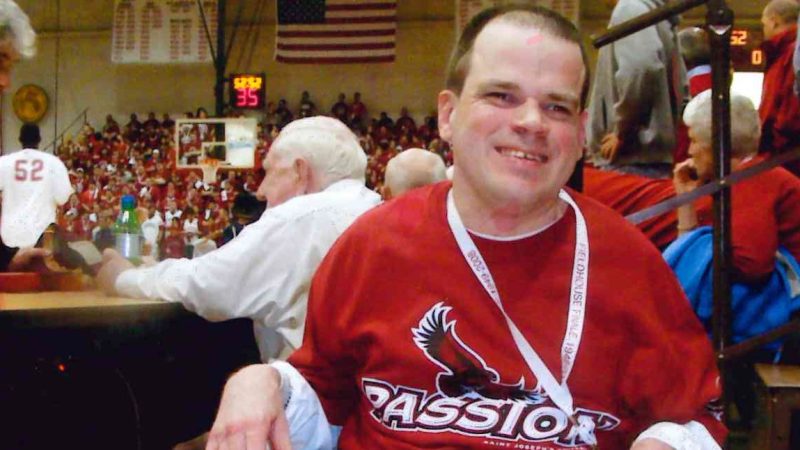
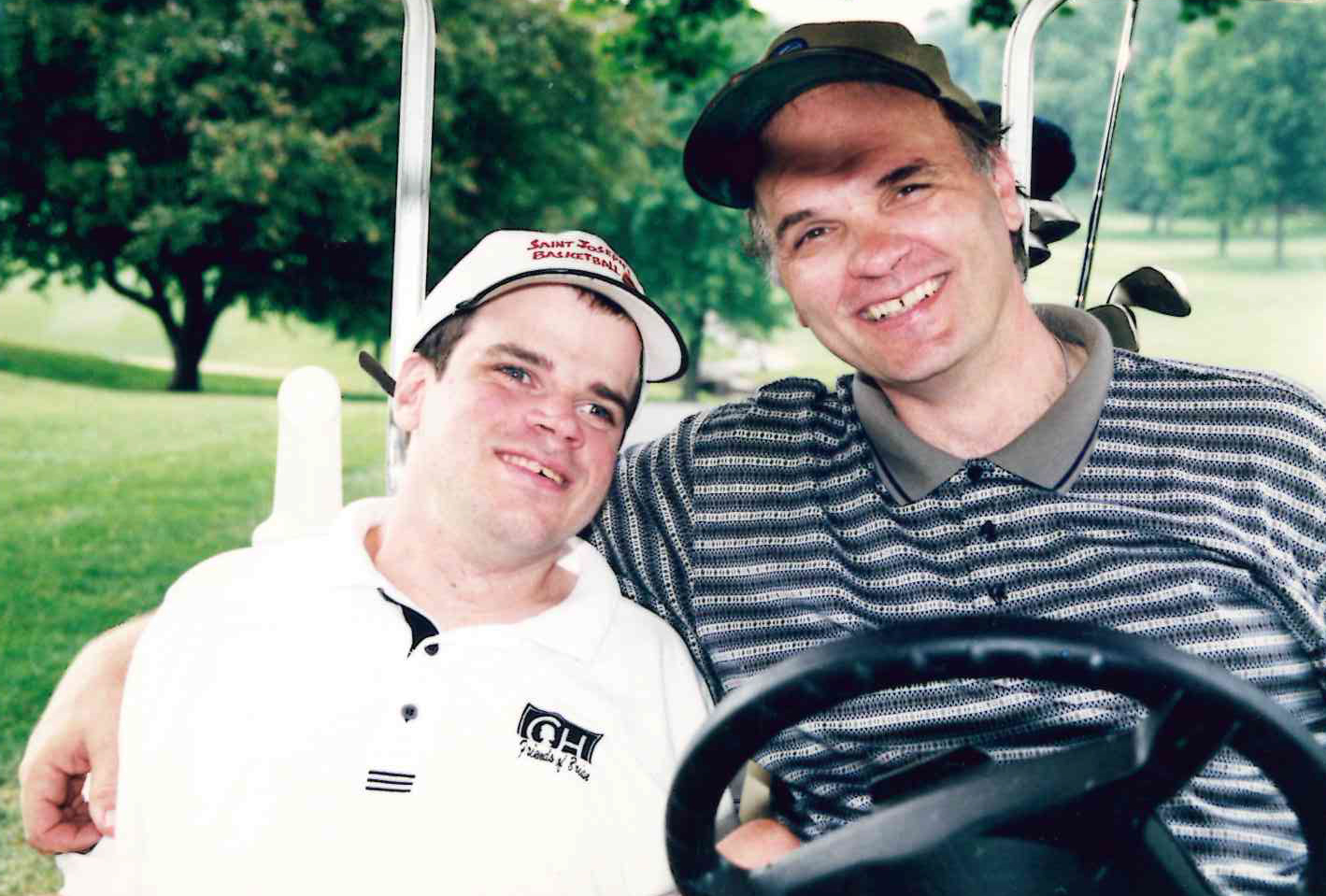
The avid St. Joseph’s basketball fan would often go to Hawk Hill to visit his father, Don, the longtime athletic director, or to watch men’s and women’s basketball practice.
But he’d also venture to Eagles training camp in West Chester, games at the Palestra, Villanova, Temple, all on his own, boldly traversing a city unequipped to take him anywhere.
Of course, this came with its challenges. A broken elevator or an unexpected flight of stairs could derail an entire trip. Sometimes, a bus driver would pretend not to see DiJulia waiting at his stop because they didn’t want the hassle.
But DiJulia was no fool, and certainly no pushover. He’d scribble down the license plate, call SEPTA’s customer service line, and report the vehicle.
“And probably said a thing or two about them as they drove by,” his father added.
This spirit was what made DiJulia special. His limbs were short and stiff, his speech was slow and slurred, but between the ears, he was just like anybody else, and expected to be treated as such.
He frequently signaled this through his humor. If the St. Joe’s fan was among a group of coaches trading barbs, he’d join in. DiJulia was not above yelling “brick” when a player missed a shot, or expanding that sentiment to, “you’re building a whole house!”
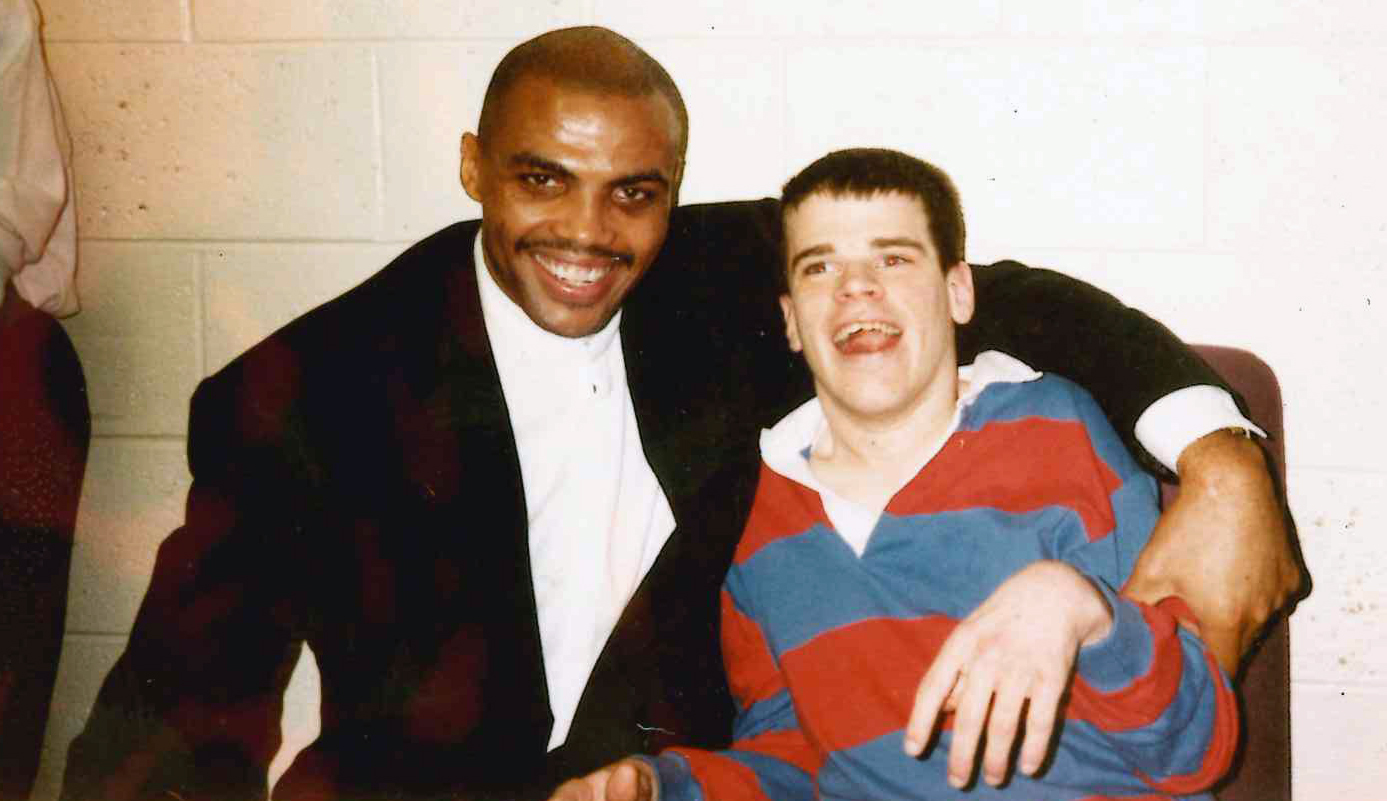
Charles Barkley (left) and Chris DiJulia became friends in the 1980s.provided by Saint Joseph's University
No one was exempt, not even NBA stars. Charles Barkley first met DiJulia in the late 1980s, at the start of his professional career. The Sixers practiced in the morning at St. Joe’s, and the teenager in the wheelchair was always there.
If Barkley had a poor showing, DiJulia would be quick to point it out.
“When I had hair, you never played bad and [went] to a Black barbershop,” Barkley said last week. “You never played bad and [went to] see Chris DiJulia the next morning. You know something bad is going to happen.”
DiJulia could’ve lived a smaller, less-adventurous life in Havertown, and no would have blamed him. But he chose to immerse himself in the world of Philadelphia sports, with all its eccentricities and quirks, and fit right in.
Now, that world is mourning his absence. On July 27, DiJulia died of natural causes stemming from cerebral palsy. The outpouring of support has been immense and wide-ranging.
The DiJulia family has heard from former St. Joe’s basketball players, softball players, field hockey players. Broadcasters and coaches have reached out, many of whom are no longer in the Philadelphia market.
On Thursday morning, Phil Martelli, another close friend of DiJulia’s, texted Delonte West. The former Hawks guard has long struggled with substance abuse and homelessness, but has been sober for the past 190 days.
Phil Martelli (right) was among those on Hawk Hill who drew endless inspiration from Chris DiJulia.provided by Saint Joseph's University
He asked Martelli to relay a message.
“Please send my condolences for Chris,” West said. “[He] was my brother, I carry him in spirit, he used to always have the right words and smile for me.”
A public funeral will be held on Aug. 12. The family is expecting a big crowd. Some will travel hundreds of miles, all to support a man who would do anything to support them.
Pushing through the pain
DiJulia was born in Connecticut in 1969. At first, his parents thought he was healthy; it wasn’t until the baby was baptized that a family member with a medical background noticed his head was oversized.
Doctors diagnosed him with cerebral palsy, and he underwent surgery at three weeks old (the first of over 20 surgeries throughout his lifetime).
Even as an infant, Chris radiated joy, with a big smile and bright blue eyes. Pat DiJulia knew her son had obstacles ahead, but when she’d look at his face, full of expression, she could tell he understood what she was saying.
Don was an assistant college basketball coach at Fairfield at the time. A few years later, when he was hired by George Washington, the family moved to Virginia.
Chris DiJulia (center, with longtime Phillies broadcaster Harry Kalas) developed a love of sports at a young age.provided by Saint Joseph's University
In 1973, he accepted an assistant coaching job at American. Chris was approaching pre-school age, but local options were limited.
The boy would need physical, occupational and speech therapy. The Americans with Disabilities Act was17 years from becoming law, and most schools didn’t provide those kinds of services yet.
So, the DiJulias were directed to three boarding schools on the East Coast. The one closest to them, in Virginia, was more like an institution; instead of catering to a specific population, it housed students with a number of physical and mental disabilities.
They chose to send Chris to Philadelphia instead, to the HMS School for Children with Cerebral Palsy. Both parents had family in the area who could visit him. Don started looking for work there, which is how he ended up becoming the St. Joe’s athletic director in 1976.
It was at HMS that Chris found his love for Philadelphia sports. Many staff members were Phillies fans and began to watch games with him. He quickly developed a talent for critiquing the local ball club (one that would serve him for the rest of his life).
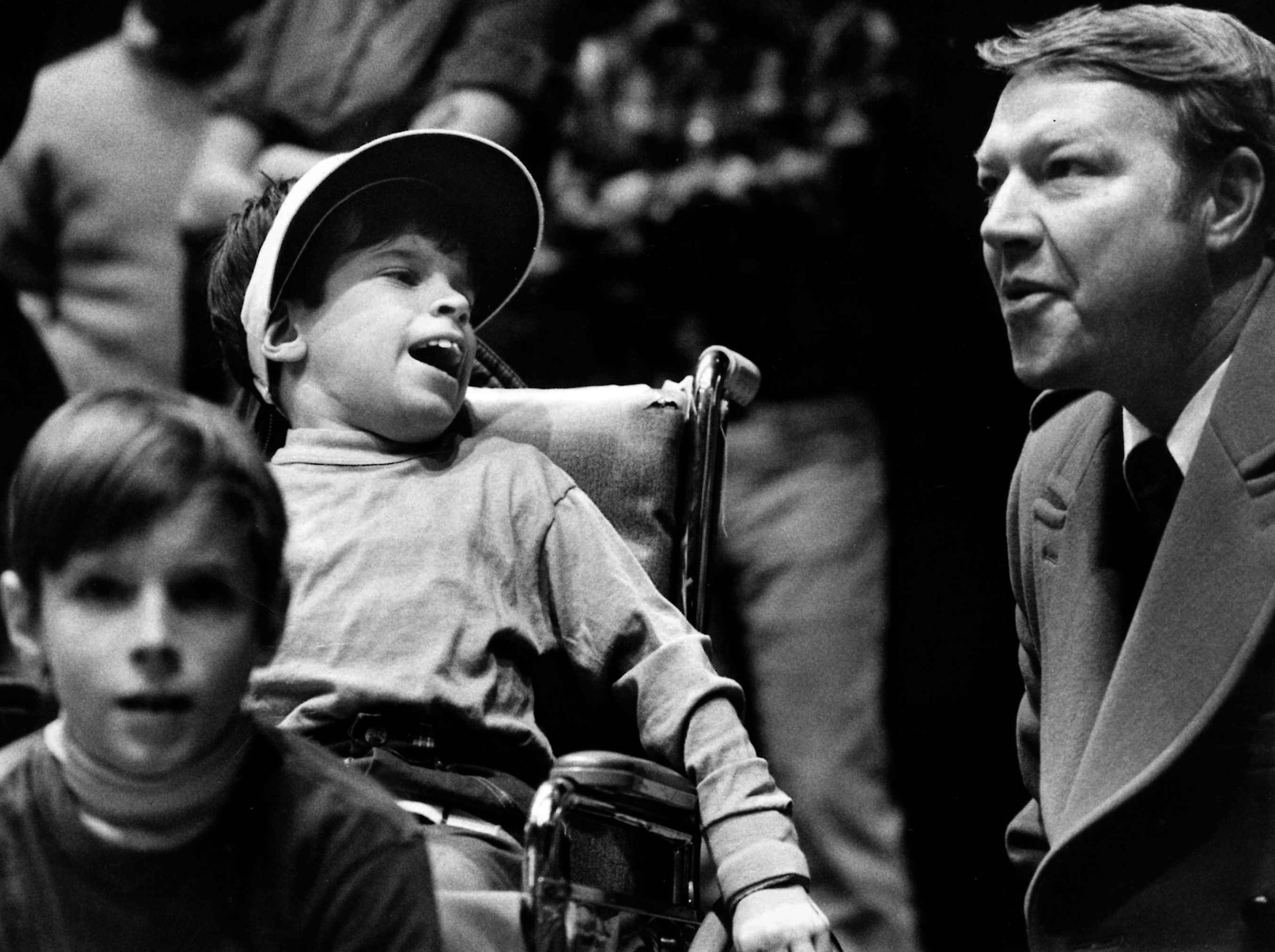
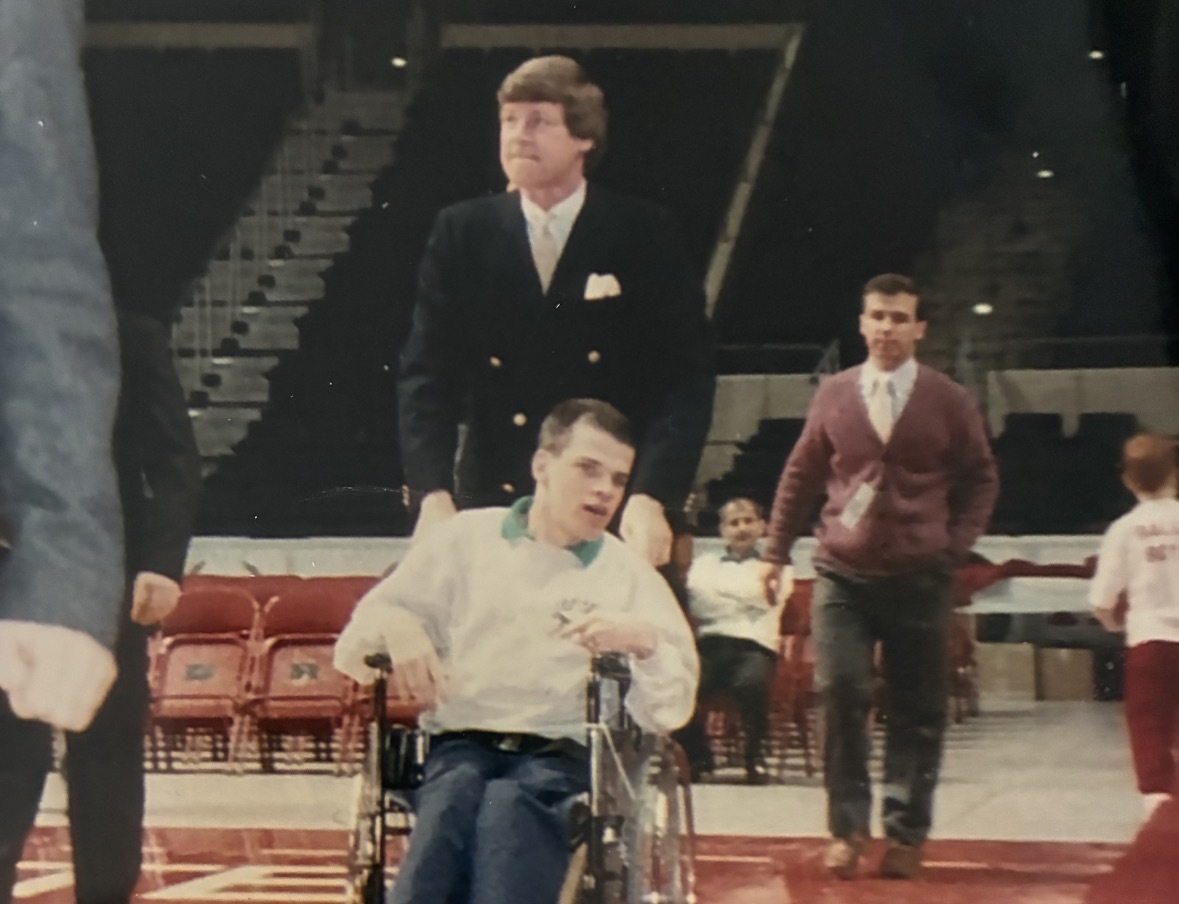
The younger DiJulia would spend his weekends at Alumni Memorial Fieldhouse and the St. Joe’s athletic offices. He did not do so quietly. Women’s basketball coach Jim Foster said the 9-year-old would routinely bust into his office, so much so that he joked he was going to “need a new doorway.”
The family returned to Connecticut in 1984, when Don was named commissioner of the Metro Atlantic Athletic Conference. But they couldn’t stay away from Hawk Hill, and came back in 1988, after Don was re-hired as athletic director, a job he’d keep for the next 30 years before retiring.
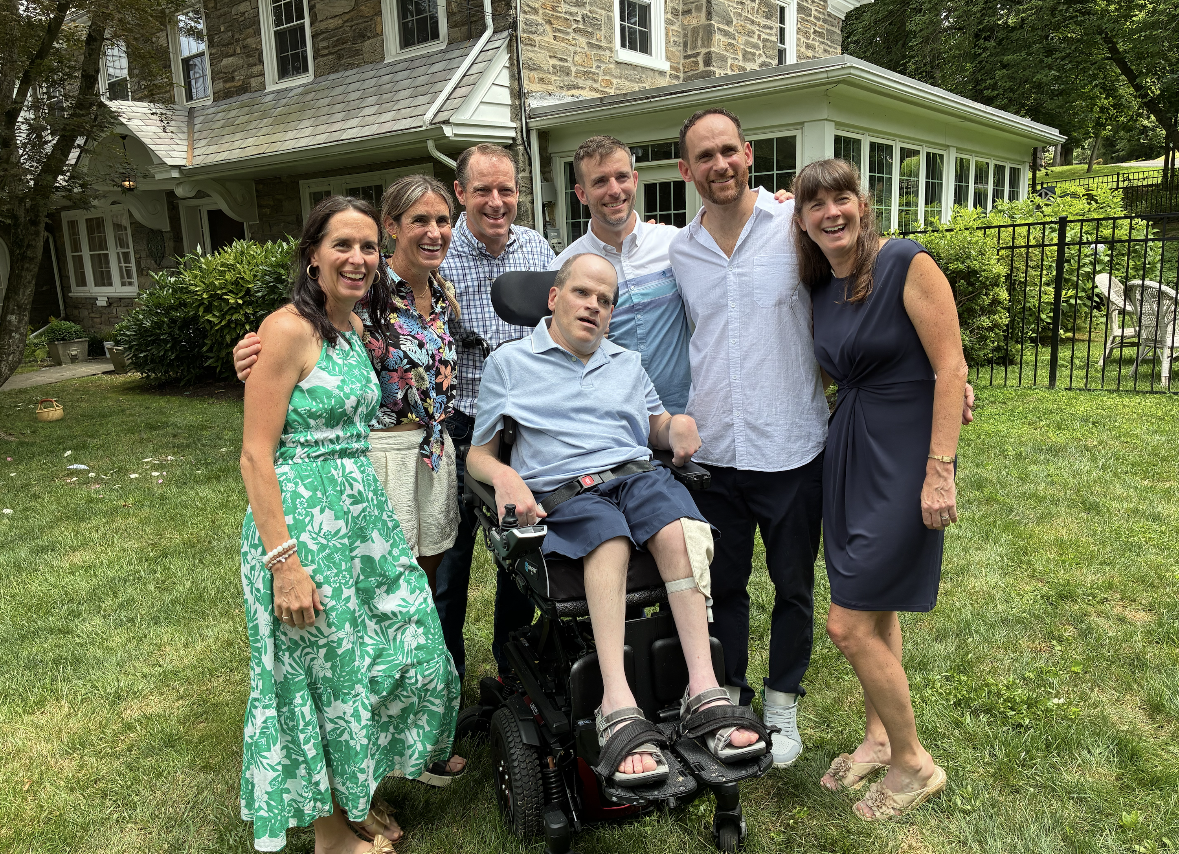
The DiJulia siblings were raised by their parents, Don and Pat, to stick together.provided by Kath DiJulia Cloran
By this point, Chris was a young man, brimming with confidence. This was due in large part to his upbringing. He was one of seven children, and Pat and Don treated him no different than the others.
The family would help Chris where he needed it, but always encouraged him to be independent. If he could lift his arms and put his shirt on with some minor assistance, then he would do it.
If he could shuffle his feet from the wheelchair to the bed, as someone hoisted him up, then he would do that, too.
“He was one of the seven,” his sister, Kath Cloran, said. “And yes, he needed extra care, but he was held to the same standards as all of us.
“He never wanted to be special. He just wanted to fit in and do what all of us did, really, and just live as regular a life as he possibly could.”
Transportation was integral to this. Don and Pat would map out a route for their son before each trip, making sure he was familiar with every curb and stair.
Some of these trips were laborious. To get to his technical school in Norristown, for example, Chris would travel a half mile on Haverford Road, to a platform for a high-speed rail.
Chris DiJulia (with his mother Pat) would stop at nothing to be close to the Philly sports scene.provided by The DiJulia Family
When he arrived at Norristown Transit Center, he’d take an elevator to the street level (if the elevator was working, which was a big if) and “walk” a few more blocks to school.
Despite any setbacks, the process was empowering. And paratransit made it even easier. Before long, Chris could travel all over the city, which meant ample trips to St. Joe’s and elsewhere.
Jim Lynam, the Sixers’ former head coach and DiJulia’s uncle, said it wouldn’t be unusual for his nephew to attend Sixers practice in the morning, St. Joe’s men’s basketball practice in the afternoon, and women’s basketball practice at night.
This was how he met Barkley.
The NBA star quickly realized DiJulia was able — and willing — to spar. So, Barkley and a few of his teammates, Rick Mahorn and Manute Bol, started going back and forth with him.
“Some fans, they’re just a-holes,” Barkley said. “They’re just mean. But the way he said something and just started laughing immediately, it took all the sting away.”
He added: “I literally met this guy 1,000 times, because he was always at practice. And I think it gave him joy. It gave us joy, but I think it really gave him joy, too.”
‘People just loved him’
DiJulia became omnipresent in Philadelphia basketball circles. When he wasn’t at St. Joe’s, he’d be at home, on the phone, usually with a coach.
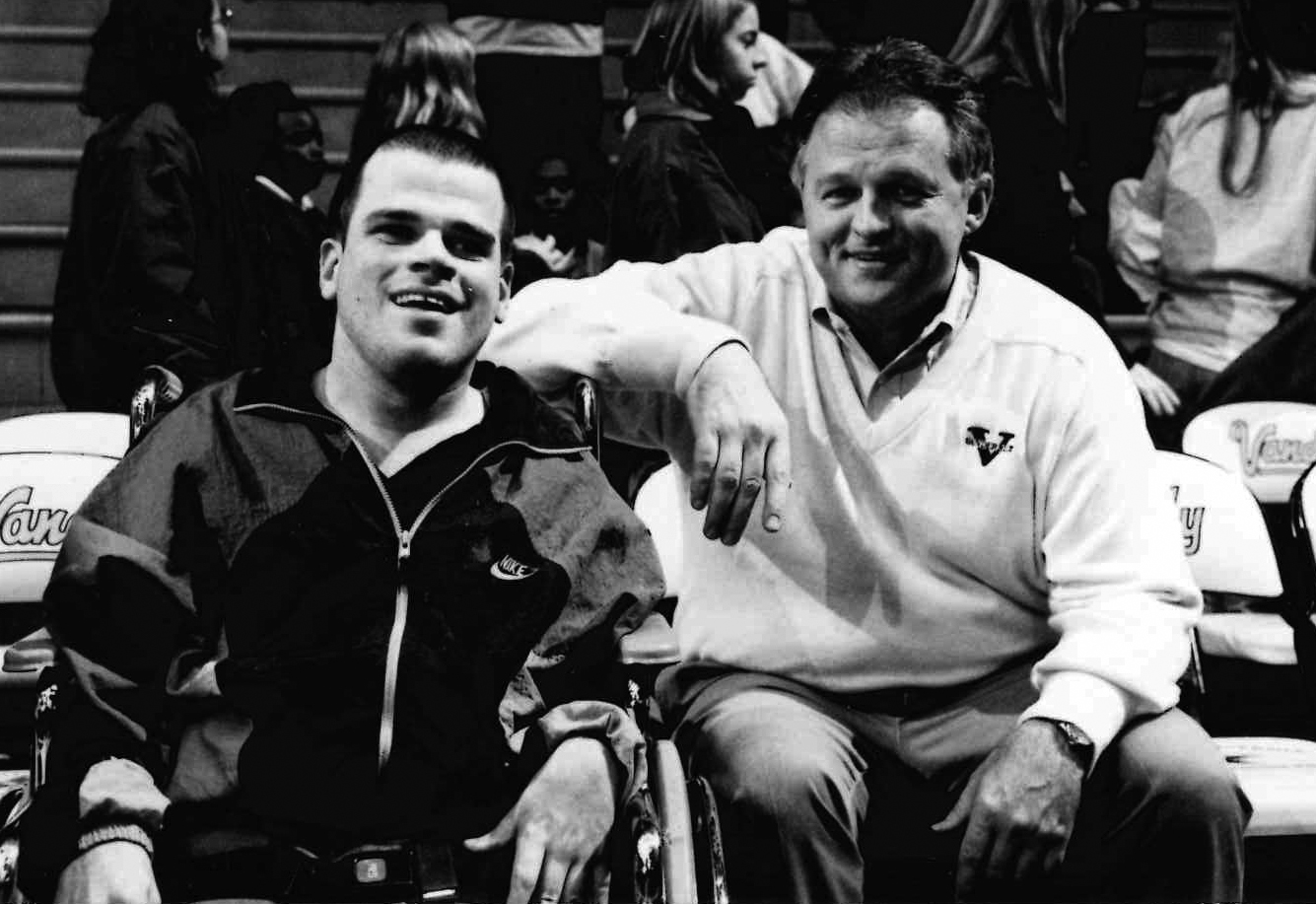
In the late 1980s, Foster invited him to sit on the bench during women’s basketball games (a tradition that continued after Cindy Griffin took over the program).
Chris DiJulia’s friendship with St. Joe’s women’s basketball coach Jim Foster (right) continued after Foster moved on to Vanderbilt.provided by Saint Joseph's University
The coach and his de facto assistant created a pre-game routine. After Foster gave his initial speech, he’d turn to DiJulia, who would share a few words.
“And then he would say, ‘But what it really comes down to,’ and he’d point to his heart,” St. Joe’s Hall of Famer Katie Gardler said. “And then he would point to his head.
“And you looked at all your teammates, and you’re like, ‘We’re doing this for him. Because he can’t get out there. We’re doing this for him.’”
DiJulia soon expanded his network beyond Hawk Hill, attending the NCAA and Atlantic 10 tournaments, among other events. If a coach left Philadelphia, he’d follow their careers, often traveling to go see them.
From the 1990s to the 2020s, DiJulia flew to Vanderbilt, Ohio State and Chattanooga to visit Foster, and drove to Michigan with his father to visit Martelli. Every year, he’d trek to Burlington to see Tom Brennan, the men’s basketball coach at the University of Vermont.
Brennan was among his closest friends. They first met in the 1970s, when the coach was assisting Rollie Massimino at Villanova. Brennan was hired by Yale in 1982, overlapping with DiJulia in Connecticut, which brought them even closer.
The two men discovered that they had a similar sense of humor; or as Pat put it, were “both crazy.” Games at Yale eventually led to daily phone calls, which led to trips to Vermont. In late November 2001, DiJulia visited Brennan when Cleveland State was in town, led by Massimino.
A Philadelphia jewel !! Chris DiJulia was as authentic and loyal as they come . An amazing man and a life full of inspiring others !! Love to the DiJulia family . pic.twitter.com/52X7Wglvvb
After the game, they got dinner with a few other coaches and family members. At one point, DiJulia asked Massimino a question that silenced the entire room.
“He said, ‘Rollie,’” Brennan recalled. “And back then, nobody called him Rollie. It was ‘Coach Mass.’”
The head coach turned to DiJulia, with an air of incredulity.
“Rollie?” Massimino said. “Rollie???”
The St. Joe’s fan grinned.
“That’s your name, ain’t it?”
DiJulia was a fixture at the University of Vermont. Every time he visited, he’d sit on the bench, right next to Brennan, tasked with keeping track of timeouts. This didn’t always go according to plan.
In February 1991, Vermont played at Delaware. It was a close game in the final minutes. Vermont was down three with the ball. Brennan turned to DiJulia and asked if they had any timeouts.
He said yes, but had counted incorrectly. Vermont got a technical foul. Delaware made one of two free throws, took possession of the ball, and won the game.
“The fun they’ve had with that over the years…” said Don.
Chris DiJulia and one of his best friends, Tom Brennan.Provided by the DiJulia family
Chris was also a regular on Brennan’s sports talk radio show on WCPV-FM. One time, he got the coach out of a parking ticket, because a police officer recognized DiJulia, and decided not to “mess up DeJules’ weekend.”
He was so beloved that in 2005, when Vermont was playing to reach the NCAA tournament, a booster chartered a plane to fly DiJulia to Burlington for the America East final. A gaggle of reporters met him at the airport.
After DiJulia returned home, Brennan checked in with his friend.
“I said, “Are you going to see St. Joe’s [in the NIT]?” Brennan recalled. “And he said, ‘Yeah… commercial.’ You got some balls. Commercial!
“But people just loved him. They loved him.”
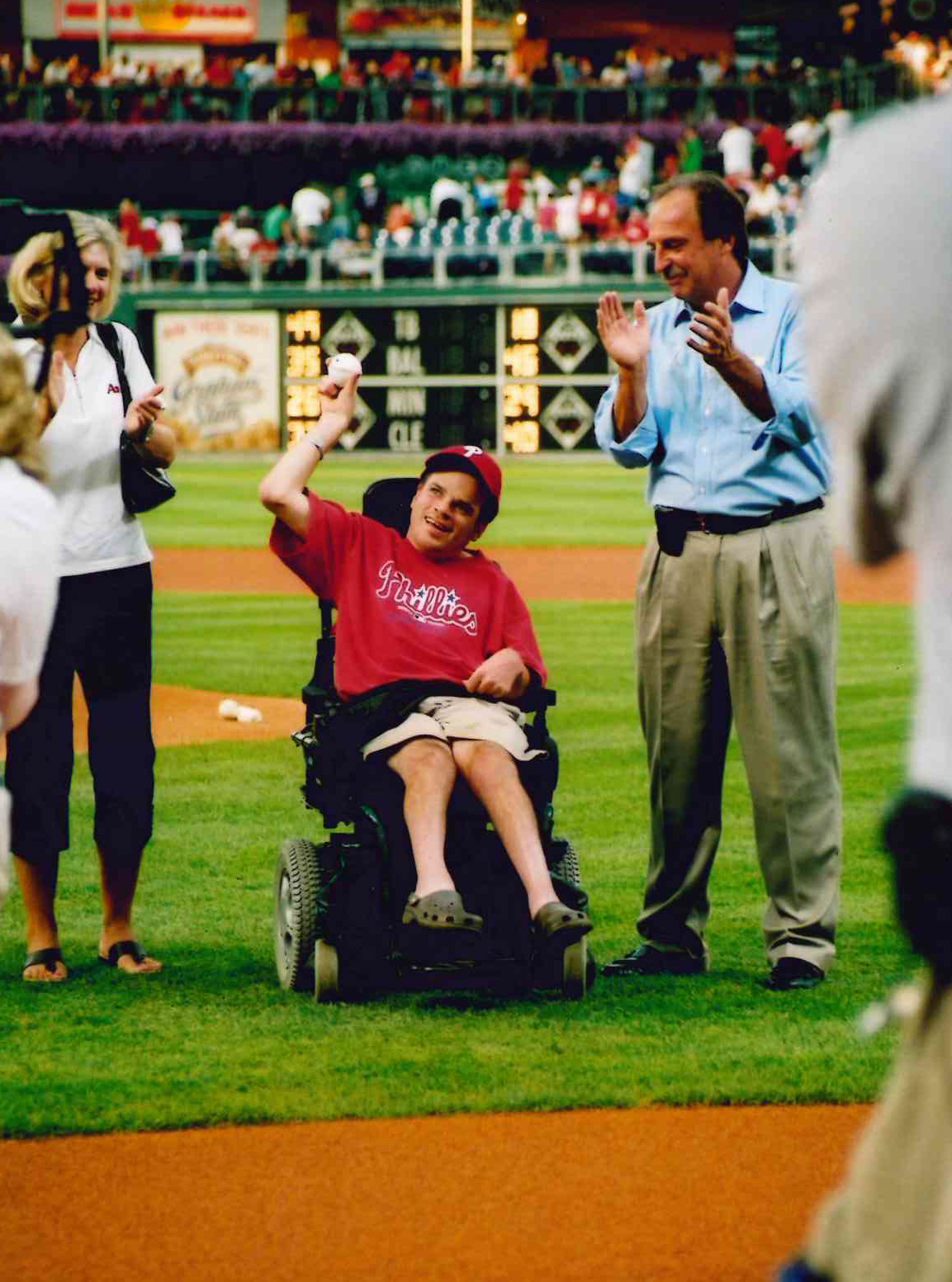
DiJulia’s unflinching honesty was a big reason why. In the mid 1990s, amid a stretch of below-.500 seasons, he penned an angry letter to Phillies team president Dave Montgomery.
Chris DiJulia (with former Big 5 coach Fran Dunphy on the right and St. Joe’s women’s basketball coach Cindy Griffin on the left) was a massive Phillies fan.provided by Saint Joseph's University
Montgomery invited him to his box, with Brennan and Don DiJulia. The executive asked what he could do for the frustrated fan.
“And he said, ‘The first thing is to stop our team from sucking,’” Brennan recalled.
(Montgomery and DiJulia went on to have a very close relationship, one that improved when the Phillies ended their World Series drought in 2008.)
“He was always ready,” Brennan said. “You couldn’t throw him off his game, man.”
A spirit worth celebrating
DiJulia’s health declined over the past two years. He could no longer feed himself or travel. Sitting on the bench at St. Joe’s was not possible; neither was attending games at Citizens Bank Park.
But DiJulia adjusted, as he always did. He continued to work the phones, keeping in touch with coaches. He’d follow his favorite teams remotely, either on TV or an internet stream, rather than in person.
And through it all, he never lost his spirit. Last Easter, DiJulia’s sister, Tyl Sadoff, gifted him a T-shirt. On the front was a message he thought was hilarious: “Just call me Jesus, I keep coming back.”
Perhaps that is the lesson. Even in the darkest of moments, Chris DiJulia was able to laugh. And since his passing, loved ones have found that is the best way to honor him. To share their favorite stories, of their favorite guy, with a tinge of sadness, but a bellyful of joy.
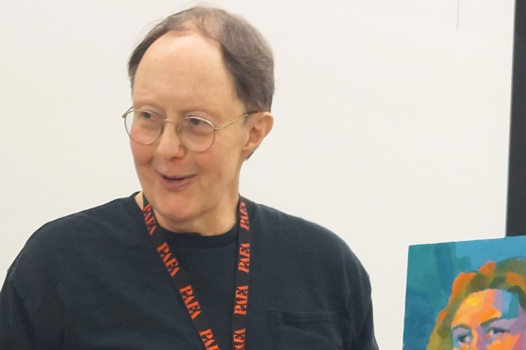
Albert Gury, 74, of Philadelphia, lifelong painter, former chair of the painting department at the Pennsylvania Academy of the Fine Arts, award-winning lecturer at the old University of the Arts and other institutions, author, mentor, community advocate, and cat rescuer, died Thursday, June 25, after a long illness at the Hospital of the University of Pennsylvania.
Born in Peoria, Ill., Professor Gury came to Philadelphia in the early 1970s after a professor at St. Louis University advised him to enroll at the Pennsylvania Academy of the Fine Arts. He did, and he never left.
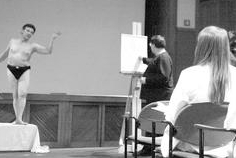
He earned a four-year certificate in painting at PAFA in 1976 and, starting in 1980, taught painting, drawing, figure drawing, anatomy, art history, and art education at PAFA. He was chair of the painting department from 2000 to 2022 and creator of several innovative art education programs.
He painted portraits of young gun violence victims for PAFA’s Lost Dreams on Canvas exhibit and founded and directed the academy’s popular after-school free art program for high school students in 1994. In 2026, he earned a community recognition award from the Philadelphia School District.
“This is a way for us to reach out to the community and really try to do something beneficial,” Professor Gury told The Inquirer in 2005. “We train them as if they are college freshmen, not high school kids. It raises the bar on the quality of their work.”
Professor Gury also lectured for decades at University of the Arts, the Fleisher Art Memorial, the Barnes Foundation, and elsewhere.He instructed students at Jefferson Medical College on anatomy, consulted for the city’s mural arts program, and ran art seminars and painting workshops regionally and in Scotland and Croatia.
He earned a master teacher’s award from University of the Arts and a master’s degree in fine arts at the University of Delaware in 1992. Former students called him “unfailingly caring, and supportive, and smart,” and “very generous in sharing his wealth of knowledge” in online tributes. One said: “What a great example to us all.”
In a tribute, PAFA officials said: “We remember Al not only for what he taught but for how he taught: with patience, conviction, humor, discipline, and an open heart.”
Professor Gury (center) draws and explains the nature of the human form to students at Jefferson Medical College in 2007.
In the studio, Professor Gury painted colorful figures, landscapes, still life, and portraits. His portrait Alice of Dunk’s Ferry hangs in historic Christ Church in Old City, and he showed at the Philadelphia Museum of Art, the F.A.N. Gallery on Arch Street, the National Academy of Design in New York, the U.S. Capitol in Washington, and elsewhere.
He especially enjoyed painting abstract landscapes, he said in a 2014 video, because “they are pure.” He told the Daily News in 2000: “I like to paint the things I love. I like the intimacy of small paintings. I move the paint around and put together elements in nature even if they don’t exist that way. I like to imagine things rather than just paint what is in front of me. Sometimes it becomes a little surreal.”
In 2000, critic Anne R. Fabbri said in the Daily News that many of Professor Gury’s paintings are “united by his layered brushwork, tonal depths, and the creative act that transforms color, line, and composition into a life-enhancing work of art.” He was honored by the Philadelphia Sketch Club in 2017.
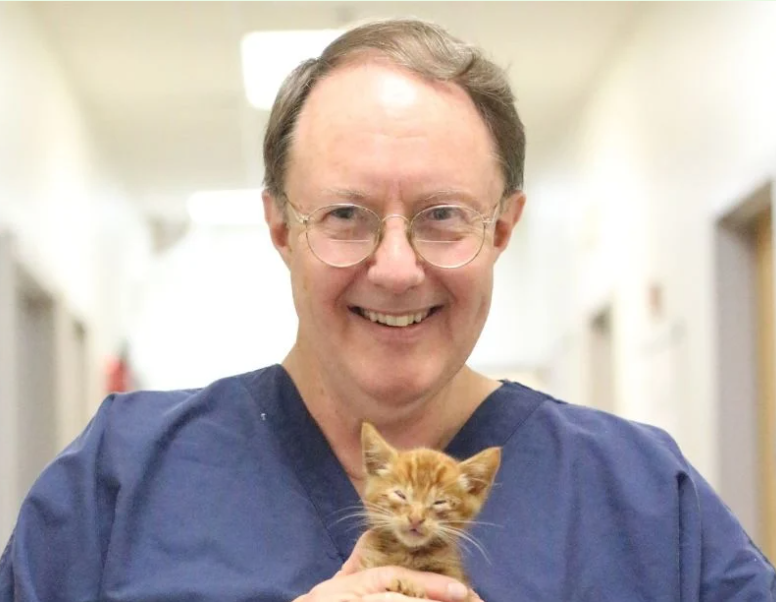
In his neighborhood, Professor Gury advocated for better housing and fostered rescue cats in his home. He volunteered at the Philadelphia Animal Welfare Society and was named its 2015 volunteer of the year. The group renamed its kitten maternity ward after him.
“We are searching for words to express just how extraordinary Al was, what a profound difference he made, and how much we loved and appreciated him,” colleagues at PAWS said in a tribute. “We hope he knew what an immense impact he made, and how much better and more beautiful the world is because of him.”
Albert Francis Gury was born Oct. 23, 1951. A family friend introduced him to painting when he was young, and he spent many days roaming the galleries at the Art Institute of Chicago while his father worked downtown.
He earned a bachelor’s degree in fine arts at St. Louis University in 1973 and won scholarships, grants, and honors as both a student and a professor at PAFA. He collected quilts and rare books on art.
Professor Gury loved animals, especially cats.Philadelphia Animal Welfare Society
In 2018, his apartment building on Chestnut Street burned down in an early-morning fire. Several of his cats and parakeets perished, and much of his artwork was lost. “The whole thing is just tragic,” he told The Inquirer then.
Friends called him “a classic caregiver” and a “protector of the underdog.” Longtime friend and colleague Reza Ghanad said: “If you were feeling down, he would pick you up.”
Friend and colleague Morgan Hobbs said: “He noticed students who could have gone unnoticed without him. He had a special gift for that.”
Professor Gury is survived by several relatives.
His ashes are interred at Christ Church Burial Ground. A celebration of his life is to be held later.
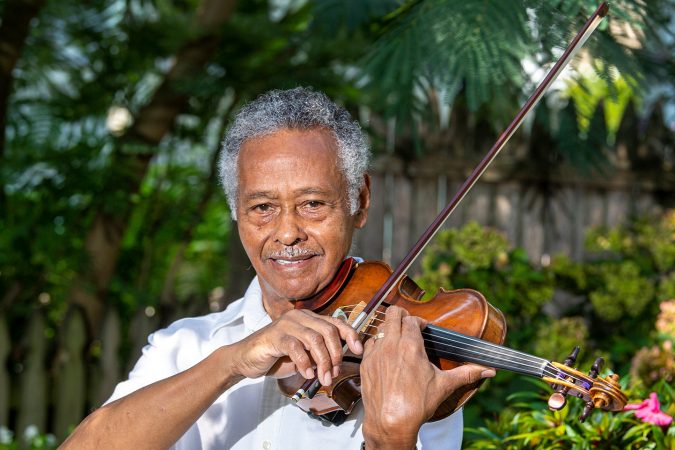
Booker Rowe, 85, of Philadelphia, award-winning violinist, the first Black musician to play with the Philadelphia Orchestra and the Nashville Symphony String Quartet, the second permanent full-time Black player in the Philadelphia Orchestra, teacher, mentor, and role model, died Friday, July 31, of complications from pneumonia and sepsis at Jefferson Abington Hospital.
A lifelong musician — he played piano at age 5 and violin at 11 — Mr. Rowe was invited by famed music director Eugene Ormandy in 1968 to become the first Black musician to perform with the Philadelphia Orchestra. He was a substitute violin during most of the 1968-69 season and returned for good in 1971 as the orchestra’s second Black permanent full-time member.
Mr. Rowe stayed for 49 years.
“My first day, I came in late from New York, and the orchestra was already rehearsing, and I sat myself down on the last stand to play,” Mr. Rowe told The Inquirer’s Peter Dobrin in 2020. “The sound was amazing. It was like stereo all around me. The stage was slanted down, and when the brass and winds would play I had to brace myself with my right leg from being blown off stage. It was just so beautiful.”
For five decades, until his retirement in 2020, Mr. Rowe played with half a dozen elite conductors and traveled the world in the orchestra’s second violin section. He and his colleagues gave thousands of memorable performances at the Academy of Music, the Kimmel Center, and the Mann Center in Philadelphia, Carnegie Hall and the Lincoln Center in New York, and the Saratoga Performing Arts Center in Saratoga Springs, N.Y.
They played at the 1993 World Series at Veterans Stadium, for Pope Francis in 2015, and at the Vail Music Festival in Colorado. They played in Europe, South America, Asia, and elsewhere around the world.
This photo of Mr. Rowe (left) appeared in the Daily News in 1993Newspapers.com
In 1973, the orchestra made a historic 10-day, five-concert cultural exchange tour in China, and Mr. Rowe told the Daily News afterward that he visited a commune and returned with Chinese instruments. In 2008, he mingled with former Secretary of State Alexander Haig and other international notables after a concert in Beijing.
In 2013, he posed for pictures with the Chinese welcoming contingent at Shanghai Airport. “Booker was such a kind soul, and his passion, his artistry, and his humanity are woven into who we are,” Yannick Nézet-Séguin, the orchestra’s music and artistic director, said in a tribute.
Ryan Fleur, the orchestra’s president and chief executive officer, said: “He was a warm and steadying presence in our orchestra.”
Born in Kentucky, Mr. Rowe and his family moved to North Philadelphia when he was 2. His father was a singer, and his mother played piano, and they “pushed me in the direction of classical music,” he told the Daily News in 1981.
He became concertmaster for the West Philadelphia High School orchestra, the All-City high school orchestra, and the old all-Eastern Conference college orchestra. He earned a bachelor’s degree in music at Temple University in 1963 and a master’s degree in music at Yale University in 1968.
Before Philadelphia, he played solo in New York and with symphony orchestras in Nashville, New Haven, Conn., and Washington. Later, he played with the old Symphony Club of Philadelphia, the Lansdowne Symphony Orchestra, and other local groups.
Mr. Rowe (left) stands with fellow musicians Andre Watts (center) and Renard Edwards.Courtesy of the family
He also got freelance gigs with Sammy Davis Jr., Isaac Hayes, Smokey Robinson, the Supremes, Barbra Streisand, Aretha Franklin, and other stars. He played with chamber music ensembles around the country and gave dozens of free concerts for children, churches, and community and scholarship fundraisers.
He championed racial and ethnic diversity, and was active with the Philadelphia Orchestra’s cultural diversity initiative. He sought and performed work by Black and other minority composers, and mentored dozens of colleagues and students.
He encountered at least one racist incident that first year in Philadelphia and told the Daily News in 1981: “The time was right for an Afro-American in the Philadelphia Orchestra. It was just a matter of finding somebody who was ready.”
Mr. Rowe and his family lived in Center City, East Mount Airy, and Germantown. Courtesy of the family
A friend said on Facebook: “His legacy and historical contributions are unparalleled.”
Mr. Rowe taught at Settlement Music School and gave private lessons. He earned music and service awards from City Council, the American Foundation for Negro Affairs, and other groups.
In 2019, he was asked to advise young musicians in a video interview for the Philadelphia Orchestra website, philorch.ensembleartsphilly.org. “Practice, practice, practice,” he said. “But also enjoy, enjoy, enjoy. Do it with love in your heart.”
Booker Taliaferro Washington Vance Rowe Jr. was born Dec. 10, 1940, in Lexington, Ky. In Philadelphia, he studied at the old Philadelphia Musical Academy and Settlement Music School, and his father worked at RCA Victor records in Camden. So their home was always filled with music.
Mr. Rowe (rear center) stands with Philadelphia Orchestra colleagues and members of the Chinese welcoming contingent in 2013.
Jan Regan / Philadelphia Orchestra
He met soprano Patsy Baxter at a Philadelphia Orchestra concert, and they married in 1970 and had a son, Landis, and a daughter, Vivian. They lived in Center City, East Mount Airy, and Germantown, and visited his family often back in Kentucky and Tennessee.
Mr. Rowe enjoyed puzzles, hiking and kayaking with his family, and tai chi. Friends noted his “kindness,” “million-dollar smile,” and “cheerful presence” in Facebook tributes.
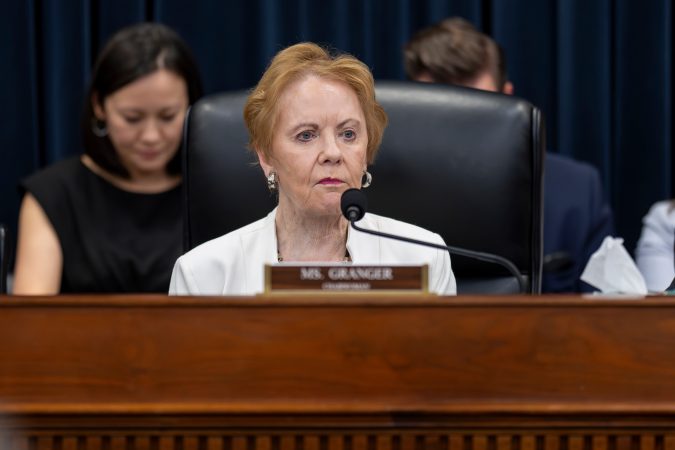
DALLAS — Kay Granger, the first Republican woman from Texas to be elected to the U.S. House of Representatives and who served for nearly three decades, died Sunday at the age of 83, her son J.D. Granger said.
House Speaker Mike Johnson said in a post on X that throughout her career, Rep. Granger “broke barriers for women in public service.” He added that she “was a dear friend who will be greatly missed.”
Rep. Granger, who began her career as a high school teacher and a business owner, accomplished many firsts as a politician. She was the first woman elected mayor of Fort Worth, Texas, and the first Republican woman to chair one of the most powerful committees in Congress, the House Appropriations Committee.
First elected to the House in 1996, she did not seek reelection in 2024 and experienced worsening “health challenges” in her final months in Congress, according to a statement her office released in December 2024. Rep. Granger, who didn’t cast a vote in Washington after July 2024, didn’t specify or elaborate on those health challenges but said in the statement that frequent travel to Washington had become “both difficult and unpredictable” since early September of that year.
Rep. Granger graduated from Texas Wesleyan University in 1965 and considered a career in fashion design but followed her mother into teaching. She worked in the Birdville school district for nine years, teaching English literature and journalism, according to a profile compiled for the publication Women in Congress, 1917-2006.
A divorce would lead to a career change. To earn more money, Rep. Granger worked from home selling insurance. Her mother, Alliene Mullendore, who moved in with Rep. Granger after a stroke, helped keep an eye on the kids. Rep. Granger eventually built a successful insurance business that she managed for more than two decades.
“I was a high school teacher with three children, a 2-year and 6-month-old twins, and my husband left,” Granger told the Hill in a 2008 profile. “It’s the reason I talk so much to working mothers … you just fight your way through the day.”
Rep. Granger got her political start serving on Fort Worth’s zoning commission and then won office to the city council. She went on to win election as the city’s first female mayor, serving from 1991 to 1995.
Rep. Granger’s “Code: Blue” programs included citizen patrol initiatives that halved the rampant crime rate and partnerships with the private sector that drew major businesses to the city. Her resuscitation of Fort Worth’s flagging economic fortunes drew national attention.
In 1996, she was recruited by both parties to run for the House under their banner, and she won as a Republican.
Upon entering Congress, she was named to an advisory board that consulted with then-House Speaker Newt Gingrich. She also received seats on three committees: Budget, House Oversight, and Transportation and Infrastructure. She resigned those assignments as part of accepting a seat on the Appropriations Committee.
On the committee, she focused on defense spending, including championing the production of the F-35 Joint Strike Fighter in Fort Worth.
When Republicans took charge of the House in 2023, Rep. Granger became the committee’s chairperson, where she sought to enact steeper nondefense spending cuts than the top-line numbers House Speaker Kevin McCarthy and President Joe Biden agreed to as part of avoiding an economically disastrous government default.
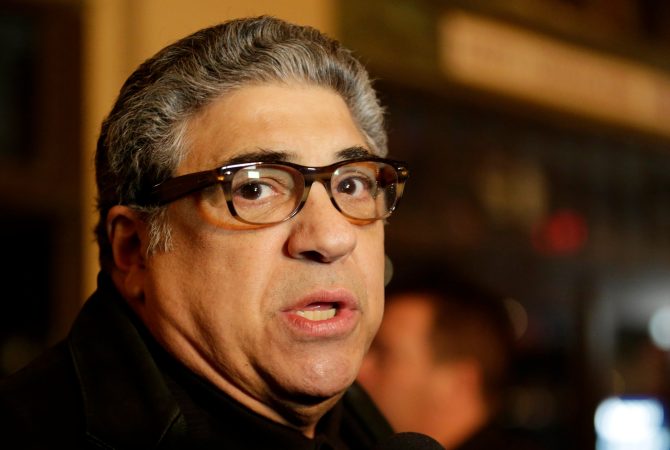
NEW YORK — Vincent Pastore, a veteran actor who played mobsters and tough guys, and was best known for portraying Salvatore “Big Pussy” Bonpensiero on The Sopranos, has died. He was 80.
Bob McGowan, who managed Mr. Pastore since his run on The Sopranos, told the Associated Press that he learned of his death Saturday from another client and actor on the show, Vincent Curatola.
He said Mr. Pastore was found in his home on New York’s City Island after not being heard from for a few days.
McGowan said he had been trying to reach Mr. Pastore about a possible job.
“He was the most loyal client, and he always gave to charity,” McGowan said, “and he was the kind of guy who would help anybody, which is rare in my business.”
Robert Attermann represented Mr. Pastore for more than 30 years, before his time on The Sopranos. While Mr. Pastore will be remembered as “Big Pussy,” he was so much more, Attermann said in an email to the AP.
“Vinny was one of the kindest, most generous people I have ever known,” Attermann said. “He treated everyone with warmth and respect, never turning down a fan who wanted a photograph or an autograph. He genuinely appreciated the people who supported him and always made them feel valued.”
Attermann said Mr. Pastore loved being an actor and was passionate about his craft while always encouraging young actors, “taking the time to offer guidance and support whenever he could.”
Michael Imperioli, a longtime friend and collaborator, said on Instagram that it seemed as though he had known Mr. Pastore forever.
“We did lots of work together and traveled all over the USA as well as Italy and Australia. Lots of good times. Lots of laughs,” Imperioli said. “Vinny was a kind-hearted brother who cared deeply about his family and friends. I will miss him always.”
Mr. Pastore appeared in movies dating back to the 1980s including roles in big films such as Goodfellas and Awakenings, both in 1990.
He often played gangsters. And it was one of those roles he is best known for: his 30-episode run as Bonpensiero, the friend of Tony Soprano who becomes an FBI informant.
Mr. Pastore was born in the Bronx and grew up in suburban New Rochelle, N.Y. He enlisted in the Navy during the Vietnam War and later attended Pace University, according to his biography on IMDb.
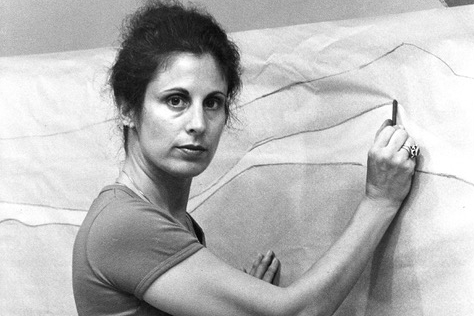
Barbara Gillette Price, 87, formerly of Philadelphia, celebrated painter and designer, former president of Moore College of Art and Design, former dean of Cranbrook Academy of Art in Michigan, former vice president for academic affairs at the Maryland Institute College of Art in Baltimore, fine arts teacher, mentor, and role model, died Friday, April 24, of age-associated decline at a hospital in Granada, Spain.
A lifelong artist and longtime educator, Ms. Gillette Price liked to skip her high school classes in the 1950s and wander around the galleries at the Philadelphia Museum of Art. In sixth grade, she told The Inquirer in 1994, her artistic talent drew attention from the teacher when her drawing of a female form was all too accurate.
She took Saturday classes at Temple University’s Tyler School of Art and the Fleisher Art Memorial when she was young, and earned a scholarship to the old Philadelphia Museum School of Art. She married artist Melville Price in 1957, moved to Tuscaloosa, Ala., in 1958, and earned bachelor’s and master’s degrees in fine arts at the University of Alabama.
She joined Cranbrook Academy of Art in 1978, the Maryland Institute College of Art in 1982, and Moore in 1994. At each stop, she renovated nearby old buildings into studios and galleries, expanded curriculum, and invigorated students with international and innovative programs.
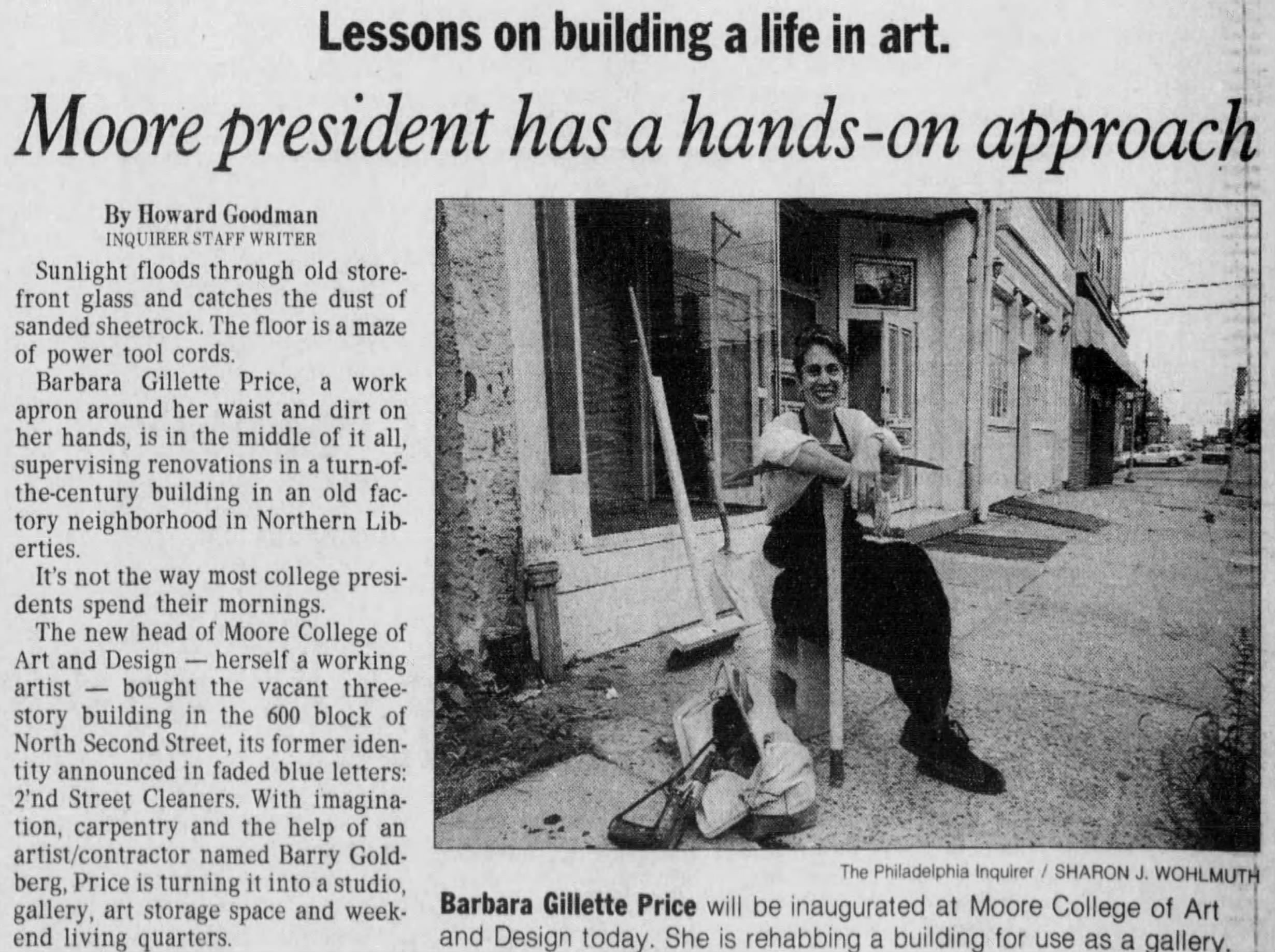
At Moore, she increased enrollment, established a career center, and personally refurbished her three-story studio on North Second Street into a gallery where students exhibited their work and handled logistics and publicity. She also forged working relationships with the Philadelphia School District and other art institutions, supervised an advertising campaign for female artists, and served as a role model for working artists in academia.
“That’s why I think my presence at Moore is a good thing,” she told The Inquirer in 1994.
In 1998, Rochelle Levy, then chair of Moore’s board of trustees, said: “Barbara has really been our ambassador out there. She has set an incredible role model for the students as a woman artist.”
Ms. Gillette Price left Moore in 1998, moved to Spain in 2000, taught art to primary school students, and continued to create and show her work. “Her commitment to arts education helped shape generations of creative thinkers,” former colleagues at Moore said in a tribute. “Her legacy lives on through the institutions she helped strengthen, the students she inspired, and the vibrant body of artistic work she leaves behind.”
Ms. Gillette Price was featured in The Inquirer when she joined Moore in 1994.Newspapers.com
One critic said her work “is of an inherent elegance that emerges from excellent craftsmanship and an intelligent narrative.”
She showed in dozens of solo and group exhibitions in Spain, Philadelphia, Maryland, Michigan, Washington, and elsewhere, and liked to work in the gallery as well as her studio. She painted about nature, light, woman’s perspectives, isolation and fear during the COVID-19 pandemic, and other topics.
“I seek to make the ordinary extraordinary,” she said on her website, barbaragilletteprice.com. “I am inspired by images I accumulate as I travel and view the world about me. This takes the form of remembered landscapes, figurative compositions, and subtle political statements.”
She was active in the Civil Rights Movement in Alabama in the 1960s, worked with the Woman’s Caucus for Art in Washington in the 1970s, and taught ceramics, painting, and drawing at the old Corcoran School of Art and Design in Washington and elsewhere. She belonged to the College Art Association and was on boards at the National Association of Schools of Art and Design, the Philadelphia Art Commission, and other organizations.
She earned grants for her painting and wrote essays and white papers about art. In one paper, she said: “The arts are the humanizing element in the education of the citizens of the 21st century.”
Barbara Amelia Gillette was born June 26, 1938, in Philadelphia. She and her family spent many summers in Atlantic City, and she graduated from Philadelphia High School for Girls.
She took piano lessons, attended Saturday concerts at the Philadelphia Orchestra for years, and hung out with high school boyfriend Edward Cutler and others at jazz clubs and the Gilded Cage coffee shop.
Melville Price died in 1970, and she reconnected with Edward Cutler. They married, had a daughter, Michelle, and lived in Washington. They divorced later, and he died earlier.
“I consider my mother’s greatest achievement to be the way she showed up as a parent,” her daughter said. “Her artistic legacy can be found in her paintings, drawings, textiles, and exhibitions. Her personal legacy lives on in the people she inspired, mentored, encouraged, and welcomed into her life.”
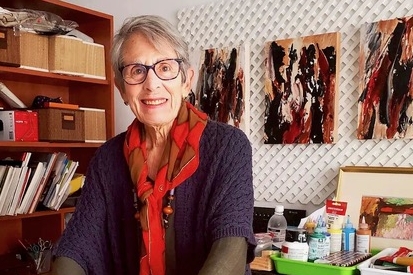
Ms. Gillette Price created in the galleries as well as her studio.Barbara Gillette Price
In addition to her daughter, Ms. Gillette Price is survived by a son-in-law, Eric Maroldo, and other relatives. A sister died earlier.
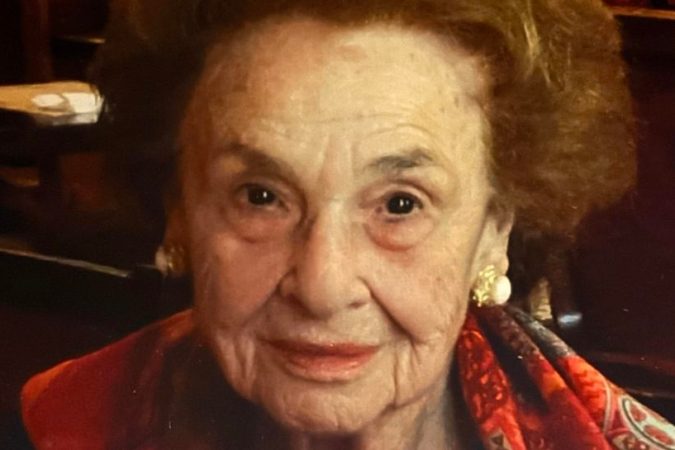
Neysa Adams, 104, of Philadelphia, 1971 chair of the local United Fund women’s committee, former president of the Rebecca Gratz Club, onetime vice president of the women’s council for the Federation of Jewish Agencies, former associate trustee at the University of Pennsylvania, scientist, high school teacher, investment adviser, and philanthropist, died Friday, June 26, of heart disease at the Hearth at Drexel.
Born and reared in Philadelphia, Mrs. Adams graduated from Olney High School and lived over the years in East Oak Lane, Germantown, and Elkins Park. She earned a degree in biochemistry with honors at Penn, did scientific research for a time, and taught English and history for two years at Philadelphia High School for Girls.
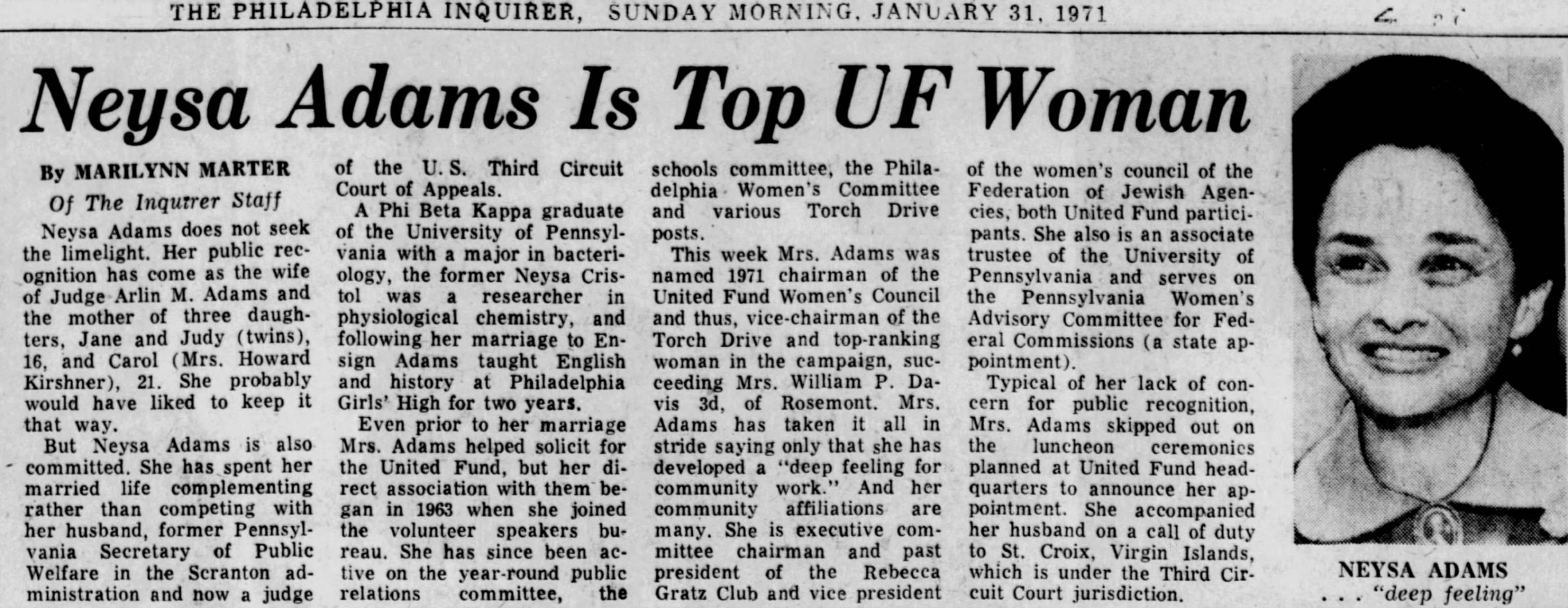
Smart, friendly, and energetic, she joined the Philadelphia United Fund volunteer speakers bureau in 1963, became active with the fund’s public relations committee, schools committee, and women’s committee, and organized many community fundraising campaigns. In 1971, she told The Inquirer she had a “deep feeling for community work.”
Mrs. Adams also served on the board at what is now Penn’s School of Social Policy and Practice and was active with the Emergency Aid of Pennsylvania Foundation, the National Conference on Social Welfare, and state and federal women’s advisory commissions. In 2003, then-Gov. Ed Rendell recognized her as a Distinguished Daughter of Pennsylvania for her “outstanding service and contributions to the Commonwealth of Pennsylvania.”
She also established Neysa Adams’ Library Fund at Reform Congregation Keneseth Israel in Elkins Park. Friends called Mrs. Adams “wonderful,” “outstanding,” and “one of life’s brightest lights” in tributes.
One friend said: “Neysa was one of the kind.”
This story about Mrs. Adams appeared in The Inquirer in 1971.Newspapers.com
Neysa Norma Cristol was born Aug. 7, 1921. She met Arlin Adams in high school, and they married in 1942 while he was on leave from the Navy. They had daughters Carol, Judy, and Jane. Her daughter Jane died in 2017.
Mrs. Adams and her husband, a state secretary of public welfare and longtime federal judge, traveled the world, mostly through his work, and she met a queen, a pope, several U.S. presidents, and other international notables. “Her resilience, intellectual curiosity, and dedication to serving others stand as a testament to a life well lived,” friends at the Hearth at Drexel said in 2024.
She was active at Keneseth Israel, enjoyed cooking, and was an avid reader. She also worked as an investment adviser.
She was featured on 6abc TV last August on her 104th birthday and said: “Get those things that make you happy. Enjoy them while you can.”
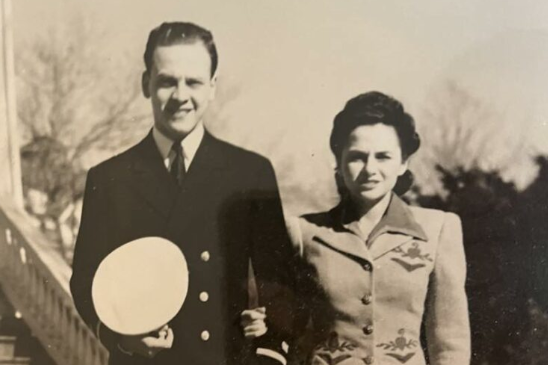
Mrs.Adams and husband, Arlin, married in 1942 while he was on leave from the Navy.Courtesy of the family
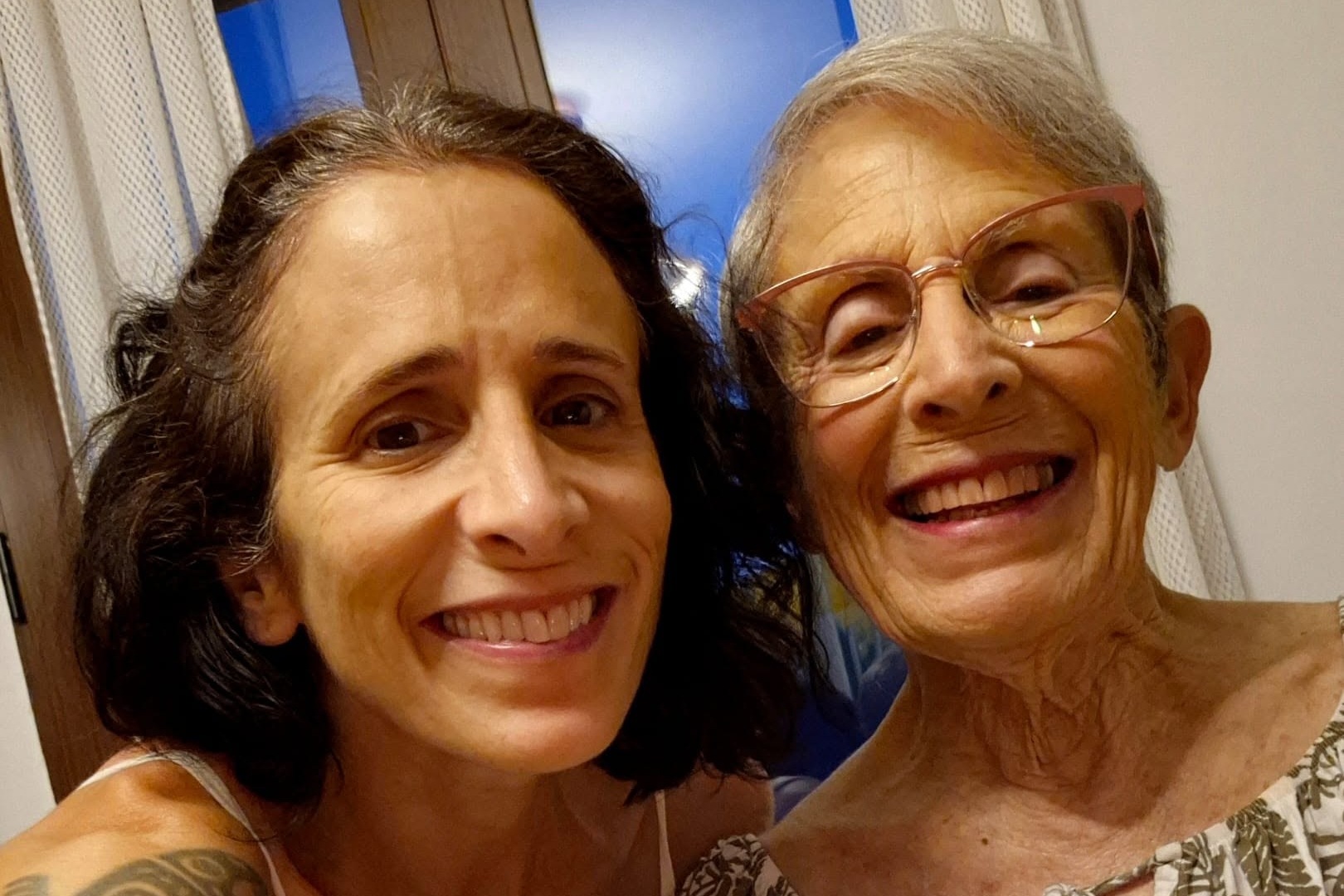
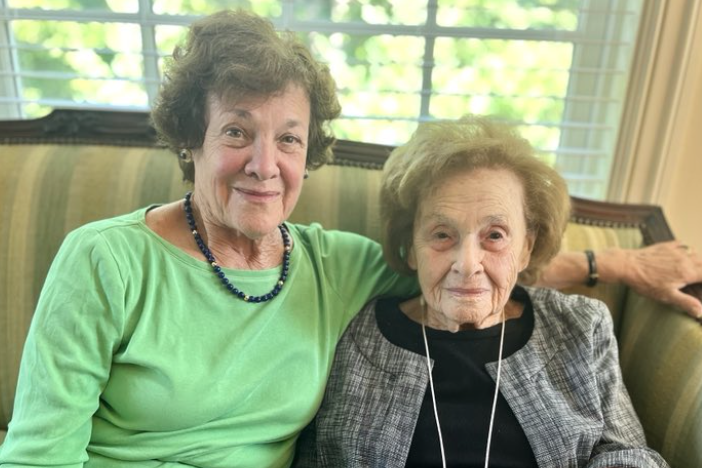
Her daughter Carol said: “She was outgoing and had lots of friends. It seemed like she knew everyone in Philadelphia.”
In addition to her daughters, Mrs. Adams is survived by four grandchildren, one great-grandson, and other relatives. A sister and a brother died earlier.
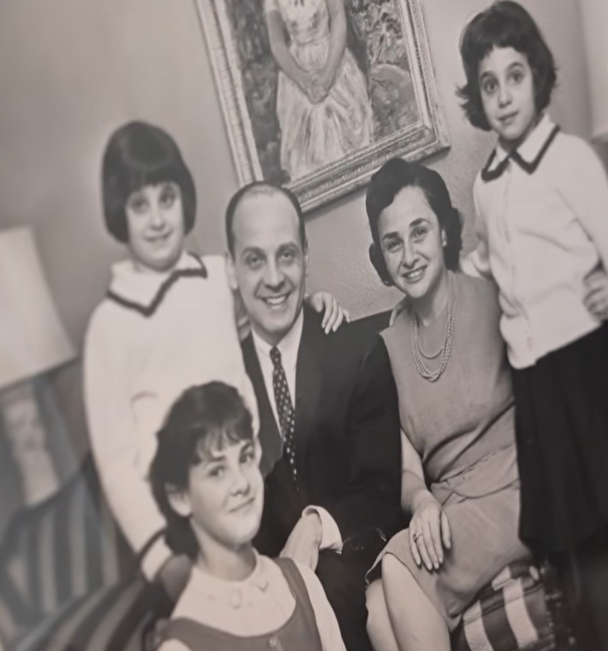
Mrs. Adams (second from right) doted on her husband and three daughters. Courtesy of the family“It seemed like she knew everyone in Philadelphia,” said Mrs. Adams’ daughter Carol (left). Courtesy of the family