Category: Obituaries

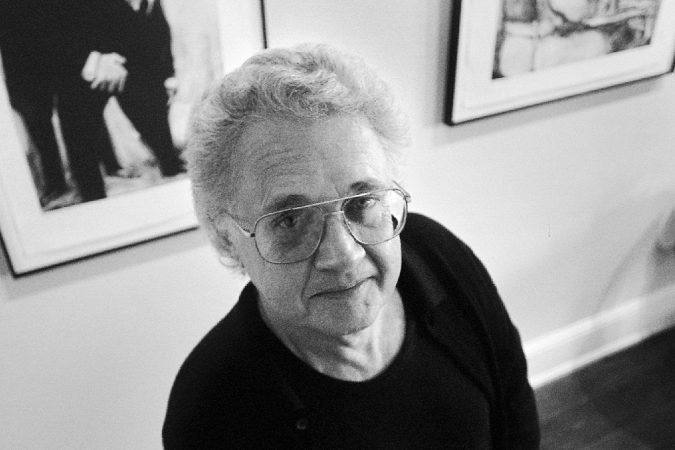
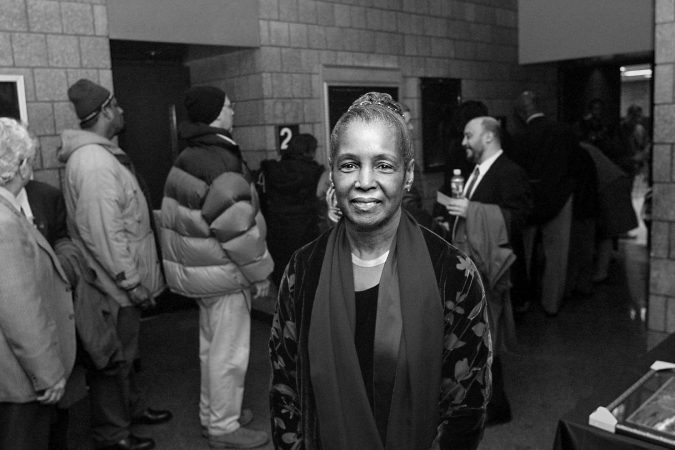
  • Lillian Roberts, crusading New York labor leader, dies at 98

    Lillian Roberts, crusading New York labor leader, dies at 98

    Lillian Roberts, a crusading labor leader hailed as a “tiger” — and briefly jailed — during her fiery tenure at the nation’s largest municipal workers union, which now represents more than 150,000 nurses, pothole fillers, zookeepers, and other New York City employees, died July 9 in Manhattan. She was 98.

    Her death, at a nursing facility, was from cardiac arrest, said Ivan Smith, her sister’s son, whom Ms. Roberts raised as her own after her sister’s death.

    Starting in the 1960s, Ms. Roberts established a reputation as a firebrand, working for — and, eventually, as a de facto partner of — Victor H. Gotbaum, the notoriously combative executive director of District Council 37.

    The district council — part of the American Federation of State, County and Municipal Employees, or AFSCME — has long been considered the nation’s most powerful public employees union, representing more than 1,000 job titles and nearly a third of the city’s municipal workers.

    Rising to prominence at a time when labor leadership was dominated by white men, Ms. Roberts, a Black woman, spent nearly 14 years as the associate director of District Council 37, which roughly quadrupled in membership during that period. Her biggest coup was unionizing 20,000 workers at the city’s public hospitals, in what the New York Times later called one of the largest organizing drives in American history.

    After a lengthy absence, she returned to District Council 37 as executive director in 2002, when she was 74, and served for 12 years.

    “I always felt that I had a job to do,” she said in an interview for the 2005 reference book Black Women in America. “It transcends whether I am male or female.”

    She added: “I never thought about not doing the job and not being aggressive.”

    In her quieter moments, she came across as the “embodiment of serenity,” the Times observed in 2002. But Ms. Roberts was often pugnacious.

    In 1968, she spent two weeks behind bars after leading a strike against three New York state mental hospitals, thus violating the state’s Public Employees’ Fair Employment Act, or Taylor Law, which bans public sector strikes. In the 1970s, she decried Mayor Abraham D. Beame’s plans to shutter several public hospitals, insisting that city residents would die as a result.

    “When Lillian’s angry, she can really blow her head off at people — those from her own side of the table as well as the other,” Deputy Mayor Basil A. Paterson, the city’s chief labor negotiator, told the Times in 1978. “But never in a meeting — she will always take them into another room to let them have it.”

    Lillian Davis was born Jan. 2, 1928, in Chicago, the second of five children of Henry Davis, a janitor and barber, and Lillian (Henry) Davis.

    The couple, who were transplants from rural Mississippi, struggled to survive during the Great Depression, and Lillian spent hours over a washboard helping her mother keep the household running.

    “I never really had a childhood,” she was quoted as saying in Black Women in America. “I had to be an old lady at a very young age.”

    An honors student in high school, she earned a scholarship to the University of Illinois Urbana-Champaign. But unable to afford room and board, she dropped out after less than two years.

    “I was so angry at society that here I was on welfare,” she recalled. “I did not want welfare, I was humiliated by it, and they were doing absolutely nothing to get me out of that situation.”

    Instead of receiving a diploma, she became the first Black nurse’s aide at the University of Chicago’s hospital, although she lacked the money to go on to nursing school. She remained in the aide job for more than a decade, eventually becoming active with her AFSCME local as a shop steward and secretary.

    She was taken under the wing of Gotbaum, then in charge of the Chicago district council of the AFSCME, who “noticed that I was aggressive, that I was responsible,” Ms. Roberts later said. In 1965, she followed Gotbaum to New York when he took over District Council 37.

    Ms. Roberts burnished her credentials as a labor hero by flouting Gov. Nelson A. Rockefeller and the Taylor Law during the 1968 hospital strikes. On her way into the 19th-century Civil Jail on West 37th Street, she was greeted with the chant, “Rocky in, Roberts out!”

    Sentenced to a month in jail, she was released after two weeks following a public outcry.

    In 1981, Ms. Roberts became the first Black woman to be appointed New York state labor commissioner, then known as the industrial commissioner, and she fought for improving workplace safety, for fair wages and for stronger unemployment insurance programs. After resigning in 1987, she joined the private sector as an executive at a health management organization.

    In addition to Smith, Ms. Roberts is survived by his brothers, Carl and Ralonzo Smith, whom she also raised as sons after her sister’s death. Her marriages to William Roberts and Enoch Jenkins ended in divorce.

    When she returned in 2002 to lead District Council 37, the union had “Cinderella-like, suffered through its own midnight,” the Times observed, “and turned into a squalid outfit in which officials embezzled millions of dollars and stuffed ballot boxes.”

    In essence, the Times wrote, she was coming back as a “fairy godmother.” But it was not all magic wands and glass slippers. Ms. Roberts clashed with the union’s board, as well as with Mayor Michael Bloomberg, a conflict that included sharp-tongued attacks over planned city layoffs in 2011.

    “The relationship between the mayor and Roberts,” the Times noted that year, “is far worse than that between previous mayors and leaders of District Council 37.”

    But she remained in her post until 2014, when she retired at 86. “This union,” she once said, “was my life’s work.”

    This article originally appeared in the New York Times.
  • Walt Odets, psychologist who delved into the minds of gay men, dies at 79

    Walt Odets, psychologist who delved into the minds of gay men, dies at 79

    Walt Odets, a psychologist whose work with gay men in the Bay Area at the height of the AIDS epidemic led him to write a book on a nearly taboo topic, the survivor’s guilt and depression experienced by men who were not infected with HIV, died July 5 at his home in Berkeley, Calif. He was 79.

    The cause was complications of Alzheimer’s disease, said his companion, Armen Davoudian.

    Mr. Odets’ 1995 book, In the Shadow of the Epidemic: Being HIV-Negative in the Age of AIDS, appeared more than a decade into the crisis — before effective treatments arrived and as thousands of men dying in their prime continued to grip gay communities in grief, fear, and anger.

    Mr. Odets, who was gay, wrote that there was also a “psychological epidemic” among those who were HIV-negative, who were “anxious and lonely in their ‘wellness.’”

    “For many,” he added, “survival is so difficult they sometimes wish they had not survived and sometimes hope they will not.”

    Speaking about this population, he acknowledged, was fraught.

    “It has often seemed selfish, inappropriate or simply ridiculous for the uninfected to have any important feelings about themselves,” he wrote. “Feelings about oneself seemed the exclusive right of those who were infected, sick or dying.”

    But such feelings mattered, he continued, because a sense of fatalism among HIV-negative men encouraged unsafe sex.

    Reviewing In the Shadow of the Epidemic for the New York Times Book Review, David L. Kirp, a professor of public policy at the University of California, Berkeley, wrote that it belonged on the same shelf as two classic studies of populations living with trauma: Robert Coles’ Children of Crisis, about the effects of racism, and Robert Jay Lifton’s Death in Life, about Hiroshima survivors.

    Walt Whitman Odets was born Feb. 4, 1947, in Los Angeles. He was the son of playwright Clifford Odets, the author of Waiting for Lefty, Awake and Sing! and other works, and an actor, Bette Grayson. An older sister, Nora, was born with a mental disability; their parents chose not to institutionalize her, and she grew up with the family.

    Both of his parents died by the time he was 16, and Mr. Odets spent part of his late adolescence in New York with his legal guardians, Lee Strasberg, the Method acting pioneer, and Strasberg’s wife, Paula.

    He received a Bachelor of Arts in philosophy from Wesleyan University in 1969. He was married to Paula Harrington, a journalist in the Bay Area, from 1983 to 1986. His sister died in 2008. His companion, Davoudian, is his only immediate survivor.

    Photography was Mr. Odets’ first career. His works are in the collections of the Oakland Museum of California, the Brooklyn Museum, and the Cantor Arts Center at Stanford University.

    After training in clinical psychology at the California Professional School of Psychology in San Francisco, he received his doctorate in 1989 and offered therapy in Berkeley to gay men as individuals or couples. In the years before his first book appeared, Mr. Odets was best known in the Bay Area as a fierce critic of AIDS prevention campaigns that had failed to slow infections among younger men.

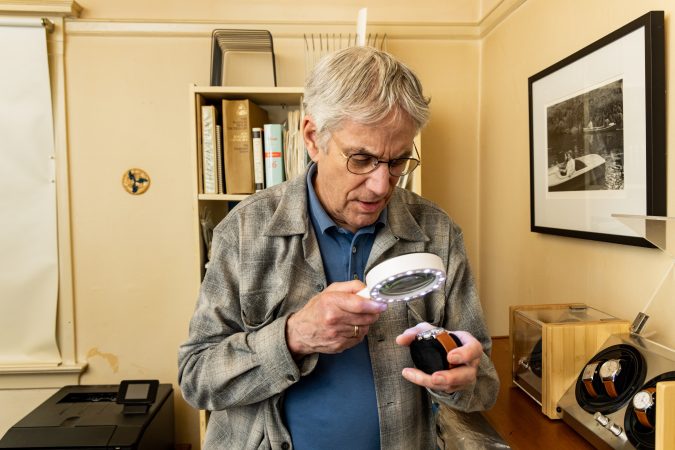
    He juggled his practice with writing some of the earliest and most influential watch reviews on the internet in the late 1990s. He disassembled timepieces, examined their mechanics with a microscope, and wrote knowing assessments for TimeZone, a website catering to watch collectors and horology buffs.

    A quarter-century after In the Shadow of the Epidemic, he wrote an update on gay men’s psychology, Out of the Shadows: Reimagining Gay Men’s Lives (2019).

    Despite evidence of progress — treatments, beginning in 1996, that drove AIDS mortality sharply downward; same-sex marriage becoming the law of the land — Mr. Odets dismissed the notion that America had outgrown its deep homophobia.

    He wrote that shame remained an ever-present emotion for many gay men and “still often lurks unconsciously behind the most successful of gay lives.”

    Gay identity, he maintained, entailed far more than merely a physical attraction to other men. Because his mother had died when he was a child and his sister was disabled, his emotional attachment to his father, he wrote, was a major influence on how he understood what it meant to be a gay man.

    “I have emotional feelings for men that I’m cautious about with women,” he explained to Publishers Weekly. “That’s really the crux of the whole book, that being gay is a whole internal life and a sensibility, and it’s much broader and much richer than the conventional male identity that’s so heavily promoted.”

    Out of the Shadows ends with an affecting account of the lifelong bonds that Mr. Odets forged with a gay college classmate and the man’s live-in lover. For decades, they were a bicoastal throuple, which sometimes expanded romantically to others, including a partner of Mr. Odets’, Robb Caramico, who died of AIDS in 1992.

    “There’s sadness in Odets’ life story,” Benoit Denizet-Lewis wrote in a Times review of the book, “but there’s mostly resilience, tenderness and a willingness to fashion an unapologetic gay life, sometimes against all odds.”

    This article originally appeared in the New York Times.
  • Clara Ester, activist who rushed to Martin Luther King Jr. after he was shot, dies at 78

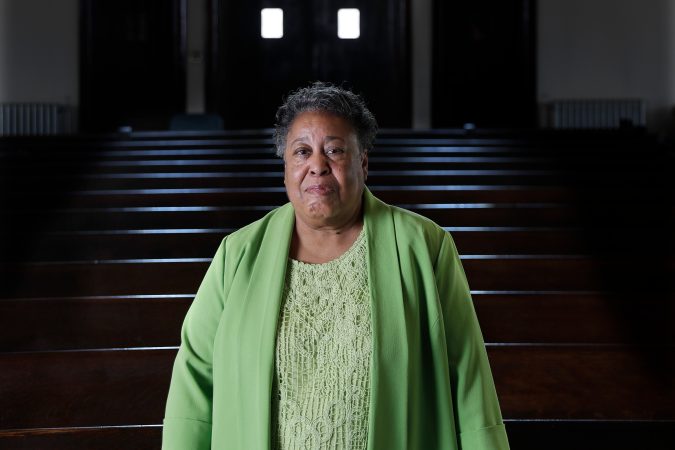
    Clara Ester, activist who rushed to Martin Luther King Jr. after he was shot, dies at 78

    NASHVILLE, Tenn. — Clara Ester, an activist who as a 20-year-old college student rushed to the Rev. Martin Luther King Jr.’s side when he was shot, has died.

    Ms. Ester, who died on July 9 at the age of 78, was among the few remaining witnesses to King’s assassination and its immediate aftermath in Memphis. With the passing of the Rev. Jesse Jackson Sr. in February and Ms. Ester this month, King aide and former U.N. ambassador Andrew Young is believed to be the last surviving eyewitness to the shooting.

    Ms. Ester grew up in Memphis attending Centenary United Methodist Church, where her pastor was civil rights leader the Rev. James Lawson.

    “We used to joke about colored water being Kool-Aid and the white water just being water, and so that satisfied us as children,” Ms. Ester told the Associated Press in 2018, around the 50th anniversary of King’s death. “But until you see the racism, until you see what has been withheld from you because of your color — is what started to really truly anger me. And I knew if there was a movement that could help change any of that, I had to be in it.”

    Civil rights issues were often discussed from the pulpit of her church, Ms. Ester said. Lawson was very involved in the sanitation workers’ strike, so it was natural for her to become involved too.

    “I got to the point that I didn’t miss a mass meeting,” she said. “I picketed every day that the picket lines were up.”

    Even 50 years later, she clearly remembered the impact of hearing King’s speech at the Mason Temple the night before he was assassinated and how it seemed to foreshadow his death the next day.

    “He had seen the mountaintop,” Ms. Ester said. “It was evident on the balcony — how calm.”

    Ms. Ester had gone to the Lorraine Motel for dinner on April 4, 1968, when she saw King chatting on the balcony with people below. Then she heard a shot.

    “He was speaking calmly and pleasantly to a crowd,” she said. “And so he was happy at that moment. But to lay there with his eyes open, looking toward heaven. He had seen the promised land, and he may not get there with us, but he promised that we as a people will see the promised land.”

    Ms. Ester said she ran to King and saw he was struggling for air. She tried to loosen his belt and asked someone to bring towels to try to staunch the bleeding. After King was taken away by ambulance, she had to stay at the hotel, where she was questioned by police.

    When she was finally allowed to go home, her parents asked if she was OK.

    “I said, ‘No, I’m not OK. There’s something wrong with this.’ And it was many months later that I guess at some point, I just broke down,” Ms. Ester said.

    She left Memphis to work elsewhere that summer, and as soon as she finished school, she left for good.

    “It’s just too much to … it hurt me that it happened, but it hurt me that it happened in my hometown, that that’s the legacy for this city,” she said.

    Ms. Ester moved to Mobile, Ala., where she found work as a neighborhood organizer at the Dumas Wesley Community Center, a Christian service program supporting children, seniors, and people experiencing homelessness. She later was named the executive director of the center, serving in that role until she retired in 2006.

    In 1986, she was commissioned as a deaconess, a type of lay minister, in the United Methodist Church. She remained active in the church throughout her life and held leadership roles that included serving as the national vice president of United Methodist Women.

    Methodist Bishop David Graves met Ms. Ester when he was assigned to the Alabama-West Florida Conference in 2016. He wrote in a remembrance that Ms. Ester did not take to him at first, but gradually they came to love each other.

    “Thank you, Clara Ester, for a life well lived and for loving me. It changed me,” he wrote. “Clara will be missed immensely, but what a day of rejoicing is going on in heaven. For love will always find a way for those who trust in Jesus and seek to love even in our differences.”

  • Brenda Fricker, Irish actor who won Oscar for ‘My Left Foot,’ dies at 81

    Brenda Fricker, Irish actor who won Oscar for ‘My Left Foot,’ dies at 81

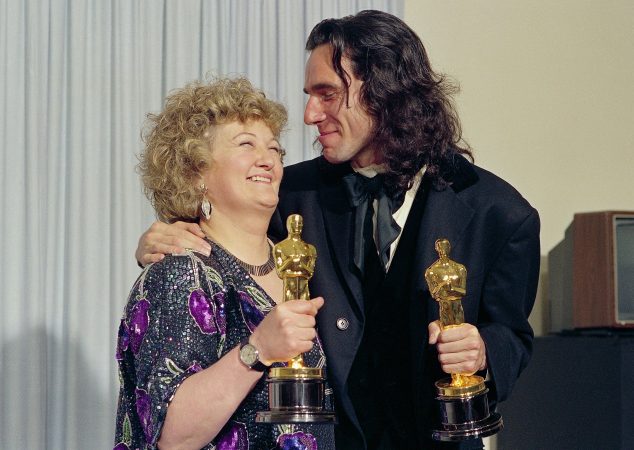
    LONDON — Brenda Fricker, who became the first Irish woman to win an Academy Award for her role as Bridget Fagan Brown in the 1989 film My Left Foot, has died. She was 81.

    The Irish character actor died Thursday night in Dublin after a period of ill health, her agent, Phil Belfield said in a statement.

    Ms. Fricker won the Academy Award in 1990 for best supporting actress for her portrayal of the determined mother of Christy Brown, a writer and painter who was born with cerebral palsy and could control only his left foot. Daniel Day-Lewis, who played Brown, won the award for best actor.

    “She was just an amazing actress, amazing character, forceful personality, great writer,” the movie’s director, Jim Sheridan, told Irish national broadcaster RTE. “She could be obsessive — in everything she did — life, work, love. But no real malice or anything, she was just a very strong personality and a good laugh.”

    Ms. Fricker said she was stunned when she won the Oscar, never thinking it was possible. In her acceptance speech, she thanked Brown “just for being alive” and paid tribute to his mother, saying “anybody who gives birth 22 times deserves one of these.”

    She later spoke of how the award doomed her to being typecast to forever playing roles as mothers. Later in life, she said she used the weighty statuette to prop open her bathroom door.

    Ms. Fricker, who appeared in more than 90 films and television shows between 1964 and 2024, was known for her role as the “pigeon lady” in the 1992 film Home Alone 2: Lost in New York, in which she played a homeless woman who befriended Macaulay Culkin’s character in New York’s Central Park.

    She also featured in the original cast of the BBC medical drama Casualty and appeared alongside Cate Blanchett in Veronica Guerin,” the story of an Irish investigative journalist who was murdered in 1996.

    “We will never see her like again and the world is lesser for the lack of her,’’ Belfield said. “I was honored to know, love, and work with her and she will always have a place in my heart and in the heart of so many film and TV fans the world over.”

    Born in Dublin in 1945, Ms. Fricker received the city’s highest honor earlier this year when she was awarded the Freedom of the City.

    In her autobiography She Died Young: A Life in Fragments, Ms. Fricker describes both happy childhood escapades with her sister Grania and her struggles to overcome sexual violence and mental health issues, which caused her to be institutionalized several times. Published in September 2025, the book appeared on the Irish Sunday Times bestseller list.

    Simon Harris, Ireland’s deputy prime minister, said the country had lost a national treasure.

    “She truly was among the greatest exports this country has ever produced and an ambassador for Irish talent on the world stage,’’ he said. ”Quite simply, we will never see the like of her ever again.

    Ms. Fricker was married to director Barry Davies from 1979 until they divorced in 1988. She became pregnant several times but suffered miscarriages, which led to severe depression much of her life.

  • Ewart Rouse, retired award-winning Inquirer reporter and editor, author, and journalism professor, has died at 85

    Ewart Rouse, retired award-winning Inquirer reporter and editor, author, and journalism professor, has died at 85

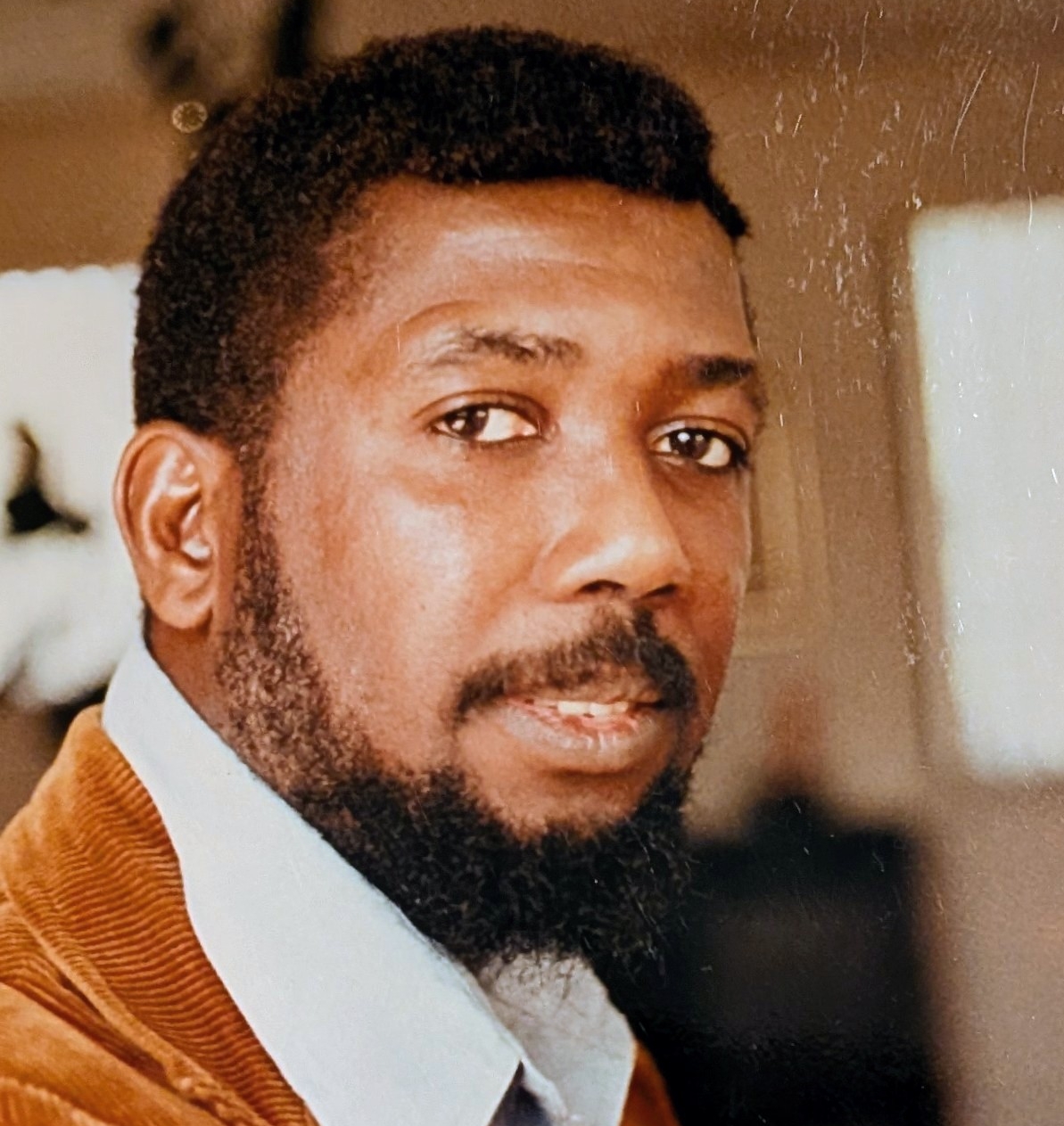
    Ewart Rouse, 85, of Lawnside, retired award-winning reporter and editor for The Inquirer, author, journalism adjunct professor, mentor, immigrant advocate, and indomitable cricketer, died Thursday, July 2, of age-associated decline at the Samaritan Center at Voorhees.

    Born in Trinidad, West Indies, Mr. Rouse immigrated to New York in 1969 and joined The Inquirer in 1974. For nearly 30 years, until he retired in 2002, Mr. Rouse was an award-winning business and news reporter, suburban editor, and mentor to hundreds of young journalists.

    He won a 1980 Keystone Award for a news series on city taxi service and was recognized for another series on street gang homicides involving Black youth. Later, he wrote business columns and covered South Jersey news.

    He opened a 1975 story about former President Gerald Ford’s first visit to Philadelphia with: “The old man sat alone and dejectedly with his flags against the wall of the Philadelphia National Bank building at 5th and Market Streets. ‘Not one,’ he muttered. ‘I haven’t sold not one flag today.’”

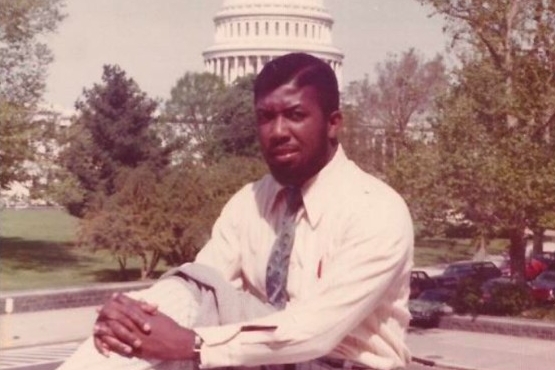
    Mr. Rouse worked for the Associated Press in Washington DC.Courtesy of the family

    Before The Inquirer, Mr. Rouse was a news and political reporter for the Associated Press in Newark, N.J., Atlantic City, and Washington, D.C. “He was a popular colleague who contributed importantly to the paper’s growth,” Gene Foreman, retired managing editor at The Inquirer, said on Facebook.

    Other former Inquirer colleagues called Mr. Rouse “professional and gracious,” “careful and respectful,” and “kind and generous.” Retired Inquirer editor Lil Swanson said on Facebook: “Ewart was filled with wisdom and grace. When he was an editor, young writers flocked to him because he always made their stories better and helped them grow.”

    He covered courts and politics for the Trinidad Guardian in Port-of-Spain before leaving for New York, and interviewed Trinidad Nobel laureate V.S. Naipaul for the 1997 book Conversations with V.S. Naipaul. In Philadelphia and South Jersey, he taught news writing, business writing, and investigative journalism at Temple, Rutgers, and Arcadia Universities.

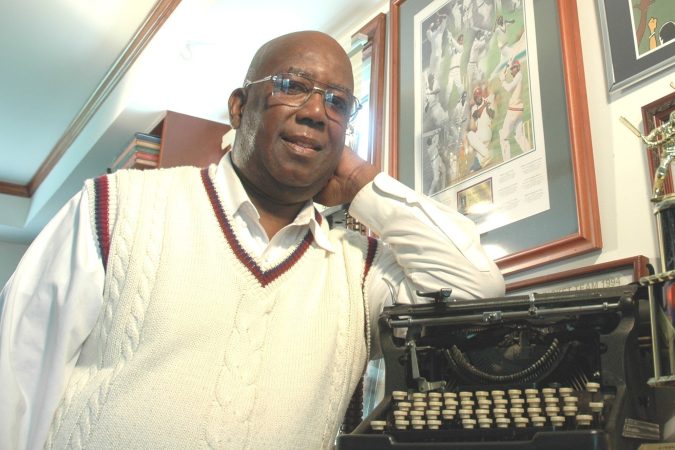
    He mentored many students of color and edited books for other writers. He enjoyed fiction and detailed plots, and wrote a four-book series of cricket-themed novels he called the Sticky Wicket Collection.

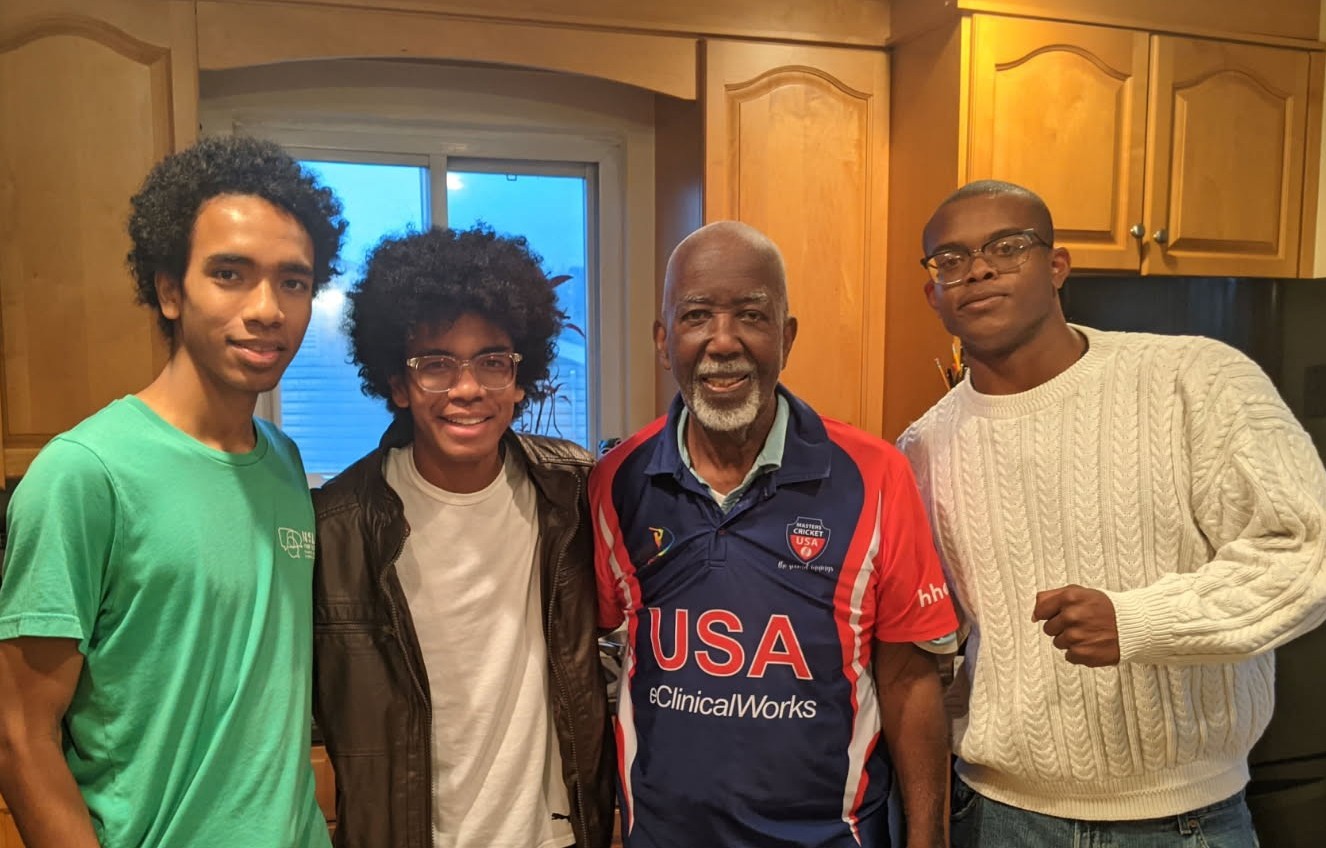
    Mr. Rouse loved to play, watch, and write about cricket.Ewart Rouse

    Readers called his books “highly entertaining” and “a wonderful addition to cricket literature” in reviews. His daughter Karen said: “The clackety-clack (zing!) of his typewriter was a constant in our home.”

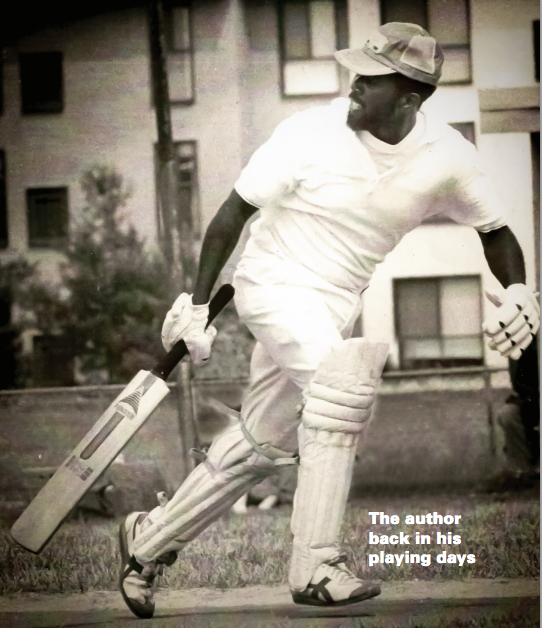
    Mr. Rouse played cricket in Trinidad and later in South Jersey, and he cofounded the Philadelphia Cricket League, the New Jersey Cricket Association, and the Echelon Cricket Club. He played the game, managed teams, and became one of the region’s greatest advocates for cricket and its immigrant players.

    In 2013, he earned a lifetime achievement award from the South Jersey Caribbean Cultural and Development Organization, and recognition from then-Camden Mayor Dana Redd for his contributions to the community as a journalist, teacher, and cricket activist. “It truly was an honor to be recognized by my own community,” he said on his website, ewartrouse.com.

    In a 2016 online interview, Mr. Rouse was asked to advise young writers. “Read anything you get your hands on,” he said, “From books and newspapers … to labels on paint. Each contains nuggets of information that the mind will retrieve for just the right spot in your next project.”

    Mr. Rouse and his wife, Vanda, met in Trinidad.Courtesy of the family

    Ewart Rigsby Rouse was born Sept. 16, 1940, in Tunapuna, Trinidad. He was an avid reader and creative writer as a boy, and noticed one day that several of his favorite writers — Charles Dickens, John Steinbeck, and Ernest Hemingway — started out as newspaper reporters.

    “And now I wanted to be a journalist like them,” he said in a short self-published autobiography.

    He met his wife, Vanda, in Trinidad, and they married and had daughters Joann, Karen, and Kristin. They lived in New York, Pleasantville, N.J., and Washington, and settled in Lawnside in the 1970s.

    Mr. Rouse was active with the C.C. Morris Cricket Library Association, the South Jersey Writers’ Group, and the Rainy Tuesday Writers Group. He was an avid gardener and routinely gave away bags of home-grown tomatoes to friends and neighbors.

    Mr. Rouse enjoyed time with his grandsons. Courtesy of the family

    He collected records, listened to Nat King Cole and Frank Sinatra, followed the 76ers, and grilled outdoors as often as possible. He took his family on memorable trips to Trinidad that “opened up a world to us that was accessible, one that we could dare to explore,” said his daughter Karen.

    In 2016, Mr. Rouse told aspiring writers: “Who knows, maybe you end up with a bestseller. Some might call you a dreamer. But, hey, as the saying goes, you can’t have a dream come [true] if you don’t have a dream.”

    In addition to his wife and daughters, Mr. Rouse is survived by three grandsons, two sisters, a brother, and other relatives.

    A private celebration of his life is to be held later.

    Donations in his name may be made to the Philadelphia Association of Black Journalists, 30 S. 15th St., 15th Floor, Philadelphia, Pa. 19102.

    A former Inquirer colleague called Mr. Rouse “a true and kind gentleman.”Courtesy of the family
  • George Gould, a pioneering Philadelphia legal aid lawyer, has died at 83

    George Gould, a pioneering Philadelphia legal aid lawyer, has died at 83

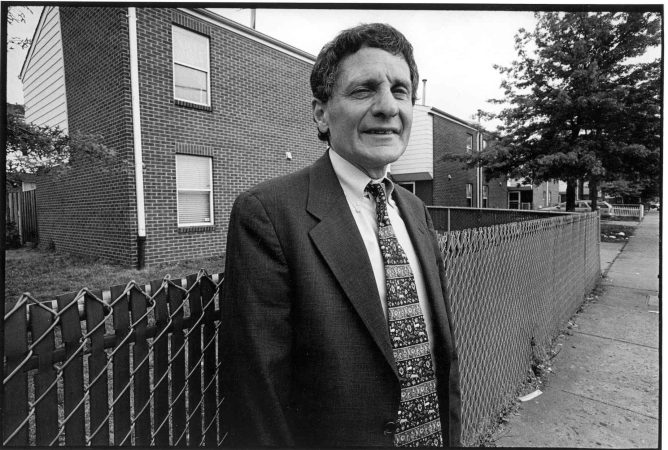
    George Gould, 83, of Philadelphia, who founded the housing unit at Community Legal Services and fought for the rights of struggling Philadelphians, died on Sunday, June 28, at Abington Hospital after a long illness.

    For over 50 years, Mr. Gould worked in legal aid and housing law, arguing unique angles in the courtroom and often winning precedent-setting rulings.

    Mr. Gould represented public housing residents and families stricken by lead paint poisoning, while lobbying for new laws and regulations in City Hall and Harrisburg. He clashed with powerful politicians, but he also knew how to wield influence with officials and build alliances.

    “He was the archetypal legal services lawyer,” said Jonathan Stein, a longtime colleague at Community Legal Services. “He brought so much unbound energy, dedication, aggressiveness, and creative lawyering to his work.”

    Mr. Gould was born in Philadelphia on March 12, 1943, grew up in Elkins Park, and played football at Cheltenham High School and Muhlenberg College, where he majored in history. After a stint as a public school teacher in North Philly, he attended Dickinson School of Law.

    He joined Community Legal Services in 1970 and was soon tasked with founding its housing unit, where he won rights for public housing tenants and fought to ensure that affordable homes were built even in neighborhoods where residents resisted.

    “George was full of passion, he lived deeply, and with such enthusiasm and energy,” said his wife, Diane Lee Gallagher. “It was hard to keep up with him, but I have to say he challenged me in so many good ways.”

    In a landmark case in the 1970s, Mr. Gould went up against Mayor Frank Rizzo with Stein and Richard Nixon‘s housing department. He and his teammates proved in court that the mayor’s intent to block public housing from the overwhelmingly white South Philly neighborhood was racially motivated.

    Their victory got 120 homes built in Whitman after over a decade of delay.

    “It did have an impact on the city, especially finding a mayor guilty of intentional racial discrimination,” Mr. Gould recollected in a 2015 interview. “That was … unheard of.”

    Mr. Gould sought to get utility allowances adjusted for public housing residents when rates change, a case in which he fought the Philadelphia Housing Authority for 15 years before eventually winning in federal court.

    “It was just very creative and courageous lawyering,” said former colleague Irv Ackelsberg. “It’s hard to minimize just how important he was and how much he was loved by his colleagues.”

    Mr. Gould’s passion for his work was legendary and at times intimidating.

    In the days before computers or online legal databases, Mr. Gould would pore over law books for hours looking for precedent on which to build his cases, slamming the thick tomes in frustration.

    “Then all of a sudden, he’d find a good case, and you would hear ‘oh baby, oh baby, oh baby,’” Ackelsberg recalled. “It was just so much fun.”

    Mr. Gould also lent his expertise to brothers John and Milton Street, who went on to become Philadelphia’s mayor and a state senator, respectively, as they made a name for themselves by protesting the status quo in city politics and housing policy.

    “With the help of [Mr. Gould], we had indisputable information to validate our public policy positions,” former Mayor John Street said of his relationship with Mr. Gould during the 1970s. “When we talked about our issues we were armed with legitimate and very valuable facts and figures to substantiate our position — something that is often missing when community groups protest.”

    During the harsh recession of the early 1980s, Mr. Gould helped craft the state-level Homeowners Emergency Mortgage Assistance Program, which allowed unemployed people to make lower payments on their homes for up to three years. Close to 60,000 applicants have been approved.

    Later, Mr. Gould served as a mentor for generations of younger lawyers, including Councilmember Rue Landau.

    “He taught me the foundations of everything I know,” Landau said. “His fighting and optimistic outlook was super helpful when you were drowning in your cases.”

    During his early decades at Community Legal Services, he was known for his work ethic. John Street recalls that he could call Mr. Gould any time and that “his work-life balance appeared to me to be totally out of wack.”

    That changed as Mr. Gould got older. He married his longtime partner Diane L. Gallagher in 1990, and a few years later they adopted their son Peter.

    “He really modeled for me that can be very invested in your family,” while working very hard, said a former colleague Rachel Garland, who now leads the Housing Unit. “It’s like he was the ultimate workaholic, but he also took lots of really fun vacations.”

    Mr. Gould loved skiing, ran marathons, fished, rode his bike to work, and was obsessed with the Eagles. He cooked seafood and enjoyed gin gibsons, a martini with cocktail onions instead of olives. When dining out, he sometimes brought his own jar of onions.

    Until his retirement, Mr. Gould could still be found in City Hall lobbying for stricter regulations on lead paint in rental properties and other tenant rights issues.

    In addition to his wife and son, Mr. Gould is survived by two cousins who were like brothers to him, Stephen and Robert Isard.

    Services are scheduled for 2:30 p.m. Friday, July 24, at Trinity Memorial Church, 2212 Spruce St., Philadelphia 19103.

  • Gerry O’Reilly, Villanova track Hall of Famer, Irish Olympian, and Vanguard executive, has died at 61

    Gerry O’Reilly, Villanova track Hall of Famer, Irish Olympian, and Vanguard executive, has died at 61

    Gerry O’Reilly, 61, of Chester Springs, Hall of Fame middle distance track star at Villanova University, 1988 Irish Olympian in the 1,500-meter run, longtime executive at the Vanguard Group Inc., mentor, and role model, died Thursday, June 11, at Phoenixville Hospital after an earlier sudden cardiac event.

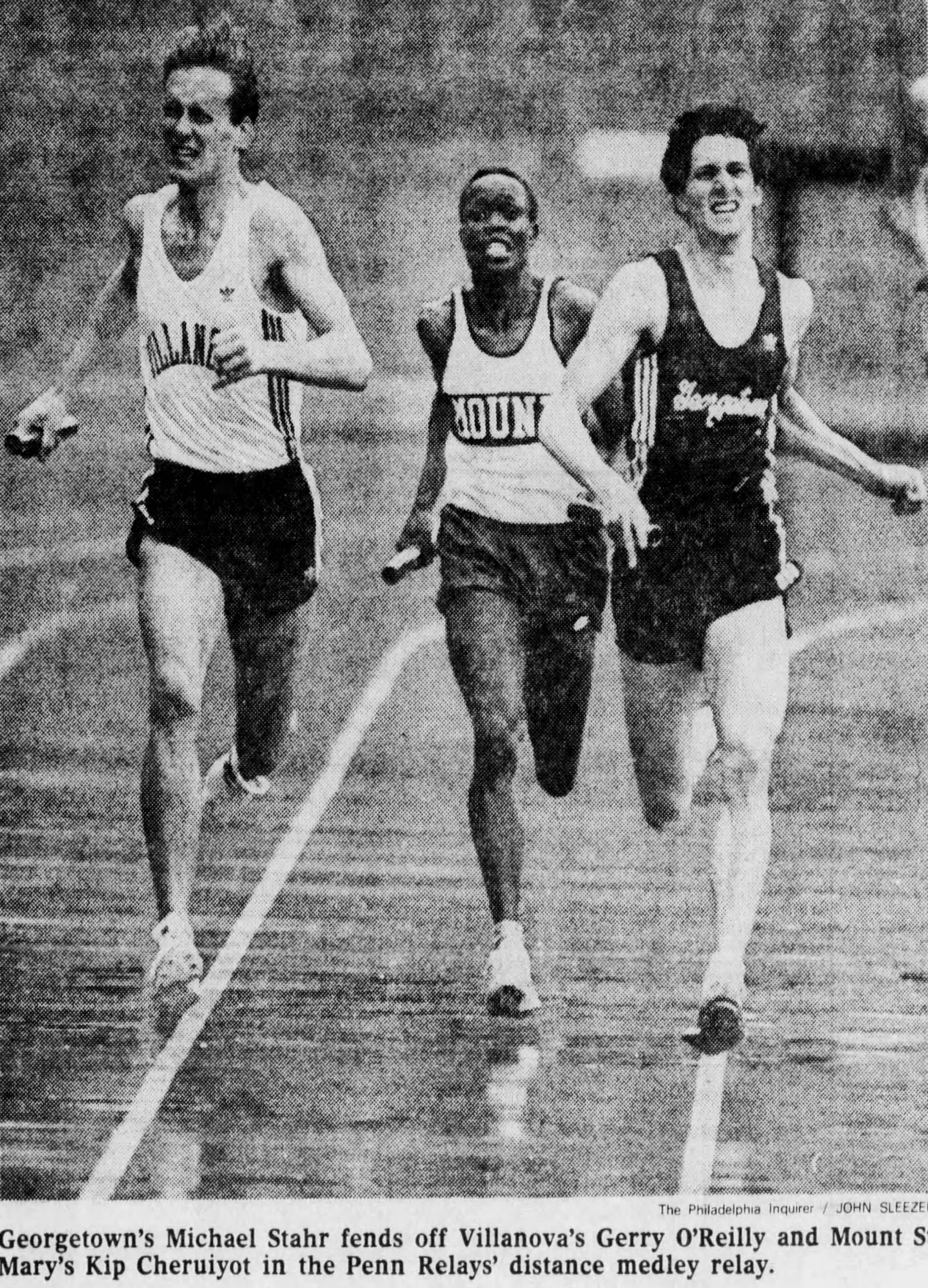
    Born and reared in Dunboyne, County Meath, Ireland, Mr. O’Reilly earned a track scholarship to Villanova in 1983 and joined a dozen other Irish athletes in what became known as the school’s Irish Pipeline to the Main Line. He went on to run cross-country and indoor and outdoor track, win seven Big East Conference championships, and hold the Big East outdoor record in the 1,500 for 37 years.

    He ran the 1,500- and 3,000-meter runs, the mile, and the distance medley relay at Villanova, and was named All-America four times. He won six national collegiate championships, was named outstanding performer at the 1986 Big East Indoor Championships, and was inducted into the Penn Relays Wall of Fame in 2007 and the Villanova Varsity Club Hall of Fame in 2009.

    “Without exaggeration, those were four of the best years of my life,” Mr. O’Reilly told Dave Thomas on the Belmont Plateau Hall of Fame podcast. Villanova “kind of set me up both athletically and academically for the rest of my life.”

    Marcus O’Sullivan, former Villanova teammate and countryman, now director of track and field and cross-country at Villanova, said Mr. O’Reilly “had a steadfast moral compass that guided him in his life, and in doing so it had an intoxicating influence on others. … We all need a person like Gerry O’Reilly in our lives.”

    After college, Mr. O’Reilly competed in the international Millrose Games in New York, the 1987 World Championships, the 1989 World Indoor Championships, and for Ireland in what is now the World Athletics Championships. At the 1988 Summer Olympics in Seoul, South Korea, he made it to the semifinals of the 1,500.

    Irish Olympic team officials called him “an exceptional athlete” and praised his “genuine commitment to helping the next generation.” They said: “Once an Olympian, always an Olympian.”

    Irish marathon Olympian John Treacy told the Irish Times: “Gerry was a smashing runner and just the nicest guy, great for staying in contact and communicating with other Irish runners over the years.”

    Mr. O’Reilly ran miles at night after school in the rural Irish fields and lanes, and joined the Dunboyne Athletic Club when he was 9.
    Villanova University

    Mr. O’Reilly was also inducted into the Belmont Plateau Hall of Fame in 2025 and recently honored by his hometown Dunboyne Athletic Club.

    He earned a bachelor’s degree in economics in 1987, joined Vanguard in 1992 and the trading desk in 1994, and worked as an investment leader and portfolio manager. He was a mentor, colleagues said in a tribute, “who made immeasurable contributions to several of Vanguard’s flagship index funds.”

    He served on corporate panels and lectured at leadership development events. Colleagues called him “riveting and influential” and “a giant in every sense except ego.” One said: “You could tell he truly cared about the markets and about doing things right.”

    A friend said: “Great athlete, great person.”

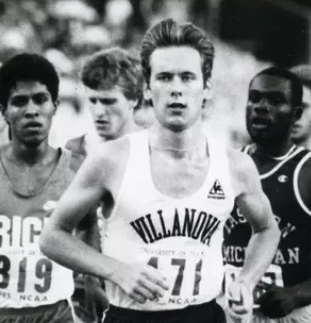
    This photo and a story about Mr. O’Reilly (left) appeared in The Inquirer in 1987.Newspapers.com

    Gerard Christopher O’Reilly was born July 1, 1964. He was the oldest of six children and excelled at cross-country, track, soccer, and other sports.

    He ran miles at night after school in the rural Irish fields and lanes, joined the Dunboyne Athletic Club when he was 9, and was inspired, he said later, by Irishman Eamonn Coghlan’s fourth-place finish in the 1,500 at the 1976 Summer Olympics. Mr. O’Reilly went on to win the 1983 Irish Junior 1,500 championship.

    He met fellow track star Melody Sye, and they married in 1992 and had a daughter, Meghan, and sons Keelan, Jack, and Conor. They divorced later.

    “Despite all his trophies and merits,” Mr. O’Reilly’s family said in a tribute, “he always remained humble and would say being a dad to his four kids was his proudest accomplishment.”

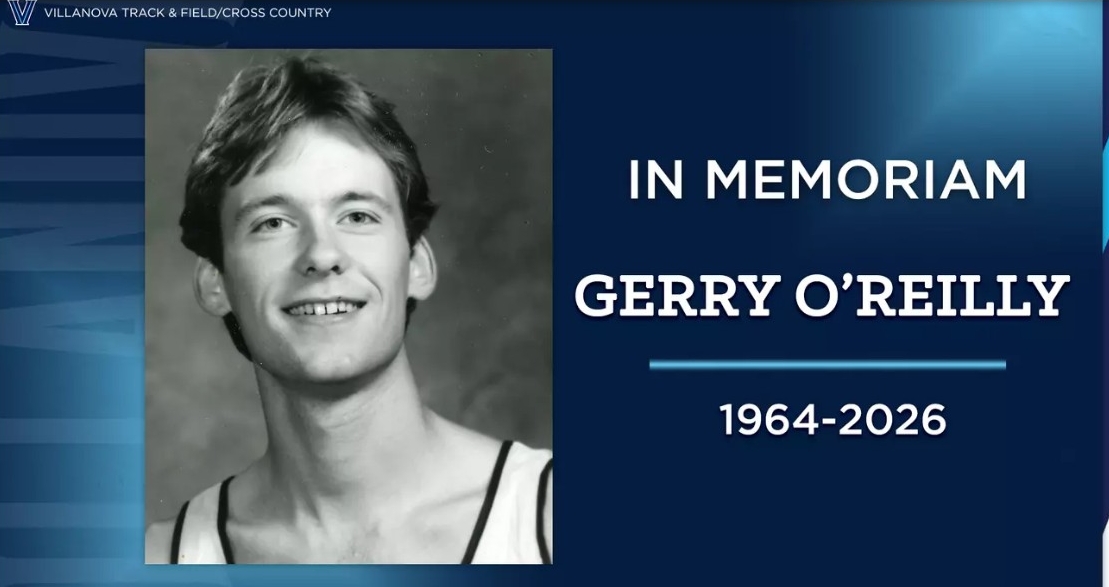
    Villanova honored Mr. O’Reilly online.Villanova University

    Mr. O’Reilly was an avid bicyclist, and he spent many weekends on long rides and at Eagles games on Sundays. He liked poker, hikes with his dog, Bear, and watching sports with his family.

    “Most of all,” his family said, “he simply enjoyed cracking jokes, sharing stories, and spending time with his friends and family.”

    In addition to his children and former wife, Mr. O’Reilly is survived by three sisters, two brothers, and other relatives. “His final gift,” his family said, “was saving multiple lives through organ donation.”

    Services were held earlier.

    Donations in his name may be made to the American Heart Association, 7272 Greenville Ave., Dallas, Texas 75231; Special Olympics, 2600 Virginia Ave. N.W., 11th Floor, Washington, D.C. 20037; and the American Cancer Society, Box 6704, Hagerstown, Md. 21741.

  • Mark Donovan Hagins, an actor, playwright, and educator who nurtured Philly’s theater community, has died at 56

    Mark Donovan Hagins, an actor, playwright, and educator who nurtured Philly’s theater community, has died at 56

    Mark Donovan Hagins, 56, an actor, teacher, and producer who knew everyone in Philadelphia’s theater community, from the upstarts to the grizzled veterans, died Wednesday, June 24, at his home. His family said his death was sudden but could not provide further details.

    As a resident producer with the Philadelphia Young Playwrights nonprofit, Mr. Hagins mentored, educated, and staunchly advocated for countless young members of the city’s theater community. Mr. Hagins was known as a laid-back person who could calmly solve problems under pressure, while remaining curious and dedicated to serving his students. Those who worked with him said he was an imaginative, collaborative artist who understood the history of Black theater in Philadelphia and was interested in cultivating its future. He had a talent for bringing entertaining stories to life, with even the barest of tools.

    His acting career included productions with Philadelphia’s Freedom Theatre, Azuka Theatre, Walnut Street Theatre, and the Rutgers-Camden Center for the Arts, appearances in the second season of the HBO show The Wire, and roles in other theater workshops, television shows, and independent films.

    One of his first roles came in 1999, when he connected with Philadelphia Young Playwrights as a student at Temple University and performed in the organization’s annual New Voices festival. After graduating in 2000, Mr. Hagins joined the nonprofit as a teaching artist and classroom actor to guide young playwrights and actors, even while his own theater career was just beginning. He produced numerous works by the city’s youth, including through the New Voices festival, where middle, high school, and even elementary school playwrights have their works performed by adult actors.

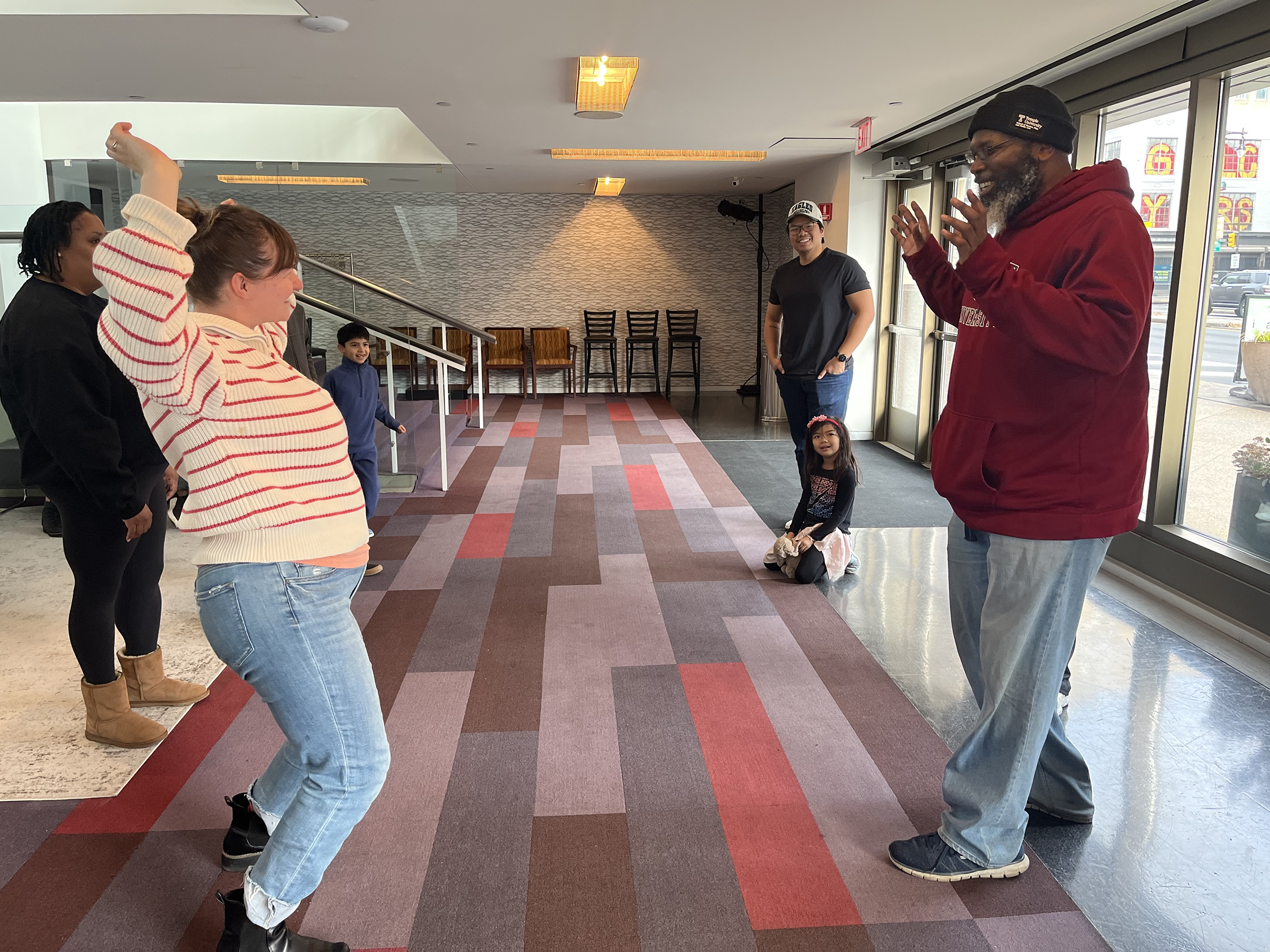
    Mark Donovan Harris teaching Philadelphia Young Playwrights students. He first connected with the organization when he was a student at Temple University in 1999.Philadelphia Young Playwrights

    “He believed that coming back to North Philadelphia … could make a difference in young people’s lives. And he said, if you could get through them through acting … you could change their momentum. You could change their environment. You could change their way of thinking. When they became adults, you know they would be better people in the world. So he invested into them,” said his aunt Millicent Platt.

    Mr. Hagins was born July 2, 1969. He grew up in the Hartranft section of North Philadelphia with his parents, the Rev. Paul Hagins and Vermell Hagins, and sister, Ramona Johnson, and spent his summers visiting family in North Carolina. Mr. Hagins, who went by his middle name, Donovan, in the theater world, always was interested in theater, but found it to be his passion once he enrolled at Temple, his family said.

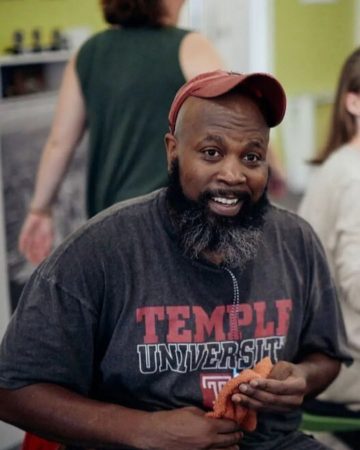
    “A fixture of our Temple Theaters community, Donovan was a proud Temple alum invariably seen repping his school with a hat or shirt,” Temple Theaters posted in an online tribute. “He lived in Cherry and White. Donovan embodied the values of generosity and collaboration, showing an unwavering belief in the power of young voices.”

    Professional actors who worked with him spoke highly of how he curated and directed student productions, said LaNeshe Miller-White, executive director of Philadelphia Young Playwrights. While he had a calming, comforting presence around people, Mr. Hagins was always willing to have fun, too, whether it be playing a silly character written by a student or taking hold of the microphone for his weekly karaoke outing, she said. He took his relationships with students seriously, and stayed in touch with some of his mentees long after their time with the program ended.

    “Donovan’s dedication to young artists and to PYP was unwavering, and his generosity, wisdom, and kindness touched countless students and colleagues across Philadelphia and beyond,” her organization wrote after his passing.

    Mark Donovan Hagins stands with Philadelphia Young Playwrights operations manager Ali Nebistinsky.Philadelphia Young Playwrights

    And while playwriting and theater drove him, Platt said, Mr. Hagins’ niece, Ragan Johnson, 25, and his nephew, Gregory Johnson III, 22, were his heart.

    His niece remembered visiting her uncle in Philadelphia, where they would eat cheesesteaks or visit Reading Terminal Market, and bond over Michael Jackson’s music. She said he was a great listener, and recalled how fun it was to watch him perform onstage in Washington during a period when he lived with her family. She will miss their phone calls, she said, when they used to go over her schoolwork together.

    Mr. Hagins’ parents and sister died earlier. He is survived by his niece and nephew; Platt and another aunt, Ella Mae Frederick; an uncle, Phillip Platt; a brother-in-law, Gregory Johnson II; and other family members.

    His family will hold a memorial service, open to the public, on Saturday, July 18, at 11 a.m. at Nix & Nix Event Venue, 1525 W. Dauphin St., Philadelphia.

  • Kathy M. Winter, lifelong artist, teacher, and former parish council president, has died at 91

    Kathy M. Winter, lifelong artist, teacher, and former parish council president, has died at 91

    Kathy M. Winter, 91, formerly of Philadelphia, lifelong artist, art and grade school teacher, author, and former council president at Our Mother of Consolation Parish in Chestnut Hill, died Tuesday, June 9, of complications from pneumonia at Forbes Hospital in Monroeville, Pa.

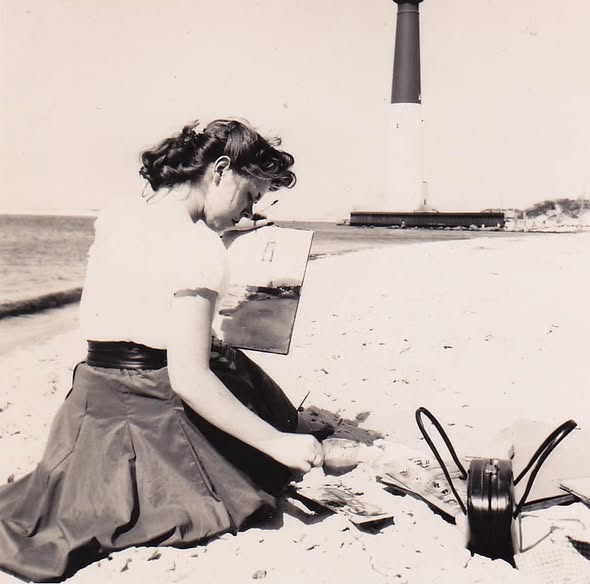
    Born in Philadelphia, Mrs. Winter studied art at the Pennsylvania Academy of the Fine Arts and earned a bachelor’s degree in fine arts at the University of Pennsylvania. She specialized in portraits, still life, and landscapes, and worked mostly in watercolors, pastels, oils, and acrylics.

    She painted portraits of celebrated naval chaplain John F. Laboon and Chinatown icon T.T. Chang, and contributed to a collection called “Lost Dreams on Canvas” that featured portraits of innocent victims of violent crime in Philadelphia. “You get into a portrait like that,” Mrs. Winter told the Chestnut Hill Local in 2012, “and you’re into the person.”

    She painted the statue of St. Gianna Beretta Molla for the Shrine of the Nativity of Our Lord in Warminster, and her painting of a restored statue of St. Gabriel for a church in New Orleans was featured in The Inquirer in 2007. She also designed stained glass windows for St. Bede the Venerable Church in Holland, Bucks County, and the chapel at Shore Memorial Hospital in Somers Point, N.J.

    “The best thing,” Mrs. Winter told the Chestnut Hill Local in 2012, “is that you don’t have to retire from making art.” Courtesy of the family

    Mrs. Winter studied Chinese brush painting with artist Phoebe Shih in Flourtown and showed her work at the Woodmere Art Gallery, the Conshohocken Art League, Daylesford Abbey, the Lutheran Theological Seminary, the Knickerbocker Exhibition in New York, and elsewhere. She also taught art classes at the Abington and Main Line Art Centers, the Conshohocken Art League, Our Mother of Consolation School, and elsewhere.

    “The best thing,” she told the Local in 2012, “is that you don’t have to retire from making art.”

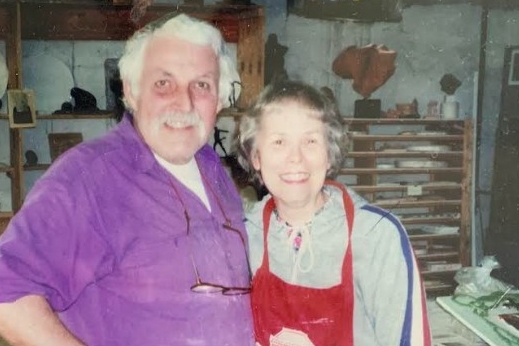
    She met her husband, sculptor Joseph Winter, at the Pennsylvania Academy of the Fine Arts in 1953, and they opened Winter Art Studio in their Chestnut Hill home in 1983. For several commissions, he created the sculpture, and she painted it.

    “Since Joe was a sculptor and I’m a painter, we complemented each other very well,” Mrs. Winter told the Chestnut Hill Local in 2021. “If we had both been painters or both been sculptors, it would not have worked out so well. There would have been too much competition.”

    Mrs. Winter painted fruit and flowers.Courtesy of the family

    In 2021, she self-published a 48-page children’s book called How the Bears Got to the Park. It features illustrations by her husband, and the plot she wrote is based on his award-winning 1966 sculpture Family of Bears that is displayed at Three Bears Park at Third and Delancey Streets in Society Hill.

    Mrs. Winter was a longtime member and onetime council president at Our Mother of Consolation Parish. She and her husband moved to Chestnut Hill from Southwest Philadelphia in 1962 so their children could attend the parish school, and she taught all subjects to third and fourth graders for a few years.

    Parish members scheduled Mass intentions to honor her on June 28, July 5, and July 10. “She was very determined,” her daughter Genienne Navarro said. “She never let anything stand in her way and would move mountains to get something done.”

    Kathleen Marie McKenna was born April 21, 1935. Her family moved to Virginia when she was young and returned to Philadelphia a few years later, and she graduated from West Philadelphia Catholic High School for Girls.

    Mrs. Winter and her husband, Joe, married in 1956. Courtesy of the family

    A perceptive nun recognized her artistic skills in high school and arranged for an admission interview with officials at the Pennsylvania Academy of the Fine Arts. She received a full scholarship, met her husband there, and they married in 1956 and had daughters Kathy and Genienne and a son, Joseph.

    Her husband died in 2020, and she moved to the Pittsburgh area a few years ago to be close to family. Mrs. Winter kept in touch with former classmates at the Pennsylvania Academy of the Fine Arts for years and took additional art classes later at Temple University and Chestnut Hill College.

    She played piano, doted on her family, and survived cancer in the 1970s. A longtime friend called her a “true, loving, nourishing, protective, guiding, steadfast Blessed Mother to me.”

    Her family said in a tribute: “She will be remembered for her friendship, spiritual support, listening ear, humor, deep caring, generosity, and undaunted optimism.”

    Mrs. Winter (rear left) enjoyed time with her family.Courtesy of the family

    Her daughter Genienne said: “Her favorite saying was, ‘Nothing is impossible with God.’”

    In addition to her children, Mrs. Winter is survived by six grandchildren, three great-grandchildren, and other relatives. A sister died earlier.

    A memorial service is to be at 11 a.m. Saturday, Sept. 19, at Our Mother of Consolation Church, 9 E. Chestnut Hill Ave., Philadelphia, Pa. 19118.

    Donations in her name may be made to Our Mother of Consolation Church and School, 9 E. Chestnut Hill Ave., Philadelphia, Pa. 19118.

    Mrs. Winter and her husband, Joe, pose in their Chestnut Hill home studio. Courtesy of the family
    Mrs. Winter was an expert in designing stained glass. Courtesy of the family
  • Pat Oliphant, prizewinning giant of political cartooning, dies at 90

    Pat Oliphant, prizewinning giant of political cartooning, dies at 90

    When Pat Oliphant assembled his entry for the 1967 Pulitzer Prize for editorial cartooning, he included a dozen cartoons he had drawn for the Denver Post: 11 he was proud of, and one he didn’t think was any good but was targeted to appeal to the jury’s politics.

    He won the prize — for the one cartoon he didn’t like, an image of North Vietnamese leader Ho Chi Minh holding a dead body, captioned, “They won’t get us to the conference table … will they?”

    Mr. Oliphant was enraged. For years afterward, he condemned the Pulitzers, never again submitting his work for a prize that was awarded, in his view, more on the basis of politics than skill. “It’s a fraudulent award,” he said.

    The Pulitzers were just one of many targets for Mr. Oliphant, a self-described “equal-opportunity cartoonist” who took on powerful people, and institutions, with glee.

    Across his six-decade career, he was just as likely to go after D.C. Mayor Marion Barry — whom Mr. Oliphant depicted as an Idi Amin-like ruler, the tea-addicted “King of Kolumbia” — as he was President George H.W. Bush, whom he skewered as a purse-carrying wimp and as a would-be Lawrence of Arabia.

    “If Pat Oliphant couldn’t draw,” a critic once said, “he’d be an assassin.”

    Mr. Oliphant, who helped revolutionize political cartooning in the United States with his slashing humor and sophisticated artistry, died Monday at his home in Santa Fe, N.M., at age 90, according to his son, Grant Oliphant.

    By the time he won the Pulitzer, Mr. Oliphant’s comics were reaching an international readership through syndication. His audience only grew after he moved to the Washington Star in 1975 and, six years later, struck out on his own, working independently without being tied to a single paper.

    At the height of his popularity, his work appeared in more than 500 newspapers, influencing fellow Pulitzer winners including Tom Toles, Tony Auth, Ann Telnaes, and Jeff MacNelly.

    “He saw himself as participating in the long tradition of political caricature, going back especially to Delacroix, to Daumier, these major figures of the 19th century,” said Molly Schwartzburg, a Harvard University curator of printing and graphic arts who helped organize a 2020 exhibition of Mr. Oliphant’s work. “His work has a sort of intellectual history that brought an aesthetic seriousness to political cartooning in the 20th century. He’s a trenchant critic of the hypocrisy of politics, and he’s always seeing exactly what the politicians are up to.”

    At a time when other political cartoonists were using a vertical or strip format for their work, Mr. Oliphant helped popularize the use of a horizontal panel. He also proved influential in the way he shaded all his cartoons by hand. Twice he was awarded the National Cartoonists Society’s Reuben Award, for cartoonist of the year.

    Mr. Oliphant’s work was not without its critics. The Catholic League denounced him as “one of the most viciously anti-Catholic editorial cartoonists ever to have disgraced the pages of American newspapers,” taking particular issue with cartoons he drew about sexual abuse within the clergy. (One memorable example was captioned, “Celebration of Spring at St. Paedophilia’s — the Annual Running of the Altar Boys.”) Other cartoons sparked criticism from the American-Arab Anti-Discrimination Committee, which accused him of racism, and the Simon Wiesenthal Center, which said he demonized Israel.

    If there was somebody who could be offended, Mr. Oliphant probably did so. As he saw it, political cartooning was a “confrontational art,” one that thrived on provocation. “We are drowning in political correctness and somebody’s got to kill it,” he told the New York Times in 1997. “It’s the ruination of my business.”

    Finding a calling, and a penguin

    Patrick Bruce Oliphant was born in Adelaide, Australia, on July 24, 1935. As a child, he sought to emulate the work of his father, Donald, a government draftsman. He also took inspiration from his uncle Mark Oliphant, a physicist who worked on the Manhattan Project, was knighted, and became governor of South Australia.

    “People knew Sir Mark — his reputation was known throughout Australia,” Grant Oliphant said in the 2025 documentary A Savage Art: The Life & Cartoons of Pat Oliphant. “And I think part of what motivated my father to become great in his own right was he got tired of always being asked if he was related to Sir Mark, and he wanted to be his own guy.”

    At 18, Mr. Oliphant landed a job as a copy boy at the News, an Adelaide newspaper owned by Rupert Murdoch’s father, Keith Murdoch. He had aspired to work as a reporter, but in 1955 he left the News for its rival, the Advertiser, and began doing minor illustration work, drawing maps and retouching photos. Soon, he said, “drawing won out,” and he left writing behind to be the Advertiser’s editorial cartoonist.

    When editors disagreed with some of his cartoons, Mr. Oliphant began adding a tiny character at the margins, Punk the penguin, to voice his forbidden political views.

    Inspired by a real-life penguin that had washed ashore in Adelaide, the character remained a staple of his cartoons for decades. It was through Punk that Mr. Oliphant called President Ronald Reagan a “soldier of importune” during the Iran-Contra scandal, suggested Ted Kennedy should run away rather than run for president, and quipped that a $10 million book deal President Bill Clinton secured for his memoir was “not bad bucks for fooling all of the people all of the time.”

    Mr. Oliphant was eager to leave Australia, which he dismissed as “a country where nothing happens.” He moved to the United States to join the Denver Post in 1964, and within a year his cartoons were syndicated internationally.

    After moving to Washington to work for the Star, an afternoon paper that folded in 1981, Mr. Oliphant continued to refine his technique. For years, he attended a twice-weekly figure-drawing class that William Christenberry taught at the Corcoran School of the Arts and Design, developing what his colleague Telnaes once described as “a great sense of composition.”

    In addition to his political cartoons, Mr. Oliphant made paintings and sculptures, which he exhibited at a Georgetown art gallery owned by Susan Corn Conway. She and Mr. Oliphant married in 1996 and moved to Santa Fe in 2004.

    His wife died in December. His previous marriages, to Hendrika de Vries and Mary Ann Kuhn, ended in divorce. In addition to his son, Grant, survivors include two daughters, Laura and Susanne Oliphant; two stepchildren, Pauline and Daniel Conway; a brother; four grandchildren; and two great-grandchildren.

    Mr. Oliphant retired from cartooning in 2015, as his eyesight began to fail. But two years later, he made a brief reappearance with two editorial cartoons that were published online by the Nib, mocking President Donald Trump — depicted in a Nazi uniform — and White House strategist Stephen K. Bannon.

    “We thought that Watergate was a unique condition. But it sort of pales in comparison to what we’ve got now,” Mr. Oliphant told the Santa Fe Reporter that year.

    He had found a dream subject in Trump, he said, but his eyes made it all but impossible to draw. “I’ve been in this business 60 years. And I’ve waited 60 years for this [guy] to come along. And I can’t do anything about it because of my eyes.”