Category: Philadelphia News

  • Philly has planted nearly 19,000 trees and counting as part of an ambitious plan

    Philly has planted nearly 19,000 trees and counting as part of an ambitious plan

    Over the last three years, Philadelphia has planted 18,581 trees on streets and in yards, parks, and schoolyards, according to an update on the ambitious Philly Tree Plan released Thursday.

    The ultimate goal of the 10-year urban forestry plan is to increase the city’s tree canopy from about 20% to 30% over three decades, with planners noting it takes time for trees to grow.

    The plan hit a snag in 2025 when the Trump administration temporarily froze a $12 million federal grant from the Inflation Reduction Act to kick-start the program. But the money has since been released.

    “We saw a lot of achievement in these past three years despite the funding delay,” said Kiasha Huling, director of the Philly Tree Coalition, a group of collaborators assembled to carry out the plan.

    The annual Philly Tree Plan progress report, which spans 2023 to 2025, said the coalition has made significant headway in street tree planting and coordination with city departments since the plan’s 2023 rollout.

    The Philly Tree Plan calls for tree canopy improvements in areas of disinvestment, industrialization, and racial and economic inequalities.

    Why is a tree plan needed?

    Citywide tree canopy averaged 20% in 2018 when officials first took stock, but that varied. Officials noted that the tree canopy had decreased by 6% between 2008 and 2018 — the equivalent in size to 1,000 football fields.

    But, even more stark, some neighborhoods had as little as 5% average coverage, while others had 45%.

    The Philly Tree Plan notes that the city faces hurdles in growing that diminished canopy, such as dense streets, underground utilities and infrastructure, and lower-income households unable to afford tree maintenance.

    So it focuses on helping residents with pruning, watering, mulching, dead tree removal, and other maintenance.

    “We are on pace to be able to implement the tree plan in full within the next seven years,” Huling said.

    The coalition works with the Public Health Management Corp. to pull together city agencies, regional nonprofits, and community advocates to carry out the plan.

    How many trees and where are they planted?

    The report, which includes data from Philadelphia Parks and Recreation, the Pennsylvania Horticultural Society, Fairmount Park Conservancy, and community-led Tree Tenders, a Pennsylvania Horticultural Society program, shows the number and type of plantings:

    • 6,832 street trees
    • 5,681 park trees
    • 5,200 yard trees
    • 441 school trees
    • 427 trees along waterways

    Huling said the strategy calls for moving toward urban-tolerant, infrastructure-friendly trees with greater genetic diversity.

    Historically, Philadelphia planted trees primarily for aesthetics, selecting species that competed with their urban environment. Roots destroyed sidewalks.

    Huling noted that the city now picks species with root systems that can thrive within city blocks rather than tearing them apart. It has moved away from planting single species of trees, such as London planes. Now, it uses modern hybridized versions more adapted to urban environments.

    The city now looks to combine existing large canopy trees with smaller understory trees on neighborhood blocks. For example, large existing oak trees can be paired with smaller eastern redbuds. The species have different root depths and demands that will not compete above or underground.

    Huling said street trees offer the greatest environmental return on investment.

    Roughly 70% of Philadelphia’s housing stock consists of dense rowhouses without yards. So getting tough, appropriate street trees planted directly along residential sidewalks is a challenge but is important to help reduce heat in shadeless communities.

    Storms also present a challenge. A microburst in July downed about 500 mature trees in West, South, and Southwest Philadelphia. The coalition has distributed more than $750,000 in grassroots grants and funded disaster recovery following the storm.

    The plan also has a workforce development component. The Philly Tree Coalition taps programs like PowerCorpsPHL, Future Track, and PHS Tree Tenders, all of which train residents — and in many cases provide stipends or paid positions — in pruning, heavy equipment operation, and urban forestry care.

    The report notes the importance of tree preservation and maintenance as indispensable.

    City Forester Erica Smith Fichman and city teams logged 44,773 hours on urban forest maintenance over the three-year evaluation cycle.

    Meanwhile, city crews and neighborhood stewards have watered, mulched, and pruned trees.

    Other highlights from the progress report:

    • Tree preservation and maintenance: Partners provided care to 14,044 young trees and maintenance to 18,829 mature trees.
    • Workforce development: The coalition helped train 537 workers in tree stewardship: 433 graduates from the PHS Tree Tenders program, 60 participants trained through the Philadelphia Department of Commerce, and 44 participants through PowerCorpsPHL.
    • Community investment: $765,000 in tree-related grants was distributed across 10 grassroots community organizations working in historically disinvested, low-canopy priority areas.
    • Policy: The city enacted legislative and zoning reforms including a bill that increased on-site planting requirements for commercial parking lots and open spaces and established mandatory “fee-in-lieu” contributions from developers into an expanded municipal Tree Fund.

    Huling said she is now looking forward, beyond the three-year assessment.

    “Are we doing the things that are genuinely going to allow us to take on more trees and be able to care for them as well as the established canopy that we have?” Huling asked. “We’re making really great strides. We’re doing it.”
  • ‘Rocky’ celebrations will close roads throughout Philadelphia this weekend

    ‘Rocky’ celebrations will close roads throughout Philadelphia this weekend

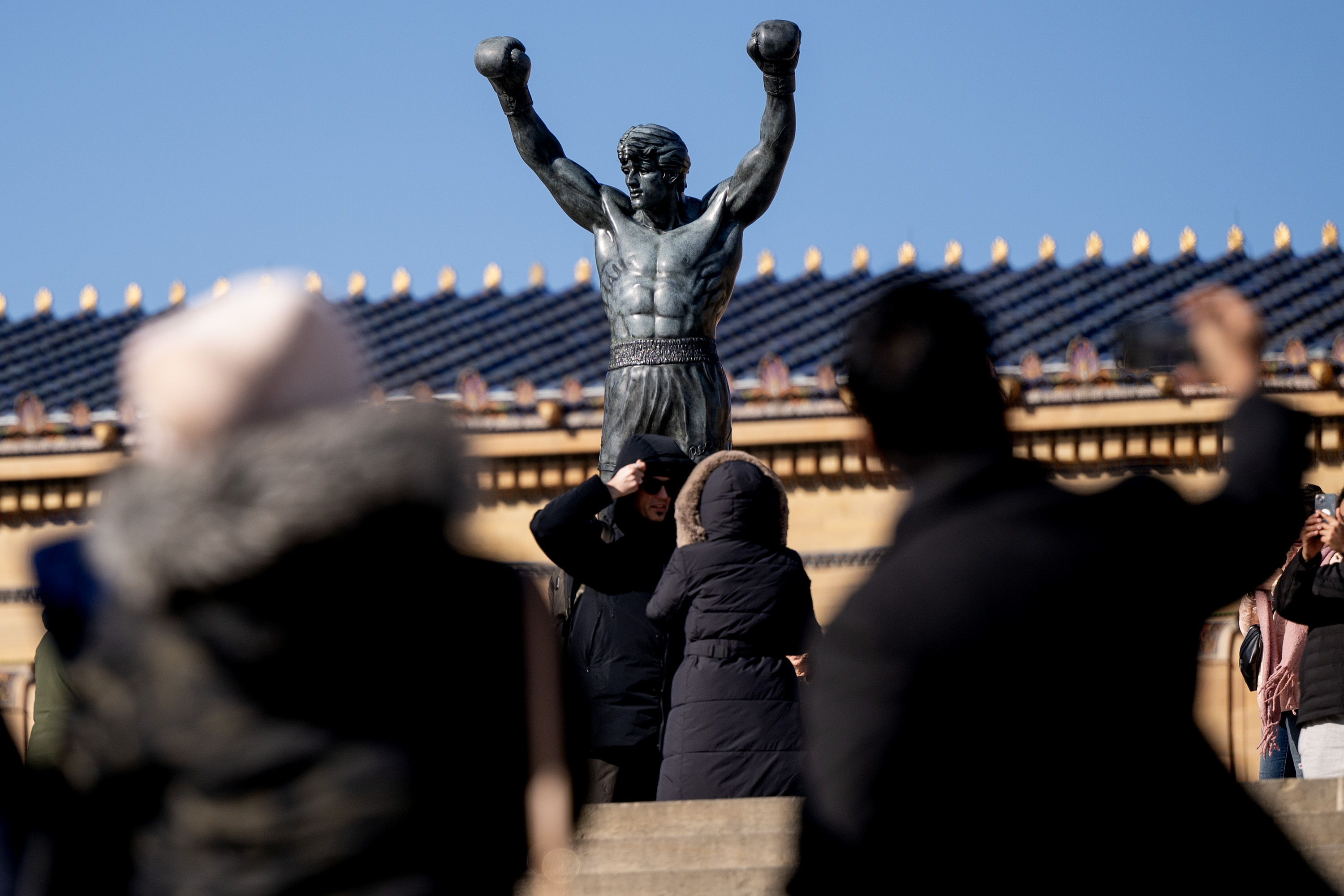
    The monthlong 50th anniversary celebrations of Rocky continue this weekend with a rededication of the iconic Philadelphia Museum of Art statue and a race.

    The Philadelphia Visitors Center is organizing a slate of events through Dec. 4, to honor Rocky Balboa’s cultural impact on the city’s tourism. Friday will see fans gather atop the Art Museum to attempt a Guinness World Record for the largest gathering of people dressed as Rocky Balboa. The scheduled Philly Pops concert is canceled, and the Rocky statue rededication has been postponed due to anticipated inclement weather.

    Saturday will bring the Rocky Run, which consists of a 5K, a 10-mile walk or run, and an Italian Stallion half-marathon-distance challenge along Fairmount Park roads.

    Road closures will pop up in these event areas, creating traffic delays and no-parking zones. Any vehicles still parked in no-parking zones during these events will be courtesy towed.

    Friday, Nov. 13

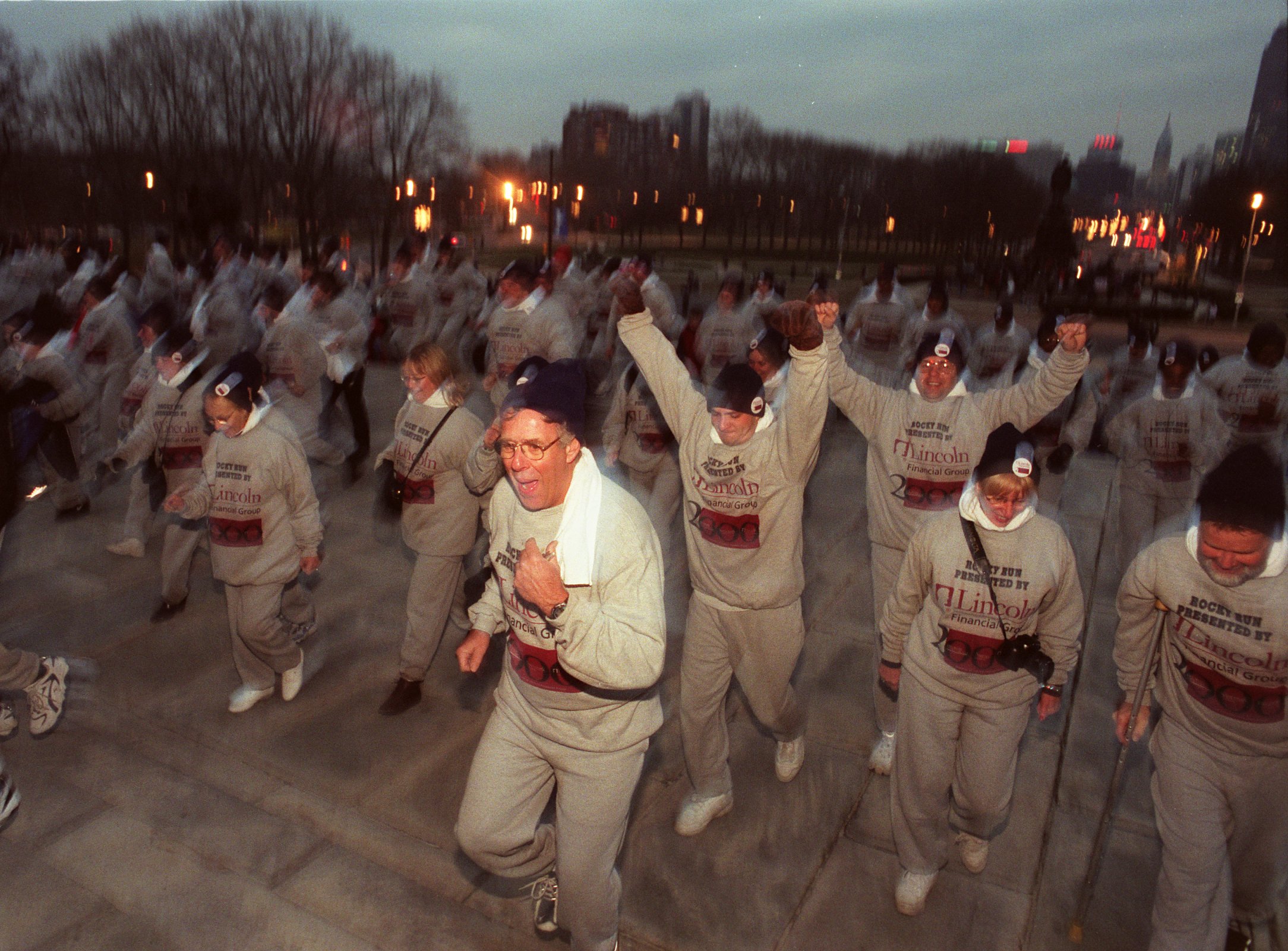
    Hundreds clad in Rocky Balboa-like sweatsuits and black beanies will meet at the top of the Philadelphia Museum of Art steps, as Sylvester Stallone did 50 years before to attempt the world record.

    Rocky events at Philadelphia Museum of Art

    • 4 p.m.: Rocky Guinness World Record attempt

    Eakins Oval in front of the Art Museum will be closed from noon to 5 p.m. on Friday.

    Additionally, to allow setup for the Rocky Run 5K, 10 Mile, and 13.1 Italian Stallion Challenge taking place Saturday, the Benjamin Franklin Parkway (inner lanes) between 22nd Street and Binswanger Triangle will be closed from 10 a.m. to 3 p.m. on Friday.

    A 1999 file photo of the Rocky Run, 2000 people dressed as Rocky run up the Philadelphia Art Museum steps. The run kicked off the Millennium celebrations in Phila.Peter Tobia / Staff Photographer

    Saturday, Nov. 14

    Rocky Run 5K and 10 Mile Run/Walk

    The Rocky Run 5K, 10 Mile, and 13.1 Italian Stallion Challenge will take place from 7 a.m. to 2 p.m. on Saturday, starting at the Art Museum steps.

    The following streets will be closed beginning at 3 a.m. Saturday:

    • Benjamin Franklin Parkway between 22nd Street and Eakins Oval
    • Spring Garden Street between Pennsylvania Avenue and 24th Street
    • Martin Luther King Drive between Eakins Oval and Falls Bridge

    The following streets will be closed beginning at 4:30 a.m. Saturday:

    • Kelly Drive between Eakins Oval and Brewery Hill Drive
    • Sedgley Drive between Kelly and Poplar Drives
    • Lemon Hill Drive between Sedgley and Kelly Drives

    The following streets will be closed beginning at 4 a.m. Saturday:

    • Strawberry Mansion Bridge
    • Sweetbriar Drive between Lansdowne and MLK Drives
    • Greenland Drive between Strawberry Mansion Bridge and Chamounix Drive
    • Ford Road between Chamounix and Greenland Drives
    • Chamounix Drive between Belmont Mansion and Greenland Drives
    • Lansdowne Drive between Sweetbriar Drive and Girard Avenue Bridge
    • Girard Avenue Bridge (eastbound lanes) between Lansdowne and Brewery Hill Drives

    All streets (with the exception of Eakins Oval and MLK Drive) are scheduled to reopen by 2 p.m. on Saturday. Eakins Oval will be fully open to traffic by 3 p.m. MLK Drive will remain closed as part of its regular weekend closure for recreation.

    SEPTA Bus Routes 7, 32, 38, 43, 48, and 49 will be detoured from their normal routes from 4 a.m. to 4 p.m. on Saturday.

  • A police officer shot a man during a traffic stop in Southwest Philly, police say

    A police officer shot a man during a traffic stop in Southwest Philly, police say

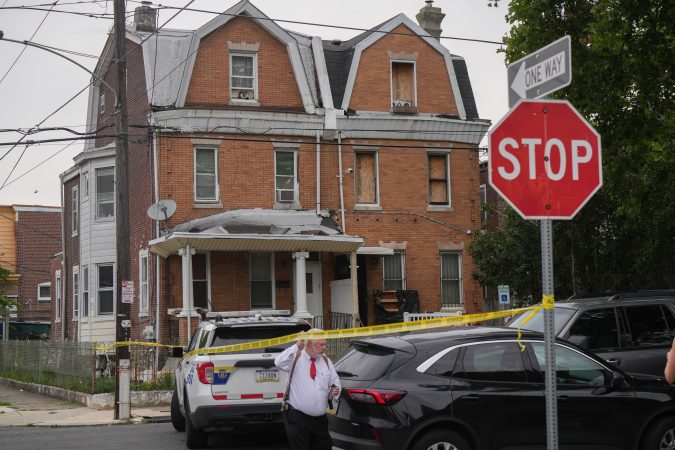
    A police officer shot a man after a traffic stop led to a “physical altercation” Thursday morning in Elmwood in Southwest Philadelphia, police said.

    Around 7:30 a.m. two Philadelphia Police Department officers stopped a white Chevy Malibu at the corner of Lindbergh Boulevard and Eastwick Avenue, police said.

    The traffic stop led to a “confrontation” between the man and two officers, Deputy Commissioner Frank Vanore told news reporters at the scene.

    “He became very erratic,” Vanore said. After officers asked him to exit the car, “a physical altercation very quickly ensued,” Vanore said.

    Both officers used Tasers on the man, Vanore said, but they didn’t stop him.

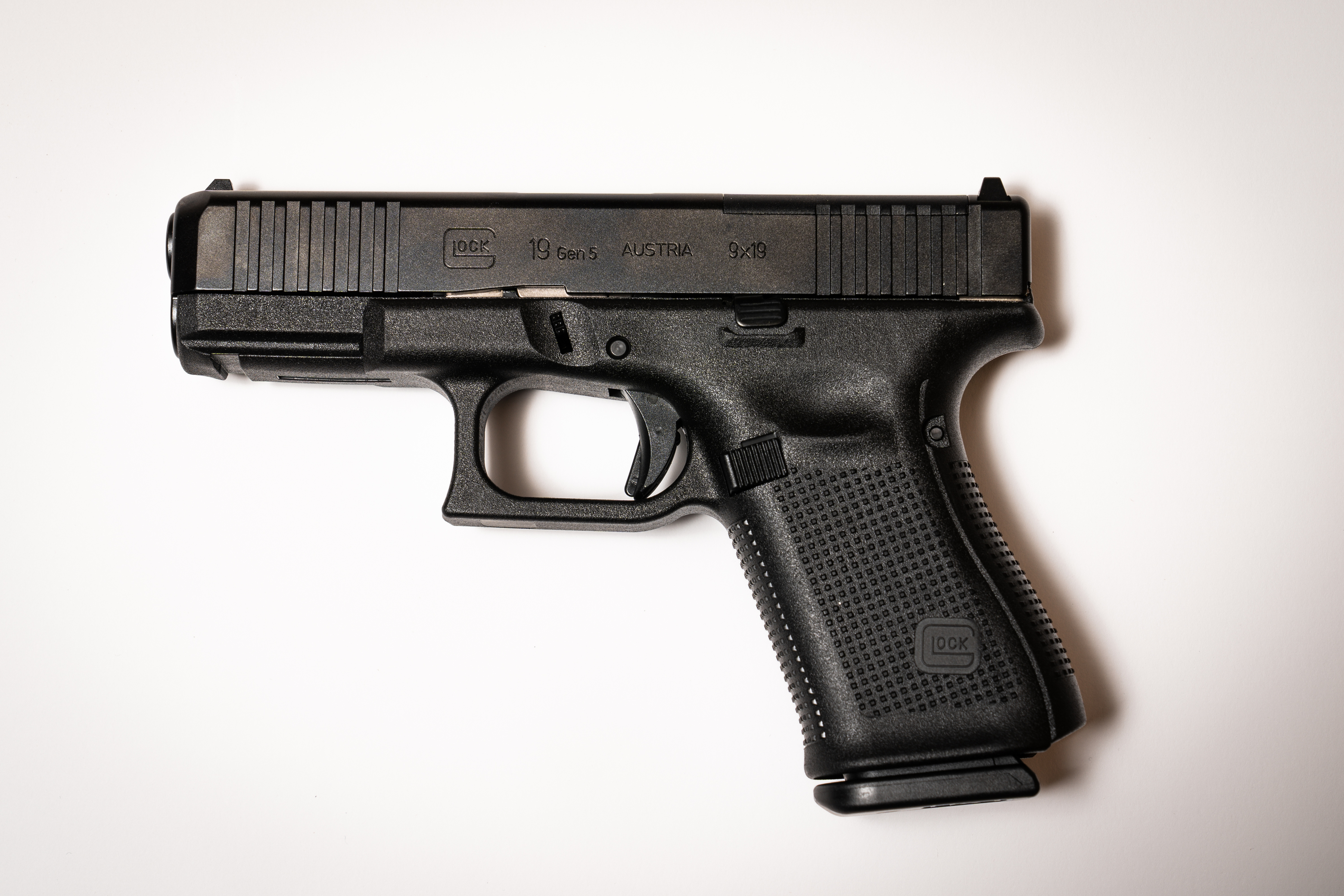
    “At some point during the fight, he made it back to his vehicle and he produced a firearm. That firearm, we now know, had an extended magazine, it was loaded,” Vanore said.

    At that point, one of the officers shot him, Vanore said.

    The man was taken to Penn Presbyterian Hospital; his condition has not yet been made public.

    Both officers had body cameras on and the vehicle camera captured the incident, Vanore said.

    The officer that fired his weapon is on administrative leave, Vanore said, in accordance with department policy.

    Police are investigating the incident.

    This is a developing story. Check back for details.

  • Philadelphia Marathon 2026: What to know about road closures, parking, and race times

    Philadelphia Marathon 2026: What to know about road closures, parking, and race times

    The Philadelphia Marathon returns Nov. 20-22 for what organizers expect to be the largest race weekend in event history.

    Runners from around the world will compete in the 8K, half-marathon, and 26.2-mile marathon, which stretches from Manayunk to the Delaware River waterfront.

    The first Philadelphia Marathon was held in 1994 with just 1,500 participants. This year, organizers expect nearly 40,000 runners across four races.

    With that many runners hitting the streets, Philadelphians can expect road closures, parking restrictions, and traffic detours throughout the weekend.

    Here’s what to know before the 2026 Philadelphia Marathon Weekend.

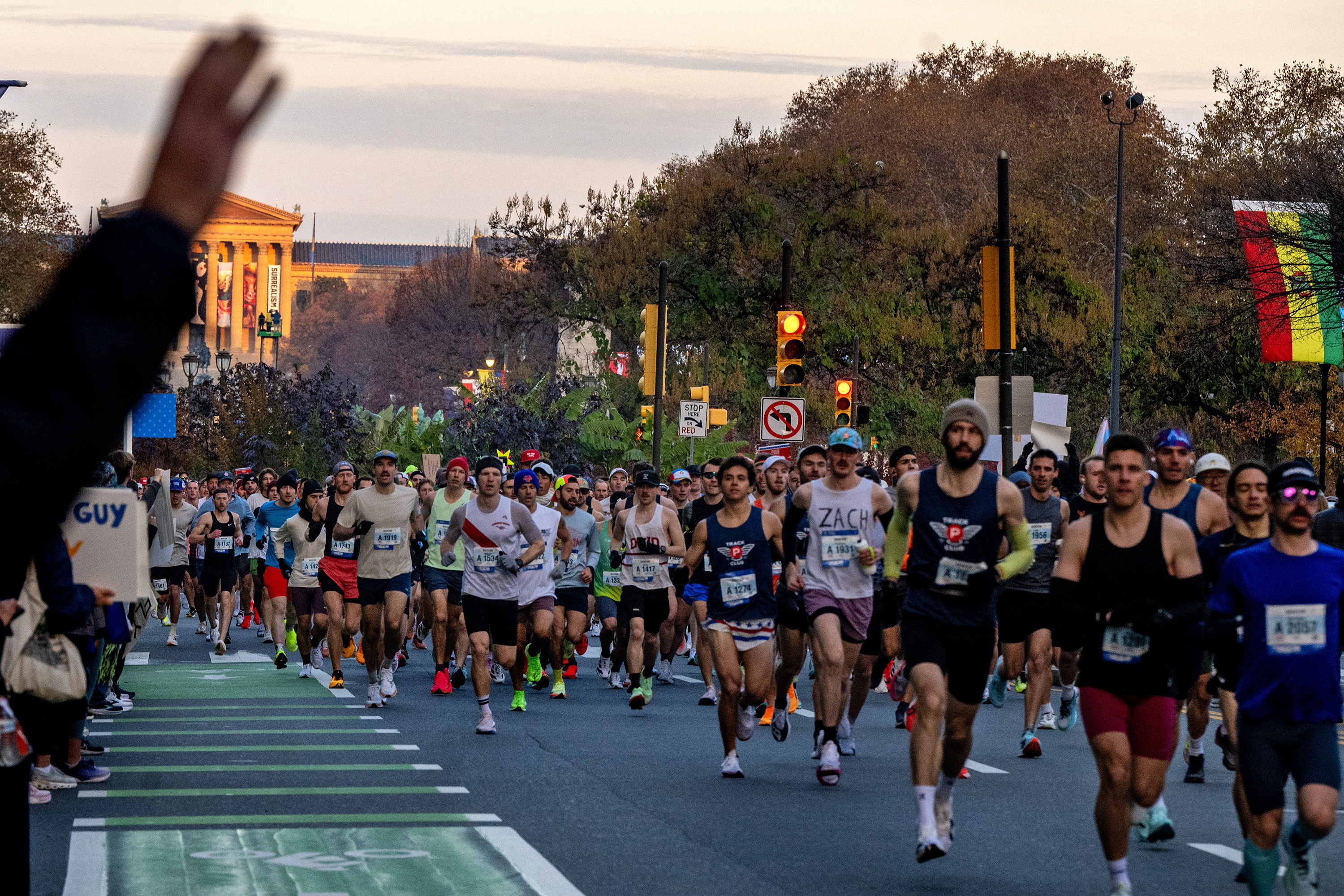
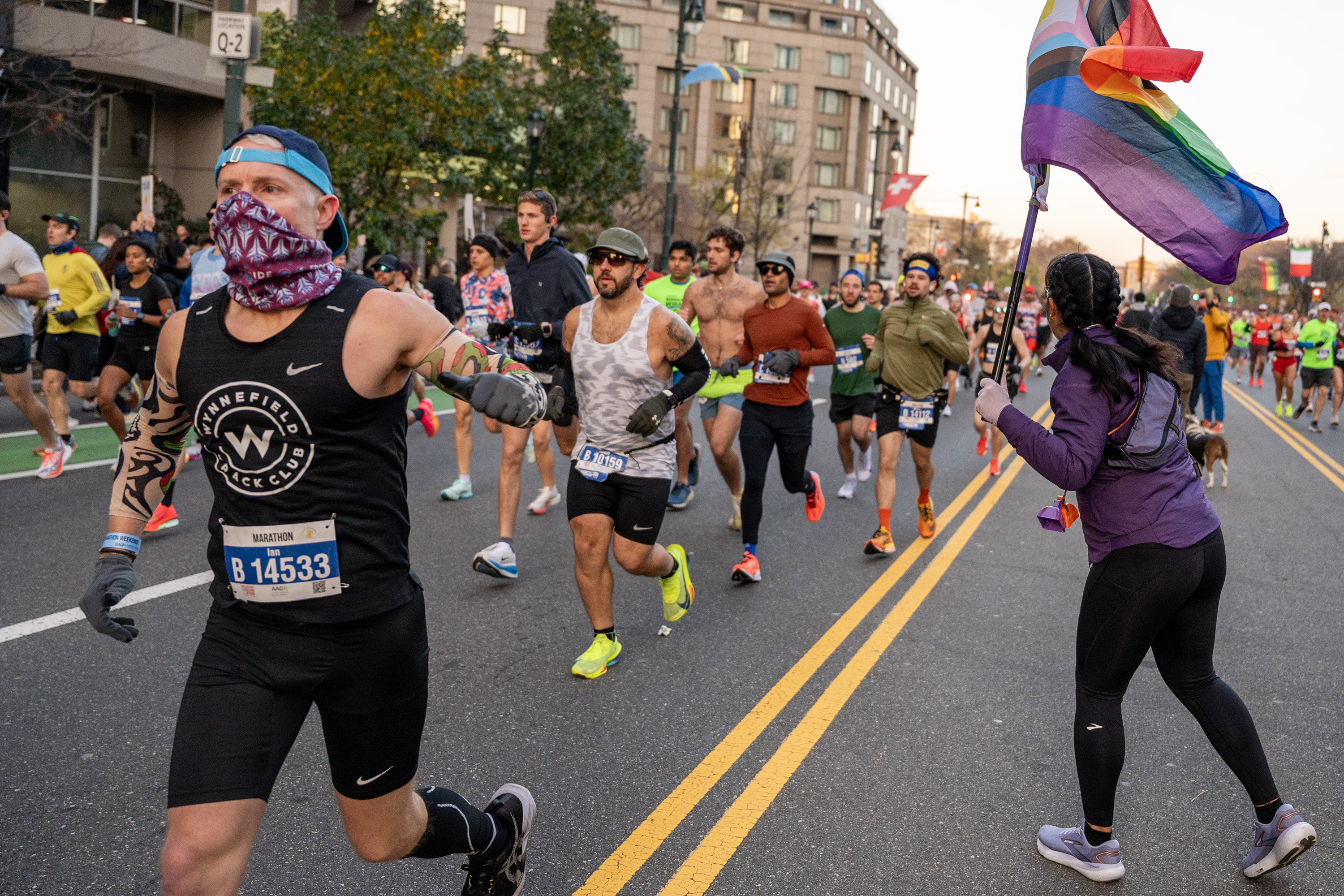
    Sharon Tejada (right), a coleader of Queer Run, encourages runners heading out on the Benjamin Franklin Parkway at the start of the annual Philadelphia Marathon on Nov. 23, 2025.Tom Gralish / Staff Photographer

    Race start times and locations for the Philadelphia Marathon

    All four races start near the Philadelphia Museum of Art. The marathon, half-marathon, and Children’s Run begin at 22nd Street and Benjamin Franklin Parkway, while the Rothman Orthopaedics 8K starts at 25th Street and Kelly Drive.

    • Dietz & Watson Philadelphia Half-Marathon: Saturday, Nov. 21, 6:55 a.m. (wheelchair participants); 7 a.m. (runners and walkers)
    • Rothman Orthopaedics 8K: Saturday, Nov. 21, 10:55 a.m. (wheelchair participants); 11 a.m. (runners and walkers)
    • TIAA Philadelphia Marathon: Sunday, Nov. 22, 6:55 a.m. (wheelchair participants); 7 a.m. (runners and walkers)
    • Philadelphia Children’s Run: Sunday, Nov. 22, 11 a.m.

    Race routes for the Philadelphia Marathon

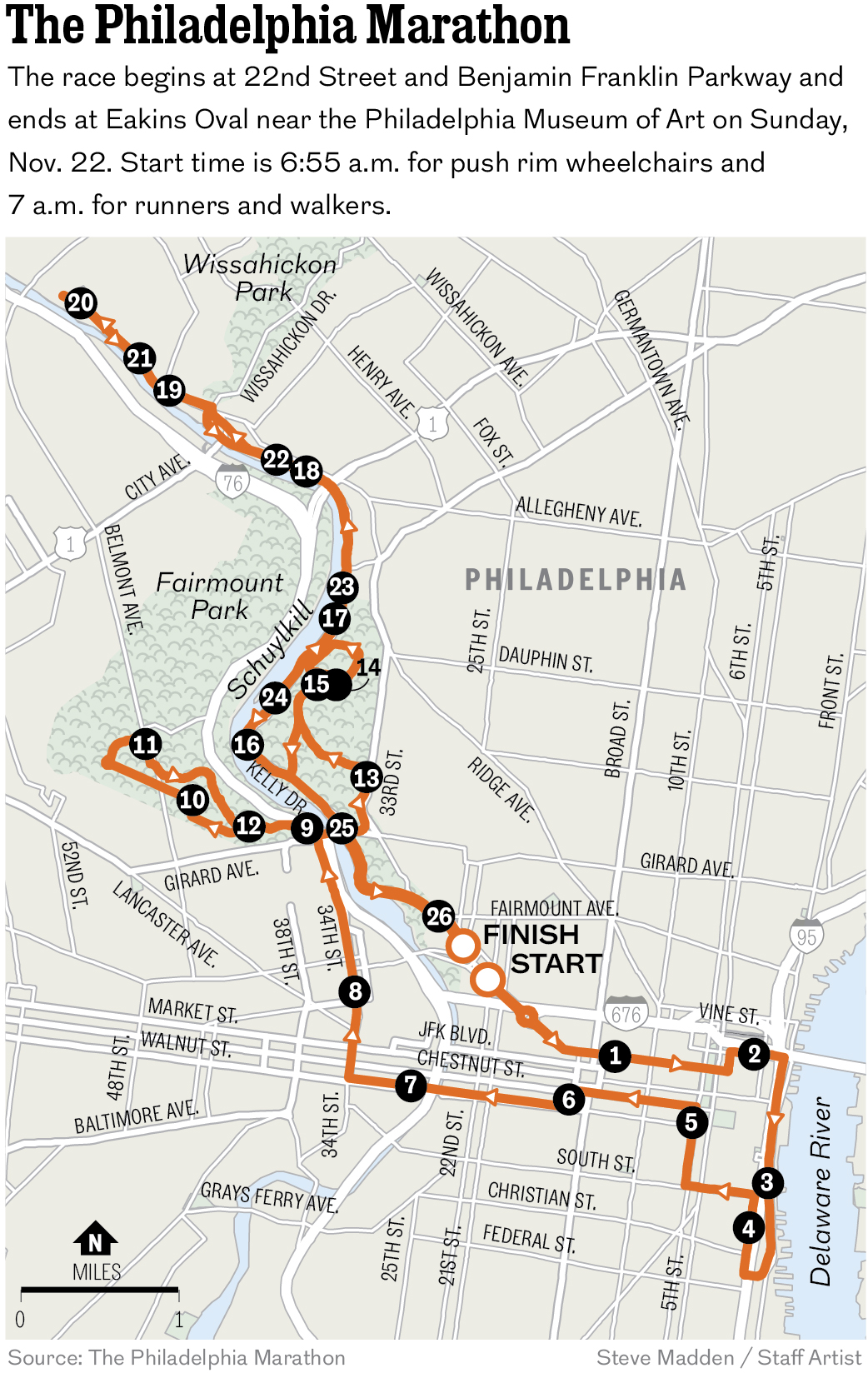
    Each race follows a unique route. The marathon and half-marathon wind through Center City, Chinatown, Old City, Queen Village, Rittenhouse, and University City, with portions of the courses passing through Fairmount Park and along Kelly Drive and the Benjamin Franklin Parkway.

    Course map for the Philadelphia MarathonSteve Madden

    Health & Fitness Expo

    The Philadelphia Marathon Weekend Expo returns to Hall F of the Pennsylvania Convention Center, at 12th and Arch Streets.

    • Friday, Nov. 20: 8 a.m. to 9 p.m.
    • Saturday, Nov. 21: 8 a.m. to 5 p.m.

    The expo features vendors showcasing apparel, shoes, and running gear, along with free product samples and educational booths focused on health and fitness. Both days will also feature a speaker series and meet-and-greets with some of the country’s top runners.

    For spectators of the Philadelphia Marathon

    Spectators are welcome to line the race routes to cheer on runners but will be restricted from the starting lines and in secure running areas until after 8 a.m. on Saturday and Sunday to ensure smooth race starts.

    The Philadelphia Marathon has a list of prohibited and discouraged items for spectators, available in full on its website.

    • Large umbrellas, coolers, alcohol, bicycles, scooters, and animals (except service animals) are prohibited. Organizers also discourage spectators from bringing large blankets, backpacks, handbags, and cameras.
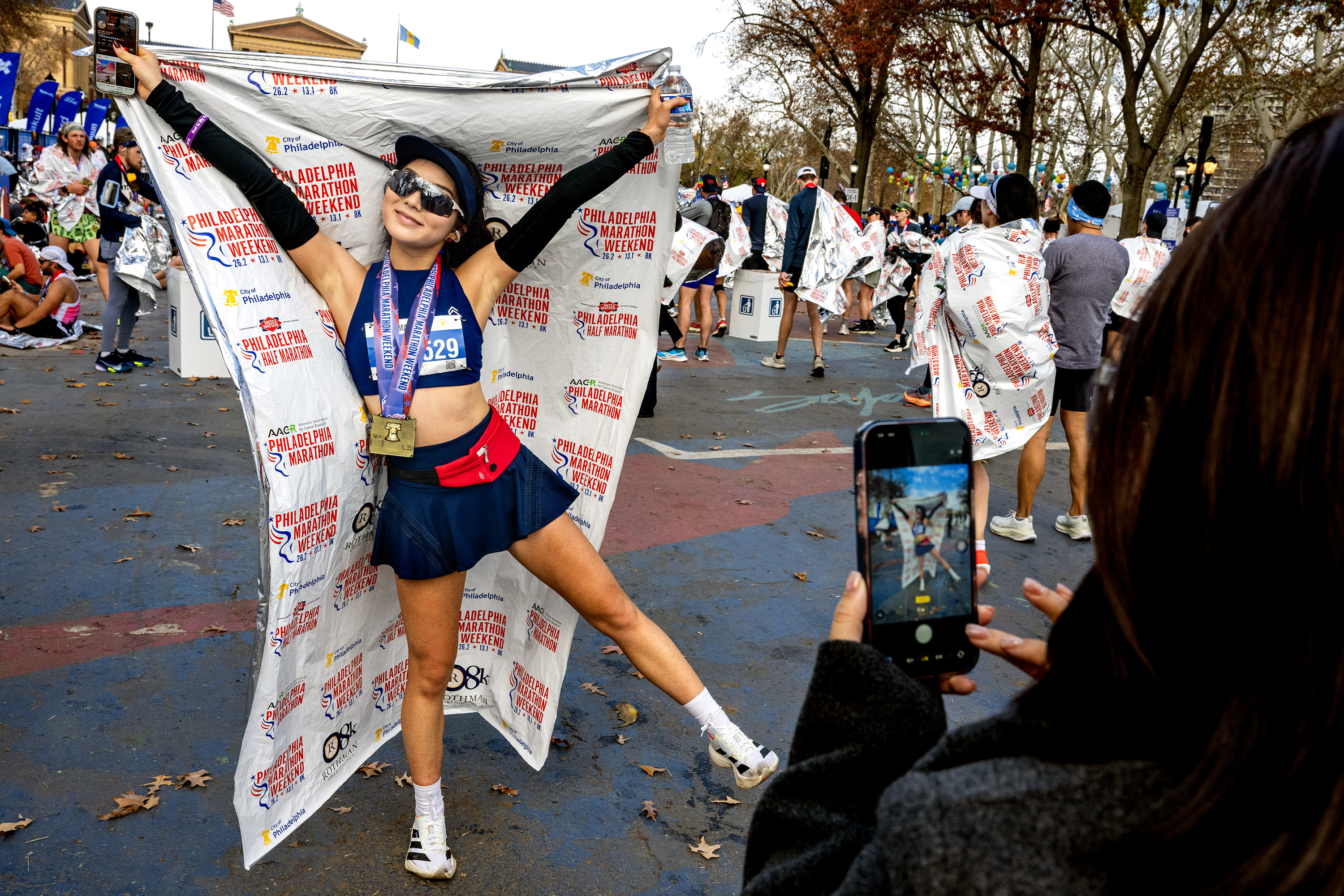
    Lilian Yao, 20, poses for her mother, Leslie Liu, after completing the Philadelphia Marathon on Nov. 23, 2025. This was her first marathon. Her mom arrived from Hong Kong just hours before the start of the race.Tom Gralish / Staff Photographer

    Road closures

    All-weekend closures

    Friday, Nov. 20, through 5 p.m. Sunday, Nov. 22

    • Benjamin Franklin Parkway (all lanes) between 22nd Street and Eakins Oval
    • Kelly Drive (inbound) closed at 25th Street, with local traffic permitted to Anne d’Harnoncourt Drive
    • Spring Garden Street Bridge and MLK Drive (inbound) traffic detoured onto 24th Street
    • Spring Garden Street closed between Benjamin Franklin Parkway and Pennsylvania Avenue

    Saturday, Nov. 21

    2 a.m. closures

    • 2000-2400 Benjamin Franklin Parkway
    • Spring Garden Street, from Pennsylvania Avenue to Benjamin Franklin Parkway
    • 23rd Street, from Pennsylvania Avenue to Benjamin Franklin Parkway
    • 22nd Street, from Winter Street to Park Towne Place (local access to Park Towne Place maintained)
    • 21st Street, from Pennsylvania Avenue to Winter Street

    4 a.m. closures

    • I-676 off-ramp at 22nd Street (westbound)
    • I-76 off-ramp at Spring Garden Street (eastbound)

    6 a.m. closures

    • 17th Street, from Arch Street to Vine Street
    • 18th Street, from Arch Street to Callowhill Street
    • 19th Street, from Arch Street to Callowhill Street
    • 20th Street, from Arch Street to Callowhill Street
    • 21st Street, from Arch Street to Spring Garden Street
    • 22nd Street, from Arch Street to Spring Garden Street
    • Benjamin Franklin Parkway, from 16th Street to 20th Street
    • Market Street, from Sixth Street to 16th Street
    • Chestnut Street, from Fifth Street to Eighth Street
    • Sixth Street, from Market Street to Chestnut Street
    • Fifth Street, from Chestnut Street to Race Street
    • South Penn Square
    • Juniper Street, from Chestnut Street to Market Street
    • John F. Kennedy Boulevard, from Juniper Street to 17th Street
    • 15th Street, from Race Street to Chestnut Street
    • 16th Street, from Chestnut Street to Race Street
    • Race Street, from Sixth Street to Columbus Boulevard
    • Columbus Boulevard (southbound lanes), from Vine Street to Washington Avenue
    • I-95 southbound off-ramp at Washington Avenue
    • Washington Avenue, from Columbus Boulevard to Front Street
    • Front Street, from Washington Avenue to South Street
    • South Street, from Front Street to Seventh Street
    • Sixth Street, from Bainbridge Street to Locust Street
    • Lombard Street, from Fifth Street to Broad Street
    • 13th Street, from Bainbridge Street to Chestnut Street
    • Walnut Street, from 12th Street to 34th Street
    • 34th Street, from Chestnut Street to Girard Avenue
    • Spring Garden Street, from 32nd Street to 34th Street
    • Girard Avenue, from 33rd Street to 38th Street
    • 33rd Street, from Girard Avenue to Cecil B. Moore Avenue
    • Reservoir Drive, from 33rd Street to Diamond Drive
    • Mount Pleasant Drive
    • Fountain Green Drive
    • Kelly Drive

    Access and reopening

    • Local access for residents and businesses will be maintained at police-controlled points.
    • Access to the Philadelphia Museum of Art will be available via Spring Garden Street (Bridge and Tunnel) to Anne d’Harnoncourt Drive.
    • Motorists and pedestrians can expect delays when trying to cross roads or streets along the racecourse.
    • Police will allow traffic through intersections when possible, depending on runner flow.
    • All streets (except Eakins Oval and the Parkway) are scheduled to reopen by 2 p.m. Saturday. Many Center City roads will reopen earlier as they are cleared and serviced.

    Sunday, Nov. 22

    As part of enhanced security for the TIAA Philadelphia Marathon, “No Parking” regulations will be strictly enforced. Vehicles on the race route will be relocated beginning at 1 a.m. Sunday.

    2 a.m. closures

    • 2000-2400 Benjamin Franklin Parkway
    • Spring Garden Street, from Pennsylvania Avenue to Benjamin Franklin Parkway
    • 23rd Street, from Pennsylvania Avenue to Benjamin Franklin Parkway
    • 22nd Street, from Winter Street to Park Towne Place (local access maintained)
    • 21st Street, from Pennsylvania Avenue to Winter Street

    4 a.m. closures

    • I-676 off-ramp at 22nd Street (westbound)
    • I-76 off-ramp at Spring Garden Street (eastbound)

    6 a.m. closures

    • 17th Street, from Arch Street to Vine Street
    • 18th Street, from Arch Street to Callowhill Street
    • 19th Street, from Arch Street to Callowhill Street
    • 20th Street, from Arch Street to Callowhill Street
    • 21st Street, from Arch Street to Spring Garden Street
    • 22nd Street, from Arch Street to Spring Garden Street
    • Benjamin Franklin Parkway, from 16th Street to 20th Street
    • Arch Street, from Third Street to 16th Street
    • Fourth Street, from Arch Street to Vine Street
    • Race Street, from Sixth Street to Columbus Boulevard
    • Columbus Boulevard (southbound lanes), from Vine Street to Washington Avenue
    • Columbus Boulevard (northbound lanes), from Washington Avenue to Callowhill Street
    • I-95 southbound off-ramp at Washington Avenue
    • Washington Avenue, from Columbus Boulevard to Front Street
    • Front Street, from Washington Avenue to South Street
    • South Street, from Front Street to Seventh Street
    • Sixth Street, from Bainbridge Street to Market Street
    • Chestnut Street, from Sixth Street to 15th Street
    • 15th Street, from Chestnut Street to Walnut Street
    • Walnut Street, from Broad Street to 34th Street
    • 34th Street, from Chestnut Street to Girard Avenue
    • Lansdowne Drive, from Girard Avenue to South Concourse Drive
    • South Concourse Drive, from Lansdowne Drive to West Memorial Hall Drive
    • East Memorial Hall Drive, from South Concourse Drive to Avenue of the Republic
    • Avenue of the Republic, from East Memorial Hall Drive to Catholic Fountain
    • Belmont Avenue, from Montgomery Drive to Parkside Avenue
    • States Drive, from Lansdowne Drive to Girard Avenue
    • Girard Avenue Bridge, from Lansdowne Drive to 33rd Street
    • 33rd Street, from Girard Avenue to Reservoir Drive
    • Reservoir Drive, from 33rd Street to Edgley Drive
    • Edgley Drive, from Reservoir Drive to Fountain Green Drive
    • Fountain Green Drive, from Edgley Drive to Kelly Drive
    • Kelly Drive
    • Falls Bridge
    • Ridge Avenue, from Schoolhouse Lane to Manayunk Avenue
    • Main Street (Manayunk), from Ridge Avenue to Conarroe Street

    Access and reopening

    • Local access for residents and businesses will be maintained at police-controlled points.
    • Access to the Philadelphia Museum of Art will be available via Spring Garden Street (Bridge and Tunnel) to Anne d’Harnoncourt Drive.
    • Expect delays at crossings along the course; police will allow traffic through when possible.
    • All streets (except Eakins Oval and the Parkway) are scheduled to reopen by 3 p.m. Sunday; many Center City roads will reopen earlier as they are cleared and serviced.
    • The outer lanes of Benjamin Franklin Parkway, Eakins Oval and Kelly Drive will be reopened to vehicular traffic by 5 p.m. on Sunday. All affected roads will be reopened by 8 a.m. on Monday, Nov. 23.

    Transportation to the races

    🚌 Bus

    Lines 7, 32, 38, 43, 48, and 49 normally stop within a short walk of the Philadelphia Museum of Art. However, race-related detours are expected throughout the weekend.

    Check SEPTA’s system status for the latest route changes and schedules.

    🚄 Trains

    Athletes and spectators can take the Market-Frankford Line to 15th Street at City Hall or Drexel Station at 30th Street, then connect to nearby routes 7, 32, 38, 43, 48, and others to reach the museum area.

    Visitors can also board the Broad Street Line to Fairmount and Broad-Spring Garden stations, and transfer to connecting routes 7, 32, 48, 49, or others serving stops near or at the museum.

    🚆 Regional Rail

    Visitors can take SEPTA Regional Rail to Suburban Station or 30th Street Station to reach the start and finish areas. Check SEPTA’s website for schedules and service updates.

    🚴‍♀️ Bicycle

    The race’s starting line is within a 10-minute ride from the City Hall area and subway stop and other locations. Check the map of Indego bike share stations to rent bikes and return them at a station near the Art Museum.

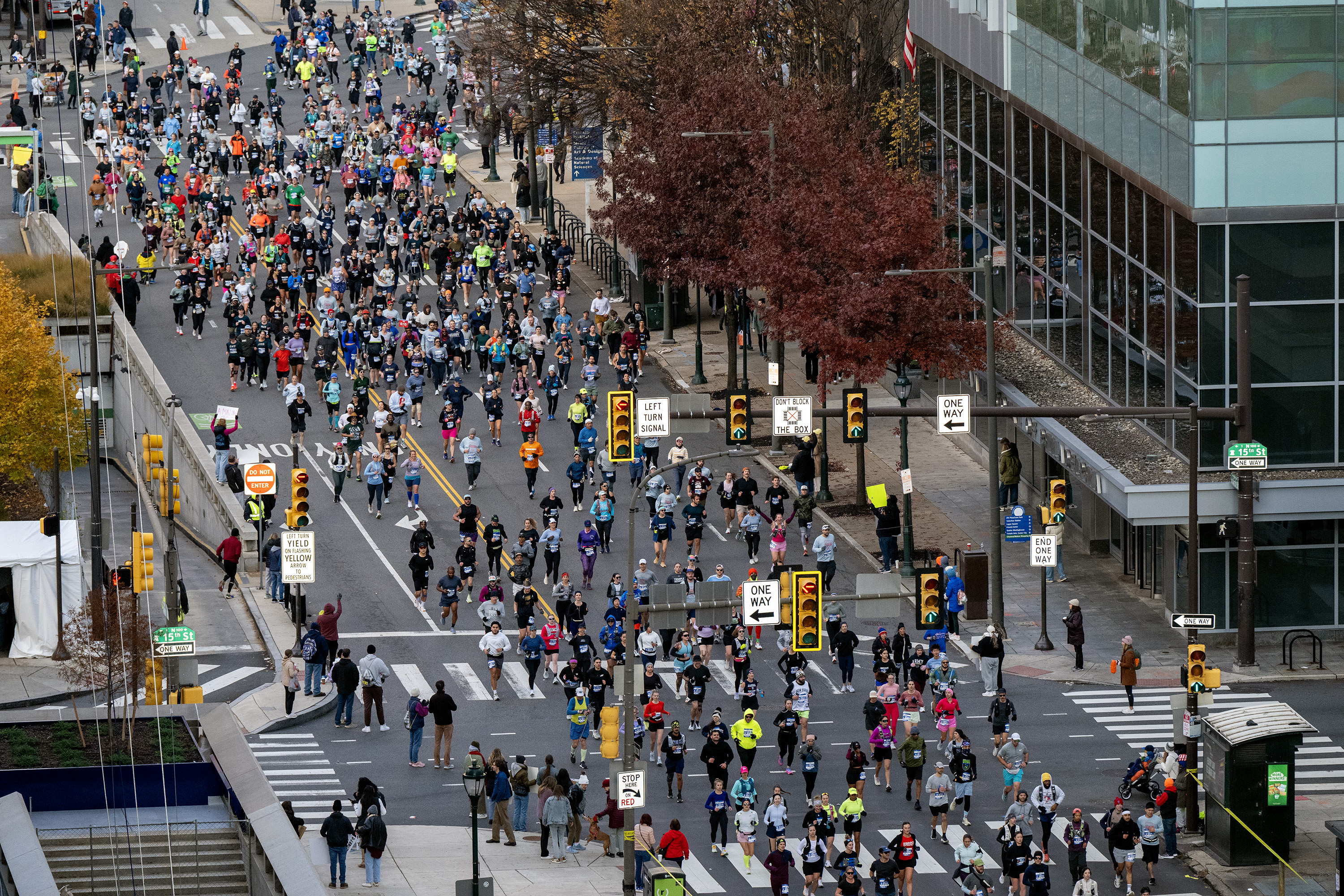
    Runners turn from the Benjamin Franklin Parkway (upper right) onto Arch Street heading to 15th Street (bottom) in the first mile of the annual Philadelphia Marathon on Nov. 23, 2025.Tom Gralish / Staff Photographer

    Where does the money go?

    Proceeds from the Philadelphia Marathon support several charities and nonprofits, including local organizations such as B Inspired Philadelphia and the Mazzoni Center.

    See a full list of partnering nonprofits on the Philadelphia Marathon website.

    Awards & prize money

    Cash prizes range from $1,000 to $10,000, depending on the race, with the Philadelphia Marathon’s professional division offering the largest awards.

    See a full list of awards and prize money on the Philadelphia Marathon website.

  • Cold, rain, wind, and possibly stray snowflakes are forecast this week in the Philly area

    Cold, rain, wind, and possibly stray snowflakes are forecast this week in the Philly area

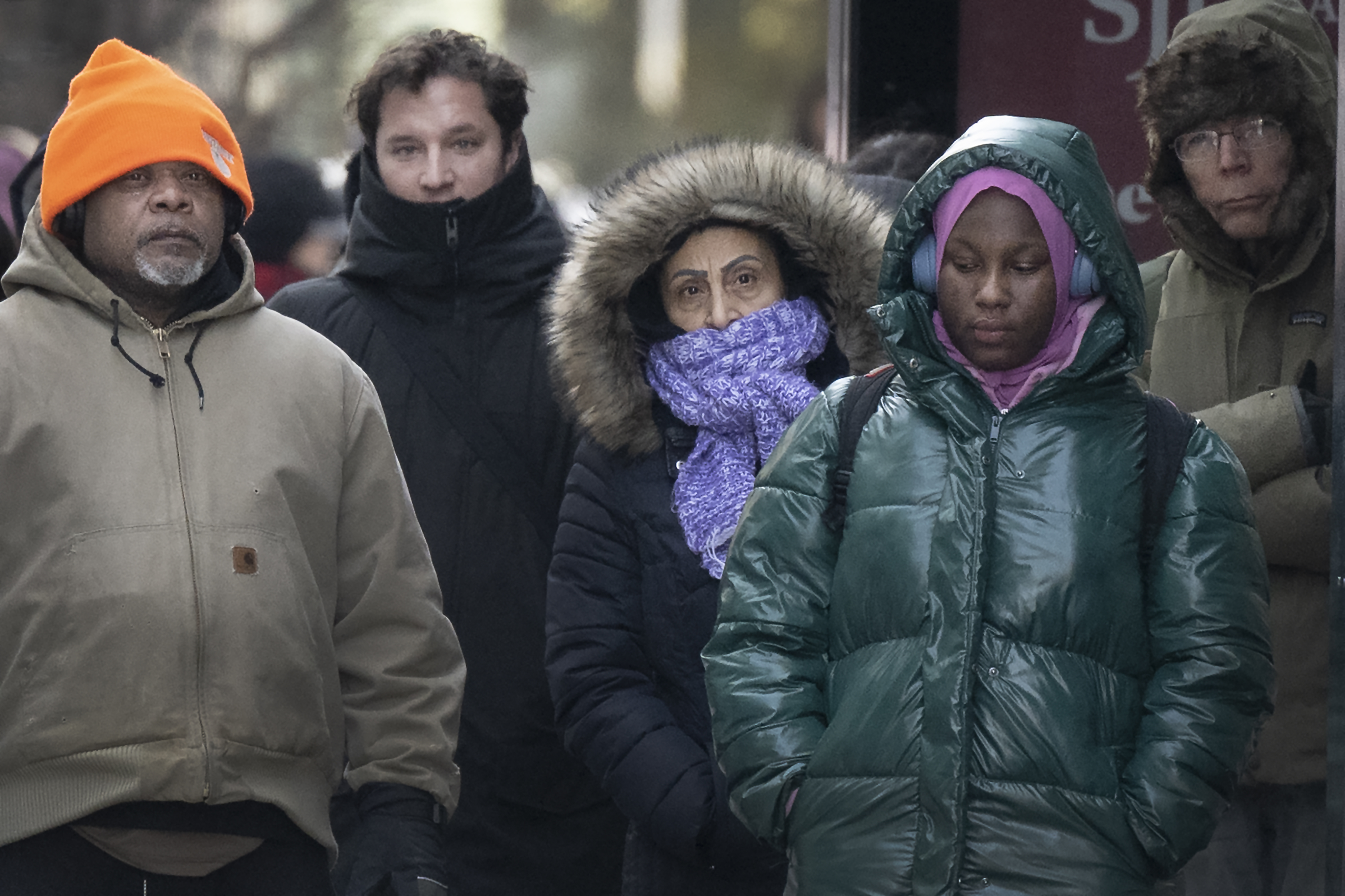
    It won’t be extreme — about what one might expect in mid-November when the sun goes to bed early and takes its time pinking up the sky in the morning — but a December-like chill is about to settle across the Philly region.

    After a gloomy, rainy Thursday — with a thunderstorm possible — forecasts are calling for highs in the 40s Friday and Saturday, with perhaps some wet snowflakes making cameos.

    The chill should last into early next week. However, it appears warmer days will be making a strong comeback after that, with perhaps record warmth Thanksgiving week.

    The forecast for the Philly region

    Light rain is expected to develop Thursday with highs in the 60s, but winds from the northwest generated by a coastal storm due to mature off the Jersey coast are expected to import much colder air Thursday night into Friday, with more rain possible.

    Snow is possible in the higher elevations of Eastern Pennsylvania, and random snowflakes could find their way into the Philly region, said Marc Chenard, senior branch forecaster at the federal Weather Prediction Center, in College Park, Md.

    But no cause for panic.

    While the cooldown won’t be polar vortex stuff, stiff northwest winds will drive wind chills into the 30s through the weekend.

    Areas in the city away from the core heat island could see temperatures below freezing, said Amanda Lee, meteorologist with the National Weather Service office in Mount Holly.

    “It’s going to be a shock to the system,” said Tom Kines, senior meteorologist with AccuWeather Inc. “We’ve been spoiled for the last several weeks.”

    True. In fact, after a mild October, temperatures this month are running a lusty 7 degrees above normal.

    That has a lot to do with that El Niño warming of sea surface temperatures in the equatorial Pacific, Kines said.

    El Niño continues to cook and affect U.S. weather

    The interaction of the overlying air and the waters that have been running about 4 degrees Fahrenheit above normal have been delivering generous amounts of warmth to North America.

    That is likely to continue.

    A significant warmup is likely in the region starting in the middle of next week, and Kines said that heading into Thanksgiving week, record warmth is possible in Philly.

    The government’s Climate Prediction Center has the odds strongly favoring above-normal temperatures in the Northeast leading up to Thanksgiving, not the most welcome news for ski resorts hoping for early openings.

    It is likely to get chilly again Thanksgiving weekend, but “before that we’re going to have a lot of nice weather,” he said.

    Meteorologists still are keeping an eye on an Arctic disturbance that may allow cold air to spill southward later in the month or in December.

    But for now, Kines said: “This is El Niño all the way.”

  • A very, very slow and final bon voyage for the SS United States along the Florida Panhandle

    A very, very slow and final bon voyage for the SS United States along the Florida Panhandle

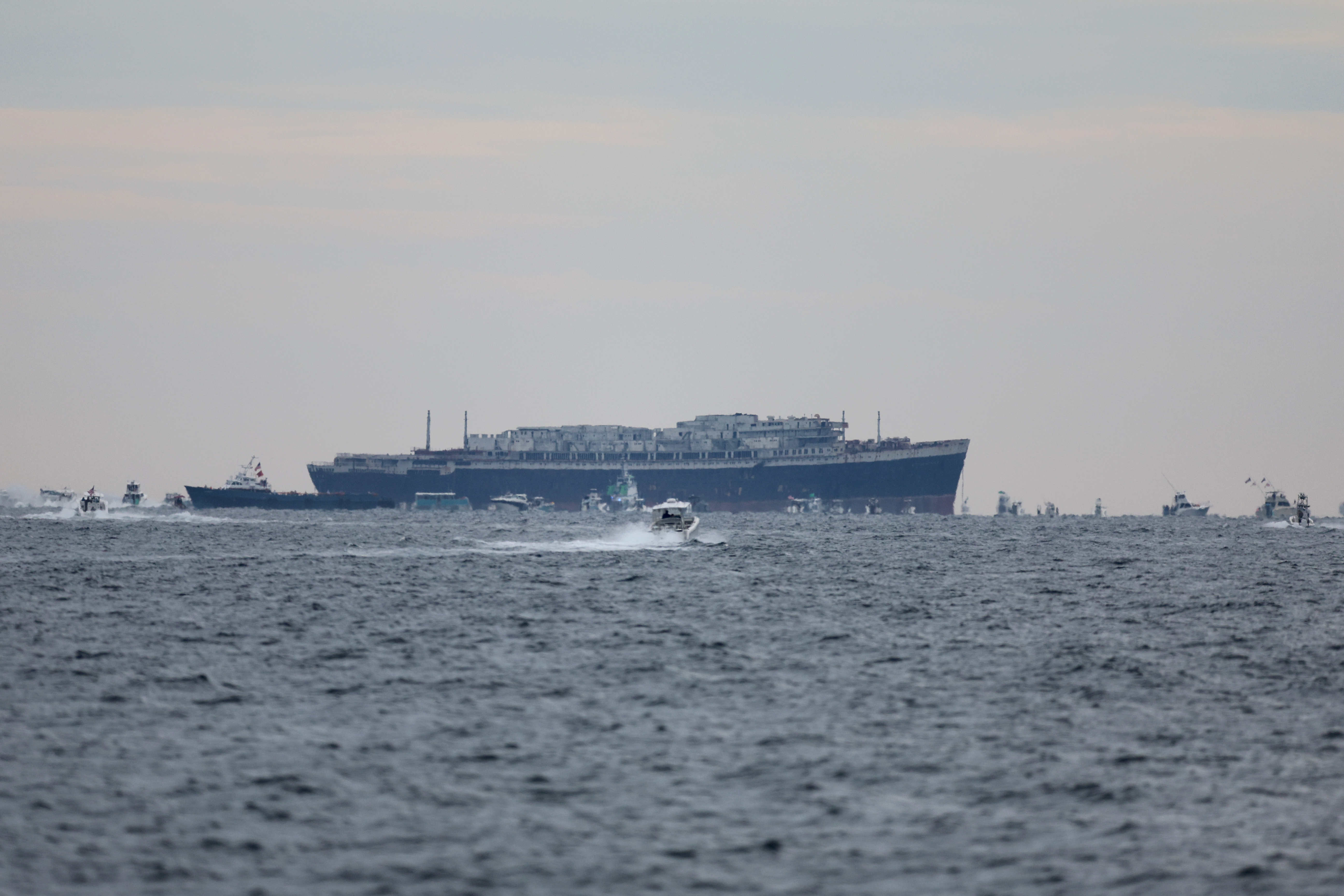
    DESTIN, Fla. — The SS United States broke speed records crossing the Atlantic in its heyday. It did not break any records for what ended up being a very, very slow sink to the bottom of the Florida Panhandle.

    It was a spectacle of a retirement full of 11th-hour dramas, including lawsuits and a longer-than-expected sinking process, worthy of a vessel used to a life of celebrity and notoriety.

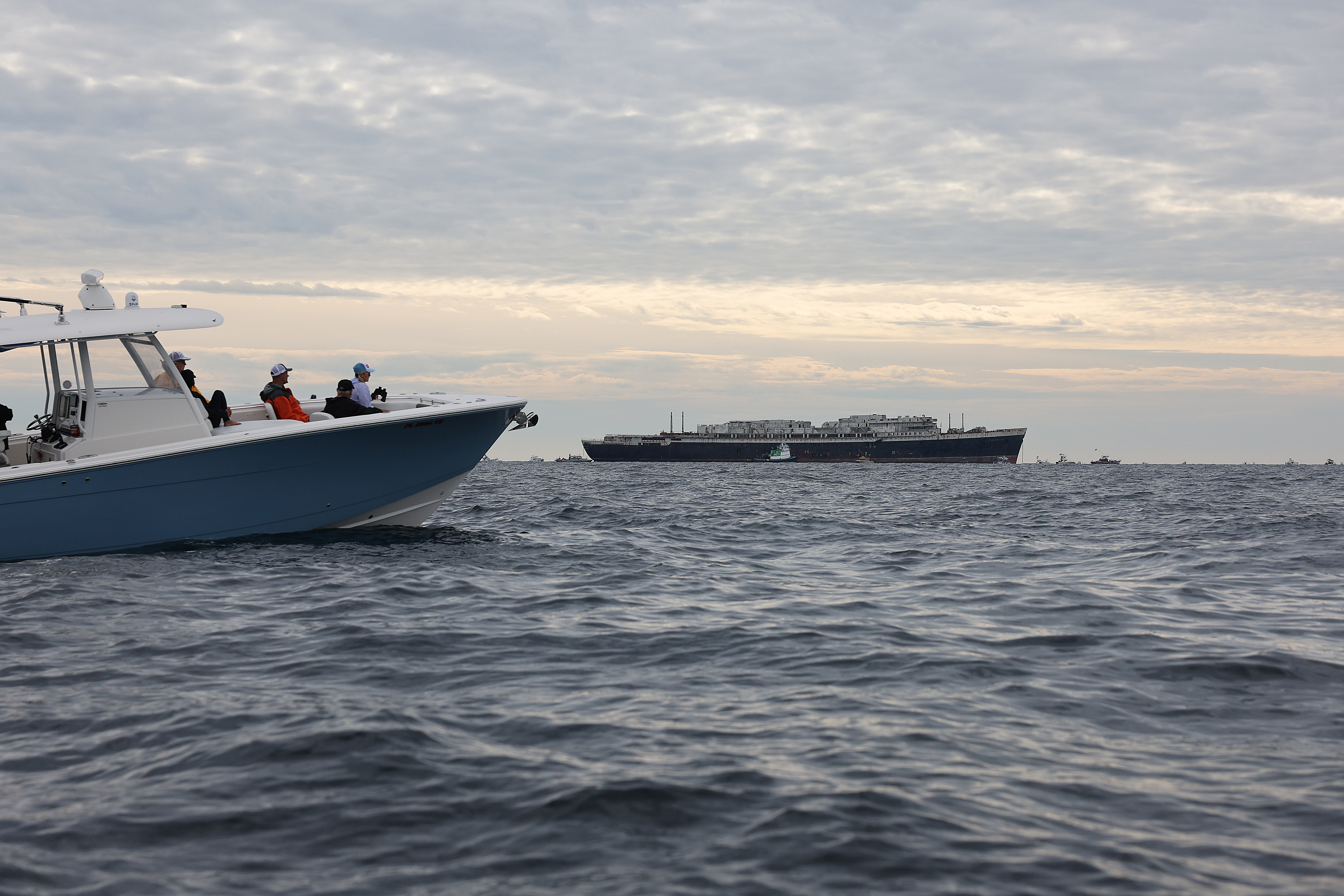
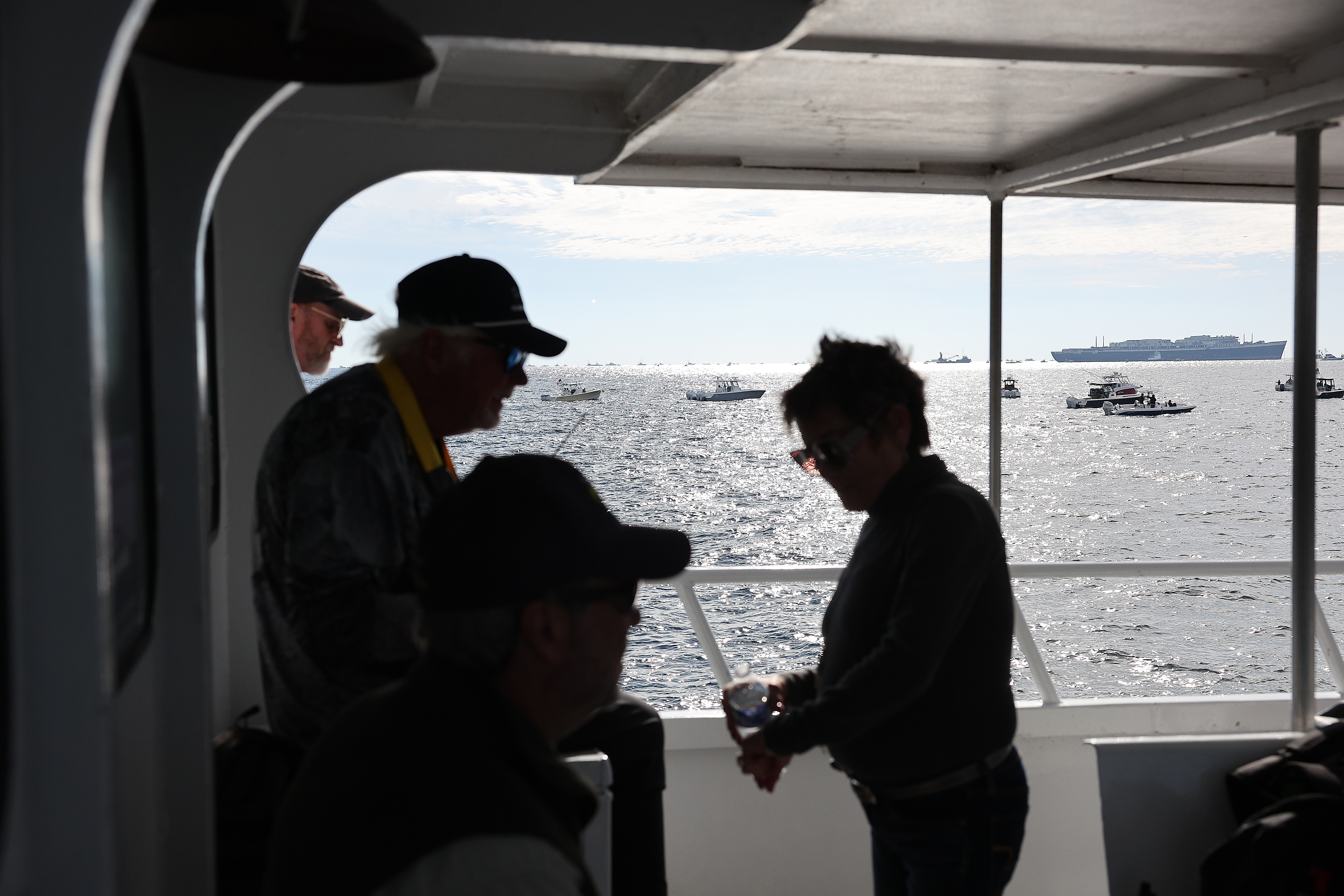
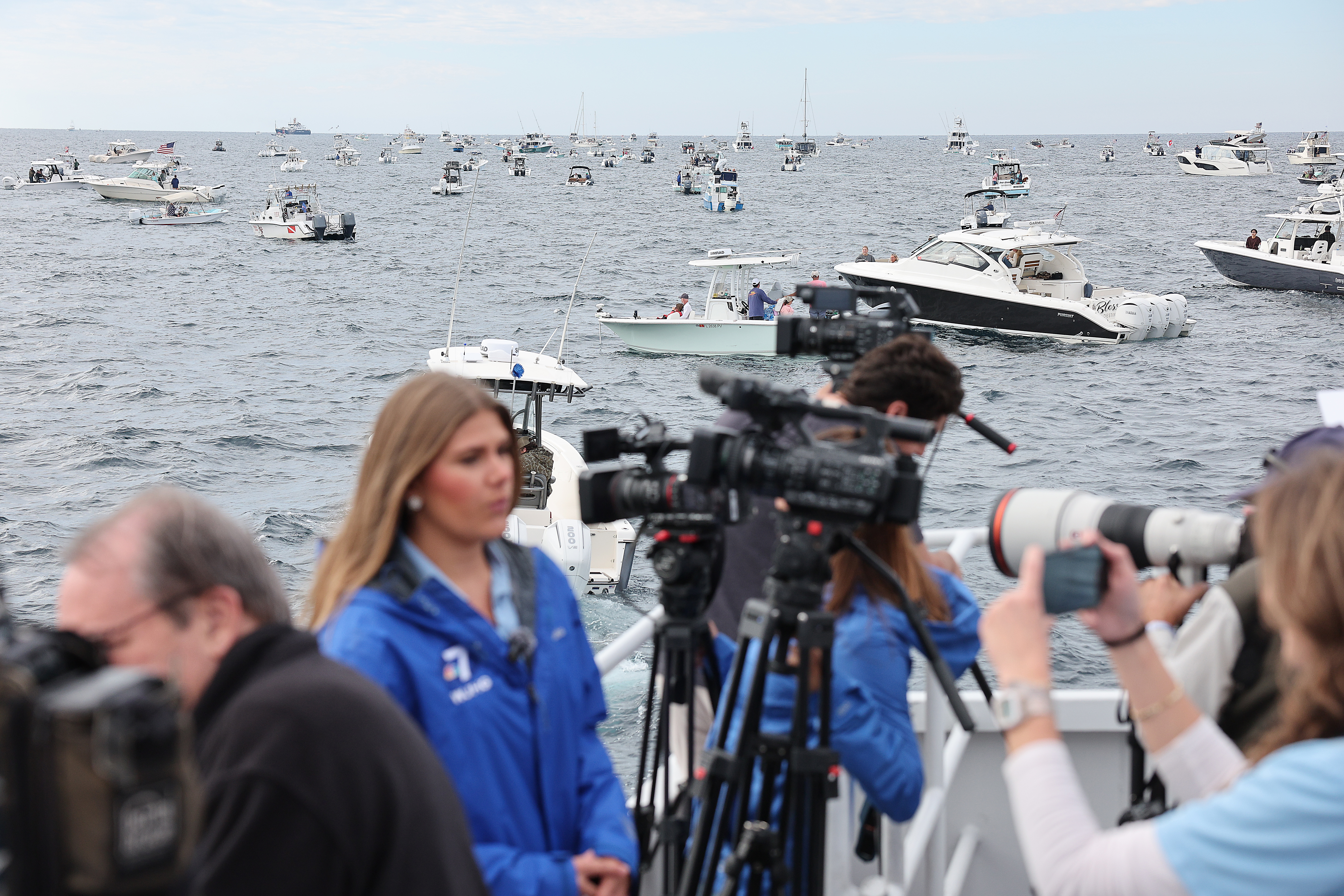
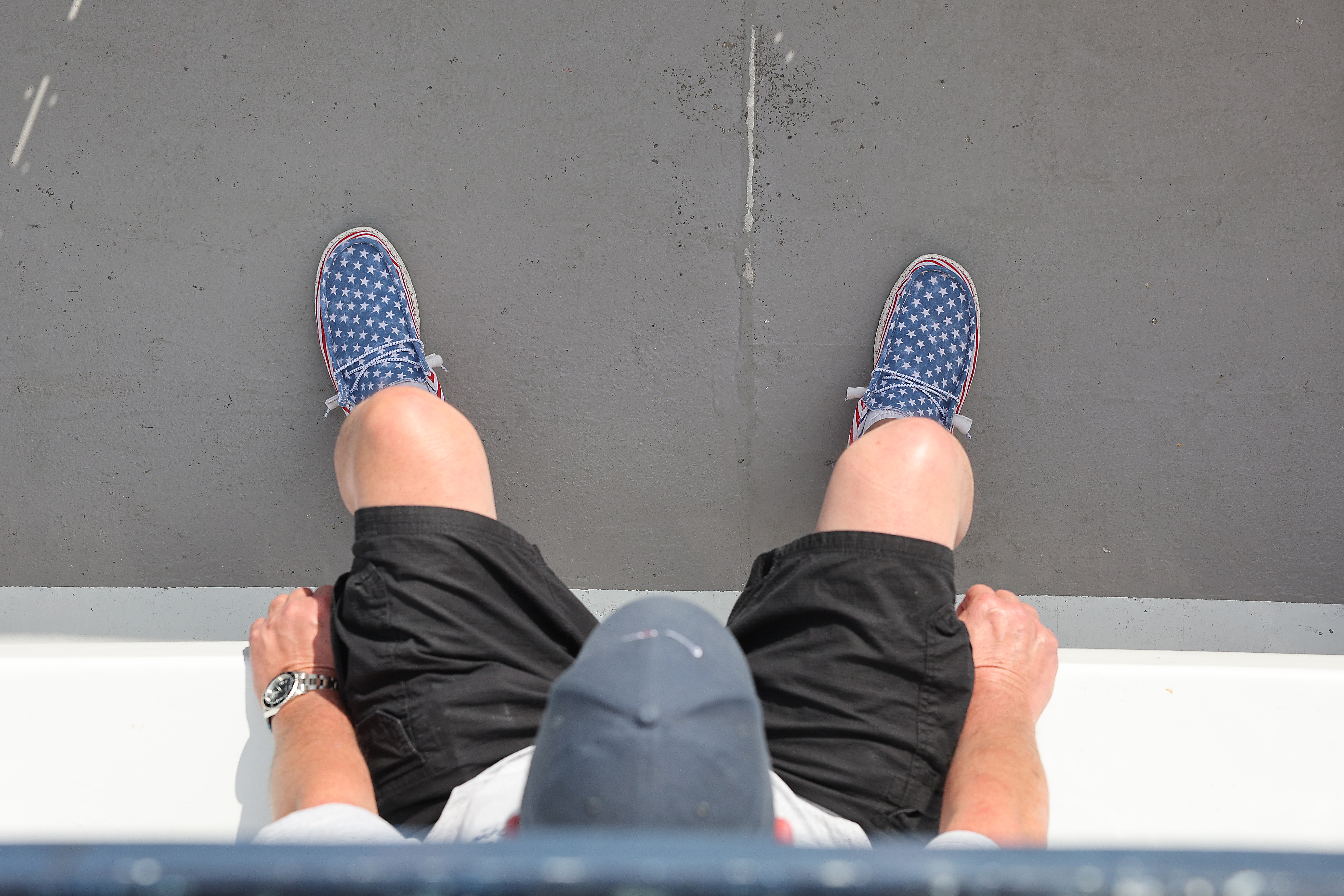
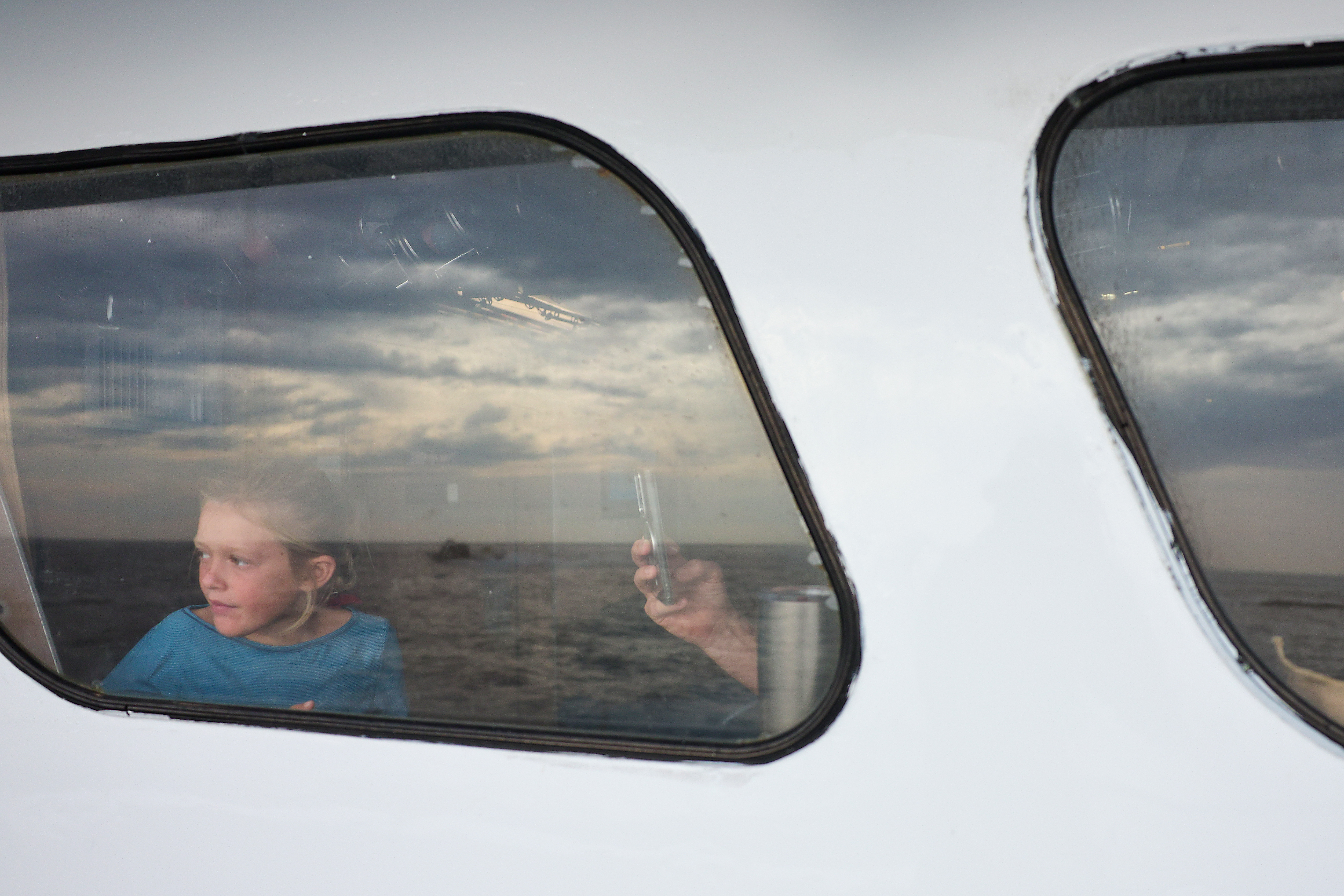
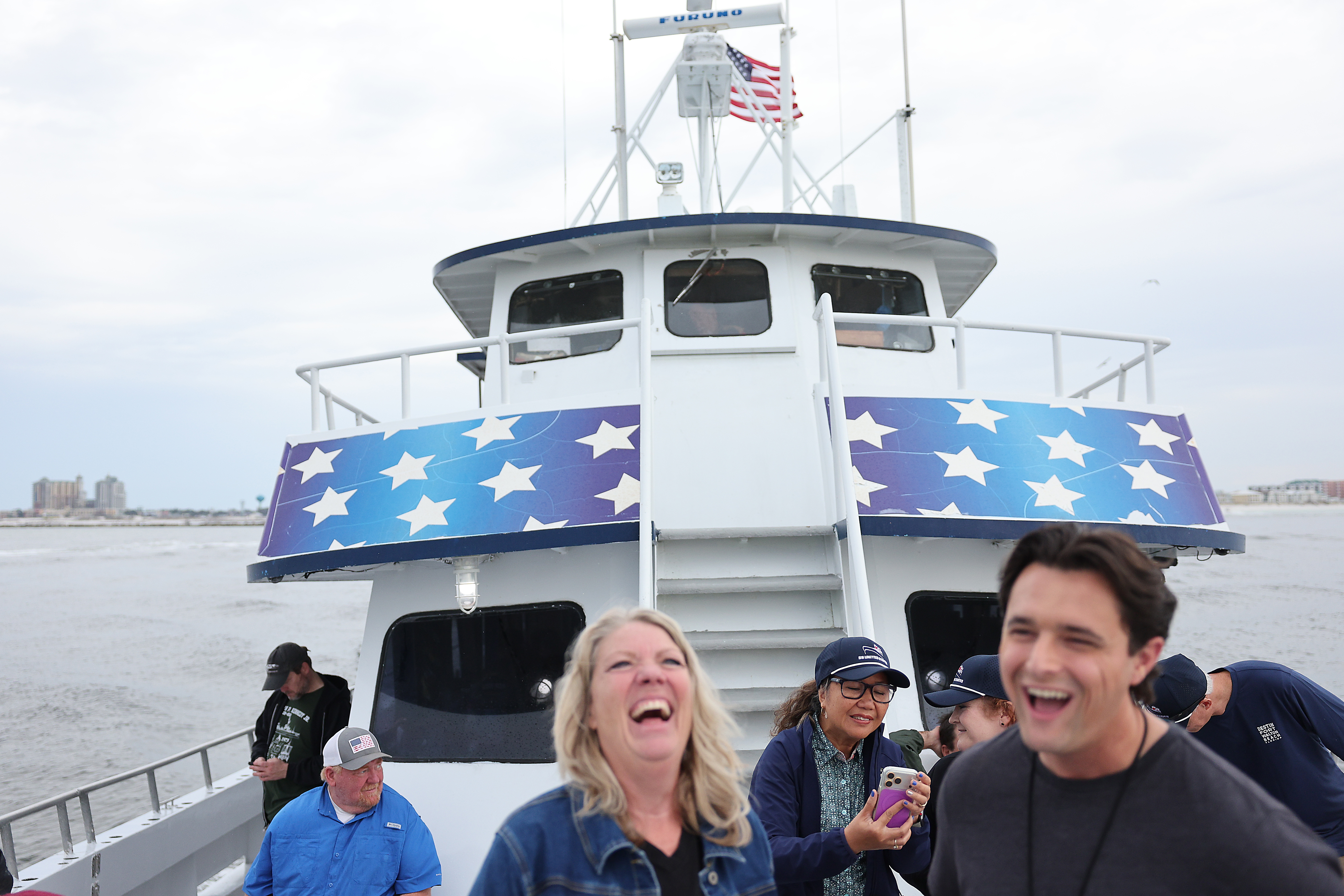
    Hundreds of boats tried to get as close as the U.S. Coast Guard would let them, angling for a better view of the slow drop into the Gulf of Mexico, with some passengers coming from as far as California and Philadelphia.

    At about 10 p.m. Philly time, the ocean liner finally submerged to take its place on the Gulf floor. The ocean liner’s final moments, scored by sweeping string music, had a cinematic feel as the water overtook one side of the vessel and then the rest.

    “This is history,” said Panama City Beach resident PJ Hughes, knowing little else about what her day had in store aboard the Gulf Breeze and unknowingly foreshadowing the unexpected delays. “I’m just like a little puppy dog. We might be out there for about six hours, I don’t know.”

    For many, the trip to sea was much longer than that.

    The ocean liner had to undergo some last-minute prep when it was supposed to begin the controlled flooding. The sinking was then much slower than expected when it finally began, submerging inches by nightfall, not feet. It was not immediately clear when the process would end, said the Okaloosa County officials in charge. Many captains took the news as a sign to turn back, with floodlights doing little for those trying to see the vessel slowly dropping into the sea.

    It was an anticlimactic return to shore as buzzes wore off and light sunburns set in.

    The event had drawn media from across the country. Reporters descended on Destin to cover the once-unthinkable sinking of one of the last and fastest ocean liners the United States ever produced.

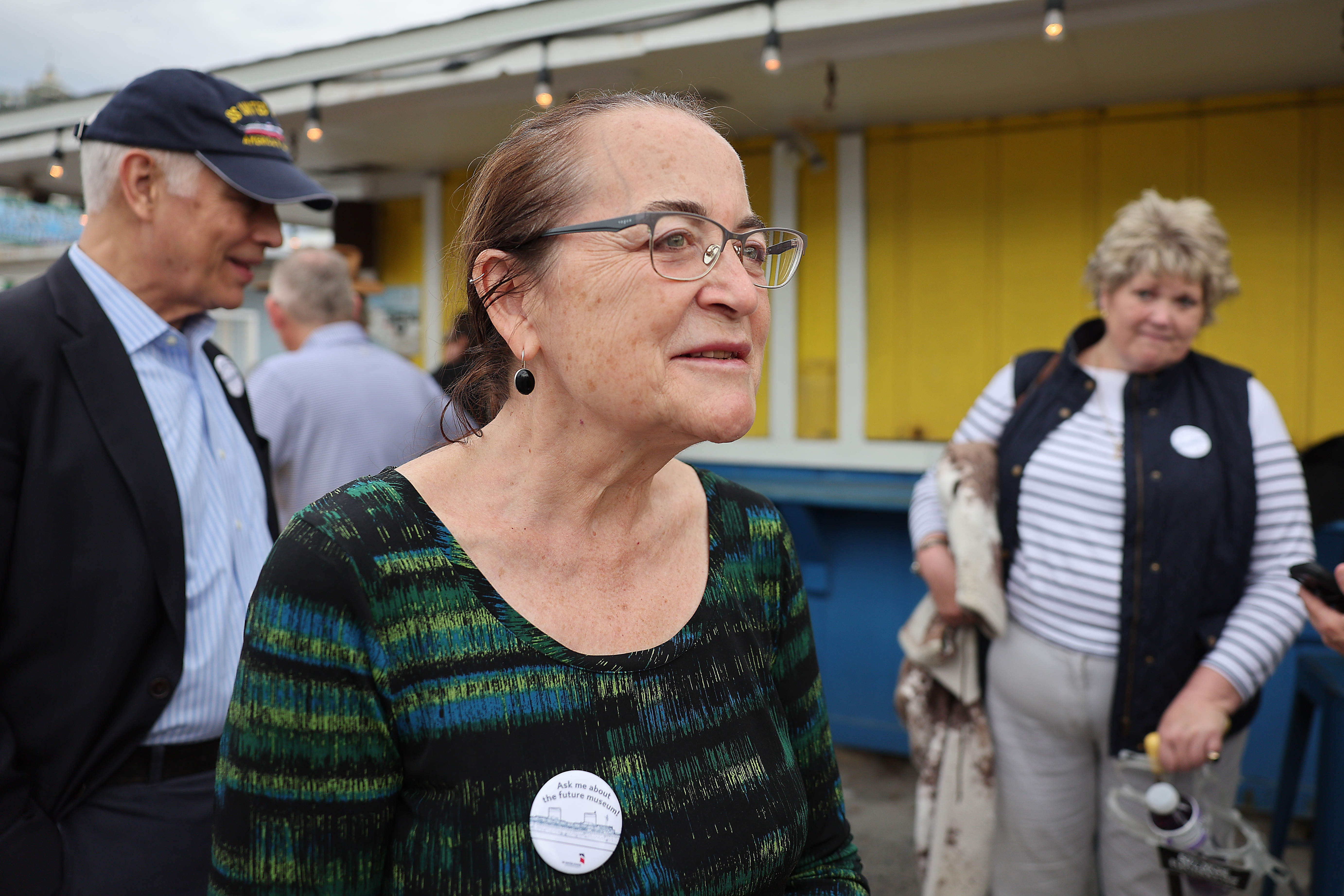
    “It is very emotional,” said Susan Gibbs, granddaughter of the vessel’s designer, who desperately fought for redevelopment as the head of the SS United States Conservancy.

    “It’s almost overwhelming. We tried for decades to save the ship, keep her afloat. But this is a poignant, poignant transition, and may she rest in peace.”

    Susan Gibbs, who is the granddaughter of the architect of the SS United States, talks about the sinking of the SS United States outside Destin-Fort Walton Beach, Fla. on Wednesday, Nov. 11, 2026. The ship will become the world’s largest artificial reef.David Maialetti / Staff Photographer

    Gone were the days when the ship carried close to 8,000 quarts of ice cream and 500 pounds of caviar for guests looking to travel in luxury. A household name like Marilyn Monroe, Judy Garland, or Grace Kelly had not stepped aboard its decks in decades. And the SS United States, stripped of its furnishings and gutted, would not be considered a secret military weapon by anyone — it once could transport 14,000 troops.

    The SS United States spent close to 30 years as a Philadelphia resident that locals loved or loved to hate. Stripped of its remaining interiors in the 1990s, its frame acquired the rusty patina of a shipwreck, deemed an eyesore by many, dubbed the Ikea boat because of its proximity to the Swedish big box store’s South Philadelphia location.

    Various owners sank more than $40 million into buying, maintaining, and unsuccessfully reimagining the SS United States during its time in Philly. But they all eventually learned the gutting of the ocean liner only made redevelopment ambitions all the more difficult to pitch.

    The SS United States could not move on its own and required extensive environmental remediation. Restoration was estimated to run to the tune of $400 million.

    No one took the bait.

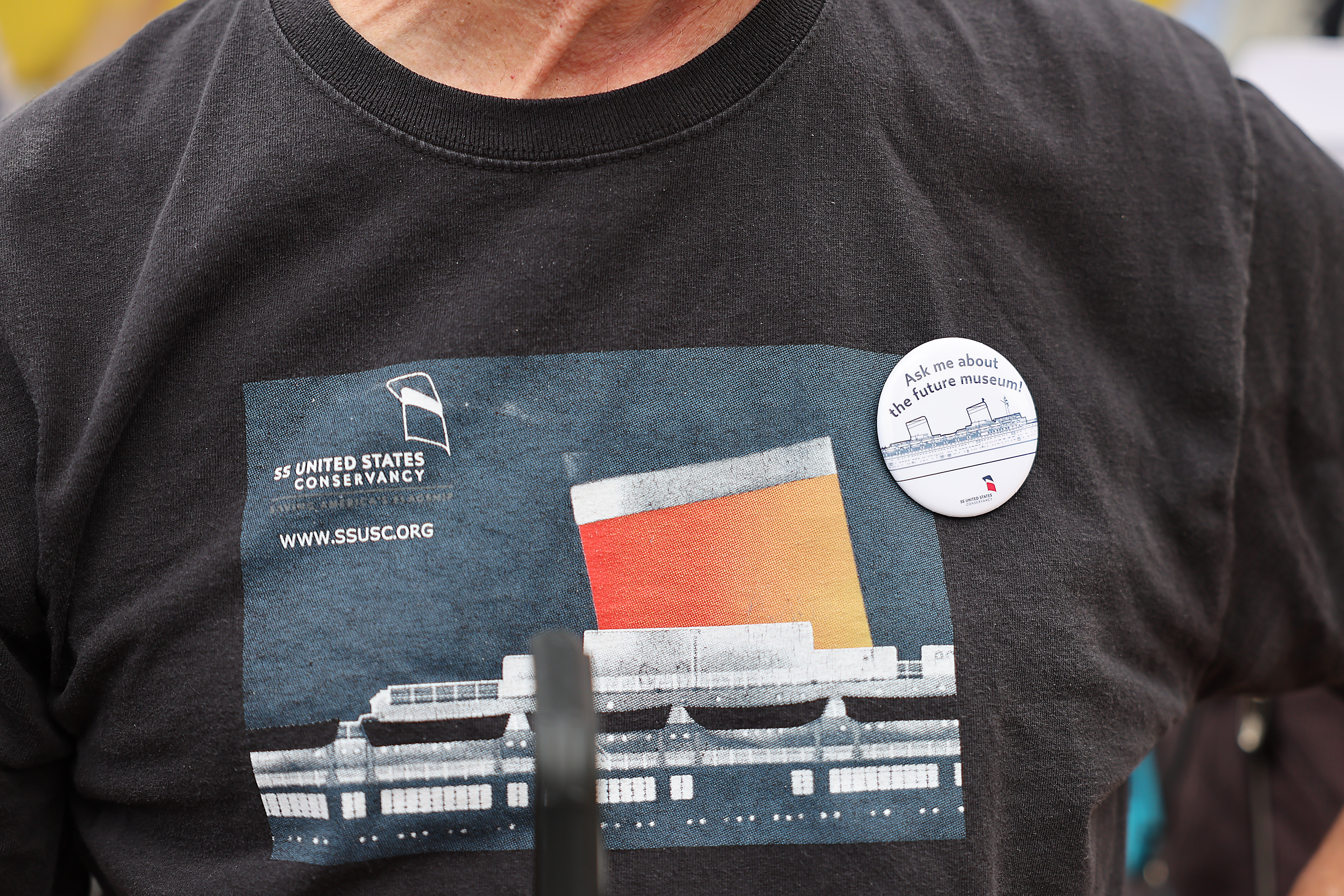
    The conservancy took to selling its namesake for $1 million in 2024 as an alternative to sending it to the scrap heap. It is now focusing its advocacy efforts to fundraise and build a museum in Okaloosa County, Fla., that will feature more than 10,000 artifacts, including the first-class bar. The conservancy also has possession of the vessel’s two iconic, once red-and-white smokestacks.

    Warren Jones is one of the conservancy members who is now directing his energy to building the museum.

    He noted the irony of waiting for the SS United States to sink aboard a boat named the American Spirit. Even so, he maintained the sinking was a rebirth better than the scrapyard or, worse, a purgatory on some pier — not unlike how the vessel existed in Philadelphia.

    “That would be disrespectful,” he said, looking onto the vessel. “You know that would be what people would remember the ship as, and that’s not right.”

    Onlookers like David Heath, 62, put it more bluntly.

    “This is probably the best outcome rather than it being made into razor blades,” he joked.

    Some of the most fervent critics of reefing the vessel also appeared resigned to the idea Wednesday. No protesters showed, as once suggested, and the final lawsuit to stop the sinking was dismissed Friday.

    A fresh start

    Okaloosa County jumped at the opportunity to sink the SS United States 22 nautical miles southwest of Destin-Fort Walton Beach. The area has undergone a bit of an artificial reef renaissance in the last decade under Alex Fogg, the county’s natural resources chief.

    Unlike the Florida Keys or the Caribbean, Destin-Fort Walton’s shores do not have natural reefs.

    “We rely on artificial reef habitat, things we intentionally deploy to be reef habitat for the fish to thrive, for people to have places to go fishing, and for places for people to go diving,” Fogg said earlier this year.

    Okaloosa County has deployed hundreds of concrete structures and smaller ships in the last decade but by reefing the SS United States, the county aims to cement its place as a diving attraction.

    “Divers are going to have that place completely swamped up for the first four or five years,” mused Jim Westbrook, captain of the American Spirit, a charter boat.

    Westbrook welcomes what hosting the world’s largest artificial reef will mean for tourism, but as someone who would visit for fishing, he knows he will have stiff competition.

    “I expect to maybe fish it in 2030,” he joked. “I’ll have to go out when it’s nasty. Otherwise, there’ll be 20 and 30 dive boats anchored up on it every day.”

    David Landsman, who was a visitor on the SS United States as a kid, waits to depart on a charter boat for the sinking of the SS United States outside Destin-Fort Walton Beach, Fla. on Wednesday, Nov. 11, 2026. The ship will become the world’s largest artificial reef.David Maialetti / Staff Photographer

    The vessel is expected to draw divers of all abilities. Because the SS United States’ main deck is expected to hover about 60 feet underwater, it will be perfect for those starting out. Meanwhile the bottom is about 175 feet, ideal for the technical diver.

    Local diving companies confirm people are already booking trips for this month. People have the all-clear to explore the gutted vessel as early as Thursday, weather permitting. Marine life will be limited in the first few weeks, limited to bait fish. But scientists expect groupers, snappers, amberjacks, and sea turtles within the year.

    As the American Spirit headed back to shore full of dejected spectators, Jones, the member of the Conservancy, couldn’t help but laugh.

    A quote by William Francis Gibbs, the vessel’s designer, came to mind, he said. Gibbs used to say the vessel couldn’t catch fire, sink, or be caught.

    “Well, we’ve caught her, but she hasn’t caught fire, and she definitely hasn’t sunk yet,” Jones joked, as the American Spirit headed back to shore.

  • What actions have City Council and Mayor Parker proposed following Malayshia Allford’s death?

    What actions have City Council and Mayor Parker proposed following Malayshia Allford’s death?

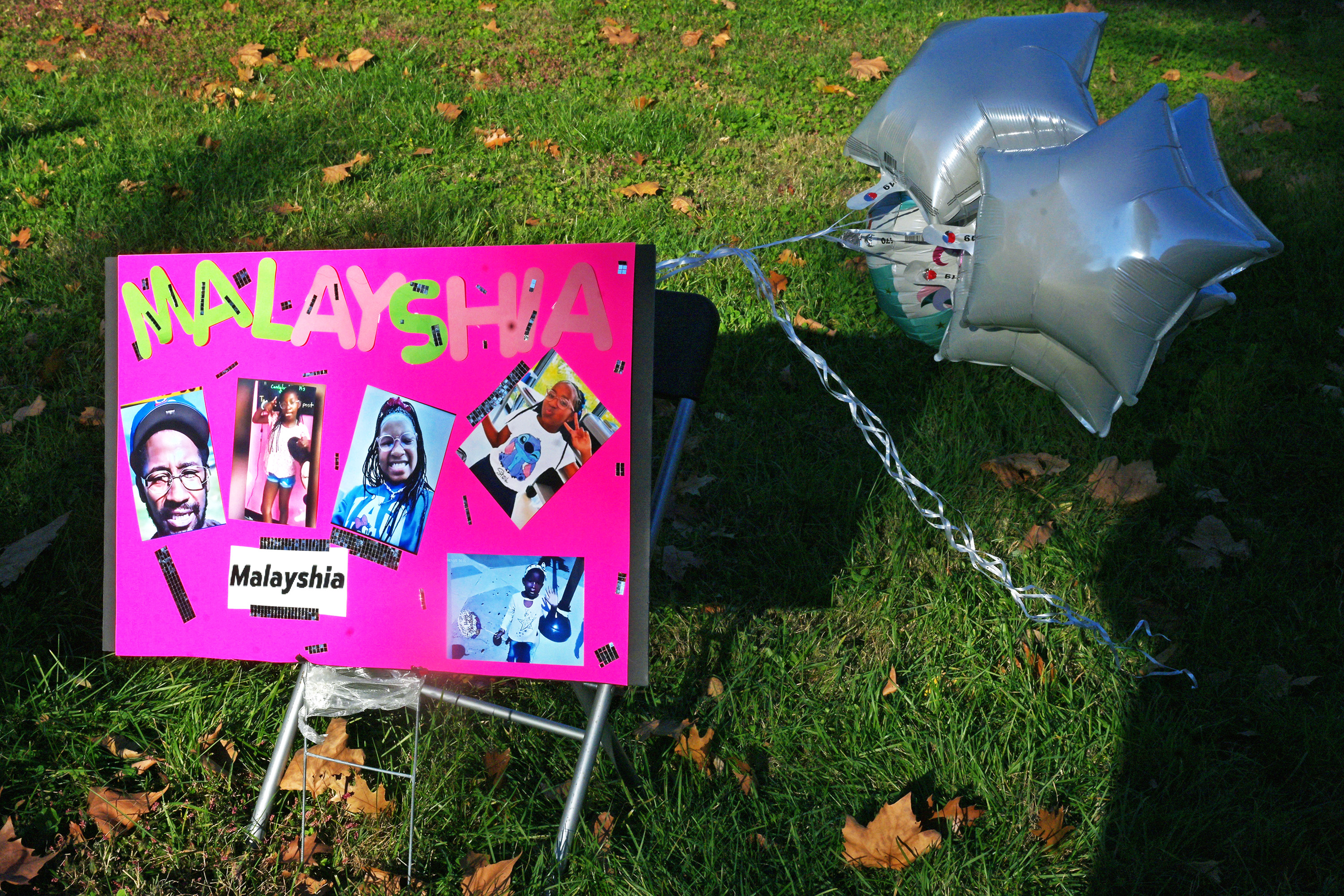
    The death of 10-year-old Malayshia Allford in the care of her foster mother — a West Philadelphia woman who has been charged with murder and was previously accused of abusing another child — has rocked the city and spurred calls for changes to the foster care system.

    On Tuesday, city leaders began officially responding to those demands.

    Mayor Cherelle L. Parker, who called 36-year-old Carprice Williams’ alleged treatment of Allford a “crisis of unimaginable proportions,” issued an executive order that calls for child welfare experts to convene and deliver a report on how the city can improve its handling of the thousands of foster cases overseen by the Philadelphia Department of Human Services and managed by a network of contractors and nonprofits.

    Meanwhile, City Council members announced they had taken their own interest in investigating the circumstances that led to Allford’s death and making changes to Philadelphia’s child welfare system.

    A resolution calling for hearings on the matter, introduced by Councilmember Anthony Phillips and cosponsored by Councilmember Curtis Jones Jr., calls for hearings to probe the workings of DHS and foster care contractors, particularly when it comes to accessing records that detail prior abuse allegations leveled against foster parents. That is a reference to the fact that Williams was able to foster Allford after having a 2021 abuse allegation expunged from her record.

    The goal, the resolution says, is to propose safeguards that may prevent another tragedy. Read on for a summary of the mayor’s executive order and the City Council resolution.

    What actions were proposed?

    Mayor’s executive order: Establishes a Child Welfare Review Committee, which will be tasked with reviewing the way DHS interacts with community umbrella agencies (CUAs) — the nonprofits that contract with the city to manage foster care cases — as well as local foster care agencies.

    Committee members will be asked to conduct a “comprehensive review” of issues affecting the city’s child welfare system, according to the order.

    Members will review the process for placing children in foster care homes, for example, and probe how the city and state monitor such cases, the order says.

    They will also examine how foster homes are licensed and consider how to best manage visitations from a child’s biological family members. And they will review the city’s criteria for contracting with certain foster care providers.

    City Council resolution: Authorizes Council’s Committee on Children and Youth to hold hearings that will examine how the city keeps children in its child welfare system safe.

    The hearings will explore what safeguards exist to support children placed outside the care of their biological families and how the city can engage with the concerns of a foster child’s family members during placement, according to the resolution.

    They are also expected to delve into how city agencies can better coordinate with foster care providers and how to prevent abuse, neglect, and fatalities within the system.

    The hearings will probe how contractors select homes for foster placement, for example, or how they assess whether a child’s relatives are eligible for possible placement within the family.

    Additionally, the discussions will examine the training foster care providers receive, exploring whether they are prepared to meet the needs of children in their care. That includes training received by staff with the CUAs responsible for managing many of the city’s foster care cases.

    The hearings will also focus on DHS — specifically how the city agency records and responds to instances when a foster care provider has been accused of prior abuse or neglect.

    That includes examining what types of records and prior investigations providers may “lawfully access and consider during interviews, home studies, and approval decisions, including when a former [caregiver] applies to foster another child through a different provider,” the resolution says.

    Who’s involved in the plans?

    Mayor’s executive order: The Child Welfare Review Committee will be composed of up to 15 members who are “experts and leaders in the field of child welfare and foster care,” according to the order.

    Members will be selected by the mayor from a variety of professional fields, such as childcare advocacy groups, social workers, medical and behavioral health professionals, and legal experts who specialize in child welfare and the foster care system.

    Two committee chairs will be appointed by the mayor.

    City Council resolution: Council’s Committee on Children and Youth will oversee the hearings. The committee is chaired by Phillips, with Councilmember Isaiah Thomas as vice chair.

    The committee includes Councilmembers Kendra Brooks, Jamie Gauthier, Jim Harrity, and Rue Landau.

    What are the possible outcomes?

    Mayor’s executive order: The committee’s goal is to “work toward the elimination of child abuse-related fatalities, near fatalities, and injuries,” the order says.

    It also aims to improve how DHS coordinates with CUAs, nonprofits, and local foster care agencies.

    City Council resolution: The hearings could change how the city’s child welfare system operates.

    For example, the resolution says the discussions will explore whether additional training is needed for DHS employees to assess whether a foster placement is safe, and to learn how to escalate their concerns about possible abuse to superiors.

    The talks could lead to changes in how foster care providers access information about potential caregivers, how caseworkers verify that a child is safe in a foster home, and how attorneys and family members advocate on behalf of a child in a potentially dangerous situation.

    And the hearings could change how agencies determine when it is safe for children to return to their original home, among other possible outcomes.

    Participating Council members are also expected to consider how to publicly release information regarding these potential changes, whether they are working, and whether additional safety measures may be required.

    What are the timelines?

    Mayor’s executive order: Mandates that committee members submit a report on their findings to the mayor within 120 days of convening.

    City Council resolution: There is no date set for hearings to begin.

    After the first hearing, the resolution requires DHS to provide the Committee on Children and Youth a monthly report for a period of two years.

    That document is expected to include tallies of children who are placed in kinship and foster care, reunited with a parent or guardian, or subject to a court order terminating parental rights, according to the resolution.

  • He spent years searching Kensington for his niece. She is now identified as one of Raymond Horsch’s possible victims.

    He spent years searching Kensington for his niece. She is now identified as one of Raymond Horsch’s possible victims.

    At sundown, Paul Wright would drive up and down Kensington Avenue in his Ford Explorer between the Erie-Torresdale and York-Dauphin stations, looking for his niece. He checked her into at least four drug rehabs in Camden, Trenton, and Philadelphia, but she would always run.

    He had not seen her in years, and hoped she had finally found sobriety and moved away.

    She hadn’t.

    Police now believe his niece, Lelia Mae Wright, is one of at least seven women who may have been killed inside the home of deceased pornographer Raymond “R.C.” Horsch, her uncle recently learned.

    “I have some closure,” he said, his voice shaking. “But now I need answers so I can kind of try to figure out what led up to this.”

    During a September news conference, police explained that a trove of video and photographic evidence recovered from searches of Horsch’s Olney residence pointed to the possibility that at least five of the seven women were dead.

    One victim, who had not previously been named at the request of a relative, was a 25-year-old woman who appeared unconscious and with visible injuries in some recovered photos.

    Paul Wright said two family members have told him that investigators were referring to his niece, and a police source confirmed to The Inquirer that the woman was Lelia Wright, whose first name was pronounced Leah.

    Wright said he spoke with a detective who declined to provide exact details on the circumstances of her death because he is not considered next of kin.

    “Short of not telling me, he told me it was her and she was gone,” said Wright, 49, a construction foreman and father of four.

    Wright said relatives told him that police were able to identify her from tattoos on her neck, chest, and back.

    “I can’t lay her to rest, I can’t get her cremated and put her with her dad or her grandmom,” he said. “I can’t do anything for her because, as far as I know, she was dissolved in liquids or buried somewhere.”

    Paul Wright in Tredyffrin Township, Pa., tried pulling his niece off the streets of Kensington for years. Monica Herndon / Staff Photographer

    A chance car stop on June 19 led to the arrest of Horsch’s son, Eugene, after police discovered guns, drugs, and a fake ID made out in the name of another missing woman, Blair Tonzelli. Eugene Horsch is in prison on federal charges, but has not been accused of violent crimes involving the deaths or disappearances of the women. Raymond Horsch died last year.

    The discovery of Tonzelli’s ID prompted a sprawling investigation into the Chew Avenue home. For months, crews have excavated pipes, sewer lines, and sections of the front and back yards. Inside, they have torn up floors and taken down walls in search of forensic evidence.

    Police have uncovered numerous videos and photos from Horsch’s home they have said seem to show real violence and actual killings.

    While the absence of physical remains presents a hurdle, a physical body is not required to declare or prosecute a homicide.

    “Usually when we have a homicide investigation, we have a body, we have body parts,” Police Inspector Raymond Evers said at an August news conference.

    “This time we do not.”

    A hard life

    Life had never been easy for Lelia, Wright said.

    Her biological mother, who could not be reached for comment, took her and four siblings to Virginia from Philadelphia when Lelia was little. Relatives intervened after it became clear the woman was unable to care for the children, and Lelia’s grandmother — Paul Wright’s mother — was granted custody, he said.

    Since the age of 5, Lelia had been raised in Philadelphia by her grandmother, Julia Wright, her dad, Thomas Wayne Wright, who died in 2019, and his longtime partner, the mother of five more children.

    Paul Wright pitched in, too, and for a long time, Julia Wright, Thomas Wright, and Paul Wright lived in three rowhouses on the same block on East Arizona Street near Coral in Kensington.

    Lelia dropped out of school and started using drugs as a teenager, Wright said. Her grandmother, whom Wright described as a “no-nonsense mama bear,” put bells on the bedroom doors of Lelia and her two sisters to alert her when they snuck out.

    “I can’t tell you how many times my mom would call me and tell me that Lelia ran off, to go find her, and I would go find her and bring her back home,” he said.

    When her grandmother died in 2011, at age 71, a devastated Lelia turned to drugs to ease the loss.

    “That was probably the catalyst that finally put her out there,” Wright said. “That was the thing that just drove her away.”

    Court records show that she was arrested in Philadelphia and Montgomery County at least 11 times between 2012 and 2016 for minor offenses, principally drug possession or sex work. She was repeatedly described as homeless in arrest records, sometimes listing the offices of social service provider Prevention Point as her home address.

    Nearly all of Wright’s Philadelphia arrests occurred between the 2800 and 3500 blocks of Kensington Avenue, placing her right in the area where Raymond Horsch picked up drug-addicted women to pay for sex or pornographic work.

    Wright said the last time he saw Lelia, she was on Kensington Avenue near M Street, talking to an older man in a dark minivan.

    “C’mon, let’s go, Lelia,” Wright called out to her. “We’re going to rehab.”

    Lelia took off.

    The man in the minivan stepped out, and Wright said he smashed the back driver’s side window with his fist, shattering the glass. The man walked to the back of his car to get something, and Wright said he punched him in the head.

    He doesn’t remember the date. He doesn’t know if this man was Horsch.

    “What if that old guy was him?” Wright asked. “What if that last time I saw her was the last time he was out looking for girls? These are all things that are going to be pinging around in my head now for the rest of my life.”

    Lelia’s contact with the court system abruptly ended in December 2016. She was not formally reported missing at the time of her disappearance.

    Over the years, Wright called the morgue, police, prisons, and hospitals multiple times.

    “No one ever had any unclaimed bodies or anyone with that name,” Wright said. “So there was always still a hope that she was out there. There was always the hope that she might have gone somewhere and got clean.”

    He never had her cell number. He assumed she used burner phones, and she had no presence on social media.

    “Now I feel like I failed,” Wright said.

    With no human remains yet found, Wright said, he will never have the real closure he seeks. He still thinks about the last night he saw her. What if he had been able to stop her from running?

    “I went after her,” he said. “She got away from me, and that was the last time I ever saw her.”

    He is convinced that there is more to the story.

    “We can’t do anything to him [Horsch] because he’s dead, but there’s no way this could just be him,” Wright said. “Who helped him? How many other victims are there?”

  • NRA sues Philadelphia to allow 18- to 20-year-olds to carry guns

    NRA sues Philadelphia to allow 18- to 20-year-olds to carry guns

    An 18-year-old from Philadelphia joined forces with national gun rights groups to challenge Pennsylvania’s ban on people ages 18 to 20 obtaining gun permits, which are required to carry a firearm in the City of Brotherly Love.

    The state’s requirement that applicants for a license to carry a gun be at least 21 violates the Second Amendment’s right to bear arms, Daniel Maines, the National Rifle Association of America, and the Firearms Policy Coalition say in a federal lawsuit.

    The prohibition means that in Philadelphia, the only city in Pennsylvania that requires a permit to carry a gun at all, Maines cannot carry a firearm in public in his hometown.

    Maines can vote, get married, and join the military, the suit says, but the requirements “prevent him from fully exercising his Second Amendment-protected rights on par with all other adult Pennsylvanians.”

    The lawsuit, filed last month in the Eastern District of Pennsylvania, names Philadelphia Police Commissioner Kevin Bethel and Pennsylvania State Police Commissioner George Bivens as defendants. Earlier this month, attorneys for Maines and the gun rights groups asked a judge to fast-track a ruling by issuing an injunction or deciding the case without trial.

    The lawsuit notes the U.S. Court of Appeals for the Third Circuit held in 2025 that 18- to 20-year-olds “are, like other subsets of the American public, presumptively among ‘the people’ to whom Second Amendment rights extend.”

    The U.S. Supreme Court denied Pennsylvania’s appeal in that case over the summer, making the Third Circuit’s ruling binding precedent.

    Pennsylvania’s 1995 Uniform Firearms Act age restriction is an “immoral, government-created trap that threatens Americans with prison for exercising their rights,” said Firearms Policy Coalition president Brandon Combs.

    “We’re asking the court to shut this ban down now — or enter judgment against Pennsylvania outright,” Combs said in a statement.

    The NRA did not respond to a request for comment. Neither did Philadelphia nor Pennsylvania State Police.

    The U.S. Supreme Court ruled in 2022 that the Constitution protects an “individual’s right to carry a handgun for self-defense outside the home,” the suit says, and the Pennsylvania laws infringe on that right.

    The combination of the 21-or-older requirement and the ban on carrying a gun in Philadelphia without a license means that 18- to 20-year-olds are “defenseless in the Commonwealth’s most violent city,” the lawsuit says. The lawsuit cites FBI crime data that show that nearly 44% of violent crimes reported in Pennsylvania in 2025 took place in Philadelphia.

    Philadelphia last year saw the fewest homicides in half a century, and the declines in violent crime continued into this year.

  • Mark ‘Chumley’ Singer, eclectic events producer and community activist, has died at 65

    Mark ‘Chumley’ Singer, eclectic events producer and community activist, has died at 65

    Mark “Chumley” Singer, 65, of Philadelphia, eclectic events producer, graphic designer, entrepreneur, adjunct professor of visual merchandising at Drexel University, and community, charity, and gay rights activist, died Monday, Oct. 26, of pancreatic cancer at his sister’s home in Cherry Hill.

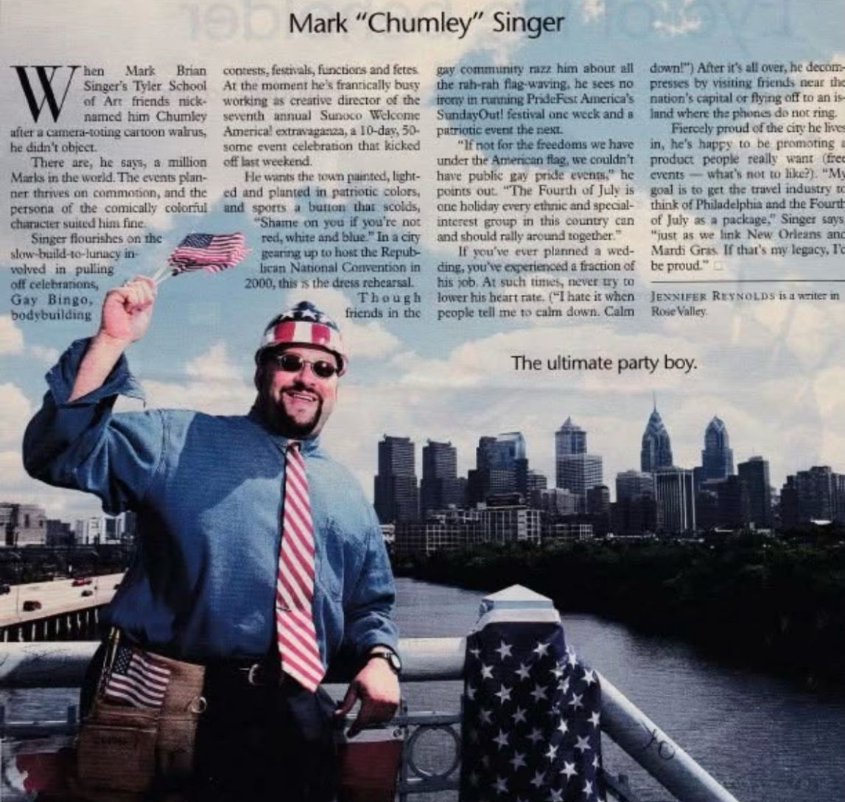
    Nicknamed after the lovable walrus sidekick to the 1960s penguin cartoon character Tennessee Tuxedo, Mr. Singer was what the Daily News in 2002 called “a local man-about-town.” He was onetime creative director for Welcome America Inc., events and marketing manager for the Eagles Youth Partnership, and a founding committee member of the Lights for the Cure breast cancer awareness project.

    He helped develop the city’s skyline lighting initiative in the early 2000s and coordinated marketing and community events affiliated with the city’s millennium celebration, the Liberty Bell Pavilion, the National Constitution Center, the Philadelphia Museum of Art, and the Mummers, Thanksgiving Day, and Independence Day parades. He was also a founding board member of the Philadelphia Gay Tourism Caucus.

    “The Philadelphia of today,” a longtime friend and colleague said on Instagram, “was formed by Chumley’s creative mind.”

    In 1999, Mr. Singer told The Inquirer: “My goal is to get the travel industry to think of Philadelphia and the Fourth of July as a package just as we link New Orleans and Mardi Gras. If that’s my legacy, I’d be proud.”

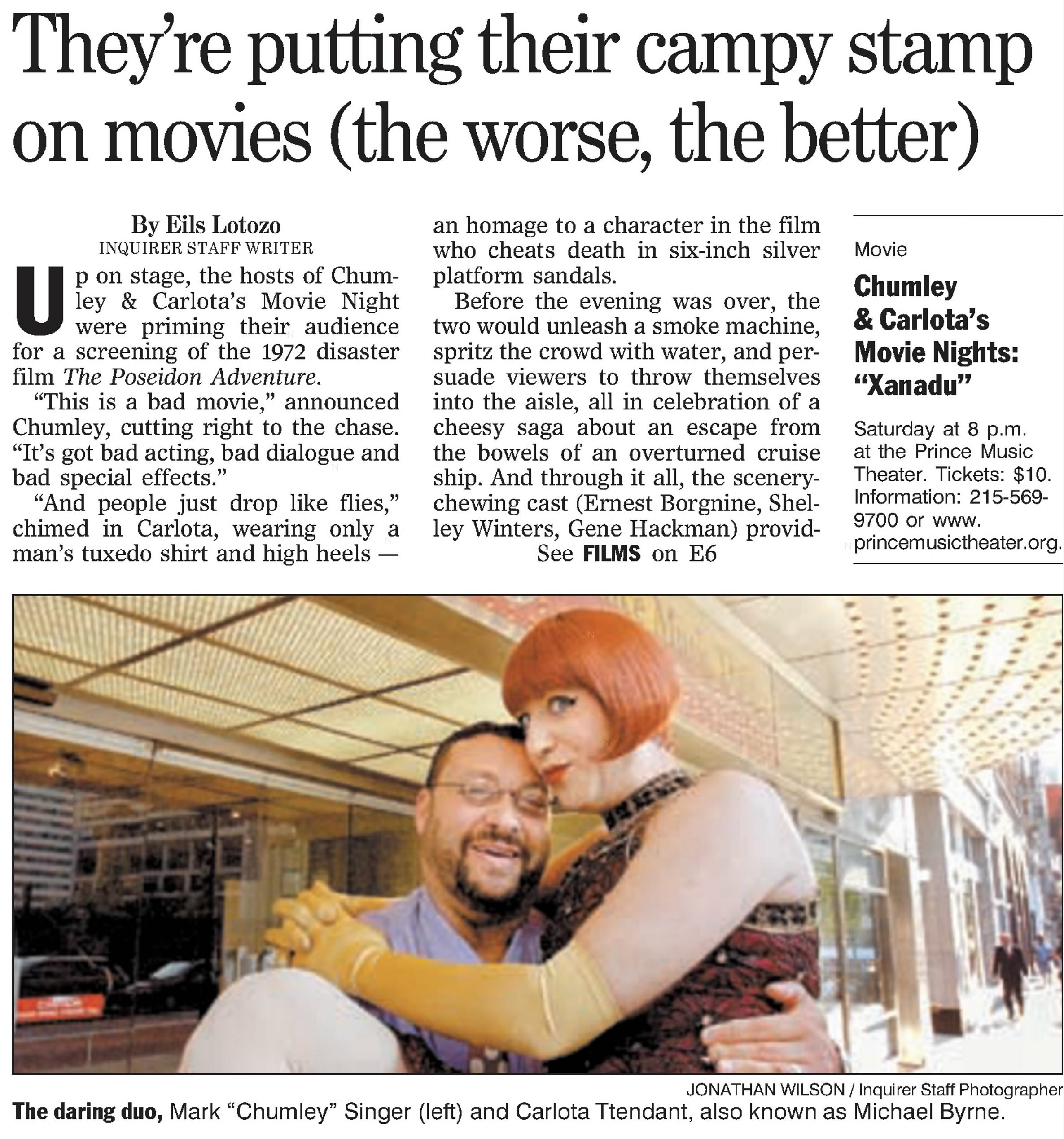
    He became a serious fundraiser after his best friend died of AIDS, and he organized popular gay bingo nights and other events to benefit HIV/AIDS services. He designed the rainbow street signs in Philadelphia’s Gayborhood and collaborated with fellow performer Michael Byrne to cohost gay bingo, movie night at the Prince Music Theater, and other community get-togethers.

    “He leaves behind a legacy of memorable celebrations, meaningful philanthropy, and lasting connections,” Byrne said. “He developed a reputation for transforming an idea into an experience that people would remember long after the lights came up.”

    Mr. Singer earned a bachelor’s degree in graphic design at Temple University’s Tyler School of Art and Architecture in 1984 and worked at first as a visual merchandiser at Gimbels, Macy’s, Urban Outfitters, and other retailers. In the 1990s, he painted frescoes for homeowners and opened a store that sold unique home furnishings.

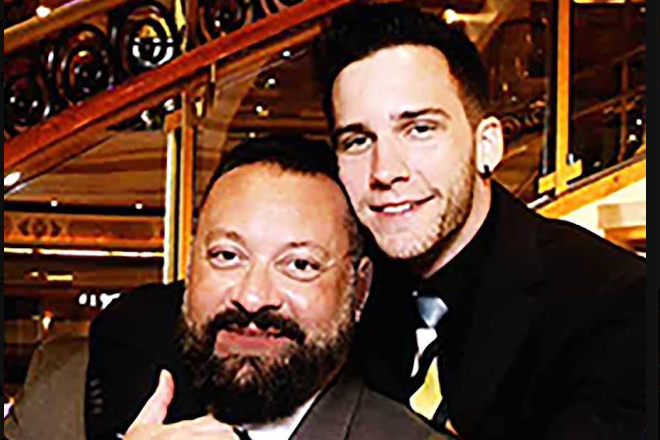
    Mr. Singer appeared in The Inquirer in 1999, above, and 2002, below. Newspapers.com

    In 2003, to celebrate the gay community’s “hairy/beefy/burly/gay ‘bears,’” he established Chumley’s Bear Cruises, a group tour company that books cruises to Alaska, Aruba, and elsewhere around the world.

    Affable and engaging, Mr. Singer appeared on the podcast A Jaded Gay, was featured often in The Inquirer and Daily News, and was named to the Daily News’ Council of Cool in 2002. In online tributes, friends and colleagues called him “a creative visionary,” “an unspeakably beautiful man inside and out,” and “everyone’s advocate, cheerleader, and a voice of encouragement.”

    Byrne said: “He helped create spaces where people could gather, celebrate, and feel connected. If Chumley said, ‘I can do it,’ he could.”

    Mark Brian Singer was born April 18, 1961, in Philadelphia. His father died when he was 9, and he graduated from the Milton Hershey School in Hershey, Pa.

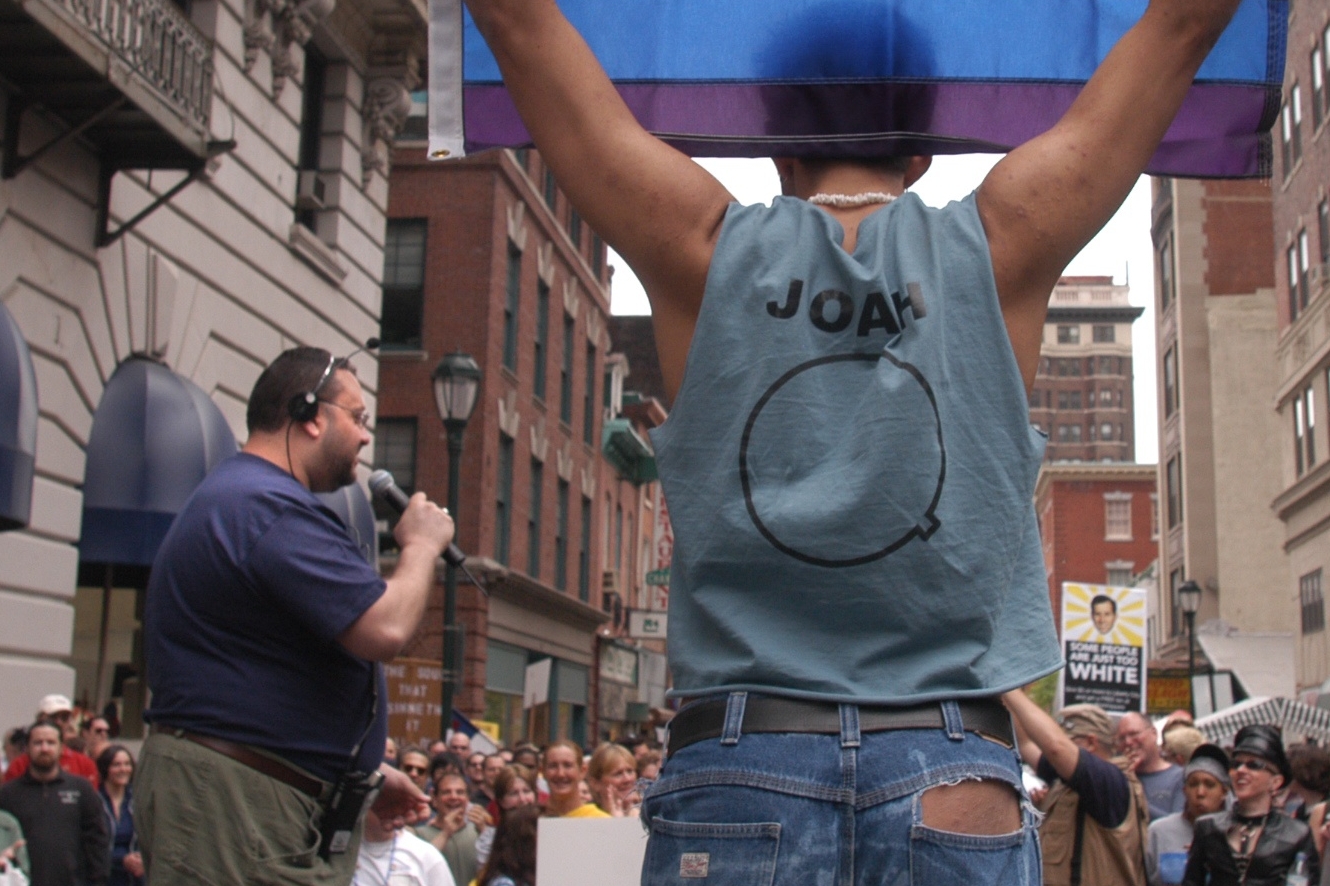
    Mr. Singer, left above, was a dynamic speaker and organizer. Rebecca Barger / Staff Photographer

    He met fellow artist and actor Ven Schmidt in 2017, and they married in 2022 and lived in South Philadelphia.

    Mr. Singer enjoyed camping and traveling. He listened to the Smiths and followed the Eagles closely.

    He liked to watch movies and take weekend getaways to Atlantic City and New Hope with his husband. He was habitually punctual.

    “He not only advocated for the gay community as a whole, he made individual people feel uplifted and welcome,” his husband said. “He inspired me and truly changed my life. He had a heart of gold, and I wanted to be just like him.”

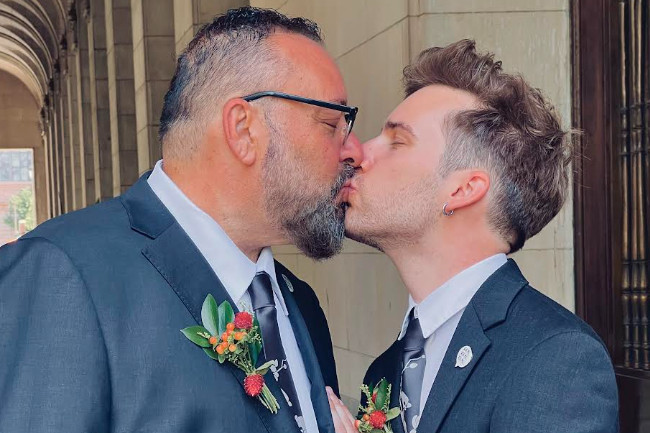
    Mr. Singer, left above and below, and his husband, Ven Schmidt, married in 2022.Courtesy of the family

    In addition to his husband, Mr. Singer is survived by a sister, Aline Zaslow, and other relatives.

    Services were held earlier. A celebration of his life is to be held later.

    Donations in his name may be made to the Breathing Room Foundation, Box 287, Jenkintown, Pa. 19046.

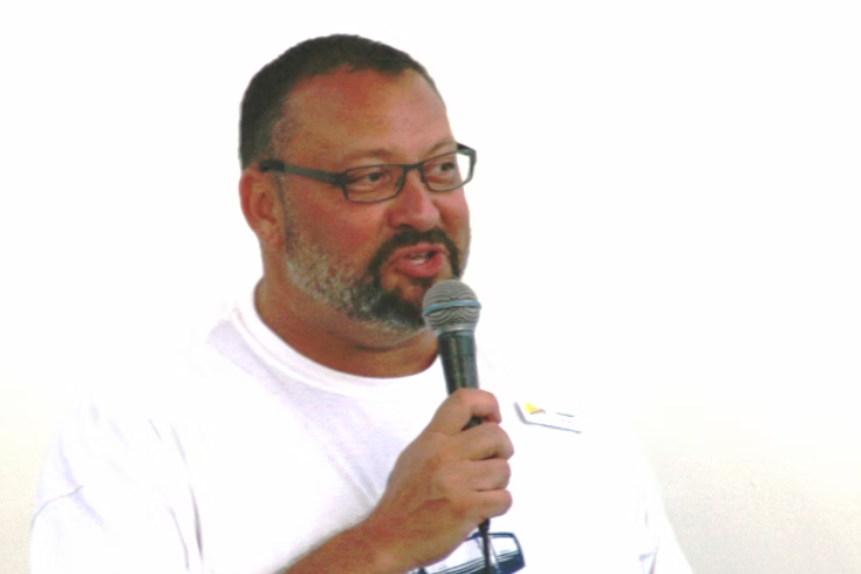
    Mr. Singer “not only advocated for the gay community as a whole, he made individual people feel uplifted and welcome,” his husband said.Courtesy of the family