In the days after 10-year-old Malayshia Allford was reported missing, her foster mother went to great lengths to misdirect investigators: texting herself affectionate notes from the girl’s phone, responding throughout the day to feign concern, and later claiming the child had fallen down some steps, according to a police report.
All the while, police say, Malayshia was already dead — her body hidden in the trunk of a car in South Jersey.
Witnesses who spent time inside the West Philadelphia home of Carprice Williams, the foster mother charged with killing Malayshia, also described chronic and horrific abuses: withholding food from the child for as long as a week, beating her with a phone cord, and throwing her down stairs, according to the report obtained by The Inquirer.
The report, which details interviews with unnamed witnesses, provides a grim account of what happened inside Williams’ home. It also raises questions about what supervision city-contracted social workers provided, and how Williams was able to continue in her role as a teacher in the Philadelphia School District.
The Defender Association of Philadelphia, which represents Williams, did not immediately respond to a request for comment.
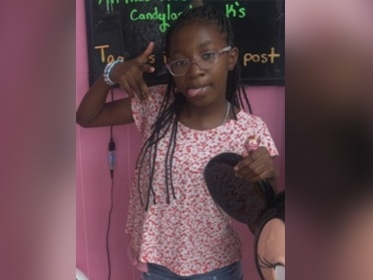
Malayshia Allford, 10, was missing for more than a week before her remains were found inside the trunk of a car in South Jersey.Courtesy of Philadelphia police
Since early 2025, Williams taught fifth grade at Lewis C. Cassidy Academics Plus School, a kindergarten-through-eighth-grade school in Overbrook. She had also worked at Mifflin Elementary in East Falls for a time, at Young Scholars Charter School in Northern Liberties, and at a Montgomery County preschool.
School district officials said they could not answer questions about Williams’ tenure, but her $114,041 salary is at the “senior career teacher” pay rate, indicating she had at least 10 years of teaching experience plus a master’s degree and further postgraduate education. Williams’ LinkedIn profile said she holds a master’s and doctorate from Drexel University. Asked to verify that, a Drexel spokesperson confirmed only the master’s degree.
Arthur Steinberg, president of the Philadelphia Federation of Teachers, said Malayshia’s death was “a horror” and “a tragedy.” Steinberg called for an investigation into the foster care system but said the matter “had nothing to do with her role as a teacher.”
“To have something like this happen, it’s just unspeakable,” he said.
The Philadelphia School District has declined to answer questions about the case. A city spokesperson did not respond to a request for comment Monday afternoon.
Williams had been a foster parent since at least 2020.
That is when she took in two young siblings — one of whom ended up in the hospital the next year with a traumatic brain injury, severe malnutrition, and marks indicative of being struck with an object, according to a lawsuit.
A doctor at Children’s Hospital of Philadelphia certified that 2021 event as a “near fatality,” triggering a review that found the foster mother had committed abuse and recommended that she never be allowed to foster again, the lawsuit said.
However, a Pennsylvania Department of Human Services spokesperson said, Williams successfully appealed the child-abuse finding and her record was expunged.
The Bureau of Hearings and Appeals, an administrative review board within the state human services agency, overturns roughly 90% of cases brought on appeal, according to a 2021 report by Pennsylvania’s auditor general that found the system was failing child victims.
Nadeem Bezar, a lawyer representing Malayshia’s estate, said that even if Williams was not in the child-abuse registry, the information about the 2021 incident would have been retained in an internal database and should have been used to bar her from future foster placements.
In that 2021 case, Williams told officials that she heard a loud noise and then found the child unresponsive with labored breathing. Later, the children in that case alleged that Williams had grabbed the child’s braids and slammed her head to the floor.
Last month she tried to cover up the circumstances of Malayshia’s death over the nearly two weeks the child was missing, the police report said. Williams provided relatives and law enforcement with conflicting accounts about when she had last seen the girl, and crafted a phony text exchange to support her story that the child’s biological parents had kidnapped her, according to the report.
Investigators concluded that Williams used Malayshia’s phone to text herself: “Mommy I know you are waiting for me to come home but my family they don’t want me to be adopted. … I love you.”
The report lays out allegations by witnesses it does not identify who told police that Williams bent a child’s fingers backward until they were injured, made another stand in a corner all night, directed her 4-year-old son to hit another child with a sword, and forced Malayshia to walk up and down stairs wearing a heavy weighted vest. Williams had the inside of the home under video surveillance, according to the report, and required Malayshia to ask permission to use the bathroom.
Williams contradicted the witnesses’ accounts, saying she had never hit Malayshia, though she told police the child had recently fallen down a few steps. She said Malayshia sometimes wore a weighted vest to calm her during tantrums but had not worn it in about six months.
A medical examiner determined that Malayshia died of blunt force trauma, according to the police report. She had a fractured rib, bruises on her head, torso, and buttocks, and whiplike marks across her legs, the report said.
Surveillance video recorded shortly before 2 a.m. on Oct. 26 shows a man dragging a large bag, with what appeared to be a strand of braided hair sticking out, from the alley behind Williams’ block and loading it into a vehicle, the police report said.
The man, a relative who initially denied his involvement, later told police that Williams said the little girl “didn’t wake up,” and when he urged her to call police she told him it was too late, according to the report.
Authorities have not said whether the relative is expected to be charged.
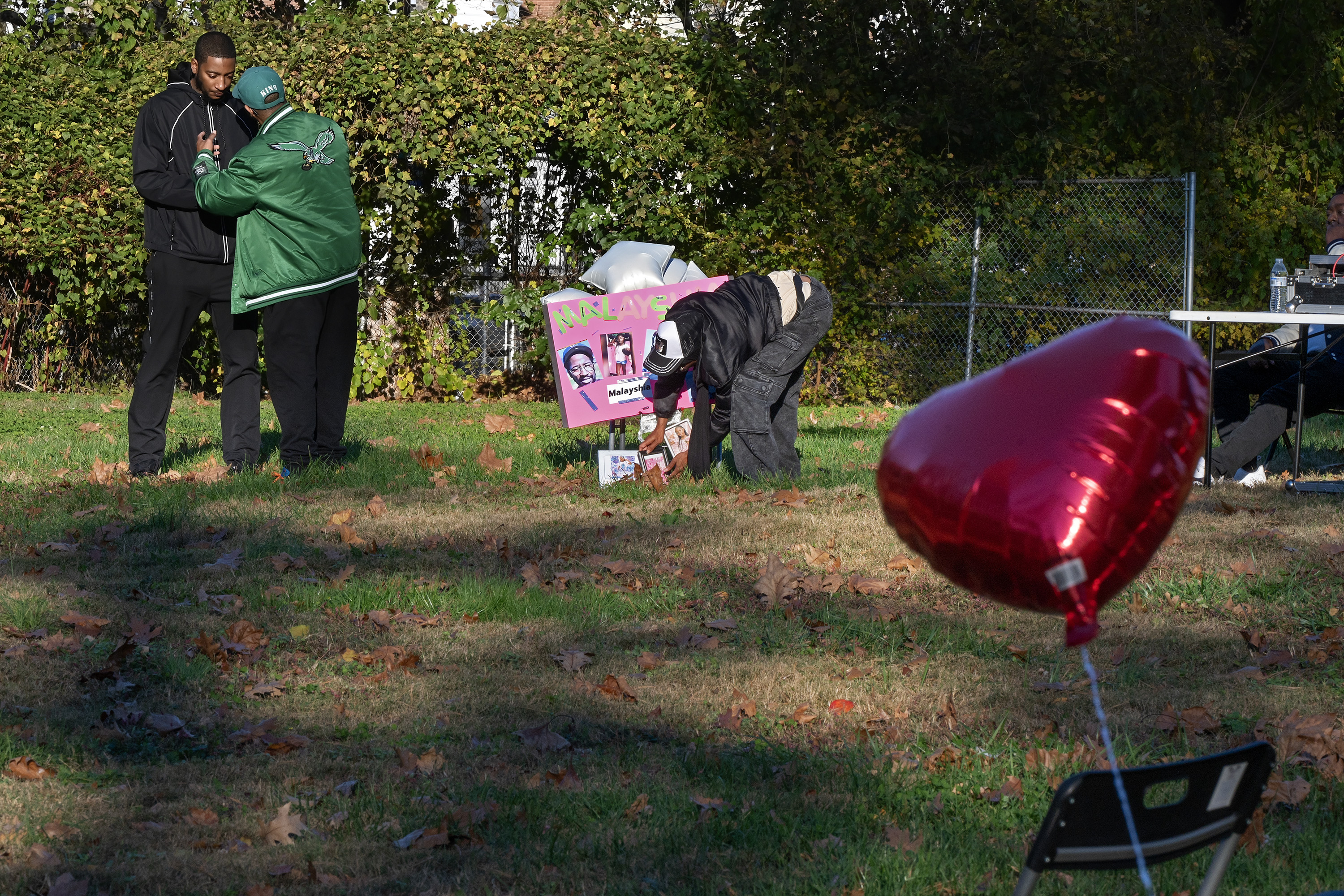
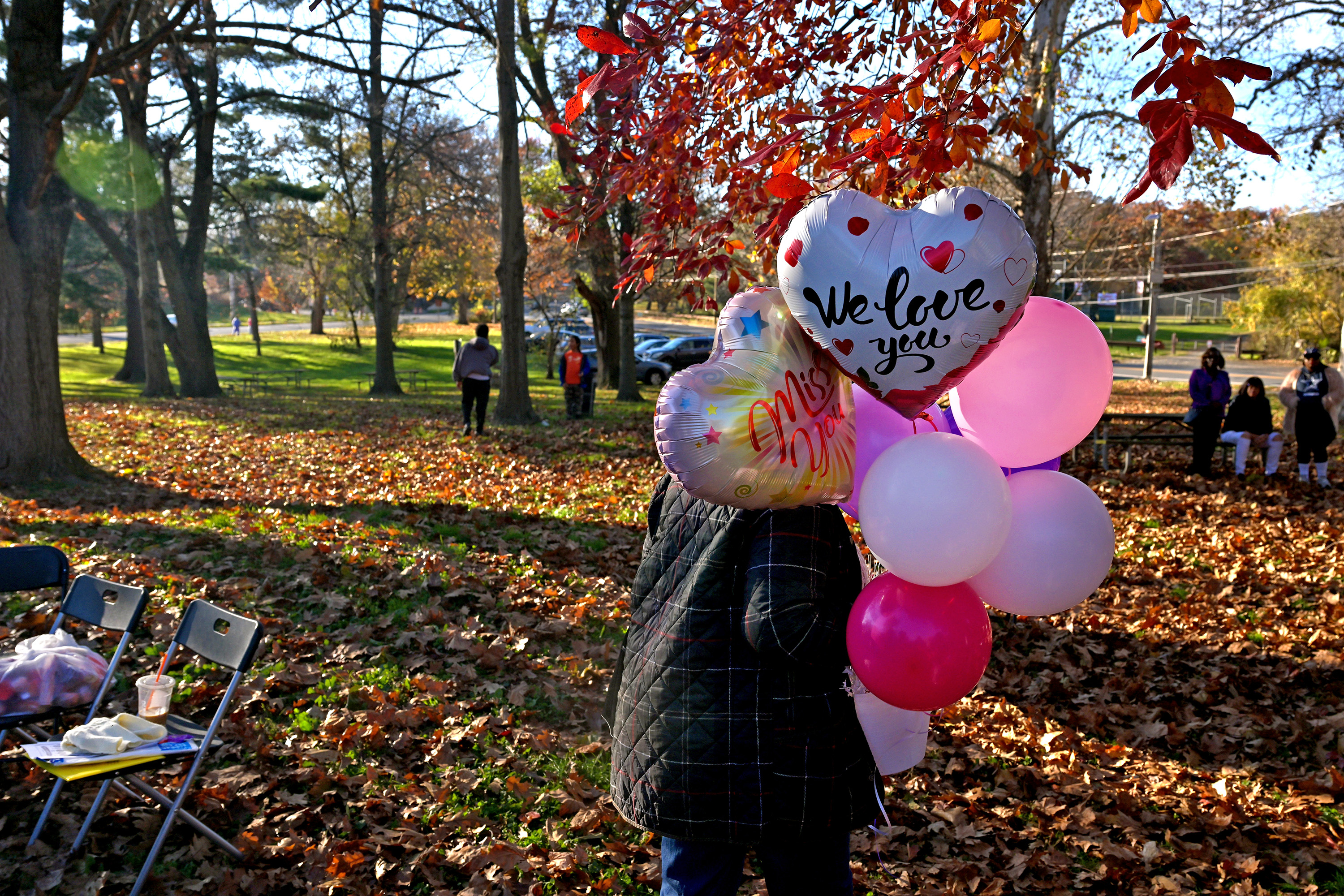
Family and friends gather on Sunday to remember Malayshia Allford.Tom Gralish / Staff Photographer
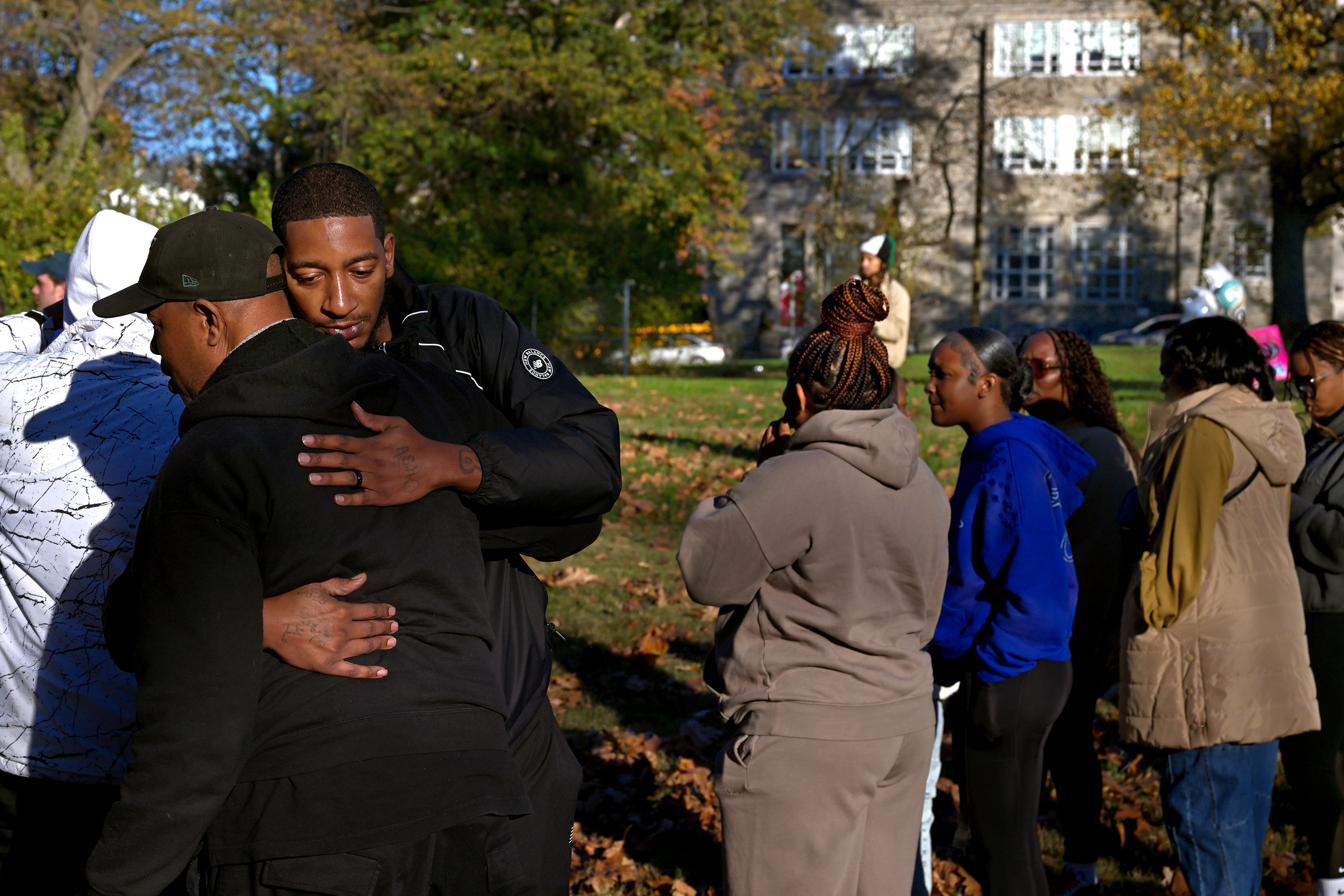
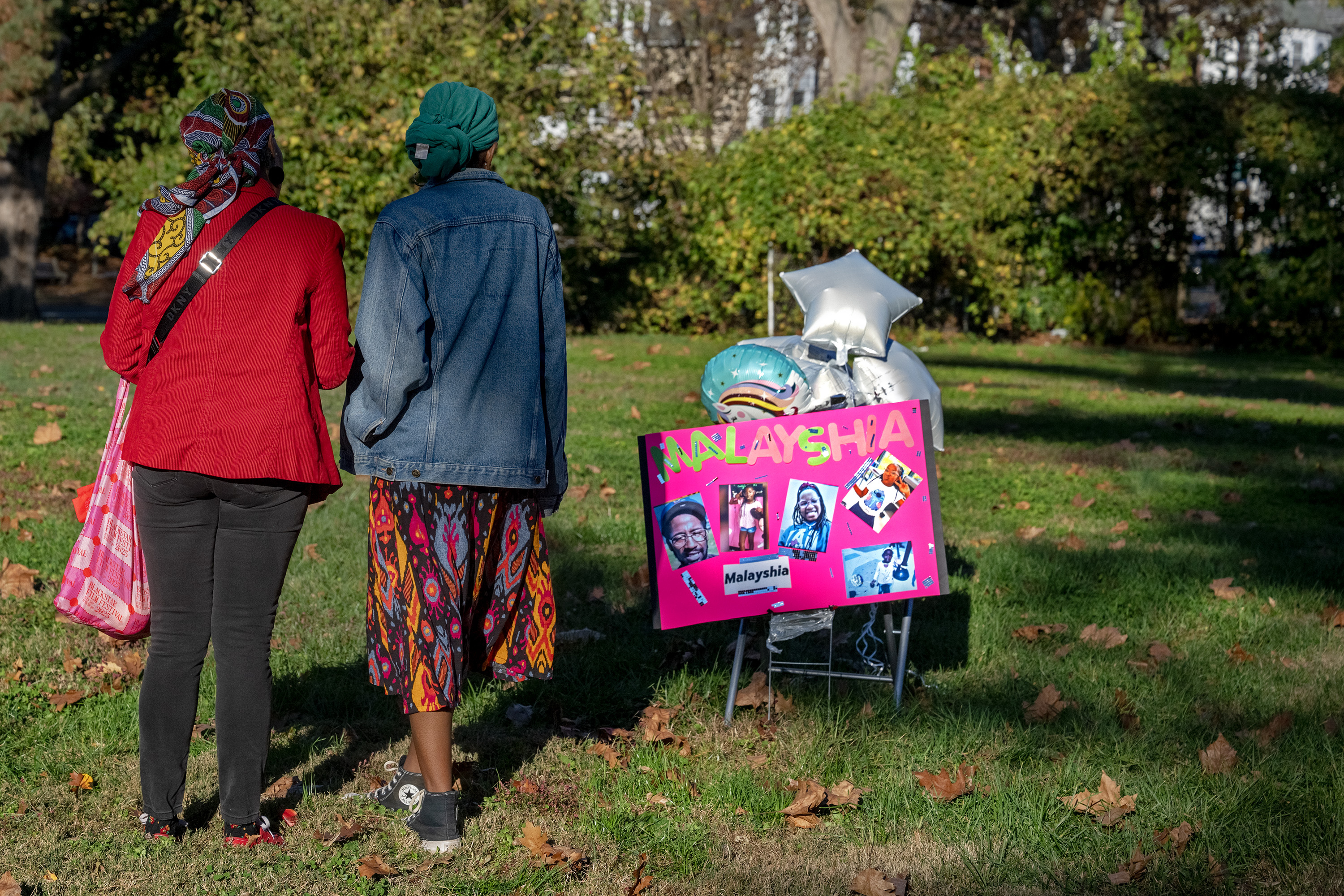
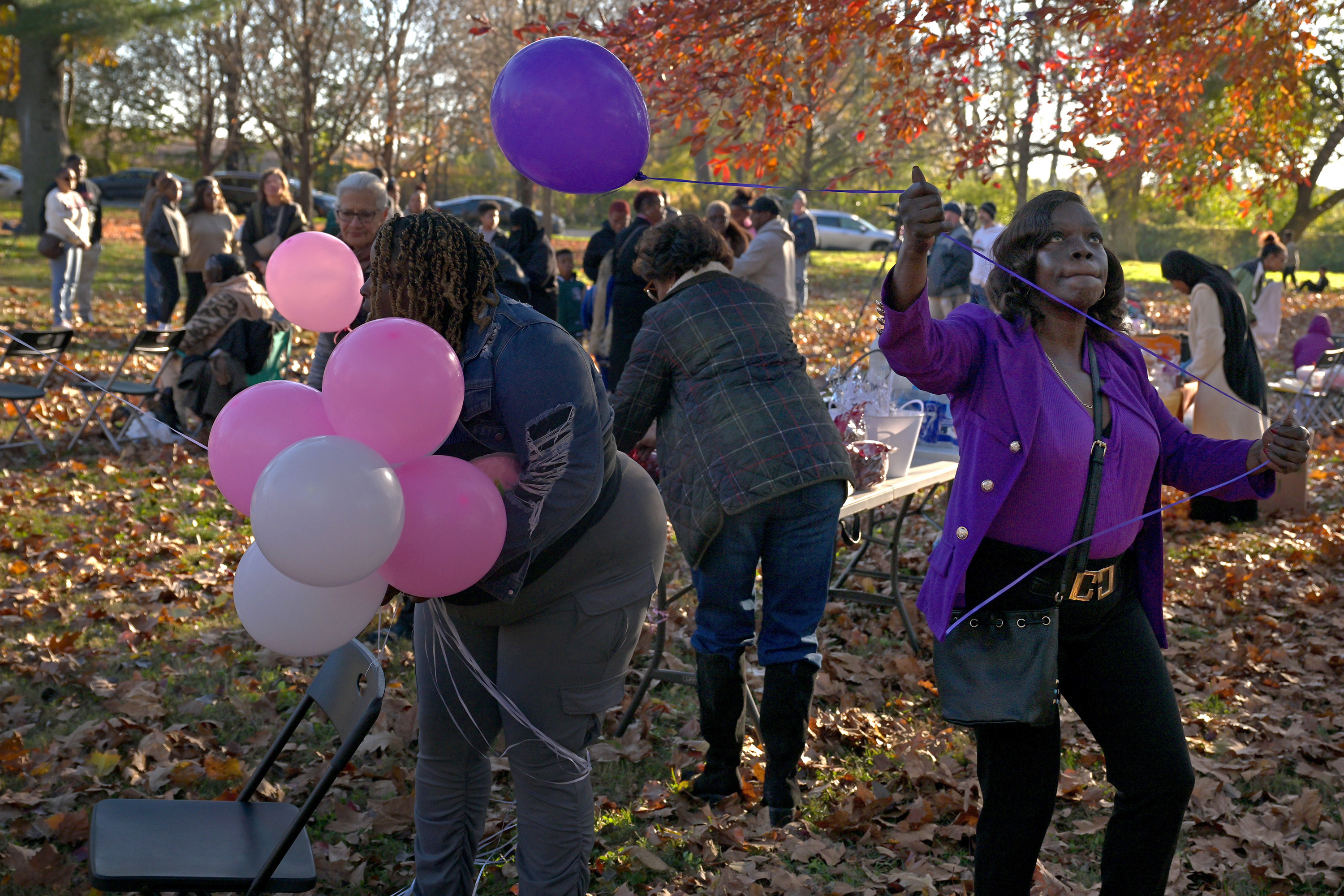
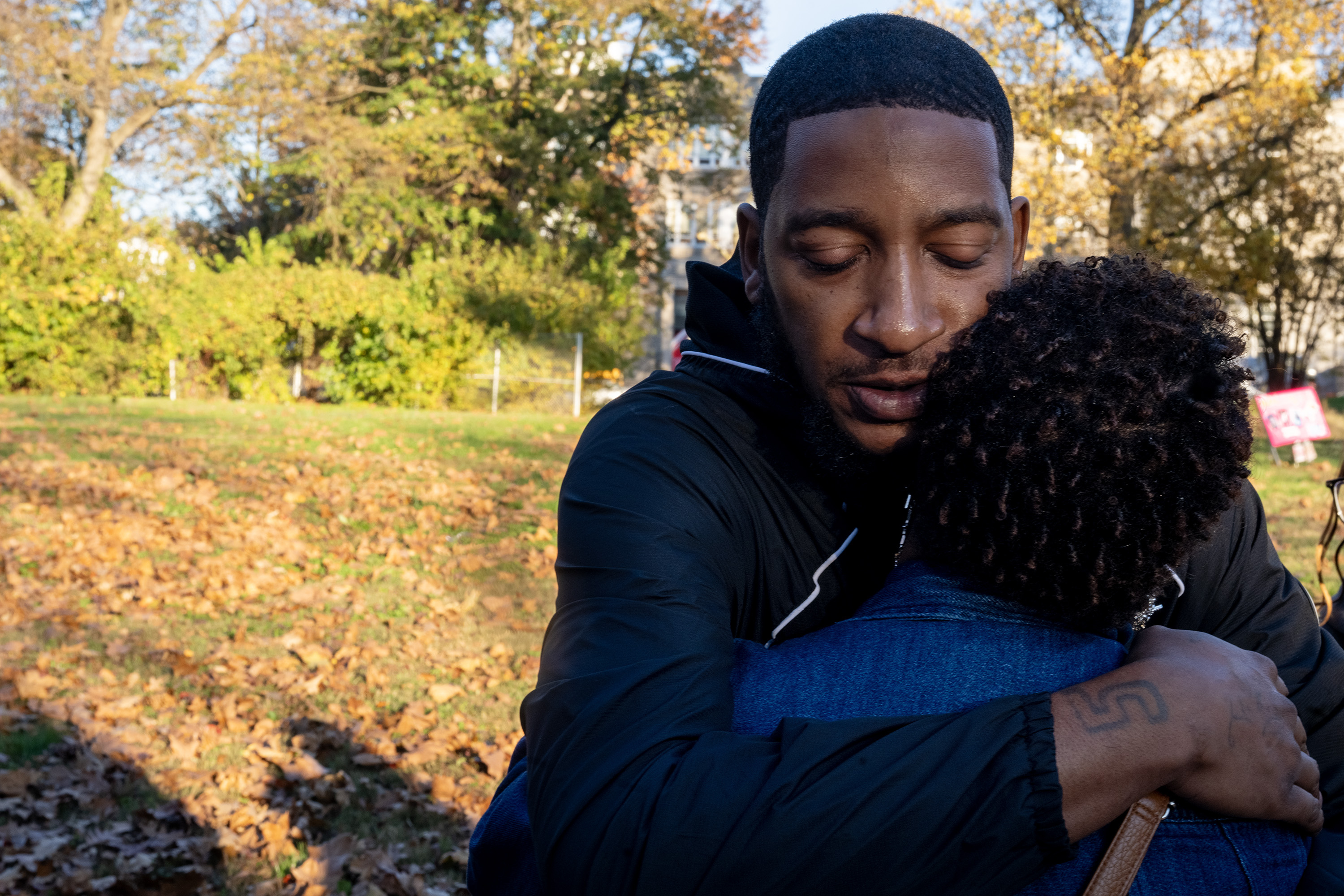
More than 200 people gathered at a field near Morris Park in Overbrook on Sunday to honor the memory of Malayshia Allford. The 10-year-old girl was found dead in a car trunk last week, and her foster mother was charged with her murder.
Malayshia’s paternal uncle, Nafis Horne, 37, said the last time he saw Malayshia she was about 4 years old, but he remembered her as a sweet and positive child despite all the instability she experienced throughout her short life.
Nafis Horne (left), the uncle of Malayshia Allford, is with Julian Dixon on Sunday as family and friends gathered in Morris Park in Overbrook to remember the young girl. Dixon is a deacon with the African First Baptist Church.Tom Gralish / Staff Photographer
“She loved Minnie Mouse,” Horne said, noting she preferred Minnie to Mickey. “Among everything, she always had a smile on her face.”
As the investigation into her death continues, Horne said he hoped to learn why he wasn’t contacted about becoming her guardian. If he’d known about the abuse she allegedly faced in foster care, he would have intervened, Horne said.
Family and friends of Malayshia Allford gather Sunday, Nov. 8, 2026 in Morris Park in Overbrook to remember the young girl.Tom Gralish / Staff Photographer
“I never knew she was in prior abuse situations,” Horne said. “I would have taken my niece in and none of this would have happened. I would have stepped in and helped my brother.”
Nafis Horne, the uncle of Malayshia Allford, is with family and friends as they gather Sunday, Nov. 8, 2026 in Morris Park in Overbrook to remember the young girl.Tom Gralish / Staff PhotographerFamily and friends of Malayshia Allford gather Sunday, Nov. 8, 2026 in Morris Park in Overbrook to remember the young girl.Tom Gralish / Staff PhotographerNafis Horne, the uncle of Malayshia Allford, is with family and friends as they gather Sunday, Nov. 8, 2026 in Morris Park in Overbrook to remember the young girl.Tom Gralish / Staff Photographer
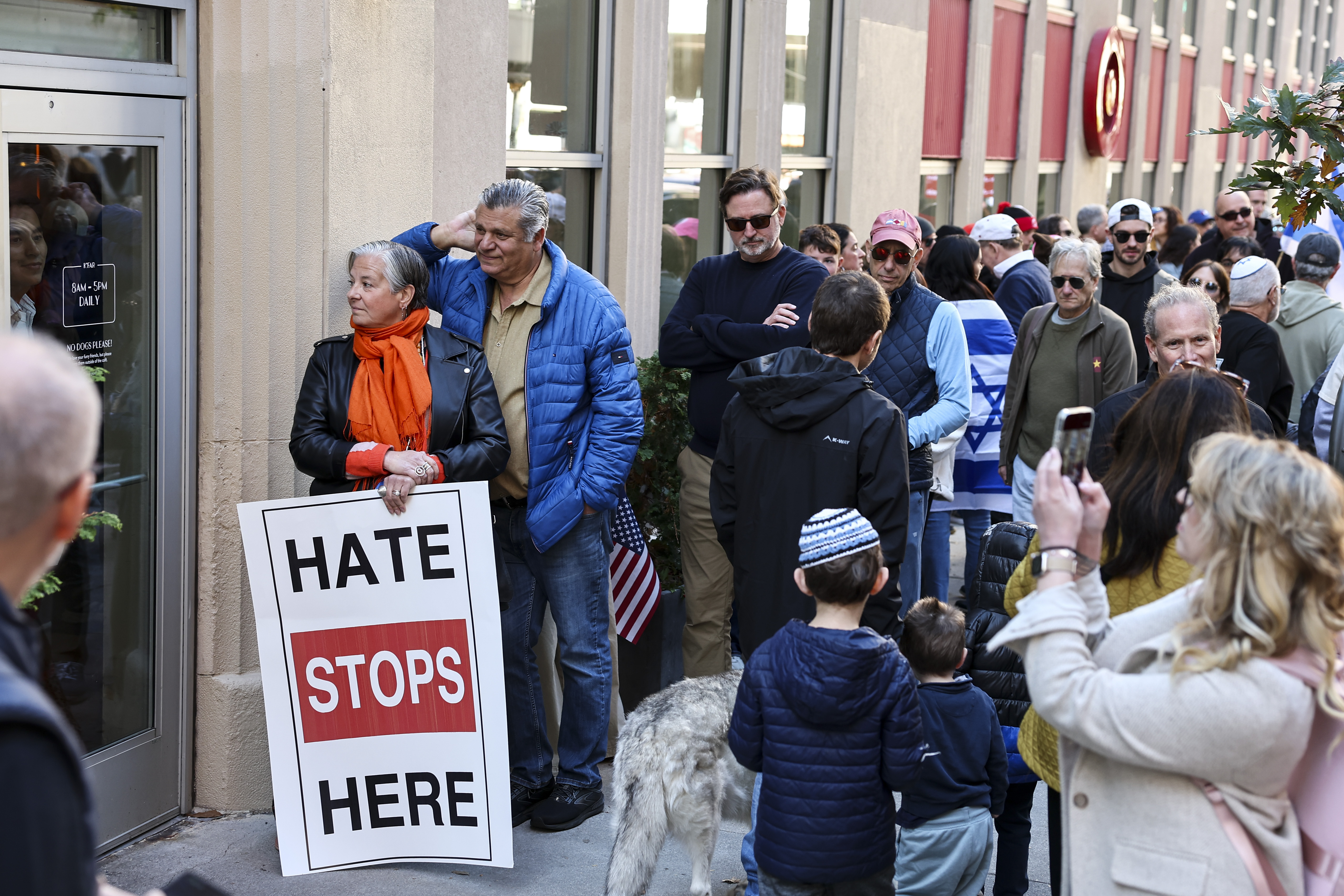
Hundreds turned out Sunday in support of six Center City eateries owned by Jewish restaurateurs — rebuking a bike-ride protest that had roiled social media in recent days and unsettled Philadelphia’s Jewish community.
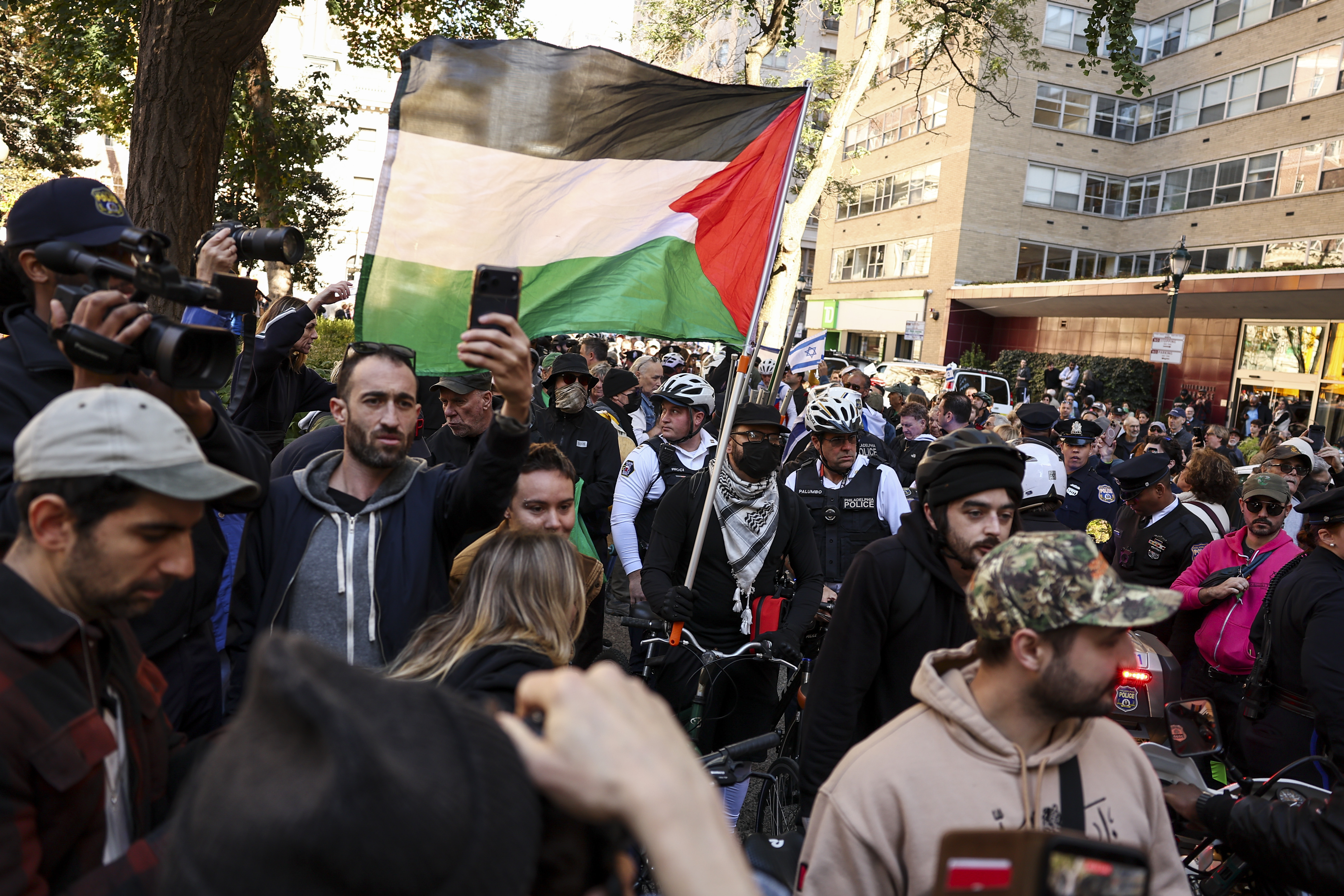
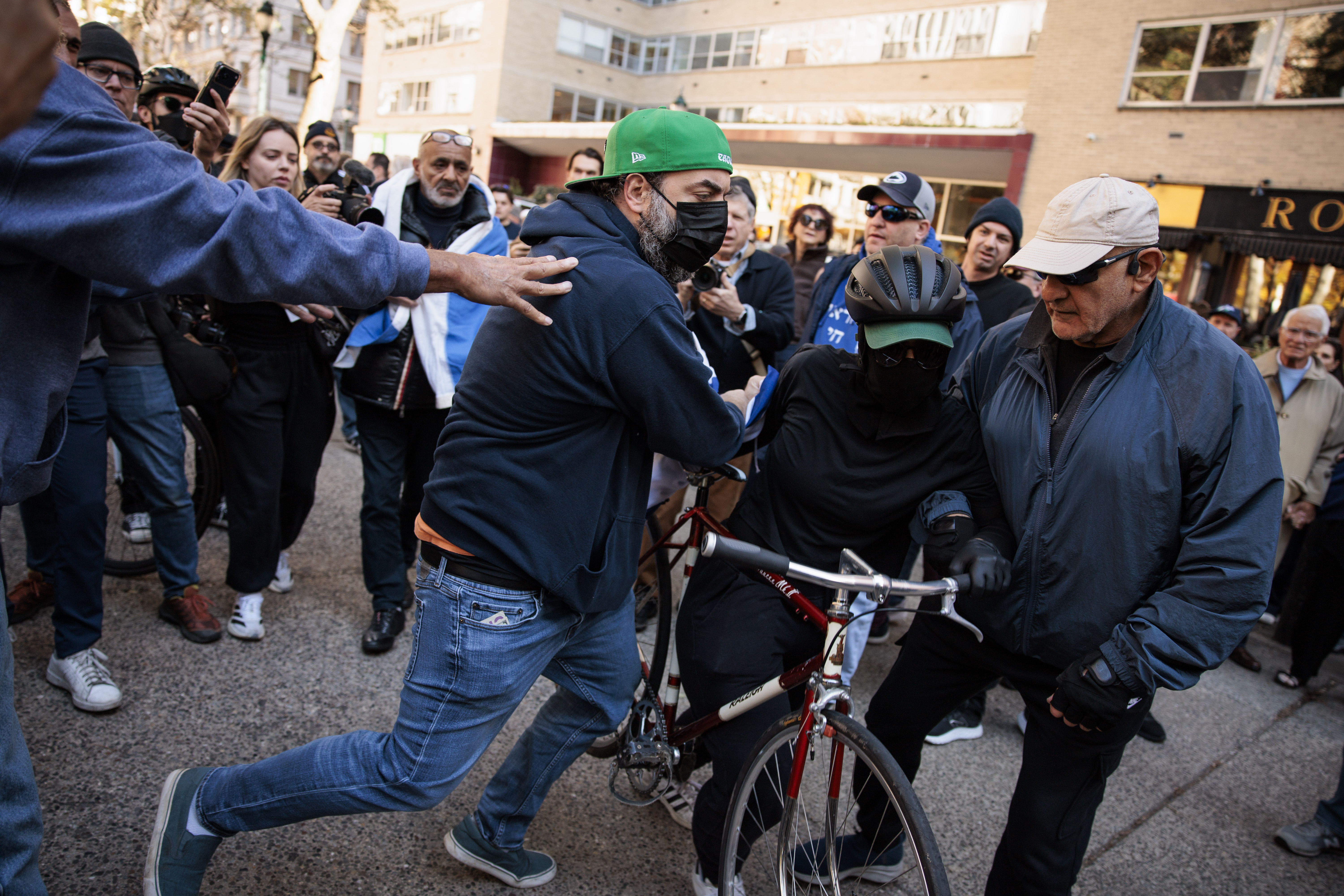
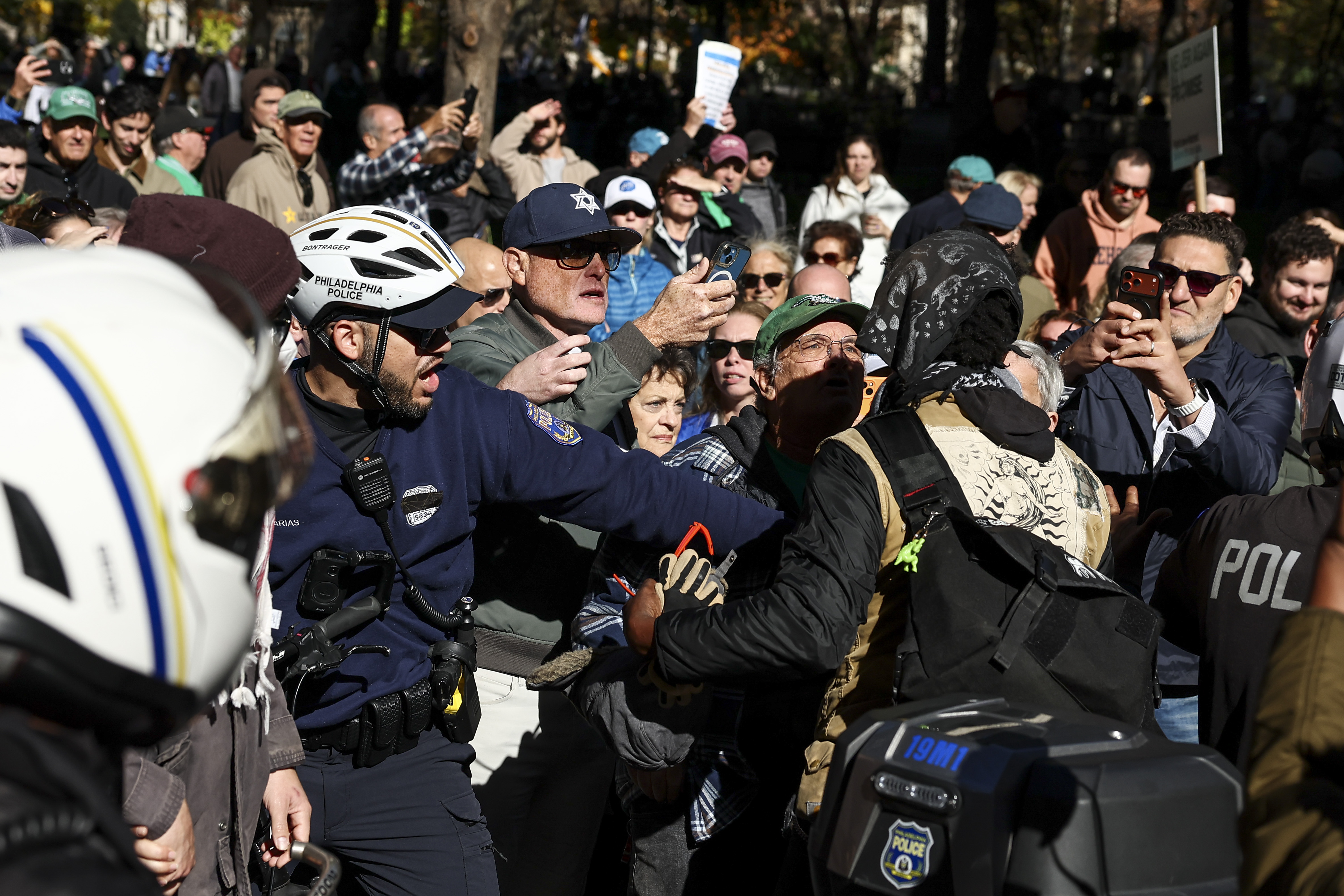
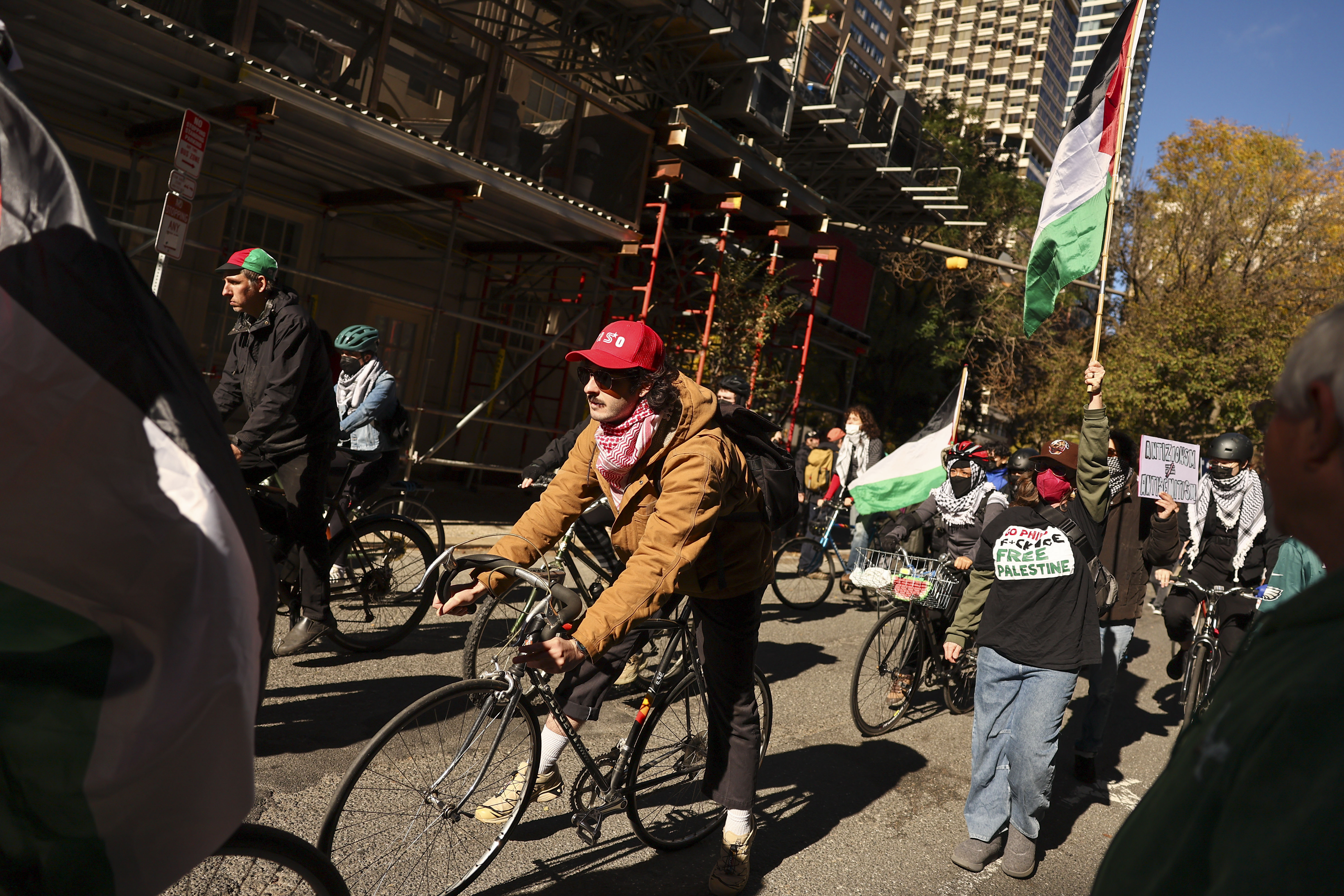
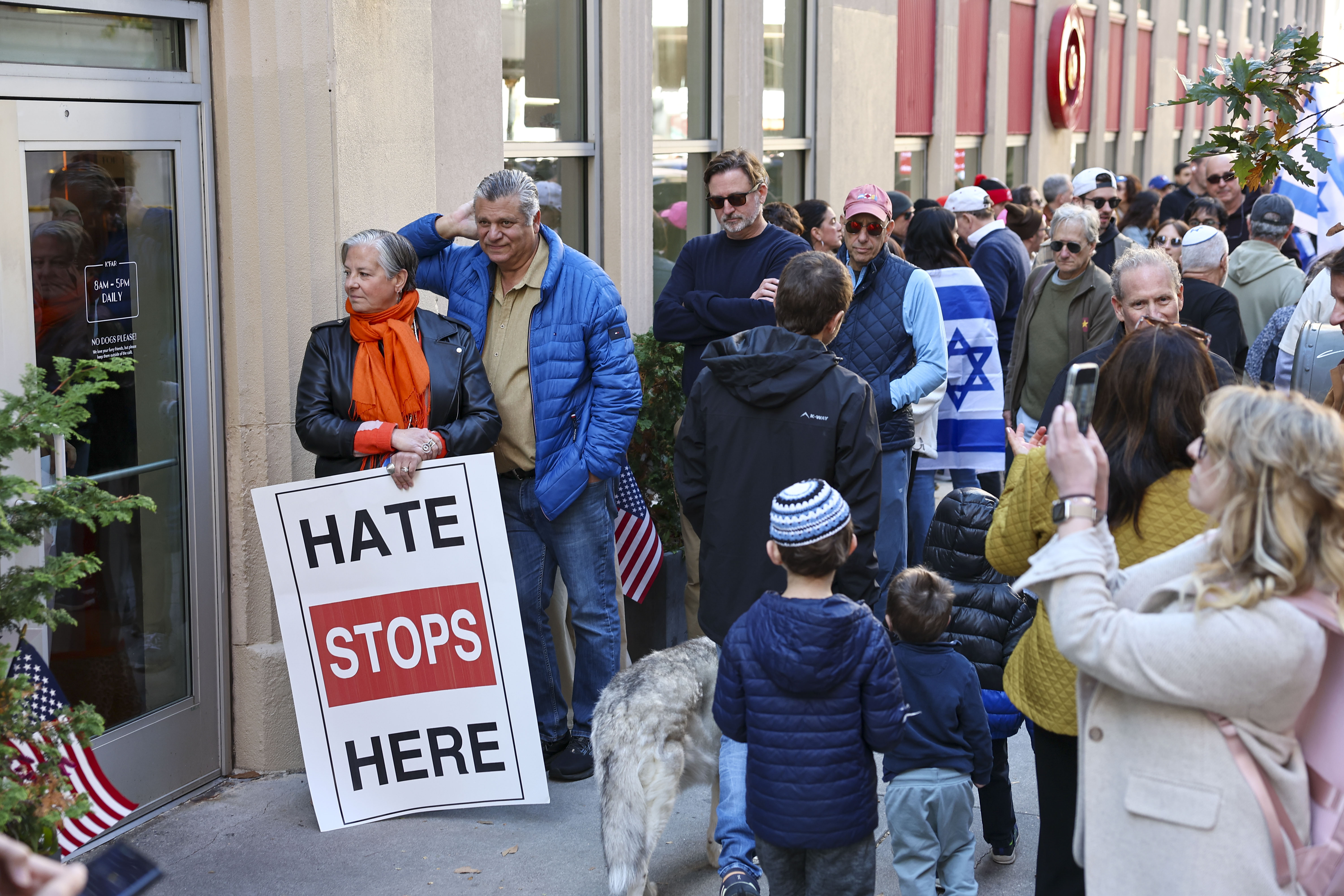
The dueling demonstrations were the latest local flashpoint in the fraught politics of the Israel-Hamas war. Police estimated there were 300 pro-Palestinian protesters, including 200 on bikes, and 200 counterprotesters, while hundreds of others patronized the businesses in solidarity.
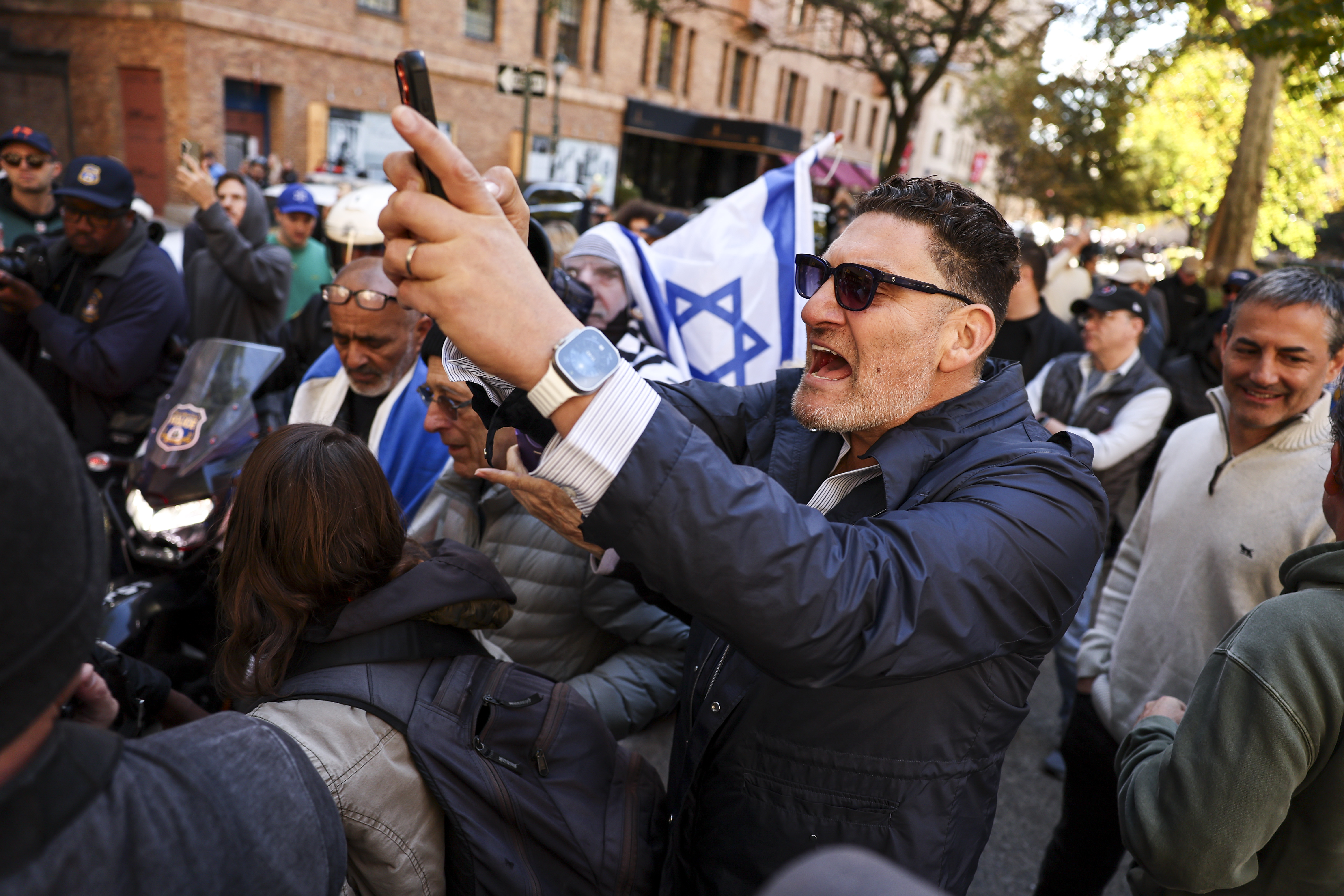
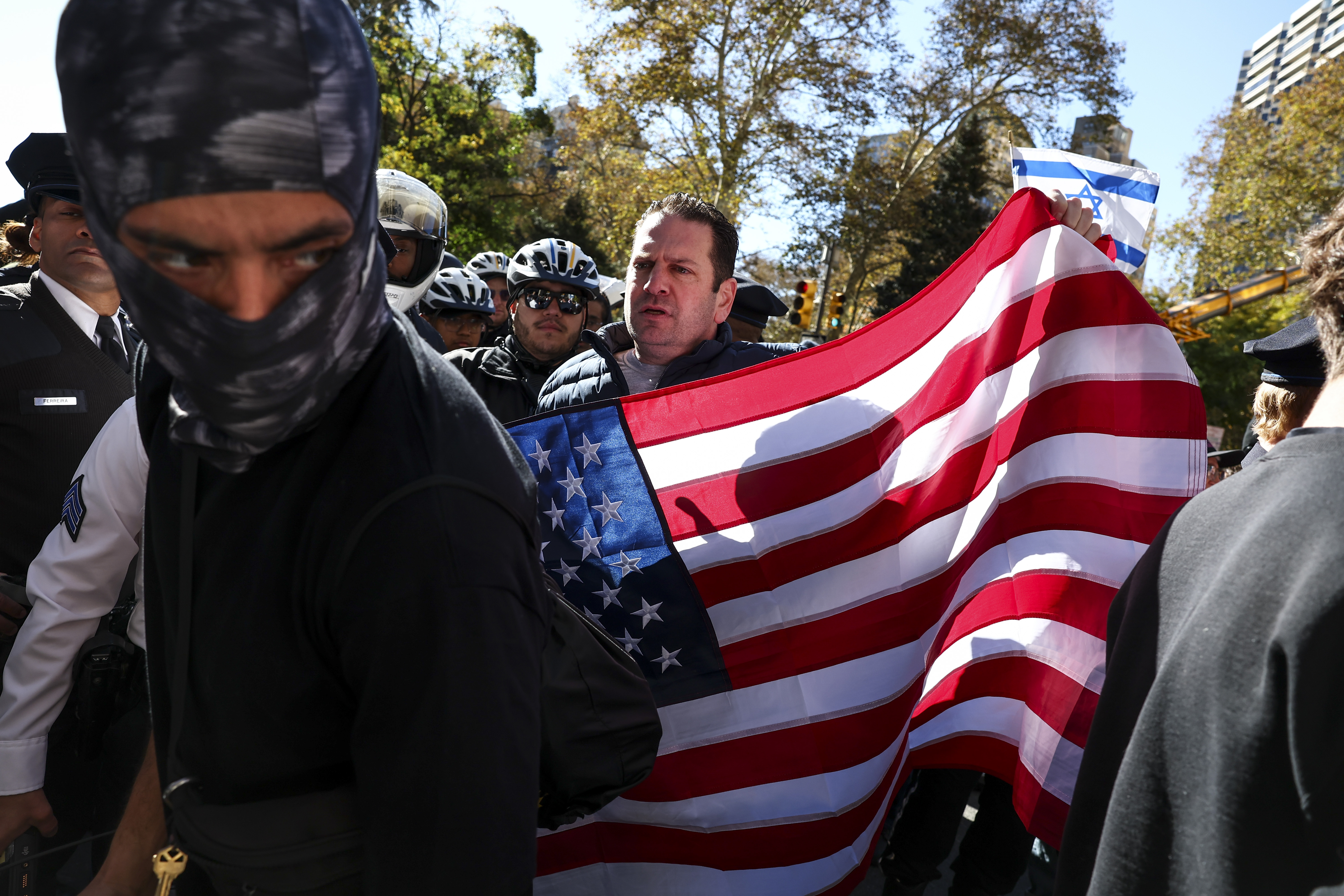
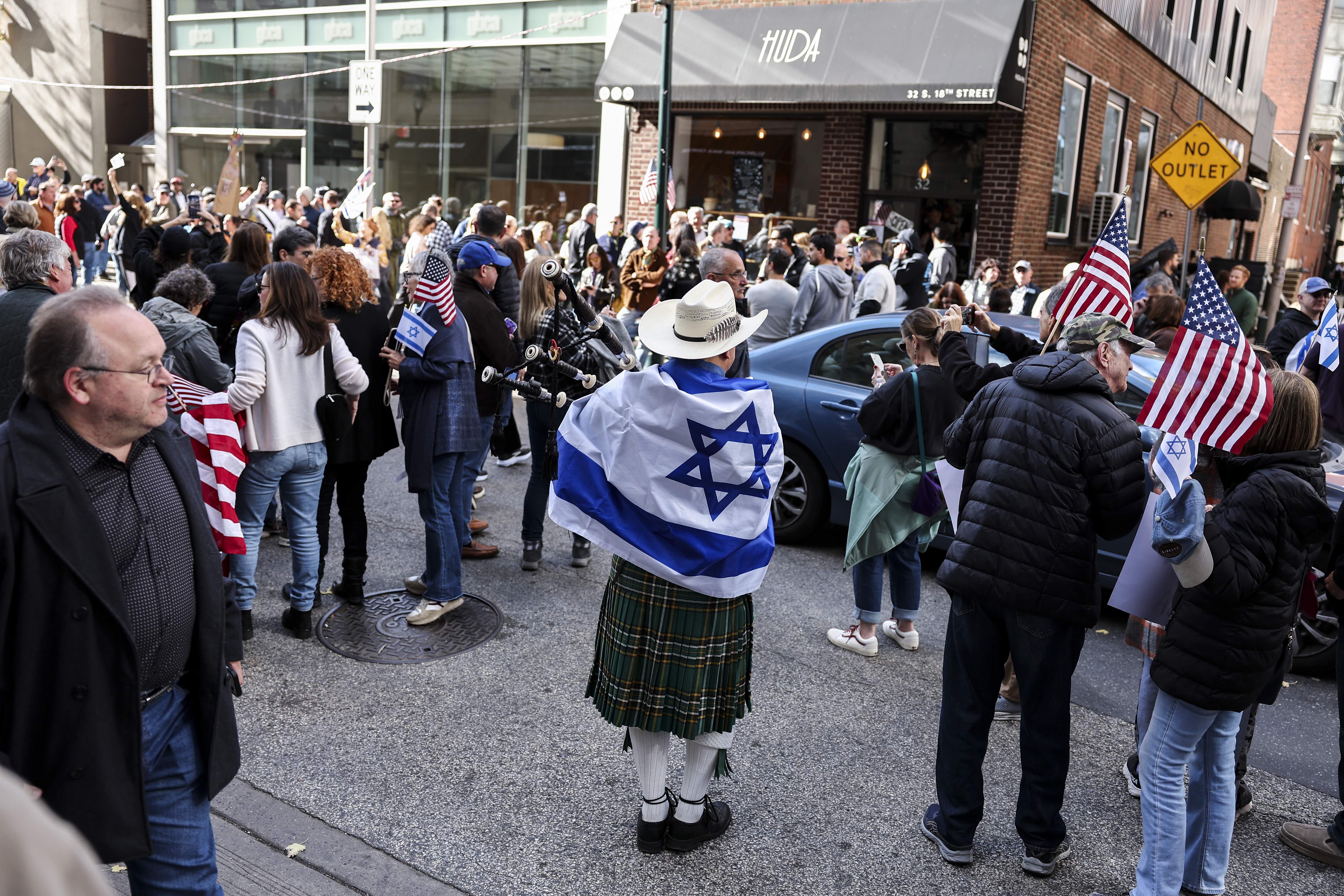
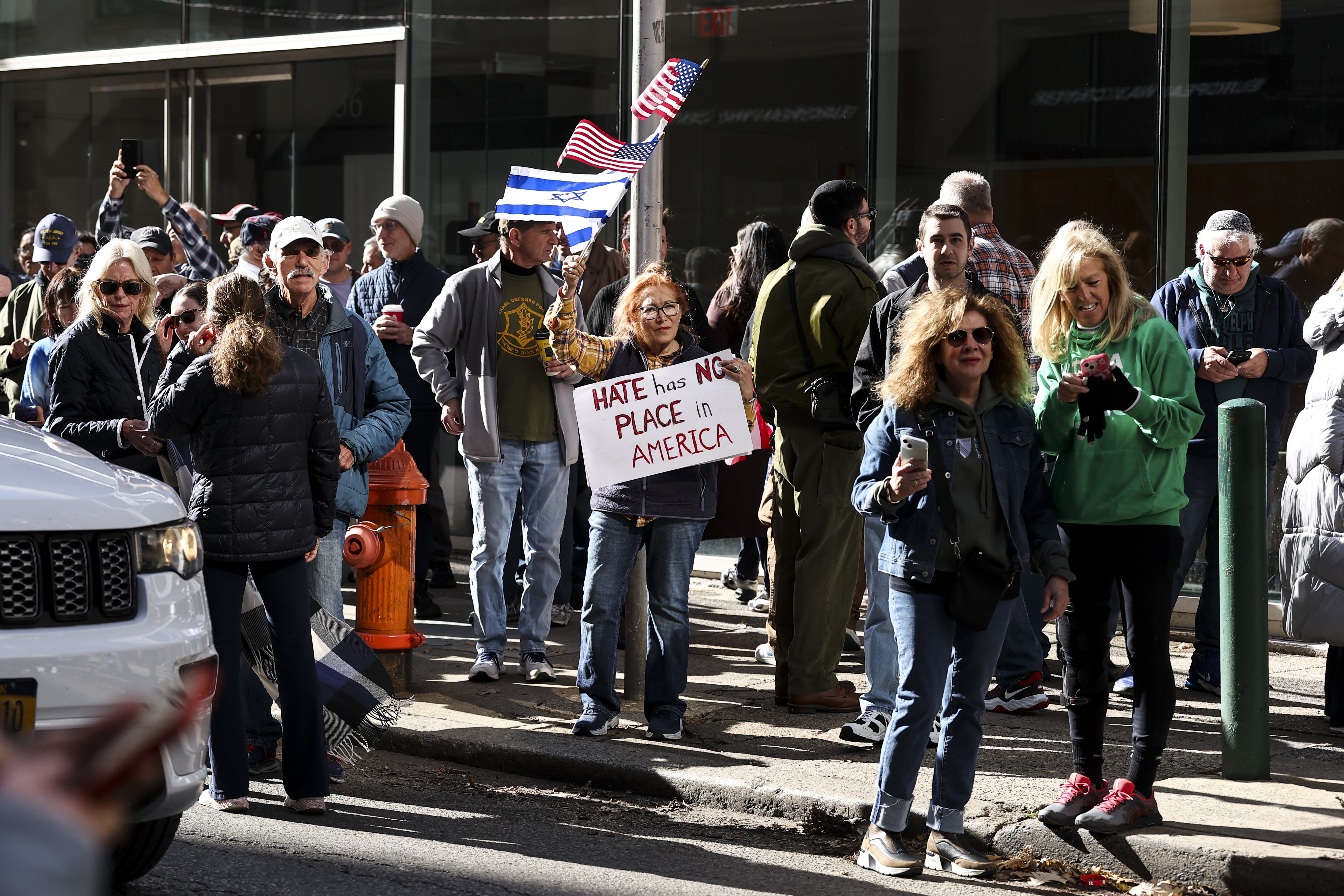
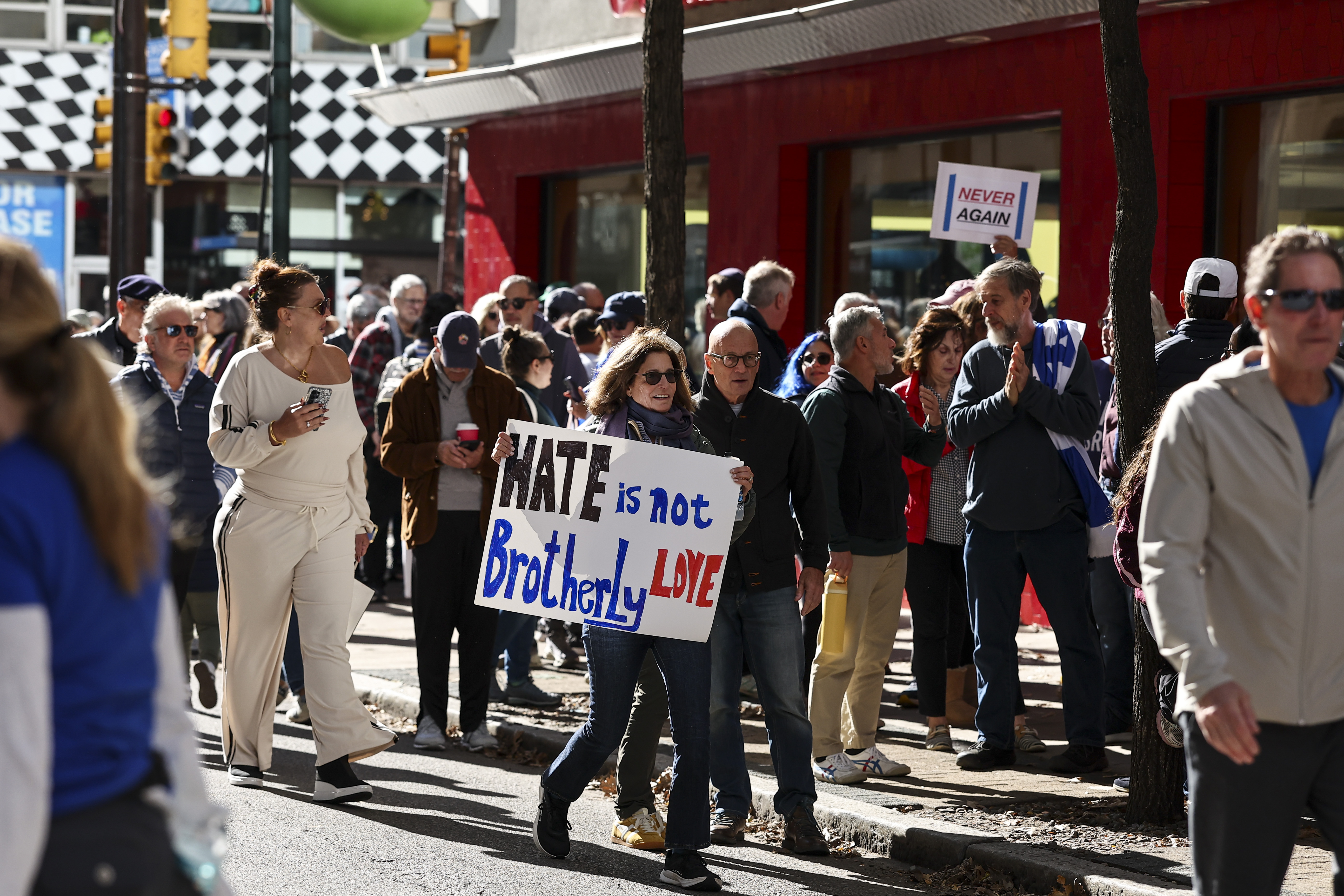
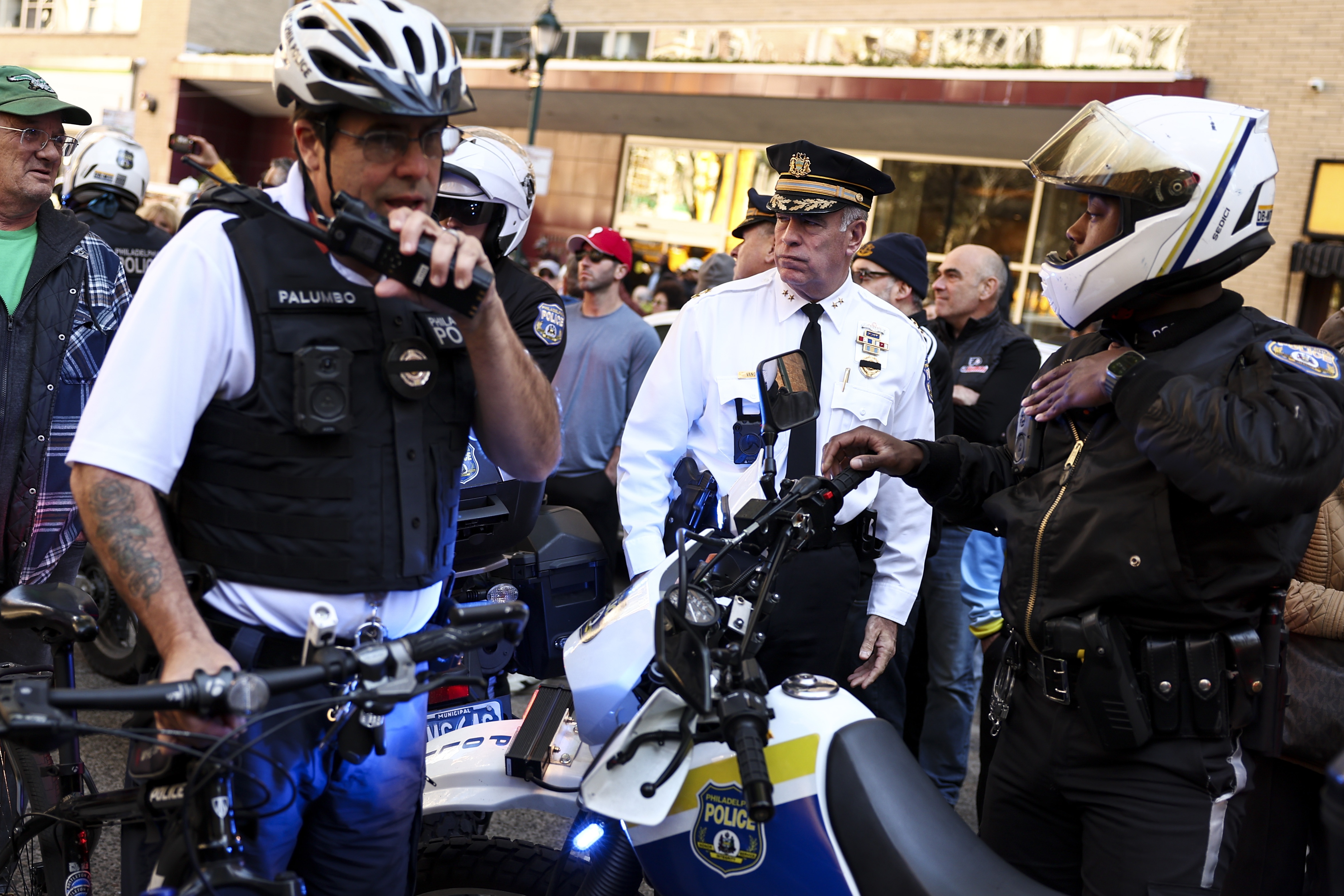
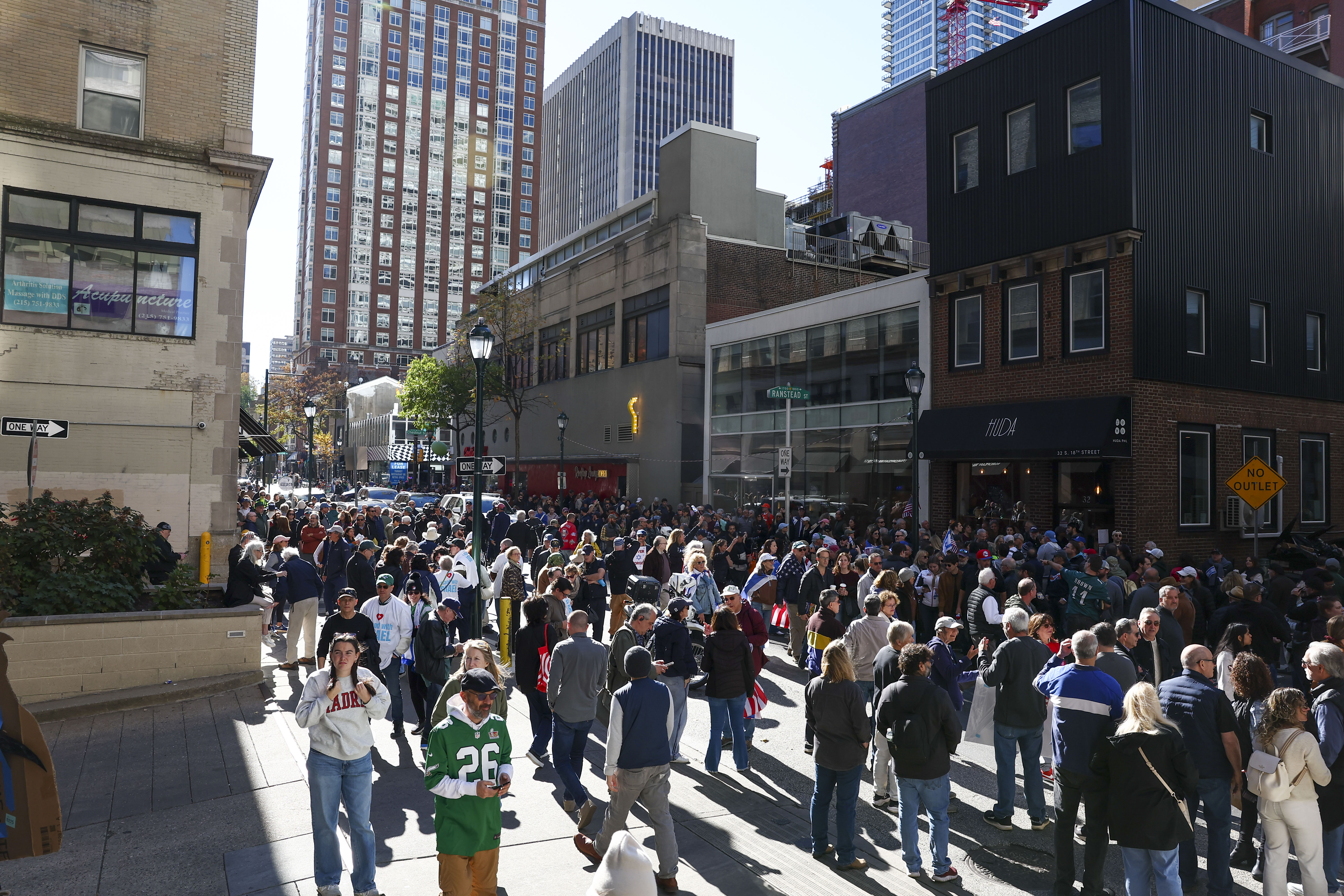
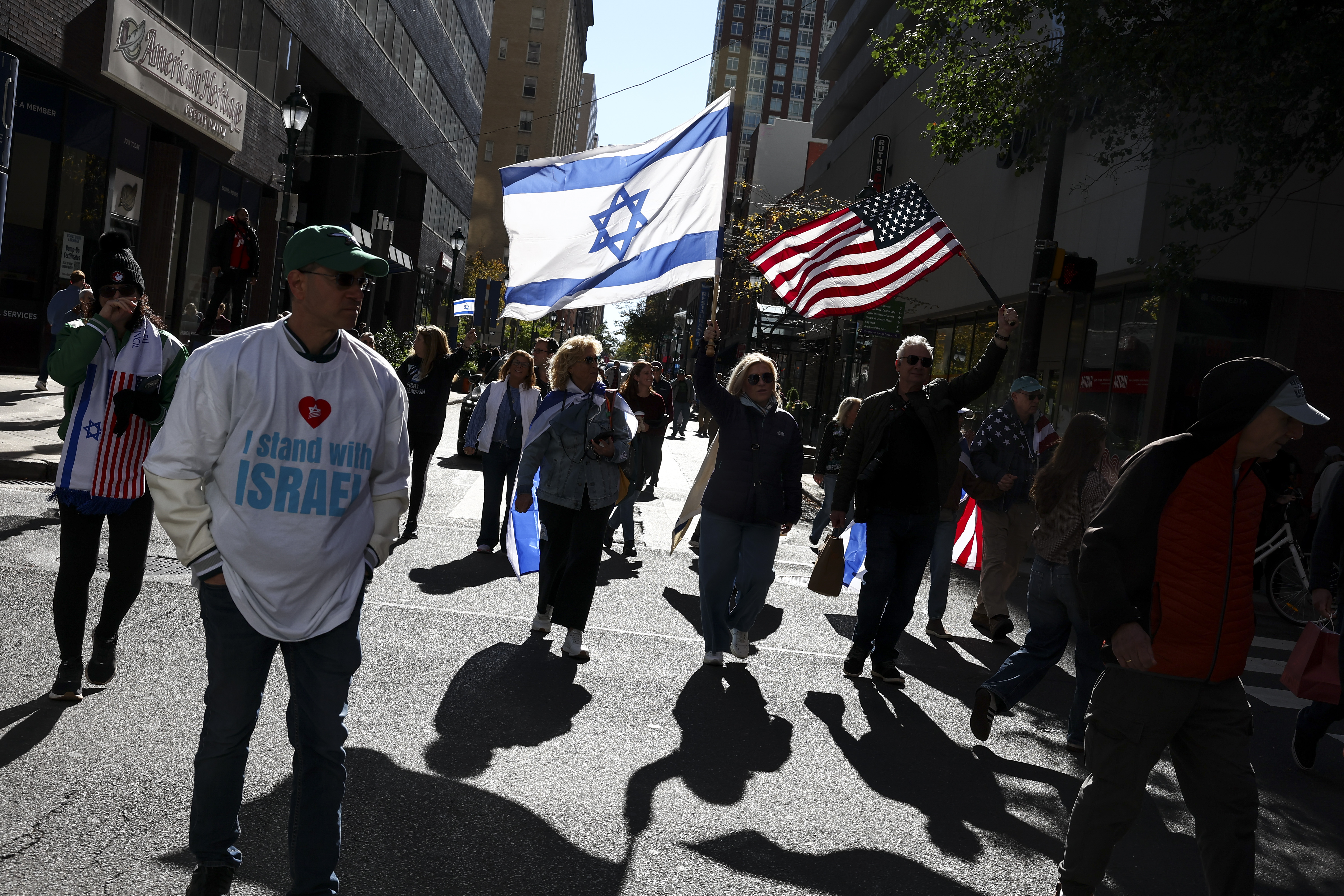
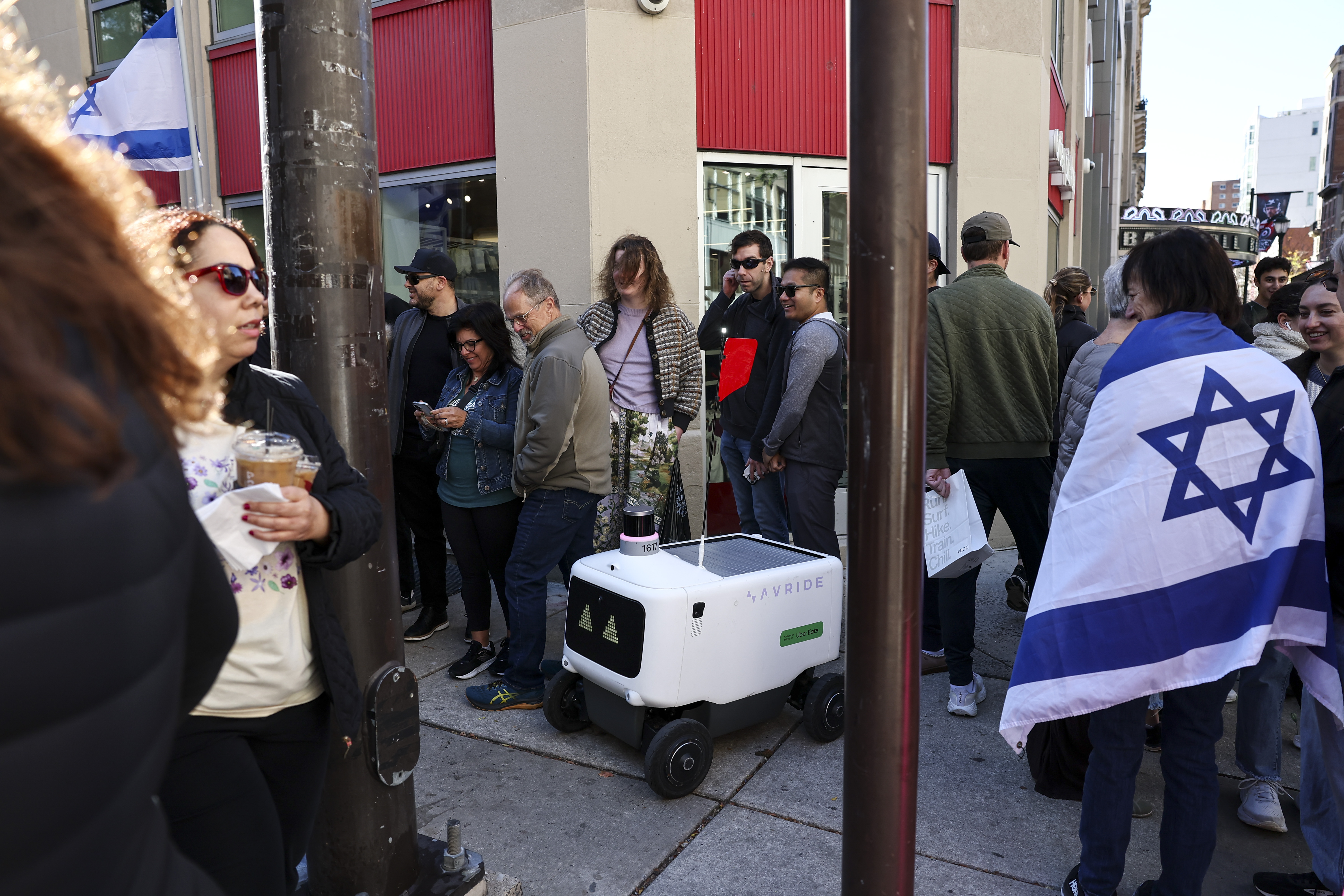
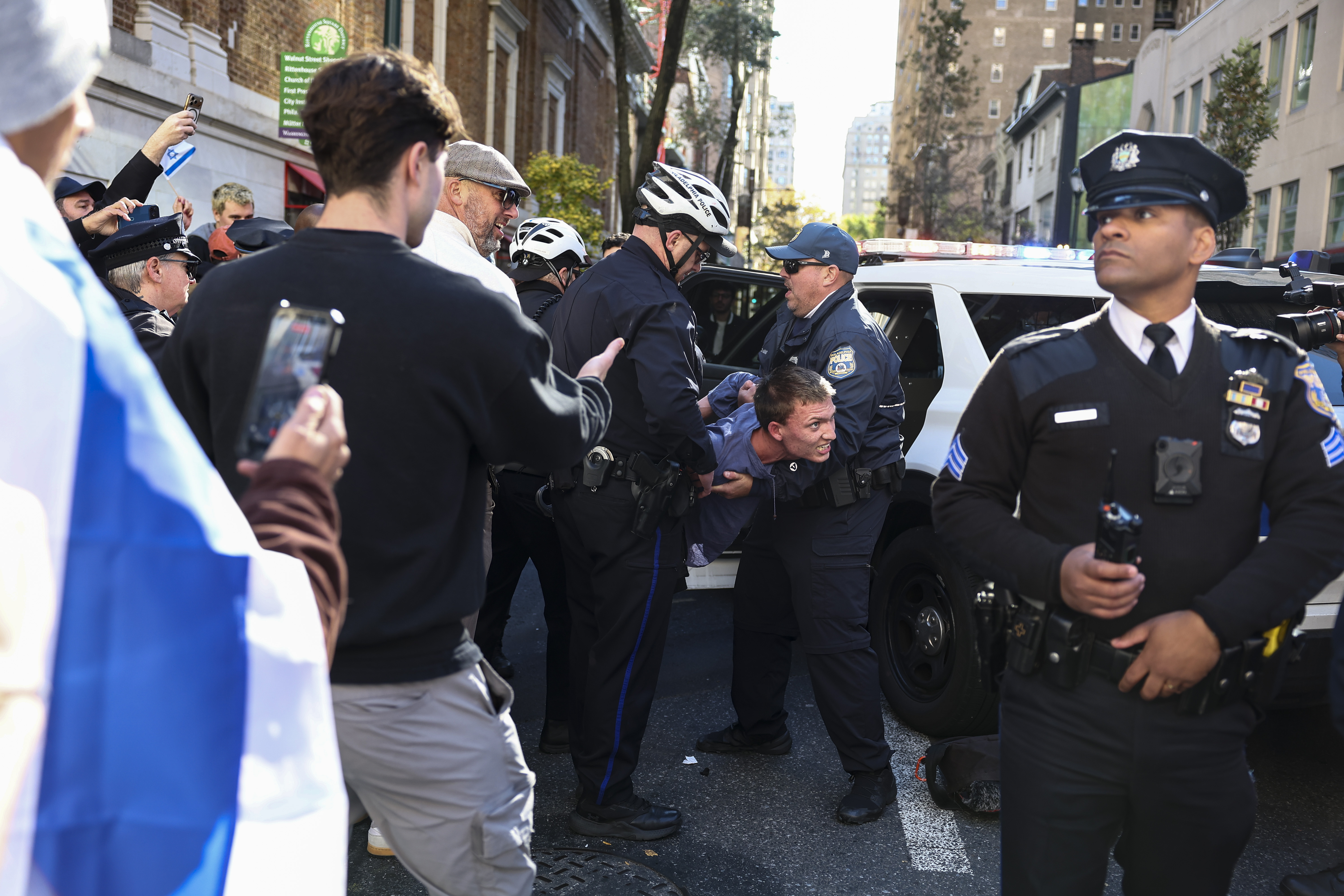
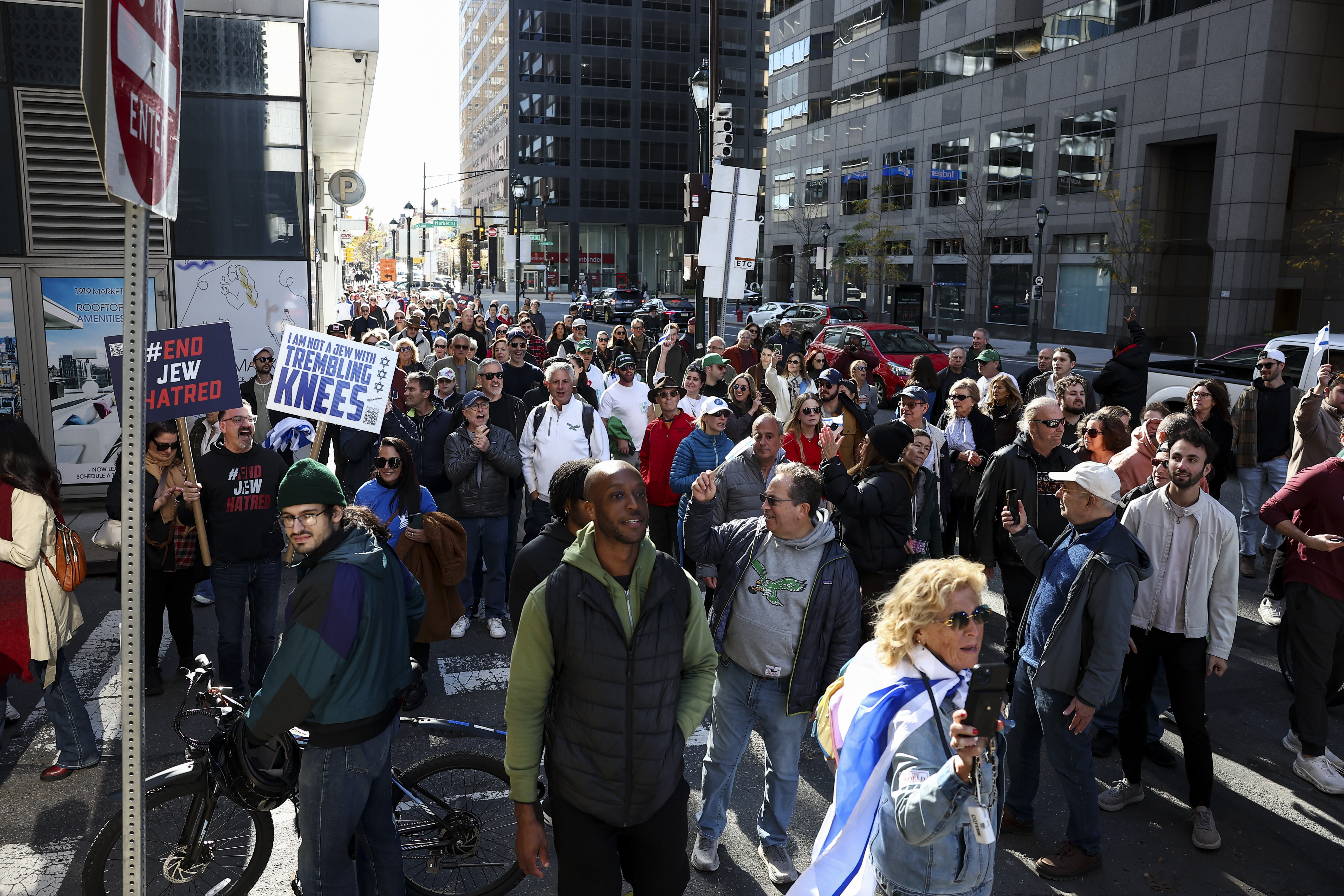
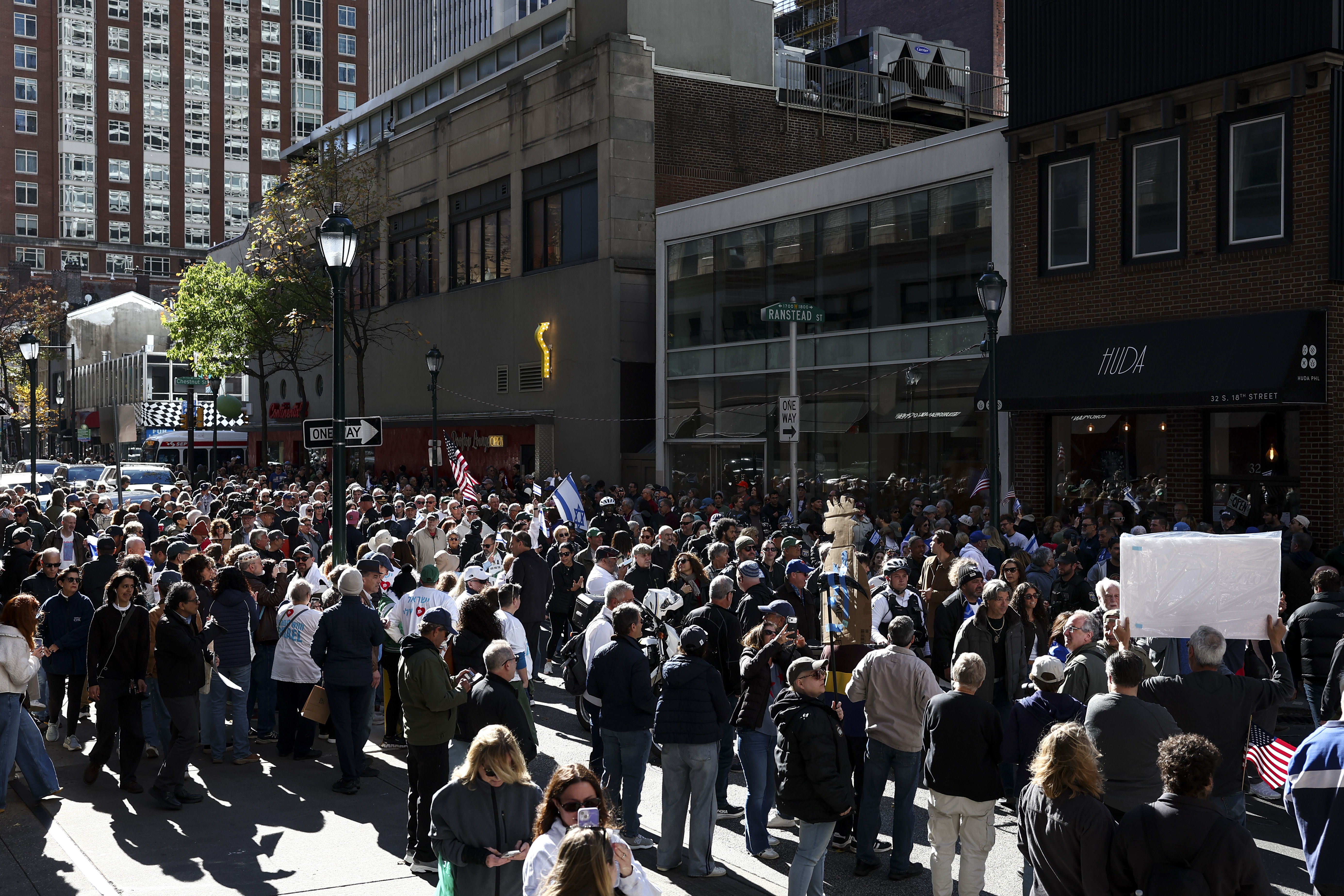
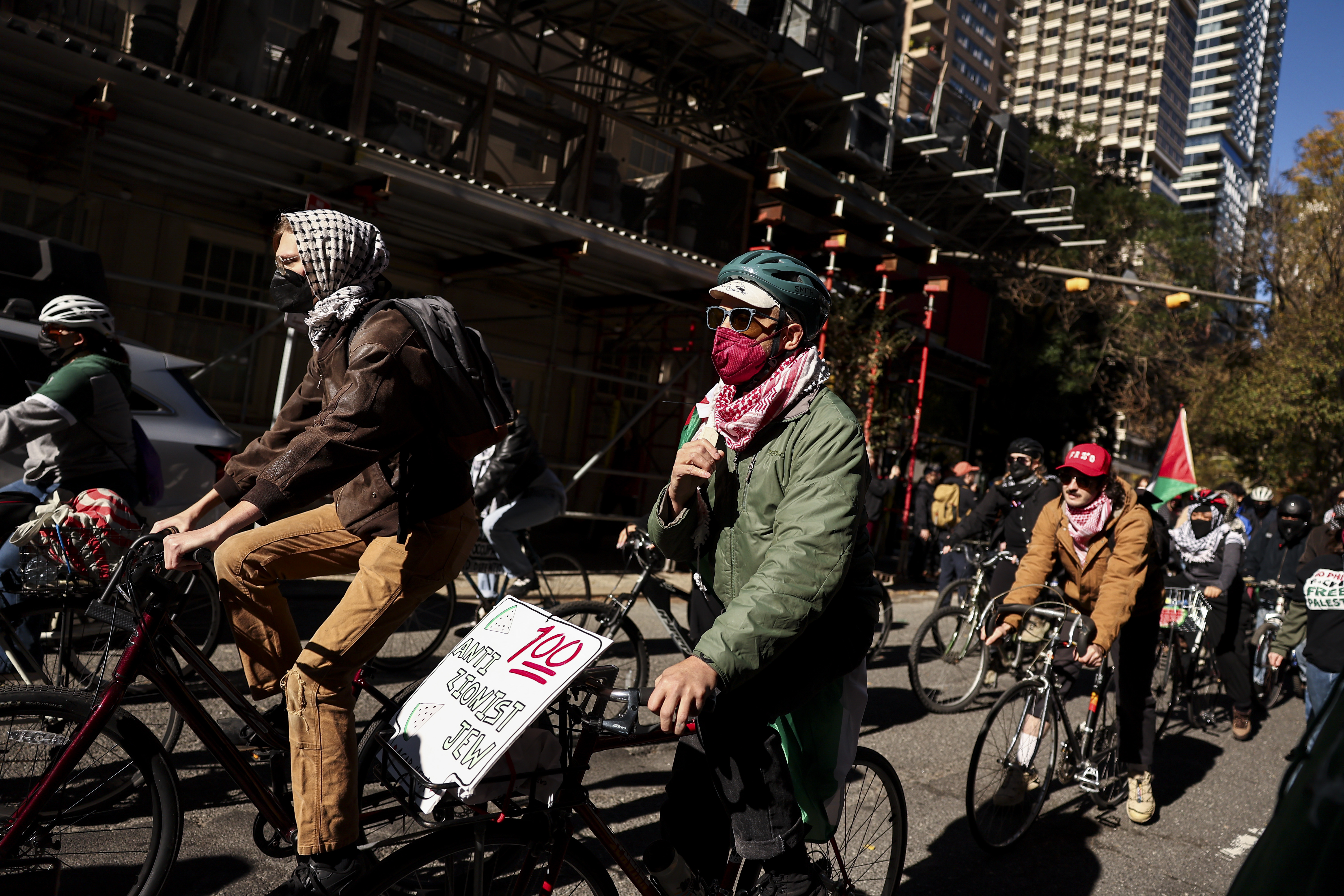
Protesters and counter-protesters engaged with each other during the bike-ride boycott at Rittenhouse Square.Monica Herndon / Staff PhotographerCounter-protesters gathered outside of Huda. Monica Herndon / Staff PhotographerCounter-protesters gathered outside of Huda on Sunday.Monica Herndon / Staff PhotographerCounter-protesters gathered outside of Huda.Monica Herndon / Staff PhotographerProtesters and counter-protesters engaged with the police during the bike-ride boycott at Rittenhouse Square.Monica Herndon / Staff PhotographerProtesters and counter-protesters engaged with the police during the bike-ride boycott at Rittenhouse Square.Monica Herndon / Staff PhotographerProtesters and counter-protesters move through Rittenhouse Square.Monica Herndon / Staff PhotographerProtesters and counter-protesters engaged with the police during the bike-ride boycott at Rittenhouse Square.Monica Herndon / Staff PhotographerProtesters and counter-protesters engaged with the police during the bike-ride boycott at Rittenhouse Square.Monica Herndon / Staff PhotographerThe scene of the boycott ride in Rittenhouse Square on Sunday.Monica Herndon / Staff PhotographerProtesters ride down South 18th Street.Monica Herndon / Staff PhotographerProtesters and counter-protesters engaged with the police during the bike-ride boycott.Monica Herndon / Staff PhotographerCrowds gathered outside of K’Far.Monica Herndon / Staff PhotographerDeputy Commissioner Frank Vanore looks around as protesters and counter-protesters engage with the police during the bike-ride boycott against six Jewish-owned eateries at Rittenhouse Square.Monica Herndon / Staff PhotographerCounter-protest people fill the street in front of Huda.Monica Herndon / Staff PhotographerCounter-protesters cross Market Street with Israeli and American flags.Monica Herndon / Staff PhotographerA food delivery robot navigates the crowd gathered outside of K’Far on Sunday.Monica Herndon / Staff PhotographerPhiladelphia Police make an arrest during the protest.Monica Herndon / Staff PhotographerProtesters and counter-protesters engaged with each other during the bike-ride boycott.Monica Herndon / Staff Photographer
The “Boycott Ride” — described as a protest against what organizers called “Zionist establishments” — had been widely denounced by officials as antisemitic and hateful, eliciting ire and admonishments from City Hall to the U.S. Congress.
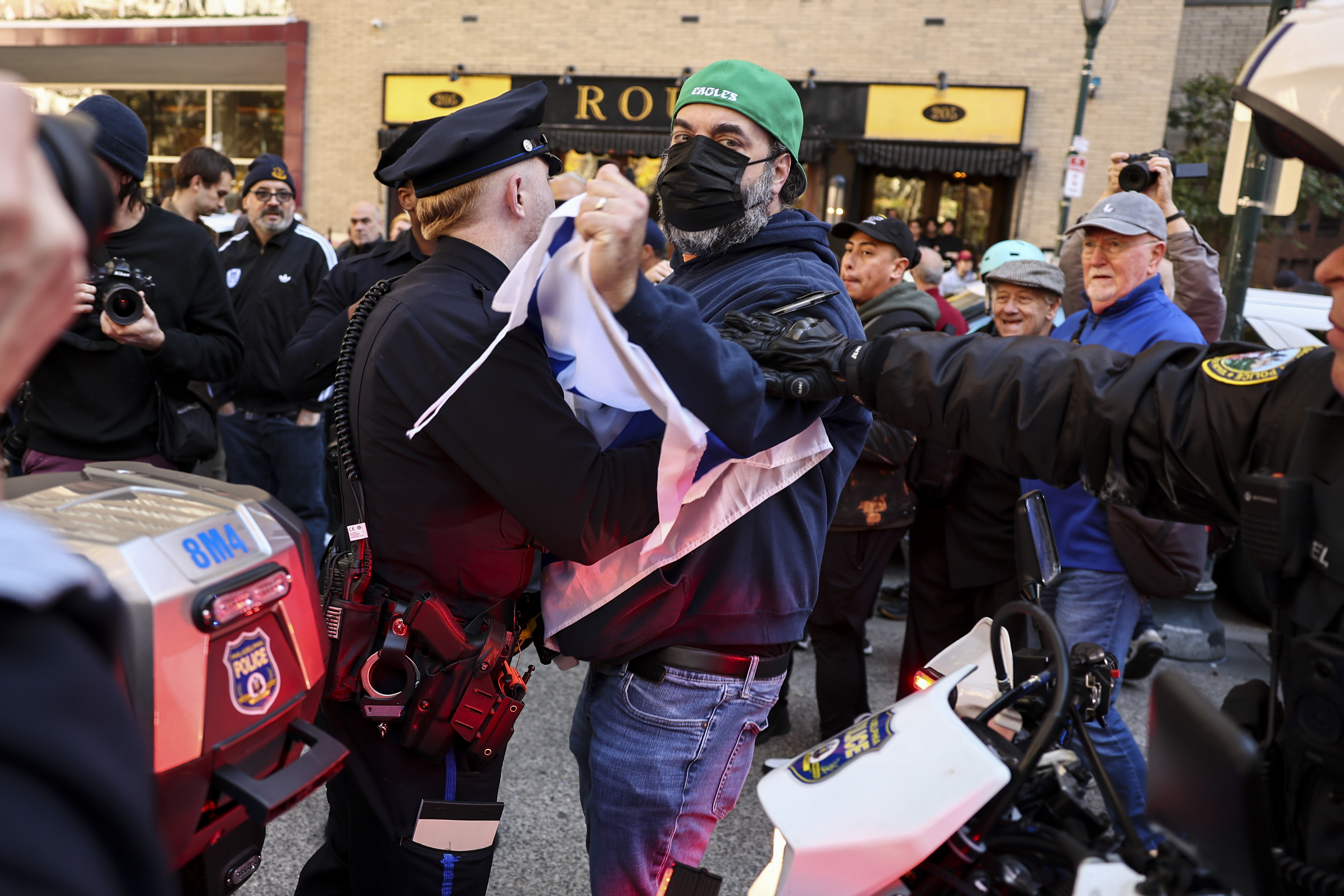
As the bikers rode through Center City, the counterprotesters jeered and waved Israeli flags, while hundreds of others rallied in support of the businesses and the mood veered between combative and surreal.
Crowds gather and pass outside of Huda on Sunday, Nov. 8, 2026 in Philadelphia.Monica Herndon / Staff Photographer
Police said three people were arrested: a woman for assault, a man for disorderly conduct, and a 17-year-old for assault on police. Two officers sustained minor injuries that didn’t require medical treatment. One woman, a counterprotester, said she was assaulted, and no property damage was reported, police said.
Meanwhile, patronspacked the eateries, where lines for milk bun sandwiches and lunch meats wrapped around city blocks. On X, Gov. Josh Shapiro said “the City of Brotherly Love showed up to support our neighborhood businesses and prove once again that hate has no place in our Commonwealth.”
The crowd at Huda was unlike anything owner Yehuda Sichel had seen before.
When he first learned of the bike ride, he was “pretty hurt and pretty upset,” Sichel said. The timing of the protest — on the eve of the anniversary of Kristallnacht — was especially painful for Sichel, who said his grandfather survived the Holocaust and witnessed the dayslong pogrom on Jewish communities in Nazi Germany in 1938. During Kristallnacht, Nazis assaulted and killed Jewish people, imprisoned about 26,000 Jewish men in concentration camps, trashed businesses, and burned more than 1,400 synagogues.
Protesters ride down South 18th Street.Monica Herndon / Staff Photographer
Bike-ride organizers,Philly Bike On Your Left, said in a statement posted to Instagram on Saturday that they stand against antisemitism and that they were boycotting the businesses because of their owners’ support for Israel.
The group said their “ride has been grossly misrepresented,” and that “any suggestions about the timing of our ride are simply false.”
“We firmly stand with indigenous Palestinians in their struggle for freedom and justice,” the organizers wrote in part.
Responding to a list of questions from The Inquirer via Instagram, Philly Bike On Your Left said, “I can assure you we had no idea when [Kristallnacht] was. That’s not something we would ever do.”
It’s unclear who is behind the account. The user direct messaging with The Inquirer declined to identify themselves, saying they feared for their safety. Members of their group have received death threats and been doxxed, the statement said.
Sichel believes he was targeted because he raised a few thousand dollars for injured and traumatized Israeli children after theOct. 7, 2023, Hamas attack on Israel, when Hamas militants killed about 1,200 people and took 251 hostages. Since then, Israel has responded with an offensive that has killed more than 74,000 Palestinians, according to Gaza’s Health Ministry.
The moneyhe raised went directly to the municipality the children were in, Sichel said.
“I didn’t send it to any military,” he said. “I’m an American. I’m a Jew. I’m a proud supporter of the Israeli cause, but that does not mean I’m in the government over there.
“I don’t even have any influence on the government in Philadelphia.”
Mac Mart owner Marti Lieberman said in a text Sunday evening she was “exhausted and overwhelmed in the best way.”
“We successfully overshadowed this act of intimidation and hate, and we did it with love and fun, and above all things humanity and good food,” she said.
Protesters and counterprotesters engaged with the police during the bike-ride boycott at Rittenhouse Square on Sunday, Nov. 8, 2026 in Philadelphia.Monica Herndon / Staff Photographer
‘Boycott Ride’ and a hope for change
A flyer for the “Boycott Ride” began circulating on social media as early as Oct. 30, promoting a bike ride to show pro-Palestinian solidarity and protest six businesses: Mac Mart, K’Far Cafe, Huda, Goldie, Dizengoff, and Schlesinger’s Deli. The widely circulated flyer reads, “No business for Zionists! These Zionist Establishments must go! Not in our city!”
K’Far Cafe, Dizengoff, and Goldie — as well as a handful of other restaurants throughout the city — are owned by CookNSolo, renowned Israeli-born chef Michael Solomonov’s restaurant group.In the wake of the Oct. 7 attack,CookNSolo, Solomonov, and his business partner, Steve Cook, fundraised more than $100,000 for the Friends of United Hatzalah, an Israeli nonprofit that describes itself as a volunteer EMS organization.
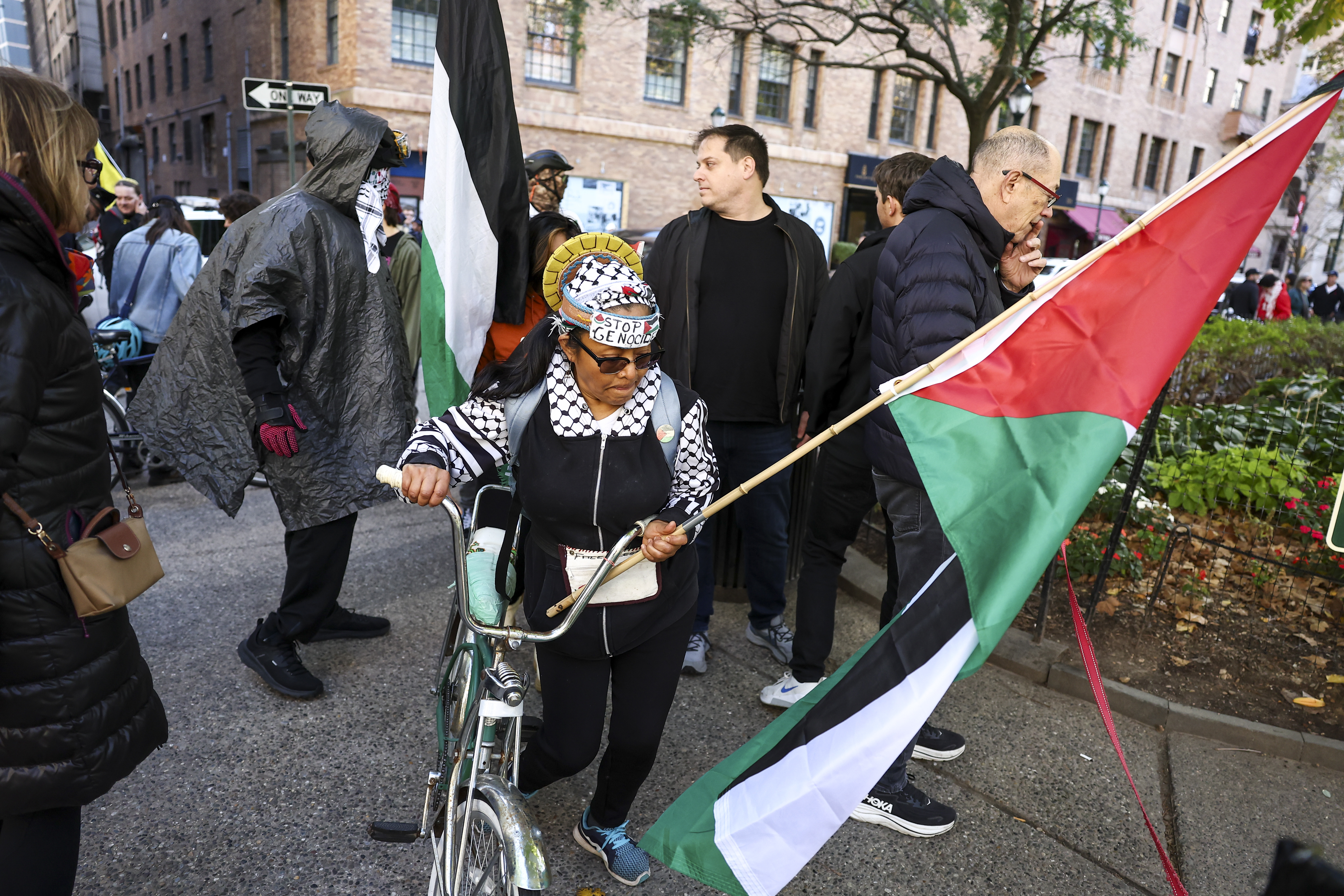
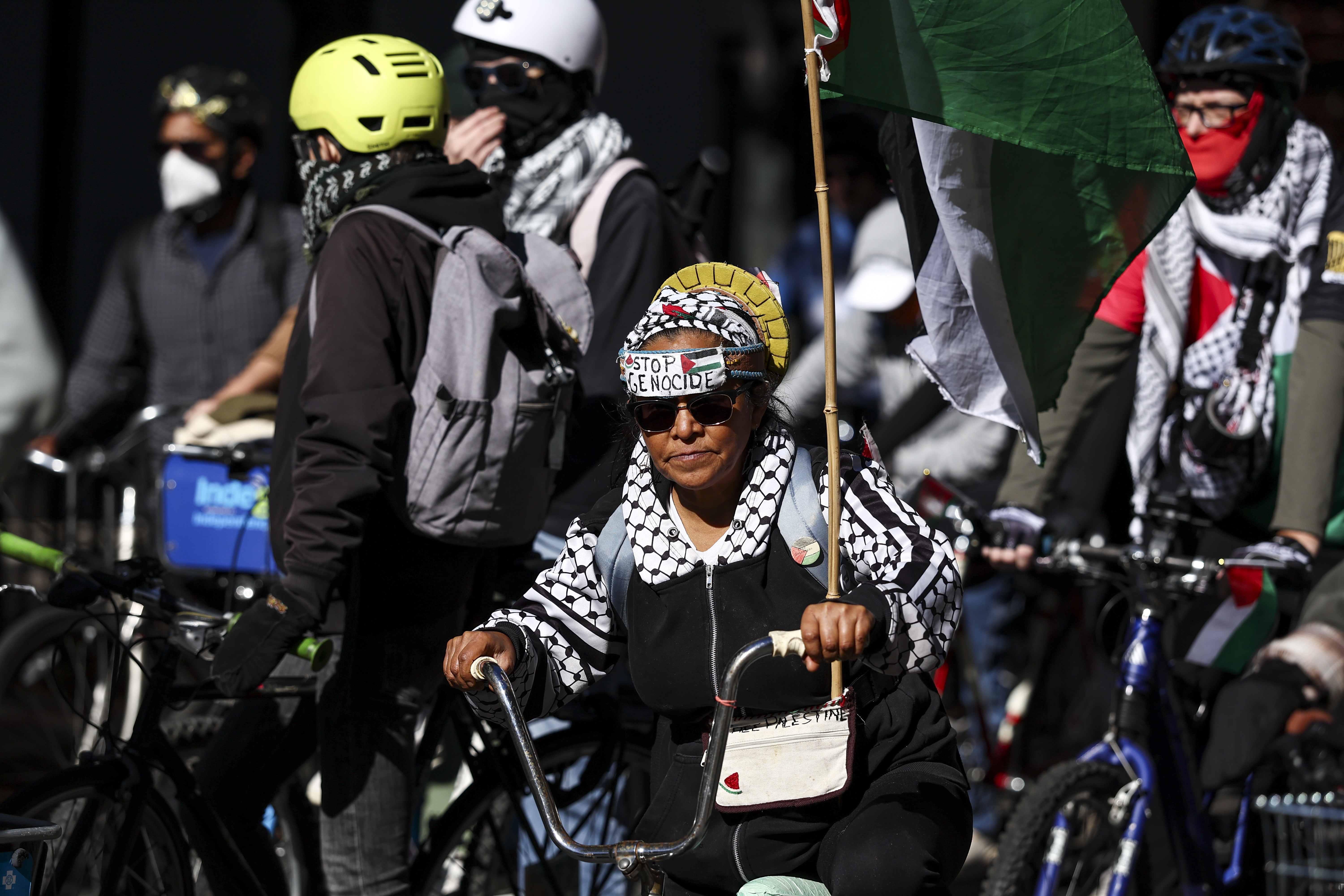
For rider Carmen Guerrero, the demonstration was meant to draw attention to people who she said have helped finance Israel in the war. Guerrero, of Montgomery County, wore the words “Stop Genocide” on her headband.
Protesters ride down South 18th Street on Sunday, Nov. 8, 2026 in Philadelphia.Monica Herndon / Staff Photographer
“I’m here because I am Native American,” she said. “The blood of my people had disappeared on this land. Now they are trying to disappear the people of Palestine.”
James Ray, 28, said the ride was more about supporting fellow activists and raising awareness than attacking individuals.
“I hope [the business owners] look at this and reflect on their own positions,” Ray said.“My hope is for positive change. Not focusing on the stores so much as using it as an opportunity to educate the community.”
Allan Domb, owner of Schlesinger’s Deli, said it was heartwarming to see so many people support the businesses.
“They didn’t come for the food — they came to show their support, which was really amazing,” Domb said. “The Philadelphia community really stepped up.”
A spokesperson for CookNSolo did not immediately respond to an email seeking comment Sunday.
Long lines and crowds outside of K’Far Cafe during the boycott ride in Rittenhouse Square on Sunday, Nov. 8, 2026.Monica Herndon / Staff Photographer
Officials rebuke protest and community steps up
In recent days, many had thrown their support behind the restaurants and the broader Jewish community. A nonprofit, JewBelong, bought billboards across the city, urging people to “boycott the boycott ride” as reactions and commentary continued to flood social media. Others came to Philly Bike On Your Left’s defense: Philadelphia Democratic Socialists of America called the trove of statements of politicians “bad-faith condemnations,” and nearly 20 pro-Palestinian organizations had signed onto a statement of solidarityas of Sunday morning.
“Everyone has the right to peacefully protest and express their political views,” Philadelphia Mayor Cherelle L. Parker said in a statement last week. “But singling out businesses because their owners are Jewish is unacceptable and has no place in our city.”
U.S. Rep. Brendan Boyle (D., Philadelphia) said the proximity to Kristallnacht’s anniversary “evokes the darkest chapters of history,” while Sen. John Fetterman called it a “sick parade of rank antisemitism.”
In a video, Philadelphia District Attorney Larry Krasner told people who denounce the Israeli government or the war: “[Prime Minister Benjamin] Netanyahu’s your target, the leadership of the Israeli government is your target, … as opposed to blaming all Israelis, or all Jewish Israelis, or all Jews all over the world for their beliefs, for their faith, for their ethnicity.”
Counterprotester Alexa Epstein, 37, was elated to see so many people defending the restaurants. Epstein, who is Jewish, said she doesn’t support some of what has happened in Gaza. But she is a proud Zionist, which she said means supporting Jewish people’s right to a homeland. The bike ride’s attack on Zionism, she said, feels like broad disapproval of Jewish people.
“We’re not here for any sort of violence,” Epstein said. “We’re just here to stick up for what we believe — and these restaurants, which have nothing to do with anything in the Middle East.”
Alan Reisberg, 66, who came from Baltimore, joined the crowd outside Huda after reading about the bike ride on social media. He believes American Jews should not be made to answer for Netanyahu’s decisions.
“I don’t love every leader of our country. I don’t love Bibi Netanyahu and the way he’s orchestrated his government but certainly this antisemitism and hate is not the answer,” he said.
Even after waiting an hour-and-a-half outside Schlesinger’s, Phil Duncanson, of Logan Square, wasn’t close to the front. Duncanson, 49, said he’d never been to Schlesinger’s, but after learning of the bike protest on CNN he felt he had to support the restaurants.
“I just don’t think the tactic of targeting individual businesses is the right approach to advance any movement, regardless of what it is,” Duncanson said.
Duncanson said he defends pro-Palestinian protesters’ right to say what they feel. But from growing up in the United Kingdom — where World War II’s devastation could still be seen firsthand — Duncanson was quick to think of how calls to “shut down” restaurants could escalate.
Nearby in line, Reese Revak, 39, of Roxborough, said protesters may have good intentions in opposing the Israel government. However, the professional piano player, who teaches music at Curtis Institute of Music, said there’s a big difference between intent and how it affects people.
“And I think this protest has a terrible impact on the Jewish community,” Revak said.
Revak was encouraged by the long line — a sign to him that the counterprotest has far overshadowed the bike rally. The longtime Schlesinger’s fan said it’s was worth the wait.
“Even if I don’t get a sandwich I’m happy to be here.”
Staff writer Michael Klein contributed to this article.
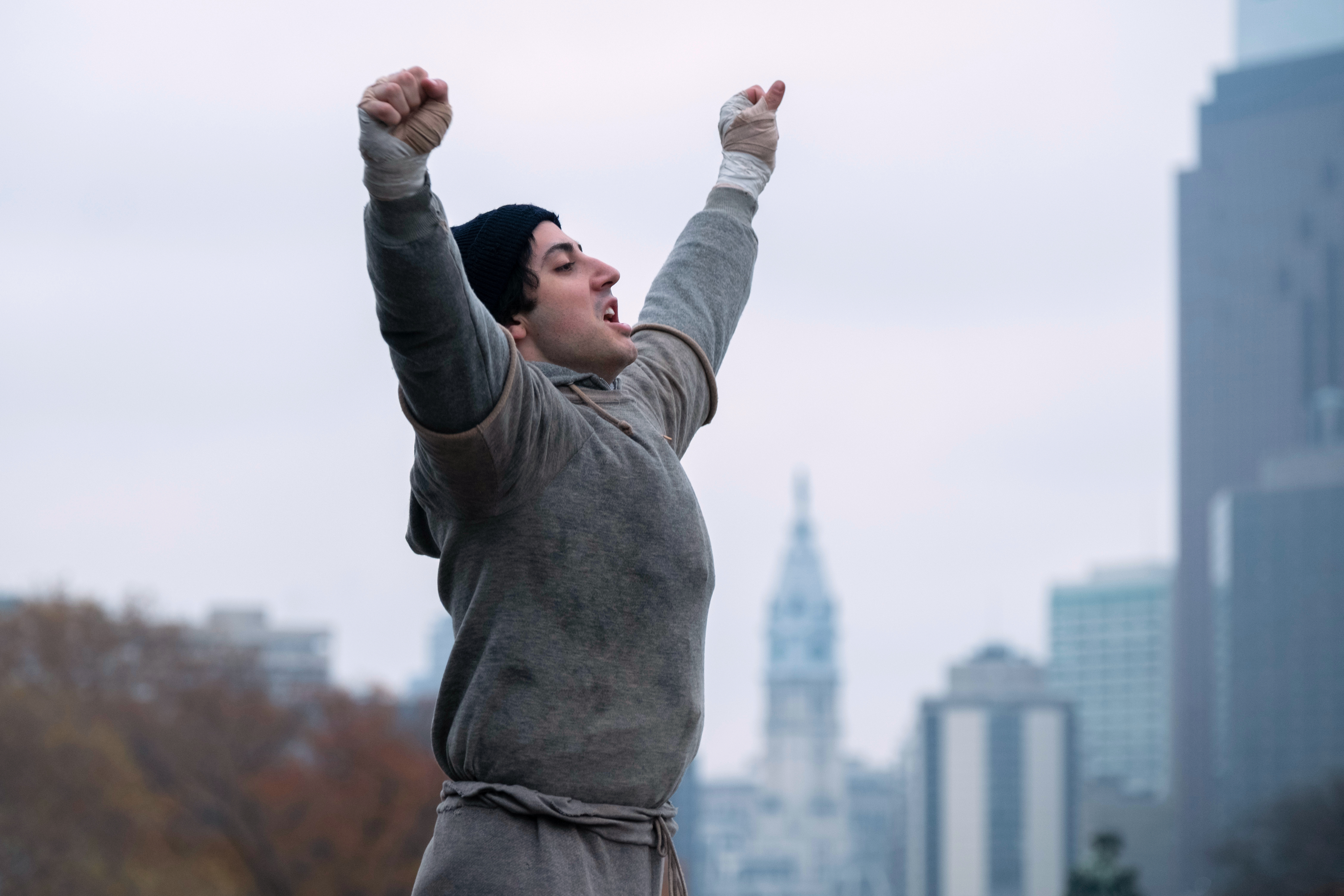
Thankfully, that’s Hollywood fiction. Stallone himself says Philly was the setting from the very first draft. He grew up here, understood the city’s underdog mentality, and knew Rocky couldn’t come from anywhere else.
And really, can you imagine Rocky running through Times Square instead of the Italian Market? Training in Central Park? Celebrating his big moment on the steps of the Metropolitan Museum of Art?
Nope. The actual production apparently came close to filming in Beverly Hills, which is somehow an even more offensive possibility.
Look, we understand movies take creative liberties. But Rocky without Philadelphia is like a cheesesteak without the steak.
Some things are sacred, and Rocky being ours is one of them.
Meet Jaylen Brown’s harpist, Li Shan Tan
She is a Singaporean harpist based in Boston, Massachusetts. She started the harp at age 13 and has built a career that mixes serious classical/orchestral work with contemporary collaborations and viral internet content.
Some NBA players spend their millions on luxury cars, designer watches, and sprawling mansions. Jaylen Brown apparently prefers to have someone play a 24-karat gold harp while his personal chef makes dinner.
Yes, the Sixers star has a personal harpist.
Brown recently showed off his gilded harp during an Architectural Digest tour of his Boston penthouse. He even introduced Li Shan Tan, the professional harpist who reportedly comes over twice a week to play while the sun sets and dinner is prepared. And the best part might be that Brown refers to his harpist as his therapist.
Some people unwind with a glass of wine or a Netflix binge, Jaylen Brown apparently needs a private concert on an instrument made of gold.
He even says he occasionally tries playing it himself when she’s not around.
We have so many questions. Does she take requests? Can she play the Sixers theme song? And, most importantly, has the harp made the move to Philadelphia?
Because if Brown starts bringing his personal harpist to the Xfinity Mobile Arena, we’re going to need courtside seats.
Two armadillos eat cheek to cheek. Blue, the armadillo on the left, is now at the Cohanzick Zoo in Bridgeton, N.J.Karen Verderame
A bittersweet goodbye for the Academy’s animals: C
The Academy of Natural Sciences’ museum has been closed for more than a month, and now its longtime residents have officially moved out.
More than 30 animals, along with several colonies of insects, have found new homes at zoos, sanctuaries, and other facilities. That includes Morbo the Destroyer, an African bullfrog now at the Philadelphia Zoo, and Ollie and Kobe, two tortoises considered boyfriend and girlfriend, who thankfully got to stay together.
The good news is that the animals are being well cared for, thanks to a dedicated group of staffers who spent their final weeks at the museum making sure every creature had somewhere safe to go.
But there’s something especially heartbreaking about imagining the once-bustling animal exhibits sitting empty. For generations of Philly kids, meeting those animals was part of the magic of visiting the museum.
And while efforts to reopen the nearly 200-year-old institution continue, seeing its animals scattered across the region makes the closure feel that much more permanent.
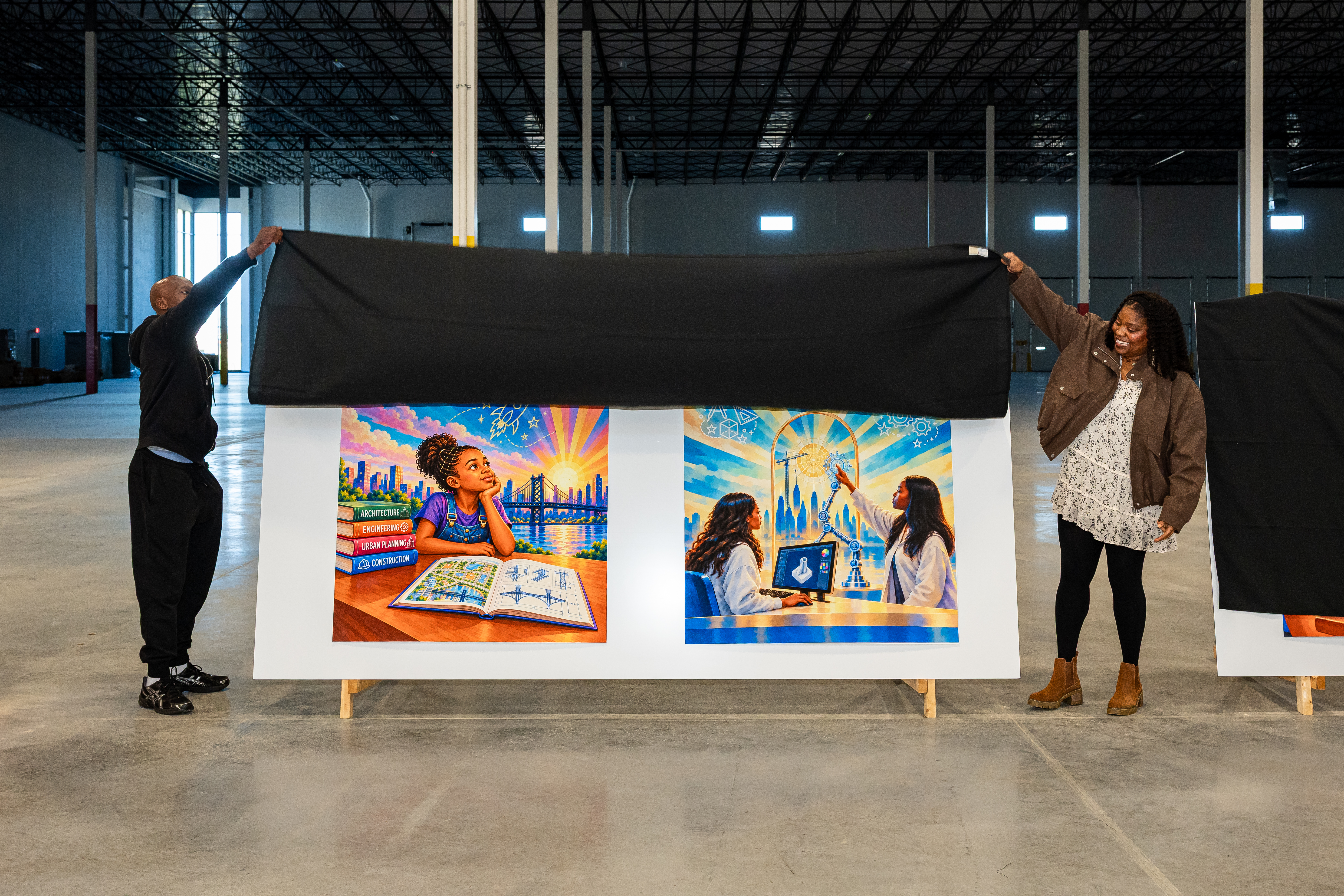
Artist Kelley Prevard (right) at a news conference on Oct. 7 unveiling designs for Mural Arts’ “Throughlines” project at the Bellwether District. Mesh banners are to be placed on a fence.Elijah M.Dreuitt III
Mural Arts is moving forward with banners for a fence at the Bellwether District in South Philly, even after critics raised concerns that some of the designs were created using artificial intelligence.
And the details aren’t exactly reassuring. Some of the artwork features a skyline that looks more like Chicago than Philadelphia. An AI expert said the images appeared to be AI-generated, and detection software flagged them, too. Neither the artist nor Mural Arts has confirmed whether AI was used.
The organization says it will correct the skyline and move forward with installation.
Mural Arts says it doesn’t have an AI policy yet, though it’s working on one and hosting public discussions this month. That’s a conversation worth having, but shouldn’t it have happened before the artwork was approved?
Only in South Philly can you cast your ballot at Chickie’s & Pete’s and then stick around for some crab fries.
One voter shared their delight on Reddit after discovering that their new polling place was the sports bar near the stadiums. Having recently moved from Northwest Philly to deep South Philly, they declared they’d reached “peak south Philadelphian.”
And the comments somehow made the whole thing even better.
“Did they at least give a discount on crab fries?” one person asked. Another suggested that putting an “I Voted” sticker on a crab fries container should earn you a free refill. Frankly, that’s a voter incentive we can get behind.
But then someone issued a challenge: “Talk to me when it’s at the Mummer Museum.”
Turns out, multiple Philadelphians have voted there, too. Others chimed in with polling places at a Vietnamese restaurant and a boxing gym.
And one commenter offered perhaps the most South Philly response of all: “I’ve gotten drunk at a fair number of Chickie’s around the city, but I’ve gotten drunk at this one the most.”
Democracy, Philly style.
Philadelphia Eagles running back Saquon Barkley pauses as he warms up prior to their game against the Washington Commanders in Landover, Md. on Sunday, Nov. 1, 2026.David Maialetti / Staff Photographer
The big, bad Eagles aren’t so scary anymore: F
Remember when the Eagles were the team nobody wanted to play? When we could confidently talk trash to Cowboys fans and expect our team to back it up?
Yeah, those were good times. The Birds are now 2-6, have lost six straight games, and apparently the rest of the NFL has decided it’s time for revenge.
Sunday’s 27-10 loss to Washington was embarrassing enough. But with less than two minutes left and the game already decided, Commanders coach Dan Quinn went for a two-point conversion. And got it.
It’s hard to argue with him. Jalen Hurts is sidelined, injuries have gutted the roster, and the team that won the Super Bowl less than two years ago looks almost unrecognizable.
And after years of Nick Sirianni yelling at opposing fans, celebrating on the sidelines, and generally making sure everyone knew the Eagles were better than them, it’s not exactly shocking that other teams are enjoying this.
The worst part? We can’t even tell them to check the scoreboard anymore. It’s going to be a very long football season in Philadelphia.
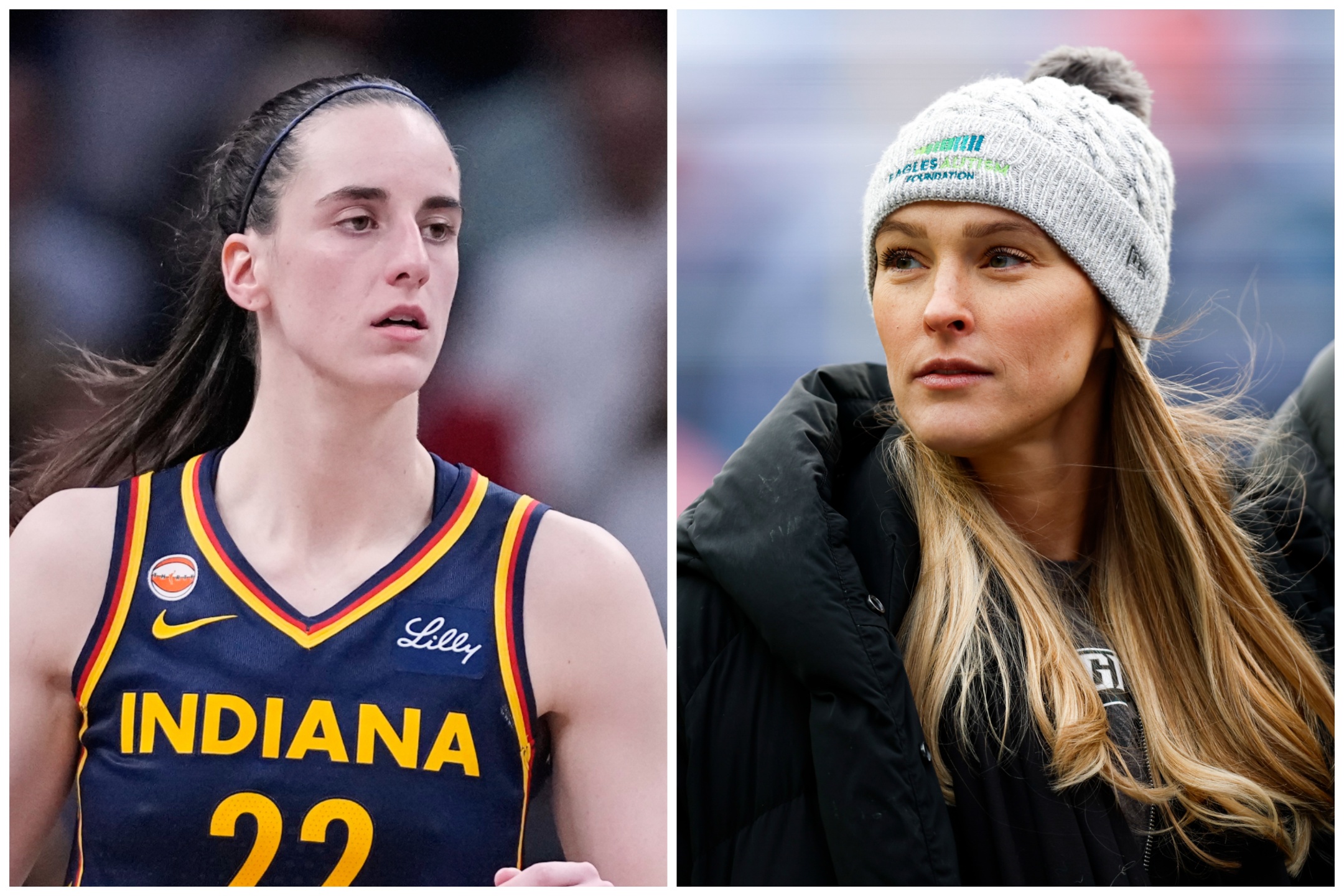
Caitlin Clark (left) and Kylie Kelce (right).Michael Conroy / AP and Monica Herndon / Staff Photographer
Caitlin Clark, you’re one of us now: B
Philadelphia has a long and proud tradition of claiming celebrities who have even the slightest connection to our city. And Caitlin Clark just made our job a whole lot easier.
One cheesesteak. That’s apparently all it takes to become an honorary Philadelphian.
Kelce explained that until Philly gets its own WNBA team in 2030, and as long as Clark hasn’t declared herself against us, we’re perfectly entitled to claim her. She called it the “psychopath mentality of Philadelphia.”
“You can claim me,” Clark responded. “I’ll take all of Philly.”
Say no more. We’re already mentally putting her in a Philadelphia jersey.
The two also tossed around potential names for the new team, including the Philadelphia Belles and Kelce’s suggestion of the Philadelphia Broads. And Clark said she’d love to experience a Sixers crowd in person.
But let’s get back to the important part. Caitlin Clark ate one cheesesteak, called us crazy, and gave us permission to claim her. We might as well give her a Philly birth certificate.
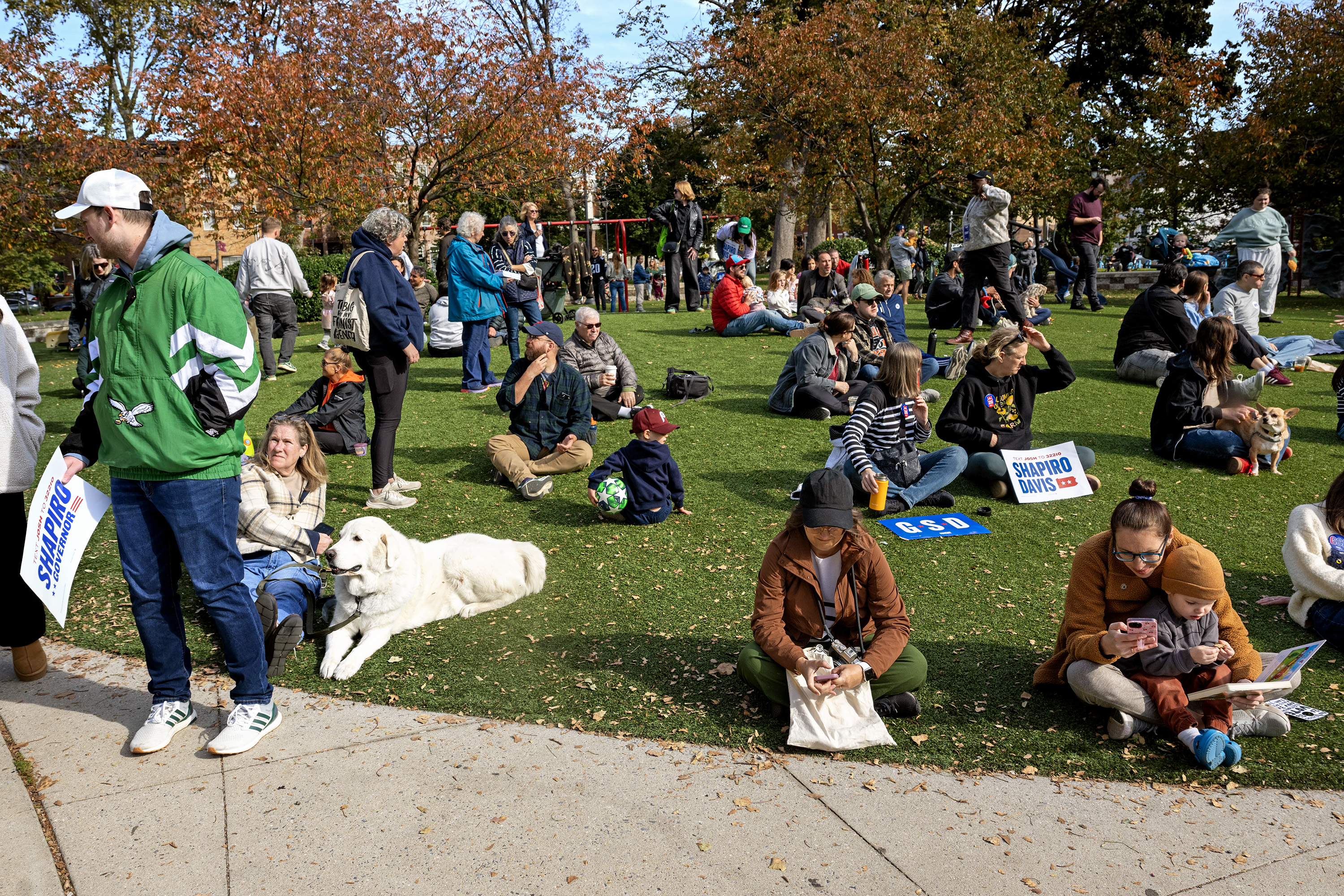
On Sunday, at the start of election week, I waited in a neighborhood park in South Philadelphia, standing on the edge of a small Astroturfed mound watching as kids climbed playground equipment, parents talked with each other, while others read the newspaper, drank coffee, or walked their dogs.
The scene, as I waited for Gov. Josh Shapiro’s campaign bus to arrive, was right out of a Norman Rockwell painting, and it got me thinking of the freedoms and responsibilities that come with living in a democracy.
Dickinson Square Park in South Philadelphia on Sunday.Tom Gralish / Staff Photographer
I felt a sense of pride and appreciation recalling all of the elections I have covered. Everything from a suburban school board contest to a caucus in rural Iowa, to the Philippines, where a rigged vote led to a non-violent “People Power” revolution that toppled a 20-year dictatorship.
I was in high school when three-quarters of the states ratified the 26th Amendment lowering the voting age. Thankfully, the war in Vietnam and the draft that inspired the change — “Old enough to fight, old enough to vote” — were over by the time I turned 18.
I’ve voted in every election since. And photographing the process over the years has been truly inspiring and remains a powerful, emotional, and satisfying experience.
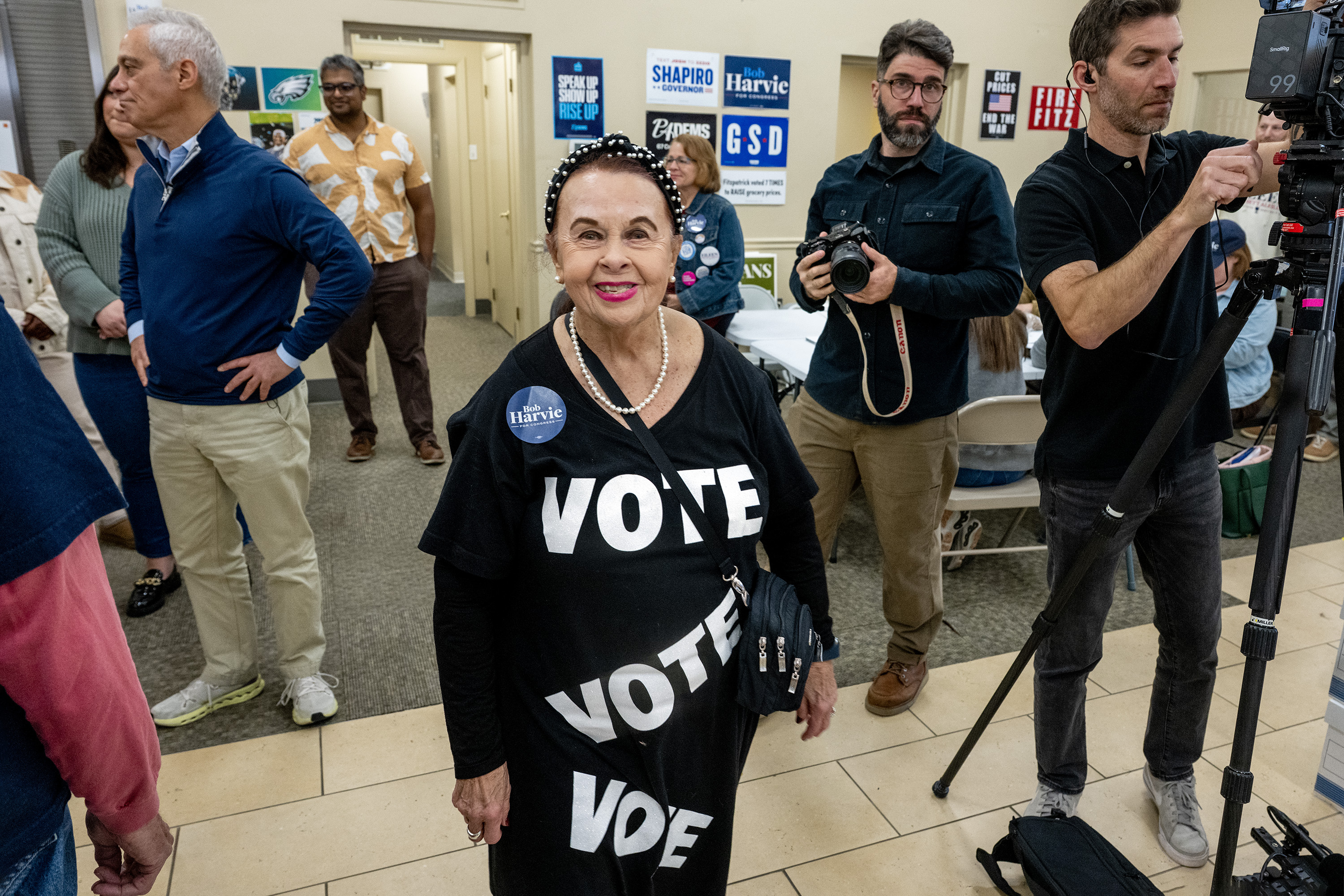
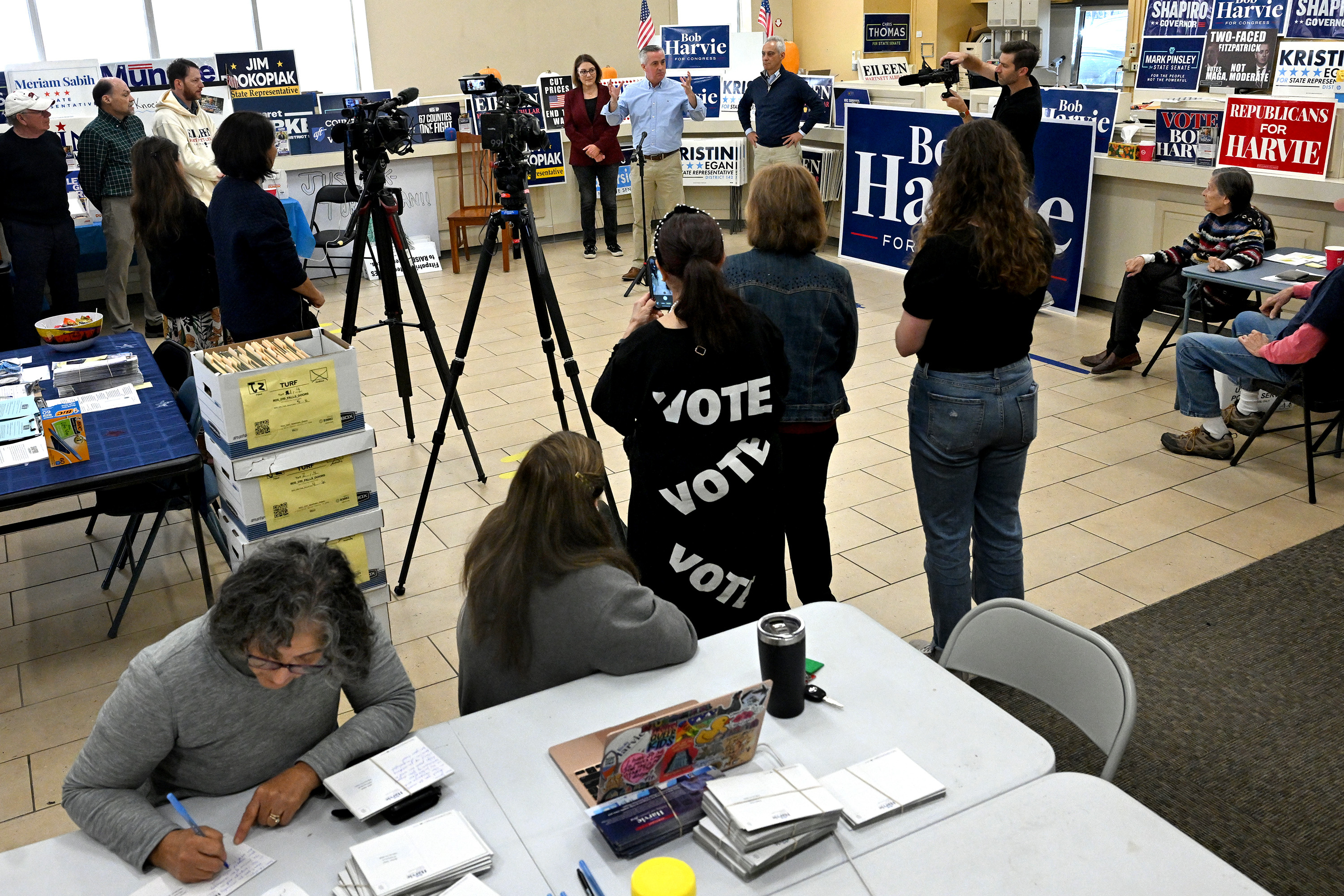
Democratic congressional candidate Bob Harvie is flanked by U.S. Rep. Suzan DelBene (D., Washington) chair of the Democratic Congressional Campaign Committee (DCCC), and former Chicago Mayor Rahm Emanuel at his Bucks County headquarters on Monday.Tom Gralish / Staff Photographer
Of course her attire stood out in his small campaign headquarters, so I had to ask her about it. She saw first lady Jill Biden wear the dress “years ago” and wanted to buy one. The $800 designer price tag was too steep for her, but she found one on Etsy for $40. She wears it every chance she gets.
When I learned I would be covering Gov. Shapiro on Tuesday night I starting reaching out to his communications staff, asking for an opportunity to photograph the candidate early in the evening, before he went out into the hotel ballroom to make his likely victory speech (he had a double-digit lead over his Republican challenger, State Treasurer Stacy Garrity in the polls). I said it was because newspaper deadlines are so early these days, which is true. But really it was about access.
In photojournalism, access is something that supersedes almost everything. You have to get it. Having the latest model camera, the best eye, or most honed compositional instincts don’t matter if you’re not there to make a picture in the first place.
While covering politics I often think of David Hume Kennerly or Pete Souza, who made some the most compelling photographs of recent presidencies. Not just because they are talented, but they are skilled in gaining trust and having the ability to get close enough to be in position where meaningful pictures could happen.
I just wanted to make something that was different from pictures taken from the riser in the back of the room. I asked for an opportunity to photograph the candidate behind-the-scenes, even if it was only as he arrived through a side door at the hotel.
Earlier in the week I got a “we’re thinking about it.” I enlisted our government reporter to lobby on my behalf, then I texted one last time, while stopped at a service plaza on the PA Turnpike as I drove to Harrisburg. It was just crickets until I was about to leave my hotel room and a reply came. “Unfortunately…”
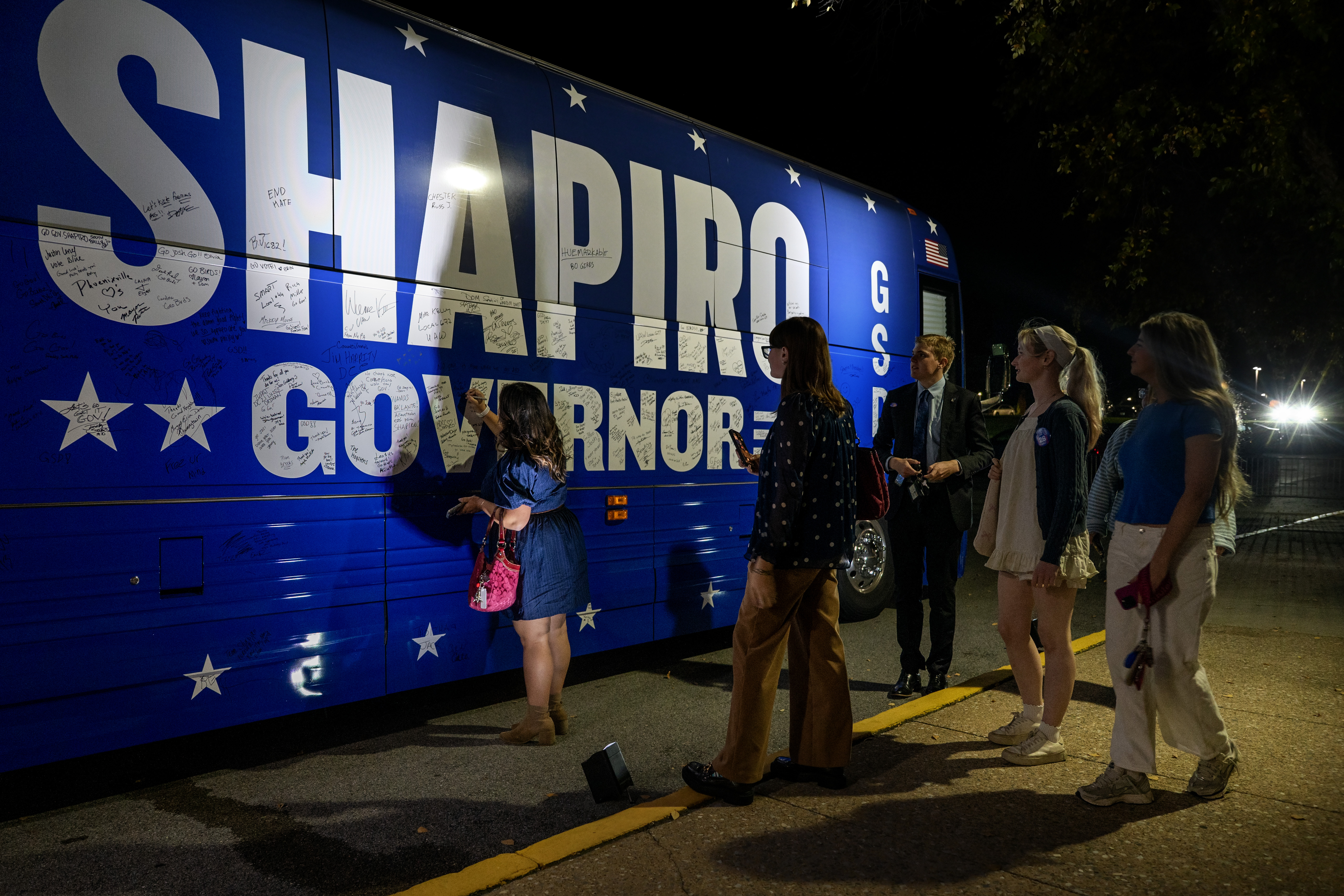
Supporters sign the Shapiro statewide campaign tour bus as they arrive at his Election Night party in Camp Hill on Tuesday.Tom Gralish / Staff Photographer
Going with the flow when arriving at the victory party hotel, I left my laptop and second camera body in the media area, by the back-of-the-room riser and worked the crowd of supporters.
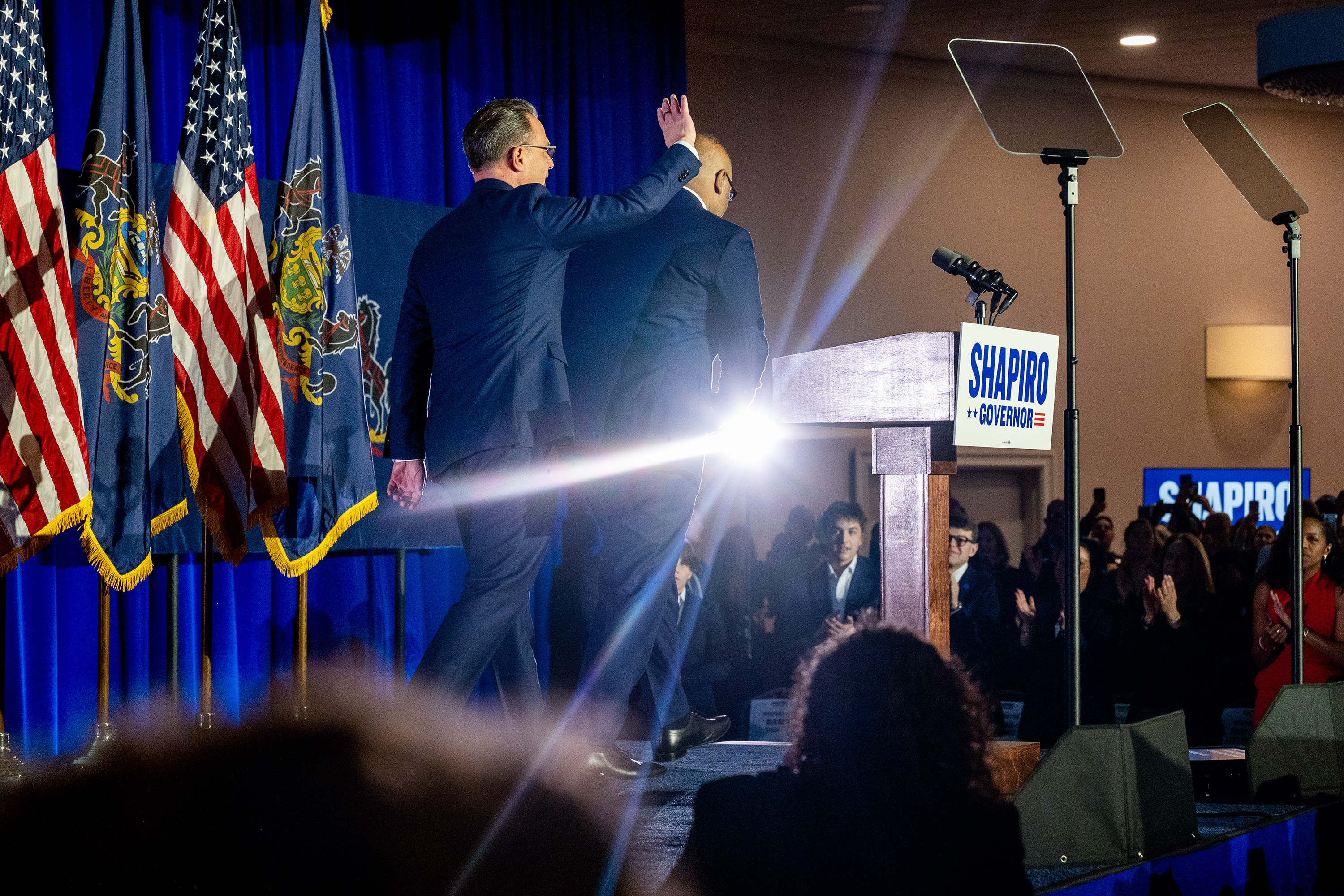
The AP called the race for the Governor at 8:01 p.m. right after the polls closed, and around 8:30 p.m. Lt. Gov. Austin Davis came on stage.
I thought he was just warming up the crowd and as he gave his speech, I made a few photos, practicing my angles, while looking for the best spot on the floor to stand when the main event — his running mate’s appearance — happened later.
But then, just as Davis was wrapping up, he started to introduce the Governor.
I made a few frames as Shapiro joined him onstage. Then as Davis walked off and the victory speech began, I started my trek through the ballroom, wading through a sea of supporters squeezed shoulder to shoulder, elbow to elbow, getting that look “are you kidding me” from each face I passed.
Lt. Gov. Austin Davis leaves the stage as Gov. Josh Shapiro arrives for his re-election victory speech.Tom Gralish / Staff Photographer
Grabbing my other body and 70-200mm lens, I made it safely back to the front and, as his speech was almost 20 minutes long, I didn’t miss much. From experience I knew that the best podium pictures always come at the very beginning and at the end of the talking.
The finish was less dramatic than most election night parties I’ve covered. No balloons or confetti when Davis returned to the stage, along with both men’s family’s.
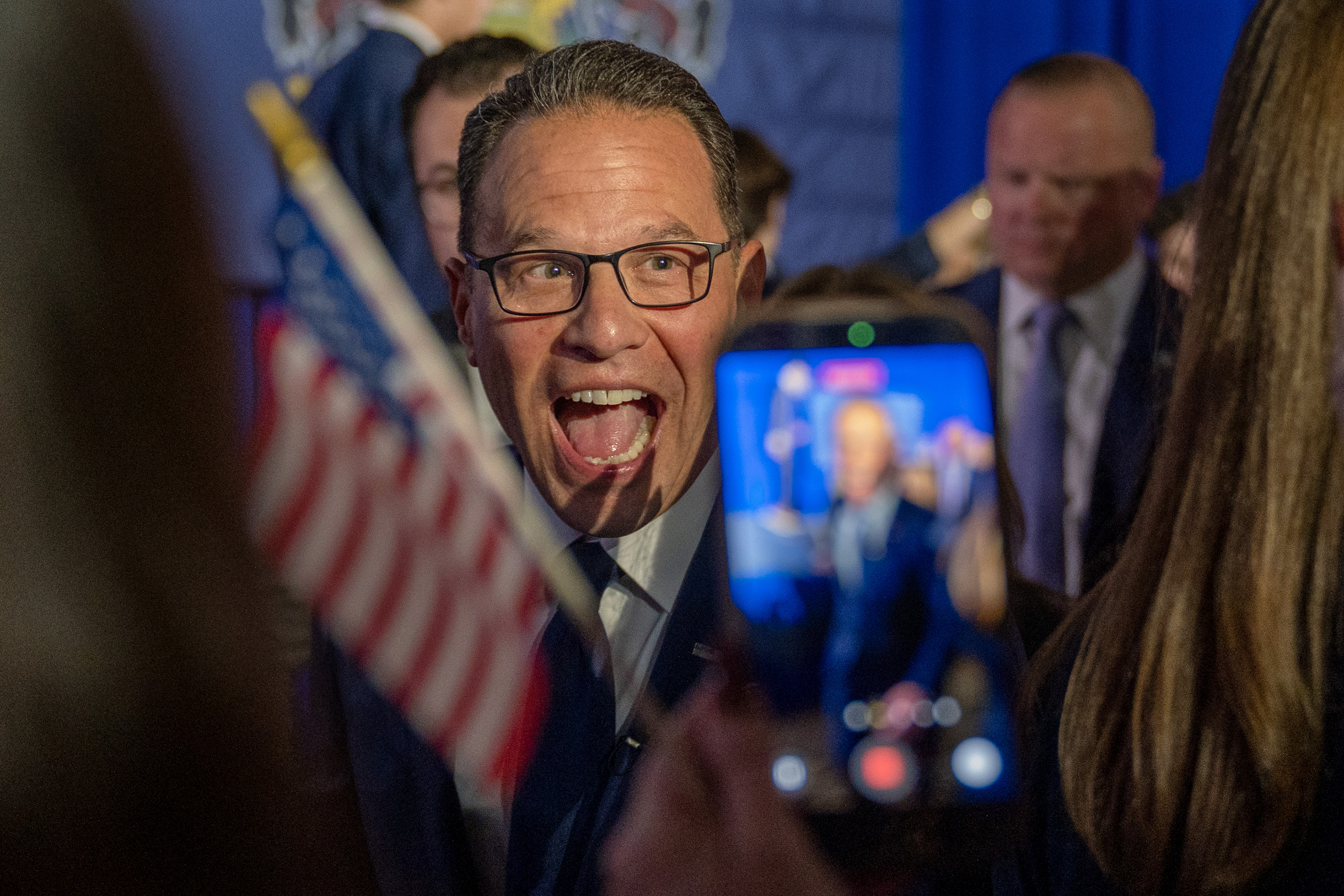
As Shapiro walked off to Tom Petty’s “I Won’t Back Down,” I was near the very front in the crowd, so I had great access (that word!) when he started to work the rope line of supporters.
There were hands and arms and cellphones reaching our in front of me so I switched between using auto and zone focusing, watching the Governor’s face. It was blocked a lot, but all the elements finally lined up.
After I checked my camera’s rear LCD, I headed back to the media area — again passing through the throng — to my laptop to edit and start sending my photos to the newspaper.
Then, just as I was about to caption my first two photos, a staffer appears, grabs me and says, “let’s go.”
I pull my card out of the computer and stick it back in my camera as we pass through the curtain next to the stage. I’m excited thinking, “What do you know, it’s happening.”
I anticipate that quieter moment as family and friends who have shared his journey gather to regroup and take in all that has just happened. And I’m there.
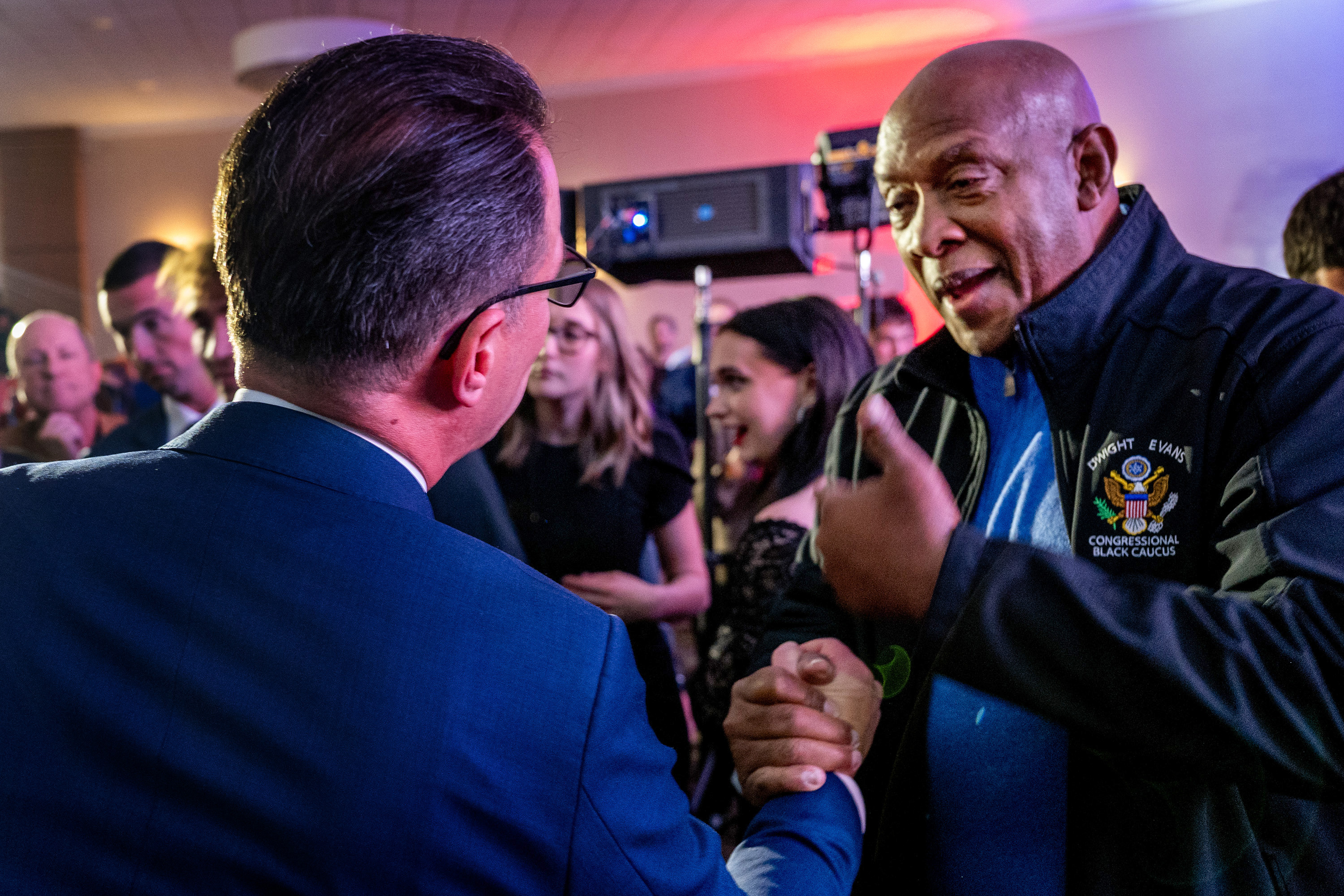
Nope. The curtain pass-through was just a shortcut to the end of the same rope line that I had already photographed. At the beginning. With worse lighting and just the Governor’s back.
But it did produce one good, unexpected image. In the crowd was U.S. Rep. Dwight Evans, who is retiring after serving Philadelphia for two decades in what has been called the most partisan — regardless of party — congressional district in the country.
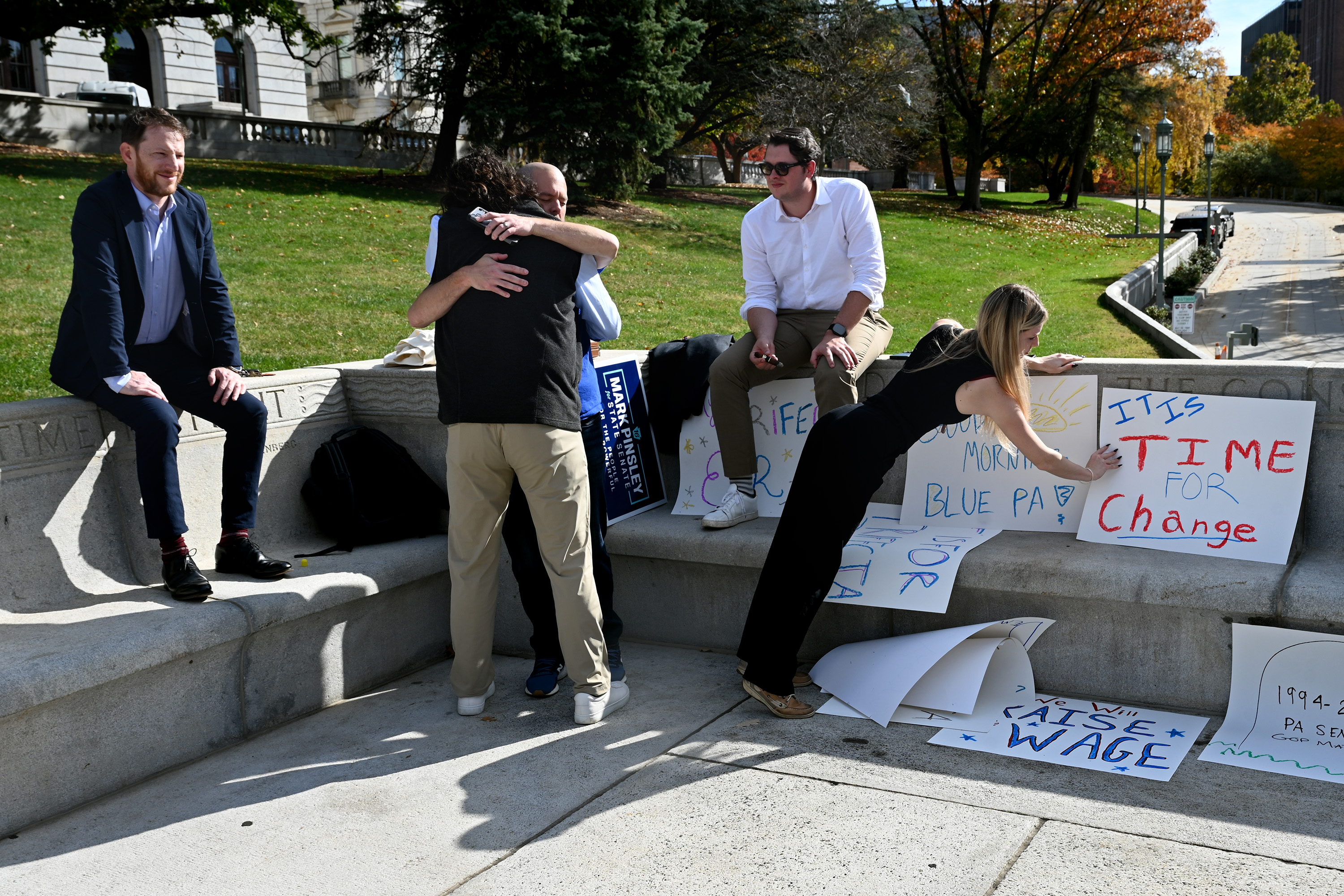
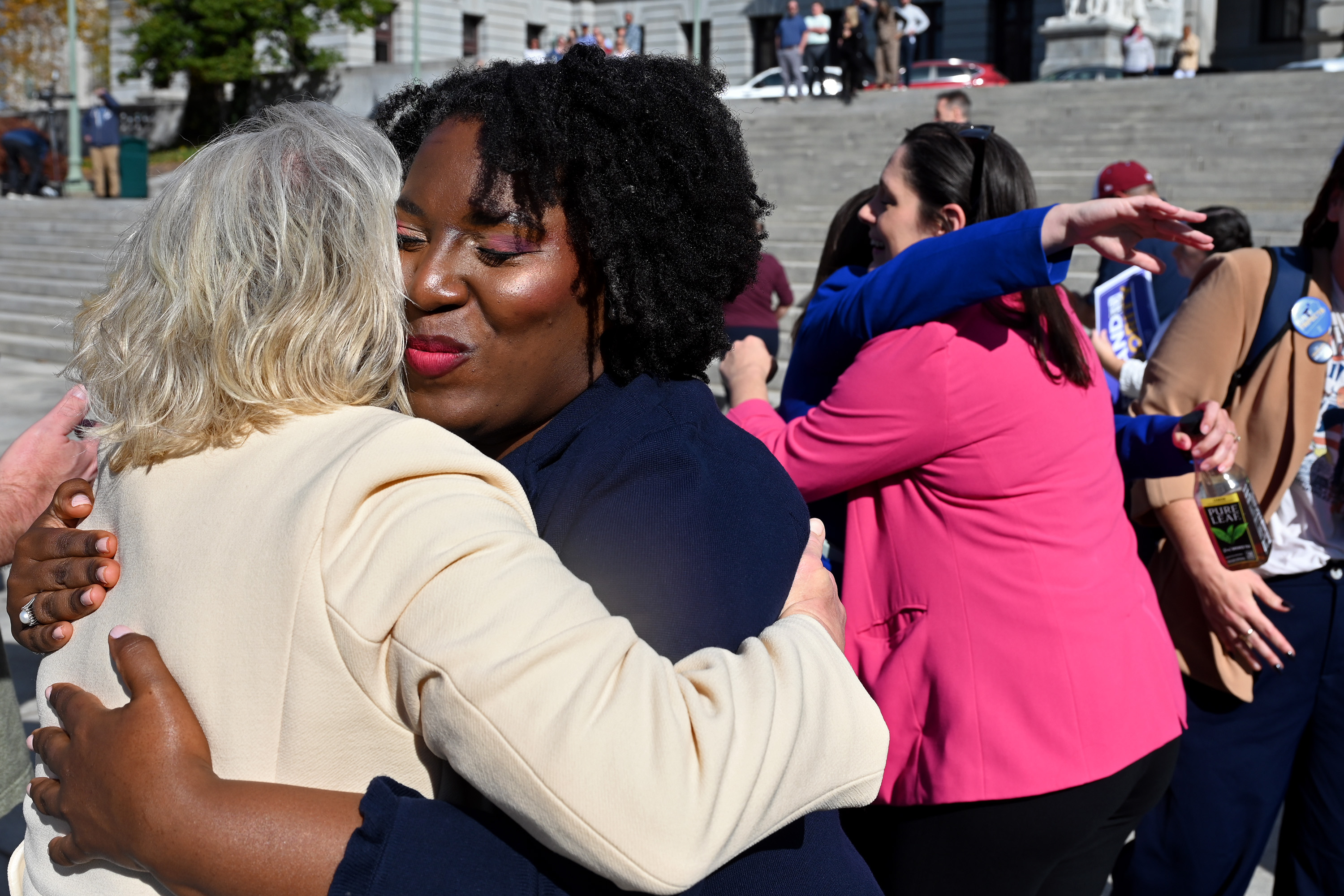
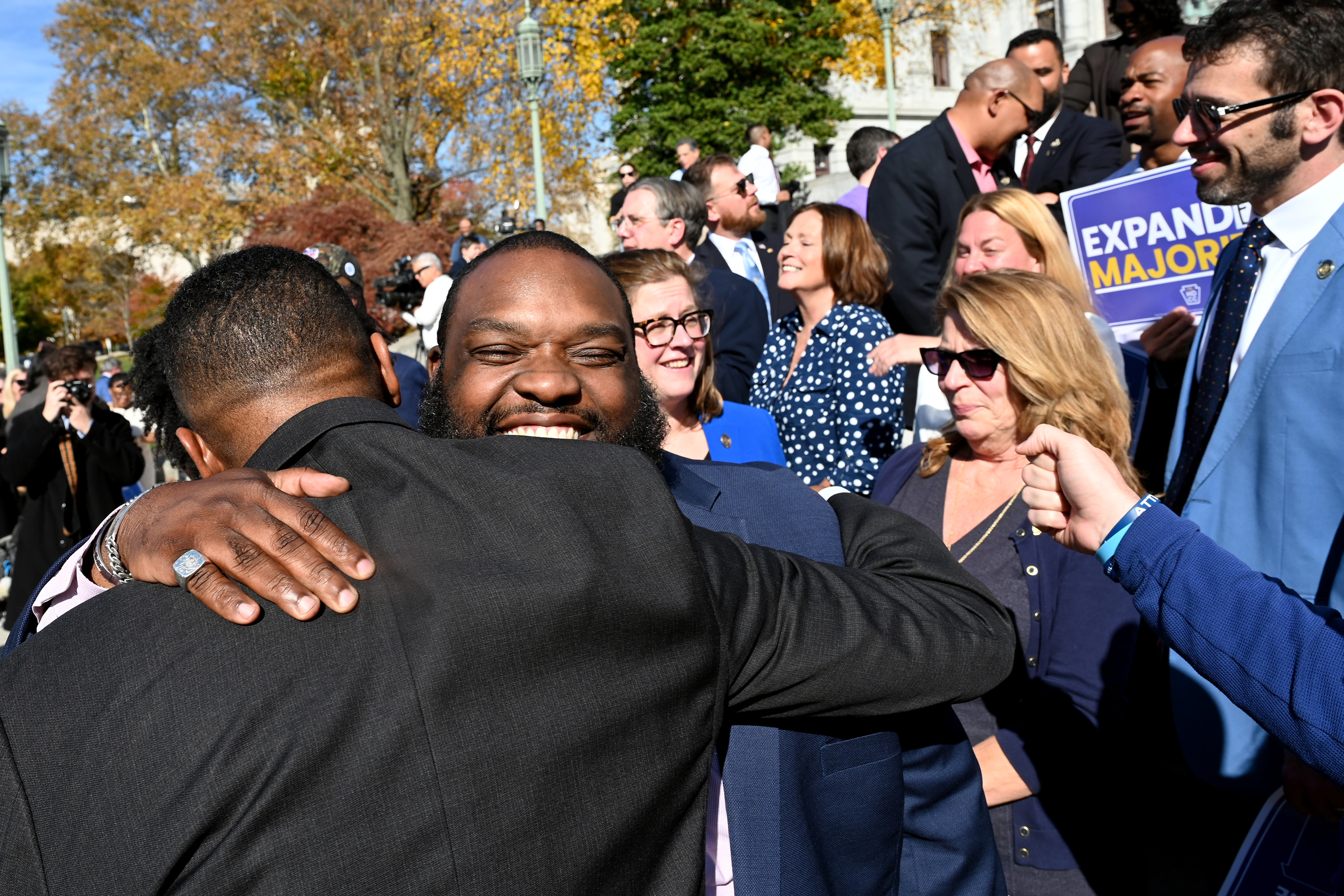
The next morning as the blue wave washed over races in South Carolina, Georgia, and Texas and, well, the rest of the country, and everyone reacted, Pennsylvania Democrats gathered on the State Capital steps to celebrate their newly gained control of the state Senate, House, and governor’s mansion for the first time since 1993 — a trifecta that marks a monumental victory for the party. There was a lot of hugging.
Newly-elected State Sen. Chris Thomas (left) watches as Democratic Campaign Committee staffers create signs and arrive on the steps of the State Capitol on Wednesday morning, before a post-election celebration.Tom Gralish / Staff PhotographerHouse Speaker Joanna McClinton joins other Democrats…Tom Gralish / Staff Photographer…including State Rep. Jordan Harris on the steps of the State Capitol Wednesday morning.Tom Gralish / Staff Photographer
They didn’t expect the state Senate to be competitive for at least another six years.
This election is now also a pivotal triumph for Gov. Shapiro, who is widely seen as a potential 2028 presidential contender.
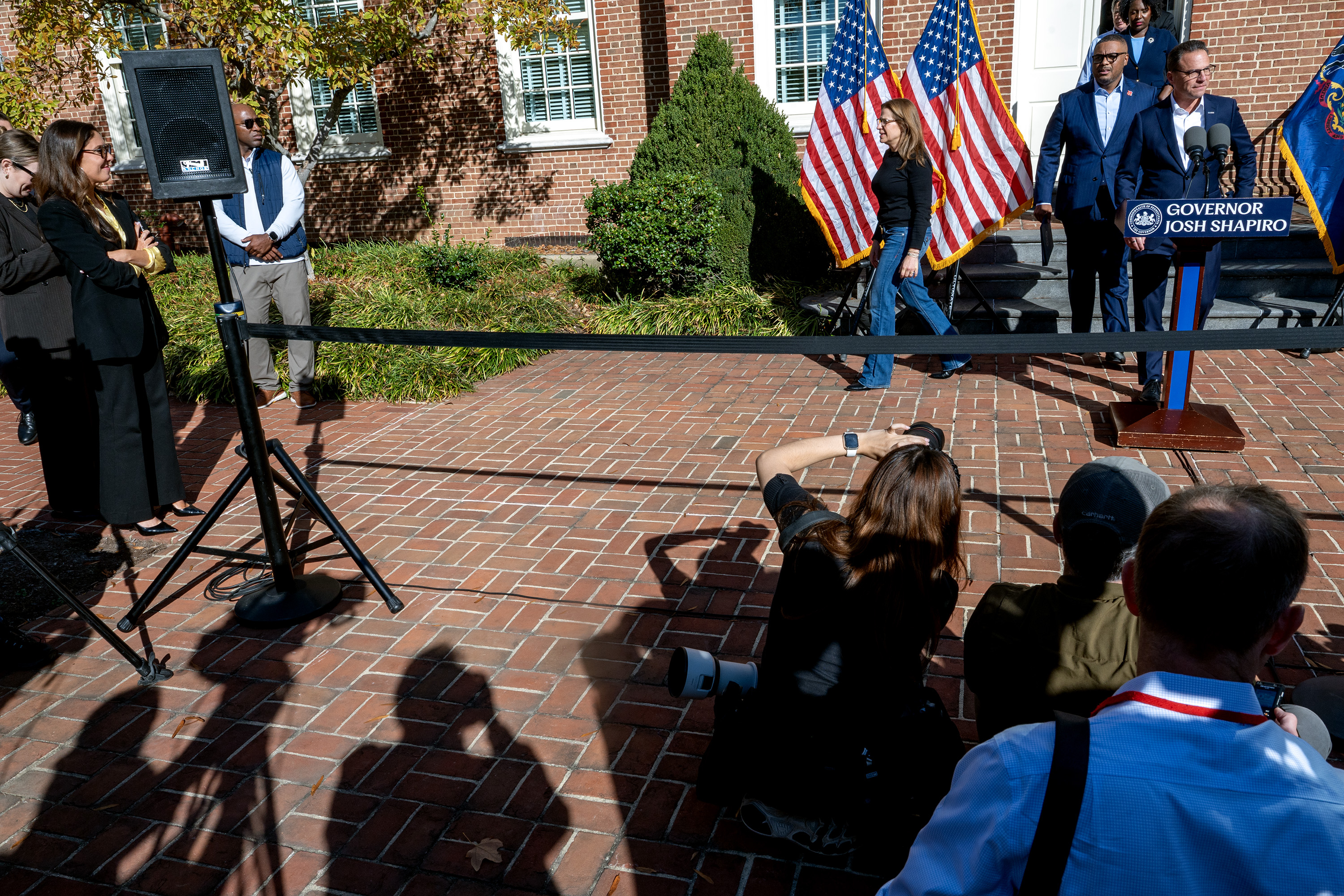
So he also celebrated, after wagering his reputation and popularity on flipping the state’s government blue, by holding a postelection news conference with legislative leaders outside his residence on Wednesday.
Gov. Josh Shapiro walks out of the Governor’s residence Wednesday, followed by Lt. Gov. Austin Davis and House Speaker Joanna McClinton. First Lady Lori Shapiro passes in front of the flags.Tom Gralish / Staff Photographer
It was a good opportunity to make file photos of the officials our reporters will be writing about often in the coming year.
Remember when I mentioned that transition time is when the best photos get made? Well, forgetting my own advice, I had decided to record file video as long as I was waiting for the event to wrap up.
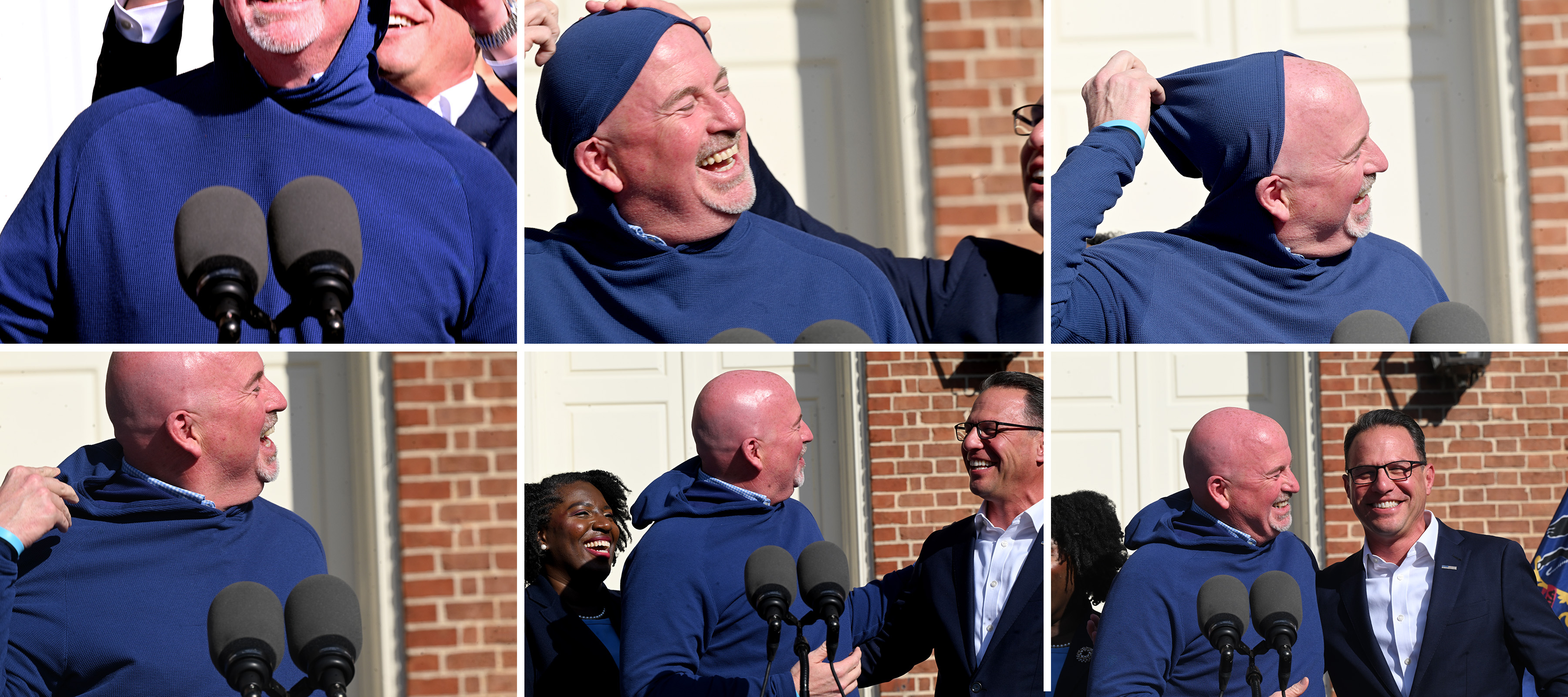
That’s when House Democratic Leader Matt Bradford stepped up to microphone for his turn and the Governor made a joke at the expense of his longtime Montgomery County friend’s hair-lacking scalp in the hot sun.
“Can somebody get Bradford a hat?” Shapiro said, as I suddenly stopped recording, put down my iPhone and picked up my camera — totally missing the Governor pulling the hoodie over Bradford’s head.
You win some, and you lose some, I told myself. But I was consoled knowing that for this day’s story, a picture of two exuberant Dems worked better than a bald joke.
Since 1998 a black-and-white photo has appeared every Monday in staff photographer Tom Gralish’s “Scene Through the Lens” photo column in the print editions of The Inquirer’s local news section. Here are the most recent, in color:
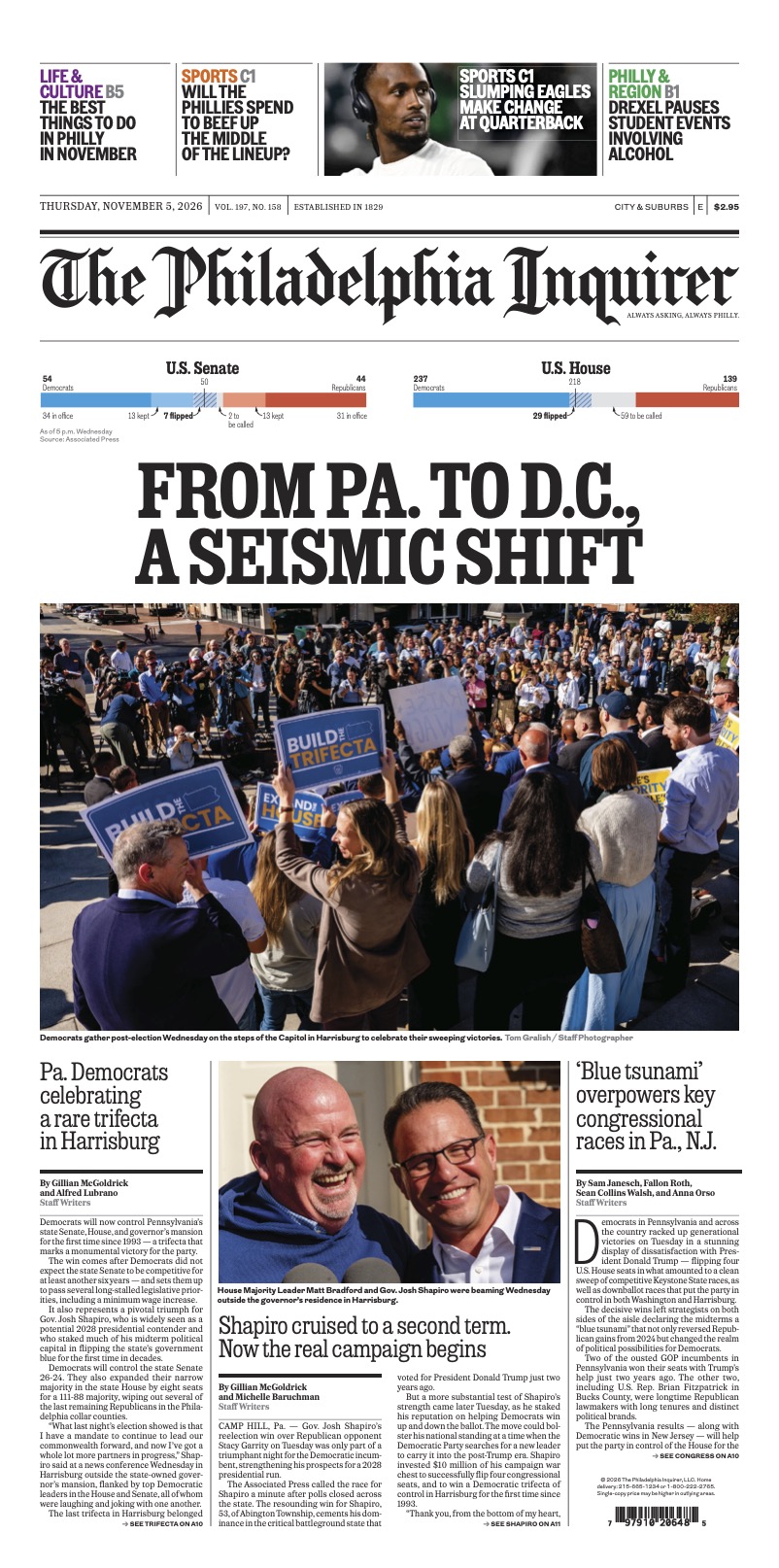
When patients walk into the exam room at Main Line HealthCare OB-GYN in Broomall, Randolph Heinzel says reactions range from gasps to chuckles. You see, it’s Eagles-themed — both in terms of the team and the literal bird.
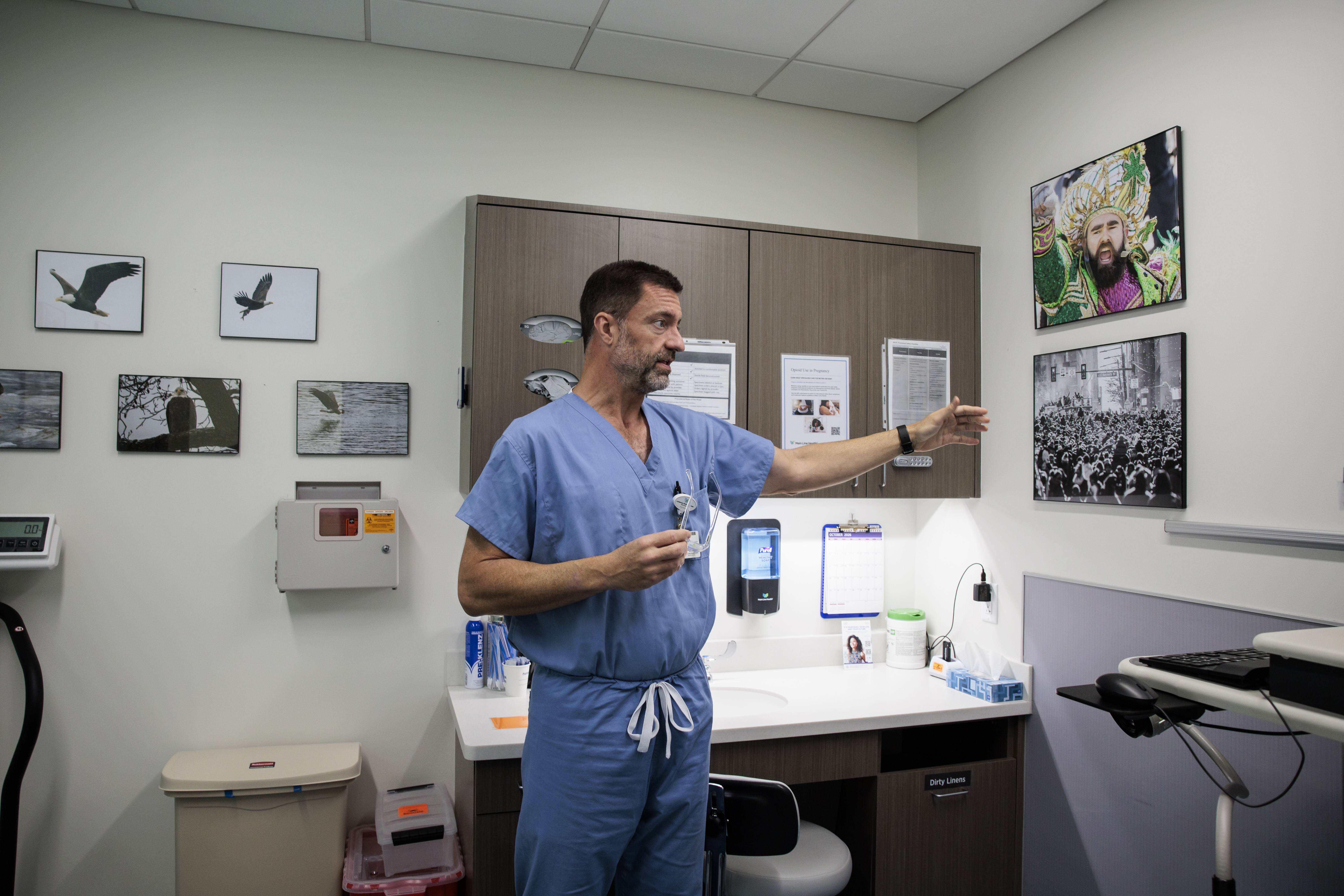
Amid the standard medical paraphernalia, like a scale, a sharps container, and computer monitors, visitors can find portraits of a 2018 victory parade crowd swarming Broad Street, a raptor taking flight, and, well, Jason Kelce, dressed in his Mummers best, his portrait placed behind the exam table and its stirrups.
The photos are all taken by Heinzel, a veteran obstetrician-gynecologist, who’s also a serious photographer — both inside and outside of work, shooting a mix of lifestyle photography and newborn baby portraits over the years.
It’s only fair his work has a place to be displayed. His exam rooms double as his galleries.
“I study it like I would medicine and understand camera specs,” he said. “In the last 10 to 12 years, it’s something I’ve gotten really passionate about.”
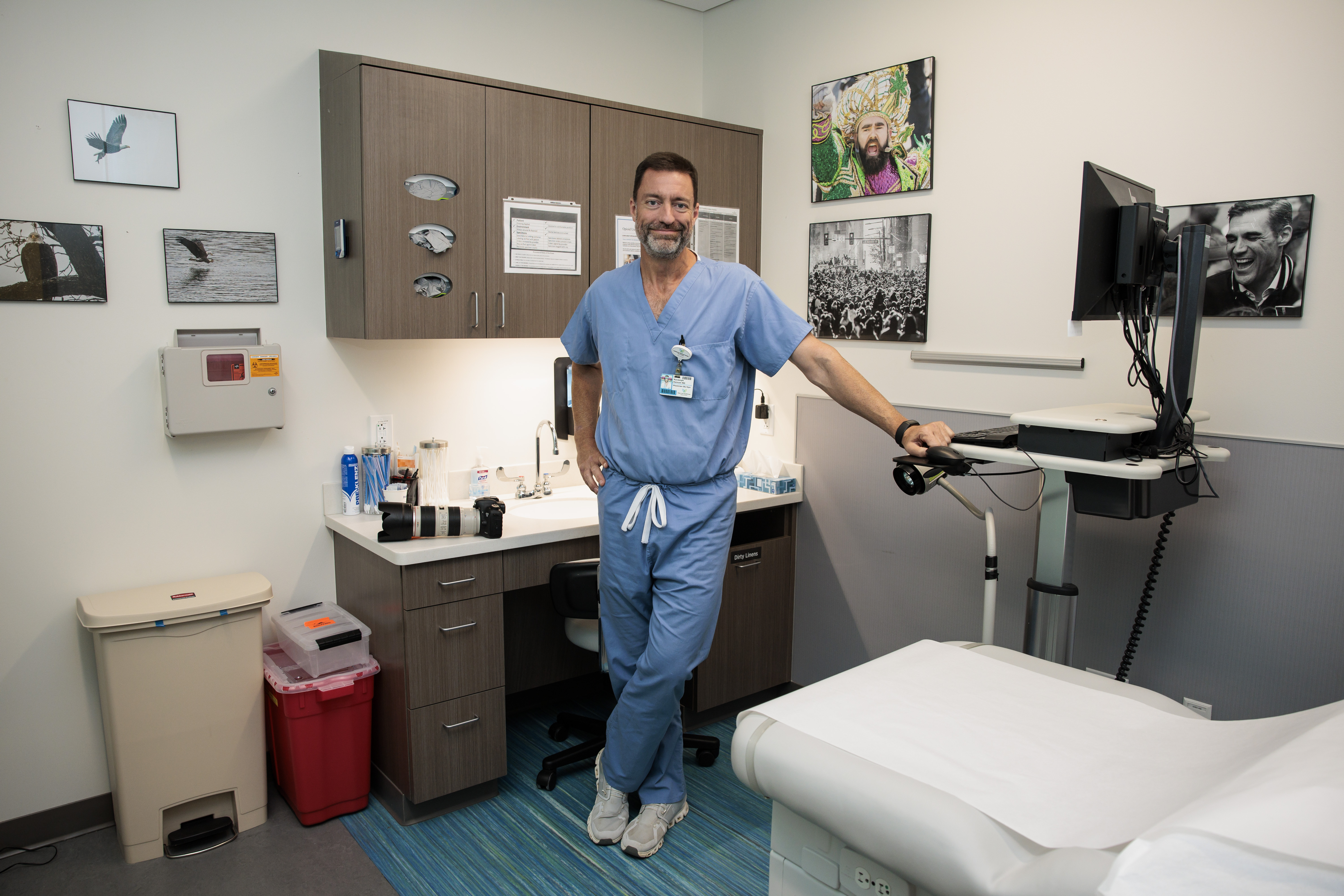
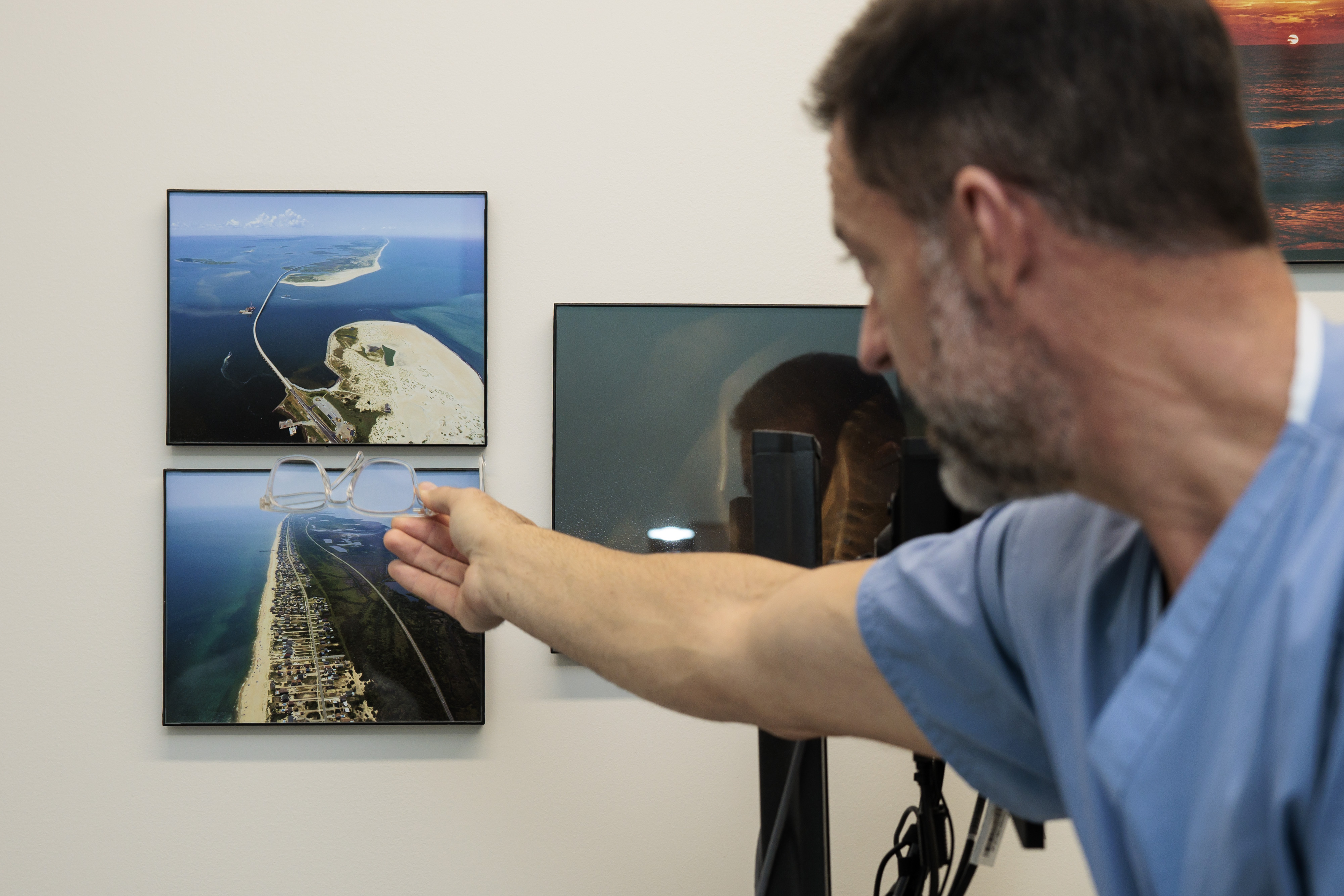
Randolph Heinzel talks about his Outer Banks images on display at Main Line HealthCare in Broomall.Monica Herndon / Staff Photographer
Each room has its own theme. There’s an Outer Banks room, a cityscape room, and, perhaps the most popular, an Eagles-themed room — both the team and the bird. All the photos were taken by Heinzel.
“The whole point of the room was to add a little personality and take away some of the cold, clinical aspects of what a medical exam room is,” he said. “Patients really do say that it helps to make the exam a little better. That’s the point.”
Heinzel said he’s had the exam rooms displaying his photography across two offices for about a decade.
Recently, the Eagles room in particular had a surge in popularity after a newer patient posted photos of it on Threads.
“Nothing says ‘spread your wings’ quite like an Eagles-themed gynecologist’s office,” wrote Kate LaValley, who transferred to Main Line Health after her former doctor’s office closed.
LaValley’s post was liked more than 4,000 times, with viewers voicing the desire to switch offices and tagging Kylie Kelce with glee because of her husband’s surprise cameo. (Kylie Kelce’s reps did not respond to a request for comment.)
Heinzel photographed Jason Kelce, dressed in a Mummers costume, in 2018 during the Eagles’ Super Bowl victory parade. Photos he took of Villanova’s 2016 NCAA national championship win are also displayed in the Eagles room.
View on Threads
“It was very comforting,” LaValley said, expressing contempt for standard exam rooms with old health diagrams. “As a lifelong Eagles fan, I was right at home,” she said, noting it took her mind off that day’s procedure.
Heinzel said patients will go as far as requesting the room they want. Unsurprisingly, the Eagles room tends to be the most popular. But sometimes patients are still surprised.
Heinzel recalled seeing a patient of over 20 years for a routine exam in the last year. “We were in the Eagles room and she looked around, looked at me, and said ‘Dr. Heinzel, you know I’m a Cowboys fan, right?’”
He added, “It was so funny that I’ve known her for so long, she had never been in that room before, and once she was, it brought that response out.”
Heinzel says obstetrics and photography work in tandem for him. And word travels fast among moms.
Randolph Heinzel talks about his Super Bowl victory parade photography.Monica Herndon / Staff Photographer
Before cell phone cameras became so common, Heinzel said, he recalled patients and their partners buying new cameras and bringing them into the delivery room to document their newborns. But often, the new parents were unfamiliar with the gear.
Heinzel got in the routine of, whenever possible, taking the camera from the parents and photographing the baby and their family. Eventually, he started bringing his own camera to make things easier.
“Just looking at my wall, I probably have at least 30 to 40 photos of babies that I’ve delivered and was able to photograph for my patients,” he said. “They’re shots of these kids that are like, 15 seconds old, and it’s just amazing to see their literal first breath of life and to know I was able to capture that for some of my patients.”
Predictably, Heinzel’s photography skills became a coveted perk within the community of local expecting parents. He said several patients moved practices in hopes of Heinzel delivering and photographing their babies.
“Obviously, medical things are my priority so I couldn’t photograph all deliveries,” he said. “But there were a lot of routine deliveries where, once the baby comes out, I don’t have any immediate needs, and I would take photos of my patients.”
In July, after 23 years of delivering babies, Heinzel stopped doing obstetrics, now focusing on gynecology office appointments. That means his years of photographing brand-new newborns are likely behind him.
Still, he credits his experiences for igniting both his career-related and creative passions.
“I’m happy that it resonates with my patients. My job as a doctor, other than giving good care, is I want to have good bedside manner,” he said. “It’s very important to me that I make my patients as comfortable as possible. So I’m happy the photos make their experience a little better.”
A Philadelphia pastor pleaded guilty in federal court this week to charges stemming from an alleged conspiracy with another pastor to create and share child pornography, U.S. Attorney David Metcalf said.
Bryan Jackson, 42, pleaded guilty Wednesday to conspiracy to manufacture child pornography, manufacture and attempted manufacture of child pornography, and receipt of child pornography, Metcalf said Thursday.
Jackson is scheduled to be sentenced in February, Metcalf said.
In June, Jackson, pastor at Garden of Prayer World’s Prayer Center in Strawberry Mansion, and Isaiah Banks, pastor of Second Pilgrim Baptist Church in Francisville, were charged by the Philadelphia District Attorney’s Office with allegedly grooming and sexually exploiting two teenage boys.
The U.S. Attorney’s Office soon took over the case.
Robert C. Keller, Jackson’s lawyer, said his client is “quite remorseful for his conduct” and “takes full responsibility.”
Jackson is still a member of the church, but took a leave of absence from his role as pastor, Keller said.
A representative for the Garden of Prayer World’s Prayer Center could not be reached for comment.
The federal case against Banks is still pending. His federal defender could not be reached for comment.
According to the plea memorandum filed this week by the U.S. Attorney’s Office, the investigation began in April when the Philadelphia Department of Human Services informed Philadelphia police that a 15-year-old was allegedly solicited by Banks to send masturbation videos.
Banks allegedly told the teen that older girls would be willing to pay for the videos. The teen told investigators that he sent sexually explicit material to a phone number he believed was for an older girl.
Banks and Jackson allegedly conspired to share the photos and videos with each other.
Authorities seized Jackson’s iPhone and found he had two cellular lines on the phone, which he used to receive and send child pornography, the memorandum said. On Banks’ phone, which also was seized, Jackson’s second line was labeled “Bryan 2.”
“Both of Jackson’s phone lines are paid/registered to the church, Garden of Prayer World Prayer Center, where he worked as a pastor,” the memo said.
On June 19, Jackson was arrested by Philadelphia police. During an interview with detectives, Jackson admitted to receiving child pornography from the teen boy using his second phone line, the plea memo said.
Jackson told detectives that he shared the images and videos with Banks. Jackson also admitted to receiving videos from a second teen, the memo said.
Carprice Williams — the 34-year-old foster mother and Philadelphia public schoolteacher charged Thursday with killing a 10-year-old girl in her care — abused another child so severely five years ago that state officials recommended she never again be a foster parent, according to a lawsuit settled out of court this year.
In the earlier incident, a 4-year-old girl who lived in Williams’ West Philadelphia home for six months was hospitalized and nearly died from bleeding to her brain and severe malnourishment, court records show. That was in 2021, four years before Malayshia Allford was placed in her care.
Law enforcement sources say Williams abused Malayshia before killing her last week and leaving her body in the trunk of a car later found in Lindenwold. Her death marked a tragic end to a 10-day search that drew dozens of police officers, FBI agents, and community members desperate to find the child in a case that has drawn concern about the city’s child welfare system.
Now, newly uncovered court records raise questions about why Malayshia was ever in Williams’ care in the first place.
“We are trying to understand how this could have happened,” said Nadeem Bezar, a lawyer with Kline & Specter, who is representing Malayshia’s estate.
Malayshia’s care had been overseen by Catholic Community Services, a social work agency contracted by the city’s child welfare agency, according to a spokesperson for the state.
Bezar, in an interview Friday, said he’d been investigating the circumstances of Malayshia’s care before her death after the state Department of Human Services found that she had been physically and sexually abused in another foster home in Philadelphia. It was that earlier abuse, he said, that led her to be placed in Williams’ care.
Officials with Philadelphia’s Department of Human Services declined to comment Friday.
A community liaison for Catholic Community Services did not return messages seeking comment.
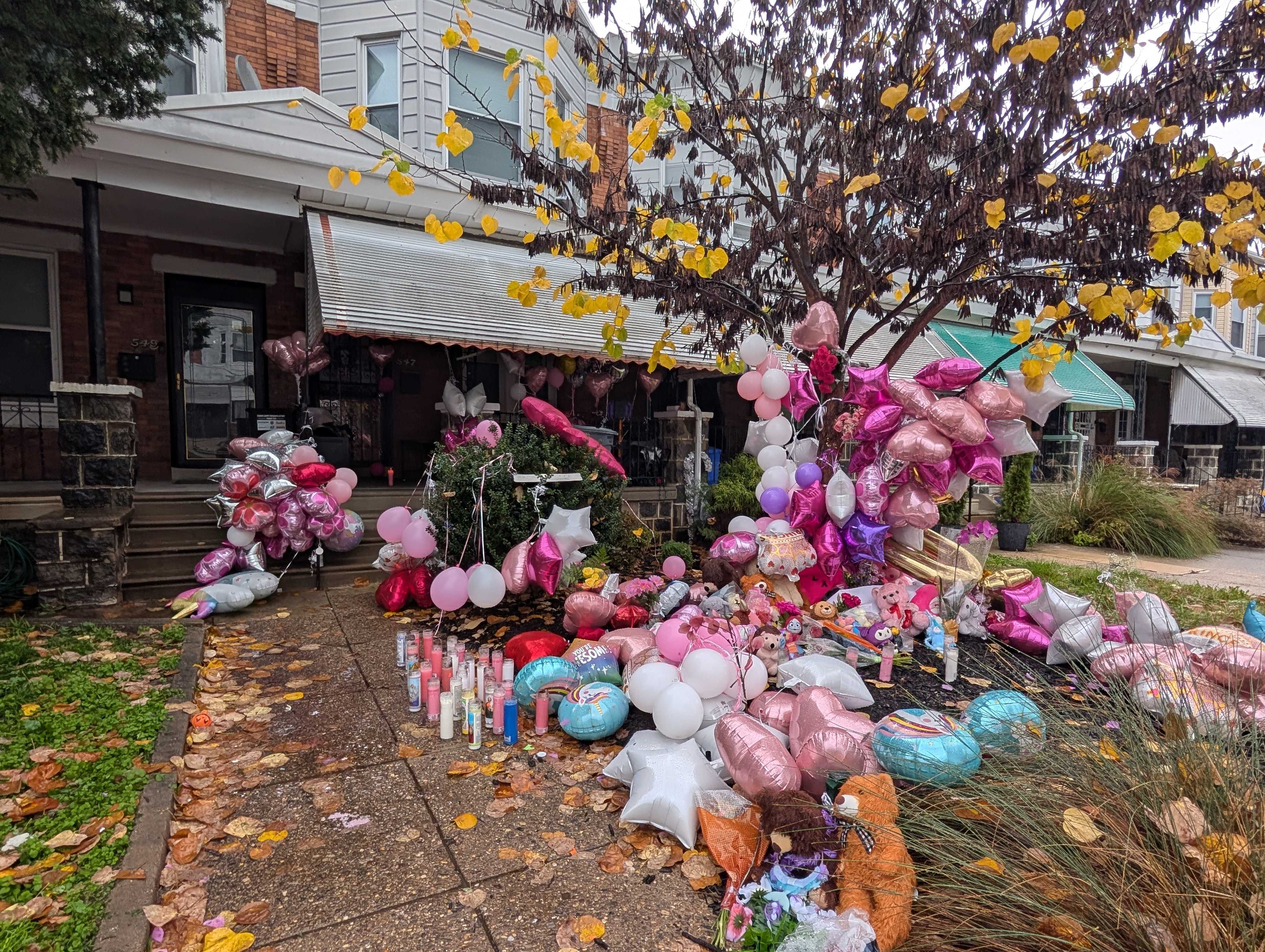
Mourners placed candles, balloons, and stuffed animals outside 547 North Simpson Street, where Malayshia Allford lived with her foster mother Carprice Williams. Malayshia, 10, was found dead this week and Williams was charged with her murder.Jesse Bunch
Williams had a documented history of problems with children, according to the lawsuit Bezar’s firm filed in 2024 against Tabor Children’s Services, another social work group contracted by the city. But Williams appealed those findings and the indicated report of child abuse was expunged, a state official said late Friday.
Filings in the case detailed the treatment of two sisters who had been placed in a foster home at 547 N. Simpson St., Williams’ address. The suit, filed on behalf of the younger girl, who was 4 at the time of the abuse, does not name Williams, but Bezar confirmed she was the foster mother involved.
Attempts to reach Tabor Children’s Services were unsuccessful late Friday. In court filings, the agency said the harm that befell the girl was not its fault, though it paid $2 million to settle the matter.
The then-4-year-old and her sister were placed in Williams’ care in June 2020, the suit says.
Then, in January 2021, Williams brought the 4-year-old to the Children’s Hospital of Philadelphia, saying she heard a loud noise and found the girl collapsed on the floor upstairs.
The treating physician diagnosed the girl with malnourishment, a traumatic brain injury, scrapes on her face, and marks indicative of being struck with an object.
The doctor deemed the incident a “near fatality,” a certification that triggers state and city officials to review the matter.
The girl later said the foster mother had grabbed her braids and slammed her head into the kitchen floor, beat her with a belt, and smacked her in the face until her mouth bled, according to the lawsuit. The complaint also said Williams forced the girl to squat against a wall for long periods of time, and said that the foster mother had tried to prevent the girl’s sibling from revealing the abuse.
Pennsylvania’s Department of Human Services later found the foster mother had abused the girl and her sibling, the lawsuit said. A panel of city and state officials reviewed the case, according to the complaint, and recommended that Williams “never be used as a foster parent for other children in the future.”
Both Catholic Social Services and Tabor were operating as Community Umbrella Agencies (CUA), contracted by Philadelphia’s child welfare agency to ensure the safety of children in care.
Cathleen Palm, who leads the advocacy group Center for Children’s Justice, said that if Malayshia was placed in the home of a woman with a documented history of child abuse, that raised questions about DHS’ safeguards.
“If [the near-fatality review panel] walked away with a recommendation that she should never be a foster parent, it’s hard to understand how she then was a foster parent again,” she said.
She also questioned whether any of the information was shared with the Philadelphia School District, where Williams worked as a teacher.
A school district spokesperson declined to comment on personnel matters, but said the district was heartbroken by Malayshia’s death.
Malayshia was placed with Williams last summer, a year after the lawsuit was filed. According to a law enforcement source who spoke on the condition of anonymity to discuss an ongoing investigation, she was the only foster child in the home, which she shared with Williams’ 4-year-old biological son.
On Oct. 26, Williams reported Malayshia missing. She gave her relatives conflicting accounts about the child’s last known whereabouts, officials said, and police later found the girl had not attended school in the days before. Her body was found 10 days later, in the trunk of a car in Lindenwold on Wednesday night.
Police recovered video that appeared to show that, in the early morning hours of Oct. 26, a man carried Malayshia’s body out of the back of Williams’ house in a large bag that had been used to hold a Christmas tree, a law enforcement source said.
Williams has been charged with murder, abuse of a corpse, endangering the welfare of children, and related crimes.
The Defender Association of Philadelphia, which is representing Williams, declined to comment Friday.
Pink and purple balloons, teddy bears, and prayer candles covered the lawn outside the West Philadelphia rowhouse on Friday morning.
Mourners arrived in cars, quickly placing a token of remembrance outside the North Simpson Street house before speeding off. Others stood in the rain, clutching umbrellas and gazing on in disbelief.
“The Department of Human Services need to take accountability,” said Daneika Overby, one of Malayshia’s relatives. “What happened here was a tragedy.”
Overby’s voice swelled with frustration as she listed the family members who would have been willing to take Malayshia in and keep her safe. “There’s other people in that family. That is a loving family.”
Mayor Cherelle L. Parker, at an unrelated news conference Friday, declined to comment on the details of the case, but said Malayshia’s death had “shaken our city at its core.”
Mayor Cherelle L. Parker during a moment of silence in memory of Malayshia Allford before a news conference outside of the Sturgis Recreation Center in Philadelphia on Friday, November 6, 2026.Elizabeth Robertson / Staff Photographer
Gabriel Li, the secretary-treasurer of AFSCME Local 2187 DC47, which represents Philadelphia DHS workers, said there were many unanswered questions about the supervision that had been provided. “You’re supposed to be seeing a 10-year-old at minimum once a month, so how do you not know what’s going on?”
Li said he was the city caseworker who removed Malayshia from her parents’ home in 2021. He said the fact that she was in foster care for so many years is another sign of system dysfunction.
City Councilmember Nina Ahmad, who has been working on a ballot measure to create a child-welfare oversight board, said the case raises questions about the city’s patchwork of CUA services.
“We need to look at this whole CUA system and how it’s operating,” she said. “We need a lot more oversight.”
Correction: This story has been updated to correct the spelling of Malayshia Allford’s last name after law enforcement reports included an incorrect spelling.
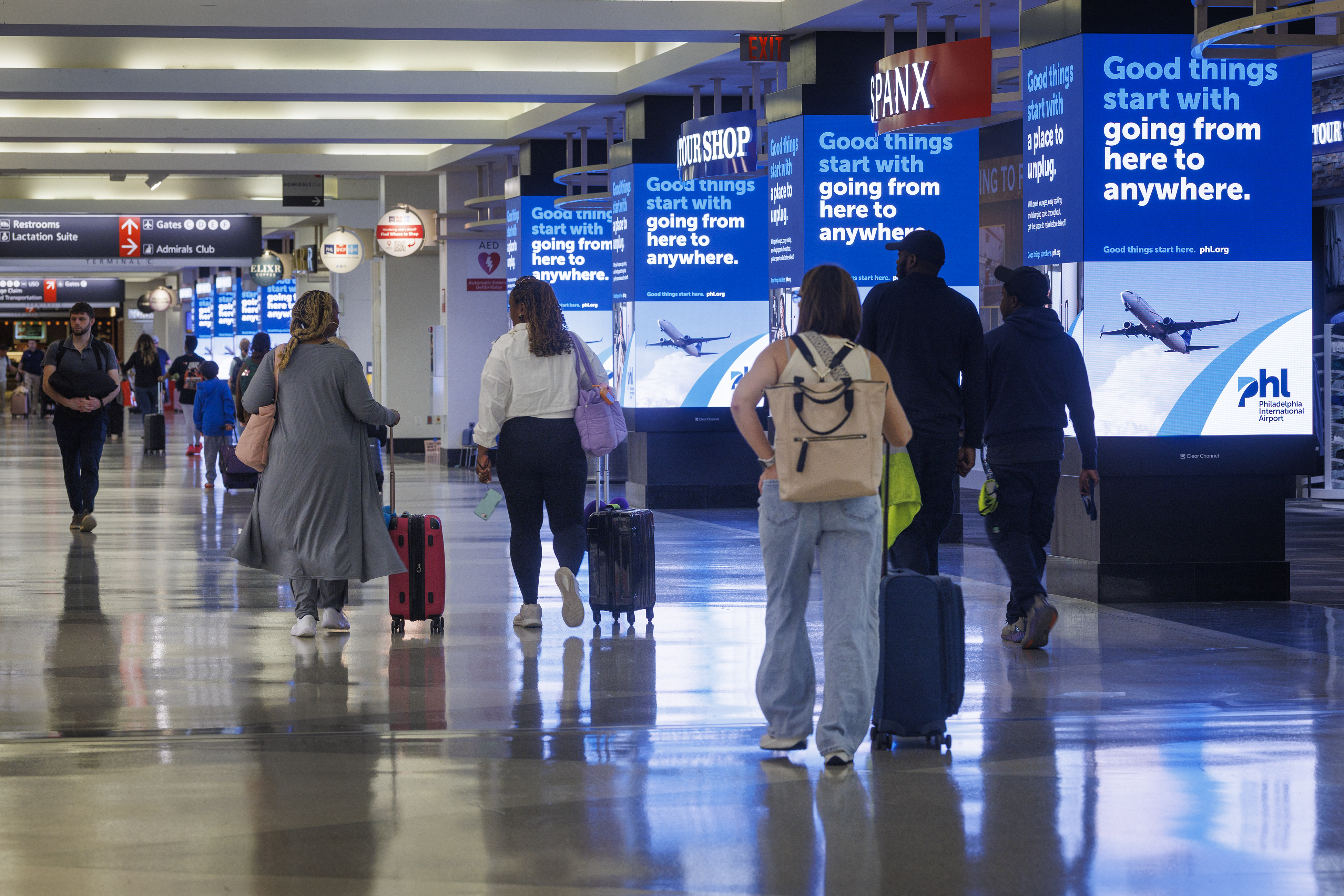
Local advocacy groups and political leaders are poised to launch a major campaign to try to stop ICE arrests at Philadelphia International Airport.
Dozens of immigrant travelers have been taken into custody there in the last five months, they say, and an unknown number of people have been handcuffed at airports in other cities while attempting to fly home to Philadelphia.
Organizers believe the South Philadelphia airport has become one of the riskiest places in the region for noncitizens, where work authorizations, pending petitions for relief, and other types of immigration permissions have proven no barrier against arrest.
The leaders plan a formal Thursday announcement of a public-awareness campaign ― several City Council members are expected to attend ― that they said could escalate into exerting financial pressure upon companies that do business at the airport.
“The Philadelphia airport is our airport,” said one campaign leader, Aurora Muñoz, the organizing manager of the Pennsylvania chapter of the National Domestic Workers Alliance. “It’s horrible, the kinds of freedoms that people are losing, so that’s why we’re wanting to be in this fight.”
The airport is owned and operated by the city, which recently passed extensive “ICE Out” legislation to try to limit agency activities within Philadelphia. Sam Scavuzzo, chief of staff for the city law department, said in an earlier statement, however, that “federal law enforcement access to particular areas of the airport is governed by federal law.”
Campaign organizers say at least 50 immigrant travelers, young and old, mostly female, some the parents of young children, have been arrested at the airport since July.
Those numbers could actually be higher, as the known cases represent only people who reached out to lawyers or community organizations. Immigrant travelers without those connections or resources may simply have disappeared into detention.
Some of the incidents involving Philadelphia-area residents include:
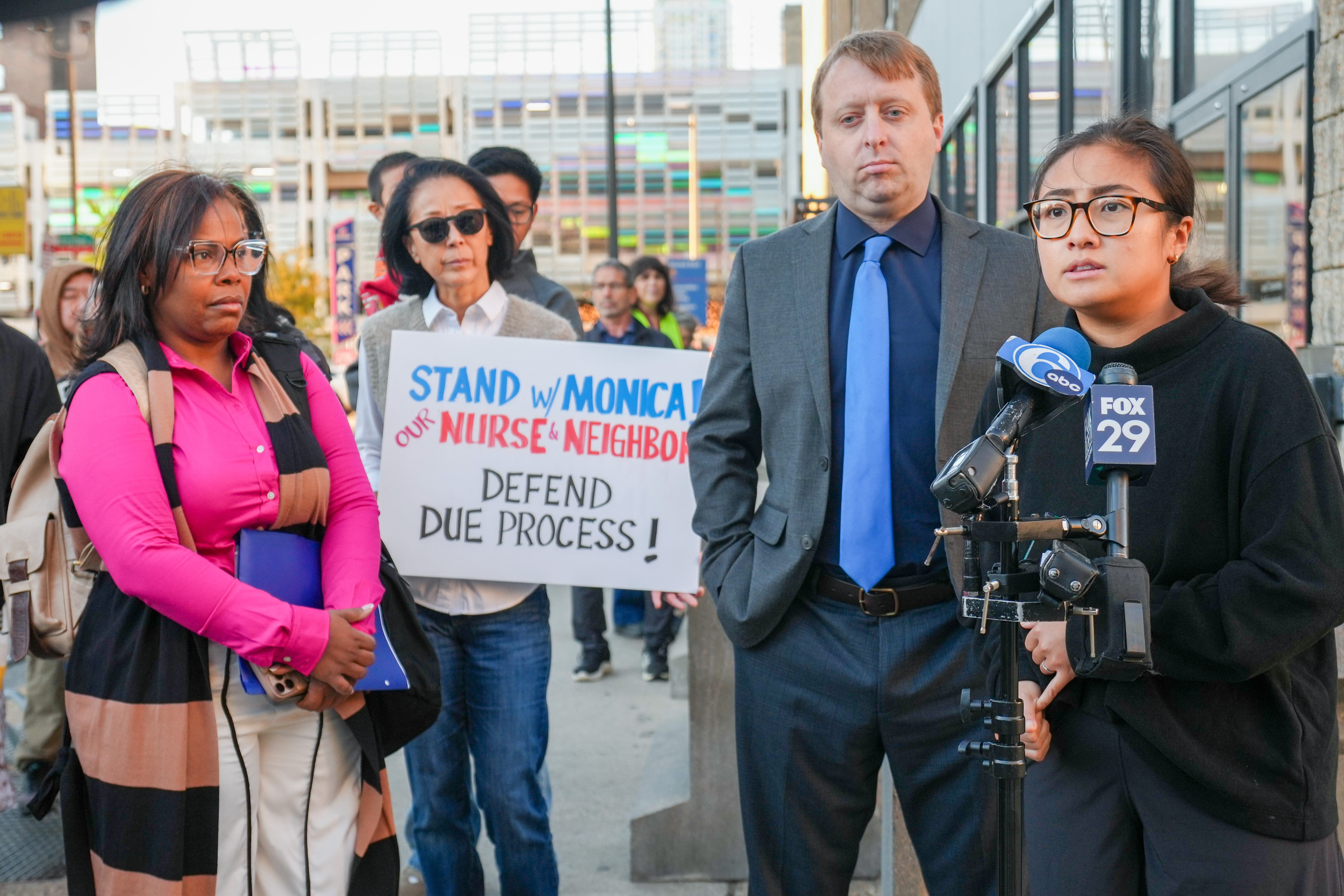
On Sept. 15, Delaware County nurse Monica Ryadi was arrested when she stepped off a plane in Los Angeles, handcuffed in an ICE operation that she suspects began in Philadelphia. A stranger had approached her family in the boarding area, but didn’t get on the flight, Ryadi said. The 30-year-old hospital nurse, who with her husband was taking their 3-year-old son to Disneyland, has legal permission to live and work in the United States. A federal magistrate judge subsequently ordered her freed from ICE detention.
On Sept. 2, a Philadelphia man who thought he was waiting for approval of a green card was arrested outside the San Jose airport when he arrived to fly home from a business trip. Michael “Sandy” Sims, 42, an entertainment-lighting industry veteran, was deported to London after being held in detention for about a month. His wife, a U.S. citizen, unsuccessfully fought to keep her husband from being removed.
On July 11, a South Philadelphia babysitter was arrested at the Philadelphia airport as she prepared to fly to Kansas City to see the Argentina national soccer team play in the World Cup. Iliana Lick, 30, originally from Buenos Aires, was held in detention for about a month before a judge facilitated her release by setting bond. Homeland Security said Lick overstayed her visa, and that her work authorization and pending application for immigration relief did not confer legal status.
Delaware County nurse Monica Ryadi, at microphones, speaks to supporters outside of ICE headquarters at 8th and Race Streets last month. With her is immigration attorney Eric Rosenfeld. Ryadi was arrested by ICE on her way to take her child to Disneyland.Jessica Griffin / Staff Photographer
Asked about the airport campaign, a spokesperson for Homeland Security said on Friday that obstructing law enforcement is a federal crime and assaulting law enforcement is a felony offense.
“Our message remains: ICE is NOT slowing down,” the agency said in a written statement. “Enforcing federal immigration law is the responsibility of federal law enforcement. This administration does not ignore the rule of law and DHS will not pick and choose which laws we enforce.”
DHS said it had “reversed the horrendous Biden-era policy that allowed aliens in our country illegally to jet around our country. Under President Trump, DHS will no longer tolerate this. This administration is working diligently to ensure that aliens in our country illegally can no longer fly unless it is out of our country to self-deport.”
Philadelphia airport officials said in a statement Friday evening that they were “aware of the concerns related to immigration enforcement activity by federal agencies at Philadelphia International Airport,” and that “the safety and security of our airport and the PHL Airport community” was their top priority.
“PHL is a public-use airport subject to federal regulation, and federal agents have broad access to airport property,” including pre- and post-security areas in the terminals, the customs offices and screening area, the airfield, and public spaces like parking ramps and lots, the statement said.
Airport officials cannot interfere with law enforcement operations by federal agencies, including ICE, the statement said. They do not receive advance notice of immigration-related actions and cannot “confirm cases, incidents, or speculation about immigration enforcement activities.”
The new ICE OUT of PHL Airport Coalition consists of 50-some leaders and organizations, including labor and cultural groups, among them the Pennsylvania Immigration Coalition, Philadelphia Council AFL-CIO, the Worri Center, Puentes de Salud, the Coalition of African Communities, Amistad Law Project, Women Against Abuse, UNITE HERE Local 274, and the office of Councilmember Kendra Brooks.
They plan to hold a news conference at 3:30 p.m. Thursday at the airport’s Terminal E Departures.
“We want the general public to be aware that this is happening at the airport, so they can keep their community safe, their neighbors safe,” said Elena Emelchin Brunner, the immigration justice organizer at Asian Americans United. “We’re very open to working with airport leadership to see if and what they can do.”
The coalition is calling for specific actions.
They want airport leadership to ban ICE from entering airport property without a judicial warrant, to prohibit airport employees from assisting ICE, and to bar ICE from using city-owned airport spaces to stage arrests.
They want the airport to publish regular public reports documenting ICE activity, including the number of people detained and the airlines they intended to fly.
They want airlines that use the Philadelphia airport to bar ICE agents from going to flight gates, and to not share passenger information with the agency. They’re also asking airport concession companies to not discipline workers when they miss work due to fear of ICE activity.
The campaign comes as a response to President Donald Trump’s push for mass deportations ― including the targeting of immigrant travelers at airports around the country.
Immigrants who long thought they were safe, and who had previously been able to fly without incident, now are at risk, in some cases finding themselves suddenly surrounded by agents and shipped to far-off detention centers in places like New Mexico.
Airports rank among the nation’s most sensitive public spaces, traversed by millions of people that include U.S. citizens, noncitizens, and mixed-status families, California immigration lawyer Andrew Neitor wrote for the American Immigration Lawyers Association. The introduction of ICE agents, he said, blurs critical lines between airport security and immigration enforcement, around what authority is being exercised and by whom, and over the legal protections due to people who may be arrested.
Part of what enables the surge of airport arrests is that federal agencies have begun sharing information about travelers in a way that wasn’t done before.
Since May 2025 the Trump administration has used information that passengers provide to the Transportation Security Administration as a means to further immigration enforcement, according to documents obtained by American Oversight, a government watchdog group.
President Donald Trump speaks to reporters before boarding Air Force One at Joint Base Andrews in Maryland on Oct. 28, 2026.ALEX KENT
Those records outline a formal data-sharing agreement between TSA and U.S. Immigration and Customs Enforcement. The agreement said sharing the data would enhance national security, transportation safety, and immigration management, but civil liberties groups have said it breaches public trust and turns airports into immigrant checkpoints.
“We are really focusing on public awareness because we don’t want this happening in silence,” Emelchin Brunner said. “It is kind of like an invisible presence in Philadelphia, regarding ICE and their behavior, including at the airport. … We want to make sure that everyone feels safe connecting with their families.”
Councilmember JefferyYoung Jr.’s bill to reduce fines for speeding violations caught by automated enforcement cameras has alarmed safety advocates who say it would weaken a program that saves lives.
Philadelphia roadways saw a 26% one-year drop in crash fatalities in 2025, according to the city’s annual Vision Zero report, released Monday. Officials credited increased use of automated speed-enforcement cameras.
“Consistent, visible enforcement changes behavior,” Lana Harshaw, executive director of the Bicycle Coalition of Greater Philadelphia, said in an interview. “Reducing the fines just goes against that goal.”
Young said in an interview that he supports heightened safety enforcement on North Broad Street, which runs through the heart of his 5th District, but introduced the bill “to make sure that the law is fair and equitable.”
Speeding violations fell 67% on Broad Street between November 2025, when cameras began operating, and March 30, according to the Philadelphia Parking Authority, which runs the program.
Traffic fatalities have fallen by 40% on Roosevelt Boulevard since automated speed-enforcement cameras were installed there in 2020.
It is too early to see the cameras’effect on crashes, injuries, and deaths on Broad Street because they are too new. Crash statistics, which come from the Pennsylvania Department of Transportation, lag by a year.
But the experience on Roosevelt Boulevard shows “this is a successful public health effort, not a money grab,” said Corinne Lagermasini, executive director of 5th Square Advocacy.
“We worry that the costs will give permission” for elected officials to “wind down the program,” she said.
Harshaw said, “A monetary fine is minimal compared to a life lost because of a driver’s momentary decision.”
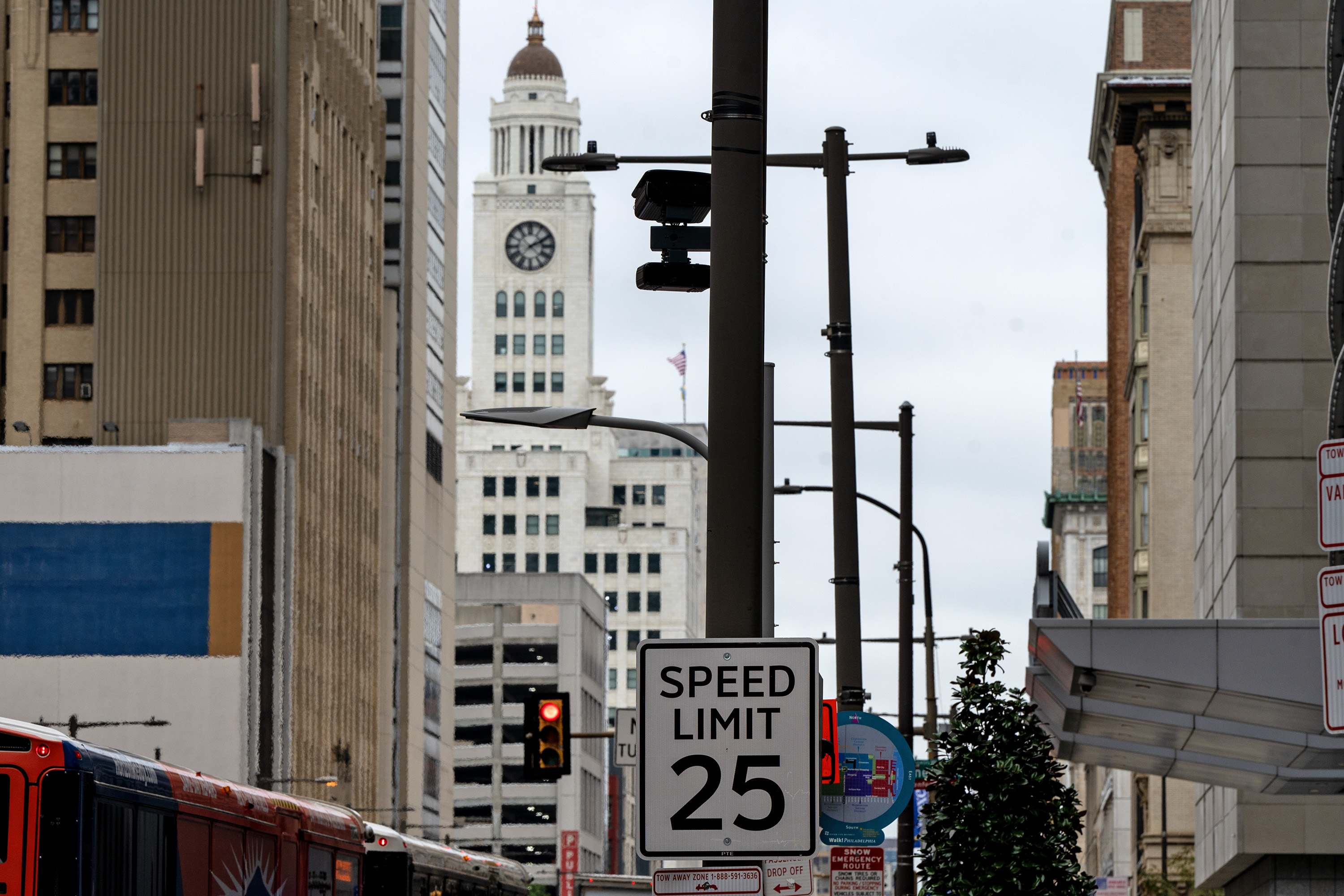
Speed cameras in Philadelphia issue violations starting at 11 miles over the speed limit, which is mostly 25 mph on Broad Street, except for the area around the sports stadiums on South Broad Street.
The fine is now $100 for traveling up to 20 mph over the limit in an area covered by speed cameras, $125 for going up to 29 mph over, and $150 for exceeding the speed limit by 30 mph or more.
Young’s legislation would change the fines to $50, $75, and $125, respectively.
No hearing date has been set for the legislation. Young said it may be amended to apply only to areas in the 5th and 8th Districts close to North Broad in response to concerns from colleagues.
Young said he believes that the fact of a fine itself is a deterrent to speeders, not the amount of the penalty.
New York City has a flat $50 fine for speeding violations issued by camera, he said, and still has reported a 94% reduction in fatal crashes. The NYC program operates only in school zones citywide.
“I don’t think people are going to say, ‘You know what, the fee is reduced, so I’m going to speed now because I can afford to speed,’” Young said. “Drivers don’t think like that.”
Correction: A previous version of this story misstated the former speed limit on North Broad Street. The error has been corrected.