Category: Philadelphia News

  • Some Philly teachers say they’re pressured to pass students who rarely come to class or do work

    Some Philly teachers say they’re pressured to pass students who rarely come to class or do work

    Philadelphia School District students receive report cards on Thursday, the last day of the 2025-26 school year.

    But it’s an open secret that in many schools, it is nearly impossible to fail a student, according to interviews with two dozen teachers from schools across the city who say the district is making them give passing grades.

    Many teachers said they passed students who did little or no work, did not understand concepts being taught, or did not show up to class much. Most of the teachers interviewed requested anonymity for fear of reprisal.

    “There’s a bunch of kids in my class that have F’s in reading, and I’m probably going to pass them — I’ll bump it up to a D and call it a day,” one middle-grades teacher at a K-8 school said. “I don’t know of anyone who’s been able to keep anyone back, and we’re just setting kids up for failure.”

    On paper, Philadelphia students can fail courses, or be retained in a grade, so long as they are offered appropriate interventions and supports. Officially, the district, according to its policy, “is committed to excellence in student accomplishments and recognizes the contribution of a district wide promotion policy moving all schools to models of achievement.”

    But many teachers said that they were discouraged or forbidden by their principals from flunking students, or that they have given out failing grades that were overridden. Others said failing students was permitted if justified, but the administrative burden to rationalize failure, even for students who did not show up to school, is onerous or impossible.

    All of the teachers who spoke with The Inquirer said they fear for the long-term implications for students who are passed along without the skills they need to advance — especially in a city where so many students cope with the effects of poverty and trauma and a majority of students do not meet grade-level standards on state testing.

    Monique Braxton, district spokesperson, said the district’s policies “emphasize that student grades are meant to accurately reflect their academic performance and progress toward learning standards. Schools are required to provide and document appropriate interventions and progress monitoring when students encounter academic challenges. The district remains steadfast in its commitment to maintaining high expectations for students while ensuring they receive the necessary support to achieve success.”

    When did it start?

    The K-8 teacher, a veteran of district schools for three decades, said that at the beginning of her career, it was easier to give F’s or retain students who did not meet the learning standards. But, the teacher said, there has been a “subtle shift” since the early 2000s, the era of the federal No Child Left Behind Act.

    “When the pressure was on the schools to show promotions and graduation rates, and the district was so focused on showing data, it’s shifted grading, and now it’s a joke,” the teacher said.

    Philadelphia changed its grading policy in 2017, setting a 50 out of 100 as teachers’ grading floor and making it easier to pass. The minimum score for a D, once a 64, was changed to a 60.

    The rationale for the change, leaders said at the time, was standardizing grading procedures and preventing students from giving up if they perform poorly early in the year. Detractors of the policy shift said at the time they feared it would water down standards.

    The K-8 teacher, and others interviewed, emphasized that most Philadelphia students are bright and capable. But those who do not try because of complicated home lives or other reasons can skate by, they said.

    “We have a kid who’s done no work all year, and we’ve done everything, and they’re just going to push him forward,” the K-8 teacher said.

    The teacher also works in the service industry, and said the effects of passing students who have not earned passing grades is evident in that workplace.

    “We see people who don’t come to work on time, they can’t take orders, they can’t use a computer or figure things out, and this is why,” she said. “They’re not being held to standards for all their years in schools.”

    ‘Is there anything you can do to bump these up?’

    A second teacher said he has failed students who did not earn passing grades, though he has more latitude because he does not teach a major subject. But he absolutely understands why some teachers give 60s that should be F’s: With full course loads, teachers do not have time to document a pattern of contacting guardians, giving extra time for work, breaking down assignments, allowing extra credit, or extending deadlines.

    “Who has time to do that when you have 30 other kids?” the teacher said. “And the system is inherently causing laziness from teachers also, to just shut up, pass them, and you don’t get grief.”

    There is a ripple effect, he said.

    “I feel sorry for the good kids, the kids who struggle, do their work, and get a C. So I give them a B, a low A. They try,” he said.

    The district has posted academic improvement over the last several years. But district students’ academic achievement as measured by state tests remains low, with 33% of students meeting standards in reading and 25% in math.

    “The PSSA scores don’t match the grades kids are getting,” the second teacher said.

    The district’s four-year graduation rate has also risen. In 2024-25, it was up to 84%, from 69% in 2014-15.

    Grade inflation comes at the end of every year, said a third teacher, who works at a district high school.

    “There’s a push right after grades are due,” said the third teacher, who noted that administrators will say, “‘Is there anything you can do to bump these up?’”

    Grades are not changed for every student, but in some cases, administrators will “push [students] along because they want to see them graduate or pass,” the third teacher said. “There’s all this pressure from the district to increase the graduation rate — there are so many layers to it. I know that it happens in a lot of places. It’s not just our school. But this year, it was huge margins and huge numbers.”

    Administrators sometimes change the grades themselves, the third teacher said.

    In one instance, a student’s grade shot up with no explanation, the teacher said. “This student had a 50 yesterday. How did he have an 82 today? This was a student who didn’t turn in any additional work, and missed 63 of 84 classes,” the third teacher said.

    The third teacher said another student who was moved on without doing the work admitted it.

    “Even he was like, ‘Yeah, I didn’t deserve to pass, I don’t know how that happened. But I’m excited to graduate,’” the teacher said.

    The third teacher underscored that while the practice could be making the district’s numbers look better, it is not serving students.

    After graduation and not being held to standards, the teacher said, one former student “lost the first three jobs he had because he didn’t go to them. He had to learn that lesson in a much harder, more adult way, and he could have learned that in high school. I worry that when kids graduate and get into the workforce, it will impact the way they approach the goals they set for themselves and how they try to achieve those goals.”

    ‘The gap was huge’

    A fourth teacher who has worked in multiple types of schools in Philadelphia said the practice is not limited to the district.

    She most recently taught at a city charter and said some of her middle-grades students were at kindergarten reading and math levels.

    “The gap was huge,” the fourth teacher said. “The school’s explanation is that there’s a school-to-prison pipeline, and the older students are, the less likely they are to graduate. But they’re not meeting standards. The gaps are huge. It was very shocking to me how they would just pass the kids. I’m a parent, and I want my kids to be prepared properly.”

    A fifth teacher said that at her school, it is rare for students to be pushed along without doing work.

    “I can’t in good conscience pass anybody who doesn’t show up,” she said. “I think a lot of teachers around me also can do that. But I have also seen that teachers — maybe at a particular building, maybe those who work for a particular administrator — who say, ‘You know what, I’m not going to fight it.’”

    What is definitely not rare, the fifth teacher said, is giving students “a lot of different lifelines, a lot of different ways for them to pass,” whether it’s in-school credit recovery or summer school, “even when their trends of behavior and attendance and performance and engagement in the class suggest that they needed more time with that content.”

    A sixth teacher said his principal permits failure and retention, in rare cases, with significant documentation. There is some pressure to not fail students, but when needed, the teacher has been able to produce adequate paperwork to show failure was the last resort.

    But when deciding whether to pass or push through a student, “I ask myself whether holding them an extra year will make a significant difference,” the teacher said. One of the teacher’s students is bright but unmotivated and rarely completes work.

    “I don’t think that’s going to change with an extra year in the same grade, and therefore, I decided to pass him,” he said.

    Does he worry about the implications for the district writ large?

    “Honestly, I do think about it sometimes, but I’m just not sure there’s a right answer with the current situation,” the sixth teacher said. “I’m no policy expert, but I think for it to make sense on a larger scale we’d need significant cultural shift and policy changes.”

  • It may feel like 100 degrees in Philly on Thursday and Friday. The early heat could pay off.

    It may feel like 100 degrees in Philly on Thursday and Friday. The early heat could pay off.

    With the summer solstice still two weekends away, already the temperature has reached 90 degrees or higher in Philly nine times.

    And while the sequence of 90s has been extraordinarily premature, the early experience may come in handy this week as the region could experience triple-digit heat indexes.

    “It will definitely feel different,” said Ray Martin, lead meteorologist with the National Weather Service office in Mount Holly, as the humidity and dew point, the measure of absolute moisture in the air, reach their highest levels of the year to date.

    Any 100-plus heat indexes may present challenges to some older residents, and those with heart and other health issues. The weather service Wednesday morning issued an advisory for indexes of up to 103 Thursday and Friday.

    But the heat the region has experienced, starting in mid-April, could be viewed as a sort of spring training for the discomforts to come, said Samuel Eldrich, director of the Temple Health-Chestnut Hill Hospital Emergency Department.

    “It’s all about adaptability,” he said. And it’s not just physiological, he said.

    In addition, a juicier atmosphere may squeeze out some much-needed rain.

    The regional forecast for the next several days

    Showers are possible Wednesday morning and late in the day, Martin said, with highs in the mid-80s. However, it might not get cooler than 70 degrees early Thursday, a sign that mugginess is on the increase.

    A moist air mass inhibits daytime heating from escaping into space, and the heat and humidity build for real on Thursday.

    “It’s not going to feel nice out there,” said Tom Kines, senior meteorologist with AccuWeather Inc.

    Shower chances are in the forecast Wednesday through Friday, and at times the atmosphere will be highly energized, Martin said. The Storm Prediction Center in Norman, Okla., has outside chances for severe thunderstorms for the entire region Thursday and Friday. Isolated flooding downpours are not out of the question, Martin said.

    The heat and storm threats should back down some by the weekend, when Philadelphia hosts the World Cup match between Ecuador and the Ivory Coast, with a high about 90, the air less muggy, and rain looking unlikely.

    How hot has it been in Philly so far?

    Philly has logged four daily highs of 90 degrees or more so far this month, and nine since April — including four record highs — almost a third of the average for an entire year.

    Whether that is a harbinger of a punitive summer is beyond the realm of reliable forecasting, but the early heat is likely to have some positive effects, Eldrich said.

    Far more dangerous are hot spells that come abruptly after the weather has been relatively cool and comfortable for a period, he said.

    Early heat, which typically is short-lived, can make a difference in terms of how we respond to subsequent hot spells. “You’re more accustomed” to the heat, Eldrich said. “You’ve adapted to the lifestyle. You sweat more quickly, more easily.”

    People are more likely to stay inside, and stay hydrated.

    “It’s both the physiological and the cultural factors,” he said. “In the South, you don’t hear about heat exhaustion or heat emergencies. It’s something they deal with three-quarters of the year rather than a quarter of the year.”

    Drought conditions persist, but more rain may be coming

    The longer-range outlooks favor above-normal temperatures for the rest of the month, but they also see the odds tilted toward above-normal rainfall.

    That would be a switch. Philadelphia’s precipitation has been below normal for 10 consecutive months.

    “We could certainly use the rain,” Martin said. The interagency U.S. Drought Monitor has most of the region under “severe drought” conditions. State-declared drought emergencies remain in effect in New Jersey and Chester County.

    Any showers would mean temporary breaks in the heat Wednesday and Thursday, and the heat wave is not expected to survive the weekend, in keeping with a trend.

    Even though average summer temperatures have been rising, the hot spells this century have not lasted as long as some of those of the 1990s.

    “Let’s hope that streak continues,” Martin said.

    Whether it is related to heat-wave durations or the city’s responses to hot-weather emergencies, heat mortality is way down in Philadelphia.

    From 1991 through 2000, 227 heat-related deaths were recorded in the city. In the last 10 years, there were 37.

  • A new public safety hub brings police forces together on Market Street

    A new public safety hub brings police forces together on Market Street

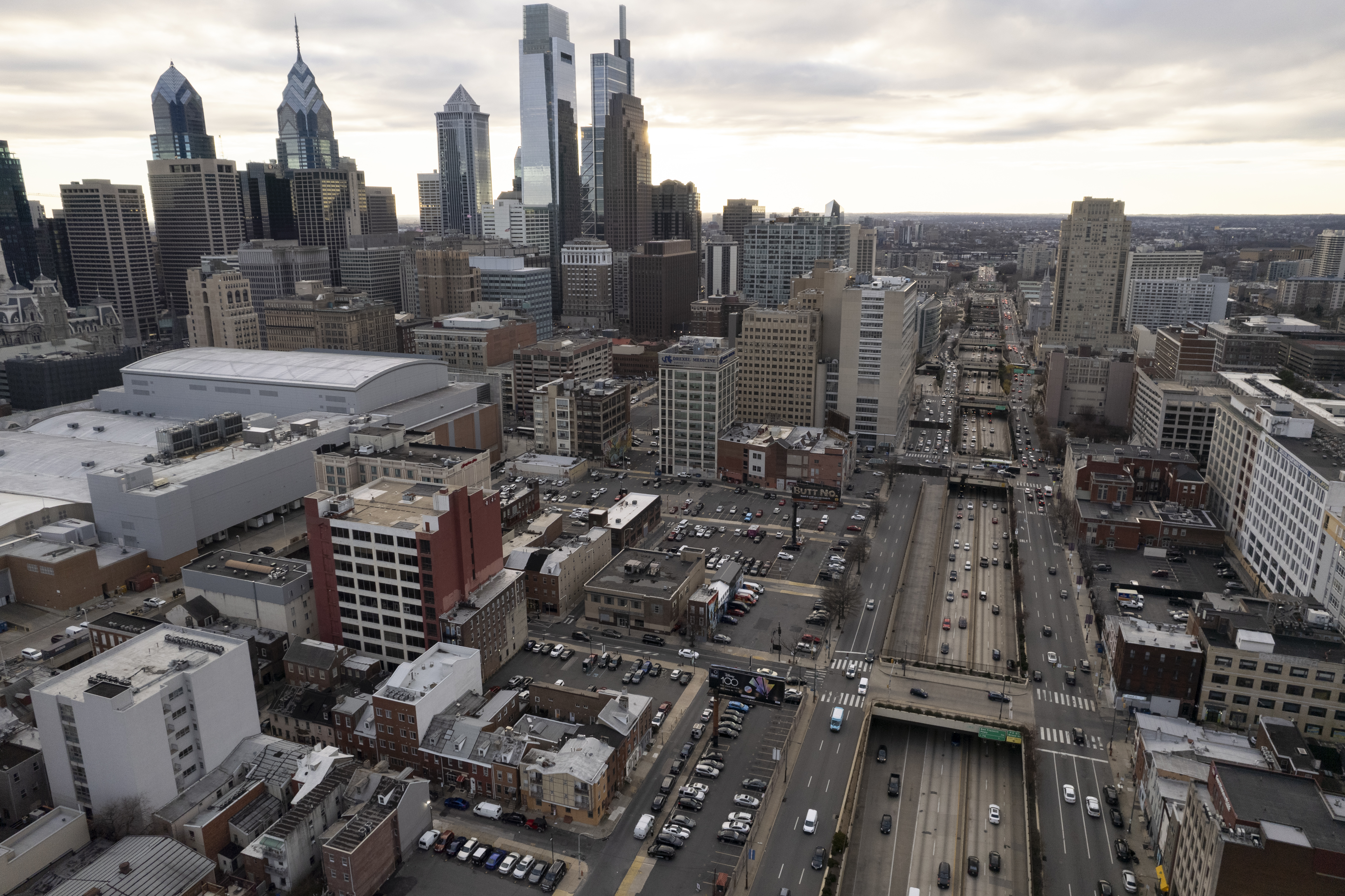
    As Philadelphia prepares for a summer of pageantry with the World Cup and celebrations to mark the country’s 250th anniversary, a public safety hub is opening on Market Street to coordinate police responses in the area.

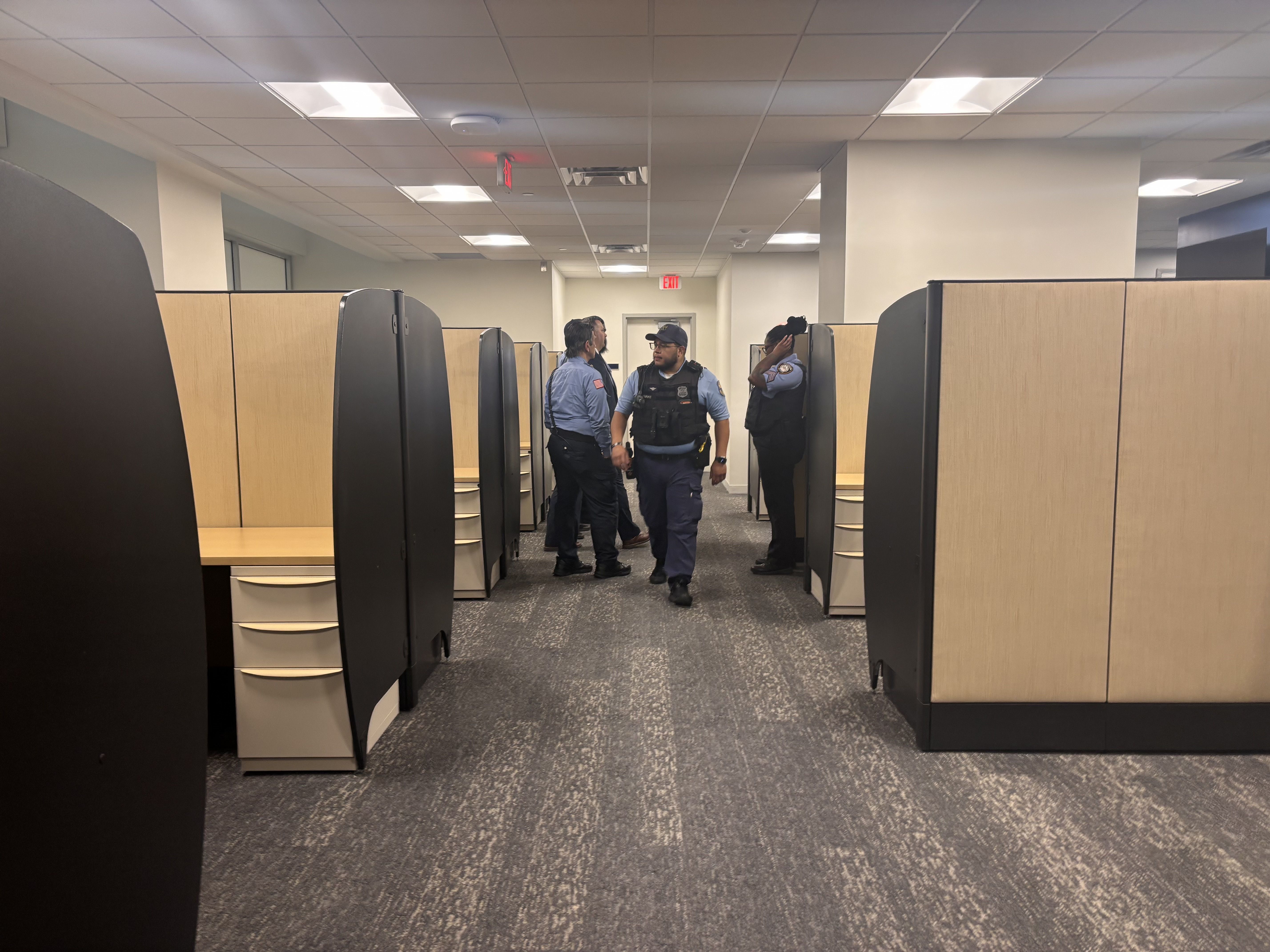
    The center at 1011 Market St. will be a place for three police forces — Thomas Jefferson University police, Philadelphia police, and SEPTA police — to coordinate.

    Officials expect that the hub will enable police to respond faster to incidents in the area both ahead of the World Cup and as part of a long-term effort to revitalize Market Street. Without an established place for collaboration, officers’ ability to work with different departments was hampered by the lack of physical infrastructure to coordinate.

    “We’ve never had anything like this before,” said Kevin Seta, the director for public safety for Jefferson. Before this hub, he explained, “everyone’s kind of working in silos. We do work very well together with these partner agencies, and we share as much as we can. But in this case, this will allow us to be all in the same room at the same time.”

    With the new center, police presence will increase on Market, Filbert, 11th, and 12th Streets. The hub will become the main headquarters for the Jefferson police force, which was previously on the other side of the Jefferson campus. Twelve officers from the Philadelphia Police Department have been assigned to East Market Street and will use the hub as needed, along with SEPTA officers who patrol the area. Jefferson CEO Joseph G. Cacchione said that with the new officers, he has already noticed a difference in vagrancy and panhandling.

    The city has allocated $1 million for the hub. Jefferson, which has a large presence in the area with its university and health system, will provide additional funds for the project.

    A holding cell at the new public safety hub for Market Street on June 9, 2026.Isabel Maney / Staff

    East Market has been getting a sprucing up ahead of this summer’s festivities, with pop-up businesses, tree plantings, lighting, and other transformations. Also on Tuesday, officials unveiled an 18-month overhaul of Market Street in Old City that includes a new plaza.

    Mayor Cherelle L. Parker emphasized that the public safety hub was part of a larger project to make Market Street “safer, cleaner, and greener.”

    “We are strengthening our work here in Center City, creating a vibrant and thriving corridor where we have more than 60 partners from across the business, civic, and community sectors,” Parker said. As an expected tens of thousands of visitors begin to arrive, “this coordination right now is more important than ever.”

  • Brooklyn man is convicted of fatally stabbing a Philly dancer at a gas station

    Brooklyn man is convicted of fatally stabbing a Philly dancer at a gas station

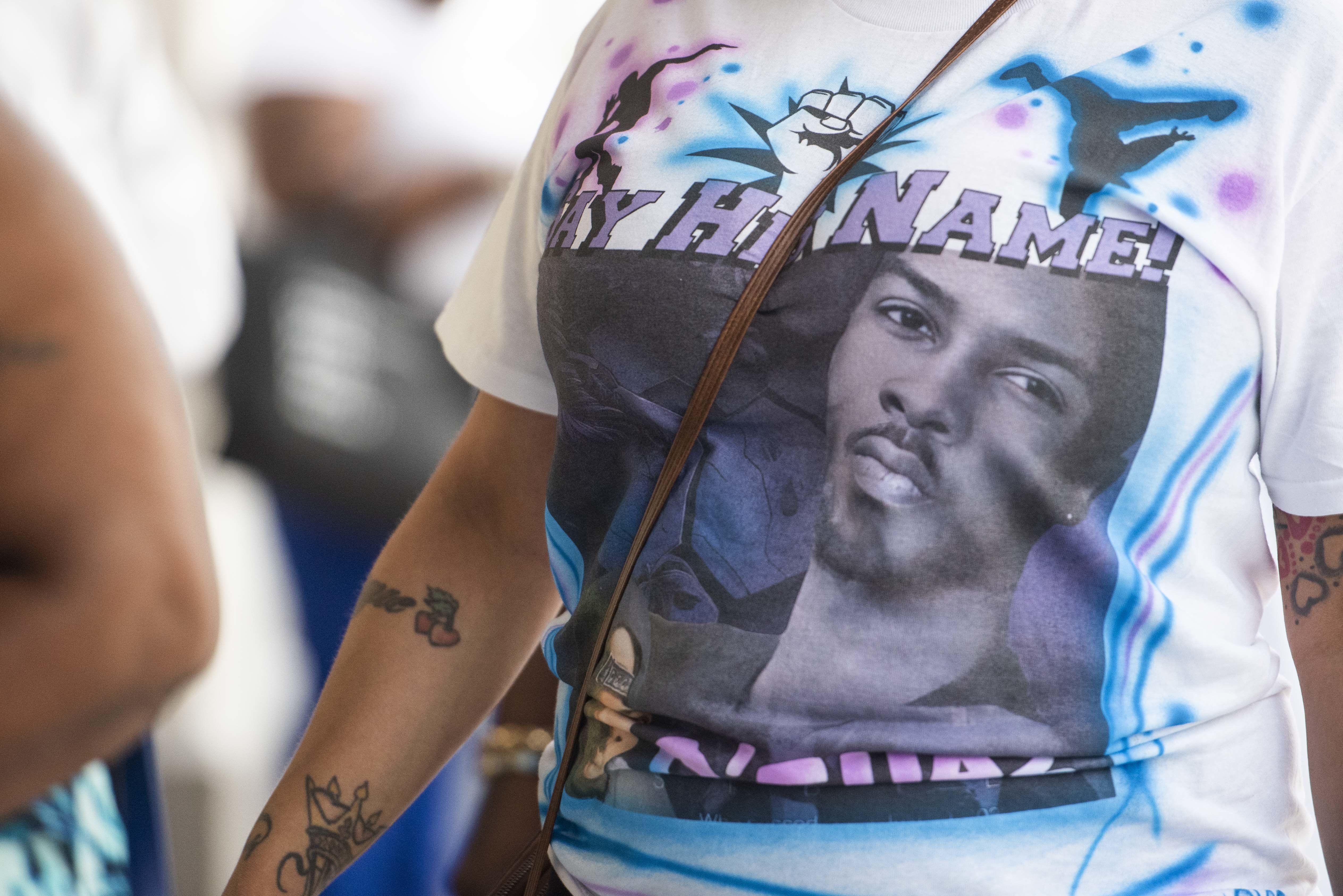
    A Brooklyn man has been convicted in the killing of beloved Philadelphia dancer O’Shae Sibley, who was stabbed to death at a New York City gas station in 2023.

    Dmitriy Popov, 20, was convicted of manslaughter as a hate crime and other charges related to “taunting, stabbing, and killing” Sibley, which included “hurling homophobic and anti-Black slurs,” Brooklyn District Attorney Eric Gonzalez said in a statement.

    Sibley, 28, was a gay Black man, while Popov, who was 17 at the time of the killing, is white. Popov, who was tried as an adult, faces up to 25 years in prison. Sentencing is scheduled for June 30.

    O’Shae Sibley at the Ailey Extension dance school in Manhattan.Courtesy Whitney Brown & Alvin Aliey

    While filling up their car with gas on a Saturday night in July 2023 after a trip to the beach, Sibley and four of his friends blasted music by Beyoncé and started dancing, according to Joan Myers Brown, founder of the Philadelphia Dance Company and Sibley’s former teacher.

    Popov and two associates approached the car and threatened the group with racist and homophobic slurs, telling them they did not want to see gay men dancing in their neighborhood, Gonzalez said.

    His associates left the gas station, but Popov remained and continued to taunt the group of dancing friends. Ultimately, he stabbed Sibley on the side of his chest with a knife, puncturing his heart, Gonzalez said. Sibley was pronounced dead a short time later at a nearby Brooklyn hospital.

    “O’Shae Sibley moved to New York to pursue his dream of being a dancer and choreographer, and his life was cut short when he was killed by this defendant, who couldn’t stand the sight of O’Shae and his friends just being themselves and living their lives openly as Black gay men,” Gonzalez said, offering his hope that the verdict would “bring O’Shae’s family, his friends, and the larger community some measure of solace.”

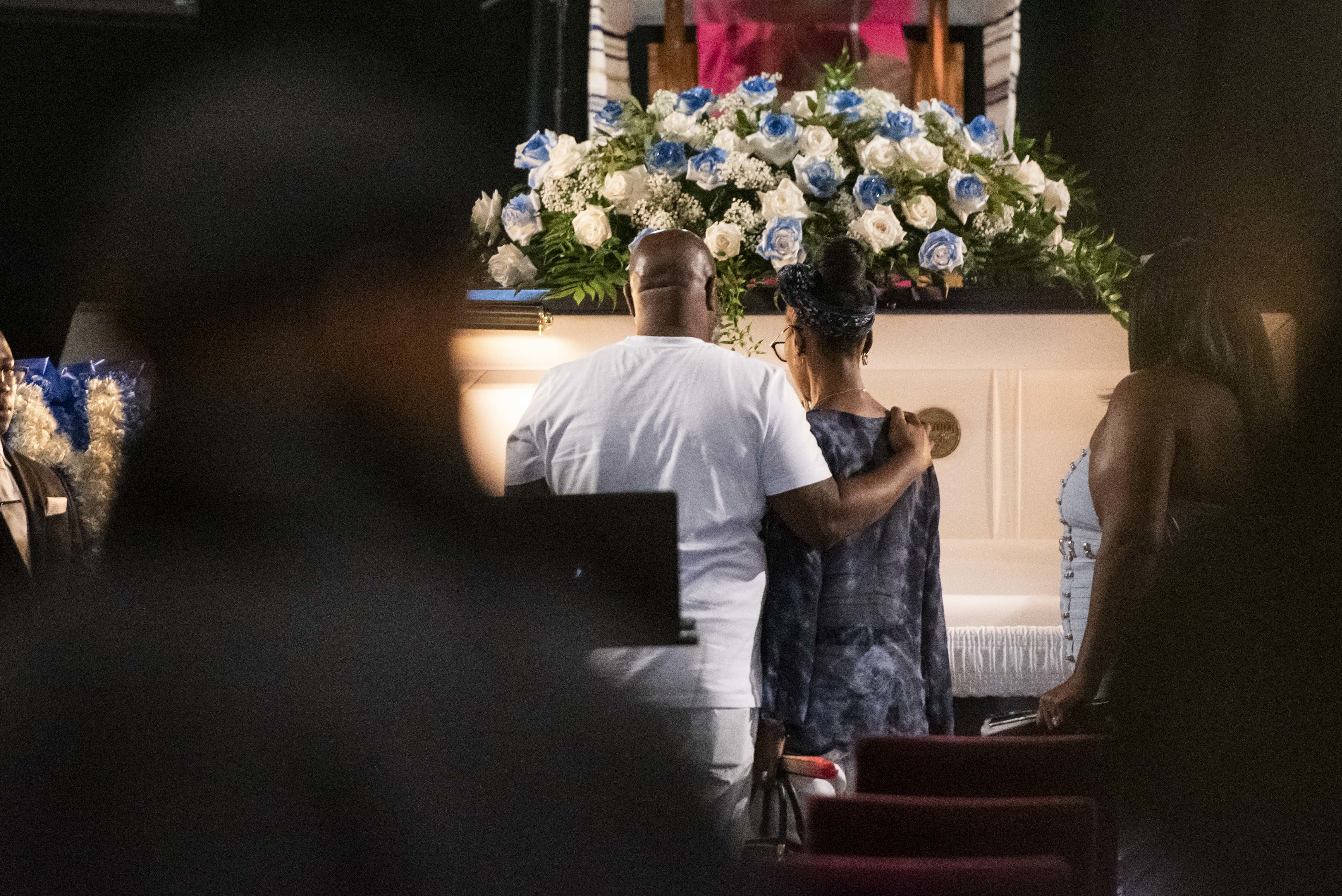
    O’Shae Sibley’s parents Jake Kelly (left) and Onetha Sibley visit their son’s casket at The Met in Philadelphia on Tuesday, Aug. 8, 2023.Allie Ippolito / Staff Photographer

    A North Philadelphia native, Sibley moved to New York before the COVID-19 pandemic in 2020 and landed a job as a dancer and choreographer with the Alvin Ailey American Dance Theater’s Ailey Extension. He danced in several music videos and performed at the Lincoln Center for the Performing Arts in New York.

    During a celebration of O’Shea’s life at the Met in Philadelphia in 2023, Otis Pena, who was with Sibley the night he was killed, recalled his friend as authentic and unapologetically himself.

    “O’Shae was a beacon of light for a lot of us in our community that was engulfed in darkness,” Pena said then. “But O’Shae rejoiced. O’Shae was O’Shae.”

  • The Justice Department is investigating whether Philly police are improperly revoking gun permits

    The Justice Department has opened an investigation into whether the Philadelphia Police Department has been improperly revoking people’s gun permits, officials announced Tuesday — a remarkable development that puts one of the nation’s largest police forces under the scrutiny of federal law enforcement.

    In a letter addressed to Mayor Cherelle L. Parker — which the Justice Department published online — Assistant Attorney General Harmeet K. Dhillon said the investigation “will evaluate the PPD’s policies and practices regarding issuance and revocation of licenses to carry firearms.”

    If prosecutors determine those policies violate the Constitution, Dhillon said, the Justice Department could take the city to court.

    Dhillon emphasized that federal officials “have not reached any conclusions” in their inquiry. And she said prosecutors would seek to speak with city and police officials throughout the course of their probe.

    City spokespeople did not reply to requests for comment Tuesday.

    The announcement came weeks after news reports detailed that police had revoked the gun permits of five members of a Philadelphia-based Black armed citizens group.

    Members of the group, the Panthers, received letters from the city police department’s permitting unit in February, alerting them that their gun permits had been terminated and offering little explanation beyond saying the decision was based on “good cause” as well as “character and reputation.”

    The notifications came shortly after some members got into a verbal altercation with police officers in North Philadelphia. Panthers members were patrolling the neighborhood carrying high-powered firearms at the time, and police said the confrontation “created an unreasonable danger to public safety.”

    Panthers members, including the group’s leader, Paul Birdsong, have appealed the department’s decision and are awaiting hearings on the possibility of restoring their permits later this year.

    Two members have had their permits restored since challenging the decision, according to Birdsong’s attorney, Lyandra Retacco.

    Philadelphia has unique laws surrounding gun permits. In the city, unlike the rest of the state, gun owners are required to have a license to carry a firearm openly, and the police department has broad authority to revoke licenses.

    The Justice Department said it planned to investigate whether the Philadelphia Police Department had become overly reliant on “a vague ‘good cause’ standard” in deciding whether to cancel permits.

    “It is a violation of the Second Amendment for government officials to use vague, personal discretion when determining whether to issue or revoke permits to carry firearms,” the department said.

    Jonathan Goldstein, a nationally recognized Second Amendment lawyer and University of Pennsylvania lecturer, said he considered the DOJ’s aims justified, given what he viewed as the Philadelphia Police Department’s “subjective” and “arbitrary” authority to revoke gun permits and infringe on firearms owners’ rights.

    The government’s enforcement, Goldstein said, was “long since overdue.”

    “It is refreshing to see that the DOJ has finally taken a focus on the Second Amendment seriously,” he said.

    Goldstein, who also serves on the board of the National Rifle Association, said he was not aware of any specific instance in Philadelphia that may have resulted in the DOJ’s scrutiny of the police department. He said there had been numerous cases over the years in which he believed the city’s policies around permitting had violated gun owners’ rights.

    Although the Justice Department’s inquiry is new, the city has faced other challenges in seeking to tighten regulations around firearms.

    Mayors and City Council members for decades have sought to ban assault-style weapons, limit handgun purchases, or prohibit guns at recreation centers, but courts have consistently found such restrictions were unlawful.

    The Pennsylvania Supreme Court in 2024 also ruled unanimously against the city’s attempt to overturn a state provision that prevents the city from enacting its own gun laws.

    That has not stopped city officials from pursuing litigation. Earlier this spring, Parker’s administration sued the firearms manufacturer Glock Inc., accusing the company of using deceptive marketing practices to target young people.

  • Philly is opening ‘hospitality hub’ public restrooms on the Parkway in time for summer visitors

    Philly is opening ‘hospitality hub’ public restrooms on the Parkway in time for summer visitors

    There is good news for anyone without a steel bladder visiting the Benjamin Franklin Parkway this summer.

    On Tuesday, the city opened four new “hospitality hub” restrooms along the Parkway to welcome and accommodate the many visitors expected in Philadelphia over the next two months. The restrooms come through a partnership among Philadelphia Parks and Recreation, the nonprofit Parkway Council, and Tork, a hygiene and cleaning products company.

    “As we prepare to welcome residents and visitors to some of our city’s best public spaces this summer, our goal is simple: make it easy for people to enjoy Philadelphia,” said Katie Burns Kays, director of business and event development for Philadelphia Parks and Recreation, at a news conference.

    “Hospitality hubs are designed to provide the services people need when spending time in our parks and public spaces, whether that’s access to restrooms, handwashing, hydration stations, seating, visitor information, or simply a comfortable place to take a break,” she said.

    Each of the restroom trailers has four genderless stalls and an adjacent port-a-potty for individuals who cannot make it up the restroom steps. Each stall has a sink, soap, paper towels, and “air care” to keep it smelling fresh, according to Amy Bellcourt, a spokesperson for Essity, the parent company of Tork.

    People fill the street during the Philly Pride Festival on the Ben Franklin Parkway on Sunday, June 7, 2026 in Philadelphia. Future events will have more bathroom options. Monica Herndon / Staff Photographer

    The restrooms are open from 10 a.m. to 8 p.m. each day, and are staffed by an attendant who will clean the stalls at least once an hour, Burns Kays said. The locations of the four hospitality hubs are: LOVE Park, Logan Square, Eakins Oval, and by Lloyd Hall Recreation Center on Boathouse Row.

    The restrooms are just part of the full hospitality hub experience. Each also includes an adjacent visitor center for information, seating, and stations for water refills, Burns Kays said.

    The restrooms will be in place through the end of July, but the rest of the hospitality hubs will be removed after July 19 once the city’s major summer events are over, Burns Kays said.

    The lack of permanent public restrooms along the Parkway is one of the major pieces of feedback the city has received about events there, she said, and can dissuade people from attending public events. It is possible the city will make the restrooms a permanent fixture in the future, she said.

    Previously, the city installed a handful of public restrooms through its Philly Phlush pilot initiated by former Mayor Jim Kenney‘s administration, but the restrooms were slow to roll out and it is unclear if the city will continue to fund them once the pilot ends.

  • A new local improvement district may be needed to care for the Chinatown Stitch cap over I-676

    A new local improvement district may be needed to care for the Chinatown Stitch cap over I-676

    City officials and residents of the Callowhill neighborhood on Monday night discussed design options for a park atop the Chinatown Stitch, a planned cap over part of the Vine Street Expressway.

    The Philadelphia Office of Transportation and Infrastructure Systems is thinking about the day the project is complete, with preliminary exploration of a possible improvement district in the area to finance operations and maintenance.

    “We’ve come to the conclusion that there’s not really a city department or even nonprofit entity that’s ideally placed to take over that maintenance responsibility,” said Christopher Puchalsky, director of policy and strategic initiatives at OTIS.

    The meeting of the Callowhill Neighborhood Association was held at the Folk-Arts Cultural Treasures Charter School.

    In March, the Pennsylvania Department of Transportation moved $10 million in regional highway funds that, along with a $2.5 million match from the city, will pay for final design of the Chinatown Stitch.

    The Trump administration canceled $150 million in construction money, imperiling the project to rejoin two sections of Chinatown severed for decades by I-676.

    Republicans’ “big beautiful” domestic policy and spending bill last July killed most of the Neighborhood Access and Equity grant program in the U.S. Department of Transportation.

    The original grant was $159 million, but the city already had spent $8.4 million on preliminary engineering and design work. The rest was rescinded.

    Using either a Neighborhood Improvement District or a Business Improvement District would give the neighborhood control over the maintenance of the park and its planned connection to the Rail Park along the Reading viaduct, Puchalsky said.

    City money would be subject to a yearly appropriation, and the Stitch would be “not just competing against all the other parks that need to be maintained,” he said. “The Chinatown Stitch would be competing against firefighters and social workers and pothole crews and go down the list.”

    People expressed strong support throughout several rounds of community engagement for keeping a completed project safe, clean, and in good repair, Puchalsky said.

    He presented three possible annual maintenance and security budgets for a hypothetical improvement district: $1.3 million; $2.2 million; and $3.8 million. A budget would depend on the size of the district and the level of services involved.

    The largest budget could likely finance 24-7 security, robust maintenance, and some social service programs, while the smallest budget would provide much less.

    Improvement district assessments range from 1% to 7% in Philadelphia, which would be on top of property taxes. Based on rough back-of-the-envelope math, Puchalsky said, the owner of a $500,000 property would pay $140 a year on top of a $7,000 property tax bill at the lowest end of the range and $300 yearly at the highest end.

    He stressed that there is no formal proposal for an improvement district or firm estimate for assessments.

    “It is a goal to try to get some kind of a neighborhood consensus about what you would like to do,” Puchalsky said. “I’m not hearing anyone jumping up and down, either angrily or cheeringly” — just reasonable questions.

  • He called himself ‘the Beast,’ and he killed six people in six months. A jury has convicted him of all crimes.

    He called himself ‘the Beast,’ and he killed six people in six months. A jury has convicted him of all crimes.

    He called himself “the Beast,” and he killed six people in six months.

    Several of his victims were retail store workers who gave up cash or goods during robberies, and he decided to shoot them anyway. One of the victims was his mother — he shot her at her office because he wanted the payout from her life insurance policy.

    On Tuesday, Keith Gibson, 44, was delivered a measure of accountability for his killing spree — one of the worst in recent city history — when a jury convicted him of four counts of first-degree murder and related crimes for the killings he committed in the city in 2021.

    He was immediately ordered to serve four consecutive life sentences in prison. That’s on top of the seven life sentences he had already been handed for two murders and a string of robberies he committed in Delaware.

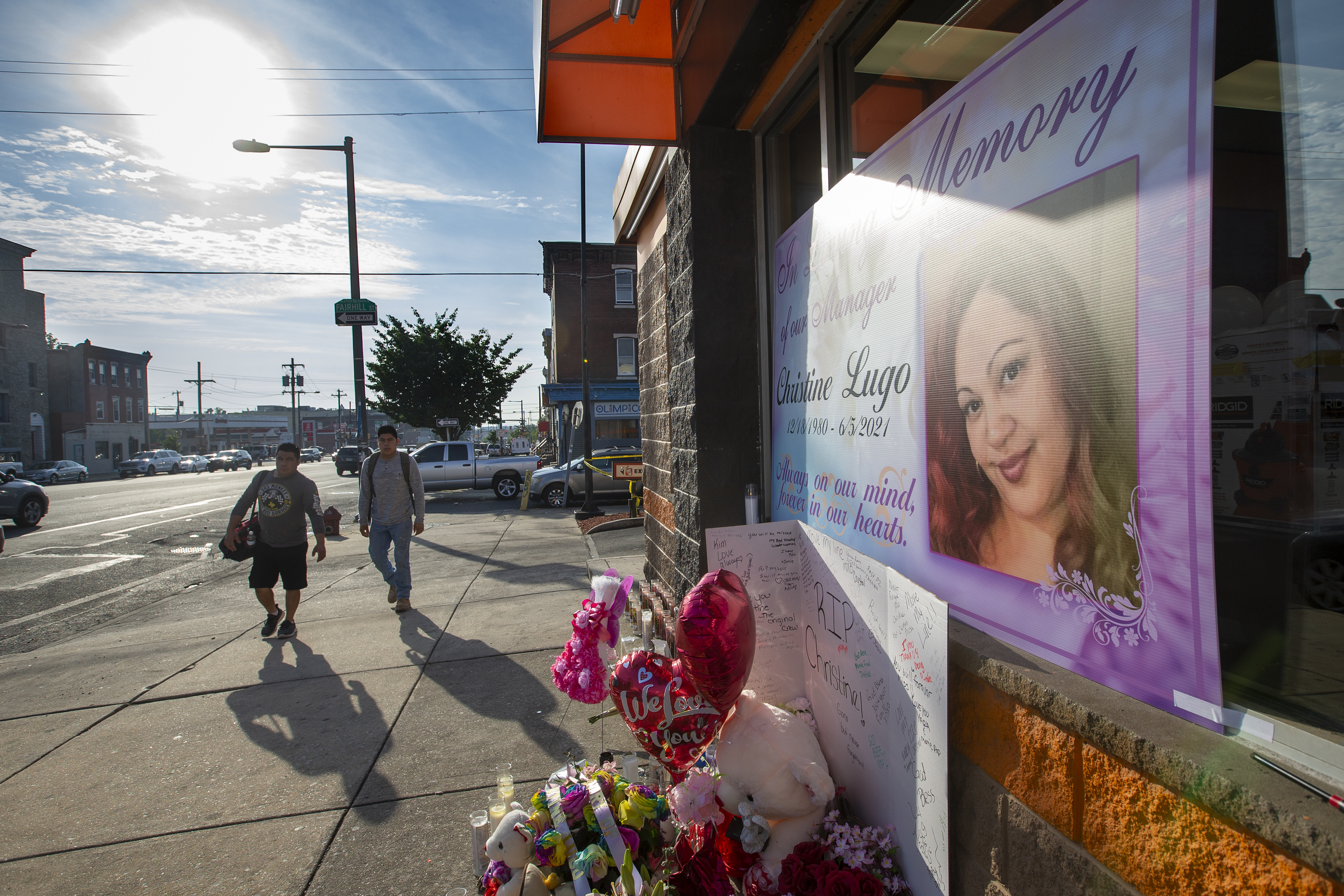
    The case attracted attention when the crimes happened five years ago, in part because some of Gibson’s targets were compliant and effectively defenseless when he shot them. In one murder, at a Dunkin’ store in Fairhill, surveillance video showed an employee speaking with Gibson for several minutes and handing him cash before he shot her in the head and left her for dead.

    Surveillance video showed Keith Gibson inside the Dunkin’ before he shot and killed Christine Lugo in June 2021. Courtesy of Philadelphia police

    Assistant District Attorneys Jeffrey Hojnowski and Katie Wood called Gibson’s crimes despicable.

    “These were regular, ordinary people, fellow Philadelphians going about their business, trying to work, and they were gunned down callously, needlessly,” Hojnowski said. “This was never about the money. This is about control. This is about dominance.”

    The case also stood out because of questions about why Gibson had been free to kill in the first place. In April 2021, he was jailed in Delaware for a probation violation, and a probation officer told a judge that police considered Gibson a suspect in his mother’s killing. But the judge ordered Gibson released, and in the weeks after, he went on to kill three more people.

    The weeklong trial that led to his conviction in Philadelphia relied heavily on surveillance video and ballistics evidence. Testing showed that Gibson had used the same revolver in every crime, and officers in Wilmington found the gun as they arrested him for robbing a Rite Aid store.

    A former friend, Amanda Masteller, took the stand and testified that Gibson, who she said referred to himself as “the Beast,” carried that revolver everywhere — including into her house and around her children when she let him stay in a spare room from time to time.

    She wanted to tell him to stop coming over, she said, but the gun and his aggressive demeanor left her afraid of what might happen if she did so.

    “I was petrified of this man,” she said.

    Gibson’s crimes

    Gibson’s killing spree began Jan. 28, 2021, at Al-Madinah Traders store in Germantown. There, he rummaged through the shop and stole several watches. He forced employees Roy Caban and Eric Flores into a back room, where he shot Flores in the head and Caban in the back as he tried to flee.

    The following week, Gibson set out after his own mother.

    Christine Gibson, 54, was shot and killed by her son, Keith Gibson, in February 2021. She worked as the director of a mental health program at a community center in East Falls.Courtesy of David Thornton

    Christine Gibson, 54, told family members she was afraid of her son and wanted him to move out of her North Philadelphia home. And, prosecutors said, she had made plans to remove him as the beneficiary of her life insurance policy.

    On the morning of Feb. 8, Keith Gibson accompanied her to the United Peers Community Center in East Falls, where she worked as the director of a mental health counseling program. Once inside, he took her to a small office room in the rear of the building and shot her in the back of the head. Her body was found two days later.

    Soon after, probation officials in Delaware sought to have Gibson held in jail, filing paperwork saying he was a suspect in his mother’s killing and that violated the terms of his probation from a 2010 manslaughter conviction.

    But Superior Court Judge Vivian L. Medinilla declined to extend Gibson’s time in custody. He was released in late April.

    A few weeks later, in late May, Gibson robbed an AT&T store in Elsmere, Del., of cash and phones, and shot and killed the store attendant before stealing her car.

    And in early June, his crimes continued in Philadelphia.

    Surveillance video played at trial showed Gibson wandering the city on foot before dawn on June 5. After leaving his house on the 2700 block of North Croskey Street at 4:25 a.m., evidence showed, Gibson walked about a mile and a half to the Dunkin’ at Fifth Street and Lehigh Avenue.

    Christine Lugo was unlocking the store to start her shift when Gibson walked over to her with his gun and shoved her inside.

    Christine Lugo was killed during a robbery at the Dunkin at 532 W Lehigh Ave. on June 5, 2021.

    Cameras from inside the store captured the lengthy encounter. Lugo did not appear to panic, and was not aggressive toward Gibson. Instead, she could be seen shrugging at times and showing Gibson her wallet, as if to suggest she didn’t have anything for him to take.

    Eventually, she sat down on a chair in a closet-size office and gave Gibson about $300 from the cash register trays.

    Gibson then glanced at his watch, shot Lugo in the head, and walked out.

    Later that day, he went to Wilmington, where he shot and killed Ronald Wright, 42, during a robbery.

    His string of crimes began to unravel there three days later, when he robbed a Wilmington Rite Aid and stole a bag of cash — with a tracking device inside. Police quickly arrested him with a revolver behind a rowhouse. Ballistics tests later showed the same gun had been used at Al-Madinah Traders and in the killings of Gibson and Lugo.

    Tips from the public identifying him in surveillance footage then bolstered the investigation. After Lugo was killed, police released some footage from the incident to try to identify a suspect. Masteller — his former friend from Delaware — said she saw it and called to tell police the man in the video was Gibson.

    Gibson’s attorneys, Jonathan Strange and Brian Johnson of the Defender Association, said homicide detectives rushed to tie Gibson to other crimes as a means of closing old, unsolved cases. They failed to collect or test certain evidence, Johnson said, including surveillance video and DNA in some of the cases.

    “The police had to take the easy way out,” he said.

    Following his convictions, Gibson, in a lengthy ramble, said he was not happy with his legal representation and intended to appeal his convictions. He was not guilty, he said. And he only briefly addressed his victims’ families, saying: “I’m extremely sorry for your loss.”

    It brought no comfort to the loved ones of his victims who had filled the courtroom throughout the trial.

    Lugo’s children, Frances Rodriguez and Christian Lugo, said the disturbing video of their mother’s death will remain etched in their memories. Still, as prosecutors played it several times, they stayed to watch.

    Left to right: Frances Rodriguez, Christine Lugo, Christian Lugo, and another family member celebrate Christmas.Courtesy of Frances

    “I didn’t want my mom to be alone,” said Rodriguez, 27. “She already had to experience it alone already.”

    Lugo, originally from Massachusetts, had a vibrant laugh and believed fiercely in giving people second chances, they said. She had two children and three grandchildren.

    Also in the courtroom Tuesday were members of Gibson’s family, who had spent years praying he would be held accountable for killing his mother.

    David Thornton, 68, said his nephew stole the golden years of his sister’s life.

    Christine Gibson overcame years of addiction, he said, and went on to earn a master’s in sociology from Widener, bought a house in Philly, and was working a job she loved. She was strong, outgoing, and full of joy.

    She had told Thornton she was afraid of her son, he said, but did not want to call the police.

    “She’d say, ‘That’s my son,’” Thornton said. “That was her only child.”

    They never imagined it would come to this.

    “Some things,” he said, “are not meant to be understood.”

  • Jackie Love, former Deptford Township deputy mayor and longtime champion of disability services, has died at 83

    Jackie Love, former Deptford Township deputy mayor and longtime champion of disability services, has died at 83

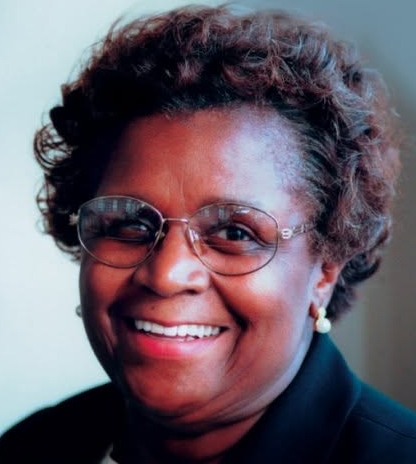
    Jackie Love, 83, of Deptford Township, longtime social justice activist, Black political pioneer, former council member and the second Black female deputy mayor of Deptford Township, former director of what is now the New Jersey Division of Disability Services, New Jersey Elected Officials Hall of Famer, mentor, and volunteer, died Friday, May 29, of age-associated decline at Shady Lane Nursing Home in Clarksboro, Gloucester County.

    Born in Philadelphia, Mrs. Love moved to Deptford Township when she was 13. She was reared by her grandmother, earned an associate’s degree in business administration at Camden County College in 1972, and served in government leadership roles for Deptford Township, Gloucester County, and New Jersey for four decades until her retirement in 2009.

    “Her caring spirit and willingness to help her community is a true example of a servant leader,” a former colleague said on Facebook.

    Mrs. Love was hired by Gloucester County officials in the 1970s to coordinate employment training programs and later to prevent and eliminate disability discrimination. She was the first director of the old Gloucester County Office for the Disabled in the 1980s and later was director of the Gloucester County Disabled Persons Advisory Commission.

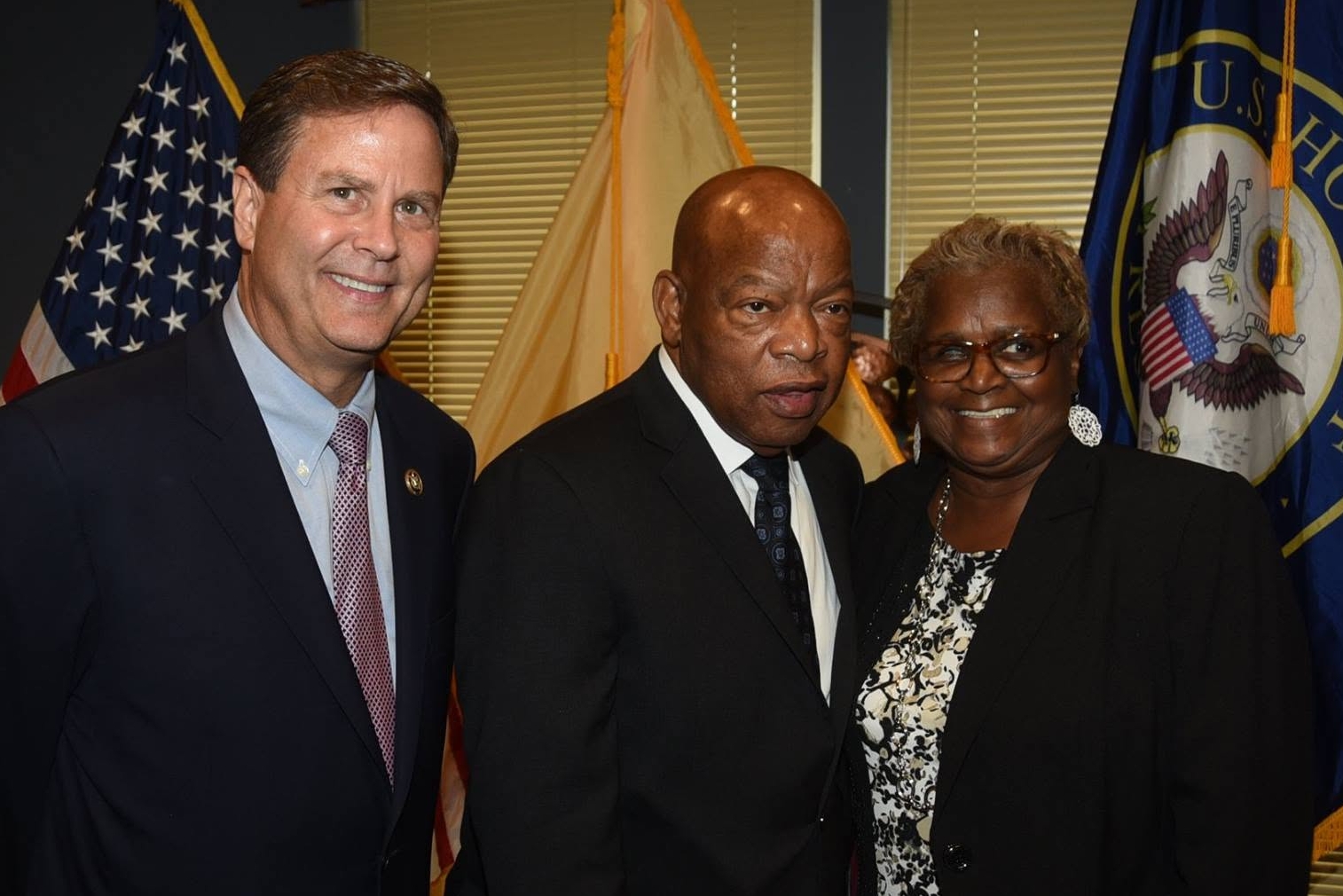
    Mrs. Love stands with U.S. Reps. Donald Norcross (left) and John Lewis.Courtesy of the family

    She became director at the old New Jersey State Office for Disability, now the New Jersey Division of Disability Services, in the 1990s and championed the installation of sidewalk ramps, curb cuts, and other improvements throughout the state. “We wanted to start making sure that we were accessible,” she told Front Runner New Jersey in 2025. “That’s a highlight of my life.”

    Mrs. Love first ran for Deptford Township Council as a Democrat in 1989. She received more votes than any of the other nine candidates, routinely collaborated with members of both parties, colleagues said, and became deputy mayor in 1996.

    “When Jackie was on council and she walked into a room, everybody knew who Jackie Love was,” Deptford Township Mayor Paul Medany told The Inquirer in 2015. “She’s known all over the state.”

    As Deptford council member and deputy mayor, Mrs. Love focused on reducing juvenile crime and lobbied for sound barriers along the New Jersey Turnpike, lower speed limits on busy township roads, responsible school budgets, improvements to animal waste disposal procedures, and upgraded vendor code guidelines. In 2015, Deptford Township officials renamed Church Street Park as the Jackie Love Community Park.

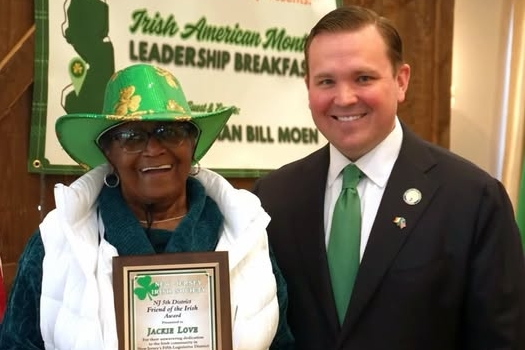
    Mrs. Love stands with state Assemblyman Bill Moen in 2025.New Jersey Irish Society

    “To see the future politicians and others out there playing and getting involved is another highlight of my life,” she told Front Runner New Jersey about the park.

    In 2005, the editorial board for the Courier-Post called Mrs. Love “loyal, hardworking, and a team player.” In a Facebook tribute, U.S. Rep. Donald Norcross (D., N.J.) said: “Jacquelyn Love was a force for good in Deptford for generations. She paved the way for others as a Black female deputy mayor … and long remained a champion for civil rights, faith, the disabled, and many more throughout her life.”

    Mrs. Love also served as a commissioner for the Delaware River Port Authority. She was active with the Gloucester County Minority Coalition, the Gloucester County College advisory committee on diversity and civility, and other groups.

    She recruited volunteer poll workers and was a delegate for Bill Clinton at the 1992 Democratic National Convention in New York. In the 1970s, she traveled the country with civil rights leader Leon Sullivan and helped organize his Opportunities Industrialization Centers of America.

    Mrs. Love (left) enjoyed time with her family.Courtesy of the family

    She was named the 1987 Woman of the Year by the Gloucester County chapter of the NAACP, honored in 2005 by the Gloucester County Human Relations Commission, and inducted into the New Jersey Elected Officials Hall of Fame in 2010. In March, her achievements were recognized by the New Jersey Irish Society.

    Mrs. Love mentored dozens of colleagues and friends, conferred frequently with Philadelphia Mayor Cherelle L. Parker, and volunteered at Mount Zion Wesley United Methodist Church and for the United Way. On Facebook, former colleagues called her “a once-in-a-lifetime type of leader” and “one of the most dedicated public officials I have ever had the honor of working with.”

    Jacquelyn Williams was born Sept. 10, 1942. She dropped out of Woodbury High School at 17, earned her General Educational Development certificate later, and worked at first as a counselor at Ancora Psychiatric Hospital in Hammonton.

    She married Arnold Love in 1972, and together they reared her daughter, Wanda, and their son, Wayne. Her husband died in 1985.

    Mrs. Love participated in this 2020 drive-by salute to a friend’s 60th wedding anniversary. Jose F. Moreno / Staff Photographer

    Friendly and classy, friends said, Mrs. Love wore memorable hats and enjoyed shopping at local Amish markets. She visited Amish friends in Lancaster when she was young, took classes at what are now Rowan and Rutgers Universities, and lived in Jericho for decades.

    Friends called her a “cornerstone of this neighborhood” and a “wonderful down-to-earth lady.” One friend said: “Jackie set the standard for leadership and dedication to her family, faith, friends, and public service.”

    Her son said: “She showed love to so many people.”

    In addition to her children, Mrs. Love is survived by four grandchildren, four great-grandchildren, a sister, and other relatives.

    Visitation with the family is to be from 8 to 10 a.m. Friday, June 12, at Gloucester County Community Church, 359 Chapel Heights Rd., Sewell, N.J. 08080. A service is to follow.

    Friends called Mrs. Love a “cornerstone of this neighborhood.”Courtesy of the family
  • Joe Biden made a surprise visit to Philly’s Stonewall Awards celebrating LGBTQ icons

    Joe Biden made a surprise visit to Philly’s Stonewall Awards celebrating LGBTQ icons

    Former President Joe Biden made a surprise appearance at the annual Stonewall Awards in Philadelphia on Sunday, delivering a 20-minute speech to a packed crowd in Center City.

    The award ceremony, started in 2022 by Philadelphia Gay News founder and publisher and participant in the 1969 Stonewall rebellion Mark Segal, recognizes those in the region advancing the LGBTQ rights in Pennsylvania. This year’s speakers, including Biden, took a moment to celebrate the decades of civil rights battles that led to Philadelphia becoming a cultural hub for queer people, but warned that the fight is only getting harder.

    “What I don’t think straight people understand is that you have risked a hell of a lot and it’s taken enormous courage to stand here today. You risk your jobs, your families, and your very lives for the cause of equality,” Biden said. “We need that courage today more than ever before. The fellow we have as president right now is not having a very positive impact on anything.”

    State Rep. Malcolm Kenyatta, who is a vice chair of the Democratic National Committee, surprised the crowd made up of LGBTQ organizations, media, and community members at the Arts Ballroom in the heart of the Gayborhood when he walked up to the stage with a trail of Secret Service agents and the 46th president. The ballroom erupted with cheers as the audience gave the duo a standing ovation. “I decided to bring a friend with me,” Kenyatta said to the crowd.

    State Rep. Malcolm Kenyatta at the Capitol in Harrisburg on May 13, 2025.Tom Gralish / Staff Photographer

    Biden delivered prepared remarks but wasn’t shy about speaking from the heart, said Segal, who witnessed the police assault on the Stonewall Inn in 1969, a moment credited for spurring the modern queer civil rights movement.

    “I think that’s the magic of the Stonewall Awards. You’re in a room with people who want to feel unified and it’s a struggle out there these days thanks to the current administration,“ Segal said. ”This is the day that we get to celebrate ourselves and celebrate where we are and to say, ‘We’re never going back.’”

    The president shared stories of his granddaughters fearing for their gay friends as the White House pushes policies that strip rights from LGBTQ people.

    “Even though we made enormous progress, as we continue to make the final run here, progress is going to get tougher and the other team’s going to get rougher,” Biden said.

    Segal said the Stonewall Awards have brought local leaders and celebs like Gov. Josh Shapiro, Mayor Cherelle L. Parker, and Abbott Elementary star Sheryl Lee Ralph to its stage in prior years. But Biden was a big surprise, said Jacen Bowman, the president of Philly Black Pride.

    “We didn’t know Biden would be there, but once we saw Secret Service, we knew something was up. After his speech, he walked right over to our table and spoke to my mom about the award I won and it was amazing,” Bowman said, whose mother is still elated over meeting the former president.

    Bowman received his second Stonewall Award on Sunday as he and his fellow organizers grow the organization’s cultural impact on the city and beyond. Bowman’s work hopes to not only bolster the community in a time of increased threats, but also highlight those who may get left out of the picture through murals like creating Finally on 13th, a celebration of Philadelphia’s underground ballroom culture, and remembering icons like the late Stacey Blahnik, a transgender woman and icon in the local ballroom scene whose murder is still left unanswered more than a decade later.

    “I love Philadelphia and being honored for my work in the city that has made me, broken me, and uplifted me — I’m so grateful,” Bowman said.

    Councilmember Mark Squilla and the Philadelphia Visitor Center received awards for their contributions to LGBTQ advocacy. Alex Niedbalski-Sykes and Ashley K. Lunkenheimer were also recognized for their contributions, including the work of Philadelphia Sisters, an organization that has vowed to bring more professional women’s sports teams to the city, especially after a WNBA team arrives by 2030.