Category: Philadelphia News

  • 15 arrested as police response to Gayborhood Pride festival spurs criticism from some in LGBTQ+ community

    15 arrested as police response to Gayborhood Pride festival spurs criticism from some in LGBTQ+ community

    Fifteen people were arrested at a Pride celebration in Philadelphia’s Gayborhood on Sunday, authorities said, and the response drew criticism from some LGBTQ+ residents over how police handled crowd control at the event.

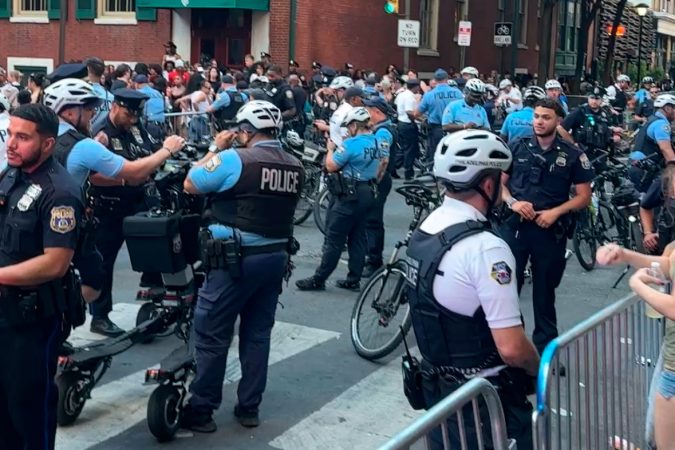
    Images of police officers engaging with attendees in Center City circulated widely across local social media feeds on Monday, featuring criticisms of what some considered to be an outsize and aggressive law enforcement presence.

    In one image shared on X, a police officer on a motorcycle appears to push against a woman’s chest, and, in another photo, pushes the woman against a garage door while arresting her.

    Others videos showed police on horseback dispersing young people from a sidewalk, as well as officers physically struggling with a man outside the gay bar Woody’s.

    And in yet another clip, a row of police officers — two of whom were wearing face coverings — formed a line to clear a barricaded Gayborhood street while officers on motorbikes rode along the sidewalks.

    Joshua Stokem, a New Jersey resident who regularly attends the city’s Pride celebrations, said he had never seen that large a police presence during such festivities.

    “They were definitely getting more and more aggressive” as the gathering stretched into the early evening, said Stokem, who works as a promoter for LGBTQ+ events at city bars.

    Councilmember Rue Landau, herself a member of the LGBTQ+ community, said in a statement Monday that LGBTQ+ constituents had reached out to her office in “outrage” and that she was working to better understand the department’s strategy.

    “Police brutality has no place at Pride,” she said.

    The revelry outside some of the city’s best-known gay establishments was not affiliated with the official Philly Pride March and Festival event that took place on the Benjamin Franklin Parkway throughout the day, Stokem said. But many attendees migrated from the Philadelphia Museum of Art to the Gayborhood that afternoon, he said, where post-parade parties have become tradition.

    Hours before police dispersed the crowd, Stokem said, guests were surprised to arrive and find that several Gayborhood blocks around 13th and Walnut Streets — cordoned off in years prior for attendees to wander — were instead blocked with metal barricades, limiting crowds to the sidewalks.

    He said that layout caused large groups of people to pack into the corridors outside bars and restaurants and, in his view, created confusion and exacerbated some of the issues attendees had with police.

    For their part, police said they deployed 600 officers for Sunday’s Pride events — including 150 officers to the Gayborhood — to maintain public safety.

    Police Commissioner Kevin Bethel said in a statement that the celebration was “by all accounts, a successful event attended and enjoyed by thousands of people.”

    Still, “as crowd sizes increased in the Gayborhood, officers responded to a growing number of public safety concerns, including fights, disorderly behavior, blocked roadways, and the challenges associated with safely managing large crowds in a confined area,” Bethel said.

    Bethel said the department had expected the Parkway celebration to gradually transition to the Gayborhood event, but that did not happen.

    Instead, he said, two separate gatherings were essentially happening at once, creating a situation that was “challenging to manage safely” and led to the decision to clear parts of the neighborhood.

    “That decision was not made in any way, shape, or form because people were celebrating Pride,” he said.

    In all, 15 people were arrested, according to Bethel, primarily for offenses related to disorderly conduct. One person was arrested on a charge of aggravated assault of a police officer.

    Bethel said the department was aware that some officers were wearing face coverings, which are not part of the department’s official uniform, while dispersing crowds.

    “We are currently working to identify the officers involved,” the commissioner said, adding the department would determine whether discipline was necessary.

    Stokem, the Pride attendee, was one of the social media users who documented the police presence. He said he left the Gayborhood around 7:30 or 8 p.m., when officers with batons ramped up enforcement.

    “Police, dressed up as if we’re going to riot, basically start steamrolling the street,” he said. ”They’re just like shoving everyone to a corner and expecting us to … honestly, I didn’t know what they were expecting.”

    Some of those arrested appeared to be teenagers who were not part of the Pride celebration, Stokem said, but had nonetheless taken part in the revelry and were behaving disorderly and fighting outside nearby non-LGBTQ+ bars.

    “I don’t think it’s OK for that to be happening, but what are you going to do about it?” he said of those altercations and his frustration with the resulting police response. “Because now you’re punishing the entire community.”
  • Body of missing Philly swimmer found in New Jersey, officials say

    A body believed to be a swimmer who went missing in the Delaware River was found by police after it washed ashore in Palmyra, Burlington County, Monday.

    Carlos Gil-Reyes, a 31-year old Philadelphia barber, was identified by friends after diving into the Delaware River in the city’s Torresdale section early Friday. He never resurfaced.

    New Jersey State Police said the body they found matched the description of Gil-Reyes. The case remains under investigation.

    Gil-Reyes was among about 20 people who gathered at the Delaware River in boats off Pleasant Hill Park in Philadelphia’s Torresdale section around 1 a.m. Friday, according to police.

    At some point, Gil-Reyes jumped into the water with another person, but wasn’t able to get back to the boat.

    “He swam out of the boat with my other friend and the last word he told my friend, ‘Hey, I can’t no more, I love you,’” Argeni Infante Reyes, a friend of Gil-Reyes, told reporters. “That breaks my heart because the last word he said is, ‘I can’t swim anymore and I love you.’”

  • Five Below has officially eliminated its above-$5 section

    Five Below has officially eliminated its above-$5 section

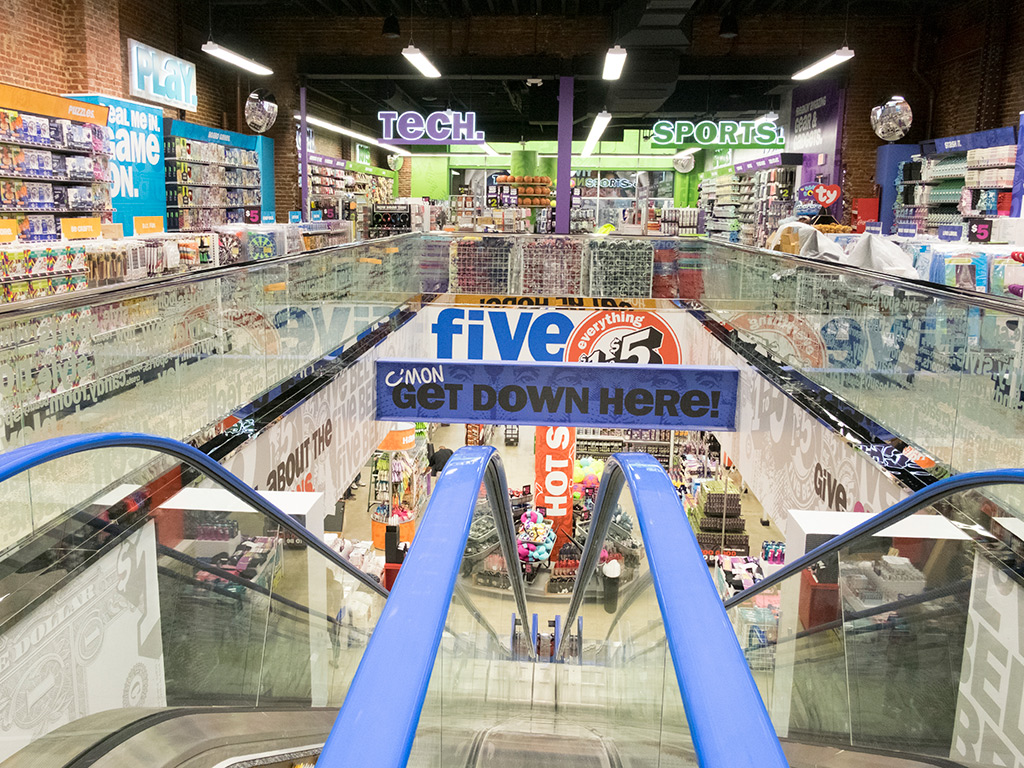
    Five Below, the Philadelphia-based discount retailer, has officially done away with its above-$5 section.

    But all its products aren’t below $5.

    Those higher-priced items — which had been set apart in stores’ “Five Beyond” sections and account for less than 20% of inventory — are now interspersed with the rest of the merchandise, according to chief executive officer Winnie Park.

    “We’ve actually seen that product perform better” when placed throughout the store, Park said last week on the company’s earnings call. “If you have a $35 gilt floor mirror, it’s in the room section and not tucked away in the back of the store.”

    The move came during a strong quarter for Five Below, which sells toys, games, decor, tech accessories, candy, party supplies, sporting goods, and more to kids, teens, and their parents.

    The company’s net sales rose nearly 33% and its net income increased to $123 million, triple the $41 million it recorded in the first quarter last year, according to the latest earning report.

    The wide selection of products at Five Below’s Chestnut Street location, one of its flagship stores, is shown in 2019. ED HILLE / Staff Photographer

    Executives attributed some of this growth to the popularity of games and toys, “underpinned by strong support of squishy trends and collectibles,” said Dan Sullivan, chief financial officer.

    “Everyone has been talking about the squishy dumplings,” the viral fidget toys that Five Below capitalized on, Park said. Pokemon and other trading cards also flew off the shelves.

    “We’re constantly looking at what next trend we can amplify,” the CEO said.

    Other factors contributed to higher sales, too, said the executives, citing higher tax refunds and broader economic pressures that are attracting more consumers to discount retailers.

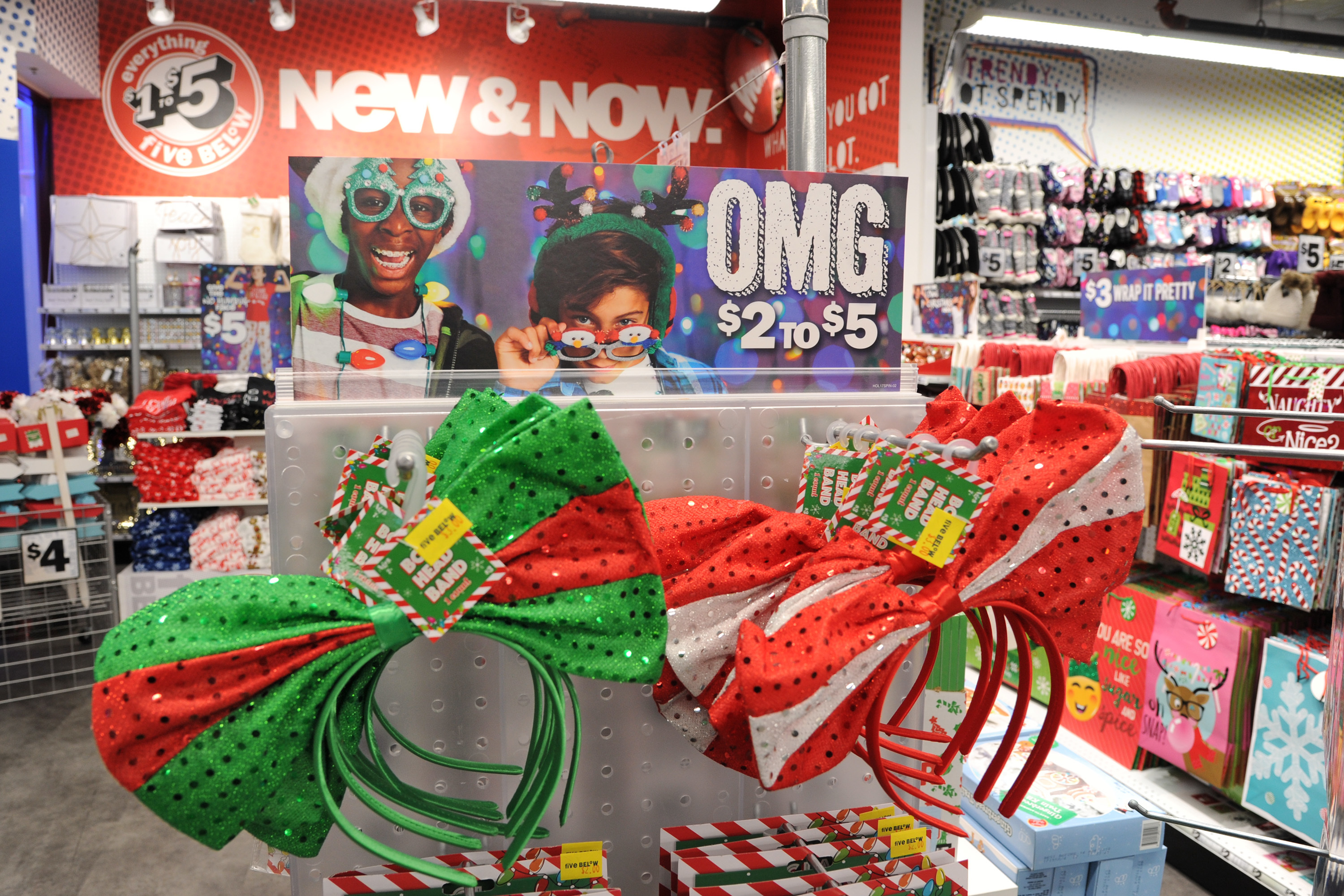
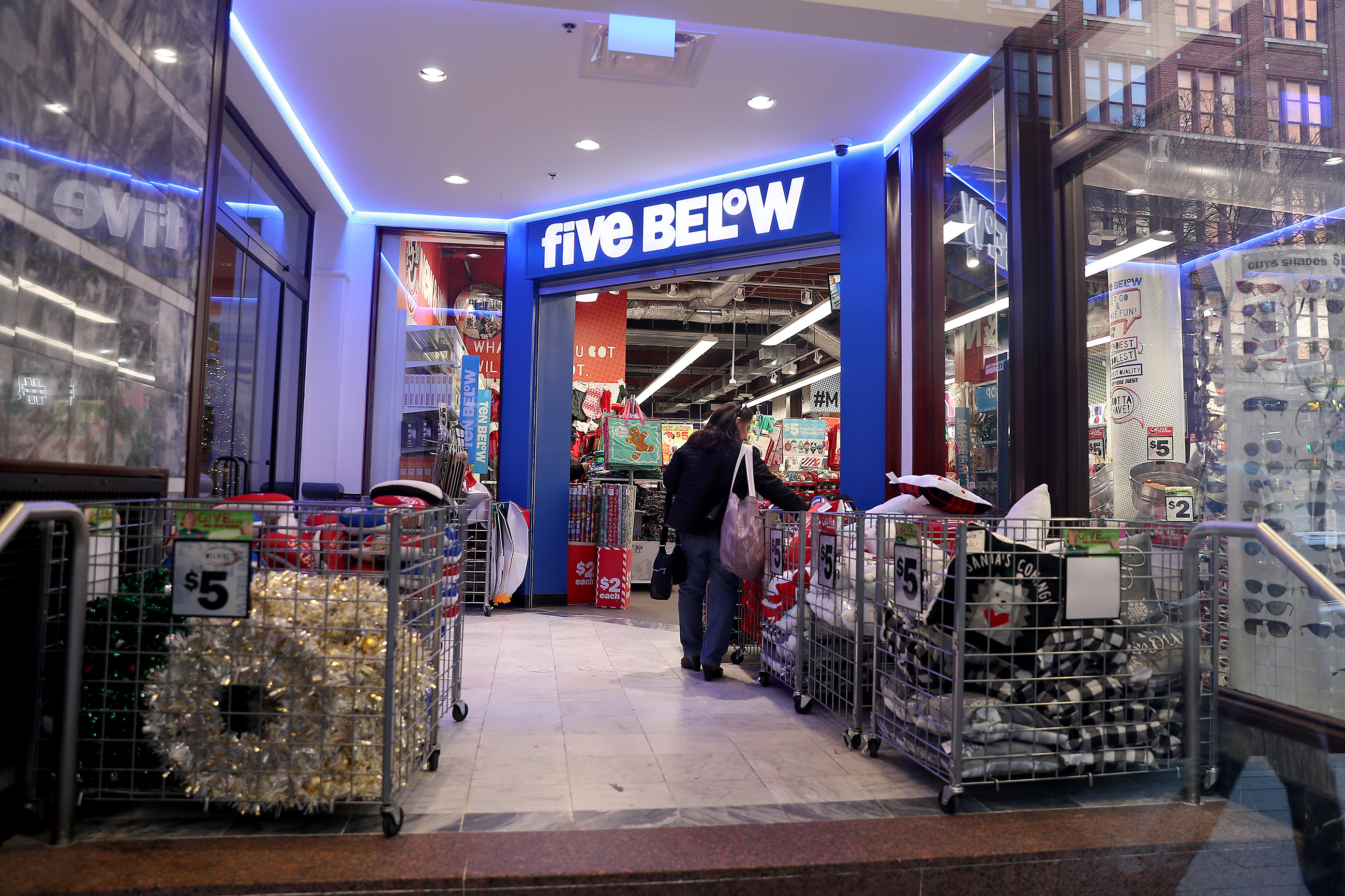
    A display of holiday accessories, priced between $2 and $5, were shown inside the Five Below on Market Street in this file photo.TOM GRALISH

    Off-price stores, such as Dollar General and South Jersey-based Burlington, have thrived in recent years amid rising costs of gas, groceries, utilities, and other essentials.

    Secondhand shops like Goodwill, which recently opened a giant new store in South Jersey, are also seeing stronger sales.

    At Five Below, executives said they have seen growth across all customer demographics, including millennial moms. Park said exercise gear, including yoga and Pilates equipment, has been a big seller.

    Sullivan said he’s curious to see what happens the rest of the year.

    “We’re being cautious,” the CFO said. “We’re looking at the world that our customers are living in with rising fuel costs, with very sticky inflation, with a somewhat soft labor market.”

    “And we think a piece of that pain that they are feeling wasn’t felt in the first quarter purely because of tax proceeds year-over-year that were significantly up,” he added.

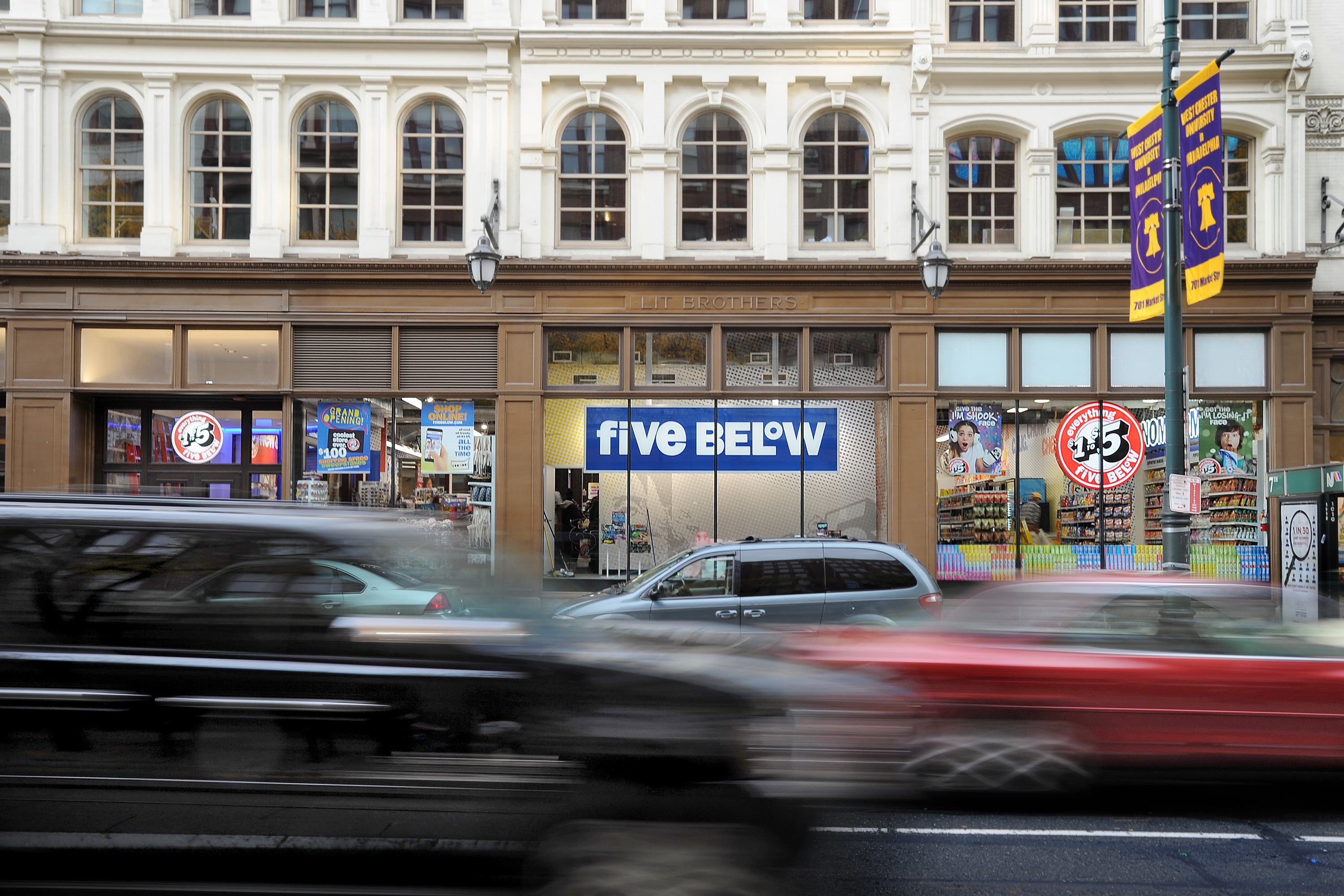
    Five Below was founded in Wayne in 2002 and has since grown to include 1,970 stores in 46 states. In 2018, the company opened a massive three-story headquarters in the former Lit Bros. building at 701 Market St. in Center City.

    Five Below’s Market Street location is shown before opening in this 2018 file photo.TOM GRALISH / Staff Photographer

    After a period of rapid expansion, Five Below has experienced some upheaval in recent years. Former CEO Joel D. Anderson stepped down in 2024 after two quarters of disappointing profits. Anderson, now CEO of Petco, had pushed to expand Five Below’s selection of above-$5 products.

    Park, the former top boss at Forever 21, took the helm in December 2024, with a mission to reaffirm Five Below’s reputation as an “extreme-value retailer,” as the company called itself in her hiring announcement.

    By last summer, the company was rebounding, thanks in part to viral toys like plush Squishmallows and artificial-intelligence tools that now help with inventory.

    Analysts told industry publication RetailDive that Five Below’s latest earning report showed the business in a strong position. They noted that stock prices fell initially, however, over concerns about the company’s ability to sustain this growth.

    “Looking ahead, the outlook remains very positive but is tempered by a dose of caution,” GlobalData managing director Neil Saunders told the outlet.

  • Police identify pizza delivery driver killed in North Philadelphia

    Police identify pizza delivery driver killed in North Philadelphia

    Philadelphia police on Monday identified the pizza delivery driver killed while dropping off food to an unoccupied North Philadelphia property Friday.

    Anshul Kuncha, 28, was found with a gunshot wound to the back of his head on the 2300 block of Edgley Street just after 12:30 a.m. Friday, police said. Kuncha, was an Indian national living in the city at the time of his death, according to the Consulate General of India in New York.

    “Our thoughts and heartfelt condolences to his family during this difficult time,” the consulate said in a statement on social media. “The Consulate is in touch with Anshul’s family and is extending all possible assistance.”

    Kuncha’s family, who are located in Hyderabad, India, are working to repatriate Kuncha’s remains, according to the Press Trust of India, an Indian news agency.

    Police responded to Kuncha’s shooting early Friday morning in Strawberry Mansion, and took him to Temple University Hospital. He was pronounced dead there at about 12:45 a.m.

    At the time of the shooting, Kuncha was making a delivery to a vacant apartment at the Raymond Rosen Homes, a Philadelphia Housing Authority-owned property in North Philadelphia. Surveillance footage from the area showed two people following Kuncha as he walked to the property’s door, Philadelphia Police Chief Inspector Scott Small told 6abc.

    Police were later able to identify the phone number associated with the order Kuncha was delivering, and said that the food was found untouched inside the property.

    No arrests have been made in Kuncha’s killing, and no weapon was recovered at the scene, police said. Investigators are offering a $20,000 reward for information that leads to an arrest and conviction in the case. Anyone with information can contact the homicide unit at 215-686-3334, or the police department’s tip line at 215-686-TIPS. Tips can be made anonymously, police said.

    Police statistics indicate that as of Sunday, 62 homicides were reported in the city this year, representing nearly a 35% drop over 2025.

  • FDR Park’s massive slide didn’t meet new safety standards, keeping the playground closed for months

    FDR Park’s massive slide didn’t meet new safety standards, keeping the playground closed for months

    A real-life lesson in patience is here for Philly’s young playground users.

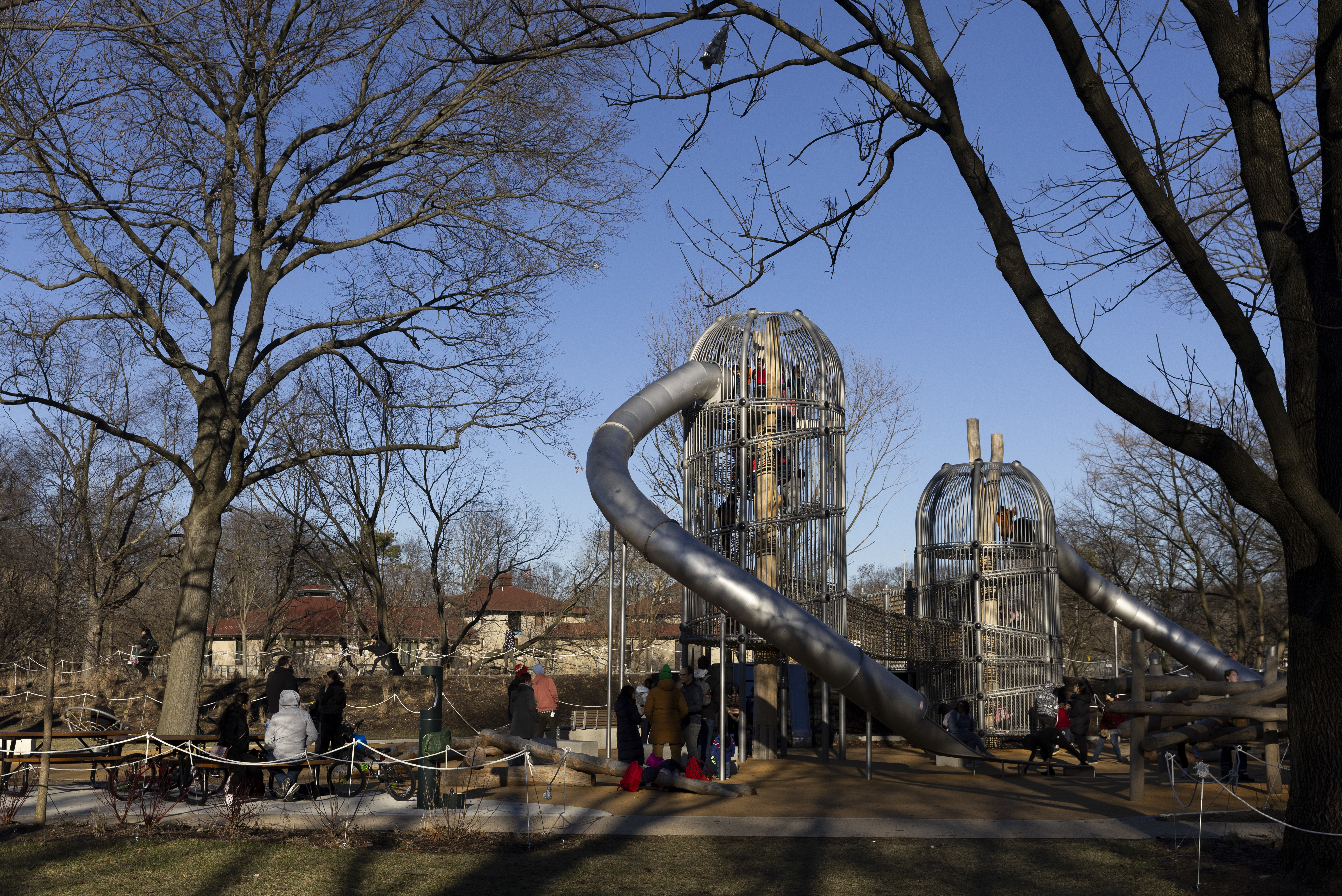
    Already closed since the winter, FDR Park’s Anna C. Verna Playground will be fenced in for at least another few weeks while it awaits the arrival of new parts for its massive 30-foot slide, after an inspection found the equipment did not meet updated voluntary safety guidelines. The award-winning playground and home of the largest “Megaswing” swing set in North America was a signature piece of FDR Park’s $250 million revamp.

    The playground’s construction was overseen by the nonprofit Fairmount Park Conservancy, and Verna opened to the public in October 2023. Following its completion, ownership of and responsibility for the playground passed over to the city. A final safety audit before opening day found it to be in compliance with the voluntary guidelines in place at the time, according to Meghan Talarowski, the playground designer and executive director of Studio Ludo.

    Last year, two organizations issuing standards and recommendations for playgrounds — the Consumer Product Safety Commission and American Society of Testing and Materials— each created new safety recommendations regarding tall towers, like the Verna slide. Previously, there was no such guidance, Talarowski said.

    After Philadelphia Parks and Recreation conducted a routine inspection of the playground in January, it found the slide did not meet those new recommendations, which included having safety guards along the structure.

    The department immediately shut the entire playground down and put chain-link fences around it, according to Parks and Recreation Commissioner Sue Slawson, who began her role in 2024. The inspector also determined the structure users climb to get to the top of the slide had many missing or loosened bolts, she said.

    Previous Philadelphia Parks and Recreation inspectors had identified missing or loose bolts and replaced them, but this was the first time the guard issue has been raised, she said. Last summer, a video went viral of a little boy climbing the outside of the slide and falling to the ground, luckily without major injury.

    “Once we realized that there was an issue and we were concerned about liability and safety for the young people that were using it, we put up the fence. And our goal was to ensure that it was not used until we got the necessary pieces to ensure that the playground was safe,” Slawson said.

    Nicky Talarowski, 8, plays on a slide at the new Anna C. Verna Playground at FDR Park in Philadelphia, Pa. on Sunday, Feb. 4, 2024.Monica Herndon / Staff Photographer

    The city ordered the necessary bolts and guards from the playground’s parts manufacturer in Germany in March, and they are expected to arrive later this month. Installation will begin upon their arrival, according to parks and recreation department spokesperson Ra’Chelle Rogers.

    Philadelphia Parks and Recreation has put up signage informing visitors the playground was closed “for maintenance,” Slawson said. But the precise cause of the closure has not been well known or advertised. Visitors have regularly pried open the fence to use the playground despite the department resealing it multiple times, Slawson said.

    While Verna could reopen relatively soon, another significant Philadelphia Parks and Recreation closure does not figure to be remedied in time for this summer. Towey Recreation Center in North Philadelphia announced its closure last week, after an assessment determined its roof was structurally compromised and required immediate repairs, Rogers said.

    Towey will be closed indefinitely while the city determines a renovation plan. Repair work could take several months.

    In the meantime, its playground will remain open, Rogers said. Towey’s summer camp will be moved to Cruz Recreation Center, which has the capacity to accommodate campers from both sites. Other programming will be accommodated at nearby Philadelphia Parks and Recreation facilities.

  • 23-year-old man dies in Kensington double shooting, police say

    23-year-old man dies in Kensington double shooting, police say

    A man was killed in a double shooting in Kensington over the weekend, authorities said.

    Rymir Ibn-Allah Shaw, 23, was shot on the 3500 block of F Street, police said Monday.

    Officers responded to the scene Saturday around 11:50 p.m. to find Shaw in the street with multiple gunshot wounds.

    He was taken to Temple University Hospital, where he was pronounced dead at midnight.

    Another man, whom police did not identify, was also shot, they said. He was struck once in the back.

    Officers found the man injured near G Street and Erie Avenue and took him to Temple University Hospital, where he was listed in stable condition, the department said.

    Investigators believe the shooting was related to an argument. They have not named any suspects or announced an arrest.

    Anyone with information on the incident is urged to contact the Philadelphia Police Department’s Homicide Unit at 215-686-3334 or submit an anonymous tip.

  • Police ID pizza delivery man shot and killed in North Philadelphia

    Police ID pizza delivery man shot and killed in North Philadelphia

    The pizza delivery driver who was shot and killed while dropping off food to an unoccupied property in North Philadelphia last week was identified by police Monday as Anshul Kunsha.

    The shooting happened just after 12:30 a.m. Friday on the 2300 block of Edgley Street in Strawberry Mansion. Responding officers arrived to the scene to find Kuncha lying on the ground with a gunshot wound to the back of his head.

    He was taken to Temple University Hospital, where he was pronounced dead at about 12:45 a.m., police said.

    No weapon was recovered, and no arrests have been made.

    At the time of the shooting, Kuncha was making a delivery to a vacant apartment at the Raymond Rosen Homes. Surveillance footage from the area showed two people following him as he walked to the property’s door, Philadelphia Police Chief Inspector Scott Small told 6abc.

    Police were later able to identify the phone number associated with the order Kuncha was delivering, and said the food was found untouched inside the property.

    Investigators are asking anyone with information about the incident to contact the Homicide Unit 215-686-3334, or the PPD tip line at 215-686-TIPS. Tips can be made anonymously, and a $20,000 reward is available for information leading to an arrest and conviction in the case, police said.

    Staff writer Jesse Bunch contributed to this article.

  • What the colorful markings on Philly-area streets and sidewalks reveal about what’s underground

    What the colorful markings on Philly-area streets and sidewalks reveal about what’s underground

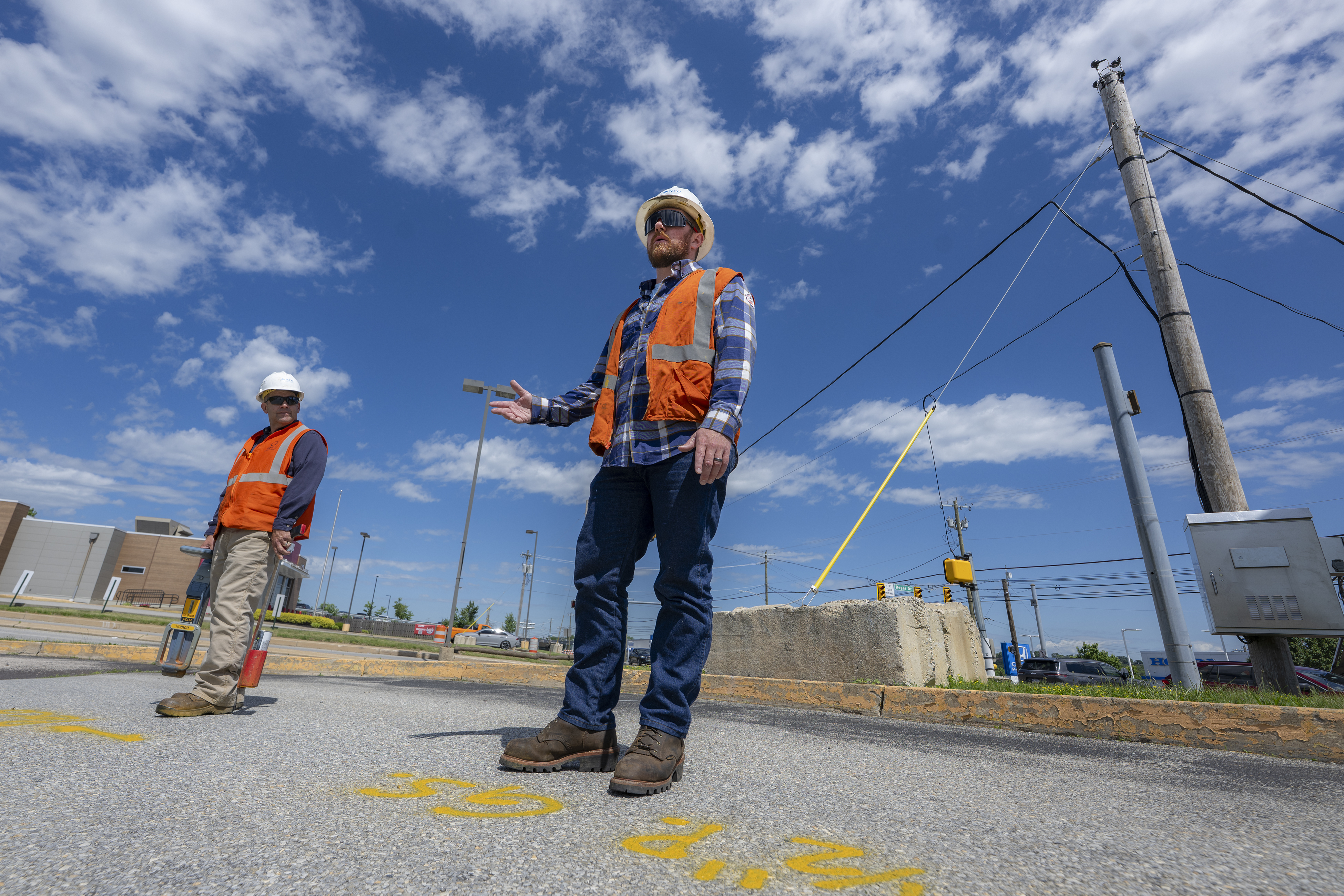
    On a hot Thursday morning, two Peco workers arrived in Conshohocken, tools in hand, to spray-paint brightly colored letters and numbers onto the sidewalk.

    The symbols might look like gibberish; but they are the language of utility companies that let anyone doing work in the area know what utilities are underground.

    The process starts when a business owner, contractor, or homeowner calls 811, the free Pennsylvania line that must by law be called before any digging work to prevent damage in utility lines.

    The call center takes in the who, when, where, and whys of the job, and the corresponding utility companies make sure their lines are labeled in the area.

    “If somebody is digging and they don’t know where our gas and electric lines are, there is a potential for property damage, loss of life, or injury — anything from cuts and scrapes to a fatality,” said damage prevention inspector Bryan Lloyd.

    This marking is usually a one-person job, but if the digging spans miles, a team will be sent out.

    In Conshohocken, the project near a plaza on a commercial strip is large enough for gas supervisor Michael Onimus to accompany Lloyd on this request.

    The men got out of their truck and put on protective gear, white Peco helmets, and reflective orange vests.

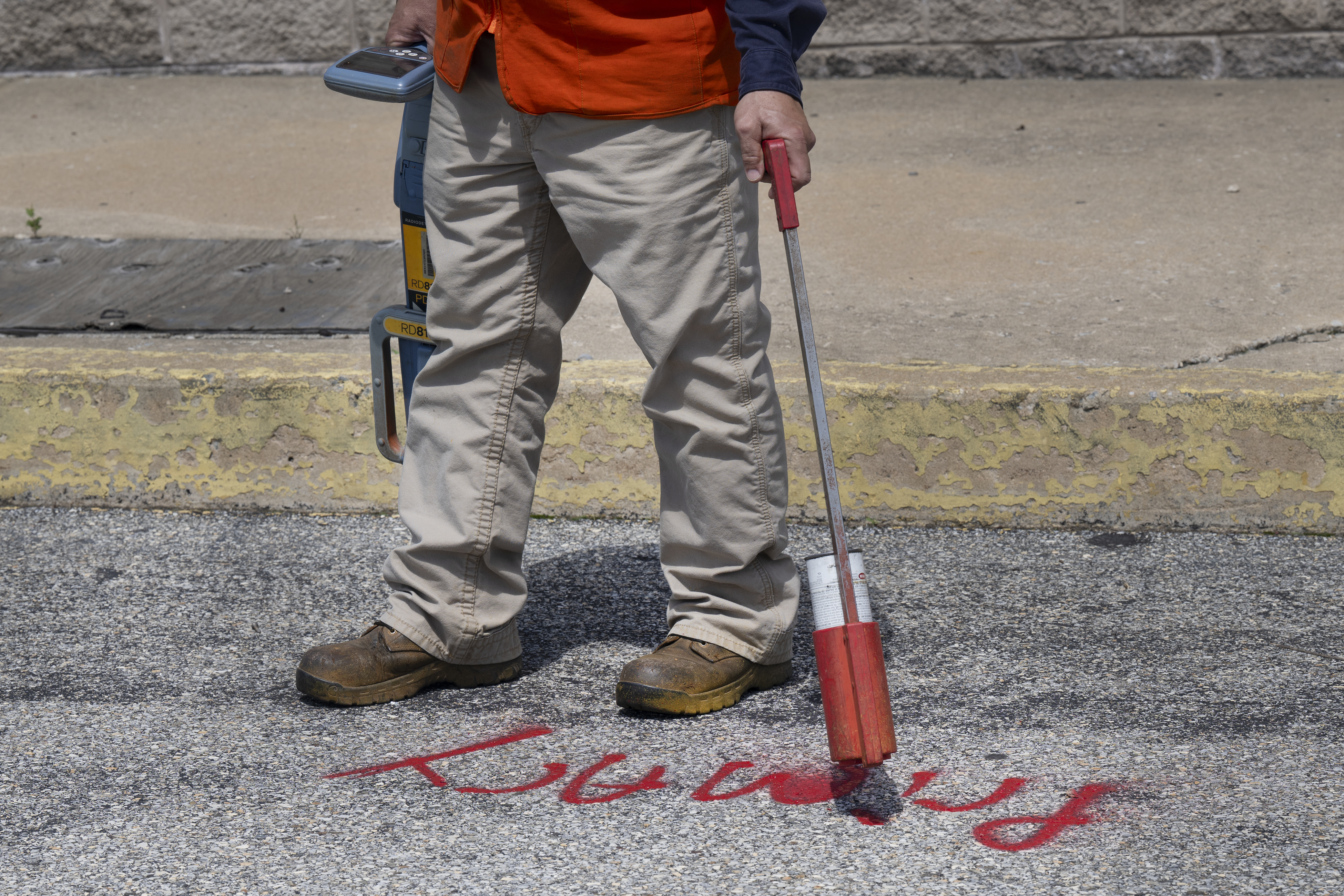
    Lloyd leaned into his truck, moving a 2½-foot-long blue bag with equipment out of the way, to reach a red metal marking wand that will later be loaded with spray paint to help him make the marks.

    Inside the bag, Lloyd keeps radiodetection equipment capable of locating cables, pipes, and lines of multiple materials.

    The machine has a box called a transmitter with two cables, and a current locator that works similar to the metal detectors folks use to scope the sand down the shore.

    Lloyd creates a circuit connecting a red clip to the gas meter. A black grounding tool — which looks like a long metallic turkey baster— is inserted into a dirt patch to complete the circuit.

    Lloyd pushes it into the soil, sending a current to detect precisely where the line was located.

    The type of soil, amount of rock, and pipe materials can change how easily the locator can pick up the signal.

    In this case, the locator picked up a signal about 20 steps from the meter.

    Locator in the right hand and marking wand with yellow spray paint in the left, Lloyd walked around the perimeter of an empty restaurant, following the frequency and spraying yellow spots along the way.

    The yellow color was not his choice. It’s part of a color-code system that lets contractors know which lines are in the areas they are digging. According to Onimus, each service has its own pigment:

    • Yellow: gas pipes
    • Red: electric lines
    • Blue: water pipes
    • Green: sewer lines

    Luckily, paint isn’t the only way to mark things. In areas where painting would be difficult, like grass, they can place small flags with the same color-coding system.

    Bryan Lloyd, Peco damage prevention inspector, marks the ground following the frequency of a gas line.Jose F. Moreno / Staff Photographer

    Once Lloyd has circled the area, he walked along the path of dots making long Z-shaped lines to connect them, before writing “½ P. GS. Peco” in yellow spray paint. This is called labeling the utility line.

    “You have the size of the facility, which is half an inch in this case. The material type, which here is plastic, so P. Then you have the service, in this case GS for gas. And then Peco to let everyone know this is our facility,” Onimus said.

    The order in which those elements are written down always follows the same pattern, but the information changes depending on how big the pipes are, type of line, utility company, or material they are made of.

    For example, “S” means the line is made out of steel, while “CI” stands for cast iron, Onimus said.

    With the gas all mapped out, it was time for the electric. The process is not much different, but the current-detection system does vary, since gas pipes are usually made of plastic, but electric lines have steel or metal inside the cables.

    Like with the gas line, he follows the signal, this time leaving bright red dots on the ground.

    The electrical current led them to a pole inches away from where digging is already taking place — markings of a light red spray from a different utility company already branded the concrete.

    Picking up the frequency from the electric line, Lloyd drew what looks like a red H on the ground. The mark signaled multiple electrical lines were connected to the nearby street light post, three in this case.

    PECO Damage prevention inspector Bryan Lloyd, writes “primary” on the ground signaling where the electric lines are.Jose F. Moreno / Staff Photographer

    Tracing back his steps, Lloyd drew more H’s in between the previously marked red dots. Before arriving back at the meter, he wrote: “Peco. Ele. Primary,” meaning a primary electrical line that belongs to Peco.

    Twenty minutes later, their work in Conshohocken is wrapped up. But not before Onimus stressed the importance of calling 811 before any digging job, even gardening, no matter how small it may seem.

    “People say ‘I was doing a couple inches,’ but before you know [it], you are 12 inches deep in the ground, and hitting a gas or electric line,” Onimus said. “If you hit a gas line, it may not necessarily injure you, but it could implicate a kind of injury to somebody else in the community, so calling makes sure everyone in the community is safe because we are all in this together.”

  • A Philly grandmother says $600 of EBT benefits were stolen in a skimming scheme. A solution for Pa. might be on the horizon.

    A Philly grandmother says $600 of EBT benefits were stolen in a skimming scheme. A solution for Pa. might be on the horizon.

    Keenya Banks lives in Philadelphia with her husband and the two grandchildren they care for. She has never been to Fishkill in New York’s Hudson Valley.

    Yet, that’s where someone spent more than $650 in food assistance benefits for her family at a Sam’s Club in April in an alleged case of EBT skimming, just one of the more than 5,100 cases reported in Pennsylvania between the start of the year and May. This year’s skimming incidents account for approximately $2.5 million in stolen benefits, according to the Pennsylvania Office of State Inspector General, which investigates the reports and seizes the skimming devices.

    It’s likely Banks used her EBT card in a point-of-sale machine rigged with a device designed to copy her card information and pin number. Someone then applied her EBT information to a different physical card and drained her monthly benefits the next day.

    “I was too numb to cry because I just couldn’t believe it,” said Banks, 56, who was alerted to the fraud as she tried to purchase food days after she had gotten her month’s benefits. “They said, ‘Ma’am, this is declined.’ I said, ‘No, no, I have at least 600-something dollars.’”

    Even more devastating to Banks: For a brief stretch of time, benefits were being reimbursed through a federal program, but that ended December 2024 because Congress did not extend funding. The most that the Pennsylvania Department of Human Services can do is direct victims to food banks and other food assistance programs. The end of the federal reimbursement program also means the skimming incident data Pennsylvania has on hand are likely an undercount: Victim advocates say people may simply skip reporting if they believe nothing can be done.

    Pennsylvania is looking at a possible solution, but without one immediately available, Banks spent a month scrambling to put food on the table with the help of food pantries and what she had on hand.

    “We had been storing up, like a lot of canned goods and water, and we had a deep freezer, and thank God we were able to really kind of make ends meet.”

    Victim advocates argue EBT skimming has risen to a nationwide crisis because the federal government has failed to invest in more secure card technology. Between October 2022 and the end of the reimbursement program in 2024, states reported $320 million in stolen Supplemental Nutrition Assistance Program benefits, according to the Government Accountability Office.

    EBT cards: From cutting-edge technology to scammers’ favorite

    The idea that someone’s food benefits could be loaded digitally onto something that worked like a debit card was once revolutionary.

    Before federal supplemental food assistance could be loaded onto a card, it used to come by way of coupon books or mailed checks, depending on the program. These methods not only came with high administrative costs but in the case of the coupons, also known as “food stamps,” there was an element of stigma and a risk of forgery.

    The federal government launched its first “electronic benefit transfer” pilot in Reading in 1984, yet it was not until 2002 that all states were required to make the switch.

    By then, scammers had already learned how to exploit the magnetic stripe technology used in debit, credit, and EBT cards. While banks have made cards more secure by adopting chip technology, the federal government has stuck with the magnetic stripes for EBT cards.

    In the absence of chip adoption, states have resorted to other added security measures. Last May, Pennsylvania launched ConnectEBT, an app that allows people to lock their cards until they are at the checkout line, ready to use them.

    Mackenzie Libbey, staff attorney in the health and independence unit at Community Legal Services, noted the current system places the onus on families, which are required to lock and unlock their cards, monitor their spending, and change their PIN regularly to stay ahead of fraudsters.

    “It’s just not something that anyone would expect of a middle-class consumer using a credit or debit card,” Libbey said. “It’s a lot of extra effort to protect benefits that they have shown they’re entitled and eligible to receive.”

    CLS has advocated for the federal government to reimburse victims of skimming again and for Pennsylvania to adopt chip cards.

    Pennsylvania eyes chip EBT cards

    The federal government did not approve the use of chip and tap-enabled EBT cards until 2024, largely due to concerns over the costs of upgrading the aging technological infrastructure in use.

    Some states were eager to become early adopters and tackle the skimming issue.

    In February 2025, California became the first state to begin replacing the magnetic stripe cards, with a handful of states following suit because of their own issues with skimming. Oklahoma launched a two-month pilot this March, and in April, Massachusetts announced its plan for a pilot later this year. New Jersey also has plans for a chip card rollout.

    But the U.S. Department of Agriculture has approved only two vendors for the new cards, and users in early adopter states have complained about issues with the chips and difficulties getting the cards to process.

    Those issues gave Pennsylvania Secretary of Human Services Val Arkoosh pause. She has previously said the technology was not quite ready.

    In a May hearing with the House Democratic Policy Committee, however, Arkoosh said Pennsylvania’s vendor had promising data. After Alabama adopted chip cards, the state saw an 83% reduction in theft in 60 days among the people using the chip, she said.

    “I do think I can now sit here and say to you, I believe that the technical issues have largely been solved,” she said at the hearing. “I didn’t want us to embark on this before we were confident that it would work, but I think we’re there now.”

    And there appears to be interest in Harrisburg to go after EBT skimming.

    A bipartisan bill that would require Pennsylvania to transition to chip-enabled EBT cards by 2028 moved out of committee Wednesday to the full House.

    A recent cost estimate puts the overhaul at about $14 million, according to the Pennsylvania Department of Human Services. It would take six to eight months to roll out chip cards after approval, barring any significant challenges, according to a December report by the department.

    Should legislators in Harrisburg choose to fund the transition, they would have an incentive to move fast. While the federal government used to split SNAP administrative costs evenly with states, come Oct. 1, states will be on the hook for 75% of these expenses because of the One Big Beautiful Bill Act.

    For now, the Pennsylvania Office of State Inspector General’s skimming response teams continue to search for these devices and prosecute fraudsters. Between April 2025 and March of this year, the agency said, it had prevented $8.3 million in potential losses.

    The USDA, meanwhile, said it is not stopping at card locking and chip adoption. It is combating skimming and other SNAP fraud with mobile payment pilots and encouraging states to block out-of-state and online SNAP transactions by default.

    These efforts, while welcome, cannot undo what Banks and her family went through the month after the theft they experienced. She hopes her story can alert other families to scammers targeting EBT users.

    Until chip cards come, even Banks’ 10-year-old grandson is on the lookout, monitoring their card benefits and inspecting point-of-sale machines at the grocery stores.

    “He’s so tech savvy and he’s very, very wary,” she said. “So he’s like, ‘Grandma, did you check and see if there’s a skimmer on there?’”

  • A Man found shot to death near the Quaker City Yacht Club

    Responding to a radio report of gunfire Sunday afternoon, Philadelphia Police found a man shot to death near the boat ramps of the Quaker City Yacht Club.

    It was just before 5 p.m., when patrol officers raced to 5198 Princeton Ave., where the yacht club is located tucked away near the Delaware River waterfront.

    Within minutes, paramedics pronounced the victim, whose name and age have yet to be released, dead on the scene.

    Investigators are currently working to determine the circumstances surrounding the shooting. No motive has been established, police said.

    The victim became the 59th homicide in Philadelphia in 2026, a nearly 40 percent decrease in killings from the same time last year.

    Anyone with information involving the shooting is encouraged to contact the Philadelphia Police Department’s Homicide Unit at 215-686-3334 or submit an anonymous tip by calling or texting 215-686-Tips.