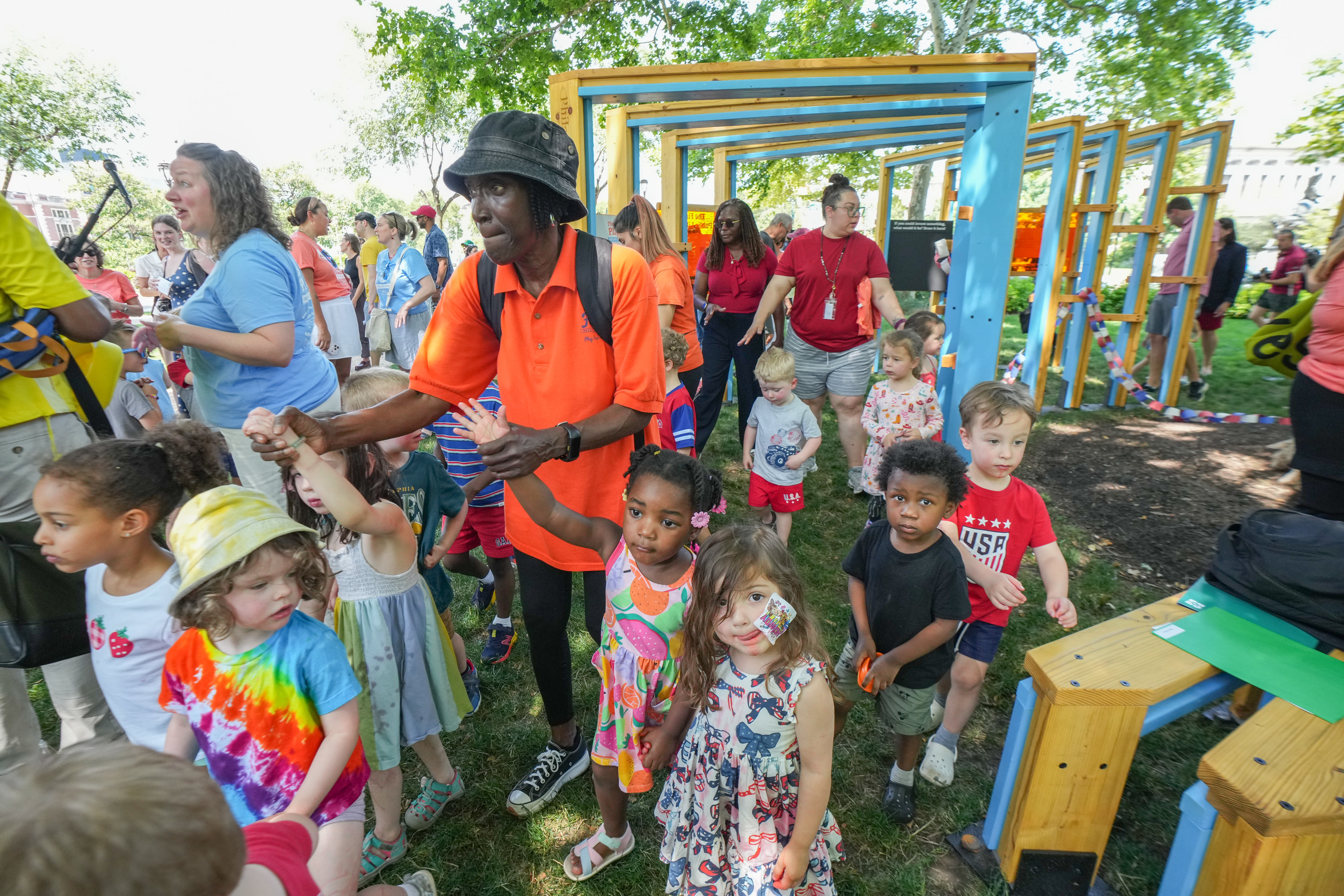
A stampede of tiny Croc shoes displaying ice cream and hamburger Jibbitz raced through an interactive structure at Sister Cities Park in Center City on a sunny Thursday morning.
“Philadelphia changed the world,” read an etching at the front of the play structure. “Ready to see how?”
Little red and blue gingham skirts fluttered in and out of wooden doorframes as 75 preschoolers explored a brand-new play arena that featured a series of colorful, translucent posters highlighting inventions from Philadelphians, including the Slinky, the revolving door, and the public library.
Panels inside the structure showcased inventions spurred by the imaginations of children, such as Popsicles, earmuffs, and trampolines.
The Sister Cities Park installation is one of 11 educational structures geared toward children placedat landmarks around the city. The series is an effort to further the city’s commitment to children’s engagement in public places and solidify its status as a great city for kids, as well as to celebrate the nation’s Semiquincentennial. Itwas unveiled June 11, a day the United Nations designated in 2024 as International Day of Play.
The bundle of installations includes colorful wheels at the Philadelphia Zoo teaching kids about animal species, a set of tabletops at Reading Terminal Market featuring displays about colors and tastes, and arton fencing at the Franklin Institute instructing children how to find different constellations in the night sky.
The final three installations — at Franklin Square, the National Constitution Center, and Elfreth’s Alley — have yet to be installed and are coming soon, according to the project website.
The goal is to keep Philadelphia a city on the forefront of children’s enrichment and one that makes it publicly available for all kids in the city to benefit from, Philadelphia Mayor Cherelle L. Parker said at the unveiling of the Sister Cities Park installation.
“This idea that our children can have places and spaces where they can feel safe, supported, and seen, and free to just be children, is extremely important to me,” Parker said. “Truly great cities invest in their children.”
Philadelphia Mayor Cherelle L. Parker, right, hugs Raechel O’Neal Coats, director of the Friends Childcare Center, left, at the unveiling of a new playful learning hub at Sister Cities Park in Center City, Philadelphia, June 11, 2026.Jessica Griffin / Staff Photographer
Sarah Lytle, executive director of Playful Learning Landscapes, a nonprofit that helps U.S. cities convert ordinary spaces into learning hubs, presented Parker with documentation of a new designation for the city — World’s First Playful Learning City.
Moments later, Parker ripped a red, white, and blue paper-link chain and a procession of kids tore through the new installation, quickly getting to work weaving in and out of its pillars and standing on tippy-toes to doodle on chalkboards affixed to the structure’s middle section.
The Sister Cities event was finished off with words from whom else but the city’s most renowned tinkerer and inventor, Ben Franklin (or, technically, James Longacre, who specializes in lectures, TV commercials, and ribbon-cuttings performing as Ben Franklin).
He thanked Parker for securing Philadelphia’s latest special designation and “for reminding our city that a spark of curiosity is brightest when struck with a bit of play.”
As quickly as the kids barreled toward the structure to inaugurate its first playtime, they returned to teachers and aides — ice pops, toy boats, and bottles of bubbles in hand, ready to be entertained anew. Dozens of tiny hands grasped a rainbow-colored rope and teachers ushered the students back up the Benjamin Franklin Parkway and onto their next adventure.
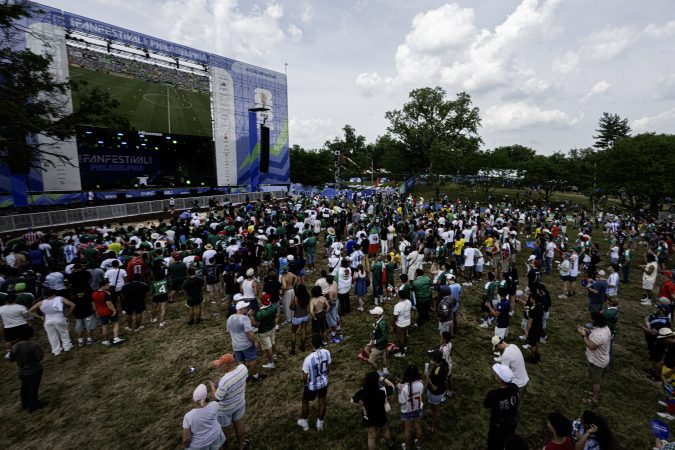
Philadelphia’s scorching, soupy weather could not stop soccer fans from making the trek to East Fairmount Park, where World Cup revelers filed in Thursday afternoon to celebrate the tournament’s kickoff at the FIFA Fan Festival.
Thousands of soccer lovers were present, arriving at Lemon Hill for the festival’s 2 p.m. start time — an hour before Mexico started its clash against South Africa in the World Cup’s first match, in Mexico City. Philly’s FIFA Fan Festival, which is slated to run for 39 days through the end of the tournament next month, arrived amid a heat advisory that saw temperatures push into the mid-90s with heat indexes surpassing 100 degrees, thanks to high humidity levels.
And that did not go unnoticed by festival attendees.
“This is far too warm for us,” said Rhys Gray, who traveled to Philadelphia from Scotland. Gray arrived in town Tuesday and plans to make the city his home base as he and his father follow Scotland’s games throughout the World Cup. Gray, who donned a matching plaid bucket hat and shirt for the occasion, said the city had been welcoming so far.
“I never felt so popular,” he added.
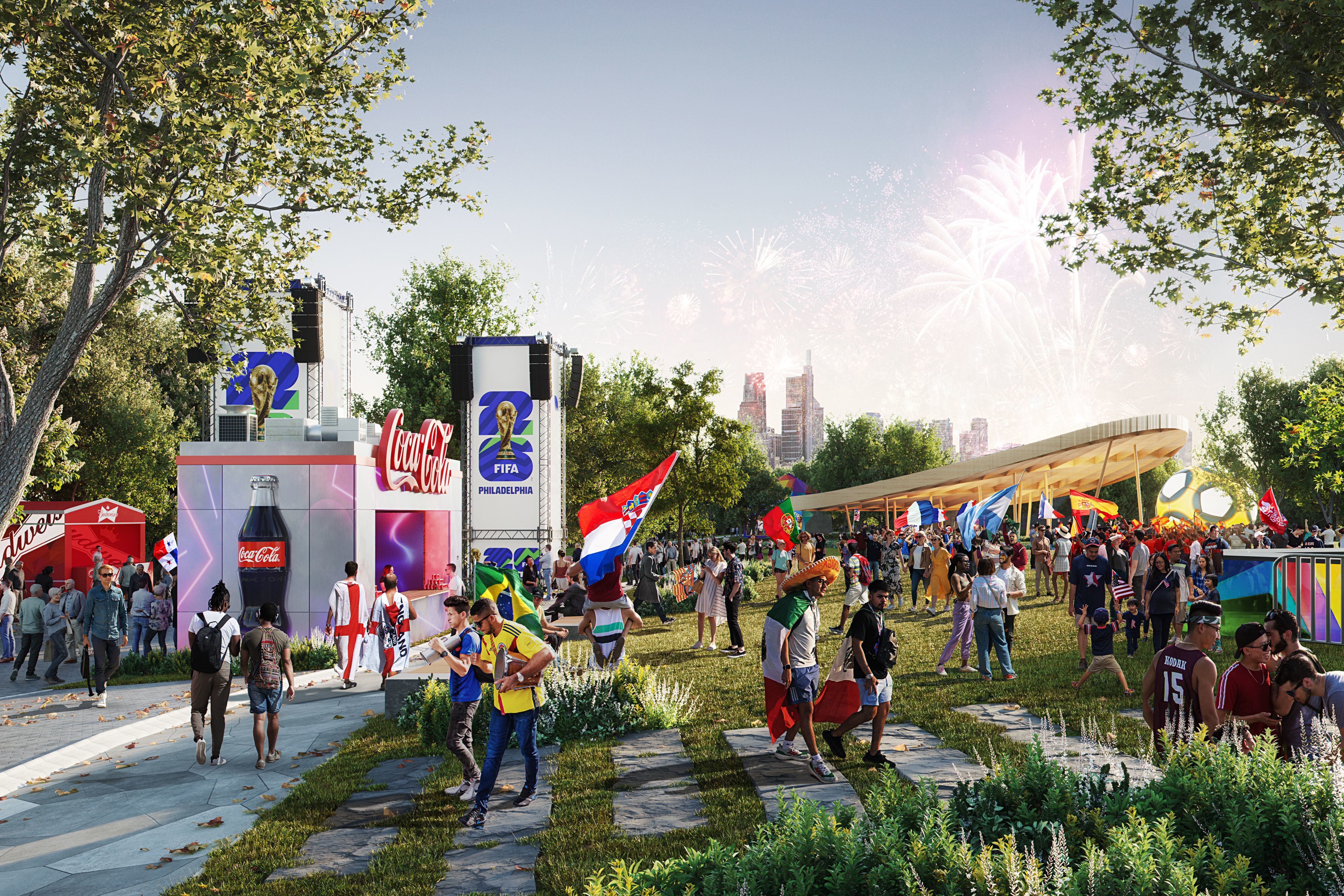
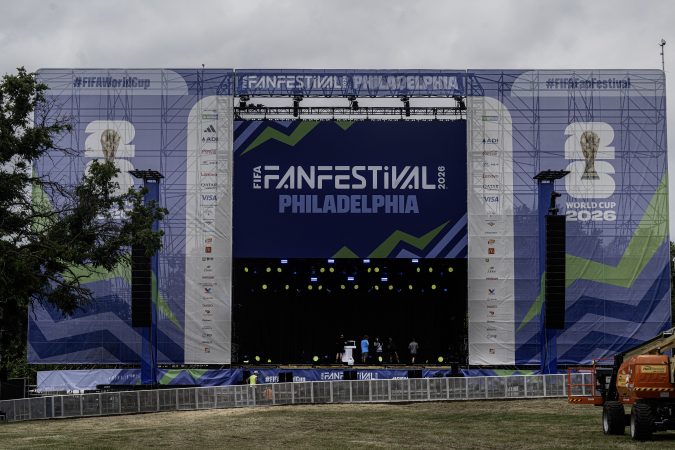
The FIFA Fan Festival serves as the city’s official World Cup watch party, and sprawls across a million square feet of lush, green space at Lemon Hill. It is capable of holding 15,000 attendees, many of whom are expected to take in matches on the festival’s 60-foot-wide screen on the main stage. The family-friendly event also features more than 80 food trucks, a massive shopping area, and a beer garden, among other amenities.
And while it attracted World Cup watchers from around the world Thursday, Philadelphia-area locals also made the trip. Many attendees seemed to be rooting for Mexico, judging by the sea of green-and-red soccer jerseys that dominated the space.
Among Mexico’s supporters was Bianca Vetta, who traveled to Philly from Easton with her mother. On Thursday, Vetta’s face was painted like the flag of Mexico, with red, white, and green marking her cheeks to show her support for the country’s team. Her father, she said, is from Mexico.
Bernard Dagenais, president and CEO of the Main Line Chamber of Commerce, also supported Mexico over South Africa. Dagenais, who parked at the nearby Philadelphia Museum of Art and walked to Lemon Hill, said his support for the country only made sense.
“Why not?” he asked. “They’re our neighbors to the south.”
Dagenais’ walk is likely not to be unique during the festival’s run, as extensive road closures and parking restrictions arrived with the event. Organizers have encouraged attendees to take rideshares or public transportation, which some Philadelphia residents, like West Philly’s Eric Abreu, heeded.
Despite the travel restrictions, Abreu said, getting to the festival was convenient and trouble-free, thanks to a $10 Uber ride that dropped him off nearby. And while he plans to head back to the festival grounds in the coming days, he did note Thursday was a little on the warm side.
“Hopefully we just get a nice tan,” Abreu said.
Philadelphia itself, meanwhile, is slated to host its first World Cup game Sunday, when Ivory Coast faces off against Ecuador at Lincoln Financial Field. FIFA has temporarily renamed the arena “Philadelphia Stadium” for the World Cup, which will include six games in town through July 4.
Philadelphia’s role as a host city, however, seemed to be secondary to the match at hand Thursday afternoon. As the match started, attendees flocked to the festival’s largest screen, set out picnic blankets, and danced to music reverberating through the grounds. Cheers and applause in Philadelphia erupted as the teams took the field in Mexico City.
On Thursday afternoon, said attendee Patrick Aruta, a registered nurse at Penn Presbyterian Medical Center, the experience transcended any difficulties or controversies that may be associated with the World Cup. In that fleeting moment, he said, this was all there was — just enjoying the match, with thousands of other fans from far and wide.
“No matter what people say about the heat [or] the political climate, there is nothing like this. I forget who I am for a moment,” he said. “You can’t get this at any other sports game. Just the World Cup.”
In the middle of mundane City Council procedures on Thursday, cheers erupted inside Council chambers.
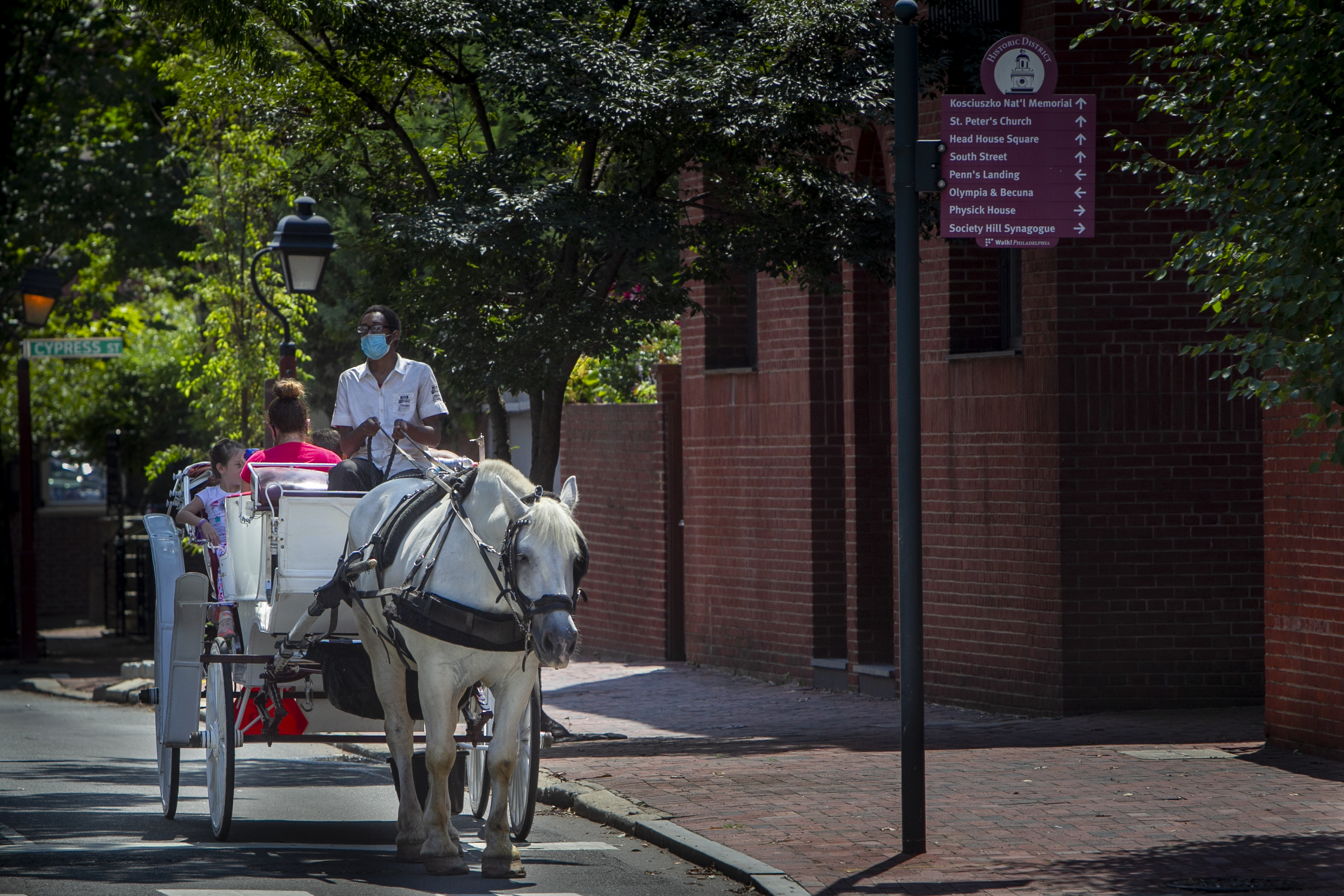
Supporters were celebrating the passage of a bill that will outlaw horse-drawn carriages in Philadelphia. The ban would take effect after Mayor Cherelle L. Parker signs it into law.
The city’s last operating horse-carriage business, 76 Carriage Co., ceased operations in 2023, but people have taken noncommercial horse carriages to South Street in recent weeks.
Councilmember Mark Squilla, who introduced the bill, and animal-welfare advocates have been working to ban the practice for several years. The advocates have argued that horse-drawn carriages are cruel and onerous to the animals, and dangerous for surrounding traffic and pedestrians.
Philadelphia City Council was slated to vote on the bill last week, but that version would have banned only commercial horse-carriage use. Advocates like Janet White, executive director and founder of Carriage Horse Freedom, successfully pushed for the bill to be amended to include a ban for both commercial and noncommercial uses.
The new proposal allows for some exceptions, which would be regulated and monitored by animal control and the Philadelphia Department of Licenses and Inspections. Violations of the ban could result in fines of $1,000 per day for someone operating a horse carriage.
Council voted nearly unanimously for the amended bill’s passage in its last session before summer recess, with Councilmember Nicolas O’Rourke casting the lone vote in opposition.
O’Rourke said his nay vote was “benign,” because he has deep respect and connection with horses since his mother taught him how to ride and care for them. His objection came from concern about how the language of the legislation potentially could make it difficult for movies filming in the city to use horse carriages, he said, and he would like to continue talking about the issue over the summer.
White said the bill’s passage made her hopeful, and she believes it will help Philadelphia move into a better future for animal welfare.
“It is a moral and civic milestone — one that reflects who we are today and the humane, forward-looking city we aspire to be,” she said in a statement.
Staff writer Andrea Padilla contributed to this article.
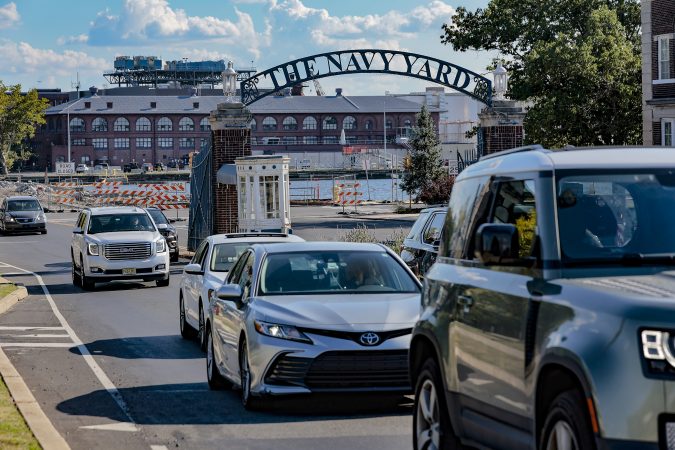
SEPTA is extending Route 45 to provide direct daily bus service to the Navy Yard for the first time in more than a decade, a move aimed at helping to grow both the development and transit ridership.
The new service is scheduled to begin in August, with buses operating at about 20-minute intervals, starting at 12th and Noble Streets in North Philadelphia, through Center City, and to stops inside the Navy Yard itself.
More than 150 employers have facilities in the Navy Yard, with more than 16,000 people working on the campus. There are 614 units of housing and plans for more residential and commercial development.
“Our goal is to provide as many safe, reliable, efficient ways to get to the Navy Yard as possible,” said Alex M. Smith, vice president of Navy Yard strategic initiatives at the Philadelphia Industrial Development Corp. It has built a path alongside South Broad Street to accommodate bike commuters and pedestrians.
“The 45 just provides another level of service for folks that may think otherwise than to take an Uber or their own car,” Smith said.
(function() {
var l2 = function() {
new pym.Parent(‘route45’,
‘https://media.inquirer.com/storage/inquirer/projects/innovation/arcgis_iframe/route45.html’);
};
if (typeof(pym) === ‘undefined’) {
var h = document.getElementsByTagName(‘head’)[0],
s = document.createElement(‘script’);
s.type = ‘text/javascript’;
s.src = ‘https://pym.nprapps.org/pym.v1.min.js’;
s.onload = l2;
h.appendChild(s);
} else {
l2();
}
})();
The Navy Yard’s master plan projects about 3,000 people will be living there within 15 to 20 years. About 450 jobs are expected to be added at Rhoads Industries, a maritime company in the western part of the former military base.
Colin Foley, the chief of service planning and schedules at SEPTA, said a 2023 survey of the Navy Yard workforce found that 86% did not use transit, and 60% of those said they would use SEPTA if more options were offered.
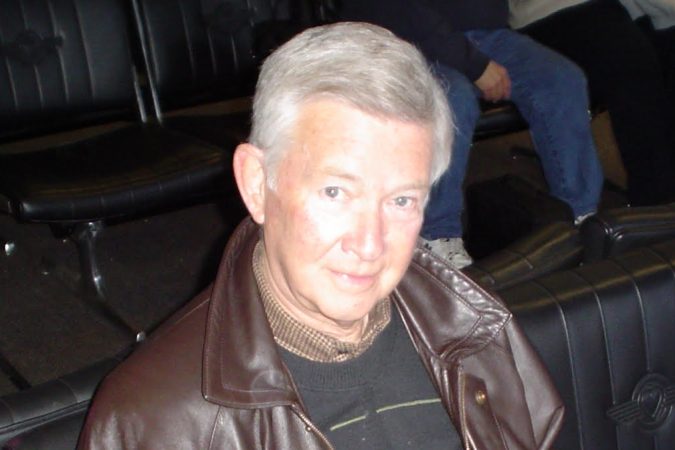
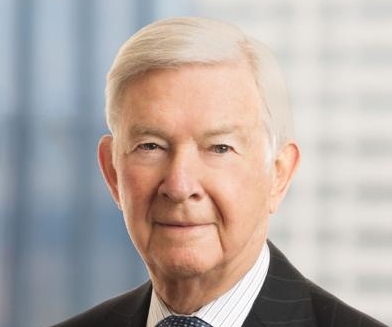
Bennett L. Aaron, 92, of Bryn Mawr, longtime Philadelphia attorney, honorary trustee of the Jewish Federation of Greater Philadelphia, former president of the Federation of Jewish Agencies of Greater Philadelphia, board member for the Jewish Agency for Israel, onetime chair of the United Israel Appeal, mentor, volunteer, and world traveler, died Monday, June 1, of age-associated decline at Beaumont at Bryn Mawr retirement community.
Born in Brooklyn, Mr. Aaron earned his law degree at Columbia Law School in New York in 1957, moved to Philadelphia, and spent the next six decades, until his semi-retirement in 2019, focusing on estate planning, gift taxation, probate, and trust law at Cohen, Shapiro, Polisher, Shiekman & Cohen and, later, Pepper Hamilton law firms.
His clients included principals at Pocono Raceway and the Rite Aid Corp., and colleagues praised his ability to engage through both professional and personal connections. “He understood that estate planning was not merely about documents and tax strategy,” his family said in a tribute, “but about values, legacy, and protecting treasured family succession plans.”
His son Steve said: “He was a superior listener and problem solver. That was his superpower.”
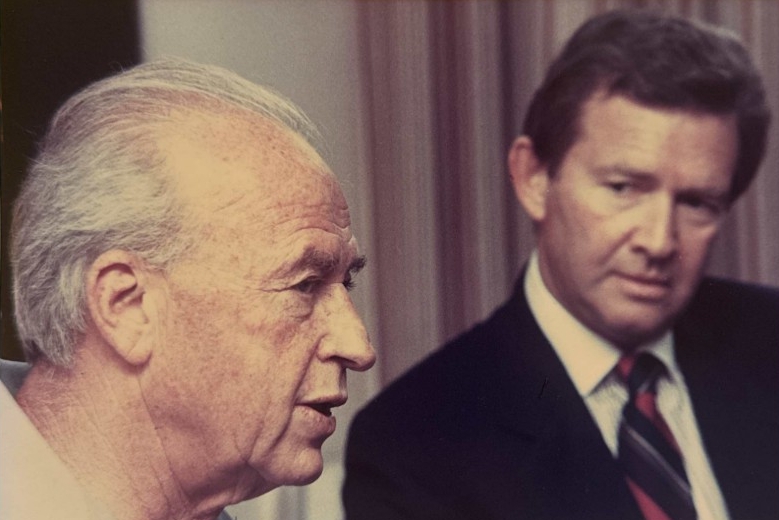
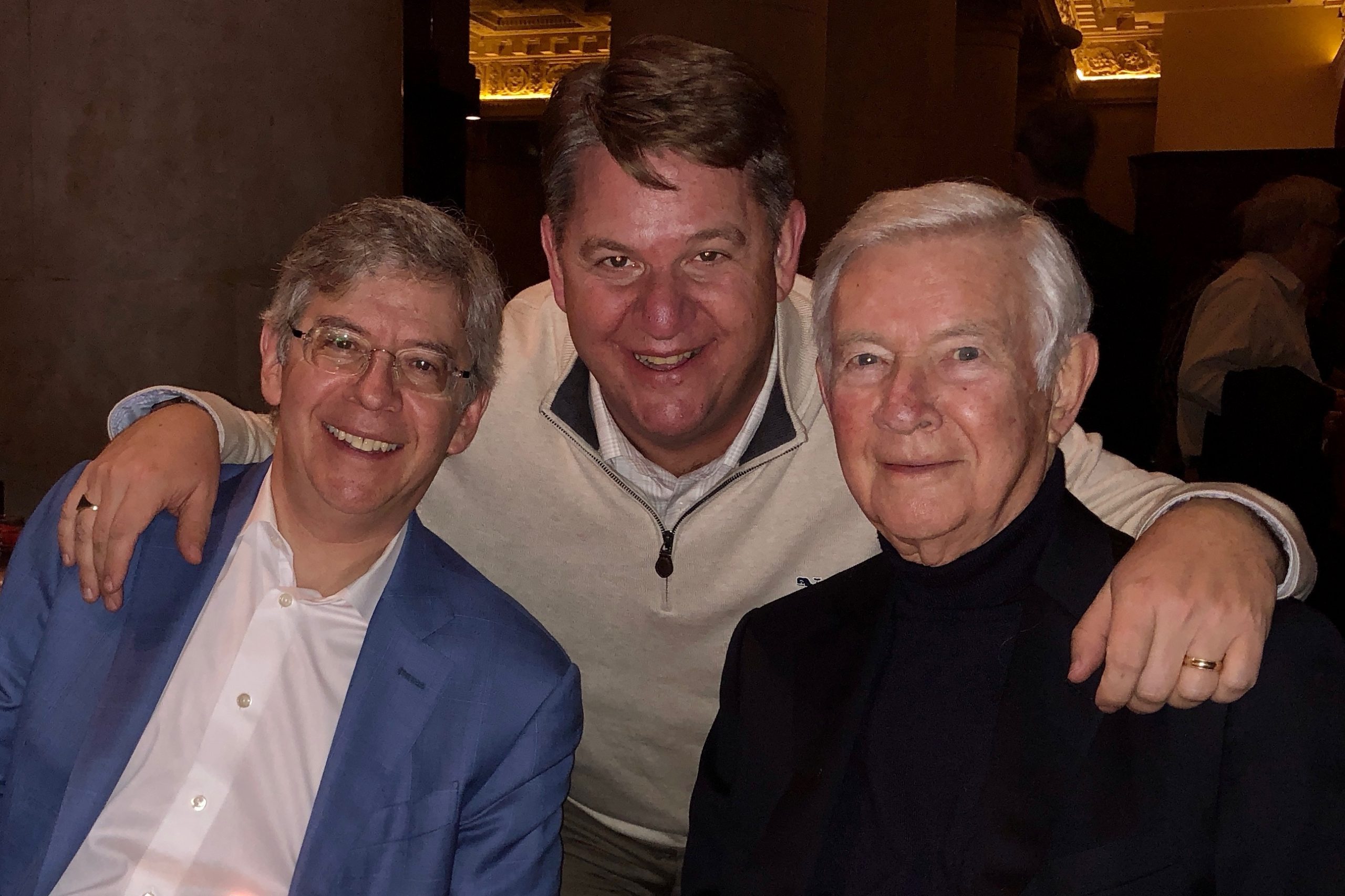
Mr. Aaron (right) listens to Yitzhak Rabin, former primer minister of Israel.Courtesy of the family
Mr. Aaron was friendly and energetic, his family said, and he excelled at collaborating through phone conversations and face-to-face encounters. He rarely micromanaged big contracts, colleagues said, but was available if something extra was needed.
He mentored young lawyers and talked frequently with former Gov. Ed Rendell, former Sens. Arlen Specter and Bob Casey, and other government officials. Colleagues called him “a tremendous community leader and visionary” and “the smartest, warmest, most terrific guy” in online tributes.
One colleague said: “It was easy to see the positive impact he had on those around him.”
The son of a New York rabbi, Mr. Aaron was a prolific fundraiser and the local public face of Jewish philanthropy for decades. He served as president of the Federation of Jewish Agencies of Greater Philadelphia from 1983 to 1987, as chair of the United Israel Appeal for the United Jewish Appeal, as chief volunteer officer for the Jewish Federations of North America, and in other roles.
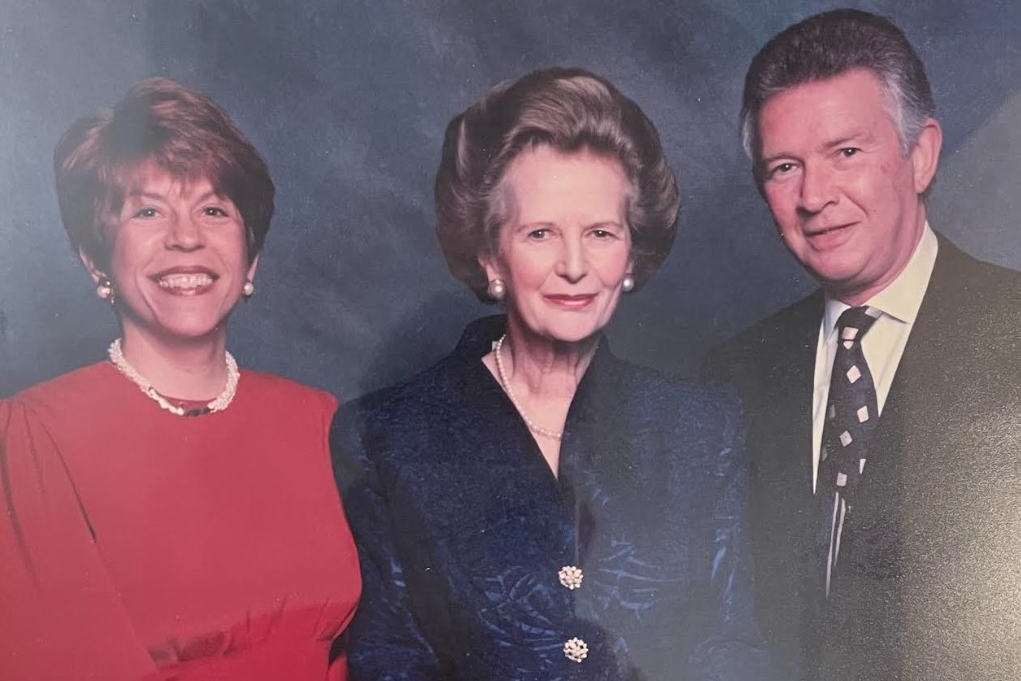
Mr. Aaron and his wife, Carol (left), met Margaret Thatcher, former prime minister of the United Kingdom, on their travels.Courtesy of the family
He was adept at balancing assets and liabilities for the nonprofit agencies. He oversaw record-breaking fundraising campaigns in Philadelphia and helped other leaders determine the direction of international Jewish philanthropy.
His 10-hour fundraising phone-athon at the Civic Center in 1986 drew more than 2,400 volunteer callers and raised a then-record $2.4 million in pledges to the United Jewish Appeal. “We have no trouble getting more than enough volunteers for this,” Mr. Aaron told The Inquirer. “People look forward to coming here all year. There’s camaraderie and plenty of fun.”
Colleagues at the Jewish Agency for Israel called him “an inspiration to many” and “a true mensch whose character, integrity, and warmth will be greatly missed.”
Mr. Aaron traveled to Israel often and met with former Prime Minister Yitzhak Rabin, former U.K. Prime Minister Margaret Thatcher, and other leaders. “He worked tirelessly to foster understanding and solidarity between his Philadelphia community and Israel,” his family said. “He leaves behind a legacy of integrity, service, and enduring impact on the city he came to cherish and the causes that defined his life.”
Mr. Aaron and his wife, Carol, married in 1955.Courtesy of the family
Bennett Louis Aaron was born Oct. 2, 1933. He and his older brother, Joseph, shared a tiny bedroom, played stickball after school, and cheered for the old Brooklyn Dodgers baseball team.
He graduated from high school at 16 and earned a bachelor’s degree at Columbia University in 1954 and a master’s degree in taxation at New York University School of Law in 1966.
He met Carol Perlmann in 1953 at the Pennsylvania summer camp his parents owned, and they married in 1955. They lived in Merion and Bala Cynwyd before moving to Beaumont, and reared daughters Marjorie and Roberta, and sons Morrie and Steve. His daughter Roberta died in 2003.
Mr. Aaron was an avid tennis player. He had season tickets to Eagles games and traveled with his wife to four Olympic Games.
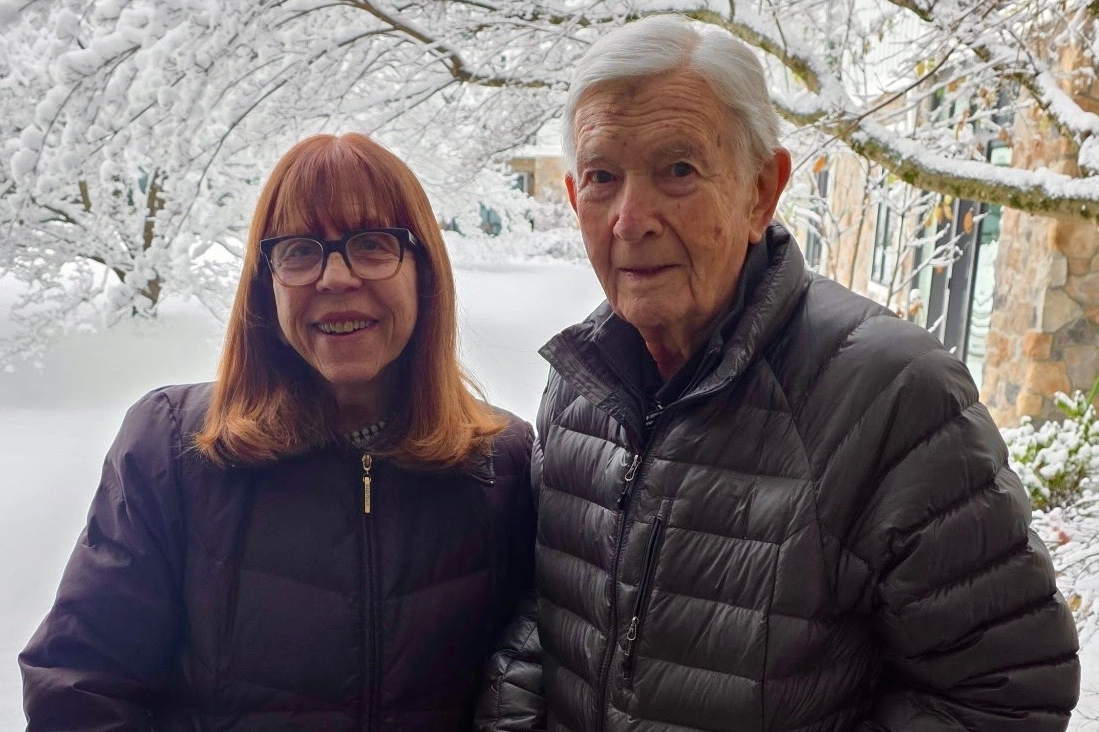
Mr. Aaron (right) was close with his sons Morrie (left) and Steve.Courtesy of the family
He cherished his family, everyone said, and he and his wife toured the world together. He was dapper and debonair. He liked to explore downtown city streets between meetings and answer the phone with “Hello there.”
“He set the standard for hard work and integrity,” his son Morrie said, “always coupled with kindness, compassion, and generosity.”
“He was the definition of a gentle man,” his son Steve said. His family said: “His was a life lived fully, purposefully, and with a really, really big heart.”
In addition to his wife, children, and brother, Mr. Aaron is survived by eight grandchildren and other relatives.
Mr. Aaron “was the definition of a gentle man,” his son Steve said.Courtesy of the family
Two men living in the Republic of Georgia have been charged by federal authorities in Philadelphia with running an international money laundering scheme that tried to use cryptocurrency exchanges to mask the source of nearly $400 million, prosecutors said Thursday — including at least $20 million that came directly from accounts associated with illicit actors on the dark web.
Igorevich Tkachuk, 37, of Ukraine, and Alexander Vladimirovich Ledenev, 25, of Russia, were arrested Wednesday in Georgia, where both live in the coastal city of Batumi, according to U.S. Attorney David Metcalf. Prosecutors will seek to extradite them to Philadelphia to face money laundering charges.
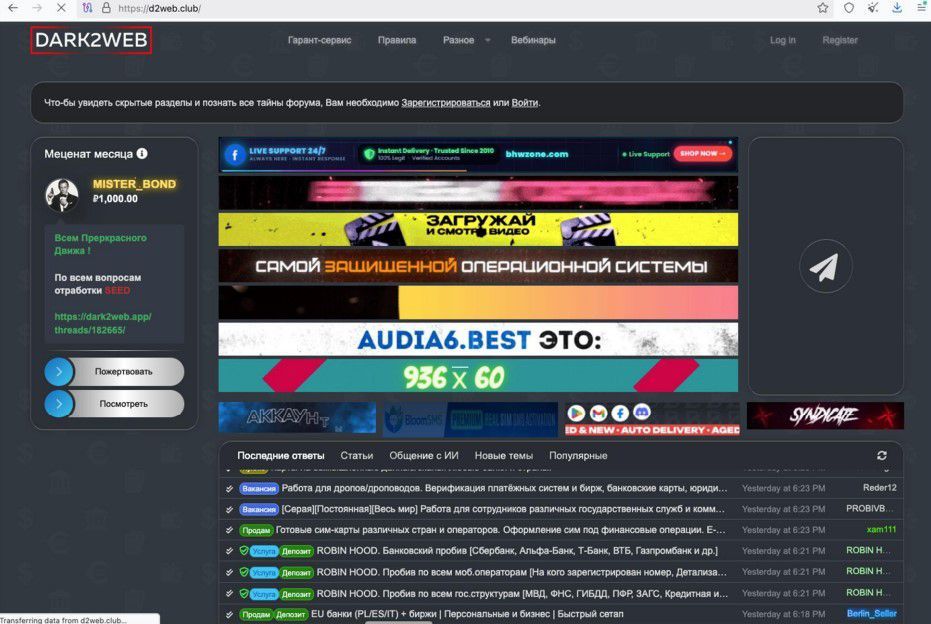
Metcalf said the two men were part of an organization that dubbed itself “AudiA6.” The group had two primary functions, prosecutors said: managing a cybercrime forum known as Dark2Web, where users could strike deals to commit crimes against targets for money, and running a cryptocurrency-based money laundering service, through which users could have their virtual currency “mixed” into different streams that would make the origins harder for authorities to trace.
Prosecutors said Dark2Web was an online forum that allowed users to discuss deals about committing crimes.Court filings, U.S. Attorney's Office
Over the last five years, prosecutors said in a criminal complaint, AudiA6 received $389 million from customers to launder, which the group would “mix” in exchange for a commission fee.
About $20 million of those deposits came from accounts prosecutors said were known for committing illicit activity, including groups that perpetuated ransomware attacks or people who were known to have received stolen funds online. Millions more appeared tied to similarly suspicious groups through indirect transactions, they said.
Over the course of the scheme, prosecutors said, AudiA6 received at least $10 million in profit. The group would often charge higher commission fees for smaller transactions.
According to the complaint, federal authorities conducted six undercover transactions with AudiA6 between December 2022 and May 2026. In each, the document said, agents said in messages — typically in Russian — that they wanted to exchange “dirty” digital currency, such as Bitcoin, and AudiA6 took the funds, “mixed” them, and returned the washed proceeds, minus a commission.
In one case this April, an agent in Philadelphia sent a message to the AudiA6 exchange saying: “is [Bitcoin] from scam OK? Stolen bitcoin…”
According to the complaint, the person running the exchange replied: “don’t care.”
AudiA6 then mixed about $5,000, the complaint said, keeping a fee of about $300.
A few weeks later, the document said, an agent in Philadelphia reached out to the exchange again and asked about laundering proceeds from selling cocaine online.
“Is it ok or are the risks too high?” the agent asked, according to the complaint.
“Everything like that needs to go through a mixer,” the operator wrote back, before laundering about $5,100 worth of bitcoin and keeping $400 as a fee.
Despite AudiA6’s promises to customers that the mixed transactions would make funds untraceable, investigators said, the group “was not actually sending and receiving from distinct, unconnected sources.”
“Instead,” they said, “transactions could be directly traced through exchange records.”
Neither Tkachuk nor Ledenev had attorneys listed in court records Thursday.
Each could face up to 20 years in prison if convicted, prosecutors said.
Philadelphia is slated to have an abundance of block parties and street festivals this summer after the city encouraged neighborhoods to join celebrations of the nation’s 250th with their own events, even offering financial support for hosting through various grants.
But some organizers who responded to the calls are learning there is a limit on so-called festival street closure permits for events between June 11 and July 18: essentially, the duration of World Cup, July Fourth, and MLB All-Star Game events.
Katie Hanford, executive director of the East Passyunk Avenue Business Improvement District, learned of the change in May. The group submitted three festival street closure applications, two for World Cup watch parties and one for 250th festivities, and the Philadelphia Office of Special Events denied them “due to City resource constraints.”
“The city government, in this case the Commerce Department, is literally trying to give communities money to host events and yet the city is also, on the other hand, denying the ability to host events,” said Hanford, who applied for the 2026 Neighborhood Celebration Grants Fund, which had $1 million for such events.
Pride on Passyunk, an event put on by businesses last year, was also denied a “festival street closure” permit for June 14 because it fell during what the special events office called a several-week “blackout” period in an email regarding the application. June 14 is the first World Cup game in Philadelphia, among other high-profile events.
The city, however, did not publicly announce any limits on event permits, nor did the Philadelphia Office of Special Events address the blackout dates when The Inquirer asked.
Though these events plan to move forward as “sidewalk activations” that organizers say will be no less fun, frustration remains over an already complicated permitting process, made more difficult by what organizers argue has been confusing messaging from the city.
First, there is the city’s classification of neighborhood block parties, for which permit applications are submitted to the Philadelphia Streets Department and reviewed by the police department. These permits are filed by residents aiming to throw a birthday party or other small celebration.
But if the event is hosted by businesses or located in a commercial corridor, even if it spans only a block, organizers must file festival street closure applications, which the Philadelphia Office of Special Events reviews.
So even though the East Passyunk Avenue Business Improvement District planned to throw block parties, organizers say the city directed them to apply for a festival street closure, only to receive a denial.
Randi Kampen and Lex Fanelli, organizers of Pride on Passyunk, said their event permit was approved, but they never officially heard back about the separate street closure application. A Philadelphia Office of Special Events email obtained by The Inquirer told the business improvement district the Pride event would be denied because of issues with the date.
“Please understand, we have denied other events that fall within these blacked out dates too,” the email said, encouraging the group to apply for a date later in the summer or fall.
The message was of little comfort to Kampen and Fanelli.
“The blackout dates are because the city is not prepared for the FIFA stuff happening, and that’s not our fault,” Kampen said.
The 2026 summer festivities have only added another consideration to the process.
Even so, people like Hanford say if city resources were going to be strained for the several-week span, they wish they had been alerted sooner instead of encouraged to put on events.
Number of events affected remains unclear
The city special events office did not immediately say how many festival street closure applications were denied for June 11 through July 18.
Still, the city is slated to host plenty of block parties during that window.
The Philadelphia Police Department has received 241 applications for block parties between June 11 and July 20, and recommended approval for 219, according to Sgt. Eric Gripp. The denial recommendations were unrelated to major city events, he said.
But the police department flagged four dates to the special events office where World Cup games and 250th festivities would create staffing constraints for additional events requiring festival street closure permits — June 19, June 27, July 3, and July 4.
“As Philadelphia prepares to host several major events this summer, including FIFA World Cup-related activities and other large-scale celebrations, the police department will continue balancing those public safety responsibilities while supporting community events whenever operationally feasible,” Gripp said.
Separately, the special events office said June 14 was “a heavy commitment of resources” for public safety partners because of a slew of events, including the first World Cup match in Philly, the FIFA fan festival, Odunde Festival, Flag Day, events at Independence National Historical Park, and events at Franklin Square Park. The city said it also has to consider and prepare for any potential protests.
For now, Pride on Passyunk is moving forward, as are the three events planned by the East Passyunk Avenue Business Improvement District.
Hanford said the business improvement district has been working with Councilmember Mark Squilla to potentially appeal the permit decisions, but time is running out.
A June 19 event aimed to air the Brazil-Haiti match on the Juneteenth holidayand a June 27 block party was to show Croatia vs. Ghana. Those events call for screen setups and barricades that require coordination with third parties.
Squilla’s office brokered a meeting between the business improvement district and the special events office on Wednesday, and is optimistic a compromise would lead to at least some permits being approved, according to Squilla’s chief of staff, Anne Kelly King.
“Hopefully we’ll come to a resolution that’ll work for everybody. We don’t want to compromise safety, and that’s really center to it,” she said.
Hanford said regardless of the outcome, East Passyunk would still host World Cup block parties.
“The sidewalks will be lined with activations, food and drink specials, and places to watch the game,” she said. “We will be out here celebrating how South Philly always does — with joy in the streets, supporting small businesses, and going hard for sports.”
After a tragic and unprecedented spike in officer deaths, Philadelphia’s police union made an emotional plea for help: Its charitable organization was running low on funds and struggling to give fallen officers the respectful burials they deserved.
City officials stepped up, agreeing in 2014 to significantly boost how much they would pay to cover funeral expenses. Since then, for each officer who died in the line of duty, the city has contributed up to $75,000 in tax dollars, up from $15,000.
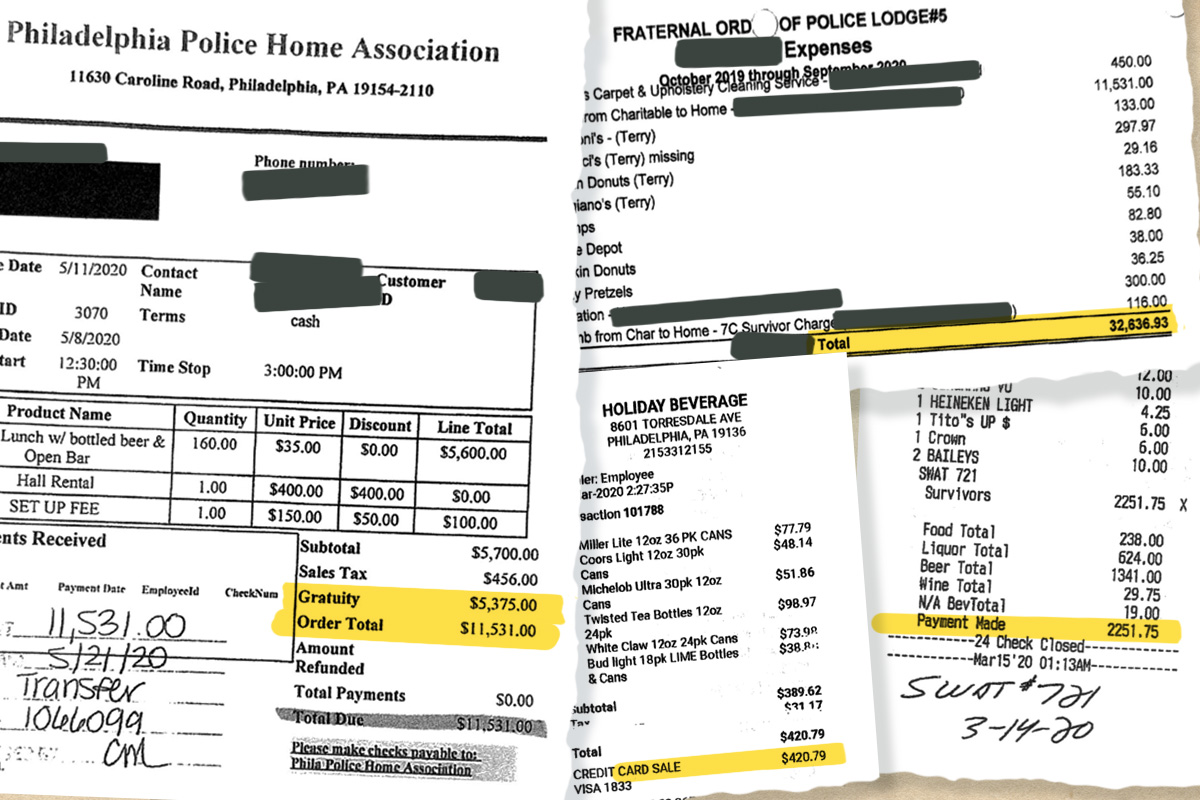
But an Inquirer investigation found that the Fraternal Order of Police Lodge 5 has billed the city for an array of expenses that are far outside the scope of funeral home and cemetery costs. The union has asked to be reimbursed tens of thousands of dollars for bar and restaurant tabs, alcohol, catering costs, car repairs, carpet and upholstery cleaning, socks and underwear, garbage bags, and paper towels.
The FOP has submitted receipts from businesses such as Target, Home Depot, Walmart, Acme, 7-Eleven, and CVS that include no explanation for why they qualify as funeral expenses.
The union has also forwarded monthly statements of corporate credit cards held by various members of the FOP leadership team, circling bill totals mostly for restaurants, bars, and beer stores. Other reimbursement requests lack any receipt or itemized breakdown, or are simply requests for cash, making it practically impossible to judge their merits at face value.
Records show the FOP has billed the city for food and alcohol for at least eight events at its own bar, 7C Lounge, located within the union’s 50,000-square-foot headquarters in Northeast Philadelphia.
One of the 7C events resulted in a $5,700 bill, plus an additional $5,375 for a “gratuity.”
And in one handwritten memo, an FOP official asked the city to reimburse the union $3,500 in cash for a survivor’s family, with no explanation except that it was “per John McNesby,” then the FOP’s president.
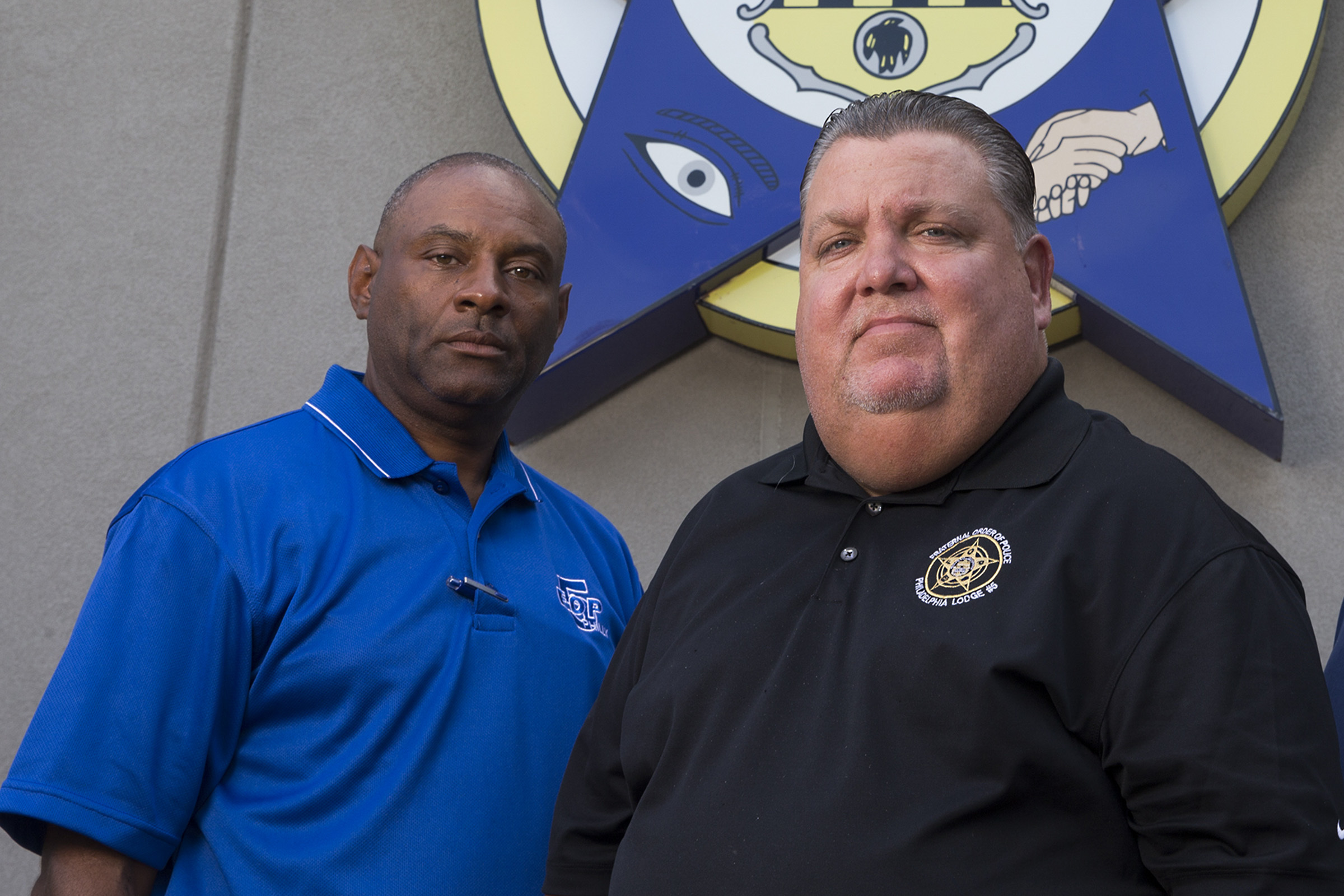
Current FOP president Roosevelt Poplar and McNesby, who served as the union’s president for 16 years before stepping down in 2023, did not respond to requests for comment.
FOP Lodge 5 President Roosevelt Poplar, left, in a portrait next to John McNesby, right, who at the time led the union on Sept. 4, 2019.Charles Fox / Staff Photographer
The city’s $75,000 contributions for officer funeral expenses, which have not been previously reported, prompt new questions about the FOP’s Survivors’ Fund, the union’s charitable organization that raises money to pay for funerals and support the families of officers who were killed or seriously injured in the line of duty.
A 2025 Inquirer investigation found that the FOP reported spending hundreds of thousands of dollars on “funerals and special events” in years when no officers died in the line of duty, and that its expenditures and cash donations had been loosely documented and were difficult to track.
The Inquirer sought further insight by examining more than 1,000 pages of invoices, bills, emails, and other documents obtained in Right-to-Know requests for public records concerning 17 police line-of-duty deaths since 2014. Eight of the deaths were attributed to COVID-19.
The FOP publicly criticized The Inquirer for requesting the records.
The city’s risk management team is primarily responsible for deciding which costs the city should reimburse. A third-party administrator, with expertise in workers’ compensation laws, offers guidance.
Emails, memos, and copies of checks show the city has covered the bulk of the FOP’s requests, although in almost every case, the city’s documents do not indicate which specific reimbursement requests were approved. An FOP request for $1,870 to cover two bar tabs and pipes and drums after a dinner is the only explicit denial in the records.
Mayor Cherelle L. Parker and Sharolyn Murphy, the city’s risk manager, declined to be interviewed.
The Inquirer sent Murphy and Parker’s office a list of the FOP’s expenses that did not appear to be directly related to funeral costs. In an email response, Murphy said that the city did not reimburse the FOP for the 7C event with the $5,375 gratuity and that the city does not reimburse for alcohol. She did not include explanations for the other expenses.
Barry Scott, who headed risk management for 21 years before retiring in 2024, said the city would deny beer runs and State Store bills, but would approve restaurant bills if they appeared to be tied to a funeral.
“Frequently the bills were not specific enough that it was difficult to discern whether or not there was alcohol involved,” he said. “We tried to make the best decision that we could with regard to how we approached the particular bill and the funeral-relatedness of the expense. Where we did not feel we had sufficient justification or documentation in order to make a determination, we would not pay the bill.”
Barry Scott, the city’s risk manager for 21 years until retiring in 2024, in his office in November 2021.Tyger Williams / Staff Photographer
Scott acknowledged that once the city increased its maximum contribution, the FOP started asking for more and more expenses to be reimbursed.
“It’s hard to know exactly what happened and why we saw such a precipitous increase in invoices from the FOP,” he said. “But the sharp increase to $75,000 did leave an opportunity for it to be abused.”
Separate from the city’s contribution, the FOP’s Survivors’ Fund raises money by hosting benefits, often at the 7C Lounge, in which it charges around $45 a person in cash at the door for food, soda, and beer. Most attendees donate money, participate in raffles or auctions, or buy memorial T-shirts.
McNesby has previously described himself as the “Santa Claus” of the Survivors’ Fund, which exists not just to pay for funerals but also for when “families request help with their houses, or issues with their cars,” he told The Inquirer in 2023.
Meanwhile, the FOP’s arrangement with the city does not appear to be widely understood, and rank-and-file cops may assume that the Survivors’ Fund takes care of funerals and assorted costs for families of officers killed in the line of duty.
The Inquirer interviewed a dozen active and retired police officers about the city’s financial contribution in the wake of an officer’s death, and all said they did not know the city was paying as much as $75,000. Half said they believed the city covers some of the funeral costs, while the FOP pays for luncheons and bar tabs. The other six said they had no idea the city contributed anything.
“It was always my understanding that the FOP, through its Survivors’ Fund, paid for any and all funeral expenses for an officer killed in the line of duty,” said a retired veteran with more than 30 years on the job, who was granted anonymity in order to speak openly.
“The fact that the fund deals in cash and is untraceable is extremely disturbing,” the retired officer added. “There is no accounting of any kind as to how these funds are distributed.”
‘Public money requires public eyes’
The FOP’s contract with the city calls for the union to be reimbursed for “reasonable and necessary funeral expenses.”
There is no clarification on what would qualify under either standard, and it does not explain how reimbursement requests will be processed. The records the city provided seem to reflect a haphazard system in which the FOP submits incomplete expenses to the Philadelphia Office of Risk Management and then follows up by email several times to ask when payment could be expected.
Murphy wrote that although there is not a list of allowed expenses, the city typically will not cover luxury caskets, large floral arrangements, catering or reception costs, and travel expenses for family members.
Officer Raul Ortiz, in suit, was with Officer Richard Mendez when Mendez was fatally shot at Philadelphia International Airport while attempting to stop a car theft. Ortiz was shot in the arm. The funeral for Mendez was held on October 24, 2023.Alejandro A. Alvarez / Staff Photographer
Experts say both the FOP and the city should have clear policies for which expenses are considered funeral-related, what documentation is required, and who should have authority to approve reimbursements.
“Public money requires public eyes,” said Andrew McGinley, vice president of policy for the Committee of Seventy, a civic leadership organization that works to promote effective and ethical government. “We want the union to be able to support families who are grieving and provide whatever support they can in this horrible, tragic circumstance. But that doesn’t mean we shouldn’t also make sure that the public money spent is accountable and appropriate.”
McGinley suggested the city’s controller’s office or City Council require proper recordkeeping. “As stewards of public dollars, we have to be able to ensure that the money is being spent for things that it’s allocated for, and right now it doesn’t sound like we’re able to track it.”
Joseph H. Thompson, a former federal prosecutor who served as acting U.S. attorney for the district of Minnesota until 2025, said tax dollars require transparency and extra scrutiny, particularly when public confidence is strained.
“Those entrusted with public resources, especially in law enforcement, must remain above not only impropriety, but even the appearance of it,” he said.
The money that the FOP receives from the city is not required to be itemized — or even mentioned — in federal tax filings, making it even more difficult to reconcile the money moving in and out of the Survivors’ Fund.
For example, Police Officers Richard Mendez and Jaime Roman were shot to death in 2023 and 2024, respectively. The city paid for both funerals, totaling nearly $76,000. The FOP submitted to the city additional expenses of more than $20,000, including a catering bill and two bar tabs, one of which was at 7C Lounge.
But in federal tax documents that cover that time frame, both FOP Lodge 5 and its Survivors’ Fund reported spending a total of $745,000 for funerals, memorials and events, or help for survivors.
In 2024, 10 years after the city bumped its funeral expense contribution for the police to $75,000, the union representing Philadelphia firefighters reached a similar agreement. (There are no reimbursement requests from firefighters because none have died in the line of duty since. But roughly the same number of police officers and firefighters have lost their lives in the line of duty over the last decade.)
Unlike the FOP, the International Association of Fire Fighters, Local 22, does not act as a go-between to handle the city’s money. The Philadelphia Fire Department, not the union, sends the funeral home and cemetery bills to the city’s risk management office, which then reimburses the vendors directly.
The union has previously contributed $5,000 of its own funds to the family of a deceased firefighter to help cover the costs of a memorial reception and meal, according to Tommy McKiernan, Local 22’s first vice president.
Going forward, he said, he would submit that bill to the city so the family did not have to pay out of pocket.
“Our intent is to keep the cost to the family as minimal as possible,” McKiernan said.
Unanswered questions
On March 13, 2020, members of the Philadelphia Police Department’s SWAT team climbed a flight of stairs to the second floor of a stash house crammed with guns and drugs on Bridge Street in Frankford to serve a murder warrant.
A gang member fired a semiautomatic assault rifle 16 times through a bedroom door, striking Cpl. James O’Connor IV in the neck and arm.
O’Connor, a 23-year veteran and married father of two, was declared dead at the hospital not long after at the age of 46. It was a tragedy that was amplified due to his family’s multigenerational roots in law enforcement: His father was a police officer, his son is a current officer, and his cousin was a homicide detective. O’Connor was posthumously promoted to sergeant and awarded the department’s Medal of Honor, a Purple Heart, and the Medal of Valor.
Because of the COVID pandemic, his funeral was delayed for eight weeks, and a limited number of people were permitted inside Our Lady of Calvary Church for the memorial. Most mourners had to sit on opposite ends of the pews, and all had to wear masks.
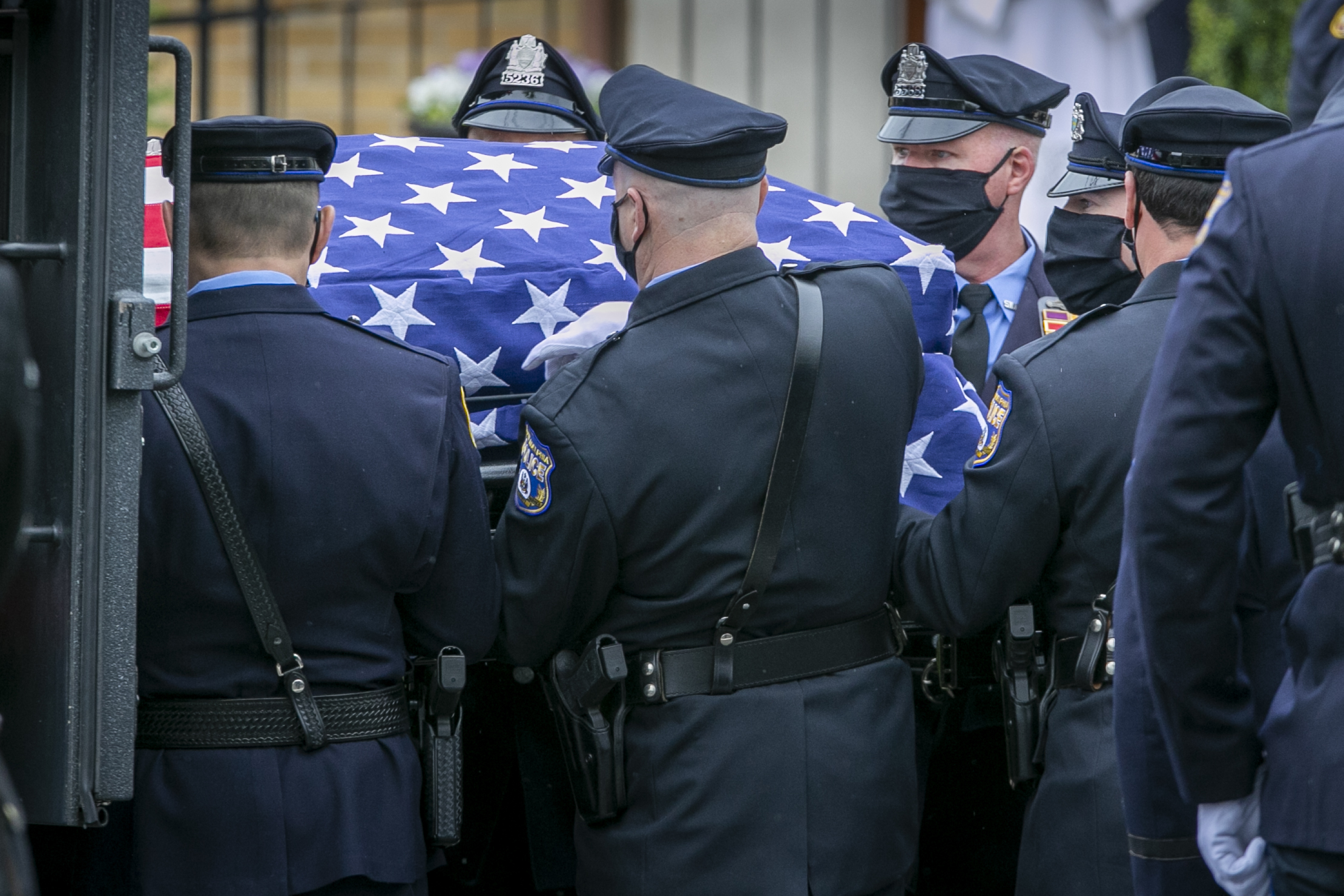
Pallbearers place the body of Cpl. James O’Connor IV in the back of an armored vehicle named after him. The funeral for O’Connor, who was killed in March 2020, was held at Our Lady of Calvary Church in Philadelphia on May 8, 2020. ALEJANDRO A. ALVAREZ / Staff PhotographerAlejandro A. Alvarez / Staff Photographer
“The city has not, and the city will not, forget Cpl. James O’Connor,” then-Mayor Jim Kenney said at the funeral ceremony. “We won’t forget the sacrifices he made, or the sacrifices your family has made.”
The city reimbursed the FOP $30,075 to cover O’Connor’s funeral home and cemetery costs.
But additional requests for money kept coming in, totaling 108 pages.
The city had imposed restrictions on restaurants and bars, limiting them to takeout and delivery service to prevent the spread of COVID. After the funeral, the FOP held a 2½-hour lunch for O’Connor at its own bar.
The FOP billed the city for $5,700 worth of bottled beer, an open bar, and food for 160 people at the 7C Lounge, then added a 94% gratuity, for a total bill of more than $11,500.
The one-page reimbursement document for the luncheon does not include an itemized receipt and describes the terms of the lunch as “cash.” At the bottom of the page is a typed request: “Please make checks payable to: Phila Police Home Association,” the charitable organization that manages the 7C Lounge.
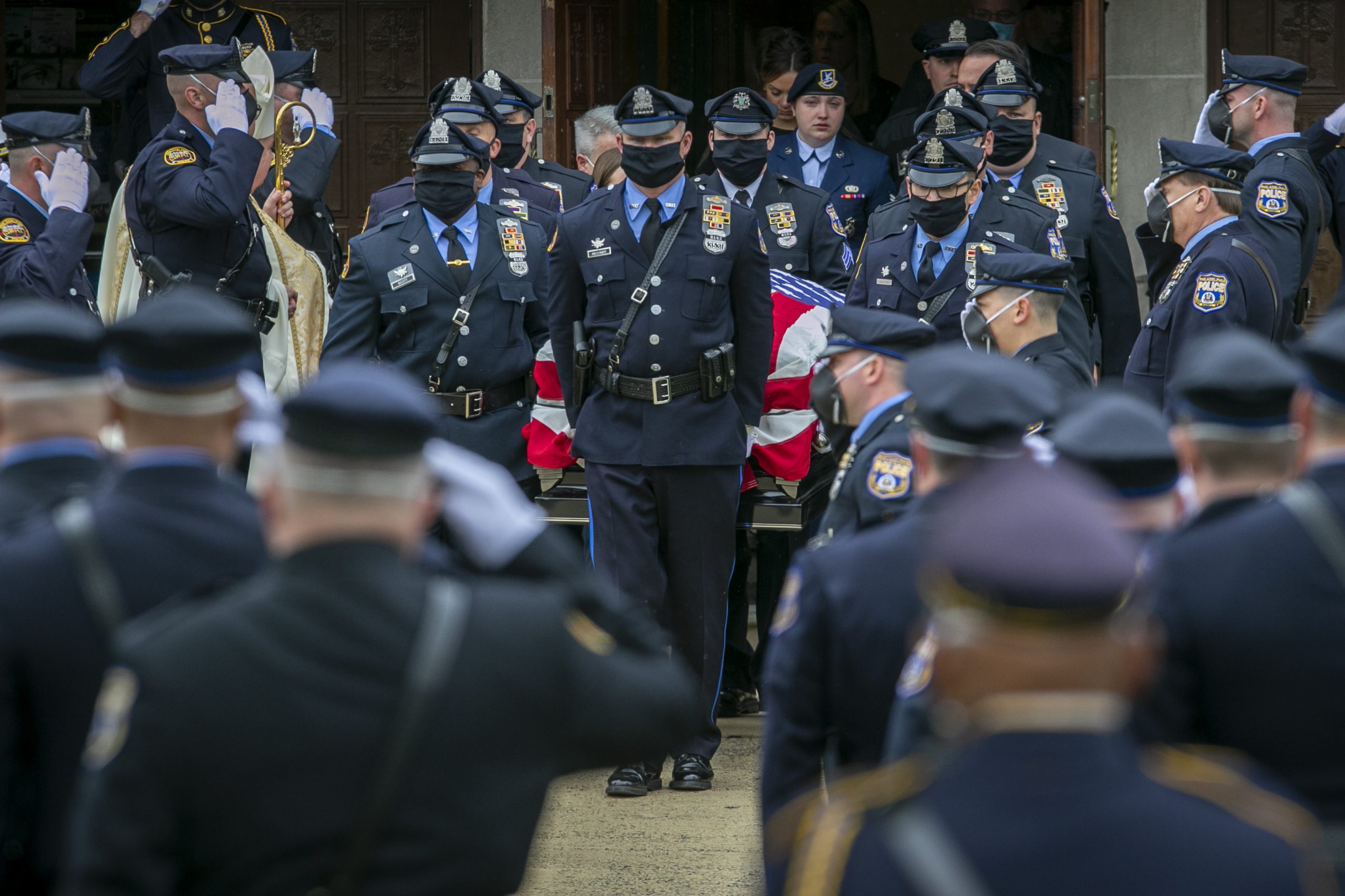
The body of slain Philly Police Cpl. James O’Connor IV leaves Our Lady of Calvary Church in Philadelphia on May 8, 2020. Cpl. O’Connor was killed in the line of duty. ALEJANDRO A. ALVAREZ / Staff PhotographerAlejandro A. Alvarez / Staff Photographer
Although the records do not indicate it, Murphy said the city did not reimburse the FOP for the O’Connor luncheon.
Additional reimbursement requests included more than $1,600 at beer distributors, $450 for carpet and upholstery cleaning, and a $2,375 invoice from Dunphy Ford to make repairs on a F150 truck.
The records also include a handwritten note on FOP pension chairman Michael Shellenberger’s stationary that requests “$3,500 in cash given to Mrs. O’Connor per [then FOP president] John McNesby.” The records include no further explanation.
In July 2020, an FOP treasurer sent then-Deputy Mayor Richard Lazer a $32,600 reimbursement request for “expenses associated with services provided and caring for the O’Connor family during their mourning.” The amount was separate from the previous bill for funeral costs.
The city approved $20,256 of that amount and sent a check to the FOP’s Survivors’ Fund. The documents do not indicate which specific expenses the city approved and denied.
One tragedy after another
Beginning in 2006, Philadelphia police suffered through a brutal three-year stretch.
Seven officers were killed in the line of duty, more than in any other law enforcement agency in the country during that 33-month span. Five were shot to death. The other two were struck and killed by other drivers while in their patrol cars.
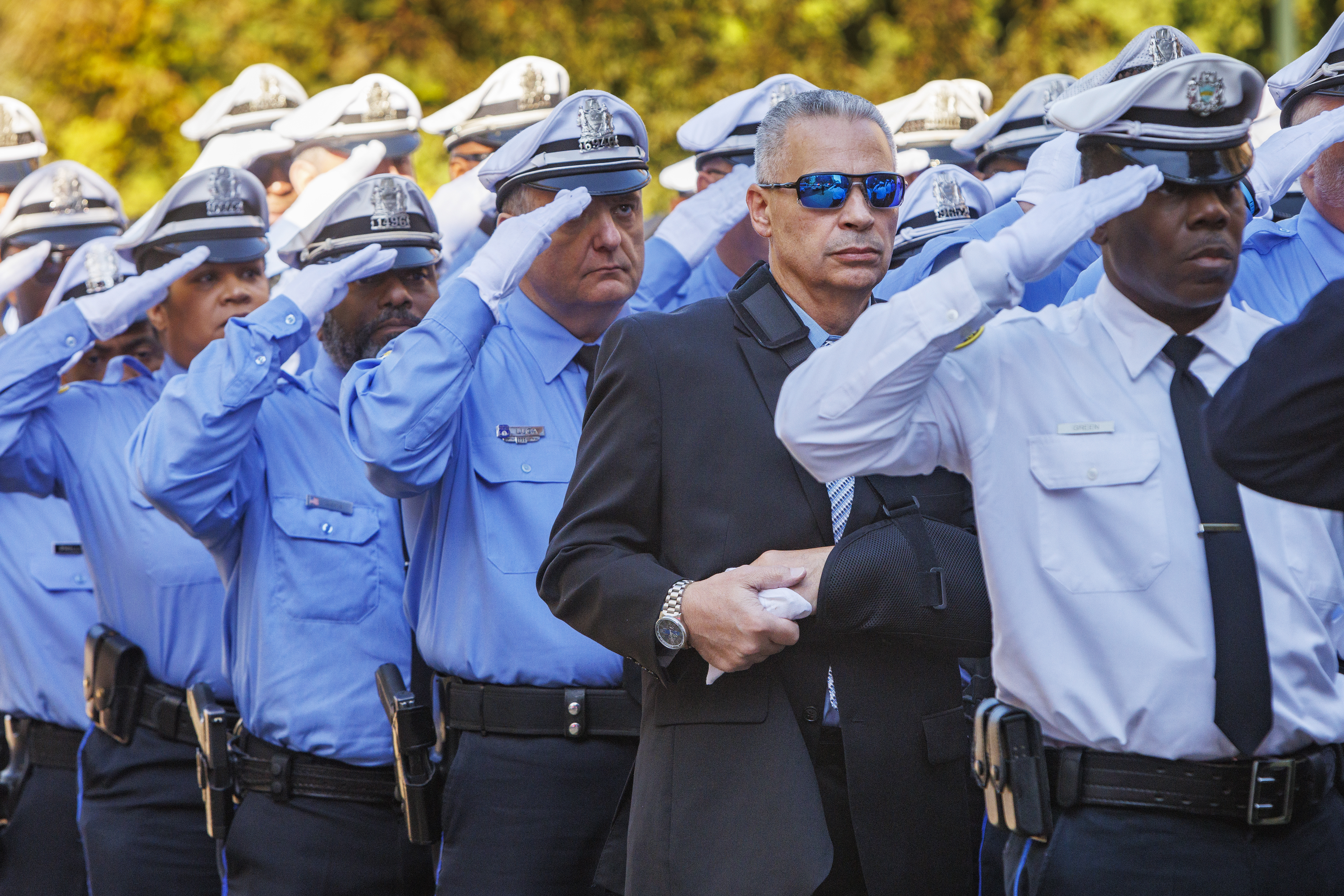
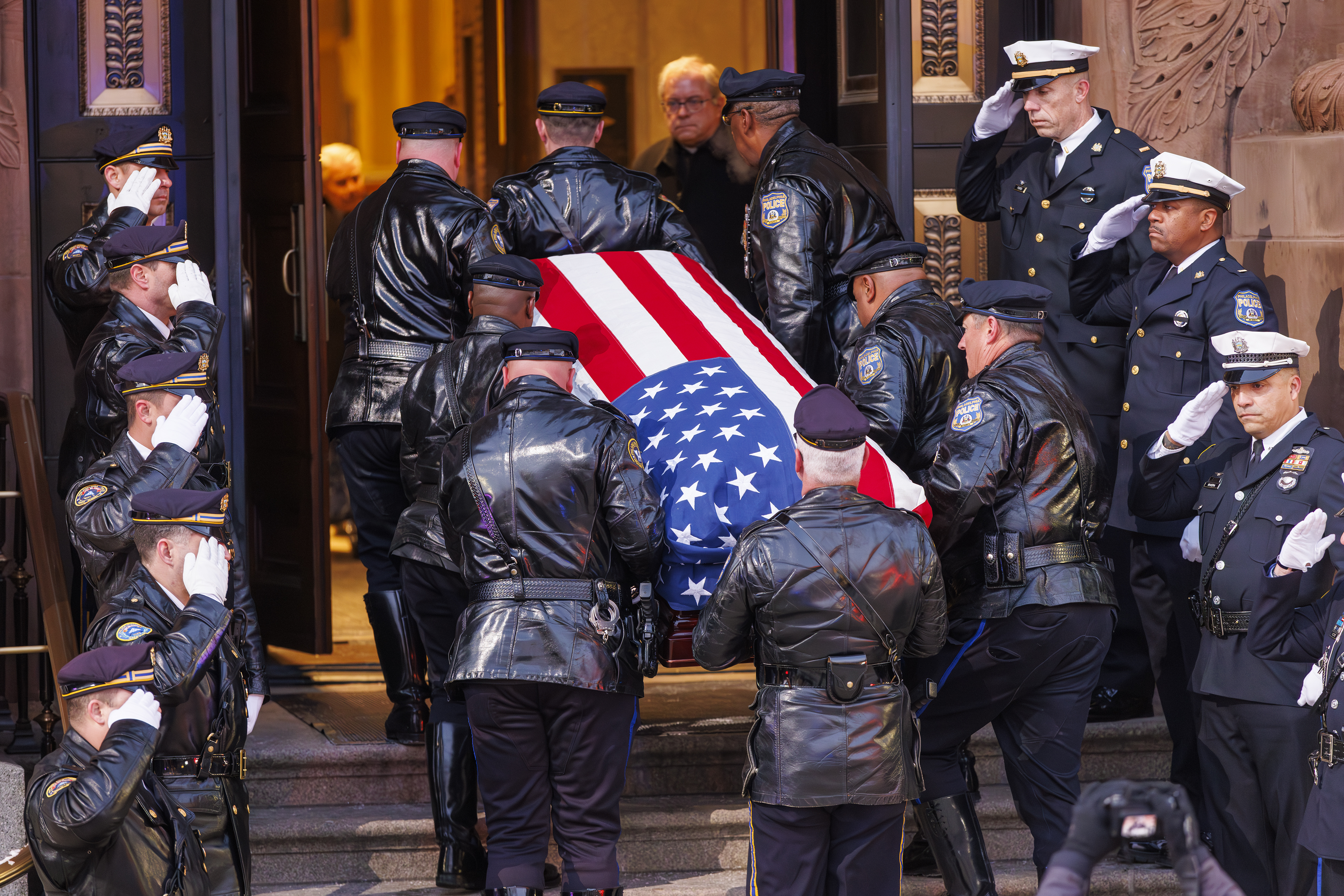
The tragic ritual of honoring fallen officers became too familiar. Hundreds of police officers in dress blues and glossy black shoes, their white-gloved hands raised in salute as the flag-draped coffin is hoisted into the church. Motorcades of blue- and red-flashing squad cars and motorcycles escorted the funeral procession to the cemetery.
At the grave site, Taps is played on a bugle and then “Amazing Grace” on bagpipes. The flag on the coffin is neatly folded and given to the widow. And a police radio calls out the officer’s name and badge number for the last time, acknowledging a job well done.
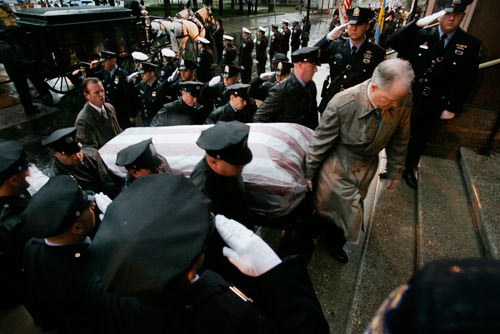
The body of Sgt. Stephen Liczbinski, who was killed in the line of duty, is carried into the Cathedral Basilica of Saints Peter and Paul in Philadelphia on May 9, 2008. Alejandro A. Alvarez / Staff Photographer
The city paid for all seven funerals, totaling almost $200,000, exceeding the $15,000 limit for each at the time, according to city records.
But by 2008, McNesby and other FOP leaders said the Survivors’ Fund was seriously depleted. FOP vice president John McGrody told The Inquirer that the fund may be called on to spend up to $50,000 for each burial, meals for the bereaved, and school expenses for the fallen officer’s children. These expenses can occur even in years when no officer has died.
The spate of fatalities paved the way for the city to honor the FOP’s request for help during contract negotiations. A three-member panel — one person appointed by the city, one by the union, and the other from the American Arbitration Association — agreed to contribute more taxpayer money toward the cost of burying fallen officers, beginning in 2014.
“At that point it was much easier to go into excess just because there was so much money potentially on the table,” Scott said. “But at some point when we reach the $75,000 number, I think we are beyond what is absolutely directly related to the funeral of the officers.”
If Scott and his staffers had questions, their point person at the FOP was Terry Reid, a member of the union’s executive board and its disability coordinator.
Records show she sent the majority of the emails and requests for reimbursement to the city, as well as American Express charges for food establishments ranging from Dunkin’ Donuts to Maggiano’s. A nearly $300 reimbursement request for the restaurant Santucci’s that Reid sent in 2020 includes the notation “missing,” presumably indicating there was no receipt.
In July 2023, McNesby fired Reid when the family of a late police officer alleged that she had borrowed at least $20,000 from the officer’s widow and then ignored the woman’s requests to be repaid.
Reid did not respond to requests for comment.
City officials balk
In most cases, the records are unclear as to which specific items the city denied. A few, however, spell them out.
The FOP sent the city a list of expenses after the death of Mendez, who was a 22-year veteran when he was killed in 2023 while interrupting a car theft at Philadelphia International Airport.
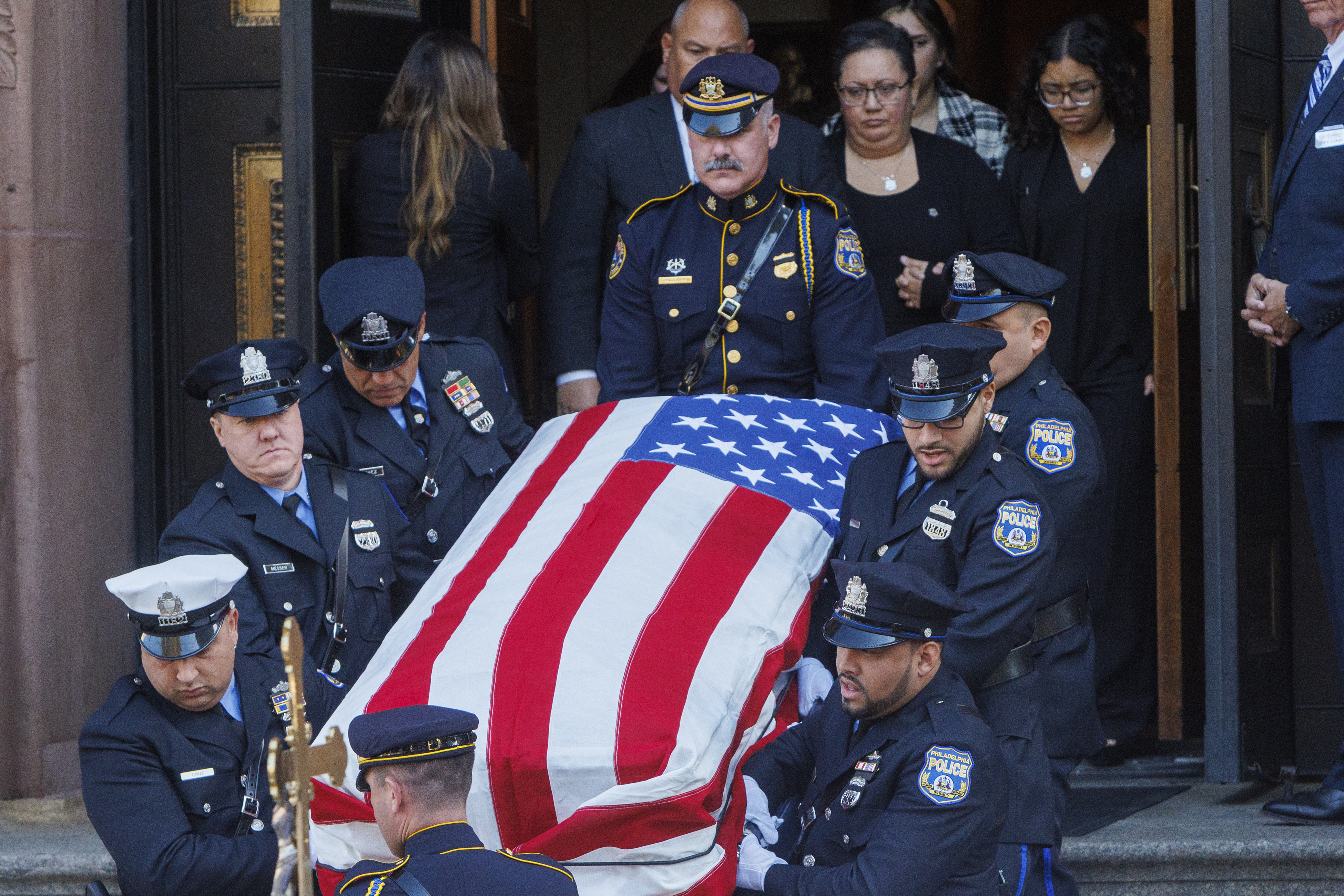
Pallbearers carry the body of Officer Richard Mendez out of the Cathedral Basilica of Saints Peter and Paul on Tuesday, October 24, 2023. Mendez was shot and killed at the Philadelphia Airport.Alejandro A. Alvarez / Staff Photographer
The reimbursement requests were not for the funeral home, which was covered in a separate invoice for $33,576.
The list included payment for two 60-passenger buses, food, catering, ceremonial pipes and drums, two bar tabs, and the cost to detail three cars. The total amount was nearly $21,000.
This time, city officials balked.
In an October 2024 email, Raashida Fleetwood, Philadelphia’s risk management counsel and employee disability manager, wrote to PMA Management Corp, a third-party company the city paid to help manage claims for workers injured or killed, explaining what the city declined.
“Here is the updated expense sheet,” she wrote. “We are not paying for Bar Tab- $667.00, Pipes and Drums after dinner- $839.44 or Bar Tab- $363.60.”
PMA issued a check on behalf of the city to the FOP’s Survivors’ Fund for $18,651, about $1,900 less than what the FOP had requested.
The COVID pandemic created an additional complication in that it required city officials to determine whether an officer who died of COVID had gotten sick while at work. That would make it a line-of-duty death and entitle the officer’s family to additional benefits.
Risk management officials determined that in a single year, six officers who succumbed to the virus had contracted it on the job, including Officer Vladimir Nikolaev Maleev, 39, who died Aug. 6, 2021.
A native of Karlovo, Bulgaria, Maleev had come to America at the age of 19, and his parents and extended family wanted his remains flown home. The FOP asked the city to pay the $7,115 bill for the international flight. The city agreed.
When Officer Tab T. Ali — a former Marine and a 25-year veteran of the department — died in November 2020 from COVID complications, his aunt paid $7,056 to the funeral home. The city reimbursed her.
The FOP subsequently forwarded an additional invoice totaling $6,708 for Ali’s headstone and foundation. Emails between city risk management officials and PMA questioned whether this should be covered.
“Have we paid up to $75k already,” the city’s employee disability manager wrote. “If not, you can process for payment.”
“Not even close. We only paid $7056.00. We get the additional payment processed. Grand total increases to $13,764.00,” a PMA regional claims supervisor replied.
The most recent Philadelphia police officer to die in the line of duty was Highway Patrol Officer Andy Chan, 55, a married father of three. He died in December, almost seven years after he was struck while riding his motorcycle in Northeast Philadelphia.
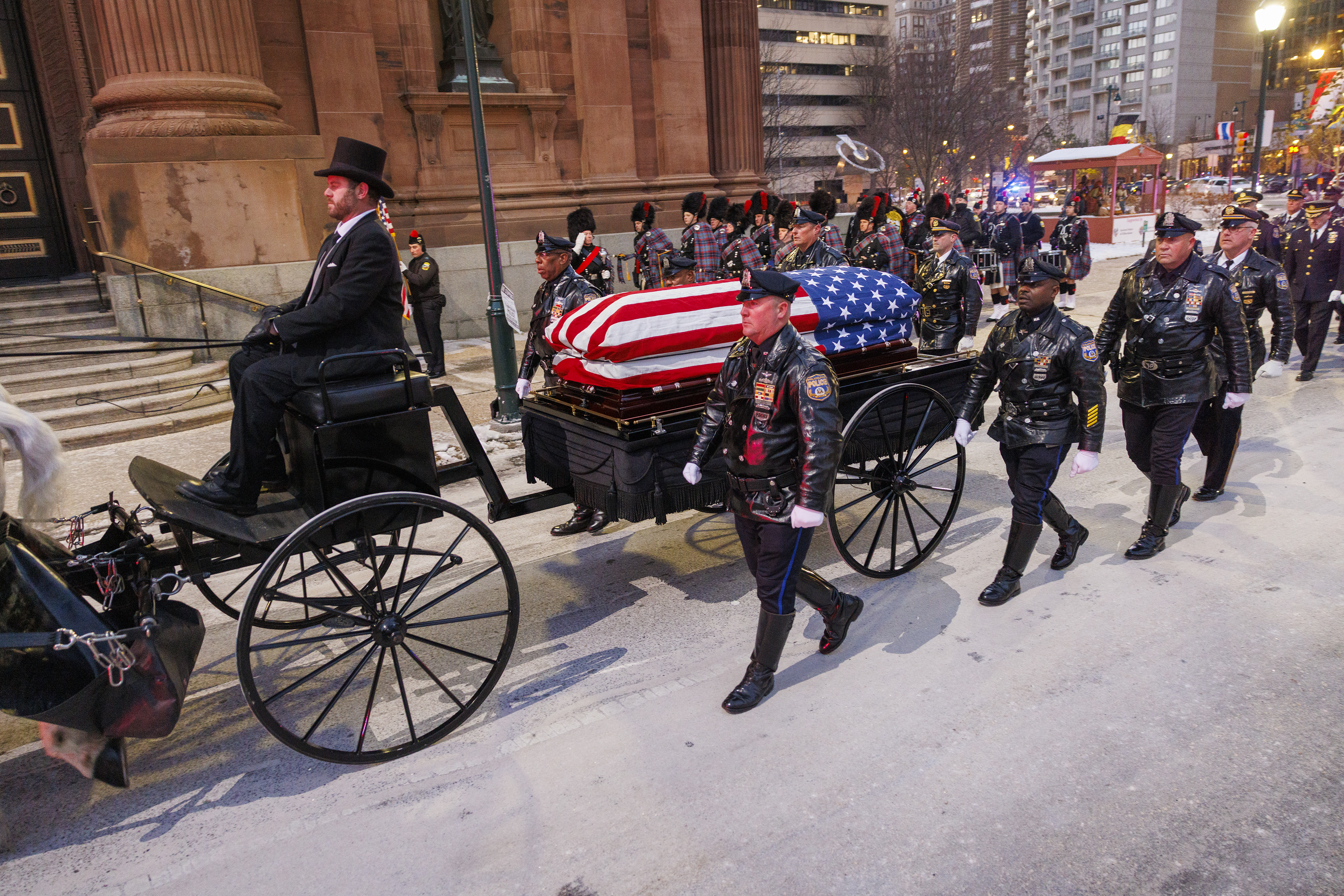
On Dec. 16, a horse-drawn carriage took Chan’s body in a cherrywood coffin draped in an American flag to the Cathedral Basilica of SS. Peter and Paul in Philadelphia. Officers towed Chan’s motorcycle, still bearing his name, in the procession.
The funeral caisson for Philadelphia Highway Patrol Officer Andy Chan arriving at the Cathedral Basilica Saints Peter and Paul on December 16, 2025. Chan died six years after a driver struck his patrol motorcycle. Alejandro A. Alvarez / Staff Photographer
On that frigid, windy Tuesday, hundreds of police officers joined city leaders to memorialize the man who had wanted to be a cop since childhood.
By the time of Chan’s death, The Inquirer had already filed Right-to-Know requests with the city asking for records of city payments or reimbursements to FOP Lodge 5 for all funeral-related expenses for officers killed in the line of duty. FOP leadership publicly criticized the records request on social media, contending that The Inquirer was seeking “private financial information” to “put a price tag on our heroes.”
The body of Philadelphia Highway Patrol Officer Andy Chan arriving at the Cathedral Basilica Saints Peter and Paul on December 16, 2025.Alejandro A. Alvarez / Staff Photographer
The reimbursement requests for Chan’s funeral show the FOP was unusually restrained.
The city received two documents, this time from the Philadelphia Police Department instead of the FOP: a bill for the funeral home and one for the carriage service. The total was $48,983.
The FOP did not submit any invoice, bill, or credit card statement for items unrelated to a funeral.
The eve of the World Cup was also the night before some Philadelphia bars could stay open until 4 a.m., according to a bill signed by Gov. Josh Shapiro in March.
But thanks to a sneaky provision in the bill, most establishments interested in a later last call weren’t yet eligible to do so — and in some instances won’t be until after July 4.
As of Wednesday evening, just 17 establishments were approved by the Pennsylvania Liquor Control Board to stay open until 4 a.m. for the duration of the World Cup, according to a list on the PLCB’s website. By Thursday morning the PLCB approved six more establishments, according to their website.
They represent roughly a third of the 65 Philly businesses that applied to the PLCB for approval, with the majority on the PLCB’s list marked as “in review” as of Thursday. The PLCB cancelled six applications due to ineligibility.
The PLCB started approving applications for extended hours on Wednesday, spokesperson Shawn Kelly told The Inquirer over email, and they will continue on a rolling basis. The last day applications will be accepted is June 19, Kelly said.
Establishments in the first wave of approvals include the strip clubs Sin City, Club Risque, and Cheerleaders; Rittenhouse Square sports bar Lucy; nightclubs Woody’s and Concourse Dance Bar; South Philly’s Live Casino! and bowling alley South Bowl, among others.
(function(){function e(){window.addEventListener(`message`,function(e){if(e.data[`datawrapper-height`]!==void 0){var t=document.querySelectorAll(`iframe`);for(var n in e.data[`datawrapper-height`])for(var r=0,i;i=t[r];r++)if(i.contentWindow===e.source){var a=e.data[`datawrapper-height`][n]+`px`;i.style.height=a}}})}e()})();
The permit process has caused confusion for some local bar owners, who said the delay in approvals have placed their World Cup plans on hold.
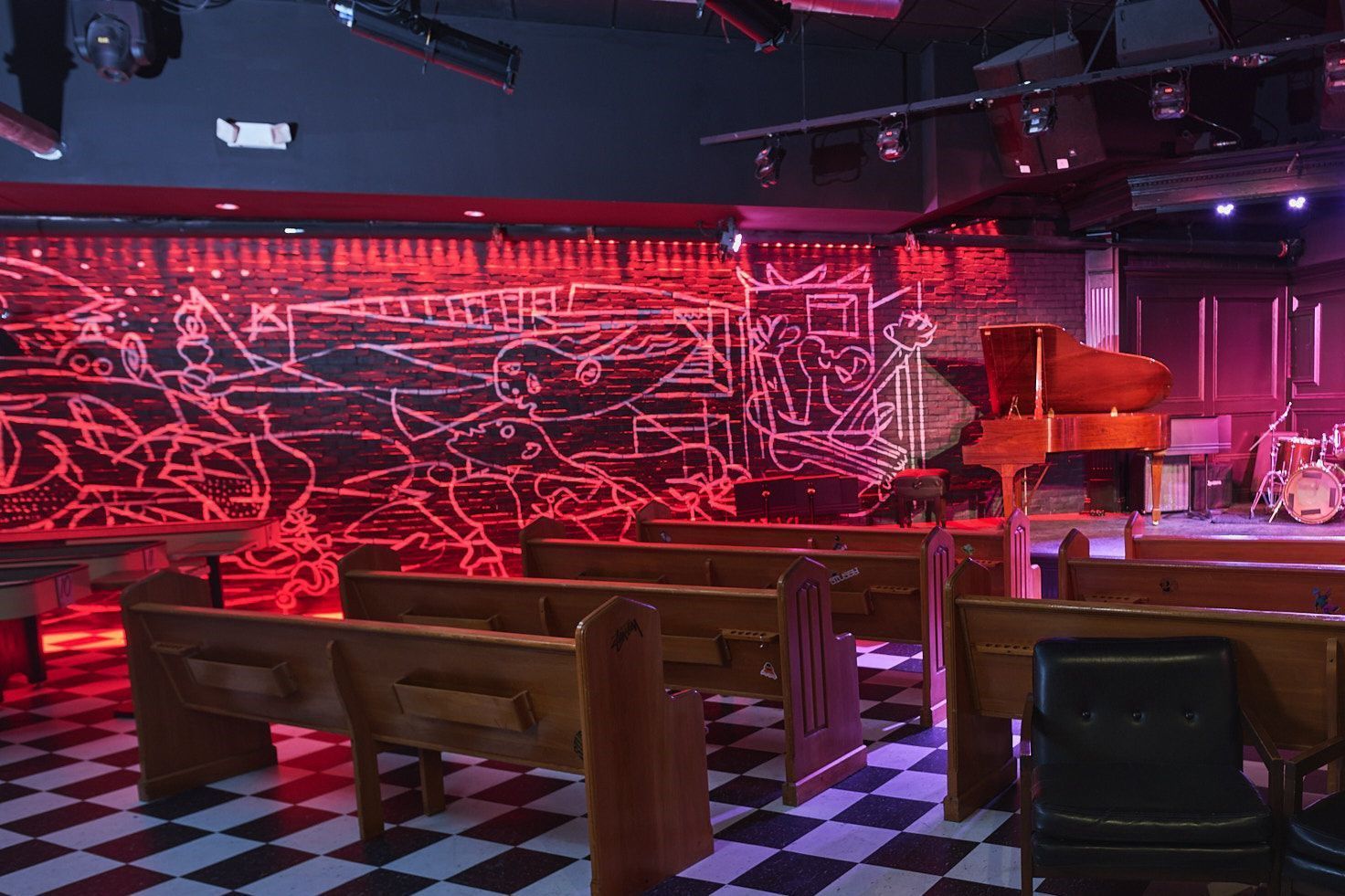
Rittenhouse Square jazz and billiards bar Cellar Dog applied for a permit to stay open until 4 a.m. on May 11, according to the PLCB’s records, and did not receive a permit until Thursday morning.
Owner Alfonzo Luna feared the last-minute notice would threw a wrench in the bar’s World Cup festivities. “We submitted everything right and on time, and we were just waiting,” he said on Wednesday night, prior to receiving approval. “I’m sure it’s a lot on [the PLCB’s] end, but for us it’s just frustrating to wait around because it puts a hold on any sort of marketing or operation changes that we that we need to make.”
The performance space at Cellar Dog Philly, which has yet to be approved for a permit to stay open until 4 a.m. during the 2026 World Cup.Spencer Starnes
How is this process supposed to work?
The permits are part of legislation introduced by Pennsylvania state senators Sen. Joe Picozzi and Sen. Vincent Hughes and signed into law by Gov. Josh Shapiro in March that would enable establishments in Philadelphia to stay open until 4 a.m. from June 11 to July 19, which covers all World Cup matches, Semiquincentennial celebrations, and the MLB All-Star game at Citizen’s Bank Park.
The thinking was that establishments should be able to stay open later to serve an influx of tourists looking to catch late night World Cup matches. In practice, however, many bar owners told The Inquirer that juice of late night hours isn’t worth the squeeze, between higher insurance premiums, an uncertain return on investment, and navigating bureaucracy.
Late night permits are available to all hotels, breweries, distilleries with liquor licenses in Philadelphia City limits. To initiate the application process, establishments must first have paid $250 to the City of Philadelphia’s Dept. of Commerce and completed the Liberty Bell Safe Certification Program, a one-day safety and compliance training.
A view of the Sports & Social sports bar at Live! Casino and Hotel in South Philadelphia. The casino has been approved for a permit to extend bar hours until 4 a.m. during the 2026 World Cup.(Courtesy of Live! Philadelphia)
Then, establishments must apply for a $500 permit from the PLCB, which would enable them to stay open until 4 a.m. through July 19. To be approved, applicants can’t have any pending licensing, inspection, or fiscal objections associated with their business. The City of Philadelphia can also protest applications filed with the PLCB, Kelly said, and can request a permit be revoked at any time.
Also baked into the process: A “30 day hold mandated by law,” Kelly said, that gives the PLCB “no discretion to approve or issue” permits less than 30 days after an application is received.
In other words, if a bar applied on June 4 to be open until 4 a.m., the earliest they could be approved would be July 4, giving them a little over two weeks to take advantage of extended hours. The PLCB decided to hold off on issuing permits earlier to prevent establishments from using them illegally, said Kelly
To be open late for the World Cup’s entirety, Kelly said, a business would’ve had to apply by May 11. “The PLCB conducts a full and complete investigation of every application it receives. There is no set timetable for that review,” said Kelly. “If an applicant submitted all required documentation — and filed in time — they will receive the Philadelphia 250 permit for the full period.”
Popular sports bar Cavanaugh’s Rittenhouse applied for a permit on May 21, according to PLCB records, meaning the earliest they could stay open late is June 21. Director of Operations Mike Anderson said the delay, while frustrating, isn’t a big deal.
The bar at Cavanaugh’s Rittenhouse, which has yet to have their permit approved for extended hours during the 2026 World Cup.MICHAEL KLEIN / Staff
The bar had only planned to exercise the 4 a.m. privileges on a case-by-case basis, said Anderson, when vibes at the bar are high. “I didn’t want to be left out if everyone else was doing it,” he said. “It could be the thing you tell stories about.”
The permit process was “easy enough,” said Anderson, whose sole gripe is “the lack of guidance.”
“I am guessing that we will eventually be approved or denied,” Anderson went on. “To be honest, it doesn’t really matter if we get approved. If we get denied, I wish I could reclaim my costs.”
Some bar owners, however, are just grateful everything got done in time . Four of FCM Hospitality’s properties — Concourse, Craft Hall, Dolphin Tavern, and the sports bar Lucy’s — are among the first wave of businesses approved for extended hour. Owner Avram Hornik said the process “couldn’t have gone better than it had.”
The PLCB and the city “are building the plane as they fly it,” he said. “It’s really hard to do something new … but I think the city and the state did an excellent job to make this happen.”
This story was updated on Thursday. Staff reporter Michael Klein contributed to this article.
A crowd packed with thousands of cheering fans, the 60-foot-wide screen playing the latest fiery matchup, and dozens upon dozens of food vendors await the FIFA Fan Festival, the cheapest and most immersive way to enjoy the 2026 World Cup in Philadelphia.
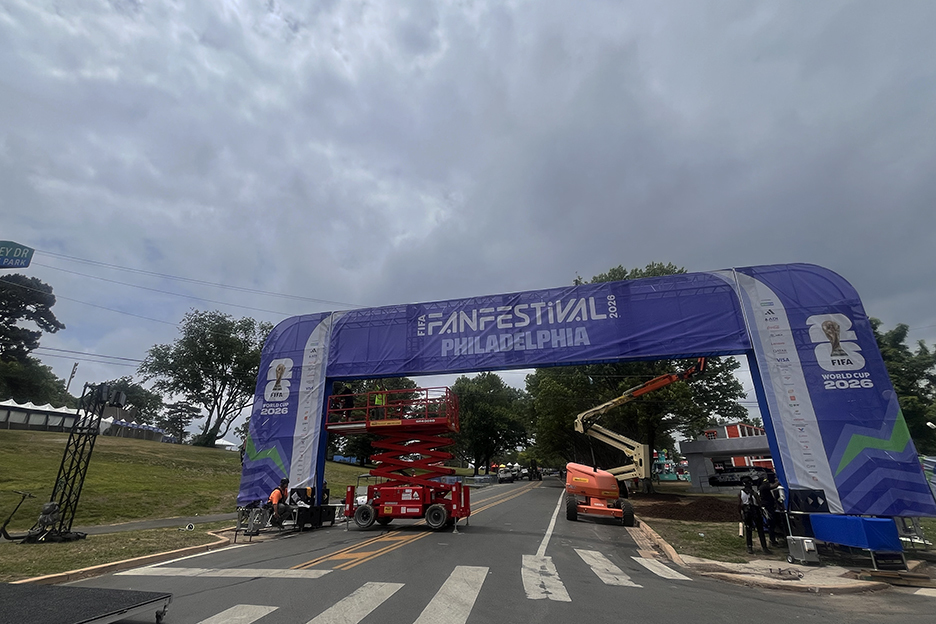
Starting Thursday, the Fan Festival opens daily to 15,000 fans, for free, to roam the million square feet of festival grounds that have transformed quaint Lemon Hill into an almost unrecognizable extravaganza of global soccer.
Here’s what you need to know before you go:
Watching the game
The main spectacle is the 60-foot screen that takes over the main stage in Lemon Hill, where the majority of fans will congregate to watch the match. But, throughout the festival are multiple smaller screens playing the game, so fans don’t miss a moment when they roam for food, fun, or the bathroom.
“Even if you’re not a soccer fan, you can still come out and have a great time,” said Michael DelBene, executive producer of FIFA Fan Festival for Philadelphia Soccer 2026. “You can come and listen to music or eat delicious food, or shop.”
The festival is intended for fans of all ages and promises to be kid and family friendly.
Amenities
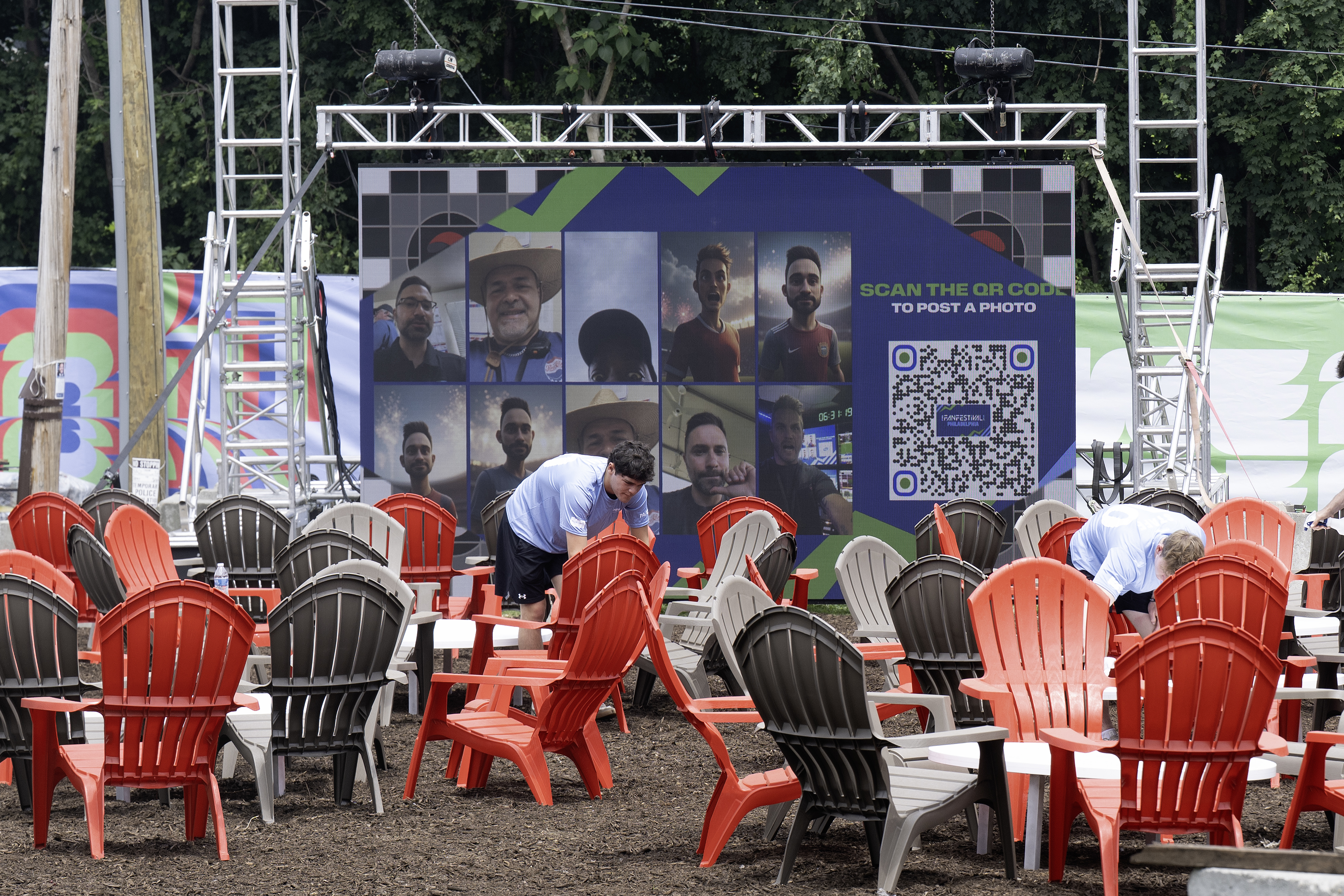
Crew members make final preparations, including work on a 60-foot-wide screen, for a FIFA Fan Fest at Lemon Hill in Philadelphia on Tuesday, June 10, 2026.Jose F. Moreno / Staff Photographer
The Fan Festival delivers what many large-scale music festivals offer, with ways to enjoy the main attraction while also having side activities to keep you busy during a lull.
Food and drink
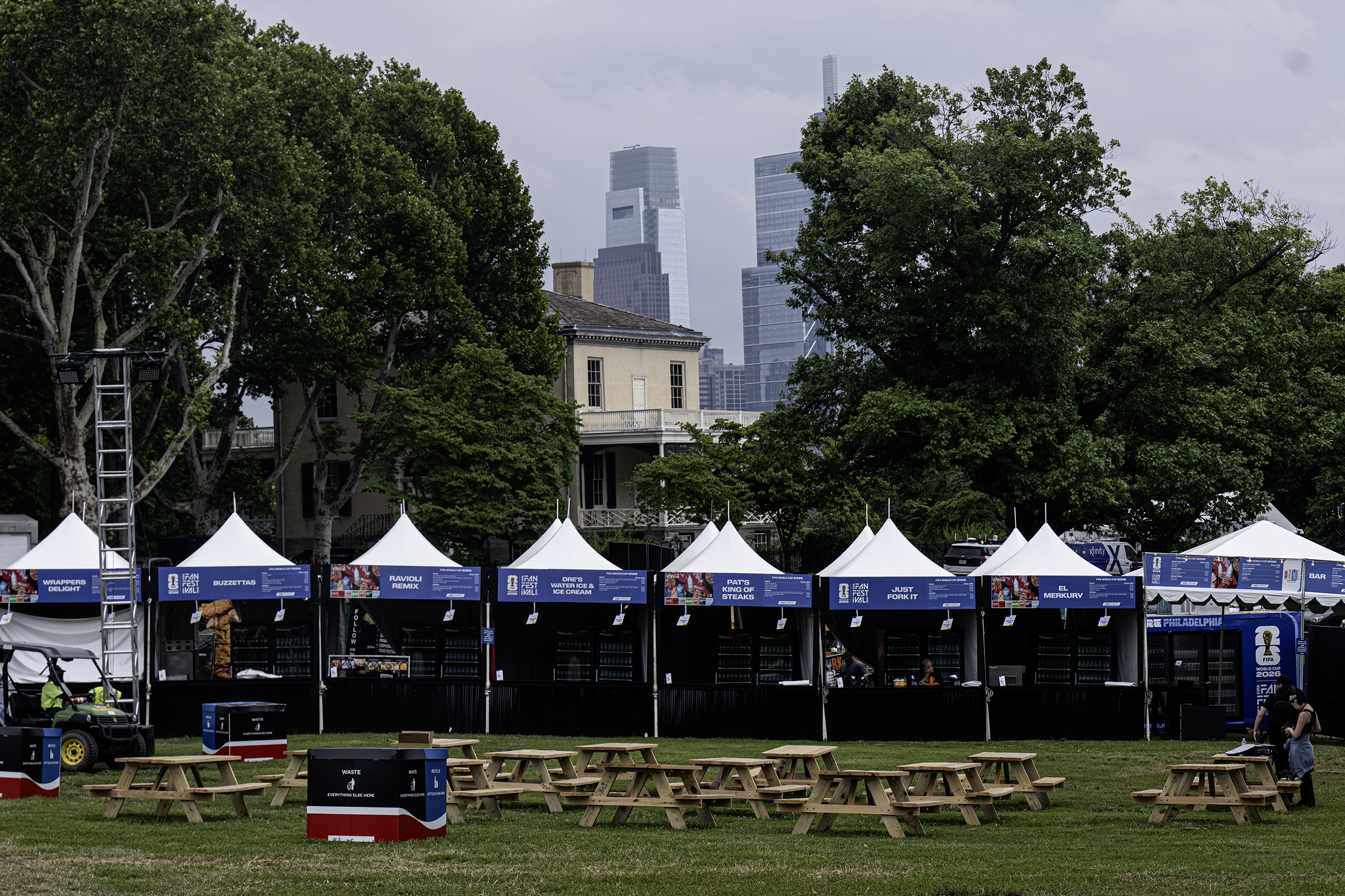
More than 80 local food trucks will serve up meals based on dishes from the many cultures across Philadelphia and, of course, the city’s very own, like cheesesteaks, pretzels, and more.
Outside of food trucks, there will also be vendors selling beverage basics, such as water, soda, and beer, to the small bites like tacos and sandwiches. Pricing varies. Some vendors have beer and beverage prices at $10 or less. Many will also sell food menu items in the $15 to $25 range.
A Michelob Ultra beer garden will welcome those 21 and over to a variety of brews, and the Coca-Cola corner has all the tasty carbonated beverages a fan could ask for.
No outside food or beverage are permitted besides a reusable water bottle that can be filled at hydration stations. For a full list of what you can’t bring, visit phillyfwc26.com/fifa-fan-fest.
Live music
Throughout the festival, more than 50 live acts will grace the stage at Lemon Hill, including the opening night concert with headliner Luis Fonsi of Despacito fame. Festival showrunner DelBene said that while they’ll kick off the event with one of the biggest global artists, many local Philadelphia musicians and acts will rotate through the 39-day event.
“It’s a really cool juxtaposition of global talent and the juxtaposition of local talent and culture,” DelBene said.
Crew members make final preparations, including work on a 60-foot-wide screen, for a FIFA Fan Fest at Lemon Hill in Philadelphia on Tuesday, June 10, 2026.Jose F. Moreno / Staff Photographer
Shopping and giveaways
The Philadelphia Festival Marketplace will showcase the best artisans and makers the region has to offer with distinctive soccer swag, accessories, jewelry, original artwork, and more.
Philly’s fan festival will also host the largest World Cup retail space across all 11 U.S. host cities. Sitting at 10,000 square feet, the Fanatics World Cup shop has everything a soccer fan needs for official tournament gear.
Outside of shopping, many sponsors have built elaborate exhibits with interactive games and chances to win giveaways. Some of those sponsors include Kia, Bank of America, and The Home Depot.
Accessibility
ADA-accessible ramps are located throughout the festival and accessible public transportation is available entering and departing the venue. A golf-cart shuttle will also be available from the welcome center.
Attendees have access to nursing stations, sensory booths, prayer booths, and meditation booths. ASL interpreters will be present throughout the event. Any questions can be directed to the welcome center booth or to staff with shirts.
Inclement weather
The festival will run rain or shine and will be canceled in case of any dangerous weather (thunder, lightning, high winds, or very high temperatures.)
Getting around
Crew members make final preparations, including work on a 60-foot-wide screen, for a FIFA Fan Fest at Lemon Hill in Philadelphia on Tuesday, June 10, 2026.Jose F. Moreno / Staff Photographer