Category: Philadelphia News

  • John Alviti, retired senior curator at the Franklin Institute and former executive director at the Atwater Kent Museum, has died at 76

    John Alviti, retired senior curator at the Franklin Institute and former executive director at the Atwater Kent Museum, has died at 76

    John Alviti, 76, of Flourtown, Montgomery County, retired innovative senior curator at the Franklin Institute, former executive director at the Atwater Kent Museum, adjunct professor of urban studies, and “Mr. Philadelphia History” to family and friends, died Saturday, June 20, of complications from heart and kidney disease at Jefferson Abington Hospital.

    Born in Chicago and devoted to history and his South Side White Sox baseball team, Mr. Alviti came to Philadelphia in the 1970s to pursue a doctorate in history and urban studies at Temple University. He never got that doctorate.

    But he fell in love with Philadelphia’s history and architecture, got married, settled down in Flourtown, and, for 34 years, was one of the region’s most influential museum curators and historians. Affable, creative, and energetic, by all accounts, Mr. Alviti became a groundbreaking executive director at the now-closed Atwater Kent Museum in 1982 and celebrated curator at the Franklin Institute in 1994.

    Even after he retired in 2018, he was known around town as “Mr. Philadelphia History.”
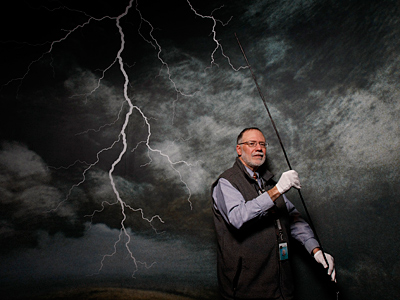
    Mr. Alviti displayed this 5-foot-long fragment of a lightning rod designed by Benjamin Franklin at the Franklin Institute in 2010. Michael S. Wirtz / Staff Photographer

    At the Atwater Kent, Mr. Alviti updated exhibits on William Penn, the history of Philadelphia, the old Enchanted Colonial Village display, and local cemeteries. He added maritime and archaeology galleries.

    At a gala to celebrate the museum in 1984, A. Atwater Kent Jr., son of the museum founder, said Mr. Alviti “has done a great job of creating interesting exhibits and improving the museum.”

    At the Franklin Institute, he reorganized its huge inventory, redecorated the galleries, digitalized many artifacts, and created popular exhibits regarding the Wright Brothers, Benjamin Franklin, antique machines, X-rays, and dozens of other scientific subjects.

    “He loved objects,” said his wife, Maryellen. “He loved the history of objects and telling their story.”
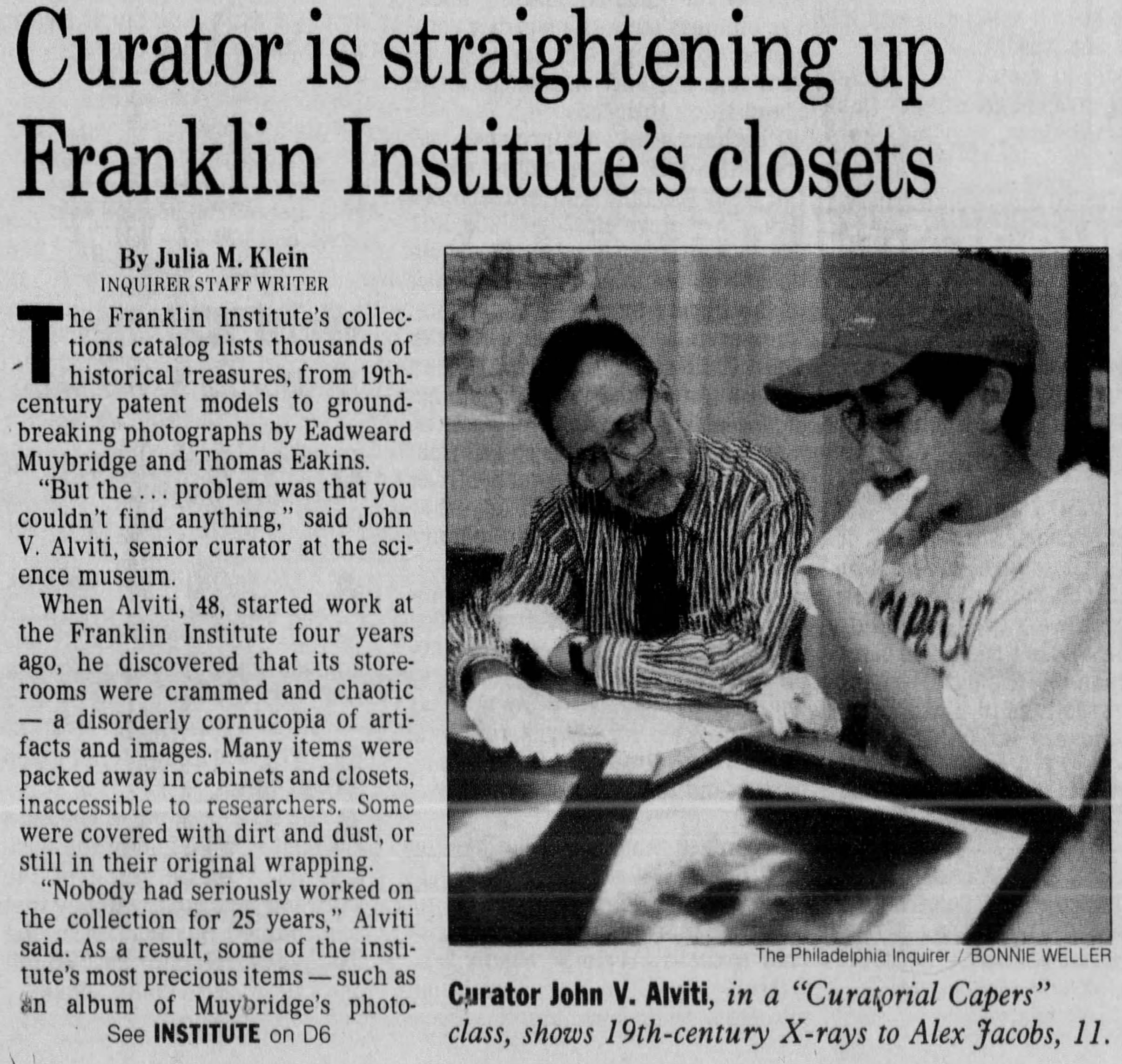
    This story and photo of Mr. Alviti (left) was published in The Inquirer in 1998.Newspapers.com

    In 1998, Mr. Alviti told The Inquirer: “Besides the curator of stuff, I’m also the curator of institutional memory. And institutional memory is more than just simply the facts about what happened in the past. It’s about the legacy of an institution … and how it informs our thinking and decision-making.”

    He was also adept at merging his collections with educational programs, and he helped organize the city’s National History Day competition for students, the Phil-A-Kid hands-on history workshop for fourth and fifth graders, the Peopling of Philadelphia research project, and the Curatorial Capers summer day camp program. Often, in a nod to the ever-present protective gloves he wore to handle the artifacts, he introduced himself as “Johnny Whitegloves.”

    “There are some curators who think I’m crazy,” he told The Inquirer. But a public presentation, he said, “really demonstrates the power of an object.”

    Mr. Alviti also led walking tours of the city for visiting colleagues from the Oral History Association, the Organization of American Historians, and other groups. He admired and worked closely with amateur historians, and led the successful effort in 1981 to save the historic Lit Bros. building complex on Market Street from demolition.
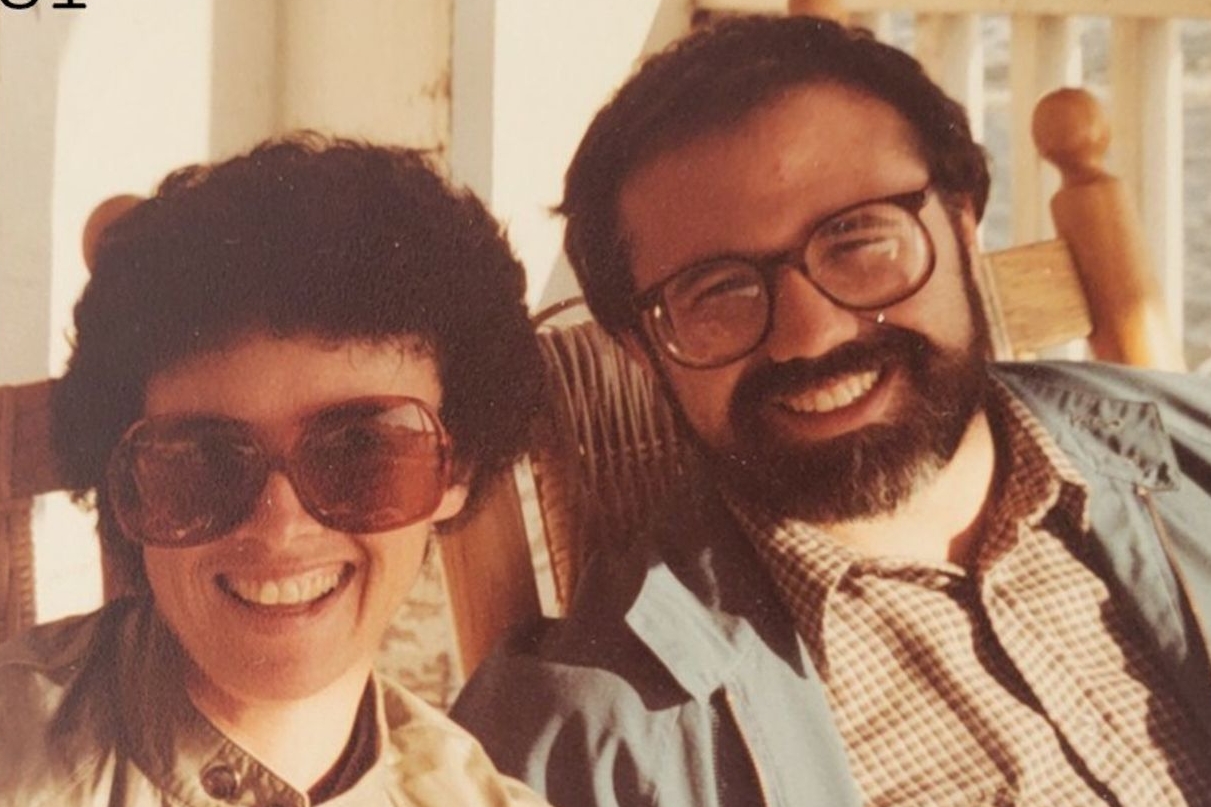
    Mr. Alviti and his wife, Maryellen, married in 1983.Courtesy of the family

    Between the Atwater Kent and the Franklin Institute, Mr. Alviti spent two years as director of the Historical Society of Washington, D.C. He was an expert on public transportation and taught urban studies, American history, and museum training at Temple and Stockton Universities, Rutgers University-Camden, and elsewhere.

    He was onetime curator of historic Fort Mifflin and president of what is now the Museum Council of Greater Philadelphia. He was on the advisory board of the old Philadelphia Alliance for Teaching Humanities in the Schools and active with the American Association of Museums and other groups.

    “He had a gift for making friends for life,” longtime friend Margaret Marsh said, “and he had a legendary generosity of spirit.” Longtime friend Howard Gillette said: “He never met a stranger.”

    John Vincent Alviti was born Sept. 22, 1949. A lifelong avid reader, he earned a bachelor’s degree in urban studies and history at Lewis University in Illinois in 1971 and a master’s degree in history at the University of Wisconsin-Milwaukee in 1975.
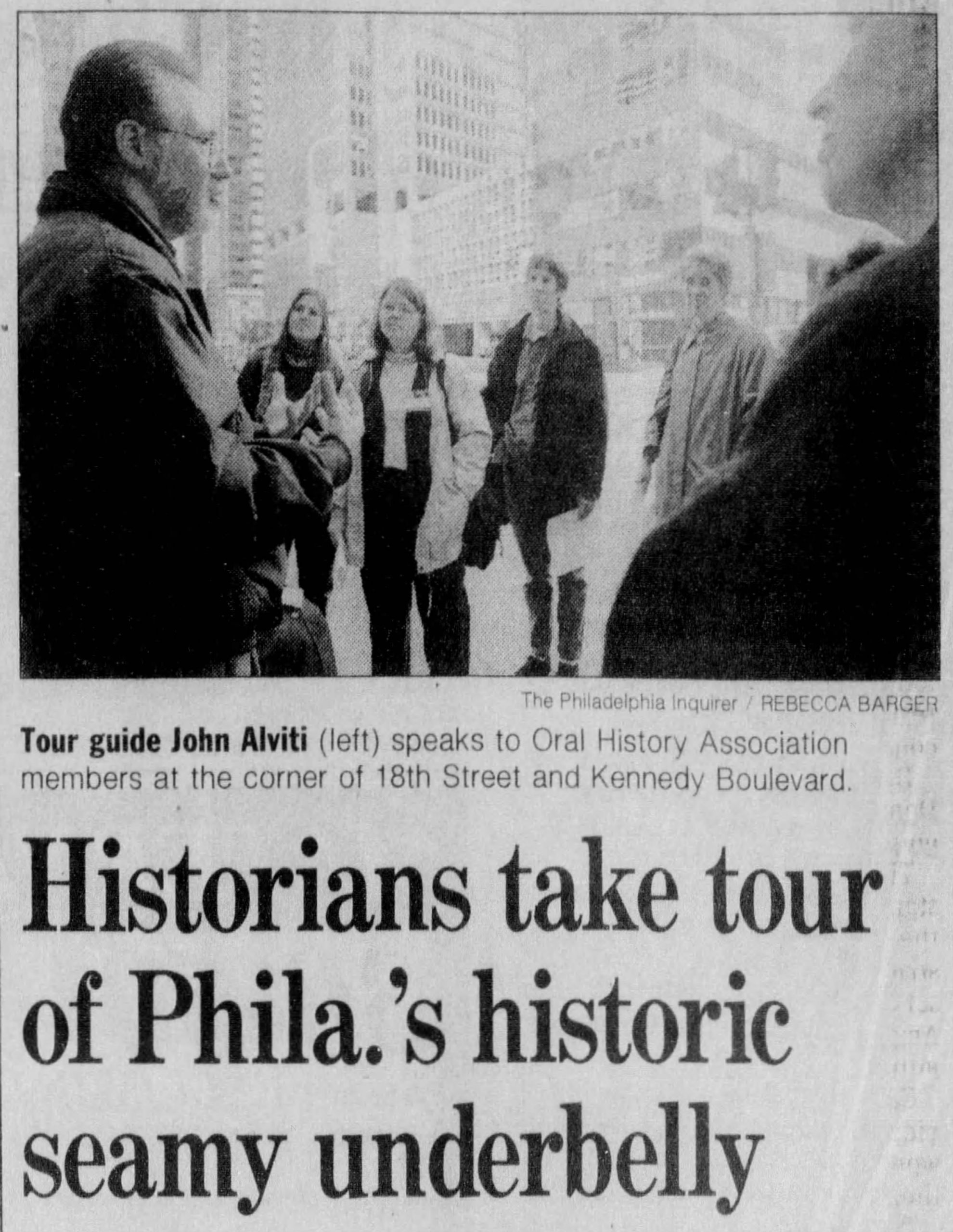
    The photo and a story about Mr. Alviti and his city walking tours appeared in The Inquirer in 1996.Newspapers.com

    He played piano and clarinet, and sang in choirs in high school and college. “He left Chicago when he was 25 or 26,” said his younger sister, Rosemarie Alviti Babic, “but never stopped loving the city.”

    He met Maryellen Coonahan when she took an urban studies class he was teaching at Temple, and they married in 1983 and lived in Philadelphia, Washington, and Flourtown. Together, they traveled the world and visited museums in London, Rome, Athens, Madrid, and elsewhere.

    Mr. Alviti enjoyed puzzles, games, and conversation. He lived with a heart condition for most of his life and was the lovable “Uncle Johnny” to his nieces and nephews. “He is missed beyond words,” said his niece Lindsay Hogan.

    He was fascinated by urban architecture and city life around the world, and he routinely bought food and drink for people without homes, picked up litter, and offered correct directions to those who looked lost.
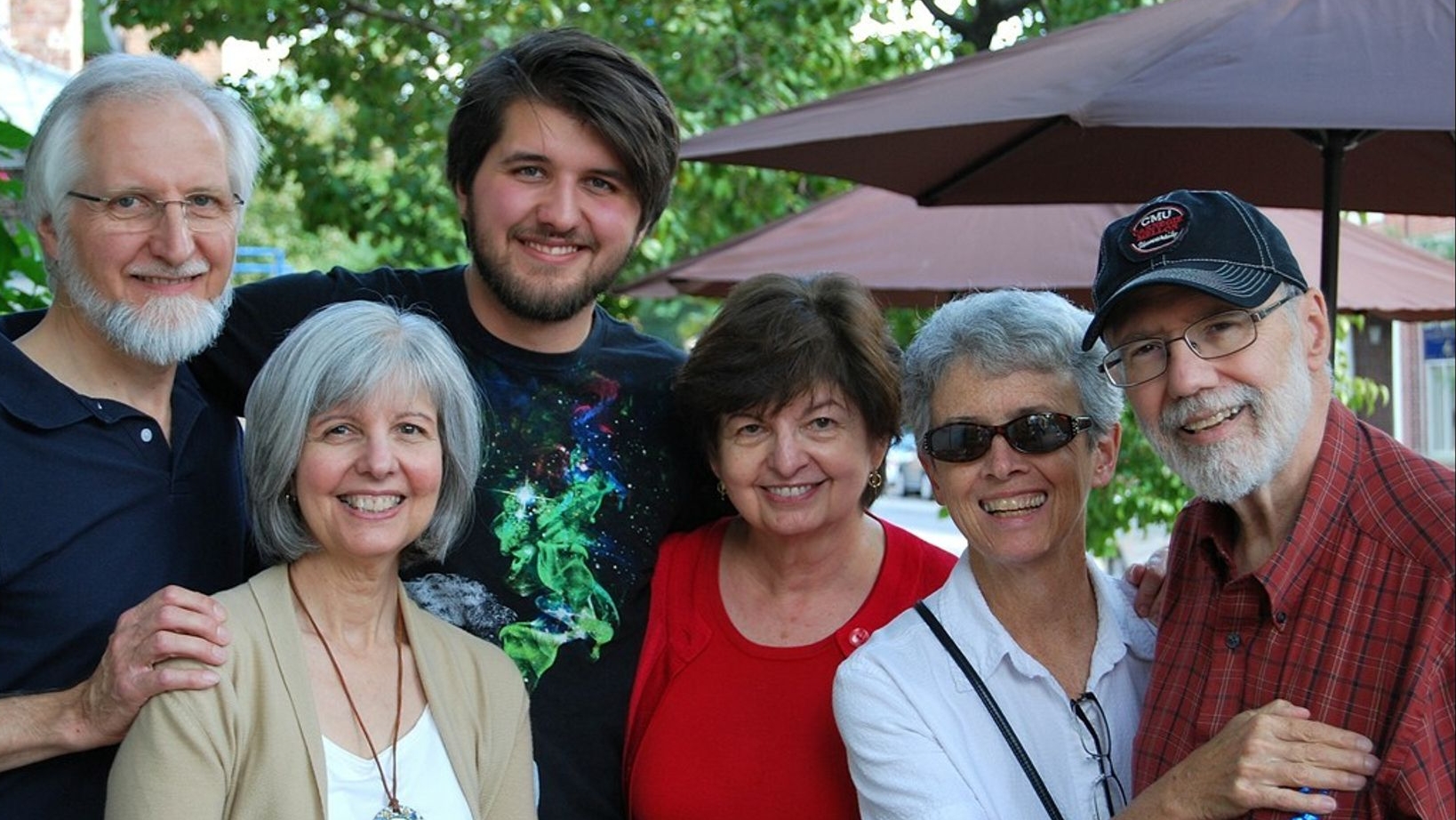
    Mr. Alviti (right) enjoyed time with family and friends.Courtesy of the family

    “He was a curious fellow,” his wife said, “who loved to help people.”

    In addition to his wife, sister, and niece, Mr. Alviti is survived by a sister, Rita Jo Alviti Coyne, a brother, James, and other relatives.

    A celebration of his life was held earlier.

    Donations in his name may be made to Face to Face, 123 E. Price St., Philadelphia, Pa. 19144.
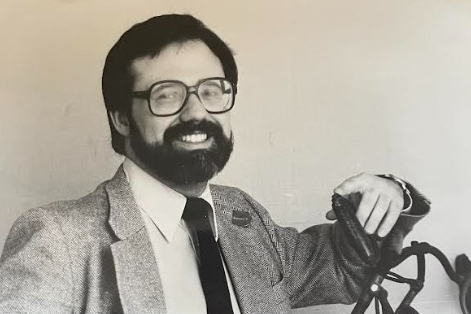
    His wife called Mr. Alviti “a curious fellow who loved to help people.”Courtesy of the family
  • A new federal judge for Philadelphia was confirmed by the U.S. Senate

    A new federal judge for Philadelphia was confirmed by the U.S. Senate

    A partner at one of the city’s largest law firms who once worked as a federal prosecutor was confirmed Thursday by the U.S. Senate to become the Philadelphia region’s newest federal judge.

    Antonio Pozos’ nomination to join the region’s U.S. District Court was approved by a vote of 49-44. There was no discussion as the Senate voted to approve his nomination, which earns him a lifetime seat on the bench.

    Pozos, 44, most recently a partner at Faegre Drinker Biddle & Reath, is the first person appointed to the region’s district court since President Donald Trump began his second term last year. During his first term, Trump had five judges confirmed to the region’s federal bench.

    Pozos will fill a vacancy created by last year’s retirement of U.S. District Judge Mitchell Goldberg, giving the court 22 district judges and eight senior judges.

    District court judges oversee a variety of criminal and civil cases each year, and typically issue the first rulings on legal questions that can sometimes reach the U.S. Supreme Court.

    Although some of Trump’s recent nominations to judicial posts across the country have been controversial — including his decision to nominate his former personal lawyer, Emil Bove, to the Philadelphia-based U.S. Court of Appeals for the Third Circuit — Pozos’ candidacy received some bipartisan support.

    Shortly after his nomination was announced, Pennsylvania’s Democratic senator, John Fetterman — who, under Senate rules, had the ability to block Pozos’ candidacy from advancing — decided to allow the process to move forward, the first time any Democrat had done so for a district court nominee during Trump’s second term.

    Fetterman also voted Thursday to confirm Pozos.

    During a confirmation hearing last month, U.S. Sen. Dave McCormick (R., Pa.) called Pozos a “successful attorney, a strong Pennsylvanian, a decorated public servant, and he’s eminently qualified for this role.”

    Pozos was criticized by some Democratic senators during the hearing for hesitating to use the word attacked when describing the riot at the U.S. Capitol on Jan. 6, 2021. He instead said it “appeared that there was violence and trespass” that day, and called the events “profoundly troubling.”

    Pozos lives in Bryn Mawr and is a graduate of Harvard College and the University of Michigan Law School, according to a questionnaire he submitted to the Senate Judiciary Committee.

    Before he became a partner at his firm in 2018, the questionnaire said, he spent three years as a prosecutor in the Justice Department’s criminal fraud section in Washington, where he often worked on cases involving healthcare fraud. He previously worked as an associate in a Washington-based firm and clerked for U.S. District Judge Anthony J. Trenga in Virginia.

    In Philadelphia, Pozos has served as a lecturer at the University of Pennsylvania’s Carey Law School and is on the board of Drexel University’s Kline School of Law.

    With Pozos’ confirmation to the bench, Trump has now appointed six of the Philadelphia region’s district judges, who handle cases that arise from the city, its suburbs, and counties in and around Reading and Allentown. Former Presidents Joe Biden and Barack Obama each appointed seven judges to the bench, and two were appointed by George W. Bush.

    Trump has had a more outsize impact on the region’s appellate court, where he has appointed six of the court’s 14 members across his two terms.

  • Founder of Kensington anti-violence nonprofit arrested for knife attack on SEPTA train, authorities say

    Founder of Kensington anti-violence nonprofit arrested for knife attack on SEPTA train, authorities say

    A well-known activist and founder of a Kensington anti-violence nonprofit was charged with aggravated assault and related crimes for attacking a woman with a box cutter during an argument on a SEPTA train last week, authorities said Thursday.

    Rosalind “Roz” Pichardo, 48, was taken into custody days after the July 17 assault, which left the victim in critical condition with deep lacerations to her face and chest that required more than 70 stitches to close, according to the Pennsylvania Attorney General’s Office, which is prosecuting the case.

    Pichardo is the founder of Operation Save Our City, a nonprofit that offers social services to people who have experienced grief, addiction, or trauma from exposure to violence, according to the group’s website. She also runs “Sunshine House,” a storefront on Kensington Avenue where people in addiction can drop in for meals, clothes, and other forms of support.

    She has been involved with other anti-violence and victim services organizations throughout the city and has received at least two city grants for her work.

    Last week, one day before the assault, Pichardo touted a $20,000 grant that Operation Save Our City received from the Philadelphia Office of Public Safety.

    And in 2024 and this year, the Philadelphia District Attorney’s Office awarded Pichardo’s organization $25,000 and $10,000, respectively, through its violence prevention microgrant program.

    Pichardo declined to comment Thursday. No attorney for her was listed in court documents.

    Around 9 p.m. Friday on an eastbound SEPTA train near Eighth and Market Streets, prosecutors say, Pichardo assaulted a woman with a box cutter. They said the conflict began when the two women argued on a platform at the transit agency’s 15th Street Station.

    The victim told investigators Pichardo “got smart with her” after she asked a man who was blocking a platform bench to move so she could sit down, according to an affidavit of probable cause for Pichardo’s arrest. She said she, in turn, “got smart” with Pichardo.

    During the spat, the victim said, Pichardo complained about “how rude young people are” and called her entitled for asking the man to move.

    The women then boarded the train, where the argument continued, and they “both got in each other’s face and started fighting each other,” the woman told investigators, according to the affidavit.

    At some point during the scuffle, the woman said, Pichardo pulled out a box cutter and assaulted her. She told investigators she felt warmness on her face and felt “a lot of blood.”

    The attack left the woman with severe lacerations on her cheeks and her chest that, in addition to needing stitches, required surgery to help her regain muscle movement, the documents said.

    Pichardo was taken into custody by SEPTA transit police but released the same evening.

    Investigators said technical issues initially prevented them from viewing surveillance footage captured within the train car, but they later recovered footage from an adjoining car that showed portions of the incident.

    On Wednesday, Pichardo was charged with two counts of aggravated assault, simple assault, possessing an instrument of a crime, reckless endangerment, harassment, and disorderly conduct.

    She was released from custody after posting 10% of $25,000 bail, court records show.

    The case will be handled by the attorney general’s special prosecutor for mass transit, a position created by the state legislature to address what Republican lawmakers said was the failure of District Attorney Larry Krasner to prosecute violent crimes on or near SEPTA properties.

    A spokesperson for Krasner’s office declined to comment on the case and referred questions to the attorney general.

    Pichardo appeared to address the matter in cryptic posts on Facebook, where she frequently promotes her activist work to her 23,000 followers.

    On July 18, one day after the assault, she posted a photo of a SEPTA train car with the caption: “Lord please give me strength to get through this pain.”

    And on Wednesday evening around 9 p.m., she updated followers: “I’m Good .. I’m Home and trusting the process . My head is up..”

    In addition to founding Operation Save Our City in 2012 and later Sunshine House, Pichardo has worked as a lead educator with the harm reduction nonprofit Prevention Point and as a trauma victims advocate in Temple University Hospital’s emergency department.

    Staff writers Ellie Rushing, Aubrey Whelan, and Jillian Kramer contributed to this article.

  • Inside the Philly Police Department’s plan to act like a ‘modern business’: Quality-of-life officers, AI, and video calls

    Inside the Philly Police Department’s plan to act like a ‘modern business’: Quality-of-life officers, AI, and video calls

    Until last year, Philadelphia police detectives wrote search warrants on typewriters. Officers still take incident reports with pen and paper, and hand deliver them to detective bureaus. And when someone reports a minor crime, it can take hours for police to respond — if they do at all.

    To Police Commissioner Kevin Bethel, those details capture something bigger: a department in need of a systems upgrade.

    In a new five-year strategic plan released Thursday, Bethel broke from the tradition of his predecessors by treating the police department and its nearly $900 million budget as a business in need of modernizing — with an eye toward better “customer service” for residents — rather than centering on crime-fighting tactics like commanders of the past.

    “If we’re going to be a modern police department,” he said in an interview this week, “we have to take on some of the structures of a modern business.”

    To him, that involves tackling many of the less glamorous parts of police work: upgrading internal records systems, streamlining police report forms, and expanding training for officers.

    But there are also some flashy — if not eyebrow-raising — initiatives within the 73-page plan: integrating artificial intelligence into 911 calls, allowing residents to report nonemergency crimes via video chat, and creating an internal diversion program for officers who violate low-level department policies.

    Some parts of the plan — built on conversations with more than 200 people in the department, city leadership, and community — would be funded through grants, the department said, while others would need to be approved and funded by City Council, which has been largely amenable to Bethel’s budget requests in recent years.

    The department said the long-term view “allows future needs to be considered through the normal budget process well before they arise.”

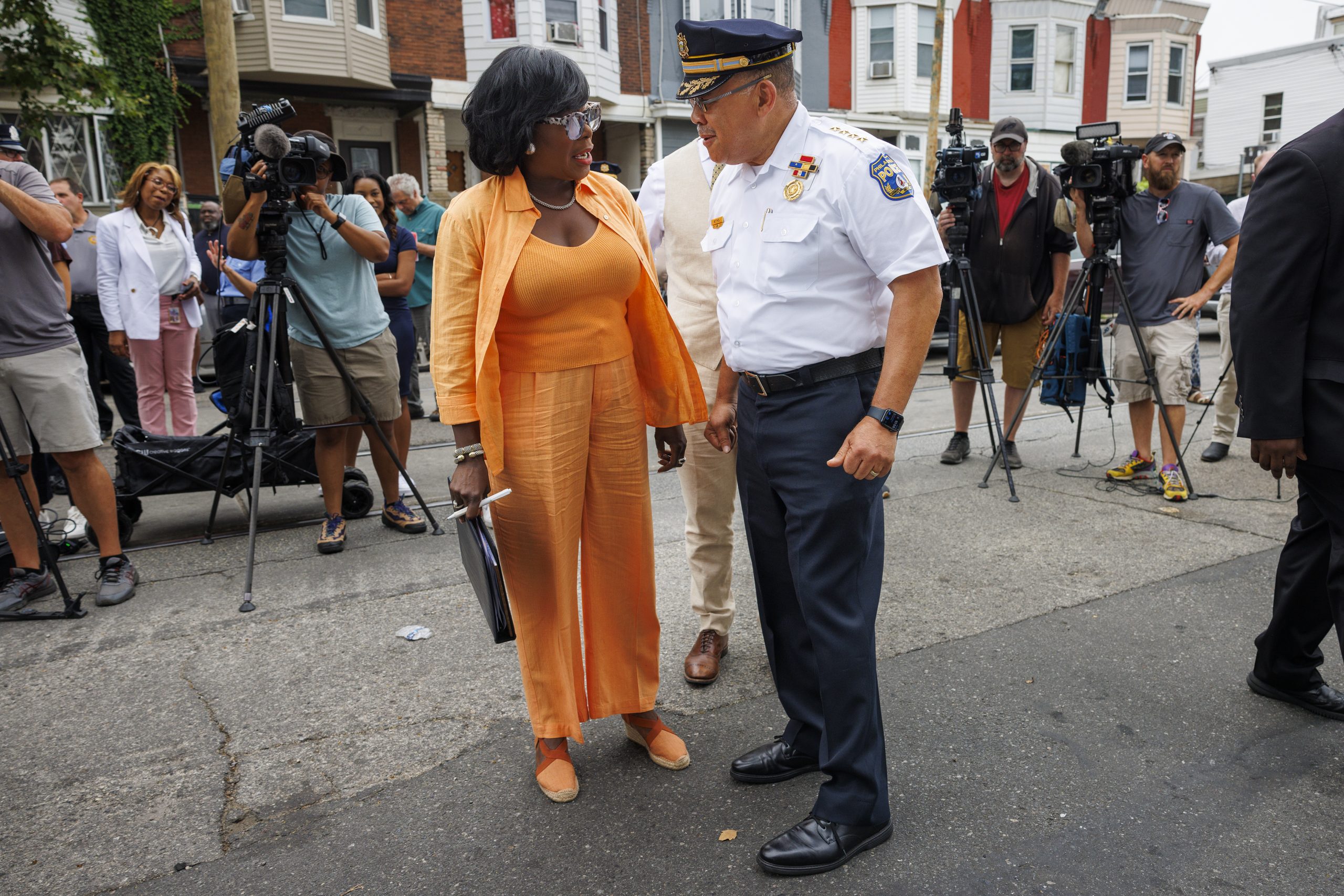
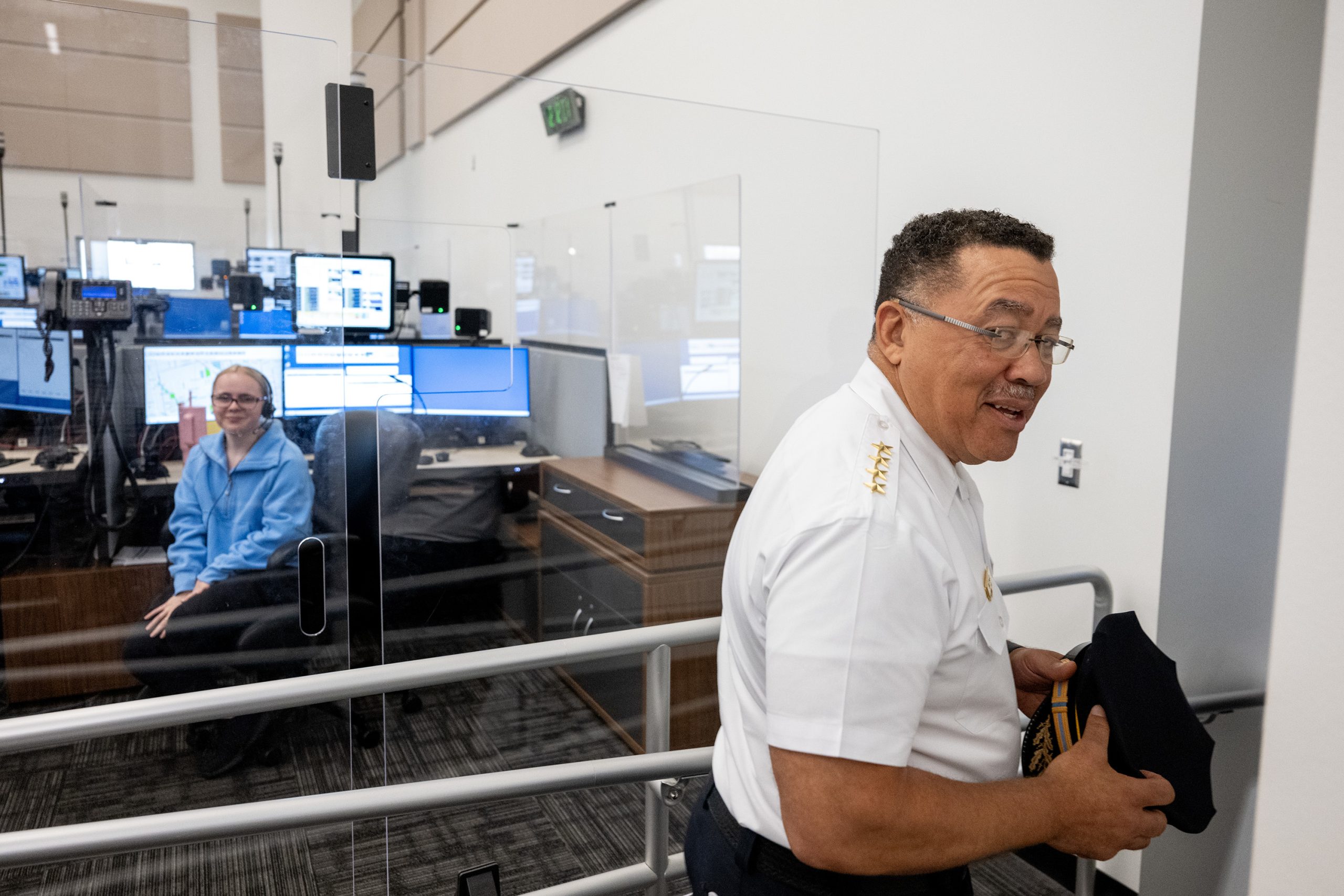
    Philadelphia Mayor Cherelle Parker and Police Commissioner Kevin Bethel speak at a press conference in 2024.Alejandro A. Alvarez / Staff Photographer

    It has been one of Bethel’s signature undertakings since Mayor Cherelle L. Parker appointed him as Philly’s top cop in January 2024, part of a long history of police commissioners and mayors working together to craft long-term public safety plans to guide their administrative goals.

    In 2012, then-Mayor Michael Nutter said the department would focus on confiscating illegal guns, and ramp up overtime to put more cops on the street. And in 2020, amid an unprecedented spike in gun violence, then-Police Commissioner Danielle Outlaw outlined goals to increase the clearance rate for homicides and shootings.

    Bethel’s plan, by contrast, is light on specifics for traditional crime fighting. While it broadly describes strategies like increasing foot patrols on SEPTA and expanding the use of digital forensic evidence in investigations, it does not set targeted reductions in homicides, shootings, or traffic deaths.

    That, he said, was intentional.

    “This plan is really not a crime plan. We have a crime plan. We’ve been covering it for a long time. We know that space of it,” he said. “But we’ve never done anything as an organization with, how do we move into being a modern and forward-thinking, always-evolving organization?”

    Bethel’s plans come as Philadelphia faces a more positive outlook. The city is on track to record the fewest homicides in more than half a century. The homicide and shooting clearance rates have hovered around 98% and 40%, respectively, the highest in decades. And Philadelphia is no longer the poorest big city in America.

    That has likely given Bethel the rare breathing room to look past the crime stats that have defined past administrations and focus instead on the machinery behind them.

    Here are some standout parts of the plan:

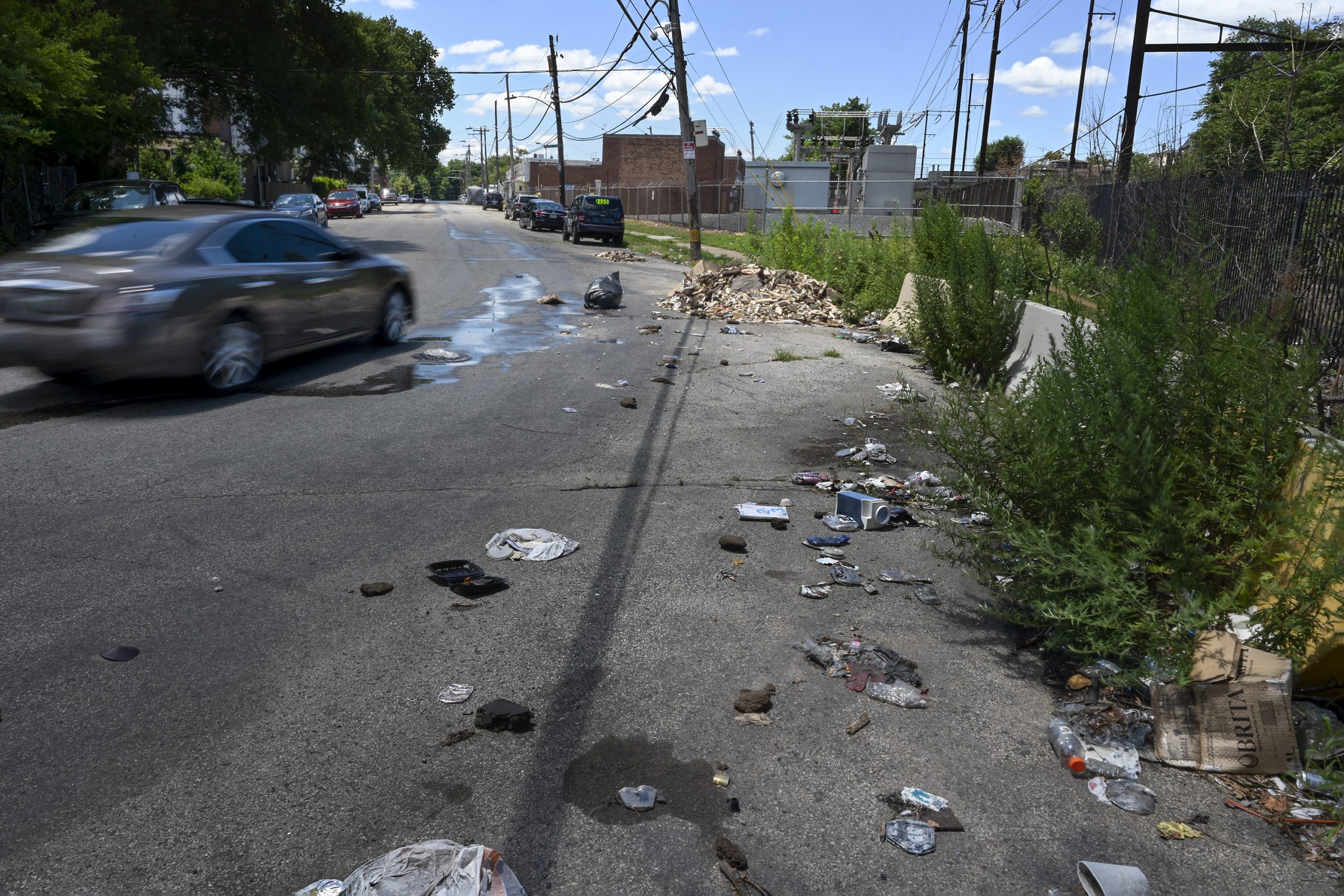
    Illegally dumped trash piles up at South 56th and Hoffman Streets in Kingsessing in this 2024 photo. Residents would now have officers in their police district to specifically help address quality-of-life issues. Tom Gralish / Staff Photographer

    New quality-of-life officers

    Quality-of-life concerns have long dominated community police meetings, Bethel said. So within the next two years, the department plans to install “quality-of-life officers” in every police district to be the point of contact for residents on issues like abandoned cars, illegal dumping, and nuisance businesses.

    Those officers, Bethel said, would be responsible for coordinating calls with other city departments to more quickly resolve problems.

    Report low-level crimes via video call

    One of the biggest issues for the department, Bethel said, is poor “customer service.”

    Officers typically juggle high-priority calls — like shootings and assaults — alongside reports of nonviolent crimes like petty theft, vandalism, or minor car crashes. Because the lower-level offenses are considered less urgent, officer response can sometimes take several hours, leaving residents frustrated.

    Under the new system, he said, people would be able to report low-level crimes online and be provided with a link to a video chat with officers, who could take the report and send a copy to the caller digitally, with no in-person visit needed.

    Filing a report over the phone will still be possible, he said, but for people who want to avoid an emergency call for minor issues, this is a new option.

    The new system could start to roll out within the next year.

    AI-assisted 911 calls

    The department also plans to test 911 call systems that use artificial intelligence to screen calls.

    When people call for help, they will be connected to an emergency dispatcher, with AI listening in the background. Callers who report lower-level crimes, like vandalism or theft, will be transferred to an AI-assisted line and have the option to report the matter online or via video call.

    There will also be a separate, nonemergency phone number that will be answered by an artificial voice. The system will screen for keywords or issues linked to high-priority crimes, like a robbery or shooting, and immediately transfer those calls to a human dispatcher, the department said.

    The hope is this would lead to faster response times and reduce complaints that calls for help have gone unanswered.

    Bethel said the department is still evaluating potential pitfalls, and acknowledged the nuances: “A theft can turn into a robbery, and a robbery can turn into a shooting, a shooting can turn into a murder,” he said.

    Police Commissioner Kevin Bethel inside the radio room at PPD headquarters in 2024.Tom Gralish / Staff Photographer

    An internal diversion program

    When city police officers violate department policy, their disciplinary cases are sent to the Police Board of Inquiry, and reprimands can remain on their record and affect future promotions unless appealed and overturned through union arbitration.

    Under a new initiative, officers accused of lower-level violations could go through an internal diversion program that requires them to undergo training and avoids a mark on their record. Among those offenses are sleeping on duty, dismissive behavior, using derogatory or offensive language, or failing to activate body-worn cameras. In the latter case, Bethel said, the diversionary program would not be available for officers with repeated failures to turn cameras on.

    Officers would not be eligible for diversion if they are found to have committed the same offense within the previous six months, or if the offense happened alongside more serious violations ineligible for the program.

    Bethel said the diversion option was developed in coordination with the Citizens Police Oversight Commission with a goal of giving officers “a second chance, but also train them.”

    Expand communication with the public

    The department intends to develop transition plans when captains or commanders leave neighborhood police districts — something community leaders had requested, Bethel said.

    It will also host quarterly community meetings to review data, and develop publicly available dashboards with additional crime, quality-of-life, and other types of data to measure performance.

    By expanding points of contact with the community, Bethel said, “they’re going to hold us accountable.”

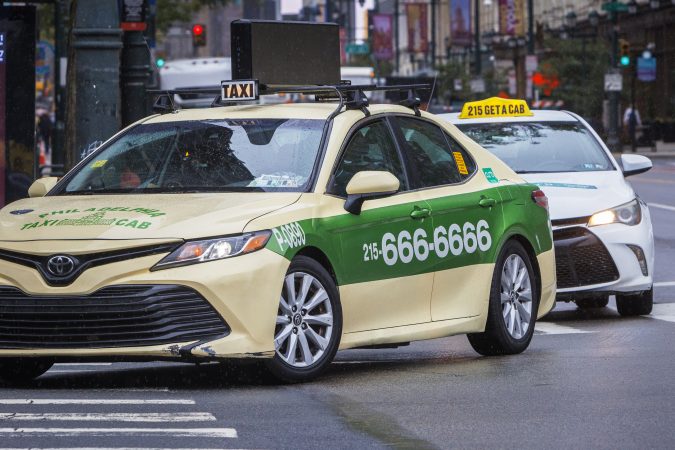
  • Philadelphia’s taxi fleet is shrinking. This app is helping keep cabs alive in Boston and beyond.

    Philadelphia’s taxi fleet is shrinking. This app is helping keep cabs alive in Boston and beyond.

    Uber and Lyft helped flatten the taxicab industry. Now they are joining forces.

    Last month, Boston became the latest city where drivers of licensed taxicabs can respond to rideshare trip requests, using apps that are integrated with the Uber and Lyft platforms.

    But don’t expect to see this change in Philadelphia, even as the city’s taxi business continues its free fall.

    Curb, the leading app company for cabs, and Uber petitioned the Philadelphia Parking Authority, which regulates taxis in the city, to allow coordination of rides on a pilot basis but eventually withdrew the proposal.

    Pennsylvania law strictly separates licensed cabs and transportation network companies like Uber, said Christine Kirlin, deputy general counsel for the PPA and former head of its Taxi and Limo Division.

    “It was a handful of regulations that just couldn’t be integrated,” Kirlin said, adding that state law would need changes for it to work.

    For instance, she said, taxi fares in the city are set by the PPA and cab operators are not allowed to flex prices, as rideshare companies do during periods of high demand. Drivers also need a commercial license, and taxi vehicles are subject to safety inspections — and regulatory fees — that rideshare is not.

    In other cities, referrals from rideshare companies account for 30% to 60% of total taxi trips, said Dorel Tamam, vice president for mobile business at Curb.

    He is in charge of Curb Flow, an open API platform that aggregates available rides from multiple sources, including Uber and Lyft, direct hails from taxi apps, fleet dispatches, and taxi ranks.

    “This program is helping actually reduce idle time, increase the overall trips, giving drivers the add-on opportunity to earn more,” Tamam said.

    Curb Flow is being used in 17 U.S. cities, including Newark, N.J.; Seattle; Los Angeles; New York; Reno, Nev.; and Charlotte, N.C.

    Philly’s taxi nosedive

    The taxi business has been declining in Philadelphia for more than a decade, coinciding with the arrival of Uber and Lyft in the city. Pandemic restrictions also hurt.

    Taxi rides dropped 88% from 2015 to 2025, PPA data show.

    (function(){function e(){window.addEventListener(`message`,function(e){if(e.data[`datawrapper-height`]!==void 0){var t=document.querySelectorAll(`iframe`);for(var n in e.data[`datawrapper-height`])for(var r=0,i;i=t[r];r++)if(i.contentWindow===e.source){var a=e.data[`datawrapper-height`][n]+`px`;i.style.height=a}}})}e()})();

    Fewer cabs are available. In 2010, a monthly average of 1,600 taxis were on the road. In 2025, there were 674, reflecting a 58% drop.

    As of June, 633 taxis were active in the city, suggesting a continued decline.

    “Things have not really improved. There’s less people out there driving,” said Ron Blount, president of the Taxi Workers Alliance, who believes the number could be even smaller.

    “A lot of drivers do both taxis and [rideshare] switching back and forth, trying to make it work,” Blount said.

    He said that Curb Flow would lead to more trips for drivers here, but that it was unclear how much their net incomes would improve.

    And the average sales price for a taxi medallion, a license required for each cab to operate in the city, fell to an average of $12,857 last year.

    The average price was just over $500,000 during several months of 2014, according to PPA numbers.

    “We really hope one day to bring it to Philadelphia,” said Tamam, the company vice president in charge of Curb Flow. ”We’re open to further collaboration with the regulators.”

  • Ida Schmertz, pioneering women’s activist, political innovator, and former American Express senior vice president, has died at 91

    Ida Schmertz, pioneering women’s activist, political innovator, and former American Express senior vice president, has died at 91

    Ida Schmertz, 91, formerly of Jenkintown, pioneering women’s activist, international relations innovator, presidential appointee, first female senior vice president at American Express, volunteer, mentor, and role model, died Thursday, July 2, of organ failure at New York Presbyterian Hospital.

    Born in Amsterdam, Ms. Schmertz and her family made their way to Philadelphia and then Jenkintown at the start of World War II in 1940, and she became a trailblazing American powerhouse in civil and women’s rights, international relations, corporate management, and healthcare.

    She earned a bachelor’s degree in political science and a master’s degree in international relations, and did everything but write a dissertation for a doctorate in international relations and Soviet studies. She was founding codirector in 1971 of the groundbreaking Center for American Women and Politics at Rutgers University, founding cochair in 1994 of the International Business Incubator and Training Center in Russia, and founding chair of the board of trustees for the Romanian-American Foundation in Bucharest in 1994.

    Wherever she was, Ms. Schmertz championed research, education, and public engagement. She helped organize the first national conference of women in political office for the Center for American Women and Politics in 1972, and later provided professional services to small businesses and startups in Russia, especially those owned by women.

    “I have empathy for people,” Ms. Schmertz told a colleague at the Romanian-American Foundation in a 2018 video interview. “I’ve always felt badly for people who are hurt or poor or unfortunate or don’t have access to something.”

    Ms. Schmertz was interested in voluntary foreign service, gun reform, and U.S.-China relations, and she lectured and appeared on TV shows and in dozens of newspapers. She worked with New York Gov. Hugh Carey on statewide initiatives of all kinds in the 1970s and was appointed by President Bill Clinton to head the Romanian-American Enterprise Fund in 1994.

    In the 1950s and ’60s, she worked for the Democratic National Committee, the CIA, and the American Association of University Women. She spoke English, Dutch, Russian, and French, and served as a guide at the State Department’s first U.S. promotional exhibition in Moscow in 1959.

    She lobbied for fair elections in South Africa in the 1990s, and pressed New York lawmakers to support the state’s medical aid in dying act until it recently passed. Colleagues praised her “vision, energy, and grit” and “integrity and long-term commitment” in online tributes.

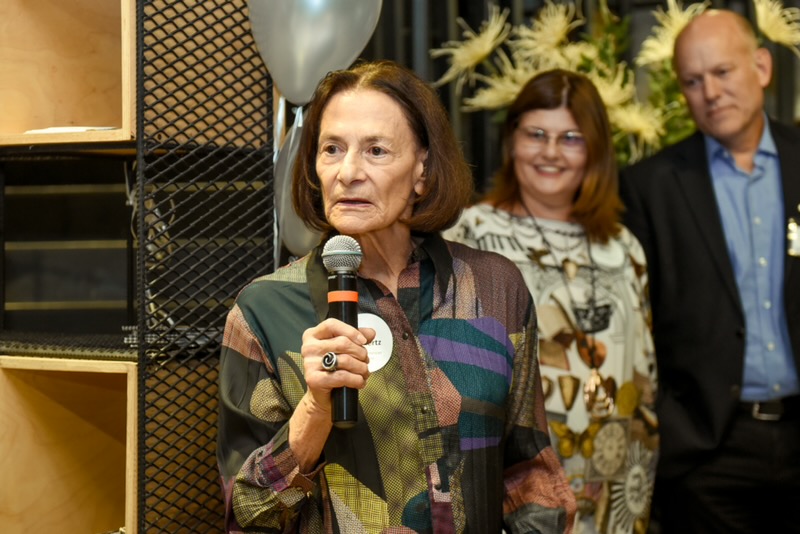
    From 1979 to 1992, Ms. Schmertz was the first woman to supervise corporate strategy and philanthropy at American Express in New York.Courtesy of the family

    One colleague said: “I feel so fortunate to have known her.”

    Colleagues at the Romanian-American Foundation said in a tribute: “She helped shape not just an organization but a picture of what philanthropy in Romania could be: transparent, accountable, built on partnership, and dedicated to creating opportunity for all Romanians.”

    From 1979 to 1992, Ms. Schmertz was the first woman to supervise corporate strategy and philanthropy at American Express in New York. She was also an honorary director of the Women’s Economic Roundtable and a former director at Prudential Financial Inc.

    “She was extraordinary, formidable, deeply caring, and exceptionally committed to the people and causes that she believed in,” her daughter, Lexy, said. “Her hobby was her job, learning and exploring.”

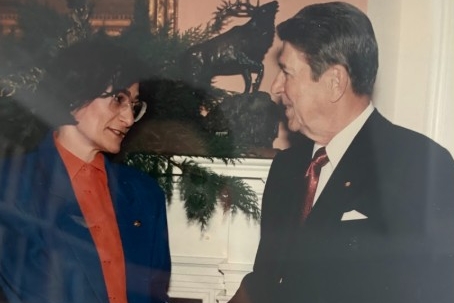
    Ms. Schmertz worked with President Ronald Reagan and many other political notables. Courtesy of the family

    Ida Frederieke Schaap was born Feb. 24, 1935. Her family traveled from the Netherlands to Indonesia in 1939 and then to the United States to escape the war.

    She was the first Jewish student to enroll in the old Stevens School for Girls in Germantown in 1940, was elected president of the student council and captain of the field hockey team, and graduated in 1952. She earned her bachelor’s degree at Wellesley College in Massachusetts in 1956 and her master’s degree at Columbia University in 1960.

    She also studied French political science at Sorbonne University in Paris and Russian at Middlebury College in Vermont. She married Herbert Schmertz in 1962 in Philadelphia, and they had a son, Anthony, and a daughter, Lexy. They divorced in 1976, and he died in 2018.

    Ms. Schmertz was tough and direct, her family said, intelligent and loving. She liked to read and travel, and was an engaging conversationalist.

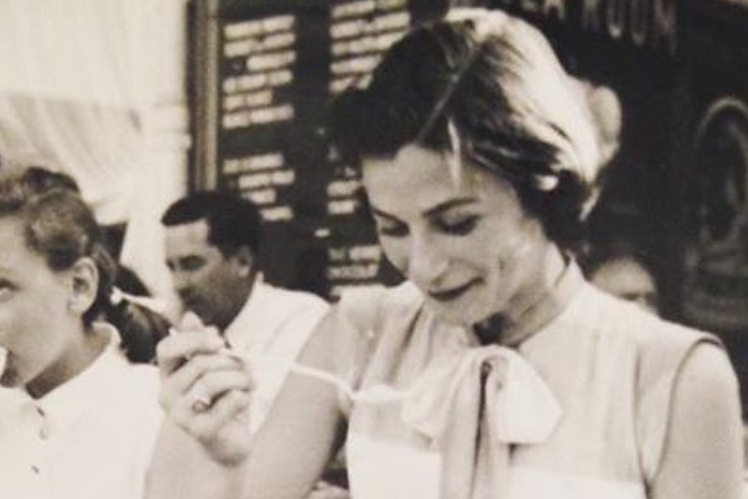
    Ms. Schmertz was a summer camp counselor for underserved children as a teen, loved cats, and supported the Philadelphia Museum of Art.Courtesy of the family

    She lived in Washington after college, moved to New York in the 1970s, and hosted friends and colleagues from around the world in her Upper West Side apartment. She doted on her four grandsons and took them to museums and hockey games. “She met them where they were,” her daughter said.

    She was a summer camp counselor for underserved children as a teen, loved cats, and supported the Philadelphia Museum of Art. For 30 years, she lived with chronic lymphocytic leukemia.

    “She was compassionate and caring,” her daughter said. Her son said: “She was devoted to her family.”

    In addition to her children and grandsons, Ms. Schmertz is survived by two sisters and other relatives.

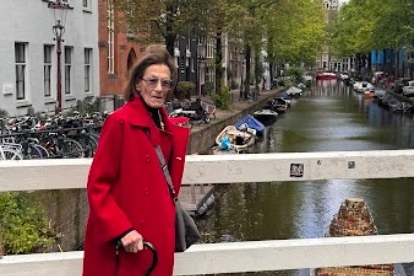
    Ms. Schmertz visited Amsterdam in May.Courtesy of the family

    A private memorial service is to be held later.

    Donations in her name may be made to Compassion & Choices, Box 485, Etna, N.H. 03750.

  • Excavation begins at Olney house at center of missing women case

    Excavation begins at Olney house at center of missing women case

    Breaking concrete, beeping trucks, and the hum of heavy machinery signaled movement Wednesday in the monthlong investigation into two missing persons last seen at a house on the 400 block of West Chew Avenue in Olney.

    With that cacophony of construction sounds, the Philadelphia Police Department and the FBI began a planned excavation at the home of Eugene Albert Horsch, 44, who faces charges of carrying illegal firearms and fake federal law enforcement credentials following a June arrest. Horsch’s dilapidated twin home on West Chew Avenue has since been connected to the disappearances of at least two women in the last 10 years.

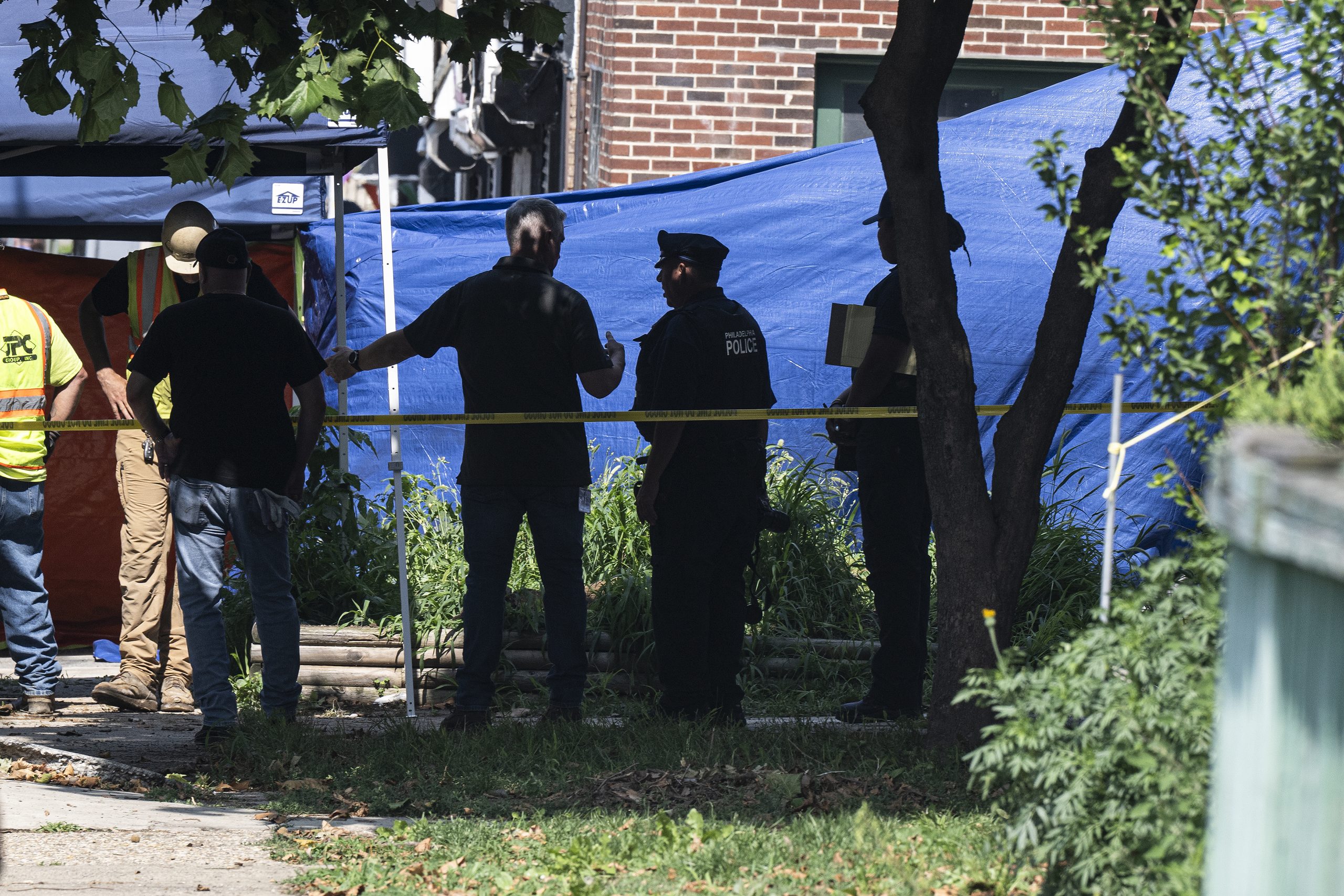
    Authorities said they would excavate a portion of Horsch’s property with assistance from the Philadelphia Water Department. Investigators, officials said, were intent on unearthing and examining a pipe under the house as part of a widening probe.

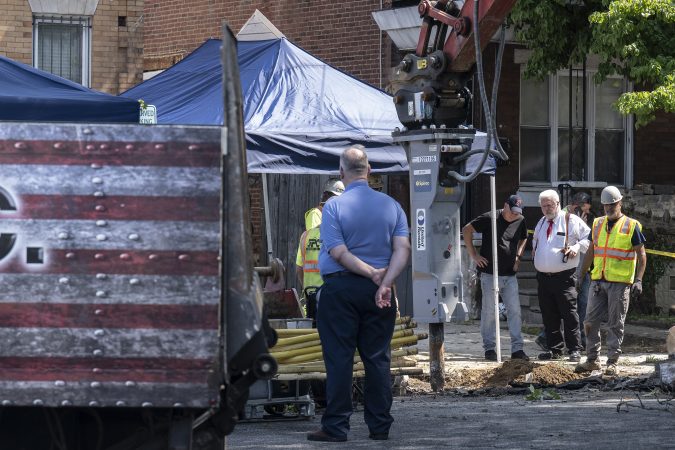
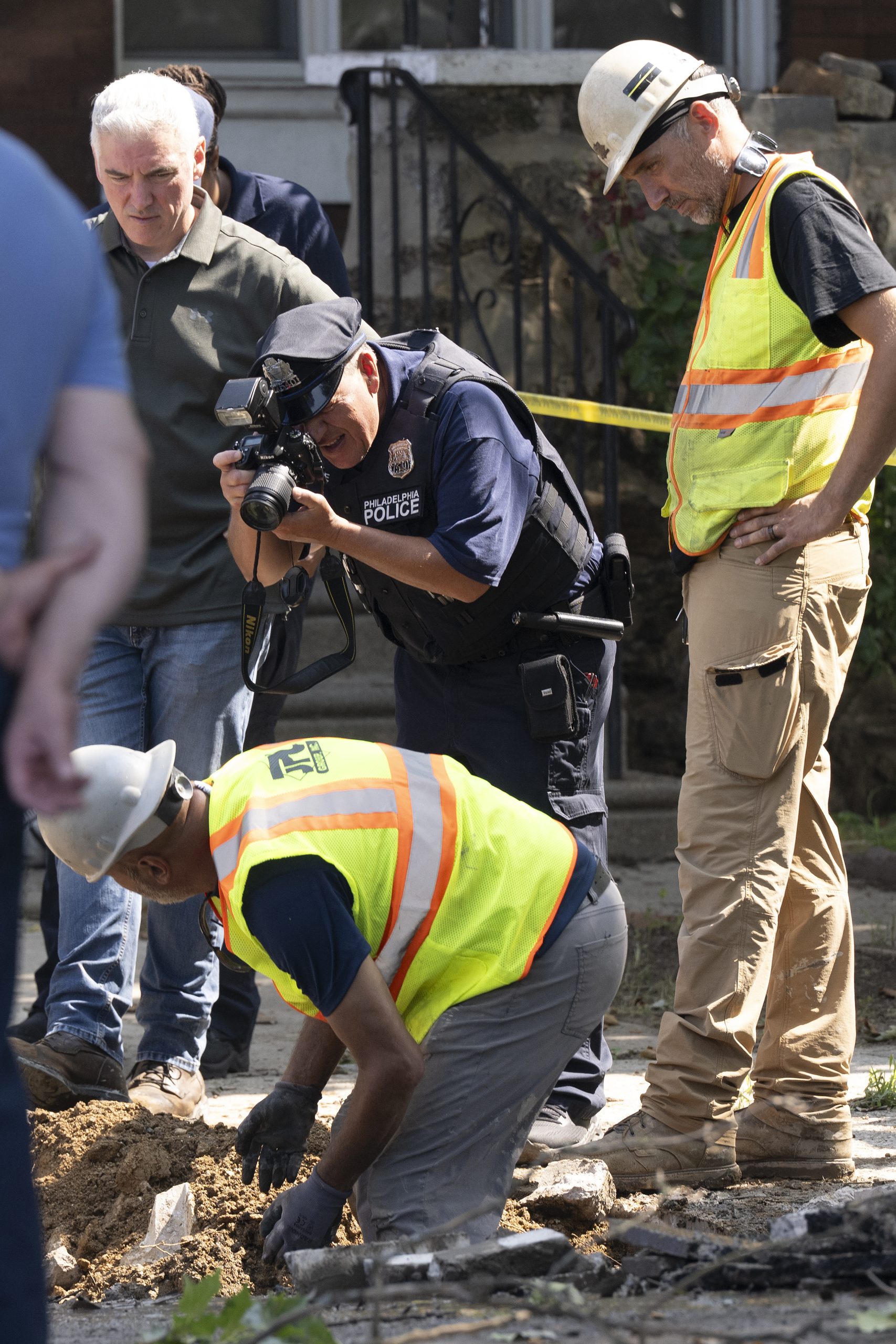
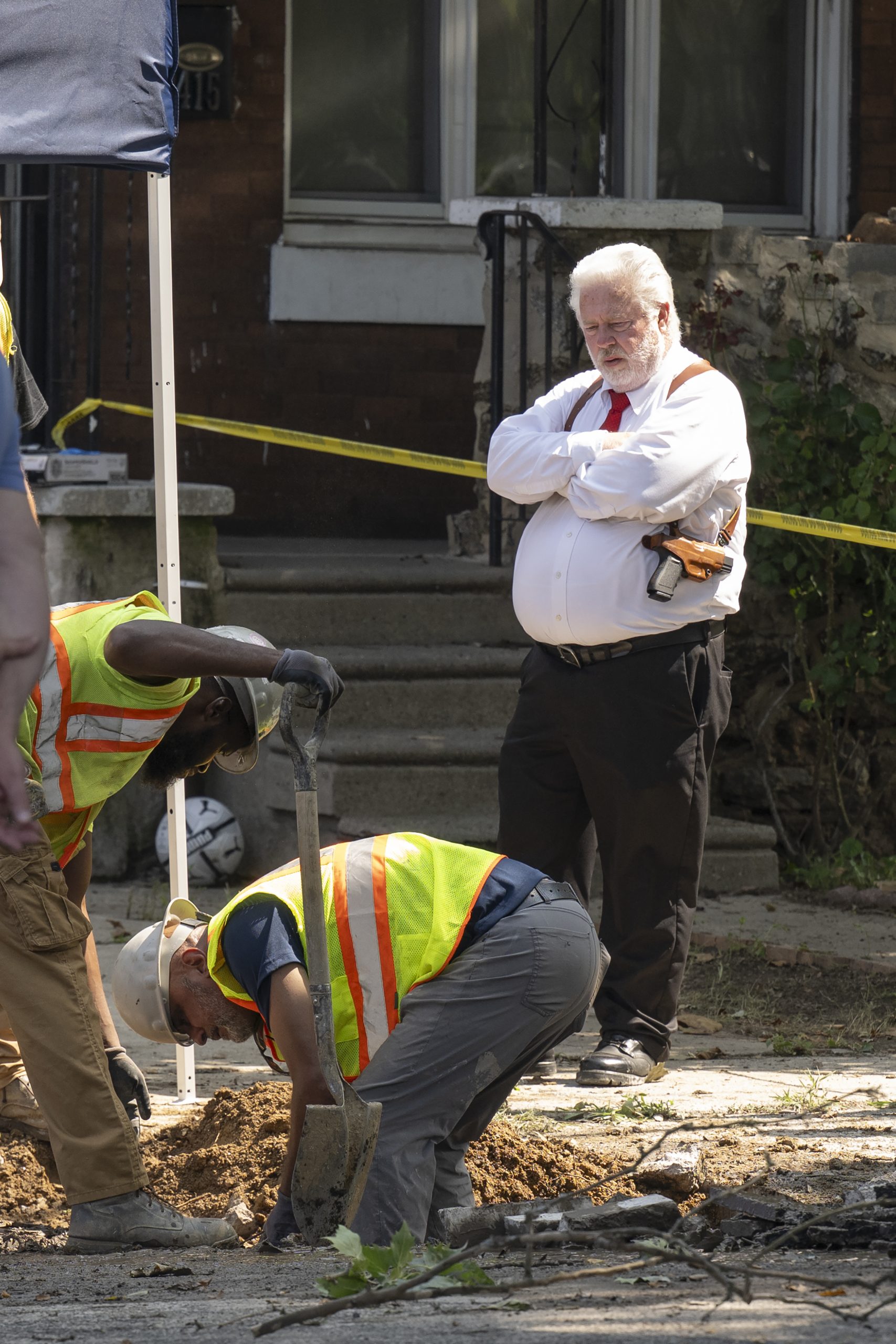
    Workers and police investigators dig and inspect a hole while removing pipes and debris at the entrance to the home of Eugene Albert Horsch on West Chew Avenue.Jose F. Moreno / Staff Photographer

    “The general scope of the dig is to excavate and remove a pipe that will be subsequently examined by FBI and PPD forensics for any evidence that may be present,” Sgt. Eric Gripp, a police department spokesperson, said Monday.

    That effort began in earnest before 9 a.m. Wednesday morning, with crews digging up what was once a small, overgrown garden in front of Horsch’s home, as well as the sidewalk and street in front of the property. Trucks and tents cropped up throughout the morning as investigators walked the block. Periodically, investigators inserted a white pole into the earth, measuring the depth of a hole.

    Later in the morning, workers pulled a piece of pipe from the ground and took it inside the home.

    Wednesday’s excavation was the latest development the case that began June 19, when Horsch was arrested near Independence Mall with drugs, guns, and other weapons, as well as a counterfeit U.S. Drug Enforcement Administration badge. A woman was with him at the time, and she was carrying a fake ID in the name of Blair Tonzelli, who was last seen at Horsch’s home in 2022.

    Workers and police investigators dig and inspect a hole while removing pipes and debris at the entrance to the home of Eugene Albert Horsch.Jose F. Moreno / Staff Photographer

    Since then, investigators have discovered a swath of evidence, authorities have said. Among the items found at the West Chew Avenue home were vats of chemicals, a 55-gallon drum with connections to water lines in the house’s basement, and what police sources called “a significant amount” of blood.

    Forensic testing is continuing, and it has not yet been announced whether the blood is human. Horsch does not currently face charges involving violent crimes.

    Additionally, authorities have found other fake IDs in Tonzelli’s name, as well as the missing woman’s bank card. Investigators have also said that Amy McHale, the ex-wife of Horsch’s late father, Raymond Horsch, was last seen at the Olney home in 2016, according to the woman’s family.

    It was unclear Wednesday if investigators had linked any evidence to the disappearances of Tonzelli or McHale.

    Workers and police investigators dig and inspect a hole while removing pipes and debris at the entrance to the home of Eugene Albert Horsch on Wednesday.Jose F. Moreno / Staff Photographer

    The midweek excavation surprised some neighborhood residents. Cheri Smith lives two blocks from the site of the investigation, but still felt its effects. Smith, who has lived nearby for two decades, said she has felt unsettled since news of the investigation broke last month, and has seen little communication among police, the city, and neighbors.

    “It’s a shame what happened,” Smith said. “It would be nice if they notified us that this work is going to be happening, but the city is going to do what they are going to do.”

    Laurenza Moise said that when she arrived Wednesday to open her braiding business, the corner of Fifth Street and Chew Avenue had already been blocked off. Since the investigation began, she said, she has seen a reduction in business.

    “When they close the street, my business goes down, and there’s no parking for customers,” Moise said. “What can I do other than mind my business?”

  • One of DA Larry Krasner’s top advisers once sent $100 to a man in prison for murder who’s now appealing his conviction. It’s under investigation.

    One of DA Larry Krasner’s top advisers once sent $100 to a man in prison for murder who’s now appealing his conviction. It’s under investigation.

    The Philadelphia District Attorney’s Office is investigating ties between one of DA Larry Krasner’s top advisers and a man serving life in prison after prosecutors learned that the official sent the man money years ago and did not disclose it.

    G. Lamar Stewart, chief of external engagement and government affairs in the DA’s office, said he sent $100 to Anthony Sutton in January 2021 to support Sutton’s mentorship program, “Mann Up,” for men incarcerated at State Correctional Institute Phoenix.

    Sutton, 61, who is serving life in prison for killing a man in Germantown in 1984, has been appealing his conviction for more than a decade.

    The issue came to light last week, after the prosecutors assigned to Sutton’s appeal were reviewing his prison records and noticed that Stewart was among those who had sent Sutton money in recent years.

    The records showed Stewart did so only once, Krasner said.

    The payment raised concerns, in part because Stewart had organized and participated in meetings between Sutton’s defense attorney, Krasner, and prosecutors about the case, according to a source familiar with the matter.

    Krasner’s office has opposed Sutton’s appeal and said his profession of innocence lacked merit.

    When the prosecutors discovered the payment, it was quickly brought to the attention of Krasner, who then asked his office’s special investigation unit to investigate, according to multiple sources familiar with the case. The inquiry remains ongoing.

    Stewart, who is also senior pastor of Taylor Memorial Baptist Church in Nicetown-Tioga, was working as the head of the office’s community engagement unit at the time of the donation. In an interview, he said he used his own money to support Sutton’s program as part of the faith-based charitable work he does to assist families and community organizations across the region every holiday season.

    “I thought that the work that they were doing was positive, transformative, and it was geared to helping reduce violence in Philadelphia and to make communities and families whole,” he said.

    He said he did not know of any way to reach the organization other than to send it through Sutton directly. “I was very intentional to make sure that my name was listed because when you’re not trying to hide anything, you just do things above the board,” he said.

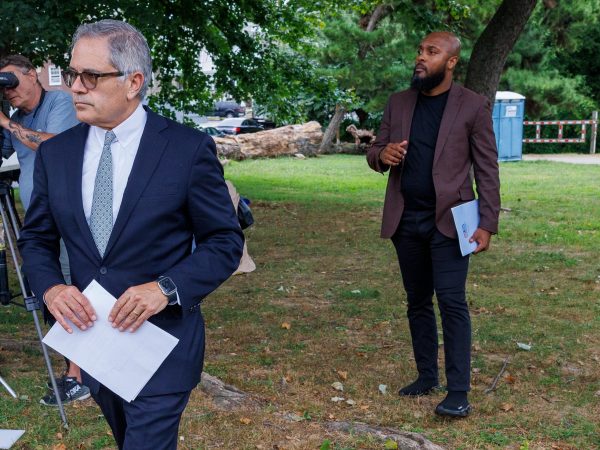
    District Attorney Larry Krasner (left) and G Lamar Stewart, head of the Community Engagement and Government Affairs at the DA’s Office, outside the President’s House in Independence National Historical Park in February 2026.Tom Gralish / Staff Photographer

    During a brief hearing in Sutton’s case on Monday, Assistant District Attorney David Napiorski, supervisor of the office’s law division, told Common Pleas Court Judge Giovanni O. Campbell that his attorneys needed additional time to investigate Sutton’s case after they found that someone in the office had put “money on the defendant’s books in prison.”

    “That needs to be investigated by the office thoroughly before we can take any further action,” Napiorski told the judge.

    Stewart said he did not try to influence the outcome of the appeal or advocate for Sutton. He acknowledged that he attended at least one meeting about Sutton’s case, but said his job requires him to coordinate and attend meetings with Krasner.

    Krasner said that he saw no issue with Stewart’s donation or subsequent participation in meetings, and that his office’s inquiry and prosecutors’ comment in court Monday “establishes integrity.”

    “G. Lamar Stewart gave a small amount of money for an organization … and then this office decided to oppose Mr. Sutton’s request. Where’s the issue?” he asked.

    He added: “Any rock we haven’t flipped yet, we will flip. Preliminarily, it seems quite clear that this was a donation given for a completely legitimate purpose.”

    Sutton did not immediately respond to a request for comment sent through a messaging app for people in prison. His attorney, Jason Javie, said Tuesday that he did not know anything about Stewart’s payment to Sutton and declined to discuss the matter further.

    “My focus is 110% on the exoneration of Mr. Sutton,” he said.

    The revelation comes amid mounting scrutiny over Krasner’s office’s handling of post-conviction matters. In a forceful ruling last month, the Pennsylvania Supreme Court said Krasner’s office had a pattern of misleading judges when seeking to overturn old murder convictions.

    Last week, in a separate, controversial federal appellate case, a former assistant district attorney in Krasner’s office said prosecutors were “colluding” with defense attorneys to find the most effective way to have the murder conviction thrown out. And then, on Monday, in a striking court filing in that same contentious case, two supervisors in the law division said Krasner had instructed them to litigate the matter in a way that would “protect the office.”

    And now, the office is investigating a case connected to Stewart, who has worked in the DA’s office since 2019 and is one of Krasner’s most trusted advisers.

    District Attorney Larry Krasner at a press conference in May, denouncing criticism of his office leveled by Republican members of the House Judiciary Committee.Tom Gralish / Staff Photographer

    Stewart, who is paid $154,500 annually, oversees the office’s community engagement, public affairs, and communications strategies, and acts as a conduit between Krasner and other public officials. Since Robert Listenbee retired as first assistant district attorney in January, Krasner has not named a successor — and several prosecutors say Stewart, who is not a lawyer, has effectively absorbed parts of that job. He often helps coordinate sensitive matters in cases, including relocating victims and witnesses.

    He is respected by many in city government and across the community. Mayor Cherelle L. Parker, speaking at Krasner’s inauguration ceremony in January, mentioned Stewart as one of the office’s most essential staffers.

    “District Attorney Krasner, as a moment of personal privilege, I want you to know that G. Lamar Stewart is one of the most committed, committed, committed members of your team in engaging in community outreach, and he represents you well, sir,” she said to applause.

    Stewart, born and raised in Germantown and North Philadelphia, served in the U.S. Army and worked for the Philadelphia Police Department before joining Krasner’s team in 2019. At his church, he runs a nonprofit called Taylor Made Opportunities that offers job support and mentorship to young men in the neighborhood, and supports families of homicide victims.

    Stewart said he donates to community organizations, and provides meals, Christmas gifts, and other means of support to crime victims’ families each year, using his personal money.

    He does not typically disclose those donations to the DA’s office, he said, and it has never been a problem.

    “My Christian faith is rooted in giving, in love, in showing up for the least of these, showing up for those who have been harmed, for showing up for those who are trying to rehabilitate and be accountable for the harm they caused to bring healing to our community,” he said. “For anyone to suggest that me giving through a faith lens, in the interest of good for community, is problematic for me, that is an infringement upon my faith tradition and my religious rights.”

    Krasner said he did not think it was necessary for Stewart — or other employees in the office — to disclose donations.

    “I don’t know that it makes sense to require 700 employees, especially if they’re doing so on a faith basis, to disclose everyone they give donations to,” he said. “It’s certainly something we could think about.”

    In Stewart’s case, his money went to support a program run by Sutton, better known as Benny Doo, who was sentenced to life in prison after a jury convicted him of first-degree murder in the shooting death of Richard Berry in the Pelham section of Germantown in December 1984. In the early 1980s, prosecutors said, Berry hired Sutton and other members of his crew, called the “Ghostbusters,” to retrieve jewelry that had been stolen from him, and agreed to pay with “a few ounces of blow and a couple thousand dollars.”

    Berry never paid up, and after he started avoiding Sutton and his crew, Sutton killed him, prosecutors said.

    But Sutton said prosecutors violated his right to a fair trial when they failed to turn over police documents — including polygraph results and police interviews with several witnesses — to his defense attorney. One man who testified at trial has also since come forward to recant his testimony.

    Prosecutors, in a court filing in May, said Sutton failed to show how those issues could have changed the outcome of his trial. His appeal, prosecutors wrote, was untimely and lacked merit.

  • A missing teen was killed by a CSX freight train in Northeast Philadelphia

    A missing teen was killed by a CSX freight train in Northeast Philadelphia

    A 15-year-old boy was struck and killed by a CSX freight train late Monday night in Northeast Philadelphia.

    Abdusalom Babaev, who was identified by police Tuesday evening, had been reported missing on Sunday from his home in the city’s Bustleton section.

    Babaev was walking south along the railroad tracks near the 1500 block of Grant Avenue near his home when he was hit at 11:19 p.m., according to CSX. No crew onboard the train were injured.

    The Philadelphia Police Department responded to the area at 11:30 p.m. for a report of a train striking a pedestrian. Officers’ initial investigation indicated that a CSX train, operated by a 55-year-old man, was traveling north at a “normal operating speed” under dark conditions and limited visibility when the conductor saw Babaev walking along the tracks.

    According to police, the conductor immediately initiated emergency braking in an attempt to avoid crashing into the boy, but was unable to stop the train in time.

    Babaev was pronounced dead at the scene at 11:44 p.m. by the Philadelphia Fire Department. His body was transported to the city Medical Examiner’s Office for further investigation.

    “CSX extends its deepest sympathies to everyone impacted by this tragic incident and will support local law enforcement as they complete the investigation,” a CSX spokesperson said.

    Staff writer Robert Moran contributed to this article.

  • Storms move through the Philly region, bringing the potential for tornadoes and flooding

    Storms move through the Philly region, bringing the potential for tornadoes and flooding

    Severe storms were moving through the Philadelphia region Tuesday, bringing with them the potential for flooding and tornadoes.

    The National Weather Service office in Mount Holly issued a flash flood warning for the area that was slated to be in effect through 8:45 p.m. Tuesday, as thunderstorms and heavy showers made their way to the region. Forecasters had predicted potentially unsettled weather that was expected to bring “several rounds” of rain.

    “Even the first round we get could result in flooding,” said Paul Fitzsimmons, lead meteorologist at the weather service’s Mount Holly office. “With successive rounds, that results in an increased threat.”

    The idea, Fitzsimmons added, is that once the ground is saturated with rain, the precipitation from future rounds of rain will have few places, if any, to go.

    On Tuesday afternoon, the weather service also issued a tornado watch for the Philadelphia region and beyond. That tornado watch, which the weather service said applies to parts of Pennsylvania, New Jersey, Delaware, New York, and Connecticut, is in effect through 9 p.m. Tuesday.

    The tornado watch impacts more than 32 million people, and covers possible tornados, scattered, ping pong ball-sized hail, and wind gusts of up to 70 miles per hour, according to the weather service.

    Initial strong rains had some impact on the region. PATCO service, for example, was temporarily suspended over signal issues caused by the storm. NJ Transit’s River Line was saw a suspension due to flooding in Camden. And Philadelphia International Airport warned travelers that the weather could impact their flights, and advised flyers to check with their airlines for up-to-date information.

    Additional, more organized rounds of rain were expected to arrive later in the day, with multiple storms potentially hitting the region into the overnight period, according to the weather service. Rainfall rates could push into the neighborhood of one to two inches per hour at times.

    The most severe weather, which could bring damaging winds, hail, and a possible tornado, was expected to arrive between 2 p.m. and 8 p.m., Fitzsimmons said.

    Tuesday saw high temperatures in the 80s, but with very high humidity to start out. The storms were expected to alleviate some of that humidity, opening the way for cooler, drier days to come later this week.

    Tuesday’s storms are the latest to descend upon the Philadelphia region. Severe weather was predicted for Saturday, but largely remained tame, and the previous weekend, a series of “microburst” storms with high winds toppled hundreds of trees in the area, leading to serious, localized damage in the city and suburbs.

    It is not uncommon for weather setups to arrive with similar impacts in this way, Fitzsimmons said. It is, however, hard to say how long those patterns might last.

    “There is something to the idea where you can get into patterns that repeat themselves,” he said.