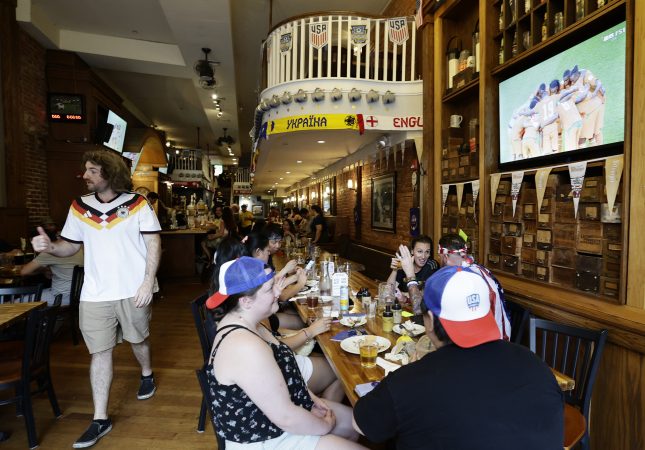
Philadelphia has beenflush with tourists flocking here for the World Cup and the nation’s 250th, patronizing local restaurants, bars, and stadiums.
And in the aftermath, bar owners are weighing the exact size of any World Cup sales boom, how it compares to an Eagles’ Super Bowl run, and whether Philadelphia truly is a 4 a.m. bar town as the state allowed some establishments to stay open later.
One thing is clear: If the bar had TVs playing World Cup games, it had a chance at cashing in on fans eager to experience the game with others.
Sports bars and tourism hot spots made out well
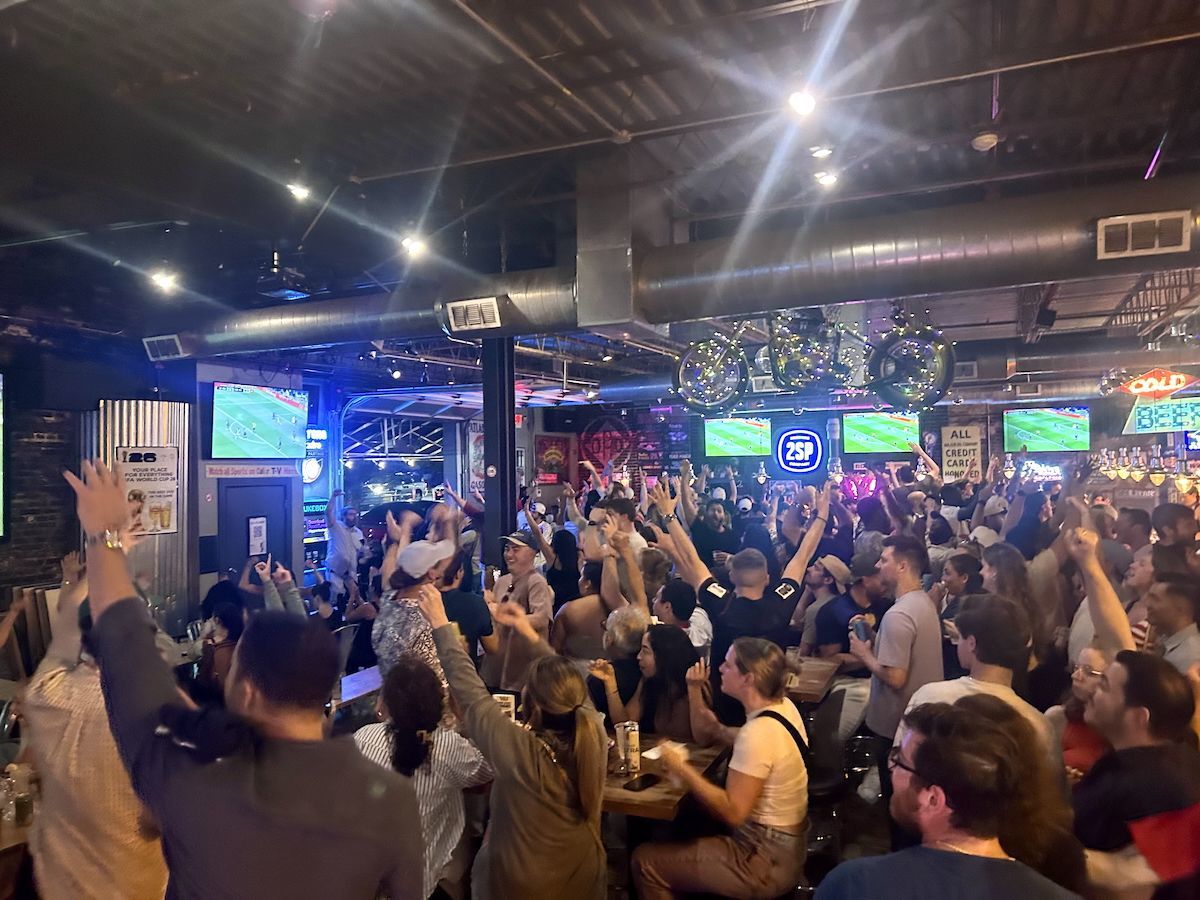
Jason Evenchik’s Garage bars in Fishtown, Passyunk, and Rittenhouse saw “a nice bump in sales” throughout the World Cup, driving business up 30% to 40%, he said. Evenchik said the TV bars fared better than usual during what’s typically a summertime lull — and much better than when World Cup games were being broadcast from Qatar in 2022.
Lucy’s Rittenhouse, a sports bar from FCM Hospitality’s Avram Hornik, also did well during the afternoon and evening games, especially when Team USA played, Hornik said. And it attracted patrons during its 2 a.m. to 4 a.m. shift, thanks to a Philadelphia 250 Permit, a temporary license that allows eligible bars to serve alcohol two hours past the city’s usual 2 a.m. closing time.
“I don’t think it could have gone better,” Hornik said. FCM also operates the Center City nightclub Concourse, the family-friendly taproom Craft Hall, and riverside deck Morgan’s Pier, among other bars.
“It was a mix of tourists. A lot of South Americans stayed out later because they’re used to places open late. Europeans we found like to camp out at a bar and stay for a while. There was also just a lot of Philadelphians who were happy to have some place to go and experience this moment,” Hornik said.
Even bars without TVs like the decades-old Fergie’s Pub, nestled smack dab in Center City’s bar scene, saw a tourism boom, said owner Fergie Carey, attracting tourists to its authentic Irish experience. Carey evendecided to open for the Fourth of July, when the bar usually closes, because there was so much foot traffic. But having no TVs can have repercussions.
“The most people I’ve ever seen leave our pub because there are no TVs was on the Fourth of July,” Carey quipped.
Evenchik and Hornik also saw lower engagement at some of their bars with little to no TVs or sports vibe, such as Evenchik’s Vintage wine bar, which he said suffered a 30% decline in sales during World Cup weeks. Hornik’s neighborhood restaurant and bars like Rosy’s Taco Bar or Harper’s Garden didn’t necessarily take a sales hit, but their private dinner party business “almost disappeared during the time of World Cup,” he said.
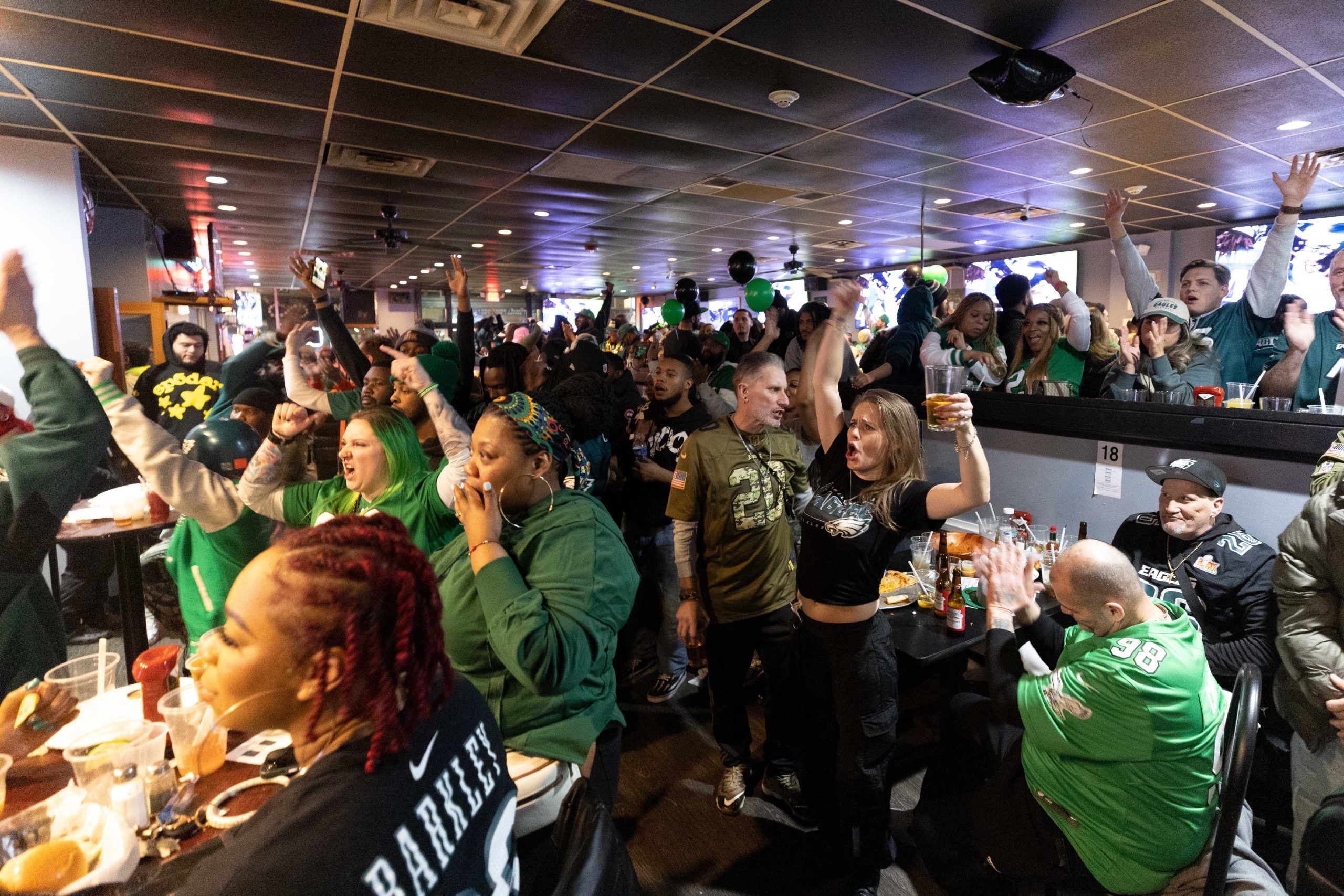
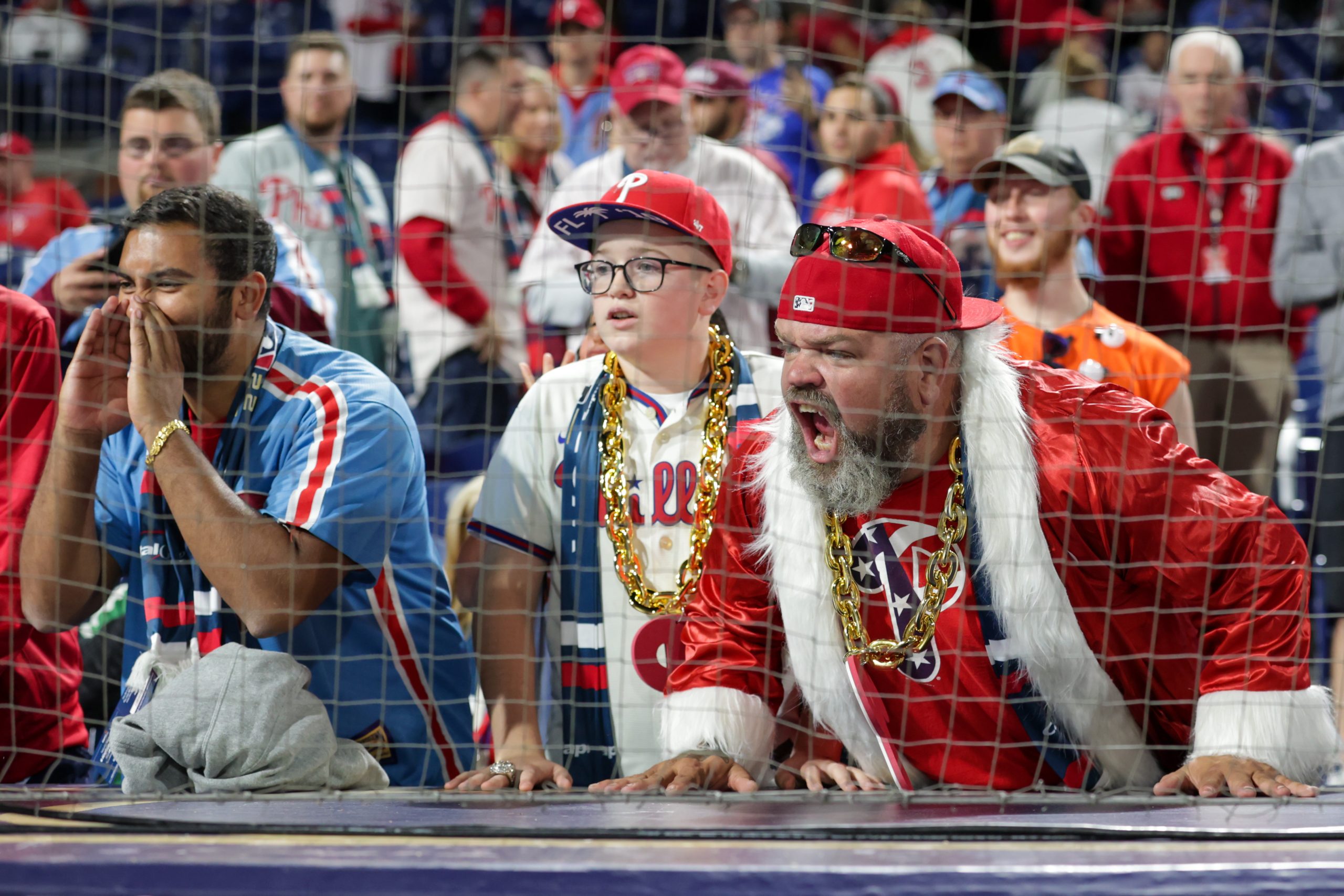
Fans react to the Eagles play the Chiefs in the NFL Super Bowl LIX, in a bar near Frankford and Cottman Aves., Saturday, Feb. 8, 2025, in Philadelphia.Tyger Willliams / Staff Photographer
The World Cup pales in comparison to a Super Bowl at Philly bars
While the sports bars and hotter tourism areas saw a World Cup sales bump, bar owners say it was nothing compared to the revenue brought in from the Eagles going on a playoff-to-Super Bowl run, or the Phillies in the World Series.
“I don’t think there’s anything that compares to Philly sports fans and their loyalty to our Philadelphia teams when they do well,” Hornik said.
When a Philly sports team is doing well, Evenchik said, people seem more willing to go out and celebrate on the town.
“In those times we see a bump in the sports bars, but also everywhere else, including restaurants, because everyone’s so joyous,” Evenchik said. “The World Cup doesn’t really get close to the Super Bowl madness.”
At Philly’s oldest craft and woman-owned brewery, Dock Street, bartender Jessica Head and assistant general manager Abby Stover said they’ve been relishing the fervor of World Cup fans for every game, regardless of who is playing.
“The World Cup finals are truly similar to us Philadelphia sports fans in their passion and how much they are willing to ride for their teams, but nothing can beat a good Eagles playoff run,” Stover said.
“With an Eagles playoff run, we get the bursts during the games once a week, and the energy is undeniable. But the World Cup is really something so special,” Head said. “We’re so lucky we get to see that excitement every single day during the tournament.”
Fans watch a Team USA match at the Fishtown sports bar, Garage, during the 2026 World Cup.(Courtesy of Jason Evenchik)
4 a.m. bars in Philly aren’t as popular as believed
Hornik applied for the Philadelphia 250 Permit at several of his bars.
But only Lucy’s really enjoyed the benefits of 4 a.m. closing times. FCM’s other nightlife-oriented locations generally didn’t take advantage of their permits, Hornik said.
While Hornik found success at Lucy’s, others have said the 4 a.m. party culture in Philadelphia just didn’t materialize.
“I’ve spoken to a couple people who are involved in some of the bars that had a 4 a.m. license, and everyone kind of universally agreed that it cost a bit more than it was worth,” Evenchik said.
The permit itself cost $500 to apply for, and another $250 for safety training from the city.
Additionally, only a handful of the 104 World Cup matches were broadcast close to times near Philadelphia’s usual 2 a.m. closing time. “It didn’t really make sense because none of the games were really that late,” Evenchik said.
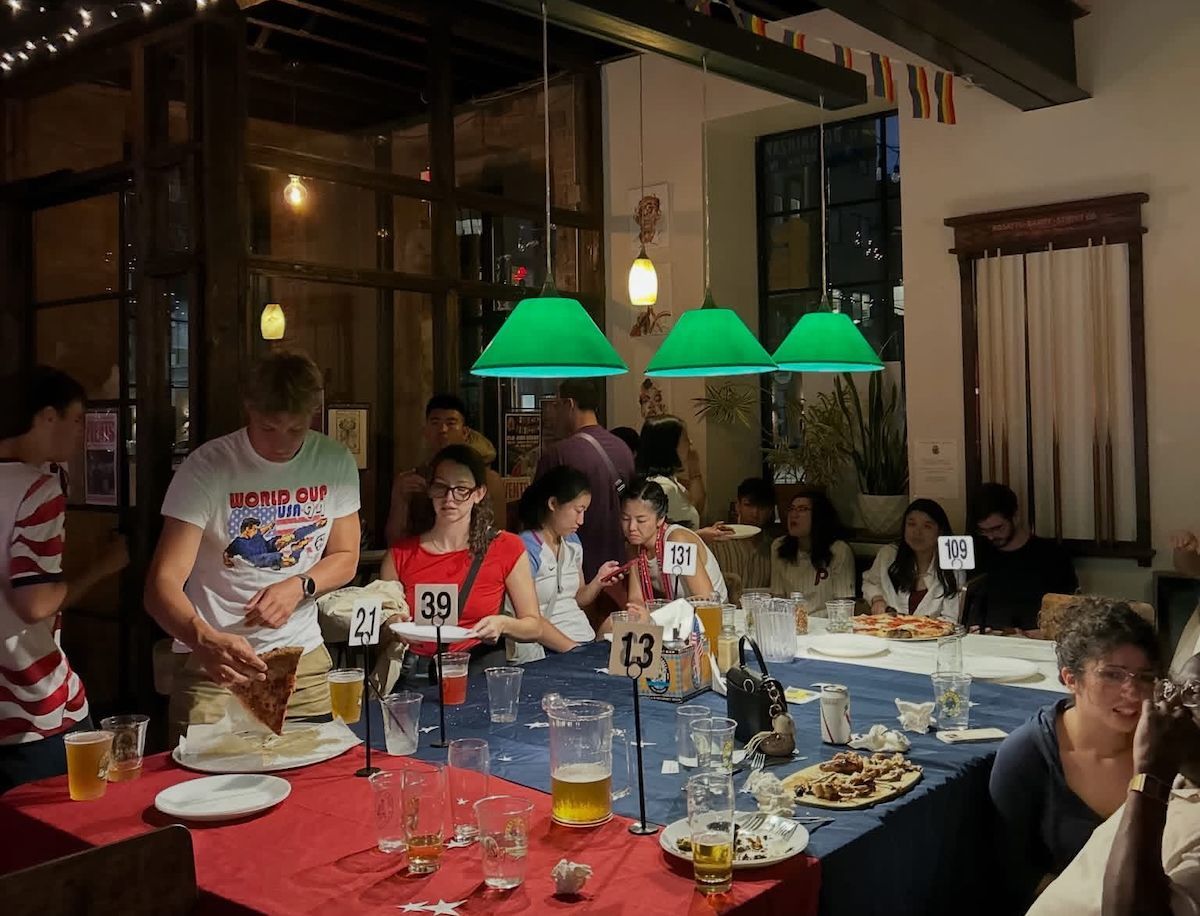
World Cup fans share pizza and beer while watching matches at Dock Street South on Washington Avenue in South Philadelphia during the 2026 World Cup.(Courtesy of Renata Vesey)
What lasts is the cultural exchange
Neighborhood bars largely didn’t see a boom like Center City and established sports bars, but the World Cup did bring more business and, occasionally, international tourists, said Renata Vesey, creative director at Dock Street, which operates a brewery along Washington Avenue and a taproom in Fishtown.
“When Côte d’Ivoire played, we got a big crew of Ivorians of all ages,” Vesey said. “It happened to be on a Sunday that we were also hosting a line-dancing event, so it was just such a random, cool mix of people and interests and vibes.”
Bars were livelier and more crowded than usual, and Dock Street opened for a few games on Mondays, when it is normally closed,she said.
Hornik’s neighborhood bars and restaurants like Rosy’s continued to draw their usual crowds as well. But what stands out to him is the role that Philadelphia bars and restaurants played in making the city one of the more memorable places to watch the World Cup, he said.
“It’s not just our job to entertain them for one night, but to make them want to come back here,” Hornik said. “I think that Philadelphia did a great job of showing how great a city Philadelphia is.”
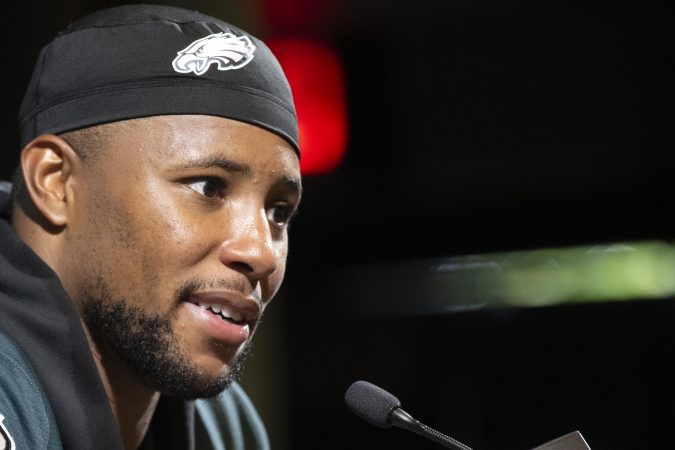
Eagles running back Saquon Barkley’s home was burglarized early Saturday morning, Tredyffrin Township police said.
Officers were called to the Malvern home about 5:10 a.m. to reports of a burglary in progress, according to a police account. At least one person made it inside the home, Tredyffrin Township Police Capt. Tyler Moyer told The Inquirer. By the time police arrived, the burglars had fled.
Barkley and his family were unharmed, according to police and a statement from Chester County District Attorney Christopher de Barrena-Sarobe. No arrests have been announced.
“We are incredibly grateful that the Barkley family was not injured during this incident,” de Barrena-Sarobe said.
A spokesperson for the Eagles could not immediately be reached for comment late Saturday.
No additional information about the break-in or possible suspects wereimmediately available, but police were investigating a white SUV that may be connected to the crime.
Authorities are also asking the public for home security footage or reports of suspicious activity. Moyer said there is believed to be no ongoing threat to the community and no other break-ins were reported.
Anyone with information should contact Detective Sgt. Stephanie Bills at sbills@tredyffrin.org.
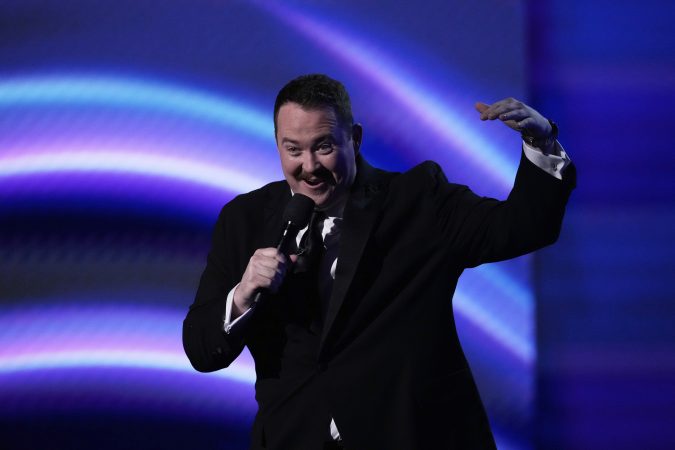
The attendance record was previously held by German comedian Mario Barth, who performed for 67,733 people in 2008, according to Guinness’ database.
The show was billed as the largest headliner of Gillis’ career and featured special guests, like fellow comedian Dave Chappelle and hip-hop group Three 6 Mafia, as well as Philadelphia icons rapper Meek Mill and Eagles Jordan Mailata and Jason Kelce.
This was somewhat of a homecoming for Gillis, who graduated from West Chester University and cut his teeth in Philly’s comedy scene. He was announced as a Saturday Night Live cast member in 2019 but was fired days later, before the season premiere, for having made homophobic and racist jokes on his podcast.
Birthdays are a funny thing. When you’re young, they are all about getting older. You can hardly wait for the next one.
Then, somewhere along the way, they’re not. Suddenly, big league baseball players, your doctors, and bosses are all younger than you.
Eventually, getting older becomes key again. You want to see more birthdays.
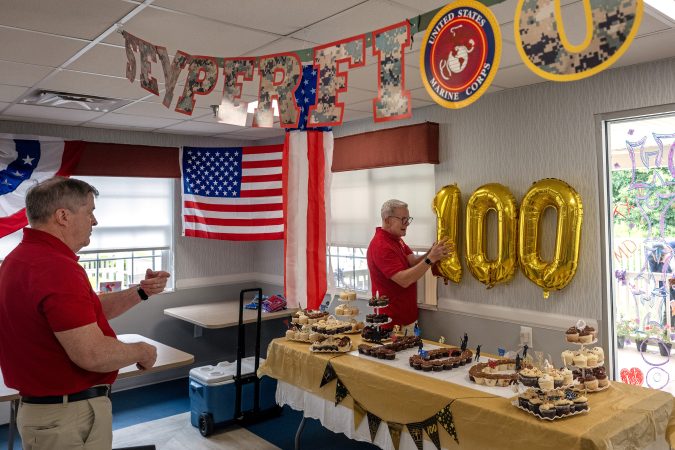
This week I celebrated a birthday of my own, and also photographed a World War II veteran celebrating his 100th. I also photographed church services for an upcoming story on a South Jersey town a century after it was incorporated as the first Black self-governing municipality north of the Mason-Dixon Line.
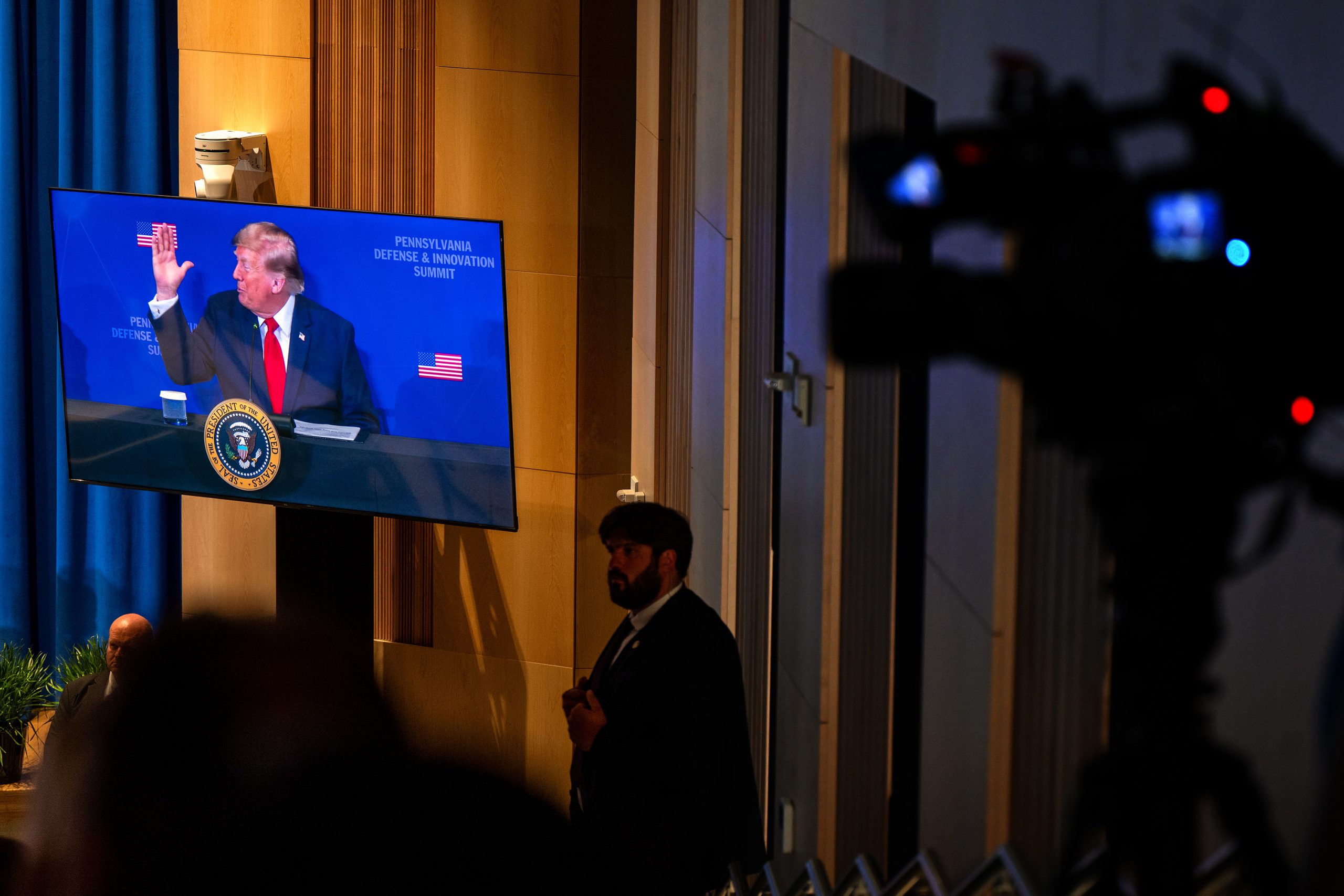
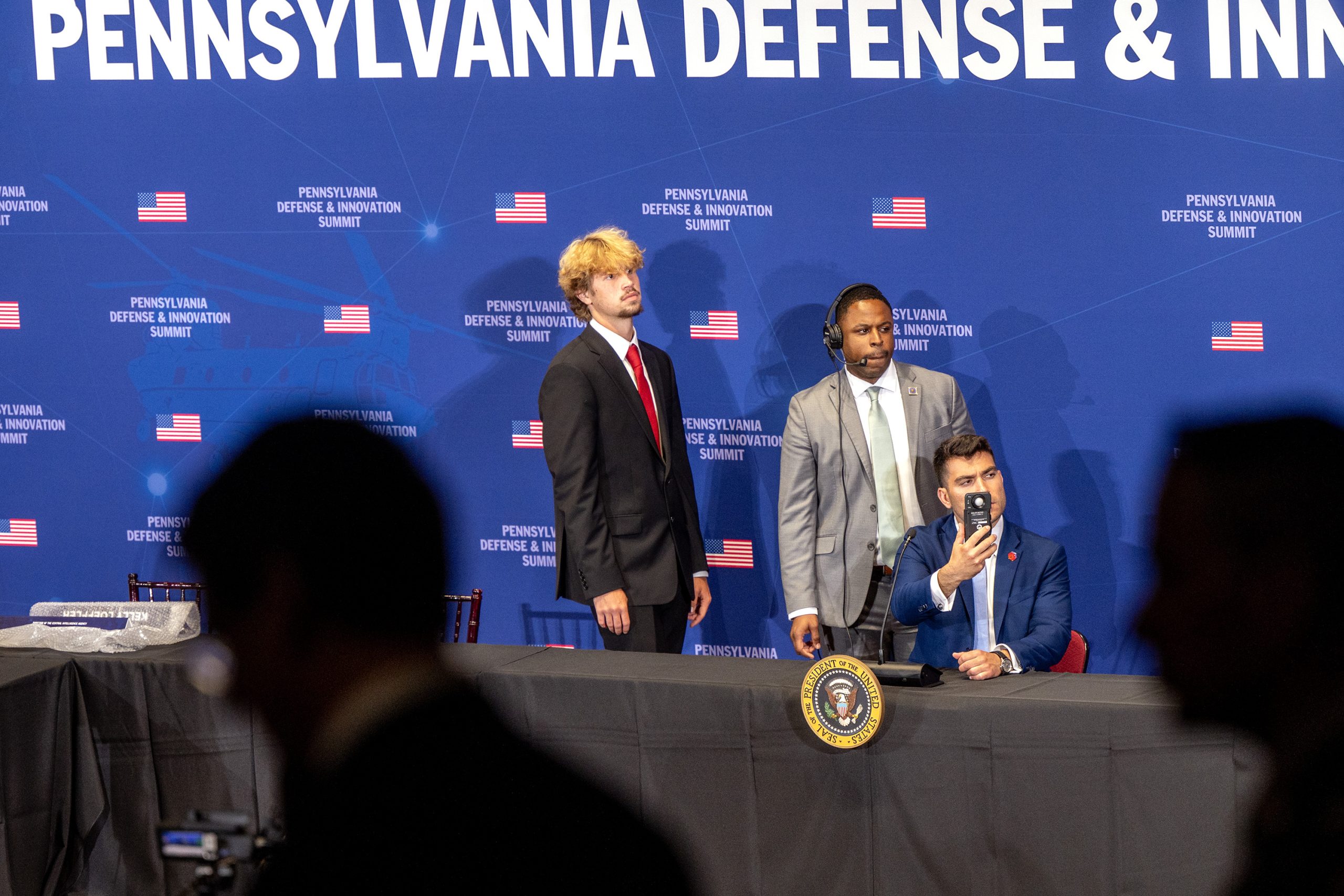
President Donald Trump is seen on a monitor as he appears at a Defense and Innovation Summit hosted by U.S. Sen. Dave McCormick at the US Army War College in Carlisle Wednesday, July 15, 2026.Tom Gralish / Staff Photographer
And I photographed a president, who unlike most of my coworkers and the folks I usually photograph, grew up before the internet and listened to music as it transitioned from Tony Bennett and Perry Como to Bill Haley & His Comets and Elvis.
Technicans prepare the lighting and microphones before President Trump appears at the Summit.Tom Gralish / Staff Photographer
One of the ways I marked by birthday was by visiting the Main Line Camera Club as their guest speaker. Meeting people who appreciate photography is one of the things that keeps me young. That along with the joy I get from making and sharing photos.
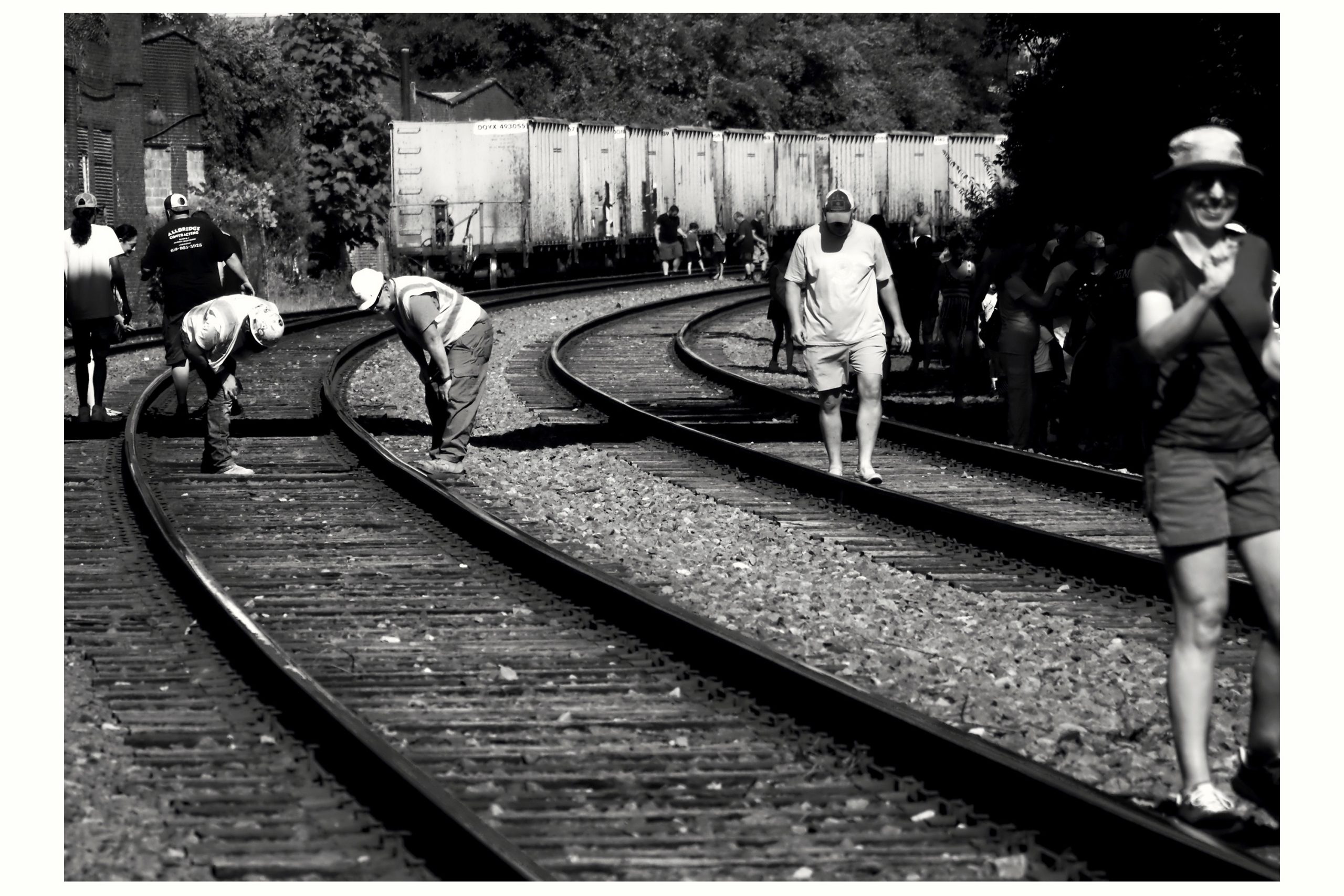
They had many good images but one that stood out for a “different” photo that Jeffrey Benne took during the recent visit by Union Pacific’s famed Big Boy No. 4014, the world’s largest operating steam locomotive. My colleague Monica Herndon also photographed the big engine that could, but until I saw she was headed to Reading, I had no knowledge of it.
After Googling, my social feed exploded with videos and photos of the train along its historic coast-to-coast tour to celebrate America’s 250th. I even heard traffic reports on KYW radio as it approached Philadelphia that weekend begging drivers to quit being foolish by stopping on the Schuylkill Expressway and getting out of their cars to photograph it passing by, being a bunch of train “foamers” (a term I just learned this week).
Benne arrived in Bridgeport, Pa. 45 minutes before Big Boy’s arrival, staking his claim “on a piece of ground then played with the settings on my gear to get a good shot,” with just about 45 seconds to get it passing by.
Afterward, he said he noticed the crowd searching the tracks and realized they were looking for smooshed coins, having set regular coins on the track minutes before. “I should have done that myself,” he said.
Growing up, my friends and I did that, and usually had little luck finding our own “smooshed” pennies.
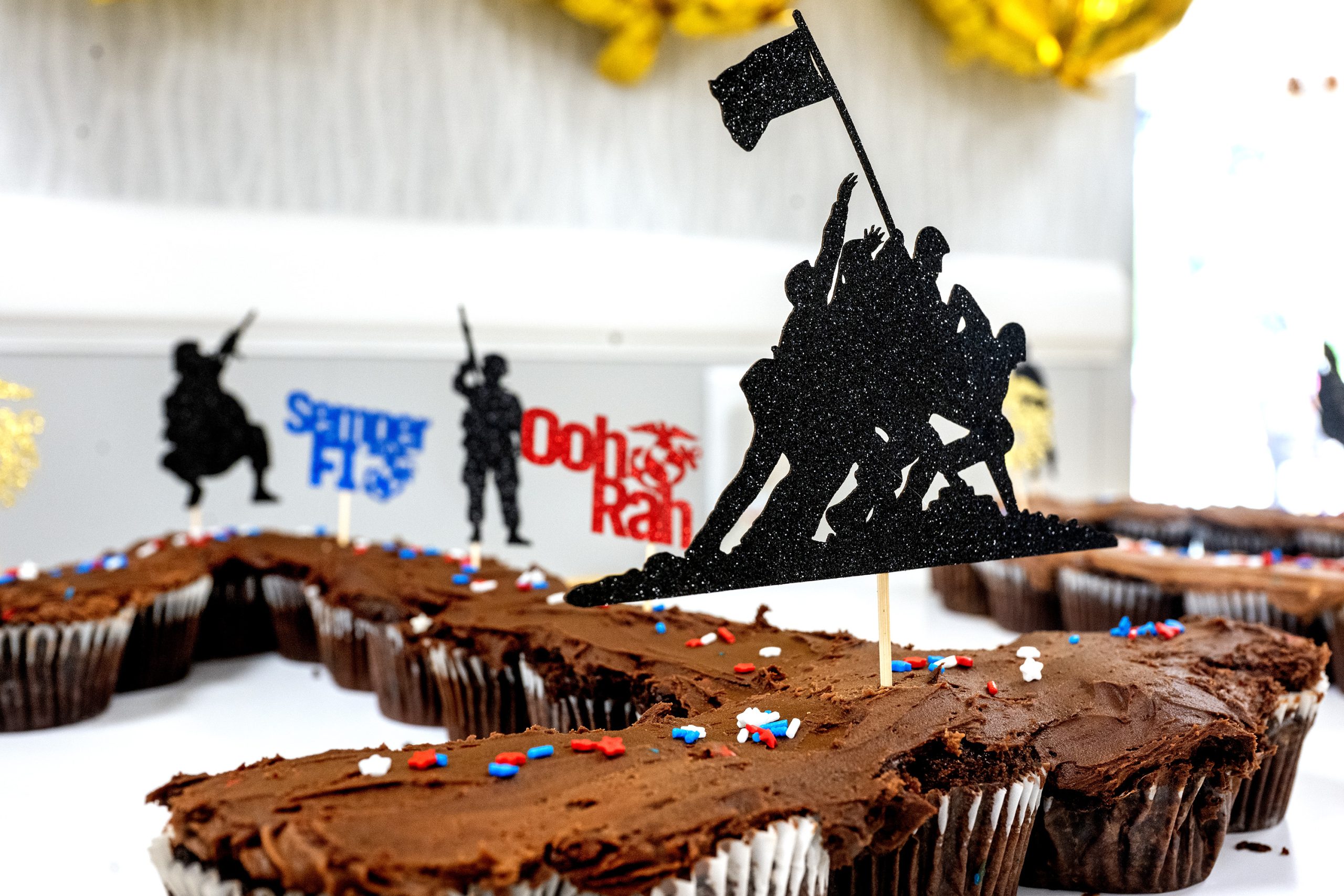
Cupcakes – including one with a topping depicting the iconic Joe Rosenthal photo of U.S. Marines raising the flag at Iwo Jima – at a 100th birthday party for WWII Marine veteran Stephen Anderson.Tom Gralish / Staff Photographer
Pat Dailey, setting up the birthday party in the photo at the top, founded the Tun Legacy Foundation, a nonprofit that supports veteran causes, Masonic charities, and educational scholarships. They are also rebuilding and reestablishing an authentic reproduction of the original Tun Tavern building in Philadelphia. The Tun, constructed in 1693, was the first documented lodge in North America and the birthplace of the U.S. Marine Corps in (1775).
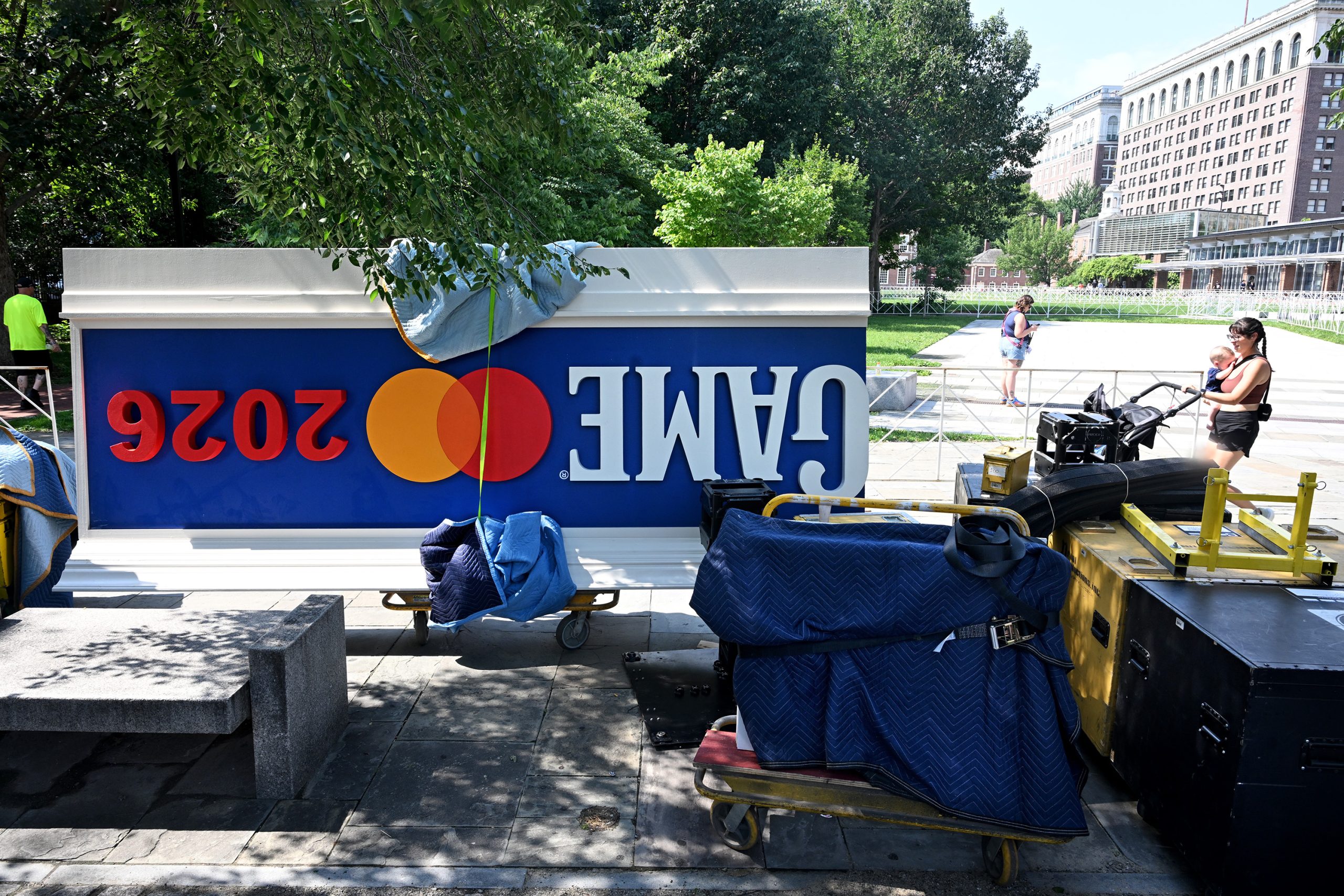
Photographing workers setting up for the Red Carpet on Independence Hall was my only contribution to our coverage of Philly’s hosting the MLB All-Star Game for the first time in 30 years (I did cover THAT game).
Preparations are underway on the Mall at Independence National Historical Park Monday, for the All-Star Red Carpet Show on Tuesday.Tom Gralish / Staff Photographer
I made the Independence Mall prep photo during an early morning check-in on the President’s House site, something I have been doing for months.
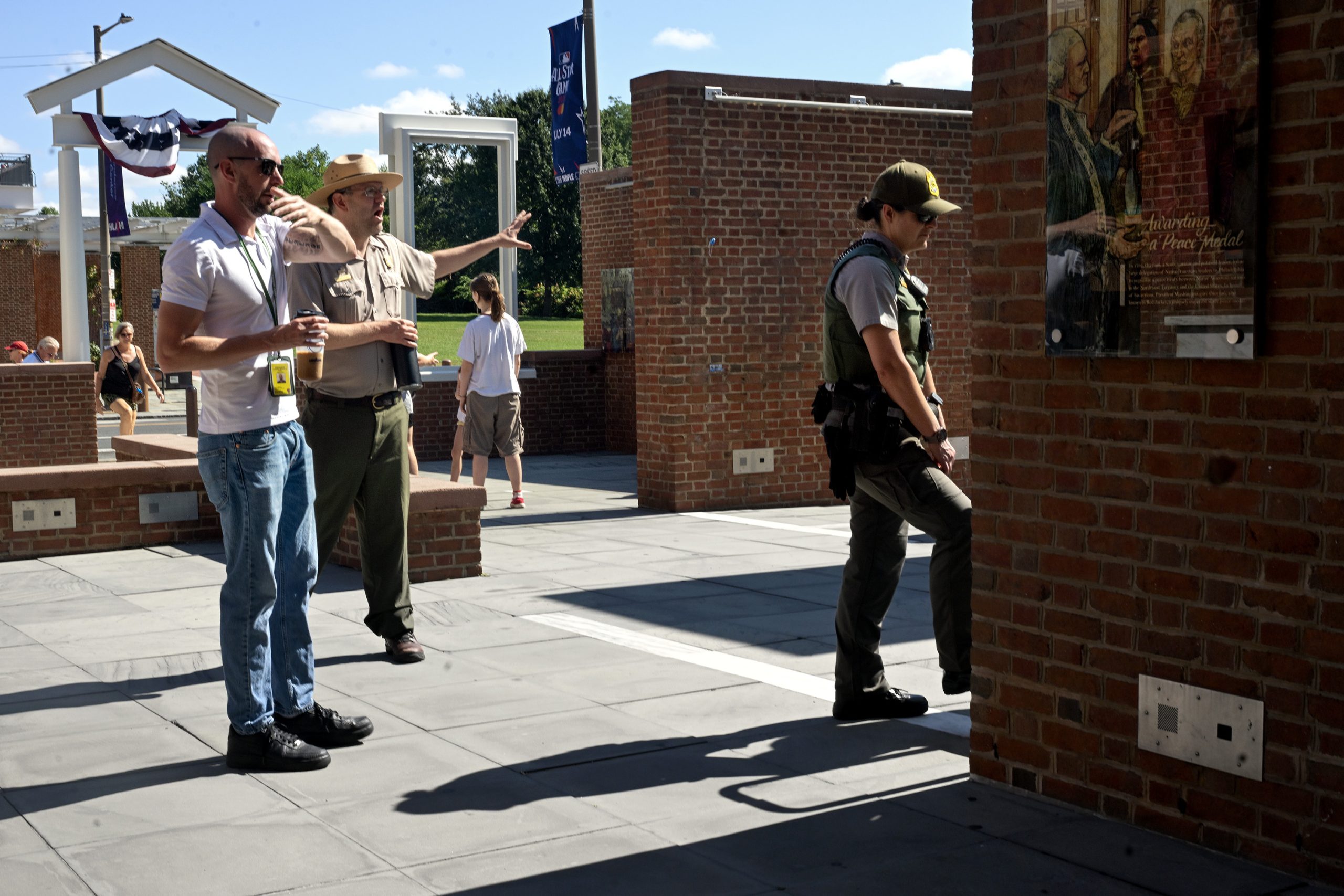
There was nothing new on the site that morning, since I had found National Park Service employees a week earlier taking photos and measurements, and looking under, behind, and above the panels. They told me they were “just looking around” and not there to install the new Trump administration panels after a federal appeals court gave the go-ahead just before the Fourth of July weekend.
A National Park Service employee along with a NPS ranger and NPS police officer visit the President’s House site Wednesday, July 8, 2026. Tom Gralish / Staff Photographer
But unlike the original January removal and the subsequent court-ordered return months later, they did it in the middle of the night, avoiding public scrutiny.
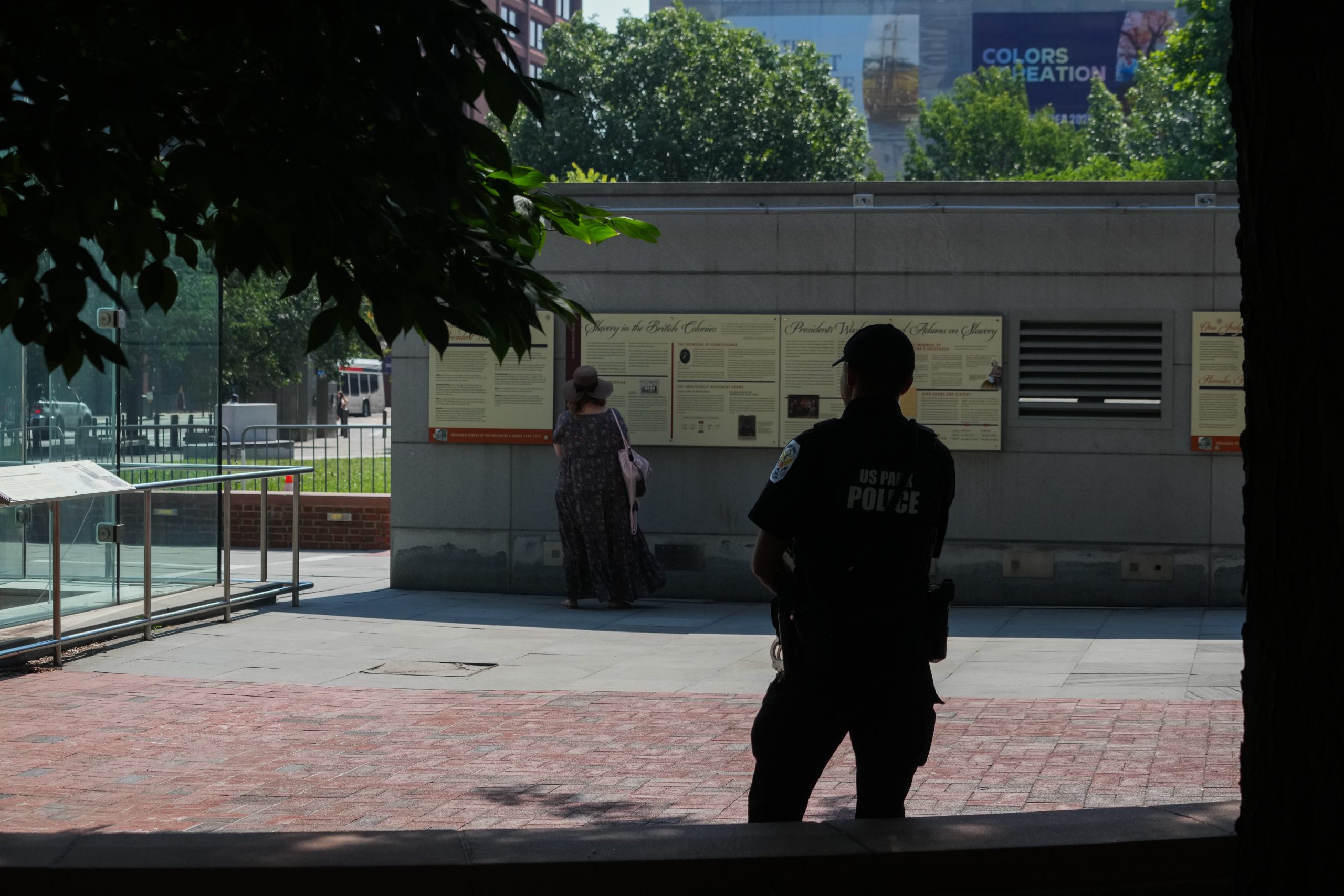
A U.S. Parks police officer and a visitor at the President’s House site Wednesday, July 15, 2026 after new panels were installed.Jessica Griffin / Staff Photographer
Since 1998 a black-and-white photo has appeared every Monday in staff photographer Tom Gralish’s “Scene Through the Lens” photo column in the print editions of The Inquirer’s local news section. Here are the most recent, in color:
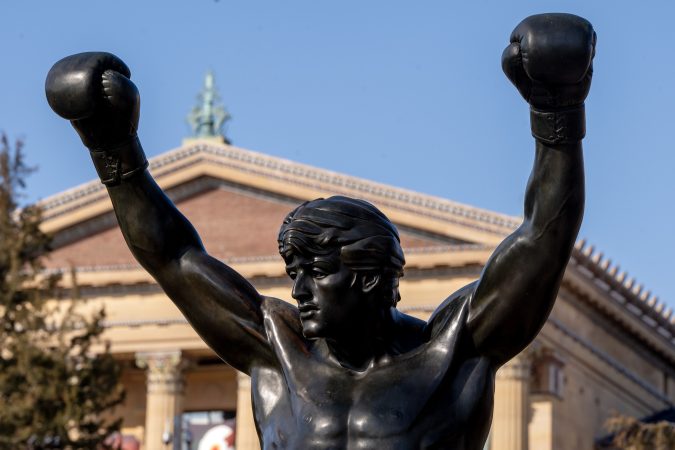
The trailer gives us the full Rocky nostalgia package: the meat locker, the Art Museum steps, the original score, and Stallone refusing to let anyone else play the boxer he created. It could all be unbearably corny (it probably is).
And yet, when that music kicks in, you kind of want to run up some steps.
Philadelphia already has three Rocky statues and has spent 50 years treating a fictional boxer like a founding father. Somehow, this movie may make us love him even more.
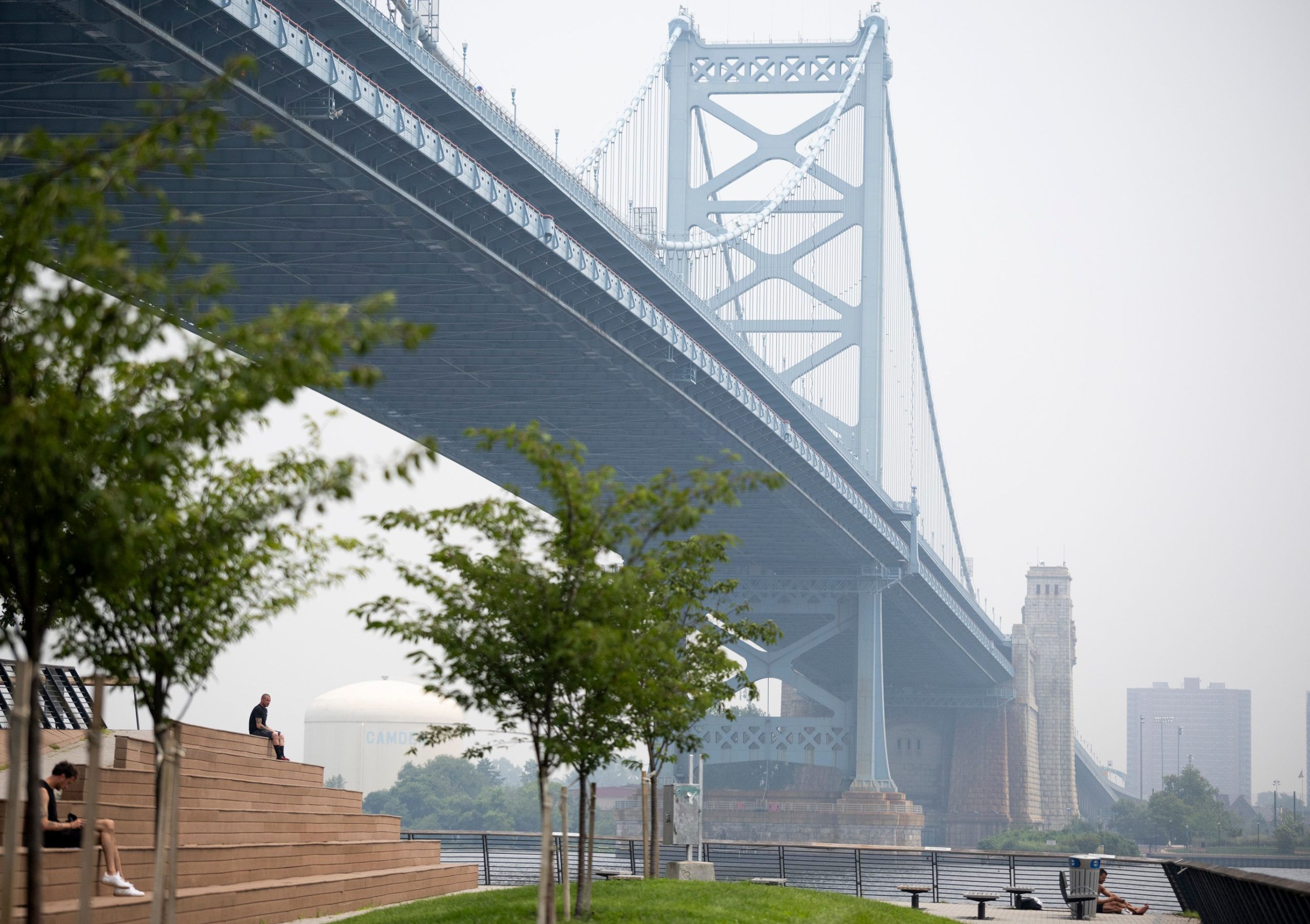
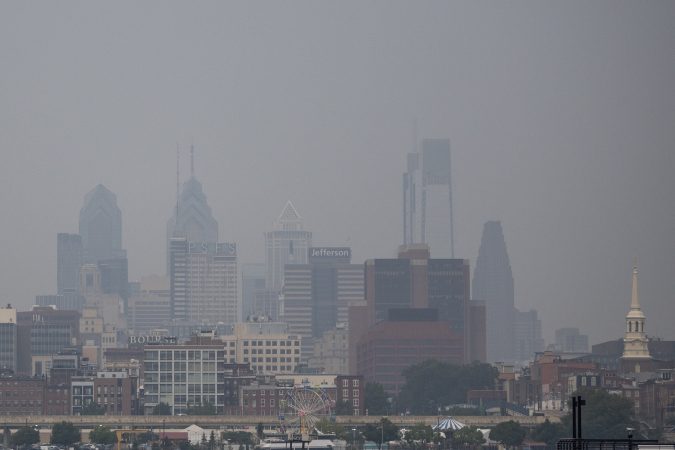
John Burns Jr., of Grays Ferry, sits at the Cherry Street Pier amid wildfire smoke from Canada on Thursday.Tyger Williams / Staff Photographer
Going outside: F
First, the heat index soared into the triple digits. Then Canadian wildfire smoke rolled in.
This week, simply stepping outside came with a list of disclaimers. Don’t exercise, limit your time outdoors, keep kids inside. People with asthma, heart disease, and other health conditions were urged to avoid going out altogether. The Phillies even moved up a game because the air quality wasn’t safe enough.
Summer in Philadelphia is supposed to mean block parties, concerts, long walks, baseball games, and dinners outside. Instead, this week felt like the weather was actively negotiating against every plan you tried to make.
Philadelphia Phillies fans boo the Houston Astros after batting practice ahead of baseball’s World Series Game 5 at Citizens Bank Park on Thursday, Nov. 3, 2022, in Philadelphia.Charles Fox / Staff Photographer
In Philadelphia, booing isn’t always about hate. Sometimes it’s acknowledgment or respect, but mainly it’s just our way of making sure everyone knows they’re in our house. The louder the boos, the bigger the moment.
People acted like Phillies fans had violated some sacred baseball etiquette, when in reality they were giving the rest of the country exactly what it came to see.
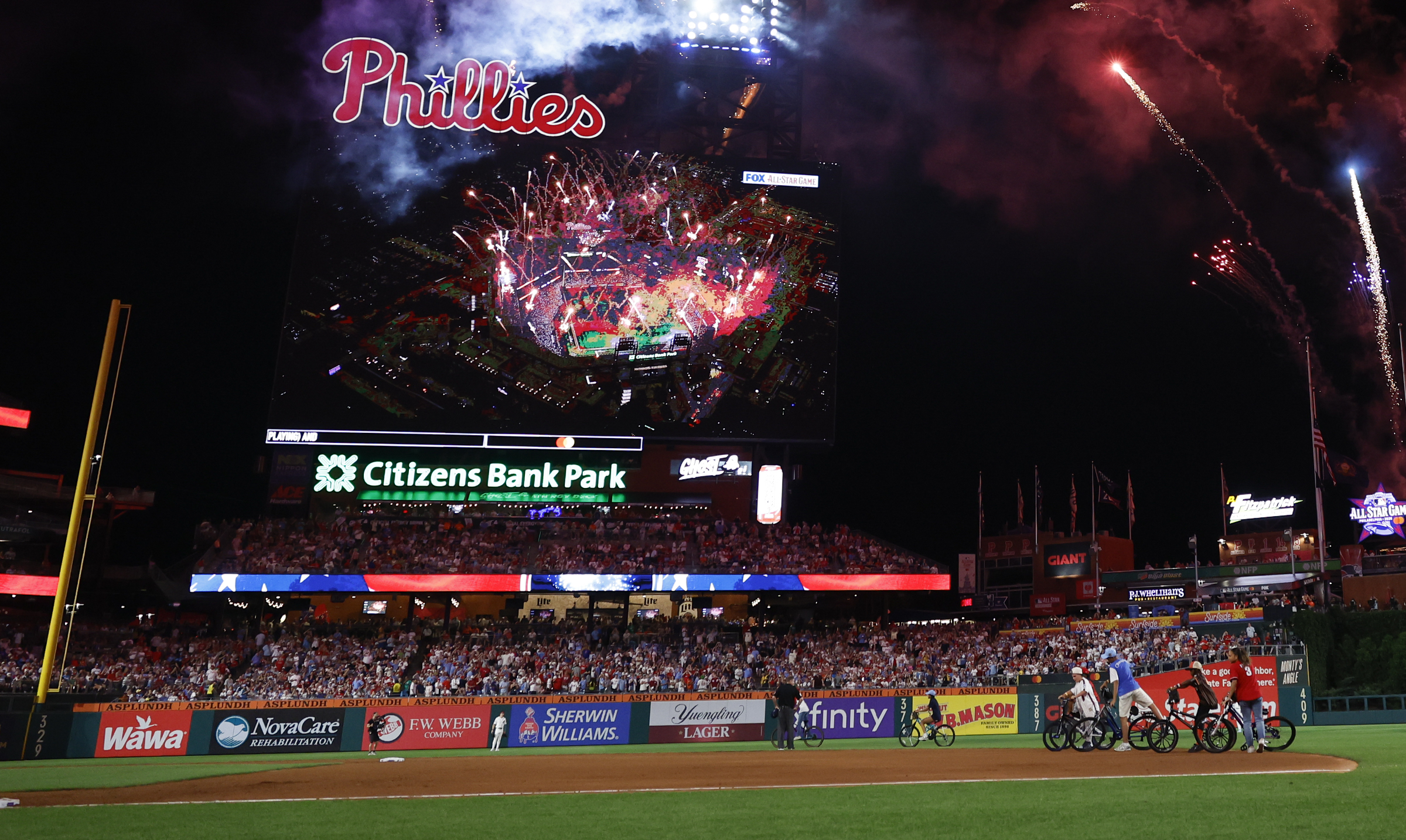
Kids on bikes ride on Citizens Bank Park with fireworks during the MLB All-Star Game on Tuesday, July 14, 2026 in Philadelphia.Yong Kim / Staff Photographer
Citizens Bank Park spent two nights showing off on baseball’s biggest stage, and by the end of the All-Star Game, players from around the league were saying what Phillies fans have believed all along. Freddie Freeman called it his favorite place to play. Others raved about the atmosphere, the crowd, and the city itself.
For years, The Bank has lived in the shadow of baseball’s older cathedrals — Fenway, Wrigley, Dodger Stadium. It doesn’t have ivy-covered walls or a century of history. What it does have is 43,000 people who treat a Tuesday in May like Game 7 of the World Series and somehow crank it up another level when the spotlight gets brighter.
So the All-Star Game wasn’t just a showcase of baseball’s best players, but also a showcase of one of baseball’s best ballparks.
Professional food critic meets professional critics: A
Millions of people know him as @ChefReactions, the social media creator who makes a living critiquing food videos. Philadelphia, meanwhile, has thousands of self-appointed cheesesteak critics who do it for free. It was an inevitable friendship.
Around here, telling you exactly what we think isn’t considered rude. It’s our version of customer service.
A $5 ride to the Shore: A
We miss you, Megabus.
Pacifico’s new $5 Shore Shuttle, offering round-trip rides from Philadelphia to the Jersey Shore on weekends, feels like it belongs in 2014, not 2026. Sure, this one comes with a beer sponsor, a swag bag, and a very specific schedule, according to Philly Voice. And yes, anyone who’s ever ridden a too-good-to-be-true bus deal has probably spent an unexpected hour in a Walmart parking lot wondering whether they’d ever make it home.
That’s part of the adventure.
If someone else wants to deal with the gas, tolls, Parkway traffic, and parking while you spend less than the price of a Wawa hoagie, that’s a pretty good deal — especially in this economy.
T’is the season for outdoor movie screenings! We’ll show you a photo of a free film showing in taken in the Philly-area, you drop a pin where you think it was taken. Closer to the location results in a better score. Good luck!
Round #42
Question 1
Where are these moviegoers set up?
Loading…
ClickTap on map to guess the location in the photo
ClickTap again to change your guess and hit submit when you're happy
You will be scored at the end. The closer to the location the better the score
Kerry Hyland / Handout
Pretty good/Not bad/Way off! Your guess was from the location.Spot on! Your guess was exactly at the location. Here's also where a random selection of Inquirer readers guessed.
These moviegoers are camped out by the Schuylkill at the Robert A. Borski, Jr. Park in Northeast Philly. Fairmount Park Conservancy summer film screenings hosted by local Park Friends groups started in June, with many more scheduled through October.
Quiz continues after ad
Question 2
Where is this crowd waiting for the film to start?
Loading…
Jessica Griffin / Staff Photographer
Pretty good/Not bad/Way off! Your guess was from the location.Spot on! Your guess was exactly at the location. Here's also where a random selection of Inquirer readers guessed.
Where else would you watch an outdoor screening of National Treasure? "Movies on the Mall" hosts a series of plein-air movie nights showcasing stories that celebrate the themes and history of Independence National Historical Park.
Quiz continues after ad
Question 3
Where are these people camped out?
Loading…
Ashcon Zand / Handout
Pretty good/Not bad/Way off! Your guess was from the location.Spot on! Your guess was exactly at the location. Here's also where a random selection of Inquirer readers guessed.
These neighbors are gathered at La Noce Park between Wissahickon Creek and the Schuylkill for a free outdoor movie night.
Your Score
ARank
🎟️Amazing work. That’s a box office hit!
BRank
🎞️Good stuff. Your answers were the reel deal.
CRank
🎥 C is a passing grade; but this wasn’t an award-worthy performance.
DRank
🎬Cut! D isn’t great – take five and try again.
FRank
🎥We don’t want to say you failed, but this round is a flop.
You beat % of other Inquirer readers.
We’ll be back next Saturday for another round of Citywide Quest.
DraftKings, one of the nation’s biggest sports betting companies, is suing the city of Philadelphia in an effort to stop an investigation into the company.
The city is investigating whether DraftKings has violated the Philadelphia Consumer Protection Ordinance, a 2024 law designed to protect Philadelphians from deceptive business practices, according to the lawsuit and accompanying documents.
In response, DraftKings contends a state law, the Pennsylvania Unfair Trade Practices and Consumer Protection Law, preempts the city‘s ordinance. The Boston-based company argues in the suit filed Thursday in federal court in Philadelphia that the city is trying to usurp the state’s authority through its investigation.
“DraftKings filed a lawsuit against the City of Philadelphia because we believe the City has acted beyond the scope of its authority on matters governed by state law and regulated by the Pennsylvania Gaming Control Board,” the company said in a statement. “DraftKings remains committed to operating responsibly and in full compliance with Pennsylvania law, and we look forward to addressing this issue through the legal process.”
The city declined to comment due to litigation being ongoing.
The legal sparring match comes as sports betting companies have come under fire locally in recent weeks due to tactics they’ve used to entice bettors to keep wagering money on their sites.
Last week, The Inquirer reported on a personalized video that FanDuel, another sports betting company, sent to a bettor featuring Phillies star Bryce Harper. A lawsuit filed by the nonprofit Public Health Advocacy Institute on behalf of that bettor and another alleges the Harper video is only one of a series of incentives sports betting companies offer to patrons to keep them hooked.
A subpoena attached to the DraftKings case shows the city requested a host of documentation from the company by May 24. That included requests for details on how much money Philadelphians have wagered in the past three years, how many Philadelphians have placed bets on DraftKings in the past three years, and what kinds of marketing materials have been used with Philadelphians.
It’s unclear what, if any, of the documentation DraftKings provided the city.
The city had no right to request such documents due to the state law superseding the city’s version, DraftKings said in its lawsuit. It’s now asking the U.S. District Court for the Eastern District of Pennsylvania to rule that the city overstepped and let DraftKings off the hook for complying with the subpoena.
Impacts from Canadian wildfire smoke increased throughout the Philadelphia region Friday, degrading air quality enough to prompt a code purple alert, and force the closure or suspension of some city amenities and services.
It was the latest bad weather event in Philadelphia’s run of tough luck in July, which has so far resulted in record-setting heat and destructive storms that have marred back-to-back weekends. Smoky conditions arrived Thursday, and were bad enough Friday to prompt the closure of city pools and spraygrounds, and temporarily stop trash pickup.
“Our worsening air quality is a dangerous development,” Palak Raval-Nelson, commissioner of the city Department of Public Health, said in a statement. “I strongly encourage all residents to take action to protect themselves by staying indoors, unless they need to be outdoors.”
Likewise, the Philadelphia Zoo remained closed Friday, saying in a statement that its animals were being “closely monitored.” The city, however, stopped short of recommending the cancellation of outdoor events, and large productions like comedian Shane Gillis’ performance at Lincoln Financial Field and a Death Cab for Cutie performance at the Highmark Mann Center for the Performing Arts were still set to go on as of late afternoon.
Officials said that venue owners had been advised of the conditions, and were able to make their own decisions as to whether those events would happen.
Trash collection in the city was expected to cautiously resume Saturday, officials said. Resumption of services was contingent upon improvement in air quality conditions, which vacillated between code purple and the comparatively less severe code red Friday.
“We will make judgment decisions as to when we will resume collections in terms of a start time tomorrow,” said Carlton Williams, director of the Philadelphia Office of Clean and Green Initiatives. “But we do plan on working all day Saturday and Sunday to ensure that last week’s trash and recycling is collected in time for our services to be on a regular schedule starting Monday.”
Pools would reopen Saturday if air conditions were code red or below, said Susan Slawson, commissioner for Philadelphia Parks and Recreation.
The Pennsylvania Department of Environmental Protection said the Philadelphia region would be under a code orange air quality alert Saturday, marking a decrease in smoke pollution. That alert level, described as “unhealthy for sensitive groups,” is the lowest it has been since the wildfire smoke arrived this week.
Air quality conditions in the area were poor Friday morning. The city’s air quality index stood at about 267 as of 7 a.m. Friday — a figure that put it solidly in the “very unhealthy” range, meaning the general public was at risk for serious health effects. It later moved into the code red — or “unhealthy” — range, but stood to potentially again become more severe as the day wore on, Raval-Nelson said.
The city of Chester, however, recorded an air quality index of 312 early Friday, putting it in the “hazardous” range — the highest on the U.S. Environmental Protection Agency’s scale. It later dipped into the “very unhealthy” range.
The region’s smoky conditions were expected to last at least until Saturday afternoon, the National Weather Service office in Mount Holly said. The sky’s hazy appearance, according to meteorologists, came from northwest winds that blanketed the region with particulate-filled air that was expected to stick around through the start of the weekend.
However, by Saturday, an anticipated storm system should clear the smoke out — though that development would likely come with its own risks. That system, said weather service meteorologist Joe DeSilva, could also bring “multiple rounds” of showers and thunderstorms, as well as the potential for flash flooding and possibly damaging winds — as well as a potential tornado.
“It definitely looks like damaging winds will be the primary hazard type,” he said.
City officials warned residents to prepare for potential flooding due to heavy rainfall Saturday. A flood watch will be in effect from 10 a.m. Saturday through 2 a.m. Sunday, the city’s Office of Emergency Management said, as storms could produce up to 2 or 3 inches of rain per hour.
Philadelphia is not the only area at risk this weekend. Berks, Carbon, Delaware, Chester, Montgomery, Lehigh, Bucks, Monroe, and Northampton Counties also face dangers from the storm, as do portions of northern Delaware and parts of New Jersey including Camden and Gloucester Counties.
“Excessive runoff may result in flooding of rivers, creeks, streams, and other low-lying and flood-prone locations,” the city said. “Creeks and streams may rise out of their banks. Flooding may occur in poor drainage and urban areas.”
The risk of storm damage Saturday comes a week after high winds and four “microburst” storms downed nearly 300 trees in the city, and left tens of thousands of residents without electricity. As a result of that storm, Philadelphia still remains under a disaster emergency declaration amid its ongoing recovery.
On Friday, officials encouraged city residents to “do what you have been doing since last week’s storm” in the face of renewed threats.
“As Mayor Parker constantly reminds us, we are one Philly,” said Adam Thiel, managing director of the city of Philadelphia. “We are a united city, as our entire city workforce, along with our residents, our neighbors, our communities, continue to move us forward through this unprecedented year.”
Staff writers Rob Tornoe and Emily Bloch contributed to this article.
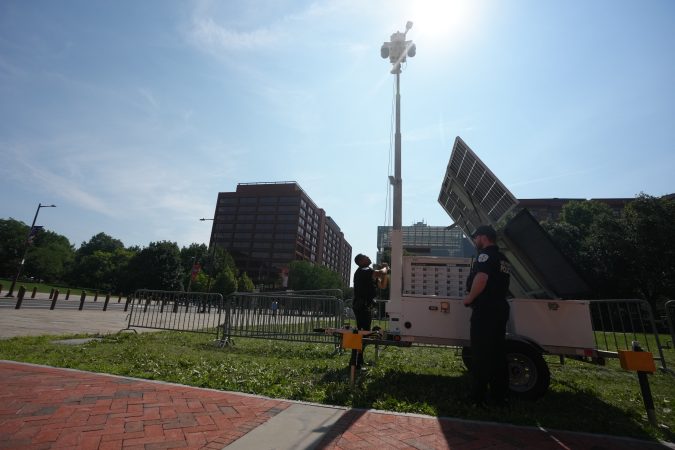
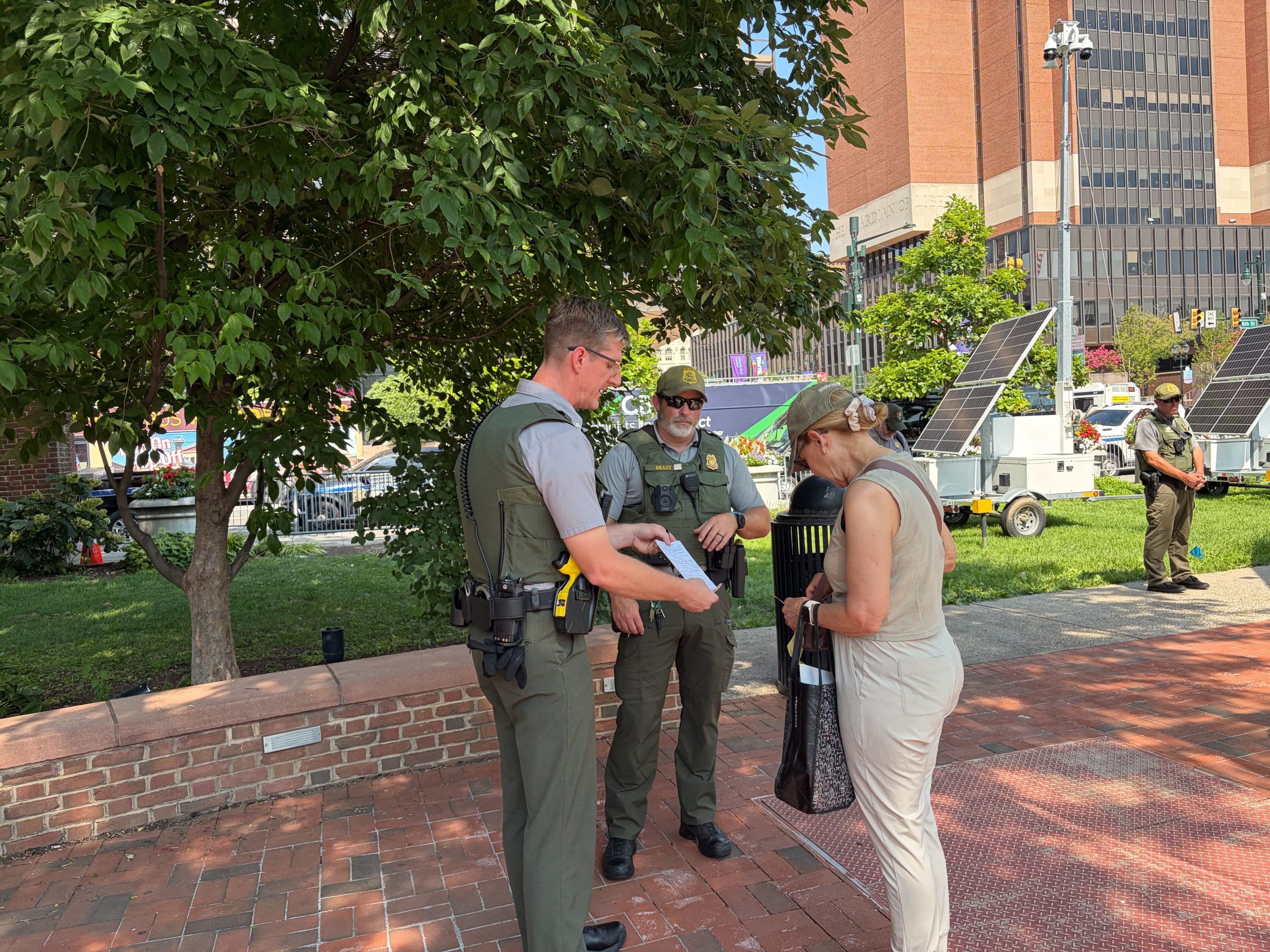
George Washington’s Philadelphia mansion is flanked by three mobile surveillance trailers. And in an unusual deployment, U.S. Park Police officers in black uniforms are guarding the site alongside National Park Service rangers, who are a familiar fixture at Independence National Historical Park.
“The replacement of these interpretation panels is creating a lot of security concerns … because it requires 24/7 monitoring to ensure the panel replacement is completed, and prevent and limit potential damages outside of normal park operations,” the Department of Interiorsaid in its justification to not review multiplebids.
The Interior Department intends to purchase the surveillance equipment from Verkada Inc., a California-based security systems company, through distributor Carahsoft Technology Corp.
The published notice does not include a cost estimate but indicates it will be more than $50,000.
Park employees installed two surveillance trailers on the west side of the site last week, which they said were for MLB All-Star Game events nearby. In the early morning after the game, the Trump administration swapped the President’s House exhibit.
Thetwo trailers remained at the very politically sensitive President’s House Site, as the Interior Department refers to it in new public records.
Park Police officers installed a third on the east side of the site Wednesday morning.
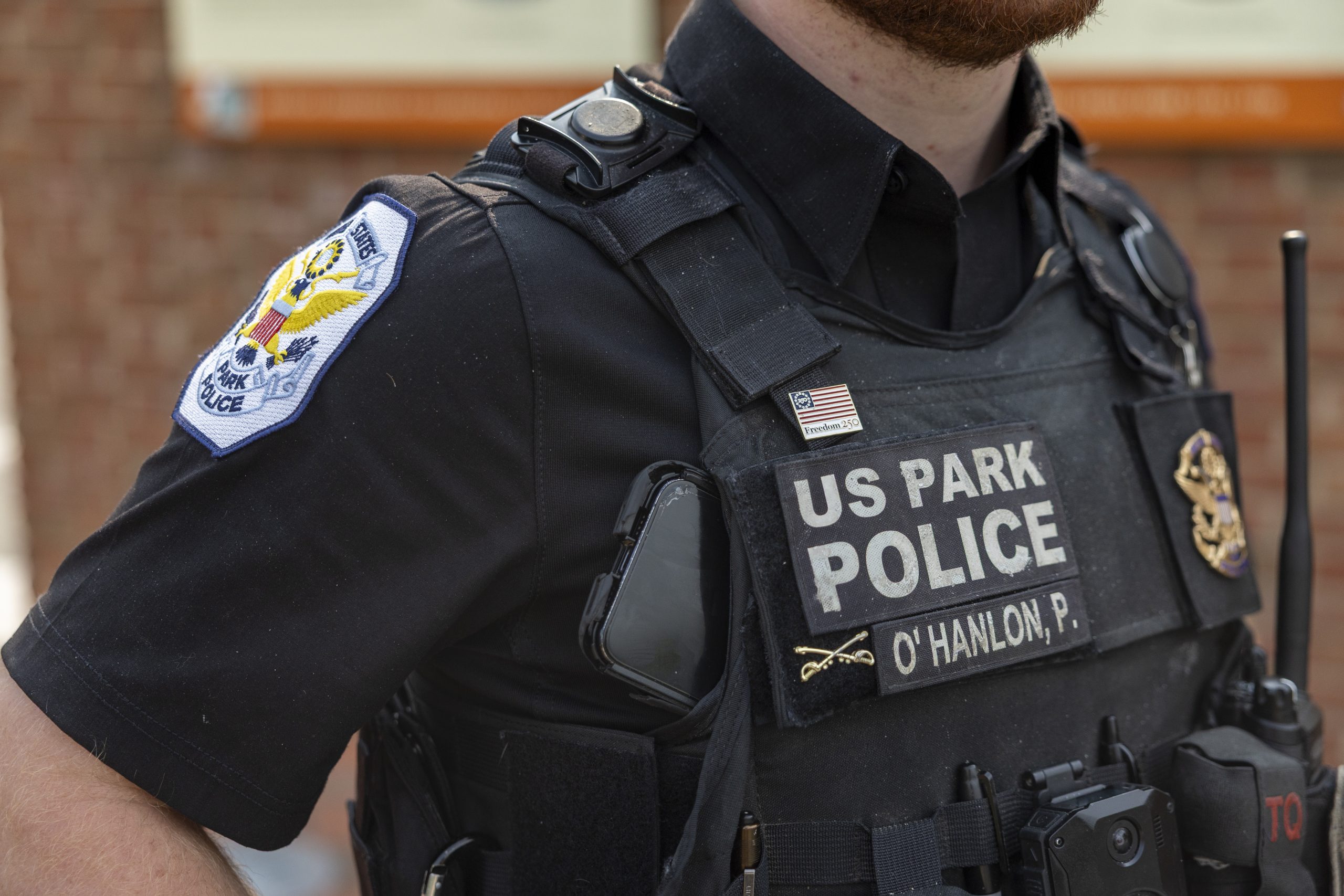
The presence of Park Police at the site is also a notable change.
Officer O’Hanlon’s uniform at the site of the President’s House on Thursday.Aidan T. Gallo / Staff Photographer
The federal law enforcement agency was established by Washington in 1791 to protect federal property in the District of Columbia. It has since been absorbed into the Interior Department, but remains located in the New York City, Washington, D.C., and San Francisco metropolitan areas to “investigate and detain persons suspected of committing offenses against the United States,” according to the National Park Service.
“Officers also carry out services for many notable events conducted in the national parks,” according to Park Service.
The National Park Service’s budget justification for this upcoming fiscal year notes that U.S. Park Police are tasked with enhancing security at “iconic national parks” such as at the Liberty Bell and Independence Hall “to address intrusions, vulnerabilities, and potential terrorist threats.”
But until recently, there has not been a regular U.S. Park Police presence at the President’s House, which is steps from the Liberty Bell, since the Trump administration began scrutinizing the site last summer.
The president instructed the Interior Department to review all national park displays and flag those that “inappropriately disparage Americans past or living.” The Interior Department’s purchase notice notes that security of the site is important to comply with the order, or else the “White House will elevate issues.”
The Philadelphia Police Department is not aware of any credible threats to the President’s House Site, spokesperson Sgt. Eric Gripp said, but “federal agencies are also not required to notify us of arrests, citations, staffing decisions, or other enforcement activity.”
An Interior Department spokesperson declined to answer questions about the Park Police deployment, surveillance system, or the risk assessment.
Park staff would remove the poster almost every night — he even uses masking tape to make the task easier, he said — but no one bothered the 65-year-old.
But Tuesday, he was approached by a group of officers wearing black, unlike the gray-and-green uniforms of the Park rangers he is accustomed to seeing.
After taping five or six posters, a U.S. Park Police officer instructed him to stop.
When Wallace invoked his First Amendment right to free speech, the situation got “a lot more confrontation.”
“A bunch more officers arrived,” he said. “At that point I was threatened with arrest.”
Sandra Shachar, 72, cited for vandalism at the President’s House Site on Wednesday for attempting to post news articles on the walls.Abraham Gutman
Wallace eventually left without an arrest or citation, but Sandra Shachar wasn’t so lucky the next day.
Shachar, 72, has been taping news articles about the litigation surrounding the President’s House since January too. But Wednesday, hours after the Trump administration swapped the exhibit, she was fined $305 for vandalism by two park rangers.
“I think it highlights the state that we’re in as a country, where our right to free speech is now impeded,” the local psychologist said.
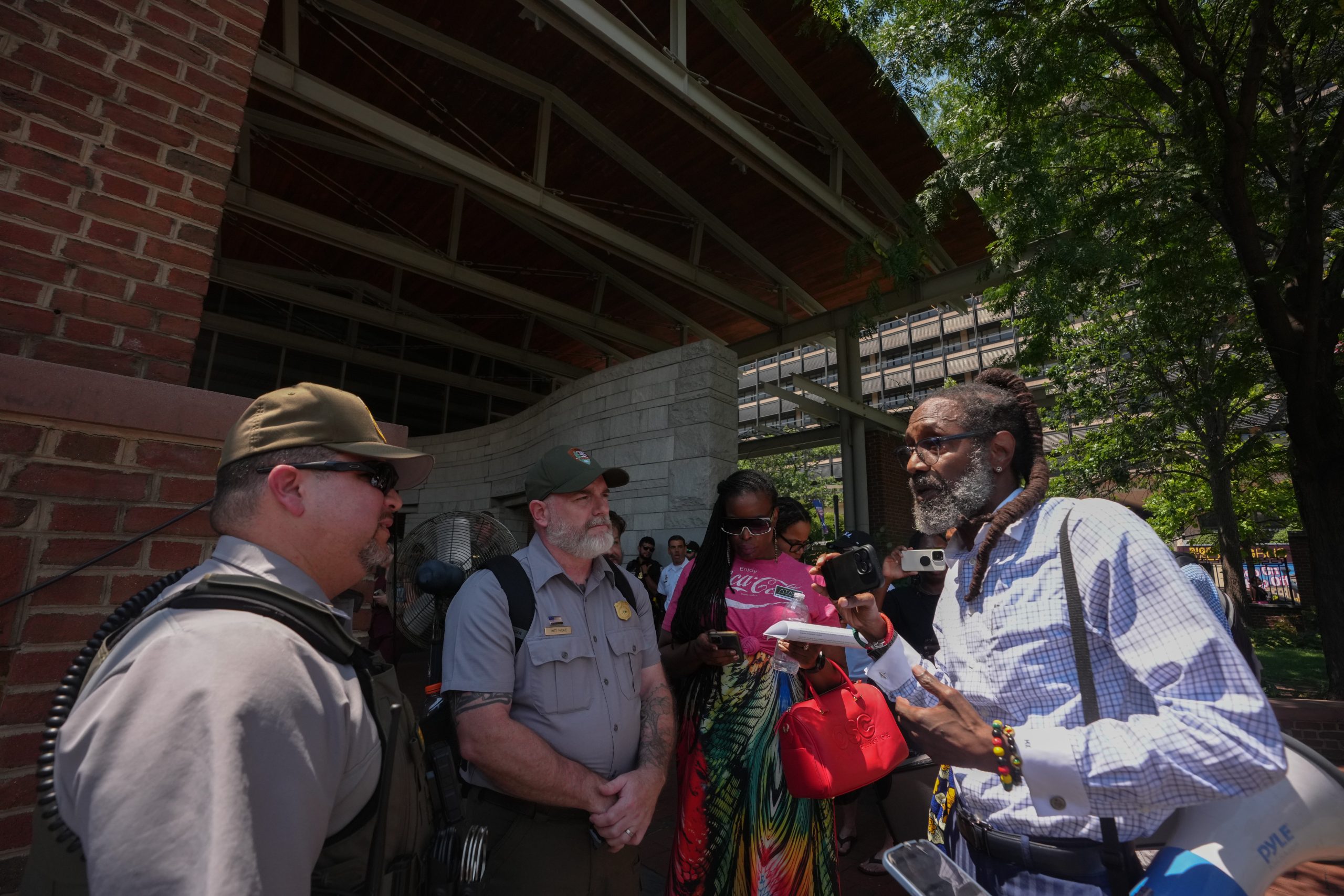
The rangers said they would cite speakers if the event proceeded within the site’s parameters.
“I gotta tell you, I’ve been doing this since June of 2002,” Coard said to the officer. “Never heard of it.”
Lawyer Michael Coard advocates for his First Amendment rights to gather and speak freely at the President’s House Site, where Coard and others planned a news conference Wednesday to address the installation of new panels.Jessica Griffin / Staff Photographer
The group moved closer to the Liberty BellCenter’s entrance, and the rangers allowed the event to take place.
Later Wednesday night, the President’s House Coalition, composed of a group of advocates and stakeholders who have been working to protect the site, told its Instagram followers to “be mindful of Trump’s administration’s tactics” and the “heavy presence” of federal officers at the site.
“Don’t let them bait you into getting arrested,” the activist group account said. “We’d fight to get you out of jail *laughing emoji* but we’d rather spend out energy on fighting against Trump’s administration.”
A former Philadelphia prosecutor who recommended that a man’s murder conviction be overturned said she did so at the direction of her boss — who she said had done no meaningful review of the evidence and instead was “colluding” with defense attorneys to find the most effective way to have the case thrown out.
While testifying at a unique hearing Friday in federal court, former Assistant District Attorney Jaclyn Mason said supervisors in the district attorney’s office had effectively abandoned their responsibility to independently investigate Dennis Johnson’s appeal and determine if he should be freed from prison.
Instead, Mason said, her supervisor, Matthew Stiegler, held routine meetings with Johnson’s lawyers, including the Federal Community Defender Office and the Pennsylvania Innocence Project, to strategize the most effective paths to secure Johnson’s release. And neither she nor Stiegler reviewed key evidence in Johnson’s case, she said, including trial transcripts, homicide files, or witness interviews.
“Matt told me: ‘If it’s good enough for the Innocence Project, it’s good enough for me,’” Mason said.
Just as strikingly, she said, earlier this spring, when it became clear that that process might be exposed in court, another set of supervisors asked her to lie to a federal judge.
As Mason recalled, the supervisors were worried that if the judge found out the full extent of the office’s actions in the case, it would exacerbate the already intense public scrutiny the office was under for the way it had acted in other murder appeals.
According to Mason, the supervisors suggested she simply tell the judge that any mistakes in the case were hers, and hope that that would be enough to avoid a more thorough inquiry.
Mason said she declined and resigned.
“I said, ‘I’m not going to go to court to lie to protect the district attorney’s office,” Mason said. “How come telling the truth isn’t an option?”
The extraordinary testimony came as part of Johnson’s appeal, which has taken an unusual path through the courts and remains pending before U.S. District Judge Paul S. Diamond.
It also served as the latest chapter in a series of developments that have raised questions about one of District Attorney Larry Krasner’s key policy initiatives: his office’s willingness to review old convictions and seek to overturn those that prosecutors believe were marred by legal problems.
Just last month, the Pennsylvania Supreme Court ruled that Krasner’s office had misled judges so consistently and flagrantly in appellate matters that moving forward, any time his office recommends that a conviction be overturned, the state attorney general must be brought in to review the matter as well.
Diamond was also involved in disciplining two top supervisors in Krasner’s office in recent months, finding that they had been “misleading and dishonest” while seeking to overturn an inmate’s death sentence.
Krasner has made post-conviction review a central part of his reform-oriented agenda, touting the fact that his office has helped free 59 people — mostly Black men — from what he’s called wrongful convictions.
But judges in both state and federal court have raised pointed questions in recent months about whether Krasner’s office has been sloppy or even intentionally misleading while seeking to advance that agenda.
And during Friday’s hearing, Diamond expressed occasional bewilderment at some of Stiegler’s admissions on the stand — including that while he led the office’s Federal Litigation Unit, his staff generally did not reinterview witnesses or speak to previous prosecutors before deciding whether to recommend that a conviction be overturned.
“It’s a smorgasbord of error — and we’re just gonna pick one?” Diamond asked.
A ‘pawn’ in a preordained process
The case around which Friday’s hearing was nominally centered was Johnson’s conviction for second-degree murder.
In 2009, a jury found him guilty of fatally shooting Kenyatta Smith during a robbery outside a North Philadelphia convenience store two years earlier. He was sentenced to life in prison.
Johnson appealed, in part because he said his trial lawyer was ineffective.
And in 2022, Mason filed court documents agreeing with that assertion — and saying the error was so pronounced that his conviction should be thrown out.
“The case against Johnson was not overwhelming from the outset and his counsel was constitutionally ineffective,” Mason wrote. “The post-trial investigation unearthed additional factors that highlight weaknesses in the prosecution and confirm a low level of confidence in the outcome of Johnson’s trial.”
In court Friday, however, Mason said she was effectively doing Stiegler’s bidding when she filed that brief.
She’d only been in the office for about four months when Stiegler assigned her Johnson’s case, she said. And she’d never before worked as a prosecutor or handled similar federal appeals.
The office also gave her close to no training, she said. And from the moment she was assigned Johnson’s case, she said, she got the impression that Stiegler knew how he wanted the matter to go.
“The decision to concede had been made, and then I was his pawn,” she said. “I was his scribe.”
In the months that followed, Mason said, she and Stiegler did almost no independent examination of the evidence in Johnson’s case. But they did have meetings with Johnson’s attorneys, she said, at which the two sides sometimes collaborated on legal strategies for how to ensure his petition would succeed.
When Mason did actually draft the brief supporting the appeal, she said, Stiegler offered edits — all of which made it into the document. Another supervisor, Nancy Winkelman, the onetime head of the Law Division, also made suggestions that were included in the final brief, Mason said.
Stiegler testified Friday as well, and said he believed that when Mason was assigned the case, she would review it and provide her best assessment to him. That review, he said, was expected to include an examination of key evidence, including trial testimony or witness statements.
But under questioning by Diamond, he acknowledged that his unit at that time did not regularly reinvestigate cases, either by re-interviewing witnesses or reexamining primary evidence — an admission that seemed to baffle the judge.
“You did no investigation on your own?” he asked at one point.
“No,” Stiegler replied.
As for the decision to agree that Johnson’s conviction should be overturned, Stiegler said: “My recollection is it was a collaborative decision between Ms. Mason and me.”
But Mason said that wasn’t true.
“He met and conferred with the Federal Defender and the Innocence Project to decide how it was going to go before it was assigned to me,” she said.
A sudden resignation
Still, none of that discord surfaced until this spring, when Diamond — who will ultimately decide whether to overturn Johnson’s conviction — scheduled an evidentiary hearing. At the time, he said he wanted to hear from several key witnesses to evaluate the strength of the evidence against Johnson.
He also asked the attorney general’s office to review the case, apparently wary that the district attorney’s office was simply agreeing with Johnson’s lawyers.
At that point, Mason said, a set of different supervisors in the Law Division “started to panic.”
And after she told them the “collusive” manner in which the appeal had been handled, she said she was told, in essence, to fall on her sword.
As Mason recalled it, the supervisors told her to tell Diamond that any mistakes in the office’s brief were hers, “and if we do that, the court might get angry, but it won’t find out how this concession got put together — which is what we really want to avoid.”
“The whole goal [was] that the process by which that concession came to be not be revealed,” Mason said.
Within days, Mason said, she resigned.
A few days after that, the supervisors in the Law Division — David Napiorski, Steven Wildberger, Peter Andrews, and Katherine Ernst — filed a motion with Diamond seeking to undo the position that Mason and Stiegler had once recommended, saying the pair’s brief had been based on “material misstatements.”
Mason said she was “blindsided” by that filing, and that she believed she was being used as a scapegoat to protect the office and its actions in the case.
“The whole scheme was designed to cover up how that brief was put together,” she said.
Friday’s hearing ended before the supervisors she accused of wrongdoing had time to testify or respond to her assertions. Diamond said he would schedule another hearing to hear from them.
Johnson’s fate also remains undecided with the legal issues unresolved.
Stiegler, meanwhile, denied that he’d pushed Mason to take a specific position in the case, or that he’d had improper interactions with Johnson’s defense lawyers as the office worked on the appeal.
Mason was definitive in her view of Stiegler’s testimony.
“Nothing Matt said was true,” Mason said. “Nothing he said was true.”