A new visitor center aims to root Germantown more firmly in its own history, showcasing it as the site of a major Revolutionary War battle and a place with important ties to religious freedom, abolition, and the Civil Rights Movement.
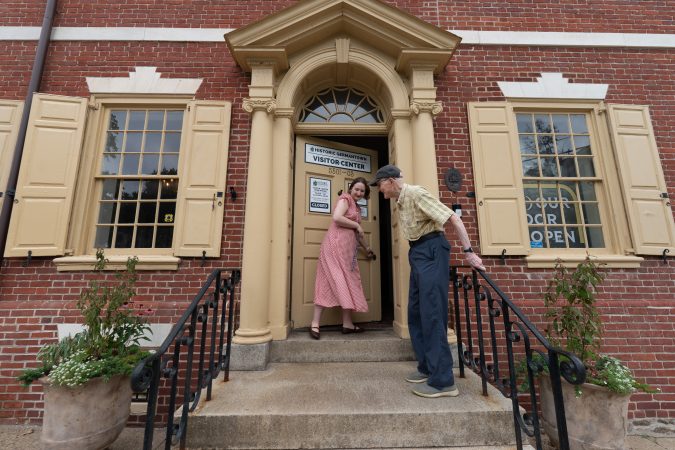
The center opened in a two-story redbrick building at 5501 Germantown Ave. earlier this month. Owned by the Germantown Historical Society, it is intended to serve as a starting point for visitors and residents alike.
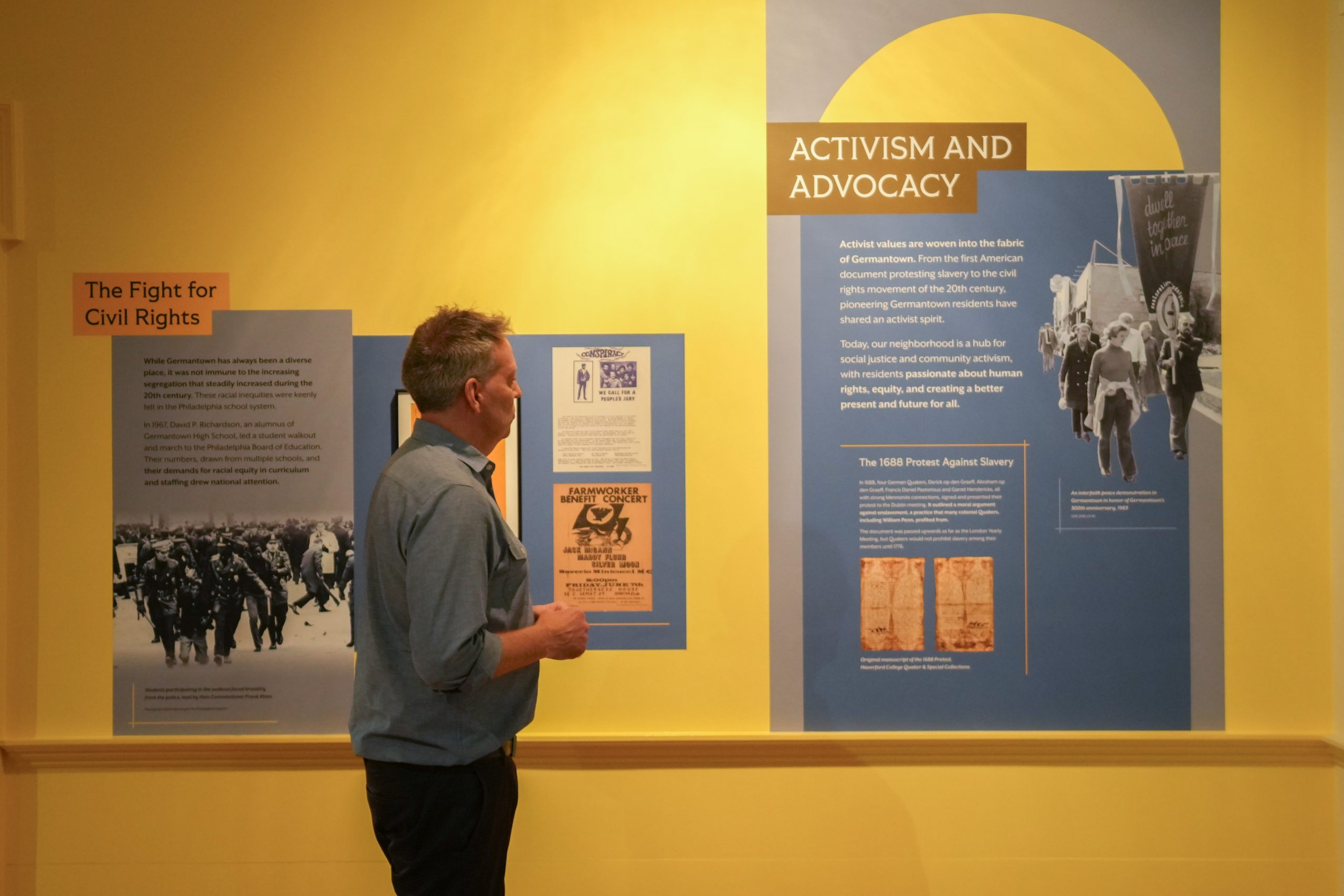
The exhibitions were curated using a process of community conversations in which neighborhood residentsshared what was important to them, said curatorKaila Temple. The main exhibit highlights major themes in Germantown’s history. Sections like “Activism and Advocacy” focus not only on the 1688 Germantown Quaker Petition Against Slavery, but also on a student protest in 1967 that was met with violent police opposition.
Tuomi Forrest, executive director at the Germantown Historical, in the new exhibit.Jessica Griffin / Staff Photographer
German immigrants first settled in Germantown in the late 16th century, fleeing Europe in search of religious freedom. Germantown played a central role in the American Revolution and later became the site of strong abolitionist advocacy, and robust student youth activism during the Civil Rights Movement.
The visitor center hopes to both connect residents of Germantown with their local history and draw visitors from elsewhere. Visitors will be directed to visit the many historical sights in the area with maps available for walking tours. Director Tuomi Forrest hopes the visitor center can be a resource for neighbors and bring in more visitors from outside Philadelphia, citing those as “twin” goals.
The visitor center received about 200 people the first week it opened and hopes for more. It recently collaborated with Neighborhood Jawnts Tour Series, a Philadelphia-based tourism effort, to bring in visitors from around the city.
It has also worked closely with neighbors who want to learn more about their own homes and their ancestors. One neighbor found a wedding invitation from 1912 during home renovations and wrote to the center to ask for documents that would shine more light on who used to live in the home; another wanted more information of how his mid-1800s home came to be an institution for orphans; others ask to come to the center to do research on their ancestors.
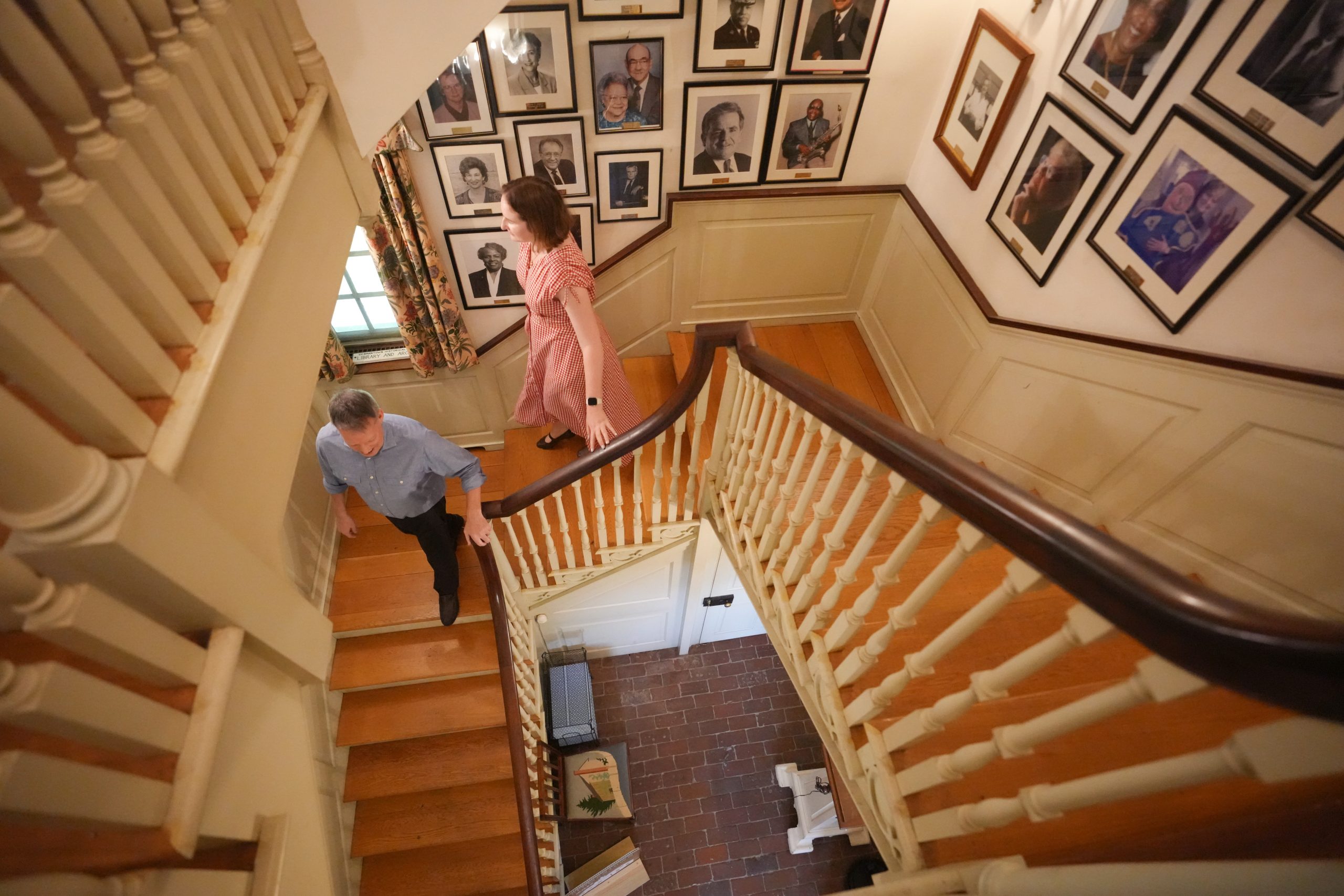
Tuomi Forrest, executive director, and Kaila Temple, curator, at the Germantown Historical Society building.Jessica Griffin / Staff Photographer
The square where the visitor center sits dates to 1703. George Washington lived across the street from it in 1793, and when Philadelphians wanted the federal government to stay locally, they touted the square as an asset.
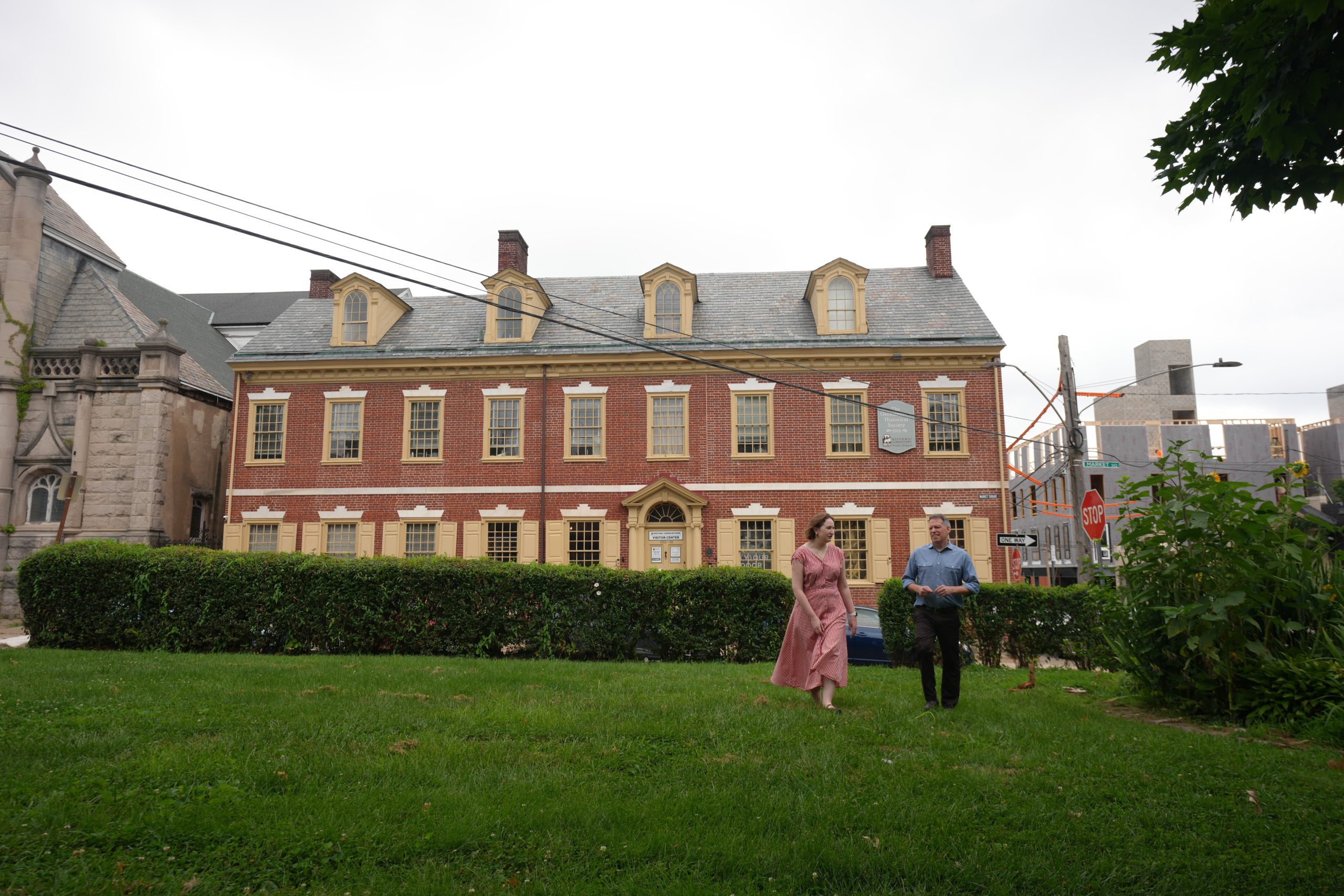
The Colonial Revival building where the visitor center is now housed was constructed in the 1790s and restored around the 1940s and ’50s.
Visual markers of the Colonial Revival style, a result of the 1876 Centennial Exhibition’s reawakening of Americans’ desire to connect architecturally to their colonial past, still dominate the historical section of Germantown. Along Germantown Avenue, gray stone churches stand beside pale yellow, redbrick, and coral-colored houses.
But the visual character of the historic section of Germantown that houses the new center is not uniform, especially as new developments begin to populate empty lots.
A neighborhood ‘at an upswing’
As the local visitor center leans into Germantown’s past, some nearby residents and businesses — many of whom were not aware of the new center — said they were concerned with the direction of their neighborhood’s future.
Van Brooks, operations manager of a coffee shop kitty-corner from the visitor center, worries about development just down the street — afour-story apartment building that is visiblefrom the window of a visitor center gallery. “A lot of folks in this neighborhood don’t want this space to exist here,” he said. He worries the modern, flat apartment complex will begin to gentrify the neighborhood.
Nicholas Thaete, who has lived in Germantown for 46 years and runs an antique repair shop, says the neighborhood has gone through different periods. “It goes up and down. Right now, it is at an upswing,” he said.
And yet, as Debbie Curry, who works in a nearby fabric store, remembered, Germantown used to have more commercial activity: “There was a time when there were a lot of department stores. … You didn’t have to go to Center City to do your shopping.” Curry, 66, grew up in Germantown but moved from the neighborhood when she married. She is happy something is finally being done about empty lots.
“A lot of people thought for years that Germantown would see new development, but now it has,” Forrest said, standing in front of the visitor center.
Kaila Temple, curator of Collections at the Germantown Historical Society and Tuomi Forrest, executive director at GHS, outside the new Historic Germantown Visitor Center.Jessica Griffin / Staff Photographer
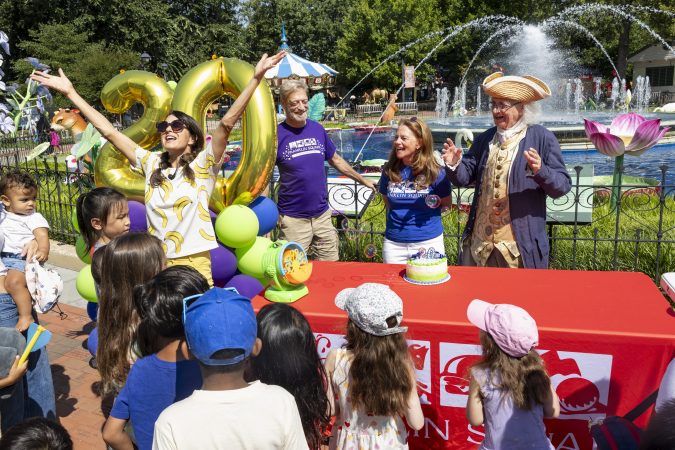
That was the fanfare Saturday morning as Franklin Square, the once-forgotten green space at Sixth and Race Streets, celebrated a milestone: This July marks 20 years since the square’s dramatic revitalization, which transformed it from a dusty and dim outpost to a destination for family-friendly fun.
The pomp and hordes of young children playing with sidewalk chalk, kazoos, and streamers amid the daylight remnants of the annual Philadelphia Chinese Lantern Festival were far removed from the Franklin Square of yore, when it was publicly described as part of the city’s “skid row.”
“It did not look good,” Amy Needle, president and CEO of Historic Philadelphia Inc., said of Franklin Square’s image in the early aughts. “It was really neglected. … There was no reason to go there.
“And I think we all saw the potential.”
Franklin Square (originally dubbed North East Publick Square and later renamed in honor of Benjamin Franklin) dates back to 1682, when William Penn designed Philadelphia. Penn anchored the city around a quintet of parks that would become Franklin Square, Washington Square, Rittenhouse Square, Logan Square, and Centre Square (City Hall).
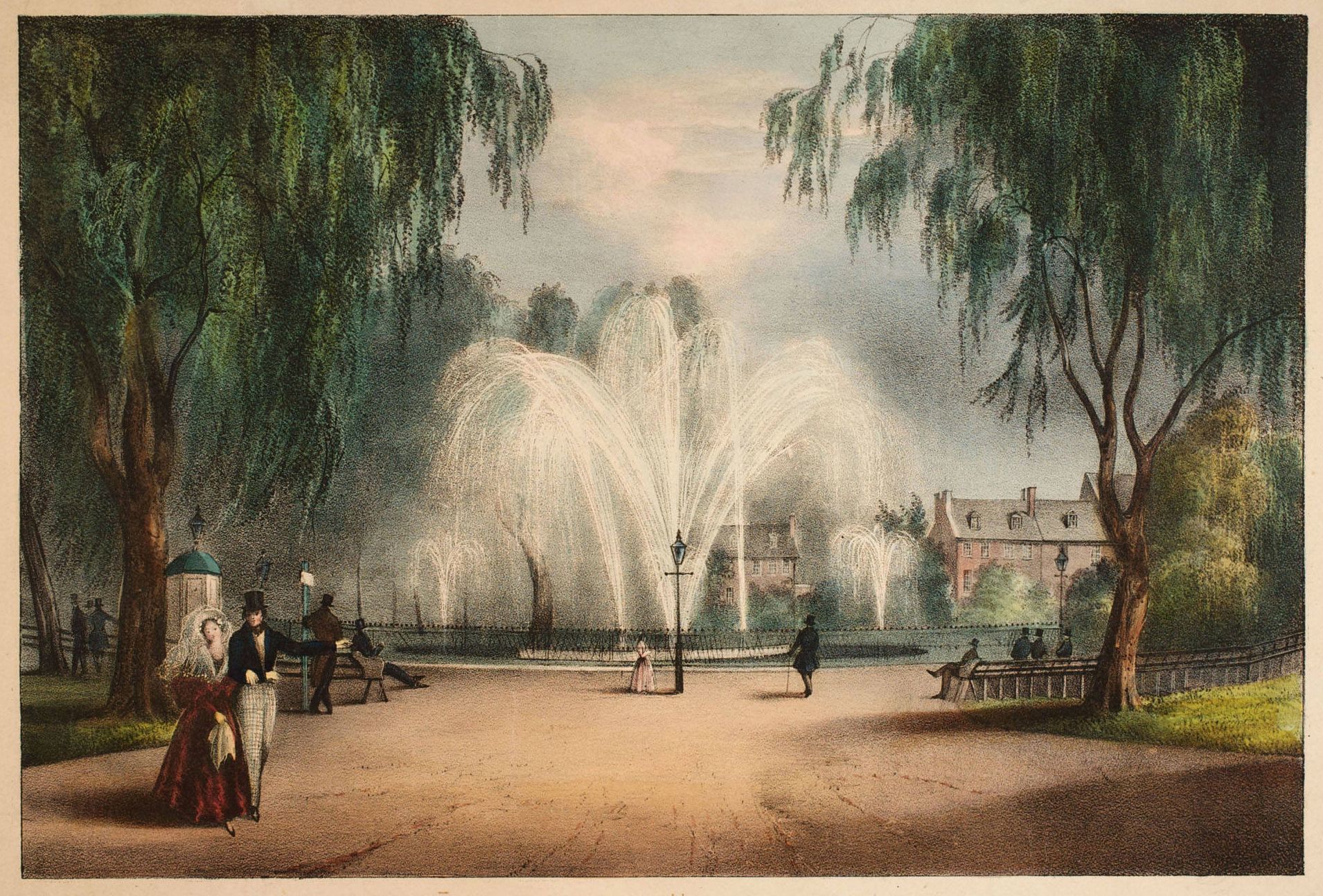
An undated watercolor of Franklin Square.Courtesy of Historic Philadelphia, Inc.
While Franklin Square’s 7½ acres may have been heavily used by Philly’s earliest settlers because of its proximity to the Delaware River, its condition started to decline in the early 20th century, when broad swaths of homes on the park’s perimeter were razed to make way for the on-ramps to the Ben Franklin Bridge and, later, the Vine Street Expressway and I-95 feeder, according to The Inquirer’s archives. The park’s greenery was replaced by a brick desert, and the isolation and inaccessibility led to disarray.
Famed urban theorist Jane Jacobs said of Franklin Square: It was “where the homeless, the unemployed and the people of indigent leisure gather amid the flophouses, cheap hotels, missions, [and] second-hand clothing stores.” Occasionally, tai chi groups and area daycares used the expansive lawns and shady respite, after brushing away debris and drug paraphernalia, according to Needle.
“It was a dump,” recalled Keith Owens, 69, of Cherry Hill, who was visiting Saturday with his family. “I just remember it was not a place you went to.”
By the early 2000s, a movement to reinvent the square gained traction, coinciding with the opening of the National Constitution Center, a new flood of tourists to the long-vacant “third block” of Independence Mall between Arch and Race Streets, and a residential housing boom. The effort, led by Historic Philadelphia and then-Gov. Ed Rendell, sought to to revamp Center City’s “most underutilized” square footage and enhance tourists’ trips between Old City destinations, The Inquirer wrote at the time.
The rehab included fixing the 1800s fountain and installing lighting, new playground equipment, a carousel, and an 18-hole miniature golf course featuring Philadelphia iconography — landmarks that set Franklin Square apart from other, “passive” parks like Rittenhouse or Washington, according to Needle. Although the park is owned by the city, it is operated and maintained by Needle’s group.
“We had to have attractions there and give people a reason to go there,” she said. “We wanted to create experiences.”
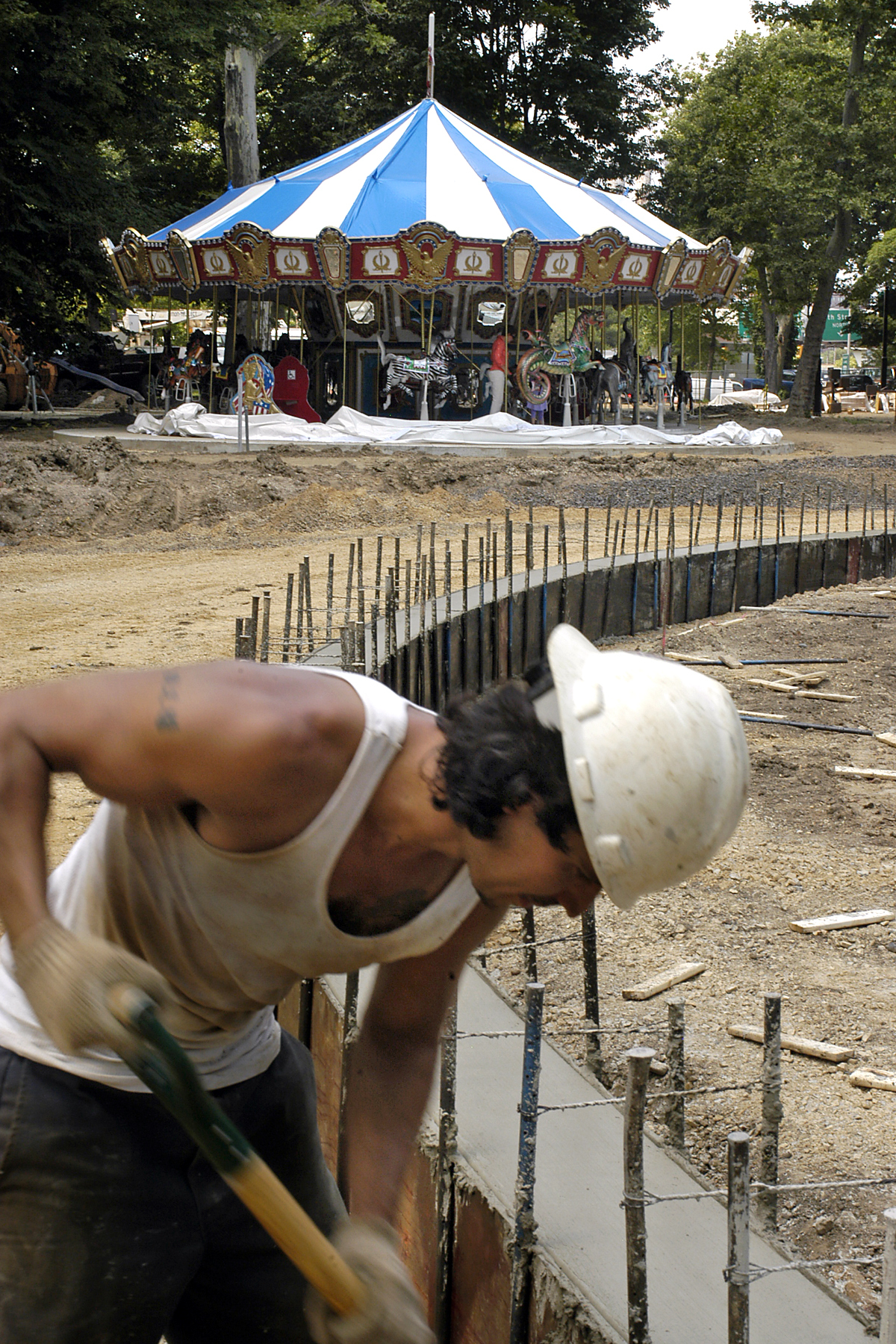
Union mason (Local 592) Ronald Valenciano of Upper Darby works on fresh concrete around the new fountain being restored in Franklin Square on July 10, 2006, even as the brand-new Philadelphia Park Liberty Carousel (rear) is unveiled to the press. The fountain and carousel were two of the highlights of the renovated park, which will opening later this summer. Once the carousel-making capital of the world, Philadelphia will once again have working Merry-go-Round within city limits. The Philadelphia Park Liberty Carousel is one of the highlights of the new Franklin Square, which reopened later that summer.Tom Gralish / Staff Photographer
“I just feel like it’s exploding — every time we come back, there’s more stuff here,” attendee Brooke Duane said.
“And the bathrooms, which are great.”
Despite living in Chester County, Duane — who said she staged her maternity photos at the square and celebrated her nephew’s birthday there — finds herself routinely coming back.
For 22-year-old Sabrina Owens, Franklin Square stands as a testament to the importance of investing in public spaces: “With so many diminishing third spaces … to know that this is here, and it’s such a revamped space, and it’s very welcoming, is very encouraging.
“It’s a good sign for the city.”
When asked about the Franklin Square of the future, Needle said she hopes it “continues to be a wonderful public space for people.”
Following my first visit to Boston two years ago, I penned a column (against my better judgment) bemoaning what a surprisingly good time I had there (against my will).
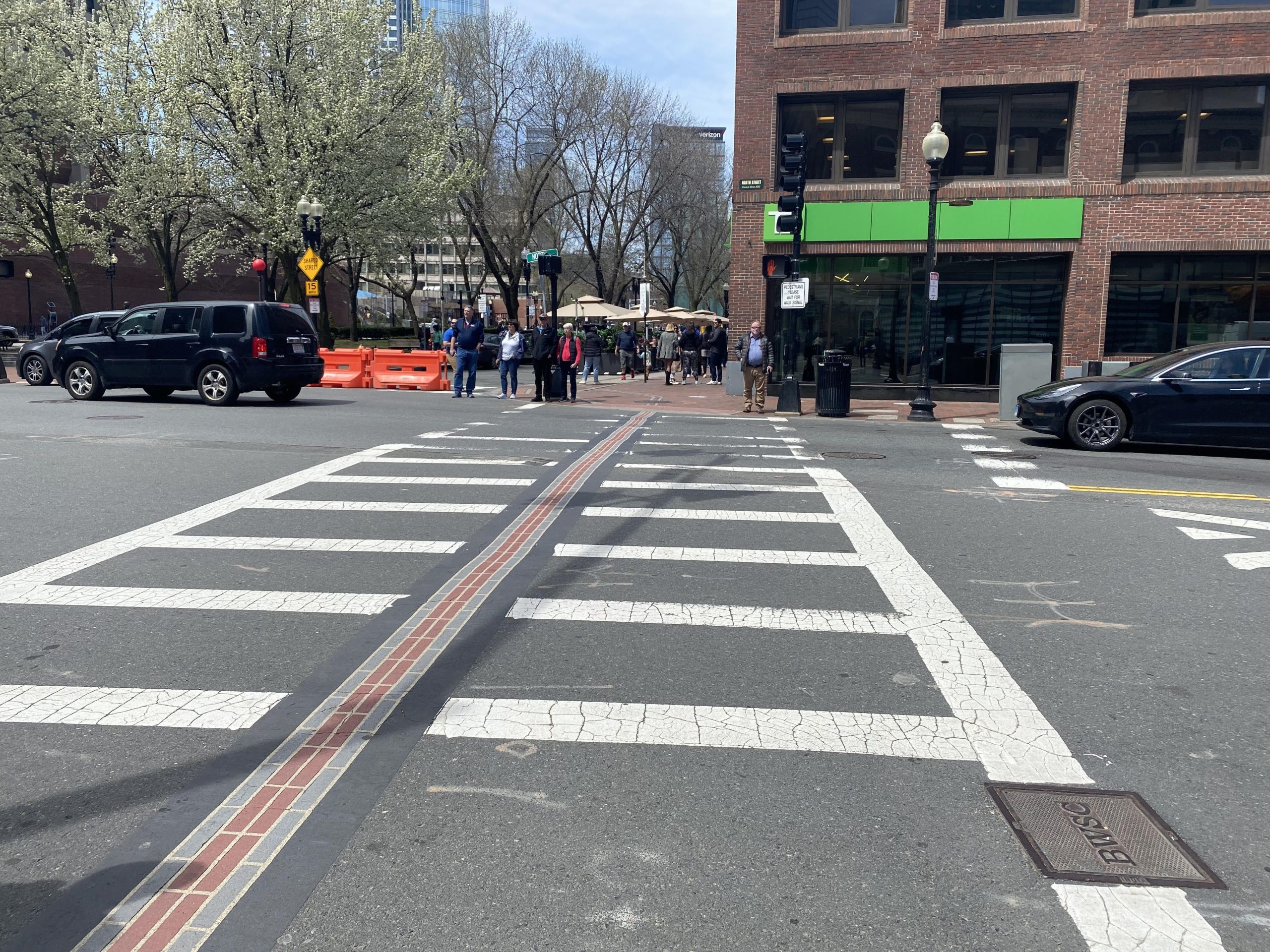
I was particularly taken with the city’s Freedom Trail, a 2.5-mile walking path embedded in Boston’s sidewalks that leads to 16 historic sites. Far from being half-baked, I had to admit this Beantown tourist attraction was “annoyingly great.”
Look at the Freedom Trail being all cute running through this Boston Street. Gawd! STEPHANIE FARR / Staff
Why didn’t we have anything like this in Philly, I wondered, and could we get our own version in time for the nation’s 250th anniversary?
I was flooded with emails in response from readers who not only agreed with me, but offered route suggestions and names for a potential Philly path. I also received a cryptic message from someone at Visit Philadelphia who said they had some things up their sleeves.
That was more than two years ago and I’d all but given up hope. Then I received an email this month from Jenea Robinson, vice president of communications for Visit Philadelphia.
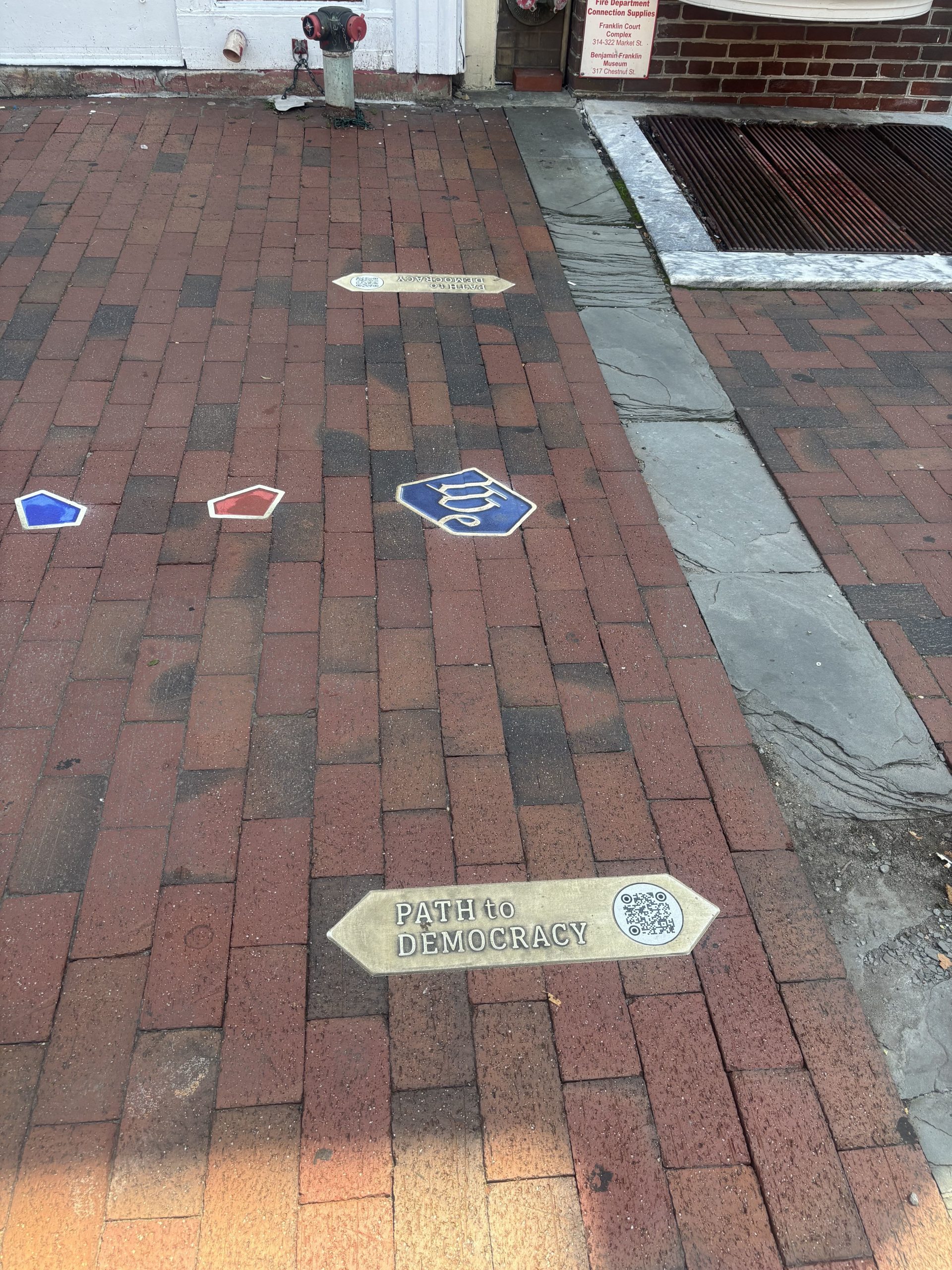
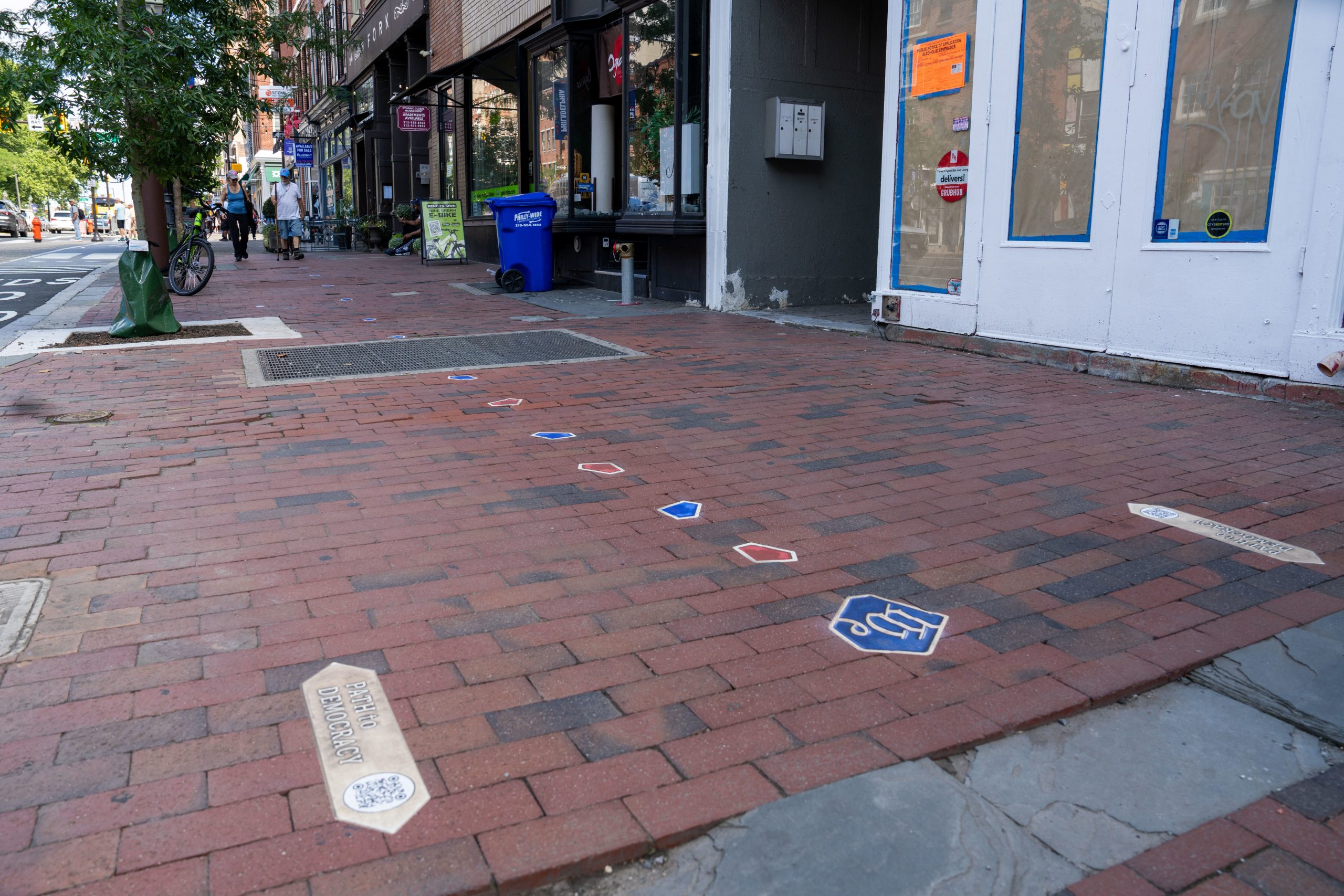
Vinyl decals resembling ceramic tiles and a brass plaque mark the public pilot version of the Path to Democracy.Stephanie Farr / Staff
“Because you wrote that delightfully, ‘annoyingly accurate’ story about Boston’s Freedom Trail a few years ago, I wanted to make sure you got the first look at Philadelphia’s answer to it: Path to Democracy,” she wrote.
Could it be true? Are we actually getting our own historic trail and did someone really call my work “annoyingly accurate?!?” Be still my craggy, Philly heart!
‘A legacy project’
Still in its early phases, there are currently only six stops on the Path to Democracy as it undergoes public beta testing through Labor Day. The full path, which is slated for next summer, will have 21 stops and is based on a self-guided tour Visit Philly has had on its website for years, said Kyle Stein, senior marketing project manager for Visit Philly.
“This is something we wanted to introduce to people this year and have it be a legacy project for years to come,” he said.
(function(){function e(){window.addEventListener(`message`,function(e){if(e.data[`datawrapper-height`]!==void 0){var t=document.querySelectorAll(`iframe`);for(var n in e.data[`datawrapper-height`])for(var r=0,i;i=t[r];r++)if(i.contentWindow===e.source){var a=e.data[`datawrapper-height`][n]+`px`;i.style.height=a}}})}e()})();
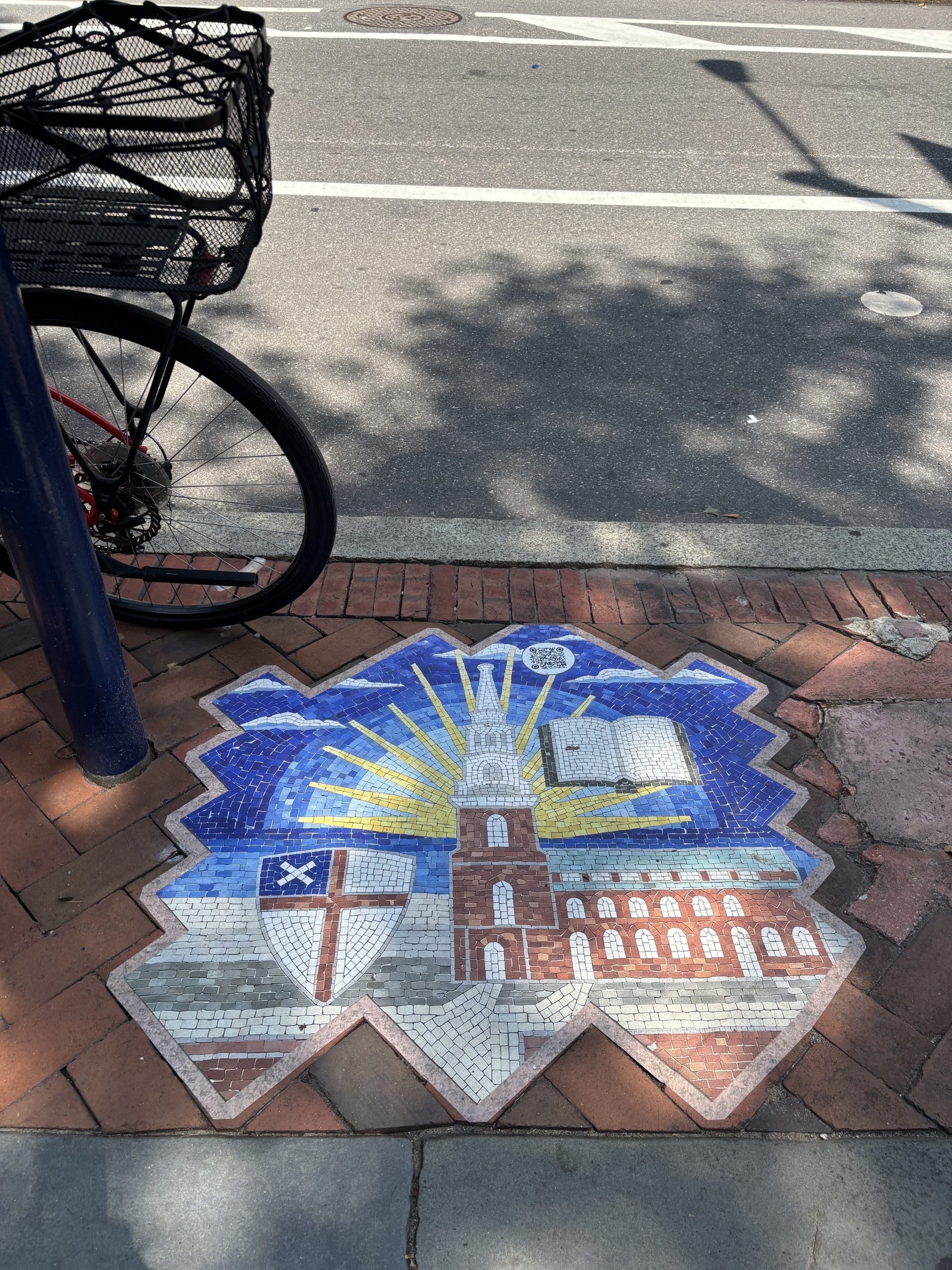
In its final iteration, the Path to Democracy will be marked by colorful ceramic tiles, brass directional plaques, and large tile mosaics embedded in the sidewalks that will pay “homage to all of the art across Philadelphia” and particularly, to that of Isaiah Zagar, Stein said.
“Whatever look and feel we went with had to be authentic to Philadelphia,” he said.
For now, Visit Philly is using sturdy, eye-catching vinyl decals that resemble tiles and mosaics to mark the path and stops along it. Zagar’s studio wasn’t consulted on the project, but Stein said Visit Philly would love to work with them going forward.
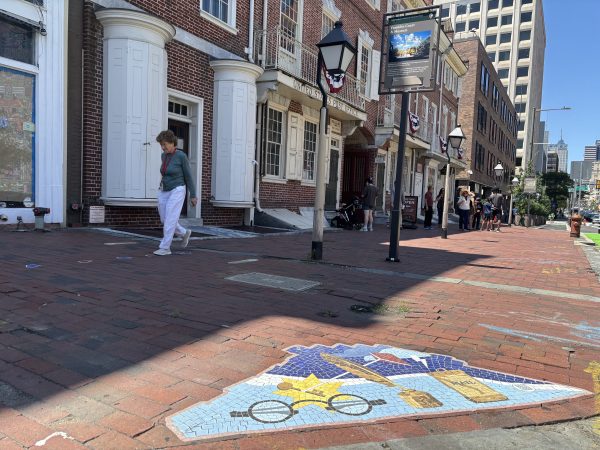
The vinyl mosaic decal at Christ Church along the Path to Democracy.Stephanie Farr / Staff
The Path to Democracy will not only be unique from Boston’s trail in look but in substance as well. The Freedom Trail traces Revolutionary War history, but Philly’s path will highlight sites and people that have shaped American democracy over the years.
“It’s not just something that happened in 1776,” Stein said. “Democracy is something that is an evolving thing.”
I knew there was only one way to suss out this path and that was to walk it myself. Plus, Stein said feedback from locals is essential during beta testing, and who doesn’t love being essential and opinionated in Philly?
Choose-your-own adventure
I snagged a parking space on Race Street near Second last week, knowing that the sites are all within a four-block radius from Front to Fourth and from Market to Arch Streets.
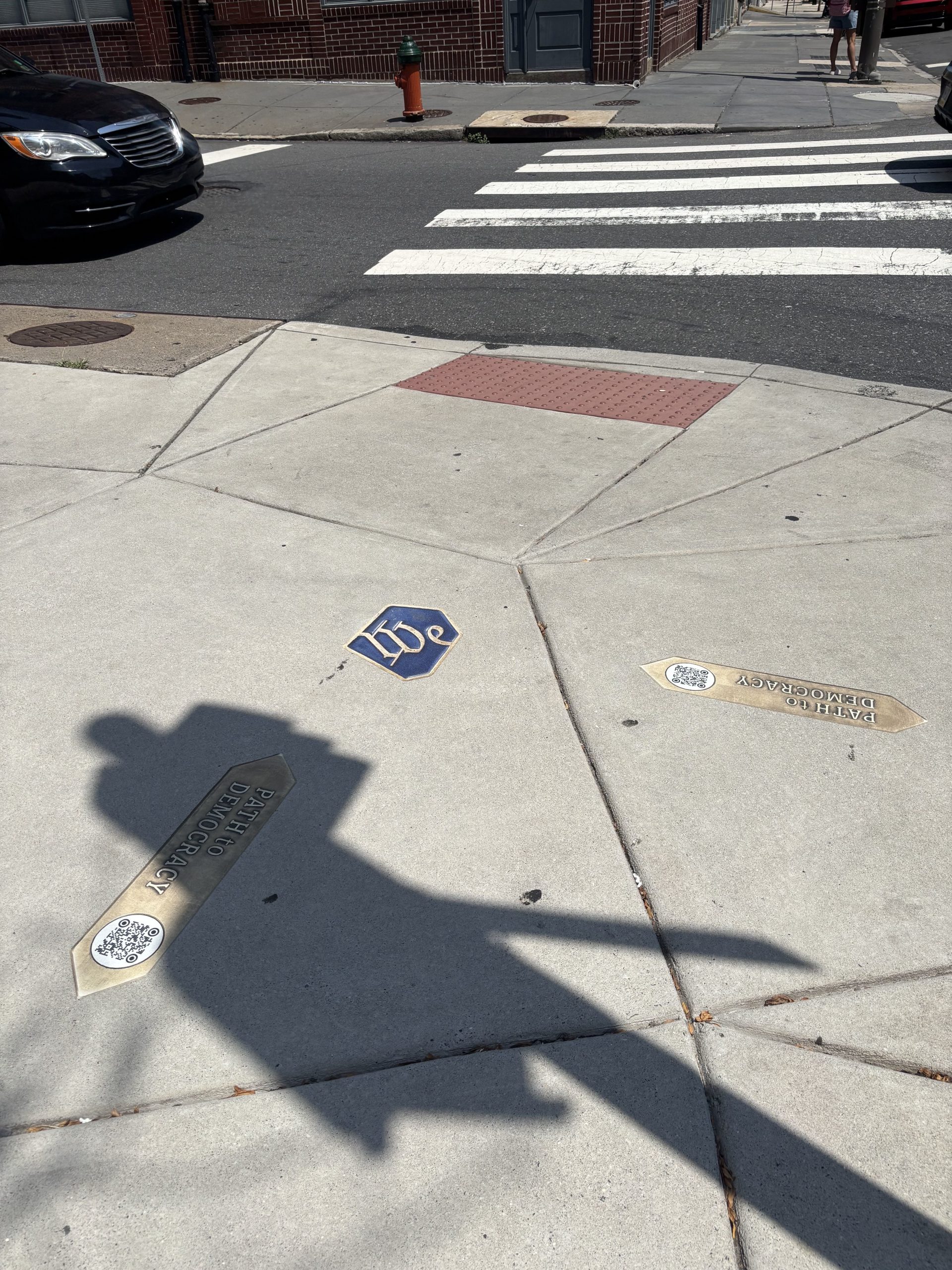
My first stop wasn’t planned. I just kept my eyes on the ground until something caught them, which happened at the corner of Second and Arch Streets. I spotted a blue vinyl tile that said “We” (written in the script of the Declaration of Independence) and two vinyl directional decals that said “Path to Democracy” with QR codes that led to an accompanying website. One pointed up Arch Street to Third and the other pointed down Second Street to Market.
Vinyl brass-colored decals at Third and Arch Streets in Old City denote that the Path to Democracy can be taken in one of two directions here. In the center is a “We” tile that is found on multiple spots along the path as well.Stephanie Farr / Staff
I decided I’d follow the arrow pointing right up Arch Street. As I walked, I spotted gem-shaped blue-and-red vinyl decals that were peppered like breadcrumbs down the sidewalk and led me straight to the Betsy Ross House.
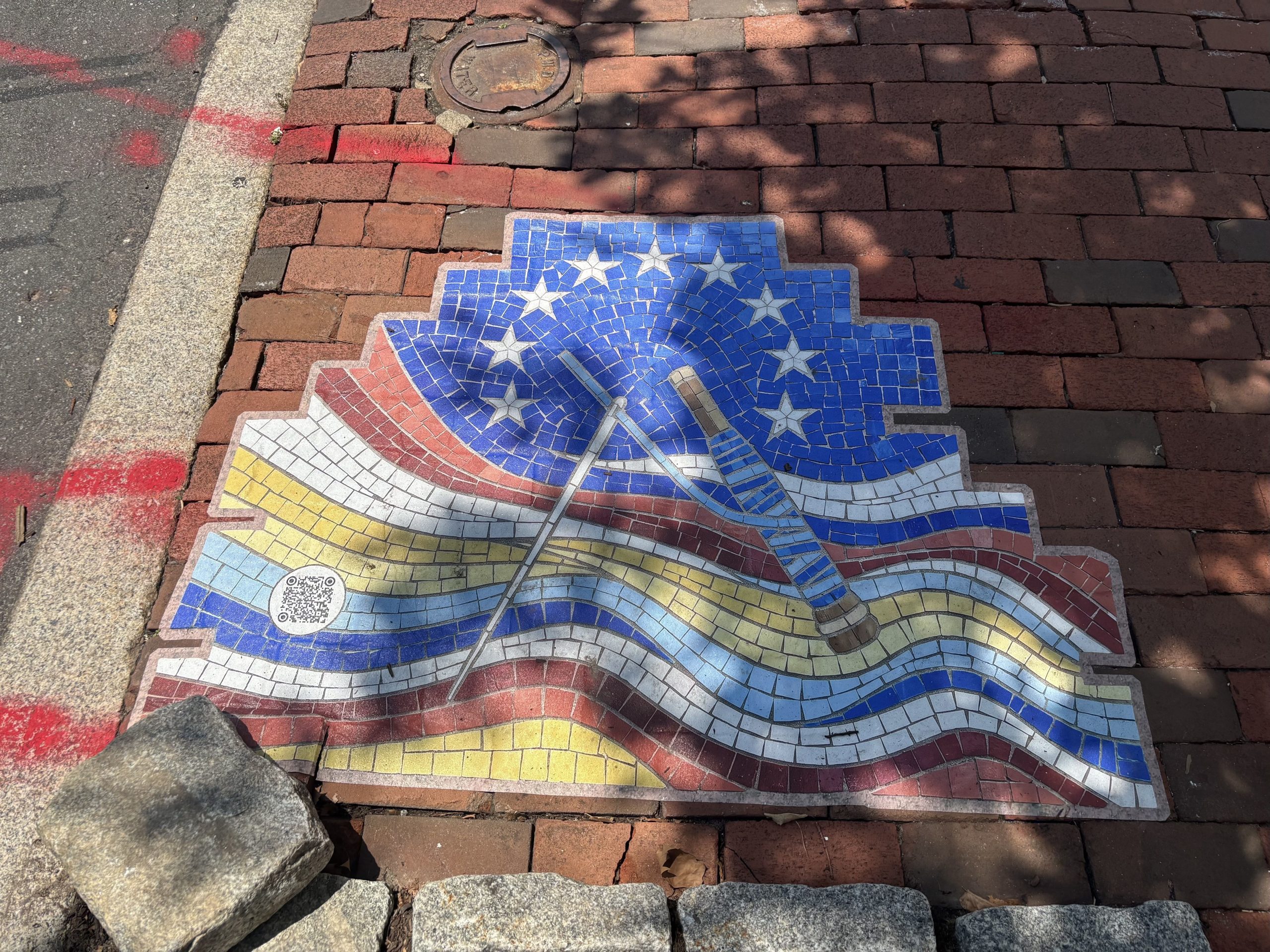
On the sidewalk outside of the site, I spotted a lovely vinyl mosaic of a needle and thread superimposed upon a multicolored flag. A QR code on it took me to a mobile-friendly webpage about Ross. I listened to a 51-second audio clip about her life and read about the mosaic before me. Also provided on the page was the Betsy Ross House’s address, operating hours, and other useful visitor information.
The vinyl mosaic decal outside of the Betsy Ross House along the Path to Democracy.Stephanie Farr / Staff
At the bottom of the site was a nifty little guide showing me that I was currently a four-minute walk away from Christ Church in one direction and a two-minute walk away from the Arch Street Meeting House in the other.
“All right, this is pretty cool,” I whispered.
Confusing corners
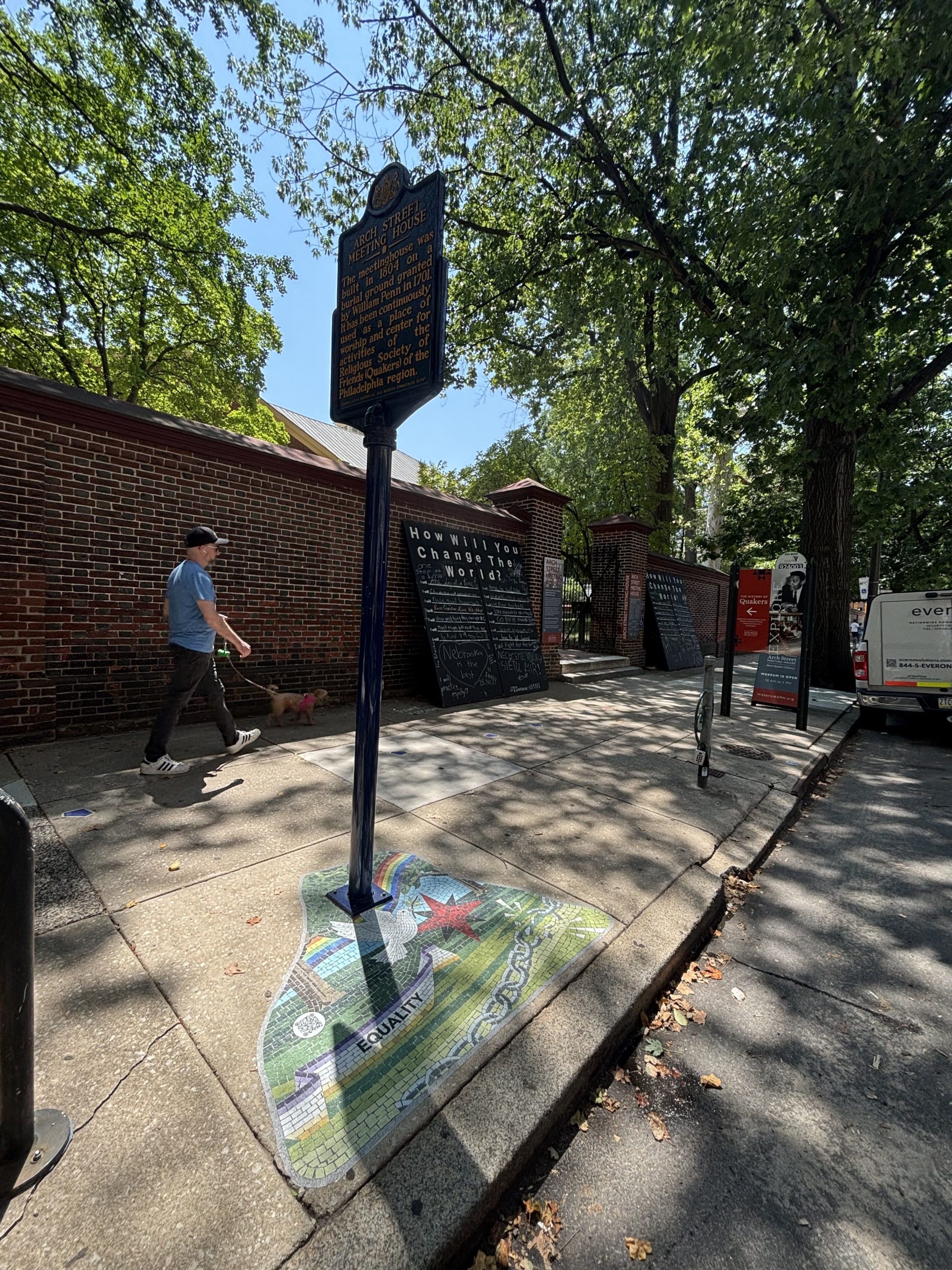
I chose to follow the blue-and-red vinyl decals to the Arch Street Meeting House where a vibrant vinyl mosaic of a dove and the word equality was plastered on the sidewalk. The QR code led to a page about the meetinghouse and to an audio clip about how “Religious radicals founded Philly.”
When I was done, I discovered I’d reached the end of the path, much to my chagrin. I didn’t realize it wasn’t a continuous loop and I had to retrace my steps back past the Betsy Ross House to the next site, Christ Church.
From there, the vinyl decals led me to the southwest corner of Second and Market Streets, where a directional decal with arrows on both ends pointed me toward Front Street on my left and also to Third Street on my right.
“Well this is confusing,” I thought.
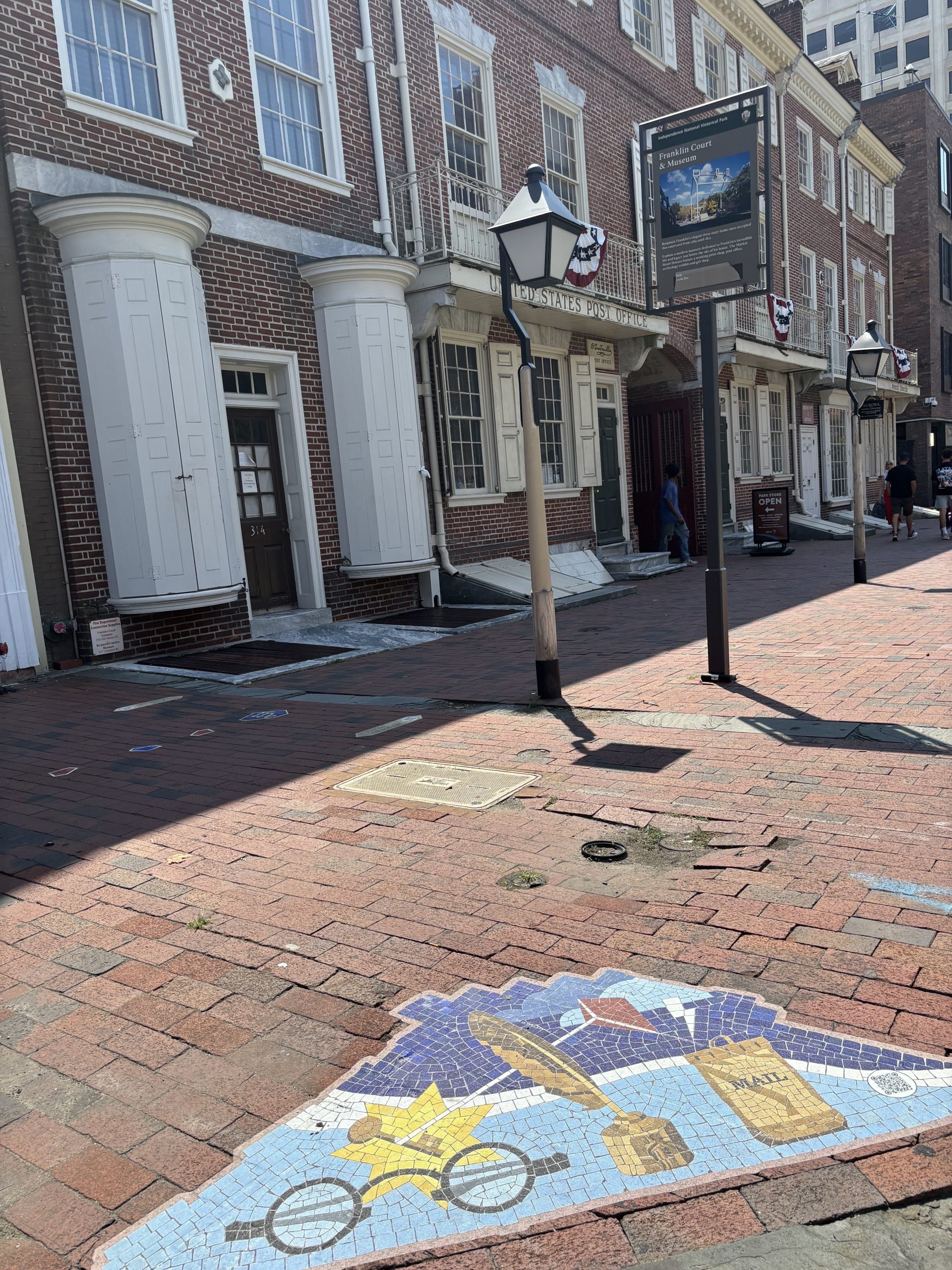
I decided to follow the path up Market Street past Third Street to Franklin Court, where I spotted a large vinyl mosaic decal of a key, kite, quill pen, and spectacles.
The Path to Democracy leads to just outside Franklin Court, where this vinyl mosaic decal located.Stephanie Farr / Staff
I headed inside Franklin Court and walked around. I always forget how many privies there are in there (the place had more johns than the Second Continental Congress!).
Franklin Court marked another terminus of the path, so I turned around and headed back down Market Street to Front to check out the other direction of the trail I’d forgone.
Lesser-known sites
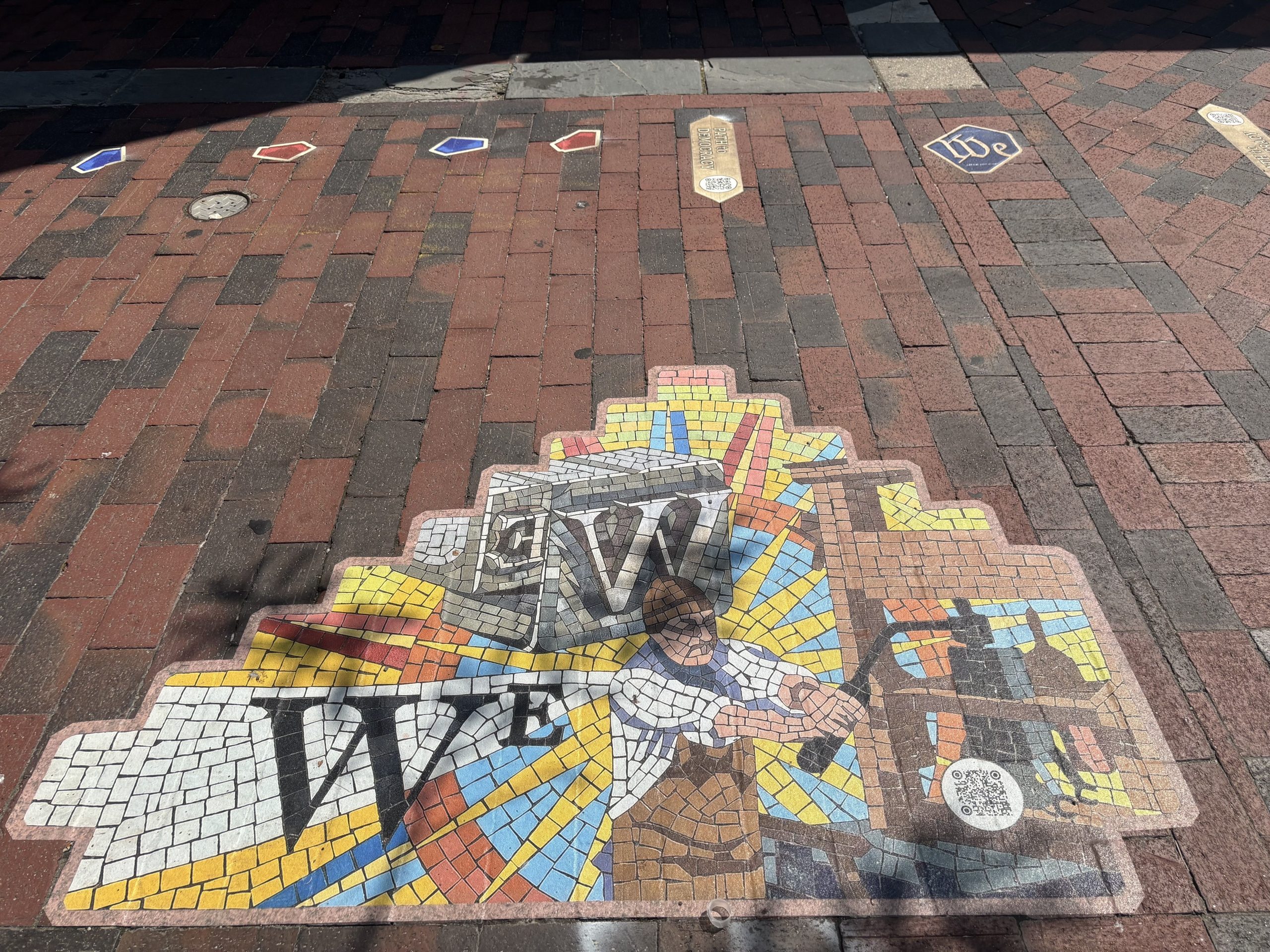
On the southeast side of Second Street as it crosses Market, I found a large mosaic decal of a man operating a printing press. Scanning the QR code, the website told me this was once “Printers’ Row,” where many important documents — including the first copies of the Declaration of Independence — were made.
Unlike the other sites along the path, there was nothing already at this one to indicate it was of any importance, aside from an easy-to-miss plaque embedded in a crumbling wall of a vacant building nearby.
A vinyl mosaic decal marks the site of Printer’s Row on Market Street near Second along the Path to Democracy.Stephanie Farr / Staff
I appreciated this more-obscure site being highlighted on the path. Stein said its inclusion in the beta test was very intentional.
“Not every historic site in Philly is one people can enter. We wanted a tried-and-true one, like the Betsy Ross House, and lesser-known ones, like Printers’ Row,” he said.
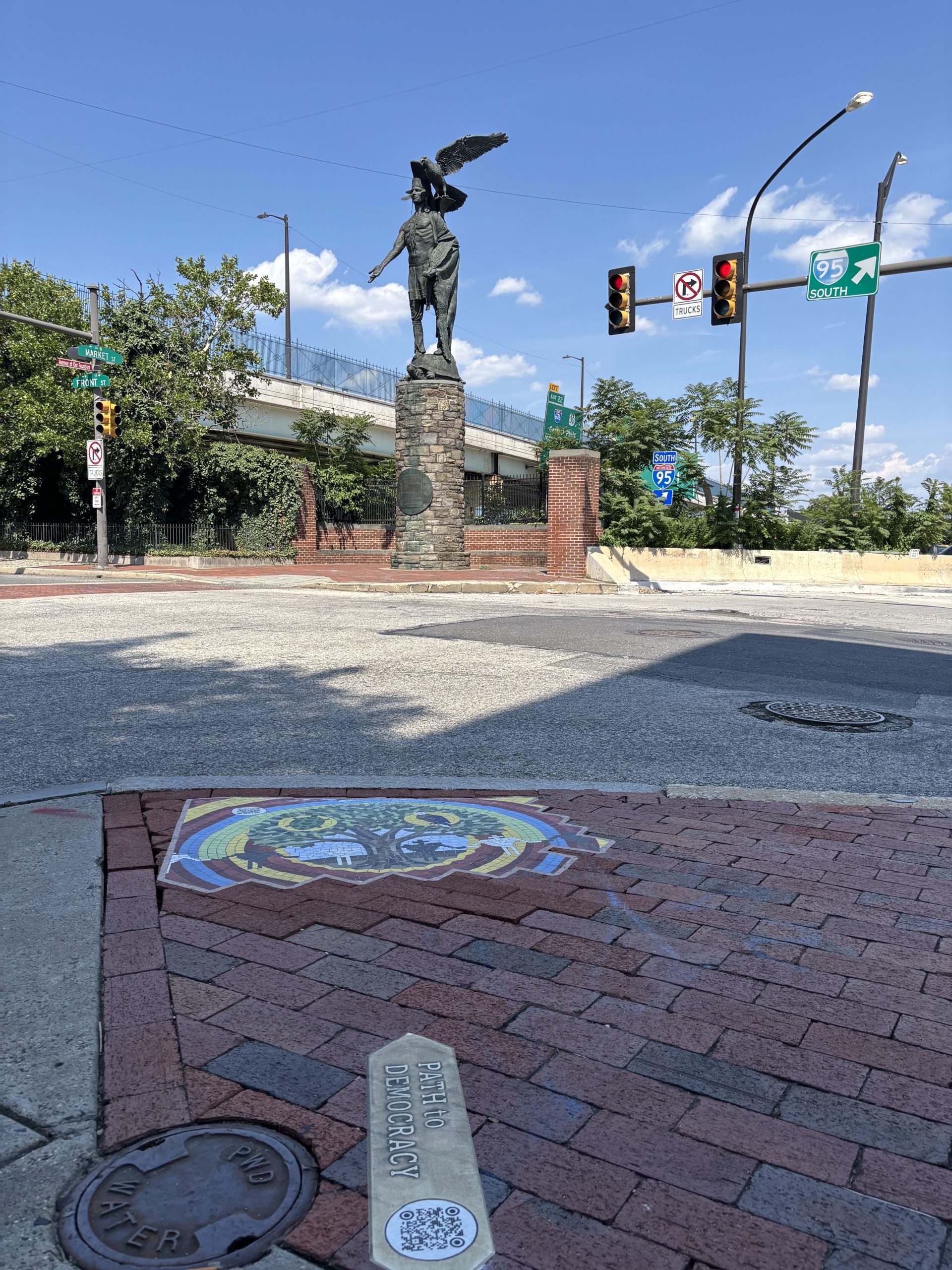
Following the decals, I reached my final stop at the corner of Front and Market Streets. There, a vinyl mosaic decal of a tree, animals, and human figures was situated on the sidewalk catty-corner to the Chief Tamanend statue at the I-95 on-ramp.
As I listened to the accompanying audio via the QR code, I found myself staring at the statue.
The Path to Democracy highlights the “Chief Tamanend” statue at Front and Market Streets in Old City.Stephanie Farr / Staff
Then, I did something I’ve never done before — I crossed the street and approached it. I stood below Chief Tamanend’s feet, I looked up at him and the eagle on his shoulder, I marveled at the details of his clothing, I read the accompanying bronze plaque.
And I couldn’t believe that it took me this long and this path to do so.
A worthy pursuit
I spent about two hours walking the path, but I backtracked often and took my time. You could feasibly do it in 30-60 minutes.
After my walk, I filled out the pilot program survey via the QR code.
“I want more sites and would love for it to be a circular path you could start at any place and keep going around until you get back where you started, like a Phlash bus loop,” I wrote.
Vinyl decals mark the Path to Democracy on the 300 block of Market Street in Old City during the beta testing phase of the project.Courtesy of Visit Philadelphia
Stein said the goal is to have the path be multidirectional.
“I think in the future we’re considering the best way to actually connect the sites,“ Stein said. ”Printers’ Row and Chief Tamanend was an opportunity to test out a spur. That will be something we may come up against in the future, some sites may not fall within a perfect pathway.”
While I didn’t see anyone else following the path as I was exploring it, Visit Philly’s Robinson told me about 50 people a day have been scanning the QR codes.
Though there are still some kinks to work out, the Path to Democracy shows a lot of promise. Like democracy itself, we don’t know where it will lead, but it’s a worthy pursuit — and one that requires our participation to succeed.
So before Labor Day, go try it out and provide feedback. You could help shape a path in Philly that may be walked for generations to come.
“We just want Philadelphians to be proud of this and be aware of it,” Stein said. “I think that this path is another way for us as Philadelphians to celebrate how great this city and these sites are.”
The Path to Democracy leads to the Arch Street Meeting House, where a vinyl mosaic decal wraps around the site’s historical marker.Stephanie Farr / Staff
Before you start pointing out that he’s 41, remember who we’re talking about. This is arguably the greatest basketball player of his generation — one of the few athletes whose name alone can change the mood of an entire city. There will be plenty of time to debate how much he has left in the tank.
But now isn’t the time.
Now is the time for imagining LeBron in a Sixers jersey. It’s for checking the schedule, texting your friends in all caps and wondering how quickly the team store can stock No. 23.
Will this end with a championship? Nobody knows. But sports are supposed to be fun, and this is fun.
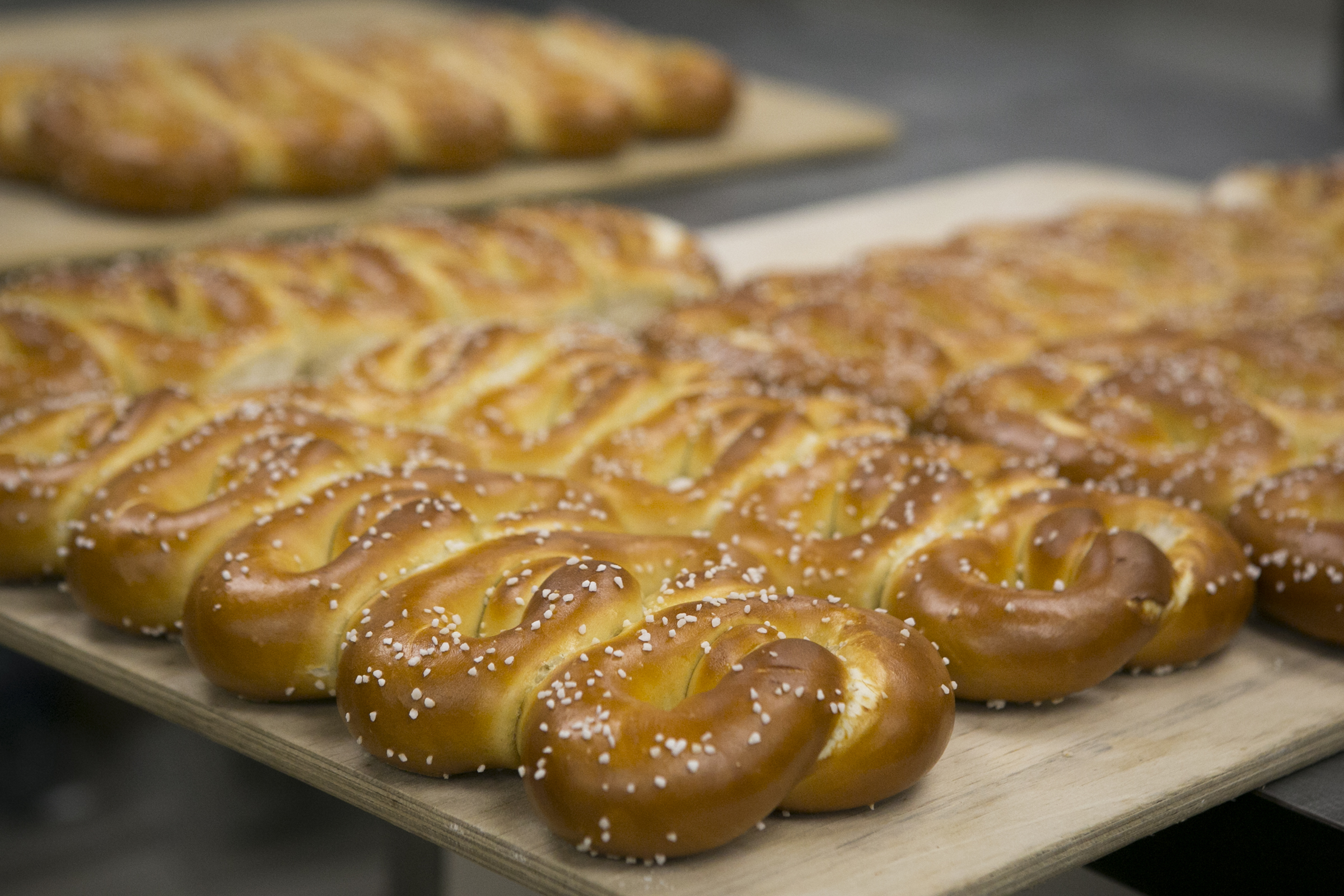
Freshly baked “penny pretzels” cool in the test kitchen at Philly Pretzel Factory headquarters in Bensalem, Pa., on the morning of Thursday, August 9, 2018.MAGGIE LOESCH / Staff Photographer
Keep your protein out of my pretzel: C
There are plenty of places to squeeze in an extra 20 grams of protein. A Philadelphia soft pretzel shouldn’t be one of them.
Sure, the business logic is there. But some foods don’t need to become “functional.” They already have a purpose.
A Philly soft pretzel isn’t just a snack. It’s breakfast after a youth soccer game, lunch when you’re running late. It’s something you grab at a Wawa, a corner store, or outside the stadium without giving a second thought. It’s warm, salty, a little messy, and unapologetically carb-heavy.
We’ve spent years turning ice cream into protein shakes, cookies into protein bars, and cereal into a dietary supplement. Now we’re coming for the pretzel? Somewhere, Gritty is shaking his fuzzy orange head.
If you want more protein, eat some chicken. Leave the pretzel alone.
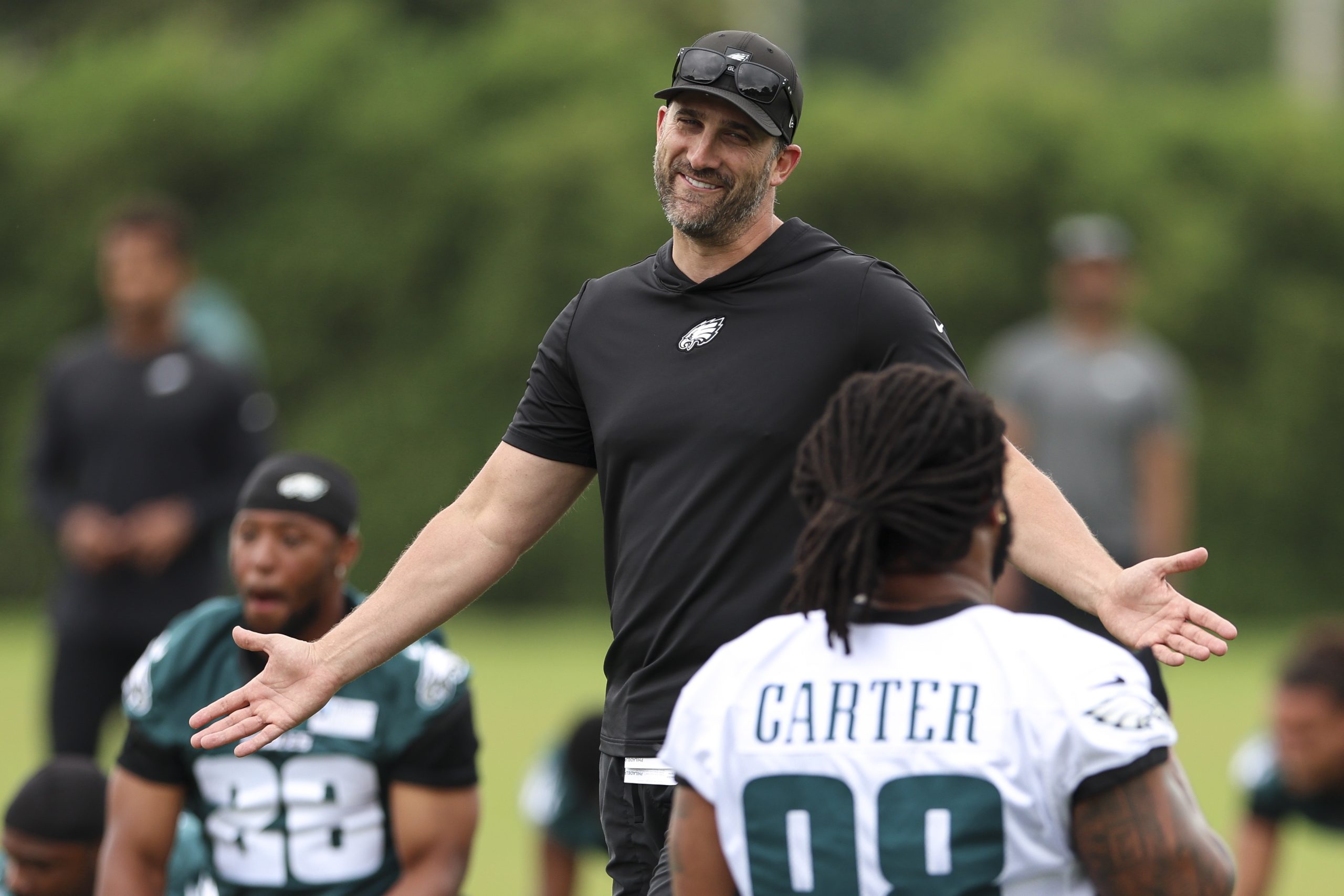
Philadelphia Eagles head coach Nick Sirianni laughs with defensive tackle Jalen Carter during mandatory mini-camp at the Jefferson Health Training Complex on Wednesday, June 10, 2026, in Philadelphia.Monica Herndon / Staff Photographer
Nick Sirianni’s AI pep talks: D
The robots aren’t taking over the Eagles playbook just yet. Instead, Nick Sirianni says he’s been using ChatGPT to find inspirational sports stories to share with his players, according to The Athletic.
Somewhere, decades of coaches who relied on Remember the Titans, grainy YouTube highlight reels, and laminated printouts with motivational quotes are shaking their heads.
Apparently even locker room speeches have entered the AI era.
It’s objectively funny to imagine Sirianni sitting at his computer typing, “Give me a great relentless effort true sports story,” before walking into a room full of NFL players.
Then again, maybe this is just what coaching looks like in 2026. At least he’s using ChatGPT to inspire the team — not to draw up game plays.
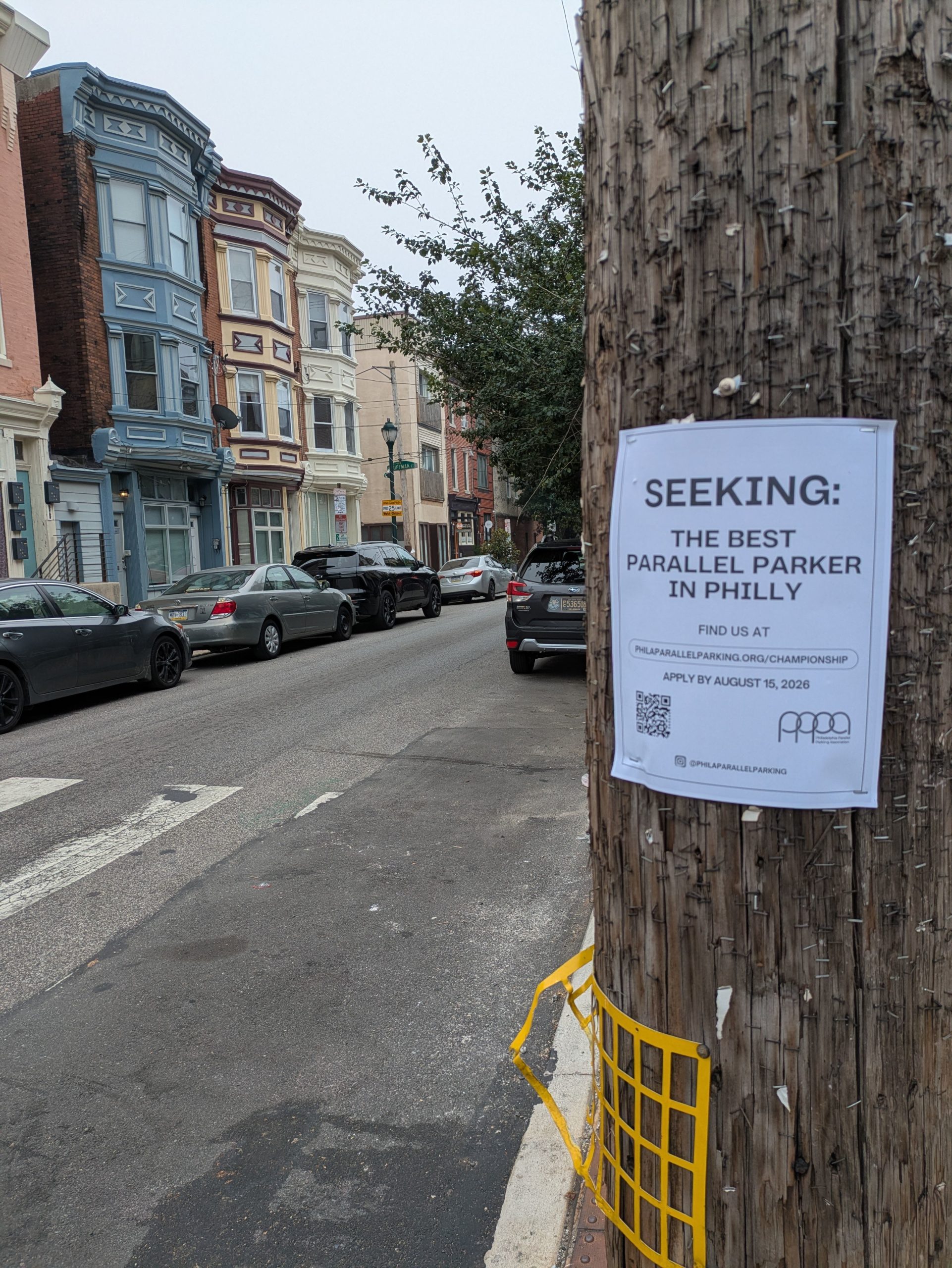
A sign advertising the 2026 Philadelphia Parallel Parking Association Championship is affixed to a pole across from some fine examples of parallel parking in the city.Courtesy of Adam Wodka
Competitive parallel parking: A
There are two types of Philadelphians. Those who dread parallel parking, and those who quietly believe they’re among the best to ever do it.
This is a city where successfully squeezing into a parking spot the size of a shoebox earns applause from strangers, where people take it personally when someone leaves three feet between bumpers, and where every South Philly resident has at least one story about fitting into a space they probably shouldn’t have.
The organizers somehow made it even more Philly by including an “under duress” category, complete with a savesies chair, an angry neighbor yelling that the spot is reserved for their granddaughter, honking traffic, and other distractions. That’s less a competition than an average Tuesday.
The winner gets $76… just enough to cover your next parking ticket, and the most Philadelphia prize imaginable.
The worst part? Players from the Nationals, Yankees, and even the Dodgers got it right. Come on, Bryce. You’ve spent years playing in the birthplace of American democracy. We weren’t expecting a dissertation on the Continental Congress, we just wanted 1776. Heck, the basketball team that plays across the parking lot isn’t called the 75ers.
Then again, if the price of 40 home runs is occasionally forgetting what year America declared independence, that’s probably a trade Phillies fans are willing to make.
$1,500 in Philly rent: B
Nobody is going to look at 591 square feet and say, “Wow, what a palace.” That’s about what $1,500 a month gets you in Philadelphia, according to a new RentCafe study. It’s smaller than the national average and not even enough for a typical one-bedroom apartment.
But perspective matters.
In Manhattan, the same $1,500 gets you about 210 square feet — roughly enough room for a bed, a mini fridge and an existential crisis (a dorm room, essentially). In Boston, it won’t even cover a studio.
So suddenly, Philly’s 591 square feet starts looking… respectable.
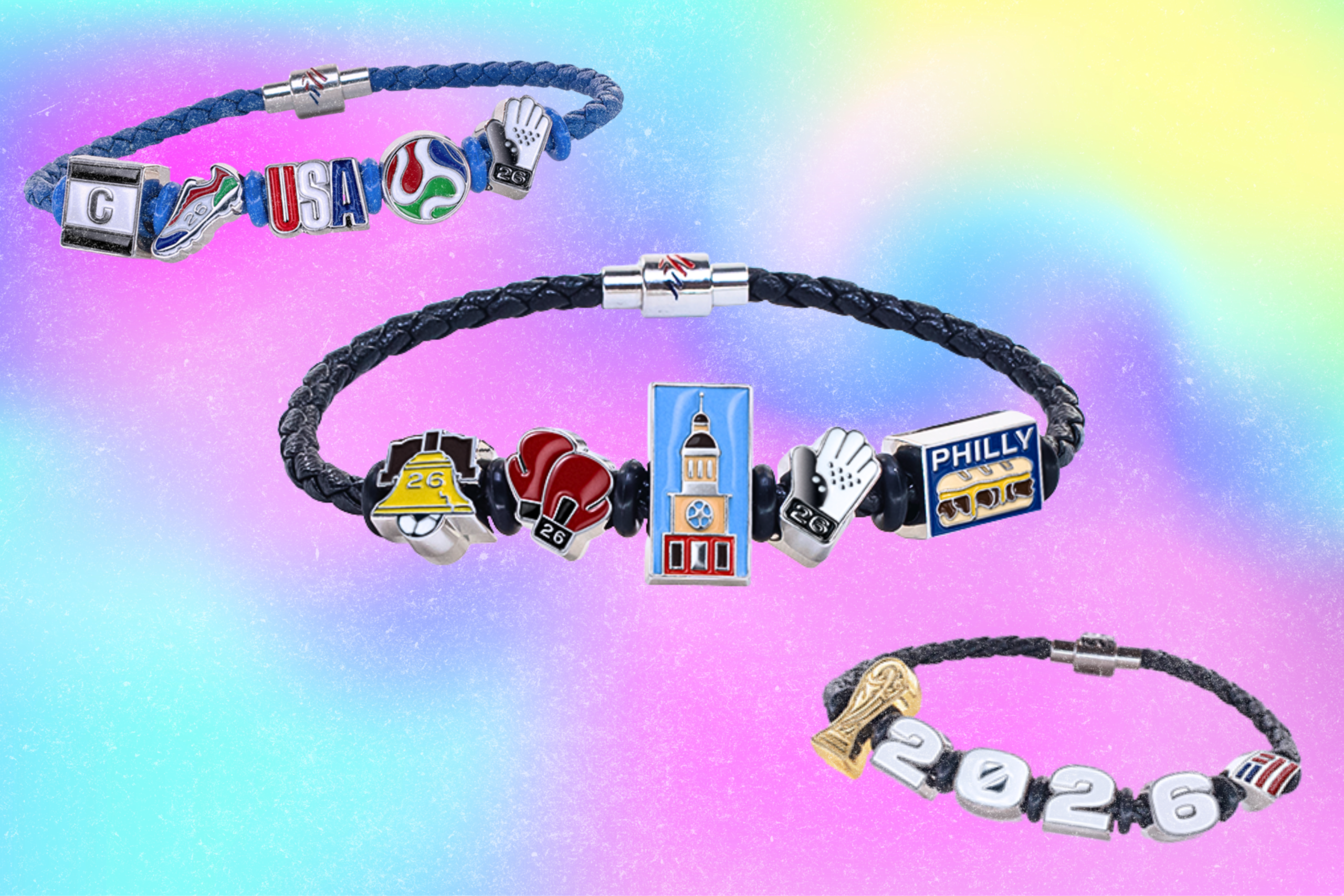
A free charm bracelet available at FIFA Fan Festivals nationwide, including Philadelphia’s in Lemon Hill, had fans waiting hours in line to get one. Bank of America is behind the coveted Fan Bands, drawing hours-long lines.Emily Bloch / Staff illustration / Bank of America
Nothing stays free for long: A-
The World Cup ended, everyone went home, and right on schedule, the internet got to work.
Remember those free Bank of America charm bracelets that had people waiting in line for hours at Lemon Hill?
Honestly, you almost have to respect the hustle. If someone is willing to pay $150 because they didn’t want to stand in a four-hour line for a tiny cheesesteak charm, that’s capitalism doing what capitalism does.
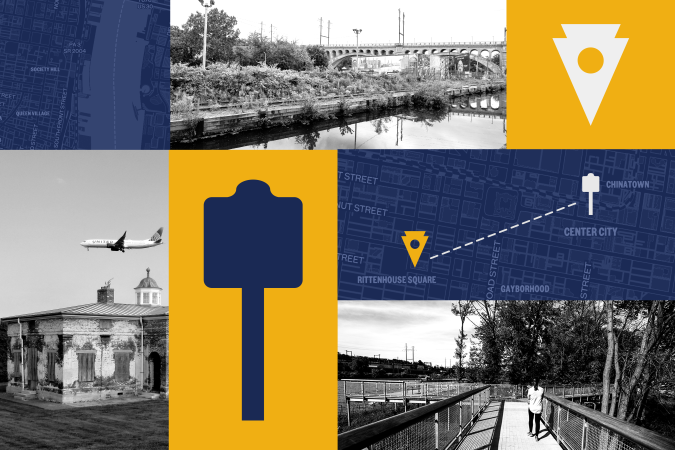
Did you know islands dwell on the Delaware and Schuylkill? We’ll show you a photo taken on a Philly-area island, you drop a pin where you think it was taken. Closer to the location results in a better score. Good luck!
Round #43
Question 1
Where is this historic house?
Loading…
ClickTap on map to guess the location in the photo
ClickTap again to change your guess and hit submit when you're happy
You will be scored at the end. The closer to the location the better the score
Don Nigroni / Spotlight PA
Pretty good/Not bad/Way off! Your guess was from the location.Spot on! Your guess was exactly at the location. Here's also where a random selection of Inquirer readers guessed.
Fort Mifflin, an American Revolutionary War historic site, is located on Mud Island along the Delaware. Situated in the shadow of Philadelphia International Airport, the surrounding wetlands were drained in the 19th century, connecting the island to the western bank of the river.
Quiz continues after ad
Question 2
Where is this mural?
Loading…
Jose F. Moreno / Staff Photographer
Pretty good/Not bad/Way off! Your guess was from the location.Spot on! Your guess was exactly at the location. Here's also where a random selection of Inquirer readers guessed.
Viewed from the Manayunk towpath, this mural is located on Venice Island, one of the city's lowest-lying areas. A narrow wedge of land spanning nearly 70 acres and approximately 1.7 miles in length, the island lies between the Schuylkill and the Manayunk Canal.
Quiz continues after ad
Question 3
Where is this trail?
Loading…
Jose F. Moreno / Staff Photographer
Pretty good/Not bad/Way off! Your guess was from the location.Spot on! Your guess was exactly at the location. Here's also where a random selection of Inquirer readers guessed.
The Fairmount Water Works Trail and Boardwalk is a short section of the Schuylkill River Trail that extends onto an island behind Lloyd Hall. According to Billy Penn, the island is unofficially known as the Isle of Jean, named by Philadelphia resident Jean Knight.
Your Score
ARank
🏝️ Amazing work. Isle be impressed.
BRank
⛵Good stuff. That was smooth sailing.
CRank
🚣♀️ C is a passing grade, but you meandered a little.
DRank
🤿 D isn’t great, it’s low-lying territory.
FRank
🌊 We don’t want to say you failed, but you disappeared beneath the tide.
You beat % of other Inquirer readers.
We’ll be back next Saturday for another round of Citywide Quest.
There was one especially pleasant weekend back in June, as summer was officially arriving and Philly was in the middle of hosting three Group Stage matches for the World Cup. It was breezy with sunshine and low humidity and temperatures in the mid-80s; nothing like two weekends later as America turned 250 and temperatures hit 101 degrees or higher for three days in a row, the first time that happened in over 150 years of record keeping.
Between covering some news that weekend, I walked around Center City just soaking up the street scene. It wasn’t just the wonderful weather, but an international vibe that was welcoming and friendly. I watched visitors speaking multiple languages rolling suitcases in and out of hotels and ride share cars, and saw sidewalk cafes overflowing with different colored jerseys and scarves.
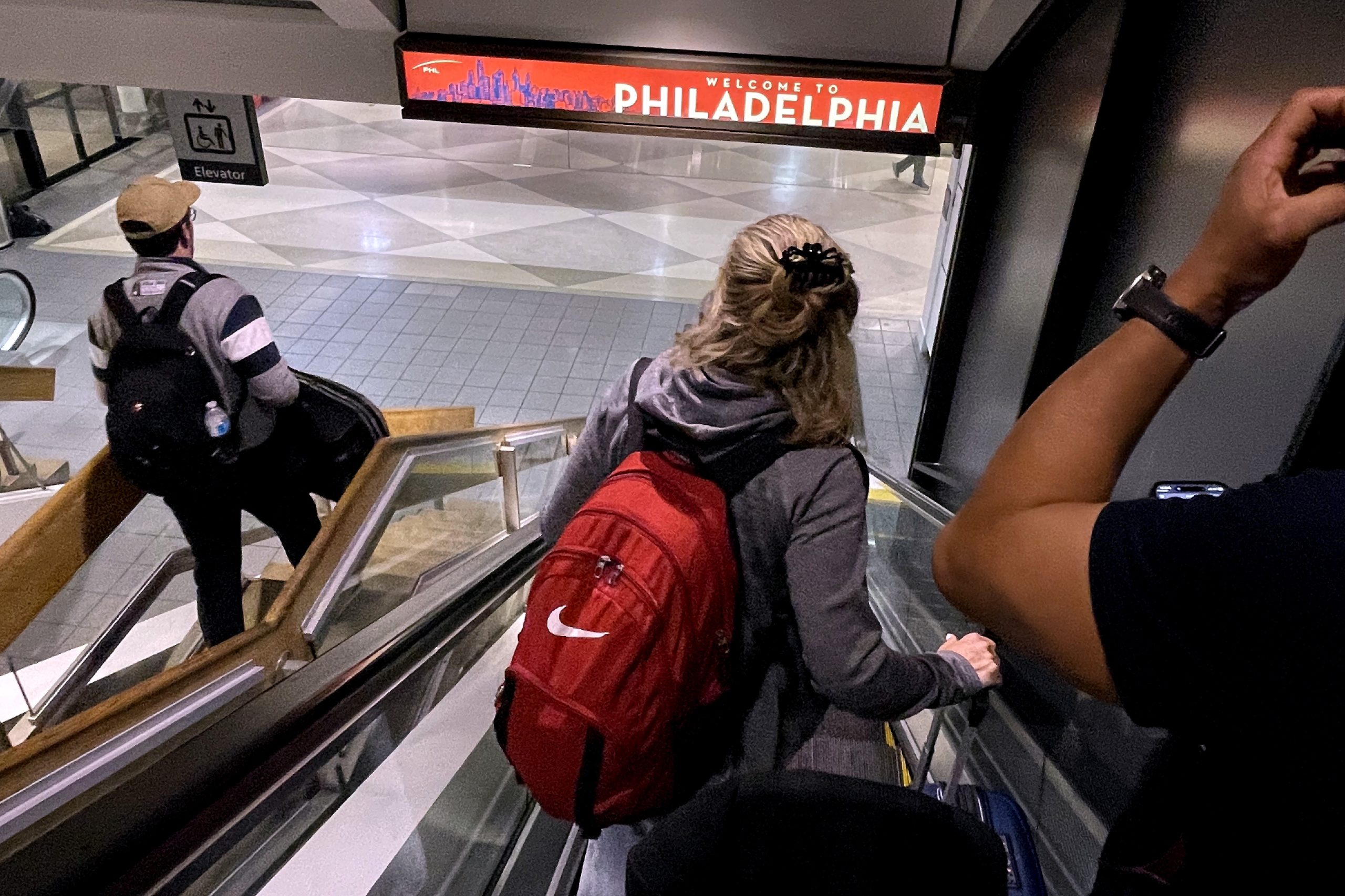
Philadephia International Airport arrivals June 21, 2026.Tom Gralish / Staff Photographer
It reminded me of the energy I feel almost every time I walk around the city, going back to my first night here and the weeks spent in my early days at the newspaper with unhoused men.
We’ve long known we have one of the most walkable downtowns in the country, but USA Today told everyone else again this summer, naming Philadelphia number one — for the fourth year in a row. Center City is compact and easy to explore on foot, with many stores, restaurants, museums, attractions, and parks all within a short walk.
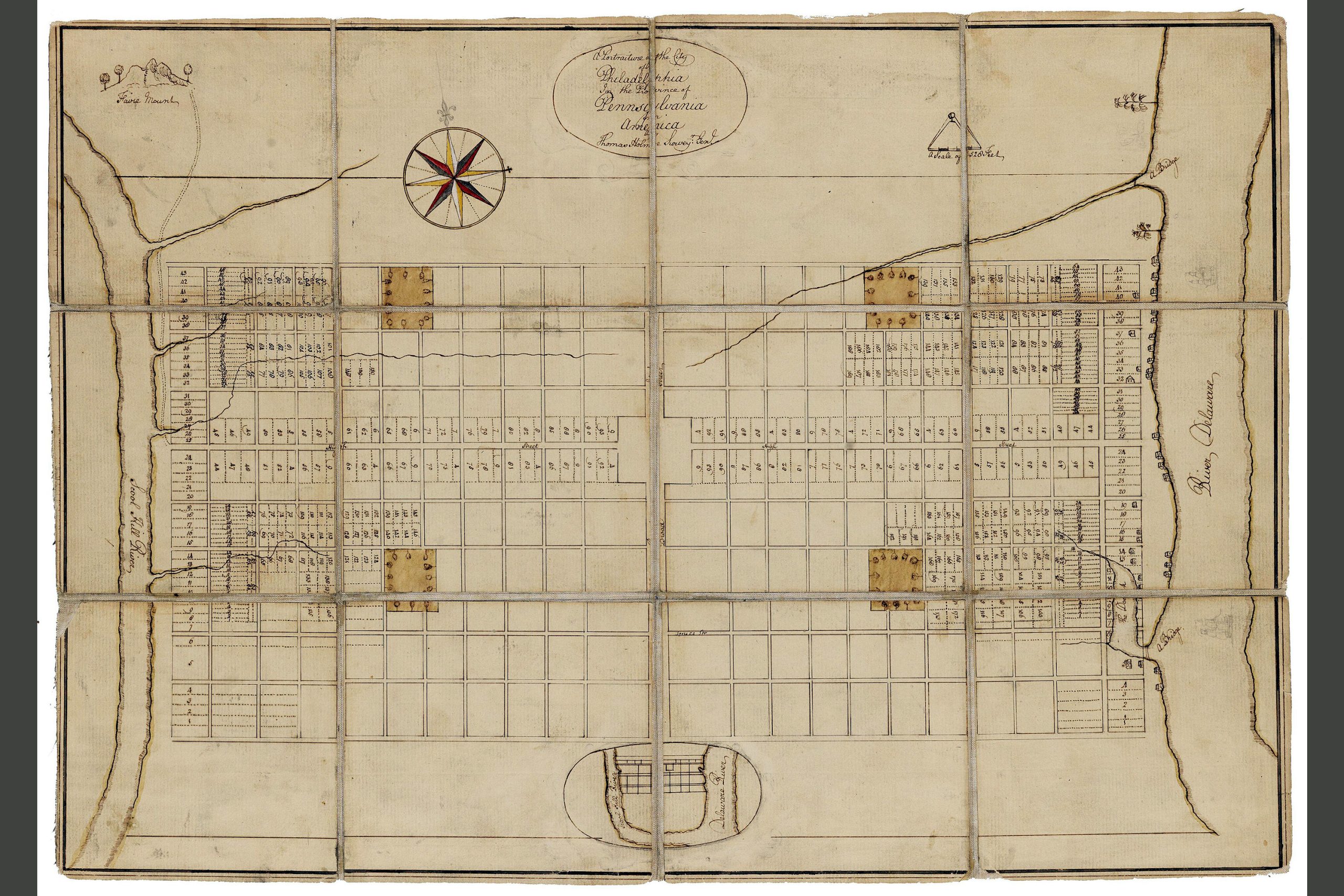
“A Portraiture of the City of Philadelphia, In the province of Pennsylvania in America” by Thomas Holme. In 1682, William Penn appointed Holme surveyor-general of Pennsylvania and charged him with the task of laying out the “greene country towne” that Penn envisioned. This map, printed in London, was used for both reference and promotional purposes to show the unique layout of Penn’s emerging city.Historical Society of Pennsylvania
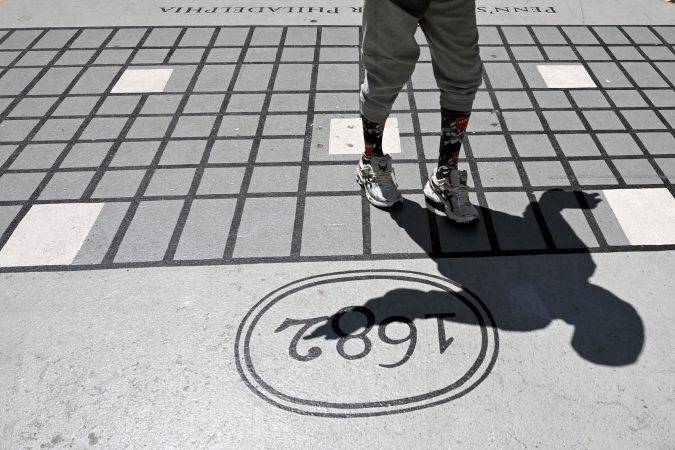
Credit William Penn’s 1682 street plan that created small rectangular blocks with straight, predictable streets. I was thinking about that as I looked down at the grid on the ground in the courtyard of City Hall, when Lyn-el “The Torch” Wright paused right in front of me: “take a picture of my sneaks.” That’s his shadow above.
I did, and asked if they were special, wondering if they had something to do with Adidas, the official World Cup sponsor and match ball provider. No, not really, he said, but then educated me on what the kids today were wearing: Asics and Saucony. And Salomon.
So, being a history nerd, I had to enlighten him on the design he was standing on. Titled “Compass Rose,” it was commissioned by Edmund Bacon in 1994 as a gift to the city to mark Penn’s 350th birthday. It was painted by David Salama and Pat Sprott and updated by Mural Arts Philadelphia in 2004, 2015 and 2022. It marks the exact center of the middle of Penn’s five squares (Franklin, Logan, Rittenhouse, and Washington being the others).
I didn’t actually say all of that (unlike similar “TED Talks” my grandson is subjected to), but our conversation is the other thing I like most about walking around Philadelphia. Meeting and talking to people.
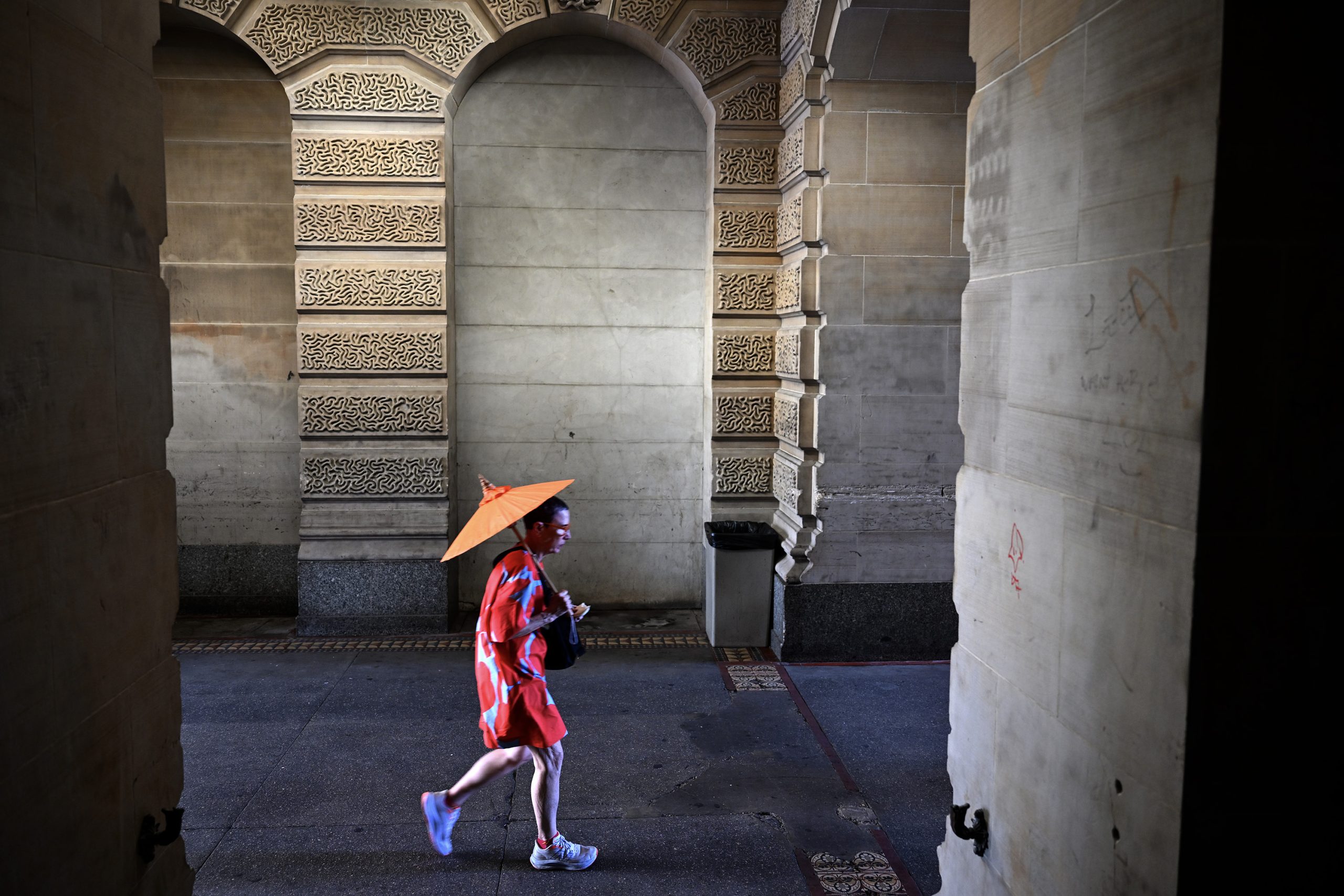
Passing through the south portal of City Hall on Monday, July 20, 2026. She said the umbrella was a recent purchase. “Anything to keep cool in the heat.”Tom Gralish / Staff Photographer
The day was a remarkable one in Center City, similar to the summer solstice back in June. And it was coming off the week of heavy rains, microbursts, and then, the Canadian and Great Lakes wildfire smoke that moved into the region.
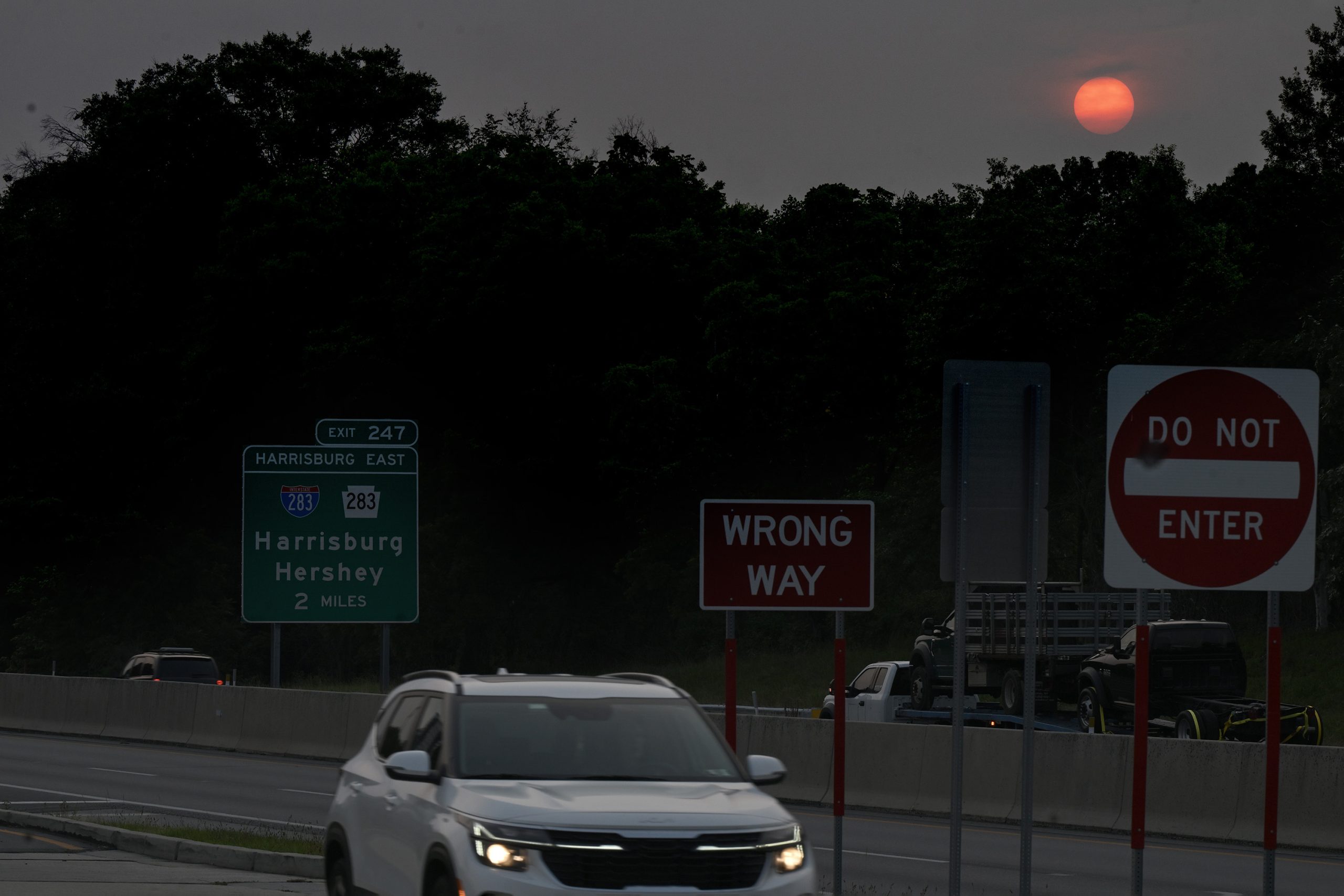
The sun sets in a hazy sky over the Pennsylvania Turnpike Wednesday, July 15, 2026.Tom Gralish / Staff Photographer
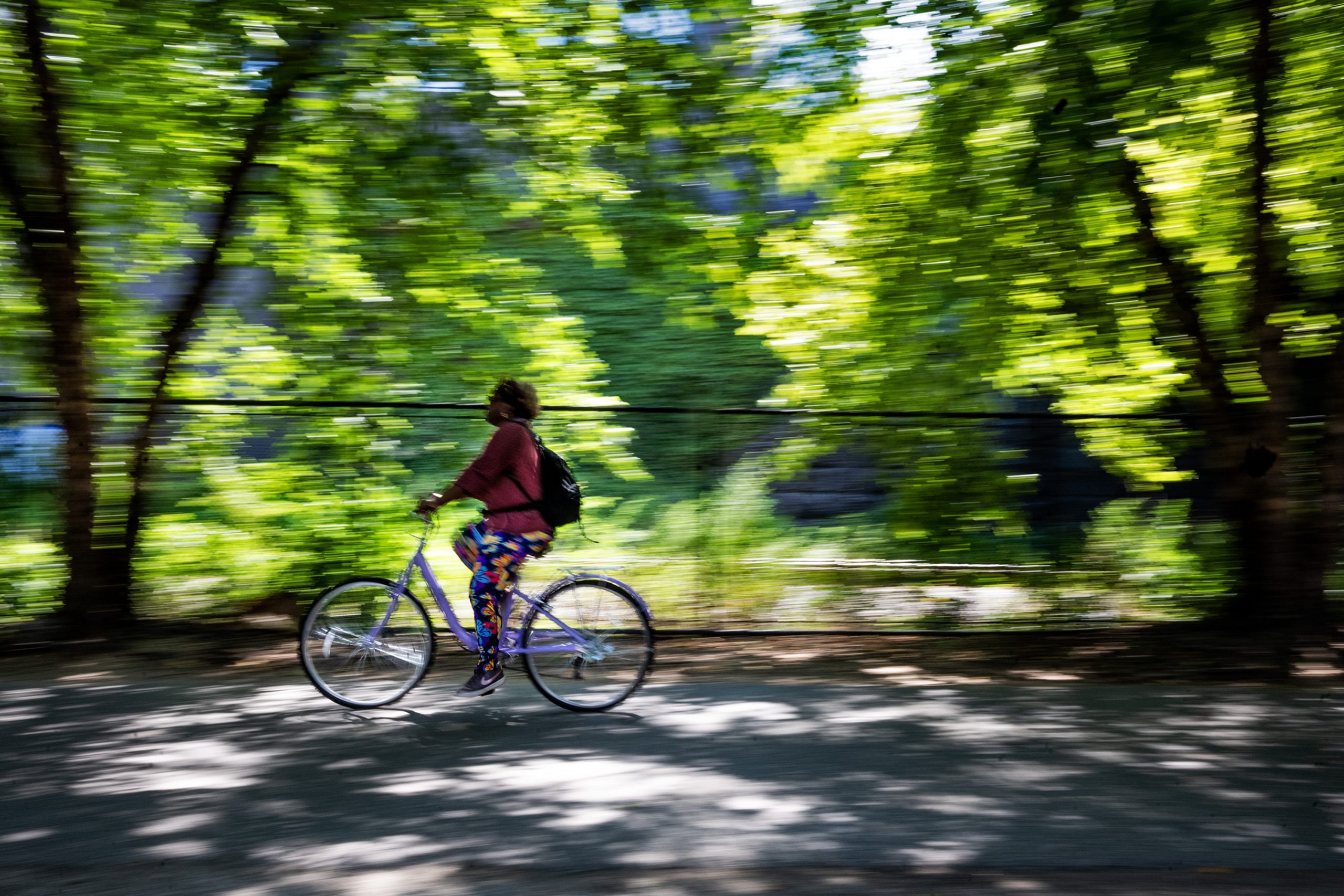
When the skies finally cleared last Sunday, I joined hundreds of outdoor enthusiasts taking advantage the improved air quality and photographed along the Schuylkill River Trail.
I scouted angles to get as many people — and a variety of runners and walkers — in the same frame. But, perhaps because I covered a memorial for Barbara Friedes, a 30-year-old CHOP doctor who was killed on her bike by a drunk driver in July 2024, my attention drifted toward the bicycles.
When I saw a patch of backlit trees I knew if I panned with my camera and a slow shutter speed the highlights would turn into nice blurs — while the biker would be (somewhat) sharp and in focus.
One of the advantages of digital photography is that you can get immediate feedback and adjust your camera settings for the effect you desire. I wanted to get a colorfully outfitted biker, and by the time the “right” one passed in from of me, I was set (1/20th second at f/22, with an ISO of 640 on my Nikon Z8 with a 24-70mm lens).
Finally, here’s one more “nice day” photo I made after talking with “The Torch.”
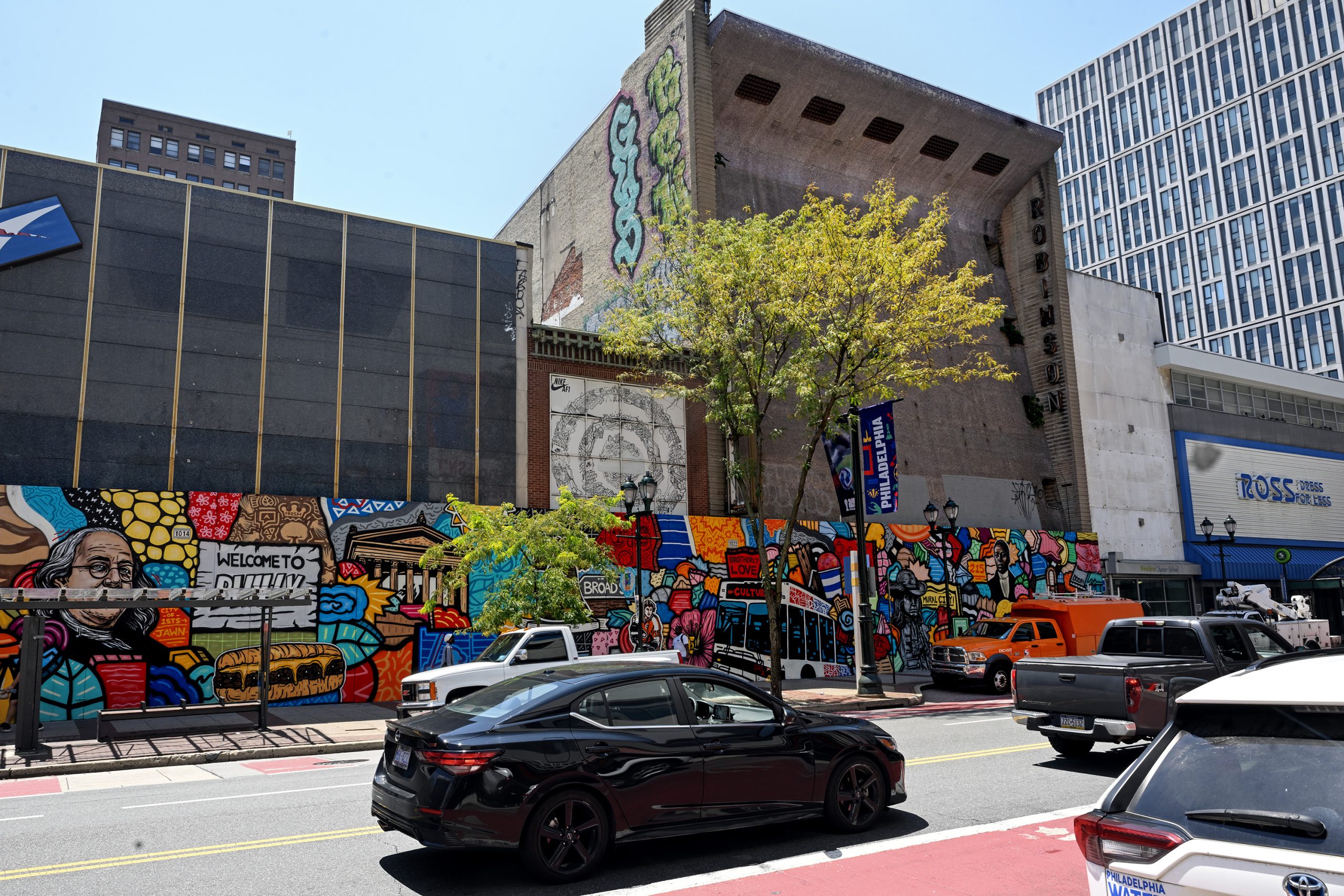
I spent a good part of the winter and early spring of 2024 along an eight block stretch of Market East while the city was dreaming and debating its potential driven by later-scraped plan by the Sixers to build a $1.55 billion downtown arena.
It was a tattered corridor, especially the south side of the 1000 block that was mostly boarded up storefronts. The city started trying to freshen it up before our summer of celebrations.
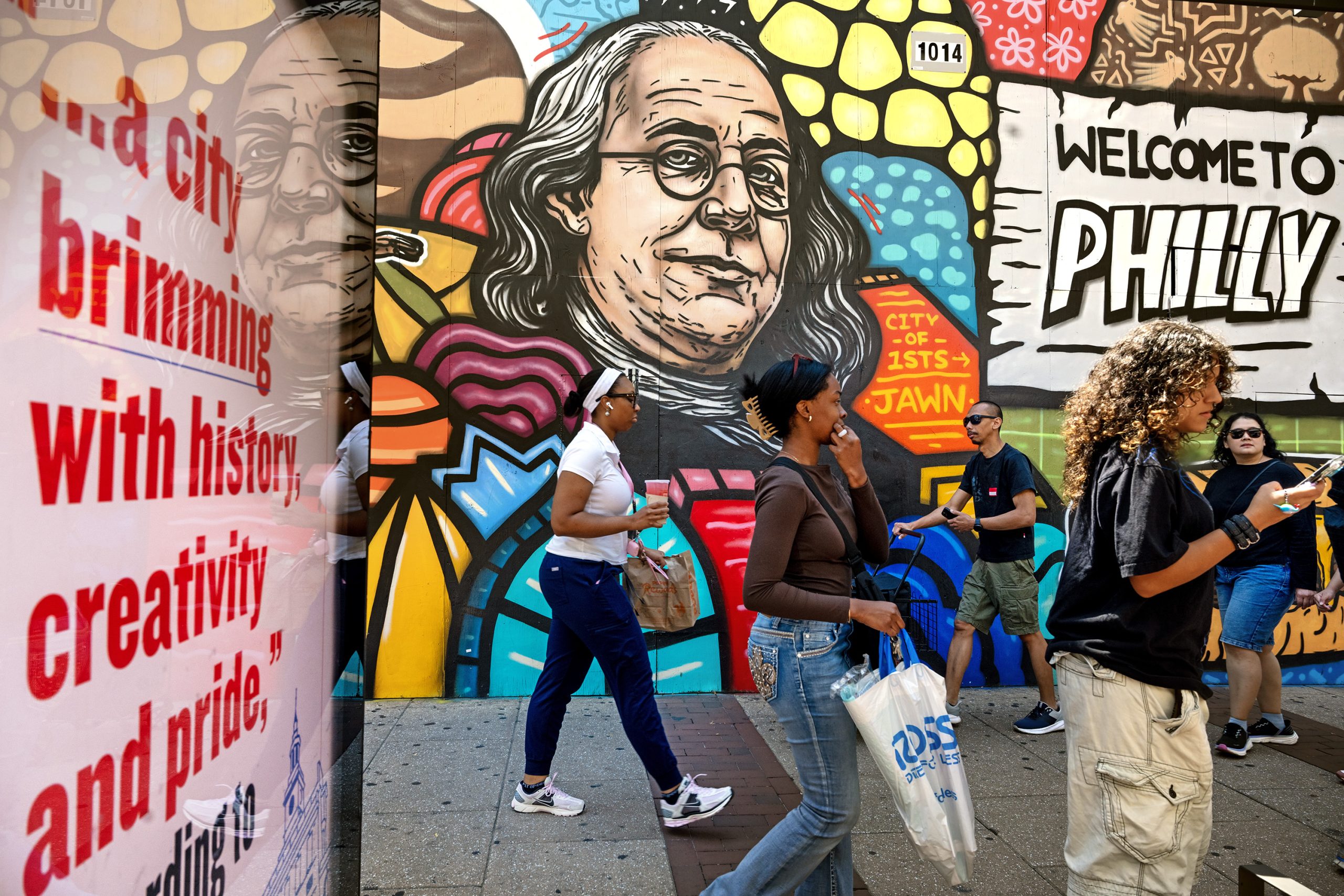
Walking there on Monday I admired the 150-foot mural “Welcome to Philly” artist Alloyius McIlwaine was commissioned to paint there before the big summer. I didn’t want to merely record his month-old work, but as I stepped into a bus shelter to get out of the flow of pedestrian traffic, I was immediately stuck by Ben’s reflection in the shelter’s glass — and the words of an unrelated advertisement.
I didn’t want a photo that called too much attention to a single fellow walker, so I waited patiently for that magic moment when my frame was filled with a half-dozen people.
Since 1998 a black-and-white photo has appeared every Monday in staff photographer Tom Gralish’s “Scene Through the Lens” photo column in the print editions of The Inquirer’s local news section. Here are the most recent, in color:
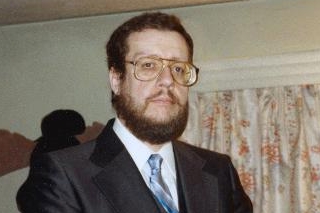
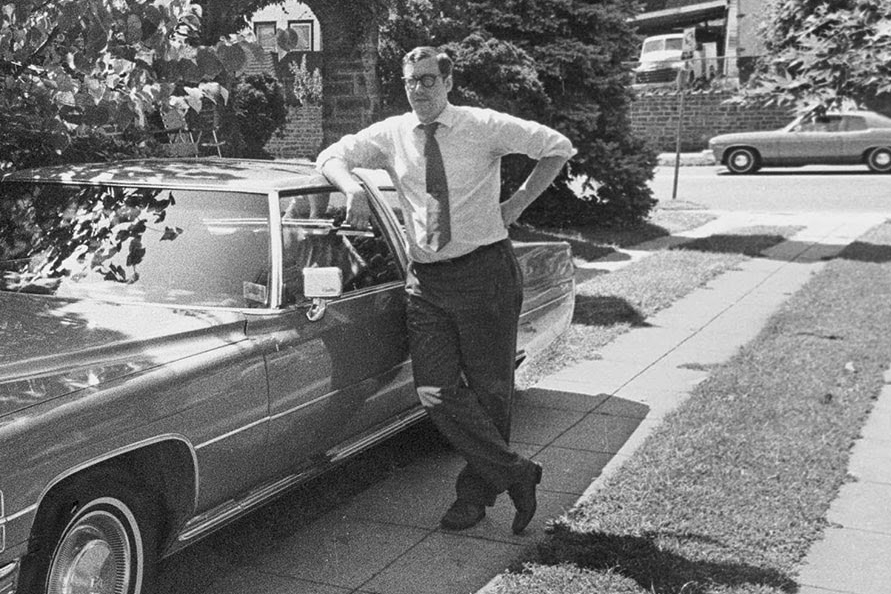
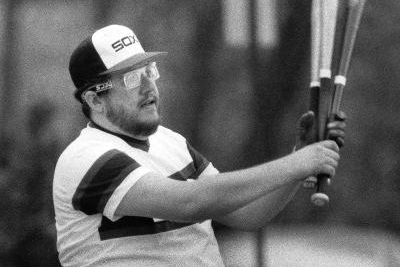
Al Campbell, 74, of Philadelphia, retired longtime copy editor at The Inquirer, former copy boy, clerk, and library assistant at the Bulletin, mentor to many, and steady pitcher for the old Horsham Neighbors softball team, died Tuesday, June 9, of heart and kidney failure at the home of his brother Bob in the Northeast.
Born in Philadelphia and a 1969 graduate of Northeast High School, Mr. Campbell spent nearly three years as a copy boy and editorial assistant in the old Bulletin newsroom before joining The Inquirer as a copy editor in 1970. That move to 400 N. Broad St. kicked off a colorful 46-year career at The Inquirer that included stints on the suburban news copy desk and the night sports copy desk, and a self-assigned 24-7 job as a friend and mentor to dozens of reporters, columnists, editors, and photographers.
“Al was so kind and funny,” a former Inquirer colleague said on Facebook. “He made The Inquirer a better place.” Other former colleagues called him “a sage and an icon” and “a real pro and fun to be around.”
Big and often boisterous — everybody called him Moose — Mr. Campbell was the son of a newspaper reporter, and he was adept at polishing prose, detecting mistakes, and working with reporters and photographers, usually over the phone. “Moosey looked out for us,” a former colleague said on Facebook.
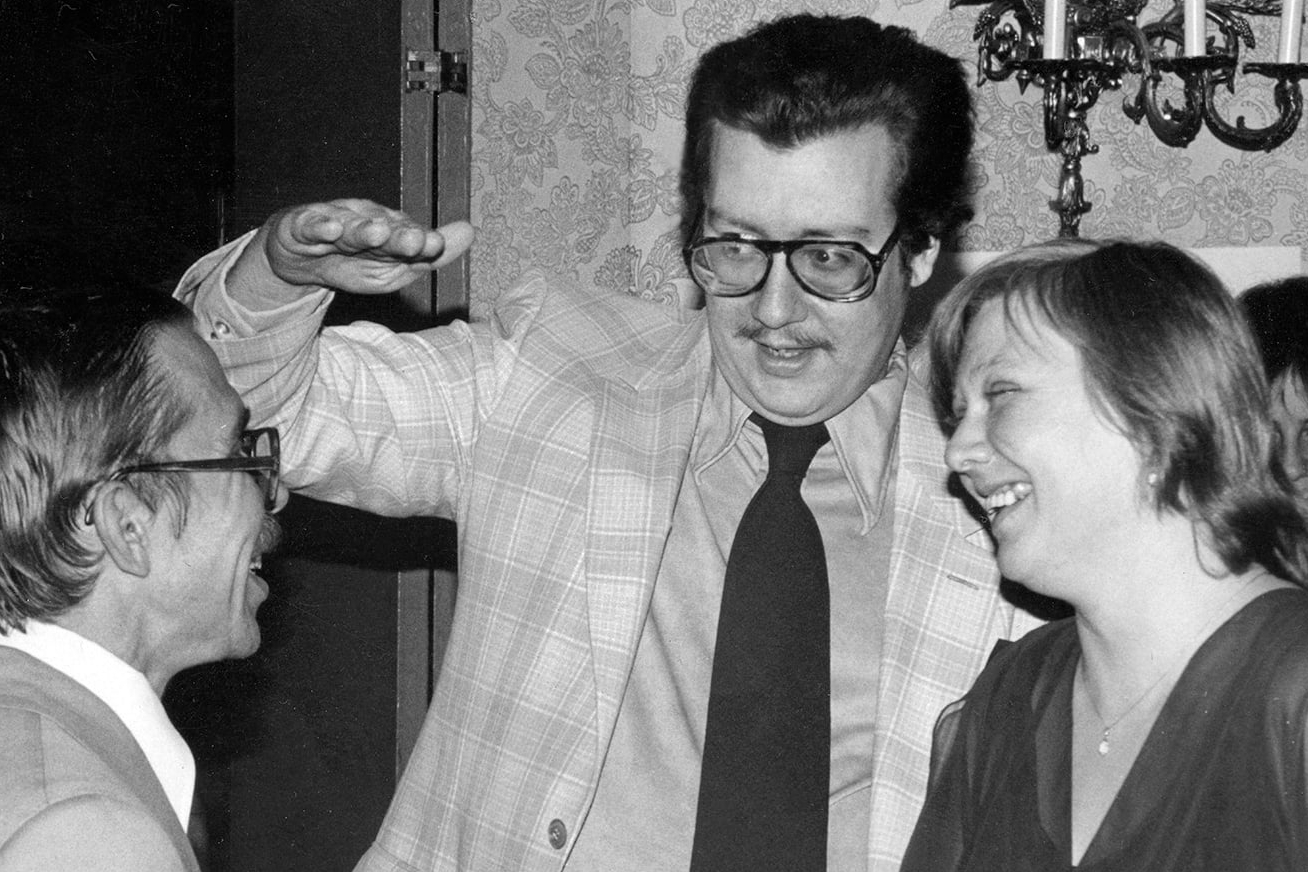
Mr. Campbell (center) “was a stickler for details,” his brother Bob said. Courtesy of the family
He came up with witty headlines and captions, had years of practical and institutional knowledge of Philadelphia politics, culture, and sports, and worked nimbly on deadline, making him a favorite of other editors and page designers. He also served as a newsroom union steward.
“He was a stickler for details,” his brother Bob said. “People said his favorite saying was: ‘I got you covered.’”
A photographer said on Facebook: “He saved my neck many times with caption corrections.” Longtime Inquirer colleague Don McKee said: “He was diligent and took the job seriously. He actually cared about what we wrote and what went in the paper.”
Away from the newsroom, Mr. Campbell organized softball games between Inquirer staffers and hosted memorable late-into-the-night parties at his home in the Northeast. He was quick with a joke and “put a smile on everyone’s face,” a longtime friend said.
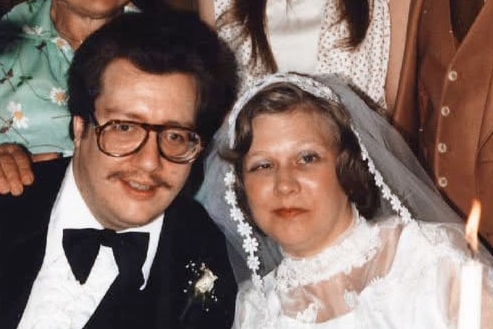
Mr. Campbell and his wife, Jean, married in 1980.Courtesy of the family
Alan Douglas Campbell was born Oct. 10, 1951. He was on track and basketball teams in high school, joined the Boy Scouts and Army Reserve Officers’ Training Corps, and studied at Temple University briefly before going into newspapers full-time.
He met Jean Hunsberger in school. They reconnected at their 10-year high school reunion in 1979, married in 1980, and lived in a cozy house he called Moose Manor. His wife died in 2022.
Mr. Campbell was fascinated by trains and public transportation, and he rode his bicycle as a boy to nearby train stations to watch the locomotives roar by. Later, he rode the trains to the suburbs and Washington, and assembled an extensive collection of model trains that he displayed at his home.
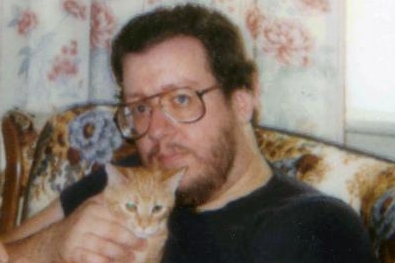
Mr. Campbell was a cat lover. Courtesy of the family
He loved cats, old movies, and comedy shows. He celebrated his Scottish heritage and became licensed as a massage therapist.
“Moose was one of a kind,” a former colleague said. His brother Bob said: “He was the most gentle soul on the planet.”
In addition to his brother, Mr. Campbell is survived by a brother, Tom, and other relatives.
A celebration of his life is to be held later.
Donations in his name may be made to the Pennsylvania SPCA, 350 E. Erie Ave., Philadelphia, Pa. 19134.
Mr. Campbell started his 46-year career at The Inquirer in 1970.Courtesy of the familyMr. Campbell was a playing manager for the Horsham Neighbors softball team in the 1980s.Courtesy of the family
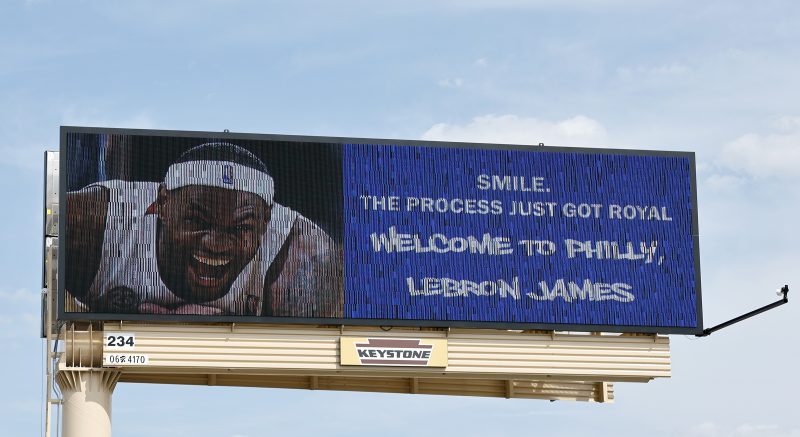
Philadelphia is now officially under the rule of King James. And his newly minted subjects, it seems, couldn’t be happier.
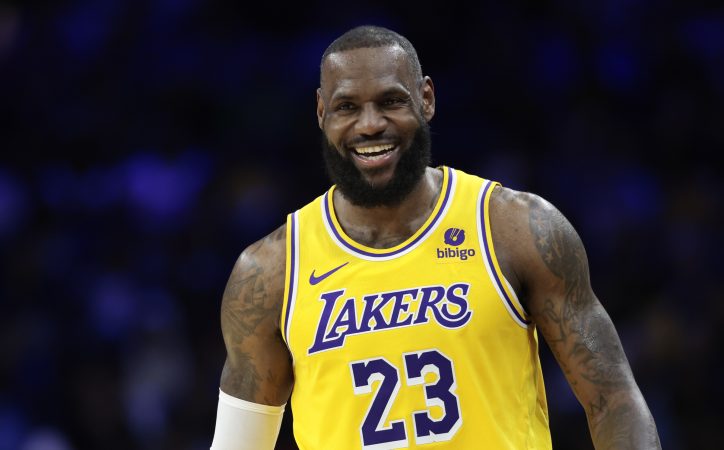
LeBron James, the legendary NBA player and one of the most famous humans on the planet, is coming to Philly after having agreed to a two-year contract with the Sixers on Friday. The move, though one of the more improbable roster additions in franchise history, is real — and officially commemorated at the highest levels of state government.
“Pennsylvania is honored to welcome LeBron James to our Commonwealth as he joins the Philadelphia 76ers for his best season yet,” Gov. Josh Shapiro wrote in a proclamation declaring Friday, July 24, 2026, as LeBron James Day. The day, he added, would honor James’ “bright future in Philadelphia,” among other achievements and anticipations.
Philadelphia Mayor Cherelle L. Parker likewise welcomed the news, writing in a statement that the city would welcome James “into our One Philly Family with open arms and electric energy.”
“Trust me when I say: We are rolling out the welcoming mat starting Day One!” Parker said. “We cannot wait to see you shine on the court.”
Though months away from that debut on the court as a Sixer, James’ arrival to the team prompted a flurry of shock and support from fans and players alike, with seemingly every local establishment, institution, and celebrity offering a meme or message of disbelief. In fact, Philly’s pro athletes seemed among the most excited about James coming to town.
Eagles running back Saquon Barkley, for example, almost immediately extended a golf invite to James after the news broke, asking via social media when the forthcoming Sixer wanted to “tee up.” Sixers point guard Tyrese Maxey had a more primal reaction, simply posting a video of him screaming in excitement in a gym.
James himself, meanwhile, was more staid in explaining his decision via social media. After nearly two-dozen seasons in the NBA, James wrote, he thought he was done playing, but decided he continued to love the game and had more to give.
“I still want to sacrifice. I still want to work. I still want to grind. I still want to compete, to win and to have a chance at the feeling of winning another championship,” James wrote. “I believe I can help make the Philadelphia 76ers a championship team and I am so excited to energize a new fan base and start this incredible journey one last time.”
Some Sixers fans were beside themselves, with at least one ordering a Chantilly cake from Whole Foods to celebrate. Lydia Victor, a Northeast Philly graphic designer and sports content creator, had the bakery write “Trust the Process 23” in red frosting on top of the confection, and planned to cut it later in the day with her father, who went to college in Ohio, and is James’ biggest fan, she said.
Whether a James-led Sixers squad can actually win a championship was almost inconsequential Friday, though Victor already was designing plans to celebrate on Broad Street. The fact that James chose Philadelphia brought her more happiness than a championship (or potentially getting married or having kids) might. She likened the moment to Meredith Grey’s iconic monologue in the TV show Grey’s Anatomy imploring Derek Shepherd to choose her.
“It’s just the mindset that Philly isn’t always considered a big market and the national media usually counts us out when it comes to acquiring big-name free agents,” she said. But this time, things were different.
“We were picked!” she said.
Darnell Butts, 56, said there’s no way the Sixers would have landed James had former general manager Daryl Morey still been in charge. Butts was optimistic about the Sixers’ championship chances, and excited for the team’s younger stars to learn from a player he calls the greatest of all time. Butts said he wants to welcome James in Philly fashion.
“Get a Philly cheesesteak, it’s on Darnell Butts. Meet me at Reading Terminal,” he said.
The historic nature of the day was seemingly reflected in professional sports’ enduring fan barometer — merchandise sales. By early Friday afternoon, Fanatics said it was already sold out of some Sixers-branded James jerseys.
Within two hours of the news breaking, all first editions of the No. 23 jerseys were sold out on the Fanatics website. The adult royal blue, white, and red Swingman premium jerseys had been selling for $124.99, in line with the price of similar jerseys for other Sixers stars. Youth jerseys had also been available to preorder for $69.99.
Fanatics was also selling James’ 2026-2027 Topps trading card, the one he signed and posted on Instagram after announcing his decision to come to Philly. The cards were selling for between $11.99 for a single card and $169.99 for a 20-pack. Fanatics acquired Topps in 2022.
The company planned to add additional James merchandise in short order Friday.
July 24, however, would live on as a historic date, some fans said.
Raymond Davis took the train into 30th Street Station to play basketball at Schuylkill River Park. Before leaving his home in Mount Airy, he put on his Tyrese Maxey jersey to hoop in — not knowing James would sign with his favorite team shortly after.
Davis met up with a few friends on the way to Schuylkill River Park. One of them, Christopher Gaines, was just as excited as Davis and ready to write the day down in history books.
“The king of basketball’s coming to Philly — the city of sports — and this is like a great day, a great moment,” Davis said. “You know what? July 24, I will always remember as ‘King Bron Day’ — the day LeBron came to Philly.”
Staff writers Gabriela Carroll, Erin McCarthy, Gina Mizell, Matt Mullin, and Andrea Padilla contributed to this article.
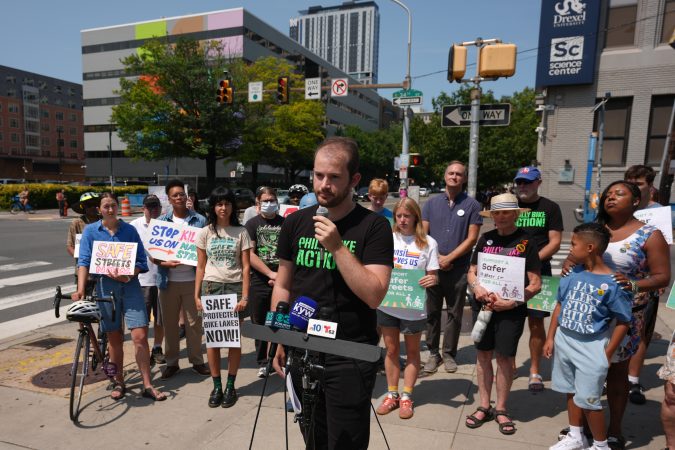
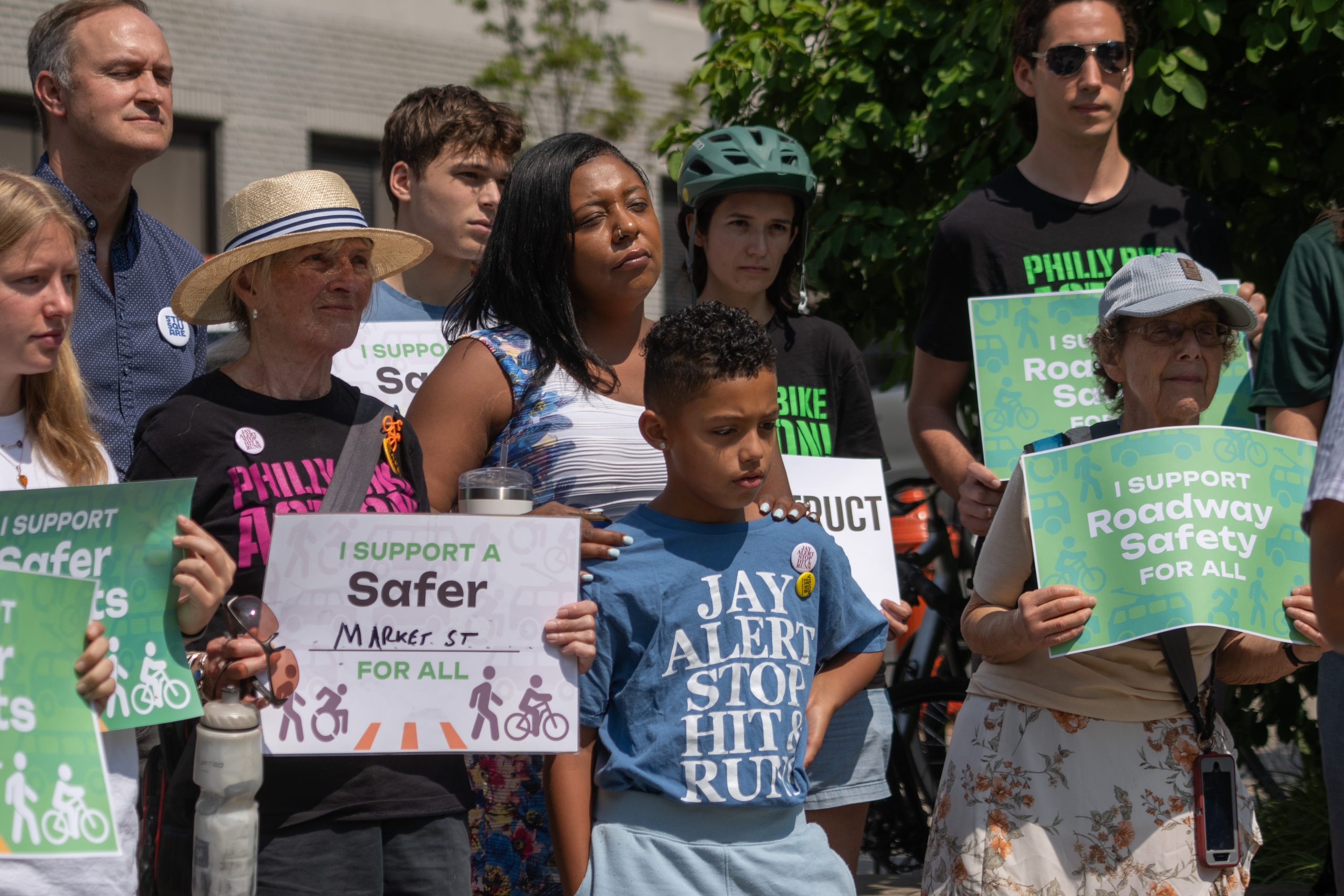
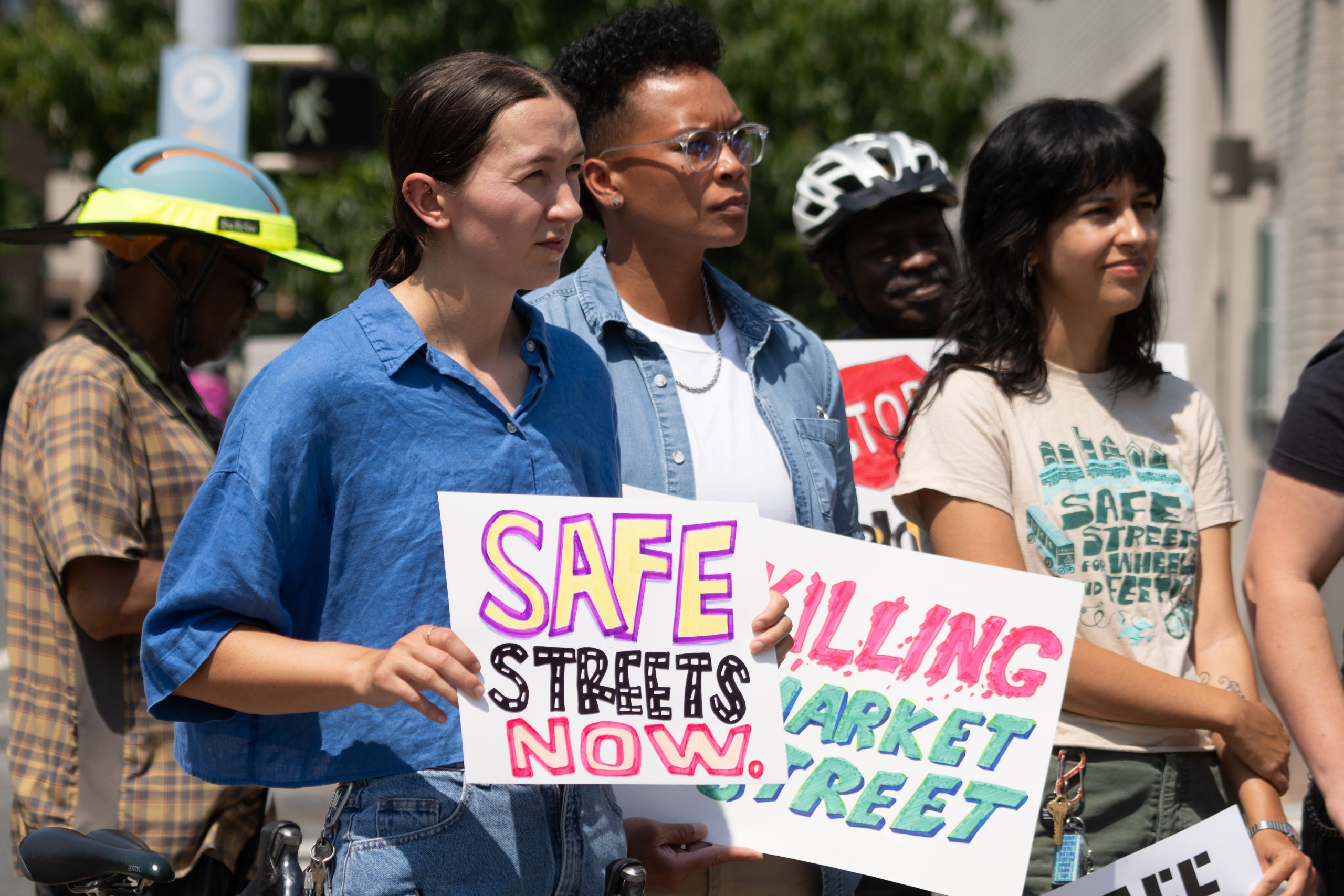
Advocates gathered at 34th and Market Streets on Friday to demand the Pennsylvania Department of Transportation improve pedestrian and cyclist safety along the busy stretch of Market in University City.
Philly Bike Action is asking PennDot to take five steps to improve safety on Market Street, particularly between 38th Street and the Schuylkill: install speed cushions, adjust traffic-signal timing to give pedestrians a head start before vehicles begin moving, place physical barriers along the median, and reduce the speed limit from 30 mph to 25 mph. These measures, they say, are proven to improve pedestrian and cyclist safety.
Gabriel Straus, an organizer with Philly Bike Action, said each measure could be implemented within60 days and should form part of a longer-term plan to make Market Street safer for pedestrians and cyclists.
The advocacy group’s longer-term proposal calls for implementing a road diet, building concrete medians filled with greenery, and constructing a two-way concrete protected cycle-path.
“Potential safety enhancements on Market Street West will be reviewed through the department’s continued collaboration with the City,” a PennDot spokesperson said. “A substantial reconstruction or reconfiguration of Market Street West would require a comprehensive analysis, as well as coordination among PennDot, the City of Philadelphia, the Delaware Valley Regional Planning Commission, SEPTA, and other affected stakeholders.”
David Brindley, 57, a volunteer with the urbanist advocacy group 5th Square, lives in West Philadelphia with his family. When his children started fifth grade at Science Leadership Academy and walked from their home in West Philadelphia, he and his wife would sheepishly call the school each morning to make sure they had arrived safely.
Jasmine Hoffman, and Eshad Hoffman, center, attend a rally to advocate for safer traffic infrastructure, in honor of their young relative, Jayanna Powell.Jessica Griffin / Staff Photographer
His fears are well-founded.
Jasmine Hoffman is among those whose families have lost children to traffic violence. Hoffman’s 8-year-old niece, Jayanna Powell, was killed in a hit-and-run crash in 2016 while walking home from the Lewis C. Cassidy Academics Plus School.
Two of Jayanna’s siblings were also hit, but the impact threw the girl 20 feet into the air, according to Hoffman. The driver took the car to a Chester County auto shop for repairs and told employees he had struck a deer. The shop’s owner became suspicious after seeing a news report and contacted authorities.
Hoffman has been a proponent for the Jay Alert bill, proposed legislation that would send notifications about hit-and-run crashes to auto repair shops and impose fines on shops that fail to report suspicious damage. She also hopes the safety measures proposed for Market Street could eventually be extended to the area around 63rd Street and Lansdowne Avenue, where her niece was killed and where three schools are located.
(Left to Right) Lana Harshaw, executive director for the Bicycle Coalition of Greater Philadelphia; Elise Dudley of Philly Bike Action; and Uma McGuire of the bicycle coalition attend a rally to advocate for safer bike infrastructure at 34th and Market Streets.Jessica Griffin / Staff Photographer
Organizersdescribed street safety as an issue of sustainability, particularly as Philadelphia‘spopulation continues to grow. Walking and biking to work should be safe and viable options, said Will Tung, a volunteer for 5th Square.
Jason Das, 49, regularly commutes by bicycle from the area of 50th Street and Baltimore Avenue, sometimes with a cello strapped to his back.
“My bike is my main means of transportation in the city. It’s more reliable than SEPTA. I don’t have a car, and I don’t want a car,” the musician and artist said.
Das paused as horns sounded across the street.
“I just saw someone almost get hit by a car while I said that,” he said.
Among the energetic and friendly group of roughly two dozen activists and cyclists, there were heavy moments of grief as organizers remembered Brown, Espinosa Rodas, and Jayanna Powell, among others who have died on West Philadelphia’s roads.
“Traffic violence is preventable violence,” remarked Andrew Goodman, who works for City Councilmember Jamie Gauthier.
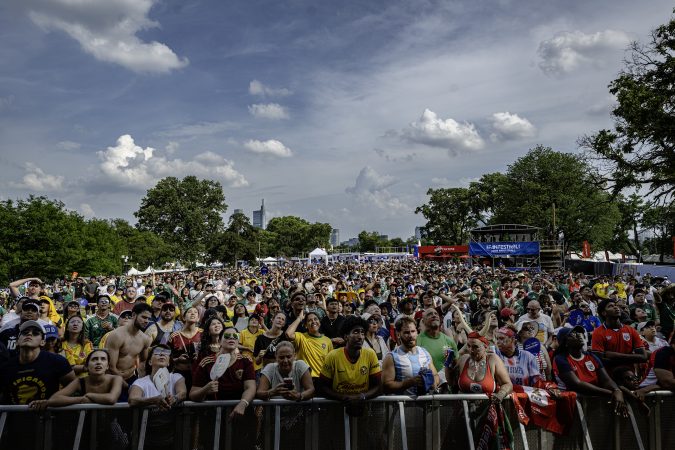
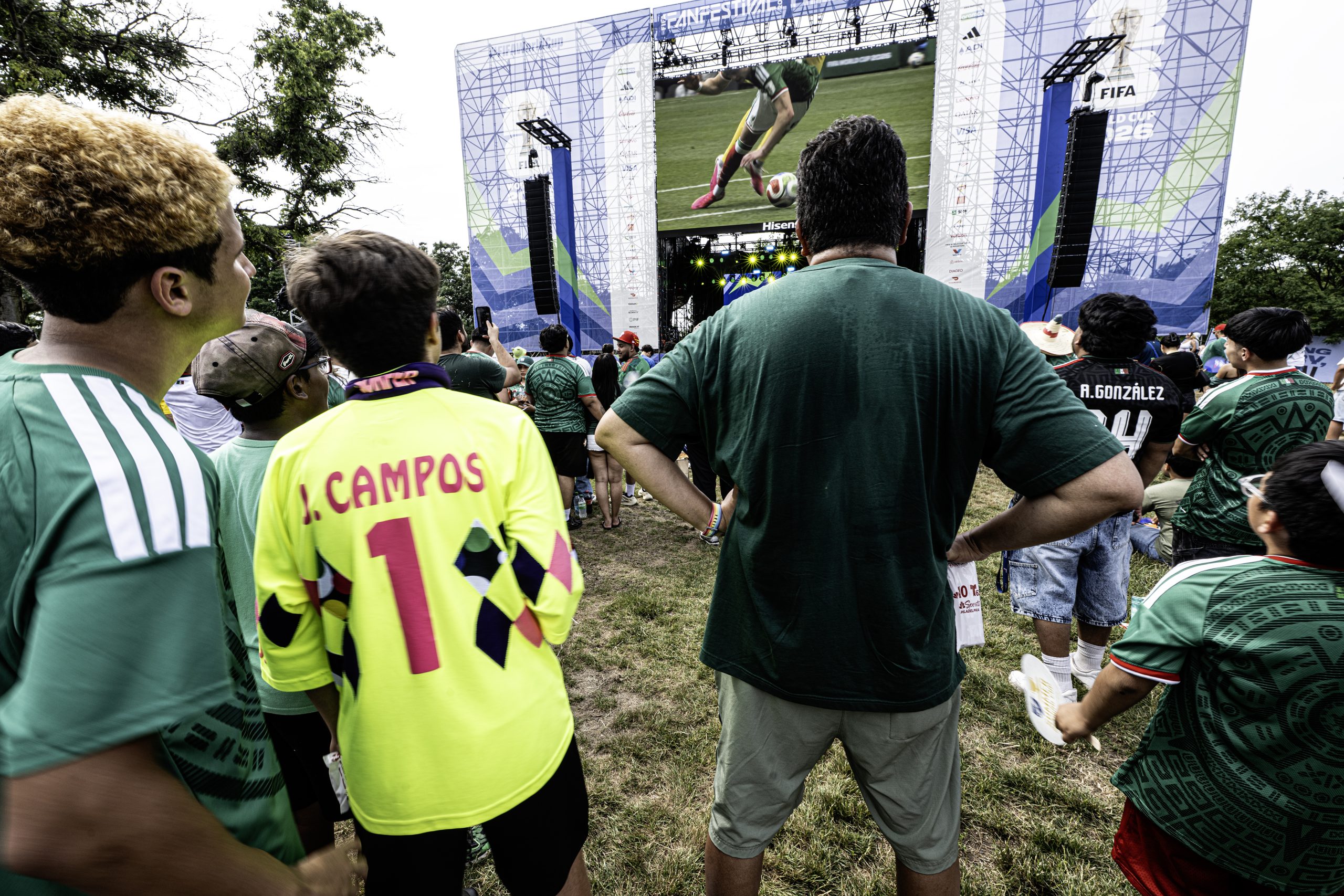
Philadelphia transformed Lemon Hill into the longest and one of thelargest World Cup watch parties in the country throughout the FIFA Fan Festival’s 39-day stay.
With the World Cup wrapped up, host committees throughout the country are taking stock of how many fans flocked to these festivals. Philly’s fan fest saw the second-highest number of attendees, with 575,304 between June 11 and July 19, according to the festival’s organizer, Philadelphia Soccer 2026.
Miami’s host committee was less precise in its count, but said its festival drew more than 600,000 guests.
Each one of the 11 host cities reported fan totals in the hundreds of thousands, but none quite reached the attendance levels of Philly and Miami.
However, despite South Florida’s high total numbers, Philadelphia set the record for most attendees throughout a single day at a U.S. fan festival with 55,000 attendees during the Brazil vs. Haiti group stage match on June 19. While Philadelphia’s fan festival operated for almost twice as long as Miami’s, opening every day of the tournament, Philadelphia worked with half the capacity limit that Miami did, capping crowds at 15,000 people at a time.
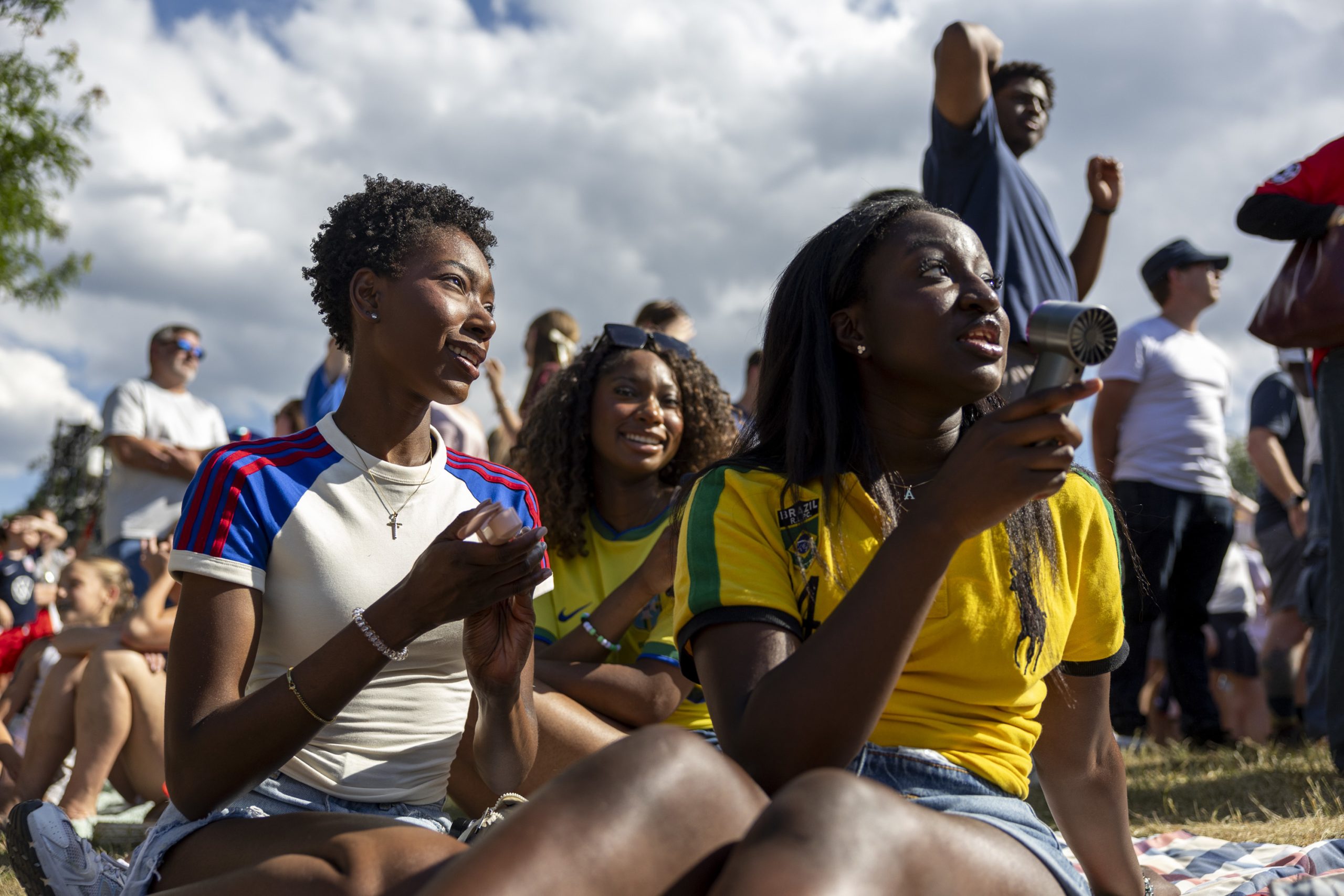
Anu Akinlotan, 19, of Darby, Pa., (right), Sandra Olaniyi, 25, of Drexel Hill, Pa., (left), and her sister Victoria, 22, (center), watch the USA vs. Australia game at FIFA Fan Festival at Lemon Hill Park in Philadelphia, Pa., on Friday, June 19, 2026.Tyger Williams / Staff Photographer
New York and New Jersey, home to the largest population among host cities and host of the World Cup final, netted more than one million fansacross their decentralized network of official fan zones. The San Francisco Bay Area host committee also chose not to do a single festival but rather a network of watch parties and events. Across those areas,900,000 people reportedly visited during World Cup games, according to CBS.
Philly’s million-square-foot watch party, akin to a Fairmount summer barbecue of epic proportions, featured large swaths of open space for fans to lay down blankets and picnic while they watched the game, with the Center City skyline as backdrop; mini soccer pitches to challenge friends to pickup games; and a line of sponsor exhibits, including one outrageously viral Bank of America bracelet-making workshop. Some later resold the bracelets online for upward of $150.
But the main course was the 60-foot-wide screen playing almost every 2026 World Cup game to a crowd of thousands. This is where Philadelphians and international tourists could experience the energy of the World Cup outside the pricey stadium seats.
Soccer fans gather to watch Mexico play South Africa on a giant screen during the opening day of the FIFA Fan Festival at Lemon Hill on Thursday, June 11, 2026, in Philadelphia.Jose F. Moreno / Staff Photographer
Philly and Miami may win out for the highest attendances, likely due to their singular locations and being open much longer than celebrations in other cities, which opted for shorter-lived festival days or decentralized events. Still, most of the U.S. host cities boasted impressive numbers at fan events.
Atlanta, Houston, and Seattle all reported having hosted at least 500,000 fans at their festivals. Kansas City was close behind, reaching 400,000 fans across its 18-day run. Los Angeles brought in 250,000 people to its festival. Boston hosted 155,000. Dallas’s host committee has not released official counts yet.