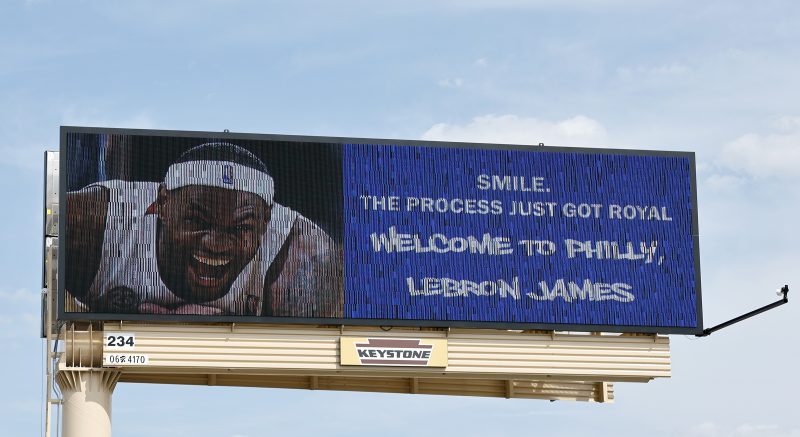
LeBron James is going to take his talent to South Philly, and a portion of his salary to City Hall.
The newly signed Sixer — that feels so good to write — is being rumored to live in New York City and commute to games and practices by helicopter, according to ESPN.
Commuters who live elsewhere but work in Philly are required to pay the city’s wage tax on a portion of their salary. And there is no exemption in the tax code for a King.
Main Liners, rejoice. Next time you look at the withholdings on your pay stub, you are allowed to proclaim: LeBron, he’s just like us, amirite?
In fact, James has likely paid the Philadelphia wage tax throughout his career for games he played here against the Sixers.
But how much of James’ $8 million salary over two years counts toward the wage tax will depend on how, and where, No. 23 spends his time from training camp to the final day of the season.
Let’s break it down.
What is Philly’s wage tax, and does it apply to athletes?
Philadelphia levies a 3.735% tax on the entire income of its residents, and 3.425% on the income nonresidents earned working in the city.
The wage tax is one of the city’s three major revenue sources, alongside property and business taxes, and has brought in more than $2 billion annually in recent years. A third of the taxes collected comes from commuters.
Philly’s tax on earnings is among the highest in the country, and the city led the charge in the 1990s to ensure professional athletes paid their share. It is now common practice for cities to impose a so-called jock tax on players — home and visiting — but athletes are taxed in the City of Brotherly Love under the same wage tax as everyone else.
What counts as a Philly workday for LeBron James?
Calculating the wage tax for commuters can get tricky, especially since remote work has become common.
Every day of work that requires a nonresident to be in Philadelphia counts toward the tax.
The question for James, and other athletes, is what counts as a working day — and how many of those days he spends in Philly vs. the Sixers’ training facility in Camden.
Los Angeles Lakers’ LeBron James, left, shares a laugh with Philadelphia 76ers’ Tyrese Maxey, right, during an NBA basketball game, Sunday, Dec. 7, 2025, in Philadelphia.Chris Szagola / AP
Practice, film review, rehab, and games could all count as workdays, said Stephen Kidder, a tax attorney who specializes in professional sports.
“Every single one of those days is a duty day for a professional athlete,” Kidder said.
A spokesperson for the city said, “Philadelphia welcomes LeBron James with open arms,” but did not respond to a request for comment about any special guidance for athletes.
How much will LeBron James pay in wage taxes?
If James ends up living in Philly, the calculation is simple. He would have to pay 3.735% of his annual salary of $4 million — roughly $150,000 — regardless of where he spends his time.
But if he lives outside the city, it comes down to counting days.
Without knowing James’ overall number of workdays in the year, and how much of that time is spent in Philadelphia, it is impossible to estimate his tax bill.
The number of duty days for an NBA player can vary widely, depending on practice schedule, depth of playoff run, and other activities, such as promotions.
An often-cited number to get a sense of the size of the tax bill for NBA players is 200 workdays.
If his only Philadelphia workdays were the Sixers’ 41 home games, and if, as seemingly the youngest 41-year-old in history, he played in all of them, roughly 20% of King James’ income would be earned in Philly.
In this scenario, the city would tax 20% of James’ annual income at the 3.425% rate for nonresidents, for a hypothetical tax bill of around $28,000. That number would decrease if he missed some home games, or increase if he attended other team activities in Philadelphia.
(This writer refuses to make any calculation related to the playoffs that could constitute a jinx but suffice to say: See you on Broad Street next summer.)
Do taxes affect players’ decisions?
Professional athletes and the associations representing them care a lot about state and local taxes, and are fighting against them.
The MLB, NHL, and NFL players associations, alongside three former professional athletes, sued Pittsburgh over its 3% jock tax for visiting players. And last year the Pennsylvania Supreme Court struck the tax down because it was higher for nonresidents than for residents.
City and state taxes are part of the package when athletes choose where to play, according to Kidder, who represented the associations in the state Supreme Court case. A professional athlete in Florida owes the state no tax, for example, while California has a jock tax of up to 13.3%.
“Some athletes may be in a point in their career where it doesn’t matter that much,” Kidder said. “But for other athletes it may be a big difference playing for a team based in Florida compared to a team based in New York.”
Ed Wasielewski, a Philadelphia-based NFL agent and founder of EMG Sports, says tax considerations come up often in free agency deals. The difference between no tax, Philly’s 3.735% tax on residents, and California’s 13.3% jock tax amounts to millions of dollars in take-home pay.
“A player is well advised to have a good accountant, a good attorney, and a good agent team to correctly analyze the tax consequences,” Wasielewski said. “It definitely comes into play in contract negotiations, especially in free agency.”
If James chooses to live in NYC and commute to practices in Camden and games in Philly by helicopter, taxes might not be high on his list of concerns.
Weeks later, dozens of them were dead from a mystery ailment, and scores of others were sickened. The victims, authorities said, returned home to develop respiratory infections that in some instances progressed to fatal cases of pneumonia.
For more than half a year, local and federal health authorities were unable to determine what killed them, resulting in a web of fear, paranoia, and frustration that gripped not only Philadelphia, but also the nation at large.
This was the infamous Legionnaires’ disease outbreak of 1976, perhaps the blackest of marks on Philadelphia’s record for the year. Today, the disease — known as legionellosis, caused by Legionella pneumophila bacteria — still crops up, most recently in a 50-building outbreak in Manhattan that has so far caused at least seven deaths.
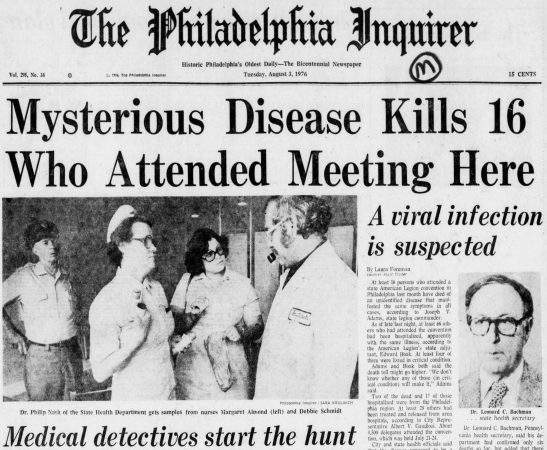
Philadelphia was not the last, or even the first, city to experience the disease. But that outbreak half a century ago is how it got its name. Here is how The Inquirer and Daily News covered it:
Article from Aug 3, 1976 Philadelphia Daily News (Philadelphia, Pennsylvania) <!— –>
The initial outbreak
About 2,000 American Legion delegates came to town for a convention that ran from July 21 to 24, 1976, at the iconic Bellevue-Stratford Hotel. There were no signs of trouble during the convention, or for several days afterward.
But by early August, about a week after the convention’s end, 14 Pennsylvania American Legion members were dead of an unclear illness, with their deaths involving “some type of respiratory problem,” reports from the time indicate. Roughly 50 others were reportedly hospitalized.
Many of the initial victims were from Western Pennsylvania and had traveled to the city, though some Philadelphians were among the sick and dead. All had attended the American Legion convention the month before, officials said.
Article from Jul 17, 1977 The Philadelphia Inquirer (Philadelphia, Pennsylvania) <!— –>
As officials mounted an investigation that cost the state $25,000 a day, the death toll continued to increase. By mid-August, 29 people were dead and about 200 were sickened, reports indicate.
The Centers for Disease Control said at the time that the outbreak was “without precedent” in the agency’s 30-year existence, and began conducting laboratory work to determine the cause.
“We have not seen anything like this take place in such a short period of time,” said Jay Satz, chief virologist with the Pennsylvania Department of Health. “This is something to be quite concerned about.”
Article from Aug 9, 1976 Philadelphia Daily News (Philadelphia, Pennsylvania) <!— –>
Conspiracies reign
Health officials largely expected the cause to be a then-long-awaited epidemic of swine flu, which had killed a soldier at Fort Dix in New Jersey earlier in the year, and focused much of the investigation on identifying that disease, reports indicate. Other possible causes, including toxins such as nickel carbonyl, were also considered.
But public speculation about the cause, as well as how the disease arrived in the city, ran rampant. Or, as The Inquirer put it at one point, there were more people who had “their own ideas on what is causing the mysterious disease than there are Kennedy assassination conspiracy theories.”
Inquirer readers wrongly blamed everything from pigeon droppings to contaminated ice. One person claimed the trash piling up on city streets, thanks to a municipal worker slowdown at the time, was the reason. Another contended shellfish was the cause, noting that “mostly men had been stricken because women don’t like shellfish.”
Others believed the cause was more nefarious. Surely the disease had come from communists from Ecuador or Poland, who intentionally spread it to American Legion members. No, it was a sneak attack staged by the potentially disruptive activist groups Mayor Frank Rizzo had warned about.
The American Legion, meanwhile, did not believe foul play was involved — nor did investigators, who said no evidence supported any of these theories. The truth, it seemed, was far less salacious.
As worry over the illness wore on, the Bellevue-Stratford hotel itself also fell victim to the disease’s impacts, closing in November 1976.
Though investigators avoided directly implicating the hotel early on, it suffered severe financial damage. Reservations collapsed into single-digit occupancy percentages, resulting in losses of up to $10,000 per day, reports from the time indicate. William G. Chadwick, the hotel’s vice president and general manager, said business had been devastated.
Article from Nov 10, 1976 Philadelphia Daily News (Philadelphia, Pennsylvania) <!— –>
“We have found it impossible any longer to withstand the economic impact of the worldwide adverse publicity which has been associated with the Legionnaires’ disease,” he said.
By then, the Bellevue had operated for more than 70 years and was considered a jewel in the city’s hospitality crown. Its closure, Rizzo said, was a “great loss,” and he vowed the property would host a new, modern hotel to fill the gap. Today, it is a mixed-used development at 200 S. Broad St. that includes a hotel portion.
Philadelphia’s Bicentennial tourist business also suffered, with several conventions canceling their bookings over fear of the illness, significantly affecting what was expected to be a banner year for visitors. Public perception erred on the side of avoiding the city, which some local officials tried to rebut.
Article from Aug 19, 1976 Philadelphia Daily News (Philadelphia, Pennsylvania) <!— –>
“We are still a safe city,” said Eugene Hosmer, director of the Philadelphia Convention and Visitors Bureau, noting the disease struck just as low civic self-esteem seemed to be fading. And then, “we’re hit with this.”
Robert Jacob, manager of the Penn Center Inn and head of the Greater Philadelphia Hotel Association, put the illness’ impact more dramatically.
Investigators searched for months for the disease’s cause to no avail, facing substantial criticism — including a congressional subcommittee hearing during which their efforts were labeled an “embarrassment,” according to reports from the time.
But in January 1977, after tens of thousands of tests, investigators identified the culprit. The deadly Legionnaires’ disease, the CDC found, was caused not by a toxin or virus, but a bacterium. One so strange and unknown, lab workers and scientists had missed it for months.
Article from Jul 17, 1977 The Philadelphia Inquirer (Philadelphia, Pennsylvania) <!— –>
Credited with its discovery was Joseph McDade, then a CDC microbiologist in the agency’s leprosy and rickettsia laboratory. On a hunch after receiving a routine report, McDade reexamined slide samples and decided to look for unfamiliar microbe shapes. And he found them — and they appeared not only in samples from Philadelphia, but also in past unsolved outbreaks.
The disease was found to be present in samples from a 1965 pneumonia outbreak at St. Elizabeth’s Hospital in Washington, in which 18 people died, and a 1968 one that sickened 144 people at a Pontiac, Mich., health department building. Additionally, the illness had struck a 1974 Independent Order of Odd Fellows convention in an outbreak that killed two people — also held at the Bellevue-Stratford.
Article from Jul 17, 1977 The Philadelphia Inquirer (Philadelphia, Pennsylvania) <!— –>
Investigators later determined the 1976 outbreak had been spread via airborne water mist from the hotel’s air-conditioning cooling towers. The towers allowed the bacteria to grow and be spread to convention attendees, as well as some individuals who had traveled near the hotel, investigators found.
“We are dealing with a very real phenomenon which has been present in the past but has never been recognized,” said CDC director David Sencer in 1977. “We now know what to look for.”
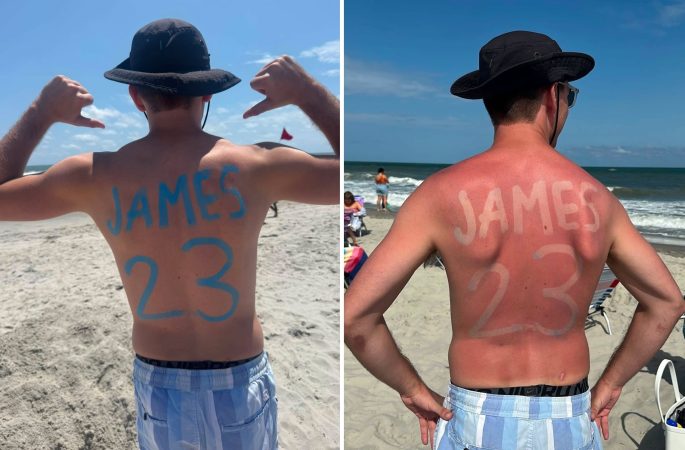
LeBron James announced he was coming to Philadelphia. Within days, someone had intentionally sunburned a No. 23 jersey onto his back. That’s commitment.
A Delco man spent a day at the beach in Sea Isle using zinc sunscreen to leave behind a perfectly outlined “James 23” sunburn. His family thought he’d lost his mind, and beachgoers assumed he’d lost a bet. But later that night he got to proudly show it off at Ocean Drive like he’d just gotten fresh ink.
The man called it “Philly toughness” … sure. This is exactly why Philadelphia sports fans have the reputation we do. We climb poles, tattoo the Phanatic on our bellies, and name our dogs after backup quarterbacks. And now someone has a LeBron jersey they can’t take off for a week.
Longtime 6abc meteorologist Cecily Tynan has spent more than 30 years as a member of the Action News team.6abc
The end of another Action News era: F
Thirty years is long enough for someone to become part of your routine without you even realizing it.
For decades, Cecily Tynan has been the person telling Philadelphia whether to grab a jacket, brace for a blizzard, or enjoy a sunny weekend. You hear the forecast while making dinner or before heading out the door and rarely stop to think about who’s delivering it.
Cecily Tynan leaving feels a little bigger than another broadcaster calling it a career because Action News is part of the city’s daily rhythm. Generations have eaten dinner while those familiar voices played in the background.
But it’s hard to argue with her reason. She’s retiring while she’s healthy enough to spend more time with her family, cheer at her daughter’s track meets, water ski in Florida, rescue animals, and, perhaps most shocking of all, cook Thanksgiving dinner for the first time instead of picking it up from Whole Foods.
First Jim Gardner. Now Cecily Tynan.
Good luck to whoever has to tell Philadelphia there’s snow coming next. Those are big rain boots to fill.
One of the best parts of watching a movie or TV show filmed in Philadelphia isn’t the plot. It’s playing, “I know where that is.”
The trailer delivers plenty of that. You get SEPTA stations, Market East, the Benjamin Franklin Bridge, Center City rooftops — Reacher himself even slams a guy’s head against an Inquirer vending box. We knew Reacher was filming here last summer but seeing the finished product is still oddly satisfying.
Maybe the action scenes will be great. Maybe the mystery will keep us hooked. But let’s be honest: Half of Philadelphia is going to spend every episode pointing at the TV and announcing exactly where they filmed it. (Bonus points if you can call out shots of Toronto masquerading as Philly.)
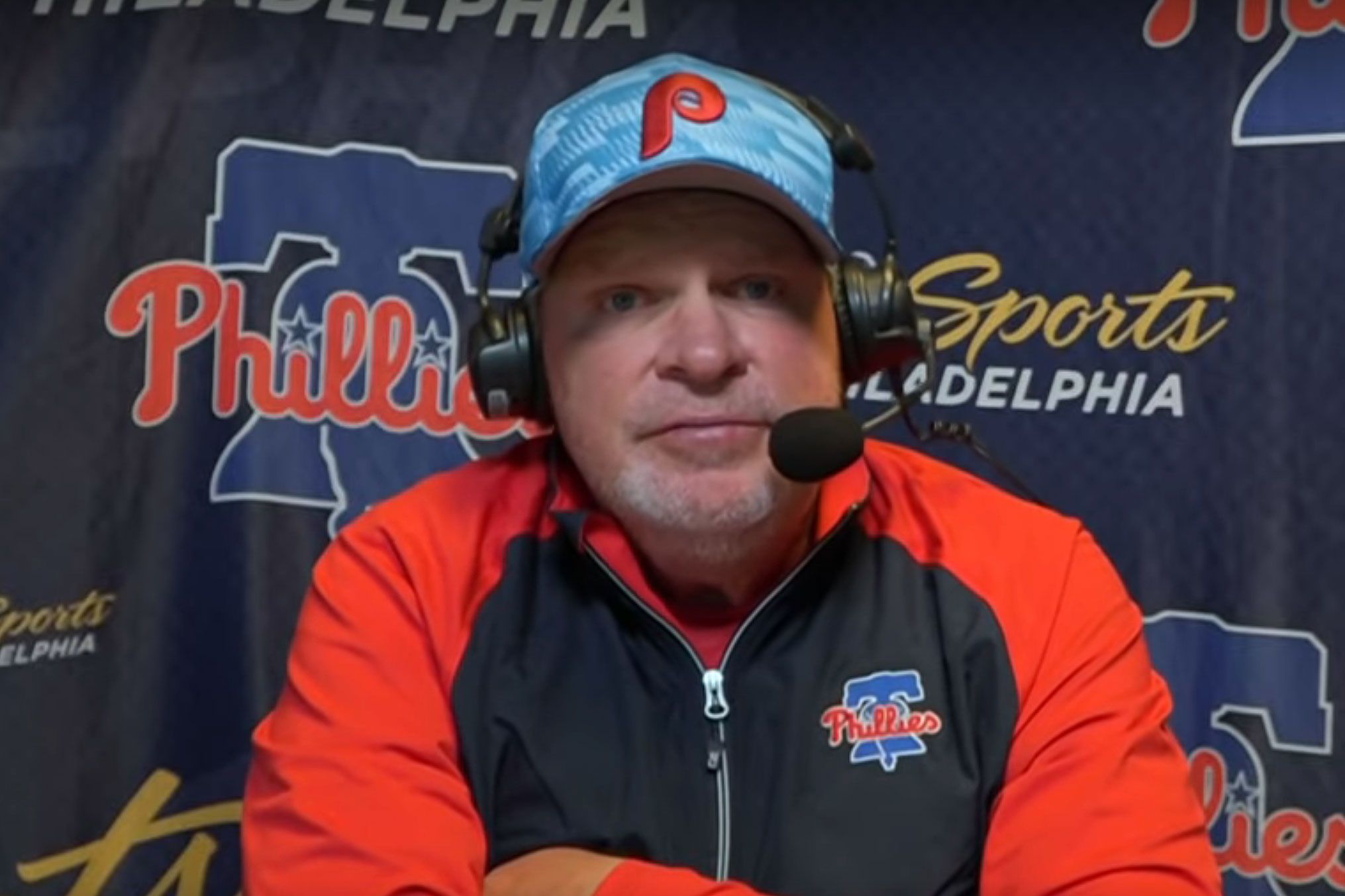
NBC Sports Philadelphia analyst John Kruk following the Phillies’ loss to the New York Mets on Tuesday.NBC Sports Philadelphia
John Kruk on national TV: A
Every time John Kruk joins the Sunday Night Baseball broadcast, it feels like someone accidentally invited your funniest uncle to a black-tie wedding.
This week, the conversation somehow turned into Kruk admitting he doesn’t really own ties, that most of the ones he brought were clip-ons, and then struggled to button his collar while Joe Girardi and Jason Benetti narrated the ordeal like it was Game 7 of the World Series. At one point, Kruk declared facing Randy Johnson was easier than putting on the tie.
That’s why Philadelphia loves him.
Kruk makes millions of viewers feel like they’re sitting in the living room watching baseball with a friend who wandered in wearing whatever he found in the closet. He’s knowledgeable without acting like the smartest guy in the room, and he’s never afraid to laugh at himself.
Sure, NBC can put him in a jacket and hand him a tie, but they can’t make John Kruk stop being John Kruk.
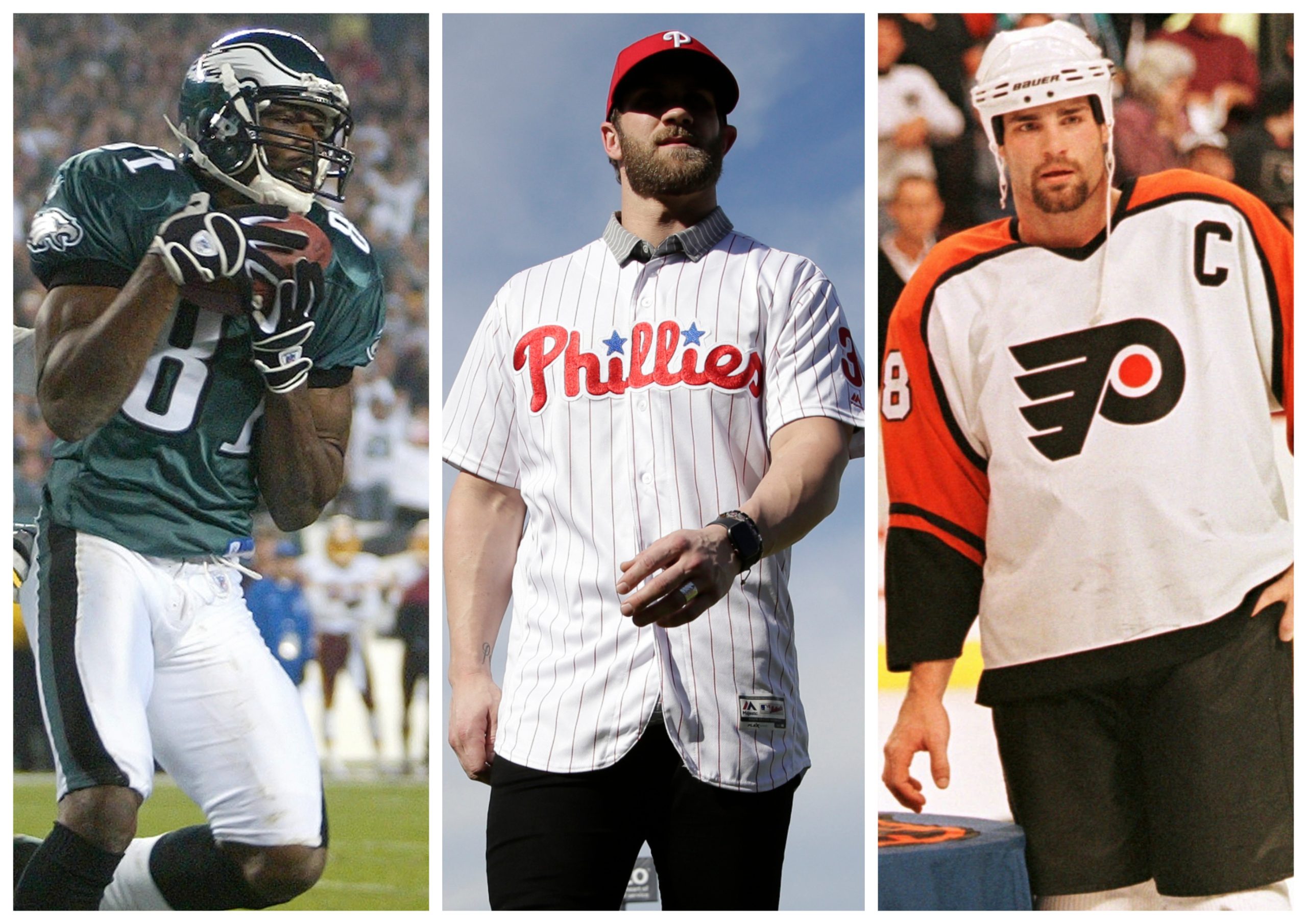
From left: Former Eagles receiver Terrell Owens, the Phillies’ Bryce Harper, and former Flyer Eric Lindros.Associated Press
LeBron James is the latest reminder that the biggest names in sports don’t just tolerate Philadelphia anymore — they want to play here. And once you start thinking about it, the list is pretty impressive: Bryce Harper, Saquon Barkley, Terrell Owens, Jim Thome, Cliff Lee, Dr. J, Eric Lindros, Moses Malone. Each arrival felt like a holiday. Not every move worked out perfectly. (Sorry, T.O.) But that’s beside the point.
For decades, Philadelphia fans carried around the idea that stars preferred bigger markets, warmer weather, or flashier franchises. We were the “underdogs.” Now, one of the greatest basketball players of all time looked around the NBA and decided he wanted to spend the final chapter of his career was South Philly. (We just have to convince him to move here now.)
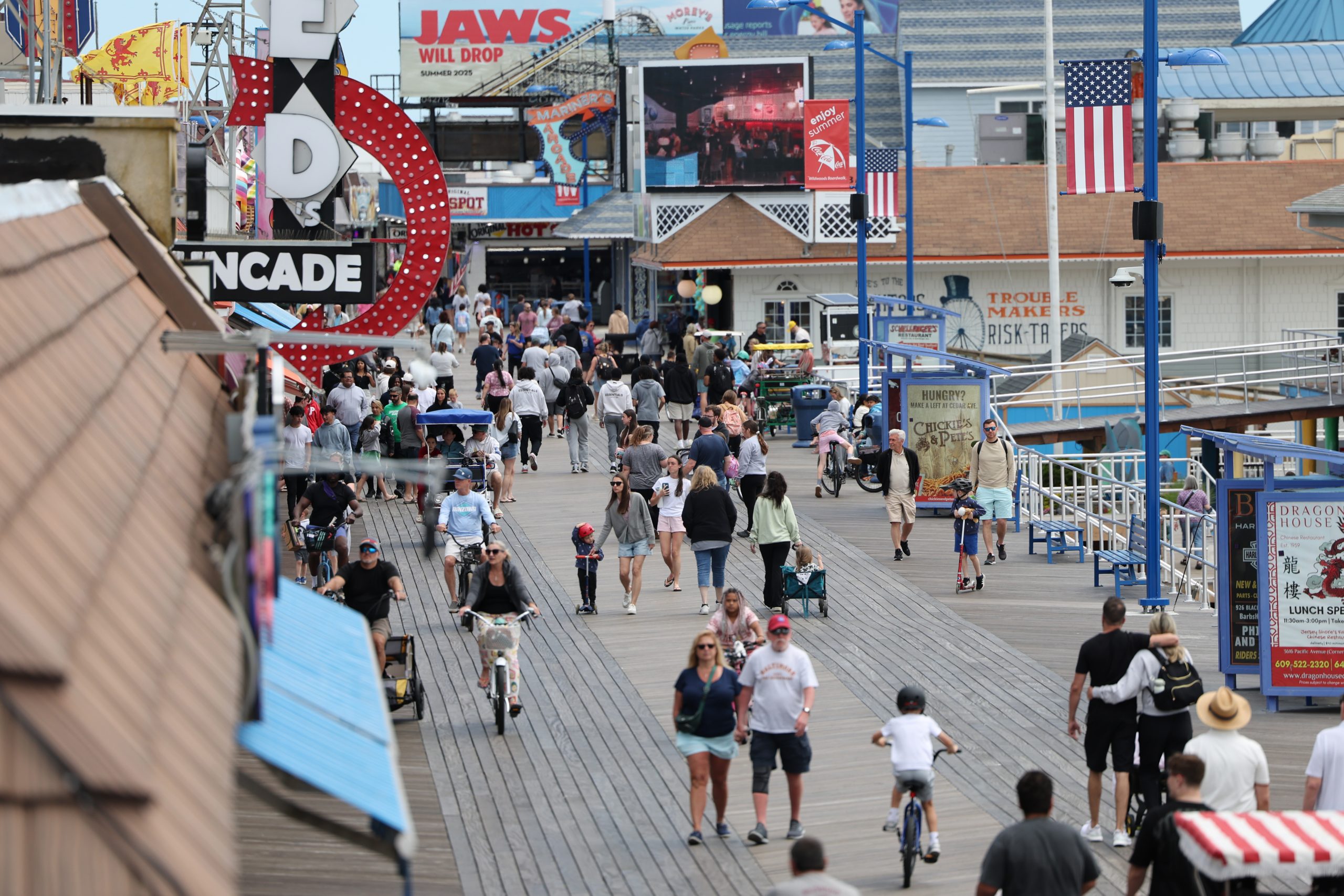
A crowd strolls along the boardwalk in Wildwood on Monday, May 26, 2025.David Maialetti / Staff Photographer
Now comes the important part: Please film it there.
Hollywood has a habit of setting shows in one place and shooting them somewhere completely different. But Wildwood has too much personality to fake. The boardwalk, the neon motels, the tram car. If you’re going to call the show Wildwood, you have to earn it.
Besides, if The Four Seasons can film down the Shore and Reacher can turn Philadelphia into an action movie backdrop, there’s no reason this one can’t let Wildwood play itself.
If nothing else, we deserve a season of spotting familiar landmarks instead of arguing online, “That’s clearly not Jersey.”
The government protection that allows more than a million immigrants to live and work in the U.S. because it is unsafe for them to go home expired last month for people from Syria and Haiti.
It is set to conclude for more than 170,000 people from El Salvador in September, and in October 100,000 from Ukraine could face the same termination of temporary protected status (TPS).
The Trump administration promises to deport those who lose legal status ― a fate advocates say is guaranteed to hurt immigrant families that include spouses and children who are American citizens.
But immigration researchers and organizations say that immigrants will not be the only ones hurt, that the rest of the U.S. will pay a big financial price ― in lost taxes, wages, spending, and services, as large numbers of workers and dollars exit the U.S. economy.
The nation’s 1.3 million TPS-holders work at higher proportions than the country as a whole, pay billions of dollars each year in federal and local taxes, and contribute to the solvency of a Social Security system from which they are unlikely to ever draw benefits.
“Even if you don’t care anything about immigration in this country, removing this many highly productive workers from the economy is going to hurt Americans in their pocketbooks,” said Rebecca Shi, executive director of the American Business Immigration Coalition, a Chicago-based, bipartisan network of companies and CEOs. “Americans are going to get hit, in terms of inflation, in healthcare, in housing.”
Many TPS-holders work in critical jobs and industries. They are the people who build homes, keep restaurants running, fix plumbing and wiring, and, particularly in the case of Haitians, care for the ill and elderly.
“If you access our healthcare system in any way, shape, or form, particularly elderly care or senior care, you’re going to feel it,” said Anuj Gupta, president and CEO of the Welcoming Center in Philadelphia, “Whether it’s shortage of staff at facilities, whether it’s longer wait times to get in for the appointment that you need. … And if we start going down the road of Salvadorians, Ukrainians, Venezuelans, all having their TPS removed, then those kinds of day-to-day impacts will be more profound.”
(function(){function e(){window.addEventListener(`message`,function(e){if(e.data[`datawrapper-height`]!==void 0){var t=document.querySelectorAll(`iframe`);for(var n in e.data[`datawrapper-height`])for(var r=0,i;i=t[r];r++)if(i.contentWindow===e.source){var a=e.data[`datawrapper-height`][n]+`px`;i.style.height=a}}})}e()})();
TPS-holders live in every state. Florida is home to the largest number, about 404,000, followed by Texas and New York. New Jersey ranks seventh, with 43,360, and Pennsylvania 14th, with 23,770, according to the National Immigration Forum.
“Certain states are just going to get obliterated by this,” said Jeff Hornstein, executive director of the Economy League of Greater Philadelphia, a regional policy and research organization.
The Philadelphia region will get hit, too. The league examined four countries where designations are ending or at risk ― El Salvador, Ukraine, Syria, and Haiti.
In the local area, between 4,100 and 6,100 workers from those countries depend on TPS, and as many as 4,600 could lose legal employment authorization, the league said.
In the city, those TPS workers bring home $36 million to $76 million in annual salaries and pay $1.5 million to $3 million in wage tax.
The most affected local sectors are predicted to be construction, building cleaning and landscaping, trucking and warehousing, manufacturing, restaurants, and retail.
The league’s Saloni Tandon, who directs research and analytics, said area residents may notice changes in everyday life, such as the cleanliness of offices and buildings, and the speed of delivery for goods.
“Because our minimum wage is so low, there are fewer workers coming into the region,” she said. “So it’s going to get very tricky and very stressful to compensate for that.”
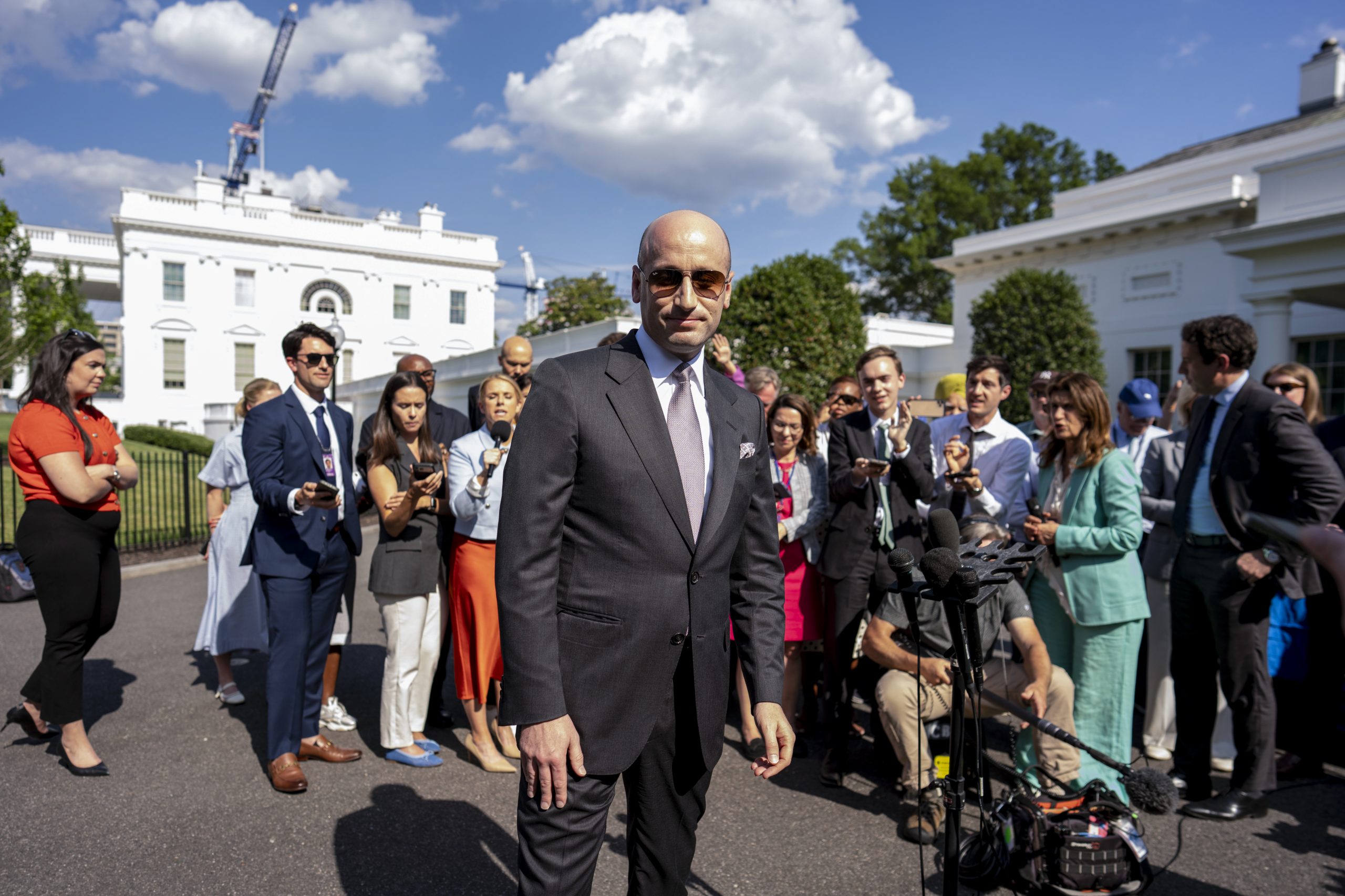
Stephen Miller, a key White House advisor, speaks to reporters outside the White House after the Supreme Court ruling on June 25. He called Supreme Court’s ruling on TPS “a victory 10 years in the making.”DOUG MILLS
The American Business Immigration Coalition notes that while the U.S. has only 4% of the world population, it produces 25% of all gross national product and captures 65% of global stock market value. That is tied to the strength of the economy, which depends on the growth and productivity of the workforce.
With birth rates falling below replacement levels and a shrinking pool of domestic labor, the coalition said, the United States must embrace a robust legal immigration system to ensure sustained economic growth.
That has become harder for people here under TPS.
In June, the Supreme Court ruled that the Trump administration could terminate temporary protected status for countries like Haiti and Syria, putting more than 350,000 people from those lands at immediate risk of deportation.
More broadly, the ruling appears to make Department of Homeland Security decisions about TPS unreviewable by lower courts, creating deep uncertainty for the future.
Homeland Security says TPS has officially ended for Haiti and Syria, even though cases involving stays and constitutional issues are technically alive in lower courts. The Supreme Court decision started the process for an implementation order that typically takes 32 days. Once TPS ends for individual countries, holders revert to their previous immigration status, meaning those who have no other protection will be subject to arrest and deportation.
The Trump administration has made a goal of ending TPS, insisting that “temporary” means temporary. It’s unclear if the administration may let TPS designations end on their staggered schedules or attempt to conclude the status for all holders at once.
Work authorizations for Haitians expired on Monday.
They face a forced return to a country crippled by natural disasters, governmental collapse, and ongoing gang violence.
The U.S. government warns Americans not to go to Haiti, issuing its highest “Do Not Travel” advisory. The United Nations estimates that 90% of Port-au-Prince, the capital and largest city, is controlled by criminal gangs, the violence having left thousands dead and displaced more than 1.4 million people.
White House adviser Stephen Miller told reporters after the court ruling that it was safe for Haitians to return, saying it would be “crazy to say that Haitians couldn’t live in Haiti.”
Asked if people who lose TPS would be deported, he answered: “Of course. If you no longer have status in this country, then you’re supposed to be deported.”
CBS News reported last Sunday that U.S. Immigration and Customs Enforcement is preparing a operation to quickly arrest and deport Haitians — including those in Ohio, where Trump falsely accused migrants in Springfield of eating cats and dogs.
The Haitian Bridge Alliance, a California-based advocacy organization, warns against “one of the largest family separation events in modern-day history,” as TPS-holders live with an estimated 390,000 American-citizen children and 410,000 citizen adults.
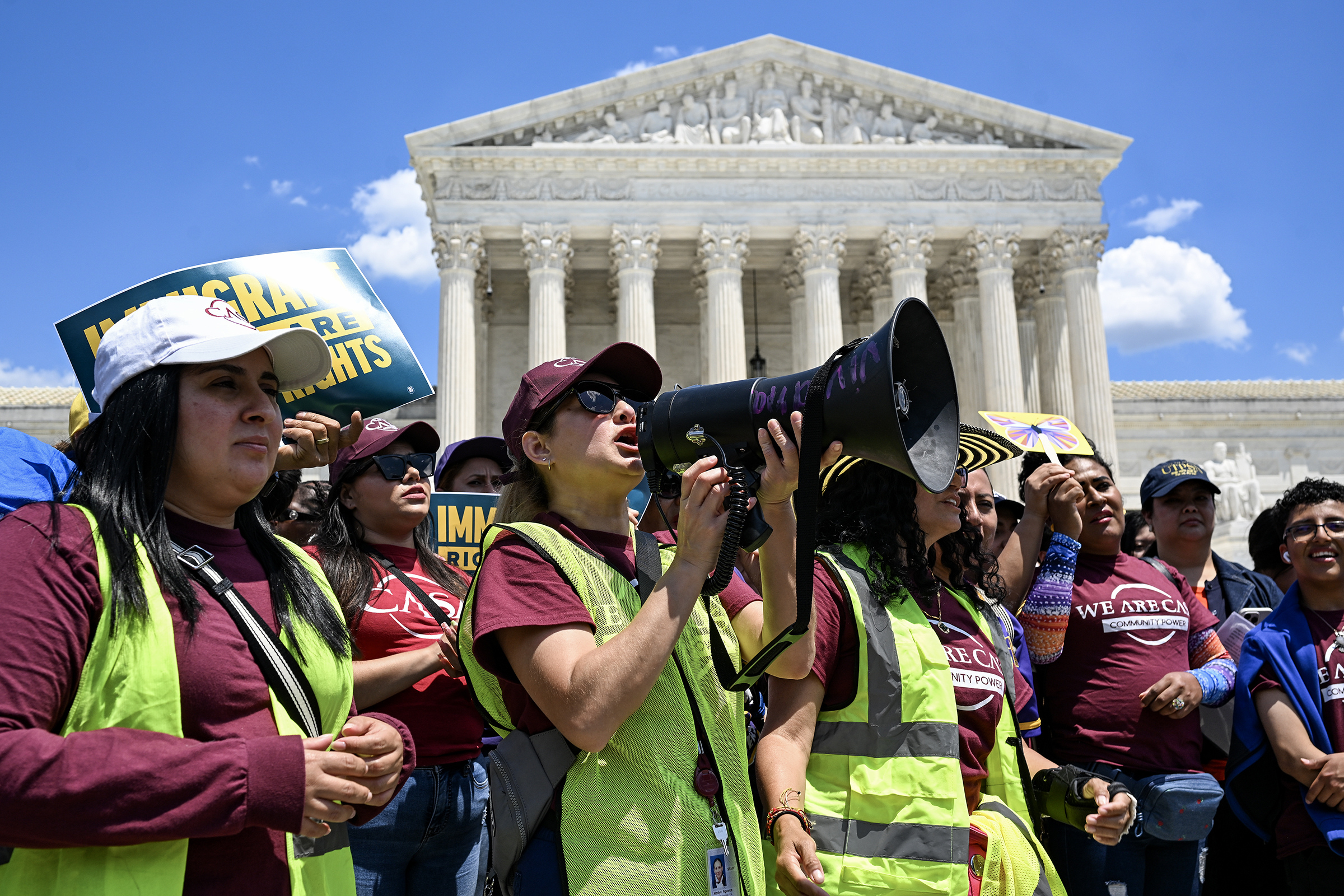
Demonstrators protest outside the U.S. Supreme Court after the court issued a 6-3 ruling that significantly impacts the future of Temporary Protected Status, a U.S. immigration program established by Congress in 1990.KENNY HOLSTON
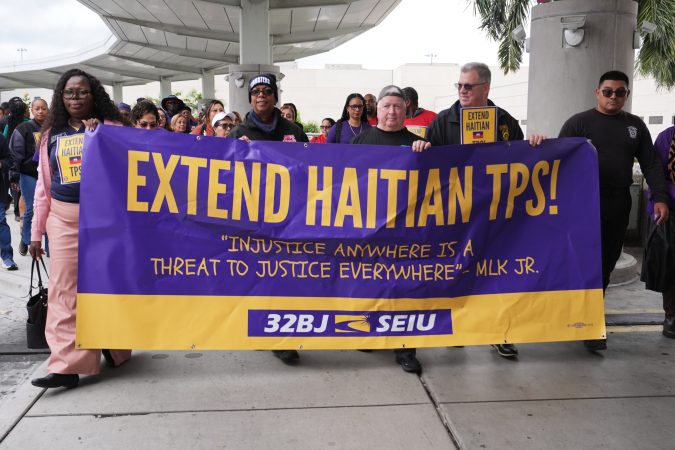
Immigrant allies are planning a rally for Haitians in Philadelphia on Thursday.
TPS is a humanitarian status that the U.S. can grant to foreign nationals whose countries are embroiled in war, environmental disasters, epidemics, or other extraordinary circumstances. It provides work authorization and protection from removal, but no path to permanent residency or citizenship.
People with TPS participate in the labor force at a rate of 85%, well above the overall U.S. rate of 63%, according to a new policy briefing from FWD.us, a bipartisan advocate for immigration and criminal justice reform.
About one-third of TPS households own homes and pay mortgages.
Each year, people with TPS pay about $7.8 billion in federal, payroll, state, and local taxes, and contribute $690 million to Social Security, FWD.us said.
Haitian TPS-holders pay close to a billion dollars in taxes annually, according to the American Immigration Council.
They compose a disproportionate share of nursing aides and long-term-care assistants, and any removal is expected to hurt nursing homes and assisted-living facilities that already face a shortage of workers.
“In Ohio, Florida, and Pennsylvania, businesses will lose workers, the elderly will lose caretakers, and families will be separated,” said Vanessa Cárdenas, executive director of America’s Voice, a Washington-based advocacy organization.
The pro-business U.S. Chamber of Commerce has urged the Senate to pass legislation that would extend protections for Haiti, in order “to prevent significant disruption to America’s workforce and avoid an unnecessary humanitarian crisis.”
The chamber knows TPS was never intended to be permanent, it wrote in a letter to Senate leadership, but the reality is hundreds of thousands of Haitian nationals have lived and worked lawfully in the U.S., “contributing to communities and filling critical positions throughout the American economy.”
At the same time, widespread violence and governmental dysfunction in Haiti “make safe and orderly large-scale repatriation unrealistic.”
Ukrainians in the U.S. face a similar situation.
Many have nothing to return to ― their homes were destroyed in the war. Or they lived in cities that face constant bombardment, making any return potentially deadly.
The Philadelphia region has been a main resettlement area for people escaping the war, spurred by the vitality of a local Ukrainian community that is tens of thousands strong. Now Ukrainians who fled to the U.S. see their TPS scheduled to end on Oct. 19, and wonder how they will afford food and housing if that happens.
“People are really panicked,” said Iryna Mazur, the honorary consul of Ukraine in Philadelphia.
Ukrainians need both an extension and a redesignation of TPS ― the latter allowing newer arrivals to qualify, she said. Employers are upset, too, worried they are about to lose good, qualified workers, including many employed as mechanics or plumbers’ and electricians’ assistants.
“They are losing their employees, and their businesses will be hurt,” Mazur said. “We need the [Trump] administration to act.”
After nearly 50 quizzes, it’s time to bid adieu to Citywide Quest! We’ll show you a photo taken in the Philly area, you drop a pin where you think it was taken, and we’ll tell you a fun story behind the photo. Good luck.
Round #44
Question 1
Our very first Citywide Quest question was this photo. Where was it taken?
Loading…
ClickTap on map to guess the location in the photo
ClickTap again to change your guess and hit submit when you're happy
You will be scored at the end. The closer to the location the better the score
Tom Gralish / Staff Photographer
Pretty good/Not bad/Way off! Your guess was from the location.Spot on! Your guess was exactly at the location. Here's also where a random selection of Inquirer readers guessed.
The theme of our first ever Citywide Quest was arts and culture institutions in Philadelphia. The “Paint Torch” sculpture by Claes Oldenburg was installed at the Pennsylvania Academy of the Fine Arts in 2011.
Question 2
Where is this mall outside of city limits?
Loading…
Tyger Williams / Staff Photographer
Pretty good/Not bad/Way off! Your guess was from the location.Spot on! Your guess was exactly at the location. Here's also where a random selection of Inquirer readers guessed.
Back in November 2025, we asked you to pinpoint this photo taken at King of Prussia Mall. We received a lot of reader emails about this. One reader pushed back, saying, “It says Philly quiz and the second answer was King of Prussia Mall. Not in Philly is it?”
We do say the photos are in the Philly area, but they are right: The mall is not within city limits. Of the 132 questions, this was easily the one with most feedback.
Quiz continues after ad
Question 3
Where is this Easter egg?
Loading…
Jasen Lo
Pretty good/Not bad/Way off! Your guess was from the location.Spot on! Your guess was exactly at the location. Here's also where a random selection of Inquirer readers guessed.
Our Easter-themed quiz had to be an Easter egg hunt. Interactives journalist-engineer Jasen Lo hopped on his bike with a bag full of eggs and took photos across the city – including this one taken of the German Society Of Pennsylvania, from the median of Spring Garden.
One reader presumed the eggs were Photoshopped into existing photos. We could have done it that way, but where’s the fun in that?
Question 4
Where is this sundial, which is definitely where it’s supposed to be?
Loading…
Jasen Lo
Pretty good/Not bad/Way off! Your guess was from the location.Spot on! Your guess was exactly at the location. Here's also where a random selection of Inquirer readers guessed.
For a time-themed edition of Citywide Quest, we asked you to identify the location of this Calder-created sundial sculpture — but not before we unintentionally caused a small panic at the Fairmount Park Conservancy.
When we sent a photographer to Fairmount Park to capture the sculpture, it could not be found! We called park officials, worried that it had been stolen. Another visit and more accurate coordinates quickly resolved the mystery and put everyone’s concerns to rest.
Question 5
For our final question, where is the room where Citywide Quest happens?
Loading…
Jasen Lo
Pretty good/Not bad/Way off! Your guess was from the location.Spot on! Your guess was exactly at the location. Here's also where a random selection of Inquirer readers guessed.
The Inquirer office building is located on 100 S. Independence Mall West, where – every week since October – the Interactives team has created a new round of Citywide Quest. We’ve asked you to guess the locations of photos taken all over the Philly area, from down the Shore to islands on the Delaware and Schuylkill.
Our summer intern last year, Levi Jiang, designed and developed the game that you’ve come to know and love. Thanks, Levi!
Your Score
ARank
Amazing work. We hate to say adieu.
BRank
Good stuff. Take a bow, and we’ll take our leave.
CRank
C you later, alligator.
DRank
D isn’t great. We’d hoped to depart on a better note.
FRank
We don’t want to say you failed, but maybe it’s for the best we all moved on.
You beat % of other Inquirer readers.
We would like to thank everyone who played Citywide Quest over the past year. Unfortunately, we have some sad news: this is the last ever weekly edition of Citywide Quest. Thanks for playing, and stay tuned to the Inquirer, as Citywide Quest isn’t the only quiz in town.
Staff Contributors
Reporting: Jasen Lo, Garland Fordice, Charmaine Runes, and Sam Morris
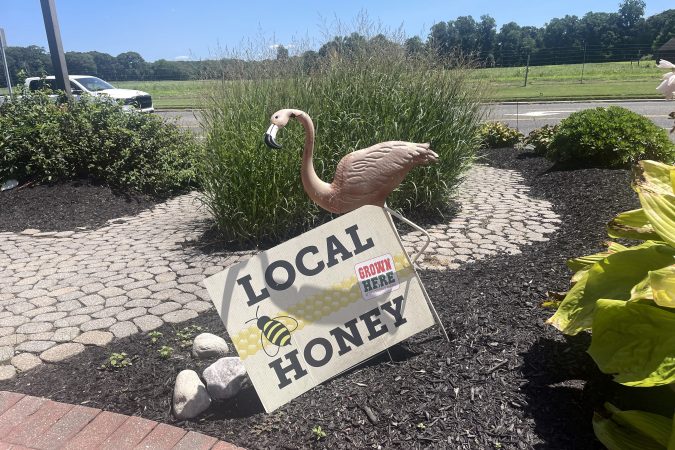
The juxtaposition of a flamingo and a honey bee may not have doubled you over in laughter, but it had me pause while walking into a South Jersey farm market. And it made me smile.
Then I started to overthink it. Am I missing a joke here? “Q: What’s the difference between a flamingo and a honey bee?” Or, “a bee and a flamingo walk into a bar.”
Nope. That doesn’t work either. Nor does a meme about having “the” birds and the bees “talk.”
All this to justify picking that picture to feature with this column. Some weeks it’s an easier choice, and this week’s got me thinking about what in the newspaper business is called a standalone photo.
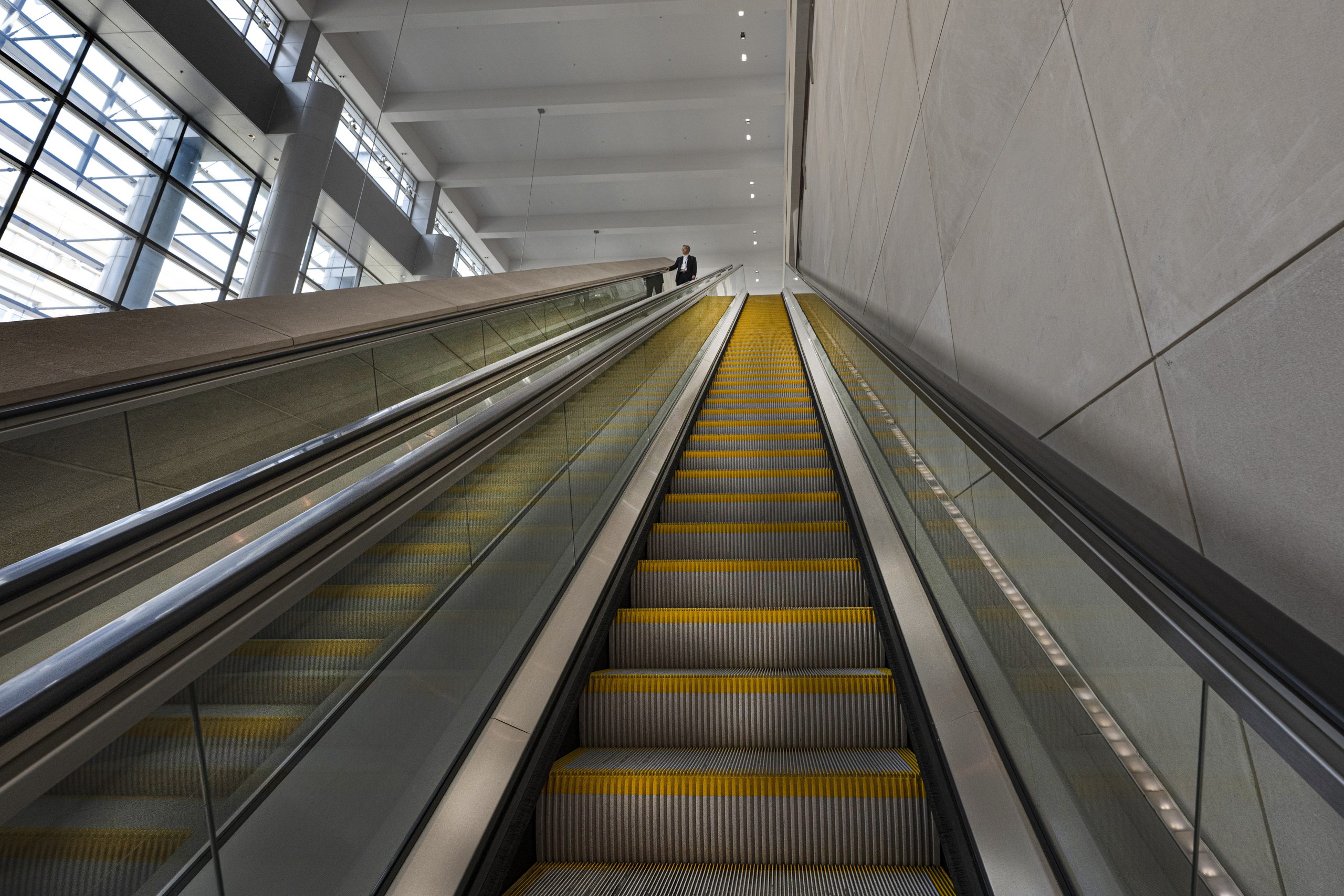
A standalone photo made while my colleague was taking the escalator to his assignment at the International Congress of Mathematicians at the Convention Center on Monday.Jose F. Moreno / Staff Photographer
Aka, a photo feature or wild art, a standalone is a picture published without an accompanying article. I talked about it in a previous column (click bonus: the photos there are from a cold, snowy January day. Maybe refreshing to look at now, as we’re here in the dog days of summer).
In the heyday of dead-tree, printed ink-on-paper analog versions of newspapers not every story had a picture, so standalones were used when editors wanted to add some visual variety to a page that was all gray. That is precisely the 1998 origin of this column: it broke up a text-heavy page containing community news, calendars, traffic reports, school information, and volunteer listings.
Online publishing changed everything, and digital design evolved toward image-heavy layouts. Since our brains process pictures much faster than words, photos make a story more likely to grab a reader’s attention while scrolling.
Suddenly every story on news websites had an image attached. Pictures became plentiful.
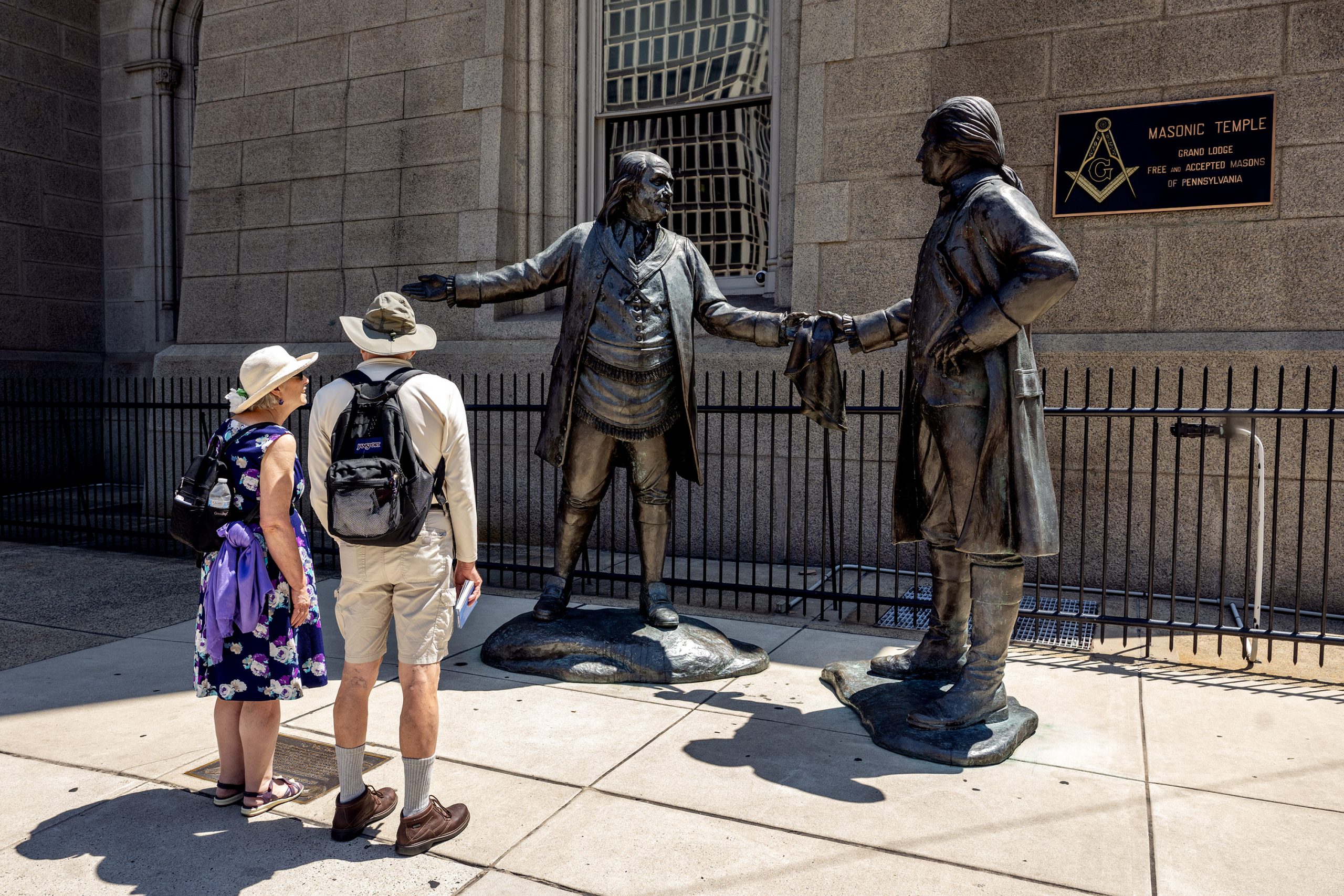
A standalone of two prominent Freemasons – Benjamin Franklin and George Washington – standing in bronze outside the Grand Lodge Masonic Library and Museum across the street from City Hall. (“The Bond” was created by sculptor Jim West in 2018.)Tom Gralish / Staff Photographer
And that’s the paradox. Even though the internet is highly visual, it favors rapid consumption rather than contemplation. Lost in the mishmash array of thumbnails on a website, it is harder to appreciate a storytelling standalone photo, or enjoy the much slower experience of pacing through a dozen images and captions in lengthy photo essays.
And that brings me around to a photo I saw this week. A reader submitted a picture they’d snapped of a young man outside Reading Terminal Market dressed in a solid-color button-down shirt with trousers held up by suspenders instead of a belt and wearing a broad-brimmed straw hat closely examining a parked Uber Eats’ delivery bot.
I reacted to it just as I did with the flamingo/honey bee, with a smile.
For decades the old weekly LIFE magazine had a standing feature on the last page called Miscellany. It was mostly pictures of people and animals in unexpected or humorous situations. A standalone.
Even with an abundant canvas there really isn’t a place on our website for a standalone photo — like the bot — without an attached story.
Or maybe there is. I have this column where my unattached images are displayed every Saturday and I’m happy to share some of the space (means less writing for me). So readers, if you see and take a picture like those on LIFE’s back-of-the-book page, email it to me.
(By the way, even though it was taken in a public place we wouldn’t have used the Amish/bot photo anyway. The subject may belong to a community that doesn’t enjoy being photographed, and he was minor. The photographer needed to talk to him — and a parent — to provide more context. But then it would no longer be a standalone.)
And remember, if a bee lands on you, freeze. Let it investigate and it will leave without stinging as long as it doesn’t detect a threat. If a flamingo lands on you, well, you’ve got a different problem.
Since 1998 a black-and-white photo has appeared every Monday in staff photographer Tom Gralish’s “Scene Through the Lens” photo column in the print editions of The Inquirer’s local news section. Here are the most recent, in color:
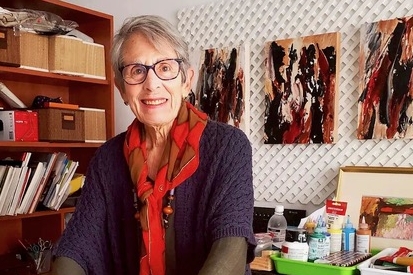
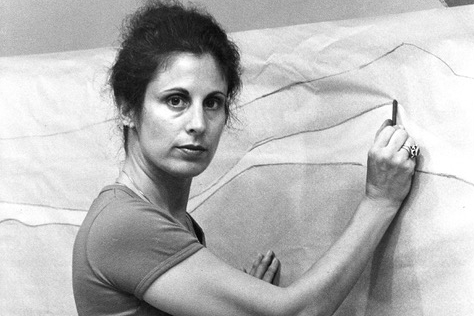
Barbara Gillette Price, 87, formerly of Philadelphia, celebrated painter and designer, former president of Moore College of Art and Design, former dean of Cranbrook Academy of Art in Michigan, former vice president for academic affairs at the Maryland Institute College of Art in Baltimore, fine arts teacher, mentor, and role model, died Friday, April 24, of age-associated decline at a hospital in Granada, Spain.
A lifelong artist and longtime educator, Ms. Gillette Price liked to skip her high school classes in the 1950s and wander around the galleries at the Philadelphia Museum of Art. In sixth grade, she told The Inquirer in 1994, her artistic talent drew attention from the teacher when her drawing of a female form was all too accurate.
She took Saturday classes at Temple University’s Tyler School of Art and the Fleisher Art Memorial when she was young, and earned a scholarship to the old Philadelphia Museum School of Art. She married artist Melville Price in 1957, moved to Tuscaloosa, Ala., in 1958, and earned bachelor’s and master’s degrees in fine arts at the University of Alabama.
She joined Cranbrook Academy of Art in 1978, the Maryland Institute College of Art in 1982, and Moore in 1994. At each stop, she renovated nearby old buildings into studios and galleries, expanded curriculum, and invigorated students with international and innovative programs.
At Moore, she increased enrollment, established a career center, and personally refurbished her three-story studio on North Second Street into a gallery where students exhibited their work and handled logistics and publicity. She also forged working relationships with the Philadelphia School District and other art institutions, supervised an advertising campaign for female artists, and served as a role model for working artists in academia.
“That’s why I think my presence at Moore is a good thing,” she told The Inquirer in 1994.
In 1998, Rochelle Levy, then chair of Moore’s board of trustees, said: “Barbara has really been our ambassador out there. She has set an incredible role model for the students as a woman artist.”
Ms. Gillette Price left Moore in 1998, moved to Spain in 2000, taught art to primary school students, and continued to create and show her work. “Her commitment to arts education helped shape generations of creative thinkers,” former colleagues at Moore said in a tribute. “Her legacy lives on through the institutions she helped strengthen, the students she inspired, and the vibrant body of artistic work she leaves behind.”
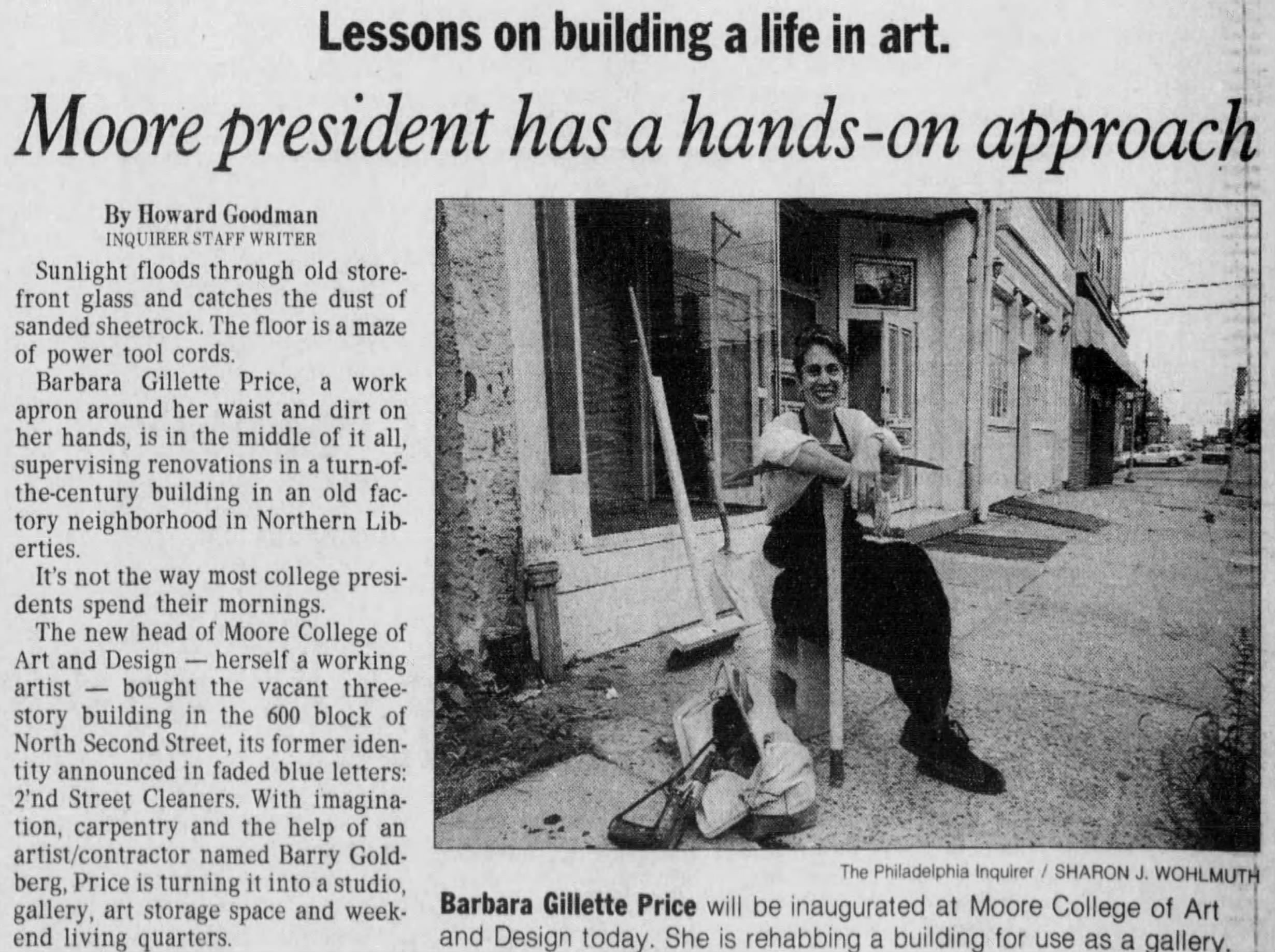
Ms. Gillette Price was featured in The Inquirer when she joined Moore in 1994.Newspapers.com
One critic said her work “is of an inherent elegance that emerges from excellent craftsmanship and an intelligent narrative.”
She showed in dozens of solo and group exhibitions in Spain, Philadelphia, Maryland, Michigan, Washington, and elsewhere, and liked to work in the gallery as well as her studio. She painted about nature, light, woman’s perspectives, isolation and fear during the COVID-19 pandemic, and other topics.
“I seek to make the ordinary extraordinary,” she said on her website, barbaragilletteprice.com. “I am inspired by images I accumulate as I travel and view the world about me. This takes the form of remembered landscapes, figurative compositions, and subtle political statements.”
She was active in the Civil Rights Movement in Alabama in the 1960s, worked with the Woman’s Caucus for Art in Washington in the 1970s, and taught ceramics, painting, and drawing at the old Corcoran School of Art and Design in Washington and elsewhere. She belonged to the College Art Association and was on boards at the National Association of Schools of Art and Design, the Philadelphia Art Commission, and other organizations.
She earned grants for her painting and wrote essays and white papers about art. In one paper, she said: “The arts are the humanizing element in the education of the citizens of the 21st century.”
Barbara Amelia Gillette was born June 26, 1938, in Philadelphia. She and her family spent many summers in Atlantic City, and she graduated from Philadelphia High School for Girls.
She took piano lessons, attended Saturday concerts at the Philadelphia Orchestra for years, and hung out with high school boyfriend Edward Cutler and others at jazz clubs and the Gilded Cage coffee shop.
Melville Price died in 1970, and she reconnected with Edward Cutler. They married, had a daughter, Michelle, and lived in Washington. They divorced later, and he died earlier.
“I consider my mother’s greatest achievement to be the way she showed up as a parent,” her daughter said. “Her artistic legacy can be found in her paintings, drawings, textiles, and exhibitions. Her personal legacy lives on in the people she inspired, mentored, encouraged, and welcomed into her life.”
Ms. Gillette Price created in the galleries as well as her studio.Barbara Gillette Price
In addition to her daughter, Ms. Gillette Price is survived by a son-in-law, Eric Maroldo, and other relatives. A sister died earlier.
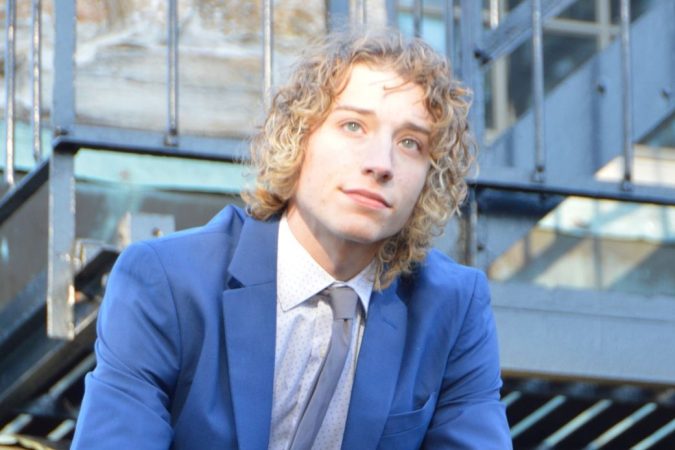
A 48-year-old man suspected of being the hit-and-run driver who killed 20-year-old Temple University student Bryce Wolfe on Kelly Drive in June was arrested Thursday, the U.S. Marshals Service said.
Derek Reid was taken into custody on the 7200 block of Briar Road in the city’s West Oak Lane section, authorities confirmed.
The U.S. Marshals Service said Reid also was being sought by the Philadelphia Police Department’s Special Victims Unit on charges of rape and related offenses involving an underage boy in 2021.
Wolfe, who had just completed his sophomore year at Temple University, was riding his red 2004 Triumph motorcycle on Kelly Drive the night of June 24 when he was struck by a white SUV making an illegal turn onto Reservoir Drive, near the Strawberry Mansion Bridge, Philadelphia police said.
His body became lodged under the SUV and he was dragged for more than a mile, police said. He died at the hospital the next day.
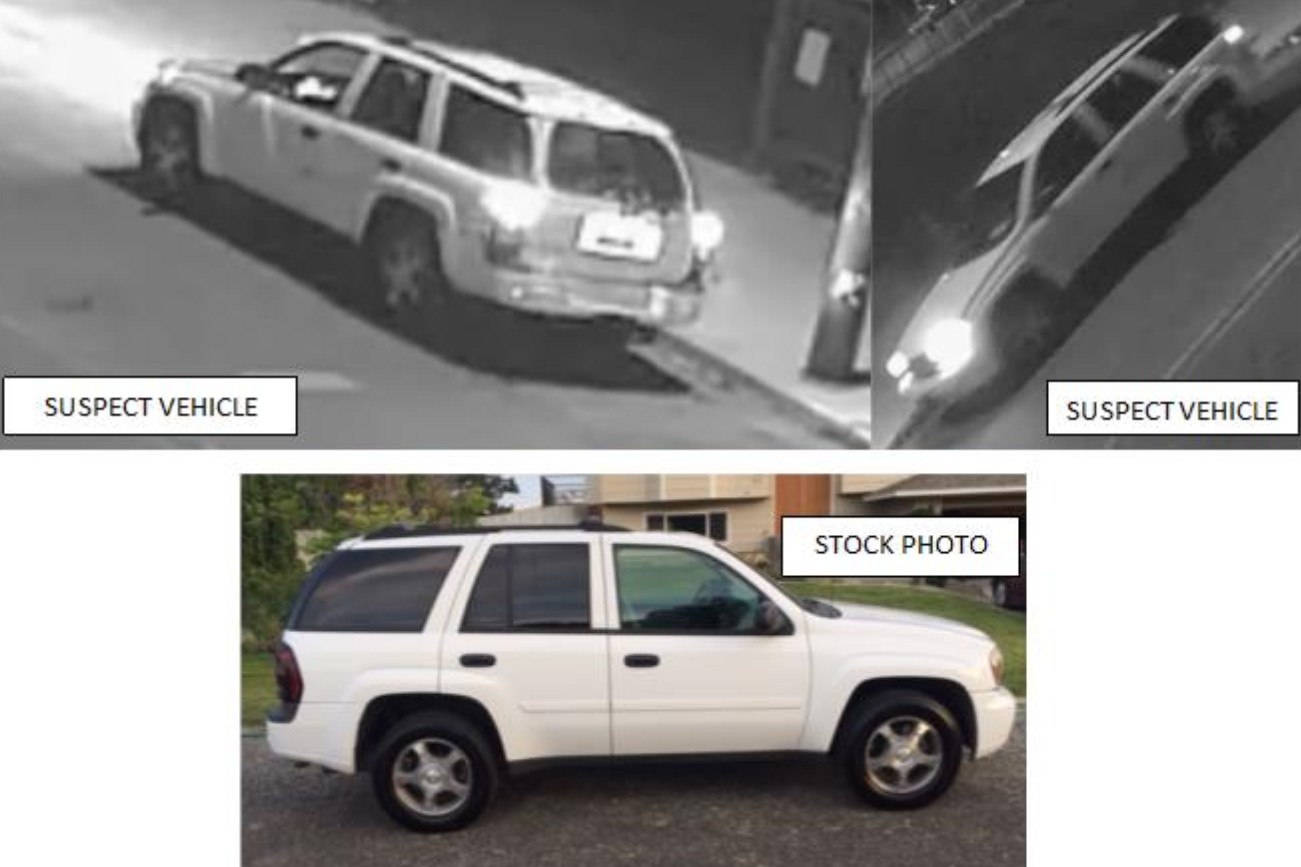
Police later released surveillance images of the SUV suspected in Wolfe’s death. Investigators believe the SUV was a 2001-08 Chevrolet Trailblazer, possibly with damage on the driver’s side, with possible red paint transfer, a broken rear windshield, and a discolored passenger-side front wheel.
The suspected vehicle was located earlier this month, police said.
Police on July 7, 2026, released images of the suspected SUV, believed to be a white 2001-08 Chevrolet Trailblazer, that fatally struck 20-year-old Bryce Wolfe, a Temple University student, on June 24.Philadelphia Police Department
Lori Wolfe, Bryce’s mother, said the Philadelphia police called earlier on Thursday to let her family know that the suspected driver was in custody.
“We were happy they made an arrest,” she said. “I felt there would be an arrest because the accident investigation department of Philadelphia worked very hard to bring justice to Bryce.”
She added: “Although none of this gives our son back to us, the person responsible should be charged with murder. He drug our son for a mile and left him to die in the street.”
Philadelphia District Attorney Larry Krasner on Friday announced that Reid was charged with homicide by vehicle, accident involving death, involuntary murder, and recklessly endangering another person.
Krasner confirmed that Reid was facing charges for a violent sexual assault against a minor, including rape, statutory sexual assault involving a victim between 8 and 11 years old, and related offenses.
After Reid was apprehended by the U.S. Marshals Service, he allegedly admitted to being the driver of the SUV that fatally struck Bryce Wolfe, Krasner said.
Reid was being held on $750,000 bail for the fatal hit-and-run, and $750,000 for the 2021 rape, Krasner said.
“The devastation Defendant Derek Reid inflicted on these two families is horrific. No one deserves to have their son taken away in such a careless way. We will pursue these charges to the fullest extent of the law,” Krasner said in a statement.
“This office also has zero tolerance for predators who brutalize the vulnerable, to include our children and young people. We are standing with these families during their journey of healing and we will do everything we can to seek and secure justice,” Krasner said.
Bryce Wolfe, of Conyngham, a borough in Luzerne County, was an actuarial science major in the Fox School of Business and had just completed his sophomore year.
In an obituary written by his parents, Bryce was described as having lived his life “with a fearless spirit of adventure and a genuine love for the outdoors.”
He “found joy in seeking new challenges and embraced every opportunity to experience the world to its fullest. Whether carving down snow-covered slopes while skiing, exploring miles of trails on his bicycle, or riding motorcycles through rugged dirt tracks and open roads, he felt most alive when he was in motion,” Lori Wolfe and Clarence Wolfe III wrote.
Bryce had started a summer internship and acquired the Triumph to ride while he stayed in Philadelphia, his mother said in a recent interview.
Said Lori Wolfe, “It was the first motorcycle he bought and insured all by himself.”
On April 28, @PhillyPolice SVU charged Derek Reid, 48, with rape, sexual assault, and corruption of a minor. In 2021, he allegedly assaulted a juvenile male. @USMS_Philly apprehended Reid in the 7200 block Briar Rd. He is also a suspect in a June 24 fatal hit and run on Kelly Dr. pic.twitter.com/6zArgJcTKL
— U.S. Marshals Service Philadelphia (@USMS_Philly) July 30, 2026
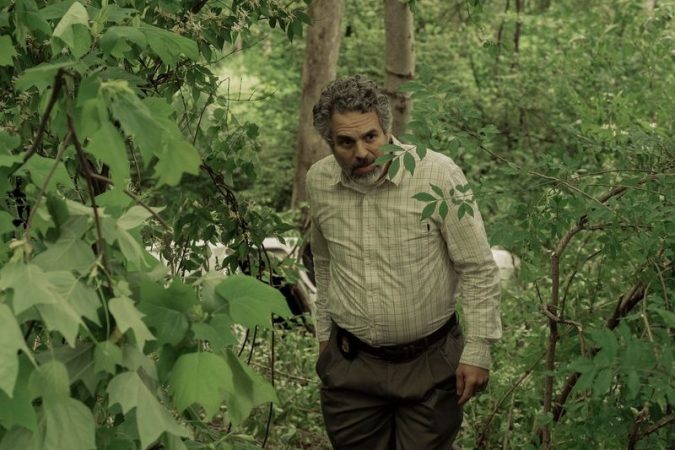
If you’re taking a run through Wissahickon Valley Park next week and spot those signature Mark Ruffalo curls and determined glint in his eye through the tree leaves, worry not! The HBO series Task is filming its second season in the Northwest Philly park Monday through Friday.
On Monday, the Bells Mill West Lot will be closed to the public for filming and will reopen the next day. Visitors can park instead in the Bells Mill East Lot.
On Tuesday and Wednesday, the trail entrance at Manatawna Avenue will not be accessible. Houston Meadow can be accessed through the Houston Playground entrance on the Yellow Trail.
The film crew is slated to park vehicles and equipment on some parts of Forbidden Drive. The trail will remain open, but hikers and runners may see stop signs warning them of “equipment ahead” or to go “slow ahead.”
The Delaware County-set series Task byMare of Easttown creator and Berwyn resident Brad Ingelsby centers on FBI agent Tom Brandis, portrayed by Ruffalo. In the second season, Brandis is leading a new task force and confronting his rival Philadelphia DEA agent Eddie Barnes, played by Mahershala Ali, the Oscar winner who starred in Moonlight, Green Book, and the third season of the HBO crime show True Detective.
The show’s first season also made its way around the city and suburbs. It featured scenes at the Rita’s Italian Ice & Frozen Custard in Collingdale, the Willowbrook Shopping Center in Boothwyn, and Marsh Creek State Park in Downingtown.
Police found a man engulfed in flames along Kensington Avenue Friday morning in what fire department officials called a “non-suspicious” fire.
Police responded to the 3400 block of Kensington Avenue Friday morning for a report of a screaming person. Upon arrival, a person passing by said a 34-year-old man was found on the ground engulfed in flames.
Philadelphia Fire Department medics responded to the scene and transported the man to Temple University Hospital, where he was placed in critical but stable condition.
The circumstances surrounding the incident remain under investigation by the East Detective Division, but the Fire Marshal’s Office ruled the fire to be “non-suspicious.”
Anyone with information regarding this incident is encouraged to contact the East Detective Division or submit an anonymous tip through the Philadelphia Police Department’s tip line at 215-686-TIPS (8477).

 –>
–>  –>
–>  –>
–>  –>
–>  –>
–>  –>
–>  –>
–>