Category: Philadelphia News

  • Dick Langman, retired award-winning editor at The Inquirer, has died at 99

    Dick Langman, retired award-winning editor at The Inquirer, has died at 99

    Dick Langman was always a wordsmith.

    Even as a boy in New York, he loved language, literature, and poetry. He earned a bachelor’s degree in English, took graduate classes at the University of Missouri School of Journalism, and could recite lines from Shakespeare, Wordsworth, and Frost on demand.

    He was generally calm and reasonable, too, his sons said. “He didn’t get upset easily,” his son Mark said.

    His vocabulary was extensive, and he could spell practically any word. So it is no surprise that he spent 50 years, from the early 1950s to his retirement in 2002, as an editor, page designer, and reporter for The Inquirer, the Bulletin, the Morning Call of Allentown, the Pottstown Mercury, the Honolulu Star-Bulletin, and the Evening Tribune in Hornell, N.Y.
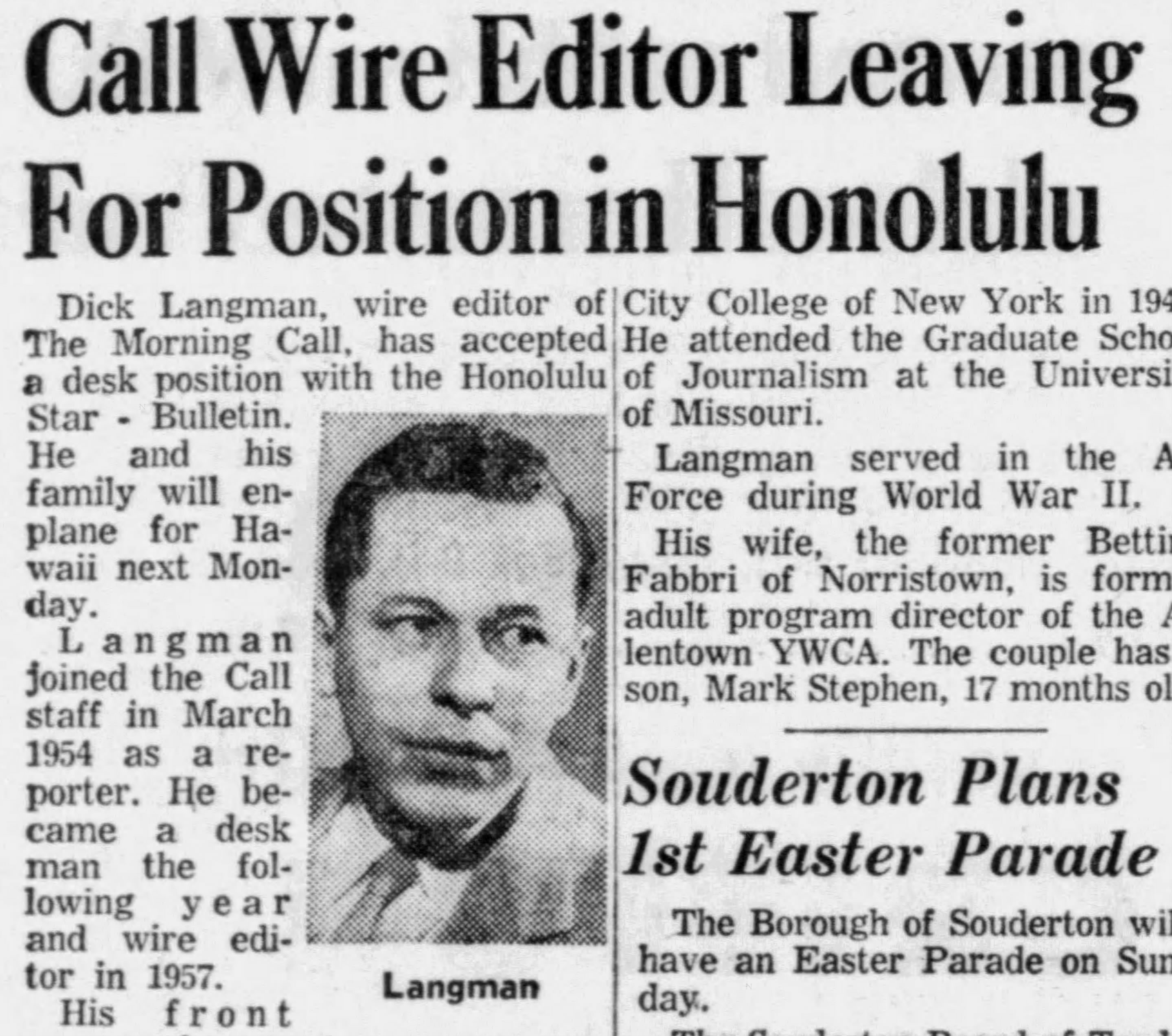
    The Morning Call published this story in 1959 when Mr. Langman left to work in Hawaii.Newspapers.com

    He joined The Inquirer in 1981 and worked mostly nights for 21 years as a copy editor, assistant news editor, and suburban assigning editor. Former colleagues at The Inquirer called him a “meticulous” editor, “enormously patient,” and “a man of great integrity” in online tributes.

    He won an award from the old Pennsylvania Newspaper Publishers Association in 1957 for a front page he designed for the Morning Call and spent 20 years as assistant city editor and news editor at the Bulletin. “I’m glad that I had a chance to work with him,” a former Inquirer copy desk colleague said. “What a pro.” Another said: “I could not have had a better teacher.”

    On Saturday, June 13, Dick Langman died of complications from pneumonia at Bryn Mawr Hospital. He was 99.

    Long before he came to Philadelphia in 1961, Mr. Langman was a seasoned newspaperman. He honed his reporting skills as a writer at the Evening Tribune in New York and the Mercury in Pottstown.
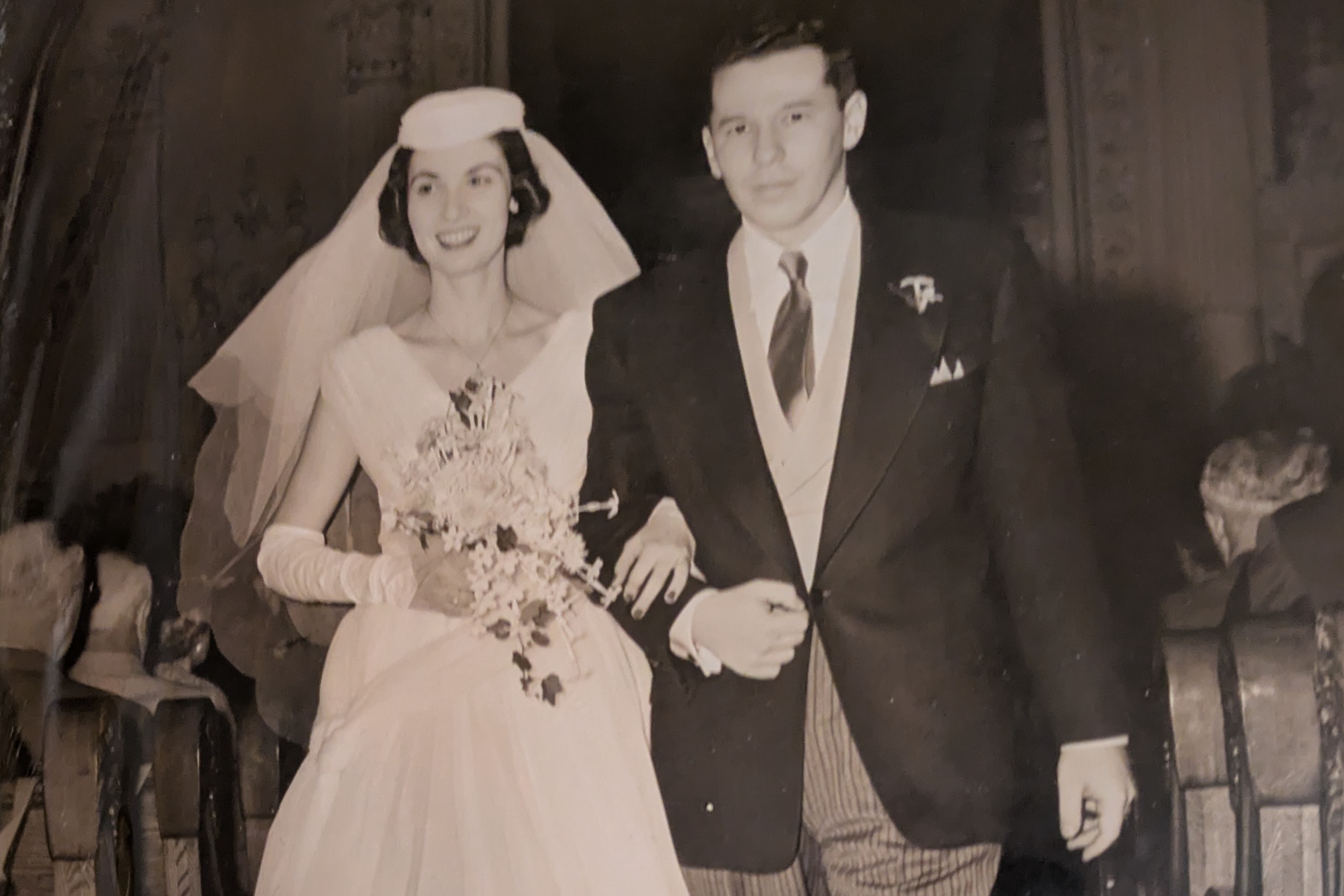
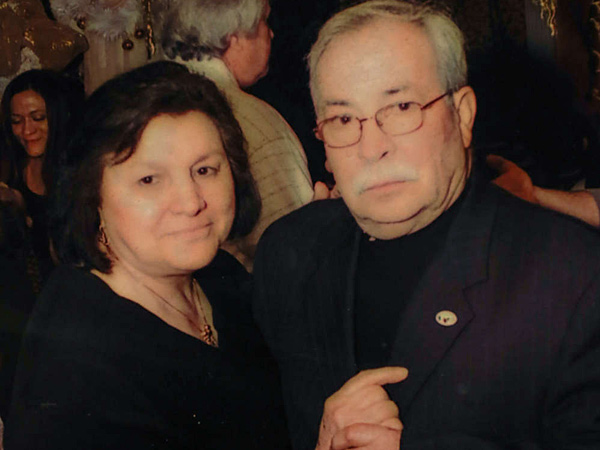
    Mr. Langman and his wife, Betty, married in 1954.Courtesy of the family

    In January 1954, he opened a Page 1 story for the Mercury with: “From clomping around in wooden shoes in Holland to wearing modern footwear in Bechtelsville is a long way, and Mrs. LaVerne Fronheiser is glad to be home. She’s not too glad, however, because her husband had to stay in Germany, where he’s stationed with the infantry.”

    On Page 1 in March 1954, he wrote: “They had need of a chaplain yesterday at borough hall. He could have served well the 50 moaners and groaners whose cars were tagged for parking violations.”

    He moved on to the Morning Call and covered high school sports and other news. He left for Honolulu in 1959 and became sports editor at the Star-Bulletin. But he missed the East Coast and returned to work at the Bulletin in Philadelphia in 1961.

    “Hawaii is one of the loveliest places in the world,” he told the Morning Call. But his wife, Betty, had roots in Norristown, he said, and they both got homesick.
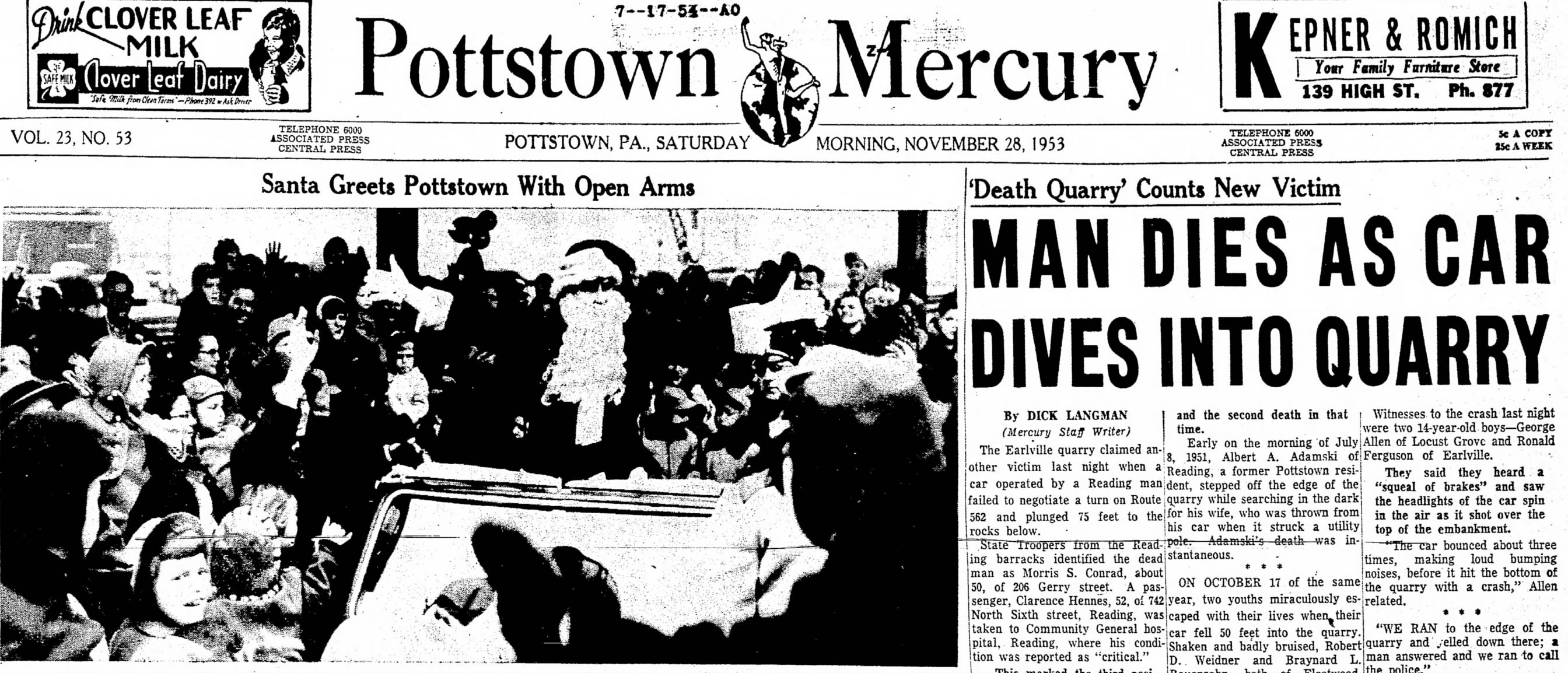
    Mr. Langman wrote this Page 1 story for the Pottstown Mercury in 1953.Newspapers.com

    Earlier, after college, Mr. Langman worked briefly for the Associated Press in New York and as a statistician for what is now the Elias Sports Bureau. He enlisted in the Army after high school in 1944, went to active duty in 1945, and served until the end of World War II.

    At The Inquirer, a former colleague recalled, Mr. Langman edited a story about a horse that had injured a leg. Naturally, he tried to find out which leg was hurt.

    “Dick was a painstaking editor,” his former colleague said on Facebook, “and a master in getting the details right.”

    Richard Langman was born Sept. 5, 1926, in New York. He graduated from Stuyvesant High School and earned a bachelor’s degree at City College of New York in 1948.
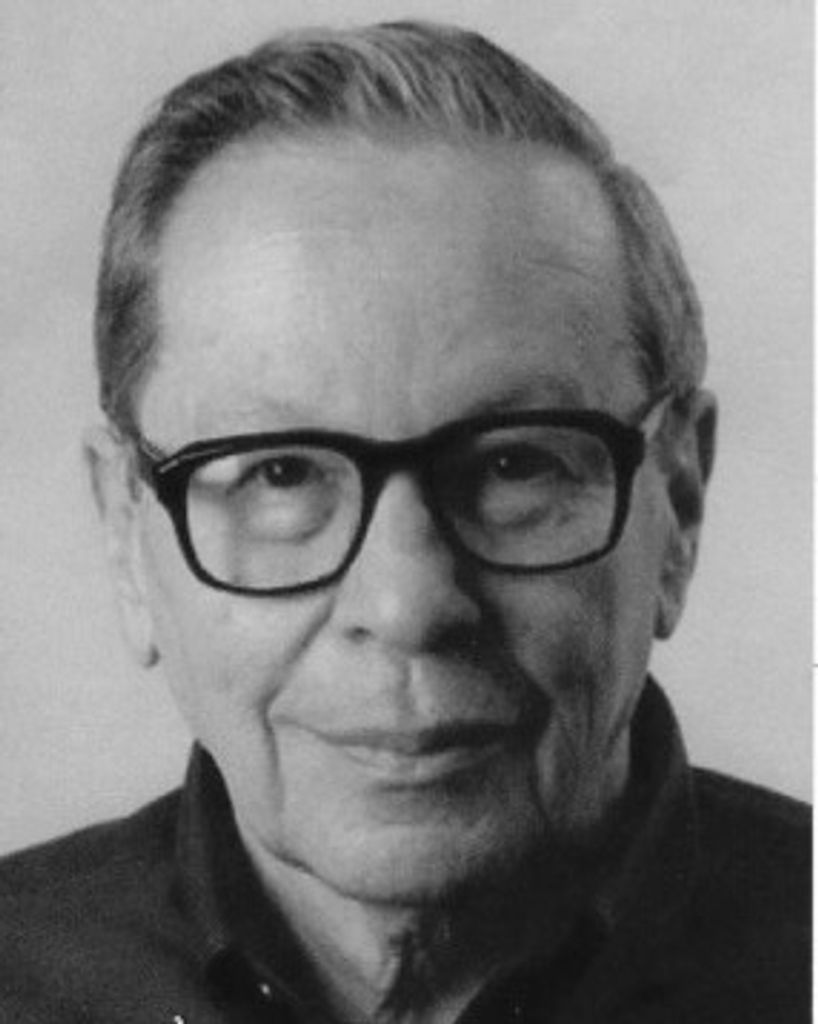
    Mr. Langman enjoyed cooking and shared his favorite recipes with colleagues at The Inquirer.Dick Langman

    He met Betty Fabbri, the society editor at the Mercury, and they married in 1954. The Morning Call announced their union in its Breakfast Chatter column by saying: “Best wishes to reporter Dick Langman, who walks the long mile in Norristown Sunday with Bettina.”

    He and his wife had sons Mark, Peter, and Andrew, and lived in Allentown, Ardmore, and the Quadrangle retirement community in Haverford. His wife died in 2017.

    Mr. Langman and his wife shared wanderlust, and they went to Russia, Austria, Hungary, Europe, and elsewhere. They visited Italy 10 times, France three times, and Cape May as often as possible.

    They liked to cook together, too, and he shared his favorite recipes with colleagues at The Inquirer. At the Bulletin, he became part of the “old bulls” lunch group.

    He submitted his own prewritten obituary to his funeral director long before it was needed and said: “He enjoyed classical music, poetry, mystery novels, and British mystery and comedy.” He also liked crossword puzzles, fishing, table tennis, classic movies, and duplicate bridge.

    He cheered for the New York Yankees baseball team and the Green Bay Packers and Penn State football teams.

    “He delighted in jokes and was a real fan of the Marx Brothers,” his son Peter said. “When we were children and a local movie theater would feature a Marx Brothers film for one night, my parents made sure that we went. Fond memories indeed.”

    In addition to his sons, Mr. Langman is survived by two grandchildren and other relatives.

    Services were held earlier.

    Donations in his name may be made to the Lenfest Institute for Journalism, 100 S. Independence Mall West, Suite 600, Philadelphia, Pa. 19106.
  • Albert Gury, popular painter and award-winning professor of art education, has died at 74

    Albert Gury, popular painter and award-winning professor of art education, has died at 74

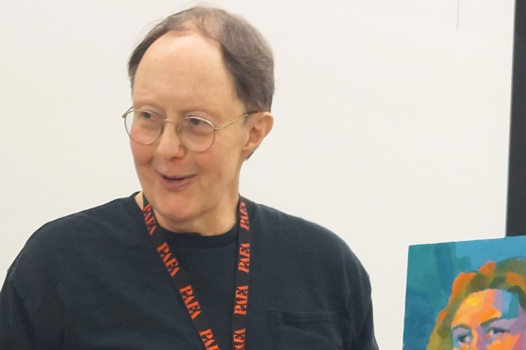
    Albert Gury, 74, of Philadelphia, lifelong painter, former chair of the painting department at the Pennsylvania Academy of the Fine Arts, award-winning lecturer at the old University of the Arts and other institutions, author, mentor, community advocate, and cat rescuer, died Thursday, June 25, after a long illness at the Hospital of the University of Pennsylvania.

    Born in Peoria, Ill., Professor Gury came to Philadelphia in the early 1970s after a professor at St. Louis University advised him to enroll at the Pennsylvania Academy of the Fine Arts. He did, and he never left.

    He earned a four-year certificate in painting at PAFA in 1976 and, starting in 1980, taught painting, drawing, figure drawing, anatomy, art history, and art education at PAFA. He was chair of the painting department from 2000 to 2022 and creator of several innovative art education programs.

    He painted portraits of young gun violence victims for PAFA’s Lost Dreams on Canvas exhibit and founded and directed the academy’s popular after-school free art program for high school students in 1994. In 2026, he earned a community recognition award from the Philadelphia School District.

    “This is a way for us to reach out to the community and really try to do something beneficial,” Professor Gury told The Inquirer in 2005. “We train them as if they are college freshmen, not high school kids. It raises the bar on the quality of their work.”

    Professor Gury also lectured for decades at University of the Arts, the Fleisher Art Memorial, the Barnes Foundation, and elsewhere. He instructed students at Jefferson Medical College on anatomy, consulted for the city’s mural arts program, and ran art seminars and painting workshops regionally and in Scotland and Croatia.

    He earned a master teacher’s award from University of the Arts and a master’s degree in fine arts at the University of Delaware in 1992. Former students called him “unfailingly caring, and supportive, and smart,” and “very generous in sharing his wealth of knowledge” in online tributes. One said: “What a great example to us all.”

    In a tribute, PAFA officials said: “We remember Al not only for what he taught but for how he taught: with patience, conviction, humor, discipline, and an open heart.”

    Professor Gury (center) draws and explains the nature of the human form to students at Jefferson Medical College in 2007.

    In the studio, Professor Gury painted colorful figures, landscapes, still life, and portraits. His portrait Alice of Dunk’s Ferry hangs in historic Christ Church in Old City, and he showed at the Philadelphia Museum of Art, the F.A.N. Gallery on Arch Street, the National Academy of Design in New York, the U.S. Capitol in Washington, and elsewhere.

    He especially enjoyed painting abstract landscapes, he said in a 2014 video, because “they are pure.” He told the Daily News in 2000: “I like to paint the things I love. I like the intimacy of small paintings. I move the paint around and put together elements in nature even if they don’t exist that way. I like to imagine things rather than just paint what is in front of me. Sometimes it becomes a little surreal.”

    In 2000, critic Anne R. Fabbri said in the Daily News that many of Professor Gury’s paintings are “united by his layered brushwork, tonal depths, and the creative act that transforms color, line, and composition into a life-enhancing work of art.” He was honored by the Philadelphia Sketch Club in 2017.

    Professor Gury wrote three textbooks: Alla Prima: A Contemporary Guide to Traditional Direct Painting in 2009, Color for Painters: A Guide to Traditions and Practice in 2010, and Foundations of Drawing: A Practical Guide to Art History, Tools, Techniques, and Styles in 2017. He also contributed articles about painting and art to magazines and museum publications around the world, and was a contributing editor for the international journal Per Contra.

    In his neighborhood, Professor Gury advocated for better housing and fostered rescue cats in his home. He volunteered at the Philadelphia Animal Welfare Society and was named its 2015 volunteer of the year. The group renamed its kitten maternity ward after him.

    “We are searching for words to express just how extraordinary Al was, what a profound difference he made, and how much we loved and appreciated him,” colleagues at PAWS said in a tribute. “We hope he knew what an immense impact he made, and how much better and more beautiful the world is because of him.”

    Albert Francis Gury was born Oct. 23, 1951. A family friend introduced him to painting when he was young, and he spent many days roaming the galleries at the Art Institute of Chicago while his father worked downtown.

    He earned a bachelor’s degree in fine arts at St. Louis University in 1973 and won scholarships, grants, and honors as both a student and a professor at PAFA. He collected quilts and rare books on art.

    Professor Gury loved animals, especially cats.Philadelphia Animal Welfare Society

    In 2018, his apartment building on Chestnut Street burned down in an early-morning fire. Several of his cats and parakeets perished, and much of his artwork was lost. “The whole thing is just tragic,” he told The Inquirer then.

    Friends called him “a classic caregiver” and a “protector of the underdog.” Longtime friend and colleague Reza Ghanad said: “If you were feeling down, he would pick you up.”

    Friend and colleague Morgan Hobbs said: “He noticed students who could have gone unnoticed without him. He had a special gift for that.”

    Professor Gury is survived by several relatives.

    His ashes are interred at Christ Church Burial Ground. A celebration of his life is to be held later.

    Donations in his name may be made to the Philadelphia Animal Welfare Society, 100 N. Second St., Philadelphia, Pa. 19106.

    Much of Professor Gury’s work features color and shape. Al Gury
  • 3rd person charged in West Philly shooting that killed 2, wounded 3 others

    3rd person charged in West Philly shooting that killed 2, wounded 3 others

    A third person has been charged in a March shooting that killed two men and wounded three others in West Philadelphia, court records show.

    Nysir Mahoney, 24, was charged with murder, attempted murder, and other offenses in the March 30 shooting at 60th and Delancey Streets, records show.

    Mahoney was being held without bail at Curran-Fromhold Correctional Facility. A court-appointed attorney listed for Mahoney declined to comment on the case.

    Two other men, Andre Bowie, 22, and Marquis Andrews, 23, also have been charged in the case.

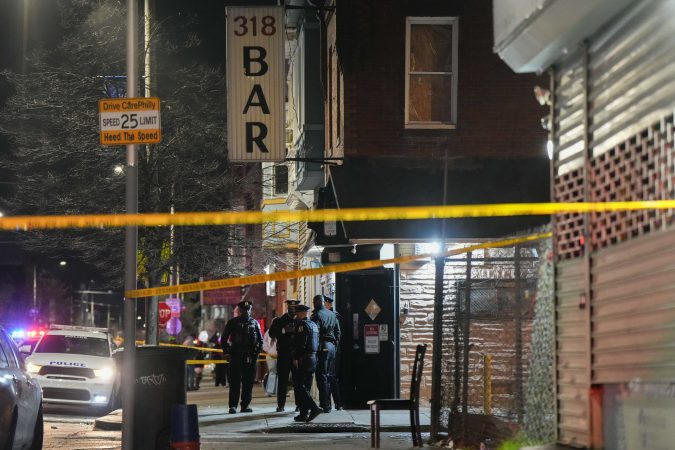
    Police said several assailants drove in a Mercedes to 60th and Delancey Streets on the night of March 30 and opened fire on a group of people standing outside a corner bar, wounding three and killing Paul “PJ” Cobb and Naasir Boyd, both 24.

    More than a dozen shots were fired from three 9mm handguns, police said. Police later found the Mercedes on fire on the 1200 block of Cumberland Street.

    Police investigators believe the March 30 shooting was motivated by a feud and led to a retaliatory shooting that inadvertently killed 20-year-old Imani Ringgold, who was walking with a slice of pizza and talking to her grandmother on the phone when she was shot on Market Street near 60th in April.

    She was an innocent bystander and had no connection to the feud, police said.

  • Northwest Philly woman who staged her husband’s death as a suicide pleads guilty to third-degree murder

    Northwest Philly woman who staged her husband’s death as a suicide pleads guilty to third-degree murder

    A Northwest Philadelphia woman who fatally shot her estranged husband and staged his death as a suicide pleaded guilty Wednesday to murder and related crimes.

    Danielle Baxter, 40, was accused of killing 38-year-old Jordan Baxter at her Andorra home in March 2025.

    Investigators said Baxter shot and killed her husband, a longtime SEPTA employee, in the bedroom of her home before dragging his body down the stairs and staging his body between two cars in a nearby driveway.

    Police found Jordan Baxter there around 7 a.m., covered in blood. He had been shot through the back of the head, they said.

    While investigators initially believed Baxter’s death was a suicide because he was found with a 9mm pistol in his hand, they soon questioned the nature of the crime after finding irregularities in statements made by Danielle Baxter.

    Assistant District Attorney Ashley Toczylowski of the homicide unit outlined those details during Baxter’s plea hearing before Common Pleas Court Judge J. Scott O’Keefe.

    It was Danielle Baxter who called police to report her husband’s death, Toczylowski said. She told investigators she came across her husband’s body while she was taking out the trash that morning at her West Bells Mill Road home.

    But investigators noted that Baxter was breathing heavily on the call and was unable to answer basic questions about her husband’s condition, she said.

    Inside the home, police found blood pooling on Baxter’s bed where a pillow would be. Baxter, Toczylowski said, lied when she told police the blood was there because she had recently had her period.

    Investigators later downloaded data from Baxter’s Apple Watch and learned she had recorded a “very steep level of activity” between 1 and 4 a.m. the morning Jordan Baxter was killed, activity they attributed to climbing multiple flights of stairs.

    And investigators eventually determined that the bullet that killed Jordan Baxter was not of the same caliber as the weapon found on his body.

    Rather, the bullet matched a gun that investigators recovered from Danielle Baxter’s closet, Toczylowski said.

    Taken together, those factors led investigators to believe the killing “was not a suicide, but rather a staged homicide,” she said.

    Baxter said little in O’Keefe’s courtroom beyond acknowledging that she was pleading guilty to third-degree murder and possessing an instrument of a crime.

    She is expected to be sentenced Nov. 18.

    Jonathan Strange, Baxter’s attorney with the Defender Association of Philadelphia, declined to comment.

  • Woman charged in 2014 cold case killing of 69-year-old Northeast Philly man who was shot and dumped in the Schuylkill

    Woman charged in 2014 cold case killing of 69-year-old Northeast Philly man who was shot and dumped in the Schuylkill

    For nearly a dozen years, Vito Maglio’s family has agonized over who could have shot him in the head and neck, torched his SUV, then dumped his body into the Schuylkill.

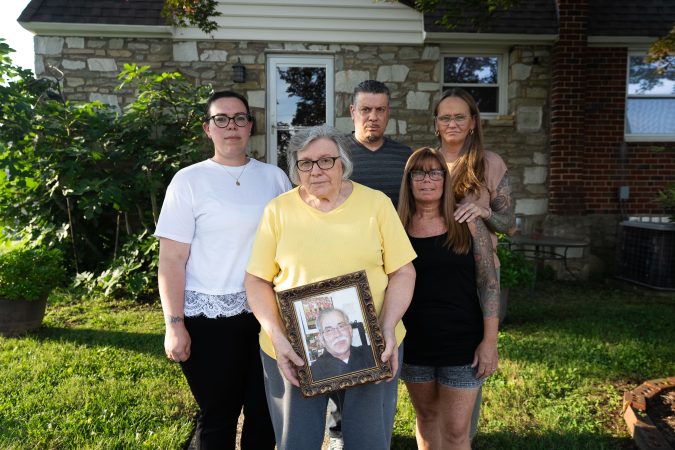
    “I said to myself, maybe I’ll die before I know,” his wife of 40 years, Maria, 75, said from her Bustleton home.

    Then, this week, Philadelphia police arrested a 30-year-old woman in connection with Maglio’s death, saying she and others robbed him of his gold ring, phone, and a small amount of cash, then killed him and tossed his body into the river in December 2014.

    Melanie Morat was taken into custody at her East Frankford home Tuesday afternoon and is expected to be charged with murder, robbery, arson, and related crimes, police said. Detectives are investigating whether at least two other people were involved in the crime, law enforcement sources said.

    The arrest comes as Philadelphia homicide detectives, with more time and resources amid a striking decline in violence, continue to work through a backlog of unsolved cases — a combination of the hundreds of killings from the pandemic-era spike in shootings and higher-profile cases from years past that ran cold.

    The killing of Maglio, 69, was among the latter, a disappearance and death that shocked his family and community, and left police struggling to amass enough evidence to make an arrest.

    Maglio, a father of six, was a mechanic who owned several gas stations and ran a social club, the Napoli Association in Rhawnhurst, for many years before selling the businesses and retiring in November 2014.

    Maria and Vito Maglio had been married for 40 years.

    But on Dec. 14, 2014, he did not return to his Bustleton home, and his family reported him missing. Several days later, police found his GMC Yukon in East Germantown, charred and windowless, with a bullet casing inside and a pool of blood beneath the driver’s seat, police said.

    His remains were not recovered from the Schuylkill until late March. He was identified by his pacemaker.

    The investigation was challenging from the start, officials said, in part because homicide detectives did not take over the case until his body was recovered months after his disappearance. The assigned detective, Gregory Santamala, said in a 2016 interview that police did not know where Maglio was killed because his phone records showed that he was in various neighborhoods on the night he disappeared, and there were no surveillance cameras in the area where his car was burned.

    Detectives suspected he had been set up in a robbery that went awry, he said. An early tip led investigators to interview two women in the Northeast, and both failed polygraph tests. But the women immediately hired lawyers and stopped talking, officials said.

    Santamala retired in 2022, and the case went cold.

    Then, this summer, the case was reassigned to Detectives Joseph Cremen and Robert Daly, who began reviewing phone records and the more than a dozen interviews their colleagues held with suspects and witnesses over the years.

    Investigators told Maglio’s family it was not necessarily new evidence that allowed them to make an arrest this week — but a new style of building cases. Years ago, they said, prosecutors had less experience making cases from cell phone location data and circumstantial evidence. Now, they said, law enforcement has greater expertise in understanding those records, which, alongside the witness statements, allowed prosecutors to conclude there was sufficient evidence to charge Morat with murder.

    Deputy Police Commissioner Frank Vanore said using today’s technology to solve older cases is the crux of cold case review.

    The Philadelphia District Attorney’s Office declined to comment.

    Maglio’s family said the developments came as a welcome surprise after a decade of fleeting hope. Sitting in the green-walled living room of their parents’ home Tuesday night, Maglio’s children said they were grateful for an arrest and eager for the court process to begin.

    “I’m just glad it didn’t fall through the cracks,” said daughter-in-law Sandra Maglio, 50. “It was our biggest fear. We live in a city where people die every day, sadly. … So I’m just glad that, you know, someone took the initiative to say, ‘Hey, let’s look at this again.’”

    They were also struck by the timing. Maglio’s brother-in-law died Monday. And his son, Donato, died three years ago this month at the age of 47.

    They imagine them all together now.

    “It gives us some kind of closure,” said daughter Lucia Thrasher, 37. “But we already got the outcome we didn’t want to 12 years ago.”

    Thrasher’s eyes welled with tears as she looked at her 6-year-old twins, Charles and Thomas, who never got to meet their grandfather. Charles, bouncing in the doorway, asked why everyone was in the living room.

    “Nonno,” she told him.

    “You know, Nonno,” she said, as he looked away bashfully. “Where’s Nonno?”

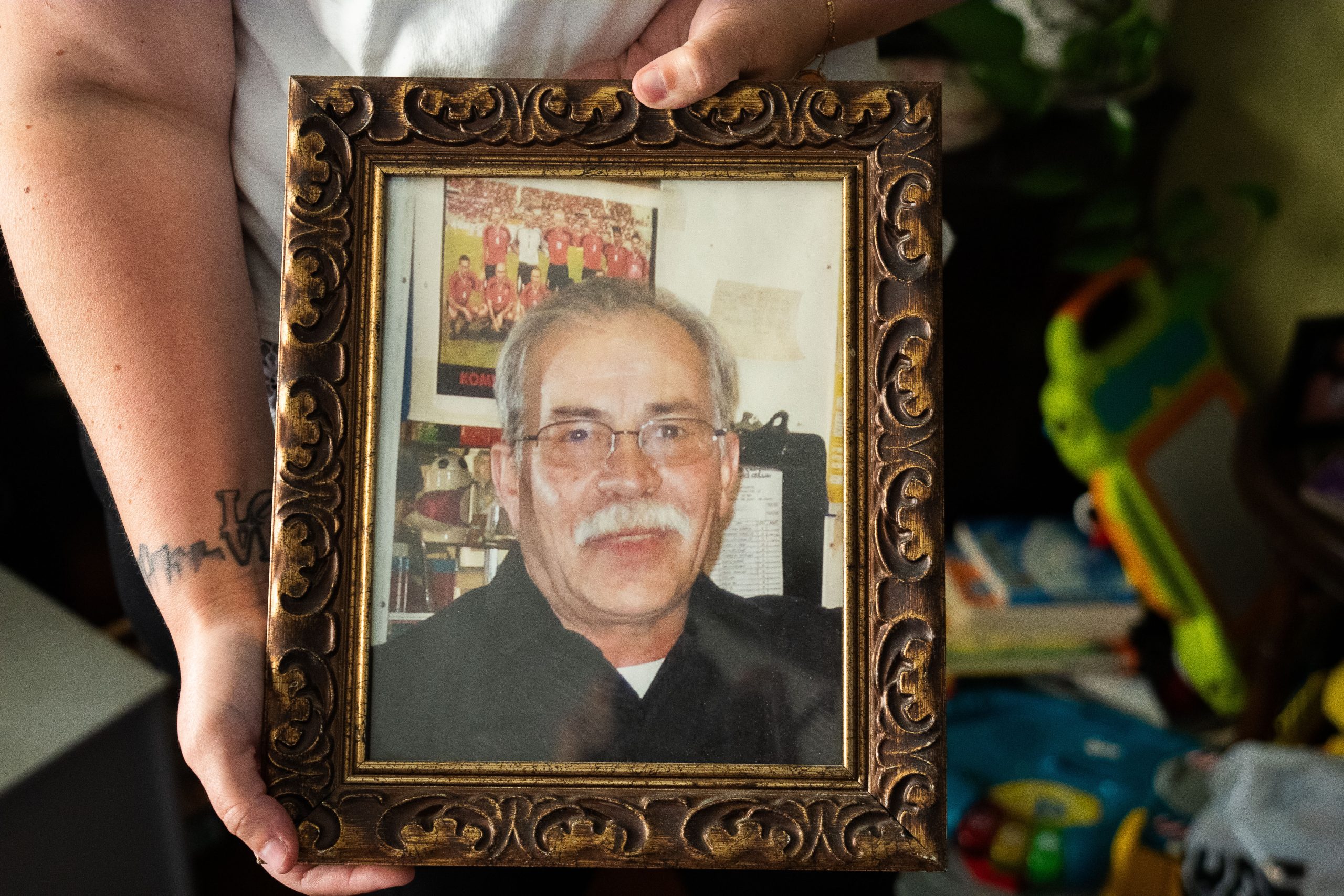
    He pointed toward a gold-flecked picture frame in the corner of the room.

    Vito Maglio, 69, was a father of six.Jessica Griffin / Staff Photographer
  • Police investigating discovery of skeletal remains near Franklin Mall in Northeast Philly

    Police investigating discovery of skeletal remains near Franklin Mall in Northeast Philly

    Police were investigating the discovery of human skeletal remains Tuesday evening near the Franklin Mall in Northeast Philadelphia.

    Around 7 p.m., police responded to a wooded area near the 12000 block of Knights Road, where the skeletal remains of an adult were found.

    Police said the gender and race of the deceased person were not immediately identifiable.

    The Philadelphia Medical Examiner’s Office was working to identify the person and the cause and manner of death, police said.

  • Booker Rowe, celebrated trailblazing Black violinist with the Philadelphia Orchestra, has died at 85

    Booker Rowe, celebrated trailblazing Black violinist with the Philadelphia Orchestra, has died at 85

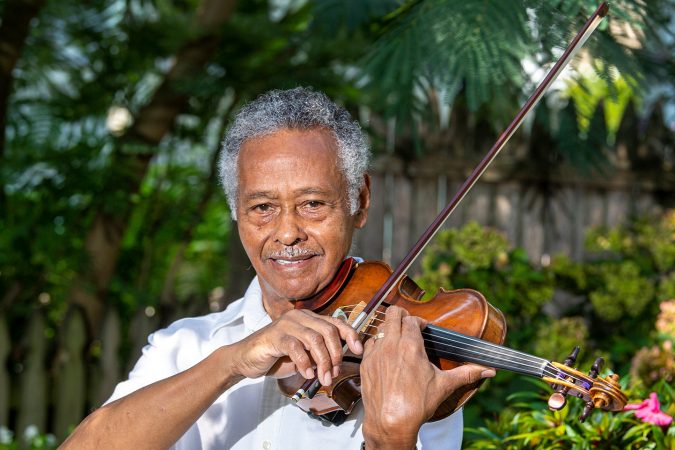
    Booker Rowe, 85, of Philadelphia, award-winning violinist, the first Black musician to play with the Philadelphia Orchestra and the Nashville Symphony String Quartet, the second permanent full-time Black player in the Philadelphia Orchestra, teacher, mentor, and role model, died Friday, July 31, of complications from pneumonia and sepsis at Jefferson Abington Hospital.

    A lifelong musician — he played piano at age 5 and violin at 11 — Mr. Rowe was invited by famed music director Eugene Ormandy in 1968 to become the first Black musician to perform with the Philadelphia Orchestra. He was a substitute violin during most of the 1968-69 season and returned for good in 1971 as the orchestra’s second Black permanent full-time member.

    Mr. Rowe stayed for 49 years.

    “My first day, I came in late from New York, and the orchestra was already rehearsing, and I sat myself down on the last stand to play,” Mr. Rowe told The Inquirer’s Peter Dobrin in 2020. “The sound was amazing. It was like stereo all around me. The stage was slanted down, and when the brass and winds would play I had to brace myself with my right leg from being blown off stage. It was just so beautiful.”

    For five decades, until his retirement in 2020, Mr. Rowe played with half a dozen elite conductors and traveled the world in the orchestra’s second violin section. He and his colleagues gave thousands of memorable performances at the Academy of Music, the Kimmel Center, and the Mann Center in Philadelphia, Carnegie Hall and the Lincoln Center in New York, and the Saratoga Performing Arts Center in Saratoga Springs, N.Y.

    They played at the 1993 World Series at Veterans Stadium, for Pope Francis in 2015, and at the Vail Music Festival in Colorado. They played in Europe, South America, Asia, and elsewhere around the world.

    This photo of Mr. Rowe (left) appeared in the Daily News in 1993Newspapers.com

    In 1973, the orchestra made a historic 10-day, five-concert cultural exchange tour in China, and Mr. Rowe told the Daily News afterward that he visited a commune and returned with Chinese instruments. In 2008, he mingled with former Secretary of State Alexander Haig and other international notables after a concert in Beijing.

    In 2013, he posed for pictures with the Chinese welcoming contingent at Shanghai Airport. “Booker was such a kind soul, and his passion, his artistry, and his humanity are woven into who we are,” Yannick Nézet-Séguin, the orchestra’s music and artistic director, said in a tribute.

    Ryan Fleur, the orchestra’s president and chief executive officer, said: “He was a warm and steadying presence in our orchestra.”

    Born in Kentucky, Mr. Rowe and his family moved to North Philadelphia when he was 2. His father was a singer, and his mother played piano, and they “pushed me in the direction of classical music,” he told the Daily News in 1981.

    He became concertmaster for the West Philadelphia High School orchestra, the All-City high school orchestra, and the old all-Eastern Conference college orchestra. He earned a bachelor’s degree in music at Temple University in 1963 and a master’s degree in music at Yale University in 1968.

    Before Philadelphia, he played solo in New York and with symphony orchestras in Nashville, New Haven, Conn., and Washington. Later, he played with the old Symphony Club of Philadelphia, the Lansdowne Symphony Orchestra, and other local groups.

    Mr. Rowe (left) stands with fellow musicians Andre Watts (center) and Renard Edwards.Courtesy of the family

    He also got freelance gigs with Sammy Davis Jr., Isaac Hayes, Smokey Robinson, the Supremes, Barbra Streisand, Aretha Franklin, and other stars. He played with chamber music ensembles around the country and gave dozens of free concerts for children, churches, and community and scholarship fundraisers.

    He championed racial and ethnic diversity, and was active with the Philadelphia Orchestra’s cultural diversity initiative. He sought and performed work by Black and other minority composers, and mentored dozens of colleagues and students.

    He encountered at least one racist incident that first year in Philadelphia and told the Daily News in 1981: “The time was right for an Afro-American in the Philadelphia Orchestra. It was just a matter of finding somebody who was ready.”

    Mr. Rowe and his family lived in Center City, East Mount Airy, and Germantown. Courtesy of the family

    A friend said on Facebook: “His legacy and historical contributions are unparalleled.”

    Mr. Rowe taught at Settlement Music School and gave private lessons. He earned music and service awards from City Council, the American Foundation for Negro Affairs, and other groups.

    In 2019, he was asked to advise young musicians in a video interview for the Philadelphia Orchestra website, philorch.ensembleartsphilly.org. “Practice, practice, practice,” he said. “But also enjoy, enjoy, enjoy. Do it with love in your heart.”

    Booker Taliaferro Washington Vance Rowe Jr. was born Dec. 10, 1940, in Lexington, Ky. In Philadelphia, he studied at the old Philadelphia Musical Academy and Settlement Music School, and his father worked at RCA Victor records in Camden. So their home was always filled with music.

    Mr. Rowe (rear center) stands with Philadelphia Orchestra colleagues and members of the Chinese welcoming contingent in 2013.

    Jan Regan / Philadelphia Orchestra

    He met soprano Patsy Baxter at a Philadelphia Orchestra concert, and they married in 1970 and had a son, Landis, and a daughter, Vivian. They lived in Center City, East Mount Airy, and Germantown, and visited his family often back in Kentucky and Tennessee.

    Mr. Rowe enjoyed puzzles, hiking and kayaking with his family, and tai chi. Friends noted his “kindness,” “million-dollar smile,” and “cheerful presence” in Facebook tributes.

    “He liked people,” his wife said. “He liked socializing. He liked to stick with one thing and concentrate on it.”

    His son said: “My father and I always had a good time together, and we never knew when playful sparring would break out.”

    Mr. Rowe and his wife, Patsy, married in 1970.
    Jose F. Moreno / Staff Photographer

    His daughter said: “He was very fiery and lovable. He was always who he was. He was one of a kind.”

    In addition to his wife and children, Mr. Rowe is survived by a daughter-in-law, Maria, two granddaughters, and other relatives.

    A celebration of his life is to be held later.

    Mr. Rowe (rear second from left) enjoyed time with his family.Courtesy of the family
  • DA Larry Krasner to appeal overturned murder conviction in 2012 killing of Philly cop Moses Walker Jr.

    DA Larry Krasner to appeal overturned murder conviction in 2012 killing of Philly cop Moses Walker Jr.

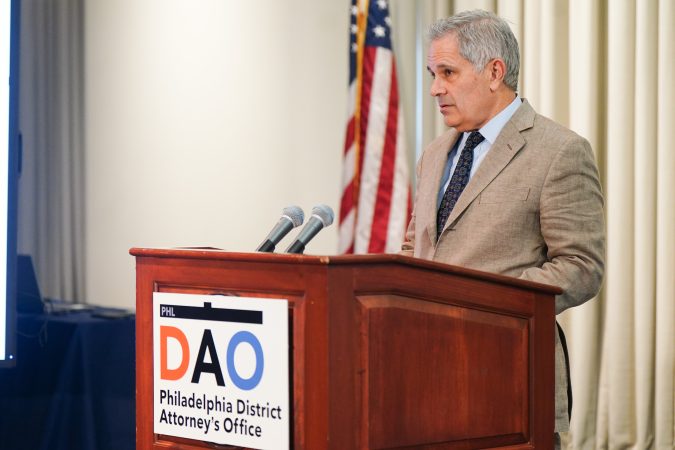
    District Attorney Larry Krasner on Tuesday said he strongly disagreed with a judge’s decision to overturn the murder conviction of a man who killed Philadelphia Police Officer Moses Walker Jr. in 2012 and vowed to appeal.

    Krasner said Common Pleas Court Judge Jennifer Schultz, who handed down the ruling Monday, was “legally incorrect” in vacating the conviction of Rafael Jones, who is serving life in prison for killing the officer during a street robbery at the end of his shift.

    In deciding that Jones deserved a new trial, Schultz cited the case’s connection to disgraced ex-homicide detective Philip Nordo, who was convicted in 2022 of sexually abusing witnesses and suspects for more than a decade.

    But Krasner, speaking at a news conference alongside Walker’s mother and Roosevelt Poplar, president of Lodge 5 of the Fraternal Order of Police, said Jones’ conviction was different from others involving Nordo that have since been reevaluated.

    “We believe now that Rafael Jones is guilty — that he murdered Moses Walker Jr.,” Krasner said.

    If the appellate court denies the district attorney’s appeal, he added, “we will be retrying this case. We have a lot of evidence to do so. And we will be retrying it vigorously.”

    Jones’ attorney, Jason Edward Parris, said Tuesday afternoon that the vacated conviction represented justice.

    If jurors heard Jones’ case today, Parris said, they would have information about Nordo’s sex abuse crimes involving informants in homicide investigations that was not available at the time of Jones’ trial.

    “I don’t think anybody should be comfortable with someone serving life in prison based in part on an investigation done by an officer who is now doing 49 years [in prison] for crimes committed during the investigation of this case,” Parris said.

    Walker, 40, was shot and killed shortly before dawn on Aug. 18, 2012.

    The officer had just left the 22nd District station in North Philadelphia dressed in civilian clothes when Jones and another man, Chancier McFarland, targeted him in a robbery, prosecutors said.

    Jones fired at Walker after the officer reached for his gun, according to prosecutors. Both men were arrested, and McFarland pleaded guilty and testified against Jones as part of a deal to avoid life in prison.

    Years later, during Nordo’s sexual abuse trial in 2022, one of his accusers testified that the detective had steered him toward a $20,000 reward and later raped him.

    Though Krasner acknowledged the “messy history” that came with Nordo’s involvement in Jones’ case, he said the district attorney’s office was confident in the conviction.

    There were multiple pieces of evidence that pointed to Jones’ guilt, he said, including a murder confession that was not introduced at trial because Jones did not testify, and McFarlane’s eyewitness account of the crime.

    “We concluded years ago that this conviction was in the category that should not be disturbed,” Krasner said.

    The district attorney’s office will appeal Schultz’s ruling to Superior Court, a process Krasner said could take up to two years.

    Poplar, the FOP president, said he had faith that Krasner’s office would prevail.

    “Yesterday was a tough day,” he said, echoing comments made by Police Commissioner Kevin Bethel, who said he was disappointed by the ruling.

    Walker’s mother, Wayniya, said she and her family “would not allow these latest developments to weaken us.”

    “We remain confident justice will prevail,” she said, adding that she hoped that the death of her son, not the vacated conviction of his killer, would “remain at the center of this case.”

    “No decision rendered can alter what happened on Aug. 18, 2012,” she said.

  • Man killed in West Philly shooting

    Man killed in West Philly shooting

    A man was shot and killed late Monday afternoon in West Philadelphia, police said.

    Just before 5:20 p.m., police responded to a report of a shooting near the intersection of North 54th and Arlington Streets.

    The man, who was not identified, was taken by police to Lankenau Medical Center. He was pronounced dead at 5:36 p.m.

    Police reported no arrests.

  • Philly asks Third Circuit for new President’s House hearing, saying ruling set a dangerous precedent

    Philly asks Third Circuit for new President’s House hearing, saying ruling set a dangerous precedent

    Philadelphia is asking a federal appeals court for a redo on the President’s House, saying the court’s June ruling that allowed President Donald Trump’s administration to swap the exhibit at the historic site limited the ability of judges to restrain the executive branch.

    The city is seeking a new hearing in front of the entire U.S. Court of Appeals for the Third Circuit, or the same three judges who issued a unanimous ruling in June that held the city has no rights over the displays at George Washington‘s Philadelphia home.

    The ruling created a catch-22, the city’s attorneys said in Monday’s court filing, not only for the President’s House Site but also for the ability of federal courts in the Philadelphia area to review government actions broadly.

    The Third Circuit found that the abrupt removal of the slavery exhibit from the President’s House could not be challenged under the statute that governs final actions by federal government agencies. The removal, the appeals court said, was not an “agency action” or “final.”

    “Both holdings are wrong, and both are of exceptional importance,” the city’s filing said.

    Thomas M. Hardiman, the judge who wrote the June opinion, said the removal was not a “final” action because the government afterward proposed new panels for the site.

    The city contends that the court supplied a road map for federal agencies to evade challenges in court. Under this precedent, the federal government can evade courts’ review by “announcing — even mid-litigation — that it might do something else later,” the city said.

    The judges opened the door for a federal agency to defeat a lawsuit over its conduct simply “by pointing to what it might do next,” according to Philadelphia’s filing.

    It is rare for circuit courts to hold rehearings in front of the original or the full courts, which is known as en banc, said Adam Crews, a professor at Rutgers School of Law.

    “The court will not grant rehearing en banc when the panel correctly states the law and the contested issue is simply the application of the law to specific fact,” Crews said.

    Even if the entire court agrees to hear the case, the city might not find a sympathetic audience.

    A majority of the court’s 14 members have been appointed by Republicans, and six were named by Trump.

    The panel that issued the June ruling consisted of Hardiman, a George W. Bush appointee; Luis F. Restrepo, a Barack Obama appointee; and Peter J. Phipps, who was appointed by Trump.

    The city filed the request for reconsideration hours before the deadline to appeal the June order, and at a time when Mayor Cherelle L. Parker’s law department is in transition.

    City Solicitor Renee Garcia, who resigned last week, argued the case on behalf of the city at a January district court hearing. U.S. District Judge Cynthia M. Rufe issued a blistering opinion and an injunction ordering the restoration of the exhibits, which was later overturned by the Third Circuit.

    Parker appointed Monique Galloway, who worked for the U.S. Attorney Office in Philadelphia, as the city’s next solicitor.

    Monday’s filing still carried Garcia’s name, who remains in the role until early September.

    The Trump administration swapped the President’s House exhibit under the shadow of darkness last month, in the early morning hours after the MLB All-Star Game. The new panels have been criticized for their lack of focus on the experience of the nine people held in bondage by Washington in his executive mansion and for whitewashing the first president’s culpability in slavery.

    The Department of the Interior last month spent $181,430 on new mobile surveillance trailers for the site, citing “safety concerns” following the installation of the new exhibit.

    The National Park Service and Department of the Interior did not immediately respond to a request for comment.

    Advocates for the original exhibit, including Avenging the Ancestors Coalition and city leaders, vowed to keep fighting to restore the removed panels to the site. Michael Coard, leader of Avenging the Ancestors Coalition, said last month the group was exploring new legal strategies.

    “This site, Sixth and Market Streets, is the only site where George Washington lived on federal property — that federal property was known as America’s first White House — and Black people were enslaved,” Coard said from the President’s House on the day the exhibit was swapped. “There’s only one place where that happened. Right here.”