Category: Philadelphia News

  • Six killed, more wounded in wave of weekend violence in Philadelphia

    Six killed, more wounded in wave of weekend violence in Philadelphia

    Six people were killed in Philadelphia between Friday morning and Sunday night — five shot and one stabbed — in a wave of violence across the city, according to police.

    At least two others were wounded in the spate of attacks, a jarring stretch of violence in a year that has otherwise been among the least deadly Philadelphia has recorded in decades.

    At a news conference on Monday, District Attorney Larry Krasner acknowledged the weekend’s toll but pointed to the city’s steep drop in killings, arguing that a brutal few days had not erased months of historic progress.

    “We had a bad weekend,” Krasner said. “We’re not having a bad year.”

    As of Monday, Krasner said, there had been 108 homicides so far this year in the city — 29 fewer than at the same time last year.

    Even so, the six deaths amounted to more than 5% of the city’s homicides this year, a striking toll for a single weekend. The victims ranged in age from 26 to 70.

    The bloodshed began shortly after 9 a.m. Friday, when officers responded to a report of a gunman on the 2100 block of North 20th Street in North Philadelphia West and found Savion Young, 31, shot in the chest and arm. He was pronounced dead at Temple University Hospital about 20 minutes later, police said.

    That same evening, Felix Serrano, 70, was found shot inside a BMW on the 4300 block of North Seventh Street in Hunting Park, according to police. Investigators believe Serrano’s vehicle may have traveled a short distance after he was shot before his car struck a parked vehicle. He was also pronounced dead at Temple University Hospital.

    The killings resumed before dawn Sunday. At about 3:20 a.m., police who were called to the 800 block of West Oxford Street in Ludlow found Rafi Colón-White, 30, shot in the head inside a Subaru Outback.

    Colón-White was pronounced dead at Temple University Hospital. A 34-year-old man who arrived separately at the hospital with gunshot wounds to his legs was in critical condition, police said. That man, whom police have not identified, was also a victim in the shooting, said police spokesperson Cpl. Jasmine Colón-Reilly.

    Sunday evening brought three more killings in as many hours. About 8:20 p.m., a man was fatally stabbed on the 500 block of West Courtland Street in Logan, and pronounced dead at Einstein Medical Center, police said. He has not been publicly identified.

    Less than an hour later, DaJuan Coffee, 26, was shot multiple times on the 2000 block of East Lehigh Avenue in East Kensington and pronounced dead at Temple University Hospital, police said.

    The weekend’s final killing came at about 11:49 p.m. Sunday. Officers sent to the 2800 block of North 24th Street in Strawberry Mansion for a report of a person with a gun found Michelle Wilson, 61, on a porch, shot in the neck and back, police said. She was pronounced dead moments later.

    Wilson’s husband was also on the porch and was shot, but survived, police said. They did not share the man’s condition, but said he was stable.

    Loved ones lingered on the sidewalk in front of the North 24th Street house Monday afternoon, hugging, trying to find comfort in one another amid their grief. They declined to be interviewed.

    A 71-year-old neighbor said the family has lived on the block for decades.

    “They were quiet people,” said the woman, who asked not to be identified for fear of reprisal. On Sunday afternoon, she said, Wilson’s family had a barbecue, with children and extended family playing on the porch.

    Surveillance video from a business on the block, reviewed by The Inquirer, showed a man wearing a hat and surgical face mask walking down the street when he appeared to take a black handgun from his bag and slip it into his jacket. The video showed him then calmly walk up to the porch and open fire.

    Police have not shared the video with the public, nor identified the man captured in it as a suspect.

    Nearby, on North 20th Street, an array of candles, stuffed teddy bears, and handwritten posters lay Monday across the sidewalk where Young was killed Friday morning.

    Police said Young and his girlfriend were arguing outside the apartment around 9:10 a.m. when the woman’s 16-year-old brother pulled a gun and shot Young multiple times, police said. He died at the hospital.

    The teen is wanted for murder.

    Tributes for Young, also known as Apex, poured across social media over the weekend, and hundreds gathered in North Philadelphia for a balloon release.

    Young had a daughter and large family scattered across the city, friends said. He had just started a clothing brand called Bad English, and neighbors said he was frequently seen lifting weights and working out outside his rowhouse.

    “This was his Planet Fitness,” a man who trained with him said Monday on the block. The man, who declined to give his name for privacy reasons, looked down at the dozens of candles melting into the sidewalk beneath a collection of silver balloons. “He will be truly missed,” he said.

    William Fritze, chief of the district attorney’s office Gun Violence Task Force, declined to provide additional information on the incidents, citing ongoing investigations.

    No arrests have been made in any of the cases, said Colón-Reilly. Police are asking anyone with information to contact the department’s homicide unit at 215-686-3334, or its tip line at 215-686-TIPS.

    Last year marked Philadelphia’s fewest homicides in nearly six decades, with 222 people killed. The last time the city’s homicide numbers fell below that mark was in 1966, when there were 178 murders.

    During Monday’s news conference, called to announce grants awarded to more than 20 anti-violence organizations in the city, Krasner called the weekend’s violence a tragedy that “no one would ever celebrate,” even as he stressed that the city remained far safer than in years past.

    “The facts are clear: Homicides are way down,” he said. “In almost every category, crime is down.”

  • The Philadelphia Portal is moving out of City Hall

    The Philadelphia Portal is moving out of City Hall

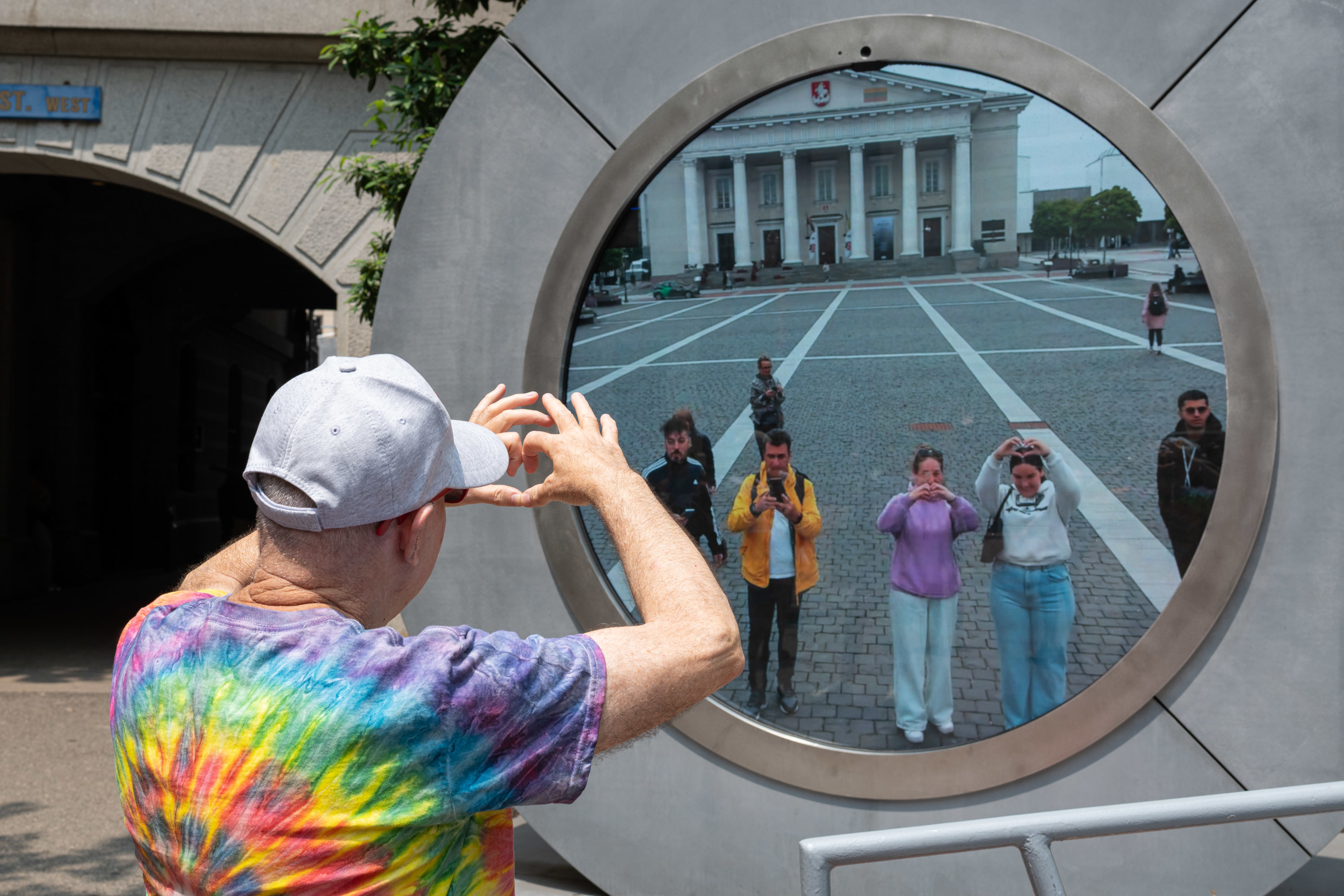
    City Hall will wave farewell to Ireland, Lithuania, and Poland. After almost two years, the Portal — the video art installation that shows livestreams of people in other countries — must move.

    Brought from New York City in 2024, the 3.5-ton circular video screen first found a home in LOVE Park until vandalism prompted its relocation to the City Hall courtyard.

    Now, their permit is running out.

    “We would have been happy to keep it at City Hall courtyard, but as we understand, the city has prior commitments for the winter market, so they are just not able to extend the permit,” said Nicolas Klaus, CEO of Portals.org

    The Portal’s permit is set to expire on Oct. 31; the city did not immediately respond to a request for comment. So, Portals.org is looking for a sponsor that can help house and relocate it.

    Sponsors can be public or private — such as nonprofits, foundations, cultural institutions, or local businesses — and can work collaboratively to house the Portal as long as they can provide:

    • An area preferably accessible to the public.
    • Cover the cost of relocating the Portal as well as “minor refurnishing work,” Klaus said.
    • Sponsor the yearly cost of maintaining the Portal and paying for the 24/7 connection, which can be about $30,000 a year, Klaus said.

    If a new home isn’t found by the end of September, Philly runs the risk of losing the Portal to a different city.

    “We are in contact with a few different cities, but Philadelphia is our first option; it’s the right place for the Portal,” Klaus said.

    The Philly Portal is the only one of its kind in North America, and has continued to add connections to new countries. Earlier this year, windows to the Philippines and Brazil were added to the City Hall livestream.

    “The attraction that the Portal provides is not the Portal itself; it’s the human connection it facilitates,” Klaus said.

  • A 61-year-old woman was killed, another man injured, in North Philly shooting

    A 61-year-old woman was killed, another man injured, in North Philly shooting

    A 61-year-old woman was shot and killed in North Philadelphia after a shooting Sunday night.

    Philadelphia Police Department officers responded to the 2800 block of N. 24th Street around 11:49 p.m. for a report of a person with a gun. Officers found Michelle Wilson, 61, on a porch suffering from gunshot wounds to the neck and back. Wilson was transported to Temple University Hospital, where she was pronounced dead at 12:04 a.m. on Monday.

    A second person, a 67-year-old man, was found on the same porch suffering from gunshot wounds to his backside. Police transported the man to Temple University Hospital and was placed in stable condition.

    Anyone with information is urged to contact the Homicide Unit at 215-686-3334 or call the PPD tip line at 215-686-8477. As with all homicides in the city of Philadelphia, there is a $20,000 reward for information that leads to an arrest and conviction.

    This section of North Philadelphia has already experienced two fatal shootings this summer in June, according to the most recent data supplied by the City Controller, and in that same month, a 16-year-old was shot and injured one block from where Sunday night’s shooting occurred.

    According to police, at least seven shootings occurred this past weekend, including the fatal shooting of 70-year-old Felix Serrano, who was found shot in the chest while sitting in his car near Hunting Park.

  • A father is searching for answers after lawyers say a police pursuit of an ATV ended in his son’s death

    A father is searching for answers after lawyers say a police pursuit of an ATV ended in his son’s death

    The father of a Philadelphia man who was killed in an ATV crash this spring said police officers pursued his son moments before he drove the wrong way down a one-way street, ran a red light, and collided with a sedan.

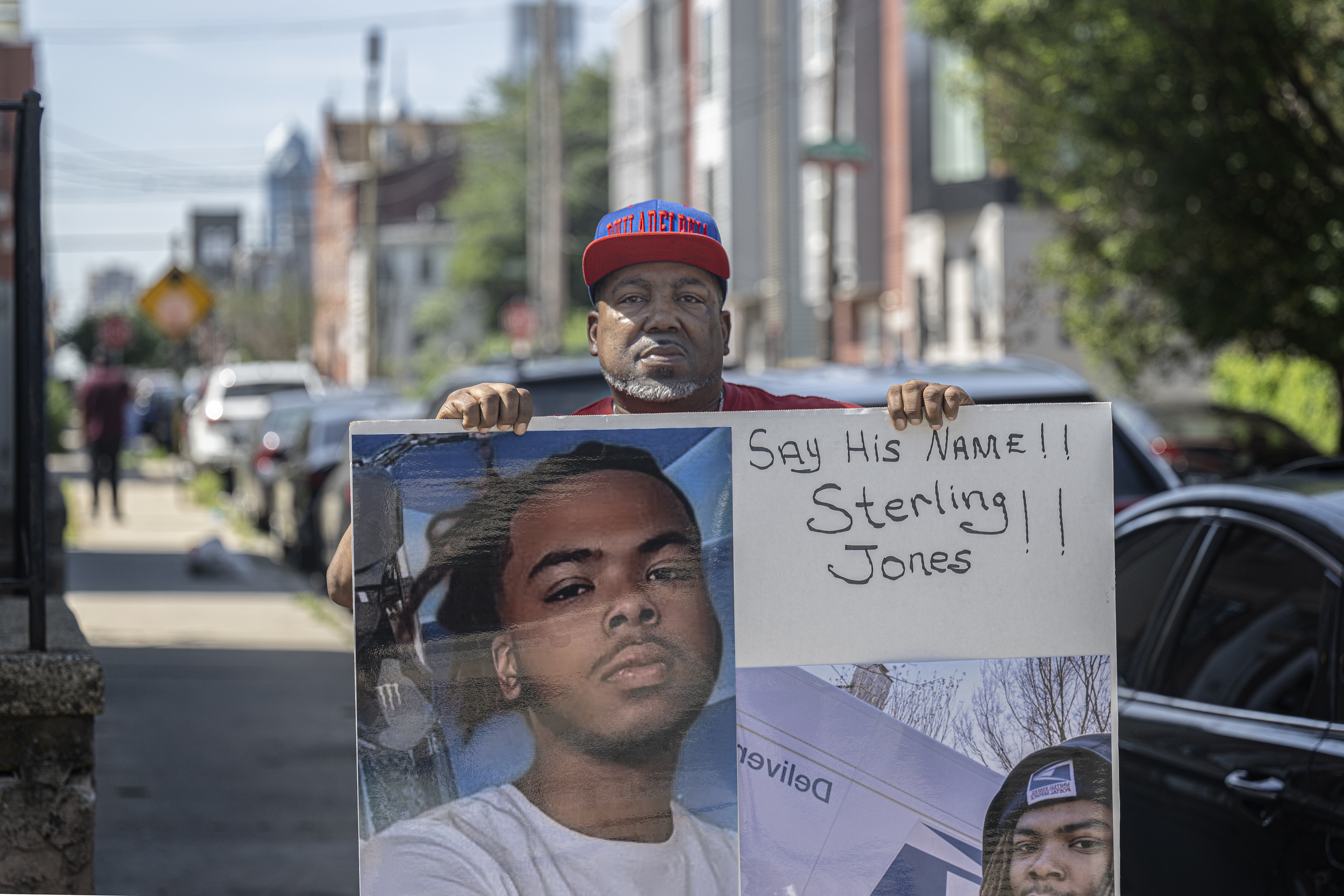
    Sterling Jones, 22, was killed on May 9 after the crash in North Philadelphia, according to police.

    Lawyers for Jones’ father, Sterling Lamont Jones Sr., said his son and a group of friends had been riding off-road vehicles near Broad Street and Fairmount Avenue when officers from the police ATV and dirt bike detail spotted the young men popping wheelies and began a pursuit.

    They followed Jones up Broad Street to West Thompson Street, the attorneys said. There he briefly sped in the wrong direction down the one-way street and ran a red light before striking an Uber driver’s Toyota sedan at the intersection as it turned onto 15th Street.

    He was taken to Temple University Hospital and pronounced dead shortly after his arrival.

    Sterling Jones Sr., 57, has since hired a team of attorneys to investigate the incident. Late last month, they filed a notice of intent to sue the city, alleging that the officers and the department violated Jones’ constitutional rights when they chased him and caused his fatal injuries.

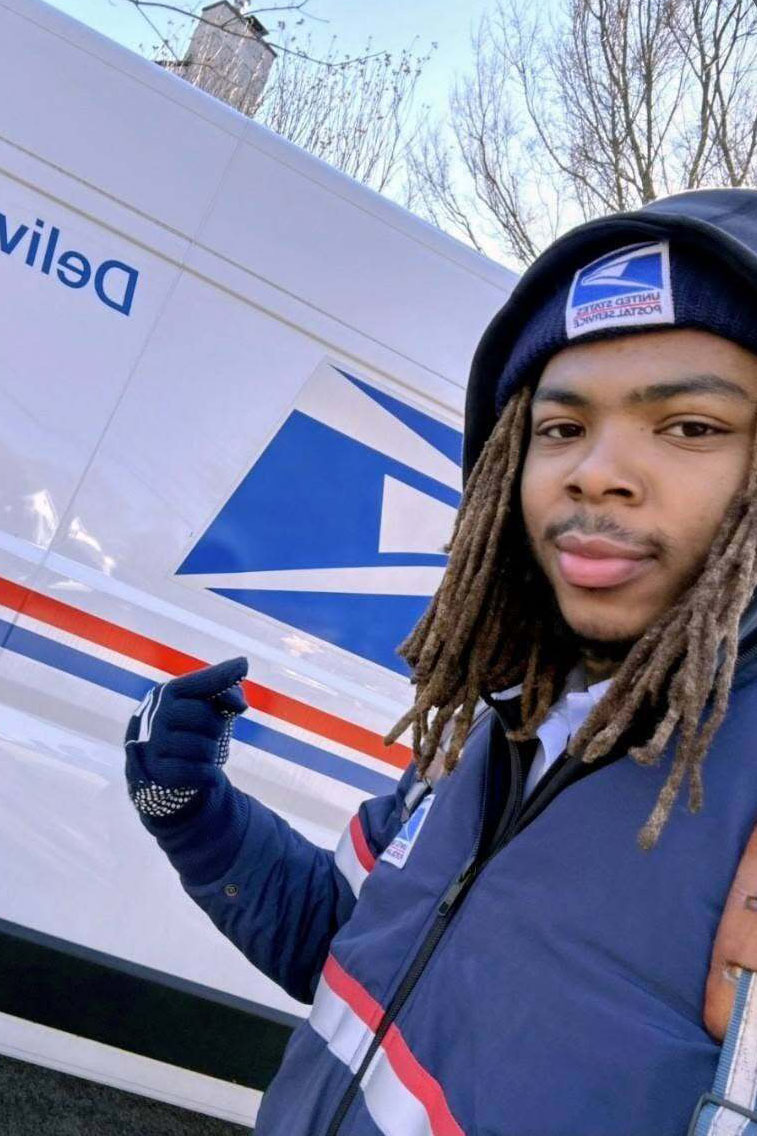
    Sterling Jones, a 22-year-old who lawyers say was killed in an ATV crash after being chased by police officers.Courtesy of Sterling Lamont Jones Sr.

    Riding ATVs and dirt bikes on public streets in Philadelphia is against the law, and police have increased efforts to crack down on that behavior in recent years.

    But the incident raises questions about whether the officers followed a department directive barring vehicular pursuits for all but the most serious offenses — a policy enacted because of the public safety risks posed by such chases, particularly in densely populated areas.

    The initial police account of the incident did not mention that officers had been pursuing Jones before the crash. It could not be learned whether the department had since concluded that officers were engaged in a pursuit and whether it was conducted a high rate of speed, as the lawyers contend.

    Sgt. Eric Gripp, a police spokesperson, said the incident is under investigation by the department’s internal affairs bureau. He declined to comment further, referring questions to the city’s law department.

    A spokesperson for the law department said the city does not comment on pending litigation.

    Surveillance footage gathered by lawyers for Jones’ father and viewed by The Inquirer showed at least eight police officers on dirt bikes, a squad car, and a tow vehicle tailing Jones that evening.

    Around 9:23 p.m., Jones was seen cutting through a Sunoco gas station and speeding down West Thompson Street with dirt bike officers close behind. Within seconds, his ATV careened into the driver’s side of the sedan.

    Under police department policy, vehicular chases are allowed only in situations in which officers believe they can prevent imminent danger to others, or if a suspect is either fleeing after committing a violent felony or in possession of a deadly weapon used in a crime.

    As complaints mounted over off-road riders on city streets, officials have sought alternative methods to curb illegal ridership, such as stopping or seizing vehicles, arresting riders when they are stopped, and destroying vehicles when riders cannot prove ownership.

    And while riding off-road vehicles violates city code, attorneys for Sterling Jones Sr. say that type of infraction still should not trigger a police chase.

    “The police department’s policy is, in our view, clearly violated,” said Thomas Kline of Kline & Specter, which is handling the case alongside the firm Hill & Associates.

    A 2025 Inquirer investigation found police in Philadelphia and across Pennsylvania were conducting hazardous and unnecessary chases, disproportionately endangering young people. Roughly half of all reported pursuits conducted by city police were not justified under department policy, the investigation found.

    A police department spokesperson attributed the increase in chases to the COVID-era surge in violent crime, and said the department investigates every crash for policy violations.

    Between 2020 and last year, records show, the city had paid out $20 million in crash- or chase-related settlements as a result of such chases.

    In 2017, a 6-year-old girl and her great-aunt were seriously injured when they were struck by a dirt bike rider who was being chased by Philadelphia police into Upper Darby Township. The city settled a lawsuit with their attorneys for nearly $3 million last year.

    Sterling Jones Sr. said that while he was planning to sue, no amount of money could make up for the loss of his son.

    The young man was a graduate of Hunting Park Christian Academy and had been working for two years as a delivery driver for the U.S. Postal Service before his death. He had bought the ATV with money from that job, his father said.

    “He wasn’t a criminal. He had a license,” he said.

    Jones Sr. learned of the crash in the early morning of Mother’s Day, when his son’s mother came to his house to tell him Jones was dead.

    He said he hired lawyers with the aim of ensuring that the officers who pursued his son would be reprimanded and removed from the beat.

    “They killed my only son,” he said. “I just want justice.”

  • Should you drink Philly’s tap water?

    Should you drink Philly’s tap water?

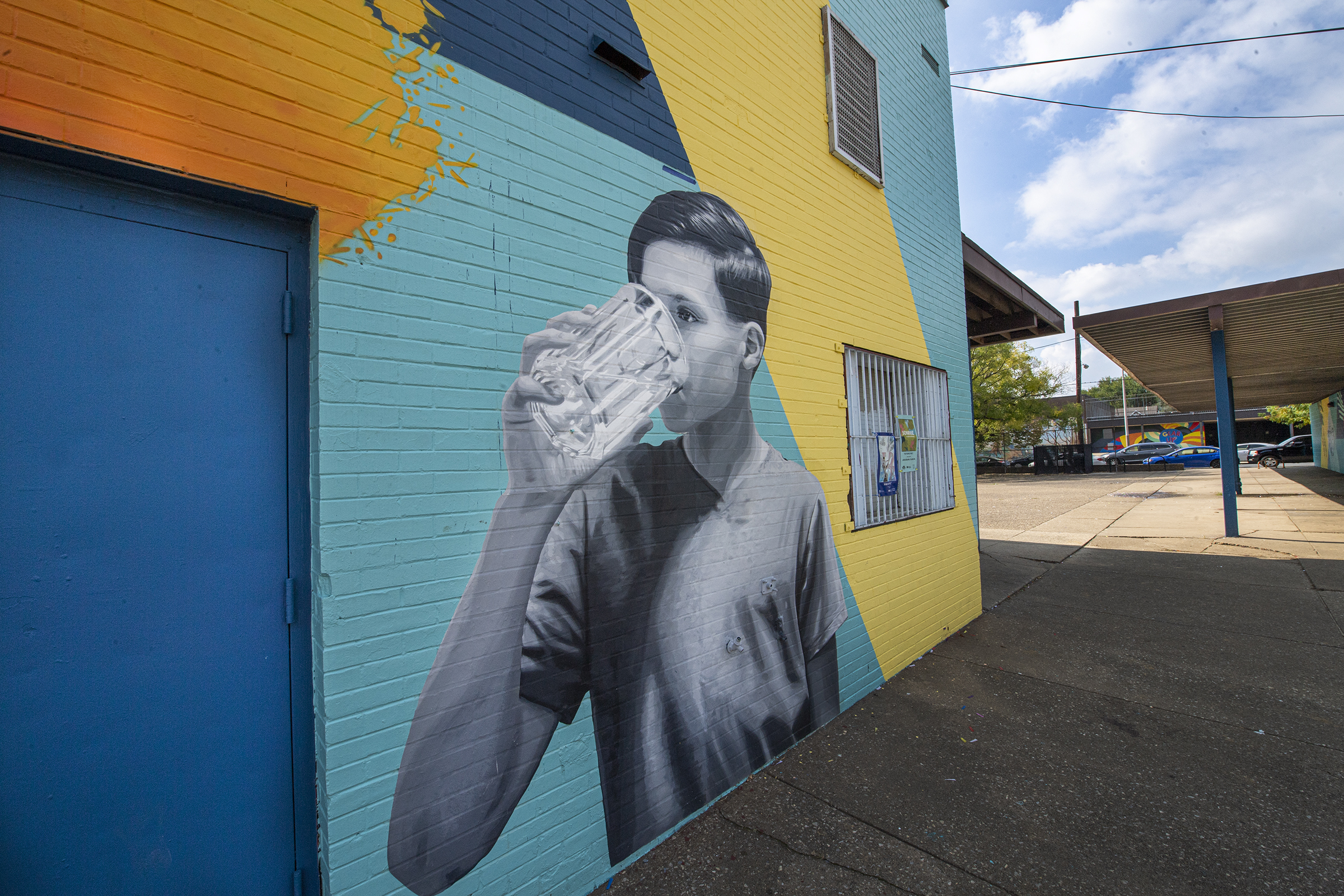
    If you live in Philly and want to know information about your tap water quality, start with the latest consumer confidence report, which is required to be produced annually by every community water system in the country. Most people never read them, but the reports provide essential information about drinking water quality.

    Like other large water systems, the Philadelphia Water Department publishes this information online, including the most recent 2025 drinking water quality report. The report provides an overview of Philly’s drinking water from source to tap. It reports that levels of approximately 100 regulated contaminants all meet federal standards.

    As an interdisciplinary scientist and engineer, I study drinking water infrastructure and how science gets translated into policy and decision-making.

    While the Philadelphia Water Department report is a good place to start, knowing what it tells you and where there may be gaps requires some background on how drinking water is regulated.

    How drinking water gets regulated

    In the U.S., drinking water is regulated under the Safe Drinking Water Act, which set limits for just over 20 contaminants when it became law in 1974.

    Subsequent amendments and regulatory processes have brought the total to about 100. That’s still a small number compared to the approximately 700 disinfection byproducts, the tens of thousands of chemicals in commercial use in the U.S. today, or other contaminants of emerging concern.

    While not all of these compounds end up in drinking water in amounts that can harm public health, the U.S. Environmental Protection Agency’s regulatory process is designed to be reactive, not proactive.

    Before setting a limit, the EPA must demonstrate that a contaminant may cause adverse health effects, that it occurs at levels that are a public health concern, and that regulation would meaningfully reduce risk.

    This process is repeated contaminant by contaminant, though a single glass of tap water may contain dozens of trace contaminants at once. The EPA has recently moved partly toward regulating mixtures of contaminants. The 2024 federal PFAS rule set individual limits for six PFAS compounds and also regulated four of them as a mixture. However, proposed changes to the 2024 federal PFAS rule include rescinding the mixture provision.

    Goals versus limits

    Federal drinking water standards involve two numbers for each contaminant. The maximum contaminant level goal, or MCLG, is the concentration at which the contaminant is believed to pose no significant risk to health in people who drink that water every day for 70 years.

    For chemicals classified as possible human carcinogens, MCLGs are typically set at a level where drinking the water daily for 70 years would cause one additional cancer case per 1 million people above the background rate.

    However, MCLGs are nonenforceable. Enforceable drinking water limits, also called maximum contaminant levels, or MCLs, are often higher than MCLGs because they take cost and feasibility into account.

    Levels of forever chemicals

    Two forever chemicals, PFOA and PFOS, deserve attention first. Both are types of perfluoroalkyl and polyfluoroalkyl substances, commonly called PFAS. PFAS are a family of synthetic chemicals widely used in consumer products. They persist in the environment and accumulate in the body.

    The 2025 report from the Philadelphia Water Department shows Philly’s highest reported levels of PFOA at 6.1 parts per trillion, or ppt, and PFOS at 4.6 ppt. Both are above the new federal limit of 4 ppt.

    But Philly remains in compliance. Meeting the federal limit is not required until 2029, and the EPA has proposed extending that deadline to 2031.

    The levels are well below Pennsylvania’s limits of 14 ppt for PFOA and 18 ppt for PFOS.

    Encouragingly, the Philadelphia Water Department is expanding its capacity to remove PFAS systemwide using powdered activated carbon. Small-scale tests have shown that powdered activated carbon can be effective for removing PFOA and PFOS, though effectiveness in real treatment conditions depends on dosing, contact time, and other factors.

    Lead, disinfectants, and sodium

    Lead in drinking water comes from lead leaching into the water from service lines leading from the water main to your house or from plumbing inside your home. Lead can cause serious health problems, and it accumulates in the body.

    As required by the Lead and Copper Rule, the Philadelphia Water Department’s treatment includes corrosion control that forms a protective coating on the inside of pipes. This reduces the amount of lead that leaches into drinking water from lead service lines. Homes built before a 1986 federal ban on lead pipes and solder carry the most risk, as do homes with lead service lines. More recent brass fixtures could legally contain small amounts of lead until 2014.

    The Philadelphia Water Department is required to collect samples from homes in Philly with lead service lines every three years. Testing in 2025 showed 90% of sampled homes were at or below 2 parts per billion, or ppb. That’s well under the 15 ppb EPA action level. But testing results ranged from 0 to 21 ppb, meaning some homes with lead service lines had measurable lead in their water.

    The maximum contaminant level goal for lead is zero because no safe level of childhood lead exposure has been determined.

    Chemical disinfection keeps water safe across Philly’s 3,000 miles of pipe but produces byproducts linked to increased cancer risk. These byproducts form when the disinfectant, in this case sodium hypochlorite, reacts with organic matter remaining in the water after treatment. Levels rise the longer water sits in the pipes.

    The Philadelphia Water Department’s 2025 annual averages were 51 ppb total trihalomethanes and 41 ppb haloacetic acids – both well under federal limits of 80 and 60 ppb, respectively. However, individual samples exceeded those limits. This suggests some homes further out in the distribution system may experience elevated levels.

    Finally, sodium levels are a concern for people with sodium-restricted diets, including those with hypertension, heart failure, or kidney disease. The American Heart Association recommends that people in these groups limit sodium intake to 1,500 milligrams per day. Depending on which plant serves you, Philly tap water carries 4 to 44 milligrams of sodium per 8-ounce glass. Over eight glasses a day, that’s roughly 30 to 350 milligrams, or up to nearly 25% of the recommended daily limit.

    What you can do

    Reducing your household exposure to drinking water contaminants isn’t difficult.

    A carbon filter certified to NSF/ANSI Standard 53 will measurably reduce disinfection byproducts, PFOA and PFOS, and lead. A certified carbon filter for a pitcher, faucet, or refrigerator works well to reduce levels in drinking water; reverse osmosis does more, but it costs more and wastes water.

    In addition, if your home has a lead service line or older plumbing, the Philadelphia Water Department recommends running cold water from the tap for 3-5 minutes when it has been unused for more than six hours before drinking or cooking with it. This flushes out water that has been in contact with plumbing.

    The Philadelphia Water Department offers free lead testing of tap water on request. The Centers for Disease Control and Prevention and EPA recommend that children at risk for lead exposure should have their blood lead levels assessed.

    Sodium is a different case: Standard carbon filters don’t remove it, but an ion-exchange pitcher, such as ZeroWater, or a reverse osmosis system will.

    Christine Kirchhoff is an associate professor of civil and environmental engineering and law, policy, and engineering at Penn State University.

    Reprinted from The Conversation.

  • Philly school principals were asked about their jobs. Here’s what they had to say.

    Philly school principals were asked about their jobs. Here’s what they had to say.

    Most Philadelphia principals believe the city’s district and charter schools are moving in the right direction, though they are also frustrated with punishing workloads and inadequate access to resources.

    And while the majority of principals are satisfied with their leadership roles, Philadelphia School District school leaders are less likely to feel positive about their levels of support and autonomy. Only about half of district principals reported feeling backed by central administration, and about the same number said felt they had the authority to make decisions about school policies and practices.

    Two-thirds of principals citywide have considered leaving their jobs, with most contemplating K-12 jobs outside Philadelphia or in the education sector but not in a school or district.

    The results come via a new survey commissioned by the Philadelphia Citywide Talent Coalition, a group asked by the Philadelphia Mayor’s Office of Education to design and implement strategies to hire and retain more effective teachers and teachers of color.

    Elevate 215, a Philadelphia-based education nonprofit, commissioned the study on the talent coalition’s behalf, surveying 135 district and charter school principals this spring.

    Here are some takeaways from the recently released report:

    There are some reasons to be optimistic

    Most principals have spent more than a decade in Philadelphia schools, district or charter.

    Both charter and district principals said they think Philadelphia schools are going in the right direction — 64% of charter principals and 55% of district principals. (In all, 36% and 45%, respectively, believe the sectors are going in the wrong direction.)

    Charter and district principals report a satisfaction gap in some areas

    While charter and district principals report similar levels of satisfaction in areas like relationships with students (95% for district principals and 96% for charter principals), there were areas of disparity.

    More than three-quarters, 80%, of charter principals felt they had access to adequate funding, supplies, and support staff. Just 23% of district principals were satisfied with their level of resources.

    Facilities satisfaction was a key area of difference, too — 83% of charter principals said they were satisfied with their access to adequate facilities, while 34% of district principals did.

    Only 32% of district principals said they were satisfied with their workload; 54% of charter principals reported workload satisfaction.

    In all, 51% of district principals said they felt supported by their central office administrators, while 88% of charter principals did. The same percentage of district principals said they felt they had autonomy to make decisions regarding school policies and practices; 81% of charter principals did.

    Principals’ top challenges are consistent

    Principals across sectors reported that staff shortages, workload, inadequately prepared teachers, and expectations around student achievement are top challenges.

    Principals sound off

    Asked what policymakers should know, the principals — who were not identified in the report by name or school — had much to say.

    “One piece of advice I would give policymakers is to listen directly to school leaders who are doing the work every day,” one principal wrote. “Retention will improve when leaders are not expected to carry the weight of academics, culture, staffing, family engagement, safety, and community concerns without adequate support.”

    Another principal was succinct, writing: “do not micromanage!”

    “People need to be paid more, especially teachers. We also need to be able to enforce truancy policies. It’s frustrating for all involved,” another principal said.

    “Attract, support, and help retain high-quality educators,” wrote another principal. “We can’t [hire large numbers of teachers without permanent certification] and expect miracles. Hold parents more accountable for school attendance — other states do.”

    Another principal focused on a lack of experienced educators: “Offer veteran teachers a higher salary to commit to working at schools such as mine in Kensington where the only applicants are just out of college with no experience. The children continue to fall further behind even with [academic coaches] in our building.”

    “Schools in hard to fill locations require veteran teachers with heart who understand their skills are needed desperately,” the principal said.

  • Delco man pleads guilty to stalking Philly TV news personality

    Delco man pleads guilty to stalking Philly TV news personality

    A Delaware County man who previously got in trouble for leaving lewd and threatening voicemails for U.S. Rep. Madeleine Dean pleaded guilty Wednesday to stalking a Philadelphia TV news personality.

    Stephen M. Cilurso, 73, of Aldan, admitted to one count of stalking by use of the mail and one count of witness tampering before U.S. District Judge Gail A. Weilheimer in Philadelphia federal court.

    U.S. Attorney David Metcalf did not identify the victim, but court records describe the target of Cilurso’s homophobic and threatening mailed letters as a TV news personality who has a spouse and children.

    Cilurso mentioned the man’s children by name in several of his threatening letters, according to the memorandum for Cilurso’s plea deal with prosecutors.

    Even after Cilurso was contacted in March by law enforcement about the harassment, he continued to send letters to the TV personality — but this time he was asking the victim to help get the criminal investigation dropped, the memo said.

    Cilurso reportedly did the same with Dean (D., Montgomery).

    He was charged in 2021 with making threatening and lewd calls to Dean’s office because she was involved with the impeachment of Donald Trump, whom he supported in 2020. At one point, he mentioned Dean’s daughter by name.

    After police began to investigate the calls, Cilurso left additional messages apologizing for his behavior and begging Dean to tell detectives to stop the investigation.

    Cilurso pleaded guilty in the Dean case and was sentenced to probation, court records show.

    In January, Cilurso was arrested for allegedly making threats to New Jersey Gov. Mikie Sherrill when she was a member of Congress.

    On Thursday, the Essex County Prosecutor’s Office confirmed that Cilurso pleaded guilty in March to one count of fourth-degree stalking in the Sherrill case. His sentence is pending.

    In the Philadelphia case, Cilurso mailed his first letter in 2019 and included homophobic comments and mentioned that he had just seen the victim with his kids.

    Cilurso continued mentioning the victim’s children in subsequent letters as well as the victim’s spouse, prosecutors said.

    He also threatened to release snakes around the victim’s home.

    “Regarding why the snake letters were mailed, the defendant stated he saw a news segment where Victim 1 revealed on the air that he is deathly afraid of snakes,” the plea memorandum said.

    “The defendant thought Victim 1’s fear of snakes was funny, so he began mailing threatening communications to Victim 1 indicating he was planning to release snakes at Victim 1’s residential property,” the memo said.

    In a September 2025 letter, Cilurso again used homophobic slurs and mentioned the victim’s spouse. At the end of the letter, according to the memo, Cilurso wrote: “I hope what happened to Charlie Kirk happens to you.”

    The victim received that letter about a week after Kirk, a conservative activist, was fatally shot on Sept. 10.

    Prosecutors said the victim felt as if his life was in imminent danger after receiving that letter and installed security cameras around his house. He also contacted Philadelphia police, who then notified the U.S. Postal Inspection Service.

    After being interviewed by law enforcement in March, Cilurso sent additional letters to the man, but was now asking for his help to stop the investigation.

    “I am the 73 year old scumbag who wrote you” the letters, Cilruso wrote, according to the memo.

    The plea memo said Cilurso begged for the victim to “help me out of this nightmare. Please ask the FBI to drop any future charges against me … I will donate a monetary amount to your favorite charity on your behalf … [D]on’t let me go to jail again and be away from my 3 remaining cats. I love my cats as you love your [children],” he wrote, again using their actual names.

    In a side note, the agents confirmed that Cilurso owned three cats.

    In another letter, Cilurso admitted that an agent had come to his house and told him to stop communicating with the victim, the memo said.

    In his last letter in March, according to the memo, Cilurso wrote: “I know that I told you that I would not write you again, but things have changed and not for the better for me.”

    Cilurso described health problems he claimed he had, and said he would take his own life and the lives of his cats rather than go back to jail, the memo said.

  • This tween could have met Jalen Hurts. Instead, he used his Make-A-Wish to host a carnival for a homeless shelter

    This tween could have met Jalen Hurts. Instead, he used his Make-A-Wish to host a carnival for a homeless shelter

    On a mild April day, 12-year-old Sam Okyere reviewed his wish list with his mom during their drive to the Make-A-Wish Foundation’s Bala Cynwyd office.

    First choice: Legoland and Disney World.

    Second choice: meeting Eagles Jalen Hurts and Saquon Barkley.

    Third choice: hanging out with Philly rapper Lil Uzi Vert.

    But when Sam, his mom, and two members of the Make-A-Wish crew squeezed into the office’s tiny Lego-themed room for the official discussion, something different flashed to mind.

    “I want to help the homeless,” Sam told them.

    Sam has sickle cell disease. He’s endured a lifetime in and out of hematologists’ offices, white-knuckling through blood transfusions and bursting into hospitals when “pain crises,” agonizing sensations caused by disruption in the blood flow, tore through his body. This was his chance to do one completely selfish thing, and he chose to be selfless.

    “Are you sure this is what you want to do?” Maude Gambrah, Sam’s mom, asked as she started the car to drive them home to Drexel Hill. She knew Sam had a soft spot for homeless people. He was always encouraging her to give money to panhandlers around Philly. But this was his only wish.

    “Yeah, Mommy,” he responded. “This is what I want to do.”

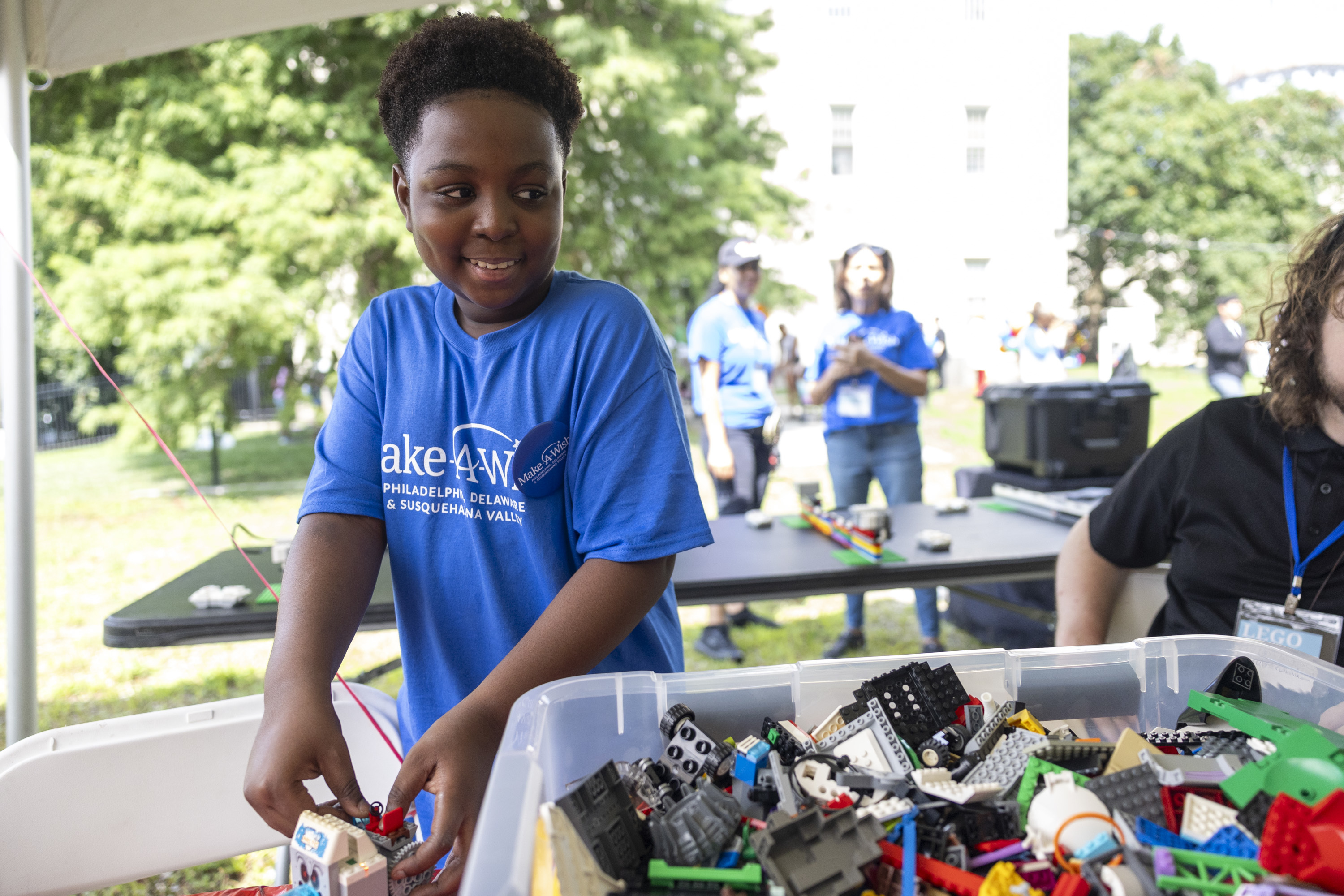
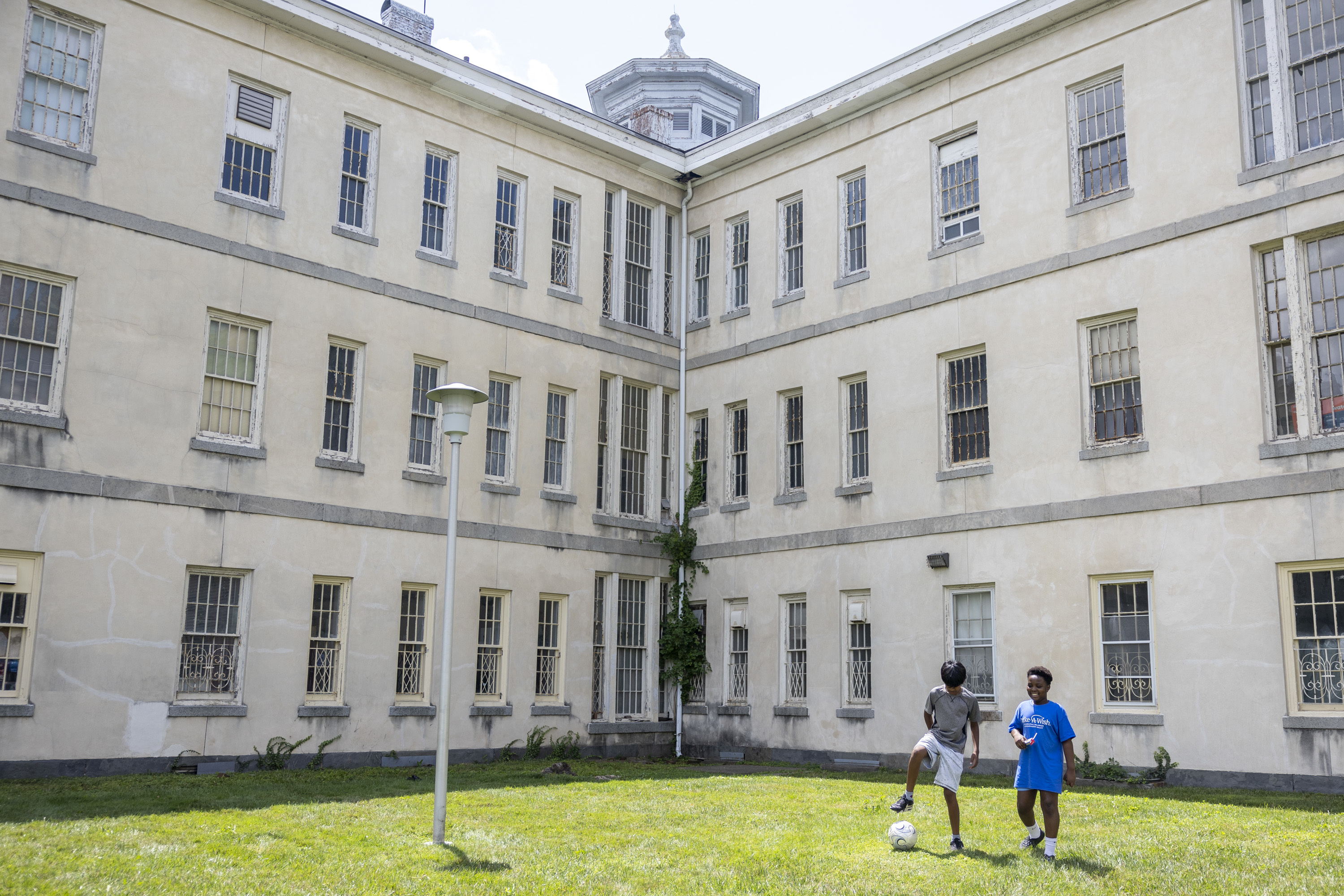
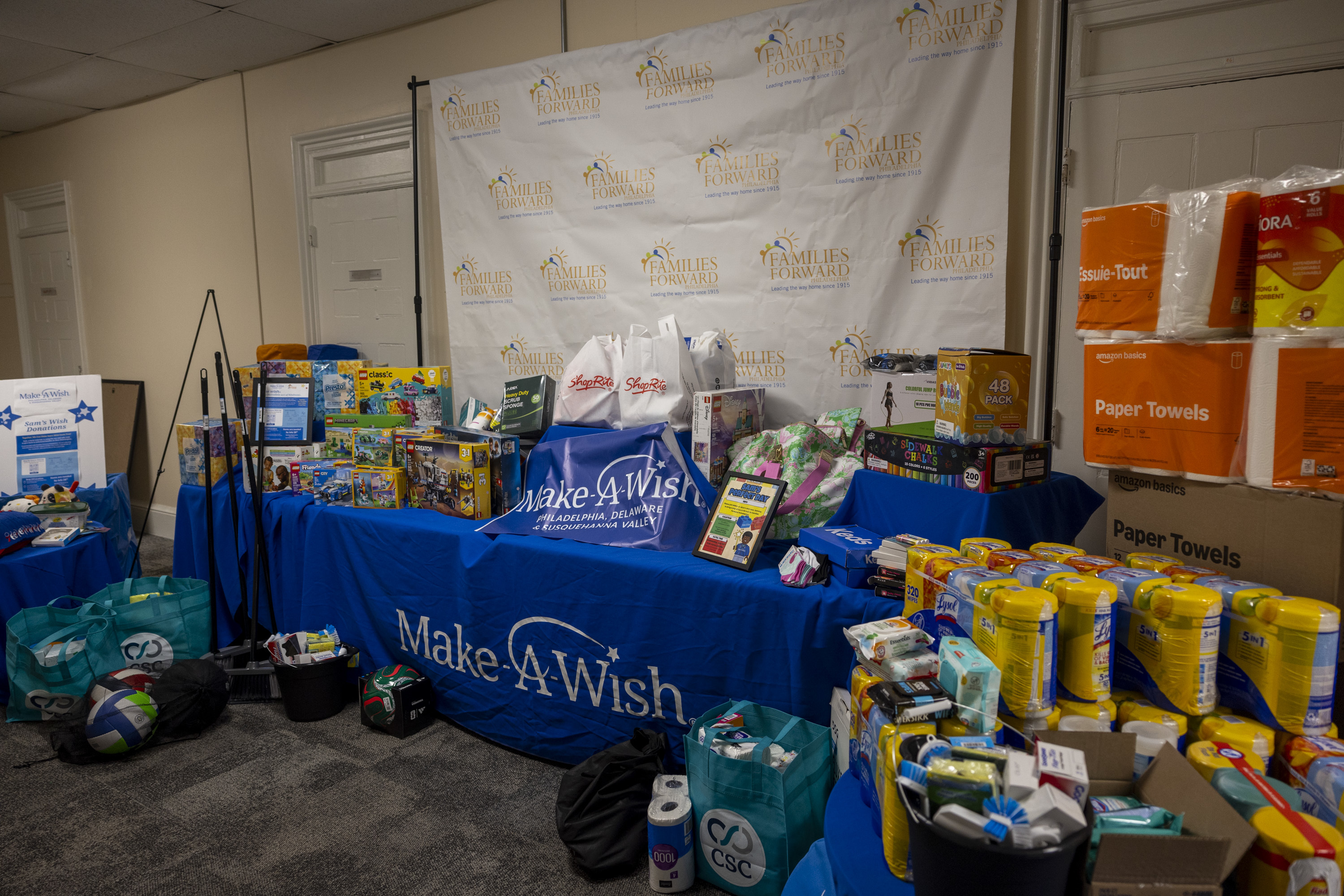
    Make-A-Wish settled on Families Forward Philadelphia, a homeless shelter in West Philly, as the recipient of Sam’s wish and hosted a monthlong donation drive for the facility leading up to “Sam’s Perfect Day” last month. The carnival-style extravaganza on the shelter’s front lawn, attended by dozens of families experiencing homelessness as well as Sam and his family, featured Lego displays, a petting zoo, a Lego-inspired bounce castle, and water ice provided by Sam’s family’s Southwest Philly water ice business, Willkay’s.

    Making a wish a reality

    Word of the wish quickly spread around the office of Make-A-Wish Philadelphia, Delaware, & Susquehanna Valley following the April meeting. Anika Goyal, one of the staffers responsible for carrying out wishes, knew this one had to be hers.

    The chapter, which grants about 335 wishes a year, regularly fulfills shopping sprees, vacations to Disney World, and room makeovers, but it rarely gets one like Sam’s, Goyal said.

    So Goyal got to work. Sam emphasized that helping homeless children, specifically, was important to him, so Goyal selected Families Forward as the beneficiary shelter because it emphasizes keeping families intact during their stays.

    She reached out to small businesses and nonprofits — as many as she could find that also had Make-A-Wish connections. Oshun Family Center, which Goyal asked to host a table on Black maternal health and to distribute childcare kits, was founded by a mom of a Make-A-Wish recipient. Jam-Rock Kitchen, a local Jamaican restaurant owned by another Make-A-Wish family, slathered up their jerk chicken and spiced up their rice and peas for the big day.

    Goyal also looped in staff at the King of Prussia Lego store, a former contestant on the reality TV competition series LEGO Masters, and Swoop, the Philadelphia Eagles mascot, to make the event quintessentially Sam.

    Alana Deluca, manager at King of Prussia’s Lego store, talks to Sam Okyere, 12, during his Make-A-Wish donation drive and block party.Tyger Williams / Staff Photographer

    “It’s not about him,” Goyal said. “But it is about him.”

    As Goyal and the Make-A-Wish team prepared the logistics, Sam contended with a life-altering decision. Sickle cell can be treated through a bone marrow transplant. The ideal donor is a sibling who is a match. Will Okyere, Sam’s 25-year-old brother, was. So Sam and his family scheduled a transplant for the end of August. The process starts with chemotherapy and ends with in-home isolation for several months, requiring Sam to miss most of his seventh-grade year with his friends.

    “It’s a bummer,” Sam said. “But, it’s like, anything to get me better.”

    “I just want to get sickle cell over and done with,” he added.

    Sam Okyere, 12, hanging out with his friend Mosiah Saddick, 12, during Sam’s Perfect Day at Families Forward Philadelphia homeless shelter.Tyger Williams / Staff Photographer

    While sickle cell disease is not inherently fatal, it can increase the risk of life-threatening infections, acute chest syndrome, stroke, and chronic organ damage, particularly without medications or interventions such as a bone marrow transplant or gene therapy.

    Cynthia Norris, Sam’s attending hematologist at Children’s Hospital of Philadelphia, who referred Sam for the wish, said he stood out among all her eligible patients because he has the most severe variation of the disease and has had a number of complications. His grace and thoughtfulness, she said, also set him apart.

    “He’s just a very special young man,” Norris said. “He has so much empathy.”

    Sam Okyere, 12, with his dad Akwasi Okyere, Delaware Blue Coats mascot Coaty, and Philadelphia Eagles mascot Swoop during Sam’s Perfect Day Make-A-Wish donation drive and block party at Families Forward Philadelphia homeless shelter.Tyger Williams / Staff Photographer

    Living out a perfect day

    After months of waiting and preparation, Sam’s Perfect Day finally arrived.

    Shiny new yellow, red, and blue soccer balls and Hula-Hoops lined the main hall of the Families Forward office building. Tubs along the mirroring wall brimmed with sunscreen bottles, toothbrushes, and soap. A giant poster sandwiched in the middle bore Sam’s likeness in Lego form — tiny Afro and all.

    Some of the donations for Sam Okyere’s Perfect Day Make-A-Wish donation drive and block party.Tyger Williams / Staff Photographer

    Families Forward could never have afforded this bounty on its own, said Jessica Main, the nonprofit’s chief development officer. Grant money the shelter receives is often tied to specific types of services like mental health and education. Its budget for toys and recreational materials is around $3,000 annually, Main estimated. That would probably barely cover the glimmering new basketball hoop and sports equipment Sam’s donation drive brought in.

    Sam Okyere, 12, with his sister, Kayla, at the petting zoo during his Make-A-Wish donation drive and block party at Families Forward Philadelphia homeless shelter.Tyger Williams / Staff Photographer

    Sam nestled into a blue canvas chair in the petting zoo as two goats nibbled food out of Dixie cups he held in each hand.

    “I’m naming this one Ashton,” Sam announced to no one in particular, looking at a brown and white goat.

    “Food! Anybody want food,” he shouted to the tiny goats (one wearing a feathered bowler hat), bunnies, and one black pig that dragged its rotund paunch on the ground wherever it went.

    Sam Okyere, 12, is holding Penelope the pig at the petting zoo during his Make-A-Wish donation drive and block party at Families Forward Philadelphia homeless shelter in Philadelphia, Pa., on Wednesday, July 29, 2026.Tyger Williams / Staff Photographer

    “Zane, Kai, Lloyd,” he said, pointing at two goats and then the pig, naming all after characters on his favorite show Ninjago, which the uninitiated will be unsurprised to learn is a show about Legos.

    Soon a 3-year-old named Saga, wearing a white dress smattered with images of heart-shaped lollipops, entered the petting zoo enclosure, mouth agape as she stood eye-to-eye with the recently named Ashton the goat and gently patted the silver nubs on either side of its bony head. This was her first experience with farm animals.

    Her mother, Quechera Jowers, 32, followed closely. The pair have lived at the shelter for about four months.

    “I’m not going to lie, it’s a little nostalgic,” Jowers said, taking in the carnival sights as they waited in line for cotton candy, which, based on crystallized red formations encrusted around Saga’s mouth, it appeared she’d already indulged in.

    Throughout the afternoon, gleaming toddler cheeks transformed into butterfly wings, kitten whiskers, and dragon scales with face paint. Pink and purple beads were strung into friendship bracelets, and technicolor swimsuits (each child got one through Sam’s donation drive) grew soaked from a sprinkler raining down on the kids as they descended an inflatable slide adjoined to the bounce castle. Navigating the pipe system of the old converted asylum-turned-shelter facility was the challenge of the morning, Main said.

    Beyoncé blared from a portable DJ booth, chubby fingers grasped balloons on strings and absentmindedly released them into the stratosphere, and a topless toddler with wild curls boogied near the mouth of a bubble machine, a diaper band peeking out from his khaki shorts.

    Sam Okyere, 12, is trying out the DJ set with Nashirah Felder, of Fishtown, during his Perfect Day Make-A-Wish donation drive and block party at Families Forward Philadelphia homeless shelter in Philadelphia, Pa., on Wednesday, July 29, 2026.Tyger Williams / Staff Photographer

    Sam, meanwhile, alternated between the Lego games, petting zoo, and basketball station.

    After discreetly lowering his game controller in the middle of a Lego joust, allowing a friend to overtake his spacecraft and win the game, Sam sauntered over to the goats situated in a kennel in the back of a truck to bid them farewell.

    Sam Okyere, 12, plays against Corey Samuels, 41, of Princeton, N.J., a LEGO Masters winner, during his Make-A-Wish donation drive and block party at Families Forward Philadelphia homeless shelter in Philadelphia, Pa., on Wednesday, July 29, 2026.Tyger Williams / Staff Photographer

    “I don’t want them to leave,” he mused as he delicately scratched a tan one on the chin and, with an understated graciousness rare to find in adults, let alone children, allowed the petting zoo staff to take them away.

    As the afternoon drew to a close, Sam settled into a chair in the hallway full of donations and futzed with a small Lego vehicle. An event organizer informed him that the Lego store employees offered to gift him all the leftover toys. Sam politely declined and requested they instead be given to the kids at the shelter.

    Asked in the final moments what could have made Sam’s Perfect Day more perfect, he contemplated.

    “Nothing,” he resolved.

    Nothing at all.

  • Philly’s chief paramedic was punished for reporting favoritism in the fire department, lawsuit says

    Philly’s chief paramedic was punished for reporting favoritism in the fire department, lawsuit says

    Philadelphia’s chief paramedic said in a whistleblower lawsuit that he was stripped of his leadership position for sounding the alarm about allegations of favoritism in the city’s fire department.

    Jason Centofanti, who joined Philadelphia’s emergency medical services in 2007, says fire department leadership punished him for escalating a report accusing a captain of being lenient with a subordinate who had failed to fill out required patient records because of a personal friendship.

    Centofanti, who was elevated to the role of fire paramedic services chief last year, investigated and suspected the captain attempted to cover up the conduct by falsifying an official record. But when Centofanti elevated these concerns, the suit says, he was met with a brick wall and punished.

    His plight made its way to the Philadelphia Office of the Inspector General and the fire commissioner, according to the complaint. Even though some higher-ups acknowledged the retaliatory nature of his transfer in conversation with Centofanti, the suit says, it was not enough to stop it.

    The lawsuit, which was filed Wednesday in Common Pleas Court, accuses the city of violating whistleblower protections and asks a judge to order the city to end the retaliation against Centofanti, pay him for lost wages, and compensate him with more than $50,000 in damages.

    A spokesperson for the city’s law department declined to comment on the active litigation. Amanda Martinez, Centofanti’s attorney, said in a statement that the lawsuit speaks for itself.

    Centofanti launched an investigation in January shortly after a lieutenant complained to him about the captain’s favoritism, according to the complaint.

    The lieutenant also accused the captain of harassment, but the lawsuit does not describe the nature of the allegation.

    Centofanti discussed the allegation with the accused captain, and escalated a report to department leadership and human resources.

    During the investigation, Centofanti came to believe that the captain had altered a document to cover up the alleged conduct, the lawsuit says.

    “Plaintiff explicitly stated that he believed that [the captain] submitted a falsified document for an official PFD investigation,” according to the complaint.

    The aftermath of the investigation was not what Centofanti expected.

    Martin McCall, a deputy commissioner for EMS, moved the captain to a new building at her request “to shield her,” the suit says. McCall also informed Centofanti that due to “work performance” he was being transferred back to field duty, according to the complaint, despite the chief’s work having been rated “superior” and “satisfactory” in a recent performance evaluation.

    McCall also moved the lieutenant to a new post because, the suit says, she made the accused captain “uncomfortable.”

    “The two reporters of the wrongdoing … were being transferred to less desired positions and punished for speaking out,” the lawsuit says.

    Centofanti went to the department’s top leaders and claims they were sympathetic. But that sympathy did not change his fate. An official whistleblower complaint with the city’s inspector general was not enough to reverse the transfer, either.

    He was formally transferred out of EMS administration to a field assignment in May, the suit says. His office schedule was replaced with a field rotation that requires nights, weekends, and holidays, according to the complaint. Centofanti lost his office, staff, and car.

    Coworkers have been taunting Centofanti since he returned to the field, the complaint says.

    “When are you going to learn to shut your mouth,“ one captain texted him, according to the complaint. ”Enjoy your paycut.”

  • Building a file photo legacy

    Building a file photo legacy

    In late July when I covered Montgomery County’s District Attorney announcing charges in connection with two assaults in a Cheltenham High School football locker room, I knew the story was something we would be writing about for some time.

    Aware that we used the same photo, taken in 2018, with stories about the high school hazing leading up to the indictments, I left from the DA’s office across the street from the Courthouse in Norristown and drove to the school in Wyncote to take “fresh” ones.

    I wrote last week about the web’s appetite for photos. But there’s another kind of photo: the thumbnails that are attached to every story, whether or not they are “live” photos.

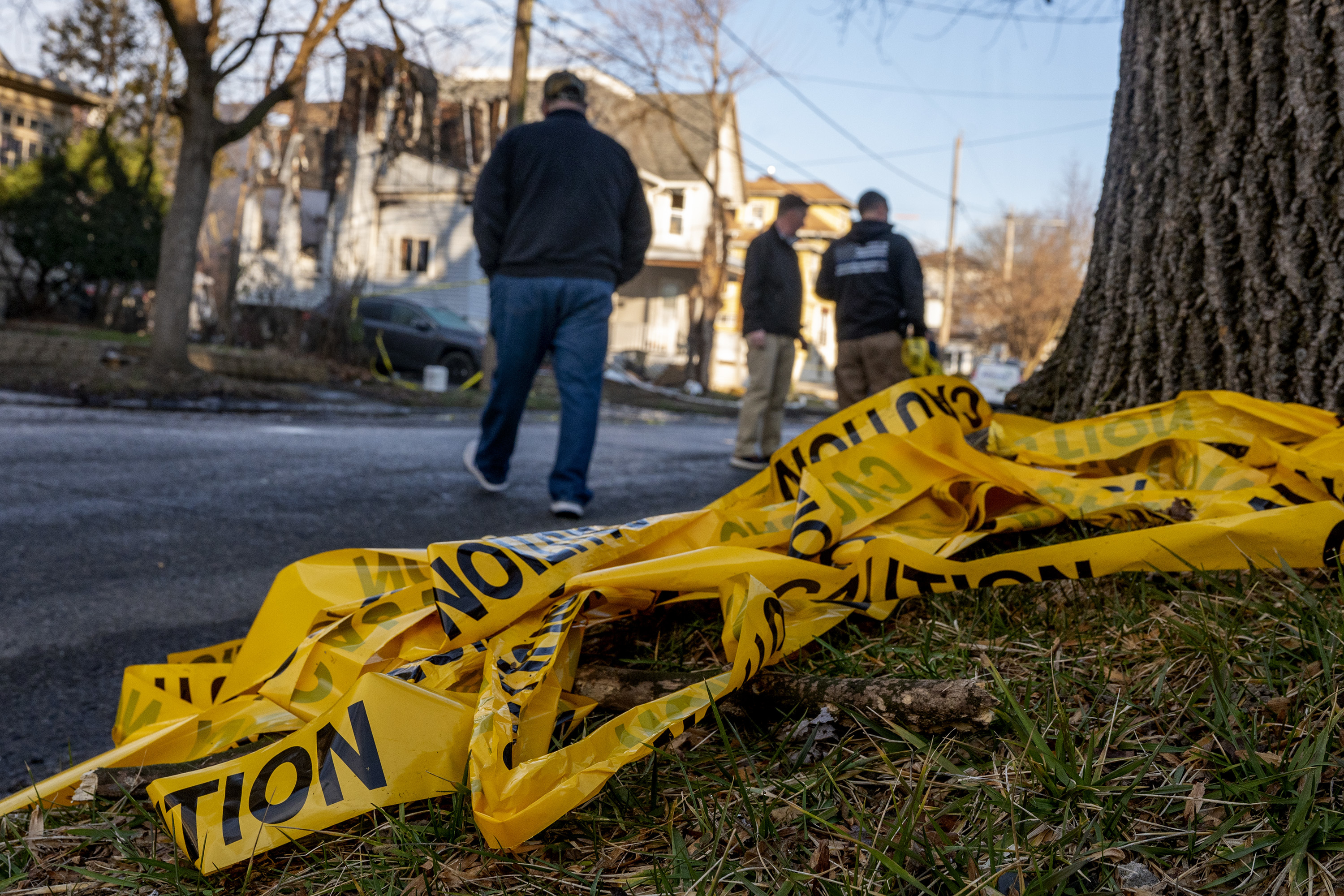
    Most of those little horizontal photos — none are verticals — of flashing police lights or yellow tape; headshots of politicians; city street scenes and skyline, or many, many photos of signs and buildings are file photos.

    Like the 2018 one of Cheltenham High School. And the July 2026 version — in a variety for views — that I made last week, that already have and will be used again and again.

    The frame at the top was made with a aperture of f/22 so I could get both signs in focus, at shutter speed of 1/15 second to blur the passing cars. Getting the window was just good luck.

    I thought of file photos this week when another one of mine was used in a story about N.J. Gov. Mikie Sherrill declaring a steak place in Camden has better cheesesteaks than the “millions” she has tried in Philly.

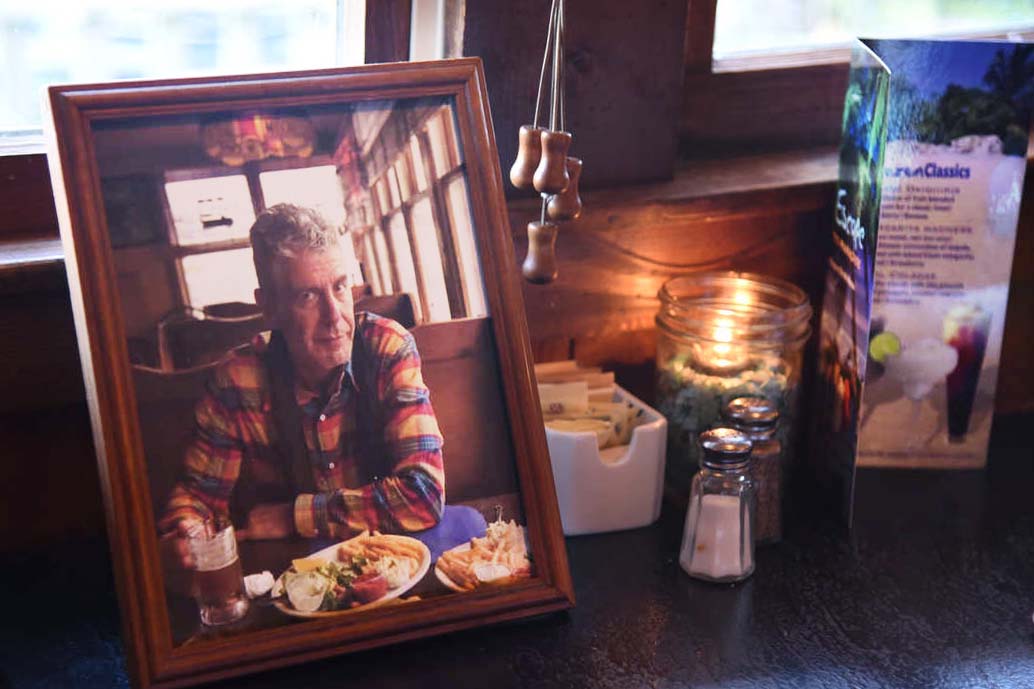
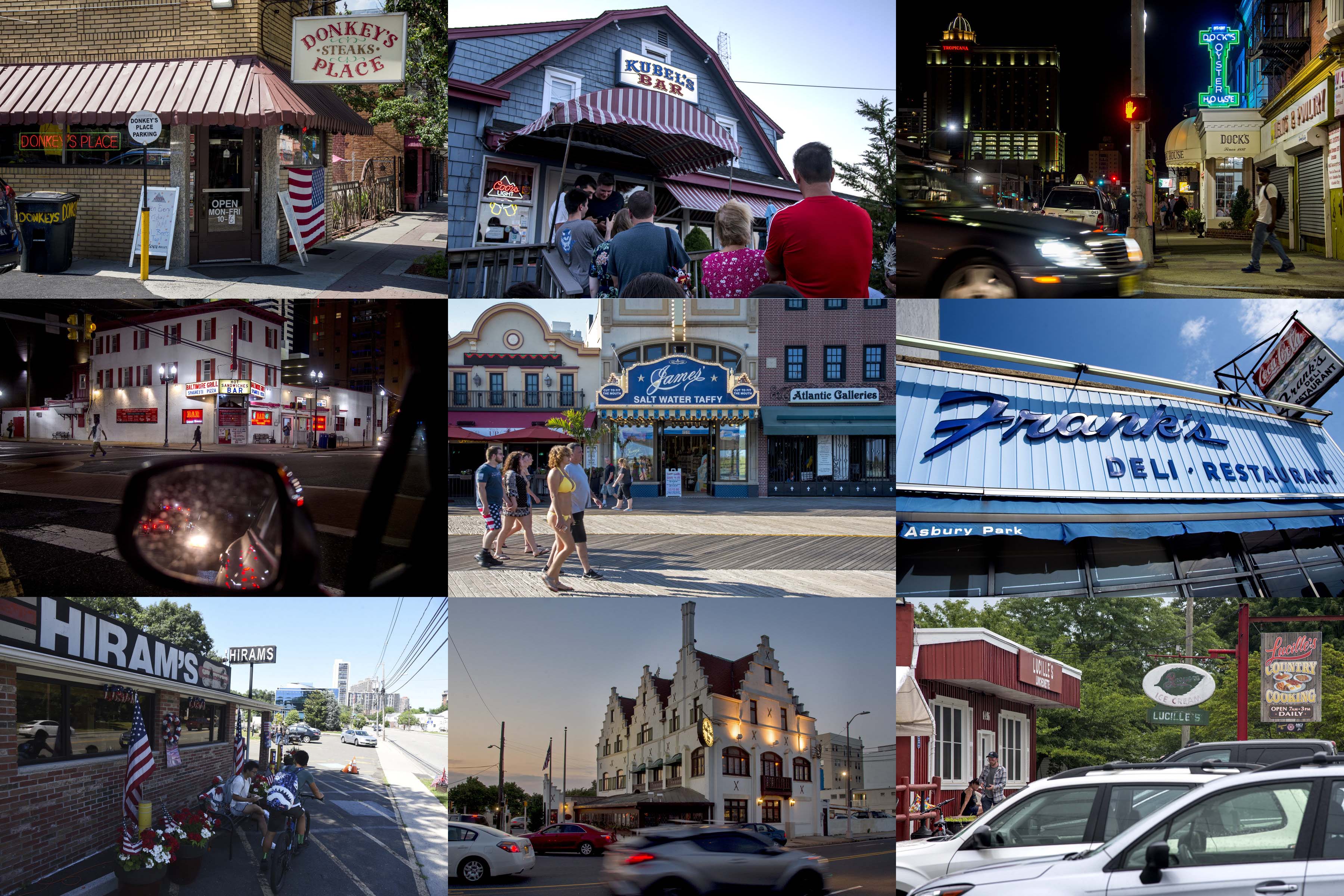
    After celebrity chef Anthony Bourdain died in 2018 I set out to photograph — and eat — at some of the food destinations he visited on his Emmy Award-winning CNN show Parts Unknown.

    The booth at Kubel’s in Barnegat Light, where Bourdain ate clams with his brother, Chris.TOM GRALISH / Staff Photographer

    Following in the footsteps of the globe-trotting adventurer, I flew not to some far-flung place with exotic cuisine but drove instead to all 10 spots he featured in an episode on the food and culture of his home state, New Jersey.

    It was one of my top 10 favorite stories of my career. Foodstagrammers had visited many of the places featured in the episode but I couldn’t find any foodies who had been to all of them.

    Each one had its own history, personality, and flavor, but together all captured exactly what Bourdain loved about New Jersey: community and authenticity, and incredible food without the pretense.

    Donkey’s Place in Camden was one of the most memorable. I made three trips there for the story, and took hundreds of photos while sitting at the bar with cheesesteak aficionados and talking with third generation owner Rob Lucas (his grandfather, Olympic boxer Leon Lucas, had a punch they said was like the kick of a mule).

    I could go on about the memories served at each of the places Bourdain was drawn to, but getting back on the file photos track, of all the photos I made that summer, the one image that gets reused the most often is one from Donkey’s, made as I was walking to my car after my last visit.

    I paused, waiting for anyone to walk in or out. I’d just spend a couple hours there, and it was slow by then, mid-afternoon, and the light wasn’t that great anyway, so I took a quick picture and left, figuring it’s close by (compared to the other places) and I could come back at lunchtime later.

    Of course that never happened before the story published, and the straightforward photo of the outside of the restaurant was used. I had lots of other really good photos (if you haven’t already, click through the embedded gallery). So, no big deal. Except that exterior view ends up being the only photo in our photo library with the Donkey’s sign so it gets used every time we write about the place! And the only picture among the dozens from all the other nine places that ever gets republished (I really need to go back and update).

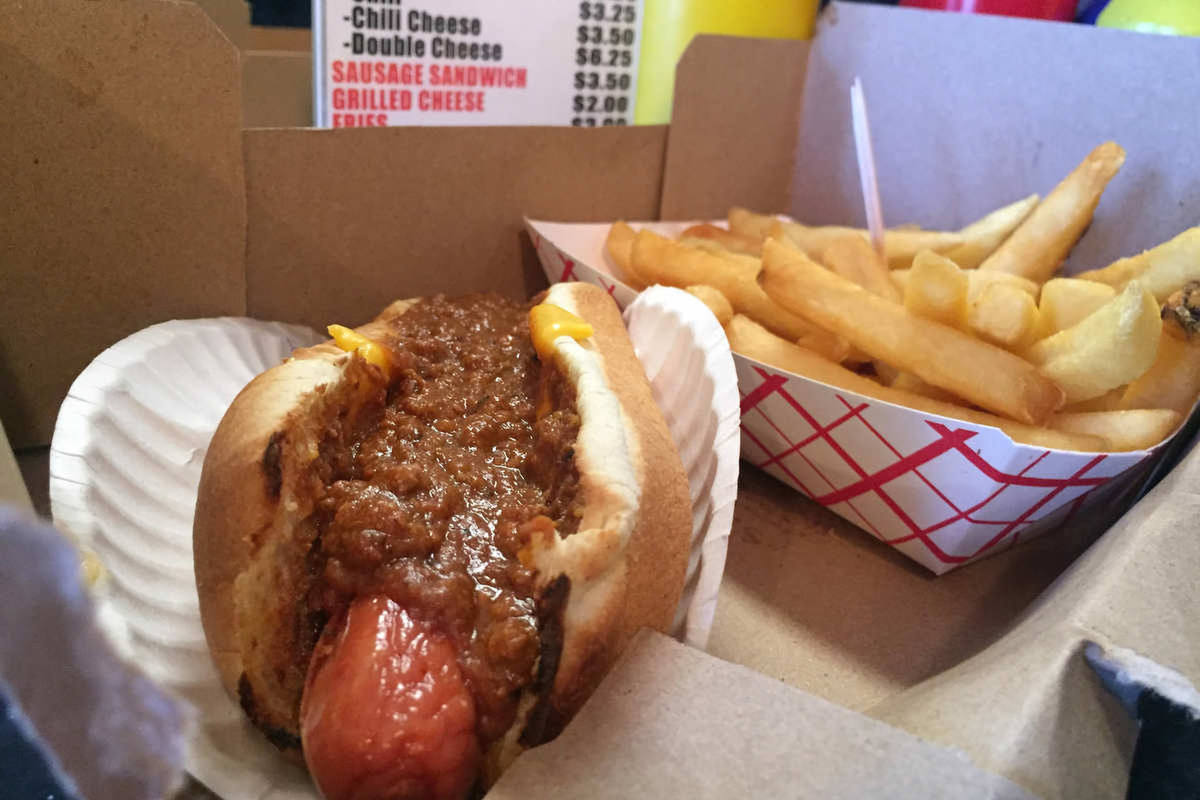
    The “ripper” fried hot dog and French fries (with wooden toothpick) at Hiram’s Roadstand, in Fort Lee, one of ten eateries Anthony Bourdain visited in a 2015 episode of his ‘Parts Unknown” TV show in New Jersey.TOM GRALISH / Staff Photographer

    Another file photo I have updated, among my most-published, is a photo I first took at the University of Pennsylvania. We do lots of stories there, and once while leaving a parking garage, I noticed a logo on the window of the elevator.

    I rode it up and down, over and over, looking for the cleanest spot on the glass, trying different camera exposures — just like with the Cheltenham signs — and getting different angles in the background.

    I have also photographed sculptures, signs, and scenes around campus when on other assignments, but the parking garage image seems a favorite whenever a generic Penn file photo is needed.

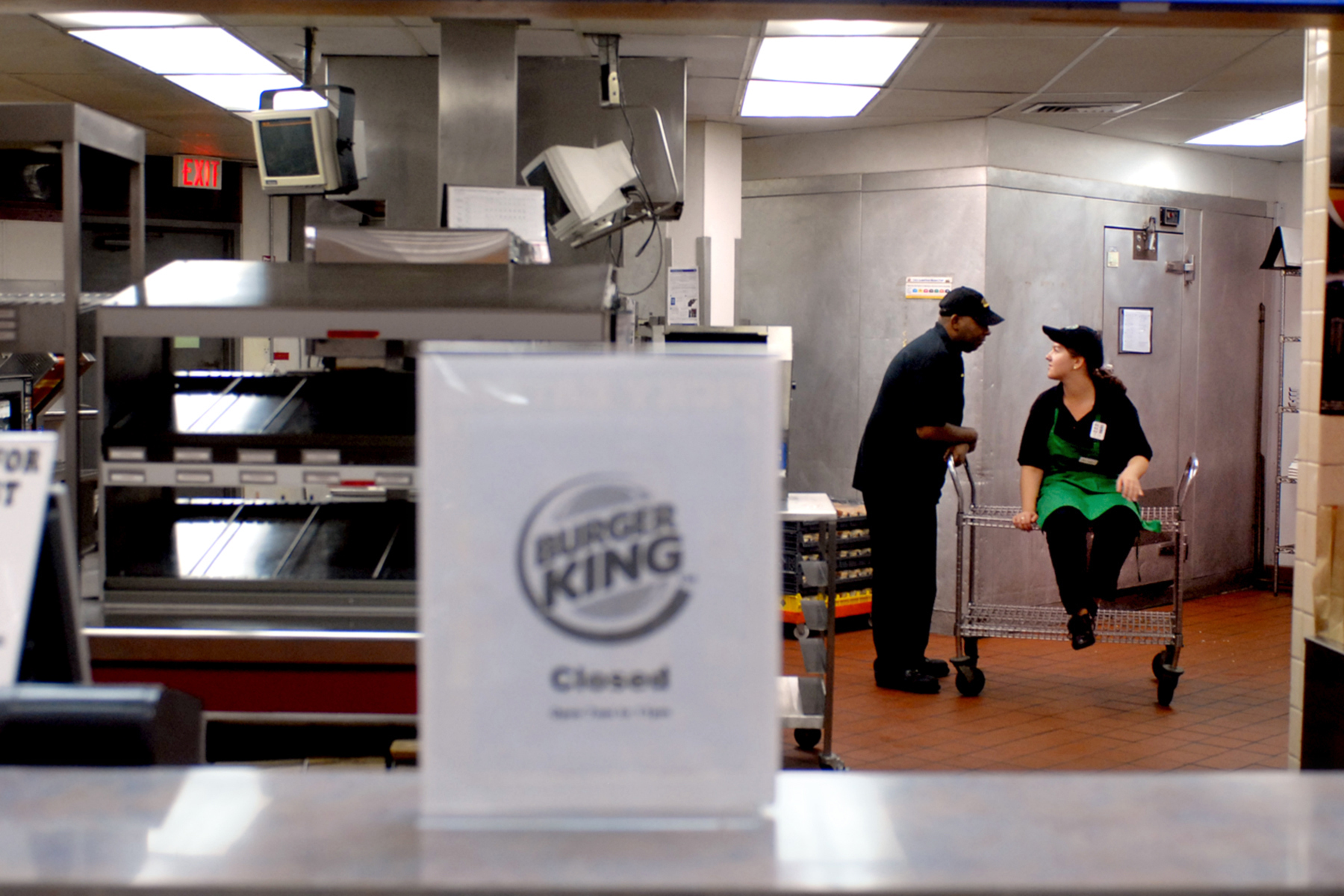
    Finally, in the early days of the web, my most-used file photo was one I made during this column’s first summer (then, in 2007, called a blog). While making weekly roadtrips and posting every day or two about the places and pictures I went, I spent one late night that faded into early morning.

    Rahsan Allen (left) and Tanya Krekmanova talk in the closed Burger King during a break at 4:45 a.m. July 19, 2007, on their night-shift jobs at the North Neshaminy Service Plaza, Westbound on the Pennsylvania Turnpike. They make up two thirds of the overnight shift at the rest stop. Allen works at the Travel Mart and Krekmanova is a Starbucks barista. She is a university student in Sofia, Bulgaria, one of twenty-four International students working at the rest stop. The others come from Russia, Turkey and the Ukraine, for four months with the U.S. State Department’s Summer Work and Travel Program.Tom Gralish / Staff Photographer

    I stopped at service plazas along the Pennsylvania Turnpike. The story is here — but with only one photo (a future column will lament how even when stories get archived by newspapers the pictures that accompanied them are often not saved).

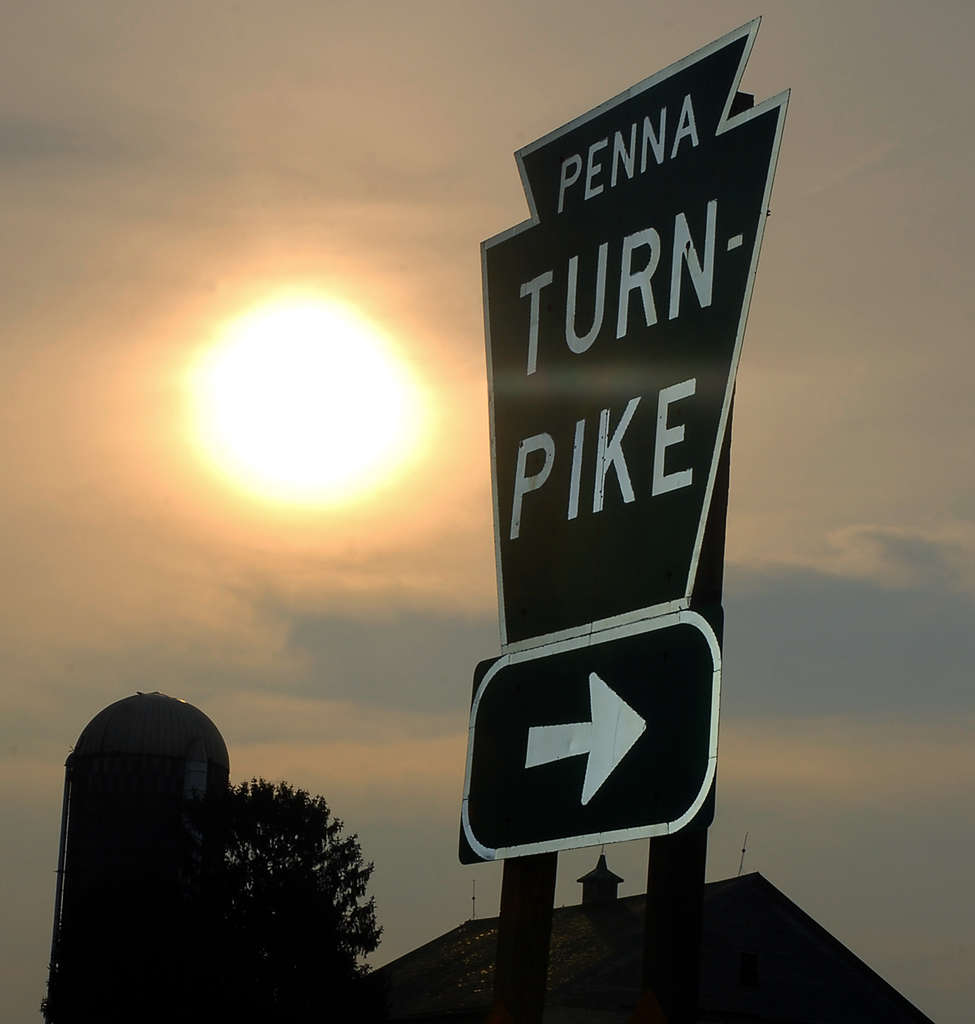
    While getting on and off the turnpike at different exits to backtrack, I photographed the sun rising behind a turnpike sign. It was a vertical, but has been recropped many times to fit the web’s 3:2 thumbnail ratio.

    I still drive the turnpike, and update that photo every once in a while. Versions are still used.

    I guess you could call it one of my “greatest hits.” My legacy.

    Since 1998 a black-and-white photo has appeared every Monday in staff photographer Tom Gralish’s “Scene Through the Lens” photo column in the print editions of The Inquirer’s local news section. Here are the most recent, in color:

    » SEE MORE: Archived columns and Twenty years of a photo column.