Category: Philadelphia News

  • Jalen Hurts donated $600,000 for AC at Philadelphia’s largest high school

    Jalen Hurts donated $600,000 for AC at Philadelphia’s largest high school

    Jalen Hurts was watching morning TV three years ago when he saw something that stopped him in his tracks.

    “I was very blown away by school not being canceled for snow, not for a hurricane or tropical storm, but for lack of AC,” the Eagles star quarterback said Tuesday.

    So Hurts went about doing something to fix that.

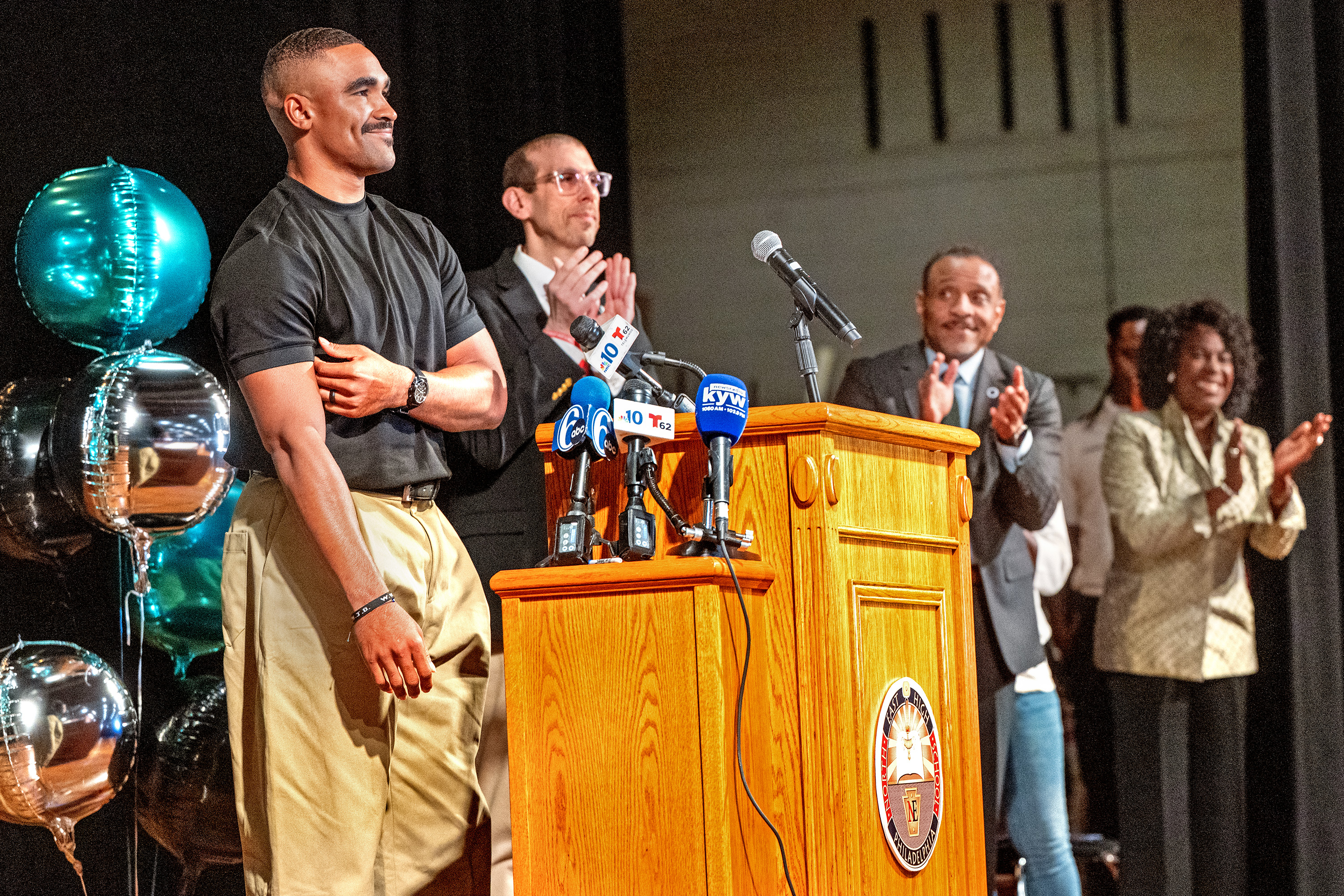
    On Tuesday, he stood on Northeast High’s stage to announce his foundation was putting up $600,000 to air-condition the school’s auditorium.
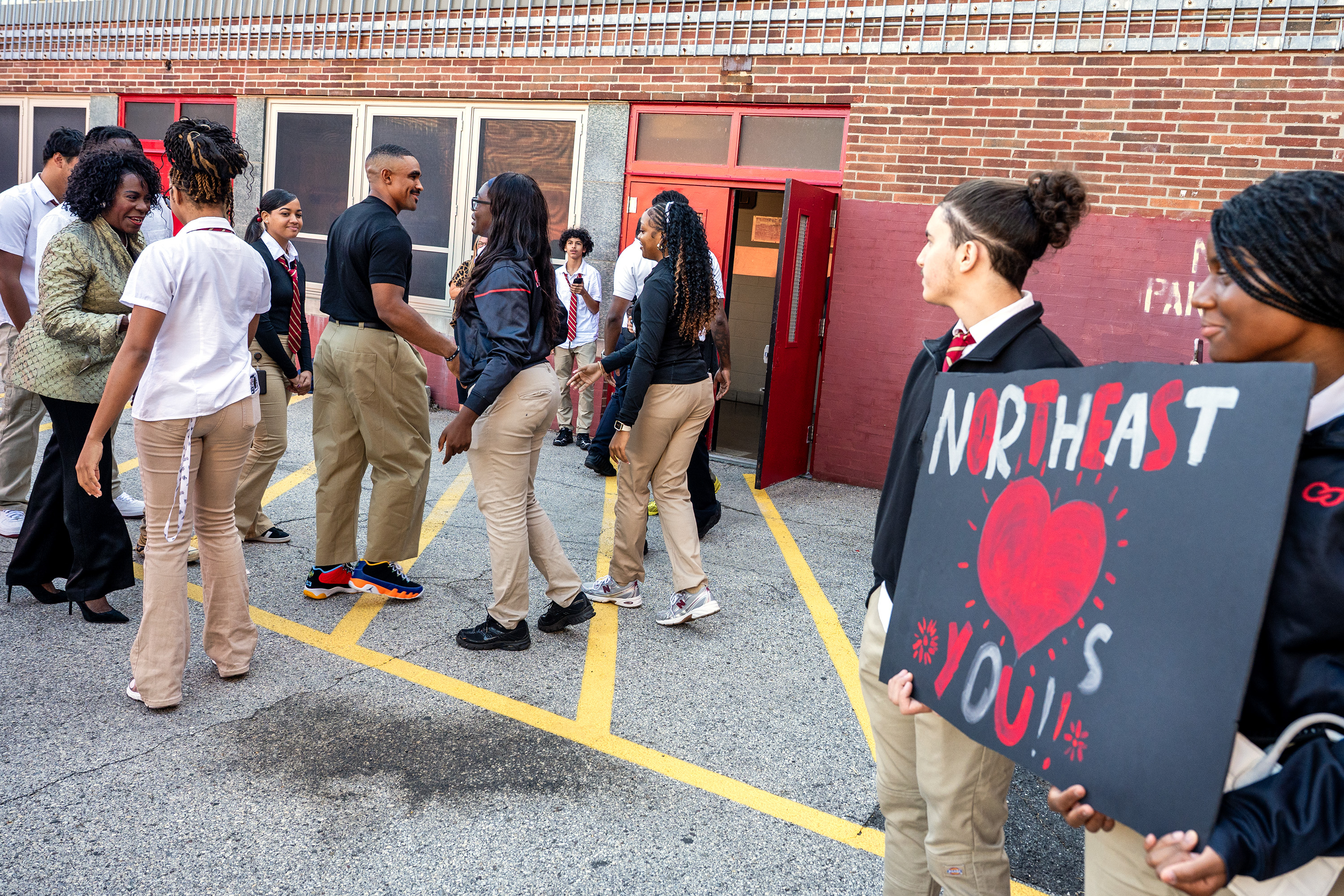
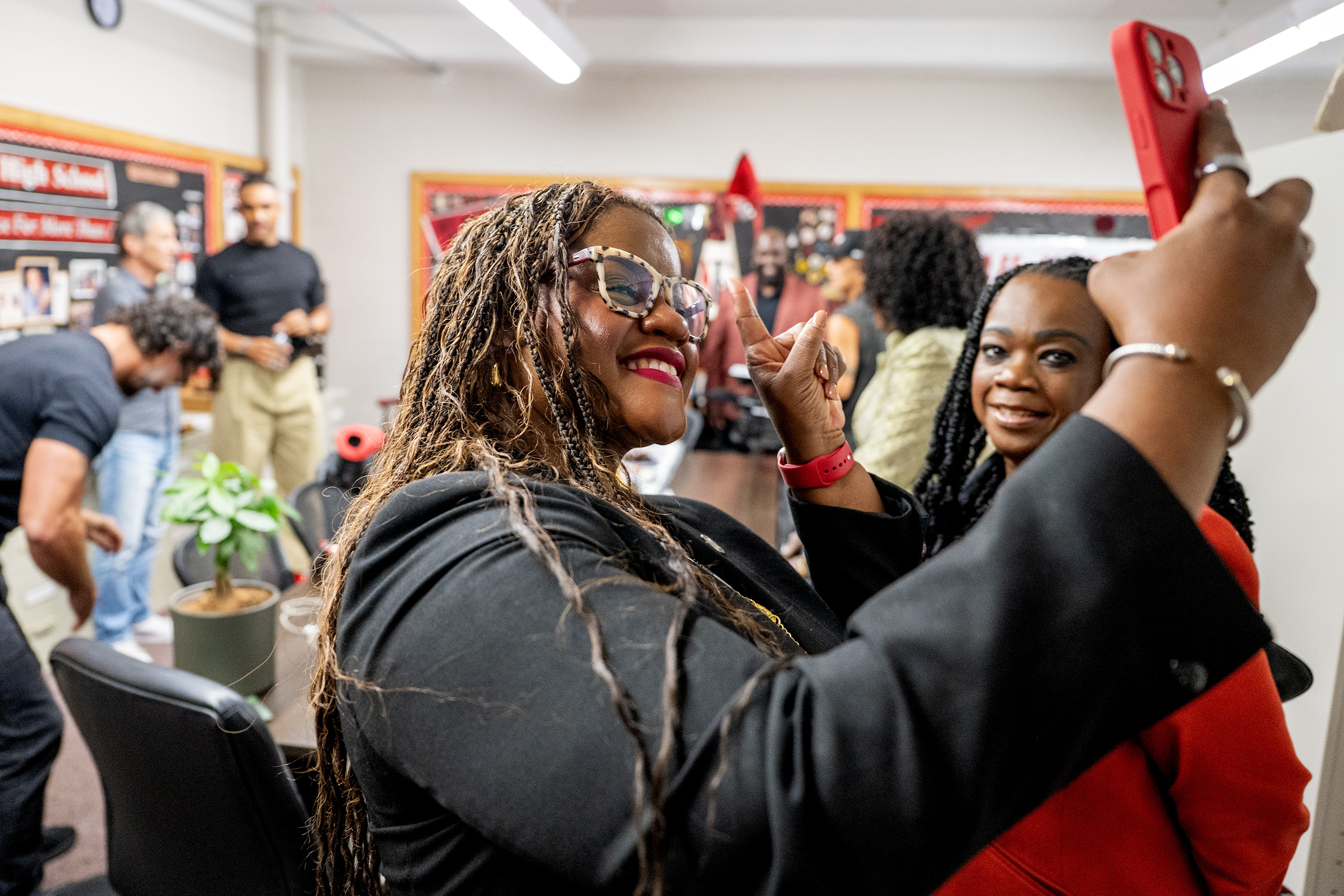
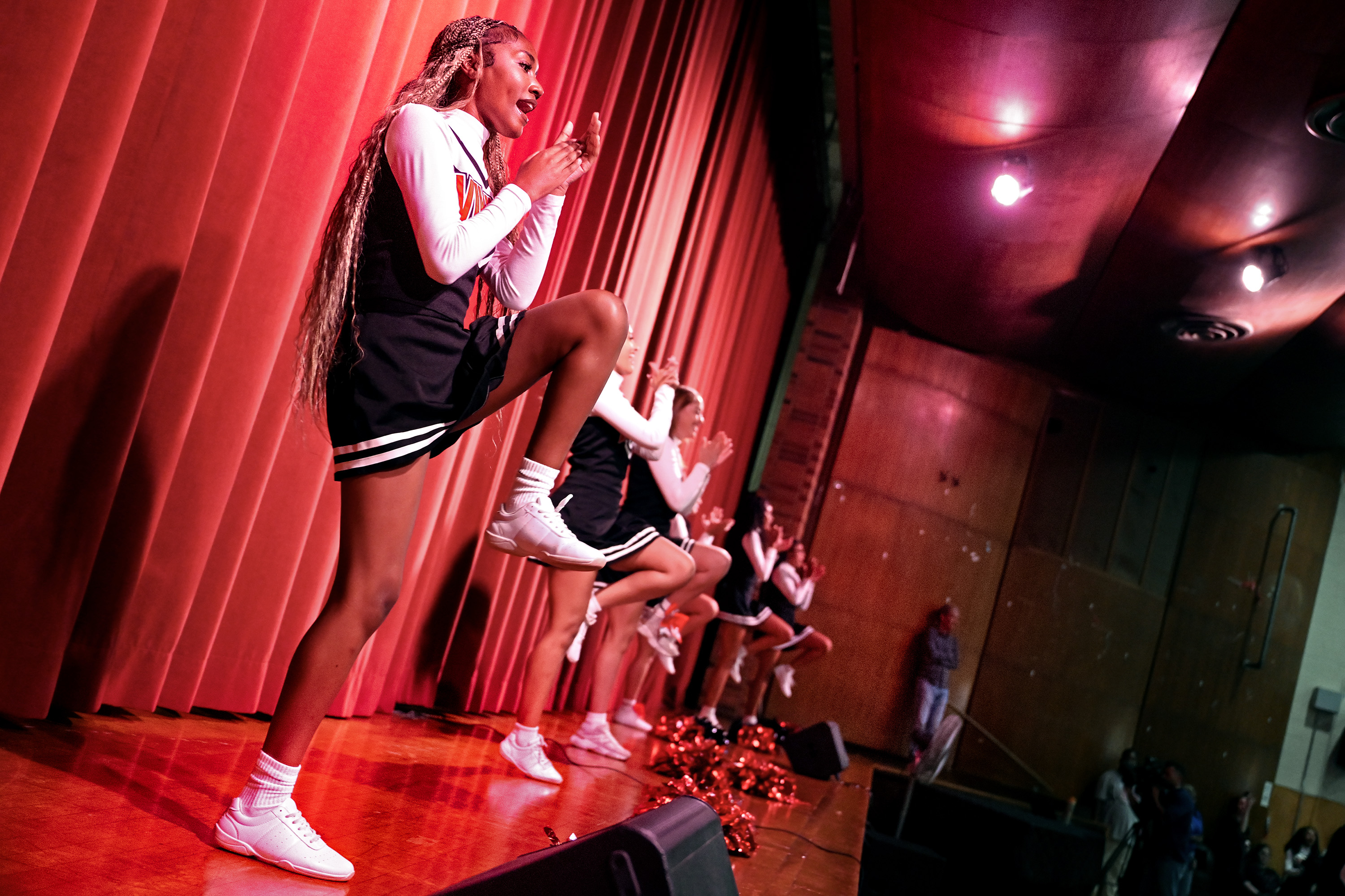
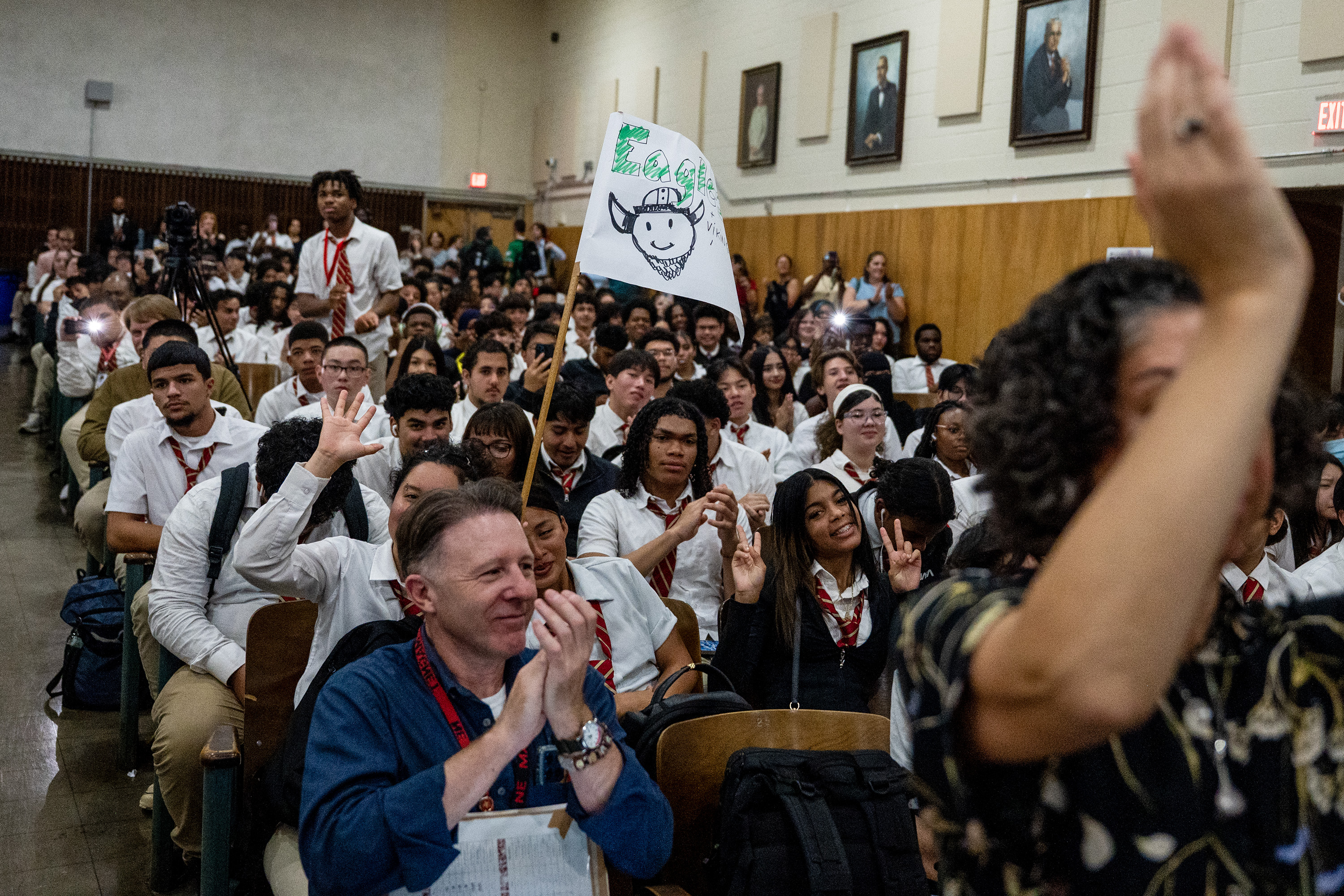
    The timing was good: Although temperatures were in the high 60s when Hurts made his announcement, it was sweltering in the auditorium, with more than 1,000 students, teachers, and dignitaries in the room. Sweat ran down the faces of members of the marching band toting heavy instruments and cheerleaders in long-sleeved uniforms. Mayor Cherelle L. Parker cooled herself with a small personal fan.

    When Hurts watched that TV spot, about half of the district’s schools were not air-conditioned. Hurts’ largesse has helped get the number down, but 52 schools — about a quarter of district buildings — still lack air-conditioning.

    Hurts, on Tuesday, said he wanted to move the needle more for Philadelphia schools.

    “Let’s get it to zero,” Hurts said of the number of schools without air-conditioning. “I want to get it to zero.”

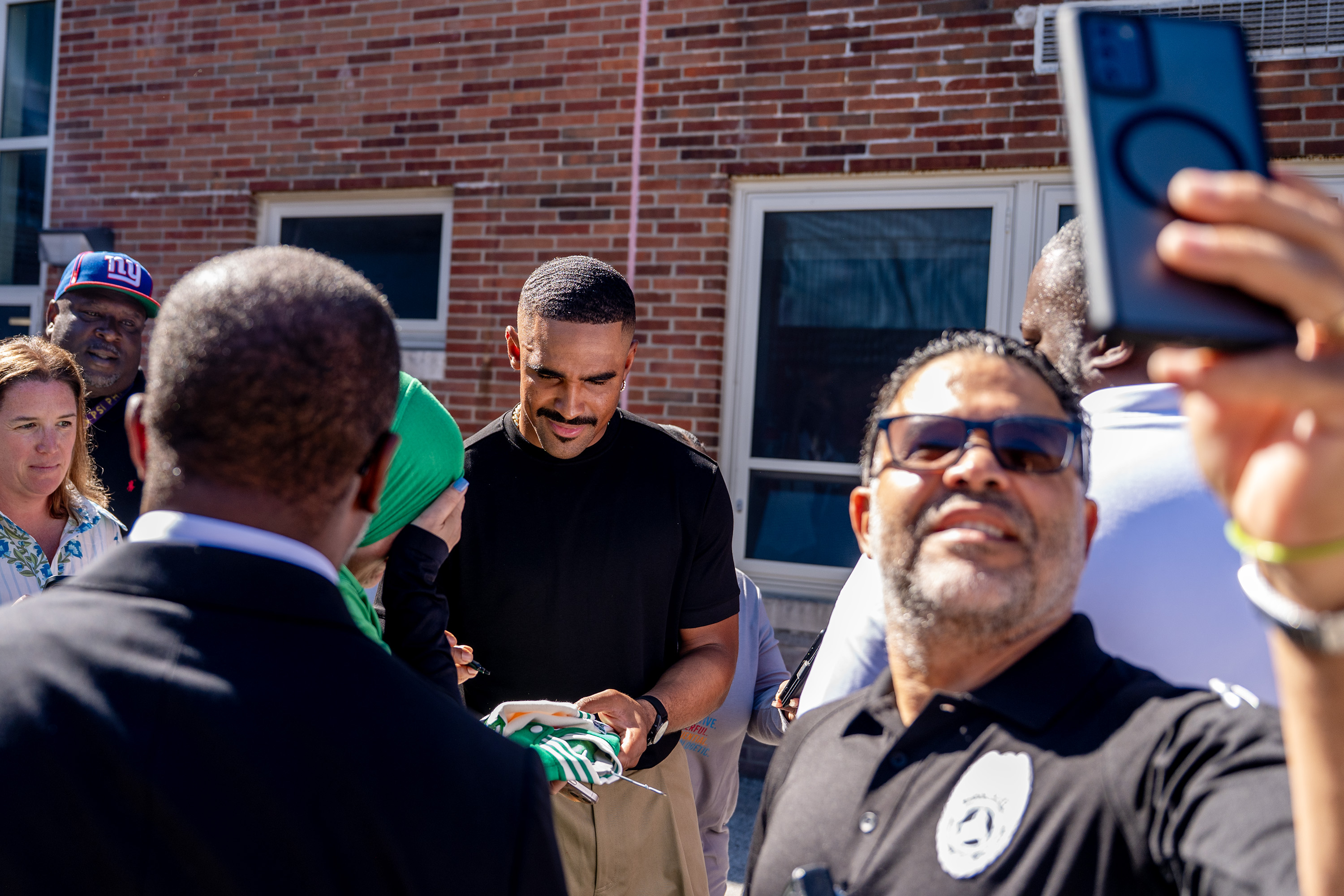
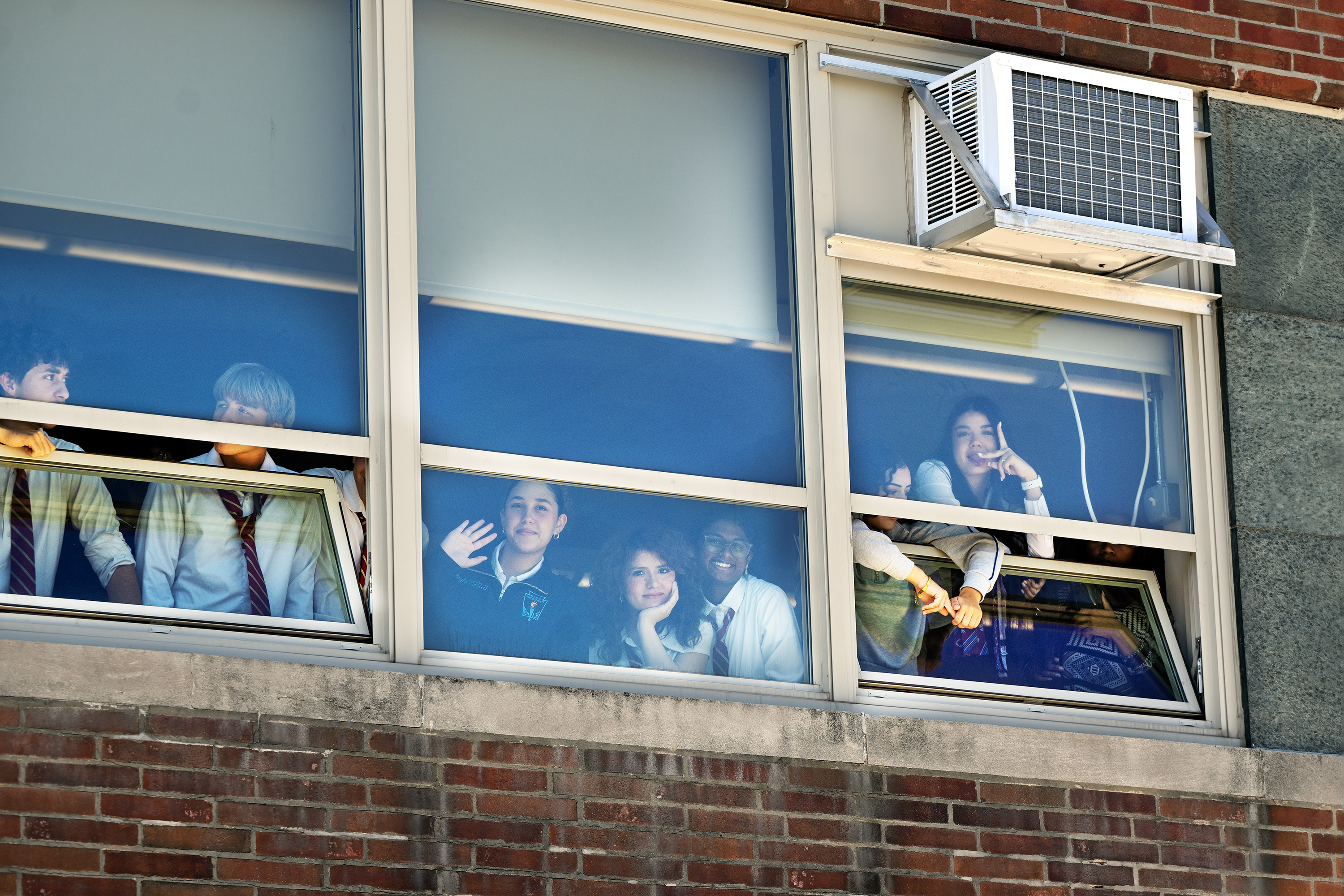
    Northeast High School watch from their classroom – with a window air conditioning unit – as Eagles quarterback Jalen Hurts leaves Tuesday, Sept. 15, 2026 following his appearance there to give the school $600k for an a new cooling system.Tom Gralish / Staff Photographer

    Asked why he was turning his attention to city schools, Hurts said he was influenced by his educator parents and the people who made a way for him.

    “It’s about service and showing up for those around you,” the quarterback said.

    Northeast High had window units cooling classrooms prior to Hurts’ announcement, but the auditorium, a hub of the school and the community, was tough to use in the spring and summer months, said Andrew Lukov, the school’s principal.

    “This changes everything for us,” Lukov said.

    A beaming Parker, who made sure to lead the adoring Northeast crowd in an E-A-G-L-E-S chant, spelled correctly, led the crowd in giving Hurts a standing ovation.

    “Jalen, on behalf of the entire city of Philadelphia, we say thank you for your gift,” Parker said. “You will have an impact on more than the 3,400 students who attend this school on a daily basis. You’ve also done something even more important: You’ve used your time, your treasure, and your celebrity to assist a constituency who will never be able to walk in your shoes.”

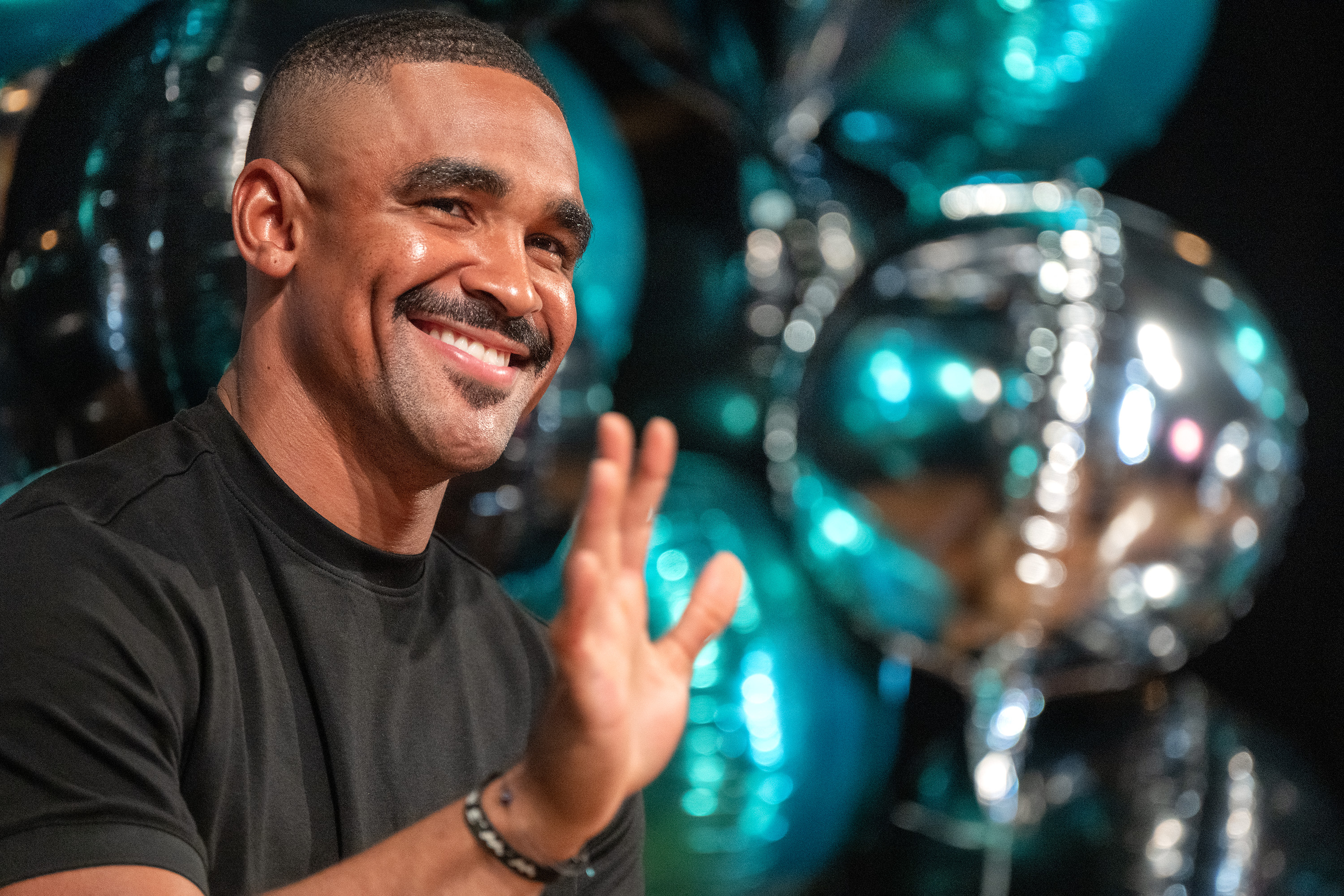
    Eagles quarterback Jalen Hurts as he appears at a rally in the auditorium at Northeast High School Tuesday, Sept. 15, 2026 to give the school $600k for an air conditioning system. With him onstage in the auditorium Northeast principal Andrew Lukov, School Superintendent Tony B. Watlington, Sr. and Mayor Cherelle L. Parker.Tom Gralish / Staff Photographer

    It feels a little surreal that a major space in an important school lacks adequate climate control in the United States, said Mekhriyona Ilkhomova, a Northeast senior whose speech earned a broad smile and a hands-over-heart gesture from Hurts.

    Hurts’ donation matters, not just because of the money but because of who he is, said Ilkhomova, a standout student and athlete.

    “It reminds us students of what we can become,” she said, “and what we can give back after becoming.”

    The state of the cool

    District officials had promised the entire system would be air-conditioned by 2027; the system appears off track to reach that goal.

    While Northeast is getting an upgrade, 52 schools lack air-conditioning.

    When temperatures are forecast to hit 85 degrees or higher by noon, those 52 schools are dismissed early. If the weather forecast calls for temperatures of 85 or higher before 9 a.m., those schools are closed for in-person instruction and remote learning days are called.

    That means unequal experiences, with students in some schools not missing instructional time when it’s hot, and those in a quarter of schools subject to interrupted schedules.

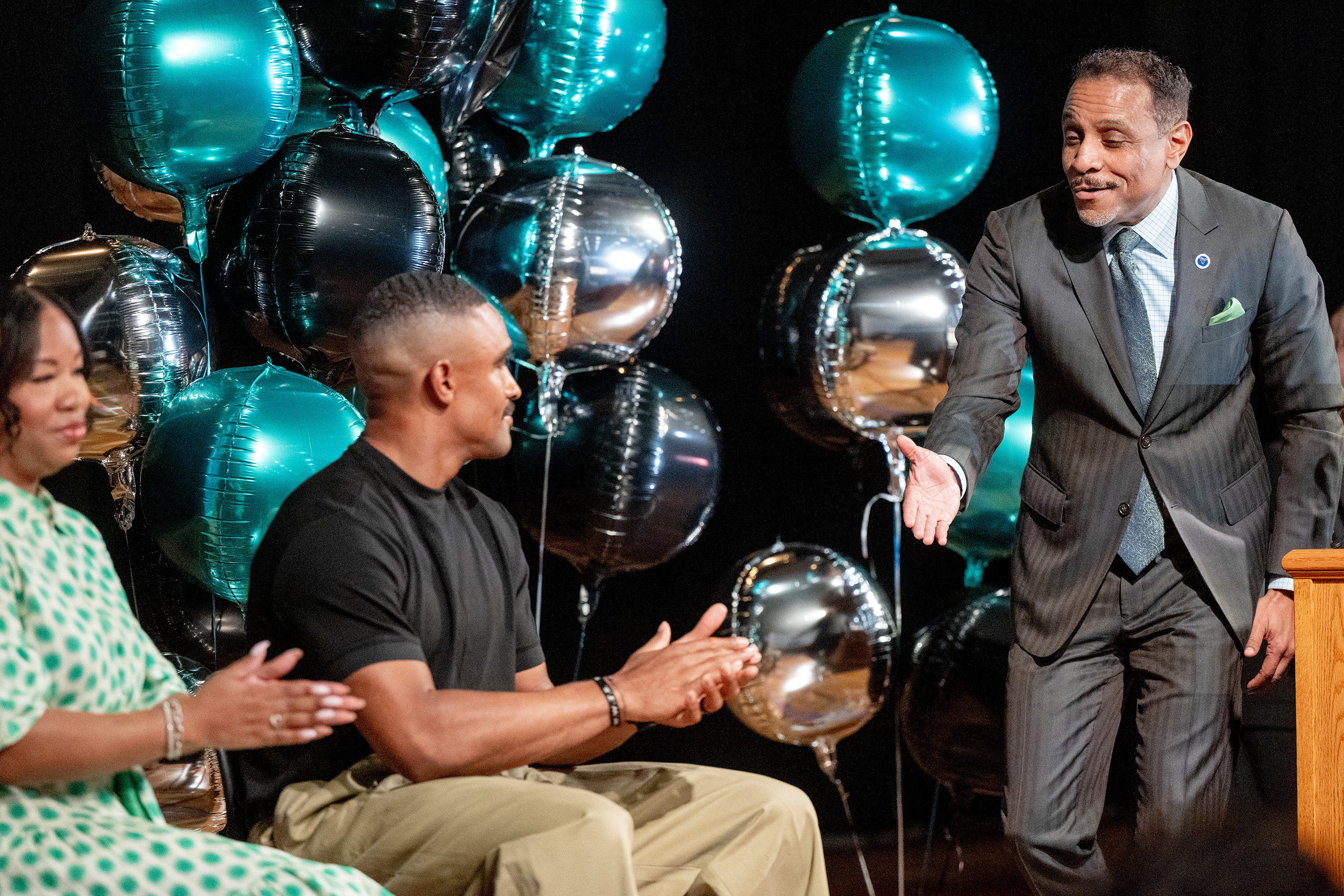
    School Superintendent Tony B. Watlington, Sr. (right) greets Eagles quarterback Jalen Hurts as he appears at a rally in the auditorium at Northeast High School Tuesday, Sept. 15, 2026 to give the school $600k for an air conditioning system. At left is Kathryn Epps, president & CEO, The Fund for the School District of PhiladelphiaTom Gralish / Staff Photographer

    Four weeks into a new school year, Philadelphia has had two heat-interrupted days at the 52 schools.

    Cooling the remainder of the 52 schools is not as simple as buying air-conditioning units: Many old buildings lack adequate electrical systems to support whole-school cooling.

    Those projects are complicated.

    An HVAC project at Kensington High went awry this summer, triggering asbestos issues that forced students and staff to relocate for the rest of the calendar year.
  • Reading Terminal Market reports nearly 6 million annual visitors, who spend $1.2 billion in Philly

    Reading Terminal Market reports nearly 6 million annual visitors, who spend $1.2 billion in Philly

    Nearly 6 million Reading Terminal Market visitors, a mix of locals and tourists, spent $1.2 billion in Philadelphia last year, according to a new study on the economic impact of the historic Center City market.

    It’s the first time the nonprofit Reading Terminal Market Corp. has commissioned such a report, and the stats solidify the market’s status as “a beloved civic institution, and a powerful and vital economic engine for Philadelphia and Pennsylvania,” said Annie Allman, CEO and general manager. With the report, Allman said she is encouraging “continued investment in the market, its merchants, and its infrastructure.”

    It highlighted the market’s importance to lower-income residents, with 18 Reading Terminal merchants accepting SNAP and EBT benefits. This accounts for about 55% of the Center City merchants who accept food-assistance programs, according to the report. Reading Terminal Market is considered the largest EBT- and SNAP- redemption location in Pennsylvania.

    “Every dollar spent here is a dollar invested in Philadelphia — in our merchants, our hospitality industry, our neighbors, and our future,” Allman said in a statement.

    The “Feeding the City, Fueling the Economy” report — released Tuesday and conducted by the Philadelphia firm Econsult Solutions at Reading Terminal Market Corp.’s request — found that the market has contributed about $126 million worth of annual economic activity to the city of Philadelphia and $146 million to the Commonwealth of Pennsylvania. These figures include direct spending at the market’s more than 75 vendors, as well as the subsequent spending by those vendors and the employees they pay.

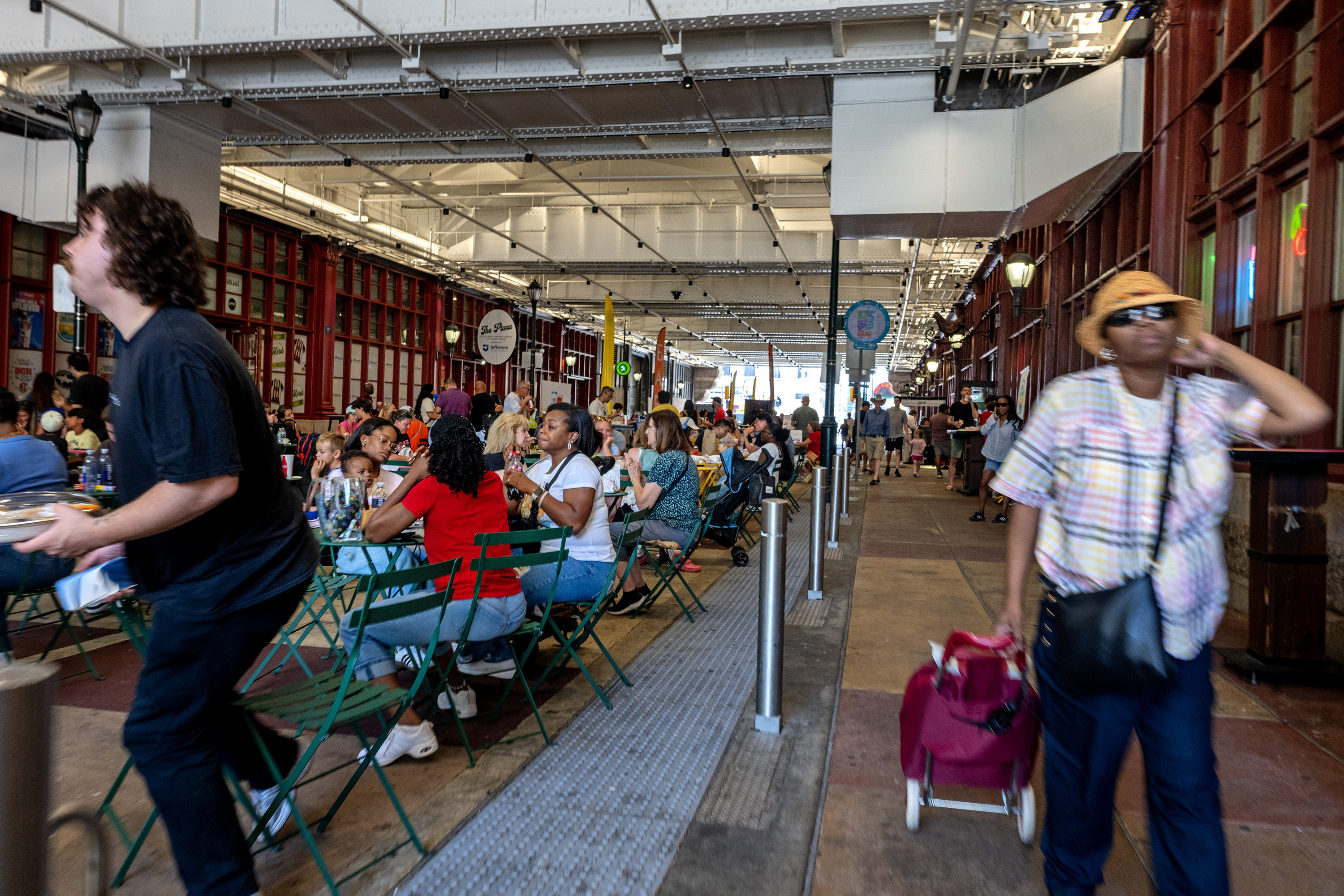
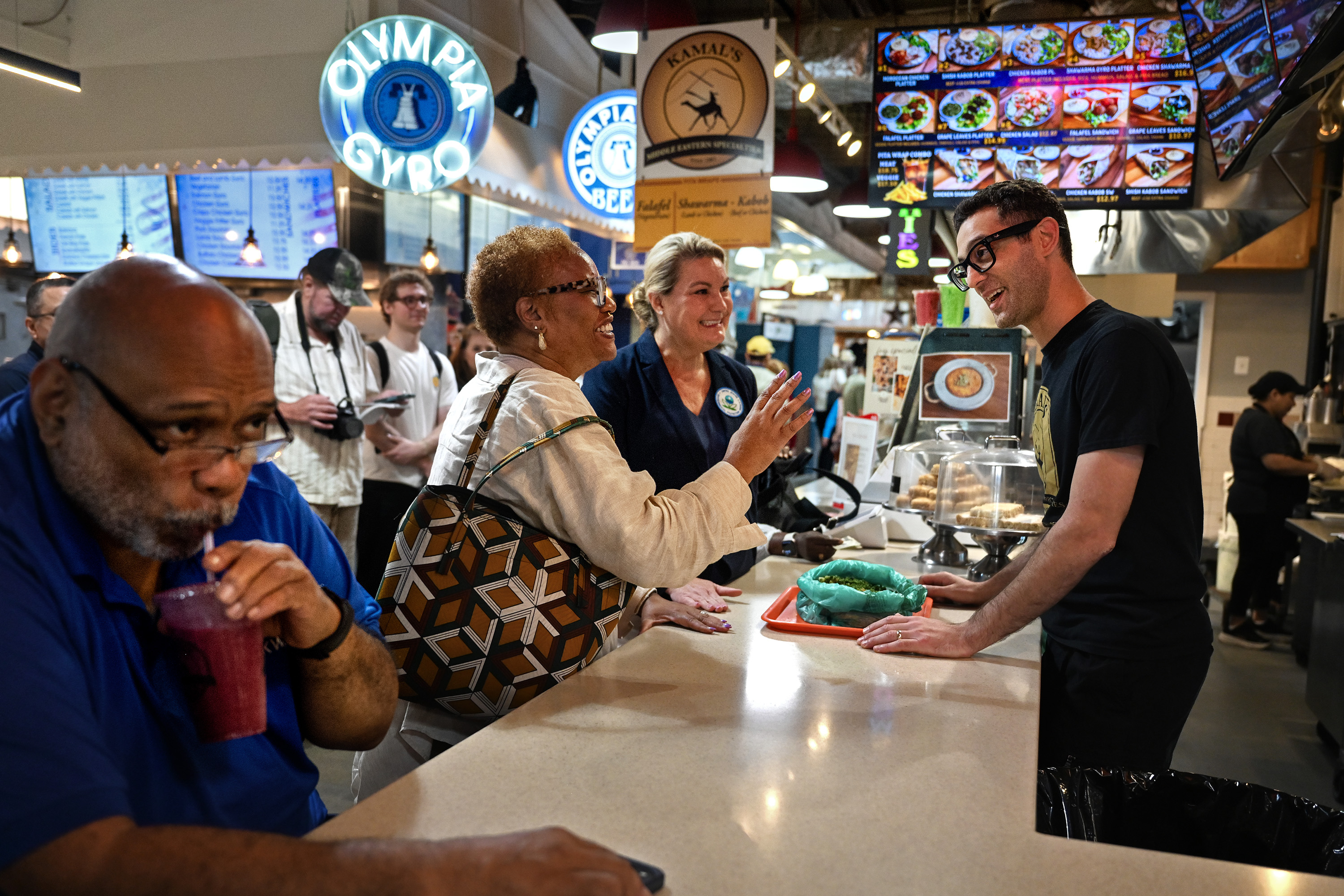
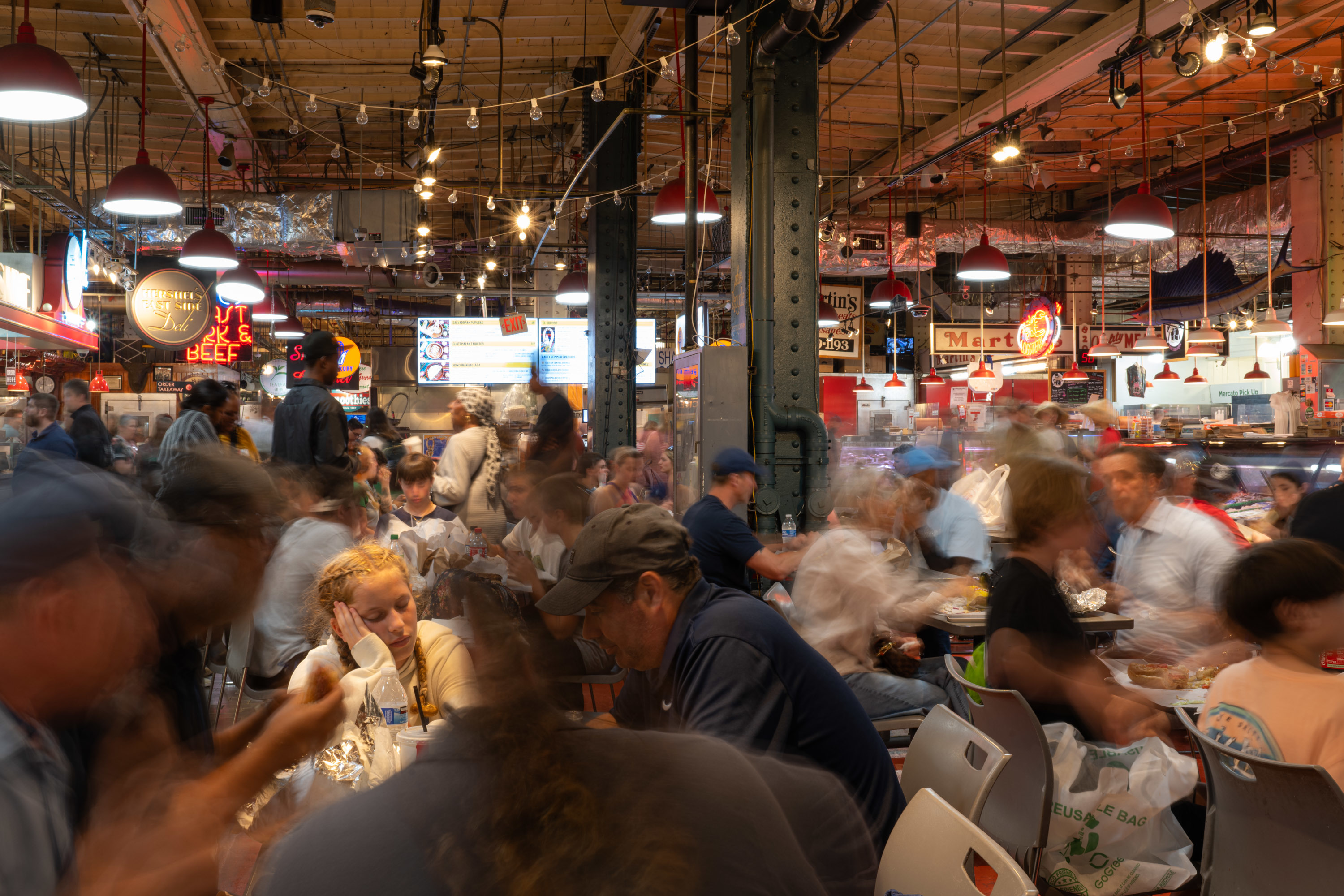
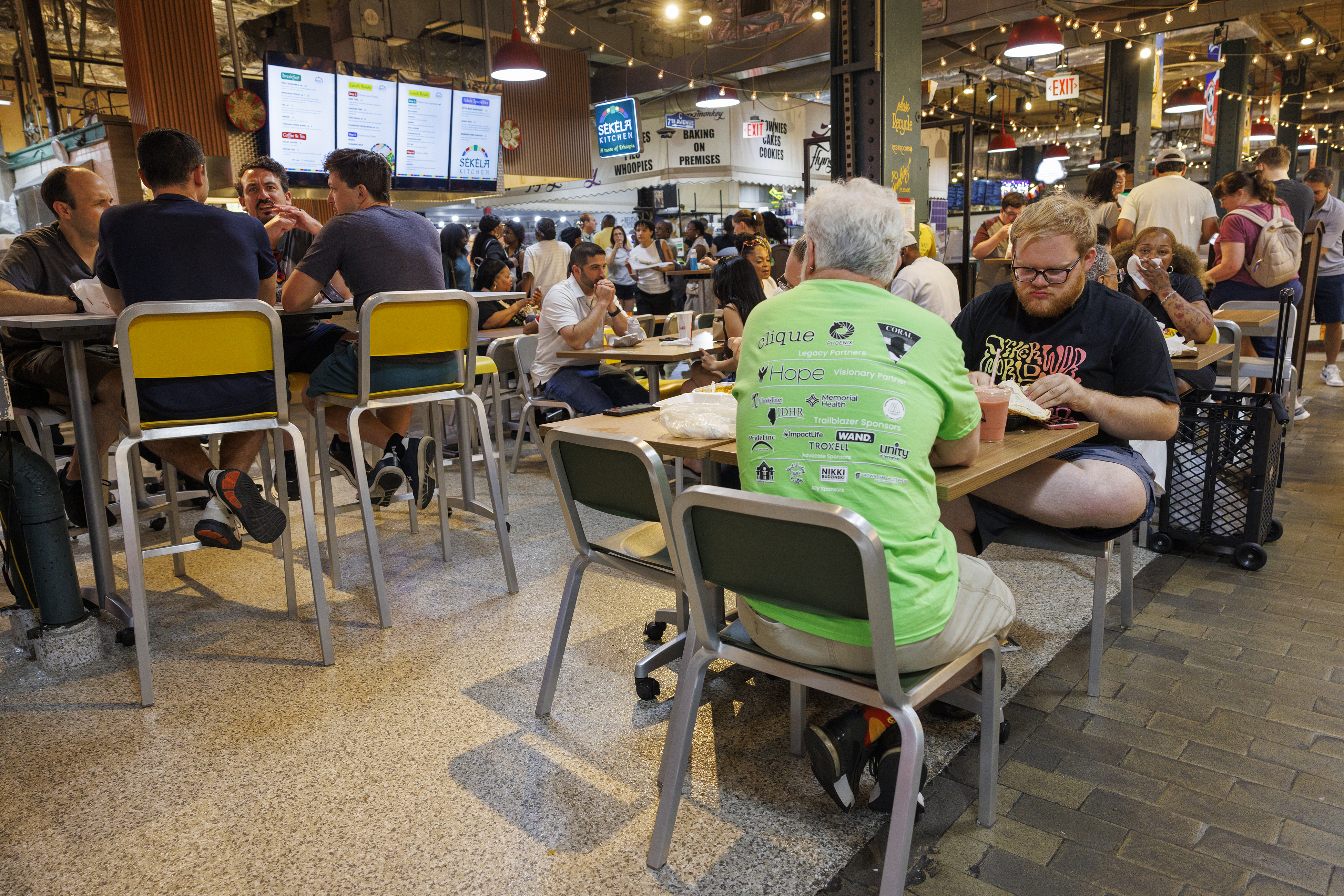
    Diners at the Reading Terminal Market in June.Alejandro A. Alvarez / Staff Photographer

    The study also cited national accolades, noting that Reading Terminal was recently named the No. 1 public market in America by USA Today travel experts.

    The new report found just over half of the market’s visitors last year, 3.1 million customers, were visitors staying overnight in the region, while the rest were Philly-area residents.

    Some Reading Terminal customers may have first heard of the market online, on a podcast, or on TV and streaming programs: The report found that Reading Terminal reached 10.8 billion people through these kinds of media mentions, equaling $81 million in “publicity value.”

    People enjoy the pop-up outdoor area on Filbert Street at Reading Terminal Market in July. Tom Gralish / Staff Photographer

    Between the market’s merchants and the corporation that runs it, Reading Terminal pays nearly 700 full-time-equivalent employees a combined $39 million a year, according to the report.

    And market partners spend about $6.1 million a year on capital improvements, which include mechanical, plumbing, and electrical upgrades, as well as larger undertakings like the 2022 Filbert Street Project that added 15,000 square feet of pedestrian-friendly outdoor space.

    Founded in 1893, Reading Terminal is one of the country’s oldest continuously operating markets. Spanning nearly 80,000 square feet along 12th Street, between Arch and Filbert Streets, the market sells everything from fresh produce and seafood to meats and homemade baked goods.

    At its quick-service restaurants, customers can find Caribbean cuisine, Asian street food, Filipino-fusion eats, Thai food, falafel, cheesesteaks, and vegan bites.

    Allman, CEO and general manager, said 2026 “brought unprecedented global attention” to Philadelphia. This summer, the city hosted the World Cup, America’s 250th birthday celebrations, and the MLB All-Star Game. Any economic impact those events had on Reading Terminal Market, however, would be reflected in next year’s report.

    Correction: This story has been updated to reflect that $1.2 billion is the estimated total spend by Reading Terminal Market visitors in Philadelphia, not in the market alone. It also reflects how much market partners spent on capital improvements.

  • Reading Terminal Market’s efforts to prevent food waste get the attention of the EPA

    Reading Terminal Market’s efforts to prevent food waste get the attention of the EPA

    The Reading Terminal Market is often bustling with voices, crowded aisles, and populated hallways. But on Monday, the real motion was behind the scenes, among the trash cans and scraps.

    After two years of diverting as much food waste from landfills as possible, the market has managed to keep 1,045,931 pounds of organic waste from the trash fields.

    A pilot program began in April 2024, through a partnership with the composting service Mother Compost, and 10 of the market’s sellers. Now, as part of the celebrations for the nation’s 250th, the Environmental Protection Agency’s Feed it Onward program is highlighting initiatives that ensure food resources are redistributed instead of wasted.

    EPA officials toured the market’s facilities on Monday, getting a behind-the-scenes look at how the composting and other recycling and reuse programs work.

    “We are not just one organization championing for change, but more than 80 small, family-owned businesses under one roof who have the potential to make a difference,” said Annie Allman, Reading Terminal Market CEO and general manager.

    Kamal’s Middle Eastern Specialties is one of them. Its owner Adham Albarouki, has been in the market for 45 years and sees in the composting program a way for his juice bar to give back.

    “We produce about 15 to 30 pounds of waste per day. Being part of something a little bit bigger here we can contribute a lot more,” Albarouki said. “It’s something to give back to mother nature.”

    The process is easy, Albarouki said. He or his workers run the vegetables and fruits through juicers. The juice goes to the customers, while the peels, fiber, and leftover organics are taken to a merchants-only area.

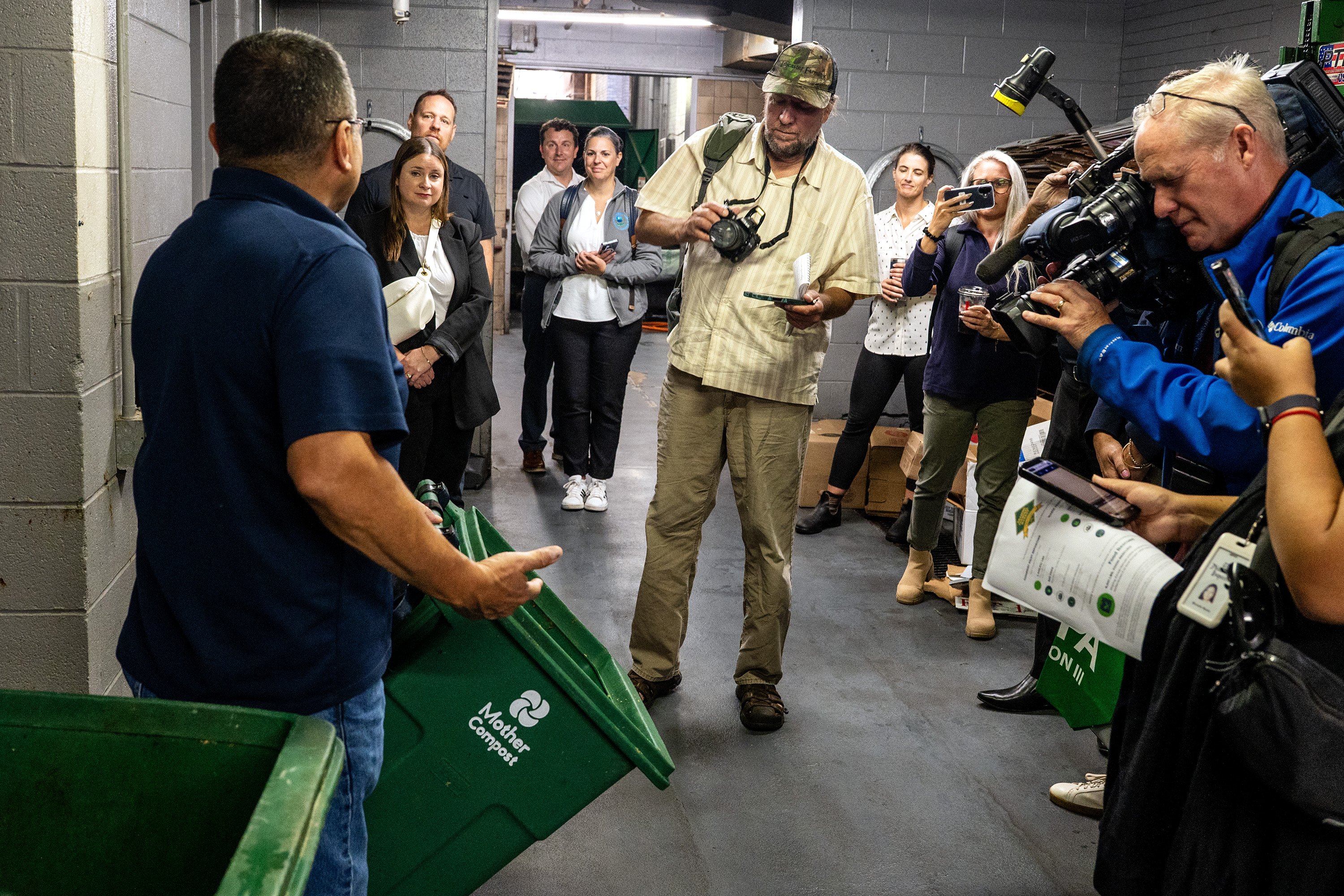
    Behind closed doors, 20 Mother Compost green trash cans are lined up, waiting to be fed scraps.

    Miguel Servellon (left), assistant general manager at Reading Terminal Market, gives merchants, EPA officers, and news media a behind-the-scenes tour of the market’s food waste diversion operations and sustainability programs on Monday. The green bins are from Mother Compost, a local, woman-owned pickup service, that composts organic materials to keep food scraps out of landfills and return their nutrients to local soils.Tom Gralish / Staff Photographer

    Miguel Servellon, the market’s assistant general manager, runs a tight machine to ensure the compost doesn’t get contaminated.

    On Monday morning the cement room smelled like orange peels, as one trash can had already been loaded with the citrusy scraps ahead of an early pick up, Servellon said.

    Fruit and vegetable peels, meat, eggs, cheese, milk, coffee grinds, and even fish all go inside the green containers.

    “The smell is not so inviting; occasionally it can be a challenge,” Servellon said.

    The organic waste is layered on top of each other.

    Mother Compost takes as much as 1,300 pounds of composting per pickup, which happen three times a week, Servellon said. The waste then goes to be repurposed at Linvilla Orchards, in Delaware County.

    But organic waste is not the only thing being recycled.

    At the other end of the room, two big gray containers sat full of vegetable oil waiting to be picked up by LifeCycle Renewables.

    Since 2022, the market has gathered 100,209 gallons of oil from sellers to be used as heating fuel in commercial buildings, Allman said.

    And since 2023, the nonprofit Sharing Excess has been working with the market’s sellers to redistribute surplus food.

    Earlier this year, Sharing Excess got its own fridge inside the market where sellers can deposit their donations to be redistributed in places with food insecurity.

    “We come by five days a week, and our driver weights them and tracks who donated each so we can give them their proper tax credit,” said Braden Walper, Sharing Excess retail rescue manager.

    The food goes to stock food pantries and provides as much as 100 meals a day for people experiencing food insecurity, Walper said.

    These Reading Terminal Market programs are crucial to inspire businesses across the region to reuse and recycle their food, said EPA Mid-Atlantic regional administrator Amy Van Blarcom-Lackey.

    “More than one million pounds diverted from landfills is an impressive milestone, but what really stands out to me is how the merchants made these practices part of their everyday operations,” Van Blarcom-Lackey said. “It’s important to continue because it’s good for the community and better for the environment.”

  • Philly Parks and Rec leader approved the unpermitted work at an FDR Park field

    Philly Parks and Rec leader approved the unpermitted work at an FDR Park field

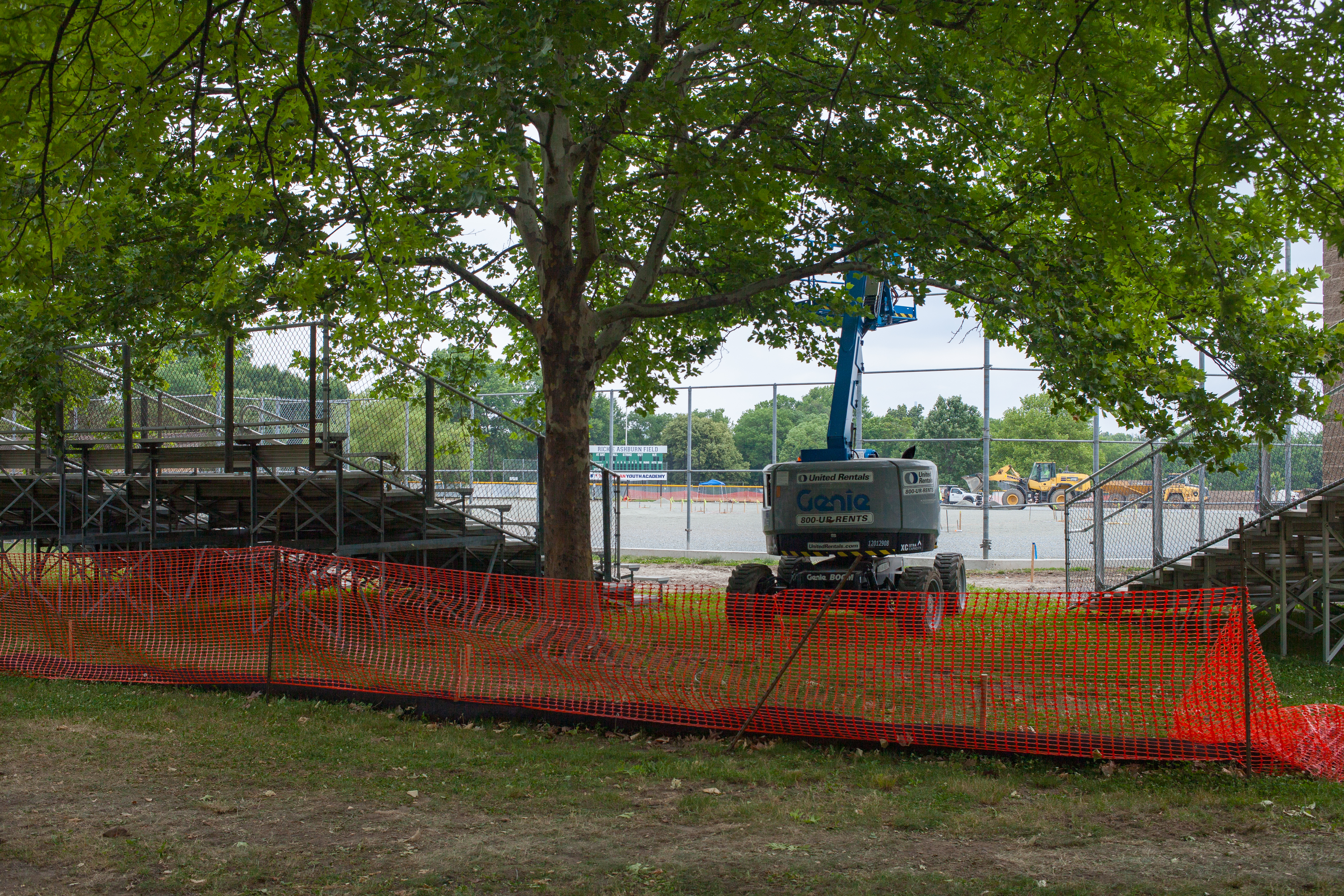
    Parks and Recreation Commissioner Susan Slawson said she approved renovations to FDR Park’s Ashburn Field without required state permitting because she wanted renovations to be complete by the MLB All-Star Game.

    The missing permit was designed to address erosion control and stormwater release at the site.

    “We were mindful of the waterways and natural areas within FDR Park,” Slawson said of the decision. “All erosion and sediment controls were in place during construction, and safety was never an issue.”

    Slawson told WHYY last week that approving projects without proper permits is not how the department “typically” handles projects, but she allowed the work to proceed “to accommodate the MLB All-Star Game.”

    Typically, state law supersedes city approvals.

    The city’s parks department actively manages “the natural areas within FDR [Park] to protect water quality and support healthy natural systems while balancing the park’s important role in active recreation,” Slawson said.

    Missing permits

    In the lead up to the MLB All-Star Game, which took place in July at Citizens Bank Park, the MLB and the city partnered to renovate the 28-year-old Ashburn Field.

    A ribbon-cutting ceremony was held July 10, just days ahead of the All-Star Game, to show off Ashburn’s new synthetic turf field and an updated drainage system to reduce flooding.

    However, as first reported by The Inquirer last month, the Phillies and the city did not receive a required permit from the state’s Department of Environmental Protection. The permit was designed to address erosion control and stormwater release at the site.

    The Phillies applied for the permit May 13, according to the Department of Environmental Protection’s website. Nearly two weeks later, the department sent the Phillies a letter denying the permit, citing 32 issues the team would need to address before receiving the permit to continue renovations. That letter noted that final plan drawings had not been submitted, other drawings failed to include the project’s boundary, and not all water discharge areas were noted.

    A local engineering firm hired by the Phillies responded in June to the May letter.

    On July 7, the Department of Environmental Protection sent another letter to the Phillies noting technical deficiencies. It sent another letter July 24, about two weeks after the ribbon cutting, noting an outstanding deficiency and advising the Phillies to resubmit information in coordination with the Philadelphia Water Department.

    What’s next

    Bonnie Clark, a spokesperson for the Phillies, said the team met with the Water Department last week and was continuing to remedy issues to obtain the permit.

    The permit is still pending on the Department of Environmental Protection website. DEP spokesperson Robyn Briggs declined to comment on possible enforcement actions or penalties as internal deliberations continue.

  • Philly officer who left man in road before a hit-and-run will be fired, police commissioner says

    Philly officer who left man in road before a hit-and-run will be fired, police commissioner says

    The Philadelphia police officer who left a 48-year-old man lying on the ground in an Olney bike lane, leaving him to be killed in a hit-and-run minutes later, has been suspended and is slated to be fired.

    Police Commissioner Kevin Bethel made the announcement Monday, noting he felt “disgusted” over how the officer responded to the man, identified as Eugene Beauford.

    “We don’t know what Mr. Beauford was suffering from,” Bethel said. “He could have had a medical condition that we just were not aware of. He could have had a mental condition that we were not aware.”

    Bethel said the officer had a duty to determine what issues Beauford was dealing with and render aid, which he did not do. Police have not publicly identified the officer, who was assigned to the 35th District and has two years on the force, as separate investigations into his response and the hit-and-run continue.

    Beauford was seen walking down the 5500 block of Rising Sun Avenue with an “unsteady gait” at around 1:40 a.m. on Aug. 27, according to police. Video shows the officer pulling his patrol car next to Beauford and engaging with him. It’s during this time that Beauford fell, lying across the bike lane and traffic lane. The officer got out of his vehicle to talk to Beauford some more, but then left him on the road.

    Minutes later, police say, a car stopped right before reaching Beauford, but another car tried to circumvent the vehicle by going into the bike lane and ended up hitting Beauford, who would die later that morning.

    Police said they were able to identify the person who hit Beauford but no charges have been filed as the investigation continues. Once the investigation is complete, it will be up to the District Attorney’s Office to levy charges.

    The incident drew condemnation from the department’s top brass. The officer who left Beauford on the road was the first from the department back on the scene after the hit-and-run was reported. He did not file the proper paperwork and did not render aid, according to police.

    Bethel would not speak as to whether the department thinks the officer attempted to “cover up” his actions, but he did say the officer violated a number of policies, including how police classify such an incident.

    The officer did speak to investigators about the case, though Bethel declined to expand on what was said.

    “What I could tell you is that what he did share did not move the needle in my decision,” he said.

  • Philly food drive supports Chinese immigrants while raising awareness about SNAP cuts and a plan to tax the wealthy

    Philly food drive supports Chinese immigrants while raising awareness about SNAP cuts and a plan to tax the wealthy

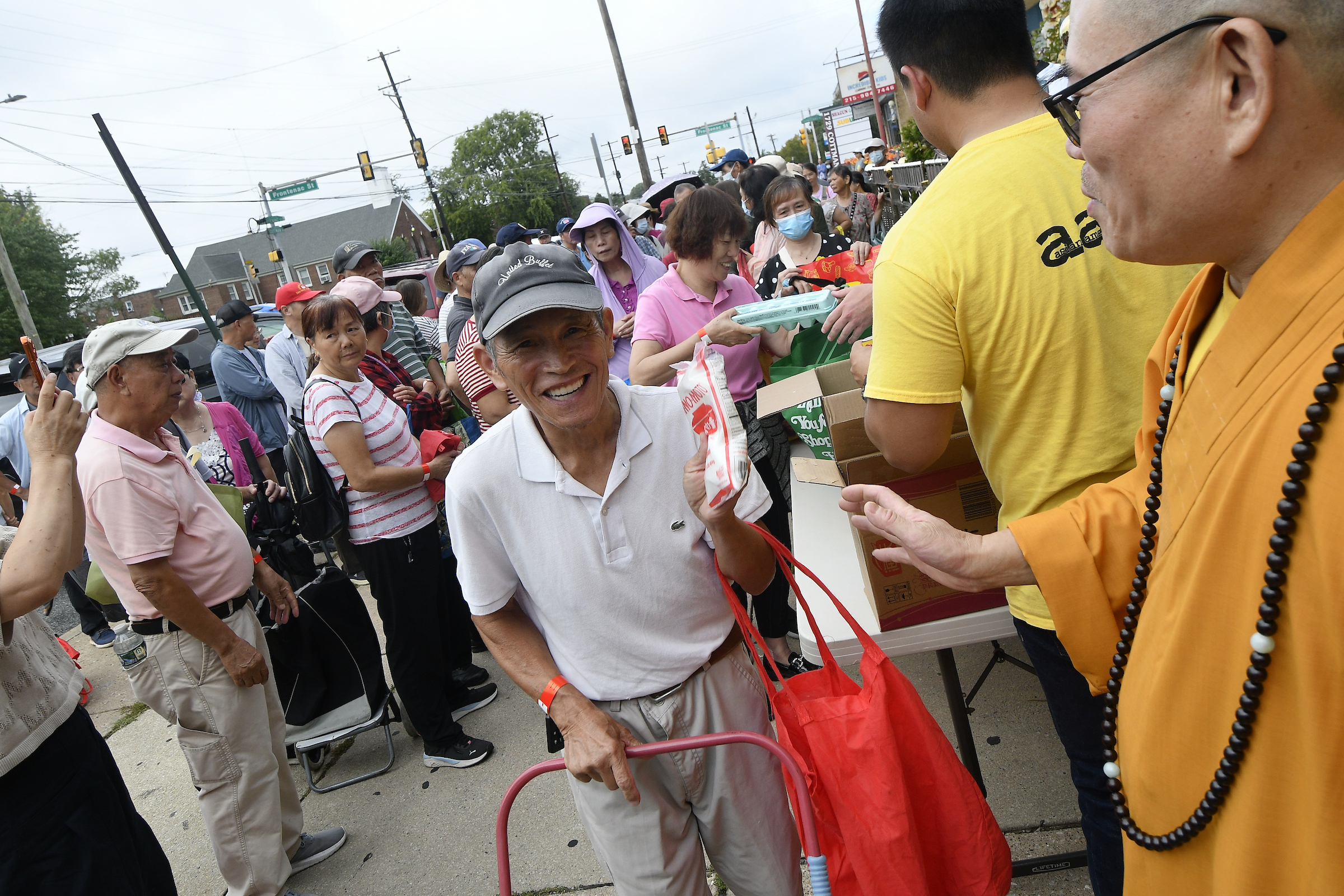
    The line formed early, and by noon more than 200 people stood outside the Kai Yuan Temple in Northeast Philly, waiting to receive food.

    This wasn’t a typical food pantry. The food drive was organized to provide familiar grocery staples to the city’s sizable Chinese immigrant community.

    “It really shows the need for culturally relevant food — and food access in general,” said Sunhee Volz, an organizer.

    The food drive was a grassroots response to the city’s affordability crisis at a time of rising food insecurity, fueled by federal cuts to the Supplemental Nutrition Assistance Program. Some immigrant families also fear seeking government assistance, according to Asian Pacific Islander Political Alliance, which organized the event. The food drive was part of the group’s awareness campaign to tax corporations and the very wealthy.

    Community members receive culturally appropriate food aid at the Kai Yuan Temple on Cottman Avenue, on Sunday afternoon.Bastiaan Slabbers/ For the Inquirer

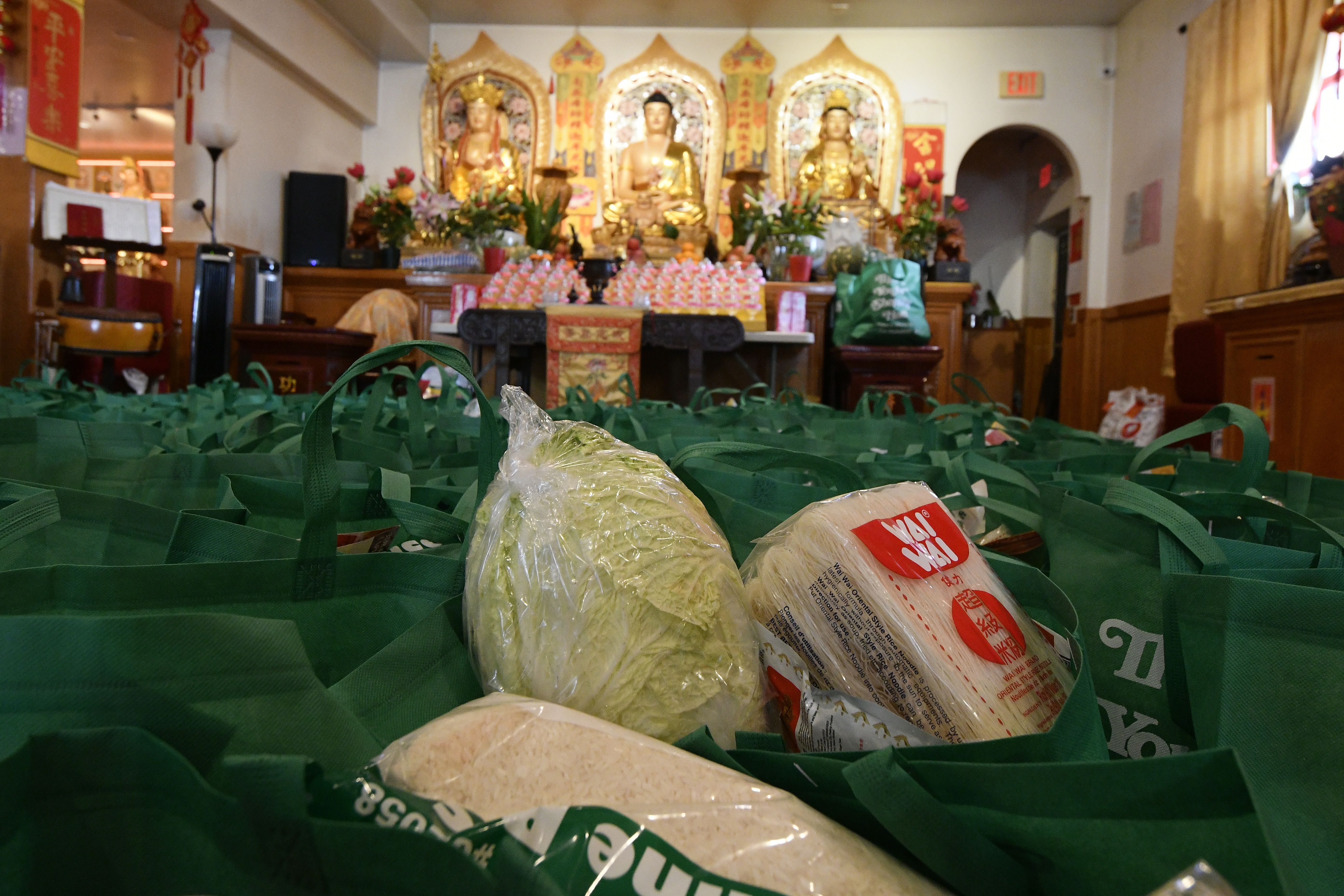
    An anonymous donor footed the bill for 200 bags of groceries ordered from Heng Fa food market in Chinatown, organizers said. Rice noodles, napa cabbage, sweet potato starch, MSG, and fruit were among the food items packaged into large, green bags for distribution.

    Eggs were kept outside the temple for religious reasons, organizer Jenny Zhang said. Large glass bottles of soy sauce were handed out separately from the bagged items to prevent them from breaking.

    In a way, those soy sauce bottles were the inspiration for the food drive, said Hanna Kim of Asian Food Collective. At previous food distributions, Kim had noticed how excited people became when they received a particular brand of soy sauce.

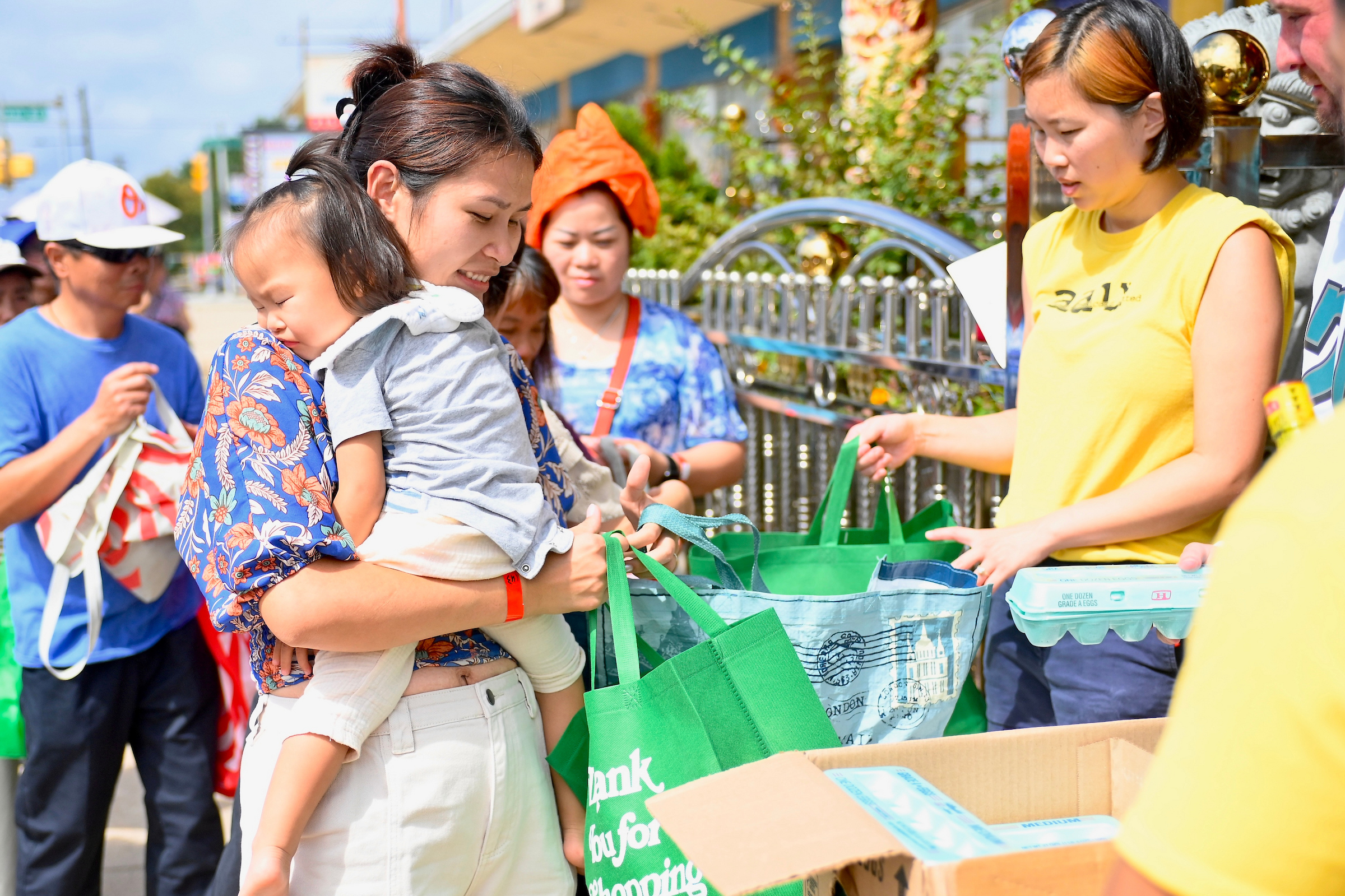
    The family of Joyce Yan and Bobby Lin (not pictured) of Northeast Philadelphia receive culturally appropriate food aid outside Kai Yuan Temple on Cottman Avenue on Sunday afternoon.Bastiaan Slabbers/ For the Inquirer

    Kim held up a yellow bottle of Haday premium soy sauce, which she said is immediately recognizable to many Chinese immigrants.

    “When you have that familiarity, it’s a feeling of home, too,” Kim said.

    Wei Chen, civic engagement director of Asian Americans United, explained that the Buddhist temple had recently completed its annual Hungry Ghost Festival. The 30-day celebration honors ancestors and the dead, and giving away food is part of the tradition, Chen said.

    Centuries ago in China, the government prohibited food distribution for the those experiencing hardships. But under the pretense of giving food away to “hungry spirits,” the temples were able to circumvent the rules, Chen said.

    These days, Sunhee Volz said, the government has made it harder for immigrants in need of food to get help. Recent ICE deportations have made it worse, she said.

    “Some people aren’t even applying because they’re afraid. That fear is intentional, to keep people from even trying,” Volz said.

    The food was distributed with flyers from the group, printed in both English and Chinese, explaining that in 2025 Congress cut $187 billion from the Supplemental Nutrition Assistance Program. New work requirements and rules have made it harder for people, especially noncitizens, to qualify for assistance, the flyer states.

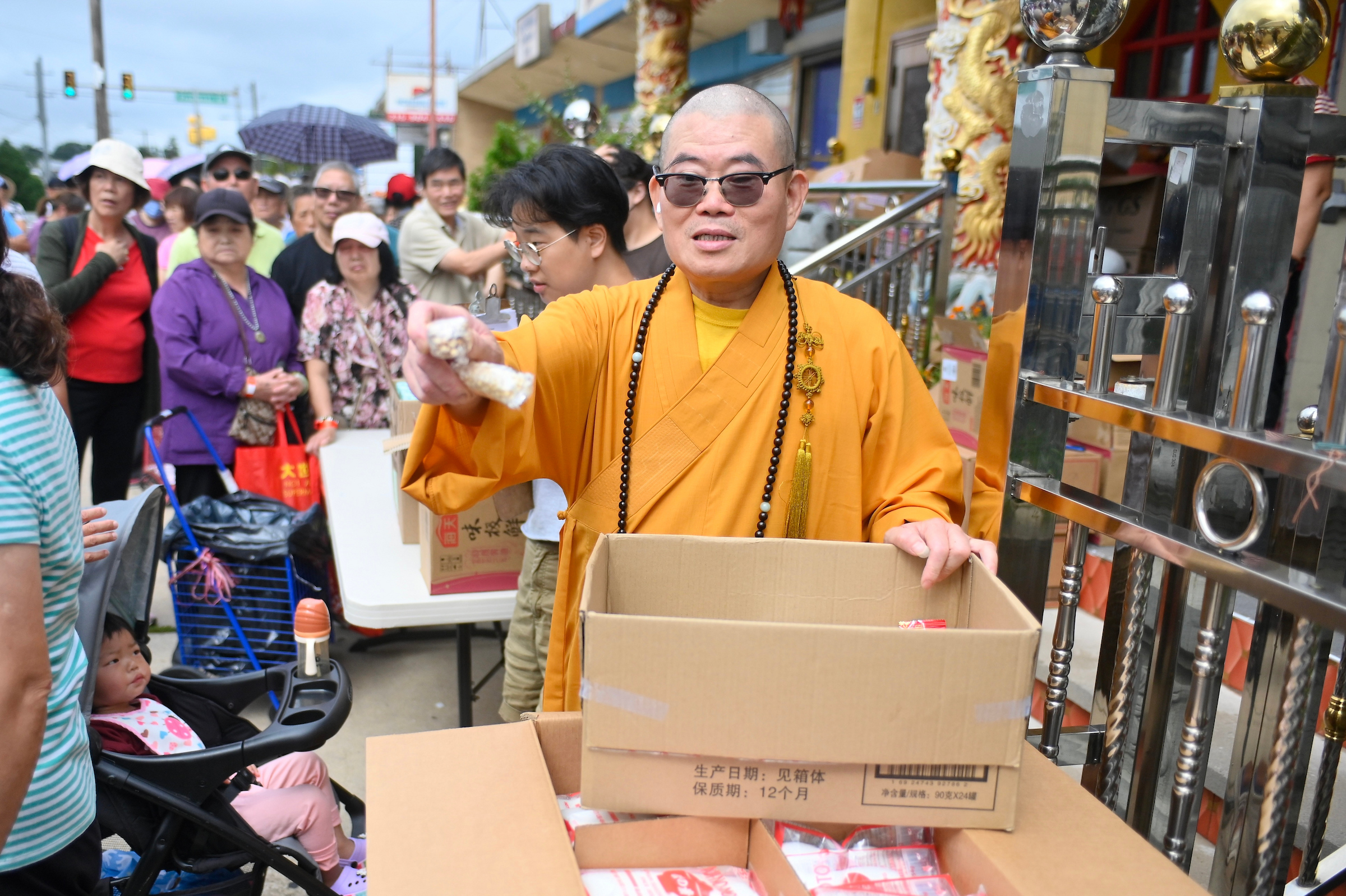
    Ven Zhi Lai of Kai Yuan Temple helps hand out snacks to children of families in the line that formed waiting to receive culturally appropriate food aid at the Buddhist temple on Cottman Avenue on Sunday afternoon.Bastiaan Slabbers/ For the Inquirer

    “Step one is just awareness,” Volz said. “A lot of people don’t even know why funding is being cut.”

    From there, the group hopes to build relationships with people and plan more actions. “The affordability issue is affecting everybody, of course,” Volz said.

    APIPA is one of about 30 political groups pushing a plan called “Tax Billionaires, Fund PA,” Volz said. That plan seeks to add state revenue by closing corporate tax loopholes, instituting a digital advertisement tax, and adding a tax on “unearned income” such as stock dividends, according to its website.

    Democratic State Rep. Sean Dougherty met with the group before the food drive and helped hand out cartons of eggs. Dougherty cosponsored one legislative proposal supported by the group, which would tax online advertisements from tech companies. The bill stalled in the Republican-controlled state Senate.

    “Just look at this line. It also shows that affordability and the cost of living is a real issue,” Dougherty said.

    As families lugged the heavy tote bags full of groceries from the Buddhist temple Sunday, many expressed their gratitude.

    Through a translator, Rong Chen said that she was “very excited” to receive food for her family. Chen has been in Philadelphia since 2019 after moving from Fujian, China.

    Bobby Lin said the free food helps offset the rising costs of living expenses and gas prices.

    Lin’s partner, Joyce Yan, said some people waited three hours in the line, but it was worth it.

    “This kind of food is very good,” Yan said, as she held her infant daughter in her arms.

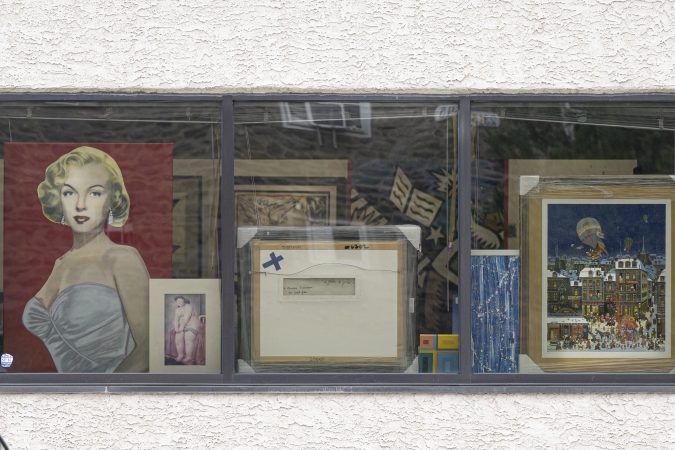
  • Main Line art dealer is accused of helping sell fake Andy Warhol paintings

    Main Line art dealer is accused of helping sell fake Andy Warhol paintings

    A Main Line art dealer, whose gallery was raided by federal authorities this summer, is named in a new lawsuit, for allegedly participating in an international “pipeline” to sell fraudulent artwork.

    Nathan “Nicky” Isen is among half a dozen people being sued by a Florida family who says they were scammed into buying fake Andy Warhol paintings and prints by a network of “suppliers, fake authenticators and distributors.” According to the lawsuit, filed last week in Miami, the enterprise stretched from Isen’s gallery, Dane Fine Art in Haverford Township, to Florida and Peru.

    Isen’s lawyer, Patrick Egan, said in a statement Sunday that “the claims in this lawsuit are just that, claims.”

    “My client categorically denies any wrongdoing and any connection with any alleged conspiracy,” the statement said. “We look forward to the opportunity to challenge these claims in court.”

    The lawsuit, filed by Richard and Judy Perlman, alleges that Isen had developed a “toxic” reputation among collectors and appraisers after he pleaded guilty to money laundering in 2015. He rebranded his then-gallery, I. Brewster & Co., to Dane Fine Art. (A website for I. Brewster & Co. now redirects users to Dane Fine Art.)

    But, despite the rebrand, the lawsuit contends Isen’s “modus operandi remained unchanged.” He was “selling pages torn from art books as authentic prints.”

    According to the 42-page lawsuit, Isen then “formed a conspiracy” with Leslie Roberts, an art dealer in an affluent Miami neighborhood.

    “This conspiracy provided what each needed: Isen got a gallery front in Florida with no connection to his toxic name, while Roberts got forged inventory,” the lawsuit filed by the Perlman family alleges.

    The Perlmans also sued Roberts in 2024. That case settled in January for an undisclosed amount, according to the Wall Street Journal. Roberts also pleaded guilty to art-related wire fraud and is scheduled to be sentenced later this month, the news outlet reported.

    Between 2023 and 2024, Isen’s gallery repeatedly invoiced Roberts’ gallery for, what the lawsuit called, “forged” Warhol works, which the Perlmans then purchased. Roberts told the Wall Street Journal he believed the Warhols were genuine at the time.

    In July, the FBI conducted “court-authorized law enforcement activity” at Dane Fine Art, in the 2300 block of Haverford Road.

    It’s unclear why the FBI searched the business. Isen’s lawyer did not respond to questions about the FBI raid and declined to comment on the matter to the Wall Street Journal.

  • ‘I’ve waited four years’: Arrest made in 2022 killing of West Philly man after bar fight

    ‘I’ve waited four years’: Arrest made in 2022 killing of West Philly man after bar fight

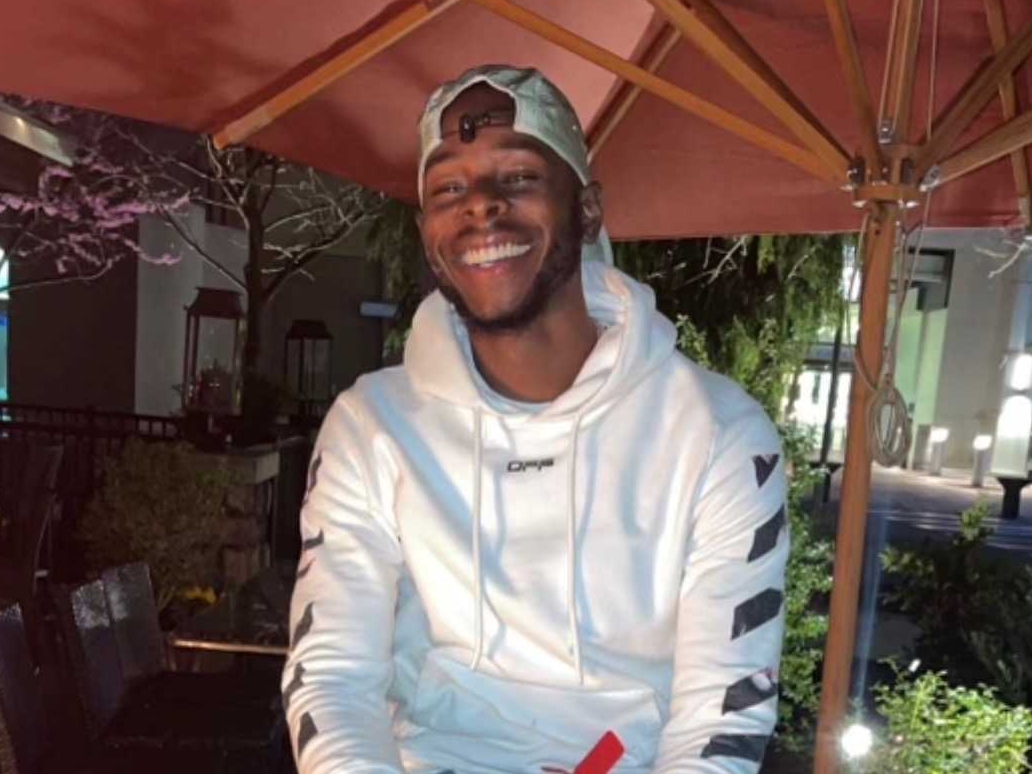
    Davina Neuson has been haunted for years by questions about the killing of her son Armand Hayes, who was fatally shot outside a West Philadelphia bar in 2022.

    She never understood how the fight that ended her 30-year-old son’s life escalated into murder.

    Now, finally, she may get an answer.

    Lawrence Cary, 44, was arrested in late August and charged with murder and related crimes in connection with Hayes’ killing after the men got into a bar fight the evening of Aug. 15, 2022, according to court documents. He is set to appear Monday before Judge Gregory O. Yorgey-Girdy for a preliminary hearing.

    “I don’t know how to put it into words,” Neuson said. “I’ve waited four years for this moment.”

    Hayes, known by many as “Ace,” was a father of two daughters and beloved by his family, Neuson said.

    He attended Strayer University and Philadelphia Community College and had been working as a compressor operator for Philadelphia Gas Works when he was killed.

    “Ace was a genuinely good person, he had a personality that could light up a room,” Neuson said. “A smile of his was unforgettable.”

    Neuson said she never has been able to stop wondering about his last moments.

    Police investigators said Cary and Hayes got into a physical altercation around 11:45 p.m. in the Asmara Lounge on Haverford Avenue, not far from where Hayes was found laying in the street with multiple gunshot wounds through his body.

    He was taken to nearby Lankenau Hospital and pronounced dead shortly after his arrival.

    A photo of Armand Hayes.Davina Neuson

    Surveillance footage showed Cary leaving the bar after the altercation and driving in the area of 64th and Vine streets, near where Hayes was found wounded, according to the affidavit of probable cause for his arrest.

    Investigators later learned that Cary, seated in the driver’s seat of his Chevrolet Trailblazer, fired multiple shots from a handgun out his passenger window when he encountered Hayes, the document says.

    Earlier in the evening, Hayes had told a bartender that Cary had bitten him during the scuffle, according to the document.

    Investigators soon identified Cary using eyewitnesses, surveillance footage, and receipts from the bar marked with his name.

    And in 2023, they learned that a week after the killing, Cary’s Trailblazer had been given a new title and gifted to another man who registered the vehicle in the name of a Bryn Mawr woman. The man asked the woman to do that for insurance purposes, according to the affidavit.

    Neuson, Hayes’ mother, said she did not believe that Cary and her son knew each other before the incident.

    She still cannot comprehend why her son’s life was taken.

    “What hurts the most is knowing his life was taken so suddenly,” she said. “He had so much more life to live, so many more memories to make, so many people who loved him.”

    Many of those people will be present in court as Cary’s case works through the system, Neuson added.

    Cary is being held at the Curran-Fromhold Correctional Facility and was denied bail.

  • Looking back in order to look ahead

    Looking back in order to look ahead

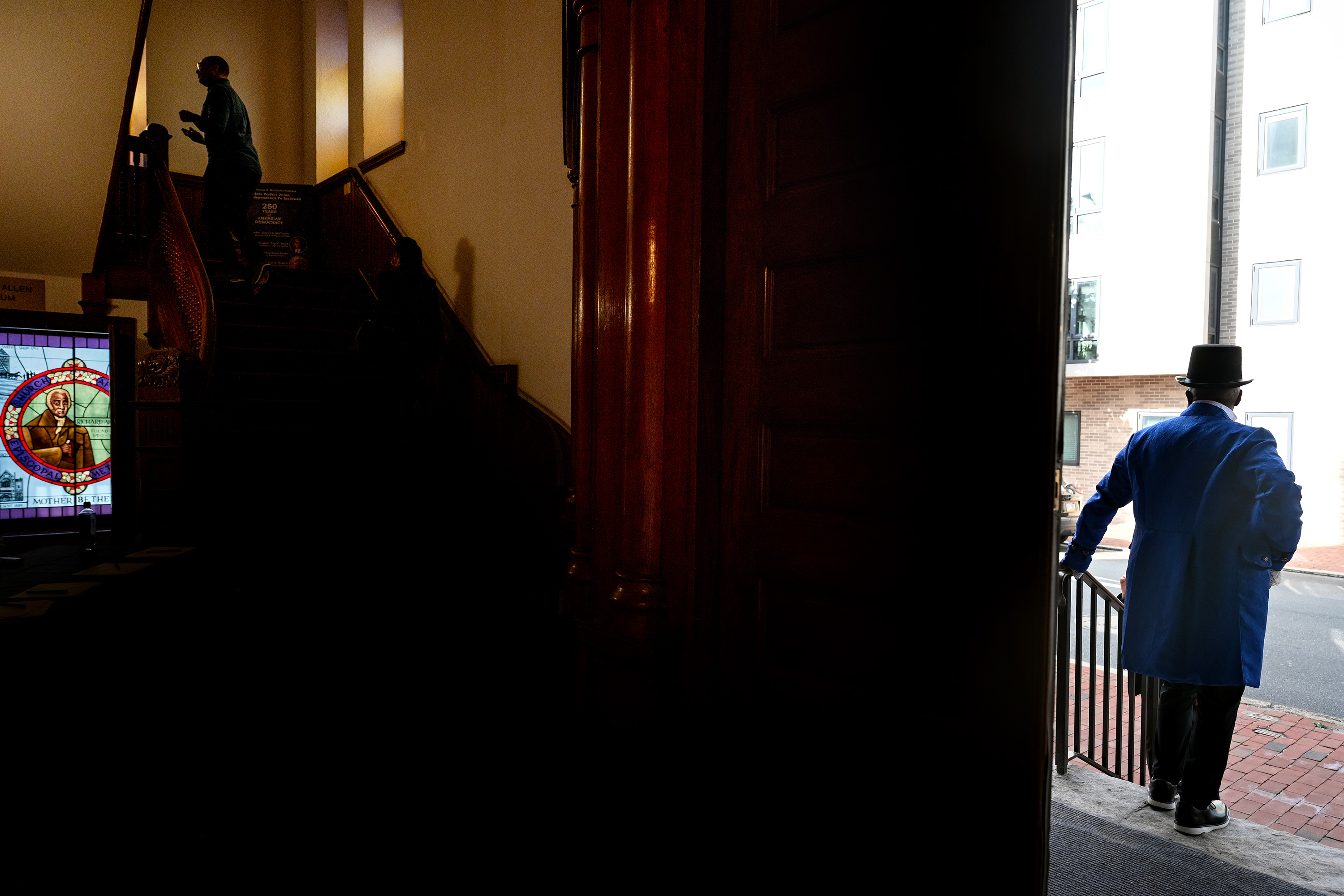
    I was standing next to a big sign before the start of an event this week. It had a photo of the host and the large words “America 250.” More than one person arriving wondered out loud, “Why the 250?” Or, “Isn’t that passed?”

    They weren’t asking me. I was just there, inside looking out the front door, waiting for re-enactor Chris Lewis to step into a favorable position so I could make the photo above.

    The registration table was farther inside, so nobody was there to say something like, “Just because July 4 is behind us doesn’t meant we can’t continue the celebration of what was accomplished in 1776. Or we could think about what we want the next 250 years to look like.”

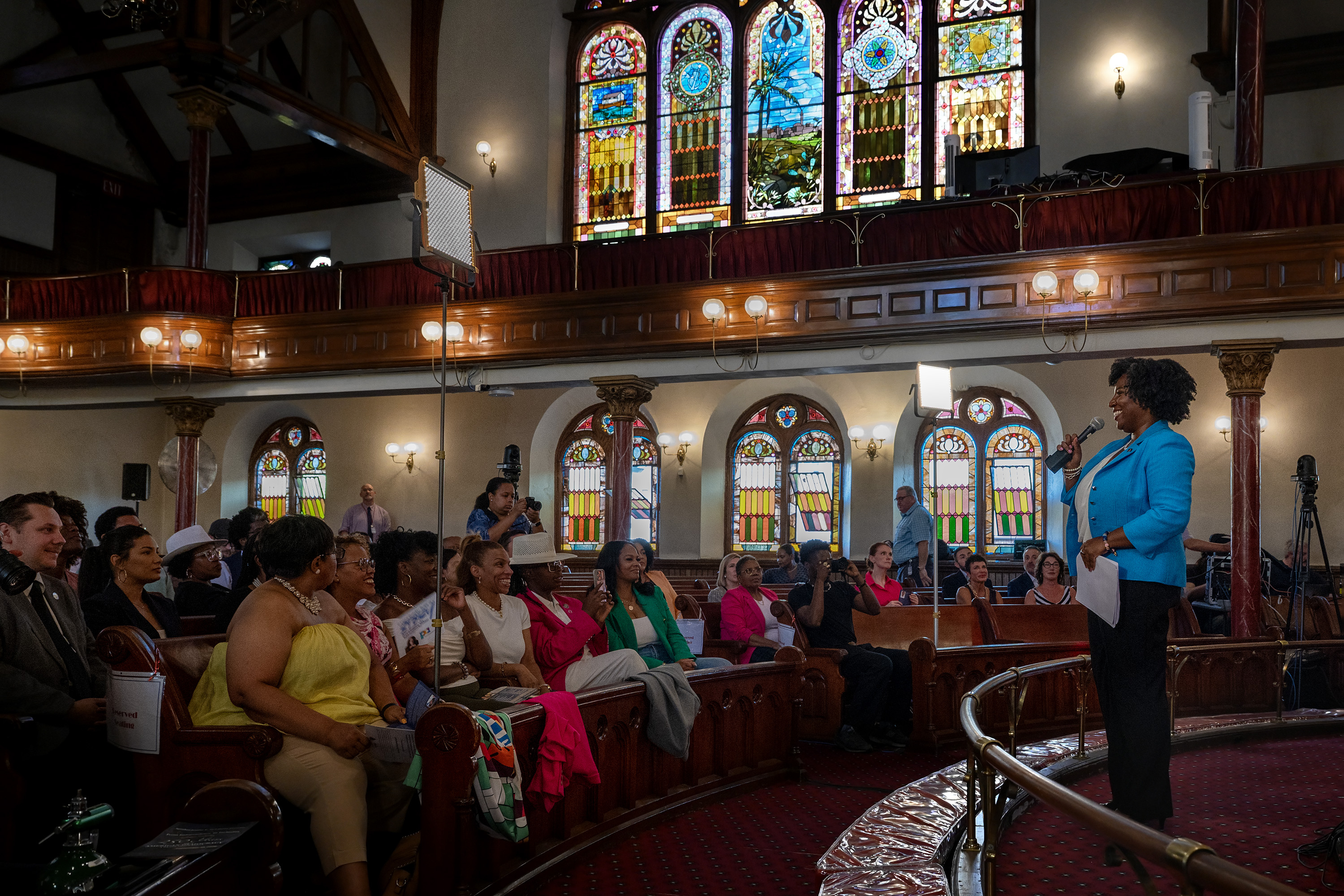
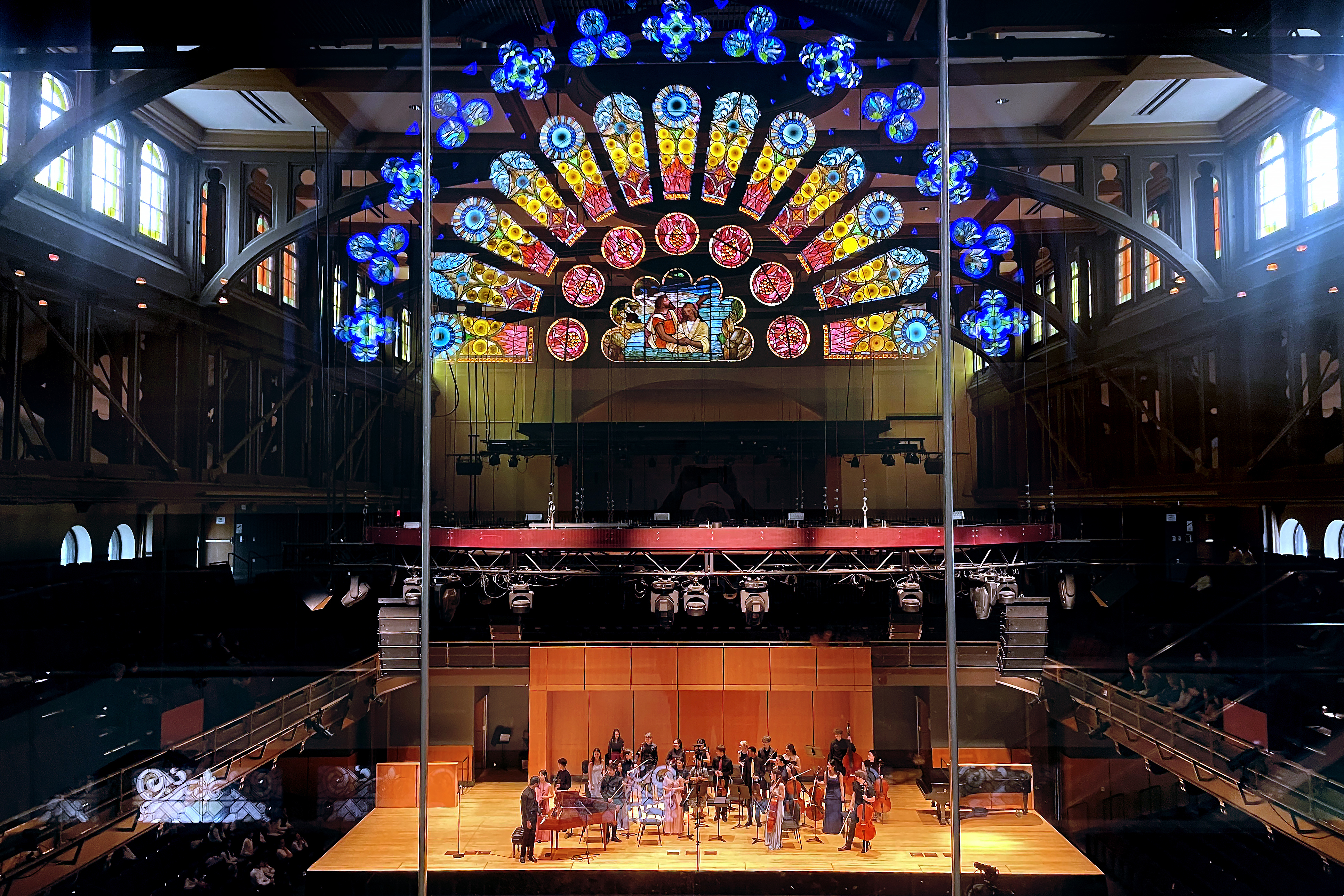
    House Speaker Joanna McClinton hosts an America 250 Conversation at Mother Bethel AME Church Thursday Sept. 10, 2026.Tom Gralish / Staff Photographer

    That’s what Pennsylvania House Speaker Joanna McClinton and three other historic statehouse speakers from Delaware, Illinois, and New York did, reflecting on America’s history while looking ahead.

    I did my own share of looking both back and forward while covering another anniversary this week. Those of us old enough to remember knew even on that day that nothing about our future would never be the same again.

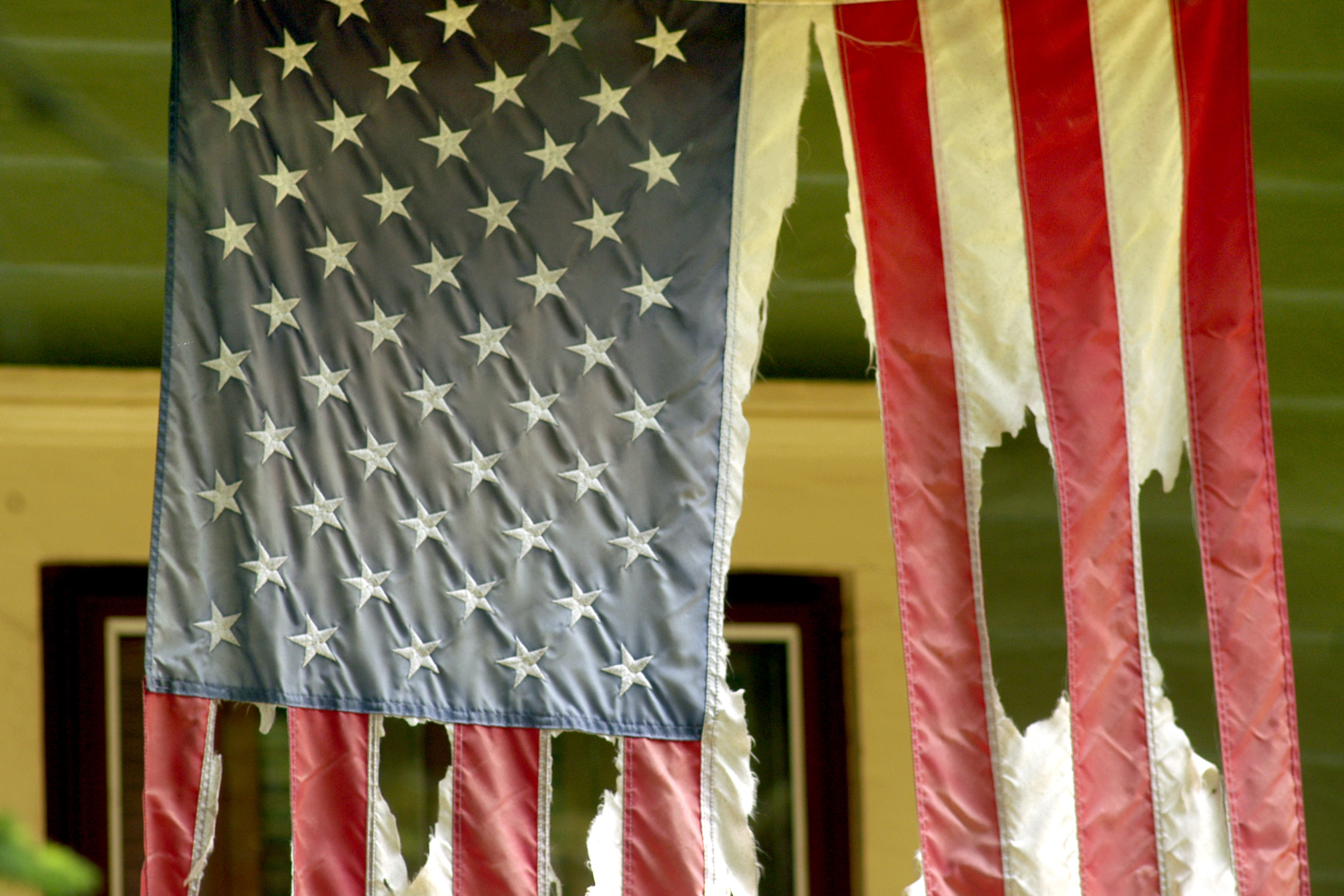
    After 9/11 the flag became a symbol of shared feelings, giving people a way to express emotions that words could not.

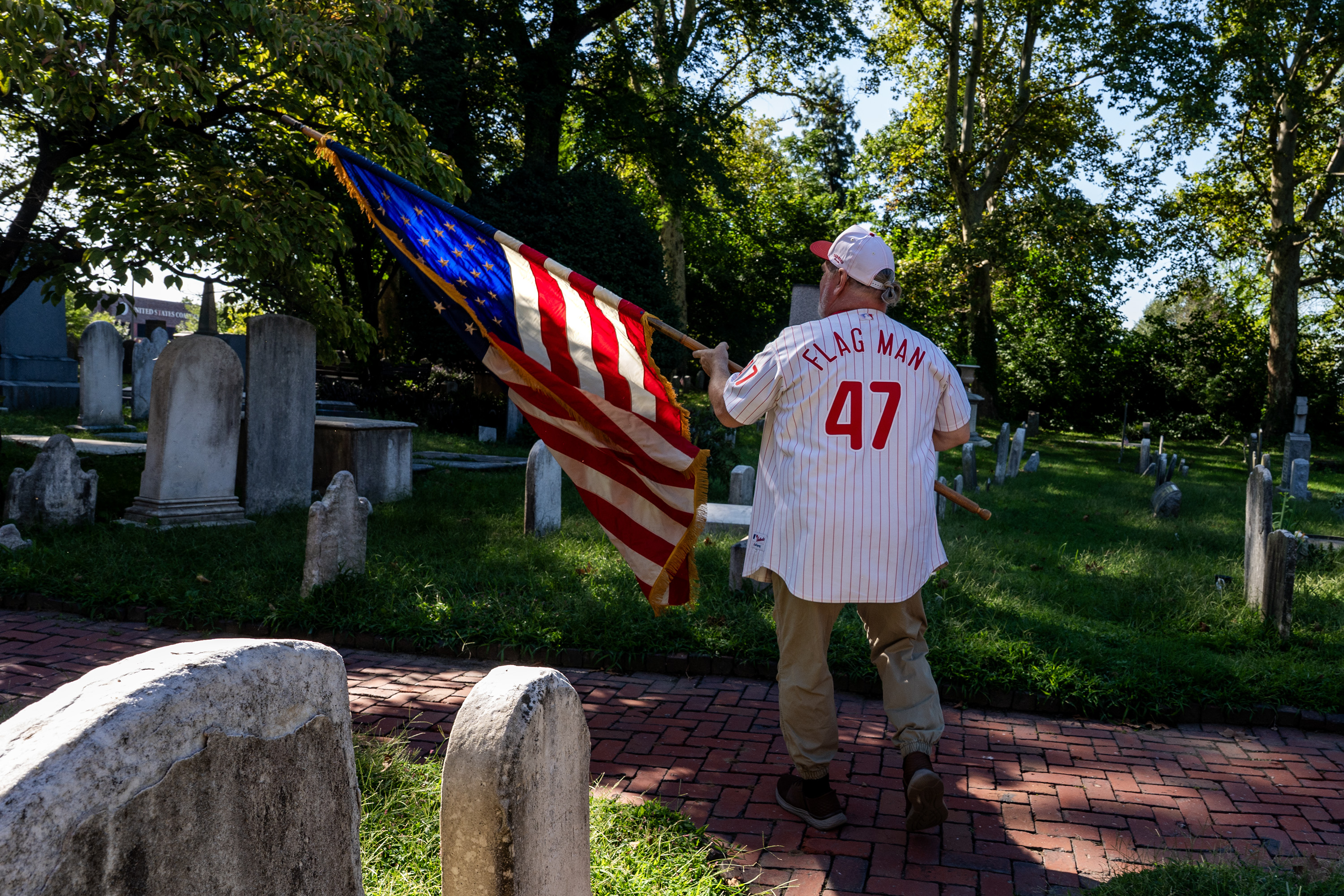
    Sports reporter Matt Breen — a Northeast Philly native and Temple grad — writes the kind of stories I like to read, full of history and nostalgia, trivia, and tidbits. And plenty of “Only in Philadelphia” characters. Like Flag Man.

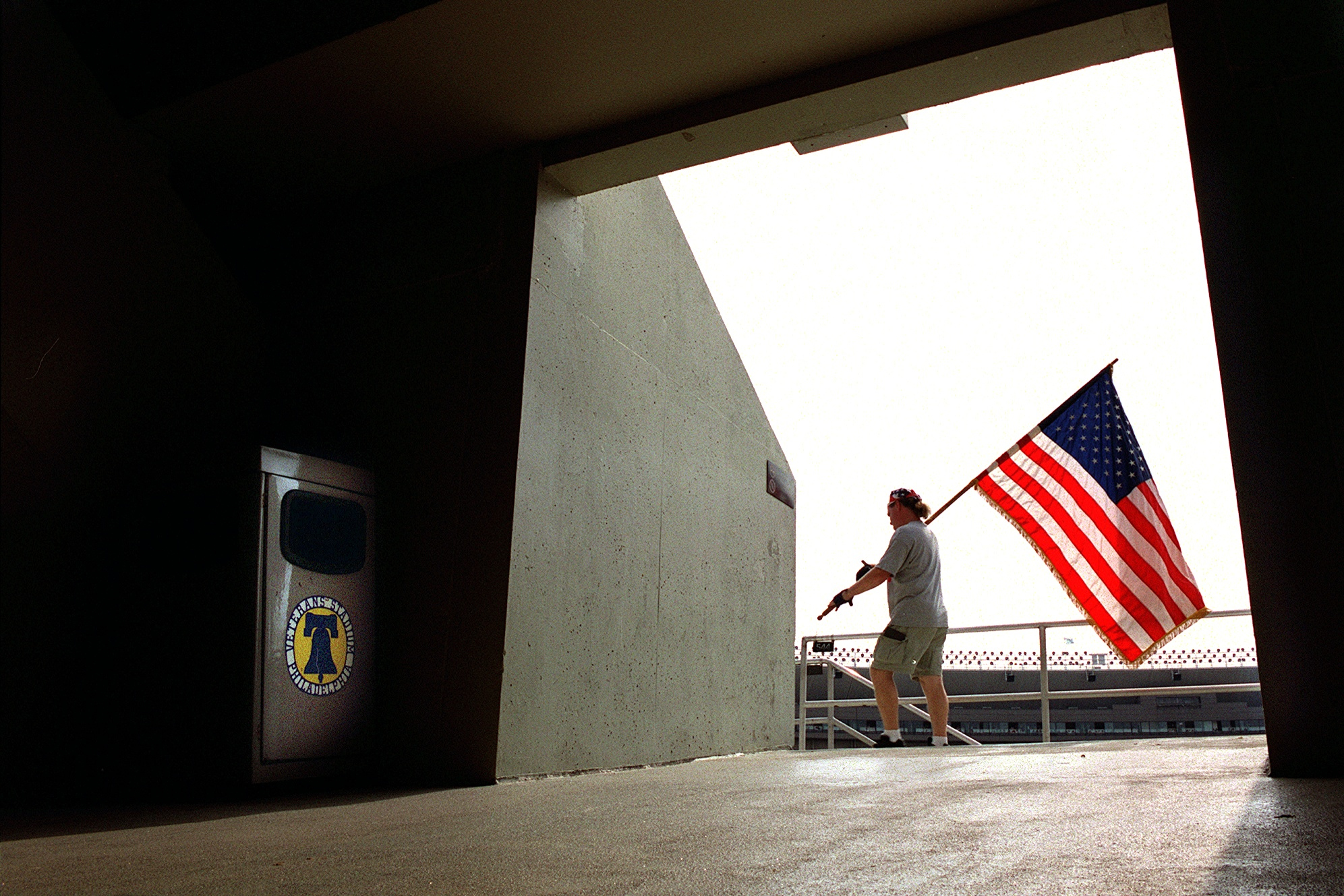
    Jim Minacci at Veterans Stadium, September, 2001.Tom Gralish / Staff Photographer

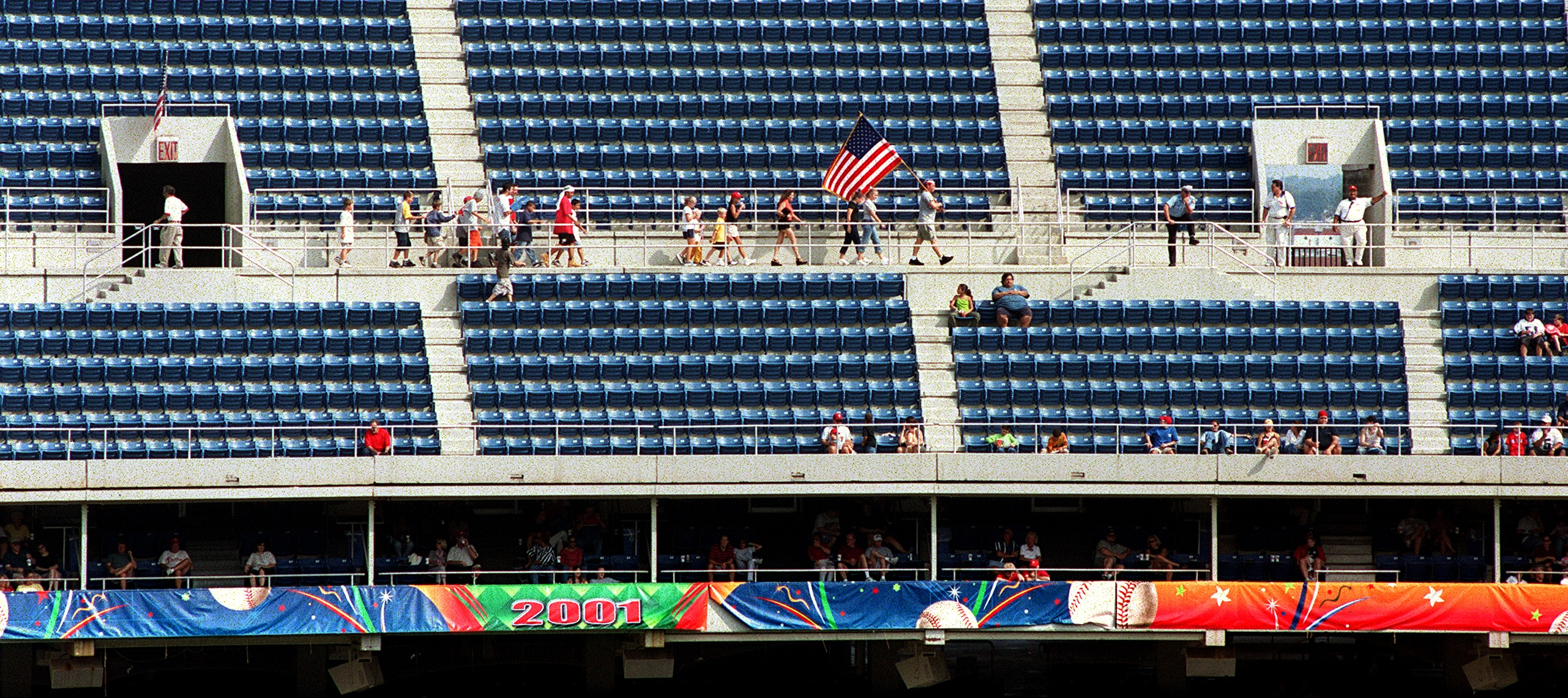
    I photographed Jim Minacci twenty-five years ago when the Phillies were back at Veterans Stadium after the season was paused following 9/11.

    He and his son walked around all the concourses carrying a large American flag — trailed like the Piped Piper by a line of kids. They did it at every home game for the rest of that season as he became a symbol of patriotism.

    Minacci still attends Phillies games and he still has the flag (but it’s too big to be allowed into Citizens Bank Park).

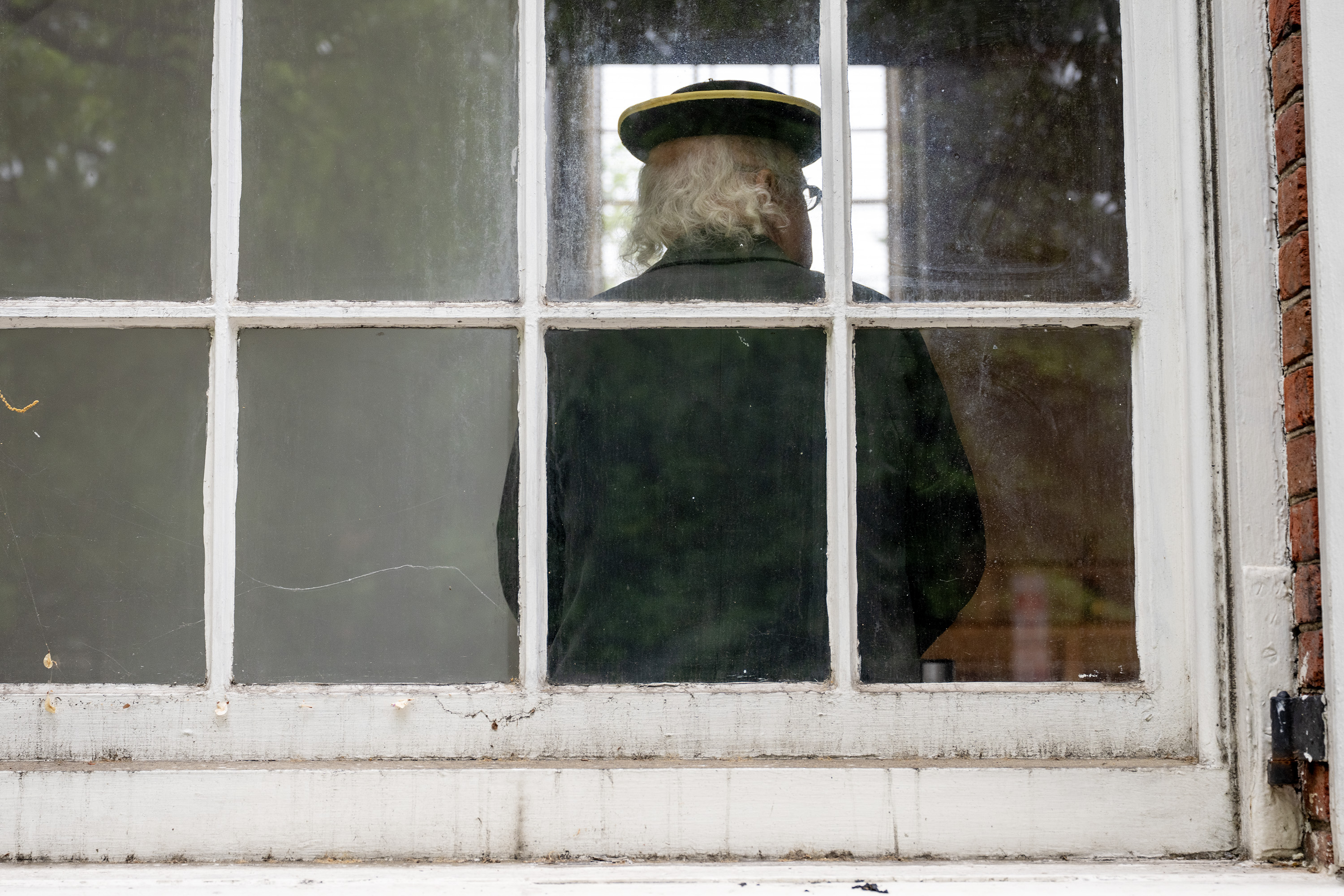
    Breen wrote about him and I made the photos at Gloria Dei (Old Swedes’) Episcopal Church, where he and his wife Paula still live and work as sextons.

    Jim Minacci at Gloria Dei Old Swedes Episcopal Church Tuesday, Sept. 8, 2026.Tom Gralish / Staff Photographer

    Surprisingly, while there have been stories about the Minaccis — and the dozens of music events they host all yearlong to raise money for the historic church — it looks like Matt is the first one to write about Flag Man since 2001.

    Looking ahead, it would be great if Americans could reclaim that feeling today, reclaim the sense of community that emerged from the tragedy (without something else terrible having to happen).

    A flag at a South Jersey home on Flag Day, June 14, 2005, tattered, torn and tarnished by time over the years after 9-11, when well-intentioned home-owners bought flags to display in the heat of patriotism. Tom Gralish / Staff Photographer

    Since 1998 a black-and-white photo has appeared every Monday in staff photographer Tom Gralish’s “Scene Through the Lens” photo column in the print editions of The Inquirer’s local news section. Here are the most recent, in color:

    » SEE MORE: Archived columns and Twenty years of a photo column.

  • The PPA gives money back, Philly has an $88 potato, and the Eagles go 12-5? | Weekly Report Card

    The PPA gives money back, Philly has an $88 potato, and the Eagles go 12-5? | Weekly Report Card

    The PPA is giving money back: A+

    Somewhere in Philadelphia, thousands of people are about to experience something they never thought possible: getting money back from the PPA.

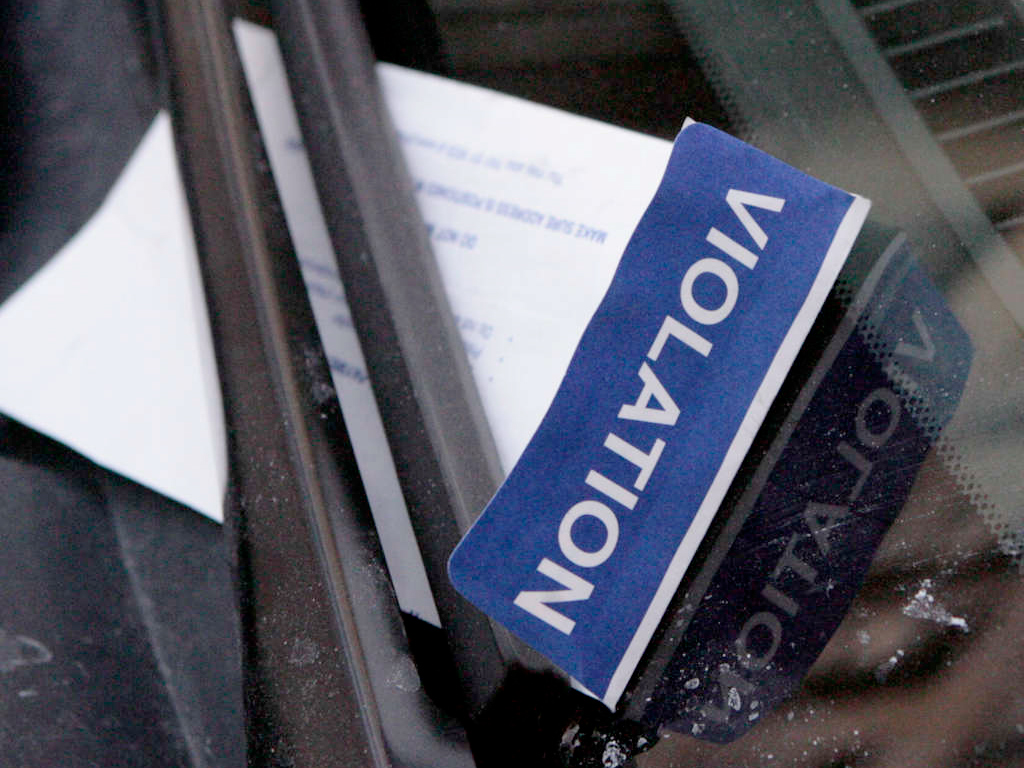
    The Parking Authority voided 23,195 speeding tickets and is refunding $1.25 million in fines after discovering that a required speed-camera warning sign was missing from a stretch of North Broad Street. A construction crew had knocked it down, and somehow it took about three months to get a new one up.

    To be clear, the drivers were still speeding. The PPA would very much like everyone to know that. But state law requires a sign warning drivers about the camera, so the tickets had to go.

    There is something deeply satisfying about this. Philly drivers have spent generations feeding parking meters, sprinting back to expired spots and discovering orange envelopes tucked under windshield wipers. The PPA is usually where your money goes, never where it comes from.

    So check the mail, 12,214 lucky speeders. Somewhere out there is a refund from the Philadelphia Parking Authority.

    And really you should frame the check, this may never happen again.

    SEPTA bus passengers direct bus driver to drive through wet concrete
    Video: SEPTA bus passengers direct bus driver to drive through wet concrete

    Philly’s respect for construction barriers: D

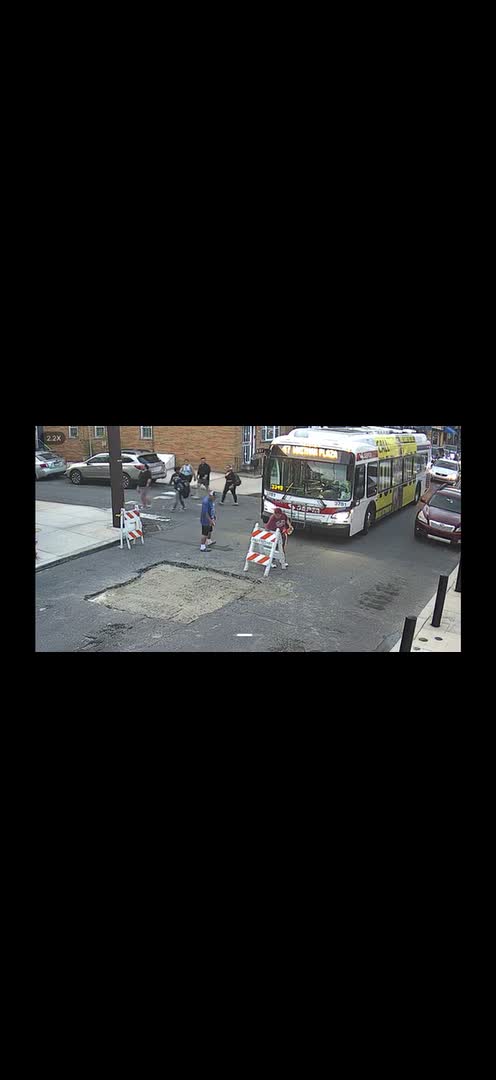
    A SEPTA bus got stuck in freshly poured concrete outside Termini Bros. last week, just two minutes after city crews finished pouring it.

    How did it get there? Two passengers hopped off the bus, moved the street-closure barricades themselves, and then helped direct the driver around the construction. Shockingly, that did not go well.

    It gets even better when you learn that the pothole-turned-sinkhole had been there for 14 months, long enough that it had started swallowing traffic cones. The city finally showed up to fix it, poured the concrete, and blocked off the street at 7:21 p.m. The 47 bus drove into it at 7:23.

    Fourteen months waiting for a repair, and it took two minutes to ruin it.

    And to once again make this story even better, it happened outside a century-old Italian bakery, the bus was covered in Top Dog Law ads, and when city workers returned the next morning to fix the fix, Joey Termini brought them cannolis.

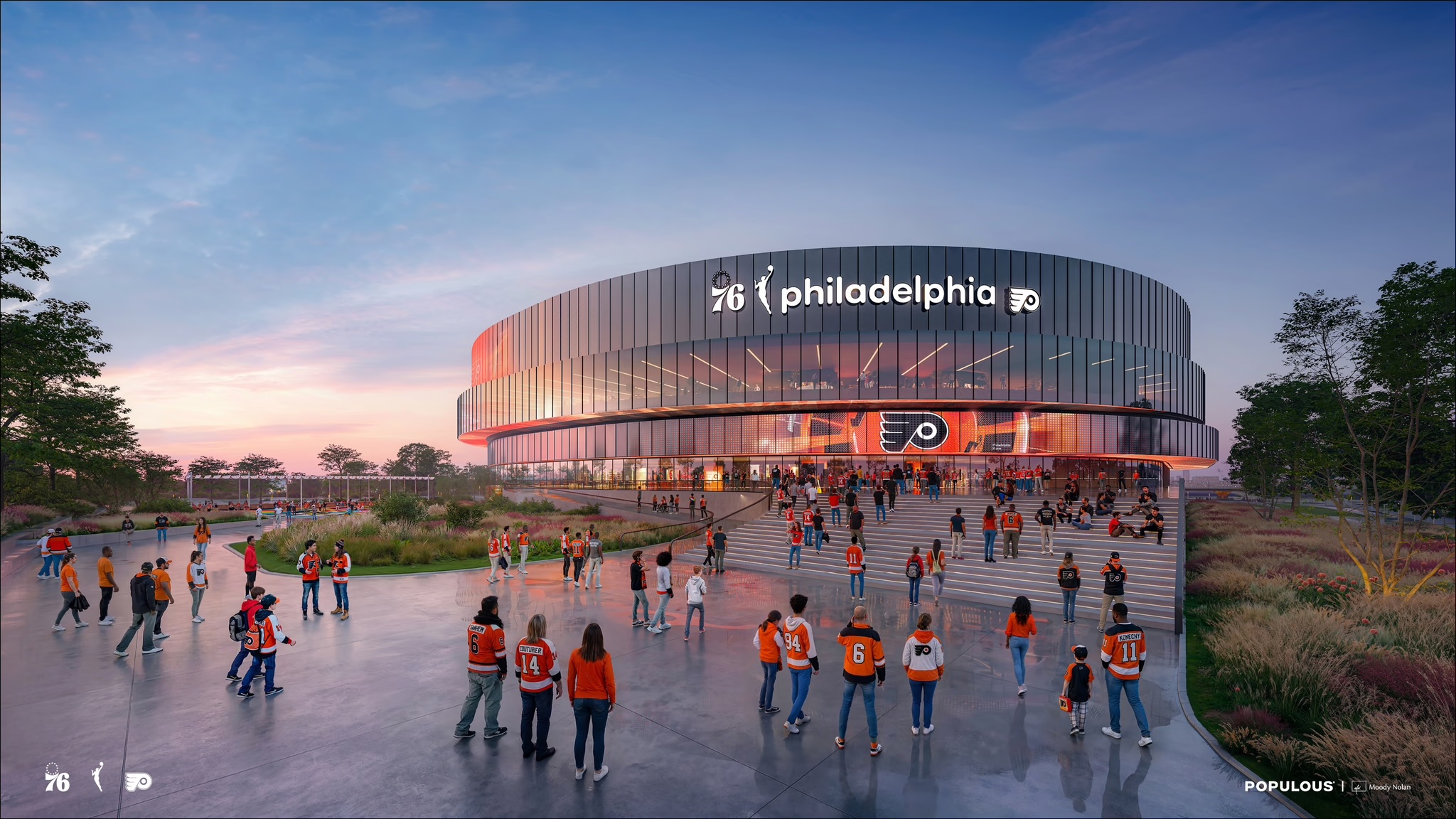
    An updated rendering of the new Flyers arena released Thursday appears to show more women fans following backlash this week against the original rendering.Courtesy of the Flyers

    Our new sports home comes into focus: A

    We’ve known for a while that the Sixers and Flyers are getting a new arena in South Philly. Now, we finally know what the thing is supposed to look like.

    The first renderings dropped this week, and there’s plenty to like: a facade inspired by the old Spectrum, a huge outdoor plaza, food and drink pavilions, and a giant screen outside.

    But the coolest part might be seeing three teams attached to it. When the doors open in 2030, the Sixers and Flyers will be joined by Philly’s still-unnamed WNBA team, which will begin play that same year.
    Four years away suddenly feels a little more real. Now, we just need a name for the team (and, eventually, the building).

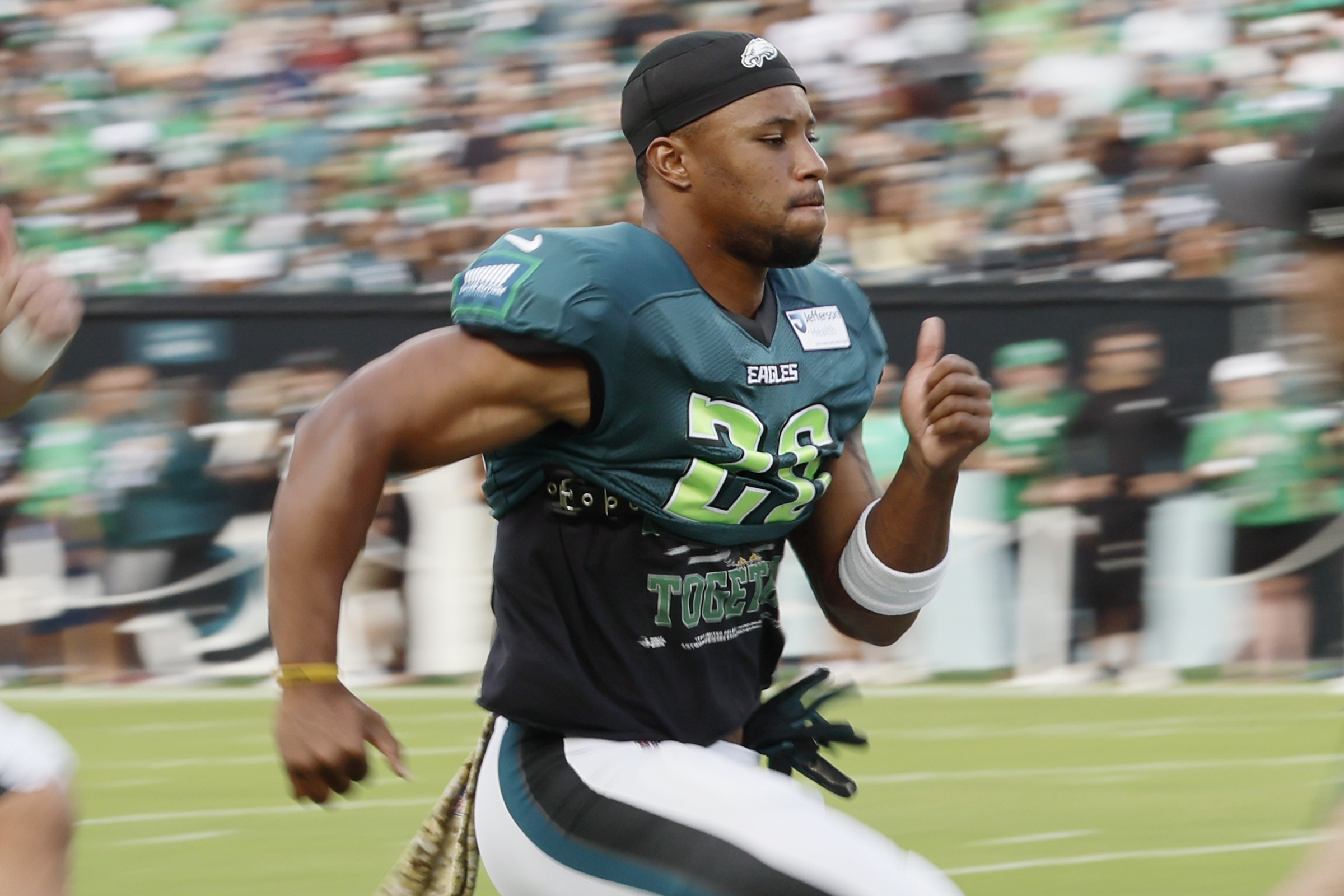
    Eagle Saquon Barkley runs the sidelines during an open Eagles practice at Lincoln Financial Field in Philadelphia on Tuesday, August 25, 2026.Elizabeth Robertson / Staff Photographer

    The Eagles go 12-5, according to science: A

    The Eagles season starts Sunday, which means this is the last beautiful moment when absolutely anything can happen. So Mike Sielski did the responsible thing and predicted all 18 weeks — mostly through song lyrics and increasingly unhinged scenarios.

    His forecast has Jalen Hurts doing the macarena on the first play of the season, Vic Fangio throwing up on a Dollywood roller coaster, Aaron Rodgers blaming a loss on Anthony Fauci and the illuminati, and Brandon Graham once again considering coming out of retirement. Somehow, amid all of this, the Eagles finish 12-5 and win the NFC East for a third straight year.
    And you know what? Wouldn’t that be great? Twelve wins, another division title, football at Christmas, and several months spent planning Sundays around the Birds again. After an offseason of roster moves, coordinator questions, and endless predictions about what this team might be, we finally get to watch actual football.

    And if we get to keep the 12-5 season, Hurts doing the macarena would just be the cherry on top.

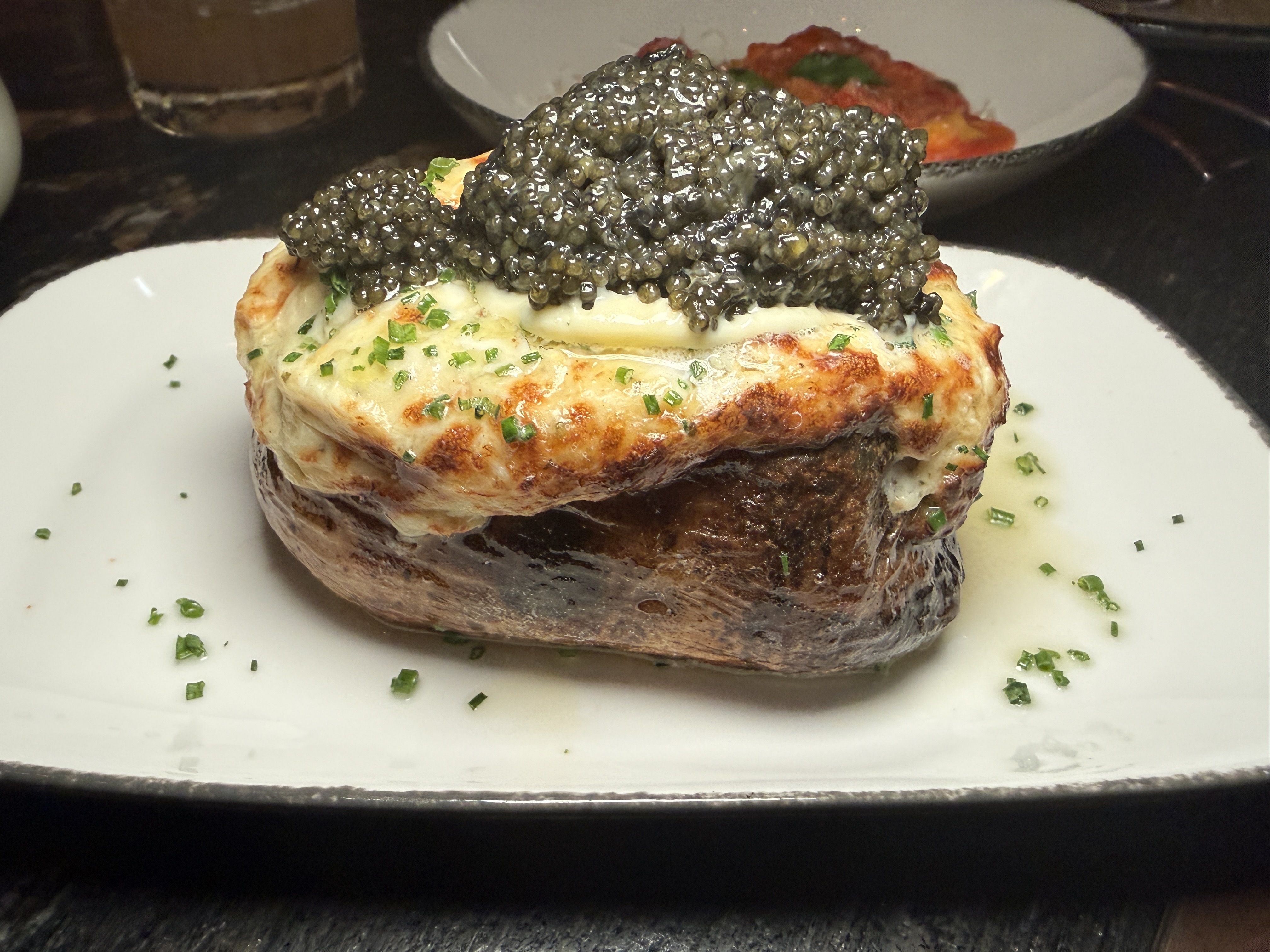
    The baked potate loaded with lump crab au gratin and a caviar “blackout” at Mr. Edison in the Bellevue costs $88.Kiki Aranita / Staff /
    An $88 potato?!: F

    There are certain things an $88 potato should be able to do. Like maybe change your life or fix your credit. At minimum, make you briefly forget you just spent $88 on it.
    The baked potato at Mr. Edison in the Bellevue starts at an already pricey $48, stuffed with nearly half a pound of crab au gratin. Add a “blackout” of caviar and suddenly you’re sitting in front of an $88 spud.

    And according to Inquirer food writer Kiki Aranita, it wasn’t good.

    An $88 potato should be so delicious that you spend the next week becoming an annoying person who tells everyone, “OK, but you have to try the potato.” Instead, Aranita described hers as “all mush” and pointed out that better baked potatoes can be found a few blocks away for a fraction of the price.

    Caviar or no caviar, at the end of the night, it is still a potato.

    Temple’s $55 million gift disappears: F

    Less than a year ago, Temple was celebrating the largest donation in university history: $55 million from alumnus Christopher Barnett. This week, the school announced it was terminating the gift, removing Barnett’s name from its College of Public Health and other programs, and accepting his resignation from the board of trustees.

    The reason is quite a turn. Barnett’s company, ABA Centers of America, is under federal criminal investigation over allegations including money laundering and wire fraud. Investigators allege the autism-services provider improperly billed insurers, including for treatment while clients were napping or watching television. Barnett has not been charged and “strenuously denies” the allegations.

    There is a small piece of good news buried in this mess, though. Temple hadn’t gotten any of the $55 million yet, which makes it a lot easier to give the money back.