A Philadelphia man who fired into a crowd of Eagles fans celebrating the team’s NFC championship game victory last year, seriously injuring a 20-year-old man, was sentenced to 3½ to 9 years in prison on Thursday.
Amere Wright, 20, was 18 when he opened fire on Jan. 26, 2025, in Center City as hundreds of people gathered to revel in the Eagles’ win over the Washington Commanders.
It was supposed to be a night “filled with joy,” prosecutor Mackenzie McGeehan said Thursday. Instead, a scuffle broke out on the 1300 block of Chestnut Street, and Wright, who was not involved in the altercation, pulled out an illegal handgun and fired into the crowd, McGeehan said.
The bullets struck the 20-year-old in the abdomen and hip, causing injuries that required a four-day hospital stay, the prosecutor said.
Wright pleaded guilty to aggravated assault and illegal firearms charges in August. Philadelphia Common Pleas Court Judge Chesley Lightsey sentenced him Thursday after hearing arguments from McGeehan and Wright’s attorney, Michael McDermott, as well as an apology from Wright.
Wright told the judge he had overreacted when he drew and fired his weapon and said he regretted it.
“I know there were a thousand different options — a thousand different scenarios — that I could have chosen, and I chose the wrong one,” he told the judge.
He added: “When I was young, I thought carrying guns was the coolest thing to do, but it’s not.”
Lightsey said she had been moved by Wright’s words and had imposed a sentence that recognized he was “young and maturing.”
At the same time, she encouraged Wright to continue anger-management treatment, which he said he had begun while in jail awaiting the resolution of his case.
“I can tell you mean what you say,” Lightsey told Wright. “Some guys come in here and I don’t believe them.”
But, she added, “you’re lucky he [the victim] didn’t die, because you’d be facing life in prison.”
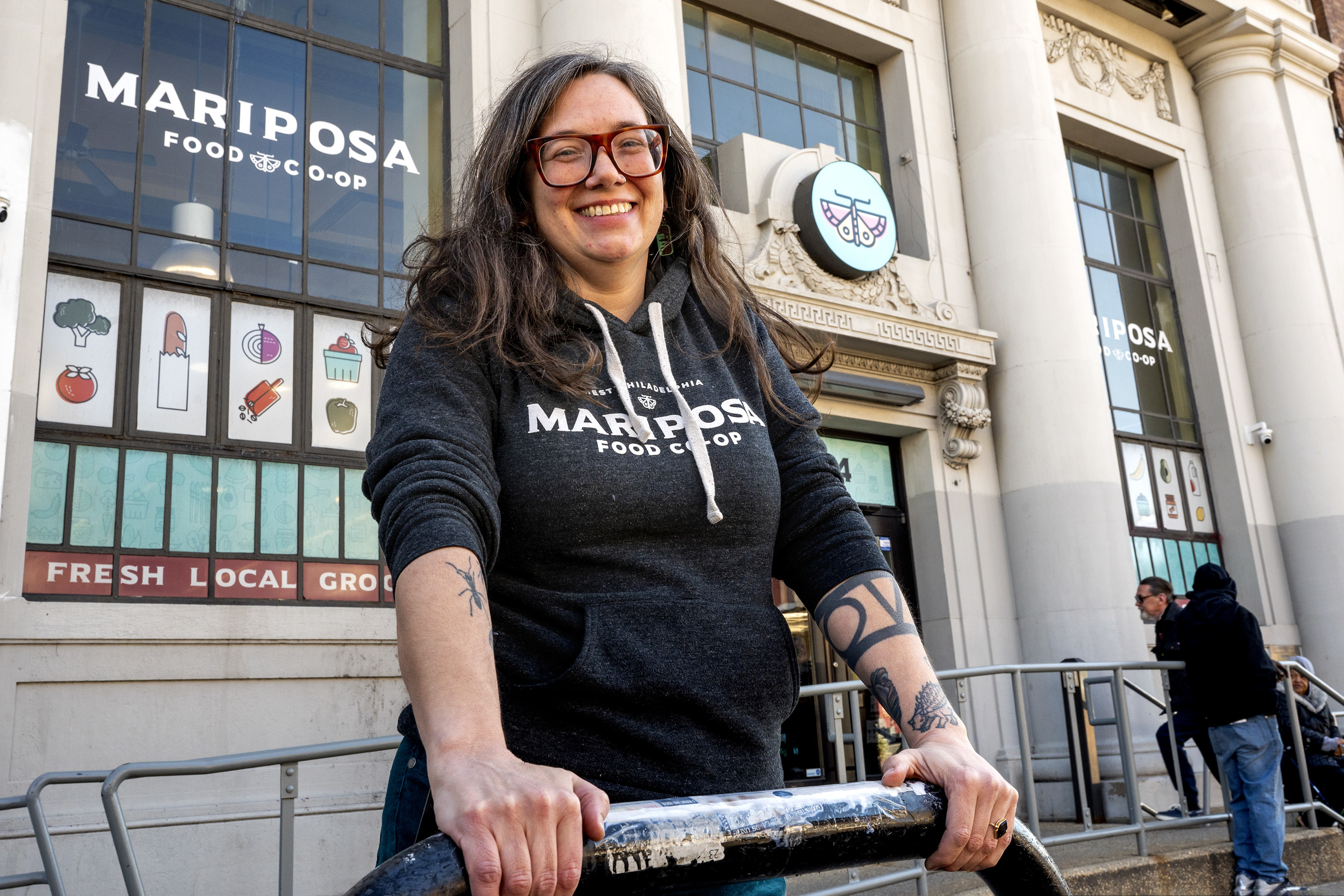
With more than 3,000 member-owners and a 55-year track record, the Mariposa Food Co-op looms large in West Philadelphia.But in recent years, many residents felt that it had lost its way — both financially and spiritually.
So when the co-op board announced late last month that its longtime controversial head was out, effective immediately, the news sped through the neighborhood. “Co-op executive officer” and general manager Aj Hess had managed the co-op since 2016, despite repeated attempts by volunteer board members and workers to oust them.
On social media, some neighbors rejoiced as if a despot had finally been removed from the throne. “I want to dance in the streets,” one wrote.
“It’s weird that someone who just basically ran a grocery store has so much ill will built up in the community that people are celebrating,” said Will Inglis, a local who was, himself, celebrating. Inglis worked at the co-op as an overnight stocker and helped organize a union there in 2022. He left in 2023 and was subsequently banned for life from the store for accusing Hess of wage theft in a public meeting.
Hess declined to comment for this story.
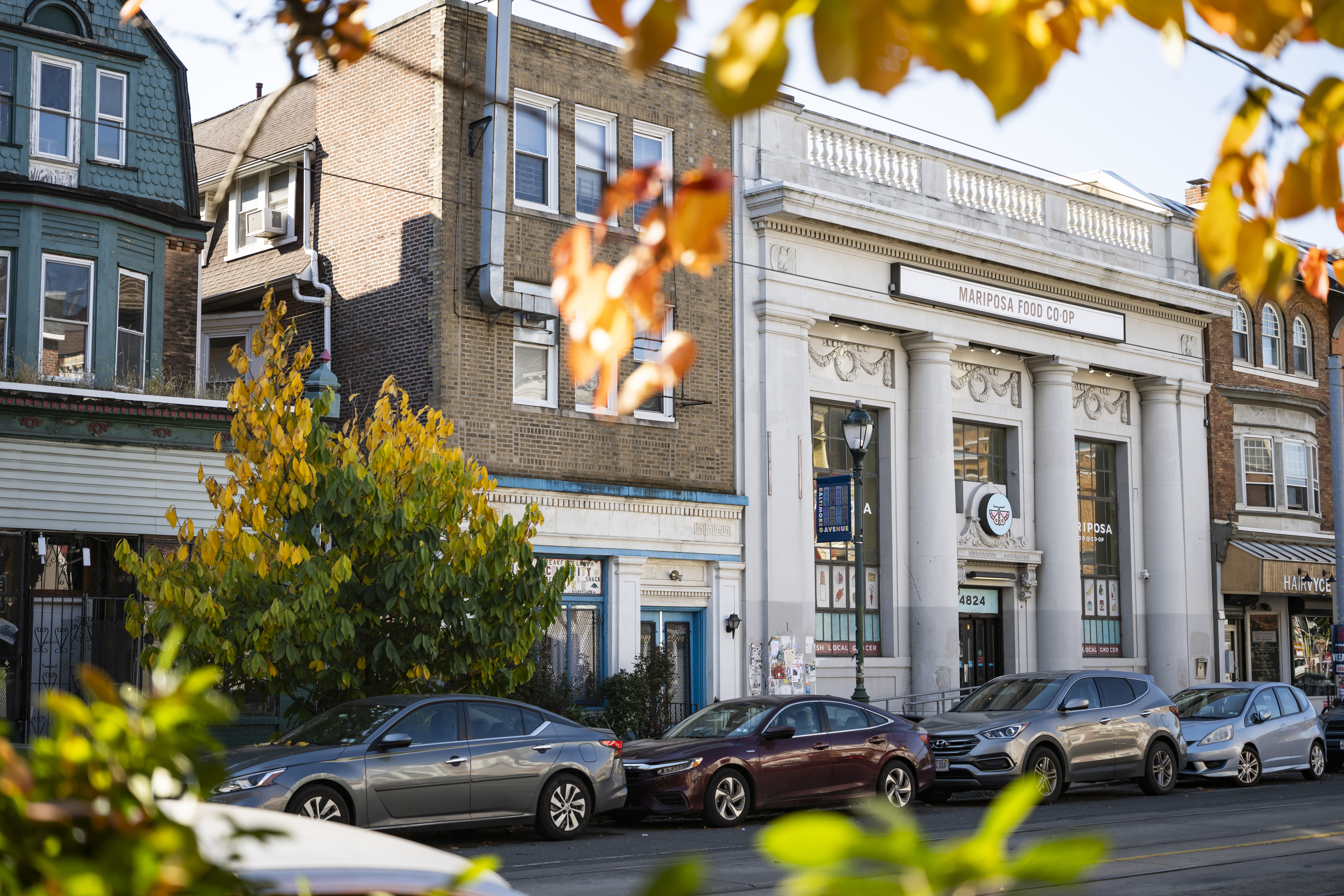
Mariposa moved to the former bank on Baltimore Avenue and opened to the public in 2012. Before that, only members could purchase food there. Allie Ippolito / For The Inquirer
Founded in 1971 as a buying club run by member consensus, the co-op inspires such fervor partly because it is owned by its neighbors. Anyone can buy a $200 stake in the cooperative and have a say in decision-making, although the general manager maintains wide latitude to run the store.
It is also the rare neighborhood institution that pitches itself as a meaningful alternative to some of the problems of our late-stage capitalist era. It is supposed to be a truly community-owned space, one that supports local farmers and food producers while offering neighbors healthy, affordable food. If there are profits, they flow to member-owners as dividends.
Yet in recent years, Mariposa seemed to drift from its ideals. Workers described a culture of vindictiveness, favoritism, and retaliation under Hess’ management, and a workplace teeming with surveillance cameras. Some members complained of unfair board elections that effectively kept Hess in charge.
“This is not what a neighborhood co-op is supposed to be,” Inglis said.
On a practical level, shelves were often bare, making it hard for even those devoted to Mariposa’s values to regularly grocery shop there. Sales tumbled, reflecting the resulting loss in customer traffic.
Now that Hess is gone, the question is whether Mariposa can return to its origins — and remake itself as the thriving co-op it once was.
Aminah Brinkley, a clerk at Mariposa, stocked bagels on a recent Friday. Allie Ippolito / For The Inquirer
Losing money and morale
Hayley Tintle, a West Philly resident and senior budget analyst at Penn, ran for the Mariposa board in June of this year because she wanted to understand what had happened to the grocery store.
The complaints she heard after she was elected as a board member were similar to those she had as a customer: The shelves were barren, the store wasn’t clean, there were missing staples. Staff turnover was noticeably high.
“It just felt kind of hard to shop there,” Tintle said. “It didn’t have the same vitality that it once did.“
Financially, the co-op was struggling. Since 2019, sales had plummeted by about 40%, from $7 million to $4 million, according to financial records The Inquirer reviewed. The amount of cash on hand — a figure that represents how long the business could survive if it stopped generating any income — dropped from seven weeks in 2025 to 4 weeks this year. Membership had plateaued around 3,700 people.
At the same time, worker unrest had repeatedly spilled into public view. In both 2018 and 2023, workers submitted statements of no confidence in Hess to the board, pointing to “high staff turnover, abysmal staff morale, inefficient store functioning, and financial risks incurred by both the co-op itself as well as our member-owners.”
After staff won its first union contract in 2022, some told The Inquirer their hours were cut in retaliation.
Aj Hess, the CEO of Mariposa Food Co-op, pictured outside the store in 2023.Tom Gralish / Staff Photographer
Hess, who had worked in cooperatives for more than 20 years, largely dismissed the staff concerns and told Grid Magazine last year that the pandemic, as well as “negative press,” had hurt Mariposa sales, but that “overall we are still doing well.”
Over the years, community members had tried to shake up the co-op’s board and oust Hess. But it had never worked, said Kitty Jauregui, who was elected to the Mariposa board in 2024 as part of a reformist slate. Within a year she was kicked off by her fellow board members for sharing an anti-Hess Reddit post, she said, and her membership was terminated.
The whole experience left her with such a sour taste that she avoids walking on the same side of the street as Mariposa these days. But looking back, Jauregui blames more than just Hess. The annual membership meetings were perpetually under-attended.
“The whole community, we all let it happen,” she said. “When only a handful show up, I think we kind of got what we deserved.”
Glenn Bergman, the interim manager for Mariposa, organized a staff field trip to the local Philadelphia Wholesale Produce Market in his first week. Allie Ippolito / For The Inquirer
Fresh perspective, old hand
Tintle and the board declined to comment on the nature of the separation with Hess, citing confidential personnel matters.
But in late September, Tintle reached out to Glenn Bergman, a veteran of Philadelphia co-ops, to ask him to temporarily take over the store. When Bergman became general manager of Weavers Way in 2004, that co-op was facing its own financial hardships; when he left 11 years later— to lead Philabundance as executive director — the co-op was an unqualified success. Today, Weavers Way has four grocery stores in Northwest Philly and Ambler.
Bergman, who used to live around the corner from Mariposa in the 1980s and has a soft spot for do-gooder businesses facing trouble, agreed to come out of retirement for three months to serve as interim manager. The board is now beginning its search for a permanent general manager.
“This place is too good to let it go. It’s sacred ground,” said Bergman, 75, on his second day. He was wearing a small red co-op pin buttoned to his corduroy shirt, with two pairs of reading glasses in his front pocket.
He was already full of ideas for how to revitalize Mariposa. More staff, more produce. The calendar should be full of music and classes, the place needs its own newsletter. He wants to revive the working-member program, in which members work volunteer shifts in exchange for discounts. In the first week, he planned a field trip for Mariposa staff to visit the Philadelphia Wholesale Produce Market, as well as a meeting between Weavers Way and Mariposa staff to trade ideas. Maybe the front cashier table could become a bulk olive oil station.
“I feel like it’s a new beginning,” said Bull Gervasi, a former Mariposa general manager who lives across the street and was instrumental in moving it to its current location in 2012.
In between pulling products forward on the shelves and ringing people up, Bergman greeted every customer who entered.
Talking to people was just a start, and there would be a long journey ahead. There were no bananas, Bergman noted. Refrigerator bins for dark ground turkey and white ground turkey were cleared out.
“It’s going to take a little time, but the plan is to have more produce — a lot more produce — more staff,” he told a customer.
“And are you planning to get quart-sized half-and-half?” she asked. He wrote down the idea on a little piece of paper and tucked it in his pocket. (A few days later, the requested half-and-half was stocked).
When Bergman arrived, some shelves at the Mariposa Food Co-op were bare. He’s building back the produce section. Allie Ippolito / For The Inquirer
He was sympathetic to residents who were upset about what had happened at Mariposa and he had already reached out on Facebook to those posting bad experiences, asking them to chat. (He quickly unbanned Inglis, the former union organizer.)
“It’s their money, it’s their investment, it’s their community store,” he said. “They should be upset.”
“That’s done,” he added about the controversies of the past. “I said to the staff, ‘We just gotta do good things for the people. We have to be trying really hard and they have to see us trying hard.’”
Local apples for a local store
One of the first problems to address was the apples.
A longtime member-owner who lives nearby had popped in to Mariposa buy apples. But, as she reported to Bergman, there were no local apples available, despite it being the middle of apple season in one of the states that grows the most apples in the country.
Bergman examined the varieties on offer: Pink Lady and Gala and Honeycrisp, shipped from thousands of miles away and selling for upward of $2.99 per pound. (Eastern apples often have to be sprayed with fungicide, so they’re technically not organic, he noted — but they’re straight off the tree and taste much better.)
“I don’t want any more apples coming from California or Washington state,” he told Mariposa’s purchasing manager. “I want only local apples here. And I want about 10 varieties.”
Two days later, he sent a photo from Mariposa’s produce section. The half-filled cardboard box of pumpkins that used to sit at the front of the store was gone. In its place were boxes upon boxes of green and red and yellow-flecked and golden apples, all grown at Beechwood Orchards in Biglerville, Adams County.
Mariposa was selling them for $1.99 per pound — with a special 15% discount for member-owners.
A 35-year-old woman was hospitalized in critical condition after she was found shot in the head inside a residence in the city’s Mayfair section Wednesday night, police said.
Just after 8:40 p.m., police responded to a reported shooting inside a home on the 2800 block of Benner Street, said Chief Inspector Scott Small.
The woman was found unresponsive on the kitchen floor and rushed by police to Jefferson Torresdale Hospital, Small said.
Police had no immediate suspect or motive for the shooting, and no one else was at the home when police arrived, Small said.
A 33-year-old Philadelphia man is wanted on murder charges after police said he committed a heinous, random attack on three women inside a West Oak Lane hair salon Monday, locking them in a back room, pistol-whipping them, and sexually assaulting one and fatally shooting another before fleeing.
Jamal Pistoria remains at large and is extremely dangerous, District Attorney Larry Krasner said as he asked for the public’s help in locating him.
“We need to do everything we can to make sure this man is brought to justice for what he has done,” Krasner said Wednesday.
Jamal Pistoria, 33, is wanted for murder and related crimes after police said he attacked three women inside a West Oak Lane beauty salon Monday afternoon.Courtesy of Philadelphia Police
Pistoria walked into ABBA Blessed Beauty Salon, on the 6300 block of Stenton Avenue, around 2 p.m. Monday, then pointed a gun at a woman managing the cash register, according to Assistant District Attorney Jeff Hojnowski, head of the homicide unit at the district attorney’s office.
He walked her, at gunpoint, to a kitchenette at the back of the store, where two other women were already gathered, and fired a bullet into the ceiling, Hojnowski said. Pistoria locked the door, then beat and pistol-whipped the women, ages 33, 34, and 44, he said, and began sexually assaulting one of them.
Then, the prosecutor said, he suddenly shot one of the women — 34-year-old Bellaniri Ofelia Hernandez Camilo — multiple times.
“She doesn’t appear to engage him at all whatsoever. She doesn’t appear to fight back. He just decides to shoot her,” Hojnowski said.
Pistoria assaulted the women for six minutes, he said, beating and hitting them with his gun and continuing to sexually assault one.
Then, with their colleague bleeding beside them, the two women, realizing Pistoria had run out of bullets, fought back and were able to overcome him, the prosecutor said.
Pistoria fled and, on his way out, grabbed the salon’s cash register, dropping the till and leaving with only a small amount of money, he said.
The women were rushed to Jefferson Einstein Hospital, where Hernandez Camilo died from her injuries.
Homicide detectives recovered video from the salon and nearby businesses that showed Pistoria in the area after the crime — including as he purchased a soda from a corner store, his face uncovered, not long after the attack, Hojnowski said. People who knew Pistoria then identified him as the gunman in the video, he said.
Hojnowski said authorities do not believe Pistoria knew the women and had attacked them at random. He is expected to be charged with murder, sexual assault, indecent assault, attempted murder, robbery, and related crimes once he is apprehended.
Police said he could still be in the West Oak Lane area, near the 1500 block of Tulpehocken Street.
Bellaniri Hernandez Camilo, 34, was a mother of two from the Dominican Republic. She and her husband moved to Philadelphia in 2022.Jessica Griffin / Staff Photographer
The crime has devastated the family of Hernandez Camilo, a married mother of two from Fairhill, and left her colleagues and nearby residents shaken at Pistoria’s seemingly random decision to target the salon and its workers.
Francis Acosta Santos said he and Hernandez Camilo, his wife of 11 years, had moved to Philadelphia in 2022 from Chile in search of better economic opportunities. (Police initially said she was from New York City, but he said that was not correct.)
She worked long hours at the salon, saving aggressively to build a dream house in the Dominican Republic, where the rest of her family lived, in hopes of reuniting them all. She started as a hair washer but was taking classes to become a stylist, he said.
She had two children, ages 8 and 12. Early Tuesday morning, her husband found himself crying in the staircase of his Fairhill home, trying to understand how he would tell the eldest, who lives in Chile, that their mother was gone.
“I told the youngest she is an angel now and God took her to heaven and she is going to watch over us all the time and not be saddened by her departure,” he said.
His home on Wednesday was filled with friends and family offering comfort and adding to a growing altar of photographs, flowers, and candles. Acosta Santos, glancing at her photo, could only think about how beautiful she was.
His Bella, as he called her.
He would fulfill her dream of building the house in the Dominican Republic for her family, he said.
“I’m going to make it,” he said in an interview in Spanish. “I’m going to fight to fulfill her dream and complete that house even with her gone.”
In a GoFundMe page created to pay for the woman’s funeral, the business said the owner of the salon, Arisleidy Pérez Gil, was also seriously injured and would need arm surgery.
The Asociación de Cosmetologas de Pennsylvania, a Philadelphia-based group of professional cosmetologists, has planned a vigil in front of the salon for Monday at 4 p.m.
Court records show that in 2016, Pistoria was charged with burglary, robbery, making threats, and drug possession in Montgomery County. He pleaded guilty to a single count of criminal trespassing the following year, and was sentenced to two to four years in prison, the records show.
Councilmember Anthony Phillips, whose district includes the West Oak Lane section of the city, called Pistoria an “absolutely heinous individual” and said neighbors and business owners were seriously concerned that he remained at-large.
“Our neighborhood has a sense of pride that we respect dignity, we respect life, and we respect the excellence of our neighborhood,” he said. “What happened on Monday was a heinous tragedy that should have never happened to these women.”
A Drexel University student was charged with attempted murder and related crimes after shooting a man in the neck in North Philadelphia on Monday, authorities said.
Jackson T. Roberts, 22, was arrested Monday and was being held in the Curran-Fromhold Correctional Facility on $2 million bail, according to court records.
Police arrested Roberts at a home on the 900 block of West Dauphin Street that morning after responding there for a report of a shooting.
They arrived around 9:20 a.m. to find a 22-year-old man who had been shot in the neck, police said.
The victim, whom police did not identify, was taken to Temple University Hospital. The extent of his injuries was not immediately clear. Police said Wednesday that the man was stable.
Police did not identify a motive as they continue to investigate the crime.
In addition to attempted murder, Roberts is charged with aggravated assault, possessing an instrument of a crime, simple assault, and reckless endangerment.
He is being represented by a public defender, court records show.
Nearly 400 students were sent home from a Chestnut Hill elementary school Wednesday after a disruption of water service.
J.S. Jenks Academy of Arts and Sciences, a Philadelphia School District school on Germantown Avenue, dismissed its students at 10:30 a.m. The school had no hot water on Monday, according to people inside the building; students were off Tuesday for Election Day, and at least parts of Jenks had no water at all Wednesday.
Students were told not to flush toilets, people with firsthand knowledge of the situation said, and had no access to running water to wash hands or fill water bottles.
“Earlier today, a loss of water service on the third floor and a leak in the domestic water line in the boiler room resulted in a loss of water pressure throughout the building,” Teresa Fleming, the district’s chief operating officer, wrote in a letter to families. “Facilities and Maintenance staff are on-site working to address the issue.”
Jade Ward, president of the Jenks Home and School Association, said she was frustrated by students spending three hours in a building with no running water, and she was worried about food safety — the school served breakfast and lunch before dismissal.
Jenks families received an email from the school at 8:15 a.m., an hour after children arrived, notifying them about the issue. Maintenance staff were on site assessing the problem, the letter said.
“Please note that we do not have authorization to relocate at this time,” the letter to families said. “Once our action plan is vetted and approved by the district, we will follow up with further updates and next steps immediately.”
Families were finally notified of the 10:30 dismissal minutes before it happened. Students were walked from school to a nearby recreation center, which does have running water, to wait for family members.
Ward, who picked up her own children from Jenks soon after she learned there was no water, reached out to central office staff herself on behalf of other families, and was frustrated by a lack of action and transparency, she said.
“Teachers were instructed not to tell parents that there was no running water in the building,” Ward said. “They were downplaying the issues in the building.”
Staff were able to fix the water problem, however; officials said in a letter to families sent Wednesday evening that school would be held as usual on Thursday.
Jenks’ facilities issue illustrates a larger problem in the district: Old buildings coping with years of deferred maintenance sometimes have major issues crop up that interfere with student learning.
Jenks, built in 1922, has a building rated “unsatisfactory” by the district’s own measure.
Those projects could happen only if the school system secures significant philanthropic or state funding, however, beyond the $1 billion it will spend for higher-priority projects.
“With even further government and/or philanthropic funding, design work would begin in SY2026-27 for an additional modernization project at this school site that moves its School Building Score out of the unsatisfactory or poor category,” Jenks’ facilities report reads.
What started as a search for love on a “sugar daddy” website ended with nearly $3 million in taxpayer fraud — and, in Philadelphia’s federal courthouse Wednesday, a one-year prison sentence.
In 2019, prosecutors said, David Ray of Ione, Calif., set up a profile on a website to search for a potential girlfriend. On the site — which prosecutors did not name — Ray struck up a conversation with Aryanah Davison of Harrisburg, and the two began chatting online for months.
Ray became so smitten, prosecutors said, he agreed to take out lines of credit to send Davison money. He even bought her a luxury SUV.
Then, awash in debt, Ray — who worked at a California trucking company for 38 years — agreed to a novel scheme to try to make the money back: He decided to send Davison personal identifying details of 375 of his colleagues.
And Davison then used that information to file fraudulent claims for pandemic unemployment assistance in 27 states, prosecutors said — leading the government to pay $2.8 million in improper benefits.
The scheme unraveled several years ago, and in 2023 Ray agreed to plead guilty to wire and mail fraud and identity theft charges.
During their investigation, authorities also charged Davison with similar offenses. And they learned that she had been persuaded to set up her profile and start looking for potential victims at the urging of another man, Ardavan Alamoutinia of Hummelstown, Pa.
Alamoutinia, prosecutors said, was a key part of the scheme to manipulate Ray — and, ultimately, to defraud a government program intended to benefit people harmed by the COVID-19 pandemic.
“While anxiety and division engulfed this country, [Alamoutinia] saw dollar signs,” prosecutors wrote.
And although they acknowledged that Ray was, in a certain sense, a victim of Davison and Alamoutinia, they also said Ray knew it was wrong to send Davison his colleagues’ personal information. And they said he shared in some of the benefits, when Davison and Alamoutinia sent him back some of their proceeds.
“When life got tough, David Ray sold out his co-workers and friends — and earned over $144,000 doing it,” prosecutors wrote. “The defendant knew better.”
In court Wednesday, Ray said that was true — he did know better.
Ray, 68, told U.S. District Judge Juan R. Sánchez that he had failed to control his impulses while communicating with Davison. Since his arrest, he said, he has relied on therapy, his family — including his wife, who was in court with him — and his faith to hold himself accountable and avoid similar temptations.
“I allowed myself to be corrupted,” he said.
Sánchez called Ray’s actions in the case “bizarre,” but said he has been impressed with Ray’s efforts to get his life back in order.
As for Ray’s accused coconspirators, Sánchez sentenced Alamoutinia earlier this year to 10 years in prison. Davison has pleaded guilty and is awaiting sentencing.
This article is not legal advice. But according to the Pennsylvania Supreme Court, yelling vulgarities at a judge is not a crime if a court proceeding was not significantly obstructed.
The high court weighed in last week on the 2022 conviction of Basile Outlaw, who, from the gallery of Common Pleas Court in Philadelphia, stood up and said, “that judge is a [expletive],” according to the majority opinion.
“What did you say?” Judge Roxanne E. Covington replied.
“Never mind,” Outlaw said. “I’m leaving.”
Outlaw, 35, was in court that day to support a friend, who was a defendant in a criminal case. His outburst, which followed a ruling that did not go his friend’s way, landed him in jail for 30 days.
Merely insulting a judge, leading to a momentary pause in a hearing, is not enough to justify a criminal contempt conviction, a unanimous Supreme Court held.
The Supreme Court’s reversal of Outlaw’s conviction is important because it guarantees protections for people who are overcome by emotion on a difficult day for them or a loved one, said Aaron Marcus, a Defender Association of Philadelphia lawyer who represented Outlaw.
“Being offended shouldn’t justify a criminal conviction for the rest of your life,” Marcus said.
The Pennsylvania Attorney General’s Office, which argued on behalf of the state in the Supreme Court, did not respond to a request for comment.
After Outlaw left the courtroom, a deputy sheriff and court employee went after him, and he returned on his own. Marcus said his client wanted to apologize. But Covington ordered his arrest on contempt and set his bail at $75,000.
Outlaw did not deny his outburst, which sounded similar to cough-sufferer, and expressed remorse. He was sentenced a week later to 15 to 30 days in jail.
In his appeal, Outlaw argued in Superior Court there was not enough evidence that he obstructed the administration of justice to sustain his conviction. The prosecutors agreed, but the Superior Court judges did not.
Outlaw demonstrated “his own utter disrespect for the court,” the Superior Court judges found. The court said Outlaw potentially encouraged other attendees to “commit similar disruptions.”
“Calling a judge an indecent name in open court undermines the court’s authority and does obvious harm to its ability to conduct an orderly proceeding,” the expletive-laden Superior Court opinion said.
But a unanimous Supreme Court took a different view, relying on previous cases about court outbursts.
Justice David Wecht’s majority opinion explained that even though the comment “fell below the expected standard of courtroom decorum,” the delay in the hearing was limited to the judge asking “what did you say?,” which was insufficient to convict Outlaw.
Because the Philadelphia District Attorney’s Office agreed with Outlaw’s position, the Supreme Court asked the Pennsylvania Attorney General’s Office to argue on behalf of the conviction. The office said contempt was appropriate because obstruction of the administration of justice includes “disrespect that undermines judicial authority in the eyes of the public.”
But Pennsylvania Supreme Court precedent says “inappropriate and even ill-mannered conduct which does not obstruct or delay the trial falls short” of punishable criminal contempt, Wecht wrote.
Philadelphia police are seeking to identify a man they say viciously attacked three women who worked at a West Oak Lane beauty salon on Monday afternoon, shooting and killing one and sexually assaulting and pistol-whipping the others.
Around 2 p.m. Monday, Deputy Police Commissioner Frank Vanore said a man armed with a gun walked into ABBA Blessed Beauty Salon, on the 6300 block of Stenton Avenue, and took three female employees into the back of the business.
The suspect shot a 34-year-old woman in the head, Vanore said. The woman was transported by police to Jefferson Einstein Philadelphia Hospital, where she was pronounced dead at 2:35 p.m.
Before police arrived, the suspect then pistol-whipped two other women, ages 33 and 44, sexually assaulted at least one of them before fleeing the salon, Vanore said.
Police identified the shooting victim as Ofelia Bellaniri Hernandez Camill, from the Morningside Heights section of New York City. Her family could not be immediately reached Tuesday.
Vanore called the incident horrific and said it was not immediately clear what motivated the attack. Homicide detectives recovered video and have “significant direction” on a suspect, he said, and hoped to release images of the gunman to the public Tuesday afternoon.
A GoFundMe was created to pay for the New York woman’s funeral and support her family.
The woman, described in Spanish as “our colleague,” tried to defend herself “in an act of bravery” and was killed, the GoFundMe page said.
The owner of the salon, Arisleidy Pérez Gil, was leading the fundraising campaign, the page said. She was seriously injured during the attack and was receiving medical treatment and will need arm surgery.
The third victim also was receiving medical treatment, the page said.
ABBA salon sits among a strip of businesses at a busy intersection near Stenton Avenue and Washington Lane.
On Tuesday evening, a video was posted on ABBA salon’s Facebook page with a woman saying she was conveying the message of the salon’s owner.
The woman in the video mentioned the woman who was killed, who she called “dear Bella,” and asked that respect be shown for her memory, for her family, and for anyone else affected by her death.
In an earlier video posted on the salon’s Facebook page, a woman asked the community to pray for the women who were attacked.
Even as shootings and homicides have declined to their lowest levels in more than half a century, reports of sexual assaults and rapes are one of few crime categories on the rise, though they still remain below pre-pandemic levels, city data show.
And while the clearance rate among homicides has improved greatly in recent years and reached about 80% last year, the solve rate for sexual assaults in 2025 was just 21%, according to the police department.
Police are asking anyone with information on Monday’s attack to call the homicide unit at 215-686-3334, or the police department’s secure tip line at 215-686-8477. Tips can also be submitted online.
Staff writer Robert Moran contributed to this article.