Category: Pennsylvania News

  • Jenkintonians rebuild local playground | Inquirer Greater Abington

    Hello, Greater Abington!

    Welcome to the inaugural edition of Inquirer Greater Abington, your go-to weekly roundup of the top stories affecting your community, from updates on your local government leaders and schools to restaurant openings and events. We hope to make your day a little easier with helpful and accurate news you can really use.

    👋 I’m Laura, your trusty newsletter writer. I’ve called Greater Philadelphia home for about 12 years, and am endlessly charmed by the distinct identities of every borough, township, suburb, and city neighborhood. I hope this space will become your reliable news hub for everything Abington, Jenkintown, Cheltenham, and Elkins Park.

    I’m hopeful I’ll hear feedback from you as this newsletter grows. Seriously, I want to know what you like most about this digest, what’s not working for you, and any suggestions for improvement or story tips. Just be nice — you’ve got real humans working on the other end of this thing.

    Now, let’s get into the news.

    Jenkintown residents are leading the charge on planning and fundraising for the borough’s new $1.3 million playground project. Also this week, e-bikes and e-scooters face a potential ban in parts of Abington, eligible homeowners can apply for emergency home repairs assistance, and arrests were made in two nearly identical cases affecting both the Abington and Cheltenham school districts after adult men allegedly had illegal sexual contact with students who are minors.

    — Laura Smythe (greaterabington@inquirer.com)

    P.S. Tell us what you think of the newsletter by taking our survey or emailing us at greaterabington@inquirer.com.

    If someone forwarded you this email, sign up for free here.

    Who’s rebuilding Jenkintown’s only playground? Maybe you are.
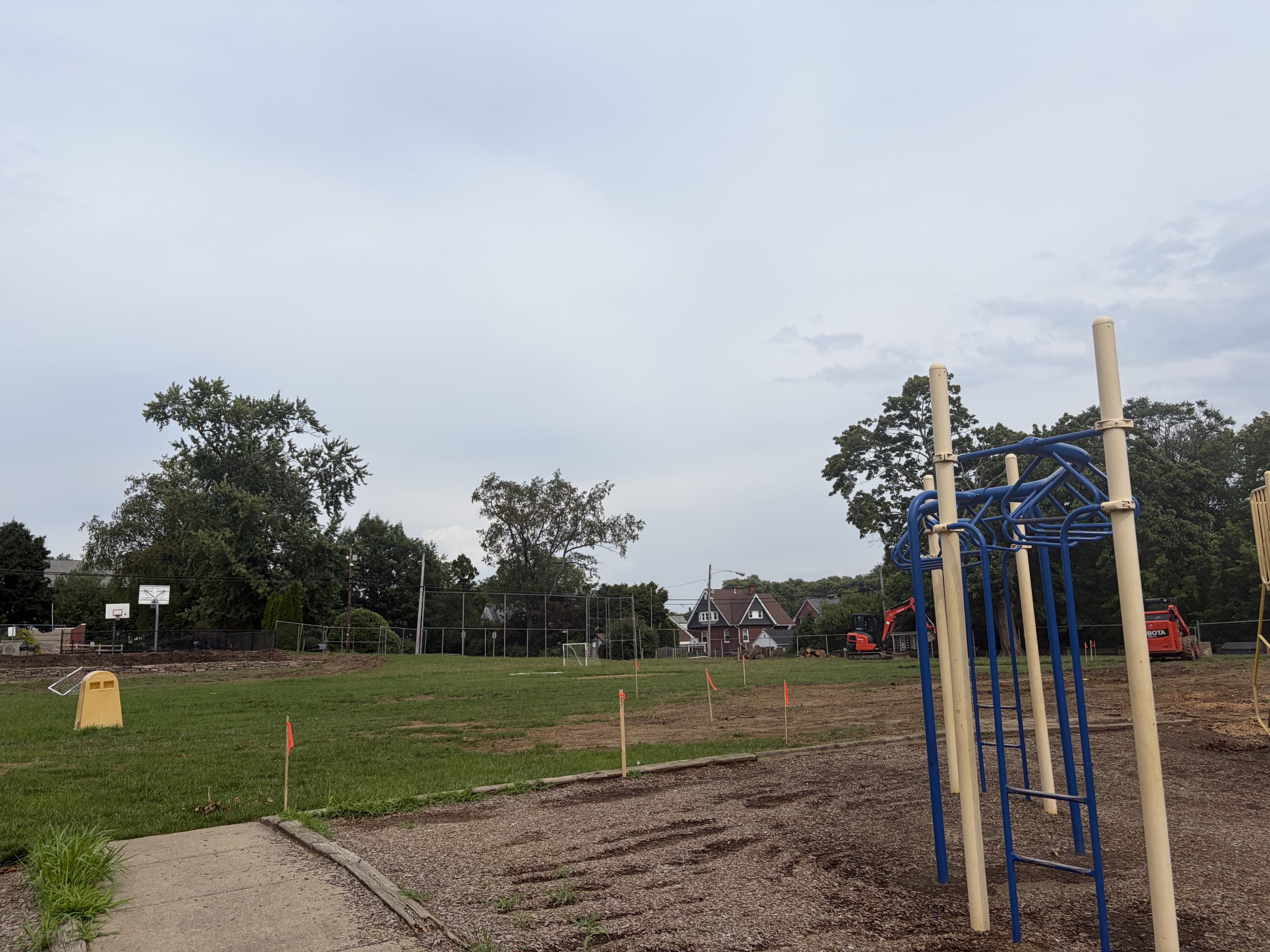
    Jenkintown’s community-oriented, DIY spirit is on full display as residents gear up to build the borough’s new playground at the end of the month, following the beloved Jenkintown Castle demolition in April. Dubbed Legacy Park, the forthcoming $1.3 million project will include slides, swings, a toddler section, and an imaginative play area with a stage donated by Jenkintown Music Theatre.

    Local volunteers have spearheaded planning and fundraising for the playground, while contractors will handle tasks such as land work, water drainage, and installing equipment to ensure safety and longevity.

    The hands-on effort reflects Jenkintonians’ desire for the playground “to be a community project that benefits the most people,” said Kelly Hudson, a volunteer who helms the newly formed playground board. “We’re very prideful about our small little town.”

    The Inquirer’s Jess Rohan, who covers all things Greater Abington, has the details on the project, including how you can volunteer to be part of it.

    💡 Community news

    • Abington is moving toward banning e-bikes and e-scooters at public parks and trails following crashes across the region, but some local cyclists argue the current proposed ban is too broad.
    • Phillip Prince, a 40-year-old Glenside man, has been charged with attempted murder after Montgomery County prosecutors said he intentionally drove his car into a cyclist, The Inquirer’s Vinny Vella reports.
    • Neighbors can sue Gov. Josh Shapiro and his wife, Lori, as regular Montgomery County homeowners, but not in his official capacity, a federal judge ruled — something they’re pursuing after claiming the Shapiros used yard space that doesn’t belong to them to build an eight-foot security fence.
    • Commuters using the Jenkintown-Wyncote station will soon see a development underway that will include 86 apartments. Plus, 40 new apartments are headed to the former Helweg funeral home site in Jenkintown.
    • Some Abington residents are eligible to apply for a piece of the $200,000 Pennsylvania recently awarded to the township’s emergency home repairs program.
    • Area residents are taking to social media to share fond memories of Weinrich’s Bakery patriarch Edward Weinrich, who ran the Willow Grove family institution for decades. Weinrich died last month at 92.
    • Cheltenham’s board of commissioners has selected Jonathan Altshul, current town manager of Newington, Connecticut, as the township’s new incoming manager, per Glenside Local. He’ll be formally appointed at the board’s legislative meeting on Wednesday at 7:30 p.m. at Curtis Hall in Wyncote, as well as on Zoom.
    • Jenkintown’s Capricorn Books has moved to a new location, Glenside Local reports.

    🏫 Schools briefing

    • Abington’s new forthcoming middle school, part of a $285 million project, could feature more parking, a class “pod” setup, and layouts for easier monitoring of classrooms and bathrooms.
    • A 21-year-old Philadelphia man, Jamaal Raheem, has been charged with unlawful sexual contact with a minor and related crimes after allegedly posing as a teenager to persuade an underage student to enter Cheltenham High School after hours.
    • Abington School District has launched an internal investigation to review security protocols after a nearly identical case, in which police charged Raeem Grange-Allen, 25, with attempted rape by force and attempted statutory sexual assault of a 14-year-old student who let him inside Abington Senior High School, according to a police affidavit.

    🍽️ On our plate

    • Four Jenkintown bars participated in a Nicolas Cage-themed bar crawl last month, shaking up themed cocktails inspired by the actor and hosting “Cage match” challenges based on his films. Inquirer columnist Stephanie Farr details her experience at the crawl, likening it to many of Cage’s movies: “not a blockbuster, but still quirky and fun.”

    🎳 Things to do

    🎨 Blacklight Ben Franklin Bridge 100th Anniversary: Get smocked up and bring your artistic vision of the century-old bridge to life during this guided, BYOB painting session. ⏰ Friday, July 17, 7-9 p.m. 💵 $45 📍 Painting With a Twist, Jenkintown

    🧵 Flag-Making Workshop: Get hands on with a variety of fabrics and materials to create a one-of-a-kind flag that tells your story. ⏰ Saturday, July 18, 10 a.m.-noon 💵 Free 📍 Abington Art Center

    🥁 Free Summer Concert Series: Soak in the summer night while jamming out to the tunes of Irish band Shades of Green. ⏰ Saturday, July 18, 6 p.m. 💵 Free 📍 High School Park, Elkins Park

    🏡 On the market

    A 20th-century Tudor with elegant details
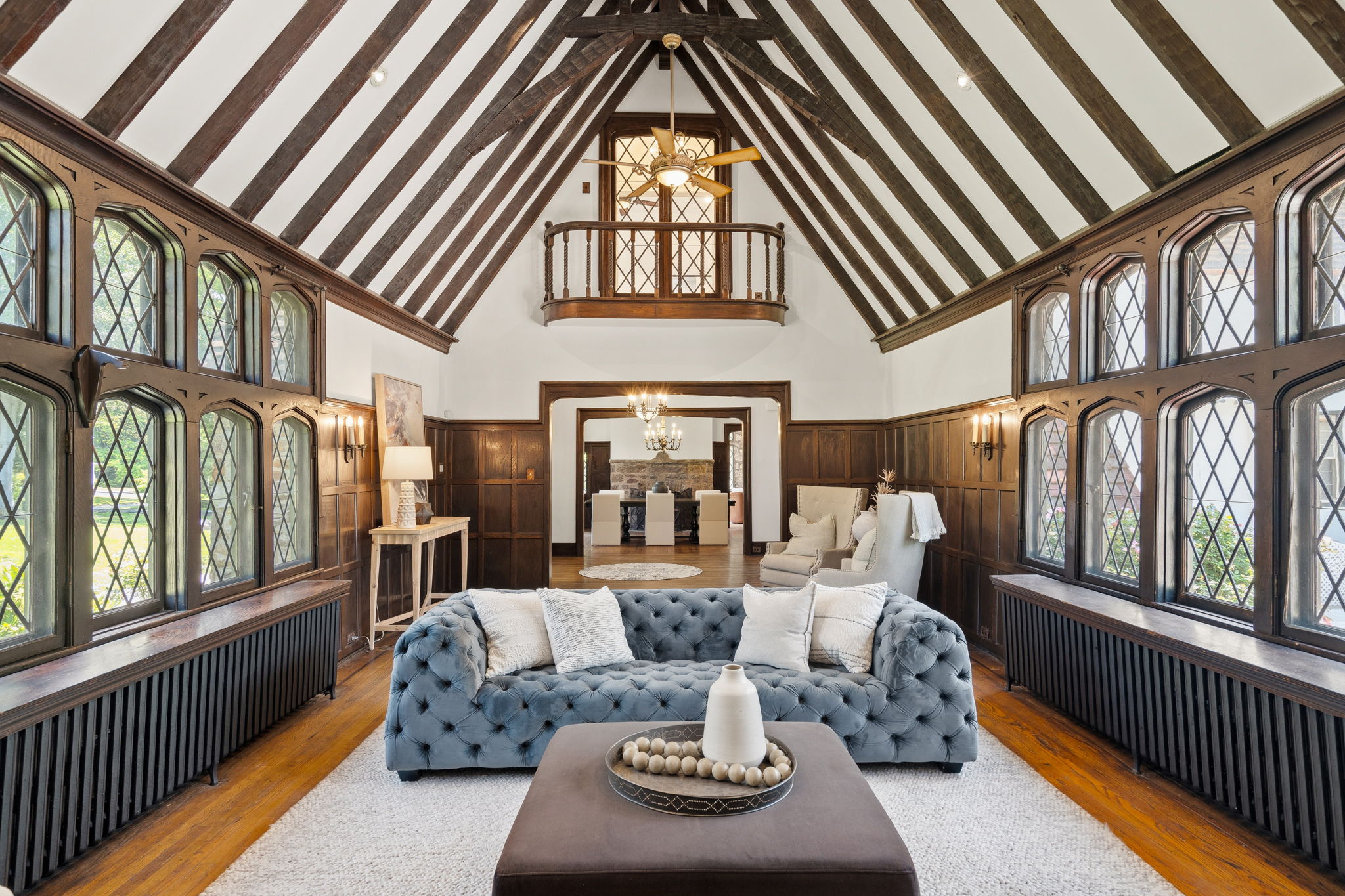
    The great room inside 1952 Canterbury Road in Abington.

    This property in Abington’s Baederwood neighborhood was constructed in 1938 for the Pennsylvania family behind now-defunct Laird & Schober Shoes, according to the listing. Details in this five-bedroom home include stone fireplaces, a handcrafted staircase in the foyer, and a great room with cathedral ceilings, exposed beams, glass-paneled walls, and a Juliet balcony.

    See more photos of the property here.

    Price: $1.2M | Size: 4,328 | Acreage: 0.93

    📈 Greater Abington market report

    Abington

    • Median listing price: $487,500 (down $7,400 from April) 📉
    • Median sold price: $451,000 (same as April)
    • Median days on the market: 25 (up five days from April) 📈

    Jenkintown

    • Median listing price: $275,000 (down $50,000 from April) 📉
    • Median sold price: $553,800 (up $36,300 from April) 📈
    • Median days on the market: 27 (down 9 days from April) 📉

    Cheltenham

    • Median listing price: $497,800 (up $65,300 from April) 📈
    • Median sold price: $530,000 (up $48,800 from April) 📈
    • Median days on the market: 25 (up one day from April) 📈

    Elkins Park

    • Median listing price: $496,500 (up $71,600 from April) 📈
    • Median sold price: $425,000 (up $35,100 from April) 📈
    • Median days on the market: 28 (down three days from April) 📉

    This Greater Abington market report is published on a monthly basis. Above is data for May from realtor.com.

    🗞️ What other Greater Abington residents are reading this week:

    By submitting your written, visual, and/or audio contributions, you agree to The Inquirer’s Terms of Use, including the grant of rights in Section 10.

    This suburban content is produced with support from the Leslie Miller and Richard Worley Foundation and The Lenfest Institute for Journalism. Editorial content is created independently of the project donors. Gifts to support The Inquirer’s high-impact journalism can be made at inquirer.com/donate. A list of Lenfest Institute donors can be found at lenfestinstitute.org/supporters.
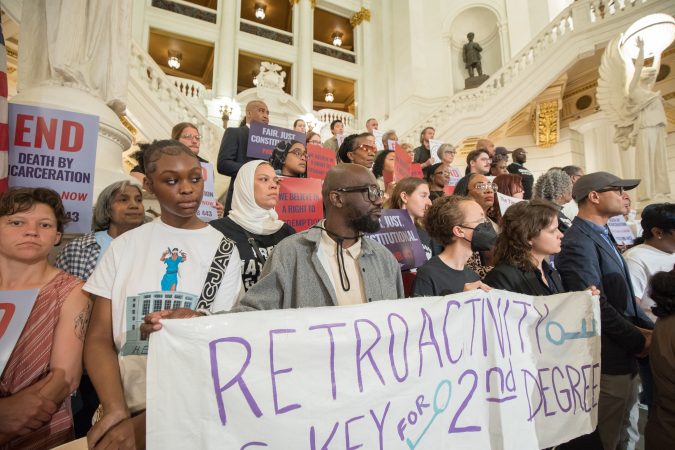
  • Pa. lawmakers have only days to set sentencing guidelines for felony murder cases. Hundreds of cases are on the line.

    Pa. lawmakers have only days to set sentencing guidelines for felony murder cases. Hundreds of cases are on the line.

    State lawmakers left Harrisburg on Sunday without approving a new sentencing structure for second-degree murder convictions, all but ensuring Pennsylvania will miss a court-imposed deadline to replace a law the state’s highest court struck down as unconstitutional because it barred judges from weighing individual culpability.

    The legislature’s failure makes it exceedingly likely that judges across Pennsylvania will soon have to sentence people convicted of second-degree murder without a legislatively enacted sentencing range to guide them. It also sets the stage for what is expected to be years of litigation over the roughly 1,100 people already serving mandatory life-without-parole sentences.

    The political stalemate leaves thousands of people — incarcerated Pennsylvanians, victims’ families, and attorneys — waiting to learn what happens next.

    “In the absence of a law, there’s going to be a lot of chaos and a lot of confusion,” said Sean Damon, director of strategic partnerships for Straight Ahead, a decarceration advocacy organization.

    Gov. Josh Shapiro said Sunday that he agreed with the Supreme Court’s decision striking down the mandatory sentencing law as unconstitutional, but had hoped lawmakers would reach a compromise before leaving Harrisburg.

    Shapiro said he spent much of the final two days of session trying to bridge the divide between House Democrats and Senate Republicans. Though no agreement emerged, he said that House procedural maneuvering left a legislative vehicle available should negotiators eventually strike a deal before a July 24 deadline to rewrite the law.

    “I’d like to see the legislature act on this and not just leave it up to every individual county to act,” Shapiro said.

    ‘Someone’s going to need to act’

    Until the Pennsylvania Supreme Court ruling in March, the state was one of only two that still required life without parole for every second-degree murder conviction — a category of homicide that generally applies to deaths committed during certain felonies, including cases in which a defendant played a role in the crime that led to the death.

    In their decision, the justices said courts must consider the facts of each case and the defendant’s culpability before deciding on a punishment.

    But the high court stopped short of deciding whether its ruling applies retroactively to people already serving those sentences. And it delayed implementing its decision for 120 days to give lawmakers time to rewrite the law.

    Since March, judges across the state have postponed sentencing defendants convicted of second-degree murder while awaiting action from the General Assembly.

    That action never came.

    Lawmakers adjourned for the summer with 12 days remaining before the Supreme Court’s stay expires and with no realistic path toward a compromise. Republicans and Democrats spent months advancing competing visions for replacing the unconstitutional law but failed to bridge deep disagreements.

    Senate Republicans twice approved legislation that would replace the mandatory sentence with a minimum term of 35 years to life, allowing parole eligibility after 35 years — or after 20 years for prisoners at least 70 years old.

    House Democrats backed legislation that would cap future second-degree murder sentences at 50 years while allowing many people already serving mandatory life-without-parole sentences to seek parole after 25 years. The proposal, supported by the Philadelphia Bar Association, the Defender Association of Philadelphia, and District Attorney Larry Krasner, never advanced to a vote in the House.

    House Majority Leader Matt Bradford (D., Montgomery) said Sunday that Democrats have a legislative path prepared, so when they reach an agreement they can swiftly pass it and send it to Shapiro’s desk.

    Asked whether that could happen before July 24 despite no additional voting days currently scheduled, Bradford replied: “We’re hoping to get something accomplished.”

    Republican Attorney General Dave Sunday urged lawmakers this weekend to reach an agreement before the deadline, warning that failing to enact a new sentencing law would leave courts without clear guidance and could allow some people now serving life-without-parole sentences to become immediately eligible for release.

    “It is dangerously inadequate for the House to allow the deadline to pass without a substantive and realistic proposal that includes sensible sentencing ranges with the option of a life sentence for the most serious offenders and protections for the victims of these horrible crimes,” Sunday said.

    Sen. Wayne Langerholc (R., Cambria) voiced similar concerns during a committee meeting Saturday.

    “Someone’s going to need to act in the House, or else this risks 1,100 violent offenders being released onto the streets of our commonwealth that we cannot afford to have,” he said.

    A ‘free-for-all in the courts’

    The Supreme Court cannot create a new sentencing range itself because establishing criminal penalties is the legislature’s responsibility. But advocates say Pennsylvania has already faced a similar situation.

    After the U.S. Supreme Court ruled in 2012 that mandatory life-without-parole sentences for juveniles were unconstitutional, Pennsylvania enacted a new sentencing law that applied only to future cases. Four years later, when the high court ruled that decision applied retroactively, judges had to resentence hundreds of incarcerated people without legislative guidance.

    Many attorneys expect a similar pattern after July 24. Judges will continue sentencing people convicted of second-degree murder on a case-by-case basis until lawmakers or appellate courts provide clearer direction. At the same time, attorneys representing people already serving mandatory life-without-parole sentences are expected to begin seeking new sentencing hearings.

    Because the Pennsylvania Supreme Court did not decide whether the decision applies retroactively, that question is also expected to return to the justices.

    “We reasonably believe that if this matter is brought to them [the justices] again, they will mandate mass resentencing,” said Damon, of Straight Ahead.

    Some criminal justice advocates argue that individualized sentencing hearings before judges are preferable to replacing one mandatory sentencing scheme with another because judges are better positioned to weigh a person’s role in a crime, rehabilitation while incarcerated, and risk to public safety.

    “Even though it will be a free-for-all in the courts,” said Celeste Trusty, a consultant for criminal legal reform organizations and former state legislative affairs director of FAMM, “people serving the now-unconstitutional mandatory life-without-parole sentences would also likely fare better” under individualized resentencing than under the failed bill.

    Even so, the absence of a statewide framework is likely to place enormous demands on courts, prosecutors, and public defenders, particularly in Philadelphia, where more than 500 people are serving mandatory life-without-parole sentences for second-degree murder — about half the statewide total.

    Keisha Hudson, chief defender of the Defender Association of Philadelphia, estimated each resentencing would require about $40,000 in attorney time, investigators, mitigation specialists, and other resources — roughly $24 million if every potentially eligible Philadelphia case returned to court.

    She said defenders are expected to shoulder much of that work but lack the resources to handle the oldest cases, including about 30 that predate the creation of the office’s homicide unit in 1993.

    Philadelphia District Attorney Larry Krasner did not respond to an interview request.

  • Microburst storms caused unprecedented tree damage in some Philly-area neighborhoods

    Microburst storms caused unprecedented tree damage in some Philly-area neighborhoods

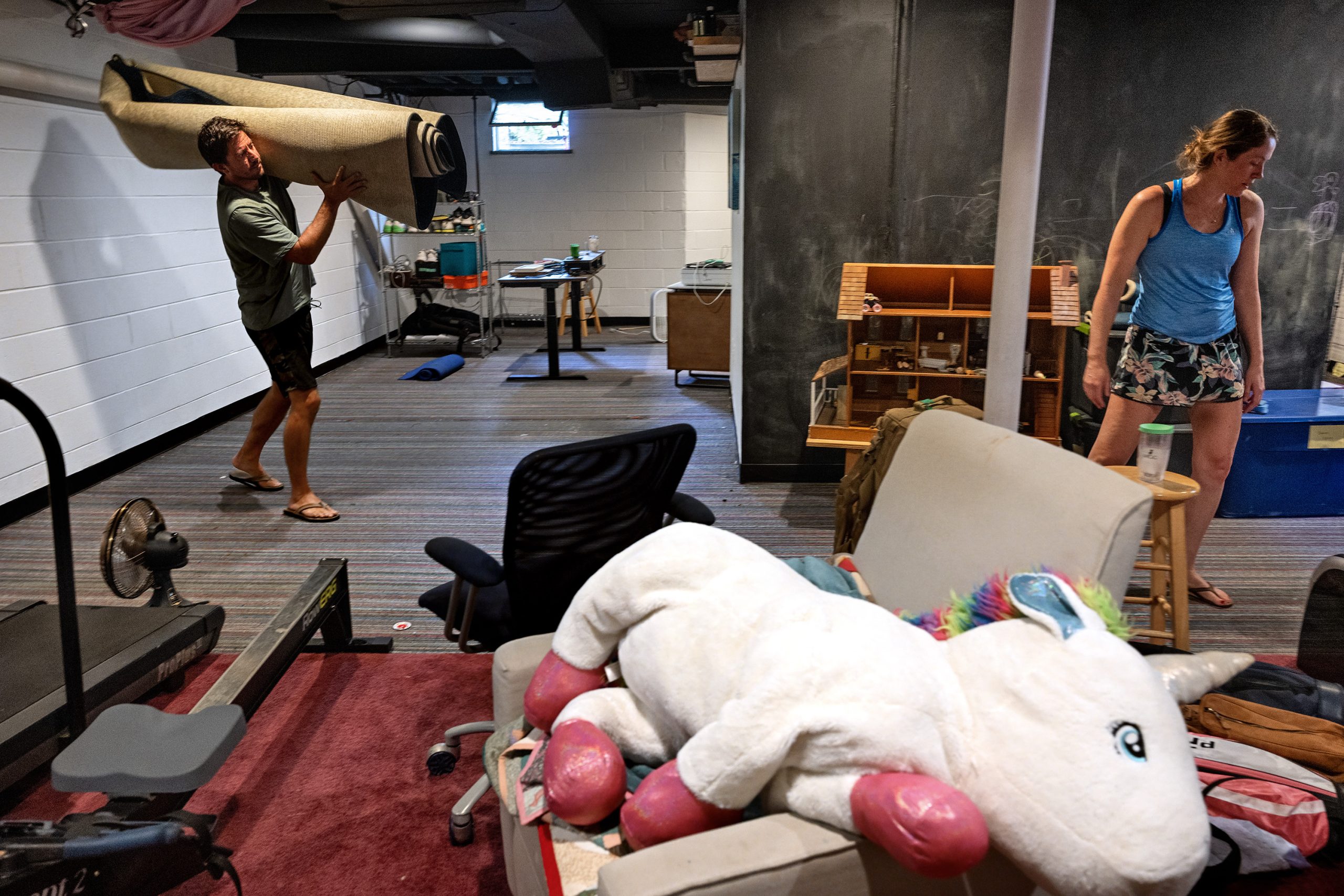
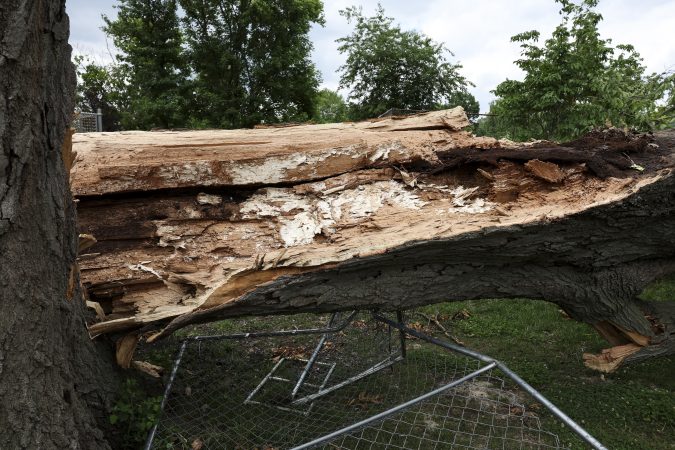
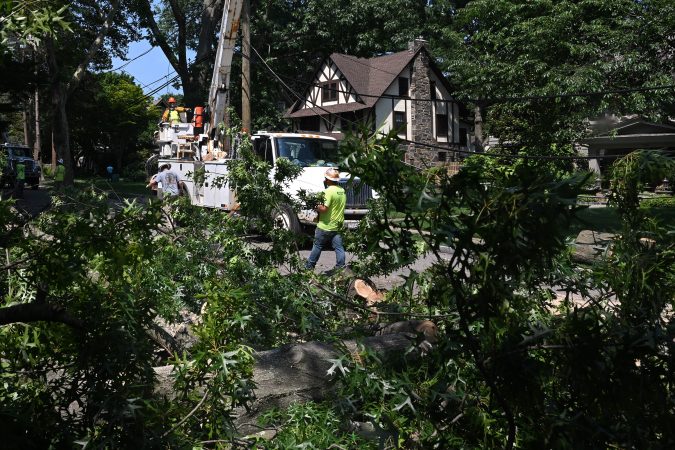
    Hundreds of trees fell in Philadelphia within a matter of minutes during a weekend storm that left a narrow but destructive band of what one official called “unprecedented” damage in its wake in the region.

    “We’ve never seen anything like this,” Parks and Recreation commissioner Susan Slawson said. “We’ve never seen a 15 and 20 minute storm come through an isolated area and take down that many trees.”

    Those downed trees came following a series of four “microbursts,” which brought wind gusts traveling 60 to 70 mph. Those isolated instances of high winds primarily impacted parts of Philadelphia and Montgomery County.

    Microbursts, the National Weather Service said, happen when a thunderstorm experiences a rapid increase in updraft. When that updraft stops, the mass of the storm system comes crashing back down, resulting in severe winds that sent trees tumbling into homes and vehicles, damaged public parks, and left neighborhoods grappling with cleanup efforts days later.

    Slawson’s department, which handles downed trees in the city, had responded to at least 340 emergency requests as of Monday afternoon, and inspected about 220 trees. The hardest hit areas, she added, were in South Philadelphia, Wynnefield, and Southwest Philadelphia.

    The harsh winter’s heavy caps of ice and snow that lasted for weeks likely left some trees weakened or damaged, Slawson said, making them more vulnerable to being toppled. Those that fell were being taken to the city’s Fairmount Park Organic Recycling Center in West Fairmount Park.

    Evidence of the damage was apparent around the region Monday. In Malcolm X Park in West Philadelphia, piles of giant fallen trees, cut into large chunks, sat waiting for disposal. And nearby on Spruce Street, a downed tree blocked a busy two-way road between 53rd and 54th Streets, its corpse resting atop a crushed red pickup truck.

    “They need to cut these trees down, they’re too tall,” said Schonder Pickney, 61, who lives across the street from the wreckage. She and her neighbors had asked the city to remove some of the old trees that appeared dangerous, but she said nothing came from it.

    Philadelphia Parks and Recreation workers throw debris into an auxiliary chipper at Wharton Square Playground in Point Breeze, on
    Monday.Aidan T. Gallo / Staff Photographer

    Private tree management companies, like Rapid Tree Care in Grays Ferry, were inundated with service requests following the storm. Caleb Coome, the company’s founder, said that the storm’s intensity knocked down large trees across densely populated city blocks, and across multiple homes.

    “It’s definitely unprecedented in terms of the amount of volume over a couple-day span,” said Coome, whose company has been in operations for three years.

    Homeowners impacted by fallen trees, he said, were largely concentrated near FDR Park and the stadiums in South Philly, as well as the Cobbs Creek and Cedar Park neighborhoods in West Philly. Homeowners face logistical and financial hurdles for cleanup, as much of the damage occurred in areas with tight rowhouses.

    In those tight quarters, a single fallen tree can span up to six properties, creating liability issues and disputes among neighbors over who is responsible for removal costs. A downed tree spanning multiple properties must be removed all at once, rather than limb-by-limb, for safety reasons, Coome said.

    Some parts of the suburbs also saw shared tree damage. For example, in Narberth, Hugh Parker and his family hurried home from the Shore Saturday after they heard from neighbors that a 40-foot tree had been knocked down in their front yard.

    Hugh and Grace Parker continue the cleanup in the basement of their Narberth home Monday. It flooded during weekend’s storm.Tom Gralish / Staff Photographer

    Located on their neighbor’s property, the tree landed to cover their driveway, as well as a car belonging to Parker’s wife, Grace. As it came down, the tree’s canopy also took down power lines and blocked the street, and the damage it did to the vehicle remained unclear Monday.

    A day later, Peco reconnected their power, which Parker said had been out for a little more than 24 hours. Then, he smelled smoke, thanks to a power line that started a fire after power had been restored. After about 30 minutes, the fire went out, but no one from the utility had come to check the power lines as of Monday morning.

    “It was like something from a movie scene — there were sparks flying 10 to 15 feet in the air,” said Parker.

    In Lower Merion Township, the local fire department responded to 98 incidents over the weekend, including numerous water rescues. Montgomery County communities were some of the hardest hit.

    “It became apparent that nearly every street in Narberth had a tree down, a substantial tree on a car,” said Narberth Council Vice President Cyndi Rickards said.

    The episode also highlights what many local officials have said is a need to further discuss improving local infrastructure and resources for extreme weather events.

    “I think this is the reality of storms now,” said Lower Merion Commissioner Ray Courtney. “They are hard, they are intense, and they dump a lot of precipitation in a short period of time, and all local governments, and our state and federal government, need to be thinking about improvements to our infrastructure, and the resiliency against this kind of weather event.”

    In addition to downed trees in the area, roughly 1,500 Peco customers remained without power across 119 reported outages as of late Monday afternoon. That number is down significantly from the height of the storm, when some 60,000 customers experienced extended outages. Overall, 105,000 Peco customers experienced some loss of power during the course of the storm, the company said.

    Power for all customers in the region, Peco added, was expected to be restored by 11 p.m. Monday.

    Among those impacted were West Philadelphia resident Lisa Phillips, who lives on the 5100 block of Hazel Avenue. A tree on her block went down Saturday, taking power lines with it. Electrical workers arrived Monday to take care of the downed lines, but she was still waiting for the city to clear the tree from her street.

    “Never in my life have I experienced anything like this,” she said.

    Staff writers Isabel Maney, Olivia Prusky, and Fallon Roth contributed to this article.

  • Glenside man charged with attempted murder for running over a 24-year-old he believed stole a bike, prosecutors say

    Glenside man charged with attempted murder for running over a 24-year-old he believed stole a bike, prosecutors say

    A Glenside man intentionally drove his Jeep into a cyclist, Montgomery County prosecutors said Monday, throwing the victim 90 feet and leaving him in critical condition with a serious head injury.

    Phillip Prince, 40, has been charged with attempted murder and related crimes in the crash, which took place Sunday evening on Meyer Avenue.

    It was not clear if Prince had hired an attorney.

    Investigators said Prince crashed into Colin Cassidy, 24, as Cassidy and a group of teens were riding bikes through Glenside. Multiple witnesses said Prince intentionally sped up “full throttle,” drove onto a sidewalk, and crashed into Cassidy just before 8:30 p.m., according to the affidavit of probable cause for his arrest.

    Prince told one of those witnesses that he was chasing Cassidy because he believed Cassidy had stolen the BMX bike Cassidy was seen riding through Glenside, the affidavit said.

    One of the teens who was with Cassidy on Sunday told police Cassidy had been riding a scooter before briefly disappearing and returning with the bicycle, according to the affidavit.

    Not long after, Prince drove up to the group in a Jeep Cherokee, attempted to grab Cassidy, and began chasing them.

    After the crash, as Prince went over to the unresponsive Cassidy, the teen turned off the Jeep and took the keys out of the vehicle so Prince would not drive away, the affidavit said.

    Prince and teen got into a brief fight, during which Prince punched the teen in the mouth, police said.

    Prince was still at the scene when Abington Township police arrived and took him into custody.

    Cassidy was taken to Jefferson Abington Hospital, where he underwent surgery for severe head trauma. He remained there Monday in critical condition, according to investigators.

  • More than 80,000 Pa. retired teachers, police officers, and firefighters will get a pension bump — some for the first time in decades

    More than 80,000 Pa. retired teachers, police officers, and firefighters will get a pension bump — some for the first time in decades

    HARRISBURG — For the first time in two decades, more money will soon be flowing into the pockets of Pennsylvania’s retired public school teachers, firefighters, police officers and other state employees.

    Negotiated as part of this year’s state budget, more than 80,000 retired public sector employees will receive monthly increases to their pension plans as part of a cost-of-living adjustment that advocates have sought for years.

    Passing a pension bump has long been an objective of state lawmakers in both parties. And after legislators and Gov. Josh Shapiro approved the spending plan on Sunday, both Democratic and Republican leaders claimed credit for the pension boost, saying it was a product of their advocacy during negotiations.

    Public school teachers and other state employees who retired before July 2, 2001, will receive a tiered monthly payment based on their date of retirement. Similarly, police officers and firefighters who retired more than five years ago will receive additional monthly payments ranging from $50 to $300 dollars depending on how long they have been retired.

    In 2001, the state legislature passed Act 9, which gave a pension boost to public sector workers who retired after 2002, but it was not retroactive and does not increase with inflation.

    “Nobody gets into public education to become rich, they do it because they have a great love for the educating of our public school students,” said Aaron Chapin, president of the Pennsylvania State Education Association. “We know that when we get into education that we’re not going to retire very wealthy and be millionaires. We understand that. But we also need to make sure that these pensions are keeping up with the cost of living.”

    Retired teachers and other former public workers will begin seeing the cost-of-living increase to their pensions this month, while retired police officers and firefighters will see the bump starting next month.

    The state’s largest teachers union has advocated for the adjustment for many years. Those efforts included a union-coordinated campaign for teachers who retired before 2001 and did not receive a pension bump to share their stories with lawmakers, through meetings, letters, and media appearances.

    Chapin said the former teachers told their representatives “the stories of how challenging this has been for them and their colleagues, whether it was paying the mortgage or the rent, paying the electricity bills, maybe not taking medication that month.”

    At a news conference on Sunday evening before signing the $50.8 billion state budget, Shapiro called the pension increase “real money back in people’s pockets.”

    Democratic lawmakers in the state House, he said, “made crystal clear that they wanted to stand up and put more money back in the pockets of workers who had given our commonwealth so much.”

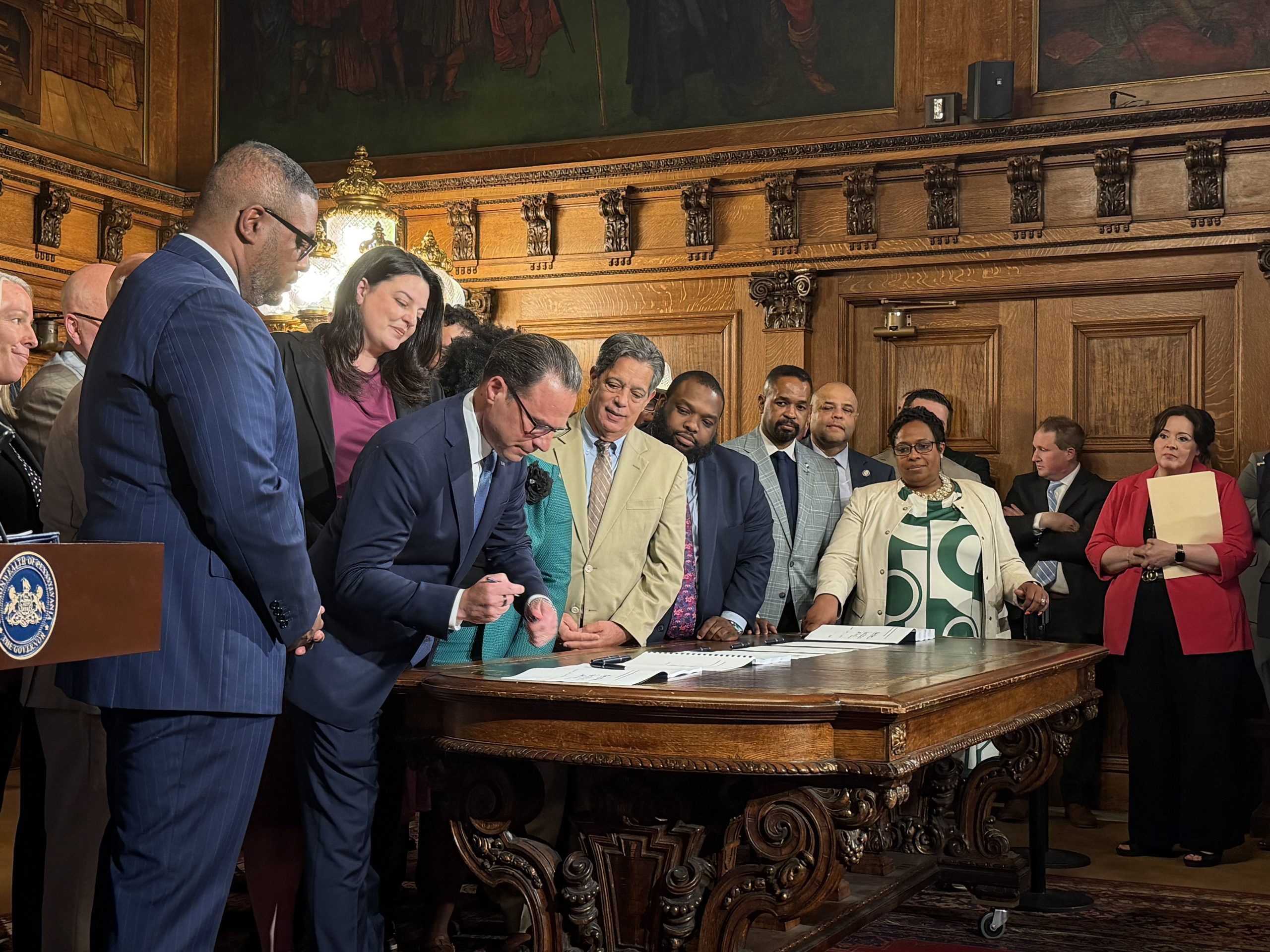
    Gov. Josh Shapiro, flanked by fellow state Democrats, signs the 2026-27 Pennsylvania state budget in Harrisburg on Sunday.Gillian McGoldrick / Staff

    “It’s definitely something our retirees have said to us for years,” said Kevin Ressler, the secretary of the Pennsylvania Professional Fire Fighters Association. “When you think about what things cost just 10 years ago until now, everything has gone up.”

    State legislators last approved a cost-of-living adjustment for police and firefighters in 2002. Since then, inflation has resulted in a 86% price increase, according to the U.S. Bureau of Labor Statistics.

    State Sen. Frank Farry (R., Bucks), a volunteer fire chief in Lower Bucks County, said members of both parties felt that it was time to pass the pension increase.

    First responders “dedicated decades of work to the community, just like our educators who dedicated decades of work to helping our young people grow and learn,” he added.

    While municipalities pay a portion of the pensions for first responders and public school teachers, the state will pay for all costs associated with the pension increase, Farry said. The increase, estimated to cost around $168 million annually, will come from revenue generated from an existing tax on internet gaming, he said.

    The state’s Fraternal Order of Police said in a statement that while no adjustment “can fully repay the commitment these men and women made throughout their careers,” the increase “restores a measure of fairness by helping ensure their retirement benefits better reflect today’s economic realities.”

    State Sen. Katie Muth (D., Montgomery) said the pension increases are the “high point” of this year’s policy changes negotiated as part of the overall budget deal.

    “These are our oldest retirees, many of them living in poverty,” she said. “This is a good moment, but a late moment. This should have been done quite some time ago.”

    The average age of retirees eligible for the cost-of-living increase in the state’s main two pension funds is just over 81 and 84 years old, respectively.

    The new pension bump, meted out monthly, is not set to automatically increase next year. Lawmakers from both parties have pushed for pensions to increase annually, indexed to inflation.

    State Sen. Tracy Pennycuick (R., Montgomery) — who sponsored a bipartisan bill to provide the pension increase to first responders — said that she hopes Harrisburg can now work to pass legislation to provide a yearly cost-of-living adjustment.

    “This is sending a very powerful message to young professional firefighters and police officers that we will continue to take care of you with cost-of-living adjustments in retirement,” she added.

    Ethan Young is an intern with the Pennsylvania Legislative Correspondents’ Association.

  • Philly temperatures are forecast to near 100 degrees, again, this week

    Philly temperatures are forecast to near 100 degrees, again, this week

    No rest is in sight for the weary Philadelphians still recovering from the scalding week that led up to the city’s July Fourth festivities. Temperatures this week are expected to near 100 once again.

    The National Weather Service has issued an extreme heat watch for Wednesday, when temperatures are expected to peak at 99 degrees, accompanied by a heat index of up to 108. Before then, a high of 93 is expected on Tuesday. Temperatures should return back down to 93 on Thursday and settle at 92 on Friday, according to the service’s forecast.

    The forecast doesn’t anticipate anything quite as severe as the series of triple-digit days leading to July Fourth, but it will surely be humid, hot, and uncomfortable, said Zack Cooper, a meteorologist with the National Weather Service’s Mount Holly office.

    Similarly to the early July heat stretch, rain is possible to follow the heat over the weekend, Cooper said.

    The city has tallied eight heat-related deaths this year, according to the city health department.

    This blanket of heat in the atmosphere “probably won’t be centered” over the Philadelphia area, Cooper said. “What really set the last event apart from this one was that high pressure center being right over the area for a period of a few days where, in this case, it’ll mostly be suppressed down to our south.”

    Virginia and West Virginia are anticipated to experience the brunt of this heat spell, he added.

    Temperatures this week are unlikely to break records, Cooper said, as the hottest recorded temperature in the Philly area on a July 15 was 103 degrees, set in 1995.

    Still, Cooper advised Philadelphians to treat this heat similarly to the early July heat wave — limit time outdoors, dress in lightweight clothing, and check up on neighbors.

    “It still will be dangerous heat,” he said.

  • Richard D. Wood Jr., Wawa chair emeritus and ‘guiding heart and soul,’ has died at 88

    Richard D. Wood Jr., Wawa chair emeritus and ‘guiding heart and soul,’ has died at 88

    Richard D. Wood Jr., 88, of Wawa, Delaware County, chair emeritus and former chief executive officer and president of Wawa Inc., Convenience Store News Hall of Famer, lawyer, trustee, mentor, veteran, and philanthropist, died Friday, July 10, of age-associated decline at his home.

    Born in Philadelphia, Mr. Wood earned a law degree at what is now the University of Pennsylvania’s Carey Law School in 1964 and joined his family’s nascent Wawa food market company in 1970 as its first general counsel. His great-grandfather founded the Wawa dairy in 1902, and his father’s cousin opened the first Wawa food market in 1964.

    By 1977, Mr. Wood had ascended to president of the company, and its innovations, including 24-7 hours of operation and custom-made hoagies, made it the region’s dominant convenience store. He became CEO in 1980 and chair in 1982, and was named chair emeritus in 2020.

    In 2020, Inquirer business writer Joseph N. DiStefano said Mr. Wood “presided over the board during the period of Wawa’s rapid growth from a regional cokes-smokes-milk-and-hoagies chain to a convenience store and gas outlet with more than $12 billion in annual sales and 850 stores from New Jersey to Florida.”

    For more than 40 years, Mr. Wood supervised Wawa’s multistate expansion, addition of gas pumps, expanded inventory, rigorous employee training, and popular employee stock ownership plan. During his tenure, the company grew to more than 36,000 associates and was one of the largest privately held companies in the country.

    Through it all, Mr. Wood was affable and curious, friends and family said. He wanted to know everybody’s name and what they thought, and he enjoyed touring the stores and chatting up associates and customers, especially on Christmas Day. He told colleagues he wanted to “create an environment where each of us believes that we can make a difference.”

    “Dick Wood was our true lead goose who was the guiding heart and soul of the company,” Chris Gheysens, Wawa’s chairman and CEO, said in a tribute. “He is the reason why Wawa is the company we are today and why we enjoy so much share of heart from our customers and dedication from our associates.”

    Mr. Wood hired students and women to work in the stores, and offered flexible schedules to accommodate their availability. He oversaw Wawa’s $200 million of donations to community nonprofits and its college tuition reimbursement plan for associates.

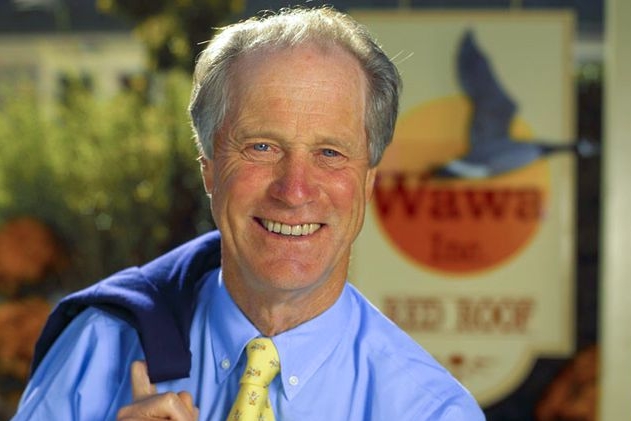
    This photo of Mr. Wood and a story about Wawa appeared in the Daily News in 1994. Newspapers.com

    In 2021, to mark his 50th anniversary at the company, Wawa established the Dick Wood College Scholarship Fund for associates. He told Inc. magazine in 2018: “Values and culture mean more in this company than being smart.”

    Colleagues called him “humble, gracious, curious, and kind” and “a beloved treasure to the company” in tributes. His life-size bronze statue greets visitors at Wawa’s corporate headquarters.

    “He made people feel important,” said Barbara Ennis, his longtime assistant, ”because to him, they were.”

    Mr. Wood was onetime chair of the executive committee of the National Association of Convenience Stores and on boards at Children’s Hospital of Philadelphia, Riddle Memorial Hospital, Philadelphia National Bank, Bok Tower Gardens in Florida, and other organizations. He appeared often in The Inquirer and Daily News, spoke on panels and at conferences about corporate leadership, and was inducted into the Convenience Store News Hall of Fame in 1996.

    Mr. Wood (left) worked closely with fellow CHOP trustee N. Scott Adzick.Children's Hospital of Philadelphia

    He served on the Chester Heights Borough Council in the early 1980s and was named 1996 businessman of the year by the Great Valley Regional Chamber of Commerce. Before Wawa, Mr. Wood was a public defender in Philadelphia and a lawyer at Montgomery McCracken.

    “People loved to follow him,” said his son, Richard D. Wood III. “He was larger than life,” said his daughter, Lisa Wright.

    As a philanthropist, Mr. Wood and his family donated $25 million to Children’s Hospital of Philadelphia in 2021, and CHOP named its Richard D. Wood Jr. Center for Fetal Diagnosis and Treatment in his honor. His family also funded the Richard D. Wood Jr. and Jeanette A. Wood Endowed Chair in Pediatric Diagnostic Medicine, and he instituted a volunteer services program at CHOP.

    Sometimes, his family said, Mr. Wood walked the halls of the hospital, sharing Wawa coffee and conversation with patients and families. CHOP honored him at its 2019 Carousel Ball. Madeline Bell, CEO at CHOP, said: “I will truly miss his warmth, wisdom, and generous spirit.”

    Mr. Wood and his wife, Jeanette, married in 1964.Courtesy of the family

    Howard Stoeckel, former Wawa vice chair, CEO, and president, said in a tribute: “He had a special mix of heart, compassion, empathy, and humility that made him a true believer and practitioner of servant leadership.”

    Richard Davis Wood Jr. was born March 4, 1938. He graduated from St. Paul’s School in Concord, N.H., earned a bachelor’s degree in business at the University of Virginia, and served for a year in the Marine Corps and later in the Marine Corps Reserve.

    He met Jeannette Andrews when he was visiting New York with friends, and they married in 1964. They lived in Philadelphia and Wawa, and had a daughter, Lisa, and a son, Richard III. His wife died in 2025.

    Mr. Wood was an avid golfer, and he belonged to the Gulph Mills and Pine Valley Golf Clubs, and the Mountain Lake Club in Florida. He played tennis and bridge, and was a longtime season ticket holder for the Eagles and Flyers.

    Mr. Wood (right) enjoyed meeting and talking with Wawa associates and customers.
    Jonathan Wilson / Staff Photographer

    He and his wife traveled, hosted family holiday parties, and spent memorable winters in Lake Wales, Fla. He drove his favorite Honda Accord for years and followed Virginia college football and basketball closely.

    He championed conservation, education, and health. “He treated every single person the same,” his daughter said. His son said: “Humility defined him.”

    Mr. Wood said in a 2020 video for CHOP: “It’s a great feeling to know that you’re helping out.”

    In addition to his children, Mr. Wood is survived by five grandchildren, a sister, a brother, and other relatives. Two brothers died earlier.

    A celebration of his life is to be held later.

    Donations in his name may be made to the Richard D. Wood Jr. Center for Fetal Diagnosis and Treatment at Children’s Hospital of Philadelphia, Box 781352, Philadelphia, Pa. 19178; and Bok Tower Gardens, 1151 Tower Blvd., Lake Wales, Fla. 33853.

  • Where microburst storm damage has been reported around Philly, mapped

    Where microburst storm damage has been reported around Philly, mapped

    Cleanup from Saturday’s storm was continuing Monday, as communities around the Philadelphia region deal with aftermath of fallen trees, flooding, and high winds.

    A series of four “microbursts” brought severe damage to a limited area Saturday, with wind gusts traveling up to 60 to 70 miles per hour. Those isolated bouts of high winds, which ripped through parts of Philadelphia and Montgomery County, toppled hundreds of trees and damaged or collapsed several buildings, while sudden and severe rains caused floods around the region.

    Microbursts, the National Weather Office said, occur when there is a rapid increase in the updraft of a thunderstorm. Once that updraft stops, the mass of the storm system crashes back down, resulting in severe winds.

    As of early Monday afternoon, Peco continued to restore power to affected customers, with more than 170 outages impacting nearly 2,400 people. And though a comprehensive account of damages was not immediately available, damage reported to the weather service and select other entities indicated dozens of recorded incidents.

    (function() {
    var l2 = function() {
    new pym.Parent(‘july_11_storms’,
    ‘https://media.inquirer.com/storage/inquirer/projects/innovation/arcgis_iframe/july_11_storms.html’);
    };
    if (typeof(pym) === ‘undefined’) {
    var h = document.getElementsByTagName(‘head’)[0],
    s = document.createElement(‘script’);
    s.type = ‘text/javascript’;
    s.src = ‘https://pym.nprapps.org/pym.v1.min.js’;
    s.onload = l2;
    h.appendChild(s);
    } else {
    l2();
    }
    })();

  • Pa. lawmakers and Gov. Josh Shapiro have approved a $50.8 billion state budget, delaying action on key issues

    Pa. lawmakers and Gov. Josh Shapiro have approved a $50.8 billion state budget, delaying action on key issues

    HARRISBURG — Gov. Josh Shapiro signed a $50.8 billion state budget on Sunday following the rushed passage of the overall deal by the General Assembly that lawmakers said helps address the state’s affordability crisis but delays action on some of the most significant issues before the legislature.

    The agreement, which was due at the beginning of the month, marks an improvement from last year’s nearly five-month budget impasse in the split legislature that required school districts, counties, and social service providers to take out expensive loans or close altogether.

    “We managed, as the [vote count] indicates, to find compromise without compromising our core values,” Shapiro said during a news conference Sunday evening, before signing his fourth budget as Pennsylvania’s governor.

    The deal was hashed out over weeks in closed-door meetings among top leaders and includes new transparency requirements for data centers, publicly funded housing projects, and public transit agencies. Lawmakers also agreed to a long-sought cost-of-living adjustment totaling approximately $168 million per year for some Pennsylvania retired teachers, police officers, and firefighters — some of whom have not seen an increase to their monthly pension payments in more than 20 years.

    Gov. Josh Shapiro, flanked by fellow state Democrats, signs the 2026-27 Pennsylvania state budget in Harrisburg, Pa. on Sunday, July 12, 2026.Gillian McGoldrick / Staff

    More education funding, data center requirements

    Pennsylvania will have invested nearly $2 billion in new school funding through its adequacy and tax equity formulas since 2024. That’s when lawmakers first employed the new calculations to close a $4 billion “adequacy gap” after a landmark court ruling that found the state was illegally underfunding students in low-income districts. This year’s installment of adequacy funding topped $565 million, as part of an effort to prevent districts from having to raise property taxes on already low-income residents. The additional investment sends $136 million more this year to the School District of Philadelphia.

    Legislative leaders failed to agree in the final budget on other issues that have seen broad support in both chambers, such as repealing a sales tax exemption for data center projects, allowing local moratoriums on data center projects, or banning cell phones in K-12 schools. They may revisit the issues during the fall legislative session.

    Instead, they approved a new reporting requirement that will force data centers to submit annual reports detailing their water and energy usage. The companies will face a $10,000-a-day fine for failing to submit their reports.

    The General Assembly also voted to close a sales-tax loophole that allowed online sellers to avoid paying Philadelphia’s local 2% sales tax on items sold in the city. Mayor Cherelle L. Parker had requested that the loophole be closed as part of her own budget pitch in a move estimated to bring an additional $1.5 million to the city.

    No decision on skill games

    But the budget does not address some of the most pressing issues before the General Assembly, including whether to tax and regulate skill games or allow the more than 70,000 gambling machines in Pennsylvania bars, corner stores and fraternal organizations to become illegal come October. The state has until then to decide how to approach the machines after the state’s Supreme Court last month determined that skill games, which have for years operated in a legal gray area, are slot machines and should be regulated as such. They also punted on finding a long-term funding solution to fund mass transit until next year, when a two-year fail-safe runs out.

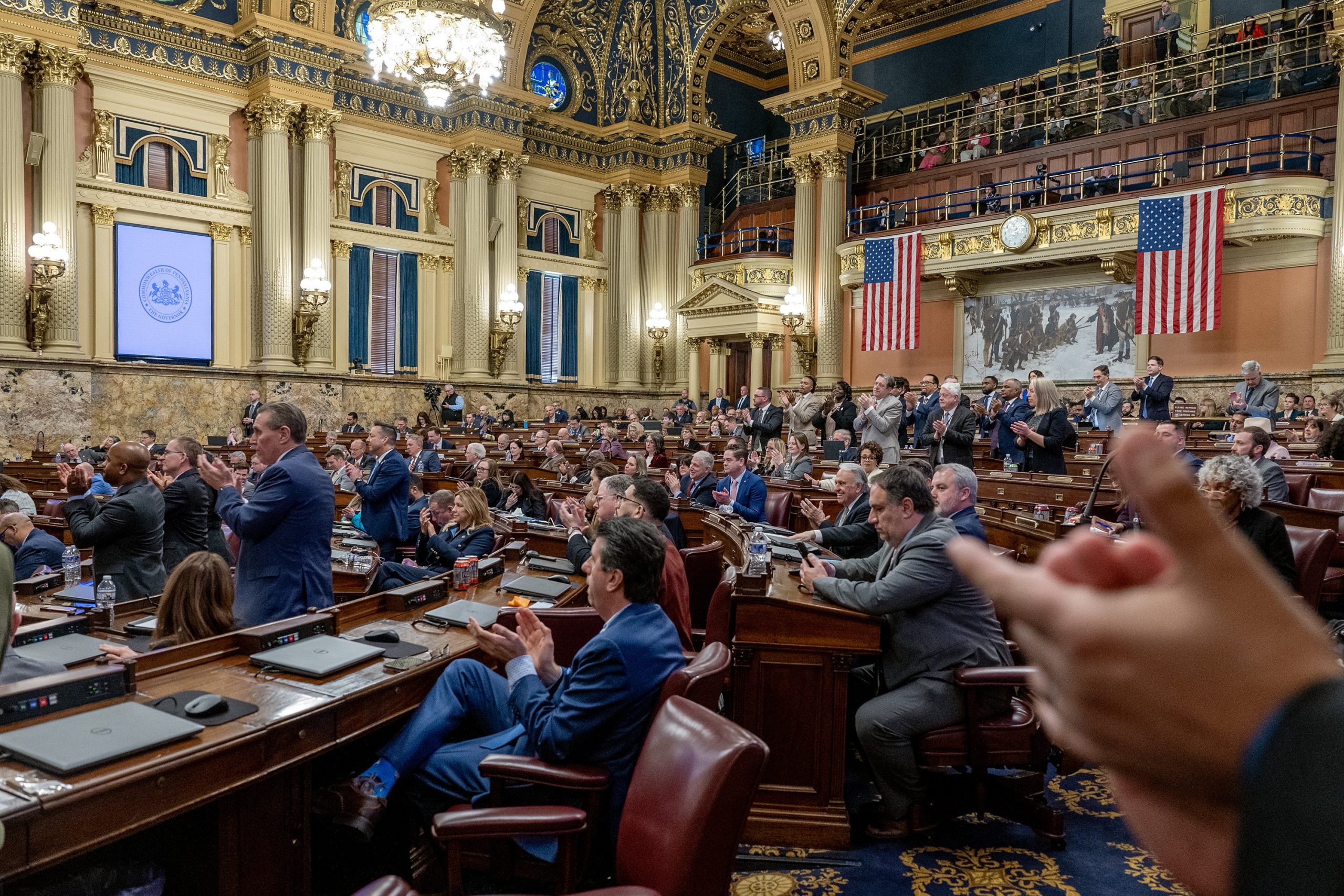
    The state House chamber as Gov. Josh Shapiro makes his annual budget proposal in Harrisburg Tuesday, Feb. 3, 2026.Tom Gralish / Staff Photographer

    Shapiro, a first-term Democrat facing reelection this year, proposed a $53.3 budget in February that for a fourth time emphasized top Democratic initiatives such as raising the state minimum wage to $15 per hour or legalizing recreational marijuana. He also proposed other initiatives, such as a $1 billion critical infrastructure fund to help the state drive out public dollars to build more housing and energy generation, which did not see funding in the final budget deal.

    State Sen. Nikil Saval (D., Philadelphia) was among the two Democrats who opposed the state budget, in part because it did not make the ambitious investments needed to address the state’s limited affordable housing stock.

    “We cannot defer at this moment,” added Saval, the chair of the Philadelphia delegation in the Senate, in his floor remarks before the vote.

    Lawmakers also declined to create any new generators of revenue for Pennsylvania, and deferred addressing the state’s multibillion dollar structural deficit until future years.

    ‘Met in the middle’

    The overall deal passed with bipartisan support in the GOP-controlled Senate, 44-6, and in the House, where Democrats hold a narrow majority, 167-35.

    “We have met in the middle,” said Senate Majority Leader Joe Pittman (R., Indiana). “I am proud of this product, despite what some naysayers may say.”

    The 2026-27 budget, which is a 1.4% increase in spending over the prior fiscal year, has no widespread tax increases. It also largely relies on accounting maneuvers like spending down unused or underused dedicated funds to address the structural deficit instead of pulling from the state’s emergency savings account.

    One of the accounting moves to balance Pennsylvania’s budget includes delaying two months of payments totaling $1.3 billion to insurance companies that fulfill the state’s ballooning Medicaid programs until the next fiscal year. Without those delayed payments, the budget would total closer to $52.1 billion.

    Several GOP House members opposed the budget, arguing it is unbalanced and only postpones tax increases to future years if spending isn’t cut.

    State Rep. Brad Roae (R., Crawford), called the final budget a “fake number.” State Rep. Charity Grimm Krupa (R., Fayette) called it “voodoo math.” And State Rep. Marc Anderson (R., York) said the state was “cooking the books.”

    But broadly, both Democratic and Republican members called the budget a reasonable compromise, acknowledging that they will have additional work to do in the fall legislative session and during next year’s budget negotiations to balance the state’s finances. During speeches on the Senate floor, several Republican senators quoted The Rolling Stones’ song “You Can’t Always Get What You Want,” emphasizing the second half of the refrain: “You might find you get what you need.”

    State Rep. Jordan Harris (D., Philadelphia) also turned to music to represent his position on the budget deal, paraphrasing Anthony Hamilton’s “Do You Feel Me” as a response to his constituents’ concerns about affordability by sending more state dollars to school districts to help them avoid property tax increases and raising monthly pension payments for retirees.

    “I am glad to stand today to support it, to let the people of Pennsylvania know, baby, the message is getting through,” Harris added.

    Pennsylvania Legislative Correspondents’ Association Intern Ethan Young contributed to this article.

  • ‘Time doesn’t heal all wounds’: A beloved Delco teacher’s killing, seven years later, haunts loved ones and confounds authorities

    ‘Time doesn’t heal all wounds’: A beloved Delco teacher’s killing, seven years later, haunts loved ones and confounds authorities

    It’s possible that nobody knows the stretch of Brandywine River that meanders through the heart of Wilmington better than Missy Morrissey.

    Since her sister Susan’s battered body was discovered there nearly seven years ago, the West Chester native regularly returns to its banks, mulling a question:

    How exactly did the 50-year-old Delaware County schoolteacher arrive in the shallows more than three miles downriver from where her car was found abandoned early on a July morning in 2019 in what authorities said was a homicide?

    And how, she wonders, has the crime gone unsolved for all these years?

    Susan Morrissey, who had been sipping wine and texting with friends into the early morning hours, left her Wilmington home just after 3 a.m. for reasons unknown, authorities said, and turned up dead in the river hours later.

    Surveillance cameras captured Morrissey’s black Honda Civic as it left her home and headed to the gates of a nearby office building, where it was parked haphazardly and left unlocked with her cell phone and purse inside.

    It was not until about four hours later that a construction worker discovered Morrissey’s body floating in the water miles away near the Northeast Boulevard bridge. She had died from blunt force trauma and drowning, the medical examiner found.

    A photo of Susan Morrissey.Missy Morrissey

    Investigators can’t say for sure how Morrissey’s body made it to the opposite side of town, though they believe she was alive when she entered the river and that she did not do so near where her car was parked.

    “A friend refers to it as ‘the magic carpet ride,’” Missy Morrissey said of the distance between her sister’s car and where her body was discovered. “We just can’t figure anything out.”

    It’s a puzzle that brings Missy Morrissey, the oldest of four siblings, back to the Brandywine each year, where she lays a bouquet of roses to honor her sister’s memory.

    But this year, as yet another anniversary of Morrissey’s July 23 death nears, her family has begun to wonder whether after years of efforts to uncover the truth, her killer may never be found.

    “On the first anniversary in 2020, I couldn’t have imagined that we would be sitting here in 2026 talking about this,” said Meg Morrissey Heinicke, the second-youngest of Susan’s siblings. “I would say time doesn’t heal all wounds. It is just as painful this year as the first year, the second year, the third year.”

    Homicide detectives with the Delaware State Police say the investigation continues, but they have no suspects or motive, and there are no new developments in a crime that has divided the Wilmington and Chester County communities and drawn attention from true-crime podcasts and amateur sleuths across the country.

    Missy Morrissey appreciates that people have taken an interest in her sister’s death long after it faded from the headlines.

    Still, she and her family just want the crime solved.

    A sister with flair

    Susan Morrissey did just about everything with flair, her siblings said.

    She grew up around West Chester and Wilmington and attended the city’s prestigious Tatnall School before heading to Georgetown University and later to San Francisco State, where she earned a master’s degree and began her career as an educator at a public school in a low-income Bay Area neighborhood.

    Morrissey volunteered often, her siblings said, working with young people at a juvenile detention facility and devoting hours to an animal rescue, where she combed frigid Northern California beaches for stranded sea lions.

    She was the first to read up on far-flung conflicts and the world’s injustices, and she loved sitting with a book on the beach in Stone Harbor.

    It was she who recommended Noam Chomsky tomes and George Carlin stand-up specials to her less-enlightened siblings, they said. Everything from her CD collection to her handwriting oozed taste and personality.

    The Morrissey siblings (from left: John, Meg, Missy, Susan).Missy Morrissey

    “I don’t know how many people feel this way, but I kind of felt like the coolest person in the world happened to be in my family,” said John Morrissey Jr., the youngest of the siblings.

    Morrissey eventually returned east and, after a disappointing stint of online dating in her 40s, reconnected with a former schoolmate, Ben Ledyard, an investment consultant and a regular on the Wilmington social scene.

    The two soon wed, and each weekday morning, Morrissey drove to Pennsylvania to teach English at Academy Park High School in Sharon Hill, Delaware County, where she worked for 13 years until her death on July 23, 2019.

    Her brother now lives in Virginia but regularly returns home to the Brandywine Valley, where visits have begun to trouble him.

    With each crossing of a bridge, each riverside drive, he said, a reminder of his sister’s killing lurks beneath the river’s surface.

    “Susan liked true crime,” he said, “especially local crime.”

    The mystery of her death, he said, is “exactly the kind of case that Susan would have been interested in.”

    A body in the water

    Even after all these years, Missy Morrissey still has the texts saved to her phone.

    It was 12:29 a.m., she said, and the sisters casually exchanged messages while Susan Morrissey relaxed with a glass of wine on the back porch of her Riverview Avenue home.

    She was a night owl, her sister said, and often stayed up late chatting with family or friends, especially during her summer break from school. Morrissey, she said, had been looking forward to attending a Rolling Stones concert with her husband at Lincoln Financial Field the next evening.

    Phone records showed that Morrissey texted with friends and updated her storefront on Poshmark, an e-commerce site for secondhand fashion, until 2:45 a.m.

    Then at 3:02 a.m., a nearby security camera captured Morrissey’s car leaving her driveway, according to Delaware State Police. It traveled around a mile through Wilmington to Walker’s Mill, a historic riverside property that had been converted into offices.

    In the dark of night, however, detectives who later reviewed the footage could not determine who drove the vehicle to Walker’s Mill or see who left the car after it was parked.

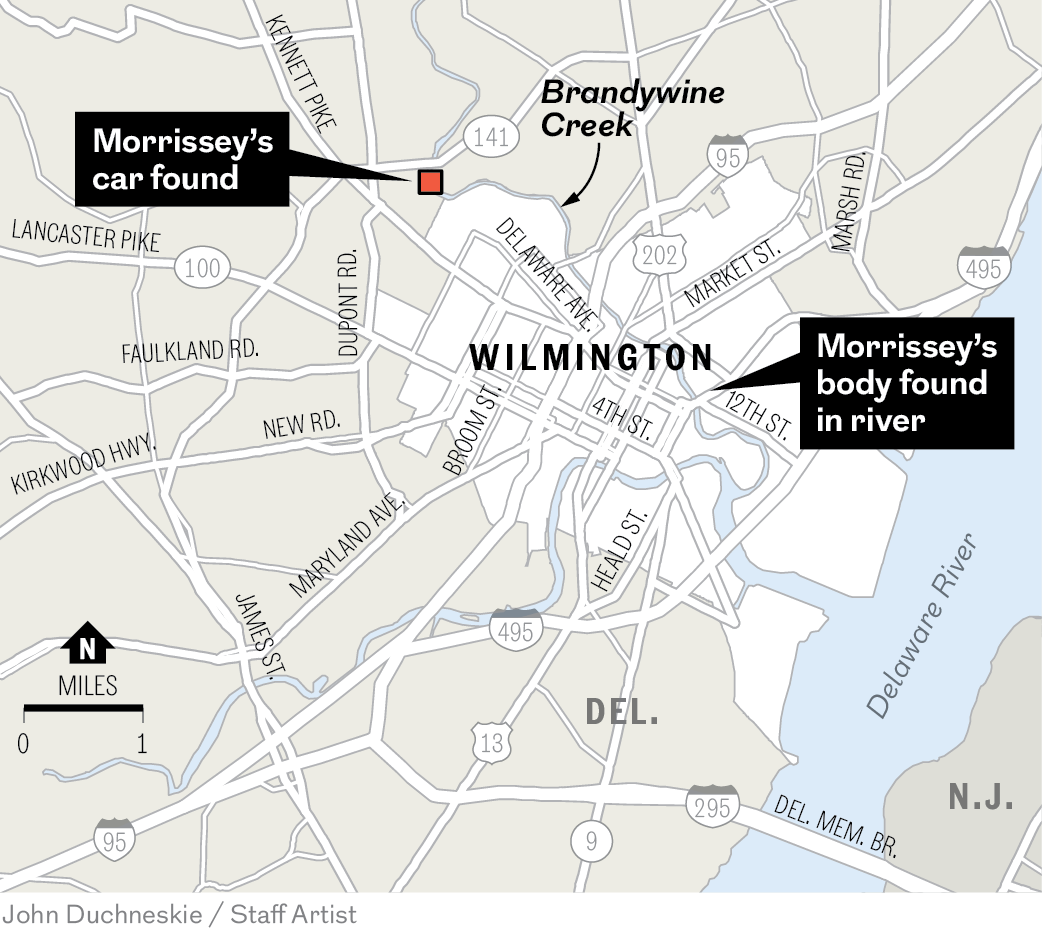
    Map of Wilmington, Del., showing locations in the death of Susan Morrissey, whose death seven years ago remains unsolved.John Duchneskie

    What happened in the nearly five hours between the car’s arrival at Walker’s Mill and the discovery of Morrissey’s body downriver remains a mystery. Investigators say they have not determined why Morrissey would have entered the water that morning.

    “She got her injuries close in time to when she died, and she died close in time to when her body was found” at 7:39 a.m., said Detective Daniel Grassi of the Delaware State Police.

    He believes she may have entered the river anywhere from the Brandywine Zoo to the 16th Street Bridge, more than two miles downriver from her vehicle.

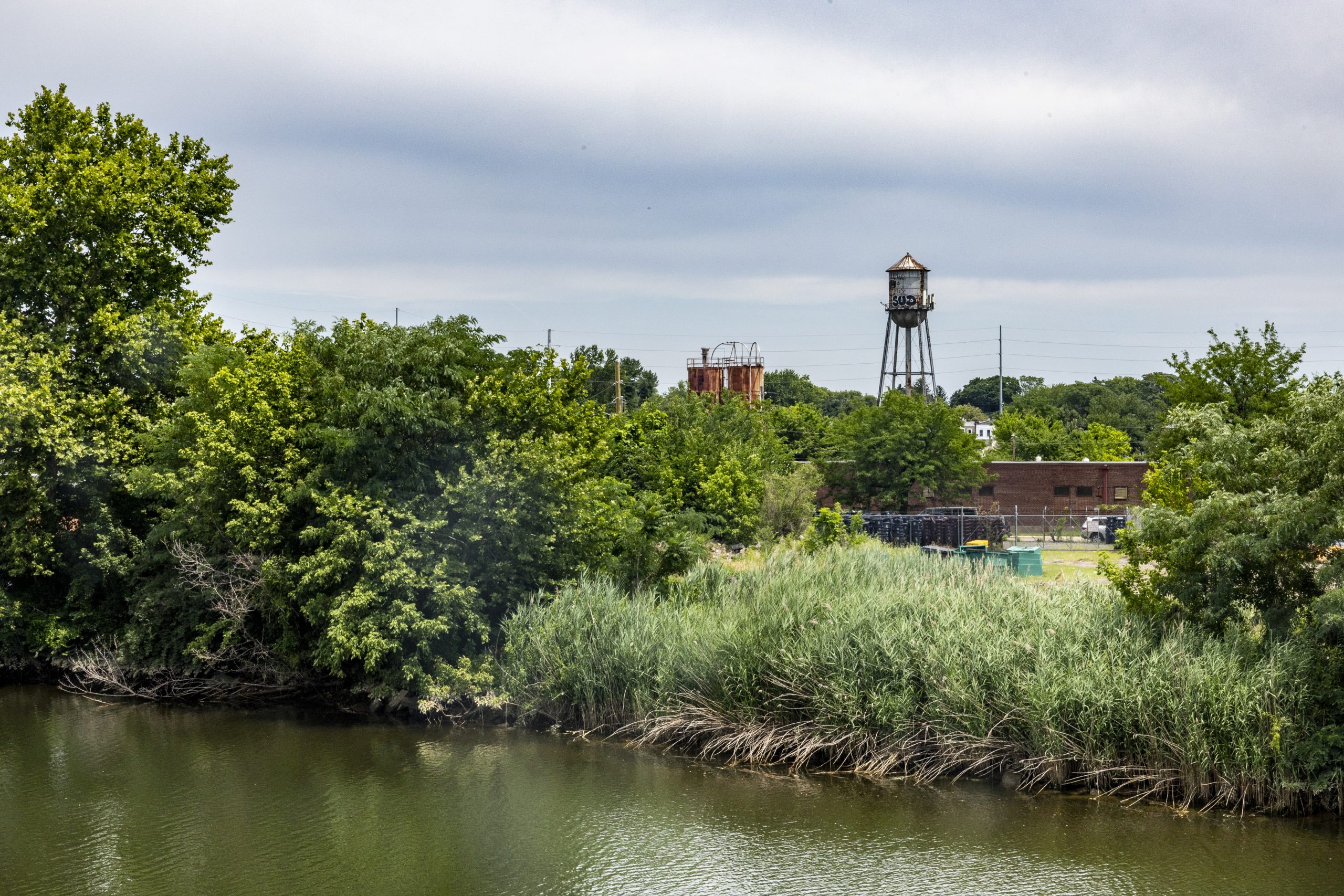
    A water tower is seen from the top of the Northeast Boulevard Bridge in Wilmington, Del., on Friday, June 26, 2026. Susan Morrissey, a schoolteacher in Delaware County, was killed in Wilmington, Del., seven years ago this summer. Her body was found in the Brandywine River near the Northeast Boulevard Bridge.Aidan T. Gallo / Staff Photographer

    Using data from Morrissey’s Fitbit device, investigators have pieced together the barest of timelines from that morning.

    The tracker did not record Morrissey’s GPS location, so investigators cannot trace her movements, but they know she walked about a mile within an hour of her vehicle arriving at Walker’s Mill.

    And at 7 a.m., the device stopped recording her heartbeat.

    “I don’t know why she left the house at 3 a.m., and I don’t know what she was doing between 3 and 7,” Grassi said. “That four-and-a-half hour gap is a major issue with the investigation.”

    What happened to Susan?

    At her West Chester home, Missy Morrissey, 58, keeps hundreds of pages of notes and documents related to her sister’s case, making her something of an in-house historian of the family’s tragedy.

    Since 2019, she has studied the river’s edge between Walker’s Mill and the Northeast Boulevard Bridge, poring over maps, interviewing store owners and strangers, and posting flyers seeking information about the killing near where Susan Morrissey may have been.

    It is not only the lack of a suspect that vexes her. Police have not detailed the cause or extent of Morrissey’s injuries, beyond saying that they were traumatic.

    Morrissey had been home alone that evening while her husband attended a screening of a documentary about the jam band Phish along with a friend. When he came home, Ledyard told investigators, he and Morrissey shared half a bottle of wine before he took a sleep aid and went to bed around 11 p.m.

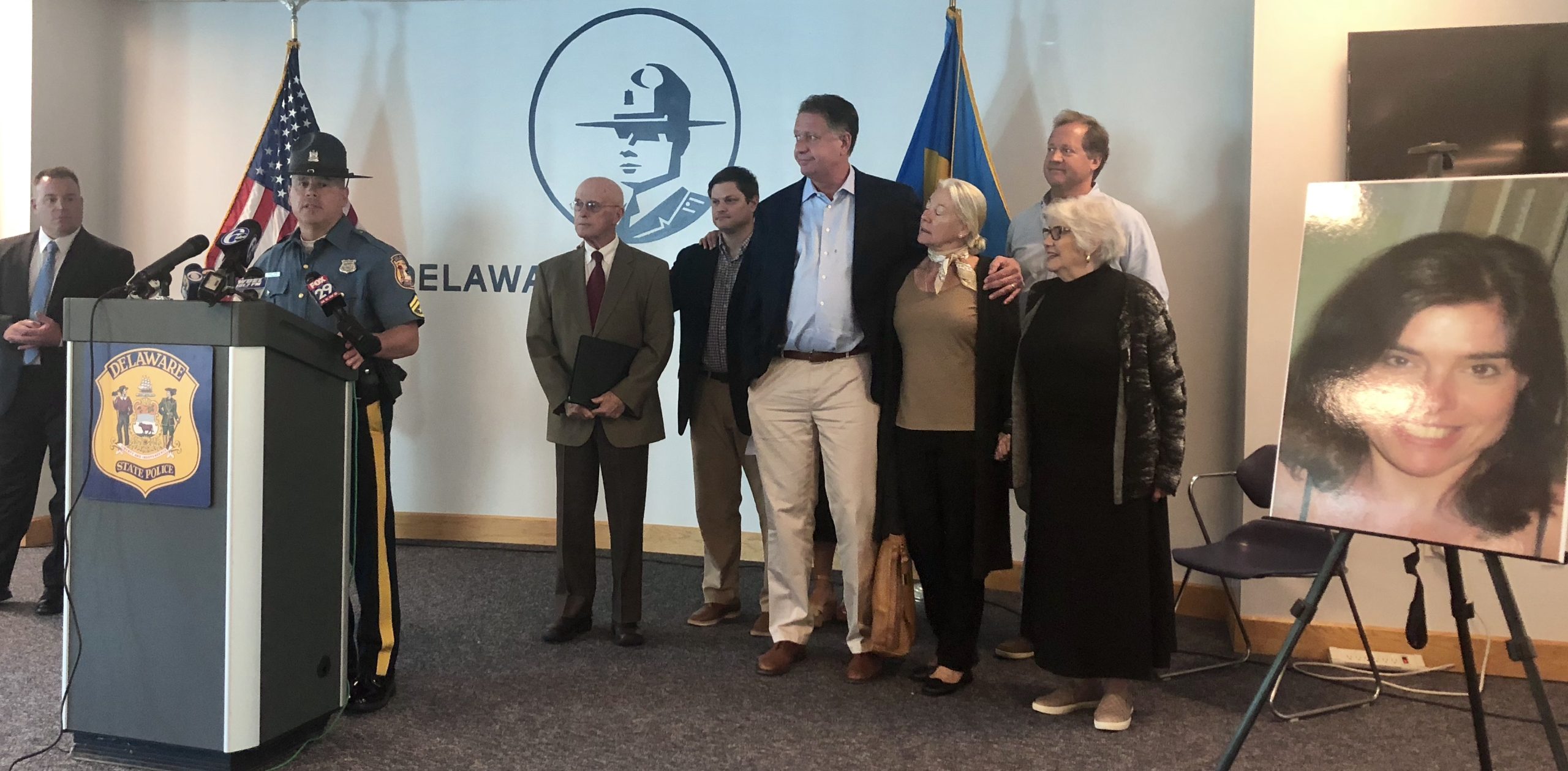
    Delaware State Police Master Cpl. Michael Austin speaks in 2019 to brief reporters about updates in the death of Susan Morrissey Ledyard. With him were her brother, John (second to left), and husband, Ben (third from left).Katie Park/Staff

    He said he had no idea what happened to his wife — a woman he told reporters was “the love of my life, my best friend” — until police came to the house around 9:30 the next morning to tell him she was dead.

    Ledyard could not be reached for comment.

    Two years after Morrissey’s death, Ledyard remarried, and in 2023 he was charged with assault for attacking his wife with a marble figurine and smashing her head into the floor after she asked him to turn down loud music on New Year’s Day.

    He pleaded guilty to second-degree assault and was sentenced to two years in prison.

    The charges brought fresh attention to the Morrissey case and fueled internet speculation that he could have harmed his former wife.

    But police say he is not a suspect in the homicide and has cooperated fully with law enforcement.

    ‘A hope you desperately cling to’

    Morrissey’s parents, Serena and John, died last year at 89 and 91 — without learning what happened to their daughter and without seeing anyone brought to justice for the crime.

    John Morrissey’s death from advanced dementia came just two days after the anniversary of his daughter’s death.

    “It’s been a tough year for our family,” said Meg Morrissey Heinicke, who lives in San Francisco. “This year’s anniversary feels particularly sad and painful.”

    Yet there remains “a hope that you desperately cling to” that the case will be solved, she said.

    Susan Morrissey with her nieces and nephew. Missy Morrissey

    In honor of their sister, the siblings started the Susan Morrissey Foundation, which awards an annual scholarship to an Academy Park student for excellence in English, a small way of keeping her memory and love of the written word alive.

    In their quest for answers, the family has promised a $50,000 reward for information leading to an arrest.

    “I just want us to have some answers,” Missy Morrissey said of the family’s ongoing grief. “I don’t think that any of us can really process, or go on, without knowing.”

    Anyone with information about the case is encouraged to call detectives with the Delaware State Police at 302-365-8441 or email daniel.grassi@delaware.gov.