Category: Pennsylvania News

  • To reduce problem gambling, Pa. commission recommends enacting some strict prohibitions. Don’t bet on it, sportsbook alliance says.

    To reduce problem gambling, Pa. commission recommends enacting some strict prohibitions. Don’t bet on it, sportsbook alliance says.

    The tension between the rise of legalized sports betting and the specter of gamblers developing ruinous addictions came into sharp focus last week, between the stark recommendations of a nonpartisan Pennsylvania commission and a baseball star’s social media post.

    Lawmakers could impose restrictions on sportsbook operators, such as banning in-game microbets and curtailing VIP programs, the Joint State Government Commission wrote in a 126-page study on sports betting and interactive gambling that was published July 13.

    A bill to prohibit microbets and other sports gambling products that could amplify addiction is currently being drafted, said State Rep. Tarik Khan, who introduced the resolution that authorized the commission’s research.

    “The scope of the problem is worse than we thought,” said Khan (D., Philadelphia).
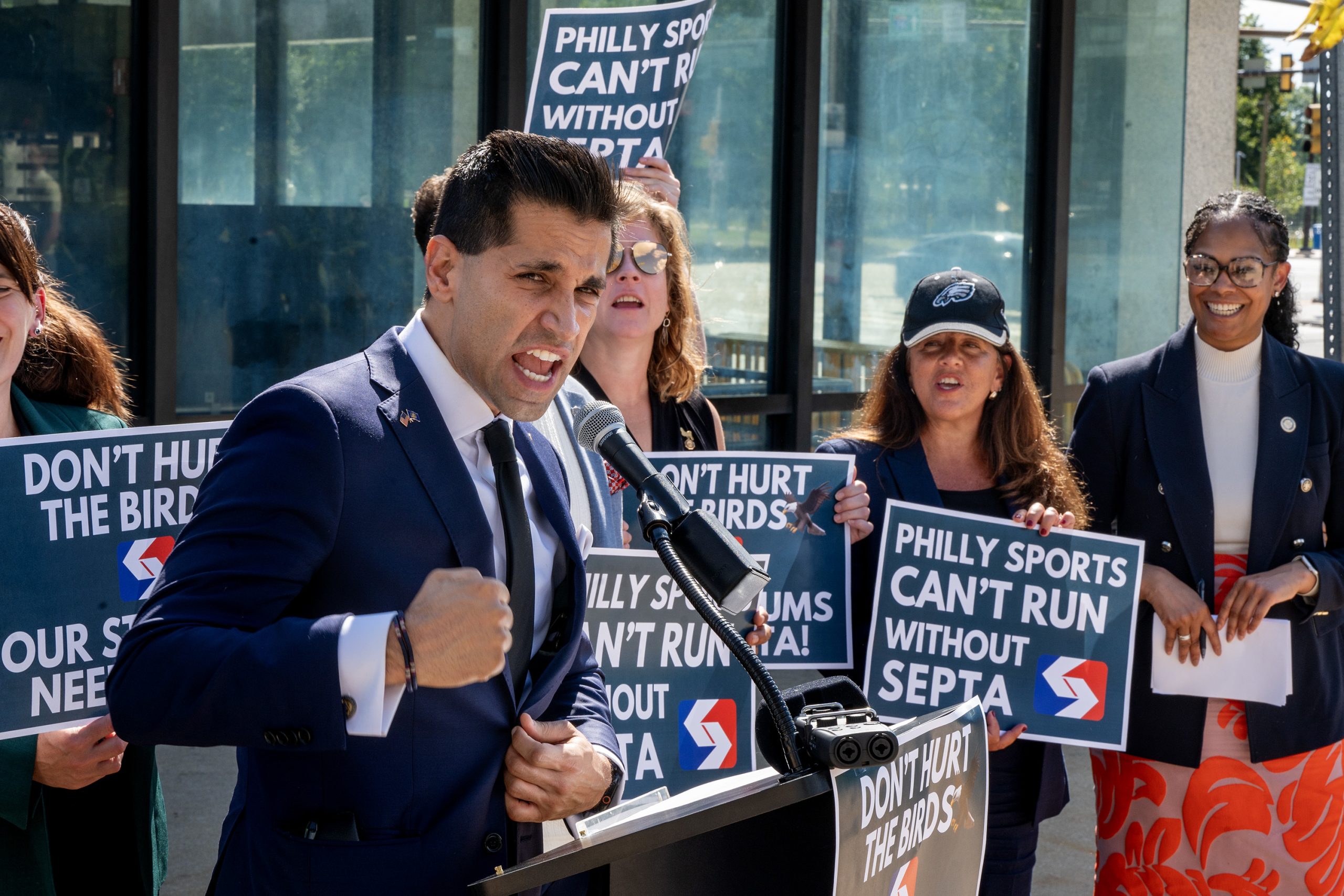
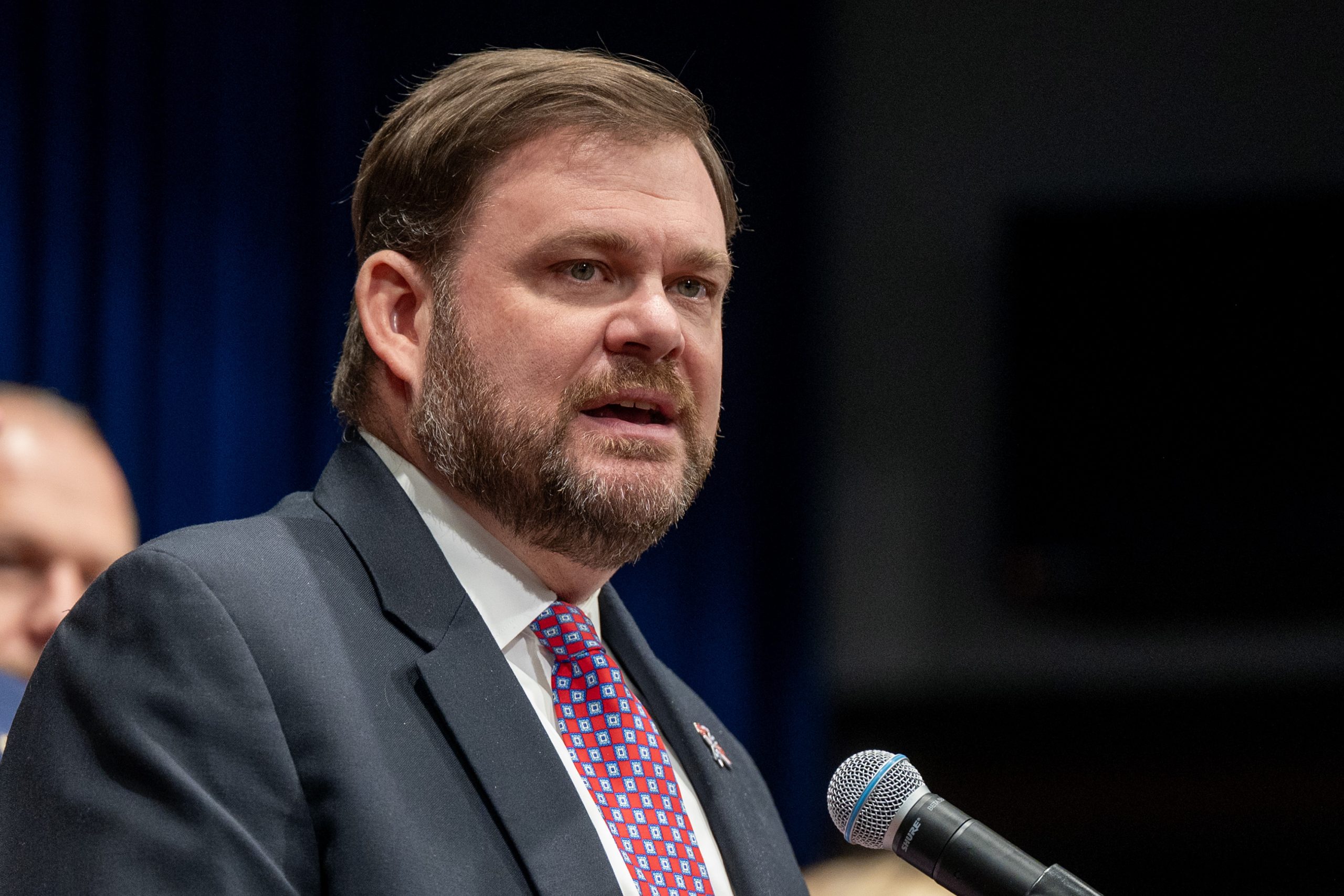
    State Rep. Tarik Khan said lawmakers are drafting legislation that will seek to prevent sportsbook operators from offering in-game microbets.Tom Gralish / Staff Photographer

    He referenced surveys, cited by the study, showing that 48% of men ages 18 to 49 have an account with at least one sportsbook company, while 52% reported wagering an increased amount of money after they experienced losses.

    “Sometimes you have to be very clear on what companies can and can’t do, especially when money is involved,” Khan said.

    Americans spent a record $165 billion on sports betting in 2025, and were projected to wager at least $3 billion on the recent FIFA World Cup.

    Analysts have predicted that microbets — wagers that can be made on individual plays and outcomes during a live game — could grow by $14 billion by the end of the decade.

    The sports gambling industry is likely to oppose eliminating such a lucrative product, according to Joe Maloney, the president of the Sports Betting Alliance, a national advocacy organization whose members include FanDuel, DraftKings, BetMGM, bet365, and Fanatics.

    “I’m just not sure that something as proscriptive as banning that market achieves what is the stated endgame,” Maloney said. “I’m not entirely sure what the problem is that they’re trying to solve.”

    The same day the state study came out, Philadelphia Phillies first baseman Bryce Harper took to Instagram to explain how FanDuel had acquired a personalized video he made in 2024, which the sportsbook company then sent to Terry Thompson, a local VIP bettor who suffered from a gambling addiction.

    Harper wrote that he had recorded the 21-second video — a copy of which was obtained by The Inquirer — through the video service Cameo. In it, Harper said he was doing the video on behalf of a FanDuel host. But the nine-time All-Star later said that he was not aware that FanDuel intended to use the recording for business purposes or that Thompson had an addiction.

    “Had I known FanDuel’s true intent,” Harper said, “I would not have made the video.”

    The state study summarized litigation that sportsbook operators are facing in Pennsylvania, including a lawsuit filed in March by the Public Health Advocacy Institute on behalf of Thompson and another man against FanDuel and DraftKings. The suit alleges that the companies profit from the compulsive nature of microbets and use VIP rewards to entice gamblers to keep betting, even after they have displayed signs of addiction.

    Thompson, of Montgomery County, lost nearly $2 million to wagers that he placed with FanDuel and DraftKings.

    “These companies’ profit margins are dependent on people with gambling disorders,” Khan said. “It’s clear. Did [FanDuel] tell Bryce Harper that they wanted a video for a person who had lost that much money? Of course not.”

    Maloney disputed Khan’s characterization of sportsbook companies’ business practices.

    He compared VIP programs to customer rewards that retailers like Starbucks or T-Mobile offer, and said bettors can easily opt out of the programs or from receiving promotional offers.

    “There’s no sustainable and durable future for this industry if it is not responsible and committed to integrity,” he said. “The notion that any industry can sustain itself across a small and finite number of users is completely false.”

    The regulation battle

    The commission, a research and policy development agency for the Pennsylvania legislature, retraced the evolution of sports betting in the U.S. and identified measures that lawmakers could pursue to curb addiction.

    Since the U.S. Supreme Court ruled in 2018 that states could establish their own sports betting laws, sportsbook companies and lesser-regulated prediction markets have entered into highly visible partnerships with professional sports leagues and teams that once were uniformly opposed to gambling.

    The rise of the sports betting industry has helped fill state coffers. Pennsylvania recorded $6.7 billion in gambling revenue in 2025, with $602 million derived from sports wagers.

    Tales of bettors who grew addicted to the instant dopamine spike of gambling on mobile devices or placing in-game microbets, then tumbled into a whirlpool of spiraling debt, have also become plentiful.

    “States are waking up to the reality of sports betting now. They’re seeing a lot of the downstream impacts,” said Uttara Ananthakrishnan, an assistant professor of information systems at the University of Washington and an expert on online betting and gambling addiction.

    The NFL, like other professional sports leagues, has abandoned long-held opposition to gambling entities, and entered into partnerships with sportsbook operators.Monica Herndon / Staff Photographer

    Ananthakrishnan said new research suggests that gambling is not only associated with financial stress, but also can lead to more crime, suicide, divorce, child maltreatment, and housing instability, while siphoning state lottery revenue.

    A recent study conducted by Pennsylvania State University’s Criminal Justice Research Center found that 2.5% to 6.4% of Pennsylvania adults may be problem gamblers, while a 2025 National Council on Problem Gambling survey showed that at least 20 million Americans reported experiencing problematic gambling behavior during the previous year.

    The state commission study, meanwhile, cited a Harris Poll that found 79% of Americans believe gambling addiction is “as serious or more serious” than alcohol or drug addictions.

    “It’s very, very disturbing,” Khan said.

    The commission suggested that lawmakers could obtain customer data from gambling companies and have them independently analyzed to better understand which practices and products are most harmful.

    It offered other, more immediate recommendations as well: preventing bettors from using credit cards to place deposits; mandating that customers limit the duration of their gambling and the frequency of their deposits; and forbidding companies from sending promotional offers to gamblers if they have logged out of their accounts, or using artificial intelligence to create individualized promos.

    The study also suggested prohibiting gambling advertisements from public university campuses.

    “I don’t sit here as a voice of the industry and deny the science,” Maloney said. “Gambling is an activity that can become problematic, and for some people, it can become addictive.”

    But Maloney argued that many of the gambling studies and surveys that experts cite do not prove a direct link between gambling products and those who develop addictions.

    “By all means, it’s a policy conversation that we absolutely want to have if the legislators are responding to highly publicized research, and confusing correlation with causation, and relying on national media interlopers who are largely transcribing academics and researchers in that space, and delivering clicky headlines,” Maloney said.

    Sports betting helped drive gambling revenue in Pennsylvania to a record $6.7 billion in 2025. Jeff Chiu

    Ananthakrishnan said the negative effects are real.

    “I am glad Pennsylvania is recognizing the problem and looking at evidence-based policy to curtail problem gambling,” she said.

    Ananthakrishnan said the legislature should act on at least two proposals in the study: Require gambling apps to use their own data to predict problem gambling behavior, rather than using the information just to convince users to place more bets; and require the apps to release anonymized player stats that could be analyzed by an independent research entity.

    “This creates a pathway to design evidence-based policies that directly address the specific mechanics of digital addiction without relying solely on operator self-reporting,” she said of the latter proposal.

    ‘Too close to the edge’

    While legislators in Pennsylvania and other states, like New Jersey, grapple with how to enforce guardrails on sports betting, leagues continue to face headline-grabbing gambling scandals.

    The NFL last week indefinitely suspended an Arizona Cardinals official, Ryan Gold, who is accused of leaking information about the team’s draft plans and participating in parlay bets on NFL and college games, ESPN reported. Gold has denied any wrongdoing through his attorney. The matter is now being investigated by the Arizona Department of Gaming.

    In May, a DraftKings employee was arrested in Las Vegas and charged with conspiracy and related offenses for allegedly participating in a sports betting ring with a basketball player from Fresno State.

    Hours before he participated in the All-Star Home Run Derby on July 13, Bryce Harper wrote on Instagram that he didn’t know FanDuel planned to use a video he recorded through Cameo as a reward for a VIP bettor. Monica Herndon / Staff Photographer

    The Pennsylvania Gaming Control Board, meanwhile, is reviewing the controversy over FanDuel’s use of the Bryce Harper video.

    Major League Baseball’s commissioner, Rob Manfred, told reporters that Harper did not violate the league’s collective bargaining agreement, which allows players to engage in some promotional work for sportsbooks and casinos, provided they do not encourage betting on baseball.

    The gaming control board has separately proposed new regulations to address gambling addiction, said a spokesperson, Doug Harbach.

    Among the changes the board wants to implement are daily, weekly, and monthly limits on deposits that bettors can make to cashless gaming systems, and prohibiting companies from implying that betting is risk-free or a way to pay bills.

    “We have to make sure there are safeguards,” said Khan, the state representative. “Sometimes people get too close to the edge.”

    The Inquirer will continue to report on issues related to the growth of gambling addiction — among teens and adults — across Pennsylvania. If you, or someone you know, would like to speak with a reporter, please contact David Gambacorta or William Bender at dgambacorta@inquirer.com or wbender@inquirer.com
  • Why a Center City shoe shop is moving to Ardmore | Inquirer Lower Merion

    Why a Center City shoe shop is moving to Ardmore | Inquirer Lower Merion

    Hi, Lower Merion! 👋

    Popular men’s shoe retailer Sherman Brothers is swapping Center City for the Main Line. Here’s why. Also this week, we take a look at what’s going on with the Wynnewood post office, Pew Charitable Trusts has tapped a Lower Merion native as its next head, plus, Main Line Health is adding specialists to cut down on patient wait times.

    Have a question about town? Submit it to Curious Lower Merion and one of our reporters might track down the answer.

    If someone forwarded you this email, sign up for free here.

    Men’s shoe retailer Sherman Brothers is moving to Ardmore

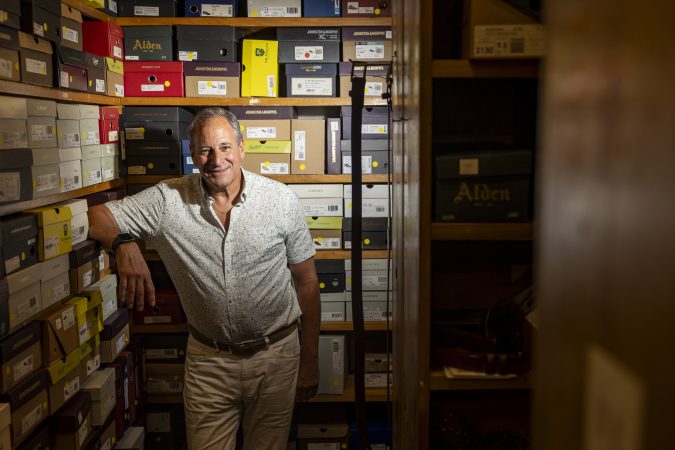
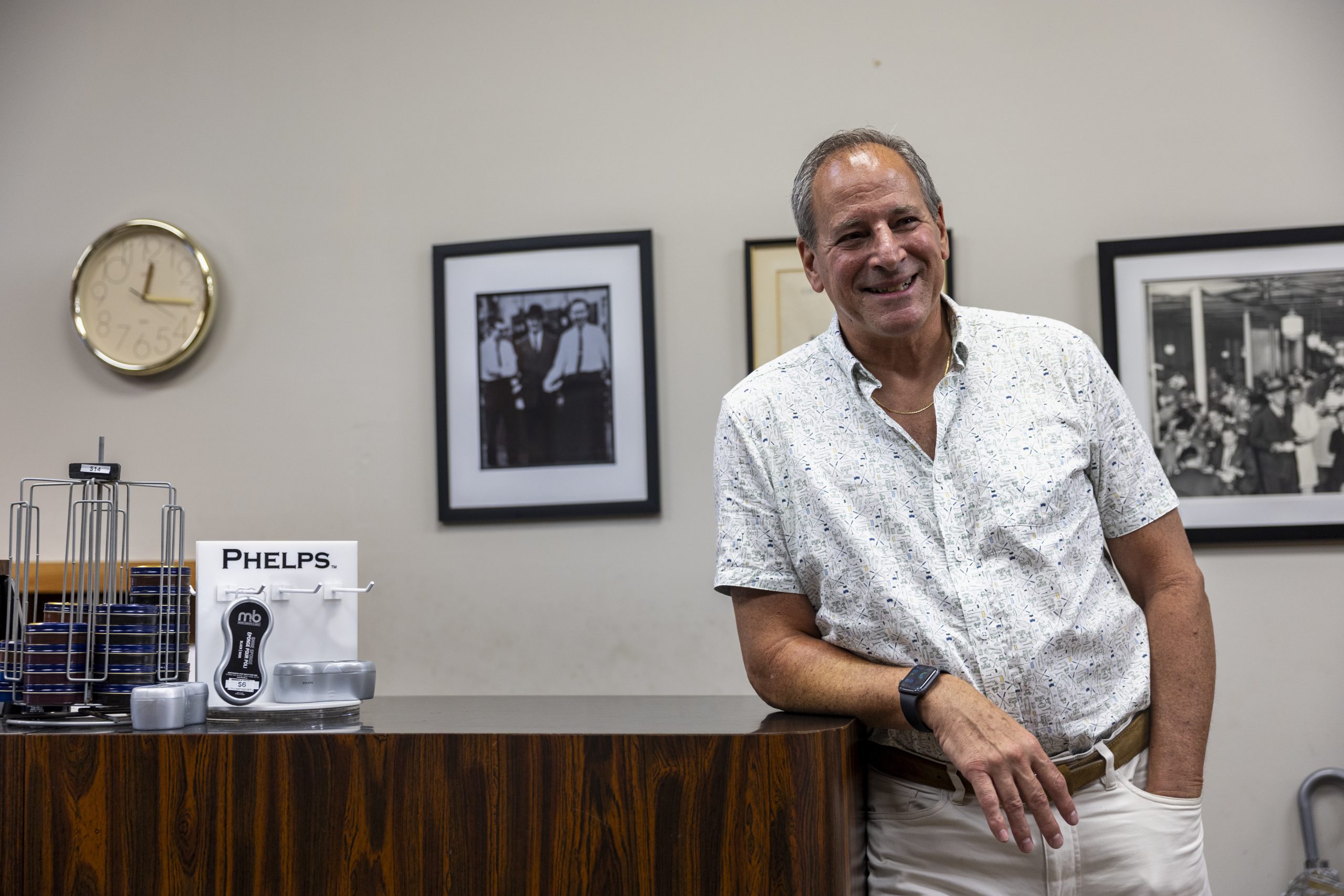
    Ken Sherman is a second-generation owner of Sherman Brothers.Aidan T. Gallo / Staff Photographer

    Longtime Center City men’s shoe retailer Sherman Brothers is relocating from Sansom Street to Ardmore, with plans to open in the coming months.

    The new storefront — previously home to Clothes Mentor — will be a homecoming of sorts for the 73-year-old brand, which previously had several suburban locations.

    “We’re gonna do exactly what we do, just in a different location,” second-generation co-owner Ken Sherman said.

    The Inquirer’s Denali Sagner explores why he and his cousin opted to move the business out of the city and into Ardmore.

    💡 Community News

    • Despite rumors about a potential closure, the post office in Wynnewood doesn’t look like it’s going anywhere. Federal Realty Investment Trust, which owns Wynnewood Shopping Center where USPS has an outpost, said it’s finalizing a lease extension. Here’s what to know.
    • Pew Charitable Trusts has named Lower Merion native and Friends’ Central alum William Foster its next president and CEO, roles he will take up in March.
    • Bala Cynwyd-based Pep Boys is changing hands after billionaire investor Carl Icahn’s company agreed to sell to Mavis Tire Express Services for $700 million.
    • Main Line Health, which owns Lankenau Medical Center and Bryn Mawr Hospital, is in the process of adding specialty physicians including gastroenterologists. The goal is to reduce how long patients have to wait to access specialized care.
    • Lower Merion police are reminding residents to lock their cars and take valuables with them after a number of thefts from vehicles parked throughout the township.

    🍽️ On our Plate

    🎳 Things to Do

    🎶 Bryn Mawr Twilight Concerts: New folk singer/songwriter John Gorka headlines this week’s show. ⏰ Friday, July 24, 7 p.m. 💵 $25.88, free for kids 12 and under 📍 Bryn Mawr Gazebo

    🚣‍♀️ Cardboard Boat Regatta: See how long homemade boats hold up in the pool. ⏰ Sunday, July 26, 3 p.m. 💵 Free to attend 📍 Belmont Hills Pool

    🍿 Clueless: Catch a screening of the iconic ‘90s film starring Alicia Silverstone. ⏰ Monday, July 27, 7:15 p.m. 💵 $11.75-$16.25 📍 Bryn Mawr Film Institute

    🎸 Alice Unchained: This tribute show will highlight some of Alice in Chains’ biggest songs. ⏰ Thursday, July 30, 8 p.m. 💵 $26.91-$61.07 📍 Ardmore Music Hall

    🏡 On the Market

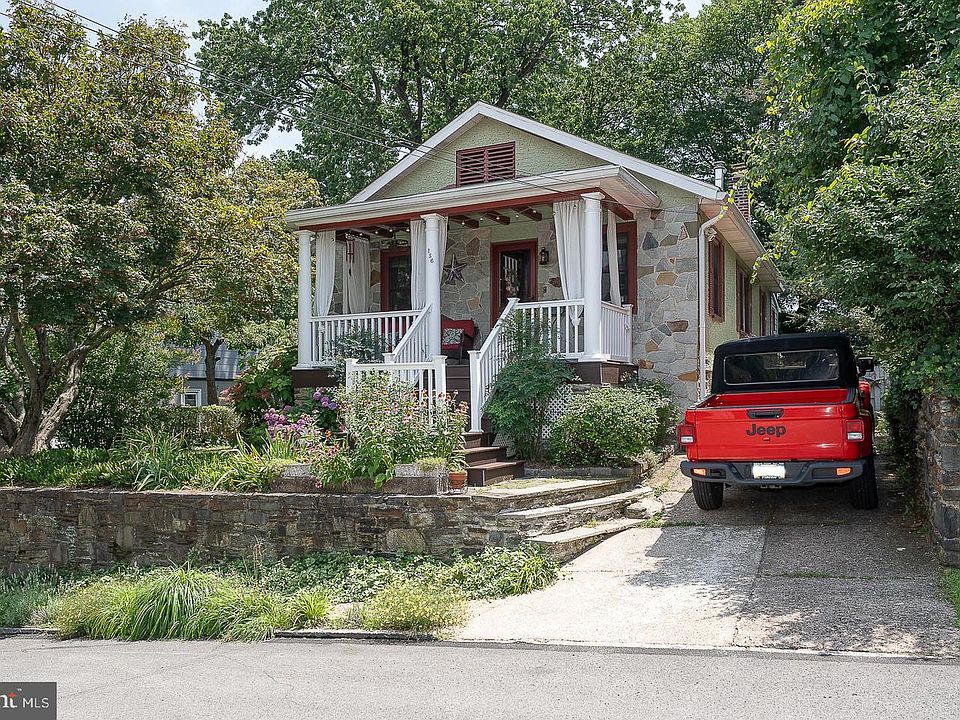
    A charming Belmont Hills bungalow

    The home has a covered front porch and a driveway.Courtesy of Damon Michels/Keller Williams

    This two-bedroom Belmont Hills bungalow packs a lot into a small space. In addition to both bedrooms, the main level has a living room with a wood-burning stove, a den, and the kitchen, which has butcher block countertops and stainless steel appliances. Other features include a covered porch, a backyard, and a walk-out basement. There are open houses today from noon to 1:30 p.m. and tomorrow from 3:30 to 4:30 p.m.

    See more photos of the home here.

    Price: $549,000 | Size: 1,540 SF | Acreage: 0.14

    🗞️ What other Lower Merion residents are reading this week:

    By submitting your written, visual, and/or audio contributions, you agree to The Inquirer’s Terms of Use, including the grant of rights in Section 10.

    This suburban content is produced with support from the Leslie Miller and Richard Worley Foundation and The Lenfest Institute for Journalism. Editorial content is created independently of the project donors. Gifts to support The Inquirer’s high-impact journalism can be made at inquirer.com/donate. A list of Lenfest Institute donors can be found at lenfestinstitute.org/supporters.

  • The scoop on a local ice cream trail | Inquirer Greater Media

    The scoop on a local ice cream trail | Inquirer Greater Media

    Hi, Greater Media! 👋

    Delaware County is tapping into its sweet side with an Ice Cream Trail and accompanying passport. Here’s the scoop on all the area shops participating. Also this week, two Inquirer reporters offer advice on how to correct improper Wawa pronunciation, a vintage clothing store is closing, plus, the county is investigating threats made against one of its own.

    If someone forwarded you this email, sign up for free here.

    An ice cream passport looks to boost local tourism

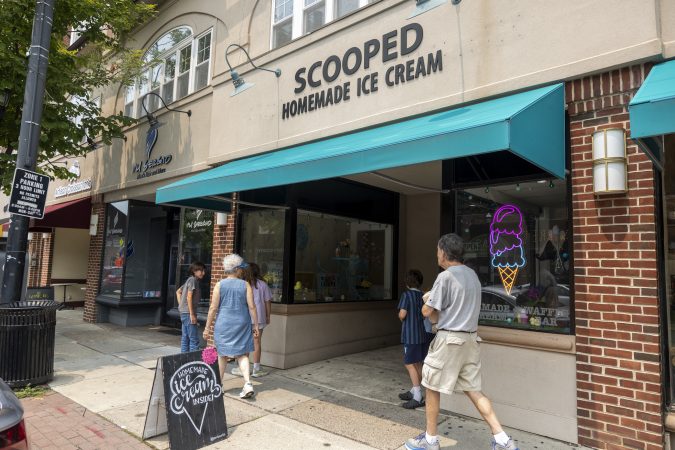
    Scooped Ice Cream in Media is one of 16 businesses on Delco’s Ice Cream Trail. Tyger Williams / Staff Photographer

    Looking to explore the community and sample sweet treats at the same time? There’s a trail for that — an ice cream trail, specifically.

    Earlier this year, Visit Delco launched a summer initiative called the Ice Cream Trail, which includes 16 stops throughout the county. The goal is to help local residents explore their own communities, while also incentivizing visitors to discover new downtowns, ultimately helping boost business.

    Nearby spots include Scooped Ice Cream in Media, Vera’s Water Ice & Ice Cream in Springfield, The Sugaree in Newtown Square, and Salty Cow Ice Cream in Glen Mills.

    Get the scoop on the initiative here.

    💡 Community News

    It’s definitely not “waWa.”Steve Madden
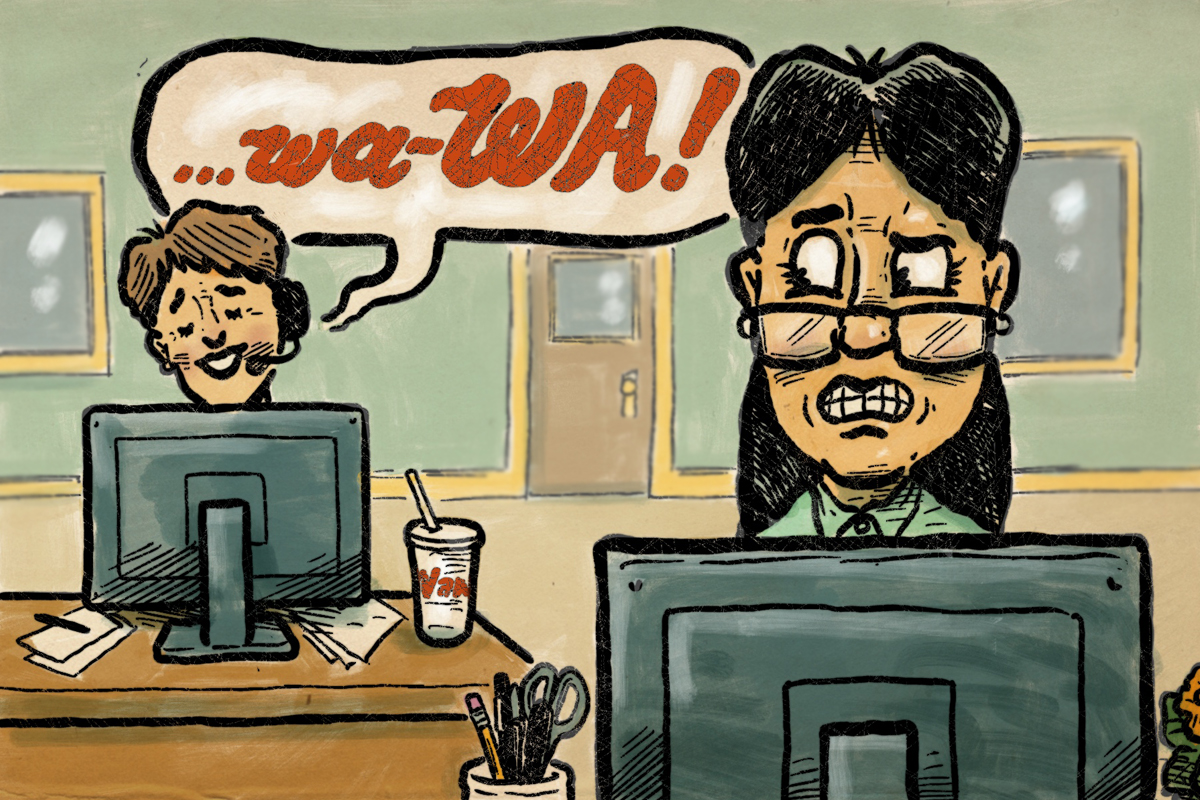
    • Have you ever heard someone mispronounce “Wawa”? In The Inquirer’s latest advice column, a reader asks how to deal with a coworker doing just that. As the home of the beloved convenience chain, there’s no question we know how to say it right. As for correcting someone? Columnist Stephanie Farr and reporter Dugan Arnett offer some subtle — and not so subtle — suggestions.
    • Delaware County detectives are investigating a racist, threatening voicemail left for county Sheriff Siddiq Kamara, The Inquirer’s Vinny Vella reports.
    • Sonny’s Vintage Clothing in Media is closing its doors after a little over a year in business. Saturday and Sunday will be the last days for the 303 W. State St. shop.
    • The election may still be months away, but Delaware County Council recently agreed to put a $120 million bond referendum on the November ballot, funds that would be used to finance land conservation. It will require more than 50% approval to move ahead.
    • Riddle Hospital has been awarded $4 million from the state to support construction of a new outpatient emergency facility at the Middletown Township institution.
    • Heads up for drivers: A monthslong project in Nether Providence Township is getting underway this week. Route 252 will be closed between Route 320 and West Rose Valley Road on weekdays from 9 a.m. to 3 p.m. through the end of the year. In Middletown Township, there will be a lane closure on Route 1 between Routes 452 and 352 from 9 a.m. to 3 p.m. and 7 p.m. to 5 a.m. through tomorrow. And there will be milling and paving on select roads in Swarthmore this week and next week.
    • The county has made two recent personnel changes. Chris Welsh has been named deputy executive director of human services and community programs after serving in the role on an interim basis, and Taylor Dunn has been elevated to public defender.

    🎳 Things to Do

    🍿 Hoppers: This 2026 Pixar comedy focuses on a scientific discovery transforming human consciousness into robotic animals and what ensues. Registration is required. ⏰ Thursday, July 23, 3-4:30 p.m. 💵 Free 📍 Helen Kate Furness Free Library, Wallingford

    🎶 Rose Tree Summer Concert Festival: The upcoming lineup features performances from bluegrass band The Rockdale Boys tonight, dance party outfit Del’s Groove tomorrow, Gilligan Yacht Rock on Saturday, and local rock band Cool Confusion on Sunday. On Wednesday, gypsy jazz band The Hot Club of Philadelphia will perform. ⏰ Thursday, July 23-Wednesday, July 29, 7:30 p.m. 💵 Free 📍 Rose Tree Park, Media

    🚂 The Polar Express: Get a little dose of Christmas in July when Media Theatre screens the 2004 Tom Hanks animated movie. ⏰ Monday, July 27, 5:30 p.m. 💵 $15 📍 The Media Theatre

    🦉 Nature at Night: Meet owl ambassadors at this evening event. ⏰ Tuesday, July 28, 6-6:45 p.m. 💵 $17-$21.25 for members, $20-$25 for non-members 📍 Tyler Arboretum, Media

    🗞️ What other Greater Media residents are reading this week:

    By submitting your written, visual, and/or audio contributions, you agree to The Inquirer’s Terms of Use, including the grant of rights in Section 10.

    This suburban content is produced with support from the Leslie Miller and Richard Worley Foundation and The Lenfest Institute for Journalism. Editorial content is created independently of the project donors. Gifts to support The Inquirer’s high-impact journalism can be made at inquirer.com/donate. A list of Lenfest Institute donors can be found at lenfestinstitute.org/supporters.

  • Philadelphia’s taxi fleet is shrinking. This app is helping keep cabs alive in Boston and beyond.

    Philadelphia’s taxi fleet is shrinking. This app is helping keep cabs alive in Boston and beyond.

    Uber and Lyft helped flatten the taxicab industry. Now they are joining forces.

    Last month, Boston became the latest city where drivers of licensed taxicabs can respond to rideshare trip requests, using apps that are integrated with the Uber and Lyft platforms.

    But don’t expect to see this change in Philadelphia, even as the city’s taxi business continues its free fall.

    Curb, the leading app company for cabs, and Uber petitioned the Philadelphia Parking Authority, which regulates taxis in the city, to allow coordination of rides on a pilot basis but eventually withdrew the proposal.

    Pennsylvania law strictly separates licensed cabs and transportation network companies like Uber, said Christine Kirlin, deputy general counsel for the PPA and former head of its Taxi and Limo Division.

    “It was a handful of regulations that just couldn’t be integrated,” Kirlin said, adding that state law would need changes for it to work.

    For instance, she said, taxi fares in the city are set by the PPA and cab operators are not allowed to flex prices, as rideshare companies do during periods of high demand. Drivers also need a commercial license, and taxi vehicles are subject to safety inspections — and regulatory fees — that rideshare is not.

    In other cities, referrals from rideshare companies account for 30% to 60% of total taxi trips, said Dorel Tamam, vice president for mobile business at Curb.

    He is in charge of Curb Flow, an open API platform that aggregates available rides from multiple sources, including Uber and Lyft, direct hails from taxi apps, fleet dispatches, and taxi ranks.

    “This program is helping actually reduce idle time, increase the overall trips, giving drivers the add-on opportunity to earn more,” Tamam said.

    Curb Flow is being used in 17 U.S. cities, including Newark, N.J.; Seattle; Los Angeles; New York; Reno, Nev.; and Charlotte, N.C.

    Philly’s taxi nosedive

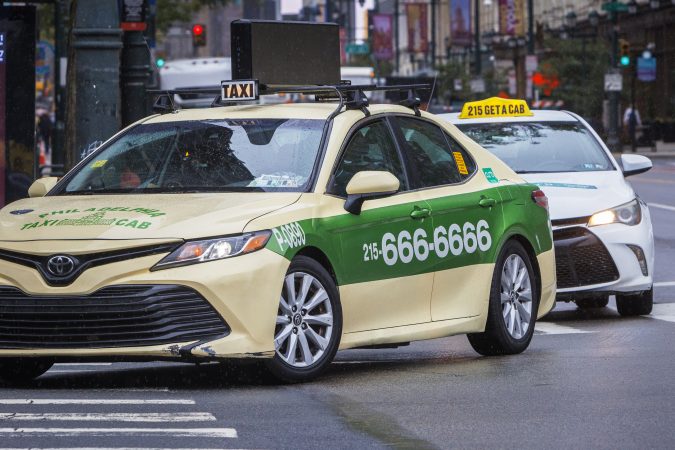
    The taxi business has been declining in Philadelphia for more than a decade, coinciding with the arrival of Uber and Lyft in the city. Pandemic restrictions also hurt.

    Taxi rides dropped 88% from 2015 to 2025, PPA data show.

    (function(){function e(){window.addEventListener(`message`,function(e){if(e.data[`datawrapper-height`]!==void 0){var t=document.querySelectorAll(`iframe`);for(var n in e.data[`datawrapper-height`])for(var r=0,i;i=t[r];r++)if(i.contentWindow===e.source){var a=e.data[`datawrapper-height`][n]+`px`;i.style.height=a}}})}e()})();

    Fewer cabs are available. In 2010, a monthly average of 1,600 taxis were on the road. In 2025, there were 674, reflecting a 58% drop.

    As of June, 633 taxis were active in the city, suggesting a continued decline.

    “Things have not really improved. There’s less people out there driving,” said Ron Blount, president of the Taxi Workers Alliance, who believes the number could be even smaller.

    “A lot of drivers do both taxis and [rideshare] switching back and forth, trying to make it work,” Blount said.

    He said that Curb Flow would lead to more trips for drivers here, but that it was unclear how much their net incomes would improve.

    And the average sales price for a taxi medallion, a license required for each cab to operate in the city, fell to an average of $12,857 last year.

    The average price was just over $500,000 during several months of 2014, according to PPA numbers.

    “We really hope one day to bring it to Philadelphia,” said Tamam, the company vice president in charge of Curb Flow. ”We’re open to further collaboration with the regulators.”

  • ICE formally withdraws plans to build two Pennsylvania detention centers, Gov. Josh Shapiro says

    ICE formally withdraws plans to build two Pennsylvania detention centers, Gov. Josh Shapiro says

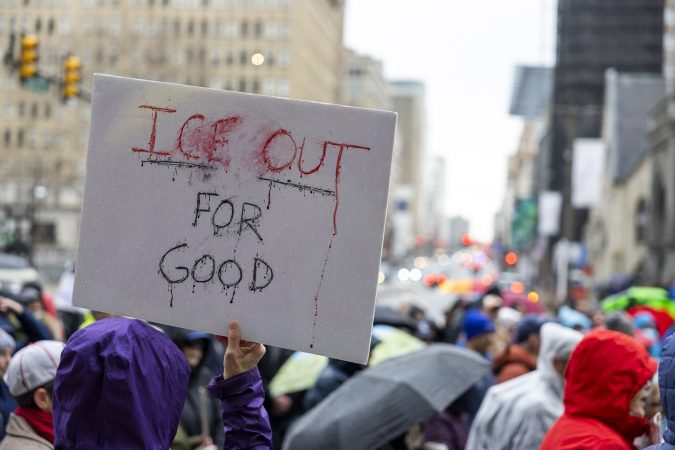
    The U.S. Department of Homeland Security has formally reversed its plans to establish two ICE detention centers in Pennsylvania that were intended to hold up to 9,000 immigrants, Gov. Josh Shapiro said Wednesday.

    The decision, which comes amid opposition from the state and from local communities, marks the end of efforts to convert warehouses in Berks and Schuylkill Counties, as the Trump administration works to offload some sites that were intended to support its mass-deportation agenda.

    Shapiro, a first-term Democrat seeking reelection this year, told DHS officials in February he would “aggressively pursue every option to prevent these facilities from opening,” and his administration later denied permits to update local water and sewage systems to handle thousands of additional people.

    On Wednesday, Shapiro praised the federal decision and credited his administration’s work to block the facilities.

    “From the beginning, I’ve been clear that these warehouses should not be used as ICE detention centers because they are not suitable for people and converting them to detention centers would have posed serious risks to the health, safety, and infrastructure of the surrounding communities,” he said.

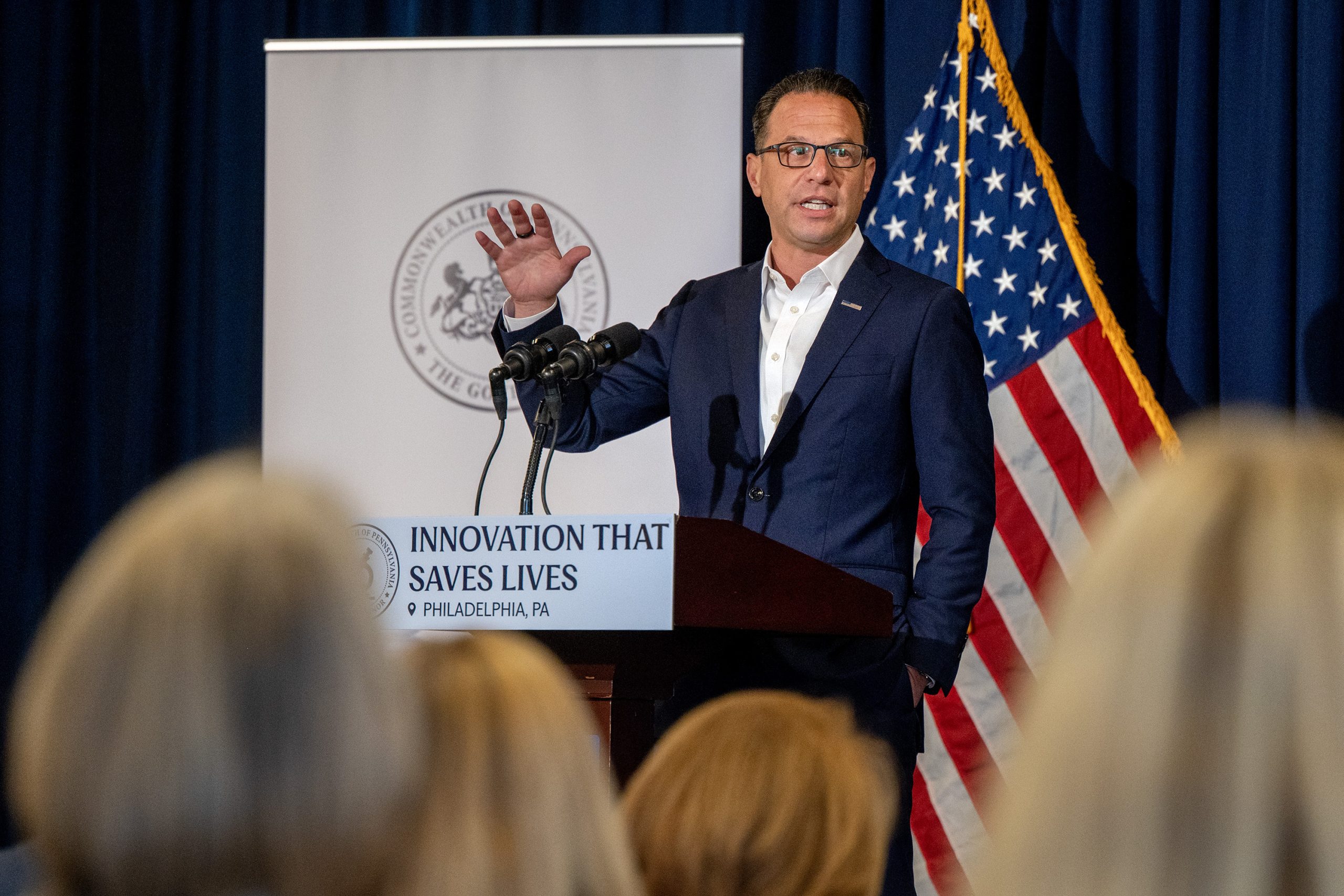
    Gov. Josh Shapiro on July 21.Tom Gralish / Staff Photographer

    Two sites had been purchased in Pennsylvania ― one in Upper Bern Township, in northern Berks County, and another in Tremont Township, in Schuylkill County, where the plan for a former Big Lots discount store warehouse drew the ire of residents. Both plans faced steep opposition from top officials like Shapiro and from local community activists.

    ICE confirmed its plans to withdraw its permit requests in a filing Wednesday to the Pennsylvania Environmental Hearing Board, as well as in a July 13 letter from DHS Assistant Director James Ingalsbe.

    News emerged earlier this year that U.S. Immigration and Customs Enforcement planned to spend more than $38 billion to buy warehouses and retrofit them as detention centers that would hold tens of thousands of immigrants. Those two dozen properties, including the two in Pennsylvania, would be located across the country, with some holding as many as 10,000 detainees.

    In Pennsylvania, the Berks County project would have held 1,500 detainees, while the Schuylkill County one would have held 7,500.

    An expanded ability to confine immigrants was central to Trump’s plan to deport as many as 1 million people a year. The additional space was necessary to help ICE respond to White House demands for greater numbers of arrests.

    As of July 11, ICE held 65,765 people in detention, up from 60,311 in April, but below the record high of 70,766 set in January, according to Syracuse University professor Austin Kocher, who studies immigration data.

    During Trump’s first year in office, the government fell short of his million-deportation goal, removing 622,000 people through mid-December, fewer than the 778,000 deportations carried out in President Joe Biden’s final fiscal year, according to the American Immigration Council in Washington.

    While some around the country saw the conversion of empty warehouses as a chance for new jobs, others were opposed over humanitarian concerns, the impact on water and sewerage use, and the potential loss of tax revenue.

    Earlier this summer, it appeared likely that the plans in Pennsylvania were being discarded.

    The New York Times reported in June that ICE planned to offload its two properties in Pennsylvania and a third in New Jersey, which were purchased for more than $336 million. Those were among seven warehouses across the nation that would be sold or handed off to other federal agencies, according to the Times.

    The same month, U.S. Sen. John Fetterman (D., Pa.) said that detention-warehouse plans would not go forward in Tremont and Upper Bern Townships and that Homeland Security Secretary Markwayne Mullin had “recognized the negative impacts these facilities would have in Pennsylvania.”

  • Ida Schmertz, pioneering women’s activist, political innovator, and former American Express senior vice president, has died at 91

    Ida Schmertz, pioneering women’s activist, political innovator, and former American Express senior vice president, has died at 91

    Ida Schmertz, 91, formerly of Jenkintown, pioneering women’s activist, international relations innovator, presidential appointee, first female senior vice president at American Express, volunteer, mentor, and role model, died Thursday, July 2, of organ failure at New York Presbyterian Hospital.

    Born in Amsterdam, Ms. Schmertz and her family made their way to Philadelphia and then Jenkintown at the start of World War II in 1940, and she became a trailblazing American powerhouse in civil and women’s rights, international relations, corporate management, and healthcare.

    She earned a bachelor’s degree in political science and a master’s degree in international relations, and did everything but write a dissertation for a doctorate in international relations and Soviet studies. She was founding codirector in 1971 of the groundbreaking Center for American Women and Politics at Rutgers University, founding cochair in 1994 of the International Business Incubator and Training Center in Russia, and founding chair of the board of trustees for the Romanian-American Foundation in Bucharest in 1994.

    Wherever she was, Ms. Schmertz championed research, education, and public engagement. She helped organize the first national conference of women in political office for the Center for American Women and Politics in 1972, and later provided professional services to small businesses and startups in Russia, especially those owned by women.

    “I have empathy for people,” Ms. Schmertz told a colleague at the Romanian-American Foundation in a 2018 video interview. “I’ve always felt badly for people who are hurt or poor or unfortunate or don’t have access to something.”

    Ms. Schmertz was interested in voluntary foreign service, gun reform, and U.S.-China relations, and she lectured and appeared on TV shows and in dozens of newspapers. She worked with New York Gov. Hugh Carey on statewide initiatives of all kinds in the 1970s and was appointed by President Bill Clinton to head the Romanian-American Enterprise Fund in 1994.

    In the 1950s and ’60s, she worked for the Democratic National Committee, the CIA, and the American Association of University Women. She spoke English, Dutch, Russian, and French, and served as a guide at the State Department’s first U.S. promotional exhibition in Moscow in 1959.

    She lobbied for fair elections in South Africa in the 1990s, and pressed New York lawmakers to support the state’s medical aid in dying act until it recently passed. Colleagues praised her “vision, energy, and grit” and “integrity and long-term commitment” in online tributes.

    From 1979 to 1992, Ms. Schmertz was the first woman to supervise corporate strategy and philanthropy at American Express in New York.Courtesy of the family

    One colleague said: “I feel so fortunate to have known her.”

    Colleagues at the Romanian-American Foundation said in a tribute: “She helped shape not just an organization but a picture of what philanthropy in Romania could be: transparent, accountable, built on partnership, and dedicated to creating opportunity for all Romanians.”

    From 1979 to 1992, Ms. Schmertz was the first woman to supervise corporate strategy and philanthropy at American Express in New York. She was also an honorary director of the Women’s Economic Roundtable and a former director at Prudential Financial Inc.

    “She was extraordinary, formidable, deeply caring, and exceptionally committed to the people and causes that she believed in,” her daughter, Lexy, said. “Her hobby was her job, learning and exploring.”

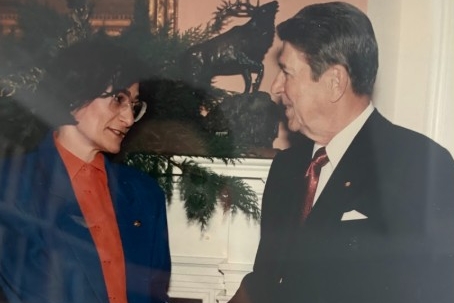
    Ms. Schmertz worked with President Ronald Reagan and many other political notables. Courtesy of the family

    Ida Frederieke Schaap was born Feb. 24, 1935. Her family traveled from the Netherlands to Indonesia in 1939 and then to the United States to escape the war.

    She was the first Jewish student to enroll in the old Stevens School for Girls in Germantown in 1940, was elected president of the student council and captain of the field hockey team, and graduated in 1952. She earned her bachelor’s degree at Wellesley College in Massachusetts in 1956 and her master’s degree at Columbia University in 1960.

    She also studied French political science at Sorbonne University in Paris and Russian at Middlebury College in Vermont. She married Herbert Schmertz in 1962 in Philadelphia, and they had a son, Anthony, and a daughter, Lexy. They divorced in 1976, and he died in 2018.

    Ms. Schmertz was tough and direct, her family said, intelligent and loving. She liked to read and travel, and was an engaging conversationalist.

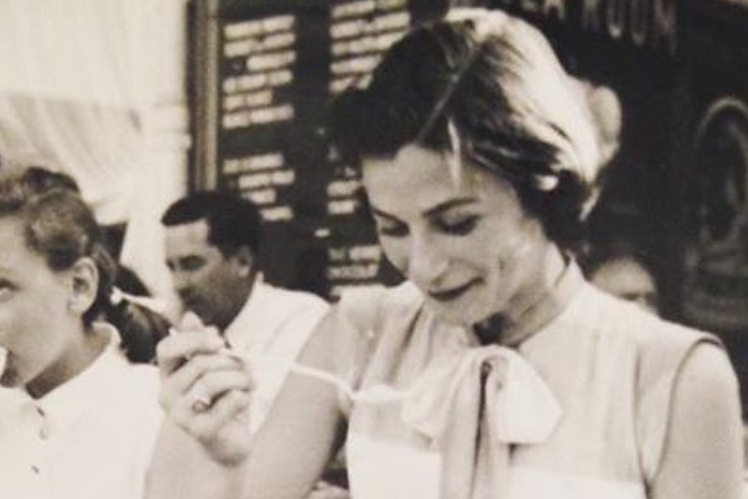
    Ms. Schmertz was a summer camp counselor for underserved children as a teen, loved cats, and supported the Philadelphia Museum of Art.Courtesy of the family

    She lived in Washington after college, moved to New York in the 1970s, and hosted friends and colleagues from around the world in her Upper West Side apartment. She doted on her four grandsons and took them to museums and hockey games. “She met them where they were,” her daughter said.

    She was a summer camp counselor for underserved children as a teen, loved cats, and supported the Philadelphia Museum of Art. For 30 years, she lived with chronic lymphocytic leukemia.

    “She was compassionate and caring,” her daughter said. Her son said: “She was devoted to her family.”

    In addition to her children and grandsons, Ms. Schmertz is survived by two sisters and other relatives.

    Ms. Schmertz visited Amsterdam in May.Courtesy of the family

    A private memorial service is to be held later.

    Donations in her name may be made to Compassion & Choices, Box 485, Etna, N.H. 03750.

  • Judge gives Pennsylvania the green light to fund abortions through Medicaid

    Judge gives Pennsylvania the green light to fund abortions through Medicaid

    Gov. Josh Shapiro’s administration can pay for abortions through the state’s Medicaid program while an appeal of the April ruling that recognized “a fundamental right to reproductive autonomy” plays out, a Commonwealth Court judge ruled.

    Judge Matthew S. Wolf last week granted a request from abortion providers to allow Medicaid to fund the procedure during the appeal from the Pennsylvania Attorney General’s Office because the state Supreme Court held previously that the funding restriction was “presumptively unconstitutional.”

    The Philadelphia Democrat wrote the April majority opinion that struck down a decades-old state law limiting public funding for abortions to cases involving rape, incest, or danger to the life of the mother.

    Attorney General Dave Sunday appealed the ruling to the Pennsylvania Supreme Court, where three justices previously signaled their willingness to rule that abortion access is a right.

    The appeal led to an automatic stay on the Commonwealth Court ruling, which meant Medicaid could fund abortion only in the cases allowed by the state’s Abortion Control Act.

    The coalition of abortion providers that brought the lawsuit in 2019 argued the stay would cause irreparable harm because it would force “an unknown number of their patients to carry pregnancies to term” during the appeal, the opinion said.

    If the coverage ban were to remain in place, despite the ruling holding it amounts to sex-based discrimination and recognizing the right to reproductive autonomy, that would violate the constitutional rights of Pennsylvanians, Wolf wrote.

    Sunday’s office argued that lifting the stay would allow more abortions, despite the opposition of many taxpayers.

    “There can be no legitimate interest — for the Commonwealth or the public — in knowingly violating constitutional rights,” Wolf said, rejecting the attorney general’s argument.

    A spokesperson for Sunday declined to comment.

    “At last, a terrible injustice that has harmed Pennsylvanians for decades has ended,” Susan Frietsche, executive director of Women’s Law Project, which represented the providers, said in a statement.

    Sunday, a Republican, stepped in to defend the law when Shapiro’s administration bowed out after the 2024 state Supreme Court ruling, which used language strongly endorsing abortion access as a constitutional right. But the justices were ultimately split on whether they were ready to make that call and sent the case back to the Commonwealth Court.

    The statewide court that oversees government-related matters sided with the abortion providers in a 4-3 ruling.

    It is unclear how quickly medical providers will be able to bill Medicaid for abortions. The Pennsylvania Department of Human Services has not issued guidance for providers yet.

    “Gov. Shapiro has a proven track record of defending a woman’s right to choose and protecting access to safe, legal abortion services,” Rosie Lapowsky, a spokesperson for Shapiro, said. “He will continue to fight for women’s right to make their own medical decisions in consultation with their doctor.”

  • After closure rumors, USPS and Federal Realty are ‘finalizing’ Wynnewood Post Office lease extension

    After closure rumors, USPS and Federal Realty are ‘finalizing’ Wynnewood Post Office lease extension

    For weeks, a rumor swirled in Wynnewood that the local post office may be shuttering due to a leasing dispute between the U.S. Postal Service and Federal Realty Investment Trust, the owner of the shopping center where the post office is located.

    Now, Federal Realty says it is “finalizing an agreement to extend the current lease” of the post office and anticipates “no disruption to services.”

    “The Wynnewood Post Office is a valued tenant, and we appreciate the important role they play in serving the community,” a spokesperson for Federal Realty said in a statement.

    The Wynnewood Post Office primarily serves residents in the 19096 zip code, which encompasses parts of Penn Wynne, Wynnewood, and Penn Valley in Lower Merion. The post office provides a variety of mailing services, including international mailing, money orders, mail holds, and burial flags for deceased veterans. Some functions of the Wynnewood Post Office moved to nearby Havertown in 2009, namely mail processing and sorting for mail carrier pickup.

    The Postal Service did not respond to multiple requests for comment.

    Last month, patrons of the Wynnewood Post Office began hearing from postal workers that the location may close at the end of October after USPS and Federal Realty, which owns the Wynnewood Shopping Center, were unable to reach an agreement over the terms of the post office’s lease.

    Without the Wynnewood Post Office, residents would have to use neighboring post offices for services like mailing packages and accessing P.O. boxes. While other post offices are not far — Narberth’s post office is about a mile up the road from Wynnewood, and Merion Station’s is about 1.5 miles away — locals have said the Wynnewood location is critical for older adults and residents who value its convenience and easy access.

    Vince Tarducci, regional coordinator for the American Postal Workers Union, said in an email, “If there is no disruption in services to the People’s Post Office, we all win,” noting that the Postal Service, which turns 251 on July 26, is older than the United States itself.

    “Maintaining postal services in Wynnewood will allow people, especially our elderly, not to have to travel further from their residences to handle their business whether personal or work related,” Tarducci added.

    Federal Realty declined to say how much the post office’s rent would be raised under the new lease terms.

    “It’s great news that Federal Realty is speaking positively about renewing the lease for the Wynnewood Post Office,” Paul Gottleib, vice president of the Shortridge Civic Association, one of the neighborhood groups associated with the 19096 zip code, said in an email.

    The civic associations that represent the zip code will be “relieved and comforted knowing that the public resources available in the neighborhood will remain here for the foreseeable future,” Gottleib said.

    Gottleib was among a group of residents and civic association representatives rallying to keep the post office open, including spurring a campaign of calls to the office of U.S. Rep. Mary Gay Scanlon, a Democrat who represents the area.

    USPS is facing a financial cliff as costs rise and Americans send less mail. Customer visits to post offices across the country fell by more than half between 2000 and 2025, and walk-in stamp revenue, which once generated over $9 billion annually, decreased by two-thirds, according to the USPS Office of Inspector General. USPS was on track to run out of money next year, but was recently able to stave off a crisis until the early 2030s after pausing payments to worker retirement funds.

    The Postal Service leases around 25,000 facilities throughout the country, nearly triple the 8,500 locations it owns. Leasing post offices leaves USPS vulnerable to disagreements with property owners and, sometimes, post office closures.

    This suburban content is produced with support from the Leslie Miller and Richard Worley Foundation and The Lenfest Institute for Journalism. Editorial content is created independently of the project donors. Gifts to support The Inquirer’s high-impact journalism can be made at inquirer.com/donate. A list of Lenfest Institute donors can be found at lenfestinstitute.org/supporters.

  • Pa. state lawmakers found common ground on this data center policy — but still couldn’t reach a deal

    Pa. state lawmakers found common ground on this data center policy — but still couldn’t reach a deal

    HARRISBURG — Democratic and Republican lawmakers in Pennsylvania’s divided state government rarely agree.

    But this month, there was one issue upon which nearly all of them found common ground: ending tax breaks for data centers.

    Despite the rare consensus as Harrisburg looks to add guardrails to the state’s data center boom, no legislation was passed to end the favorable tax treatment for the projects. After approving the $50.8 billion state budget last week, Pennsylvania’s lawmakers went home for the summer, each blaming the other party for the inaction.

    But new regulations could be coming soon, Gov. Josh Shapiro said.

    The governor — who has adamantly stood by his proposal to condition tax breaks for data center projects based on their compliance with environmental and transparency standards — said he plans to take executive action on regulating Pennsylvania data centers in the coming weeks.

    “I am now exploring everything I can through executive authority since the Senate Republicans refused to act,” Shapiro said Tuesday at an unrelated event in Philadelphia, declining to share details or a timeline for his plans.

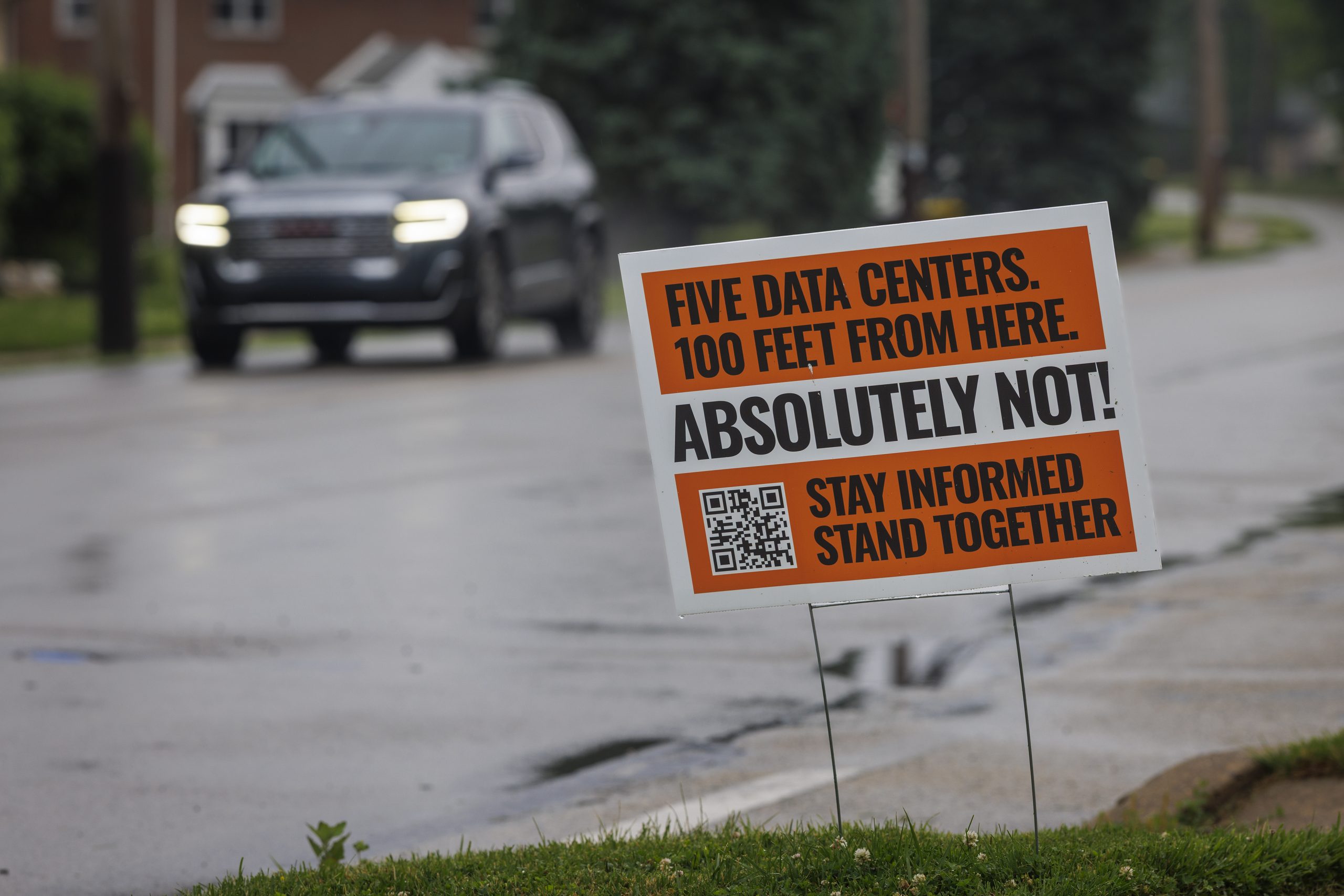
    Lawn sign along Crooked Lane in King of Prussia, Wednesday, May 27, 2026. Some residents are standing in opposition to building a data center in their community.Alejandro A. Alvarez / Staff Photographer

    The state’s current tax incentive for data center development is projected to cost Pennsylvania nearly $2 billion in lost revenue over the next five years.

    The current benefit was approved by the legislature in 2021. Developers who generate a certain dollar value of investment are exempt from the state sales tax rate of 6% for equipment, including materials used to construct the data center building.

    According to a February report from the state, 12 projects currently receive the exemption.

    Proponents of the tax break have said it helps keep Pennsylvania economically competitive. Opponents say such a benefit is no longer necessary for an industry that is expanding rapidly.

    “I am not going to get into hypotheticals,” Shapiro said Tuesday when asked whether he would sign a bill that would eliminate the tax benefit, something industry groups have loudly opposed.

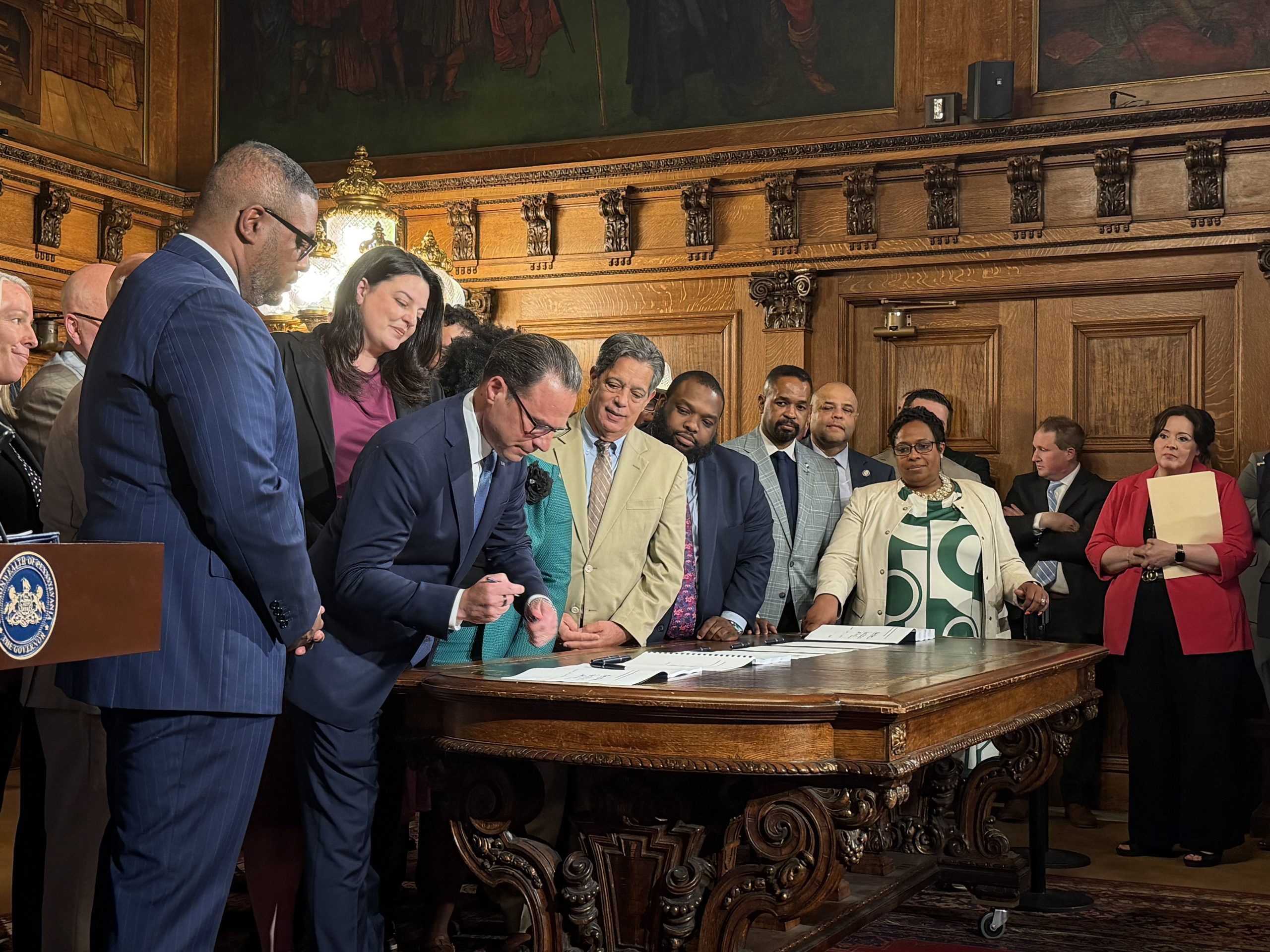
    Gov. Josh Shapiro, flanked by fellow state Democrats, signs the 2026-2027 Pennsylvania state budget in Harrisburg, Pa. on Sunday, July 12, 2026.Gillian McGoldrick / Staff

    Shapiro has championed his proposal for data centers, which incentivizes tax breaks for projects that adhere to a series of requirements. He has not publicly endorsed other data center regulation bills passed by the Democratic-controlled House. The governor’s plan passed the House in June with a vote of 134-68, but was not put up for a vote in the Republican-controlled Senate.

    And as public opinion has soured on data center development, lawmakers in Harrisburg have become more skeptical. This year, all but five Pennsylvania state legislators expressed support for bills that would remove tax breaks for data centers.

    According to an Inquirer review, 197 out of 202 House members voted for a bill that would have repealed the tax benefit. In the Senate, 44 out of 50 members voted in favor of a bill that included a provision to eliminate the tax exemption. The remaining six senators expressed support in interviews for getting rid of the tax break, though they said they voted against the bill because of unrelated provisions included within the legislation, including an expansion of the Educational Improvement Tax Credit Program.

    Though the state’s final budget took no action on the tax exemption, it included a provision requiring data centers with electric outputs larger than 10 megawatts to submit information about their energy and water usage to the state.

    Several other data center regulations that received bipartisan support in recent weeks were also absent from the final spending package, including attempts to enact a local or statewide moratorium on new development.

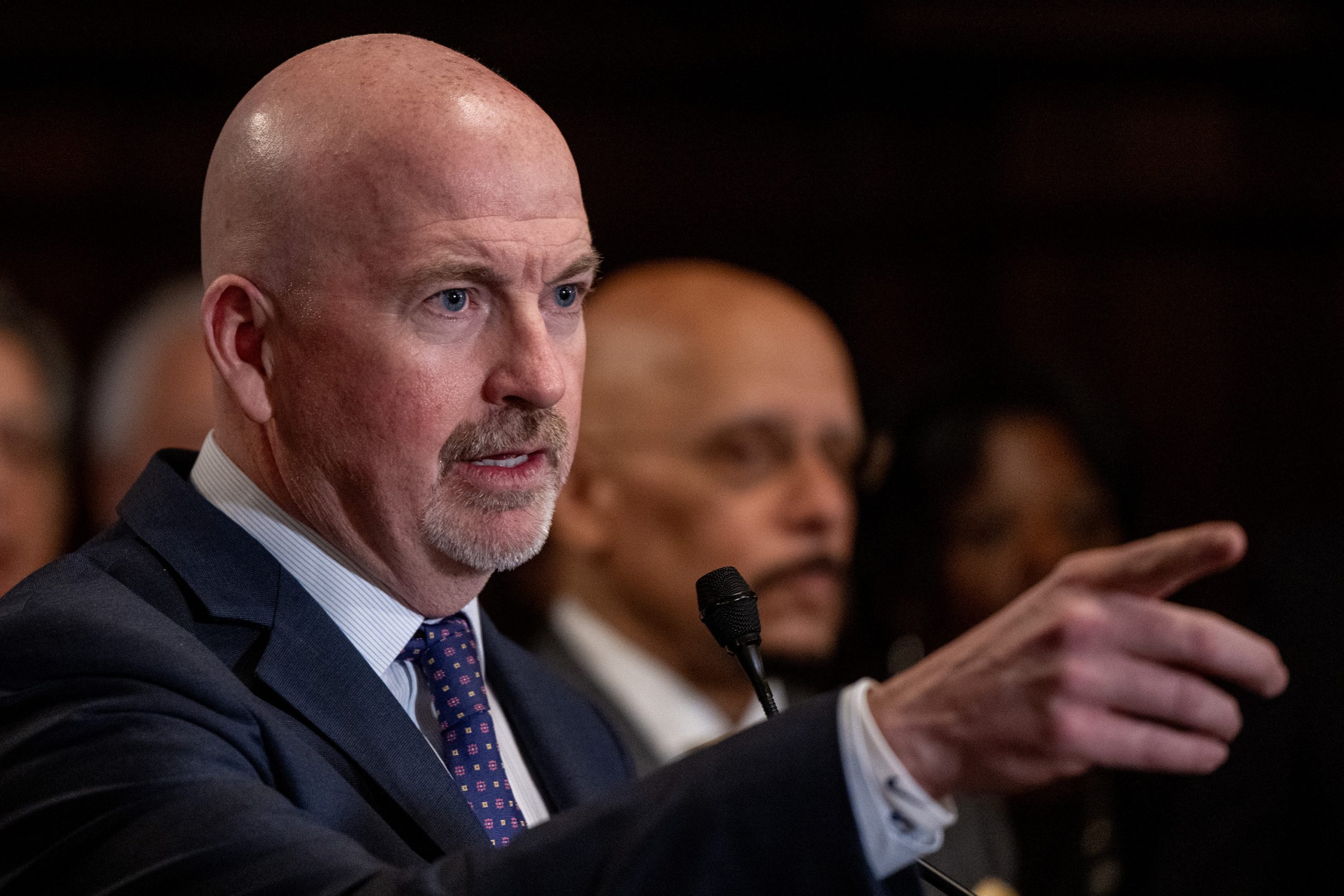
    State Senate Majority Leader Joe Pittman (R., Indiana) during a press conference at the Capitol in Harrisburg Feb. 3, 2026.Tom Gralish / Staff Photographer

    House Democrats and Senate Republicans were quick to blame each other for failing to reach a deal on removing the tax exemption.

    During separate news conferences after the budget passed, Senate Majority Leader Joe Pittman (R., Indiana) and House Majority Leader Matt Bradford (D., Montgomery) each said it was the other party’s fault that a tax benefit repeal was left out.

    Pittman said that Democrats “shredded” a Republican-backed bill into “something that nobody could recognize,” adding in an email that Senate Republicans would also “continue to examine” the proposal backed by Shapiro.

    Bradford, placing the blame on Pittman, said he is “obviously unbelievably disappointed by the Republican leader in the Senate stating that he has no interest in doing anything on data centers,” adding that he was proud of the state House for advancing a number of data center regulation proposals.

    Beth Rementer, a spokesperson for the House Democrats, said in a statement that “Senate Republicans still have an opportunity outside the budget negotiation process to vote on all the bills we passed to hold big tech accountable.”

    State Rep. Matt Bradford (D., Montgomery County) during a press conference at the Capitol in Harrisburg Feb. 3, 2026.Tom Gralish / Staff Photographer

    The Pennsylvania Chamber of Business and Industry and the Pittsburgh Building Trades Council lobbied legislators to keep the tax break. In a June memo to state House members, the Pennsylvania chamber wrote that a repeal of the tax benefit “threatens to place Pennsylvania at a competitive disadvantage and sends a troubling signal to current and prospective investors that the Commonwealth is willing to change the rules after the fact.”

    The legislature quietly deferred action on other topics, like funding mass transit and regulating skill games, as part of this year’s budget negotiations. But the data center debate spilled into the public arena.

    In an interview, State Sen. Katie Muth (D., Montgomery) — one of four senators who voted against approving the original tax exemption in 2021 — said she suspected the legislative back-and-forth about the tax break gave lawmakers a chance to record their vote on a hot-button issue among their constituents.

    She said that many legislators who voted to repeal the tax break did so for “show, so everybody can send out mailers.” In addition to Shapiro, half the state Senate and all members of the state House are up for election in November.

    Lawmakers could revisit the topic come fall when they reconvene. And Shapiro said it is on his agenda, too.

    “I think the legislature should have acted,” Shapiro said. “Given the fact that the legislature refuses to act, we’re going to look at our executive authority and determine what the best steps are.”

    Ethan Young is an intern with the Pennsylvania Legislative Correspondents’ Association. He can be reached at ethanmyoung@gmail.com.

  • Utz, the Pa. snack maker, is going private again as part of $2.9 billion deal

    Utz, the Pa. snack maker, is going private again as part of $2.9 billion deal

    Six years after going public, Utz Brands, the Pennsylvania producer of potato chips, pretzels, and other snacks, is set to become a private company again in a $2.9 billion deal with a German acquirer.

    When the latest deal is done, Utz’s founding families, the Rices and Lissettes, will own 50% of the company, and Intersnack Group, a snack maker in Europe and the Pacific, will own the other half, according to a Tuesday news release.

    “Intersnack shares our vision for Utz, and their marketing, manufacturing, and technology capabilities will be invaluable as we continue to invest in our brands,” Utz CEO Howard Friedman said in a statement.

    Since 1921, Utz has produced its trademark chips and other snacks from Hanover, York County, about 120 miles west of Philadelphia. Today, Utz also makes Zapp’s kettle chips, Jax cheese curls, On The Border tortilla chips and dips, and TGI Fridays bagged snacks.

    Utz still makes chips at its original Hanover plant, as well as at a network of facilities nationwide. Its snacks are distributed to grocery stories, convenience stores, and restaurants across the country.

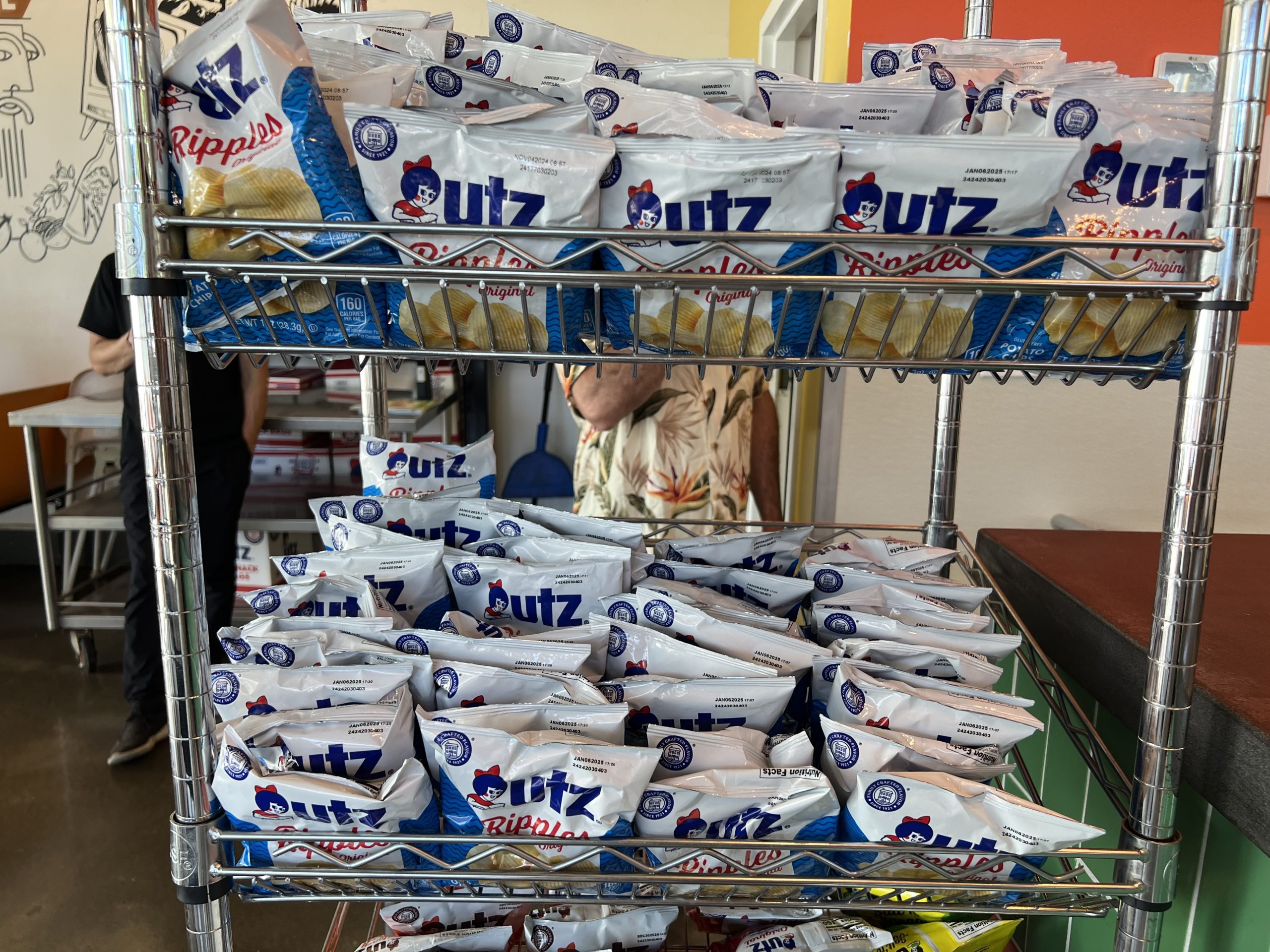
    A display of Utz chip packets at Earl’s in Kaimuki, Hawaii.Kiki Aranita

    The company generated about $1.4 billion in net sales in 2025, a slight increase from the prior year, according to earnings reports.

    Intersnack plans to pay $14.25 per share in cash for all publicly traded Utz stock, according to the release, and to finance the deal with a combination of cash, financing, and rollover and reinvestment from the Rice and Lissette families. Utz stock surged after the deal was announced Tuesday.

    “We have long admired Utz’s brands, its heritage and the strength of its team,” Johan van Winkel, executive chairman of Intersnack Group, said in a statement. “We see a tremendous opportunity to partner and build on Utz’s strong foundation and help shape the future of snacking in North America.”

    The transaction is expected to close later this year, according to Tuesday’s news release. When it does, Dylan Lissette, who married into the Utz family, would become Utz executive chair.

    The deal would take Utz off the New York Stock Exchange and make it no longer required to publicly disclose its earnings.

    Utz became a publicly traded company in 2020 in a merger that valued the company at more than $1 billion.

    By going private again, Utz would join its longtime competitor, Herr’s, a fellow family-owned snack-maker based in Nottingham, Chester County.