An Idaho man scammed Pennsylvania residents and businesses into paying for bogus spotted lanternfly containment training and permitting, according to a newly filed lawsuit from the state attorney general’s office.
Kevin Wardell and his company Diverse Solutions LLC allegedly operated the scheme under the banner of the “Spotted Lanternfly Commission” between last year and this year, sending deceptive, official-looking letters to at least 80 residents. The letters threatened recipients with civil and criminal penalties if they did not comply with the training, according to the lawsuit, which was filed in Dauphin County Court this week.
According to the filing, the letter included a logo that was designed to look like the Great Seal of the United States, and referenced an “order by the Department of Agriculture” that “required compliance.” All the targets had to do, the letter said, was pay for the permitting at a website allegedly operated by Wardell.
At least 80 Pennsylvania residents and businesses received the correspondence, but it was not immediately clear how many paid. The lawsuit alleges “numerous businesses” were alarmed by the letter, and added that “there may be consumers” who did not contact authorities.
“Pennsylvania is working hard to stop the spread of invasive species such as spotted lanternflies, but they aren’t the only pests that are harming Pennsylvanians,” Attorney General Dave Sunday said in a statement. “Scammers peddling fraudulent trainings and fake permits do not help anyone keep their crops safe from this destructive species.”
The Keystone State has a quarantine related to the insects active in most counties, and businesses moving products into or within those areas are required to be trained and permitted, according to Penn State Extension. But the permitting and training are offered free by the Pennsylvania Department of Agriculture and Penn State Extension.
Wardell, the lawsuit alleges, charged $59 to $139 for his fraudulent training and permitting service. The trainings offered, the attorney general’s office said, consisted of three videos totaling seven minutes combined, and featured Wardell himself speaking generally about spotted lanternflies without providing information about preventing their spread. The legitimate training runs about three hours.
The lawsuit alleges Wardell had no authorization from the state to offer the trainings, and could not issue legitimate permits. In doing so, Sunday’s office said, Wardell violated the Unfair Trade Practices and Consumer Protection Law.
The attorney general is asking the court to bar Wardell and Diverse Solutions from doing business in Pennsylvania and to order restitution for victims who paid for the fraudulent permits and training.
Police in Bucks County are asking for the public’s help in identifying the perpetrator who vandalized a golf course with swastikas and an antisemitic slur near a Jewish school.
The Yardley Borough Police Department on Monday said the vandalism occurred between Friday at 8 p.m. and Saturday at 7 a.m.
“During this time, portions of the golf course greens were intentionally damaged with racial slurs and swastika symbols carved into the turf,” police said.
“This type of behavior is not only a criminal act, but it is also hateful, offensive, and has no place in our community. The Yardley Borough Police Department is committed to thoroughly investigating this incident and holding those responsible accountable,” the police said.
Anyone with information about what happened can contact the Yardley police at 215-493-2782 and ask for Officer Alex P. Bires at Ext. 411.
“Despicable behavior!” Yardley Councilmember David Appelbaum wrote on Facebook as he shared the Yardley police post about the vandalism.
The incident happened near the Abrams Hebrew Academy.
Rabbi Ira Budow said police came to the school on Monday to review surveillance video, but the school’s cameras had not recorded the perpetrator.
Budow said he has been director for 46 years and the school has never experienced antisemitism from the Yardley community.
Nonetheless, Budow said, the academy has spent $150,000 a year on beefed-up security since the Oct. 7, 2023, Hamas attack on Israel that sparked the brutal conflict in Gaza.
John Shapcott, director of golf and club operations at the Yardley Country Club, on Wednesday said members were told in a notice about the vandalism.
“Two swastikas were scratched into the 10th green, and a racial slur was written in the greenside bunker on the 4th hole,” the country club told members.
The club immediately contacted police, notified Abrams Hebrew Academy, and promptly repaired the damage, the statement to members said.
“Yardley Country Club unequivocally condemns hate speech, fascism, antisemitism, and all forms of hateful conduct. Such acts are reprehensible, have no place at the Club or in our community, and will not be tolerated. The Club will continue to cooperate fully with local authorities as they investigate the incident and work to prevent similar acts,” the statement said.
Adrienne King, president of the NAACP Bucks County Branch 2253B, said in an emailed statement Tuesday night that her organization “was deeply disturbed to learn of the racist and antisemitic vandalism discovered at the Yardley Country Club. Swastikas and racial slurs are not simply acts of vandalism. They carry a painful history and send a message of hate and intimidation that can impact an entire community.”
King said the incident was “especially troubling given other recent incidents here in Bucks County. Just last week, our Branch spoke out following alleged threats containing racist and anti-Muslim language directed toward a historically Black church in our county.”
She added: “We cannot become numb to expressions of hate simply because there is so much happening around us. Each time they occur, we have a responsibility to name them, condemn them and stand with the communities affected.”
The Pennsylvania Human Relations Commission said it was offering its “unwavering support” to Abrams Hebrew Academy.
The commission “is also grateful to the Yardley Borough Police for their swift action to investigate this incident as a potential hate crime and their request for community assistance are encouraging steps toward accountability. We urge anyone with information to come forward, as public cooperation is critical to identifying those responsible and ensuring justice is served.”
The American Jewish Committee Philadelphia/Southern N.J. said in a statement on Wednesday that the antisemitic vandalism was “deeply disturbing and unacceptable.”
The organization continued: “As the Jewish community prepares to mark the third anniversary of the October 7 terrorist attacks, many Jews are already grappling with an increasingly hostile environment and are feeling especially vulnerable and concerned for their safety.”
The committee added: “This is a moment for people of good conscience to stand together in rejecting hate in all its forms. We all have a responsibility to ensure that our communities remain safe, welcoming, and inclusive.”
The leader of a Philadelphia offshoot of the Black Panther Party for Self-Defense was charged with a firearms crime for carrying a concealed gun without a permit in the city of Chester — and the group’s growing visibility in the Delaware County community is sparking a clash with the city’s mayor.
Paul Birdsong, who founded Philly’s Panther group, was arrested this summer during what the group says was an armed community patrol of Chester’s streets.
Birdsong had been carrying two holstered handguns, one of which police said was partially obstructed by his waistband and constituted carrying a concealed weapon, according to the affidavit of probable cause for his arrest.
Birdsong, 40, is out on bail and appeared earlier this month in Magisterial District Court, where a judge ruled he should stand trial for that crime.
The judge dismissed two counts of disorderly conduct and one count of resisting arrest stemming from the July 11 incident, court records show.
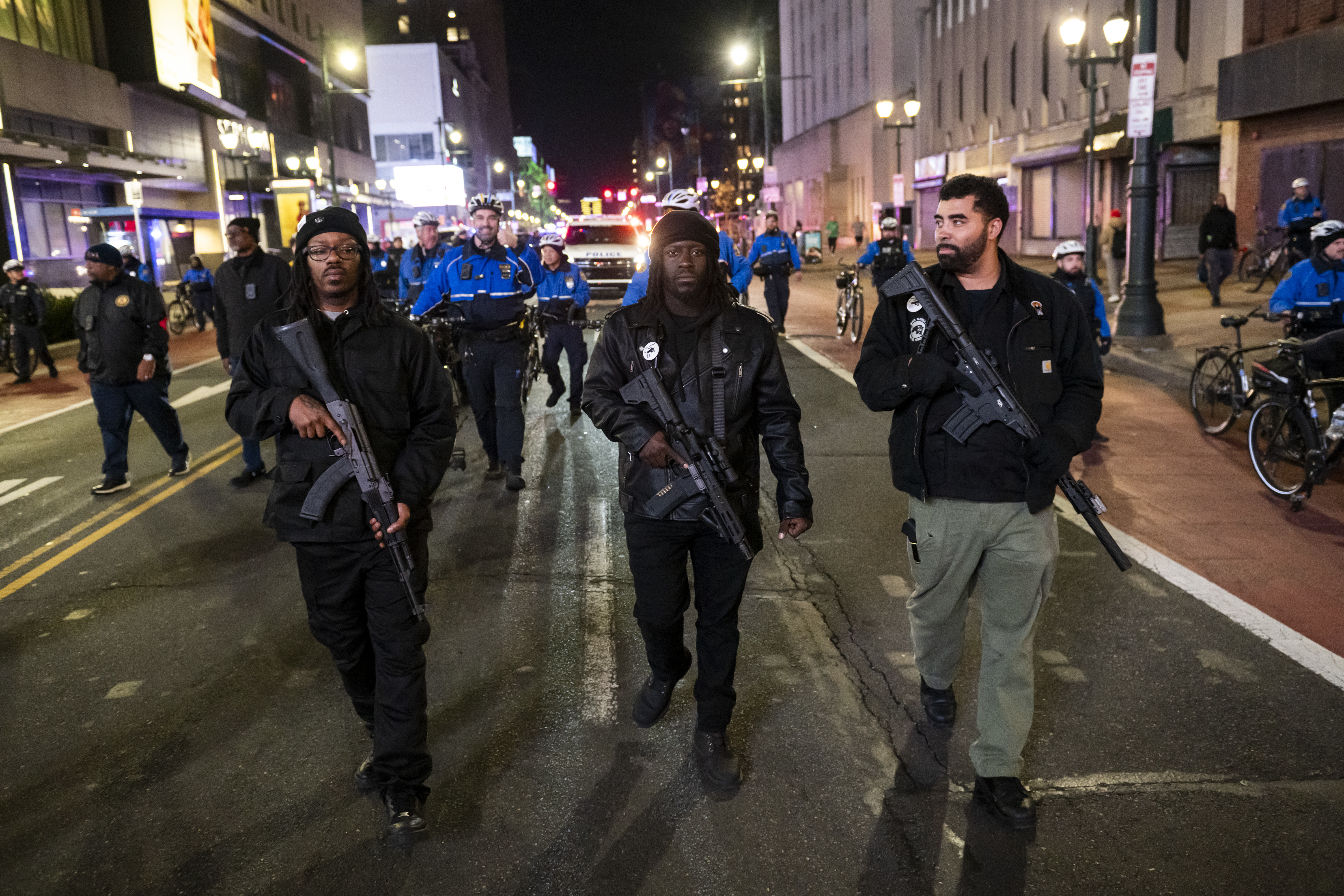
Birdsong’s arrest, as well as the arrest of another Panthers member in Chester in August, marked the latest run-in between police and the armed citizens group, which is styled after the 1960s political and militant organization. The Panthers first made headlines this winter during anti-ICE protests during which they carried assault-style weapons in Center City.
Panthers members say they are Second Amendment advocates and regularly conduct patrols in the name of public safety. They say the guns are not meant to intimidate, but to deter crime and encourage responsible firearms ownership. The group also holds weekly giveaways of food and essential supplies for those in need.
To address the Panthers’ presence, Roots and members of Chester City Council met with Birdsong and other members in a closed-door meeting on Tuesday.
Councilmembers appeared to have left the meeting with supportive views of the group. But tensions flared when Roots grew frustrated during talks and abruptly left the gathering early, according to Birdsong.
Roots declined to comment Tuesday, saying only that he had not been aware of the Panther members’ arrests. He did not immediately respond to an additional request for comment Wednesday.
A spokesperson for DOJ did not return a request for comment on the status of the investigation. A police spokesperson referred The Inquirer to the city’s law department, which declined to comment.
After the restrictions in Philadelphia, Panthers became active in Chester, where members have patrolled in the past.
In July, Birdsong was armed when he was stopped by a police officer near Barclay and West 5th Streets, according to the affidavit of probable cause for his arrest.
The officer said that he recognized Birdsong from a past encounter in Chester, and that he stopped him after seeing one of his handguns holstered “inside his right pants pocket with the majority of the firearm being concealed from view,” the document said.
Birdsong questioned why he was stopped and began to record the interaction, the affidavit said. He began to “curse and yell” when additional officers arrived, and he was detained, the document said.
In an interview this week, Birdsong disputed the officer’s account. He said that the gun was clearly visible and that he believes the enforcement was racially motivated.
“They’re arresting us as an effort on their part to bully us, to scare us,” he said.
Carrying a firearm in the open without a license is legal in Pennsylvania — but not in Philadelphia, where a license is required to carry either open or concealed.
Birdsong’s lawyer, Lyandra Retacco, said the matter would be resolved in court.
The July incident was not the only time Panthers have clashed with Chester police.
On Aug. 28, member William Ozah was charged with disorderly conduct and evading arrest after police said he ran from an officer who attempted to stop him for having a knife protruding from his pants pocket, according to the affidavit of probable cause for his arrest.
The officer used a Taser to subdue Ozah, the document said. During the chase, the officer said, Ozah tried to reach into a satchel, which he believed concealed a firearm.
After detaining Ozah, officers recovered a knife and a Bryna SD pepper-ball pistol — a less-lethal firearm that uses compressed gas to shoot projectiles filled with a chemical irritant.
He was held for court on both charges, court records show.
Meanwhile, Panthers have continued their Chester presence.
In addition to armed patrols, the group is handing out informational pamphlets to those curious about the group’s mission: to “protect and defend ourselves and our beautiful Black people,” it said.
The group had arrived, the pamphlet said, because “people reached out to us for help.”
This article has been updated to reflect comments made by Birdsong’s attorney.
After being detained by Immigration and Customs Enforcement just one week after his wedding this summer, Chester County resident Nelson Contreras-Gelves was unexpectedly released earlier this month.
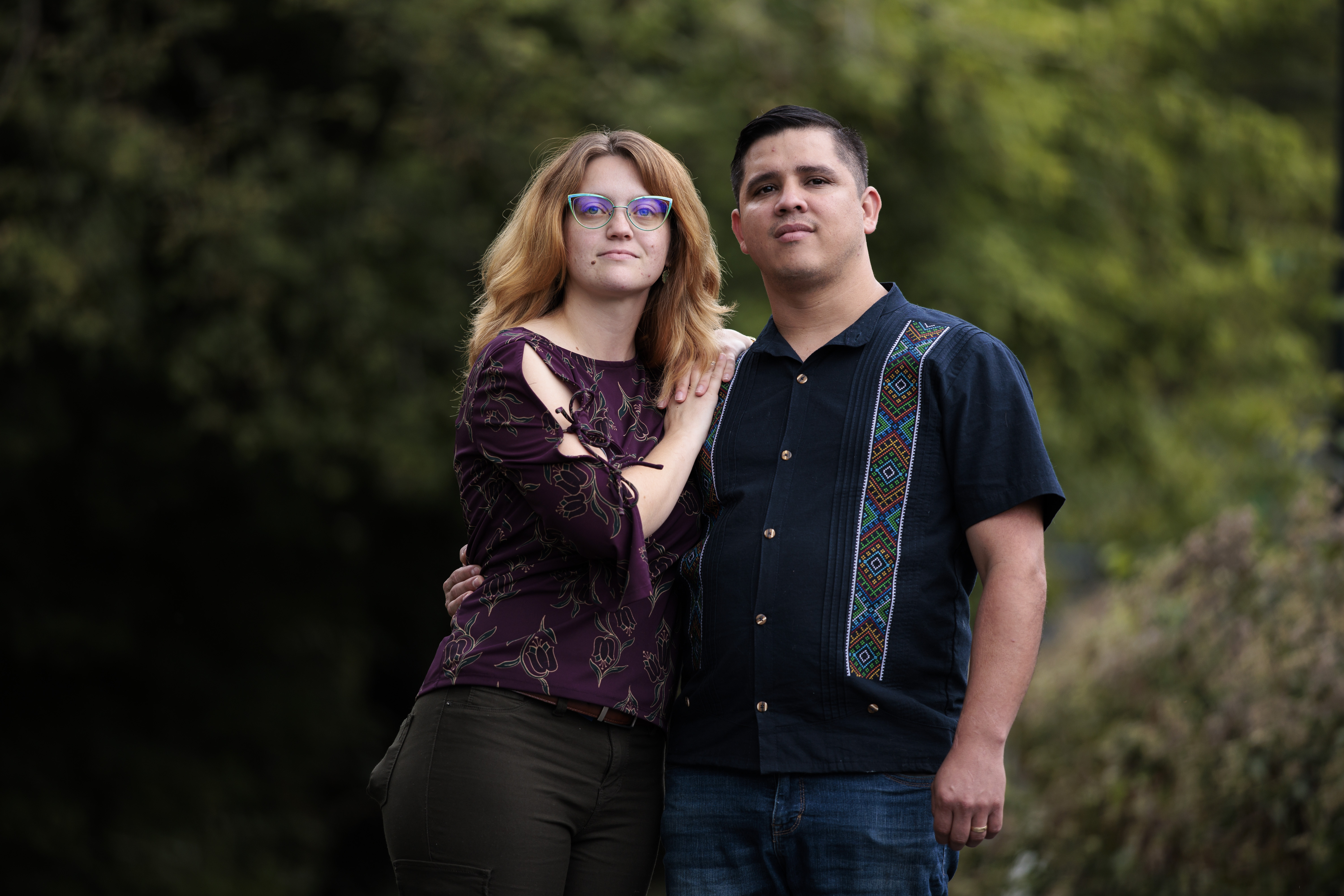
The 35-year-old has lived in the U.S. since 2022, when he came from his native Venezuela seeking asylum. He and his wife, Ariel Whaley, feel “incredibly lucky” that he was released from federal custody and will now have a chance to plead his case in court.
But life hasn’t returned to normal for the couple, who met three years ago through nonprofit Mighty Writers, which has an outpost in Toughkenamon.
Though Contreras-Gelves is now under constant surveillance, he and Whaley are using what they learned to help others navigating the system.
The county is planning to use $400,000 from a state grant to upgrade its 911 phone system, including by improving reliability and cybersecurity.
Chester County Household Hazardous Waste is hosting an event Sunday at Downingtown High School West where residents can dispose of unwanted items like certain paints and chemicals. Registration is required.
Charles P. Baker III, the cofounder of Baker Industries, which has an office in Malvern, died earlier this month of congestive heart failure at the age of 101. The Army veteran and national squash champion’s former company employs disabled individuals, recent parolees, people in recovery, as well as those facing homelessness.
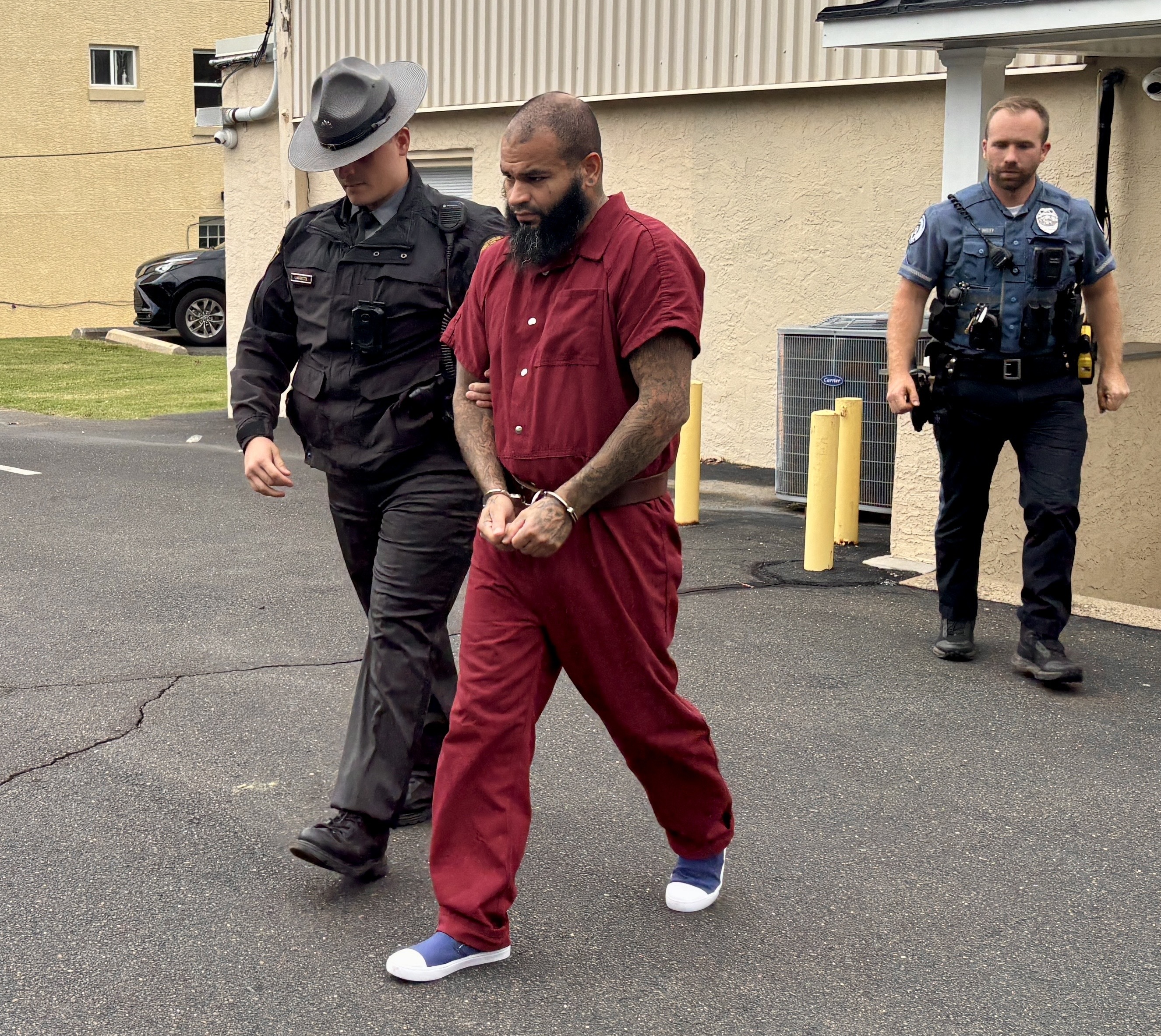
Rogie Legaspi, a 56-year-old Baltimore teacher, has been charged by the Chester County District Attorney’s office with child trafficking, involuntary deviate sexual intercourse, and statutory sexual assault for allegedly sexually assaulting a teenager in Parkesburg.
A 4-year-old died last week after being struck by a tractor trailer while walking along Route 41 in Highland Township.
London Grove Township has filled its two board of supervisor vacancies. Kristen Barnello and Todd Pawlowski will serve in the roles until the end of 2027.
A new cat rescue spot, Calla’s Kitty Kingdom, is opening Friday. The Phoenixville spot is a collaboration between Calla’s Critter Rescue, Maddie’s Castle, and BarkHop Studio and will be located within pet supply store Maddie’s Castle at 178 Bridge St.
This weekend is Phoenixville’s last PXV Inside Out for the season.
An unnamed staff member at Oxford Area High School is under investigation by state police for corruption of minors for an alleged inappropriate relationship with a 17-year-old female student. In a statement, the district said it’s cooperating with law enforcement. The staff member is also an assistant football coach at Kennett High School, which also said it’s cooperating with authorities.
On Saturday, Kennett Consolidated School District is hosting a grand opening and ribbon cutting for New Garden Elementary School, which made its debut last month.
Owen J. Roberts School District is accepting board member applications after Rita Pederson tendered her resignation, effective as of Monday.
Bryn Mawr’s The Bakery House opened its second location over the weekend at 35 W. Lancaster Ave. in Paoli. It sells a selection of treats such as custom cakes, pastries, and pies, plus the viral dot cakes.
West Chester Cooperative, which opened this summer, is hosting a grand opening on Friday.
🎳 Things to do
🏚️ Pennhurst Asylum: The haunted attraction is open for the season. ⏰ Fridays, Saturdays, and Sundays through Nov. 7, times vary 💵 Prices vary 📍 Pennhurst Asylum, Spring City
🏡 Chester County Day: The 85th annual event focuses on the northwest section of the county, where visitors can tour homes and barns. ⏰ Saturday, Oct. 3, 10 a.m.-5 p.m. 💵 Prices vary; tickets must be purchased at satellite locations 📍 Chester County
🪕 Malvern Porchfest: Catch live musical performances from porches throughout the borough. ⏰ Saturday, Oct. 3, noon-6 p.m. 💵 Free 📍 Throughout Malvern
🎃 Fall Festival at Yeager’s Farm: The two-day event includes a corn maze, pumpkin picking, yard games, and hayrides. ⏰ Saturday, Oct. 3 and Sunday, Oct. 4, 11 a.m.-3 p.m. 💵 Pay as you go 📍 Yeager’s Farm, Phoenixville
🍻 Oktoberfest: Sip specially priced beers and ciders, nosh on fall-themed appetizers, try your hand at a stein-holding contest, and hear live music at participating restaurants. ⏰ Saturday, Oct. 3, times vary 💵 Pay as you go 📍 Downtown West Chester
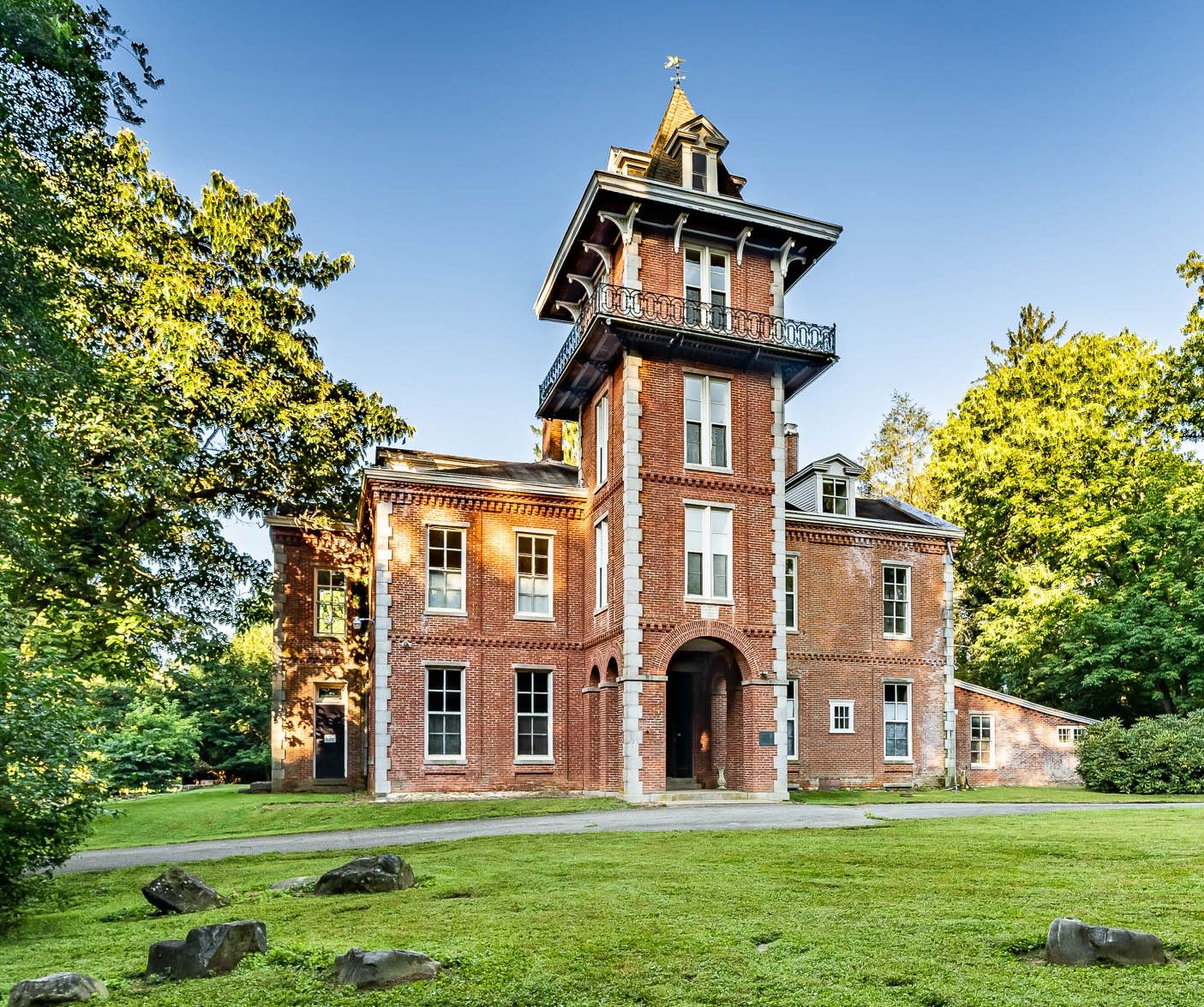
Built in the mid-1800s for travel writer and diplomat Bayard Taylor, Cedarcroft has undergone a number of updates while staying true to its architectural roots. The Kennett Square home, which is listed on the National Register of Historic Places, has seven bedrooms, living and dining rooms, a billiards room, and, most notably, a five-story tower in the Italianate style.
By submitting your written, visual, and/or audio contributions, you agree to The Inquirer’s Terms of Use, including the grant of rights in Section 10.
This suburban content is produced with support from the Leslie Miller and Richard Worley Foundation and The Lenfest Institute for Journalism. Editorial content is created independently of the project donors. Gifts to support The Inquirer’s high-impact journalism can be made at inquirer.com/donate. A list of Lenfest Institute donors can be found at lenfestinstitute.org/supporters.
After being boxed in by two cars, rear-ended by a U-Haul truck, and punched in the face through his car’s open window, a man driving to Philadelphia on I-76 said he heard Samuel Marquez say a few words that filled him with dread.
“Go get my knife.”
The man testified Tuesday at Marquez’s preliminary hearing that, fearing for his life, he crawled out the window of his damaged Mercedes-Benz and called 911 from a median on the Blue Route in Lower Merion after taking the exit from I-76.
And while trying to read the license plate of one of the vehicles involved in the four-car crash Sept. 6, the man said, he felt a blow to his side. At first, he said, he thought Marquez had punched him. Then he saw the blood.
Marquez, 40, of Kensington, was held for trial on charges of aggravated assault and related crimes in the alleged road-rage stabbing, which left the victim with a 2-inch wound to his lower abdomen, as well as a shallow slash to his left arm.
Marquez’s attorney, Andrew Levin, said afterward that, given the chaotic nature of the fight on the highway, it was unclear who held the knife that stabbed the victim: The melee involved Marquez, as well as his nephew, his girlfriend, and another male relative.
“You have multiple vehicles involved, and what I believe is a mutual physical altercation,” Levin said. “It’s clear that the complaining witness got stabbed. I don’t think it’s clear by who.”
Assistant District Attorney Robert George said the evidence was clear that Marquez was the one holding the knife, which investigators later recovered, still covered in the victim’s blood, from behind a Sunoco where he parked the U-Haul.
That truck was part of a caravan of vehicles, including a Toyota Sienna minivan and an Acura SUV, whose drivers were heading to Philadelphia to help Marquez move to the city from Reading, according to the affidavit of probable cause for his arrest.
During the trip, a minivan driven by Marquez’s girlfriend had engine trouble, and the group pulled onto the highway’s shoulder to fix it, the affidavit said.
When they merged back onto the road, they cut closely in front of a Mercedes-Benz, the driver of which told police he honked his horn and drove around the group.
The man testified Tuesday that Marquez was driving aggressively, veering into his lane and gesturing at him as he drove. The other vehicles connected to Marquez tried to pass him, he said, but he did not allow them to do so. He also brake-checked the U-Haul to get it off his tail.
“Wouldn’t you, if you thought something bad was going to happen?” the man testified.
Eventually, the man took the exit onto a ramp connecting I-76 with I-476, known as the Blue Route. As he did so, the U-Haul intentionally rammed his vehicle, while the minivan and SUV drove past and stopped in front of him, he said.
The fight, and eventual stabbing, broke out afterward, and Marquez fled in the U-Haul.
He was later arrested at Memorial Park in Bryn Mawr. The knife police believe he used in the stabbing was found nearby.
At the time of the highway stabbing, Marquez had an active arrest warrant out of Delaware County in connection with the gunpoint robbery of a Royal Farms gas station in Upper Chichester in November 2022.
In that case, Marquez plotted the robbery with Elizabeth Serrano, his girlfriend, who worked at the store as a cashier, according to the affidavit of probable cause for his arrest.
Serrano pleaded guilty to conspiracy to commit robbery and a related crime in 2024, and served a year in county jail, court records show.
Marquez remained in custody in the road-rage case with bail set at $1 million. He will be arraigned in Montgomery County Court in November.
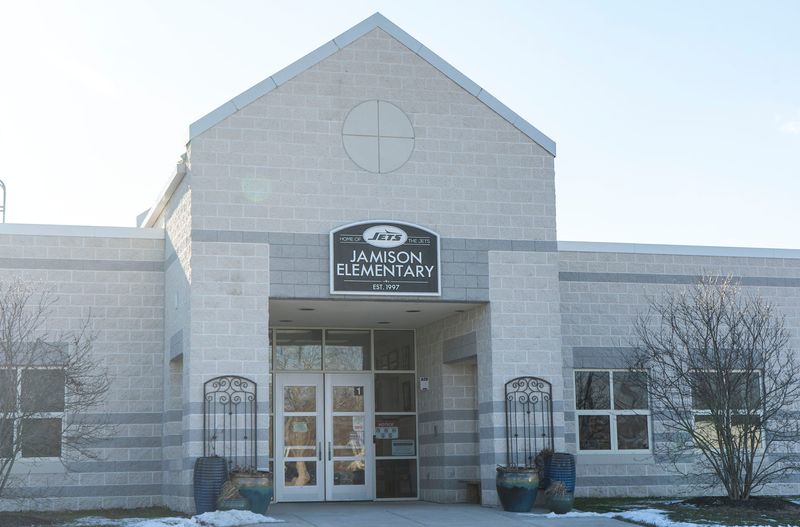
The parents of a nonverbal autistic 10-year-old who was among the students the Central Bucks School District has said were abused in an elementary school classroom in 2024 have filed a lawsuit against the district and nearly a dozen former and current employees.
James Pepper, a former school board member, and his wife, Lisa Pepper, say their son’s “horrific abuses” at Jamison Elementary School amounted to a “calculated pattern of debasement” that district and school leadership failed to report as part of a “concerted cover-up.”
The bulk of the 92-page complaint, filed Tuesday in federal court in Philadelphia, outlines events that began in fall 2024, when a special education aide reported the abuse. Her allegations rocked Pennsylvania’s third-largest district, spurring an investigation by a disability rights watchdog, a public outcry, and a series of terminations that included the district’s superintendent.
Now, the Peppers are suing Central Bucks, as well as former Superintendent Steven Yanni, former Jamison principal David Heineman, other former district administrators, the special education teacher and educational assistant accused of misconduct, and teachers union representatives.
The district continued to endanger the child after learning about the abuse, and the alleged “cover-up” was motivated by James Pepper’s position as a board member and history of advocacy, the suit says.
“This case involves an extraordinary betrayal of a child who depended entirely on the adults around him for his safety, education, and care,” M. Stewart Ryan, the attorney representing the parents, said in a statement.
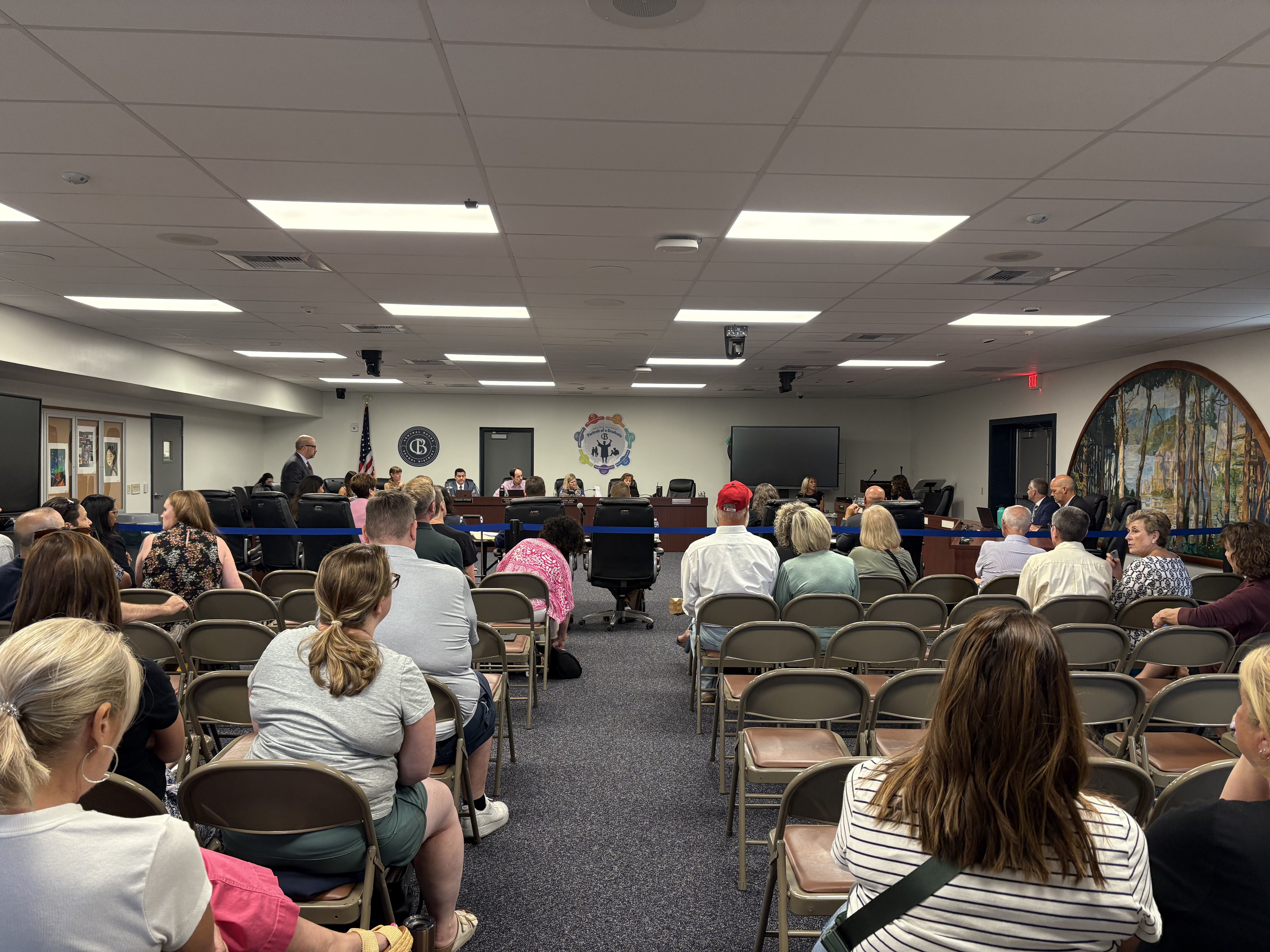
Central Bucks spokesperson Michael Petitti said in a statement that the district “has acknowledged what occurred” in that classroom.
Petitti said the district “took the actions within its power” to discipline employees, including firing Yanni, Heineman, and the former special education director, Alyssa Wright. It also “fully litigated” terminations of the teacher and educational assistant, Petitti said, and “implemented significant changes at Jamison Elementary School to make sure that nothing like this ever happens again.”
“The district understands that none of these actions can change what happened,” Petitti said.
The allegations
District officials learned about the allegations in November 2024 from Alyssa Kline, who was assigned as the one-on-one aide for the Peppers’ child.
Kline said special education teacher Gabrielle McDaniel and educational assistant Rachel Aussprung had improperly restrained and punished the Peppers’ child, among other forms of abuse.
The abuse included “nearly 3,000 illegal restraints … water restriction, corporal punishment, forced exposure to nudity and sexual self-stimulation, screaming, mocking, belittling, and concealment of a head injury in a series of events that were intended to, and indeed did, dehumanize” the boy, the lawsuit says.
The nonverbal child could not share his experience in school, and his parents were not initially informed of the accusations, the suit says. The district reassigned Kline days after she made the allegations, telling the Peppers the reason for the change was a “personal conflict” between the aide and classroom staff, according to the complaint.
The Peppers learned about the allegations of abuse only in December, when Kline reached out to share what she had reported with the parents, the suit says.But in an official letter that month, the district said its investigation found “no evidence of abuse.”
Members of the public watch the joint termination hearing of Central Bucks Superintendent Steven Yanni and Jamison Elementary School Principal David Heineman in August 2025.Fallon Roth / Staff
School board members initially stood by district officials, who noted police had not found any abuse. But that changed in April 2025, when a report from the watchdog group Disability Rights Pennsylvania found that the teacher and assistant had illegally restrained students, creating a “reasonable likelihood of bodily injury” and likely interfering with their breathing, among other abusive behaviors.
It also faulted Yanni and other administrators for failing to adequately investigate the allegations, and accused Yanni of withholding information from police.
Yanni, now the CEO of Northwood Charter School in Philadelphia, did not respond to a request for comment.
A lawyer for Heineman did not return a request for comment. Neither did a lawyer for McDaniel and Aussprung, who have sued the district since their terminations. Wright, whose lawyer did not return a request for comment, has also sued the district, saying she was scapegoated.
The Peppers’ lawsuit says district and teachers union officials, whom Kline also informed, failed to report the abuse.
Cara Alderfer, the union president, declined to comment Tuesday.
The ‘cover-up’
The Peppers’ lawsuit alleges a sprawling cover-up that started the moment Kline made the allegations.
The accused teacher and assistant were not removed from the classroom, and the district recommended thatMcDaniel or Aussprung take the Peppers’ child to therapy sessionsafter Kline was reassigned, according to the complaint.
The district did not turn over an email outlining Kline’s allegations to Disability Rights Pennsylvania, the suit says.
Yanni and other officials “were actively engaged in a conspiracy to bury the reports of child abuse they had received,” the complaint says.
The complaint blames a few factors as motivatingthe alleged “cover-up.”
And the district was motivated to retaliate against Pepper — then the only Republican on the board — for stances he had previously taken against the district, the suit says.
The actions of the school district and its employees deprived the Peppers’ son of “safety, liberty, and bodily integrity,” the complaint says.
“It is devastating to learn that our son was treated this way by the very people we trusted to care for and protect him,” the Pepper family said in a statement. “Our son and entire family have been changed forever. This can never happen again to another child.”
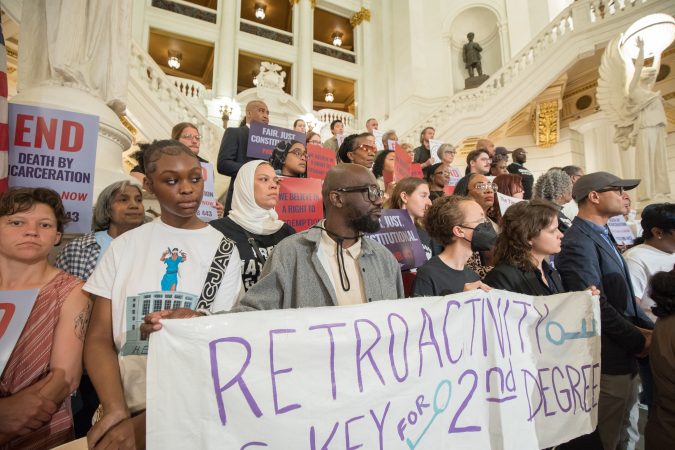
The high court will rule in the case of Jerome Coffey, a Philadelphia man convicted in a 1992 killing in which prosecutors said a group of men posing as law enforcement officers boxed in a man’s car and shot him.
The court’s decision will reach well beyond Coffey. It will settle whether roughly 1,100 people — including more than 500 convicted in Philadelphia — can ask judges for new sentences, or will remain bound by a punishment the state’s highest court has ruled unconstitutional.
In a unanimous decision in March, the justices said Pennsylvania’s mandatory life sentence for second-degree murder violates the state constitution’s ban on cruel punishments.
Second-degree murder covers killings committed during another felony — even when the defendant did not kill anyone. The high court held that judges must weigh a person’s individual role before imposing a punishment that lasts a lifetime.
But the high court did not say whether its ruling applied to people who had already been sentenced. Instead, it put the decision on hold for 120 days so the General Assembly could write a new sentencing law and, if lawmakers chose, decide the question of retroactivity themselves.
The legislature did neither, as measures introduced in both the Republican-controlled Senate and Democratic-controlled House failed to advance.
Coffey was convicted in 1994 in the death of Johnny Moss two years earlier. According to court records, three men got out of two cars that had pinned Moss’ vehicle near 24th and Thompson Streets in North Philadelphia. One man shouted “task force” and pulled Moss from his car.
Moss was shot in the head. His brother, who was standing beside the car, was shot in the arm.
At trial, prosecutors said Coffey was the man who shouted “task force,” while Coffey’s mother and sister testified that he was at home that night. The jury convicted him of second-degree murder, conspiracy, and related crimes. It acquitted his codefendant, Lee Smith, of all charges.
No physical evidence tied Coffey to the killing, his lawyers have said, and a key prosecution witness recanted before trial. The lawyers also said prosecutors withheld evidence that could have helped Coffey, but the state Superior Court rejected those contentions.
And on Tuesday, the state Supreme Court declined to review them, limiting the scope of his appeal to the sentencing question alone.
Even so, Bret Grote, the legal director of the Abolitionist Law Center, which represents Coffey, praised the court’s decision to hear the case.
“This is what those who have been serving this sentence have been waiting for,” said Grote, who also represented Derek Lee, the Pittsburgh man whose appeal of his life sentence for his second-degree murder conviction led to the court’s decision in March.
Grote said Coffey, who founded the grassroots Human Rights Coalition from prison, will be “well able to demonstrate” why the decision “should apply to people like him who need to be home with us out here in our communities.”
Because Coffey’s case began in Philadelphia, the district attorney’s office will argue for the state in his appeal. In an interview Tuesday, District Attorney Larry Krasner reiterated his support for retroactivity, saying, “We cannot have a legal system where people sit in jail for the rest of their lives for an unconstitutional sentence.”
He added that “this office, consistent with its obligation to seek justice and uphold the Constitution, will support retroactivity” in Coffey’s case.
Prosecutors elsewhere have signaled resistance, however. In August, the Pennsylvania District Attorneys Association’s communications chair, Berks County District Attorney John Adams, said prosecutors would not concede that the high court’s ruling applies retroactively without a new sentencing law.
Coffey’s case is unlikely to be resolved quickly. And in the meantime, lawmakers could still act.
Some stakeholders have predicted that legislative agreement on how to handle such cases is more likely after the Nov. 3 elections. A law that applies to people already serving the sentence could make the court’s answer moot.
But the outcome was always likely to land back with the high court without action by lawmakers, said Ben Lerner, a former Philadelphia Common Pleas Court judge and former chief defender.
“I’m not surprised,” Lerner said Tuesday. The high court, he said, was going to give the legislature “the first crack” at reforming the system. But if it failed, “the court was always going to have to step in and do what needs to be done.”
“It’s too important an issue,” he added. “Too basic a right.”
Jeff Scott, 72, formerly of Hilltown, Bucks County, longtime award-winning TV and video scriptwriter, director, and producer, former columnist and editor at the Quakertown Free Press, and green-thumb gardener, died Saturday, Sept. 19, of pulmonary fibrosis at Hunterdon Medical Center in Flemington, N.J.
Born in Philadelphia, reared in Hilltown, and a graduate of Pennridge High School, Mr. Scott turned his lifelong interest in sports, affable collegiality, and writing, reporting, and editing skills into an award-winning career as a TV and print journalist that spanned more than four decades.
For 32 years, from 1983 to 2015, Mr. Scott wrote scripts, directed talent, and produced shows for TV, film, video, radio, and DVDs. He worked for Major League Baseball Productions through Phoenix Communications from 1988 to 2015 and wrote more than 1,000 TV show scripts for ABC, NBC, ESPN, Fox, and other networks, including 176 episodes of ESPN’s Major League Baseball Magazine and 450 consecutive episodes of the popular This Week in Baseball.
His dramatic scripts detailed many memorable baseball seasons, went behind the scenes with championship teams, and shared stories about star players on and off the field. They were narrated by iconic announcers such as Mel Allen, Curt Gowdy, Bob Costas, and Harry Kalas, featured thousands of players, coaches, and managers, and earned 16 New York Emmy Awards.
Mr. Scott earned 16 New York Emmys.Courtesy of the family
Former colleagues at MLB Communications posted a video tribute to Mr. Scott on X and noted his “indelible impact” on This Week in Baseball. Buzz Brainard, a former narrator for This Week in Baseball, said on Facebook: “Honored to bring his words to life every season for 11 years.”
Earlier, from 1983 to 1988 at the old Halcyon Days Productions, Mr. Scott wrote scripts for the weekly This is the USFL for ABC and other shows about John Madden, Mike Schmidt, and other sports and entertainment notables. Sports reporter Jayson Stark said on X: “You may not know the name, Jeff Scott. But you should.”
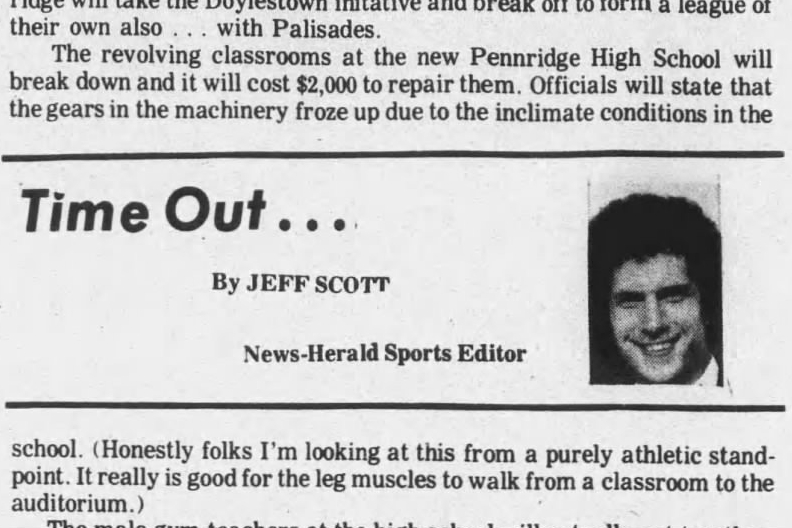
In print, Mr. Scott was a columnist and weekend magazine editor for the Free Press in the early 1980s. In the 1970s, he was sports editor and a features writer for the Perkasie News-Herald, and a part-time sports reporter for the Doylestown Intelligencer.
At the Free Press, he won awards and covered all kinds of local stories, including his publisher’s triple-bypass heart surgery. At the News-Herald, he wrote a sports column called “Time Out” and a news feature called “Know Your Community.”
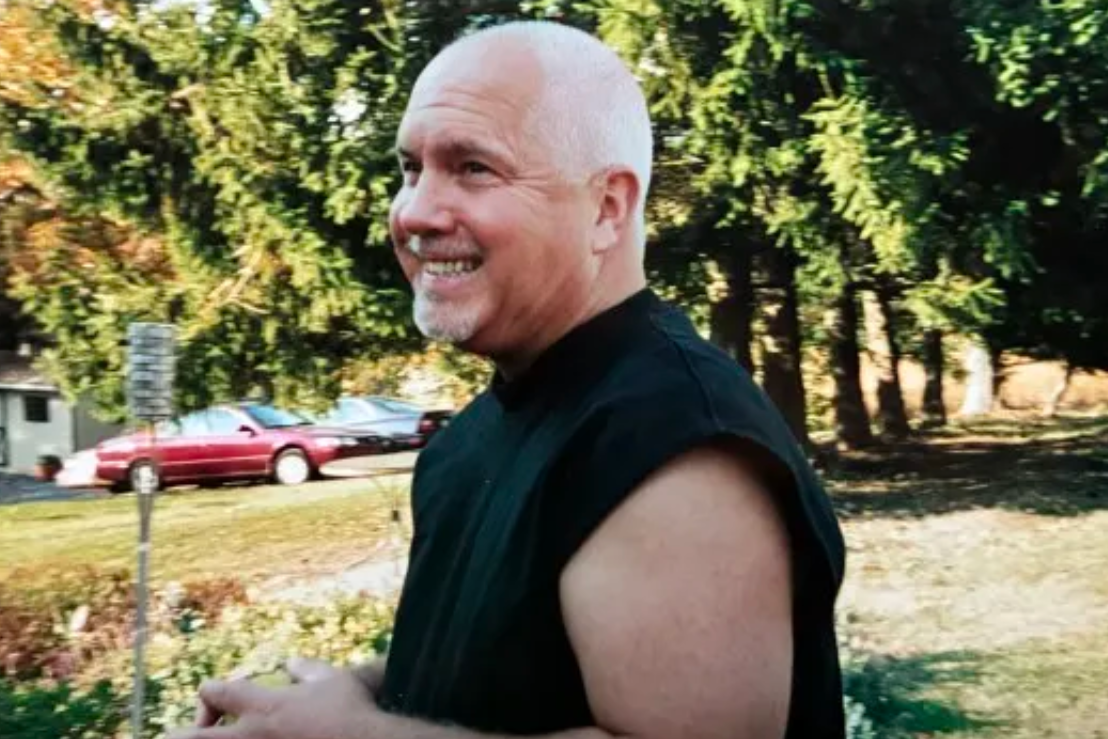
To know Mr. Scott, a friend said, “was to like him.”Courtesy of the family
In 1976, he opened a News-Herald sports story with: “Some would call it luck. Some might call it breaks. And some might even consider the fact that somebody upstairs is carrying the fate of the Pennridge football team this year. We prefer to call it pure, unadulterated hustle.”
A former Pennridge baseball player said in a tribute: “It always was a big deal when he came to our games.” A former colleague at the Free Press said: “He made me feel important, and he made sure I knew that he was my friend.”
Other former colleagues praised Mr. Scott’s “sense of humor,” “warmth and kindness,” and “quick wit that never waned” in online tributes. “To know Jeff was to like him,” longtime friend and colleague Jim Burger said. “To know him well, which I had the good fortune to do, was to love him.”
Jeffrey Llewellyn Scott was born Nov. 18, 1953. He played street hockey in Hilltown and baseball at Pennridge, and attended what is now West Chester University.
Mr. Scott wrote a sports column in Perkasie in the 1970s.Newspapers.com
After college, he drove a truck, worked as a disc jockey, and traveled across the country. He married and divorced Lorrie Greenly and Amber Hudson.
He met Lenore Homeward on vacation in Tobago, and they married in 1991 and lived in Manhattan and Pittstown, N.J. He created seven flower beds on their property and tended many flower pots. “It was like a full-time job,” his wife said.
Mr. Scott enjoyed music and followed the Phillies, Eagles, 76ers, and Flyers. “He was a homebody,” his wife said.
His niece Shanice said: “My uncle Jeff had a big heart and meant the world to me.” A longtime friend said: “The world will be a less warm and kind place without him in it.”
Mr. Scott enjoyed time with his family.Courtesy of the family
His wife said: “He was loyal, funny, humble, and compassionate. He had the ability to see the better in people. He was friends with everybody.”
In addition to his wife and niece, Mr. Scott is survived by a sister, Kathleen, and other relatives. Three brothers and one sister died earlier.
Private celebrations of his life are to be held later.
Consumer Reports said it no longer recommends any brand ofe-scooter, citing higher top speeds for the popular vehicles and a sharp nationwide increase in rider injuries.
In 2017, about 10,500 people were injured on e-scooters, and by 2024 there were nearly 80,000 injuries — a jump of 662%, according to the U.S. Consumer Product Safety Commission.
Consumer Reports tested 13 e-scooter models in August, and said they were much faster than in 2022, when it first tested the devices.
“The most common top speed for e-scooters now is 20 mph,” said Bernie Deitrick, a ConsumerReports engineer who oversees e-scooter testing. One model had a top speed of 28 mph, “almost twice as fast as the models we tested in 2022,” he said.
Four years ago, the top speed for the scooters ConsumerReports tested was 15.5 mph.
Some e-scooters on the market today, called hyper scooters, can hit speeds of 75 mph or more. Consumer Reports did not test them and says they shouldn’t be used.
People took 58 million trips on shared e-scooters in 2025, an increase of 29% year over year, the National Association of City Transportation Officials found in a survey of 31 cities where the public can rent the devices per ride, along with shared bicycles and e-bikes.
That doesn’t count the millions of e-scooters sold to private owners, estimated at about 1.4 million last year.
The federal government has not established safety rules for e-scooters sold to consumers. ConsumerReports found that there is no comprehensive voluntary standard from manufacturers of e-mobility devices, and independent industry laboratories have not developed one either.
“Consumers simply cannot trust that manufacturers are putting safety first as long as e-scooters come with such glaring hazards,” William Wallace, CR’s director of safety advocacy, said in a statement.
“If this industry is going to help reduce injuries, they need to agree on a set of strong baseline standards to make sure all e-scooters are designed and built to be safe,” Wallace said.
States have varying regulations for e-scooters and e-bikes and some allow municipal governments to establish stricter rules.
Since electric scooters are not defined in Pennsylvania law, it is illegal to operate them on public highways, including sidewalks, bike lanes, and roads, according to PennDot.
People can ride e-bikes in Pennsylvania as long as they have electric motors smaller than 750 watts and do not exceed 20 mph.
New Jersey rolled out the toughest laws in the nation this summer for e-bikes and e-scooters, requiring licenses for riders based on age, vehicle registration, and even liability insurance for faster models.
Electric scooters that have a top speed of 19 mph are treated as bicycles and do not require licensing or registration under New Jersey law.
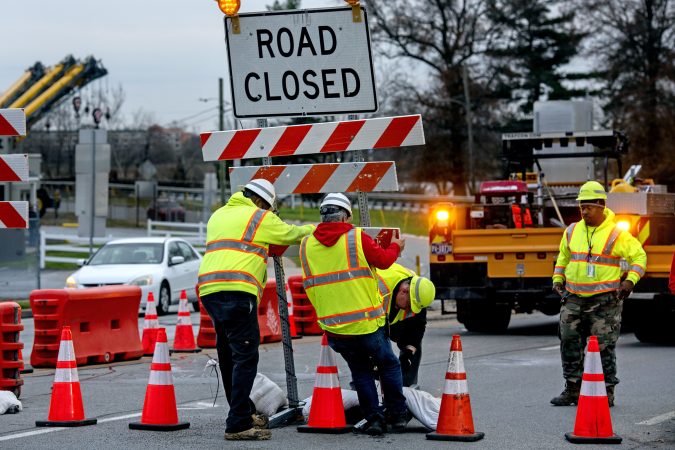
Roadwork will cause detours, delays, and closures in more than a dozen municipalities throughout the county this week, including disruptions on Routes 23, 30 and 252.
Here are the traffic changes you need to know, starting Sept. 29:
Caln Township: Fisherville Road will be closed between North Bailey and Caln Meetinghouse Roads from 7 a.m. to 3 p.m. from Sept. 30 to Oct. 6.
City of Coatesville and Caln, Sadsbury, Valley, and West Caln Townships: There will be a moving weeknight lane closure on westbound Route 30 between Airport Road and Kings Highway from 7 p.m. to 5 a.m. through Oct. 2 for line painting.
East Bradford Township: Peco work closing Copeland School Road between Dunmoore Lane and Frank Road is expected to continue on weekdays from 9 a.m. to 3 p.m. through Oct. 30. Ravine Road is closed for road bank stabilization, a project that’s expected to continue through the winter.
East Brandywine Township: The township’s paving program is slated to continue through late September or early October. Paving work will impact Crawford and North Buck Roads and Summerhill Drive. There will also be chip seal treatment on Marshall and Highspire Roads.
East Caln Township: There will be a lane closure on Bell Tavern Boulevard, with intermittent work expected through Oct. 7, as the township undertakes stormwater infrastructure work.
East Pikeland and Schuylkill Townships and Phoenixville Borough: Work on Route 23 is expected to continue through Oct. 30, resulting in weekday lane closures on Bridge Street at the Nutt Road intersection. Work takes place from 9 a.m. to 3 p.m.
Honey Brook Township: Starting Oct. 1, the Cupola Road bridge over the east branch of Brandywine Creek will be closed for repairs for about five weeks.
Honey Brook and West Nantmeal Townships: Chestnut Tree Road will have a lane closure between Cupola and Creek Roads and Manor Road from 8 a.m. to 4 p.m. through Oct. 2 for resurfacing work.
Kennett Township: East Hillendale Road will be closed between Bayard and McFarlan Roads for utility pole work from 8 a.m. to 3 p.m. through Oct. 2.
Pocopson Township: Paving work is slated to get underway in October, impacting parts of Parkerville Road and Four Streams Drive. Exact timelines for the work haven’t been announced.
Spring City Borough: There will be about three days of intermittent lane closures from Sept. 28 on North Main Street between East Bridge and New Streets for Peco’s gas main replacement project. Work will take place between 9 a.m. and 3 p.m.
Tredyffrin Township: There will be overnight weekday closures on Route 252 between Lancaster Avenue and Swedesford and Howellville Roads from 7 p.m. to 5 a.m. through Nov. 21 for utility construction. Also expect some delays between 9 a.m. and 3 p.m. near Timber Lane and Tory Hill Road through early October for Peco work.
Upper Uwchlan, Uwchlan, and West Whiteland Townships: Line painting on Pottstown Pike between Byers Road and Bartlett Avenue will result in moving lane closures through Sept. 30. Work will take place overnight from 10 p.m. to 6 a.m.
West Brandywine Township: Expect alternating lane closures on Caln Meetinghouse, Germany Hollow, North Hawthorn, and South Hawthorn Roads; Brandywine and Laurel Drives; and Castle and Reason Lanes for base repairs through Oct. 5.
West Caln Township:Paving-related work will take place on Ruthland Avenue and North Bonsall, Reservoir, and Zaleski Roads through Sept. 28, resulting in road closures.
West Chester Borough: There will be intermittent road closures on the 400 to 600 blocks of West Rosedale Avenue on weekdays from 7 a.m. to 3:30 p.m. through Oct. 2 for Peco’s gas main replacement project. The 600 block of North Walnut Street will also be closed from 9 a.m. to 3 p.m. on Oct. 1 for tree work.
West Whiteland Township: Work at the intersection of Ship Road and Lincoln Highway, including for new traffic signal poles, is expected to continue into mid- to late-October, resulting in possible delays.
Willistown Township:Paoli Pike will be closed between Frazer Avenue and Cedar Hollow Road from 9 a.m. to 3 p.m. through Oct. 2 every day but Sundays for Peco work.
This suburban content is produced with support from the Leslie Miller and Richard Worley Foundation and The Lenfest Institute for Journalism. Editorial content is created independently of the project donors. Gifts to support The Inquirer’s high-impact journalism can be made at inquirer.com/donate. A list of Lenfest Institute donors can be found at lenfestinstitute.org/supporters.