Category: Pennsylvania News

  • Lower Merion police request funds for a ‘first responder’ drone as anxieties about surveillance spike nationwide

    Lower Merion police request funds for a ‘first responder’ drone as anxieties about surveillance spike nationwide

    Lower Merion’s police department has requested funds for a program that would automatically dispatch a drone to the scene of certain 911 calls.

    Andy Block, Lower Merion’s police superintendent, pitched commissioners on Axon’s Drone as First Responder program during a Wednesday budget workshop, describing the technology as a “force multiplier” for the police department that could provide officers with information before they arrive at a crime scene. The department requested $375,000 for a five-year investment in one drone.

    The proposal was met with skepticism from commissioners, many of whom expressed hesitancy about approving funding for the program without strict policies on the books, warning of “mission creep” and privacy violations as anxiety about surveillance technology balloons nationwide.

    What is the Drone as First Responder program?

    Under the program, a drone would be stationed at a dock in Lower Merion and would be automatically launched when 911 dispatchers receive reports of certain incidents, which are classified by codes. Specific codes would release the drone to the site of an incident, a process that would typically happen within 30 seconds of the call coming in, Block said. Once the drone launches, one remote operator, a police officer, would watch the live video feed and evaluate if and where resources should be sent.

    The automated drones differ from Lower Merion’s five existing drones, which require manual setup and launch by an officer once a dispatch is ordered, adding minutes of lag time, Block told commissioners at the budget workshop.

    First responder drones could help officials get ahead on burglaries, missing persons incidents, fires, and area searches, and could evaluate if police are needed at a scene without taking the time and resources to dispatch officers to every call, the police superintendent said.

    Axon, the drone manufacturer, currently provides Lower Merion’s records management system, body cameras, tasers, and in-car cameras. The township moved over to Axon’s systems in January 2025.
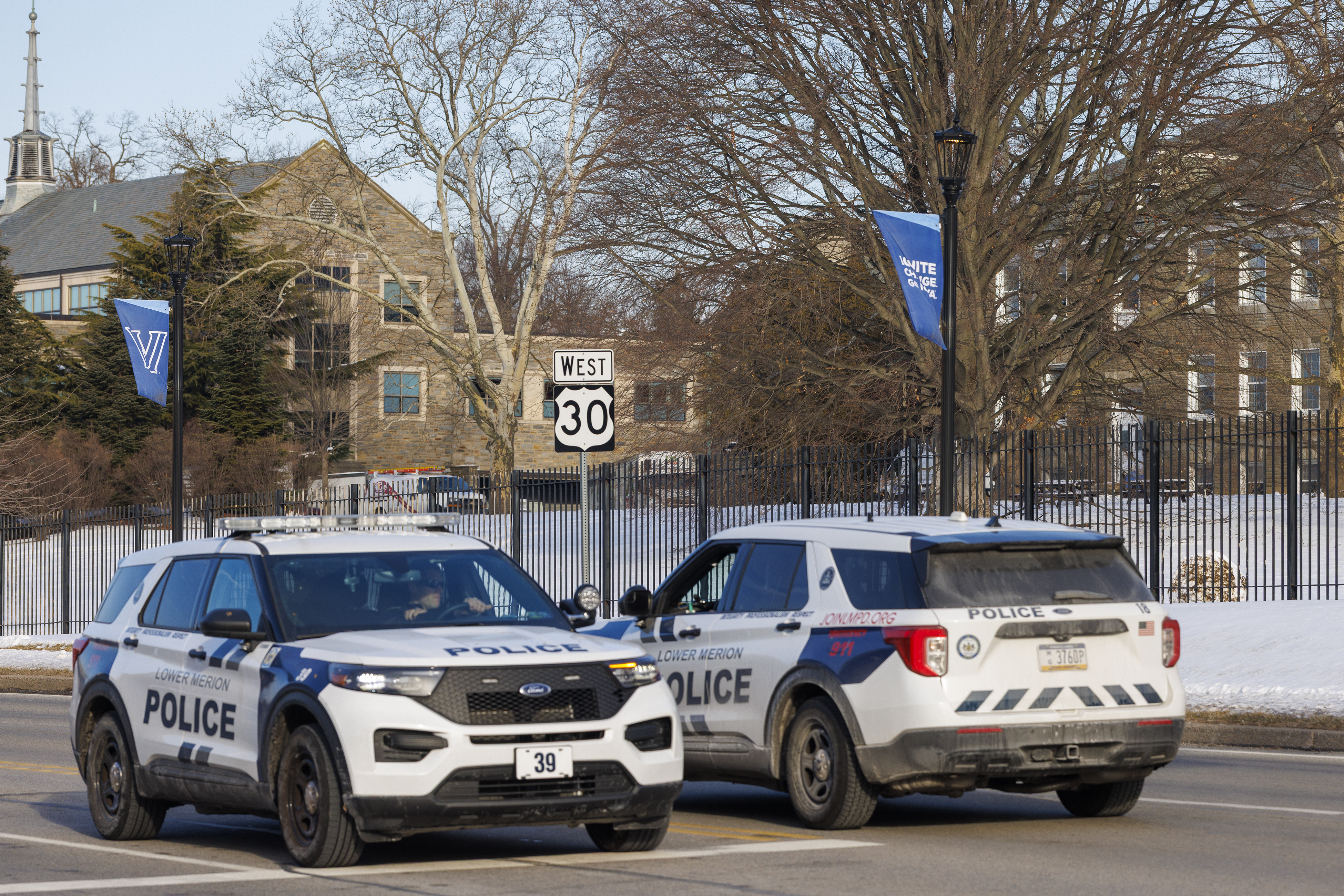
    Lower Merion’s police superintendent has said Axon’s automated drones would improve office response time. Alejandro A. Alvarez / Staff Photographer

    Block described recent incidences where first responder drones could have helped police officers respond more quickly and effectively, including a 2024 Meredith Road home invasion and a recent road rage incident on the Blue Route, which led to a suspect chase in Lower Merion.

    He touted the versatility of the drones, floating their potential use for other purposes, including traffic and code enforcement. The Montgomery County District Attorney’s office confirmed that Lower Merion is legally allowed to use drones for traffic enforcement.

    Bensalem launched a “drone as first responder” program earlier this year, which Block described as a model for Lower Merion, calling Bensalem’s program “very impressive.”

    Concerns over privacy

    The Drone as First Responder program was pioneered by the Chula Vista, Calif., police department, which in 2018 became the first municipal police department in the country to deploy the technology. Between 2018 and 2024, the department’s first responder drones made more than 20,000 flights.

    Since then, the technology has grown in popularity among police departments across the country, with municipalities from Washington to Kentucky signing on. A police department in Missouri said its Drone as First Responder program helped with 12 felony arrests in two months this summer.

    Police in Chula Vista have said the technology improved their response times and helped officers deescalate dangerous situations. Yet an investigation by WIRED found that the drones surveilled poorer residents far more frequently than wealthier residents, and were often dispatched for minor issues like vandalism and loud music, in addition to more serious incidents. All the while, residents who regularly encountered the drones reported “feeling constantly watched.” The Chula Vista Police Department has said its drones do not conduct random surveillance or search for suspicious activity.

    Lower Merion commissioners on Wednesday shared apprehension about the implications for residents’ privacy should automated drones begin traversing the township’s airspace.

    No official vote on the funding was taken at the budget workshop. Commissioners said they would need to see clearer policy guidelines before moving the drone into the budget.

    “Surveillance and privacy is a really big issue right now,” commissioner Maggie Harper Epstein said, adding that the program “would be a tough thing to communicate to the residents of the township.”

    Todd Sinai, the board’s president, warned that “there is a difference” between a police officer piloting a drone toward the site of a potential crime and a drone launching automatically “because someone just called something in, and it flies over the township to get to the site, recording along the way.”

    Many criticized the request to approve funding before putting policy guidelines on the books.

    “Until we see what that policy is, I would be very uncomfortable giving support to this,” commissioner Daniel Bernheim said.

    Block clarified that Lower Merion already has a drone policy in place but would need to update its code to specifically include the automated drones.

    A ‘no-brainer’ for law enforcement

    Not everyone shared concerns.

    Commissioner Charles Gregory called the drone program a “no-brainer” and said that the minutes saved with the automated devices could be the difference between life and death in extreme situations.

    Commissioner Louis Rossman said the program “is a great idea” and “just seems like the future.”

    Rossman referenced a series of residential burglaries in the township, saying the drone program may have been able to assist with apprehending offenders who have “eluded” law enforcement.

    This suburban content is produced with support from the Leslie Miller and Richard Worley Foundation and The Lenfest Institute for Journalism. Editorial content is created independently of the project donors. Gifts to support The Inquirer’s high-impact journalism can be made at inquirer.com/donate. A list of Lenfest Institute donors can be found at lenfestinstitute.org/supporters.


  • For more than 20 years, Josh Shapiro has worn the same pin to remember the lives lost on 9/11

    For more than 20 years, Josh Shapiro has worn the same pin to remember the lives lost on 9/11

    HARRISBURG — For more than two decades, Gov. Josh Shapiro has worn it almost every day.

    The small, thin accessory affixed to his lapel — a compressed version of the 50 stars and 13 stripes — may require one to squint to see. But it carries significant meaning to the Democratic governor, with an origin story that began on Sept. 11, 2001, when Shapiro was a young staffer on Capitol Hill.

    Shapiro was working in Washington when he experienced the pain and confusion of the deadliest terrorist attack in the nation’s history, he said in a June interview.

    He was just steps away from the U.S. Capitol building in then-U.S. Rep. Joe Hoeffel’s office, where he served as chief of staff, when he watched as the Today show anchors announced a plane had hit the World Trade Center. And then another.

    He realized, like thousands of Americans, that the nation was under attack — with Washington as a potential target. Less than an hour later, Shapiro said, he saw the smoke coming from the Pentagon. Staff were given mixed signals on whether to evacuate before ultimately being told to hunker down in legislative buildings until the situation was clear, he said.

    When Shapiro arrived on Capitol Hill the next day, a woman who worked in the Capitol gift shop was giving out American flag pins to anyone who passed by — the “typical gift shop” pin depicting a waving flag that President George W. Bush and other politicians began to wear in the aftermath of the 9/11 attacks, he said.

    The pin became a part of Shapiro’s daily business uniform. He wore it every day, even after he left D.C. and began working at a law firm in Montgomery County while preparing to run for state representative — his first foray into elected office and the start of a decades-long career.

    When Shapiro was knocking on doors for his 2004 run for the state House, a veteran in Glenside told him his gift shop pin wasn’t cutting it. The veteran gave Shapiro a nicer one: an image of the American flag in a thin, metal bar.

    “And I’ve worn it basically every day since,” Shapiro said in June ahead of his appearance at a special session of the U.S. House at Independence Hall to commemorate America’s founding 250 years ago. Widely rumored to be a future presidential contender, Shapiro often talks about his pride in America and its ideals, and his fears that the country is becoming too divided and straying from the founders’ aspirations.

    “I am a proud, patriotic American,” he said, referencing his pin. “I don’t think patriotism belongs to one party. I don’t think it should ever be partisan.”

    Over the years, Shapiro has made slight changes to the flag accessory; he shaved down the pin stem and made it into a magnet.

    “It was destroying my suits,” he added.

    He said he once lost the pin when it fell off a jacket that he had hung up on a plane.

    “I freaked out. I literally freaked out,” he said.

    He said he and the flight attendant were on their hands and knees trying to find it in the plane’s closet. They found the pin, but never found the backing, which was replaced much more easily.

    “I found the most important thing, and I just got another magnet,” he said.

    Shapiro will appear at the Flight 93 Memorial near Shanksville, Pa., alongside members of President Donald Trump’s administration, including U.S. Interior Secretary Doug Burgum, for a service on Friday to commemorate the 25th anniversary of the attacks, in which more than 2,900 people were killed.

    United Airlines Flight 93, a San Francisco-bound passenger plane flying out of Newark, was hijacked on Sept. 11, 2001. It was believed to be headed to the White House or U.S. Capitol, near where Shapiro was working at the time — before its 40 passengers attempted to retake control and crashed the aircraft in a field near Shanksville.

  • 2 men charged with rape of student at Eastern University in Delaware County

    2 men charged with rape of student at Eastern University in Delaware County

    Two men have been charged in the sexual assault of a student at Eastern University inside a dorm room earlier this year, Delaware County District Attorney Tanner Rouse announced Thursday.

    Dontae Williams, who turns 20 on Friday, and Chase Thompson, 19, surrendered to Radnor Township police on Thursday to face charges of rape of unconscious person and related offenses. Bail was set at $150,000 unsecured for both men.

    The assaults allegedly occurred in the Kea Hall residence of Naeem Turner, a friend of the victim, Rouse said. Turner was issued a summons to appear in court on three counts of invasion of privacy for allegedly recording video of the victim.

    Robert C. Keller, a lawyer representing Williams, said his client “has been cooperating since the beginning.”

    Keller said he will review the criminal case against Williams and pursue an appropriate defense.

    No lawyers could be identified Thursday evening for the other two men.

    Eastern University, a private Christian institution located in St. Davids, said in an emailed statement Thursday evening:

    “Student safety remains our highest priority. Sexual assault is not tolerated at Eastern University. The university took this incident very seriously, acting swiftly and fully cooperating with the Radnor Police Department throughout their investigation.”

    Eastern University continued: “We are grieved by this situation and the impact it has had on those involved. As a Christian university, we are committed to the safety and well-being of our students.”

    The university said Naeem Turner was no longer enrolled at Eastern.

    On Feb. 1, Radnor Township police responded to Eastern University for a report of a rape, Rouse said. The officers met with the student, who said that after a night out drinking, she reached out to Turner, her friend.

    Turner said he had cousins visiting his dorm room, but she could come over, the police criminal complaint said.

    The student, who already was intoxicated, arrived at Turner’s residence and was given tequila to drink, the complaint said. The student then said she fell asleep.

    She was then allegedly sexually assaulted by Williams and Thompson, the complaint said.

    Investigators collected DNA evidence that matched both men, the complaint said.

    Turner had recorded video of himself engaged in sexual activity with the student, and twice the victim is seen pushing the phone camera away and indicating that she did not want to be recorded, the complaint said.

    Turner, who was not charged with rape or any other assaults, said he had consensual sex with the victim, the complaint said.

    The student said she did not remember having consensual sex with Turner and that she did not consent to being recorded, the complaint said.

    Turner later allegedly sent two video clips to a contact on his phone, the complaint said.

    “This incident is an appalling violation of a person’s safety, dignity, and trust,” Rouse said in statement.

    “No one should ever have to fear being sexually assaulted by someone they know, and especially not by someone they consider a friend. It can be frightening to come forward after an experience like this, and we commend the victim for having the courage to report what happened,” Rouse said.

    “Sexual violence is never acceptable, and my heart goes out to a young woman that will live with this trauma for the rest of her life. No one should have to fear that someone they trust will violate their safety or boundaries. There will be accountability,” Rouse said.

  • Police in Montgomery County are searching for a hit-and-run driver who killed a pedestrian

    Police in Montgomery County are searching for a hit-and-run driver who killed a pedestrian

    East Norriton police are searching for the driver of a vehicle who fatally struck a pedestrian on Labor Day weekend, then fled.

    Ricardo Baptiste, 29, was struck Sunday just after 9 p.m. as he walked along West Germantown Pike near Whitehall Road, police said Thursday.

    The initial vehicle that hit Baptiste, a Lansdowne resident, pushed him into the opposite lane of traffic, where he was struck by a tractor trailer, police said. Medics transported him to nearby Jefferson Einstein Montgomery Hospital, where he was pronounced dead.

    Police say the driver of that first vehicle did not remain at the scene, and they believe the person behind the wheel may have been driving drunk.

    Baptiste’s family told investigators he had just left Jefferson Einstein, which is a few hundred yards away. He was being treated for an unrelated issue.

    He leaves behind a 3-year-old daughter, and worked for a time as a kindergarten teacher, according to his family.

    Anyone with information on the crash is asked to contact the Montgomery County Detective Bureau at 610-278-3368.

  • Kelly N. Moore, award-winning clinical psychologist, Rutgers professor, and mental health activist, has died at 46

    Kelly N. Moore, award-winning clinical psychologist, Rutgers professor, and mental health activist, has died at 46

    Kelly N. Moore, 46, of Burlington Township, award-winning clinical psychologist, founder of Moore Wellness LLC, director of the Center for Psychological Services at Rutgers University, graduate school clinical associate professor, former fellow at the University of Pennsylvania’s Center for the Treatment and Study of Anxiety, mentor, author, mental health activist, volunteer, and 2026 Willingboro High School Hall of Fame inductee, died Thursday, Aug. 20, of kidney cancer at Virtua Voorhees Hospital.

    Adept at treating anxiety, depression, trauma, and perinatal disorders, Dr. Moore became director of the Rutgers Center for Psychological Services and a clinical associate professor in the Graduate School of Applied and Professional Psychology in 2020. As CPS director, she mentored hundreds of doctoral students regarding academic requirements and clinical procedures, and supervised the center’s community mental health clinic.

    She significantly expanded the center’s services and outreach, Rutgers colleagues said in a Facebook tribute, and forged important partnerships on campus and in the community. Colleagues said: “Her warm demeanor, melodic voice, vibrant spirit, and calming presence made all who met, and were fortunate enough to know her, feel seen, welcomed, and heard.”

    Earlier, Dr. Moore was program manager for the Rutgers Children’s Center for Resilience and Trauma Recovery. She also taught in the school’s juvenile justice and youth development programs.

    She spent two years as a fellow at Penn’s Center for the Treatment and Study of Anxiety after earning her doctorate in clinical psychology at Rutgers in 2011. During the COVID-19 pandemic, she founded Moore Wellness LLC and focused on helping women, children, and clients of color.

    “Wellness does not mean you will never experience challenges,” Dr. Moore said in an online profile for Psychology Today magazine. “Rather, it means having the tools to manage the challenges when faced with them.”

    Dr. Moore was an outspoken activist for mental health education and services. She spoke with groups often, organized workshops, and was featured in newspapers and magazines and on TV and podcasts. “Just trying to get people to understand as much as they can about the impact their mental health and well being have on their day-to-day lives,” she said in a 2026 podcast interview with the Multicultural Counseling Institute.

    She blogged about mental health on her website, moorewellnessllc.com, and contributed pages to academic texts. In 2025, she cowrote Racial Trauma in Black Clients: Effective Practice for Clinicians.

    She belonged to the American Psychological Association and the New Jersey chapter of the Association of Black Psychologists. She was active with the Therapy for Black Girls podcast and the Leadership Institute for Women in Psychology.

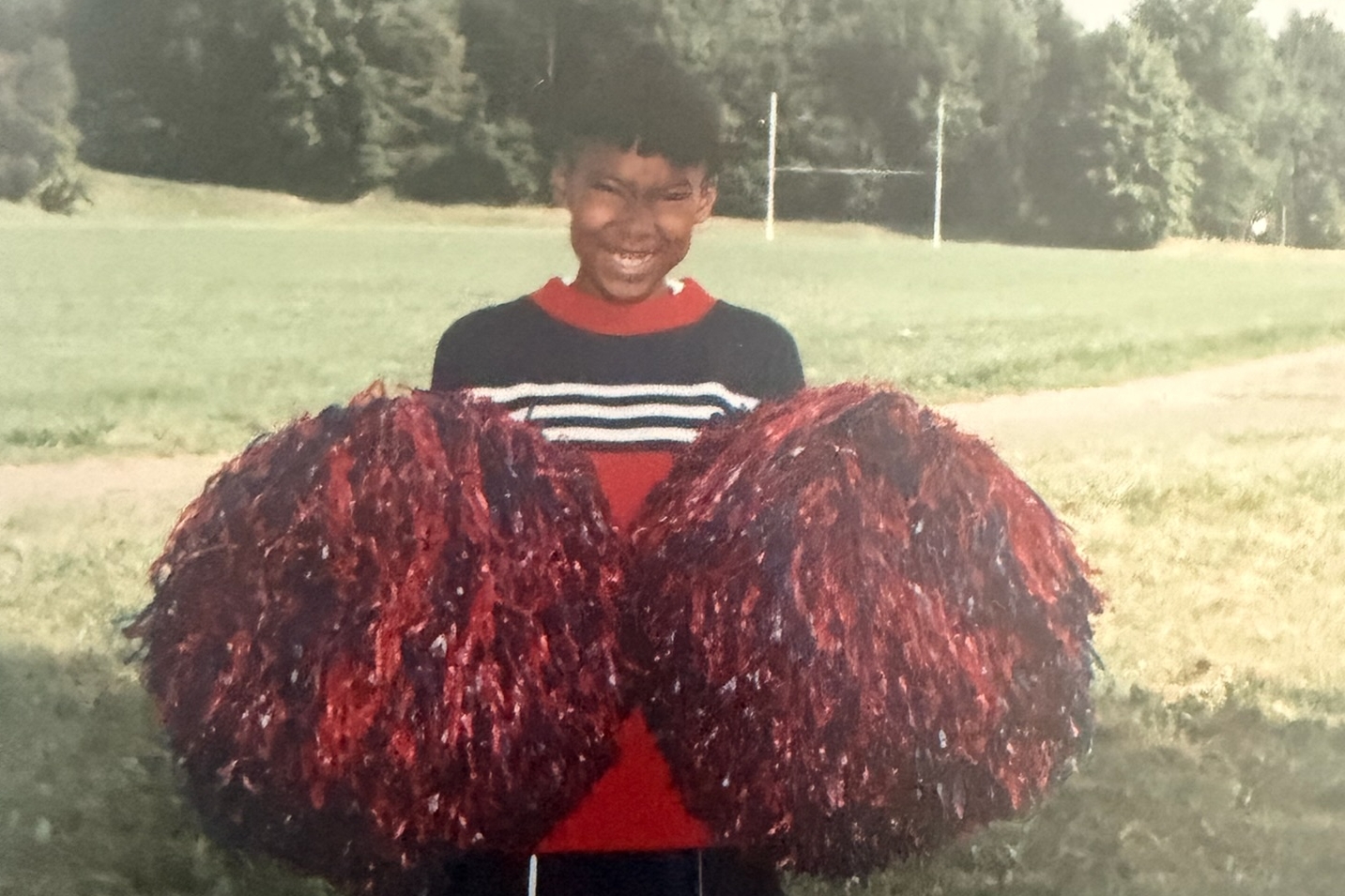
    Dr. Moore was a cheerleader and lacrosse player, and graduated from Cornell University in 2002.Courtesy of the family

    She earned leadership and achievement awards from the New Jersey Psychological Association, the National Council of Schools and Programs of Professional Psychology, and other groups. She was president and a board member of the Burlington County chapter of Jack and Jill of America Inc. Colleagues there called her “a beautiful example of leadership, service, grace, and love.”

    Kelly Nicole Walker was born Aug. 20, 1980, in Philadelphia. Her family moved to Willingboro when she was 2, and she graduated from Willingboro High School in 1998.

    She was a cheerleader and played lacrosse and viola as a teenager. Her mother, Diana, was a social worker, and she showed Dr. Moore up close how one person could impact their community.

    “I was just fascinated by this concept,” Dr. Moore told the Multicultural Counseling Institute in the podcast interview. “It was already set at a young age that this was the kind of work I should be doing.”

    She earned a bachelor’s degree in human development at Cornell University in 2002 and a master’s degree in education at Penn in 2003.

    She met Melvin Moore through friends, and they married in 2004 and had sons Miles, Mason, and Matthew. They lived in Marlton and Delanco, and, since 2015, in Burlington Township.

    Dr. Moore was a longtime member and dance choreographer at the Gospel Tabernacle Church. She joined Alpha Kappa Alpha Sorority Inc. at Cornell in 2000 and was on the executive board of its Pi Mu Omega chapter in Willingboro.

    Friends noted her “warmth, generosity, and kindness,” and called her “genuine” and “quietly brilliant” in online tributes. One friend said: “She sure made me proud to be from Willingboro.”

    Dr. Moore and her husband, Melvin, married in 2004 and had three sons. Courtesy of the family

    Dr. Moore doted on her sons and called them her “M & M’s.” She was an avid reader and led several book clubs.

    She liked to garden, play piano, take photos, cook, and crochet. She was diagnosed with renal medullary carcinoma about a year ago and was determined, her husband said, to reach her 46th birthday. She did it.

    “She always led with purpose and intention,” her sister, Kim Hayes, said. “She was such an amazing person.”

    Dr. Moore’s husband said: “Kelly exemplified unmatched strength in how she lived, how she loved, and how she led. She loved helping other people.”

    In addition to her husband, sons, and sister, Dr. Moore is survived by her father, Michael, her brother, Ahmeen, and other relatives.

    A celebration of her life was held earlier.

    Donations in her name may be made to the Chris “CJ” Johnson Foundation, Box 292, Sugar Land, Texas 77487.

    Dr. Moore (left above) was close with her sister, Kim. Below, she celebrated when her book was published in 2025.Courtesy of the family
  • Bankrupt Chester City is getting nearly $100 million in state and private funding

    Bankrupt Chester City is getting nearly $100 million in state and private funding

    Approaching the fourth anniversary of its rare and historic bankruptcy, the City of Chester is about to get $97.1 million in public and private investments, Gov. Josh Shapiro announced Thursday.

    “I might just be the happiest mayor in America,” said Chester Mayor Stefan Roots, among those who joined Shapiro for the announcement in Delaware County’s only city.

    Shapiro, noting that the resolution of the protracted and often acrimonious bankruptcy “would take far longer than I’d like,” said “the time to invest in Chester is now.”

    Roots said the money would go toward beautifying neighborhoods and dealing with blighted properties in the city of 33,000. “We’re going to be repairing homes. … We’re going to be improving roads and sidewalks,” he said.

    The majority of the funding, $52.6 million, will go to “revamp and redesign” a section of Route 291/U.S. 13, part of the old “Industrial Highway,” which separates the riverfront from the city neighborhoods. The bulk of that money would come from the Pennsylvania Department of Transportation and the Delaware Valley Regional Planning Council.

    The highway has long been a serious safety hazard for motorists and people who live along it, Roots said in an interview after the event. Speeding has been a major issue, he added.

    PennDot also would be putting up $7.3 million for new sidewalks and walkways to Widener University, at the north end of town, in an effort to integrate the campus with the rest of the city.

    “How do you be a city with a college, and not be a college town?” Roots said.

    He said major efforts would be made to spruce up the Avenue of the States, which is a thoroughfare from City Hall to the campus about 10 blocks away.

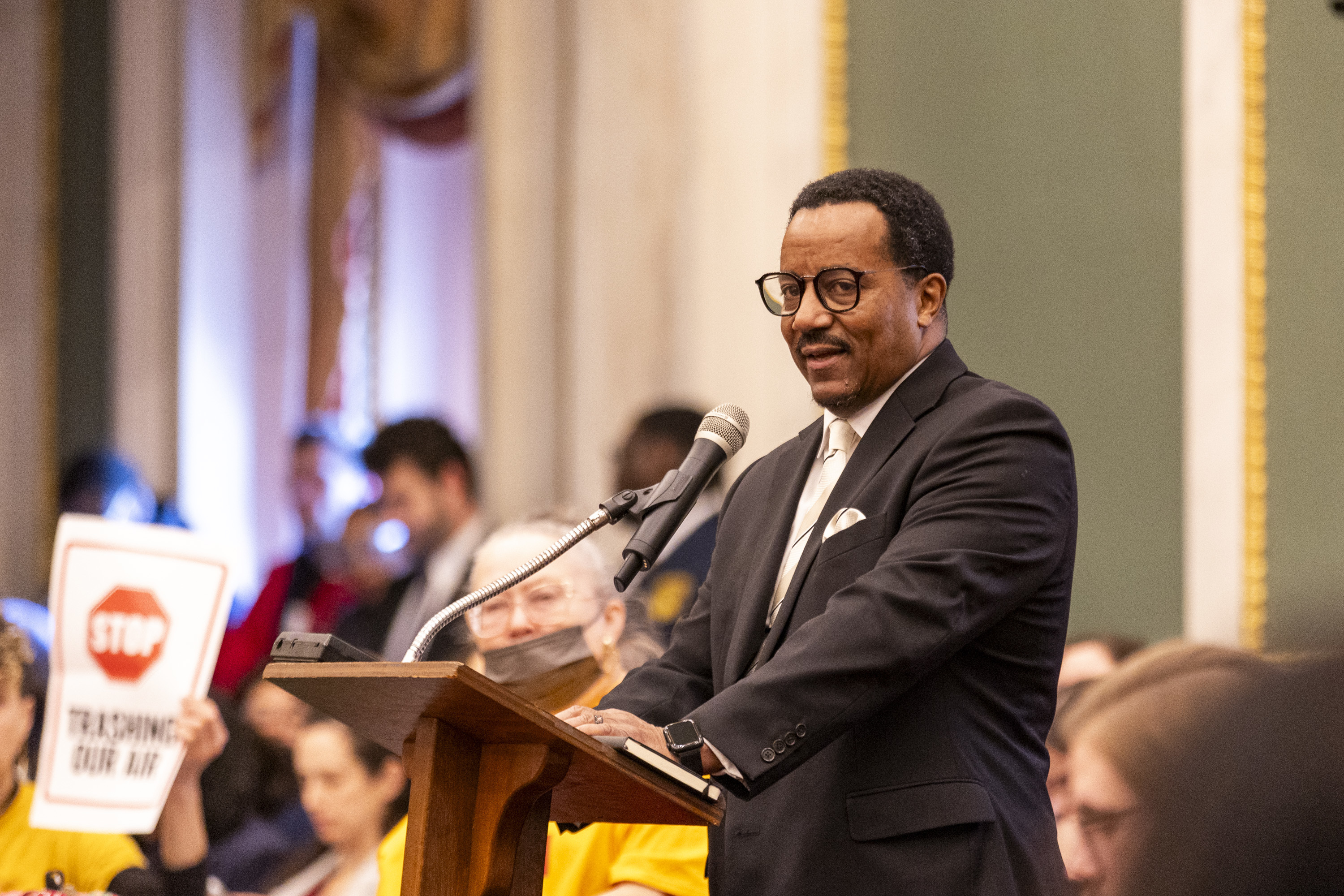
    Mayor of Chester Stefan Roots speaks at a Philadelphia City Council meeting in January regarding the incinerator, which has been an important source of Chester’s revenue and a source of protests. Tyger Williams / Staff Photographer

    The state and the Philadelphia Union soccer team are putting up $27.5 million to build “new outdoor fields, a 100,000-square-foot field house, indoor courts, academy space, and a performance center to expand youth programs and support school and community sports” at the riverfront Sportsplex in the city’s West End, according to a state news release.

    Wawa, Essential Utilities Inc., Power Home Remodeling, and Delaware County are contributing $2 million for demolition work and to acquire 10 lots and two buildings, along with fixing up 25 other structures.

    Shapiro said that Chester was now an “enterprise zone,” a Pennsylvania Department of Community and Economic Development program in which tax breaks and grant money would be made available to investors.

    The department is overseeing the city’s bankruptcy process, which began in fall 2022, in part due to several years of missed pension payments.

    But the city’s financial distress has been about 70 years in the making, as it has struggled to pay bills with the loss of businesses and its once-formidable industrial base. Among its prime sources of revenue today are an incinerator and a casino.

    Among the nation’s more than 35,000 municipalities, only about 30 have filed for bankruptcy.

    Neither Shapiro nor Roots made any mention of the bankruptcy beyond the governor’s opening comments.

    State-appointed bankruptcy receiver Vijay Kapoor said in a statement: “We are very grateful for the commonwealth’s and the private sector’s investment in the City of Chester’s future.”

  • Coroner releases details of infants who died amid growing Pennsylvania measles outbreak

    Coroner releases details of infants who died amid growing Pennsylvania measles outbreak

    NEW YORK — The two measles-related deaths in Pennsylvania last month involved infants, and the virus itself caused one of the deaths, a Pennsylvania coroner confirmed Wednesday.

    Lancaster County’s coroner, Dr. Stephen Diamantoni, said he told the Centers for Disease Control and Prevention of his conclusions. CDC officials, however, have not said whether they will count either death as measles-associated, and the agency’s website still carries a disclaimer about them.

    Ivan Miller died on Aug. 14 shortly after his birth of a ruptured spleen, Diamantoni said.

    Mary Stoltzfus was 6 weeks old when she died Aug. 18 at her home. She was born with a genetic birth defect that left her highly vulnerable to an infection. A measles infection killed her, Diamantoni told The Associated Press.

    He said he was releasing the information in response to a state right-to-know law request by WPMT-TV, Fox 43.

    The causes of death differed

    Diamantoni’s office didn’t perform an autopsy on the girl. The cause of death was determined by the doctors caring for her, he said.

    She had been born with a condition called Amish lethal microcephaly that causes an unusually small head and underdeveloped brain. Children with the condition typically live 6 months or less.

    The girl’s immediate cause of death was listed as a cardiac arrest, due to hypoxemic respiratory failure, measles, and Amish lethal microcephaly, according to a coroner’s report obtained by The Inquirer through a right-to-know request. The manner of death was listed as “natural.”

    Diamantoni’s office did autopsy the boy, and determined he died from a ruptured spleen. Exactly how and when that happened is still under investigation, Diamantoni said.

    The boy was infected with measles, which is listed on the death certificate as a contributing factor. But Diamantoni said measles did not contribute to what happened to the spleen, and that measles is noted only because it was considered “a significant condition” that the boy had at the time of death.

    Ivan Miller’s death was attributed to a “traumatic torso injury,” and his manner of death was “pending investigation,” according to another document signed by the coroner and provided to The Inquirer through a public record request.

    Neither child was old enough to be vaccinated; the first dose is typically given at around 1 year of age.

    Because of the ongoing measles outbreak, Pennsylvania health authorities in recent months have recommended that children receive a first dose of a measles vaccine as early as six months old.

    The deaths have received outsized attention

    Details of the deaths have come under unusual national scrutiny and became the focus of a furious political battle between Pennsylvania’s Democratic governor, Josh Shapiro, and officials in Republican President Donald Trump’s administration.

    Pennsylvania officials announced the deaths last month, with Shapiro stressing that vaccinations could have averted the deaths.

    Soon after, U.S. Health Secretary Robert F. Kennedy Jr., a Trump administration appointee with a history of raising alarms about established vaccines, attacked Shapiro and suggested the deaths “may even have been altogether fabricated.”

    Kennedy’s statements echoed ones he made last year, when three measles-related deaths were recorded. Kennedy questioned whether one of the children who died was killed by measles.

    The health secretary oversees the CDC, and some public health experts have voiced concern about whether the CDC can still be counted on to post public health data that clashes with Kennedy’s worldview.

    “Frankly, the CDC is not to be trusted in sharing information,” Dr. Georges Benjamin, executive director of the American Public Health Association, told the AP last week. “People are questioning their motives.”

    CDC website still doesn’t show the deaths

    That worry was fueled by some unusual edits to the CDC’s measles webpage. At one point, the webpage noted two measles-associated deaths but then was changed to say that the CDC was not counting the two deaths until it reviewed additional information.

    The page, which was last updated Friday, now says, “CDC will update its reporting as additional information becomes available and relevant reviews are completed.” It still doesn’t reflect either Pennsylvania death.

    In a social media post last week, Kennedy acknowledged Diamantoni’s conclusion that one of the deaths was due to measles.

    Meanwhile, Pennsylvania’s measles outbreak continues to expand, with more than 620 cases across 37 counties this year, state officials said Wednesday.

    The U.S. eliminated the domestic spread of measles in 2000 by maintaining high vaccination rates, but they have fallen in recent years to below the 95% coverage needed to prevent outbreaks. Meanwhile, measles infections have been surging in recent years.

    In November, international health officials will meet to determine if the U.S. and Mexico have lost their measles-free status.

    Inquirer staff reporter Aubrey Whelan contributed to this article.

    Editor’s note: This article has been updated with additional information obtained by The Inquirer through a public records request.

  • Prison lifers asked Pennsylvania’s top court to change how unconstitutional sentences are undone

    Prison lifers asked Pennsylvania’s top court to change how unconstitutional sentences are undone

    Nearly six months after Pennsylvania’s highest court struck down automatic life sentences for second-degree murder, four prisoners have asked the justices to extend that ruling to everyone still serving one — and to change how the state handles unconstitutional punishments going forward.

    The court’s landmark ruling in March ended a practice most other states had abandoned or never adopted, and it required judges to weigh a defendant’s role in the crime in every second-degree murder case moving forward. But it left unanswered a consequential question: Does it also apply to the roughly 1,100 people already serving these sentences?

    The four requests, filed Thursday in petitions to the court, are a coordinated effort to force an answer.

    But the prisoners want more. They are also asking the justices to adopt a statewide rule that any sentence the court strikes down as cruel punishment would automatically become void for everyone already serving it.

    As things stand, even after the state Supreme Court has declared a sentence unconstitutional, people whose cases closed long ago have no legal path to a new one until the high court declares its ruling retroactive or lawmakers pass a law that covers them — a process that can take years.

    The proposed rule would eliminate that wait.

    That broader request is, “in the most literal sense of the word, an extraordinary request for relief,” said Marsha Levick, cofounder of the Juvenile Law Center in Philadelphia, an organization at the center of a similar fight after the U.S. Supreme Court struck down mandatory life-without-parole sentences for juveniles but did not say whether the ruling applied retroactively.

    The Pennsylvania Supreme Court’s ruling striking down the mandatory sentences came in the case of Derek Lee, a Pittsburgh man convicted in the 2014 killing of Leonard Butler, who was shot by Lee’s accomplice during a home-invasion robbery. Lee argued the automatic sentence violated the state constitution’s ban on cruel punishments. The justices agreed, saying a judge must weigh each person’s individual role before imposing life without parole.

    The court, however, did not say whether the decision applied to people who had already been sentenced. Instead, it put the ruling on hold for 120 days to give lawmakers time to write a new sentencing law and, if they chose, to settle that question themselves. The deadline passed July 24 without a new law.

    The four prisoners argue lawmakers’ inaction has left the courts as the only branch of state government able to resolve the issue. And, so that prisoners are not stranded like this again, they want future rulings of this kind to take effect for everyone automatically.

    “The legislature has made it manifest that they are not going to be prioritizing fixing this constitutional injustice,” said Bret Grote, a lawyer with the Abolitionist Law Center who represented Lee before the state Supreme Court and now represents the four petitioners, along with lawyers from the Pennsylvania Innocence Project and the law firm Phillips Black. “So it is now on the courts to do that.”

    A punishment the state constitution forbids, Grote said, cannot be imposed on anyone — including, he argued, people already serving it. A rule recognizing that from the start, he said, would spare prisoners a separate legal fight that “only prolongs a constitutional crisis.”

    The prisoners filed their requests as what are known as King’s Bench petitions, invoking a power that lets the state Supreme Court take up a case directly, skipping the lower courts, when a matter of public importance cannot wait. In June, the court used that power to require the Philadelphia District Attorney’s Office to notify the state attorney general whenever it declines to oppose a prisoner’s bid to overturn a conviction, giving the attorney general a chance to step in, after allegations of widespread malfeasance.

    King’s Bench petitions are rarely filed and even more rarely taken up, said David Rudovsky, a senior fellow at the University of Pennsylvania Carey Law School. Still, he said, these petitions have a real chance: The circumstances are exceptional, the issue is urgent, and courts statewide need a uniform answer.

    And the prisoners making the request, he added, present compelling cases.

    The prisoners — Cecil Holmes, 70; Lori Ann Lassiter, 62; John Marshall Payne III, 70; and Marsha Scaggs, 62 — have served about 160 years combined.

    Of the four, only Payne has been accused of killing the victim himself. At his 1986 trial, prosecution witnesses testified he had admitted to beating Elsie Rishel, 90, with a telephone during a 1981 burglary of her York County home. No physical evidence tied him to the crime, however, and he has long maintained his innocence. The other three were convicted related to crimes in which, prosecutors said, someone else killed the victim.

    At least two of the petitioners — Holmes and Scaggs — have faced serious medical problems that underscore the urgency of resolving the question, Grote said.

    Holmes, a Philadelphia man, was convicted in 1980 in the death of Joseph Melvin, a taxi driver who was fatally stabbed at a gas station during an attempted robbery the year before. Prosecutors said Holmes had served as an unarmed lookout across the street.

    He now has advanced dementia and is confused about where he is, said Jennifer Merrigan, a Phillips Black lawyer who represents Holmes. Without action from the high court, Merrigan said, his future “looks really bleak.”

    Two of the petitioners’ cases come from Philadelphia, one from Lawrence County, and one from York County. If the court takes up the petitions, prosecutors in those counties would typically argue the state’s side.

    District Attorney Larry Krasner, whose office supported Lee’s challenge, said Thursday that while “retroactivity is necessary,” prosecutors would need to review the four prisoners’ petitions before taking a stance on them. More than 500 of the roughly 1,100 people serving the sentence were convicted in Philadelphia.

    Other prosecutors have signaled resistance. For example, John Adams, the Berks County district attorney and communications chair of the Pennsylvania District Attorneys Association, said in August that district attorneys would not concede the ruling applies retroactively without a new sentencing law. Attorney General Dave Sunday, a Republican, backed a Senate bill that would have made most people already serving the sentence eligible for parole only after 35 years. He warned in July that legislative inaction would be “dangerous.”

    It was unclear whether Sunday’s office would weigh in on the petitions. The attorney general’s office did not immediately respond to questions Thursday.

    Even if the court agrees to hear one or more of the petitions, a decision could be months away, Rudovsky said. That would leave time for lawmakers to act, which some stakeholders predict could be more likely after the Nov. 3 midterm elections.

    The Republican-controlled Senate passed a bill in June that would have set a 35-year mandatory minimum for second-degree murder. The Democratic-controlled House passed its own version in July, which would have made people already serving life eligible for release after 30 years. Neither bill, which made it the state parole board’s responsibility to determine whether a prisoner was fit to be released, cleared both chambers.

    “We’ve no substantive preference as to whether the remedy is through the courts or the legislature,” Grote said. “If something changes in the legislature and they pass a law that applies to everybody … then we would welcome that.”

    If the state Supreme Court considers the petitions and rules in the prisoners’ favor, trial judges would have an opportunity to resentence them and everyone else currently serving the life sentences. But they would do so without sentencing guidelines on Pennsylvania’s books — until lawmakers act.

    That could produce starkly different resentencing outcomes in otherwise similar cases, depending on the county where a case is heard and the judge who hears it, some stakeholders have warned.

    Levick, the attorney whose work helped end life sentences for juveniles, said that although some people may prefer letting the parole board decide, the high court’s ruling requires judges to weigh individual culpability.

    With juvenile lifers, she said, judges “did a great job.”

  • Inside Ardmore’s massive ‘meat palace’ | Inquirer Lower Merion

    Inside Ardmore’s massive ‘meat palace’ | Inquirer Lower Merion

    Hi, Lower Merion! 👋

    Can you have too much Wagyu? Inquirer food critic Craig LaBan contemplates whether that’s the case at the recently opened OGYU in Ardmore. Also this week, charges have been brought against a man who allegedly stole nearly $800,000 in jewelry from two township homes, a Bala Cynwyd native continues to imprint his vision on the Jersey Shore, plus the school board will consider an embattled member’s resignation.

    If someone forwarded you this email, sign up for free here.

    Does OGYU serve too much of a good thing?

    The Miyazaki ribeye at Ogyu.Tyger Williams / Staff Photographer

    When Inquirer food critic Craig LaBan paid a visit to recently opened Japanese restaurant OGYU in Ardmore — or as he calls it, “a 300-seat meat palace” — he was determined to try as much Wagyu as he could.

    But he soon found that in the case of the all-you-can-eat joint, there might just be too much of a good thing.

    While one cut of Wagyu rib cap, which arrived in a showy box billowing with smoke, was rich and tender, preparing it himself on a tabletop grill meant the finished product fell flat.

    Other dishes, however, impressed, including the New Zealand lamb chops, the “Meet Wagyu” nigiri, and the A5 ribeye.

    At the end of the day, does dining there add up to “a luxury experience the $120 check average should command?”

    Here’s LaBan’s verdict.

    💡 Community News

    • A 24-year-old Philadelphia man, Jabir Parker, was charged last week with several alleged burglaries, including two in Lower Merion, where police said he made off with nearly $800,000 in stolen jewelry.
    • Eustace Mita continues to put his fingerprints on the Jersey Shore by way of his Icona Resorts. The Bala Cynwyd native’s next project includes a $200 million proposed redevelopment of Wonderland Pier. The Inquirer’s Erin McCarthy looks at how he’s shaped the Shore and what’s still on the horizon.
    • Former Bryn Mawr resident Joan E. Lynaugh died this summer at the age of 90. Lynaugh was a pioneering primary care and nurse practitioner and an award-winning professor emerita of nursing at the University of Pennsylvania.
    • Filmmaker M. Night Shyamalan, who grew up in Penn Valley, has launched a new YouTube series. In the first episode, he takes viewers back to the era of one of his early films, Signs.
    • Bryn Mawr Hospital and Lankenau Medical Center, both owned by Main Line Health, earned high marks in the latest U.S. News Best Hospitals by Specialty ranking. Bryn Mawr was recognized in eight categories, including colon cancer and prostate cancer surgeries, while Lankenau scored top marks in 11 categories such as back surgery, and hip and knee replacement surgeries.
    • Spring Mill Road will be closed weekdays between Old Gulph and Conshohocken State Roads tomorrow through Tuesday from 9 a.m. to 4 p.m. for storm sewer replacement.
    • Expect work near the Narberth Avenue bridge over the next six to eight weeks, with overnight construction slated for Sundays through Thursdays from 9 p.m. to 5 a.m.

    🏫 Schools Briefing

    🍽️ On our Plate

    • Looking for a great rooftop spot to dine before summer comes to a close? Chef Nicholas Elmi’s Bala Cynwyd restaurant Lark is one of the best destinations in the region, according to The Infatuation.

    🎳 Things to Do

    🍂 Harvest How-To for Natural Holiday Decor: Learn how to gather, preserve, and use natural materials for decor. ⏰ Friday, Sept. 11, 10 a.m.-12:30 p.m. 💵 $25 for members, $30 for non-members 📍 Stoneleigh

    🎶 Narberth Music and Arts Festival: There will be live music, food, drinks, and a makers market. ⏰ Sunday, Sept. 13, noon-7 pm. 💵 Pay as you go 📍 Forrest and Haverford Avenues

    😱 Scream: Get in the spooky season spirit with a screening of the 1996 horror movie. ⏰ Monday, Sept. 14, 7 p.m. 💵 $11.75-$16.25 📍 Bryn Mawr Film Institute

    📖 One Book, One Lower Merion: The township-wide reading initiative features Harlan Coben’s new book, Plot Twist, and includes a Q&A with the author. ⏰ Tuesday, Sept. 15, 6 p.m. 💵 $40 📍 Welsh Valley Middle School

    🎷 Montco Jazz Fest: Now in its fifth year, the festival features performances at 20 venues throughout the county. ⏰ Tuesday, Sept. 15-Sunday, Sept. 20, times vary 📍 Locations vary

    🏡 On the Market

    An updated six-bedroom Bala Cynwyd Colonial

    The home has an eat-in kitchen with a fireplace that flows into a great room.Courtesy of Israela Friedman/Berkshire Hathaway Home Services Fox & Roach, Realtors

    This 1930 center hall Colonial has undergone a number of updates, blending past and present. The first floor features an open-concept kitchen, dining area, and great room with a fireplace, all near to a secondary prep kitchen. There’s also an office, a dining room, and a living room on the first floor. The home’s six bedrooms are spread across the upper levels, including the second-floor primary suite, with a steam shower and whirlpool tub. There’s an open house today from 5 to 6 p.m.

    See more photos of the home here.

    Price: $985,000 | Size: 3,803 SF | Acreage: 0.2

    🗞️ What other Lower Merion residents are reading this week:

    By submitting your written, visual, and/or audio contributions, you agree to The Inquirer’s Terms of Use, including the grant of rights in Section 10.

    This suburban content is produced with support from the Leslie Miller and Richard Worley Foundation and The Lenfest Institute for Journalism. Editorial content is created independently of the project donors. Gifts to support The Inquirer’s high-impact journalism can be made at inquirer.com/donate. A list of Lenfest Institute donors can be found at lenfestinstitute.org/supporters.

  • Remembering the local pilot who died on 9/11  | Inquirer Greater Media

    Remembering the local pilot who died on 9/11 | Inquirer Greater Media

    Hi, Greater Media. 👋

    Tomorrow marks the 25th anniversary of the Sept. 11, 2001 attacks. We look back on the life of the local pilot of one of the ill-fated flights and how his loved ones have ensured his legacy lives on. Also this week, Rose Tree Media School District’s proposed K-1 Early Learning Center moves one step closer to reality, a new breakfast and lunch joint is gearing up to open in a former Media cafe, plus an outdoors store will make its debut.

    If someone forwarded you this email, sign up for free here.

    Remembering Michael Horrocks, the local resident who died co-piloting one of the 9/11 flights

    Michael Horrocks’ former West Chester University teammates continue to pay tribute to their late friend, who died co-piloting United Airlines Flight 175 on Sept. 11, 2001.Jose F. Moreno / Staff Photographer

    When Bob Rafferty ran into Michael Horrocks at the Granite Run Mall in December 2000, neither likely expected it would be the last time they’d see one another. The former West Chester University football teammates briefly caught up amid holiday shopping, with Horrocks mentioning he’d become a commercial pilot.

    About nine months later, Rafferty had a feeling that Horrocks, a Glen Mills resident, might be on one of the hijacked planes that crashed into the World Trade Center on Sept. 11, 2001.

    The 38-year-old was co-piloting United Airlines Flight 175, which hit the South Tower.

    After Horrocks’ tragic death, former teammates like Rafferty came together to honor his legacy, including with a scholarship and statue at his alma mater, helping keep his memory alive.

    The Inquirer’s Alex Coffey looks back at Horrocks’ legacy and how his loved ones continue to honor his memory.

    📽️ Hear from his teammates in this Inquirer video.

    🗓️ Delaware County is hosting a remembrance ceremony at Rose Tree Park tomorrow at 11 a.m. to honor those who lost their lives in the 9/11 attacks.

    💡 Community News

    • In case you missed it, last week the boroughs of Rose Valley, Rutledge, and Swarthmore, along with Nether Providence and Upper Providence Townships, voted to establish a new emergency medical services authority. Media, which was previously contemplating joining, opted to continue with its current provider.
    • At its Tuesday meeting, the Middletown Township planning commission voted 4-2 to recommend conditional approval for Rose Tree Media School District’s proposed K-1 Early Learning Center, acting township manager Vincent M. Visoskas told The Inquirer. RTMSD has extended the timeline for the township to make a decision on its application to Nov. 21, he added. Council is next slated to meet on Wednesday.
    • New “outdoor lifestyle store” Media Mercantile is opening its doors on Saturday. Located at 21 E. State St., it’s taking over the former home of Homesewn, which moved about a block away earlier this year.
    • Nemours Children’s Health is slated to open a pediatric urgent care at its Glen Mills facility Wednesday.
    • Eric C. Fransen, 50, of Wallingford, has been charged with touching and secretly filming a girl in a bathroom, according to the Daily Times. Investigators found over 170 photos and videos of the victim that appeared to come from a hidden camera. Fransen is scheduled for a preliminary hearing next Friday.
    • Media native and Penncrest High School alum Norah Martin is one of a few individuals who’s been driving the Oscar Mayer Wienermobile throughout the U.S. this year. Known as “Nacho Dog Norah,” she earned degrees in public relations and Spanish from Penn State prior to embarking on the journey earlier this summer, according to Axios.
    • The county is hosting a household hazardous waste event Saturday at Rose Tree Park, where you can dispose of unwanted items like certain paints, chemicals, and batteries. Registration is required.

    🏫 Schools Briefing

    • Architectural firm KCBA is expected to present updated plans for Strath Haven High School’s renovation at the Wallingford-Swarthmore School District’s facilities committee board meeting Tuesday.

    🍽️ On our Plate

    • Dozens of new restaurants are opening throughout the region this fall, including a new breakfast and lunch spot in Media. The Hungry Hub will take over the former Rivalry Cafe and is targeting an Oct. 1 opening.

    🎳 Things to Do

    🖼️ Arts and Craft Festival: Gear up for fall with this festival featuring vendors, live music, and the start of Pumpkinland. ⏰ Saturday, Sept. 12 and Sunday, Sept. 13, 9 a.m.-5 p.m. 💵 Pay as you go 📍 Linvilla Orchards, Media

    🍺 Ship Bottom Oktoberfest: Raise a pint of German-style beer at this festival, complete with food trucks, games, live music, and a stein-holding contest. ⏰ Saturday, Sept. 12, 3-10 p.m. 💵 Pay as you go 📍 Ship Bottom Brewery, Swarthmore

    🍔 Middletown Township Food Truck Festival: Food trucks will descend on Longview Park, where there will also be music and games. ⏰ Thursday, Sept. 17, 4-8 p.m. 💵 Pay as you go 📍 Longview Park, Media

    🗞️ What other Greater Media residents are reading this week:

    By submitting your written, visual, and/or audio contributions, you agree to The Inquirer’s Terms of Use, including the grant of rights in Section 10.

    This suburban content is produced with support from the Leslie Miller and Richard Worley Foundation and The Lenfest Institute for Journalism. Editorial content is created independently of the project donors. Gifts to support The Inquirer’s high-impact journalism can be made at inquirer.com/donate. A list of Lenfest Institute donors can be found at lenfestinstitute.org/supporters.