Category: News

  • Bucks DA files suit saying vape shop illegally sold tobacco and THC products to minors

    Bucks DA files suit saying vape shop illegally sold tobacco and THC products to minors

    Bucks County District Attorney Joe Khan filed a lawsuit Wednesday against the owners of a Buckingham Township vape shop, seeking to close the business, which he said sold potent THC products, as well as tobacco and kratom, to minors.

    Khan announced the suit, filed in the Bucks County Court of Common Pleas, outside of Zaza Cigar & Vape after what he described as months of investigating complaints about the business from parents in the Central Bucks School District.

    “This store is selling marijuana cigarettes under the guise that they’re selling products that are legal and perfectly safe for people to own and to use, but that’s not the truth,” Khan said. “Thanks to the work of our detectives, we have uncovered the fact that this is a store that is really running an illicit drug operation under the cover and guise of a legitimate business operation.”

    In the suit, Khan said the business was the only one of the county’s 580 licensed tobacco shops that sold tobacco to undercover minors 100% of the time during routine enforcement checks.

    During at least five documented sales this year, he said, clerks at the store did not even do “the bare minimum to comply with Pennsylvania state law,” and, in one instance, sold kratom, which was listed as a Schedule 1 drug last week by the federal government, to a minor.

    Khan is seeking an emergency court order to close the store, located in a shopping center on Durham Road, and said he has launched a parallel, criminal investigation into its owners and their business practices.

    The lawsuit did not name the owners of the business, and no one answered the phone at the store on Wednesday. Court records did not list a lawyer for the business.

    “This is a store that does not care in the slightest about the welfare of our children, but we do, and that’s why we’re here to stand up for them,” Khan said.

    Court records show Zaza Cigar & Vape was fined twice this year for selling tobacco to minors. Khan said the vape store viewed these fines as “simply the cost of doing business.”

    The larger concern, he said, is the access the business is providing to THC products.

    The items are legal to sell through a provision in the 2018 U.S. Farm Bill, which legalized hemp products that contain a minuscule amount of Delta-9 tetrahydrocannabinol (THC), the psychoactive compound in marijuana.

    But Khan said the products sold at Zaza Vape & Cigar contained an illegal, more potent amount of Delta-9 and were offered for purchase by minors.

    A 2025 Inquirer investigation found samples of these products purchased from different stores in the Philadelphia region exceeded the 0.3% Delta-9 THC potency level cited in the Farm Bill, making them illegal to sell in Pennsylvania.

    Those items contained Delta-9 THC at levels 200% to more than 2,400% over the federal limit. Six samples, strengthened by other hemp-derived THC variants, were as potent as most dispensary-grade marijuana.

    “We are not going to wait to take action,” Khan said. “That’s why we went to court today to put a stop to this behavior, so that the kids who go to Central Bucks East, the kids who go to Buckingham Elementary, which is less than a mile away from where I stand, are not going to be exploited by a business like that.”

    Khan’s lawsuit is the latest example of his application of the civil-enforcement powers afforded to his office in pursuing cases that present ongoing harm to the public.

    Earlier this year, he filed suit against the company that operates Roblox, an online video game, for what he described as lax security features that allow child predators to contact underage players.

    Khan filed another lawsuit against the owners of a boarding house in Dublin that he described as squalid and dangerous.

    Both cases are ongoing.

  • Upper Darby is considering a proposal to restrict cooperation with federal immigration agents

    Upper Darby is considering a proposal to restrict cooperation with federal immigration agents

    Upper Darby is set to consider a sweeping ordinance that would restrict if and how federal immigration agencies can operate in the township.

    The ordinance, which will be introduced Wednesday with a public hearing scheduled for Sept. 16, would ban local police from assisting with federal immigration enforcement activities, prohibit immigration agents from using township property as staging areas for raids, and void agreements with neighboring municipalities that partner with U.S. Immigration and Customs Enforcement, among other provisions.

    Kyle McIntyre, a Democratic council member spearheading the bill, said in a statement he hopes the ordinance will become a “legally workable municipal framework” that other communities can adopt.

    President Donald Trump’s second administration has brought a surge of ICE arrests to the Philadelphia region, stoking anxiety in Upper Darby, a diverse township whose slogan is “the world in one place” and where nearly a quarter of the population is foreign-born, according to estimates from the U.S. Census Bureau. In January, Parady La, 46-year-old Cambodian immigrant and Upper Darby resident, died in ICE custody while receiving treatment for severe drug withdrawal.

    In February, Upper Darby High School students walked out in protest of ICE, and Upper Darby passed a resolution affirming that the township would not enter into an agreement with the agency through the 287(g) program, which deputizes local police officers to carry out immigration enforcement.

    ICE told Upper Darby in February it would no longer communicate with township police when carrying out immigration enforcement, an edict the agency eventually reversed the following month.

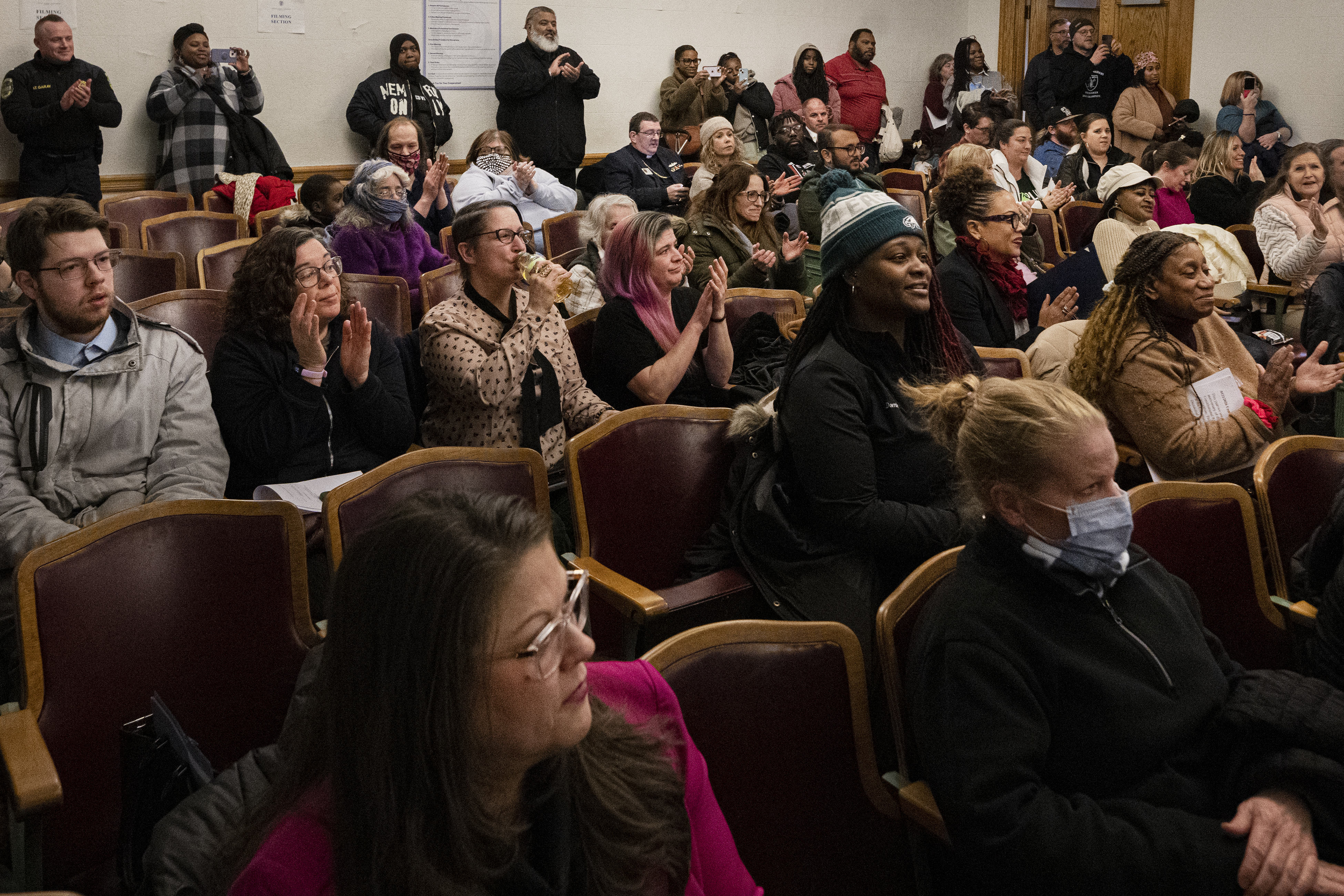
    Upper Darby residents gather at a township council meeting on Jan. 21. The legislative body is set to consider an ordinance that would restrict if and how federal immigration officials could operate within the township. Jose F. Moreno / Staff Photographer

    Under the proposed ordinance, no township resources, including funding, facilities, or databases, could be used to assist with federal immigration enforcement actions. Township officials could not provide information to federal agencies for the purpose of immigration enforcement, including housing records, employment details, or custody statuses. Township personnel could not assist with immigration enforcement operations, and Upper Darby could not record or maintain data about residents’ immigration status unless required to by state or federal law. Immigration enforcement agencies would also be barred from using township property as staging locations for immigration raids.

    The ordinance carves out exceptions, including cases when federal agents possess a judicial warrant or when there is a legitimate criminal law enforcement matter that requires cooperation.

    A judicial warrant is a warrant signed by a judge that allows law enforcement officers to make an arrest, search, or seizure. An administrative warrant signed by an ICE agent can only be executed in a public place and does not authorize officials to enter private property to make arrests.

    Upper Darby’s proposal would also ban township police officers from wearing masks and would require that they clearly identify themselves with nameplates and badges. Township police would be exempt from the mask and identification rules in specific cases, including operations where there would be risk of chemical agents or hazardous environmental conditions.

    Township police would be barred from stopping, questioning, detaining, or transferring individuals solely based on immigration status, civil detainers, or administrative warrants.

    The ordinance also formalizes the February resolution barring Upper Darby from entering into a partnership with ICE through the 287(g) program, and declares that any municipality who cooperates with ICE through 287(g) will be considered “incompatible” with Upper Darby, and any agreements with those municipalities will be void.

    In the Philadelphia suburbs, only the Lansdowne Borough Constable’s Office in Delaware County and the Pennsylvania State Constable Office Honey Brook Precinct 1 in Chester County participate in 287(g) agreements with ICE.

    Upper Darby’s ordinance also “formally requests” that federal agents clearly identify themselves by name, badge number, and agency, and refrain from using masks while carrying out law enforcement operations.

    The Upper Darby ordinance has many parallels to an aggressive seven-bill package passed by Philadelphia’s City Council in April, which prohibits federal immigration agents from using city property as staging or processing areas, bans data sharing between the city and ICE, and bars Philadelphia police from concealing their identities.

    A Philadelphia bill that banned law enforcement agents from obscuring their identities with masks, also passed in April, was struck down by a federal judge in July. The order from U.S. District Judge Chad F. Kenney argued that the Constitution’s Supremacy Clause prevents municipal governments like Philadelphia from dictating requirements for federal agencies.

    This suburban content is produced with support from the Leslie Miller and Richard Worley Foundation and The Lenfest Institute for Journalism. Editorial content is created independently of the project donors. Gifts to support The Inquirer’s high-impact journalism can be made at inquirer.com/donate. A list of Lenfest Institute donors can be found at lenfestinstitute.org/supporters.

  • Illegal speakeasy near where Philly cop was fatally shot must shut down, judge rules

    Illegal speakeasy near where Philly cop was fatally shot must shut down, judge rules

    The illegal speakeasy and hookah lounge near where a Philadelphia police officer was fatally shot last month must shut down, a city judge ordered Wednesday.

    On Aug. 16, the sidewalk outside the after-hours nightclub that was advertised as “Nipsey’s” on social media became the scene of the killing of 29-year-old Officer Alhassane Barry.

    Barry and another man had been arguing inside the Elmwood Avenue property in Southwest Philadelphia before the confrontation spilled outside, where the man opened fire on Barry, killing him and injuring another man, according to investigators.

    Immediately after the officer’s death, questions arose over Nipsey’s business practices. The property was not licensed to operate as a nightclub, city records show, and its owner had been handed a series of L&I violations in recent years.

    District Attorney Larry Krasner, speaking after Barry’s killing, vowed to shutter what he called a “nuisance business,” adding that investigators believe activity at Nipsey’s may have been connected to another death this summer.

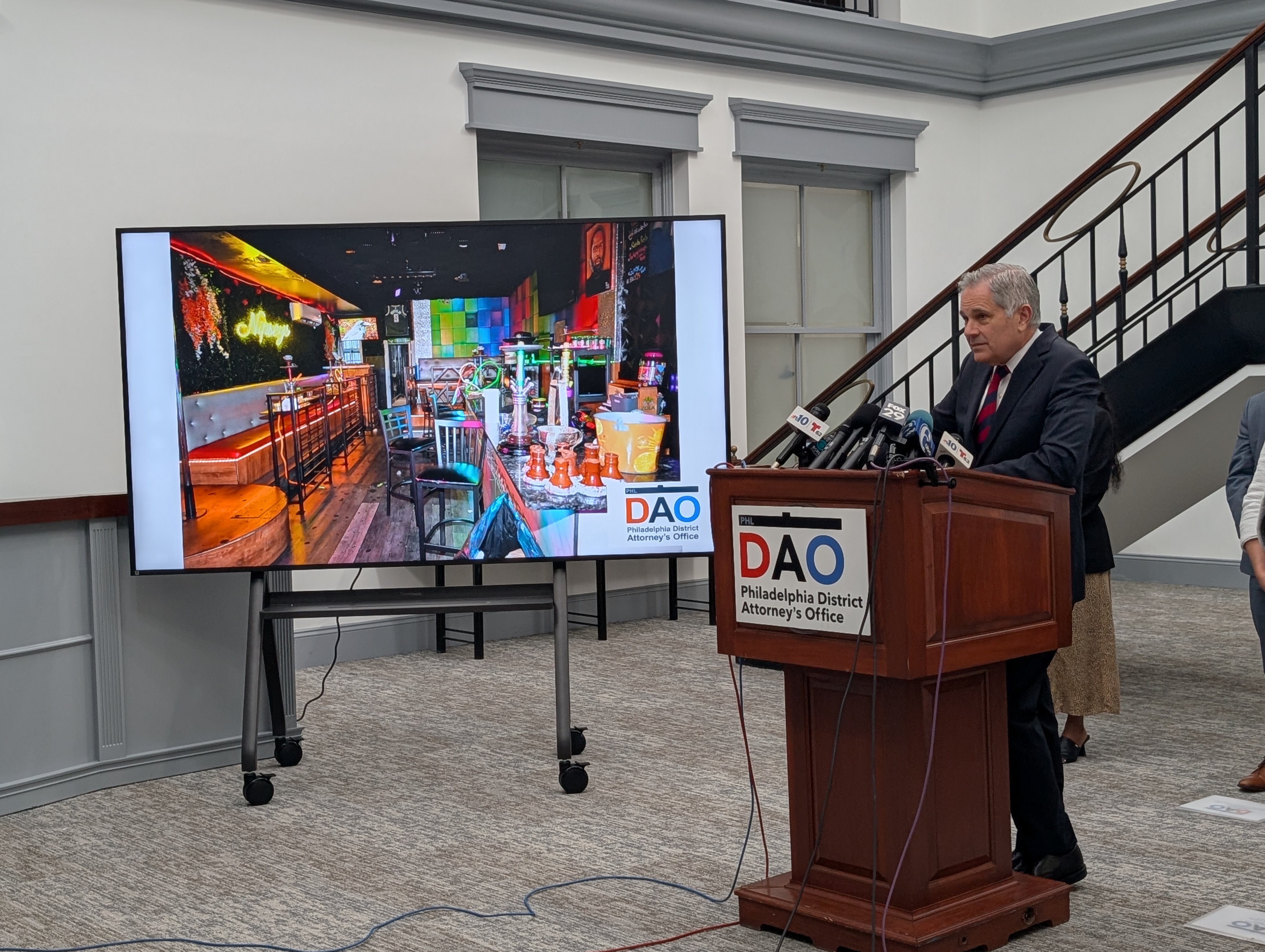
    District Attorney Larry Krasner presents images taken inside Nipsey’s Hookah Lounge, an illegal speakeasy where, outside the club, a Philadelphia police officer was killed.Jesse Bunch

    The matter was settled Wednesday in Common Pleas Court, when Judge Christopher R. Hall issued an injunction barring the property’s owner, Tran Yen, from conducting any commercial business there for one year. That includes any activity related to selling or offering alcohol, according to the ruling, which is enforceable by the Sheriff’s Office and city police.

    A spokesperson for the district attorney’s office, Solomon Leach, said the decision “effectively shuts down this illegal speakeasy.”

    “[W]hat we do know is that this establishment — and others like it — operated outside the law and was a problem waiting to happen,” the spokesperson said after the ruling.

    Thomas Kenney, a lawyer for the property’s owner, Tran Yen, of Newark, Del., said his client was “shocked as anyone else” about Barry’s killing.

    “We are cooperating with the Commonwealth to make sure there are no further nuisances,” he said. He declined to comment on the nature of the connection between Tran and those who operated Nipsey’s.

    Tran could not be reached for comment.

    In 2021 and 2024, Tran was issued violation notices from the city Department of Licenses and Inspections, violations that were filed anew after Barry’s death, city records show.

    In addition to being cited for operating as a nightclub without proper permitting, the property was cited for using extension cords rather than permanent electrical wiring, storing unsecured gas containers, and having combustible materials in a rear lot.

    Images investigators recovered from inside the lounge show patrons packed into the space amid brightly colored decorations and neon lights.

    Image from inside Nipsey’s Hookah Lounge presented by the Philadelphia District Attorney’s Office.Jesse Bunch

    The violations carried $3,200 in fines.

    Still, Krasner vowed to close Nipsey’s through court action.

    Wednesday’s order to do that came as the DA’s office continues to investigate the circumstances surrounding Barry’s death — including the possibility that the shooting was in self-defense.

    Investigators released images of the suspected shooter and prosecutors are having ongoing conversations with the man and his lawyer and are in possession of a firearm they believe he used to shoot Barry.

    They are also interviewing witnesses and analyzing footage from multiple surveillance camera angles that show portions of the shooting.

  • Coin with Trump’s face and gold finish to go on sale

    Coin with Trump’s face and gold finish to go on sale

    The $1 coin designed to celebrate America’s 250th birthday — and seemingly President Donald Trump, whose face gazes from one side of the gold finish — will go on sale Wednesday, according to the U.S. Mint.

    The coin’s design — Trump’s visage as “heads” and the Great Seal of the United States as “tails” — received the stamp of approval this year from the U.S. Commission of Fine Arts, whose members Trump appointed. In past comments, the president said that the idea to stamp his face on a coin was “very unusual” but that he was “honored by it.”

    The president’s second term has brought several such brandings, or attempts at them, that have become tangled up in lawsuits. That includes moves to put Trump’s name on the Kennedy Center and the U.S. Institute of Peace, as Trump works to leave his stamp on history and on Washington, D.C.

    The coins, which can be used as legal tender, drew some criticism, particularly because of federal law that bars the depiction of a living president on U.S. currency. But in some circumstances, the Treasury Secretary does have authority to authorize the minting and issuance of special coins.

    The coins were struck to “honor 250 years of great American heritage,” the U.S. Mint wrote on its website. In an arc above Trump’s face is written “LIBERTY,” and below is “1776 (tilde) 2026.” On the flip side is the Great Seal of the United States, with the bald eagle gripping arrows in one claw and an olive branch in the other. In a banner clutched in its beak is written “E PLURIBUS UNUM,” Latin for ”out of many, one.”

    A roll of 25 coins will cost $61, and a bag of 100 will cost $154.50, and the U.S. Mint said it randomly hid some special-issue coins among the rolls and bags. Those will be marked “July 4th” because they were struck on that day, the anniversary of the Declaration of Independence.

    Households are limited to only two orders, the U.S. Mint wrote, but that cap will be lifted at 2 p.m. Thursday.

  • Woman charged with forging checks to steal from a Delco Little League team

    Woman charged with forging checks to steal from a Delco Little League team

    A woman is facing multiple charges, including forgery, after authorities said she stole more than $7,000 from a Little League team in Delaware County.

    Robin Massing, 57, was charged Tuesday, following an investigation into fraudulent checks.

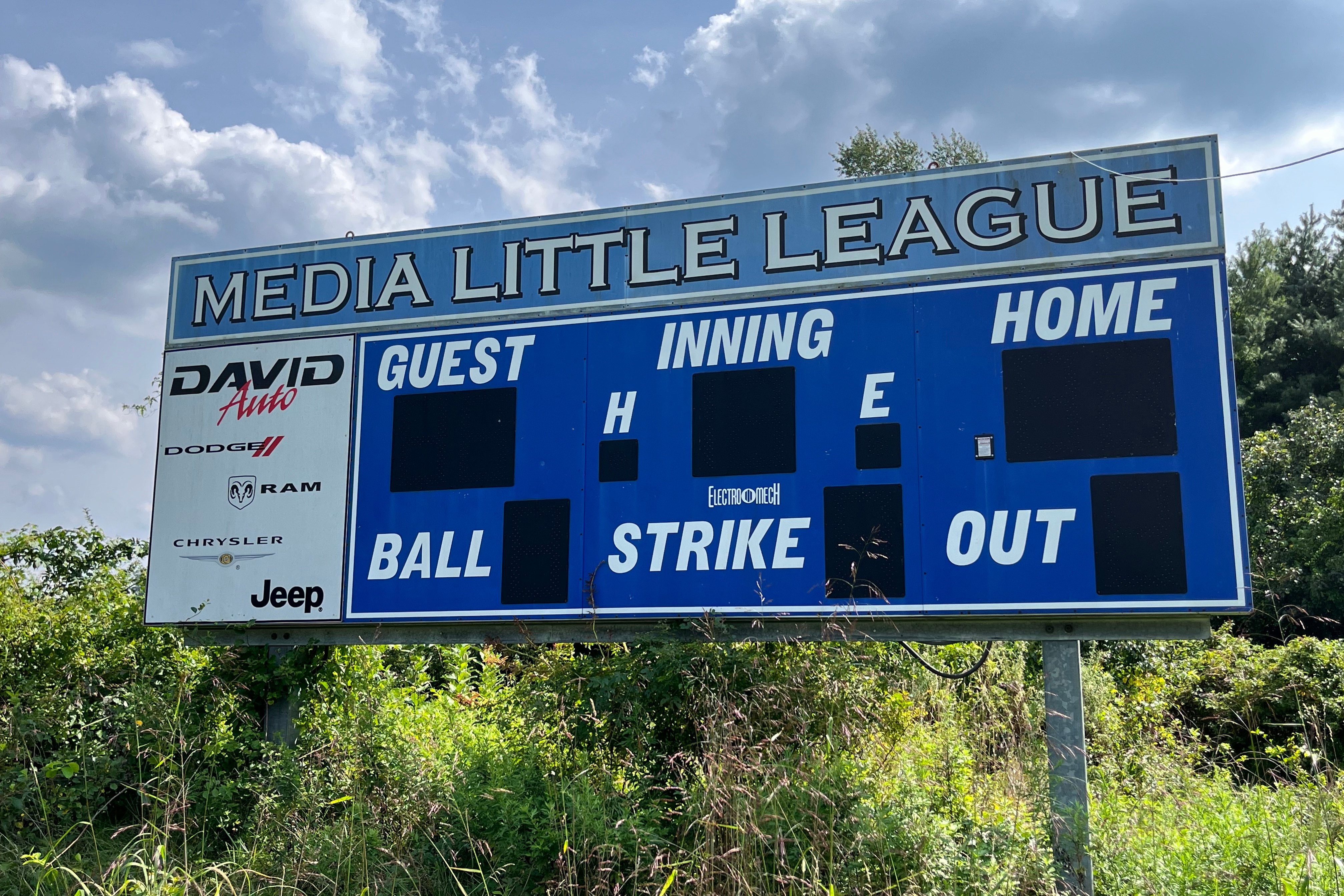
    Media Little League upper management contacted the Delaware County District Attorney’s Office to report check fraud, telling authorities three checks were mailed on behalf of the organization and sent through a mailbox in Upper Providence Township, in May 2025.

    In February, the Little League got word that one of the checks was deposited via mobile to Philadelphia Federal Credit Union for $7,200. But the amount, endorsement, and signature had been changed.

    A month later, a Fulton Bank in Southampton contacted the Little League management to verify a payment they found suspicious, the District Attorney’s Office said.

    Like the February check, the name and amount had also been changed, but the check number was the same as the February one, leading the bank to open its own investigation.

    According to the District Attorney’s Office, the bank retrieved footage that identified Massing as the person behind the theft.

    No lawyer is listed in court records for Massing, who was described in the affidavit as homeless.

    In June 2025, Massing was detained in Chester County for producing and forging a check at TD Bank, the District Attorney’s Office said.

    Now, Massing faces one count of forgery, bad checks, theft by unlawful taking, and receiving stolen property.

    The Media Little League has been organizing and teaching baseball to the community since 1952. In 2023, they made it all the way to Little League Baseball World Series in Williamsport.

    “It is hard to imagine a more disappointing target for personal greed than an organization raising money for kids,” said District Attorney Tanner Rouse in a Wednesday statement.

    The money was meant to go to uniforms, equipment, fields, and other resources for the kids, Rouse said.

    “To steal those funds and use forged checks to divert money for personal benefit is not just a financial crime; it is a profound betrayal of the entire community,” Rouse said.

  • Trump’s ‘lightning speed’ outpaces the courts

    Trump’s ‘lightning speed’ outpaces the courts

    WASHINGTON — The courts cannot keep up with President Donald Trump.

    In cases on immigration, spending, mass firings, and restructuring agencies, the administration has barreled ahead in the face of slow-moving legal challenges. If Trump loses when those lawsuits are finally resolved, it may be too late as a practical matter to undo what he has achieved.

    The challenge to Trump’s enormous White House ballroom project is just the latest example of a mismatch between a judicial system characterized by unhurried deliberation and a presidency built for speed.

    “Trump is going to get his ballroom — even if courts conclude it’s illegal,” said Leah Litman, a law professor at the University of Michigan.

    Over the past few months, three judges and four justices concluded that Trump likely violated a federal law by razing the East Wing and replacing it with a luxury building.

    Five other justices did not dispute that conclusion, ruling instead that the challengers probably lacked a direct interest in the matter sufficient to give them standing to sue.

    The litigation continues — but so does the construction. Trump said Tuesday that the project will be done by next year.

    Dissenting from an order in a different case last week, on mail-in voting, Justice Ketanji Brown Jackson wrote that she detected a pattern: a “Catch-Me-If-You-Can approach to pursuing the president’s policy agenda.”

    Davis Ingle, a White House spokesperson, said velocity was a virtue.

    “President Trump is moving at lightning speed,” he said, “because we don’t have time to waste in our mission to make America greater than ever before.”

    When the ballroom case was argued before a three-judge panel of the U.S. Court of Appeals for the District of Columbia Circuit in June, Judge Patricia A. Millett asked a telling question.

    If the government were to move very quickly to bulldoze the Statue of Liberty, she asked, was it true that “nothing can be done” by the courts?

    Yaakov Roth, a Justice Department lawyer, did not try to duck the question. “I think that’s right, yes,” he said.

    The panel ruled for the historic preservationists who had challenged the project by a 2-1 vote, affirming a ruling from a lower court judge blocking the project about four months after it was issued. That is pretty fast by judicial standards.

    But the injunction had been paused while the case moved along, and the appeals court added another two weeks. Then Chief Justice John Roberts added another pause, one that would turn out to last 10 days.

    During all of this, construction continued at a furious pace.

    When the case reached the Supreme Court last month, the challengers warned the justices that Trump had “decided to try to outrun judicial review.”

    In response, Solicitor General D. John Sauer did not exactly deny the charge. He crowed that a 250-person crew had been working 20 hours a day, seven days a week, and that the project, which he said included key security upgrades for the White House, had passed the point of no return. Echoing the challengers, he wrote that “the executive has raced to ‘outrun’ the extraordinary security threats facing this president.”

    In a decision Monday that let the project proceed for now, no justice said the project was lawful. The five-member majority, in an unsigned opinion, instead tentatively determined that the challengers had not suffered the sort of direct injury that would allow them to sue.

    Indeed, the majority went out of its way to say that “we do not pass upon the legality of the government’s East Wing project.”

    A frustrated Roberts, joined by the court’s three liberal members, wrote in dissent that “construction of the ballroom has proceeded apace for the better part of a year” even though it was most likely in violation of a federal law that requires Congress’ express permission to erect a building on federal property in Washington.

    Should Democrats capture one or both chambers of Congress in the coming election, they may be able to challenge the project in court or through legislation. But it will almost surely be too late.

    Aziz Huq, a law professor at the University of Chicago, said there was a pattern.

    He pointed to cases in which he said the administration had “immediately shut off funding in violation of law when the recipient depends on the funding and is discouraged from suing by even the temporary loss of funding.”

    This, Huq said, “is a striking use of practical power to outrun law.”

    The Supreme Court’s deliberate pace helped Trump during his last campaign, too.

    Jack Smith, the special counsel prosecuting him on charges that he had tried to subvert the 2020 election, sought to put the case on a fast track, one that would yield a trial before the 2024 election. Trump argued that he was immune from prosecution because his actions had been part of his official duties as president.

    Sauer, who was then Trump’s personal lawyer, urged the justices to go slow. The question, Sauer’s brief said, should be “resolved in a cautious, deliberative manner — not at breakneck speed.” He urged the justices not to “rush to decide the issues with reckless abandon.”

    The Supreme Court turned away a first appeal in 2023 and did not agree to hear the case until late February 2024, scheduling arguments for that April.

    The court’s decision, that July, granted Trump broad but not unlimited immunity, and Smith might in theory have been able to proceed with some elements of his case.

    But it had taken the court long enough to decide the immunity issue that the prospect of a trial before the election evaporated. After Trump won, the Justice Department dismissed the charges against him.

    “It was entirely foreseeable that the Roberts court’s decisions allowed Trump to outrun both the prosecutors and the lower courts,” said Jed Shugerman, a law professor at Boston University.

    The general problem, said Litman, a frequent critic of Trump, is that the Supreme Court, intentionally or not, “keeps missing the forest for the trees,” focusing on technical issues in the face of brazen conduct.

    “The court has created a maze of obstacles — and invented obstacles — that have the effect of allowing the executive branch to get away with lawlessness,” she said, “at least for enough time to accomplish what they’re trying to.”

    But Samuel Bray, a law professor at the University of Chicago, said courts are so powerful they must observe certain restraints. They cannot decide disputes not brought to them, for instance, and they can decide only cases in which the plaintiffs have a real stake.

    “Courts have the special power of giving judgments that are obeyed, even in the bitterest disputes,” he said. “But the special powers and special constraints of courts go together. And in the long run, the legitimacy of a judicial system depends on the judges’ commitment to working in a judicial mode, come what may.”

    Many presidents have been aggressive in pursuing their policies, and few have been eager to be second-guessed by the courts. But Trump’s actions are different in kind, said Pamela Karlan, a law professor at Stanford University.

    “He really has decided that he can just go ahead and do what he wants,” she said, “daring courts to stop him across a huge range of subject matters.”

    FILE — President Donald Trump boards Air Force One at Joint Base Andrews in Maryland, Aug. 27, 2026. In his breakneck construction of a grand ballroom and in many other initiatives, critics say, the president has tried to outrun judicial review. (Haiyun Jiang/The New York Times)Haiyun Jiang
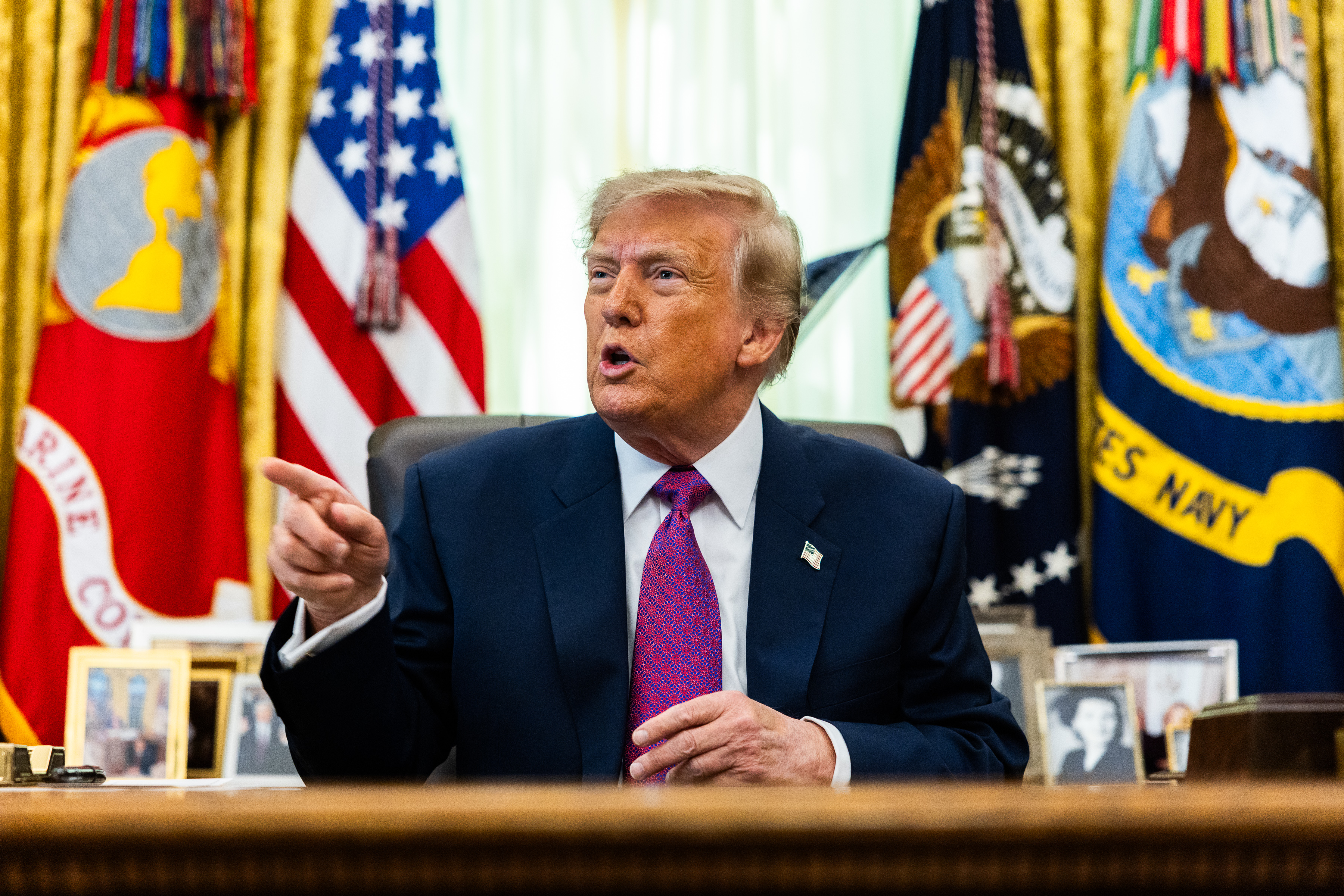
    President Donald Trump speaks to reporters in the Oval Office after ordering the name of Lake Ontario to Lake America, on Thursday, Aug. 27, 2026. On Tuesday night, after the latest exchange of fire over control of the Strait of Hormuz, Trump called on the Iranian people to rise up — something he did six months ago, before he backed off and acknowledged that his command was easier said than done. (Demetrius Freeman/The New York Times)DEMETRIUS FREEMAN
  • Joan E. Lynaugh, nursing trailblazer, historian, and professor emerita at Penn Nursing, has died at 90

    Joan E. Lynaugh, nursing trailblazer, historian, and professor emerita at Penn Nursing, has died at 90

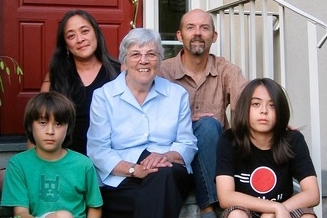
    Joan E. Lynaugh, 90, of Gwynedd, Montgomery County, pioneering primary care nurse practitioner, award-winning professor emerita of nursing at the University of Pennsylvania, historian, mentor, author, birdwatcher, and “living legend,” died Friday, July 10, of age-associated decline at Foulkeways at Gwynedd retirement community.

    Reared on a dairy farm in the Finger Lakes region of upstate New York, Dr. Lynaugh became a pioneering international expert on primary care nursing and nurse practitioner policies, education, and history. For decades, from the early 1960s through her retirement in the late 1990s, she treated patients, taught students, researched history, and joined colleagues in defining and expanding the role of nurses in modern healthcare.

    During her career, the benefits of home care, the importance of critical care, and the need for nursing history education were hot topics in healthcare. “As a historian,” she told The Inquirer in 1997, “I take great interest in this shift from the intense emphasis on hospitals to the more balanced emphasis on other kinds of care.”

    Dr. Lynaugh joined Penn’s School of Nursing in 1980. She took charge of the school’s new primary care nursing unit and went on to be director of the Robert Wood Johnson Foundation primary care nurse practitioner program and associate director of the foundation’s teaching nursing home project.

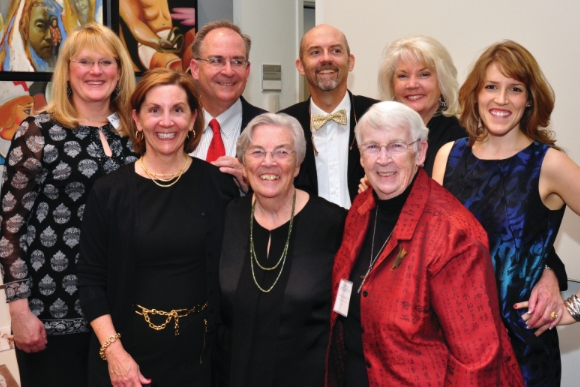
    Dr. Lynaugh (front center) and her family celebrate her 2005 award as a “living legend.”Courtesy of the family

    She was also the nursing school’s associate dean and director of graduate studies from 1993 to 1996, and chair of the nursing, history, and healthcare department from 1994 to 2000. In a tribute, colleagues at Penn Nursing said: “Dr. Lynaugh was a visionary leader, a prolific scholar, and a dedicated mentor whose extraordinary career left an indelible mark on Penn Nursing and the global nursing profession.”

    In 2000, she told writer Suzanne Gordon: “We know we can’t get into the hospital without a doctor. That’s no surprise. We are, however, surprised to discover that we can’t get out of the hospital without a nurse.”

    She was a founding director of Penn’s Barbara Bates Center for the Study of the History of Nursing in the mid-1980s, and her research focused on the origins of community hospitals and critical care units. In 2005, she was named a “living legend” by the American Academy of Nursing and earned a lifetime achievement award from the National Organization of Nurse Practitioner Faculties.

    Penn Nursing created the Joan Lynaugh Award for a graduating midwifery student for excellence in clinical practice, and the Bates Center features the Joan Lynaugh Founders Fund to support educational and archival activities, and the Joan Lynaugh Digitization Project Fund to preserve data and material from the Joan E. Lynaugh papers.

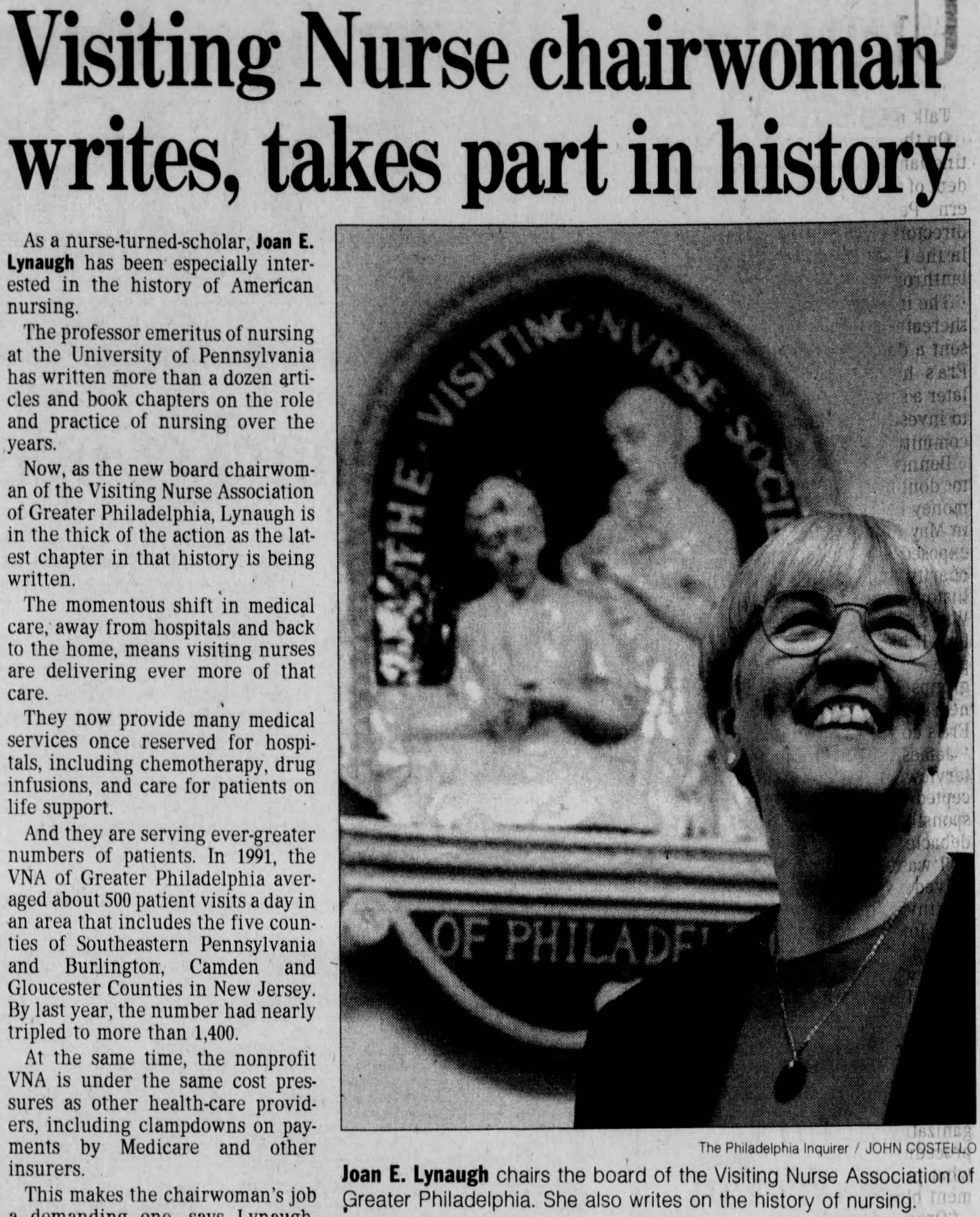
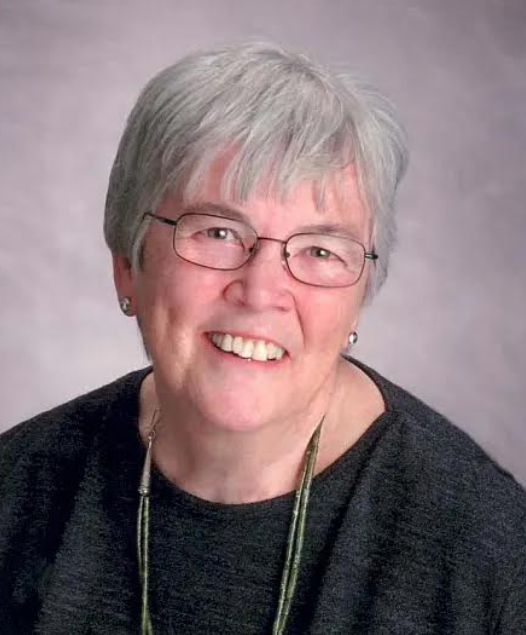
    This story and photo of Dr. Lynaugh appeared in The Inquirer in 1997.Newspapers.com

    In 2018, the center named its archives the Joan E. Lynaugh Archives and Special Collections. Before Penn, Dr. Lynaugh practiced and taught nursing at the University of Rochester and the old Providence Hospital in Washington, D.C.

    She was a fellow at the American Academy of Nursing, board chair of the Visiting Nurse Association of Greater Philadelphia, and active with the College of Physicians of Philadelphia, the American Association of Critical Care Nurses, and other groups. She cowrote Critical Care Nursing: A History with Penn colleague Julie Fairman in 1998, and coedited the award-winning textbook Enduring Issues in American Nursing in 2000.

    Colleagues at the American Association for the History of Nursing said in a tribute: “Joan’s intellectual curiosity, generosity as a mentor, commitment to excellence, and passion for nursing history left an indelible mark on the nursing profession worldwide.”

    A friend on Facebook called her “one of the smartest, kindest scholars I ever had the honor and pleasure to be mentored by.”

    Dr. Lynaugh (center) enjoyed time with her family.Courtesy of the family

    Joan Estelle Lynaugh was born Aug. 30, 1935, in Canandaigua, N.Y., about 28 miles southeast of Rochester. She studied nursing at St. Mary’s Hospital School of Nursing in Rochester and earned bachelor’s and master’s degrees in nursing at the University of Rochester, and a doctorate in history at the University of Kansas in 1982.

    Her whole life, she enjoyed traveling, bird-watching, camping, and hiking. She was an engaging host and liked to read mysteries and newspapers.

    She was a longtime colleague and personal partner of fellow medical professional Barbara Bates, and they lived in Bryn Mawr for years. Bates died in 2002, and Dr. Lynaugh moved to Gwynedd a few years later.

    “Joan will always be remembered for her generous spirit, wonderful sense of humor, persistent intellectual curiosity, and a sincere commitment to making the world a better place,” her family said in a tribute.

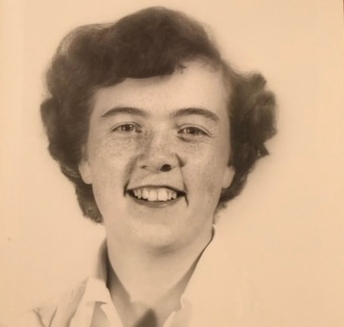
    Dr. Lynaugh grew up in the Finger Lakes region of upstate New York.Courtesy of the family

    Her niece Mary Clare Hamlin said: “She was understated, humble, practical, and scientifically minded. She always wanted to help others.”

    In addition to her niece, Dr. Lynaugh is survived by other relatives. Two brothers and a sister died earlier.

    A celebration of her life is to be held at 1 p.m. Friday, Oct. 23, at Penn’s Claire M. Fagin Hall, Room 316, Third Floor front, 418 Curie Blvd., Philadelphia, Pa. 19104.

    Donations in her name may be made to the Joan Lynaugh Founders Fund at Penn’s Barbara Bates Center for the Study of the History of Nursing, Office of Institutional Advancement, Claire M. Fagin Hall, 418 Curie Blvd., Suite 445, Philadelphia, Pa. 19104.

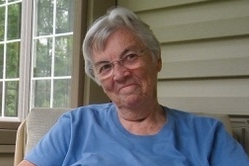
    Dr. Lynaugh “was understated, humble, practical, and scientifically minded,” her niece said. Courtesy of the family
  • Symbolic funerals held in Nepal for those feared lost as some missing tourists make contact

    Symbolic funerals held in Nepal for those feared lost as some missing tourists make contact

    KATHMANDU, Nepal — Tourists previously reported missing in Nepal have made contact with authorities, officials said Wednesday, as families of locals still unaccounted for after last week’s catastrophic floods held symbolic funerals for their loved ones.

    Nepal’s Foreign Ministry said 324 foreign nationals have been rescued, while another 590 from 39 countries remain missing following the Aug. 26 floods that killed at least 1,118 people and left more than 3,900 missing.

    Australian Prime Minister Anthony Albanese said Wednesday that the number of Australians missing in the disaster had fallen from 43 to 38 after five were confirmed safe overnight.

    “Amidst all of this tragedy, we are seeing some positive news. Today, another five Australians have been confirmed safe,” Albanese told reporters in Palau, where he is attending a regional summit.

    “We hope, of course, for positive news further, and we’re doing everything we can to work with authorities,” Albanese added.

    Sunil Sharma, a spokesperson for the Nepal Tourism Board, said at least five other tourists who were previously reported missing had contacted authorities by email or telephone in recent days.

    It is thought the disaster happened when a glacial collapse in the Himalayas sent rock, ice and meltwater into valleys below, triggering powerful floods downstream. The surge entered rivers flowing through Tibet and Nepal, causing them to rise rapidly. Floodwaters swept away homes, buildings, roads and bridges, carrying mud and rocks downstream.

    Families hold symbolic funerals

    Some families in Nuwakot, one of Nepal’s worst-affected districts, have held symbolic funerals for relatives still missing, hoping to free their souls after they were presumed dead.

    In Hindu tradition, cremation is an important final rite, and for some families, performing the ceremony even without the bodies of their loved ones provides a sense of spiritual release.

    Mukunda Rijal said his cousins and their daughters had not been found, prompting the family to perform a symbolic funeral for them.

    Along the banks of the Trishuli River, a priest placed straw effigies representing the missing family members and covered them with small piles of wood before setting them alight. The symbolic funeral pyres were surrounded by offerings to Hindu deities as relatives gathered to perform the final rites.

    Authorities in Nepal have also been burying recovered bodies in temporary graves until they can be identified. They are preserving DNA samples, photographing distinguishing facial features and recording other identifying details to help match the remains with missing people and eventually return them to their families.

    China builds access road for rescue crews

    On the Chinese side, rescue crews completed a makeshift road to the disaster site at Gyirong Port on the Nepal border, state broadcaster CCTV reported on Wednesday.

    Crews have been clearing access for heavy machinery to be used in the search at the border crossing complex, which was washed away by the floods. The road leading to the crossing was destroyed and buried under water, mud and rocks.

    At least 21 people have been killed and 541 remain missing in China, according to the Chinese state news agency Xinhua.

    Survivors find shelter in Kathmandu

    Some flood survivors are fleeing the devastation to seek shelter in Nepal’s capital, Kathmandu.

    Around 400 survivors, mostly from the town of Timure, about 65 miles west of Kathmandu, have been staying at the Yellow Gumba monastery. The shelter is being organized by locals and relatives, with relief supplies donated by individuals and charity organizations.

    Riya Tamang, 21, who fled with her 10-month-old baby as the floodwaters approached, is among those taking shelter at the monastery. She lost her grandparents in the disaster.

    “I was the last one to leave the house. It was so difficult to escape,” she said.

    Her husband, who works as a cook in Gyirong town on the Chinese side of the border, also survived, and the couple now stays in touch through video calls.

  • Academy of Natural Sciences and Drexel University reach tentative terms on the Academy’s future

    Academy of Natural Sciences and Drexel University reach tentative terms on the Academy’s future

    After the threat of a possible split, the Academy of Natural Sciences and Drexel University reached a tentative agreement that will continue their affiliation and maintain Drexel’s financial support of the Academy, multiple sources confirmed Wednesday. It will also give the university control over its major decision-making.

    Also on Wednesday, Drexel and the Academy appointed Patricia “Trish” Wellenbach to temporarily lead the Academy, serving as its senior adviser. She is deputy mayor to Philadelphia Mayor Cherelle L. Parker’s administration and previously president and CEO of the Please Touch Museum. Wellenbach is on loan from the city and will not receive any compensation from Drexel or the Academy for her new role.

    Drexel holds the reins

    The announcement comes one day after Drexel and the Academy said they would close the Academy’s museum effective Sept. 30 and that Academy CEO Scott Cooper would be stepping down immediately. Sept. 27 will be the last day the museum will be open to the public.

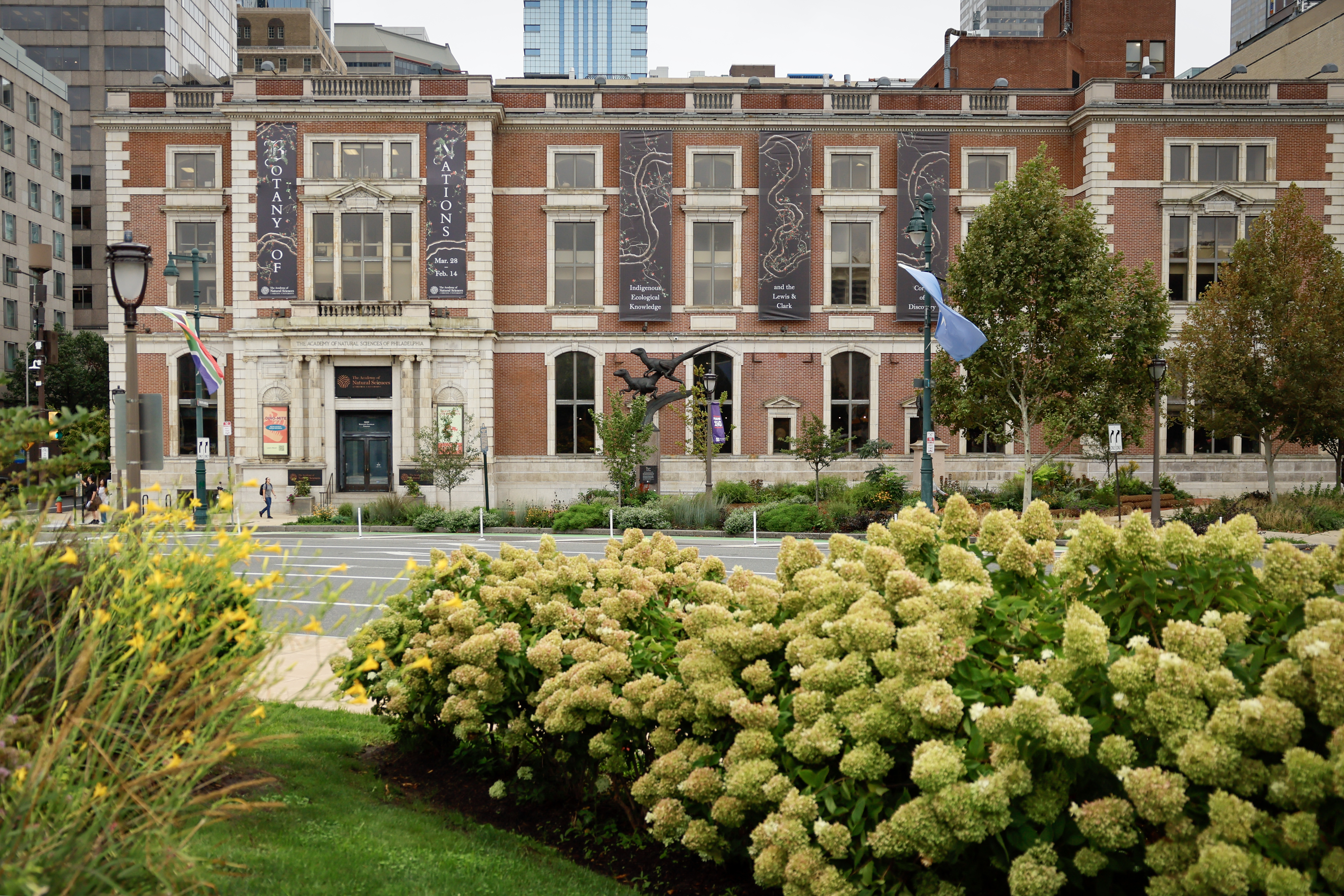
    Though not part of the new terms, the goal now is to relocate the Academy’s collections and sell its 1876 building at 19th and the Benjamin Franklin Parkway, which has numerous deferred maintenance needs, said a source close to the talks between Drexel and the Academy who asked not to be identified.

    The new “nonbinding” terms of the letter of intent maintain Drexel’s financial support of the Academy, modify the governance structure, and preserve the right of the Academy board to de-affiliate from Drexel and find a new partner or partners for its collections should it wish to do so.

    The terms cover issues such as selection of an interim leader and a permanent leader of the Academy and budgeting, according to a source close to the talks. While Drexel and the Academy will engage in a collaborative process to find a new leader, the final decision will rest with Drexel, the source said.

    Dinosaur Hall at the Academy of Natural Sciences on Wednesday, Aug. 5, 2026.Allie Ippolito / For The Inquirer

    “It’s fair to say all decisions of importance have to be approved by Drexel,” the source said, including the budget, which is about $25 million annually.

    Under the affiliation agreement in 2011, Drexel provided substantial financial support to the Academy and covered its deficits. That will continue, and Drexel also will cover the costs of relocation of the collection and other transition expenses, the source said.

    Academy board chair Suzanne Biemiller did not respond to messages seeking comment.

    A ‘solid’ but nonbinding resolution

    Of the new terms, another Academy board member said:

    “I’m hopeful that something positive will come of it. The goal is to find a way to keep the Academy in existence and achieve its mission, so I think it’s a solid resolution,” said the board member, who asked that their name not be used.

    Like most letters of intent, the agreement is nonbinding until the two sides come to a complete binding agreement, the source said.

    The Inquirer reported in April that Drexel was seeking to totally take over the Academy or end the partnership. The terms signed Tuesday were brokered by former Comcast executive and U.S. Ambassador to Canada David L. Cohen at the behest of Gov. Josh Shapiro.

    Sept. 27 is the last day the Academy of Natural Sciences of Drexel University will be open to the public.Elizabeth Robertson / Staff Photographer

    The leaders of Drexel and the Academy signed the terms sheet on Tuesday, Cohen said. But there are significant ongoing issues for the Academy and Drexel to work through, he added.

    “They include the responsible move of the collections, and a variety of other transition activities,” he said. “The Academy needs a senior representative, a senior voice in these ongoing discussions both to communicate internally at the Academy and with other stakeholders including Drexel.”

    That will be Wellenbach’s role, he said.

    She will have a voice in discussions on finding another location to display some of the collections, now that the museum will be closed, Cohen said.

    Patricia Wellenbach, former president and CEO of the Please Touch Museum.Heather Khalifa / Staff Photographer

    A temporary leader

    Wellenbach will be based at the Academy part of the week while also continuing in her city role. She will lead temporarily while Drexel and the Academy search for an interim leader.

    “Ms. Wellenbach has had a distinguished career spanning nonprofit leadership, healthcare, governance and public service,” said the announcement from Drexel president Antonio Merlo and Biemiller.

    Mayor Parker in a statement called the Academy “a critical, longstanding part of Philadelphia’s cultural and educational landscape” and said she was pleased to loan Wellenbach to the effort.

    “We are working collaboratively with Gov. Shapiro, Ambassador Cohen, the Academy and toward the outcome we all seek for the City of Philadelphia,” Parker said.

    The Academy museum is ending operations after nearly two centuries because of declining visitorship and rising expenses, according to the Academy and Drexel.

    “Over time, it became clear that these were not temporary pressures, but fundamental changes in the economics of the Academy’s operational model, costs that have imperiled the Academy’s ability to discharge its overall mission and preserve its legacy,” the two institutions said in a joint statement Tuesday.

    Biemiller and others have pledged to not abandon the Academy’s role in educating the broader public about the natural world.

    While it was “incumbent upon us to find places and ways” for the museum to continue, she said earlier this week, the exact form it would take has not been determined.

    While Drexel has the major decision-making power, the Academy board will continue to be the fiduciary board and decision-maker for the Academy’s endowment, though management of it has been delegated to Drexel’s investment office, according to the source close to talks.

  • How much is that gene-edited dog in the window?

    How much is that gene-edited dog in the window?

    For thousands of years, we have been trying to craft our ideal canine companions. We have honed their abilities to perform an array of specific tasks, from fetching waterfowl to staring down wayward sheep. We have reshaped and refined their bodies, producing sausage-shaped dachshunds, polka-dotted Dalmatians, bushy-browed schnauzers, and deeply wrinkled Shar-Peis.

    And we have done it using nothing more sophisticated than good old-fashioned selective breeding.

    Now our canine engineering efforts are entering a new era. Earlier this month, Kindred Companion Sciences, a biotech startup based in New York, revealed that it had used the technique known as CRISPR to create the first gene-edited, hypoallergenic dogs. Thanks to a single genetic tweak, the dogs — two undeniably adorable beagles — appear unable to produce a protein that can leave some people red-eyed and wheezing.

    Still, it’s a long way from the lab to the laps of pet owners across America. (It has been 2½ years since scientists announced a gene-edited, hypoallergenic cat, but such felines are not yet available to the public.) More time and data are needed to determine whether Kindred has truly delivered on its promise of hypoallergenic dogs, experts said. Can a single gene edit reliably stave off the sniffles in humans?

    An even more critical question: What does it mean for dogs? Will our efforts to create pets that are more convenient for us have unintended health consequences for them?

    History is not encouraging. Since the Victorian era, when dog fanciers began to create and codify modern dog breeds, our quest for the perfect pooch has yielded dogs that are inbred, disease-prone, and saddled with extreme physical traits — super flat faces and ultralong backs — that compromise their welfare.

    “We’ve created an enormous amount of inherited diseases in dogs, often unintentionally, because of our pursuit of certain traits that appeal to us,” said Rowena Packer, an expert on companion animal welfare at the Royal Veterinary College in London. “I just think we have a lot more responsibility to think more critically about the dogs that we create.”

    Dog design

    For all the canine diversity we’ve managed to create through selective breeding, a truly hypoallergenic dog remains something of a holy grail. Breeders have created all manner of low-shedding dogs and purportedly hypoallergenic dogs (behold the labradoodle and all of its doodle-y descendants). But these dogs still produce proteins that, secreted through their skin, saliva, and urine, can trigger human allergies.

    Gene editing provides a “simple, elegant” way to solve the problem at the source, said Matt Walker, cofounder and CEO of Kindred, who has suffered from dog allergies his whole life.

    Kindred began with canine cells, using CRISPR to disable a gene known as Can f 1, which codes for one of the main canine allergens. Then, the scientists used a basic cloning technique to transfer the edited genomes from these cells into dog embryos. They implanted the embryos in a surrogate beagle mother, who gave birth to two puppies: Alfie and Bailey, who are now almost 2 years old.

    The company has detected no trace of the allergen in either dog, and Walker, who adopted Bailey, has experienced no allergic reactions. (Alfie was adopted by one of Walker’s colleagues.) The dogs appear to be developing normally.

    “No red flags, no yellow flags — so far, the animals seem completely healthy,” Walker said. “That said,” he added, “this is the starting point of our work.”

    Indeed, for all its purported precision, gene editing can have unpredictable consequences. Medical issues might appear later in the dogs’ lives, or when the company starts producing enough dogs to spot rare side effects.

    Or, of course, they could turn out to be perfectly healthy. But it’s too soon to say, and we’re likely to see more efforts to create gene-edited dogs in the future. Where do we want to draw our ethical lines?

    Thirty years ago, when genetic engineering was still in its infancy, philosopher Bernard Rollin proposed an ethical principle he called the “conservation of welfare,” which held that we should not modify animal genomes in ways that left the animals “worse off, in terms of suffering” than their unmodified forebears.

    That’s a sensible starting point. But it’s a low bar. And it doesn’t address all the ethical implications of making gene-edited dogs, which may require using additional animals to serve as test subjects, egg donors, and surrogate mothers.

    “I think we get sometimes so excited about the idea of what technology can fix, particularly biotechnology — we’ve got to remember that, generally, we use a lot of animals to get to that end ‘product,’” said Lisa Moses, a veterinarian and bioethicist at Harvard University.

    Ethicists have also questioned whether we should bring gene-edited dogs into a world that already has more dogs than it can care for, especially when the goal is not to create a healthier animal, but one that better meets our human needs.

    “Should we use sophisticated biotechnology to create the animals we want, rather than changing how we relate to the animals who already exist?” said Jessica Pierce, a bioethicist at the University of Colorado Anschutz Medical Campus. “That’s a question of priorities, and perhaps misplaced priorities.”

    Walker sees it differently. His allergies would prevent him from ever adopting a shelter dog, he said; gene editing is the only thing that has made it possible for him to have a relationship with dogs. “I’m also really invested in applying this work to service dogs for people who are allergic,” he said.

    “People’s ethical barometers are set differently,” he added. “For me, this feels justified by the potential benefits, as long as animal health is protected.”

    Good breeding

    Dog lovers can, in good faith, come down on different sides of the Kindred question. But if we’re going to discuss the ethics of dog creation, experts agreed, we need to ask ourselves some hard questions not just about our new gene-editing tools, but also about our long-standing breeding practices.

    “At the end of the day, they’re both producing animals for companion purposes,” said Alison Van Eenennaam, an expert on animal genomics and biotechnology at the University of California, Davis. “It’s not the technology that’s creating the ethical issues.”

    We’ve done plenty of harm without modern biotechnology. And there are ways to use gene editing to improve canine lives — even, in some cases, to undo some of the damage done through selective breeding. In a 2022 study, scientists showed that it was technically possible to use gene editing to “correct” a genetic mutation associated with hip problems in Labrador retrievers.

    But these hip problems stem from a variety of risk factors — both genetic and environmental — and most canine health conditions probably cannot be cured by editing just one gene, experts said.

    Improving dog welfare is likely to require an array of complementary approaches. These include revising breed standards, opening up closed breeding pools, performing widespread genetic screening, and educating the public about the welfare costs of breeding dogs with certain physical traits.

    Experts have been calling for these reforms for years, with limited success. But they are necessary if we want to bring our behavior in line with the values we claim to hold. We are, after all, a society that is so besotted with dogs that we have startups trying to develop canine longevity drugs — and editing genes so that people can live alongside creatures that would otherwise give them hives.

    Life with Bailey has been “amazing,” Walker said. “I didn’t really appreciate, when people say pets are part of your family, what that really means. But she really is a part of our family.”

    His wife had grown up with dogs, he added, and had long bemoaned his allergies. “She always said that this was the one thing she wished she could change about me,” he said.

    Indeed, as news of Kindred’s hypoallergenic dogs spread across the internet this month, one Facebook commenter raised precisely that possibility: “Why doesn’t he alter himself instead of the beagles?”

    Alas, we can’t yet edit dog allergies out of our own genomes. But that doesn’t mean we can’t evolve.

    This article originally appeared in the New York Times.