Category: News

  • SEPTA bus drives through wet concrete outside of Termini Bros. in what locals say is the ‘most South Philly thing ever’

    SEPTA bus drives through wet concrete outside of Termini Bros. in what locals say is the ‘most South Philly thing ever’

    In what Joey Termini of Termini Brothers Bakery is calling the “most South Philadelphia thing ever,” a Route 47 bus drove through wet concrete after two people reportedly hopped off to move street barricades so the bus could pass Thursday.

    The sinking bus, which tilted on a slight edge as it got stuck on South Eighth Street outside Termini Bros., drove through the concrete only two minutes after city crews poured it into the road.

    In surveillance footage provided by Termini, the bus, aptly adorned with Top Dog Law advertisements, slows to a halt in front of two A-frame street closure signs on Eighth Street. Two passengers are then seen hopping off the bus, casually moving the signs out of the way and directing the bus driver like air traffic controllers around the patch of concrete in the middle of the road. As the bus gets stuck and tilts to the side, smacking the pavement in the process, hardly any of the passengers on the bus can be seen visibly reacting.

    “In South Philly, people are like, “I’ll find a way,” Termini said. “At the time I was a little frustrated because we waited months to get that pothole fixed, but you know looking back at it now, it really is funny. I’m just glad nobody was hurt.”

    The brothers Termini have been coordinating with the city to get the pothole-turned-sinkhole resolved since it formed 14 months ago, Termini said. He knew it was getting bad when the sinkhole started swallowing traffic cones placed inside it — a time-honored Philadelphian quick fix.

    Their prayers were answered Thursday when city crews came in the afternoon to repair the street. But right after the concrete was poured and the street blocked off at 7:21 p.m., a 47 bus found its way into the concrete pit at 7:23 p.m., according to Termini’s surveillance footage.

    The bus was towed within about 45 minutes, SEPTA spokesperson Andrew Busch said. According to an inspection, the only damage to the bus was from cement on one tire, so it will not be out of service for an extended period of time, Busch said.

    The city posted notices about the scheduled maintenance along the street in the days preceding the repair and no-parking signs were posted. “This wasn’t something that they just decided to do on a whim,” Termini said.

    SEPTA had a detour in place for this block along Route 47 on Thursday, which is standard operating procedure during planned road maintenance, Busch said. All internal notices of the detour were made, including to operators working on the 47.

    “We have an internal review underway to determine exactly why this occurred,” Busch said. “We will also see what we can learn from it and possibly improve on moving forward.”

    Termini feels for the driver, who wasn’t the first to have trouble on Eighth Street, as he saw at least three other buses making difficult turns to move around detours — something he felt could have been coordinated better by the city and SEPTA.

    “I know the driver was probably really stressed out,” Termini said. “But the guy getting off the bus to move the barriers and then run back on the bus, even after the bus got stuck in concrete, I was like, ‘This is Philly.’”

    And to make the ending sweeter, when city crews came out Friday morning to repair the bus-botched repair job, Termini handed out cannolis to those working on the road.

    “There’s enough craziness going on in the world out there,” Termini said. “Sometimes, we just have to laugh.”

  • Rescuers pull 2 trapped workers from a hydropower tunnel 9 days after Nepal floods

    Rescuers pull 2 trapped workers from a hydropower tunnel 9 days after Nepal floods

    KATHMANDU, Nepal — Rescuers in Nepal pulled two workers alive from an underground tunnel at a hydropower plant Friday, raising hopes of reaching dozens of others believed to be trapped nine days after deadly floods swept away villages and submerged the Himalayan region in mud and debris.

    Search teams first heard voices from inside the tunnel in the morning, allowing them to locate the two men, Nepalese lawmaker Shri Ram Neupane said. Images showed a rescuer carrying one of the workers, covered in mud, on his back, while soldiers on either side helped.

    One of those rescued said more people are alive inside the tunnel, according to army spokesperson Brig. Gen. Raja Ram Basnet, and the search is ongoing.

    “I can’t explain what we are feeling at the moment. We are just grateful to god,” Amir Maharjan, the brother of one of those rescued, told the Associated Press.

    Basnet confirmed the first trapped worker’s rescue, and Neupane posted about the second on his Facebook page shortly after.

    Both men were flown to a hospital in Kathmandu, and Maharjan said his family was on its way there. One of the survivors was in critical condition, according to a statement from the prime minister’s office.

    Officials identified the men as a mechanical foreman and a mechanical supervisor. They were rescued from a tunnel at the Trishuli 3A plant.

    About 900 workers are missing from 12 hydropower projects in Nepal, with roughly 500 believed to be trapped in various tunnels, according to authorities.

    About 115 are believed trapped in the tunnel at Trishuli 3A alone, according to the Independent Power Producers Association of Nepal.

    Nepal’s Communication Minister Bikram Timilsina wrote on his Facebook page that officials “are waiting for the rescue of more and more people.”

    At least 1,287 people were killed in the Aug. 26 floods, likely caused by a glacier collapse, and more than 5,000 remain missing, according to Nepal’s disaster management agency. China said Friday 31 people were killed and 531 were missing on the Tibet side of the border, according to Chinese official news agency Xinhua.

    Nepal’s disaster agency estimated Friday that flooding caused at least 387.5 billion Nepalese rupees ($2.5 billion) in damage to infrastructure and property.

  • Mistrial is declared in Lindsay Clancy child killings case after jury deadlocks

    Mistrial is declared in Lindsay Clancy child killings case after jury deadlocks

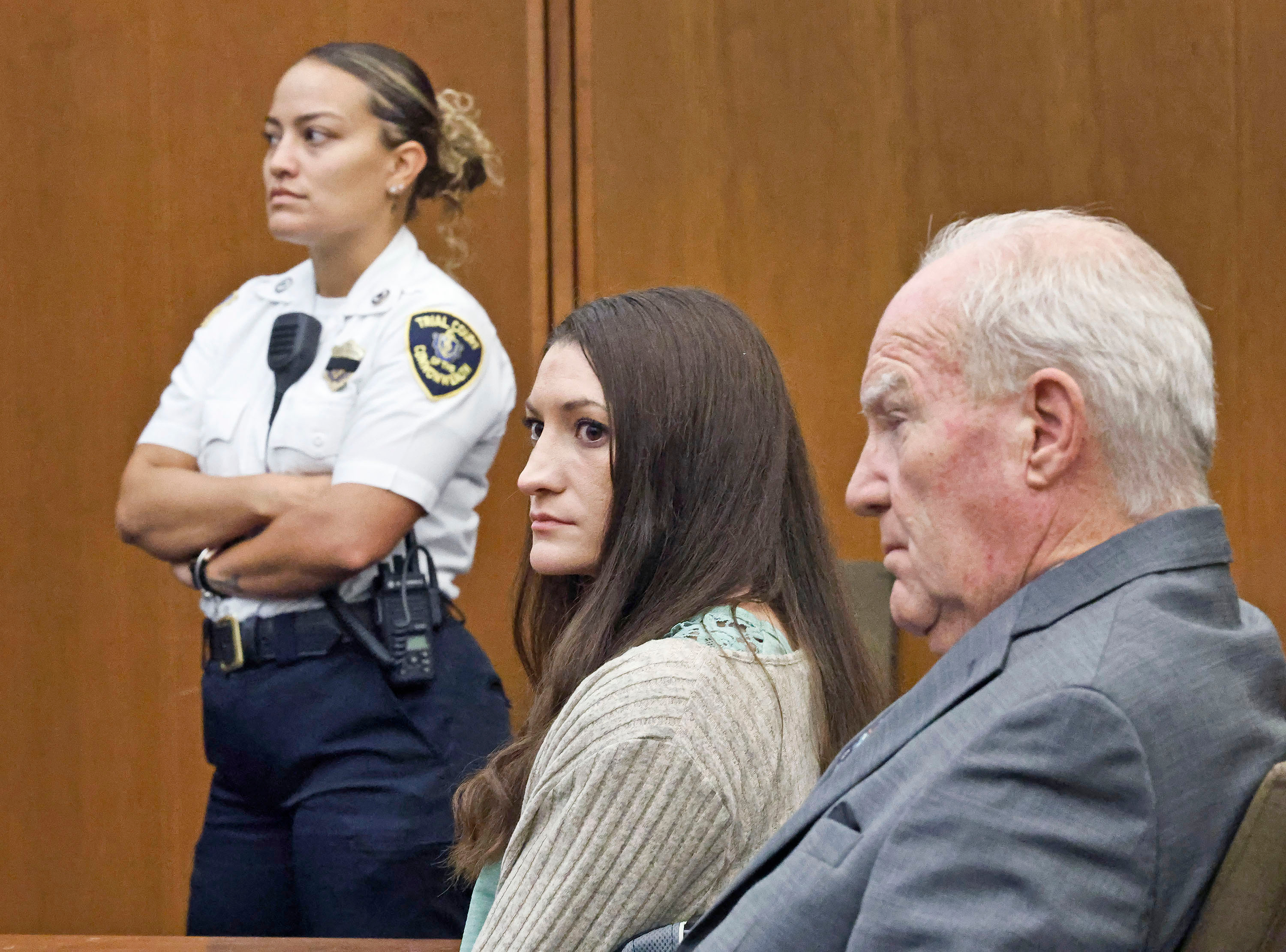
    PLYMOUTH, Mass. — A judge in the Lindsay Clancy murder trial declared a mistrial Friday after jurors failed to reach a verdict in a case that sharply divided many Americans over whether the Massachusetts woman should be held criminally responsible for killing her three young children.

    The trial generated intense interest for more than a month, drawing attention to issues around maternal mental health after childbirth.

    Clancy, a 36-year-old former labor and delivery nurse, never disputed that she killed the children. But her attorney said she had a rare condition called postpartum psychosis when she strangled her kids, the youngest just 8 months old, then tried to take her own life in 2023. Prosecutors said Clancy knew what she was doing.

    Friday’s mistrial, on the seventh day of deliberations, leaves the case unresolved. In the end, the decision seemed to surprise no one in the courtroom. Neither Clancy nor her family showed any emotion as the judge announced the trial was ending without a resolution.

    Her parents and her sister were escorted by state police from the back of the courthouse, saying nothing to reporters. Her ex-husband Patrick Clancy, the trial’s first witness, has said in past interviews that he forgives her and believes her actions were the result of mental illness.

    Lindsay Clancy could face another trial

    The prosecutor who originally decided to charge Clancy said there would not be an immediate decision about a second trial. He said public opinion would not influence any decision.

    “This was and has always been about getting justice for those three little babies,” said Plymouth County District Attorney Timothy Cruz. “This case is not about the healthcare system, or about how women are treated in it, or what diagnoses there are.”

    He pointed out that the two trial prosecutors were “both mothers themselves.”

    The deliberations took a dramatic turn when the judge said he was going to declare a mistrial Friday before suddenly changing course and letting her defense attorney appeal that decision to the top court in Massachusetts. But the court declined to stop the judge from declaring a mistrial.

    Prosecutors said Clancy acted deliberately when she strangled 5-year-old Cora, 3-year-old Dawson, and 8-month-old Callan Clancy with exercise bands. They said she contrived to get her husband out of the house on Jan. 24, 2023, by sending him to pick up medicine for one of their children and dinner for the family.

    Clancy’s lawyer, Kevin Reddington, said she should not be held criminally responsible because of her postpartum psychosis, a rare mental illness linked to the stress, sleep deprivation, and hormonal changes that follow childbirth.

    Trump weighs in on Lindsay Clancy case

    Three times this week, jurors said they were unable to reach a unanimous decision. The jury’s foreperson told the judge Thursday that a single juror wouldn’t follow the court’s instructions about reasonable doubt.

    Outside the courthouse Friday, Reddington blasted the juror he believes stood in the way of an acquittal by other jurors.

    “They (the jury) know they were robbed by one man, for whatever his agenda was, who stole seven weeks of the life of these other jurors that were so attentive, so beautiful, so wonderful,” he said.

    “You could see how defeated they were sitting there,” he said. “I got a funny feeling they would have gone on for another week if they had to. So I hope that guy can sleep well at night.”

    Millions across the U.S. watched the livestreamed trial. Even President Donald Trump said he was following the coverage.

    “It’s a terrible situation. Look, she did a horrible, horrible thing,” Trump said Friday. “Can’t be worse. But you’ll find out what the price to pay is. There’ll be a price — a mental institution or jail or something.”

    The judge acknowledged early during deliberations that the trial had been emotionally and physically exhausting for everyone. Much of the testimony was excruciating to hear, from the heartbreaking 911 call made by the children’s father who found their bodies, to the descriptions of how they died.

    Clancy was brought to tears several times. At one point, the judge called a short break as Clancy’s loud sobs filled the courtroom while the children’s autopsy photos were shown.

    Clancy’s mental health was the focus of the trial

    Over 21 days of testimony, jurors heard how Clancy’s mental health collapsed after Callan’s birth.

    Deeply anxious about a planned return to work, unable to sleep, and experiencing what she described as a disturbing brain fog, Clancy sought care from experts in postpregnancy mood disorders, who prescribed multiple psychiatric medications.

    Clancy’s family members testified that she expressed concern about her mental health decline. Her former mother-in-law, Susan Clancy, described her as a “very nurturing, very loving mother” who was “begging for help.”

    In early January, she checked herself in to a psychiatric hospital for more intensive treatment, but her stay was short. She killed the children 19 days after she was discharged, leaving their bodies in the basement of the family’s home in coastal Duxbury, Mass. Clancy jumped from a second-story window immediately after and remains paralyzed from the waist down.

    Clancy jurors heard differing views from experts

    Prosecutors conceded that Clancy had severe mental illness, but insisted she was able to understand and control her actions. They emphasized that although she claimed to have heard a male voice commanding her to kill the children, she never disclosed hearing voices to her mental health providers before the killings.

    In its latter stages, the trial became a battle of medical experts.

    Kirk Heilbrun, a forensic psychologist hired by prosecutors, testified he didn’t believe her story about hearing voices or that she had acute psychosis. He said she took the children’s lives so they wouldn’t “suffer” after she killed herself.

    Phillip Resnick, a forensic psychiatrist who testified for the defense, said Clancy was “clearly psychotic” and not in control of her actions. “It was almost like she was a puppet and someone else was pulling the strings,” he said.

  • WNBA commissioner Cathy Engelbert, a South Jersey native, to retire in December

    WNBA commissioner Cathy Engelbert, a South Jersey native, to retire in December

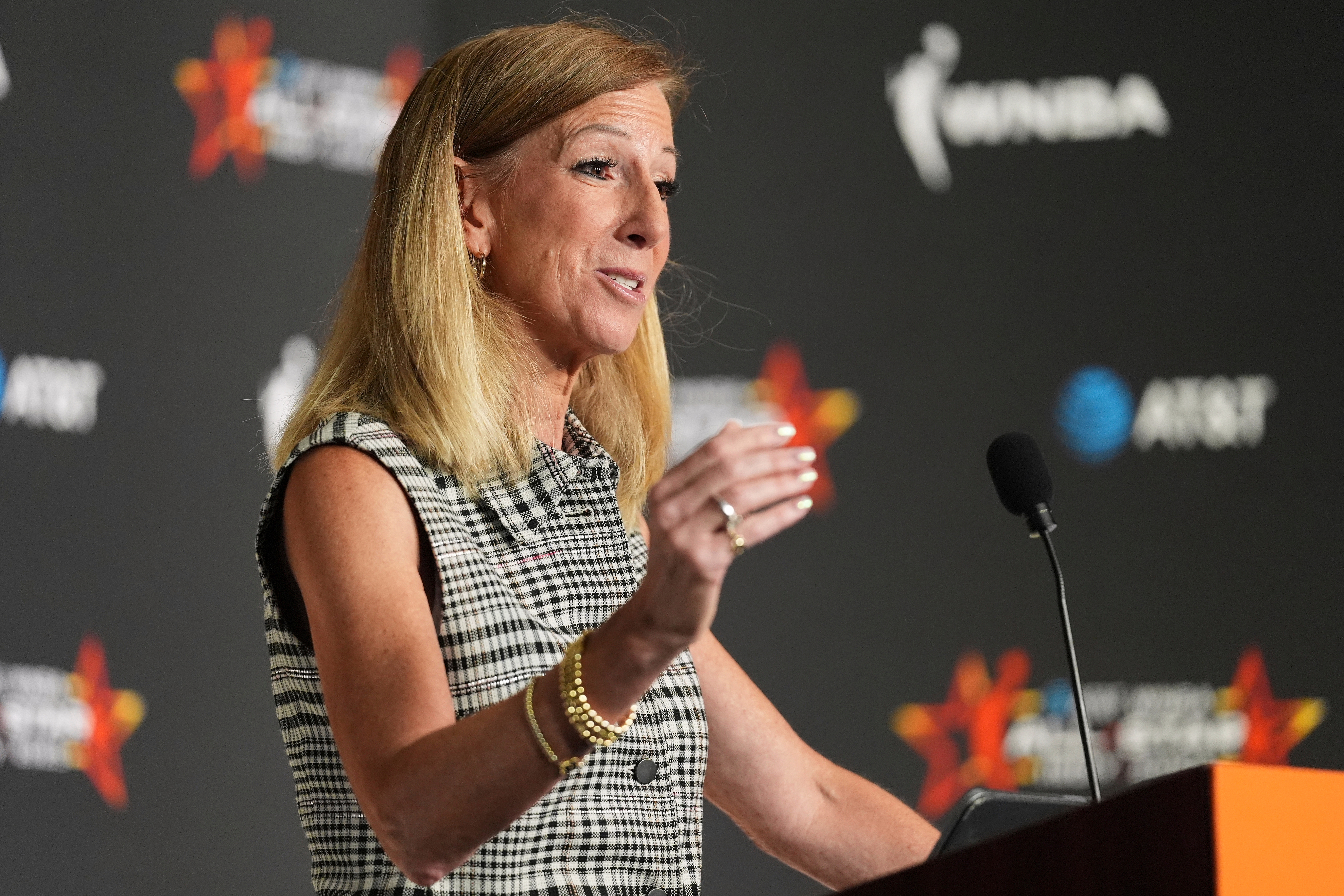
    WNBA commissioner Cathy Engelbert is retiring at the end the year, bringing to a close her seven-plus years at the helm of the league and a stewardship that has been transformative and at times tumultuous.

    Engelbert is the second-longest tenured WNBA president or commissioner, and she helped negotiate a lucrative collective bargaining agreement this past spring that resulted in the league’s first set of million-dollar player salaries. Philly-based lawyer Deb Willig helped lead negotiations for that CBA.

    “Cathy has presided over the WNBA through the most significant period of growth in the league’s 30-year history,” NBA commissioner Adam Silver said Friday when announcing Engelbert’s decision. “We are grateful for Cathy’s leadership and unwavering commitment to the advancement of women’s basketball.”

    Engelbert, a Collingswood native who turns 62 in November, told the Associated Press that she has been thinking about retiring for months.

    “When I first came to the league, I intended to do this for 3½ years,” she said in a phone interview. “The 7½ years exceeded that time. This is a really good time, given the financial transformation journey we’ve been on. Getting the collective bargaining agreement done, getting a long-term media rights deal done, getting expansion done.”

    Engelbert insists that the decision to leave was her own and that she did not feel any pressure to step down from NBA or WNBA stakeholders.

    Who’s next?

    The commissioner said she has been working on a succession plan over the last few years. While she didn’t give any specifics on who might be considered for the position, Engelbert did say there are both internal and external potential candidates on the league’s radar.

    “It’s a good time to hand it off to the next leader to take the ‘W’ into a better phase,” she said. “I’m proud of the team we built and everything we accomplished. A leader knows when it’s time to drop the mic and move on after building a powerhouse team in the league office.”

    Engelbert said she has mixed emotions about leaving.

    “I love women’s basketball, and am not going anywhere yet,” said Engelbert, who was a point guard for Muffet McGraw at Lehigh. “We’ll run a real succession process in the remaining four months. If we don’t find someone, I’ll stay on. I had no transition. I walked in the door, and I was by myself as no one transitioned me into this role.

    “Hopefully I can help this next leader transition in especially considering the elevation of this league.”

    The WNBA has grown at an exponential rate during Engelbert’s tenure as commissioner, with record television ratings, strong attendance, a new long-term media rights deal and expansion to 18 teams by the end of the decade. That run of expansion will be capped by a team coming to Philadelphia in 2030.

    “I was brought in as a business leader to transform the business,” she said. “I look at revenue and merchandise, viewership and attendance,” she said, noting how they’ve all improved. “A great leader senses when it’s time for someone else to come in. When I came in, this league was facing questions about our long-term viability and sustainability.”

    Turmoil, tension

    Engelbert said the growth of the league has “blown away her expectations” since she stepped into her role after leaving her previous position as president of Deloitte in 2019.

    Besides the new CBA, the list of things she is most proud of includes getting charter travel for players, keeping the league going during the coronavirus pandemic, the historic media rights deal and exponential increase in the value of WNBA franchises. In 2019, the average value of a WNBA franchise was $10 million; in 2026, it is about $460 million.

    Along with the financial gains, however, turmoil and tension have accompanied the WNBA’s growth.

    Players say they have seen more social media vitriol directed toward them over the last few years, and some don’t feel the league has done enough to ensure their safety. The league also has been at the center of discussions about transgender athletes playing in the league.

    Engelbert has repeatedly said the online attacks of players are unacceptable and she backs league initiatives to protect players. She also said there should be no confusion on the transgender question.

    “We have no current eligibility issues in the WNBA,” Engelbert said, adding that “if we did, we would have a thoughtful policy discussion with the [players’ association] and the players.”

    While there was a strained partnership between the commissioner and players during the recent CBA negotiations, Engelbert insists she has a good relationship with them.

    Talks between the commissioner and players have been complicated.

    New York Liberty forward Breanna Stewart, who’s vice president of the WNBA players’ union executive committee, said before the All-Star Game that there is a respect for Engelbert among the players, just not much of a relationship.

    New York Liberty forward Breanna Stewart (30) defends as Indiana Fever guard Caitlin Clark looks to pass in the first half of a game on Aug. 11 in Indianapolis.Michael Conroy

    Engelbert’s future

    Engelbert said she is ready to do what most retirees plan: spend more time with family.

    She also admitted that the online hate she receives has affected her family as well, though she did not share details of the impact.

    “There have been some hard parts of that on my family with the vitriol and hate I get online,” Engelbert said.

    Sixers majority owner Josh Harris (left), Detroit Pistons vice chairman Arn Tellem, WNBA commissioner Cathy Engelbert, and Cleveland Cavaliers CEO Nic Barlage celebrate the announcement of three new teams, including a franchise coming to Philly.Jonathan Tannenwald

    Her retirement will make her mother happy. Her father, Kurt, was a Hall of Fame basketball player at St. Joseph’s who died in 1987. Her parents were from Northeast Philly, and five of her siblings attended Villanova, according to a 2019 Inquirer article.

    “My mom is turning 90 this year, and she said that ‘it would be good if you were retired to spend more time with me,’” Engelbert said, laughing. “I have two children, one I barely see.

    “I’m one of eight kids [and I] have five brothers. They always say can you retire so you can spend more time with us.”

    Come Jan. 1, her family will get its wish.

  • The Phillies’ Alec Bohm and his parents settled a multimillion-dollar financial mismanagement lawsuit

    The Phillies’ Alec Bohm and his parents settled a multimillion-dollar financial mismanagement lawsuit

    Alec Bohm and his parents have settled a multimillion-dollar financial mismanagement lawsuit, nearly six months after the Phillies’ infielder accused the elder Bohms of enriching themselves off his baseball earnings.

    The terms of the settlement are confidential, said Gary DeVito, a Zarwin Baum attorney representing Bohm.

    The 30-year-old one-time All-Star accused his parents of using several limited liability companies to funnel money from his personal financial accounts, which they then “converted to their own use,” the suit said.

    The young Bohm asked a Philadelphia Common Pleas Judge to order his parents to pay him at least a $3 million judgment.

    The parents denied wrongdoing throughout the litigation. In court filings, they called the allegations “cruel and publicly humiliating.”

    Justin Kadoura, a Holland & Knight attorney for Daniel and Lisa Bohm, confirmed the case was settled and declined to comment further.

    Bohm’s parents had overseen his finances since 2019, using a series of LLCs to hold the money and assets he earned as a professional baseball player, the suit says.

    The Phillies player alleged his parents told him they needed to take a 10% interest in those LLCs on paper in order to act as authorized representatives of his interests, but he would retain all the assets and funds they contained.

    Daniel and Lisa Bohm went on to gain access to their son’s personal financial accounts, the lawsuit says. They would limit the amount of money in Alec Bohm’s personal accounts, and transfer the rest to ones held by LLCs, according to the suit.

    While the money was intended for “traditional investment purposes,” such as stock trading, to secure the player’s passive income, the suit says, Bohm’s parents “converted to their own use” an undetermined amount, and used money from the Alec Bohm Foundation — which they also established — to “pay their own personal expenses.”

    When Alec Bohm asked his parents in January to provide him with information about his holdings, the suit says, they opted to “engage counsel,” who then gave minimal information.

    Bohm’s parents later allegedly indicated they would bill the Phillie for “all the time they spent to administer Alec’s affairs” at a rate of $50 per hour.

    In the suit, the 2018 third-overall MLB draft pick asked the court to order his parents to return any money they used for their own purposes, as well as pay “make Alec whole.”

    Daniel and Lisa Bohm said in court records their son was aware of the corporate entities that held his assets and the entities were created based on advice of Alec Bohm’s attorney and financial adviser.

    The baseball player’s “apparent lack of knowledge” over his finances “emanates solely from his own lack of attention and interest,” the parents’ said in a court filing.

    “He had been perfectly happy to have Mom and Dad do all of the work, while he focused on baseball and enjoyed an otherwise carefree life,” the filing said.

    The settlement was announced Thursday night, hours after a scheduled hearing in the Philadelphia Court of Common Pleas that did not take place.

    In a May hearing, attorneys clashed over a request for an injunction that would have halted arbitration proceeding in Florida and freeze $528,618 that his parents transferred into their attorney’s trust account.

    The majority of the hearing surrounded minute legal details about jurisdiction and the type of fraud that Bohm alleged his parents committed.

    Throughout the summer, the parties sparred in court filings over when Alec Bohm would sit for a deposition. The parents’ attorneys sought a court order compelling their son to be deposed. They called the delays in scheduling “gamesmanship designed to avoid the truth.”

    Attorneys for both sides declined to say whether Bohm was deposed.

    The public family dispute comes to an end as the Phillies prepare to face the Atlanta Braves in an attempt to take over the top spot in their division. The team has been red-hot over the past month, and Bohm is playing the best baseball he has played this year.

  • Former Labor Secretary oversaw hostile work environment, misused funds, report says

    Former Labor Secretary oversaw hostile work environment, misused funds, report says

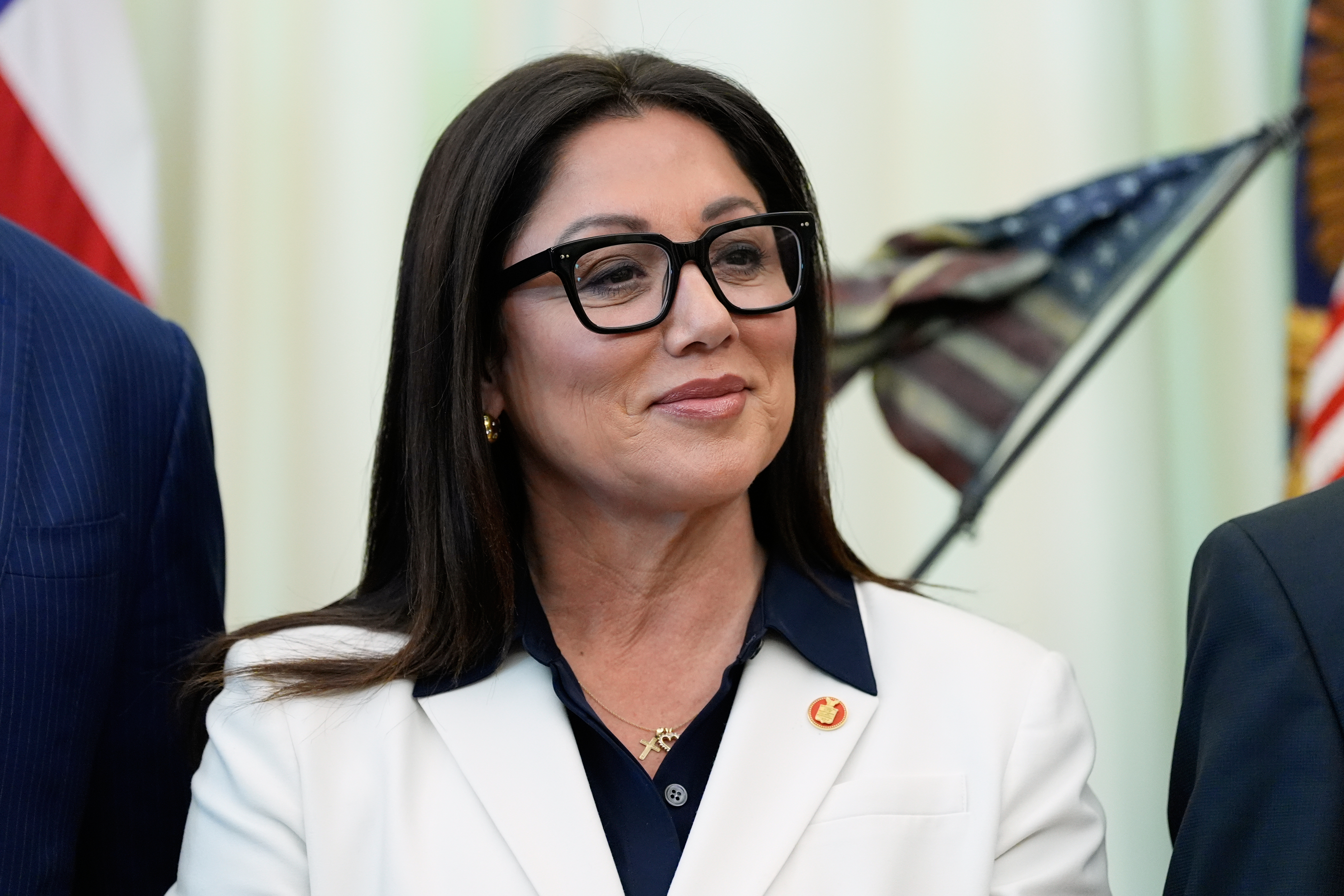
    NEW YORK — Former Labor Secretary Lori Chavez-DeRemer oversaw a “toxic, intimidating, and humiliating” work environment and engaged in numerous violations of department policy, according to a new report from the department’s Office of Inspector General.

    The report alleges that Chavez-DeRemer “engaged in an inappropriate relationship” with a member of her security detail and repeatedly directed staff to perform personal tasks on government time. It also accuses her of inappropriately combining personal and official travel, violating the department’s alcohol policies, and failing to report gifts through proper channels.

    Based on interviews with dozens of current and former labor department staffers and a review of more than 500 documents, images, and videos, the report includes several striking allegations.

    During a personal trip to Oregon, it reports, Chavez-DeRemer allegedly stopped at a strip club featuring partially nude dancers and directed her limousine driver to come inside and give money to a performer, despite his hesitation. She then “took additional money from her purse and asked the agent to drop the bills one by one onto the partially nude woman,” despite his protests.

    Chavez-DeRemer, who resigned earlier this year, could not immediately be reached for comment.

    She is also accused of repeatedly directing staff to perform personal tasks during work hours. That included, at one point, directing her personal aide and executive assistant to travel to her home and organize her bedroom closet. After completing the task, they were asked to provide a video documenting their work. The report includes a photo of neatly hung, colorful blazers, alongside purses and shoes.

    In other instances, it alleges, she sent staffers to her home to retrieve packages from the mail room, instructed them to make personal purchases that weren’t always reimbursed, and directed a Hispanic federal employee to communicate with Spanish-speaking workers, including a house cleaner and movers.

    The report alleges Chavez-DeRemer developed and maintained an inappropriate and unprofessional relationship with a senior agent on her security detail, documenting in extensive detail witness reports of her massaging the agent’s shoulder, the two golfing and gambling together, and leaving an event walking arm-in-arm.

    Investigators obtained electronic hotel door lock records that suggested the two were spending time overnight in each other’s rooms. And they obtained key fob records and video footage to document his visits to her home.

    The relationship, they said, “appeared to continue even after he was placed on administrative leave and was suspended from his official duties.”

    The office also concluded that the former secretary and senior staff consumed and stored alcohol on federal property without permission, and that she combined personal and official travel, including visits to family, personal residences, and Las Vegas. And it identified a handful of gifts that were not reported, including tickets to attend a rodeo, an alligator-hide wallet, and cowboy hats.

    The report also alleged that Chavez-DeRemer oversaw a hostile workplace, with senior staff “routinely engaged in threatening, demeaning, and abusive verbal and written communication” that she was seemingly aware of but did not take action to stop.

    Witnesses described the work environment as “toxic, intimidating, and humiliating,” with staff accused of berating employees in front of colleagues, openly discussing performance issues in the presence of other staff, and frequently making threats of termination.

    Senior staff were also accused of making staffing decisions based on physical appearance instead of qualifications, including relocating one employee’s desk because they did not want a “fat person” seen in the front office.

  • U.S. diesel prices hit a record high, pushing up transportation costs for a long list of goods

    U.S. diesel prices hit a record high, pushing up transportation costs for a long list of goods

    CHICAGO — Diesel hit a record price in the U.S. on Friday, soaring to an average of $5.85 a gallon for the first time as the six-month war with Iran disrupts the world’s flow of fuel.

    Because diesel is used for many freight and delivery networks, higher diesel prices mean higher transportation costs for a long list of everyday goods.

    This could add to Republicans’ political challenges ahead of November’s midterm elections, with voters already sour on President Donald Trump’s management of the economy. AP-NORC polling this summer showed 2 out of 3 U.S. adults disapproved of how Trump is handling the economy.

    More expensive fuel is increasing bills for businesses across sectors — some of which have already passed on costs to consumers in the form of added fees on online orders and packages in the mail. And shoppers may see more and more sticker shock trickle down to store shelves.

    One of the most immediate strains is being felt in the grocery aisle, particularly with produce, meat, and other perishable foods that need to be hauled in and restocked frequently — or even harvested using diesel-powered farm equipment. It can take time for all of those costs to trickle down.

    Still, experts warn that price hikes could mount the longer diesel remains expensive. A range of other products are also transported by diesel trucks, trains, and boats, including clothing, cosmetics, furniture, and more.

    The price for regular gasoline has also been going up, although not as fast as the price of diesel. The average price was $4.15 a gallon, compared with $3.20 at this time last year, according to AAA, which says gas has never been above $4 a gallon on Labor Day.

    What’s driving the latest jump for diesel

    Before the U.S. and Israel launched their war against Iran in late February, the national average for a gallon of diesel was about $3.76 in the U.S., per AAA. Prices quickly climbed as the cost of crude oil — the main ingredient in diesel, as well as gasoline — soared amid supply chain disruptions and production cuts across the Middle East, notably with most tanker traffic bottlenecked in the key Strait of Hormuz.

    Despite prices cooling some during hopes for peace earlier in the summer, oil has now renewed its climb as fighting once more escalates between the U.S. and Iran. Brent crude, the international standard, rose to $96.28 a barrel Friday, up from roughly $70 before the war. Prices at the pump always follow closely behind.

    The last time U.S. businesses and drivers saw sky-high fuel prices was in June 2022, when diesel reached as high as nearly $5.82 a gallon on average, months after the Ukraine war began and world leaders imposed sanctions against Russia, a leading oil producer.

    When adjusted for inflation, however, prices have been higher in the past. Ahead of the 2008 financial crisis, for example, diesel peaked at about $4.74 a gallon — equivalent to $7.20 in 2026, according to the government’s latest data. And 2022’s record of nearly $5.82 would be about $6.56 this year when accounting for inflation.

    That doesn’t take the pain away from today’s steep prices, which are already bringing ripple effects for the economy and wider costs of living. Drivers are feeling the pain each time they fill up gasoline, too.

    The average $4.15 for a gallon of regular unleaded is up from $2.98 before the Iran war, although still well below the 2022 peak of nearly $5.02 a gallon nationwide.

    Diesel has been more expensive than gasoline for decades, and its price has risen at a faster pace during recent energy crises. Some reasons include tighter supply, less flexibility in demand, and diesel’s position in global commerce overall. Individual households may find ways to drive less when gas prices are high, for example, but there’s fewer immediate substitutes for networks that rely on diesel to help produce and haul goods worldwide.

    All eyes on food

    Diesel is integral to every part of the food supply chain. It powers farm equipment and fishing boats as well as the trains and trucks that get food to grocery stores.

    Fuel accounts for roughly 15% to 30% of the total cost of food, according to the Independent Grocers Alliance, a grouping of 7,500 global supermarkets. Because of this, higher diesel costs often result in more expensive food, although it can take a while for energy shocks to wind their way through the supply chain.

    Items that need to stay refrigerated while they’re transported are often the first to see prices rise, according to David Ortega, a professor of food economics and policy at Michigan State University. In July, for example, overall U.S. grocery prices were up 2.7% compared with last July, but seafood prices were up 7% and fresh fruit prices were up 4.9%.

    Ortega cautioned that there can be other factors at play when food prices go up or down. Lettuce also faced higher transportation costs in July, but a drop in demand due to the cyclospora outbreak caused prices to fall.

    Still, consumers could feel more of a squeeze the longer diesel prices remain high.

    “Early on, much of the cost increase gets absorbed along the supply chain through existing freight contracts and retailer margins,” Ortega said. “But as contracts reprice and fuel surcharges take hold, more of that cost makes its way to the grocery store.”

    More fuel shocks

    Back in April, e-commerce giant Amazon rolled out a temporary 3.5% fuel and logistics surcharge on some third-party sellers. And United Parcel Service, FedEx, and the United States Postal Service also moved to add fees on some of the packages they ship earlier in the war, citing rising operational costs for fuel overall.

    Ajesh Kapoor, CEO and founder of trucking technology company SemiCab, said trucking and transportation can adapt to rising diesel prices — but at some point there is a limit.

    “Diesel price has a very, very direct impact on everything that moves on pretty much any mode,” Kapoor said.

    The ramifications extend beyond the movement of consumer goods. Some public transit buses and trains also run on diesel — and diesel generators are often used for backup or emergency power, if not central electricity sources in some remote parts of the world.

    Experts warn that the consequences could continue to deepen — particularly in countries in Africa and Asia, which rely more heavily on imports from the Middle East and have already been hit the hardest by energy shocks over the course of the war.

    Neil Atkinson, energy analyst and senior fellow at the National Center for Energy Analytics, said refined oil products like diesel are becoming more expensive as supplies get stretched.

    “This is gradually becoming a major crisis because A) the prices themselves are very high — but the physical stocks of these products are dwindling,” he said in a weekly briefing with maritime data firm Lloyd’s List Intelligence, pointing to the strain on the global refining system. “This cannot go on forever.”

  • Will the real William Howard Taft please stand up?

    Will the real William Howard Taft please stand up?

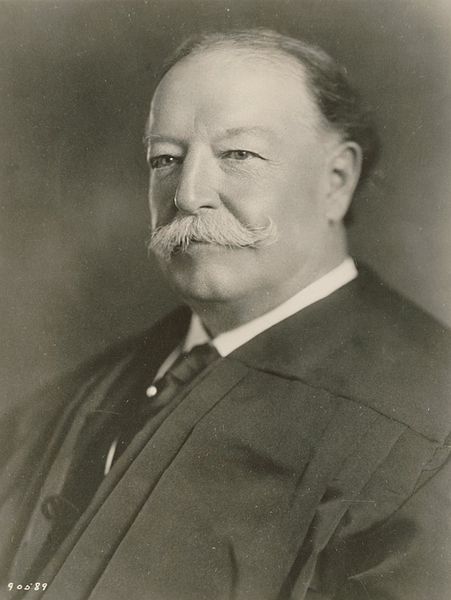
    Chief Justice John Roberts and his conservative majority like to cosplay as historians when they write court opinions that determine what rights we get to have and exercise. In August, though, Roberts tried the real thing. He took to the In Pursuit project’s Substack to write a brief history of a man he admires: former president and chief justice, William Howard Taft.

    Roberts’ version of Taft is a sober, steady president (1909-1913) to be hailed for his refusal to unduly use executive power. And for Roberts, Chief Justice Taft (1921-1930) is “one of [the nation’s] great Chief Justices” because he started modernizing the Supreme Court by growing the institution’s status and constitutional authority — a project Roberts continues to make his own.

    But Roberts’ history of Taft is irresponsibly shoddy; he cherry-picks facts, ignores narratives that don’t fit with his rosy portrait of Taft’s presidency, and he completely omits Taft’s damning record on race relations and civil rights.

    In truth, Taft was a white supremacist. He admitted as much on the campaign trail in 1906, when he told Republican voters in North Carolina that Black people were “a class of persons so ignorant” and likened them to the “mental stature” of children.

    Taft’s racism was partly opportunistic. In 1908 he was running as the Republican standard-bearer against Democrat William Jennings Bryan to succeed President Theodore Roosevelt. Since Reconstruction, the southern states had voted exclusively for Democrats. But Taft believed he could find a way to “break” the “Solid South” by luring away racist white voters to vote Republican. His preferred tactic was a racist dog-whistle.

    And so, while Taft once lamented the arsenal of racist laws that disenfranchised Black Americans throughout the country, he didn’t think Jim Crow discrimination was a very big deal. After all, it was merely “the ignorant colored voter,” he believed, who was being kept away from the polls — downplaying the violence that upheld disenfranchisement. Perhaps things might change, he added, if Black men got smarter and worked harder. For Taft, Black Americans needed to earn the vote and prove to white society that they could be entrusted with that privilege.

    Taft’s electoral strategy never panned out. Even though he handily won the 1908 election, the “Solid South” stuck with Democrats. Nonetheless, as president, Taft continued to side with white supremacy.

    In 1911, the Ninth Cavalry Regiment of Black troops — the famed “Buffalo Soldiers” — were stationed in San Antonio, where they encountered Jim Crow streetcar laws that mandated segregated seating. The troops refused to obey, destroying the segregation signs and standing up to streetcar conductors who demanded compliance. Democratic congressman and future Vice President John Nance Garner lobbied Taft to punish the U.S. soldiers, and the Taft eagerly complied, dispatching the Buffalo Soldiers to the desert to monitor the U.S.-Mexican border.

    President Taft also did nothing to confront the lynching epidemic that claimed roughly 250 Black lives during his presidency. In his first Annual Message to Congress — the forerunner to today’s State of the Union address — Taft explained that he sympathized with those who might choose to become part of the lynch mob. Yes, he conceded, lynchings involved “lawless violence and cruelty.” But Taft excused this, arguing that white people conjured the lynch mob because they were sick and tired of waiting for the ponderous court system to deal with Black people that supposedly broke the law. Faced with this “injustice,” the white lynch mob’s actions were justified, according to Taft.

    Taft’s forgiving attitude toward the lynch mob wasn’t just theoretical. On April 20, 1911, a white lynch mob in Livermore, Kentucky murdered a Black pool hall manager named Will Potter inside the local opera house. For the supposed crime of kicking white ruffians out of the pool hall, Potter “was dragged before the footlights and his body riddled with bullets from the guns of an audience of half a hundred determined avengers,” according to the New York Times. Rumor had it that witnesses were charged admission. Those who wanted to be part of the firing squad had to pay extra. When the shooting stopped, “the lights were then extinguished, the curtain lowered, and the mob then filed out.”

    The NAACP’s executive committee dispatched a plea to leading government officials, including Taft, demanding action. An NAACP committee even visited Taft to request that he condemn lynching. According to an NAACP internal document dated June 11, 1911, “The President assured the Committee that he could do nothing, that it was a matter to be left to the individual states.”

    Taft’s refusal to use executive authority to confront lynching is shocking. However, it is this type of inaction that Chief Justice Roberts believes made Taft a model chief executive. Roberts’ favorable interpretation of the Taft presidency highlights his restraint. “Steady competence, self-restraint, and respect for the other branches were the hallmarks of the Taft Administration,” writes Roberts.

    Taft’s contemporaries were less impressed with his presidency.

    Taft was one of the few incumbent presidents to lose reelection, somehow coming in third in what should have been a two-way race in the 1912 contest. He’d promised to lower tariffs but ended up raising them, and Taft’s unwavering support for an ultra-conservative Supreme Court all but doomed progressive reforms in areas like labor rights. So dire was Taft’s record that his former mentor, Teddy Roosevelt, came out of retirement to challenge him for the Republican nomination. In the general election, Democrat Woodrow Wilson trounced Roosevelt — running as the Progressive Party candidate — as well as Taft and Socialist Eugene Debs.

    Roberts reserves his greatest appreciation for Taft’s contributions as chief justice between 1921 and 1930, which grew the “prestige” and “authority” of the Supreme Court. Namely, Taft pushed passage of the Judiciary Act of 1925, “which gave the Supreme Court control over its own docket,” and oversaw construction of the court’s august building on Capitol Hill.

    But what about the Taft Court’s actual decisions? Here Roberts has little to say, but recent scholarship by law professors Nikolas Bowie and Daphna Renan shows that, at best, Taft and most of his colleagues had a studied disinterest in civil rights. At worst, Taft used his opinion in the 1926 case Myers v. United States to stamp the Supreme Court’s imprimatur on the white supremacist version of the history of Reconstruction.

    The case concerned a Reconstruction-era law that prevented President Andrew Johnson from firing federal officers committed to implementing the Reconstruction Acts after the Civil War. For Taft, Reconstruction wasn’t an attempt to use the law to right the wrongs of slavery and legislate equality, but an attempt “to reverse” the Constitution.

    Of all his contributions on the bench, this was the decision of which Chief Justice Taft was most proud. Taft’s prized decision was of a piece with an emerging white supremacist revisionist history of the Civil War and Reconstruction seen, for example, in D.W. Griffith’s film Birth of a Nation (1915) and in the explicitly pro-slavery, pro-Confederacy approach to writing American history pioneered by William Dunning and his students, whose work was used to bolster Jim Crow.

    Made By History sponsors. FOR USE ON MADE BY HISTORY STORIES ONLY.Inquirer Staff

    So the question, then, is: why did Roberts write this fluffy, mythological history of Taft? Is it because Roberts’ selective historical method ignored Taft’s abysmal record on civil rights and lynching? Or perhaps Roberts has never heard of Taft’s Myers decision.

    A less generous answer might be that while Roberts chose to airbrush Taft’s race relations and civil rights story out of his history, the current chief justice knows more than he’s letting on. After all, in cases like Callais v. Louisiana (2026), Brnovich v. Democratic National Committee (2021), and Shelby County v. Holder (2013), Roberts led the charge to destroy the single most significant civil rights legislation ever enacted: the Voting Rights Act.

    If Taft’s legacy was to retrench the freedoms won during the Civil War and Reconstruction, Roberts’ legacy may one day be recognized as an assault on the victories of the Civil Rights Movement.

    It doesn’t take much digging in the history of race relations and civil rights to see that Taft’s executive restraint and court stewardship that Roberts so admires served the agenda of perpetuating Jim Crow white supremacy. This is bad history. But perhaps Roberts’ methodological sins of omission tell us exactly why the sitting chief justice sees so much to admire in his predecessor.

    Gautham Rao is Associate Professor of History at American University, and author of “White Power: Policing American Slavery.”

    Made by History takes readers beyond the headlines with articles written and edited by professional historians. Opinions expressed do not necessarily reflect the views of The Inquirer.

  • College loans were late due to new federal rules. Students are paying the price.

    College loans were late due to new federal rules. Students are paying the price.

    Mikiah Roberson expected to receive her federal $6,700 student loan disbursement sometime between May 27 and June 3, just in time to make her rent and car payments. Instead, June 3 came and went. Days, weeks and finally over a month passed.

    Roberson, a graduate student in University of Maryland Global Campus’s digital forensics and cyber investigation program, said the stress only compounded as her eight-week summer semester continued without any of her expected financial aid. As a disabled veteran, Roberson’s tuition is covered, but she relies on federal student loans to pay for living expenses while in school.

    “It had a major impact on my mental and emotional health,” Roberson said, as she struggled to get clear answers on when or if she might receive the money. “Just constantly stressing out whether an eviction notice would be coming, if my lights would be turned off, if my car would be repossessed.”

    Federal student loan disbursements for many students, like Roberson, were delayed over the summer session after new federal rules kicked in on July 1 that required major updates to the systems colleges use to administer aid. While no one is tracking the full scale of the problem, experts are worried about whether delays will persist into the fall semester that is underway. That could have severe impacts for the nearly 60 percent of students who already experience some form of housing or food insecurity.

    When loan money gets held up, students have no recourse against either their school or the federal government. Instead they must find ways to temporarily cover personal budget gaps of thousands of dollars — at a time when the cost of housing and other basic needs are rising rapidly.

    Delayed student loan disbursements are “incredibly significant in terms of whether a student is able to remain enrolled and remain housed and cover their own basic needs,” said Aissa Canchola Bañez, policy director at Protect Borrowers, a nonprofit that advocates for student loan borrowers. “Everything is more expensive, and so that just makes financial aid and the loans that these students are eligible for and entitled to even more consequential.”

    Experts, advocates and financial aid administrators place the blame on atypical planning from Congress when it passed the One Big Beautiful Beautiful Bill Act. The legislation didn’t give the Education Department enough time to issue full guidance on new student loan regulations, leaving many colleges struggling to adapt. In some cases they are waiting on third-party software vendors to make needed changes or are calculating and administrating aid by hand.

    Ellen Keast, a spokesperson for the Education Department, said in an email that the department worked within the deadlines set by the One Big Beautiful Bill Act, which required the changes to take effect on July 1, 2026.

    “Congress gave the Department less than a year to implement these changes,” Keast said.

    She noted that the agency released the final rules in May, which she said provided “time for schools to prepare.”

    Rep. Tim Walberg (R-Michigan), chairman of the House Committee on Education and Workforce, said in an emailed statement that the legislation significantly overhauled a “broken system” and praised the work the Education Department had done.

    “Delaying needed reforms would have negative consequences for students and taxpayers,” he said.

    The One Big Beautiful Bill Act, signed by President Donald Trump on July 4, 2025, includes a number of provisions that reshape federal student loans, including a new lifetime borrowing limit and lowered limits on outstanding aggregate debt for graduate students. The bill also placed new limits on Parent PLUS loans and eliminated the Graduate PLUS loan program. Another provision, starting the 2026-27 school year, requires schools to prorate loan amounts based on how many credits a student is taking. Altogether, the changes are expected to impact a significant number of the roughly 13 million students annually who rely on federal financial aid.

    When students don’t receive their money on time, the delays set off an avalanche of financial problems.

    One student in National University’s graduate program in marriage and family therapy told The Hechinger Report she expected a $5,000 disbursement sometime around June 1. The student (whose name is being withheld out of concern of retaliation from her university) relies on these disbursements every three months to cover two months of rent, as she slowly saves up to pay the third month’s rent through her part-time job as a nanny.

    “I had to reach out to family members and get help, and that was also really stressful for them because I was hoping to be able to pay them back with my refund, and nobody knew when the refund was coming,” she said. “And so that just kind of created a cascade of tough situations.”

    She didn’t receive her funds until mid-July. By that point, she’d paid rent late in June and July, with a $100 late fee each time.

    National University did not respond to requests for comment.

    When it comes to disbursing financial aid, the relationship between the federal government and higher education institutions is complex. To help mitigate that, the Higher Education Act lays out a “master calendar,” which outlines formal dates and deadlines the Education Department must follow.

    Under the master calendar, the department has to start the rulemaking process a full year and a half before the academic school year starts. After negotiations, months of public comment and department review, a final rule needs to be issued in November of the preceding year. But because the One Big Beautiful Bill Act was signed in July 2025 with an effective date of July 1, the department couldn’t follow this timeline. And that gave colleges less time to adjust.

    Colleges normally spend the months between November and the start of the next academic year understanding any new regulations, getting clarifying questions answered by the Education Department, and making sure their software vendors have what they need to update their systems, according to Sarah Austin, a policy analyst at the National Association of Student Financial Aid Administrators.

    “Just having enough time to get the information, make sure the software vendors have the information, make sure they can then reprogram everything, getting the specs that they need — all of that takes time,” Austin said. “What we’ve seen here is a condensed version of that.” As of August, some of the major software vendors used by colleges still weren’t caught up, she noted.

    The National Association of Student Financial Aid Administrators and over 40 other higher education organizations had previously called on the Education Department to delay implementation until July 1, 2027, to allow the process to follow the normal timeline.

    “That is not a minor inconvenience. It is a fundamental breakdown in the infrastructure that supports federal student aid delivery,” wrote Kenneth Ferreira, then-president of the Eastern Association of Student Financial Aid Administrators, in an April op-ed.

    Institutions also say that the federal government has been slow to roll out guidance and clarifications about some of these changes, and some details are still up in the air, said Austin. The Department released formal guidance on prorating loans for students who aren’t enrolled full-time, for instance, in early August, just a couple of weeks before classes began at many institutions.

    Some of the guidance has also been conflicting, with differing information across some of the Education Department’s written materials and webinars, according to the National Association of Student Financial Aid Administrators. On Aug. 20, a group of 16 congressional Democrats sent a letter calling on the Education Department to issue additional guidance clarifying how schools should prorate loans.

    “We ended up seeing a lot of last-minute changes, and not enough guidance. And the reason why we have a master calendar provision is it is difficult for colleges to adapt to new regulations when there’s not enough time,” said Mark Kantrowitz, a student loan and financial aid expert.

    To Keast, though, the final rule should not have come as a surprise to any colleges. She noted that last November, the department reached consensus on the proposed rules, an early stage in the process.

    “If institutions waited until the final rule was issued to start preparing, that was their decision,” Keast said. She also pointed to available published guidance, Q&As, webinars and other resources from the department.

    This rift between the department and many of the major organizations representing colleges and financial aid administrators is trickling down to students like Roberson.

    “There was a whole lot of passing the buck,” Roberson said on her attempts to get answers on what happened to her financial aid. University of Maryland Global Campus directed her to the Education Department’s Federal Student Aid office. Employees there told her to contact her school.

    “Nobody had answers for when the funds would be released,” said Roberson, who said she often received conflicting information.

    In an emailed statement, Kaitlin O’Connor, vice president of University Communications at the University of Maryland Global Campus, said the university has been working on the federally required processing changes.

    “The university has continued processing and awarding aid, reviewing individual student cases and working closely with federal and higher education partners to ensure compliance with applicable requirements while supporting students throughout the process,” the statement said.

    Roberson negotiated partial payments with her landlord and entered payment arrangements for other bills. But the wait stretched into its second month. “You’re telling them, ‘Hey, the money’s coming,’ but weeks are passing and nothing changes,” she said. “I kept pushing out the dates and saying next month I’ll be good, and then here we are at month two, and it’s like now things are getting very detrimental.”

    Roberson continued, “You have to start to decide between do I pay a bill or do I get groceries? Do I get gas or do I get food?”

    Meanwhile, the stress took a toll on her studies. “I knew that I didn’t want to fail, but it was very, very hard,” she said. “Me and a lot of my classmates were expressing to each other how difficult it is to focus on schoolwork when you have bills piling up and all these things you need to pay.”

    Experts predict the crunch will continue into the fall semester as schools try to catch up with the new rules.

    Nick Prewett, executive director of financial aid and scholarship services at Stony Brook University and the president of the Eastern Association of Financial Aid Administrators, said so far the delayed disbursement has mostly impacted the school’s medical students, who start in the summer.

    But with fall semester underway at most schools, he said, “I think we’re going to see some delays in aid getting out to students. And I think you’re going to hear that kind of message across the country that students, particularly graduate students, are waiting,” Prewett said.

    Prewett added that for students enrolled part-time, Stony Brook plans on waiting until the end of the add/drop period (a couple of weeks after school starts) to adjust student loans based on the number of units students end up with. “And I think that’s going to cause a little bit of confusion and maybe a little bit of panic on behalf of the student,” he said.

    Roberson eventually received her summer disbursement in mid-July, about six weeks late into an eight-week summer program. She’s supposed to receive another $6,700 disbursement in early September, but she’s no longer counting on getting those funds on time. She’s taking on work as a delivery driver for Amazon — a challenge with her back pain from her disability.

    “I’m nervous because I don’t know if we’re going to hit this situation again,” Roberson said. “It’s very nerve-racking just trying to prepare ahead of time for if an issue arises, which is unfair when you’re trying to focus on class.”

    This story about student loan changes was produced by The Hechinger Report, a nonprofit, independent news organization focused on inequality and innovation in education.

  • Trump taps Army engineering official as acting secretary

    Trump taps Army engineering official as acting secretary

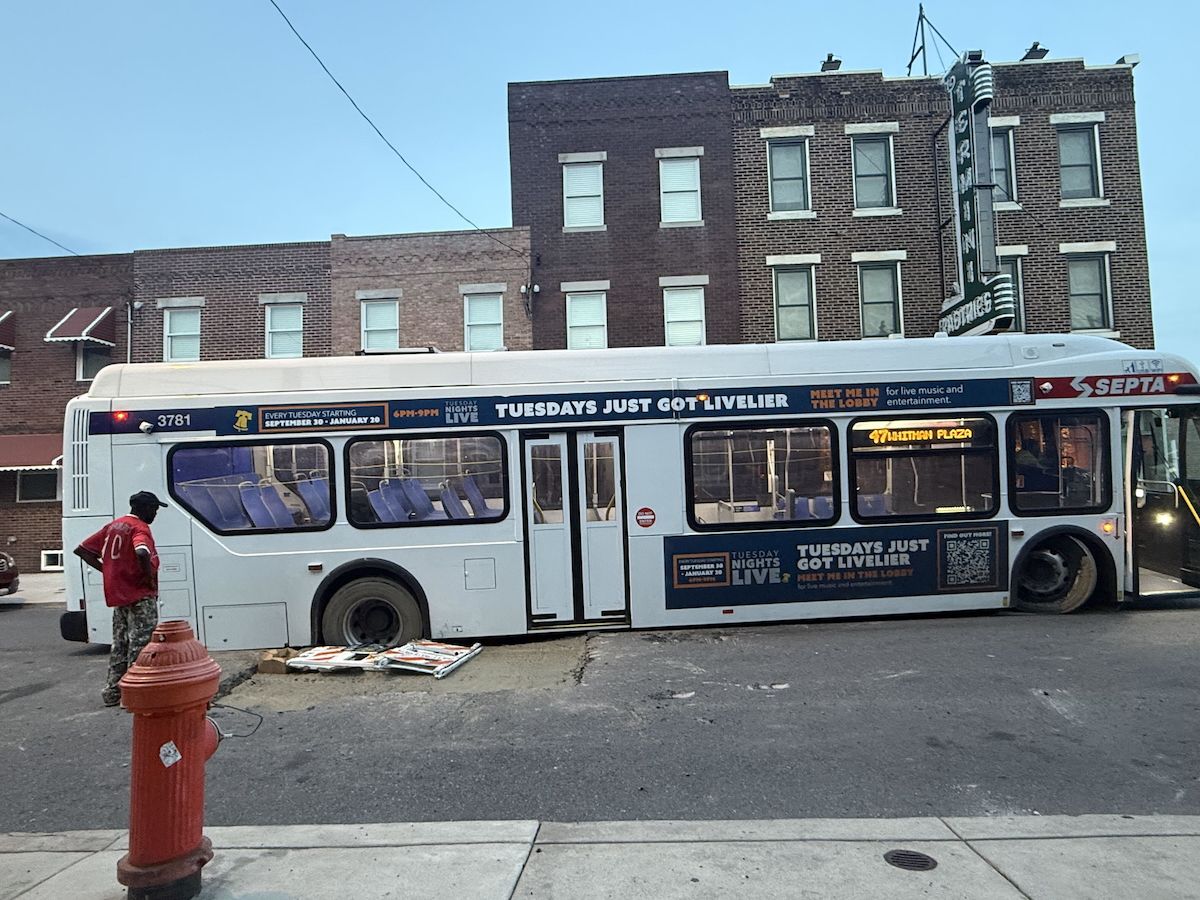
    WASHINGTON — President Donald Trump said Thursday that he was appointing Adam R. Telle, the official overseeing the U.S. Army Corps of Engineers, to take over as the acting Army secretary, following the resignation of Daniel P. Driscoll earlier this week.

    Driscoll, formerly the civilian leader of the Army, resigned Monday after clashing repeatedly with Defense Secretary Pete Hegseth over the purge of top generals in the Army. Under the nominal chain of command, Michael Obadal, the undersecretary of the Army and principal deputy to Driscoll, would have become acting secretary in Driscoll’s place.

    Trump has elevated Telle, the assistant secretary for civil works, which oversees the Army’s public engineering and construction projects. The Army Corps of Engineers is one of the principal agencies involved in building dams, sea walls and other structures meant to reduce flooding. Earlier in the summer, Army engineers erected miles of temporary barriers to protect Juneau, the capital of Alaska, from flooding.

    Last year, the Trump administration directed the Army Corps of Engineers to fast-track approval of fossil fuel projects such as pipelines, mines and power plants as part of Trump’s demand to increase U.S. oil, gas and coal production.

    Before his Army post, Telle was the chief of staff to Sen. Bill Hagerty, R-Tenn. In Trump’s first term, Telle served as the president’s chief liaison to the Senate as the head of the White House Office of Legislative Affairs’ Senate team.

    This article originally appeared in The New York Times.