Category: News

  • Federal judge extends block on Trump executive order seeking to limit mail voting in the midterms

    Federal judge extends block on Trump executive order seeking to limit mail voting in the midterms

    A federal judge on Friday extended her prohibition against the U.S. Postal Service implementing President Donald Trump’s executive order seeking to limit mail voting during the midterms, putting another major obstacle in the way of the administration as the first states begin sending out mail ballots.

    U.S. District Court Judge Indira Talwani granted a preliminary injunction, replacing a temporary order she had granted blocking the Postal Service’s plan.

    The Trump administration has already asked the Supreme Court to lift Talwani’s temporary order, and will likely appeal her latest order as well.

    The administration is running out of time to make big changes in voting procedures. North Carolina began sending out its first mail ballots Friday and more states will swiftly follow.

    The legal battle could have major ramifications for this year’s elections, when control of Congress is at stake. Nearly one-third of voters in the U.S. cast mail ballots and election officials contend there isn’t enough time to revise their systems to comply with the new Postal Service directives.

    Trump has long sought to limit mail voting, even though he himself often uses that method to cast his own ballot. He has falsely blamed mail balloting for his 2020 election loss, spreading baseless claims of fraud, but has so far been unable to change the longstanding voting procedure.

    An initial executive order Trump issued last year to change election rules, including a requirement for people to show documentary proof of citizenship to register to vote, was halted by federal judges. They ruled that the Constitution gives states and, in some cases, Congress the power to set voting procedures, not the president.

    After Trump issued his mail voting executive order in March, Democrats and voting rights groups filed several lawsuits. Two ended up before Talwani, who placed an initial hold on the order in June, prohibiting its implementation until after November.

    But the Supreme Court late last month overturned that order. Its conservative majority pointedly did not say Trump’s move was legal but found the lawsuits were filed prematurely before the Postal Service issued its rule on how it would implement the order. The rule came out just before the Supreme Court released its ruling, and the plaintiffs refiled their suits.

  • Lieutenant governor of New Jersey is reportedly under an internal investigation

    Lieutenant governor of New Jersey is reportedly under an internal investigation

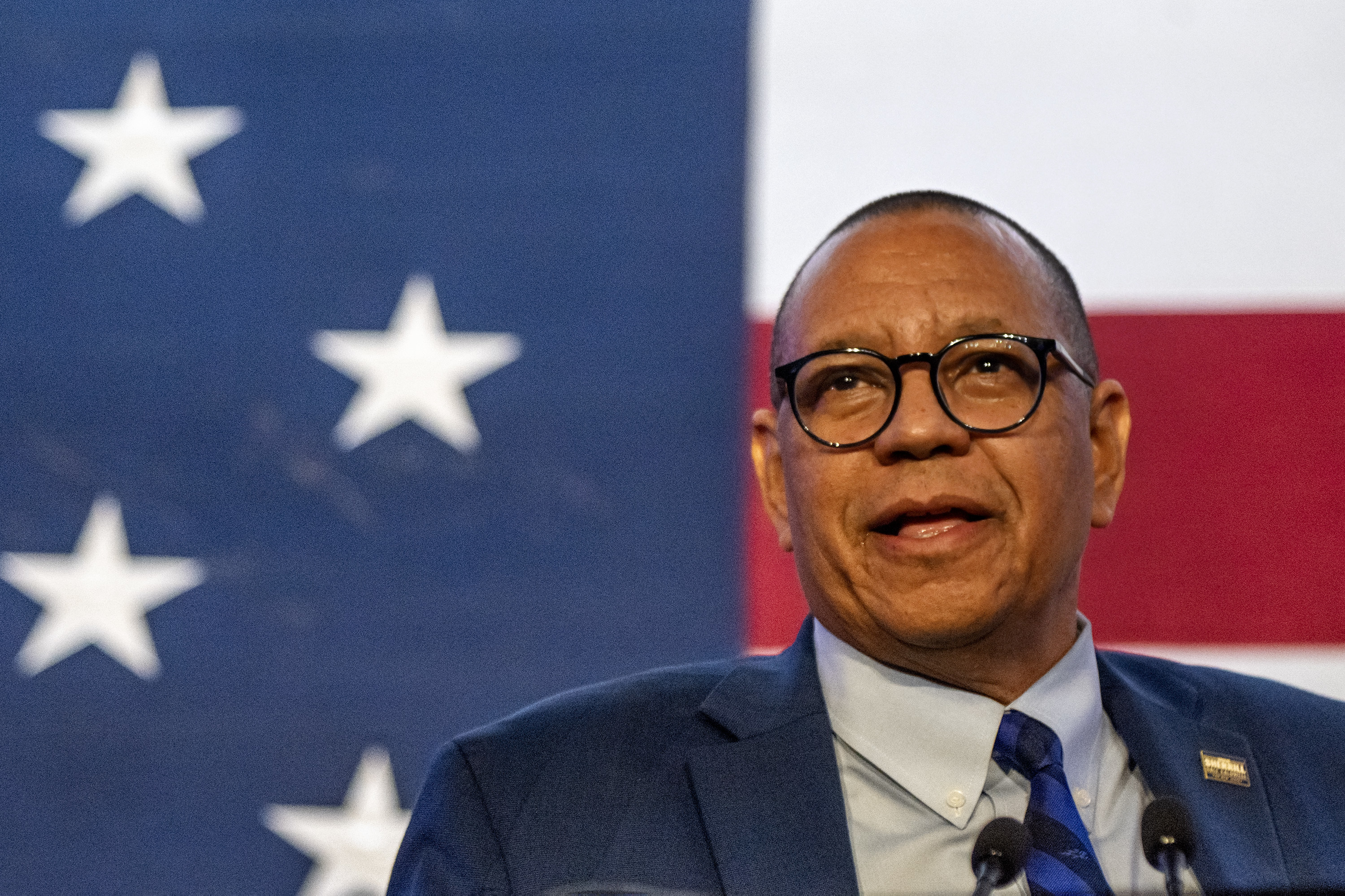
    Dale Caldwell, lieutenant governor of New Jersey, is reportedly under internal investigation for allegations involving his behavior toward women and possible ethics violations.

    The New Jersey Globe reported Friday that Gov. Mikie Sherrill’s administration called on Christopher Porrino, a former New Jersey attorney general, to conduct the investigation.

    Porrino served as attorney general under Republican Gov. Chris Christie. The New Jersey Globe reported that Porrino and a former federal prosecutor who is now one of his law partners have been conducting interviews for the investigation.

    Sean Higgins, spokesperson for Sherrill, said in an emailed statement Friday that the administration “cannot confirm or deny potential personnel matters.”

    Higgins also said: “The Governor would take any reports of inappropriate behavior or misconduct extremely seriously and expects our public officials to hold themselves to the highest standards.”

    Caldwell could not be reached for comment.

    Anthony Bucco, the Republican leader in the New Jersey Senate, said in a statement posted on social media that Caldwell “should temporarily step down from his duties as Lieutenant Governor.”

    Bucco said the reported allegations against Caldwell “are deeply concerning and disappointing. Our elected officials must hold themselves to the highest possible standards of conduct, character, and integrity. The public deserves transparency and timely information about matters of this magnitude.”

    Bucco added that “there are legitimate questions about why this information was not disclosed sooner and why we are just learning about this late on Friday heading into a holiday weekend.”

    The New Jersey Globe reported that the investigation had already begun when Caldwell assumed the duties last week of acting governor while Sherrill was out of state.

    The allegations include a purported offer of state jobs, the news outlet reported. No other details were provided.

    Caldwell also serves as the New Jersey secretary of state, New Jersey’s chief election official.

    President Donald Trump’s administration has been trying to compel Caldwell to release voter registration data ahead of the upcoming midterm elections. The U.S. Department of Justice is appealing a lower court judge who dismissed the federal government’s lawsuit.

    Sherrill selected Caldwell as her running mate in July 2025. He was the first Black president of Centenary University, a small, private institution in North Jersey, and pastor at Covenant United Methodist Church in Plainfield, Union County. He also served on the New Brunswick school board for 26 years, including six as president.

    “Mikie Sherrill and I represent a different kind of leadership that sees possibilities, not a blind commitment to doing things the way they’ve always been done,” Caldwell said after his selection was announced.

    Caldwell graduated from Princeton University in 1982 and from the Wharton School of the University of Pennsylvania in 1988. He received a doctorate in education administration from Seton Hall University in 2017.

  • Four cases of West Nile virus were confirmed in Philly, city officials say

    Four cases of West Nile virus were confirmed in Philly, city officials say

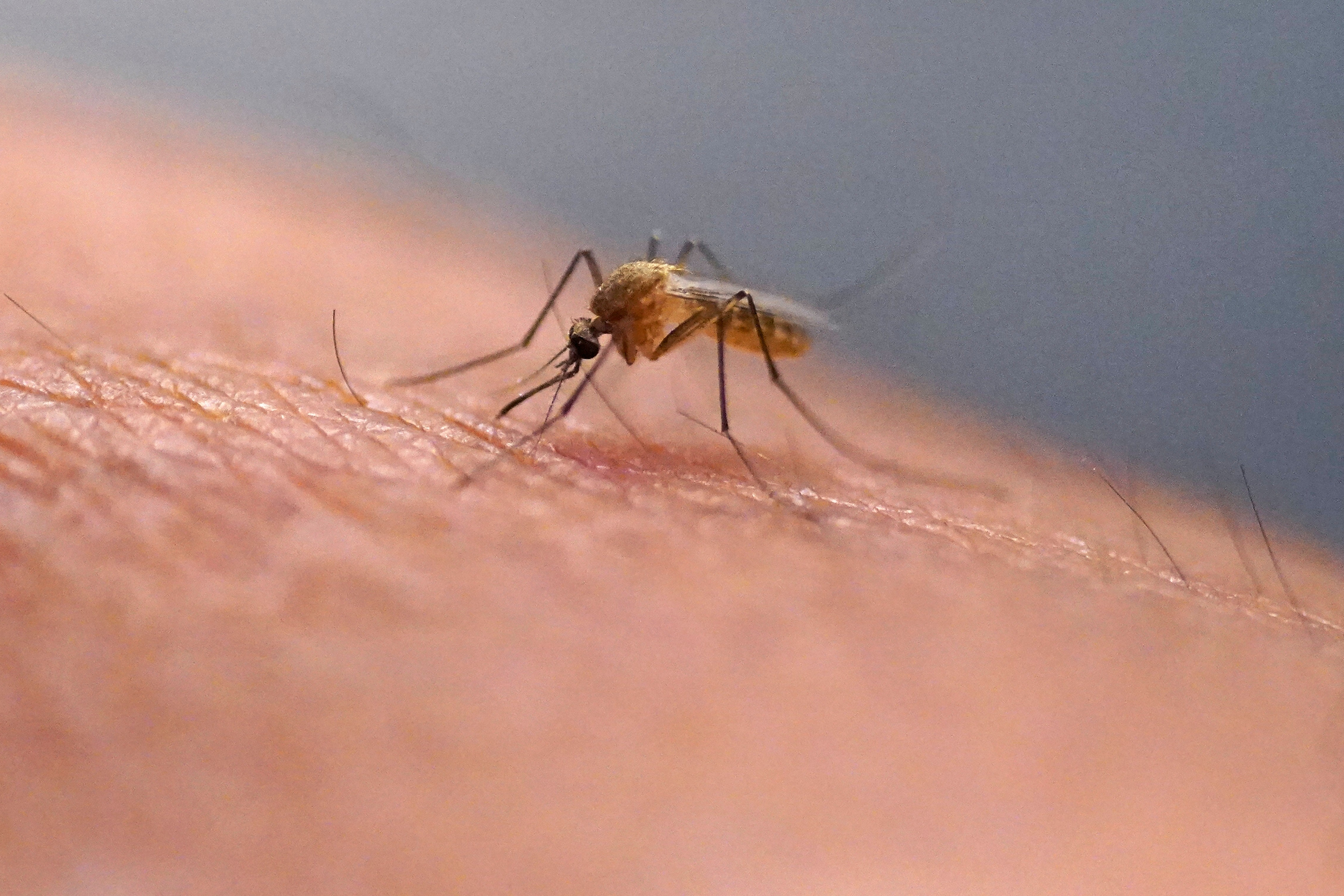
    Philadelphia health officials confirmed the city’s first four human cases of West Nile virus for the year Friday, and asked residents to take some simple actions to help stop the disease’s spread.

    “We all have a role in preventing the spread of West Nile Virus,” said Health Commissioner Palak Raval-Nelson in a statement. “And it’s easy to do: Wear mosquito repellent and dump out standing water.”

    Spread by bites from infected mosquitoes, West Nile virus is a neurologic infection that often presents no symptoms in people, health officials said. However, it can result in a fever and flu-like symptoms in about 20% of cases, and rarely may cause swellings of the brain and spinal cord.

    Officials said that people aged 50 and older have the highest risk of developing severe disease. Those experiencing symptoms such as unexplained fatigue, weakness, and headaches should contact their doctor. There is no specific treatment or vaccine for West Nile virus, though rest, fluids, and pain medication can ease symptoms.

    Health officials did not provide further information about the human cases of the disease it had identified.

    West Nile virus is common in Pennsylvania, and has been detected in mosquitoes in a majority of the state’s 67 counties, according to the state Department of Environmental Protection’s website. Two human cases of the ailment were previously identified in Allegheny County, city health officials said.

    Mosquitoes breed in standing water, and their spread can be lessened by periodically emptying any container outdoors — such as flowerpots, birdbaths, and buckets — that may become a breeding site. Additionally, health officials recommended that residents clear clogged rain gutters and aerate ornamental ponds, among other steps.

    Residents, officials said, should also wear insect repellent when outdoors, wear long-sleeved shirts and long pants when possible, and limit outdoor activity at dawn, dusk, and the early evening.

    The health department’s Vector Control Services program, meanwhile, works to keep the spread of mosquitoes down by treating public areas and storm drains with insecticide. This summer, workers have treated more than 50,000 storm drains with larvicide to keep mosquitoes from breeding, officials said.

    Mosquito-related complaints can be reported to the health department’s mosquito hotline at 215-685-9000.

  • Widow of airman killed in Mideast is upset she was told Iran wasn’t a war while sorting out benefits

    Widow of airman killed in Mideast is upset she was told Iran wasn’t a war while sorting out benefits

    WASHINGTON — The widow of an airman killed on a combat mission in the Middle East said it took a viral social media post to get resolution from the Pentagon on issues related to her husband’s benefits and basic pay months after his death.

    Maj. Alex Klinner, 33, was one of six crew members of a KC-135 refueling aircraft that crashed in western Iraq in March while supporting operations against Iran. He’s one of 18 U.S. service members killed, along with 790 wounded, since the war began more than six months ago.

    The Air Force reached out to his widow, Libby Klinner, this week to clarify that his final paycheck would include hazard pay and combat-related tax breaks. This occurred after she voiced frustration on social media at being told by a military officer assigned to support her after her husband’s death that he was ineligible for those benefits because “we were not at war.”

    “My husband lost his life because we’re in a war, and then I was told that because it’s not technically a war, we lose out on something,” Klinner told the Associated Press. “It all comes down to principle.”

    Trump administration rejecting ‘war’ label for current Iran operations

    Her post, made over the weekend, gained national attention. Vice President JD Vance promised to look into her case after being asked about it during a White House briefing on Thursday.

    “We want to be as helpful as we can and ensure she gets everything that she is entitled to,” Vance said. “My message to her would be, ‘We love ya, we’re grateful for the sacrifice, and we very much take very seriously our commitment to get you what you need to get.’”

    In response to a separate question, Vance rejected the use of the word “war” to characterize U.S. fighting in Iran, saying that “there is no active shooting.” The military has launched strikes against targets in Iran twice this week, and Iran has retaliated by firing on U.S. allies in the Gulf.

    On Friday, President Donald Trump called U.S. strikes “intermittent” and defended Vance’s comments.

    “I call it a military conflict because it’s small potatoes for us,” Trump told reporters in the Oval Office.

    In late July, the Trump administration created a new, separate category in the Pentagon’s casualty count system for those killed and wounded in renewed U.S.-Iran fighting. Pentagon officials said the change was necessary because Operation Epic Fury, the original name for combat operations against Tehran, had ended. Since July 7, all U.S. casualties in the Middle East have been tallied under “Overseas Operations.”

    Widow says Air Force has clarified the issues about her husband’s pay

    Libby Klinner said Air Force officials contacted her this week to say they were initiating a review of her husband’s pay. The Air Force acknowledged to her Thursday that it had initially provided inaccurate information and clarified that she was receiving the full pay and benefits her husband was owed, she said.

    She said she was told that her husband’s paycheck had already included but incorrectly itemized the combat-related hazard pay and tax breaks.

    The pay incentives commonly known as “combat pay” are $225 per month and are not conditioned on a formal war declaration but just that the service member be in an area where there is “grave danger of physical injury” or be “killed, injured, or wounded by a hostile fire event,” according to a military website.

    Alex Klinner’s final paycheck would have included half that amount since troops are paid twice per month. It is difficult to calculate how much in federal tax breaks Klinner would have been receiving without more information.

    Klinner declined to specify the amount of money she was initially told her husband, an eight-year Air Force veteran from Birmingham, Ala., would be ineligible to receive.

    Air Force says it’s committed to offering information, support

    The Air Force said officials spoke with Klinner this week to “ensure all her questions are fully addressed” and confirmed that “all eligible combat theater benefits were included” in her husband’s pay.

    “We remain committed to providing clear information and continued support to Mrs. Klinner, as well as all the families of the Airmen who died in the KC-135 crash,” the Air Force added.

    Broadly, errors in pay in the military are very common because service members can often gain or lose eligibility for a variety of payments depending on their deployment status, duty location, or even family factors. As a result, unlike their civilian counterparts, some troops can see their paychecks change many times a year depending on many factors — something that also increases the likelihood of errors.

    A GoFundMe for Libby Klinner and her three young children, launched in the days after her husband’s death, has raised more than $1.5 million.

    Klinner said she hoped that by speaking out, other grieving families receive clear information from the outset.

    “I am very fortunate to have a significant support system around us and a platform to advocate for myself and for my kids. Other families may not have those resources,” she said. “If I can do anything to make this awful situation a little bit easier for someone else to navigate, then I am more than willing to do so.”

  • A Philly charter and its former CEO will pay $4 million to resolve claims they discriminated against Black students

    A Philly charter and its former CEO will pay $4 million to resolve claims they discriminated against Black students

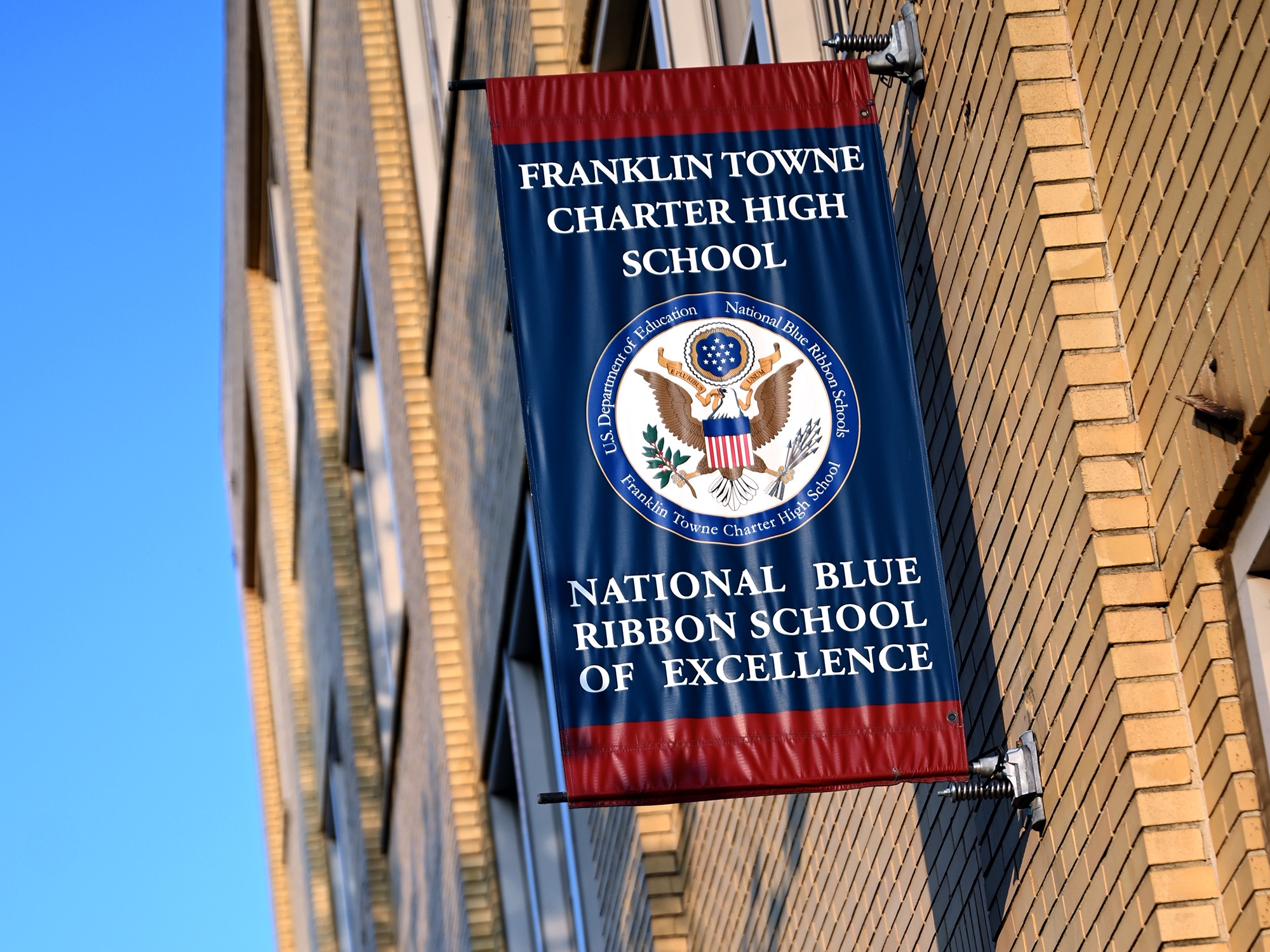
    A Philadelphia charter and its former CEO have agreed to pay nearly $4 million to resolve claims they discriminated against Black students in the school’s admissions lottery.

    Franklin Towne Charter High School, in the Northeast, deliberately fixed its 2023 lottery to exclude students from certain majority-Black ZIP codes, Franklin Towne administrator Patrick Field told The Inquirer that year. The order to shut out those students came from Joseph Venditti, a longtime Franklin Towne CEO, who has since left the school, Field said.

    Field sued the school and Venditti in federal court later in 2023, alleging Franklin Towne retaliated against him after he came forward about the lottery manipulation.

    The U.S. Department of Justice brought the case against Franklin Towne and Venditti after Field’s allegations surfaced.

    U.S. Attorney David Metcalf announced the settlement Friday.

    “Racial discrimination has no place in school admissions,” Metcalf said in a statement. “Selecting or excluding students because of their race is illegal and violates the agreements schools sign when they accept federal grant money.”

    Despite signing off on the settlement, neither Franklin Towne nor Venditti admitted wrongdoing.

    “Defendants deny the United States’ allegations,” court documents read.

    Public schools are prohibited by federal law from discriminating against students based on race or national origin; Franklin Towne violated the federal False Claims Act by its actions, Metcalf’s office said Friday.

    Franklin Towne — a public charter school funded by taxpayer dollars — must pay $3.6 million, and Venditti $275,000 from his private funds, as part of the settlement.

    Part of the money will go to the U.S. government, and part to Field, whose suit raised the issue of the improprieties.

    Field and Venditti could not immediately be reached for comment.

    Franklin Towne’s CEO, Brianna O’Donnell, said in a statement that the school had settled allegations about past enrollment practices that “do not reflect how the school is being led or operated today.”

    “We have taken the necessary steps to address this matter while maintaining our full commitment to serving our students, families, faculty and staff,” O’Donnell said, noting that the school’s operations were “continuing as normal.”

    Federal officials said the school “has made significant governance changes, including replacing the Chief Executive Officer and hiring an independent third party to conduct all future admissions lotteries at the school.”

    Franklin Towne remains a top academic performer, but the Philadelphia school board moved to revoke its charter over the lottery manipulation allegations.

    The revocation hearing’s goal, the board said at the time of the vote, was not necessarily to close Franklin Towne, but to effect change. Board officials said the only tool they possess under Pennsylvania law to trigger a public accounting of serious allegations of impropriety is a revocation hearing, which includes witnesses and evidence before an independent hearing officer.

    Franklin Towne filed suit against the board, objecting to its choice of hearing officer for the revocation proceedings, which have not yet begun.

    Reginald Streater, the school board president, said in a statement that the charter school’s office’s “serious concerns” about Franklin Towne admissions data over several years led to the revocation notice of the school. It’s still pending, Streater noted.

    “The board is committed to striving for fair and equitable access to public education for all Philadelphia students,” Streater said in a statement. “We will continue to uphold the standards and requirements that apply to all public schools and to take action when there are concerns about compliance with those requirements.”

    Staff writer Abraham Gutman contributed to this article.

  • Maria Bartiromo’s attorney denies reports she was fired from Fox News

    Maria Bartiromo’s attorney denies reports she was fired from Fox News

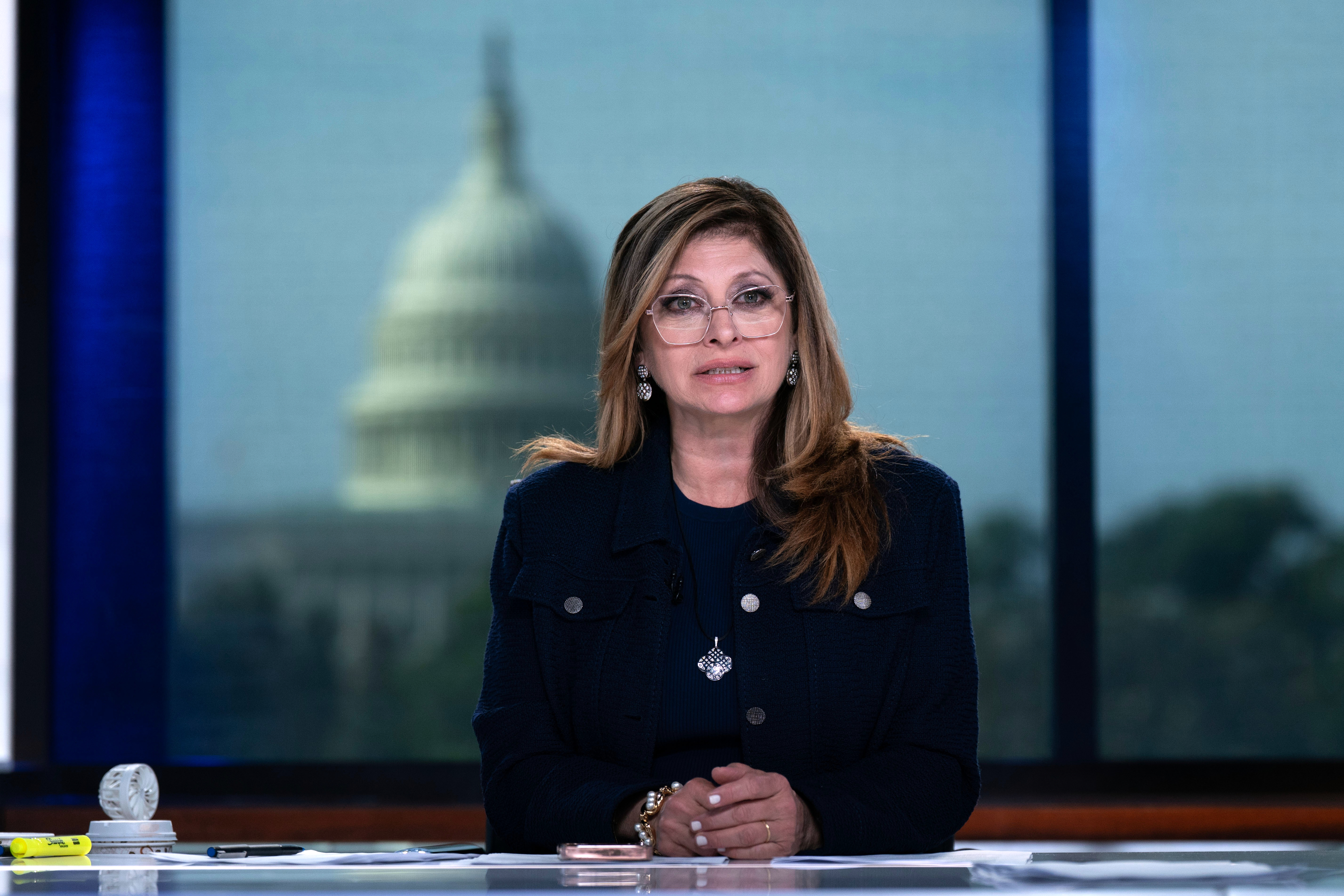
    The attorney for Maria Bartiromo, the longtime Fox News anchor, Friday denied media reports that she was fired from the network.

    Fox News on Thursday announced the departure of the host, who was one of its biggest backers of President Donald Trump. The network did not provide a reason for the abrupt exit after more than 12 years, but it later described the move as a “business decision.”

    Status, a publication focused on the media industry, and Puck News reported that Bartiromo was fired after sending White House officials sensitive internal Fox communications. The Washington Post has not corroborated their reporting.

    However, a person familiar with the details, who spoke to the Post on the condition of anonymity to discuss personnel matters, said that “Bartiromo’s departure was Fox’s decision.”

    Bryan Freedman, Bartiromo’s attorney, said Friday that his client was “still employed by Fox.”

    “The irresponsible reports that have been published stating that Maria Bartiromo was fired or is no longer an employee of Fox are absolutely and unequivocally false,” Freedman said in a statement.

    “Make no mistake, we have the receipts and witnesses and they will come out whether through the courthouse or otherwise. Those reporting her firing or the incredulous facts supporting that fiction have exhibited a complete and utter reckless disregard for the truth.”

    Freedman has previously represented high-profile journalists ousted by their networks, including CNN’s Don Lemon and Fox’s Tucker Carlson.

    Bartiromo was the host of Mornings With Maria and Maria Bartiromo’s Wall Street on Fox Business. On Sundays, she also anchored Sunday Morning Futures on Fox News.

    She promoted Trump’s false claims about fraud in the 2020 election and came under scrutiny in a defamation suit against the network over claims made about Dominion Voting Systems’s software, which resulted in Fox settling Dominion’s claim for $787 million.

    Status reported that Bartiromo was alleged to have told White House officials about Fox guidance to employees to avoid giving credence to false claims Trump made in a July speech about 2020 election fraud. Freedman’s statement did not address the specific allegations.

    Fox News declined to comment on Freedman’s statement.

  • Behind on 2030 climate goals, states are cutting or even scrapping them

    Behind on 2030 climate goals, states are cutting or even scrapping them

    After President Donald Trump pulled the United States out of the Paris climate agreement during his first term, many Democratic-led states passed their own laws to curtail carbon emissions.

    But most states that set goals for 2030 are not on track to meet them. Now, with voters worried about inflation, and with the war in Iran raising energy prices, some states have begun to cut back or abandon those goals instead.

    New York’s plan, like those in other states, was to meet the target by passing a series of individual climate regulations affecting transportation, home heating, industry, and utilities. The law allowed citizens to sue if regulations to meet emissions targets were not enforced.

    With the state behind on its goal, it had a choice: drastically push forward on its emissions target, or abandon it.

    In May, New York scrapped the state’s 2030 emissions target. Gov. Kathy Hochul, a Democrat, said sticking to the plan would have imposed “additional crushing costs” on New Yorkers.

    New York is not alone in falling behind its goals. Almost every state that passed an economywide emissions target for 2030 is behind pace.

    Most states need to decrease emissions 4% to 6% per year to hit their 2030 goals. But in the late 2010s and early 2020s — around the time when states were setting their targets — emissions in many such states were falling by only 1% to 2%, or in some cases rising. (The latest data we have for most states goes through 2023.)

    With energy prices increasing and emissions targets seemingly out of reach, other states have begun loosening their goals as well as the policies designed to hit those targets.

    This year, California’s main climate regulator effectively reduced the cost of emissions that power plants must pay as part of its “cap-and-invest” program; the regulatory board said it was responding to affordability concerns. Connecticut, Arizona, and North Carolina have relaxed or removed goals for renewable energy and emissions generated while producing electricity.

    The Trump administration has made it harder for states to reach these goals. It has removed consumer tax credits for electric vehicle purchases and heat pump installations, canceled federal grants for solar projects, sued states over plans to make polluters pay, halted offshore wind projects, and scaled back funding for EV chargers.

    But there is another reason these states with ambitious goals are struggling to reach their targets: Most of them had already made a lot of progress. On the whole, they had lower per capita emissions than the U.S. average when they enacted the goals.

    One major issue: States with goals already have relatively clean electricity generation. Because cleaning the power sector is one of the simplest ways for states to reduce emissions — they have authority over utilities — this puts them at a disadvantage for future reductions. (These states almost always trade electricity with other states, as well as with Canada and Mexico, but most calculations and targets take into account only the electricity generated in-state.)

    “The low-hanging fruit is mostly gone in many places,” said Danny Cullenward, an economist at the University of Pennsylvania. “We need to instead be thinking about the deeper and more difficult cuts.”

    There is still low-hanging fruit in a state like Kentucky, which has no climate goal. It has decreased carbon emissions more than almost any other state in the past decade, in large part because it retired coal-burning power plants while opening new natural gas plants, which are much cheaper to run and emit less carbon dioxide.

    New York, on the other hand, had phased out almost all coal by the early 2010s. It already generates a significant amount of its electricity through renewables and nuclear — which means it has fewer levers to pull. Regulators have blocked the construction of new natural gas plants as part of the state’s efforts to hit its 2030 goals, but even if New York replaced all of its natural gas and oil power plants with clean energy, it would not reach its original 2030 target without additional emissions reductions in other areas such as transportation or home heating.

    That’s true for almost every state that has set a carbon goal. In these states, emissions from buildings and transportation typically make up the majority of emissions, dwarfing other economic sectors.

    That’s a pretty different picture from most states that don’t have goals.

    And building and transportation improvements are harder to make, Cullenward said, because states have no central regulators in those sectors the way they do for the electric power sector. These are also the areas where the end of the federal tax incentives — including rebates for solar panels, heat pumps, and electric vehicles — will slow state goals.

    Many states passed climate goals when energy use was relatively flat, electricity was getting cleaner and emissions were dropping.

    Rising demand for electricity and higher energy prices have revived debates over the cost of transitioning to green energy — including in New York.

    State Sen. George Borrello, a Republican, said New York’s emissions goals had been an “unmitigated disaster” that helped make electricity significantly more expensive than the national average.

    “We’ve set goals with no actual real plan to achieve any of those goals,” he said.

    As part of New York’s climate goal, regulators were preparing to establish a cap-and-invest program that would have taken fees from polluting power plants and distributors of heating fuels, gasoline, and diesel. Those costs would have been passed on to consumers as higher gas and electricity prices; the revenues would have gone back to consumers as rebates, and would have helped fund new clean plants.

    Hochul directed the state to delay that plan last year, citing already-high energy prices.

    In many states, the political debate revolves around how much money consumers will pay under the new programs. Hochul cited a state agency report estimating that some upstate households could pay an additional $2,500 a year under a cap-and-invest program. Many lawmakers and environmental groups dispute that estimate.

    State Sen. Pete Harckham, a Democrat who is a sponsor of the 2030 targets, said that even with the setbacks, the original goals had helped accelerate solar power in the state. This year’s state budget included $1 billion for solar projects, and solar is the cheapest per-kilowatt electricity source in New York, he said.

    “What was driving high utility costs over the winter was not the state’s climate law or clean energy,” he said. “It was a price of natural gas on the spot market.”

    States aren’t likely to reach emissions reductions at the scale of the Paris agreement without help from the federal government, said Joshua A. Basseches, an assistant professor of public policy and environmental studies at Case Western Reserve. But targets are still useful, he said, for guiding the state and steering utilities.

    “If you come up with these incremental policies, they may not be sufficient, but they’re so much better than nothing,” Basseches said. “Global communities of scientists might set targets, but the reality is the status quo is the worst.”

    This article originally appeared in the New York Times.

  • Trump administration scrubs data on gender-based bullying from school civil rights survey

    Trump administration scrubs data on gender-based bullying from school civil rights survey

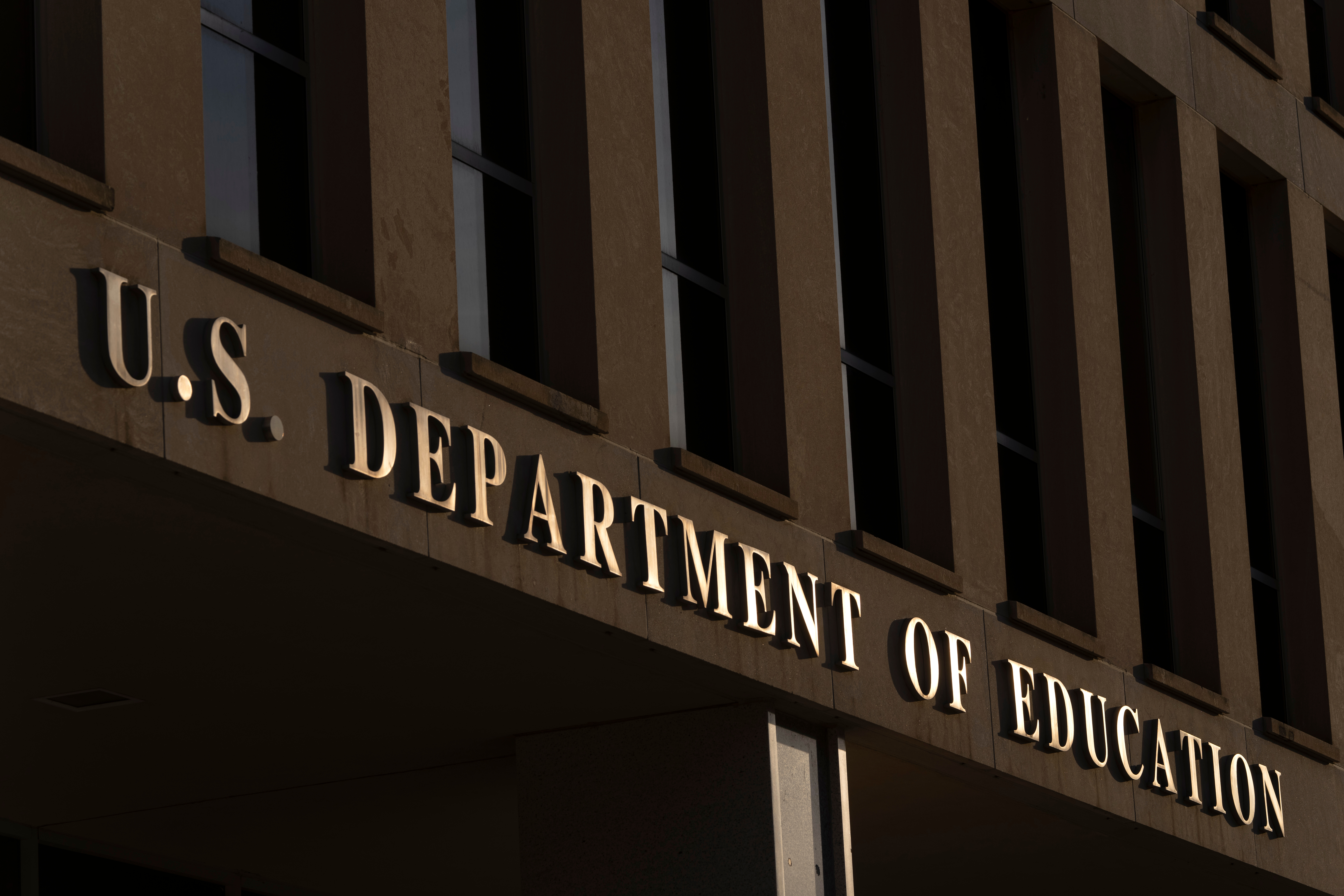
    The Trump administration this week quietly released an update to a major survey on civil rights in schools that was scrubbed of all data related to nonbinary students or bullying based on gender identity.

    The numbers come from the Education Department’s Civil Rights Data Collection, a federal survey of nearly every public school in the nation. The release this week covers the 2023-2024 school year, when the survey included “nonbinary” as a gender category alongside male and female.

    However, an Associated Press analysis shows that in every column for information related to gender identity, the numbers were replaced with a code indicating “Suppressed in Compliance with Executive Order.” That refers to an executive order that President Donald Trump signed on his inauguration day calling for the federal government to define sex as only male or female.

    The government also suppressed the number of allegations of harassment or bullying on the basis of gender identity in schools, information about whether the districts had written policies prohibiting such harassment, and any links to those policies.

    Those questions in the data collection are designed to capture the experiences of transgender and nonbinary students — whether they experience harassment, participate in sports, or face overly harsh discipline, said Seth Galanter, a senior fellow at the Edley Center on Law and Democracy and a former attorney with the Education Department’s Office for Civil Rights under the Biden and Obama administrations.

    Only school districts that already collected data on trans and nonbinary students were required to report it to the federal government, Galanter said, and roughly 1,800 out of the more than 13,000 U.S. school districts reported data in the last collection.

    “We’re losing the granular experience of those kids,” Galanter said. “They exist in the world, their schools acknowledge their existence, but we now no longer have any way to have any kind of local, state, or national picture about these kids and what their school experience is like.”

    In a written statement, the Education Department said the Office for Civil Rights would be releasing more data in coming weeks. It also said the Trump administration is “realigning the functions of OCR to align with its statutory mandate.”

    White House has targeted efforts to accommodate trans students

    The data suppression reflects the Trump administration’s wider efforts to target protections for transgender and nonbinary students in schools. The White House has repeatedly clashed with schools and colleges over accommodations for transgender students, with the Justice Department this week announcing a federal lawsuit against the school system in Kansas City, Kan., over its policies on transgender students.

    It’s also one of many instances in which the administration has removed data related to gender from government resources.

    The Williams Institute, an LGBTQ+ law and policy research center based at the UCLA School of Law, has identified around 360 cases where the Trump administration removed information related to sexual orientation or gender identity from federal data collections, ranging from Medicare surveys that asked about discrimination in doctors’ offices to data on homeless youth.

    The author of the Williams Institute’s report, Lauren Bouton, said the Office for Civil Rights could have used the data to identify schools that have a problem with bullying of nonbinary students and then require them to follow an action plan to improve. “No one’s being held accountable to these kids,” Bouton said.

    The Civil Rights Data Collection is one of the country’s most important and comprehensive sources of data related to educational opportunity in public schools. As required by federal law, the Office for Civil Rights collects information from every school in the country on topics like discipline, corporal punishment, bullying and harassment, and access to advanced coursework.

    The lack of transparency around the most recent update could erode public trust the government has worked to build for its civil rights data, said Ivy Morgan, director of research and data at EdTrust, a Washington, D.C.-based think tank that advocates for educational equity.

    “The way this data was released is part of a long-standing pattern that we have observed for the last two years,” Morgan said. “This administration just does not care about data, doesn’t care about research, doesn’t care about evidence. And it particularly doesn’t care about that information when it is helping us understand the experiences of students and people who are marginalized in our society.”

    The survey went to schools shortly before Trump took office

    Preparations for the latest data collection began under President Joe Biden’s administration, and Morgan said the attempt to gather data on nonbinary and trans students was one of the most comprehensive efforts to date from the federal government. The survey went out to schools a month before Trump was inaugurated.

    While Trump had previously announced his administration would remove questions related to gender identity, it was unclear whether that would affect the 2024 data or only future surveys.

    The last time that the data collection was updated, under the Biden administration, it came with a detailed report on trends in educational equity and opportunity, including findings that Black and Latino students were far more likely than white students to attend schools where the majority of teachers were not certified and were far less likely to have access to advanced math courses in high school.

    This year, the new data came out with no accompanying report. There was no official announcement from the Education Department that new data had arrived. The only indication of the change was a single row added to the department’s list of data tables. As of Friday, the homepage of the data collection website listed 2021-2022 data under the heading “What’s New?”

  • A 6-week-old Amish baby died from measles in Pennsylvania, local coroner confirms, as feud between Shapiro and RFK Jr. continues over the deaths

    A 6-week-old Amish baby died from measles in Pennsylvania, local coroner confirms, as feud between Shapiro and RFK Jr. continues over the deaths

    A six-week-old Amish infant from Lancaster County died from measles last month after receiving the care of a community clinic for a deadly genetic disorder, Lancaster County Coroner Stephen Diamantoni said Friday.

    The disclosure comes amid an escalating clash between Pennsylvania Democratic Gov. Josh Shapiro and President Donald Trump’s administration over whether two deaths reported by the state last week should be attributed to the ongoing measles outbreak in Pennsylvania.

    The six-week-old infant died from measles at home and had been in the care of the Clinic for Special Children, a Lancaster County-based treatment and research center focused on diseases found in Old Order Amish and Mennonite communities, LancasterOnline first reported.

    The baby had been getting treated for a deadly genetic disorder, Amish lethal microcephaly, prior to the child’s death from measles, Diamantoni confirmed.

    The baby had been receiving palliative care and was not expected to live much longer than six months due to the genetic condition that occurs in one in every 500 newborns within Pennsylvania’s Amish community, Diamantoni said.

    The announcement follows a nearly two-week-long public feud between Shapiro and U.S. Health and Human Services Secretary Robert F. Kennedy Jr. over whether to classify the Pennsylvania deaths as measles-related. Their standoff has led to the Centers for Disease Control and Prevention taking the unusual step of withholding the deaths from its measles tracker, reportedly under pressure from Kennedy.

    Shapiro, a first-term Democrat seeking reelection in November, initially provided little detail about two measles-related deaths when he announced them last Tuesday in a news conference, saying only the state’s first deaths from the highly contagious disease since 1991 involved residents of the county who were unvaccinated.

    Diamantoni, an elected Republican who is also a physician, subsequently said his office was investigating the death of a newborn who had measles, but did not believe measles contributed to the child’s death. He said the newborn died of a lacerated spleen, and postmortem testing showed a measles infection acquired before birth. He later said “measles” was included on the newborn’s death certificate under a section that lists “significant conditions contributing to death but not resulting in the underlying cause.”

    The deceased baby’s family, who are also Amish, told The Atlantic they believed a severe case of measles during pregnancy contributed to their newborn’s death.

    The discrepancies between Diamantoni’s statements and the state’s created an opening for anti-vaccine activists, including Kennedy, to publicly question whether the deaths could be attributed to the measles. Kennedy accused Shapiro of fearmongering about the disease — suggesting his office may have even fabricating the deaths.

    But the six-week-old infant reported Friday was confirmed to have died from the measles, Diamantoni said, after his office investigated the child’s death that previously was not reported to his office.

    The Clinic for Special Children did not know it was necessary to report the death to the Lancaster County coroner’s office, Diamantoni said.

    Diamantoni said he reported the six-week-old baby’s death to the CDC on Friday, but had not reported it to the state Department of Health.

    He said he did not know whether the six-week-old was the second measles-associated death reported by Pennsylvania last week.

    The Pennsylvania Department of Health said it was aware of the information shared by Diamantoni, noting the state had no new measles-related deaths to report Friday.

    The state has said the Pennsylvania health department’s epidemiology team’s thoroughly investigated and determined the two announced deaths were measles-related.

    The state defines a measles-associated death as deaths of people where evidence of measles is present, even when the disease may not be assessed by the coroner as the immediate cause of death.

    The Shapiro administration has said state privacy laws have limited their ability to release more personal information about the two measles-related.

    Shapiro reshared Friday a local news article about the six-week-old baby’s death and criticized Kennedy in an X post for choosing “to sow doubt, play politics, direct the CDC not to acknowledge these deaths, and even accuse me of fabricating these tragedies.”

    “That led to a firestorm of conspiracy theories that denied these families’ pain, invaded their privacy, and undermined public health,” Shapiro added.

    Kennedy highlighted the Lancaster coroner’s new disclosure in another X post later on Friday, noting “the facts emerging now demonstrate why CDC waited for the evidence rather than allowing political grandstanding to dictate its reporting.”

    A rare death

    As of Friday, there have been 577 measles cases in Pennsylvania, including 115 reported within the last week, according to the health department’s online measles dashboard.

    Measles deaths are rare. About three in 1,000 children who contract measles will die. While many infections are mild, measles can also cause severe complications, especially in young children, including pneumonia and brain swelling.

    Babies with Amish lethal microcephaly frequently die from respiratory infections due to the genetic condition leading the baby to develop with a severely small head and underdeveloped brain, Diamantoni said.

    But infants with the genetic condition usually do not die from the measles because the disease had been largely eradicated in the United States until recent years due to widespread vaccination, he said.

    “Usually there are not a lot of cases of measles, until recently,” Diamantoni added.

    Staff writer Sarah Gantz contributed reporting.

  • Russian drone strikes Ukraine security service headquarters as U.S. talks on the war are expected

    Russian drone strikes Ukraine security service headquarters as U.S. talks on the war are expected

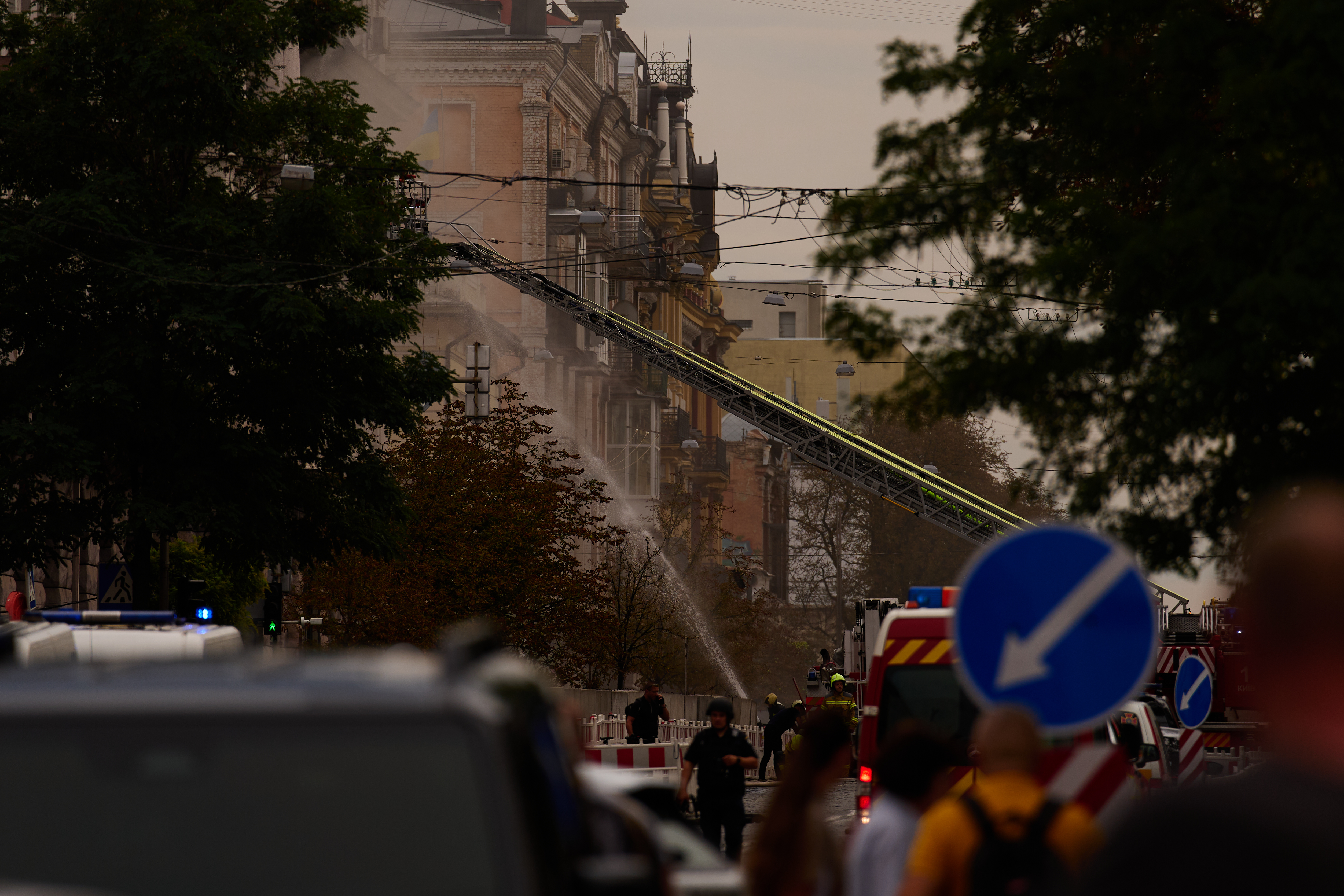
    KYIV, Ukraine — A Russian drone struck the headquarters of Ukraine’s security service in central Kyiv, President Volodymyr Zelensky said Friday, ahead of diplomatic talks with U.S. officials on ending the war.

    The air war between Russia and Ukraine has intensified as the conflict stretches toward five years since Moscow’s invasion of its neighbor. Russia recently has been using fast-flying, jet-powered drones, and the recurring wail of air-raid sirens has become part of daily life in Kyiv.

    Ukraine’s security service headquarters, near the historic St. Sophia Cathedral and international hotels, is among the agencies carrying out deep strike operations inside Russian territory. Twelve people were wounded in Friday’s attack, local authorities said.

    “The drone was deliberately targeted at the head of the SBU’s office in that building,” Zelensky said Friday.

    Zelensky wrote on Telegram that acting security chief Oleksandr Poklad had briefed him on a response, including possible targets.

    Ukrainian Foreign Minister Andrii Sybiha called Friday’s drone strike a “major escalation” that came as potential peace talks were building momentum.

    “Moscow launched this strike during a renewed push for peace — laying bare its true rejection of diplomacy,” he said in a post on X.

    U.S. envoys expected in Moscow and Kyiv

    U.S. President Donald Trump confirmed Friday that envoys Steve Witkoff and Jared Kushner will travel to Moscow and then Kyiv over the weekend and into early next week. The U.S. has not provided more specific timing for the stops.

    “They are bringing with them a proposal to end the war,” Trump said.

    This would be their first visit to Kyiv. U.S. efforts to negotiate a settlement have yet to produce a path to peace.

    Zelensky said Friday that he was expecting Witkoff and Kushner to visit Kyiv on Sunday, after visiting Moscow. He said in a Telegram post that Ukraine will refrain from airstrikes during the negotiations and called on Russia to reciprocate to allow the talks to proceed safely.

    “As with previous diplomatic visits by the American side, we will ensure the normal functioning of Russian airspace so that the negotiators can arrive safely. We are concerned about their safety, not about Russia,” Zelensky said.

    Speaking with journalists Friday, presidential spokesperson Dmitry Peskov refused to confirm reports that Kushner and Witkoff would visit Moscow, saying only that the media would be informed if such a meeting took place.

    Kushner and Witkoff last visited Moscow in January, where they met with Russian President Vladimir Putin. After that meeting, Russian presidential aide Yury Ushakov described talks as constructive but said that “reaching a long-term settlement can’t be expected without solving the territorial issue.”

    Further talks have lost momentum, with the White House’s attention focused on its conflict with Iran.

    Deadly strikes in Ukraine

    The latest diplomatic developments coincided with a “massive” overnight Russian attack on the Odesa region that killed one person and injured at least five others, including a child, regional head Oleh Kiper said in a post on Telegram. The attacks damaged multiple residential buildings, including two multistory blocks.

    Overnight strikes elsewhere in Ukraine killed two police officers in Dnipro, officials said, while a drone attack in Kyiv wounded three people after hitting a residential building.

    Russian forces have relentlessly struck civilian areas. Previously, these attacks occurred mostly at night, but now they are happening during the day as well. The front line in eastern and southern Ukraine remains largely deadlocked.

    Russian oil depots set ablaze

    In Russia, a large-scale Ukrainian drone strike hit the Black Sea resort city of Sochi and the nearby district of Sirius, regional officials said Friday. They said the attack sparked a blaze at an oil depot but gave no further details. Russian media outlets reported two depots were hit, with one fire in Sochi and another in Sirius.

    Ukraine has repeatedly targeted oil facilities that form the backbone of Russia’s economy, one of the world’s largest energy producers. Growing economic pressure and public frustration have mounted in Russia after months of escalating Ukrainian strikes on refineries and e-commerce hubs that have caused nationwide disruptions.

    The barrages prompted Putin last month to decree that the state can temporarily seize control of critical infrastructure facilities if private owners fail to protect them from Ukrainian drone attacks or don’t rebuild them after strikes. Analysts said the move was aimed at forcing companies to pay for their own security and bring damaged assets back into service, despite the cost.

    Drone washes up in Finland

    Finnish authorities said they were investigating how a Russian-made drone ended up on a rocky shoreline in the Pellinge archipelago east of Helsinki.

    Finland’s Border Guard said what appears to be a Geoscan 701 drone, manufactured by a Russian company, was found on the shore. “The device model in question is used by both state and civilian operators, and it is not possible at this stage to determine its intended use or identify the country or entity operating it,” the Border Guard said in a statement.

    State broadcaster Yle reported the drone was discovered Tuesday by an angler.

    Geoscan describes itself as one of Russia’s leading drone manufacturers, and says the 701 model is designed for large-scale aerial surveying.