Category: News

  • Localized Russia-Ukraine ceasefire starts in deal brokered by Melania Trump

    Localized Russia-Ukraine ceasefire starts in deal brokered by Melania Trump

    MYKOLAIV, Ukraine — A localized ceasefire between Ukraine and Russia took effect early Tuesday ahead of a humanitarian mission led by U.S. first lady Melania Trump, as missile attacks resumed in Kyiv.

    Meanwhile, Finland’s president and Norway’s prime minister spoke on the phone with Russian President Vladimir Putin, officials said, in their first-known direct contact since shortly after Russia’s all-out invasion of Ukraine in February 2022.

    After the conversation with Putin, the two Nordic leaders had a telephone conversation with Ukrainian President Volodymyr Zelenskyy, according to Zelenskyy’s office.

    Russia and Ukraine began observing a localized ceasefire in a devastated southern Ukrainian city Tuesday, before a planned humanitarian mission brokered by U.S. first lady Melania Trump, but Moscow kept up its deadly missile attacks on other cities in the meantime.

    The local pause in fighting started at 3 a.m. to allow an aid mission into the Russia-occupied city of Oleshky later this week. The situation in Oleshky is desperate, with food and medical supplies running perilously low for the up to 2,000 people still there, as drones and land mines restrict movement.

    Deep mistrust between Russia and Ukraine, as Moscow’s full-scale invasion nears the five-year mark in February, has undermined previous attempts at limited ceasefires, which quickly unraveled or never took hold.

    The humanitarian truce was a high-stakes operation for both Moscow and Kyiv, with both sides keen to win U.S. President Donald Trump’s favor.

    Russian and Ukrainian negotiators as well as the militaries of the two countries confirmed in separate statements that the Oleshky ceasefire had begun.

    Finnish, Norwegian leaders speak by phone to Putin and Zelenskyy, officials say

    The call, confirmed by the offices of Norwegian Prime Minister Jonas Gahr Støre and Finnish President Alexander Stubb, followed an Oct. 20 meeting in Oslo between the two Nordic leaders, Ukrainian President Volodymyr Zelenskyy and U.S. special envoy Steve Witkoff.

    The call was held in consultation with Ukraine, according to the official statements by the two Nordic countries. Stubb and Støre initiated the call to discuss the war and upcoming trilateral talks involving Russia, Ukraine and the United States that are expected to take place in Abu Dhabi, United Arab Emirates, in November.

    The two European leaders spoke on behalf of their own countries and not the whole of Europe, the statements said.

    “The discussion was frank and substantive,” Stubb said. “We are neighboring countries to Russia. The outcome of this war will have a direct impact on our and the broader European security. Ending the war requires direct discussions.”

    “The war comes with enormous human and material costs,” Støre said. “The suffering and destruction will impact generations. In the call we stressed the importance of de-escalation.”

    Melania Trump and Pope Leo worked for a truce in Oleshky

    According to her office, Melania Trump led talks with civilian negotiators from Russia and Ukraine after meeting with U.N. officials who briefed the American first lady on the situation in Oleshky.

    Up to 2,000 people are stranded in the city, unable to leave because of explosive mines and drone attacks in the area, according to the U.N. The partly occupied Kherson region of Ukraine where Oleshky is located is notorious for the dangers of Russian drone attacks on soldiers and civilians.

    Kremlin spokesman Dmitry Peskov said Tuesday that “so far there have been no reports of violations.”

    Pope Leo XIV spoke earlier this month with Ukrainian President Volodymyr Zelenskyy and Russian President Vladimir Putin, urging them to allow humanitarian aid into Oleshky and the safe evacuation of civilians, the Vatican said.

    Negotiators involved in the aid mission said doctors, medicines, food supplies and water would be taken to Oleshky before evacuation corridors are opened.

    The Kremlin said at the time that Putin voiced support for the Vatican’s plea, and an agreement was reached to coordinate efforts in this regard.

    Moscow and Kyiv have blamed each other for the humanitarian crisis.

    Russia, as the occupying power, must under international law ensure that civilians under its occupation live safely. Ukraine has repeatedly tried to negotiate a humanitarian corridor for evacuations and aid delivery with Moscow.

    The aid mission is planned ahead of a new round of U.S.-brokered talks between delegations from Russia and Ukraine expected next month that will seek to lay the groundwork for detailed peace negotiations later.

    Lull in Oleshky uneasy, a Ukrainian official tells The AP

    The local ceasefire is due to last through Saturday, or longer if needed. Its geographical scope was unclear, though it was centered on Oleshky and other nearby parts of the Kherson region.

    Oleshky is about 550 kilometers (340 miles) southeast of Kyiv, where the Dnipro River separates Russian and Ukrainian forces. Oleshky sits across the Dnipro River from the city of Kherson, the region’s administrative capital. Russian forces seized Kherson in the early stages of the 2022 full-scale invasion, but retreated across the river several months later.

    The Ukrainian-held side of the Kherson region was quiet Tuesday. Only Russian reconnaissance drones were in the sky, local authorities said, though they cautioned it was too early to draw any conclusions and that they didn’t trust Russia.

    “It’s too early to say. Let’s wait and see, because you can’t trust the enemy, especially the Russians,” Yaroslav Shanko, head of the Kherson city administration, told The Associated Press.

    “There have been previously announced ceasefires more than once, and they had no effect on Kherson … and, let’s say, a lull like this is sometimes even frightening.”

    Shanko acknowledged the situation was unusual. He typically travels with a portable drone detector that constantly picks up drones overhead, but it had gone silent. He said he still kept glancing at it, but it showed nothing.

    The quiet stands in contrast to daily life in the city, where people are wounded or killed nearly every day, he said.

    City services plan to use the pause to carry out utility work that is usually too dangerous because of constant drone activity.

    Russian missiles kill at least 3 civilians in Ukraine, officials say

    Minutes after 3 a.m., multiple ballistic missile explosions shook Kyiv and air alerts sounded in multiple parts of the country.

    Late Monday, the capital also came under attack, when Russian ballistic missiles damaged the grounds of a university in Kyiv, killing one person and leaving 10 injured, city officials said. In Kharkiv, Ukraine’s second-largest city, authorities said attacks late Monday killed two people and injured four.

    “It is important that the world sees that Russia is showing nothing but a desire to kill and continue waging war,” Zelenskyy wrote in an online post shortly afterward.


  • 2 men charged with national security offenses over incident in suspected U.K. air base plot

    2 men charged with national security offenses over incident in suspected U.K. air base plot

    Two British men have been charged with national security offenses in a suspected Iranian-backed plot against a U.K. air base that hosts U.S. bombers, British officials said Tuesday.

    One of the men was charged with assisting Iran’s intelligence service, the Crown Prosecution Service said.

    In early October, Pentagon commanders abruptly evacuated a fleet of about a dozen long-range B-1 bombers from Royal Air Force Fairford, roughly 75 miles northwest of London, after intelligence warned of a possible attack against the facility. The incident triggered alarm among counterterrorism officials and forced the evacuation of at least 85 homes near the base.

    On Tuesday, the Crown Prosecution Service and the U.K.’s Counter Terrorism Policing said two 24-year-old British nationals had been charged under the National Security Act.

    Mohmed Ahmad Abdulkarim was charged with assisting a foreign intelligence service. “In this case, we believe that country to be Iran,” Laurence Taylor, the head of Counter Terrorism Policing, said at a news briefing Tuesday.

    Nouman Essghir was charged with inspecting, approaching, or entering a prohibited place for a purpose prejudicial to the safety or interests of Britain. His charges stem from “suspected activity” on Aug. 22.

    Both men appeared at the Westminster Magistrates’ Court on Tuesday. The court did not immediately respond to a request for more information about the appearance or any lawyers representing the suspects.

    In late September, police arrested five men in three white vans outside RAF Fairford. Law enforcement found gasoline, but not drones or other weapons. Two other suspects were later detained.

    According to Reuters, prosecutors at the court appearance said Abdulkarim arranged for the five men to take vans to the air base on behalf of a man called “Ali.”

    “One of them was told there was a bomb in the van … one of them called 999” and police arrived, said prosecutor Louise Gray, the outlet reported.

    Gray said Essghir messaged “Ali” asking what “​is going on” ⁠but did not get a response, Reuters reported.

    Police conducted a monthlong investigation that included reviewing “extensive CCTV footage” and the contents of dozens of seized digital devices, Taylor said Tuesday.

    “While some of the circumstances remain unclear, we are confident that this activity was conducted on behalf of a foreign intelligence service,” he said.

    British officials, including Prime Minister Andy Burnham, in recent weeks have said there are “strong indications” that Iran played a role in the suspected terrorism plot. Tehran has denied involvement.

    On Tuesday, Taylor warned of the “increasing use of proxies by those who wish to state to destabilize our nation.”

    “This is not a theoretical threat,” he said. “This is something we’re responding to every day at Counter Terrorism Policing, particularly in the case of Iran.”

  • Pemberton’s old CFO sues the township | Inquirer South Jersey

    Pemberton’s old CFO sues the township | Inquirer South Jersey

    Good morning, South Jersey.

    Months after her dismissal, Pemberton’s former chief financial officer filed a wrongful termination suit against the township.

    And a local church turned a vacant Sears into its new Vineland location.

    Plus, multiple conservation organizations teamed up to raise funds for preservation efforts for the Black Run Preserve, and more news of the day.

    — Taylor Allen (southjersey@inquirer.com)

    If someone forwarded you this email, sign up for free here.

    Fighting for her job back

    Candice Pennewell is suing Pemberton Township to get her job back as chief financial officer.

    In the lawsuit, she’s requesting back pay and benefits from the day she was dismissed on Aug. 26, the day after she told township officials of a possible state law violation in relation to a waste collection contract.

    Pennewell alleges that her termination was in retaliation for her reports on internal ethics and spending violations. Meanwhile, the township says she was fired for losing $195,660 in a phishing scam back in June.

    According to the lawsuit, the former CFO was unjustly blamed for the incident since she wasn’t at work the day the fraudulent payment was made. But Mayor Matt Bianchini said the township contends that Pennewell authorized the payment.

    The Inquirer’s Lacey Latch has more on the dispute between the township and its former employee.

    From a Sears to a new church

    True North Church has a new branch in Vineland.

    What was once a Sears, Roebuck & Co. department store is now a nondenominational Christian church that seats 950 people, according to the lead pastor.

    As part of an effort to expand beyond its base location in Mullica Hill, the South Jersey congregation bought the vacant space from the retailer that owns Sears in 2024 for $2.4 million. It opened for its first service on Oct. 4.

    Reporter Sarah Nicell has more on what went into the extensive conversion.

    What to know today

    • A Trenton man pleaded guilty to first-degree murder and was sentenced to life in prison for killing his girlfriend at a motel in Bensalem.
    • A fire at a high-rise apartment complex in Pennsauken left one woman critically injured and about 40 people displaced early Monday morning, 6abc reports.
    • Four conservation organizations announced a fundraising campaign Monday to help maintain 835 acres to add to Black Run Preserve in Evesham. The township would own and sustain it with the preserve, 70and73 reports.
    • The Voorhees Planning Board recently approved a plan to convert a historic office building into 178 apartments, according to 70and73.
    • The West Deptford Police Department is investigating what happened to two cats, Bast and Buttons, after the animals had to be treated for gunshot wounds in the same week.
    • Residents or commuters who drive through Camden should be aware of multiple roadway projects this week. Be prepared to take detours or find alternative routes.

    🗣️ Quote of the week

    Sixers fans have high hopes for the season with LeBron James on the team.

    🧠 Trivia time

    The Campbell’s Co. has been based in Camden since what year?

    A) 1978

    B) 1950

    C) 1869

    D) 2004

    Think you know? Check your answer.

    What we’re …

    🏠 Considering: If building more could help high housing costs.

    💭 Wondering: What the upcoming country album from Boyz II Men will sound like.

    🧀 Sharing: How to make a cheesesteak.

    Thanks for hanging out this morning. More news is set to come your way tomorrow.

    By submitting your written, visual, and/or audio contributions, you agree to The Inquirer’s Terms of Use, including the grant of rights in Section 10.

  • Pemberton says it fired its CFO for losing $195,660 to a phishing scam. But she says she was wrongfully terminated.

    Pemberton says it fired its CFO for losing $195,660 to a phishing scam. But she says she was wrongfully terminated.

    Just a few months after losing her job as Pemberton Township’s chief financial officer, Candice Pennewell has filed a wrongful termination lawsuit against the township alleging that she was fired for doing her job — and she wants it back.

    While Pennewell claims her firing was retaliation for reporting internal ethics and spending violations, the township says she was fired for losing $195,660 of taxpayer money to a phishing scam. But Pennewell says she wasn’t even at work when the fraudulent payment was made.

    In the lawsuit filed Oct. 9, Pennewell requested she be reinstated with retroactive pay and benefits dating back to her firing on Aug. 26, just one day after she says she alerted township officials to a possible breach of state law regarding a contract with a waste collector.

    According to the lawsuit, township officials told Pennewell that her termination was a result of the phishing scam the township fell victim to in June.

    Pennewell claims that she was unfairly blamed for the incident, which occurred while she was out of the office on PTO, according to her lawsuit filed in Burlington Couny Superior Court. The township maintains that Pennewell authorized the payment, said Mayor Matt Bianchini.

    Pennewell was appointed as Pemberton’s CFO in December 2022 and began her second four-year term on Jan. 1, 2026.

    She received an annual salary of $135,000 through 2025.

    On June 4, an employee within the township’s finance office authorized an electronic payment to an account they later learned was impersonating a vendor that was working with the township, according to the lawsuit.

    The payment was approved by two township employees, neither of which were Pennewell, the suit claims. Upon learning that the vendor’s email was hacked five days later, Pennewell alleges she contacted the bank and requested that the payment be reversed, according to the suit.

    Pennewell also alleges that Anna Shaker, Pemberton’s human resources manager and JIF Fund Coordinator — the point person for the township’s municipal insurance fund — was with her when she inquired about reversing the payment and that Shaker was in turn responsible for notifying township officials of the erroneous payment.

    As a result, any further communication about the incident that township officials found lacking was actually the responsibility of Shaker, Pennewell claims.

    The lawsuit also alleges that Pennewell’s termination was illegal because there was no council vote, notice, or public hearing about the decision in violation of the state’s Open Public Meetings Act.

    But township officials said they stand by their position to terminate Pennewell and intend to fight the claims laid out in the lawsuit.

    “The Township’s position is that Ms. Pennewell’s termination was based on legitimate concerns regarding her leadership, performance, and handling of serious financial matters, not the wrongful or retaliatory motives alleged in her lawsuit,” Pemberton Mayor Matt Bianchini wrote in a statement responding to the lawsuit on Oct. 16.

    The mayor also disputed Pennewell’s claims related to the waste collection contract, defending the actions of township officials named as defendants in the lawsuit, including himself and Shaker.

    Bianchini said the incident represented a significant lapse in leadership.

    “I stand behind the decision regarding Ms. Pennewell’s employment and the Township’s position that the decision was based on legitimate employment-related concerns,” Bianchini said.

    “The Township intends to vigorously defend itself against the allegations in this lawsuit and present the relevant evidence through the appropriate legal proceedings,” he said.

    Shaker declined to comment on the lawsuit.

    Pennewell’s legal team, Mullica Hill-based Vigilante Law Firm, did not respond to multiple requests for comment.

  • A South Jersey church wanted to open a new branch. Pastors chose an empty Sears.

    A South Jersey church wanted to open a new branch. Pastors chose an empty Sears.

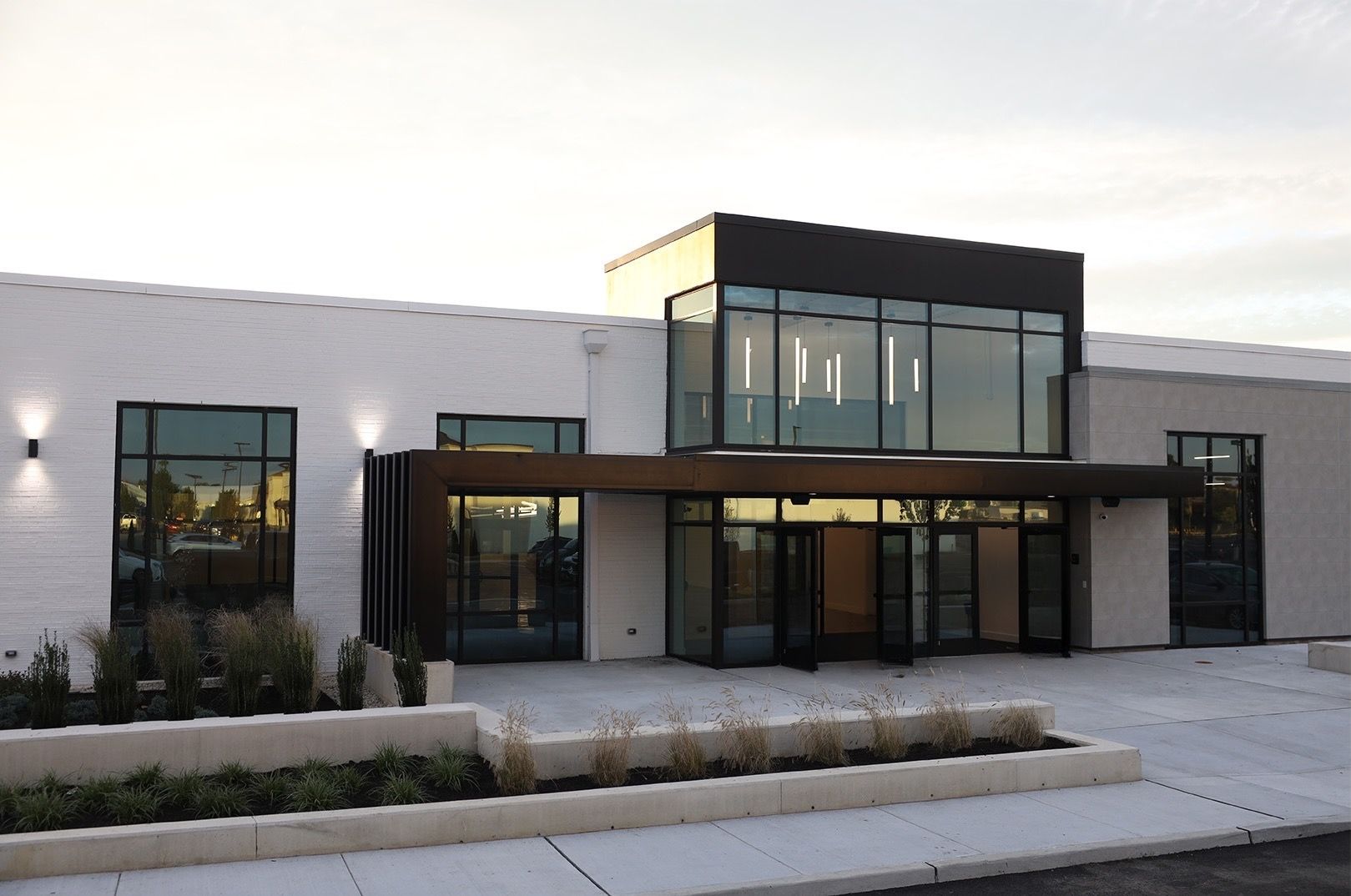
    A new church has opened in Cumberland County, nearly a year after the South Jersey congregation purchased a vacant Sears, Roebuck & Co. department store.

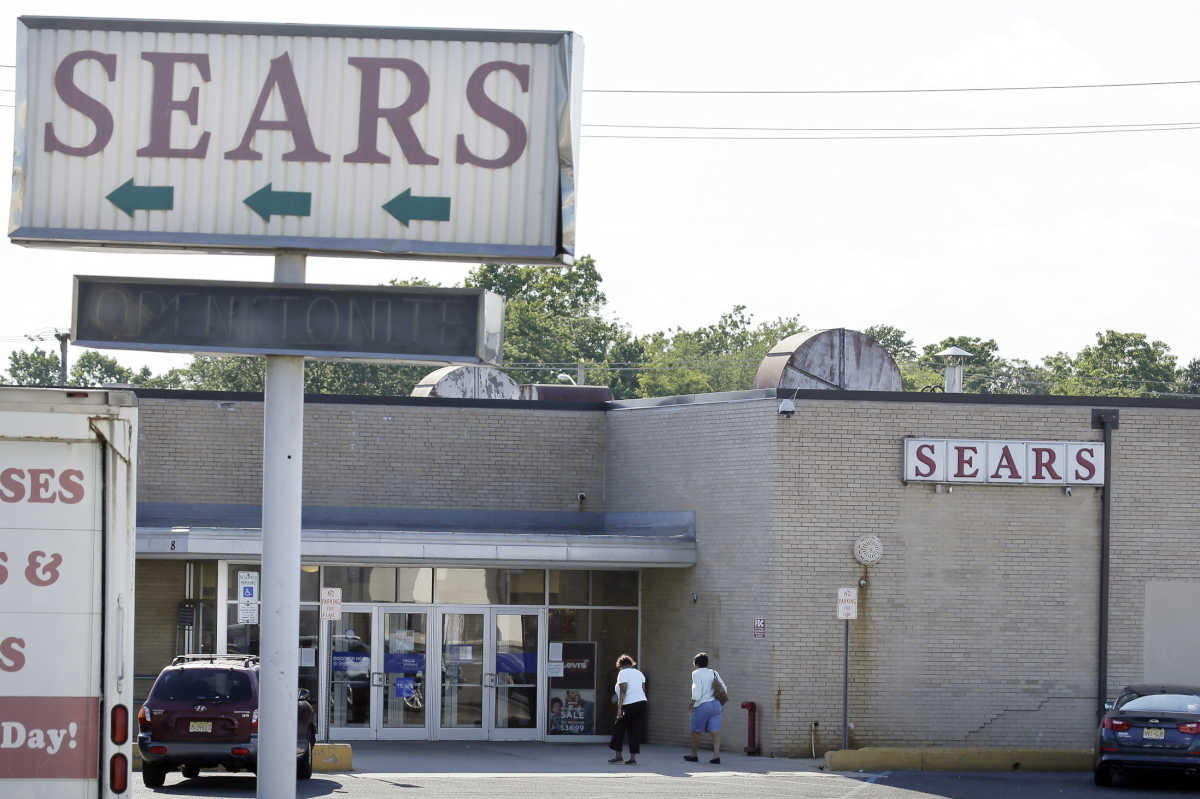
    True North Church, a nondenominational Christian church founded two decades ago, purchased the nearly 70,000-square-foot retail building in 2024 for $2.4 million from the retailer that owns Sears. The store closed in 2017 after more than 60 years in operation, along with 65 other Sears and Kmart stores. Sears, the onetime American retail giant, filed for bankruptcy in 2018, and only five stores remain, none of which exist in New Jersey or Pennsylvania.

    The opening of the church is part of True North’s effort to expand its footprint beyond Mullica Hill, Gloucester County, where it is based. The new church building, at the intersection of Landis Avenue and Route 47 in Vineland, opened for its first service on Oct. 4.

    “We’re definitely passionate about South Jersey,” said Jesse Eisenhart, True North’s lead pastor. “We definitely feel like God has called us to this region. If it’s a city in South Jersey, it’s not off the radar.”

    The new church seats about 950 people, with 40,000 square feet of the old Sears retrofitted for church purposes, Eisenhart said.

    As more traditional, mainstream churches have struggled in recent years with aging congregations and membership retention, nondenominational churches are on the rise. In 2010, a census by Hartford Institute for Religion Research identified 35,000 independent and nondenominational churches across the U.S., and by 2020, the same census found 60,000 churches.

    The Sears store on Landis Avenue at Route 47 in Vineland, pictured in June 2017. The store closed for good later that year. Now, True North Church occupies the building.ELIZABETH ROBERTSON / Staff Photographer

    Eisenhart said getting the building up to speed was “a multimillion-dollar investment” but declined to share the exact price tag. In a report on the church’s website, True North reported spending more than $5.1 million in 2025, with the church’s revenue growing 7% since 2024.

    As a religious entity, True North doesn’t have to file public 990 tax reports with the IRS.

    While the bones of the old Sears were in good condition, contractors had to deal with asbestos, along with redoing the roof and the parking lot’s storm drainage system. Construction took two years.

    “This was by no means an easy conversion. The building had sat vacant for years, and its condition, combined with decades of additions and modifications, presented significant challenges and unforeseen conditions throughout construction,” said Andrew Fabbri, vice president of Fabbri Builders in Vineland.

    Equip Studio, a South Carolina-based architectural firm, designed the church. The firm also designed True North’s building in Mullica Hill and its former space in Haddon Township.

    Eisenhart said True North didn’t choose Vineland, a city of nearly 63,000 people, at random.

    Hundreds of Vineland residents attend services at True North’s Mullica Hill location, which overflows every weekend, said Eisenhart and another pastor, Josh Sarracino. Thousands gather in person and over the church’s livestreamed services, and space has been a big issue, Eisenhart said.

    Until the church revamped the Sears store, Vineland residents had been gathering for 18 months at Lakeside Middle School to worship with True North.

    True North Church has had a lot of work to do since 2024 to transform an abandoned Sears department store into its next house of worship in Vineland, Cumberland County.True North Church
    Between 2024 and 2026, True North Church turned the vacant Sears store into a church.True North Church

    Many congregants remember spending time at the old Sears, buying their wedding dresses and lawn mowers there.

    “So many people have stories and memories from that building as small children: ‘I was a manager there. It was my dad’s place of employment. It was the place I had my first job… That was the first time I ever got fired from a job,’” Eisenhart said.

    True North isn’t new to expansion. The church outgrew its Haddon Township spot, which it was gifted in 2015 from the Grace Baptist Church for only $1, after only seven years there. It sold the building for $850,000 and started using Collingswood Middle School for services, Sarracino said.

    The church no longer has a footprint in Camden County.

    “When COVID hit, we had recently built the Mullica Hill facility, and when we were allowed to meet again, we just had services there [instead],” Sarracino said.

    In recent years, True North has developed “correctional campuses” at SCI Chester and Salem County correctional facility, where the church offers worship services to more than 100 inmates.

    The church is also planning a 35,000-square-foot addition to its Mullica Hill location, including a new auditorium with more seats and space for their youth program.

    Jesse Eisenhart, lead pastor for True North Church, spoke in October at the church’s new Vineland campus in Cumberland County.True North Church
  • The final day to visit the Portal in Philly is Friday

    The final day to visit the Portal in Philly is Friday

    The last day to say hello to the world and goodbye to the Portal in Philadelphia will be Friday, according to Nicolas Klaus, CEO of Portals.org.

    Two years after the interactive livestream video installation that connects people around the world opened in Center City it will go dark and be placed into temporary storage until a new home for it is found, Klaus said via email.

    The Portal was first installed in LOVE Park in October 2024, but after repeated incidents of vandalism, it was moved to the courtyard of City Hall in April 2025, where it has remained ever since. In August, Klaus told The Inquirer that the city did not renew the Portal’s permit, which expires Oct. 31, because of the forthcoming Christmas Village in the courtyard.

    Spectators interact with people in Poland at the Philadelphia Portal’s LOVE Park location in 2024. Tom Gralish / Staff Photographer

    At the time, Klaus said he hoped another public or private entity would step up to sponsor the Portal and keep it in Philly. Readers offered suggestions, like putting it at the South Philly sports complex, but a partner who could pay the maintenance and connection fees, which costs about $30,000 a year, could not be found.

    “Several organizations expressed interest in hosting the Portal at other sites around the city,” Klaus said. “However, we haven’t been able to secure the funding needed for its relocation and continued upkeep in Philadelphia.”

    Officials are still reviewing future potential locations for the Portal and don’t have an announcement date set yet, Klaus said. Wherever the 3.5-ton circular screen ends up, he said the hope is that it will be the device’s forever home.

    Created by Lithuanian artist Benediktas Gylys, the first Portal installations opened in 2021 and connected Vilnius, Lithuania, and Lublin, Poland. Philadelphia’s Portal — the only one in North America — was stationed in New York City for five months in 2024 prior to its residency here.

    Portal viewers in Philadelphia reach out to viewers on screen at the public webcam in Litewski Square in Lublin, Poland, in 2024.Tom Gralish / Staff Photographer

    Philly native Joseph Callahan, an entrepreneur and technologist, is one of the people credited with bringing the Portal to Philadelphia in time for the nation’s 250th anniversary. Last year, Callahan also took over the helm of World Cafe Live. His tenure there was tumultuous and he stepped back from that role in July. Earlier this month, World Cafe Live announced it will also close at the end of the October.

    When the Portal initially opened here, it connected people in Philly with strangers in Dublin, Ireland; Lublin, Poland; and Vilnius, Lithuania. This year, Portals were also added in Ipswich, England; Manila, Philippines; and Piauí, Brazil.

    The Portal was always quite busy at the heavily-trafficked LOVE Park but less so at the more off-the-beaten-path location of City Hall’s courtyard.

    “We haven’t tracked visitor numbers, but the Portal has been consistently popular, drawing hundreds of visitors a day, sometimes more,” Klaus said. “Encounters shared online have generated hundreds of millions of impressions over its two years in Philadelphia.”

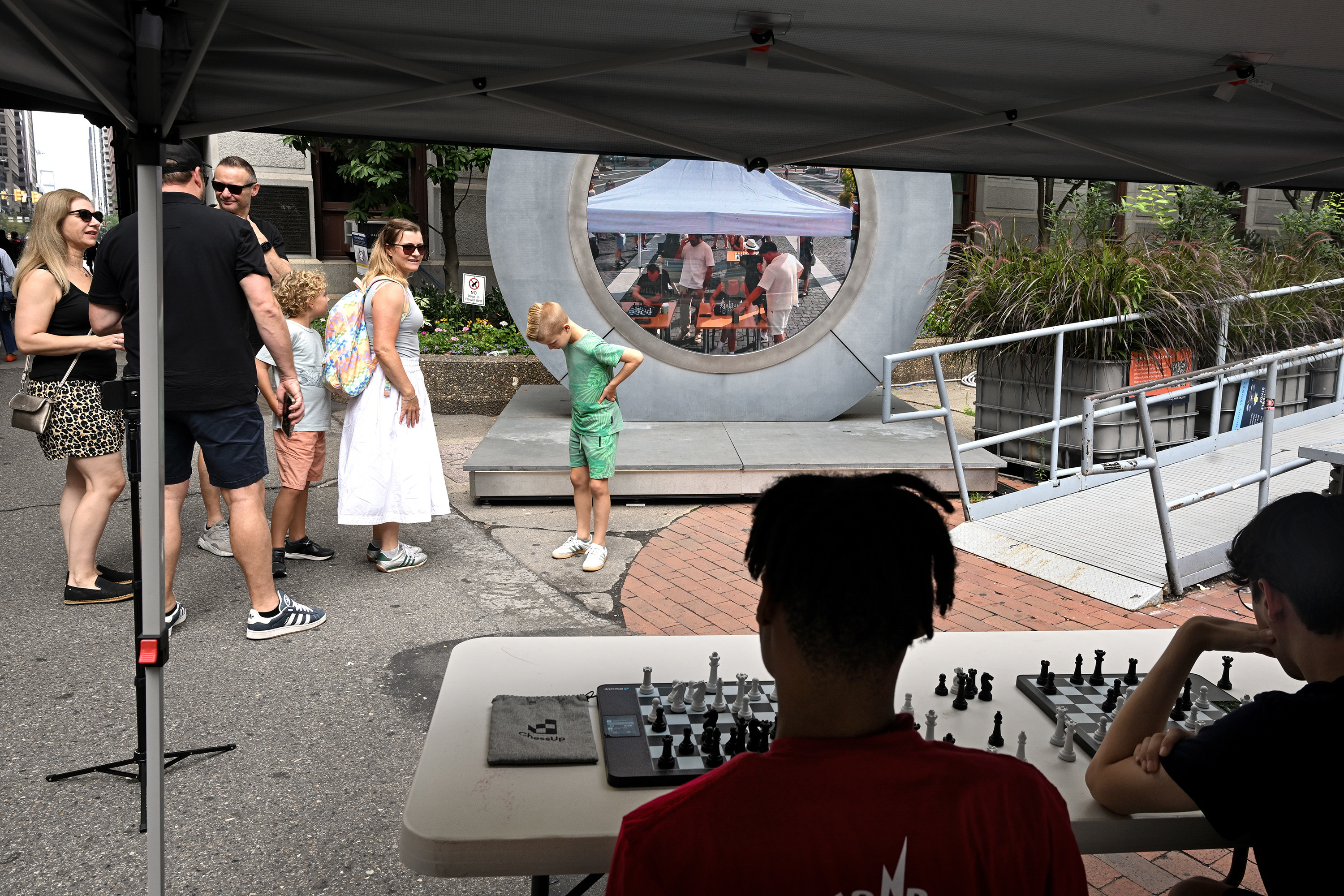
    Two days after the device opened in Philly, a man in Lithuania approached the Portal in his city and held up a sign that said: “GO BIRDS,” immediately endearing all of Philadelphia to himself and the device. Last year, an international chess tournament was held at the Portal, using chessboards connected by Wi-Fi. And one TikToker even made a video about connecting with someone in Dublin through the Philly Portal, whom he later met up with for drinks while in Ireland.

    A game of international chess being played at the Philadelphia Portal last year. Tom Gralish / Staff Photographer

    “But perhaps the most meaningful part for our team is the sum of all those small, everyday encounters that never went viral — the moments of connection between people who otherwise would never have met,” Klaus said.

    The last day to interact with the Portal is Friday, but the exact timing of its removal is still being finalized, Klaus said. While this Portal may go to another city, Klaus said there’s still some hope for Philly.

    “With the right local partner or patron, we would love to bring a Portal back to Philadelphia,” he said.

    Philadelphia City Hall is reflected in the Portal during its time at LOVE Park. Jose F. Moreno / Staff Photographer
  • Lawyer recommends school policy changes| Inquirer Greater Abington

    Lawyer recommends school policy changes| Inquirer Greater Abington

    Hey there, Greater Abington,

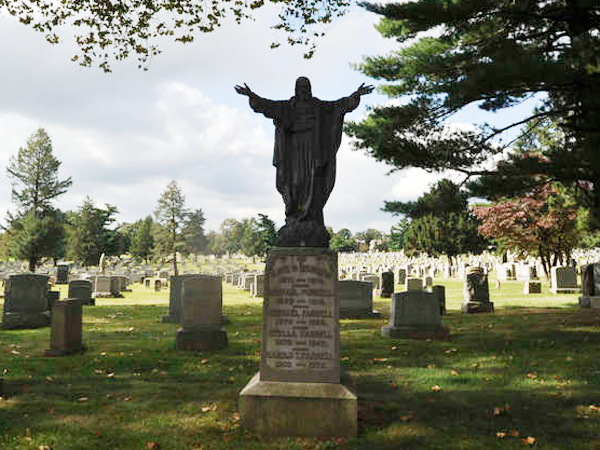
    Cheltenham School District has received recommendations about changing its policies following the football hazing scandal. Here’s what we know. Also in the headlines, Cheltenham Township and the owners of Holy Sepulchre Cemetery are at odds over whether the latter should be paying property taxes, police charged an ex-boyfriend in the killing of a Walmart employee in Wyncote, and La Mott Fire Company may offer free or reduced rent to firefighters to attract volunteers.

    P.S. Oops! In last week’s edition, we accidentally referred to November’s election as the “primary” when we shared The Inquirer’s guide to the 2026 Pennsylvania midterms. It’s possible we skipped our (apparently necessary) second cup of coffee.

    — Laura Smythe (greaterabington@inquirer.com)

    If someone forwarded you this email, sign up for free here.

    What to know about Cheltenham’s review of its football scandal

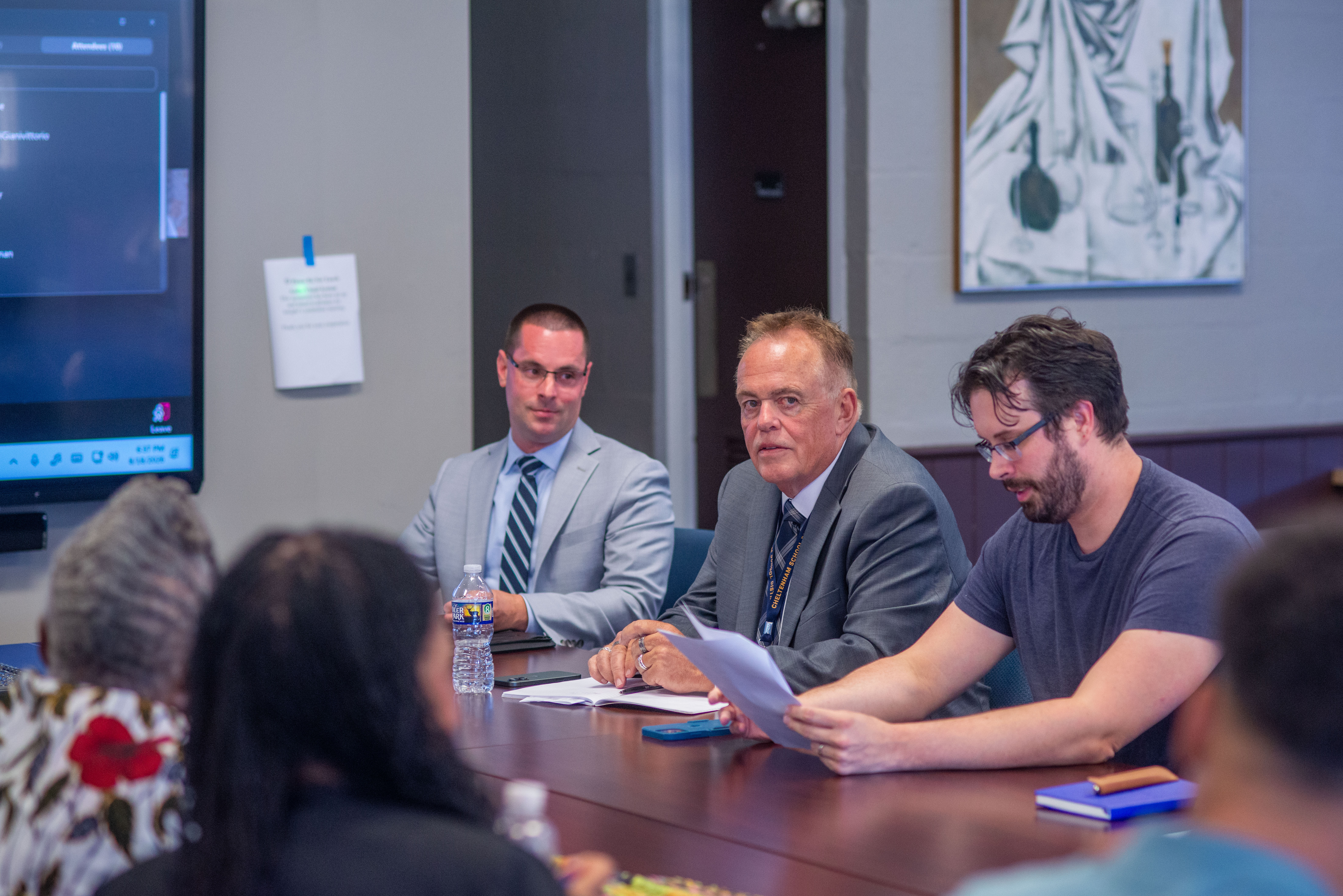
    Interim Cheltenham Superintendent Chris McGinley (center).William Thomas Cain / For The Inquirer

    A lawyer commissioned by the Cheltenham School District has handed down a list of recommendations for changing the district’s policies after a 15-year-old was allegedly assaulted in a locker room hazing incident last year. District officials have not said what those recommendations are.

    Potential changes to upward of 25 policies will be reviewed in upcoming school board policy committee meetings, officials told The Inquirer. In written responses to reporter Maddie Hanna last week, Interim Superintendent Chris McGinley characterized the lawyer’s work as “not a formal report,” but findings that contain “recommendations for specific changes to individual policies.”

    The recommendations come as district officials are expected to join State Sen. Art Haywood and Rep. Napoleon Nelson later today to announce the passage of a new law that makes hazing a mandated reportable offense.

    Hanna has more on the lawyer’s review.

    Inside Cheltenham’s 11-year property tax showdown with the Archdiocese of Philadelphia

    Cheltenham and the Archdiocese of Philadelphia have been tied up in a legal battle for more than a decade over whether property taxes must be paid on Holy Sepulchre Cemetery, one of the township’s largest plots.

    While not clear how much tax money hangs in the balance in the dispute, the cemetery would owe roughly $683,000 this year alone based on the current tax rate. Most of that would go to schools.

    Inquirer reporter Jess Rohan untangles the case, which involves a for-profit death services corporation in Florida.

    💡 Community news

    • Cheltenham-based La Mott Fire Company plans to develop an apartment building connected to its fire house and offer firefighters free or reduced rent. It’s meant to draw in volunteers and shorten response times.
    • Police on Monday charged an ex-boyfriend with killing 45-year-old Walmart employee Latosha Ann Cooper in the Wyncote store’s parking lot last week. They say 23-year-old Destino Jean Louis shot Cooper after she changed her mind about marrying him to help him obtain a green card.
    • Sports fans from across the region were psyched to see NBA megastar LeBron James make his home debut as a 76er. The passionate crowd included Abington resident Rodney Anderson, whose voice broke out over the boisterous concourse: “Actual defense? The focus, the intensity? I’m loving it.”
    • From Nov. 2 through Dec. 18, Tyson Avenue will be closed between Albright Avenue and Easton Road in Abington Township as part of a bridge rehabilitation project.

    🗺️ Other nearby news

    • A jury found Fearless Restaurants, the group behind nearby eateries such as a White Dog Cafe outpost in Haverford, negligent in its handling of sexual harassment incidents at Rosalie, its popular Italian restaurant in Wayne.
    • Montgomery County Commissioner Neil Makhija appeared in a new Democratic Congressional Campaign Committee ad as part of a push to engage Asian American and Pacific Islander voters in efforts to flip a key U.S. House seat in Bucks County in the midterms.

    🏫 Schools briefing

    🍽️ On our plate

    🎳 Things to do

    🧛 Costume Parade Storytime: Kids 5 and under can show off their Halloween costumes and take in some not-so-scary stories. ⏰ Wednesday, Oct. 28, 10:30 a.m. 💵 Free 📍 Elkins Park Free Library

    🎃 Trunk-or-Treat: This family-friendly event is back for its second year, featuring sweet treats and spooky-season fun. ⏰ Thursday, Oct. 29, 6-7:30 p.m. 💵 Free 📍 Glenside Free Library

    🎥 The Blair Witch Project: Following a showing of the hit 1999 horror film, the actors who played the three main characters will take the stage to share behind-the-scenes stories and answer audience questions. ⏰ Thursday, Oct. 29, 8 p.m. 💵 $53.56-$98.44 📍 Keswick Theatre

    👻 Halloween with Reality Check Experiment: Jam out to live music and compete for cash prizes in a costume contest. ⏰ Saturday, Oct. 31, 7-10 p.m. 💵 $10 📍 The Royal

    🏡 On the market

    An updated Chelten Hills colonial

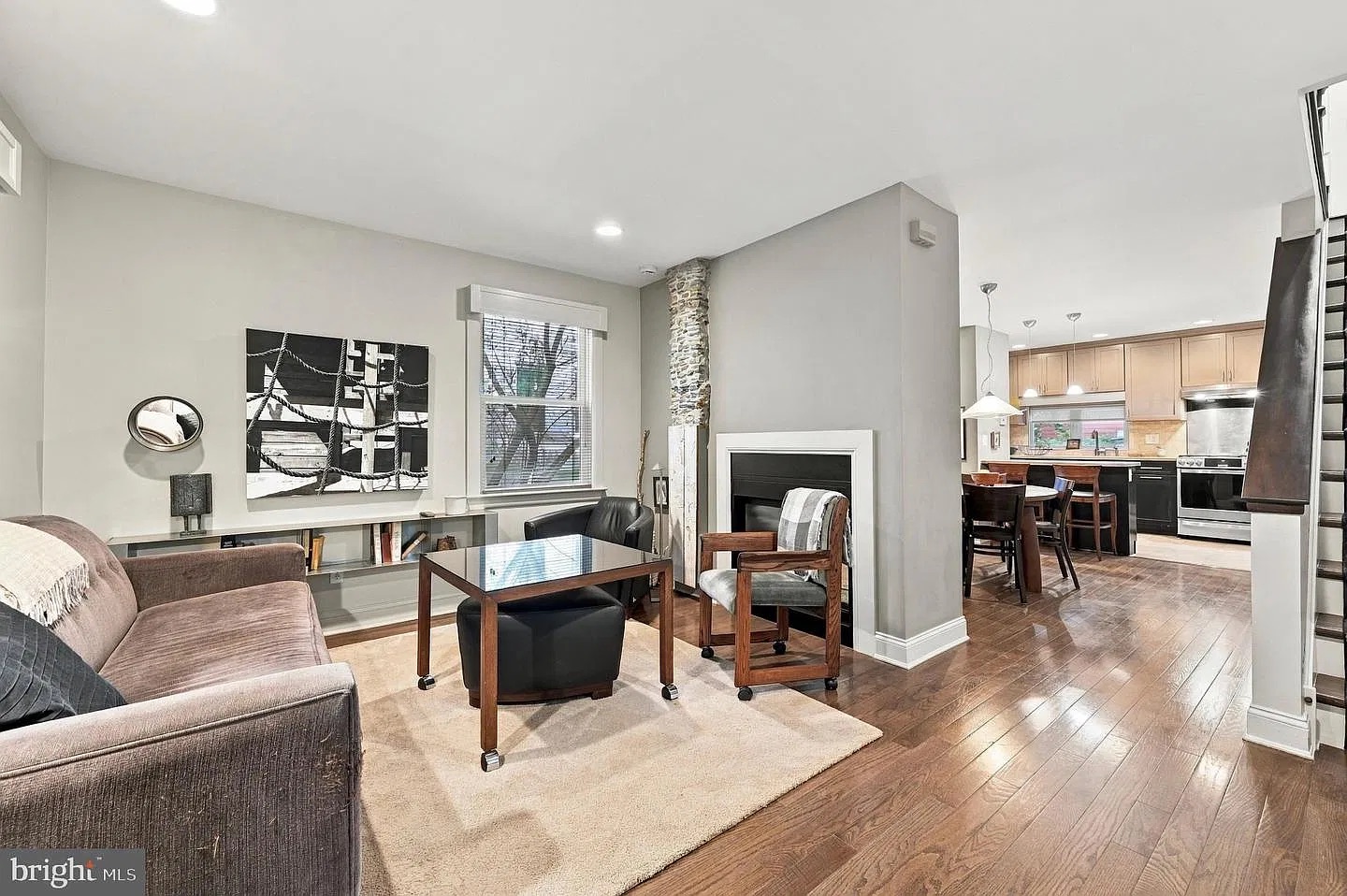
    Inside 770 Rock Lane in Elkins Park, PA.

    This colonial in Elkins Park was originally built in 1930 before undergoing a complete renovation in 2009. It features an open-plan living and dining area, a double-sided gas fireplace, and a full basement. There are three bedrooms and one bathroom. Outside space includes a patio and a backyard.

    See more photos of the property here.

    Price: $379,000 | Size: 1,056 SF | Acreage: 0.07

    🗞️ What other Greater Abington residents are reading this week:

    By submitting your written, visual, and/or audio contributions, you agree to The Inquirer’s Terms of Use, including the grant of rights in Section 10.

    This suburban content is produced with support from the Leslie Miller and Richard Worley Foundation and The Lenfest Institute for Journalism. Editorial content is created independently of the project donors. Gifts to support The Inquirer’s high-impact journalism can be made at inquirer.com/donate. A list of Lenfest Institute donors can be found at lenfestinstitute.org/supporters.

  • What’s riding on Anthropic’s market debut? Nearly everything.

    What’s riding on Anthropic’s market debut? Nearly everything.

    SAN FRANCISCO — When Anthropic goes public as soon as next month, its initial offering will be more than just a coming-out party for the artificial intelligence company. It will also be a litmus test for the economy, with trillions of dollars at stake.

    Anthropic, which makes the Claude chatbot, is a tent pole of the AI industry. Valued in the private markets at nearly $1 trillion and backed by more than $130 billion in funding, it could raise $100 billion in its offering and promptly become one of the world’s biggest public companies. But the stakes are even higher than that.

    Anthropic and OpenAI, its chief rival, sit atop a pyramid of business partners and suppliers — infrastructure providers, chipmakers, energy companies, and AI start-ups — that have all spent heavily over the last four years because they believe demand for AI products will keep growing.

    Anthropic’s listing will provide the first in-depth look at the health of a key business underlying the AI boom — and will be a test of its durability. Is there unending appetite for AI services to justify the spending on chips, data centers, and other infrastructure? Or will Anthropic’s performance show that there are limits?

    “For the market, it’s a bellwether,” said Umesh Padval, an investor at Seligman Ventures, who has worked in tech for nearly 40 years.

    If Anthropic disappoints in its public debut, that could hurt investor confidence and cascade into a wider market sell-off, casting doubts on how much longer the AI boom can go. A successful offering could lift the market and pave the way for more AI companies to go public.

    Stock markets are already on edge, with technology stocks broadly falling this month, led by a sell-off in the companies that design and produce the computer chips that power AI. The Philadelphia Semiconductor Index is in a bear market, defined as a decline of 20% or more from a recent high and a sign of significant investor angst, after falling 26% from its June peak.

    Over the last couple of weeks, Microsoft canceled a deal with Nscale, a provider of data centers. A report from the research firm Gartner predicted that 80% of “neoclouds,” the companies that provide data and computing power for AI firms, could be forced out of business. And Ken Griffin, the billionaire owner of the hedge fund Citadel, said AI investors were “almost certainly” in a bubble.

    Those negative signals have added to fears about the huge piles of money being spent on AI infrastructure. Amazon, Meta, Google, and Microsoft have said they plan to spend at least $740 billion on AI infrastructure, including data centers, this year. Private market investors have poured $1.1 trillion into Anthropic, OpenAI, and other AI companies since 2022, according to PitchBook, which tracks investments.

    A Meta data center in Covington, Ga., May 2025. Meta, Amazon, Google, and Microsoft say they plan to spend at least $740 billion on A.I. infrastructure this year.Dustin Chambers

    As spending and investment have risen in private markets, public investments have grown, too, increasing the stock market’s reliance on the performance of the AI industry. The top 10 stocks in the S&P 500 are worth more than $1 trillion together, with eight of them being tech companies. Combined, the top 10 account for over 40% of the index, up from less than 20% a decade ago.

    When Anthropic is added to the index, it is likely to displace either Berkshire Hathaway or Eli Lilly, the only non-tech companies with valuations above $1 trillion, from the top 10.

    “There is a lot riding on this one,” said Brad Gastwirth, the global head of research and market intelligence at Circular Technology, a supply chain services firm. “If it goes bad, it’s going to bring down the market.”

    This month, Anthropic gathered investors at its San Francisco headquarters to present its financial performance and growth plans. By most measures, its numbers were astounding. The company’s revenue hit $16.8 billion in the third quarter, up 45% from the prior quarter. But investors compared that with even faster growth of 141% in the second quarter.

    How Anthropic explains that slowdown will be important. If it was because the company lost market share to OpenAI or companies using cheaper open-source AI models — the technology that powers chatbots and other tools that generate videos, text, and computer code — that means the overall demand for AI services remains healthy. If Anthropic’s growth slowed because the entire market saw less demand for AI products, the reaction could be more dramatic.

    Anthropic declined to comment. (The New York Times has sued OpenAI and Microsoft, claiming copyright infringement of news content related to AI systems. The two companies have denied those claims.)

    For the past year, Anthropic has been Silicon Valley’s hottest company, thanks partly to Claude Code, the service that transformed how software engineers write code. The company’s revenue soared, causing private market investors to drive up its valuation to $965 billion, topping OpenAI.

    To meet the demand for its AI products, Anthropic struck deals worth hundreds of billions to lease computing power from Google, Amazon, and Microsoft. It has also spent on chips from Nvidia and data centers from Nscale and others. The companies serving Anthropic are, in turn, shelling out money to their suppliers.

    But over the summer, some Anthropic customers concluded they were spending too much on “tokens,” or units of data processed and generated by AI systems. They sought cheaper options. Meta, one of Anthropic’s largest customers, projected this year that it would spend as much as $10 billion a year on the company’s technology, but pulled back as it switched to other AI models.

    Stocks of some AI companies that went public this year have wilted. Shares of Cerebras, a Silicon Valley maker of AI chips, have fallen roughly 40% from their offering price in May. Shares of Accelevation, an AI infrastructure company, are trading about a third lower than their $18 offering price in September. Elon Musk’s SpaceX, which went public in June, has also fallen far from its peak, though it remains roughly 9% above its offering price.

    Against this backdrop, the market for initial public offerings has slowed. Holtec Nuclear, based in Camden and which provides nuclear energy to the AI sector, withdrew its listing last month. SB Energy, a data center company controlled by SoftBank, one of OpenAI’s biggest backers, and Aggreko, a power company that works with data centers, have delayed their plans to go public.

    AI infrastructure is a “dominant theme” of the IPO market this year, said Matthew Kennedy, a senior strategist at Renaissance Capital, which tracks public listings. “It’s also been among the hardest hit by the sell-off these past few weeks.”

    Bankers have warned companies that they may not get the valuations they were contemplating just two months ago. In an earnings call this month, David Solomon, the CEO of Goldman Sachs, said that while the market for public offerings was “wide open,” companies seeking valuations close to those discussed this summer might choose to wait.

    “Things got a little bit softer in September,” he said.

    Anthropic’s revenue numbers have added to the doubts. The company had been expected to go public at a valuation as high as $2 trillion. But after seeing the slowing growth and the market doldrums, some investors have started discussing a valuation of $1.5 trillion to $1.7 trillion, according to one person with knowledge of the matter.

    AI executives have been trying to provide reassurance. Taiwan Semiconductor Manufacturing Co., which supplies chips to the AI sector, saw “no ceiling” to its profits, its chief executive, C.C. Wei, said this month.

    Late last week, amid growing concerns about AI spending, the markets fell further. The tech-heavy Nasdaq experienced its largest drop since June.

    This article originally appeared in the New York Times.

  • City Council grills Drexel representatives for closing Academy of Natural Sciences museum

    City Council grills Drexel representatives for closing Academy of Natural Sciences museum

    Philadelphia City Council members on Monday grilled representatives of Drexel University over why the school closed the Academy of Natural Sciences museum without first seeking potential support from them and the philanthropic community to save it.

    “Why is this museum not as important to you as it is to members of the general Philadelphia public?” asked Councilmember Quetcy Lozada during an hours-long afternoon session that the Council’s legislative committee called to investigate the museum’s closure.

    The hearing marked the first time that a legislative body was able to ask questions about the closure that has garnered international attention and criticism since Sept. 1, when Drexel and the Academy announced that the museum would no longer be open to the public after nearly two centuries in operation.

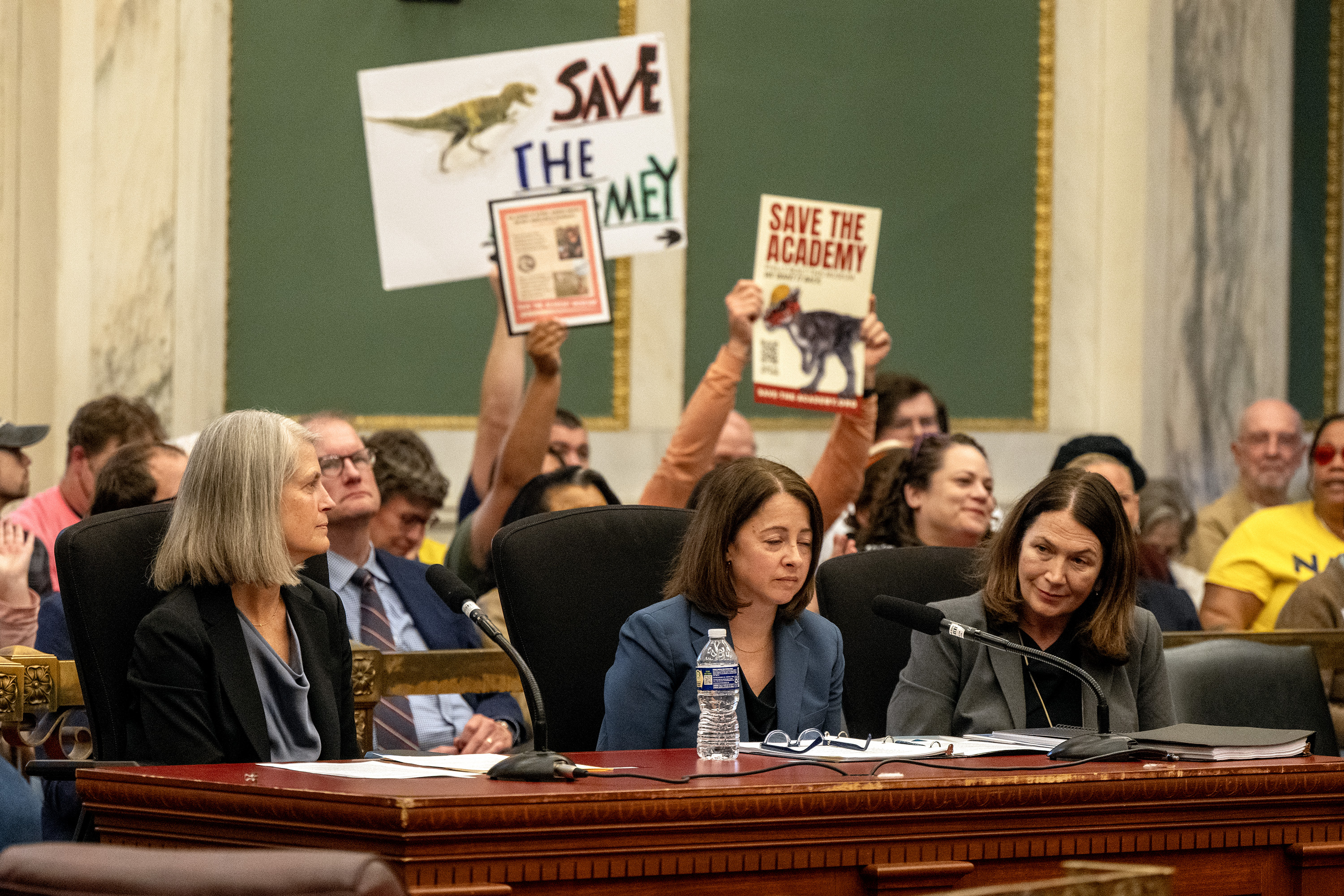
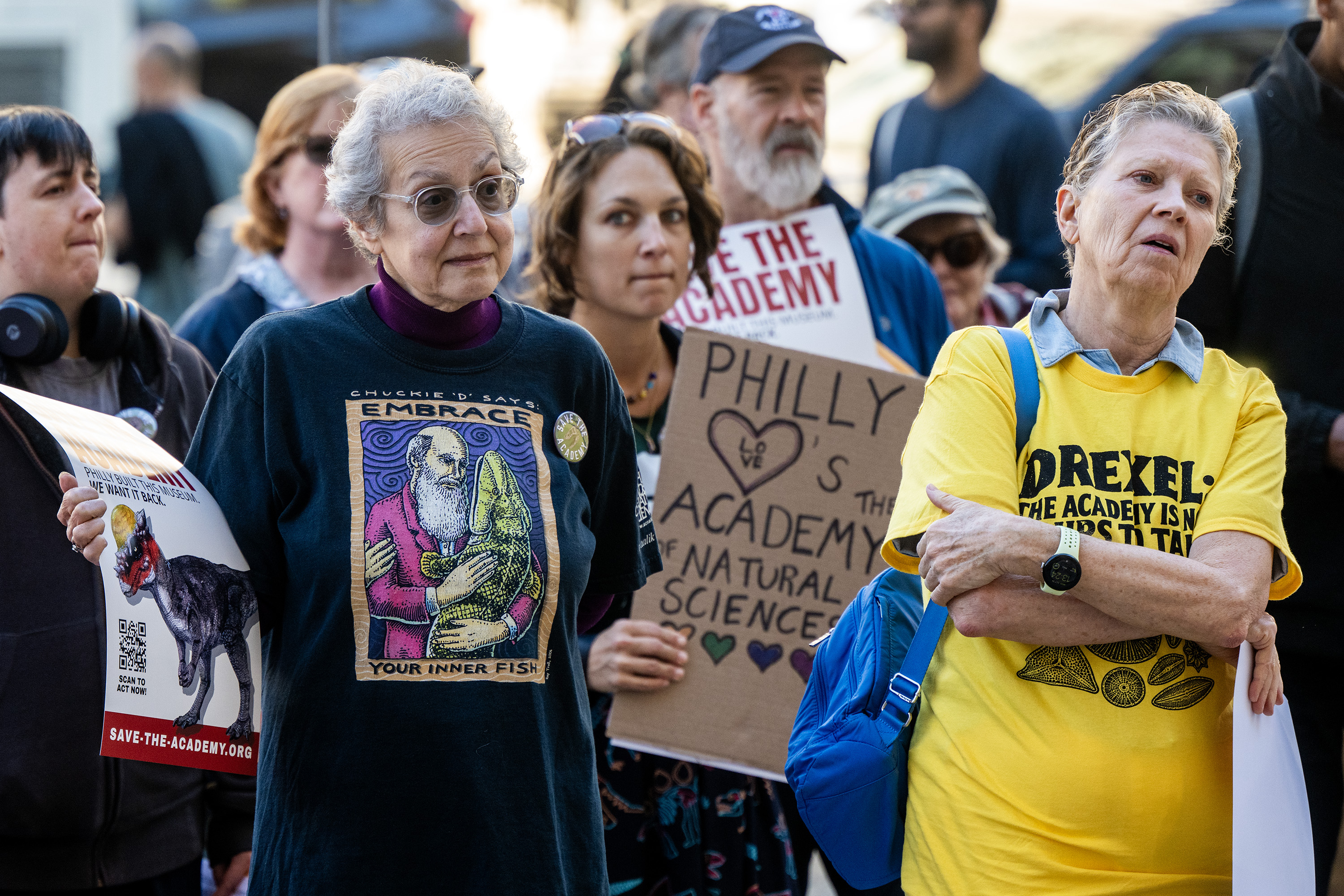
    More than 120 people filled Council chambers, waving “Save the Academy” signs and booing repeatedly when a Drexel official offered testimony on its steps that led to the closure.

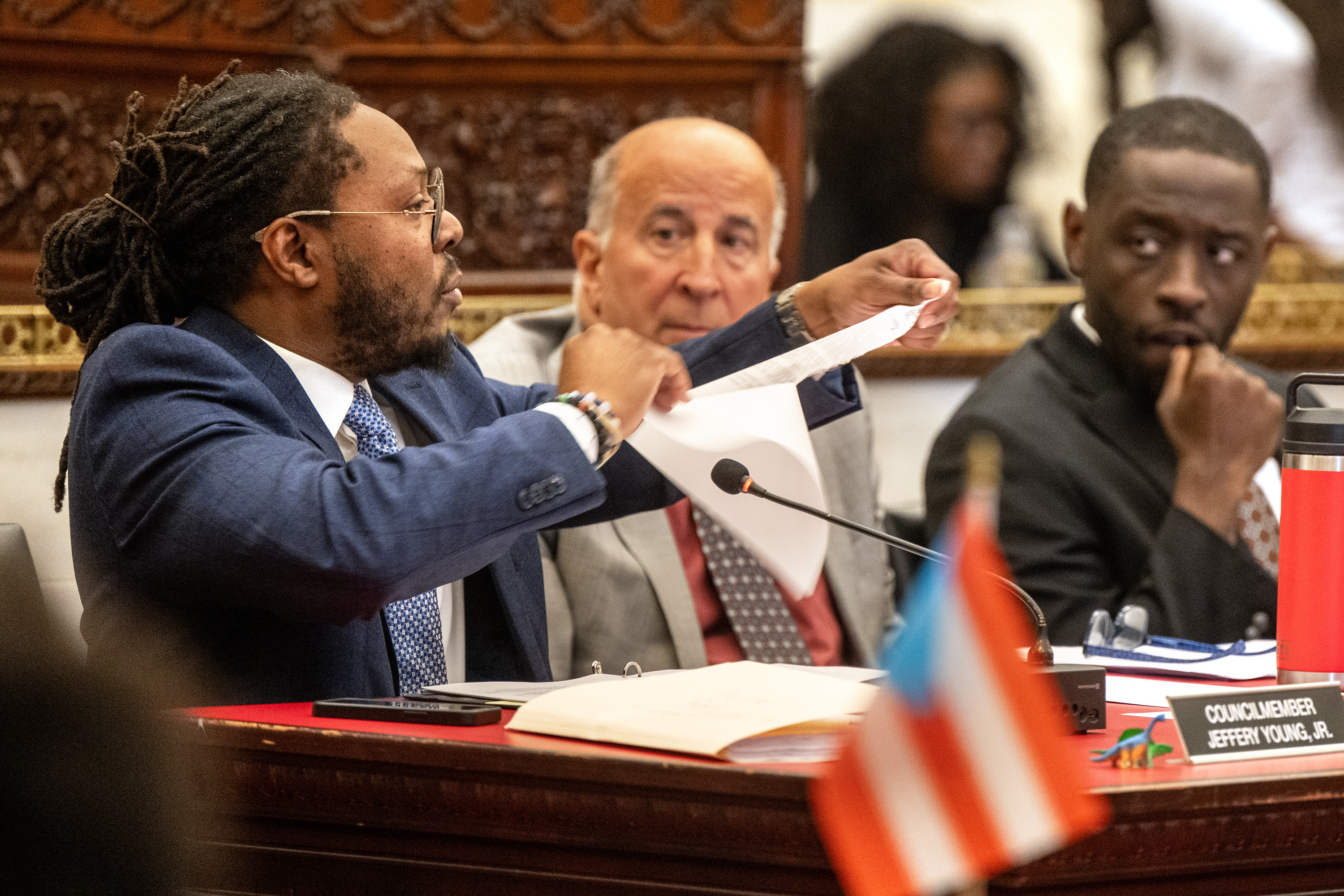
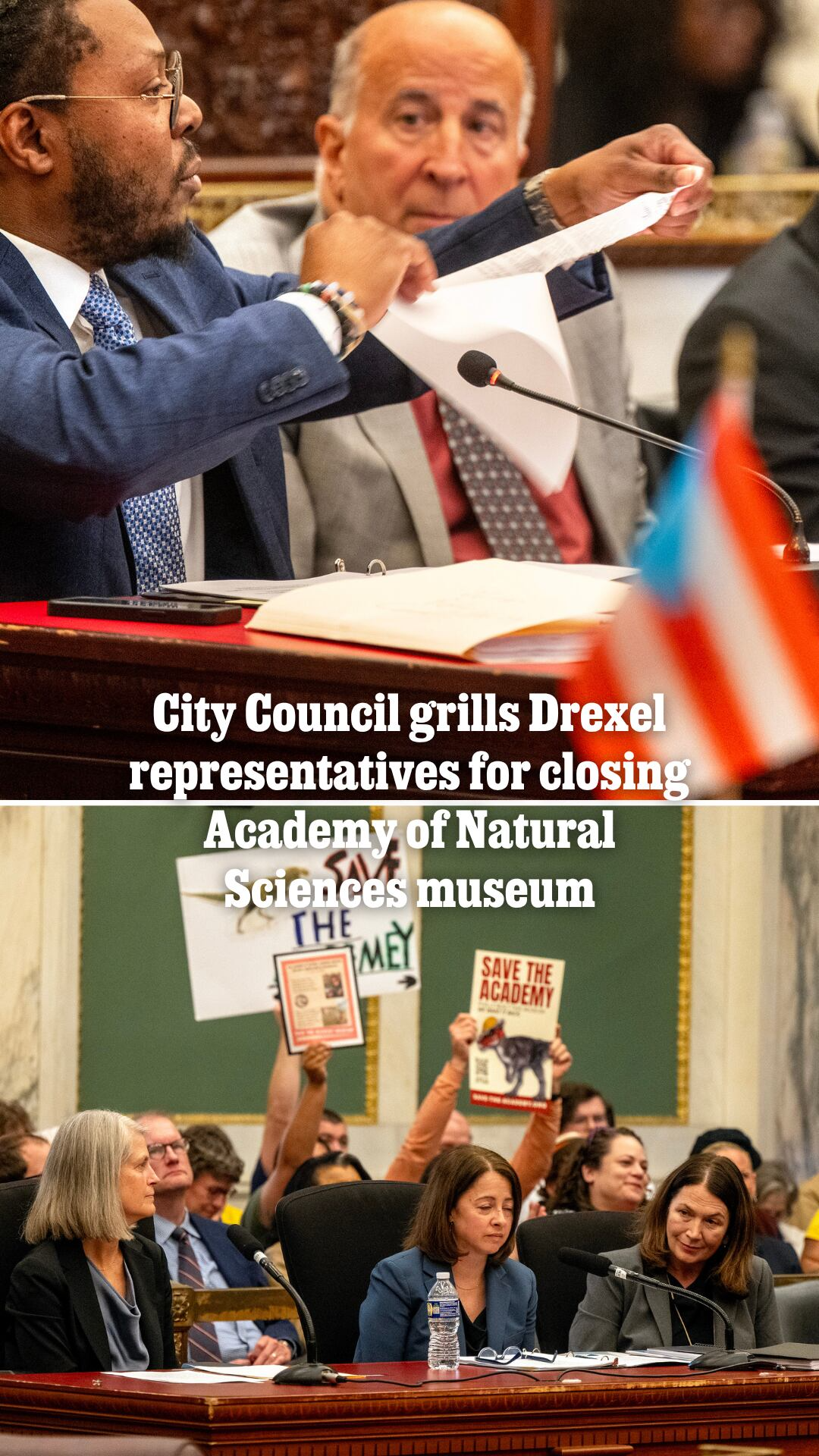
    City Councilmember Jeffery Young Jr. (left) rips up a printed statement from Deputy Mayor Patricia Wellenbach, who did not attend Monday’s hearing.Tom Gralish / Staff Photographer

    “The current operating model was quietly devouring the Academy from within,” said Melissa Richman, Drexel’s executive director of operations, who delivered a statement on behalf of the university. “Over these last 15 years, Drexel has provided the Academy with an infusion of over $49 million in direct cash support to cover the Academy’s recurring operating deficits, in addition to tens of millions of dollars in the form of in-kind administrative support to sustain the Academy’s work.”

    She said given Drexel’s own financial challenges — the university has been working to erase a deficit — Drexel can’t afford the $5 million to $6 million a year in support to the Academy.

    “To put the Academy on a sustainable financial path, Drexel is prepared to do everything within our financial means, including bringing together civic leaders, philanthropic partners, and other stakeholders to help secure the Academy’s future,” Richman said. “We welcome any viable, long-term solution, including one that would allow the Academy to remain in its current Parkway location, provided its substantial capital needs are addressed and a sustainable operating model is established.”

    The hearing comes amid talks between Drexel and the Academy to renegotiate their affiliation agreement — discussions that have not as-yet yielded an agreement. A source close to the negotiations said no further talks are currently scheduled.

    Members of the Save the Academy Coalition listen to speakers during a rally Monday.Tom Gralish / Staff Photographer

    Drexel president Antonio Merlo did not attend the hearing, which drew repeated criticism from Council members, who called his absence “disrespectful.” Richman said Merlo had to be on campus for a site visit by the Middle States Commission on Higher Education, which is undergoing its regular reaccreditation process that happens every five years.

    City Council grills Drexel representatives for closing Academy of Natural Sciences museum
    Video: City Council grills Drexel representatives for closing Academy of Natural Sciences museum

    Council members were also critical of Mayor Cherelle L. Parker’s administration for not sending a representative to the hearing. The city’s representative on the Academy issue, Deputy Mayor Trish Wellenbach, did not show up at the hearing, sending a statement instead saying she was not the “appropriate” person to testify, as she could not speak on behalf of Drexel or the Academy.

    Councilmember Jeffery Young Jr. tore up Wellenbach’s statement. He said the body would be issuing subpoenas to compel certain people to testify at a future hearing, now scheduled for Nov. 16.

    It is out of the ordinary for the administration to not send a representative to testify in a high profile hearing if Council sought it, and it would be highly unusual for Council to issue a subpoena for testimony, especially from a member of the mayor’s administration. While Council has the power to compel testimony, it rarely exercises that power.

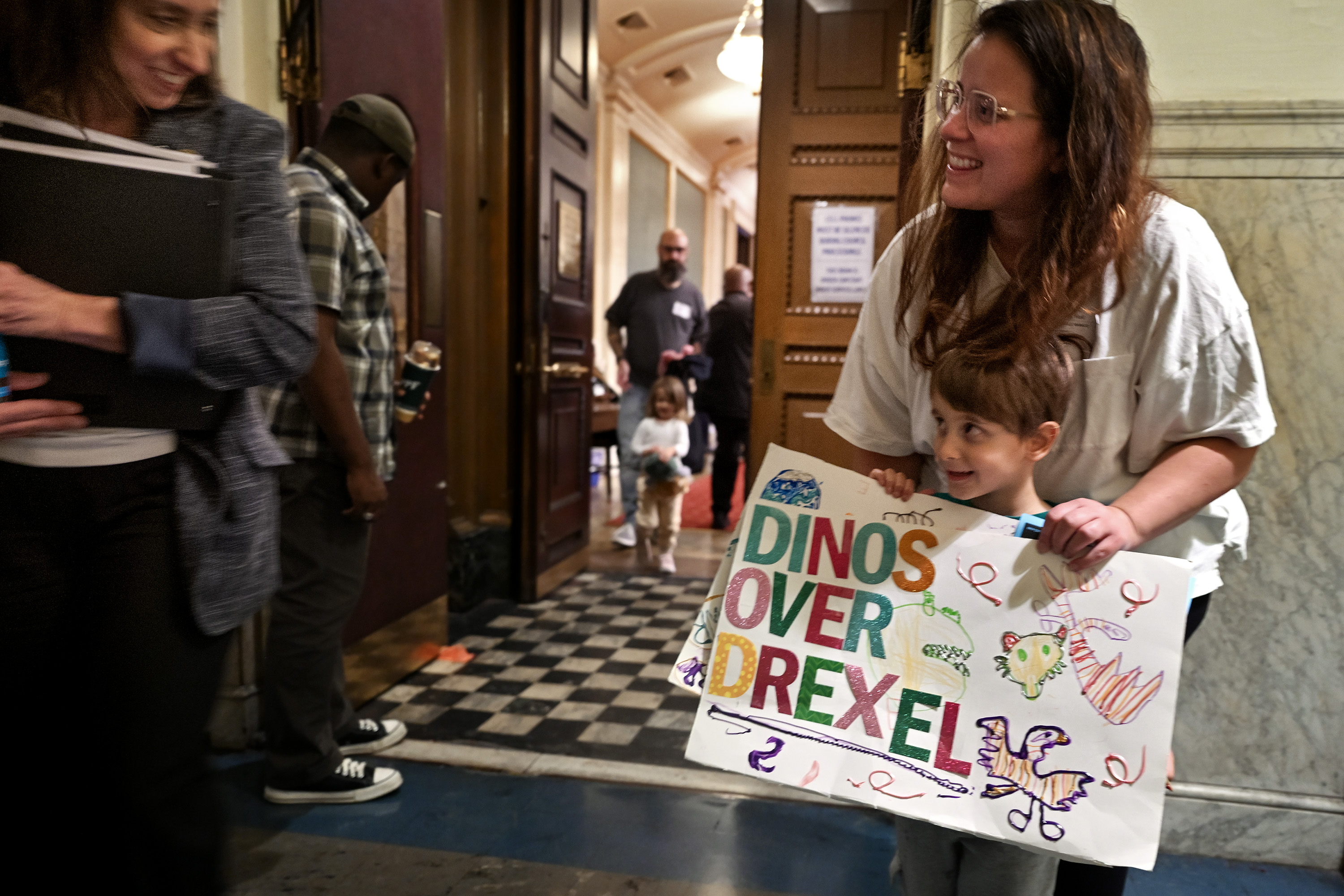
    Leaving council chambers, Councilmember Rue Landau (left) pauses to see Augustus Mango, 5, and his mother Marriele Mango after they testified before Council.Tom Gralish / Staff Photographer

    During the testimony, Council focused on what it would take to keep the museum, which was closed to the public Sept. 27, open. About 50 people were scheduled to speak.

    The Academy’s public programs last year cost $7.7 million but brought in only $3 million in revenue, Richman told Council.

    “So if there was a commitment from both the city as well as the private sector to offset that $4.4 million that you lose annually, do you think there would be an appetite to open the museum back up and keep it in the same location?” Committee Chair Isaiah Thomas asked.

    “I think if there is an opportunity for financial resources that created both a financially sustainable model for the Academy and allowed us to address some of the capital expenditures that are required for that building, that would certainly be a possibility,” Richman answered.

    The university has previously said the building needed about $150 million in deferred maintenance.

    “That was the best answer today,” Thomas said.

    Richman said the decision to close the museum came after a “rigorous, two-year strategic study of the Academy underwritten by the Pew Center for Arts & Heritage. Informed by Academy leadership and multiple external consultants and subject-matter experts, the study comprehensively assessed the Academy’s physical building needs, the care the collections require, research capacity, and the economics of operating the museum.”

    The study “explicitly” recommended closing the Academy museum, the Drexel statement read by Richman said.

    Academy board president Suzanne Biemiller said during Monday’s hearing that the Academy would like to see the commissioning of a feasibility study.

    In an effort to keep the doors open, the William Penn Foundation has offered to cover Drexel’s subsidy of the museum for a year while a path toward a long-term solution could be found. Drexel has neither accepted nor rejected the offer, which was made more than a month ago.

    “The foundation has not received a response to our offer to help keep the museum open while longer-term plans are evaluated and additional parties are engaged to identify potential solutions,” a William Penn spokesperson said Monday before the hearing. “We remain open to conversations about how we can be helpful.”

    Drexel is financially responsible for the Academy, according to the September 2011 affiliation agreement between the two institutions, “and shall cause sufficient funding to be made available to meet any operating deficits, liquidity needs, and budgeted capital improvements … that may be incurred.”

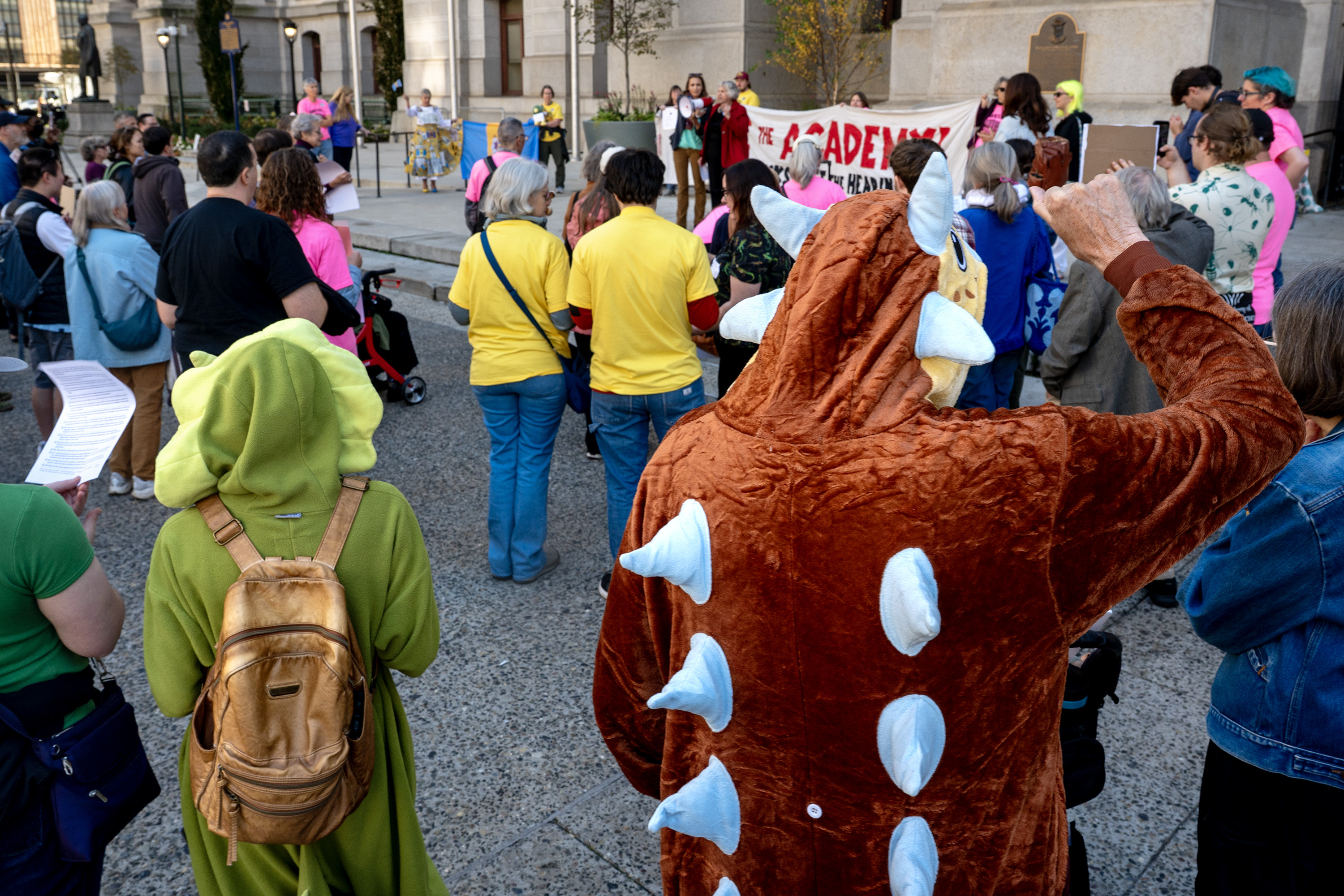
    The hearing was preceded with a news conference and demonstration outside of City Hall by the Save the Academy Coalition to advocate for an “independent interim commission to safeguard the academy and secure its next 200 years.”

    The demonstration was attended by about 120 supporters holding signs like “We Need Science” and “Save the Academy.”

    “We hope [this] marks the beginning of both accountability and a brighter future for this institution,” coalition organizer Isa Betancourt told the crowd.

    Costumed members of the Save the Academy Coalition listen to speakers during a rally before the hearing.Tom Gralish / Staff Photographer

    Staff writer Anna Orso contributed to this article.

  • A Penn student journalist is part of a lawsuit against the White House’s ‘ban on free press’

    A Penn student journalist is part of a lawsuit against the White House’s ‘ban on free press’

    A University of Pennsylvania senior and student journalist joined a lawsuit accusing President Donald Trump of violating the First Amendment by expelling reporters from the White House as part of a “ban on free press.”

    Ethan Young, a history and political science major and the editor-in-chief of the Daily Pennsylvanian, is one of the six people who sued Trump and other officials over what the complaint calls a “policy” of punishing members of the White House press corps by revoking journalists’ credentials.

    The 21-year-old from Philadelphia is participating in the lawsuit in his own capacity and not as a representative of the Daily Pennsylvanian.

    “I see myself as a very small part of a larger consequential moment,” he said.

    (Young interned at The Inquirer over the summer as part of a program of the Pennsylvania Legislative Correspondents’ Association.)

    He joined the suit because he often incorporated reporting of the White House press corps into his work in the student newspaper. As a student in Philadelphia, Young said in a declaration accompanying the lawsuit, he can’t attend White House press briefings and needs reliable information about the administration for the stories he writes and edits.

    The complaint was filed Monday in a New York federal court, and it asks a judge to find Trump’s policy unconstitutional because “it imposes restrictions on a limited public forum that are viewpoint based and unreasonable.”

    In addition to Trump, the suit names White House chief of staff Susan Wiles, assistant to the president for communications Steven Cheung, and Secret Service Director Sean Curran.

    Young is a plaintiff alongside a human-rights advocate, a Pulitzer Prize-winning historian, two independent journalists, and New York City high school teacher.

    The six together illustrate “the different ways the policy impacts the American public,” Young said.

    The suit describes the history of the White House press corps, dating back to the 1881 origin of the press pool and President Theodore Roosevelt’s 1902 decision to dedicate a room in the West Wing for the press.

    The policy began right after Trump’s second term began, according to the complaint. In February 2025, the White House banned the Associated Press from the press pool because it continued to use the term “Gulf of Mexico” after Trump renamed the body of water “Gulf of America.”

    Last month, the White House revoked the credentials of CNN, MS NOW, and Politico. On his Truth Social platform, Trump said the ban was in response to “FAKE NEWS,” the suit notes.

    Days after, the suit says, Trump posted on Truth Social that “the White House is not instituting an assault on the Free Press … It is instituting an assault on the FAKE NEWS.”

    A federal judge earlier this month found the ban was likely unconstitutional.

    In court filings in lawsuits related to journalists’ access to the White House, the Trump administration repeatedly described its action as part of a “policy,” the suit says.

    The White House’s policy deprives the public of independent reporting, the complaint says, and it impacts the work of reporters who weren’t banned because “every journalist who reports from the White House must now account for the possibility that a critical or ill-advised word about the president may result in their access being summarily restricted or revoked.”

    Lawyers from the Knight First Amendment Institute at Columbia University and the Media Freedom and Information Access Clinic at Yale Law School filed the complaint on behalf of the plaintiffs.

    “The White House cannot decide what information Americans receive by punishing critical reporting,” Katie Fallow, deputy litigation director at the Knight First Amendment Institute, said in a statement.

    A White House official said in a statement that no person can demand access to the Oval Office.

    “Media that peddle misinformation and defamation are completely capable of reporting their manufactured stories from directly outside,” the official said.

    Young said he is honored to be part of the lawsuit, and his family has been supportive of his choice to sue the president. The people around him saw his passion for journalism and the amount of time he has spent at his college newspaper.

    “As someone who wants to be a journalist,” Young said. “I see upholding the First Amendment as synonymous with pursuing that profession.”